


Community hub
Recent from talks
Contribute something
Nothing was collected or created yet.
Khalkha Mongols
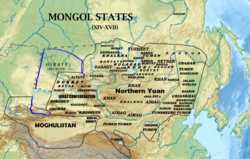
View on WikipediaThe Khalkha (/ˈkælkə, ˈkɑːlkə/; Mongolian: Халх ᠬᠠᠯᠬᠠ [ˈχa̠ɬχ]) have been the largest subgroup of the Mongols[3] in modern Mongolia since the 15th century. The Khalkha, together with Chahars, Ordos and Tumed, were directly ruled by Borjigin khans until the 20th century. In contrast, the Oirats were ruled by Dzungar nobles and the Khorchins were ruled by Qasar's descendants.
Key Information


The two original major Khalkha groups were ruled by the direct male line descendants of Dayan Khan. The Baarin, Khongirad, Jaruud, Bayaud and the O'zeed (Ujeed) became the subjects of Dayan Khan's fifth son Achibolod. They formed the Southern Five Halhs.
Seven northern Khalkha otogs: 1) Jalairs, Olkhonud; 2) Besut, Iljigin; 3) Gorlos, Keregut; 4) Khuree, Khoroo, Tsookhor; 5) Khukhuid, Khatagin; 6) Tanghut, Sartuul; and 7) Uriankhai[4] became subjects of Dayan Khan's youngest (could be third) son Geresenje (Mongolian: Гэрсэнз Жалайр Хан). Khotogoids are close in culture and language to the Khalkha Mongols.[5]
There were also numerous direct descendants of Genghis Khan who had formed the ruling class of the Khalkha Mongols prior to the 20th century, but they were and still also regarded as Khalkha Mongols rather than belonging to a special unit.
The Thirteen Khalkhas of the Far North are the major subethnic group of the independent state of Mongolia. They number 2,659,985 (83.8% of Mongolia's population).
The Khalkha or Halh dialect is the standard written language of Mongolia.[6]
Etymology
[edit].png)
The term Халх ("Halh, Khalkha") has always puzzled linguists and historians. One possible interpretation is that it shares the same root as the words xалхавч "shield" and халхлах "to protect; to cover; to shield; to hide; to intercept", although there is no noun or verb xалх that independently exists besides the ethnic group's name. In a similar manner, the sub-ethnic groups within the Khalkha Unit have been historically recorded in books, journals, and documents as "Sartuul Khalkha", "Tanghut Khalkha" etc. Even the word order in the phrases Southern Five Khalkha and Northern Thirteen Khalkha implies that the word Халх correlates to the units within the Southern and Northern tribal federations, but it does not stand for the group as a whole. Lastly, Mongolians have always linked the term Халх to the name of the Khalkhyn Gol.
History
[edit]

Dayan Khan created the Khalkha Tumen out of Mongols residing in the territory of present-day central Mongolia and northern part of Inner Mongolia. In Mongolian historical sources such as Erdeniin Erih ("The Beads of Jewel") it clearly stated how the Khalkha Tumen was created and where these people resided at the time of its creation. The statement goes as follows:
- Transliteration:
- Hangai Khand nutuglan suuj
- Hari daisind chinu Khalkha bolson
- Haluun amind chinu Tushee bolson
- Irehiin uzuur, Harahiin haruul bolson
- Khalkha tumen chinu Ter bukhii beer ajaamuu
- Cyrillic:
- Хангай ханд нутаглан сууж
- Харь дайсанд чинь халх болсон
- Халуун аминд чинь түшээ болсон
- Ирэхийн үзүүр, харахын харуул болсон
- Халх түмэн чинь тэр бүхий бээр ажаамуу
- ᠬᠠᠩᠭᠠᠢ ᠬᠠᠨ ᠳᠤ ᠨᠤᠲᠤᠭᠯᠠᠨ ᠰᠠᠭᠤᠵᠤᠬᠠᠷᠢ ᠳᠠᠶᠢᠰᠤᠨ ᠳᠤ ᠴᠢᠨᠢ ᠬᠠᠯᠬᠠ ᠪᠣᠯᠤᠭᠰᠠᠨᠬᠠᠯᠠᠭᠤᠨ ᠠᠮᠢᠨ ᠳᠤ ᠴᠢᠨᠢ ᠲᠦᠰᠢᠶᠡ ᠪᠣᠯᠤᠭᠰᠠᠨᠢᠷᠡᠬᠦ ᠶᠢᠨ ᠦᠵᠦᠭᠦᠷ᠂ ᠬᠠᠷᠠᠬᠤ ᠶᠢᠨ ᠬᠠᠷᠠᠭᠤᠯ ᠪᠣᠯᠤᠭᠰᠠᠨᠬᠠᠯᠬᠠ ᠲᠦᠮᠡᠨ ᠴᠢᠨᠢ ᠲᠡᠷᠡ ᠪᠦᠬᠦᠢ ᠪᠡᠷᠡ ᠠᠵᠢᠶᠠᠮᠤ
- English translation:
- "Dwelling in the Hangai Mountains" (Central Mongolian Mountain range called Hangai Mountain Range, near which Harakorum, the ancient capital, was built)
- "A shield (in Mongolian, khalkha means "shield" or "protection") against alien enemies"
- "A support for your precious life"
- "A blade towards those who come, a guard towards those who look"
- "Your Khalkha Tumen is indeed for you"
It is also believed that the Southern Khalkha who now reside in Inner Mongolia were moved south from its original territory Khangai Mountains. To commemorate and signify their origin, every new lunar year all southern Khalkhas perform special Khangai Mountain worshipping ceremonies and they face northwest and pray. This special ceremony is maintained by only southern Khalkhas and no other Southern Mongols have such rituals.
Under Dayan Khan, the Khalkha were organized as one of three tümen of the Left Wing. Dayan Khan installed the fifth son Alchu Bolad and the eleventh son Geresenje on the Khalkha. The former became the founder of the Five Halh of Southern Mongolia and the latter became the founder of the Seven Halh of the Northern Mongolia. They were called Inner Khalkha and Outer Khalkha respectively, by the Manchus.
Some scholars consider that the Halh had a close connection with the Five Ulus of the Left Wing of the former Yuan dynasty, which was led by the five powerful tribes of Jalayir, Onggirat, Ikires, Uruud and Mangghud.

The Five Halh consisted of five tribes called Jarud, Baarin, Onggirat, Bayaud and Öjiyed. They lived around the Shira Mören valley east of the Greater Khingan. They clashed with but were eventually conquered by the rising Manchus. The Five Khalkha except for the Jarud and the Baarin were organized into the Eight Banners. Khalkha Left Banner of Juu Uda League and Khalkha Right Banner of Ulaanchab League were offshoots of the Seven Khalkha.

The Seven Khalkha were involved in regular fights against the Oyirad in the west. Geresenje's descendants formed the houses of Tüsheet Khan, Zasagt Khan and Setsen Khan. They preserved their independence until they had to seek help from the Kangxi Emperor of the Manchu-led Qing dynasty against the Zungar leader Galdan in 1688. In 1725 the Yongzheng Emperor gave Tsering independence from the house of Tüsheet Khan, forming the house of Sain Noyon Khan.
The Khalkha led the Mongolian independence movement in the 20th century. After enduring countless hardships, they established the independent state of Mongolia in northern Mongolia.

Khalkha diaspora
[edit]The overwhelming majority of Khalkha Mongols now reside in the modern state of Mongolia. However, there are four small banners in China: two in Inner Mongolia; one in Qinghai; and one in Rehe. There are also several groups among the Buriats in Russia, however, they no longer retain the Khalkha self-identity, culture, and language. The Halh Mongols in Qinghai, China and the ones among the Buryats in Russia were subjects to Khalkha's Tsogtu Khan and his sons.
The Choghtu Khong Tayiji's Khalkhas (1 banner): Poet, supporter of Ligdan Khan, and opponent of the Dalai Lama's "Yellow Hat" order, Tsogtu Khong Taiji moved to Qinghai with his subjects sometime after 1624. Ligdan Khan and Tsogtu Khong Taiji were supposed to meet in Qinghai and eventually build a Mongol base that is independent of the Manchu rule which was geographically far from the Manchu emperor's reach. Moreover, it was clear to the two Mongol Khans that Tibetan Dalai Lama's influence in Mongol affairs was increasing. So the two decided to end the influence of Dalai Lama and the "Yellow Hat" order by supporting the "Red Hat" order. However, majority of Ligdan Khan's subjects and soldiers died because of smallpox on the way to Qinghai. After Ligdan's death, Tsogtu Taiji began attacking dGe-lugs-pa monasteries. When Tsogtu sent 10,000 men under his son Arslang against the Dalai Lama in Lhasa, Arslang switched sides and supported the Dalai Lama. The dGe-lugs-pa hierarch, the Fifth Dalai Lama (1617–82), summoned the Oirat Güshi Khan Toro-Baiku, whose 10,000 men in early 1637 crushed Tsogtu’s 30,000 at Ulaan-Khoshuu; Tsogtu Taiji was killed.[8] Today the Oirats of Gushi Khan is also known as the "Upper Mongols" or the "ДЭЭД МОНГОЛ", and they still reside in Qinghai forming 21 banners. The remnants of Tsogtu Khong Taiji's Halhs form only one banner and are known as the "Lower Mongols" or "ДООД МОНГОЛ". Tsogtu Khong Taiji is known as Tsogtu Khan among the Khalkha Mongols in Qinghai.
The Khalkha Right Wing Banner: This banner was popularly known as the Darkhan Beili Banner and the ruler of this banner was the descendant of Gersenz Jalair Khan's grandson Bunidari. In 1653 they migrated into Inner Mongolia from the Tusheet Khan Aimak of Outer Mongolia.
The Khalkha East Wing Banner: This banner was popularly known as the "Chokhor Halh" and the ruler of this banner was the descendant of Gombo-Ilden, the fifth generation grandson to Gersenz Jalair Khan. They fled from the Zasakto Khan Aimak of Outer Mongolia to Inner Mongolia in 1664. Its boundaries as given by the Mongol Pastures run 125 by 230 "li", or about 66 by 122 kilometres (41 by 76 miles).
The Tanggot Khalkha Banner: This Banner formerly subordinated for administrative purposes to the East Wing Tumet (Monggoljin) Banner, is popularly known as Tanggot Khalkha. This tiny territory, of not more than 19 by 24 kilometres (12 by 15 miles), is said to have a population of about 500 people. There are practically no Chinese, as the surrounding districts are held by Mongols. The tribe, which has a prince of its own, was founded by immigrants from the Jasakto Khan division of Outer Mongolia, who fled to Inner Mongolia and offered submission to the Manchus in 1662, during the wars between the Northern (Khalkha) and Western (Ulot) Mongols.
Loss of Khalkha territory to Imperial Russia and the Buriatized Khalkhas
[edit]During the rise of Genghis Khan in the 12th to 13th centuries, neither the Selenge valley in today's southern Buriatia or the Aga steppe had at this time any connection with the Buriats; these were the lands of the Merkid tribe and the Mongol tribe proper. Starting 1628 with the Russian Conquest and Buriat Migration, the Selenge Valley, as before, was inhabited by Mongol clans under the rule of the Khalkha khans. By 1652 the Khalkha khans were protesting the Russian incursions into Transbaikalia, and from 1666 on Khalkha raiding parties reached as far as Bratsk, Ilimsk, Yeravninsk, and Nerchinsk, while the khans besieged the forts on the Selenge. At the same time, however, the Khoris along the Uda River in 1647 surrendered as a block to the Russians to escape paying tribute to the Khalkhas. Smaller Mongol clan fragments also defected north to the protection of Cossack forts. The invasion of Khalkha by the Dzungar Khan Galdan Boshogtu in 1688 stopped Khalkha resistance to the Cossack advance and sent more Mongol refugees fleeing into Russian control.
Finally, the Selenge Mongols, cut off by the new border from their Khalkha kinsmen and mixed with displaced Buriats and Khori, gradually accepted the Russian designation as Buriat. These groups are: Descendants of Okhin Taij (grandson of Khalkha's Tsogtu Khan); Khatagin; Atagan; Ashabagad; Sartuul; Tavnanguud; Yungsiebu; O'zeed; Uuld; Tsongool. The Tsongool subclans are as follows: 1. Uriankhad, 2. Bolingud, 3. Baatud, 4. Ashibagad, 5. Avgachuud, 6. Sharnuud, 7. Nomkhod, 8. Khamnigan, 9. Arshaantan, 10. Khorchid, 11. Naimantan, 12. Yunshööbü, 13. Khotgoid, 14. Eljiged, 15. Örlüüd, 16. Tavnanguud, 17. Orongoi, 18. Tsookhor, 19. Sartuul, 20. Sharaid, 21. Temdegten.
Mongolian academician, writer, and scholar Byambyn Renchin (Mongolian: Бямбын Ренчин) is a representative of this ethnic group. His father belonged to the Yungshiebu tribe and his mother was a direct descendant of Genghis Khan through Khalkha's Tsogtu Khan.
References
[edit]Citations
[edit]- ^ "2020 POPULATION AND HOUSING CENSUS OF MONGOLIA /summary/".
- ^ "2020 Population and housing census of Mongolia". National Statistical Office of Mongolia. Archived from the original on 17 August 2021. Retrieved 22 November 2021.
- ^ Khalkha
- ^ Очир А. (2016). Монгольские этнонимы: вопросы происхождения и этнического состава монгольских народов. Элиста: КИГИ РАН. pp. 188–192. ISBN 978-5-903833-93-1. д.и.н. Э. П. Бакаева, д.и.н. К. В. Орлова
- ^ Очир А. (2016). Монгольские этнонимы: вопросы происхождения и этнического состава монгольских народов. Элиста: КИГИ РАН. p. 222. ISBN 978-5-903833-93-1. д.и.н. Э. П. Бакаева, д.и.н. К. В. Орлова
- ^ C. P. Atwood Encyclopedia of Mongolia and the Mongol Empire, Khalkha
- ^ Sood, Amy (18 February 2022). "This photo was taken from a movie scene depicting the Mongolian queen's execution". AFP. Retrieved 22 February 2022.
- ^ C.P.Atwood-Encyclopedia of Mongolia and the Mongol Empire, Tsogtu Taij
Sources
[edit]
- Morikawa Tetsuo 森川哲雄: Haruha Tumen to Sono Seiritsu ni Tsuite ハルハ・トゥメンとその成立について, Tōyō Gakuhō 東洋学報 Vol. 55, No. 2, pp. 32–63, 1972.
- Okada Hidehiro 岡田英弘: Dayan Hān no Rokumanko no Kigen ダヤン・ハーンの六万戸の起源, Enoki Hakushi Kanreki Kinen Tōyōshi Ronsō 榎博士還暦記念東洋史論叢, pp. 127–137, 1975.
- Atwood, Christopher. "Khalkha.", "Tsogtu Taiji.", and "Buriats." Encyclopedia of Mongolia and the Mongol Empire. 2006.
- Lattimore, Owen. The Mongols of Manchuria. Rahway: Quinn & Boden Company, Inc., 1934
- Shabad, Theodore. China's Changing Map. New York: Praeger Publishers, Inc., 2nd ed. 1972
- Shirnen.B Б. Ширнэн: Buriadyn Noudel Hel Ayalgouny Ouchir Буриадын Нүүдэл-Хэл Аялгууны Учир, pp. 67–70, 2005.
| Sino-Tibetan |
| ||||||||||
|---|---|---|---|---|---|---|---|---|---|---|---|
| Austroasiatic | |||||||||||
| Austronesian | |||||||||||
| Hmong-Mien | |||||||||||
| Mongolic | |||||||||||
| Kra–Dai | |||||||||||
| Tungusic | |||||||||||
| Turkic | |||||||||||
| Indo-European | |||||||||||
| Others | |||||||||||
| Related | |||||||||||
Underlined: the 56 officially recognised ethnic groups ranked by population in their language families according to 2020 census
| |||||||||||


| National | |
|---|---|
| Other | |

Khalkha Mongols
View on GrokipediaOrigins and Identity
Etymology
The term Khalkha (Mongolian: Халх, Classical Mongolian: ᠬᠠᠯᠬᠠ) derives from a Mongolian word meaning "shield" or "protection," denoting the central and northern Mongolian region's function as a defensive bulwark against invasions from the north and east since the 16th century.[4] This linguistic root aligns with the area's strategic geography, positioned between Oirat territories to the west and potential threats from Siberia.[5] The designation Khalkha Mongols emerged in the late 15th century amid the fragmentation of Mongol unity following the decline of the Northern Yuan dynasty. In approximately 1470–1480, Batumöngke Dayan Khan, a descendant of Genghis Khan through the line of Khubilai, unified disparate eastern Mongol tribes—including the Tümed, Khorchin, and others—into six administrative khoshuu (banners) or khalkha (leagues) centered in the Ordos, Khalkha, and Chakhar regions of modern central Mongolia and northern Inner Mongolia.[5] These units formed the core of what became known as the Khalkha tümen (myriads), distinguishing them from western Oirat confederations. By the early 16th century, the term had solidified to refer specifically to these eastern, Genghisid-aligned groups, as recorded in chronicles like the Erdeniin Erdeni.[5] Russian and Qing administrative records from the 17th century onward adopted transliterations such as Khalikha or Halkha, propagating the name internationally while preserving its Mongolian phonetic structure.[6] The etymology underscores not only linguistic continuity but also the Khalkha's self-perception as guardians of Mongol imperial legacy against peripheral rivals.Genetic and Historical Origins
The Khalkha Mongols emerged as a distinct confederation in the late 15th century through the unification efforts of Dayan Khan (reigned c. 1470–1517), a Chinggisid descendant who reconsolidated fragmented Mongol tribes following the collapse of the Yuan dynasty and subsequent internecine conflicts. Dayan Khan's campaigns subdued rival Oirat and eastern Mongol groups, reorganizing the eastern territories into the Khalkha tumens—administrative units encompassing tribes around the Khalkha River basin and central-eastern steppes. This political entity, initially termed the "Khalkha" after its geographic core, represented the heartland of Mongol identity, distinct from western Oirats and southern Inner Mongols, with Dayan Khan allocating these eastern domains to his younger sons, including Gersenzed, solidifying their autonomy.[7][8] Genetically, Khalkha populations exhibit high mitochondrial DNA diversity, reflecting admixture from ancient East Eurasian lineages, with haplogroups such as D4, G, and Z predominant, alongside contributions from Siberian and Northeast Asian sources that trace to pre-Mongol steppe nomads. Y-chromosome analyses identify haplogroup C2-M217 (formerly C3) as dominant, comprising 40–60% of paternal lineages in Khalkha and related Mongol groups, linking them to medieval expansions under Genghis Khan and indicating patrilineal continuity from 13th-century imperial founders. Autosomal studies position Khalkha Mongols within broader Eastern Eurasian clusters, with primary ancestry from ancient Northeast Asian hunter-gatherers and agropastoralists, augmented by minor Western Eurasian steppe inputs via Bronze Age interactions, though lacking strong affinities to Turkic populations despite historical overlaps.[9][10][11][12] These genetic profiles underscore a core continuity with proto-Mongolic tribes of the 12th–13th centuries, differentiated from neighboring groups like Buryats or Kalmyks by elevated variability in maternal lineages and sustained C2 frequencies, attributable to endogamous clan structures post-unification rather than recent admixture. Historical records, including 17th-century Khalkha chronicles, corroborate this by emphasizing descent from Genghisid nobility and tribal fusions under Dayan Khan, without evidence of wholesale population replacement.[13][14]Ethnic Composition and Distinctions from Other Mongols
The Khalkha Mongols constitute the predominant ethnic subgroup within Mongolia, accounting for approximately 83.8% of the nation's total population of around 3.4 million as of the early 2020s.[1] This figure encompasses both rural nomads and urban residents, with over half residing in cities like Ulaanbaatar following post-socialist urbanization trends. Internally, the Khalkha are not a monolithic tribe but a confederation of patrilineal clans and subtribes, such as the Jala'ut, Besud, and Qarachu, unified under the Khalkha polity from the 15th century onward through alliances among eastern Mongol lineages descending from Genghis Khan's Borjigin clan and other eastern groups.[15] This structure emphasized kinship-based leadership, with nobility roles determined by tribal prestige rather than strict heredity, fostering a cohesive identity distinct from looser western groupings.[15] Linguistically, Khalkha Mongols speak the Khalkha dialect, the basis of modern standard Mongolian and Mongolia's official language, which is mutually intelligible with other eastern dialects but diverges from western variants like Oirat.[15] Key phonological distinctions include Eastern Mongolian's development of progressive labial vowel harmony, where vowels like /a/ round to /o/ in certain contexts (e.g., Khalkha morin "horse" influencing suffixes), absent in Oirat dialects that retain unrounded endings.[16] Culturally, while sharing core Mongol traits such as pastoral nomadism, ger-dwelling, and Tibetan Buddhist practices adopted en masse in the 17th century, Khalkha traditions emphasize centralized khanate hierarchies formed in response to Oirat threats, contrasting with the more decentralized Oirat tribal leagues that historically challenged eastern dominance.[15] In contrast to northern Buryat Mongols, who exhibit stronger Tungusic and Russian influences due to Siberian integration and exhibit dialectal variations like retained initial /h/ sounds lost in Khalkha, the Khalkha maintain a purer eastern steppe orientation with less external admixture.[16] Buryats, numbering smaller populations in Mongolia (about 1.3%), often blend shamanistic elements more prominently owing to prolonged forest-steppe habitation. Oirats, comprising roughly 2-3% of Mongolia's Mongols and concentrated in western provinces, preserve older clear script traditions and distinct epic oral histories like the Gesar cycle, reflecting their Dzungar Khanate legacy of resistance against Qing expansion, unlike the Khalkha's earlier submission and unification under Manchu suzerainty.[17] These differences underscore the Khalkha's role as the demographic and cultural core of contemporary Mongolian statehood, with their dialect and customs standardized nationally post-1921 independence.[15]History
Formation and Early Development (15th–17th Centuries)
The eastern Mongol tribes, including precursors to the Khalkha, fragmented after the collapse of the Northern Yuan dynasty in 1368, leading to persistent inter-tribal conflicts and challenges from western Oirat groups throughout the 15th century.[18] Batumöngke, known as Dayan Khan (c. 1464–c. 1524), a Chinggisid descendant, rose to prominence in the 1470s–1480s by consolidating power through alliances and military campaigns, including defeats of Oirat forces with the aid of Mandukhai Khatun.[8] [19] Dayan Khan reorganized the unified eastern Mongols into six large tumens (myriarchies) by the early 16th century, distributing them among his sons to stabilize rule and prevent further division; the Khalkha tumen, encompassing seven outer otogs (sub-tribes) under his son Geresanja and five inner otogs under Alchu Bolod, occupied territories north of the Gobi Desert and formed the nucleus of the Khalkha Mongols as a distinct eastern confederation.[8] [19] This structure emphasized Chinggisid legitimacy, with Dayan Khan's 1510 conquest of right-wing tribes and suppression of Uriyangkhai rebellions extending Khalkha influence eastward.[8] In the 16th century, Khalkha khans under Dayan Khan's lineage maintained military cohesion, conducting raids on Ming China and defending against Oirat incursions, while administrative divisions into otogs facilitated pastoral nomadism and tribute systems.[20] By the early 17th century, succession disputes fragmented the Khalkha into four major khanates—Tusheet, Khalkha, Setsen, and Jasagtu—governed by rival Chinggisid lines, yet they preserved autonomy through decentralized tribal alliances until external pressures mounted.[21] Cultural shifts included increasing adoption of Tibetan Gelugpa Buddhism, reinforced by the 1639 recognition of Zanabazar (1635–1723), a Khalkha noble's son, as a reincarnate lama, which integrated religious patronage into khanate legitimacy without immediate political unification.[22]Under Qing Rule and Internal Unification
In the late 17th century, the Khalkha Mongols faced existential threats from the Dzungar Khanate led by Galdan Boshugtu Khan, who invaded their territories starting in 1688, prompting the four Khalkha aimags—Jasagtu Khan, Tushietu Khan, Setsen Khan, and Sain Noyon Khan—to seek military protection from the Qing dynasty.[23][24] This invasion exacerbated longstanding internal rivalries among the Khalkha khans, but the common peril fostered temporary cohesion as refugees fled eastward into Qing-controlled Inner Mongolia.[25] The Kangxi Emperor responded by campaigning personally against Galdan in 1690–1691, defeating him and securing the Khalkha's position.[24] The pivotal moment of submission occurred in 1691 at Dolon Nor (modern Duolun, Inner Mongolia), where representatives of the Khalkha nobility, led by figures including the First Jebtsundamba Khutuktu Zanabazar, formally pledged allegiance to the Kangxi Emperor, marking the incorporation of Outer Mongolia into the Qing Empire.[26][27] This event ended Khalkha independence and initiated Qing suzerainty, with the dynasty administering the region through a system of 86 banners organized under the four aimags, preserving nominal Mongol autonomy under Qing-appointed ambans (resident officials) while centralizing authority.[24] The Qing formalized Mongol-Qing relations in 1789 via the Menggu lüli code, which regulated tribute, military obligations, and internal governance.[24] Under Qing rule, internal unification of the Khalkha was achieved through the imposition of a hierarchical banner-league structure that subordinated local khans to imperial oversight, mitigating chronic inter-aimag conflicts that had persisted since the 15th century.[25] The dynasty's patronage of Tibetan Gelugpa Buddhism, exemplified by the elevation of Zanabazar as a key spiritual leader, further consolidated unity by aligning religious institutions across the aimags with Qing-endorsed hierarchies, reducing factionalism.[23] Demographically, the Khalkha population, estimated at around 500,000–600,000 by the early 18th century, experienced relative stability, with Qing policies prohibiting Han settlement in Outer Mongolia to preserve Mongol pastoralism and loyalty.[24] This period lasted until the early 20th century, transforming the fragmented Khalkha polity into a cohesive peripheral domain of the empire.[27]Territorial Expansions and Losses to Russia (17th–19th Centuries)
In the early 17th century, Russian expansion into Siberia brought Cossack forces into contact with northern Mongol tribes, including groups affiliated with the Khalkha Mongols who had extended their pastoral territories northward toward the Selenga River valley and Lake Baikal regions. Russian establishment of forts, such as Irkutsk in 1661, facilitated the subjugation of these tribes through tribute extraction and military campaigns, prompting retaliatory raids by some Khalkha-affiliated khans into Russian-held lands. These incursions represented limited territorial assertions but were repelled, leading to the subordination of northern Khalkha elements to Russian authority by mid-century.[28][7] The pivotal shift occurred with the Khalkha khans' submission to Qing suzerainty in 1691, primarily to counter Dzungar threats, which aligned their core territories with Chinese imperial interests and curtailed independent northern maneuvers. Russo-Qing diplomacy then formalized borders: the 1689 Treaty of Nerchinsk resolved eastern frontier disputes, while the 1727 Treaty of Kyakhta precisely demarcated the northwestern boundary along the Argun River, Selenga River, and Sayan Mountains, effectively transferring northern Khalkha-claimed areas—including Transbaikalia and parts of the Selenge Valley—to Russian control. This severed ties for Buriatized Khalkha populations north of the line, who intermarried with local Chori Buryats and adopted a distinct Buryat identity under Russian administration, marking a permanent territorial loss estimated at thousands of square kilometers of steppe grazing lands.[28][29] Throughout the 18th and 19th centuries, the border stabilized with no major Khalkha-initiated expansions or further concessions to Russia, though cross-border pastoral migrations persisted informally. Russian consolidation in Buryatia involved assimilating remaining Mongol subgroups via administrative integration and Orthodox missionary activity, while Khalkha-Qing forces focused southward against Oirat remnants, precluding renewed northern claims. Trade at Kyakhta flourished under treaty provisions, but underlying tensions from earlier losses contributed to the cultural fragmentation of northern Khalkha lineages.[28][29]20th-Century Independence and Soviet Influence
The Khalkha Mongols, constituting the majority of the population in Outer Mongolia, initiated the drive for independence from the Qing Dynasty amid the Xinhai Revolution in China. On December 29, 1911, Khalkha nobles and clergy proclaimed the autonomy of Outer Mongolia under the theocratic rule of the Eighth Jebtsundamba Khutuktu, who assumed the title of Bogd Khan, with initial diplomatic and military support from the Russian Empire to deter Chinese reconquest.[27][30] This declaration marked the formal end of Qing suzerainty over the Khalkha territories, though the new state faced immediate instability due to internal divisions and external pressures.[31] Following World War I, Chinese forces reoccupied Mongolia in 1919, dissolving the Bogd Khan's government, but this was disrupted in 1920 by the invasion of White Russian Baron Roman von Ungern-Sternberg, who briefly restored the Bogd Khan while pursuing anti-Bolshevik aims.[32] The Mongolian People's Party (MPP), founded in 1920 by Khalkha revolutionaries including Sükhbaatar and Choibalsan, sought Soviet assistance to expel foreign occupiers; Red Army units intervened decisively in July 1921, defeating Ungern's forces near Ulaanbaatar by September.[33] A provisional people's government was established on March 13, 1921, nominally retaining the Bogd Khan as a figurehead while shifting power to the MPP.[32] The death of the Bogd Khan in 1924 prompted the MPP to abolish the monarchy and proclaim the Mongolian People's Republic (MPR) on November 26, 1924, initiating a one-party socialist state modeled on the Soviet Union.[33] Mongolia became a de facto Soviet satellite, with Moscow providing economic aid, military training, and ideological guidance in exchange for strategic basing rights and resource extraction, such as during World War II when Mongolian livestock and funds supported Soviet war efforts.[34][35] Soviet influence facilitated rapid secularization and collectivization; by the 1930s, private herds were largely nationalized, though this led to significant livestock losses from mismanagement and resistance.[36] Under Prime Minister Khorloogiin Choibalsan, a close ally of Stalin, the late 1930s saw brutal purges targeting perceived enemies, including Buddhist lamas, nobles, and MPP rivals, resulting in the deaths of approximately 27,000 individuals—about 3% of the population—through executions, forced labor, and imprisonment.[37][38] Over 700 monasteries were destroyed or repurposed, and around 18,000 lamas were killed or laicized, effectively dismantling the Khalkha's traditional Buddhist institutions that had underpinned social order for centuries.[39] These measures, directed by Soviet advisors, consolidated communist control but inflicted profound demographic and cultural trauma on the Khalkha majority.[40] Post-World War II, Mongolia's alignment deepened through treaties like the 1946 Sino-Soviet agreement recognizing its independence, though it remained economically dependent on Soviet subsidies until the late 1980s.[41]Post-1990 Democratic Transition
In late 1989, amid the weakening of Soviet influence, Mongolian activists initiated protests calling for democratic reforms, beginning with a rally of about 200 people on December 10 in Ulaanbaatar.[42] These demonstrations escalated in January 1990, drawing over 100,000 participants in sub-zero temperatures and pressuring the Mongolian People's Revolutionary Party (MPRP) to abandon its monopoly on power.[43] [27] As the ethnic Khalkha, comprising approximately 90% of Mongolia's population, formed the core of urban protesters and rural participants alike, the movement reflected widespread dissatisfaction among this majority group with decades of centralized communist control that had suppressed traditional nomadic practices and economic autonomy.[44] The crisis culminated in March 1990 with the resignation of MPRP General Secretary Yumjaagiin Tsedenbal's successor, Batmönkh, marking the end of one-party rule.[44] In May 1990, amendments to the constitution legalized multi-party politics and scheduled elections.[27] The first multi-party elections occurred on July 29, 1990, where the MPRP secured a dominant 357 of 430 seats in the Great People's Hural despite opposition from coalitions like the Democratic Union, reflecting the party's lingering organizational advantages from the Soviet era.[45] This outcome enabled a managed transition, with the MPRP facilitating reforms while retaining influence, a process driven primarily by Khalkha intellectuals and herders seeking to reclaim cultural and economic agency post-communism.[46] A new constitution, Mongolia's fourth, was ratified on January 13, 1992, establishing a semi-presidential system with separation of powers, protection of human rights, and a market economy framework.[44] It abolished the death penalty except for specific crimes, guaranteed freedoms of speech and assembly, and devolved some authority to local aimags, benefiting Khalkha-dominated rural communities by enabling privatization of livestock and land use rights aligned with nomadic traditions.[44] Subsequent elections in 1996 saw the opposition National Democratic Union win a majority, leading to MPRP's temporary ouster and acceleration of economic liberalization, though challenges like corruption and inequality persisted, testing the resilience of this Khalkha-led democratic experiment.[45]Demographics and Geography
Population and Distribution in Mongolia
The Khalkha Mongols form the predominant ethnic group in Mongolia, accounting for 83.8% of the total population according to 2020 estimates derived from census data.[47] With Mongolia's population reaching approximately 3.4 million as of recent projections, this equates to roughly 2.8 million Khalkha individuals, reflecting their status as the core demographic of the nation.[48] This proportion has remained stable over recent decades, underscoring the Khalkha's numerical dominance within the broader Mongol ethnic categories, which collectively comprise about 95% of residents.[1] Khalkha distribution is concentrated in the central, northern, and eastern regions of Mongolia, aligning with the historical territories of the Khalkha confederation established in the 15th–17th centuries. They constitute majorities in most aimags (provinces), particularly those surrounding Ulaanbaatar, such as Töv, Selenge, and Darkhan-Uul, where nomadic and semi-urban communities thrive. Ulaanbaatar, home to nearly 50% of Mongolia's total population, hosts the largest urban Khalkha concentration, driven by internal migration from rural areas since the 1990s transition to democracy. In contrast, their presence diminishes in western aimags like Bayan-Ölgii (predominantly Kazakh) and Uvs (with Oirat subgroups such as Dörvöd), where Khalkha numbers fall below 50% due to distinct ethnic enclaves formed by geographic isolation and historical migrations.[1] Rural distribution remains tied to traditional pastoralism, with Khalkha herders occupying steppe and highland zones suitable for livestock grazing, though urbanization has led to a shift: over 60% of Khalkha now reside in urban or peri-urban settings as of the early 2020s, exacerbating depopulation in remote soums (districts). This pattern reflects broader national trends of centralization, with Khalkha-led economic activities in mining and services bolstering Ulaanbaatar's growth while straining rural aimags like Govi-Altai and Ömnögovi. Detailed aimag-level breakdowns from the 2020 National Statistical Office census indicate Khalkha majorities exceeding 90% in core provinces such as Arkhangai and Övörkhangai, facilitating cultural and linguistic standardization across the country.[47]Diaspora Communities
The Khalkha Mongols, as the largest ethnic subgroup within Mongolia comprising approximately 82% of the national population, constitute the majority of the Mongolian diaspora abroad. According to estimates from the Mongolian Ministry of Foreign Affairs cited in a 2023 International Organization for Migration report, over 210,000 Mongolian citizens—equivalent to about 6.1% of the country's total population—reside overseas, driven primarily by economic opportunities, education, and labor migration following the post-1990 democratic transition and economic liberalization. Given the Khalkha's demographic predominance, they likely account for the bulk of these emigrants, with no available data indicating disproportionate representation from smaller Mongol subgroups or minorities like Kazakhs.[49][50] The largest Khalkha-influenced communities are in East Asia and North America. South Korea hosts the most substantial group, with tens of thousands of Mongolian workers, predominantly in manufacturing and services, reflecting temporary labor migration patterns since the early 2000s. In the United States, an estimated 50,000 individuals identified as Mongolian in 2023, many arriving as students or refugees before settling; these communities, centered in California and New York, maintain cultural ties through organizations like the Mongol-American Cultural Association, which preserves traditions such as Naadam festivals and language classes. Smaller but notable presences exist in Japan, Australia, and the Czech Republic, often comprising skilled professionals or students, while Russia and Kazakhstan attract border-region migrants for seasonal work.[51][52] These diaspora networks exhibit varying degrees of cultural retention, with Khalkha Mongols abroad often forming tight-knit groups to counteract assimilation pressures, including the maintenance of Buddhist practices and nomadic heritage symbols. Remittances from emigrants, estimated to contribute significantly to Mongolia's economy, underscore the economic motivations behind these movements, though challenges like language barriers and discrimination persist in host countries. Historical Khalkha subgroups in regions like Qinghai Province in China or southern Siberia in Russia—remnants of pre-20th-century territorial shifts—remain distinct from modern emigrants and are not classified as part of the contemporary diaspora.[49]Urbanization and Migration Trends
The urbanization rate among Khalkha Mongols, the predominant ethnic group in Mongolia, has risen sharply from approximately 35% in 1960 to 69.09% in 2023, driven by economic transitions away from pastoral nomadism.[53] This shift mirrors national trends, with urban population growth averaging 1.5-1.7% annually in recent years, reaching 2,405,088 urban residents in 2023 out of a total population exceeding 3.4 million.[54] [55] Khalkha Mongols, constituting over 80% of the populace, have fueled this migration, particularly toward Ulaanbaatar, where nearly 47% of the national population—predominantly Khalkha—now resides, exacerbating capital-centric development.[56] Rural-to-urban migration patterns among Khalkha herders and families often proceed stepwise, from remote soums to aimag centers and finally to the capital, motivated by mining sector jobs, better schooling, and healthcare access amid declining rural viability.[57] Harsh climatic events like dzud, which killed over 7 million livestock in the 2009-2010 winter alone, have accelerated herder displacements, with pastoralists comprising a substantial portion of inflows.[58] In Ulaanbaatar's ger districts, migrants erect traditional yurts amid informal settlements, facing issues like air pollution from coal heating and limited utilities, as urban infrastructure strains under rapid influxes exceeding 20,000 annual arrivals in peak periods.[59] Policy responses, including a 2021-2022 government ban on non-essential moves to Ulaanbaatar, sought to curb overcrowding but disrupted livelihoods and prompted informal circumvention, highlighting tensions between migration controls and economic pull factors.[60] Despite these challenges, urbanization continues, with projections indicating sustained growth as Khalkha youth prioritize urban employment over inheritance of depleting family herds.[61]Language and Literature
Khalkha Dialect Characteristics
The Khalkha dialect, spoken primarily by the Khalkha Mongols in central and northern Mongolia, serves as the foundation for Standard Mongolian, the official language of Mongolia, with its norms derived from the Ulaanbaatar variety.[62] This dialect exhibits a phonological system characterized by seven monophthong vowels (/a/, /e/, /i/, /o/, /ö/, /u/, /ü/), each occurring in short and long forms, alongside pharyngealization of rounded back vowels (/o/, /u/) and centralization tendencies in front vowels (/ö/, /ü/).[62] Consonant inventory includes 32 phonemes, featuring 14 pairs of palatalized and non-palatalized consonants, a distinction between strong (aspirated) and weak (unaspirated) stops, and unique lateral fricatives for /l/ and /ly/, which differ from the approximant realizations in many other Mongolic dialects.[62] Syllable structure permits complex onsets and codas up to CVVCCC, with epenthetic schwa vowels inserted in non-initial syllables to resolve consonant clusters.[62] Vowel harmony in Khalkha operates on pharyngeal and labial dimensions, with pharyngeal harmony—marked by retracted tongue root (RTR) features—applying regressively across words, distinguishing it from the ATR-based systems in southern Mongolic varieties like Chakhar.[62] [63] Labial harmony is progressive, rounding non-high vowels following rounded ones, a development absent in Classical Mongolian.[63] Voicing distinctions occur in both plosives and fricatives, contributing to a moderately low consonant-to-vowel ratio, while preaspiration appears in some phonetic contexts, particularly before weak stops.[64] [65] Grammatically, Khalkha is agglutinative with subject-object-verb (SOV) word order and flexible positioning of pre-predicate elements for topicalization.[62] Nouns inflect for seven cases—nominative (unmarked), genitive, accusative, dative, ablative, instrumental, and possessive—via suffixes harmonizing in vowel features with the stem.[62] Verbs employ a rich system of finite forms (e.g., imperative, indicative tenses including past and non-past), participles (futuritive, imperfective), and converbs for subordinate clauses, with aspectual distinctions like progressive and habitive conveyed through dedicated morphology.[62] These features, combined with supradialectal standardization efforts since the mid-20th century, enhance mutual intelligibility with other northern dialects like Buryat, though phonological innovations such as lateral fricatives limit comprehension with distant varieties like Oirat or Kalmyk.[62]Script Evolution and Standardization
The Khalkha Mongols employed the traditional Mongolian script, a vertical writing system derived from the Uyghur script and adapted for Mongolian in the early 13th century, for recording their dialect through the 19th century.[66] This script, known as Hudum Mongol bichig, was used continuously in Outer Mongolia, accommodating Khalkha's phonetic features such as vowel harmony, though it originated from classical Mongolian forms closer to dialects in Inner Mongolia. Soviet influence prompted script reforms in the 20th century, beginning with a short-lived Latin alphabet experiment from 1931 to 1939, followed by the adoption of a Cyrillic-based system phased in from 1941 and officially implemented on January 1, 1946.[67][68] This transition standardized orthography for the Khalkha dialect, which had been elevated as the foundation of modern standard Mongolian after independence in 1921, by incorporating letters for Khalkha-specific sounds like front rounded vowels (ө, ү) absent or inadequately represented in the traditional script without modifications.[69][70] The Cyrillic standardization facilitated literacy campaigns and alignment with Soviet orthographic practices, rendering the traditional script obsolete for everyday use in Mongolia while preserving it in Inner Mongolia for other dialects.[71] Post-1990 democratic reforms spurred partial revival efforts, including optional teaching of the traditional script in schools after 1991, but proficiency declined due to generational gaps.[67] In March 2020, the government mandated expanded instruction and planned dual-script use in official documents by 2025 to reclaim cultural identity, though implementation has progressed slowly amid low literacy rates and geopolitical sensitivities.[68]Literary Traditions and Modern Usage
The literary traditions of the Khalkha Mongols emphasize oral epic poetry known as tuuli, comprising lengthy narratives of heroic exploits, nomadic valor, and cosmological elements, recited by specialized bards (ulgerch) to musical accompaniment such as the morin khuur (horse-head fiddle).[72] These epics, varying from hundreds to thousands of lines, integrate benedictions, eulogies, and moral teachings reflective of Khalkha pastoral society, with performances historically central to communal gatherings and identity preservation.[73] Collections of Khalkha tuuli variants, alongside those from western Mongolian groups, were systematically documented starting in the early 20th century, highlighting their endurance amid transitions to written forms.[74] Written literature among Khalkha speakers initially drew from classical Mongolian conventions, influenced by Buddhist historiography and Indo-Tibetan motifs, as seen in 17th- and 18th-century chronicles blending oral lore with scriptural adaptations. A pivotal shift occurred in the 1920s with revolutionary reforms, standardizing the Khalkha dialect as the vernacular basis for modern Mongolian prose and poetry, departing from archaic literary Mongolian to foster accessibility.[69] This evolution aligned with Cyrillic script adoption in 1941, enabling widespread publication of novels, dramas, and verse that incorporated socialist themes during the Mongolian People's Republic era (1924–1992), such as collectivization and anti-feudal critiques.[75] In the post-1990 democratic period, Khalkha-based literature diversified into existential, environmental, and postmodern genres, reflecting urbanization and globalization while reviving epic motifs in hybrid forms like urban folklore-infused novels.[76] Contemporary usage positions Khalkha Mongolian as Mongolia's official literary medium, dominant in over 90% of publications, education, and digital media, with approximately 3 million speakers ensuring its vitality.[65] A 2020 law mandates dual-script proficiency in traditional vertical Mongolian and Cyrillic for official documents from January 2025, potentially revitalizing classical influences in Khalkha literary output amid ongoing digitization efforts.[67]Culture and Society
Traditional Nomadic Lifestyle
The Khalkha Mongols traditionally practiced equestrian mobile pastoralism, relying on herds of livestock for sustenance, transport, and trade, a system rooted in the ecological demands of the Mongolian steppe where sparse vegetation and harsh climates necessitated mobility.[77] Central to this economy were the "five snouts" of livestock—sheep, goats, horses, camels, and cattle (including yaks in some regions)—each providing distinct resources: sheep and goats for wool, meat, and milk; horses for riding and packing; camels for heavy transport and milk; and cattle for dairy and labor.[78] Herders managed herds numbering in the hundreds per family, with decisions on breeding, slaughter, and sales driven by seasonal forage availability and kinship networks that coordinated grazing rights.[79] Seasonal migrations, occurring four times annually, structured daily life: winter encampments near sheltered valleys for wind protection and stored fodder; spring moves to fresh pastures for calving and lambing; summer extensions to high grasslands for optimal grazing; and autumn returns to prepare for dzud (severe winter storms).[80] Families traveled in khot-ail groups of 3–5 households, relocating 10–50 kilometers per move using horse-drawn carts for gers (portable felt tents) and possessions, ensuring herd health through rotational grazing that prevented overexploitation of pastures.[77] Daily herding involved men and older children driving animals to water sources up to 10 kilometers away, while women processed milk into aaruul (dried curds), cheese, and airag (fermented mare's milk), staples that comprised up to 70% of caloric intake.[81] This lifestyle fostered self-reliance and adaptability, with nomadism reinforcing cultural identity among Khalkha, who viewed sedentary urban existence with historical disdain, as evidenced by Genghis Khan's policies favoring mobility over permanent settlements.[3] Environmental constraints, such as the steppe's 200–300 mm annual precipitation, causally determined short-distance, predictable migrations rather than long treks, minimizing risks from predators and weather while maximizing livestock reproduction rates—horses foaling at 80–90% annually under optimal conditions.[82] Trade in surplus hides, wool, and animals supplemented income, linking herders to caravan routes until the 20th century.[77]Religion and Shamanism
The Khalkha Mongols traditionally practiced shamanism as their indigenous religion, involving worship of Tngri (sky deities) and various ancestor and nature spirits, with shamans known as böö serving as intermediaries to communicate with these entities for healing, divination, and ritual purposes.[83] This belief system, predating the Mongol Empire, emphasized harmony with the natural and spiritual worlds, including rituals to appease spirits influencing daily life such as weather, health, and livestock.[84] Shamanism was formalized under Genghis Khan in the 13th century, integrating it into state practices while maintaining its core animistic elements.[78] Tibetan Buddhism was introduced among the Khalkha in the late 16th century, becoming dominant by the 17th century through patronage by Mongol nobles and the construction of monasteries like Erdene Zuu in 1585, leading to a syncretic form often termed "yellow shamanism" that incorporated Buddhist deities with shamanic rituals.[84] Despite Buddhism's ascendancy, shamanic practices persisted, blending with Buddhist elements such as the veneration of Genghis Khan as a Tngri-like figure within monastic traditions.[85] Under Soviet-influenced communist rule from 1921 to 1990, both shamanism and Buddhism faced severe suppression, with monasteries destroyed and shamans persecuted, reducing overt practices to underground or folk levels.[86] Post-1990 democratic reforms spurred a revival of shamanism among Khalkha Mongols, with increased public ceremonies, self-identified shamans, and organizations promoting traditional rituals amid ethnic identity reinforcement.[87] Contemporary surveys indicate that while approximately 93% of Mongolians, predominantly Khalkha, identify as Buddhist, about 4% adhere to shamanism, often in parallel with Buddhism through practices like ovoo worship (sacred stone cairns) and spirit invocation for personal and communal needs.[83] This resurgence reflects not only cultural preservation but also responses to modern socioeconomic stresses, with shamans addressing issues unattributed to Buddhist cosmology alone.[88]Social Structure and Family Systems
The traditional social structure of the Khalkha Mongols was organized hierarchically into families, clans (often termed ovog or urug, referring to patrilineal descent groups), tribes, and larger confederations, reflecting their nomadic pastoralist adaptation where kinship provided the basis for cooperation in herding and mobility.[89] Patrilineal descent predominated, tracing lineage through male ancestors, with clans functioning as exogamous units to prevent intra-group marriages and foster alliances, though aristocratic lineages like the Borjigid (descended from Chinggis Khan) exhibited exceptions to strict exogamy in early periods.[90] [91] Social stratification included nobility (taij), common herders (kharvat), and historically serfs or slaves, with leadership emerging from demonstrated organizational ability rather than purely hereditary title, particularly in pre-Manchu eras.[89] Family systems emphasized patriarchal authority and patrilocality, with sons typically establishing households near their fathers' camps upon marriage, inheriting portions of the family herd to form semi-independent nuclear units (a married couple and children) while cooperating in larger kin-based herding groups known as khot ail (2-7 households sharing labor and resources).[92] [89] Extended patrilineal kin networks facilitated mutual aid in nomadic life, such as seasonal migrations and defense, but by the late 19th century, clans held minimal political or property functions, shifting emphasis to individual household autonomy.[92] Marriage customs were traditionally arranged by parents to strengthen clan ties, involving bridewealth payments in livestock from the groom's family—scaled to the bride's status—and a dowry of jewelry or goods from the bride's side, followed by communal feasting uniting relatives.[92] Exogamy enforced marriage outside the immediate clan to maintain genetic diversity and social bonds, with the bride relocating to the groom's camp, though frequent visits to her natal family preserved ties; these practices persisted into the early 20th century before socialist reforms diminished parental control and introduced state registries.[90] [89]Arts, Music, and Festivals
The traditional music of the Khalkha Mongols centers on overtone singing, known as khoomei, which produces multiple pitches from a single vocal source, often accompanied by the morin khuur, a two-stringed horse-headed fiddle crafted from wood, horsehair, and animal skin.[93] The morin khuur enables expressive melodies mimicking horse gallops and nature sounds, integral to long songs (urtyn duu) that narrate epic tales and landscapes, with performances harmonizing voice and instrument for ritual and communal purposes. These elements reflect nomadic heritage, where music fosters social bonds during gatherings.[94] Folk dances among the Khalkha include stylized movements evoking daily labors like milking or riding, performed in circular formations to rhythmic chants and percussion.[95] Visual arts and crafts emphasize functional beauty, such as intricate silverwork on horse gear and embroidery on deel robes, using motifs of flames, clouds, and animals symbolizing endurance and steppe life; these skills, passed matrilineally, adorn gers and attire for festivals.[96] Thangka paintings, influenced by Buddhist iconography, depict deities and historical figures, blending imported techniques with local materials like mineral pigments on silk.[97] The Naadam festival, held nationally from July 11 to 15, features the "three manly games" of wrestling, horse racing over 10-30 km distances with child jockeys, and archery using composite bows at targets 200-300 meters away, drawing Khalkha participants to showcase prowess and unity.[98] Danshig Naadam, observed in early August, holds particular significance for Khalkha as a Buddhist-influenced event commemorating unity and sovereignty, with rituals, masked dances, and competitions echoing pre-revolutionary traditions post-1921.[99] These festivals integrate music and arts, with morin khuur ensembles and throat singers performing amid contests, reinforcing cultural identity amid modernization.[100]Economy and Modern Life
Historical Economic Practices
The Khalkha Mongols' economy historically revolved around nomadic pastoralism, characterized by the herding of five key livestock types—horses, camels, oxen or cattle, sheep, and goats—collectively termed the "five snouts" (tavan khüshüü mal).[101] Herders maintained mobility through seasonal migrations, typically four to five times annually, to exploit steppe pastures and water resources, ensuring herd viability in the arid continental climate.[83] This equestrian system, adapted for managing large herds across vast territories, traced its institutional roots to the 13th-century Mongol Empire and formed the basis of self-sufficiency, with animal products providing food, clothing, transport, and shelter materials like felt for yurts.[77] Following their submission to the Qing dynasty in 1691 after conflicts with the Oirat Mongols, Khalkha economic structures integrated into the banner system, where pasturelands were allocated and regulated by the Qing's Outer Mongolian Bureau under the Lifanyuan.[24] Banner princes rendered annual tributes to the emperor, often in livestock or hides, while imperial demands included provisioning over 70 relay stations (yam) that consumed roughly 3 million horses per year for courier and military logistics.[24] Pastoral output thus supported both local needs and Qing administrative functions, with herds serving as a form of currency in tribute obligations. Subsidiary activities included limited hunting for supplementary pelts and meat, alongside rudimentary crafts such as wool felting and leatherworking for internal use or barter.[102] By the 19th century, direct trade with Chinese merchants expanded in Outer Mongolia, involving exchanges of Khalkha livestock, furs, and dairy for tea, grain, and manufactured goods, frequently financed through usurious credit that indebted some banners to merchant networks despite Qing prohibitions on land sales.[24] This period witnessed economic decline, marked by pasture degradation, aristocratic mismanagement, rising banditry, and proletarianization in trading hubs like Urga (modern Ulaanbaatar).[24]Contemporary Economic Roles in Mongolia
As the predominant ethnic group constituting the majority of Mongolia's population, Khalkha Mongols maintain significant involvement in livestock herding, which employs about 26 percent of the national workforce and contributes roughly 10 percent to GDP through products like cashmere, wool, and meat.[103][104] Herders manage sheep, goats, horses, cattle, and camels across vast steppes, with the sector supporting approximately 30 percent of the population via mobile pastoralism despite comprising only a fraction of formal employment.[105] In parallel, rapid urbanization has shifted many Khalkha into urban economies, with 69.1 percent of Mongolia's population residing in cities as of 2023, nearly half in Ulaanbaatar.[106] There, they participate in services, construction, and trade, sectors bolstered by mining-driven growth; while direct mining employment stands at 3.6 percent of the workforce, the industry generated 29 percent of GDP in 2023 via copper, coal, and gold exports from sites like Oyu Tolgoi.[107][108] This economic pivot reflects post-1990s market reforms, enabling Khalkha in urban ger districts to provide support services to extractive operations. Small-scale artisanal mining also engages rural Khalkha communities, employing an estimated 60,000 individuals in informal gold extraction, supplementing herding incomes amid fluctuating livestock markets.[109] Overall, these roles underscore a dual economy where traditional pastoralism coexists with resource extraction and urbanization, driving 7 percent GDP growth in 2023.[110]Challenges and Adaptations
Following the transition to a market economy in the early 1990s after the collapse of socialism, Khalkha-dominated herding communities faced severe economic disruptions, including the privatization of livestock that initially led to a collapse in herds from 30 million in 1989 to about 22 million by 1993, exacerbating rural poverty and food insecurity. This shock therapy approach, without adequate safety nets, prompted a resurgence in nomadic herding as many urban residents returned to ancestral lands, increasing herder households from around 100,000 in 1990 to over 180,000 by the 2010s, but rendering them more vulnerable to market fluctuations and lack of state support previously provided under collectives.[111] Adaptations included diversification into cashmere production and small-scale trade, with Mongolia becoming a leading exporter of raw cashmere by the 2000s, though price volatility and competition from synthetic alternatives limited gains.[112] Environmental pressures, intensified by climate change, pose ongoing threats to traditional pastoralism, with dzud—severe winters combining heavy snow, ice, and extreme cold—devastating herds; for instance, the 2023-2024 "iron dzud" killed over 8 million livestock, representing 12.5% of the national total and affecting more than 180,000 herder households, many Khalkha-led.[113] Recurrent dzuds, linked to warmer summers promoting rapid grass growth followed by insufficient winter forage, have occurred more frequently since the 1990s, with events in 1999-2002 and 2009-2010 claiming 11 million and several million animals respectively, compounded by desertification reducing usable pasture by up to 1,000 square kilometers annually.[114][58] Herders have adapted by adjusting migration routes, incorporating Soviet-era strategies like cooperative hay reserves and multi-species herds for resilience, and adopting technologies such as satellite weather monitoring, though overgrazing from herd expansion—reaching 70 million livestock by 2020—has degraded 70% of pastures, hindering long-term sustainability.[115][111] Rapid urbanization, driven by dzud losses and economic opportunities, has seen rural-to-urban migration surge, with Ulaanbaatar's population growing from 600,000 in 1990 to over 1.5 million by 2020, as displaced herders settle in ger districts lacking infrastructure, facing unemployment rates up to 20% and health issues from air pollution.[116][117] This shift erodes nomadic skills and social networks, yet some adapt through remittances from mining jobs—copper and coal sectors contributing 25% of GDP by 2019—or urban herding simulations like rooftop livestock in cities, while government programs promote eco-tourism and vocational training to bridge rural traditions with modern economies.[118][119]Relations and Controversies
Interactions with Buryats and Other Subgroups
The Buryats, classified as a northern subgroup of Eastern Mongols, historically shared cultural and linguistic ties with the Khalkha, who represent the central Eastern Mongol branch, though Buryat dialects diverged distinctly from Khalkha Mongolian.[120][121] In modern ethnic identity formation, Buryats and Khalkha Mongols have competed over ancestral claims, territorial symbolism, and heritage narratives, including disputes regarding the birthplace of Genghis Khan.[122][123] These tensions reflect broader efforts among Buryat intellectuals to assert Mongolian origins while navigating Russian integration, contrasting with Khalkha dominance in independent Mongolia's national identity.[124] Relations with Oirat subgroups, part of Western Mongolian linguistic groups, were marked by prolonged military rivalries from the 15th century onward, as Eastern Mongols including Khalkha vied for supremacy against Oirat confederations.[125] Esen Taishi's Oirat forces clashed with Khalkha leaders in the 15th century, establishing patterns of triangular struggles involving Ming China.[126] Tensions escalated in the late 17th century, culminating in the 1688 Oirat invasion of Khalkha lands, which forced Khalkha leaders like Zanabazar to seek Qing dynasty protection and led to the near annihilation of Oirat autonomy through subsequent Dzungar-Qing wars.[127][128] Interactions with other subgroups, such as Inner Mongols (Chahars and others under Chinese administration), have been shaped by geopolitical divisions since the Qing era, limiting direct contact but fostering occasional pan-Mongol cultural and identity discourses.[129] Khalkha Mongols, as the demographic majority in Mongolia, often position themselves as core preservers of Genghisid legacy, influencing perceptions of subgroups like Barga or Dariganga through shared aimag affiliations and modern ethnic policies.[130] These dynamics underscore persistent debates on unification versus distinct subgroup trajectories amid state boundaries.Border Disputes and Russian Influence
In the late 17th century, amid invasions by the Dzungar Khanate, Khalkha Mongol leaders, including the Tusheet Khan and Setsen Khan, sought protection from the Russian Tsardom, leading thousands of Khalkha subjects to cross into Russian-controlled territories in Transbaikalia around 1691. This migration prompted Russian claims of suzerainty over the fleeing groups, creating temporary tensions with the Qing Dynasty, which ultimately incorporated the Khalkha into its empire following their return and submission in 1691. The resulting border ambiguities were resolved through Russo-Qing diplomacy, culminating in the 1727 Treaty of Kyakhta, which delineated the northwestern boundaries between Russian Siberia and Qing-controlled Outer Mongolia, establishing Kyakhta as a key trade post while prioritizing Russian commercial access over territorial expansion into Khalkha lands.[27] Russian influence intensified in the 20th century as the Soviet Union supported Khalkha-dominated Mongolian independence movements against Chinese control. In 1921, Soviet Red Army units, numbering approximately 10,000, intervened alongside Mongolian forces to expel a Chinese garrison of about 10,000 from Urga (modern Ulaanbaatar), enabling the proclamation of the Mongolian People's Republic on November 26, 1924, as a de facto Soviet satellite state. This military assistance not only secured Mongolia's sovereignty but also stabilized its southern border against recurrent Chinese claims, with Soviet guarantees preventing Qing or Republican Chinese reintegration of Outer Mongolia. The 1915 Tripartite Treaty of Kyakhta, involving Russia, China, and Mongolia, had previously affirmed Mongolian autonomy under Chinese suzerainty with Russian backing, but Soviet actions post-1917 effectively nullified Chinese overlordship.[34][131] Border disputes directly involving Russia and Khalkha territories remained minimal, as the Mongolia-Russia frontier—spanning 3,543 kilometers across the Altai Mountains, Sayan ranges, and steppe regions—largely followed pre-existing ethnographic lines without major contestation after 1727. The border's western segments were adjusted with the 1924 incorporation of Tannu Uriankhai (Tuva) into the USSR, separating it from Mongolian claims, while eastern sections benefited from Soviet-Mongolian joint defense. Notably, the 1939 Battles of Khalkhin Gol, where Soviet forces under Georgy Zhukov, supported by 57,000 Mongolian troops, defeated 75,000 Japanese Kwantung Army invaders, reinforced Mongolia's eastern frontier against Manchukuo expansionism, indirectly safeguarding northern borders through alliance commitments. No significant post-World War II disputes emerged between Mongolia and the USSR, contrasting with Sino-Mongolian tensions resolved via the 1962 border treaty amid Soviet deterrence.[132] Soviet dominance extended beyond military protection to cultural and administrative spheres, profoundly shaping Khalkha identity. Under Soviet guidance, the Khalkha dialect was standardized as the basis for modern Mongolian in the 1930s–1940s, with the Cyrillic alphabet—adapted with two additional letters—adopted in 1941 for official use, replacing the traditional vertical script to facilitate Russification and literacy campaigns that reached 98% by the 1980s. This linguistic policy marginalized Oirat and other dialects, consolidating Khalkha cultural hegemony in Mongolia while aligning it with Soviet orthographic norms. Economically, Soviet aid constituted up to 30% of Mongolia's GDP by the 1980s, funding infrastructure like the Trans-Mongolian Railway (completed 1956), which enhanced border connectivity but reinforced dependency. Post-1990 democratic transitions diminished direct influence, though Russia retains strategic leverage through energy supplies and military cooperation, with no active border frictions reported as of 2025.[2][132]Debates on Ethnic Identity and Genetic Studies
Genetic studies of the Khalkha Mongols, the largest subgroup comprising approximately 80-85% of Mongolia's population, reveal a predominantly East Asian genetic profile shaped by ancient nomadic expansions and subsequent admixtures. Paternal lineages are dominated by Y-chromosome haplogroup C3 (M217), which occurs at high frequencies among Khalkha and other Mongolic speakers, reflecting continuity with prehistoric populations like the Xiongnu and linking to broader Northeast Asian distributions seen in Kazakhs and Siberian indigenous groups. Maternal mitochondrial DNA exhibits high diversity, with haplogroups such as D (20%), C (14%), B (9.7%), and A (4.8%) prevalent, consistent with East Asian origins but indicative of extensive gene flow across steppe populations.[133] Admixture analyses further demonstrate influences from neighboring groups, including approximately 10% European ancestry in modern Mongolians, attributed to historical interactions during the Mongol Empire's westward expansions, alongside Turkic and Tungusic components from intermarriages and conquests in Central Asia and Siberia. Human leukocyte antigen (HLA) typing shows Khalkha Mongols clustering closely with reindeer-herding Tsaatan Mongols but equidistant from Turks and Europeans, underscoring limited direct genetic affinity with Turkic populations despite shared Altaic linguistic hypotheses and historical overlaps. Northern Khalkha samples align more with Northeast Asian clines, differentiating from southern Mongolic groups that exhibit greater southern East Asian admixture from post-Yuan Dynasty migrations.[134][10][135] These findings have fueled debates on Khalkha ethnic identity, particularly regarding claims of descent from Chinggis Khan's Borjigin clan, exemplified by the elevated frequency of the C2*-Star Cluster haplotype in Mongolic populations, which some attribute to his prolific lineage but others view as overstated due to widespread steppe admixture diluting "purity." Proponents of pan-Mongol unity emphasize cultural and linguistic continuity over genetics, arguing that Khalkha identity—forged as a 15th-17th century confederation—transcends biological markers, yet critics highlight sub-ethnic genetic divergences (e.g., between Khalkha and Oirat or Buryat subgroups) that challenge a monolithic Mongol essence and inform tensions in national historiography. The genetic distance from Turks, despite Altaic language family proposals, prompts discussions on whether ethnic identity prioritizes historical empire-building and nomadic traditions or empirical ancestry, with some researchers cautioning against overinterpreting admixture as erosion of core Mongolic heritage.[10][134]References
- https://en.wiktionary.org/wiki/Khalkha