Hubbry Logo
search
logo
2309811

Reductionism

logo
Community Hub0 Subscribers
Read side by side
from Wikipedia
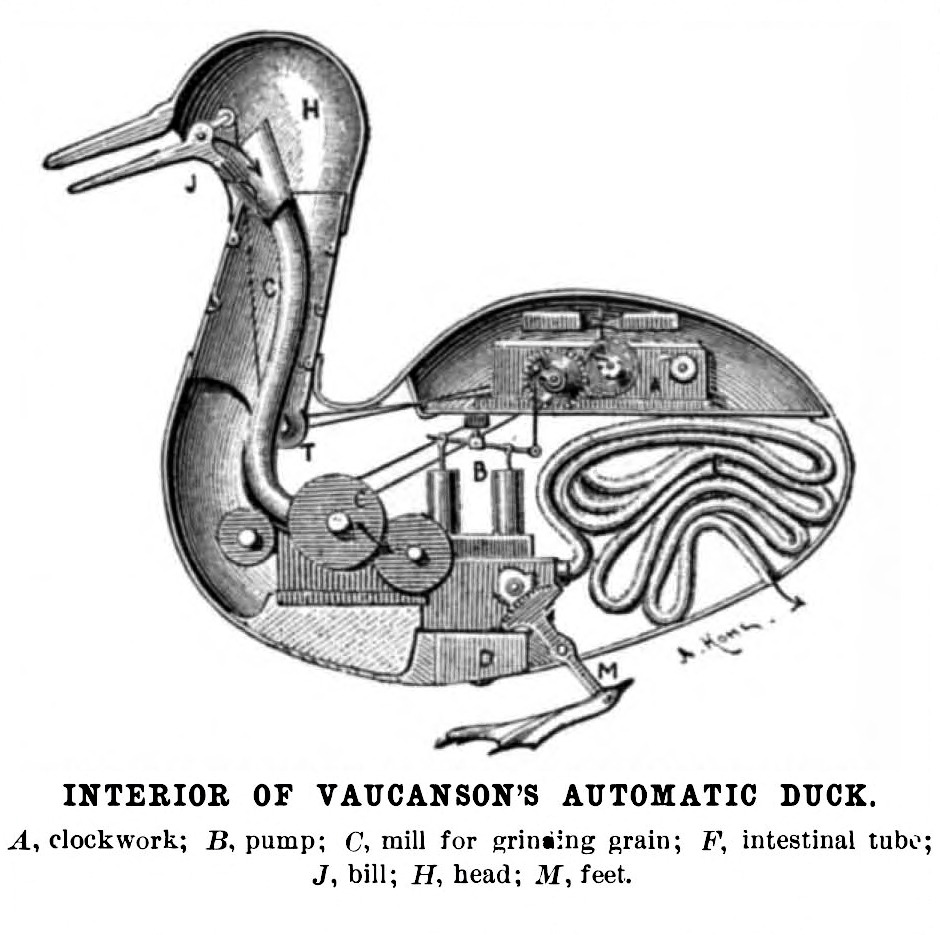
René Descartes, in De homine (1662), claimed that non-human animals could be explained reductively as automata; meaning essentially as more mechanically complex versions of this Digesting Duck.

Reductionism is any of several related philosophical ideas regarding the associations between phenomena which can be described in terms of simpler or more fundamental phenomena.[1] It is also described as an intellectual and philosophical position that interprets a complex system as the sum of its parts,[2] contrary to holism. Reductionism tends to focus on the small, predictable details of a system and is often associated with various philosophies like emergence, materialism, and determinism.

Definitions

[edit]

The Oxford Companion to Philosophy suggests that reductionism is "one of the most used and abused terms in the philosophical lexicon" and suggests a three-part division:[3]

  1. Ontological reductionism: a belief that the whole of reality consists of a minimal number of parts.
  2. Methodological reductionism: the scientific attempt to provide an explanation in terms of ever-smaller entities.
  3. Theory reductionism: the suggestion that a newer theory does not replace or absorb an older one, but reduces it to more basic terms. Theory reduction itself is divisible into three parts: translation, derivation, and explanation.[4]

Reductionism can be applied to any phenomenon, including objects, problems, explanations, theories, and meanings.[4][5][6]

For the sciences, application of methodological reductionism attempts explanation of entire systems in terms of their individual, constituent parts and their interactions. For example, the temperature of a gas is reduced to nothing beyond the average kinetic energy of its molecules in motion. Thomas Nagel and others speak of 'psychophysical reductionism' (the attempted reduction of psychological phenomena to physics and chemistry), and 'physico-chemical reductionism' (the attempted reduction of biology to physics and chemistry).[7] In a very simplified and sometimes contested form, reductionism is said to imply that a system is nothing but the sum of its parts.[5][8]

However, a more nuanced opinion is that a system is composed entirely of its parts, but the system will have features that none of the parts have (which, in essence is the basis of emergentism).[9] "The point of mechanistic explanations is usually showing how the higher level features arise from the parts."[8]

Other definitions are used by other authors. For example, what John Polkinghorne terms 'conceptual' or 'epistemological' reductionism[5] is the definition provided by Simon Blackburn[10] and by Jaegwon Kim:[11] that form of reductionism which concerns a program of replacing the facts or entities involved in one type of discourse with other facts or entities from another type, thereby providing a relationship between them. Richard Jones distinguishes ontological and epistemological reductionism, arguing that many ontological and epistemological reductionists affirm the need for different concepts for different degrees of complexity while affirming a reduction of theories.[9]

The idea of reductionism can be expressed by "levels" of explanation, with higher levels reducible if need be to lower levels. This use of levels of understanding in part expresses our human limitations in remembering detail. However, "most philosophers would insist that our role in conceptualizing reality [our need for a hierarchy of "levels" of understanding] does not change the fact that different levels of organization in reality do have different 'properties'."[9]

Reductionism does not preclude the existence of what might be termed emergent phenomena, but it does imply the ability to understand those phenomena completely in terms of the processes from which they are composed. This reductionist understanding is very different from ontological or strong emergentism, which intends that what emerges in "emergence" is more than the sum of the processes from which it emerges, respectively either in the ontological sense or in the epistemological sense.[12]

Ontological reductionism

[edit]

Richard Jones divides ontological reductionism into two: the reductionism of substances (e.g., the reduction of mind to matter) and the reduction of the number of structures operating in nature (e.g., the reduction of one physical force to another). This permits scientists and philosophers to affirm the former while being anti-reductionists regarding the latter.[13]

Nancey Murphy has claimed that there are two species of ontological reductionism: one that claims that wholes are nothing more than their parts; and atomist reductionism, claiming that wholes are not "really real". She admits that the phrase "really real" is apparently senseless but she has tried to explicate the supposed difference between the two.[14]

Ontological reductionism denies the idea of ontological emergence, and claims that emergence is an epistemological phenomenon that only exists through analysis or description of a system, and does not exist fundamentally.[15]

In some scientific disciplines, ontological reductionism takes two forms: token-identity theory and type-identity theory.[16] In this case, "token" refers to a biological process.[17]

Token ontological reductionism is the idea that every item that exists is a sum item. For perceivable items, it affirms that every perceivable item is a sum of items with a lesser degree of complexity. Token ontological reduction of biological things to chemical things is generally accepted.

Type ontological reductionism is the idea that every type of item is a sum type of item, and that every perceivable type of item is a sum of types of items with a lesser degree of complexity. Type ontological reduction of biological things to chemical things is often rejected.

Michael Ruse has criticized ontological reductionism as an improper argument against vitalism.[18]

Methodological reductionism

[edit]

In a biological context, methodological reductionism means attempting to explain all biological phenomena in terms of their underlying biochemical and molecular processes.[19]

In religion

[edit]

Anthropologists Edward Burnett Tylor and James George Frazer employed some religious reductionist arguments.[20]

Theory reductionism

[edit]

Theory reduction is the process by which a more general theory absorbs a special theory.[2] It can be further divided into translation, derivation, and explanation.[21] For example, both Kepler's laws of the motion of the planets and Galileo's theories of motion formulated for terrestrial objects are reducible to Newtonian theories of mechanics because all the explanatory power of the former are contained within the latter. Furthermore, the reduction is considered beneficial because Newtonian mechanics is a more general theory—that is, it explains more events than Galileo's or Kepler's. Besides scientific theories, theory reduction more generally can be the process by which one explanation subsumes another.

In mathematics

[edit]

In mathematics, reductionism can be interpreted as the philosophy that all mathematics can (or ought to) be based on a common foundation, which for modern mathematics is usually axiomatic set theory. Ernst Zermelo was one of the major advocates of such an opinion; he also developed much of axiomatic set theory. It has been argued that the generally accepted method of justifying mathematical axioms by their usefulness in common practice can potentially weaken Zermelo's reductionist claim.[22]

Jouko Väänänen has argued for second-order logic as a foundation for mathematics instead of set theory,[23] whereas others have argued for category theory as a foundation for certain aspects of mathematics.[24][25]

The incompleteness theorems of Kurt Gödel, published in 1931, caused doubt about the attainability of an axiomatic foundation for all of mathematics. Any such foundation would have to include axioms powerful enough to describe the arithmetic of the natural numbers (a subset of all mathematics). Yet Gödel proved that, for any consistent recursively enumerable axiomatic system powerful enough to describe the arithmetic of the natural numbers, there are (model-theoretically) true propositions about the natural numbers that cannot be proved from the axioms. Such propositions are known as formally undecidable propositions. For example, the continuum hypothesis is undecidable in the Zermelo–Fraenkel set theory as shown by Cohen.

In science

[edit]

Reductionist thinking and methods form the basis for many of the well-developed topics of modern science, including much of physics, chemistry and molecular biology. Classical mechanics in particular is seen as a reductionist framework. For instance, the Solar System is understood in terms of its components (the Sun and the planets) and their interactions.[26] Statistical mechanics can be considered as a reconciliation of macroscopic thermodynamic laws with the reductionist method of explaining macroscopic properties in terms of microscopic components, although it has been argued that reduction in physics 'never goes all the way in practice'.[27]

In computer science

[edit]

The role of reduction in computer science can be thought as a precise and unambiguous mathematical formalization of the philosophical idea of "theory reductionism". In a general sense, a problem (or set) is said to be reducible to another problem (or set), if there is a computable/feasible method to translate the questions of the former into the latter, so that, if one knows how to computably/feasibly solve the latter problem, then one can computably/feasibly solve the former. Thus, the latter can only be at least as "hard" to solve as the former.

Reduction in theoretical computer science is pervasive in both: the mathematical abstract foundations of computation; and in real-world performance or capability analysis of algorithms. More specifically, reduction is a foundational and central concept, not only in the realm of mathematical logic and abstract computation in computability (or recursive) theory, where it assumes the form of e.g. Turing reduction, but also in the realm of real-world computation in time (or space) complexity analysis of algorithms, where it assumes the form of e.g. polynomial-time reduction. Further, in the even more practical domain of software development, reduction can be seen as the inverse of composition and the conceptual process a programmer applies to a problem in order to produce an algorithm which solves the problem using a composition of existing algorithms (encoded as subroutines, or subclasses).

Criticism

[edit]

Free will

[edit]

Philosophers of the Enlightenment worked to insulate human free will from reductionism. Descartes separated the material world of mechanical necessity from the world of mental free will. German philosophers introduced the concept of the "noumenal" realm that is not governed by the deterministic laws of "phenomenal" nature, where every event is completely determined by chains of causality.[28] The most influential formulation was by Immanuel Kant, who distinguished between the causal deterministic framework the mind imposes on the world—the phenomenal realm—and the world as it exists for itself, the noumenal realm, which, as he believed, included free will. To insulate theology from reductionism, 19th century post-Enlightenment German theologians, especially Friedrich Schleiermacher and Albrecht Ritschl, used the Romantic method of basing religion on the human spirit, so that it is a person's feeling or sensibility about spiritual matters that comprises religion.[29]

Causation

[edit]

Most common philosophical understandings of causation involve reducing it to some collection of non-causal facts. Opponents of these reductionist views have given arguments that the non-causal facts in question are insufficient to determine the causal facts.[30]

Alfred North Whitehead's metaphysics opposed reductionism. He refers to this as the "fallacy of the misplaced concreteness". His scheme was to frame a rational, general understanding of phenomena, derived from our reality.

In science

[edit]

An alternative term for ontological reductionism is fragmentalism,[31] often used in a pejorative sense.[32] In cognitive psychology, George Kelly developed "constructive alternativism" as a form of personal construct psychology and an alternative to what he considered "accumulative fragmentalism". For this theory, knowledge is seen as the construction of successful mental models of the exterior world, rather than the accumulation of independent "nuggets of truth".[33] Others argue that inappropriate use of reductionism limits our understanding of complex systems. In particular, ecologist Robert Ulanowicz says that science must develop techniques to study ways in which larger scales of organization influence smaller ones, and also ways in which feedback loops create structure at a given level, independently of details at a lower level of organization. He advocates and uses information theory as a framework to study propensities in natural systems.[34] The limits of the application of reductionism are claimed to be especially evident at levels of organization with greater complexity, including living cells,[35] neural networks (biology), ecosystems, society, and other systems formed from assemblies of large numbers of diverse components linked by multiple feedback loops.[35][36]

See also

[edit]

References

[edit]

Further reading

[edit]
[edit]
Revisions and contributorsEdit on WikipediaRead on Wikipedia
from Grokipedia
Reductionism is a foundational approach in philosophy and science that posits complex systems, phenomena, or entities can be fully understood and explained by analyzing their simpler, constituent parts or underlying fundamental principles, often assuming that higher-level properties emerge solely from interactions at lower levels.[1] This view encompasses multiple dimensions, including ontological reductionism, which asserts that wholes are nothing more than the sum of their minimal parts, and methodological reductionism, which advocates explaining complex wholes through the study of smaller entities or processes.[2] In scientific contexts, such as biology and physics, reductionism has driven major advances, like elucidating molecular mechanisms of disease through genetic analysis, but it is distinguished from holism by its emphasis on decomposition over integration.[1] Key variants include epistemological reductionism, which holds that knowledge in one domain (e.g., biology) can be derived from or reduced to knowledge in a more fundamental domain (e.g., physics or chemistry), maintaining distinct disciplines while linking them hierarchically.[1] Proponents argue this method enables precise, predictive models; for instance, in microbiology, reductionist techniques like mutagenesis have identified genes essential for bacterial infection.[1] However, reductionism faces significant critiques for oversimplifying non-linear interactions and emergent properties that cannot be predicted from parts alone, as seen in biological systems where whole-organism behaviors defy isolated component analysis.[3] Critics like Ernst Mayr contend that while reductionism excels at basic mechanisms, it neglects the holistic, historical, and functional contexts unique to fields like evolutionary biology.[3] Despite these limitations, reductionism remains influential across disciplines, informing debates in philosophy of mind, where it challenges dualism by proposing mental states reduce to physical brain processes, and in systems theory, where it contrasts with approaches addressing "dark systems" of hidden properties.[2] Recent scholarship emphasizes complementary integration with holistic methods, such as systems biology, which combines reductionist data with network analyses to capture emergent dynamics more effectively.[1] This ongoing tension underscores reductionism's role as both a powerful tool and a contested paradigm in understanding complexity.

Core Concepts

Definition and Principles

Reductionism is a philosophical thesis asserting that complex systems, phenomena, or entities can be fully understood and explained by analyzing them in terms of their simpler, more basic constituents or underlying laws.[4] This approach emphasizes breaking down wholes into parts to uncover the fundamental mechanisms driving observed behaviors, positing that higher-level descriptions are ultimately derivable from or reducible to lower-level ones.[5] At its core, reductionism operates through two primary principles: explanatory reduction and metaphysical reduction. Explanatory reduction focuses on the epistemic process of deriving explanations for higher-level phenomena from more fundamental theories, laws, or mechanisms, often involving deductive or bridging arguments to connect levels of description.[6] Metaphysical reduction, by contrast, makes an ontological claim that higher-level entities or properties are nothing over and above their lower-level components, denying any independent existence or emergent qualities beyond the sum of the parts.[7] Ontological reductionism serves as a subtype of metaphysical reduction, specifically emphasizing that reality's composition consists solely of basic entities without irreducible wholes.[1] The practical mechanisms of reductionism typically involve three interrelated steps: decomposition, where a complex system is divided into its elemental parts; analysis, which examines the properties and interactions of those parts; and reconstruction, whereby the system is reassembled conceptually to verify that the whole's behavior emerges predictably from the parts' dynamics.[4] These steps aim to eliminate mystery by grounding explanations in verifiable, simpler truths, assuming no novel properties arise that cannot be accounted for at the foundational level.[5] This perspective stands in opposition to holism, which contends that complex wholes possess properties irreducible to their components, requiring study of the integrated system rather than isolated analysis.[1]

Historical Development

The roots of reductionist thought trace back to ancient Greek philosophy, particularly the atomist theories developed by Leucippus and his student Democritus in the 5th century BCE. Leucippus, a Greek philosopher active in the 5th century BCE, proposed that the universe consists of indivisible particles—atoms—moving through a void, reducing all phenomena to the interactions of these fundamental units without invoking divine or supernatural causes.[8] Democritus expanded this framework, arguing that complex entities like organisms and societies emerge solely from the mechanical combinations of atoms differing only in shape, size, and arrangement, thereby laying the metaphysical groundwork for explaining reality through simpler constituents.[8] During the medieval period, reductionist ideas remained marginal amid dominant Aristotelian and theological frameworks, but they resurfaced in the early modern era through mechanistic philosophy. René Descartes (1596–1650) advanced a corpuscular view of matter in works like Principia Philosophiae (1644), positing that the physical world operates as a machine governed by local contacts and motions of extended particles, reducing natural phenomena to basic mechanical principles and excluding occult qualities.[9] This approach influenced Isaac Newton's Philosophiæ Naturalis Principia Mathematica (1687), where the laws of motion and universal gravitation provided a mathematical foundation for reducing diverse physical events— from planetary orbits to terrestrial mechanics—to interactions among particles under simple, universal rules. The Enlightenment era marked a pivotal shift from metaphysical reductionism, focused on ultimate ontological components, to methodological reductionism, emphasizing empirical decomposition in scientific inquiry. Thinkers like Francis Bacon and members of the Royal Society promoted breaking complex systems into observable parts for experimentation, aligning with the era's valorization of reason and mechanism over speculation.[4] This transition facilitated the Scientific Revolution's emphasis on testable hypotheses derived from fundamental laws. In the 19th century, Charles Darwin's On the Origin of Species (1859) applied reductionist principles to biology, explaining the diversity and complexity of life through gradual variations and natural selection acting on heritable traits, without recourse to vital forces or design.[10] By the early 20th century, logical positivism revived reductionism as a tool for unifying science. The Vienna Circle, active in the 1920s and 1930s under Moritz Schlick and Rudolf Carnap, advocated reducing higher-level scientific theories to a foundational physical base, promoting a hierarchical "unity of science" where empirical protocols and logical analysis dissolve complex statements into verifiable atomic facts.[11] Post-World War II developments introduced significant critiques, tempering earlier enthusiasm for strict reductionism. Philosophers like Karl Popper and Thomas Kuhn highlighted limitations in reducing social or biological sciences to physics, arguing that emergent properties and contextual factors resist full decomposition, leading to more nuanced, pluralistic views in analytic philosophy of science.

Types of Reductionism

Ontological Reductionism

Ontological reductionism posits that complex entities or wholes are ontologically identical to, or exhaustively composed of, their more basic parts, such that higher-level phenomena do not introduce any novel ontological categories beyond aggregates of fundamental constituents.[12] This view denies the existence of emergent properties that possess independent ontological status, maintaining instead that all reality can be accounted for by a minimal set of basic entities and their arrangements.[13] A central argument for ontological reductionism is the principle of supervenience, which holds that higher-level properties are determined by and dependent upon lower-level ones, such that no two entities can differ in their higher-level features without differing in their lower-level base.[14] In physics, this manifests as micro-reduction, where macroscopic objects, such as tables or planets, are ontologically reducible to sums of atoms and subatomic particles governed by fundamental physical laws, with no additional ontological primitives required to explain their existence.[13] These arguments support a layered ontology where each level supervenes on the one below, culminating in a physicalist foundation. Illustrative examples include the reduction of mental states to brain processes in eliminative materialism, which contends that folk-psychological concepts like beliefs are illusory and should be supplanted by neuroscientific descriptions of neural activity, thereby eliminating any non-physical mental ontology. Similarly, biological organisms are viewed as mere aggregates of molecules and biochemical interactions, with no irreducible vital forces animating life beyond physical compositions.[12] Philosophically, ontological reductionism distinguishes between token identity, where individual instances (tokens) of higher-level entities are identical to specific lower-level instances (e.g., a particular pain token identical to a specific brain state token), and type identity, where entire categories (types) of higher-level properties correspond to types of lower-level properties (e.g., pain as a type identical to C-fiber firing as a type). This framework challenges substance dualism by rejecting the ontological independence of non-physical minds or souls, arguing instead that all entities, including conscious experiences, supervene on and reduce to physical bases, thereby resolving the mind-body problem through materialist monism.[14] A specific formulation within ontological reductionism is mereological reduction, which analyzes part-whole relations in metaphysics, asserting that wholes are nothing over and above their parts arranged in certain ways, without surplus ontological structure.[15] This approach addresses composition by treating complex objects as mereological sums, where the identity of the whole derives strictly from the mereology of its constituents, reinforcing the denial of emergent wholes with independent existence.[16]

Methodological Reductionism

Methodological reductionism refers to the investigative strategy in science that seeks to explain complex phenomena by breaking them down into simpler components and their interactions, typically through empirical methods such as experimentation and modeling. This approach emphasizes the analysis of systems at lower levels of organization to derive explanations for higher-level behaviors, without committing to metaphysical claims about the ultimate nature of reality.[1][10] Key techniques in methodological reductionism include the decomposition of systems into parts for targeted study, such as dissection in biology to examine organ functions independently, and the isolation of variables in controlled experiments to assess individual causal influences. Bottom-up modeling represents another core method, where basic elements—like particles or genes—are simulated and combined to predict emergent properties of the whole system. These techniques facilitate precise, replicable investigations by minimizing confounding factors and focusing on mechanistic details.[10][17] Representative examples illustrate its application across disciplines. In chemistry, complex reactions are reduced to interactions among atoms and molecules, allowing predictions of outcomes based on quantum mechanics and thermodynamics, as seen in the modeling of reaction kinetics. In biology, genetic analysis reduces heredity to the study of individual genes and their expression, exemplified by experiments isolating DNA sequences to understand trait inheritance, such as in Mendelian genetics extended to molecular levels. These methods enable scientists to build explanatory bridges from micro-level processes to macro-level observations.[18][10] Philosophically, methodological reductionism aligns with the hypothetico-deductive method, where hypotheses about component interactions are formulated and tested against empirical data to refine explanations. It also underpins the unity of science thesis, articulated by Oppenheim and Putnam in 1958, which advocates for a hierarchical structure of sciences where higher-level disciplines are methodologically connected to fundamental physics through successive reductions. This thesis promotes a cohesive scientific framework by encouraging the use of lower-level laws to illuminate broader phenomena.[19][20] A specific role for methodological reductionism appears in Karl Popper's criterion of falsifiability, outlined in his 1934 work Logik der Forschung, where simplifying complex systems into discrete, testable hypotheses enhances the potential for empirical refutation, thereby advancing scientific progress. By reducing broad claims to specific predictions, this approach ensures hypotheses remain amenable to critical testing, distinguishing scientific inquiry from unfalsifiable assertions.[21][22]

Theory Reductionism

Theory reductionism refers to the philosophical idea that a higher-level scientific theory can be reduced to a more fundamental lower-level theory if the laws or statements of the former are logical consequences of the laws of the latter, often facilitated by bridge principles or correspondence rules that link the vocabularies of the two theories. This form of reduction aims to show how explanatory power at one level emerges from mechanisms at a deeper level, providing a unified understanding of natural phenomena. Bridge principles serve as auxiliary assumptions that equate or relate terms from the higher theory (e.g., "temperature") to those in the lower theory (e.g., "average kinetic energy of molecules").[23] A seminal model for theory reduction was proposed by Ernest Nagel in 1961, framing it as a deductive-nomological explanation. In this model, the laws of the reduced theory are derived from the postulates of the reducing theory combined with correspondence rules that establish equivalences between theoretical terms. For instance, the derivation proceeds as follows: the higher-level laws $ L_1, \dots, L_m $ are shown to follow logically from the lower-level laws $ L'_1, \dots, L'_n $ and bridge statements $ C_1, \dots, C_r $, such that $ (L'_1 \land \dots \land L'_n \land C_1 \land \dots \land C_r ) \vdash L_1 \land \dots \land L_m $. This approach emphasizes logical derivability while accommodating cases where the reduced theory's assumptions are approximately preserved in the limit of the reducing theory.[23] Prominent examples illustrate this process. In physics, thermodynamics is reduced to statistical mechanics, where macroscopic laws like the ideal gas law $ PV = nRT $ emerge from the microscopic behavior of particles governed by the Maxwell-Boltzmann distribution. The derivation begins with the average kinetic energy of gas molecules: for a monatomic ideal gas, the equipartition theorem yields $ \frac{1}{2} m \langle v^2 \rangle = \frac{3}{2} kT $, where $ m $ is the molecular mass, $ \langle v^2 \rangle $ is the mean square speed, $ k $ is Boltzmann's constant, and $ T $ is temperature, so $ \langle \frac{1}{2} m v^2 \rangle = \frac{3}{2} kT $. Pressure arises from momentum transfer during wall collisions: for molecules hitting a wall of area $ A $ perpendicular to the x-direction, the change in momentum per collision is $ 2mv_x $, and the number of collisions per unit time is $ \frac{1}{2} N \langle v_x \rangle / V $ (with $ N/V $ density and averaging over directions), leading to $ P = \frac{1}{3} (N/V) m \langle v^2 \rangle $. Substituting the kinetic energy relation gives $ P = \frac{NkT}{V} $, or equivalently $ PV = nRT $ for $ n = N / N_A $ moles and $ R = N_A k $. Another example is the partial reduction of classical genetics to molecular biology, where Mendelian laws (e.g., segregation and independent assortment) are explained by DNA replication and recombination mechanisms, though requiring intertheoretic mappings rather than strict deduction due to the complexity of gene expression.[24][25] Despite these successes, theory reduction faces significant challenges, particularly from multiple realizability, which posits that a single higher-level phenomenon or law can be instantiated by diverse lower-level mechanisms. This undermines the universality of bridge principles, as they would need to encompass disjunctive realizations (e.g., a psychological state realized by neural patterns in humans, silicon circuits in machines, or biochemical processes in aliens), rendering derivations non-explanatory or overly complex. Philosophers like Hilary Putnam and Jerry Fodor argued that such multiplicity preserves the autonomy of higher-level theories, preventing full reduction while still allowing explanatory relations.[26]

Elementalism

Elementalism is a form of reductionism that involves analyzing complex phenomena by breaking them down into their most basic elemental components, often applied in psychology and philosophy to understand consciousness or reality through simple building blocks. In psychology, it is particularly associated with structuralism, pioneered by Edward B. Titchener in the late 19th and early 20th centuries, which aimed to decompose mental experiences into fundamental elements such as sensations, images, and affections via introspective analysis.[27] This approach maintains that complex mental states are merely aggregates of these elementary parts, without emergent qualities beyond their combination, aligning closely with reductionist principles by denying holistic or irreducible aspects of the mind. Philosophically, elementalism extends to broader metaphysical views where all entities are reducible to primitive elements and their relations, as seen in historical theories like atomism. It has been critiqued by holistic schools such as Gestalt psychology, which argue that the whole is more than the sum of its parts.[28]

Applications in Disciplines

In Science

Reductionism in science manifests through efforts to explain complex phenomena by deriving them from simpler, more fundamental components and laws, particularly in the physical, chemical, and biological domains. In physics, quantum mechanics provides a foundational reduction of classical mechanics, where macroscopic behaviors emerge as limiting cases of quantum principles under conditions of large quantum numbers or high energies.[29] This reduction is not exact but approximate, allowing classical predictions to align with quantum ones in the appropriate regime.[30] Similarly, particle physics advances reductionism by unifying fundamental forces; the electroweak theory merges electromagnetic and weak interactions into a single framework at high energies, while the Standard Model further incorporates the strong force through quantum chromodynamics, portraying diverse interactions as manifestations of underlying gauge symmetries.[31] In chemistry, molecular orbital theory exemplifies reductionism by interpreting chemical reactions and bonding as consequences of electron behaviors governed by quantum mechanical wavefunctions. Developed in the 1920s and 1930s by physicists like Friedrich Hund and Robert Mulliken, this approach constructs molecular properties from atomic orbitals, reducing macroscopic reactivity—such as bond formation or dissociation—to probabilistic electron distributions and energy minimizations.[32] This framework has enabled precise predictions of molecular spectra and reaction pathways, bridging chemistry to quantum physics without invoking emergent properties unique to chemical scales.[33] Biology has seen profound reductionist successes through the identification of DNA as the fundamental unit of heredity, as proposed in the Watson-Crick double-helix model of 1953, which explains genetic information storage and replication via base-pairing rules derivable from molecular structure.[34] In neuroscience, reductionism seeks to account for behavior by mapping it to patterns of neural firings, positing that cognitive processes and actions arise from electrochemical signals in neuron networks, as evidenced by techniques like optogenetics that manipulate specific firings to elicit behavioral responses.[35] These approaches align with theory reductionism, where higher-level biological theories are linked to and partially derived from lower-level physical and chemical ones.[36] Key successes of scientific reductionism include its predictive power, such as in protein folding, where quantum chemistry principles—applied through density functional theory—allow simulations to forecast three-dimensional structures from amino acid sequences, achieving accuracies that guide drug design and enzyme engineering.[37] A landmark illustration is the 2012 discovery of the Higgs boson at CERN's Large Hadron Collider, which confirmed the Higgs mechanism and reduced the origin of particle masses to interactions with the pervasive Higgs field, unifying mass generation within the Standard Model.[38] Despite these advances, reductionism faces limitations in biology, where quantum effects persist at macroscopic scales, as in photosynthesis, where coherent energy transfer among chlorophyll molecules exploits quantum superposition to achieve near-perfect efficiency, defying purely classical explanations and suggesting irreducible quantum influences on biological function.[39] Such phenomena highlight that while reductionist strategies excel in isolating mechanisms, they sometimes overlook holistic quantum dynamics essential for emergent efficiencies in living systems.[40]

In Mathematics and Computer Science

In mathematics, reductionism manifests through the effort to derive complex theorems from a minimal set of axioms or postulates, establishing a foundational hierarchy where higher-level structures emerge from basic primitives. A seminal example is Euclidean geometry, where David Hilbert formalized the system by reducing geometric propositions to a rigorous set of 20 axioms and one axiom schema, building upon Euclid's original five postulates to ensure consistency and completeness within the axiomatic framework. This approach demonstrates how intricate spatial relationships, such as congruence and similarity, can be logically deduced from undefined terms like "point" and "line," avoiding gaps in Euclid's original formulation.[41] Set theory exemplifies foundational reductionism by positing sets as the sole primitive from which all mathematical objects—numbers, functions, and spaces—are constructed. Zermelo-Fraenkel set theory (ZF), refined in the early 20th century, achieves this by axiomatizing set membership and operations, enabling the encoding of arithmetic, analysis, and topology within a unified system; for instance, natural numbers are defined via the von Neumann ordinals, reducing Peano arithmetic to set-theoretic constructions.[41] This reductionist strategy underpins modern mathematics, as ZF provides a consistent basis for deriving theorems across disciplines without invoking additional primitives.[42] In computer science, reductionism appears in modular programming, where complex software systems are decomposed into independent, reusable modules or functions, each handling a specific task while minimizing interdependencies. Edsger Dijkstra's structured programming paradigm, introduced in the late 1960s, embodies this by advocating decomposition into hierarchical blocks—sequences, selections, and iterations—reducing program complexity and enhancing verifiability, as seen in languages like Pascal that enforce such modularity.[43] This approach aligns with reductionist principles by breaking monolithic code into verifiable subunits, facilitating debugging and maintenance without altering the overall system's behavior.[44] Computational complexity theory employs reductions to classify problems by transforming one into another via efficient algorithms, revealing inherent difficulties. Polynomial-time reductions, central to defining NP-completeness, allow showing that if one problem is solvable in polynomial time, so are others reducible to it; for example, the traveling salesman problem reduces to the Hamiltonian cycle problem, establishing shared hardness.[45] The Cook-Levin theorem (1971) solidifies this by proving Boolean satisfiability (SAT) is NP-complete, as any nondeterministic Turing machine verification can be encoded as a polynomial-size Boolean formula, making SAT a universal target for reductions from all NP problems.[46] Exemplifying reduction in computation, Alan Turing's 1936 model of the Turing machine reduces all effective calculability to operations on a tape with a read-write head, finite states, and a symbol alphabet, proving that any algorithmic process can be simulated by such a device.[47] Algorithm design paradigms like divide-and-conquer further illustrate this, recursively partitioning problems into subproblems, solving them independently, and combining results; merge sort, for instance, halves an array, sorts subarrays, and merges in linear time, reducing sorting complexity from quadratic to O(nlogn)O(n \log n).[48] However, reductionism faces limits in formal systems, as revealed by Kurt Gödel's incompleteness theorems (1931), which demonstrate that any consistent axiomatic system capable of expressing basic arithmetic contains undecidable propositions—statements neither provable nor disprovable within the system—thus bounding the reductive power of axioms to capture all truths. These theorems highlight that while reductions can formalize vast domains, inherent incompleteness prevents total encapsulation of mathematical reality in finite axiom sets.[49]

In Philosophy and Religion

In philosophy, reductionism has played a central role in debates concerning the nature of the mind, particularly through the identity theory, which posits that mental states are identical to physical brain processes. This view was notably advanced by U.T. Place in his 1956 paper, where he argued that consciousness could be reasonably hypothesized as a brain process, drawing on phenomenological and neurophysiological evidence to support the reduction of sensory experiences to neural events.[50] Ontological reductionism underpins such materialist perspectives by asserting that higher-level mental phenomena are ultimately reducible to fundamental physical entities.[51] Ethical naturalism represents another application of reductionism in philosophy, seeking to reduce moral properties and facts to natural properties observable through empirical science, such as biological or psychological states. Proponents like William K. Frankena have defended this approach by arguing that ethical terms can be analyzed in terms of natural predicates, thereby integrating morality into the broader framework of naturalistic inquiry without invoking supernatural or non-natural elements.[52] In religious contexts, reductionism manifests in materialist interpretations that explain spiritual experiences as products of brain activity, challenging traditional views of the soul or divine encounters. Neurophilosophical analyses, for instance, have proposed that religious visions or mystical states arise from specific neural firings, reducing what believers perceive as transcendent to physiological mechanisms.[53] Theological critiques of such reductions emphasize a synthesis of faith and reason, as articulated by Thomas Aquinas in his Summa Theologica, where he integrated Aristotelian philosophy with Christian doctrine to affirm that divine truths transcend purely rational or material explanations while remaining compatible with them.[54] Sigmund Freud's psychoanalytic framework exemplifies reductionist approaches to religion, portraying religious beliefs as illusions fulfilling psychological needs for protection and wish-fulfillment, akin to childhood dependencies on parental authority. In The Future of an Illusion (1927), Freud systematically dismantled religious doctrines by tracing them to unconscious drives and societal neuroses, advocating for science as a substitute. Similarly, Richard Dawkins in The God Delusion (2006) employs evolutionary biology to reduce religious faith to adaptive byproducts of cognitive mechanisms shaped by natural selection, such as agency detection and pattern-seeking behaviors that once aided survival but now foster theistic illusions. A key philosophical debate involves the reduction of the soul to bodily processes, particularly in critiques of René Descartes' substance dualism, which posits the mind (or soul) as a non-extended, thinking substance distinct from the extended body. Critics like Anne Conway argued that this sharp dualism leads to an untenable mechanism, where vital spiritual aspects are erroneously separated from corporeal reality, advocating instead for a monistic vitalism that unifies body and soul without reductive elimination.[55] During the Enlightenment, deism emerged as a reductionist theological movement, portraying God as a distant first cause who set the universe in motion according to rational laws but refrained from ongoing intervention. Thinkers such as Matthew Tindal in Christianity as Old as the Creation (1730) exemplified this by equating divine providence with natural order, stripping away miraculous revelations and reducing religion to a deistic rationalism aligned with Newtonian mechanics.[56]

Criticisms and Alternatives

Challenges to Ontological and Methodological Approaches

Critics of ontological reductionism argue that it overlooks downward causation, where higher-level wholes exert causal influence on their constituent parts, thereby challenging the view that all properties and causal relations can be fully explained by lower-level components alone.[57] This perspective posits that emergent properties at the system level impose constraints that guide the behavior of parts in ways not predictable from part-level descriptions, as explored in analyses of holistic systems in philosophy of science.[58] For instance, in complex adaptive systems, the overall configuration can retroactively shape micro-level interactions, undermining the reductionist assumption of unidirectional bottom-up determination.[59] A related critique involves mereological fallacies, which occur when properties attributable only to wholes are erroneously ascribed to their parts, such as claiming that the brain "believes" or "intends" rather than the person.[60] In their 2003 work Philosophical Foundations of Neuroscience, M.R. Bennett and P.M.S. Hacker identify this as a pervasive error in cognitive neuroscience, where brain regions are treated as agents with psychological capacities that logically apply solely to the integrated organism. This fallacy highlights how ontological reductionism distorts conceptual clarity by conflating levels of description, leading to pseudo-explanations that ignore the irreducibly holistic nature of certain phenomena.[61] Jaegwon Kim's supervenience arguments from the 1980s and 1990s further expose dilemmas in ontological reductionism by examining the relationship between higher-level mental properties and their physical bases. Kim contends that if mental properties supervene on physical ones—meaning no mental difference without a physical difference—yet possess causal efficacy, this leads to overdetermination or exclusion problems, where higher-level causes appear redundant or illusory unless reduced.[62] His "pairing problem" illustrates how supervenience fails to guarantee the necessary one-to-one mappings for strict ontological reduction, forcing nonreductive physicalists into uncomfortable positions regarding mental causation.[63] Multiple realizability provides another barrier to ontological reduction, as the same higher-level property can be instantiated by diverse lower-level realizations across different systems, preventing type-type identities essential for reduction.[64] Originating in Hilary Putnam's and Jerry Fodor's work in the 1960s and 1970s, this argument demonstrates that psychological states, for example, can be realized by varied neural structures in humans, silicon-based processors in machines, or even alien physiologies, rendering universal reductive laws untenable.[65] Similar issues arise in theory reductionism, where abstract principles face analogous realizability challenges.[64] Turning to methodological reductionism, challenges arise from the practical limits of decomposition in systems exhibiting chaos, where sensitivity to initial conditions amplifies small variations into unpredictable outcomes, complicating efforts to analyze parts in isolation.[66] In chaotic dynamics, as described by the Lorentz attractor model, even precise knowledge of components fails to yield reliable whole-system predictions without holistic contextual integration, thus questioning the efficacy of reductive strategies like isolating subsystems for study.[66] This sensitivity underscores how methodological reduction can lose predictive and explanatory power in nonlinear regimes, favoring integrative approaches over pure decomposition.[67] In biology, the concept of irreducible complexity critiques methodological reduction by suggesting that certain molecular systems require all parts to function simultaneously, defying stepwise disassembly and reassembly in evolutionary or analytical terms. Michael Behe introduced this idea in his 1996 book Darwin's Black Box, using examples like the bacterial flagellum, where removing any component abolishes function, implying that reductive analysis cannot reconstruct the system's origin or operation from simpler precursors—though this claim remains highly contested within scientific communities.[68] The grain argument further undermines both ontological and methodological reductionism by highlighting that explanatory power depends on selecting an appropriate level of detail; reducing to an excessively fine grain overwhelms with irrelevant micro-details, while coarser grains preserve intelligibility but risk oversimplification. As articulated by Michael Lockwood in discussions of physicalism, this "grain problem" reveals that no single reductive level universally captures phenomena, as shifting granularity alters what counts as explanatory, often diminishing the coherence of higher-level narratives. Thus, reductionism's insistence on fundamental levels ignores the context-dependent utility of multiple descriptive grains.[69]

Issues with Free Will and Causation

Reductionism, particularly in its ontological form assuming physical determinism, poses significant challenges to the concept of free will by suggesting that human decisions are ultimately reducible to deterministic neural processes. In the 1983 experiments conducted by Benjamin Libet and colleagues, participants reported the moment of conscious intention to perform a simple action, such as flexing a finger, while brain activity was monitored via electroencephalography. The results indicated that a readiness potential—a neural signal associated with the preparation of voluntary action—emerged approximately 350 milliseconds before the reported awareness of the intention. While this has been interpreted to imply that unconscious brain processes initiate decisions prior to conscious awareness, supporting a reductionist view of neural determinism where free will appears illusory as actions stem from prior physical causes in the brain rather than autonomous conscious choice, the findings are controversial. Critiques, including those in the cited review, note the triviality of the actions studied and suggest the readiness potential may reflect spontaneous neural fluctuations rather than deterministic initiation; later research, such as a 2023 meta-analysis, argues the evidence is insufficient to undermine free will, particularly for deliberate decisions where no such potential precedes awareness.[70][71] Philosophers have responded to such reductionist challenges by debating compatibilism and incompatibilism regarding free will and determinism. Compatibilists argue that free will is compatible with determinism, defining it as the capacity to act according to one's motivations without external coercion, even if those motivations are determined by prior causes. Daniel Dennett, in his 1984 book Elbow Room: The Varieties of Free Will Worth Wanting, defends this compatibilist reduction by emphasizing that the kind of free will worth wanting involves evolved cognitive competencies that allow for rational deliberation and avoidance of regret, without requiring indeterminism or supernatural intervention.[72] In contrast, incompatibilists contend that true free will necessitates the ability to have done otherwise in the exact same circumstances, which determinism precludes, rendering moral agency problematic under a strictly reductionist framework.[73] In terms of causation, reductionism posits a unidirectional chain from micro-level physical events to macro-level phenomena, including human behavior, but this leads to issues of overdetermination where mental causes become redundant. If physical states fully determine outcomes, as in the causal closure principle, then any distinct mental event causing the same effect would overdetermine it unnecessarily, violating parsimony.[74] This problem manifests in epiphenomenalism, a consequence of failed reductive accounts of the mind, where mental states are mere byproducts of physical processes with no independent causal role in producing actions or further mental states.[75] Critics argue that such a view undermines the intuitive efficacy of thoughts and intentions, as seen in Jaegwon Kim's exclusion argument, which holds that non-reducible mental properties cannot causally interact with the physical world without either epiphenomenal irrelevance or violation of physical laws.[76] Quantum indeterminacy, emerging in the 1920s with Werner Heisenberg's uncertainty principle, challenges the strict causal reductionism underlying these debates by introducing fundamental unpredictability at the subatomic level. Heisenberg's 1927 formulation demonstrated that precise simultaneous measurement of position and momentum is impossible, implying inherent limits to deterministic predictions even in principle. This indeterminism disrupts the reductionist chain from micro to macro causation, potentially opening space for non-deterministic influences on neural processes relevant to free will. Under reductionist determinism, moral responsibility is threatened, as agents cannot be held accountable for actions fully predetermined by prior physical states; however, compatibilist views maintain that responsibility persists through the predictable consequences of character and choices within a deterministic system.[77]

Scientific and Emergentist Critiques

Emergentist critiques of reductionism argue that complex systems exhibit properties that arise unpredictably from the interactions of their components, rendering full explanation in terms of lower-level parts impossible. In his 1925 work The Mind and Its Place in Nature, philosopher C.D. Broad distinguished between "resultant" properties, which can be mechanistically predicted from parts (e.g., the weight of a table as the sum of its components), and "emergent" properties, which cannot be deduced even with complete knowledge of the parts and their interactions, such as novel chemical properties in compounds. Broad identified types of emergence, including qualitative novelty where higher-level phenomena introduce entirely new laws not reducible to those governing simpler entities. This framework challenges ontological reductionism by positing that wholes possess irreducible attributes, as seen in debates over consciousness emerging from neural activity without being fully explainable by individual neuron firings. While scientific reductionism has successfully explained numerous life processes in terms of physical components—such as atoms, molecular chemistry (including pH-dependent reactions), and DNA mechanisms—without requiring a non-physical vital force, this explanatory power does not prove that life has no meaning or that no soul exists, as these are philosophical and metaphysical issues beyond the empirical scope of science.[78][10][79] In biology, emergentist perspectives highlight how ecosystem dynamics cannot be reduced to genetic or molecular levels alone, as interactions produce holistic behaviors. The Gaia hypothesis, proposed by James Lovelock in 1979, posits Earth as a self-regulating system where life maintains planetary conditions conducive to its persistence, with emergent feedbacks like atmospheric composition arising from biosphere-geosphere interactions rather than isolated components. For instance, oxygen levels are stabilized not by individual organisms but through global biogeochemical cycles that defy reduction to genetic determinism. This view underscores reductionism's inadequacy for holistic systems, where methodological approaches focusing on parts fail to capture system-wide regulation.[80] Physics provides further empirical challenges through phenomena like chaos theory and quantum mechanics. Edward Lorenz's 1963 paper demonstrated that deterministic systems, such as atmospheric models, exhibit sensitive dependence on initial conditions, where minute variations lead to vastly different outcomes, making long-term predictions irreducible to precise micro-level computations. This "butterfly effect" illustrates how emergent unpredictability arises in non-linear dynamics, limiting reductionist explanations in complex physical systems. Similarly, quantum entanglement reveals non-local correlations, as formalized in John Bell's 1964 theorem, where measurements on separated particles instantaneously influence each other, violating local realism and showing that particle properties cannot be independently reduced without holistic quantum descriptions.[81] Key arguments against reductionism emphasize scale-dependent laws and computational limits. Physicist Philip W. Anderson's 1972 essay "More Is Different" contends that while reductionism works at certain scales, emergent behaviors at higher levels introduce new principles, such as broken symmetry in condensed matter physics, where collective electron behaviors yield superconductivity not predictable from quantum mechanics alone. Anderson argued that complexity hierarchies prevent full upward reduction, as "the ability to reduce everything to simple fundamental laws does not imply the ability to start from those laws and reconstruct the universe." In computational simulations, this manifests as irreducible emergence; for example, attempts to model complex systems like weather or brains encounter limits where interactions produce outcomes beyond exhaustive part-by-part calculation due to exponential complexity.[82] A specific illustration is the failure of full reduction in climate modeling, where emergent weather patterns arise from chaotic atmospheric interactions that cannot be perfectly simulated from molecular dynamics. Despite advances in resolving finer scales, models like those from the IPCC rely on parameterizations for unresolved processes, as complete reduction to atomic levels is computationally infeasible and yields unpredictable macro-patterns due to non-linearity, highlighting emergence's role in persistent uncertainties.[83]

References

User Avatar
No comments yet.