Hubbry Logo
PulmonologyPulmonologyMain
Open search
Pulmonology
Community hub
Pulmonology
logo
8 pages, 0 posts
0 subscribers
Be the first to start a discussion here.
Pulmonology
Pulmonology
from Wikipedia
Pulmonology
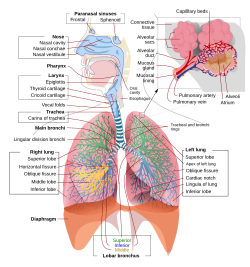
Schematic view of the human respiratory system with their parts and functions.
SystemRespiratory
Significant diseasesAsthma, Lung cancer, Tuberculosis, Occupational lung disease
Significant testsBronchoscopy, Sputum studies, Arterial blood gases
SpecialistRespiratory Physician, Pulmonologist

Pulmonology (/ˌpʌlməˈnɒləi/, /ˌpʊlməˈnɒləi/, from Latin pulmō, -ōnis "lung" and the Greek suffix -λογία -logía "study of"), pneumology (/nʊˈmɒləi, njʊ-/, built on Greek πνεύμων pneúmōn "lung") or pneumonology[1] (/nʊmənˈɒləi, njʊ-/) is a medical specialty that deals with diseases involving the respiratory tract.[2] It is also known as respirology, respiratory medicine, or chest medicine in some countries and areas.

Pulmonology is considered a branch of internal medicine, and is related to intensive care medicine. Pulmonology often involves managing patients who need life support and mechanical ventilation. Pulmonologists are specially trained in diseases and conditions of the chest, particularly pneumonia, asthma, tuberculosis, emphysema, and complicated chest infections.[3]

Pulmonology/respirology departments work especially closely with certain other specialties: cardiothoracic surgery departments and cardiology departments.

Journals of pulmonology

[edit]

History of pulmonology

[edit]

One of the first major discoveries relevant to the field of pulmonology was the discovery of pulmonary circulation. Originally, it was thought that blood reaching the right side of the heart passed through small 'pores' in the septum into the left side to be oxygenated, as theorized by Galen; however, the discovery of pulmonary circulation disproves this theory, which had previously been accepted since the 2nd century. Thirteenth-century anatomist and physiologist Ibn Al-Nafis accurately theorized that there was no 'direct' passage between the two sides (ventricles) of the heart. He believed that the blood must have passed through the pulmonary artery, through the lungs, and back into the heart to be pumped around the body. This is believed by many to be the first scientific description of pulmonary circulation.[4]

Although pulmonary medicine only began to evolve as a medical specialty in the 1950s, William Welch and William Osler founded the 'parent' organization of the American Thoracic Society,[5] the National Association for the Study and Prevention of Tuberculosis.[6] The care, treatment, and study of tuberculosis of the lung is recognised as a discipline in its own right, phthisiology.[7] When the specialty did begin to evolve, several discoveries were being made linking the respiratory system and the measurement of arterial blood gases, attracting more and more physicians and researchers to the developing field.[8]

Pulmonology and its relevance in other medical fields

[edit]

Surgery of the respiratory tract is generally performed by specialists in cardiothoracic surgery[9] (or thoracic surgery),[10] though minor procedures may be performed by pulmonologists. Pulmonology is closely related to critical care medicine[11] when dealing with patients who require mechanical ventilation. As a result, many pulmonologists are certified to practice critical care medicine in addition to pulmonary medicine. There are fellowship programs that allow physicians to become board certified in pulmonary and critical care medicine simultaneously. Interventional pulmonology is a relatively new field within pulmonary medicine[12] that deals with the use of procedures such as bronchoscopy[13] and pleuroscopy to treat several pulmonary diseases.[14] Interventional pulmonology is increasingly recognized as a specific medical specialty.[15]

Diagnosis

[edit]

The pulmonologist begins the diagnostic process with a general review focusing on:

Physical diagnostics[19] are as important as in other fields of medicine.

As many heart diseases can give pulmonary signs,[20] a thorough cardiac investigation is usually included.

Procedures

[edit]

Clinical procedures

[edit]

Pulmonary clinical procedures include the following pulmonary tests and procedures:[21][22]

Surgical procedures

[edit]

Major surgical procedures on the heart and lungs are performed by a thoracic surgeon.[28] Pulmonologists often perform specialized procedures to get samples from the inside of the chest or inside of the lung. They use radiographic techniques to view vasculature of the lungs and heart to assist with diagnosis.

Treatment and therapeutics

[edit]

Medication is the most important treatment of most diseases of pulmonology, either by inhalation (bronchodilators and steroids) or in oral form (antibiotics, leukotriene antagonists). A common example being the usage of inhalers in the treatment of inflammatory lung conditions such as asthma or chronic obstructive pulmonary disease. Oxygen therapy[29] is often necessary in severe respiratory disease (emphysema and pulmonary fibrosis). When this is insufficient, the patient might require mechanical ventilation.

Pulmonary rehabilitation[30] has been defined as a multidimensional continuum of services directed to persons with pulmonary disease and their families, usually by an interdisciplinary team of specialists, with the goal of achieving and maintaining the individual's maximum level of independence and functioning in the community. Pulmonary rehabilitation[31] is intended to educate the patient, the family, and improve the overall quality of life and prognosis for the patient. Interventions can include exercise, education, emotional support, oxygen, noninvasive mechanical ventilation, optimization of airway secretion clearance, promoting compliance with medical care to reduce numbers of exacerbations and hospitalizations, and returning to work and/or a more active and emotionally satisfying life. These goals are appropriate for any patients with diminished respiratory reserve whether due to obstructive or intrinsic pulmonary diseases (oxygenation impairment) or neuromuscular weakness (ventilatory impairment). A pulmonary rehabilitation team[32] may include a rehabilitation physician, a pulmonary medicine specialist, physician assistant and allied health professionals including a rehabilitation nurse, a respiratory therapist, a speech-language pathologist, a physical therapist, an occupational therapist, a psychologist, and a social worker among others. Additionally, breathing games are used to motivate children to perform pulmonary rehabilitation.

Education and training

[edit]

Pulmonologist

[edit]
Pulmonologist
Physician performing a bronchoscopy.
Occupation
Names
  • Pulmonologist
  • Pneumologist
  • Respirologist
  • Respiratory physician or chest physician
Occupation type
Specialty
Activity sectors
Medicine
Description
Education required
Fields of
employment
Hospitals, clinics

In the United States, pulmonologists are physicians who, after receiving a medical degree (MD or DO), complete residency training in internal medicine, followed by at least two additional years of subspeciality fellowship training in pulmonology.[33] After satisfactorily completing a fellowship in pulmonary medicine, the physician is permitted to take the board certification examination in pulmonary medicine. After passing this exam, the physician is then board certified as a pulmonologist. Most pulmonologists complete three years of combined subspecialty fellowship training in pulmonary medicine and critical care medicine.

Pediatric pulmonologist

[edit]

In the United States, pediatric pulmonologists[34] are physicians who, after receiving a medical degree (MD, DO, MBBS, MBBCh, etc.), complete residency training in pediatrics, followed by at least three additional years of subspeciality fellowship training in pulmonology. Pediatric pulmonologists treat diseases of the airways, lungs, respiratory mechanics and aerodigestive system.

Scientific research

[edit]

Pulmonologists are involved in both clinical and basic research of the respiratory system, ranging from the anatomy of the respiratory epithelium to the most effective treatment of pulmonary hypertension. Scientific research also takes place to look for causes and possible treatment in diseases such as pulmonary tuberculosis and lung cancer.

References

[edit]
Revisions and contributorsEdit on WikipediaRead on Wikipedia
from Grokipedia
Pulmonology, also known as respiratory medicine or pneumology, is a subspecialty of focused on the diagnosis, treatment, and prevention of diseases and disorders affecting the , including the lungs, airways, bronchial tubes, and upper . Respiratory diseases are a leading cause of morbidity and mortality globally, affecting over 400 million people with conditions like and as of recent estimates. This field encompasses a wide range of conditions such as , (COPD), , , , , and sleep-related breathing disorders like . Pulmonologists, the physicians specializing in this area, undergo extensive training, typically completing a followed by a three-year residency in and a three-year fellowship in pulmonary medicine, often combined with critical care medicine. They employ advanced diagnostic tools including to assess function, imaging such as X-rays and CT scans, for direct airway examination, blood tests, and sleep studies to evaluate respiratory health. Treatment approaches may involve medications like bronchodilators or corticosteroids, programs, , or coordination with other specialists for surgical interventions in severe cases. The scope of pulmonology extends beyond outpatient care to include management of acute respiratory failures in intensive care units, where pulmonologists oversee and life support for critically ill patients. It intersects with fields like , , and , particularly in addressing comorbidities such as heart-lung interactions or infections in immunocompromised individuals. Ongoing research in pulmonology emphasizes preventive strategies, including programs and environmental control measures to reduce exposure to pollutants, aiming to mitigate the global burden of respiratory diseases.

Overview

Definition and Scope

Pulmonology, also known as pulmonary medicine, is a of focused on the , treatment, and prevention of diseases affecting the , including the lungs, airways, , and chest wall. Pulmonologists are physicians trained to manage a wide range of conditions that impair and , emphasizing both acute and chronic disorders of the pulmonary structures. The scope of pulmonology encompasses the prevention, early detection, and comprehensive management of respiratory disorders, such as , chronic obstructive pulmonary disease (COPD), , , interstitial lung diseases, , , and . These specialists address issues from the trachea and bronchi to the alveoli and pleura, often integrating lifestyle interventions, , and procedural interventions to improve lung function and . While pulmonology overlaps with other fields in shared symptoms like , it distinctly targets primary respiratory pathologies rather than upper airway issues handled by otolaryngology or cardiovascular complications managed by . Emerging subspecialties within pulmonology include , which focuses on sleep-disordered breathing such as , and interventional pulmonology, a field utilizing advanced endoscopic techniques for minimally invasive and of airway, lung, and pleural conditions. These areas expand the discipline's boundaries to address evolving challenges in respiratory care, such as complex thoracic malignancies and chronic ventilatory support needs.

Importance in Healthcare

Pulmonology plays a pivotal role in addressing the substantial global burden of respiratory diseases, which rank among the leading causes of morbidity and mortality worldwide. According to the (WHO), (COPD) is the fourth leading cause of death globally, responsible for 3.5 million deaths in 2021, while affected an estimated 262 million people in 2019 and caused 455,000 deaths. Overall, chronic respiratory diseases impact approximately 468.3 million individuals worldwide, with an age-standardized prevalence rate of 5,785.4 per 100,000 population as of 2021. These conditions contribute to over 8 million annual deaths from respiratory causes, underscoring the field's essential contribution to efforts. Pulmonologists are central to managing both chronic respiratory conditions, such as COPD and , and acute emergencies like , often through specialized interventions that stabilize patients and prevent complications. In preventive care, the specialty emphasizes programs, where pulmonologists provide counseling and to improve function and reduce disease progression in at-risk populations. These efforts not only address immediate health threats but also mitigate the long-term exacerbation of symptoms in chronic cases. The importance of pulmonology extends to enhancing and reducing economic burdens associated with respiratory illnesses, with early interventions proven to extend and lower healthcare costs. For instance, the global economic impact of COPD alone is projected to reach $4.326 trillion (in 2017 international dollars) from 2020 to 2050, highlighting the financial strain on health systems and economies. By facilitating better disease control, pulmonological care diminishes disability-adjusted life years lost to respiratory conditions, thereby supporting broader societal productivity. The further amplified this role since 2020, as pulmonologists led ventilator management for severe cases and addressed long-term sequelae such as and persistent dyspnea in survivors.

History

Early Developments

The foundations of pulmonology trace back to ancient civilizations, where early physicians began documenting respiratory ailments based on clinical observations. In around 400 BCE, described as a paroxysmal condition characterized by labored breathing and wheezing, attributing it to imbalances in bodily humors, particularly phlegm obstructing the airways. He also detailed phthisis, a progressive wasting disease of the lungs now recognized as , noting symptoms like , , and , which he observed predominantly in young adults. These descriptions, compiled in the , marked the first systematic attempts to differentiate respiratory disorders from general fevers, laying groundwork for later pathological correlations. Advancements in the 17th and 18th centuries shifted toward anatomical and physiological insights, influenced by the . William Harvey's 1628 treatise De Motu Cordis elucidated the , including , demonstrating how blood passes through the lungs for before returning to the heart, thus integrating respiratory function with cardiovascular dynamics. This overturned Galenic theories of blood mixing with air and provided a mechanistic basis for understanding in the lungs. Complementing this, in 1761, Leopold Auenbrugger published Inventum Novum, introducing chest percussion as a diagnostic tool; by tapping the , he could detect dullness indicating pleural effusions or consolidation and resonance suggesting cavities or , verified through postmortem correlations in over 1,000 cases. The 19th century brought transformative diagnostic innovations, particularly through , amid the Industrial Revolution's rise. , in 1816, invented the monaural —a wooden for mediate auscultation—to overcome limitations of direct ear-to-chest listening, enabling clearer detection of internal sounds without physical contact. His seminal 1819 work, De l'Auscultation Médiate, classified lung sounds such as vesicular breath over healthy tissue, bronchial breath in consolidation, and crepitant rales in , linking these to pathological findings like alveolar filling in pneumonic inflammation. Laennec's correlations, drawn from hundreds of autopsies, first reliably distinguished conditions including , , and , revolutionizing noninvasive thoracic . Parallel to these developments, the highlighted occupational lung diseases, fostering early epidemiological awareness. In regions of Britain and from the late , physicians noted high respiratory morbidity among workers exposed to , with reports of and breathlessness linked to prolonged of particles. By 1831, James Craufurd Gregory described anthracosis—black pigmentation and in miners' lungs—in a postmortem examination, attributing it to cumulative deposition causing and impaired ventilation, an observation that spurred initial calls for protections. These insights, amid expanding operations, underscored environmental factors in pulmonary , influencing reforms.

Modern Advancements

In the early 20th century, pulmonology advanced significantly with the development of , a procedure pioneered by American physician Chevalier Jackson, who perfected the rigid bronchoscope design and established safe techniques for its use in the United States around 1918. This innovation allowed for direct visualization and removal of airway obstructions, transforming the diagnosis and treatment of respiratory conditions such as and early lung tumors. The formation of professional societies further solidified the field's growth; the American Thoracic Society, originally established in 1905 as the American Sanatorium Association to combat , evolved into a key organization promoting research and standards in respiratory medicine. The mid-20th century marked pivotal shifts driven by infectious disease crises and diagnostic standardization. The discovery and widespread use of antibiotics, beginning with in 1945, revolutionized treatment by enabling effective regimens that drastically reduced mortality rates from the disease post-1940s. The 1952 polio epidemic, which paralyzed over 300 patients requiring respiratory support, spurred innovations in , including the widespread adoption of positive pressure techniques that laid the foundation for modern intensive care units. Concurrently, pulmonary function tests became standardized in the , with the introduction of forced expiratory volume in one second (FEV1) by Robert Tiffeneau in 1947, providing quantifiable metrics for assessing lung capacity and airflow obstruction. Advancements in imaging and dominated the late 20th and early 21st centuries. Computed tomography (CT) scans, developed in the 1970s, enhanced detection by offering detailed cross-sectional views of pulmonary nodules, far surpassing traditional chest X-rays in sensitivity for early-stage lesions. In the 2000s, biologic therapies emerged as targeted treatments for severe ; , approved by the FDA in 2003, was the first anti-IgE to reduce exacerbations by blocking immunoglobulin E-mediated inflammation. Post-2010, has integrated into pulmonology diagnostics, with algorithms improving the accuracy of CT interpretation for conditions like and through automated nodule detection and risk stratification. These innovations were complemented by evidence-based guidelines, such as the 2001 Global Initiative for Chronic Obstructive Lung Disease (GOLD) report, which standardized COPD management worldwide by emphasizing spirometry-based diagnosis and stepwise . The , beginning in 2020, represented a major milestone in pulmonology's history, highlighting the field's critical role in managing (ARDS) and viral pneumonias on a global scale. Pulmonologists led efforts in optimizing strategies, such as prone positioning and low tidal volume ventilation, which reduced mortality in severe cases. The crisis also accelerated the adoption of telemedicine for pulmonary consultations and spurred research into antiviral therapies and vaccines targeting respiratory pathogens, influencing ongoing practices as of 2025.

Interrelations with Other Specialties

Key Overlaps

Pulmonology intersects significantly with in the management of conditions where lung disease precipitates cardiac complications, particularly and cor pulmonale. is a heterogeneous disorder characterized by elevated pressures, often arising from underlying lung diseases such as (COPD) or , and is commonly encountered in both pulmonology and practices. In these cases, pulmonologists address the primary respiratory , while cardiologists focus on hemodynamic assessments and right ventricular strain, requiring collaborative evaluation through and right heart catheterization to optimize outcomes. Cor pulmonale, defined as right ventricular dysfunction secondary to , exemplifies this overlap, as the underlying lung condition—such as severe COPD or —leads to increased , straining the right heart. Management involves joint efforts to improve oxygenation via bronchodilators and supplemental oxygen, alongside diuretics and vasodilators to support right ventricular function, highlighting the need for integrated care to prevent progression to right . Connections between pulmonology, , and are evident in autoimmune respiratory disorders like and , where systemic immune dysregulation affects the lungs. , a multisystem granulomatous of unknown , primarily involves the lungs in 80-90% of cases, forming noncaseating granulomas that impair pulmonary function and can mimic rheumatic conditions. Often diagnosed in combined rheumatology-pulmonology clinics, it requires immunologists and rheumatologists to address extrapulmonary manifestations, such as involvement or lesions, while pulmonologists manage respiratory symptoms through corticosteroids and monitoring for . , an autoimmune inflammation of blood vessels, frequently targets the pulmonary vasculature, leading to disorders like or , which cause alveolar hemorrhage or . In these scenarios, rheumatologists provide expertise in immunosuppressive therapies, while pulmonologists handle diagnostic and ventilatory support, underscoring the shared focus on mitigating immune-mediated lung damage. Pulmonology shares a critical focus with in staging, treatment planning, and mitigating therapy-related pulmonary toxicities. , predominantly non-small cell lung cancer, requires multidisciplinary staging using the to assess tumor size, nodal involvement, and , where pulmonologists contribute through bronchoscopic biopsies and endobronchial ultrasound for accurate evaluation. lead systemic therapies like and , but pulmonologists monitor and manage respiratory complications, ensuring optimal lung function for treatment tolerance. Radiation and frequently induce pulmonary injury, including radiation pneumonitis or chemotherapy-associated , with risks amplified by dose, preexisting lung conditions, and concurrent use of agents like . Pulmonologists play a pivotal role in early detection via imaging and pulmonary function tests, employing supportive measures like steroids to prevent progression to and preserve quality of life post-oncologic intervention. Interactions with critical care medicine are prominent in acute conditions like (ARDS) and sepsis-related respiratory failure, where rapid pulmonary decompensation demands intensive interventions. ARDS, characterized by acute hypoxemic respiratory failure and bilateral lung opacities, often overlaps with critical care scenarios due to its association with , trauma, or aspiration, requiring pulmonologists to collaborate on ventilator strategies like low tidal volume ventilation to minimize ventilator-induced lung injury. Sepsis is a leading cause of ARDS, accounting for approximately 25–40% of cases, where triggers endothelial damage and alveolar flooding, leading to with high mortality rates of 30–50%. Critical care specialists manage hemodynamic support and prone positioning, while pulmonologists provide expertise in etiology-specific therapies, such as antibiotics for septic , to address the intertwined of and lung injury.

Multidisciplinary Approaches

Pulmonologists play a central role in multidisciplinary team-based care models, particularly in specialized clinics for chronic respiratory conditions such as . These clinics integrate pulmonologists with nutritionists, psychologists, nurses, dietitians, physical and respiratory therapists, and pharmacists to provide holistic management, addressing not only pulmonary function but also nutritional deficiencies, impacts, and adherence to therapies. For instance, the Cystic Fibrosis Foundation accredits centers where interdisciplinary teams conduct coordinated quarterly visits to optimize patient outcomes through personalized care plans that mitigate complications like and depression. In programs, pulmonologists coordinate closely with thoracic surgeons, immunologists, transplant coordinators, nurse practitioners, dietitians, and social workers to evaluate candidates, manage pre- and post-operative care, and address challenges. This collaborative approach ensures comprehensive assessment of comorbidities and long-term monitoring to improve rates, as seen in programs where unified treatment plans facilitate communication among specialists for conditions like end-stage . Pulmonologists also participate in sleep disorder centers, partnering with neurologists, otolaryngologists, and psychologists to diagnose and treat conditions like through integrated evaluations that combine pulmonary assessments with neurological and behavioral interventions. These centers employ multidisciplinary teams to perform , titrate therapies, and manage associated cardiovascular risks, enhancing overall patient quality of life. On a global scale, pulmonologists contribute to (WHO) initiatives for control by collaborating with experts, epidemiologists, and workers to implement integrated strategies that encompass screening, treatment adherence, and management. The WHO's Framework for Collaborative Action on Tuberculosis and Comorbidities emphasizes people-centered care models where pulmonologists support scale-up of holistic interventions in high-burden settings, fostering partnerships that align clinical expertise with and policy.

Diagnosis

Clinical Evaluation

Clinical evaluation in pulmonology begins with a comprehensive history-taking to identify potential causes of respiratory symptoms and factors. Patients are queried about the onset, duration, and characteristics of symptoms such as dyspnea, , and wheezing, including triggers, severity, and associated features like or production. history is meticulously documented, encompassing pack-years, current status, and cessation attempts, as exposure is a primary for numerous pulmonary conditions. Occupational and environmental exposures are also assessed, including duration and intensity of contact with irritants like dust, chemicals, or fumes, which can contribute to diseases such as or pneumoconioses. A detailed timeline of symptom progression helps differentiate acute from chronic processes and guides subsequent . The follows a systematic approach, starting with to observe , pattern, use of accessory muscles, and signs like digital clubbing, which may indicate chronic or underlying . assesses chest expansion symmetry and tactile , detecting asymmetries suggestive of or consolidation. Percussion evaluates lung density, with dullness indicating fluid or mass and hyperresonance suggesting air trapping, as in . is critical for identifying adventitious sounds, such as (rales) denoting interstitial fluid or , and wheezes indicating airway narrowing from or obstruction. Risk stratification is essential during evaluation, particularly for , where tools like the score predict severity and guide management decisions. Developed from a large international cohort, the score assigns one point each for five criteria: new-onset confusion, >7 mmol/L (or >19 mg/dL), ≥30 breaths per minute, systolic <90 mmHg or diastolic ≤60 mmHg, and age ≥65 years. The total score ranges from 0 to 5; scores of 0-1 indicate low mortality risk (approximately 1-2%), suggesting outpatient management; 2 indicates intermediate risk (9%), warranting hospitalization consideration; and 3-5 indicate high risk (15-40%), requiring inpatient care, often in intensive settings. Calculation involves simple clinical and basic lab assessment at presentation, enabling rapid triage. Integration of patient-reported outcomes enhances evaluation by quantifying symptom impact. The modified Medical Research Council (mMRC) dyspnea scale is a validated tool assessing breathlessness severity in daily activities, scored from 0 to 4: grade 0 (no dyspnea except with strenuous exercise), grade 1 (shortness of breath when hurrying on level ground or walking up a slight hill), grade 2 (walks slower than peers on level ground due to dyspnea or stops after 15-100 meters), grade 3 (stops for breath after walking 100 meters or a few minutes on level ground), and grade 4 (too breathless to leave the house or occurs at rest/dressing). Higher scores correlate with greater functional limitation and poorer prognosis in conditions like COPD, informing holistic assessment. This initial evaluation often precedes targeted diagnostic tests to confirm findings.

Diagnostic Tests

Pulmonary function tests (PFTs) are essential non-invasive assessments that evaluate lung mechanics, volumes, and gas exchange to diagnose and monitor respiratory conditions such as obstructive and restrictive lung diseases. Spirometry, a core component of PFTs, measures forced vital capacity (FVC), the total volume of air exhaled after maximal inhalation, and forced expiratory volume in one second (FEV1), the volume exhaled in the first second of that maneuver; the FEV1/FVC ratio helps distinguish obstructive from restrictive patterns, with a normal ratio at or above the lower limit of normal (typically around 70-80% in adults, varying by age, sex, height, and ethnicity). An obstructive defect is indicated when the FEV1/FVC ratio falls below this lower limit, often confirmed by a post-bronchodilator response where FEV1 improves by at least 12% and 200 mL. Lung volumes are accurately measured using body plethysmography, which quantifies total lung capacity (TLC), residual volume (RV), and functional residual capacity (FRC) by detecting pressure changes in a sealed chamber during breathing; this method is considered the gold standard as it includes trapped gas not captured by gas dilution techniques. Diffusing capacity for carbon monoxide (DLCO) assesses gas exchange efficiency by measuring the transfer of inhaled carbon monoxide across the alveolar-capillary membrane, reflecting impairments in emphysema, interstitial lung disease, or pulmonary vascular issues; normal DLCO values range from 75-125% of predicted, adjusted for hemoglobin levels and alveolar volume. Imaging modalities provide structural visualization of the lungs and thorax, aiding in the identification of pathologies from basic to complex. Chest X-rays are the initial imaging tool for detecting common abnormalities such as consolidation, pneumothorax, pleural effusions, or cardiomegaly, offering a quick, low-radiation overview of lung parenchyma, airways, and mediastinal structures. Computed tomography (CT) scans deliver higher-resolution cross-sectional images, excelling in evaluating detailed pathologies like pulmonary nodules, emboli, or interstitial changes; high-resolution CT (HRCT) is particularly useful for diagnosing conditions such as bronchiectasis or fibrosis by highlighting subtle airway and parenchymal details. Magnetic resonance imaging (MRI) is employed for assessing vascular issues, including pulmonary hypertension or thromboembolism, due to its superior soft-tissue contrast and lack of ionizing radiation; it also enables functional evaluation of ventilation and perfusion in chronic obstructive pulmonary disease (COPD). Laboratory tests complement imaging and PFTs by providing biochemical insights into respiratory function and underlying causes. Arterial blood gas (ABG) analysis evaluates acid-base balance and oxygenation, measuring pH (normal 7.35-7.45), partial pressure of oxygen (PaO2, normal 75-100 mmHg on room air), and partial pressure of carbon dioxide (PaCO2, normal 35-45 mmHg); interpretation guidelines classify respiratory acidosis as pH below 7.35 with PaCO2 above 45 mmHg, indicating hypoventilation, while respiratory alkalosis features pH above 7.45 with PaCO2 below 35 mmHg, often from hyperventilation. Sputum analysis involves microscopic examination and culture to identify pathogens in respiratory infections, such as bacteria in pneumonia or mycobacteria in tuberculosis, guiding targeted antimicrobial therapy. Biomarkers like D-dimer, a fibrin degradation product, are crucial for ruling out pulmonary embolism (PE) in low-risk patients; elevated levels above 500 ng/mL suggest clot formation but require correlation with clinical probability scores due to low specificity in inflammatory states. Advanced tests such as bronchoprovocation challenge the airways to confirm hyperresponsiveness in suspected asthma when baseline PFTs are normal. The methacholine challenge protocol involves serial inhalations of increasing methacholine concentrations (starting at 0.031 mg/mL up to 16 mg/mL), followed by spirometry after each dose; a positive result is defined as a 20% decline in FEV1 (PC20) at a concentration below 8 mg/mL or 16 mg/mL per guidelines, indicating airway hyperreactivity with high sensitivity for asthma diagnosis. This test is contraindicated in patients with FEV1 below 60% predicted or recent respiratory infections to avoid excessive bronchoconstriction.

Procedures

Non-Invasive Procedures

Non-invasive procedures in pulmonology encompass diagnostic and monitoring techniques that evaluate respiratory function without requiring incisions or direct entry into the body, allowing for safe, repeatable assessments of oxygenation, ventilation, sleep disorders, exercise tolerance, and pleural abnormalities. These methods are integral to clinical evaluation, often complementing imaging and laboratory tests by providing dynamic, real-time data on patient status. They are particularly valuable in outpatient settings, critical care, and follow-up monitoring for chronic lung diseases such as COPD, asthma, and interstitial lung disease. Pulse oximetry is a fundamental non-invasive tool for continuous monitoring of peripheral oxygen saturation (SpO₂), utilizing spectrophotometry to measure the absorption of red and infrared light by oxygenated and deoxygenated hemoglobin at wavelengths of 660 nm and 940 nm, respectively, based on the Beer-Lambert law. In pulmonology, it provides real-time assessment of hypoxemia in conditions like pneumonia or acute respiratory distress syndrome, with normal SpO₂ ranging from 96% to 100% at sea level and values below 90% indicating significant hypoxemia. Its accuracy is generally within ±2% to 4% in the 70% to 100% range, making it reliable for titrating supplemental oxygen therapy. However, limitations include overestimation of saturation by up to 2% in patients with darker skin tones, reduced precision during low perfusion states (e.g., shock or hypothermia), motion artifacts, and interference from nail polish, dyes, or dyshemoglobinemias like methemoglobinemia; it also fails to detect hyperoxemia or quantify ventilation adequacy. Capnography complements pulse oximetry by offering real-time monitoring of end-tidal carbon dioxide (EtCO₂), which reflects alveolar ventilation and CO₂ elimination through analysis of exhaled gas waveforms. The technique displays a characteristic waveform with four phases: Phase I (dead space gas with no CO₂), Phase II (rapid CO₂ rise during exhalation), Phase III (alveolar plateau with normal EtCO₂ of 35-45 mmHg), and Phase IV (CO₂ fall during inspiration). In pulmonology, it is used to detect hypoventilation or hyperventilation in exacerbations of asthma or COPD, assess response to bronchodilators by monitoring waveform shape (e.g., shark-fin pattern in obstruction), and evaluate ventilator efficacy in mechanically supported patients. Accuracy depends on adequate pulmonary blood flow for CO₂ transport, but limitations arise in low cardiac output states, airway obstructions, or weakened respiratory muscles, where EtCO₂ may not accurately represent arterial PaCO₂; it also does not assess oxygenation directly. Polysomnography (PSG), or sleep study, is the gold standard non-invasive procedure for diagnosing obstructive sleep apnea (OSA) by simultaneously recording physiological signals during sleep, including electroencephalography (EEG), electrooculography (EOG), electromyography (EMG), airflow, respiratory effort, and oximetry. Sleep staging divides the night into 30-second epochs classified as wake, non-REM stages N1 (light sleep with theta waves), N2 (sleep spindles and K-complexes), N3 (slow-wave delta waves), or REM (rapid eye movements with atonia). The apnea-hypopnea index (AHI) quantifies OSA severity as the average number of apneas (complete airflow cessation ≥10 seconds) and hypopneas (≥30% airflow reduction ≥10 seconds with ≥3% oxygen desaturation or EEG arousal) per hour of total sleep time. Interpretation categorizes OSA as normal (AHI <5 events/hour), mild (5-14.9), moderate (15-29.9), or severe (≥30), guiding interventions like continuous positive airway pressure therapy. Limitations include the need for laboratory or home-based setups, potential discomfort from sensors, and variability in AHI due to night-to-night fluctuations. The six-minute walk test (6MWT) evaluates submaximal functional exercise capacity in pulmonary patients through a standardized, self-paced walk along a 30-meter corridor for exactly six minutes, with standardized encouragement phrases provided every minute (e.g., "You are doing well" at one minute). Patients wear comfortable clothing and may use supplemental oxygen if prescribed, with the primary outcome being the total distance walked (6MWD), supplemented by measurements of heart rate, blood pressure, oxygen saturation, and dyspnea via Borg scale before, during, and after. In pulmonology, it assesses prognosis and response to therapy in chronic obstructive pulmonary disease or pulmonary hypertension, where a 6MWD >400 meters often indicates preserved capacity, while <250 meters signals severe limitation and higher mortality risk. Desaturation >4% during the test predicts worse outcomes, but interpretation accounts for age, sex, , and weight using reference equations (e.g., predicted 6MWD ≈ 7.57 × height in cm - 5.02 × age - 1.76 × weight in kg - 309 for men). Limitations include lack of maximal effort assessment and influence from comorbidities like orthopedic issues. Lung ultrasound is a bedside non-invasive modality for detecting and characterizing pleural , employing B-mode to visualize collections as anechoic (simple) or echogenic (complex septated) areas between the hyperechoic pleural line and atelectatic , with sensitivity for effusions as small as 20 mL. M-mode enhances confirmation by displaying the "sinusoid sign"—oscillating tissue within due to cardiac or respiratory motion—distinguishing effusion from static consolidations, while the absence of sliding indicates . In pulmonology, it guides by identifying safe insertion sites, measuring effusion depth to avoid intercostal vessels, and marking the skin pre-procedure, reducing risk from 12.5% to 1.25% and improving success rates. Real-time B-mode during aspiration allows monitoring of drainage and re-expansion, though operator dependence and acoustic shadowing from dense effusions limit accuracy in obese patients or those with .

Invasive Procedures

Invasive procedures in pulmonology involve direct entry into the or pleural space to facilitate , sample collection, or therapeutic intervention, often carrying risks such as , bleeding, or that necessitate careful patient selection and procedural expertise. These techniques are essential for evaluating unexplained respiratory symptoms, staging malignancies, or managing acute conditions like effusions or , typically performed under or in controlled settings. Bronchoscopy is a cornerstone invasive procedure allowing visualization and intervention within the airways. Flexible , utilizing a thin, steerable fiberoptic scope inserted through the or , is the most widely used type for diagnostic purposes, enabling inspection of the trachea and up to the subsegmental level. It supports techniques such as sampling for tissue or brush cytology for cellular analysis, particularly in suspected or infections. (BAL), performed during flexible , involves wedging the scope into a segmental and instilling 100-300 mL of sterile saline in aliquots to retrieve alveolar cells, proteins, and microbes for cytology and culture, aiding in diagnosing interstitial lung diseases or opportunistic infections. Rigid , employing a larger rigid tube under general , is reserved for therapeutic applications like large-volume biopsies, foreign body removal, or placement, offering better suction and control but with higher risks due to its invasiveness. Complications of include bleeding, occurring in up to 1-4% of cases and managed with topical epinephrine or , alongside rare instances of or hypoxia. Thoracentesis involves percutaneous aspiration of pleural fluid to alleviate symptoms or obtain samples for analysis in cases of pleural effusions, a common manifestation of heart failure, malignancy, or infection. The procedure begins with ultrasound guidance to identify the effusion site, followed by local anesthesia, skin incision, and insertion of a needle or catheter through an intercostal space into the pleural cavity, allowing drainage of up to 1-1.5 L of fluid for therapeutic relief while limiting volumes to avoid re-expansion pulmonary edema. Fluid analysis includes pH, protein, LDH, glucose, cell count, cytology, and cultures to differentiate transudative from exudative effusions per Light's criteria, guiding etiology determination. Pleural biopsy, often integrated with thoracentesis, uses a cutting needle (e.g., Abrams or Cope) to sample parietal pleura under imaging, enhancing diagnostic yield for tuberculosis or malignancy when fluid cytology is nondiagnostic. Post-procedure monitoring entails observing for pneumothorax via chest X-ray, vital signs for hypotension from rapid drainage, and site compression to prevent hematoma, with most patients discharged after 1-2 hours if stable. Endotracheal intubation establishes a secure airway for in , involving to pass a cuffed tube through the into the trachea, confirmed by and chest . Once intubated, delivers positive pressure breaths via modes like synchronized intermittent mandatory ventilation (SIMV), which combines mandatory breaths synchronized to patient effort with spontaneous supported breaths using pressure support to reduce . Initial settings include of 6-8 mL/kg ideal body weight, (PEEP) of 5-10 cm H2O, and adjusted for and PaCO2 targets to prevent ventilator-induced lung injury. protocols assess readiness through daily spontaneous breathing trials (SBTs) on minimal support (e.g., T-piece or CPAP), evaluating criteria like <30/min, >5 mL/kg, and <105, progressing to extubation if successful for 30-120 minutes without distress. Percutaneous lung biopsy obtains tissue from peripheral nodules or masses under imaging guidance, primarily CT, to diagnose malignancy or infection when bronchoscopy is inadequate. The procedure uses coaxial technique: an outer guiding needle advances to the lesion under real-time imaging, followed by an inner core needle (typically 18-20 gauge for cutting biopsies) or fine-needle aspiration (22-25 gauge) for sampling, with 3-5 passes to ensure adequacy. Transthoracic approaches target lesions >8 mm, with patient positioning to minimize pleural crossings, and to the pleura. The primary risk is , affecting 17-40% of cases and requiring in 5-15%, influenced by lesion depth, , and needle size; post-procedure monitoring includes serial X-rays and observation for 2-4 hours.

Treatment and Management

Pharmacological Therapies

Pharmacological therapies form the cornerstone of managing respiratory diseases in pulmonology, targeting symptom relief, inflammation control, infection eradication, and correction. These treatments are tailored based on the underlying condition, such as , chronic obstructive pulmonary disease (COPD), , or fungal infections, with selection guided by clinical diagnoses like airflow obstruction or elevated inflammatory markers. Delivery methods, particularly inhalers for localized action, enhance efficacy while minimizing systemic side effects. Guidelines from organizations like the Global Initiative for Asthma (GINA) and Global Initiative for Chronic Obstructive Lung Disease (GOLD) emphasize stepwise approaches integrating these agents for optimal control. Bronchodilators are essential for reversing in obstructive diseases like and COPD. Beta-2 agonists, such as short-acting albuterol (salbutamol), provide rapid relief by stimulating beta-2 adrenergic receptors to relax airway , typically administered via metered-dose or dry powder inhalers every 4-6 hours as needed for acute symptoms. Long-acting beta-2 agonists (LABAs), like formoterol or salmeterol, offer sustained bronchodilation for 12-24 hours and are used in maintenance therapy, often combined with inhaled corticosteroids to prevent s in moderate-to-severe per GINA 2025 recommendations, which prefer ICS-formoterol over short-acting beta-agonist (SABA) monotherapy to reduce risks. Anticholinergics, including short-acting ipratropium for quick onset in acute settings and long-acting muscarinic antagonists (LAMAs) like tiotropium for daily control, block to inhibit vagally mediated ; GOLD 2025 guidelines advocate dual LABA-LAMA therapy as initial maintenance for symptomatic COPD patients regardless of exacerbation history, improving function and . Anti-inflammatory agents mitigate airway central to conditions like . Inhaled corticosteroids (ICS), such as fluticasone, are first-line for persistent , reducing and hyperresponsiveness through activation; low-to-medium doses (e.g., fluticasone 100-250 mcg daily) via inhalers are recommended for long-term control in adults per GINA 2025, with systemic corticosteroids like (40-50 mg/day for 5-7 days) reserved for acute exacerbations to hasten recovery. For severe uncontrolled by standard therapies, biologics target specific pathways; omalizumab, a monoclonal , binds free IgE to prevent degranulation and is indicated for patients aged ≥6 years with allergic and total IgE 30-700 IU/mL, dosed subcutaneously every 2-4 weeks (75-375 mg based on weight and IgE), reducing exacerbations by up to 25% in clinical trials as per GINA 2025 severe guidance. Antimicrobials address infectious etiologies in pulmonology, particularly bacterial and fungal pneumonias. For community-acquired bacterial pneumonia, antibiotics like macrolides (e.g., azithromycin 500 mg on day 1, then 250 mg daily for 4 days) cover atypical pathogens such as Mycoplasma pneumoniae, recommended as monotherapy for outpatient mild cases or in combination with beta-lactams for hospitalized patients per 2025 ATS/IDSA guidelines, which stress pathogen-directed therapy to curb resistance and suggest shorter durations (<5 days) for clinically stable patients. In fungal infections like invasive pulmonary aspergillosis, voriconazole (6 mg/kg IV every 12 hours on day 1, then 4 mg/kg every 12 hours) is first-line, inhibiting ergosterol synthesis in Aspergillus species; the 2024 ATS guidelines recommend initial monotherapy with a mold-active triazole such as voriconazole or combination therapy with a triazole plus an echinocandin for improved outcomes in immunocompromised hosts, with oral switch after stabilization for 6-12 weeks of therapy. Oxygen supplements , with guidelines emphasizing titrated administration to avoid hyperoxia-induced harm. Target peripheral (SpO2) is 94-98% for most acutely ill patients without risk, but 88-92% for those with COPD or chronic hypercapnic conditions to prevent CO2 retention, as per British Thoracic Society () 2017 guidelines updated in 2023. Long-term (LTOT) criteria include severe resting hypoxemia (PaO2 ≤55 mmHg or SpO2 ≤88% on room air), or PaO2 56-59 mmHg/SpO2 89% with evidence of cor pulmonale, , or ; the American Thoracic Society (ATS) 2020 guideline recommends ≥15 hours daily use in COPD or patients meeting these thresholds, based on survival benefits from landmark trials like NOTT, with reassessment every 1-3 months.

Non-Pharmacological Interventions

Non-pharmacological interventions in pulmonology encompass a range of strategies aimed at improving , enhancing functional capacity, and managing symptoms in patients with chronic respiratory conditions without relying on medications. These approaches include structured rehabilitation programs, behavioral modifications, physical techniques for clearance, and surgical procedures that address structural abnormalities in the lungs or pleural space. Such interventions are particularly vital for diseases like (COPD) and , where lifestyle and mechanical factors play significant roles in disease progression and symptom control. Pulmonary rehabilitation programs represent a of non-pharmacological , involving multidisciplinary teams that deliver tailored exercise training, , nutritional counseling, and support to individuals with chronic respiratory . Exercise training typically includes aerobic activities such as walking or , combined with strength and flexibility exercises, conducted over 6 to 8 weeks to optimize physical function. components focus on self-management, breathing techniques, and strategies. These programs have been shown to significantly improve exercise tolerance, as measured by increased maximal exercise capacity and six-minute walk distance, while reducing dyspnea and enhancing health-related . For instance, comprehensive rehabilitation yields greater gains in exercise tolerance compared to alone, with sustained benefits observed in physiologic and outcomes. Smoking cessation interventions are essential non-pharmacological strategies in pulmonology, emphasizing behavioral therapies to support long-term abstinence from use, which is a primary modifiable for respiratory diseases. Behavioral approaches, such as cognitive-behavioral therapy and delivered through counseling sessions, help patients develop coping skills and address triggers for relapse. When combined with (NRT), these interventions increase quit rates by 50% to 70% compared to , with long-term abstinence rates reaching 20% to 30% in structured programs tailored for disease patients. Integrated cessation efforts in pulmonology settings, including follow-up support, further boost success by addressing disease-specific barriers like dependency in COPD populations. Airway clearance techniques are critical for managing mucus hypersecretion and impaired clearance in conditions like COPD, promoting better ventilation and reducing risk through non-invasive physical methods. Chest physiotherapy involves manual or mechanical percussion and to mobilize secretions from the airways, often performed daily to facilitate expectoration. Positive expiratory pressure (PEP) devices, including oscillatory variants, generate resistance during exhalation to stent open airways, loosen , and enhance clearance; these are particularly effective in COPD exacerbations, with meta-analyses showing improved sputum volume and reduced hospital readmissions compared to standard care. Such techniques, when selected based on tolerance and disease severity, provide targeted symptom relief without invasive procedures. Surgical options offer structural interventions for advanced respiratory diseases, focusing on palliation and functional restoration in select patients. Lung volume reduction surgery (LVRS) targets severe emphysema by resecting hyperinflated, non-functional lung tissue, primarily in cases with bilateral upper-lobe predominant heterogeneous distribution, leading to improved forced expiratory volume in one second (FEV1), exercise capacity, and quality of life as demonstrated in the National Emphysema Treatment Trial. Lung transplantation serves as a definitive therapy for end-stage lung disease, with eligibility determined by criteria including FEV1 below 30% predicted for COPD, progressive hypoxemia, and absence of comorbidities; allocation prioritizes urgency via the Lung Allocation Score (LAS), which calculates net transplant benefit based on predicted waitlist and post-transplant survival, resulting in one-year survival rates exceeding 80% in appropriately selected recipients. Palliative procedures like pleurodesis address recurrent pleural effusions or pneumothorax by inducing adhesion between pleural layers, typically via chemical agents or mechanical abrasion through thoracoscopy, achieving success rates of 70% to 90% in preventing reaccumulation while minimizing complications in malignant or non-malignant respiratory conditions.

Education and Training

Training Pathways

The path to becoming a pulmonologist typically begins with leading to a , followed by four years of to earn an MD or DO degree. After , aspiring pulmonologists complete a three-year residency in accredited by the Accreditation Council for Graduate Medical Education (ACGME). This residency provides foundational training in adult medicine, preparing physicians for fellowships. Following residency, candidates enter a three-year ACGME-accredited fellowship in pulmonary disease and critical care medicine, which is the standard duration required for comprehensive training. The fellowship curriculum emphasizes advanced knowledge and skills in respiratory disorders, with core components including at least nine months of critical care training—comprising six months in medical intensive care units and three months in non-medical settings such as surgical or neurologic intensive care. Fellows also gain experience in , focusing on the management of sleep-disordered breathing, and develop procedural competencies in interventional pulmonology, such as flexible fiber-optic for biopsies and needle aspirations. Upon completing the fellowship, physicians are eligible for in pulmonary disease through the (ABIM), which requires passing a assessing knowledge in areas like obstructive lung diseases, pulmonary infections, and neoplastic disorders. Many programs integrate training for dual in critical care medicine, allowing fellows to sit for both ABIM exams after fulfilling the combined requirements. To maintain certification, pulmonologists must participate in ABIM's Maintenance of Certification (MOC) program, which involves earning continuing medical education (CME) credits through activities such as conferences, online modules, and performance improvement projects, alongside passing a recertification assessment every 10 years—either the traditional exam or the Longitudinal Knowledge Assessment (LKA). This process ensures ongoing competence in evolving pulmonary care practices. Variations in training may occur for specific subspecialty tracks, such as interventional pulmonology, but the core pathway remains focused on adult pulmonology.

Subspecialties

Pulmonology encompasses several subspecialties that allow physicians to focus on specific aspects of respiratory health, often requiring additional fellowship training beyond the standard pulmonary and critical care fellowship. These subspecialties address unique patient populations, procedural expertise, or environmental factors influencing lung disease. Pediatric pulmonology is a subspecialty dedicated to the diagnosis and management of respiratory disorders in infants, children, and adolescents. It involves a three-year ACGME-accredited fellowship following completion of a pediatric residency, providing specialized training in developmental lung physiology, pediatric-specific diagnostic techniques, and management of congenital and acquired conditions. Key focus areas include congenital disorders such as cystic fibrosis, which affects mucus clearance in the lungs leading to chronic infections and inflammation, and asthma, a common reversible airway obstruction in children often triggered by allergens or infections. Fellows gain expertise in multidisciplinary care, including nutritional support for cystic fibrosis and environmental control measures for asthma, aiming to improve long-term lung function and quality of life in young patients. Interventional pulmonology represents an advanced procedural emphasizing minimally invasive techniques for diagnosing and treating complex airway and pleural diseases. Practitioners typically complete a one-year fellowship after pulmonary and critical care training, focusing on advanced bronchoscopic skills and therapeutic interventions. This includes endobronchial ultrasound-guided (EBUS), a real-time method to sample mediastinal nodes for staging or diagnosing infections with high accuracy, and airway placement to maintain patency in cases of malignant obstruction or benign strictures. Training also covers rigid for tumors and navigational for peripheral lesions, enabling pulmonologists to provide and improve survival outcomes in thoracic malignancies. Sleep medicine is a multidisciplinary subspecialty addressing sleep-wake disorders, with pulmonologists playing a central role due to the overlap with respiratory conditions like . Certification requires a one-year ACGME-accredited fellowship following completion of an ACGME-accredited residency in an eligible primary specialty such as , , , , or otolaryngology, or after a fellowship in pulmonary and critical care medicine or another related , fostering across specialties to manage complex cases. The training emphasizes interpretation, behavioral therapies, and pharmacological interventions for disorders such as , which involves repetitive airway collapse during sleep leading to hypoxia, and , a disorder characterized by and . Pulmonologists in this field often lead in treating respiratory-related sleep issues, integrating CPAP therapy and surgical options to mitigate cardiovascular risks associated with untreated disorders. Occupational pulmonology focuses on lung diseases resulting from workplace and environmental exposures, integrating pulmonary expertise with principles of preventive . Specialists typically pursue additional training in or , such as through fellowships or master's programs, to evaluate exposure histories and implement worker protection strategies. Core areas include assessing risks from inhalants like silica dust causing or asbestos leading to , with emphasis on epidemiological and regulatory compliance to reduce incidence in high-risk industries. This subspecialty promotes early detection through screening and advocates for policy changes to minimize environmental toxins, ultimately aiming to prevent chronic respiratory impairment in exposed populations.

Research and Publications

Current Research Areas

Post-pandemic research on has increasingly focused on the mechanisms underlying and the efficacy of rehabilitation strategies. Studies indicate that can lead to persistent abnormalities, including , driven by chronic , immune dysregulation, and issues. For instance, investigations into fibrotic pathways have highlighted the role of transforming growth factor-beta (TGF-β) signaling in deposition, contributing to reduced . Rehabilitation trials, such as those evaluating programs, have shown improvements in exercise capacity and , with meta-analyses demonstrating reduced dyspnea and enhanced six-minute walk distances in affected patients. These efforts emphasize multidisciplinary approaches, including tailored exercise and respiratory therapy, to mitigate long-term sequelae. In precision medicine for lung cancer, targeted therapies addressing (EGFR) mutations and immunotherapies like PD-1 inhibitors represent key advancements. EGFR mutations, present in approximately 10–15% of non-small cell lung cancer (NSCLC) cases in Western populations and 30–50% in East Asian populations, respond to tyrosine kinase inhibitors such as , which improve compared to earlier generations like . Recent trials have explored combination strategies to overcome resistance, including those involving MET inhibitors for EGFR T790M mutations. Concurrently, PD-1 inhibitors like have shown efficacy in EGFR wild-type NSCLC, with response rates up to 45% in high PD-L1 expressing tumors, though benefits are limited in EGFR-mutated subsets due to lower . Biomarker-driven selection, via next-generation sequencing, enables personalized regimens that enhance overall survival. Regenerative approaches in pulmonology are advancing through for (COPD) and gene editing for (AATD). Mesenchymal stem cells (MSCs) exhibit immunomodulatory and reparative effects in COPD models, reducing inflammation and promoting alveolar repair by secreting anti-inflammatory cytokines like interleukin-10. Clinical trials have reported modest improvements in lung function, including increases in forced expiratory volume in one second (FEV1) post-infusion, though long-term efficacy requires further validation; ongoing phase III trials (as of 2025) continue to evaluate these outcomes. For AATD, CRISPR-based gene editing targets the SERPINA1 PiZ mutation, correcting misfolded protein accumulation in hepatocytes and restoring functional AAT levels in the . Recent 2025 preclinical data show editing achieving over 70% mRNA correction in AATD models. base editors delivered via adeno-associated viruses have achieved up to 60% correction efficiency in preclinical models, alleviating liver pathology and boosting circulating AAT. Dual-organ targeting strategies are emerging to address both pulmonary and hepatic manifestations. Environmental health research on air pollution's impact on the lungs employs cohort studies and biomarkers to elucidate early detection and disease progression. Long-term cohort analyses, such as those from the , link fine particulate matter (PM2.5) exposure to accelerated function decline, with hazard ratios for COPD incidence ranging from 1.1 to 1.3 per 10 μg/m³ increase. Biomarkers like 8-hydroxy-2'-deoxyguanosine (8-OHdG) and indicate and as mediators, correlating with PM exposure in urban populations. Epigenetic markers, including changes in genes like AHRR, facilitate early identification of pollution-related respiratory risks. These studies underscore the need for integrated to inform interventions.

Key Journals and Resources

Prominent journals in pulmonology include the American Journal of Respiratory and Critical Care Medicine (AJRCCM), which publishes high-quality original research, clinical trials, reviews, and guidelines focused on pulmonary diseases, critical care, and . Its 2024 is 19.5, reflecting its influence in advancing clinical and . The European Respiratory Journal (ERJ) emphasizes original articles, reviews, and clinical studies on , including , , and therapeutic interventions. With a 2024 of 21.2, it serves as a key outlet for European and global respiratory guidelines. Another leading publication is Chest, the official journal of the American College of Chest Physicians, which covers clinical investigations, interventional pulmonology, and multidisciplinary topics in chest . Its 2024 stands at 9.2, highlighting its role in practical, evidence-based advancements. The Lancet Respiratory Medicine provides a global perspective on respiratory health, publishing high-impact clinical trials, reviews, and policy analyses on lung diseases and critical care. It boasts a 2024 of 32.8, underscoring its prominence in shaping international standards. Professional organizations offer essential resources for pulmonologists. The American College of Chest Physicians (ACCP) develops evidence-based clinical practice guidelines on topics like management and , alongside educational tools and position statements. The European Respiratory Society (ERS) organizes annual International Congresses featuring cutting-edge research presentations and workshops, while providing access to guidelines, e-learning modules, and clinical standards in respiratory care. Key online resources include , which offers evidence-based modules on pulmonology topics such as interventional , , and lung cancer diagnostics for point-of-care clinical decision-making. Additionally, NIH-funded databases like provide comprehensive registries of ongoing and completed respiratory clinical trials, supported by the National Heart, Lung, and Blood Institute (NHLBI) to facilitate research access and collaboration.

References

Add your contribution
Related Hubs
User Avatar
No comments yet.