Urinal
Urinal
Main page
2159613

Urinal

logo
Community Hub0 subscribers
Read side by side
from Wikipedia

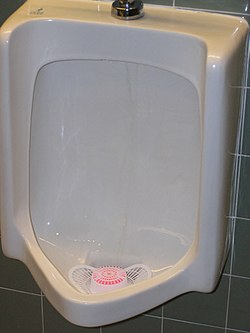
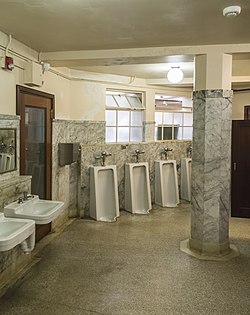
American Standard urinals in an office restroom

A urinal (US: /ˈjʊərənəl/, UK: /jʊəˈrnəl/)[1] is a sanitary plumbing fixture similar to a toilet, but for urination only. Urinals are often provided in male public restrooms in Western countries (less so in Muslim countries). They are usually used in a standing position. Urinals can be equipped with manual flushing, automatic flushing, or without flushing, as is the case for waterless urinals. They can be arranged as single sanitary fixtures (with or without privacy walls), or in a trough design without privacy walls.

Urinals designed for females ("female urinals") also exist but are rare. It is possible for females to use stand-up urinals using a female urination device.[2] The term "urinal" may also apply to a small building or other structure containing such fixtures. It can also refer to a small container in which urine can be collected for medical analysis, or for use where access to toilet facilities is not possible, such as in small aircraft, during extended stakeouts, or for the bedridden.

Description

[edit]
Urinals with privacy barriers in a men's public toilet in Vienna, Austria
Typical arrangement of sensor-operated urinals in a row without partitions

A stand-up urinal can be used conveniently and appropriately by someone who has a penis or other adaptive means with which to urinate from a standing position. There is no age restriction, and urinals are commonly used by men and boys of all ages. Female urinals also exist but are not common.

In busy public toilets, urinals are installed for efficiency. Compared with urination in a general-purpose toilet, usage is faster and more sanitary because at the urinal there are no additional doors or locks to touch, and no seat to turn up. Consistent use of urinals also keeps the toilet stalls cleaner and more available for persons who need to defecate. A urinal takes less space, is simpler, and consumes less water per flush (or even no water at all) than a flush toilet. Large numbers of them are usually installed along a common supply pipe and drain. Urinals may also come in different heights, to accommodate tall and short users.

Public urinals usually have a plastic mesh guard, which may optionally contain a deodorizing urinal deodorizer block or "urinal cake". The mesh is intended to prevent solid objects (such as cigarette butts, feces, chewing gum, or paper) from being flushed and possibly causing a plumbing stoppage. In some restaurants, bars, and clubs, ice may be put in the urinals, serving some of the same purposes as the deodorizing block without dispensing odorous chemicals.

Arrangement

[edit]
Urinals that extend to the floor, suitable for users of all heights

For purposes of space and economic practicality, urinals are not typically placed inside stalls. Unlike in female public toilets that do not have urinals, optimal resource efficiency in male restrooms therefore requires urinating in full visibility of other users. In recent years, it has become more common in some countries for dividers or partitions to be installed between urinals to eliminate any chance of incidental exposure during the process of urination.

Urinals in high-capacity public toilets are usually arranged in one or more rows directly opposite the door, so that users have their backs to people entering or standing outside. Often, one or two of the urinals, typically at one end of a long row, will be mounted lower than the others; they are meant for the disabled and other users who cannot reach the regular urinals. In facilities where people of various heights are present, such as schools, urinals that extend down to floor level may be used to allow anyone of any height to use any urinal.

Instead of individual fixtures, trough urinals may be installed. These designs can be used by a number of people simultaneously, but they do not allow for much privacy. They are often installed where there is a high peak demand, such as in schools, music festivals, theatrical events, sports stadiums, discos, dance clubs, and convention halls.

Urinals were once installed exclusively in commercial or institutional settings, but are also now available for private homes. They offer the advantages of substantial water savings in residences with many occupants, and reduction of "splash back", making cleaning easier.

Urinals with flushing

[edit]

Most public urinals incorporate a water flushing system to rinse urine from the bowl of the device, to prevent foul odors. The flush can be triggered by one of several methods:

Manual handles

[edit]
Urinal flushing handle

This type of flush might be regarded as the standard type of flush in North America. Each urinal is equipped with a short lever to activate the flush, with users expected to pull it down as they leave. Such a directly controlled system is the most efficient, provided that patrons remember to use it. This is far from certain, however, often because of fear of touching the handle, which is located too high to kick.[3] Urinals with foot-activated flushing systems are sometimes found in high-traffic areas; these systems have a button set into the floor or a pedal on the wall at ankle height. The Americans with Disabilities Act requires that flush valves be mounted no higher than 44 inches (110 cm) AFF (above the finished floor). Additionally, the urinal is to be mounted no higher than 17 inches (43 cm) AFF, and to have a rim that is tapered and elongated and protrudes at least 14 inches (36 cm) from the wall. This enables users in wheelchairs to straddle the lip of the urinal and urinate without having to "arc" the flow of urine upwards.

Timed flush

[edit]
Urinal cistern

In Europe and South America, manual flush handles are unusual. Instead, the traditional system is a timed flush that operates automatically at regular intervals. A group of urinals will be connected to a single overhead cistern, which contains the timing mechanism. A constant drip-feed of water slowly fills the cistern until a tipping point is reached, when the valve opens (or a siphon begins to drain the cistern), and all the urinals in the group are flushed. Electronic controllers performing the same function are also used.

This system does not require any action from its users, but it is wasteful of water when toilets are used irregularly. However, in these countries users are so used to the automatic system, that attempts to install manual flushes to save water are generally unsuccessful. Users ignore them not through deliberate laziness or fear of infection, but because activating the flush is not habitual.

To help reduce water usage when the urinals are not being used, some urinals with timed flushing use a water-saving device. The cistern will be connected with a passive infrared sensor, which makes the cistern stop filling unless the urinals are being used. The sensor can be wall or ceiling-mounted, and will detect movement within the range of the urinals.

Door-regulated flush

[edit]

Used mostly in the countries of Asia. This is an older method of water-saving automatic flushing, which only operates when the public toilet has been used. A push-button switch is mounted in the door frame, and triggers the flush valve for all urinals every time the door is opened. While it cannot detect the use of individual urinals, it provides reasonable flushing action without wasting excessive amounts of water when the urinals are not being used. This method requires a spring-operated automatic door closer, since the flush mechanism only operates when the door opens.

Alternatively, a flushing system connected to the door can count the number of users, and operate when the number of door opening events reaches a certain value. At night, the door never opens, so flushing never occurs.

Automatic flush

[edit]
Urinal with automatic flush valve
Long-exposure photography shows the sensors' detecting range

Automatic flush valves solve the problems of previous approaches, and are common in new installations all around the world. A passive[dubiousdiscuss] infrared sensor identifies when the urinal has been used, by detecting when someone has stood in front of it and moved away, and then activates the flush. There usually is also a small override button, to allow optional manual flushing when the sensor is not working.

Automatic flush facilities can be retrofitted to existing systems. The handle-operated valves of a manual system can be replaced with a suitably designed self-contained electronic valve, often battery-powered to avoid the need to add cables. Older timed-flush installations may add a device that regulates the water flow to the cistern according to the overall activity detected in the room. This does not provide true per-fixture automatic flushing, but is simple and cheap to add because only one device is required for the whole system.

To prevent false-triggering of the automatic flush, most infrared detectors require that a presence be detected for at least ten seconds, such as when a person is standing in front of it. This prevents a whole line of automatic flush units from triggering in succession if someone just walks past them. The automatic flush mechanism also typically waits for the presence to go out of sensor range before flushing. This reduces water usage, compared to a sensor that would trigger a continuous flushing action the whole time that a presence is detected.

Waterless urinals

[edit]

Since about the 1990s, urinals have been available on the market that use no water at all. These are called waterless urinals or flushless urinals.

The first waterless urinal was developed at the end of the 19th century by the German-Austrian Wilhelm Beetz using an oil-based syphon with a liquid that he called Urinol.

Waterless urinals can save between 15,000 and 45,000 US gallons (57,000 and 170,000 L) of water per urinal per year, depending on the amount of water used in the water-flushed urinal for comparison purposes, and the number of uses per day. For example, these numbers assume that the urinal would be used between 40 and 120 times per business day.[4]

Waterless urinals allow the collection of undiluted pure urine which can be used as a fertilizer.[5]

Odor control

[edit]

Models of waterless urinals introduced by the Waterless Company in 1991[6] and others in 2001 by Falcon Waterfree Technologies and Sloan Valve Company, as well as Duravit, use a trap insert filled with a sealant liquid instead of water. The lighter-than-water sealant floats on top of the urine collected in the U-bend, preventing odors from being released into the air. The cartridge and sealant must be periodically replaced.

Waterless urinals may also use an outlet system that traps the odor, preventing the smell often present in toilet blocks.[citation needed] Another method to eliminate odor was introduced by Caroma, which installed a deodorizing block in their waterless urinal that was activated during use.[citation needed]

Odor control in waterless urinals is also achieved with simple one-way valves which are manufactured as a flat rubber tube (the tube opens when urine flows through) or with two silicone "curtain" pieces. The former is used in the waterless urinals by the company Keramag[7] in Germany (model Centaurus) and the latter is marketed by the company Addicom in South Africa who called it the EcoSmellStop device.[8]

Applications

[edit]

Waterless urinals can be installed in high-traffic facilities, and in situations where providing a water supply may be difficult or where water conservation is desired.

Waterless urinals have become rather common in Germany since about 2009 and can be found at restaurants, cinemas, highway rest stops, train stations and so forth. It was estimated in 2009 that there are about 6 million urinals in Germany, and about 100,000 of those were of the waterless type in that year.[9]

Due to high-level water restrictions during about 2005–2008 the city council of Brisbane, Australia mandated conversion to waterless urinals. Flush urinals are nowadays rarely seen in Brisbane.[citation needed]

Installation and maintenance

[edit]

The drain pipes from waterless urinals need to be installed correctly in terms of diameter, slope and pipe materials in order to prevent buildup of struvite ("urine stone") and calcium phosphate precipitates in the pipes, which would cause blockages and could require expensive repairs.[5] Also, the undiluted urine is corrosive to metals (except for stainless steel), which is why plastic pipes are generally preferred for urine drain pipes.[5]

Most waterless urinals do not prevent odorous staining on the surface of the urinals, and periodic cleaning of the fixture and its surrounds is still required. When maintained according to manufacturers' recommendations, well-designed waterless urinals do not emit any more odors than flushed urinals do. However, some odor-trapping devices work better than others in the longer term. Regular, thorough maintenance of the respective odor control device is needed for all types of waterless urinals, as per the manufacturer's recommendation.

Situation in the United States

[edit]

US federal law has mandated no more than one gallon per flush since 1994, and the EPA estimates that the average urinal is flushed 20 times per day, which gives an average water use of 7,300 US gallons (28,000 L) per year.[10] Mechanical traps are not allowed by US building codes[citation needed] but are allowed in many other countries.

Plumbers' unions initially opposed waterless urinals, citing concerns about health and safety, which have been debunked by scientists who have studied the devices. Facing opposition to their attempts to have the devices allowed in plumbing codes, manufacturers devised a compromise. The Uniform Plumbing Code was modified to allow waterless urinals to be installed, provided that unneeded water lines were nevertheless run to the back of the urinals.[11] This allows conventional water-flushing urinals to be retrofitted later, if waterless models were judged to be unsatisfactory over time.

In March 2006, the Associated Press reported that the plumbers' union in Philadelphia had become upset because developer Liberty Property Trust had decided to use waterless urinals in the Comcast Center. Many in the union believed that this would lead to less work for them. The developer cited saving the city 1,600,000 US gallons (6,100,000 L) of water per year as its deciding factor.[12]

In February 2010, the headquarters of the California EPA removed waterless urinals that were installed in 2003 due to "hundreds of complaints", including odors and splashed urine on the floors.[13] Officials blamed the failure of the project on incompatibility with the building's existing plumbing systems.[14]

Street urinals

[edit]

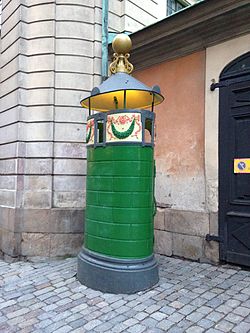
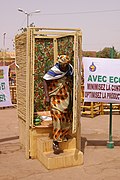
In some localities, urinals may be located on public sidewalks or in public areas such as parks. These urinals are often equipped with partitions for the sake of privacy, and some are fully enclosed structures. They may or may not be equipped with water flushing mechanisms.

The first 'pissoirs' were installed in Paris in the 1830s, and the idea gradually gained popularity in other European cities. From a peak in the 1930s when there were over 1,000 in Paris alone, historic urinals have gradually disappeared, in favour of facilities for both sexes. In the 21st century, public urination by men in some locations was again seen as a nuisance, and modern versions of street urinals have been installed.

The Netherlands has a number of strategically placed street urinals in various cities, intended to reduce public urination by drunken men. Amsterdam has the largest collection of historic urinals, with about 30 'Plaskrul' ('pisscurl'), a flushless urinal with a curved privacy screen, in the central city. In recent years, urinals that can be retracted into the ground during the day or between special events have been installed, in order to save space when they are not expected to be needed. When closed they look like a large manhole in a sidewalk. Similar retractable models, such as the model by the Dutch company Urilift, are also seen in the UK and other countries. At night when bars are open they rise out of the sidewalk; some time after the bars close, the urinals return to their manhole configuration so that they are unseen by people during the day.

Plastic movable urinal at a venue next to a traditional porta-john. The four sides allow for four users at any given time.

In the Philippines, Marikina was the first city to install street urinals in the late 1990s. When Marikina Mayor Bayani Fernando was appointed chair of the Metropolitan Manila Development Authority, he installed street urinals in the rest of Metro Manila as well.[citation needed]

Special urinals

[edit]

Urinals designed for females

[edit]

In the Western world, females are generally taught to sit or squat while urinating. Many therefore do not know how – or even that it is possible – for a female to aim her urine stream as would be required to use a stand-up urinal.[2] Thus, several different types of urinals have been designed for females that do not require the user to aim their urine stream. A typical user could thus theoretically approach such a urinal squatting backwards over it without necessarily trying to aim their stream.

Arts and interactive urinals

[edit]

Kisses! is a controversial urinal designed by the female Dutch designer Meike van Schijndel. It is shaped like an open pair of red lips.[15] In early March 2004, the National Organization for Women (NOW) took offense to the new urinals that Virgin Atlantic decided to install in the Virgin Atlantic clubhouse at John F Kennedy International Airport in New York City.[16] After receiving many angry phone calls from female customers, Virgin Atlantic Vice President John Riordan called NOW to apologize.[17] Protestors surmised a connection to oral sex or urolagnia, and based their complaints on the urinals being sexist. A McDonald's restaurant in the Netherlands removed them after a customer complained to the head office in the United States.[citation needed]

Interactive urinals have been developed in a number of countries, allowing users to entertain themselves during urination. One example is the Toylet, a video game system produced by the Japanese company Sega that allows users to play video games using their urine to control the on-screen action.[18]

Makeshift urinals

[edit]

During military operations, such as the Korean War, Vietnam War, or Operation Desert Storm, "piss tubes" were used as makeshift urinals. To make one, soldiers would affix an inverted disposable water bottle on one end of a rigid tube, burying the other end. Removing the base of the bottle made a funnel which would be left at the proper height. Deposited urine simply soaked into the ground; when the area became saturated, the device was relocated.[citation needed]

In vehicles

[edit]

As of 2008, the aircraft manufacturer Airbus offered its customers the option of installing urinals in its A380 aircraft.[19]

History

[edit]
'Colonne Rambuteau', photographed 1865
A cast iron urinal in College Street, Glasgow, installed 1850–1854, photographed in 1866
A later Paris pissoir in cast iron, photographed c. 1865

In the spring of 1830, the city government of Paris decided to install the first public urinals on the major boulevards. They were put in place by the summer, but in July of the same year, many were destroyed through their use as materials for street barricades during the French Revolution of 1830.[20]

The urinals were re-introduced in Paris after 1834, when over 400 were installed by Claude-Philibert Barthelot, comte de Rambuteau, the Préfet of the Department of the Seine. Having a simple cylindrical shape, built of masonry, open on the street side, and ornately decorated on the other side as well as the cap, they were popularly known as 'colonnes Rambuteau' ('Rambuteau columns'). In response, Rambuteau suggested the name 'vespasiennes',[21] in reference to the 1st century Roman emperor Titus Flavius Vespasianus, who placed a tax on urine collected from public toilets for use in tanning. This is the usual term by which street urinals are known in the French speaking world, although 'pissoir' and 'pissotière' are also in common use.

In Paris, the next version was a masonry column that allowed for the pasting of posters on the side facing the footpath, creating a tradition that continues to this day (as a Morris column, a column with an elaborate roof and without the urinal).

Cast iron urinals were developed in the United Kingdom, with the Scottish firm of Walter McFarlane and Company casting urinals at their Saracen Foundry and erecting the first at Paisley Road, Glasgow in October 1850. By the end of 1852, nearly 50 cast iron urinals had been installed in Glasgow, including designs with more than one stall.[22] Unlike Rambuteau's columns, which were entirely open at the front, McFarlane's one-man urinals were designed with spiral cast iron screens that allowed the user to be hidden from sight, and his multi-stall urinals were completely hidden within ornate, modular cast iron panels. Three manufacturers in Glasgow, Walter Macfarlane & Co., George Smith (Sun Foundry) and James Allan Snr & Son (Elmbank Foundry), supplied the majority of cast iron urinals across Britain[22] and exported them around the world, including Australia and Argentina.[23]

Back in Paris, cast iron urinals were introduced as part of Baron Haussmann's remodelling of the city. A large variety of designs were produced in subsequent decades, housing two to 8 stalls, typically only screening the central portion of the user from public view, with the head and feet still visible. Screens were also added to Rambuteau columns. At the peak of their spread in the 1930s, there were 1,230 pissoirs in Paris, but by 1966 their number had decreased to 329. From 1980 they were replaced systematically with new technology, a unisex, enclosed, automatically self-cleaning unit called the Sanisette.[24]

In Berlin, the first pissoirs, in wood, were erected in 1863. In order to provide a design as distinguished as in other cities, several architectural design competitions were organised in 1847, 1865 and 1877. The last design, proposed by a city councillor, was the one adopted in 1878, a cast-iron octagonal structure with seven stalls and a peaked roof, known locally as a Café Achteck ('Octagon Cafe'). In common with British designs, they provided complete enclosure, and were provided with interior lighting. Their number increased to 142 by 1920,[25] but there are now only about a dozen remaining in use.[26]

A similar design was adopted in Vienna, though simpler, smaller and hexagonal. They were equipped with a novel "oil system", patented by Wilhelm Beetz in 1882, where a type of oil was used to neutralise odours, dispensing with the necessity for plumbing.[27] About 15 are still in use, and one has been restored and set up as a display in the Vienna Technical Museum.[28]

In central Amsterdam, there are about 35 pee curls, which consist of a raised metal screen that curls in a spiral enclosing a single urinal stall, including some two-person examples with the same details but a simpler shape. Though the design first emerged in the 1870s, an updated design by Joan van der Mey dates from 1916. All the remaining examples were restored in 2008.

Pissoirs of various sizes and designs, but mostly in patterned cast-iron, can still be found dotted across the UK, with a few in London, but especially in Birmingham and Bristol. A solitary example of Walter McFarlane's one-man spiral urinal remains in Thorn Park, Plymouth.[29] A number have been restored and relocated to the grounds of various open-air museums and heritage railway lines.[29]

Rectangular pissoirs, with elaborate patterned cast-iron panels, similar in design to some of the UK ones, were installed in the city of Sydney, Australia, in 1880[30] and Melbourne, Australia, in the period 1903–1918. Of at least 40 that were made, nine remain in place and in use on the streets in and around central Melbourne, and have been classified by the National Trust since 1998.[31]

In recent years, temporary pissoirs with multiple unscreened urinals around a central column have been introduced in the UK.[32][33] A temporary pissoir for women called the 'Peeasy' is used in Switzerland.[34]

Until the 1990s, street urinals were a common sight in Paris (France), and in the 1930s more than 1200 were in service. They were famous among foreign tourists.[35] Parisians referred to them as vespasiennes, the name being derived from that of the Roman Emperor Vespasian, who, according to an anecdote, imposed a tax on urine. Beginning in the 1990s, the vespasiennes (renowned for their smell and lack of hygiene) were gradually replaced by Sanisettes. Today only one vespasienne remains in the city (on Boulevard Arago), and it is still regularly used. They still exist in other French cities and in other countries.

Society and culture

[edit]

Examples of urinals in popular culture include:

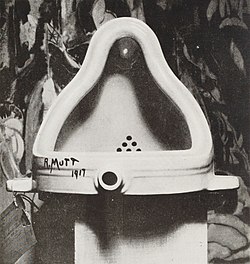
  • Marcel Duchamp's Fountain (1917), which some have called the most influential modern artwork, is a urinal which Duchamp signed "R. Mutt".[36]
  • Police in Nassau County, New York adopted talking urinals in an anti-drunk driving initiative. Using Wizmark, a talking urinal display screen, police can provide bars with free pre-programmed urinal messages urging patrons not to drink and drive.[37][38]
  • Ernest Hemingway converted a urinal from Sloppy Joe's bar into a water fountain for his cats. The fountain remains a prominent feature at his former home in Key West, Florida, a popular tourist destination in the town.[39]
  • Pissoir, retitled Urinal in some countries, was the first feature film directed by John Greyson. It was released in 1980 and takes place in a toilet.[40]
  • Gabriel Chevallier's 1934 satirical novel Clochemerle deals with the ramifications of plans to install a new urinal in a French village.
  • Indiana Urinalysis (1988) is a documentary on the subject of urinals. Topics include "types of urinals, urinal etiquette, usage of urinal cakes, why urinals are always white, preference of urinal vs. toilet, and urinals for women, as well as a collection of urinal anecdotes."[41] It received a Citation Award from the Indiana Film Society in 1990.[42]
  • "Mystery of the Urinal Deuce" is an episode of the American adult animated sitcom South Park, in which the plot revolves around the elementary school's efforts to establish the identity of a person who defecated in a urinal.
[edit]

See also

[edit]

References

[edit]
[edit]
Revisions and contributorsEdit on WikipediaRead on Wikipedia
from Grokipedia
A urinal is a sanitary plumbing fixture engineered for the urination of males in a standing position, featuring a basin that collects urine and directs it to a trap and drain, typically equipped with a flush mechanism to rinse residues and control odors.[1][2] Commonly constructed from vitreous china or stainless steel for durability and ease of cleaning, urinals are installed wall-mounted or in rows to optimize space in high-volume settings such as public restrooms, where they facilitate quicker use compared to seated toilets.[3] Patented in the United States in 1866 by Andrew Rankin, the modern urinal addressed post-Civil War sanitation needs in urban areas, evolving from earlier rudimentary designs to incorporate flush valves and, later, water-conserving technologies.[4][5] Contemporary models include high-efficiency flushing urinals limited to 0.5 gallons per flush under standards like the Energy Policy Act, alongside waterless variants that rely on cartridge traps to separate liquids from gases, reducing water consumption by up to 100% relative to traditional fixtures while demanding regular maintenance to mitigate buildup and smells.[6][7] These advancements underscore urinals' role in resource efficiency, though debates persist over hygiene efficacy and installation costs, with empirical data showing substantial annual water savings in commercial applications exceeding 4,000 gallons per unit.[6][8]

Definition and Functionality

Basic Design and Arrangement

Urinals consist of an elongated, basin-like fixture designed for male urination, typically featuring a rear splashback, a curved rim to direct flow, and a drain at the base. Common materials include vitreous china for durability and ease of cleaning, and stainless steel for high-traffic or vandal-prone environments.[9] Dimensions vary by model, but standard wall-mounted units measure approximately 21.5 inches (54.6 cm) in height, 13.3 inches (33.8 cm) in width, and 14 inches (35.6 cm) in depth.[10] Plumbing codes mandate a minimum depth of 13.5 inches (345 mm) from the rim's outer face to the fixture's back.[11] Installation types include wall-mounted, the most prevalent for space efficiency, secured at a rim height of about 24 inches (610 mm) above the finished floor to align with average male ergonomics.[12] Floor-standing variants, less common indoors, rest directly on the floor and suit areas with structural limitations for wall support, often in stainless steel for robustness.[13] Trough urinals, continuous linear channels accommodating multiple users, mount to walls or floors and were historically prevalent before individual stalls, persisting in some high-volume settings like stadiums for throughput.[14] Arrangements in public restrooms feature rows along walls, with minimum 30-inch (762 mm) horizontal spacing between partitions to prevent overlap and ensure usability.[15] Privacy partitions, typically 24 inches wide and 42 to 48 inches tall, extend from no higher than 12 inches (305 mm) above the floor and at least 60 inches (1524 mm) upward, projecting 18 inches (457 mm) from walls or 6 inches (152 mm) from urinal centerlines.[15][16] These dividers, evolving from industrial-era enclosures, mitigate visual exposure and psychological discomfort without fully enclosing each unit.[17]

Ergonomic and Hygienic Principles

Ergonomic principles in urinal design prioritize user comfort, stability, and ease of access, with standard rim heights typically ranging from 24 to 28 inches (610 to 710 mm) above the finished floor to accommodate adult male physiology and standing posture.[18] This elevation allows for natural alignment during use, reducing strain on the lower back and legs, as derived from anthropometric data on average male heights and reach distances.[19] For accessibility under standards such as the Americans with Disabilities Act (ADA), rim heights are capped at a maximum of 17 inches (430 mm) to enable wheelchair transfers and support from individuals with mobility impairments, often supplemented by grab bars positioned at 33 to 36 inches high for stability.[20][21] Hygienic considerations focus on minimizing bacterial spread and facilitating cleaning, achieved through smooth, non-porous materials like vitreous china that resist biofilm accumulation and allow for effective disinfection.[22] Partitions between urinals, typically 30 inches wide and extending 60 inches high from a base no more than 12 inches above the floor, provide privacy that encourages proper aiming and reduces incidental contact or aerosolization of contaminants.[15] A clear floor space of at least 30 by 48 inches in front ensures unobstructed approach, preventing users from crowding and thereby limiting cross-contamination risks.[23] Splashback mitigation, a key hygienic factor, relies on fluid dynamics principles: urine impacting the urinal surface at angles below 30 degrees reduces rebound splash by up to 95% compared to perpendicular hits, as demonstrated in empirical high-speed imaging studies of liquid jet dynamics.[24] Designs incorporating angled or curved bowls direct flow to promote shallow incidence angles, empirically cutting floor spillage that contributes to slip hazards and microbial growth in high-traffic facilities.[25] Waterless variants further enhance hygiene by eliminating standing water pools that harbor bacteria, though regular maintenance of sealant traps remains essential to prevent odor permeation.[22] These principles, grounded in plumbing codes and physics-based testing rather than anecdotal preferences, underscore causal links between design geometry and reduced pathogen transmission in shared spaces.[26]

Flushing Mechanisms

Manual and Timed Systems

Manual flushing systems for urinals employ user-activated mechanisms, such as levers, handles, or push buttons, connected to flush valves known as flushometers. These devices utilize diaphragm or piston designs to regulate water flow under mains pressure, delivering a metered volume—typically 0.5 to 1.0 gallons (1.9 to 3.8 liters) per flush for urinals—before automatically closing via a self-timing action driven by hydraulic or mechanical reset. The valve opens when the actuator compresses a relief mechanism, bypassing pressure to release stored water into the urinal, and closes once equilibrium is restored, preventing continuous flow.[27][28][29] Diaphragm flushometers feature a flexible rubber diaphragm with an orifice that controls bypass flow, incorporating wiper springs to resist debris clogging, while piston variants use a sliding brass piston for similar metering but with potentially greater durability in high-sediment conditions. Adjustment screws on the valve allow fine-tuning of flush duration and volume to comply with standards like the Uniform Plumbing Code, which mandates maximum 1 gallon per flush for urinals since 1992 updates. These systems promote user accountability for hygiene but can lead to overuse or underuse depending on behavior, with empirical studies showing manual activation reduces water waste compared to constant-run alternatives when properly maintained.[30][31][32] Timed flushing systems operate via electronic or pneumatic timers integrated with solenoid or hydraulic valves, automatically initiating flushes at fixed intervals—often every 10 to 24 hours or programmable cycles like 5-15 minutes during peak hours—to prevent urine stagnation and bacterial growth without relying on sensors or user input. These mechanisms, powered by batteries, line pressure, or low-voltage controllers, open the valve for a brief pulse (e.g., 3-5 seconds) to rinse the urinal, incorporating hygiene overrides that activate regardless of occupancy. Manufacturers claim up to 95% water savings over continuous flushing by limiting cycles to detected or scheduled needs, though real-world efficacy depends on accurate timer calibration and fixture occupancy patterns.[33][34][35]

Sensor-Based Automatic Flushing

Sensor-based automatic flushing systems for urinals utilize passive infrared (PIR) or active infrared sensors to detect user presence via emitted or reflected beams, activating a solenoid valve to release a metered flush volume after the user departs.[36][37] These mechanisms typically incorporate a delay—often 4 to 15 seconds post-detection of absence—to prevent premature or redundant flushes, with some configurations enabling grouped flushing for multiple adjacent urinals to optimize water use.[38] Adopted widely in public and commercial facilities since the late 20th century, these systems aim to enhance hygiene by minimizing manual contact and reducing bacterial spread on flush handles, though their proliferation accelerated with advancements in reliable, battery-powered or hardwired electronics.[39] Power sources include replaceable batteries lasting 3-5 years under normal conditions or direct electrical connections, with sensors calibrated to ignore minor movements like hand waves while responding to body heat or proximity.[40] Empirical assessments indicate substantial water conservation potential; a 2022 university study of delayed-action PIR controls reported 59-64% reductions in flush volume during typical occupancy, equating to 98,000 liters saved annually across monitored banks, though efficacy dropped to 35% during low-usage periods like COVID-19 lockdowns due to fewer false triggers.[38] Independent evaluations underscore that properly installed grouped systems outperform individual sensor setups by synchronizing flushes, but outcomes hinge on sensor sensitivity, maintenance, and user behavior, with over-sensitivity risking excess water from phantom activations.[41] Reliability challenges persist, including sensor misalignment from vandalism or cleaning, leading to non-flushes or continuous operation; solenoid valve sticking due to debris or mineral buildup; and power failures in battery-dependent units, necessitating periodic inspections every 6-12 months.[42][43] While manufacturer claims emphasize durability—e.g., valves rated for millions of cycles—real-world data from facility managers highlight higher failure rates in high-traffic environments compared to manual alternatives, often requiring electronic diagnostics for resolution.[44] Despite these, the systems' touchless operation aligns with public health priorities, particularly post-pandemic, by curtailing fomite transmission.[45]

Water Efficiency and Empirical Performance

Traditional urinal flushing mechanisms are regulated by federal standards limiting maximum water use to 1.0 gallon per flush (gpf), with high-efficiency models certified under the EPA's WaterSense program restricted to an average of 0.5 gpf or less when tested per ASME A112.19.2/CSA B45.1 standards.[46][47] Older installations, however, may consume up to 5.0 gpf, contributing substantially to restroom water demand, where urinals account for approximately 30% of total usage in commercial and institutional settings.[6][48] Manual flush valves, operated by user activation, theoretically promote efficiency by flushing only upon demand, but real-world compliance varies with user behavior, often leading to under- or over-flushing. Sensor-based automatic systems, intended to flush post-use via infrared detection, frequently result in higher consumption due to multiple activations per visit (e.g., triggered by movement during use or exit), phantom flushes from sensor miscalibration, or delayed responses causing redundant cycles. Empirical monitoring in public facilities has shown sensor-operated urinals and toilets using 45-54% more water than manual equivalents, as sensors may activate unnecessarily when users lean in or out without completing use.[49][50] Timed or programmed flushing, which cycles at fixed intervals regardless of occupancy, exacerbates waste in low-traffic periods but can optimize in high-volume settings if calibrated to actual patterns. Certain advanced sensor variants, such as grouped delayed-action passive infrared (PIR) systems that batch flushes across multiple urinals after a delay, demonstrate superior empirical outcomes. A university case study recorded 59-64% water reductions with such controls compared to continuous or individual sensor flushing, particularly in steady-traffic environments, though savings diminished during low-occupancy phases like COVID-19 lockdowns.[41] Overall, while automatic mechanisms enhance hygiene by minimizing touch, federal analyses confirm they do not inherently conserve water without precise installation and maintenance; manual systems often prove more efficient in practice unless paired with user education or retrofit optimizations.[7][51] State mandates, such as Texas's 0.5 gpf limit for urinals sold after 2014, further incentivize low-flow valves across all types to curb aggregate demand.[52]

Waterless and Low-Water Variants

Core Technologies and Installation

Waterless urinals rely on gravity-fed drainage and a passive trap mechanism to direct urine into the sewer while sealing against backflow of gases and odors, obviating the need for flush water. The primary technology centers on a replaceable cartridge or insert positioned at the drain outlet, which contains a lightweight, immiscible barrier fluid—often a mineral oil, silicone-based compound, or biodegradable sealant with density lower than urine (approximately 1.010–1.025 g/cm³). Urine, being denser, displaces the fluid downward, passes beneath it, and flows out via the tailpipe, after which surface tension and buoyancy reform the fluid seal.[53][54] This design leverages physical properties of fluid immiscibility and density stratification rather than mechanical flushing, reducing water consumption to zero per use. Alternative trap configurations include mechanical variants such as piston-driven seals, where a weighted or spring-loaded piston rises under urine pressure to permit flow and reseals by gravity or elasticity, or flexible membrane traps that deform similarly without fluid. Cartridge systems, however, dominate commercial applications for their simplicity in debris filtration and seal renewal, with cartridges often incorporating screens to capture particulates and prevent clogs.[55] Empirical testing indicates these traps maintain efficacy for 3,000–10,000 uses before replacement, contingent on urine volume and composition, though high-protein diets can accelerate degradation via crystallization.[56] Installation mirrors that of conventional urinals but emphasizes drain integrity over water supply integration. The fixture mounts to wall brackets at a standard rim height of 17–24 inches (43–61 cm) from floor to accommodate ergonomics and accessibility codes, with the tailpipe—a rigid or flexible extension—inserted into a floor or wall drain bushing or P-trap adapter. Critical is verifying a minimum drain slope of 1/4 inch per foot (2%) to enable self-cleaning via urine's natural flow, as stagnation risks struvite (magnesium ammonium phosphate) buildup; pre-installation drain cleaning with acid rinses or mechanical rodding is mandatory for retrofits to remove legacy mineral scales.[57][58] No flush valve or water line connects, simplifying plumbing, but proper venting prevents siphoning, and caulking seals the fixture-wall joint against leaks. Post-mounting, the cartridge inserts into the trap housing, often secured with a locking dome, followed by a test pour of water or urine simulant to confirm seal integrity.[59] Professional certification ensures compliance with plumbing codes like IPC or UPC, which mandate trap seals equivalent to water-filled P-traps in odor barrier performance.[60]

Odor Management and Maintenance Challenges

Odor management in waterless urinals relies on mechanical traps, such as one-way valves or flexible diaphragms, that permit urine drainage while blocking sewer gases like ammonia and hydrogen sulfide from escaping upward.[61][62] These devices often incorporate biodegradable sealant fluids lighter than urine, which float atop collected liquid to form a vapor barrier, supplemented by cartridge-based systems requiring periodic replacement.[63][64] Despite these mechanisms, maintenance challenges arise from urea hydrolysis, where bacteria convert urine's urea into ammonia, exacerbating odors if traps degrade or become contaminated.[65] Empirical measurements in field studies have detected elevated ammonia concentrations near unmaintained waterless urinals, with levels rising over time due to incomplete sealing or bacterial activity, underscoring the need for urease inhibitors or regular enzymatic cleaning to mitigate hydrolysis.[66][67] Urine scale buildup, primarily uric acid crystals and struvite precipitates, poses significant hurdles, as concentrated urine without dilution leads to encrustation on trap components and drain lines, potentially obstructing flow and compromising odor seals.[68][8] Acidic descalers or vinegar soaks are recommended for dissolution, but frequent application—often weekly in high-use settings—is essential to prevent hardening that requires mechanical removal.[69] Cartridge replacement frequency varies by usage intensity, typically every 2-6 weeks in high-traffic facilities or 2-4 times annually in low-traffic ones, with failure to adhere leading to overflow, bacterial proliferation, and persistent malodors.[70][71][72] Evaluations in public installations reveal that inconsistent maintenance protocols often result in higher operational costs and odor complaints compared to flushed systems, as scale and residue demand more intensive interventions than water dilution provides.[73][74]

Conservation Claims Versus Real-World Outcomes

Waterless urinals are claimed to achieve substantial water conservation by eliminating flush volumes of 1 to 3 gallons per use in traditional models, with proponents estimating 20,000 to 45,000 gallons saved annually per unit assuming 20 to 40 daily uses.[75] The U.S. Environmental Protection Agency references approximately 26,000 gallons per urinal per year based on average occupancy and usage patterns.[76] These figures derive from engineering calculations rather than universal field measurements and presuppose consistent replacement of high-flow legacy fixtures without additional water inputs elsewhere.[77] Real-world performance reveals offsets to these projections due to maintenance demands stemming from undiluted urine's chemical properties. Uric acid salts in urine hydrolyze and crystallize in traps and pipes absent flushing dilution, forming scale that obstructs drainage and generates odors, often requiring enzymatic descalers, cartridge replacements, or manual water pours for remediation—actions that consume water and labor not factored into baseline claims.[78][79] A 2008 Massachusetts state evaluation of installations reported net water and cost reductions but noted variability tied to site-specific upkeep, with some facilities experiencing implementation hurdles unrelated to usage volume.[73] Field studies provide mixed empirical validation. A 2019 South African university trial documented measurable reductions in total water demand from waterless adoption but did not isolate maintenance water use or long-term pipe integrity effects.[80] Broader surveys indicate 80% of adopters perceive volume savings, yet manufacturer-sponsored inquiries may underreport failures in high-traffic or neglected settings where crystallization accelerates blockages.[81] In consequence, net conservation hinges on rigorous protocols; lapses yield diminished returns, as evidenced by plumbing complaints of corrosion and clogs in under-maintained systems, potentially negating proportional gains over traditional low-flow alternatives with inherent dilution.[78][65]

Design Innovations

Splashback Mitigation Techniques

Splashback in urinals occurs primarily due to the high-speed impact of urine streams creating turbulent droplets through air entrainment and surface reflections, with studies showing that impact angles exceeding 30 degrees significantly amplify droplet ejection.[82] Fluid dynamics research from 2013 demonstrated that aiming streams at steeper angles or directly into standing water increases splash by up to 10 times compared to shallow-angle grazing on dry porcelain surfaces.[83] Modern design innovations focus on geometric optimization to maintain urine flow at incidence angles below 30 degrees, thereby suppressing droplet formation. The Nautilus urinal prototype, developed through high-speed imaging and splash quantification experiments, features a curved, nautilus-shell-inspired basin that channels streams along gradually inclining surfaces, reducing splashback by 85-95% under high-flow conditions relative to standard commercial models.[84] Similarly, the Cornucopia design employs a funnel-like convergence with extended sidewalls to minimize exposed vertical drops, achieving overall splash reduction to 1.4% of typical urinal levels in controlled tests measuring droplet mass and velocity.[85] These shapes prioritize laminar flow over turbulent impingement, validated via particle image velocimetry in laboratory setups simulating male urination velocities of 2-3 m/s.[84] Patented structural aids, such as integrated splash lips or extended rear baffles, further contain errant droplets by redirecting them downward without relying on user precision. For instance, a 2002 U.S. patent describes a urinal with paired vertical sidewalls and a contoured lower basin forming a narrow outlet, empirically tested to capture 90% more peripheral spray than open designs.[86] European patents from 2008 propose floor- or wall-mounted units with anti-splash rims and containment channels, though real-world adoption remains limited pending broader validation beyond prototypes.[87] Surface texturing with micro-ridges or hydrophobic coatings has shown preliminary promise in reducing adhesion and rebound, but peer-reviewed data on long-term efficacy in public fixtures is sparse, with lab tests indicating only marginal gains over geometric fixes.[84]

Behavioral Aids and User Targeting

Urinal targets, such as etched or printed images of flies, bees, or bullseyes placed within the basin, serve as behavioral aids to encourage precise aiming and minimize splashing. These visual cues exploit instinctive targeting behaviors, prompting users to direct their stream toward the mark rather than randomly, thereby reducing urine spillage onto surrounding surfaces. The concept gained prominence through implementation at Amsterdam's Schiphol Airport, where a fly etching in urinals reportedly decreased spillage by 80 percent compared to unmarked fixtures, leading to an 8 percent reduction in cleaning costs.[88][89] This nudge draws from behavioral economics principles, where subtle environmental prompts influence decision-making without restricting choice. Proponents, including economist Richard Thaler, highlight the fly as an exemplar of how minor design alterations can yield measurable hygiene improvements by appealing to competitive or goal-oriented instincts in male users. Empirical observations at Schiphol, confirmed by airport officials, demonstrated sustained behavioral shifts, with men consistently aiming at the target, though controlled studies quantifying long-term efficacy remain limited. Variations include adhesive stickers or integrated porcelain etchings, often deployed in high-traffic venues like airports and stadiums to target transient male users prone to hurried or inattentive habits.[90][89] User targeting in these aids focuses on male physiology and psychology, assuming a stream trajectory that benefits from focal points to counteract factors like arc instability or distraction. Commercial urinal screens and deodorizer mats incorporate similar motifs, such as concentric circles or thematic icons, to reinforce aiming while releasing scents or trapping debris, further incentivizing compliance through multisensory feedback. Despite anecdotal success, skeptics note potential novelty wear-off, where initial engagement fades without reinforcement, underscoring the aids' reliance on habitual nudges rather than enforced rules. In public settings, these elements prioritize male-only facilities, aligning with urinals' design for standing urination to optimize space and efficiency in male-dominated environments.[91][92]

Material and Durability Advancements

Early urinals were constructed from materials like cast iron and early ceramics, but by the early 20th century, vitreous china emerged as the dominant material due to its non-porous glaze, which resists staining, facilitates cleaning, and withstands repeated exposure to cleaning agents and urine's corrosive properties.[93] Vitreous china's fired enamel surface provides superior durability in high-traffic environments compared to unglazed porcelain, reducing bacterial adhesion and extending fixture lifespan, with Grade A variants offering enhanced consistency and resistance to chipping.[94] Stainless steel urinals gained prominence in the mid-20th century for commercial applications, prized for their corrosion resistance and structural strength, which better withstands vandalism and heavy use than china in some settings.[95] However, stainless steel requires meticulous maintenance to prevent rust from mineral buildup or acidic cleaners, whereas vitreous china avoids rust entirely but can chip under impact.[9] Both materials meet standards for durability in public restrooms, with stainless steel often selected for its scratch resistance and modern aesthetic in contemporary installations.[96] Advancements in coatings have further improved durability, such as antimicrobial glazes applied during manufacturing, which inhibit bacterial growth on vitreous china surfaces by up to 99.9% without altering the material's core properties.[97] These innovations, introduced by manufacturers like Duravit in the 21st century, reduce biofilm formation and maintenance frequency, though empirical tests emphasize their efficacy depends on regular cleaning to prevent residue accumulation.[97] Composite plastics and porcelain enamels represent niche alternatives for specific waterless models, offering lighter weight and impact resistance, but they lack the long-term empirical validation of china or steel in widespread commercial use.[98]

Specialized Applications

Female and Unisex Adaptations

Female urinals emerged as adaptations to traditional male-oriented designs, aiming to enable standing urination for women through modified shapes or accessories that accommodate female anatomy. Early prototypes date to the late 19th century, but practical implementations gained traction in the 1980s with products like the "She-U" in the UK, featuring a sloped basin and privacy screens to direct urine flow while minimizing splash. By 1995, installations in UK motorway service stations reported usage rates under 5% among women, attributed to ingrained sitting habits and concerns over hygiene and privacy. Designs typically incorporate funnels or shields to align with the female urethral opening, positioned higher than male urinals to suit shorter average female stature—around 162 cm globally versus 175 cm for males—reducing bending requirements. Materials like porcelain or stainless steel prevail, with waterless variants using cartridge traps to seal odors, as seen in Frankfurt's 2010 public station trials where bacterial counts remained comparable to male units after six months. However, empirical studies indicate persistent issues with misalignment leading to 20-30% higher splashback in female models during simulated use, due to variable stream dynamics from anatomical differences such as shorter urethras. Unisex urinals extend these adaptations to mixed-gender facilities, often in eco-focused or space-constrained settings like festivals or offices, partitioning stalls for privacy while sharing wall-mounted units. In Sweden, a 2015 Stockholm public toilet retrofit with unisex pods achieved 15% water savings but saw female avoidance rates of 70%, linked to observed male behaviors and cultural reluctance to stand in shared spaces. Proponents cite efficiency gains, with UK trials in 2000s showing unisex setups reducing queue times by 25% in high-traffic venues, though only when paired with signage and education; without, adoption stalled due to discomfort from cross-gender visibility. Biological realities, including menstruation management needs, further limit unisex viability, as standing designs preclude sanitary product disposal, prompting hybrid stalls with integrated bins in progressive installations like those in Dutch train stations since 2018. Maintenance data from German facilities, where female/unisex units comprise 10% of public stock as of 2023, reveal elevated cleaning frequencies—up to 50% more than male counterparts—owing to inconsistent usage patterns and higher residue buildup from partial adoption. Despite marketing claims of empowerment and equity, real-world metrics underscore low penetration: globally, female urinals represent under 1% of installations, constrained by entrenched norms favoring seated toilets that align with female pelvic anatomy and reduce urinary tract infection risks associated with hovering or standing. 30015-8/fulltext) These adaptations persist in niche contexts, such as aviation or events, but face skepticism over scalability without addressing causal factors like anatomical variance and social conditioning.

Public Street and Portable Units

Public street urinals, often designed as open-air or semi-enclosed structures, have been deployed in urban areas primarily to mitigate public urination, particularly in densely populated European cities. In Paris, the first such facilities, known as pissoirs, were installed in the 1830s under municipal initiatives to address hygiene concerns amid rapid urbanization, evolving into cast-iron columns with partial screens by the mid-19th century.[99] [100] By 1900, Paris hosted over 1,500 vespasiennes—cylindrical or trough-style units accommodating multiple users—strategically placed on boulevards to reduce street soiling, though many were dismantled post-World War II due to maintenance costs and changing social norms.[100] Modern iterations, such as the Uritrottoir introduced in Paris in 2018, feature transparent, plant-filled enclosures that collect urine for composting, aiming to curb an estimated 300,000 daily instances of public urination while saving water; however, their exposed design has drawn criticism for exacerbating odors and inviting vandalism, including blockages with concrete and sanitary products.[101] [102] These street units typically prioritize durability with materials like stainless steel or concrete to withstand weather and misuse, often incorporating trough basins for simultaneous use by several men, as seen in historical European models and contemporary event setups. Effectiveness varies; while Nantes trials reported collecting 6,000 liters of urine over six months from three units—averting potential street discharge—persistent issues include strong persistent smells from inadequate cleaning and hygiene risks from bacterial buildup in unventilated troughs.[103] [104] Placement near high-traffic areas like train stations or nightlife districts aims to influence behavior, but studies indicate limited long-term reduction in wild urination without complementary full-sanitation facilities.[105] Portable urinals, distinct from fixed street installations, consist of mobile, self-contained units suited for temporary sites such as construction zones, festivals, and outdoor events, where fixed plumbing is absent. Common types include standalone trough urinals—often 3-meter-long gutters accommodating up to five users simultaneously—or integrated modules within porta-potties featuring a urinal alongside a toilet, equipped with chemical treatments to neutralize waste and odors.[106] [107] These units typically incorporate ventilation systems, hand sanitizer dispensers, and lockable doors for privacy, with waste holding tanks requiring periodic pumping; for construction, OSHA guidelines recommend one unit per 20 workers for 40-hour weeks to ensure compliance and worker health.[108] Maintenance involves daily or bi-weekly servicing to prevent overflows and bacterial proliferation, though challenges like tipping or chemical spills can compromise hygiene in high-use scenarios.[109] Lightweight polyethylene models enhance portability, allowing relocation via hand trucks, but their efficacy hinges on user volume—high-traffic events may necessitate supplemental handwashing stations to mitigate disease transmission risks.[110]

Vehicular and Emergency Uses

Urinals have been incorporated into certain vehicular sanitation systems, particularly on naval vessels where space efficiency and rapid use are prioritized. Traditional United States Navy ships feature stainless steel urinals integrated into heads (bathrooms), often flushed with seawater to manage waste in marine environments.[111] However, the USS Gerald R. Ford, commissioned in 2017 as the lead ship of the Ford-class aircraft carriers, eliminated urinals entirely to standardize facilities for mixed-gender crews, opting for additional water closets that double as urinals via splash guards, thereby increasing capacity from one urinal per two water closets to two per unit.[111] Submarines, such as the Los Angeles-class (SSN-688), include urinals in mid-level and officers' heads, designed for minimal water use and direct discharge compatibility with onboard waste systems.[112] These installations reflect engineering trade-offs for motion stability, odor control via seawater flushing, and crew density exceeding 5,000 on carriers. In rail transport, urinals appear sporadically in passenger train facilities to address hygiene issues in shared compartments. Nederlandse Spoorwegen (NS) introduced combined toilet-urinal units in 2016 on select intercity trains, aiming to reduce seat contamination from male users opting for toilets over squatting, with the urinal positioned adjacent to the commode for space savings in compact cars.[113] Some high-speed trains, including certain Shinkansen models in Japan, equip male-designated restrooms with urinals alongside vacuum-flush toilets to handle high passenger volumes during long journeys.[114] Buses and coaches rarely include fixed urinals due to vibration risks and limited floor space, though isolated examples exist in long-haul luxury coaches; portable variants are more common for drivers or passengers on extended routes.[115] Airplanes and most recreational vehicles (RVs) forgo urinals, relying on vacuum toilets or chemical systems, though DIY or aftermarket portable urinals are installed in custom RVs for off-grid use to conserve holding tank capacity.[116] For emergency applications, portable urinals serve critical roles in medical transport, disaster response, and mobility-impaired scenarios where fixed plumbing is unavailable. Ambulances and emergency vehicles stock translucent plastic male urinals with lids and graduations in ounces and milliliters for patient monitoring, featuring spill-proof designs that store horizontally to prevent leaks during transit.[117] Disposable variants, such as medical-grade pee bags with super-absorbent pads holding up to 16 ounces, provide odor-sealed, leak-resistant options for bedridden individuals or evacuation situations, commonly used in field hospitals or traffic emergencies.[118] In disaster relief, organizations deploy these alongside portable toilets for rapid sanitation in areas lacking infrastructure, as seen in hurricane or flood responses where quick-setup units prevent disease spread by enabling discreet, hygienic male urination without full enclosure needs; capacities support 150-500 users per comfort station in large-scale evacuations.[119] These devices prioritize durability, with features like twist lids and anti-tip bases, though real-world efficacy depends on proper disposal to avoid environmental contamination from unprocessed urine.[120]

Historical Development

Pre-Modern Origins

The earliest precursors to dedicated urinals were earthenware chamber pots used in ancient civilizations for collecting and disposing of urine, often emptied into sewers or outdoors. In ancient Greece, ceramic vessels known as orchanoi served this purpose in private settings, with waste discarded in public areas or drains.[121] Similarly, ancient Romans employed simple pots alongside public latrines (foricae), where continuous water channels beneath stone benches facilitated waste removal, though these facilities accommodated both urination and defecation without distinct standing partitions for males.[122] Archaeological evidence from Roman sites indicates men typically stood to urinate directly over these channels or in adjacent spaces, reflecting practical adaptations to urban sanitation rather than specialized fixtures.[123] In medieval Europe, urinals evolved primarily as portable glass or ceramic vessels, frequently utilized in medical contexts for uroscopy—the examination of urine's color, clarity, and sediment to diagnose ailments such as imbalances in the four humors. These diagnostic urinals, often pear-shaped and held up to light, symbolized physicians' trade and were documented in texts like those of Constantine the African (c. 1017–1087), who translated Arabic medical works emphasizing urine analysis.[124] Household chamber pots remained common for nighttime or private use, with waste channeled to cesspits or streets, while castle garderobes—simple shafts protruding from walls—handled both urine and feces, dropping into moats or ditches below.[125] Public management of urination relied on designated gutters or walls in cities, predating enclosed structures, as communal latrines on bridges or markets focused more on seated use.[126] These pre-modern arrangements prioritized functionality amid limited plumbing, with urine often valued for tanning leather or as fertilizer, underscoring its economic utility before dedicated fixtures emerged. No evidence exists of porcelain-like standing urinals prior to the early modern period, distinguishing them from later industrial designs.[93]

Industrial Era Standardization

During the 19th century, rapid urbanization and the demands of factory labor in industrializing nations necessitated standardized public sanitation facilities, including urinals, to mitigate disease outbreaks and maintain worker productivity. In Paris, public street urinals termed vespasiennes or pissoirs were systematically reintroduced starting in 1834 under the direction of Prefect Claude-Philibert Barthelot de Rambuteau, with initial installations exceeding 400 units by the 1840s to curb open urination amid population surges from rural migration. By 1900, their numbers peaked at over 1,500, featuring semi-enclosed cast-iron designs that standardized privacy, drainage, and periodic flushing via water supply connections, reflecting a municipal commitment to hygiene engineering.[100][127] In Britain, similar standardization emerged through late Victorian public health initiatives, with cast-iron urinals installed in urban conveniences from the 1850s onward; for instance, a surviving example in London's Star Yard dates to 1851, exemplifying modular, durable constructions integrated into street infrastructure to replace ad-hoc urination barriers like urine deflectors. These facilities adhered to emerging sanitary engineering principles, emphasizing vitreous materials for ease of cleaning and resistance to corrosion, as factories and railways demanded efficient, space-saving options for predominantly male workforces.[128] Across the Atlantic, the United States saw indoor urinal standardization advanced by Andrew Rankin's March 27, 1866, patent for an upright, wall-mounted siphon-flushing design, which optimized water usage and splash reduction in high-traffic settings like industrial plants, where large male labor pools required compact sanitation without halting production lines. This patent facilitated mass production in porcelain, establishing the foundational template for modern wall-hung urinals—typically 24 inches wide and mounted at 24 inches from the floor—prioritizing functionality over ornamentation to align with pragmatic industrial needs.[129][5][130]

Post-1945 Technological Shifts

Post-World War II developments in urinal technology prioritized water conservation and enhanced hygiene, aligning with rising environmental regulations and public health priorities. The U.S. Energy Policy Act of 1992 established a federal maximum of 1 gallon per flush (gpf) for urinals, reducing usage from prior norms of 1.5 to 3 gpf and curbing overall water demand in commercial and institutional settings.[131] [132] This mandate spurred manufacturers to redesign flush valves and fixtures for precise metering, achieving substantial savings—estimated at billions of gallons annually across U.S. installations—without compromising functionality.[133] Waterless urinals, relying on mechanical seals, liquids, or cartridges to trap odors and permit drainage without flush water, saw modern commercialization in the early 1990s after earlier prototypes. Pioneered by firms like Waterless Co., these systems eliminate flush-related water use entirely, potentially conserving 45,000 gallons per unit yearly in high-traffic venues, though initial skepticism addressed concerns over maintenance and scaling in pipes.[130] [134] Adoption accelerated amid droughts and sustainability drives, with military specifications mandating them by 2010 for new builds.[135] Electronic sensor activation for flushing, using infrared detection to trigger hands-free operation, proliferated from the late 1980s, responding to heightened germ avoidance post-epidemics like AIDS. Innovations from companies such as Stern Engineering integrated dual-flush sensors by the early 1990s, minimizing manual contact and overuse while integrating with low-flow standards.[136] These advancements, often retrofittable to existing vitreous china or stainless steel units, marked a transition to automated, resource-efficient designs dominant in contemporary public infrastructure.[93]

Societal and Cultural Dimensions

Usage Etiquette and Public Norms

In public male restrooms equipped with multiple urinals arranged in a row, a primary norm dictates selecting a fixture that maximizes physical distance from occupied ones, typically by choosing an end urinal first or leaving at least one intervening urinal empty when possible. This practice, rooted in preserving personal space during an inherently private bodily function, has been formalized in computational models analyzing optimal selection strategies to minimize proximity discomfort in linear configurations. Violations occur in high-occupancy scenarios, where etiquette yields to necessity, but adherence reinforces social privacy boundaries through implicit peer enforcement.[137][138] Additional conventions emphasize minimal interaction: users avoid eye contact, conversation, or sideways glances, directing attention forward or downward to respect others' dignity and reduce psychological intrusion. These behavioral restraints, observed consistently in Western contexts, stem from cultural taboos surrounding urination as a solitary act, with deviations often signaling disregard for communal hygiene or decorum. Handwashing post-use and flushing the urinal—where fixtures include valves—are expected for sanitation, though empirical audits reveal inconsistent compliance rates, influenced by time pressures or facility maintenance.[139][137] Norms vary modestly by setting and density; in less crowded or private venues like offices, stricter spacing is feasible, whereas stadiums or bars tolerate closer use due to urgency. Cross-culturally, while core privacy imperatives persist, some European trough-style urinals inherently enforce side-by-side positioning without dividers, conditioning users to normalized proximity absent in partitioned American designs. Enforcement relies on self-regulation and subtle social cues rather than formal rules, with breaches occasionally prompting glares or relocation, underscoring etiquette's role in averting conflict over intimate exposure.[140][141]

Gender Separation Debates and Biological Realities

Urinals are engineered for standing urination, a practice enabled by male anatomy featuring a penis that directs urine streams externally, contrasting with female anatomy where the urethra's position within the vulva necessitates a seated or squatting posture for accuracy and hygiene.[142] This dimorphism arises from evolutionary adaptations tied to reproductive roles, with males averaging longer urethras (approximately 20 cm versus 4 cm in females), reducing infection risks from standing but irrelevant to females due to splashback and positioning challenges.[143] Empirical urodynamic studies confirm that while healthy males void efficiently standing, females experience no post-void residual increase from standing attempts but face higher contamination risks without separation.[144] Gender-separated facilities address these realities by minimizing cross-exposure: male urinals prevent visual and auditory intrusion into female spaces, where seated voiding exposes genitalia more vulnerably, heightening privacy needs rooted in average sex differences in physical strength and aggression rates (males perpetrate 80-90% of sexual assaults).[145] Proponents of unisex bathrooms, often citing inclusivity for transgender individuals, overlook causal links between biological maleness and predation risks, as evidenced by women's widespread discomfort in mixed settings—surveys indicate over 70% of females prefer sex-segregated toilets to avoid male presence during vulnerable acts.[146] Advocacy from institutions like the Williams Institute reports low assault upticks post-policy changes, but these rely on underreported incidents and self-selected data, potentially biased toward affirming narratives amid academia's documented left-leaning skew.[147] [148] Hygiene data reinforces separation: a 2024 European Society of Clinical Microbiology study of hospital bathrooms found gender-neutral facilities harbored the highest microbial burdens, exceeding even male-only rooms, attributable to intensified use and laxer maintenance in mixed contexts where urinal splashback contaminates shared surfaces.[149] [150] Urinals in unisex designs exacerbate this, as female users report aversion to standing male urination's sights, sounds, and odors, which simulations show generate disproportionate aerosolized particles versus seated female voiding.[151] Biological realism thus favors partitioned spaces: males benefit from efficient standing options, females from shielded privacy, averting empirically observed hygiene declines and psychological unease in integrated facilities.[152]

Artistic Interpretations and Controversies

Marcel Duchamp's 1917 readymade sculpture Fountain, consisting of a standard porcelain urinal purchased from the J. L. Mott Iron Works in New York, signed with the pseudonym "R. Mutt" and rotated 90 degrees, represented a seminal challenge to conventional artistic production. Submitted anonymously to the inaugural exhibition of the Society of Independent Artists on April 10, 1917, the piece was rejected by the jury despite the society's charter guaranteeing inclusion for all entrants upon payment of a fee, prompting Duchamp's resignation from the board. Photographed by Alfred Stieglitz in his New York studio, the work was subsequently lost, with authorized replicas produced from 1950 onward by Duchamp and his dealer Arturo Schwarz, one of which sold for $1.7 million at Sotheby's in 1999.[153][154][155] The urinal's presentation as art emphasized the artist's contextual intervention over craftsmanship or aesthetic qualities inherent to the object, aligning with Duchamp's Dadaist critique of bourgeois art institutions and retail aesthetics, as the "R. Mutt" signature alluded to the manufacturer Mott while evoking a German slur for stupidity. Interpretations posit it as a test of institutional gatekeeping, with Duchamp later stating in 1961 that the work aimed to "reduce the objective of art to a mere play of ideas," shifting emphasis from perceptual beauty to intellectual provocation. This framework influenced subsequent conceptual artists, such as Robert Gober, whose handcrafted urinals from the 1980s and 1990s—modeled in materials like plaster, wire, and enamel to mimic porcelain—explored themes of bodily functions, domestic plumbing, and implied male sexuality through distorted, anthropomorphic forms exhibited in galleries like the Paula Cooper Gallery.[156][157] Controversies surrounding urinal-based art center on definitional boundaries of sculpture and authorship. The 1917 rejection fueled debates on whether non-traditional objects qualify as art absent transformative skill, with critics like Julian Levy in 1936 dismissing Fountain as anti-artistic plumbing rather than innovation. Recent scholarship, including a 2023 analysis by art historian Irene Mamiye, has questioned Duchamp's sole credit, proposing contributions from Dadaist Elsa von Freytag-Loringhoven, who sourced the urinal and may have initiated the "Mutt" pun, based on her documented scavenging of sanitary ware and pseudonymous submissions. Such claims, while unproven, highlight tensions in attributing readymades to male figures amid collaborative avant-garde circles, though primary accounts from Duchamp's notes affirm his conceptual framing.[158][159]

References

User Avatar
No comments yet.