Hubbry Logo
CassavaCassavaMain
Open search
Cassava
Community hub
Cassava
logo
8 pages, 0 posts
0 subscribers
Be the first to start a discussion here.
Cassava
Cassava
from Wikipedia

Cassava
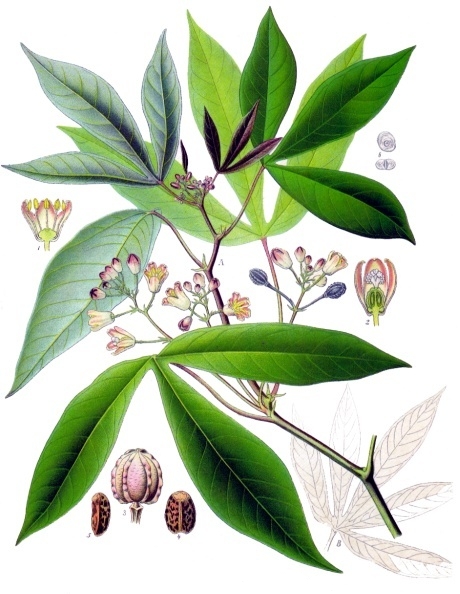
Botanical illustration of plant leaves and flowers
Photograph of oblong brown tuberous root, waxed
Storage root (waxed)
Scientific classification Edit this classification
Kingdom: Plantae
Clade: Tracheophytes
Clade: Angiosperms
Clade: Eudicots
Clade: Rosids
Order: Malpighiales
Family: Euphorbiaceae
Genus: Manihot
Species:
M. esculenta
Binomial name
Manihot esculenta
Synonyms[1]
  • Janipha aipi (Pohl) J.Presl
  • Janipha manihot (L.) Kunth
  • Jatropha aipi (Pohl) Göpp.
  • Jatropha diffusa (Pohl) Steud.
  • Jatropha digitiformis (Pohl) Steud.
  • Jatropha dulcis J.F.Gmel.
  • Jatropha flabellifolia (Pohl) Steud.
  • Jatropha loureiroi (Pohl) Steud.
  • Jatropha manihot L.
  • Jatropha mitis Rottb.
  • Jatropha paniculata Ruiz & Pav. ex Pax
  • Jatropha silvestris Vell.
  • Jatropha stipulata Vell.
  • Mandioca aipi (Pohl) Link
  • Mandioca dulcis (J.F.Gmel.) D.Parodi
  • Mandioca utilissima (Pohl) Link
  • Manihot aipi Pohl
  • Manihot aypi Spruce
  • Manihot cannabina Sweet
  • Manihot diffusa Pohl
  • Manihot digitiformis Pohl
  • Manihot dulcis (J.F.Gmel.) Baill.
  • Manihot edule A.Rich.
  • Manihot edulis A.Rich.
  • Manihot flabellifolia Pohl
  • Manihot flexuosa Pax & K.Hoffm.
  • Manihot loureiroi Pohl
  • Manihot melanobasis Müll. Arg.
  • Manihot sprucei Pax
  • Manihot utilissima Pohl

Manihot esculenta, commonly called cassava, manioc, or yuca (among numerous regional names), is a woody shrub of the spurge family, Euphorbiaceae, native to South America, from Brazil, Paraguay and parts of the Andes. Although a perennial plant, cassava is extensively cultivated in tropical and subtropical regions as an annual crop for its edible starchy tuberous root. Cassava is predominantly consumed in boiled form, but substantial quantities are processed to extract cassava starch, called tapioca, which is used for food, animal feed, and industrial purposes. The Brazilian farofa, and the related garri of West Africa, is an edible coarse flour obtained by grating cassava roots, pressing moisture off the obtained grated pulp, and finally drying and roasting it.

Cassava is the third-largest source of carbohydrates in food in the tropics, after rice and maize, making it an important staple; more than 500 million people depend on it. It offers the advantage of being exceptionally drought-tolerant, and able to grow productively on poor soil. The largest producer is Nigeria, while Thailand is the largest exporter of cassava starch.

Cassava is grown in sweet and bitter varieties; both contain toxins, but the bitter varieties have them in much larger amounts. Cassava has to be prepared carefully for consumption, as improperly prepared material can contain sufficient cyanide to cause poisoning. The more toxic varieties of cassava have been used in some places as famine food during times of food insecurity. Farmers may however choose bitter cultivars to minimise crop losses.

Etymology

[edit]

The generic name Manihot and the common name "manioc" both derive from the Guarani (Tupi) name mandioca or manioca for the plant.[2][3] The specific name esculenta is Latin for 'edible'.[2] The common name "cassava" is a 16th century word from the French or Portuguese cassave, in turn from Taíno caçabi.[4] The common name "yuca" or "yucca" is most likely also from Taíno, via Spanish yuca or juca.[5]

Description

[edit]

The harvested part of a cassava plant is the storage root. This is long and tapered, with an easily detached rough brown rind. The white or yellowish flesh is firm and even in texture. Commercial cultivars can be 5 to 10 centimetres (2 to 4 in) wide at the top, and some 15 to 30 cm (6 to 12 in) long, with a woody vascular bundle running down the middle. The tuberous roots are largely starch, with small amounts of calcium (16 milligrams per 100 grams), phosphorus (27 mg/100 g), and vitamin C (20.6 mg/100 g).[6] Cassava roots contain little protein, whereas the leaves are rich in it,[7] except for being low in methionine, an essential amino acid.[8]

Genome

[edit]

The complete and haplotype-resolved African cassava (TME204) genome has been reconstructed and made available using the Hi-C technology.[9] The genome shows abundant novel gene loci with enriched functionality related to chromatin organization, meristem development, and cell responses.[9] Differentially expressed transcripts of different haplotype origins were enriched for different functionality during tissue development. In each tissue, 20–30% of transcripts showed allele-specific expression differences with <2% of direction-shifting. Despite high gene synteny, the HiFi genome assembly revealed extensive chromosome rearrangements and abundant intra-genomic and inter-genomic divergent sequences, with significant structural variations mostly related to long terminal repeat retrotransposons.[9]

Although smallholders are otherwise economically inefficient producers, they are vital to productivity at particular times.[10] Small cassava farmers are no exception.[10] Genetic diversity is vital when productivity has declined due to pests and diseases, and smallholders tend to retain less productive but more diverse gene pools.[10]

The molecular genetics of starchy root development in cassava have been analyzed and compared to other root and tuber crops, including possible (unproven) roles for Flowering Locus T (FT) orthologs.[11]

History

[edit]

Wild populations of M. esculenta subspecies flabellifolia, shown to be the progenitor of domesticated cassava, are centered in west-central Brazil, where it was likely first domesticated no more than 10,000 years ago.[12] Forms of the modern domesticated species can also be found growing in the wild in the south of Brazil. By 4600 BC, cassava pollen appears in the Gulf of Mexico lowlands, at the San Andrés archaeological site.[13] The oldest direct evidence of cassava cultivation comes from a 1,400-year-old Maya site, Joya de Cerén, in El Salvador.[14] It became a staple food of the native populations of northern South America, southern Mesoamerica, and the Taino people in the Caribbean islands, who grew it using a high-yielding form of shifting agriculture by the time of European contact in 1492.[15] Cassava was a staple food of pre-Columbian peoples in the Americas and is often portrayed in indigenous art. The Moche people often depicted cassava in their ceramics.[16]

Spaniards in their early occupation of Caribbean islands did not want to eat cassava or maize, which they considered insubstantial, dangerous, and not nutritious. They much preferred foods from Spain, specifically wheat bread, olive oil, red wine, and meat, and considered maize and cassava damaging to Europeans.[17] The cultivation and consumption of cassava were nonetheless continued in both Portuguese and Spanish America. Mass production of cassava bread became the first Cuban industry established by the Spanish.[18] Ships departing to Europe from Cuban ports such as Havana, Santiago, Bayamo, and Baracoa carried goods to Spain, but sailors needed to be provisioned for the voyage. The Spanish also needed to replenish their boats with dried meat, water, fruit, and large amounts of cassava bread.[19] Sailors complained that it caused them digestive problems.[20]

Portuguese traders introduced cassava to Africa from Brazil in the 16th century. Around the same period, it was introduced to Asia through Columbian Exchange by Portuguese and Spanish traders, who planted it in their colonies in Goa, Malacca, Eastern Indonesia, Timor and the Philippines.[21] Cassava has also become an important crop in Asia. While it is a valued food staple in parts of eastern Indonesia, it is primarily cultivated for starch extraction and bio-fuel production in Thailand, Cambodia and Vietnam.[22] Cassava is sometimes described as the "bread of the tropics"[23] but should not be confused with the tropical and equatorial bread tree (Encephalartos), the breadfruit (Artocarpus altilis) or the African breadfruit (Treculia africana). This description definitely holds in Africa and parts of South America; in Asian countries such as Vietnam fresh cassava barely features in human diets.[24] Cassava was introduced to East Africa around 1850 by Arab and European settlers, who promoted its cultivation as a reliable crop to mitigate the effects of drought and famine.[25]

There is a legend that cassava was introduced in 1880–1885 to the South Indian state of Kerala by the King of Travancore, Vishakham Thirunal Maharaja, after a great famine hit the kingdom, as a substitute for rice.[26] However, cassava was cultivated in the state before that time.[27] Cassava is called kappa or maricheeni in Malayalam, and tapioca in Indian English usage.[28]

Cultivation

[edit]

Optimal conditions for cassava cultivation are mean annual temperatures between 20 and 29 °C (68 and 84 °F), annual precipitation between 1,000 and 2,500 mm (39 and 98 in), and an annual growth period of no less than 240 days.[29] Cassava is propagated by cutting the stem into sections of approximately 15 cm (5.9 in), these being planted prior to the wet season.[30] Cassava growth is favorable under temperatures ranging from 25 to 29 °C (77 to 84 °F), but it can tolerate temperatures as low as 12 °C (54 °F) and as high as 40 °C (104 °F).[31] These conditions are found, among other places, in the northern part of the Gulf Coastal Plain in Mexico.[29] In this part of Mexico the following soil types have been shown to be good for cassava cultivation: phaeozem, regosol, arenosol, andosol and luvisol.[29]

Harvesting

[edit]

Before harvest, the leafy stems are removed. The harvest is gathered by pulling up the base of the stem and cutting off the tuberous roots.[30]

Handling and storage

[edit]

Cassava deteriorates after harvest, when the tuberous roots are first cut. The healing mechanism produces coumaric acid, which oxidizes and blackens the roots, making them inedible after a few days. This deterioration is related to the accumulation of reactive oxygen species initiated by cyanide release during mechanical harvesting. Cassava shelf life may be increased up to three weeks by overexpressing a cyanide-insensitive alternative oxidase, which suppressed ROS by 10-fold.[32] Post-harvest deterioration is a major obstacle to the export of cassava. Fresh cassava can be preserved like potato, using thiabendazole or bleach as a fungicide, then wrapping in plastic, freezing, or applying a wax coating.[33]

While alternative methods for controlling post-harvest deterioration have been proposed, such as preventing reactive oxygen species effects by using plastic bags during storage and transport, coating the roots with wax, or freezing roots, such strategies have proved to be economically or technically impractical, leading to breeding of cassava varieties with improved durability after harvest, achieved by different mechanisms.[34][35] One approach used gamma rays to try to silence a gene involved in triggering deterioration; another strategy selected for plentiful carotenoids, antioxidants which may help to reduce oxidization after harvest.[35]

Pests and diseases

[edit]
An agronomist examines a diseased cassava crop in Thailand.

Cassava is subject to pests from multiple taxonomic groups, including nematodes, and insects, as well as diseases caused by viruses, bacteria, and fungi. All cause reductions in yield, and some cause serious losses of crops.[36]

Viruses

[edit]

Several viruses cause enough damage to cassava crops to be of economic importance. The African cassava mosaic virus causes the leaves of the cassava plant to wither, limiting the growth of the root.[37] An outbreak of the virus in Africa in the 1920s led to a major famine.[38] The virus is spread by the whitefly and by the transplanting of diseased plants into new fields. Sometime in the late-1980s, a mutation occurred in Uganda that made the virus even more harmful, causing the complete loss of leaves. This mutated virus spread at a rate of 80 kilometres (50 miles) per year, and as of 2005 was found throughout Uganda, Rwanda, Burundi, the Democratic Republic of the Congo and the Republic of the Congo.[39] Viruses are a severe production limitation in the tropics. They are the primary reason for the complete lack of yield increases in the 25 years up to 2021.[40] Cassava brown streak virus disease is a major threat to cultivation worldwide.[38] Cassava mosaic virus (CMV) is widespread in Africa, causing cassava mosaic disease (CMD).[41] Bredeson et al. 2016 find the M. esculenta cultivars most widely used on that continent have M. carthaginensis subsp. glaziovii genes of which some appear to be CMD resistance genes.[41] Although the ongoing CMD pandemic affects both East and Central Africa, Legg et al. found that these two areas have two distinct subpopulations of the vector, Bemisia tabaci whiteflies.[42][43] Genetically engineered cassava offers opportunities for the improvement of virus resistance, including CMV and CBSD resistance.[44]

Bacteria

[edit]

Among the most serious bacterial pests is Xanthomonas axonopodis pv. manihotis, which causes bacterial blight of cassava. This disease originated in South America and has followed cassava around the world.[45] Bacterial blight has been responsible for near catastrophic losses and famine in past decades, and its mitigation requires active management practices.[45] Several other bacteria attack cassava, including the related Xanthomonas campestris pv. cassavae, which causes bacterial angular leaf spot.[46]

Fungi and oomycetes

[edit]

Several fungi and oomycetes bring about significant crop losses, one of the most serious being cassava root rot; the pathogens involved are species of Phytophthora, the genus which causes potato blight. Cassava root rot can result in losses of as much as 80 percent of the crop.[36] A major pest is a rust caused by Uromyces manihotis.[47] Superelongation disease, caused by Elsinoë brasiliensis, can cause losses of over 80 percent of young cassava in Latin America and the Caribbean when temperature and rainfall are high.[36][48][49]

Nematodes

[edit]

Nematode pests of cassava are thought to cause harms ranging from negligible to seriously damaging,[50][51][52] making the choice of management methods difficult.[53] A wide range of plant parasitic nematodes have been reported associated with cassava worldwide. These include Pratylenchus brachyurus, Rotylenchulus reniformis, Helicotylenchus spp., Scutellonema spp. and Meloidogyne spp., of which Meloidogyne incognita and Meloidogyne javanica are the most widely reported and economically important.[54] Meloidogyne spp. feeding produces physically damaging galls with eggs inside them. Galls later merge as the females grow and enlarge, and they interfere with water and nutrient supply.[52] Cassava roots become tough with age and restrict the movement of the juveniles and the egg release. It is therefore possible that extensive galling can be observed even at low densities following infection.[53] Other pests and diseases can gain entry through the physical damage caused by gall formation, leading to rots. They have not been shown to cause direct damage to the enlarged tuberous roots, but plant height can be reduced if the root system is reduced.[55] Nematicides reduce the numbers of galls per feeder root, along with fewer rots in the tuberous roots.[56] The organophosphorus nematicide fenamiphos does not reduce crop growth or harvest yield. Nematicide use in cassava does not increase harvested yield significantly, but lower infestation at harvest and lower subsequent storage loss provide a higher effective yield. The use of tolerant and resistant cultivars is the most practical management method in most locales.[57][53][58]

Insects

[edit]
Grasshoppers, here on cassava in Nigeria, are secondary pests of cassava.[36]

Insects such as stem borers and other beetles, moths including Chilomima clarkei, scale insects, fruit flies, shootflies, burrower bugs, grasshoppers, leafhoppers, gall midges, leafcutter ants, and termites contribute to losses of cassava in the field,[36] while others contribute to serious losses, between 19% and 30%, of dried cassava in storage.[59] In Africa, a previous issue was the cassava mealybug (Phenacoccus manihoti) and cassava green mite (Mononychellus tanajoa). These pests can cause up to 80 percent crop loss, which is extremely detrimental to the production of subsistence farmers. These pests were rampant in the 1970s and 1980s but were brought under control following the establishment of the Biological Control Centre for Africa of the International Institute of Tropical Agriculture (IITA) under the leadership of Hans Rudolf Herren.[60] The Centre investigated biological control for cassava pests; two South American natural enemies Anagyrus lopezi (a parasitoid wasp) and Typhlodromalus aripo (a predatory mite) were found to effectively control the cassava mealybug and the cassava green mite, respectively.[61]

Production

[edit]
Cassava production – 2022
Country millions of tonnes
 Nigeria 60.8
 Democratic Republic of the Congo 48.8
 Thailand 34.1
 Ghana 25.6
 Cambodia 17.7
 Brazil 17.6
World 330
Source: FAOSTAT of the United Nations[62]

In 2022, world production of cassava root was 330 million tonnes, led by Nigeria with 18% of the total (table). Other major growers were Democratic Republic of the Congo and Thailand.

Cassava is the third-largest source of carbohydrates in food in the tropics, after rice and maize.[63][64][40] making it an important staple; more than 500 million people depend on it.[65] It offers the advantage of being exceptionally drought-tolerant, and able to grow productively on poor soil. Cassava grows well within 30° of the equator, where it can be produced at up to 2,000 m (7,000 ft) above sea level, and with 50 to 5,000 mm (2 to 200 in) of rain per year. These environmental tolerances suit it to conditions across much of South America and Africa.[66]

Cassava yields a large amount of food energy per unit area of land per day – 1,000,000 kJ/ha (250,000 kcal/ha), as compared with 650,000 kJ/ha (156,000 kcal/ha) for rice, 460,000 kJ/ha (110,000 kcal/ha) for wheat and 840,000 kJ/ha (200,000 kcal/ha) for maize.[67]

Cassava, yams (Dioscorea spp.), and sweet potatoes (Ipomoea batatas) are important sources of food in the tropics. The cassava plant gives the third-highest yield of carbohydrates per cultivated area among crop plants, after sugarcane and sugar beets.[68] Cassava plays a particularly important role in agriculture in developing countries, especially in sub-Saharan Africa, because it does well on poor soils and with low rainfall, and because it is a perennial that can be harvested as required. Its wide harvesting window allows it to act as a famine reserve and is invaluable in managing labor schedules. It offers flexibility to resource-poor farmers because it serves as either a subsistence or a cash crop.[69] Worldwide, 800 million people depend on cassava as their primary food staple.[70]

Toxicity

[edit]
Raw cassava is dangerous to eat as it contains linamarin (illustrated) and other cyanogenic glycosides, which are broken down to release poisonous hydrogen cyanide.[71]

Cassava roots, peels and leaves are dangerous to eat raw because they contain linamarin and lotaustralin, which are toxic cyanogenic glycosides. These are decomposed by the cassava enzyme linamarase, releasing poisonous hydrogen cyanide.[71] Cassava varieties are often categorized as either bitter (high in cyanogenic glycosides) or sweet (low in those bitter compounds). Sweet cultivars can contain as little as 20 milligrams of cyanide per kilogram of fresh roots, whereas bitter cultivars may contain as much as 1000 milligrams per kilogram. Cassavas grown during drought are especially high in these toxins.[72][73] A dose of 25 mg of pure cassava cyanogenic glucoside, which contains 2.5 mg of cyanide, is sufficient to kill a rat.[74] Excess cyanide residue from improper preparation causes goiters and acute cyanide poisoning, and is linked to ataxia (a neurological disorder affecting the ability to walk, also known as konzo).[75] It has also been linked to tropical fibrocalcific pancreatitis in humans, leading to chronic pancreatitis.[76][77]

Symptoms of acute cyanide intoxication appear four or more hours after ingesting raw or poorly processed cassava: vertigo, vomiting, goiter, ataxia, partial paralysis, collapse, and death.[78][79][80][81] It can be treated easily with an injection of thiosulfate (which makes sulfur available for the patient's body to detoxify by converting the poisonous cyanide into thiocyanate).[75]

Chronic, low-level exposure to cyanide may contribute to both goiter and tropical ataxic neuropathy, also called konzo, which can be fatal. The risk is highest in famines, when as many as 3 percent of the population may be affected.[82][83]

Like many other root and tuber crops, both bitter and sweet varieties of cassava contain antinutritional factors and toxins; the bitter varieties contain much larger amounts.[75] The more toxic varieties of cassava have been used in some places as famine food during times of food insecurity.[78][75] For example, during the shortages in Venezuela in the late 2010s, dozens of deaths were reported due to Venezuelans resorting to eating bitter cassava in order to curb starvation.[84][85] Cases of cassava poisoning were also documented during the famine accompanying the Great Leap Forward (1958–1962) in China.[86] Farmers may select bitter cultivars to reduce crop losses.[87]

Societies that traditionally eat cassava generally understand that processing (soaking, cooking, fermentation, etc.) is necessary to avoid getting sick. Brief soaking (four hours) of cassava is not sufficient, but soaking for 18–24 hours can remove up to half the level of cyanide. Drying may not be sufficient, either.[75]

In many West African regions, especially Nigeria, bitter cassava roots are traditionally detoxified in a lengthy process. The roots are peeled and grated. The moist pulp is soaked (or “retted”) in water for 48 to 72 hours to initiate spontaneous fermentation. During this period endogenous linamarase acts on linamarin and lotaustralin; the resulting hydrogen cyanide dissolves or volatilises, reducing the cyanogenic potential by 85 – 99 %.[88][89][90] After soaking, the mash is pressed to expel liquid and boiled, roasted, or toasted to make foods such as gari, fufu, and lafun, further lowering residual cyanide to within the WHO safe limit of 10 mg HCN kg⁻¹.[91]

For some smaller-rooted, sweet varieties, cooking is sufficient to eliminate all toxicity. The cyanide is carried away in the processing water and the amounts produced in domestic consumption are too small to have environmental impact.[71] The larger-rooted, bitter varieties used for production of flour or starch must be processed to remove the cyanogenic glucosides. The large roots are peeled and then ground into flour, which is then soaked in water, squeezed dry several times, and toasted. The starch grains that flow with the water during the soaking process are also used in cooking.[92] The flour is used throughout South America and the Caribbean. Industrial production of cassava flour, even at the cottage level, may generate enough cyanide and cyanogenic glycosides in the effluents to have a severe environmental impact.[71]

Uses

[edit]

Food and drink

[edit]

There are many ways of cooking cassava.[93] It has to be prepared correctly to remove its toxicity.[94] The root of the sweet variety is mild to the taste, like potatoes; Jewish households sometimes use it in cholent.[95] It can be made into a flour that is used in breads, cakes and cookies. In Brazil, farofa, a dry meal made from cooked powdered cassava, is roasted in butter, eaten as a side dish, or sprinkled on other food.[96] In Taiwanese culture, later spread to the United States, cassava "juices" are dried to a fine powder and used to make tapioca, a popular starch used to make bubbles, a chewy topping in bubble tea.[97]

Alcoholic beverages made from cassava include cauim (Brazil),[98] kasiri (Venezuela, Guyana, Suriname),[99] parakari or kari (Venezuela, Guyana, Surinam),[100] and nihamanchi (South America),[101]

Preparation of bitter cassava

[edit]

An ancestral method used by the indigenous people of the Caribbean to detoxify cassava is by peeling, grinding, and mashing; filtering the mash through a basket tube (sebucan or tipiti) to remove the hydrogen cyanide; and drying and sieving the mash for flour. The poisonous filtrate water was boiled to release the hydrogen cyanide, and used as a base for stews.[102]

A safe processing method known as the "wetting method" is to mix the cassava flour with water into a thick paste, spread it in a thin layer over a basket and then let it stand for five hours at 30 °C in the shade.[103] In that time, about 83% of the cyanogenic glycosides are broken down by linamarase; the resulting hydrogen cyanide escapes to the atmosphere, making the flour safe for consumption the same evening.[103]

The traditional method used in West Africa is to peel the roots and put them into water for three days to ferment. The roots are then dried or cooked. In Nigeria and several other west African countries, including Ghana, Cameroon, Benin, Togo, Ivory Coast, and Burkina Faso, they are usually grated and lightly fried in palm oil to preserve them. The result is a foodstuff called garri. Fermentation is also used in other places such as Indonesia, such as Tapai. The fermentation process also reduces the level of antinutrients, making the cassava a more nutritious food.[104] The reliance on cassava as a food source and the resulting exposure to the goitrogenic effects of thiocyanate has been responsible for the endemic goiters seen in the Akoko area of southwestern Nigeria.[105][106]

Bioengineering has been applied to grow cassava with lower cyanogenic glycosides combined with fortification of vitamin A, iron and protein to improve the nutrition of people in sub-Saharan Africa.[107][108]

In Guyana the traditional cassareep is made from bitter cassava juice.[109] The juice is boiled until it is reduced by half in volume,[110] to the consistency of molasses[111] and flavored with spices—including cloves, cinnamon, salt, sugar, and cayenne pepper.[112] Traditionally, cassareep was boiled in a soft pot, the actual "pepper pot", which would absorb the flavors and also impart them (even if dry) to foods such as rice and chicken cooked in it.[113] The poisonous but volatile hydrogen cyanide is evaporated by heating.[114] Nevertheless, improperly cooked cassava has been blamed for a number of deaths.[115] Amerindians from Guyana reportedly made an antidote by steeping chili peppers in rum.[111] The natives of Guyana traditionally brought the product to town in bottles,[116] and it is available on the US market in bottled form.[117]

Nutrition

[edit]
Cassava, raw
Nutritional value per 100 g (3.5 oz)
Energy670 kJ (160 kcal)
38.1 g
Sugars1.7 g
Dietary fiber1.8 g
0.3 g
1.4 g
Vitamins and minerals
VitaminsQuantity
%DV
Thiamine (B1)
7%
0.087 mg
Riboflavin (B2)
4%
0.048 mg
Niacin (B3)
5%
0.854 mg
Vitamin B6
5%
0.088 mg
Folate (B9)
7%
27 μg
Vitamin C
23%
20.6 mg
MineralsQuantity
%DV
Calcium
1%
16 mg
Iron
2%
0.27 mg
Magnesium
5%
21 mg
Phosphorus
2%
27 mg
Potassium
9%
271 mg
Sodium
1%
14 mg
Zinc
3%
0.34 mg
Other constituentsQuantity
Water60 g

Percentages estimated using US recommendations for adults,[118] except for potassium, which is estimated based on expert recommendation from the National Academies.[119]

Raw cassava is 60% water, 38% carbohydrates, 1% protein, and has negligible fat (table).[120] In a 100-gram (3+12-ounce) reference serving, raw cassava provides 670 kilojoules (160 kilocalories) of food energy and 23% of the Daily Value (DV) of vitamin C, but otherwise has no micronutrients in significant content (i.e., above 10% of the relevant DV).[120]

Biofuel

[edit]

Cassava has been studied as a feedstock to produce ethanol as a biofuel, including to improve the efficiency of conversion from cassava flour,[121] and to convert crop residues such as stems and leaves as well as the more easily processed roots.[122] China has created facilities to produce substantial amounts of ethanol fuel from cassava roots.[123]

Animal feed

[edit]

Cassava roots and hay are used worldwide as animal feed. Young cassava hay is harvested at three to four month, when it reaches about 30 to 45 cm (12 to 18 in) above ground; it is dried in the sun until its dry matter content approaches 85 percent. The hay contains 20–27 percent protein and 1.5–4 percent tannin. It is valued as a source of roughage for ruminants such as cattle.[124]

Laundry starch

[edit]

Cassava is used in laundry products, especially as starch to stiffen shirts and other garments.[125]

Folklore

[edit]

Maní, a Tupí myth of origins, is the name of an indigenous girl with very fair complexion. The Amazonian legend of Maní is related to the cult of Manioc, the native staple that sprang from her grave.[126][127][128] Sometime later a crack opened on the earth and the people of the tribe found a fruit that resembled the white skin tone of the dead child's body. They picked up the fruit from the ground, peeled and cooked it, and for their surprise it tasted delicious. It even renewed their strength. They also prepared a drink which could easily put one to sleep. So, from this day on, they began using the root as their staple food and called it "mandioca", which in Tupy language means "house (oca, in Tupi–Guarani) of Mandi= Maní".[129]

In Java, a myth relates that food derives from the body of Dewi Teknowati, who killed herself rather than accept the advances of the god Batara Guru. She was buried, and her lower leg grew into a cassava plant.[130] In Trinidad, folk stories tell of a saapina or snake-woman; the word is related to sabada, meaning to pound, for what is traditionally a woman's work of pounding cassava.[131]

The identity of the Macushi people of Guyana is closely bound up with the growth and processing of cassava in their slash-and-burn subsistence lifestyle. A story tells that the great spirit Makunaima climbed a tree, cutting off pieces with his axe; when they landed on the ground, each piece became a type of animal. The opossum brought the people to the tree, where they found all the types of food, including bitter cassava. A bird told the people how to prepare the cassava safely.[132]

See also

[edit]

References

[edit]
[edit]
Revisions and contributorsEdit on WikipediaRead on Wikipedia
from Grokipedia
Cassava (Manihot esculenta Crantz) is a woody in the spurge family (), native to tropical , where it has been domesticated for thousands of years as a crop valued for its large, starchy tuberous roots that serve as a primary source. These roots, which can grow 8–15 inches long and 1–4 inches in diameter under cultivation, contain high levels of but also cyanogenic glucosides that render them toxic if not properly processed, necessitating methods like soaking, , or cooking to remove before consumption. Now the world's fourth most important staple crop after , , and , cassava is cultivated across tropical and subtropical regions in , , and , with global production reaching 334 million metric tons in 2023, primarily in countries like , the , and . It thrives in warm, humid lowlands with annual rainfall of 500–5,000 mm and ranging from 4.0 to 8.0, exhibiting remarkable and the ability to grow on marginal, infertile soils where other crops fail, making it a vital crop for over 800 million people in developing regions. Beyond human consumption—where processed forms include flour, , and fermented products like gari—cassava supports feed, industrial for paper and textiles, and production, though challenges such as pests, diseases like cassava mosaic virus, and climate variability threaten yields.

Taxonomy and Etymology

Botanical Classification

Cassava, scientifically known as Manihot esculenta Crantz, belongs to the plant kingdom Plantae, phylum Tracheophyta, class Magnoliopsida, order , family , and genus Manihot. The species was first described by the Austrian botanist Heinrich Johann Nepomuk von Crantz in 1766. Within the family, which comprises over 6,000 species of flowering plants known for their milky and diverse tropical distributions, the Manihot includes about 100 species, primarily shrubs and herbs native to the . M. esculenta is distinguished as a woody originating from tropical , characterized by its tuberous roots that serve as the primary edible storage organ and its monoecious reproductive strategy, with male and female flowers borne on the same plant. Evolutionarily, M. esculenta is domesticated from wild relatives in the Manihot, with its closest progenitor being M. esculenta subsp. flabellifolia, alongside other wild species such as M. glaziovii and M. dichotoma, from which and have occurred, contributing to its . Historical botanical synonyms for M. esculenta include Manihot aypi Pohl, Manihot utilissima Pohl, Jatropha manihot L., and Janipha manihot (L.) Cass., reflecting early taxonomic revisions and nomenclatural shifts. Common names vary regionally, such as manioc in French-speaking areas, yuca in Spanish-speaking regions, and derived from its processed form, underscoring its widespread cultivation.

Origin of the Name

The name "cassava" derives from the word kasabi (or caçabi), which referred to the flour or bread made from the plant's roots, entering European languages through Spanish cazabe during early colonial encounters in the . This term, part of the Arawakan spoken by indigenous peoples of the , was documented by Spanish explorers in the late as they encountered the crop in the . In parallel, the adopted mandioca from the Tupi-Guarani , where mani means "house" or "spirit" and oca refers to a container or the manioc plant itself, reflecting indigenous mythological associations with the crop's origins. Regional nomenclature for cassava shows significant variation tied to roots and subsequent adaptations. In Spanish-speaking , yuca—a direct borrowing from —predominates, often distinguishing the fresh root from processed forms. West African languages have incorporated terms influenced by colonial introductions, such as gari in Yoruba and other Niger-Congo languages, which specifically denotes the fermented, granular product made from cassava and has become a generic reference to the crop in countries like and . In , particularly , the Javanese term singkong emerged as the common name, adapted from Dutch colonial influences during the . The historical evolution of 's nomenclature was profoundly shaped by 16th-century European colonial , which disseminated both the plant and its names across continents. traders, transporting cassava from to around 1550, introduced mandioca alongside the crop, leading to hybrid terms in African languages that blended Portuguese with local words for tubers. Similarly, Spanish expeditions spread yuca to the and other Asian outposts, where it intermixed with indigenous terms, fostering linguistic distortions like singkong through phonetic adaptations in Austronesian languages. This colonial diffusion not only globalized the crop but also standardized certain names in international commerce, such as "cassava" in English botanical texts by the 17th century.

Description

Morphology

Cassava (Manihot esculenta) is a woody typically grown as an annual crop, reaching heights of 1 to 4 meters under optimal conditions. The exhibits a semi-woody growth habit with cylindrical stems that are sparingly branched, often light green to reddish in color, and feature where the main stem divides dichotomously, trichotomously, or tetrachotomously to produce secondary branches. These stems can develop a smooth outer bark ranging from light brown to yellowish gray, with an inner cream-green layer and soft, creamy wood beneath. The leaves are simple and alternate, arranged in a 2/5 phyllotaxy spiral around the stem, with petioles measuring 5 to 40 cm in that vary from light greenish to red. The blades are palmate, deeply lobed with 3 to 9 lobes (typically 5 to 7), glabrous, and shiny with a waxy upper surface; the lobes are narrow, often 2.9 to 12.5 times longer than wide, and the blade is dark green above and pale greenish-gray below, sometimes with . Stomata are abundant on the lower surface, numbering 278 to 700 per square millimeter. The root system consists of a cluster of 4 to 8 tuberous roots emerging from the base of the stem, serving as the primary storage organs for starch. These roots are cylindrical and tapered, typically 20 to 38 cm long and 2.5 to 10 cm in diameter, encased in a thin reddish-brown fibrous bark with a pure white, starch-rich interior parenchyma containing xylem vessels. Beyond these enlarged storage roots, the plant develops a fibrous root network for anchorage and nutrient uptake. Cassava varieties are broadly classified as sweet or bitter based on cyanogenic glycoside content in the roots, primarily and lotaustralin, which release (HCN) upon . Sweet varieties contain less than 100 ppm HCN equivalents in fresh roots, allowing consumption with minimal processing, while bitter varieties exceed 100 ppm (often 500 ppm or more), necessitating detoxification methods like soaking or fermentation for safe use. Morphological differences between types are subtle, with no consistent traits directly tied to cyanide levels, though bitter types may show variations in root shape, skin thickness, or leaf coloration influenced by environmental factors. Flowering occurs in axillary positions, producing small white to pinkish flowers in racemes, but fruiting is rare in cultivation, yielding trilocular dehiscent capsules that seldom set viable seed due to reliance on vegetative propagation. Cassava is propagated vegetatively using 20- to 30-cm stem cuttings from mature woody portions, which sprout new shoots and roots within weeks, enabling rapid establishment. The growth cycle spans 6 to 24 months from planting to harvest, with roots maturing in 10 to 12 months under tropical conditions, after which the plant is typically harvested as an , though it can persist for 1 to 3 years as a before . During dry periods, the plant may enter a 2- to 3-month , resuming vegetative growth with renewed rainfall.

Genome and Genetics

The cassava is diploid with a size of approximately 1.5–1.7 Gb, consisting of 18 pairs (2n=36), and is characterized by high heterozygosity levels ranging from 0.7% to 1.4%, which complicates assembly and breeding efforts due to structural variations and repetitive sequences. Cassava is considered to have an allotetraploid origin, with a base number of x=9, contributing to its genetic complexity and adaptability. This polyploid structure, combined with elevated heterozygosity, results in significant allelic diversity that influences traits like yield and stress tolerance, though it poses challenges for genomic studies. The first draft of the cassava genome was generated in 2009 through a collaborative effort led by the U.S. Department of Energy Joint Genome Institute (DOE-JGI) as part of the Community Sequencing Program, producing a 454-based whole-genome assembly covering about 69% of the estimated and 96% of protein-coding genes. A chromosome-scale assembly followed in 2014, integrating a high-resolution map from 10 populations to anchor scaffolds onto chromosomes, enabling comparative analyses between wild ancestors (Manihot flabellifolia) and domesticated varieties. Subsequent updates in the 2020s have included haplotype-resolved assemblies, such as the 2022 telomere-to-telomere reference for the Yuxi 6-7, which resolved repetitive regions and improved contiguity. In 2025, further advancements included chromosome-level assemblies of Thai cassava ecotypes, a and map of and wild ancestors, and BAC-guided assemblies, providing deeper insights into adaptive , domestication, and breeding targets. Recent advancements incorporate CRISPR-Cas9 editing, as demonstrated in 2023 studies targeting susceptibility genes like isoforms to confer resistance to cassava brown streak and bacterial , enhancing precision breeding. Key genetic loci in cassava include those involved in cyanogenesis, the process producing toxic hydrocyanic acid, primarily the genes CYP79D1 and CYP79D2, which catalyze the first committed step in and lotaustralin . These genes are highly expressed in leaves, directing cyanogenic to storage , and have been targeted for downregulation via or mutagenesis to reduce levels by up to 99% without compromising yield. For drought tolerance breeding, loci such as MeZFP (encoding a protein) and MeALDH () have been identified as critical regulators, up-regulated under water stress to maintain and osmotic balance; incorporating these has accelerated development of resilient varieties. Cassava's is highest in its center of origin in southern and adjacent regions, where landraces exhibit broad allelic variation shaped by pre-Columbian and selection. This diversity underpins global but faces from clonal and pressures, prompting 2020s conservation initiatives like the comprehensive of over 7,000 Brazilian accessions by Embrapa and CIAT genebanks to identify core collections and purge duplicates. These efforts support ex situ preservation and inform genomic selection for traits like , ensuring sustainable breeding amid narrowing diversity in African and Asian cultivars.

History and Domestication

Origins in the Americas

Cassava (Manihot esculenta) originated through domestication in the southwestern approximately 10,000 years ago, specifically in the border regions encompassing modern-day western , eastern , and adjacent areas of and . The earliest direct archaeological evidence consists of phytoliths recovered from forest islands in the Llanos de Moxos of , dated to 10,350 calibrated years (cal yr BP), marking the onset of systematic cultivation by indigenous groups alongside other crops like squash. By around 4,750 cal yr BP, phytoliths and starch grains from manioc processing appear at the Real Alto site in coastal , indicating the crop's early dispersal and integration into mixed agricultural economies of the , where it was prepared both raw and cooked using stone tools. In pre-Columbian Amazonian societies, cassava served as a staple, with cultivation evidence from horticultural sites like Teotonio in western , where phytoliths on grinding stones dated to 6,000 cal BP reveal its processing into flour or bread within (anthropogenic ) soils enriched by human activity. Processing tools, including wooden or ceramic graters tipped with sharp stone fragments like silex, were essential for shredding tubers to extract toxic cyanogens through washing and pressing, a technique archaeologically attested from 300 BCE onward in Brazilian Amazon sites. Domestication involved from the wild progenitor M. esculenta subsp. flabellifolia, which produces small, fibrous roots, toward varieties with enlarged, unbranched storage tubers yielding higher content and easier propagation via stem cuttings. This human-mediated shift, evident in morphological changes like thicker stems and reduced branching documented through genetic and archaeobotanical analysis, occurred primarily in the southern Amazon and enhanced cassava's resilience and caloric value for pre-Columbian communities. peaks in this domestication center, reflecting ongoing selection pressures (as explored in the Genome and Genetics section). Recent genomic studies, including analyses of historic manioc genomes and pan-genome mapping as of 2025, further confirm domestication in the southwestern Amazon around 10,000 years ago and provide insights into genetic adaptations for management and yield improvement.

Global Spread and Cultivation History

Cassava's global dissemination began during the , when traders introduced the crop from to in the 16th century, recognizing its potential as a reliable food source for their trading posts and colonies. The initially transported cassava to islands such as and Fernando Po in the , where it was cultivated to support enslaved populations and explorers. By around 1558, it had reached the , spreading inland from coastal enclaves and gradually integrating into local farming systems as a resilient staple amid diverse ecological conditions. In , cassava arrived through parallel colonial routes, with Spanish traders carrying it from the to the in the via the trade, while settlers planted it in regions like and . Dutch colonizers further expanded its cultivation in during the , promoting it for and as a famine buffer. These introductions facilitated etymological adaptations, such as the adoption of terms like "kamoteng kahoy" in the , reflecting local linguistic integrations during colonial encounters. By the , cassava's expansion accelerated in , particularly as a famine-relief ; in the Congo region during the , colonial administrators and missionaries distributed it to mitigate food shortages caused by conflicts and environmental stresses, solidifying its role in . In , its importance surged during , when disrupted rice supplies in occupied territories like and the elevated cassava to a critical reserve, supporting populations under wartime scarcities. In the late , the 's influence in boosted cassava through breeding programs that developed higher-yielding, disease-resistant varieties, enhancing its productivity and adoption among smallholders in sub-Saharan regions. Initiatives like the Alliance for a Green Revolution in (AGRA) have since focused on cassava to address nutritional needs and vulnerabilities, distributing improved seeds that tolerate and poor soils. Entering the 2020s, adaptation programs in , such as those led by the International Center for Tropical Agriculture (CIAT), emphasize genomic tools and resilient cultivars to sustain cassava production amid rising temperatures and erratic rainfall, aiming to bolster food systems for millions of farmers.

Cultivation Practices

Environmental Requirements

Cassava thrives in tropical and subtropical climates, where mean annual temperatures range from 25°C to 29°C, with temperatures around 30°C; growth halts below 10°C. The crop requires well-distributed annual rainfall of 1,000 to 1,500 mm for optimal development, though it exhibits notable , enduring periods of up to six months with minimal water and adapting to semi-arid conditions with as little as 500 mm of per year. For soil conditions, cassava prefers well-drained sandy loam or light-textured soils with a between 4.5 and 6.5, which support root expansion without impeding aeration. While it demonstrates resilience to low-fertility and acidic soils, it cannot tolerate waterlogging or heavy clays, as prolonged moisture leads to and reduced yields. Cassava cultivation is feasible from sea level up to altitudes of 1,800 meters, beyond which cooler temperatures and reduced oxygen availability limit productivity. Typical planting densities range from 10,000 plants per hectare, achieved through spacings of 1 meter by 1 meter, to balance competition for resources and maximize tuber yield. In response to climate change, research in the 2020s has focused on breeding cassava varieties with enhanced tolerance to saline and highly acidic soils, enabling cultivation in marginal lands affected by rising salinity and soil degradation. These adaptations aim to sustain production amid increasing environmental stresses, such as erratic rainfall and soil salinization.

Planting and Harvesting

Cassava is primarily propagated vegetatively using stem cuttings harvested from healthy, disease-free aged 8-12 months. These cuttings should measure 20-30 cm in length and contain 5-8 nodes, with a diameter of at least 2 cm to ensure vigorous sprouting and higher yields. Cuttings from the lower, more mature portions of the stem are preferred, as they exhibit better establishment rates compared to those from younger sections. Prior to planting, cuttings can be treated by soaking in a of boiling and cold water for 5-10 minutes to reduce fungal infections, and they should be stored upright in shaded, moist soil for no more than 5 days. Varietal selection influences propagation and overall crop timing, with sweet varieties (low cyanogenic glycoside content) typically maturing earlier at 6-12 months, suitable for direct consumption, while bitter varieties (higher cyanogenic content) often require 12-24 months for optimal root development and are preferred for industrial processing. For both types, select certified, high-yielding varieties resistant to local stresses to maximize productivity. Planting occurs during the onset of the rainy season to align with optimal levels of 500-1000 mm annually. Cuttings are inserted 5-10 cm deep, either vertically or at a 45-degree angle for better anchorage, in rows spaced 1 m apart with 1 m between , accommodating about 10,000 per . In areas prone to waterlogging, plant on ridges or mounds raised 20-30 cm high to improve drainage and reduce risk, whereas flat planting suits well-drained, upland soils. Maintenance begins shortly after planting and focuses on weed control, nutrient supply, and compatible companion crops. Weeding is essential in the first 4-6 months when is highest; manual weeding at 3-4, 8, 12, and 20-24 weeks after planting can increase yields by up to 90% compared to unweeded fields. Fertilization typically involves applying NPK in split doses, such as 50-100 kg N/ha, 10-20 kg P/ha, and 65-120 kg K/ha, with the first application at planting and subsequent ones at 2-3 and 4-5 months to support root bulking without excessive vegetative growth. with short-duration crops like , cowpeas, or groundnuts is common, enhancing land use efficiency and providing additional income, provided cassava density remains at 10,000 /ha to avoid . Harvesting is labor-intensive and timed based on varietal maturity, generally 8-24 months after planting, when roots reach peak content. The process involves cutting stems 20-30 cm above ground level two weeks prior to extraction to facilitate access, followed by manual uprooting using hoes or forks to loosen and pull roots intact, minimizing breakage. Yields of fresh roots typically range from 10-40 tons per under good management, with higher figures achieved through improved varieties and fertilization.

Post-Harvest Handling and Storage

Cassava are highly perishable after harvest, primarily due to post-harvest physiological deterioration (PPD), an endogenous process triggered by mechanical wounding that leads to exudation and subsequent oxidation, generating (ROS) and causing enzymatic browning and vascular discoloration. This deterioration typically begins within 24-72 hours at ambient temperatures of 20-30°C, rendering unmarketable within 3-4 days for most varieties, though some resistant genotypes may last up to 7-11 days. The process involves starch hydrolysis to sugars, accumulation of cyanogenic glucosides, and secondary metabolite buildup, such as , which exacerbates tissue breakdown and limits fresh transport and marketing. To mitigate PPD, immediate post-harvest handling emphasizes minimizing mechanical damage during uprooting and transport, followed by rapid processing into value-added products like or chips within hours of . A key technique is curing, which promotes and periderm (skin) formation to reduce moisture loss and entry; this involves storing at 30-35°C and 80-95% for 7-9 days, allowing suberization of damaged tissues and delaying discoloration onset. Pre-harvest practices, such as foliage 2-3 weeks before , can further enhance curing efficacy by reducing flow and improving root skin integrity. Storage methods for fresh roots are limited but include traditional heap or clamp storage, where 300-500 kg of roots are piled in conical heaps covered with moist straw, leaves, or soil to maintain humidity and extend viability for 2-3 days up to 2 months under optimal conditions, though losses increase in hot, dry seasons. For longer preservation, solar drying reduces root moisture to 8-12% by slicing into thin chips spread on mats or trays, preventing microbial growth while retaining usability for flour milling; alternatively, roots can be converted to dried chips or flour immediately post-harvest for indefinite storage in cool, dry conditions. Refrigerated storage at 0-4°C inhibits PPD for exports, maintaining quality for 2-4 weeks, though it risks chilling injury and requires careful humidity control to avoid fungal issues. Global post-harvest losses for cassava are estimated at 10-25%, with regional variations—9.5% in , 6.3% in , and 14% in the —largely attributable to PPD and inadequate handling in smallholder systems. In the 2020s, innovations like wax coatings applied post-harvest have shown promise in extending to 14 days or more by sealing surfaces against oxygen and moisture, reducing weight loss and rot while improving marketability in African supply chains.

Pests and Diseases

Insect Pests

Cassava is highly susceptible to several key pests that inflict substantial damage, particularly in , where the crop supports the livelihoods of millions. Among the most destructive are the cassava green mite (), the cassava (Phenacoccus manihoti), and the (Bemisia tabaci), which collectively contribute to yield reductions through direct feeding and, in the case of whiteflies, virus transmission. These pests thrive in tropical conditions and have been inadvertently introduced from the , exacerbating losses in non-native regions. The cassava green mite (), a tetranychid native to the and introduced to in 1971, primarily targets the growing points and undersides of young leaves. Its life cycle accelerates in dry conditions, enabling rapid population buildup during the , with feeding causing stippling, yellowing, mottling, and bronzing of leaves that severely impairs . This damage leads to leaf drop and reduced root yields, with reported losses ranging from 13% to 80% depending on variety susceptibility and environmental factors. The cassava mealybug (Phenacoccus manihoti), another invasive pest from introduced to in the , reproduces parthenogenetically and feeds on sap from leaves, buds, and stems. Its life cycle averages 49.5 days for females, comprising eggs that hatch in 6-8 days followed by four nymphal instars, allowing continuous breeding in warm, humid . Feeding induces leaf curling, yellowing, , and defoliation, often resulting in distorted stems and yield reductions up to 80% in affected areas. Whiteflies (Bemisia tabaci), a polyphagous hemipteran with a global tropical distribution, pose dual threats through direct sap-feeding and as vectors for devastating viruses like cassava mosaic disease. The life cycle from egg to adult spans 19-29 days at optimal temperatures around 28°C, with females laying 4-5 eggs daily on leaf undersides and up to 11-12 generations per year. Nymphs and adults extract phloem sap, causing , leaf rolling, and from honeydew excretion, which can directly reduce yields by up to 40% while amplifying viral epidemics. Control strategies emphasize biological methods to minimize environmental impact and resistance development. For the green mite, predatory mites such as Typhlodromalus aripo have been introduced, achieving 35-60% population reductions and yield increases of up to one-third through natural spread via wind or infested cuttings. populations are effectively suppressed by the Apoanagyrus lopezi, which has restored yields to pre-infestation levels across following continent-wide releases. management benefits from parasitoids like Encarsia , attaining up to 58% parasitism rates, alongside natural enemies such as Eretmocerus mundus. Chemical controls, including insecticides like 1% Rogor applied via stem-cutting dips, provide targeted suppression but are used judiciously to preserve beneficial insects. Integrated pest management (IPM) programs, pioneered by the since the 1970s, integrate these biological agents with cultural practices like (e.g., with or to disrupt pest habitats), timely planting at the rainy season's onset, and deployment of resistant varieties such as TMS 30572 for green mites. These approaches have mitigated losses exceeding 50% in , with ongoing efforts including a 2024 international partnership for biocontrol to enhance smallholder resilience. Some cassava genotypes exhibit partial genetic resistance to these pests, complementing IPM without replacing it.

Pathogens and Diseases

Cassava is susceptible to a range of pathogens, including viruses, , fungi, and nematodes, which collectively pose significant threats to global production, particularly in tropical regions where the is a staple. These s can lead to substantial yield losses, with viral infections like cassava (CMD) and cassava brown streak (CBSD) causing up to 50-100% reductions in some areas, while bacterial and fungal pathogens exacerbate damage under favorable environmental conditions. Management strategies emphasize the use of resistant varieties, practices, and integrated approaches to mitigate spread. Viral Diseases
Cassava mosaic disease (CMD), caused by geminiviruses such as African cassava mosaic virus (ACMV) and East African cassava mosaic virus (EACMV), is one of the most devastating viral pathogens, transmitted primarily by the vector Bemisia tabaci. Symptoms include mottling, patterns, distortion, and stunted growth, leading to reduced yield; the disease has historically caused pandemic-level outbreaks in since the 1990s.
Cassava brown streak disease (CBSD), induced by ipomoviruses including Cassava brown streak virus (CBSV) and Ugandan cassava brown streak virus (UCBSV), primarily affects East and , with symptoms manifesting as chlorotic lesions on leaves and necrotic lesions in roots and stems, resulting in up to 70% yield loss through . Transmission occurs via and infected planting material, with the disease's spread accelerated by climate-driven vector proliferation.
Bacterial Diseases
Cassava bacterial , caused by axonopodis pv. manihotis (Xam), is a systemic prevalent in and , characterized by angular leaf spots, , stem cankers, and vascular discoloration, which can reduce yields by 20-50% in severe cases. The spreads through rain splash, tools, and infected cuttings, thriving in warm, humid conditions.
Fungal Diseases
Anthracnose, primarily caused by gloeosporioides and related species in the C. gloeosporioides complex, affects leaves, stems, and , producing sunken lesions, dieback, and stem cankers that lead to plant lodging and yield losses of up to 60% in humid environments. The fungus overwinters in crop debris and spreads via rain and wind, with infections favored by high rainfall and temperatures above 25°C.
Nematode Diseases
Root-knot nematodes, mainly Meloidogyne incognita and M. javanica, are significant below-ground pathogens that induce galls on roots, impair nutrient uptake, and predispose plants to secondary infections, causing 30-50% yield reductions in infested soils across sub-Saharan Africa and Asia. These sedentary endoparasites penetrate roots as juveniles and form syncytia, with populations building up over multiple cropping cycles in sandy soils.
Management of these pathogens relies on deploying resistant varieties, such as Tropical Manihot Series (TMS) cultivars like TMS 30572 for CMD and newer 2020s releases incorporating CBSD resistance through conventional breeding and genomics-assisted selection at institutions like the (IITA). Key practices include using virus-indexed clean planting material, , quarantine to prevent introduction, and early detection via to limit spread.
Emerging threats include the spread of Sri Lankan cassava mosaic virus (SLCMV) strains in , reported in 2023, potentially linked to climate-induced shifts in vector dynamics and trade, alongside re-emerging fungal diseases such as cassava witches' broom, caused by Ceratobasidium sp., which has spread from to as of 2025 and could amplify losses if not monitored.

Global Production

Major Producing Regions

Cassava production is predominantly concentrated in tropical regions, with accounting for approximately 63% of global output in recent years, primarily through subsistence farming that supports for millions. leads as the world's largest producer, harvesting over 62 million metric tons annually in 2023, followed by the with about 45 million metric tons, at 30.6 million metric tons, with 26.5 million metric tons, at 18.5 million metric tons, and around 19 million metric tons. These figures, drawn from FAO statistics, highlight the crop's dominance in low-input agricultural systems across these nations. In , where production exceeds 190 million metric tons yearly, cassava serves as a staple for over 500 million people, cultivated extensively on marginal lands due to its resilience to and poor soils. Subsistence farming prevails, with smallholder operations in countries like and the DR Congo relying on manual labor and traditional varieties for household consumption and local markets. , contributing about 25% of global production, contrasts with a more commercialized approach; and focus on export-oriented cultivation, leveraging mechanized farming and high-yield hybrids to supply and processed products to international markets. The , particularly , produce around 10% of the world's cassava, featuring diverse varieties adapted to varying climates from the Amazon to the Northeast, where cultivation supports both food and industrial uses. Key factors driving production in these regions include suitability and labor availability. Cassava thrives in infertile, acidic with low rainfall tolerance, making it ideal for Africa's vast savannas and Asia's monsoon-influenced tropics, while abundant rural labor in developing economies facilitates its labor-intensive harvesting. In , post-2020 shifts have been influenced by rising demand, with blending mandates prompting increased cultivation for production alongside traditional uses.

Yield and Economic Factors

Global cassava production reached 334 million tonnes in 2023, representing a 32% increase from 253 million tonnes in , driven by expanded cultivation in tropical regions and yield enhancements through improved varieties and management practices. Projections from the OECD-FAO Agricultural Outlook indicate continued annual growth of around 1-2% through 2033, supported by rising demand for and industrial uses, though constrained by land availability and climate variability. Average global yields stand at approximately 11 tonnes per hectare, but variability is high due to environmental and biotic factors; in suboptimal conditions, such as those affected by pests and nutrient-poor soils, yields can drop to as low as 5 tonnes per hectare, limiting productivity in smallholder systems prevalent in . Interventions like application and have demonstrated potential to elevate yields to 20-25 tonnes per hectare under optimal conditions, enhancing overall output and farmer incomes. Cassava plays a pivotal economic role as a staple for nearly 800 million people across tropical regions, providing essential carbohydrates and supporting livelihoods in low-income areas where it accounts for up to one-third of caloric intake. in cassava and its derivatives, including chips, , and , generates an annual value of $3-5 billion, with major flows from to markets in and for and applications. African exports are projected to grow at 1.9% annually through the , potentially reaching higher volumes by 2025 amid increasing intra-continental demand and value-added processing initiatives. Key challenges include price volatility, influenced by weather-dependent harvests and global fluctuations, which can lead to annual price swings of 30% or more in producer markets. Additionally, disruptions in the from events—such as droughts in and floods in —have reduced outputs by 10-20% in affected years, exacerbating food insecurity and export instability.

Toxicity and Processing

Cyanogenic Glycosides

Cassava contains two primary cyanogenic glycosides, and lotaustralin, which are responsible for its potential toxicity. predominates, accounting for approximately 93% of the total cyanogenic glycosides, while lotaustralin constitutes the remaining 7%. These compounds are derived from the and , respectively, and are present throughout the plant, including roots, leaves, and stems. Upon , they release (HCN), a potent . The concentration of these glycosides varies significantly between cassava varieties, influencing their classification as "sweet" or "bitter." Sweet varieties typically contain less than 50 mg HCN equivalents per kg of fresh root weight, rendering them safer for consumption with minimal processing. In contrast, bitter varieties exhibit higher levels, ranging from 10 to 500 mg HCN equivalents per kg, though concentrations can exceed 400 mg/kg under certain environmental conditions such as or poor soil. These differences are genetically determined, with specific loci controlling cyanogenesis levels. Biosynthesis of and lotaustralin occurs in the plant's tissues, where they are stored intact in vacuoles within undamaged cells. Toxicity arises only upon cellular disruption, such as during harvesting or chewing, which activates the enzyme (linamarase). This enzyme hydrolyzes into glucose and , which then spontaneously decomposes to release HCN, particularly under neutral or alkaline conditions. Lotaustralin follows a similar pathway, yielding methyl-ethyl-ketone cyanohydrin and HCN. The released HCN inhibits in the mitochondrial , disrupting . Acute exposure to high levels of HCN from inadequately processed cassava can cause severe , with symptoms including , , , , rapid respiration, and convulsions. The acute of HCN for humans is 0.5 to 3.5 mg per kg body weight, potentially leading to death within minutes due to . Chronic low-level exposure, often from regular consumption of insufficiently detoxified bitter cassava in regions with nutritional deficiencies, is linked to , an irreversible paralytic disorder characterized by spastic paraparesis, and to tropical ataxic neuropathy (TAN), a chronic sensory neuropathy; both primarily affect children and women in cassava-dependent areas and result from cumulative toxicity and accumulation, exacerbating and goiter. typically occurs in sudden outbreaks in rural , while TAN is more insidious and widespread in populations with poor . To mitigate risks, the Commission, under FAO and WHO, establishes maximum limits for HCN in cassava products, recommending no more than 10 mg/kg in and 50 mg/kg in fresh peeled roots to prevent . These guidelines, reaffirmed in evaluations through 2022, ensure that processed cassava remains safe for human consumption when levels stay below the acute reference dose of 20 μg per kg body weight.

Detoxification Methods

Traditional methods for detoxifying cassava primarily involve physical and biological processes that hydrolyze cyanogenic glycosides into (HCN), which is then volatilized or leached out. Soaking cassava or chips in for 24 hours prior to drying can reduce HCN levels by up to 90%, from initial concentrations around 108 mg/kg to below 11 mg/kg. Grating the exposes the to air and enzymes like linamarase, facilitating , while subsequent sun drying further removes HCN through prolonged enzyme-substrate contact, achieving greater reductions than oven drying alone. , a of traditional , activates microbial activity that breaks down glycosides; for instance, soaking followed by three days of lowers total content to about 5.7% of initial levels. In gari production, a widely practiced West African method, cassava roots are peeled, grated, fermented for 48-96 hours, dewatered, and roasted, resulting in HCN reductions of up to 91%. This 48-hour fermentation step alone can bring HCN below 10 mg/kg in varieties with initial levels under 300 mg/kg dry weight, meeting international safety thresholds. These methods are effective for sweet cassava varieties but require longer durations for bitter types with higher cyanogen content. Industrial processes build on traditional techniques with controlled conditions for scalability and consistency. cassava chips removes approximately 90% of free within 15 minutes, as HCN leaches into the water and evaporates. cooking, involving high-temperature, high-pressure processing, denatures enzymes and volatilizes HCN, achieving near-complete in flours and meals. Additives like ascorbic acid can inhibit linamarase activity during processing, preventing premature HCN release and allowing safer handling, with applications reducing residual toxins in leaf products. Recent advancements include breeding low-cyanide cassava varieties, with 2024 selections showing HCN levels as low as 17-18 mg/kg in , minimizing the need for extensive processing while maintaining yield. Safety standards set by the FAO and WHO stipulate that processed cassava products must not exceed 10 mg HCN/kg to prevent , a benchmark achieved through adequate processing times in both traditional and industrial methods.

Uses and Applications

Food and Nutritional Uses

Cassava serves as a vital dietary staple for over 800 million people worldwide, particularly in tropical regions of , , and , where it provides a reliable source of carbohydrates amid challenging growing conditions. The roots are primarily consumed after processing into various forms, while the leaves are used as a in soups and stews. These preparations enhance and ensure safety, making cassava a of daily meals in diverse cuisines. Common food products derived from cassava include gari, a fermented and roasted granular flour popular in for making —a thick, dough-like mixed with hot water and served with soups; , a starchy paste from fermented and boiled roots, widely eaten across ; , consisting of cassava starch pearls used in puddings and beverages globally; and simply boiled or steamed roots as a . In , is a signature preparation where toasted cassava flour is mixed with fats, bacon, onions, and spices to create a crunchy accompaniment to grilled meats and . These products highlight cassava's versatility, transforming the into shelf-stable staples that support in resource-limited areas. Nutritionally, cassava roots are composed mainly of carbohydrates, with starch accounting for approximately 80% of the dry matter, alongside low levels of protein (1-2%) and fat (less than 1%), and they contain modest amounts of calcium, phosphorus, and vitamin C. The leaves, in contrast, offer higher nutritional value, with protein content ranging from 16% to 40% and significant levels of vitamins C, B1 (thiamine), and B2 (riboflavin), making them a valuable addition to diets when cooked like spinach. However, reliance on cassava as a primary food can lead to nutritional deficiencies, such as inadequate protein and essential amino acids like methionine, if not complemented by diverse foods rich in animal proteins or legumes. In , per capita cassava consumption averages around 100 kg per year, varying by country—for instance, around 200 kg in and 350-450 kg in the —reflecting its role as a preferred source in staple diets. To address micronutrient , biofortified varieties enriched with provitamin A have been developed and released, such as those in in 2023, which can supply up to 25-50% of daily needs and help combat deficiencies affecting millions. By 2025, over 400 high-quality biofortified varieties have been released across , including in , contributing to improved adoption and reduction. All cassava for consumption requires processing to remove cyanogenic compounds, and recent research has identified potential allergens like , which may trigger reactions in sensitized individuals.

Industrial and Non-Food Applications

Cassava serves as a key feedstock for production, particularly , derived from its high content in the roots. yields from cassava typically range from 150 to 333 liters per tonne of fresh roots or dry chips, respectively, depending on processing efficiency and conversion rates. In , government mandates in the 2020s have increased the blending requirement in to 30% (E30) as of August 2025, supporting expanded production that includes contributions from cassava alongside and corn, though cassava remains a smaller-scale option for . While direct from cassava is limited, its and processing byproducts, such as , have been explored for algal cultivation, enabling blends in diesel fuels. Beyond energy, cassava starch finds extensive use in various industries due to its neutral flavor, high , and binding properties. In the and sectors, it acts as a agent to improve strength and smoothness; for instance, it moisturizes yarns during and weaving and aids in pattern printing. Adhesives, including hot-melt types for textiles, incorporate modified cassava starch enhanced with fillers like kaolin for better tackiness and durability. In pharmaceuticals, it functions as a binder, disintegrant, and in tablets, leveraging its and controlled release capabilities. Dried cassava chips are a valuable ingredient, providing a high-energy source comparable to corn, with metabolizable energy values around 3,000–3,500 kcal/kg , offering approximately 70–100% of corn's energy efficiency in and diets. Native cassava is extracted for traditional applications like stiffeners, where it is boiled into a paste to impart crispness to fabrics without synthetic chemicals. Emerging applications in 2025 focus on bioplastics from cassava and , such as peels, processed into biodegradable , bags, and that decompose naturally, reducing reliance on petroleum-based plastics. These innovations, including from cassava and oil, address environmental concerns in food and industrial . Globally, industrial accounts for about 10% of cassava production, with higher shares in (up to 60% in for and ), driven by demand in non-food sectors amid post-2020 expansions in green technologies.

Cultural and Economic Significance

Traditional Folklore

In indigenous Amerindian cultures of the and , cassava, known as yuca, holds a sacred place in creation myths as a divine gift from deities associated with the earth and fertility. Among the people, Yúcahu, the masculine spirit of fertility and son of the earth mother Atabey, was revered as the lord of cassava, embodying the plant's role as the primary sustenance provided by the gods to humanity. This connection underscores yuca's symbolic link to the nurturing earth mother, positioning it as a foundational element in Taíno cosmology where the crop's abundance mirrored divine benevolence toward human survival. Similarly, in Makushi lore from , cassava features prominently in origin stories as a primordial gift emerging from the dismembered body of a mythical serpent, slain by culture heroes Insikiron and Anike, the first humans; the serpent's remains sprouted into diverse cassava varieties, symbolizing the plant's integral role in the world's creation and humanity's emergence from chaos. A poignant example from Tupi mythology in illustrates cassava's transformative power in tales of sacrifice and renewal. The legend of Mani recounts how a chief's daughter, impregnated by the gods, bore a beloved named Mandi who died young; buried in the village, tears from her grieving mother nourished the soil, causing a new plant to sprout with edible roots that became manioc (cassava), named "Mandi's house" in honor of the girl and serving as an eternal gift sustaining the people. This narrative portrays cassava not merely as food but as a symbol of life's cyclical renewal, born from loss and divine intervention, reinforcing its status as a sacred provision for indigenous communities. In African indigenous traditions, cassava symbolizes resilience and , often integrated into rituals that celebrate human and agricultural abundance, though its adoption from the has woven it into local symbolic frameworks. Among various West African groups, the plant's prolific propagation from cuttings evokes femininity and procreation, leading to customs where cassava is offered to newlyweds as a blessing for fruitful unions and family growth. In some pre-colonial Central African societies, such as in , cassava flour was applied during initiation rites to young girls, signifying purity and the transition to womanhood, thereby linking the crop to rites of passage and communal fertility. Yoruba oral traditions emphasize taboos against wasteful discard of food resources like cassava, viewing such acts as disrespectful to ancestral spirits and the earth's bounty, with stories warning of misfortune befalling those who squander the crop's gifts. Across Asian indigenous adaptations, particularly in , cassava features in Javanese as a vital element of sustenance derived from divine sacrifice, tying it to themes of harmony and survival amid scarcity. In the myth of Dewi Teknowati, a goddess who poisoned herself to escape unwanted advances from the god , her body parts transformed into essential foods upon burial: her belly became , while her legs yielded underground staples like cassava, symbolizing the earth's generous provision for human endurance. This tale, echoed in variations involving , portrays cassava as part of a sacred of foods—classified as "pala kapendem" (buried fruits) growing beneath the —emphasizing its role in fostering balance between people and during times of need. In Indonesian oral histories, especially in , cassava's introduction during colonial famines evolved into legends of communal survival, where the crop's hardiness is mythologized as a resilient ally against hunger, preserving cultural continuity through shared rituals of preparation and consumption. In the 2020s, has seen cultural revivals blending indigenous cassava lore with syncretic elements, revitalizing symbolic narratives amid modern challenges. Among the Waurá people of the , the "Casa do Kukurro" tradition—constructing mounds to house the spirit Kukurro, guardian of cassava diversity—has gained renewed prominence through a documentary that amassed over 2 million views, highlighting how these practices serve as both spiritual invocations for bountiful harvests and practical for crop resilience. Such efforts echo Tupi creation myths like Mani's while incorporating Afro-ian influences in urban festivals, where cassava-based dishes symbolize hybrid identities forged from ancestral sacrifices, fostering community bonds and in contemporary indigenous movements.

Socioeconomic Impact

Cassava serves as a critical staple crop for smallholder farmers in tropical regions, providing a reliable source of carbohydrates and supporting for over 800 million people worldwide. Grown predominantly by low-income smallholders on marginal lands with minimal inputs, it thrives in environments unsuitable for other staples, offering resilience against droughts and erratic rainfall patterns. Its ability to remain in the ground for up to 30 months without spoiling allows farmers to harvest as needed during food shortages, making it a vital buffer in where it contributes over 30% of caloric intake in countries like . This and low production costs enhance household stability, particularly for vulnerable populations facing climate variability. Economically, cassava drives rural employment and income generation, with women playing a central role in activities across . In , women account for the majority of labor in production and value-added tasks like gari and making, often as self-employed or family workers, though they capture limited profits due to market intermediaries. These activities support livelihoods for millions in processing and trading networks. On a larger scale, cassava exports bolster national economies; , the world's top exporter, generated $3.7 billion from cassava product shipments as of 2023 (including dried chips and for industrial uses), with values reaching $3.13 billion in 2024 and showing a rebound in early 2025 exports. Such revenues fund and , while in , small-scale processing initiatives create jobs and reduce . Despite these benefits, socioeconomic challenges persist, particularly around gender dynamics and . Women in African cassava value chains dominate labor-intensive roles but face unequal benefit distribution, with men controlling higher-value nodes like trading; in , gendered participation limits women's bargaining power and income. Broader inequalities exacerbate this: female-managed farms in are 24% less productive than male-managed ones of similar size, and women earn 18.4% less in agricultural work, as highlighted in the 2024 UN Women Gender Snapshot. Limited access to , , and markets hinders smallholders' integration into formal economies. Looking ahead, cassava holds significant potential for advancing (SDGs), including zero hunger and , through bioeconomy innovations. In regions like , it supports job creation and sustainable resource use, with applications in bioethanol and bioplastics contributing to and reduced fossil fuel reliance. Gender-focused programs in the 2020s, such as UN Women's initiatives in the Democratic Republic of Congo, have empowered over 200 women via cassava flour production cooperatives, improving incomes, education access, and community safety since 2020. These efforts, alongside breeding programs incorporating gender preferences, signal opportunities for equitable development and resilience-building in .

References

Add your contribution
Related Hubs
User Avatar
No comments yet.