


Community hub
Recent from talks
Contribute something
Nothing was collected or created yet.
Anise
View on Wikipedia
| Anise | |
|---|---|

| |
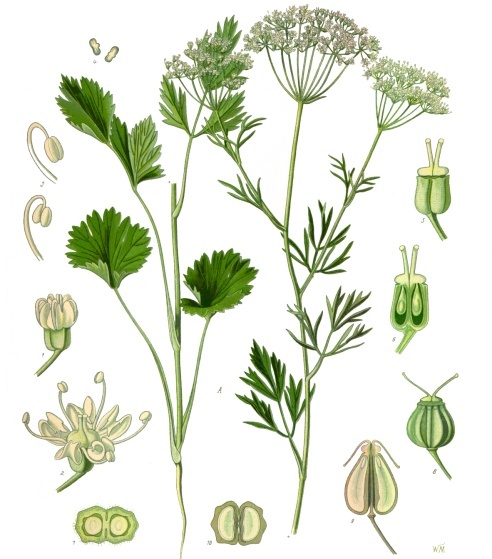
| 1897 illustration[1] | |
Scientific classification 
| |
| Kingdom: | Plantae |
| Clade: | Tracheophytes |
| Clade: | Angiosperms |
| Clade: | Eudicots |
| Clade: | Asterids |
| Order: | Apiales |
| Family: | Apiaceae |
| Genus: | Pimpinella |
| Species: | P. anisum
|
| Binomial name | |
| Pimpinella anisum | |
| Synonyms | |
|
Synonymy
| |
Anise (/ˈænɪs/;[3] Pimpinella anisum), also called aniseed or rarely anix,[4] is a flowering plant in the family Apiaceae[2] native to the eastern Mediterranean region and Southwest Asia.[5]
The flavor and aroma of its seeds have similarities with some other spices and herbs, such as star anise,[4] fennel, liquorice, and tarragon. It is widely cultivated and used to flavor food, candy, and alcoholic drinks, especially around the Mediterranean.
Etymology
[edit]The name "anise" is derived via Old French from the Latin words anīsum or anēthum from Greek ἄνηθον ánēthon referring to dill.[6][7]
An obsolete English word for anise is anet, also coming from anīsum.[8]
Botany
[edit]Anise is an herbaceous annual plant growing to 60–90 centimetres (2–3 feet) or more. The leaves at the base of the plant are simple, 1–5 cm (3⁄8–2 inches) long and shallowly lobed, while leaves higher on the stems are feathery or lacy, pinnate, divided into numerous small leaflets.[9]
Both leaves and flowers are produced in large, loose clusters. The flowers are either white or yellow, approximately 3 millimetres (1⁄8 in) in diameter, produced in dense umbels.
The fruit is a dry oblong and curved schizocarp, 4–6 mm (1⁄6–1⁄4 in) long, usually called "aniseed".[9][10]
-

-
 Fruits in hand for scale
 -
 Fruits (aniseed)
 -
 Close-up of fruits
 -
 Microscope cross-section of fruit


Ecology
[edit]Anise is a food plant for the larvae of some Lepidoptera species (butterflies and moths), including the lime-speck pug and wormwood pug.[11]
Cultivation
[edit]Anise was first cultivated in Egypt and the Middle East, and was brought to Europe for its medicinal value.[12] It has been cultivated in Egypt for approximately 4,000 years.[13]
Anise plants grow best in light, fertile, well-drained soil. The seeds should be planted as soon as the ground warms up in spring. Because the plants have a taproot, they do not transplant well after being established so they should either be started in their final location or be transplanted while the seedlings are still small.[14]
Production
[edit]Western cuisines have long used anise to flavor dishes, drinks, and candies. The word is used for both the species of herb and its licorice-like flavor. The most powerful flavor component of the essential oil of anise, anethole, is found in both anise and an unrelated spice indigenous to South China[15] called star anise (Illicium verum) widely used in South Asian, Southeast Asian and East Asian dishes. Star anise is considerably less expensive to produce and has gradually displaced P. anisum in Western markets. While formerly produced in larger quantities, by 1999 world production of the essential oil of anise was 8 tons, compared to 400 tons of star anise.[16]
Uses
[edit]Composition
[edit]As with all spices, the composition of anise varies considerably with origin and cultivation method. These are typical values for the main constituents.[17]
- Moisture: 9–13%
- Protein: 18%
- Fatty oil: 8–23%
- Essential oil: 2–7%
- Starch: 5%
- N-free extract: 22–28%
- Crude fibre: 12–25%
In particular, the anise seeds products should also contain more than 0.2 milliliter volatile oil per 100 grams of spice.[18]
Culinary
[edit]

Anise is sweet and aromatic, distinguished by its characteristic flavor.[10] The seeds, whole or ground, are used for preparation of teas and tisanes[19] (alone or in combination with other aromatic herbs), as well many regional and ethnic confectioneries, including black jelly beans (often marketed as licorice-flavored), British aniseed balls, aniseed twists[20] and "troach" drops, Australian humbugs, New Zealand aniseed wheels, Italian pizzelle and biscotti, German Pfeffernüsse and Springerle, Austrian Anisbögen, Dutch muisjes, New Mexican bizcochitos and Peruvian picarones.[citation needed]
The culinary uses of anise are not limited only to sweets and confections, as it is a key ingredient in Mexican atole de anís and champurrado, which is similar to hot chocolate.[citation needed] In India and Pakistan, it is taken as a digestive after meals, used in brines in the Italian region of Apulia and as a flavoring agent in Italian sausage, pepperoni and other Italian processed meat products.[21] The freshly chopped leaves are added to cheese spreads, dips or salads, while roots and stems impart a mild licorice flavor to soups and stews.[21]
Liquor
[edit]
Anise is used to flavour Greek ouzo and Bulgarian mastika;[22] Italian sambuca;[22] French absinthe, anisette,[23] and pastis;[24] Portuguese anis which has an aniseed stem in each bottle crystallised with sugar, Spanish anis de chinchón,[25] anís,[26] anísado,[22] and Herbs de Majorca;[27] Turkish and Armenian rakı;[22] Lebanese, Egyptian, Syrian, Jordanian, Palestinian and Israeli arak;[22] and Algerian Anisette Cristal.[22] Outside the Mediterranean region, it is found in Colombian aguardiente[23] and Mexican Xtabentún.[28] These liqueurs are clear, but on addition of water become cloudy, a phenomenon known as the ouzo effect.[29][30]
Anise is used together with other herbs and spices in some root beers, such as Virgil's in the United States.[31][32]
Traditional medicine
[edit]The main use of anise in traditional European herbal medicine was for its carminative effect (reducing flatulence),[4] as noted by John Gerard in his Great Herball, an early encyclopedia of herbal medicine:
The seed wasteth and consumeth winde, and is good against belchings and upbraidings of the stomach, alaieth gripings of the belly, provoketh urine gently, maketh abundance of milke, and stirreth up bodily lust: it staieth the laske (diarrhea), and also the white flux (leukorrhea) in women.[33]
According to Pliny the Elder, anise was used as a cure for sleeplessness, chewed with alexanders and a little honey in the morning to freshen the breath, and, when mixed with wine, as a remedy for asp bites (N.H. 20.72).[34] In 19th-century medicine, anise was prepared as aqua anisi ("Water of Anise") in doses of an ounce or more and as spiritus anisi ("Spirit of Anise") in doses of 5–20 minims.[12] In Turkish folk medicine, its seeds have been used as an appetite stimulant, tranquilizer or diuretic.[35]
Essential oil
[edit]
Anise essential oil can be obtained from the fruits by either steam distillation or extraction using supercritical carbon dioxide.[36] The yield of essential oil is influenced by the growing conditions[37] and extraction process, with supercritical extraction being more efficient.[36] Regardless of the method of isolation the main component of the oil is anethole (80–90%), with minor components including 4-anisaldehyde, estragole and pseudoisoeugenyl-2-methylbutyrates amongst others.[38] (Alternately found by Orav et al. 2008 to be 2–6% extracted oil by weight of raw seed material, 74–94% being trans-anethole and the remaining fraction estragole (methylchavicol), anisaldehyde and γ-himachalene.)[39] Anethole is responsible for anise's characteristic odor and flavor.[40]
Other uses
[edit]Builders of steam locomotives in Britain incorporated capsules of aniseed oil into white metal plain bearings so the distinctive smell would give warning in case of overheating.[41] Anise can be made into a liquid scent and is used for both drag hunting and fishing. It is put on fishing lures to attract fish.[42][43]
References
[edit]- ^ from Franz Eugen Köhlae, Köhlae's Medizinal-Pflanzen, 1897
- ^ a b "Pimpinella anisum L." World Flora Online. World Flora Consortium. 2023. Retrieved 22 January 2023.
- ^ Wells, John C. (2008). Longman Pronunciation Dictionary (3rd ed.). Longman. ISBN 978-1-4058-8118-0.
- ^ a b c Baynes 1878.
- ^ "Anice vera, Pimpinella anisum L." Flora Italiana. Altervista. n.d.
- ^ Lewis, Charlton T.; Short, Charles (1879). "ănēthum". A Latin Dictionary. Perseus Digital Library.
- ^ "Anise". Oxford Dictionaries, Oxford University Press. 2018. Archived from the original on March 4, 2018. Retrieved 3 March 2018.
- ^ "s.v. 'anise'".
- ^ a b Stephens, James M. (April 1997). "Anise—Pimpinella anisum L." AskIFAS. University of Florida Institute of Food and Agricultural Sciences. Archived from the original on 22 January 2023. Retrieved 22 January 2023.
- ^ a b Katzer, Gernot (9 September 1998). "Anise (Pimpinella anisum L.)". Spice Pages.
- ^ "Aniseed - Cargo Handbook - the world's largest cargo transport guidelines website". cargohandbook.com. Retrieved 2022-05-25.
- ^ a b Chisholm 1911.
- ^ "Anise Uses, Benefits & Side Effects - Drugs.com Herbal Database". Drugs.com. Retrieved 2022-05-25.
- ^ "Tips for Transplanting Seedlings". Almanac.com. Retrieved 2022-05-25.
- ^ Peter, K. V. (2004). Handbook of Herbs and Spices. Woodhead Publishing. p. 290. ISBN 978-1-85573-721-1.
- ^ Philip R. Ashurst (1999). Food Flavorings. Springer. p. 33. ISBN 978-0-8342-1621-1.[permanent dead link]
- ^ J.S. Pruthi: Spices and Condiments, New Delhi: National Book Trust (1976), p. 19.
- ^ Branch, Legislative Services. "Consolidated federal laws of canada, Food and Drug Regulations". laws.justice.gc.ca. Retrieved 2018-07-19.
- ^ "Anise seed: Properties, benefits, mischief, dosage, and side effects". Alwosta. Archived from the original on 2020-09-25. Retrieved 2024-02-05.
- ^ "Favourite traditional British sweets: in pictures". www.telegraph.co.uk. 4 November 2015. Retrieved 2021-05-23.
- ^ a b Peter, K.V. (2012). Handbook of herbs and spices Volume 2. p. 143.
- ^ a b c d e f Dealberto, Clara; Desrayaud, Lea (25 July 2017). "Le pastis, elixir provencal". Le Monde. Le Monde. p. 28.
- ^ a b "16 Anise-Flavored Liquors". SenseList. 2006-10-20. Retrieved 13 November 2017.
- ^ Blocker, Jack S. Jr.; Fahey, David M.; Tyrrell, Ian R. (2003). Alcohol and Temperance in Modern History: An International Encyclopedia. ABC-CLIO. pp. 478–. ISBN 978-1-57607-833-4. Retrieved 28 March 2013.
- ^ admin. "Chincon". Chincon (in Spanish). Retrieved 2022-11-06.
- ^ Zurdo, David; Gutiérrez, Ángel (2004). El libro de los licores de España. Ediciones Robinbook. p. 50. ISBN 9788496054127. Retrieved 5 February 2013.
- ^ "Majorcan herb liqueur in Spain". Spain.info. 2007-04-23. Retrieved 22 January 2018.
- ^ "Xtabentún Cocktail Guide, with Origins and Recipes". Wine Enthusiast Magazine. 29 February 2012. Archived from the original on 27 November 2022. Retrieved 13 November 2017.
- ^ Sitnikova, Natalia L.; Sprik, Rudolf; Wegdam, Gerard; Eiser, Erika (2005). "Spontaneously Formed trans-Anethol/Water/Alcohol Emulsions: Mechanism of Formation and Stability". Langmuir. 21 (16): 7083–7089. doi:10.1021/la046816l. PMID 16042427.
- ^ Ganachaud, François; Katz, Joseph L. (2005). "Nanoparticles and Nanocapsules Created Using the Ouzo Effect: Spontaneous Emulsification as an Alternative to Ultrasonic and High-Shear Devices". ChemPhysChem. 6 (2): 209–216. doi:10.1002/cphc.200400527. PMID 15751338.
- ^ "Virgil's Bavarian Nutmeg". Reeds. Archived from the original on April 21, 2014. Retrieved May 12, 2014.
- ^ "Virgil's Rootbeer – Spike's Root Beer Reviews and Ratings". Root Beer Reviews. Retrieved May 12, 2014.
- ^ John Gerard, The Herball, or Generall Historie of Plantes Archived 2011-06-14 at the Wayback Machine, 1597, p. 880, side 903
- ^ Pliny (1856). "Book XX. Anise—sixty-one remedies". The Natural History of Pliny. Vol. 4. translators John Bostock, Henry Riley. London: Henry Bohn. pp. 271–274. OCLC 504358830.
- ^ Baytop, T. (1999) Therapy with medicinal plants in Turkey, Past and Present. Kitapevi, Istanbul, Turkey, 2nd edition, pp. 142.
- ^ a b Pereira, Camila G.; Meireles, M. Angela A. (September 2007). "Economic analysis of rosemary, fennel and anise essential oils obtained by supercritical fluid extraction". Flavour and Fragrance Journal. 22 (5): 407–413. doi:10.1002/ffj.1813.
- ^ Zehtab-salmasi, S.; Javanshir, A.; Omidbaigi, R.; Alyari, H.; Ghassemi-golezani, K. (May 2001). "Effects of water supply and sowing date on performance and essential oil production of anise (Pimpinella anisum L.)". Acta Agronomica Hungarica. 49 (1): 75–81. doi:10.1556/AAgr.49.2001.1.9.
- ^ Rodrigues, Vera M.; Rosa, Paulo T. V.; Marques, Marcia O. M.; Petenate, Ademir J.; Meireles, M. Angela A. (March 2003). "Supercritical Extraction of Essential Oil from Aniseed using sCO2: Solubility, Kinetics and Composition Data". Journal of Agricultural and Food Chemistry. 51 (6): 1518–1523. doi:10.1021/jf0257493. PMID 12617576.
- ^ Sayed-Ahmad, Bouchra; Talou, Thierry; Saad, Zeinab; Hijazi, Akram; Merah, Othmane (2017). "The Apiaceae: Ethnomedicinal family as source for industrial uses" (PDF). Industrial Crops and Products. 109. Elsevier: 661–671. doi:10.1016/j.indcrop.2017.09.027. ISSN 0926-6690. Archived from the original (PDF) on 2022-06-10. Retrieved 2022-06-04.
- ^ Jodral, Manuel Miro. Illicium, Pimpinella and Foeniculum. CRC Press, 2004. pp. 205
- ^ The Railway Magazine. 99: 287. 1953.
{{cite journal}}: CS1 maint: untitled periodical (link) - ^ Collins, Tony (2005). Encyclopedia of traditional British rural sports. Abingdon, England: Routledge. p. 140. ISBN 978-0-415-35224-6.
- ^ Gabriel, Otto; von Brandt, Andres (2005). Fish catching methods of the world (4 ed.). Oxford, England: Blackwell. pp. 153–4. ISBN 978-0-85238-280-6.
Further reading
[edit]- Baynes, T. S., ed. (1878), , Encyclopædia Britannica, vol. 2 (9th ed.), New York: Charles Scribner's Sons, pp. 57–58
- Chisholm, Hugh, ed. (1911), , Encyclopædia Britannica, vol. 2 (11th ed.), Cambridge University Press, p. 55
| International | |
|---|---|
| National | |
| Other | |

Anise
View on GrokipediaNames and Origins
Etymology
The name "anise" entered English via Middle English "anys" or "anes," borrowed from Old French "anis" in the 13th century, which itself derives from Latin anīsum.[9] This Latin term stems from Ancient Greek ánison (ἄνισον) or annḗson (ἄννησον), likely originating from a pre-Greek substrate language or directly from Egyptian jnst (or inst), an ancient term for a plant used in preparing refreshing drinks, possibly alluding to its aromatic qualities.[10][11] The Egyptian root suggests early recognition of the plant's sweet-smelling properties, though the precise meaning remains tied to its medicinal and flavorful applications in ancient texts like the Papyrus Ebers (c. 1550 BCE).[12] Historical variations of the name reflect its spread across cultures and languages. In Arabic, anise is called yansūn (ينسون) or anīsūn (أنيسون), adaptations that trace back through Greek and Latin influences during the Hellenistic and Islamic periods.[13] These forms highlight the plant's Levantine and Mediterranean origins, with the Arabic term emphasizing its role as a sweet seed (ḥabbat al-ḥulwa, or "sweet seed").[13] The name's evolution also appears in other European languages, such as Italian anice and Spanish anís, all converging on the core Latin-Greek lineage.[9] Etymologically, "anise" connects to related umbelliferous plants like fennel through historical naming confusions rather than true cognates. In ancient Greek, ánison was sometimes conflated with anḗthon (ἄνηθον), the term for dill, due to similar appearances and flavors, leading to interchangeable uses in early texts; this false cognate persisted in Latin anēthum for dill.[13] Fennel (Foeniculum vulgare), while botanically distinct from anise (Pimpinella anisum), shares a licorice-like aroma from anethole, fostering occasional misnomer as "sweet anise" in vernacular traditions, though their etymologies diverge—fennel's from Latin faeniculum ("little hay").[14]History
Anise (Pimpinella anisum) has been utilized since ancient times, with its earliest documented uses tracing back to Egypt around 1550 BCE. The Ebers Papyrus, an ancient Egyptian medical text, references the plant under the term "inst" as a remedy for abdominal disorders and dental ailments, highlighting its role in early pharmacopeia for digestive and oral health issues.[12] Cultivated in the Nile Valley for at least 4,000 years, anise was valued for treating conditions like kidney stones and served as a foundational element in Egyptian medicinal practices.[15] By the classical period, its use spread to Greece, where Hippocrates (c. 460–370 BCE) recommended it in his writings for respiratory and digestive relief, establishing it as a staple in Hellenistic medicine.[16] In Rome, Pliny the Elder (c. 23–79 CE) described two varieties—one from Crete and one from Egypt—noting their applications as thirst quenchers, aphrodisiacs, and agents to induce perspiration when infused in wine; the plant was also incorporated into culinary preparations like bread and meats for its carminative properties.[12] Roman legions further disseminated anise across the empire, including cultivation in regions like Tuscany, underscoring its cultural significance in both healing and daily sustenance.[17] During the medieval era, anise's prominence grew through trade networks like the Silk Road, which facilitated its exchange from the Mediterranean to Asia and back, integrating it into diverse pharmacopeias. Arab scholars played a pivotal role in preserving and advancing knowledge of the plant; Avicenna (Ibn Sina, 980–1037 CE) detailed its carminative effects in his Canon of Medicine, recommending it for gastrointestinal relief and respiratory conditions such as asthma, where it acted as a bronchodilator and anti-inflammatory agent.[18] This text, influential across Islamic and later European medicine, emphasized anise's warming qualities to balance bodily humors. In Europe, monastic communities cultivated anise in herb gardens for therapeutic purposes, with Benedictine and Cistercian monks using it in remedies for stomach pains, flatulence, and as a component in spiced confections to aid digestion—often mixing it with cumin and other herbs in monastery infirmaries.[19] Charlemagne (742–814 CE) mandated its planting in imperial gardens, promoting its widespread adoption in Carolingian Europe for both medicinal and culinary roles.[12] Anise's dissemination continued with European expansion; although already known in the Mediterranean, its commercial cultivation intensified in the 19th century across Spain, Germany, and other regions, driven by demand for liqueurs and confections. Spanish colonizers introduced the plant to the Americas in the 16th century, where it quickly became integral to Latin American cuisines and folk medicine, used as an antiseptic and digestive aid by settlers and indigenous communities alike.[20] This transatlantic transfer marked a key phase in anise's global spread, blending Old World traditions with New World adaptations and cementing its enduring cultural and therapeutic legacy.[18]Taxonomy and Description
Taxonomy
Anise is classified under the binomial nomenclature Pimpinella anisum L., within the family Apiaceae, formerly known as Umbelliferae.[21] This family encompasses numerous aromatic herbs characterized by their umbellate inflorescences and compound leaves.[22] The genus Pimpinella includes approximately 150–180 species, predominantly perennial or biennial herbs native to Europe, Asia, and Africa, with a few annual representatives. P. anisum stands out as an annual herb in this genus, distinguished by its erect, branched stem and aromatic foliage, in contrast to the more common perennial species like P. saxifraga, which exhibit fibrous root remnants and persistent basal sheaths.[23] Within the Apiaceae family, P. anisum shares phylogenetic affinities with other economically important genera, such as Foeniculum (fennel, F. vulgare) and Anethum (dill, A. graveolens), based on chloroplast and nuclear DNA analyses that place them in the apioideae subfamily.[24] These relations are supported by shared traits like essential oil production and umbel structures, though DNA barcoding loci such as ITS and trnH-psbA reveal distinct genetic clusters, with A. graveolens showing closer ties to certain toxic congeners like Conium maculatum.[24] It is important to distinguish P. anisum from star anise (Illicium verum), which, despite a similar flavor profile due to anethole content, belongs to the unrelated family Schisandraceae and derives from an evergreen tree rather than an annual herb.[25] Common names for P. anisum include anise, aniseed, and sweet cumin in English, with regional variations such as anis in French and anís in Spanish; pharmacologically, it is known as Fructus Anisi.[13] No major botanical synonyms are recognized, though vernacular names like anise burnet saxifrage appear in some floras.[26]Botanical Description
Anise (Pimpinella anisum) is an annual herbaceous plant in the Apiaceae family, characterized by its erect growth habit and branching stems that reach heights of 30–60 cm.[27][28] The stems are slender, grooved, and green, supporting feathery foliage that alternates along their length.[27] The leaves are pinnate, with lower basal leaves being long-stalked (4–10 cm petioles), rounded, and serrated, measuring 0.5–5 cm in length, while upper stem leaves are shorter-stalked and more finely divided into linear segments.[2][27] These leaves are green, slightly hairy on the undersides, and contribute to the plant's delicate, bushy appearance.[7] The flowers emerge in summer, forming loose, compound umbels 2–5 cm in diameter, each consisting of numerous small white or yellowish blooms with five separate petals and sepals.[27][7] These radially symmetrical flowers are pollinated primarily by insects, typical of the Apiaceae family.[2] Following pollination, the plant produces schizocarp fruits, which are dry, oblong, and slightly curved, measuring 3–5 mm in length.[7] Each schizocarp splits into two gray-green to yellowish mericarps, each containing a single flattened, hairy seed; the fruits are ridged and ovoid-pear-shaped, turning brown at maturity.[27][2] The root system consists of a primary taproot that develops secondary growth within the first few weeks after germination, supporting the plant's upright structure in well-drained soils.[29] As an annual, P. anisum completes its lifecycle from seed germination to seed maturity in 120–130 days, with germination occurring in 10–14 days under suitable conditions, vegetative growth in the first 60–90 days, followed by flowering and fruit set in late summer.[30] The plant senesces after seed dispersal, with no overwintering capability in temperate climates.[7]Ecology and Distribution
Habitat and Ecology
Anise (Pimpinella anisum), a member of the Apiaceae family, is native to the eastern Mediterranean region and Southwest Asia, with its wild populations extending from southeastern Turkey through the Levant to central Israel and including Cyprus; it has a long history of cultivation in areas such as Egypt, Greece, Crete, and Asia Minor. In its natural habitat, it thrives in dry, rocky terrains, mountain pastures, fields, meadows, and grasslands, where it grows as a slow-developing annual herb. These environments provide the open, sunny conditions essential for its lifecycle, contributing to its role in temperate herbaceous communities.[18][17][21] The plant requires a warm, temperate climate with full sun exposure and moderate temperatures ranging from 18–25°C for optimal growth and seed maturation, though it is highly sensitive to frost and demands a long frost-free period. It prefers cool, moist conditions during early germination (soil temperatures of 10–21°C) but transitions to drier autumn weather for seed production, reflecting its adaptation to Mediterranean seasonal patterns. Well-drained, fertile soils with a pH of 6.0–7.5, such as light sandy or loamy types, support its root development and prevent waterlogging, which can lead to root rot.[31][32][18] Ecologically, anise serves as a host plant for larvae of various Lepidoptera species in the swallowtail genus (Papilio), whose caterpillars feed on its foliage, thereby integrating it into local insect food webs. Its umbel-shaped flowers attract pollinators such as bees and parasitic wasps, enhancing biodiversity in Apiaceae-dominated habitats like meadows, while its aromatic compounds provide chemical defenses that repel certain pests, including aphids and red spider mites, though it remains vulnerable to aphid infestations under high population pressures. These interactions position anise as a valuable companion in natural and cultivated ecosystems, where it supports predator-prey dynamics and contributes to overall floral diversity without dominating the landscape.[33][34][32]Geographic Distribution
Anise (Pimpinella anisum) is native to the eastern Mediterranean region and Southwest Asia, with its wild range extending from southeastern Turkey through the Levant to central Israel and including Cyprus.[21] It is cultivated in countries such as Greece, Egypt, and Turkey, where it thrives in temperate climates with well-drained soils.[35] The plant has naturalized in various parts of southern Europe, including Italy, Spain, and France, as well as in regions of Asia like southern Russia and parts of the Middle East beyond its native limits.[17] Its spread to these areas resulted from early human cultivation and dispersal along ancient trade routes, such as those connecting the Mediterranean to Central Asia.[36] Anise was introduced to the Americas—particularly Mexico and parts of South America—and to North Africa through colonial and commercial exchanges during the 16th to 19th centuries, where it has since become established in suitable habitats.[7] Today, anise is cultivated extensively worldwide for its seeds, with major production hotspots including Spain, Turkey, and Mexico. As of 2023, leading producers include India, Turkey, China, Egypt, and Syria.[37][38] These countries lead in output due to favorable growing conditions and established agricultural practices, alongside significant cultivation in Egypt, China, and India, which together account for a large share of global supply. The plant's global distribution continues to expand through international trade, adapting to diverse regions while preferring the dry, sunny environments reminiscent of its origins.[17]Cultivation and Production
Cultivation Practices
Anise (Pimpinella anisum) requires well-drained, loamy soils such as sandy loam or clay loam with moderate fertility and a pH range of 6.0 to 8.5, ideally 6.3 to 7.3, to support healthy root development and prevent waterlogging. It avoids heavy, cold, or excessively moist soils that can promote disease. The plant thrives in temperate and subtropical climates, including Mediterranean regions, with optimal temperatures of 8–23°C during growth and a frost-free period of at least 120 days. Sunny, open sites with annual precipitation of 400–1,700 mm are preferred, though it tolerates semi-arid conditions with supplemental water; excessive heat or fluctuating moisture can reduce seed quality.[39][40][41] Sowing occurs in spring for temperate zones (March–April in hills) or fall for warmer areas (mid-October to early November in plains), directly into prepared fields after the last frost risk. Seeds are planted at a depth of 1–2 cm in rows spaced 30–45 cm apart, with plants thinned to 20 cm within rows to allow adequate airflow and reduce competition. A seeding rate of 5–10 kg per hectare ensures uniform stands, and light incorporation or pressing aids germination, which takes 10–20 days at soil temperatures around 21°C.[39][41][40] Irrigation is moderate throughout the 120–150 day cycle, with 4–6 applications totaling 300–500 mm, focusing on pre-sowing if soil is dry and critical stages like flowering and seed filling to avoid stress that impacts yield. Drip or furrow methods are effective in dry regions, but overwatering must be avoided to prevent root issues and lodging. Mulching helps retain moisture and suppress weeds in home gardens.[39][41] Fertilization begins with incorporation of 15–20 tons of farmyard manure per hectare to improve soil structure, followed by basal application of 80 kg nitrogen (N), 30 kg phosphorus (P₂O₅), and 20 kg potassium (K₂O) per hectare, split to minimize leaching. Excess nitrogen is discouraged as it promotes lush foliage at the expense of seeds and increases lodging risk. Foliar sprays of micronutrients like iron, zinc, and manganese (e.g., 0.5% solutions) can boost essential oil content and overall vigor in nutrient-deficient soils.[39] Pest management targets aphids and termites, which damage foliage and roots; organic approaches include neem oil sprays or insecticidal soaps, while crop rotation with non-legume crops disrupts cycles. Diseases such as powdery mildew and root rot, often exacerbated by poor drainage, are mitigated through well-aerated soils, resistant planting material, and fungicides like sulfur where needed. Root-knot nematodes cause galls and stunted growth, controlled organically via soil solarization, marigold intercropping, or rotation with nematode-resistant crops like cereals for 2–3 years.[39][27] Common cultivars include 'Egyptian', valued for high seed yields in fertile, irrigated Mediterranean soils, and 'Spanish', selected for elevated essential oil percentages suitable for spice production. In semi-arid regions, 'Ajmer Anise-1' offers improved drought tolerance and yields up to 1,150 kg/ha under optimal management. Variety selection depends on local climate and intended use, with breeding emphasizing disease resistance and oil quality.[39][37]Production and Yield
Anise is typically harvested 120–150 days after sowing, once the seeds have matured and the umbels turn grayish-brown, signaling ripeness before they blacken and shatter.[30] Farmers cut the entire plant stems just below the umbels to avoid seed loss, bundling them upside down in a dry, well-ventilated area to prevent mold.[42] After 2–4 weeks of air drying, the seeds are threshed by rubbing or mechanical means to separate them from the umbels, followed by winnowing to remove chaff; this process ensures high-quality seeds with minimal moisture content below 10%.[43] Global commercial production of anise seeds centers in regions with suitable Mediterranean climates, with major producers including India, China, Turkey, and Egypt.[44] Although precise tonnage figures are aggregated under broader spice categories in international databases, the global anise seed market was valued at approximately USD 1.3 billion in 2023 (projected to reach USD 2.1 billion by 2032 at a CAGR of 5.2%), reflecting steady demand for culinary and medicinal uses as of 2023.[45] Production has grown modestly at a compound annual growth rate of about 5% since 2020, driven by exports from top suppliers like Egypt (leading exporter with $84 million in trade value as of 2023) and Turkey.[44] Average seed yields range from 500 to 1,000 kg per hectare (or 0.7-1.5 t/ha), influenced by factors such as soil fertility, irrigation, and planting density; research indicates optimal nitrogen application of 80–100 kg/ha supports seed production in fertile loams.[17][31] Essential oil yields typically reach 15 kg/ha under standard conditions.[17] Climate change poses challenges, including increased drought frequency and erratic rainfall, which can reduce yields by up to 15–25% in rain-fed systems by stressing plant water uptake and lowering seed fill.[46] In terms of trade and economics, anise commands a market price of USD 2–4 per kg for high-quality seeds, with exports supporting rural economies in producing countries through value-added processing like oil distillation.[47] Compared to star anise (Illicium verum), which has a global production of around 60,000 metric tons annually (as of 2023) and higher essential oil content (5–10% vs. 1–5% in anise), anise benefits from shorter growth cycles but faces competition in the licorice-flavored spice sector.[48][49]Composition
Nutritional Profile
Anise seeds (Pimpinella anisum) are nutrient-dense, providing a substantial energy source primarily from carbohydrates while offering notable amounts of protein and healthy fats. Per 100 grams of dried seeds, they contain approximately 337 kcal, 17.6 g of protein, 15.9 g of total fat (including 0.6 g saturated fat and 9.8 g monounsaturated fat), and 50 g of carbohydrates, of which 14.6 g is dietary fiber.[50] This high fiber content supports digestive health and contributes to satiety.[50] Key micronutrients in anise seeds include significant levels of minerals such as iron at 37 mg, calcium at 647 mg, and manganese at 2.3 mg per 100 g. These amounts represent about 206% of the daily value (DV) for iron (based on 18 mg DV), 50% DV for calcium (1300 mg DV), and 100% DV for manganese (2.3 mg DV). Vitamins present include folate at 10 μg (3% DV) and vitamin B6 at 0.65 mg (50% DV).[50]| Nutrient | Amount per 100 g | % Daily Value* |
|---|---|---|
| Energy | 337 kcal | 17% |
| Protein | 17.6 g | 35% |
| Total Fat | 15.9 g | 20% |
| Carbohydrates | 50 g | 18% |
| Dietary Fiber | 14.6 g | 52% |
| Iron | 37 mg | 206% |
| Calcium | 647 mg | 50% |
| Manganese | 2.3 mg | 100% |
| Folate | 10 μg | 3% |
| Vitamin B6 | 0.65 mg | 50% |
Chemical Constituents
The seeds of anise (Pimpinella anisum) contain 1.5–6% essential oil by mass, which constitutes the primary volatile fraction responsible for its characteristic aroma and flavor.[28] This oil is predominantly composed of trans-anethole (75–90%), the key bioactive phenylpropanoid, along with estragole (10–20%) as a significant minor component.[28] Other trace volatiles in the oil include γ-himachalene, p-anisaldehyde, and methyl chavicol, contributing to the overall chemical profile.[28] Beyond the essential oil, anise seeds are rich in fixed lipids (8–11% by mass),[18] which include polyunsaturated fatty acids such as oleic acid and linoleic acid as the most abundant unsaturated forms, alongside petroselinic acid.[29] The seeds also harbor phenolic compounds, notably flavonoids like quercetin and apigenin, which exhibit antioxidant properties.[52] Additionally, coumarins such as umbelliferone, scopoletin, and bergapten are present, adding to the phytochemical diversity.[53] The essential oil is typically extracted via steam distillation, a standard method that yields 2–5% oil (v/w) from the seeds, with optimal recovery achieved after 3–6 hours of distillation time.[54] This process efficiently isolates the volatile fraction while preserving the integrity of heat-sensitive compounds like trans-anethole.[54] Chemical composition in anise exhibits notable variability, influenced by genetic factors and environmental conditions such as climate, soil, and harvest timing.[55] For instance, essential oil content ranges from 1.3% to 3.7% across populations, with trans-anethole levels often higher (up to 96%) in varieties from warmer Mediterranean regions compared to those from cooler climates.[56] Such differences underscore the role of agroecological adaptation in optimizing bioactive yields.[55]Culinary Applications
In Cooking
Anise seeds impart a sweet, licorice-like flavor primarily due to anethole, the dominant compound in their essential oil, which constitutes 80-90% of the oil's composition.[57] This distinctive taste makes anise a versatile spice, commonly used whole, ground into powder, or as an extract to enhance both sweet and savory dishes.[58] In Middle Eastern cuisines, anise seeds feature prominently in spice blends like Egyptian dukkah.[58] Indian cooking incorporates anise into masalas and garam masala, lending a subtle sweetness to curries and rice dishes.[58] European recipes often employ anise in baked goods like Italian biscotti and German springerle cookies, as well as in sausages and breads for a warm, anise-infused note.[57] To maximize its aroma, anise seeds are best lightly toasted in a dry pan before use, which releases their volatile oils without burning.[58] They pair effectively with seafood and fish to balance richness, vegetables like cabbage for added complexity, and sweets such as fruit fillings or pastries to complement citrus and chocolate.[57] For a milder licorice alternative, fennel seeds serve as a suitable substitute, offering a sweeter, less intense profile in similar applications.[59]In Beverages
Anise plays a prominent role in various alcoholic liqueurs, where its seeds are distilled with neutral spirits to impart a distinctive licorice-like flavor derived primarily from anethole, a key chemical constituent.[60] Ouzo, a traditional Greek aperitif, is produced by distilling grape pomace or grain spirits with aniseed and other botanicals, resulting in an anise-forward spirit typically enjoyed as a digestif.[61] Similarly, Italian sambuca is crafted through the distillation of star anise—a related plant with similar anethole content—with elderflower and sugar, yielding a sweet, clear liqueur often served chilled with coffee beans.[62] Absinthe, the famed green spirit originating in 18th-century Switzerland and France, incorporates anise alongside wormwood and other herbs during maceration and distillation, contributing to its complex herbal profile.[63] In non-alcoholic beverages, anise is commonly brewed into herbal teas and infusions, valued for its soothing, aromatic qualities. Anise tea, prepared by steeping the seeds in hot water, is a staple in Turkish culture, where it serves as a caffeine-free alternative often consumed alongside or in place of anise-flavored raki in non-alcoholic settings, promoting digestion after meals.[64] These infusions are also widespread in Middle Eastern and Mediterranean traditions, typically enjoyed plain or lightly sweetened to highlight the subtle sweetness of anethole.[65] Historically, anise has flavored beverages since ancient times, with Romans incorporating the spice into spiced wines and herbal drinks to aid digestion during banquets.[66] This practice evolved into modern anisette liqueurs by the 18th century, though anise-infused beverages trace back to Roman-era concoctions similar to early vermouths. In contemporary brewing, craft beers increasingly feature anise for its bold, spicy notes; for instance, saisons and stouts are spiced with star anise or aniseed during fermentation to create complex, licorice-tinged profiles.[67][68] A hallmark serving tradition for anise spirits is the louche effect, where the addition of water or ice causes the clear liquid to turn milky due to the emulsification of anethole-rich essential oils, enhancing aroma and mouthfeel in drinks like ouzo, absinthe, and sambuca.[69] This visual transformation, known scientifically as the ouzo effect, is a deliberate ritual in Mediterranean and European drinking customs.[70]Medicinal and Therapeutic Uses
Traditional Medicine
Anise has been employed in traditional medicine since ancient times, particularly for digestive ailments. In ancient Egypt, anise was documented in the Ebers Papyrus, dating to approximately 1550 BCE, where it was recommended for treating abdominal disorders and promoting digestion.[71] Similarly, in classical Greek medicine, the physician Galen described anise as a carminative agent to alleviate flatulence and stomach discomfort by expelling intestinal gas.[72] Across various cultures, anise was commonly used to relieve flatulence, coughs, and menstrual cramps, often attributed to its aromatic seeds. In Ayurvedic traditions, it served as a galactagogue to support lactation in nursing mothers.[73] Historical preparations included teas brewed from crushed seeds and poultices applied externally for pain relief, with recommended dosages in ancient texts typically ranging from 1 to 3 grams of seeds daily, depending on the condition.[74] Cultural practices varied regionally, reflecting local health concerns. In Middle Eastern folk medicine, particularly among communities in Jordan and Bedouin populations in Israel, anise tea was administered to infants to soothe colic and reduce abdominal discomfort.[75]Pharmacological Properties and Research
Anise (Pimpinella anisum) exhibits antispasmodic properties primarily attributed to its key compound, anethole, which relaxes smooth muscle tissues. Studies from the 2000s demonstrated that hydroalcoholic extracts of anise aerial parts produce concentration-dependent relaxation in rat anococcygeus smooth muscle, comparable to the reference drug papaverine, with effects potentially mediated by adenosine compounds and inhibited by theophylline.[28] Similarly, anise extracts showed relaxant effects on guinea pig tracheal chains, supporting its traditional use for gastrointestinal and respiratory spasms through direct action on smooth muscle.[28] In vitro research highlights anise's antimicrobial activity against various bacteria. Essential oil from P. anisum demonstrates broad-spectrum inhibition of both Gram-positive (e.g., Staphylococcus aureus) and Gram-negative (e.g., Escherichia coli) pathogens.[76] These effects are linked to anethole and other phenolic constituents disrupting bacterial cell membranes, though efficacy varies by strain and requires further validation in vivo. Clinical trials on anise are limited but indicate potential benefits for digestive issues. A 2015 randomized controlled trial involving patients with functional dyspepsia found that 3 grams of anise fruit powder daily for four weeks significantly reduced symptoms like bloating and early satiety compared to placebo, improving overall quality of life.[77] For menopausal symptoms, a 2022 multicenter double-blind trial showed that 100 mg of anise extract twice daily for 12 weeks decreased the frequency and severity of hot flashes in postmenopausal women, with effects possibly due to phytoestrogenic activity.[78] A 2012 study similarly reported relief from hot flash recurrence with anise supplementation.[79] More recent research as of 2024 includes a randomized trial demonstrating anise's efficacy in alleviating irritable bowel syndrome symptoms such as abdominal pain and bloating when combined with other herbs.[80] No large-scale meta-analyses exist for digestive aid specifically, underscoring the need for more robust randomized controlled trials (RCTs). A 2025 comprehensive review highlights ongoing evidence for anise's potential in neurological, respiratory, and gastrointestinal disorders.[81] Anise holds Generally Recognized as Safe (GRAS) status from the U.S. Food and Drug Administration for use as a spice and flavoring agent in food. However, potential risks include allergic reactions, particularly in individuals sensitive to Apiaceae family plants, manifesting as dermatitis or respiratory issues.[82] Concerns regarding estragole, a minor constituent, arise from its carcinogenicity in rodent studies at high doses (e.g., up to 550 mg/kg body weight), where it induced liver tumors via bioactivation to reactive metabolites; human risk at culinary doses remains low but warrants caution in excessive consumption.[83] Research gaps persist, with few high-quality RCTs evaluating anise's efficacy and safety across populations. Limited data on drug interactions suggest potential potentiation of anticoagulants like warfarin, as evidenced by a case report of hemorrhage in an infant co-administered anise and warfarin, possibly due to coumarin-like effects in anise.[84] Further studies are needed to clarify interactions and long-term effects.[85]Other Uses
Essential Oil Applications
Anise essential oil is primarily obtained through steam distillation of the dried seeds of Pimpinella anisum, yielding a pale yellow to greenish liquid with a characteristic sweet, licorice-like aroma.[28] This method ensures high purity, with the oil typically containing 80–90% trans-anethole as its dominant component, alongside minor constituents like estragole and anisaldehyde.[76] Commercial grades vary based on intended applications; therapeutic-grade oils prioritize minimal contaminants for aromatherapy, while cosmetic-grade versions undergo additional refinement to meet regulatory standards for skin contact.[86] In aromatherapy, anise essential oil is employed for its calming and supportive effects when inhaled via diffusion or steam inhalation, particularly as a digestive aid to alleviate bloating and discomfort by promoting relaxation of the gastrointestinal tract.[73] Its volatile compounds, released through inhalation, may stimulate digestive secretions without direct ingestion.[87] Additionally, the oil exhibits insect repellent properties due to its bioactive terpenes, which deter pests such as mosquitoes and flies when diffused or applied topically in diluted form, offering a natural alternative to synthetic repellents.[88] Within cosmetics, anise essential oil serves as a fragrance component in soaps, lotions, and perfumes, imparting a warm, licorice note that enhances scent profiles and provides mild antiseptic benefits to formulations.[89] Its antimicrobial qualities make it suitable for oral care products like toothpastes and mouthwashes, where it helps combat oral bacteria and freshens breath.[90] The oil's soothing properties also contribute to skin-balancing effects in deodorants and cleansing products, reducing irritation while adding aromatic appeal.[86] Recent studies from the 2020s have explored anise essential oil's antifungal potential for agricultural applications, demonstrating its efficacy in controlling seed-borne pathogens and post-harvest fungal contamination. For instance, research has shown that the oil inhibits mycelial growth of fungi like Aspergillus and Penicillium species on stored anise seeds at low concentrations.[91] Extraction temperature influences this activity, as higher temperatures yield oils with enhanced antifungal potency against crop-damaging molds, supporting its use as an eco-friendly biopesticide.[92] These findings highlight anise oil's role in sustainable agriculture, reducing reliance on chemical fungicides while preserving crop quality.[29]Industrial and Miscellaneous Uses
Anise finds application in the tobacco industry as a flavoring agent, where its essential oil, rich in trans-anethole, imparts a sweet, licorice-like aroma to smoking products such as pipe tobaccos and cigarettes.[93] In agriculture, anise serves as a natural pest control option, with extracts from its seeds and essential oil demonstrating repellent and fumigant properties against stored-product insects like the Indian meal moth (Plodia interpunctella) and rusty grain beetle (Cryptolestes ferrugineus). The primary active compound, trans-anethole, disrupts insect behavior and viability, offering a sustainable alternative to synthetic pesticides for grain protection.[94][95] Additionally, aniseed oil is incorporated into birdseed blends to attract wild birds, enhancing the appeal of feeds through its aromatic qualities.[96] In fishing, anise oil acts as a potent attractant, drawing species like trout and bass due to its strong, licorice-scented chemoattractant effects, often added to baits or lures to increase bite rates.[97] Beyond these sectors, anise holds miscellaneous roles in veterinary practice, where its essential oil from Pimpinella anisum is authorised by the European Food Safety Authority (EFSA) as a sensory feed additive (flavouring) for poultry, horses, dogs, cats, and ornamental birds, with studies indicating benefits for growth performance and digestive health in poultry and no withdrawal period required.[98] Culturally, anise symbolizes hospitality and prosperity in traditions such as Italy's Anis Festival in Castignano, where it is celebrated through events promoting its local cultivation and use, and in Hispanic communities during holidays like Día de los Muertos, featured in anise-flavored biscochitos.[99][100] Emerging research in the 2020s explores anise seed oil as a low-viscosity biodiesel feedstock, showing promising combustion characteristics in diesel engines when blended with waste cooking oil, potentially contributing to renewable fuel alternatives.[101]References
- https://en.wiktionary.org/wiki/anise