


Community hub
Recent from talks
Contribute something
Nothing was collected or created yet.
Viscosity
View on Wikipedia| Viscosity | |
|---|---|
 A simulation of liquids with different viscosities. The liquid on the left has lower viscosity than the liquid on the right. | |
Common symbols | η, μ |
Derivations from other quantities | μ = G·t |
| Dimension | |

| Part of a series on |
| Continuum mechanics |
|---|

Viscosity is a measure of a fluid's rate-dependent resistance to a change in shape or to movement of its neighboring portions relative to one another.[1] For liquids, it corresponds to the informal concept of thickness; for example, syrup has a higher viscosity than water.[2] Viscosity is defined scientifically as a force multiplied by a time divided by an area. Thus its SI units are newton-seconds per metre squared, or pascal-seconds.[1]
Viscosity quantifies the internal frictional force between adjacent layers of fluid that are in relative motion.[1] For instance, when a viscous fluid is forced through a tube, it flows more quickly near the tube's center line than near its walls.[3] Experiments show that some stress (such as a pressure difference between the two ends of the tube) is needed to sustain the flow. This is because a force is required to overcome the friction between the layers of the fluid which are in relative motion. For a tube with a constant rate of flow, the strength of the compensating force is proportional to the fluid's viscosity.
In general, viscosity depends on a fluid's state, such as its temperature, pressure, and rate of deformation. However, the dependence on some of these properties is negligible in certain cases. For example, the viscosity of a Newtonian fluid does not vary significantly with the rate of deformation.
Zero viscosity (no resistance to shear stress) is observed only at very low temperatures in superfluids; otherwise, the second law of thermodynamics requires all fluids to have positive viscosity.[4][5] A fluid that has zero viscosity (non-viscous) is called ideal or inviscid.
For non-Newtonian fluids' viscosity, there are pseudoplastic, plastic, and dilatant flows that are time-independent, and there are thixotropic and rheopectic flows that are time-dependent.
Etymology
[edit]The word "viscosity" is derived from the Latin viscum ("mistletoe"). Viscum also referred to a viscous glue derived from mistletoe berries.[6]
Definitions
[edit]Dynamic viscosity
[edit]

In materials science and engineering, there is often interest in understanding the forces or stresses involved in the deformation of a material. For instance, if the material were a simple spring, the answer would be given by Hooke's law, which says that the force experienced by a spring is proportional to the distance displaced from equilibrium. Stresses which can be attributed to the deformation of a material from some rest state are called elastic stresses. In other materials, stresses are present which can be attributed to the deformation rate over time. These are called viscous stresses. For instance, in a fluid such as water the stresses which arise from shearing the fluid do not depend on the distance the fluid has been sheared; rather, they depend on how quickly the shearing occurs.
Viscosity is the material property which relates the viscous stresses in a material to the rate of change of a deformation (the strain rate). Although it applies to general flows, it is easy to visualize and define in a simple shearing flow, such as a planar Couette flow.
In the Couette flow, a fluid is trapped between two infinitely large plates, one fixed and one in parallel motion at constant speed (see illustration to the right). If the speed of the top plate is low enough (to avoid turbulence), then in steady state the fluid particles move parallel to it, and their speed varies from at the bottom to at the top.[7] Each layer of fluid moves faster than the one just below it, and friction between them gives rise to a force resisting their relative motion. In particular, the fluid applies on the top plate a force in the direction opposite to its motion, and an equal but opposite force on the bottom plate. An external force is therefore required in order to keep the top plate moving at constant speed.


In many fluids, the flow velocity is observed to vary linearly from zero at the bottom to at the top. Moreover, the magnitude of the force, , acting on the top plate is found to be proportional to the speed and the area of each plate, and inversely proportional to their separation :


The proportionality factor is the dynamic viscosity of the fluid, often simply referred to as the viscosity. It is denoted by the Greek letter mu (μ). The dynamic viscosity has the dimensions , therefore resulting in the SI units and the derived units:

![{\displaystyle [\mu ]={\frac {\rm {kg}}{\rm {m{\cdot }s}}}={\frac {\rm {N}}{\rm {m^{2}}}}{\cdot }{\rm {s}}={\rm {Pa{\cdot }s}}=}](https://wikimedia.org/api/rest_v1/media/math/render/svg/a0505c4de127e4d762cc7174f9e205606cbef004)

The aforementioned ratio is called the rate of shear deformation or shear velocity, and is the derivative of the fluid speed in the direction parallel to the normal vector of the plates (see illustrations to the right). If the velocity does not vary linearly with , then the appropriate generalization is:


where , and is the local shear velocity. This expression is referred to as Newton's law of viscosity. In shearing flows with planar symmetry, it is what defines . It is a special case of the general definition of viscosity (see below), which can be expressed in coordinate-free form.


Use of the Greek letter mu () for the dynamic viscosity (sometimes also called the absolute viscosity) is common among mechanical and chemical engineers, as well as mathematicians and physicists.[8][9][10] However, the Greek letter eta () is also used by chemists, physicists, and the IUPAC.[11] The viscosity is sometimes also called the shear viscosity. However, at least one author discourages the use of this terminology, noting that can appear in non-shearing flows in addition to shearing flows.[12]

Kinematic viscosity
[edit]In fluid dynamics, it is sometimes more appropriate to work in terms of kinematic viscosity (sometimes also called the momentum diffusivity), defined as the ratio of the dynamic viscosity (μ) over the density of the fluid (ρ). It is usually denoted by the Greek letter nu (ν):

and has the dimensions , therefore resulting in the SI units and the derived units:
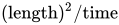
- specific energy multiplied by time energy per unit mass multiplied by time.
![{\displaystyle [\nu ]=\mathrm {\frac {m^{2}}{s}} =\mathrm {{\frac {N{\cdot }m}{kg}}{\cdot }s} =\mathrm {{\frac {J}{kg}}{\cdot }s} =}](https://wikimedia.org/api/rest_v1/media/math/render/svg/abefedddb99ec0896354cfcfcdffd26d00903265)
General definition
[edit]In very general terms, the viscous stresses in a fluid are defined as those resulting from the relative velocity of different fluid particles. As such, the viscous stresses must depend on spatial gradients of the flow velocity. If the velocity gradients are small, then to a first approximation the viscous stresses depend only on the first derivatives of the velocity.[13] (For Newtonian fluids, this is also a linear dependence.) In Cartesian coordinates, the general relationship can then be written as
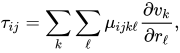
where is a viscosity tensor that maps the velocity gradient tensor onto the viscous stress tensor .[14] Since the indices in this expression can vary from 1 to 3, there are 81 "viscosity coefficients" in total. However, assuming that the viscosity rank-2 tensor is isotropic reduces these 81 coefficients to three independent parameters , , :



and furthermore, it is assumed that no viscous forces may arise when the fluid is undergoing simple rigid-body rotation, thus , leaving only two independent parameters.[13] The most usual decomposition is in terms of the standard (scalar) viscosity and the bulk viscosity such that and . In vector notation this appears as:


![{\displaystyle {\boldsymbol {\tau }}=\mu \left[\nabla \mathbf {v} +(\nabla \mathbf {v} )^{\mathrm {T} }\right]-\left({\frac {2}{3}}\mu -\kappa \right)(\nabla \cdot \mathbf {v} )\mathbf {\delta } ,}](https://wikimedia.org/api/rest_v1/media/math/render/svg/c881ede5c0e043dbe36b7b5a30b4c6bf92204e5a)
where is the unit tensor.[12][15] This equation can be thought of as a generalized form of Newton's law of viscosity.

The bulk viscosity (also called volume viscosity) expresses a type of internal friction that resists the shearless compression or expansion of a fluid. Knowledge of is frequently not necessary in fluid dynamics problems. For example, an incompressible fluid satisfies and so the term containing drops out. Moreover, is often assumed to be negligible for gases since it is in a monatomic ideal gas.[12] One situation in which can be important is the calculation of energy loss in sound and shock waves, described by Stokes' law of sound attenuation, since these phenomena involve rapid expansions and compressions.

The defining equations for viscosity are not fundamental laws of nature, so their usefulness, as well as methods for measuring or calculating the viscosity, must be established using separate means. A potential issue is that viscosity depends, in principle, on the full microscopic state of the fluid, which encompasses the positions and momenta of every particle in the system.[16] Such highly detailed information is typically not available in realistic systems. However, under certain conditions most of this information can be shown to be negligible. In particular, for Newtonian fluids near equilibrium and far from boundaries (bulk state), the viscosity depends only space- and time-dependent macroscopic fields (such as temperature and density) defining local equilibrium.[16][17]
Nevertheless, viscosity may still carry a non-negligible dependence on several system properties, such as temperature, pressure, and the amplitude and frequency of any external forcing. Therefore, precision measurements of viscosity are only defined with respect to a specific fluid state.[18] To standardize comparisons among experiments and theoretical models, viscosity data is sometimes extrapolated to ideal limiting cases, such as the zero shear limit, or (for gases) the zero density limit.
Momentum transport
[edit]Transport theory provides an alternative interpretation of viscosity in terms of momentum transport: viscosity is the material property which characterizes momentum transport within a fluid, just as thermal conductivity characterizes heat transport, and (mass) diffusivity characterizes mass transport.[19] This perspective is implicit in Newton's law of viscosity, , because the shear stress has units equivalent to a momentum flux, i.e., momentum per unit time per unit area. Thus, can be interpreted as specifying the flow of momentum in the direction from one fluid layer to the next. Per Newton's law of viscosity, this momentum flow occurs across a velocity gradient, and the magnitude of the corresponding momentum flux is determined by the viscosity.
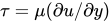

The analogy with heat and mass transfer can be made explicit. Just as heat flows from high temperature to low temperature and mass flows from high density to low density, momentum flows from high velocity to low velocity. These behaviors are all described by compact expressions, called constitutive relations, whose one-dimensional forms are given here:
![{\displaystyle {\begin{aligned}\mathbf {J} &=-D{\frac {\partial \rho }{\partial x}}&&{\text{(Fick's law of diffusion)}}\\[5pt]\mathbf {q} &=-k_{t}{\frac {\partial T}{\partial x}}&&{\text{(Fourier's law of heat conduction)}}\\[5pt]\tau &=\mu {\frac {\partial u}{\partial y}}&&{\text{(Newton's law of viscosity)}}\end{aligned}}}](https://wikimedia.org/api/rest_v1/media/math/render/svg/6380b89b0d24d9c9deb9ef04f333430b073c45cc)
where is the density, and are the mass and heat fluxes, and and are the mass diffusivity and thermal conductivity.[20] The fact that mass, momentum, and energy (heat) transport are among the most relevant processes in continuum mechanics is not a coincidence: these are among the few physical quantities that are conserved at the microscopic level in interparticle collisions. Thus, rather than being dictated by the fast and complex microscopic interaction timescale, their dynamics occurs on macroscopic timescales, as described by the various equations of transport theory and hydrodynamics.


Newtonian and non-Newtonian fluids
[edit]
Newton's law of viscosity is not a fundamental law of nature, but rather a constitutive equation (like Hooke's law, Fick's law, and Ohm's law) which serves to define the viscosity . Its form is motivated by experiments which show that for a wide range of fluids, is independent of strain rate. Such fluids are called Newtonian. Gases, water, and many common liquids can be considered Newtonian in ordinary conditions and contexts. However, there are many non-Newtonian fluids that significantly deviate from this behavior. For example:
- Shear-thickening (dilatant) liquids, whose viscosity increases with the rate of shear strain.
- Shear-thinning liquids, whose viscosity decreases with the rate of shear strain.
- Thixotropic liquids, that become less viscous over time when shaken, agitated, or otherwise stressed.
- Rheopectic liquids, that become more viscous over time when shaken, agitated, or otherwise stressed.
- Bingham plastics that behave as a solid at low stresses but flow as a viscous fluid at high stresses.
Trouton's ratio is the ratio of extensional viscosity to shear viscosity. For a Newtonian fluid, the Trouton ratio is 3.[21][22] Shear-thinning liquids are very commonly, but misleadingly, described as thixotropic.[23]
Viscosity may also depend on the fluid's physical state (temperature and pressure) and other, external, factors. For gases and other compressible fluids, it depends on temperature and varies very slowly with pressure. The viscosity of some fluids may depend on other factors. A magnetorheological fluid, for example, becomes thicker when subjected to a magnetic field, possibly to the point of behaving like a solid.
In solids
[edit]The viscous forces that arise during fluid flow are distinct from the elastic forces that occur in a solid in response to shear, compression, or extension stresses. While in the latter the stress is proportional to the amount of shear deformation, in a fluid it is proportional to the rate of deformation over time. For this reason, James Clerk Maxwell used the term fugitive elasticity for fluid viscosity.
However, many liquids (including water) will briefly react like elastic solids when subjected to sudden stress. Conversely, many "solids" (even granite) will flow like liquids, albeit very slowly, even under arbitrarily small stress.[24] Such materials are best described as viscoelastic—that is, possessing both elasticity (reaction to deformation) and viscosity (reaction to rate of deformation).
Viscoelastic solids may exhibit both shear viscosity and bulk viscosity. The extensional viscosity is a linear combination of the shear and bulk viscosities that describes the reaction of a solid elastic material to elongation. It is widely used for characterizing polymers.
In geology, earth materials that exhibit viscous deformation at least three orders of magnitude greater than their elastic deformation are sometimes called rheids.[25]
Measurement
[edit]Viscosity is measured with various types of viscometers and rheometers. Close temperature control of the fluid is essential to obtain accurate measurements, particularly in materials like lubricants, whose viscosity can double with a change of only 5 °C. A rheometer is used for fluids that cannot be defined by a single value of viscosity and therefore require more parameters to be set and measured than is the case for a viscometer.[26]
For some fluids, the viscosity is constant over a wide range of shear rates (Newtonian fluids). The fluids without a constant viscosity (non-Newtonian fluids) cannot be described by a single number. Non-Newtonian fluids exhibit a variety of different correlations between shear stress and shear rate.
One of the most common instruments for measuring kinematic viscosity is the glass capillary viscometer.
In coating industries, viscosity may be measured with a cup in which the efflux time is measured. There are several sorts of cup—such as the Zahn cup and the Ford viscosity cup—with the usage of each type varying mainly according to the industry.
Also used in coatings, a Stormer viscometer employs load-based rotation to determine viscosity. The viscosity is reported in Krebs units (KU), which are unique to Stormer viscometers.
Vibrating viscometers can also be used to measure viscosity. Resonant, or vibrational viscometers work by creating shear waves within the liquid. In this method, the sensor is submerged in the fluid and is made to resonate at a specific frequency. As the surface of the sensor shears through the liquid, energy is lost due to its viscosity. This dissipated energy is then measured and converted into a viscosity reading. A higher viscosity causes a greater loss of energy.[citation needed]
Extensional viscosity can be measured with various rheometers that apply extensional stress.
Volume viscosity can be measured with an acoustic rheometer.
Apparent viscosity is a calculation derived from tests performed on drilling fluid used in oil or gas well development. These calculations and tests help engineers develop and maintain the properties of the drilling fluid to the specifications required.
Nanoviscosity (viscosity sensed by nanoprobes) can be measured by fluorescence correlation spectroscopy.[27]
Units
[edit]The SI unit of dynamic viscosity is the newton-second per metre squared (N·s/m2), also frequently expressed in the equivalent forms pascal-second (Pa·s), kilogram per meter per second (kg·m−1·s−1) and poiseuille (Pl). The CGS unit is the poise (P, or g·cm−1·s−1 = 0.1 Pa·s),[28] named after Jean Léonard Marie Poiseuille. It is commonly expressed, particularly in ASTM standards, as centipoise (cP). The centipoise is convenient because the viscosity of water at 20 °C is about 1 cP, and one centipoise is equal to the SI millipascal second (mPa·s).
The SI unit of kinematic viscosity is metre squared per second (m2/s), whereas the CGS unit for kinematic viscosity is the stokes (St, or cm2·s−1 = 0.0001 m2·s−1), named after Sir George Gabriel Stokes.[29] In U.S. usage, stoke is sometimes used as the singular form. The submultiple centistokes (cSt) is often used instead, 1 cSt = 1 mm2·s−1 = 10−6 m2·s−1. 1 cSt is 1 cP divided by 1000 kg/m^3, close to the density of water. The kinematic viscosity of water at 20 °C is about 1 cSt.
The most frequently used systems of US customary, or Imperial, units are the British Gravitational (BG) and English Engineering (EE). In the BG system, dynamic viscosity has units of pound-seconds per square foot (lb·s/ft2), and in the EE system it has units of pound-force-seconds per square foot (lbf·s/ft2). The pound and pound-force are equivalent; the two systems differ only in how force and mass are defined. In the BG system the pound is a basic unit from which the unit of mass (the slug) is defined by Newton's second law, whereas in the EE system the units of force and mass (the pound-force and pound-mass respectively) are defined independently through the second law using the proportionality constant gc.
Kinematic viscosity has units of square feet per second (ft2/s) in both the BG and EE systems.
Nonstandard units include the reyn (lbf·s/in2), a British unit of dynamic viscosity.[30] In the automotive industry the viscosity index is used to describe the change of viscosity with temperature.
The reciprocal of viscosity is fluidity, usually symbolized by or , depending on the convention used, measured in reciprocal poise (P−1, or cm·s·g−1), sometimes called the rhe. Fluidity is seldom used in engineering practice.[citation needed]


At one time the petroleum industry relied on measuring kinematic viscosity by means of the Saybolt viscometer, and expressing kinematic viscosity in units of Saybolt universal seconds (SUS).[31] Other abbreviations such as SSU (Saybolt seconds universal) or SUV (Saybolt universal viscosity) are sometimes used. Kinematic viscosity in centistokes can be converted from SUS according to the arithmetic and the reference table provided in ASTM D 2161.
Molecular origins
[edit]Momentum transport in gases is mediated by discrete molecular collisions, and in liquids by attractive forces that bind molecules close together.[19] Because of this, the dynamic viscosities of liquids are typically much larger than those of gases. In addition, viscosity tends to increase with temperature in gases and decrease with temperature in liquids.
Above the liquid-gas critical point, the liquid and gas phases are replaced by a single supercritical phase. In this regime, the mechanisms of momentum transport interpolate between liquid-like and gas-like behavior. For example, along a supercritical isobar (constant-pressure surface), the kinematic viscosity decreases at low temperature and increases at high temperature, with a minimum in between.[32][33] A rough estimate for the value at the minimum is
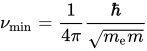
where is the Planck constant, is the electron mass, and is the molecular mass.[33]


In general, however, the viscosity of a system depends in detail on how the molecules constituting the system interact, and there are no simple but correct formulas for it. The simplest exact expressions are the Green–Kubo relations for the linear shear viscosity or the transient time correlation function expressions derived by Evans and Morriss in 1988.[34] Although these expressions are each exact, calculating the viscosity of a dense fluid using these relations currently requires the use of molecular dynamics computer simulations. Somewhat more progress can be made for a dilute gas, as elementary assumptions about how gas molecules move and interact lead to a basic understanding of the molecular origins of viscosity. More sophisticated treatments can be constructed by systematically coarse-graining the equations of motion of the gas molecules. An example of such a treatment is Chapman–Enskog theory, which derives expressions for the viscosity of a dilute gas from the Boltzmann equation.[17]
Pure gases
[edit]Elementary calculation of viscosity for a dilute gas Consider a dilute gas moving parallel to the -axis with velocity that depends only on the coordinate. To simplify the discussion, the gas is assumed to have uniform temperature and density.
Under these assumptions, the velocity of a molecule passing through is equal to whatever velocity that molecule had when its mean free path began. Because is typically small compared with macroscopic scales, the average velocity of such a molecule has the form
where is a numerical constant on the order of . (Some authors estimate ;[19][35] on the other hand, a more careful calculation for rigid elastic spheres gives .) Next, because half the molecules on either side are moving towards , and doing so on average with half the average molecular speed , the momentum flux from either side is
The net momentum flux at is the difference of the two:
According to the definition of viscosity, this momentum flux should be equal to , which leads to


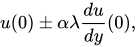


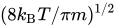

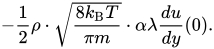


Viscosity in gases arises principally from the molecular diffusion that transports momentum between layers of flow. An elementary calculation for a dilute gas at temperature and density gives

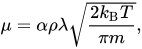
where is the Boltzmann constant, the molecular mass, and a numerical constant on the order of . The quantity , the mean free path, measures the average distance a molecule travels between collisions. Even without a priori knowledge of , this expression has nontrivial implications. In particular, since is typically inversely proportional to density and increases with temperature, itself should increase with temperature and be independent of density at fixed temperature. In fact, both of these predictions persist in more sophisticated treatments, and accurately describe experimental observations. By contrast, liquid viscosity typically decreases with temperature.[19][35]

For rigid elastic spheres of diameter , can be computed, giving

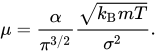
In this case is independent of temperature, so . For more complicated molecular models, however, depends on temperature in a non-trivial way, and simple kinetic arguments as used here are inadequate. More fundamentally, the notion of a mean free path becomes imprecise for particles that interact over a finite range, which limits the usefulness of the concept for describing real-world gases.[36]

Chapman–Enskog theory
[edit]A technique developed by Sydney Chapman and David Enskog in the early 1900s allows a more refined calculation of .[17] It is based on the Boltzmann equation, which provides a statistical description of a dilute gas in terms of intermolecular interactions.[37] The technique allows accurate calculation of for molecular models that are more realistic than rigid elastic spheres, such as those incorporating intermolecular attractions. Doing so is necessary to reproduce the correct temperature dependence of , which experiments show increases more rapidly than the trend predicted for rigid elastic spheres.[19] Indeed, the Chapman–Enskog analysis shows that the predicted temperature dependence can be tuned by varying the parameters in various molecular models. A simple example is the Sutherland model,[a] which describes rigid elastic spheres with weak mutual attraction. In such a case, the attractive force can be treated perturbatively, which leads to a simple expression for :


where is independent of temperature, being determined only by the parameters of the intermolecular attraction. To connect with experiment, it is convenient to rewrite as

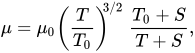
where is the viscosity at temperature . This expression is usually named Sutherland's formula.[38] If is known from experiments at and at least one other temperature, then can be calculated. Expressions for obtained in this way are qualitatively accurate for a number of simple gases. Slightly more sophisticated models, such as the Lennard-Jones potential, or the more flexible Mie potential, may provide better agreement with experiments, but only at the cost of a more opaque dependence on temperature. A further advantage of these more complex interaction potentials is that they can be used to develop accurate models for a wide variety of properties using the same potential parameters. In situations where little experimental data is available, this makes it possible to obtain model parameters from fitting to properties such as pure-fluid vapour-liquid equilibria, before using the parameters thus obtained to predict the viscosities of interest with reasonable accuracy.


In some systems, the assumption of spherical symmetry must be abandoned, as is the case for vapors with highly polar molecules like H2O. In these cases, the Chapman–Enskog analysis is significantly more complicated.[39][40]
Bulk viscosity
[edit]In the kinetic-molecular picture, a non-zero bulk viscosity arises in gases whenever there are non-negligible relaxational timescales governing the exchange of energy between the translational energy of molecules and their internal energy, e.g. rotational and vibrational. As such, the bulk viscosity is for a monatomic ideal gas, in which the internal energy of molecules is negligible, but is nonzero for a gas like carbon dioxide, whose molecules possess both rotational and vibrational energy.[41][42]
Pure liquids
[edit]In contrast with gases, there is no simple yet accurate picture for the molecular origins of viscosity in liquids.
At the simplest level of description, the relative motion of adjacent layers in a liquid is opposed primarily by attractive molecular forces acting across the layer boundary. In this picture, one (correctly) expects viscosity to decrease with increasing temperature. This is because increasing temperature increases the random thermal motion of the molecules, which makes it easier for them to overcome their attractive interactions.[43]
Building on this visualization, a simple theory can be constructed in analogy with the discrete structure of a solid: groups of molecules in a liquid are visualized as forming "cages" which surround and enclose single molecules.[44] These cages can be occupied or unoccupied, and stronger molecular attraction corresponds to stronger cages. Due to random thermal motion, a molecule "hops" between cages at a rate which varies inversely with the strength of molecular attractions. In equilibrium these "hops" are not biased in any direction. On the other hand, in order for two adjacent layers to move relative to each other, the "hops" must be biased in the direction of the relative motion. The force required to sustain this directed motion can be estimated for a given shear rate, leading to
| 1 |
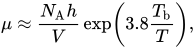
where is the Avogadro constant, is the Planck constant, is the volume of a mole of liquid, and is the normal boiling point. This result has the same form as the well-known empirical relation


| 2 |

where and are constants fit from data.[44][45] On the other hand, several authors express caution with respect to this model. Errors as large as 30% can be encountered using equation (1), compared with fitting equation (2) to experimental data.[44] More fundamentally, the physical assumptions underlying equation (1) have been criticized.[46] It has also been argued that the exponential dependence in equation (1) does not necessarily describe experimental observations more accurately than simpler, non-exponential expressions.[47][48]

In light of these shortcomings, the development of a less ad hoc model is a matter of practical interest. Foregoing simplicity in favor of precision, it is possible to write rigorous expressions for viscosity starting from the fundamental equations of motion for molecules. A classic example of this approach is Irving–Kirkwood theory.[49] On the other hand, such expressions are given as averages over multiparticle correlation functions and are therefore difficult to apply in practice.
In general, empirically derived expressions (based on existing viscosity measurements) appear to be the only consistently reliable means of calculating viscosity in liquids.[50]
Local atomic structure changes observed in undercooled liquids on cooling below the equilibrium melting temperature either in terms of radial distribution function g(r)[51] or structure factor S(Q)[52] are found to be directly responsible for the liquid fragility: deviation of the temperature dependence of viscosity of the undercooled liquid from the Arrhenius equation (2) through modification of the activation energy for viscous flow. At the same time equilibrium liquids follow the Arrhenius equation.
Mixtures and blends
[edit]Gaseous mixtures
[edit]The same molecular-kinetic picture of a single component gas can also be applied to a gaseous mixture. For instance, in the Chapman–Enskog approach the viscosity of a binary mixture of gases can be written in terms of the individual component viscosities , their respective volume fractions, and the intermolecular interactions.[17]


As for the single-component gas, the dependence of on the parameters of the intermolecular interactions enters through various collisional integrals which may not be expressible in closed form. To obtain usable expressions for which reasonably match experimental data, the collisional integrals may be computed numerically or from correlations.[53] In some cases, the collision integrals are regarded as fitting parameters, and are fitted directly to experimental data.[54] This is a common approach in the development of reference equations for gas-phase viscosities. An example of such a procedure is the Sutherland approach for the single-component gas, discussed above.
For gas mixtures consisting of simple molecules, Revised Enskog Theory has been shown to accurately represent both the density- and temperature dependence of the viscosity over a wide range of conditions.[55][53]
Blends of liquids
[edit]As for pure liquids, the viscosity of a blend of liquids is difficult to predict from molecular principles. One method is to extend the molecular "cage" theory presented above for a pure liquid. This can be done with varying levels of sophistication. One expression resulting from such an analysis is the Lederer–Roegiers equation for a binary mixture:

where is an empirical parameter, and and are the respective mole fractions and viscosities of the component liquids.[56]

Since blending is an important process in the lubricating and oil industries, a variety of empirical and proprietary equations exist for predicting the viscosity of a blend.[56]
Solutions and suspensions
[edit]Aqueous solutions
[edit]Depending on the solute and range of concentration, an aqueous electrolyte solution can have either a larger or smaller viscosity compared with pure water at the same temperature and pressure. For instance, a 20% saline (sodium chloride) solution has viscosity over 1.5 times that of pure water, whereas a 20% potassium iodide solution has viscosity about 0.91 times that of pure water.
An idealized model of dilute electrolytic solutions leads to the following prediction for the viscosity of a solution:[57]

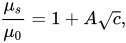
where is the viscosity of the solvent, is the concentration, and is a positive constant which depends on both solvent and solute properties. However, this expression is only valid for very dilute solutions, having less than 0.1 mol/L.[58] For higher concentrations, additional terms are necessary which account for higher-order molecular correlations:


where and are fit from data. In particular, a negative value of is able to account for the decrease in viscosity observed in some solutions. Estimated values of these constants are shown below for sodium chloride and potassium iodide at temperature 25 °C (mol = mole, L = liter).[57]

| Solute | (mol−1/2 L1/2) | (mol−1 L) | (mol−2 L2) |
|---|---|---|---|
| Sodium chloride (NaCl) | 0.0062 | 0.0793 | 0.0080 |
| Potassium iodide (KI) | 0.0047 | −0.0755 | 0.0000 |
Suspensions
[edit]In a suspension of solid particles (e.g. micron-size spheres suspended in oil), an effective viscosity can be defined in terms of stress and strain components which are averaged over a volume large compared with the distance between the suspended particles, but small with respect to macroscopic dimensions.[59] Such suspensions generally exhibit non-Newtonian behavior. However, for dilute systems in steady flows, the behavior is Newtonian and expressions for can be derived directly from the particle dynamics. In a very dilute system, with volume fraction , interactions between the suspended particles can be ignored. In such a case one can explicitly calculate the flow field around each particle independently, and combine the results to obtain . For spheres, this results in the Einstein's effective viscosity formula:


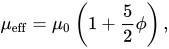
where is the viscosity of the suspending liquid. The linear dependence on is a consequence of neglecting interparticle interactions. For dilute systems in general, one expects to take the form


where the coefficient may depend on the particle shape (e.g. spheres, rods, disks).[60] Experimental determination of the precise value of is difficult, however: even the prediction for spheres has not been conclusively validated, with various experiments finding values in the range . This deficiency has been attributed to difficulty in controlling experimental conditions.[61]


In denser suspensions, acquires a nonlinear dependence on , which indicates the importance of interparticle interactions. Various analytical and semi-empirical schemes exist for capturing this regime. At the most basic level, a term quadratic in is added to :

and the coefficient is fit from experimental data or approximated from the microscopic theory. However, some authors advise caution in applying such simple formulas since non-Newtonian behavior appears in dense suspensions ( for spheres),[61] or in suspensions of elongated or flexible particles.[59]


There is a distinction between a suspension of solid particles, described above, and an emulsion. The latter is a suspension of tiny droplets, which themselves may exhibit internal circulation. The presence of internal circulation can decrease the observed effective viscosity, and different theoretical or semi-empirical models must be used.[62]
Amorphous materials
[edit]
In the high and low temperature limits, viscous flow in amorphous materials (e.g. in glasses and melts)[64][65][66] has the Arrhenius form:
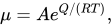
where Q is a relevant activation energy, given in terms of molecular parameters; T is temperature; R is the molar gas constant; and A is approximately a constant. The activation energy Q takes a different value depending on whether the high or low temperature limit is being considered: it changes from a high value QH at low temperatures (in the glassy state) to a low value QL at high temperatures (in the liquid state).

For intermediate temperatures, varies nontrivially with temperature and the simple Arrhenius form fails. On the other hand, the two-exponential equation

![{\displaystyle \mu =AT\exp \left({\frac {B}{RT}}\right)\left[1+C\exp \left({\frac {D}{RT}}\right)\right],}](https://wikimedia.org/api/rest_v1/media/math/render/svg/38aa9224e9ac73624655cd20405e140af63a62eb)
where , , , are all constants, provides a good fit to experimental data over the entire range of temperatures, while at the same time reducing to the correct Arrhenius form in the low and high temperature limits. This expression, also known as Duouglas-Doremus-Ojovan model,[67] can be motivated from various theoretical models of amorphous materials at the atomic level.[65]
A two-exponential equation for the viscosity can be derived within the Dyre shoving model of supercooled liquids, where the Arrhenius energy barrier is identified with the high-frequency shear modulus times a characteristic shoving volume.[68][69] Upon specifying the temperature dependence of the shear modulus via thermal expansion and via the repulsive part of the intermolecular potential, another two-exponential equation is retrieved:[70]
![{\displaystyle \mu =\exp {\left\{{\frac {V_{c}C_{G}}{k_{B}T}}\exp {\left[(2+\lambda )\alpha _{T}T_{g}\left(1-{\frac {T}{T_{g}}}\right)\right]}\right\}}}](https://wikimedia.org/api/rest_v1/media/math/render/svg/d7c6670713177337446c22a7976e9664d2008526)
where denotes the high-frequency shear modulus of the material evaluated at a temperature equal to the glass transition temperature , is the so-called shoving volume, i.e. it is the characteristic volume of the group of atoms involved in the shoving event by which an atom/molecule escapes from the cage of nearest-neighbours, typically on the order of the volume occupied by few atoms. Furthermore, is the thermal expansion coefficient of the material, is a parameter which measures the steepness of the power-law rise of the ascending flank of the first peak of the radial distribution function, and is quantitatively related to the repulsive part of the interatomic potential.[70] Finally, denotes the Boltzmann constant.


Eddy viscosity
[edit]In the study of turbulence in fluids, a common practical strategy is to ignore the small-scale vortices (or eddies) in the motion and to calculate a large-scale motion with an effective viscosity, called the "eddy viscosity", which characterizes the transport and dissipation of energy in the smaller-scale flow (see large eddy simulation).[71][72] In contrast to the viscosity of the fluid itself, which must be positive by the second law of thermodynamics, the eddy viscosity can be negative.[73][74]
Prediction
[edit]Because viscosity depends continuously on temperature and pressure, it cannot be fully characterized by a finite number of experimental measurements. Predictive formulas become necessary if experimental values are not available at the temperatures and pressures of interest. This capability is important for thermophysical simulations, in which the temperature and pressure of a fluid can vary continuously with space and time. A similar situation is encountered for mixtures of pure fluids, where the viscosity depends continuously on the concentration ratios of the constituent fluids
For the simplest fluids, such as dilute monatomic gases and their mixtures, ab initio quantum mechanical computations can accurately predict viscosity in terms of fundamental atomic constants, i.e., without reference to existing viscosity measurements.[75] For the special case of dilute helium, uncertainties in the ab initio calculated viscosity are two order of magnitudes smaller than uncertainties in experimental values.[76]
For slightly more complex fluids and mixtures at moderate densities (i.e. sub-critical densities) Revised Enskog Theory can be used to predict viscosities with some accuracy.[53] Revised Enskog Theory is predictive in the sense that predictions for viscosity can be obtained using parameters fitted to other, pure-fluid thermodynamic properties or transport properties, thus requiring no a priori experimental viscosity measurements.
For most fluids, high-accuracy, first-principles computations are not feasible. Rather, theoretical or empirical expressions must be fit to existing viscosity measurements. If such an expression is fit to high-fidelity data over a large range of temperatures and pressures, then it is called a "reference correlation" for that fluid. Reference correlations have been published for many pure fluids; a few examples are water, carbon dioxide, ammonia, benzene, and xenon.[77][78][79][80][81] Many of these cover temperature and pressure ranges that encompass gas, liquid, and supercritical phases.
Thermophysical modeling software often relies on reference correlations for predicting viscosity at user-specified temperature and pressure. These correlations may be proprietary. Examples are REFPROP[82] (proprietary) and CoolProp[83] (open-source).
Viscosity can also be computed using formulas that express it in terms of the statistics of individual particle trajectories. These formulas include the Green–Kubo relations for the linear shear viscosity and the transient time correlation function expressions derived by Evans and Morriss in 1988.[84][34] The advantage of these expressions is that they are formally exact and valid for general systems. The disadvantage is that they require detailed knowledge of particle trajectories, available only in computationally expensive simulations such as molecular dynamics. An accurate model for interparticle interactions is also required, which may be difficult to obtain for complex molecules.[85]
Selected substances
[edit]
Observed values of viscosity vary over several orders of magnitude, even for common substances (see the order of magnitude table below). For instance, a 70% sucrose (sugar) solution has a viscosity over 400 times that of water, and 26,000 times that of air.[87] More dramatically, pitch has been estimated to have a viscosity 230 billion times that of water.[86]
Water
[edit]The dynamic viscosity of water is about 0.89 mPa·s at room temperature (25 °C). As a function of temperature in kelvins, the viscosity can be estimated using the semi-empirical Vogel-Fulcher-Tammann equation:
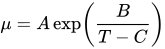
where A = 0.02939 mPa·s, B = 507.88 K, and C = 149.3 K.[88] Experimentally determined values of the viscosity are also given in the table below. The values at 20 °C are a useful reference: there, the dynamic viscosity is about 1 cP and the kinematic viscosity is about 1 cSt.
| Temperature (°C) |
Viscosity (mPa·s or cP) |
|---|---|
| 10 | 1.305 9 |
| 20 | 1.001 6 |
| 30 | 0.797 22 |
| 50 | 0.546 52 |
| 70 | 0.403 55 |
| 90 | 0.314 17 |
Air
[edit]Under standard atmospheric conditions (25 °C and pressure of 1 bar), the dynamic viscosity of air is 18.5 μPa·s, roughly 50 times smaller than the viscosity of water at the same temperature. Except at very high pressure, the viscosity of air depends mostly on the temperature. Among the many possible approximate formulas for the temperature dependence (see Temperature dependence of viscosity), one is:[89]

which is accurate in the range −20 °C to 400 °C. For this formula to be valid, the temperature must be given in kelvins; then corresponds to the viscosity in Pa·s.


Other common substances
[edit]| Substance | Viscosity (mPa·s) | Temperature (°C) | Ref. |
|---|---|---|---|
| Benzene | 0.604 | 25 | [87] |
| Water | 1.0016 | 20 | |
| Mercury | 1.526 | 25 | |
| Whole milk | 2.12 | 20 | [90] |
| Dark beer | 2.53 | 20 | |
| Olive oil | 56.2 | 26 | [90] |
| Honey | 2,000–10,000 | 20 | [91] |
| Ketchup[b] | 5,000–20,000 | 25 | [92] |
| Peanut butter[b] | 104–106 | [93] | |
| Pitch | 2.3×10¹¹ | 10–30 (variable) | [86] |

Order of magnitude estimates
[edit]The following table illustrates the range of viscosity values observed in common substances. Unless otherwise noted, a temperature of 25 °C and a pressure of 1 atmosphere are assumed.
The values listed are representative estimates only, as they do not account for measurement uncertainties, variability in material definitions, or non-Newtonian behavior.
| Factor (Pa·s) | Description | Examples | Values (Pa·s) | Ref. |
|---|---|---|---|---|
| 10−6 | Lower range of gaseous viscosity |
Butane | 7.49 × 10⁻⁶ | [94] |
| Hydrogen | 8.8 × 10⁻⁶ | [95] | ||
| 10−5 | Upper range of gaseous viscosity | Krypton | 2.538 × 10⁻⁵ | [96] |
| Neon | 3.175 × 10⁻⁵ | |||
| 10−4 | Lower range of liquid viscosity | Pentane | 2.24 × 10⁻⁴ | [87] |
| Gasoline | 6 × 10⁻⁴ | |||
| Water | 8.90 × 10⁻⁴ | [87] | ||
| 10−3 | Typical range for small-molecule Newtonian liquids |
Ethanol | 1.074 × 10⁻³ | |
| Mercury | 1.526 × 10⁻³ | |||
| Whole milk (20 °C) | 2.12 × 10⁻³ | [90] | ||
| Blood | 3 × 10⁻³ to 6 × 10⁻³ | [97] | ||
| Liquid steel (1550 °C) | 6 × 10⁻³ | [98] | ||
| 10−2 – 100 | Oils and long-chain hydrocarbons | Linseed oil | 0.028 | |
| Oleic acid | 0.036 | [99] | ||
| Olive oil | 0.084 | [90] | ||
| SAE 10 Motor oil | 0.085 to 0.14 | |||
| Castor oil | 0.1 | |||
| SAE 20 Motor oil | 0.14 to 0.42 | |||
| SAE 30 Motor oil | 0.42 to 0.65 | |||
| SAE 40 Motor oil | 0.65 to 0.90 | |||
| Glycerine | 1.5 | |||
| Pancake syrup | 2.5 | |||
| 101 – 103 | Pastes, gels, and other semisolids (generally non-Newtonian) |
Ketchup | ≈ 101 | [92] |
| Mustard | ||||
| Sour cream | ≈ 102 | |||
| Peanut butter | [93] | |||
| Lard | ≈ 103 | |||
| ≈108 | Viscoelastic polymers | Pitch | 2.3×10⁸ | [86] |
| ≈1021 | Certain solids under a viscoelastic description |
Mantle (geology) | ≈ 1019 to 1024 | [100] |
See also
[edit]- Dashpot
- Deborah number
- Dilatant
- Herschel–Bulkley fluid
- High viscosity mixer
- Hyperviscosity syndrome
- Intrinsic viscosity
- Inviscid flow
- Joback method (estimation of liquid viscosity from molecular structure)
- Kaye effect
- Microviscosity
- Morton number
- Oil pressure
- Quasi-solid
- Rheology
- Stokes flow
- Superfluid helium-4
- Viscoplasticity
- Viscosity models for mixtures
- Zahn cup
References
[edit]Footnotes
[edit]- ^ The discussion which follows draws from Chapman & Cowling 1970, pp. 232–237
- ^ a b These materials are highly non-Newtonian.
Citations
[edit]- ^ a b c "Viscosity". Encyclopedia Britannica. 26 June 2023. Retrieved 4 August 2023.
- ^ Growing up with Science. Marshall Cavendish. 2006. p. 1928. ISBN 978-0-7614-7521-7.
- ^ E. Dale Martin (1961). A Study of Laminar Compressible Viscous Pipe Flow Accelerated by an Axial Body Force, with Application to Magnetogasdynamics. NASA. p. 7.
- ^ Balescu 1975, pp. 428–429.
- ^ Landau & Lifshitz 1987.
- ^ Harper, Douglas (n.d.). "viscous (adj.)". Online Etymology Dictionary. Archived from the original on 1 May 2019. Retrieved 19 September 2019.
- ^ Mewis & Wagner 2012, p. 19.
- ^ Streeter, Wylie & Bedford 1998.
- ^ Holman 2002.
- ^ Incropera et al. 2007.
- ^ Nič et al. 1997.
- ^ a b c Bird, Stewart & Lightfoot 2007, p. 19.
- ^ a b Landau & Lifshitz 1987, pp. 44–45.
- ^ Bird, Stewart & Lightfoot 2007, p. 18: This source uses an alternative sign convention, which has been reversed here.
- ^ Landau & Lifshitz 1987, p. 45.
- ^ a b Balescu 1975.
- ^ a b c d Chapman & Cowling 1970.
- ^ Millat 1996.
- ^ a b c d e Bird, Stewart & Lightfoot 2007.
- ^ Schroeder 1999.
- ^ Różańska et al. 2014, pp. 47–55.
- ^ Trouton 1906, pp. 426–440.
- ^ Mewis & Wagner 2012, pp. 228–230.
- ^ Kumagai, Sasajima & Ito 1978, pp. 157–161.
- ^ Scherer, Pardenek & Swiatek 1988, p. 14.
- ^ Hannan 2007.
- ^ Kwapiszewska et al. 2020.
- ^ McNaught & Wilkinson 1997, poise.
- ^ Gyllenbok 2018, p. 213.
- ^ "What is the unit called a reyn?". sizes.com. Retrieved 23 December 2023.
- ^ ASTM D2161: Standard Practice for Conversion of Kinematic Viscosity to Saybolt Universal Viscosity or to Saybolt Furol Viscosity, ASTM, 2005, p. 1
- ^ Trachenko & Brazhkin 2020.
- ^ a b Trachenko & Brazhkin 2021.
- ^ a b Evans & Morriss 1988.
- ^ a b Bellac, Mortessagne & Batrouni 2004.
- ^ Chapman & Cowling 1970, p. 103.
- ^ Cercignani 1975.
- ^ Sutherland 1893, pp. 507–531.
- ^ Bird, Stewart & Lightfoot 2007, pp. 25–27.
- ^ Chapman & Cowling 1970, pp. 235–237.
- ^ Chapman & Cowling 1970, pp. 197, 214–216.
- ^ Cramer 2012, p. 066102-2.
- ^ Reid & Sherwood 1958, p. 202.
- ^ a b c Bird, Stewart & Lightfoot 2007, pp. 29–31.
- ^ Reid & Sherwood 1958, pp. 203–204.
- ^ Hildebrand 1977.
- ^ Hildebrand 1977, p. 37.
- ^ Egelstaff 1992, p. 264.
- ^ Irving & Kirkwood 1949, pp. 817–829.
- ^ Reid & Sherwood 1958, pp. 206–209.
- ^ Louzguine-Luzgin, D. V. (2022-10-18). "Structural Changes in Metallic Glass-Forming Liquids on Cooling and Subsequent Vitrification in Relationship with Their Properties". Materials. 15 (20): 7285. Bibcode:2022Mate...15.7285L. doi:10.3390/ma15207285. ISSN 1996-1944. PMC 9610435. PMID 36295350.
- ^ Kelton, K F (2017-01-18). "Kinetic and structural fragility—a correlation between structures and dynamics in metallic liquids and glasses". Journal of Physics: Condensed Matter. 29 (2) 023002. Bibcode:2017JPCM...29b3002K. doi:10.1088/0953-8984/29/2/023002. ISSN 0953-8984. PMID 27841996.
- ^ a b c Jervell, Vegard G.; Wilhelmsen, Øivind (2023-06-08). "Revised Enskog theory for Mie fluids: Prediction of diffusion coefficients, thermal diffusion coefficients, viscosities, and thermal conductivities". The Journal of Chemical Physics. 158 (22) 224101. Bibcode:2023JChPh.158v4101J. doi:10.1063/5.0149865. ISSN 0021-9606. PMID 37290070. S2CID 259119498.
- ^ Lemmon, E. W.; Jacobsen, R. T. (2004-01-01). "Viscosity and Thermal Conductivity Equations for Nitrogen, Oxygen, Argon, and Air". International Journal of Thermophysics. 25 (1): 21–69. Bibcode:2004IJT....25...21L. doi:10.1023/B:IJOT.0000022327.04529.f3. ISSN 1572-9567. S2CID 119677367.
- ^ López de Haro, M.; Cohen, E. G. D.; Kincaid, J. M. (1983-03-01). "The Enskog theory for multicomponent mixtures. I. Linear transport theory". The Journal of Chemical Physics. 78 (5): 2746–2759. Bibcode:1983JChPh..78.2746L. doi:10.1063/1.444985. ISSN 0021-9606.
- ^ a b Zhmud 2014, p. 22.
- ^ a b Viswanath et al. 2007.
- ^ Abdulagatov, Zeinalova & Azizov 2006, pp. 75–88.
- ^ a b Bird, Stewart & Lightfoot 2007, pp. 31–33.
- ^ Bird, Stewart & Lightfoot 2007, p. 32.
- ^ a b Mueller, Llewellin & Mader 2009, pp. 1201–1228.
- ^ Bird, Stewart & Lightfoot 2007, p. 33.
- ^ Fluegel 2007.
- ^ Doremus 2002, pp. 7619–7629.
- ^ a b Ojovan, Travis & Hand 2007, p. 415107.
- ^ Ojovan & Lee 2004, pp. 3803–3810.
- ^ P. Hrma, P. Ferkl, P., A.A.Kruger. Arrhenian to non-Arrhenian crossover in glass melt viscosity. J. Non-Cryst. Solids, 619, 122556 (2023). https://doi.org/10.1016/j.jnoncrysol.2023.122556
- ^ Dyre, Olsen & Christensen 1996, p. 2171.
- ^ Hecksher & Dyre 2015.
- ^ a b Krausser, Samwer & Zaccone 2015, p. 13762.
- ^ Bird, Stewart & Lightfoot 2007, p. 163.
- ^ Lesieur 2012, pp. 2–.
- ^ Sivashinsky & Yakhot 1985, p. 1040.
- ^ Xie & Levchenko 2019, p. 045434.
- ^ Sharipov & Benites 2020.
- ^ Rowland, Al Ghafri & May 2020.
- ^ Huber et al. 2009.
- ^ Laesecke & Muzny 2017.
- ^ Monogenidou, Assael & Huber 2018.
- ^ Avgeri et al. 2014.
- ^ Velliadou et al. 2021.
- ^ "Refprop". NIST. Nist.gov. 18 April 2013. Archived from the original on 2022-02-09. Retrieved 2022-02-15.
- ^ Bell et al. 2014.
- ^ Evans & Morriss 2007.
- ^ Maginn et al. 2019.
- ^ a b c d Edgeworth, Dalton & Parnell 1984, pp. 198–200.
- ^ a b c d e Rumble 2018.
- ^ Viswanath & Natarajan 1989, pp. 714–715.
- ^ tec-science (2020-03-25). "Viscosity of liquids and gases". tec-science. Archived from the original on 2020-04-19. Retrieved 2020-05-07.
- ^ a b c d Fellows 2009.
- ^ Yanniotis, Skaltsi & Karaburnioti 2006, pp. 372–377.
- ^ a b Koocheki et al. 2009, pp. 596–602.
- ^ a b Citerne, Carreau & Moan 2001, pp. 86–96.
- ^ Kestin, Khalifa & Wakeham 1977.
- ^ Assael et al. 2018.
- ^ Kestin, Ro & Wakeham 1972.
- ^ Rosenson, McCormick & Uretz 1996.
- ^ Zhao et al. 2021.
- ^ Sagdeev et al. 2019.
- ^ Walzer, Hendel & Baumgardner.
Sources
[edit]- Abdulagatov, Ilmutdin M.; Zeinalova, Adelya B.; Azizov, Nazim D. (2006). "Experimental viscosity B-coefficients of aqueous LiCl solutions". Journal of Molecular Liquids. 126 (1–3): 75–88. doi:10.1016/j.molliq.2005.10.006. ISSN 0167-7322.
- Assael, M. J.; et al. (2018). "Reference Values and Reference Correlations for the Thermal Conductivity and Viscosity of Fluids". Journal of Physical and Chemical Reference Data. 47 (2): 021501. Bibcode:2018JPCRD..47b1501A. doi:10.1063/1.5036625. ISSN 0047-2689. PMC 6463310. PMID 30996494.
- Avgeri, S.; Assael, M. J.; Huber, M. L.; Perkins, R. A. (2014). "Reference Correlation of the Viscosity of Benzene from the Triple Point to 675 K and up to 300 MPa". Journal of Physical and Chemical Reference Data. 43 (3). AIP Publishing: 033103. Bibcode:2014JPCRD..43c3103A. doi:10.1063/1.4892935. ISSN 0047-2689.
- Balescu, Radu (1975). Equilibrium and Non-Equilibrium Statistical Mechanics. John Wiley & Sons. ISBN 978-0-471-04600-4. Archived from the original on 2020-03-16. Retrieved 2019-09-18.
- Bell, Ian H.; Wronski, Jorrit; Quoilin, Sylvain; Lemort, Vincent (2014-01-27). "Pure and Pseudo-pure Fluid Thermophysical Property Evaluation and the Open-Source Thermophysical Property Library CoolProp". Industrial & Engineering Chemistry Research. 53 (6). American Chemical Society (ACS): 2498–2508. doi:10.1021/ie4033999. ISSN 0888-5885. PMC 3944605. PMID 24623957.
- Bellac, Michael; Mortessagne, Fabrice; Batrouni, G. George (2004). Equilibrium and Non-Equilibrium Statistical Thermodynamics. Cambridge University Press. ISBN 978-0-521-82143-8.
- Bird, R. Byron; Stewart, Warren E.; Lightfoot, Edwin N. (2007). Transport Phenomena (2nd ed.). John Wiley & Sons, Inc. ISBN 978-0-470-11539-8. Archived from the original on 2020-03-02. Retrieved 2019-09-18.
- Bird, R. Bryon; Armstrong, Robert C.; Hassager, Ole (1987), Dynamics of Polymeric Liquids, Volume 1: Fluid Mechanics (2nd ed.), John Wiley & Sons
- Cercignani, Carlo (1975). Theory and Application of the Boltzmann Equation. Elsevier. ISBN 978-0-444-19450-3.
- Chapman, Sydney; Cowling, T.G. (1970). The Mathematical Theory of Non-Uniform Gases (3rd ed.). Cambridge University Press. ISBN 978-0-521-07577-0.
- Citerne, Guillaume P.; Carreau, Pierre J.; Moan, Michel (2001). "Rheological properties of peanut butter". Rheologica Acta. 40 (1): 86–96. Bibcode:2001AcRhe..40...86C. doi:10.1007/s003970000120. S2CID 94555820.
- Cramer, M.S. (2012). "Numerical estimates for the bulk viscosity of ideal gases". Physics of Fluids. 24 (6) 066102: 066102–066102–23. Bibcode:2012PhFl...24f6102C. doi:10.1063/1.4729611. hdl:10919/47646. Archived from the original on 2022-02-15. Retrieved 2020-09-19.
- Doremus, R.H. (2002). "Viscosity of silica". J. Appl. Phys. 92 (12): 7619–7629. Bibcode:2002JAP....92.7619D. doi:10.1063/1.1515132.
- Dyre, J.C.; Olsen, N. B.; Christensen, T. (1996). "Local elastic expansion model for viscous-flow activation energies of glass-forming molecular liquids". Physical Review B. 53 (5): 2171–2174. Bibcode:1996PhRvB..53.2171D. doi:10.1103/PhysRevB.53.2171. PMID 9983702. S2CID 39833708.
- Edgeworth, R.; Dalton, B.J.; Parnell, T. (1984). "The pitch drop experiment". European Journal of Physics. 5 (4): 198–200. Bibcode:1984EJPh....5..198E. doi:10.1088/0143-0807/5/4/003. S2CID 250769509. Archived from the original on 2013-03-28. Retrieved 2009-03-31.
- Egelstaff, P. A. (1992). An Introduction to the Liquid State (2nd ed.). Oxford University Press. ISBN 978-0-19-851012-3.
- Evans, Denis J.; Morriss, Gary P. (2007). Statistical Mechanics of Nonequilibrium Liquids. ANU Press. ISBN 978-1-921313-22-6. JSTOR j.ctt24h99q.
- Evans, Denis J.; Morriss, Gary P. (October 15, 1988). "Transient-time-correlation functions and the rheology of fluids". Physical Review A. 38 (8): 4142–4148. Bibcode:1988PhRvA..38.4142E. doi:10.1103/PhysRevA.38.4142. PMID 9900865.
- Fellows, P. J. (2009). Food Processing Technology: Principles and Practice (3rd ed.). Woodhead. ISBN 978-1-84569-216-2.
- Fluegel, Alexander (2007). "Viscosity calculation of glasses". Glassproperties.com. Archived from the original on 2010-11-27. Retrieved 2010-09-14.
- Gibbs, Philip (January 1997). "Is glass liquid or solid?". math.ucr.edu. Archived from the original on 29 March 2007. Retrieved 19 September 2019.
- Gyllenbok, Jan (2018). "Encyclopaedia of Historical Metrology, Weights, and Measures: Volume 1". Encyclopaedia of Historical Metrology, Weights, and Measures. Vol. 1. Birkhäuser. ISBN 978-3-319-57598-8.
- Hannan, Henry (2007). Technician's Formulation Handbook for Industrial and Household Cleaning Products. Waukesha, Wisconsin: Kyral LLC. p. 7. ISBN 978-0-615-15601-9.
- Hecksher, Tina; Dyre, Jeppe C. (2015-01-01). "A review of experiments testing the shoving model". Journal of Non-Crystalline Solids. 7th IDMRCS: Relaxation in Complex Systems. 407: 14–22. Bibcode:2015JNCS..407...14H. doi:10.1016/j.jnoncrysol.2014.08.056. ISSN 0022-3093. Archived from the original on 2022-02-15. Retrieved 2021-10-17.
- Hildebrand, Joel Henry (1977). Viscosity and Diffusivity: A Predictive Treatment. John Wiley & Sons. ISBN 978-0-471-03072-0.
- Holman, Jack Philip (2002). Heat Transfer. McGraw-Hill. ISBN 978-0-07-112230-6. Archived from the original on 2020-03-15. Retrieved 2019-09-18.
- Huber, M. L.; Perkins, R. A.; Laesecke, A.; Friend, D. G.; Sengers, J. V.; Assael, M. J.; Metaxa, I. N.; Vogel, E.; Mareš, R.; Miyagawa, K. (2009). "New International Formulation for the Viscosity of H2O". Journal of Physical and Chemical Reference Data. 38 (2). AIP Publishing: 101–125. Bibcode:2009JPCRD..38..101H. doi:10.1063/1.3088050. ISSN 0047-2689.
- Incropera, Frank P.; et al. (2007). Fundamentals of Heat and Mass Transfer. Wiley. ISBN 978-0-471-45728-2. Archived from the original on 2020-03-11. Retrieved 2019-09-18.
- Irving, J.H.; Kirkwood, John G. (1949). "The Statistical Mechanical Theory of Transport Processes. IV. The Equations of Hydrodynamics". J. Chem. Phys. 18 (6): 817–829. doi:10.1063/1.1747782.
- Kestin, J.; Ro, S. T.; Wakeham, W. A. (1972). "Viscosity of the Noble Gases in the Temperature Range 25–700 °C". The Journal of Chemical Physics. 56 (8): 4119–4124. Bibcode:1972JChPh..56.4119K. doi:10.1063/1.1677824. ISSN 0021-9606.
- Kestin, J.; Khalifa, H.E.; Wakeham, W.A. (1977). "The viscosity of five gaseous hydrocarbons". The Journal of Chemical Physics. 66 (3): 1132. Bibcode:1977JChPh..66.1132K. doi:10.1063/1.434048.
- Koocheki, Arash; et al. (2009). "The rheological properties of ketchup as a function of different hydrocolloids and temperature". International Journal of Food Science & Technology. 44 (3): 596–602. doi:10.1111/j.1365-2621.2008.01868.x.
- Krausser, J.; Samwer, K.; Zaccone, A. (2015). "Interatomic repulsion softness directly controls the fragility of supercooled metallic melts". Proceedings of the National Academy of Sciences of the USA. 112 (45): 13762–13767. arXiv:1510.08117. Bibcode:2015PNAS..11213762K. doi:10.1073/pnas.1503741112. PMC 4653154. PMID 26504208.
- Kumagai, Naoichi; Sasajima, Sadao; Ito, Hidebumi (15 February 1978). "Long-term Creep of Rocks: Results with Large Specimens Obtained in about 20 Years and Those with Small Specimens in about 3 Years". Journal of the Society of Materials Science (Japan). 27 (293): 157–161. NAID 110002299397. Archived from the original on 2011-05-21. Retrieved 2008-06-16.
- Kwapiszewska, Karina; Szczepański, Krzysztof; Kalwarczyk, Tomasz; Michalska, Bernadeta; Patalas-Krawczyk, Paulina; Szymański, Jędrzej; Andryszewski, Tomasz; Iwan, Michalina; Duszyński, Jerzy; Hołyst, Robert (2020). "Nanoscale Viscosity of Cytoplasm Is Conserved in Human Cell Lines". The Journal of Physical Chemistry Letters. 11 (16): 6914–6920. doi:10.1021/acs.jpclett.0c01748. PMC 7450658. PMID 32787203.
- Laesecke, Arno; Muzny, Chris D. (2017). "Reference Correlation for the Viscosity of Carbon Dioxide". Journal of Physical and Chemical Reference Data. 46 (1). AIP Publishing: 013107. Bibcode:2017JPCRD..46a3107L. doi:10.1063/1.4977429. ISSN 0047-2689. PMC 5514612. PMID 28736460.
- Landau, L. D.; Lifshitz, E.M. (1987). Fluid Mechanics (2nd ed.). Elsevier. ISBN 978-0-08-057073-0. Archived from the original on 2020-03-21. Retrieved 2019-09-18.
- Maginn, Edward J.; Messerly, Richard A.; Carlson, Daniel J.; Roe, Daniel R.; Elliott, J. Richard (2019). "Best Practices for Computing Transport Properties 1. Self-Diffusivity and Viscosity from Equilibrium Molecular Dynamics [Article v1.0]". Living Journal of Computational Molecular Science. 1 (1). University of Colorado at Boulder. doi:10.33011/livecoms.1.1.6324. ISSN 2575-6524. S2CID 104357320.
- Monogenidou, S. A.; Assael, M. J.; Huber, M. L. (2018). "Reference Correlation for the Viscosity of Ammonia from the Triple Point to 725 K and up to 50 MPa". Journal of Physical and Chemical Reference Data. 47 (2). AIP Publishing: 023102. Bibcode:2018JPCRD..47b3102M. doi:10.1063/1.5036724. ISSN 0047-2689. PMC 6512859. PMID 31092958.
- Lesieur, Marcel (2012). Turbulence in Fluids: Stochastic and Numerical Modelling. Springer. ISBN 978-94-009-0533-7. Archived from the original on 2020-03-14. Retrieved 2018-11-30.
- Mewis, Jan; Wagner, Norman J. (2012). Colloidal Suspension Rheology. Cambridge University Press. ISBN 978-0-521-51599-3. Archived from the original on 2020-03-14. Retrieved 2018-12-10.
- McNaught, A. D.; Wilkinson, A. (1997). "poise". IUPAC. Compendium of Chemical Terminology (the "Gold Book"). S. J. Chalk (2nd ed.). Oxford: Blackwell Scientific. doi:10.1351/goldbook. ISBN 0-9678550-9-8.
- Millat, Jorgen (1996). Transport Properties of Fluids: Their Correlation, Prediction and Estimation. Cambridge: Cambridge University Press. ISBN 978-0-521-02290-3. OCLC 668204060.
- Mueller, S.; Llewellin, E. W.; Mader, H. M. (2009). "The rheology of suspensions of solid particles". Proceedings of the Royal Society A: Mathematical, Physical and Engineering Sciences. 466 (2116): 1201–1228. doi:10.1098/rspa.2009.0445. ISSN 1364-5021.
- Nič, Miloslav; et al., eds. (1997). "dynamic viscosity, η". IUPAC Compendium of Chemical Terminology. Oxford: Blackwell Scientific Publications. doi:10.1351/goldbook. ISBN 978-0-9678550-9-7.
- Ojovan, M.I.; Lee, W.E. (2004). "Viscosity of network liquids within Doremus approach". J. Appl. Phys. 95 (7): 3803–3810. Bibcode:2004JAP....95.3803O. doi:10.1063/1.1647260.
- Ojovan, M.I.; Travis, K. P.; Hand, R.J. (2007). "Thermodynamic parameters of bonds in glassy materials from viscosity-temperature relationships" (PDF). J. Phys.: Condens. Matter. 19 (41) 415107. Bibcode:2007JPCM...19O5107O. doi:10.1088/0953-8984/19/41/415107. PMID 28192319. S2CID 24724512. Archived (PDF) from the original on 2018-07-25. Retrieved 2019-09-27.
- Plumb, Robert C. (1989). "Antique windowpanes and the flow of supercooled liquids". Journal of Chemical Education. 66 (12): 994. Bibcode:1989JChEd..66..994P. doi:10.1021/ed066p994. Archived from the original on 2005-08-26. Retrieved 2013-12-25.
- Rapaport, D.C. (2004). The Art of Molecular Dynamics Simulation (2nd ed.). Cambridge University Press. ISBN 978-0-521-82568-9. Archived from the original on 2018-06-25. Retrieved 2022-01-10.
- Reid, Robert C.; Sherwood, Thomas K. (1958). The Properties of Gases and Liquids. McGraw-Hill.
- Reif, F. (1965), Fundamentals of Statistical and Thermal Physics, McGraw-Hill, Bibcode:1965fstp.book.....R. An advanced treatment.
- Rosenson, R S; McCormick, A; Uretz, E F (1996-08-01). "Distribution of blood viscosity values and biochemical correlates in healthy adults". Clinical Chemistry. 42 (8). Oxford University Press (OUP): 1189–1195. doi:10.1093/clinchem/42.8.1189. ISSN 0009-9147. PMID 8697575.
- Rowland, Darren; Al Ghafri, Saif Z. S.; May, Eric F. (2020-03-01). "Wide-Ranging Reference Correlations for Dilute Gas Transport Properties Based on Ab Initio Calculations and Viscosity Ratio Measurements". Journal of Physical and Chemical Reference Data. 49 (1). AIP Publishing: 013101. Bibcode:2020JPCRD..49a3101X. doi:10.1063/1.5125100. ISSN 0047-2689. S2CID 213794612.
- Różańska, S.; Różański, J.; Ochowiak, M.; Mitkowski, P. T. (2014). "Extensional viscosity measurements of concentrated emulsions with the use of the opposed nozzles device" (PDF). Brazilian Journal of Chemical Engineering. 31 (1): 47–55. doi:10.1590/S0104-66322014000100006. ISSN 0104-6632. Archived (PDF) from the original on 2020-05-08. Retrieved 2019-09-19.
- Rumble, John R., ed. (2018). CRC Handbook of Chemistry and Physics (99th ed.). Boca Raton, FL: CRC Press. ISBN 978-1-138-56163-2.
- Sagdeev, Damir; Gabitov, Il'giz; Isyanov, Chingiz; Khairutdinov, Vener; Farakhov, Mansur; Zaripov, Zufar; Abdulagatov, Ilmutdin (2019-04-22). "Densities and Viscosities of Oleic Acid at Atmospheric Pressure". Journal of the American Oil Chemists' Society. 96 (6). Wiley: 647–662. doi:10.1002/aocs.12217. ISSN 0003-021X. S2CID 150156106.
- Scherer, George W.; Pardenek, Sandra A.; Swiatek, Rose M. (1988). "Viscoelasticity in silica gel". Journal of Non-Crystalline Solids. 107 (1): 14. Bibcode:1988JNCS..107...14S. doi:10.1016/0022-3093(88)90086-5.
- Schroeder, Daniel V. (1999). An Introduction to Thermal Physics. Addison Wesley. ISBN 978-0-201-38027-9. Archived from the original on 2020-03-10. Retrieved 2018-11-30.
- Sharipov, Felix; Benites, Victor J. (2020-07-01). "Transport coefficients of multi-component mixtures of noble gases based on ab initio potentials: Viscosity and thermal conductivity". Physics of Fluids. 32 (7). AIP Publishing: 077104. arXiv:2006.08687. Bibcode:2020PhFl...32g7104S. doi:10.1063/5.0016261. ISSN 1070-6631. S2CID 219708359.
- Sivashinsky, V.; Yakhot, G. (1985). "Negative viscosity effect in large-scale flows". The Physics of Fluids. 28 (4): 1040. Bibcode:1985PhFl...28.1040S. doi:10.1063/1.865025.
- Streeter, Victor Lyle; Wylie, E. Benjamin; Bedford, Keith W. (1998). Fluid Mechanics. WCB/McGraw Hill. ISBN 978-0-07-062537-2. Archived from the original on 2020-03-16. Retrieved 2019-09-18.
- Sutherland, William (1893). "LII. The viscosity of gases and molecular force" (PDF). The London, Edinburgh, and Dublin Philosophical Magazine and Journal of Science. 36 (223): 507–531. doi:10.1080/14786449308620508. ISSN 1941-5982. Archived (PDF) from the original on 2019-07-20. Retrieved 2019-09-18.
- Symon, Keith R. (1971). Mechanics (3rd ed.). Addison-Wesley. ISBN 978-0-201-07392-8. Archived from the original on 2020-03-11. Retrieved 2019-09-18.
- Trachenko, K.; Brazhkin, V. V. (2020-04-22). "Minimal quantum viscosity from fundamental physical constants". Science Advances. 6 (17) eaba3747. American Association for the Advancement of Science (AAAS). arXiv:1912.06711. Bibcode:2020SciA....6.3747T. doi:10.1126/sciadv.aba3747. ISSN 2375-2548. PMC 7182420. PMID 32426470.
- Trachenko, Kostya; Brazhkin, Vadim V. (2021-12-01). "The quantum mechanics of viscosity" (PDF). Physics Today. 74 (12). AIP Publishing: 66–67. Bibcode:2021PhT....74l..66T. doi:10.1063/pt.3.4908. ISSN 0031-9228. S2CID 244831744. Archived (PDF) from the original on 2022-01-10. Retrieved 2022-01-10.
- Trouton, Fred. T. (1906). "On the Coefficient of Viscous Traction and Its Relation to that of Viscosity". Proceedings of the Royal Society A: Mathematical, Physical and Engineering Sciences. 77 (519): 426–440. Bibcode:1906RSPSA..77..426T. doi:10.1098/rspa.1906.0038. ISSN 1364-5021.
- Velliadou, Danai; Tasidou, Katerina A.; Antoniadis, Konstantinos D.; Assael, Marc J.; Perkins, Richard A.; Huber, Marcia L. (2021-03-25). "Reference Correlation for the Viscosity of Xenon from the Triple Point to 750 K and up to 86 MPa". International Journal of Thermophysics. 42 (5). Springer Science and Business Media LLC: 74. Bibcode:2021IJT....42...74V. doi:10.1007/s10765-021-02818-9. ISSN 0195-928X. PMC 8356199. PMID 34393314.
- Viswanath, D.S.; Natarajan, G. (1989). Data Book on the Viscosity of Liquids. Hemisphere Publishing Corporation. ISBN 0-89116-778-1.
- Viswanath, Dabir S.; et al. (2007). Viscosity of Liquids: Theory, Estimation, Experiment, and Data. Springer. ISBN 978-1-4020-5481-5.
- Walzer, Uwe; Hendel, Roland; Baumgardner, John, "Mantle Viscosity and the Thickness of the Convective Downwellings", igw.uni-jena.de, archived from the original on 2007-06-11
- Xie, Hong-Yi; Levchenko, Alex (23 January 2019). "Negative viscosity and eddy flow of the imbalanced electron-hole liquid in graphene". Phys. Rev. B. 99 (4) 045434. arXiv:1807.04770. Bibcode:2019PhRvB..99d5434X. doi:10.1103/PhysRevB.99.045434. S2CID 51792702.
- Yanniotis, S.; Skaltsi, S.; Karaburnioti, S. (February 2006). "Effect of moisture content on the viscosity of honey at different temperatures". Journal of Food Engineering. 72 (4): 372–377. doi:10.1016/j.jfoodeng.2004.12.017.
- Zhao, Mengjing; Wang, Yong; Yang, Shufeng; Li, Jingshe; Liu, Wei; Song, Zhaoqi (2021). "Flow behavior and heat transfer of molten steel in a two-strand tundish heated by plasma". Journal of Materials Research and Technology. 13. Elsevier BV: 561–572. doi:10.1016/j.jmrt.2021.04.069. ISSN 2238-7854. S2CID 236277034.
- Zhmud, Boris (2014). "Viscosity Blending Equations" (PDF). Lube-Tech:93. Lube. No. 121. pp. 22–27. Archived (PDF) from the original on 2018-12-01. Retrieved 2018-11-30.
- "NIST Reference Fluid Thermodynamic and Transport Properties Database (REFPROP): Version 10". NIST. 2018-01-01. Archived from the original on 2021-12-16. Retrieved 2021-12-23.
- tec-science (2020-03-25). "Viscosity of liquids and gases". tec-science. Archived from the original on 2020-04-19. Retrieved 2020-05-07.
External links
[edit]


- Viscosity - The Feynman Lectures on Physics
- Fluid properties – high accuracy calculation of viscosity for frequently encountered pure liquids and gases
- Fluid Characteristics Chart – a table of viscosities and vapor pressures for various fluids
- Gas Dynamics Toolbox – calculate coefficient of viscosity for mixtures of gases
- Glass Viscosity Measurement – viscosity measurement, viscosity units and fixpoints, glass viscosity calculation
- Kinematic Viscosity – conversion between kinematic and dynamic viscosity
- Physical Characteristics of Water – a table of water viscosity as a function of temperature
- Calculation of temperature-dependent dynamic viscosities for some common components
- Artificial viscosity
- Viscosity of Air, Dynamic and Kinematic, Engineers Edge
| International | |
|---|---|
| National | |
| Other | |


Viscosity
View on GrokipediaEtymology and Definitions
Etymology
The word "viscosity" derives from the Late Latin viscositas, meaning "stickiness," which stems from viscosus ("sticky") and ultimately from the Latin viscum ("mistletoe"). This etymological root refers to the viscous, adhesive birdlime produced from the berries of the mistletoe plant, used historically to trap birds, and the term was later extended metaphorically to characterize the clinging or resistant quality of semi-fluid substances.[4][5] Early conceptual notions of viscosity trace back to ancient natural philosophy, where qualitative descriptions of fluid resistance appeared without the modern term. For instance, Aristotle, in his Physics (circa 350 BCE), observed that objects moving through denser media like water experience greater opposition to motion than in air, attributing this to the medium's inherent resistance that scales with its "thickness."[6] The English term "viscosity" itself emerged in the late 14th century, initially denoting a general state of viscidity or glutinousness, and entered scientific usage in the 17th century amid investigations into fluid behavior. Isaac Newton's Philosophiæ Naturalis Principia Mathematica (1687) formalized proportional relationships in fluid resistance, influencing later terminology without explicitly defining viscosity as a distinct property.[4] In the 19th century, the term gained precise application in continuum mechanics when Claude-Louis Navier incorporated viscous effects into his 1822 generalization of Leonhard Euler's inviscid fluid equations, marking a pivotal formalization of viscosity as internal fluid friction, though the word had long predated this in broader natural philosophical contexts.[7]Dynamic Viscosity
Dynamic viscosity, denoted by the symbol μ, is a fundamental property of fluids that quantifies their resistance to flow under applied shear forces. It is defined as the ratio of the shear stress τ to the shear rate, which is the velocity gradient du/dy perpendicular to the flow direction.[8][9] This relationship is expressed mathematically as where τ represents the shear stress, the internal frictional force per unit area that opposes the relative motion of adjacent fluid layers sliding past one another.[8][9] In simple shear flow, such as between two parallel plates where one moves relative to the other, this gradient du/dy arises from the velocity difference across the fluid layers, and dynamic viscosity characterizes the linear proportionality between this stress and rate for Newtonian fluids.[10] Unlike bulk viscosity, which pertains to a fluid's resistance to uniform compression or expansion, dynamic viscosity specifically addresses deformation due to shear without volume change, making it central to understanding frictional effects in laminar flows.[11] This distinction ensures that dynamic viscosity focuses on tangential stresses in directional flows, excluding dilatational contributions.[11] The concept originates from Isaac Newton's 1687 work Philosophiæ Naturalis Principia Mathematica, where he postulated that for ideal fluids, the resistive force is proportional to velocity and independent of the shear rate, assuming constancy of viscosity at a given temperature—a foundational assumption for Newtonian behavior.[12][13] This linearity underpins the definition, distinguishing it from more complex fluid responses.[13]Kinematic Viscosity
Kinematic viscosity, denoted by the symbol , is defined as the ratio of a fluid's dynamic viscosity to its density , expressed as .[3] This measure has units of area per unit time, such as square meters per second in the SI system.[14] Physically, kinematic viscosity represents the diffusivity of momentum within the fluid, quantifying how readily momentum is transported through the medium due to viscous effects.[15] It characterizes the fluid's resistance to shear relative to its inertial properties, making it particularly useful in analyses where density variations influence flow behavior.[3] A key application of kinematic viscosity is in the Reynolds number, , where is the flow velocity and is a characteristic length; this dimensionless quantity predicts whether a flow will be laminar or turbulent by comparing inertial to viscous forces.[3][14] The value of kinematic viscosity varies with temperature and pressure through the dependencies of both and ; for instance, in ideal gases, scales proportionally to , where is temperature and is pressure, since dynamic viscosity increases with temperature while being largely independent of pressure, and density decreases with rising temperature or falling pressure.[16][15] In liquids, temperature typically reduces more significantly, leading to a decrease in , whereas pressure effects on are more pronounced but often secondary.[3]Fluid Behavior
Newtonian Fluids
A Newtonian fluid is defined by the linear relationship between shear stress and the rate of strain , expressed as , where is the dynamic viscosity that remains constant and independent of the shear rate .[17] This constitutive relation, known as Newton's law of viscosity, implies that the fluid's resistance to flow does not vary with the intensity of deformation, distinguishing it from more complex behaviors in other fluids.[18] Common examples of Newtonian fluids include water, air, glycerine, and most simple gases and low-molecular-weight liquids under typical conditions of low shear.[19] These fluids exhibit constant viscosity across a wide range of shear rates, making their flow behavior predictable in engineering applications such as pipelines and lubrication systems.[20] The constant viscosity of Newtonian fluids has key implications for flow dynamics, particularly in enabling laminar flow at low Reynolds numbers, where fluid layers maintain smooth, parallel motion without mixing or turbulence.[21] For instance, the drag force on a small sphere of radius moving at low velocity through such a fluid is given by Stokes' law: , which quantifies viscous resistance in sedimentation and colloidal systems.[22] This linearity arises from fundamental physical mechanisms. In dilute gases, kinetic theory explains viscosity as the net momentum transfer between adjacent layers by molecules with average thermal speed traversing the mean free path , yielding , where is density; the proportionality to the velocity gradient ensures remains independent of .[23] For low-molecular-weight liquids, short-range intermolecular forces dominate, providing a consistent frictional resistance without rate-dependent alignment or entanglement effects.[24]Non-Newtonian Fluids
Non-Newtonian fluids are substances in which the viscosity does not remain constant but varies with the applied shear rate or over time, deviating from the linear relationship between shear stress and shear rate observed in Newtonian fluids.[25] This behavior arises in complex fluids containing particles, polymers, or other microstructures that respond to deformation.[26] Non-Newtonian fluids are broadly classified into time-independent and time-dependent categories based on how their flow resistance changes. In time-independent non-Newtonian fluids, viscosity depends solely on the instantaneous shear rate. Shear-thinning fluids, also known as pseudoplastic, exhibit decreasing viscosity as shear rate increases, allowing easier flow under stress; common examples include paints and polymer solutions. Conversely, shear-thickening or dilatant fluids show increasing viscosity with higher shear rates, often due to structural alignment or particle interactions; a classic example is a cornstarch-water slurry, which hardens under rapid impact.[25] Bingham plastics represent yield-stress fluids that behave as solids below a critical shear stress but flow like viscous liquids above it, exemplified by toothpaste, which holds its shape until squeezed.[26] Time-dependent non-Newtonian fluids, such as thixotropic ones, display viscosity that decreases over time under constant shear due to reversible structural breakdown, with recovery upon rest; this is seen in certain inks and gels.[25] A key model for describing shear-thinning and shear-thickening behaviors is the Ostwald-de Waele power-law model, which relates shear stress to shear rate as: where is the consistency index and is the flow behavior index; indicates shear-thinning, while denotes shear-thickening.[27] The apparent viscosity is then defined as , which varies with shear rate, providing a measure of effective flow resistance.[28] Everyday relevance of non-Newtonian fluids is evident in biological and industrial contexts. Blood, for instance, acts as a shear-thinning fluid, with viscosity dropping at higher shear rates in vessels to facilitate circulation.[29] Polymer melts and solutions in manufacturing also exhibit pseudoplastic behavior, enabling efficient processing in extrusion and coating applications. These properties influence product design, from non-drip paints to protective body armors using dilatant materials.[25]Physical Mechanisms
Momentum Transport
Viscosity manifests as the transport of momentum across adjacent fluid layers that exhibit relative motion, arising from intermolecular forces that enable momentum exchange perpendicular to the primary flow direction. In a shearing flow, molecules from a faster-moving layer collide with those in a slower layer, effectively diffusing momentum downward and equalizing velocities over time.[30] This process is analogous to diffusion phenomena, where viscosity acts as the diffusivity for momentum, smoothing out velocity gradients and resisting shear.[31] A classic illustration occurs in laminar flow through a channel, such as Poiseuille flow between parallel plates, where the momentum transport due to viscosity results in a parabolic velocity profile. The maximum velocity is at the center, decreasing symmetrically toward the walls due to the no-slip condition, with the profile governed by the balance between pressure-driven advection and viscous diffusion of momentum.[30] This parabolic shape emerges directly from solving the simplified Navier-Stokes equations under steady, incompressible conditions, highlighting how viscous momentum transfer enforces the velocity variation.[32] The quantitative relation for this transport in simple shear is captured by Newton's law of viscosity, expressed as the shear stress , where is the dynamic viscosity and is the velocity gradient normal to the flow.[30] This form parallels Fick's first law for mass diffusion () and Fourier's law for heat conduction (), underscoring the unified framework of transport processes in continua, with serving as the momentum diffusivity coefficient.[31] Within the full Navier-Stokes equations, viscous effects enter through the divergence of the stress tensor, specifically the term (for constant ), which represents the net diffusive flux of momentum and acts to dampen velocity fluctuations.[32] This term is essential for describing the evolution of velocity fields in viscous flows. In practical applications, such momentum transport dominates in boundary layers adjacent to solid surfaces, where it generates skin friction drag by slowing fluid near the wall and creating low-momentum regions.[33] Strategies for drag reduction, such as injecting low-viscosity fluids or using polymer additives, target these layers to enhance momentum transfer away from the wall, thereby reducing shear stress and overall resistance.[34]Molecular Origins in Gases
In dilute gases, viscosity originates from the diffusive transport of momentum between adjacent fluid layers through intermolecular collisions, as described by kinetic theory. Molecules traveling across velocity gradients carry excess momentum from faster-moving layers to slower ones, resulting in a net shear stress that opposes the flow. This microscopic mechanism underpins the macroscopic viscous resistance observed in gases.[35] The foundational estimate from kinetic theory for the shear viscosity of a dilute gas is given by where is the mass density, is the mean free path between collisions, and is the average molecular speed. This expression arises from considering the flux of molecules across a plane, each transporting momentum on the order of (with the molecular mass and velocity components), averaged over the Maxwell-Boltzmann distribution and assuming a velocity gradient over the scale of . James Clerk Maxwell derived this form in his pioneering work on gas friction, confirming its proportionality to molecular speed and path length.[35][36] A key feature of this model is the independence of from gas density (or pressure) at constant temperature, valid for dilute conditions where the mean free path is much larger than molecular sizes. The mean free path inversely scales with number density (and thus ), so the product remains constant, yielding independent of . This counterintuitive result, predicted by Maxwell, was experimentally verified and distinguishes gaseous viscosity from that in denser fluids. With temperature, from equipartition, while is temperature-independent in the basic model, leading to .[35][37] The simple hard-sphere model, assuming molecules as rigid spheres of diameter with no long-range forces, provides a good first approximation for monatomic gases like helium or argon at moderate conditions but has limitations. It underpredicts the temperature dependence (T^{1/2}) compared to experiments, where real gases show a stronger increase due to attractive intermolecular potentials that effectively reduce the collision cross-section at higher temperatures. Corrections for real gases, such as the Sutherland model, modify the effective collision cross-section , where is a characteristic temperature reflecting attractive forces, yielding . This semi-empirical adjustment, originally proposed by William Sutherland, improves accuracy for polyatomic gases like air over wide temperature ranges without resorting to full quantum treatments.[36][38] For bulk viscosity , which arises in compressible flows involving volume dilation, kinetic theory predicts for dilute monatomic gases. Without internal degrees of freedom (e.g., rotation or vibration), there is no relaxation time for energy redistribution during compression or expansion, so no additional dissipative resistance beyond shear effects. This result holds in the hard-sphere approximation and is confirmed by the Chapman-Enskog solution for low-density monatomic gases.[39]Molecular Origins in Liquids
In liquids, viscosity arises primarily from the strong intermolecular interactions and the cooperative motion required for molecules to flow past one another in a dense medium, contrasting with the dilute collision-dominated transport in gases. Unlike gases, where viscosity stems from momentum transfer via infrequent binary collisions, liquids exhibit viscosity due to the caged dynamics of molecules surrounded by neighbors, leading to higher resistance to shear as density increases. This dense-phase behavior results in activation barriers for flow, where molecules must overcome potential energy hurdles to rearrange, often modeled through extensions of kinetic theory adapted for correlated motions.[40] The Enskog theory, originally developed for dense gases, has been extended to liquids by incorporating corrections for frequent collisions and spatial correlations in high-density regimes, predicting that viscosity η increases with density due to enhanced collision rates and reduced mean free paths. In these modifications, such as the modified Enskog theory (MET), the viscosity is expressed as η = η_0 * Y, where η_0 is the low-density limit from Chapman-Enskog theory, and Y is a density-dependent Enskog correction factor accounting for pair correlations that amplify momentum transfer in crowded environments. This extension successfully describes how higher liquid densities elevate viscosity by promoting more entangled molecular trajectories, as validated for simple fluids like argon near saturation.[41][42] Temperature dependence in liquids follows an Arrhenius-like form, η = A exp(E_a / RT), where A is a pre-exponential factor, E_a is the activation energy for viscous flow reflecting the energy barrier to molecular rearrangement, R is the gas constant, and T is absolute temperature; this exponential increase in viscosity with decreasing temperature underscores the role of thermal energy in overcoming intermolecular attractions. For many organic liquids, E_a correlates with molecular size and polarity, typically ranging from 10-30 kJ/mol, as derived from empirical fits to experimental data. This model holds well above the glass transition but deviates at lower temperatures where cooperative effects dominate.[43][44] Intermolecular forces significantly influence liquid viscosity, with hydrogen bonding in water creating a dynamic network that enhances resistance to flow by forming transient bridges between molecules, leading to water's anomalously high viscosity compared to non-hydrogen-bonding liquids of similar mass. In contrast, van der Waals forces dominate in nonpolar oils, where dispersion interactions between hydrocarbon chains increase viscosity proportional to chain length and branching, as longer chains foster greater entanglement and slower relaxation times. These forces contribute to the scale of viscosity, with hydrogen-bonded systems like water showing E_a ≈ 16 kJ/mol, while van der Waals-dominated oils like decane exhibit higher values around 25 kJ/mol.[45][46] Free volume theory provides a complementary perspective, positing that viscosity rises dramatically as available free volume—the unoccupied space per molecule—decreases near the glass transition temperature T_g, where molecular mobility freezes due to insufficient space for diffusive jumps. In this framework, the diffusion coefficient D ∝ exp(-B / v_f), with v_f the fractional free volume and B a constant, linking viscosity inversely to D via the Stokes-Einstein relation; as temperature drops below T_g + 50 K, v_f shrinks, causing η to span orders of magnitude from 10^2 Pa·s at T_g to 10^{12} Pa·s in the glassy state. This theory, pioneered by Cohen and Turnbull, explains the universal super-Arrhenius behavior in dense liquids approaching vitrification.[47][48]Extensions to Other Systems
Bulk Viscosity
Bulk viscosity, denoted as , represents the fluid's resistance to uniform volumetric compression or expansion, in contrast to dynamic viscosity which governs resistance to shear deformation. In the context of compressible fluid flow, it manifests as a deviation in the mechanical pressure from its thermodynamic equilibrium value, related to the divergence of the velocity field through the constitutive relation , where is the pressure deviation and is the velocity vector. This term arises in the Navier-Stokes equations for the viscous stress tensor, capturing dissipative effects during isotropic volume changes. In simple fluids such as monatomic gases in the dilute limit, bulk viscosity is negligible, approximately , because these systems lack internal degrees of freedom or significant intermolecular forces that could lead to delayed equilibration during compression or expansion. However, in polyatomic gases and molecular liquids, bulk viscosity becomes substantial due to relaxation processes involving internal modes, such as rotational and vibrational excitations, which cannot instantaneously adjust to rapid volume changes, resulting in non-equilibrium pressure contributions. For instance, in polyatomic species like nitrogen, these mechanisms introduce a finite that scales with the complexity of molecular structure.[49] Bulk viscosity plays a key role in acoustic propagation and shock wave dynamics. It contributes to sound absorption, where the classical attenuation coefficient includes a term proportional to , specifically , with as dynamic viscosity, thermal conductivity, density, sound speed, the adiabatic index, and angular frequency; the term accounts for structural relaxation damping. In shock waves, bulk viscosity influences the transition zone thickness, with higher leading to broader profiles; theoretical models show a linear dependence of the normalized shock thickness on the ratio , as observed in experiments with polyatomic gases like sulfur hexafluoride. Experimental determination of bulk viscosity primarily relies on ultrasound attenuation measurements, which isolate the excess absorption not explained by shear viscosity or thermal conduction. Acoustic spectroscopy techniques have been applied to various Newtonian fluids, including gases and liquids, revealing values independent of properties like density or shear viscosity; for example, in liquid water and organic solvents, attenuation data yield on the order of 10^{-3} to 10^{-2} Pa·s across frequencies from 1 to 100 MHz.[50] Similar ultrasound experiments in polyatomic gases, such as nitrogen from 77 K to 300 K, confirm the role of vibrational relaxation in generating measurable , with absorption spectra fitting models that attribute up to 50% of total damping to bulk effects.[49]Viscosity in Solids
In solids, viscosity manifests as resistance to deformation rates under sustained stress, analogous to fluid shear viscosity but applied to the creep behavior of viscoelastic materials. In creep tests, where a constant stress σ is applied, the resulting strain ε(t) increases over time, and the creep compliance is defined as J(t) = ε(t) / σ, quantifying the material's time-dependent deformability.[51] The Maxwell model, a fundamental viscoelastic framework consisting of a spring (elastic modulus E) in series with a dashpot (viscosity η), captures this by relating the viscous component to the strain rate: the dashpot alone yields dε/dt = σ / η, so η = σ / (dε/dt), where the total strain rate combines elastic and viscous contributions. This model highlights how solids can exhibit fluid-like flow under prolonged loading, distinguishing viscosity from pure elasticity, which involves instantaneous, recoverable deformation without time dependence.[52] Unlike ideal elastic solids, many real solids possess a yield stress beyond which permanent deformation occurs, yet they demonstrate viscous flow characteristics particularly at elevated temperatures or over extended timescales. For instance, glacier ice deforms viscously under its own weight, flowing like a non-Newtonian fluid with an effective viscosity on the order of 10^{13} to 10^{14} Pa·s, enabling slow movement over geological periods without fracturing.[53] Similarly, pitch, a highly viscous amorphous solid at room temperature with η ≈ 10^{8} Pa·s, flows imperceptibly slowly, as demonstrated by the ongoing pitch drop experiment where drops form roughly every decade, illustrating solid-like rigidity masking underlying viscous behavior.[54] Amorphous solids, such as glassy polymers, can be viewed as supercooled liquids frozen into a non-equilibrium state, where viscous flow dominates near the glass transition temperature T_g.[55] In glassy polymers, viscosity reaches extraordinarily high values near T_g, typically around 10^{12} Pa·s, marking the boundary where structural relaxation times approach observable scales (e.g., 100 seconds), transitioning the material from a viscous liquid to a rigid glass.[56] This regime is critical for applications like polymer processing, where flow resistance governs shaping and annealing. Recent advances in 2025 have introduced atomistic models that connect near-glass-transition viscosity directly to the full spectrum of atomic vibration modes, using non-affine lattice dynamics to compute shear viscosity from low-frequency vibrational contributions without relying on computationally intensive simulations. These models, validated on polymer melts like the Kremer-Grest system, reveal how collective vibrational anharmonicity enhances flow resistance, providing predictive power across temperatures where traditional methods falter.[57]Eddy Viscosity
Eddy viscosity, denoted as , is an empirical concept in turbulence modeling that parameterizes the enhanced momentum transport due to turbulent eddies, analogous to molecular viscosity in laminar flows. It is defined by the relation , where represents the turbulent shear stress, is the fluid density, and is the mean velocity gradient in the direction perpendicular to the flow. This formulation arises from the Boussinesq hypothesis, which assumes that turbulent fluctuations act like an additional viscous stress on the mean flow.[58] A foundational approach to estimating eddy viscosity is Prandtl's mixing-length theory, introduced in the early 20th century. According to this theory, , where is the mixing length, a characteristic scale representing the average distance traveled by turbulent eddies before their momentum is redistributed. Near walls, is often taken as proportional to the distance from the surface, such as with von Kármán constant . This simple model effectively captures the shear stress in flows dominated by a single length scale.[59][58] In practice, eddy viscosity plays a central role in closing the Reynolds-Averaged Navier-Stokes (RANS) equations for simulating turbulent flows in engineering applications, such as fully developed pipe flows and atmospheric boundary layers. By incorporating into the effective viscosity, RANS models approximate the Reynolds stresses as , enabling computationally efficient predictions of mean flow fields without resolving individual eddies. These models are particularly valuable for design in aerospace, civil engineering, and meteorology, where high-fidelity direct simulations are infeasible.[60][59] However, eddy viscosity is not a true thermophysical property of the fluid like molecular viscosity; instead, it varies spatially and temporally with local flow conditions, turbulence intensity, and geometry, often requiring ad hoc tuning or additional transport equations for its prediction. This dependence leads to limitations in non-equilibrium flows, such as those with strong streamline curvature, separation, or rapid distortions, where the isotropic assumption fails and models can produce unphysical results like excessive diffusion or instabilities.[58][61]Measurement and Units
Measurement Techniques
Viscosity measurement techniques vary depending on the fluid type, viscosity range, and whether the fluid behaves as Newtonian or non-Newtonian, with methods designed to apply controlled shear and quantify resistance to flow. Common approaches include capillary, rotational, falling sphere, and oscillatory methods, each leveraging fundamental fluid dynamics principles to derive viscosity from measurable parameters like pressure drop, torque, or velocity. These techniques are calibrated against standard fluids to ensure accuracy, often achieving precisions better than 1% for low-viscosity liquids.[62] Capillary viscometers are widely used for low-viscosity Newtonian fluids, such as gases and light oils, by forcing the fluid through a narrow tube and measuring the flow rate under a pressure difference. The method relies on the Hagen-Poiseuille equation, which assumes laminar, fully developed flow in a cylindrical capillary: where is the pressure drop, is the dynamic viscosity, is the capillary length, is the volumetric flow rate, and is the radius; solving for yields viscosity directly from experimental measurements of and . This technique is effective for viscosities ranging from 0.1 to 100 mPa·s, with automated versions enabling high-throughput analysis in pharmaceutical applications.[62][63] Rotational viscometers, particularly those employing Couette geometry with coaxial cylinders, measure viscosity by rotating an inner cylinder within a stationary outer one filled with the fluid and quantifying the resulting torque. For Newtonian fluids in this setup, the torque balances the viscous shear, given by where is the angular velocity, is the cylinder height (or immersion length), and , are the inner and outer radii, respectively; viscosity is then computed from measured torque and rotation speed. This method suits moderate to high viscosities (up to 10^6 mPa·s) and can handle opaque samples, making it versatile for industrial fluids like paints and polymers./20%3A_Miscellaneous/20.04%3A_Viscosity/20.4.02%3A_The_Couette_Viscometer) The falling sphere viscometer determines viscosity by observing the terminal velocity of a sphere descending through a transparent fluid column under gravity, applicable to low-viscosity Newtonian liquids like water or oils. Based on Stokes' law for the drag force balancing the buoyant weight, the terminal velocity satisfies where is the sphere radius, is gravitational acceleration, and , are the densities of the sphere and fluid; high-speed imaging or timing tracks for precise calculation. This technique is simple and absolute, offering accuracies of 0.5-2% for viscosities below 100 mPa·s, though wall effects require corrections for finite tube diameters.[64][65] Oscillatory rheometers extend viscosity assessment to non-Newtonian and high-viscosity materials, such as gels and viscoelastic polymers, by applying sinusoidal shear strain and measuring the stress response to derive dynamic moduli. The loss modulus relates to the viscous component via the dynamic viscosity , where is the angular frequency, allowing characterization of shear-rate-dependent behavior without excessive deformation. These instruments, often using parallel-plate or cone-plate geometries, operate in the linear viscoelastic regime (strain < 1%) and are essential for complex fluids where steady shear may induce structural changes.[66] Recent advances in microfluidic devices have enabled viscosity measurements on microliter-scale samples, particularly for biological fluids and high-value materials, overcoming limitations of traditional methods in sample volume and portability. For instance, chip-based viscometers integrate pressure-driven flow in microchannels to apply Poiseuille-like principles, achieving rapid (seconds) assessments with 10 μL volumes and accuracies of 5% for protein solutions up to 10 mPa·s. These post-2020 innovations, including temperature-controlled rheometers, facilitate in situ monitoring of non-Newtonian effects like shear thinning in complex mixtures.[67][68]Units and Dimensions
The standard unit for dynamic viscosity in the International System of Units (SI) is the pascal-second (Pa·s), which is equivalent to the newton-second per square meter (N·s/m²).[69] In the centimeter-gram-second (CGS) system, the corresponding unit is the poise (P), defined as the dyne-second per square centimeter (dyne·s/cm²).[70] The conversion between these units is given by 1 P = 0.1 Pa·s.[70] Kinematic viscosity, defined as the ratio of dynamic viscosity to fluid density, has the SI unit of square meters per second (m²/s).[70] In the CGS system, it is measured in stokes (St), where 1 St = 10^{-4} m²/s.[70] Dimensional analysis yields the expression for the dimension of dynamic viscosity as , where represents mass, length, and time.[71] Historical units for viscosity, particularly in the petroleum industry, include Saybolt Universal Seconds (SUS), which quantify the time in seconds for a fixed volume of fluid to flow through a standardized orifice and are primarily applied to oils.[72]Theoretical Prediction
Chapman–Enskog Theory for Gases
The Chapman–Enskog expansion provides a systematic perturbation method to solve the Boltzmann equation for dilute gases, deriving expressions for transport coefficients such as viscosity directly from the intermolecular potential function. Developed independently by Sydney Chapman in 1916–1917 and David Enskog in 1917, and later refined in their collaborative work, the theory expands the velocity distribution function in powers of the Knudsen number (the ratio of mean free path to macroscopic length scale), assuming small gradients in velocity, temperature, and density. To first order, this yields the Navier–Stokes constitutive relations, with viscosity expressed as a function of molecular mass, temperature, and collision parameters derived from the potential. The first-order approximation for the shear viscosity η of a monatomic gas is given by where m is the molecular mass, k_B is Boltzmann's constant, T is the temperature, σ is the characteristic collision diameter from the intermolecular potential (e.g., Lennard-Jones), and Ω^{(2,2)} is the collision integral for viscosity, which depends on the reduced temperature T^* = k_B T / ε (with ε the potential well depth).[73] This formula arises from integrating the linearized Boltzmann collision operator over the perturbation to the Maxwellian distribution. For simple potentials like hard spheres (where Ω^{(2,2)} = 1), the viscosity simplifies to η = (5/16 σ²) √(π m k_B T), independent of density in the dilute limit. The temperature dependence of viscosity follows η ∝ T^s, where the exponent s varies with the intermolecular potential: s = 0.5 for hard spheres, approaching s = 1 for long-range inverse-power potentials, and typically s ≈ 0.6–0.8 for realistic Lennard-Jones potentials used in noble gases. This arises because the collision integral Ω^{(2,2)} decreases with increasing T^*, softening the effective repulsion at higher temperatures.[73] The theory has been validated extensively for noble gases like helium, neon, argon, and krypton, where predictions using Lennard-Jones parameters match experimental viscosities to within 1–2% over wide temperature ranges at low densities. For example, for argon near room temperature, the computed η ≈ 22.7 μPa·s aligns closely with measured values, confirming the accuracy of the first-order expansion for monatomic systems. Extensions to polyatomic gases incorporate internal degrees of freedom via the Wang Chang–Uhlenbeck formalism, which modifies the Boltzmann equation to include rotational and vibrational energy distributions, enabling predictions of both shear and bulk viscosities while retaining the Chapman–Enskog perturbation structure. This approach has been applied successfully to diatomic gases like nitrogen and oxygen, adjusting collision integrals for anisotropic potentials.[74]Models for Liquids and Mixtures
For pure liquids, the Eyring theory provides a fundamental activated-rate approach to viscosity, treating flow as a thermally activated process where molecules overcome an energy barrier to shear. The theory posits that the shear viscosity is given by , where is Planck's constant, is Avogadro's number, is the molar volume, is the Gibbs free energy of activation, is the gas constant, and is the absolute temperature. This model, derived from absolute reaction rate theory, successfully correlates viscosity with temperature dependence in simple liquids like water and hydrocarbons, emphasizing the role of molecular rearrangements in dense fluids. Building on Eyring's framework, the significant structure theory of liquids models the liquid state as a quasi-lattice with a fraction of gas-like and solid-like degrees of freedom, enabling predictions of transport properties including viscosity. In this approach, viscosity arises from the balance between vibrational (solid-like) and translational (gas-like) contributions, with the theory expressing through partition functions that partition the liquid's configurational space.[75] Developed in the 1960s, it has been applied to compute viscosities of metals and organic liquids, offering insights into how structural disorder influences flow resistance beyond simple activation models.[76] For mixtures, particularly liquid blends, the Arrhenius mixing rule approximates the logarithm of the mixture viscosity as a weighted sum of the pure-component logarithms: , where are mole fractions and are pure viscosities. This empirical relation, rooted in reaction rate theory, performs well for miscible non-polar liquids like hydrocarbon blends at moderate concentrations, capturing the exponential temperature sensitivity of flow.[77] In contrast, for gas mixtures, the Wilke equation extends kinetic theory by weighting pure-component viscosities with collision factors: , where are mole fractions and account for molecular interactions; though derived for dilute gases, it informs hybrid models for vapor-liquid mixtures.[78] In suspensions of rigid particles in liquids, the Einstein formula predicts an increase in viscosity due to hydrodynamic interactions: , where is the solvent viscosity and is the volume fraction of spheres. Valid for dilute regimes up to approximately 5% solids by volume, this relation highlights the rotational and translational perturbations caused by suspended particles, as derived from low-Reynolds-number hydrodynamics. Extensions beyond this limit incorporate higher-order terms for denser suspensions, but the linear form establishes the baseline scaling for colloidal systems like paints and slurries.[79] For electrolyte solutions, the Jones-Dole equation models relative viscosity as , where is concentration, reflects ion-ion interactions (often negligible in dilute limits), and the ion-solvent solvation effects. Proposed in 1929, it quantifies how electrolytes like NaCl increase viscosity through hydration shells, with positive values indicating structure-making ions and negative for structure-breaking ones, applicable up to about 1 M. Recent computational advances, such as quantitative structure-activity relationship (QSAR) models for polymer solutions, leverage machine learning on molecular descriptors to predict viscosities; for instance, physics-informed neural networks combining molecular dynamics simulations with experimental data achieve high accuracy for perfluoropolyether lubricants and other polymers, addressing gaps in traditional empirical fits for complex solvents.[80][81] These steady-state models assume time-independent Newtonian behavior and have limitations in capturing transient effects, such as thixotropy in non-Newtonian mixtures where viscosity evolves with shear history.[82]Examples and Data
Water
Water serves as a benchmark Newtonian liquid in viscosity studies, exhibiting ideal linear response to shear stress without time-dependent effects, making it a standard reference for calibration and theoretical comparisons. Its viscosity properties are extensively documented, providing a foundation for understanding fluid behavior in aqueous systems. The dynamic viscosity (η) of water displays a pronounced temperature dependence, reaching a maximum of approximately 1.79 mPa·s at 0°C, where strengthened hydrogen bonding creates a more rigid molecular network that resists flow.[83] As temperature rises, thermal agitation weakens these bonds, reducing η to 1.002 mPa·s at 20°C and further to 0.282 mPa·s at 100°C.[83] This behavior includes an anomalous maximum near 0°C, arising from structural transitions in the liquid phase where cooling promotes the formation of transient, ordered clusters that enhance intermolecular cohesion beyond simple thermal expectations.[84] Kinematic viscosity (ν = η / ρ), which accounts for density (ρ), couples these effects and is particularly relevant for applications involving gravitational flow. Water's density peaks at 4°C (approximately 1000 kg/m³), leading to a nuanced temperature profile for ν; for example, it measures 1.787 × 10^{-6} m²/s at 0°C, 1.004 × 10^{-6} m²/s at 20°C, and 0.294 × 10^{-6} m²/s at 100°C, reflecting the interplay between decreasing η and varying ρ.[83] Under pressure, water's viscosity remains largely unaffected up to 100 MPa, with increases typically less than 1% at ambient temperatures, owing to its low compressibility that preserves the hydrogen-bonded structure.[85] This stability underscores water's role as a reliable medium in high-pressure engineering contexts.Air
Dry air serves as a standard reference for gas-phase viscosity due to its prevalence in atmospheric and engineering applications. The dynamic viscosity of dry air at 20°C and 1 atm is approximately 18.1 μPa·s.[86] This value aligns well with predictions from the Chapman–Enskog theory, which derives transport properties from kinetic theory for dilute gases like air.[87] The dynamic viscosity of air increases with temperature, approximately following a dependence as described by the Sutherland formula: where is the reference viscosity at temperature , and K is the Sutherland constant for air.[3] At standard temperature and pressure (STP, defined here as 20°C and 1 atm for atmospheric contexts), the kinematic viscosity is approximately m²/s, where kg/m³ is the density of dry air.[88] The presence of water vapor slightly increases the viscosity of air, with measurements showing an enhancement of up to a few percent at high relative humidities (e.g., 90%) and moderate temperatures (20–50°C), due to the higher viscosity of water vapor compared to dry air components.[89] This effect is generally small and often negligible for many applications unless humidity exceeds 50%.[90] In the Earth's atmosphere, air viscosity varies primarily with temperature under the U.S. Standard Atmosphere model, decreasing in the troposphere (up to ~11 km altitude) as temperature drops from 15°C at sea level to -56°C, then increasing in the stratosphere due to rising temperatures. Dynamic viscosity remains nearly independent of pressure (altitude-induced density changes), with values ranging from ~17 μPa·s at sea level to ~12 μPa·s at 11 km and back toward ~18 μPa·s at 20 km.[91]Other Common Substances
Beyond water and air, viscosity varies widely among other common substances, influenced by molecular structure, temperature, and shear conditions. For instance, everyday fluids like honey exhibit dynamic viscosities typically ranging from 2 to 10 Pa·s at room temperature, though values can reach up to 23 Pa·s depending on moisture content and floral origin, and honey displays non-Newtonian behavior where viscosity decreases under shear.[92][93] Engine oils, critical for lubrication, have viscosities of approximately 0.005 to 0.015 Pa·s at operating temperatures (around 100°C) for typical SAE grades, but this is highly temperature-sensitive, dropping significantly as heat increases to maintain flow in engines.[94] Biological fluids such as human blood show apparent viscosities of 3 to 4 mPa·s at physiological shear rates, with shear-thinning properties that reduce resistance during circulation.[29] Among gases, carbon dioxide at standard temperature and pressure (STP) has a viscosity of approximately 1.5 × 10^{-5} Pa·s, while helium exhibits a similar low value of about 2.0 × 10^{-5} Pa·s at 20°C with notably weak temperature dependence compared to polyatomic gases.[95][96] Industrial materials like polymer melts and molten glass demonstrate much higher viscosities, often in the range of 10^3 to 10^6 Pa·s during processing, reflecting their entangled molecular networks that impede flow.[97][98] Recent chemical advances in viscosity reducers for heavy oils, including multi-effect formulations, have achieved reductions of 50% to 90% at elevated temperatures (50–90°C), enhancing extraction efficiency in reservoirs.[99] The following table summarizes representative viscosity values for these substances under typical conditions, illustrating the broad spectrum from low-viscosity gases to highly viscous melts:| Substance | Typical Viscosity (Pa·s) | Conditions/Notes | Source |
|---|---|---|---|
| Honey | 2–10 | At 20–25°C; non-Newtonian, shear-thinning | [93] |
| Engine Oil (SAE grades) | 0.005–0.015 | At 100°C for SAE 10–50; strong temperature dependence | [94] |
| Human Blood | 0.003–0.004 | At physiological shear rates (~100 s^{-1}); shear-thinning | [29] |
| CO_2 Gas | 1.5 × 10^{-5} | At STP (0°C, 1 atm) | [95] |
| Helium Gas | 2.0 × 10^{-5} | At 20°C; minimal T dependence | [96] |
| Polymer Melts | 10^3–10^5 | At processing temps (150–250°C) | [97] |
| Molten Glass | 10^3–10^6 | At working temps (800–1400°C) | [98] |
| Heavy Oil (with reducers) | 50–90% reduction from baseline (~10^3–10^4) | At 50–90°C with chemical additives | [99] |
Order of Magnitude Estimates
Viscosity values across different states of matter provide a sense of scale for fluid behavior, with gases exhibiting the lowest magnitudes. For typical gases like air at room temperature and atmospheric pressure, dynamic viscosity is on the order of Pa·s.[71] Liquids span a broader range, from approximately Pa·s for water to around 1–10 Pa·s for viscous substances like syrup.[83][100] Amorphous solids, such as glasses near their transition temperatures, display viscosities exceeding Pa·s, effectively behaving as rigid over short timescales despite their fluid-like nature at geological scales.[101] The overall range of viscosities in fluids spans more than 20 orders of magnitude, from superfluid helium with an effective viscosity below Pa·s to highly viscous materials like pitch at approximately Pa·s. This vast spectrum underscores viscosity's role in distinguishing flow regimes, from inviscid superfluids to near-solid-like resistances. Such estimates draw from examples like those in common substances, providing baselines for broader material classes.[71] Temperature significantly influences viscosity scaling. In gases, viscosity generally increases with temperature, following an approximate relation derived from kinetic theory, as molecular collisions enhance momentum transfer.[104] For liquids, viscosity decreases exponentially with rising temperature, often modeled as , where higher thermal energy overcomes intermolecular forces.[104] In nanofluids, particle size and concentration introduce additional scaling effects, where effective viscosity can deviate from bulk values by factors of 10–20% due to interfacial interactions and Brownian motion.[105] These order-of-magnitude estimates prove useful in engineering for rapid assessments, such as approximating the Reynolds number to predict laminar or turbulent flow without precise data, facilitating initial design iterations in fluid systems.[71]References
- https://ntrs.[nasa](/page/NASA).gov/api/citations/19700025630/downloads/19700025630.pdf
- https://www.[nature](/page/Nature).com/articles/nature.2013.13418