Hubbry Logo
Edison, New JerseyEdison, New JerseyMain
Open search
Edison, New Jersey
Community hub
Edison, New Jersey
logo
8 pages, 0 posts
0 subscribers
Be the first to start a discussion here.
Edison, New Jersey
Edison, New Jersey
from Wikipedia

Edison is a township in Middlesex County, New Jersey, United States. Situated in Central New Jersey within the core of the state's Raritan Valley region, Edison is a commercial hub (home to Menlo Park Mall and Little India) and is a bedroom community of New York City within the New York metropolitan area.[18]

Key Information

As of the 2020 United States census, the township was the state's sixth-most-populous municipality,[19] with a population of 107,588,[8][9] an increase of 7,621 (+7.6%) from the 2010 census count of 99,967,[20][21] which in turn reflected an increase of 2,280 (+2.3%) from the 97,687 counted in the 2000 census.[22]

What is now Edison Township was originally incorporated as Raritan Township by an act of the New Jersey Legislature on March 17, 1870, from portions of both Piscataway and Woodbridge Township. The township got its original name from the Raritan indigenous people. Portions of the township were taken to form Metuchen on March 20, 1900, and Highland Park on March 15, 1905. The name was officially changed to Edison Township on November 10, 1954, in honor of inventor Thomas Edison, who had his main laboratory in the Menlo Park section of the township.[23]

History

[edit]

Early history

[edit]
Stelton Baptist Church and Cemetery, the second oldest Baptist Church in New Jersey and the tenth oldest in the United States.[24][25][26]

The earliest residents of the area were the Raritan people of the Lenape Native Americans, who lived in the area and travelled through it to the shore. In 1646, Chief Matouchin led a group of 1,200 warriors.[27]

Edison Township, which was formed from sections of Piscataway and Woodbridge townships, was settled (by Europeans) in the 17th century. The earliest village was Piscatawaytown, which is centered around St. James Church and the Piscatawaytown Common, near the intersection of Plainfield and Woodbridge Avenues in South Edison.[28] The Laing House of Plainfield Plantation (listed on the National Register in 1988), the Benjamin Shotwell House (listed 1987) and the Homestead Farm at Oak Ridge (listed 1995), are buildings from the colonial era included in National Register of Historic Places listings in Middlesex County.[29]

The community was previously known as "Raritan Township", not to be confused with the current-day Raritan Township in Hunterdon County.[23]

The Edison era

[edit]
Replica of Edison's lab where he invented the first commercially practical light bulb. Henry Ford, Edison's longtime friend, built it at the Henry Ford Museum in Michigan.

In 1876, Thomas Edison set up his home and research laboratory in New Jersey on the site of an unsuccessful real estate development in Raritan Township called "Menlo Park", (currently located in Edison State Park). While there he earned the nickname "the Wizard of Menlo Park". Before his death at age 83 in 1931, the prolific inventor amassed a record 1,093 patents for creations including the phonograph, a stock ticker, the motion-picture camera, the incandescent light bulb, a mechanical vote counter, the alkaline storage battery including one for an electric car, and the first commercial electric light.[30]

The Menlo Park lab was significant in that it was one of the first laboratories to pursue practical, commercial applications of research.[31] It was in his Menlo Park laboratory that Thomas Edison came up with the phonograph and a commercially viable incandescent light bulb filament. Christie Street was the first street in the world to use electric lights for illumination.[32] Edison subsequently left Menlo Park and moved his home and laboratory to West Orange in 1886.[33]

20th century

[edit]

Near Piscatawaytown village, a portion of the township was informally known as "Nixon", after Lewis Nixon, a manufacturer and community leader. Soon after the outbreak of World War I, Nixon established a massive volatile chemicals processing facility there, known as the Nixon Nitration Works. It was the site of the 1924 Nixon Nitration Works disaster, a massive explosion and resulting fire that killed 20 people and destroyed several square miles of the township.[34]

In 1954, the township's name was changed to honor inventor Thomas A. Edison.[23][35] Also on the ballot in 1954 was a failed proposal to change the community's name to Nixon.[36]

In 1959, the Menlo Park Mall, a two-level super regional shopping mall, opened on U.S. Route 1.

21st century

[edit]
Menlo Park Mall

Edison has been one of the fastest-growing municipalities in New Jersey. As of the 2000 United States census, it was the fifth most-populated municipality in the state, after the cities of Newark, Jersey City, Paterson, and Elizabeth.[37]

Edison is primarily a middle-class community with more than 75 ethnic communities represented. Edison has a large Jewish community next to Highland Park, with multiple synagogues located in Edison. Edison also has a growing Indian community and a number of temples serving the religious needs of the community. Reflecting the number of Edison's residents from India and China, the township has sister city arrangements with Shijiazhuang, China,[38] and Baroda, India.

Edison was ranked the 28th most-livable small city in the United States by CNN Money magazine, and second in New Jersey in 2006 in Money magazine's "Best Places To Live".[39] In 2008, two years later, Money ranked the township 35th out of the top 100 places to live in the United States.[40] In the 2006 survey of America's Safest Cities, the township was ranked 23rd, out of 371 cities included nationwide, in the 13th annual Morgan Quitno survey.[41] In 2009, Edison was ranked as one of "America's 10 Best Places to Grow Up" by U.S. News & World Report. The rankings focused on low crime, strong schools, green spaces, and abundance of recreational activities.[42] In 2014, parenting.com ranked Edison as the top safest city in America.[43]

Geography

[edit]
Roosevelt Park in Edison

According to the United States Census Bureau, the township had a total area of 30.69 square miles (79.49 km2), including 30.06 square miles (77.86 km2) of land and 0.63 square miles (1.63 km2) of water (2.05%).[6][44]

Edison is on the east side of Raritan Valley (a line of communities in central New Jersey), along with Plainfield, and completely surrounds the borough of Metuchen, making it part of 21 pairs of "doughnut towns" in the state, where one municipality entirely surrounds another.[45] The township borders the municipalities of East Brunswick, Highland Park, New Brunswick, Piscataway, Sayreville, South Plainfield and Woodbridge Township in Middlesex County; Clark, Plainfield and Scotch Plains in Union County.[46][47][48]

Edison has numerous sections and neighborhoods.[49] Unincorporated communities, localities and place names located partially or completely within the township include Bonhamtown, Briarwood East, Camp Kilmer, Centerville,[citation needed] Clara Barton, Eggert Mills[citation needed], Greensand, Haven Homes, Lahiere, Lincoln Park, Lindenau, Martins Landing, Menlo Park, Millville, New Dover, New Durham, Nixon, North Edison, Oak Tree, Phoenix, Potters, Pumptown, Raritan Arsenal, Raritan Manor, Sand Hills, Silver Lake,[citation needed] Stelton, Stephenville, Valentine, and Washington Park.[49][50]

Edison is about halfway between Midtown Manhattan, and New Jersey's capitol, Trenton, being about 27 miles (43 km) from each.

While the township's topography is mostly flat, there are some hillier areas, especially along the Perth Amboy Moraine, which forms an arc across the township, left by the southern limit of the Laurentide ice sheet. The highest point is on Grandview Avenue, which reaches a maximum elevation of about 220 feet (67 m). The lowest elevation in the township is on sea level on the Raritan River.

The Robinsons Branch of the Rahway River flows through Edison en route to the Robinson's Branch Reservoir.[51]

Climate

[edit]

Extreme temperatures in Edison have ranged from −17 °F (−27 °C), recorded in February 1934, to 106 °F (41 °C), recorded in July 1936 and August 1949.

According to the Köppen Climate Classification system, Edison has a humid subtropical climate (Cfa), with abundant rainfall throughout the year, although the late summer months tend to have more rain. Summers tend to be hot and humid with much rain and winters tend to be cool to cold, with snow being an annual occurrence, falling multiple times every winter.

Climate data for Edison, New Jersey
Month Jan Feb Mar Apr May Jun Jul Aug Sep Oct Nov Dec Year
Record high °F (°C) 73
(23)
76
(24)
88
(31)
97
(36)
99
(37)
101
(38)
106
(41)
106
(41)
105
(41)
94
(34)
86
(30)
77
(25)
106
(41)
Mean daily maximum °F (°C) 39
(4)
42
(6)
51
(11)
62
(17)
72
(22)
81
(27)
86
(30)
84
(29)
77
(25)
66
(19)
55
(13)
43
(6)
63
(17)
Daily mean °F (°C) 31
(−1)
33
(1)
42
(6)
51
(11)
61
(16)
70
(21)
75
(24)
74
(23)
66
(19)
55
(13)
45
(7)
35
(2)
53
(12)
Mean daily minimum °F (°C) 23
(−5)
25
(−4)
32
(0)
41
(5)
50
(10)
60
(16)
65
(18)
63
(17)
56
(13)
44
(7)
36
(2)
28
(−2)
44
(6)
Record low °F (°C) −8
(−22)
−17
(−27)
1
(−17)
18
(−8)
29
(−2)
37
(3)
44
(7)
40
(4)
31
(−1)
22
(−6)
9
(−13)
−7
(−22)
−17
(−27)
Average precipitation inches (mm) 4.02
(102)
3.02
(77)
4.10
(104)
3.94
(100)
4.71
(120)
3.97
(101)
5.39
(137)
4.34
(110)
4.54
(115)
3.80
(97)
4.04
(103)
3.76
(96)
49.63
(1,261)
Source: [52]

Demographics

[edit]

Asian community

[edit]

Edison hosts one of the region's main centers of Asian American cultural diversity.[53][54][55] The township was 50.0% ethnically Asian by population as of the 2020 Census.[56]

Indian community

[edit]

Oak Tree Road is a South Asian-focused commercial strip in Middlesex County, the U.S. county with the highest concentration of Asian Indians.[57][58][59] The Oak Tree Road strip runs for about one-and-a-half miles through Edison and neighboring Iselin in Woodbridge Township, near the area's sprawling Chinatown and Koreatown, running along New Jersey Route 27.[60] It is the largest and most diverse South Asian cultural hub in the United States.[61][62] In Middlesex County, election ballots are printed in English, Spanish, Gujarati, Hindi, and Punjabi.[63] As part of the 2020 Census, 34.9% of Edison residents identified themselves as being Indian American, an increase from 28.3% in 2010.[64][20] In the 2000 Census, 17.75% of Edison residents identified themselves as being Indian American, the highest percentage of Indian-American people of any municipality in the United States with 1,000 or more residents identifying their ancestry.[65] The Oak Tree Road corridor also serves as a focal point for South Asian cultural life in New Jersey, with annual Navratri Garba dances, Diwali street festivals, and other community celebrations drawing large crowds.[66][67] The nearby New Jersey Convention and Exposition Center in Raritan Center frequently hosts Indian cultural expos and wedding conventions, further highlighting the township's role as a hub of South Asian commerce and culture.[68] Edison is also home to numerous Hindu temples, Sikh gurdwaras, and mosques that serve the township's South Asian population, alongside community media such as TV Asia, one of the first 24-hour South Asian television networks in the United States.[69][70] The township's demographic concentration has also made Oak Tree Road a frequent campaign stop for political candidates seeking to engage Indian American voters.[71]

Chinese community

[edit]

Edison also has a significant Chinese population. The town contains several Chinese-language schools and cultural associations. The area near the borders with Highland Park and the Livingston Campus at Rutgers University in Piscataway, has a number of Chinese food establishments, including Kam Man Food, 99 Ranch Market, and various dim sum, dumpling, dessert, and tea shops as well as the pan-Asian Korean-founded supermarket, H Mart.[72][73] Other Chinese operations in Edison include Sino Monthly magazine and Chinese News Weekly.

The township's Lunar New Year parade typically travels northbound from Division Street to festivities in Papaianni Park by the lake and township municipal building.[74][75]

Jewish community

[edit]

Edison is also home to a large Jewish community, especially Orthodox. The world's largest gathering of rabbis outside of Israel occurred at the New Jersey Convention and Exposition Center on December 1, 2024.[76]

Historical population

[edit]
Historical population
CensusPop.Note
18703,460
18803,7899.5%
18903,018−20.3%
19002,801*−7.2%
19102,707*−3.4%
19205,419100.2%
193010,02585.0%
194011,47014.4%
195016,34842.5%
196044,799174.0%
197067,12049.8%
198070,1934.6%
199088,68026.3%
200097,68710.2%
201099,9672.3%
2020107,5887.6%
2023 (est.)106,836[8][10]−0.7%
Population sources: 1870–1920[77]
1870[78][79] 1880–1890[80]
1890–1910[81] 1910–1930[82]
1940–2000[83] 2000[84][85]
2010[20][21][37] 2020[8][9]
* = Lost territory during previous decade.[23]

2020 census

[edit]
Edison, New Jersey – Racial and ethnic composition
Note: the US Census treats Hispanic/Latino as an ethnic category. This table excludes Latinos from the racial categories and assigns them to a separate category. Hispanics/Latinos may be of any race.
Race / Ethnicity (NH = Non-Hispanic) Pop 1990[86] Pop 2000[87] Pop 2010[88] Pop 2020[89] % 1990 % 2000 % 2010 % 2020
White alone (NH) 67,919 54,461 39,577 28,304 76.59% 55.75% 39.59% 26.31%
Black or African American alone (NH) 4,784 6,458 6,631 7,764 5.39% 6.61% 6.56% 7.22%
Native American or Alaska Native alone (NH) 95 85 186 219 0.11% 0.09% 0.19% 0.20%
Asian alone (NH) 11,983 28,541 43,092 57,687 13.51% 29.22% 43.11% 53.62%
Pacific Islander alone (NH) N/A 31 31 27 N/A 0.03% 0.03% 0.03%
Other race alone (NH) 60 263 202 629 0.07% 0.27% 0.20% 0.58%
Mixed race or Multiracial (NH) N/A 1,622 2,136 2,187 N/A 1.66% 2.14% 2.03%
Hispanic or Latino (any race) 3,839 6,226 8,112 10,771 4.33% 6.37% 8.11% 10.01%
Total 88,680 97,687 99,967 107,588 100.00% 100.00% 100.00% 100.00%
Map of racial distribution in Edison, 2020 U.S. census. Each dot is one person:  White  Black  Asian  Hispanic  Multiracial  Native American/Other

2010 census

[edit]
Amboy Avenue in the Clara Barton neighborhood of Edison

The 2010 United States census counted 99,967 people, 34,972 households, and 26,509 families in the township. The population density was 3,339.0 per square mile (1,289.2/km2). There were 36,302 housing units at an average density of 1,212.5 per square mile (468.1/km2). The racial makeup was 44.10% (44,084) White, 7.05% (7,046) Black or African American, 0.23% (229) Native American, 43.19% (43,177) Asian, 0.04% (36) Pacific Islander, 2.72% (2,718) from other races, and 2.68% (2,677) from two or more races. Hispanic or Latino residents of any race were 8.11% (8,112) of the population.[20]

Of the 34,972 households, 36.4% had children under the age of 18; 62.3% were married couples living together; 9.6% had a female householder with no husband present and 24.2% were non-families. Of all households, 20.4% were made up of individuals and 7.9% had someone living alone who was 65 years of age or older. The average household size was 2.80 and the average family size was 3.26.[20]

22.7% of the population was under the age of 18, 7.6% from 18 to 24, 30.1% from 25 to 44, 27.0% from 45 to 64, and 12.6% who were 65 years of age or older. The median age was 38.1 years. For every 100 females, the population had 95.8 males. For every 100 females ages 18 and older there were 93.8 males.[20]

The Census Bureau's 2006–2010 American Community Survey showed that (in 2010 inflation-adjusted dollars) median household income was $86,725 (with a margin of error of +/− $3,000) and the median family income was $100,008 (+/− $2,624). Males had a median income of $66,898 (+/− $4,094) versus $50,953 (+/− $1,462) for females. The per capita income for the township was $36,464 (+/− $1,184). About 3.5% of families and 7.2% of the population were below the poverty line, including 8.6% of those under age 18 and 6.3% of those age 65 or over.[90]

2000 census

[edit]

As of the 2000 United States census[15] there were 97,687 people, 35,136 households, and 25,881 families residing in the township. The population density was 3,243.0 inhabitants per square mile (1,252.1/km2). There were 36,018 housing units at an average density of 1,195.7 per square mile (461.7/km2). The racial makeup of the township was 59.49% White, 29.27% Asian, 6.89% African American, 0.14% Native American, .04% Pacific Islander, 2.02% from other races, and 2.15% from two or more races. 6.37% of the population were Hispanic or Latino of any race.[84][85]

There were 35,136 households, out of which 34.3% had children under the age of 18 living in them, 61.1% were married couples living together, 9.1% had a female householder with no husband present, and 26.3% were non-families. 21.1% of all households were made up of individuals, and 7.2% had someone living alone who was 65 years of age or older. The average household size was 2.72 and the average family size was 3.19.[84][85]

In the township 22.9% of the population was under the age of 18, 7.8% was from 18 to 24, 34.0% from 25 to 44, 23.4% from 45 to 64, and 11.9% was 65 years of age or older. The median age was 36 years. For every 100 females, there were 96.3 males. For every 100 females age 18 and over, there were 94.0 males.[84][85]

The median household income in the township is $69,746, and the median income for a family was $77,976. Males had a median income of $53,303 versus $36,829 for females. The per capita income for the township was $30,148. About 3.3% of families and 4.8% of the population were below the poverty line, including 4.3% of those under age 18 and 6.3% of those age 65 or over.[84][85]

Economy

[edit]
Raritan Center is a 2,300-acre (930 ha) business park.

Manufacturing

[edit]

A number of production facilities in and around the area, included Edison Assembly, Ford Motor Company's production plant for Rangers, Mustangs, Pintos, Mercurys, and Lincolns. Other notable companies included Frigidaire's air-conditioner plant in Edison, Siemens in Edison.

Starting in the 2000s, manufacturing began to leave Central Jersey, and many facilities closed and moved overseas.[91][92][93] The Ford plant was demolished by 2008 and was replaced by Sam's Club, Topgolf and Starbucks.[94]

Corporate presence

[edit]

Majesco Entertainment, a video game company, has its corporate headquarters in Edison.[95] Other companies have warehouse operations within Edison. These companies include the Italian food producer and importer Colavita, an Amazon fulfillment center, as well as the regional hubs for FedEx, UPS, and Newegg. In addition Edison is home to the state's largest private convention center, the New Jersey Convention and Exposition Center, located within the Raritan Center Business Park.[96] Raritan Center itself is the largest industrial park on the east side of the Mississippi River. The United States headquarters of the international company Zylog Systems is located in Edison,[97] as is the headquarters of the e-commerce companies Boxed and Bare Necessities.[98]

Sports

[edit]

Plainfield Country Club is a private country club that has hosted the 1987 U.S. Women's Open and The Barclays golf tournament, the first PGA Tour FedEx Cup playoff event, in both 2011 and 2015.[99]

Parks and recreation

[edit]

Oak Tree Pond is the site of the Battle of Short Hills, a minor battle of the American Revolutionary War and whose conversion into a park ended a real estate development controversy.[100]

Roosevelt Park, located between Parsonage Road and Route 1, west of the Mall, covers 196 acres (79 ha), including the 8-acre (3.2 ha) Roosevelt Park Lake. The park was established in 1917, making it the oldest county park in Middlesex County.[101]

Edison State Park and Dismal Swamp are also located in the township.

Government

[edit]

Local government

[edit]

Edison Township operates within the Faulkner Act, formally known as the Optional Municipal Charter Law, under the Mayor-Council form of government, which was implemented as of January 1, 1958, based on the recommendations of a Charter Study Commission.[102] The township is one of 71 municipalities (of the 564) statewide governed under this form.[103] Edison's governing body is comprised of the mayor and the seven-member Township Council. Members of the council are elected at-large in partisan elections held as part of the November general election to four-year terms of office on a staggered basis, with three or four seats coming up for election in odd-numbered years, with the mayoral seat up for vote at the same time that three seats are expiring.[5][104][105]

As of 2024, the Mayor of Edison is Democrat Samip "Sam" Joshi, whose term of office ends December 31, 2025.[2] Members of the Township Council are Council President Nishith Patel (D, 2025), Council Vice President Margot Harris (D, 2025), Richard Brescher (D, 2027), Joseph Coyle (D, 2027), Ajay Patil (D, 2027) and John Poyner (D, 2025) and Asaf Shmuel (D, 2027).[106][107][108][109]

The first (and to-date, only) female mayor of Edison was Antonia "Toni" Ricigliano, whose term of office ended on December 31, 2013.[110][111]

Election 2017

[edit]

Former Edison Democratic Chair and Detective Keith Hahn ran for mayor as a Republican[112] against incumbent Mayor Thomas Lankey. Lankey was re-elected with 12,032 votes to Hahn's 8,574 votes.[113]

Election 2016

[edit]

In June 2016, the Township Council selected Joseph Coyle from a list of three candidates nominated by the Democratic municipal committee to fill the seat expiring in December 2019 that had been held by Robert Karabinchak, until he stepped down from office to take a vacant seat in the New Jersey General Assembly.[114] Coyle served on an interim basis until the November 2016 general election, when voters elected him to fill the balance of the term of office.[115]

Election 2005

[edit]

Running on a good government platform and a call to reform the Democratic Party, Jun Choi won the June 2005 primary by a 56–44% margin, defeating longtime incumbent Mayor George A. Spadoro, the first time in Edison history that a challenger won the Democratic primary.[116] An article in The American Prospect details aspects that Choi brought together in his 2005 mayoral campaign, including 1. attracting new voters into the process, 2. a good government message, 3. anti-Wal-Mart or economic justice theme and 4. an effective Internet-based progressive mobilization.[117] In the general election, Jun Choi declared victory, leading in unofficial results with a vote of 12,126 to 11,935; a recount effort was unsuccessful. On January 1, 2006, at age 34, Choi was sworn in by Governor Jon Corzine as the youngest mayor in Edison history.[118]

Recent politics in Edison have concerned plans for zoning the township to facilitate the creation of "walkable" communities that will attract businesses, while still maintaining open spaces and parks and easy access to commuter transit. This strategy is meant to encourage "Smart Growth".[119]

Politics in Edison since the 2005 mayoral election have been polarized by an attempt by retail giant Walmart to open a store in central Edison near the junction of Interstate 287 and New Jersey Route 27. Even though Jun Choi stated in his mayoral campaign that he would stop Walmart from being built, Walmart filed suit and won, and Choi was there to cut the yellow ribbon when the store was opened.[120]

Law enforcement

[edit]

The town is served by the full-time Edison Division of Police, led by Chief Thomas Bryan and employing 168 officers as of 2012, assisted by the Edison Auxiliary Police.[121] The department is striving to overcome a history of widespread officer misconduct.[122][123][124][125][126][127]

Federal, state, and county representation

[edit]

Edison is located in the 6th Congressional District[128] and is part of New Jersey's 18th state legislative district.[129][130][131]

For the 119th United States Congress, New Jersey's 6th congressional district is represented by Frank Pallone (D, Long Branch).[132][133] New Jersey is represented in the United States Senate by Democrats Cory Booker (Newark, term ends 2027) and Andy Kim (Moorestown, term ends 2031).[134]

For the 2024-2025 session, the 18th legislative district of the New Jersey Legislature is represented in the State Senate by Patrick J. Diegnan (D, South Plainfield) and in the General Assembly by Robert Karabinchak (D, Edison) and Sterley Stanley (D, East Brunswick).[135]

Middlesex County is governed by a Board of County Commissioners, whose seven members are elected at-large on a partisan basis to serve three-year terms of office on a staggered basis, with either two or three seats coming up for election each year as part of the November general election. At an annual reorganization meeting held in January, the board selects from among its members a commissioner director and deputy director.[136] As of 2025, Middlesex County's Commissioners (with party affiliation, term-end year, and residence listed in parentheses) are:

Director Ronald G. Rios (D, Carteret, 2027),[137] Deputy Director Shanti Narra (D, North Brunswick, 2027),[138] Claribel A. "Clary" Azcona-Barber (D, New Brunswick, 2025),[139] Charles Kenny (D, Woodbridge Township, 2025),[140] Leslie Koppel (D, Monroe Township, 2026),[141] Chanelle Scott McCullum (D, Piscataway, 2025)[142] and Charles E. Tomaro (D, Edison, 2026).[143][144]

Constitutional officers are: Clerk Nancy Pinkin (D, 2025, East Brunswick),[145][146] Sheriff Mildred S. Scott (D, 2025, Piscataway)[147][148] and Surrogate Claribel Cortes (D, 2026; North Brunswick).[149][150][151]

Politics

[edit]

As of March 2011, there were a total of 53,352 registered voters in Edison Township, of which 25,163 (47.2%) were registered as Democrats, 6,242 (11.7%) were registered as Republicans and 21,929 (41.1%) were registered as Unaffiliated. There were 18 voters registered to other parties.[152]

United States presidential election results for Edison[153][154]
Year Republican Democratic Third party(ies)
No.  % No.  % No.  %
2024 17,554 43.51% 21,475 53.23% 1,316 3.26%
2020 15,986 37.56% 26,335 61.88% 239 0.56%
2016 13,483 36.22% 22,707 61.01% 1,031 2.77%
2012 12,769 36.26% 22,104 62.77% 339 0.96%
2008 14,986 39.63% 22,409 59.26% 418 1.11%
2004 15,615 43.46% 20,000 55.67% 311 0.87%
2000 12,228 37.87% 18,943 58.67% 1,119 3.47%

In the 2012 presidential election, Democrat Barack Obama received 62.8% of the vote (22,104 cast), ahead of Republican Mitt Romney with 36.3% (12,769 votes), and other candidates with 1.0% (339 votes), among the 35,546 ballots cast by the township's 54,857 registered voters (334 ballots were spoiled), for a turnout of 64.8%.[155][156] In the 2008 presidential election, Democrat Barack Obama received 58.8% of the vote (22,409 cast), ahead of Republican John McCain with 39.3% (14,986 votes) and other candidates with 1.1% (418 votes), among the 38,129 ballots cast by the township's 55,305 registered voters, for a turnout of 68.9%.[157] In the 2004 presidential election, Democrat John Kerry received 55.2% of the vote (20,000 ballots cast), outpolling Republican George W. Bush with 43.1% (15,615 votes) and other candidates with 0.6% (311 votes), among the 36,205 ballots cast by the township's 52,308 registered voters, for a turnout percentage of 69.2.[158] 2004 and 2024 were the only presidential elections where the Republican candidate got over 40.0% of the vote in the township. In the 2024 presidential election, Republican candidate Donald Trump earned the most votes, 17,554 votes, as well as the highest percentage of all votes cast, 43.5%, that the party had ever earned in Edison since at least the 2004 presidential election. Third-party candidates also earned the most votes, with 1,316 votes, and highest percentage of all votes cast, 3.3%, in 2024 since at least the same year.

United States Gubernatorial election results for Edison[153]
Year Republican Democratic Third party(ies)
No.  % No.  % No.  %
2021 9,684 39.65% 14,484 59.31% 253 1.04%
2017 8,382 39.38% 12,453 58.50% 451 2.12%
2013 12,502 58.65% 8,373 39.28% 443 2.08%
2009 11,230 47.29% 10,727 45.17% 1,792 7.55%
2017 10,166 39.40% 14,636 56.72% 1,002 3.88%

In the 2013 gubernatorial election, Republican Chris Christie received 58.6% of the vote (12,502 cast), ahead of Democrat Barbara Buono with 39.3% (8,373 votes), and other candidates with 2.1% (443 votes), among the 21,877 ballots cast by the township's 55,392 registered voters (559 ballots were spoiled), for a turnout of 39.5%.[159][160] In the 2009 gubernatorial election, Republican Chris Christie received 46.6% of the vote (11,230 ballots cast), ahead of Democrat Jon Corzine with 44.5% (10,727 votes), Independent Chris Daggett with 6.4% (1,549 votes) and other candidates with 1.0% (243 votes), among the 24,097 ballots cast by the township's 53,358 registered voters, yielding a 45.2% turnout.[161]

United States Senate election results for Edison1[153]
Year Republican Democratic Third party(ies)
No.  % No.  % No.  %
2024 14,634 38.68% 21,531 56.91% 1,667 4.41%
2018 7,886 41.83% 10,055 53.34% 910 4.83%
2012 11,357 34.41% 20,987 63.59% 662 2.01%
2006 8,092 39.64% 11,776 57.69% 546 2.67%
United States Senate election results for Edison2[153]
Year Republican Democratic Third party(ies)
No.  % No.  % No.  %
2020 14,862 35.67% 25,816 61.96% 985 2.36%
2014 5,403 38.10% 8,579 60.50% 198 1.40%
2013 5,039 42.53% 6,708 56.62% 100 0.84%
2008 13,344 38.27% 20,767 59.56% 755 2.17%

Education

[edit]

Public schools

[edit]

The Edison Township Public Schools serve students in pre-kindergarten through twelfth grade.[162] The district's two high schools separate the south and north ends of Edison. In the Edison High School zone to the south, there are six K–5 elementary schools and two 6-8 middle schools, while in the J.P. Stevens High School zone to the north there are five K–5 elementary schools and two 6-8 middle schools. As of the 2021–22 school year, the district, comprised of 19 schools, had an enrollment of 16,268 students and 1,215.0 classroom teachers (on an FTE basis), for a student–teacher ratio of 13.4:1.[163] Schools in the district (with 2021-22 enrollment data from the National Center for Education Statistics[164]) are Edison Early Learning Center[165] (53 students; grades PreK-K), Franklin D. Roosevelt Preschool[166] (124; PreK-K), Benjamin Franklin Elementary School[167] (602; K-5), Martin Luther King Jr. Elementary School[168] (618; K-5), Lincoln Elementary School[169] (900; K-5), Lindeneau Elementary School[170] (444; K-5), James Madison Primary School[171] (455; K-2, who then move on to James Madison Intermediate) James Madison Intermediate School[172] (521; 3–5), John Marshall Elementary School[173] (736; K-5), Menlo Park Elementary School[174] (796; K-5), James Monroe Elementary School[175] (521; K-5), Washington Elementary School[176] (589; K-5), Woodbrook Elementary School[177] (902; K-5), John Adams Middle School[178] (980; 6–8, from James Madison Intermediate and MLK Jr.), Herbert Hoover Middle School[179] (911; 6–8, from Franklin, Lincoln, Monroe, and some Lindeneau), Thomas Jefferson Middle School[180] (868; 6–8, from Lindeneau, Marshall and Washington), Woodrow Wilson Middle School[181] (1,163; from Menlo Park and Woodbrook), Edison High School[182] (2,243; 9–12, from Hoover and Jefferson) and J.P. Stevens High School[183] (2,643; 9–12, from Adams and Wilson).[184][185]

J.P. Stevens was the 80th-ranked public high school in New Jersey out of 328 schools statewide in New Jersey Monthly magazine's September 2012 cover story on the state's "Top Public High Schools", after being ranked 65th in 2010 out of 322 schools listed, while Edison High School was ranked 174 in 2012 and 169 in 2010.[186] According to U.S. News & World Report in 2016, J.P. Stevens ranked 41st within New Jersey and 905th nationally, while Edison H.S. ranked 59th and 2,015th.[187][188]

The community is also served by the Greater Brunswick Charter School, a K–8 charter school serving students from Edison, Highland Park, Milltown and New Brunswick.[189] As of the 2021–22 school year, the school had an enrollment of 399 students and 32.5 classroom teachers (on an FTE basis), for a student–teacher ratio of 12.3:1.[190]

Eighth grade students from all of Middlesex County are eligible to apply to attend the high school programs offered by the Middlesex County Magnet Schools, a county-wide vocational school district that offers full-time career and technical education at its schools in East Brunswick, Edison, Perth Amboy, Piscataway and Woodbridge Township, with no tuition charged to students for attendance.[191][192] Middlesex College is home to Edison Academy Magnet School.[193]

Private schools

[edit]

St. Thomas Aquinas High School (9–12), St. Helena School (Pre-K–8) and St. Matthew School (Pre-K–8) operate under the supervision of Roman Catholic Diocese of Metuchen.[194] Jewish schools in the township, which all operate independently, include Rabbi Jacob Joseph School, Rabbi Pesach Raymon Yeshiva (Pre-K–8, founded in 1945)[195] and Yeshiva Shaarei Tzion (Pre-K–8, opened in 1992).[196]

Other private schools in Edison include Lakeview School (for children ages 3–21 with disabilities),[197] Our Lady of Peace School and Wardlaw-Hartridge School (Pre-K–12, founded in 1882).[198]

In 1998, the Huaxia Edison Chinese School, which teaches in Simplified Chinese on Sunday afternoons, was established in Thomas Jefferson Middle School, subsequently relocating to Herbert Hoover Middle School. Huaxia currently resides in Edison High School. However, many families from Taiwan send their children to Edison Chinese School, located at John Adams Middle School, or Tzu Chi, located at Woodrow Wilson Middle School. These schools both teach Traditional Chinese. J.P. Stevens High School offers Mandarin Chinese and Standard Hindi as an elective language for students who are interested in learning it.

Colleges

[edit]

Lincoln Tech is a for-profit vocational school located in Edison.[199] Lincoln Tech offers various programs in Nursing and in medical and computer applications.

Middlesex College is a public, two-year community college located in Edison at the intersection of Woodbridge Avenue and Mill Road.[200]

Rutgers University's Livingston campus is located on the former Camp Kilmer, partially located in Edison.[201]

Libraries

[edit]

Edison has three public library branches: The Main Branch, North Edison Branch and the Clara Barton Branch.[202]

Infrastructure

[edit]

Transportation

[edit]

Roads and highways

[edit]

Edison is a transport hub, with an extensive network of highways passing through the township and connecting to major Northeast cities, New York City, Boston, Philadelphia, Trenton and Washington, D.C.[203] Edison is located about 25 miles (40 km) from Newark Liberty International Airport, a 30 to 45 minute drive.

As of May 2010, the township had a total of 307.05 miles (494.15 km) of roadways, of which 257.31 miles (414.10 km) were maintained by the municipality, 29.78 miles (47.93 km) by Middlesex County and 14.75 miles (23.74 km) by the New Jersey Department of Transportation and 5.21 miles (8.38 km) by the New Jersey Turnpike Authority.[204]

State highways include Route 27[205] and 440,[206] both of which are state-maintained. U.S. Route 1 also passes through the township.[207] Interstate 287 passes through Edison, where it houses its southern end at I-95.[208] The municipality also houses about a 5-mile (8.0 km) section of the New Jersey Turnpike (Interstate 95).[209] Exit 10 is located in Edison, featuring a 13-lane toll gate and a unique interchange design.[210] When the "dual-dual" setup of the turnpike was created, it first started in Edison and continued north to Exit 14 in Newark. It wasn't until 1973 that the "dual-dual" was extended south of 10 to Exit 9 in East Brunswick Township (and then extended further south in 1990 to Exit 8A in Monroe Township).

Since Interstate 287 connects to Interstate 87 (the New York State Thruway), Exit 10 (of the turnpike) is one of the busiest interchanges to be used by tractor-trailers as it connects the New Jersey Turnpike to the New York Thruway. For truck drivers, it is the only direct limited-access road connection they have from the Turnpike to the Thruway as the Garden State Parkway, which has its northern terminus at the Thruway, prohibits trucks from using the roadway north of Exit 105.

In 2009, the New Jersey Department of Transportation selected Edison as one of the first communities to have a red light camera enforcement system. The program was ended by the state in December 2014, despite a more than 30% drop in accidents at the three camera-controlled intersections in the township.[211]

Public transportation

[edit]
Edison station

Edison station, located in South Edison, is served by NJ Transit northbound trains to Newark Penn Station and New York Penn Station, and southbound to the Trenton Transit Center via the Northeast Corridor Line, with connecting service to Amtrak, and SEPTA.[212][213] Some passengers in North Edison are closer to, and may prefer to use, the Metropark station (near neighboring Iselin in Woodbridge Township) or Metuchen station.[214][215]

NJ Transit bus service is provided on the 48 route to Elizabeth, with local service available on the 801, 804, 805, 810, 813, 814, and 819 routes.[216]

The Taiwanese airline China Airlines provides private bus service to John F. Kennedy International Airport from the Kam Man Food location in Edison to feed its flight to Taipei, Taiwan.[217]

Healthcare

[edit]
JFK Medical Center

JFK Medical Center, located on James Street off Parsonage Road is a 498-bed hospital founded in 1967.[218]

Roosevelt Care Center is a long term/sub-acute care facility located just east of Roosevelt Park. The facility was original constructed in 1936 under the auspices of the Work Projects Administration.[219]

Edison is served by the Raritan Valley Regional EMS. The squad consists of three sub-squads, Edison First Aid Squad #1 (established in 1935), Edison First Aid Squad #2 (since 1936) and Clara Barton First Aid Squad (since 1951). The three squads merged in 2009 to better provide residents of Edison with more comprehensive care. RVREMS receives support from paramedics out of JFK Medical Center. The squad consists of approximately 50 volunteer EMTs.[220]

Telecommunications

[edit]

Edison is served by area codes 732 and 848 and 908. Area Code 848 is an overlay area code that was created so that a split was not needed.

Edison has five Verizon Central offices serving the Township:

  • Central Office Rahway (Switch ID: RHWYNJRADS5) (Area Code 732): Serving from Wood Avenue North to Roxy Avenue on the west side of the Street inward to New Dover Road.
  • Central Office Plainfield (Switch ID: PLFDNJPFDS5) (Area Code 908): Serving Roxy Avenue heading north into South Plainfield on both sides of Inman Avenue.
  • Central Office Metuchen (Switch ID: MTCHNJMTDS5) (Area Code 732): Serving Edison, Metuchen and Iselin (Technically Iselin Numbers that have 732–283 and 732–404 are routed out of the Woodbridge Office Switch ID: WDBRNJWDDS5).
  • Central Office Edison (Switch ID: EDSNNJEDDS5): Serving South Edison with phone numbers that come up as "New Brunswick" – 732–339, 732–393, 732–572, 732–777, 732–819, 732–985, and Exchanges for "Metuchen" that are 732–248, 732–287, 732–650.
  • Central Office Fords (Switch ID: FRDSNJFRDS5): Serving Eastern Edison area and Raritan Center areas with 732–225, 732–346, 732–417, 732–512 and Perth Amboy Exchanges 732–661, 732–738.

In 1982, the BPU and New Jersey Bell, after receiving thousands of complaints from both North and South Edison residents, made an exception that any calls originating and terminating in the Township would be considered a local call. This was due to the new home construction in Edison where existing cables that belonged to the Rahway central office were assigned to give new phone service to over 400 homes.

In 1997, mandatory ten-digit dialing came to Edison with the introduction of Area code 732. Edison residents living on Roxy Avenue once again were in the spotlight in the news, with one side of the street served by the Rahway central office (Area code 732) and the other side of the street is served by the Plainfield central office (Area Code 908). Residents complained to the BPU and Bell Atlantic that it would be easier to yell across the street than dial a ten-digit number to call their neighbor across the street.

Edison has Cablevision's Optimum cable television service. Before Cablevision, there was TKR, which was so poorly run that many FCC and BPU complaints about programming and many town hall meetings eventually forced change. TKR was bought out by Cablevision.

Sister cities

[edit]

Notable people

[edit]

People who were born in, residents of, or otherwise closely associated with Edison include:

Notable places

[edit]

See also

[edit]

References

[edit]
[edit]
Revisions and contributorsEdit on WikipediaRead on Wikipedia
from Grokipedia

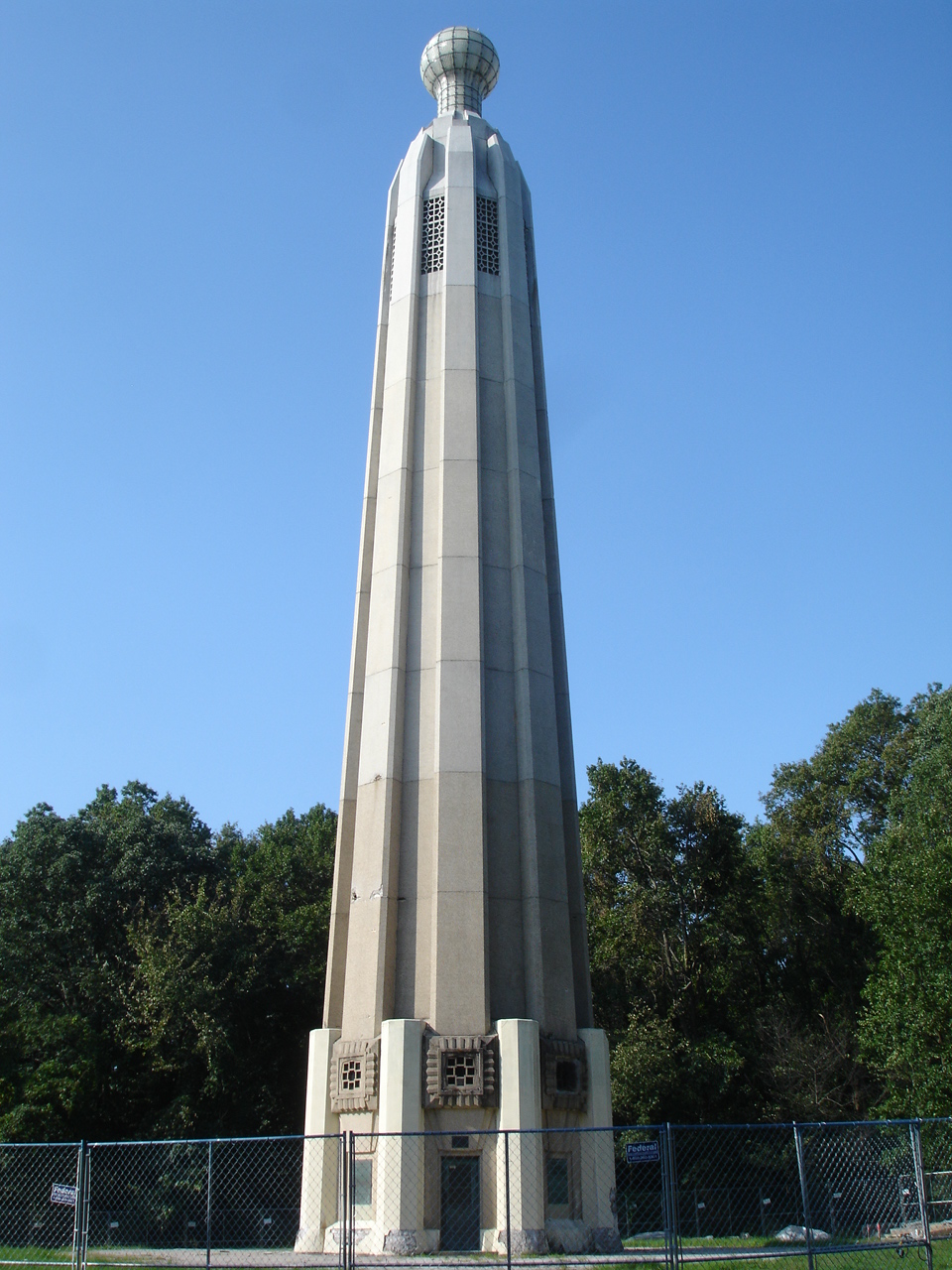
Edison is a suburban township in Middlesex County, central New Jersey, United States, encompassing approximately 30.5 square miles of land. As of the 2020 United States Census, it had a total population of 106,834 residents, with a median age of 41.5 years and a density of about 3,500 persons per square mile. The township originated as part of Raritan Township, settled in the late 17th century, and was officially renamed Edison on November 10, 1954, to commemorate inventor Thomas Alva Edison, whose Menlo Park laboratory—famed for developing the phonograph and practical incandescent light bulb—occupied a site within its current boundaries. Demographically, Edison exhibits high ethnic diversity, with Asians comprising 50% of the population, alongside 26% non-Hispanic whites and 11% Hispanics, driven by post-1965 immigration patterns that have concentrated communities from India and East Asia in areas like Oak Tree Road, often termed "Little India." Economically, it functions as a commercial and professional services hub in the New York metropolitan area, hosting over 10,000 businesses in sectors including retail, technology research, healthcare, and logistics, supported by infrastructure like the Menlo Park Mall and proximity to Route 1 and the New Jersey Turnpike. Notable landmarks include the Thomas Edison Memorial Tower, a 131-foot structure marking the inventor's laboratory site, and Roosevelt Park, a 217-acre county preserve offering recreational facilities amid otherwise developed surroundings.

History

Colonial and early American period

The territory comprising present-day Edison, New Jersey, was originally occupied by the Raritan band of the people, who utilized the region's woodlands, rivers, and fertile lands for hunting, fishing, and agriculture prior to European contact. European exploration and initial land claims began in the mid-17th century under Dutch control, with a significant grant in 1651 deeding a vast tract from the to the Passaic—including areas now in Edison—to cartographer Augustine Herrman by the Dutch authorities. However, permanent English settlement in the vicinity accelerated after the British conquest of New Netherland, with the area falling within Middlesex County, one of New Jersey's earliest organized counties established in 1683. Settlement of the Edison area proper occurred in the late 1660s as extensions of adjacent townships, primarily Piscataway—founded in 1666 by approximately 50 Quaker and Baptist families migrating from the strict Puritan settlements of and in search of greater and land ownership rights. These settlers, largely of English descent, established farms along the and its tributaries, cultivating crops such as wheat, corn, and rye on cleared tracts within a 300-square-mile Piscataway patent that initially encompassed much of central Middlesex County. Portions also derived from Woodbridge Township, settled around 1665 by Scottish and English Congregationalists under a proprietary grant emphasizing individual land patents over communal systems. By the early , small hamlets emerged, including sites near present-day Bonhamtown and Stelton, supported by gristmills, taverns, and rudimentary roads linking to ports like Raritan Landing—established circa 1720 as a key colonial riverport for exporting grain and importing goods via sloops navigating the . During the American Revolutionary War (1775–1783), the Edison area served as a strategic corridor in Middlesex County, witnessing skirmishes and encampments due to its proximity to British supply lines along the Raritan. In January 1777, Continental forces under General William Alexander clashed with British-Hessian troops near Bonhamtown in what became known as the Battle of Quibbletown (or Piscataway), resulting in American retreats but disrupting enemy advances toward Philadelphia. Local sites such as the Piscatawaytown Burial Ground, dating to the 1680s, and St. James Episcopal Church (constructed 1736), provided refuge and burial for patriot soldiers, while Quaker Meeting Houses in the vicinity reflected pacifist sentiments amid divided loyalties. Post-independence, in the early federal period through the early 19th century, the region remained a rural agrarian enclave, with family farms dominating land use; the first local schoolhouse was erected in 1689 near Stelton, educating children in basic literacy and arithmetic amid slow population growth to a few hundred residents by 1800. Economic activity centered on subsistence farming and limited trade, with no major industrialization until later decades, preserving a landscape of homesteads like the Benjamin Shotwell House (built circa 1760), exemplifying Georgian-style colonial architecture adapted to local materials.

19th-century rural development

The area comprising present-day Edison remained predominantly rural and agricultural throughout much of the , characterized by scattered farmsteads and small hamlets that supported local subsistence and market-oriented farming. Early settlements such as Bonhamtown, established as a seat of justice for and counties in 1693, evolved into modest villages; by 1834, Bonhamtown featured 10 to 12 dwellings, two taverns, a , and a schoolhouse, reflecting the slow-paced growth of agrarian communities. Other hamlets, including (a pre-Revolutionary with a active until around 1850), New Durham, and Stelton, dotted the landscape, with families like the Dunhams and Martins holding land grants that persisted in local nomenclature. Agriculture dominated economic activity, with farms producing grains, products, and crops suited to the region's fertile soils. In the 1830s, Martin's Dock facilitated shipments of apples and cider to broader markets, underscoring the role of fruit cultivation in local commerce. operations, such as those later exemplified by Wood Brook Farm, supplied milk to regional consumers, while general farming sustained self-sufficient households amid County's tradition of diversified crop and production. The 's incorporation as Raritan Township on March 17, 1870, from portions of Woodbridge Township formalized these rural boundaries, though stayed low, with farming as the primary occupation inherited from adjacent Piscataway areas. Transportation improvements in the mid-19th century began to enhance accessibility, spurring modest development without disrupting the rural fabric. The arrival of the and Easton and Amboy lines connected the area to urban centers, attracting some commuters and facilitating agricultural exports by the late 1800s. These rail links, operational from the onward in nearby corridors, gradually drew residents to the "rural landscape" while farms like the Dawson property (later redeveloped) exemplified ongoing land use for cultivation. This era marked a transition toward greater integration with regional markets, yet the township retained its agrarian character until industrial influences emerged later in the century.

Thomas Edison's Menlo Park laboratory era

In April 1876, opened his first dedicated industrial research on an 18-acre site in Menlo Park, a within Raritan in , after relocating operations from Newark earlier that spring. The facility, designed as the world's inaugural "invention ," featured specialized buildings including a main , , , , and carpentry shop, equipped with steam engines, generators, and precision tools to enable systematic experimentation and . Edison assembled a team of about a dozen skilled machinists, experimenters like Charles Batchelor and James Adams, and assistants, fostering a collaborative environment that prioritized iterative testing over solitary tinkering. The Menlo Park laboratory became synonymous with breakthrough innovations, earning Edison the moniker "Wizard of Menlo Park." In December 1877, Edison and his team invented the , the first device to record and reproduce sound, demonstrated publicly that November. By October 1879, after thousands of experiments on filaments and vacuum conditions, they achieved a practical incandescent bulb using a carbonized thread, paving the way for the Edison Company formed in 1878. Other developments included an improved carbon transmitter in 1877 and early motion picture concepts, with the lab producing over 400 patents in its decade of operation. This structured approach to contrasted with prior artisanal methods, influencing modern R&D practices by integrating , development, and under one roof. The laboratory's presence spurred modest local economic activity in the rural area, attracting engineers and laborers who resided in nearby boarding houses or farms, though the workforce remained small and transient compared to later facilities. Operations continued until 1887, when Edison dismantled and relocated much of the equipment to a larger complex in , seeking expanded space for electric systems commercialization amid growing demand. The Menlo Park site, largely undeveloped post-closure, later inspired commemorations including the 1937 Thomas Edison Memorial Tower, a 131-foot replicating the bulb's filament shape atop a hill overlooking the original grounds.

20th-century industrialization and population growth

The early 20th century in Raritan Township (later renamed Edison) saw limited industrialization, with the area remaining predominantly agricultural and rural, though transportation improvements like railroad expansions facilitated modest economic activity. The establishment of the Raritan Arsenal in 1917 represented a pivotal development, as the U.S. Army facility spanning over 3,200 acres along the Raritan River focused on ordnance receipt, storage, maintenance, and renovation, providing steady employment and marking the onset of large-scale industrial operations in the township. This military installation, initially prepared for World War I and expanded during World War II, supported the war effort through increased production and logistics, drawing workers and contributing to localized growth amid broader national demands. Population growth remained gradual during this period, reflecting the township's semi-rural character. The 1930 U.S. recorded 10,025 residents, increasing to 11,470 by 1940 and reaching 16,348 in 1950, driven in part by arsenal-related jobs and proximity to urban centers like . projects in the 1930s and 1940s further developed infrastructure at the , enhancing its capacity and indirectly supporting community expansion. Post-World War II suburbanization accelerated both industrialization and demographic shifts, fueled by returning veterans, developments, and infrastructure like the opened in the , which improved access to the region. In 1954, Raritan Township was renamed Edison to honor and leverage his legacy for economic promotion, coinciding with a surge in residential and commercial building. By 1960, the population had quadrupled to 45,580, as industry boomed with factories and transportation hubs attracting commuters. The decommissioned Raritan Arsenal transitioned into the Raritan Center by the early 1960s, hosting diverse manufacturing and warehousing that employed thousands and solidified Edison's role in Middlesex County's postwar economic landscape.

Late 20th and early 21st-century demographic shifts

The of Edison Township expanded notably during the late , increasing from 70,193 residents in the 1980 to 88,680 in 1990, driven by suburban development and economic opportunities in nearby industrial and professional sectors. By the 2000 , the total stood at 97,687, with Asians comprising 36.3% of the —a marked rise reflecting immigration patterns post-1965 Immigration and Nationality Act amendments, which prioritized skilled workers and from . This trend accelerated in the early , as the Asian population, predominantly of Indian origin, grew to form nearly half of residents by the 2020 , totaling 107,588 overall. The influx was fueled by high-skilled migration via H-1B visas to local , , and pharmaceutical industries, alongside chain migration and the establishment of ethnic networks offering , schools, and cultural amenities in proximity to . Consequently, the white population share declined to 27.5%, Black residents held at around 8.9%, and or Latino residents rose to approximately 11%, underscoring a transition from a European-American majority to an Asian-plurality community.
Census YearTotal PopulationAsian (%)White (%)Black (%)
200097,68736.3~599.3
2020107,58850.327.58.9
These shifts have reshaped local commerce and institutions, with Indian-owned businesses proliferating along Oak Tree Road and influencing school curricula and public services to accommodate linguistic and cultural needs. Economic data indicate higher median household incomes among Asian households, correlating with educational attainment in STEM fields, though integration challenges persist in housing patterns and political representation.

Geography

Location and physical boundaries

Edison Township occupies a position in central within County, situated in the Raritan Valley region approximately 30 miles southwest of . Its geographic center is located at coordinates 40°31′07″N 74°24′43″W. The township encompasses a land area of 30.07 square miles as measured in the . Edison borders the municipalities of East Brunswick, Highland Park, , Piscataway, Sayreville, South Plainfield, and Woodbridge Township, all within Middlesex County. It uniquely encircles the independent Borough of Metuchen, forming one of the 21 "doughnut" municipality pairs in the United States where one community completely surrounds another. These boundaries reflect historical divisions from original Woodbridge and Piscataway townships dating to the late .

Topography, land use, and environmental features

Edison Township occupies a predominantly flat terrain within the , with elevations ranging from near along the to approximately 220 feet in the section, and an average elevation of about 82 feet above . Approximately 58% of the township lies between 0 and in elevation, 42% between 101 and 200 feet, and less than 1% above 200 feet, with gentle slopes generally draining toward the and its tributaries. The underlying consists primarily of the Province (70%, featuring Passaic Formation and ) in the north and the Province (30%, with Raritan Formation sands and clays) in the south, overlain by glacial and alluvial deposits. Land use in Edison, spanning roughly 19,600 acres, is dominated by urban development covering 74% of the area, including single-family residential (26%), industrial (15%), and commercial (7%) zones, reflecting suburban expansion and proximity to major highways like Interstate 287 and the New Jersey Turnpike. Zoning districts support a mix of residential (e.g., R-A to R-C for single-family), business (e.g., GB for general business), and industrial (e.g., L-I for light industrial) uses, with 12% allocated to parks and open space, 0.2% to agriculture, and limited vacant land often constrained by environmental factors. Impervious surfaces account for 43% of the land, contributing to stormwater runoff challenges, while preserved areas total about 2,400 acres, including 959 acres acquired since 1998 for conservation. Environmental features include significant wetlands comprising 14% (2,832 acres) of the township, such as the Dismal Swamp preserve (304 acres) and Red Root Creek wetlands (2,000 acres), which support biodiversity and flood mitigation but face pressures from development-induced habitat loss. The Raritan River borders the southern edge for 7 miles, joined by tributaries like Bound Brook, Ambrose Brook, and Mill Brook, with riparian zones regulated at 50 feet and floodplains covering 14% (100-year) and 2% (500-year) of the area, leading to 155 National Flood Insurance Program claims totaling $8.6 million from 1978 to 2020. Forests cover 7% (1,362 acres, mostly deciduous), concentrated in preserves, while parks like Roosevelt Park (217 acres) and Edison State Park (36 acres) provide recreational space amid urban heat island effects and 153 known contaminated sites, primarily in southern industrial zones. Soils are diverse, with hydric types in 13% of areas and prime agricultural soils in 18%, though urbanization has reduced farmland to minimal levels.
Land Use CategoryPercentageApproximate Acres
Urban (Residential, Commercial, Industrial)74%14,500
Wetlands14%2,800
Parks/Open Space12%2,400
7%1,400
0.2%40
![Roosevelt Park in Edison, New Jersey][float-right]

Climate and weather patterns

Edison, New Jersey, features a classified as Köppen Cfa, marked by four distinct seasons with hot, humid summers and cold, often snowy winters influenced by its mid-Atlantic coastal position. Annual totals approximately 48 inches of and 24 inches of , exceeding national averages due to frequent Atlantic moisture influxes and frontal systems. Average temperatures range from a low of 24°F to an high of 85°F, with relative often exceeding 70% year-round, contributing to muggy conditions in warmer months.
MonthAvg Max (°F)Mean (°F)Avg Min (°F)Precipitation (in)Snowfall (in)
January4033263.346.0
February4336283.155.8
March5143344.082.8
April6253443.840.2
May7364543.990.0
June8273644.380.0
July8779704.790.0
August8577684.220.0
September7870614.080.0
October6758493.960.0
November5547393.320.5
December4538314.043.4
Annual6657484719
Summer (June–August) brings average highs near 84°F and lows around 66°F, driven by southerly airflow and convective thunderstorms that account for much of the seasonal rainfall, averaging 4–5 inches per month. Winters (December–February) see highs of 40°F and lows dipping to 26°F, with nor'easters delivering heavy snow—up to 20+ inches in major events—and occasional ice storms from mixed precipitation. Spring and fall serve as transitional periods with volatile weather, including rapid temperature swings of 20–30°F daily from shifting jet stream patterns. Extreme weather patterns include vulnerability to tropical cyclones and extratropical storms, as evidenced by Superstorm Sandy's 2012 landfall causing widespread flooding and power outages across Middlesex County, with Edison recording gusts over 60 mph and 5–8 inches of rain. The 1993 Superstorm blizzard dumped 20–30 inches of snow in the region, paralyzing . Tornadoes remain rare, with only 5–10 documented within 25 miles since 1950, typically EF0–EF1 intensity from summer supercells. These events underscore the area's exposure to both convective and synoptic-scale hazards, amplified by urbanization and proximity to .

Demographics

Historical population census data

The population of what is now Edison Township, originally incorporated as Raritan Township in 1870 and renamed Edison Township on November 10, 1954, remained relatively stable in the early 20th century before accelerating postwar due to suburbanization and industrial growth. U.S. Census Bureau decennial counts reflect this trajectory, with significant increases after 1950 coinciding with the name change and regional development.
Census yearPopulation
19004,155
19108,225
19209,998
193010,025
194011,470
195016,348
196044,799
197067,120
198070,193
199088,680
200097,687
201099,967
2020107,588
These figures, derived from official Census Bureau enumerations, indicate a of approximately 2.5% from 1950 to 2020, driven by migration to Middlesex County suburbs. Pre-1900 data are unavailable due to the township's formation from portions of adjacent areas, with earlier counts aggregated at the county level.

Current ethnic and racial composition

As of the 2022 estimates, Edison's population stands at approximately 107,000, characterized by a diverse racial and ethnic makeup dominated by Asian residents, who constitute the plurality. Asians alone account for 50% of the population, reflecting significant immigration from , particularly , where Edison hosts one of the largest concentrations of in the United States. Non-Hispanic Whites comprise 26%, Blacks or 8%, and Hispanics or Latinos (of any race) 11%. Smaller shares include those identifying as two or more races (5%) and other categories such as Native American or (under 1% combined).
Racial/Ethnic GroupPercentage (2022 ACS)
Asian alone50%
White alone, not Hispanic26%
Hispanic or Latino (any race)11%
Black or African American alone8%
Two or more races5%
Other races<1%
This composition marks a shift from earlier decades, with Asian population growth driven by professional immigration in technology and pharmaceuticals, outpacing other groups. The 2020 Decennial Census recorded a total population of 107,588, confirming the Asian plurality at around 49.5% and underscoring the stability of these trends into the early 2020s. Census data, derived from self-reported surveys, provide the most reliable empirical measure, though undercounts in immigrant communities may slightly underestimate non-White shares.

Immigration patterns and their socioeconomic impacts

Immigration to Edison, New Jersey, accelerated following the Immigration and Nationality Act of 1965, which removed national origin quotas and facilitated entry for skilled professionals from Asia, particularly . Initial waves consisted of engineers and scientists drawn to employment in County's burgeoning pharmaceutical and technology industries, with Edison emerging as a preferred due to and proximity to . By the 1980s and 1990s, chain migration through amplified this influx, transforming Edison from a predominantly white, working-class community into one with a substantial Asian Indian . Between 1990 and 2000, New Jersey's Indian population more than doubled to 169,180, with suburban Edison experiencing commensurate growth as immigrants sought established ethnic enclaves for social and economic support. This pattern persisted into the , driven by H-1B visas for high-skilled workers and subsequent family sponsorships. As of 2019-2023, foreign-born residents comprised 46.4% of Edison's population, exceeding the state average, with 78% of foreign-born individuals originating from —predominantly . The Asian segment now constitutes over 50% of the township's residents, reflecting sustained from skilled labor pools rather than low-wage or refugee flows. Socioeconomically, these immigrants have disproportionately high education and income levels, with Asian Indians in Edison often wealthier and more professionally advanced than native-born white residents. This has elevated median household incomes and property values, fueled by entrepreneurship in sectors like hospitality, retail, and real estate financing within the Indo-American community. Commercial corridors such as Oak Tree Road have been revitalized into ethnic business districts, generating tax revenue and employment while catering to both immigrant and broader consumer bases. The influx of educated families has enhanced school performance metrics, though rapid population growth has necessitated infrastructure expansions to accommodate increased enrollment and housing demand. Causal analysis indicates that the selective nature of this —favoring high-human-capital individuals—has yielded net positive economic contributions, including in STEM fields and reduced fiscal burdens compared to less-skilled migration patterns elsewhere. Political incorporation has followed, with achieving representation in local governance, as evidenced by mayoral leadership focused on economic ties to . However, the demographic shift has altered community cohesion, introducing that demands adaptations in public services and social norms, though empirical data show minimal crime increases attributable to immigrants.

Economy

Major industries and manufacturing base

Edison's economy features a diverse industrial base anchored by , , distribution, pharmaceuticals, and , bolstered by the township's access to the , rail networks, and the Port of New York and New Jersey for efficient material transport and global exports. These sectors leverage Edison's position within County, a hub for over 9,000 manufacturing establishments statewide employing more than 250,000 workers as of recent data. Manufacturing constitutes a core component, historically rooted in the area's industrial heritage and persisting despite national declines, with output focused on chemicals, electronics, plastics, metals, food products, and cosmetics. Prominent firms include J.M. Huber Corporation, a chemical manufacturer with approximately 4,000 employees in Edison, alongside Revlon (over 2,000 employees in cosmetics production), Von Roll USA (over 950 employees in metals and electronics), BASF Catalyst LLC, Reliance Private Label Supplements, and Bentley Laboratories. Light manufacturing and advanced processes, such as optics and sensors from companies like Hyperion Optics USA Inc. and Veritas Sensors LLC, further sustain the sector. In May 2025, a Dubai-based food packaging firm announced its first North American production facility in Edison, expected to expand capacity in consumer goods manufacturing. Logistics and warehousing complement , employing over 3,000 in wholesale operations and distribution centers, with Wakefern Food Corp. as a major player at 3,500–3,749 employees handling and activities. Pharmaceuticals tie into New Jersey's life sciences strengths, with Edison hosting , development, and production sites amid the state's 22,000 related jobs statewide. , including and , add high-wage , while e-commerce and technology firms utilize industrial parks for assembly and warehousing.

Corporate presence and commercial districts

Edison hosts corporate offices for several multinational firms, including , which maintains its U.S. headquarters there, focusing on engineered materials and specialty chemicals. Industrial real estate developer Heller Industrial Parks, Inc., based at 205 Mill Road, manages extensive distribution facilities in the township, owning over 15 million square feet nationwide but with core operations in Edison. In 2025, Pakistan-based Hotpack Global announced a $100 million investment to build a and distribution facility in Edison, aiming to create jobs in packaging production. Major employers include United Parcel Service (UPS) and Home Depot, each operating facilities in Edison with 1,750 to 1,999 employees as of recent county data. Healthcare provider Hackensack Meridian Health maintains a significant presence through JFK Medical Center and related operations. Technology and biotech firms like Larsen & Toubro Infotech and Biocon also employ substantial workforces locally, leveraging the area's skilled immigrant labor pool. Commercial districts center on retail hubs along and Route 27. Menlo Park Mall, a super-regional spanning over 1.3 million square feet, features anchors like and , drawing regional shoppers with 170 stores, dining, and entertainment. Adjacent areas include strip malls and plazas such as Festival Plaza and Wick Shopping Plaza, supporting big-box retail and specialty stores. The Route 27 corridor, known informally as , hosts dense clusters of ethnic groceries, restaurants, and professional services, predominantly Indian-owned, contributing to vibrant small-business commerce. Industrial zones like Heller provide warehousing and space, supporting distribution for and firms.

Labor dynamics, including immigrant workforce contributions and challenges

Edison's labor force consists of approximately 57,852 individuals, with 55,866 employed and an unemployment rate of 3.4% as of October 2024. This rate remains below both state and national averages, reflecting a robust local environment driven by proximity to New York City ports and industrial zones. Major sectors include professional and business services, , and healthcare, with warehouses and distribution centers forming a key component of the blue-collar . Foreign-born workers, who constitute about 44.9% of Edison's population, play a significant role in the local economy, often exhibiting higher labor force participation rates than native-born residents—mirroring statewide trends where foreign-born participation reaches 69.9% compared to 64.7% for natives. In Edison, thousands of immigrant laborers staff hundreds of warehouses, sorting and distributing millions of packages from nearby ports like Newark, filling essential roles in the that support and outflows. High-skilled immigrants, particularly from and , contribute to professional occupations in pharmaceuticals, , and , bolstering firms in the Edison-Piscataway corridor; statewide, foreign-born workers hold over 40% of jobs in computer, math, and healthcare support fields. These workers also drive entrepreneurship, with immigrants founding businesses at twice the rate of natives in , including retail and service establishments in Edison's commercial districts. Challenges arise from the prevalence of undocumented immigrants in low-wage sectors, exposing the workforce to actions and workplace vulnerabilities. In August 2025, U.S. Immigration and Enforcement (ICE) conducted raids at Edison warehouses, detaining 29 suspected undocumented workers and resulting in operational disruptions, multiple injuries, and heightened fear among laborers. Such incidents underscore reliance on informal labor networks, including temp agencies that have been accused of suppressing worker rights and enabling abuses like wage theft, particularly amid federal crackdowns. Undocumented workers face risks that deter reporting of unsafe conditions or exploitation, while their presence in competitive sectors like may exert downward pressure on wages for legal workers, though empirical data specific to Edison remains limited. Overall, these dynamics highlight tensions between economic dependence on immigrant labor and the of laws, with local operations periodically halted by federal interventions.

Government and Politics

Township governance structure

Edison Township operates under the mayor-council form of government pursuant to the (N.J.S.A. 40:69A-31 et seq.), which it adopted in 1958, replacing the prior commissioner-type system. Under this structure, the serves as the , holding responsibility for enforcing municipal ordinances, preparing the annual budget, and appointing department heads and other officials, subject to township confirmation. The may ordinances passed by the , though such vetoes can be overridden by a two-thirds majority vote of the members. The functions as the legislative body, comprising seven members elected on a nonpartisan basis to staggered four-year terms, with three seats up for election in one cycle and four in the subsequent cycle, typically aligned with odd-numbered years. The holds authority to adopt ordinances, approve the municipal , confirm mayoral appointments, and oversee fiscal matters, meeting regularly to conduct business. As of October 2025, the selects its president and annually from among its members to lead proceedings. This governance model emphasizes separation of powers, with the elected mayor providing executive leadership while the council maintains legislative independence, a framework designed to enhance administrative efficiency and accountability in New Jersey municipalities opting into the Faulkner Act provisions.

Federal, state, and county representation

Edison is included within New Jersey's 6th congressional district, represented by Democrat Frank Pallone Jr. in the United States House of Representatives since 1988. The state's United States senators are Democrats Cory Booker, serving since 2013, and Andy Kim, serving since 2024. In the New Jersey Legislature, the township lies in the 18th Legislative District. This district is represented in the State Senate by Democrat Patrick J. Diegnan Jr. and in the General Assembly by Democrats Robert Karabinchak and Sterley S. Stanley. At the county level, Edison is represented by the Middlesex County Board of County Commissioners, a seven-member body elected on staggered three-year terms to oversee county-wide administration, budgeting, and services. As of 2025, all commissioners are Democrats, including Commissioner Director Charles E. Tomaro, Deputy Director Leslie Koppel, Claribel A. Azcona-Barber, Chanelle Scott McCullum, and others serving in roles focused on , services, and .

Electoral history and key political events

Edison Township employs a form of , with the elected to a four-year term and the five-member elected to staggered three-year terms, all on partisan ballots in odd-numbered years. Democratic candidates have dominated local elections since the early , reflecting the township's shift toward a more diverse electorate influenced by substantial Asian Indian , which has correlated with strong support for Democratic platforms emphasizing and community services. In the November 5, 2013, mayoral , Democrat Thomas Lankey secured victory over Republican Gaetano V. Gaspari, receiving approximately 79.73% of the vote in a contest marked by low Republican turnout. Lankey, who had assumed office earlier that year following the resignation of Antonia Ricigliano, won re-election on November 7, 2017, defeating independent candidate Keith Hahn, the former Democratic municipal chairman running without party endorsement after internal party disputes; Lankey garnered a decisive amid voter concerns over fiscal management. Lankey's tenure ended in controversy when he attempted a 2021 re-election bid as an independent amid rifts with the local Democratic organization, ultimately withdrawing in August 2021 to avoid splitting the vote. Democrat Samip Joshi, a council vice president and first-generation Indian-American, won the mayoral election on November 2, 2021, defeating Republican challenger Bruce Hirst in a closely watched race that highlighted ethnic diversity's role in local ; Joshi received about 52% of the vote, becoming the township's first of South Asian descent. Democrats maintained control in the same cycle and swept all four seats up for grabs in November 2023, with candidates Richard Brescher, Joseph Coyle, Ajay Patil, and Asaf Shmuel defeating Republicans by margins exceeding 1,500 votes each, underscoring sustained party dominance. A notable political event unfolded in late 2024 when the Democratic-controlled Township Council passed a decorum ordinance on November 25 prohibiting "props" during public comments, which residents and critics interpreted as banning displays of the American flag and U.S. , sparking widespread backlash over perceived suppression of patriotic expression. The measure, intended to curb disruptions, drew condemnation from state Republican legislators and local residents, leading Mayor and council members to clarify no explicit flag ban existed and vote to repeal it on December 17, 2024, amid accusations of overreach. This incident highlighted tensions between administrative order and First Amendment concerns in a diversifying community. As of October 2025, the township faces a competitive mayoral race, with incumbent Joshi seeking re-election against independent David Tingle, who has garnered cross-party endorsements including from former Democratic councilman Richard Brescher and Republican gubernatorial candidate , amid allegations of practices and fiscal mismanagement leveled by Tingle's campaign.

Policy positions on immigration and local enforcement

Edison Township's has articulated positions on emphasizing federal responsibility while supporting state-level restrictions on with federal enforcement. In January 2024, Mayor Sam , a Democrat and son of immigrants, responded to buses dropping off approximately 400 migrants in amid New York City's overflow by stating that is a federal issue and that Edison lacked the resources to accommodate them, adding that such migrants "aren't welcome" locally without federal intervention. These remarks drew criticism from residents and council members for perceived divisiveness, though Joshi maintained they reflected practical constraints on municipal capacity. The Township Council has adopted resolutions limiting local involvement in immigration enforcement, aligning with New Jersey's broader framework. On August 27, 2025, following U.S. Immigration and Customs Enforcement (ICE) raids at local warehouses that detained 20 undocumented workers on July 8 and 29 more in a subsequent operation, the Council passed a resolution endorsing the New Jersey Immigrant Trust Act (S3672/A4987). This proposed legislation would codify the state Attorney General's 2017 Immigrant Trust Directive, which prohibits local law enforcement from participating in federal immigration raids, detaining individuals solely for immigration status, or sharing non-criminal immigration data with ICE, thereby encouraging immigrants to access services without deportation fears. Edison became the 15th municipality to back the act, amid community protests against the raids targeting immigrant-heavy warehousing sectors. Local enforcement practices adhere to state restrictions, with no township ordinances mandating active ICE cooperation or designating Edison as a sanctuary jurisdiction. Police are barred from immigration-related inquiries absent criminal suspicion, reflecting causal priorities on public safety over federal priorities, as undocumented workers comprise a significant portion of the logistics workforce in Edison's commercial hubs. Post-raid resident testimonies highlighted tensions, with some accusing officials of insufficient warnings to workers, though the mayor's office did not confirm prior knowledge. This stance prioritizes operational continuity in immigrant-dependent industries while deferring enforcement to federal agents, as evidenced by non-interference during the 2025 warehouse operations.

Education

Public school system and districts

The Edison Township School District serves as the sole district for the township, providing from through grade 12 to approximately 17,000 students across 20 schools, including 15 elementary schools, three middle schools, and one comprehensive high school. The district operates with a student-teacher of 13.27:1, supported by 1,281 teachers as of the 2023-2024 school year. Enrollment demographics reflect the township's diverse population, with 90% minority students—predominantly Asian American—and 14.3% classified as economically disadvantaged. Academic performance, as measured by New Jersey Student Learning Assessments, indicates that 56% of students are proficient or above in both math and language arts, exceeding state averages in advanced coursework participation. At Edison High School, over 50% of students enroll in at least one of more than 25 Advanced Placement courses, with 80% scoring 3 or higher on exams, surpassing statewide benchmarks. The four-year graduation rate at the high school stood at 92.3% for the 2023-2024 cohort. The district maintains an annual operating budget of around $367 million, with property taxes held steady since 2021 amid efforts to balance fiscal constraints and program expansions. No separate public school districts operate within boundaries; all K-12 falls under this centralized system, governed by a nine-member elected to staggered three-year terms. Specialized programs include support for the significant immigrant student population and STEM-focused initiatives, though state reports highlight ongoing needs in chronic reduction and subgroup proficiency gaps for certain demographics.

Private and higher education institutions

Edison hosts several private K-12 schools, including independent, Catholic, Jewish, and specialized institutions serving diverse educational needs. The Wardlaw+Hartridge School, an independent coeducational founded in 1882 as the Wardlaw Female and merged with Hartridge in 1976, offers programs from pre-kindergarten through grade 12 with an enrollment of approximately 451 students as of recent data. It emphasizes college preparatory academics on its Edison campus. St. Thomas Aquinas High School, a private Roman Catholic institution originally established in 1969 and renamed from Bishop George Ahr High School in 2019, provides college-preparatory education for grades 9-12 to about 593 students, focusing on honors, AP courses, and faith-based service. Other notable private schools include Rabbi Pesach Raymon Yeshiva, serving Orthodox Jewish students with religious and secular curricula; St. Helena School and St. Matthew School, Catholic elementary schools emphasizing moral and academic development; Lakeview School, specializing in education for students with disabilities within Roosevelt Park; and Discovery Christian Montessori, offering multi-age Montessori programs with a Christian focus. Higher education in Edison is anchored by Middlesex College, a public community college founded in 1964 with its main campus in the township, enrolling around 10,084 students as of fall data. It provides associate degrees, certificates, and transfer pathways in fields such as health, business, and STEM, with first classes held in 1966 and rebranded from Middlesex County College in 2021. No private colleges or universities are based within Edison township boundaries.

Educational challenges from demographic changes

The Edison Township has faced substantial enrollment pressures stemming from rapid demographic shifts, driven primarily by from and other Asian nations, which has increased the township's Asian to over 40% by recent estimates. This influx, with comprising around 28% of residents as of 2010 data that has since grown, has led to consistent annual student gains of approximately 400 between 2013 and 2018, exacerbating overcrowding across facilities. In response, the district established a School Overcrowding Taskforce in 2018 to project needs and recommend expansions, as existing infrastructure struggled to accommodate the surge without modular classrooms or . These changes have strained budgets and logistics, with demographer reports highlighting sustained growth tied to family-oriented immigrant settlement patterns in high-density areas like . The demographic composition also includes a cohort of English language learners (ELLs), numbering over 400 as of 2019 monitoring, necessitating bilingual programs and dedicated support to address language barriers from non-English primary home languages such as , Gujarati, and Mandarin. While the district's overall math proficiency stands at 58%—exceeding the state average of 38%—ELL subgroups often lag in meeting growth targets toward proficiency, per state performance metrics, underscoring resource-intensive interventions like dual-language academies focused on Spanish but adaptable for broader needs. Such shifts have prompted debates on equitable resource distribution amid ethnic concentration, with some schools approaching majority-Asian enrollment, potentially complicating and peer diversity exposure despite the families' generally higher socioeconomic and educational backgrounds. Official demographer analyses continue to forecast persistent pressures, recommending phased investments to mitigate capacity shortfalls without compromising instructional quality.

Infrastructure

Transportation networks

Edison is accessible via the (Interstate 95), with Exit 10 providing direct entry to the township and connections to the broader interstate system northward to and southward to . This exit facilitates heavy freight and commuter traffic, as the Turnpike serves as a primary for the region's hubs. U.S. Route 1, a major divided highway, runs north-south through western Edison, linking commercial areas like to adjacent municipalities and supporting daily vehicular volumes exceeding 100,000 in peak sections. Local arterials such as and Plainfield Avenue complement these, handling intra-township movement amid suburban development pressures. The township's rail infrastructure centers on Edison Station, a stop on , which offers commuter service to with trains departing every 15-30 minutes during rush hours and travel times of approximately 45 minutes. The station features parking for over 1,000 vehicles, ticket vending machines, and bike racks, though it lacks on-site agents, relying on app-based or machine ticketing. also connects Edison to via direct rail service, with journeys taking about 32 minutes and fares ranging from $16 to $20. Public bus service is provided by NJ Transit routes 810, 814, and 819, which operate limited schedules linking key local destinations including Menlo Park Mall, JFK Medical Center, and the Edison Station area to broader regional hubs. Middlesex County's RIDE On Demand service supplements this with app-based, curb-to-curb rides within the county, targeting underserved areas and operating at affordable rates for general public use. Specialized transport includes free curb-to-curb service for Edison seniors via the township's Senior Citizen Center, addressing mobility gaps for non-drivers. Overall, while highway and rail networks dominate due to Edison's commuter-oriented economy, bus coverage remains sparse, contributing to reliance on personal vehicles for many residents.

Healthcare and public services

JFK University Medical Center, located at 65 James Street, serves as the primary acute care hospital in Edison, affiliated with and providing 24/7 emergency services, neurosciences, rehabilitation, and other advanced treatments. Roosevelt Care Center at Edison, situated at 118 Parsonage Road, offers long-term care, sub-acute rehabilitation, dementia and Alzheimer's specialty units, , and services, with 362 certified beds. Additional healthcare options include urgent care facilities such as Atlantic Health Urgent Care and primary care providers like Medical Care. Public safety in Edison is managed through the Township's , which includes the Edison Division of Police, responsible for and led by Chief Thomas Bryan. The Edison Division of Fire functions as a combination department, employing 145 career firefighters alongside volunteer personnel to address fire suppression, prevention, and safety inspections. and form another division under public safety, supporting overall response to public needs via a 9-1-1 communications bureau. The operates two locations: the main branch at 340 Plainfield Avenue and the North Edison Branch at 1907 Oak Tree Road, delivering books, digital resources, programs, and events.

Utilities and telecommunications

Public Service Electric and Gas (PSE&G) provides and distribution to Edison Township residents and businesses, covering the full service territory as a regulated utility under the New Jersey Board of Public Utilities. The company maintains infrastructure including overhead and underground lines, with electric service boundaries encompassing the township's urban and suburban areas. Gas service similarly extends across Edison via local distribution mains. Water supply in Edison is divided between the municipally operated Edison Water Utility, which serves township-managed areas through its treatment and distribution systems sourced from local wells and the , and Middlesex Water Company, which provides service to approximately 58,000 customers in parts of County including select Edison neighborhoods. The township established its dedicated Water and Sewer Department in 2019, appointing a director to oversee operations, , and compliance with state standards. Sewer collection and treatment fall under the same municipal utility, connecting to regional facilities for wastewater processing. Telecommunications infrastructure supports multiple broadband providers, with Optimum offering cable internet speeds up to 1 Gbps via networks covering most households. Verizon provides DSL to 96% of locations and limited fiber-optic Fios service to about 7% as of recent coverage data, while expands gigabit cable options township-wide under local initiatives. Cable television and voice services are primarily delivered through Optimum and , with up to 425 channels available; wireless home internet from T-Mobile supplements fixed-line options in underserved spots. Landline telephone service, where retained, routes through legacy providers like Verizon, though VoIP alternatives from cable operators predominate.

Culture and Communities

Ethnic enclaves and cultural institutions

Edison features a prominent along Oak Tree Road, designated as County Route 604, which serves as a hub for South Asian commerce, dining, and culture, commonly known as "." This district, extending into neighboring Iselin, hosts hundreds of Indian- and Pakistani-owned businesses, including grocery stores, apparel shops, and restaurants specializing in regional cuisines from , , and . The enclave developed through chain migration and professional immigration from , particularly post-1965 Immigration and Nationality Act, drawing software engineers, physicians, and entrepreneurs attracted by proximity to job markets and affordable suburban housing. As of the 2020 U.S. Census, Asians constitute 50.27% of Edison's population of 106,834 residents, with forming the largest subgroup, reflecting the enclave's demographic anchor. This concentration supports a self-sustaining economy where Gujarati and Telugu speakers predominate, evidenced by bilingual signage and festivals drawing thousands annually. Key cultural institutions include Hindu temples such as the Shri Swaminarayan Mandir at 2500 Woodbridge Avenue, established to propagate teachings among Gujarati immigrants and hosting daily rituals alongside community education programs. Similarly, Shri Krishna Vrundavana Dhama at 215 May Street provides Vedic worship spaces and cultural classes on a 3.5-acre site, fostering intergenerational transmission of Hindu traditions. Sikh gurdwaras, like the Singh Sabha, offer langar meals and services, serving Punjabis and reinforcing Punjabi cultural practices amid the township's diverse Asian inflows. These venues host events like Navratri garba dances and parades, which blend religious observance with social networking, though they occasionally strain local parking and noise regulations due to high attendance. Smaller enclaves exist for other groups, including a modest Korean business presence near Inman Avenue and Filipino gatherings tied to nearby churches, but these lack the scale and institutional density of the South Asian core. Jewish institutions, such as Temple Emanu-El, a , support a longstanding but minority community with educational and holiday programming. Overall, these enclaves reflect causal patterns of skilled migration clustering around economic opportunities, with cultural institutions acting as anchors that preserve linguistic and religious continuity against assimilation pressures.

Social integration and community life

Edison's community life reflects a mix of ethnic-specific enclaves and efforts to foster broader social cohesion amid rapid demographic shifts. With approximately 46 percent of residents being immigrants as of recent data, the township hosts numerous organizations that primarily serve Asian Indian and Chinese communities, often operating in parallel rather than fully integrated structures. For instance, Asian Indian groups like the Indo-American Cultural emphasize cultural preservation and advocacy, while Chinese organizations such as Hua Xia Chinese School focus on education, leading to limited inter-ethnic interactions between these groups and with longstanding white residents. Challenges to integration stem from historical tensions and insularity. In the , "dot busters" attacks targeted Indian immigrants, and incidents of police brutality in 2005-2006 prompted reactive among Indian communities, racialized as "invaders" by some locals. Older immigrants have acknowledged that ethnic clustering, such as in "," hinders social ties with non-Indian neighbors, contributing to perceptions of parallel societies rather than cohesive community life. Despite socioeconomic successes—median household incomes for Chinese ($116,128) and Indians ($101,867) exceeding ($92,200) in 2000—political incorporation remains uneven, with Indians achieving caucuses and board seats by 2007, while Chinese engagement lags. Township initiatives aim to counter these divides. The Human Relations Commission promotes equality, diversity, and inclusivity through programs addressing community relations. Recreation Department events, including Martin Luther King Jr. Birthday celebrations and disability awareness activities, encourage cross-group participation. The Cultural Arts Commission develops venues to explore and enhance diverse customs, while recent recognitions, such as Edison's designation as a "Healthy to Watch 2024," highlight events celebrating diversity to build social connectedness. Youth-led efforts, like intergenerational initiatives launched in 2025, further promote community-driven change by linking seniors, small businesses, and younger residents across ethnic lines. Overall, while points to persistent ethnic silos and past conflicts impeding full integration, incremental progress through civic bodies and inclusive events suggests evolving community dynamics, though causal factors like chain migration and enclave formation continue to shape outcomes.

Notable cultural events and traditions

Edison Township organizes an annual Diwali Festival, reflecting the significant Indian-American population in the area, held at Papaianni Park with features including over 100,000 lights, drone shows, fireworks, food vendors, live music, and performances; the fourth iteration occurred on October 25, 2025, from 2:00 p.m. to 9:00 p.m., drawing thousands as the largest such event in . The Indo American Festival Inc. hosts the annual Dushahra (Dussehra) Festival at Lake Papaianni Park, celebrating the Hindu tradition of good triumphing over evil through enactments, cultural performances, and family activities; the 27th edition took place on October 4, 2025, from 1:00 p.m. to 8:00 p.m., with free parking and entry emphasizing community participation. Other recurring cultural gatherings include the Fair at the Sheraton Edison Hotel, featuring Indian arts, crafts, food, and performances on April 27, 2025, which highlights regional traditions from the subcontinent amid Edison's ethnic enclaves. Township-sponsored events like the Mayor's 4th of Celebration incorporate American patriotic traditions with and community gatherings, blending local heritage with diverse resident customs, though these draw less on the township's predominant South Asian influences.

Controversies

Immigration enforcement actions and raids

On July 8, 2025, U.S. Immigration and Customs Enforcement (), in coordination with other federal agencies, conducted a worksite compliance inspection at the Alba Wines and Spirits Warehousing facility in Edison, New Jersey, arresting 20 illegal aliens for violations. The operation targeted unauthorized employment, with agents surrounding the warehouse around 9:00 a.m. and detaining individuals lacking legal work authorization. Workers able to prove were released after verification. Approximately six weeks later, on August 20, 2025, federal agents from and U.S. Border Patrol executed another workplace enforcement action at a in Edison, detaining 29 individuals suspected of unlawful presence in the United States. Edison Samip Joshi confirmed the number of detentions, noting the Edison Police Department provided logistical support but did not participate in arrests. The raids, totaling 49 detentions across both incidents, highlighted Edison's role as a regional hub employing significant numbers of foreign-born workers, amid heightened federal enforcement under the Trump administration. Local Democratic officials, including Senators Cory Booker and Andy Kim, condemned the August action as chaotic and contrary to New Jersey's community values, citing reports of injuries during the operation and arguing it disproportionately affected non-criminal detainees—though ICE data from June 2025 indicated 65% of detainees nationwide lacked criminal convictions. Congressman Frank Pallone described the raids as terrorizing families and stretching legal bounds, including unsubstantiated claims of detaining U.S. citizens. Immigrant advocacy groups warned the actions signaled broader ICE escalation in the region, potentially disrupting industries reliant on immigrant labor. These enforcement efforts occurred against Edison's demographic backdrop of rapid growth in its Asian immigrant population, particularly from India, which comprises over 40% of residents per recent census data, though the raids focused on workplace violations rather than residential communities.

Cultural and social tensions from rapid demographic change

Edison's demographics underwent profound changes in recent decades, driven primarily by immigration from and other Asian countries. In the , Asians constituted 50.3% of the township's of 107,588 residents, with the majority being of Indian origin, compared to a predominantly white composition exceeding 80% in the and . This shift correlated with a decline in the white share to 27.5%, reflecting broader patterns of ethnic transformation in Middlesex County suburbs. The pace of this demographic reconfiguration precipitated social frictions, including historical episodes of overt racism against early Indian immigrants establishing businesses along Oak Tree Road. In the 1980s and 1990s, white teenage gangs targeted Indian-owned establishments with vandalism and intimidation, viewing newcomers as economic and cultural interlopers disrupting established suburban norms. Tensions escalated in 2006 amid accusations of police brutality against Indian residents during a July 4th incident, followed by vandalism of Indian businesses and counter-allegations of ethnic favoritism in local policing, which fueled protests and debates over institutional bias. More recent manifestations include public outbursts and anonymous campaigns expressing resentment toward perceived cultural dominance. In July 2019, following a township council meeting, a verbal confrontation erupted outside municipal offices, with individuals shouting "Get out of America!" at attendees associated with immigrant communities, underscoring lingering animosities over demographic displacement. Racist flyers circulated during school board elections in 2017 and 2021 targeted immigrant candidates or advocated anti-immigration stances, exploiting fears of overcrowding in schools and shifts in identity amid the foreign-born exceeding 45%. These incidents reflect causal strains from rapid influxes altering social fabrics, including competition for local resources and divergences in behavioral norms, though internal divisions among diverse Asian subgroups—such as subgroup prejudices—have also emerged. Efforts to mitigate tensions include initiatives by Indian-American leaders like Mayor Sam Joshi, elected in 2022, who prioritizes cross-ethnic governance to foster integration beyond identity-based appeals. A 2010 Time magazine article portraying Edison's evolution as an "Indian takeover" of American suburbia amplified these perceptions among some longtime residents but drew rebuke from Indian-American groups for reinforcing stereotypes without balancing integration successes.

Urban development pressures and infrastructure strain

Edison has experienced sustained , increasing by 9.25% from 2000 to 2023 at an average annual rate of 0.40%, which has intensified demands for residential and commercial expansion. This demographic expansion, driven largely by , has prompted the township to adopt a new master plan in July 2024—the first comprehensive update since 2003—to guide , , and capital investments amid ongoing development pressures. Local officials have noted that such growth contributes to broader strains, including heightened needs for to support denser urban populations. The public school system bears acute strain from enrollment surges, with Edison High School accommodating over 2,200 students in facilities originally designed for lower capacities, leading to operational challenges. In April 2023, the district announced a $100 million construction initiative to expand capacity and address overcrowding across multiple schools. By July 2025, the Board of Education authorized a $9 million acquisition of 9.5 acres at 430 Talmadge Road not only to build additional educational space but also to preempt a proposed 250-unit apartment complex that would exacerbate enrollment pressures. These measures reflect a pattern where residential development directly correlates with school capacity shortfalls, as evidenced by a 2019 lawsuit from the district against the township—dismissed by a state judge—alleging inadequate mitigation of growth-induced overcrowding. Transportation infrastructure faces parallel deterioration from heightened vehicular demand, with reports of persistent , pothole-riddled roads, and inefficient commuter flows wasting resident time. In response, County initiated resurfacing of numerous Edison roadways in summer 2025 as part of a safety program targeting nearly 40 routes across 19 municipalities. Utilities, particularly sewers, have required upgrades to handle expanded loads; an 2025 bond ordinance allocated $4.8 million within a $59 million package for pump station rehabilitation and related improvements. These interventions underscore how unchecked development amplifies wear on aging systems, necessitating reactive investments to maintain service reliability.

Parks, Recreation, and Landmarks

Public parks and recreational facilities

Edison Township maintains over 25 neighborhood parks equipped with playgrounds, basketball courts, tennis courts, ball fields, and other amenities such as picnic groves and pavilions. These facilities support youth sports, casual recreation, and community gatherings, with features varying by park; for instance, Papaianni Park at Central Avenue and Linden Avenue offers two backstops, four basketball courts, a football field, hardball field, picnic grove, playground, soccer field, softball field, and four tennis courts, along with a lake suitable for walking paths. Yelencsics Park includes bocce courts, horseshoe pits, volleyball, and a pavilion, while Minnie B. Veal/Elder Park provides a picnic grove and softball field adjacent to the township's community center. Middlesex County operates larger parks within Edison boundaries, including the 217-acre Roosevelt Park at Parsonage Road and Route 1, which encompasses an 8-acre lake for , walking trails, picnic areas, sports fields, and an outdoor amphitheater hosting performances. Thomas A. Edison Park, located off Mill Road near Middlesex County College, functions as a sports complex with , , soccer fields, and courts; as of 2024, it is under a $66 million into a destination athletic facility featuring 14 turf fields, though construction has raised concerns over woodland loss. The Edison Recreation Department oversees programs including summer playground activities at neighborhood parks, youth and adult sports leagues such as and , and classes like and at the Minnie B. Veal Community Center on Grove Avenue, which operates extended hours for community use. Events such as the annual Festival at Papaianni Park feature fireworks and drones, drawing large crowds. Park maintenance and enforcement of usage ordinances fall under the department's purview.

Historical sites and memorials

The Thomas Edison Center at Menlo Park preserves the site of Thomas Alva Edison's original laboratory complex, established in 1876 as the world's first industrial research and development facility. There, Edison's team invented the phonograph in 1877 and achieved the first commercially practical incandescent light bulb in October 1879, among over 400 patents developed before the lab's closure in 1884. The Edison Memorial Tower, an Art Deco structure built in 1937 and dedicated on February 11, 1938—Edison's 91st birthday—stands 131 feet tall on the precise location of the original lab, crowned by a 13-foot replica of the 1879 light bulb containing an eternal flame. The tower and surrounding 36-acre Edison State Park are listed on the National Register of Historic Places, with the site featuring artifacts, phonograph demonstrations, and exhibits on Edison's innovations. The Benjamin Shotwell House, constructed circa 1747–1750 as a frame dwelling, represents early colonial settlement in the Raritan and is significant for its architectural integrity and association with Quaker farming communities. Built by Benjamin Shotwell, a local farmer, the 1.5-story structure with its central chimney and period details survived amid agricultural lands later industrialized. It was added to the on June 4, 1987, for its contributions to exploration, settlement, and . Other historical sites include the Piscatawaytown Burial Ground, an 18th-century cemetery with markers for early settlers and a segregated section for African American burials, reflecting colonial-era demographics and social structures. Oak Tree Pond Historic Park encompasses remnants of a Revolutionary War-era grist mill operated by Reuben Potter, which British forces targeted during foraging raids in 1776–1777, highlighting local impacts of the conflict. The Stelton Baptist Church Cemetery, dating to the early , contains graves of veterans and pioneers, serving as a to the area's Baptist heritage and community founders. These sites, preserved amid suburban development, underscore Edison's pre-industrial roots in farming, milling, and early American conflicts.

Sports and community activities

The Edison Township Recreation Department administers youth sports leagues in partnership with local organizations, including through Edison Boys Baseball and North Edison Baseball & Softball, basketball via the Edison Township Basketball Association, and soccer leagues for various age groups. These programs serve hundreds of participants annually, emphasizing skill development and team play for children from kindergarten through high school age. High school athletics in Edison feature competitive programs at multiple institutions. Edison High School offers 25 varsity sports across fall, winter, and spring seasons, including football, , soccer, , and wrestling, with teams competing in the Greater Middlesex Conference of the New Jersey State Interscholastic Athletic Association. Private schools such as St. High School maintain over 26 varsity teams and have a history of regional success in sports like and football within Greater Middlesex County. Youth football is supported by the Edison Jets program, a league providing tackle football and for ages 5-15, with practices and games held at local fields. Adult recreational sports through the township include open , pickleball, badminton, volleyball, and line dancing at community centers, available via yearly memberships for residents starting at low fees to promote ongoing . These programs accommodate varying skill levels and often draw from the diverse local , with sessions held weekly at facilities like the Community Center on Grove Avenue. Community activities encompass seasonal events coordinated by the Recreation Department, such as the Easter Eggstravaganza egg hunt in spring, Family Bingo nights, and holiday celebrations including a Birthday event with performances and community gatherings. Civic organizations like the Club of Edison host charity drives, youth leadership workshops, and family-oriented fundraisers, focusing on service projects that benefit local schools and parks. The Edison Visionary Lions Club similarly organizes health screenings, scholarship awards, and vision care initiatives for residents, contributing to community welfare through volunteer-led efforts. These groups, along with senior center programs offering fitness classes and social workshops, foster intergenerational engagement amid Edison's growing population.

Notable People

Individuals born or raised in Edison

Halsey (born Ashley Nicolette Frangipane, September 29, 1994), an American who gained prominence with her debut EP (2014) and albums such as (2015), was born in Edison. Actress (born October 4, 1946), an Academy Award winner for Dead Man Walking (1995) and known for roles in (1991) and (1975), was raised in Edison and graduated from Edison High School in 1964. Professional skateboarder and musician (born June 29, 1970), a pioneering figure in who appeared in films like (2002) and fronts bands including Revolution Mother, was born in Edison. NFL offensive guard (born January 18, 1982), who played for the from 2004 to 2012, earning two rings (XLII and XLVI) and four selections, was born in Edison. Keyboardist David Bryan (born David Bryan Rashbaum, February 7, 1962), a founding member of the rock band since 1983 and contributor to albums like (1986), was raised in Edison.

Long-term residents and contributors

The Barnes family exemplifies long-term residency and political contributions in Edison. Peter J. Barnes Jr. (1928–2018), a lifelong resident who died in Edison at age 89, served as a New Jersey Assemblyman from 1966 to 1969 and chaired the state Democratic Party from 1969 to 1973, influencing local governance during the township's post-renaming growth period. His son, Peter J. Barnes III (1956–2021), a lifelong Edison resident who attended local public schools, represented the district in the General Assembly from 2007 to 2010 and the Senate from 2010 to 2013 before becoming a judge, advancing environmental preservation efforts including the renaming of Dismal Swamp as the Peter J. Barnes III Wildlife Preserve in 2021. Anthony M. Yelencsics served as of Edison for over two decades, from 1974 to 1998 with interruptions, guiding the through economic expansion and infrastructure development from his family's homestead built in 1887, which remains a local historical . His tenure emphasized fiscal management amid , contributing to Edison's transition from rural Raritan roots to a diverse commuter hub. Early contributors include Benjamin Shotwell, who constructed a frame house between 1747 and 1750 on the western edge of the Dismal Swamp area, representing pioneer settlement patterns that laid the agricultural foundation for what became Edison; the property was later listed on the in 1987 for its architectural and settlement significance.

Notable Places

Key commercial and cultural landmarks

Menlo Park Mall, located in Edison, serves as a major commercial hub, originally opening as an open-air shopping center named in September 1959. Developed by Abraham Sommer and Sigmund Milgram, it was enclosed and expanded into a fully indoor mall in subsequent decades, featuring anchor stores such as JCPenney and (formerly ). The mall draws its name from the nearby site of Thomas Edison's Menlo Park laboratory, underscoring its regional historical ties, and remains a key retail destination with over 140 stores, dining options, and entertainment facilities as of 2024. The Road commercial district, often referred to as , represents a vibrant spanning approximately 1.5 miles through Edison and adjacent Woodbridge, hosting over 200 South Asian businesses including grocery stores, jewelry shops, and restaurants. Emerging in the late amid from and surrounding regions, the area has become the largest concentration of Indian commerce outside the , with annual sales exceeding $10 million in some estimates from the . This district not only drives local economic activity but also preserves cultural practices through festivals like celebrations and traditional markets. Saravana Bhavan, a prominent South Indian vegetarian restaurant chain outlet at 149 Wood Avenue in Edison's Oak Wood Plaza, exemplifies the district's culinary landmarks, specializing in dosas, idlis, and other authentic dishes since its local opening. Founded globally in 1981, the Edison location attracts both diaspora communities and broader clientele, contributing to the area's reputation as a gastronomic center for Tamil and broader South Indian cuisine, with operations extending from breakfast through dinner daily.

Industrial and historical sites

The Thomas Edison Center at Menlo Park commemorates the site where inventor Thomas Edison established his laboratory in April 1876, establishing the world's first industrial research facility dedicated to systematic invention across multiple scientific fields. This "invention factory" housed teams of machinists, experimenters, and assistants who developed over 400 patents, including the phonograph in 1877 and a practical incandescent electric light in October 1879, with the first public demonstration of electric street lighting occurring on Christie Street in the area. Edison operated the lab until 1887 before relocating to West Orange, after which the site fell into disuse until preservation efforts began in the early 20th century. The Edison Memorial Tower, an structure completed in 1937 and dedicated on February 11, 1938—Edison's 91st birthday—stands 131 feet tall on the original lab grounds, crowned by a 13-foot pyramidal of the incandescent bulb containing 16,000 pieces of and 2,500 watts of illumination. Funded by public subscription and listed on the , the tower symbolizes Edison's contributions to electrification and is part of the 36-acre Edison State Park managed by the State Park Service. Visitors to the center can access guided tours, original artifacts, and demonstrations, highlighting the lab's role in transitioning from artisanal to organized industrial R&D. The Benjamin Shotwell House, constructed circa 1750 by Quaker settler Benjamin Shotwell on a along the western edge of the Dismal Swamp, represents surviving colonial from Middlesex County's early agrarian period and was added to the in 1987. Located at 26 Runyon's Lane, the structure later passed through families including the Runyons, reflecting patterns of land inheritance and small-scale farming in 18th-century . Edison's modern industrial landscape includes Raritan Center, the largest contiguous east of the , encompassing warehouses, distribution centers, and corporate facilities that support a daytime workforce of about 45,000 and drive the township's economic base through and activities. This development traces roots to post-World War II suburban expansion, building on the area's rail access established during Edison's era via the . Additional historical sites encompass Bonhamtown, an early settlement named for 17th-century freeholder Nicholas Bonham, which hosted Native American villages, Revolutionary War encampments, and skirmishes by 1834 featuring taverns, a store, and schoolhouse; and St. James on Woodbridge Avenue, which functioned as a British during the war, with its interring six soldiers killed in local actions. The Homestead Farm at Oak Ridge, originating around 1720-1740 on 208 acres straddling Edison and Clark townships, preserves early farm structures amid what was once Ash Swamp, underscoring pre-industrial agricultural heritage.

References

Add your contribution
Related Hubs
User Avatar
No comments yet.