


Community hub
Recent from talks
Contribute something
Nothing was collected or created yet.
Free University of Berlin
View on Wikipedia | This article needs additional citations for verification. (May 2017) |
The Free University of Berlin[a] (German: Freie Universität Berlin, often abbreviated as FU Berlin or simply FU) is a public research university in Berlin, Germany. It was founded in West Berlin in 1948 with American support during the early Cold War period as a Western continuation of the Friedrich Wilhelm University, or the University of Berlin,[3][4] whose traditions and faculty members it retained. The Friedrich Wilhelm University, being located in East Berlin (East Germany), was renamed the Humboldt University. The Free University's name referred to West Berlin's status as part of the intellectual continuum of the Western "Free World", contrasting with Soviet-controlled East Berlin.
Key Information


In 2008, as part of a joint effort, the Free University of Berlin, along with the Hertie School of Governance and WZB Social Science Research Center Berlin, created the Berlin Graduate School for Transnational Studies.
The Free University of Berlin was conferred the title of "University of Excellence" under the German Universities Excellence Initiative, of which it is a part. As an institution of the Berlin University Alliance, the FU Berlin was included in the second funding line in 2019 as part of the Excellence Strategy.[5]
History
[edit] | This section needs additional citations for verification. (May 2017) |
The Free University of Berlin was established by students and scholars on 4 December 1948. The foundation is strongly connected to the beginning of the Cold War period.
The University of Berlin was located in the former Soviet sector of Berlin and was granted permission to continue teaching by the Soviet Military Administration in Germany (SMAD) in January 1946. The university came under increased communist influence and repression, as it became a battlefield for the political disputes of the postwar period. This led to protests by students critical of the prevailing system. Between 1945 and 1948, more than 18 students were brutally beaten and arrested or persecuted, and some were even executed by the Soviet secret police (NKVD).[6]
Foundation (1948–2000)
[edit]
At the end of 1947, students demanded a university free from political influence. The climax of the protests was reached on 23 April 1948: after three students were expelled from the university without a trial, about 2,000 students protested at the Hotel Esplanade.[7] By the end of April, the governor of the United States Army, Lucius D. Clay, issued the order to legally examine the formation of a new university in the western sectors of Berlin. On 19 June 1948, the "preparatory committee for establishing a free university" consisting of politicians, professors, administrative staff members, and students, met. With a manifesto titled "Request for establishing a free university in Berlin", the committee appealed to the public for support.
The municipal authorities of Berlin granted the foundation of a free university and requested the opening for the coming 1948/49 winter semester. Meanwhile, the students' committee in the German Democratic Republic protested against the formation; the GDR described the new university as the "so-called free university" in official documents until the fall of the Berlin Wall.

The council-manager government accepted the by-law on 4 November 1948. The by-law achieved prominence under its alias "the Berlin model": The university was founded as a statutory corporation (Körperschaft des öffentlichen Rechts) and was not directly subjected to the state, as it was controlled by a supervisory board consisting of six representatives of the state of Berlin, three representatives of the university, and students. This form was unique in Germany at that time, as the students had much more influence on the system than before. Until the 1970s, the involvement of the students in the committees was slowly cut back while adapting to the model of the Western German universities in order to be fully recognized as an equivalent university.
On 15 November 1948, the first lectures were held in the buildings of the Kaiser Wilhelm Society for the Advancement of Science. The actual foundation took place on 4 December 1948 in the Titania Palace, the film theater with the biggest hall available in the western sectors of Berlin. Attendants of the event were not only scientists, politicians (the Governing Mayor Ernst Reuter amongst others) and students, but also representatives of American universities, among them Stanford University and Yale University. The first elected president of the Free University of Berlin was the historian Friedrich Meinecke.

By 1949, the Free University had registered 4,946 students. Until the construction of the Berlin Wall in 1961, many students came from the Soviet sector, often supported through the Währungsstipendium of the senate.
On 26 June 1963, the same day he delivered his Ich bin ein Berliner speech at Rathaus Schöneberg, John F. Kennedy was awarded honorary citizen status by the Free University and gave a ceremonial speech in front of the Henry Ford building, in which he addressed the future of Berlin and Germany under the consideration of the motto of the FU.[9] Amongst the attendant crowd are also the Governing Mayor of West Berlin, Willy Brandt, and the Chancellor of West Germany, Konrad Adenauer.[7] His brother, Robert F. Kennedy, visited the university in 1962[10] for the first time and in June 1964 to receive his honorary degree from the Department of Philosophy.[11] The speech he held at the event was dedicated to John F. Kennedy, who was assassinated the year before.[12]

In the late 1960s, the Free University of Berlin was one of the main scenes of the West German student movement of '68, as a reaction to the global student protests during that time. Significant issues included better living standards and education at the university, the Vietnam War, the presence of former Nazi Party members in the government as epitomized by the Globke affair, and continuing institutional authoritarianism. After the assassination of student Benno Ohnesorg and the attempt on the life of Rudi Dutschke, protests quickly escalated to violence throughout West Germany. The events of the 68-movement provided the impulse for more openness, equality, and democracy in West German society.[13]
During the 1970s and the 1980s, the university became a Massenuniversität (mass/mega university) with 50,298 registered students in 1983. After reunification, the Free University of Berlin was the second-largest university in Germany (after the Ludwig Maximilian University of Munich) with 62,072 students in the winter term of 1991/92. Shortly thereafter, the senate of Berlin decided to drastically reduce enrollment until 2003, the number of students shrank to 43,885 in the winter term of 2002/03.
Since 2000, the Free University of Berlin has revamped itself. The university's research performance increased markedly with regard to the number of graduates, PhDs granted, and publications.
Since 2000
[edit]
Since 2003, the FU Berlin has been regrouping its research capacities into interdisciplinary research focus areas called clusters. Due to financial cutbacks and restructuring of medical schools in the same year, the medical institutions of the Free and Humboldt Universities of Berlin merged to create a joint department, the Charité – Universitätsmedizin Berlin.
The year 2007 was another crucial year for the Free University of Berlin as it was the university with the most approved funding applications in the German Universities Excellence Initiative, and it is now one of nine elite German universities to receive funding for its future development strategy. In the same year, Free University of Berlin dedicated a monument to the founding students who were murdered during the protests. The university presents its Freedom Award to personalities who have made a special contribution toward the cause of freedom. The university received a total of 108 million euros from the Excellence Initiative for its approved projects between 2007 and 2012.[14]
Based on its founding tradition, the Free University of Berlin seal to this day bears the Latin terms for Truth, Justice, and Liberty. The designer of the seal was art historian and former president of the Free University of Berlin, Edwin Redslob.
Campuses
[edit]Campus Dahlem
[edit] |
_-_geo.hlipp.de_-_35927.jpg)
Most of the facilities of the Free University of Berlin are located in the residential garden district of Dahlem in southwestern Berlin. Around the beginning of the 20th century, Dahlem was established as a center for research of the highest caliber. Academic activity in Dahlem was supported by Friedrich Althoff, Ministerial Director in the Prussian Ministry of Culture, who initially proposed the foundation of a "German Oxford."
The first new buildings housed government science agencies and new research institutes of the University of Berlin. The Kaiser Wilhelm Society – forerunner of the present-day Max Planck Society – was founded in 1911 and established several institutes in Dahlem.

A dynamic group of researchers carried out pioneering research resulting in numerous Nobel Prizes. Since its foundation, the Free University of Berlin has been using buildings formerly belonging to the Kaiser Wilhelm Society and, in addition, has added numerous architecturally innovative buildings.
The Free University of Berlin's central campus consists of building ensembles within walking distance of each other (about a 1.5 km radius). The planners oriented themselves along the type of campus found in the United States – a novelty in post-war Germany. The first independent structure to be completed on campus was the Henry Ford building, funded by the Ford Foundation. To that point, the university was housed in several older structures around the neighborhood, including the Otto Hahn building, which houses the Department of Biochemistry to this day. Thanks to further donations from the United States, the Free University of Berlin was able to construct several new central building complexes, including the Benjamin Franklin university clinic complex.
The largest single complex of university buildings is the Rost- und Silberlaube, which translates roughly to the "Rust and Silver Lodges". This complex consists of a series of interlinked structures corresponding to either a deep bronze (hence, "rust") or shiny white ("silver") hue, surrounding a variety of leafy courtyards. It was complemented in 2005 by a new centerpiece, the brain-shaped Philological Library, designed by British architect Lord Norman Foster.

With 43 ha and around 22,000 species of plants, FU's Berlin Botanical Garden in nearby Lichterfelde West is one of the largest of its kind.
Transportation
[edit]The main campus in Dahlem is well connected to central Berlin by public transportation. The stations Dahlem Dorf and Freie Universität (Thielplatz) connect the university to the Berlin U-Bahn system's U3 line. The Lichterfelde West station of the S1 line of the Berlin S-Bahn connects the university to Berlin Mitte.
Geocampus Lankwitz
[edit]The campus in Lankwitz, formerly part of a teacher training college, is now home to the department of earth sciences and a part of the university archives. Until their move to Dahlem in 2008, the Institute for Media and Communication Studies was located there.
Campus Düppel
[edit]Most of the divisions of the Department of Veterinary Medicine are based in Düppel. It is 2 km southwest of the main campus and consists of numerous clinics and institutes, amongst them a small animal clinic, a clinic for horses and an institute of poultry diseases.
Campus Benjamin Franklin
[edit]Since the formation of the FU in 1948, it has used public hospitals as part of the medical faculty. Between 1959 and 1969, the "Steglitz Clinic", located in Lichterfelde West, about 3 km southeast of Dahlem, was built with large financial support from the United States. The medical center became one of the biggest European medical establishments, unifying all institutes, clinics, and lecture halls. In honor of the support by the United States, the clinic was renamed "University Clinic Benjamin Franklin". In 1994, it consisted of 36 scientific institutes and 1,200 hospital beds. After the merger in 2003, it became part of the Charité medical school.[15]
Academic environment
[edit]
Today, the district of Dahlem is a hotspot for research and culture: Beside several institutes of the Max Planck Society (amongst others: The Max Planck Institute for Research in Education (MPIB), the MPI for the History of Science, the MPI for Molecular Genetics, the Fritz Haber Institute (FHI) working in the fields of molecular physics and physical chemistry and the archive of the MPG), the campus is home to the Zuse Institute Berlin as well as some federal institutions like the Federal Institute for Materials Research (BAM) and the Federal Institute for Risk Assessment (BfR).
The Berlin Geography Society, founded in 1828, the Berlin University for Professional Studies, and the German Archeological Institute (DAI) are also located on the campus. In addition, Dahlem is an important location for the Berlin State Museums group, housing the Ethnological Museum of Berlin and the Museum of Asian Art.
Student Village
[edit]During the 1960s, a student village with 27 buildings was constructed near Schlachtensee (lake), serving as housing opportunities for students.[16]
Libraries
[edit]
With an inventory of 8.5 million volumes and over 25,000 journals distributed in the central university library (UB)[17] and 49 specialized libraries of the institutes, the library system of the FU is the largest in Germany. Items published since 1990 are fully digitalized and accessible through an OPAC. The UB is granted the status of United Nations Depository Library and is linked to the global library system of the UN under the direction of the Dag Hammarskjöld Library in New York. The European Union also uses the UB as a European Documentation Center. As part of the library of the UN and the EU, it contains all publications of the UN General Assembly, the UN Security Council, the International Court of Justice as well as publications from the Council of Europe and the Organization for Security and Co-operation in Europe.
Although the UB is generally a lending library, some smaller libraries of the departments are so called Präsenzbibliotheken, where students are only able to read books or journals. Since 2005, the FU creates a new library with about 12,250 m2 of usable space. It is planned to include all libraries of the natural science departments and the smaller institutes in the humanities (e.g. Egyptology). The projected costs are around 51 million euros. Construction work started in March 2012 with plans on finishing at the end of 2014.[18][19]
Organisation and governance
[edit]
Administration
[edit]The executive board consists of the president (Prof. Dr. Günter M. Ziegler), an executive vice president (Prof. Dr. Klaus Hoffmann-Holland) and three other vice presidents, as well as the Director of Administration and Finance (Dr.-Ing. Andrea Bör). There are also supporting offices for Public Affairs and the General Counsel for legal affairs.

There are currently eight central service institutions (ZE) of the FU:
- Botanical Garden Berlin and Botanical Museum Berlin
- Center for Academic Advising, Career and Counselling Services
- Center for Continuing Studies
- Center for Recreational Sports
- Center for the Promotion of Woman's and Gender Studies
- Computing Services (ZEDAT)
- Language Center
- Academic library

The ISQ ("Institut für Schulqualität der Länder Berlin und Brandenburg", Institute for Quality of Schools in Berlin and Brandenburg) is an independent facility on the campus. It consults local schools and the senate to achieve and develop a high standard of school quality in Berlin and Brandenburg and closely cooperates with the Department of Education and Psychology of the FU.[20]
The Collegium Musicum of Free University of Berlin was founded during the first semester in 1948/49. Under conductor Karl Forster, it merged with the ensemble of Technische Universität Berlin in 1954. Today, the Collegium Musicum has around 500 members from all fields of studies who spend their leisure time making music. It currently consists of five ensembles: a big choir, a chamber choir, two symphony orchestras, and a big band.[21] There are frequently events on which the Collegium Musicum plays, for instance on ceremonies.
Structure
[edit]With 12 academic departments (Fachbereiche) and three interdisciplinary central institutes, the university can be seen as an universitas litterarum (a traditional university where studies in all basic sciences is possible).[22] Despite the variety of subjects, apart from computer science, studies in the field of engineering can only be done at Technische Universität Berlin or universities of applied science (Fachhochschulen).
| Department/School | Institutes/subunits |
|---|---|
| Department of Biology, Chemistry, Pharmacy |
|
| Department of Earth Sciences |
|
| Department of History and Cultural Studies |
|
| Department of Law | |
| School of Business and Economics |
|
| Department of Mathematics and Computer Science |
|
| Department of Education and Psychology[29] |
|
| Department of Philosophy and Humanities |
|
| Department of Physics |
|
| Department of Political and Social Science |
|
| Department of Veterinary Medicine |
|
| Medical School Charité – Universitätsmedizin Berlin |
Interdisciplinary Central Institutes
[edit]Academics
[edit]Admissions
[edit]
With 33,000 applicants for the undergraduate programs (Bachelor) in 2013, admissions at Free University of Berlin remain highly competitive as the university only offers about 4,300 places each year.[34] Due to the high numbers of applicants, most undergraduate programs at Free University of Berlin have limitations determined through the NC.

In some cases (especially Medicine, Psychology and Political Science), the NC every year is as high as 1.0 (see Grades in Germany and Abitur).
Critical applicants which just scored slightly below the NC can be invited to a selective interview or an entry exam, depending on the department/faculty. Applicants at Charité medical school who do not directly fulfill the NC-criteria have to pass an entry exam, which covers the basic fields of Mathematics, Biology, Chemistry and Physics in addition to passing a selective interview. Both results are then added to the Abitur grade. The final decision depends on the results of the competitors.
Teaching and learning
[edit]Free University of Berlin operates on a semester calendar where the winter term begins on 1 October and ends on 31 March. The exact same model can be found at almost every university in Germany. The time where lectures are being held varies each year, normally beginning around mid-October and ending as early as mid-February. Free University of Berlin offers a broad spectrum of subjects in over 190 degree programs. A speciality of the FU is the possibility to study a vast number of "small subjects" (e.g. theater and film studies, Egyptology, Byzantine studies, Jewish studies, Turkology, Sinology, Communication studies, Meteorology, Bioinformatics, Biochemistry) with a high level of specialization. Due to the Bologna process, most of the undergraduate programs are now leading to the three-year Bachelor's degree with 180 ECTS. At Free University of Berlin, Bachelor programs are generally divided into three categories: a regular Bachelor called "Mono-Bachelor", a combined Bachelor ("Kombi-Bachelor") consisting of two fields of studies and a combined Bachelor with a teaching option. Besides the core subject(s), all students are required to complete a series of courses related to general professional skills (ABV).
The old Diplom and Magister artium programs are still running, but do not accept new admissions anymore. In the fields of Medicine, Veterinary Medicine, Dentistry, Pharmacy and the law, students enroll in programs with Staatsexamen. Free University of Berlin also offers a variety of graduate degrees, from the master's degree to doctoral degrees.


Apart from the regular Master's programs, there are a variety of international programs taught in English, especially in the life sciences.

Free University of Berlin does not charge any tuition fees in the classical sense. Since 2003, public universities in Berlin introduced the model of semester contributions (Semesterbeiträge). It consists of an enrollment/re-registration fee, a contribution to the student union (Studentenwerk), a contribution for the student government and the fee for the semester ticket (public transportation pass) for the current semester. The fees for the semester ticket is defined by a contract with the local transportation company, the Verkehrsverbund Berlin-Brandenburg and allows students to move freely in the ABC zones of Berlin. In the winter semester of 2013/14, students are required to pay €285.83 in total.[35] Since 2011, Free University of Berlin participates in the national "Germany Scholarship" program organized by the federal government, universities and numerous private companies. Highly talented and committed students can get €300 monthly.[citation needed]
Research
[edit]In terms of external endowments by the DFG, Free University of Berlin ranks third behind the RWTH Aachen University and LMU Munich. Between 2009 and 2013, 289 foreign guest researchers came to the university through fellowships granted by the renowned Alexander von Humboldt Foundation, making the FU the most popular destination for foreign researchers in Germany.[36]
In the field of natural sciences, research focuses on basic research with a strong emphasis on interdisciplinarity, whereas research in the humanities focuses on the current economical, political and cultural development of society (transformation processes, effects of globalization and environmental politics). In the field of Earth sciences, the FU has contributed to various aeronautical missions, e.g. the Mars Express and the Cassini-Huygens to Saturn.
Excluding the Charité medical school, which is co-administered by the university with the Humboldt University, Free University of Berlin is currently the lead university for eight collaborative research centers of the German Research Foundation and also has five DFG research units. It is part of the Berlin University Alliance.
Interdisciplinary centers
[edit]- Ancient World
- Art and Aesthetics
- Ecosystem Dynamics in Central Asia
- Efficient Mathematical modeling
- European Languages: Structures – Development – Comparison (ZEUS)
- Historical Anthropology
- Middle Ages – Renaissance – Early Modern Times
- Research on Teaching and Learning
- Social and Cultural History of the Middle East
- Berlin Center for European Studies (BEST)
- Berlin Center for Caspian Region Studies
- The Center for Modern Greece (Centrum Modernes Griechenland/CeMoG)[37]
Graduate schools
[edit]- Berlin Mathematical School
- Graduate School of North American Studies
- Friedrich Schlegel Graduate School of Literary Studies
- Muslim Cultures and Societies
- Berlin-Brandenburg School for Regenerative Therapies
- Berlin School of Integrative Oncology
- Graduate School of East Asian Studies
Clusters of Excellence
[edit]- Languages of Emotion
- The Formation and Transformation of Space and Knowledge in Ancient Civilizations
- NeuroCure – Towards a Better Outcome of Neurological Disorders
- Unifying Concepts in Catalysis (together with the TU Berlin, HU Berlin and the University of Potsdam)
As part of the MATHEON – Mathematics for Key Technologies research center[38] of the DFG, Free University of Berlin together with the TU Berlin, HU Berlin and the Zuse Institute Berlin is working on mathematical modeling, simulation and optimization of real-world processes.
Twice every year, the "Dahlem Conferences" are held at Free University of Berlin. Over the course of one week, international renowned scientists and Nobel laureates come together and discuss current problems in all fields of studies.
The annual "Einstein Lectures Dahlem" hosted by the university and several external institutions since 2005 are dedicated to Albert Einstein, who was the director of the Kaiser Wilhelm Institute of Physics for more than 15 years.[citation needed] It is an colloquium which presents fields in science which were influenced by Einstein's thinking.
Rankings
[edit]| University rankings | |||||||
|---|---|---|---|---|---|---|---|
| Overall – Global & National | |||||||
| |||||||
The 2024 British QS World University Rankings ranked the university 98th internationally and 4th in Germany.[41] In the 2024 Times Higher Education World University Rankings, the university is ranked 102th internationally and 9th in Germany.[40] Because of an unresolved dispute over the counting of Nobel laureates before the Second World War (both Humboldt and Free University of Berlin claim to be the rightful successor of the University of Berlin), both do not appear in the Academic Ranking of World Universities (ARWU) anymore. The last ARWU, placed the FU at 83rd in the world in 2007.[42]
In the 2023 QS Subject Ranking, Free University of Berlin ranks first in Germany in English, modern languages, politics, and sociology.[43] In the 2023 THE Subject Ranking, Free University of Berlin ranks first in Germany in the social sciences.[44] In the 2022 ARWU Subject Ranking, Free University of Berlin ranks first in Germany in human biological sciences and pharmacy, while sharing the first place in biomedical engineering, law, and nursing.[45]
|
| |||||||||||||||||||||||||||||||||||||||||||||||||||||||||||||||||||||||||||||||||||||||||||||||||||||||||||||||||||||||||||||||||||||||||||||||||||||||||||||||||||||||||||||||||||||||||||||||||||||||||||||||||||||||||||||||||||||||||||||||||||||||||||||||


In 2020, the American U.S. News & World Report listed Free University of Berlin as the 111th best in the world, climbing five positions. Being among the 100 best in the world in 18 areas of 28 ranked.[46]
In the German "ExcellenceRanking" of the CHE (Center for Higher Education Development) in 2013, Free University of Berlin ranks top in the fields of Biology, Chemistry, Physics and Political science.[47] In the CHE "SubjectRanking", Freie Universität has been evaluated as one of Germany's best universities in Earth sciences, Computer science and Philosophy and also ranks among the Top 5 in Psychology, English studies and Education.[48]
Global partnerships
[edit]Free University of Berlin maintains wide-ranging international contacts with top universities and organizations which provide key impulses for research and teaching. In the 1950s, the Free University of Berlin had already established partnerships with leading universities in the United States such as the University of California System (including the University of California, Berkeley, the University of California, Los Angeles and the University of California, Santa Cruz), the University of Chicago, Cornell University, Stanford University (which also has a small campus within the FU[49]), Duke University, Princeton University, Yale University, and Columbia University, as well as with Western European universities such as the University of Oxford, the University of Cambridge, University College London, the University of Sussex and the École Normale Supérieure in Paris.
The university is a founding member of the global educational center for the study of transnational law, the Centre for Transnational Legal Studies in London. First contacts with universities in Eastern Europe were made in the 1970s. In the 1990s, links were in particular extended to include growing numbers of institutions in Canada (McGill University, University of Alberta, York University), Eastern Europe, and the Far East (China: Peking University, Fudan University, Nanjing University, Shanghai Jiao Tong University; Japan: University of Tokyo, Kyoto University, Nagoya University, Waseda University; South Korea: Korea University, Yonsei University, Seoul National University). The newly established Centre for International Cooperation (CIC) concentrates on identifying new strategic partners for international projects.
Today, Free University of Berlin has established over 400 partnerships in five continents, many of them as part of the European ERASMUS program. Every year, about 600 visiting scientists contribute to the university teaching and research. For the grant programs in Germany, the Free University of Berlin is one of the first choices both for the ERASMUS and Tempus as well as for the Fulbright program and the international programs of the German Academic Exchange Service (DAAD).[50] An International Summer and Winter University (FUBiS) has been set up for international students offering (semi-)intensive German courses and numerous subject courses.[51]
International branch offices
[edit]The Free University of Berlin operates foreign branch offices in New York City, Brussels, Moscow, Beijing, Cairo, São Paulo, and New Delhi. The foreign branch offices work to expand upon cooperation partnerships already existing with universities in the country.
In April 2005, the Free University of Berlin, in conjunction with Ludwig-Maximilians-Universität (LMU Munich), opened a joint representative office in New York. This German University Alliance,[52] located in German House, the seat of the German Consulate General and the German UN Mission, represents the interests of the two universities in the United States and Canada and works to increase the exchange of students and scientists.
In addition, the Free University of Berlin, as the first German institution of higher education, founded an alumni and fundraising organization, the Friends of the Freie Universität Berlin (FFUB) in New York. Since 2003 this organization has maintained close contact with alumni and scientists of the Free University of Berlin in the U.S. and attempts to gain alumni and friends as sponsors, to strengthen the long-lasting trans-Atlantic relations. Some of the proceeds from these fundraising activities were contributed to the renovation of the Henry Ford Building.
In April 2006 Peking University opened its first branch in Germany. Its objectives include the promotion of knowledge of Chinese culture, the cultivation of Chinese-German cooperation, and the spread of the Chinese language. Duke University in Durham, North Carolina, has a Berlin program (Duke in Berlin) that is held in cooperation with the Free University of Berlin and Humboldt University. The University of California System organizes programs for American students in Berlin and Potsdam. The UC System maintains an office at the Free University of Berlin to attend to the needs of exchange students from the California campuses.
The Office of Global Programs of Columbia University in New York administers the Berlin Consortium for German Studies. Students from Columbia University and the other colleges and universities included in the consortium (University of Chicago, Cornell University, Johns Hopkins University, University of Pennsylvania, Princeton University, and Vassar College) can attend classes at the Free University of Berlin for one or two semesters as external students. This temporary enrollment is preceded by a six-week intensive language program.
Notable people
[edit]Alumni of the Free University of Berlin include several scientists, philosophers and politicians, amongst them five Nobel Prize winners and 15 Leibniz laureates.
-
 Herta Müller, novelist and Nobel Prize in Literature laureate
 -
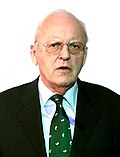 Roman Herzog, former President of Germany
 -
 Jutta Limbach, former president of the Federal Constitutional Court of Germany
 -
 Otto Schily, former Federal Minister of the Interior of Germany
 -
 Eberhard Diepgen, politician, former Mayor of Berlin
 -
 Gesine Schwan, political scientist, politician
 -
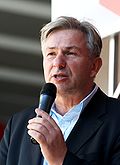 Klaus Wowereit, politician, former mayor of Berlin
 -
 Rudi Dutschke, political activist, spokesperson of the German student movement
 -
 Renate Künast, politician, former Minister of Food and Agriculture, former Chairperson of Alliance 90/The Greens party
 -
 Kevin Kühnert, politician, General Secretary of the Social Democratic Party of Germany (SPD)
 -
 Franziska Giffey, politician, former Mayor of Berlin


.jpg)
_(cropped).jpg)


.jpg)
See also
[edit]
Notes
[edit]- ^ The university uses its German name without translation on its English-language website.
References
[edit]- ^ a b c d e f "Leistungsbericht über das Jahr 2022" (PDF) (in German). Senate Chancellery of Berlin. p. 1. Archived (PDF) from the original on 5 April 2024. Retrieved 8 April 2024.
- ^ "Overall Statistics" (PDF). Freie Universität. 2 December 2022. Archived (PDF) from the original on 5 May 2023. Retrieved 5 May 2023.
- ^ hupresse. "Das moderne Original der Reformuniversität". Humboldt-Universität zu Berlin (in German). Archived from the original on 4 July 2022. Retrieved 30 June 2022.
- ^ Cichanowicz, Lily (20 November 2016). "A Brief History Of Berlin's Free University". Culture Trip. Archived from the original on 30 June 2022. Retrieved 30 June 2022.
- ^ "Exzellenz". www.berlin.de (in German). 25 February 2020. Archived from the original on 21 April 2019. Retrieved 26 September 2022.
- ^ "Founding History • Freie Universität Berlin". Freie Universität Berlin. Retrieved 1 September 2025.
- ^ a b "Die Zeit nach dem Mauerbau und die Studentenbewegung". Freie Universität. Archived from the original on 3 May 2014. Retrieved 11 September 2013.
- ^ Kennedy, John F. "Remarks at Free University of West Berlin, 26 June 1963". JFK Library and Museum. Archived from the original on 7 June 2014. Retrieved 11 September 2013.
- ^ Andreas Daum, Kennedy in Berlin. New York: Cambridge University Press, 2008, pp. 156‒61.
- ^ Kennedy, Robert F. "Address by Attorney General Robert F. Kennedy" (PDF). US Department of Justice. Archived (PDF) from the original on 3 March 2011. Retrieved 11 September 2013.
- ^ "John F. Kennedy at Freie Universität Berlin – homepage". Freie Universität Berlin. Retrieved 1 September 2025.
- ^ Kennedy, Robert F. "The President John F. Kennedy Lecture" (PDF). US Department of Justice. Archived (PDF) from the original on 3 March 2011. Retrieved 11 September 2013.
- ^ Kurlansky, Mark (2004). 1968: the year that rocked the world (1st ed.). New York: Ballantine Books. ISBN 0-345-45581-9. OCLC 53929433.
- ^ "Exzellenzinitiative". 14 June 2012. Archived from the original on 14 June 2012. Retrieved 26 September 2022.
- ^ "Campus Benjamin Franklin (CBF)". Charité University Medicine Berlin. Archived from the original on 18 December 2012. Retrieved 19 September 2013.
- ^ "History of the Studentendorf Schlachtensee". Studentendorf Schlachtensee eG. Archived from the original on 21 September 2013. Retrieved 10 September 2013.
- ^ "Universitätsbibliothek der FU". University Library of Freie Universität. Archived from the original on 25 August 2013. Retrieved 31 August 2013.
- ^ "Zusammenführung der Kleinen Fächer im 3. BA Obstbaugelände und Neubau Naturwissenschaftliche Bibliothek". Freie Universität Berlin. Archived from the original on 18 September 2013. Retrieved 19 September 2013.
- ^ "Richtfest in der Fabeckstraße". Freie Universität Berlin. 17 September 2013. Archived from the original on 21 September 2013. Retrieved 19 September 2013.
- ^ "ISQ Berlin-Brandenburg". ISQ Berlin-Brandenburg e.V. Archived from the original on 1 September 2013. Retrieved 13 September 2013.
- ^ "Collegium Musicum Berlin". Collegium Musicum. Archived from the original on 25 August 2013. Retrieved 31 August 2013.
- ^ "Departments of Freie Universität". Freie Universität. 18 June 2011. Archived from the original on 25 August 2013. Retrieved 2 September 2013.
- ^ "Biology, Chemistry, and Pharmacy". www.fu-berlin.de. 3 October 2005. Archived from the original on 9 July 2024. Retrieved 9 July 2024.
- ^ "Earth Sciences". www.fu-berlin.de. 3 October 2005. Archived from the original on 9 July 2024. Retrieved 9 July 2024.
- ^ "History and Cultural Studies". www.fu-berlin.de. 3 October 2005. Archived from the original on 9 July 2024. Retrieved 9 July 2024.
- ^ "Law". www.fu-berlin.de. 3 October 2005. Archived from the original on 9 July 2024. Retrieved 9 July 2024.
- ^ "School of Business and Economics". www.fu-berlin.de. 3 October 2005. Archived from the original on 22 July 2024. Retrieved 9 July 2024.
- ^ "Mathematics and Computer Science". www.fu-berlin.de. 3 October 2005. Archived from the original on 22 July 2024. Retrieved 9 July 2024.
- ^ "Department of Education and Psychology". www.fu-berlin.de. 3 October 2005. Archived from the original on 9 July 2024. Retrieved 9 July 2024.
- ^ "Philosophy and Humanities". www.fu-berlin.de. 3 October 2005. Archived from the original on 9 July 2024. Retrieved 9 July 2024.
- ^ "Physics". www.fu-berlin.de. 3 October 2005. Archived from the original on 22 July 2024. Retrieved 9 July 2024.
- ^ "Political and Social Sciences". www.fu-berlin.de. 3 October 2005. Archived from the original on 9 July 2024. Retrieved 9 July 2024.
- ^ "Veterinary Medicine". www.fu-berlin.de. 3 October 2005. Archived from the original on 9 July 2024. Retrieved 9 July 2024.
- ^ "Zehn Bewerbungen auf einen Studienplatz". Tagesspiegel. Archived from the original on 31 August 2013. Retrieved 20 August 2013.
- ^ "Fees and Contributions" (PDF). Freie Universität. Archived from the original (PDF) on 28 September 2013. Retrieved 2 September 2013.
- ^ "Humboldt rankings 2014". Alexander von Humboldt Stiftung. Archived from the original on 1 December 2014. Retrieved 23 January 2015.
- ^ "Center for Modern Greece (CeMoG)". 28 May 2011. Archived from the original on 24 September 2020. Retrieved 13 March 2020.
- ^ "DFG Research Center Matheon". TU Berlin, FU Berlin, HU Berlin. Archived from the original on 2 May 2014. Retrieved 13 September 2013.
- ^ "QS World University Rankings 2024". QS World University Rankings. Archived from the original on 17 September 2012. Retrieved 10 July 2023.
- ^ a b "World University Rankings 2023". Times Higher Education World University Rankings. 4 October 2022. Archived from the original on 28 September 2023. Retrieved 10 July 2023.
- ^ "QS World University Rankings 2022". Top Universities. Archived from the original on 26 December 2021. Retrieved 2 February 2022.
- ^ "Academic Ranking of World Universities – Methodologies and Problems". CiteSeerX 10.1.1.126.3066.
- ^ a b "QS World University Rankings by Subject 2022". QS World University Rankings. 23 March 2023. Archived from the original on 26 October 2022. Retrieved 2 August 2023.
- ^ a b "World University Rankings by subject". Times Higher Education World University Rankings. Archived from the original on 1 March 2020. Retrieved 27 October 2022.
- ^ a b "ShanghaiRanking's Global Ranking of Academic Subjects 2022". Academic Ranking of World Universities. Archived from the original on 15 August 2022. Retrieved 2 August 2023.
- ^ "Humboldt University of Berlin". usnews.com/. Archived from the original on 27 October 2020. Retrieved 21 October 2020.
- ^ "Zeit Online Excellence Rankings". Die Zeit. Archived from the original on 13 December 2013. Retrieved 13 September 2013.
- ^ "Subjects Taught at Freie Universität Berlin Ranked Very High in the QS Ranking and the CHE University Ranking". 28 September 2013. Archived from the original on 28 September 2013. Retrieved 2 February 2022.
- ^ "Bing Overseas Studies in Berlin". Stanford and Freie Universität. Archived from the original on 24 September 2013. Retrieved 11 September 2013.
- ^ "Germany top for foreign students". BBC. 9 March 2011. Archived from the original on 11 September 2013. Retrieved 11 September 2013.
- ^ "Freie Universität Berlin International Summer and Winter University (FUBiS)". UNICA Network. Archived from the original on 17 January 2018. Retrieved 19 September 2013.
- ^ "German University Alliance". German University Alliance. Archived from the original on 21 September 2013. Retrieved 29 August 2013.
External links
[edit]

Free University of Berlin
View on GrokipediaHistory
Founding as Response to Communist Oppression (1948)
The division of Berlin into Allied occupation sectors after World War II placed Humboldt University (formerly Friedrich Wilhelm University) in the Soviet-controlled eastern sector, where Soviet authorities increasingly imposed Marxist-Leninist ideology on academic life, leading to censorship and suppression of dissenting views.[1] By April 1948, students Otto Stolz, Otto Hess, and Joachim Schwarz were expelled from Humboldt for publishing critical articles in the journal Colloquium, exemplifying the regime's intolerance for intellectual independence.[11] Over the preceding year, more than 100 students had been similarly ousted for alleged "bourgeois leanings," signaling a broader communist effort to purge non-conformist elements and align higher education with party doctrine.[12] These actions, amid the escalating Berlin Blockade starting June 24, 1948, underscored the need for an alternative institution in the western sectors to safeguard academic freedom.[13] In response, a founding committee formed on June 19, 1948, under the leadership of Ernst Reuter, the Social Democratic mayor of Berlin, to organize a new university insulated from eastern ideological control.[14] Professors and students from Humboldt's western faculty, disillusioned by communist infiltration that had eroded scholarly standards, drafted a public call on July 23, 1948, advocating for a "free university" dedicated to truth-seeking without political interference.[1] American occupation authorities provided crucial logistical and financial support, viewing the initiative as a Cold War countermeasure to Soviet dominance in Berlin's intellectual sphere; U.S. funding later enabled key infrastructure like the Henry Ford Building.[2] British and French allies endorsed the effort, aligning with Western goals to foster democratic education amid fears of total intellectual Gleichschaltung.[15] The Free University of Berlin was officially established on December 4, 1948, in the American sector's Dahlem district, with initial lectures commencing shortly thereafter and attracting over 5,000 applications from students across sectors.[2][12] Philosopher Edwin Redslob was slated as inaugural rector, emphasizing the institution's role as a rival to the Soviet-dominated Humboldt University.[12] Some founding participants faced severe reprisals, including killings by Soviet secret services, highlighting the stakes of resisting communist oppression.[2] This origin positioned the university as a deliberate Western bulwark, prioritizing empirical inquiry and causal analysis over ideological conformity from its inception.[16]Cold War Development and Expansion (1949–1989)
Following its establishment, the Free University of Berlin underwent significant expansion in the early 1950s, with enrollment growing from approximately 4,000 students in 1948 to 11,005 by January 1959, driven by its role as a Western academic enclave amid Cold War divisions.[7] New faculties and institutes proliferated, including the Department of Veterinary Medicine on May 26, 1951, which incorporated 7 professors and 30 assistants defecting from Humboldt University in the Soviet sector, and the Institute for East European Studies opened on November 24, 1951.[17] Infrastructure development accelerated with U.S. support, such as the Ford Foundation's funding for the Henry Ford Building, whose foundation stone was laid on July 24, 1952, and a donation of 25,000 books from American universities in April 1952.[17][18] By the late 1950s, enrollment pressures led the Berlin Senate to cap admissions at 9,500 students in January 1957 due to facility constraints, yet growth continued with initiatives like the Schlachtensee Student Village, constructed in winter 1957/1958 using U.S. State Department funds.[17] The university's international ties strengthened, exemplified by the first student exchange program with Stanford University in summer 1951.[17] In 1963, U.S. President John F. Kennedy visited on June 26, delivering a speech at the university that underscored its mission to produce "citizens of the world," symbolizing Western commitment to Berlin's intellectual freedom against Eastern ideological pressures.[19][20] The 1960s and 1970s saw further scaling, with student numbers surpassing 20,000 by 1963 and tripling in the late 1970s to establish it as a mass university, peaking at over 50,000 by 1983.[7][3] Expansion was financed through Berlin and Federal Republic budgets alongside continued U.S. grants, enabling new campus facilities by 1967.[21] The abolition of tuition fees on May 4, 1970, by the Berlin Senate facilitated broader access, contributing to enrollment surges.[22] In the 1980s, additions like Mensa II dining hall in the Silberlaube complex enhanced infrastructure for the growing student body.[23] Despite 1968 student protests reflecting broader ideological tensions, the period marked institutional maturation as a counterpoint to communist-controlled academia in the East.[7]Post-Reunification Reforms and Integration (1990–2000)
Following German reunification in 1990, Freie Universität Berlin encountered significant financial and structural challenges as the Berlin Senate implemented a higher education structural plan to consolidate resources across the unified city, redirecting substantial funds to reform and rebuild eastern institutions like Humboldt-Universität zu Berlin, which had operated under East German communist oversight. This shift imposed radical budget cuts on western universities, including FU Berlin, to achieve savings of approximately 1 billion Deutsche Marks over a decade, prioritizing fiscal consolidation amid the economic burdens of integration.[24][25] In September 1993, the Senate formalized these measures, mandating FU Berlin to reduce its student enrollment from 62,000 in the 1991/1992 winter semester to 43,000 by the 2001/2002 semester through program curtailments and admissions restrictions, a policy that provoked widespread student demonstrations protesting the erosion of academic access and quality. Early attempts at cross-university integration, such as the January 26, 1990, Joint University Day with Humboldt, were marred by disruptions from leftist student groups and autonomous activists who decried it as an "imperialist takeover" of eastern academia, highlighting ideological tensions in merging West German liberal traditions with GDR legacies.[24][24][26] Structural reforms at FU Berlin emphasized internal efficiency to preserve its research-oriented profile amid these pressures; on January 1, 1999, the university reorganized its 18 departments into 12 larger faculties and consolidated its library system into specialized high-performance units to streamline administration and resource allocation. In the medical sector, partial integration advanced with the 1997–1998 merger of Humboldt's medical faculty and FU's Rudolf Virchow-Klinikum into the Universitätsklinikum Charité, laying groundwork for fuller collaboration while allowing FU to retain autonomy outside medicine, reflecting pragmatic adaptation rather than wholesale absorption.[24][27] These reforms culminated in milestones like the integration of the Botanic Garden and Botanical Museum as a central FU facility on January 1, 1995, enhancing research infrastructure despite fiscal constraints, and the university's 50th anniversary celebration on December 4, 1998, where speakers reaffirmed its commitment to open inquiry amid ongoing adaptation to unified Germany's academic landscape. By 2000, enrollment had declined to around 50,000, with budget stabilization efforts underscoring FU's resilience through targeted downsizing rather than expansive growth.[24][24][28]Contemporary Evolution and Reforms (2001–2025)
In response to the Bologna Process, Freie Universität Berlin restructured its degree programs starting in the early 2000s, transitioning from traditional Diplom and Magister degrees to a tiered system of Bachelor's (typically three years, 180 ECTS credits) and Master's degrees to enhance comparability and mobility across Europe.[29] This adaptation aligned with national implementation of the 1999 Bologna Declaration, emphasizing modular curricula and credit transfer, though it faced criticism for potentially fragmenting disciplinary depth in favor of standardized formats.[30] The university participated in Germany's Excellence Initiative launched in 2006, securing "University of Excellence" status in 2007 through funding in all three lines: nine Graduate Schools, two Clusters of Excellence, and a comprehensive Future Concept, which provided approximately €78 million in federal and state support over the initial phase.[31] This success, renewed in 2012, facilitated interdisciplinary research hubs and international recruitment, bolstering FU's profile in areas like materials science and neurosciences, amid broader efforts to counter perceived stagnation in German higher education post-reunification.[32] Under the successor Excellence Strategy (2019–2025), Freie Universität, as part of the Berlin University Alliance, maintained competitive funding; in June 2025, the alliance retained five Clusters of Excellence for the 2026–2033 period, ensuring continued €10–15 million annual support per cluster for collaborative projects in fields such as matter and evolution research.[33] These reforms emphasized performance-based allocation, prompting internal evaluations and strategic realignments to prioritize high-impact research over administrative expansion. Fiscal pressures intensified in the 2020s, with the Berlin Senate announcing an 8% budget reduction for 2025—equivalent to €37 million—prompting FU to launch a public campaign from June 23–29, 2025, highlighting risks to research and teaching quality amid rising operational costs and enrollment stability around 35,000 students.[34] In parallel, FU joined the Coalition for Advancing Research Assessment (CoARA) in 2025, committing to reforms that de-emphasize journal metrics in favor of qualitative evaluations to foster diverse scholarly outputs.[35] These steps reflect ongoing tensions between autonomy, state dependency, and European harmonization, with incremental adjustments rather than wholesale overhauls characterizing the period.Campuses and Facilities
Dahlem Campus Core and Transportation
The Dahlem Campus constitutes the central and largest facility of the Free University of Berlin, situated in the verdant Dahlem district of southwestern Berlin's Steglitz-Zehlendorf borough. Spanning a green, park-like area originally developed in the early 20th century for Kaiser Wilhelm Institutes, the core encompasses key academic structures primarily for humanities, social sciences, and select natural sciences departments.[36] At the heart lies the Rost- und Silberlaube complex at Habelschwerdter Allee 45, a prominent mid-20th-century architectural ensemble designed by Fritz Bornemann and completed in 1957, housing multiple humanities and social science faculties alongside 14 specialized units from the Department of History and Cultural Studies. Adjacent is the Holzlaube at Fabeckstraße 23-25, supporting additional lecture halls and departmental spaces. The Henry-Ford-Bau at Garystraße 35/37, constructed between 1952 and 1954, serves as the main library with extensive collections and features the university's largest auditorium for lectures and events. Nearby facilities include the Otto-Suhr-Institut for Political Science, economics buildings, and law department structures. Northern sectors accommodate mathematics, computer science, chemistry, and physics institutes, with the Fritz-Haber-Institut integration for advanced research. The campus integrates the 43-hectare Botanical Garden and Museum, maintaining over 20,000 plant species for botanical studies.[36][37][38] Transportation to the Dahlem core is efficiently provided by Berlin's integrated public system operated by BVG. The U3 subway line offers primary access, with Dahlem-Dorf station serving northern entrances and Freie Universität (Thielplatz) directly adjacent to central buildings, enabling short walks of under 500 meters. Supplementary options include S1 urban rail at nearby stops and bus lines such as X9, 109, and M11 connecting from Berlin Tegel or Brandenburg Airport (BER). From Berlin Hauptbahnhof, routes via S-Bahn (S5, S7, or S75) to Heidelberger Platz followed by U3 take approximately 30 minutes under AB zone fares; from BER, S9 to Treptower Park, then S41 Ringbahn to Heidelberger Platz and U3 extends to about 60 minutes under ABC fares. All buses, subways, and S-Bahn trains feature low-floor designs and ramps for wheelchair users, with operators assisting upon request; student and staff discounts via semester tickets cover unlimited local travel. Cycling and e-scooter sharing via platforms like Jelbi supplement access within the campus vicinity.[36][39][40]Specialized Satellite Campuses
The Free University of Berlin operates three primary specialized satellite campuses beyond its Dahlem core, each dedicated to distinct disciplinary foci: earth sciences in Lankwitz, veterinary medicine in Düppel, and clinical medicine at the Benjamin Franklin Campus of Charité – Universitätsmedizin Berlin. These sites, located in southwestern and central Berlin districts, enable focused research infrastructure, clinical operations, and specialized teaching, complementing the university's broader academic mission while leveraging proximity to affiliated institutions and urban resources. Established through post-war expansions and mergers, they reflect the university's adaptation to domain-specific needs, such as laboratory-intensive geosciences or patient-centered veterinary and human medicine.[41][42] Geocampus Lankwitz, in Berlin's Lankwitz district, specializes in earth sciences and houses the Department of Earth Sciences, including institutes for geological sciences, meteorology, and geophysics. This campus supports research on planetary processes, climate dynamics, and space exploration, hosting programs like the Master of Science in Planetary Sciences and Space Exploration, which integrates data from satellite missions and geological fieldwork. Originally repurposed from former education faculty facilities, it emphasizes interdisciplinary labs for seismic analysis and atmospheric modeling, serving approximately 500 students and researchers as of 2023. Its location in a quieter southern suburb facilitates fieldwork simulations and archival resources, including university history collections.[43][44] The Düppel Campus, at Oertzenweg 19b in Berlin-Zehlendorf, is the hub for the Department of Veterinary Medicine, encompassing clinics for small animals, equine, ruminants and swine, and reproductive medicine, alongside research institutes in physiology, biochemistry, and pharmacology. Established as a dedicated veterinary site in the 1980s, it provides comprehensive patient care with over 20,000 annual treatments across species, integrating diagnostic imaging, surgical suites, and biosafety level facilities for zoonotic disease studies. Teaching occurs through state examinations and practical rotations, with emphasis on translational research linking animal health to human applications; the campus includes specialized units like cardiology and dermatology divisions within the Small Animal Clinic. Access via public transport from Potsdamer Chaussee supports its role in regional veterinary services.[45][46][47] The Benjamin Franklin Campus (CBF) of Charité – Universitätsmedizin Berlin, in Berlin-Steglitz at Hindenburgdamm 30, serves as the medical satellite for the university's School of Medicine, jointly administered with Humboldt University zu Berlin since the 2003 merger of Charité sites. Specializing in degenerative diseases, neurology, and geriatrics, it features 17 CharitéCenters for integrated research, including divisions in gastroenterology, immunology, and preventive medicine, with annual patient volumes exceeding 100,000 across clinical departments. Built post-World War II as a modular hospital complex, CBF prioritizes evidence-based therapies for age-related conditions like dementia, supported by advanced imaging and trial facilities; medical education involves clinical rotations and PhD programs in translational biomedicine. Its central-southern location enhances collaborations with district health networks, though funding and administrative dualities with Humboldt University have occasionally strained resource allocation.[42][48][49]Libraries, Research Infrastructure, and Student Housing
The University Library of Freie Universität Berlin operates at 14 locations, providing access to approximately 6.3 million printed books and journals, supplemented by extensive digital resources including e-books and e-journals.[50][51] The Central Library, the largest lending facility, holds around 1.9 million items and supports overarching tasks such as interlibrary loans and resource coordination across departments.[52] Specialized collections include the Philological Library with 800,000 volumes in a modern facility designed for open-access shelving and reader workspaces, and the Campus Library with about one million volumes from former institute libraries.[53] Departmental libraries, such as the Art History collection with 110,000 volumes, cater to specific disciplines.[54] Freie Universität Berlin's research infrastructure encompasses over 50 laboratory buildings, primarily on the Dahlem campus, equipped for interdisciplinary work in sciences and humanities.[55] Central facilities provide advisory services, technical support, and shared resources for the university community, including high-performance computing and specialized instrumentation.[56] The university hosts multiple Collaborative Research Centres (SFBs), funded by the German Research Foundation for up to 12 years, fostering collaborative projects in areas like materials science and neurosciences.[57] Through the Berlin University Alliance, access to core facilities such as advanced imaging and genomics labs enhances research capabilities beyond campus boundaries.[58] Notable affiliated institutions, including the Fritz Haber Institute, contribute to cutting-edge research in chemistry and physics.[59] Student housing at Freie Universität Berlin is not managed on-campus, as German universities typically do not own dormitories; instead, accommodations are arranged through the Studierendenwerk Berlin, a student services organization overseeing city-wide residences.[60][61] Options for exchange and program students include single rooms in shared flats or apartments at facilities like Studentendorf Schlachtensee, with allocations based on availability and waiting lists due to high demand in Berlin.[62] The university assists international students via partnerships, such as reserved capacities at private options like The Student Hotel, but overall supply remains constrained, prompting many to seek private rentals.[63] Dorms feature shared kitchens, study areas, and proximity to public transport, though reservation fees and deposits apply.[64]Governance and Administration
Organizational Structure and Leadership
Freie Universität Berlin operates under the principle of academic administrative autonomy as stipulated by Berlin's Higher Education Act, with governance shared among executive, legislative, and supervisory bodies.[65] The central executive authority is the Executive Board (Präsidium), which manages daily operations, approves the budget, establishes guidelines, and implements resolutions from the Academic Senate.[66] This board consists of the President, the Executive Vice President (serving as permanent deputy), three Vice Presidents responsible for specific portfolios such as research, education, and finance, and the Director of Administration and Finance.[66] The President, Günter M. Ziegler, a mathematician, has led the university since July 6, 2018, following election by the Extended Academic Senate and formal appointment by the Berlin Senate Department for Science, Health, and Care; he was re-elected for a second term in 2022.[67][68] The President's responsibilities include setting university policy guidelines, overseeing strategic planning including participation in the German Excellence Strategy and the Berlin University Alliance, managing external relations such as membership in the German Rectors’ Conference, and handling appointments, fundraising, and communications.[67] Vice Presidents and the Director manage designated divisions autonomously within these guidelines, with terms of four years for most executive positions (except the Director's eight-year term) and elections conducted by the Extended Academic Senate.[66] The Academic Senate serves as the primary legislative and advisory body, comprising 25 members elected for two-year terms: 13 professors, four academic staff, four students, and four non-academic staff representatives.[69] It advises on academic affairs, approves regulations, and participates in strategic decisions, with an Extended Academic Senate including departmental representatives for electing executive leadership.[66] Additional supervisory entities include the Board of Trustees, which oversees financial and developmental strategies with external and internal members appointed by the university and state, and the Excellence Council, composed of external academic experts to evaluate research initiatives.[70] Academically, the university is structured into 12 departments (Fachbereiche), each functioning as a semi-autonomous unit subdivided into institutes, seminars, and professorial chairs responsible for teaching and research in specific disciplines such as Biology, Chemistry, and Pharmacy; Veterinary Medicine; Mathematics and Computer Science; Physics; Earth Sciences; Business and Economics; Law; Political and Social Sciences; History and Cultural Studies; Philosophy and Humanities; Psychology; and Education Sciences.[71] These departments elect their own boards and deans, contributing to university-wide governance through representation in the Extended Academic Senate, while central administration supports cross-cutting functions like finance, human resources, and infrastructure.[72]Funding Mechanisms and Fiscal Pressures
The Free University of Berlin receives its core institutional funding primarily from the State of Berlin, which provides basic operational support through biannual budget contracts negotiated with the Berlin Senate Department for Science, Health, Nursing, and Sport.[73] For consumptive purposes, this amounted to €365.5 million in 2024 and €382.8 million in 2025, covering personnel, materials, and core infrastructure.[73] Federal contributions from the German government are smaller and targeted, including €600,000 annually for personnel reimbursements and additional allocations such as €17.3 million in 2025 for specific programs like collaborative research clusters.[73] Third-party funding, or Drittmittel, constitutes a significant portion of research-oriented resources, totaling approximately €130 million in 2024 and €134 million in 2025, sourced from entities like the German Research Foundation (DFG), European Union grants, and private foundations.[73] This external funding supports time-limited projects, including excellence initiatives under the federal-state Exzellenzstrategie, which provided €23.1 million in 2024 for clusters such as MATH+ and SCRIPTS through the Berlin University Alliance.[73] Overall, the university's total budget exceeded €715 million in 2024 and €747 million in 2025, with personnel costs dominating at €309 million and €321 million respectively, leaving limited flexibility for materials (€100 million) or investments (€23-35 million).[73] [74] Fiscal pressures have intensified due to structural dependencies on volatile third-party grants and rising fixed costs for personnel and infrastructure, which consume most of the budget with little room for reallocation.[74] In 2025, the Berlin Senate mandated €250 million in cuts across tertiary education and research, imposing an €37 million deficit on the university—equivalent to an 8% reduction in state funding.[75] To mitigate this, the university plans to draw on reserves for up to half the shortfall, while implementing measures such as a 6% reduction in personnel expenditures, hiring freezes except for essential professorships, 50% cuts to central administrative funds, and deferred investments in research equipment.[75] These constraints risk diminishing teaching capacity and research output, as short-term efficiencies cannot fully offset the loss of sustained core funding amid Berlin's broader fiscal constraints.[76]Academic Programs
Admissions Processes and Student Demographics
The admissions process for undergraduate programs at Freie Universität Berlin centers on possession of a higher education entrance qualification, such as the German Abitur for domestic applicants or an equivalent secondary school diploma assessed for comparability by uni-assist for international applicants.[77][78] Programs without admission restrictions allow direct application and enrollment upon verification of qualifications, while restricted programs (Numerus Clausus, or NC) employ centralized selection through hochschulstart.de, prioritizing applicants based on final secondary grades (Abitur average), waiting time since qualification attainment, and a lottery quota for remaining spots.[79][80] Applications for the winter semester, the primary intake, must be submitted by July 15, with admission decisions typically notified by mid-August 2025; summer semester applications close January 15.[81][82] International undergraduate applicants from non-EU countries undergo preliminary document evaluation via uni-assist for Vorprüfungsdokumentation (VPD) processing, which requires payment of fees to uni-assist—as the university does not cover, waive, or provide free applications—with processing only occurring after fee payment; applications include certified translations and proof of language proficiency—usually German at C1 level via TestDaF or DSH for German-taught programs, though select English-taught options accept TOEFL or IELTS equivalents. An exception applies for refugees applying to German/preparatory courses in the Welcome@FUBerlin program, where uni-assist applications are free of charge.[78][77][83] Domestic and EU applicants with German qualifications apply directly through the university portal or hochschulstart.de for NC fields like medicine, where quotas allocate 20% to non-school-leavers based on aptitude or prior study.[79] Upon admission, enrollment requires submission of originals, health insurance proof, and payment of a semester contribution of approximately 310 EUR, which includes a public transport ticket; no tuition fees apply as a public institution.[84][85] For graduate programs, primarily master's degrees, applicants must hold a relevant bachelor's degree or equivalent with a minimum grade threshold set by each department, often around 2.5 on the German scale (good to satisfactory). Applications are submitted directly via the university's online portal for German-degree holders or through uni-assist for internationals, with selection emphasizing academic transcripts, motivation letters, and sometimes aptitude tests or interviews; deadlines align with undergraduate timelines but vary by program, such as June 15 for winter intake in competitive fields.[81] Language requirements mirror undergraduate ones, with higher English proficiency for international master's programs comprising about 20% of offerings. Doctoral admissions differ, involving individual supervision agreements rather than formal applications, requiring a master's degree and a viable dissertation proposal.[86]| Demographic Category | Details (Winter Semester 2024/2025) |
|---|---|
| Total Enrollment | 34,400 students[5] |
| Gender Ratio | 63% female, 37% male[87] |
| International Students (Bachelor's) | 13%[5] |
| International Students (Master's) | 33%[5] |
Curriculum Structure and Degree Offerings
The curriculum at Freie Universität Berlin adheres to the Bologna Process, employing a modular structure where courses are grouped into modules, each culminating in examinations that contribute to the overall degree grade. Credits are awarded under the European Credit Transfer and Accumulation System (ECTS), with one credit equating to approximately 30 hours of student workload, including lectures, seminars, self-study, and assessments.[90] Bachelor's and master's programs typically require 30 ECTS per semester, emphasizing interdisciplinary electives, research-oriented projects, and a thesis component.[91] Bachelor's degree programs, numbering 81 undergraduate offerings as of recent counts, span six semesters and total 180 ECTS. These include single-subject ("mono") programs focused on a core area with integrated modules in related fields, and combined programs comprising a major subject of 90 ECTS plus one 60-ECTS minor or two 30-ECTS minors, alongside mandatory 30 ECTS in general professional skills such as key competencies or subject-specific language training. Degrees awarded are Bachelor of Arts (B.A.) in humanities and social sciences or Bachelor of Science (B.Sc.) in natural sciences, economics, computer science, mathematics, and psychology, with all programs incorporating a bachelor's thesis in the core subject.[5][91] Master's programs, totaling 99 consecutive options, build on undergraduate qualifications and standardly span four semesters, though durations vary by field and include both deepening of prior studies and interdisciplinary expansions. Offered as Master of Arts (M.A.), Master of Science (M.Sc.), or Master of Education (M.Ed.), these require a relevant bachelor's degree for admission, with some incorporating practical experience for continuing education variants that incur fees. A subset of programs, particularly in fields like data science, economics, and North American studies, are taught in English to facilitate international access.[5][92] State examination degrees, traditional in regulated professions, replace bachelor's/master's formats in law, medicine, pharmacy, veterinary medicine, and dentistry. The law program leads to the First State Examination (Erste Juristische Prüfung) after 10 semesters of modular coursework emphasizing civil, criminal, and public law. Medicine culminates in the Staatsexamen following 6 years and 3 months, including clinical rotations and a practical year. These programs maintain rigorous, state-mandated structures prioritizing professional qualification over ECTS standardization.[93][94] Doctoral offerings, numbering 73 structured programs, focus on independent research under supervision, often within graduate schools or clusters, leading to Dr. phil., Dr. rer. nat., or equivalent titles, with funding opportunities for early-career researchers.[5]Pedagogical Methods and Educational Innovations
The pedagogical methods at Freie Universität Berlin emphasize research-oriented teaching (forschungsorientierte Lehre), a core institutional profile element that integrates current scholarly research into coursework across disciplines to cultivate critical thinking and scientific inquiry among students.[95] This approach, implemented in numerous courses since the university's founding principles of academic freedom, involves faculty presenting ongoing research projects, enabling students to engage with real-time methodological challenges and data analysis rather than solely canonical knowledge.[95] In practice, this manifests through project- and problem-based formats that encourage independent hypothesis formulation and empirical validation, aligning with the university's commitment to evidence-based learning over rote memorization.[96] Seminar-style instruction predominates, featuring small class sizes that facilitate interactive discussions, peer collaboration, and skill-building in analysis, communication, and writing.[97] Common techniques include think-pair-share exercises, case studies, debates, informal quizzes, and field-based activities such as study trips or consultations with external stakeholders like companies and policy bodies.[97] These methods prioritize learner-centered participation, with formative assessments and student feedback loops to refine instructional efficacy, while summative evaluations test mastery of research competencies.[96] In teacher-training programs, pedagogical preparation incorporates dedicated modules in educational science and subject-specific didactics, totaling 30 credit points in bachelor's phases, to equip trainees with tools for evidence-driven classroom management and curriculum design.[98] Educational innovations at the university balance adherence to quality standards with experimental freedom, particularly through blended learning models that combine digital tools with in-person elements to address diverse student needs and extend access.[96] Developed iteratively from 2013 onward, these include interdisciplinary curricula enhanced by online platforms for cognitive skill-building and employability, tested in varied cultural contexts via empirical cycles of design, implementation, and refinement.[99] Notable examples encompass massive online components, such as video-based courses on historical topics paired with classroom debates, and workflows for reproducible digital science, teaching tools like version control and open data practices to foster verifiable research habits.[97][100] Such initiatives, supported by institutional resources for faculty experimentation, have been scaled post-2020 to integrate sustainability and transformative pedagogies, emphasizing long-term critical thinking over short-term compliance.[101]Research Activities
Core Research Strengths and Disciplines
The Free University of Berlin maintains core research strengths in the humanities and social sciences, where interdisciplinary approaches to historical, cultural, and area studies predominate, earning international acclaim for depth and methodological innovation. These disciplines leverage collaborative networks, including the Dahlem Humanities Center, established in 2007 as a central hub coordinating events, fellowships, and partnerships across departments and with non-university institutes like the Max Planck Society.[102][103] In natural sciences, emphasis falls on life sciences, earth sciences, physics, mathematics, and computer science, with the Dahlem Research School of Life Sciences integrating doctoral training in biomedical, molecular, and ecological research, and the Department of Earth Sciences ranking among Germany's elite for geodynamic and climate-related investigations.[104] Physics research excels in condensed matter and quantum phenomena, evidenced by high-impact outputs in peer-reviewed journals.[105] Interdisciplinary priorities are channeled through five strategic focus areas, fostering transdisciplinary networks on societal challenges; notable examples include Dynamics of Aging (DynAge), probing aging mechanisms from molecular dynamics to policy implications, active from 2013 to 2019 with ongoing extensions.[106] These align with Clusters of Excellence under the German Excellence Strategy, such as MATH+ (Berlin Mathematics Research Center), uniting over 200 researchers in applied and pure mathematics for real-world modeling, and SCRIPTS (Contestations of the Liberal Script), analyzing global challenges to democratic norms across political science, law, and sociology.[107] The university's involvement in the Berlin University Alliance further amplifies collaborative excellence in areas like neuroscience (NeuroCure) and chiral materials.[32]Funding, Grants, and Evaluation Metrics
The research endeavors at Freie Universität Berlin rely on a mix of institutional public funding from the Land of Berlin and the federal government, augmented by competitive third-party grants that constitute a key performance indicator. The university's overall annual budget surpasses 700 million euros, with roughly 153 million euros allocated to third-party funding from entities including the German Research Foundation (DFG), the European Union, and other research sponsors; this external funding supports project-specific personnel, equipment, and operations but does not cover core institutional costs like salaries or infrastructure maintenance.[34][108] Third-party grants are primarily acquired through peer-reviewed competitions, with the DFG providing the largest national share for individual investigator grants, collaborative research centers, and priority programs tailored to disciplinary strengths such as physics and mathematics.[109] EU-level funding, via programs like Horizon Europe and European Research Council (ERC) grants, emphasizes interdisciplinary and high-risk projects, often requiring matching institutional contributions.[110] For example, individual research groups at the university have amassed over 4.8 million euros in combined DFG and EU grants across a decade, funding experiments in areas like quantum materials.[111] These grants are administered centrally to ensure compliance with sponsor guidelines on eligible expenditures, such as personnel but excluding general university overheads unless specified.[112] Evaluation of research quality and impact occurs predominantly through success rates in these competitive funding processes, where proposals undergo rigorous external peer review assessing novelty, feasibility, and expected outputs like publications in high-impact journals.[113] The German Excellence Strategy, in which Freie Universität participates via the Berlin University Alliance, formalizes this via periodic cluster evaluations; in May 2025, five clusters—spanning mathematics for complex systems, neurocience, and social sciences—were renewed for seven years starting 2026, with funding tied to demonstrated advancements in metrics including grant acquisition, citation counts, and interdisciplinary integration.[33][114] However, systemic fiscal constraints, including a 41 million euro cut to the university's budget in 2025 amid broader Berlin Senate reductions of 250 million euros for higher education, threaten grant-matching capabilities and long-term metric stability, potentially skewing evaluations toward short-term outputs over sustained innovation.[115][75]Interdisciplinary Centers and Excellence Initiatives
Freie Universität Berlin participates in Germany's Excellence Strategy, the federal and state government's program to promote cutting-edge research at universities, which succeeded the Excellence Initiative (2006–2017) and allocates approximately 3–10 million euros annually per cluster for seven years, with potential extensions.[32] The university secured funding for three clusters of excellence, emphasizing interdisciplinary collaboration among researchers from humanities, social sciences, mathematics, and partnering institutions like non-university labs and international networks.[116] These clusters integrate diverse expertise to address grand challenges, such as democratic transformations and mathematical modeling, while providing scholarships for early-career researchers and engaging public audiences through events.[117] One key cluster is MATH+ – Berlin Mathematics Research Center, a joint initiative with Humboldt-Universität zu Berlin and Technische Universität Berlin, focusing on advancing pure and applied mathematics for applications in physics, biology, data science, and urban planning.[117] Launched in 2019, it received renewed funding on May 22, 2025, for another seven years starting in 2026, totaling over 80 million euros across phases, to foster breakthroughs in areas like AI ethics and climate modeling through interdisciplinary teams exceeding 400 researchers.[118] Another is SCRIPTS: Contests over the Liberal Script (SCRIPTS), which investigates challenges to liberal democratic norms via historical, legal, and sociological lenses, involving over 100 scholars from Freie Universität and partners to analyze global contestations of rule-of-law principles.[119] Funded since 2019, it promotes comparative studies on authoritarianism and populism, yielding outputs like policy briefs and datasets on institutional resilience.[107] Temporal Communities: Doing Literature in a Global Perspective examines how literary works construct temporal and spatial communities, drawing on comparative literature, history, and cultural studies to trace global exchanges from antiquity to the present.[119] Coordinated by Freie Universität since 2019, it funds archival digitization and international workshops, emphasizing causal links between texts and societal formations across disciplines.[116] Beyond excellence clusters, Freie Universität maintains dedicated interdisciplinary centers, including nine university-wide entities that sharpen research profiles through cross-departmental efforts.[120] The INTERACT Center for Interdisciplinary Peace and Conflict Research, launched in March 2022, analyzes global conflict dynamics via political science, anthropology, and area studies, with projects on flashpoints like Ukraine and the Middle East producing empirical datasets and scenario models.[121][122] The Disaster Research Unit (DRU) integrates social sciences, engineering, and environmental studies to study catastrophe preparedness, evaluating response efficacy through longitudinal case studies of events like floods and pandemics.[123] The Environmental Policy Research Centre (FFU) combines economics, law, and governance to assess policy impacts on sustainability, generating evidence-based recommendations via quantitative modeling and stakeholder analyses.[123] These centers, often funded by national grants, prioritize empirical validation over ideological framing, though academic sources note potential biases in funding allocations favoring certain paradigms.[124]Rankings and Reputation
Positions in Major Global and National Rankings
In the QS World University Rankings 2025, Freie Universität Berlin achieved 97th place globally, marking a one-position improvement from the previous year, and ranked fourth among German universities.[125] The Times Higher Education World University Rankings 2025 positioned the university at 104th worldwide, placing it ninth in Germany.[126] In the Academic Ranking of World Universities (ARWU) 2023, Freie Universität Berlin fell within the 201-300 band globally and seventh nationally.[127] US News Best Global Universities ranking placed Freie Universität Berlin at 59th worldwide as of the latest assessment, reflecting strong performance in research output and reputation metrics.[128] Nationally, the university consistently ranks in the top ten German institutions across these methodologies, though Germany lacks a centralized national ranking system; subject-specific evaluations by the Centre for Higher Education (CHE) highlight strengths in areas like physics and veterinary medicine without an overall aggregate.[129]| Ranking System | Publication Year | Global Position | Position in Germany |
|---|---|---|---|
| QS World University Rankings | 2025 | 97 | 4 |
| Times Higher Education World University Rankings | 2025 | 104 | 9 |
| Academic Ranking of World Universities (ARWU) | 2023 | 201-300 | 7 |
| US News Best Global Universities | Latest (2024 data) | 59 | Top 10 |