Hubbry Logo
KaithiKaithiMain
Open search
Kaithi
Community hub
Kaithi
logo
8 pages, 0 posts
0 subscribers
Be the first to start a discussion here.
Kaithi
Kaithi
from Wikipedia

Kaithī
Kayathi, Kayasthi, 𑂍𑂶𑂟𑂲
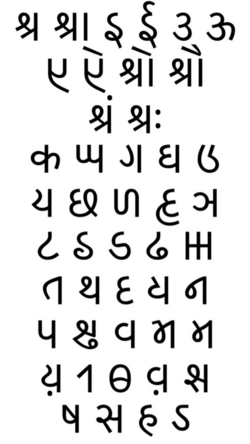
Kaithī script (vowels top three rows, consonants below)
Script type
Period
c. 16th–mid 20th century
DirectionLeft-to-right Edit this on Wikidata
LanguagesAwadhi, Bhojpuri, Hindustani, Magahi, Nagpuri, Maithili
Related scripts
Parent systems
Child systems
Sylheti Nagari
Sister systems
ISO 15924
ISO 15924Kthi (317), ​Kaithi
Unicode
Unicode alias
Kaithi
U+11080–U+110CF
 This article contains phonetic transcriptions in the International Phonetic Alphabet (IPA). For an introductory guide on IPA symbols, see Help:IPA. For the distinction between [ ], / / and ⟨ ⟩, see IPA § Brackets and transcription delimiters.

Kaithi (𑂍𑂶𑂟𑂲, IPA: [kəɪ̯t̪ʰiː]), also called Kayathi (𑂍𑂨𑂟𑂲), Kayasthi (𑂍𑂰𑂨𑂮𑂹𑂟𑂲, IPA: [kəjəst̪ʰiː]), Kayastani, or Kaite Lipi (काइते लिपि) in Nepali language[1] , is a Brahmic script historically used across parts of Northern and Eastern India. It was prevalent in regions corresponding to modern-day Uttar Pradesh, Bihar, and Jharkhand. The script was primarily utilized for legal, administrative, and private records and was adapted for a variety of Indo-Aryan languages, including Angika, Awadhi, Bhojpuri, Hindustani, Maithili, Magahi, and Nagpuri.[2]

This table sets out the handwritten form of the vowels and consonants of the Kaithi script, as of the middle of the 19th century
Bhojpuri story written in Kaithi script by Babu Rama Smaran Lal in 1898

Etymology

[edit]

The name Kaithi script is derived from the term Kayastha, a socio-professional group historically linked to writing, record-keeping and administration.[3] This community served in royal courts and later in British colonial administration, maintaining revenue records, legal documents, title deeds, and general correspondence.[4] The script they utilized was thus named Kaithi, reflecting their association with written documentation.[citation needed]

History

[edit]
A printed form of the Kaithi script, as of the mid-19th century
Kaithi script (left side bottom-most line) on the coins of Sher Shah Suri

Documents in Kaithi are traceable to at least the 16th century. The script was widely used during the Mughal period. In the 1880s, during the British Raj, the script was recognised as the official script of the law courts of Bihar. Kaithi was the most widely used script of North India west of Bengal. In 1854, 77,368 school primers were in Kaithi script, as compared to 25,151 in Devanagari and 24,302 in Mahajani.[5] Among the three scripts widely used in the 'Hindi Belt', Kaithi was widely perceived to be neutral, as it was used by both Hindus and Muslims alike [citation needed] for day-to-day correspondence, financial and administrative activities, while Devanagari was used by Hindus and Persian script by Muslims for religious literature and education. This made Kaithi increasingly unfavorable to the more conservative and religiously inclined members of society who insisted on Devanagari-based and Persian-based transcription of Hindi dialects. As a result of their influence and due to the wide availability of Devanagari type as opposed to the incredibly large variability of Kaithi, Devanagari was promoted, particularly in the Northwest Provinces, which covers present-day Uttar Pradesh.[6]

In the late 19th century, John Nesfield in Oudh, George Campbell of Inverneill in Bihar and a committee in Bengal all advocated for the use of Kaithi script in education.[7] Many legal documents were written in Kaithi, and from 1950 to 1954 it was the official legal script of Bihar district courts. Present day Bihar courts struggle to read old Kaithi documents.[8]

Classes

[edit]

On the basis of local variants Kaithi can be divided into three classes viz. Bhojpuri, Magahi and Trihuti.[9][10]

Bhojpuri

[edit]
Signboard at Purbi Gumti, Arrah, with English (top), Bhojpuri Kaithi (bottom-left), and Urdu (bottom-right)

This was used in Bhojpuri speaking regions and was considered as the most legible style of Kaithi.[9]

Magahi

[edit]

Native to Magah or Magadh it lies between Bhojpuri and Trihuti.[9]

Tirhuti

[edit]

It was used in Maithili speaking regions and was considered as the most elegant style.[9]

Consonants

[edit]

All Kaithi consonants have an inherent a vowel:

Occlusives
VOICELESS PLOSIVES VOICED PLOSIVES NASALS
Unaspirated Aspirated Unaspirated Aspirated
Velar
𑂍
k
IPA: /k/
𑂎
kh
IPA: /kʰ/
𑂏
g
IPA: /ɡ/
𑂐
gh
IPA: /ɡʱ/
𑂑
IPA: /ŋ/
Palatal
𑂒
c
IPA: /c/
𑂓
ch
IPA: /tʃʰ/
𑂔
j
IPA: /ɟ/
𑂕
jh
IPA: /dʒʱ/
𑂖
ñ
IPA: /ɲ/
Retroflex
𑂗
IPA: /ʈ/
𑂘
ṭh
IPA: /ʈʰ/
𑂙
IPA: /ɖ/
𑂛
ḍh
IPA: /ɖʱ/
𑂝
IPA: /ɳ/
𑂚
IPA: /ɽ/
𑂜
ṛh
IPA: /ɽʱ/
Dental
𑂞
t
IPA: /t/
𑂟
th
IPA: /tʰ/
𑂠
d
IPA: /d/
𑂡
dh
IPA: /dʱ/
𑂢
n
IPA: /n/
Labial
𑂣
p
IPA: /p/
𑂤
ph
IPA: /pʰ/
𑂥
b
IPA: /b/
𑂦
bh
IPA: /bʱ/
𑂧
m
IPA: /m/
Sonorants and fricatives
Palatal Retroflex Dental Labial
Sonorants
𑂨
y
IPA: /j/
𑂩
r
IPA: /r/
𑂪
l
IPA: /l/
𑂫
v
IPA: /ʋ/
Sibilants
𑂬
ś
IPA: /ɕ/
𑂭
IPA: /ʂ/
𑂮
s
IPA: /s/
Other
𑂯
h
IPA: /h/

Vowels

[edit]

Kaithi vowels have independent (initial) and dependent (diacritic) forms:

Vowels
Trans. Shown with ⟨𑂍⟩ Trans. Shown with ⟨𑂍⟩
Guttural
𑂃
a
𑂍
𑂄𑂰
ā
𑂍𑂰
Palatal
𑂅𑂱
i
𑂍𑂱
𑂆𑂲
ī
𑂍𑂲
Rounded
𑂇𑂳
u
𑂍𑂳
𑂈𑂴
ū
𑂍𑂴
Palatoguttural
𑂉𑂵
e
𑂍𑂵
𑂊𑂶
ai
𑂍𑂶
Labioguttural
𑂋𑂷
o
𑂍𑂷
𑂌𑂸
au
𑂍𑂸

Diacritics

[edit]
Kaithi diacritics with kha (𑂎)

Several diacritics are employed to change the meaning of letters:

Diacritic Name Function
𑂀
chandrabindu A chandrabindu denotes nasalisation although it is not normally used with Kaithi.[4]
𑂁
anusvara An anusvara in Kaithi represents true vowel nasalisation.[4] For example, 𑂍𑂁, kaṃ.
𑂂
visarga Visarga is a Sanskrit holdover originally representing /h/. For example, 𑂍𑂂 kaḥ.[4]
𑂹
halanta A virama removes a consonant's inherent a and in some cases forms consonant clusters. Compare 𑂧𑂥 maba with 𑂧𑂹𑂥 mba.[11]
𑂺
nuqta A nuqta is used to extend letters to represent non-native sounds. For example, 𑂔 ja + nuqta = 𑂔𑂺, which represents Arabic zayin.[4]

Vowel diacritics

[edit]

The following table shows the list of vowel diacritics on consonants. The vowel diacritics on consonants are called kakahārā (𑂍𑂍𑂯𑂰𑂩𑂰).

𑂃 𑂄 𑂅 𑂆 𑂇 𑂈 𑂉 𑂊 𑂋 𑂌 𑂃𑂁 𑂃𑂂
𑂍𑂹 𑂍 𑂍𑂰 𑂍𑂱 𑂍𑂲 𑂍𑂳 𑂍𑂴 𑂍𑂵 𑂍𑂶 𑂍𑂷 𑂍𑂸 𑂍𑂁 𑂍𑂂
𑂎𑂹 𑂎 𑂎𑂰 𑂎𑂱 𑂎𑂲 𑂎𑂳 𑂎𑂴 𑂎𑂵 𑂎𑂶 𑂎𑂷 𑂎𑂸 𑂎𑂁 𑂎𑂂
𑂏𑂹 𑂏 𑂏𑂰 𑂏𑂱 𑂏𑂲 𑂏𑂳 𑂏𑂴 𑂏𑂵 𑂏𑂶 𑂏𑂷 𑂏𑂸 𑂏𑂁 𑂏𑂂
𑂐𑂹 𑂐 𑂐𑂰 𑂐𑂱 𑂐𑂲 𑂐𑂳 𑂐𑂴 𑂐𑂵 𑂐𑂶 𑂐𑂷 𑂐𑂸 𑂐𑂁 𑂐𑂂
𑂑 𑂹 𑂑 𑂑𑂰 𑂑𑂱 𑂑𑂲 𑂑𑂳 𑂑𑂴 𑂑𑂵 𑂑𑂶 𑂑𑂷 𑂑𑂸 𑂑𑂁 𑂑𑂂
𑂒𑂹 𑂒 𑂒𑂰 𑂒𑂱 𑂒𑂲 𑂒𑂳 𑂒𑂴 𑂒𑂵 𑂒𑂶 𑂒𑂷 𑂒𑂸 𑂒𑂁 𑂒𑂂
𑂓𑂹 𑂓 𑂓𑂰 𑂓𑂱 𑂓𑂲 𑂓𑂳 𑂓𑂴 𑂓𑂵 𑂓𑂶 𑂓𑂷 𑂓𑂸 𑂓𑂁 𑂓𑂂
𑂔𑂹 𑂔 𑂔𑂰 𑂔𑂱 𑂔𑂲 𑂔𑂳 𑂔𑂴 𑂔𑂵 𑂔𑂶 𑂔𑂷 𑂔𑂸 𑂔𑂁 𑂔𑂂
𑂕𑂹 𑂕 𑂕𑂰 𑂕𑂱 𑂕𑂲 𑂕𑂳 𑂕𑂴 𑂕𑂵 𑂕𑂶 𑂕𑂷 𑂕𑂸 𑂕𑂁 𑂕𑂂
𑂖𑂹 𑂖 𑂖𑂰 𑂖𑂱 𑂖𑂲 𑂖𑂳 𑂖𑂴 𑂖𑂵 𑂖𑂶 𑂖𑂷 𑂖𑂸 𑂖𑂁 𑂖𑂂
𑂗 𑂹 𑂗 𑂗𑂰 𑂗𑂱 𑂗𑂲 𑂗𑂳 𑂗𑂴 𑂗𑂵 𑂗𑂶 𑂗𑂷 𑂗𑂸 𑂗𑂁 𑂗𑂂
𑂘𑂹 𑂘 𑂘𑂰 𑂘𑂱 𑂘𑂲 𑂘𑂳 𑂘𑂴 𑂘𑂵 𑂘𑂶 𑂘𑂷 𑂘𑂸 𑂘𑂁 𑂘𑂂
𑂙𑂹 𑂙 𑂙𑂰 𑂙𑂱 𑂙𑂲 𑂙𑂳 𑂙𑂴 𑂙𑂵 𑂙𑂶 𑂙𑂷 𑂙𑂸 𑂙𑂁 𑂙𑂂
𑂛𑂹 𑂛 𑂛𑂰 𑂛𑂱 𑂛𑂲 𑂛𑂳 𑂛𑂴 𑂛𑂵 𑂛𑂶 𑂛𑂷 𑂛𑂸 𑂛𑂁 𑂛𑂂
𑂝𑂹 𑂝 𑂝𑂰 𑂝𑂱 𑂝𑂲 𑂝𑂳 𑂝𑂴 𑂝𑂵 𑂝𑂶 𑂝𑂷 𑂝𑂸 𑂝𑂁 𑂝𑂂
𑂞𑂹 𑂞 𑂞𑂰 𑂞𑂱 𑂞𑂲 𑂞𑂳 𑂞𑂴 𑂞𑂵 𑂞𑂶 𑂞𑂷 𑂞𑂸 𑂞𑂁 𑂞𑂂
𑂟𑂹 𑂟 𑂟𑂰 𑂟𑂱 𑂟𑂲 𑂟𑂳 𑂟𑂴 𑂟𑂵 𑂟𑂶 𑂟𑂷 𑂟𑂸 𑂟𑂁 𑂟𑂂
𑂠𑂹 𑂠 𑂠𑂰 𑂠𑂱 𑂠𑂲 𑂠𑂳 𑂠𑂴 𑂠𑂵 𑂠𑂶 𑂠𑂷 𑂠𑂸 𑂠𑂁 𑂠𑂂
𑂡𑂹 𑂡 𑂡𑂰 𑂡𑂱 𑂡𑂲 𑂡𑂳 𑂡𑂴 𑂡𑂵 𑂡𑂶 𑂡𑂷 𑂡𑂸 𑂡𑂁 𑂡𑂂
𑂢𑂹 𑂢 𑂢𑂰 𑂢𑂱 𑂢𑂲 𑂢𑂳 𑂢𑂴 𑂢𑂵 𑂢𑂶 𑂢𑂷 𑂢𑂸 𑂢𑂁 𑂢𑂂
𑂣𑂹 𑂣 𑂣𑂰 𑂣𑂱 𑂣𑂲 𑂣𑂳 𑂣𑂴 𑂣𑂵 𑂣𑂶 𑂣𑂷 𑂣𑂸 𑂣𑂁 𑂣𑂂
𑂤𑂹 𑂤 𑂤𑂰 𑂤𑂱 𑂤𑂲 𑂤𑂳 𑂤𑂴 𑂤𑂵 𑂤𑂶 𑂤𑂷 𑂤𑂸 𑂤𑂁 𑂤𑂂
𑂥𑂹 𑂥 𑂥𑂰 𑂥𑂱 𑂥𑂲 𑂥𑂳 𑂥𑂴 𑂥𑂵 𑂥𑂶 𑂥𑂷 𑂥𑂸 𑂥𑂁 𑂥𑂂
𑂦𑂹 𑂦 𑂦𑂰 𑂦𑂱 𑂦𑂲 𑂦𑂳 𑂦𑂴 𑂦𑂵 𑂦𑂶 𑂦𑂷 𑂦𑂸 𑂦𑂁 𑂦𑂂
𑂧𑂹 𑂧 𑂧𑂰 𑂧𑂱 𑂧𑂲 𑂧𑂳 𑂧𑂴 𑂧𑂵 𑂧𑂶 𑂧𑂷 𑂧𑂸 𑂧𑂁 𑂧𑂂
𑂨𑂹 𑂨 𑂨𑂰 𑂨𑂱 𑂨𑂲 𑂨𑂳 𑂨𑂴 𑂨𑂵 𑂨𑂶 𑂨𑂷 𑂨𑂸 𑂨𑂁 𑂨𑂂
𑂩𑂹 𑂩 𑂩𑂰 𑂩𑂱 𑂩𑂲 𑂩𑂳 𑂩𑂴 𑂩𑂵 𑂩𑂶 𑂩𑂷 𑂩𑂸 𑂩𑂁 𑂩𑂂
𑂪𑂹 𑂪 𑂪𑂰 𑂪𑂱 𑂪𑂲 𑂪𑂳 𑂪𑂴 𑂪𑂵 𑂪𑂶 𑂪𑂷 𑂪𑂸 𑂪𑂁 𑂪𑂂
𑂫𑂹 𑂫 𑂫𑂰 𑂫𑂱 𑂫𑂲 𑂫𑂳 𑂫𑂴 𑂫𑂵 𑂫𑂶 𑂫𑂷 𑂫𑂸 𑂫𑂁 𑂫𑂂
𑂬𑂹 𑂬 𑂬𑂰 𑂬𑂱 𑂬𑂲 𑂬𑂳 𑂬𑂴 𑂬𑂵 𑂬𑂶 𑂬𑂷 𑂬𑂸 𑂬𑂁 𑂬𑂂
𑂭𑂹 𑂭 𑂭𑂰 𑂭𑂱 𑂭𑂲 𑂭𑂳 𑂭𑂴 𑂭𑂵 𑂭𑂶 𑂭𑂷 𑂭𑂸 𑂭𑂁 𑂭𑂂
𑂮𑂹 𑂮 𑂮𑂰 𑂮𑂱 𑂮𑂲 𑂮𑂳 𑂮𑂴 𑂮𑂵 𑂮𑂶 𑂮𑂷 𑂮𑂸 𑂮𑂁 𑂮𑂂
𑂯𑂹 𑂯 𑂯𑂰 𑂯𑂱 𑂯𑂲 𑂯𑂳 𑂯𑂴 𑂯𑂵 𑂯𑂶 𑂯𑂷 𑂯𑂸 𑂯𑂁 𑂯𑂂

Signs and punctuation

[edit]

Kaithi has several script-specific punctuation marks:

Sign Description
𑂻 The abbreviation sign is one method of representing abbreviations in Kaithi.[4] For example, 𑂪𑂱𑂎𑂱𑂞𑂧 can be abbreviated as 𑂪𑂲𑂻.[4]
𑂽 The number sign is used with digits for enumerated lists and numerical sequences.[4] It can appear above, below, or before a digit or sequence of digits.[4] For example, 𑂽१२३.
𑂼 The enumeration sign is a spacing version of the number sign.[11] It always appears before a digit or sequence of digits (never above or below).
𑂾 The section sign indicates the end of a sentence.[11]
𑂿 The double section sign indicates the end of a larger section of text, such as a paragraph.[11]
𑃀 Danda is a Kaithi-specific danda, which can mark the end of a sentence or line.
𑃁 Double danda is a Kaithi-specific double danda.

General punctuation is also used with Kaithi:

  • + plus sign can be used to mark phrase boundaries
  • hyphen and - hyphen-minus can be used for hyphenation
  • word separator middle dot can be used as a word boundary (as can a hyphen)

Numerals

[edit]

Kaithi uses stylistic variants of Devanagari numeral. It also uses common Indic number signs for fractions and unit marks.[11]

Kaithi Numbers (0 to 9)

Unicode

[edit]

Kaithi script was added to the Unicode Standard in October 2009 with the release of version 5.2.

The Unicode block for Kaithi is U+11080–U+110CF:

Kaithi[1][2]
Official Unicode Consortium code chart (PDF)
  0 1 2 3 4 5 6 7 8 9 A B C D E F
U+1108x 𑂀 𑂁 𑂂 𑂃 𑂄 𑂅 𑂆 𑂇 𑂈 𑂉 𑂊 𑂋 𑂌 𑂍 𑂎 𑂏
U+1109x 𑂐 𑂑 𑂒 𑂓 𑂔 𑂕 𑂖 𑂗 𑂘 𑂙 𑂚 𑂛 𑂜 𑂝 𑂞 𑂟
U+110Ax 𑂠 𑂡 𑂢 𑂣 𑂤 𑂥 𑂦 𑂧 𑂨 𑂩 𑂪 𑂫 𑂬 𑂭 𑂮 𑂯
U+110Bx 𑂰 𑂱 𑂲 𑂳 𑂴 𑂵 𑂶 𑂷 𑂸 𑂹 𑂺 𑂻 𑂼  𑂽  𑂾 𑂿
U+110Cx 𑃀 𑃁 𑃂  𑃍 
Notes
1.^ As of Unicode version 17.0
2.^ Grey areas indicate non-assigned code points

Publications

[edit]

The first Bhojpuri quarterly Bagsar Samāchar was published in this script in 1915.[12]

See also

[edit]

References

[edit]
Revisions and contributorsEdit on WikipediaRead on Wikipedia
from Grokipedia
Kaithi is a historical script derived from the Brahmi family in the , traced by some sources to the post-Gupta period in northern ( CE onward), with earliest evidence from 9th–10th century inscriptions, and primarily employed as a for administrative, legal, and commercial records by the scribal community. It features simplified letter forms compared to more ornate scripts like , making it efficient for everyday documentation, with 35 consonant letters, 8–10 vowel signs (defaulting to the vowel a), and diacritics for other vowels, along with optional and like the . The script evolved amid the fragmentation of kingdoms following the Empire's decline, drawing influences from Eastern Nagari and Kutil scripts to adapt for practical use in regional governance. Historically, Kaithi gained prominence from the onward as a versatile medium for including Awadhi, Bhojpuri, Magahi, Maithili, , , and Hindustani (encompassing forms of and ), as well as regional variants of Bengali; it was also adapted for Persian loanwords via the and used in printing religious texts like Bibles. In regions such as , , , and —extending to diaspora communities in Trinidad and —it served official purposes under British colonial rule, becoming the mandated script for Bihar's law courts by the due to its legibility and speed. Beyond administration, it documented folk literature, census data, private correspondence, and even mosque carvings, reflecting its role as a "people's script" accessible to non-elites. Kaithi's decline accelerated in the late 19th century with the 1893 push by the Nagari Pracharini Sabha to standardize for linguistic unity across Hindi-speaking areas, leading to its marginalization in government and courts by the mid-20th century; by India's independence in , it had largely faded from active use. Today, the script is nearly extinct, surviving sporadically in rural personal notes or cultural revivals, but its digitization via encoding in 2009 has enabled scholarly access to vast archives of for linguists, historians, and legal researchers; recent revival efforts, including workshops and training centers in as of 2025, aim to preserve and teach the script.

Etymology and Origins

Etymology

The name "Kaithi" derives from the Sanskrit term kāyastha, referring to the caste, a socio-professional group in historical known for their roles as scribes, administrators, and accountants responsible for record-keeping and revenue documentation. This association highlights the script's practical origins in bureaucratic and legal contexts, where Kayasthas popularized its use across northern , particularly in regions like and . Historical references underscore the Kayasthas' primary role in the script's dissemination, with medieval and early modern texts linking it explicitly to their professional duties. For instance, 16th-century administrative documents issued under , such as land grants (sanads), were inscribed in Kaithi by Kayastha scribes, demonstrating its efficiency for official correspondence. Earlier evidence includes 9th-century inscriptions in that reflect scribal practices attributable to this community, as noted in scholarly analyses of regional . By the 17th century, Kaithi appeared in literary manuscripts like the Mahāganapatistotra, further tying it to Kayastha literary traditions. Alternative etymological interpretations suggest "Kaithi" as a colloquial rendering of kāyasthī ("of the scribes"), sometimes simplified to "Kaithī" in regional dialects of and , potentially evoking local terms for scribal writing without altering the core linkage. These variations emphasize the script's embeddedness in the cultural and linguistic milieu of the profession, though no distinct regional etymology independent of the association has been substantiated in primary sources.

Script Origins

Kaithi script descends from the ancient Brahmic family, with direct roots in the that prevailed in northern until around the 7th century CE. Scholars trace its paleographic lineage to the Proto-Bengali or Gaudi branch of the Nagari scripts, emerging as a distinct form influenced by the Landa scripts of the , which emphasized fluidity for practical documentation. This evolution reflects a broader transformation in Brahmic writing systems, where regional adaptations prioritized efficiency over ornate forms, possibly incorporating elements from earlier Kutila variants during the post-Gupta period. As a cursive variant of , Kaithi developed to facilitate rapid administrative writing, featuring simplified strokes and connected forms that deviated from the more angular predecessors. Paleographic evidence from 9th- to 11th-century inscriptions in regions like , including examples from the Baijnath Shiva Temple dated to the 9th or , demonstrates its early maturity as a streamlined system suited for everyday use by scribes. These artifacts highlight Kaithi's adaptation for speed, with ligatures and abbreviations that reduced writing time compared to formal scripts, marking its role as a vernacular counterpart in North Indian paleography. Kaithi shares glyphic features with other North Indian scripts, such as and Gujarati, including inherent vowel notations and consonant forms derived from common Nagari ancestry, yet it maintains a distinct style lacking the prominent headstroke typical of . While evolved toward a more standardized, literary aesthetic, Kaithi's serifs and flowing connections align it typologically with Gujarati's practical orientation, though regional divergences in letter proportions and diacritics underscore its unique eastern identity.

Historical Development

Early Development

Kaithi script emerged in the post-Gupta period, around the 7th to 10th centuries, in the regions of present-day and eastern , as a derivative of earlier Brahmic forms such as Kutila and the Gaudi branch of Nagari, driven by the needs of fragmented regional kingdoms following the decline of centralized empires. This development occurred amid the rise of regional powers like the in eastern , reflecting its initial utility in local communication and record-keeping associated with administrative and scribal practices by communities. Its ancestral ties to provided a foundation for its angular, simplified letterforms suited to everyday use. By the , influences from regional Indo-Aryan dialects such as Bhojpuri, Magahi, and Awadhi began shaping Kaithi variants, leading to its employment in religious manuscripts and inscriptions that demonstrate evolving orthographic features. A possible early attestation is the copper-plate inscription issued by Raja Chandradeva of the around 1090 CE, which records a and showcases the script's maturation for documentary purposes in northern . These proto-forms, often intermixed with eastern Nagari elements, facilitated the script's adaptation for devotional texts, highlighting its versatility across linguistic contexts in the region. During the (13th to 16th centuries), Kaithi underwent standardization as a practical court script in northern India, particularly for vernacular administration amid Persian dominance, with adaptations enabling biscriptual documents that transcribed Persian content into Kaithi for local record-keepers. This period saw its widespread adoption under rulers like the (ca. 1450–1526), where it complemented Persian in official grants, and continued under (r. 1540–1545), whose sanads featured Kaithi alongside Perso-Arabic to bridge imperial and regional practices. A clear early example of its use is the sanad issued by in 1540 CE, featuring Kaithi alongside Perso-Arabic. Such integrations marked a key milestone in Kaithi's evolution, solidifying its role in multilingual governance.

Administrative and Cultural Usage

Kaithi served as the primary court script in during the Mughal era and into the early British colonial period, where it was employed for essential administrative functions such as maintaining , drafting legal documents, and processing petitions. This usage stemmed from its adoption by scribes, who handled official correspondence and land administration across northern , ensuring efficiency in governance under both Mughal and British systems. By the mid-19th century, Kaithi had become integral to Bihar's bureaucratic framework, facilitating the documentation of property deeds and judicial proceedings in local languages like Bhojpuri and Magahi. In cultural and religious contexts, Kaithi found application in the production of Hindu and Jain manuscripts, as well as inscriptions on mosque artifacts, spanning the 16th to 19th centuries. For instance, religious texts such as versions of the by and other devotional literature were transcribed in Kaithi, reflecting its role in preserving Hindu spiritual narratives. Jain communities also utilized the script for sacred manuscripts, underscoring Kaithi's versatility as a medium for interfaith literary traditions. Additionally, epigraphic evidence from the period includes Kaithi carvings on elements, such as door lintels in , which served both decorative and commemorative purposes in Muslim religious architecture. The script's prominence waned in the late amid colonial linguistic policies favoring . In 1880, Sir Ashley Eden issued a resolution mandating the exclusive use of Kaithi or in Bihar's courts, replacing Perso-Arabic for and documentation. This shift, building on earlier efforts to promote vernacular scripts over Persian, accelerated Kaithi's decline as gained preference for its perceived cultural and religious alignment with Hindu identity, leading to Kaithi's marginalization by the early 20th century.

Varieties

Bhojpuri Kaithi

Bhojpuri Kaithi refers to the regional variant of the Kaithi script adapted for writing the , primarily in the Bhojpuri-speaking regions of eastern and western . This form of the script emerged as a practical tool for documentation among local communities, particularly the scribal caste, and was prominently used from the onward for folk literature, songs, and administrative notes. Historical records indicate its application in recording everyday cultural expressions, such as oral traditions transcribed into written form, reflecting the linguistic nuances of Bhojpuri speakers in these areas. Distinct glyph variations in Bhojpuri Kaithi include simplified forms that contribute to its overall legibility compared to other variants. These adaptations facilitated quicker writing for informal and administrative purposes, as seen in preserved manuscripts from Saran and Shahabad in western , where examples of folk songs and private letters showcase compact, styles without . Such manuscripts, often legal or personal documents, highlight the script's efficiency in capturing Bhojpuri's aspirated s through inherent notations. Bhojpuri Kaithi played a significant role in fostering among Bhojpuri communities, serving as a medium for local traditions until the early 20th century. It was employed in maintaining local records like land deeds and community notes, preserving social histories amid colonial transitions. This usage underscored its embeddedness in Bhojpuri heritage, bridging administrative utility with everyday cultural practices before the widespread adoption of .

Magahi Kaithi

Magahi Kaithi refers to the regional adaptation of the Kaithi script tailored for writing the , primarily in the central regions encompassing districts like and Gaya. This variety emerged as a practical script for documenting everyday and administrative needs, with documents traceable from at least the through the . It was extensively employed for transcribing oral traditions, such as folk songs and narratives, as well as for drafting land deeds and property records by local scribes, particularly the community. In central Bihar's rural and semi-urban settings, Magahi Kaithi facilitated the preservation of communal histories and transactions, serving as an accessible medium for non-elite populations before the widespread adoption of printed materials. A distinctive feature of Magahi Kaithi lies in its balanced stylistic form, positioned as an intermediate between the more ornate Tirhuti (Maithili-influenced) and the straightforward Bhojpuri varieties, making it suitable for official correspondence in Bihar's courts and administration from the late 18th to early 20th centuries. Such features enhanced readability in handwritten ledgers, where the script's flow minimized strokes while accommodating the language's syllabic structure. Magahi Kaithi also played a crucial role in religious and cultural documentation until the early . The script's decline accelerated with Devanagari's imposition as the standard for official and educational purposes post-1900, rendering many Kaithi-preserved texts inaccessible without specialized training.

Tirhuti and Other Varieties

The Tirhuti variant, also known as the Maithili style of , represents a regional form used primarily in the Tirhut area of northern and is characterized by its elegant, cursive handwriting that distinguishes it from the more angular Bhojpuri and Magahi styles. This variant served as a bridge in scribal traditions between Magahi and Maithili linguistic regions, with specific forms appearing in historical manuscripts. Its aesthetic flourishes made it particularly suitable for literary and devotional texts, including poetry from the 16th to 19th centuries. In the Mithila region, Tirhuti Kaithi adaptations were employed for writing Maithili religious hymns and stotras, such as the Mahāgaṇapatistotra, often in manuscripts that combined Kaithi with occasional Devanagari elements for Sanskrit portions. These forms reflected the script's versatility among non-Brahmin communities, who favored Kaithi over the more formal Mithilakṣara for everyday devotional literature. For Awadhi, Kaithi variants incorporated hybrid elements from Nagari, particularly in educated scribal practices, as evidenced in folk epics like the Miragāvatī, where facilitated the rendering of and . This blending allowed for smoother integration of Awadhi's poetic structures into administrative and literary contexts. Minor varieties of Kaithi emerged in Urdu-influenced settings during the , especially in Bihar's law courts, where the script accommodated Perso-Arabic loanwords through adapted glyphs in legal documents and seals, temporarily supplanting the Perso-Arabic script for Hindustani records.

Script Features

Consonants

Kaithi features a set of 35 basic consonants, each representing a consonant phoneme with an inherent vowel /ə/ (schwa), typical of Brahmic abugidas. These consonants are organized into five varga groups (velar, palatal, retroflex, dental, and labial), following the traditional Indic phonetic classification, with additional semivowels, sibilants, and aspirates. Unicode encodes 35 consonants, including rare letters like rha (𑂜, U+1109C) and nna (𑂝, U+1109D) used in specific varieties or loanwords. The phonetic values align with those of Eastern Indo-Aryan languages like Bhojpuri and Magahi, where, for example, the velar stops are /k/ for ka (𑂍), /kʰ/ for kha (𑂎), /g/ for ga (𑂏), and /gʱ/ for gha (𑂐); palatals include /t͡ɕ/ for ca (𑂒), /t͡ɕʰ/ for cha (𑂓), /d͡ʑ/ for ja (𑂔), and /d͡ʑʱ/ for jha (𑂕); retroflexes are /ʈ/ for ṭa (𑂗), /ʈʰ/ for ṭha (𑂘), /ɖ/ for ḍa (𑂙), and /ɖʱ/ for ḍha (𑂚); dentals /t/ for ta (𑂞), /tʰ/ for tha (𑂟), /d/ for da (𑂠), and /dʱ/ for dha (𑂡); labials /p/ for pa (𑂣), /pʰ/ for pha (𑂤), /b/ for ba (𑂥), and /bʱ/ for bha (𑂦). Nasals are /ŋ/ for ṅa (𑂑), /ɲ/ for ña (𑂖), /ɳ/ for ṇa (𑂝), /n/ for na (𑂢), and /m/ for ma (𑂧); semivowels /j/ for ya (𑂨), /r/ for ra (𑂩), /l/ for la (𑂪), and /ʋ/ for va (𑂫); sibilants /ʃ/ for śa (𑂬), /ʂ/ for ṣa (rare, 𑂭), and /s/ for sa (𑂮); and /ɦ/ for ha (𑂯). Rare letters like ṅa, ña, ṇa, and ṣa appear in specific varieties or loanwords, often sourced from printed materials like the Baptist Mission Press. The glyphs for these consonants evolved from the through the Kutila and Nagari branches, developing a simplified, form without the prominent headstroke of , emphasizing vertical strokes with subtle serifs for rapid scribal writing. This evolution is evident in 16th-century administrative documents under , where forms were adapted from Proto-Bengali styles for efficiency in legal records. Unlike more ornate scripts, Kaithi's consonants feature reduced curves and connected strokes, tracing back to post-Gupta innovations around the 6th-7th centuries CE, as normalized in 19th-century metal type fonts from the . Consonant clusters, or conjuncts, are formed by applying the halant (, 𑂹) to suppress the inherent of the preceding , often resulting in ligatures or stacked forms for conjuncts like kta (ka + + ta, common in terms like "kta" for "done") or dya (da + + ya, seen in administrative phrases like "dya" in dates). In handwritten Kaithi, these clusters favor ligatures over explicit visibility to enhance writing speed, with half-forms of the second connecting fluidly to the first, as observed in Maithili-style documents. For example, mba is formed as 𑂧𑂹𑂥. Kaithi's speed-oriented design incorporates variations in , typically starting from the top vertical and proceeding downward with left-to-right hooks for connections, allowing scribes to link consonants seamlessly in flow—such as sweeping from the stem of ka to ra in "kra" clusters—distinct from the angular strokes of related Nagari scripts. This facilitates quick production of records, with diagonal or looped joins in varieties like Bhojpuri Kaithi for even faster execution.

Vowels

The Kaithi script features ten independent letters, which represent the core phonemes used in standalone form or at the beginning of words. These s are essential for writing languages such as Bhojpuri and Magahi, where they align with the typical Indo-Aryan inventory, including distinctions between short and long forms for certain pairs. The letters are encoded in the U+11080–U+110CF as follows: 𑂃 (a, U+11083), 𑂄 (ā, U+11084), 𑂅 (i, U+11085), 𑂆 (ī, U+11086), 𑂇 (u, U+11087), 𑂈 (ū, U+11088), 𑂉 (e, U+11089), 𑂊 (ai, U+1108A), 𑂋 (o, U+1108B), and 𑂌 (au, U+1108C). Phonetically, these vowels correspond to the sounds prevalent in , with short a realized as a central schwa /ə/ or open /a/, long ā as /aː/, i and ī as /i/ and /iː/, u and ū as /u/ and /uː/, e as /eː/, ai as a diphthong /ai/, o as /oː/, and au as /au/. In Bhojpuri, for instance, the vowel a appears in words like apna (our), pronounced /əpna/, while in Magahi, ī is used in khusi (happiness), pronounced /kʰusiː/. These phonetic alignments facilitate the script's use in administrative and literary texts for these languages, emphasizing clear vowel distinctions without additional diacritics in isolation. Historically, Kaithi vowel forms evolved from the Nagari family but adopted rounded, simplified shapes to support rapid cursive writing, particularly in 19th-century standardized usage. Unlike Devanagari's angular, headstroked forms, Kaithi's independent vowels feature curved strokes and serifs on verticals, such as the looped top of ī or the rounded base of o, which allowed for fluid pen movements in manuscripts and court documents. This design distinction enhanced efficiency in everyday writing while maintaining compatibility with Indo-Aryan phonology.

Vowel Diacritics

In Kaithi, diacritics, known as matras or dependent signs, modify the inherent sound of to represent other . There are nine primary matras corresponding to the sounds ā, i, ī, u, ū, e, ai, o, and au, each with distinct shapes and attachment positions to ensure legibility in the script's style. These diacritics attach above, below, to the left, or to the right of the base , with positioning determined by the and the 's structural class—for instance, Class 1 (with ) often position matras above or below the , while Class 2 use top or bottom attachments. The i-matra takes the form of a vertical on the left side of the , as seen in the ki formed by combining the ka with this mark. In contrast, the au-matra appears as a curved loop below the , creating forms like kau. Other examples include the ī-matra (a mark above) and the u-matra (a short below), which integrate seamlessly to avoid disrupting the horizontal flow. Kaithi's matras are designed for compatibility with its handwriting tradition, where ligatures between and form naturally, such as a joined k with its u-matra in running text. In clusters, diacritics primarily attach to the initial , with subjoined (below-base) variants employed for stacked forms to maintain compactness and readability without altering the phonetic value. A key phonetic nuance in Kaithi's is , denoted by the (a crescent-shaped mark with a dot) placed above the or the base , producing nasalized sounds essential for languages like Bhojpuri and Magahi; alternatively, an dot may be used in some contexts. These dependent signs complement independent forms used in syllable-initial positions.

Additional Diacritics and Conjuncts

In Kaithi, the (U+11081 𑂁) is a combining that primarily denotes of the preceding , rather than representing a class in clusters. For instance, it appears above the baseline as a small dot or , as in the word kaṃ (𑂍𑂁), where it nasalizes the inherent of ka. This usage aligns with its role in historical Kaithi texts, such as 19th-century printed Bibles, to indicate phonetic nasal sounds without altering forms. The visarga (U+11082 𑂂), depicted as two small dots above the baseline resembling a colon, traditionally marks a voiceless breath following a vowel, often representing /h/ in Sanskrit-derived words, though its application in Kaithi is more limited to abbreviations and emphatic pauses. In practice, it follows the base character directly, as seen in examples like s fl, for "sheikh" in administrative documents, where it abbreviates or signals elision. Historical records from Bihar courts in the 19th century employ visarga sparingly, primarily in formal or loanword contexts to preserve aspirated qualities. The halant, or (U+110B9 𑂹), serves to suppress the inherent of a , enabling the formation of conjuncts by joining subsequent . It appears as a horizontal below the base and is essential for creating ligatured or forms, such as mba (𑂧𑂹𑂥), where it links ma and ba without an intervening . In Kaithi varieties, conjuncts may stack vertically, particularly in Maithili-influenced styles, or use half-forms for horizontal ligatures; the repha form for ra (U+110A9 𑂩) often preposes as a above the cluster, as in kṣa (𑂍𑂹𑂭), a common borrowing in religious texts. These formations are attested in 18th- and 19th-century manuscripts, where explicit ensures compact writing for legal and literary purposes. A specialized nukta diacritic (U+110BA 𑂺), rendered as a small dot below the base character, modifies native letters to accommodate Perso-Arabic phonemes in Urdu-influenced Kaithi, particularly during the Mughal era. For example, adding nukta to ja (U+11094 𑂔) produces (𑂔𑂺), representing the Arabic zayin sound, as used in words like nazdik (𑂦𑂹𑂔𑂺𑂟𑂍) in bilingual court documents. This adaptation appears in historical inscriptions from and , such as 19th-century revenue records blending and Persian terms, allowing Kaithi to serve administrative needs under Islamic rule.

Punctuation, Symbols, and Numerals

Kaithi employs punctuation marks rooted in Brahmic script traditions to structure texts, particularly in administrative and contexts. The single (𑃀, U+110C0) serves as a to denote the end of a sentence or , while the double (𑃁, U+110C1) indicates a major break, such as the conclusion of a or verse. These marks facilitate clear segmentation in legal and literary documents, adapting seamlessly to the script's horizontal flow. Section markers further enhance textual organization, with the Kaithi section mark (𑂾, U+110BE) signaling the end of a sentence and the double section mark (𑂿, U+110BF) denoting larger divisions like paragraphs. Symbols such as the , borrowed from (ऽ, U+093D), represent vowel elision in prose, aiding phonetic economy in written in Kaithi. Additional symbols include the abbreviation sign (𑂻, U+110BB) for shortening common terms, the enumeration sign (𑂼, U+110BC) to introduce lists, and the (𑂽, U+110BD) for numerical references, often positioned above or below digits. Regarding numerals, Kaithi historically features a set of digits from 0 to 9 that exhibit stylistic variants of forms, characterized by more angular strokes and simplified proportions suited to rapid inscription in accounting ledgers and records. These numerals differ subtly from standard counterparts, such as a sharper, linear representation of the digit 3 and a compact, wedge-like 7, reflecting the script's practical use in commercial and administrative documentation. In modern digital contexts, digits are commonly substituted due to the absence of dedicated Kaithi numeral encodings in .

Modern Status

Unicode Encoding

Kaithi was incorporated into the Unicode Standard with version 5.2, released in October 2009. The script occupies the dedicated from U+11080 to U+110CF, encompassing 80 code points in total, of which 67 are assigned specifically to letters, combining marks, and digits. This allocation supports the core repertoire of the script as standardized in 19th-century British colonial documents from and surrounding regions. The encoding model for Kaithi adheres to the conventions for Brahmi-derived Indic scripts, with characters stored in logical reading order from left to right. Vowel signs are encoded after their associated , though rendering engines reorder certain matras—such as the left-positioned i and ii—to their visual positions. are formed using the (U+110B9) to suppress the inherent , often resulting in half-forms, ligatures, or stacked glyphs depending on the style (Bhojpuri, Magahi, or Maithili). Compatibility with the Indic shaping engine enables proper cursive joining and attachment, while (U+200D) and (U+200C) provide fine control over ligature formation in ambiguous cases. The nukta (U+110BA) allows derivation of additional letters, such as distinguishing dental from retroflex sounds. Digital implementation of Kaithi encounters significant hurdles, primarily from sparse font coverage that limits consistent rendering on most systems. Although fonts like Noto Sans Kaithi offer full support, broader adoption remains constrained, complicating efforts to digitize historical manuscripts and promote contemporary use. Initial proposals submitted to the Technical Committee in 2005 and 2007 advocated for expanded encoding to accommodate regional variants and specialized symbols for accounting and measures, with some additions—such as the above (U+110CD)—approved in later versions like Unicode 11.0.

Publications and Revival Efforts

In the late 19th century, British linguist George A. Grierson published seminal works on Kaithi, including A Handbook to the Kaithi Character (1881, revised 1899), which provided a detailed guide to the script's forms, usage in , and specimens of texts in Bhojpuri, Magahi, and Maithili. This handbook remains a foundational reference for understanding Kaithi's structure and historical application in administrative and literary contexts. In the 2020s, Indian historian Bhairav Lal Das contributed to Kaithi scholarship with The History of the Kaithi Script, tracing its evolution from Brahmi origins, its adoption by Kayasthas for multilingual documentation in Magahi and Bhojpuri, and its widespread use in religious texts and records across and until its post-independence decline. Revival initiatives gained momentum in the 21st century, with the Bihar government announcing a comprehensive promotion plan in October , including into Kaithi's integration into education and digital tools to preserve its cultural significance. By 2024, the state implemented training programs for civil engineers and surveyors to read Kaithi inscriptions on land records, addressing delays in the ongoing special land survey and enabling resolution of historical property disputes. In July 2025, Bihar signed a with the Bhashini platform to use AI for transliterating Kaithi-script documents, such as colonial-era land deeds, into , facilitating access to thousands of historical records while supporting digital font development for broader usability. In August 2025, a on digitizing the Kaithi script was held in , organized by UnReaL-TecE LLP and Maithili Sahitya Sansthan, focusing on practical tools for preservation and transcription. Later that month, a research paper titled "Reviving Kaithī: A Fresh Appraisal of a Lesser-Known Script based on Recent Findings" was published, highlighting new insights into its historical prevalence and modern revival strategies. Non-governmental organizations have complemented these efforts through targeted preservation projects. The International Institute for Bhojpuri Learning and Development (IIBLD) launched a multi-phase Kaithi revival program in the early , focusing on deciphering historical s, creating standardized digital fonts, and developing educational modules for public workshops in and . This initiative includes digitization of personal and administrative Kaithi documents to build an online archive, alongside plans for bilingual publications in Kaithi and to promote literacy in Bhojpuri and Magahi. The National Mission for Manuscripts has also supported Kaithi-related activities, such as s on Brahmi-derived scripts like Kaithi in 2018, contributing to broader manuscript conservation efforts in . Contemporary applications of Kaithi appear in cultural and community settings, reflecting its resurgence amid heritage preservation. Local festivals in highlight Kaithi's role in traditions through exhibitions and performances, fostering public awareness of its linguistic heritage. Restoration projects for historical mosques in often involve experts interpreting Kaithi-carved inscriptions from the Mughal era, aiding accurate reconstruction and documentation of architectural details. In , limited support for Kaithi has emerged in Bhojpuri-language applications, such as IIBLD's planned app, which incorporates the script for educational content on regional as of 2025. These uses underscore Kaithi's transition from obscurity to a tool for cultural identity and technological adaptation. In August 2025, Kaithi script expert Bhairav Lal Das emphasized its essential role in documenting 's during a public address in .

References

Add your contribution
Related Hubs
User Avatar
No comments yet.