


Community hub
Recent from talks
Contribute something
Nothing was collected or created yet.
Javanese script
View on Wikipedia
| Javanese script ꦲꦏ꧀ꦱꦫꦗꦮ | |
|---|---|
 | |
| Script type | |
Period | c. 1500s CE – present |
| Direction | Left-to-right  |
| Languages | Javanese Sundanese Madurese Sasak Malay Indonesian Kawi Sanskrit |
| Related scripts | |
Parent systems | |
Sister systems | Balinese alphabet Batak alphabet Baybayin scripts Lontara alphabet Makasar Sundanese script Rencong alphabet Rejang alphabet Sasak script |
| ISO 15924 | |
| ISO 15924 | Java (361), Javanese |
| Unicode | |
Unicode alias | Javanese |
| U+A980–U+A9DF | |
| Part of a series on | |
|---|---|
| |
| Writing systems used in Indonesia | |
| Abugida (Brahmic) | |
| Abjad | |
| Alphabet | |
| |
| Others | |
| Related | |

.svg)


| Brahmic scripts |
|---|
| The Brahmi script and its descendants |
Javanese script (Javanese: ꦄꦏ꧀ꦱꦫ ꦗꦮ, romanized: aksara Jawa), also known as hanacaraka, carakan, and dentawyanjana[1] is one of Indonesia's traditional scripts developed on the island of Java. The script is primarily used to write the Javanese language and has also been used to write several other regional languages such as Sundanese and Madurese, the regional lingua franca Malay, as well as the historical languages Kawi and Sanskrit. It heavily influenced the Balinese script from which the writing system for Sasak developed. Javanese script was actively used by the Javanese people for writing day-to-day and literary texts from at least the mid-16th century CE until the mid-20th century CE, before it was gradually supplanted by the Latin alphabet. Today, the script is taught in the Yogyakarta Special Region as well as the provinces of Central Java and East Java as part of the local curriculum, but with very limited function in everyday use.[2][3]
Javanese script is an abugida writing system which consists of 20 to 33 basic letters, depending on the language being written. Like other Brahmic scripts, each letter (called an aksara) represents a syllable with the inherent vowel /a/ or /ɔ/ which can be changed with the placement of diacritics around the letter. Each letter has a conjunct form called pasangan, which nullifies the inherent vowel of the previous letter. Traditionally, the script is written without spaces between words (scriptio continua) but is interspersed with a group of decorative punctuation.
History
[edit]Javanese script's evolutionary history can be traced fairly well because significant amounts of inscriptional evidence left behind allowed for epigraphical studies to be carried out. The oldest root of Javanese script is the Tamil-Brahmi script which evolved into the Pallava script in Southern and Southeast Asia between the 6th and 8th centuries. The Pallava script, in turn, evolved into Kawi script, which was actively used throughout Indonesia's Hindu-Buddhist period between the 8th and 15th centuries. In various parts of Indonesia, Kawi script would then evolve into Indonesia's various traditional scripts, one of them being Javanese script.[4] The modern Javanese script seen today evolved from Kawi script between the 14th and 15th centuries, a period in which Java began to receive significant Islamic influence.[5][6][7]
From the 15th until the mid-20th centuries, Javanese script was actively used by the Javanese people for writing day-to-day and literary texts spanning a wide range of themes. Javanese script was used throughout the island at a time when there was no easy means of communication between remote areas and no impulse towards standardization. As a result, there is a huge variety of historical and local styles of Javanese writing throughout the ages. The great differences between regional styles make the "Javanese script" appear like a family of scripts.[8] Javanese writing traditions were especially cultivated in the Kraton environment in Javanese cultural centers, such as Yogyakarta and Surakarta. However, Javanese texts are known to be made and used by various layers of society with varying usage intensities between regions. In West Java, for example, the script was mainly used by the Sundanese nobility (ménak) due to the political influence of the Mataram kingdom.[9] However, most Sundanese people within the same time period more commonly used the Pegon script which was adapted from the Arabic alphabet.[10] Javanese writing tradition also relied on periodic copying due to the deterioration of writing materials in the tropical Javanese climate; as a result, many physical manuscripts that are available now are 18th or 19th century copies, though their contents can usually be traced to far older prototypes.[7]
Media
[edit]

Javanese script has been written with numerous media that have shifted over time. Kawi script, which is ancestral to Javanese script, is often found on stone inscriptions and copper plates. Everyday writing in Kawi was done in palm leaf form (ocally known as lontar), which are processed leaves of the tal palm (Borassus flabellifer). Each lontar leaf has the shape of a slim rectangle 2.8 to 4 cm in width and varies in length between 20 and 80 cm. Each leaf can only accommodate around 4 lines of writing, which are incised horizontally with a small knife and then blackened with soot to increase readability. This media has a long history of attested use all over South and Southeast Asia.[11]
In the 13th century, paper began to be used in the Malay Archipelago. As Java began to receive significant Islamic influence in the 15th century, coinciding with the period in which Kawi script began to transition into the modern Javanese script, paper became widespread in Java while the use of lontar only persisted in a few regions.[12] There are two kinds of paper that are commonly used in Javanese manuscript: locally produced paper called daluang, and imported paper. Daluang (also spelled dluwang) is a paper made from the beaten bark of the saéh tree (Broussonetia papyrifera). Visually, daluang can be easily differentiated from regular paper by its distinctive brown tint and fibrous appearance. A well made daluang has a smooth surface and is quite durable against manuscript damage commonly associated with tropical climates, especially insect damage. Meanwhile, a coarse daluang has a bumpy surface and tends to break easily. Daluang is commonly used in manuscripts produced by Javanese kraton (palaces) and pesantren (Islamic boarding schools) between the 16th and 17th centuries.[13]
Most imported paper in Indonesian manuscripts came from Europe. In the beginning, only a few scribes were able to use European paper due to its high price—paper made using European methods at the time could only be imported in limited numbers.[a] In colonial administration, the use of European paper had to be supplemented with Javanese daluang and imported Chinese paper until at least the 19th century. As the paper supply increased due to growing imports from Europe, scribes in palaces and urban settlements gradually opted to use European paper as the primary medium for writing, while daluang paper was increasingly associated with pesantren and rural manuscripts.[12] Alongside the increase of European paper supply, attempts to create Javanese printing type began, spearheaded by several European figures. With the establishment of printing technology in 1825, materials in Javanese script could be mass-produced and became increasingly common in various aspects of pre-independence Javanese life, from letters, books, and newspapers, to magazines, and even advertisements and paper currency.[14]
Usage
[edit]_-_BL_MSS_Jav_28_(page_128_crop).jpg)
From the 15th century until the mid-20th century, Javanese script was used by all layers of Javanese society for writing day-to-day and literary texts with a wide range of theme and content. Due to the significant influence of oral tradition, reading in pre-independence Javanese society was usually a performance; Javanese literature texts are almost always composed in metrical verses that are designed to be recited, thus Javanese texts are not only judged by their content and language, but also by the merit of their melody and rhythm during recitation sessions.[15] Javanese poets are not expected to create new stories and characters; instead the role of the poet is to rewrite and recompose existing stories into forms that cater to local taste and prevailing trends. As a result, Javanese literary works such as the Panji tales do not have a single authoritative version referenced by all others; instead, the Cerita Panji is a loose collection of numerous tales with various versions bound together by the common thread of the Panji character.[16] Literature genres with the longest attested history are Sanskrit epics such as the Ramayana and the Mahabharata, which have been recomposed since the Kawi period and introduced hundreds of familiar characters in Javanese wayang stories today, including Arjuna, Srikandi, Ghatotkacha and many others. Since the introduction of Islam, characters of Middle-Eastern provenance such as Amir Hamzah and the Prophet Joseph have also been frequent subjects of writing. There are also local characters, usually set in Java's semi-legendary past, such as Prince Panji, Damar Wulan, and Calon Arang.[17]
When studies of Javanese language and literature began to attract European attention in the 19th century, an initiative to create a Javanese movable type began to take place in order to mass-produce and quickly disseminate Javanese literary materials. One of the earliest attempts to create a movable Javanese type was by Paul van Vlissingen. His typeface was first put in use in the Bataviasche Courant newspaper's October 1825 issue.[18] While lauded as a considerable technical achievement, many at the time felt that Vlissingen's design was a coarse copy of the fine Javanese hand used in literary texts, and so this early attempt was further developed by numerous other people to varying degrees of success as the study of Javanese developed over the years.[19] In 1838, Taco Roorda completed his typeface, known as Tuladha Jejeg, based on the hand of Surakartan scribes[b] with some European typographical elements mixed in. Roorda's font garnered positive feedback and soon became the main choice to print any Javanese text. From then, reading materials in printed Javanese using Roorda's typeface became widespread among the Javanese populace and were widely used in materials other than literature. The establishment of print technology gave rise to a printing industry which, for the next century, produced various materials in printed Javanese, from administrative papers and school books, to mass media such as the Kajawèn magazine which was entirely printed in Javanese in all of its articles and columns.[14][21] Javanese script was part of the multilingual legal text on the Netherlands Indies gulden banknotes circulated by the Bank of Java.[22]
- Some examples of use
-
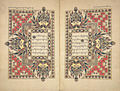 Opening pages of Serat Jatipustaka copied in 1830, Denver Museum collection
 -
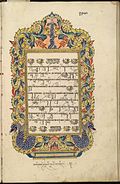 Opening page of Babad Tanah Jawi copied in 1862, Library of Congress collection
 -
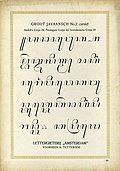 A Javanese type sample from the Amsterdam type foundry, 1910
 -
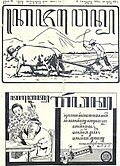 Cover of Kajawèn magazine, issue 65, 16 August 1933
 -
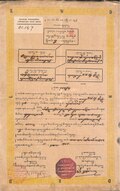 Serat kekancingan, a document issued by the Kraton of Yogyakarta in 1935, Dewantara Kirti Griya Museum collection
 -
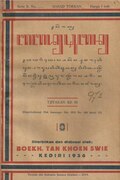 Serat Babad Tuban published by Tan Khoen Swie in 1936


Decline
[edit]
As literacy rates and the demand for reading materials increased at the beginning of the 20th century, Javanese publishers paradoxically began to decrease the amount of Javanese script publication due to a practical and economic consideration: printing any text in Javanese script at the time required twice the amount of paper compared to the same text rendered in the Latin alphabet, making Javanese texts more expensive and time-consuming to produce. In order to lower production costs and keep book prices affordable to the general populace, many publishers gradually prioritized publications in the Latin alphabet.[24][c] However, the Javanese population at the time maintained the use of Javanese script in various aspects of everyday life. It was, for example, considered more polite to write a letter using Javanese script, especially one addressed toward an elder or superior. Many publishers, including Balai Pustaka, continued to print books, newspapers, and magazines in Javanese script due to sufficient, albeit declining, demand. The use of Javanese script only started to drop significantly during the Japanese occupation of the Dutch East Indies beginning in 1942.[25] Some writers attribute this sudden decline to prohibitions issued by the Japanese government banning the use of native script in the public sphere, though no documentary evidence of such a ban has yet been found. Nevertheless, the use of Javanese script did decline significantly during the Japanese occupation and it never recovered its previous widespread use in post-independence Indonesia.
Contemporary use
[edit].jpg)

In contemporary usage, Javanese script is still taught as part of the local curriculum in Yogyakarta, Central Java, and the East Java Province. Several local newspapers and magazines have columns written in Javanese script, and the script can frequently be seen on public signage. However, many contemporary attempts to revive Javanese script are symbolic rather than functional; there are no longer, for example, periodicals like the Kajawèn magazine that publish significant content in Javanese script. Most Javanese people today know the existence of the script and recognize a few letters, but it is rare to find someone who can read and write it meaningfully.[26][27] Therefore, as recently as 2019, it is not uncommon to see Javanese script signage in public places with numerous misspellings and basic mistakes.[28][29] Several hurdles in revitalizing the use of Javanese script includes information technology equipment that does not support correct rendering of Javanese script, lack of governing bodies with sufficient competence to consult on its usage, and lack of typographical explorations that may intrigue contemporary viewers. Nevertheless, attempts to revive the script are still being conducted by several communities and public figures who encourage the use of Javanese script in the public sphere, especially with digital devices.[30]
Letters
[edit]Aksara
[edit]Aksara are base letters that represent a single syllable. Javanese script has approximately 45 base aksara (letters), but not all of them are equally used. Over time, some aksara have fallen out of use, while others are only employed in specific contexts. Therefore, the aksara in Javanese script are classified into several types based on their function and usage.
Wyanjana
[edit]Aksara wyanjana (ꦲꦏ꧀ꦱꦫꦮꦾꦚ꧀ꦗꦤ) are consonants with an inherent vowel sound of /a/ or /ɔ/. As a descendant of the Brahmi script, Javanese script originally had 33 wyanjana characters to write the 33 consonant sounds used in Sanskrit and Kawi. Their forms can be seen as follows:[31][32]
| Unvoiced | Voiced | Nasal | Semivowel | Sibilant | Fricative | |||
|---|---|---|---|---|---|---|---|---|
| Unaspirated | Aspirated | Unaspirated | Aspirated | |||||
| Velar | ꦏ ka
|
ꦑ kha
|
ꦒ ga
|
ꦓ gha
|
ꦔ ṅa
|
ꦲ ha/a
| ||
| Palatal | ꦕ ca
|
ꦖ cha
|
ꦗ ja
|
ꦙ jha
|
ꦚ ña
|
ꦪ ya
|
ꦯ śa
|
|
| Retroflex | ꦛ ṭa
|
ꦜ ṭha
|
ꦝ ḍa
|
ꦞ ḍha
|
ꦟ ṇa
|
ꦫ ra
|
ꦰ ṣa
|
|
| Dental | ꦠ ta
|
ꦡ tha
|
ꦢ da
|
ꦣ dha
|
ꦤ na
|
ꦭ la
|
ꦱ sa
|
|
| Labial | ꦥ pa
|
ꦦ pha
|
ꦧ ba
|
ꦨ bha
|
ꦩ ma
|
ꦮ wa
|
||
Aksara nglegéna
[edit]Modern Javanese only uses 20 consonant sounds, represented by 20 of the original 33 aksara wyanjana, which are then referred to as ꦲꦏ꧀ꦱꦫ ꦔ꧀ꦭꦼꦒꦺꦤ, aksara nglegéna. They are commonly arranged in the hanacaraka sequence, a pangram whose name is derived from its first five letters, similar to the word "alphabet" which comes from the first two letters of the Greek alphabet, alpha and beta.[34] This sequence has been used at least the 15th century, when the island of Java started to receive significant Islamic influence.[35] There are numerous interpretations on the supposed philosophical and esoteric qualities of the hanacaraka sequence,[36] and it is often linked to the myth of Aji Saka.[37][38]
ꦲ ha
|
ꦤ na
|
ꦕ ca
|
ꦫ ra
|
ꦏ ka
|
Javanese: ꦲꦤꦕꦫꦏ, romanized: hana caraka, lit. 'There were (two) emissaries.' |
ꦢ da
|
ꦠ ta
|
ꦱ sa
|
ꦮ wa
|
ꦭ la
|
Javanese: ꦢꦠꦱꦮꦭ, romanized: data sawala, lit. 'They began to fight.' |
ꦥ pa
|
ꦝ dha
|
ꦗ ja
|
ꦪ ya
|
ꦚ ña
|
Javanese: ꦥꦝꦗꦪꦚ, romanized: padha jayanya, lit. 'Their valor was equal' |
ꦩ ma
|
ꦒ ga
|
ꦧ ba
|
ꦛ tha
|
ꦔ ṅa
|
Javanese: ꦩꦒꦧꦛꦔ, romanized: maga bathanga, lit. 'They both fell dead.' |
Aksara murda
[edit]Some of the remaining characters were repurposed as ꦲꦏ꧀ꦱꦫꦩꦸꦂꦢ, aksara murda. Aksara murda are used to write the names of both respected individuals and legendary figures (for example Javanese: ꦨꦶꦩ, romanized: Bima) and real individuals. The use of murda differs from the use of capital letters in Latin script, in that[39] not every letter has a corresponding murda and if there is no murda for the first syllable of a name, a murda form can be used for whichever succeeding syllable does one. A name of great respect can be written entirely in murda. In traditional writing, the application of murda was essentially optional and not consistent. So, a name like Gani could be written as ꦒꦤꦶ (without murda), ꦓꦤꦶ (with murda at the beginning), or ꦓꦟꦶ (entirely in murda). The remaining characters that are not included in nglegena or murda are mahaprana characters. Mahaprana characters have no function in modern Javanese writing and are only used in writing Sanskrit-Kawi.[31]
| Aksara murda | ꦟ na
|
ꦖ ca
|
ꦬ ra
|
ꦑ ka
|
ꦡ ta
|
ꦯ sa
|
ꦦ pa
|
ꦘ nya
|
ꦓ ga
|
ꦨ ba
|
|---|
Additional letters in loan words
[edit]The Javanese script includes additional letters (Javanese: ꦲꦏ꧀ꦱꦫ ꦫꦺꦏꦤ꧀, romanized: aksara rékan used to write foreign sounds.[40] Initially developed to transcribe loanwords from Arabic, they were later adapted for loanwords from Dutch, and in contemporary use, they are also used to write words from Indonesian and English. Most rékan characters are formed by adding the cecak telu diacritic to the character whose sound is considered closest to the foreign sound. For example, the rékan character fa (ꦥ꦳) is formed by adding the cecak telu to the wyanjana character pa (ꦥ). The combination of wyanjana and the foreign sound equivalent for each rékan may vary among writers due to the lack of a unified standard. According to Padmasusastra[41] and Dwijasewaya,[42] there are five rékan characters: kha, dza, fa, za, and gha. However, according to Hollander, there are nine.[43]
| Javanese | ḥa ꦲ꦳
|
kha ꦏ꦳
|
qa ꦐ
|
dza ꦢ꦳
|
sya ꦱ꦳
|
fa/va ꦥ꦳
|
za ꦗ꦳
|
gha ꦒ꦳
|
ʾa ꦔ꦳
|
|---|---|---|---|---|---|---|---|---|---|
| Arabic | ح
|
خ
|
ق
|
ذ
|
ش
|
ف
|
ز
|
غ
|
ع
|
- ^ ka Sasak was originally used only in the writing of the Sasak language
Diacritics
[edit]Diacritics (sandhangan ꦱꦤ꧀ꦝꦔꦤ꧀) are marks attached to characters to modify the inherent vowel of the respective character. Similar to the characters themselves, Javanese diacritics can also be divided into several groups depending on their function and usage.
Vowels
[edit]Aksara swara (ꦲꦏ꧀ꦱꦫꦱ꧀ꦮꦫ) are characters used to write independent vowels. Javanese script has 14 vowel characters inherited from the Sanskrit writing tradition.[32] Modern Javanese no longer uses the entire set of swara, so now only the short vowel characters are generally taught. In modern writing, aksara swara is used to replace the aksara wyanjana ha ꦲ (whose pronunciation can be ambiguous as it serves a dual function as the phoneme /ha/ and /a/) in foreign names or terms whose pronunciation needs clarification.[44]
Sandhangan swara (ꦱꦤ꧀ꦝꦁꦔꦤ꧀ꦱ꧀ꦮꦫ) are diacritics used to change a consonant's inherent vowel /a/ to other vowels, as shown below:[45]
| Short | Long | ||||||||||
|---|---|---|---|---|---|---|---|---|---|---|---|
ꦄ IPA: /a/
|
ꦆ IPA: /i/
|
ꦈ IPA: /u/
|
ꦌ IPA: /e/
|
ꦎ IPA: /o/
|
ꦄꦴ IPA: /aː/
|
ꦇ IPA: /iː/
|
ꦈꦴ IPA: /uː/
|
ꦍ IPA: /aj/
|
ꦎꦴ IPA: /au/
| ||
-
|
wulu ꦶ
|
suku ꦸ
|
taling ꦺ
|
taling-tarung ꦺꦴ
|
pepet ꦼ
|
tarung ꦴ
|
wulu melik ꦷ
|
suku mendut ꦹ
|
dirga muré ꦻ
|
dirga muré-tarung ꦻꦴ
|
pepet-tarung ꦼꦴ
|
ꦲ a
|
ꦲꦶ i
|
ꦲꦸ u
|
ꦲꦺ é
|
ꦲꦺꦴ o
|
ꦲꦼ e
|
ꦲꦴ ā
|
ꦲꦷ ī
|
ꦲꦹ ū
|
ꦲꦻ ai
|
ꦲꦻꦴ au
|
ꦲꦼꦴ eu
|
ꦏ ka
|
ꦏꦶ ki
|
ꦏꦸ ku
|
ꦏꦺ ké
|
ꦏꦺꦴ ko
|
ꦏꦼ ke
|
ꦏꦴ kā
|
ꦏꦷ kī
|
ꦏꦹ kū
|
ꦏꦻ kai
|
ꦏꦻꦴ kau
|
ꦏꦼꦴ keu
|
Just like aksara swara, only short vowel diacritics are generally taught and used in contemporary Javanese, while long vowel diacritics are used in writing Sanskrit and Kawi.
Pa cerek ꦉ, pa cerek dirgha ꦉꦴ, nga lelet ꦊ, and nga lelet raswadi ꦋ are syllabic consonants that are considered vowels in Sanskrit-Kawi.[46][47] When used in languages other than Sanskrit, the pronunciation of these four characters often varies. In modern Javanese, only pa cerek is pronounced /rə/ and nga lelet is pronounced /lə/. In modern teaching, these characters are often separated from aksara swara and known as aksara gantèn (replacement characters). They are used to replace every combination of ra + pepet (ꦫꦼ → ꦉ) and la + pepet (ꦭꦼ → ꦊ).[48]. Pa cerek dirgha and nga lelet raswadi are not used in modern Javanese.
Panyigeging wanda
[edit]Diacritics (Javanese: ꦱꦤ꧀ꦝꦁꦔꦤ꧀ꦥꦚꦶꦒꦼꦒꦶꦁꦮꦤ꧀ꦢ, romanized: sandhangan panyigeging vanda) are used to close a syllable with a consonant.
panyangga ꦀ
|
cecek ꦁ -ng
|
layar ꦂ -r
|
wignyan ꦃ -h
|
pangkon ꧀
|
|---|---|---|---|---|
ꦏꦀ kam
|
ꦏꦁ kang
|
ꦏꦂ kar
|
ꦏꦃ kah
|
ꦏ꧀ k
|
Semivowels and their diacritics
[edit]Consonant clusters containing a semivowel are written by adding a diacritic (Javanese: ꦱꦤ꧀ꦝꦁꦔꦤ꧀ꦮꦾꦚ꧀ꦗꦤ, romanized: sandhangan wyanjana) to the base syllable.[49]
keret ꦽ -re-
|
pèngkal ꦾ -y-
|
cakra ꦿ -r-
|
panjingan la ꧀ꦭ -l-
|
gembung ꧀ꦮ -w-
|
|---|---|---|---|---|
ꦏꦽ kre
|
ꦏꦾ kya
|
ꦏꦿ kra
|
ꦏ꧀ꦭ kla
|
ꦏ꧀ꦮ kwa
|
Pasangan
[edit]The inherent vowel of each base character can be nullified using the diacritic pangkon. However, the pangkon is generally not used in the middle of words or sentences. Instead, to write a closed syllable in the middle of a word or sentence, the pasangan form (ꦥꦱꦔꦤ꧀) is used. Unlike the pangkon, the pasangan not only nullifies the preceding consonant but also indicates the subsequent consonant. For example, the character ma (ꦩ) followed by the pasangan form of pa (꧀ꦥ) becomes mpa (ꦩ꧀ꦥ). The pasangan forms in this table are those used in modern Javanese writing. Some characters have different pasangan forms in Sanskrit-Kawi writing.
| ha/a | na | ca | ra | ka | da | ta | sa | wa | la | pa | dha | ja | ya | nya | ma | ga | ba | tha | nga |
|---|---|---|---|---|---|---|---|---|---|---|---|---|---|---|---|---|---|---|---|
꧀ꦲ
|
꧀ꦤ
|
꧀ꦕ
|
꧀ꦫ
|
꧀ꦏ
|
꧀ꦢ
|
꧀ꦠ
|
꧀ꦱ
|
꧀ꦮ
|
꧀ꦭ
|
꧀ꦥ
|
꧀ꦝ
|
꧀ꦗ
|
꧀ꦪ
|
꧀ꦚ
|
꧀ꦩ
|
꧀ꦒ
|
꧀ꦧ
|
꧀ꦛ
|
꧀ꦔ
|
꧀ꦟ
|
꧀ꦖ
|
꧀ꦬ
|
꧀ꦑ
|
꧀ꦡ
|
꧀ꦯ
|
꧀ꦦ
|
꧀ꦘ
|
꧀ꦓ
|
꧀ꦨ
|
||||||||||
꧀ꦣ
|
꧀ꦰ
|
꧀ꦞ
|
꧀ꦙ
|
꧀ꦜ
|
- ^ often used as part of pepadan, which does not have a phonetic function.
Numbers
[edit]Javanese script has its own numerals (Javanese: ꦲꦁꦏ, romanized: angka) that behave similarly to Arabic numerals. Some of their forms closely resemble other Javanese characters. For instance, the numeral 1 ⟨꧑⟩ resembles the wyanjana character ga ⟨ꦒ⟩, and the numeral 8 ⟨꧘⟩ resembles the murda character pa ⟨ꦦ⟩. To avoid confusion, numerals that are used in the middle of sentences must be surrounded by pada pangkat ⟨꧇ ꧇⟩ or pada lingsa ⟨꧈ ꧈⟩.[50][51] For example, tanggal 17 Juni ("the date 17 June") is written
ꦠꦁꦒꦭ꧀꧇꧑꧗꧇ꦗꦸꦤꦶ
or
ꦠꦁꦒꦭ꧀꧈꧑꧗꧈ꦗꦸꦤꦶ.
These enclosures can be omitted when the numeral's function is clear from context, such as page numbers in the corner of a page. The forms are as follows: [50][51]
0 ꧐
|
1 ꧑
|
2 ꧒
|
3 ꧓
|
4 ꧔
|
5 ꧕
|
6 ꧖
|
7 ꧗
|
8 ꧘
|
9 ꧙
|
Punctuation
[edit]Traditional Javanese text is written without spaces between words (scriptio continua) and uses a set of punctuation marks known as pada (ꦥꦢ). To separate sentences, Javanese script employs pada lungsi (꧉) when the last syllable is open (without a pangkon) but uses pada lingsa (꧈) when the last syllable is closed (using a pangkon). Conversely, to separate clauses, pada lingsa (꧈) is used if the last syllable is closed, while a space is used if the last syllable is open. This punctuation system differs from the use of periods and commas in Latin script and is often not well understood by contemporary Javanese script users.
Additionally, Javanese script lacks equivalents for question marks, exclamation marks, hyphens, mathematical symbols (including slashes), and semicolons. Consequently, whether a sentence in Javanese script is interrogative (question) or imperative (command) can only be inferred from the context. The various forms of pada are as follows:
꧈ lingsa
|
꧉ lungsi
|
꧊ adeg
|
꧋ adeg-adeg
|
꧌...꧍ pisélèh
|
꧁...꧂ rerenggan
|
꧇ pangkat
|
ꧏ rangkap
|
In modern teaching, the most commonly used punctuation marks in Javanese script are pada adeg-adeg, pada lingsa, and pada lungsi, which function similarly to a paragraph mark (like a pilcrow), a comma, and a full stop, respectively. Pada adeg-adeg opens a paragraph, pada lingsa separates clauses or sentences and pada lungsi ends a sentence. Other punctuation marks include pada adeg and pada pisèlèh, which are used to enclose inserts in the text, similar to parentheses or quotation marks. Pada pangkat functions similarly to a colon. Pada rangkap is sometimes used as a repetition marker, similar to the use of the number "2" in informal Indonesian (e.g. kata-kata ꦏꦠꦏꦠ → ꦏꦠꧏ = kata2).[52]
Some punctuation marks, like rerenggan, have no direct Latin script equivalents and are often purely decorative. They are frequently used to frame titles or sections of text, with considerable variation among writers. In correspondence, certain punctuation marks indicate the sender’s social status. Pada andhap denotes low status, pada madya denotes middle status, pada luhur denotes high status, and pada guru is neutral, without social connotations. Pada pancak is used to end a letter. However, these distinctions are generalized. The actual forms and functions of these punctuation marks are highly variable, with specific regional and personal styles.[52]
In traditional manuscripts, some royal scribes used specific correction marks instead of crossing out errors. Tirta tumétès is found in Yogyakarta manuscripts, while isèn-isèn is found in Surakarta manuscripts.[53]
Pepadan
[edit]Aside from regular punctuation, one of the distinctive features in Javanese script writing is pepadan (ꦥꦼꦥꦢꦤ꧀), a series of highly ornate verse marks.
Behrend (1996) categorizes pepadan into two general groups: small pada, which are single punctuation marks, and large pada, which are often composed of several marks arranged in a sequence. Small pada are used to indicate stanza breaks, typically appearing every 32 to 48 syllables depending on the meter used. Large pada mark a change in tembang, or canto, and usually appear every 5 to 10 pages, depending on the structure of the text.[54] Javanese writing guides often identify three types of large pada purwa pada used at the beginning of the first tembang, madya pada used at tembang transitions, and wasana pada used at the end of the text.[52] However, these three marks are often merged and treated as one in many Javanese texts.[55]
꧅ ꦧ꧀ꦖ ꧅ purwa pada
|
꧅ ꦟ꧀ꦢꦿ ꧅ madya pada
|
꧅ ꦆ ꧅ wasana pada
|
Pepadan is a visually prominent element in Javanese manuscripts and may be rendered in color or even gilded.[56] In some luxurious manuscripts, the form of pepadan can even serve as a clue to the song being used; for instance, pepadan featuring wings or crow-like birds (dhandhang in Javanese) refers to the dhandhanggula tembang, while those featuring goldfish allude to the maskumambang ("gold floating in water") tembang. One of the key centers for producing manuscripts with exceptional pepadan designs was the scriptorium of Pakualaman in Yogyakarta.[55][57]
-
 Pepadan from Serat, minor pada ꧅
 -
 Pepadan from Babad Mataram, minor pada ꧅
 -
 Pepadan from Serat Jayalengkara, major pada ꧅ ꦧ꧀ꦖ ꧅
 -
 Pepadan from serat selarasa, major pada ꧅ ꦧ꧀ꦖ ꧅
 -


Sample text
[edit]Excerpt from the Treatise on Cats (Javanese: ꦱꦼꦫꦠ꧀ꦏꦠꦸꦫꦁꦒꦤ꧀ꦏꦸꦕꦶꦁ, romanized: Serat Katuranggan Kucing), printed in 1871 with modern Javanese language and spelling.[58]
Javanese
Romanized
Aja sira ngingu kucing, lurik ireng buntut panjang, punika awon lamaté, sekelan sring tukaran, aran ḍaḍang sungkawa, pan adoh rijeki nipun, yèn buṇḍel nora ngapa.
Transliteration
Madurese
[edit]In the Madurese, the Javanese script is referred to as carakan Madhurâ or carakan Jhâbân (script from Javanese). While in Javanese, each consonant includes an inherent /a/ or /ɔ/, in Madurese, the inherent vowel is /a/ or /ɤ/.[59][60][61][62][63] Another difference is the use of the wignyan, which adds aspiration to a syllable in Javanese but indicates a glottal stop in Madurese.
Only five aksara rèka'an (additional letters) are taught in Madurese schools.
Sample text
[edit]Below is the use of carakan in Bab oreng megha djhoeko e'tana Djhaba sareng Madhoera (Chapter on people catching fish in the land of Java and Madura), accompanied by the modern Madurese spelling.
Madurese
꧑꧇ ꦥꦫꦲꦺꦴ꧈ ꦱꦺꦲꦺꦧꦝꦶꦝꦫꦶꦏꦗꦸꦧꦸꦁꦏꦺꦴꦭ꧀ꦱꦺꦲꦺꦭꦺꦴꦧꦔꦺ꧉ ꦧꦝꦱꦺꦲꦺꦱꦺ ꦩ꧀ꦧꦸꦏꦗꦸꦥꦺꦴꦭꦺꦲꦺꦥꦺꦁꦒꦶꦂ꧈ ꦧꦝꦱꦺꦧꦸꦤ꧀ꦠꦼꦤ꧀꧈
꧒꧇ ꦥꦫꦲꦺꦴꦱꦺꦲꦺꦧꦝꦶꦝꦫꦶꦥꦥꦤ꧀ꦫꦧ꧀ꦠꦼꦤ꧀ꦧꦤ꧀ꦱꦢꦗ꧉Romanized
- Parao, sè èbhâḍhi ḍâri kaju bungkol sè èlobângè. Bâḍâ sè èsèmbu kaju polè è pèngghir, bâḍâ sè bhunten
- Parao sè èbhâḍhi papan rabten bân sadhâjâ.
Transliteration
- Boats made from hollowed-out logs. Some have additional planks attached to the sides, while others do not.
- Boats made entirely from planks.
Sundanese
[edit]In Sundanese, the Javanese script is referred to as aksara Sunda cacarakan,[64] aksara Sunda Basisir Kalér,[65] aksara Sunda Jawa,[66] or simply cacarakan.[67]
Cacarakan is nearly identical to Javanese hanacaraka, consisting of consonants (Sundanese: nglagena), gedé (murda, honorific letters), and panambah (vowels, swara), sandangan (diacritics) and pada (punctuation).[68]
There are minor differences between the Javanese and Sundanese alphabets. The Sundanese language does not have dental da and retroflex ta, so the dha letter is used to replace the da letter. The shape of the nya letter is derived from the na letter, with the nya pair positioned as a subscript.[68]
| da | nya | |
|---|---|---|
| Javanese | ꦢ꧀ꦢ da
|
ꦚ꧀ꦚ nya
|
| Sundanese | ꦝ꧀ꦝ da
|
ꦤ꧀ꦚ꧀ꦚ nya
|
Sample text
[edit]Sundanese
Romanized
Transliteration
—Dongéng-dongéng Pieunteungeun (Stories as Reflections), Moehamad Moesa[69]
Comparison with Balinese
[edit]The closest relative of the Javanese script is the Balinese script. As a direct descendant of the Kawi script, Javanese and Balinese scripts still share many similarities in the basic structure of each letter. One striking difference between Javanese and Balinese scripts is the writing system; the Balinese writing system tends to be more conservative and retains many aspects of Kawi orthography that are no longer used in Javanese script. For example, the word "desa" in Javanese script is now written as ꦢꦺꦱ.
ha ꦲ
|
na ꦤ
|
ca ꦕ
|
ra ꦫ
|
ka ꦏ
|
a ꦄ
|
ā ꦄ
|
i ꦆ
|
ī ꦇ
|
u ꦈ
|
ū ꦈꦴ
|
ᬳ
|
ᬦ
|
ᬘ
|
ᬭ
|
ᬓ
|
ᬅ
|
ᬆ
|
ᬇ
|
ᬈ
|
ᬉ
|
ᬊ
|
Unicode
[edit]Javanese script was added to the Unicode Standard in October, 2009 with the release of version 5.2. The Unicode block for Javanese is U+A980–U+A9DF. There are 91 code points for Javanese script: 53 letters, 19 punctuation marks, 10 numbers, and 9 vowels:
| Javanese[1][2] Official Unicode Consortium code chart (PDF) | ||||||||||||||||
| 0 | 1 | 2 | 3 | 4 | 5 | 6 | 7 | 8 | 9 | A | B | C | D | E | F | |
| U+A98x | ꦀ | ꦁ | ꦂ | ꦃ | ꦄ | ꦅ | ꦆ | ꦇ | ꦈ | ꦉ | ꦊ | ꦋ | ꦌ | ꦍ | ꦎ | ꦏ |
| U+A99x | ꦐ | ꦑ | ꦒ | ꦓ | ꦔ | ꦕ | ꦖ | ꦗ | ꦘ | ꦙ | ꦚ | ꦛ | ꦜ | ꦝ | ꦞ | ꦟ |
| U+A9Ax | ꦠ | ꦡ | ꦢ | ꦣ | ꦤ | ꦥ | ꦦ | ꦧ | ꦨ | ꦩ | ꦪ | ꦫ | ꦬ | ꦭ | ꦮ | ꦯ |
| U+A9Bx | ꦰ | ꦱ | ꦲ | ꦳ | ꦴ | ꦵ | ꦶ | ꦷ | ꦸ | ꦹ | ꦺ | ꦻ | ꦼ | ꦽ | ꦾ | ꦿ |
| U+A9Cx | ꧀ | ꧁ | ꧂ | ꧃ | ꧄ | ꧅ | ꧆ | ꧇ | ꧈ | ꧉ | ꧊ | ꧋ | ꧌ | ꧍ | ꧏ | |
| U+A9Dx | ꧐ | ꧑ | ꧒ | ꧓ | ꧔ | ꧕ | ꧖ | ꧗ | ꧘ | ꧙ | ꧞ | ꧟ | ||||
| Notes | ||||||||||||||||
Gallery
[edit]-
 A stone inscription from around 18th century in the Kyai Tumenggung Pusponegoro grave complex, Gresik
 -
 A page from Serat Jaya Lengkara Wulang copied in 1803, British Library collection
 -
 A page from Serat Damar Wulan copied in 1804, British Library collection
 -
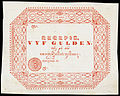 Five Gulden/Rupiah scrip issued by Dutch East Indies in 1846, value spelled in Latin, Pégon, and Javanese script
 -
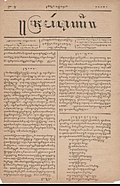 Bromartani newspaper, the first newspaper printed in Javanese language and script, circulating between 1855 and 1856
 -
 Title page of a book commemorating the ascension of Queen Wilhelmina, printed in Semarang in 1898
 -
 A page from Serat Bratayudha (an episode of Mahabharata) copied in 1902, Widya Budaya collection
 -
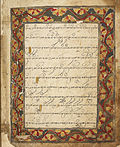 Opening pages of Serat Damar Wulan copied around the 18th century, British Library collection
 -
 An advertisement for Droste's Cacao
 -
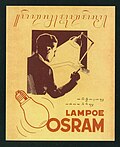 An advertisement for Osram light bulb
 -
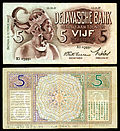 5 Gulden paper currency issued by the Bank of Java in 1937, with multilingual forgery warnings, including one in Javanese language and script
 -
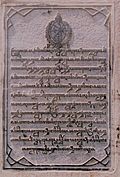 Pakubuwana X inscription commemorating the construction of several gateways in Surakarta in 1938
 -
 A patrol car used by the Public Health Service (Dienst der Volksgezondheid) c. 1925
 -
 100 Gulden paper currency issued by the Bank of Java in 1946, the last Gulden series that contains Javanese script. Later reprinted in 1950
 -
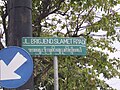 A street sign in Surakarta. The word jendral in the sign has been misspelled and should have used taling in accordance to how it is pronounced in Javanese, jèndral
 -
 Contemporary merchandise with design elements containing Javanese script
 -
 The Yogyakarta Sultanate coat of arms with the Hamengkubuwana royal monogram in Javanese script


-Government_recepis-5_Gulden_(1846)_unsigned_remainder.jpg)


.jpg)


.jpg)
.jpg)


See also
[edit]Notes
[edit]- ^ VOC established a paper mill in Java between 1665–1681. However, the mill was not able to fulfill paper demands of the island and so stable paper supply continued to rely in shipments from Europe.[13]
- ^ Among 19th century European scholars, the style of the Surakartan scribes is agreed as the most refined among the various regional Javanese hand. So much so that prominent Javanese scholars such as J.F.C. Gericke frequently suggested that the Surakartan style should be used as the ideal shape to which a proper Javanese type design could be based upon.[20]
- ^ According to D. A. Rinkes, the director of the government-owned Balai Pustaka, writing in 1920, "[using Roman type] considerably simplifies matters for European users, and for interested Natives presents no difficulty at all, seeing that the Javanese language... can be rendered no less clearly in roman type than in the Javanese script. In this way the costs are about one third of printing in Javanese characters, seeing that printing in that type, which furthermore is not readily available, is one and a half times to twice as expensive (and more time-consuming) than in roman type, also because it cannot be set on a setting-machine, and one page of Javanese type only contains about half the number of words on one page of the same text in roman script."
References
[edit]- ^ Poerwadarminta, W.J.S (1939). Baoesastra Djawa (in Javanese). Batavia, NEI: J.B. Wolters.
- ^ Behrend 1996, pp. 161.
- ^ Everson 2008, pp. 1.
- ^ Holle, K F (1882). "Tabel van oud-en nieuw-Indische alphabetten". Bijdrage tot de Palaeographie van Nederlandsch-Indie. Batavia: W. Bruining.
- ^ Casparis, J G de (1975). Indonesian Palaeography: A History of Writing in Indonesia from the Beginnings to C. A.D. 1500. Vol. 4. Brill. ISBN 9004041729.
- ^ Campbell, George L. (2000). Compendium of the World's Languages. Vol. 1. New York: Routledge.
- ^ a b Behrend 1996, pp. 161–162.
- ^ Behrend 1996, pp. 162.
- ^ Moriyama 1996, pp. 166.
- ^ Moriyama 1996, pp. 167.
- ^ Hinzler, H I R (1993). "Balinese palm-leaf manuscripts". Bijdragen tot de Taal-, Land- en Volkenkunde. 149 (3): 438–473. doi:10.1163/22134379-90003116.
- ^ a b Behrend 1996, pp. 165–167.
- ^ a b Teygeler, R (2002). "The Myth of Javanese Paper". In R Seitzinger (ed.). Timeless Paper. Rijswijk: Gentenaar & Torley Publishers. ISBN 9073803039.
- ^ a b Molen 2000, pp. 154–158.
- ^ Behrend 1996, pp. 167–169.
- ^ Behrend 1996, pp. 172.
- ^ Behrend 1996, pp. 172–175.
- ^ Molen 2000, pp. 137.
- ^ Molen 2000, pp. 136–140.
- ^ Molen 2000, pp. 149–154.
- ^ Astuti, Kabul (October 2013). Perkembangan Majalah Berbahasa Jawa dalam Pelestarian Sastra Jawa. International Seminar On Austronesian - Non Austronesian Languages and Literature. Bali.
- ^ Pick, Albert (1994). Bruce, Colin R. II; Shafer, Neil (eds.). Standard Catalog of World Paper Money: General Issues (7th ed.). Krause Publications. ISBN 0-87341-207-9.
- ^ "Mesin Ketik Huruf Jawa". Museum Penerangan. Archived from the original on 25 June 2022. Retrieved 8 November 2021.
- ^ Robson 2011, pp. 25.
- ^ Hadiwidjana, R. D. S. (1967). Tata-sastra: ngewrat rembag 4 bab : titi-wara tuwin aksara, titi-tembung, titi-ukara, titi-basa. U.P. Indonesia.
- ^ Wahab, Abdul (October 2003). "Masa Depan Bahasa, Sastra, dan Aksara Daerah". Kelompok B, Ruang Rote (PDF). Kongres Bahasa Indonesia VIII. Pusat Bahasa Departemen Pendidikan Indonesia. pp. 8–9.
- ^ Florida, Nancy K (1995). Writing the Past, Inscribing the Future: History as Prophesy in Colonial Java. Duke University Press. p. 37. ISBN 9780822316220.
- ^ Mustika, I Ketut Sawitra (12 October 2017). Atmasari, Nina (ed.). "Alumni Sastra Jawa UGM Bantu Koreksi Tulisan Jawa pada Papan Nama Jalan di Jogja". Solopos.com. Yogyakarta. Retrieved 8 May 2020.
- ^ Eswe, Hana (13 October 2019). "Penunjuk Jalan Beraksara Jawa Salah Tulis Dikritik Penggiat Budaya". Grobogan: SUARABARU.id. Retrieved 8 May 2020.
- ^ Siti Fatimah (27 February 2020). "Bangkitkan Kongres Bahasa Jawa Setelah Mati Suri". Bantul: RADARJOGJA.co. Archived from the original on 19 June 2020. Retrieved 9 May 2020.
- ^ a b c Everson 2008, pp. 1–2.
- ^ a b Poerwadarminta 1930, pp. 9–12.
- ^ "Javanese, Sundanese, and Madurese romanization table" (PDF). Library of Congress. 2011. Retrieved 2 January 2025.
- ^ Robson 2011, pp. 13–14.
- ^ Everson 2008, pp. 5–6.
- ^ Rochkyatmo 1996, pp. 35–41.
- ^ Rochkyatmo 1996, pp. 8–11.
- ^ Rochkyatmo 1996, pp. 51–58.
- ^ Darusuprapta 2002, pp. 11–13.
- ^ Darusuprapta 2002, pp. 16–17.
- ^ Padmasusastra (1917). Layang Carakan. p. 16. Archived from the original on 14 September 2022. Retrieved 18 May 2025.
- ^ Dwijasewaya (1910). Paramasastra Jawa. p. 21. Archived from the original on 14 September 2022.
- ^ Hollander, J J de (1886). Handleiding bij de beoefening der Javaansche Taal en Letterkunde. Leiden: Brill. p. 3.
- ^ Darusuprapta 2002, pp. 13–15.
- ^ a b Darusuprapta 2002, pp. 19–24.
- ^ Woodard, Roger D (2008). The Ancient Languages of Asia and the Americas. Cambridge University Press. p. 9. ISBN 978-0521684941.
- ^ Poerwadarminta 1930, pp. 11.
- ^ Darusuprapta 2002, pp. 20.
- ^ a b Darusuprapta 2002, pp. 29–32.
- ^ a b Everson 2008, pp. 4.
- ^ a b Darusuprapta 2002, pp. 44–45.
- ^ a b c Everson 2008, pp. 4–5.
- ^ Everson 2008, pp. 5.
- ^ Behrend 1996, pp. 188.
- ^ a b Behrend 1996, pp. 190.
- ^ Behrend 1996, pp. 189–190.
- ^ Saktimulya, Sri Ratna (2016). Naskah-naskah Skriptorium Pakualaman. Jakarta: Kepustakaan Populer Gramedia. ISBN 978-6024242282.
- ^ Serat: katoerangganing koetjing saha ngalamat solah ing koetjing kang awon miwak kang sahe (in Javanese). Semarang, Indonesia: GCT Van Dorp & Co. 1871. p. 7. Retrieved 21 May 2024.
- ^ Hamzah, Bambang Hartono; Sayunani, Isya; Gani, Abdul; Zaini; Rusliy; Dradjid, H.M. (2014). Ghazali, A. Syukur; Poerno, Heru Asri (eds.). Sekkar Anom I (in Madurese). Dinas Pendidikan Provinsi Jawa Timur. p. 148.
- ^ Sukardi, A. (2005). Kasustraan Madura Kembang Sataman (in Madurese) (2 ed.). Jember: Dinas Pendidikan Kabupaten Jember.
- ^ Kiliaan 1897, p. 89.
- ^ Wedhawati (2001). Tata Bahasa Jawa Mutakhir. Jakarta: Pusat Bahasa. pp. 39–40. ISBN 9796851415. Archived from the original on 17 April 2023. Retrieved 15 February 2021.
- ^ Davies, William D. (2010). A Grammar of Madurese. Berlin: Walter de Gruyter. p. 53. ISBN 9783110224443.
- ^ Rosyadi (1997). PELESTARIAN DAN USAHA PENGEMBANGAN AKSARA DAERAH SUNDA (PDF) (in Indonesian) (1 ed.). Jakarta: Proyek Pengkajian dan Pembinaan Nilai-Nilai Budaya Pusat Direktorat Sejarah dan Nilai Tradisional Direktorat Jenderal Kebudayaan.
- ^ Rosyadi 1997, p. 51.
- ^ Coolsma, Sierk (1985). Tata Bahasa Sunda. Translated by Widjajakusumah, Husein; Rusyana, Yus. OCLC 13986971.
- ^ Ekadjati, Edi S. (1999). Direktori Edisi Naskah Nusantara. Jakarta: Yayasan Obor Indonesia dan Masyarakat Pernaskahan Nusantara. ISBN 9794613347.
- ^ a b Holle, K F (1862). Soendasch spel- en lees boek, met Soendasche letter. Batavia: Landsdrukkerij.
- ^ Moesa (.R. Hadji.), Moehamad (1867). Dongeng-dongeng pingĕntĕngĕn (in Sundanese). Archived from the original on 17 April 2023. Retrieved 17 May 2025.
Bibliography
[edit]- Arps, B (1999). "How a Javanese Gentleman put his Library in Order". Bijdragen tot de Taal-, Land- en Volkenkunde. 155 (3): 416–469. doi:10.1163/22134379-90003871. hdl:1887/15216.
- Behrend, T E (1993). "Manuscript Production in Nineteenth Century Java. Codicology and the Writing of Javanese Literary History". Bijdragen tot de Taal-, Land- en Volkenkunde. 149 (3): 407–437. doi:10.1163/22134379-90003115.
- Behrend, T E (1996). "Textual Gateways: the Javanese Manuscript Tradition". In Ann Kumar; John H. McGlynn (eds.). Illuminations: The Writing Traditions of Indonesia. Jakarta: Lontar Foundation. ISBN 0834803496.
- Everson, Michael (6 March 2008). "Proposal for encoding the Javanese script in the UCS" (PDF). Iso/Iec Jtc1/Sc2/Wg2 (N3319R3). Unicode. Archived from the original (PDF) on 16 September 2021. Retrieved 5 November 2013.
- Kiliaan, H. N. (1897). Madoereesche Spraakkunst (in Dutch). Batavia: Landsdrukkerij.
- Molen, Willem van der (1993). "Javaans Schrift". Vakgroep Talen en Culturen van Zuidoost-Azië en Oceanië, Rijksuniversiteit te Leiden (in Dutch). Semaian 8. Leiden: Rijksuniversiteit te Leiden. ISBN 90-73084-09-1.
- Molen, Willem van der (2000). "Hoe Heft Zulks Kunnen Geschieden? Het Begin van de Javaanse Typografie". In Willem van der Molen (ed.). Woord en Schrift in de Oost. De betekenis van zending en missie voor de studie van taal en literatuur in Zuidoost-Azie (in Dutch). Vol. Semaian 19. Leiden: Vakgroep Talen en Culturen van Zuidoost-Azië en Oceanië, Rijksuniversiteit te Leiden. pp. 132–162. ISBN 9074956238.
- Moriyama, Mikihiro (June 1996). "Discovering the 'Language' and the 'Literature' of West Java: An Introduction to the Formation of Sundanese Writing in 19th Century West Java" (PDF). Southeast Asian Studies. 34 (1): 151–183.
- Robson, Stuart Owen (2011). "Javanese script as cultural artifact: Historical background". RIMA: Review of Indonesian and Malaysian Affairs. 45 (1–2): 9–36.
- Rochkyatmo, Amir (1 January 1996). Pelestarian dan Modernisasi Aksara Daerah: Perkembangan Metode dan Teknis Menulis Aksara Jawa (PDF) (in Indonesian). Direktorat Jenderal Kebudayaan.
Orthographical guides
[edit]- Koemisi Kasoesastran ing Sriwedari, Soerakarta (1926). Wawaton Panjeratipoen Temboeng Djawi mawi Sastra Djawi dalasan Angka. Kongres Sriwedari (in Javanese). Weltevreden: Landsdrukkerij. Also known as Wewaton Sriwedari and Paugeran Sriwedari.
- Darusuprapta (2002). Pedoman Penulisan Aksara Jawa (PDF) (in Indonesian). Yogyakarta: Yayasan Pustaka Nusantara bekerja sama dengan Pemerintahan Provinsi Daerah Istimewa Yogyakarta, Daerah Tingkat I Jawa Tengah, dan Daerah Tingkat I Jawa Tengah. ISBN 979-8628-00-4.
Sanskrit and Kawi
- Poerwadarminta, W J S (1930). Serat Mardi Kawi (in Javanese). Vol. 1. Solo: De Bliksem.
- Poerwadarminta, W J S (1931). Serat Mardi Kawi (in Javanese). Vol. 2. Solo: De Bliksem.
- Poerwadarminta, W J S (1931). Serat Mardi Kawi (in Javanese). Vol. 3. Solo: De Bliksem.
Sundanese
- Holle, K F (1862). Soendasch spel- en lees boek, met Soendasche letter. Batavia: Lands-drukkerij.
External links
[edit]
Digital collection
[edit]- British Library manuscript collection Archived 9 January 2022 at the Wayback Machine
- National Library of Indonesia manuscript collection
- Yayasan Sastra Lestari manuscript collection
- Widyapustaka references collection Archived 14 December 2021 at the Wayback Machine
Digitized manuscripts
[edit]- A debt written on a piece of lontar (1708) British Library collection no. Sloane MS 1403E
- Babad Mataram and Babad ing Sangkala (1738) koleksi British Library no. MSS Jav 36
- A Malay-Javanese-Maduran language word list from early 19th century, British Library collection no. MSS Malay A 3
- An assortment of documents from the Kraton of Yogyakarta (1786–1812) British Library collection no. Add Ms 12341
- Papakem Pawukon from Bupati Sepuh Demak of Bogor (1814) British Library collection no. Or 15932
- Wejangan Hamengkubuwana I (1812) British Library collection no. Add MS 12337
- Raffles Paper - vol III (1816) a collection of Letters received by Raffles from the rules of the Malay archipelago, British Library collection no. Add MS 45273
- Serat Jaya Lengkara Wulang (1803) British Library collection no. MSS Jav 24
- Serat Selarasa (1804) British Library collection no. MSS Jav 28
- Usana Bali Archived 19 June 2020 at the Wayback Machine (1870) a Javanese copy of a Balinese lontar of the same title, National Library of Indonesia collection no. CS 152
- Dongèng-dongèng Pieuntengen (1867) a collection of Sundanese tales written in Javanese script compiled by Muhammad Musa
Others
[edit]- Unicode proposal for Javanese script Archived 16 September 2021 at the Wayback Machine
- Unicode documentation for the behavior of KERET diacritic Archived 16 September 2021 at the Wayback Machine
- Unicode documentation for the behavior of CAKRA diacritic
- Unicode documentation for the behavior of PENGKAL diacritic
- Unicode documentation for the behavior of TOLONG diacritic
- British Library Asian-African Studies blog, Javanese topic
- Javanese script transliterator by Benny Lin
- Hana - Javanese Script Transliterator by Dan
- Download Javanese fonts in Tuladha Jejeg Archived 27 October 2021 at the Wayback Machine, Aksara di Nusantara, or Google Noto
Javanese script
View on GrokipediaOrigins and History
Brahmic Roots and Early Development
The Javanese script traces its origins to the ancient Brahmi script of India, which evolved into the Pallava script in southern India during the 4th century CE.[5] This southern variant, known as Pallava Grantha, spread to Southeast Asia through maritime trade routes, reaching the Indonesian archipelago, including Java, between the 4th and 8th centuries CE, primarily via Indian traders, priests, monks, and scholars who introduced Hindu-Buddhist cultural and religious practices.[5][6] The script's arrival facilitated the recording of Sanskrit texts and local adaptations, marking the beginning of indigenous writing traditions in the region. Early evidence of Pallava script in Java appears in inscriptions from Hindu-Buddhist monuments, such as the Ciaruteun inscription in West Java, dated to the 5th century CE, which features Sanskrit verses praising local rulers.[5] A prominent example is the Canggal inscription of 732 CE, erected by King Sanjaya near the Gunung Wukir temple complex in Central Java; this stone edict, written in Sanskrit using late Pallava characters, commemorates the establishment of a Shiva linga and represents one of the final uses of pure Pallava forms before local evolution.[7] These proto-forms on stone slabs and metal plates demonstrate the script's initial application for royal decrees and religious dedications, with angular, squared glyphs suited to durable surfaces. By the 8th century CE, the script began transitioning into the Old Kawi form, introduced around 750 CE for inscribing both Sanskrit and emerging Old Javanese texts on stone and copper plates.[6] The Plumpungan inscription near Salatiga, dated circa 750 CE, exemplifies this early Kawi variant, showing gradual rounding of characters from Pallava prototypes.[6] Indian influences prompted phonetic adaptations to accommodate Austronesian sound systems of Old Javanese, such as modifications for retroflex and implosive consonants absent in Sanskrit, enabling the script's use in vernacular literature and administration.[6] This foundational phase laid the groundwork for later refinements in Javanese epigraphy.Evolution of Kawi to Modern Javanese Script
The Kawi script, initially developed in ancient Java from Brahmic origins, underwent significant refinements during the Majapahit era (13th–15th centuries), where variants adapted to the needs of literary production, particularly in composing elaborate Kakawin poems. These epic works, such as the Nagarakṛtāgama, employed the script's evolving forms to capture Old Javanese verse in Sanskrit-inspired meters, with inscriptions and texts demonstrating increased fluidity in letter shapes to accommodate poetic rhythms and narrative complexity.[6][8] During this period, the script's use on palm-leaf manuscripts (lontar) became prominent, as seen in 14th-century artifacts like the Sobhāmṛta (1374 CE), which illustrate transitional letter forms with more rounded and stylized contours compared to earlier angular styles, reflecting artistic and practical adaptations for engraving on perishable lontar leaves.[6][9] By the 15th–16th centuries, the script achieved greater standardization, transitioning toward the modern Javanese form through the incorporation of nglegéna letters— a core set of 20 basic consonants tailored to contemporary Javanese phonology, distinguishing them from archaic Kawi elements used for Sanskrit loanwords. This refinement streamlined the abugida system, reducing redundancy while preserving compatibility with classical literature, as evidenced in transitional texts like the Dharma Pātañjala (1323 CE) and later lontar such as the Serat Catur Bumi (1523 CE).[6][1] The process marked a shift from the broader Kawi repertoire to a more efficient orthography suited for vernacular expression. The rise of Islamic sultanates in Yogyakarta and Surakarta further shaped courtly styles of the script in the late 15th and 16th centuries, where it was cultivated in kraton (palace) environments alongside emerging Arabic-influenced pegon variants, fostering elegant, decorative renditions for administrative and literary manuscripts. These sultanates emphasized refined calligraphy in lontar production, blending pre-Islamic aesthetics with Islamic motifs to maintain cultural continuity amid religious transitions.[4][9]Historical Periods of Prominence and Change
During the 16th to 19th centuries, the Javanese script reached its peak prominence in the Mataram Sultanate, serving as the primary medium for literary works, historical chronicles known as babad, and administrative documentation. In the courts of Surakarta and Mangkunegaran, the script was employed to record detailed diaries and chronicles, such as the Babad Tutur, which chronicled court life, military campaigns, and royal events from the late 18th century.[10] These texts, often written on traditional bark paper, preserved the dynasty's history and legitimized rulers, as seen in the Babad Tanah Jawi, a verse chronicle narrating the ancestry and political narrative of Mataram kings from prophetic origins to the 18th century.[11] Administratively, the script facilitated records of financial transactions, wages, and governance, including payments to soldiers and officials in Spanish dollars during the 1790s, reflecting its integral role in the sultanate's bureaucratic and cultural spheres.[10] In the 19th century, shifts emerged with the introduction of the Pegon script—a modified Arabic system for writing Javanese—primarily for religious texts, which coexisted alongside the traditional Javanese script. Pegon, with roots in the 17th century but gaining widespread use in the late 19th century, was developed to disseminate Islamic teachings in vernacular Javanese, making fiqh, tawhid, and tasawuf accessible to commoners through pesantren and mosques.[12] Key figures like Muhammad Salih Darat (1820–1903) composed and printed works such as Majmūʻat al-Sharīʻah (1892) and Munjiyāt (early 1900s) in Pegon, circulating over 38,000 copies to counter syncretic beliefs and promote Sunni orthodoxy among santri and abangan communities in northern coastal Java.[12] While Javanese script continued for secular literature, Pegon's alignment with Qur'anic education enhanced its adoption for religious purposes, marking a cultural adaptation during colonial pressures.[12] The early 20th century saw printing presses adapt the Javanese script for broader dissemination in books and newspapers, extending its literary and informational reach amid Dutch colonial influence. Presses like Balai Pustaka produced works such as Lelara Influenza (1920) and Carita Peperangan ing Aceh (1921), focusing on education, morality, and translations, with the majority of preserved volumes dating from 1875 to 1935.[13] These adaptations involved typographic innovations to handle the script's complex diacritics, enabling publications like biblical translations (Purwaning Dumados, 1913) and periodicals that catered to Javanese readers, thereby sustaining the script's role in public discourse until the mid-century.[13] The Japanese occupation of Java from 1942 to 1945 accelerated the script's decline by prohibiting its use and promoting the Latin alphabet as part of broader cultural reforms. This ban, enforced alongside the suppression of Dutch influences, halted Javanese script in official and educational contexts, favoring Latin for its simplicity in administration and propaganda.[9] The policy, which never fully recovered the script's prior status post-independence, marked a pivotal disruption to its centuries-long prominence.[9]Script Characteristics
Abugida Structure and Phonetic Principles
The Javanese script functions as a Brahmic abugida, a segmental writing system in which basic units represent consonant-vowel (CV) sequences, with 20 to 33 consonants known as aksara wyanjana serving as the core graphemes.[2][14] Each consonant inherently implies the vowel /a/, forming a default syllable such as ka for the consonant k.[15] This inherent vowel reflects the script's origins in syllabic phonetics, where the graphic form of each wyanjana is designed to encode a consonantal onset followed by the neutral vowel /a/ unless modified (or /ɔ/ in Eastern dialects).[14] In modern Javanese usage, the 20 core wyanjana provide phonetic mapping to the language's primary consonant inventory, covering native sounds such as /p/, /t/, /k/, /b/, /d/, /c/, /j/, /ɲ/ (ny), /m/, /ɲ/ wait no: standard /p b t d k g c (tʃ) j ɲ (ny) m ŋ (ng) s h r l w j (y)/, with additional letters (up to 33 total) for archaic forms, Sanskrit loanwords, regional variants, or non-native sounds like /f/, /v/, /z/ in modern adaptations.[15][2] Vowel variations from the inherent /a/ are denoted by diacritics termed sandhangan, which attach above, below, before, or after the wyanjana to indicate the five principal vowels /i/, /u/, /e/, /o/, /ə/, thus forming syllables like ki or ku (besides inherent /a/, for a total of six vowels).[15] The script includes independent vowel letters (aksara swara) for syllable-initial vowels, while other vowels use dependent diacritics; a dummy carrier like ha may be used when an independent form is unavailable. These sandhangan ensure that the script's phonetic representation aligns closely with Javanese syllable structure, prioritizing open syllables (CV) while accommodating diphthongs through contextual rules.[2] Consonant clusters, which occur primarily in syllable onsets, require suppression of the inherent vowel through a virama mechanism (pangkon or patèn), which allows the following consonant to appear in subjoined form (pasangan) to create ligatures like pra without intervening /a*; certain clusters (e.g., with /r/, /y/) use specific pengkal marks.[15][2] This rule limits clusters to semivowels (/r/, /l/, /y/, /w/) in native words, though loanwords may extend to nasal-initial triples (e.g., /m/, /n/, /ŋ/), maintaining the abugida's focus on orthographic syllables rather than isolated phonemes.[15] Unlike alphabetic systems, where vowels and consonants are independent graphemes, the Javanese abugida uses dependent diacritics for most vowels attached to a consonant carrier, with independent forms available for initial positions, reinforcing its syllable-centric design that treats CV and CVC units as indivisible orthographic blocks.[14][2] This structure promotes efficient phonetic encoding for Javanese's predominantly monosyllabic and disyllabic words, with ambiguities in vowel diacritics resolved by prosodic context.[15]Writing Direction, Layout, and Visual Features
The Javanese script is written horizontally from left to right, following the standard convention of most Brahmic-derived scripts.[2] This direction applies to all texts, with no support for vertical writing or right-to-left flow in traditional or modern usage.[16] Layout is syllable-based, where line breaks occur only after complete orthographic syllables to preserve phonetic integrity, and there is no use of hyphens for word division.[17] Words are typically written without spaces (scriptio continua), though phrases may be separated by spaces or punctuation, and modern digital rendering often inserts zero-width spaces at syllable boundaries for proper wrapping.[1] In traditional texts, particularly poetry, layout incorporates pepadan, ornate metrical markers that serve as verse dividers and provide rhythmic spacing to indicate stanza breaks and poetic structure.[18] These decorative elements, such as pada lungguh or pada andhap, are placed at line ends to guide recitation and enhance readability in forms like tembang macapat, ensuring alignment with metrical rules.[18] Line justification in manuscripts is often justified both left and right, with adjustments made through variable spacing around pepadan to fit the narrow lontar (palm leaf) format.[16] Visually, the script features curvilinear and rounded forms, originally adapted for inscription on lontar leaves using a stylus, which favored smooth, flowing strokes to avoid tearing the medium.[16] Diacritics for vowels and virama are stacked above, below, or to the sides of base consonants, creating compact, two-dimensional syllables that integrate seamlessly.[1] Regional styles exhibit subtle variations: the Yogyakarta variant employs pada tirta tumetes for corrections and tends toward more angular terminations, while the Surakarta style uses pada isen-isen and features softer, more elongated curves, reflecting courtly preferences in Central Java.[16] For complex words, kerning and ligature rules are essential in rendering pasangan (subjoined consonants), where a virama (pangkon) suppresses the inherent vowel of a preceding consonant, allowing the following consonant to appear as a subscript form below or to the side.[16] Ligatures form naturally in clusters of up to three consonants, with glyph shapes adjusting for overlap—such as in "ndha" where the subjoined form integrates tightly—requiring font systems like Graphite for precise positioning and avoiding collisions in digital displays.[1] These rules ensure aesthetic harmony, mimicking the fluid connections seen in handwritten lontar manuscripts.[16]Core Components
Basic Consonants (Aksara Wyanjana)
The Aksara Wyanjana, or basic consonants, form the core of the Javanese script, an abugida derived from the Brahmic family where each consonant inherently carries the vowel sound /a/ unless modified. These letters represent syllable onsets and are essential for writing Javanese words, with their forms designed for aesthetic flow in traditional manuscripts. In modern usage, the script employs 20 primary consonants known as Aksara Nglegéna, which align with the phonemic inventory of contemporary Javanese, while the full traditional set comprises 33 consonants to accommodate Sanskrit loanwords and archaic sounds.[1][9] The 20 Nglegéna consonants are traditionally ordered according to the Hanacaraka mnemonic, a poetic phrase that aids memorization: "Hana caraka, data sawala, padha jayanya, maga batanga." This sequence reflects their frequency and utility in everyday Javanese vocabulary, where consonants like ka, pa, and ta appear prominently in common roots. Each glyph has a standalone form that implies the /a/ vowel (e.g., ꦏ ka pronounced /ka/), but in isolation or final position, they may represent a consonant without vowel through the virama diacritic (pangkon, ꧀). Vowel sounds can be altered using attached diacritics, though the base consonants remain unchanged.[9][1]| Name | Glyph | Sound (IPA) | Notes on Shape and Usage |
|---|---|---|---|
| Ha | ꦲ | /h/ or /a/ | Resembles a curved hook; often used initially, common in words like "hana" (there is no).[19] |
| Na | ꦤ | /n/ | Compact loop form; frequent in prenasalized clusters.[19] |
| Ca | ꦕ | /tʃ/ | Angular with a tail; typical for affricates in native words.[19] |
| Ra | ꦫ | /r/ | Distinct curl; high frequency in roots like "raja" (king).[19] |
| Ka | ꦏ | /k/ | Simple vertical stroke with crossbar; most common initial consonant.[19] |
| Da | ꦢ | /d/ | Rounded base; used in alveolar stops.[19] |
| Ta | ꦠ | /t/ | Straight lines with loop; prevalent in dental sounds.[19] |
| Sa | ꦱ | /s/ | S-like curve; appears in loanwords and sibilants.[19] |
| Wa | ꦮ | /w/ | Wavy line; semivowel, common in diphthongs.[19] |
| La | ꦭ | /l/ | Leaf-shaped; frequent in liquids.[19] |
| Pa | ꦥ | /p/ | Looped top; bilabial stop, high usage.[19] |
| Dha | ꦝ | /ɖ/ or /d/ | Retroflex variant; adapted for Javanese /d/.[19] |
| Ja | ꦗ | /dʒ/ | Jagged edges; for palatal affricate.[19] |
| Ya | ꦪ | /j/ | Dot-overlined; semivowel in glides.[19] |
| Nya | ꦚ | /ɲ/ | Nasal with tail; palatal nasal.[19] |
| Ma | ꦩ | /m/ | M-shaped curve; labial nasal, very common.[19] |
| Ga | ꦒ | /ɡ/ | Voiced counterpart to ka; in prenasalized forms.[19] |
| Ba | ꦧ | /b/ | Voiced bilabial; frequent in roots.[19] |
| Tha | ꦜ | /tʰ/ or /t/ | Aspirated dental stop; often simplified to /t/.[19] |
| Nga | ꦔ | /ŋ/ | Nasal with loop; velar, common finally.[19] |
Vowel Signs and Diacritics
The Javanese script, as an abugida derived from Brahmic traditions, employs dependent vowel signs known as sandhangan swara to modify the inherent /a/ vowel of base consonants (aksara wyanjana). These diacritics attach to consonants to indicate other vowel sounds, following specific placement rules that enhance the script's visual harmony and readability. The primary vowel signs include five main forms, each corresponding to key vowels in the Javanese phonology: wulu for /i/, suku for /u/, pepet for /ə/, taling for /e/, and a combination known as taling tarung for /o/. These signs are positioned either above, below, or on both sides of the base consonant, with no standalone vowel forms used medially except in rare conjuncts.[20] The wulu diacritic, representing the short /i/ sound, is a small dot-like mark placed above the consonant, altering the pronunciation from /a/ to /i/ (e.g., ha ꦲ becomes hi ꦲꦶ). Similarly, the suku, for short /u/, appears as a curved hook below the consonant (e.g., na ꦤ becomes nu ꦤꦸ). The pepet, indicating the schwa-like /ə/ (often realized as or [ə] in Javanese), is a small circle placed below the base (e.g., ca ꦕ becomes cə ꦕꦼ). The taling, for /e/ (typically or [ɛ]), is a horizontal line or curve above the consonant (e.g., ra ꦫ becomes re ꦫꦺ). For /o/, the taling tarung combines the taling above with the tarung extender below, creating a diphthong-like form (e.g., ka ꦏ becomes ko ꦏꦺꦴ). These placements ensure the script's stacked structure remains compact, with above signs often used for front vowels and below for back or central ones.[20][21] In word-initial positions where a vowel stands alone, the script uses independent vowel letters called panyigeging wanda, which are rare in modern usage but essential for proper nouns or archaic texts. These include forms like a ꦄ, i ꦆ, u ꦈ, e ꦌ, and o ꦎ, derived from modified consonant bases (often ha ꦲ with attached signs). They function as full characters rather than diacritics, allowing vowels to appear without a carrier consonant. For instance, initial /i/ uses i ꦆ, while /u/ uses u ꦈ. These independent forms are less common today due to the script's decline but preserve the phonemic integrity in traditional manuscripts.[21] Javanese phonology requires adaptations for diphthongs and nasalization using these signs. Diphthongs like /ai/ are formed with the dirga mure, a rightward extension combining taling and tarung elements (e.g., kai from ka + dirga mure ꦏꦻ), while /au/ may use o with an additional u-sign. Nasalization, such as for /ã/ or /ẽ/, often involves combining vowel signs with nasal consonants like cecak (for /ŋ/), but pure vowel nasalization is rare and context-dependent in Javanese, typically realized through prosody rather than dedicated diacritics. These features allow the script to accommodate Javanese's six-vowel system and dialectal variations without excessive complexity.[20][21]Special Forms (Nglegéna and Murda)
The Aksara Nglegéna comprise the 20 basic consonants detailed above, specifically adapted to the phonemic needs of modern Javanese and forming the standard set for everyday writing. These letters prioritize simplicity and frequency in native vocabulary, omitting distinctions like aspiration that are not prominent in the language. In contrast, the Aksara Murda are a collection of special, often more elaborate consonants used for honorific (krama) registers to denote respect, particularly in reference to deities, royalty, or revered figures, as well as to accurately transcribe aspirated or breathy sounds from Sanskrit and other classical influences. Traditionally, there are 10 primary Murda letters, which, along with additional retroflex and mahaprana forms, contribute to the full classical inventory of 33 Aksara Wyanjana. These special forms maintain the inherent /a/ vowel and are employed selectively in literature, religious texts, and formal names to preserve phonetic and cultural nuances, though they are rarely used in contemporary prose.[19][1]| Name | Glyph | Sound (IPA) | Notes on Usage |
|---|---|---|---|
| Ka Murda | ꦑ | /kʰ/ | Aspirated velar; honorific ka. |
| Ga Murda | ꦓ | /ɡʱ/ | Breathy voiced velar. |
| Ca Lathak | ꦖ | /tʃʰ/ | Aspirated palatal; variant form. |
| Nya Murda | ꦘ | /ɲʰ/ | Honorific palatal nasal. |
| Ta Murda | ꦡ | /tʰ/ | Aspirated dental. |
| Pa Murda | ꦦ | /pʰ/ | Aspirated bilabial. |
| Ba Murda | ꦨ | /bʱ/ | Breathy voiced bilabial. |
| Ra Mahaprana | ꦬ | /rʱ/ | Breathy rhotic; honorific. |
| Sa Murda | ꦯ | /ʂ/ or /sʰ/ | Cerebral sibilant; honorific. |
| Na Murda | ꦟ | /ɳ/ | Retroflex nasal. |
Supplementary Elements
Semivowels, Conjuncts (Pasangan), and Loanword Adaptations
In the Javanese script, semivowels are represented by the consonants ya (ꦪ U+A9AA), ra (ꦫ U+A9AB), and wa (ꦮ U+A9AE), which function both independently and as glides in syllable clusters.[22] These letters inherit the inherent vowel /a/ unless modified by a virama (pangkon, ꧀ U+A9C0), and they often appear in medial positions within words.[1] For instance, ya and ra frequently form ligatures or special signs when following other consonants, such as in the cluster -rya, where ra takes a superscript form known as ra tarung (ꦿ U+A9BF), positioned above the preceding consonant to indicate the /r/ glide.[23] Similarly, wa can take its pasangan (subjoined) form in certain conjuncts, appearing below the base consonant to denote a /w/ in consonant clusters.[1] These diacritic-like adaptations for semivowels enhance readability by visually integrating the glides without disrupting the abugida's baseline flow.[22] Conjuncts, known as pasangan, are subjoined forms that suppress the inherent vowel of a preceding consonant to form consonant clusters, essential for representing complex onsets and codas in Javanese phonology.[23] Modern Javanese employs 20 basic consonants, each with a corresponding pasangan, though the full set extends to 33 when including archaic or variant forms, allowing for stacked or ligated representations.[1] The pasangan is created by applying the virama (꧀) to the first consonant, which triggers substitution to a subjoined glyph below the base; for example, the cluster nya is formed from na (ꦤ U+A9A4) + ya (ꦪ), rendering as na with a subjoined ya (sequence U+A9A4 + U+A9C0 + U+A9AA, stylized in fonts as a ligature).[22] Other common examples include sta from sa (ꦱ U+A9B1) + ta (ꦠ U+AA0), appearing as a stacked form ꦱ꧀ꦠ, and nda from na + da (ꦢ U+A9A2), as ꦤ꧀ꦢ.[1] These forms are contextually shaped using OpenType features like 'blwf' (below-base) and 'pstf' (post-base), ensuring compact vertical stacking for multisyllabic words.[23] Loanword adaptations in the Javanese script primarily address phonemes absent in native Javanese, such as those from Arabic via the Pegon tradition or European languages, using the cecak telu modifier (꦳ U+A9B3) to create rékan letters.[1] This sign, a three-dot diacritic placed below a base consonant, alters its pronunciation; for Arabic loans, fa is rendered as pa + cecak telu (ꦥ꦳ U+A9A5 + U+A9B3, /f/), and za as ja + cecak telu (ꦗ꦳ U+A99D + U+A9B3, /z/).[1] An example is the word zakat (Islamic alms), written as ꦗ꦳ꦏꦠ꧀ (ja-cecak + ka + ta + virama).[1] Dutch influences introduced similar adaptations for /v/ and /x/, often using wa-cecak (ꦮ꦳ /v/) or kha (ꦏꦃ /x/ with cecak kepala U+A9B2), though these remain non-standard in core Javanese orthography.[22] Historically, these extensions emerged in the 19th century to transcribe religious and colonial terms without altering the script's Brahmic structure.[1] Rules for reordering in consonant clusters prevent ambiguity by logically sequencing elements during rendering, particularly involving semivowels and pasangan.[23] In a sequence like ga + ra + taling + ya (e.g., for "grya"), the medial ra tarung (ꦿ) reorders to appear above the base ga after the virama, while ya forms a pasangan below, resulting in ꦒꦿꦺꦪ (with taling ꦺ U+A9BA pre-reordered).[22] Pre-base elements, such as certain vowel signs, are shifted to the cluster's start in logical order, and the zero-width non-joiner (U+200C) can block pasangan formation if needed to preserve pronunciation.[1] This reordering, handled via glyph positioning (GPOS) in fonts, ensures that clusters like -mba or -ndra align visually with phonetic intent, drawing from the script's Indic heritage.[23]Numbers, Punctuation, and Layout Markers (Pepadan)
The Javanese script employs a dedicated set of ten numerals, termed wilangan, which are visually distinct from Arabic numerals and rooted in the script's Brahmic heritage. These glyphs facilitate numerical representation in traditional texts, such as dates, quantities, and enumerations in literature. Unlike Arabic digits, Javanese numerals often resemble stacked or modified forms of the script's consonants, promoting integration with the overall aesthetic of handwritten manuscripts.| Digit | Glyph | Description |
|---|---|---|
| 0 | ꧐ | Circular base form, evoking completeness. |
| 1 | ꧑ | Single vertical stroke with a curve. |
| 2 | ꧒ | Dual curved lines, suggesting duality. |
| 3 | ꧓ | Triangular arrangement of strokes. |
| 4 | ꧔ | Quadrilateral form with angular lines. |
| 5 | ꧕ | Five-pointed structure, often symmetrical. |
| 6 | ꧖ | Curved hook with extensions. |
| 7 | ꧗ | Angular slash with crossbars. |
| 8 | ꧘ | Looped figure-eight shape. |
| 9 | ꧙ | Inverted curve with a tail. |
Traditional and Variant Usages
Media and Historical Applications
The Javanese script, derived from ancient Brahmic systems, was historically inscribed on lontar, dried palm leaves sourced from the Borassus flabellifer tree, serving as the primary medium for literary and religious manuscripts throughout Java's pre-20th century history. These lontar were prepared by slicing young leaves, boiling them in water with tamarind or salt to prevent insect damage, and drying them under pressure to create flat, durable sheets bound with cords through bored holes. Texts were incised using an iron stylus or pengrupak, a knife-like tool, creating fine scratches that were then rubbed with soot or lampblack from oil lamps to make the script visible and enhance durability against fading. This technique ensured longevity in humid tropical climates, with manuscripts often stored in wooden boxes or wrapped in cloth for protection.[24][25] Stone inscriptions on andesite or similar volcanic rock represented another key medium, particularly for public and enduring records from the Hindu-Buddhist era spanning the 8th to 15th centuries. A prominent example is the Sangguran charter, or Minto Stone, dated August 2, 928 CE, issued by King Wawa of the Isyana dynasty near Malang in East Java; this 194 cm tall monument details a sīma land grant for a Śaiva temple, including revenue allocations, labor duties, and ritual feasts, with curses against violators etched in Old Javanese using Kawi script variants featuring ornamental flourishes like cakras. Such inscriptions were carved with chisels, often by skilled stonecutters, and erected in temples or villages to assert royal authority and preserve communal memory. Wayang kulit shadow puppet performances relied on literary scripts written in Javanese script, with dalang puppeteers drawing from palm-leaf texts of epics like the Mahabharata to narrate stories through leather figures casting shadows on screens.[26][27][28] Applications of the Javanese script spanned diverse contexts, prominently in literary works such as wayang scripts that adapted Hindu epics into Javanese narratives, performed during communal rituals to convey moral and philosophical teachings. Administrative uses included land deeds and charters, like the Sangguran inscription, which formalized temple benefices and economic transactions to regulate agrarian societies under royal oversight. Religious texts, especially Hindu-Buddhist manuscripts on lontar, encompassed Śaiva and Buddhist treatises, including didactic kakawin poetry and ritual manuals, preserved in temple libraries to guide spiritual practices and monastic life. These applications peaked during Java's classical kingdoms, from the Mataram period onward, embedding the script in cultural transmission.[29][24][25] Regional differences in manuscript styles were evident between Central and East Java, influencing script execution and content. Central Java manuscripts, often linked to temple complexes like Prambanan, favored kakawin meter with strong Indian epic influences, such as adaptations of the Ramayana, rendered in more ornate, compact script forms on lontar to align with courtly aesthetics. In contrast, East Java productions, exemplified by Majapahit-era texts like the Negarakertagama, shifted toward kidung meter and historical chronicles, with bolder, more fluid script variations suited to narrative prose and local Javanese interpretations, reflecting the region's political dynamism and diverse patronage. These stylistic variances arose from distinct literary traditions and scribal schools, adapting the script to regional linguistic nuances and material availability.[30][31]Usage in Javanese Language
The Javanese script serves as the primary writing system for the Javanese language, enabling the expression of its intricate sociolinguistic structure, including distinct speech levels that reflect social hierarchies and politeness. Ngoko, the informal vernacular used among equals or inferiors, employs straightforward vocabulary and is written directly in the script without special modifications. Krama, a polite register for formal interactions, substitutes elevated lexical items, such as "dhahar" for "mangan" (to eat), while krama inggil incorporates honorifics to elevate the referent, like "pandhita" for a respected teacher. Krama andhap, conversely, uses humilific forms to lower the speaker, ensuring deference in written correspondence or narratives. These adaptations rely on the script's core consonants and vowel diacritics to render the varied lexicon, maintaining phonetic accuracy across levels.[32][33][34] In Javanese literature, the script facilitates a rich array of genres that blend poetry, history, and moral instruction. Serat, meaning "writing" or poetry, encompasses didactic texts such as Serat Wedhatama by Mangkunegara IV, composed in intricate verses to impart ethical guidance and often recited at cultural events. Babad, or chronicles, narrate historical and legendary events, like the Babad Dipanagara detailing 19th-century Java's upheavals, serving both as historical records and performative epics in courtly settings. Tembang, metered songs in the macapat tradition, structure these works with specific syllable patterns and rhymes, promoting euphonic recitation; examples include kidung hymns integrated into serat, preserving Javanese philosophical and spiritual themes through sung performances. The script's fluid forms allow for aesthetic presentation in these genres, emphasizing rhythm and visual harmony in manuscripts.[35][36] Orthographic conventions in the Javanese script ensure smooth readability and phonetic fidelity, particularly through mechanisms for silent letters and euphonic adjustments. Silent letters are indicated by the pangkon (꧀), a virama-like mark that suppresses the inherent vowel (a or ɔ) on consonants, as in ꦏ꧀ (k) for word-final or clustered positions, preventing unwanted vowel insertion. Sandhi rules promote euphony by stacking consonants across syllable or word boundaries without intervening vowels; for example, in the phrase "pangan dika" (eaten then), the final "n" (ꦤ꧀) of "pangan" conjoins with the initial "d" (ꦢ) of "dika," forming a ligature ꦔꦢꦶꦏ to create fluid pronunciation and avoid hiatus. These features, rooted in the script's abugida nature, adapt to Javanese phonology, including dialectal variations, while supporting the language's prosodic demands in poetry and prose.[1][37] The 19th century represented the zenith of the script's application in Javanese manuscript production, driven by princely courts and scholarly circles in Central Java. Public collections in Indonesia and Europe preserve over 19,000 such manuscripts, with tens of thousands more in private holdings, many originating from this era on traditional dluwang paper or imported European stock. These works, encompassing serat, babad, and tembang, underscore the script's role in documenting Javanese intellectual and cultural output before the widespread adoption of Latin script.Adaptations for Madurese and Sundanese
The Javanese script, known locally as aksara carakan, was adapted for the Madurese language under the name aksara Jhâbân (literally "Javanese letters"), a syllabary derived from the Brahmic family via ancient South Indian scripts such as Grantha or Pallava. This adaptation facilitated the writing of Madurese, a Malayo-Polynesian language spoken primarily on Madura Island and parts of East Java, by incorporating the script's inherent syllable structure to represent Madurese phonemes, including retroflex sounds like /ʈ/ and /ɖ/ that distinguish it from standard Javanese. The system employed the base Javanese consonants while adding or modifying forms for nasals such as /ɲ/ (nya) and /ŋ/ (nga), expanding the consonant inventory to around 23 letters to accommodate Madurese's richer set of stops and aspirates compared to neighboring languages.[38][16] Historically, aksara Jhâbân was used for literary and chronicle works in pre-colonial and colonial eras, including babad (historical narratives) such as Babad Madura, which recount local rulers and events in verse form akin to Javanese traditions. Usage persisted into the early 20th century but declined sharply after the Japanese occupation (1942–1945), when native scripts were banned, and post-independence policies promoted Latin orthography; by 1947, it had largely fallen out of common use, surviving only in rare manuscripts and formal education. Today, Madurese is predominantly written in a Latin-based system revised in 2008 by Balai Bahasa Surabaya, with aksara Jhâbân taught sporadically for cultural preservation.[38][11] For Sundanese, the Javanese script was adapted as aksara Sunda cacarakan (or simply cacarakan), a variant introduced in the 17th century amid Sunda-Mataram cultural influences, adapting the Javanese script for modern Sundanese phonology while the Old Sundanese script remained in use until the 18th century. This adaptation simplified the consonant set to approximately 18 basic wyanjana (consonants), omitting some honorific or archaic Javanese letters while retaining core forms for Sundanese's phonology, which features fewer aspirated stops. Unique diacritics were introduced or repurposed for vowels, including the pepet (a subscript dot or mark for /ɛ/) and extensions like tolong (a lengthening diacritic) for /ɔ/ and diphthongs such as /eu/, distinguishing them from Javanese's schwa (/ə/) and open /a/. An extra vowel sign for schwa (/ə/) was also incorporated to handle Sundanese's mid-central sounds absent in standard Javanese.[16][39] Sundanese cacarakan supported poetic and narrative texts, notably wawancan (epic poems) like Wawacan Panji Wulung, which were composed and published in this script from the 19th century onward, often drawing from Javanese literary motifs but adapted to Sundanese themes of heroism and romance. The script's use peaked in the 19th–early 20th centuries for manuscripts and printed books but was phased out by the 1970s due to colonial education reforms favoring Latin script and post-independence standardization; it now appears mainly in cultural revivals and digital fonts. Phonetic tweaks, such as avoiding initial nya (using na + pangkon + nya clusters instead) and employing tolong for vowel length, ensured better fidelity to Sundanese prosody in these works.[16][39][40]Decline and Revival
Factors Contributing to Decline
The decline of the Javanese script in the 20th century was significantly influenced by Dutch colonial policies that prioritized the Latin alphabet in education and administration. From the early 1900s, the Dutch colonial government promoted European-style schooling, where Latin-script-based Malay served as the medium of instruction, gradually supplanting the traditional Javanese script used in local education and literature.[4] In 1901, linguist C. A. van Ophuijsen developed a standardized Latin-alphabet spelling system for Malay, which the colonial administration adopted to facilitate governance and literacy, leading to a marked reduction in the production and teaching of materials in Javanese script.[41] By the 1920s, institutions like the Balai Pustaka publishing house further entrenched this shift by disseminating literature exclusively in Latin-based Malay, diminishing the script's everyday utility.[42] The Japanese occupation of Indonesia from 1942 to 1945 accelerated the script's marginalization through outright prohibition. During this period, Japanese authorities banned the use of traditional scripts, including Javanese, in favor of Latin-script Indonesian (Bahasa Indonesia) for propaganda, education, and official communications, effectively halting its instruction and publication.[43] This three-year suppression disrupted the continuity of Javanese script literacy, particularly among younger generations, and set the stage for its postwar obsolescence.[44] Post-independence efforts to standardize national identity further favored the Latin alphabet. In 1947, the Republican Spelling System replaced the Van Ophuijsen orthography, reinforcing Latin script as the standard for Bahasa Indonesia while sidelining regional scripts like Javanese in official and educational contexts.[41] Urbanization and nationwide literacy campaigns in the mid-20th century exacerbated this trend, as rapid migration to cities and programs like those initiated in the 1950s emphasized Roman-alphabet proficiency in Bahasa Indonesia to promote national unity and economic integration, leaving Javanese script largely confined to rural or ceremonial uses.[42] By the 1970s, urban literacy rates in Latin-based Indonesian had surged to over 75%, underscoring the script's displacement in modernizing societies.[42]Modern Revival Initiatives
Efforts to revive the Javanese script gained momentum in the late 20th century, particularly through its integration into school curricula in Central and East Java, where it was introduced as a local content subject in elementary and secondary education during the 1970s and 1990s to preserve cultural heritage amid the dominance of the Latin alphabet.[45][46] This inclusion aimed to counteract the script's decline following colonial-era shifts, fostering basic literacy among students in regions like Yogyakarta and Surakarta.[47] In 2013, Wikimedia projects marked a significant digital push for revival, with initiatives led by Javanese Wikipedians such as Benny Lin focusing on transcribing classical literature into the script for Wikisource to preserve ancient manuscripts and make them accessible online.[48] These efforts also enhanced Javanese Wikipedia, which by then hosted over 40,000 articles, through the development of typing tools via the jquery.ime library and webfont support using Graphite technology, enabling users to read and write the script without additional software installations.[48] Collaborators including Santhosh Thottingal and Amir E. Aharoni from Wikimedia's Language Engineering team presented these advancements at Wikimania 2013, emphasizing the script's role in cultural documentation.[49] The 2020s saw renewed focus on typography to modernize the script's appeal, with designer Aditya Bayu Perdana creating fonts like Pustaka, a crisp sans-serif adaptation that blends classical proportions with monoline strokes for contemporary use.[50] Perdana's ongoing work, including explorations in his 2022 publication "Rediscovering Design in a Supplanted Script," analyzes historical variations to inform digital typefaces that revive visual diversity from palace manuscripts and early print traditions.[51] By 2025, graphic arts initiatives further advanced this through experimental designs, such as blackletter-style adaptations of Hanacaraka that incorporate bold vertical strokes and diamond serifs to bridge traditional curvilinear forms with global Gothic aesthetics, enhancing legibility in modern media like posters while targeting younger audiences.[52] Cultural programs have complemented these efforts, including festivals and mobile applications dedicated to aksara learning. Educational apps like Adventure Quest Javanese Script (launched in the early 2020s) use gamified adventures to teach writing and reading for children, while Nulis Aksara Jawa provides tools for practicing script conversion from Latin text, aiding self-paced cultural preservation.[53][54] Additionally, free classes on related ancient scripts like Kawi in Yogyakarta during 2025 foster community-based revival through hands-on sessions.[55]Contemporary Educational and Cultural Roles
In contemporary Indonesia, the Javanese script maintains a presence in educational curricula, particularly in regions with strong cultural ties to Java. In Yogyakarta and Central Java, including Surakarta, instruction in the Javanese language and script is mandatory across elementary and secondary schools as part of regional regulations aimed at preserving local identity. [56] [57] Outside these core areas, such as in East Java or non-Javanese provinces, teaching the script is typically optional or integrated sporadically into broader language programs, contributing to varying levels of exposure. [58] Literacy rates for the Javanese script remain low, with studies indicating that many students, even in dedicated programs, struggle with basic reading and writing proficiency; for instance, one assessment of elementary learners found critical thinking skills explaining only 39.3% of variance in script literacy abilities. [59] Modern revival initiatives have supported these efforts by introducing innovative tools like augmented reality applications to make learning more engaging for students. [60] Culturally, the Javanese script appears in diverse contemporary applications that blend tradition with modern expression. It features prominently in branding through custom typefaces, such as those developed for local products in Solo (Surakarta), where designers adapt the script's elegant forms for logos and packaging to evoke cultural heritage. [61] In personal adornment, the script is incorporated into tattoos, often as part of rajah designs that combine Javanese mysticism with Arabic influences for protective or symbolic purposes. [62] On social media platforms like Instagram, users share memes, educational posts, and artistic renderings of the script, fostering informal learning and viral appreciation among younger audiences. [63] The Javanese Wikipedia, with approximately 74,700 articles as of November 2025, primarily utilizes the Latin alphabet but occasionally incorporates script elements in cultural entries, highlighting its role in digital knowledge dissemination despite limited native script support. [64] Despite these roles, significant challenges persist, particularly among the youth, where proficiency in the Javanese script is notably low due to infrequent daily exposure and a preference for Latin-based communication. [60] Surveys and studies from 2025 underscore a broader decline in regional language use, with Javanese script engagement minimal in leisure activities like reading or online interactions, reflecting only sporadic adoption in everyday contexts. [65] In the global Javanese diaspora, online communities leverage digital platforms for preservation, sharing resources, tutorials, and collaborative projects to maintain script literacy across borders through global networks and tools. [66]Examples and Comparisons
Sample Texts with Romanization and Translation
This section presents representative sample texts in the Javanese, Madurese, and Sundanese scripts (or their adaptations), accompanied by romanizations and English translations to illustrate usage. These examples are drawn from standard linguistic resources and highlight the scripts' application in their respective languages.[9][67][68]Javanese Sample: Hanacaraka Mnemonic Proverb
The Hanacaraka proverb serves as a foundational mnemonic for the order of consonants in the Javanese script, embodying philosophical depth about language and equality.[9]| Script | Romanization | Translation |
|---|---|---|
| ꦲꦤ ꦕꦫꦏ ꦢꦠ ꦱꦮꦭ ꦥꦢ ꦗꦪꦚ ꦩꦒ ꦧꦠꦁꦓ | Hana caraka data sawala padha jayanya maga baṭaṅa | There were two emissaries; they began to fight; their valor was equal; they both fell dead. |
Madurese Sample: Excerpt from Universal Declaration of Human Rights (Article 1)
Madurese traditionally employs an adapted form of the Javanese script (Hanacaraka variant), though modern usage favors Latin romanization; this excerpt represents a standard declarative text akin to narrative elements in folk tales. Examples in the traditional script are rare in modern sources, so the Latin form is provided here.[67]| Script (Adapted Hanacaraka; rendered in Latin for accessibility as primary modern form) | Romanization | Translation |
|---|---|---|
| Sadajana oreng lahir mardika e sarenge drajat klaban hak-hak se dha-padha. Sadajana eparenge akal sareng nurani ban kodu areng-sareng akanca kadi taretan. | Sadajana oreng lahir mardika e sarenge drajat klaban hak-hak se dha-padha. Sadajana eparenge akal sareng nurani ban kodu areng-sareng akanca kadi taretan. | All human beings are born free and equal in dignity and rights. They are endowed with reason and conscience and should act towards one another in a spirit of brotherhood. |
Sundanese Sample: Excerpt from Universal Declaration of Human Rights (Article 1)
Sundanese uses its distinct Aksara Sunda script, derived from but differentiated from Javanese; this sample demonstrates its structure in a formal, narrative-style declaration, reflective of poetic traditions like carita pantun.[68]| Script | Romanization | Translation |
|---|---|---|
| ᮞᮊᮥᮙ᮪ᮔ ᮏᮜ᮪ᮙ ᮌᮥᮘᮢᮘ᮪ ᮊ ᮃᮜ᮪ ᮓᮥᮑ ᮒᮨᮂ ᮞᮤᮖᮒ᮪ᮔ ᮙᮨᮛ᮪ᮓᮤᮊ ᮏᮩᮀ ᮘᮧᮌ ᮙᮛ᮪ᮒᮘᮒ᮪ ᮊᮒᮥᮒ᮪ ᮠᮊ᮪-ᮠᮊ᮪ ᮃᮔᮥ ᮞᮛᮥᮃ. ᮙᮛᮔᮨᮂᮔ ᮓᮤᮘᮨᮛᮨ ᮃᮊᮜ᮪ ᮏᮩᮀ ᮠᮒᮨ ᮔᮥᮛᮔᮤ, ᮎᮙ᮪ᮕᮥᮛ᮪-ᮌᮅᮜ᮪ ᮏᮩᮀ ᮞᮞᮙᮔ ᮃᮚ ᮓᮤᮔ ᮞᮥᮙᮍᮨᮒ᮪ ᮓᮥᮓᮥᮜᮥᮛᮔ᮪. | Sakumna jalma gubrag ka alam dunya téh sipatna merdika jeung boga martabat katut hak-hak anu sarua. Maranéhna ibéré akal jeung haté nurani, campur-gaul jeung sasamana aya dina sumanget duduluran. | All human beings are born free and equal in dignity and rights. They are endowed with reason and conscience and should act towards one another in a spirit of brotherhood. |
Comparison with Balinese and Related Scripts
The Javanese script and Balinese script share a common origin in the Kawi script, an ancient Brahmic-derived writing system used across Java, Bali, and other parts of insular Southeast Asia from the 8th to 15th centuries CE.[6] Both evolved as abugidas, where consonants carry an inherent vowel sound (typically /a/), modified by diacritics for other vowels, and they maintain similar core inventories adapted from Kawi's 35 consonants and 18 vowel signs.[6][9] In modern usage, Javanese employs 20 basic consonants (aksara nglegéna) for native words, while Balinese uses 18 (aksara wreṣāstra), reflecting a streamlined set from their shared ancestor for everyday Austronesian languages, though both incorporate additional forms for Sanskrit and Old Javanese loanwords.[1][69] Despite these similarities, the scripts diverge in glyph shapes and structural features, particularly in vowel notation and overall aesthetics. Javanese glyphs tend toward a more rectangular and angular form, suited to its historical palm-leaf inscriptions, whereas Balinese adopts a rounded, cursive style that enhances its ornamental quality in religious and literary contexts.[70] Vowel signs in both scripts attach above, below, before, or after consonants, but Balinese includes circumgraphs—multi-part diacritics that encircle the base consonant for certain vowels—while Javanese avoids them, relying instead on simpler, non-overlapping signs and dedicated medial consonants for clusters.[69][1] For instance, the short /i/ vowel diacritic in Javanese (ꦶ) is a compact left-attaching mark, contrasting with Balinese's more flowing equivalent (ᬶ).[6] The Javanese script has exerted influence on related Indonesian Brahmic scripts, such as Sasak and Rejang, primarily through shared diacritic systems inherited via intermediate forms like Balinese. Sasak script, used for the Sasak language on Lombok, derives directly from Balinese and thus indirectly from Javanese, retaining similar vowel diacritics (e.g., for /i/, /u/, /e/) but adapting them for local phonology without the full set of honorific consonants found in Javanese.[9] In Rejang script, employed in Bengkulu Province for the Rejang language, Javanese influence appears in the basic vowel diacritics, which echo Kawi-derived forms, though Rejang diverges more sharply in conjunct handling, favoring stacked forms akin to Batak scripts rather than Javanese's subjoined pasangan.[71][72] Evolutionarily, Javanese and Balinese branched from Kawi around the 9th century, with post-Majapahit (14th-16th century) developments leading to their modern divergence: Javanese retained a more monumental, angular profile for Java's literary traditions, while Balinese evolved a fluid, rounded aesthetic tied to Bali's ritualistic uses.[6][70] This tree positions Sasak as a Balinese offshoot and Rejang as a parallel Sumatran branch, all under the broader Brahmic umbrella but with localized adaptations in conjunct ligation and vowel rendering.[69][1]| Phoneme | Javanese Glyph | Balinese Glyph |
|---|---|---|
| ka (/ka/) | ꦏ | ᬓ |
| i (/i/ diacritic) | ꦶ | ᬶ |
| ga (/ga/) | ꦒ | ᬕ |
Modern Technical Support
Unicode Encoding and Standards
The Javanese script was incorporated into the Unicode Standard with the release of version 5.2 in October 2009, providing a dedicated encoding for its characters used in writing the Javanese language. This addition addressed the need for digital representation of the abugida's complex letter forms, vowel diacritics, and conjuncts. The Javanese Unicode block spans U+A980 to U+A9DF, encompassing 96 code points of which 91 are encoded, including 20 basic consonants, various combining vowel and consonant signs, 10 digits, and punctuation marks such as the rerenggan enclosure.[19] These characters are classified with properties like Script=Javanese, and many diacritics (sandhangan) are nonspacing marks (category Mn) with specific canonical combining classes for proper ordering in complex rendering, though no canonical decompositions are defined for them. For pasangan—the subjoined conjunct forms that indicate consonant clusters—the Zero Width Joiner (U+200D) is employed to select stylistic variants, as specified in shaping models, while the Zero Width Non-Joiner (U+200C) prevents unwanted ligature formation.[22] The encoding aligns with ISO/IEC 10646, the international standard for universal character encoding, ensuring compatibility across systems.[73] Unicode version 15.0, released in September 2022, refined the Javanese encoding model by updating syllable structure documentation and incorporating support for variant forms per Indonesian standard SNI 9047:2021, without adding new code points but improving rendering guidance for pasangan and diacritic placement.[74][22] A 2025 W3C gap analysis identifies ongoing deficiencies in digital support for Javanese, particularly the lack of robust vertical layout features in web and eBook technologies, such as proper character rotation and inter-script mixing in vertical writing modes, which hinders full orthographic fidelity.[17]Digital Implementation Challenges and Solutions
The digital implementation of the Javanese script faces significant challenges in font rendering, particularly with kerning and the formation of complex glyph clusters. Conjunct forms, such as those using the combining PANGKON (U+A9C0), often result in glyph collisions when positioned below base characters, while features like the JAVANESE CONSONANT SIGN CAKRA (U+A9BF) require wrapping around bases, leading to visual inconsistencies across rendering engines.[22] These issues stem from the script's abugida nature, where reordering of pre-base vowels and above-base marks demands precise positioning, yet many systems treat right-side vowels as simple marks without adequate width adjustments.[22] Additionally, low keyboard input support exacerbates usability, as standards like SNI 9048:2021 provide no dedicated keys for conjuncts or diacritics, forcing users to input sequences manually, which disrupts phonetic ordering.[22] Solutions have advanced through OpenType font features, which enable glyph reordering, ligature substitution for connecting forms (e.g., ꦏ꧀ꦮꦸ for "kwu"), and stylistic variants to mitigate collisions.[22] Fonts like Noto Sans Javanese address these with 405 glyphs designed for harmonious rendering across languages, supporting the Universal Shaping Engine for syllable-boundary handling and mark positioning.[75] Applications such as the Aksara Jawa keyboard provide layered input modes for easier conjunct entry, while text editors leveraging Graphite or OpenType, like those compatible with Tuladha Jejeg, improve display fidelity.[22] By 2025, AI-assisted typing tools have emerged to streamline input, with models achieving varying accuracy in processing formal Javanese text and converting handwritten forms to digital script, aiding preservation efforts.[76] Mobile keyboards, including the Nulis Aksara Jawa app (updated August 2025 with over 8,000 downloads) and Javanese Keyboard Plugin, offer phonetic transliteration and direct script entry on Android devices, enhancing accessibility.[77] Wikimedia's Pustakatama project has digitized 160 Javanese manuscripts by August 2025, uploading them to Commons for public access and indexing on Wikisource, often using AI for handwritten recognition to support broader script revival.[78] Web implementation reveals persistent gaps, such as inadequate CSS support for pepadan punctuation (e.g., U+A9CA for quotations), where theq element defaults to Western quotes instead of Javanese-specific marks, prioritizing advanced customization via the quotes property.[17] Browser compatibility remains uneven: Gecko (Firefox) handles Graphite-based fonts like Tuladha Jejeg reliably, but Blink (Chrome) and WebKit (Safari) struggle with line breaking at syllable boundaries, though Unicode 15.1 updates have partially resolved this in HTML contexts as of 2025.[17] Grapheme segmentation issues persist, with double-click selection highlighting phrases rather than words, affecting editing tools across major browsers.[17]References
- https://wikimania2013.wikimedia.org/wiki/Submissions/Javanese_Wikipedia
- https://meta.wikimedia.org/wiki/List_of_Wikipedias
- https://meta.wikimedia.org/wiki/Pustakatama/Timeline