

Membrane gas separation
View on WikipediaGas mixtures can be effectively separated by synthetic membranes made from polymers such as polyamide or cellulose acetate, or from ceramic materials.[1]

While polymeric membranes are economical and technologically useful, they are bounded by their performance, known as the Robeson limit (permeability must be sacrificed for selectivity and vice versa).[2] This limit affects polymeric membrane use for CO2 separation from flue gas streams, since mass transport becomes limiting and CO2 separation becomes very expensive due to low permeabilities. Membrane materials have expanded into the realm of silica, zeolites, metal-organic frameworks, and perovskites due to their strong thermal and chemical resistance as well as high tunability (ability to be modified and functionalized), leading to increased permeability and selectivity. Membranes can be used for separating gas mixtures where they act as a permeable barrier through which different compounds move across at different rates or not move at all. The membranes can be nanoporous, polymer, etc. and the gas molecules penetrate according to their size, diffusivity, or solubility.
Basic process
[edit]Gas separation across a membrane is a pressure-driven process, where the driving force is the difference in pressure between inlet of raw material and outlet of product. The membrane used in the process is a generally non-porous layer, so there will not be a severe leakage of gas through the membrane. The performance of the membrane depends on permeability and selectivity. Permeability is affected by the penetrant size. Larger gas molecules have a lower diffusion coefficient. The polymer chain flexibility and free volume in the polymer of the membrane material influence the diffusion coefficient, as the space within the permeable membrane must be large enough for the gas molecules to diffuse across. The solubility is expressed as the ratio of the concentration of the gas in the polymer to the pressure of the gas in contact with it. Permeability is the ability of the membrane to allow the permeating gas to diffuse through the material of the membrane as a consequence of the pressure difference over the membrane, and can be measured in terms of the permeate flow rate, membrane thickness and area and the pressure difference across the membrane. The selectivity of a membrane is a measure of the ratio of permeability of the relevant gases for the membrane. It can be calculated as the ratio of permeability of two gases in binary separation.[3]
The membrane gas separation equipment typically pumps gas into the membrane module and the targeted gases are separated based on difference in diffusivity and solubility. For example, oxygen will be separated from the ambient air and collected at the upstream side, and nitrogen at the downstream side. As of 2016, membrane technology was reported as capable of producing 10 to 25 tonnes of 25 to 40% oxygen per day.[3]
Membrane governing methodology
[edit]
There are three main diffusion mechanisms. The first (b), Knudsen diffusion holds at very low pressures where lighter molecules can move across a membrane faster than heavy ones, in a material with reasonably large pores.[4] The second (c), molecular sieving, is the case where the pores of the membrane are too small to let one component pass, a process which is typically not practical in gas applications, as the molecules are too small to design relevant pores. In these cases the movement of molecules is best described by pressure-driven convective flow through capillaries, which is quantified by Darcy's law. However, the more general model in gas applications is the solution-diffusion (d) where particles are first dissolved onto the membrane and then diffuse through it both at different rates. This model is employed when the pores in the polymer membrane appear and disappear faster relative to the movement of the particles.[5]
In a typical membrane system the incoming feed stream is separated into two components: permeant and retentate. Permeant is the gas that travels across the membrane and the retentate is what is left of the feed. On both sides of the membrane, a gradient of chemical potential is maintained by a pressure difference which is the driving force for the gas molecules to pass through. The ease of transport of each species is quantified by the permeability, Pi. With the assumptions of ideal mixing on both sides of the membrane, ideal gas law, constant diffusion coefficient and Henry's law, the flux of a species can be related to the pressure difference by Fick's law:[4]

where, (Ji) is the molar flux of species i across the membrane, (l) is membrane thickness, (Pi) is permeability of species i, (Di) is diffusivity, (Ki) is the Henry coefficient, and (pi') and (pi") represent the partial pressures of the species i at the feed and permeant side respectively. The product of DiKi is often expressed as the permeability of the species i, on the specific membrane being used.

The flow of a second species, j, can be defined as:
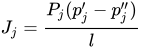

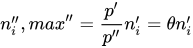
With the expression above, a membrane system for a binary mixture can be sufficiently defined. it can be seen that the total flow across the membrane is strongly dependent on the relation between the feed and permeate pressures. The ratio of feed pressure (p') over permeate pressure (p") is defined as the membrane pressure ratio (θ).

It is clear from the above, that a flow of species i or j across the membrane can only occur when:

In other words, the membrane will experience flow across it when there exists a concentration gradient between feed and permeate. If the gradient is positive, the flow will go from the feed to the permeate and species i will be separated from the feed.
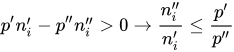
Therefore, the maximum separation of species i results from:
Another important coefficient when choosing the optimum membrane for a separation process is the membrane selectivity αij defined as the ratio of permeability of species i with relation to the species j.

This coefficient is used to indicate the level to which the membrane is able to separates species i from j. It is obvious from the expression above, that a membrane selectivity of 1 indicates the membrane has no potential to separate the two gases, the reason being, both gases will diffuse equally through the membrane.
In the design of a separation process, normally the pressure ratio and the membrane selectivity are prescribed by the pressures of the system and the permeability of the membrane . The level of separation achieved by the membrane (concentration of the species to be separated) needs to be evaluated based on the aforementioned design parameters in order to evaluate the cost-effectiveness of the system.
Membrane performance
[edit]The concentration of species i and j across the membrane can be evaluated based on their respective diffusion flows across it.
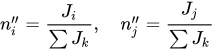
In the case of a binary mixture, the concentration of species i across the membrane:
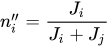
This can be further expanded to obtain an expression of the form:


Using the relations:
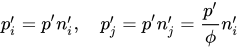

The expression can be rewritten as:
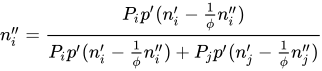
Then using



The solution to the above quadratic expression can be expressed as:

Finally, an expression for the permeant concentration is obtained by the following:

Along the separation unit, the feed concentration decays with the diffusion across the membrane causing the concentration at the membrane to drop accordingly. As a result, the total permeant flow (q"out) results from the integration of the diffusion flow across the membrane from the feed inlet (q'in) to feed outlet (q'out). A mass balance across a differential length of the separation unit is therefore:

where:

Because of the binary nature of the mixture, only one species needs to be evaluated. Prescribing a function n'i=n'i(x), the species balance can be rewritten as:

Where:

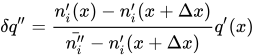
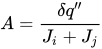
Lastly, the area required per unit membrane length can be obtained by the following expression:
Membrane materials for carbon capture in flue gas streams
[edit]The material of the membrane plays an important role in its ability to provide the desired performance characteristics. It is optimal to have a membrane with a high permeability and sufficient selectivity and it is also important to match the membrane properties to that of the system operating conditions (for example pressures and gas composition).
Synthetic membranes are made from a variety of polymers including polyethylene, polyamides, polyimides, cellulose acetate, polysulphone and polydimethylsiloxane.[7]
Polymer membranes
[edit]Polymeric membranes are a common option for use in the capture of CO2 from flue gas because of the maturity of the technology in a variety of industries, namely petrochemicals. The ideal polymer membrane has both a high selectivity and permeability. Polymer membranes are examples of systems that are dominated by the solution-diffusion mechanism. The membrane is considered to have holes which the gas can dissolve (solubility) and the molecules can move from one cavity to the other (diffusion).[4]
It was discovered by Robeson in the early 1990s that polymers with a high selectivity have a low permeability and opposite is true; materials with a low selectivity have a high permeability. This is best illustrated in a Robeson plot where the selectivity is plotted as a function of the CO2 permeation. In this plot, the upper bound of selectivity is approximately a linear function of the permeability. It was found that the solubility in polymers is mostly constant but the diffusion coefficients vary significantly and this is where the engineering of the material occurs. Somewhat intuitively, the materials with the highest diffusion coefficients have a more open pore structure, thus losing selectivity.[8][9] There are two methods that researchers are using to break the Robeson limit, one of these is the use of glassy polymers whose phase transition and changes in mechanical properties make it appear that the material is absorbing molecules and thus surpasses the upper limit. The second method of pushing the boundaries of the Robeson limit is by the facilitated transport method. As previously stated, the solubility of polymers is typically fairly constant but the facilitated transport method uses a chemical reaction to enhance the permeability of one component without changing the selectivity.[10]
Nanoporous membranes
[edit]
Nanoporous membranes are fundamentally different from polymer-based membranes in that their chemistry is different and that they do not follow the Robeson limit for a variety of reasons. The simplified figure of a nanoporous membrane shows a small portion of an example membrane structure with cavities and windows. The white portion represents the area where the molecule can move and the blue shaded areas represent the walls of the structure. In the engineering of these membranes, the size of the cavity (Lcy x Lcz) and window region (Lwy x Lwz) can be modified so that the desired permeation is achieved. It has been shown that the permeability of a membrane is the production of adsorption and diffusion. In low loading conditions, the adsorption can be computed by the Henry coefficient.[4]
If the assumption is made that the energy of a particle does not change when moving through this structure, only the entropy of the molecules changes based on the size of the openings. If we first consider changes the cavity geometry, the larger the cavity, the larger the entropy of the absorbed molecules which thus makes the Henry coefficient larger. For diffusion, an increase in entropy will lead to a decrease in free energy which in turn leads to a decrease in the diffusion coefficient. Conversely, changing the window geometry will primarily effect the diffusion of the molecules and not the Henry coefficient.
In summary, by using the above simplified analysis, it is possible to understand why the upper limit of the Robeson line does not hold for nanostructures. In the analysis, both the diffusion and Henry coefficients can be modified without affecting the permeability of the material which thus can exceed the upper limit for polymer membranes.[4]
Silica membranes
[edit]Silica membranes are mesoporous and can be made with high uniformity (the same structure throughout the membrane). The high porosity of these membranes gives them very high permeabilities. Synthesized membranes have smooth surfaces and can be modified on the surface to drastically improve selectivity. Functionalizing silica membrane surfaces with amine containing molecules (on the surface silanol groups) allows the membranes to separate CO2 from flue gas streams more effectively.[2] Surface functionalization (and thus chemistry) can be tuned to be more efficient for wet flue gas streams as compared to dry flue gas streams.[11] While previously, silica membranes were impractical due to their technical scalability and cost (they are very difficult to produce in an economical manner on a large scale), there have been demonstrations of a simple method of producing silica membranes on hollow polymeric supports. These demonstrations indicate that economical materials and methods can effectively separate CO2 and N2.[12] Ordered mesoporous silica membranes have shown considerable potential for surface modification that allows for ease of CO2 separation. Surface functionalization with amines leads to the reversible formation of carbamates (during CO2 flow), increasing CO2 selectivity significantly.[12]
Zeolite membranes
[edit]
Zeolites are crystalline aluminosilicates with a regular repeating structure of molecular-sized pores. Zeolite membranes selectively separate molecules based on pore size and polarity and are thus highly tunable to specific gas separation processes. In general, smaller molecules and those with stronger zeolite-adsorption properties are adsorbed onto zeolite membranes with larger selectivity. The capacity to discriminate based on both molecular size and adsorption affinity makes zeolite membranes an attractive candidate for CO2 separation from N2, CH4, and H2.
Scientists have found that the gas-phase enthalpy (heat) of adsorption on zeolites increases as follows: H2 < CH4 < N2 < CO2.[13] It is generally accepted that CO2 has the largest adsorption energy because it has the largest quadrupole moment, thereby increasing its affinity for charged or polar zeolite pores. At low temperatures, zeolite adsorption-capacity is large and the high concentration of adsorbed CO2 molecules blocks the flow of other gases. Therefore, at lower temperatures, CO2 selectively permeates through zeolite pores. Several recent research efforts have focused on developing new zeolite membranes that maximize the CO2 selectivity by taking advantage of the low-temperature blocking phenomena.
Researchers have synthesized Y-type (Si:Al>3) zeolite membranes which achieve room-temperature separation factors of 100 and 21 for CO2/N2 and CO2/CH4 mixtures respectively.[14] DDR-type and SAPO-34 membranes have also shown promise in separating CO2 and CH4 at a variety of pressures and feed compositions.[15][16] The SAPO-34 membranes, being nitrogen selective, are also strong contender for natural gas sweetening process.[17][18][19]
Researchers have also made an effort to utilize zeolite membranes for the separation of H2 from hydrocarbons. Hydrogen can be separated from larger hydrocarbons such as C4H10 with high selectivity. This is due to the molecular sieving effect since zeolites have pores much larger than H2, but smaller than these large hydrocarbons. Smaller hydrocarbons such as CH4, C2H6, and C3H8 are small enough to not be separated by molecular sieving. Researchers achieved a higher selectivity of hydrogen when performing the separation at high temperatures, likely as a result of a decrease in the competitive adsorption effect.[20]
Metal-organic framework (MOF) membranes
[edit]There have been advances in zeolitic-imidazolate frameworks (ZIFs), a subclass of metal-organic frameworks (MOFs), that have allowed them to be useful for carbon dioxide separation from flue gas streams. Extensive modeling has been performed to demonstrate the value of using MOFs as membranes.[21][22] MOF materials are adsorption-based, and thus can be tuned to achieve selectivity.[23] The drawback to MOF systems is stability in water and other compounds present in flue gas streams. Select materials, such as ZIF-8, have demonstrated stability in water and benzene, contents often present in flue gas mixtures. ZIF-8 can be synthesized as a membrane on a porous alumina support and has proven to be effective at separating CO2 from flue gas streams. At similar CO2/CH4 selectivity to Y-type zeolite membranes, ZIF-8 membranes achieve unprecedented CO2 permeance, two orders of magnitude above the previous standard.[24]

Perovskite membranes
[edit]Perovskite are mixed metal oxide with a well-defined cubic structure and a general formula of ABO3, where A is an alkaline earth or lanthanide element and B is a transition metal. These materials are attractive for CO2 separation because of the tunability of the metal sites as well as their stabilities at elevated temperatures.
The separation of CO2 from N2 was investigated with an α-alumina membrane impregnated with BaTiO3.[25] It was found that adsorption of CO2 was favorable at high temperatures due to an endothermic interaction between CO2 and the material, promoting mobile CO2 that enhanced CO2 adsorption-desorption rate and surface diffusion. The experimental separation factor of CO2 to N2 was found to be 1.1-1.2 at 100 °C to 500 °C, which is higher than the separation factor limit of 0.8 predicted by Knudsen diffusion. Though the separation factor was low due to pinholes observed in the membrane, this demonstrates the potential of perovskite materials in their selective surface chemistry for CO2 separation.
Other membrane technologies
[edit]In special cases other materials can be utilized; for example, palladium membranes permit transport solely of hydrogen.[26] In addition to palladium membranes (which are typically palladium silver alloys to stop embrittlement of the alloy at lower temperature) there is also a significant research effort looking into finding non-precious metal alternatives. Although slow kinetics of exchange on the surface of the membrane and tendency for the membranes to crack or disintegrate after a number of duty cycles or during cooling are problems yet to be fully solved.[27]
Construction
[edit]Membranes are typically contained in one of three modules:[7]
- Hollow fibre bundles in a metal module
- Spiral wound bundles in a metal module
- Plate and frame module constructed like a plate and frame heat exchanger
Uses
[edit]Membranes are employed in:[1]
- The separation of nitrogen or oxygen from air (generally only up to 99.5%)
- Separation of hydrogen from gases like nitrogen and methane
- Recovery of hydrogen from product streams of ammonia plants
- Recovery of hydrogen in oil refinery processes
- Separation of methane from the other components of biogas
- Enrichment of air by oxygen for medical or metallurgical purposes. One of the methods used for commercial production of nitrox breathing gas for underwater diving.
- Enrichment of ullage by nitrogen in inerting systems designed to prevent fuel tank explosions
- Removal of water vapor from natural gas and other gases
- Removal of SO2, CO2 and H2S from natural gas (polyamide membranes)
- Removal of volatile organic liquids (VOL) from air of exhaust streams
Air separation
[edit]Oxygen-enriched air is in high demanded for a range of medical and industrial applications including chemical and combustion processes. Cryogenic distillation is the mature technology for commercial air separation for the production of large quantities of high purity oxygen and nitrogen. However, it is a complex process, is energy-intensive, and is generally not suitable for small-scale production. Pressure swing adsorption is also commonly used for air separation and can also produce high purity oxygen at medium production rates, but it still requires considerable space, high investment and high energy consumption. The membrane gas separation method is a relatively low environmental impact and sustainable process providing continuous production, simple operation, lower pressure/temperature requirements, and compact space requirements.[28][3]
Current status of CO2 capture with membranes
[edit]A great deal of research has been undertaken to utilize membranes instead of absorption or adsorption for carbon capture from flue gas streams, however, no current[when?] projects exist that utilize membranes. Process engineering along with new developments in materials have shown that membranes have the greatest potential for low energy penalty and cost compared to competing technologies.[4][10][29]
Background
[edit]Today, membranes are used for commercial separations involving: N2 from air, H2 from ammonia in the Haber-Bosch process, natural gas purification, and tertiary-level enhanced oil recovery supply.[30]
Single-stage membrane operations involve a single membrane with one selectivity value. Single-stage membranes were first used in natural gas purification, separating CO2 from methane.[30] A disadvantage of single-stage membranes is the loss of product in the permeate due to the constraints imposed by the single selectivity value. Increasing the selectivity reduces the amount of product lost in the permeate, but comes at the cost of requiring a larger pressure difference to process an equivalent amount of a flue stream. In practice, the maximum pressure ratio economically possible is around 5:1.[31]
To combat the loss of product in the membrane permeate, engineers use "cascade processes" in which the permeate is recompressed and interfaced with additional, higher selectivity membranes.[30] The retentate streams can be recycled, which achieves a better yield of product.
Need for multi-stage process
[edit]Single-stage membranes devices are not feasible for obtaining a high concentration of separated material in the permeate stream. This is due to the pressure ratio limit that is economically unrealistic to exceed. Therefore, the use of multi-stage membranes is required to concentrate the permeate stream. The use of a second stage allows for less membrane area and power to be used. This is because of the higher concentration that passes the second stage, as well as the lower volume of gas for the pump to process.[31][10] Other factors, such as adding another stage that uses air to concentrate the stream further reduces cost by increasing concentration within the feed stream.[10] Additional methods such as combining multiple types of separation methods allow for variation in creating economical process designs.
Membrane use in hybrid processes
[edit]Hybrid processes have long-standing history with gas separation.[32] Typically, membranes are integrated into already existing processes such that they can be retrofitted into already existing carbon capture systems.
MTR, Membrane Technology and Research Inc., and UT Austin have worked to create hybrid processes, utilizing both absorption and membranes, for CO2 capture. First, an absorption column using piperazine as a solvent absorbs about half the carbon dioxide in the flue gas, then the use of a membrane results in 90% capture.[33] A parallel setup is also, with the membrane and absorption processes occurring simultaneously. Generally, these processes are most effective when the highest content of carbon dioxide enters the amine absorption column. Incorporating hybrid design processes allows for retrofitting into fossil fuel power plants.[33]
Hybrid processes can also use cryogenic distillation and membranes.[34] For example, hydrogen and carbon dioxide can be separated, first using cryogenic gas separation, whereby most of the carbon dioxide exits first, then using a membrane process to separate the remaining carbon dioxide, after which it is recycled for further attempts at cryogenic separation.[34]
Cost analysis
[edit]Cost limits the pressure ratio in a membrane CO2 separation stage to a value of 5; higher pressure ratios eliminate any economic viability for CO2 capture using membrane processes.[10][35] Recent studies have demonstrated that multi-stage CO2 capture/separation processes using membranes can be economically competitive with older and more common technologies such as amine-based absorption.[10][34] Currently, both membrane and amine-based absorption processes can be designed to yield a 90% CO2 capture rate.[29][10][35][36][33][34] For carbon capture at an average 600 MW coal-fired power plant, the cost of CO2 capture using amine-based absorption is in the $40–100 per ton of CO2 range, while the cost of CO2 capture using current membrane technology (including current process design schemes) is about $23 per ton of CO2.[10] Additionally, running an amine-based absorption process at an average 600 MW coal-fired power plant consumes about 30% of the energy generated by the power plant, while running a membrane process requires about 16% of the energy generated.[10] CO2 transport (e.g. to geologic sequestration sites, or to be used for EOR) costs about $2–5 per ton of CO2.[10] This cost is the same for all types of CO2 capture/separation processes such as membrane separation and absorption.[10] In terms of dollars per ton of captured CO2, the least expensive membrane processes being studied at this time are multi-step counter-current flow/sweep processes.[29][10][35][36][33][34]
See also
[edit]- Barrer – Non-SI unit of gas permeability
- Industrial gas – Gaseous materials produced for use in industry
- Primary life support system – Life support device for a space suit
- Membrane technology for nitrogen generation – Air-to-nitrogen production complexes
References
[edit]- ^ a b Kerry, Frank (2007). Industrial Gas Handbook: Gas Separation and Purification. CRC Press. pp. 275–280. ISBN 978-0-8493-9005-0.
- ^ a b Jang, Kwang-Suk; Kim, Hyung-Ju; Johnson, J. R.; Kim, Wun-gwi; Koros, William J.; Jones, Christopher W.; Nair, Sankar (2011-06-28). "Modified Mesoporous Silica Gas Separation Membranes on Polymeric Hollow Fibers". Chemistry of Materials. 23 (12): 3025–3028. doi:10.1021/cm200939d. ISSN 0897-4756.
- ^ a b c Chong, K. C.; Lai, S. O.; Thiam, H. S.; Teoh, H. C.; Heng, S. L. (2016). "Recent progress of oxygen/nitrogen separation using membrane technology" (PDF). Journal of Engineering Science and Technology. 11 (7): 1016–1030.
- ^ a b c d e f Berend Smit; Jeffrey A. Reimer; Curtis M. Oldenburg; Ian C. Bourg (2014). Introduction to Carbon Capture and Sequestration. Imperial College Press. pp. 281–354. ISBN 978-1-78326-328-8.
- ^ Richard W. Baker (2004). Membrane Technology and Applications. John Wiley & Sons Ltd. pp. 15–21. ISBN 978-0-470-85445-7.
- ^ Wilcox, Jennifer (2014-04-16). Carbon Capture. Springer. ISBN 978-1-4939-0125-8.
- ^ a b Isalski, W. H. (1989). Separation of Gases. Monograph on Cryogenics. Vol. 5. New York: Oxford University Press. pp. 228–233.
- ^ Robeson, L.M. (1991). "Correlation of separation factor versus permeability for polymeric membranes". Journal of Membrane Science. 62 (165): 165–185. doi:10.1016/0376-7388(91)80060-j.
- ^ Robeson, L.M. (2008). "The upper bound revisited". Journal of Membrane Science. 320 (390): 390–400. doi:10.1016/j.memsci.2008.04.030.
- ^ a b c d e f g h i j k l Merkel, Tim C.; Lin, Haiqing; Wei, Xiaotong; Baker, Richard (2010-09-01). "Power plant post-combustion carbon dioxide capture: An opportunity for membranes". Journal of Membrane Science. Membranes and CO2 Separation. 359 (1–2): 126–139. doi:10.1016/j.memsci.2009.10.041.
- ^ Chew, Thiam-Leng; Ahmad, Abdul L.; Bhatia, Subhash (2010-01-15). "Ordered mesoporous silica (OMS) as an adsorbent and membrane for separation of carbon dioxide (CO2)". Advances in Colloid and Interface Science. 153 (1–2): 43–57. doi:10.1016/j.cis.2009.12.001. PMID 20060956.
- ^ a b Kim, Hyung-Ju; Chaikittisilp, Watcharop; Jang, Kwang-Suk; Didas, Stephanie A.; Johnson, Justin R.; Koros, William J.; Nair, Sankar; Jones, Christopher W. (2015-04-29). "Aziridine-Functionalized Mesoporous Silica Membranes on Polymeric Hollow Fibers: Synthesis and Single-Component CO2 and N2 Permeation Properties". Industrial & Engineering Chemistry Research. 54 (16): 4407–4413. doi:10.1021/ie503781u. ISSN 0888-5885.
- ^ Poshusta, Joseph C; Noble, Richard D; Falconer, John L (2001-05-15). "Characterization of SAPO-34 membranes by water adsorption". Journal of Membrane Science. 186 (1): 25–40. doi:10.1016/S0376-7388(00)00666-9.
- ^ Kusakabe, Katsuki; Kuroda, Takahiro; Murata, Atsushi; Morooka, Shigeharu (1997-03-01). "Formation of a Y-Type Zeolite Membrane on a Porous α-Alumina Tube for Gas Separation". Industrial & Engineering Chemistry Research. 36 (3): 649–655. doi:10.1021/ie960519x. ISSN 0888-5885.
- ^ Himeno, Shuji; Tomita, Toshihiro; Suzuki, Kenji; Nakayama, Kunio; Yajima, Kenji; Yoshida, Shuichi (2007-10-01). "Synthesis and Permeation Properties of a DDR-Type Zeolite Membrane for Separation of CO2/CH4 Gaseous Mixtures". Industrial & Engineering Chemistry Research. 46 (21): 6989–6997. doi:10.1021/ie061682n. ISSN 0888-5885.
- ^ Li, S.; Falconer, J. L.; Noble, R. D. (2006-10-04). "Improved SAPO-34 Membranes for CO2/CH4 Separations". Advanced Materials. 18 (19): 2601–2603. Bibcode:2006AdM....18.2601L. doi:10.1002/adma.200601147. ISSN 1521-4095. S2CID 96222879.
- ^ Alam, Syed Fakhar; Kim, Min-Zy; Kim, Young Jin; Rehman, Aafaq ur; Devipriyanka, Arepalli; Sharma, Pankaj; Yeo, Jeong-Gu; Lee, Jin-Seok; Kim, Hyunuk; Cho, Churl-Hee (2020-05-01). "A new seeding method, dry rolling applied to synthesize SAPO-34 zeolite membrane for nitrogen/methane separation". Journal of Membrane Science. 602 117825. doi:10.1016/j.memsci.2020.117825. ISSN 0376-7388. S2CID 213870612.
- ^ Wu, Ting; Diaz, Merritt C.; Zheng, Yihong; Zhou, Rongfei; Funke, Hans H.; Falconer, John L.; Noble, Richard D. (2015-01-01). "Influence of propane on CO2/CH4 and N2/CH4 separations in CHA zeolite membranes". Journal of Membrane Science. 473: 201–209. doi:10.1016/j.memsci.2014.09.021. ISSN 0376-7388.
- ^ Li, Shiguang; Zong, Zhaowang; Zhou, Shaojun James; Huang, Yi; Song, Zhuonan; Feng, Xuhui; Zhou, Rongfei; Meyer, Howard S.; Yu, Miao; Carreon, Moises A. (2015-08-01). "SAPO-34 Membranes for N2/CH4 separation: Preparation, characterization, separation performance and economic evaluation". Journal of Membrane Science. 487: 141–151. doi:10.1016/j.memsci.2015.03.078. ISSN 0376-7388.
- ^ Cao, Zishu; Anjikar, Ninad D.; Yang, Shaowei (February 2022). "Small-Pore Zeolite Membranes: A Review of Gas Separation Applications and Membrane Preparation". Separations. 9 (2): 47. doi:10.3390/separations9020047. ISSN 2297-8739.
- ^ Gurdal, Yeliz; Keskin, Seda (2012-05-30). "Atomically Detailed Modeling of Metal Organic Frameworks for Adsorption, Diffusion, and Separation of Noble Gas Mixtures". Industrial & Engineering Chemistry Research. 51 (21): 7373–7382. doi:10.1021/ie300766s. ISSN 0888-5885.
- ^ Keskin, Seda; Sholl, David S. (2009-01-21). "Assessment of a Metal−Organic Framework Membrane for Gas Separations Using Atomically Detailed Calculations: CO2, CH4, N2, H2 Mixtures in MOF-5". Industrial & Engineering Chemistry Research. 48 (2): 914–922. doi:10.1021/ie8010885. ISSN 0888-5885.
- ^ Zornoza, Beatriz; Martinez-Joaristi, Alberto; Serra-Crespo, Pablo; Tellez, Carlos; Coronas, Joaquin; Gascon, Jorge; Kapteijn, Freek (2011-09-07). "Functionalized flexible MOFs as fillers in mixed matrix membranes for highly selective separation of CO2 from CH4 at elevated pressures". Chemical Communications. 47 (33): 9522–9524. doi:10.1039/c1cc13431k. ISSN 1364-548X. PMID 21769350.
- ^ Venna, Surendar R.; Carreon, Moises A. (2010-01-13). "Highly Permeable Zeolite Imidazolate Framework-8 Membranes for CO2/CH4 Separation". Journal of the American Chemical Society. 132 (1): 76–78. doi:10.1021/ja909263x. ISSN 0002-7863. PMID 20014839.
- ^ Kusakabe, Katsuki (1994-10-24). "Separation of CO2 with BaTiO3 membrane prepared by the sol—gel method". Journal of Membrane Science. 95 (2): 171–177. doi:10.1016/0376-7388(94)00109-X.
- ^ Yun, S.; Ted Oyama, S. (2011). "Correlations in palladium membranes for hydrogen separation: A review". Journal of Membrane Science. 375 (1–2): 28–45. doi:10.1016/j.memsci.2011.03.057.
- ^ Dolan, Michael D.; Kochanek, Mark A.; Munnings, Christopher N.; McLennan, Keith G.; Viano, David M. (February 2015). "Hydride phase equilibria in V–Ti–Ni alloy membranes". Journal of Alloys and Compounds. 622: 276–281. doi:10.1016/j.jallcom.2014.10.081.
- ^ Han, Jiuli; Bai, Lu; Yang, Bingbing; Bai, Yinge; Luo, Shuangjiang; Zeng, Shaojuan; Gao, Hongshuai; Nie, Yi; Ji, Xiaoyan; Zhang, Suojiang; Zhang, Xiangping (3 September 2019). "Highly Selective Oxygen/Nitrogen Separation Membrane Engineered Using a Porphyrin-Based Oxygen Carrier". Membranes. 9 (115): 115. doi:10.3390/membranes9090115. PMC 6780238. PMID 31484439.
- ^ a b c Brunetti, A.; Scura, F.; Barbieri, G.; Drioli, E. (2010-09-01). "Membrane technologies for CO2 separation". Journal of Membrane Science. Membranes and CO2 Separation. 359 (1–2): 115–125. doi:10.1016/j.memsci.2009.11.040.
- ^ a b c Bernardo P., Clarizia G. (2013). "30 Years of Membrane Technology for Gas Separation" (PDF). The Italian Association of Chemical Engineering. 32. S2CID 6607842. Archived from the original (PDF) on 2017-09-01.
- ^ a b Baker, Richard W. (2002-03-01). "Future Directions of Membrane Gas Separation Technology". Industrial & Engineering Chemistry Research. 41 (6): 1393–1411. doi:10.1021/ie0108088. ISSN 0888-5885.
- ^ Bernardo P., Clarizia G (2013). "30 Years of Membrane Technology for Gas Separation" (PDF). The Italian Association of Chemical Engineering. 32. S2CID 6607842. Archived from the original (PDF) on 2017-09-01.
- ^ a b c d Brice Freeman, Pingjiao Hao, Richard Baker, Jay Kniep, Eric Chen, Junyuan Ding, Yue Zhang Gary T. Rochelle. (January 2014). "Hybrid Membrane-absorption CO2 Capture Process". Energy Procedia. 63: 605–613. doi:10.1016/j.egypro.2014.11.065.
{{cite journal}}: CS1 maint: multiple names: authors list (link) - ^ a b c d e Lin, Haiqing; He, Zhenjie; Sun, Zhen; Kniep, Jay; Ng, Alvin; Baker, Richard W.; Merkel, Timothy C. (2015-11-01). "CO2-selective membranes for hydrogen production and CO2 capture – Part II: Techno-economic analysis". Journal of Membrane Science. 493: 794–806. doi:10.1016/j.memsci.2015.02.042.
- ^ a b c Huang, Yu; Merkel, Tim C.; Baker, Richard W. (2014-08-01). "Pressure ratio and its impact on membrane gas separation processes". Journal of Membrane Science. 463: 33–40. doi:10.1016/j.memsci.2014.03.016.
- ^ a b Hao, Pingjiao; Wijmans, J. G.; Kniep, Jay; Baker, Richard W. (2014-07-15). "Gas/gas membrane contactors – An emerging membrane unit operation". Journal of Membrane Science. 462: 131–138. doi:10.1016/j.memsci.2014.03.039.
- Vieth, W.R. (1991). Diffusion in and through Polymers. Munich: Hanser Verlag. ISBN 978-3-446-15574-9.
{{cite book}}: CS1 maint: publisher location (link)


Membrane gas separation
View on GrokipediaHistory
Early Developments and Principles
In 1748, French physicist Jean-Antoine Nollet (Abbé Nollet) conducted experiments using a pig bladder as a membrane, observing that it inflated when immersed in alcohol due to the preferential permeation of alcohol molecules through the semi-permeable barrier while water was retained, marking the first documented evidence of selective molecular transport across a biological membrane.[6] This serendipitous observation laid empirical groundwork for concepts of permeability differences, though initially interpreted through osmotic pressure rather than gas separation.[7] Thomas Graham advanced these ideas in 1866 through systematic experiments on gas permeation across rubber sheets, demonstrating that gases dissolve into the membrane material in proportion to their chemical affinity (solubility), subsequently diffuse across driven by concentration gradients, and desorb on the permeate side.[8] Graham's work established the qualitative basis of the solution-diffusion mechanism, where overall permeability $ P_i = D_i K_i $ (with $ D_i $ as diffusivity and $ K_i $ as solubility coefficient) governs flux $ J_i = \frac{P_i (p_i' - p_i'')}{l} $, linking transport to both thermodynamic sorption and kinetic mobility without invoking pores.[9] This model, refined through empirical measurements of time-lag diffusion in the early 20th century, provided a first-principles framework for non-porous barriers, distinguishing it from Knudsen or sieve mechanisms reliant on physical apertures.[10] By the mid-20th century, the solution-diffusion model was quantitatively applied to synthetic polymers, with studies confirming that gas selectivity arises from trade-offs between solubility (favoring condensable gases) and diffusivity (favoring smaller, less interactive molecules like H₂).[6] Laboratory efforts in the 1970s demonstrated practical viability using non-porous films of glassy polymers such as polysulfone and cellulose acetate, achieving selective H₂ permeation over N₂ in binary mixtures, driven by industrial demands for purifying ammonia synthesis purge streams containing H₂, N₂, Ar, and CH₄.[9] These experiments quantified permeabilities exceeding 10 Barrer for H₂ with α_{H₂/N₂} ratios around 3-5, validating the model's predictive power for dense, defect-free materials under differential pressure.[11]Commercial Milestones
The first large-scale commercial application of membrane gas separation occurred in 1980, when Monsanto's Permea division launched the Prism® system using polysulfone hollow-fiber modules to recover hydrogen from ammonia purge gas streams in fertilizer plants.[1] This process recovered over 90% of the hydrogen, recycling it back into the synthesis loop and reducing energy losses compared to cryogenic alternatives, with initial installations demonstrating operational reliability in high-pressure environments up to 2000 psia.[12] The adoption was spurred by the 1970s energy crises, which increased demand for efficient recovery of synthesis gases to minimize fuel consumption in ammonia production.[13] In the mid-1980s, cellulose acetate membranes were commercialized for natural gas sweetening, specifically CO2/CH4 separation, by companies like Cynara (later acquired by ABB Lummus).[14] These systems treated streams with CO2 concentrations up to 30%, achieving permeance rates of 10-20 GPU for CO2 and selectivities of 20-25, enabling pipeline-quality methane output without the high energy costs of amine absorption in remote or small-scale fields.[15] Patent developments and expirations on cellulose acetate formulations, combined with rising offshore gas processing needs amid volatile oil prices, facilitated rapid deployment, with over 100 units installed by the late 1980s offering 20-30% capital cost savings over traditional methods in moderate-pressure applications.[1] The 1990s saw expansion to polyimide-based membranes for improved durability in aggressive conditions, such as high-temperature or hydrocarbon-rich feeds, with firms like UOP introducing hollow-fiber modules exhibiting CO2 permeabilities exceeding 50 Barrer and enhanced resistance to plasticization.[16] These addressed limitations of cellulose acetate, like hydrolysis sensitivity, enabling broader use in refinery hydrogen purification and natural gas dehydration. Post-2000, membrane systems gained traction for helium recovery from natural gas, where polyimide and glassy polymer modules achieved enrichments from 0.3% to over 50% He in pre-cryogenic stages, driven by global helium shortages and cost advantages—up to 40% lower energy use than full cryogenic fractionation for low-concentration sources.[17] Early installations in fields like Qatar's North Field demonstrated recovery yields of 80-90%, tying adoption to empirical savings in remote operations where modular deployment reduced infrastructure needs.[18]Fundamentals
Basic Process
In membrane gas separation, a compressed gas mixture is supplied to the high-pressure side of a selective membrane, typically within a module such as hollow fibers or flat sheets. Gases with higher permeability dissolve into the membrane material, diffuse across its thickness under the influence of a partial pressure gradient, and desorb on the low-pressure permeate side, forming an enriched permeate stream in the more permeable components. The retentate stream, depleted of those components, exits the high-pressure side. This pressure-driven process relies on the membrane's ability to exhibit differential permeability, where the driving force is the transmembrane partial pressure difference rather than total pressure alone.[19][3] The fundamental transport mechanism in non-porous membranes follows the solution-diffusion model, comprising three steps: sorption at the feed interface proportional to upstream partial pressure and solubility, diffusion through the membrane governed by Fick's first law due to the concentration gradient, and desorption at the permeate interface. The steady-state molar flux $ J_i $ of component $ i $ is given by $ J_i = \frac{P_i (p_i' - p_i'')}{l} $, where $ P_i $ is the permeability coefficient (product of diffusivity $ D_i $ and solubility $ S_i $), $ p_i' $ and $ p_i'' $ are the partial pressures on the feed and permeate sides, respectively, and $ l $ is the membrane thickness. This model assumes no convective flow or pores, with separation arising from differences in $ P_i $ values.[19] Single-stage operation achieves modest enrichment limited by the inherent trade-off between permeability and selectivity, often insufficient for high-purity requirements. Multi-stage cascades or recycle configurations enhance overall separation by sequentially processing permeate or retentate streams, enabling higher recovery and purity while accounting for real-gas effects such as compressibility factors in high-pressure feeds, which deviate from ideal behavior and influence partial pressure calculations. These arrangements minimize energy input from compression but require optimized staging to balance capital and operating costs.[20][19]Separation Mechanisms
In dense polymeric membranes, the predominant transport mechanism is the solution-diffusion model, wherein gas molecules first sorb into the upstream surface of the membrane according to their solubility, then diffuse across the polymer matrix under a chemical potential gradient, and finally desorb at the downstream surface.[19][10] This model assumes no pores or voids larger than molecular dimensions, with transport driven by concentration gradients rather than pressure drops, leading to selectivity based on differences in solubility and diffusivity between gases.[21] Diffusivity in this mechanism arises from segmental motions of polymer chains creating transient free volume for gas molecules to "hop" between sites, with smaller kinetic diameters enabling faster penetration and favoring separation of compact gases like helium over bulkier ones like methane.[22] Solubility, conversely, reflects gas-polymer interactions, where highly condensable gases such as CO₂ exhibit enhanced sorption in rubbery polymers due to favorable van der Waals forces and polarizability matching, whereas glassy polymers below their glass transition temperature display lower solubility but stiffer matrices that preserve diffusivity advantages.[23] In glassy polymers, the dual-mode sorption model captures non-Fickian behavior by positing parallel Henry's law dissolution in the bulk matrix and Langmuir-type adsorption in unrelaxed microvoids or "frozen-in" free volume, which causes solubility to increase nonlinearly with pressure and can lead to competitive site occupancy under mixed-gas conditions.[24][25] By contrast, porous inorganic membranes rely on Knudsen diffusion when pore diameters approximate the mean free path of gas molecules (typically 1-10 nm), where collisions with pore walls dominate over intermolecular collisions, yielding selectivity inversely proportional to the square root of molecular weights without dependence on condensability.[26][27] Molecular sieving occurs in ultramicroporous structures (pores <1 nm), enforcing steric exclusion based on molecular dimensions, as seen in zeolite or carbon molecular sieve membranes, though this demands precise pore tailoring and risks fragility under thermal or mechanical stress.[28] These pore-governed mechanisms trade enhanced size-based discrimination for reduced robustness compared to the interaction-mediated solution-diffusion in polymers, highlighting a causal tension between kinetic selectivity and material stability in gas separation design.[29]Performance Metrics
Permeability quantifies the ability of a gas to permeate through a membrane and is defined as the product of the gas diffusivity coefficient and solubility coefficient , expressed as . It is measured in Barrer units, where 1 Barrer equals cm³ (STP) · cm / (cm² · s · cmHg), normalizing the volumetric flux by the transmembrane pressure difference and membrane thickness.[30] [31] This metric enables comparison across membrane thicknesses and materials, with typical values for industrial polymers ranging from 1 to 1000 Barrer for gases like CO₂ and H₂.[9] Selectivity, denoted , measures the membrane's ability to preferentially permeate one gas over another and is calculated as the ratio of their permeabilities, . High selectivity is critical for efficient separations, but it inversely correlates with permeability, as captured by Robeson's upper bound—a semi-empirical limit derived from solution-diffusion theory and free-volume models. The 2008 update to this bound, based on data from over 300 polymers, plots log(selectivity) against log(permeability), revealing that real materials cluster below a linear boundary with a slope of approximately -0.5 for many gas pairs like CO₂/CH₄, reflecting trade-offs from chain packing and segmental mobility.[31] [30] Few materials approach or exceed this bound without compromising long-term stability, underscoring the challenge in achieving simultaneous high flux and discrimination.[9] Practical performance deviates from ideal pure-gas metrics due to mixed-gas effects, where competitive sorption and diffusion reduce selectivity for the faster-permeating component; for instance, in CO₂/CH₄ mixtures at elevated pressures, observed selectivities can drop by 20-50% compared to pure-gas values because of enhanced sorption of the condensable gas.[9] [32] Aging in glassy polymers, driven by physical densification, further diminishes permeability by 10-70% over 100-1000 days, as evidenced by free-volume collapse in polyimides and PIMs under ambient storage or operation.[33] Fouling from trace contaminants like hydrocarbons or water vapor exacerbates this, causing flux declines of up to 30% in field tests over months, necessitating preconditioning and monitoring to quantify via permeance ratios before and after exposure.[33] These factors highlight the need for metrics incorporating staged testing to predict operational efficacy.[32]Membrane Materials
Polymeric Membranes
Polymeric membranes constitute the predominant class of materials employed in commercial membrane gas separation systems owing to their favorable balance of mechanical properties, processability, and cost-effectiveness compared to inorganic alternatives. These membranes, typically glassy polymers such as cellulose derivatives or aromatic polyimides, facilitate selective transport via the solution-diffusion mechanism, wherein gas permeability arises from the product of diffusivity and solubility coefficients, . Asymmetric structures with a thin selective skin layer supported by a porous substructure are fabricated through phase inversion techniques, enabling high fluxes in hollow fiber configurations that dominate industrial modules. This approach yields large surface areas per unit volume, with permeances often measured in gas permeation units (GPU), where 1 GPU equals cm³ (STP) cm⁻² s⁻¹ cmHg⁻¹.[34][35] Cellulose acetate (CA) represents a pioneering material, commercialized in the 1980s for natural gas processing to remove CO₂ and H₂S, as exemplified by Cynara systems from Dow (now SLB), which utilize proprietary CA formulations optimized for acid gas permeance. These membranes achieve CO₂/CH₄ selectivities of approximately 15 under operational conditions, with module permeances typically in the 20-30 GPU range for CO₂, enabling efficient sweetening of high-pressure feeds up to 1000 psia without cryogenic requirements. Polyimides, synthesized via polycondensation of dianhydrides and diamines, offer enhanced thermal stability up to 200°C and improved chemical resistance, with intrinsic permeabilities for CO₂ often exceeding 50 barrer (1 barrer = cm³ (STP) cm s⁻¹ cmHg⁻¹) and selectivities like O₂/N₂ around 4-7, making them suitable for hydrogen recovery and air separation.[36][37][38] Polymers of intrinsic microporosity (PIMs), characterized by rigid, contorted backbones that impede chain packing and yield high fractional free volume (>20%), have emerged to challenge conventional performance limits, with PIM-1 exhibiting CO₂ permeabilities over 3000 barrer while surpassing early Robeson upper bounds for pairs like CO₂/CH₄. The Robeson upper bound delineates an empirical trade-off between permeability and selectivity for polymeric materials, rooted in inverse correlations between free volume and size-based diffusion selectivity; updated bounds from 2008 reflect advancements, yet most conventional polymers cluster below it due to chain flexibility constraints. Despite these strengths, polymeric membranes suffer from CO₂-induced plasticization, wherein sorbed CO₂ molecules enhance chain mobility at fugacities above 10-20 atm, swelling the matrix, boosting diffusivity, and eroding selectivity by up to 50% in glassy systems like CA and certain polyimides—necessitating cross-linking or copolymerization strategies for mitigation in aggressive feeds.[39][40][41]Inorganic and Composite Membranes
Inorganic membranes, constructed from materials such as ceramics, silica, zeolites, and carbon-based structures, demonstrate exceptional thermal stability up to 800°C, chemical resistance to corrosive gases, and mechanical robustness relative to polymeric alternatives, making them suitable for high-temperature processes like hydrogen purification in refineries.[42] These membranes operate via mechanisms including molecular sieving, where pore sizes precisely exclude larger molecules, and surface diffusion, enabling selectivities unattainable with solution-diffusion in polymers.[43] However, their fabrication often involves energy-intensive methods like hydrothermal synthesis or chemical vapor deposition, contributing to elevated costs estimated at 10-100 times higher than polymeric membranes per unit area.[44] Zeolite membranes, featuring crystalline aluminosilicate frameworks with uniform micropores of 0.3-1 nm, excel in molecular sieving for gases like H2 (kinetic diameter 0.29 nm) over CO2 (0.33 nm), achieving H2/CO2 selectivities of 10-100 under pervaporation conditions, though absolute permeances remain low at 10^{-8} to 10^{-7} mol m^{-2} s^{-1} Pa^{-1} due to tortuous paths.[43] Silica membranes, typically amorphous and formed via sol-gel processes on porous supports, provide tunable pore apertures around 0.4 nm, yielding H2/N2 selectivities up to 50 and permeances of 10^{-7} mol m^{-2} s^{-1} Pa^{-1} at 200-400°C, but suffer from hydrothermal instability in steam-laden feeds, limiting longevity to thousands of hours.[43] Carbon molecular sieves (CMS), pyrolyzed from polymer precursors to yield slit-like pores of 0.4-0.7 nm, offer narrow size distributions for kinetic separations such as O2/N2 (selectivity ~5-10), with H2 permeabilities enhanced by graphitic stacking, though they require activation to mitigate aging effects reducing flux by 20-50% over time.[45] Metal-organic frameworks (MOFs), hybrid crystalline materials with organic linkers and metal nodes forming pores up to 2 nm, enable designer selectivity via ligand tuning, surpassing zeolites in surface area (often >2000 m²/g) for adsorptive separations like CO2/CH4, but pure MOF membranes exhibit brittleness and poor scalability, with defect densities compromising ideal selectivities by factors of 2-5.[46] Empirical challenges include intrinsic fragility, leading to microcracks under differential pressure exceeding 5-10 bar, and fabrication scalability limited to lab-scale areas (<1 m²), hindering economic viability despite superior niche performance in H2 recovery where selectivities exceed 1000 for H2/larger hydrocarbons.[44] Composite membranes, particularly mixed-matrix membranes (MMMs), address these limitations by dispersing inorganic fillers (e.g., zeolites, MOFs, or silica nanoparticles) within polymeric matrices at loadings of 10-50 wt%, leveraging the host's flexibility to mitigate brittleness while enhancing selectivity through filler-induced sieving pathways.[47] For instance, ZSM-5 zeolite-filled polyimides achieve CO2/CH4 selectivities 2-3 times higher than neat polymers, approaching or exceeding the 2008 Robeson upper bound, due to rigidified polymer chains at interfaces.[48] Advances in the 2020s emphasize interfacial engineering, such as silane grafting or primer layers, to eliminate voids that previously reduced effective selectivity by 20-50%, enabling defect-free dispersion and permeance gains of 50-200% over pure inorganics.[49] Nonetheless, trade-offs persist: while offering thermal stability up to 150-250°C and chemical resistance superior to polymers, MMMs face filler agglomeration at high loadings, increasing costs by 2-5 fold and complicating large-scale extrusion or coating, with empirical data showing flux declines of 10-30% from poor adhesion in aggressive feeds.[47] These materials thus find application in hybrid systems where inorganic advantages justify premiums, but broader adoption is constrained by scaling economics versus polymeric baselines.[44]System Design and Construction
Module Configurations
Hollow-fiber modules dominate polymeric membrane gas separation applications due to their high packing density, achieving surface area-to-volume ratios exceeding 1,000 m²/m³, which enables compact designs suitable for large-scale deployment.[50] In these configurations, bundles of thin, porous or non-porous fibers (typically 50-300 µm outer diameter) are housed in a pressure vessel, with feed gas flowing through the shell side or bore side to minimize concentration polarization and pressure drop.[51] Pressure drop along the fiber length must be managed via optimized fiber spacing and flow distribution to avoid uneven transmembrane pressure, which can reduce separation efficiency by up to 20% in poorly designed modules.[52] Spiral-wound modules, constructed by winding flat-sheet membranes around a central permeate collection tube with intervening spacers, offer robust construction for feeds with moderate particulate loads and are prevalent in natural gas processing.[53] This geometry provides a surface area-to-volume ratio of 300-800 m²/m³, lower than hollow fibers but with advantages in ease of manufacture from flat sheets and reduced susceptibility to fiber breakage under high pressure differentials.[54] However, spiral-wound designs exhibit higher axial pressure drops—often 0.1-0.5 bar per module length—necessitating staged configurations to maintain driving force, particularly in high-flux applications where spacer-induced channeling can exacerbate flow maldistribution.[55] Plate-and-frame modules, comprising stacked flat membrane sheets clamped between support plates, are preferred for inorganic or ceramic membranes in high-temperature gas separations, such as hydrogen purification above 300°C, due to their thermal stability and straightforward disassembly for maintenance.[56] These configurations yield lower packing densities (100-400 m²/m³) but facilitate effective fouling mitigation through accessible cleaning paths, contrasting with the enclosed designs of hollow-fiber or spiral-wound modules.[57] Maintaining transmembrane pressure differentials of 5-50 bar, depending on the gas pair, requires feed-side compressors or permeate-side vacuum pumps, with the latter reducing energy input by lowering the required compression ratio in vacuum-permeate configurations.[52] For air separation, compression energy penalties typically range from 0.2-0.5 kWh/Nm³ of oxygen-enriched product, influenced by stage cut and module pressure drop, though hybrid systems integrating vacuum pumps can achieve efficiencies closer to 0.15 kWh/Nm³ under optimized conditions.[58] Fouling in gas separation modules primarily arises from particulates, aerosols, or condensable vapors, mitigated via pre-filtration (e.g., coalescers removing >99% of liquids) and periodic gas purging or backflushing with inert sweep gas to dislodge deposits without chemical agents.[59] Polymeric modules in field service, such as in natural gas plants, exhibit operational lifetimes of 3-5 years before significant flux decline from aging or minor fouling necessitates replacement, with inorganic variants enduring longer under similar protocols due to inherent robustness.[60]Process Integration
In membrane gas separation, process integration involves incorporating membrane units into multi-stage cascades within broader separation trains to meet stringent purity and recovery targets that single-stage operation cannot achieve, such as 95-99% recovery with residual impurities below 1%.[61] Multi-stage designs, often comprising 2-4 units, employ retentate or permeate recycling to enrich product streams and minimize losses, with configurations optimized via nonlinear programming to balance membrane area, compression energy, and vacuum usage where feasible.[61] [62] Pressure ratios across stages are tuned for maximal driving force, drawing on graphical methods akin to McCabe-Thiele diagrams that plot operating lines for gas permeation to determine staging requirements and enrichment trajectories.[63] Feed pretreatment is critical for integration, particularly dehydration to lower the water dew point and avert membrane fouling from condensate accumulation, which can reduce flux by orders of magnitude in humid feeds.[64] [1] This step interfaces with upstream compressors, where elevated pressures enhance permeation driving forces but necessitate safeguards against plasticization or swelling in polymeric membranes.[1] Recycling streams must account for these pretreatments to sustain steady-state operation, avoiding cascades of impurity buildup. Simulations of integrated systems demonstrate energy efficiencies superior to distillation for moderate selectivity separations, with potential reductions of up to 40% in energy use due to the absence of phase changes and lower compression demands in optimized cascades.[65] [66] Costs for such processes range from 29-45 EUR per ton of captured gas in CO2/CH4 examples, competitive with absorption alternatives when scaling to industrial flows like 6000 m³/h.[61] [62]Applications
Air Separation
Membrane-based air separation primarily utilizes polymeric hollow-fiber modules to produce nitrogen-enriched retentate streams from compressed atmospheric air, exploiting the higher permeability of oxygen relative to nitrogen in materials such as polyimides and cellulose acetates.[67] Commercial systems achieve nitrogen purities of 95-99.5% at flow rates suitable for on-site generation, making them viable for applications requiring inert atmospheres without the need for ultra-high purity.[68] These membranes typically exhibit O₂/N₂ selectivities of 3-7 under operating conditions, with oxygen permeabilities on the order of 1-10 Barrer in glassy polymers, though rubbery materials like silicone offer higher permeabilities (up to 1000 Barrer for O₂) but lower selectivities around 2. [69] Since their commercialization in the mid-1980s, polymeric membrane systems have gained widespread adoption for nitrogen generation in industries such as electronics manufacturing and metal fabrication, where they provide blanketing gases for preventing oxidation during processes like soldering and welding.[70] For small- to medium-scale plants (up to several hundred scfm), membrane technology offers lower capital and energy costs compared to pressure swing adsorption (PSA), primarily due to simpler operation without adsorbent regeneration cycles, though PSA surpasses membranes in achievable purity for demanding uses.[71] Cryogenic distillation remains dominant for large-scale, high-purity (>99.99%) production owing to its efficiency at volume, but membranes excel in decentralized setups with rapid startup and minimal footprint.[68] Limitations include the inherent trade-off between permeability and selectivity per the Robeson upper bound, restricting single-stage purities below cryogenic levels without multi-stage or hybrid configurations integrating PSA or additional compression. Advanced polymeric materials continue to push boundaries, with recent developments targeting selectivities exceeding 10 via mixed-matrix composites, yet economic viability hinges on feed compression energy, which constitutes 70-80% of operating costs.[67]Hydrogen Recovery
Membrane gas separation plays a key role in recovering hydrogen from off-gas streams generated in steam methane reforming processes, particularly for ammonia synthesis and refinery hydrotreating/hydrocracking operations. In ammonia plants, purge gases from the synthesis loop—typically containing 40-60% hydrogen mixed with nitrogen, methane, argon, and ammonia—are processed to recycle hydrogen, reducing feedstock consumption and boosting overall efficiency. Commercial polymeric membrane systems for this application were first deployed in the early 1980s by companies like Air Products, using hollow-fiber modules to selectively permeate hydrogen based on its high diffusivity through glassy polymers such as polysulfone or polyimide.[72] These systems target binary separations like H₂/N₂ and H₂/CH₄, achieving single-stage hydrogen purities of 90-95% from feeds with 50% H₂ content.[73] Polymeric membranes excel in bulk hydrogen recovery due to their compact design, continuous operation without phase changes or moving parts, and lower energy demands compared to alternatives like pressure swing adsorption or cryogenic distillation, which require compression cycles or cooling.[74] However, these membranes exhibit reduced selectivity and flux when exposed to impurities such as hydrogen sulfide (H₂S) or ammonia, necessitating upstream pretreatment like hydrodesulfurization or absorption to maintain performance and longevity.[75] For applications demanding ultra-high purity, such as semiconductor manufacturing or fuel cells, palladium-alloy membranes are preferred, offering near-infinite selectivity and purities exceeding 99.99% via atomic hydrogen diffusion, though their high material costs—often exceeding $25,000 per m²—limit widespread use to niche, high-value streams.[76][77] Multi-stage cascade configurations with polymeric membranes, often incorporating recycle loops, enable hydrogen recovery rates above 90% while attaining retentate or permeate purities up to 99.9%, as demonstrated in refinery off-gas streams with initial H₂ concentrations of 70-85%.[73] In steam reforming contexts, integrating membranes post-water-gas shift enhances hydrogen yield by shifting equilibrium toward product formation through selective removal, with reported recoveries of 85-95% in industrial setups.[78] This approach has been particularly effective in ammonia purge recovery, where overall plant hydrogen utilization improves by 5-10% through recycle.[72]Natural Gas Processing
Membrane gas separation plays a key role in natural gas processing by removing acid gases such as CO2 and H2S from high-pressure raw gas streams, enabling compliance with pipeline specifications while offering compact, low-maintenance systems suited for offshore platforms. Since the late 1980s, cellulose acetate (CA) and polyimide-based polymeric membranes have dominated commercial deployments, with early systems from Cynara and Separex pioneering CA hollow-fiber modules for bulk CO2 removal.[79] These materials provide CO2/CH4 selectivities typically ranging from 15 to 20, allowing effective treatment of feeds containing 10-40 mol% CO2 under pressures up to 50-70 bar.[80][81] Their field-proven economics stem from reduced footprint and energy use compared to amine absorption alone, particularly in remote or subsea installations where space and weight constraints apply.[14] In operational settings, these membranes achieve bulk separation by selectively permeating acid gases, reducing CO2 concentrations to below 2 mol% and H2S to levels meeting standards such as ≤4 ppm, thus preparing gas for pipeline transport or further refining.[82] For instance, single-stage or multi-stage configurations can handle sour gas with up to 40% total acid gas, recovering over 80% of hydrocarbons while rejecting CO2 to the permeate stream for reinjection or venting.[14] Hybrid processes combining membranes for initial bulk removal with downstream amine units polish traces to ultra-low levels, optimizing capital costs by leveraging membranes' efficiency for high-concentration feeds and amines' precision for residuals.[83] Such integrations have been implemented in facilities like Indonesia's Grissik plant, demonstrating reliable performance over decades.[84] A primary limitation arises from CO2-induced plasticization in polymeric membranes at elevated partial pressures above 10-20 bar, where sorbed CO2 swells the polymer matrix, increasing chain mobility and eroding selectivity—often dropping CO2/CH4 ratios by 50% or more in single-stage operations.[85] This effect constrains efficiency for highly sour, high-pressure feeds, necessitating multi-stage designs, pretreatment, or anti-plasticization modifications like crosslinking, which trade off permeability for stability.[86] Despite advances in resistant polyimides, such as bromo-substituted variants, plasticization remains a barrier to broader adoption in ultra-high-pressure scenarios without hybrid augmentation.[87]Biogas and Other Upgrading
Membrane gas separation enables the upgrading of biogas produced from anaerobic digesters, typically comprising 50-70 vol% CH4, 30-50 vol% CO2, and trace contaminants such as H2S, water vapor, and siloxanes, by exploiting the higher permeability of CO2 relative to CH4 in polymeric membranes. Hollow-fiber modules made from materials like polyimides, cellulose acetate, or thin-film composite polyamides selectively permeate CO2 into the permeate stream, enriching the retentate to CH4 purities of 95-98 vol% in single-stage configurations using raw biogas feeds, with methane recovery rates reaching up to 86.8 vol%. [88] [89] Single-stage systems, while not always meeting grid-injection standards (>96 vol% CH4), suffice for on-site applications like household heating or vehicle fuel, achieving effective enrichment from digester outputs. [88] The modular nature of membrane units facilitates decentralized deployment at small-scale sites, such as wastewater treatment plants or farm digesters, where footprint and installation simplicity outweigh the need for multi-stage cascades used in larger facilities. Empirical pilot-scale tests demonstrate operational feasibility, with polyimide membranes yielding 80.7-93.8 vol% CH4 in retentate under pressures of 4.3-10.8 bar and temperatures around 303 K. [88] However, biogas contaminants pose challenges: siloxanes, volatile silicon compounds from digester feedstocks, adsorb onto membranes or convert to abrasive silica deposits during downstream combustion, necessitating pretreatment via adsorption or condensation to maintain flux and longevity. [90] [91] H2S and water vapor similarly degrade performance unless addressed, though some thin-film composite polyamide membranes exhibit tolerance without extensive preprocessing. [88] Beyond biogas, membrane separation recovers helium from low-concentration tail streams in natural gas processing, where He content may be below 1 vol%, using glassy polymers like polyimides or polypyrrolone that provide high He/CH4 selectivity (up to 3041) via solution-diffusion mechanisms favoring the smaller He molecule. [17] Commercial polymeric systems, such as those from GENERON, achieve >98% He recovery and >90% purity in multi-stage setups tailored to niche, small-scale operations like field exhausts or NRU off-gases. [17] These applications leverage the modularity of hollow-fiber modules for economic viability in decentralized or remote sites, contrasting with energy-intensive cryogenic alternatives, though plasticization by hydrocarbons remains a limitation requiring material optimizations. [17] Empirical demonstrations, including purification of 2.54 vol% He streams from Alaskan fields to 99% purity using Hyflon AD membranes (He/CH4 selectivity 157) at 625 kPa, underscore growing efficacy for low-volume recovery. [17]Carbon Dioxide Capture
In pre-combustion carbon capture, membranes separate CO2 from hydrogen-rich syngas following water-gas shift reactions, where CO2 partial pressures reach 10-30 bar, providing a strong driving force for permeation and enabling single- or dual-stage processes with CO2/H2 selectivities of 20-50.[92] This configuration favors facilitated transport membranes, such as those using amine carriers in poly(ethylene oxide)-based polymers, which achieve CO2 permeabilities exceeding 1000 Barrer under high-pressure conditions.[93] Field tests of Membrane Technology and Research's (MTR) Polaris membranes on syngas streams demonstrated CO2 purities over 50% and recoveries up to 90% at scales of 500 lb/hr, with module improvements enhancing selectivity in impure feeds.[94] Oxyfuel combustion produces flue gases with CO2 concentrations above 70% after water condensation, rendering membrane separation highly viable due to elevated partial pressure differentials at near-atmospheric conditions, often requiring minimal staging for 90%+ capture.[95] Polymeric membranes like cellulose acetate or polyimides suffice here, with reported CO2/N2 selectivities of 20-40 adequate for recycle streams, though hybrid systems integrate membranes with cryogenics for purity.[93] Post-combustion capture from coal or gas plant flue gases (3-15% CO2 at 0.1-0.15 bar partial pressure) faces fundamental kinetic hurdles from low driving forces, necessitating high-area modules, vacuum operation, or multi-stage cascades to attain 90% recovery, with CO2/N2 selectivities mandating >50-100 to limit N2 slip.[92] Polymers of intrinsic microporosity (PIMs), such as PIM-1, offer permeabilities up to 4000 Barrer but selectivities around 20-30, improved to >50 via amine blending or thin-film composites; however, pure-gas lab metrics degrade 20-50% in humid, mixed feeds due to plasticization and competitive sorption.[96] [97] NETL-supported pilots of MTR's second-generation Polaris membranes captured 70% CO2 from 10-MWe-equivalent slipstreams, yielding costs of $57/tonne but incurring 20-30% energy penalties from compression, underscoring empirical limits to scalability absent subsidies as real-gas interactions erode performance beyond idealized models.[98] [99] Direct air capture (DAC) using membrane technology targets ultra-dilute CO2 concentrations (approximately 400 ppm) in ambient air, presenting unique challenges due to minimal partial pressure driving forces, often requiring large-scale modules and energy inputs for air movement and regeneration. Novel materials, including facilitated transport membranes with amine carriers and advanced polymers of intrinsic microporosity (PIMs) modified for high selectivity in low-concentration environments, have shown promise, achieving CO2 permeabilities exceeding 1000 Barrer and CO2/N2 selectivities over 50 in lab tests, though real-world performance drops due to humidity and contaminants.[100] Energy efficiency is a key advantage, with membrane-based DAC processes estimated at 1.5-2.5 GJ/tonne CO2 captured, lower than traditional amine absorption systems (2-4 GJ/tonne), particularly when integrated with renewable energy sources.[101] Current deployment remains at pilot scales, such as small facilities capturing up to 1 tonne CO2 per day, with challenges in scaling to gigatonne levels due to high capital costs and land requirements; however, supported by DOE initiatives and international efforts, membrane DAC is advancing in global decarbonization strategies, including deployments in regions with abundant renewables like Africa and North America.[102][103]Limitations and Challenges
Technical Constraints
In polymeric membranes, gas separation is governed by the solution-diffusion model, where flux depends on the product of diffusivity and solubility coefficients, but inherent trade-offs limit performance. The Robeson upper bound delineates an empirical permeability-selectivity frontier, stemming from structural necessities: achieving high permeability necessitates elevated free volume or chain mobility, which erodes the molecular sieving or diffusive discrimination essential for selectivity, confining most polymers below this curve for key pairs like CO₂/N₂ or CO₂/CH₄.[30] This constraint intensifies in dilute feeds, where low partial pressure gradients demand exceptionally high permeability to maintain viable flux, yet the bound precludes simultaneous selectivity without compromising efficiency.[104] Material instability further hampers reliability under harsh conditions. CO₂-induced plasticization in glassy polymers, triggered by sorbed molecules exceeding a critical concentration (often at partial pressures >5-10 bar), mobilizes polymer chains, inducing swelling that dilutes selectivity by 20-50% or more while elevating permeability non-selectively; water vapor exacerbates this via hydrogen bonding disruption.[86] [85] Physical aging, driven by non-equilibrium chain relaxation in high-free-volume matrices, progressively densifies the structure, slashing permeability by factors of 2-10 over months to years.[105] Fouling introduces additional transport barriers, as particulates, aerosols, or condensable vapors (e.g., hydrocarbons) adsorb or deposit on surfaces, narrowing effective pore pathways and elevating mass transfer resistance; aerosol fouling alone can diminish permeance by up to 16% in vapor transport membranes.[106] In harsh feeds with contaminants, this accumulation accelerates under competitive conditions, reducing overall flux without chemical alteration.[1] Thermal limitations restrict applicability, with most organic polymers decomposing or softening beyond 100-200°C due to backbone scission or glass transition shifts, eroding mechanical support and diffusive control; even advanced variants rarely exceed 300°C stably.[107] [108] Mixed-gas environments reveal discrepancies from ideal pure-gas metrics, as competitive adsorption saturates transport sites, slowing slower-diffusing species and yielding selectivities 20-50% below predictions; plasticization amplifies this in CO₂-rich feeds, while bulkier gases hinder via matrix rigidification.[109] [110] In dilute or multicomponent streams, these interactions compound, as trace harsh components disproportionately impair performance relative to binary pure-gas tests.[9]Economic and Scalability Issues
Capital expenditures in membrane gas separation systems are dominated by membrane modules and compression equipment, with the latter often comprising the majority of costs in low-pressure applications like post-combustion flue gas treatment. For CO2 capture from coal-fired power plant flue gas, compressors and expanders account for about 80% of total capital costs, while membrane modules contribute less than 15%.[111] In high-pressure natural gas processing for CO2/CH4 separation, membrane modules represent 62% to 85% of capital costs, with compressors adding roughly 30% in two-stage setups.[111] Operating expenditures arise mainly from energy for compression or vacuum pumps and membrane replacement due to fouling, plasticization, or mechanical wear, with electricity often forming a significant portion alongside negligible direct membrane costs in some cases like helium recovery.[112] Membrane systems generally require lower energy than cryogenic alternatives but higher than pressure swing adsorption for certain separations, contributing to overall OPEX that balances modularity against ongoing maintenance.[113] Compared to amine absorption, membrane processes for post-combustion CO2 capture exhibit costs approximately 30% higher, stemming from compression demands and challenges in achieving high permeate purity without multi-staging.[111] In natural gas processing, membrane costs reach about 0.011 $/m³ of treated sweet gas at 90 bar feed pressure, exceeding amine benchmarks of 0.0064 $/m³, yet membranes prove competitive where modularity reduces installation complexity in remote fields.[114] Scalability leverages the modular nature of membrane units, supporting commercial plants up to 680 MMSCFD, as in Separex installations for natural gas conditioning.[115] However, barriers persist for ultra-large or low-selectivity feeds, where extensive module arrays inflate capital without proportional permeability gains, rendering membranes 1.5-2 times costlier than amines for post-combustion CO2 absent material advances or hybrid integration.[116] Widespread adoption ties to natural gas economics, favoring membranes for profitable dehydration or acid gas removal over mandate-driven CO2 capture, with hybrids addressing viability gaps in mixed-gas streams.[14]Current Status and Future Prospects
Recent Technological Advances
In 2025, researchers developed hyperselective carbon molecular sieve hollow fiber membranes demonstrating H₂/CO₂ selectivity exceeding 7000 under mixed-gas permeation conditions at 150°C, enabling precise high-temperature separation for applications like syngas purification.[117] These membranes leverage tuned micropore structures to achieve ultrahigh selectivity while maintaining practical permeance, surpassing prior carbon-based limits for H₂ purification from CO₂-rich streams.[118] Machine learning algorithms have accelerated membrane design for difficult separations, such as N₂/CH₄, by integrating high-throughput simulations with predictive models to identify polymers exceeding traditional upper bounds.[119] In 2024, ML-assisted molecular design yielded candidates with enhanced selectivity and permeability for N₂/CH₄, addressing landfill and natural gas upgrading challenges where kinetic diameters are similar.[120] These approaches reduce empirical trial-and-error, enabling rapid screening of vast chemical spaces for optimized free volume and chain rigidity.[121] Advances in metal-organic framework (MOF) composites and organosilica membranes have improved hydrothermal stability for real-world feeds. In 2025, porous MOF glass membranes exhibited exceptional CO₂ permeability with retained selectivity under humid conditions, owing to defect-free integration and rigid frameworks.[122] Organosilica variants, enhanced with hybrid structures, demonstrated superior resistance to water-induced plasticization, maintaining CO₂/N₂ separation factors above 40 in mixed-gas tests with vapor saturation.[123] Similarly, polymers of intrinsic microporosity (PIM) derivatives, including functionalized PIM-1, pushed beyond the 2020 Robeson upper bound for CO₂/CH₄, achieving selectivities over 50 at permeabilities exceeding 1000 Barrer through guanidinium modifications for CO₂ affinity.[124] Pilot-scale demonstrations from 2023–2025 validated mixed-gas performance, particularly CO₂ retention in humid flue gases. Fixed-site-carrier membranes in field tests showed stable CO₂ permeance with minimal competitive inhibition from H₂O, retaining over 90% selectivity in power plant exhaust pilots.[125] These trials highlighted scalability, with modules processing 100–500 Nm³/h feeds under varying pressures, confirming reduced fouling and energy penalties compared to dry-gas benchmarks.[126] Recent developments in membrane technology for direct air capture (DAC) have introduced novel materials tailored for low-concentration CO₂ separation from ambient air. In 2025, graphene-doped membranes demonstrated high CO₂ permeance and selectivity in both dry and humid conditions, suitable for membrane-based DAC (m-DAC) systems.[127] Additionally, nanomembranes composed of multi-layered siloxane and oxyethylene polymers achieved record-high CO₂ permeance, enhancing efficiency in dilute streams.[128] These materials address challenges in DAC by improving selectivity and permeability under ambient conditions.[129] Integration of these novel membranes into hybrid systems has further improved energy efficiency and scalability for carbon capture. Hybrid adsorption-membrane processes combine solid sorbents with membrane separation, reducing overall energy requirements by up to 30% compared to standalone systems, as shown in techno-economic analyses.[130] Membrane-based DAC integrated with combined cycle power plants enables co-capture of CO₂, enhancing process scalability and lowering operational costs for large-scale deployment in global decarbonization efforts.[131]Hybrid Systems and Comparisons
Hybrid systems integrate membrane gas separation with complementary technologies such as pressure swing adsorption (PSA), cryogenic distillation, or chemical absorption to overcome limitations in selectivity, purity, or throughput. For instance, in hydrogen recovery from syngas or refinery streams, a membrane module can preconcentrate H₂ to 80-90% prior to PSA polishing, achieving overall purities exceeding 99.9% while reducing capital expenditure by 20-30% compared to standalone cryogenic processes, due to the modularity and lower infrastructure needs of membranes.[132] Similarly, for CO₂ capture from flue gases, hybrid membrane-cryogenic setups enrich CO₂ to 50-90% via membranes before cryogenic liquefaction, lowering energy penalties by 15-25% relative to pure absorption, though total costs remain above $50 per ton without policy incentives.[133] Comparisons with traditional methods highlight membranes' advantages in modularity and footprint for decentralized or moderate-scale operations, but reveal gaps in energy efficiency and cost for high-purity bulk separations. Cryogenic air separation units (ASUs) dominate large-scale O₂/N₂ production (e.g., >99.5% purity) with costs around $100 per ton for O₂, outperforming membranes in thermodynamic efficiency for volumes exceeding 100 tons per day, where membranes' lower exergy utilization (often <20%) and plasticization issues limit competitiveness.[134] [132] In natural gas processing, membranes enable 20-40% energy savings over amine absorption for dehydration or sweetening by avoiding solvent regeneration heat, yet hybrid configurations are needed for ultra-low impurity levels (<1 ppm H₂S), as standalone membranes struggle with mixed-gas selectivity under high pressure.[135]| Technology | Key Advantage | Limitation vs. Membranes | Example Application |
|---|---|---|---|
| Cryogenic Distillation | High purity (>99.5%), scalable for bulk | High energy (0.3-0.5 kWh/Nm³ O₂), large footprint | Air separation units[134] |
| Amine Absorption | Effective for acid gases, mature | Thermal energy intensive (2-4 GJ/ton CO₂), corrosion | CO₂ capture from natgas[136] |
| PSA | Moderate purity (95-99%), cyclic operation | Higher capex for hybrids, bed regeneration needs | H₂ polishing post-membrane[132] |