


Community hub
Recent from talks
Contribute something
Nothing was collected or created yet.
Robert F. Kennedy Memorial Stadium
View on Wikipedia
Robert F. Kennedy Memorial Stadium, commonly known as RFK Stadium and originally known as District of Columbia Stadium, was a multi-purpose stadium in Washington, D.C.. It was located along the Anacostia River on East Capitol Street in the city's Hill East neighborhood. The stadium was in operation from 1961 to 2019, with deconstruction commencing in 2025 ahead of a $3.7 billion stadium to replace it at the site. RFK Stadium was one of the first large stadiums designed to host both baseball and football and was among the first to employ what became known as the cookie-cutter design.
Key Information


RFK Stadium was home to a National Football League (NFL) team, two Major League Baseball (MLB) teams, five professional soccer teams, two college football teams, and a USFL team. It hosted college football, college soccer, baseball exhibitions, boxing matches, a cycling race, an American Le Mans Series auto race, marathons, and dozens of concerts. Significant events hosted include five NFC Championship Games, two MLB All-Star Games, several FIFA World Cup matches, nine 1996 Olympic soccer matches, three MLS Cups, and two MLS All-Star Games.
History
[edit]The idea of a stadium at this location originated in 1930 when plans were developed by the "Allied Architects of Washington, in cooperation with the Fine Arts and National Capital Park and Planning Commissions and the Board of Trade."[4] Plans were further developed in 1932 when the Theodore Roosevelt Association (RMA) proposed a national stadium for the site[5] and Allied Architects, a group of local architects organized in 1925 to secure large-scale projects from the government, made designs for it.[6] A "National Stadium" in Washington was an idea that had been pursued since 1916, when Congressman George Hulbert proposed the construction of a 50,000-seat stadium at East Potomac Park for the purpose of attracting the 1920 Summer Olympics. It was thought that such a stadium could attract Davis Cup tennis matches, polo tournaments and the annual Army-Navy football game. A later effort by DC Director of Public Buildings and Parks Ulysses S. Grant III and Congressman Hamilton Fish sought to turn the National Stadium into a 100,000-seat memorial to Theodore Roosevelt, suitable for hosting inaugurations, possibly on the National Mall or Theodore Roosevelt Island. This attracted the attention of the RMA, which suggested the East Capital location. This would allow the Lincoln Memorial, then under construction west of the Capitol, and the Roosevelt memorial to become bookend monuments. The effort lost steam when Congress chose not to fund the stadium in time to move the 1932 Summer Olympics from Los Angeles.[7]
The idea of a stadium gained support in 1938, when North Carolina Senator Robert Reynolds pushed for the creation of a municipal outdoor stadium within the District, citing the "fact that America is the only major country not possessing a stadium with facilities to accommodate the Olympic Games". The following year a model of the proposed stadium, to be located near the site of the future \ RFK Stadium, was presented to the public. By 1941, the National Capital Planning Commission had begun buying property for a stadium, purchasing the land between East Capitol, C, 19th and 21st NE.[8] A few years later, on December 20, 1944, Congress created a nine-man National Memorial Stadium Commission to study the idea.[9] They intended the stadium to be a memorial to the veterans of the World Wars. The commission wrote a report recommending that a 100,000-seat stadium be built near the site of RFK in time for the 1948 Olympics, but it failed to get funding.[10]
Ignored in the early 1950s, a new stadium again drew interest in 1954. Congressman Charles R. Howell proposed legislation to build a stadium, again with hopes of attracting the Olympics. He pushed for a report, completed in 1956 by the National Capital Planning Commission entitled "Preliminary Report on Sites for National Memorial Stadium", which identified the "East Capitol Site" to be used for the stadium. In September 1957, "The District of Columbia Stadium Act" was introduced and authorized a 50,000-seat stadium to be used by the Senators and Redskins at the Armory site. It was signed into law by U.S. president Eisenhower on July 29, 1958, with an estimated cost of $7.5 to $8.6 million.[9] The lease for the stadium was signed by the D.C. Armory Board and the Department of the Interior on December 12, 1958. The stadium, the first major multisport facility built for both football and baseball, was designed by George Dahl, Ewin Engineering Associates (since 1954 part of what became Volkert, Inc.) and Osborn Engineering. Groundbreaking for the $24 million venue occurred on July 8, 1960, and construction proceeded over the following 14 months.[11] The existing venue for baseball (and football) in Washington was Griffith Stadium, about four miles (6 km) northwest.
While Redskins' owner George Preston Marshall was pleased with the stadium, Senators' owner Calvin Griffith was not. It wasn't where he wanted it to be (he had preferred to play at a site in Washington's Northwest Quadrant) and he'd have to pay rent and let others run the parking and concessions. The Senators' attendance figures had suffered after the arrival of the Baltimore Orioles in 1954 and Griffith then grew to prefer the less racially defined demographics and profit potential of the Minnesota market.[12] In 1960, when the American League granted the city of Minneapolis an expansion team, Griffith proposed that he be allowed to move his team to Minneapolis-Saint Paul and give the expansion team to Washington. Upon league approval, the team moved to Minnesota after the 1960 season and Washington fielded a "new Senators" team, entering the junior circuit in 1961 with the Los Angeles Angels.[9]
Opening
[edit]
The stadium opened in late 1961 as District of Columbia Stadium, often shortened to D.C. Stadium. The new venue opened for football even though construction was not completed until the following spring.[13]
Its first official event was an NFL regular season game on October 1, ten days after the final MLB baseball game at Griffith Stadium. The Redskins lost that game to the New York Giants 24–21 before 36,767 fans, including President John F. Kennedy.[14] This was slightly more than the attendance record at Griffith Stadium of 36,591 on October 26, 1947 (in a game vs the Bears).[9][14]
At a college football game labeled the "Dedication Game," the stadium was dedicated on October 7. George Washington University became the first home team to win at the stadium with a 30–6 defeat of VMI.[11][15]
Its first sell-out came on November 23, 1961, for the first of what were to be annual Thanksgiving Day high-school football games between the D.C. public school champion and the D.C. Catholic school champion: Eastern defeated St. John's 34–14.[16][17]
The first Major League Baseball game was played on April 9, 1962, after two exhibition games against the Pirates had been cancelled. President John F. Kennedy threw out the ceremonial first pitch in front of 44,383 fans, who watched the Senators defeat the Detroit Tigers 4–1 and Senators shortstop Bob Johnson hit the first home run.[18][19] The previous Washington baseball attendance record was 38,701 at Griffith Stadium on October 11, 1925, at the fourth game of the World Series, and was the largest ever for a professional sports event in Washington.[20] The previous largest baseball opening day figure had been 31,728 (on April 19, 1948).[9]
When it opened, D.C. Stadium hosted the Redskins, the Senators, and the GWU Colonials football team, all of whom had previously used Griffith Stadium: the GWU Colonials shut down their football team at the end of the 1966 season, while the Senators moved to Dallas-Fort Worth at the end of the 1971 season, and became the Texas Rangers, playing in Arlington Stadium.
Early years
[edit]_with_cars_in_parking_lot_LCCN2022641570.jpg)
In 1961, Washington Redskins owner George Preston Marshall refused to integrate his team with black players, but President Kennedy forced his hand by refusing to allow the team to play in the stadium, which was on Federal land, unless he desegregated the organization. In 1962, Marshall relented and selected Ernie Davis first overall in the 1962 draft. However, Davis refused to play for the team and was traded for Bobby Mitchell, with Marshall later signing four other black players for the season as the last NFL owner to integrate.[21]
In 1961 and 1962, D.C. Stadium hosted the annual city title game, matching the D.C. Public Schools champion and the titleholder for the Washington Catholic Athletic Conference, played before capacity crowds on Thanksgiving Day. The November 22, 1962, game between St. John's, a predominantly white school in Northwest D.C., and Eastern, a majority-black school just blocks from the stadium, ended in a racially motivated riot.[22][23]
In 1964, the stadium emerged as an element in the Bobby Baker bribery scandal. Don B. Reynolds, a Maryland insurance businessman, made a statement in August 1964 which he claimed that Matthew McCloskey, a former Democratic National Committee chairman and Kennedy's ambassador to Ireland, paid a $25,000 kickback through Reynolds and at the instruction of Baker to the Kennedy-Johnson campaign as payback for the stadium construction contract.[24] Baker later went to jail for tax fraud, and the FBI investigated the awarding of the stadium contract, although McCloskey was never charged.[25]
Renaming the stadium
[edit]The stadium was renamed in January 1969 for U.S. Senator and presidential candidate Robert F. Kennedy,[26] who had been assassinated in Los Angeles seven months earlier. The announcement was made by Secretary of the Interior Stewart Udall on January 18, in the last days of the Johnson Administration.[27][28] The dedication ceremony at the stadium was held several months later on June 7.[28][29]
Senators depart
[edit]The Senators' final game was at RFK on Thursday night, September 30, 1971,[30] with fewer than 15,000 in attendance.[31] Rains from Hurricane Ginger threatened the event,[30] but the game proceeded. Fan favorite Frank "Hondo" Howard hit a home run (RFK's last until 2005) in the sixth inning to spark a four-run rally to tie the game; the Senators scored two more in the eighth to go up 7–5, but the game was forfeited (9–0) to the Yankees after unruly fans stormed the field with two outs in the top of the ninth.[9][30] Subsequent efforts to bring baseball back to RFK, including an attempt to attract the San Diego Padres in 1973,[32][33][34] and a plan to have the nearby Baltimore Orioles play eleven home games there in 1976, all failed.[35] The former was derailed by lease issues with the city in San Diego,[34] and the latter was shot down by commissioner Bowie Kuhn, who had planned to expand the league with four teams (aiming for Seattle, New Orleans, Toronto and Washington that would see an 14-team NL and AL).[36][37] The expansion for 1977 was later reduced to two teams to be placed in the American League with Toronto and Seattle, and the next wasn't until 1993 (speculation for expansion had started as early as 1989 with Washington as a city in mind, but it proved fruitless). In the mid-1990s RFK was planned to be the home of the yet-to-be-named Washington team, a charter franchise of the United League (UL) which was planned to be a third major league, competing with the two existing leagues of Major League Baseball (MLB).
For much of the 1970s and 1980s, RFK was primarily known as the home of the Redskins, where they played during their three Super Bowl championship seasons. It also hosted several short-lived professional soccer teams and in 1983–1984 the Washington Federals of the USFL. In 1980, it hosted the Soccer Bowl, the championship game of the NASL.
D.C. United moves in, Redskins move out, Nationals come and go
[edit]Major changes to the stadium came in 1996. After successfully hosting matches of the 1994 World Cup and 1996 Summer Olympics, RFK became home to one of the charter teams of the new Major League Soccer. On April 20, 1996, it played host to the first home match of D.C. United, a 2–1 loss to the LA Galaxy.
Later that year, the stadium hosted the Redskins' final home game in Washington, D.C. After nearly a decade of negotiating for a new stadium with Mayors Sharon Pratt Kelly and Marion Barry, abandoning them in 1992 and 1993 in search of a suburban site and then seeing a 1994 agreement collapse in the face of neighborhood complaints, environmental concerns and a dispute in Congress (over what some members viewed as the team's racially insensitive name and the use of federal land for private profit), Jack Kent Cooke decided to move his team to Maryland.[38][39][40] On December 22, 1996, the Redskins won their last game at RFK Stadium 37–10 over the Dallas Cowboys, reprising their first win there in 1961, before 56,454, the largest football crowd in stadium history. The Redskins moved east to Jack Kent Cooke Stadium in 1997, leaving D.C. United as the stadium's only major tenant for much of the next decade, though from 2001 to 2003 they were joined by the Washington Freedom of the short-lived Women's United Soccer Association.
After hosting 16 exhibition games after the Senators' departure, baseball returned to RFK temporarily in 2005.[41] That year the National League's newly renamed Washington Nationals made it their home while a new permanent home, Nationals Park, was constructed. On April 14, 2005, before a crowd of 45,496 including President Bush and MLB Commissioner Bud Selig, the Nationals beat the Arizona Diamondbacks 5–3 in their first game at RFK. President George W. Bush, formerly a part-owner of the Texas Rangers (the former Senators), threw out the first pitch becoming the last president, and the first since Richard Nixon, to do so in RFK Stadium.[11] Bush threw a ball saved by former Senators pitcher Joe Grzenda from that team's ill-fated final home game—the ball Grzenda would have pitched to Yankee second baseman Horace Clarke had fans not rioted and forced a forfeit. The last MLB game at RFK, a 5–3 Nationals win over the Phillies, was played on September 23, 2007; the following season, the Nationals moved to their new stadium.
The last team leaves
[edit]In 2008, RFK was once again primarily the host of D.C. United, though it also hosted a college football bowl game, the Military Bowl, from 2008 to 2012, before it moved to Navy–Marine Corps Memorial Stadium in Annapolis, Maryland in 2013.[42] On July 25, 2013, the District of Columbia and D.C. United announced a tentative deal to build a $300 million, 20,000–25,000-seat stadium at Buzzard Point.[43][44] Groundbreaking on the new soccer stadium, Audi Field, occurred in February 2017, and on October 22, 2017, RFK hosted its last MLS match, a 2–1 D.C. United loss to the New York Red Bulls.[45]
Demolition and successor
[edit]The stadium was closed on September 5, 2019, with Events DC announced plans to demolish the stadium. Officials said the decision would save $2 million a year on maintenance and $1.5 million a year on utilities.[46] One year later, they hired a contractor to oversee the demolition, which was expected to cost $20 million.[47] In July 2022, Events DC announced that the removal of hazardous materials had begun.[48] In the same month, several minor fires occurred inside the stadium.[49] In November 2022, a sale of stadium seats was announced ahead of the demolition.[50][51]
Full demolition was approved by the National Park Service in May 2024, with deconstruction commencing in January 2025.[52][53] In April 2025, D.C. mayor Muriel Bowser, NFL commissioner Roger Goodell, and Washington Commanders owner Josh Harris announced the $3.7 billion New Commanders Stadium to replace it at the site. The stadium is expected to break ground following the end of deconstruction in 2026 and open in 2030.[54]
Name
[edit]The stadium opened in October 1961 named the District of Columbia Stadium, but the media quickly shortened that to D.C. Stadium and sometimes, in the early days, as "Washington Stadium".[55] On January 18, 1969, in the last days of the Johnson Administration, Secretary of the Interior Stewart Udall announced that the stadium would be renamed Robert F. Kennedy Memorial Stadium, in Kennedy's honor.[28][26] The official renaming ceremony was held on June 7,[28][29] but by then many had already been referring to it as "RFK Stadium" or simply "RFK".[9] Coincidentally, following the death of John F. Kennedy in 1963, the Armory Board had directed that the stadium be renamed for him,[56] but the plan faltered when a few weeks later the Philadelphia city council passed a bill renaming Philadelphia Stadium as "John F. Kennedy Stadium".[57]
Robert Kennedy was not without connection to the stadium; as attorney general in the early 1960s, his Justice Department played a role in the Redskins' racial integration.[58] Along with Udall, Kennedy threatened to revoke the team's lease at the federally owned stadium until it promised to sign African American players.[58][59] His brother John attended the first event there and threw out the first pitch. In 2008, a nearby bridge was renamed for Ethel Kennedy, Robert Kennedy's wife.
On April 14, 2005, just before the Nationals' home opener, the D.C. Sports and Entertainment Commission announced an agreement with the Department of Defense under which the military would pay the city about $6 million for naming rights and the right to place recruiting kiosks and signage in the stadium. In return, the stadium would be dubbed "Armed Forces Field at RFK Stadium".[60] This plan was dropped within days, however, after several prominent members of Congress questioned the use of public funds for a stadium sponsorship.[61]
Similar proposals to sell the naming rights to the National Guard,[60] ProFunds (a Bethesda, Maryland investment company),[61] and Sony[62] were formed and discarded in 2005 and 2006.
Tenants
[edit]Washington Redskins (1961–1996)
[edit]RFK Stadium was home to the Washington Redskins for 36 seasons, from 1961 through 1996. The football field was aligned northwest to southeast, along the first baseline.
The Redskins' first game in D.C. Stadium was its first event, a 24–21 loss to the New York Giants on October 1, 1961. The first win in the stadium came at the end of the season on December 17, over its future archrival, the struggling second-year Dallas Cowboys. The Redskins played 266 regular-season games at RFK, compiling a 173–102–3 (.628) record, including an impressive 11–1 record in the playoffs.[63]
In its twelfth season, RFK hosted its first professional football playoff game on Christmas Eve 1972, a 16–3 Redskins' win over the Green Bay Packers. It was the city's first postseason game in three decades, following the NFL championship game victory in 1942. The stadium hosted the NFC Championship Game five times (1972, 1982, 1983, 1987, and 1991), 2nd only to Candlestick Park, and the Redskins won them all. They are the only team to win five NFC titles at the same stadium. In the subsequent Super Bowls, Washington won three (XVII, XXII, XXVI).
The Redskins' last game at the stadium was a victory, as 56,454 saw a 37–10 win over the division champion Cowboys on December 22, 1996.[64][65]
George Washington Colonials (1961–1966)
[edit]The other team to move from Griffith to D.C. Stadium was the George Washington University Colonials college football team. The stadium was dedicated during the October 7, 1961, game against VMI, the first college football game there, which GWU won 30–6. The Colonials were forced to play their first three games on the road to allow the stadium to be completed. In the following years, because the Senators had priority, GWU waited until October (when baseball season was over) to schedule games. From 1961 to 1964 they played road games in September, and in 1965 and 1966 they played at high school stadiums in Arlington and Alexandria, Virginia.[15][11][66][67]
The Colonials had no real success at D.C. Stadium. GWU was 22–35 (.386) during its D.C. Stadium years and never posted a winning record. The Colonials weren't much better at D.C. Stadium where their record was 11–13 (.458), facing off against Army twice and against a Liberty Bowl-bound West Virginia in 1964 (all losses).[68] Perhaps their biggest win was the 1964 upset of Villanova, which came to Washington with a 6–1 record. Sophomore quarterback Garry Lyle, the school's last NFL draftee, led the Colonials to a 13–6 win.[69]
The final George Washington football game to date, and the last at D.C. Stadium, came on Thanksgiving Day, November 24, 1966, when the team lost to Villanova, 16–7.[70]
After the season was over, GW President Dr. Lloyd H. Elliott chose to reevaluate GW's football program.[71] On December 19, 1966, head coach Jim Camp, conference coach of the year, resigned citing the uncertainty. The next day, a member of the Board of Trustees announced that the school would drop football.[72] On January 19, 1967, the decision became official.[73] GW decided to use the football program's funding to eventually build the Charles E. Smith Center for the basketball team.[73] Poor game attendance and the expense, estimated at $254,000 during the 1966 season, contributed to the decision. Former GW player Harry Ledford believed that most people were unwilling to drive on Friday nights to D.C. Stadium, which was perceived as an unsafe area and lacked rail transit. Maryland and Virginia were nationally competitive teams that drew potential suburban spectators away from GW.[74]
Washington Senators (1962–1971)
[edit]
The Washington Senators of the American League played at RFK Stadium from 1962 through 1971. They played their first season in 1961 at Griffith Stadium.
In its ten seasons as the Senators' home field, RFK Stadium was known as a hitters' park, aided by the stagnant heat (and humidity) of Washington summers. Slugger Frank Howard, (6 ft 7 in (2.01 m), 255 lb (116 kg)), hit a number of "tape-measure" home runs, a few of which landed in the center field area of the upper deck. The seats he hit with his home runs are painted white, rather than the gold of the rest of the upper deck. Howard came to the Senators from the Los Angeles Dodgers in 1965. He hit the Senators' final RFK homer, in the sixth inning on September 30, 1971. With two outs in the top of the ninth,[75] a fan riot turned a 7–5 Senators lead over the New York Yankees into a 9–0 forfeit loss, the first in the majors in 17 years.[76][77]
These Senators' only winning season came in 1969 at 86–76 (.531); they never made the postseason. They had a home record at RFK of 363–441 (.451), representing the most games, wins, and losses by any team at RFK in any sport. The stadium hosted the All-Star Game twice, in 1962 (first of two) and 1969, both won by the visiting National League. Presidents Kennedy, Johnson and Nixon all attended games there. President Johnson was scheduled to throw out the first pitch in 1968, but the opening game was delayed following the assassination of Martin Luther King Jr., so Vice President Hubert Humphrey got the privilege.[78] President Nixon was to throw out the first ball at the 1969 game to celebrate baseball's centennial, but it was postponed due to rain and so Nixon chose instead to greet the Apollo 11 astronauts. Vice President Spiro Agnew filled in.[79]
Washington Whips (1967–68)
[edit]In 1967, D.C. Stadium became the home of its first professional soccer team, the Washington Whips. They played 23 regular-season games at D.C. Stadium over 16 months, putting together a 13–5–5 (.674) home record as well as losing an exhibition against Pelé and his standout Brazilian club Santos FC, for a total RFK record of 13–6–5 (.646).[80] 20,189 fans attended the Santos exhibition, more than three times as large as a typical Whips match, making it the most heavily attended soccer game in DC history at the time. The game was heavily promoted in the local press and the Whips, who were struggling to attract fans to their regular matches, provided additional incentive through a "Meet Pelé" contest.[81]
RFK served as the venue for the inaugural match of the United Soccer Association (USA), a May 26, 1967, match between the Whips and the Cleveland Stokers, won by the Stokers.[81]
In their first season, the Whips were one of the league's top teams and they were staffed by the Aberdeen Football Club of the Scottish Football League or the Aberdeen Dons. They finished 5–2–5, good enough to win the Eastern Division and play for the USA Championship against the Los Angeles Wolves.
The owners estimated that they needed to attract 16,000 fans per game, but they never broke 10,000 and averaged only 6,200. Towards the end of the 1967 season, the Whips resorted to organizing British Isles sporting contests such as cricket, hurling, and rugby before games in hopes of luring expatriates.[81]
In 1968, to stay viable, they negotiated a reduction in the lease payment and reduced admission prices by one-third; among other discounts. The USA merged with the National Professional Soccer League to form the new North American Soccer League. Despite problems on and off the field, the team found itself in a battle for a playoff spot and towards the end of the season crowds swelled to as much as 14,227 in what proved to be the deciding match for the NASL Atlantic Division title. This September 7, 1968, match against the Atlanta Chiefs was the last for the Whips at D.C. Stadium. That season, the team went 15–10–7 drawing an average of 6,586 fans. After a tour of Europe, the Whips folded in October 1968.[81]
Howard Bison (1970–2016)
[edit]No team has a longer history with RFK Stadium than the Howard Bison football team, who played there 42 times over nearly 46 years (the Detroit Tigers are 2nd by ~8 months, having played their first game there April 9, 1962, and their last on June 20, 2007). Between their first game in 1970 and last, in 2016, they earned a 22–17–3 (.560) record, winning more games at RFK than any other college football program.
Looking to play on a bigger stage than Howard Stadium, they began scheduling games at RFK. Howard's first RFK game was a 24–7 victory over Fisk on October 24, 1970.[82] From 1974 to 1976, Howard played all but one of their home games at RFK and in 1977 they played half their home games there.[83] After the 1977 season they returned to Howard Stadium, but continued to play their annual homecoming game at RFK through 1985. After the 1985 season, Howard Stadium was refurbished and renamed, and for the next 7 years, Howard played all of their home games there.
In 1992, they returned to RFK for a game against Bowie State that was marked by taunting and a game-ending scuffle.[84] From 1993 to 1999 Howard played at least one game a year at RFK including the Greater Washington Urban League Classic, at one point called the Hampton-Howard Classic, against Hampton from 1994 to 1999. In 2000 that game moved to Giants Stadium and Howard spent more than a decade away from RFK.
Starting in 2011 and through the 2016 season, Howard played in the Nation's Football Classic at RFK, matching up against Morehouse at first and then Hampton again.[85] In 2017, Events DC announced that they would discontinue the Classic and thus the last Bison game at RFK Stadium was a 34–7 loss to Hampton on September 16, 2016.[86][87]
Washington Diplomats (1974–1981 and 1988–1990)
[edit]Between 1974 and 1990, three soccer teams played at RFK under the name Washington Diplomats. In 1974, two Maryland businessmen purchased the rights to the Baltimore Bays of the semi-professional American Soccer League, moved the team to the District and renamed it the Washington Diplomats. They signed a lease calculating that an average of 12,000 spectators would allow them to break even. Despite white flight, owners thought that recent completion of the Beltway, the stadium's 12,000 parking spaces and future completion of a Metro station would facilitate attendance. Games were scheduled for Saturday and prices were set low. The Diplomats inaugural game was on May 4 with an attendance of 10,175; Mayor Walter Washington ceremonially kicked off the game, but the Dips lost 5–1 to the defending NASL champion Philadelphia Atoms. Attendance dropped throughout the season.[81]
In 1975, the Diplomats were informed that the recently installed natural turf at RFK would not be ready for opening day, so they scheduled their first two home games that season for W.T. Woodson High School in Fairfax, Virginia. After the games attracted more than 10,000 fans each, the Diplomats moved most of their home games to Woodson, but then moved the last five back to RFK once soccer superstar Pelé was added to the roster of the New York Cosmos. Pelé was so popular that the 1975 Cosmos-Diplomats match broke the NASL attendance record at 35,620.[88] Even with the success of the Cosmos game, attendance declined again and before the 1976 season the Diplomats announced that they had scheduled every home game, except the one against the Cosmos, at Woodson. During the season, they moved that game to Woodson.[81]
After averaging 5,963 at Woodson, the Diplomats decided to ramp up their marketing and move back to RFK in 1977. The team changed everything from the uniforms to the cheerleaders, but the team's disappointing on-the-field performance hurt attendance (a ~31,000 fan game against Pelé and the Cosmos notwithstanding). In 1978, attendance continued to fall, even though the Dips made the playoffs. Success on the field during the 1978 and 1979 seasons (including a franchise-best 19 wins in '79) did not translate to ticket sales and even with a negligible amount of revenue from "indoor Dips" games at the D.C. Armory during the offseason, the franchise continued to lose money.[81]
In 1980, they signed Dutch international superstar Johan Cruyff, the Pelé of the Potomac, from the Los Angeles Aztecs. Needing 20,000 fans per game to break even, they managed to attract 24,000 for the opener and a District record 53,351 for the game against the Pelé-less Cosmos (the fifth-largest soccer crowd at RFK ever), but the team failed to break-even financially. After racking up debts of $5 million, the first incarnation of the Dips folded.[81]
Three months later, the Detroit Express announced a move to D.C. for 1981, and that they would also be the Diplomats. They had trouble attracting fans; and soon folded.
The Diplomats of the NASL, racked up an impressive 60–29 (.674) record at RFK, the best winning percentage of any RFK home team, and were 1–1 in the playoffs.[89][81]
In 1987, a new soccer team also called the Washington Diplomats, was formed. They played at RFK, and sometimes at the RFK auxiliary field, for three seasons as part of the ASL and then the APSL. They won the ASL Championship in 1988 but often drew fewer than 1000 fans. In 1990 they finished last in the Southern Division of the APSL East, were unable to pay the rent and folded in October 1990.[90][91] Over the course of 4 seasons they were 18–15 (.545) at RFK, and 2–0 at the RFK auxiliary field.
Team America (1983)
[edit]Team America was a professional version of the United States men's national soccer team which played like a franchise in the North American Soccer League (NASL) during the 1983 season. The team played its home games at RFK Stadium and was intended by the NASL and the United States Soccer Federation to build fan support for the league and create a cohesive and internationally competitive national team. However, the team finished in last place drawing 12,000 fans per game.
Team America played 19 games at RFK. In those games they went 5–10 in NASL matches and tied three friendlies against Watford F.C. (from the United Kingdom), FC Dinamo Minsk (from the Soviet Union), and Juventus FC (from Italy) for a final record of 5–10–3 (.361).
The team's attendance averaged 19,952 through the first seven home matches,[92] including the 50,108 who attended a match vs. Fort Lauderdale that featured a free Beach Boys concert. Losses led to declining attendance as the season wore on. Attendance averaged 13,002 for the entire 1983 season, having played only a single season.[93]
Washington Federals (1983–1984)
[edit]Washington's only USFL team, the Washington Federals, played two seasons at RFK and during that time, they had the league's worst record each season, and, in 1984, the lowest per-game attendance. For the opening game, 38,000 fans showed up to see the return of former Redskins coach George Allen, the coach of the Chicago Blitz, in a game the Federals lost, 28–7. But attendance quickly dropped off, with as few as 7,303 showing up for a late-season game against the Boston Breakers. The team went 4–14 in 1983 and 3–15 in 1984, averaging 7,700 fans.
With six games remaining in the 1984 season, owner Berl Bernhard sold the team to Florida real estate developer Woody Weiser. In the off-season, that deal fell through. Donald Dizney bought the team, moved it to Orlando and renamed it the Renegades.
After going 7–29 (.194) overall, and 5–18 (.217) at RFK, the Federals ended their run with a 20–17 win over the New Orleans Breakers on June 24, 1984.
D.C. United (1996–2017)
[edit]
D.C. United of Major League Soccer played over 400 matches at RFK Stadium from the team's debut in 1996 until 2017, when they moved to a new stadium. During that time, RFK hosted three MLS Cup finals, including the 1997 match won by D.C. United. At RFK, they compiled a 228–113–75 (.638) record, winning more games at RFK than any team other than the Senators.
With its new stadium, Audi Field, opening in 2018, D.C. United played its final game at RFK on October 22, 2017, completing 22 seasons at the stadium, during which the team won four league titles.[94][95] At the time, RFK Stadium was the longest-used stadium in MLS and the only one left from the league's debut season. When they shared the stadium with the Nationals from 2005 to 2007, the playing surface and the dimensions of the field that resulted from baseball use drew criticism. D.C. United's departure left RFK with no professional sports tenant; however, after moving to Audi Field, D.C. United continued to use the outer practice fields at RFK for training and leased locker room and basement space there.[63]
Washington Freedom (2001–2003)
[edit]For three seasons, RFK was home to the Women's United Soccer Association team, the Washington Freedom. On April 14, 2001, the Freedom defeated the Bay Area CyberRays 1–0 in WUSA's inaugural match before 34,198 fans, the largest crowd in WUSA history and the largest crowd to watch a women's professional sports event in DC history (the largest crowd for a women's sporting event was 45,946 for the 1996 women's Olympic soccer tournament, also at RFK). Over three years, the Freedom racked up a 15–9–6 record at RFK and finished as one of the league's top teams. They came in 2nd in 2002 and won the league's Founder's Cup in 2003. They played all of their home games at RFK, except for one in 2001 at Navy-Marine Corps Memorial Stadium in Annapolis to avoid the Washington Grand Prix. Their last game at RFK as part of WUSA was on August 2, 2003, when they defeated the San Jose Cyber Rays. They won the final Founder's Cup in August 2003 and returned to RFK a few days later – minus the players who were playing in the 2003 Women's World Cup – for a victory celebration with the fans, which would be their final WUSA event at RFK. WUSA suspended operation the next month. Their victory in the Founders Cup means that the Freedom won both the first and last games in WUSA history. For a time, their championship banner hung in RFK, but when the Nationals moved in, the banner was moved to the Maryland Soccerplex.
The Freedom continued, first as an exhibition team called the Washington Freedom Soccer Club, and then as a member of the W-League and the Women's Professional Soccer league in 2006. Their home stadium was the Maryland Soccerplex, but they continued to play a few games at RFK. In 2004 they played an exhibition against Nottingham Forest, which they won 8–0.[96] They returned on June 22, 2008, in a W-League match, which they won 5–0, against the Richmond Kickers Destiny that was part of a doubleheader with DC United.[97] In 2009, the Freedom moved to the WPS and while they continued to play most of their home games in Maryland, they played 3 of 10 home games at RFK in 2009 and one game there in 2010.[98][99] In the years after WUSA suspended operations, the Freedom went 5–0–1 at RFK, bringing their combined RFK total to 20–9–7 (.653). After the 2010 season, the Freedom's owners had had enough and sold the team to Dan Borislow, owner of the phone service MagicJack. He moved them to Boca Raton, Florida for the team's last season. The Freedom's final game at RFK was a 3–1 victory over Saint Louis Athletica on May 1, 2010.
Washington Nationals (2005–2007)
[edit]After playing as the Montreal Expos from 1969 to 2004, the Expos franchise moved to Washington, D.C., to become the Washington Nationals for the 2005 season. The Nationals played their first three seasons (2005–2007) at RFK, then moved to Nationals Park in 2008. While the Nationals played at RFK, it was the fourth-oldest active stadium in the majors, behind Fenway Park, Wrigley Field and Yankee Stadium.[100]
During the Nationals' three seasons there, RFK then became known as a pitchers' park. While Frank Howard hit at least 44 home runs for three straight seasons at RFK for the second Washington Senators franchise from 1968 through 1970, the 2005 Nationals had only one hitter with more than 15 home runs, José Guillén with 24. However, in his lone season with the team in 2006, Alfonso Soriano hit 46 home runs.
During their three seasons at RFK, the Nationals failed to make the playoffs or post a winning record. They went 41–40 at home in 2005 and 2006 and 40–41 in 2007 to finish with a 122–121 (.502) record at RFK.
Design
[edit]The stadium's design was circular, attempting to facilitate both football and baseball. It was the first to use the so-called "cookie-cutter" concept, an approach also used in Philadelphia, New York, Houston, Atlanta, St. Louis, San Diego, Cincinnati, Oakland, and Pittsburgh.
While the perimeter of the stadium is circular, the front edge of the upper and lower decks form a "V" shape in deference to the baseball configuration. The rows of seating in the upper and lower decks follow the "V" layout, and the discrepancy between the shapes of the inner and outer rings permits more rows of seats to be inserted along the foul lines than at home plate and in the outfield. As a result, the height of the outside wall rises and falls in waves, and this is echoed in the roof, resulting in a "butterfly" appearance when seen at ground level from the west. This feature is unique among the circular stadiums of the 1960s, and it was reused by the Kingdome and Tropicana Field for their seating layouts.
The upper deck is cantilevered so that there are no columns from the lower deck obstructing views there.[101] Such a design is less compatible with the later demand for luxury boxes, due to weight; in contrast, Northwest Stadium has columns that obstruct views.[102] The design at RFK allowed the upper deck to shake when fans stomped in unison.[103]
In 1961, the stadium represented a new level of luxury. It offered 50,000 seats, each 22 inches (56 cm) wide (at a time when the typical seat was only 15–16 in (38–41 cm)), air-conditioned locker rooms and a lounge for player's wives. It had a machine-operated tarpaulin to cover the field, yard-wide aisles, and ramps that made it possible to empty the stadium in just 15 minutes. The ticket office was connected to the ticket windows by pneumatic tubes. The press boxes could be enclosed and expanded for big events. The stadium had a holding cell for drunks and brawlers. It had 12,000 parking spaces and was served by 300 buses. It had lighting that was twice as bright as Griffith Stadium.[13]
It was not ideal for either sport, due to the different geometries of the playing fields. As the playing field dimensions for football and baseball vary greatly, seating had to accommodate the larger playing surface. This would prove to be the case at nearly every multi-purpose/cookie-cutter stadium.
As a baseball park, RFK was a target of scorn from baseball purists, largely because it was one of the few stadiums with no lower-deck seats in the outfield. The only outfield seats were in the upper deck, above a high wall. According to Sporting News publications in the 1960s, over 27,000 seats—roughly 60% of the listed capacity of 45,000 for baseball—were in the upper tier or mezzanine levels. The lower-to-upper proportion improved for the Redskins with end-zone seats. The first ten rows of the football configuration were nearly at the field level, making it difficult to see over the players. The baseball diamond was aligned due east (home plate to center field), and the football field ran along the first baseline (northwest to southeast).


A complex conversion was necessary, at a cost of $40,000 each time, to change the stadium from a football configuration to baseball and back again; in its final form, this included rolling the third-base lower-level seats into the outfield along a buried rail, dropping the hydraulic pitcher's mound 3 feet (0.9 m) into the ground, and laying sod over the infield dirt. Later facilities were designed so the seating configuration could be changed more quickly and at a lower cost. The conversion was required several times per year during the Senators' joint tenancy with the Redskins (1962–71) but became much more frequent during the Nationals/D.C. United era; in 2005, the conversion was made over twenty times.
Originally the seats located behind the stadium's third-base dugout were removed for baseball games and put back in place when the stadium was converted to the football (and later soccer) configuration. When these sections were in place, RFK seated approximately 56,000. With the Nationals' arrival in 2005, this particular segment of the stands was permanently removed to facilitate the switch between the baseball and soccer configurations. These seats were not restored following the Nationals' move to Nationals Park, leaving the stadium's seating capacity at approximately 46,000. The majority of the upper-deck seats normally were not made available for D.C. United matches, so the stadium's reduced capacity normally was not problematic for the club.
During the years when the stadium was without baseball (1972–2004), the rotating seats remained in the football configuration. If an exhibition baseball game was scheduled, the left-field wall was only 250 feet (76 m) from home plate, and a large screen was erected in left field for some games.

Some of RFK's quirks endear the venue to fans and players.[citation needed] The large rolling bleacher section is less stable than other seating, allowing fans to jump in rhythm to cause the whole area to bounce. Also, despite its small size (it never seated more than 58,000), because of the stadium's design and the proximity of the fans to the field when configured for football, the stadium was extremely loud when the usual sell-out Redskins crowds became vocal. Legend has it that Redskins head coach George Allen would order a large rolling door in the side of the stadium to be opened when visiting teams were attempting field goals at critical moments in games so that a swirling wind from off the adjacent Anacostia River might interfere with the flight of the kicked ball.
Since the stadium is on a direct sightline with the Washington Monument and the U.S. Capitol, light towers were not allowed; instead, arc lights were placed on its curved, dipping roof.
Events D.C.—the city agency which operates RFK Stadium—began a strategic planning process in November 2013 to study options for the future of the stadium, its 80 acres (32 ha) campus and the nonmilitary portions of the adjacent D.C. Armory. The agency said that RFK Stadium has generated $4 million to $5 million a year in revenues since 1997, which did not cover operating expenses.[104] In August 2014, Events D.C. chose the consulting firm of Brailsford & Dunlavey to create the master plan.[105] The campus is currently home to the Fields at RFK Campus sports complex and the Skate Park at RFK Campus.
Seating capacity
[edit]
|
|
|

|
Dimensions
[edit]
The dimensions of the baseball field were 335 feet (102 m) down the foul lines, 380 feet (116 m) to the power alleys and 408 feet (124 m) to center field during the Senators' time. The official distances when the Nationals arrived were identical, except for two additional feet to center field. After complaints from Nationals hitters it was discovered in July 2005 that the fence had actually been put in place incorrectly, and it was 394.74 feet (120.3 m) to the power alleys in left; 395 feet (120 m) to the right-field power alley; and 407.83 feet (124.3 m) to center field. The section of wall containing the 380-foot (116 m) sign was moved closer to the foul lines to more accurately represent the distance shown on the signs but no changes were made to the actual dimensions.
The approximate elevation of the playing field is 10 feet (3.0 m) above sea level.
Sports events
[edit]Baseball
[edit]
Two major league teams called RFK home, the Senators (1962–71) and the Nationals (2005–07). In between, the stadium hosted an assortment of exhibition games, old-timer games, and at least one college baseball exhibition game. In addition, from 1988 to 1991 the RFK auxiliary field served as the home stadium of the George Washington Colonials college baseball team, and hosted some Howard University and Interhigh League and D.C. Interscholastic Athletic Association championship baseball games.
- April 9, 1962: The Washington Senators defeated the Detroit Tigers 4–1 in the first baseball game played at D.C. Stadium. President John F. Kennedy – the brother of the stadium's future namesake, then-United States Attorney General Robert F. Kennedy – threw out the ceremonial first pitch.
- July 10, 1962: With 45,480 in attendance, D.C. Stadium hosted its first All-Star Game, the first of two during the 1962 season. President Kennedy threw out the first pitch and the National League won 3–1.
- June 12, 1967: The Senators defeated the Chicago White Sox 6–5 in the longest night game to date in major league history.[121] The 22-inning game lasted 6 hours and 38 minutes and ended at 2:43 a.m. EDT.[122]
- April 7, 1969: With President Richard Nixon and about 45,000 on hand on Monday afternoon, rookie manager Ted Williams made his debut with the Senators, an 8–4 loss to the New York Yankees.[123][124][125]
- June 7, 1969: The stadium was renamed for Robert Kennedy on January 18; while the Senators were away at Minnesota, the rededication ceremony was held.[28][29]
- July 23, 1969: The stadium hosted its second and last All-Star Game, a National League 9–3 victory before 45,259. Postponed by a rainout the night before, the game was on Wednesday afternoon,[126][127] the final MLB All-Star Game to conclude during daylight. President Nixon was scheduled to throw out the first pitch the evening before;[128] because of the postponement, he missed the game to personally greet the returning Apollo 11 crew aboard the USS Hornet.[129] Vice President Spiro Agnew threw out the first pitch.[130]
- September 30, 1971: In the Senators' final game (on a Thursday night), they led the New York Yankees 7–5 with two outs in the top of the ninth. After an obese teenager ran onto the field, picked up first base, and ran off, fans stormed the field and tore up bases, grass patches, and anything else for souvenirs. Washington forfeited the game, 9–0,[31][131] the first forfeit in the majors in seventeen years.[31] It was the last MLB home game at RFK until 2005.
- July 19, 1982: At the first Cracker Jack Old Timers Baseball Classic exhibition game, attended by nearly thirty thousand, 75-year-old Hall of Famer Luke Appling hit a home run against the National League's Warren Spahn.[132][133][134][135] Although he had a .310 lifetime batting average, Appling only hit 45 home runs in 20 seasons. However, because the stadium had not been fully reconfigured, it was just 260 feet (79 m) to the left-field foul pole, far shorter than normal, and Spahn applauded him as he rounded the bases. Five more Cracker Jack All Star games were hosted at RFK,[136] until summer construction at RFK in 1988 moved it north to Buffalo.[137][138] During that time, Hall of Famers and stars such as Joe Dimaggio, Bob Feller, Stan Musial, Hank Aaron, Willie Mays, Sandy Koufax, Roger Maris, Whitey Ford, and Washington favorite Frank Howard would take the field. There was even a conversation about allowing then-Vice President George H. W. Bush, who had captained Yale's College World Series team, to play one year.[139]
- April 5, 1987: RFK Stadium hosted an exhibition game between the Philadelphia Phillies and the New York Mets, the first MLB game played in Washington, D.C., since a pair of exhibition games in 1972. The game was a sell-out, with 45,614 tickets sold, and a crowd of 38,437 actually attended on a cold, rainy afternoon. Mets pitcher Sid Fernandez threw a one-hitter, and the Mets won, 1–0.[140][141]
- April 3, 1988: The Mets and Orioles met at RFK for an exhibition game watched by 36,123 as the Mets won 10–7 off a three-run homer by Darryl Strawberry.[142]
- April 2, 1989: The Cardinals and Orioles met at RFK for an exhibition game watched by 37,204 as the Orioles won 7–6 in the 10th inning.[143]
- May 6, 1989: George Washington University defeated the Soviet national baseball team 20–1.[144]
- April 7, 1990: The Cardinals and Orioles met at RFK for an exhibition game watched by 21,298 as the Orioles won 11–10.[145]
- April 6–7, 1991: The Red Sox and Orioles played a pair of exhibition games at RFK. The first was watched by 37,458 as the Orioles won 4–1. The Stadium was in its baseball configuration for the first time since September 30, 1971.[146] 43,624 watched the Orioles lose the 2nd game 6–5, and Vice President Dan Quayle threw out the first pitch.[147]
- April 4–5, 1992: The Red Sox and Orioles met at RFK for an exhibition game watched by 20,551 as the Sox won 4–3. The next day the Red Sox played the Phllies at RFK in a game watched by 16,823.[148][149]
- April 3, 1998: The Orioles and Mets met for an exhibition game.[150]
- April 2 and 4, 1999: Montreal Expos and St. Louis Cardinals met in a pair of exhibition games. The stadium was restored to its full baseball configuration for the first time since the 1991 exhibition. Rumors already swirled then that the Expos could soon call RFK home, a possibility that came to pass after the 2004 season.[151]
- April 3, 2005: The Washington Nationals (formerly the Montreal Expos) lost to the Mets 4–3 in an exhibition game before a paid crowd of 25,453 in their first game in Washington. It was the first MLB home game at RFK since 1971. Mayor Anthony Williams threw out the first pitch.[152]
- April 14, 2005: The Washington Nationals defeated the Arizona Diamondbacks 5–3 before a crowd of 45,596 in their first regular season game in Washington.[153][154] President George W. Bush threw out the first pitch,[153][155] and Washington swept the three-game series to improve to 8–4.[156] It is the largest baseball crowd at RFK ever, and the largest-ever home crowd for the Nationals.
- June 18, 2006: Nationals third baseman Ryan Zimmerman, who became known as "Mr. Walk-Off" for his penchant for hitting game-ending home runs, hit his first walk-off home run off New York Yankees pitcher Chien-Ming Wang in the bottom of the ninth inning for a 3–2 Nats victory.[157]
- September 16, 2006: The Nationals' Alfonso Soriano stole second base in the first inning against the Milwaukee Brewers and became the fourth player to hit 40 home runs and steal 40 bases in a season.[158]
- September 23, 2007: The Nationals defeated the Philadelphia Phillies 5–3 before 40,519 in the final major league game (and final baseball game) played at RFK Stadium.[159] The win gave the Nationals an overall home record of 122–121 (.502) in three seasons at the stadium.
The last winning pitcher in any baseball game at RFK was Luis Ayala of the Nationals, the last runner to score was Chase Utley of the Phillies and the last home run was also hit by Chase Utley the day before off Tim Redding.[citation needed]
Football
[edit]RFK was the home of two professional football teams, two college football teams, a bowl game and more than one college all-star game. It hosted neutral-site college football games, various HBCU games, and high school regular season and championship games.[160]
Professional football
[edit]- November 27, 1966: The Washington Redskins beat the New York Giants 72–41. The 113 combined points are the most ever scored in an NFL game.
- December 14, 1969: The Redskins defeat the New Orleans Saints 17–14 in what would be Vince Lombardi's last victory. The Redskins would lose the next week at Dallas, and Lombardi would die just before the start of the 1970 season.
- November 20, 1972: RFK Stadium hosts its first Monday Night Football game. The Washington Redskins defeat the Atlanta Falcons 24–13.
- December 31, 1972, the Redskins defeat the Dallas Cowboys 26–3 in the NFC Championship Game to earn a trip to Super Bowl VII.
- October 8, 1973: In a Monday Night Football game, Redskins safety Ken Houston stops Cowboys' running back Walt Garrison at the goal line as time expired to secure a win.
- December 17, 1977: The Redskins defeat the Los Angeles Rams 17–14 in what would be head coach George Allen's final game with the team.
- October 25, 1981: The Redskins narrowly beat the New England Patriots 24–22 to earn head coach Joe Gibbs his first win at RFK Stadium.
- October 17, 1982: First NFLPA's all-star games during the 1982 NFL strike[161]
- January 22, 1983: The stadium physically shakes as a capacity crowd of 54,000 chants "We Want Dallas" taunting the hated Cowboys in the NFC Championship Game. The Redskins go on to defeat the Cowboys 31–17 to earn a trip to Super Bowl XVII where they beat the Miami Dolphins 27–17 to claim the franchise's first Super Bowl win.
- March 6, 1983: The Washington Federals of the United States Football League play their first game, losing to the Chicago Blitz 28–7 before 38,007 fans at RFK stadium in the USFL's first nationally televised game.[162] The Federals never draw more than 15,000 fans again.[162]
- September 5, 1983: Redskins' rookie cornerback Darrell Green chases down Cowboys' running back Tony Dorsett from behind to prevent him from scoring. However, the Redskins ended up losing late in the fourth quarter.
- May 6, 1984: The Washington Federals play their final game, losing in overtime to the Memphis Showboats at RFK Stadium before 4,432 fans, the smallest crowd in USFL history.[162]
- November 18, 1985: Giants' linebacker Lawrence Taylor sacks Redskins' quarterback Joe Theismann, severely breaking his leg and ending his NFL career. Backup quarterback Jay Schroeder comes in and leads the Redskins to a 23–21 victory on Monday Night Football.
- January 17, 1988: Cornerback Darrell Green knocks down a Wade Wilson pass at the goal line to clinch a victory over the Minnesota Vikings in the NFC Championship game. The Redskins go on to defeat the Denver Broncos 42–10 in Super Bowl XXII.
- January 4, 1992: In pouring rain, the Redskins beat the Atlanta Falcons 24–7 in the Divisional round of the playoffs. After a touchdown scored by Redskins fullback Gerald Riggs with 6:32 remaining in the fourth quarter, the fans shower the field with the free yellow seat cushions given to them when they entered the stadium.
- January 12, 1992: The Redskins beat the Detroit Lions 41–10 in the NFC Championship Game earning a trip to Super Bowl XXVI where they beat the Buffalo Bills 37–24. This was the last time the RFK held a post-season game.
- December 13, 1992: Redskins' head coach Joe Gibbs coaches what would be his last win at RFK Stadium. The Redskins defeat the Cowboys 20–17.
- September 6, 1993: RFK Stadium hosts its last Monday Night Football game as the Redskins open their season by defeating the Dallas Cowboys 35–16.
- December 22, 1996: The Redskins won their last game in the stadium, defeating their arch-rivals, the Dallas Cowboys, 37–10. A capacity crowd of 56,454 fans watched the game, tying the football record set against the Detroit Lions in 1995. It was the last professional football game played at RFK. In a halftime ceremony, several past Redskins greats were introduced, wearing replicas of the jerseys of their time. After the game, fans storm the field and rip up chunks of grass as souvenirs. In the parking lot, fans are seen walking away with the stadium's burgundy and gold seats.
Records
[edit]- Most passing yards and passing TDs at RFK, career – Sonny Jurgenson, 12,985 yards, 108 TDs
- Most rushing yards and rushing TDs at RFK, career – John Riggins, 3448 yards, 32 TDs
- Most receiving yards at RFK, career – Art Monk, 6329 yards
- Most receiving TDs at RFK, career – Charley Taylor, 42 TDs
- Most passing yards, game – Boomer Esiason, 522 yards, October 11, 1996
- Most passing TDs, game – Mark Rypien, 6 TDs, October 11, 1991
- Most rushing TDs, game – tie Earnest Byner, Dick James, Terry Allen, Joe Morris, John Riggins, Duane Thomas; 3
- Most receiving yards, game – Anthony Allen, 255 yards, 1987
- Most receiving TDs, game – tie Anthony Allen, Gary Clark, Michael Irvin, Keith Jackson, Del Shofner; 3
Bowl games
[edit]- December 20, 2008: Wake Forest defeats Navy 29–19 in the inaugural EagleBank Bowl before a crowd of 28,777 in the first bowl game to be played in Washington, D.C.
- December 29, 2009: UCLA defeats Temple 30–21 before a crowd of 23,072 in the second annual EagleBank Bowl.
- December 29, 2010: Maryland defeats East Carolina 51–20 before a crowd of 38,062 in the 2010 Military Bowl, formerly the EagleBank Bowl. Great fan turnout from both universities set a bowl attendance record in Maryland coach Ralph Friedgen's final game.
- December 28, 2011: Toledo defeats Air Force 42–41 before a crowd of 25,042 in the 2011 Military Bowl.
- December 27, 2012: In the last Military Bowl hosted at RFK Stadium, San Jose State defeats Bowling Green 29–20 in the 2012 Military Bowl before a crowd of 17,835, the lowest bowl attendance figure since the 2005 Hawaii Bowl had only 16,134 attendees.[163] Beginning in 2013, Navy–Marine Corps Memorial Stadium in Annapolis, Maryland, replaced RFK Stadium as the site of the Military Bowl.
HBCU games
[edit]- October 24, 1970 – First Howard University game at RFK, a 24–7 victory over Fisk.
- September 30, 1972 – Grambling beat Prairie View, 38–12.
- Timmie Football Classic (1974–1975) Grambling vs. Morgan State[164]
- November 4, 1978 – Tennessee State vs North Carolina-Central faced off in an attempted reboot of the Capitol Classic, though renamed "A Touch of Greatness".[165]
- Nation's Capital Football Classic (1991) – Delaware State defeated Jackson State 37–34[166]
- September 16, 2016 – The last Howard University game at RFK, a 34–7 loss to Hampton.
College All-Star Games
[edit]- U.S. Bowl (1962) – A college all-star game that lasted only one season. Galen Hall was the game's only MVP.[167]
- Freedom Bowl All-Star Classic (1986)[168]
- All-America Classic (1993)[169]
Neutral site games for local colleges
[edit]- October 17, 1965: Navy beat Pitt, 12–0.[170]
- October 17, 1970: In their 4th ever meeting, Air Force beat Navy 26–3.[171]
- November 4, 1972: Kentucky State defeated Federal City 26–8, in the only football game by a UDC school.[172]
- October 4, 1975: Navy beat Air Force, 17–0.[173]
- November 11, 1995: Virginia Tech clinched a share of the Big East title with a win over Temple.[174]
- November 11, 2000: Salisbury defeated Frostburg State, 18–8 to win the 2nd Regents Cup.[175]
- November 10, 2001: In the only college football game at RFK to go into overtime, Frostburg State beat Salisbury 30–24 to win the 3rd Regents Cup.[176]
- September 30, 2017: Harvard defeated Georgetown, 41–2 in the last college football game at RFK.[177]
High schools
[edit]RFK has occasionally hosted high school football games, but never has done so regularly.[178] On August 14, 2018, DC Events announced the DC Events Kickoff Classic, a football tripleheader featuring six Washington, D.C., high schools, with games between Dunbar and Maret, Archbishop Carroll and Woodrow Wilson, and Friendship Collegiate Academy and H. D. Woodson.[178] The first Classic was held on September 15, 2018, and the second, only a double-header, was the following year.[178][179][180] The 2019 Classic represented the last official event in the stadium, coming days after the announcement that the stadium would be razed and months before the coronavirus pandemic.[citation needed] On September 14, 2019, the final game of any sport at RFK Stadium saw Friendship Collegiate defeat H.D. Woodson, 34–6 to win the Clash of Ward 7 Titans trophy. The last touchdown scored at RFK was on a pass from Collegiate's Dyson Smith to Taron Riddick.[181]
Soccer
[edit].jpg)
Although not designed for soccer, RFK Stadium, starting in the mid-1970s, became a center of American soccer, rivaled only by the Rose Bowl in Pasadena, California, in terms of its history as a soccer venue.[63] It is the only facility in the world to have hosted the FIFA World Cup (in 1994), the FIFA Women's World Cup (in 2003), Olympic group stages for men and women (in 1996), the MLS Cup (in 1997, 2000, and 2007), the North American Soccer League's Soccer Bowl (in 1980) and CONCACAF Champions' Cup matches (in 1988 and 1998).[63] The United States men's national soccer team played more of its matches at RFK stadium than at any other site,[63] and D.C. United played 347 regular-season matches there.
In addition to being the home stadium of DC United, the Diplomats, the Freedom, the Whips and Team America, RFK also hosted three friendly Washington Darts games in 1970.[182]
Notable soccer dates at the stadium include:
- May 26, 1967: Professional soccer's debut game at D.C. Stadium is also the inaugural game of the new United Soccer Association. 9,403 fans show up to watch the Washington Whips lose 2–1 to the Cleveland Stokers.[183]
- July 14, 1968: Pelé's D.C. Stadium debut, before a District record soccer crowd of 20,189 fans. Pelé's and the Santos FC squad defeated the Washington Whips 3 to 1.
- September 7, 1968: In a de facto Atlantic Division championship game, the Whips lost to the Atlanta Chiefs before 14,227 fans, the largest, non-exhibition home crowd in Whips history. It would be the last Whips game at D.C. Stadium.
- September 19, 1970: In what would be the largest crowd to ever watch a Washington Darts match, 13,878 fans come to RFK to watch them take on Pelé and his Santos squad. They lost 7–4. The Darts also lost their two other RFK matches, against Hertha Berlin and Coventry City the prior May.[184]
- May 4, 1974: The Washington Diplomats play their first game at RFK, a 5–1 loss to the Philadelphia Atoms. 10,145 fans attend.
- June 29, 1975: A District record 35,620 fans show up to see Pelé in his first game in DC with the New York Cosmos as they take on the Washington Diplomats. Cosmos wins 9–2.
- August 6, 1977: Playing for the New York Cosmos, Pelé plays his final regular-season game in the North American Soccer League, facing the Washington Diplomats at RFK Stadium. He scores the Cosmos' only goal, but the Diplomats upset the Cosmos 2–1 before 31,283 fans.[185]
- October 6, 1977: The United States men's national soccer team plays its first match at the stadium versus China.
- August 19, 1979: The Diplomats drop their first-ever home playoff game to the Los Angeles Aztecs 4–1.
- June 1, 1980: In a nationally televised game, before a then District record crowd of 53,351 – the largest ever for NASL game in DC – the Diplomats lose a controversial game to the Cosmos, 2–1.[186][187]
- August 27, 1980: The Diplomats top the Los Angeles Aztecs 1–0 in the only home playoff victory in the franchise's NASL history.
- September 21, 1980: In the Soccer Bowl '80, before a crowd of 50,768, the New York Cosmos defeat the Fort Lauderdale Strikers, 3–0.
- August 16, 1981: The Washington Diplomats of the NASL play their last game at RFK, a 5–1 victory over the Toronto Blizzard.
- April 23, 1983: Team America, a Washington, D.C.–based NASL franchise, plays its first game, defeating the Seattle Sounders 1–0 at RFK Stadium.[188]
- June 14: 1983: 50,108 fans come to watch Team America play Fort Lauderdale followed a Beach Boys concert. The largest NASL crowd in RFK history saw Team America win 2–1 after a shootout.
- September 3, 1983: Team America plays its last game, a 2–0 loss to the Fort Lauderdale Strikers at RFK Stadium. The team folds after a single season, leaving Washington, D.C., without a professional soccer franchise until 1988.[188]
- June 7, 1987: In the final game of the US Ambassador Cup tournament, the newly formed Washington Diplomats tie Honduras National Team to win the cup in front of 5,117 fans.[189]
- April 17, 1988: In the first professional soccer game in DC in over 4 years, the new Washington Diplomats lost 2–1 to the New Jersey Eagles in front of a crowd of just 2,451.[190]
- June 28, 1988: The Washington Diplomats lose to Monarcas Morelia 2–1 in the first of a two-game second-round series between the teams as part of the CONCACAF Champions' Cup. The second game, two days later, would also result in a 2–1 loss.[191]
- August 13, 1988: In their first-ever home playoff game in the ASL, the Diplomats top the New Jersey Eagles, 4–1.
- August 21, 1988: In the first game of the 1988 American Soccer League finals, the Washington Diplomats defeat the Fort Lauderdale Strikers 5–3 before 5,745 fans at RFK Stadium. The Diplomats will defeat the Strikers again at Fort Lauderdale, Florida, for a surprising American Soccer League championship in the league's first season.
- June 29, 1989: The Diplomats host the ASL All-Star game, losing to the All-Stars 2–1 in front of a crowd of 4,375.[192]
- June 24, 1990: In their last game at RFK Stadium, the Diplomats lose to the Maryland Bays 4–2. Because of conflicts with concerts, they played their last two home games at RFK Stadium's auxiliary field, losing their last one 4–0 to the Miami Freedom on July 22, 1990.[90] Professional soccer would not return to RFK Stadium for more than five years.
- June 13, 1993: a record-setting crowd of 54,118 show up to watch England tie Brazil 1–1 in the US Cup.[187]
- August 21, 1993: A.C. Milan defeats Torino F.C. 1–0 to win their second consecutive Supercoppa Italiana.
- June 28, 1994: 53,186 fans show up to watch Italy and Mexico during the World Cup in what becomes the 6th highest attendance soccer match in RFK history.[187]
- June 29, 1994: Saeed Al-Owairan of the Saudi Arabia national football team sprints the length of the field and weaves through a maze of Belgium national football team players to score a stunning individual goal, giving Saudi Arabia a 1–0 upset victory over Belgium in Group F of the FIFA 1994 World Cup. The goal later is voted the sixth-greatest FIFA World Cup goal of the 20th century. The win helps Saudi Arabia to advance to the second round of the FIFA World Cup for the first time.[193][194]
- July 2, 1994: The 1994 FIFA World Cup concludes its play in RFK as Spain defeats Switzerland 3–0 in the Round of Sixteen (RFK had earlier hosted four group-play games).
- June 18, 1995: In the U.S. Cup the United States defeats Mexico 4–0, with goals by Roy Wegerle (3' min), Thomas Dooley (25th min), John Harkes (36' min) and Claudio Reyna (67' min).
- April 20, 1996: D.C. United plays its first game at RFK Stadium, losing 2–1 to the LA Galaxy.
- July 21, 1996: 45,946 fans show up to watch a group play match between Norway and Brazil in the 1996 Olympics Women's Soccer tournament. It is the largest crowd for women's sports in Washington history. Two other women's Olympic matches were played in RFK as part of the Atlanta Olympics.
- July 24, 1996: RFK hosted the final match for the US men's side in the 1996 Olympics Men's Soccer tournament. 58,012 spectators, the largest crowd in RFK history, watched the men tie Portugal 1–1, which was not enough to advance as they needed a win. Five other men's Olympic matches were played in RFK as part of the Atlanta Olympics.[195][187][196]
- October 30, 1996: Ten days after winning the first Major League Soccer title, D.C. United defeats the Rochester Raging Rhinos 3–1 in the U.S. Open Cup final, achieving the first "double" in the modern American soccer era.
- October 26, 1997: D.C. United defeats the Colorado Rapids 2–1 to win their second consecutive MLS Cup. 57,431 fans attend, the 2nd largest soccer crowd in DC history, and the largest for a professional league match.[187]
- August 16, 1998: D.C. United defeats CD Toluca of Mexico 1–0 to win the CONCACAF Champions' Cup, becoming the first American team to do so and marking their first victory in an international tournament.
- October 15, 2000: The Kansas City Wizards defeat the Chicago Fire 1–0 to win their first MLS Cup.
- April 11, 2001: D.C. United defeats Arnett Gardens 2–1 in the second leg of the CONCACAF Giants Cup quarterfinals.
- April 14, 2001: The Washington Freedom defeats the Bay Area CyberRays 1–0 in the inaugural match of the Women's United Soccer Association.
- September 1, 2001: 54,282 people, the largest ever for a world cup qualifier at RFK, show up to watch the USA men vs. Honduras.[187]
- August 3, 2002: In the MLS All-Star Game, a team of MLS players defeat the U.S. Men's National Team 3–2. D.C. United midfielder Marco Etcheverry is named MVP.
- July 30, 2003: Ronaldinho makes his debut for FC Barcelona against A.C. Milan in a pre-season tour of the United States. Ronaldinho had a goal and an assist as Barcelona defeated defending European champion Milan 2–0 in an exhibition game that drew 45,864 to RFK Stadium.[197][198]
- August 2, 2003: The Washington Freedom defeat the San Jose Cyber Rays in their last game at RFK as part of WUSA. The win clinches them a playoff spot and the Freedom go on to win the last Founder's Cup, which is awarded to the winner of the post-season playoff.
- September 21, 2003: RFK hosts the 2003 FIFA Women's World Cup opening ceremonies and first match. RFK would host six matches during the tournament.
- April 3, 2004: Freddy Adu debuts with D.C. United at RFK with a capacity soccer crowd of 24,603.[199] At age 14, Adu was, and still is, the youngest player to play in MLS.
- November 6, 2004: D.C. United win the Eastern Conference final by tying the New England Revolution 3–3 and advancing on penalty kicks in what is generally regarded as one of the greatest games in MLS history. They would go on to defeat the Kansas City Wizards 3–2 in the MLS Cup.
- July 31, 2004: RFK Stadium hosts its second and last MLS All-Star Game. The East beats the West 3–2.
- August 9, 2007: David Beckham debuts for the MLS Los Angeles Galaxy, losing to home team D.C. United before a sellout crowd of 46,686 fans, the fourth largest to watch MLS at RFK Stadium.
- September 2, 2009: Seattle Sounders FC defeats D.C. United 2–1 in the 2009 Lamar Hunt U.S. Open Cup Final. This marked the first of Seattle's record-tying three consecutive Lamar Hunt U.S. Open Cup titles.
- October 23, 2010: Jaime Moreno scores on a penalty kick in his final game as a D.C. United player to retire as the all-time leading scorer in MLS history. United would lose the match, 3–2, to Toronto FC.
- May 1, 2010: The Washington Freedom's last game at RFK, a 3–1 victory over Saint Louis Athletica
- June 19, 2011: Quarterfinal of 2011 CONCACAF Gold Cup, USA vs. Jamaica. US defeats Jamaica 2–0 and moves onto the semi-final. In the second game of the double header El Salvador played Panama to a 1–1 tie. Panama won in a shoot out in front of 46,000 people.
- June 2, 2013: The United States defeated No. 2 ranked Germany 4–3 in a friendly commemorating the 100th anniversary of the U.S. Soccer Federation.[200]
- September 3, 2014: RFK hosts a triple-header on the first day of the group stage of the Central American Cup USA 2014[201]
- October 20, 2014: The United States women's national soccer team defeats the Haiti women's national football team 6–0 in the 2014 CONCACAF Women's Championship, which also acts as a qualifying tournament for the 2015 FIFA Women's World Cup.
- March 1, 2016: Querétaro eliminated D.C. United from the CONCACAF Champions League with a 1–1 tie, the last of four Champions League matches at RFK during the 2015–2016 season.[202]
- October 22, 2017: In front of 41,418 fans (the highest attendance at the stadium since David Beckham's debut game), the New York Red Bulls beat D.C. United 2–1 in United's last match at RFK Stadium.[95]
- June 10, 2018: Alianza del El Salvador defeated Olimpia de Honduras 3–1 in a friendly
- March 25, 2019: El Salvador defeated Peru 2–0 in a friendly.[203]
- June 2, 2019: El Salvador defeated Haiti 1–0 in a pre-Gold Cup friendly and the last ever soccer game at RFK.[204]
College soccer
[edit]RFK hosted at least two college soccer games, once when Maryland moved their game there due to wet field conditions at Ludwig Field and again for a scheduled game following their national championship season. It has hosted several other Maryland games at the auxiliary field.
- November 8, 1997: Maryland Terps defeated Ohio State 2–1[205]
- April 20, 2009: Maryland lost to Wake Forest 3–1.[206]
United States men's national team matches
[edit]The United States men's national soccer team has played more games at RFK Stadium than any other stadium.[207] At times it was suggested that due to the nature of RFK and its quirkiness that it would be a suitable national stadium if US Soccer were ever to seek one out.[208][209] Several prominent members of the national team have scored at RFK, including Brian McBride, Cobi Jones, Eric Wynalda, Joe-Max Moore, Clint Dempsey, Michael Bradley, and Landon Donovan. Winners are listed first.
| Date | Competition | Team | Score | Team | Attendance |
|---|---|---|---|---|---|
| October 6, 1977 | Friendly |  China China |
1–1 |  United States United States |
Unknown |
| May 12, 1990 |  AFC Ajax AFC Ajax |
1–1 | 18,245 | ||
| October 19, 1991 |  North Korea North Korea |
2–1 | United States |
16,351 | |
| May 30, 1992 | 1992 U.S. Cup | United States |
3–1 |  Republic of Ireland Republic of Ireland |
35,696 |
| October 13, 1993 | Friendly |  Mexico Mexico |
1–1 | United States |
23,927 |
| June 18, 1995 | 1995 U.S. Cup | United States |
4–0 | Mexico |
38,615 |
| October 8, 1995 | Friendly | 4–3 |  Saudi Arabia Saudi Arabia |
10,216 | |
| June 12, 1996 | 1996 U.S. Cup |  Bolivia Bolivia |
2–0 | United States |
19,350 |
| November 3, 1996 | 1998 FIFA World Cup qualification (CONCACAF) | United States |
2–0 |  Guatemala Guatemala |
30,082 |
| October 3, 1997 |  Jamaica Jamaica |
1–1 | United States |
51,528 | |
| May 30, 1998 | Friendly |  Scotland Scotland |
0–0 | United States |
46,037 |
| June 13, 1999 | United States |
1–0 |  Argentina Argentina |
40,119 | |
| June 3, 2000 | 2000 U.S. Cup | 4–0 |  South Africa South Africa |
16,570 | |
| September 3, 2000 | 2002 FIFA World Cup qualification (CONCACAF) | 1–0 | Guatemala |
51,556 | |
| September 1, 2001 |  Honduras Honduras |
3–2 | United States |
54,282 | |
| May 12, 2002 | Friendly | United States |
2–1 |  Uruguay Uruguay |
30,413 |
| November 17, 2002 | 2–0 |  El Salvador El Salvador |
25,390 | ||
| October 13, 2004 | 2006 FIFA World Cup qualification (CONCACAF) | 6–0 |  Panama Panama |
22,000 | |
| October 11, 2008 | 2010 FIFA World Cup qualification (CONCACAF) | 6–1 |  Cuba Cuba |
20,249 | |
| July 8, 2009 | 2009 CONCACAF Gold Cup | 2–1 | Honduras |
26,079 | |
| October 14, 2009 | 2010 FIFA World Cup qualification (CONCACAF) |  Costa Rica Costa Rica |
2–2 | United States |
36,243 |
| June 19, 2011 | 2011 CONCACAF Gold Cup | United States |
2–0 | Jamaica |
45,424 |
| June 2, 2013 | US Soccer Centennial Match | 4–3 |  Germany Germany |
47,359 | |
| September 4, 2015 | Friendly | 2–1 |  Peru Peru |
28,896 | |
| October 11, 2016 | United States |
1–1 |  New Zealand New Zealand |
9,012 |
1994 FIFA World Cup matches
[edit]| Date | Time (UTC−5) | Team No. 1 | Res. | Team No. 2 | Round | Attendance |
|---|---|---|---|---|---|---|
| June 19, 1994 | 16:00 |  Norway Norway |
1–0 | Mexico |
Group E | 52,395 |
| June 20, 1994 | 19:30 | Netherlands |
2–1 | Saudi Arabia |
Group F | 50,535 |
| June 25, 1994 | 12:30 |  Italy Italy |
1–1 | Mexico |
Group E | 52,535 |
| June 29, 1994 | 12:30 |  Belgium Belgium |
0–1 | Saudi Arabia |
Group F | 52,959 |
| July 2, 1994 | 16:30 |  Spain Spain |
3–0 |  Switzerland Switzerland |
Round of 16 | 53,121 |
1996 Summer Olympics
[edit]| Date | Time (UTC−5) | Team No. 1 | Res. | Team No. 2 | Round | Attendance |
|---|---|---|---|---|---|---|
| July 20, 1996 | 15:00 |  Portugal Portugal |
2–0 |  Tunisia Tunisia |
Group A | 34,796 |
| July 21, 1996 | 12:00 |  South Korea South Korea |
1–0 |  Ghana Ghana |
Group C | 45,946 |
| July 21, 1996 | 15:00 | Norway |
2–2 |  Brazil Brazil |
Group F | 45,946 |
| July 22, 1996 | 19:30 | Argentina |
1–1 | Portugal |
Group A | 25,811 |
| July 23, 1996 | 18:30 | Norway |
3–2 | Germany |
Group F | 28,000 |
| July 23, 1996 | 21:00 | Ghana |
3–2 | Italy |
Group C | 27,849 |
| July 24, 1996 | 19:30 | United States |
1–1 | Portugal |
Group A | 58,012 |
| July 25, 1996 | 18:30 | Norway |
4–0 |  Japan Japan |
Group F | 30,237 |
| July 25, 1996 | 21:00 | Mexico |
1–1 | Ghana |
Group C | 30,237 |
2003 FIFA Women's World Cup
[edit]| Date | Time (UTC−5) | Team No. 1 | Res. | Team No. 2 | Round | Attendance |
|---|---|---|---|---|---|---|
| September 21, 2003 | 12:30 | United States |
3–1 |  Sweden Sweden |
Group A | 34,144 |
| September 21, 2003 | 15:15 | Brazil |
3–0 | South Korea |
Group B | 34,144 |
| September 24, 2003 | 17:00 | Norway |
1–4 | Brazil |
Group B | 16,316 |
| September 24, 2003 | 19:45 |  France France |
1–0 | South Korea |
Group B | 16,316 |
| September 27, 2003 | 12:45 | France |
1–1 | Brazil |
Group B | 17,618 |
| September 27, 2003 | 15:30 | Argentina |
1–6 | Germany |
Group C | 17,618 |
Boxing
[edit]Late on May 22, 1993, 9,000 saw Riddick Bowe record a second-round knockout over Jesse Ferguson to retain his WBA heavyweight title.[210][211][212] On the same day Roy Jones recorded a unanimous decision over Bernard Hopkins to capture the vacant IBF middleweight title.
Motorsports
[edit]
On July 21, 2002, the Grand Prix of Washington, D.C., was run over a 1.66-mile (2.67 km) temporary circuit laid out in the RFK stadium parking lot. The 140-lap race was the American Le Mans Series' first event in the District of Columbia, and the city's first major motor sports event in 80 years.[213]
Before the race, residents living near the stadium expressed concerns about traffic, parking, and the noise the lengthy event would create. Two months before the race, The Washington Post reported that District officials had ignored laws and regulations requiring an environmental impact assessment for the race, and that Le Mans officials had lied to the city about noise levels.[214] After the race, American Le Mans officials reneged on a promise to remove the Jersey barriers outlining the racecourse, leaving the unsightly structures in the parking lots for removal at the city's expense.[215] When the American Le Mans organization tried to hold a second race at RFK in 2003, outraged residents forced D.C. officials to cancel the city's 10-year lease with the company. No more races were ever held.[216][217]
The venue saw a return to racing in the 2014 Global Rallycross Championship. Much like most of the circuits for GRC at the time, the track was a temporary circuit laid out across the stadium's parking lot. Patrik Sandell won the first race, and the event returned for 2 more years.[218]
Lap records
[edit]The official race lap records at the Grand Prix of Washington D.C. are listed as:
| Category | Time | Driver | Vehicle | Date |
|---|---|---|---|---|
| Grand Prix Circuit: 2.673 km (2002) | ||||
| LMP900 | 1:03.883[219] | Rinaldo Capello | Audi R8 | 2002 Grand Prix of Washington D.C. |
| LMP675 | 1:07.332[219] | Jon Field | MG-Lola EX257 | 2002 Grand Prix of Washington D.C. |
| GT1 (GTS) | 1:09.802[219] | Andy Pilgrim | Chevrolet Corvette C5-R | 2002 Grand Prix of Washington D.C. |
| GT | 1:12.921[219] | Timo Bernhard | Porsche 911 GT3-RS (996) | 2002 Grand Prix of Washington D.C. |
Cycling
[edit]The final stage of the 1992 Tour DuPont was a 14.7-mile (23.7 km) time trial from RFK to Rock Creek Park and back. Greg LeMond came in third for the stage and won the Tour, the last major win of his career.[220][221] He won $50,000 and a kiss from Mayor Sharon Pratt Kelly.[222] Steve Hegg won the stage.[223]
Rugby
[edit]Rugby union
[edit]On June 2, 2018, Wales national rugby union team played the South Africa national rugby union team at RFK Stadium. It was "Wales' fifth test on US soil, the previous four outings all against the United States national rugby union team.[224] " Wales ran out winners 22–20 in front of a crowd of 21,357.[225]
| Date | Winner | Score | Opponent | Competition | Attendance |
|---|---|---|---|---|---|
| June 2, 2018 |  Wales Wales |
22―20 | South Africa |
2018 Wales Americas tour | 21,357 |
Rugby league
[edit]| Date | Winner | Score | Opponent | Competition | Attendance |
|---|---|---|---|---|---|
| March 17, 1995 |  Ireland Ireland |
24–22 | United States |
Saint Patrick's Day Test | - |
| March 17, 1996 | Ireland A |
26–6 | - |
Concerts
[edit]20th century
[edit]In August 1966, the Beatles performed at the stadium.
Between 1973 and 1995, Grateful Dead performed at the stadium 15 times: on June 9, 1973, June 10, 1973, July 6, 1986, July 7, 1986, July 12, 1989, July 13, 1989, July 12, 1990, June 14, 1991, June 20, 1992, June 25, 1993, June 26, 1993, July 16, 1994, July 17, 1994, June 24, 1995, and June 25, 1995.
In May 1974 and September 1984, Michael Jackson and The Jacksons performed at the stadium.
On August 5, 1985, Bruce Springsteen performed at the stadium as part of his "Born in the U.S.A. Tour" before an audience of 52,866.
On May 16, 1987, and May 19, 1992, Genesis performed at the stadium twice as part of their Invisible Touch and We Can't Dance tours.
On June 1, 1988, Pink Floyd performed at the stadium as part of their A Momentary Lapse of Reason Tour.
On June 10, 1988, Kingdom Come, Metallica, Dokken, Scorpions, and Van Halen performed at the stadium as part of the Monsters of Rock Tour.
On July 17, 1992, Metallica and Guns N' Roses performed at the stadium as part of their Stadium Tour.
On August 1 and 3, 1994, the Rolling Stones opened their Voodoo Lounge Tour with two shows at the stadium.
From 1993 to 1999 and from 2001 to 2004, rock radio station WHFS held its annual HFStival rock concert at RFK Stadium.
On July 9 and 10, 1994, Pink Floyd returned to the stadium with two concerts as part of their The Division Bell Tour.
21st century
[edit]On July 4, 2015, Foo Fighters held their 20th-anniversary concert at RFK Stadium.[226]
- The Beatles – August 15, 1966, with The Ronettes (performed in front of 32,164 fans; two weeks later, they played their last–ever concert at San Francisco's Candlestick Park.[227])
- The Allman Brothers Band – September 20, 1970, and June 9–10, 1973, with The Grateful Dead
- The Rolling Stones – July 4, 1972, with Stevie Wonder and Martha and the Vandellas, September 24–25, 1989, with The Living Colour and August 1 and 3, 1994, with The Counting Crows
- The Jackson 5 – May 13, 1974
- The New Riders of the Purple Sage – May 19, 1974, with Leon Russell
- Aerosmith, Lynyrd Skynyrd, Nazareth & Ted Nugent – May 30, 1976
- Yes – June 13, 1976
- The Beach Boys – June 12, 1983
- The Jacksons performed 2 concerts on September 21–22, 1984 during their Victory Tour in front of 90,000 in total attendance of both dates.
- Bruce Springsteen & The E Street Band – August 5, 1985
- The Grateful Dead – July 6–7, 1986, with Bob Dylan and Tom Petty and the Heartbreakers, July 12–13, 1989, with Bruce Hornsby & The Range, July 12, 1990, with Edie Brickell & New Bohemians, June 14, 1991, with Dwight Yoakam, June 20, 1992, with The Steve Miller Band, June 25–26, 1993, with Sting and Dada, July 16–17, 1994, with Traffic and June 24–25, 1995, with Bob Dylan (the 1995 shows, occurring weeks before Jerry Garcia's death on August 9, 1995, were among the final ten shows played by the band[228])
- Genesis – May 26, 1987, and May 19, 1992
- Madonna – July 2, 1987, with Level 42
- U2 – September 20, 1987, with Little Steven & The Disciples of Soul (Due to rain, Bono fell and dislocated his shoulder, while running around during "Exit". He managed to finish the show, though he wore a sling for the encore and was rushed to a hospital afterwards.[229]), August 15–16, 1992, with Primus and The Disposable Heroes of Hiphoprisy and May 26, 1997, with The Fun Lovin' Criminals
- Pink Floyd – June 1, 1988, and July 9–10, 1994
- The Monsters of Rock Festival: June 10, 1988
- The Who – July 6–7, 1989
- Paul McCartney – July 4 and 6, 1990
- New Kids on the Block – The Magic Summer Tour – July 17, 1990 – (performed in front of 42,000 fans)
- Metallica & Guns N' Roses – July 17, 1992, with Faith No More
- The HFStival – July 3, 1993, May 14, 1994, June 3, 1995, June 1, 1996, May 31, 1997, May 16, 1998, September 25, 1999, May 27–28, 2001, May 25–26, 2002, May 24, 2003, and May 22, 2004
- Elton John & Billy Joel – July 20, 1994
- The Eagles – September 13, 1994, with Sheryl Crow
- The Vans Warped Tour – July 27, 1997, July 31, 1998, and July 27, 1999
- Sheryl Crow – October 23, 1997
- The Tibetan Freedom Concert – June 13–14, 1998 (The first day is cut short, after several fans were struck by lightning, during Herbie Hancock's set.[230])
- Blink-182 – June 15, 1998
- George Strait Country Music Festival Tour – May 15, 1999
- The Chemical Brothers – September 25, 1999, with Everclear and Bush
- The LGBT Millennium March on Washington Equality Rocks Concert – April 30, 2000
- NSYNC – July 10, 2000, with Sisqó and P!nk and August 13, 2001, with Amanda, Christina Milian and Meredith Edwards
- The Dave Matthews Band – July 19, 2000, with Ben Harper and The Innocent Criminals and Ozomatli and June 9, 2001, with Angélique Kidjo and Macy Gray
- The United We Stand: What More Can I Give Concert – October 21, 2001 (hosted by Michael Jackson, as a memorial to the victims of the September 11 attacks)[231]
- Korean-American Peace Festival – June 28, 2003, with BoA, NRG, Baby V.O.X., Young-nam Cho, Choi Yoo-na, Patti Kim, Shinhwa, Gun-mo Kim, Jo Sung-mo, Fly to the Sky, Sul Woon Do, Lee Sun-hee, Cha Tae-hyun, Se7en, Yu-jin "Eugene" Kim, and Jo Yeong Nam.[232][233][234][235][236]
- The National ShamrockFest – March 10, 2007, March 15, 2008, March 14, 2009, March 13, 2010, March 12, 2011, March 24, 2012, and March 16, 2013
- The BLOCKtoberFest – October 6, 2007
- The DC101 Chili Cook-Off Concerts – May 16, 2009, May 22, 2010, May 21, 2011, May 12, 2012, and May 4, 2013
- The DAYGLOW Jam – September 30, 2011, and September 29, 2012
- The Spring Jam Festival – June 2, 2012
- T.I., T-Pain, Young Jeezy, Lloyd & B.o.B – July 4, 2012
- The Trillectro Music Festival – August 23, 2014
- Foo Fighters 20th Anniversary Blowout – July 4, 2015
Other events
[edit]- In 1961, over 47,000 fans packed the then-new D.C. Stadium on Thanksgiving Day for the City Title football game.[237] The stadium hosted the city's interhigh championship game every year until the 1990s.[238]
- On July 3, 1986, Jim Crockett Promotions presented "NWA Wrestling Show The Great American Bash on Tour" at the stadium with 6,300 attendees.
- On May 26 and 27, 1995: 52,000 men attended the two-day Promise Keepers event.
- On November 27, 1997, at "Blessings '97", Reverend Sun Myung Moon and his wife, Hak Ja Han Moon, officiated over a mass wedding that drew 40,000 people, including 2,500 Unification Church couples who consented to arranged marriages.[239]
- On April 29, 2000, during the Millennium March on Washington, the Human Rights Campaign (HRC) hosted a star-studded concert at RFK stadium titled Equality Rocks, which was also captured in documentary form and aired on MTV stations.[240]
- On January 19, 2009, the day before the presidential inauguration, a Day of Service for Our Military was held at RFK Stadium as a part of the Martin Luther King Jr. National Day of Service. This was a joint operation by Serve DC and Operation Gratitude. At this event, 12,000 volunteers assembled more than 80,000 care packages for American troops overseas.[241]
- On June 26, 2015, RFK hosted the opening ceremony for the 2015 Police and Fire Games.[242]
In film
[edit]In the 2014 film X-Men: Days of Future Past, the stadium is featured as damaged when Magneto uses his powers to place it as a barricade around the White House. At the end of the film, a newspaper article announces the stadium is to begin reconstruction.[243] RFK is shown being prepped for a baseball game; however, the movie is set in 1973, two years after the Washington Senators left for Texas.
Washington Hall of Stars
[edit]During the Redskins' tenure, the Washington Hall of Stars was displayed on a series of white-and-red signs hung in a ring around the stadium's mezzanine, honoring D.C. sports greats from various sports. With the reconfiguration of the stadium, it was replaced by a series of dark-green banners over the center-field and right-field fences in order to make room for out-of-town scoreboards and advertising signage. There are 15 separate panels honoring 82 figures. Nationals Park also hosts a smaller version of the display.
- Panel 1 (furthest to the left when viewed from home plate, names read there from left to right are listed from top of display to bottom): Redskins football players Cliff Battles, Charley Taylor, Bobby Mitchell, Chris Hanburger, Jerry Smith, Len Hauss, Sammy Baugh and Pat Fischer.
- Panel 2: Redskins Brig Owens, Larry Brown, Sonny Jurgensen, team founder-owner George Marshall, Vince Lombardi (who coached them for one season before his death), Dave Butz, Art Monk and Dick James.
- Panel 3: Redskins Vince Promuto, Russ Grimm, Joe Jacoby, Mark Moseley, Doug Williams, John Riggins, coach George Allen and Ken Houston.
- Panel 4: Redskins Joe Theismann, Billy Kilmer, Wayne Millner, Sam Huff, Gene Brito, Eddie LeBaron, Charlie Justice and Bill Dudley.
- Panel 5: Edward Bennett Williams, Arthur "Dutch" Bergman and Jack Kent Cooke. Williams and Cooke were Redskins owners. Bergman coached in D.C. at The Catholic University of America, and then ran the corporation that lobbied for the building of RFK Stadium.
- Panel 6: "New Senators" manager Gil Hodges, "Old Senators" player and manager Joe Cronin, New Senator Frank Howard, Old Senator owner Clark Griffith, and Old Senators Goose Goslin and George Case.
- Panel 7: Josh Gibson, Bucky Harris, Walter Johnson, Chuck Hinton, Eddie Yost and George Selkirk. Gibson played for the Homestead Grays of the Negro leagues. Harris, Johnson and Yost played for the Old Senators. Harris also managed the Old Senators. Hinton played for the New Senators. Selkirk, who played for the Yankees, was the general manager of the New Senators.
- Panel 8: "Old Senators" Mickey Vernon, Roy Sievers, Cecil Travis, Early Wynn, Joe Judge, Harmon Killebrew, Ossie Bluege and Grays star Walter "Buck" Leonard. Vernon also managed the New Senators.
- Panel 9: Basketball figures Bones McKinney, Arnold "Red" Auerbach, Abe Pollin, Bob Ferry, Phil Chenier, Wes Unseld and Elvin Hayes. McKinney played for the NBA's Washington Capitols. Auerbach played in D.C. for George Washington University and coached the Capitols. Pollin owned the Baltimore Bullets and moved them to Washington, where they became the "Capital Bullets", "Washington Bullets" and now the "Washington Wizards." He also founded the NHL's Washington Capitals and built two area arenas: The now-extinct Capital Centre in Landover, Maryland, and the MCI Center (now the Capital One Arena) in downtown Washington. Ferry played for the Bullets in Baltimore and was their general manager in Washington. Chenier, Unseld and Hayes played for the Bullets in both cities. Unseld later coached them.
- Panel 10: Olympic swimming gold medalist Melissa Belote, broadcaster Jim Gibbons, and golf figures Lee Elder and Deane Beman.
- Panel 11: Capitals hockey star Rod Langway, tennis players Pauline Betz Addie and Donald Dell, and jockey Sonny Workman.
- Panel 12: Boxers Bobby Foster, Marty Gallagher, Holley Mims, Sugar Ray Leonard, and Steve Mamakos.
- Panel 13: Soccer player Theodore "Ted" Chambers, soccer player and coach Gordon Bradley, sportswriters Morris "Mo" Siegel and Shirley Povich, and Griffith Stadium and RFK Stadium public-address announcer Charles Brotman.
- Panel 14: "Heroes of September 11th."
To the right of Panel 15 were four banners honoring D.C. United's MLS Cup wins: 1996, 1997, 1999 and 2004. To the right of these banners was D.C. United's "Tradition of Excellence" banner, which honors John Harkes and Marco Etcheverry. To the left of those banners were four banners honoring D.C. United's MLS Supporters Shield wins: 1997, 1999, 2006 and 2007. Those moved to Audi Field with D.C. United.
Public transportation
[edit]RFK Stadium sits 0.5 miles (0.8 km) from the Stadium-Armory station of the Washington Metro. The station is served by the Blue, Orange, and Silver Lines. It is also served directly by Metrobus lines B2, D6, 96 and 97.
References
[edit]- ^ "50 Years: Willie Leak maintains TifGrand bermudagrass at RFK Stadium". SportsTurf. November 30, 2001. Retrieved July 11, 2015.
- ^ "Robert F. Kennedy Memorial Stadium". Ballpark Tour. Archived from the original on April 6, 2013. Retrieved March 11, 2014.
- ^ 1634–1699: McCusker, J. J. (1997). How Much Is That in Real Money? A Historical Price Index for Use as a Deflator of Money Values in the Economy of the United States: Addenda et Corrigenda (PDF). American Antiquarian Society. 1700–1799: McCusker, J. J. (1992). How Much Is That in Real Money? A Historical Price Index for Use as a Deflator of Money Values in the Economy of the United States (PDF). American Antiquarian Society. 1800–present: Federal Reserve Bank of Minneapolis. "Consumer Price Index (estimate) 1800–". Retrieved February 29, 2024.
- ^ "East Capitol Plan Boosted As Asset". Washington Evening Star. December 21, 1930. p. B-8.
- ^ Allied Architects of Washington, D. C. (August 9, 1932). "[Stadium ("National Stadium Project"), Washington, D.C. Bird's-eye perspective of site]". www.loc.gov.
- ^ Scott, Pamela; Tepfer, Diane (2005). Capital Drawings: Architectural Designs for Washington, D.C., from the Library of Congress. JHU Press. pp. 36–37. ISBN 0801872324.
- ^ Dyersson, Mark; Trumpboer, Robert (September 13, 2013). The Rise of Stadiums in the Modern United States: Cathedrals of Sport. Routledge. pp. 59–65. ISBN 978-1317989288.
- ^ "Nearly All Land for D.C. Stadium bought". The Evening Star. February 20, 1941.
- ^ a b c d e f g Roberts, Jay. "Return to RFK". Retrieved December 30, 2017.
- ^ Adams, Brett (November 24, 2008). Capital Sporting Grounds: A History of Stadium and Ballpark Construction in Washington, Part 3. McFarland. pp. 139–148. ISBN 978-0786452507.
- ^ a b c d "Venue History". EventsDC.com. Events DC. Retrieved October 4, 2023.
- ^ "Subsidize baseball. attorney suggests". Milwaukee Journal. UPI. July 30, 1958. p. 21.
- ^ a b "Jail is Stadium's Newest Asset". The News-Star. Monroe, Louisiana. September 28, 1961. p. 17. Retrieved January 17, 2018 – via Newspapers.com.
- ^ a b "Giants Ruin Redskin Debut In New Stadium With 24-21 Victory: Y. A. TITTLE LEADS RALLY N.Y. Comes From Behind 21-7 First Period Deficit". The Baltimore Sun. Associated Press. October 2, 1961. p. S24. ProQuest 533832061.
- ^ a b "Baseball to Play First Game at Nationals Park". George Washington University Official Athletic Site (Press release). George Washington University. February 29, 2008. Archived from the original on December 29, 2017. Retrieved December 29, 2017.
- ^ "Preps Draw Crown". The Gazette. Janesville, Wisconsin. November 24, 1961. p. 16. Retrieved January 20, 2018 – via Newspapers.com.
- ^ Evans, Judith (November 22, 2001). "When Eastern Ruled the City". The Washington Post. Retrieved October 4, 2023.
In 1961, ... Eastern won its first City Title with a 34-14 victory over St. John's...
- ^ "Nats defeat Tigers behind Daniels, JFK". The Wilmington News. United Press International. April 10, 1962. p. 9 – via Google News.
- ^ "Daniels does duty; hurls opening win". The Spokesman-Review. Spokane, Washington. Associated Press. April 10, 1962. p. 13 – via Google News.
- ^ Buttram, Bill (April 10, 1962). "Stadium, howling Marine steal spotlight". The Free Lance–Star. Fredericksburg, Virginia. p. 6 – via Google News.
- ^ "A 'Showdown' That Changed Football's Racial History". NPR. September 4, 2011. Retrieved June 24, 2020.
- ^ "Bring Back the City-wide Championship". The Washington Post. November 23, 1981. Retrieved May 26, 2022.
- ^ McKenna, Dave (October 14, 2011). "Could the City Football Title Game Return to RFK?". Washington City Paper. Retrieved May 26, 2022.
- ^ "Key Man Held Back Records". Tucson Daily Citizen. February 2, 1965. p. 12. Retrieved January 29, 2018 – via Newspapers.com.
- ^ "McCloskey Faces Suit, FBI Probe". Philadelphia Daily News. January 23, 1964. p. 5. Retrieved April 19, 2017 – via Newspapers.com.
- ^ a b "Stadium renamed for Robert Kennedy". Toledo Blade. Associated Press. January 19, 1968. p. 16A.
- ^ "D.C. Stadium name changed to honor R.F.K." Chicago Tribune. UPI. January 19, 1969. p. 2, section 2.
- ^ a b c d e Massimo, Rick (October 20, 2017). "End runs, curve balls and last-minute shots: How RFK Stadium got its name". (Washington, DC): WTOP-TV. Retrieved May 16, 2018.
- ^ a b c "Stadium dedicated to Sen. Kennedy". Reading Eagle. (Pennsylvania). Associated Press. June 8, 1969. p. 3.
- ^ a b c Polk, James R. (September 30, 1971). "Ginger may send Nats away wet". Free Lance-Star. (Fredericksburg, Virginia). Associated Press.
- ^ a b c Lowitt, Bruce (October 1, 1971). "Fans 'finish off' the Senators". Free Lance-Star. (Fredericksburg, Virginia). Associated Press.
- ^ Seppy, Tom (May 29, 1973). "'We're going to fill stadium,' promises D.C. mayor Washington". Free Lance-Star. (Fredericksburg, Virginia). Associated Press. p. 6.
- ^ "Bavasi hoping to keep Padres in San Diego". Free Lance-Star. (Fredericksburg, Virginia). Associated Press. May 30, 1973. p. 14.
- ^ a b Russell, Jake (June 16, 2016). "San Diego Padres were once so close to moving to D.C. they had uniforms and everything". The Washington Post. Retrieved May 15, 2018.
- ^ "Capitol Excited about new Team". The Jacksonville Daily Journal. May 30, 1973. p. 12. Retrieved January 15, 2018 – via Newspapers.com.
- ^ "Kuhn rejects Birds in D.C." Free Lance-Star. (Fredericksburg, Virginia). Associated Press. October 15, 1975. p. 9.
- ^ "Birds '76 RFK Plans Rejected". Cumberland Evening Times. October 15, 1975. p. 36. Retrieved January 15, 2018 – via Newspapers.com.
- ^ Weil, Martin; Wilgoren, Debbi (December 8, 1992). "Redskins Continue Negotiations Over RFK, New Stadium". Retrieved December 29, 2017.
- ^ Schneider, Howard; Harris, Hamil R. (November 10, 1995). "BARRY'S STADIUM PLAN WOULD REPLACE RFK". Retrieved December 29, 2017.
- ^ Sell, Dave (December 5, 1995). "FOR JACK KENT COOKE, THIS WEEKEND WAS A VERY BIG DEAL". Retrieved December 29, 2017.
- ^ "Washington, D.C. Ballparks". Retrieved January 4, 2018.
- ^ Patterson, Chip (May 20, 2013). "Military Bowl Moving to Annapolis, Adds Conference USA for '13". CBS Sports. Retrieved May 21, 2013.
- ^ "Deal reached for new stadium". StadiaDirectory. July 25, 2013. Archived from the original on September 27, 2013. Retrieved July 25, 2013.
- ^ "Term Sheet DC United Stadium Project" (PDF). District of Columbia and DC Soccer LLC. District of Columbia Office of the City Administrator. July 25, 2013. Archived from the original (PDF) on March 4, 2016.
- ^ "DC United 1, New York Red Bulls 2 | 2017 MLS Match Recap". October 22, 2017. Retrieved December 29, 2017.
- ^ McCartney, Robert (September 5, 2019). "Bye-bye, bouncy seats: District to raze RFK Stadium by 2021". The Washington Post. Retrieved September 5, 2019.
- ^ Vitka, Will (September 10, 2020). "DC names partner company for RFK Stadium demolition project". WTOP-FM.
- ^ Umana, Jose (July 6, 2022). "RFK Stadium demolition to be completed by 2023". WTOP-FM. Retrieved July 7, 2022.
- ^ Reineking, Jim (July 5, 2022). "Authorities respond to fire at RFK Stadium in Washington, D.C." USA Today.
- ^ Moore, Jack (November 3, 2022). "RFK Stadium's iconic orange seats up for sale ahead of demolition". WTOP-FM. Retrieved November 20, 2022.
- ^ Matthews, Brad (November 4, 2022). "Orange seats from RFK Stadium on sale to fans ahead of planned demolition". The Washington Times. Retrieved November 20, 2022.
- ^ Flynn, Meagan (May 2, 2024). "RFK Stadium officially set to be demolished". The Washington Post. Retrieved September 29, 2025.
- ^ Domingo, Ida (January 12, 2025). "RFK Stadium demolition to begin late January, officials say". WJLA-TV. Retrieved January 12, 2025.
- ^ Gathright, Jenny; Flynn, Meagan (September 18, 2025). "The Washington Commanders stadium is coming to D.C. Here's what to expect". The Washington Post. Retrieved September 22, 2025.
- ^ "Griffith Stadium Now Ghost Park". News-Journal. September 21, 1961. p. 44. Retrieved January 17, 2018 – via Newspapers.com.
- ^ "Kennedy Memorial". The High Point Enterprise. December 6, 1963. p. 4. Retrieved January 28, 2018 – via Newspapers.com.
- ^ "Stadium Honors John F. Kennedy". The Times Record. December 27, 1963. p. 16. Retrieved January 28, 2018 – via Newspapers.com.
- ^ a b Smith, Thomas G., – Showdown: JFK and the Integration of the Washington Redskins, Beacon Press (2011), pp. 1-2
- ^ Smith, Thomas G. (September 4, 2011). "A 'Showdown' That Changed Football's Racial History". NPR. Retrieved August 28, 2017.
- ^ a b "RFK's Field May Be Named For Military". The Washington Post. April 14, 2005.
- ^ a b "Investing Firm Close to Deal on Renaming RFK". The Washington Post. May 4, 2005.
- ^ "Surround sound". Washington Business Journal.
- ^ a b c d e Goff, Steven (October 20, 2017). "Perspective – American soccer made its home at aging, funky RFK Stadium". The Washington Post. Retrieved February 1, 2018.
- ^ White, Joseph (December 23, 1996). "Final play at RFK". Free Lance-Star. (Fredericksburg, Virginia). Associated Press. p. A1.
- ^ White, Joseph (December 23, 1996). "It's a Redskins day at RFK". Free Lance-Star. (Fredericksburg, Virginia). Associated Press. p. B1.
- ^ "George Washington U Drops Grid Program". Lubbock Avalanche-Journal. Associated Press. January 20, 1967. p. 63. Retrieved January 14, 2018 – via Newspapers.com.
- ^ "Colonials, Like Cats, Seek First Win Saturday". The Daily Herald. Provo, Utah. September 27, 1962. p. 15. Retrieved January 14, 2018 – via Newspapers.com.
- ^ "George Washington Colonials School History". Sports Reference. Retrieved January 14, 2018.
- ^ "George Washington Upsets Villanova". Oakland Tribune. November 15, 1964.
- ^ Denlinger, Kenneth. "Villanova Claws GW In Final, 16-7". The Washington Post. November 25, 1966. p. D1.
- ^ Denlinger, Kenneth. "GW Decides On Football Path Today". The Washington Post. January 19, 1967. p. G1.
- ^ "George Washington Will Drop Football". The Morning Herald. Hagerstown, Maryland. Associated Press. December 21, 1966. p. 17. Retrieved January 14, 2018 – via Newspapers.com.
- ^ a b Denlinger, Kenneth. "Within Reach GW Will Put Emphasis on Basketball Recruiters Abound Transfer Rules Waived". The Washington Post. January 20, 1967. p. E1.
- ^ When we played football: the GW boys of fall, 1890-1966 Archived July 27, 2011, at the Wayback Machine, The GW Hatchet, August 30, 1999.
- ^ "Fans' farewell: 'Short stinks'". Milwaukee Journal. press dispatches. October 1, 1971. p. 14, part 2.
- ^ Lowitt, Bruce (October 1, 1971). "Fans 'finish off' Senators". Free Lance-Star. Fredericksburg, Virginia. Associated Press. p. 6.
- ^ "Senators last 'hurrah;' fans cause forfeit 9-0". Chicago Tribune. UPI. October 1, 1971. p. 1, section 3.
- ^ "Vice President Opens 1968 Baseball Season". Beckley Post-Herald. Associated Press. April 11, 1968. p. 3. Retrieved January 29, 2018 – via Newspapers.com.
- ^ "Hopes Pinned on Improved Weather Today". The Daily Times. Salisbury, Maryland. July 23, 1969. p. 22. Retrieved January 15, 2018 – via Newspapers.com.
- ^ "Washington Whips Games". Retrieved February 2, 2018.
- ^ a b c d e f g h i Elzey, Chris; Wiggins, David K. (July 15, 2015). DC Sports: The Nation's Capital at Play. University of Arkansas Press. pp. 159–161. ISBN 9781610755665.
- ^ "Perfect 1920 Bisons Reunite After 50 Years". The Pittsburgh Courier. October 17, 1970. p. 14. Retrieved January 19, 2018 – via Newspapers.com.
- ^ "Washington, D.C.". The Pittsburgh Courier. August 10, 1974. p. 10. Retrieved January 19, 2018 – via Newspapers.com.
- ^ Hente, Karl (November 1, 1992). "HOWARD ROUTS BOWIE ST. IN CONTEST CALLED OFF WITH 2:36 LEFT". Retrieved January 21, 2018.
- ^ Wang, Gene (September 17, 2005). "Howard and Hampton reprise the battle for the 'real HU'". Retrieved January 21, 2018.
- ^ Hopkins, Tatyana (June 12, 2017). "Nation's Football Classic Cancelled". The Washington Informer. Retrieved January 21, 2018.
- ^ Wang, Gene (September 17, 2016). "Howard football suffers demoralizing loss to Hampton in Nation's Football Classic". Retrieved January 15, 2018.
- ^ "Pelé Packs Stands at RFK Stadium". The Capital. June 30, 1975. p. 15. Retrieved January 30, 2018 – via Newspapers.com.
- ^ "Washington Diplomats Games". Soccer Stats. Retrieved January 30, 2018.
- ^ a b Goff, Stephen (June 28, 1990). "MERGER PROPOSAL FOLLOWS DROP IN ATTENDANCE, STRAIN ON BUDGETS". The Washington Post. Retrieved January 31, 2018.
- ^ Jackson, James H. (October 30, 1990). "Bays, Stars merger Diplomats kick in". Archived from the original on January 31, 2018. Retrieved January 31, 2018.
- ^ "Red, White, Black and Blue". Sports Illustrated. Archived from the original on May 4, 2014.
- ^ "NASL All-Time Attendance". kenn.com. Archived from the original on December 5, 2008.
- ^ Rodriguez, Alicia (January 4, 2018). "DC United to open Audi Field on July 14 vs. Vancouver Whitecaps FC". Retrieved January 12, 2018.
- ^ a b Goff, Steven (October 22, 2017). "D.C. United celebrates its past on emotional final day at RFK Stadium". The Washington Post. Retrieved February 1, 2018.
- ^ Sweezy, Christian (July 15, 2015). "Nothing Left to Lose". Retrieved February 26, 2018.
- ^ "2008 Washington Freedom W-League Thread". Retrieved February 26, 2018.
- ^ "D.C. UNITED AND WASHINGTON FREEDOM TO PLAY DOUBLE-HEADER AT RFK STADIUM MAY 1" (PDF). Retrieved February 26, 2018.
- ^ Goff, Stephen (May 23, 2009). "Freedom, United Kick Off First of Three Twin Bills at RFK Stadium". Retrieved February 26, 2018.
- ^ Romano, Ross (September 24, 2007). "Nats Move From Halfway House to Home". GW Hatchet. Retrieved August 25, 2014.
- ^ Forgey, Benjamin (March 30, 1991). "RFK Stadium, Ready for the First Pitch". Washington Post. Retrieved January 15, 2024.
- ^ "Breakdown Of The Fedex Field Seating Chart". fromthisseat.com. Retrieved January 15, 2024.
- ^ Amenabar, Teddy (September 6, 2019). "'Like you were inside a drum': Readers share their memories from RFK Stadium". Washington Post. Archived from the original on September 10, 2019. Retrieved January 15, 2024.
- ^ Cooper, Rebecca (November 27, 2013). "Events D.C. Looks at Next Steps for RFK". Washington Business Journal. Retrieved August 25, 2014.
- ^ Sernovitz, Daniel J. (August 18, 2014). "Events D.C. to Award Contract for RFK Memorial Stadium Master Plan". Washington Business Journal. Retrieved August 25, 2014.
- ^ a b c RFK Stadium. Ballparks.com. Retrieved on December 24, 2011.
- ^ Wallace, William N. (November 30, 1964). "Jurgensen Hurls 4 Scoring Passes; Mitchell, Carpenter, Taylor and Cola Elude WeakenedDefensive Secondary". The New York Times. Retrieved December 24, 2011.
- ^ "Draft Choices to Play in U.S. Bowl". Lewiston Morning Tribune. January 6, 1962. Retrieved December 24, 2011.
- ^ "Larry Brown Gains 1,000-Yard Club". The Free Lance–Star. Fredericksburg, Virginia. December 14, 1970. Retrieved December 24, 2011.
- ^ "Redskins Smash Giants". The Palm Beach Post. December 6, 1971. Retrieved December 24, 2011.
- ^ Izenberg, Jerry (November 28, 1972). "Packer Rookie Picked Clean". The Boston Globe. Archived from the original on November 7, 2012. Retrieved December 24, 2011.
- ^ "1973 Washington Redskins Schedule". National Football League. Retrieved November 28, 2011.
- ^ Harving, Al (November 6, 1975). "Grambling Is Seeking Bid to Bowl". The New York Times. Retrieved December 24, 2011.
- ^ "Sunday Scouting Report". Los Angeles Times. September 19, 1975. Archived from the original on November 7, 2012. Retrieved December 24, 2011.
- ^ Shapiro, Leonard (November 28, 1977). "Cowboys Win, 14–7, on Dorsett's TD". The Washington Post. Retrieved November 27, 2011.
- ^ Snyder, Cameron C. (November 29, 1982). "Redskins Nip Eagles to Stay Undefeated". The Baltimore Sun. Archived from the original on November 7, 2012. Retrieved December 24, 2011.
- ^ "Redskins Run Over Cowboys as Riggins hits 10,000 Yards". Pittsburgh Post-Gazette. October 15, 1984. Retrieved December 24, 2011.
- ^ Mihoces, Gary (August 30, 1988). "Redskins Reload; Champs Have Firepower to Win Again; Prospects of Repeating Downplayed". USA Today. Archived from the original on November 7, 2012. Retrieved December 24, 2011.
- ^ "Pro Football, NFC: Young and Rice Re-Ignite 49er Fireworks". The New York Times. November 29, 1993. Retrieved December 24, 2011.
- ^ "USA vs. Germany friendly at RFK Stadium". The Washington Post. June 2, 2013. Retrieved June 2, 2013.
- ^ "Teams battle on and on – then Solons win in 22nd". Spokane Daily Chronicle. (Washington). Associated Press. June 13, 1967. p. 15.
- ^ "Senators outlast Sox in 22 innings". Eugene Register-Guard. (Oregon). Associated Press. June 13, 1967. p. 3B.
- ^ Polk, James R. (April 7, 1969). "Ted sees spoiler role for Nats". Free Lance-Star. (Fredericksburg, Virginia). Associated Press. p. 15.
- ^ Nissenson, Herschel (April 8, 1969). "New managers find openers little tough". Free Lance-Star. (Fredericksburg, Virginia). Associated Press. p. 6.
- ^ Montella, Paul (March 29, 2012). "This Date In Baseball". ESPN. Associated Press. Retrieved February 1, 2018.
- ^ "All-Star Game rained out; rescheduled this morning". Spokesman-Review. (Spokane, Washington). Associated Press. July 23, 1969. p. 16.
- ^ Rathet, Mike (July 24, 1969). "Jackson says N.L. has more stars". Free-Lance Star. (Fredericksburg, Virginia). Associated Press. p. 8.
- ^ Grimsley, Will (July 23, 1969). "It's official: Nixon No. 1 fan". Free-Lance Star. Fredericksburg, Virginia. Associated Press. p. 8.
- ^ "Nixon heads for recovery of moon craft". Spokesman-Review. (Spokane, Washington). Associated Press. July 24, 1969. p. 1.
- ^ Chapman, Lou (July 24, 1969). "Bombs away! NL stars shell AL hurlers, 9-3". Milwaukee Sentinel. p. 1, part 2.
- ^ Lowry, Philip (2006). Green Cathedrals. Walker & Company. p. 239. ISBN 978-0-8027-1608-8.
- ^ Nelson, John (July 20, 1982). "Age hasn't diminished flair for drama". Free Lance-Star. (Fredericksburg, Virginia). Associated Press. p. 6.
- ^ Boswell, Thomas (July 20, 1982). "The best time for oldtimers". Eugene Register-Guard. (Oregon). (Washington Post). p. E1.
- ^ "Old timers game to be played again". Gainesville Sun. (Florida). Associated Press. December 1, 1982. p. 5D.
- ^ "They played just for old times' sake". The St. Petersburg Times. (Florida). AP photos. July 20, 1982. p. 1C.
- ^ Baker, Kent (July 1, 1984). "This old-timers game is a real crackerjack". Reading Eagle. (Pennsylvania). (Baltimore Sun). p. 101.
- ^ "Old-timers game moves to Buffalo". The Washington Post. December 3, 1987. Retrieved May 16, 2018.
- ^ "Glory names from baseball's past will play in Buffalo on June 20". Los Angeles Times. Associated Press. May 29, 1988. Retrieved May 16, 2018.
- ^ Appel, Marty (January 11, 2015). "CRACKER JACK OLD TIMERS GAMES". The National Past Time Museum. Retrieved January 28, 2018.
- ^ "Baseball is Back at RFK Stadium in 1987 – Ghosts of DC". GhostsOfDC.org. May 8, 2012. Retrieved February 1, 2018.
- ^ Boswell, Thomas (February 24, 1987). "Washington's Baseball Morsel". The Washington Post. Retrieved February 1, 2018.
- ^ Justice, Richard (April 4, 1989). "36,123 See Orioles Lose at RFK to Mets". The Washington Post.
- ^ Gildea, William (April 3, 1989). "Baseball a Memory--Again". The Washington Post.
- ^ "Gazuza Hurls Win Against Soviet Nine". The Journal News – White Plains New York. May 7, 1989.
- ^ Goff, Stephen (April 8, 1990). "Chilly RFK Exhibition Stokes Fire for Expansion". The Washington Post.
- ^ Justice, Richard (April 7, 1991). "Lining Up for Baseball". The Washington Post.
- ^ Maske, Mark (April 8, 1991). "Orioles Downed at RFK, Head for Home, Opener". The Washington Post.
- ^ Fachet, Robert (April 5, 1992). "In Washington for Just a Day, Orioles Fall at RFK". The Washington Post.
- ^ Gildea, William (April 6, 1992). "The Faithful Come to RFK, Knowing This Is All There Is". The Washington Post.
- ^ Justice, Richard (April 3, 1998). "ORIOLES ON SEASON'S DOORSTEP AT RFK". Retrieved December 28, 2017.
- ^ "RFK Set For Expos, Cardinals". March 28, 1999. Retrieved December 28, 2017.
- ^ Nakamura, David; Farenthold, David A. (April 4, 2005). "In Nationals' D.C. Debut, Fans Shrug Off Snags". The Washington Post.
- ^ a b Fendrich, Howard (April 15, 2005). "Long wait worth it for D.C. faithful". Eugene Register-Guard. (Oregon). Associated Press. p. C1.
- ^ Jacobson, Todd (April 15, 2005). "Nationals enjoying the view from the top". Free Lance-Star. (Fredericksburg, Virginia). p. C1.
- ^ Warters, Nathan (April 14, 2005). "34 years, nine games later". Free Lance-Star. (Fredericksburg, Virginia). p. B1.
- ^ Jacobson, Todd (April 18, 2005). "Nationals break out brooms". Free Lance-Star. (Fredericksburg, Virginia). p. C1.
- ^ Mearns, Andrew (October 22, 2017). "Looking back at five great baseball moments at RFK Stadium". Major League Baseball. Retrieved February 1, 2018.
- ^ Ladson, Bill (September 16, 2006). "Soriano Joins Elite Group". Major League Baseball Advanced Media. Archived from the original on December 3, 2007. Retrieved December 24, 2011.
- ^ "Phils find no relief in loss". Reading Eagle. (Pennsylvania). September 24, 2007. p. D1.
- ^ Gildea, William (November 27, 1986). "A Day for Feasting on Football". The Washington Post. Retrieved February 20, 2018.
- ^ "The scheduled 19-game round robin series involving NFL All-Stars". October 13, 1982. Retrieved December 28, 2017.
- ^ a b c "Washington Federals, United States Football League". FunWhileItLasted.net. January 16, 2014. Retrieved February 1, 2018.
- ^ Solomon, Jon (December 28, 2012). "Military Bowl reports college football's smallest bowl crowd in 7 years". AL.com. Retrieved December 28, 2012.
- ^ "Grambling-Morgan State Collide at RFK Stadium". The Pittsburgh Courier. September 6, 1975.
- ^ Carter, Russell (October 31, 1978). "Name Changes, Teams Same". Retrieved January 22, 2018.
- ^ Hente, Kent (October 4, 1991). "BISON AGAIN ENJOYING THE CLASSICS". Retrieved December 28, 2017.
- ^ Fogg, Sam (January 8, 1962). "Hall Aerials West to 33-19 Victory". The Warren County Observer. p. 21. Retrieved January 22, 2018 – via Newspapers.com.
- ^ Greenberger, Neil H. (December 14, 1986). "All-Star Game Debuts at RFK". Retrieved December 28, 2017.
- ^ "FOOTBALL CLASSIC AT RFK GIVES OTHERS A CHANCE". January 14, 1993. Retrieved December 28, 2017.
- ^ "Navy Blitz made Pitt 12-0 Victim". Simpson's Leader-Times. Kittanning, Pennsylvania. October 18, 1965. p. 15. Retrieved January 22, 2018 – via Newspapers.com.
- ^ "Frostburg Gains Sixth Straight Victory". The Morning Herald. Hagerstown, Maryland. October 19, 1970. p. 16. Retrieved January 22, 2018 – via Newspapers.com.
- ^ "Kentucky State has talent, lacks depth". The Courier-Journal. Louisville, Kentucky. August 27, 1972. p. 177. Retrieved January 22, 2018 – via Newspapers.com.
- ^ "Navy-Air Force". Hobbs Daily News-Sun. October 5, 1975. p. 6. Retrieved January 22, 2018 – via Newspapers.com.
- ^ "TWO TACKLES, VA. TECH WRAP UP PIECE OF TITLE". November 12, 1995. Retrieved December 28, 2017.
- ^ "REGENTS CUP GAME". Archived from the original on September 1, 2016. Retrieved January 22, 2018.
- ^ "Football Shoots Down Salisbury in OT to Win Third Annual Regents' Cup Game". October 11, 2001. Retrieved January 22, 2018.
- ^ Brooks, J. (August 1, 2017). "Georgetown football to host Harvard at RFK Stadium". Retrieved December 28, 2017.
- ^ a b c Pell, Samantha (August 14, 2018). "D.C. high school football triple-header set for RFK Stadium in September". The Washington Post. Retrieved August 18, 2018.
- ^ Williams, Gary (September 17, 2018). "Friendship, Wilson, Dunbar Victorious in DC Kickoff Classic". The Washington Informer. Retrieved February 20, 2019.
- ^ Raggs, Tramel (September 14, 2019). "Friendship Collegiate handles H.D. Woodson in D.C. Kickoff Classic". The Washington Post. Retrieved July 26, 2020.
- ^ "Recap: Friendship Collegiate Academy vs. Woodson 2019". Hudl. Retrieved July 19, 2022.
- ^ "D.C. Soccer Scheduled". The Federal Times. May 13, 1970.
- ^ "Stokers Defeat Washington". Medina County Gazette. United Press International. May 27, 1967. p. 6. Retrieved January 31, 2018 – via Newspapers.com.
- ^ "Washington Darts Friendlies". Retrieved February 5, 2018.
- ^ "Washington Diplomats Archives • Fun While It Lasted". Fun While It Lasted. January 7, 2018. Retrieved February 1, 2018.
- ^ Feinstein, John (June 2, 1980). "Dips Stripped of 2 Goals, Lose, 2-1, Before 53,351". The Washington Post. Retrieved January 30, 2018.
- ^ a b c d e f Goff, Steven (May 31, 2012). "U.S. vs. Brazil friendly at FedEx Field ranks third in attendance in Washington area, first for a national team match". Retrieved January 31, 2018.
- ^ a b "Team America, North American Soccer League". FunWhileItLasted.net. December 22, 2013. Retrieved February 1, 2018.
- ^ Berkowitz, Steve (June 8, 1987). "Diplomats Gain Tie in Final". The Washington Post.
- ^ Huff, Donald (April 18, 1988). "Diplomats Lose, 2-1, In Opener; 2,451 Fans Watch Eagles Win at RFK".
- ^ Freeman, Mike (June 29, 1988). "Soccer". Retrieved January 31, 2018.
- ^ Goff, Steven (June 30, 1989). "All-Stars Overcome Diplomats, 2-1". The Washington Post.
- ^ "Belgium v. Saudi Arabia: '94 World Cup Game at RFK Stadium – Ghosts of DC". GhostsOfDC.org. March 25, 2012. Retrieved February 1, 2018.
- ^ "Diego Maradona goal voted the FIFA World Cup Goal of the Century". FIFA. May 30, 2002. Archived from the original on September 12, 2015. Retrieved February 1, 2018.
- ^ 1996 Summer Olympics official report. Volume 1. p. 543.
- ^ Constable, Pamela (July 25, 1996). "At RFK, A Home Team Sell-Out". The Washington Post.
- ^ "Ronaldinho Gives Glimpse". Sports Illustrated. July 30, 2003. Archived from the original on July 16, 2012. Retrieved May 10, 2014.
- ^ "Ronaldinhosamba barcelona career life info barca report knowledge". March 24, 2007. Archived from the original on January 4, 2008.
- ^ Connolly, Marc (April 3, 2004). "Adu Starts Well Out of the Blocks". ESPN. Archived from the original on October 5, 2012. Retrieved May 10, 2014.
- ^ "Dempsey, U.S. Stun Germany in 7-goal Thriller". ESPN. June 2, 2013. Retrieved August 12, 2013.
- ^ "Central American Cup 2014 to Open in Washington, D.C. with Triple-Header" (PDF). Retrieved January 31, 2018.
- ^ Goff, Steven (March 1, 2016). "D.C. United exits CONCACAF Champions League". Retrieved January 31, 2018.
- ^ Goff, Steven (March 26, 2019). "RFK Stadium comes back to life for one night of old-school soccer charm". The Washington Post. Retrieved March 29, 2019.
- ^ "Haiti – El Salvador live – 2 June 2019 – Eurosport". Eurosport.com. Eurosport. June 2, 2019.
- ^ "ACC Champs End Regular Season at Home". Retrieved December 28, 2017.
- ^ "Deacs Close Spring Season with 3-1 Win Against Maryland". April 20, 2009. Retrieved March 5, 2018.
- ^ "U.S. Ready for 2011 CONCACAF Gold Cup Quarterfinal Match Against Jamaica". US Soccer. June 17, 2011. Archived from the original on January 30, 2012. Retrieved December 24, 2011.
- ^ "RFK as our National Soccer Stadium". Match Fit USA. October 20, 2009. Archived from the original on March 6, 2012. Retrieved December 24, 2011.
- ^ Simmons, Bill (October 16, 2009). "Every Big American Soccer Game Should Be Played in RFK". ESPN. Retrieved December 24, 2011.
- ^ "Bowe blasts Ferguson to defend title". Lewiston Morning Tribune. (Idaho). wire services. May 23, 1993. p. 2B.
- ^ "Ferguson no match for Bowe". Milwaukee Sentinel. Associated Press. May 24, 1993. p. 7B.[permanent dead link]
- ^ DeShazo, Steve (May 24, 1993). "Bowe remains a puzzle". Free Lance-Star. (Fredericksburg, Virginia). p. B1.
- ^ "National Capital Grand Prix". DC Pages. Archived from the original on September 28, 2011. Retrieved December 24, 2011.
- ^ Kovaleski, Serge F. (May 19, 2002). "D.C. Panel Ignored Car Race's Environmental Impact". The Washington Post; Kovaleski, Serge F. (July 20, 2002). "Unwillingly, Grand Prix Neighbors Off to Races". The Washington Post; Kovaleski, Serge F. (July 28, 2002). "Grand Prix Firm Misled D.C. Agency On Sound Barrier". The Washington Post.
- ^ Kovaleski, Serge F. (April 3, 2003). "Car-Race Barriers Still Clog RFK Lots". The Washington Post.
- ^ Kovaleski, Serge F. (March 9, 2003). "D.C. Panel Blamed in Canceled Race". The Washington Post; Kovaleski, Serge F. (April 5, 2003). "D.C. Agency Cancels Grand Prix Contract". The Washington Post.
- ^ "National Grand Prix of Washington". DC Watch (Press release). August 9, 2001. Retrieved December 24, 2011.
- ^ "Third annual Global Rallycross Washington DC returns to RFK Stadium July 29–30". us.motorsport.com. May 26, 2016.
- ^ a b c d "American Le Mans Series Washington 2002". Retrieved May 25, 2022.
- ^ Cranor, David. "From the Archives: The Tour de Trump comes to Arlington and Washington". TheWashcycle. Retrieved December 28, 2017.
- ^ Abt, Samuel (December 3, 1994). "Greg LeMond Ending Career". The New York Times. Retrieved April 12, 2016.
- ^ O'Brien, Richard (May 25, 1992). "An Uphill Victory". Retrieved December 28, 2017.
- ^ "Tour Du Pont". The Gettysburg Times. May 18, 1992.
- ^ "Wales Confirm They Will Play Historic Test Match This Summer". RugbyLAD. February 26, 2018. Retrieved February 26, 2018.
- ^ "Thriller At RFK As Wales Beats Boks". florugby. June 3, 2018.
- ^ "RFK Concert History", Concert Archives
- ^ Lewisohn, M: "The Complete Beatles Chronicle", pages 229–230. Harmony Books, New York, 1992.
- ^ "Official Site Of The Grateful Dead". Grateful Dead.
- ^ U2 Washington, September 20, 1987, Robert F. Kennedy Stadium, Joshua Tree Tour – U2 on tour. U2gigs.com. Retrieved on August 12, 2013.
- ^ Colton, Michael (July 30, 1998). "A Flash of Fame For a Good Cause". The Washington Post. Retrieved May 10, 2014.
- ^ "Hot 99.5 WIHT Washington DC - KT Harris - October 12, 2001". October 12, 2001 – via www.youtube.com.
- ^ "Korean-American Peace Festival". KBS World. South Korea: Korean Broadcasting System. July 4, 2003. Archived from the original on June 14, 2015. Retrieved June 12, 2015.
- ^ Capps, Reilly (June 29, 2003). "Music That Speaks to Their Seoul". The Washington Post. Archived from the original on September 9, 2020.
- ^ Kyu-Seok Kim (May 27, 2003). "미주 한국 이민 100주년 '평화 콘서트' 가 열린다" [The 100th Anniversary of Korean Immigration to the Americas, 'Peace Concert' will be held]. 뉴스타운 [Newstown] (in Korean).
- ^ Lee Jong-guk (April 29, 2003). "워싱턴서 이민 1백주년 기념 평화축제 - 미주 한국일보" [100th Anniversary of Immigration Peace Festival in Washington]. The Korea Times (in Korean).
- ^ Lee Jong-guk (June 13, 2003). "티켓 구매 다른 인종이 10% - 미주 한국일보" [10% discount on ticket purchases of other races]. The Korea Times (in Korean).
- ^ Manasso, John (November 26, 1994). "CITY TITLE GAME REVISITED". The Washington Post. Retrieved January 31, 2018.
- ^ Payton, Randolph (November 24, 1983). "Traditional Thanksgiving Treats". The Washington Post. Retrieved January 31, 2018.
- ^ "Travel through time and explore the rich history of Robert F. Kennedy Memorial Stadium". Events DC. Retrieved January 26, 2018.
- ^ "George Michael Speech at Equality Rocks Concert (2000)". George Michael Forever. April 9, 2019. Retrieved November 20, 2022.
- ^ "RFK Stadium – A Historic Venue" (PDF). eaglebankbowl.org. Archived from the original (PDF) on December 11, 2009.
- ^ Brian, Trompeter (June 27, 2015). "World Police & Fire Games kick off at RFK Stadium". insidenova.com. Retrieved January 26, 2018.
- ^ Lingebach, Chris (May 22, 2014). "X-Men Movie Swings and Misses on D.C. Baseball History (Video)". CBS DC. Archived from the original on June 5, 2014. Retrieved August 9, 2023.
Further reading
[edit]- Solomon, George (September 23, 2007). "Remembering RFK as a Truly Multipurpose Stadium". The Washington Post.
External links
[edit]
- Official website
- "Live Demolition Camera". Events DC. Retrieved May 23, 2023.
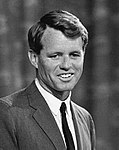

| ||||||||||||||||||||||||||||||||||||||||||||||||||||||||||||||||||||||||||||||||||||||||||||||||||||||||||||||||||||||||||||||


