


Community hub
Recent from talks
Contribute something
Nothing was collected or created yet.
Petroglyph
View on Wikipedia

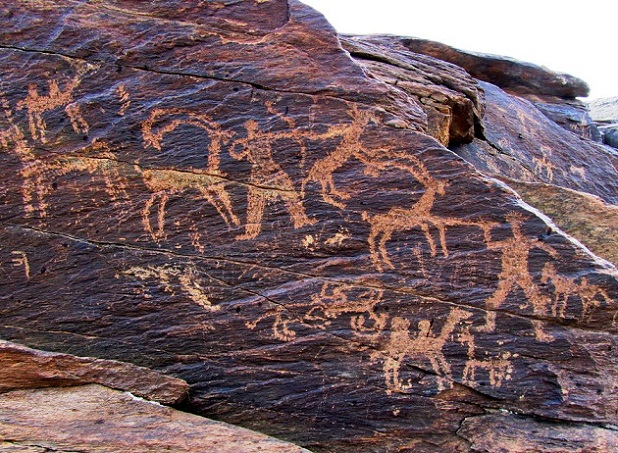
_Petroglyphs_Wadi_Methkandoush_Luca_Galuzzi_2007.jpg)


A petroglyph is an image created by removing part of a rock surface by incising, picking, carving, or abrading, as a form of rock art. The term generally refers to rock engravings of ancient origin, often associated with prehistoric peoples. The oldest petroglyphs in the world are deemed to be those at Murujuga in Western Australia, which are 40,000–50,000 years old. Some petroglyphs are classified as protected monuments and some have been added to the list of UNESCO's World Heritage Sites, or such status has been applied for.
Etymology and meaning
[edit]The word petroglyph comes from the Greek prefix petro-, from πέτρα petra meaning "stone", and γλύφω glýphō meaning "carve", and was originally coined in French as pétroglyphe.
In scholarly texts, a petroglyph is a rock engraving, whereas a petrograph (or pictograph) is a rock painting.[1][2] In common usage, the words are sometimes used interchangeably.[3][4]
Petroglyphs and petrographs both belong to the wider and more general category of rock art or parietal art. Petroforms, or patterns and shapes made by many large rocks and boulders over the ground, are quite different. Inuksuk are not petroglyphs, but human-made rock forms found in Arctic regions.[citation needed]
History
[edit]

Petroglyphs have been found in all parts of the globe except Antarctica, with the highest concentrations in parts of Africa, Scandinavia, and Siberia. Many examples of petroglyphs found globally are dated to approximately the Neolithic and late Upper Paleolithic boundary (roughly 10,000 to 12,000 years ago).[citation needed]
The oldest petrogryphs are those in Murujuga, Western Australia, some of which are estimated to be 40,000–50,000 years old.[5][6][7] The Murujuga site was declared a World Heritage Site in July 2025.[8][9]
Around 7,000 to 9,000 years ago, following the introduction of a number of precursors of writing systems, the existence and creation of petroglyphs began to suffer and tail off, with different forms of art, such as pictographs and ideograms, taking their place. However, petroglyphs continued to be created and remained somewhat common, with various cultures continuing to use them for differing lengths of time, including cultures who continued to create them until contact with Western culture was made in the 19th and 20th centuries.[citation needed]
Interpretation
[edit]Many hypotheses exist as to the purpose of petroglyphs, depending on their location, age, and subject matter. Some petroglyph images most likely held a deep cultural and religious significance for the societies that created them. Many petroglyphs are thought to represent a type of symbolic or ritualistic language or communication style that remains not fully understood. Others, such as geocontourglyphs, more clearly depict or represent a landform or the surrounding terrain, such as rivers and other geographic features.[citation needed]
Some petroglyph maps, which depict trails as well as contain symbols communicating the time and distances travelled along those trails, exist. Other petroglyph maps act as astronomical markers. As well as holding geographic and astronomical importance, other petroglyphs may also have been a by-product of various rituals: sites in India, for example, have seen some petroglyphs identified as musical instruments or "rock gongs".[10]
Some petroglyphs likely formed types of symbolic communication, such as types of proto-writing.[11] Later glyphs from the Nordic Bronze Age in Scandinavia seem to refer to some form of territorial boundary between tribes, in addition to holding possible religious meanings. Petroglyph styles have been recognised as having local or regional "dialects" from similar or neighboring peoples. Siberian inscriptions loosely resemble an early form of runes, although no direct relationship has been established.[citation needed]
Petroglyphs from different continents show similarities. While people would be inspired by their direct surroundings, it is harder to explain the common styles. This could be mere coincidence, an indication that certain groups of people migrated widely from some initial common area, or indication of a common origin. In 1853, George Tate presented a paper to the Berwick Naturalists' Club, at which a John Collingwood Bruce agreed that the carvings had "... a common origin, and indicate a symbolic meaning, representing some popular thought."[12] In his cataloguing of Scottish rock art, Ronald Morris summarized 104 different theories on their interpretation.[13]
Other theories suggest that petroglyphs were carved by spiritual leaders, such as shamans, in an altered state of consciousness,[14] perhaps induced by the use of natural hallucinogens. Many of the geometric patterns (known as form constants) which recur in petroglyphs and cave paintings have been shown by David Lewis-Williams to be hardwired into the human brain. They frequently occur in visual disturbances and hallucinations brought on by drugs, migraine, and other stimuli.
The Rock Art Research Institute of the University of the Witwatersrand studies present-day links between religion and rock art among the San people of the Kalahari Desert.[15] Though the San people's artworks are predominantly paintings, the beliefs behind them can possibly be used as a basis for understanding other types of rock art, including petroglyphs.[16]
Notable petrogylph sites
[edit]See also
[edit]References
[edit]- ^ Wieschhoff, Heinrich Albert (1945). Africa. University of Pennsylvania Press.
Most noteworthy among the relics of Africa's early periods are the rock-paintings (petrographs) and rock-engravings (petroglyphs) which have been discovered in many parts of the continent.
- ^ T. Douglas Price (2012). Europe Before Rome: A Site-by-Site Tour of the Stone, Bronze, and Iron Ages. Oxford University Press. p. 116.
This art falls into two categories, depending on how it is made: petroglyphs are carved into rock, and pictographs are painted on the rock.
- ^ "petrograph". Merriam-Webster. Encyclopædia Britannica. Retrieved 26 November 2020.
- ^ Webster's Unabridged Dictionary of the English Language. Random House. 2001. p. 1449. ISBN 0-681-31723-X.
- ^ Normile, Dennis (12 May 2023). "World's largest collection of ancient rock art threatened by Australia's petrochemical plants". Science. Retrieved 13 July 2025.
- ^ Wahlquist, Calla (29 January 2020). "Australia lodges world heritage submission for 50,000-year-old Burrup Peninsula rock art". The Guardian. Retrieved 7 February 2020.
- ^ Bednarik, Robert G. (14 March 2010). "Pleistocene Rock Art in Australia". Anthropos. 105 (1): 3–12. doi:10.5771/0257-9774-2010-1-3. ISSN 0257-9774.
- ^ Rollason, Bridget (11 July 2025). "UNESCO approves world heritage listing for WA's Murujuga rock art". ABC News (Australia).
- ^ Readfearn, Graham (11 July 2025). "'Manifestation of creative genius': Murujuga rock art in Western Australia placed on Unesco world heritage list". The Guardian. Retrieved 13 July 2025.
- ^ Ancient Indians made 'rock music'. BBC News (2004-03-19). Retrieved on 2013-02-12.
- ^ Houston, Stephen D. (1 October 2004). "The Archaeology of Communication Technologies". Annual Review of Anthropology. 33 (1): 223–250. doi:10.1146/annurev.anthro.33.070203.143724. ISSN 0084-6570.
- ^ J. Collingwood Bruce (1868; cited in Beckensall, S., Northumberland's Prehistoric Rock Carvings: A Mystery Explained. Pendulum Publications, Rothbury, Northumberland. 1983:19)
- ^ Morris, Ronald (1979) The Prehistoric Rock Art of Galloway and The Isle of Man, Blandford Press, ISBN 978-0-7137-0974-2.
- ^ D. Lewis-Williams, A Cosmos in Stone: Interpreting Religion and Society through Rock Art (Walnut Creek, CA: Altamira Press, 2002).
- ^ "Welcome to the new Rock Art Research Institute website". Rock Art Research Institute. University of the Witwatersrand. Archived from the original on 1 May 2013. .
- ^ "Rock Art Research Institute (RARI)". University of the Witwatersrand, Johannesburg. Retrieved 9 September 2017.
Further reading
[edit]- Beckensall, Stan and Laurie, Tim, Prehistoric Rock Art of County Durham, Swaledale and Wensleydale, County Durham Books, 1998 ISBN 1-897585-45-4
- Beckensall, Stan, Prehistoric Rock Art in Northumberland, Tempus Publishing, 2001 ISBN 0-7524-1945-5
- Harmanşah, Ömür (ed) (2014), Of Rocks and Water: An Archaeology of Place, 2014, Oxbow Books, ISBN 1-78297-674-4, 9781782976745
- Rawson, Jessica (ed). The British Museum Book of Chinese Art, 2007 (2nd edn), British Museum Press, ISBN 978-0-7141-2446-9
- Sickman, Laurence, in: Sickman L. & Soper A., The Art and Architecture of China, Pelican History of Art, 3rd ed 1971, Penguin (now Yale History of Art), LOC 70-125675
External links
[edit]
- Rock Art Studies: A Bibliographic Database Bancroft Library's citations to rock art literature.
| International | |
|---|---|
| National | |
| Other | |

Petroglyph
View on GrokipediaDefinition and Terminology
Etymology
The term "petroglyph" derives from the Greek words petra (or petros), meaning "rock" or "stone," and glyphē, meaning "carving" or "engraving." It was originally coined in French as pétroglyphe in the early 19th century by antiquarians examining ancient rock inscriptions and prehistoric art forms across Europe and beyond.[7][8] The word entered English usage around the mid-19th century, with its first recorded appearance in 1854, reflecting growing scholarly interest in archaeology and anthropology during the Victorian era.[9] In academic literature, "petroglyph" quickly became the standard term for describing incised or pecked rock art, distinguishing it from earlier, more general descriptors like "rock carving" or "petrograph" used in 18th- and early 19th-century travelogues and natural history accounts.[7] This terminology contrasts with related concepts such as "pictograph," which originates from the Latin pictus ("painted") combined with the Greek graphē ("writing" or "drawing"), referring specifically to images applied via paint or pigment rather than incision.[10] Likewise, "hieroglyph" stems from the Greek hieros ("sacred") and glyphē ("carving"), initially denoting the formal, script-like symbols of ancient Egyptian writing systems, which differ from the often non-linguistic, symbolic nature of petroglyphs.[11] The term has evolved similarly in other Romance languages, retaining close phonetic and morphological ties to its Greek roots; for instance, French uses pétroglyphe, while Spanish employs petroglifo.[12][13]Characteristics and Distinctions
Petroglyphs are defined as rock carvings produced by removing portions of a rock surface, typically through techniques such as incising, pecking, or abrading to expose underlying layers and create images. This process contrasts with painted forms of rock art, resulting in durable engravings that withstand environmental exposure better than pigments.[1][14] The physical characteristics of petroglyphs vary widely depending on the rock type and execution method. Incisions range from shallow scratches, often just millimeters deep, to deeper grooves exceeding several centimeters, allowing for both fine details and bold outlines. Individual motifs can measure from a few centimeters in height to several meters across, enabling representations from small symbols to expansive scenes. Stylistic variations include linear incisions for sharp lines, stippled pecking that forms dotted or textured patterns, and polished abrading for smoother, reflective surfaces that enhance visibility.[14][15] Petroglyphs are distinguished from geoglyphs, which involve large-scale arrangements of stones, earth, or other materials on the ground to form visible patterns from afar, rather than direct carving into rock faces. Unlike the broader category of rupestrian art—which encompasses various rock surface modifications, including paintings and engravings across global traditions—petroglyphs specifically denote carved or incised works. In contrast to modern graffiti, which typically features contemporary text, initials, or designs etched or painted as personal or transient expressions often deemed vandalism, petroglyphs represent intentional cultural artifacts with enduring historical value. Execution variations create effects ranging from negative space, where the incised areas recede and contrast with the intact rock, to occasional positive, raised appearances resulting from differential weathering that erodes surrounding material more rapidly.[16][17][18][19]Creation and Techniques
Tools and Methods
Petroglyphs were primarily created using four main techniques: pecking, which involves repeated strikes with a hammer to remove small chips of rock; incising, where a sharp tool scratches fine lines into the surface; abrading, which grinds away material to create smooth or deepened areas; and drilling, used to form small holes or outlines by rotating a pointed implement.[20][21] Pecking was the most prevalent method, producing the characteristic pitted or dotted appearance of many petroglyphs, while incising and abrading often complemented it for refinement.[22] The tools employed were typically sourced from local materials and included stone hammers, such as cobbles or river pebbles of hard rock like quartzite, used for direct percussion; chisels crafted from harder stones like flint to focus strikes in indirect percussion; and pointed implements made from bone or antler for incising or drilling.[21][22] In later prehistoric periods, such as the Bronze Age, metal tools like bronze chisels occasionally replaced stone or organic ones, allowing for more precise and efficient carving.[23] The creation process generally followed a sequence beginning with site selection, where artisans chose exposed rock faces with a dark desert varnish or patina to ensure high contrast between the removed material and the underlying lighter rock.[22] Surface preparation involved minimal cleaning to expose the varnish, followed by outline sketching, often achieved through initial incising with a sharp bone or stone point to define the design's contours.[20] The main carving then proceeded via pecking or drilling to fill in the outlines, with finishing techniques like abrading using a rough stone to smooth edges or deepen grooves for enhanced visibility.[21] Evidence for these methods derives from characteristic tool marks observed on petroglyph surfaces, such as dimpled pits from pecking, linear grooves from incising, and polished areas from abrading, which directly correspond to the implements used.[21] Experimental archaeology has replicated these techniques using period-appropriate tools, confirming that indirect percussion with stone chisels and antler points produces controlled removals similar to ancient examples, while also generating diagnostic debitage from the chisel itself that aids in archaeological identification.[24] These replications demonstrate that a single petroglyph could take several hours to days, depending on rock hardness and design complexity.[25]Rock Surfaces and Preparation
Petroglyph creators typically selected durable rock types such as sandstone, granite, basalt, and limestone, which offer sufficient hardness to retain incisions while providing resistance to weathering and erosion over millennia.[26] These materials allow carvings to endure environmental stresses like wind, rain, and temperature fluctuations, unlike softer or more friable stones—such as certain shales or weathered volcanics—that disintegrate readily and obscure motifs.[27] Site selection for petroglyphs emphasized factors like surface exposure to natural elements for longevity, high visibility to serve communal or ritual viewing, and proximity to culturally significant locations, including water sources essential for sustenance and sacred areas tied to spiritual practices.[26][28][29] In arid regions, panels were often chosen on formations coated with desert varnish—a thin, dark layer of iron and manganese oxides—where removing it exposes lighter underlying rock, dramatically enhancing contrast and visibility of the engravings.[26][30] Preparation of rock surfaces involved initial cleaning through scraping or abrading to remove loose debris, lichen, or soil, creating a smooth canvas suitable for precise work.[31] Artisans tested carvability by making small trial incisions to assess the rock's response to tools, ensuring the substrate would hold fine details without excessive fracturing.[23] In some cases, after carving, grooves were coated with red ochre to heighten contrast against the rock, a technique observed in various traditions to amplify visual impact without altering the primary incision method.[32]Historical Context
Origins and Chronology
Petroglyphs emerged as one of the earliest forms of human artistic expression during the Upper Paleolithic period, with the oldest confirmed examples dating to around 40,000 years ago in regions associated with the initial migrations of Homo sapiens out of Africa into Eurasia and beyond. These early engravings, often simple geometric patterns or animal figures, appear in sites across Europe, such as the open-air petroglyphs in southern France, and in African contexts like the engraved ochre pieces from Blombos Cave in South Africa, though true rock surface petroglyphs in Africa are more commonly dated to the later part of this period. This timing aligns with the dispersal of modern humans, who carried symbolic behaviors—including rock engraving—across continents starting approximately 50,000–60,000 years ago.[33][34][35] Over time, petroglyph traditions evolved through distinct chronological phases reflecting shifts in human societies and technologies. In the Paleolithic era (c. 40,000–10,000 BCE), engravings predominantly featured hunting scenes and animal motifs, as seen in Iberian sites like Altamira, symbolizing the mobile hunter-gatherer lifestyles of early Homo sapiens. The transition to the Neolithic period (c. 10,000–4,000 BCE) introduced more abstract symbols, such as cup-and-ring marks and fertility icons, coinciding with the advent of agriculture and settled communities in the Old World. By the Bronze Age (c. 3,300–1,200 BCE), motifs shifted toward warrior figures, weapons, and solar symbols, evident in Scandinavian and Iberian panels, marking the rise of hierarchical societies and metallurgy. These phases extended into historical periods, with Celtic engravings in Europe (c. 500 BCE–500 CE) and Native American petroglyphs in the Americas continuing similar thematic evolutions into the colonial era.[36][37][38] The global spread of petroglyphs followed human migration patterns, originating in the Old World and reaching the New World via Beringia around 15,000–20,000 years ago, where traditions persisted among Indigenous groups. In Australia, Aboriginal petroglyphs represent some of the longest continuous practices, with engravings at sites like Murujuga dated to at least 40,000 years ago, predating European colonization and reflecting sustained cultural continuity. Peaks in production occurred in diverse cultures, such as the Levantine Neolithic (c. 9,000 BCE) and North American Archaic period (c. 8,000–1,000 BCE), demonstrating adaptation to local environments across continents.[39][40] Environmental changes significantly influenced petroglyph proliferation, particularly following the end of the Last Glacial Maximum around 12,000 years ago, when post-Ice Age warming and rising sea levels facilitated population expansions and resource availability. Wetter Holocene climates in regions like the Arabian Peninsula and Sahara enabled denser human settlements, leading to increased engraving activity on exposed rock surfaces during these more hospitable periods. In contrast, aridification in later millennia concentrated petroglyphs in sheltered oases and highlands, preserving them while shaping their distribution.[41]Dating Methods
Dating petroglyphs relies on a combination of relative and absolute methods to establish chronologies, given the absence of written records and the durability of rock carvings. Relative dating techniques provide sequences of older-to-younger relationships without specific calendar years, while absolute methods aim for numerical ages, though both face limitations due to environmental factors and cultural overlays. Relative dating often employs the principle of superposition, where later petroglyphs are carved over earlier ones, as observed in sites where scratched motifs overlie pecked styles.[42] Association with datable artifacts, such as obsidian tools or charcoal from nearby hearths, links petroglyphs to established timelines when multiple examples show consistent patterns.[42] Patina accumulation, particularly desert varnish—a thin Mn- and Fe-rich coating that forms slowly on exposed rock surfaces at rates of 1–40 μm per 1,000 years in arid environments—allows comparison of varnish darkness between carvings and natural surfaces to infer relative ages.[43] Absolute dating methods target chronological estimates through scientific analysis. Radiocarbon dating via accelerator mass spectrometry (AMS) on associated organic materials, such as wood charcoal fragments near petroglyph panels, provides calendar years but requires direct contextual links to avoid contamination.[42] Cation-ratio dating analyzes the chemical composition of desert varnish on and around petroglyphs, measuring ratios like (K+Ca)/Ti, which decrease over time due to leaching; calibrated against known-age surfaces, it has yielded dates for Southwestern U.S. petroglyphs ranging from 1,000 to 13,000 years old.[44] Lichenometry assesses the size of lichen thalli growing in carved grooves, using calibrated growth rates (typically 0.1–0.5 mm per year for species like Rhizocarpon geographicum) to estimate minimum exposure ages, as applied to Australian and Northern European rock art panels.[45] Challenges in petroglyph dating include re-carving by later cultures, which can reset varnish or lichen growth and obscure original ages, as seen in multi-phase sites in the Mojave Desert.[42] Erosion from wind, water, or freeze-thaw cycles progressively destroys fine details, complicating surface analysis.[42] Methodological limitations persist, such as cation-ratio dating's sensitivity to local environmental variations, yielding accuracies of ±1,000 years or more, and radiocarbon's reliance on rare organic associations.[44] Advances as of the 2020s enhance precision for challenging contexts. AMS radiocarbon now detects trace carbon in varnish layers, improving dates for arid-zone petroglyphs previously thought undatable.[42] Optically stimulated luminescence (OSL) measures trapped electrons in quartz grains on rock surfaces to determine time since last light exposure, offering potential for direct dating of petroglyph creation; pilot applications, like cross-dating sediments near Barrier Canyon-style art, suggest ages of 2,000–4,000 years.[46] More recent developments include luminescence techniques applied directly to engravings and microscopic analysis of desert varnish layers, as used in 2024 to support ages exceeding 40,000 years at sites like Murujuga in Australia.[47][48] These techniques, combined with non-destructive tools like X-ray fluorescence for varnish chemistry, address prior sampling destructiveness.[42]Interpretations and Symbolism
Common Motifs
Petroglyphs worldwide display recurring motifs that can be categorized into representational and abstract forms, with representational ones illustrating elements of the natural and human world, and abstract ones featuring non-figurative patterns. These motifs often appear in stylized or simplified styles, allowing for recognition across diverse cultural contexts.[49] Animal figures constitute one of the most widespread representational motifs, depicting megafauna such as mammoths and bison, as well as birds, fish, and other fauna, typically shown in profile views or stylized outlines to highlight anatomical features like horns, wings, or fins.[50][51][52][53] Humanoid shapes form another core category, including stick figures with elongated limbs, masked dancers in dynamic poses, handprints created by pressing or stenciling, and fertility symbols such as vulva outlines, which emphasize human anatomy and movement through linear engravings.[54][55][56][57] Abstract and geometric motifs encompass cup-and-ring marks—concentric circles surrounding a central depression—spirals that coil inward or outward, zigzags forming angular lines, and meanders as winding paths, potentially evoking natural flows or diagrammatic concepts like maps or celestial observations.[58][59][60] Objects and scenes integrate practical and ceremonial elements, such as weapons including spears and axes, boats with curved hulls, suns and moons as circular forms with rays or crescents, and group compositions portraying hunting pursuits or ritual processions with aligned figures.[61][62][63]Cultural Meanings
Petroglyphs have been interpreted through shamanistic theories as conduits for spiritual interaction or visual records of trance-induced visions, particularly among hunter-gatherer societies. Scholars propose that these carvings represent entoptic phenomena—hallucinations experienced during altered states of consciousness, such as those induced by rituals or natural entheogens—allowing shamans to communicate with spirits or document supernatural encounters. For instance, the neuropsychological model, advanced by David Lewis-Williams, links petroglyph motifs like zigzags and meanders to universal brain patterns seen in trances, evidenced in South African San rock art and extended to global hunter-gatherer petroglyphs. However, this model has faced criticisms for its broad application across diverse cultures and heavy reliance on specific ethnographic data from the San people.[64][65][66][67][68] In North American contexts, ethnographic records from indigenous groups in the Far West detail shamans using rock art to depict visionary experiences, serving as portals for spirit journeys. Similarly, Bronze Age petroglyphs along the Upper Amur River in Siberia portray shaman figures in ritual poses, interpreted as evidence of ancient shamanic practices where carvings facilitated spiritual mediation.[64][66][67] In pastoral cultures, petroglyphs often function as territorial markers or clan identifiers, delineating boundaries, resources, or social affiliations on landscapes. Geometric motifs, such as grids and crosses, are frequently likened to livestock brands used by herders to signify ownership, lineage, or territorial claims, as seen in East African rock art associated with Maa-speaking pastoralists at sites like Lukenya Hill. These symbols, engraved near water sources or grazing routes, reinforced group identity and warned outsiders, with ethnographic parallels in modern Turkana and Samburu practices where similar marks denote clan territories. In the Negev Desert, tribal engravings on rock surfaces served de facto as boundary indicators in nomadic pastoral societies, even if not always intentionally so, reflecting shifts from hunter-gatherer to herding economies. Inner Mongolian petroglyphs near ancient travel routes further illustrate this role, acting as meeting points and territorial signposts for mobile pastoral communities.[69][70][71] Astronomical alignments in petroglyphs suggest intentional correlations with celestial events, functioning as calendars or symbolic maps of the cosmos. Many sites feature carvings oriented toward solstices or equinoxes, where shadows or light align with motifs to mark seasonal changes critical for hunting or agriculture. Rock art panels in Chaco Canyon, New Mexico, incorporate sky symbolism, with motifs aligning to lunar standstills or solar paths, as identified by archaeoastronomers. These alignments underscore petroglyphs' role in encoding astronomical knowledge, aiding cultural continuity across generations.[72] Petroglyphs also embody ritual and narrative purposes, conveying stories, fertility rites, or commemorations of significant events like battles and migrations. Sequential motifs, such as processions of figures or animals, illustrate implied actions and events, forming visual narratives in Scandinavian Bronze Age sites where carvings depict hunts or voyages as communal histories. Fertility rites are evoked through vulva-shaped or pregnancy motifs, as in Hohokam petroglyphs in Arizona's South Mountains, where iconography suggests sympathetic magic to ensure reproduction and agricultural bounty via puberty or ancestral rituals. Commemorative functions appear in Turkic Altai petroglyphs showing battle scenes with warriors and weapons, memorializing conflicts or victories to honor the dead and assert group prowess. In North American contexts, panels like Utah's Birthing Rock narrate birth and migration stories through human-animal hybrids, linking personal and collective transitions in Basketmaker culture.[63][73][74][75]Cultural Significance
Role in Societies
Petroglyphs served as vital educational tools in ancient societies, conveying essential knowledge across generations through visual narratives etched into rock surfaces. These carvings often depicted survival skills, such as hunting techniques and resource gathering methods, enabling younger members of communities to learn practical strategies for sustenance in challenging environments.[76] Additionally, petroglyphs illustrated myths and genealogies, preserving oral traditions in a durable form that reinforced cultural identity and historical continuity, allowing communities to transmit complex stories without reliance on spoken word alone.[77] In ceremonial contexts, petroglyph sites functioned as sacred gathering places central to communal rites, initiations, and healing practices. These locations, often selected for their alignment with natural features or celestial events, hosted rituals where participants invoked spiritual forces, with carvings acting as focal points for meditation or trance states to facilitate healing or spiritual guidance.[76] The deliberate placement of petroglyphs enhanced their role in these events, transforming rock faces into portals for communal bonding and the renewal of social ties through shared sacred experiences.[78] Petroglyphs also acted as economic indicators, marking trade routes, key resource locations, and hunting territories to guide mobility and exploitation of landscapes. Engravings of animals or paths near water sources or mineral deposits signaled productive areas, aiding groups in navigating seasonal migrations and optimizing resource use across vast territories.[79] Such markers facilitated exchange networks by denoting safe passages or communal grounds, underscoring the carvings' practical utility in sustaining economic activities within prehistoric economies.[80] Regarding social hierarchy, petroglyph creation reflected both elite commissions and communal efforts, revealing organizational structures in ancient communities. In some cases, elaborate panels commissioned by leaders or shamans depicted authoritative figures or ritual scenes, asserting status and legitimizing power through visible displays of control over sacred knowledge.[81] Conversely, widespread communal production of simpler motifs involved collective labor, fostering group cohesion and equality in participation, while integrating all social levels in the maintenance of cultural traditions.[82]Modern Relevance
In the 20th and 21st centuries, archaeological research on petroglyphs has advanced through extensive expeditions and the adoption of digital technologies, enabling more precise documentation and analysis. Since the early 2000s, techniques such as terrestrial laser scanning (TLS) and photogrammetry have been widely employed to create high-resolution 3D models of petroglyph sites, preserving details that traditional methods might miss and facilitating non-invasive study.[83] For instance, in 2016, researchers at the Chichictara site in Peru used TLS combined with image-based 3D modeling to document and interpret petroglyphs on over 158 boulders, revealing motifs invisible to the naked eye and supporting chronological interpretations.[84] These digital approaches have transformed rock art studies by integrating data from multiple sources, allowing for virtual reconstructions and global accessibility, as seen in projects like the 2018 International Federation of Rock Art Organizations (IFRAO) congress in Valcamonica, Italy, which emphasized photogrammetry for petroglyph sites.[85] Interdisciplinary collaborations between archaeology and anthropology have further enriched modern understandings of petroglyphs, incorporating ethnographic insights to explore their social and cultural contexts. Anthropological perspectives emphasize how petroglyph creation reflected ritual and communal practices, drawing on contemporary indigenous knowledge to reinterpret ancient symbols.[86] For example, studies in South America have combined archaeological surveys with anthropological analyses of shamanic traditions to link petroglyph motifs to spiritual beliefs, fostering a holistic view of prehistoric societies.[87] Indigenous communities have increasingly reclaimed petroglyphs as part of cultural revitalization efforts, integrating them into education, ceremonies, and sustainable tourism. Among the Hopi people of Arizona, projects like the CyArk documentation of the Tutuveni site—featuring over 5,000 petroglyphs along a sacred trail—have empowered tribal members to lead preservation and interpretation, reinforcing ancestral connections and community identity.[88] Similarly, the San people of southern Africa have advocated for recognition of their ancestral rock art rights since the early 2000s, pushing for involvement in site management to prevent exploitation and support cultural continuity through guided tours and storytelling initiatives.[89] Legal protections have elevated petroglyphs' global status, with numerous sites designated as UNESCO World Heritage properties to safeguard them from vandalism and development. The Rock Drawings in Valcamonica, Italy, inscribed in 1979 as Italy's first UNESCO site, encompass over 140,000 engravings and are protected under national legislation like Legislative Decree 42/2004, which mandates preservation and restricts interventions.[90] Other examples include the Rock Art of Alta in Norway (1985) and the Rock Carvings in Tanum, Sweden (1994), where international recognition has spurred monitoring programs and anti-vandalism laws.[91] Recent discoveries underscore petroglyphs' ongoing relevance, with post-2000 finds expanding knowledge of ancient human mobility and artistry. In 2022, archaeologists in the Sahout region south of Saudi Arabia's Nefud Desert uncovered 130 life-sized engravings of animals, including 90 camels and 15 equids, dating to around 12,000 years ago at sites like Jebel Misma, using luminescence dating, radiocarbon dating, and excavation to date the art and associated tools, revealing early post-Ice Age settlements near ancient oases.[41] These monumental engravings, published in 2025, highlight previously unknown nomadic cultures in the Arabian Peninsula and demonstrate how modern fieldwork continues to rewrite regional prehistory.Preservation and Threats
Conservation Efforts
Conservation efforts for petroglyphs emphasize non-invasive documentation to create comprehensive inventories without further damaging the sites. High-resolution photography and photogrammetry are widely used to capture detailed images and generate 3D models, allowing for accurate recording of engravings' shapes and positions. Tracing techniques, often combined with digital tools, involve creating overlays of petroglyph motifs to aid in analysis, while GIS mapping integrates spatial data to track site locations and monitor changes over time. These methods enable the creation of digital archives that support long-term preservation planning.[6][92][83][93] Physical protections focus on shielding petroglyphs from environmental and human impacts through structural interventions. Shelters, such as rock overhang covers or artificial canopies, prevent direct exposure to rainfall and sunlight, reducing weathering on engravings. Fencing around sites restricts unauthorized access, while rock stabilization employs consolidants like alkoxysilanes to penetrate and strengthen the stone substrate without altering its appearance. These measures are applied selectively to maintain the site's authenticity.[6][94][27] International initiatives provide frameworks for coordinated petroglyph conservation, with national branches of ICOMOS, such as Australia ICOMOS through guidelines like the Burra Charter, and international ICOMOS playing a pivotal role since the 1980s through specialized charters for rock art sites. These documents advocate for integrated management that balances protection with cultural values, emphasizing minimal intervention and community input. Collaborative projects involving indigenous communities, such as those in Australia and the Americas, incorporate traditional knowledge into conservation strategies, fostering joint monitoring and decision-making processes.[6][95][96][97] Education and stewardship programs empower communities to safeguard petroglyphs, promoting awareness to combat vandalism. Initiatives like site stewardship networks train volunteers to monitor sites, report threats, and educate visitors on respectful behavior, often integrating indigenous perspectives on cultural significance. These programs, implemented by organizations such as the U.S. National Park Service, have reduced incidents of deliberate damage by building local ownership and anti-vandalism campaigns. Efforts also include repatriation of cultural authority to indigenous groups, enabling them to lead preservation activities aligned with traditional practices.[98][99][100]Current Challenges
Petroglyphs face significant environmental threats that accelerate their degradation over time. Natural weathering processes, including wind and water erosion, gradually wear away the rock surfaces on which petroglyphs are carved, particularly in exposed arid or coastal environments.[101] Lichen growth and biological colonization further exacerbate this damage by secreting acids that dissolve rock minerals, leading to pitting and flaking; a 2024 study on Negev Desert petroglyphs in Israel identified specialized fungi and lichens as major contributors to surface erosion in these ancient carvings.[102] Human activities pose equally severe risks to petroglyph integrity. Vandalism, such as etching modern graffiti over ancient incisions, has surged in popular sites, with incidents reported across the American Southwest where unauthorized carvings obscure or destroy original motifs.[103] Tourism-related wear from foot traffic and touching compounds this issue, causing micro-abrasion and dust accumulation that hastens deterioration at high-traffic locations like those in Utah's public lands.[104] Development projects, including quarrying, road construction, and mining, directly threaten sites by blasting or burying rock panels; for instance, petroglyphs on Australia's Burrup Peninsula (Murujuga) are at risk from industrial gas extraction and associated infrastructure, potentially erasing thousands of carvings within decades. As of 2025, these risks have intensified, with the Australian government granting proposed approval in May 2025 for a gas plant extension and entering a September 2025 agreement that weakens protections, exacerbating degradation from industrial emissions as confirmed by recent studies.[105][106][107][108] Looting and the illegal trade in cultural artifacts represent another critical danger, often involving the physical removal of petroglyph panels for sale on the black market or acquisition by museums. Prior to the 1970 UNESCO Convention on the Means of Prohibiting and Preventing the Illicit Import, Export and Transfer of Ownership of Cultural Property, such extractions were rampant, with entire rock slabs chipped away from sites worldwide to supply private collections and institutions.[6] Even today, illicit activities persist, as seen in the Tadrart Acacus rock art sites in Libya, where multiple threats including looting, vandalism, and environmental factors have damaged up to 95% of the paintings, as reported in a 2018 UNESCO assessment.[109] Climate change intensifies these vulnerabilities through region-specific impacts. In desert regions, desertification and altered precipitation patterns accelerate the loss of protective rock varnish—a thin, dark patina that contrasts with petroglyph incisions—by disrupting the slow accumulation process and promoting faster exfoliation.[110] Coastal sites, meanwhile, suffer from rising sea levels and intensified flooding, which erode shorelines and submerge or salt-contaminate carvings, as observed in vulnerable archaeological records along global coastlines.[111] Increased rainfall from shifting weather patterns also heightens water runoff, amplifying erosion and biological growth in previously dry areas.[112]Global Distribution
Africa
Africa hosts some of the world's oldest and most extensive concentrations of petroglyphs, spanning from the prehistoric Sahara to southern and eastern regions, reflecting adaptations to changing climates and lifestyles over millennia. These engravings document hunter-gatherer societies, pastoral migrations, and environmental shifts, with motifs often depicting wildlife, human figures, and daily activities.[113][114] In North Africa, the Tassili n'Ajjer plateau in Algeria features over 15,000 petroglyphs and paintings dating back approximately 12,000 years, illustrating Sahara motifs such as large wild animals like bubals and elephants from a wetter era, alongside later pastoral scenes of cattle herding.[115] This UNESCO World Heritage site captures the transition from hunter-gatherer to Neolithic pastoral life around 6000 BCE.[114] Nearby, the Acacus Mountains in Libya contain thousands of rock engravings and paintings from 12,000 BCE to 100 CE, renowned for vivid pastoral scenes including domesticated cattle, herders, and communal dances that highlight the region's role in early Saharan animal domestication.[116] These artworks, spanning the Early Hunter to Camel periods, demonstrate stylistic evolution tied to climatic desiccation.[117] Southern Africa's petroglyphs are predominantly associated with San hunter-gatherer traditions, as seen in Namibia's Brandberg massif, where engravings and paintings from around 2000 BCE depict dynamic scenes of hunting, trance dances, and therianthropic figures symbolizing spiritual interactions.[118] Nearby, Twyfelfontein in Namibia, a UNESCO World Heritage site, preserves over 2,000 petroglyphs dating to approximately 6000–2000 BCE, featuring animals like rhinoceros, giraffes, and ostriches, along with geometric patterns and human figures that reflect San spiritual and environmental connections.[119][120] In Ethiopia, petroglyphs in the Sidamo region, such as the Shepe site, feature engravings of animals like giraffes and camels from around 2000 BCE, reflecting pastoralist traditions in the southern highlands.[121] Unique to the Saharan petroglyphs is the "Round Head" style, prevalent from 10,000 to 8000 years ago in sites like Tassili n'Ajjer and Acacus, where elongated human figures with rounded heads engage in ritualistic or abstract scenes, possibly indicating early symbolic thought during the African Humid Period.[122] Some Saharan motifs, such as bovine representations and solar symbols, parallel early Egyptian iconography, suggesting cultural exchanges along Nile Valley trade routes by the late Neolithic.[123]Asia
Petroglyphs in Asia are distributed across diverse landscapes, from the steppes of Central Asia to the volcanic terrains of East Asia, reflecting nomadic, agricultural, and early urban traditions. In Central Asia, the Archaeological Landscape of Tamgaly in Kazakhstan features approximately 5,000 petroglyphs spread across 48 complexes, dating primarily from the Bronze Age in the second half of the 2nd millennium BCE through to the early 20th century CE.[4] These engravings, often deeply incised, depict a range of motifs including animals, solar deities, and zoomorphic figures in furs, associated with nearby ancient tombs and settlements that suggest ritualistic use.[4] Further east, the Petroglyphic Complexes of the Mongolian Altai encompass large concentrations of carvings at sites like Tsagaan Salaa-Baga Oigor and Upper Tsagaan Gol, spanning from the Late Pleistocene around 11,000 BCE to the Turkic period in the 7th–9th centuries CE.[124] Motifs here emphasize animals such as mammoths, elk, ibex, and horses, illustrating shifts from hunter-gatherer scenes in forested steppes to later nomadic herding practices.[124] In South Asia, the Bhimbetka rock shelters in India represent one of the earliest known prehistoric art complexes, with engravings and scenes dating back to the Upper Paleolithic around 30,000 BCE and continuing into the Mesolithic period.[125] These carvings, found in over 750 shelters, portray daily life activities, animals, and human figures, providing insight into early hunter-gatherer societies in the Vindhyan foothills.[125] Along the fringes of the Indus Valley in Pakistan, petroglyph sites such as those in the Diamer-Basha Dam area extend over more than 100 kilometers along the Indus River, featuring thousands of engravings from the Stone Age through historic periods.[126] These include motifs left by traders, settlers, and pilgrims, highlighting the region's role as a crossroads for ancient migrations and exchanges.[126] East Asian petroglyph traditions are adapted to local geologies, notably in continental and island settings. The Petroglyphs along the Bangucheon Stream in Ulsan, South Korea, a UNESCO World Heritage site inscribed in 2025, feature dense concentrations of engravings dating back approximately 7,000 years to around 5000 BCE, including animals like whales, deer, and masks, alongside human figures and geometric patterns reflecting prehistoric coastal life.[5] In Japan, petroglyphs are sparse but present, such as those in Fugoppe Cave in Hokkaido from the Epi-Jomon period (circa 500–700 CE), depicting humanoid figures, animals, and abstract symbols possibly linked to shamanic practices.[127] A distinctive feature of Asian petroglyphs, particularly in Central and South Asia, is the influence of the Silk Road, which facilitated the incorporation of Buddhist symbols into later carvings from the 1st century CE onward.[128] Along the Indus Valley routes in Pakistan, petroglyphs at sites like Shatial depict Buddhist motifs such as stupas and deities alongside earlier hunting scenes, evidencing cultural syncretism among passing traders and missionaries.[128] This blend underscores how petroglyph traditions evolved with transcontinental interactions, integrating spiritual iconography into longstanding steppe and valley motifs.[129]Europe
In Scandinavia, the Rock Art of Alta in northern Norway represents one of Europe's most extensive petroglyph ensembles, with thousands of engravings and paintings across 45 sites dating from approximately 4200 B.C. to 500 B.C., including motifs of Bronze Age ships, human figures engaged in hunting and fishing, and circumpolar animals such as reindeer and bears.[130] These carvings provide exceptional evidence of prehistoric hunter-gatherer societies' social rituals, cosmology, and environmental interactions in the Arctic region.[130] In Sweden's Bohuslän province, particularly around Tanum, over 1,500 Bronze Age sites (c. 1700–500 B.C.) feature dense concentrations of petroglyphs depicting humans, animals like deer and horses, weapons, boats, and abstract cup marks, illustrating the beliefs and daily life of Nordic Bronze Age communities.[131] Some Scandinavian petroglyphs extend into the Iron Age and show Viking Age additions, such as ship motifs reminiscent of Norse vessels, reflecting cultural continuity from prehistoric to medieval times.[132] On the Iberian Peninsula, the Côa Valley in Portugal preserves the continent's premier open-air Paleolithic petroglyph collection, with around 5,000 figures engraved between 22,000 and 8,000 B.C., primarily portraying animals like aurochs, horses, deer, and ibex in a style that highlights early human symbolic expression and ecological awareness.[133] In nearby Galicia, Spain, Late Neolithic and early Bronze Age petroglyphs, concentrated in coastal and upland areas near rias and animal paths, include abstract cup marks, deer motifs, human figures, weapons such as halberds, and enigmatic "idols" possibly linked to ritual practices influenced by southern Iberian traditions.[134] The British Isles exhibit petroglyphs closely integrated with megalithic monuments, as seen in Scotland's Kilmartin Glen, where Neolithic carvings (c. 3000 B.C.) on panels like Achnabreck display intricate cup-and-ring marks, spirals, and linear patterns, often situated amid burial cairns and standing stones that evoke later Celtic warrior iconography in the region's prehistoric landscape.[135] Similarly, Ireland's Newgrange passage tomb (c. 3200 B.C.), part of the Brú na Bóinne complex, features elaborate megalithic art on 97 kerbstones surrounding the mound, with swirling spirals, lozenges, and chevrons that parallel open-air petroglyph styles and underscore ritual overlaps between rock carvings and monumental architecture.[136] Across Europe, these petroglyphs frequently align with megalithic structures, such as dolmens and tombs in Galicia and the British Isles, suggesting shared ceremonial functions in Neolithic societies, though precise dating remains challenging due to overlapping patinas and stylistic ambiguities.[134]Americas
Petroglyph traditions in North America are prominent in the southwestern United States, where ancestral Puebloan peoples, formerly known as Anasazi, created extensive panels depicting daily life, animals, and spiritual motifs. In the arid landscapes of Utah and Arizona, these carvings often feature bighorn sheep, human figures, and abstract symbols pecked into sandstone using stone tools. A notable example is Newspaper Rock along Indian Creek in southeastern Utah, a single large panel covered with over 300 petroglyphs spanning multiple cultural periods from the Archaic era (circa 400 B.C.) through the Fremont culture (A.D. 600–1300) and later Ute and Navajo additions.[137] These images reflect hunting practices, migrations, and cosmological beliefs, with later post-Columbian overlays including horseback riders introduced after Spanish contact in the 16th century.[138] In California, the Chumash people of the coastal regions produced rock art that occasionally incorporates petroglyph elements alongside dominant pictographs, as seen in sites near Santa Barbara where carved motifs hybridize with painted scenes of marine life and celestial events, dating to A.D. 500–1800.[139] Further north in Canada, the Writing-on-Stone / Áísínai'pi site in southern Alberta represents a key Blackfoot (Niitsitapi) petroglyph tradition, featuring hundreds of engravings and paintings on sandstone cliffs and hoodoos within a sacred prairie landscape. Created primarily between A.D. 1050 and 1150 but with evidence of use spanning 3,000 years, the motifs include thunderbirds, warriors, shields, and spirit beings that embody Blackfoot cosmology and warfare narratives.[140] These petroglyphs are deeply intertwined with oral traditions, serving as visual maps for sacred stories, vision quests, and ceremonial rites passed down through generations, where elders interpret the carvings as portals to the spirit world.[141] In Mesoamerica, the Sierra de San Francisco in Baja California, Mexico, hosts a hybrid rock art tradition blending pictographs and occasional petroglyph elements across over 400 sites, with thousands of figures depicting hunters, animals, and geometric patterns from circa 100 B.C. to A.D. 1300. Created by prehistoric Cochimí or earlier groups, these carvings and paintings illustrate a rich human-animal symbiosis in a desert environment, often overlaying earlier motifs in layered panels that suggest continuous cultural reuse.[142] South American petroglyphs flourish in the Andean region, exemplified by Toro Muerto in Peru's Majes Valley, the largest concentration in the Americas with petroglyphs on approximately 2,600 volcanic boulders spanning 5 square kilometers. Dating to A.D. 1000–1400 and associated with Wari and local agricultural societies, the site features over 5,000 figures including danzantes (dancing humans), llamas, serpents, felines, and geometric designs interpreted as representations of Andean deities and fertility rites.[143][55] In Brazil's Serra da Capivara National Park, petroglyphs and associated rock art from Paleolithic periods (over 25,000 years old) depict hunting scenes with atlatls, megafauna, and human figures in over 1,000 shelters, linking to early migratory traditions and survival narratives preserved in indigenous oral histories.[144] Across these Americas sites, petroglyphs often connect to living oral traditions, where post-Columbian modifications—such as added European-influenced symbols—highlight cultural resilience and adaptation.[145]Oceania
Oceania hosts a diverse array of petroglyphs, with Australia containing the continent's most extensive and ancient collections, while Pacific Island traditions feature more localized and culturally specific carvings. In Australia, petroglyphs are widespread across arid and coastal regions, often pecked or abraded into sandstone or granite surfaces, depicting animals, humans, and abstract motifs that reflect Indigenous Australian spiritual and environmental connections.[146] Researchers estimate over 100,000 rock art sites nationwide, many featuring petroglyphs dating back to the Pleistocene epoch, with some confirmed as old as 12,000 years through accelerator mass spectrometry dating of associated sediments.[147] Prominent examples include the Murujuga (Burrup Peninsula) in Western Australia's Pilbara region, home to tens of thousands of petroglyphs illustrating marine life and human figures, created over millennia by Yaburara people and threatened by industrial development.[33] Other key sites are the Kimberley region's honeycomb engravings and the Sydney Basin's engravings, which portray ancestral beings and hunting scenes.[148] In New Zealand (Aotearoa), petroglyphs are less common than painted rock art but occur as incised or pecked designs on sandstone and granite, primarily created by Māori ancestors from the 14th century onward. These carvings, often found in coastal and riverine shelters, include motifs like spirals, human figures, and canoes, symbolizing navigation, genealogy, and spiritual narratives, as seen in sites on the North Island.[149] A notable example is a North Island petroglyph depicting a canoe with spiral and open-mouth motifs, interpreted through oral traditions as referencing Marquesan emigrants.[150] Across the Pacific Islands, petroglyphs vary by cultural group, with Melanesia, Micronesia, and Polynesia each preserving distinct traditions tied to ancestral worship, navigation, and territorial markers. In Melanesia, sites in West New Britain's Cape Gloucester area feature pecked anthropomorphic and geometric figures on basalt, dating to prehistoric Lapita-influenced periods and reflecting complex settlement histories.[151] Micronesian examples include Palau's Obakelderaol site, where cupules and linear engravings on limestone cliffs, possibly from 1,000–2,000 years ago, align with oral histories of ancient rituals and warfare.[152] In Polynesia, the Society Islands (e.g., Tahiti and Mo'orea) host petroglyphs of turtles, canoes, and vulvas pecked into basalt, integrated into marae temple complexes and dated to AD 1200–1800 via stratigraphic analysis.[153] Hawaii's Kahikinui district on Maui contains over 160 petroglyph units, including family groups and sailboats, carved into lava flows by Native Hawaiians from AD 1400–1800 to mark agricultural landscapes and genealogies.[154] Pohnpei's petroglyphs, featuring geometric patterns on basalt, link to broader Oceanic communication systems, potentially aiding navigation or ceremonies.[155] These island petroglyphs, though fewer in number than Australia's, underscore Polynesian and Micronesian voyaging heritage, often corroborated by ethnoarchaeological studies.[156]References
- https://en.wiktionary.org/wiki/petroglyph