Hubbry Logo
Timeline of Mars 2020Timeline of Mars 2020Main
Open search
Timeline of Mars 2020
Community hub
Timeline of Mars 2020
logo
8 pages, 0 posts
0 subscribers
Be the first to start a discussion here.
Contribute something
Timeline of Mars 2020
from Wikipedia

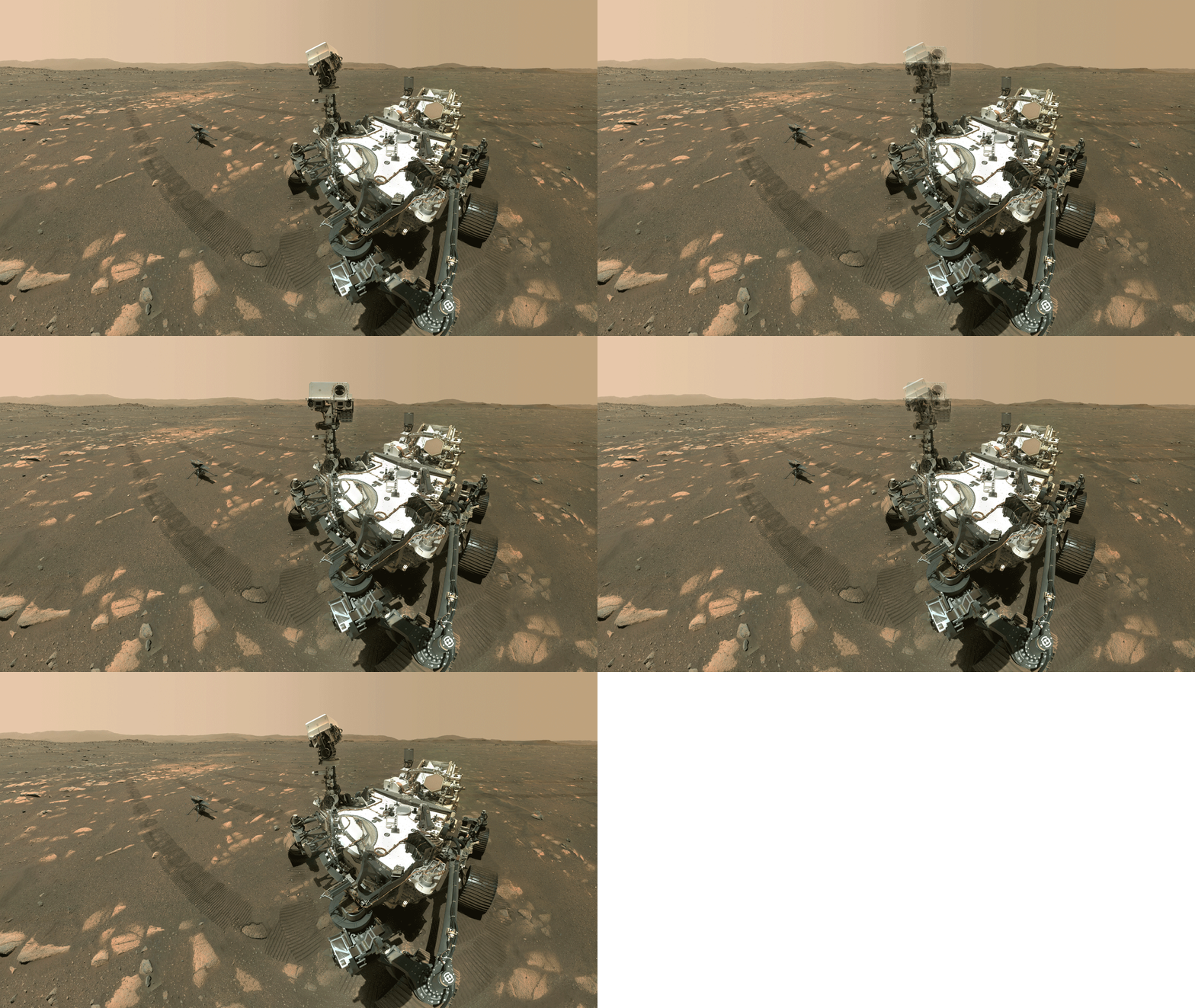
Self-portrait of Mars 2020 containing Perseverance rover and Ingenuity helicopter located at the Ingenuity helicopter drop site (7 April 2021)

The Mars 2020 mission, consisting of the rover Perseverance and helicopter Ingenuity, was launched on July 30, 2020, and landed in Jezero crater on Mars on February 18, 2021.[1] As of February 5, 2026, Perseverance has been on the planet for 1764 sols (1813 total days; 4 years, 352 days). Ingenuity operated for 1042 sols (1071 total days; 1 year, 341 days) until its rotor blades, possibly all four, were damaged during the landing of flight 72 on January 18, 2024, causing NASA to retire the craft.[2][3]

Current weather data on Mars is being monitored by the Curiosity rover and had previously been monitored by the Insight lander.[4][5] The Perseverance rover is also collecting weather data. (See the External links section)

Mission overview

[edit]

Prelaunch (2012–2020)

[edit]

The Mars 2020 mission was announced by NASA on December 4, 2012. In 2017 the three sites (Jezero crater, Northeastern Syrtis Major Planum, and Columbia Hills) were chosen as potential landing locations, with Jezero crater selected as the landing location, and launched on July 30th, 2020, from Cape Canaveral.

Landing and initial tests (February–May 2021)

[edit]

After arriving on February 18, Perseverance focused on validating its systems. During this phase, it used its science instruments for the first time,[6] generated oxygen on Mars with MOXIE,[7] and deployed Ingenuity. Ingenuity began the technology demonstration phase of its mission, completing five flights before transitioning to the operations demonstration phase of its mission.

Cratered floor campaign (June 2021-April 2022)

[edit]
Perseverance rover - map of the first science campaign (yellow lines, below the landing site). The blue lines above the landing site correspond to the planned second campaign,[8] although the second campaign did not officially start until the arrival of the rover at Three Forks.

The Cratered Floor Campaign was the first science campaign.[9] It began on June 1, 2021, with the goal of exploring the Crater Floor Fractured Rough and Séítah geologic units. To avoid the sand dunes of the Séítah unit, Perseverance mostly traveled within the Crater Floor Fractured Rough geologic unit or along the boundary between the two units. The first nine of Perseverance's sample tubes were to be filled during this expedition, including the first three 'witness tubes'.[8]

After collecting the samples, Perseverance returned to its landing site, before continuing to the delta for its second science campaign. Some of the sample tubes filled during this campaign were later stored in a designated area for the upcoming NASA-ESA Mars Sample Return mission, during the Delta Front Campaign.[10] While Perseverance embarked on its first science campaign, Ingenuity continued to travel alongside the rover as part of its operations demonstration campaign.[11] Ingenuity's sixth through twenty-fifth flights were completed during this phase, achieving an at-the-time speed record of 5.5 meters per second.[12]

Delta front campaign (April 2022 - January 2023)

[edit]
In blue, the planned traverse of Perseverance. The second science campaign began just before the background map transitions to black and white.

The Delta Front Campaign was the second science campaign of the Mars 2020 mission. The campaign began with Ingenuity continuing to travel alongside the rover as part of its operations demonstration campaign, and Perseverance leaving the rapid traverse mode it had entered at the end of the last mission to rapidly reach the delta.[13] During the campaign, Perseverance would take a further nine samples, in addition to two further witness tubes. Ingenuity would make its 41th flight during this mission. An incident occurred in which Ingenuity was unable to sufficiently charge during the night, leading to a change in how Ingenuity manages its heaters.[14] The MOXIE experiment continued to run, generating a record amount of oxygen-per-hour on Mars. The campaign concluded with Perseverance reaching the top of the delta and the completion of its first sample depot.[15]

Upper fan campaign (January 2023 - September 2023)

[edit]

The Upper Fan Campaign, also called the Delta Top Campaign, was the third science campaign of the Mars 2020 mission. Whereas prior campaigns investigated areas that are believed to have been submerged in an ancient lake, this campaign investigated one of the riverbeds that used to feed into the lake.[16][17] The MOXIE experiment completed its 16th, and final, oxygen generation test during this campaign.[18] Ingenuity completed its 54th flight during this campaign. The helicopter experienced an anomaly that caused it to land outside the range of the rover, but this was ultimately resolved when the rover moved into a position that allowed contact to be restored.[19] The campaign ended with Perseverance reaching the margin carbonate geologic unit,[20] after having taken three further rock samples (and 21 overall).[21]

Margin campaign (September 2023 - August 2024)

[edit]

The Margin Campaign was the fourth of the Mars 2020 mission. The campaign was expected to last around 8 months, although it lasted closer to a year, after which point Perseverance began the Crater Rim Campaign.[22] The campaign gets its name from the geological unit it aims to explore - the margin carbonate unit. Rocks in this unit are capable of containing traces of life, and their formation is tied to the presence of liquid water.[23]

During the campaign, Ingenuity achieved several records, including a max altitude of 24 meters (flight 61) and a maximum groundspeed of 10 meters per second (flight 62). Unfortunately, due to a failure on the 72nd flight, the helicopter blades became too damaged to fly. On January 25th, 2024, NASA declared the end of Ingenuity's mission - the helicopter's final resting place was named Valinor Hills, after a location in the Lord of the Rings franchise.[2] Despite the loss of Ingenuity's blades, the core of the helicopter remained intact; it will continue to monitor atmospheric conditions for as long as it is able. Perseverance took four further rock samples during this campaign (25 overall). The campaign overlapped with solar conjunction, interfering with the ability to communicate with the rover from Earth.[24]

Engineers from NASA’s Jet Propulsion Laboratory in Southern California and AeroVironment are completing a detailed assessment of the Ingenuity Mars Helicopter’s final flight on January 18, 2024, the first of its kind on an extraterrestrial planet, concluding that the inability of Ingenuity’s navigation system to provide accurate data during the flight likely caused a chain of events that ended the mission.[25]

The helicopter’s vision navigation system was designed to track visual features on the surface using a downward-looking camera over well-textured (pebbly) but flat terrain. This limited tracking capability was more than sufficient for carrying out Ingenuity’s first five flights, but by Flight 72 the helicopter was in a region of Jezero Crater filled with steep, relatively featureless sand ripples.[25]

One of the navigation system’s main requirements was to provide velocity estimates that would enable the helicopter to land within a small envelope of vertical and horizontal velocities. Data sent down during Flight 72 shows that, around 20 seconds after takeoff, the navigation system couldn’t find enough surface features to track.[25]

Photographs taken after the flight indicate the navigation errors created high horizontal velocities at touchdown. In the most likely scenario, the hard impact on the sand ripple’s slope caused Ingenuity to pitch and roll. The rapid attitude change resulted in loads on the fast-rotating rotor blades beyond their design limits, snapping all four of them off at their weakest point — about a third of the way from the tip. The damaged blades caused excessive vibration in the rotor system, ripping the remainder of one blade from its root and generating an excessive power demand that resulted in loss of communications.[25]

Northern rim campaign (August 2024 - present)

[edit]

The Northern Rim Campaign is the fifth, currently ongoing science campaign, and the first new science campaign since the loss of the Ingenuity helicopter. It was originally called the Crater Rim Campaign.[26] It has included a total elevation change of over 1000 feet (~300 meters). The main focuses of the campaign are expected to be at the regions "Pico Turquino" and "Witch Hazel Hill".[27][28] It is expected to encounter rocks as old as 4 billion years.[29][26][30]

Due to the steepness and slipperiness of terrain encountered during the campaign, Perseverance has not been able to travel as fast as expected. Despite this, it has still traveled faster than the only remaining other active Mars rover, Curiosity. Various strategies were tried to mitigate the issue.[31] Furthermore, the rover's supply of sample tubes has begun to run out, with only 10 of the original 43 sample tubes remaining unused as of August 2025.[32] Two of those tubes have been retired because of worries that the process of using them may cause components of the rover to catch on each other in a dangerous way.[33] Despite these setbacks, Perseverance has performed well; it set a Mars record with a single-day drive of 412 meters[34], and an engineering review determined that the rover could last until at least 2031 and that its wheels would remain at optimal performance for at least 37 miles.[35]

In December 2024, the rover reached the top of the crater rim.[36] After reaching the top, Perseverance collected its oldest rock sample yet in January[37] and reached Witch Hazel Hill, one of the main focuses of the campaign, which it left in May 2025.[38] As of December 2025, it was on its way to a region called 'Lac de Charmes',[35] a plain just beyond the crater rim.[39] A Mars solar conjunction lasted from December 29th, 2025 to January 16, 2026, during which time contact with the rover was inhibited.[40]

On December 8th and 10th, 2025 (Sols 1707 and 1709), Perseverance executed a drive whose waypoints were fully planned by generative AI. While the plan was first validated by the engineering team before being sent to the rover, it marks the first use of generative AI to fully plan a drive. The drive was completed successfully, moving 210 meters on the first day and 246 meters on the second.[41]

Timeline of samples cached

[edit]

In support of the NASA-ESA Mars Sample Return, rock, regolith (Martian soil), and atmosphere samples are being cached by Perseverance. As of July 2025, 33 out of 43 sample tubes have been filled,[42] including 8 igneous rock samples, 13 sedimentary rock sample tubes, 3 Igneous/Impactite rock sample tubes, a Serpentinite rock sample tube, a Silica-cemented carbonate rock sample tube,[43] two regolith sample tubes, an atmosphere sample tube,[44] and three witness tubes.[45] Before launch, 5 of the 43 tubes were designated "witness tubes" and filled with materials that would capture particulates in the ambient environment of Mars. Out of 43 tubes, 3 witness sample tubes will not be returned to Earth and will remain on rover as the sample canister will only have 30 tube slots. Further, 10 of the 43 tubes are left as backups at the Three Forks Sample Depot.[46]

Mars sample-return mission - Sampling Process
Context
MidView
CloseUp
Sample in drill
Sampling drill
Sample Tube 233
First Sample
  • 21 June 2021 (2021-06-21) (Sol 120): Sealing of witness tube 1 of 5. Unlike the others, this tube was (intentionally) left unsealed before the mission left Earth.[47]
  • 6 August 2021 (2021-08-06) (Sol 164): Sealing of sample tube 1 of 38. Attempted to take a rock sample, but only captured atmospheric gasses.
  • 6 September 2021 (2021-09-06) (Sol 195): Sealing of sample tube 2 of 38. This was the first successful rock sample.[48]
  • 8 September 2021 (2021-09-08) (Sol 197): Sealing of sample tube 3 of 38. Sampled from the same rock.
  • 15 November 2021 (2021-11-15) (Sol 263): Sealing of sample tube 4 of 38.
  • 24 November 2021 (2021-11-24) (Sol 272): Sealing of sample tube 5 of 38.
  • 22 December 2021 (2021-12-22) (Sol 299): Sealing of sample tube 6 of 38.
  • 29 December 2021 (2021-12-29) (Sol 307): Failed attempt at collecting the 7th sample.[49]
  • 31 January 2022 (2022-01-31) (Sol 338): Sealing of sample tube 7 of 38. The same tube as the previous failed attempt was used, after dumping out the contents.
  • 7 March 2022 (2022-03-07) (Sol 372): Sealing of sample tube 8 of 38.
  • 13 March 2022 (2022-03-13) (Sol 378): Sealing of sample tube 9 of 38.
  • 7 July 2022 (2022-07-07) (Sol 491): Sealing of sample tube 10 of 38. This was the first sedimentary rock sample taken by Perseverance.
  • 12 July 2022 (2022-07-12) (Sol 495): Sealing of sample tube 11 of 38.
  • 16 July 2022 (2022-07-16) (Sol 499): Sealing of witness tube 2 of 5.
  • 27 July 2022 (2022-07-27) (Sol 510): Sealing of sample tube 12 of 38.
  • 3 August 2022 (2022-08-03) (Sol 510): Sealing of sample tube 13 of 38.
  • 2 October 2022 (2022-10-02) (Sol 575): Sealing of sample tube 14 of 38.
  • 5 October 2022 (2022-10-05) (Sol 578): The 14th rock sample (15th overall, named 'Mageik') was cored; however, the rover was not able to seal the sample. The third witness tube was also opened.[50]
  • 14 October 2022 (2022-10-14) (Sol 584): Due to a fault, witness tube 3 was left exposed to the Martian environment much longer than planned.[51]
  • 14 October 2022 (2022-10-14) (Sol 586): Sealing of witness tube 3 of 5.[52]
  • 16 November 2022 (2022-11-16) (Sol 589): Sealing of sample tube 15 of 38. After several attempts, the Mageik sample was successfully sealed.
  • 29 November 2022 (2022-11-29) (Sol 632): Sealing of sample tube 16 of 38.
  • 2 December 2022 (2022-12-02) (Sol 635): Sealing of sample tube 17 of 38.
  • 7 December 2022 (2022-12-07) (Sol 639): Sealing of sample tube 18 of 38.
  • 7 December 2022 (2022-12-07) (Sol 639): Sealing of sample tube 18 of 38.
  • 21 December 2022 (2022-12-21) – 28 January 2023 (2023-01-28) (Sol 653–690): Perseverance creates the Three Forks sample depot, leaving behind 10 of the previously collected tubes at various locations in Jezero Crater.[53]
  • 30 March 2023 (2023-03-30) (Sol 749): Sealing of sample tube 19 of 38.
  • 23 May 2023 (2023-05-23) (Sol 802): The first attempt at filling sample tube 20; the sample collected was too small.
  • 4 June 2023 (2023-06-04) (Sol 814): The second attempt at filling sample tube 20.
  • 23 June 2023 (2023-06-23) (Sol 832): Sealing of sample tube 20 of 38. Successfully cached a conglomerate sedimentary rock sample after two previous attempts.
  • 27 July 2023 (2023-07-27) (Sol 865): The first attempt at filling sample tube 21.
  • 15 September 2023 (2023-09-15) (Sol 914): Sealing of sample tube 21 of 38. Sampling succeeded on the second attempt.
  • 23 September 2023 (2023-09-23) (Sol 922): Sealing of sample tube 22 of 38.
  • 21 October 2023 (2023-10-21) (Sol 949): Sealing of sample tube 23 of 38.
  • 11 March 2024 (2024-03-11) (Sol 1087): Sealing of sample tube 24 of 38.
  • 21 June 2024 (2024-06-21) (Sol 1216): Sealing of sample tube 25 of 38. This sample is believed to contain potential biosignatures.[54][55]
  • Before November 2024: NASA determined that the use of two (non-witness) sample tubes would pose a risk to the mission, due to the risk of wires on the robot arm catching on the fasteners.[33]
  • 28 January 2025 (2025-01-28) (Sol 1401): Sealing of sample tube 26 of 36.
  • 2 March 2025 (2025-03-02) (Sol 1434): Sealing of sample tube 27 of 36.
  • 10 March 2025 (2025-03-10) (Sol 1441): Sealing of sample tube 28 of 36.
  • 7 May 2025 (2025-05-07) (Sol 1498): Collection of sample tube 29 of 36. This sample has been left unsealed on purpose; this way, Perseverance can replace it with another sample if needed.[56]
  • 2 July 2025 (2025-07-02) (Sol 1552): Collection of sample tube 30 of 36. This sample has been left unsealed on purpose.[56]


Timeline of Ingenuity flights

[edit]
  • 19 April 2021 (2021-04-19) (Sol 58): Flight 1. Ingenuity reached a height of 3 meters and lasts for 39 seconds.
  • 22 April 2021 (2021-04-22) (Sol 61): Flight 2. The first flight to include horizontal displacement.
  • 25 April 2021 (2021-04-25) (Sol 64): Flight 3. The final 'technology demonstration' flight.
  • 29 April 2021 (2021-04-29) (Sol 68): An attempt to fly failed due to a software error.
  • 30 April 2021 (2021-04-30) (Sol 69): Flight 4. Ingenuity traveled almost three times as far as all previous flights combined.
  • 7 May 2021 (2021-05-07) (Sol 76): Flight 5. The first to land at a new location.
  • 23 May 2021 (2021-05-23) (Sol 91): Flight 6. An error with the handling of data from the color camera caused the helicopter to land 5 meters away from the planned destination.
  • 6 June 2021 (2021-06-06) (Sol 105): An attempt to fly failed due to a software error.
  • 8 June 2021 (2021-06-08) (Sol 107): Flight 7. The color camera was not used during this flight, in an effort to avoid the error that caused the previous failure.
  • 22 June 2021 (2021-06-22) (Sol 120): Flight 8. The color camera was still not used during this flight.
  • 5 July 2021 (2021-07-05) (Sol 133): Flight 9. Ingenuity flew over sand dunes, which caused the flight to land 47 meters off target.
  • 24 July 2021 (2021-07-24) (Sol 152): Flight 10.
  • 5 August 2021 (2021-08-05) (Sol 163): Flight 11. The landing region, named 'Airfield H', would be the starting location for the next four flights.
  • 16 August 2021 (2021-08-16) (Sol 174): Flight 12. This flight was the longest yet, lasting 170 seconds.
  • 5 September 2021 (2021-09-05) (Sol 193): Flight 13.
  • 18 September 2021 (2021-09-18) (Sol 206): An attempt to fly was cancelled due to a servo motor anomaly.
  • 24 October 2021 (2021-10-24) (Sol 241): Flight 14. Ingenuity used a faster rotor spin of 2700 rpm; this was necessary due to the seasonal lowering of Mars' atmospheric density.
  • 6 November 2021 (2021-11-06) (Sol 254): Flight 15. During this flight, Ingenuity departed from Airfield H for the last time.
  • 21 November 2021 (2021-11-21) (Sol 268): Flight 16.
  • 5 December 2021 (2021-12-05) (Sol 282): Flight 17. Ingenuity lost communications with the rover at the end of the flight, although it was later recovered.
  • 15 December 2021 (2021-12-15) (Sol 292): Flight 18.
  • 5 January 2022 (2022-01-05) – February 7, 2022 (2022-02-07) (Sol 312–344): A dust storm, and the complications arising from it, prevent Ingenuity from flying.
  • 8 February 2022 (2022-02-08) (Sol 345): Flight 19.
  • 25 February 2022 (2022-02-25) (Sol 362): Flight 20.
  • 10 March 2022 (2022-03-10) (Sol 375): Flight 21. Ingenuity did not fly as far as planned, managing only 70 meters of a planned 350 meter flight.
  • 20 March 2022 (2022-03-20) (Sol 384): Flight 22.
  • 24 March 2022 (2022-03-24) (Sol 388): Flight 23.
  • 3 April 2022 (2022-04-03) (Sol 398): Flight 24. For the first time since Sol 241, the rotor spun at a lower rate. This was due to the Martian fall having denser air than the summer.
  • 8 April 2022 (2022-04-08) (Sol 403): Flight 25. Ingenuity flew for a record distance of 709 meters.
  • 19 April 2022 (2022-04-19) (Sol 414): Flight 26.
  • 23 April 2022 (2022-04-23) (Sol 418): Flight 27.
  • 29 April 2022 (2022-04-29) (Sol 423): Flight 28.
  • 11 June 2022 (2022-06-11) (Sol 465): Flight 29. From this flight onwards, Ingenuity's inclinometer no longer worked.[57]
  • 20 August 2022 (2022-08-20) (Sol 533): Flight 30.
  • 6 September 2022 (2022-09-06) (Sol 550): Flight 31.
  • 18 September 2022 (2022-09-18) (Sol 561): Flight 32.
  • 24 September 2022 (2022-09-24) (Sol 567): Flight 33. A small foreign object was seen attached to part of Ingenuity's leg at the beginning of the flight, although it fell off midway through the flight and caused no damage.[58]
  • 23 November 2022 (2022-11-23) (Sol 625): Flight 34. The first flight after Ingenuity received a software update to allow it to better handle rocky, hilly terrain.[59]
  • 3 December 2022 (2022-12-03) (Sol 635): Flight 35.
  • 10 December 2022 (2022-12-10) (Sol 642): Flight 36.
  • 17 December 2022 (2022-12-17) (Sol 649): Flight 37.
  • 24 December 2022 (2022-12-24) (Sol 656): An attempt to fly failed due to an oncoming dust storm.[60]
  • 5 January 2023 (2023-01-05) (Sol 667): Flight 38.
  • 11 January 2023 (2023-01-11) (Sol 673): Flight 39.
  • 19 January 2023 (2023-01-19) (Sol 681): Flight 40. With the exception the first airfield, "Wright Brother's Field", all airfields had been named according to the Latin alphabet. This was the first flight to break that tradition, moving from Airfield Z to Airfield Beta.[61]
  • 27 January 2023 (2023-01-27) (Sol 689): Flight 41.
  • 5 February 2023 (2023-02-05) (Sol 697): Flight 42.
  • 16 February 2023 (2023-02-16) (Sol 708): Flight 43. This was the first of a series of flights aimed to stay ahead of Perseverance; in the current terrain, falling behind Perseverance would likely result in being unable to fly Ingenuity again due to the risk of collision with the rover.[62]
  • 19 February 2023 (2023-02-19) (Sol 711): Flight 44.
  • 22 February 2023 (2023-02-22) (Sol 714): Flight 45.
  • 25 February 2023 (2023-02-25) (Sol 717): Flight 46.
  • 9 March 2023 (2023-03-09) (Sol 729): Flight 47.
  • 22 March 2023 (2023-03-22) (Sol 741): Flight 48.
  • 23 March 2023 (2023-03-23) – 1 April 2023 (2023-04-01) (Sol 742–751): A series of flight attempts fail due to various issues.[63]
  • 1 April 2023 (2023-04-01) (Sol 752): Flight 49.
  • 13 April 2023 (2023-04-13) (Sol 763): Flight 50. Ingenuity achieved a new altitude record of 18 meters.[64]
  • 23 April 2023 (2023-04-23) (Sol 772): Flight 51.
  • 27 April 2023 (2023-04-27) (Sol 776): Flight 52.
  • 27 April 2023 (2023-04-27) – 28 June 2023 (2023-06-28) (Sol 776–837): Contact lost with Ingenuity due to a hill blocking radio signals.[65]
  • 22 July 2023 (2023-07-22) (Sol 860): Flight 53. Aborted early; this was the first in-flight abort performed by Ingenuity.[66]
  • 4 August 2023 (2023-08-04) (Sol 873): Flight 54. A very brief flight to validate software modifications made in the wake of the previous flight's abort.
  • 12 August 2023 (2023-08-12) (Sol 873): Flight 55.
  • 26 August 2023 (2023-08-26) (Sol 894): Flight 56.
  • 3 September 2023 (2023-09-03) (Sol 902): Flight 57.
  • 11 September 2023 (2023-09-11) (Sol 910): Flight 58.
  • 16 September 2023 (2023-09-16) (Sol 915): Flight 59. Achieved a record altitude of 20 meters. The first in a series of envelope-expansion flights.
  • 26 September 2023 (2023-09-26) (Sol 924): Flight 60.
  • 5 October 2023 (2023-10-05) (Sol 933): Flight 61. Achieved a record altitude of 24 meters.
  • 12 October 2023 (2023-10-12) (Sol 940): Flight 62. Achieved a record groundspeed of 10 meters per second.
  • 19 October 2023 (2023-10-19) (Sol 947): Flight 63.
  • 27 October 2023 (2023-10-27) (Sol 955): Flight 64.
  • 2 November 2023 (2023-11-02) (Sol 960): Flight 65.
  • 3 November 2023 (2023-11-03) (Sol 961): Flight 66.
  • 11 November 2023 (2023-11-11) – 25 November 2023 (2023-11-25) (Sol 969–983): Solar conjunction disrupts communication between Earth and Mars.
  • 2 December 2023 (2023-12-02) (Sol 990): Flight 67.
  • 15 December 2023 (2023-12-15) (Sol 1002): Flight 68.
  • 20 December 2023 (2023-12-20) (Sol 1007): Flight 69.
  • 22 December 2023 (2023-12-22) (Sol 1009): Flight 70.
  • 6 January 2024 (2024-01-06) (Sol 1023): Flight 71. This flight terminated early.
  • 18 January 2024 (2024-01-18) (Sol 1035): Flight 72. The final flight of Ingenuity; contact with the rover was lost early. It was later discovered that Ingenuity took fatal damage to its rotor blades.[67]
  • 25 January 2024 (2024-01-25) (Sol 1043): NASA declares the end of Ingenuity's mission.[68][69]


See also

[edit]

References

[edit]
[edit]
Revisions and contributorsEdit on WikipediaRead on Wikipedia
from Grokipedia
The Timeline of Mars 2020 chronicles the key events and milestones of NASA's Mars 2020 mission, which deployed the Perseverance rover and Ingenuity helicopter to investigate signs of ancient microbial life on Mars, characterize the planet's geology and climate, and collect rock and soil samples for a future return to Earth. The mission's primary objectives include astrobiology research in Jezero Crater—a 28-mile-wide site of an ancient river delta and lake—to assess past habitability, testing technologies like the Mars Oxygen In-Situ Resource Utilization Experiment (MOXIE) for oxygen production, and demonstrating aerial scouting with Ingenuity to aid rover navigation. Launched on July 30, 2020, from Cape Canaveral Space Force Station in Florida aboard a United Launch Alliance Atlas V rocket, the spacecraft covered approximately 293 million miles during its seven-month cruise phase, involving trajectory corrections, system checkouts, and entry, descent, and landing preparations. Perseverance touched down in Jezero Crater on February 18, 2021, using a sky crane system for a precise landing approximately 1.2 miles (2 km) from the center of the target delta site, where it began deploying its instruments and conducting initial health checks. The rover's first drive occurred on March 4, 2021 (sol 12), covering 21.3 feet while testing mobility and imaging systems. Subsequent highlights included the deployment of Ingenuity, which achieved the first powered, controlled flight on another planet on April 19, 2021 (sol 58), rising 10 feet and hovering for 39 seconds; the helicopter ultimately completed 72 flights over three years, scouting terrain and demonstrating autonomous flight until sustaining irreparable rotor damage during its final flight on January 18, 2024, leading to mission end on January 25, 2024. Perseverance's sample collection campaign began with its first rock from the Rochette rock on September 6, 2021 (sol 192), followed by ongoing efforts that yielded 33 sample tubes—including rock cores, , and atmospheric witnesses—by July 2025, with 10 deposited at a designated depot for potential retrieval by the . As of November 2025, the rover remains operational after 1,684 s, traversing about 23.5 miles (37.8 km) while analyzing diverse terrains like the crater rim and delta front to further elucidate Mars' watery past.

Mission Development and Launch

Concept and Selection (2012-2013)

In December 2012, NASA announced the Mars 2020 mission as the successor to the Curiosity rover during a press conference at the American Geophysical Union Fall Meeting in San Francisco, outlining a rover designed to build on prior discoveries of Mars' potential habitability. The mission's high-level goals emphasized advancing astrobiology by seeking signs of ancient microbial life, collecting and caching rock and soil samples for potential future return to Earth, and demonstrating key technologies such as in-situ oxygen production from the Martian atmosphere to support human exploration. To refine these objectives, formed the Mars 2020 Science Definition Team (SDT) in January 2013, comprising experts in , engineering, and , with the group tasked to deliver a comprehensive by mid-year. The SDT's process, initiated immediately following the December 2012 announcement, involved evaluating scientific priorities and recommending capabilities, culminating in a 2013 that solidified the mission's focus on rigorous in-situ investigations of geologic context, past , and sample preservation while minimizing contamination risks. This timeline ensured alignment with 's broader , prioritizing astrobiologically relevant science without delving into hardware specifics. As part of the early planning, the landing site selection process began in 2013, guided by SDT criteria emphasizing locations with evidence of ancient water activity and organic preservation potential to address habitability questions. Jezero Crater emerged as a leading candidate during this phase due to its well-preserved delta features, formed by an ancient river flowing into a lake, which suggested a high likelihood of past habitable environments and preserved biosignatures. In 2013, conducted its Mission Concept Review, establishing the first formal cost estimate of $1.81 billion for the project, which received congressional approval within the fiscal year 2013 planetary science budget allocations supporting activities. This funding enabled progression from concept to preliminary design, with the total life-cycle cost later refined to approximately $2.1 billion, reflecting congressional commitment to sustained robotic exploration of Mars.

Design and Assembly (2014-2019)

Following the selection of the Mars 2020 mission in 2013, engineers at NASA's Jet Propulsion Laboratory (JPL) began the detailed design phase in 2014, building upon the proven architecture of the Curiosity rover to accelerate development while incorporating upgrades for astrobiology and sample return objectives. The Perseverance rover retained Curiosity's six-wheeled rocker-bogie mobility system, nuclear-powered Multi-Mission Radioisotope Thermoelectric Generator, and overall chassis dimensions of approximately 10 feet long, 9 feet wide, and 7 feet tall, which reduced engineering risks and costs by reusing about 75% of the hardware design. Key enhancements included a longer, more robust 7-foot (2.1-meter) robotic arm with five degrees of freedom, enabling precise sample collection and instrument deployment, developed by Motiv Space Systems and integrated at JPL. This arm supported seven primary science instruments, such as SuperCam for remote laser-induced breakdown spectroscopy and Raman scattering to analyze rock compositions from afar, the Scanning Habitable Environments with Raman and Luminescence for Organics and Chemicals (SHERLOC) for detecting organic molecules, and the Planetary Instrument for X-ray Lithochemistry (PIXL) for mapping elemental distributions on rock surfaces. A major innovation was the Sample Caching System, designed to collect, seal, and store up to 38 rock and cores in sterile tubes for potential future return to , addressing a core mission goal of preserving pristine samples. The system included 43 tubes in total—38 for samples and five "witness tubes" to monitor contamination—each about 7 inches long and capable of holding a pencil-sized core, with the rover's adaptive caching camera (CacheCam) providing close-up imaging to verify sealing and positioning. This hardware, comprising a bit carousel drill, adaptive sampling assembly, and tube-handling mechanisms, was developed collaboratively by JPL, , and other partners, with initial prototypes tested in 2016 and full integration occurring later in assembly. The mission also pioneered aerial exploration with the Ingenuity helicopter, a 4-pound (1.8-kilogram) technology demonstrator attached to the rover's underbelly, featuring counter-rotating coaxial rotors spanning 4 feet (1.2 meters) for stability in Mars' thin atmosphere. Powered by solar panels charging lithium-ion batteries, Ingenuity incorporated autonomous flight software for untethered operations, including navigation via onboard cameras and laser altimeter, with design work led by JPL and AeroVironment starting in 2014 and a full-scale prototype flying on Earth by 2019. Design milestones advanced steadily, culminating in the Critical Design Review (CDR) from November 14-16, 2017, where engineers validated the integrated system against requirements for sample collection, oxygen production, and safe landing in Jezero Crater. Another key component, the Mars Oxygen In-Situ Resource Utilization Experiment (MOXIE), was integrated in 2018 to demonstrate atmospheric CO2 electrolysis for producing breathable oxygen, using solid oxide technology developed by MIT and JPL to generate up to 10 grams per hour as a proof-of-concept for human missions. Assembly of the full rover began at JPL's Spacecraft Assembly Facility in early 2019, with major structural integration completed by August, including the installation of the robotic arm in June and sample tubes in the caching system by mid-year. By late 2019, the rover chassis was fully outfitted, setting the stage for subsequent system-level preparations.

Testing and Pre-launch (2020)

Following the completion of initial assembly and subsystem testing at NASA's Jet Propulsion Laboratory (JPL) in Pasadena, California, the Perseverance rover, along with its cruise stage, descent stage, and aeroshell components, was transported to NASA's Kennedy Space Center (KSC) in Florida for final integration and launch preparations. The hardware departed JPL on February 10, 2020, via C-17 aircraft and arrived at KSC's Launch and Landing Facility on February 13, 2020, marking the beginning of coast-to-coast preparations for the July launch window. At KSC's Payload Hazardous Servicing Facility (PHSF), engineers conducted final assembly operations throughout early 2020, integrating the rover with the descent stage, attaching the Ingenuity helicopter demonstrator to the rover's underbelly on April 6, 2020, and enclosing the rover within its aeroshell for protection during entry, descent, and landing. These steps included precise alignment and mating procedures to ensure structural integrity for the interplanetary journey. Critical environmental simulations followed, including vibration and acoustic testing to verify the rover's resilience to launch stresses, as well as electromagnetic compatibility assessments to confirm that onboard systems would not interfere with each other in the harsh space environment; these tests built on earlier validations at JPL but focused on the fully integrated configuration at KSC. Thermal vacuum testing for select components was also performed to simulate space conditions, ensuring operational reliability under extreme temperatures and vacuum. The global introduced challenges to the 2020 timeline, prompting to implement strict health protocols, including for non-essential personnel, in cleanrooms, and enhanced sanitization at KSC facilities, which resulted in minor processing delays but did not compromise mission safety or the overall schedule. Despite two confirmed cases among KSC workers in early , operations continued with heightened precautions, contributing to a one-week slip in the launch from the net July 17 target to no earlier than July 30. A key milestone was the fueling and integration of the rover's (MMRTG), which provides reliable electrical power and control using the from dioxide fuel pellets loaded at the Department of Energy's in 2019. The fully assembled MMRTG, generating approximately 110 watts at mission start, was delivered to KSC in early June 2020 and installed on the rover during a "hot fit" check on July 22, 2020, after rigorous performance verification in a simulated Martian environment. Prior to encapsulation, comprehensive final health checks were performed in late June and early July 2020, encompassing full system diagnostics, software uploads, and propulsion system pressurization for the cruise stage's hydrazine thrusters to confirm all instruments and mobility systems were nominal. On June 18, 2020, the aeroshell-enclosed rover was encapsulated within the 5.4-meter payload fairing at the PHSF, protecting it during ascent through Earth's atmosphere; the fairing assembly was later mated to the rocket booster on July 7, 2020, completing pre-liftoff preparations.

Launch (July 2020)

The Mars 2020 mission, featuring the Perseverance rover and Ingenuity helicopter, lifted off successfully on July 30, 2020, at 7:50 a.m. EDT (11:50 UTC) from Space Launch Complex 41 at Cape Canaveral Air Force Station in Florida, aboard a United Launch Alliance Atlas V 541 rocket. The launch marked the culmination of extensive pre-launch preparations, including final systems checks and fueling of the spacecraft. The Atlas V 541 configuration, with its five-meter payload fairing, four solid rocket boosters, and single Centaur upper stage, provided the necessary thrust to propel the approximately 1,025-kilogram spacecraft stack into space. The ascent followed a precise timeline to achieve Earth . At T+0:00:35, the vehicle reached Mach 1, followed by maximum (Max-Q) at T+0:00:47, when aerodynamic stresses peaked. The rocket boosters separated at T+0:01:49, and the payload fairing halves were jettisoned at T+0:03:27 to expose the to . The common core booster's RD-180 engine shut down at main engine cutoff (MECO) at T+0:04:22, enabling stage separation at T+0:04:28. The Centaur upper stage then ignited for the first burn, lasting until cutoff at T+0:11:28, placing the stack into a for a 33-minute coast phase. A second Centaur burn from T+0:44:59 to T+0:52:50 accelerated the to 24,785 mph, setting it on a heliocentric toward Mars. separation from the Centaur occurred at T+0:57:33 over the , with the rover and confirmed to have separated cleanly from the . Immediately following separation, the spacecraft's solar arrays deployed to generate power for the seven-month cruise phase, enabling initial system activations and trajectory verification. Confirmation of a clean separation and nominal performance came via NASA's Deep Space Network, with the first signals acquired approximately 20 minutes later—around 70 to 90 minutes post-liftoff—by the Canberra tracking station in Australia, saturating receivers initially before stabilizing for telemetry downlink. The launch occurred within a two-hour daily window opening at 7:50 a.m. EDT, part of an overall period from July 20 to August 11, 2020, optimized to align with Mars' position near opposition in October 2020 for an efficient 203-day, 301-million-mile transit to Jezero Crater. The event garnered widespread public interest, with providing live coverage streamed on multiple platforms, reaching millions and highlighting the mission's goals of and sample collection. In a nod to diverse inspiration, the landing site was later named on March 5, 2021, honoring the pioneering author whose works envisioned human exploration of other worlds.

Cruise Phase

Transit to Mars (August 2020 - February 2021)

Following its successful launch aboard an rocket from on July 30, 2020, the Perseverance spacecraft separated from the launch vehicle and began its transit to Mars in early August, culminating in arrival at the Red Planet on February 18, 2021, after a journey of approximately 203 days. The path utilized a , an efficient elliptical trajectory that capitalized on the alignment of and Mars every 26 months to minimize fuel use. Over this voyage, the spacecraft covered roughly 293 million miles (472 million kilometers) while departing at an initial speed of about 24,600 miles per hour (39,600 kilometers per hour) relative to . The remained in a stowed configuration throughout the transit, with the rover folded inside the for protection and the Ingenuity helicopter secured to its ventral chassis. The attached cruise stage provided essential support, including large solar arrays deployed to capture and charge the onboard batteries, ensuring a steady despite the increasing distance from the Sun. Thermal control systems maintained stable temperatures for sensitive components, while thrusters enabled minor attitude adjustments to keep the high-gain antenna oriented toward Earth. Routine operations centered on spacecraft health monitoring, conducted via scheduled communication passes with NASA's Deep Space Network ground stations in , , and , which relayed data over distances exceeding 140 million miles at mission midpoint. These passes, occurring several times per week, allowed engineers to verify subsystem performance and battery levels without active data collection. Limited science en route involved instrument calibrations, such as spectral evaluations for the SHERLOC deep-ultraviolet Raman spectrometer, to confirm operational integrity ahead of Mars operations.

Mid-course Corrections and Checkouts

During the cruise phase of the Mars 2020 mission, the Perseverance spacecraft executed three trajectory correction maneuvers (TCMs) to refine its path toward Jezero Crater, ensuring precise atmospheric entry conditions for landing on February 18, 2021. TCM-1 occurred on August 14, 2020, approximately 15 days after launch, when the spacecraft fired eight hydrazine-fueled thrusters for about 37 seconds to correct initial post-launch deviations and align the trajectory with Mars. This maneuver successfully shifted the aim point onto the planet, consuming a small portion of the onboard propellant while demonstrating the thruster system's nominal performance. TCM-2 took place on , 2020, roughly 62 days post-launch, further refining the trajectory by firing the thrusters for a brief duration to account for accumulated errors from launch and the first correction. Executed under the direction of flight teams at NASA's , this adjustment minimized the need for subsequent burns and confirmed the spacecraft's accuracy within planned tolerances. TCM-3, the final major correction, was performed on December 18, 2020, targeting optimal entry interface conditions and completing the series with high precision, achieving delivery errors well within the mission's 7.7 km by 6.4 km entry ellipse—effectively positioning the spacecraft for touchdown accuracy better than 100 meters from the target site. Collectively, these maneuvers utilized approximately 40% of the available , leaving reserves for any unforeseen adjustments. In parallel with trajectory adjustments, mission engineers conducted comprehensive checkouts of the Perseverance rover's instruments to verify functionality ahead of Mars arrival. The Mastcam-Z pair of zoomable, multispectral cameras underwent bias and dark current assessments during cruise, confirming operational health and calibration stability without anomalies. Similarly, the SuperCam instrument suite, which includes and Raman capabilities, was activated and tested for performance, ensuring its ability to analyze rock compositions from afar. Other systems, such as the RIMFAX and oxygen production experiment, were powered on and operated nominally, with the rover's articulated for the first time in space to validate joint mechanics. Ongoing health monitoring throughout the cruise phase focused on maintaining spacecraft against the rigors of deep space. Thermal control systems regulated temperatures across the rover and cruise stage, keeping components within operational limits despite varying solar distances and orientations. The (MMRTG) provided stable power output, generating about 110 watts initially from decay heat, with regular assessments confirming no degradation. data, gathered via onboard dosimeters and system , indicated cumulative doses consistent with predictions for the 203-day transit, informing protections for sensitive and biological sample . Contingency planning for Mars arrival emphasized resilience against potential anomalies, including backup TCM opportunities and abort sequences integrated into the flight software. Up to six TCMs were pre-planned, with the executed three leaving margin for additional corrections if navigation errors exceeded thresholds; protocols also outlined safe mode entry and recovery for issues like communication loss or thruster faults. These measures, developed pre-launch and refined via simulations, ensured robust preparation for the transition to entry, descent, and .

Entry, Descent, and Landing

Approach and EDL Sequence (February 18, 2021)

The Perseverance rover, encapsulated in its aeroshell, began its final approach to Mars following a seven-month cruise phase that included trajectory corrections to refine the entry point. On February 18, 2021, the spacecraft hurtled toward the planet at a velocity of approximately 12,100 miles per hour (19,500 kilometers per hour) relative to Mars, setting the stage for the high-stakes Entry, Descent, and Landing (EDL) sequence. This automated process, often dubbed the "Seven Minutes of Terror" due to its complexity and the lack of real-time control from Earth, unfolded entirely under onboard computer guidance, compressing over 20 engineering milestones into roughly seven minutes to transform hypersonic speeds into a gentle touchdown in Jezero Crater. EDL commenced at 3:48 p.m. EST (20:48 UTC) when the pierced the upper Martian atmosphere at an altitude of about 77 miles (125 kilometers), generating intense as the absorbed and dissipated energy. The reached a peak temperature of approximately 1,830°F (1,000°C) about 80 seconds after entry, protecting the rover from the plasma environment while onboard sensors monitored conditions in real time. Peak deceleration occurred shortly thereafter, subjecting the to forces up to 12 times Earth's . Roughly four minutes into the sequence, at an altitude of 7 miles (11 kilometers) and a speed of about 940 (Mach 1.7 in Mars' thin atmosphere), a massive 70.5-foot (21.5-meter) supersonic deployed, dramatically slowing the descent to around 200 (320 kilometers per hour). Twenty seconds later, the separated, exposing the rover's and descent cameras for surface mapping. As the spacecraft descended further, Terrain-Relative Navigation (TRN)—a novel system for the mission—activated around 5.5 minutes after entry, using onboard cameras to capture images of the surface and compare them against stored maps to detect hazards and refine the landing target. This technology enabled a precise within 1.2 miles (2 kilometers) of the designated site, a significant improvement over prior missions' broader ellipses. At about 6 minutes and 50 seconds, with the vehicle at 66 feet (20 meters) altitude and slowed to roughly 1.7 miles per hour (2.7 kilometers per hour) by eight hydrazine-fueled rockets, the sky crane maneuver initiated: the descent stage hovered, unreeling the 2,260-pound (1,025-kilogram) rover on nylon tethers for a 25-foot (7.6-meter) controlled drop. The rover's wheels deployed moments before , and upon sensing contact via tension sensors, the tethers severed, allowing the descent stage to fly away and crash safely at a distance. Throughout EDL, a radio blackout persisted for about seven minutes due to the charged plasma sheath and ionospheric effects, with initial data relayed via the 's (UHF) antenna at rates up to 8 kilobits per second. Key events like backshell separation (at 1.3 miles or 2.1 kilometers altitude) and sky crane ignition marked the irreversible commitment to landing, heightening the tension for mission controllers monitoring from NASA's .

Touchdown and Initial Confirmation

The Perseverance rover successfully touched down on the surface of Mars at 3:55 p.m. EST (20:55 UTC) on February 18, 2021, at the designated Octavia E. Butler Landing site within Jezero Crater, located at coordinates 18.4446°N, 77.4509°E. This precise landing, following the entry, descent, and landing (EDL) sequence, positioned the rover approximately 1 km southeast of the targeted ellipse center in a relatively flat, rocky terrain suitable for subsequent operations. Initial signals confirming touchdown were relayed via ultrahigh frequency (UHF) communications from the rover to the (MRO), which was overhead during the event, enabling near-real-time data transmission to mission control at 's (JPL). The direct X-band signal from the rover to antennas arrived approximately 11.5 minutes later, accounting for the one-way light travel time of about 127 million miles between and Mars at that alignment. These signals included encoded tones indicating successful completion of key EDL milestones, such as parachute deployment and sky crane separation. Shortly after signal acquisition, the first images were transmitted, captured by the rover's front-left Hazard Avoidance Camera (Hazcam), depicting the Martian surface beneath the rover and remnants of the descent hardware, including the still-settling dust plume from touchdown. Additional early images from the Navigation Cameras (Navcams) confirmed the rover's orientation and the surrounding terrain, showing a clean separation of the sky crane and no immediate hazards. Analysis verified a clean landing, with the rover positioned upright, its high-gain antenna and solar array panels automatically deployed without issue, and no major system anomalies detected during initial health checks. At JPL, mission controllers announced "Touchdown confirmed!" at 3:55 p.m. EST, sparking widespread celebrations among the team and global audiences following the tense seven minutes of terror during EDL. This marked the culmination of the rover's 293-million-mile journey from Earth and the beginning of surface operations in Jezero Crater.

Initial Surface Operations

Rover Deployment and Systems Checkout (February - March 2021)

Following the successful touchdown on February 18, 2021, the Perseverance rover initiated its surface deployment sequence to transition from a stowed configuration to operational readiness. The process began with the deployment of the rover's remote sensing mast on sol 2 (February 20, 2021), which raised the mast to its full 2.2-meter height, enabling the positioning of cameras and instruments such as Mastcam-Z and SuperCam for environmental assessment and navigation. This step was critical for verifying the integrity of the rover's "head" assembly after the stresses of entry, descent, and landing. The next day, on sol 3 (February 21, 2021), the high-gain antenna was activated and oriented toward , establishing direct X-band communication links with NASA's Deep Space Network for high-bandwidth data transfer. Concurrently, UHF relay tests were conducted with orbiting assets like the and Mars Odyssey, confirming reliable data relay capabilities at rates up to 2 Mbps. These communication verifications ensured the rover could transmit engineering and imagery without interruption, with initial signals confirming nominal performance across both direct-to-Earth and relay pathways. Power and thermal systems were verified throughout the early sols, with the (MMRTG) producing approximately 110 watts of electrical power to charge the rover's lithium-ion batteries and maintain operational temperatures in Jezero Crater's environment. Battery charging cycles were cycled multiple times to assess capacity and efficiency, confirming the system's ability to support extended activities despite the thin Martian atmosphere's thermal challenges. On sol 12 (March 2, 2021), the 2.1-meter was unstowed and flexed through its full range of motion, testing the turret's rotation, extension, and joint actuators to prepare for future sample collection tasks. This stationary checkout validated the arm's precision without mobility involvement. As part of preparations for the Ingenuity helicopter's separation, the rover executed multiple short drives in late March 2021, culminating around sol 43 (April 3, 2021), traveling approximately 330 meters southeast of the landing site to clear the area for safe deployment. This maneuver included ejecting the debris on sol 42 to expose Ingenuity, setting the stage for its subsequent unstowing and release. The 30-sol commissioning period, encompassing these deployment and checkout activities, concluded by late March 2021, marking the rover's readiness for initial surface operations with all primary systems verified as nominal.

First Drives and Instrument Tests (March - May 2021)

Following the successful deployment and initial systems checkout in February and early March 2021, NASA's Perseverance rover conducted its first drive on March 4, 2021 (Sol 14), covering a total distance of 6.5 meters across the Jezero Crater floor. This test maneuver included advancing 4 meters forward, executing a 150-degree left turn in place, and reversing 2.5 meters, allowing engineers to evaluate wheel articulation, suspension performance, and odometry accuracy in Martian regolith. Instrument activations commenced shortly thereafter, with the SuperCam suite performing its inaugural laser zap on March 2, 2021 (Sol 12), targeting a rock named "Yeehaw" to analyze its chemical composition through laser-induced breakdown spectroscopy and Raman spectroscopy. This operation also captured the first audio recording of a laser interacting with a Martian rock, verifying the instrument's acoustic capabilities. Complementing this, the SHERLOC (Scanning Habitable Environments with Raman and Luminescence for Organics and Chemicals) instrument initiated preliminary scans in late March 2021, focusing on detecting potential organic molecules in surface materials using deep-ultraviolet Raman and fluorescence spectroscopy during early arm operations. By April 3, 2021 (Sol 45), Perseverance had traversed approximately 484 meters from its landing site to position the Ingenuity Mars Helicopter for deployment, involving multiple short drives to navigate rocky terrain while imaging the path ahead. This mobility demonstrated the rover's suspension in action, with post-drive imaging revealing clear wheel tracks in the soil for analysis of and traction. Concurrently, the MEDA (Mars Environmental Dynamics Analyzer) instrument began routine atmospheric measurements, recording data on temperature, pressure, wind, and dust to characterize local weather patterns during these initial excursions. These activities culminated in the completion of the approximately 100-sol surface checkout phase by late May 2021 (around sol 100), confirming the functionality of all major systems and instruments, thereby declaring the rover ready to transition to the systematic science campaign on Jezero Crater's floor.

Science Campaigns in Jezero Crater

Crater Floor Exploration (June 2021 - April 2022)

Following the initial instrument tests and short drives in the landing area, Perseverance commenced its first dedicated science campaign on the western floor of Jezero Crater in June 2021, targeting ancient basaltic terrains to characterize pre-delta volcanic history and potential alteration by water. The campaign focused on two primary geologic units: the Máaz formation, interpreted as layered basaltic lavas, and the underlying Séítah formation, an olivine-rich igneous cumulate. Over the approximately 10 months through April 2022, the rover covered roughly 1.3 kilometers while conducting remote sensing, contact science, and sample acquisition activities to assess habitability indicators such as mineral compositions and organic preservation potential. The campaign began with a 100-meter drive on July 6, 2021 (sol 138), positioning the rover at its first major sampling target in the Máaz formation, a flat-lying unit exposed near the landing site. There, on July 20, 2021 (sol 189), Perseverance executed its inaugural rock abrasion using the TurboScrub tool to expose fresh surfaces on the boulder nicknamed "Rochette," followed by a coring attempt with the rotary-percussive . However, imaging revealed the sample tube contained only ambient air and dust, as the target rock proved unexpectedly friable and yielded insufficient core material due to natural fracturing and powdering. This setback prompted detailed analysis with the arm-mounted instruments, including SHERLOC for and PIXL for , which identified basaltic compositions with minor alteration phases like carbonates. Undeterred, the team re-abraded Rochette and successfully cored Montdenier on sol 190 (September 1, 2021) and Montagnac on sol 196 (September 8, 2021), sealing the mission's first intact Martian samples for caching. These 6-millimeter-diameter cylinders, each about 6 centimeters long, captured fine-grained with embedded crystals, providing early evidence of volcanic activity around 3.8 billion years ago. The rover then traversed southward approximately 300 meters to the rugged Séítah formation, where it collected paired cores "Salette" (sol 262, October 2021) and "Coulettes" (sol 271, late October 2021) from the "Brac", revealing abundance suggestive of slow-cooling . Further exploration in December 2021 at the "Issole" site in South Séítah yielded the "Robine" core on (sol 298), a pyroxene-rich sample indicating igneous diversity. In total, five rock cores were sealed during the campaign, alongside one atmospheric witness sample, advancing preparations for Mars Sample Return. Throughout the floor traversal, Perseverance conducted proximity science at key waypoints, including the Artuby exposure in the Máaz unit and the Santa Cruz hill, a potential delta remnant approximately 1.6 kilometers northwest. At Artuby (sols 250-260), PIXL mapped elevated and magnesium concentrations in fractured basalts, while SHERLOC detected hydrated silicates and organics, hinting at post-eruption aqueous alteration. Similarly, at Santa Cruz in early 2022 (sols 350-370), and contact scans revealed light-toned veins consistent with minerals, informing models of episodic water flow across the crater floor. These analyses prioritized basaltic targets for sampling, establishing a baseline for Jezero's geologic timeline without venturing into delta sediments. By 2022, the campaign concluded with the rover poised for the next phase, having cached samples that could illuminate Mars' early .

Delta Front Campaign (April 2022 - January 2023)

Following the completion of the Crater Floor Exploration campaign, the Perseverance rover transitioned to the Delta Front Campaign in April 2022, ascending approximately 1 km from the Séítah formation to reach the basal "Fan Front" units of Jezero Crater's ancient river delta. This ascent began on Sol 415 (April 20, 2022), after a rapid traverse phase that covered over 5 km across the crater floor, positioning the rover at the delta's edge near Hawksbill Gap. The campaign focused on investigating sedimentary layers deposited by past fluvial and lacustrine activity, providing evidence of a habitable ancient environment in Jezero Crater. The rover traversed roughly 2.5 km along the delta front, exploring two primary lobes at sites including Hawksbill Gap and Cape Nukshak, which are about 400 m apart. These locations exposed continuous stratigraphic sequences of light-toned sedimentary bedrock, offering insights into water-mediated deposition over billions of years. Navigation challenges arose from steep, slippery slopes covered in loose , requiring careful path planning to avoid excessive tilt or slippage, with the rover occasionally pausing to assess traction. Mastcam-Z captured high-resolution panoramas, such as the expansive 2.5-billion-pixel mosaic of the delta front, revealing layered outcrops and boulders indicative of fluvial transport. Instrument analyses highlighted the campaign's astrobiological significance, with SHERLOC's detecting organic molecules in abraded sedimentary targets, suggesting potential preservation of ancient biomolecules within the fine-grained rocks. PIXL and other tools identified carbonates in these layers, minerals formed in watery settings that could indicate neutral to alkaline conditions favorable for . Key samples included the "Skyland" core (Sol 495, July 12, 2022), rich in carbonates from the Skinner Ridge site, and the "Swift Run" core (Sol 490, July 7, 2022), both capturing light-toned sediments from the basal delta. Over the campaign, which concluded in January 2023 (Sol ~700), Perseverance collected 10 samples: eight rock cores from sedimentary units, one atmospheric sample, and one witness blank tube to verify system cleanliness. These included additional cores like "Hazeltop" (Sol 509, July 27, 2022) and "Kukaklek" (Sol 631, November 29, 2022), plus two regolith scoops from Observation Mountain (December 2022), providing a diverse record of delta deposition for future Earth-based analysis. The effort emphasized sedimentary evidence of past , contrasting with the igneous-dominated crater floor materials.

Upper Fan and Delta Top (January 2023 - September 2023)

In early January 2023, following the deposition of a sample depot at the Three Forks site on the crater floor, NASA's Perseverance rover initiated its ascent toward the upper fan of Jezero Crater's ancient delta, traversing approximately 1.5 km to reach the Curvilinear Unit, a region of rhythmically layered, light-toned resistant beds interpreted as sinuous river deposits. This marked the transition from the Delta Front Campaign to the Upper Fan Campaign, emphasizing exploration of fluvial-deltaic sediments for evidence of past habitability. The Upper Fan Campaign, conducted from February to September 2023 (sols 708 to 910), covered roughly 3 km across the delta top, including key waypoints such as Jenkins Gap, Pinestand Mountain, Echo Creek, and Dream Lake, where the documented blocky fields and conglomerate outcrops indicative of high-energy depositional environments. Geologic mapping revealed two distinct aqueous episodes in the Curvilinear and Blocky units, with the former featuring amalgamated sandstones and conglomerates formed by systems, and the latter characterized by - and pyroxene-rich suggesting delta plain accumulation. These layered sediments, potentially preserving organic materials and microfossils, were prioritized for their astrobiological significance, highlighting the delta's role as a former habitable lakeshore environment billions of years ago. During the campaign, Perseverance collected eight samples, including three primary rock cores that captured the coarsest and youngest sedimentary encountered thus far: Melyn (sol 749, March 2023), a 60.4 mm core of poorly sorted medium-grained from the Curvilinear Unit containing aqueously altered and rare clasts up to 3 mm; Otis Peak (sol 822, June 2023), a 57.5 mm polymict conglomerate core with altered grains and pebble-sized clasts up to 3 mm, sourced from a delta plain deposit in the Carew Castle member; and Pilot Mountain (sol 882, August 2023), a 60.0 mm medium-grained core possibly from the Blocky or transitional Margin Unit, featuring , , , and clasts. The remaining samples comprised and abraded materials from these sites, all sealed for potential return to via the . Analyses using instruments like SHERLOC and PIXL on these samples detected iron/magnesium carbonates, silica alterations, and hydrated phases, suggesting prolonged water-rock interactions that could have supported microbial life, though no definitive biosignatures were confirmed on Mars. By late September 2023, having traversed the upper fan's northwestern edge, Perseverance positioned itself for the subsequent Margin Unit Campaign, leaving a legacy of data on Jezero's delta evolution.

Margin Unit Campaign (September 2023 - August 2024)

In September 2023, the Perseverance rover initiated the Margin Unit Campaign by driving approximately 2 km northwest from the delta top to access the Eastern Margin units, a band of olivine-rich, carbonate-bearing rocks encircling the inner rim of Jezero Crater. This traverse targeted light-toned outcrops at sites like Mandu Wall and Turquoise Bay, interpreted as potential ancient shoreline deposits formed through aqueous alteration of basaltic materials. The shift to margin exploration built briefly on delta top findings of sedimentary layering, allowing comparison of fluvial and lacustrine processes across the crater floor. The campaign emphasized detailed geologic mapping and sampling of these units, with the rover collecting seven samples overall, including for soil composition studies and three rock cores representative of basaltic sandstones potentially linked to impact-related alteration. A key example was the core from Pelican Point in October 2023 (Sol 930), which captured altered basaltic material with grains cemented by Mg-Fe carbonates and silica, offering insights into early Martian . Additional cores from Lefroy Bay and Comet Geyser (April 2024, Sol 1088) revealed similar compositions, including , feldspars, hydrated sulfates, and chlorides, suggesting prolonged water-rock interactions that could preserve impact-derived or volcanic components. Scientific investigations focused on fracture networks within the light-toned sandstones, using instruments like Mastcam-Z and SuperCam to document pervasive fracturing that may have facilitated fluid flow and mineral precipitation. These networks, observed at scales from centimeters to meters, raised potential for preserved organics, as the carbonate-silica cements provide a protective environment for biosignatures amid the unit's evidence of neutral to alkaline waters conducive to habitability. Preliminary analyses indicated minimal organic signals but highlighted the units' astrobiological value through redox gradients and mineral-organic associations. As the campaign progressed through August 2024, the conducted route scouting across a total traverse of about 4 km along the margin, evaluating safe paths toward the crater rim via features like Vallis while prioritizing science stops at hydrated outcrops. This preparation involved abrasion patches, such as at Amherst Point, to expose subsurface textures for , ensuring optimal transition to rim exploration without steep ascents.

Crater Rim Ascent and Exploration (August 2024 - Present)

In August 2024, NASA's Perseverance rover initiated the ascent of Jezero Crater's western rim, embarking on a challenging 3.5-month climb spanning approximately 1,640 feet (500 meters) in elevation to reach the summit. This phase marked the rover's transition from the smoother margin units to the rugged rim terrain, requiring advanced autonomous navigation to traverse steep slopes and loose regolith. The ascent concluded successfully on December 12, 2024, when Perseverance crested the rim, providing unprecedented vistas of the surrounding Martian landscape and access to some of the planet's oldest exposed rocks. Following the summit, the rover's exploration extended into the Parnassas area in early 2025, targeting outcrops rich in volcanic and sedimentary materials for detailed analysis. On September 1, 2025 (sol 1611), Perseverance captured high-resolution images of nearby hills using its Mastcam-Z instrument, revealing layered sedimentary formations that offered insights into ancient geological processes. These observations complemented in-situ investigations, including with the SuperCam and SHERLOC instruments to map compositions indicative of past aqueous activity. By November 2025, the rover had traversed roughly 10 kilometers during this campaign, contributing to a total mission odometry of approximately 38 kilometers since landing (as of November 2025). As of October 3, 2025, Perseverance had been active for 1,643 . In November 2025, the rover identified a potential iron-nickel , enhancing studies of in the rim terrain. During the rim ascent and subsequent exploration, Perseverance collected additional rock cores from rim units, focusing on basaltic and altered volcanic samples that preserved records of early Martian crust formation. These efforts brought the total number of filled sample tubes to 33 by July 2025, including 27 rock cores, two samples, and one air sample, with several new acquisitions sealed aboard the rover for potential return to . The rim samples, in particular, targeted fractured outcrops to capture evidence of hydrothermal alteration, enhancing the mission's objectives. Research published in September 2025, based on Perseverance's spectroscopic data from the rim and surrounding areas, revealed compelling evidence of multiple episodes of habitability in Jezero Crater, spanning billions of years. Analysis identified over two dozen minerals formed through repeated fluid interactions with volcanic rocks, suggesting prolonged wet conditions that could have supported microbial life at different geological epochs. These findings, derived from remote observations and abraded rock surfaces, underscored the crater's complex history of water-driven alteration, with implications for understanding Mars' potential for ancient life.

Ingenuity Mars Helicopter Operations

Deployment and Technology Demonstration (April 2021)

Following its touchdown in Jezero Crater on February 18, 2021, NASA's Perseverance rover carried the Ingenuity Mars Helicopter attached to its ventral chassis before initiating deployment sequences integrated with the rover's early surface operations. On April 3, 2021 (sol 43), Perseverance fully deployed Ingenuity to the Martian surface in a designated flight zone within Jezero Crater, after preparatory steps that included unfolding the helicopter's blades on March 29 and a gentle drop from the rover's underbelly. The site, selected for its flat terrain and minimal hazards, allowed Ingenuity to stand upright on its landing legs approximately 330 meters southeast of the rover's initial landing position. Post-deployment, Ingenuity's ground operations focused on verifying systems integrity and preparing for flight, including autonomous navigation tests using its onboard cameras and laser altimeter for terrain mapping, while solar panels recharged its six Lithium-ion batteries during Martian days. Perseverance relayed commands and imagery from a vantage point at Van Zyl Overlook, about 64 meters away, supporting the helicopter's 30-sol demonstration window. The demonstration phase began with Ingenuity's historic first flight on April 19, 2021 (sol 58), a 39.1-second untethered hover reaching 3 meters altitude and returning to the same spot, confirming powered flight feasibility in Mars' thin atmosphere (less than 1% of Earth's density at ). This milestone, captured by Perseverance's cameras, demonstrated rotor efficiency and aerodynamic principles adapted for low-pressure conditions. Building on this success, the second flight occurred on April 22 (sol 61), lasting 51.9 seconds with a 5-meter climb and 50-meter lateral translation eastward before returning. The third flight on April 25 (sol 64) extended to 80.3 seconds, incorporating a 50-meter outbound leg, 50-meter inbound leg, and a 5-meter hover, testing . Flight four on (sol 69) pushed boundaries with 117.4 seconds aloft, covering 133 meters laterally at 5 meters altitude, while validating imaging for autonomous operations. The fifth and final demonstration flight took place on May 7, 2021 (sol 76), a 108.2-second journey reaching 10 meters altitude, traveling 129 meters south to a new airfield, and executing figure-eight maneuvers to assess agility. These flights collectively yielded critical data on Mars , including rotor effects and flight control in variable winds, proving rotary-wing viable for planetary exploration. With the technology objectives met ahead of schedule, Ingenuity concluded its primary demonstration on May 25, 2021 (sol 80), transitioning to an extended role scouting terrain ahead of Perseverance to enhance science planning.

Extended Scouting Missions (May 2021 - January 2024)

Following the successful technology demonstration flights in April 2021, NASA's Ingenuity Mars Helicopter transitioned into an extended operations phase beginning in May 2021, serving as an aerial scout to support the Perseverance rover's exploration of Jezero Crater. This phase encompassed flights 6 through 72, where Ingenuity conducted reconnaissance missions to identify safe paths, map terrain hazards, and highlight scientifically promising sites ahead of the rover's ground-based activities. Operating in the thin Martian atmosphere, the helicopter typically flew at altitudes of 3 to 24 meters, enabling it to cover distances up to several hundred meters per sortie while capturing high-resolution imagery with its navigation camera. Ingenuity's scouting efforts were integral to the Perseverance mission's science campaigns, particularly during the crater floor exploration and the approach to the ancient river delta. Early in this period, on May 23, 2021 (sol 91, flight 6), Ingenuity performed its inaugural scouting flight over the Séítah geologic formation, a rugged outcrop of layered rocks south of the landing site, flying 117 meters at 10 meters altitude to provide overhead views that informed the rover's route and assessment. Subsequent flights, such as flight 11 on August 4, 2021, further surveyed the South Séítah region from 12 meters altitude, delivering detailed aerial images of fractured and potential sample sites that helped the rover team prioritize traverses while avoiding steep slopes and loose . These missions enhanced Perseverance's autonomous navigation by offering a bird's-eye perspective complementary to the rover's ground-based sensors, allowing for more efficient path adjustments based on visual data relayed back to Earth. As Perseverance advanced toward the delta front in 2022, Ingenuity's role expanded to scouting over more complex terrain, including the transition from the crater floor to the fan-shaped deposit. In March 2022, flights 21 and 22 covered over 1 kilometer round-trip to preview the delta's edge, capturing color images of layered sediments and at altitudes around 10 meters to guide the rover's ascent and identify drivable routes through boulder fields. Later that year, on April 29, 2022 (flight 28), Ingenuity surveyed a prominent ridgeline along the delta front, flying 560 meters to document features and potential outcrops that could preserve signs of ancient microbial life, directly influencing the rover's sampling strategy for the April 2022 to January 2023 campaign. Through 2023, additional flights supported the upper fan and delta top exploration, with Ingenuity reaching speeds up to 10 meters per second to windy, elevated areas and for real-time mission adjustments on . Over the course of these extended operations, spanning nearly three years until January 2024, Ingenuity completed 72 flights, accumulating 17 kilometers of flight distance and approximately 129 minutes of total airtime. The helicopter's imagery not only facilitated hazard avoidance—such as detecting hidden rocks and slopes invisible from the rover's vantage—but also contributed to broader scientific insights, including studies of Martian wind dynamics derived from its and attitude data. For instance, flight revealed near-surface wind speeds reaching 25 meters per second, exceeding prior models and informing aerodynamic models for future missions. This symbiotic integration with Perseverance demonstrated the value of aerial assets in planetary exploration, enabling the rover to cover greater distances—up to 200 meters per in some cases—while minimizing risks in unfamiliar terrain.

Mission Conclusion (January 2024)

On January 18, 2024, Ingenuity attempted Flight 72, a test to evaluate its navigation performance over uneven terrain in Jezero Crater's Vallis region. The flight, planned to reach 12 meters altitude and travel 17 meters horizontally, encountered issues when the helicopter's optical navigation camera failed to track surface features amid featureless sand ripples, resulting in erroneous velocity estimates and an unexpected 20-degree roll during descent. This led to a hard , with communications briefly lost before reestablishing the next day. Analysis of flight data and imagery from the Perseverance rover confirmed damage to the rotor system, including breaks about one-third from the tips on all four blades due to surface contact and vibrations during the roll. High-resolution images, such as those captured on February 11, 2024, visually verified the extent of the damage, rendering powered flight impossible. Efforts to conduct Flights 73 and 74 were aborted after ground teams determined the rotor imbalance posed unacceptable risks to the helicopter's and power systems. declared the mission concluded on January 25, 2024, marking the end of nearly three years of operations that far exceeded initial expectations. Ingenuity's legacy endures as the first demonstration of powered, controlled flight on another world, completing 72 flights over 17 kilometers and accumulating more than 128 minutes of airtime, which provided critical data on Mars' flight envelopes and influenced designs for future aerial vehicles like the proposed Mars Chopper. Its scouting efforts had briefly aided Perseverance by mapping terrain and identifying points of interest during earlier campaigns. Post-mission, the rover imaged Ingenuity's resting site, and the helicopter now serves as a stationary weather station, transmitting occasional environmental data without further mobility. As of 2025, Ingenuity continues to function as a stationary technology experiment, providing data for wind and environmental studies using its remaining operational sensors.

Sample Collection and Caching

Sample Acquisition Strategy

The sample acquisition strategy employed by NASA's Mars 2020 Perseverance rover focuses on systematically collecting, processing, and caching diverse Martian materials to enable detailed analysis of the planet's geological and potential astrobiological history through the Mars Sample Return (MSR) campaign. This methodology emphasizes precision, redundancy, and contamination minimization to ensure the samples remain viable for Earth-based study. The process integrates remote sensing for site selection with robotic operations for extraction and storage, allowing the rover to adapt to challenging terrains while prioritizing scientifically compelling targets. Sample collection begins with abrasion of the rock surface using the rover's arm-mounted tools, such as the PIXL abrader developed by , to remove weathered exteriors and expose pristine interiors for analysis. This is followed by coring with a 2-inch rotary-percussive drill, which extracts intact cylindrical rock cores approximately 6 cm in length and 1.3 cm in diameter. The extracted material is then transferred to and sealed within sterile tubes using the Sample Caching System, which hermetically closes the tubes to preserve the samples under Martian conditions. samples are acquired via a separate scoop mechanism, while atmospheric gas is directly inlet into designated tubes to capture the ' thin CO2-dominated air. The Perseverance rover is equipped with a total capacity of 43 titanium sample tubes: 38 allocated for scientific and engineering samples, and 5 as witness blanks to detect and quantify any inadvertent contamination from the spacecraft. These witness blanks are empty tubes periodically exposed to the local environment and sealed to serve as baselines for assessing terrestrial organic or inorganic carryover. Beyond rock cores and regolith, the strategy incorporates targeted collections to represent key lithologies, such as igneous and sedimentary rocks, ensuring a balanced suite that addresses mission objectives like habitability assessment. Once sealed, samples are cached by ejecting the tubes from the in organized clusters at designated depots on the surface, facilitating efficient retrieval by future MSR assets like the Sample Retrieval Lander and Mars Ascent Vehicle. The adaptive caching approach distributes these clusters across multiple sites—such as the Three Forks depot—to avoid reliance on a single location, thereby reducing risks from rover mobility issues, environmental degradation, or retrieval failures. This distributed strategy supports the mission's goal of assembling 20-24 core science samples, augmented by blanks for validation, to form a comprehensive cache valued at over 30 tubes in total for return. Integrated with this is the experiment, which produces oxygen from atmospheric CO2, demonstrating in-situ resource utilization techniques that complement the sampling effort by highlighting potential for future human exploration. Contamination control is paramount, with all sample tubes assembled in dual-layer facilities at NASA's to achieve ultra-low levels of terrestrial microbes and organics, far exceeding those of prior missions. Pre-launch, the tubes underwent heat sterilization in ovens to eliminate biological contaminants, while post-landing protocols include sealing witness blanks at intervals to monitor accumulation from rover operations. Hermetic sealing and the inert titanium construction further isolate samples from the Martian environment, ensuring their scientific value upon return.

Key Sample Sites and Collections by Campaign

During the Crater Floor Campaign from June 2021 to April 2022, NASA's Perseverance rover collected five rock core samples from the ancient igneous formations of Jezero Crater's floor, primarily targeting the Séítah and Máaz units to investigate early volcanic and potential aqueous alteration processes. These samples, such as those from the Máaz formation at sites like Rochette and Sid, consist of olivine-rich basalts that provide evidence of the crater's magmatic history dating back over 3.5 billion years. The collections revealed chemically zoned crystals indicative of protracted cooling in a lava lake environment, offering key context for Mars' geological evolution without signs of widespread water interaction at this stage. In the Delta Front Campaign (April 2022 to January 2023), the rover gathered 10 samples, including eight rock cores and two specimens, from the lower reaches of Jezero's ancient , emphasizing sedimentary layers rich in carbonates and sulfates that suggest prolonged fluvial and lacustrine activity. Representative sites included Monte Dal Monte and Skinburne, where fine-grained sandstones and conglomerates were cored, capturing diverse grain sizes from pebble-rich beds to mudstones that record in a deltaic system approximately 3.7 billion years ago. These materials highlight chemical precipitates formed in evaporative or alkaline waters, tying directly to the crater's potential during the period. The Upper Fan and Delta Top Campaign (January 2023 to September 2023) yielded three samples, focusing on the finer-grained upper delta deposits to trace the waning phases of aqueous deposition and organic preservation potential. Key collections from sites like Bills Bay and Curvilinear included cores with low-porosity textures, preserving delicate laminations that indicate quiet-water settling in a lake margin environment. These samples, analyzed via onboard instruments, show elevated contents and possible organic molecules, linking to the delta's role as a trap for biosignatures from upstream sources. For the Margin Unit Campaign (September 2023 to August 2024), two samples were acquired from the carbonate-rich marginal deposits encircling the delta's edge, targeting fractured outcrops to explore post-delta hydrothermal alteration. Notable examples include the core, a with abundant silica and carbonate veins from fluid circulation, and Pelican Point, which features light-toned layers indicative of spring deposits or shoreline around 3.6 billion years ago. These collections underscore water-rock interactions that could have concentrated organics, with PIXL mapping revealing iron oxides and phosphates tied to mineral replacement processes; 2025 analyses identified potential biosignatures in related Margin Unit rocks like Cheyava Falls. As of November 2025 in the ongoing Crater Rim Ascent and Exploration Campaign (August 2024 to present), the rover has obtained three additional samples from the elevated rim terrains, sampling older bedrock to extend the geological timeline. Sites like Tablelands and Silver Mountain provided cores of altered volcanics, including a potentially basaltic unit with uneven textures suggesting impact-related modification or early crustal differentiation over 4 billion years ago. These rim materials, richer in and , complement prior collections by revealing pre-Jezero and meteorite bombardment effects. Across all campaigns, approximately 24 rock and regolith samples form a stratigraphic archive of Jezero's history, from basaltic foundations to deltaic sediments and rim relics, without overlapping prior discussions of acquisition techniques.

Cached Samples for Return (Status as of 2025)

As of July 2025, NASA's Perseverance rover has filled a total of 33 sample tubes, comprising 24 tubes with rock and regolith samples and 9 blanks or gas samples, including witness tubes to monitor contamination and an atmospheric sample. These collections build on samples gathered during earlier campaigns in Jezero Crater's floor and delta. The tubes are distributed across three primary cache clusters on the crater floor and delta, with the "Three Forks" depot—established in early 2023—serving as a key site containing 10 tubes of rock cores and regolith for potential retrieval. Integration with the Mars Sample Return (MSR) mission, a joint NASA-ESA effort, envisions retrieval of these caches in the 2030s, with architecture reviews conducted in January 2025 outlining streamlined options for sample ascent and Earth return targeted between 2035 and 2039. Preliminary analyses of the cached samples, informed by orbital data from missions like , have revealed traces of ancient water interactions in the rock cores, as detailed in February 2025 findings from rover instruments such as SHERLOC and PIXL. During the ongoing Crater Rim Ascent and Exploration campaign, which began in August 2024, Perseverance has continued caching additional samples from ancient shorelines and outcrops, with three core samples sealed by mid-2025 and no reported losses or failures in tube integrity. These efforts enhance the inventory for MSR, prioritizing sites with high potential for preserving signs of past while ensuring caches remain accessible for future landers.

References

Add your contribution
Related Hubs
Contribute something
User Avatar
No comments yet.