


Community hub
Recent from talks
Contribute something
Nothing was collected or created yet.
Amputation
View on Wikipedia
| Amputation | |
|---|---|
 | |
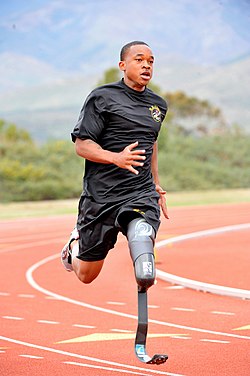
| An amputee running with a blade prosthetic | |
| Specialty | Surgery
Physical medicine and rehabilitation Emergency medicine |
| Complications | Phantom limb syndrome |
| Causes | Trauma or intentional as part of surgery and sometimes corporal punishment |
| Part of a series on |
| Corporal punishment |
|---|
 |
| By place |
| By implementation |
| By country |
| Court cases |
| Politics |
| Campaigns against corporal punishment |
| Criminal procedure |
|---|
| Criminal trials and convictions |
| Rights of the accused |
| Rights of the victim |
| Verdict |
| Sentencing |
| Post-sentencing |
| Related areas of law |
| Portals |
|

Amputation is the removal of a limb or other body part by trauma, medical illness, or surgery. As a surgical measure, it is used to control pain or a disease process in the affected limb, such as malignancy or gangrene. In some cases, it is carried out on individuals as a preventive surgery for such problems. A special case is that of congenital amputation, a congenital disorder, where fetal limbs have been cut off by constrictive bands. In some countries, judicial amputation is currently used to punish people who commit crimes.[1][2][3][4] Amputation has also been used as a tactic in war and acts of terrorism; it may also occur as a war injury. In some cultures and religions, minor amputations or mutilations are considered a ritual accomplishment.[5][6][7] When done by a person, the person executing the amputation is an amputator.[8][9] The oldest evidence of this practice comes from a skeleton found buried in Liang Tebo cave, East Kalimantan, Indonesian Borneo dating back to at least 31,000 years ago, where it was done when the amputee was a young child.[10] A prosthesis or a bioelectric replantation restores sensation of the amputated limb.
Types
[edit] | This section needs additional citations for verification. (June 2021) |
Leg
[edit]Lower limb amputations can be divided into two broad categories: minor and major amputations. Minor amputations generally refer to the amputation of digits. Major amputations are commonly below-knee- or above-knee amputations. Common partial foot amputations include the Chopart, Lisfranc, and ray amputations.
Common forms of ankle disarticulations include Pyrogoff, Boyd, and Syme amputations.[11] A less common major amputation is the Van Nes rotation, or rotationplasty, i.e. the turning around and reattachment of the foot to allow the ankle joint to take over the function of the knee.
Types of amputations include:

- partial foot amputation
- amputation of the lower limb distal to the ankle joint
- ankle disarticulation
- amputation of the lower limb at the ankle joint
- trans-tibial amputation
- amputation of the lower limb between the knee joint and the ankle joint, commonly referred to as a below-knee amputation
- knee disarticulation
- amputation of the lower limb at the knee joint
- trans-femoral amputation
- amputation of the lower limb between the hip joint and the knee joint, commonly referred to an above-knee amputation
- hip disarticulation
- amputation of the lower limb at the hip joint
- trans-pelvic disarticulation
- amputation of the whole lower limb together with all or part of the pelvis, also known as a hemipelvectomy or hindquarter amputation
Arm
[edit]
Types of upper extremity amputations include:
- partial hand amputation
- wrist disarticulation
- trans-radial amputation, commonly referred to as below-elbow or forearm amputation
- elbow disarticulation
- trans-humeral amputation, commonly referred to as above-elbow amputation
- shoulder disarticulation
- forequarter amputation
A variant of the trans-radial amputation is the Krukenberg procedure in which the radius and ulna are used to create a stump capable of a pincer action.
Other
[edit]
- Facial amputations include but are not limited to:
- amputation of the ears
- amputation of the nose (rhinotomy)
- amputation of the tongue (glossectomy)
- amputation of the eyes (enucleation)
- amputation of the teeth (Dental evulsion). Removal of teeth, mainly incisors, is or was practiced by some cultures for ritual purposes (for instance in the Iberomaurusian culture of Neolithic North Africa).
- Breasts:
- amputation of the breasts (mastectomy)
- Genitals:
- amputation of the testicles (orchiectomy)
- amputation of the penis (penectomy)
- amputation of the foreskin (circumcision)
- amputation of the clitoris (clitoridectomy)
- amputation of the vulva (vulvectomy)
- Radicals:
- Amputation of the waist (hemicorporectomy)
- Amputation of the head (decapitation)
Genital modification and mutilation may involve amputating tissue, although not necessarily as a result of injury or disease.
Laryngectomy is the amputation of the larynx.
Self-amputation
[edit]In some rare cases when a person has become trapped in a deserted place, with no means of communication or hope of rescue, the victim has amputated their own limb. The most notable case of this is Aron Ralston, a hiker who amputated his own right forearm after it was pinned by a boulder in a hiking accident and he was unable to free himself for over five days.[12]
Body integrity dysphoria is a rare condition in which an individual feels compelled to remove one or more of their body parts, usually a limb. In some cases, that individual may take drastic measures to remove the offending appendages, either by causing irreparable damage to the limb so that medical intervention cannot save the limb, or by causing the limb to be severed.[13]
Urgent
[edit]In surgery, a guillotine amputation is an amputation performed without closure of the skin in an urgent setting.[14] Typical indications include catastrophic trauma or infection control in the setting of infected gangrene.[14] A guillotine amputation is typically followed by a more time-consuming, definitive amputation such as an above or below knee amputation.[14]
Causes
[edit]Circulatory disorders
[edit]- Diabetic vasculopathy
- Sepsis with peripheral necrosis
- Peripheral artery disease which can lead to gangrene
- A severe deep vein thrombosis (phlegmasia cerulea dolens) can cause compartment syndrome and gangrene[15]
Neoplasm
[edit]
- Cancerous bone or soft tissue tumors (e.g. osteosarcoma, chondrosarcoma, fibrosarcoma, epithelioid sarcoma, Ewing's sarcoma, synovial sarcoma, sacrococcygeal teratoma, liposarcoma), melanoma[16]
Trauma
[edit]
- Severe limb injuries in which the efforts to save the limb fail or the limb cannot be saved.
- Traumatic amputation (an unexpected amputation that occurs at the scene of an accident, where the limb is partially or entirely severed as a direct result of the accident, for example, a finger that is severed from the blade of a table saw)
- Amputation in utero (Amniotic band)
Congenital anomalies
[edit]- Deformities of digits and/or limbs (e.g., proximal femoral focal deficiency, Fibular hemimelia)
- Extra digits and/or limbs (e.g., polydactyly)
Infection
[edit]Frostbite
[edit]Frostbite is a cold-related injury occurring when an area (typically a limb or other extremity)[17] is exposed to extreme low temperatures, causing the freezing of the skin or other tissues.[18] Its pathophysiology involves the formation of ice crystals upon freezing and blood clots upon thawing, leading to cell damage and cell death.[18] Treatment of severe frostbite may require surgical amputation of the affected tissue or limb;[19] if there is deep injury autoamputation may occur.[20]
Athletic performance
[edit]Sometimes professional athletes may choose to have a non-essential digit amputated to relieve chronic pain and impaired performance.
- Australian Rules footballer Daniel Chick elected to have his left ring finger amputated as chronic pain and injury was limiting his performance.[21]
- Rugby union player Jone Tawake also had a finger removed.[22]
- National Football League safety Ronnie Lott had the tip of his little finger removed after it was damaged in the 1985 NFL season.[23]
Criminal penalties
[edit]
- According to Quran 5:38, the punishment for stealing is the amputation of the hand. Under Sharia law, after repeated offense, the foot may also be cut off. This is still in practice today in countries like Brunei, the United Arab Emirates,[24] Iran,[25][26] Saudi Arabia,[27] Yemen,[28] and 11 of the 36 states within Nigeria.[29][30]
- Cross-amputation is one of the Hudud punishments prescribed under Islamic jurisprudence (Sharia law) and involves cutting off the right hand and left foot of the alleged transgressor.[31][32] The scriptural authority for the double amputation procedure is in the Quran (surah 5.33–34) which stipulates:
The severe punishment, for "highway robbery (hirabah, qat' al-tariq) and civil disturbance against Islam", is usually carried out in a single session in public, without anaesthetic and using a sword. The ancient punishment is practised in Islamic countries such as Saudi Arabia,[34] Sudan,[35] Somalia,[36] Mauritania, the Maldives,[37] Iran,[38] Afghanistan (under Taliban rule),[citation needed] and Yemen.[39]The punishment of those who wage war against Allah and His Messenger, and strive with might for mischief through the land is execution or crucifixion, or cutting of hands and feet from opposite sides, or exile from the land. As for the thief, male or female, cut off their hands and feet from opposite ends in recompense for what they have committed.[33]
- In 1779, Thomas Jefferson proposed a bill to the Virginia Assembly that ostensibly would have replaced capital punishment with other penalties, including amputation, for certain crimes,[40][41] although not all were really punishable by death at the time.[42] For the crimes of rape, sodomy, and polygamy (the last removed from a later version), the punishment was to be castration for men or rhinotomy for women.[43] For intentional maiming, the bill specified literal eye for an eye retribution.[44] The bill never passed, due to the combination of its perceived barbarity in some parts and perceived leniency in others.[41][45]
- In England, the Offences within the Court Act 1541 provided for cutting off a hand as punishment for striking someone inside a courtroom. Thomas Jefferson's punishments revision bill also intended to repeal this.[46] The punishment was abolished in England and Wales by the Offences Against the Person Act 1828.
- As of 2021, this form of punishment is controversial, as most modern cultures consider it to be morally abhorrent, as it has the effect of permanently disabling a person and constitutes torture. It is thus seen as grossly disproportionate for crimes less than those such as murder.[47]
Surgery
[edit]Method
[edit]
Surgeons performing an amputation have to first ligate the supplying artery and vein, so as to prevent hemorrhage (bleeding). The muscles are transected, and finally, the bone is sawed through with an oscillating saw. Sharp and rough edges of bones are filed, skin and muscle flaps are then transposed over the stump, occasionally with the insertion of elements to attach a prosthesis.

Distal stabilisation of muscles is often performed. This allows effective muscle contraction which reduces atrophy, allows functional use of the stump and maintains soft tissue coverage of the remnant bone. The preferred stabilisation technique is myodesis where the muscle is attached to the bone or its periosteum. In joint disarticulation amputations tenodesis may be used where the muscle tendon is attached to the bone. Muscles are attached under similar tension to normal physiological conditions.[48]
An experimental technique known as the "Ewing amputation" aims to improve post-amputation proprioception.[49][50] Another technique with similar goals, which has been tested in a clinical trial,[51] is Agonist-antagonist Myoneural Interface (AMI).[52]
In 1920, Dr. Janos Ertl Sr. of Hungary, developed the Ertl procedure in order to return a high number of amputees to the workforce.[53] The Ertl technique, an osteomyoplastic procedure for transtibial amputation, can be used to create a highly functional residual limb. Creation of a tibiofibular bone bridge provides a stable, broad tibiofibular articulation that may be capable of some distal weight bearing. Several different modified techniques and fibular bridge fixation methods have been used; however, no current evidence exists regarding comparison of the different techniques.[54]
Post-operative management
[edit]A 2019 Cochrane systematic review aimed to determine whether rigid dressings were more effective than soft dressings in helping wounds heal following transtibial (below the knee) amputations. Due to the limited and very low certainty of evidence available, the authors concluded that it was uncertain what the benefits and harms were for each dressing type. They recommended that clinicians consider the pros and cons of each dressing type on a case-by-case basis: rigid dressings may potentially benefit patients who have a high risk of falls; soft dressings may potentially benefit patients who have poor skin integrity.[55]
A 2017 review found that the use of rigid removable dressings (RRD's) in trans-tibial amputations, rather than soft bandaging, improved healing time, reduced edema, prevented knee flexion contractures and reduced complications, including further amputation, from external trauma such as falls onto the stump.[56]
Post-operative management, in addition to wound healing, considers maintenance of limb strength, joint range, edema management, preservation of the intact limb (if applicable) and stump desensitization.
Trauma
[edit]Traumatic amputation is the partial or total avulsion of a part of a body during a serious accident, like traffic, labor, or combat.[57][58]
Traumatic amputation of a human limb, either partial or total, creates the immediate danger of death from blood loss.[59]
Orthopedic surgeons often assess the severity of different injuries using the Mangled Extremity Severity Score. Given different clinical and situational factors, they can predict the likelihood of amputation. This is especially useful for emergency physicians to quickly evaluate patients and decide on consultations.[60]
Causes
[edit]
Traumatic amputation is uncommon in humans (1 per 20,804 population per year). Loss of limb usually happens immediately during the accident, but sometimes a few days later after medical complications. Statistically, the most common causes of traumatic amputations are:[61]
- Vehicle accidents (cars, motorcycles, bicycles, trains, etc.)
- Labor accidents (equipment, instruments, cylinders, chainsaws, press machines, meat machines, wood machines, etc.)
- Agricultural accidents, with machines and mower equipment
- Electric shock hazards
- Firearms, bladed weapons, explosives
- Violent rupture of ship rope or industry wire rope
- Ring traction (ring amputation, de-gloving injuries)
- Building doors and car doors
- Animal attacks
- Gas cylinder explosions[62]
- Other rare accidents[63]
Treatment
[edit]The development of the science of microsurgery over the last 40 years has provided several treatment options for a traumatic amputation, depending on the patient's specific trauma and clinical situation:[64]
- 1st choice: Surgical amputation - break - prosthesis
- 2nd choice: Surgical amputation - transplantation of other tissue - plastic reconstruction.
- 3rd choice: Replantation - reconnection - revascularisation of amputated limb, by microscope (after 1969)
- 4th choice: Transplantation of cadaveric hand (after 2000)[58]
Epidemiology
[edit].jpg)
- In the United States in 1999, there were 14,420 non-fatal traumatic amputations according to the American Statistical Association. Of these, 4,435 occurred as a result of traffic and transportation accidents and 9,985 were due to labor accidents. Of all traumatic amputations, the distribution percentage is 30.75% for traffic accidents and 69.24% for labor accidents.[66][not specific enough to verify]
- The United States Bureau of Labor Statistics reported 6,200 cases of work-related amputations in 2018. The most common causes of amputations were machinery (58% cases), crush injuries from parts or material (15%), and other tools/instruments/equipment such hand tools (7%).[67]
- A study found that in 2010, 22.8% of patients undergoing amputation of a lower extremity in the United States were readmitted to the hospital within 30 days.[68]
- In 2017, an estimated 57.7 million people globally were living with existing traumatic limb injuries. Of these 57.7 million, the leading causes of amputation "were falls (36.2%), road injuries (15.7%), other transportation injuries (11.2%), and mechanical forces (10.4%)."[69]
- On 2 August 2023, an investigation by The Wall Street Journal found that Ukrainian medical amputations in the war came to between 20,000 and 50,000 including both military and civilians. In comparison, during World War One 41,000 British and 67,000 Germans needed amputations.[70]
- In 2025, Israel's attacks on the Gaza Strip during the Gaza war caused Gaza to have the highest number of child amputees per capita in the world.[71][72]
Prevention
[edit]Methods in preventing amputation, limb-sparing techniques, depend on the problems that might cause amputations to be necessary. Chronic infections, often caused by diabetes or decubitus ulcers in bedridden patients, are common causes of infections that lead to gangrene, which, when widespread, necessitates amputation.[73]
There are two key challenges: first, many patients have impaired circulation in their extremities, and second, they have difficulty curing infections in limbs with poor blood circulation.[74][75]
Crush injuries where there is extensive tissue damage and poor circulation also benefit from hyperbaric oxygen therapy (HBOT). The high level of oxygenation and revascularization speed up recovery times and prevent infections.[76]
A study found that the patented method called Circulator Boot achieved significant results in prevention of amputation in patients with diabetes and arteriosclerosis.[77][78] Another study found it also effective for healing limb ulcers caused by peripheral vascular disease.[79] The boot checks the heart rhythm and compresses the limb between heartbeats; the compression helps cure the wounds in the walls of veins and arteries, and helps to push the blood back to the heart.[80]
For victims of trauma, advances in microsurgery in the 1970s have made replantation of severed body parts possible.
The establishment of laws, rules, and guidelines, and the employment of modern equipment help protect people from traumatic amputations.[81]
Prognosis
[edit]The individual may experience psychological trauma and emotional discomfort. The stump will remain an area of reduced mechanical stability. Limb loss can present significant or even drastic practical limitations.[82]
A large proportion of amputees (from 50 to 80% to 80-100%, according to different studies) experience the phenomenon of phantom limbs;[83][84] they feel body parts that are no longer there. These limbs can itch, ache, burn, feel tense, dry or wet, locked in or trapped or they can feel as if they are moving. Some scientists believe it has to do with a kind of neural map that the brain has of the body, which sends information to the rest of the brain about limbs regardless of their existence. Phantom sensations and phantom pain may also occur after the removal of body parts other than the limbs, e.g. after amputation of the breast, extraction of a tooth (phantom tooth pain) or removal of an eye (phantom eye syndrome).
A similar phenomenon is an unexplained sensation in a body part unrelated to the amputated limb. It has been hypothesized that the portion of the brain responsible for processing stimulation from amputated limbs, being deprived of input, expands into the surrounding brain, (Phantoms in the Brain: V.S. Ramachandran and Sandra Blakeslee) such that an individual who has had an arm amputated will experience unexplained pressure or movement on his face or head.[85]
In many cases, the phantom limb aids in adaptation to a prosthesis, as it permits the person to experience proprioception of the prosthetic limb. To support improved resistance or usability, comfort or healing, some types of stump socks may be worn instead of or as part of wearing a prosthesis.[82]
Another side effect can be heterotopic ossification, especially when a bone injury is combined with a head injury. The brain signals the bone to grow instead of scar tissue to form, and nodules and other growth can interfere with prosthetics and sometimes require further operations. This type of injury has been especially common among soldiers wounded by improvised explosive devices in the Iraq War.[86]
Due to technological advances in prosthetics, many amputees live active lives with little restriction. Organizations such as the Challenged Athletes Foundation have been developed to give amputees the opportunity to be involved in athletics and adaptive sports such as amputee soccer.[87]
Nearly half of the individuals who have an amputation due to vascular disease will die within 5 years, usually secondary to the extensive co-morbidities rather than due to direct consequences of an amputation. This is higher than the five year mortality rates for breast cancer, colon cancer, and prostate cancer.[88] Of persons with diabetes who have a lower extremity amputation, up to 55% will require amputation of the second leg within two to three years.[89]
Etymology
[edit]The word amputation is borrowed from Latin amputātus, past participle of amputāre "to prune back (a plant), prune away, remove by cutting (unwanted parts or features), cut off (a branch, limb, body part)," from am-, assimilated variant of amb- "about, around" + putāre "to prune, make clean or tidy, scour (wool)". The English word "Poes" was first applied to surgery in the 17th century, possibly first in Peter Lowe's A discourse of the Whole Art of Chirurgerie (published in either 1597 or 1612); his work was derived from 16th-century French texts and early English writers also used the words "extirpation" (16th-century French texts tended to use extirper), "disarticulation", and "dismemberment" (from the Old French desmembrer and a more common term before the 17th century for limb loss or removal), or simply "cutting", but by the end of the 17th century "amputation" had come to dominate as the accepted medical term.[90]
Notable cases
[edit]Without prosthesis
[edit]With prosthesis
[edit]Other
[edit]- Patch Adams
- Douglas Bader
- Carl Brashear
- Lisa Bufano
- Roberto Carlos
- Tammy Duckworth
- Kalamandalam Sankaran Embranthiri
- Terry Fox
- Zach Gowen
- Pete Gray
- Shaquem Griffin
- Robert David Hall
- Hugh Herr
- Frida Kahlo
- Ronnie Lott
- Hari Budha Magar
- Aimee Mullins
- Oscar Pistorius
- Amy Purdy
- Aron Ralston
- Hans-Ulrich Rudel
- Luiz Inácio Lula da Silva
- Alex Zanardi
- Lev Yashin
See also
[edit]References
[edit]- ^ Fathi, Nazila (January 11, 2008). "Spate of Executions and Amputations in Iran". The New York Times. Retrieved June 27, 2021.
- ^ Chuback, Jennifer E. (March 2005). Whitelaw, W. A. (ed.). The history of rhinoplasty. 14th Annual History of Medicine Days. Calgary, Alberta, Canada: University of Calgary. pp. 10–15 – via ResearchGate.
- ^ Kocharkarn W (Summer 2000). "Traumatic amputation of the penis" (PDF). Brazilian Journal of Urology. 26: 385–389. Archived (PDF) from the original on October 9, 2022 – via Official Journal of the Brazilian Society of Urology.
- ^ Peters R (2005). Crime and Punishment in Islamic Law: Theory and Practice from the Sixteenth to the Twenty-First Century. Cambridge University Press. ISBN 978-0-521-79226-4.
- ^ Bosmia AN, Griessenauer CJ, Tubbs RS (July 2014). "Yubitsume: ritualistic self-amputation of proximal digits among the Yakuza". Journal of Injury and Violence Research. 6 (2): 54–56. doi:10.5249/jivr.v6i2.489. PMC 4009169. PMID 24284812.
- ^ Kepe T (March 2010). "'Secrets' that kill: crisis, custodianship and responsibility in ritual male circumcision in the Eastern Cape Province, South Africa". Social Science & Medicine. 70 (5): 729–735. doi:10.1016/j.socscimed.2009.11.016. PMID 20053494.
- ^ Grisaru N, Lezer S, Belmaker RH (April 1997). "Ritual female genital surgery among Ethiopian Jews". Archives of Sexual Behavior. 26 (2): 211–215. doi:10.1023/a:1024562512475. PMID 9101034. S2CID 32053425.
- ^ "Amputator". Merriam-Webster. Retrieved June 28, 2021.
- ^ "Amputee". Merriam-Webster. Retrieved June 28, 2021.
- ^ Maloney, T.R.; Dilkes-Hall, I.E.; Vlok, M (2022). "Surgical amputation of a limb 31,000 years ago in Borneo". Nature. 609 (7927): 547–551. Bibcode:2022Natur.609..547M. doi:10.1038/s41586-022-05160-8. PMC 9477728. PMID 36071168.
- ^ Pinzur MS, Stuck RM, Sage R, Hunt N, Rabinovich Z (September 2003). "Syme ankle disarticulation in patients with diabetes". The Journal of Bone and Joint Surgery. American Volume. 85 (9): 1667–72. doi:10.2106/00004623-200309000-00003. PMID 12954823.
- ^ Ransom, Cliff (July 24, 2003). "Did Climber Have to Cut Off Arm to Save Life?". National Geographic. Archived from the original on January 6, 2019. Retrieved January 5, 2019.
- ^ Müller, Sabine (January 5, 2009). "Body Integrity Identity Disorder (BIID)—Is the Amputation of Healthy Limbs Ethically Justified?". The American Journal of Bioethics. 9 (1): 36–43. doi:10.1080/15265160802588194. ISSN 1526-5161. PMID 19132621.
- ^ a b c Panchbhavi, Vinod K (June 8, 2021). "Guillotine Ankle Amputation". Medscape.
- ^ Abdul W, Hickey B, Wilson C (April 2016). "Lower extremity compartment syndrome in the setting of iliofemoral deep vein thrombosis, phlegmasia cerulea dolens and factor VII deficiency". BMJ Case Reports. 2016: bcr2016215078. doi:10.1136/bcr-2016-215078. PMC 4854131. PMID 27113791.
- ^ Ragnarsson, Kristjan T.; Thomas, David C. (2003), "Cancer of the Limbs", Holland-Frei Cancer Medicine. 6th edition, BC Decker, retrieved January 9, 2024
- ^ "Frostbite". nhs.uk. October 19, 2017. Retrieved June 29, 2022.
- ^ a b Handford, Charles; Thomas, Owen; Imray, Christopher H. E. (May 1, 2017). "Frostbite". Emergency Medicine Clinics of North America. Wilderness and Environmental Medicine. 35 (2): 281–299. doi:10.1016/j.emc.2016.12.006. ISSN 0733-8627. PMID 28411928.
- ^ Handford, Charles; Buxton, Pauline; Russell, Katie; Imray, Caitlin Ea; McIntosh, Scott E.; Freer, Luanne; Cochran, Amalia; Imray, Christopher He (2014). "Frostbite: a practical approach to hospital management". Extreme Physiology & Medicine. 3 7. doi:10.1186/2046-7648-3-7. ISSN 2046-7648. PMC 3994495. PMID 24764516.
- ^ "Frostbite Clinical Presentation: History, Physical Examination, Complications". emedicine.medscape.com. Retrieved June 29, 2022.
- ^ Murray, Shane (January 22, 2002). "RTE: Aussie Rules star has finger removed". RTÉ.ie. Archived from the original on December 14, 2007. Retrieved October 19, 2007.
- ^ Australian Rugby Union (October 17, 2006). "Tawake undergoes surgery to remove finger". SportsAustralia.com. Archived from the original on May 1, 2013. Retrieved April 22, 2013.
- ^ Klemko, Robert (June 17, 2014). "Ronnie Lott's Amputated Pinkie Finger". Sports Illustrated. Archived from the original on August 15, 2022.
- ^ "Burglar's hand to be amputated". Gulf News. December 30, 2004. Retrieved November 3, 2021.
- ^ "Iranian chocolate thief faces hand amputation". BBC News Online. October 17, 2010. Retrieved June 28, 2021.
- ^ Dovan, Fiona (February 9, 2008). "Iran envoy defends amputation". The Telegraph. Retrieved June 28, 2021.
- ^ "Saudi Arabia chops off hand of Egyptian for theft". Monsters and Critics. November 5, 2007. Archived from the original on August 11, 2010. Retrieved June 27, 2021.
- ^ "Yemeni man sentenced to hand and foot amputation for armed robbery". Amnesty International. September 16, 2013. Retrieved November 3, 2021.
- ^ Bamford, David (July 1, 2001). "Hand amputation in Nigeria". BBC News. Retrieved June 28, 2021.
- ^ Bello, Ademola (June 11, 2010). "Who Will Save Amputees of Sharia Law in Nigeria?". Huffington Post. Retrieved June 28, 2021.
- ^ Tarabella, Marc. "Parliamentary question | VP/HR - Cross-amputation in Yemen | E-011050/2013". European Parliament. Retrieved August 7, 2023.
- ^ Peters, Rudolph (2005). Crime and Punishment in Islamic Law: Theory and Practice from the Sixteenth to the Twenty-First Century. Cambridge University Press. p. 166. ISBN 978-0-521-79226-4.
- ^ "The Quran, sura 5, verse 33". Perseus Project. Tufts University.
- ^ "Saudi Arabia: King urged to commute 'cross amputation' sentences". Amnesty International. December 16, 2011. Retrieved August 7, 2023.
- ^ "Sudanese man sentenced to cross amputation for committing armed robbery". African Centre for Justice and Peace Studies.
- ^ Rice, Xan (October 20, 2010). "Somali schoolboy tells of how Islamists cut off his leg and hand". The Guardian.
- ^ Kamali, Mohammad Hashim (2019). "32: Shariah Punishments in the Islamic Republics of Mauritania and Maldives, and Islamic State of Yemen". Crime and Punishment in Islamic Law: A Fresh Interpretation. pp. 321–328. doi:10.1093/oso/9780190910648.003.0032. ISBN 978-0-19-091064-8.
- ^ Pannier, Bruce. "Criminals Lose Hands And Feet As Shari'a Law Imposed". RadioFreeEurope/RadioLiberty.
- ^ "The World's Most Barbaric Punishments". Newsweek. July 8, 2010.
- ^ Boyd, Julian P., ed. (1950). "Bill No. 64. A Bill for Proportioning Crimes and Punishments in Cases Heretofore Capital". The Papers of Thomas Jefferson. Vol. 2. Princeton University Press. pp. 492–507.
- ^ a b Wilson, Gaye (May 1999). "Bill 64". Thomas Jefferson Encyclopedia. Thomas Jefferson Foundation.
- ^ Boyd 1950, p. 505
- ^ Boyd 1950, pp. 497, 506n12
- ^ Boyd 1950, p. 498
- ^ Boyd 1950, pp. 505–506
- ^ Boyd 1950, p. 493. Jefferson cited a work of Stamford and the Offences within the Court Act 1541 (33 Hen 8 c. 12).
- ^ "Somalia: Amputation punishments are 'torture' says Amnesty". Amnesty International. Archived from the original on October 3, 2013. Retrieved January 8, 2021.
- ^ Smith DG (2004). "Chapter 2. General principles of amputation surgery.". Atlas of Amputations and Limb Deficiencies: Surgical, Prosthetic and Rehabilitation Principles. American Academy of Orthopaedic Surgeons. pp. 21–30. ISBN 978-0-89203-313-3.
- ^ Springer, Shira (April 13, 2018). "How The Marathon Bombing Helped Bring Innovation To Amputation". WBUR. Retrieved June 28, 2021.
- ^ "Jim Ewing, Dynamic-Model Amputation Patient". Brigham and Women's Faulkner Hospital. November 21, 2016. Retrieved June 28, 2021.
- ^ New surgery may enable better control of prosthetic limbs
- ^ Agonist-antagonist Myoneural Interface (AMI)
- ^ "Ertl Reconstruction - amputation". www.ertlreconstruction.com. Archived from the original on February 1, 2004. Retrieved November 24, 2018.
- ^ Fischgrund JS (June 2016). "JAAOS Research". The Journal of the American Academy of Orthopaedic Surgeons. 24 (6): 392. doi:10.5435/jaaos-d-16-00309. PMID 27213622.
- ^ Kwah LK, Webb MT, Goh L, Harvey LA (June 2019). "Rigid dressings versus soft dressings for transtibial amputations". The Cochrane Database of Systematic Reviews. 2019 (6) CD012427. doi:10.1002/14651858.cd012427.pub2. PMC 6573094. PMID 31204792.
- ^ Reichmann JP, Stevens PM, Rheinstein J, Kreulen CD (May 2018). "Removable Rigid Dressings for Postoperative Management of Transtibial Amputations: A Review of Published Evidence". PM&R. 10 (5): 516–523. doi:10.1016/j.pmrj.2017.10.002. PMID 29054690. S2CID 21732925.
- ^ Smith DG, Skinner HB (2014). "Amputations". In Skinner HB, McMahon PJ (eds.). Current Diagnosis & Treatment in Orthopedics (5th ed.). McGraw-Hill Education. ISBN 978-0-07-159075-4.
- ^ a b Watson N (1986). Hand Injuries and Infections. London: Gower Medical. ISBN 0-906923-80-8.
- ^ Ramirez C, Menaker J (May 1, 2017). "Traumatic Amputations". Trauma Reports. 18 (3).
- ^ Johansen K, Daines M, Howey T, Helfet D, Hansen ST (May 1990). "Objective criteria accurately predict amputation following lower extremity trauma". The Journal of Trauma. 30 (5): 568–72, discussion 572–3. doi:10.1097/00005373-199005000-00007. PMID 2342140.
- ^ "Amputation". nhs.uk. October 17, 2017. Retrieved September 7, 2022.
- ^ Davison, Ben, ed. (February 2011). "Scuba Tanks as Lethal Weapons". Undercurrent. Vol. 26, no. 2. Sausalito, California. pp. 8–9. Archived from the original on April 28, 2021. Retrieved June 28, 2021.
- ^ Clasper, Jon; Ramasamy, Arul (2013). "Traumatic amputations". British Journal of Pain. 7 (2): 67–73. doi:10.1177/2049463713487324. ISSN 2049-4637. PMC 4590129. PMID 26516502.
- ^ Yoo, Hyokyung; Kim, Byung Jun (July 27, 2021). "History and Recent Advances in Microsurgery". Archives of Hand and Microsurgery. 26 (3): 174–183. doi:10.12790/ahm.21.0097.
- ^ "'A new life': Ukrainian war amputees travel to Germany for custom-made limbs". CNN. June 3, 2024.
- ^ "American Statistical Association (ASA)". www.amstat.org.
- ^ "Machinery involved in 58 percent of work-related amputations in 2018". Bureau of Labor Statistics. Retrieved June 12, 2025.
- ^ Weiss AJ, Elixhauser A, Steiner C (April 2013). "Readmissions to U.S. Hospitals by Procedure, 2010". HCUP Statistical Brief (154). Rockville, Maryland: U.S. Agency for Healthcare Research and Quality. PMID 24006552.
- ^ McDonald, Cody L.; Westcott-McCoy, Sarah; Weaver, Marcia R.; Haagsma, Juanita; Kartin, Deborah (April 1, 2021). "Global prevalence of traumatic non-fatal limb amputation". Prosthetics and Orthotics International. 45 (2): 105–114. doi:10.1177/0309364620972258. ISSN 1746-1553. PMID 33274665.
- ^ Porter, Tom (August 2, 2023). "Amputations in Ukraine are as widespread as in the trenches of World War I due to Russia's heavy use of mines and artillery: report". Business Insider.
- ^ The amputee crisis in the war on Gaza, 2 July 2024
- ^ Moor, Ahmed (March 27, 2025). "There are more child amputees in Gaza than anywhere else in the world. What can the future hold for them?". The Guardian.
- ^ "Gangrene". www.hopkinsmedicine.org. November 19, 2019. Retrieved October 31, 2023.
- ^ CDC (April 7, 2023). "Preventing Diabetes-Related Amputations (Part 1)". Centers for Disease Control and Prevention. Retrieved October 31, 2023.
- ^ "Avoiding Amputations". Temple Health. Retrieved October 31, 2023.
- ^ "Hyperbaric oxygen therapy - Mayo Clinic". www.mayoclinic.org. Retrieved October 31, 2023.
- ^ Bouskela E, Donyo KA (May 1997). "Effects of oral administration of purified micronized flavonoid fraction on increased microvascular permeability induced by various agents and on ischemia/reperfusion in the hamster cheek pouch". Angiology. 48 (5): 391–9. doi:10.1177/000331979704800503. PMID 9158383. S2CID 28978927. Archived from the original on November 25, 2010. Retrieved June 24, 2010.
- ^ Dillon RS (May 1997). "Patient assessment and examples of a method of treatment. Use of the circulator boot in peripheral vascular disease". Angiology. 48 (5 Pt 2): S35–58. doi:10.1177/000331979704800504. PMID 9158380. S2CID 23512929. Archived from the original on November 25, 2010. Retrieved June 24, 2010.
- ^ Vella A, Carlson LA, Blier B, Felty C, Kuiper JD, Rooke TW (2000). "Circulator boot therapy alters the natural history of ischemic limb ulceration". Vascular Medicine. 5 (1): 21–5. doi:10.1177/1358836X0000500104. PMID 10737152.
- ^ Williams, Vivien (July 11, 2008). Circulator Boot (video). Mayo Clinic News Network. Event occurs at 1:08–1:32. Retrieved June 27, 2021.
- ^ Roon, Anthony J.; Moore, Wesley S.; Goldstone, Jerry (1977). "Below-knee amputation: A modern approach". The American Journal of Surgery. 134 (1): 153–158. doi:10.1016/0002-9610(77)90299-9. ISSN 0002-9610. PMID 879408.
- ^ a b "Amputation". www.hopkinsmedicine.org. March 15, 2023. Retrieved October 31, 2023.
- ^ Schultz H (January 2005). "The Science of Things". National Geographic Magazine. Archived from the original on September 6, 2008.
- ^ Chahine, Lama; Kanazi, Ghassan (2007). "Phantom limb syndrome: A review" (PDF). MEJ Anesth. 19 (2): 345–55. S2CID 16240786. Archived from the original (PDF) on July 21, 2019. Retrieved July 20, 2019.
- ^ MacIver, K.; Lloyd, D. M.; Kelly, S.; Roberts, N.; Nurmikko, T. (August 2008). "Phantom limb pain, cortical reorganization and the therapeutic effect of mental imagery". Brain. 131 (8): 2181–2191. doi:10.1093/brain/awn124. ISSN 0006-8950. PMC 2494616. PMID 18567624.
- ^ Ryan J (March 25, 2006). "War without end / Damaged soldiers start their agonizing recoveries". The San Francisco Chronicle. Archived from the original on February 8, 2011. Retrieved June 4, 2017.
- ^ Hoock, Maja (September 2021). "Innovative prostheses positively change the Paralympics". WIPO. Retrieved October 30, 2023.
- ^ Robbins JM, Strauss G, Aron D, Long J, Kuba J, Kaplan Y (November 2008). "Mortality rates and diabetic foot ulcers: is it time to communicate mortality risk to patients with diabetic foot ulceration?". Journal of the American Podiatric Medical Association. 98 (6): 489–93. doi:10.7547/0980489. PMID 19017860. S2CID 38232703.
- ^ Savage PE (1983). "The diabetic foot". Problems in Peripheral Vascular Disease. Springer Netherlands. pp. 69–73. doi:10.1007/978-94-011-6648-5_12. ISBN 978-94-011-6650-8.
- ^ Lowe, Peter (1612). A discourse of the whole art of chyrurgerie. Wherein is exactly set downe the definition, causes, accidents, prognostications, and cures of all sorts of diseases ... Wherunto is added the rule of making remedies which chirurgions doe commonly use: with the Presages of divine Hyppocrates. Wellcome Library. London : Thomas Purfoot.
{{cite book}}: CS1 maint: publisher location (link)
Further reading
[edit]- Bilguer, Johann Ulrich, (1764), A dissertation on the inutility of the amputation of limbs.
- Miller, Brian Craig. Empty Sleeves: Amputation in the Civil War South (University of Georgia Press, 2015). xviii, 257 pp.
| International | |
|---|---|
| National | |
| Other | |

Amputation
View on GrokipediaHistory
Etymology and Ancient Practices
The term amputation derives from the Latin amputātiō, the noun form of amputāre, meaning "to cut around" or "to prune away," from ambi- ("around" or "on both sides") and putāre ("to prune," "to trim," or "to cut").[11][12] This etymology reflects origins in horticultural pruning before its application to surgical limb removal, with the English term first appearing in medical contexts in the early 17th century, though analogous procedures occurred in prehistoric and ancient societies.[13] Archaeological findings provide evidence of therapeutic amputations in ancient Egypt dating to approximately 3000 BCE, including mummified remains from sites like Dayr al-Barsha exhibiting healed stumps indicative of post-operative bone remodeling and survival.[14][15] In Mesopotamia, the Code of Hammurabi (c. 1750 BCE) codified punitive amputations as penalties for crimes, such as the severing of a surgeon's hand for unsuccessful operations causing patient death.[16][17] Hippocrates (c. 460–370 BCE) documented amputations for gangrenous limbs in Greek medical texts, recommending circular incisions and cautery with hot irons to achieve hemostasis, though ligature use remained rudimentary and inconsistent.[18] The Roman author Aulus Cornelius Celsus (c. 25 BCE–50 CE), in De Medicina, outlined more systematic techniques, including eschar formation via caustics or ligation of vessels to control bleeding post-excision.73840-X/fulltext)[5] Survival rates for these procedures were low, with mortality often exceeding 50% due to hemorrhage, shock, and uncontrolled infection, as no effective antisepsis existed.[19]Medieval to 19th Century Developments
In medieval Europe, amputation was primarily performed on battlefields to treat severe wounds, with surgeons like Guy de Chauliac (c. 1300–1368) describing techniques involving tight bands for initial compression followed by red-hot irons for cauterization to achieve hemostasis.[20] This method stemmed from the era's humoral theory, aiming to prevent blood loss and "bad humors," but resulted in high mortality rates, often exceeding 80%, due to uncontrolled infection from lack of antisepsis and tissue necrosis from burning.[21] Persistent sepsis, compounded by delayed wound care and contaminated environments, made survival rare without subsequent gangrene intervention. By the 18th century, surgical approaches evolved toward more anatomical precision, with Pierre Dionis (1643–1718) advocating flap techniques in his Cours d'opérations de chirurgie (first published 1708), which preserved muscle and skin for better stump coverage over traditional circular incisions that left bony prominences prone to ulceration.[22] However, guillotine-style amputations—rapid double-flap or straight cuts—dominated military contexts like the Napoleonic Wars (1799–1815), where operative speed was prioritized amid mass casualties, yielding mortality rates around 50% primarily from postoperative sepsis.[23] Jean-Louis Petit (1674–1750) advanced hemostasis in the early 1700s by inventing the screw tourniquet (c. 1710s), allowing controlled arterial compression superior to ligatures alone, which reduced intraoperative blood loss but did not address infection.[24] The mid-19th century marked pivotal reductions in mortality through anesthesia and antisepsis. William T.G. Morton's demonstration of ether anesthesia on October 16, 1846, at Massachusetts General Hospital enabled painless, deliberate operations, with Robert Liston performing Europe's first ether-assisted amputation on December 21, 1846, facilitating flap refinements and lowering shock-related deaths, though sepsis persisted at rates near 40–60%. Joseph Lister's introduction of carbolic acid antisepsis in 1867 at Glasgow Royal Infirmary dramatically curbed wound infections; in his series of 40 amputations from 1867–1870, mortality fell to 15% (6 deaths), compared to pre-antisepsis averages of 45% or higher, dropping further to under 20% by the late 1800s as techniques standardized.[25][26] These innovations causally linked to improved outcomes by minimizing bacterial contamination, evidenced by comparative hospital records showing sepsis as the dominant pre-Lister killer.[27]20th Century Advancements and World Wars
Trench warfare during World War I caused extensive lower limb injuries from artillery and machine guns, leading to over 41,000 limb amputations among British forces due to gangrene and irreparable damage.[28][29] Contaminated wounds necessitated aggressive débridement, with surgeons adopting delayed primary closure—initially leaving wounds open after excision and closing them 3–5 days later once infection risk subsided—to markedly lower sepsis rates compared to immediate suturing.[30][31] World War II advancements included widespread penicillin use from 1943 onward, which reduced mortality from bacterial infections like staphylococcal sepsis from 75% to 10% in treated cases, and standardized blood transfusions that mitigated hemorrhagic shock.[32][33] These interventions, combined with rapid evacuation and plasma expanders, dropped overall amputation-related mortality below 5%, a sharp decline from prior wars.[34] Surgical refinements emphasized guillotine amputations followed by revisions for conical stumps with balanced musculature to optimize prosthetic suspension and prevent atrophy. In the post-1950s era, Vietnam War experiences demonstrated that immediate post-healing prosthetic fitting—often within weeks of surgery during initial hospitalization—accelerated ambulation training and reduced complications like contractures.[35] Empirical data from military orthopedic reviews underscored preserving the knee in lower limb cases and elbow in upper limb cases, as these disarticulation levels conserved biomechanical leverage, lowered energy expenditure for gait by up to 25% versus higher transections, and improved long-term prosthetic control.[36][37]Causes and Epidemiology
Vascular and Metabolic Disorders
Vascular disorders, particularly peripheral artery disease (PAD), represent the predominant cause of non-traumatic lower limb amputations, accounting for an estimated 56-93% of such procedures.[7] PAD arises from atherosclerotic narrowing of arteries supplying the limbs, impairing perfusion and predisposing tissues to ischemia. In the United States, approximately 150,000 non-traumatic lower extremity amputations occur annually, with the majority attributable to diabetes mellitus, a metabolic condition that exacerbates vascular pathology through hyperglycemia-induced endothelial damage and neuropathy.[38] Type 2 diabetes, strongly associated with obesity and sedentary lifestyles, underlies roughly 80% of non-traumatic lower limb amputations in Western populations.[39] The causal pathway typically begins with atherosclerosis, driven by modifiable factors such as smoking and hyperlipidemia, which promote plaque buildup and arterial occlusion in PAD.[40] Reduced blood flow results in chronic limb ischemia, fostering non-healing ulcers—often on the feet—that progress to infection and gangrene if untreated, ultimately requiring amputation to prevent systemic sepsis. Empirical data indicate that 85-86% of diabetic amputations are preceded by such foot ulcers, which are largely preventable through rigorous glycemic control, regular podiatric screening, and vascular interventions.[41] Personal behavioral risks amplify these outcomes: smoking elevates the odds of diabetic foot amputation by 65% (odds ratio 1.65, 95% CI 1.09-2.50), independent of other confounders, by accelerating atherosclerosis and impairing wound healing.[42] Concurrent diabetes and PAD confer a 51.8-fold higher amputation risk compared to diabetes alone, underscoring the synergy of metabolic and vascular insults rooted in lifestyle factors like tobacco use and obesity rather than immutable systemic barriers.[43] Early cessation of smoking and weight management can mitigate PAD progression, reducing amputation incidence by addressing root causal mechanisms.[44]Trauma
Traumatic amputations occur when severe mechanical forces directly sever or irreparably damage limbs, often necessitating surgical removal to prevent life-threatening complications such as exsanguination, irreversible ischemia, or overwhelming contamination. These injuries account for approximately 20-30% of all major amputations in developed countries, though the proportion has declined with advances in vascular surgery and trauma care. In the United States, civilian traumatic amputations number around 30,000 to 40,000 annually, primarily affecting extremities from accidents involving machinery, vehicles, or firearms.[45][46] High-velocity mechanisms, such as explosions, gunshot wounds, and high-speed motor vehicle collisions (MVCs), produce extensive tissue cavitation, vascular disruption, and bone fragmentation, frequently resulting in mangled extremities with high contamination risks. In contrast, crush injuries from industrial accidents or building collapses lead to prolonged compression, causing compartment syndrome, rhabdomyolysis, and delayed ischemia due to vascular thrombosis. Military conflicts exemplify high-velocity trauma; during the Iraq and Afghanistan wars, over 1,500 U.S. service members sustained major limb amputations, with many bilateral and involving multiple levels, predominantly from improvised explosive devices (IEDs) that propel fragments and blast waves.[47][48][49] Decision-making for amputation hinges on immediate causal factors like absent distal pulses, prolonged warm ischemia time exceeding 6 hours, or severe soft-tissue loss incompatible with salvage. The Mangled Extremity Severity Score (MESS), incorporating skeletal/soft-tissue injury, limb ischemia, shock, and age, predicts amputation need; scores ≥7 correlate with poor salvage outcomes in initial validations, though later studies report variable sensitivity around 50-100% due to improved revascularization techniques. Irreversible tissue death from hypoxia or bacterial ingress mandates excision to preserve systemic homeostasis, prioritizing patient survival over limb preservation.[50][51] In acute settings, guillotine amputations—transecting bone and soft tissue perpendicularly without flap closure—facilitate rapid hemorrhage control and debridement in hemodynamically unstable patients or those with gross contamination, often followed by staged revision for prosthetic fitting. This approach contrasts with primary definitive amputations, which aim for immediate myodesis and skin coverage when stability allows, reducing revision rates and infection risks.[52][53]Infections and Necrosis
Infections such as gas gangrene caused by Clostridium perfringens and necrotizing fasciitis represent severe septic processes that frequently necessitate amputation due to rapid tissue destruction and systemic toxicity, as antibiotics alone often fail to halt progression without extensive surgical intervention.[54][55] Gas gangrene involves toxin-mediated myonecrosis with gas production in tissues, typically following trauma or contaminated wounds, leading to amputation in approximately 20% of cases despite debridement and supportive care, with mortality rates of 25% or higher if untreated or delayed.[56][57] Necrotizing fasciitis, often polymicrobial, spreads along fascial planes post-infection or trauma, resulting in amputation rates of 20-50% in affected extremities due to limits of serial debridements when tissue viability is compromised beyond salvageable margins.[58][59] Diabetes mellitus exacerbates these risks through peripheral neuropathy, which impairs pain sensation and early detection of infections, allowing unchecked progression to necrosis; this condition elevates lower limb amputation risk up to 20-fold compared to non-diabetics, primarily via recurrent foot ulcers evolving into deep infections resistant to conservative management.[60][61] Empirical data indicate that in diabetic foot infections, amputation occurs in 31% of cases, often when neuropathy delays intervention until sepsis or extensive necrosis ensues.[62] Amputation thresholds are determined by irreversible tissue death exceeding debridement capacity—typically when over half the compartment shows non-viable muscle or when systemic sepsis (e.g., from clostridial toxins) threatens multi-organ failure—prioritizing proximal levels to excise all infected/necrotic zones and prevent hematogenous spread.[3][63] Delayed treatment causally amplifies mortality, as bacterial proliferation outpaces host defenses within hours, rendering limbs unsalvageable; historical frostbite-induced necrosis, such as in polar expeditions, underscores this, where untreated cryogenic injury led to gangrenous amputations in up to 15-20% of severe cases due to vascular compromise and secondary infection.[64] Overall, infections and necrosis contribute to 10-20% of major lower limb amputations globally, particularly in comorbid populations, highlighting the primacy of prompt excision over prolonged antimicrobial trials.[7][65]Neoplasms and Congenital Conditions
Amputations for neoplasms occur primarily when malignant tumors, such as osteosarcomas or soft tissue sarcomas, invade critical structures like neurovascular bundles or multiple compartments, rendering limb-salvage surgery infeasible. In osteosarcoma cases, amputation is indicated for unresectable tumors, particularly in advanced AJCC stage IV disease or unfavorable anatomic locations, with historical data showing it as the standard prior to chemotherapy advancements in the 1970s, where limb-sparing attempts often failed due to local recurrence and metastasis. Contemporary studies report amputation rates around 16% for upper extremity osteosarcomas, though overall lower with neoadjuvant chemotherapy enabling salvage in most patients. For melanomas, major amputation is reserved for intractable, recurrent, or advanced extremity cases post-failure of isolated limb perfusion or excision, achieving long-term survival in select patients but remaining rare due to preference for wide local excision.[66][67][68] The rationale prioritizes oncologic control and survival over functional preservation, as 19th-century limb-sparing efforts without effective adjuvant therapy led to high metastatic rates, whereas amputation historically offered equivalent or superior outcomes by ensuring wide margins. Modern evidence supports limb salvage where feasible, yet amputation persists for 5-10% of extremity sarcomas involving extensive bone and soft tissue, reducing local recurrence risk at the cost of higher complication rates in salvage alternatives. Socioeconomic disparities also influence decisions, with lower-income patients facing higher amputation likelihoods due to access barriers for complex reconstructions.[69][70][71] Congenital conditions necessitating amputation include severe dysmelia or amniotic band syndrome (ABS), where fibrous bands cause intrauterine limb constrictions or amputations, with ABS incidence estimated at 1 in 1,200 to 15,000 births and often requiring postnatal surgical intervention for non-viable or deformed segments. Transverse limb deficiencies, a form of dysmelia, occur in approximately 1 in 20,000 births, sometimes mandating amputation to facilitate prosthetics or address associated anomalies like syndactyly. The 1960s thalidomide epidemic exemplified phocomelia, a proximal limb absence affecting thousands globally, where surgical amputations were performed in severe cases to optimize prosthetic fitting and function despite the malformation's non-malignant nature.[72][73][74]Non-Medical Indications
Punitive amputations have been prescribed in legal codes for specific offenses, including theft, across various historical and contemporary systems. The Code of Hammurabi, dating to approximately 1750 BCE, mandated limb amputation as punishment for certain crimes, establishing an early precedent for corporal penalties involving dismemberment, though not exclusively tied to theft.[75] In Islamic jurisprudence under Sharia law, hudud penalties include hand amputation for sariqa (a narrowly defined form of theft meeting strict evidentiary criteria, such as stealing a valuable item from a secure location without necessity).[76] This punishment requires multiple witnesses or confession and applies only to offenses exceeding a minimum value threshold, as outlined in hadith interpretations.[77] Contemporary application persists in select jurisdictions adhering to hudud, notably Iran, where Article 278 of the Islamic Penal Code authorizes finger or hand amputation for qualifying theft convictions. In August 2025, Iranian authorities executed such amputations on three individuals convicted of theft, using guillotines or surgical tools under judicial supervision.[78] Similar sentences have been reported in Saudi Arabia and Yemen, though enforcement varies and often requires high evidentiary standards to avoid qisas (retaliatory) alternatives.[79] Iranian officials assert that amputation serves as an effective deterrent against theft by imposing permanent incapacity, potentially reducing recidivism through direct causal linkage to the offense (e.g., impairing manual theft).[80] However, empirical studies on deterrence from corporal punishments like amputation remain limited and inconclusive; broader criminological research emphasizes certainty of apprehension over punishment severity in preventing crime, with no robust longitudinal data isolating amputation's specific impact on theft rates in hudud systems.[81] Self-inflicted amputations occur rarely, typically under extreme desperation or psychiatric compulsion, distinct from elective medical procedures. In survival scenarios, individuals trapped without aid have resorted to auto-amputation to escape imminent death; Aron Ralston, pinned by a boulder in a Utah canyon on April 26, 2003, broke his radius and ulna, then used a multi-tool to sever his forearm after five days of entrapment, enabling self-rescue and subsequent medical treatment.[82] Comparable cases include a 2010 incident where a Connecticut man, pinned by his arm in a furnace for three days amid infection, partially amputated it with available tools.[83] Such acts stem from rational calculus of survival costs versus benefits, often involving improvised methods like fracturing bones before cutting soft tissue. In psychiatric contexts, self-amputation manifests in fewer than 1% of self-mutilation cases, predominantly among those with acute psychosis, schizophrenia, or body integrity dysphoria, where delusional beliefs drive the behavior. Documented instances include upper-extremity amputations in non-psychotic individuals with comorbid personality disorders, though most reported cases (e.g., 13 deliberate upper-limb events from 1968–1998) link to command hallucinations or severe dissociation.[84] Claims of self-amputation for athletic or endurance enhancement, such as in ultra-endurance sports, lack verified documentation and appear anecdotal without supporting clinical or biographical evidence.[85]Types
Upper Limb Amputations
Upper limb amputations comprise approximately 17% of all limb amputations, with the majority occurring in males aged 20 to 40 years due to their higher exposure to occupational and recreational hazards.[86][87] In contrast to lower limb amputations, where vascular disease and diabetes predominate, upper limb cases are disproportionately caused by trauma, accounting for 70-75% of instances in civilian and military populations analyzed in national databases.[88][89] Surgical decision-making prioritizes preserving as much length and functional anatomy as possible, particularly to maintain grip and elbow motion, which are critical for activities of daily living.[90] Amputations are classified by anatomical level, ranging from partial hand amputations (e.g., digit or ray resections) to more proximal procedures.[90] Transcarpal (wrist-level) and transradial (forearm) amputations preserve the elbow joint and radioulnar pronation-supination, enabling superior functional recovery and ease of rehabilitation compared to higher levels.[90] Transhumeral (above-elbow) amputations, by contrast, sacrifice the elbow, resulting in greater biomechanical challenges, reduced leverage for prosthetic control, and prolonged rehabilitation timelines due to the need for compensatory shoulder and scapular movements.[90][91] Elbow disarticulation, shoulder disarticulation, and forequarter amputations (resecting the entire arm, scapula, and portions of the clavicle) are reserved for extensive trauma or malignancy, with forequarter procedures carrying the highest morbidity from loss of shoulder girdle stability.[90] Empirical data indicate that upper limb amputees experience higher employment return rates than lower limb amputees, with studies documenting 93% resumption of work for upper limb cases versus 87% for lower, attributed to less disruption in mobility and bipedal ambulation.[92] This disparity holds across cohorts, including industrial injuries, where younger patients with distal upper limb losses return to employment faster, often within 6 months.[93] Cosmetic considerations also favor upper limb outcomes in visible professions, as residual limb concealment and adaptive strategies mitigate social stigma more effectively than with lower limb losses.[94]Lower Limb Amputations
Lower limb amputations represent approximately 85% of all amputations performed.[95] These procedures are predominantly indicated for vascular insufficiency, particularly in patients with peripheral artery disease compounded by diabetes, which accounts for over 80% of non-traumatic cases.[96] Preservation of functional length is prioritized to optimize mobility, with transtibial (below-knee) amputations favored over transfemoral (above-knee) levels when feasible, as the former allows retention of the knee joint for enhanced prosthetic stability and control.[97] Transtibial amputations enable more efficient gait biomechanics compared to transfemoral ones, requiring roughly 25% less energy expenditure due to the leverage provided by the preserved knee and shorter prosthetic components.[98] This efficiency stems from reduced compensatory hip and pelvic movements in transtibial cases, facilitating better propulsion and balance during ambulation with prostheses.[99] In contrast, transfemoral amputations demand greater muscular effort from the residual limb and contralateral side, increasing fatigue and limiting walking distances. Knee disarticulation serves as an intermediate option, offering end-weight-bearing potential while avoiding femoral bone resection, though it is less common due to prosthetic fitting challenges. For forefoot or midfoot involvement, Syme amputation—an ankle disarticulation—preserves the heel pad for direct weight-bearing, indicated primarily for gangrene or severe infection where higher-level resection is avoidable.[100] This level supports a bulbous stump suited to specific prosthetic designs, yielding good functional outcomes in select patients with viable posterior soft tissue. Partial foot amputations, such as ray or transmetatarsal resections, aim to maintain plantar sensation and lever arm for propulsion but are limited by poor tissue viability in vascular cases. Bilateral lower limb amputations carry elevated mortality risks, with 1-year rates exceeding 29% in vascular cohorts, attributed to compounded cardiovascular strain, infection susceptibility, and rehabilitation barriers.[101] Above-knee bilateral procedures amplify this hazard compared to below-knee equivalents, underscoring the imperative for unilateral salvage when possible to mitigate systemic deconditioning. Overall, level selection balances immediate viability against long-term ambulatory potential, with data indicating higher prosthesis utilization rates (up to 90%) in transtibial versus transfemoral cases.[102]Amputations of Other Body Parts
Digit amputations, encompassing fingers and toes, represent the most frequent type of partial amputation, predominantly arising from traumatic injuries. In the United States, such injuries result in approximately 45,000 digit amputations annually. Frostbite contributes to digit loss, with historical data indicating amputation rates of up to 41% in severe cases without thrombolytic intervention, though treatments like tissue plasminogen activator can reduce this to 10%. These procedures often preserve hand function through replantation or revascularization attempts, succeeding in about 30-54% of cases depending on injury severity. Mastectomy, entailing the surgical excision of breast tissue, serves as a primary intervention for breast cancer, classified as an ablative amputation in oncologic contexts. In one cohort study, 72% of patients opted for mastectomy over lumpectomy, reflecting its role in managing localized disease despite comparable long-term survival to conservative approaches. Recurrence rates post-mastectomy in young females approximate 15.65% at five years, underscoring the procedure's palliative yet curative intent in advanced cases. Genital amputations remain uncommon, typically indicated for malignancy or severe trauma. Penectomy, the partial or total removal of the penis, addresses penile cancer, with an estimated 2,100 new diagnoses yearly in the United States as of 2024. Survival post-penectomy exceeds 80% for early-stage disease, though patients experience substantial psychological distress, including body image disruption and sexual dysfunction. Similar interventions for vulvar cancer may involve clitoridectomy or vulvectomy, driven by neoplastic invasion rather than vascular or infectious etiologies. Rarer non-limb amputations include partial or total glossectomy for tongue tumors or traumatic severance, where self-mutilation or accidents necessitate reconstruction to mitigate speech and swallowing impairments. Coccygectomy, excision of the coccyx, occurs for refractory coccydynia or sacral tumors, though data on incidence is sparse, with procedures reserved for cases unresponsive to conservative management. These interventions prioritize tissue viability and functional restoration, often yielding variable psychosocial outcomes.Surgical Procedures
Preoperative Assessment
The preoperative assessment for amputation entails a systematic, multidisciplinary evaluation to weigh limb salvage against amputation, guided by objective criteria to optimize functional outcomes and minimize futile interventions. This process integrates injury severity scoring, vascular imaging, tissue viability testing, and patient-specific factors to predict salvage success rates, which can drop below 70% in severe trauma cases per predictive models.[103][104] In traumatic mangled extremities, the Mangled Extremity Severity Score (MESS) serves as a validated tool, scoring skeletal/soft tissue injury (0-3 points), limb ischemia (0-3), shock (0-2), age (>30 years adds 0-2), and ischemia duration; scores ≥7 correlate with >90% amputation likelihood, prompting primary amputation to avert prolonged ischemia and secondary failure.[105][106] The Limb Salvage Index (LSI) complements this by quantifying damage across skeletal, soft tissue, nerve, arterial, and venous compartments (each 0-2 points), where scores <6 predict successful salvage in over 90% of cases, while higher scores favor amputation.[107][104] These systems prioritize causal factors like persistent ischemia over subjective judgment, though their predictive accuracy varies by injury type, with MESS outperforming LSI in tibial fractures.[104] Vascular evaluation is critical, employing angiography or computed tomography angiography to map arterial patency and perfusion deficits, informing amputation level by identifying viable tissue margins.[108][109] Preoperative viability tests, such as fluorescein or indocyanine green angiography, assess skin flap perfusion non-invasively, reducing re-amputation risk by confirming adequate blood supply at proposed levels.[110][111] Comorbidities profoundly influence decision-making; diabetes mellitus elevates amputation healing failure and mortality risks by impairing microvascular perfusion and immunity, with affected patients facing 2- to 15-fold higher lower extremity amputation incidence compared to non-diabetics, particularly when conjoined with peripheral artery disease.[112][113] Other factors like renal failure compound this, necessitating optimization of glycemic control and cardiovascular status preoperatively.[113] Psychiatric screening evaluates depression, anxiety, and coping capacity, as up to 50% of candidates exhibit preoperative anxiety that impacts consent and adherence; early intervention via counseling enhances adjustment and reduces postoperative psychological distress.[114][115] Overall, this assessment aims to avert salvage attempts with >30% secondary amputation rates in high-MESS cohorts, prioritizing evidence-based thresholds over optimistic salvage biases.[116][103]Operative Techniques
A pneumatic or manual tourniquet is applied proximally to achieve hemostasis, with ischemia time limited to under 2 hours to minimize tissue damage from reperfusion injury.[117] Incisions are planned to create full-thickness soft-tissue flaps that provide durable, padded coverage over the residual bone end, preferred over circular incisions which risk inadequate soft-tissue bulk and pressure necrosis due to uneven distribution around bony prominences.[53] Dissection proceeds sharply through skin, subcutaneous tissue, and fascia, with major vessels individually doubly ligated or transfixed to ensure hemostasis, while nerves are identified, sharply transected under gentle traction to allow proximal retraction, and managed to prevent neuroma formation.[118] The bone is divided with an oscillating saw distal to the planned level, followed by shortening of the distal segment by 1-2 cm to facilitate muscle retraction and reduce end-bearing pressure, with rasping to smooth sharp edges and promote periosteal coverage.[119] Deep muscle layers are stabilized via myodesis, suturing tendon or muscle directly to bone through drill holes or to the periosteum, enhancing stump stability and prosthetic weight-bearing by countering abductor/adductor imbalances; superficial muscles may undergo myoplasty, layered opposition to fill dead space.[53][120] In emergent cases, such as uncontrolled infection or trauma, a guillotine amputation employs a single transverse incision without flaps, leaving the stump open for drainage and debridement, often revised to a definitive procedure after 48-72 hours once infection is controlled.[121] For definitive closures, flaps are approximated without tension over suction drains, with skin edges meticulously opposed to minimize scarring.[118] Advanced intraoperative techniques include targeted muscle reinnervation (TMR), introduced in the early 2000s, wherein severed nerves are coapted to expendable motor branches of nearby muscles to provide physiologic targets for axonal regrowth, empirically reducing neuroma incidence and phantom pain compared to standard transection.[122][123]Levels and Methods of Amputation
Amputation levels are selected to maximize residual limb length while ensuring adequate soft tissue coverage, vascularity, and joint preservation for optimal prosthetic fitting and function.[3] Preservation of major joints like the knee or elbow reduces energy expenditure during ambulation or manipulation compared to higher levels, with studies indicating that retaining the knee joint in lower limb amputations yields superior gait efficiency and lower metabolic cost than transfemoral amputations.[124] Shorter residual limbs generally facilitate prosthetic suspension but increase the biomechanical demands on the body, leading to higher energy consumption; for instance, very short transfemoral stumps (less than 7.5 cm proximal to the patella) correlate with poorer leverage and higher rates of prosthetic abandonment.[125] Methods of amputation include primary (immediate closure) for clean wounds with viable tissue and secondary (staged or guillotine) for contaminated or ischemic cases, where initial open amputation allows drainage before definitive closure.[3] Primary methods involve myodesis or myoplasty to stabilize muscles against bone, while secondary approaches, often used in infection, permit debridement and reduce reoperation rates in diabetic foot cases by 20-30% compared to immediate closure.[126] Disarticulation at joints, such as the knee or wrist, avoids bone sectioning, minimizing periosteal irritation, heterotopic ossification, and stump pain while preserving condylar leverage for end-weight bearing.[127] In upper limb amputations, levels prioritize forearm preservation for pronation/supination and grip. Wrist disarticulation retains full forearm length, enabling myoelectric prosthetic control with less socket migration than transradial levels.[128] Optimal transradial stump length is 10-15 cm distal to the olecranon, balancing leverage for elbow flexion with sufficient muscle bulk for suspension; shorter stumps (under 5 cm) increase humeral stress but reduce neuroma formation risks.[129] Elbow disarticulation preserves humeral length for push-pull activities, outperforming transhumeral levels in functional scores by maintaining biceps-triceps antagonism.[130] For lower limbs, transtibial levels are preferred over transfemoral when feasible, with optimal tibial residual length of 12-14 cm from the tibial plateau to support dynamic weight bearing and reduce contralateral joint loading.[131] Knee disarticulation offers advantages over mid-thigh transfemoral amputation by retaining femoral length for better adductor stability and prosthetic alignment, with evidence showing 15-20% lower energy expenditure and fewer revisions due to preserved patellar mechanics.[127][132] However, in severe infections, higher levels like mid-femoral amputation may be chosen for debridement margins, despite compromising leverage and increasing sitting instability.[3] Hip disarticulation, as a last resort, sacrifices pelvic girdle efficiency but is indicated when proximal disease precludes lower options.[130]| Limb | Level | Optimal Residual Length | Key Functional Benefit |
|---|---|---|---|
| Upper | Transradial | 10-15 cm from olecranon | Forearm rotation preservation[129] |
| Upper | Transhumeral | 4-5 cm proximal to elbow | Elbow joint leverage[130] |
| Lower | Transtibial | 12-14 cm from tibial plateau | Knee preservation for gait[131] |
| Lower | Transfemoral | 7.5-10 cm proximal to patella | Adductor muscle balance[125] |
| Lower | Knee disarticulation | Full femur length | End-weight bearing stability[127] |