Hubbry Logo
Biomedical sciencesBiomedical sciencesMain
Open search
Biomedical sciences
Community hub
Biomedical sciences
logo
8 pages, 0 posts
0 subscribers
Be the first to start a discussion here.
Biomedical sciences
Biomedical sciences
from Wikipedia

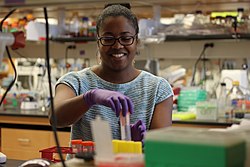
A biochemist engaged in bench research

Biomedical sciences are a set of sciences applying portions of natural science or formal science, or both, to develop knowledge, interventions, or technology that are of use in healthcare or public health.[1] Such disciplines as medical microbiology, clinical virology, clinical epidemiology, genetic epidemiology, and biomedical engineering are medical sciences. In explaining physiological mechanisms operating in pathological processes, however, pathophysiology can be regarded as basic science.

Biomedical Sciences, as defined by the UK Quality Assurance Agency for Higher Education Benchmark Statement in 2015, includes those science disciplines whose primary focus is the biology of human health and disease and ranges from the generic study of biomedical sciences and human biology to more specialised subject areas such as pharmacology, human physiology and human nutrition. It is underpinned by relevant basic sciences including anatomy and physiology, cell biology, biochemistry, microbiology, genetics and molecular biology, pharmacology, immunology, mathematics and statistics, and bioinformatics.[2] As such the biomedical sciences have a much wider range of academic and research activities and economic significance than that defined by hospital laboratory sciences. Biomedical Sciences are the major focus of bioscience research and funding in the 21st century.[2]

Roles within biomedical science

[edit]

A sub-set of biomedical sciences is the science of clinical laboratory diagnosis. This is commonly referred to in the UK as 'biomedical science' or 'healthcare science'.[2] There are at least 45 different specialisms within healthcare science, which are traditionally grouped into three main divisions:[3]

Life sciences specialties

[edit]

Physiological science specialisms

[edit]

Physics and bioengineering specialisms

[edit]

Biomedical science in the United Kingdom

[edit]

The healthcare science workforce is an important part of the UK's National Health Service. While people working in healthcare science are only 5% of the staff of the NHS, 80% of all diagnoses can be attributed to their work.[4]

The volume of specialist healthcare science work is a significant part of the work of the NHS. Every year, NHS healthcare scientists carry out:[citation needed]

  • nearly 1 billion pathology laboratory tests
  • more than 12 million physiological tests
  • support for 1.5 million fractions of radiotherapy

The four governments of the UK have recognised the importance of healthcare science to the NHS, introducing the Modernising Scientific Careers initiative to make certain that the education and training for healthcare scientists ensures there is the flexibility to meet patient needs while keeping up to date with scientific developments.[5] Graduates of an accredited biomedical science degree programme can also apply for the NHS' Scientist training programme, which gives successful applicants an opportunity to work in a clinical setting whilst also studying towards an MSc or Doctoral qualification.[citation needed]

Biomedical Science in the 20th century

[edit]

At this point in history the field of medicine was the most prevalent sub field of biomedical science, as several breakthroughs on how to treat diseases and help the immune system were made. As well as the birth of body augmentations.[citation needed]

1910s

[edit]

In 1912, the Institute of Biomedical Science was founded in the United Kingdom. The institute is still standing today and still regularly publishes works in the major breakthroughs in disease treatments and other breakthroughs in the field 117 years later. The IBMS today represents approximately 20,000 members employed mainly in National Health Service and private laboratories.[citation needed]

1920s

[edit]

In 1928, British Scientist Alexander Fleming discovered the first antibiotic penicillin. This was a huge breakthrough in biomedical science because it allowed for the treatment of bacterial infections.[citation needed]

In 1926, the first artificial pacemaker was made by Australian physician Dr. Mark C. Lidwell. This portable machine was plugged into a lighting point. One pole was applied to a skin pad soaked with strong salt solution, while the other consisted of a needle insulated up to the point and was plunged into the appropriate cardiac chamber and the machine started. A switch was incorporated to change the polarity. The pacemaker rate ranged from about 80 to 120 pulses per minute and the voltage also variable from 1.5 to 120 volts.[6]

1930s

[edit]

The 1930s was a huge era for biomedical research, as this was the era where antibiotics became more widespread and vaccines started to be developed. In 1935, the idea of a polio vaccine was introduced by Dr. Maurice Brodie. Brodie prepared a died poliomyelitis vaccine, which he then tested on chimpanzees, himself, and several children. Brodie's vaccine trials went poorly since the polio-virus became active in many of the human test subjects. Many subjects had fatal side effects, paralyzing, and causing death.[7]

1940s

[edit]

During and after World War II, the field of biomedical science saw a new age of technology and treatment methods. For instance in 1941 the first hormonal treatment for prostate cancer was implemented by Urologist and cancer researcher Charles B. Huggins. Huggins discovered that if you remove the testicles from a man with prostate cancer, the cancer had nowhere to spread, and nothing to feed on thus putting the subject into remission.[8] This advancement lead to the development of hormonal blocking drugs, which is less invasive and still used today. At the tail end of this decade, the first bone marrow transplant was done on a mouse in 1949. The surgery was conducted by Dr. Leon O. Jacobson, he discovered that he could transplant bone marrow and spleen tissues in a mouse that had both no bone marrow and a destroyed spleen.[9] The procedure is still used in modern medicine today and is responsible for saving countless lives.[citation needed]

1950s

[edit]

In the 1950s, we saw innovation in technology across all fields, but most importantly there were many breakthroughs which led to modern medicine. On 6 March 1953, Dr. Jonas Salk announced the completion of the first successful killed-virus Polio vaccine. The vaccine was tested on about 1.6 million Canadian, American, and Finnish children in 1954. The vaccine was announced as safe on 12 April 1955.[10]

See also

[edit]

References

[edit]
[edit]
Revisions and contributorsEdit on WikipediaRead on Wikipedia
from Grokipedia
Biomedical sciences is an interdisciplinary field that applies principles from the natural sciences, such as , chemistry, and physics, alongside formal sciences like and statistics, to investigate the mechanisms of , , and therapeutic interventions in humans and other organisms. This field encompasses both basic biomedical research, which seeks to elucidate the fundamental biological processes underlying normal development, physiological function, and pathological conditions, and applied efforts to translate these insights into diagnostics, treatments, and preventive strategies. At its core, biomedical sciences drives advancements in understanding at multiple scales—from molecular and cellular levels to whole-organism interactions—facilitating the identification of disease targets and the development of innovative healthcare technologies. Key subdisciplines include molecular pathology, virology, bacteriology, clinical immunology, and biomedical engineering, which collectively support laboratory-based analyses of patient samples like blood, biopsies, and tissues to inform accurate diagnoses and personalized treatment plans. The field has been profoundly transformed since the early 2000s by technological breakthroughs, including genomic sequencing, quantitative , and computational modeling, with continued evolution through gene editing technologies like and applications as of 2025, enabling and accelerating the pace of discovery. Biomedical sciences education and research emphasize a blend of theoretical knowledge, practical laboratory skills, and ethical considerations, preparing professionals for diverse careers in , , , and . Core areas of study typically cover , , , , biochemistry, and , often integrated with interdisciplinary training in liberal arts and social sciences to address the broader societal impacts of scientific progress. Supported by institutions like the (NIH), the field relies on a robust of Ph.D.-trained researchers whose numbers have grown significantly since the 1970s—doubling from the 1970s to 2007 and continuing to expand, with NIH funding reaching $47.7 billion in fiscal year 2023—fueled by increased funding and collaborative efforts across academia, government, and industry.

Introduction and Scope

Definition and Principles

Biomedical sciences is an interdisciplinary field that integrates principles from , chemistry, physics, and to investigate the molecular, cellular, and systemic mechanisms underlying and , with the ultimate goal of developing diagnostic tools, therapeutic interventions, and preventive strategies. This approach emphasizes the of fundamental scientific discoveries into practical medical applications, distinguishing it from purely theoretical pursuits by focusing on outcomes that directly impact clinical practice and . At its core, biomedical sciences adheres to empirical, evidence-based methodologies, where research is conducted through hypothesis-driven experimentation to generate reproducible data that advances understanding of biological processes. Ethical standards form a foundational pillar, mandating voluntary from participants, avoidance of unnecessary physical or mental suffering, and a favorable balance of risks against potential benefits to individuals and society, as articulated in seminal guidelines like the . These principles ensure that investigations prioritize human dignity and scientific integrity, guiding the design and execution of studies involving human subjects or animal models. A key conceptual distinction lies in its positioning between basic biological research and clinical : while basic biology explores fundamental life processes without a specific medical lens, biomedical sciences applies those insights to address health-related challenges, such as etiology and treatment . In contrast to , which centers on patient , treatment, and care, biomedical sciences focuses on the preclinical scientific foundations that underpin those activities. For instance, in pipelines, biomedical scientists identify disease-relevant molecular targets, validate them through and models, and conduct preclinical testing to assess safety and before advancing to clinical trials.

Interdisciplinary Integration

Biomedical sciences thrives on interdisciplinary integration, where approaches serve as a primary mechanism to synthesize data from diverse domains such as , , and , enabling the construction of holistic models of disease processes. This integration allows researchers to move beyond isolated analyses, incorporating multi-omics datasets to simulate interactions at molecular, cellular, and organismal levels, thereby facilitating a comprehensive understanding of complex pathologies like cancer or neurodegenerative disorders. For instance, by fusing genomic sequencing data with proteomic profiles and imaging scans, scientists can model tumor microenvironments in a unified framework, predicting therapeutic responses that isolated studies cannot achieve. The emergence of omics technologies in the late 20th century marked a pivotal advancement in this integrative paradigm, with genomics and metabolomics providing tools for multi-scale analysis that bridge traditionally siloed fields. These high-throughput methods, accelerated by milestones like the Human Genome Project initiated in 1990, enabled the simultaneous interrogation of thousands of biomolecules, laying the groundwork for systems-level insights in biomedical research. A key synergy arises through computational modeling, which links biochemical pathways with physiological dynamics—for example, by simulating cellular signaling cascades in response to environmental stressors without delving into isolated molecular details. Such models have illuminated mechanisms in cardiovascular diseases, where biochemical enzyme kinetics inform whole-organ physiological simulations, enhancing predictive accuracy for interventions. Despite these advances, interdisciplinary integration in biomedical sciences faces significant challenges, including persistent data that fragment information across , , and clinical datasets, impeding seamless analysis. These silos often stem from incompatible formats and institutional barriers, resulting in incomplete datasets that undermine holistic modeling efforts. Addressing this requires expanded collaborative training programs that equip researchers with skills in cross-disciplinary tools, such as unified bioinformatics platforms, to foster effective and . Programs emphasizing joint education in computational and experimental methods have shown promise in reducing these impediments, promoting a more cohesive biomedical .

Historical Development

Pre-20th Century Foundations

The foundations of biomedical sciences trace back to ancient civilizations, where early thinkers began systematizing medical knowledge through observation and theory. In ancient Greece, Hippocrates (c. 460–370 BCE) developed the humoral theory, positing that health resulted from the balance of four bodily fluids—blood, phlegm, yellow bile, and black bile—while imbalances caused disease. This framework shifted medical explanations from supernatural causes to natural ones, emphasizing environmental and lifestyle factors in illness. Later, Galen (129–c. 216 CE), a Roman physician of Greek origin, advanced anatomical understanding through dissections of animals, as human dissection was prohibited; his descriptions of muscles, nerves, and organs, though sometimes inaccurate due to reliance on non-human subjects, formed the basis of Western anatomy for centuries. In the medieval Islamic world, scholars like Ibn Sina (Avicenna, 980–1037 CE) refined clinical observation methods in his comprehensive text The Canon of Medicine, integrating Greek knowledge with empirical diagnostics, such as pulse analysis and symptom categorization, to guide treatment and prognosis. The 17th and 18th centuries marked a transition toward instrumental and experimental approaches, laying precursors to cellular and physiological insights. , a Dutch draper and self-taught microscopist, crafted simple single-lens microscopes in the 1670s, achieving magnifications up to 270 times; his observations of "animalcules" in water, teeth scrapings, and blood revealed microorganisms and blood cells for the first time, challenging traditional views of life and disease. Concurrently, William Harvey's 1628 publication De Motu Cordis demonstrated the circulation of blood as a closed system, using quantitative measurements of heart output and vein ligations to prove that blood pumped unidirectionally from the heart through arteries and veins, overturning Galen's incomplete model. These innovations introduced precise instrumentation and techniques, fostering a mechanistic understanding of the body. In the , biomedical sciences solidified through microbiological and pathological revolutions, emphasizing causation via experimentation. Louis Pasteur's experiments in the on and established the germ theory, showing that specific microbes caused spoilage and disease rather than , as demonstrated by his swan-neck flask trials that prevented microbial contamination. Building on this, in the 1880s formulated his postulates—criteria requiring isolation of a from diseased hosts, its cultivation in pure form, reproduction of disease upon inoculation, and re-isolation from the infected—to rigorously link microbes to specific illnesses like and . Rudolf Virchow's 1858 work Cellularpathologie revolutionized by asserting that diseases arise from abnormal cell growth and function, not humors, integrating with to argue "omnis cellula e cellula" (every cell from a cell). This era witnessed a pivotal shift from empirical and philosophical traditions to experimental science, distinguishing biomedical inquiry from or metaphysics by prioritizing verifiable hypotheses, controlled observations, and mechanistic explanations that underpin modern .

20th Century Breakthroughs

The early marked a pivotal shift in biomedical sciences toward understanding nutritional deficiencies and endocrine functions, building on 19th-century . In 1912, Frederick Gowland Hopkins demonstrated through feeding experiments on rats that purified diets lacking certain "accessory food factors" led to growth failure, providing foundational evidence for the existence of vitamins and earning him the 1929 in or . This work spurred the discovery of the antiscorbutic factor preventing in 1912 by Axel Holst and Theodor Frølich, with chemical isolation occurring later in 1928 by , revolutionizing preventive by linking diet to diseases like and . In 1921, and Charles Best isolated insulin from canine pancreases, successfully treating diabetic dogs by reducing blood glucose levels, a breakthrough confirmed in human trials by 1922 and awarded the 1923 . Their method involved ligating pancreatic ducts to minimize degradation, enabling the hormone's extraction and paving the way for . Alexander Fleming's 1928 observation of antibacterial activity from Penicillium notatum mold contaminating staphylococcal cultures led to the , the first , which inhibited bacterial growth without harming human cells. Though not purified until the 1940s, this serendipitous finding transformed infectious disease treatment during . Mid-century advancements deepened molecular insights and public health interventions. The 1953 elucidation of DNA's double-helix structure by and , informed by X-ray diffraction data from and , revealed how genetic information is stored and replicated via base pairing (adenine-thymine, guanine-cytosine). This model explained heredity at the atomic level and laid the groundwork for . Concurrently, microscopy revolutionized by enabling direct visualization of viruses, which were too small for light microscopes; the first of appeared in 1939, and by the 1940s-1950s, it facilitated identification of and other pathogens, accelerating vaccine development. Jonas Salk's inactivated , tested in a 1954 field trial involving over 1.8 million children, proved 80-90% effective against paralytic and was licensed in 1955, drastically reducing U.S. cases from 35,000 annually to near eradication by the 1960s. The (NIH), established in 1930 via the Ransdell Act to centralize federal , saw explosive growth post-World War II, with surging from $5 million in 1945 to over $1 billion by 1965, supporting extramural grants that fueled these innovations. Late-century developments harnessed . In 1973, Stanley Cohen and constructed the first molecules by splicing frog ribosomal genes into bacterial plasmids using restriction enzymes, enabling gene cloning and expression in host cells. This technique birthed , allowing production of human proteins like insulin in . In 1975, Georges Köhler and developed by fusing myeloma cells with antigen-specific B cells, producing immortal cell lines that secrete monoclonal antibodies of identical specificity, which earned the and enabled targeted diagnostics and therapies. The , launched in 1990 by the U.S. Department of Energy and NIH, aimed to sequence the entire , mobilizing international and $3 billion in to map 3 billion base pairs by 2003. These breakthroughs collectively shifted biomedical sciences from descriptive to mechanistic paradigms, enabling precision interventions.

21st Century Advances

The has witnessed transformative advances in biomedical sciences, driven by rapid technological progress and urgent challenges, fundamentally reshaping our understanding of and disease treatment. Building on foundational , these developments emphasize high-throughput , precise genetic interventions, and integrated computational tools, enabling unprecedented personalization in healthcare. Key milestones include the sequencing of the , revolutionary gene-editing technologies, and accelerated responses to pandemics, which have collectively accelerated the shift toward precision medicine. The Human Genome Project's draft sequence, completed in 2003, marked the dawn of the genomics era by covering approximately 92% of the 's base pairs through international collaboration. In 2022, the Telomere-to-Telomere Consortium achieved the first fully complete sequence of the , resolving the remaining gaps and enabling deeper insights into genomic variation. This achievement, achieved under budget and ahead of schedule, has since enabled the sequencing of over 4,000 additional genomes, primarily bacterial but increasingly eukaryotic, facilitating breakthroughs in identifying genetic variations linked to diseases. By democratizing genomic data, the project laid the groundwork for subsequent innovations in personalized diagnostics and therapeutics, influencing fields from to research. A pivotal advancement in came with the development of -Cas9 in 2012 by and , who demonstrated its use as a programmable RNA-guided DNA endonuclease for precise . Their seminal work, published in Science, revealed how the bacterial system could be adapted for site-specific cleavage in eukaryotic cells, offering a simpler and more efficient alternative to prior methods like zinc-finger nucleases. This technology, recognized with the , has since been widely adopted for applications ranging from correcting genetic mutations to engineering model organisms, with over 10,000 publications citing its foundational paper by 2022. Technological integrations of and novel platforms further propelled biomedical progress. In 2020, DeepMind's achieved a landmark in by accurately modeling atomic-level structures for previously unsolved proteins during the CASP14 competition, surpassing traditional experimental methods in speed and precision. This AI-driven tool has predicted structures for nearly all known human proteins, accelerating by enabling of molecular interactions that would otherwise require years of . Concurrently, technology gained prominence with the Pfizer-BioNTech , authorized for emergency use in December 2020 after phase 3 trials demonstrated 95% efficacy against symptomatic infection in adults. This platform, leveraging lipid nanoparticles to deliver synthetic mRNA encoding the , exemplified rapid scalability in response to emerging threats. Global pandemics underscored the urgency of biomedical innovation, particularly in rapid diagnostics and delivery systems. The 2014-2016 outbreak in , which infected over 28,000 people, spurred accelerated development of vaccines like rVSV-ZEBOV, approved in after expedited trials showed 97.5% efficacy, and therapeutics such as REGN-EB3. These efforts highlighted the value of platform technologies for outbreak preparedness. The , beginning in , further intensified responses, with widespread adoption of telemedicine enabling remote monitoring and reducing in-person exposures in ambulatory settings during peak waves. research advanced notably, including vocal biomarkers for non-invasive symptom tracking via mobile apps, which correlated with disease severity in longitudinal studies involving hundreds of patients. The rise of precision medicine initiatives crystallized these advances into structured programs. Launched in 2015 by President Obama, the U.S. Precision Medicine Initiative (PMI) aimed to collect genomic and health data from one million diverse participants to develop individualized therapies, evolving into the All of Us Research Program by 2018. With over $200 million in initial funding, it has recruited more than 860,000 participants as of 2025, enabling studies on polygenic risk scores and tailored cancer treatments. This patient-powered model emphasizes data sharing and ethical inclusion, fostering interdisciplinary collaborations that extend genomic insights into clinical practice.

Core Disciplines

Biological and Biochemical Specialties

Biological and biochemical specialties in biomedical sciences focus on the molecular and cellular mechanisms underlying life processes and , providing foundational insights into genetic, protein, and cellular functions. These disciplines employ advanced techniques to investigate DNA, RNA, proteins, and cellular dynamics at microscopic scales, enabling the elucidation of disease etiologies and therapeutic targets. Key areas include , which manipulates genetic material; biochemistry, which studies molecular interactions; and , which examines cellular behaviors such as programmed death and differentiation. These fields have revolutionized biomedical research by revealing how disruptions at the molecular level contribute to pathologies like cancer and neurodegeneration. In , the (PCR), invented by in 1983, amplifies specific DNA segments exponentially, facilitating genetic analysis and diagnostics. The technique, first detailed in a 1985 publication, relies on repeated cycles of denaturation, annealing, and extension using thermostable , enabling the production of millions of copies from minute samples. Complementing PCR, DNA microarrays allow simultaneous measurement of thousands of levels by hybridizing labeled cDNA to immobilized probes on a chip, as pioneered in a 1995 study that quantified mRNA abundance across genomes. These methods underpin genomic research, from identifying mutations to profiling disease-associated gene activity. Biochemistry delves into the chemical underpinnings of biological processes, particularly , which quantifies how catalyze reactions. The Michaelis-Menten equation, derived in 1913, models the initial reaction velocity vv as a function of substrate concentration [S][S], maximum velocity VmaxV_{\max}, and the Michaelis constant KmK_m: v=Vmax[S]Km+[S]v = \frac{V_{\max} [S]}{K_m + [S]} This hyperbolic relationship describes enzyme saturation and is foundational for understanding metabolic regulation and . , the process by which polypeptides achieve native structures, is another critical focus; misfolding leads to aggregates implicated in diseases like Alzheimer's, where amyloid-beta plaques form due to aberrant beta-sheet transitions, as reviewed in studies highlighting chaperone failures and collapse. Cell biology explores intracellular events, including , a pathway essential for development and . This process involves cascades, where initiator caspases (e.g., or -9) activate executioner caspases (e.g., caspase-3), cleaving substrates to dismantle the cell in an orderly manner, as elucidated in foundational work identifying ced-3 homologs in mammals. differentiation, meanwhile, models how pluripotent cells commit to lineages through signaling gradients and networks, with mathematical frameworks simulating transitions to predict regenerative potential. These mechanisms ensure tissue maintenance but falter in pathologies. A prominent application integrates these specialties in cancer biology, where oncogenes promote uncontrolled proliferation and tumor suppressors like inhibit it. Discovered in 1979 as a cellular protein binding SV40 T-antigen, wild-type acts as a guardian by inducing arrest or in response to DNA damage; mutations, found in over 50% of cancers, abrogate this function, driving tumorigenesis as demonstrated in early transgenic models. For instance, regulates genes like p21 for checkpoint control, underscoring its role in preventing .

Physiological and Anatomical Specialties

Physiological and anatomical specialties in biomedical sciences focus on the integrated study of organ and structures and functions, particularly how they maintain through dynamic processes and respond to disruptions in states. These fields emphasize the interplay between macroscopic and systemic , providing foundational insights into how living organisms adapt to internal and external demands. For instance, understanding cardiovascular and neural mechanisms reveals how the body sustains circulation and , while anatomical techniques enable precise mapping of tissue organization. In , dynamics such as the Frank-Starling law describe how the heart's contractile force increases proportionally with the preload, or the stretching the ventricular walls, thereby enhancing to match venous return. This intrinsic mechanism ensures efficient pumping without external neural input, optimizing blood flow during varying physiological loads. Similarly, examines action potentials, the electrical impulses propagating along neurons; the Hodgkin-Huxley model fundamentally explains this through voltage-gated ion channels, where sodium influx depolarizes the membrane followed by potassium efflux for repolarization, enabling rapid signal transmission across nerve fibers. Anatomical specialties rely on histological techniques to analyze tissue microstructure, involving fixation, sectioning into thin slices with a microtome, staining (e.g., hematoxylin-eosin for cellular detail), and microscopic examination to identify cellular arrangements and pathological changes. Complementary imaging modalities like magnetic resonance imaging (MRI) provide non-invasive structural mapping by exploiting proton relaxation in tissues, yielding high-resolution images of soft organs such as the brain or heart without ionizing radiation. Pathophysiology explores how these systems falter in disease; in , overactivation of the renin- system leads to elevated via II-mediated and aldosterone-induced sodium retention, perpetuating vascular strain. In , disruptions in insulin signaling—often due to in muscle and liver tissues—impair by blocking the insulin receptor's activation of downstream pathways like PI3K-Akt, resulting in and metabolic imbalance. A central concept in these specialties is the role of feedback loops in endocrine regulation, exemplified by the hypothalamic-pituitary axis, where releasing hormones from the stimulate pituitary tropic hormones, which in turn drive target secretion, with from peripheral hormones (e.g., inhibiting CRH and ACTH) maintaining precise .

Physical and Bioengineering Specialties

Biophysics applies physical principles to understand biological structures and processes at the molecular and cellular levels, particularly in the mechanics of tissues. In biomechanics, tissues are often modeled as elastic materials following Hooke's law, which describes the linear relationship between stress (σ\sigma) and strain (ϵ\epsilon) as σ=Eϵ\sigma = E \epsilon, where EE is the Young's modulus representing the tissue's stiffness. This model is fundamental for analyzing soft tissue deformation under load, such as in cartilage or skin, and has been validated through techniques like optical coherence elastography that quantify elasticity in vivo. Optical spectroscopy in biophysics enables non-invasive molecular detection by exploiting light-matter interactions, such as absorption or fluorescence spectra unique to biomolecules like proteins or DNA. Techniques like Raman spectroscopy probe vibrational modes to identify molecular compositions in cells and tissues without labeling, providing insights into biophysical states such as protein folding or metabolic activity. This approach has advanced detection sensitivity, allowing single-molecule resolution in biological environments. Bioengineering integrates engineering principles with biology to develop solutions for tissue repair and replacement, focusing on biomaterials and device design. Tissue engineering scaffolds, often made from hydrogels, provide a three-dimensional matrix that mimics the extracellular environment to support and tissue regeneration; these water-swollen networks offer , tunable , and mechanical properties akin to native tissues. Hydrogels like those based on alginate or are widely used due to their injectability and ability to encapsulate cells for applications in or organ repair. In prosthetic design, bioengineering employs finite element analysis (FEA) to simulate stress distribution and optimize device performance, ensuring load transfer that minimizes tissue damage. FEA models discretize the prosthesis-limb interface into elements to predict deformation and contact pressures, guiding iterations for improved fit and durability in lower-limb prosthetics. This computational approach has enhanced biomimetic designs that replicate natural , reducing user . Medical physics addresses the interaction of physical agents with biological systems, particularly in diagnostic and therapeutic instrumentation. quantifies energy deposition in tissues during cancer therapy, where measures the average energy lost per unit path length by , influencing biological damage; high-LET particles like protons deposit energy more densely, enhancing tumor cell kill while sparing surrounding healthy tissue. This concept underpins modalities like , where LET optimization improves treatment efficacy. Ultrasound imaging relies on principles, with waves traveling at approximately 1540 m/s in to generate echoes for anatomical visualization. The speed depends on tissue and elasticity, enabling techniques like Doppler to assess flow by measuring frequency shifts from moving reflectors. and of these longitudinal waves inform and depth penetration in real-time diagnostics. A key example of bioengineering integration is the cardiac pacemaker, first developed in the 1950s as an external device to electrically stimulate the heart in cases of . Pioneered by researchers like John Hopps, early models used battery-powered pulses delivered via electrodes, marking the inception of implantable bioelectronics. Modern iterations incorporate sensors for rate-responsive pacing, adjusting output based on activity via accelerometers or detection, extending battery life to over a decade and improving synchronization with physiological demands.

Professional Practice

Laboratory and Research Roles

In biomedical sciences, and roles encompass a range of positions dedicated to advancing scientific knowledge through controlled experimentation and -driven inquiry, typically within academic, governmental, or industrial settings. These professionals operate in non-clinical environments, focusing on the generation of foundational that supports broader biomedical applications, such as and disease mechanism elucidation. Adherence to standardized protocols ensures the reliability and of findings, with roles differentiated by levels of responsibility from hypothesis-driven design to routine operational support. Research scientists in biomedical fields are primarily responsible for formulating hypotheses based on existing and preliminary observations, then designing and executing experiments to test them. This includes conducting assays, such as studies to evaluate molecular interactions, and utilizing models under strict ethical oversight to simulate physiological conditions. For instance, experiments involving models must comply with Institutional Animal Care and Use Committee (IACUC) guidelines, which mandate protocols for minimizing animal distress, justifying selection, and ensuring humane endpoints, as outlined in Public Health Service Policy. These duties require advanced analytical skills to interpret outcomes and iterate on experimental designs, often culminating in peer-reviewed publications that contribute to scientific progress. Laboratory technicians support these efforts by handling practical aspects of experimental workflows, including such as isolating proteins or nucleic acids from biological tissues, and operating specialized for . A key example is the use of (HPLC) systems, which separate and quantify compounds in complex mixtures like metabolites or pharmaceuticals, enabling precise characterization of biomolecular samples in settings. Technicians also implement protocols, verifying equipment and integrity to maintain experimental accuracy and prevent contamination. These roles typically require associate or bachelor's degrees in relevant disciplines like or , providing the foundational training for technical proficiency. A critical component of laboratory and roles involves rigorous handling and statistical analysis to validate experimental results. Researchers apply methods like analysis of variance (ANOVA) to compare means across multiple groups, assessing whether observed differences—such as treatment effects in cell assays—are statistically significant beyond random variation. Interpretation of s plays a central role, where a below 0.05 conventionally indicates that the probability of observing the (or more extreme) assuming the (no effect) is true is less than 5%, guiding decisions on result robustness while accounting for factors like sample size and variability in biomedical datasets. These analyses ensure that findings are not only reproducible but also contribute meaningfully to testing without overinterpreting . Overarching all these activities is the emphasis on Good Laboratory Practice (GLP) standards, which were established by the U.S. (FDA) in the 1970s to address inconsistencies and fraud in non-clinical safety studies supporting regulatory submissions. Finalized in 1978 as 21 CFR Part 58, GLP requires documented procedures for study planning, personnel training, facility maintenance, and record-keeping to ensure and . Compliance with GLP not only facilitates regulatory approval for biomedical innovations but also upholds ethical standards in research conduct.

Clinical and Diagnostic Roles

Biomedical scientists play pivotal roles in clinical settings by applying specialized knowledge to analyze biological samples, aiding in the , staging, and of diseases. These professionals, including diagnostic pathologists, clinical biochemists, and clinical microbiologists, interpret complex data to inform patient care decisions, often working within to bridge laboratory findings with clinical outcomes. Their work ensures accurate identification of pathological conditions, enabling timely interventions and personalized treatment plans. Diagnostic pathologists examine tissue specimens to diagnose and stage cancers, utilizing techniques such as (IHC) to identify specific proteins and biomarkers that reveal types, subtypes, and origins. For instance, in biopsies, pathologists apply IHC markers like K903 for basal cells and AMCAR for malignant cells to confirm invasive , which is crucial for staging and . The report generated by these experts includes microscopic descriptions, tumor grade, lymph node involvement, and molecular findings, providing the definitive that guides oncologists in treatment selection. Clinical biochemists interpret tests to assess metabolic and organ function, focusing on panels that detect imbalances indicative of underlying conditions. In panels, they evaluate levels of sodium, , chloride, and bicarbonate to diagnose disorders such as , dysfunction, or acid-base imbalances, where abnormal (>5.0 mEq/L) may signal cardiac risks. For cardiac events, biochemists analyze markers like CK-MB, which rises 4-6 hours post-, peaks at 24 hours, and normalizes within 48-72 hours; a CK-MB2/CK-MB1 ratio ≥1.5 confirms acute when results are unavailable. These interpretations occur in biochemistry labs, supporting rapid clinical decision-making. Clinical microbiologists identify from patient samples and determine efficacy to combat infections, employing both traditional and molecular methods in diagnostic workflows. They use culture techniques on enriched or selective media, such as blood agar or , to isolate , followed by biochemical tests for identification, which typically takes 16-24 hours but allows comprehensive susceptibility profiling via disk diffusion or . For faster results, microbiologists apply PCR-based assays, such as qPCR or FilmArray panels, to detect DNA directly from blood or urine in under 1-2 hours, identifying species like and resistance genes like mecA for MRSA. susceptibility testing (AST) then guides , reducing empiric use and improving patient outcomes in settings like management. A key advancement in these roles is the integration of diagnostic results with electronic health records (EHRs), enabling real-time data sharing and clinical alerts since the . This evolution, from early paper-to-digital transitions to comprehensive 2015 systems, allows biomedical scientists' findings—such as pathology reports or lab panels—to populate patient records instantly, facilitating coordinated care across multidisciplinary teams.

Education and Training

Academic Programs

Academic programs in biomedical sciences provide structured education from undergraduate to postgraduate levels, equipping students with foundational knowledge and advanced research skills essential for careers in research, healthcare, and industry. Undergraduate degrees, typically a (BSc) in Biomedical Science, span 3 years in the and 4 years , emphasizing core modules in , , physics, and laboratory techniques to build proficiency in experimental design and . These programs often include introductory courses in human anatomy, , and , alongside practical training in techniques such as and molecular assays, fostering and scientific inquiry from the outset. Postgraduate education expands on this foundation through Master's (MSc) and doctoral (PhD) programs, which emphasize original and culminate in theses or dissertations. MSc programs in biomedical sciences generally last 1-2 years and involve advanced coursework in specialized areas like or , followed by a research project, while PhD programs require 4-6 years, including at least 30 credits of coursework and 15 credits dedicated to dissertation on topics such as mechanisms or therapeutic development. Integrated MD-PhD tracks, designed for aspiring clinician-scientists, combine medical training with rigorous PhD , typically spanning 7-8 years and supported by programs like the NIH MD/PhD Partnership Training Program to bridge clinical practice and biomedical discovery. Curriculum across these levels incorporates key elements such as laboratory rotations, particularly in graduate programs to facilitate mentor selection and hands-on experience in diverse research environments; training in bioinformatics for analyzing genomic and proteomic data; and courses on to address issues like and data integrity. Since the early 2000s, curricula have shifted toward interdisciplinary approaches, integrating and to address complex challenges like , driven by advances such as the and the need for analytics in health sciences; more recently, as of 2025, programs increasingly incorporate , tools, and post-COVID-19 adaptations for remote and simulation-based training. Accreditation ensures program quality, with the Institute of Biomedical Science (IBMS) in the UK evaluating undergraduate and postgraduate degrees against standards in scientific knowledge, practical skills, and clinical data analysis, while the National Accrediting Agency for Clinical Laboratory Sciences (NAACLS) in the has introduced pathways for biomedical scientist programs focusing on laboratory competencies.

Professional Certification

Professional certification in biomedical sciences validates the competencies of practitioners, ensuring they meet standards for laboratory practice and . In the , the Institute of Biomedical Science (IBMS) oversees registration for biomedical scientists, which is portfolio-based and required for (HCPC) licensure. Candidates must complete an IBMS-accredited BSc in biomedical science or an equivalent degree, followed by a structured training portfolio demonstrating practical skills in areas such as , biochemistry, and , typically over 12-24 months in an approved . This process aligns with HCPC standards, emphasizing evidence of competence through case studies and supervisor assessments. In the United States, the American Society for Clinical Pathology (ASCP) Board of Certification provides credentials for scientists, including exams in specialties like , , and immunohematology. Eligibility requires a in medical laboratory science or a related field from a National Accrediting Agency for Clinical Laboratory Sciences (NAACLS)-accredited program, plus clinical training, followed by a computer-adaptive . ASCP certification is nationally recognized and often prerequisite for employment in clinical settings, with more than 650,000 credentials earned by laboratory professionals worldwide since its founding in 1928. Licensing for biomedical scientists varies by jurisdiction, with state-specific requirements in the U.S. for clinical laboratory scientists. Ten states—, , , , , , New York, , , and —mandate licensure, typically involving ASCP certification, a state or application review, and proof of education and experience. For example, 's license requires a , one year of post-degree clinical experience, and passing a comprehensive administered by the Department of . Renewal occurs every two years and necessitates continuing (CPD) credits, often 12-24 hours annually, to maintain skills in evolving technologies like molecular testing. Specialized board certifications enhance expertise in niche areas. For cytotechnology, the ASCP's CT(ASCP) credential requires a , completion of a 12-month cytotechnology program accredited by the Commission on Accreditation of Allied Programs (CAAHEP), and passing a ; many programs include 1-2 years of supervised experience in slide preparation and detection. In molecular diagnostics, the ASCP's MB(ASCP) demands a , at least one year of full-time experience in molecular techniques such as PCR and next-generation sequencing, and an covering analysis for disease diagnosis. These specializations often build on foundational academic programs, requiring post-degree practical training to ensure proficiency. International harmonization of certification standards supports global mobility and . The standard, first published in 2003 and revised in 2007, with subsequent revisions in 2012 and 2022, provides a framework for , integrating with technical competence for diagnostics. Adopted by numerous countries worldwide, with programs offered in over 50 countries, it requires laboratories to demonstrate validated processes, staff training, and continual improvement, facilitating mutual recognition of certifications across borders like those between U.S. and models.

Applications and Societal Impact

Healthcare Diagnostics and Therapeutics

Biomedical sciences play a pivotal role in advancing healthcare diagnostics by developing and refining assays that enable early detection and monitoring of diseases. For instance, (PSA) assays serve as a cornerstone for , measuring elevated levels of this protein in to identify potential cases in individuals. These assays, introduced as a widely used oncologic , have revolutionized early detection by allowing clinicians to stratify risk and guide biopsies, though they require integration with other factors to minimize false positives. Complementing such laboratory-based tests, point-of-care (POC) diagnostics like glucometers facilitate immediate glucose monitoring for , providing rapid results at the bedside or in outpatient settings to inform timely insulin adjustments and prevent complications. In therapeutics, biomedical sciences underpin , which personalizes drug dosing based on genetic variations to optimize efficacy and reduce adverse effects. Variations in (CYP450) enzymes, such as and , significantly influence rates, leading to tailored prescriptions for medications like antidepressants and anticoagulants to avoid under- or overdosing. Targeted therapies exemplify this precision approach; , approved by the FDA in 2001, inhibits the BCR-ABL in chronic myeloid leukemia (CML), transforming a once-fatal into a manageable condition with high response rates. These advancements in diagnostics and therapeutics have been amplified by in clinical laboratories, which post-2010 has reduced diagnostic turnaround times from days to hours, enhancing patient outcomes through faster result delivery and resource efficiency. A key illustration of biomedical sciences' impact is in , where treatments are customized using patients' genetic profiles to predict responses and select optimal interventions. This approach integrates genomic data from assays and pharmacogenomic testing to shift from one-size-fits-all strategies to individualized care plans, improving therapeutic success in and beyond. By focusing on molecular underpinnings, such as genetic mutations driving disease, minimizes trial-and-error in treatment while addressing interpatient variability.

Biomedical Research and Innovation

Biomedical research operates within translational models that bridge fundamental scientific discoveries to clinical applications, commonly described as the "bench-to-bedside" approach. This paradigm emphasizes moving insights from laboratory experiments—such as cellular and molecular studies—directly into patient care, while also incorporating feedback from clinical observations back to the lab for refinement. The process facilitates the development of new diagnostics, therapies, and preventive strategies by integrating basic science with applied outcomes. A key component of in biomedical sciences involves clinical trials, structured in phases I through IV according to U.S. (FDA) guidelines. Phase I trials focus on safety and dosage in small groups of 20-100 healthy volunteers or patients, establishing initial tolerability. Phase II expands to assess and side effects in larger patient cohorts, typically 100-300 individuals. Phase III involves randomized, controlled studies with thousands of participants to confirm effectiveness, monitor adverse reactions, and compare against standard treatments. Phase IV occurs post-approval, tracking long-term safety and effectiveness in broader populations. These phases ensure rigorous evaluation before therapies reach widespread use. Innovation in biomedical sciences has driven substantial growth in the biotechnology sector, exemplified by the evolution of monoclonal antibodies. Prior to the , no therapeutic monoclonal antibodies were commercially available, with the first FDA approval occurring in 1986 for (Orthoclone OKT3), a treatment for . By 2023, the global market for these therapies exceeded $200 billion, reflecting advancements in production techniques and applications for cancers, autoimmune diseases, and infectious conditions. Projections indicate continued expansion, underscoring the sector's role in therapeutic innovation. Stem cell-based therapies represent another landmark in biomedical innovation, particularly chimeric antigen receptor T-cell (CAR-T) treatments for . In 2017, the FDA approved tisagenlecleucel (Kymriah) as the first CAR-T therapy for pediatric and patients with relapsed or refractory B-cell , demonstrating remission rates of up to 83% in clinical trials. This approval marked a shift toward personalized immunotherapies, with subsequent CAR-T products expanding access for similar indications. Such developments highlight how biomedical research translates cellular engineering into targeted cancer treatments. Funding mechanisms are essential to sustaining biomedical research and innovation, with the (NIH) R01 grants serving as the primary vehicle for supporting independent investigator-initiated projects. These awards fund discrete, hypothesis-driven studies in areas like disease mechanisms and therapeutic development, comprising about 50% of NIH's extramural research budget and enabling foundational work across biomedical fields. Public-private partnerships further accelerate progress, as seen in launched in 2020, a $18 billion initiative that coordinated government agencies, pharmaceutical companies, and research institutions to expedite development, resulting in multiple authorizations within a year. Patent activity in biomedicine reflects the field's innovative momentum, with the biotechnology sector accounting for approximately 15% of total U.S. Patent and Trademark Office (USPTO) grants in recent years. By the 2020s, this translated to over 50,000 annual U.S. patents in biotechnology and related biomedical areas, driven by advances in , , and . These trends indicate robust generation, fostering commercialization and further investment in health technologies.

Global and Regional Contexts

Practices in the United Kingdom

In the United Kingdom, biomedical sciences practice is primarily regulated by the (HCPC), which maintains a register of qualified biomedical scientists to ensure public safety and professional standards. Registration with the HCPC is mandatory for practicing biomedical scientists, requiring demonstration of competencies in areas such as analytical and clinical procedures, , and ethical practice. The (NHS) structures pathology services through approximately 200 NHS trusts and foundation trusts in , which deliver comprehensive laboratory diagnostics including haematology, biochemistry, and , serving both hospital inpatients and community needs. Professional bodies play a central role in upholding these standards, with the Institute of Biomedical Science (IBMS) accrediting university degrees to align with HCPC requirements, ensuring graduates meet the academic threshold for registration. IBMS-accredited programs cover core disciplines like , , and , facilitating direct entry into professional practice. The HCPC's standards of proficiency for biomedical scientists, originally updated in 2014 and further revised in 2023, outline threshold competencies including the ability to perform complex analyses, interpret results, and contribute to multidisciplinary teams. Biomedical science degrees in the UK emerged in the mid-1970s, with pioneering programs at institutions such as the University of Portsmouth and the University of Bradford, marking a shift from traditional medical laboratory technology training to integrated scientific education. These developments supported the profession's growth amid expanding NHS demands for specialized diagnostics. During the COVID-19 pandemic, biomedical scientists within Public Health England (now the UK Health Security Agency) were instrumental in scaling up testing capacity, processing millions of samples for SARS-CoV-2 detection and enabling national surveillance and response efforts. As of November 2025, the HCPC register lists 30,546 biomedical scientists, the majority employed in NHS laboratories where they handle over 90% of the UK's workload. This concentration underscores the profession's integral role in the NHS, with ongoing efforts to modernize services through networked hubs and digital integration to enhance efficiency and equity.

International Variations and Collaborations

In the United States, the biomedical sciences landscape emphasizes decentralized research conducted primarily through universities and independent laboratories, with substantial federal funding driving innovation. The (NIH) allocates approximately 83% of its budget to extramural grants supporting biomedical research at over 300,000 researchers across universities and medical institutions, enabling advancements in areas like and . for biomedical laboratory personnel is overseen by the American Society for Clinical Pathology (ASCP) Board of Certification, which offers credentials such as (MLS) to validate expertise in diagnostic testing and research support roles. Regulatory oversight of biomedical diagnostics falls under the (FDA), which treats laboratory-developed tests as in vitro diagnostics subject to premarket review and quality system requirements to ensure safety and efficacy. European biomedical sciences exhibit variations shaped by efforts toward regional harmonization, contrasting with more centralized models elsewhere. The European Federation of Clinical Chemistry and Laboratory Medicine (EFLM) coordinates initiatives across 40 member societies to standardize laboratory practices, including , reference intervals, and pre-analytical procedures like blood sampling guidelines, promoting consistent results for clinical . In Germany, biomedical sciences prioritize pharmaceutical , with industry investments reaching €9.6 billion in 2022, supporting over 1,200 companies focused on , biologics, and clinical trials through institutions like the and federal programs under the . These efforts align with broader EU pharmaceutical legislation reforms, which streamline post-approval variations and enhance cross-border for biomedical innovation. In resource-limited settings of the Global South, biomedical sciences face challenges such as inadequate and , yet progress occurs through targeted international support for infectious . In , WHO collaborates with partners to strengthen laboratory networks, including the African Centre for Integrated Laboratory Training (ACILT), which has trained over 6,000 laboratory workers from 43 countries for , , and emerging pathogens through hands-on courses and equipment provision, addressing gaps in diagnostic capabilities. These initiatives emphasize cost-effective technologies and local workforce development to combat endemic diseases like and , though persistent barriers include limited access to advanced reagents and in rural areas. International collaborations in biomedical sciences amplify global impact by pooling resources and expertise across borders. The International Human Epigenome Consortium (IHEC), established in 2010, coordinates the generation of reference epigenome maps from diverse cell types to elucidate disease mechanisms, involving over 20 research groups from , , and to standardize data production and sharing via a public portal. Similarly, Gavi, the Vaccine Alliance, founded in 2000, partners with 54 low- and middle-income countries (as of 2024 eligibility criteria), the WHO, , and pharmaceutical firms, and has helped deliver over 1.2 billion doses since its inception, prioritizing equitable access to vaccines for diseases like HPV and RSV through subsidized procurement and health system strengthening. 's 2026-2030 strategy aims to vaccinate at least 500 million children, potentially saving over 8 million lives. These consortia exemplify how shared governance and data interoperability foster breakthroughs in and immunization equity.

Technological Frontiers

(AI) and (ML) are poised to revolutionize predictive modeling in biomedical sciences, particularly for forecasting disease outbreaks through advanced architectures. By integrating AI with mechanistic epidemiological models, researchers can analyze vast datasets including spatio-temporal trends, mobility patterns, and genomic information to enhance outbreak detection accuracy. For instance, large language models (LLMs), such as those using transformer architectures with attention mechanisms, have been employed in models like EpiLLM to predict localized epidemic spreads by fusing real-time data, achieving superior performance over traditional susceptible-infected-recovered (SIR) frameworks. Graph s (GNNs) further enable modeling of complex relational dynamics in epidemics, as demonstrated in studies optimizing forecasting with environmental and behavioral inputs. As of 2025, hybrid AI-epidemiological approaches, such as PandemicLLM, incorporate policy and real-time surveillance data to outperform conventional models in simulating infectious disease trajectories. Nanotechnology advances targeted drug delivery systems, with liposomes emerging as key vehicles for chemotherapy agents to minimize off-target effects and improve therapeutic efficacy. These lipid-based nanoparticles encapsulate drugs like doxorubicin, leveraging the enhanced permeability and retention (EPR) effect in tumor vasculature for site-specific release, resulting in up to 30% higher tumor uptake in preclinical models. Recent 2025 developments include AI-optimized liposomal formulations that enhance stability and reduce systemic toxicity, as seen in trials for and cancers. Complementing this, nanosensors facilitate real-time monitoring of physiological parameters and drug levels, utilizing like gold nanoparticles and for high-sensitivity detection. For example, electrochemical nanosensors achieve nanomolar precision in tracking chemotherapeutic agents such as in body fluids, enabling dynamic dosage adjustments during treatment. Optical nanosensors, including resonance-based devices, detect cancer biomarkers like at limits of 0.31 pg/mL, supporting continuous surveillance. Synthetic biology enables the engineering of organisms as living therapeutics, programming to produce and deliver bioactive molecules directly at sites. Advances in genetic allow for the creation of microbial consortia that respond to environmental cues, such as , to synthesize therapeutics on demand. A foundational example is the genetic modification of like to produce insulin, a technique refined through to improve yield and specificity in diabetic treatments. By 2025, engineered have been developed as microrobots for targeted delivery, incorporating synthetic gene networks to express agents or antibiotics in response to bacterial infections, enhancing precision over static drug administration. These platforms, built on tools like for precise , extend to broader applications in gut modulation for chronic management. Looking toward 2030, the integration of quantum computing into molecular simulations promises transformative impacts on biomedical sciences, building on 2020s prototypes that demonstrate hybrid quantum-classical capabilities. Current systems, such as IBM's quantum processors, enable variational quantum eigensolver (VQE) algorithms to model complex molecular interactions with unprecedented accuracy, accelerating drug discovery by simulating protein folding and ligand binding in hours rather than years. Prototypes from the early 2020s, including Google's Sycamore for quantum supremacy and partnerships like IBM-Moderna for mRNA optimization, have validated these approaches for biomedical use. Projections indicate that by 2030, scalable quantum hardware will routine-ize large-scale simulations, potentially unlocking new drug candidates for neurological disorders and precision oncology, with industry estimates valuing this integration at $200–500 billion in pharmaceutical innovation (projected to 2035). Over the next 20 years (2026–2045), biomedical science is predicted to advance rapidly in AI-driven precision and personalized medicine, aging biomarkers for healthspan extension, spatial technologies for cellular mapping, de novo protein design, and new vaccines/treatments for chronic and infectious diseases. Key predictions include maturation of medical AI by 2026 and the adoption of 5P healthcare (predictive, preventive, proactive, personalized, precise) by 2030, alongside healthier longevity through targeted therapies.

Ethical and Regulatory Issues

Biomedical sciences face significant ethical challenges in gene editing, exemplified by the 2018 controversy surrounding Chinese scientist He Jiankui's use of CRISPR-Cas9 to edit the genomes of human embryos, resulting in the birth of twin girls modified to resist infection. This experiment violated international norms by proceeding without adequate ethical oversight, raising concerns about the risks of off-target mutations, long-term health impacts on edited individuals, and the potential for heritable changes that could affect future generations. The global scientific community condemned the act as irresponsible, leading to He Jiankui's imprisonment and calls for stricter international guidelines on germline editing. Informed consent remains a cornerstone ethical issue in biomedical clinical trials, requiring participants to fully understand the risks, benefits, and alternatives before enrollment to uphold and prevent exploitation. Challenges arise in ensuring comprehension among vulnerable populations, such as those with limited or in emergency settings, where simplified disclosure processes may compromise voluntariness. The 2013 revision of the Declaration of Helsinki reinforced participant protection by emphasizing that researchers bear primary responsibility for safeguarding subjects' rights and welfare, mandating independent ethical review and post-trial access to beneficial interventions. Regulatory frameworks have evolved to address these concerns, with the European Union's 2018 (GDPR) imposing stringent rules on genomic data privacy, classifying such information as sensitive personal data requiring explicit consent and robust security measures to prevent misuse in research. In the United States, the and Drug Administration's accelerated approval pathway, established under the 1992 and expanded for rare diseases, enables faster market access for therapies addressing unmet needs based on surrogate endpoints, though it mandates confirmatory trials to verify clinical benefits. These mechanisms balance innovation with oversight but highlight tensions in ensuring equitable application. Equity issues persist in global biomedical applications, as seen in the 2021 critiques of the initiative, which aimed to distribute vaccines fairly but fell short due to hoarding by high-income countries, resulting in low rates in low- and middle-income nations and exacerbating disparities. Such imbalances underscore the need for international agreements to prioritize access for underserved populations, preventing the perpetuation of inequities in biomedical advancements. Emerging bottlenecks include regulatory complexity, data interoperability and privacy issues, talent shortages, evolving funding models, and challenges to equitable access amid aging populations and urbanization.

References

Add your contribution
Related Hubs
User Avatar
No comments yet.