Canis
Canis
Main page
2209425

Canis

logo
Community Hub0 subscribers
Read side by side
from Wikipedia

Canis
Temporal range: Pliocene–Present Possible Late Miocene origin[1]
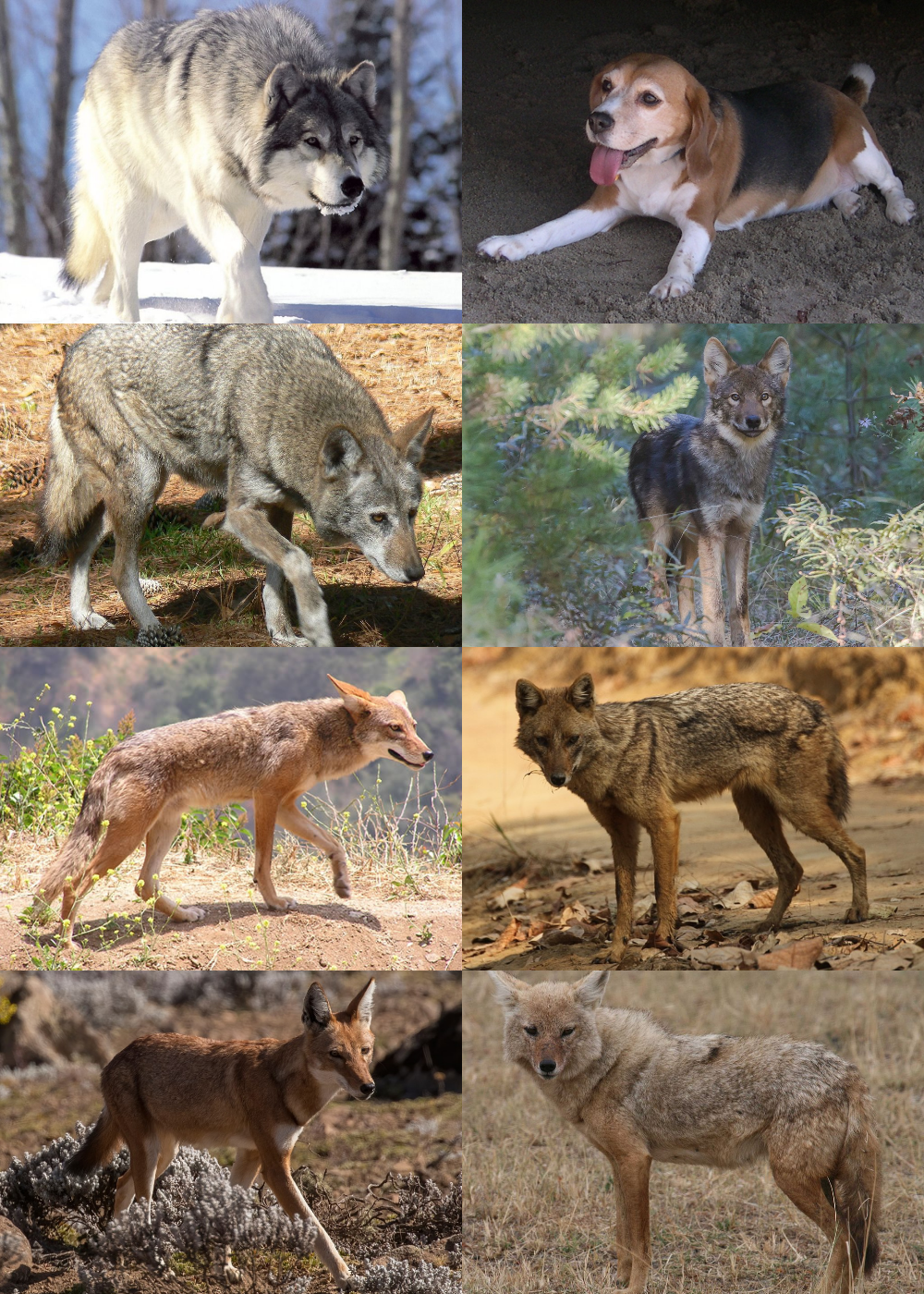
1st row: wolf (C. lupus),
dog/beagle (C. familiaris);
2nd row: red wolf (C. rufus),
eastern wolf (C. lycaon);
3rd row: coyote (C. latrans),
golden jackal (C. aureus);
4th row: Ethiopian wolf (C. simensis),
African wolf (C. lupaster).
Scientific classification Edit this classification
Kingdom: Animalia
Phylum: Chordata
Class: Mammalia
Infraclass: Placentalia
Order: Carnivora
Family: Canidae
Subfamily: Caninae
Tribe: Canini
Subtribe: Canina
Genus: Canis
Linnaeus, 1758[2]
Type species
Canis familiaris
Linnaeus, 1758
Species

Extant:

Extinct:

Synonyms

Canis is a genus of the Caninae which includes multiple extant species, such as wolves, dogs, coyotes, and golden jackals. Species of this genus are distinguished by their moderate to large size, their massive, well-developed skulls and dentition, long legs, and comparatively short ears and tails.[4]

Taxonomy

[edit]

The genus Canis (Carl Linnaeus, 1758) was published in the 10th edition of Systema Naturae[2] and included the dog-like carnivores: the domestic dog, wolves, coyotes and jackals. All species within Canis are phylogenetically closely related with 78 chromosomes and can potentially interbreed.[5] In 1926, the International Commission on Zoological Nomenclature (ICZN) in Opinion 91 included Genus Canis on its Official Lists and Indexes of Names in Zoology.[6] In 1955, the ICZN's Direction 22 added Canis familiaris as the type species for genus Canis to the official list.[7]

Canis is primitive relative to Cuon, Lycaon, and Xenocyon in its relatively larger canines and lack of such dental adaptations for hypercarnivory as m1–m2 metaconid and entoconid small or absent; M1–M2 hypocone small; M1–M2 lingual cingulum weak; M2 and m2 small, may be single-rooted; m3 small or absent; and wide palate.

The cladogram below is based on the DNA phylogeny of Lindblad-Toh et al. (2005),[9] modified to incorporate recent findings on Canis species,[10][11]

Canis

In 2019, a workshop hosted by the IUCN/SSC Canid Specialist Group recommends that because DNA evidence shows the side-striped jackal (Canis adustus) and black-backed jackal (Canis mesomelas) to form a monophyletic lineage that sits outside of the Canis/Cuon/Lycaon clade, that they should be placed in a distinct genus, Lupulella Hilzheimer, 1906 with the names Lupulella adusta and Lupulella mesomelas.[12]

Evolution

[edit]

The fossil record shows that feliforms and caniforms emerged within the clade Carnivoramorpha 43 million YBP.[13] The caniforms included the fox-like genus Leptocyon, whose various species existed from 24 million YBP before branching 11.9 million YBP into Vulpes (foxes) and Canini (canines). The jackal-sized Eucyon existed in North America from 10 million YBP and by the Early Pliocene about 6-5 million YBP the coyote-like Eucyon davisi[14] invaded Eurasia. The canids that had emigrated from North America to Eurasia – Eucyon, Vulpes, and Nyctereutes – were small to medium-sized predators during the Late Miocene and Early Pliocene but they were not the top predators.

Skulls of dire wolf (Aenocyon dirus), gray wolf (C. lupus), eastern wolf (C. lycaon), red wolf (C. rufus), coyote (C. latrans), African golden wolf (C. lupaster), golden jackal (C. aureus) and black-backed jackal (Lupulella mesomelas)

For Canis populations in the New World, Eucyon in North America gave rise to early North American Canis which first appeared in the Miocene (6 million YBP) in south-western United States and Mexico. By 5 million YBP the larger Canis lepophagus, ancestor of wolves and coyotes, appeared in the same region.[1]: p58 

Around 5 million years ago, some of the Old World Eucyon evolved into the first members of Canis,[15] and the position of the canids would change to become a dominant predator across the Palearctic. The wolf-sized C. chihliensis appeared in northern China in the Mid-Pliocene around 4-3 million YBP. This was followed by an explosion of Canis evolution across Eurasia in the Early Pleistocene around 1.8 million YBP in what is commonly referred to as the wolf event. It is associated with the formation of the mammoth steppe and continental glaciation. Canis spread to Europe in the forms of C. arnensis, C. etruscus, and C. falconeri.[1]: p148 

However, a 2021 genetic study of the dire wolf (Aenocyon dirus), previously considered a member of Canis, found that it represented the last member of an ancient lineage of canines originally indigenous to the New World that had diverged prior to the appearance of Canis, and that its lineage had been distinct since the Miocene with no evidence of introgression with Canis. The study hypothesized that the Neogene canids in the New World, Canis armbrusteri and Canis edwardii, were possibly members of the distinct dire wolf lineage that had convergently evolved a very similar appearance to members of Canis. True members of Canis, namely the gray wolf and coyote, likely only arrived in the New World during the Late Pleistocene, where their dietary flexibility and/or ability to hybridize with other canids allowed them to survive the Quaternary extinction event, unlike the dire wolf.[15]

Xenocyon (strange wolf) is an extinct subgenus of Canis.[16] The diversity of the Canis group decreased by the end of the Early Pleistocene to the Middle Pleistocene and was limited in Eurasia to the small wolves of the Canis mosbachensis–Canis variabilis group and the large hypercarnivorous Canis (Xenocyon) lycaonoides.[17] The hypercarnivore Xenocyon gave rise to the modern dhole and the African wild dog.[1]: p149 

Dentition and biteforce

[edit]
Diagram of a wolf skull with key features labelled
Eurasian wolf skull
Bite force adjusted for body weight in Newtons per kilogram[18]
Canid Carnassial Canine
Gray wolf 131.6 127.3
Dhole 130.7 132.0
African wild dog 127.7 131.1
Greenland dog and dingo 117.4 114.3
Coyote 107.2 98.9
Side-striped jackal 93.0 87.5
Golden jackal 89.6 87.7
Black-backed jackal 80.6 78.3

Dentition relates to the arrangement of teeth in the mouth, with the dental notation for the upper-jaw teeth using the upper-case letters I to denote incisors, C for canines, P for premolars, and M for molars, and the lower-case letters i, c, p and m to denote the mandible teeth. Teeth are numbered using one side of the mouth and from the front of the mouth to the back. In carnivores, the upper premolar P4 and the lower molar m1 form the carnassials that are used together in a scissor-like action to shear the muscle and tendon of prey.[1]: 74 

Canids use their premolars for cutting and crushing except for the upper fourth premolar P4 (the upper carnassial) that is only used for cutting. They use their molars for grinding except for the lower first molar m1 (the lower carnassial) that has evolved for both cutting and grinding depending on the candid's dietary adaptation. On the lower carnassial the trigonid is used for slicing and the talonid is used for grinding. The ratio between the trigonid and the talonid indicates a carnivore's dietary habits, with a larger trigonid indicating a hypercarnivore and a larger talonid indicating a more omnivorous diet.[19][20] Because of its low variability, the length of the lower carnassial is used to provide an estimate of a carnivore's body size.[19]

A study of the estimated bite force at the canine teeth of a large sample of living and fossil mammalian predators, when adjusted for their body mass, found that for placental mammals the bite force at the canines (in Newtons/kilogram of body weight) was greatest in the extinct dire wolf (163), followed among the modern canids by the four hypercarnivores that often prey on animals larger than themselves: the African hunting dog (142), the gray wolf (136), the dhole (112), and the dingo (108). The bite force at the carnassials showed a similar trend to the canines. A predator's largest prey size is strongly influenced by its biomechanical limits.[21]

Behavior

[edit]

Description and sexual dimorphism

[edit]
Male coyote
Female coyote
Male gray wolf
Female gray wolf

There is little variance among male and female canids. Canids tend to live as monogamous pairs. Wolves, coyotes, and jackals live in groups that include breeding pairs and their offspring. Wolves may live in extended family groups. To take prey larger than themselves gray wolves depend on their jaws as they cannot use their forelimbs to grapple with prey. They work together as a pack consisting of an alpha pair and their offspring from the current and previous years.[22] Social mammal predators prey on herbivores with a body mass similar to that of the combined mass of the predator pack.[23][24] The gray wolf specializes in preying on the vulnerable individuals of large prey,[25] and a pack of timber wolves can bring down a 500 kg (1,100 lb) moose.[26][27]

Mating behaviour

[edit]

The genus Canis contains many different species and has a wide range of different mating systems that varies depending on the type of canine and the species.[28] In a study done in 2017, it was found that in some species of canids females use their sexual status to gain food resources. The study looked at wolves and dogs. Wolves are typically monogamous and form pair-bonds; whereas dogs are promiscuous when free-range and mate with multiple individuals. The study found that in both species females tried to gain access to food more and were more successful in monopolizing a food resource when in heat. Outside of the breeding season their efforts were not as persistent or successful. This shows that the food-for-sex hypothesis likely plays a role in the food sharing among canids and acts as a direct benefit for the females.[28]

Another study on free-ranging dogs found that social factors played a significant role in the determination of mating pairs. The study, done in 2014, looked at social regulation of reproduction in the dogs.[29] They found that females in heat searched out dominant males and were more likely to mate with a dominant male who appeared to be a quality leader. The females were more likely to reject submissive males. Furthermore, cases of male-male competition were more aggressive in the presence of high ranking females. This suggests that females prefer dominant males and males prefer high ranking females meaning social cues and status play a large role in the determination of mating pairs in dogs.[29]

Canids also show a wide range of parental care and in 2018 a study showed that sexual conflict plays a role in the determination of intersexual parental investment.[30] The studied looked at coyote mating pairs and found that paternal investment was increased to match or near match the maternal investment. The amount of parental care provided by the fathers also was shown to fluctuated depending on the level of care provided by the mother.

Another study on parental investment showed that in free-ranging dogs, mothers modify their energy and time investment into their pups as they age.[31] Due to the high mortality of free-range dogs at a young age a mother's fitness can be drastically reduced. This study found that as the pups aged the mother shifted from high-energy care to lower-energy care so that they can care for their offspring for a longer duration for a reduced energy requirement. By doing this the mothers increasing the likelihood of their pups surviving infancy and reaching adulthood and thereby increase their own fitness.

A study done in 2017 found that aggression between male and female gray wolves varied and changed with age.[32] Males were more likely to chase away rival packs and lone individuals than females and became increasingly aggressive with age. Alternatively, females were found to be less aggressive and constant in their level of aggression throughout their life. This requires further research but suggests that intersexual aggression levels in gray wolves relates to their mating system.

Tooth breakage

[edit]
Dentition of a wolf showing functions of the teeth.

Tooth breakage is a frequent result of carnivores' feeding behaviour.[33] Carnivores include both pack hunters and solitary hunters. The solitary hunter depends on a powerful bite at the canine teeth to subdue their prey, and thus exhibits a strong mandibular symphysis. In contrast, a pack hunter, which delivers many shallower bites, has a comparably weaker mandibular symphysis. Thus, researchers can use the strength of the mandibular symphysis in fossil carnivore specimens to determine what kind of hunter it was – a pack hunter or a solitary hunter – and even how it consumed its prey. The mandibles of canids are buttressed behind the carnassial teeth to crack bones with their post-carnassial teeth (molars M2 and M3). A study found that the modern gray wolf and the red wolf (C. rufus) possess greater buttressing than all other extant canids and the extinct dire wolf. This indicates that these are both better adapted for cracking bone than other canids.[34]

A study of nine modern carnivores indicate that one in four adults had suffered tooth breakage and that half of these breakages were of the canine teeth. The highest frequency of breakage occurred in the spotted hyena, which is known to consume all of its prey including the bone. The least breakage occurred in the African wild dog. The gray wolf ranked between these two.[33][35] The eating of bone increases the risk of accidental fracture due to the relatively high, unpredictable stresses that it creates. The most commonly broken teeth are the canines, followed by the premolars, carnassial molars, and incisors. Canines are the teeth most likely to break because of their shape and function, which subjects them to bending stresses that are unpredictable in direction and magnitude.[35] The risk of tooth fracture is also higher when taking and consuming large prey.[35][36]

In comparison to extant gray wolves, the extinct Beringian wolves included many more individuals with moderately to heavily worn teeth and with a significantly greater number of broken teeth. The frequencies of fracture ranged from a minimum of 2% found in the Northern Rocky Mountain wolf (Canis lupus irremotus) up to a maximum of 11% found in Beringian wolves. The distribution of fractures across the tooth row also differs, with Beringian wolves having much higher frequencies of fracture for incisors, carnassials, and molars. A similar pattern was observed in spotted hyenas, suggesting that increased incisor and carnassial fracture reflects habitual bone consumption because bones are gnawed with the incisors and then cracked with the carnassials and molars.[37]

Coyotes, jackals, and wolves

[edit]

The gray wolf (C. lupus), the Ethiopian wolf (C. simensis), eastern wolf (C. lycaon), and the African golden wolf (C. lupaster) are four of the many Canis species referred to as "wolves".[38] Species that are too small to attract the word "wolf" are called coyotes in the Americas and jackals elsewhere.[39] Although these may not be more closely related to each other than they are to C. lupus, they are, as fellow Canis species, more closely related to wolves and domestic dogs than they are to foxes, maned wolves, or other canids which do not belong to the genus Canis. The word "jackal" is applied to the golden jackal (C. aureus), found across southwestern and south-central Asia, and the Balkans in Europe.[40]

African migration

[edit]

The first record of Canis on the African continent is Canis sp. A from South Turkwel, Kenya, dated 3.58–3.2 million years ago.[41] In 2015, a study of mitochondrial genome sequences and whole genome nuclear sequences of African and Eurasian canids indicated that extant wolf-like canids have colonised Africa from Eurasia at least 5 times throughout the Pliocene and Pleistocene, which is consistent with fossil evidence suggesting that much of the African canid fauna diversity resulted from the immigration of Eurasian ancestors, likely coincident with Plio-Pleistocene climatic oscillations between arid and humid conditions.[42]: S1  In 2017, the fossil remains of a new Canis species, named Canis othmanii, was discovered among remains found at Wadi Sarrat, Tunisia, from deposits that date 700,000 years ago. This canine shows a morphology more closely associated with canids from Eurasia instead of Africa.[43]

[edit]

See also

[edit]

References

[edit]
[edit]
Revisions and contributorsEdit on WikipediaRead on Wikipedia
from Grokipedia
Canis is a genus of carnivorous mammals in the family Canidae, order Carnivora, encompassing several species commonly known as wolves, dogs, coyotes, and jackals.[1] These animals are characterized by their medium to large size, with wild species' adults typically weighing 6 to 80 kg though domestic dogs vary widely from under 1 kg to over 90 kg, elongated snouts, prominent canine teeth, and digitigrade locomotion supported by non-retractile claws.[1] The genus includes seven recognized extant species: the gray wolf (Canis lupus), coyote (C. latrans), red wolf (C. rufus), Ethiopian wolf (C. simensis), golden jackal (C. aureus), black-backed jackal (C. mesomelas), and side-striped jackal (C. adustus).[1] The domestic dog is classified as a subspecies of the gray wolf, C. lupus familiaris.[2] Native primarily to the Holarctic, Ethiopian, and Nearctic realms, species of Canis have been introduced to regions such as Australia and parts of the Neotropics, adapting to diverse habitats including forests, grasslands, shrublands, deserts, and even urban areas at elevations up to 3,700 meters.[1] They exhibit high sociality, often living in packs of 3 to 10 individuals, with cooperative hunting, monogamous mating, and complex communication through vocalizations, scent marking, and body language.[1] Diets vary by species but generally include small to large mammals, with some omnivory in coyotes and scavenging in jackals.[2] Taxonomic boundaries within Canis remain debated due to extensive hybridization and gene flow, particularly among wolf-like canids, complicating species delineation based on morphology, genetics, and geography.[3] For instance, the Himalayan and Indian wolves may represent distinct lineages warranting separate species status from the gray wolf.[3] Conservation status varies widely: the gray wolf and coyote are widespread and of least concern, while the Ethiopian wolf is Endangered with approximately 500 mature individuals (as of 2024) and the red wolf is Critically Endangered with around 25 wild individuals (as of 2025), both threatened by habitat loss, persecution, and hybridization.[4][5]

Taxonomy and Evolution

Classification and Etymology

Canis is a genus within the family Canidae, specifically in the subfamily Caninae, which encompasses various wolf-like canids.[6] The type species of the genus is Canis lupus, the gray wolf, as designated by Carl Linnaeus in his 1758 work Systema Naturae.[7] The genus name Canis derives from the Latin word for "dog," reflecting Linnaeus's classification of dog-like carnivores, including domestic dogs, wolves, and jackals, under this binomial nomenclature.[8] Historically, the taxonomic classification of Canis has undergone significant revisions, particularly regarding the domestic dog (Canis familiaris). Initially treated as a distinct species by Linnaeus, genetic analyses in the 1990s demonstrated close phylogenetic ties to the gray wolf, leading to its reclassification as a subspecies, Canis lupus familiaris, in 1993 by the Smithsonian Institution. Seminal mitochondrial DNA studies, such as Vilà et al. (1997), provided evidence of multiple ancient origins from wolf populations, supporting this subspecific status through shared genetic diversity and ancestry.[8] These revisions highlight the role of molecular evidence in refining canid taxonomy beyond morphological distinctions. Taxonomic boundaries within Canis remain debated due to extensive hybridization and gene flow, particularly among wolf-like canids, complicating species delineation. For example, genetic studies suggest that the African population of the golden jackal may represent a distinct species, Canis lupaster (African wolf), while the red wolf (C. rufus) shows evidence of hybrid origin from gray wolf and coyote admixture. Additionally, Himalayan and Indian wolf lineages exhibit significant genetic divergence from the Holarctic gray wolf, potentially warranting separate species status.[3] Currently, the International Union for Conservation of Nature (IUCN) recognizes approximately seven extant species in the genus Canis, including C. lupus (gray wolf), C. latrans (coyote), C. aureus (golden jackal), C. mesomelas (black-backed jackal), C. adustus (side-striped jackal), C. simensis (Ethiopian wolf), and C. rufus (red wolf).[1] The genus originated through evolutionary divergence from other canids around 6 million years ago in the late Miocene.[7] Key diagnostic traits for identifying species within the genus Canis include hypercarnivorous dentition, characterized by large carnassial teeth adapted for shearing flesh, and morphological features supporting pack-hunting adaptations, such as robust skulls and elongated limbs for cooperative pursuit.[9] These traits distinguish Canis from other canid genera and underscore its ecological niche as social, cursorial predators.[1]

Phylogenetic Relationships

The genus Canis is recognized as monophyletic within the subfamily Caninae, part of the tribe Canini, with its basal divergence from the South American canid clade estimated at approximately 9–11 million years ago based on molecular clock analyses and fossil calibrations.[10] This split reflects an early radiation of Canini lineages following the colonization of South America via the emerging Panama land bridge, separating the Holarctic Canis species from the more derived South American forms like the maned wolf (Chrysocyon brachyurus).[11] Within Canis, phylogenetic analyses based on mitochondrial DNA and whole-genome data reveal a basal clade comprising the black-backed jackal (C. mesomelas) and side-striped jackal (C. adustus), followed by the Ethiopian wolf (C. simensis) as sister to an advanced wolf-like clade that includes the gray wolf (C. lupus), coyote (C. latrans), red wolf (C. rufus), golden jackal (C. aureus), and domestic dog (C. lupus familiaris). These relationships are supported by genomic studies showing distinct monophyletic groupings within the wolf-like clade, with ancient introgression influencing adaptations.[3] For instance, a comprehensive genomic study confirmed the close affinity of the golden jackal to the wolf-coyote-dog group, despite some discordance in basal jackal placements due to hybridization.[3] Evidence of hybridization complicates intra-genus relationships, particularly through gene flow between C. lupus and C. latrans, leading to admixed populations known as coywolves in eastern North America. Genomic assessments indicate that these hybrids exhibit 10–20% wolf ancestry on average, with admixture events traced to historical expansions in the 20th century, as detected via ancestry-informative markers across thousands of loci.[12] Fossil records further corroborate these molecular phylogenies, distinguishing certain extinct forms from true Canis. For example, the dire wolf (Aenocyon dirus), long classified under Canis dirus, represents a distinct sister lineage to modern Canis, diverging around 5.7 million years ago based on ancient DNA from Pleistocene specimens, which shows no close relation to the gray wolf clade. Molecular clock estimates, calibrated against fossil priors, place the divergence of C. aureus from the C. lupus lineage at approximately 1–2 million years ago, aligning with Pleistocene climatic shifts that facilitated Eurasian dispersal.[3]

Evolutionary History

The genus Canis originated in North America during the late Miocene, approximately 6.5–6.0 million years ago, evolving from the extinct genus Eucyon, with the earliest fossils attributed to species such as Canis lepophagus dating to the early Pliocene around 5 million years ago.[13] These early Canis forms were small to medium-sized canids adapted to forested and open woodland environments in what is now the southwestern United States and Mexico.[14] Shortly thereafter, ancestral Canis lineages migrated to Eurasia via the Bering land bridge, which was exposed during periods of lowered sea levels around 5 million years ago, facilitating the initial intercontinental dispersal of the genus.[15] During the Pliocene epoch (5.3–2.6 million years ago), Canis underwent significant expansion into Africa, where environmental shifts toward more open savannas promoted the evolution of jackal-like forms characterized by smaller body sizes and adaptations for scavenging and small-prey hunting.[16] This radiation paralleled diversification in Eurasia, setting the stage for Pleistocene developments. In the Pleistocene (2.6 million to 11,700 years ago), Canis species diversified extensively across Holarctic regions, evolving into larger-bodied megafaunal hunters such as the gray wolf (Canis lupus) and coyote (Canis latrans), which exploited abundant large herbivores like mammoths and bison through pack-hunting strategies.[17] Key events included the extinction of the dire wolf (Aenocyon dirus), a specialized hypercarnivore, around 13,000–9,000 years ago, primarily driven by climate warming at the end of the Last Glacial Maximum, which led to habitat loss and the collapse of megafaunal prey populations.[18] In contrast, smaller Canis species survived the post-Ice Age transitions by adapting diets to include more plant matter and smaller prey, enabling persistence amid ecosystem fragmentation and reduced large-game availability.[19] These adaptive shifts marked a broader evolutionary trend within Canis, transitioning from strictly pack-hunting hypercarnivores reliant on large prey to more flexible omnivorous opportunists in lineages like coyotes and jackals, influenced by Pleistocene habitat fragmentation and prey scarcity that favored dietary generalization.[20] In the late Pleistocene to early Holocene, around 23,000 years ago, human interactions catalyzed the domestication of Canis lupus into Canis familiaris in Siberia, as evidenced by ancient DNA from archaeological sites showing genetic divergence and admixture between wolves and early dogs during periods of isolation near the Last Glacial Maximum.[21] This process, spanning roughly 40,000 to 15,000 years ago, involved selective pressures from human proximity, leading to reduced aggression and enhanced social bonding in domestic lineages.[22]

Physical Characteristics

General Morphology

Species of the genus Canis exhibit a cursorial body plan adapted for endurance running and efficient locomotion, characterized by an elongated, flexible spine, long slender limbs, and a digitigrade stance that elevates the body and reduces vertical oscillation during movement.[23] This build supports a broad gait and allows for covering long distances, with body lengths ranging from 35 to 160 cm (excluding tail) and tail lengths of 12 to 56 cm across the genus.[23] Size varies considerably among species, with average weights spanning 5 to 80 kg; for example, the gray wolf (C. lupus) is the largest, reaching up to 80 kg, while the side-striped jackal (C. adustus) is among the smallest at 7 to 12 kg.[23][24] Males are generally slightly larger than females, reflecting mild sexual dimorphism in body size.[23] The pelage of Canis species consists of a double coat, featuring a dense underfur layer for insulation and longer, coarser guard hairs that provide protection from the elements and camouflage.[23] Coloration varies by species and habitat, typically ranging from gray or brown in wolves (C. lupus) to tawny or reddish hues in jackals such as the golden jackal (C. aureus), aiding in blending with savanna or forest environments.[23] Many species undergo seasonal molting, shedding their thicker winter coat in spring to reveal a lighter summer pelage that facilitates thermoregulation in warmer conditions.[23] Sensory adaptations in Canis emphasize olfaction, vision, and audition for survival in diverse habitats. The olfactory bulb occupies approximately 0.3% of total brain volume in dogs (C. familiaris), a significantly larger proportion than in humans (0.01%), enabling acute scent detection at concentrations as low as parts per trillion.[25] Forward-facing eyes provide a binocular field of about 75 degrees, supporting depth perception during pursuits, while erect, mobile ears enhance sound localization through interaural time and intensity differences.[26][23] Skeletal features include a long, narrow skull with wide zygomatic arches that anchor robust jaw adductor muscles, such as the temporalis and masseter, for powerful occlusion despite the carnassial dentition.[27] Limbs are supported by non-retractable claws—blunt and straight on all digits (five on forepaws, four on hind)—which provide traction for running and aid in digging for food or shelter.[28] Adult Canis typically possess 42 teeth, though the emphasis here is on the overall framework that integrates these elements into a cohesive, agile morphology.[23]

Sexual Dimorphism

Sexual dimorphism in the genus Canis manifests primarily in body size and skeletal structure, with males generally exhibiting greater mass and robusticity to facilitate intrasexual competition for mates. Across species, males are typically 10-20% larger and heavier than females, a pattern driven by sexual selection pressures. For instance, in the gray wolf (Canis lupus), adult males average 40-50 kg and 1.5-1.8 m in length, compared to females at 35-40 kg and slightly shorter, reflecting adaptations for male-male agonistic interactions.[29][30][31] Skeletal variations further accentuate these differences, particularly in the cranium, neck, and pelvis. Males possess broader skulls and thicker necks, enhancing leverage for biting and grappling during fights, as evidenced by sexually dimorphic shape indices in the atlas vertebra and cranial width. In contrast, females exhibit wider pelvic girdles to accommodate gestation and parturition of litters typically numbering 4-10 pups, a dimorphism confirmed through morphometric analyses of the os coxae in canids.[32][33][34] Fur and markings show subtle sexual differences in some species, often linked to signaling during breeding. In the black-backed jackal (Canis mesomelas), males may display more pronounced facial and dorsal markings, though overall pelage variation remains minor compared to size traits. Hormonally, these dimorphisms are underpinned by sex steroids: testosterone promotes greater muscle mass and skeletal robusticity in males, while estrogen influences female reproductive tract development and pelvic widening.[35][36] Dimorphism levels vary by mating system, with reduced expression in strictly monogamous species. The Ethiopian wolf (Canis simensis), characterized by monogamous pair bonds, shows comparatively minimal size differences (males ~22% larger than females) relative to more promiscuous or polygynous congeners like the gray wolf, where intrasexual rivalry amplifies male-biased traits.[37][32]

Dentition and Bite Force

The genus Canis possesses a dental formula of I 3/3, C 1/1, P 4/4, M 2/3, resulting in 42 teeth in adults.[6] The incisors facilitate gripping and grooming, while the canines, which can reach lengths of approximately 6.4 cm (2.5 inches) in gray wolves, serve to pierce and hold prey.[38] Premolars and molars enable cutting, shearing, and crushing of food items, including bone.[6] Notably, the carnassial pair—the upper fourth premolar (P4) and lower first molar (m1)—is specialized for efficient shearing of meat, a key adaptation supporting hypercarnivorous diets across the genus.[6] Bite force in Canis species varies with body size and is estimated using lever models of the jaw, which account for the mechanical advantage provided by the dominant masseter and temporalis muscles.[39] In the gray wolf (Canis lupus), predicted bite forces at the canine teeth reach approximately 593 N, with greater forces at the molars for crushing.[40] The coyote (Canis latrans) exhibits lower values around 275 N at the canines.[40] These forces underscore the biomechanical role of robust jaw adductor musculature in processing tough prey tissues.[39] Tooth breakage occurs frequently in wild Canis populations due to bone-cracking behaviors, with incidence rates as high as 72% of individuals affected in prey-scarce environments like Isle Royale National Park.[41] Such fractures, often resulting from elevated carcass utilization (up to 90% skeletal consumption), can impair hunting efficiency by increasing infection risk and reducing bite efficacy, though many heal through bone remodeling over time.[41] In contrast, populations with abundant prey, such as those in Scandinavia, show lower rates around 33%.[41] Dentition in Canis follows a diphyodont pattern, with deciduous teeth erupting between 3 and 6 weeks of age and being replaced by permanent teeth starting at 3.5–4 months, completing by 6–7 months.[42] Throughout adulthood, teeth undergo progressive wear from abrasive diets heavy in bone and grit, leading to flattened occlusal surfaces and potential enamel loss that influences feeding mechanics.[43]

Behavior and Reproduction

Social and Territorial Behavior

Canis species exhibit complex social structures centered on family units, with variations across taxa reflecting ecological pressures. In gray wolves (Canis lupus), packs typically consist of a breeding pair and their offspring, averaging 5–12 members, though sizes range from 3 to over 40 depending on prey availability and habitat. These groups maintain a linear dominance hierarchy based on age, behavior, and reproductive status, where the breeding pair leads while subordinates engage in alloparenting by assisting with pup care and territory maintenance. Coyote (Canis latrans) social groups are looser, often comprising 2–6 individuals around a territorial breeding pair and yearlings, with less rigid hierarchies that emphasize cooperative foraging over strict dominance. Golden jackals (Canis aureus), in contrast, form monogamous pairs augmented by 1–2 non-breeding helpers, resulting in smaller units of 3–5 members focused on pair bonding and shared defense.[44][1][45][46] Communication in Canis is multimodal, facilitating coordination within and between groups. Vocalizations include long-distance howls in wolves, audible up to 10 km on open terrain for pack assembly and territorial advertisement, while shorter barks and yelps serve close-range alerts and alarms in coyotes and jackals. Scent marking with urine and feces reinforces social bonds and boundaries, with wolves depositing marks every 240 m along patrol routes to signal pack identity and deter intruders. Body postures convey dominance and affiliation; for instance, tail wagging and relaxed ear positions indicate submission or greeting, whereas erect tails and forward ears signal alertness or aggression. These signals enable efficient group cohesion without physical contact in variable environments.[47][44][1] Territoriality is a core aspect of Canis sociality, defended through vocal choruses, scent posts, and patrols to secure resources. Wolf packs maintain core territories of 100–2,500 km², varying with prey density—larger in low-prey areas like Alaskan moose habitats (up to 1,645 km²)—and actively patrol boundaries with chases extending over 2 km to repel rivals. Coyote territories are smaller, typically 10–40 km² in rural settings, marked intensively during breeding seasons to exclude competitors. Jackal pairs defend more compact areas of 2–3 km², using howling duets and raised-leg urination to assert monogamous claims, with intrusions often resolved through escalated vocal displays rather than combat. This behavior minimizes energy expenditure while maximizing exclusive access to foraging grounds.[44][45][46] Cooperation enhances survival in Canis groups, particularly through collective hunting and dominance interactions. Hunting success in wolves rises with pack size up to 6–8 members, as coordinated pursuits allow targeting of larger prey like elk, with efficiency peaking before declining due to interference among hunters. Dominance is asserted via displays such as raised hackles (piloerection), direct staring, and high postures, which ritualize conflicts and maintain hierarchy without frequent injury. In coyotes and jackals, similar cooperative tactics apply to smaller prey, where group size correlates with reduced individual risk during chases. These dynamics foster stability, with subordinates benefiting from shared vigilance.[48][44] Social variations within Canis highlight adaptive flexibility, from solitary tendencies in certain jackals to familial packs in domesticated dogs. Some jackal populations, like African golden jackals in resource-scarce areas, operate solitarily or in transient pairs, prioritizing individual foraging over group reliance. In contrast, free-ranging domestic dogs (Canis familiaris) form loose familial groups of 2–6, echoing wolf-like structures but with reduced territoriality due to human subsidies. Wolves and coyotes represent intermediates, with pack cohesion balancing cooperation against dispersal pressures.[46][49][1]

Mating Systems

Mating systems in the genus Canis are predominantly characterized by social monogamy, where long-term pair bonds form between a single male and female, facilitating cooperative parental care and territory defense. In gray wolves (Canis lupus) and jackals such as the black-backed jackal (Canis mesomelas) and golden jackal (Canis aureus), these pairs often persist for multiple years, sometimes lifelong, with extra-pair copulations being rare and contributing to less than 10% of offspring in stable populations.[50][23] Coyotes (Canis latrans) exhibit similar monogamous tendencies, forming durable pairs that can last up to eight years, though promiscuous mating occurs more frequently in high-density or resource-variable environments.[50][51] In contrast, domestic dogs (Canis familiaris) display altered systems due to human influence, often showing polygynandry with multiple partners per breeding season and minimal pair bonding in free-ranging groups.[52] Courtship rituals typically align with synchronized estrus cycles occurring once or twice annually in wild species, triggered by photoperiod and nutritional cues to optimize pup survival. Males engage in persistent following, vocalizations like howling, scent marking, and repeated mounting attempts to solicit females, while females select mates based on dominance displays and resource-holding potential within pack hierarchies.[50][23] Copulation involves a characteristic "tie" lasting 5–30 minutes, during which induced ovulation occurs, ensuring fertilization; this process repeats multiple times over 1–2 days during the receptive period.[51][23] Gestation across Canis species uniformly spans 60–65 days, resulting in litters of 2–10 pups depending on species and condition.[51][1] Polygyny emerges occasionally in larger packs of wolves and coyotes, where dominant males mate with multiple females, particularly when abundant resources support additional offspring without compromising pair stability.[50] Resource availability profoundly influences pair bond durability; in prey-scarce areas, monogamy strengthens to ensure biparental investment, whereas surplus food can promote multiple matings or extra-pair activity.[50] For domestic dogs, human-provided resources and selective breeding disrupt natural monogamy, leading to year-round breeding opportunities and reduced mate fidelity.[52][53]

Parental Care and Development

In the genus Canis, parental care is predominantly biparental, with both male and female contributing to offspring rearing, supplemented by alloparental assistance from pack or family members in social species. Pups are born altricial, blind, and deaf, remaining in dens or burrows for the initial weeks. For gray wolves (Canis lupus), litters average 4-6 pups, while coyote (Canis latrans) litters range from 1-7, averaging 4-6; black-backed jackals (Canis mesomelas) and golden jackals (Canis aureus) typically produce 3-6 pups per litter. Nursing by the female begins immediately, lasting 5-10 weeks depending on the species, with males and helpers providing sentinel duties and regurgitated food to support the lactating female and emerging pups.[54][55][35][56] Developmental milestones vary slightly across species but follow a similar ontogenetic pattern. Eyes open at 8-14 days post-birth, with initial solid food introduced via regurgitation around 3 weeks, coinciding with the eruption of deciduous teeth. Weaning occurs at 5-10 weeks, after which pups emerge from dens to accompany adults on foraging trips, learning hunting skills by 8-14 weeks. In wolves and coyotes, pups remain dependent on the family unit for 6-24 months, with dispersal influenced by resource availability and pack dynamics; jackals achieve independence faster, dispersing around 6-12 months. Extended care in wolves can last up to 3 years in stable packs, fostering larger group sizes, whereas jackals exhibit quicker juvenile autonomy suited to their more opportunistic lifestyles.[54][55][35][56] Pup mortality is high, with survival rates of 30-70% in the first year, primarily due to predation, starvation, disease, and human-related factors. Infanticide by unrelated males during pack takeovers is a significant risk, particularly in wolves, where invading males may kill existing litters to bring females into estrus sooner. In coyotes and jackals, similar pressures occur but at lower documented frequencies due to smaller, more fluid social units. These factors underscore the adaptive value of communal care in enhancing overall reproductive success across Canis species.[54][55][57]

Ecology and Distribution

Habitat and Diet

Species of the genus Canis exhibit remarkable habitat versatility, inhabiting diverse environments from the arctic tundra preferred by gray wolves (Canis lupus) in North America and Eurasia to arid deserts occupied by the African wolf (Canis anthus) in Africa and the golden jackal (Canis aureus) in Asia.[58][3] Many Canis species favor open grasslands, savannas, and mixed forests that provide cover for hunting and denning, allowing access to prey while minimizing exposure to extreme conditions.[1] Elevations range from sea level to over 5,000 m, as seen in the Himalayan wolf (C. l. chanco), which thrives in high-altitude plateaus and mountains above 4,000 m due to adaptations for low-oxygen environments. Dietary habits within the genus vary from hypercarnivory in gray wolves, where 70-90% of intake consists of meat from ungulates like elk and moose, supplemented by rodents and carrion, to more omnivorous patterns in coyotes (Canis latrans), which derive up to 50% of their diet from plant matter such as fruits and berries alongside small mammals and insects.[59][60] Jackals and other smaller species often incorporate a higher proportion of vegetable matter and invertebrates, with prey including hares, birds, and occasional larger game when available.[61] Foraging strategies emphasize opportunistic behaviors, including pack-based pursuit and ambush hunting for larger prey in wolves, where groups coordinate to chase ungulates over distances up to several kilometers, or solitary scavenging of carrion in resource-scarce periods.[62] Seasonal shifts are common; for instance, golden jackals increase fruit consumption in summer when ripe produce abounds, reducing reliance on animal prey during wet seasons.[61] These approaches ensure energy efficiency, with wolves caching excess kills to defend foraging territories against competitors.[62] Morphological adaptations support these diets, including carnassial teeth specialized for shearing flesh to efficiently process high-protein meals, and a short gastrointestinal tract optimized for rapid digestion of meat with minimal fermentation capacity for plant fibers.[63] This digestive efficiency allows Canis species to extract nutrients quickly from protein-rich foods, minimizing energy loss in variable environments.[64] Human activities have profoundly influenced habitat use and diet, particularly for domestic dogs (Canis familiaris) and coyotes, which have adapted to urban landscapes by scavenging garbage, pet food, and rodents in cities, comprising up to 30% of intake in some populations and enabling coexistence with human expansion.[65][66] This opportunism has facilitated range expansions into metropolitan areas, though it raises concerns for disease transmission and human-wildlife conflict.[67]

Migration and Dispersal Patterns

Dispersal in Canis species primarily occurs through juvenile emigration from natal packs, facilitating gene flow and population connectivity. In gray wolves (Canis lupus), young individuals typically disperse at 1-3 years of age, with average straight-line distances of about 42 km (SD = 23.7 km), though shorter movements of 10-50 km are common into adjacent territories. Exceptional long-distance dispersals exceed 800 km, as documented in cases where wolves traversed over 1,000 km in search of mates or unoccupied habitat, often following linear features like rivers or roads. Roaming dispersers, including both juveniles and adults, promote gene flow by breeding into distant populations, countering isolation in fragmented landscapes and maintaining genetic diversity across Canis taxa.[68][69][70][71] Historical migrations of Canis reflect responses to climatic shifts, with early members of the genus emerging in North America around 5 million years ago before dispersing to Eurasia via Beringia, and subsequently influencing African lineages. Post-Pleistocene glaciation, gray wolves recolonized northern Europe from southern refugia around 14,000-12,000 years ago, expanding northward as ice sheets retreated and forests regenerated. In North America, wolves similarly repopulated boreal regions from unglaciated southern areas, with phylogeographic patterns showing multiple colonization waves driven by habitat connectivity. These recolonizations underscore the genus's adaptability to glacial-interglacial cycles, enabling rapid range recovery.[72][10] In Africa, the golden jackal (Canis aureus) and African wolf (Canis anthus) exhibit distinct patterns tied to their evolutionary divergence, with sub-Saharan populations of the African wolf representing a monophyletic lineage separated from Eurasian golden jackals over 1 million years ago, limiting intercontinental gene flow. This split suggests limited historical expansion from Africa to Eurasia, though fossil evidence indicates early Canis ancestors reached the continent via Eurasian routes around 4-5 million years ago. The black-backed jackal (Lupulella mesomelas) remains largely confined to sub-Saharan Africa, with minimal long-range migration; individuals rarely disperse beyond 150 km, maintaining stable populations without significant outward expansion. Natural barriers like major rivers and mountain ranges further restrict jackal movements, channeling dispersals along valleys and lowlands.[73][74][75][76] Contemporary patterns show human-influenced and climate-mediated shifts in Canis distributions. Coyotes (Canis latrans) have expanded southward, crossing the Panama Canal around 2010 and reaching the Panama-Colombia border (Darién Gap) by the late 2010s, and as of 2025, are poised to enter northern South America through human-modified landscapes like roads and cleared forests, marking the first major Canis incursion into the continent in millions of years. Northern shifts in wolf and coyote ranges are linked to warming climates, with coyotes advancing into taiga and boreal zones since the early 20th century, potentially enhancing adaptability via hybridization. Highways and urban infrastructure fragment wolf ranges, acting as barriers that reduce dispersal success through vehicle collisions and avoidance behaviors, with studies indicating up to 24% lower movement across high-traffic roads compared to natural corridors.[77][78][79][80][81]

Interspecific Interactions

Interspecific interactions within the genus Canis encompass a range of competitive, predatory, and symbiotic relationships with other species, influencing ecological dynamics across diverse habitats. Gray wolves (Canis lupus) frequently outcompete coyotes (Canis latrans) for access to large ungulate prey, resulting in spatial avoidance behaviors by coyotes to minimize encounters with wolves.[82][83] Similarly, black-backed jackals (Lupulella mesomelas, formerly classified in Canis) engage in kleptoparasitism by scavenging or stealing kills from larger predators such as lions (Panthera leo) in African savannas, often arriving at fresh carcasses to exploit unattended remains.[84][85] Species in Canis often function as apex or mesopredators, exerting top-down control on prey populations, yet they themselves face predation from larger carnivores in overlapping ranges. For instance, gray wolves are occasionally preyed upon by Siberian tigers (Panthera tigris altaica) and brown bears (Ursus arctos) in regions like the Russian Far East, where these interactions contribute to wolf mortality.[86] Intra-genus predation is relatively rare but documented, particularly in cases where wolves kill coyotes during territorial disputes or while competing for resources.[83][87] Symbiotic relationships also characterize Canis ecology, with domestic dogs (Canis familiaris) maintaining a commensal bond with humans by benefiting from food scraps and shelter while providing minimal direct ecological service in wild contexts.[88] Wild canids, including coyotes and foxes, play a key role in controlling rodent populations through predation, thereby regulating herbivore numbers and preventing overgrazing in grasslands and forests.[89][90] In areas of sympatry, such as wolf-coyote hybrid zones in eastern Canada, aggressive territorial interactions between the species can lead to hybridization, where interbreeding produces fertile offspring and alters local population genetics.[91][92] Additionally, Canis species facilitate disease transmission across taxa; for example, wild canids serve as reservoirs for rabies virus, spreading it to livestock and other wildlife through bites in regions like northeastern Brazil.[93] Canine parvovirus, originating from domestic dogs, transmits to wild carnivores and potentially livestock via fecal contamination in shared environments, exacerbating mortality in vulnerable populations.[94][95]

Species Diversity

Gray Wolf and Relatives

The gray wolf (Canis lupus) represents the largest species within the genus Canis, with adults typically measuring 1.5 to 2 meters in total length, including a tail of 35 to 56 cm, and weighing between 18 and 80 kg, though males are generally heavier than females at 40 to 80 kg.[58][96] Their build features long legs adapted for endurance running, a narrow chest, and a dense double coat that varies from grizzled gray to white, black, or reddish hues depending on subspecies and region. Subspecies diversity highlights specialized adaptations; for instance, the Arctic wolf (C. l. arctos) possesses a predominantly white coat for camouflage in tundra environments, while the Mexican wolf (C. l. baileyi) is notably smaller at 23 to 41 kg and faces severe threats, with a wild population estimated at a minimum of 286 individuals as of the end of 2024.[96][97] Ecologically, gray wolves occupy a wide array of habitats including temperate forests, tundra, mountains, and grasslands across the Northern Hemisphere, where they form packs of 5 to 12 individuals to cooperatively hunt large ungulates such as elk, moose, deer, and bison, which constitute the bulk of their diet.[58][98] Pack territories, or home ranges, vary by prey density and habitat quality but commonly span 500 to 2,000 km², allowing wolves to cover vast areas in pursuit of food while minimizing overlap with rival groups through scent marking and howling.[98] Behaviorally, they exhibit a sophisticated social structure centered on a dominant breeding pair that typically mates monogamously for life, investing heavily in raising litters of 4 to 7 pups born in spring dens, with the entire pack contributing to protection and provisioning.[99] Their vocal communication is particularly complex, featuring a repertoire of over 10 distinct howl variations—such as rallying choruses, lonesome calls, and alarm signals—along with growls, barks, whines, and yelps, enabling coordination over distances up to 10 km.[100][99] Conservation efforts have stabilized gray wolf populations globally, classified as Least Concern by the IUCN due to extensive ranges in Eurasia and North America exceeding 3 million km², though regional subpopulations face ongoing threats from habitat fragmentation and human persecution.[101] The Red wolf (C. rufus), sometimes considered a subspecies or close relative, remains critically endangered with a debated hybrid origin involving coyote interbreeding, complicating recovery in its southeastern U.S. range, with an estimated 28-31 individuals remaining in the wild as of 2025.[102][103] Landmark reintroductions, such as the 1995 release of 41 wolves into Yellowstone National Park, have restored ecological balance by reducing overabundant elk populations, thereby enhancing biodiversity through trophic cascades that benefit vegetation, beavers, and scavenger species like bears and ravens.[98] Culturally, the gray wolf holds symbolic prominence in global folklore as a emblem of wilderness and loyalty—revered in many Indigenous North American traditions as a familial protector—yet it persists in conflict with ranchers, where verified livestock depredation accounts for only about 1-2% of their diet despite occasional economic impacts on herders.[104][105]

Coyote

The coyote (Canis latrans) is a medium-sized canid weighing 8–20 kg and measuring 1–1.3 m in total length, including a bushy tail up to 41 cm long.[106][107] Its fur varies regionally from grayish-brown to yellowish-gray on the upper parts, with whitish underparts, and it possesses large, pointed ears, a narrow muzzle, and slender legs adapted for agility.[108] At least 19 subspecies are recognized across its range, including the plains coyote (C. l. latrans) in central North America, each showing subtle variations in size and coloration tied to local environments.[109] Ecologically versatile, the coyote occupies diverse habitats from prairies and deserts to forests, mountains, and urban areas throughout North America, with recent expansions into Central America as far as Panama.[110] Its omnivorous diet includes small mammals like rabbits and rodents, insects, fruits, reptiles, and anthropogenic sources such as garbage and livestock remains, allowing it to thrive in human-modified landscapes.[109][110] Typically solitary or in pairs, coyotes maintain flexible territories and exhibit opportunistic foraging, scavenging carrion when prey is scarce.[110] Behaviorally, coyotes are known for their vocal repertoire, including howls, yips, barks, and whines that serve territorial and social functions, earning them the nickname "song dog."[111] They breed monogamously from January to March, with females gestating 60–63 days and producing litters averaging 5–7 pups, though sizes can reach up to 12 in areas of low population density or high food availability to boost recruitment.[112] Pups emerge in spring dens and are weaned by two months, dispersing by late fall.[112] Population dynamics reflect remarkable adaptability, with coyotes expanding eastward and northward since the early 20th century following declines in gray wolf populations and increased habitat fragmentation from agriculture and urbanization.[113] Densities vary widely, from 0.01–0.09 individuals per km² in northern winters to over 2 per km² in southern summers, and they now number around 4,000 in the Chicago metropolitan area alone, coexisting in parks and suburbs.[110][114] Vehicle collisions pose a significant mortality threat, contributing to roadkill rates that impact local abundances, particularly along urban-rural gradients.[115] The species is listed as Least Concern globally due to its stable or increasing populations.[116] Human-coyote conflicts often arise from predation on poultry and small livestock, leading to perceptions of the coyote as a pest in agricultural regions, though such losses are frequently overestimated.[117] In Native American lore, the coyote holds cultural significance as a trickster figure—embodying cunning, chaos, and moral lessons—in traditions of tribes like the Navajo and others across the Southwest and Plains. Hybridization with gray wolves occurs rarely at range edges, producing larger "coywolf" variants in eastern North America.[110]

Jackals and Allies

The jackals and allies within the genus Canis encompass the golden jackal (C. aureus), black-backed jackal (C. mesomelas), side-striped jackal (C. adustus), and Ethiopian wolf (C. simensis), all of which are smaller-bodied canids measuring approximately 1 m in total length. The golden jackal, distributed across Eurasian and African regions, weighs 7–15 kg, with males averaging 15% heavier than females and a shoulder height of 38–50 cm. The black-backed jackal, endemic to southern and eastern Africa, weighs 6.5–8.5 kg, with males typically heavier than females and a skull length of 141–147 mm. The side-striped jackal, found in central and southern Africa, is similarly medium-sized with a flatter skull and longer, narrower rostrum compared to its relatives. The Ethiopian wolf, restricted to Ethiopia's highlands, is the largest of these at 11–19 kg but remains slender and adapted to alpine conditions.[118][75][119][120] These species primarily occupy savanna, woodland, grassland, and semi-arid habitats, often favoring well-watered or open areas while avoiding dense forests; the golden jackal additionally tolerates semi-urban and agricultural landscapes up to elevations of 3,800 m. Their diets are opportunistic and omnivorous, dominated by insects, small rodents, birds, and fruits, supplemented by scavenging carrion and occasional larger prey like ungulates; for instance, black-backed jackals consume springbok and seal pups where available, while side-striped jackals show high dietary overlap with conspecifics during dry seasons. Activity patterns vary, with crepuscular or diurnal tendencies in rural settings but increased nocturnality near human settlements to minimize conflict. Population densities remain low across ranges, typically 1–5 individuals per km², such as 0.07–1/km² for side-striped jackals and up to 3.8/km² for golden jackals in food-rich areas like Israel.[118][75][119] Socially, these jackals form monogamous pairs or small family units of up to seven individuals, with facultative cooperative breeding where helpers assist in pup-rearing to boost survival rates; golden jackals exhibit flexible group dynamics, including howling for intergroup communication and territory defense that mimics bird calls. Reproduction is seasonal, with mating in June–July for side-striped jackals (gestation ~60 days, litters of 4–6 pups) and strong pair bonds in black-backed jackals enabling long-distance dispersal up to 150 km. Dens are often burrowed into the ground, with pairs defending territories year-round. The Ethiopian wolf maintains small packs of 3–6 related adults, focusing on cooperative hunting in its high-altitude niche.[118][75][119][120] Distributionally, the golden jackal boasts the broadest range, spanning North Africa, the Arabian Peninsula, southeastern Europe, and Asia from India to Thailand, with ongoing westward expansion in Europe. The black-backed jackal occurs in two disjunct African populations: along the eastern coast from Kenya to Ethiopia and in the southern tip across South Africa, Namibia, and Botswana. The side-striped jackal is widespread in sub-Saharan Africa, from Senegal to South Africa, with an extent of occurrence of 111,335 km² in South Africa alone and evidence of westward expansion. The Ethiopian wolf is highly restricted to afroalpine habitats in the Ethiopian Highlands, primarily the Bale Mountains. Densities reflect habitat suitability, remaining sparse at 1–5/km² overall due to territoriality and resource limitations.[118][75][119][120] Major threats include habitat fragmentation from agricultural expansion and urbanization, which disrupts foraging and breeding; all species serve as vectors for rabies, exacerbating human persecution through poisoning and shooting. Road collisions and diseases like mange and distemper further impact populations, particularly in human-adjacent areas. Conservation needs are minimal for the golden, black-backed, and side-striped jackals, all classified as Least Concern due to their adaptability and stable numbers, though local declines occur from conflict. In contrast, the Ethiopian wolf is Endangered, with approximately 450 mature individuals as of 2024 fragmented across isolated highlands, facing acute risks from habitat loss and disease spillover from domestic dogs.[118][75][119][121]

Domestic Dog

The domestic dog (Canis familiaris), a subspecies of the gray wolf (Canis lupus), represents one of the earliest and most profound examples of animal domestication by humans. Genetic evidence indicates that dogs diverged from their wolf ancestors between 15,000 and 40,000 years ago, likely in Eurasia, with ancient DNA analyses pointing to an initial domestication event in eastern Eurasia around 23,000 years ago during a period of human-wolf isolation in Siberia. A 2016 genomic study revealed a genetic bottleneck in dog populations, with divergence between eastern and western Eurasian dog lineages estimated at approximately 14,000 years ago, reflecting early human selection pressures that reduced genetic diversity compared to wild wolves. This process transformed wolves into cooperative partners, adapting them to human environments through traits like reduced aggression and enhanced sociability. Through millennia of selective breeding, humans have developed over 300 distinct dog breeds, each tailored for specific functions and exhibiting remarkable morphological diversity. For instance, the Chihuahua weighs 1–3 kg and exemplifies toy breeds selected for companionship, while the Great Dane exceeds 70 kg and represents giant breeds bred for guarding and hunting. Herding breeds like the Border Collie demonstrate intelligence and agility honed for livestock management, whereas mastiff types, such as the English Mastiff, were developed for protection due to their size and strength. This artificial selection has amplified both desirable and undesirable traits, resulting in breeds that range from highly specialized workers to ornamental pets. Domesticated dogs retain core behavioral traits from their wolf ancestry, such as pack loyalty and hunting instincts, but exhibit significant modifications, including neoteny— the retention of juvenile features like floppy ears and playful demeanor into adulthood—which fosters a perpetual "puppy-like" appeal. A key adaptation is their strong attachment to humans, mediated by oxytocin release during eye contact and interaction; studies show that dogs, unlike wolves, elicit elevated oxytocin levels in owners through gazing, strengthening mutual bonding and affiliation. These behavioral shifts have enabled dogs to thrive in human societies. Dogs serve multifaceted roles worldwide, functioning as companions that provide emotional support, workers such as guide dogs assisting the visually impaired, and cultural symbols in art, mythology, and folklore across civilizations. Their global population is estimated at around 900 million, with approximately 470 million kept as pets and the remainder in working or stray capacities. However, breed-specific health issues pose challenges, including hip dysplasia—a hereditary malformation of the hip joint common in large breeds like German Shepherds and Labrador Retrievers, leading to arthritis and mobility problems. Welfare concerns arise from overbreeding practices, which exacerbate genetic disorders, respiratory issues, and reduced lifespans through inbreeding and poor breeding standards.

References

User Avatar
No comments yet.