Hubbry Logo
Hubert WilkinsHubert WilkinsMain
Open search
Hubert Wilkins
Community hub
Hubert Wilkins
logo
8 pages, 0 posts
0 subscribers
Be the first to start a discussion here.
Hubert Wilkins
Hubert Wilkins
from Wikipedia

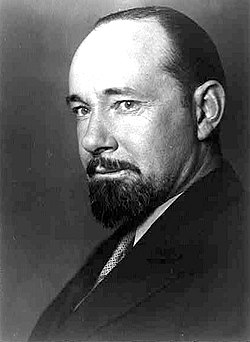
Sir George Hubert Wilkins MC & Bar (31 October 1888 – 30 November 1958), commonly referred to as Captain Wilkins, was an Australian polar explorer, ornithologist, pilot, soldier, geographer, and photographer. He was awarded the Military Cross after he assumed command of a group of American soldiers who had lost their officers during the Battle of the Hindenburg Line, and became the only official Australian photographer from any war to receive a combat medal. He narrowly failed in an attempt to be the first to cross under the North Pole in a submarine, but was able to prove that submarines were capable of operating beneath the polar ice cap, thereby paving the way for future successful missions. The US Navy later took his ashes to the North Pole aboard the submarine USS Skate on 17 March 1959.

Key Information

Early life and education

[edit]

Hubert Wilkins was born on 31 October 1888 at Mount Bryan East, South Australia, the last of 13 children in a family of pioneer settlers and sheep farmers.[1]

He was educated first in his home town,[2] and then at the Adelaide School of Mines.[3]

He moved to Adelaide as a teenager, finding work with a travelling cinema.[citation needed]

Career

[edit]

Wilkins moved to Sydney, where he worked as a cinematographer, before moving to England, where he became a pioneering aerial photographer while working for Gaumont Studios.[citation needed]

His photographic skill earned him a place on various Arctic expeditions, including the controversial 1913 Vilhjalmur Stefansson-led Canadian Arctic Expedition.[citation needed]

World War I

[edit]
Captain Wilkins, 1918

In 1917, Wilkins returned to his native Australia, joining the Australian Flying Corps in the rank of second lieutenant. Wilkins later transferred to the general list and in 1918 was appointed as an official war photographer. In June 1918 Wilkins was awarded the Military Cross for his efforts to rescue wounded soldiers during the Third Battle of Ypres. He remains the only Australian official photographer from any war to have received a combat medal. The following month Wilkins was promoted to captain and became officer commanding No.3 (Photographic) Sub-section of the Australian war records unit.[4][5]

Wilkins's work frequently led him into the thick of the fighting and during the Battle of the Hindenburg Line he assumed command of a group of American soldiers who had lost their officers in an earlier attack, directing them until support arrived. Wilkins was subsequently awarded a bar to his Military Cross in the 1919 Birthday Honours.[6]

When Australian WWI general Sir John Monash was asked by the visiting American journalist Lowell Thomas (who had written With Lawrence in Arabia and made T. E. Lawrence an international hero) if Australia had a similar hero, Monash spoke of Wilkins: "Yes, there was one. He was a highly accomplished and absolutely fearless combat photographer. What happened to him is a story of epic proportions. Wounded many times ... he always came through. At times he brought in the wounded, at other times he supplied vital intelligence of enemy activity he observed. At one point he even rallied troops as a combat officer ... His record was unique."[7]

After the war

[edit]
Detroit Arctic Expedition, 1926

After the war, Wilkins served in 1921–22 as an ornithologist aboard the Quest on the Shackleton–Rowett Expedition to the Southern Ocean and adjacent islands.[4]

Wilkins in 1923 began a two-year study for the British Museum of the bird life of Northern Australia. This ornithology project occupied his life until 1925.[3] His work was greatly acclaimed by the museum but derided by Australian authorities because of the sympathetic treatment afforded to Indigenous Australians and criticisms of the ongoing environmental damage in the country.[citation needed]

In March 1927, Wilkins and pilot Carl Ben Eielson explored the drift ice north of Alaska, touching down upon it in Eielson's airplane in the first land-plane descent onto drift ice. Soundings taken at the landing site indicated a water depth of 16,000 ft (4,900 m), and Wilkins hypothesised from the experience that future Arctic expeditions would take advantage of the wide expanses of open ice to use aircraft in exploration.[8] In December 1928, Wilkins and Eielson took off from Deception Island, one of Antarctic's most remote islands, and made the first successful airplane flight over the continent.[9]

On 15 April 1928, a year after Charles Lindbergh's flight across the Atlantic, Wilkins and Eielson began a trans-Arctic crossing from Point Barrow, Alaska, to Green Harbour, Spitsbergen, arriving after 21 hours of flight time and a 5-day layover on Deadman's Island (Likholmen) off of Spitsbergen's northeast coast.[10] For this feat and his prior work, Wilkins was knighted, and during the ensuing celebration in New York, he met an Australian actress, Suzanne Bennett, whom he later married.[4]

Now financed by William Randolph Hearst, Wilkins continued his polar explorations, flying over Antarctica in the San Francisco. He named the island of Hearst Land after his sponsor, and Hearst thanked Wilkins by giving him and his bride a flight aboard Graf Zeppelin.

Nautilus expedition

[edit]
Jean Jules Verne and Suzanne Wilkins in 1931

In 1930 Wilkins and his wife, Suzanne, were vacationing with a wealthy friend and colleague Lincoln Ellsworth. During this outing Wilkins and Ellsworth hammered out plans for a trans-Arctic expedition involving a submarine. Wilkins said the expedition was meant to conduct a "comprehensive meteorology study" and collect "data of academic and economic interest". He also anticipated Arctic weather stations and the potential to forecast Arctic weather "several years in advance". Wilkins believed a submarine could take a fully equipped laboratory into the Arctic.[11]

Ellsworth contributed $70,000, plus a $20,000 loan. Newspaper tycoon William Randolph Hearst purchased exclusive rights to the story for $61,000. The Woods Hole Oceanographic Institute contributed a further $35,000. Wilkins himself added $25,000 of his own money.[11] Since Wilkins was not a U.S. citizen, he was unable to purchase the 1918 submarine scheduled to be decommissioned, but he was permitted to lease the vessel for a period of five years at a cost of one dollar annually from Lake & Danenhower, Inc. The submarine was the disarmed O-12, and was commanded by Sloan Danenhower (former commanding officer of C-4.[12]) Wilkins renamed her Nautilus, after Jules Verne's 20,000 Leagues Under the Sea. The submarine was outfitted with a custom-designed drill that would allow her to bore through ice pack overhead for ventilation.[13] The crew of eighteen men was chosen with great care. Among their ranks were U.S. Naval Academy graduates as well as navy veterans of WWI.

Wilkins described the planned expedition in his 1931 book Under The North Pole, which Wonder Stories praised as "[as] exciting as it is epochal".[14]

The expedition suffered losses before they even left New York Harbor. Quartermaster Willard Grimmer was knocked overboard and drowned in the harbor.[15]

Wilkins was undaunted and drove on with preparations for a series of test cruises and dives before they were to undertake their trans-Arctic voyage.[16] Wilkins and his crew made their way up the Hudson River to Yonkers, eventually reaching New London, Connecticut, where additional modifications and test dives were performed. Satisfied with the performance of both the machinery and the crew, Wilkins and his men left the relative safety of coastal waterways for the uncertainty of the North Atlantic on 4 June 1931.

Soon after the commencement of the expedition the starboard engine broke down, and soon after that the port engine followed suit. On 14 June 1931 without a means of propulsion Wilkins was forced to send out an SOS and was rescued later that day by the USS Wyoming.[17] The Nautilus was towed to Ireland on 22 June 1931, and was taken to England for repairs.[citation needed]

On 28 June the Nautilus was up and running and on her way to Norway to pick up the scientific contingent of their crew. By 23 August they had left Norway and were only 600 miles from the North Pole. It was at this time that Wilkins uncovered another setback. His submarine was missing its diving planes. Without diving planes he would be unable to control the Nautilus while submerged.[citation needed]

Wilkins was determined to do what he could without the diving planes. For the most part Wilkins was thwarted from discovery under the ice floes.[17] The crew was able to take core samples of the ice, as well as testing the salinity of the water and gravity near the pole.[18]

Wilkins had to acknowledge that his adventure into the Arctic was becoming too foolhardy when he received a wireless plea from Hearst which said, "I most urgently beg of you to return promptly to safety and to defer any further adventure to a more favorable time, and with a better boat."[19]

Wilkins ended the first expedition to the poles in a submarine and headed for England, but was forced to take refuge in the port of Bergen, Norway, because of a fierce storm that they encountered en route. The Nautilus suffered serious damage that made further use of the vessel unfeasible. Wilkins received permission from the United States Navy to sink the vessel off shore in a Norwegian fjord on 20 November 1931.[20]

Despite the failure to meet his intended objective, he was able to prove that submarines were capable of operating beneath the polar ice cap, thereby paving the way for future successful missions.[citation needed]

Later life

[edit]

Wilkins became a student of The Urantia Book and supporter of the Urantia movement after joining the '70' group in Chicago in 1942. After the book's publication in 1955, he "carried the massive work on his long travels, even to the Antarctic" and told associates that it was his religion.[21]

On 16 March 1958, Wilkins appeared as a guest on the TV panel show What's My Line?[22]

Recognition

[edit]

Wilkins was the first recipient of the Samuel Finley Breese Morse Medal, which was awarded to him by the American Geographical Society in 1928.[23] He was also awarded the Royal Geographical Society's Patron's Medal the same year.[24]

Wilkins was elected to the American Philosophical Society in 1930.[25]

Death and legacy

[edit]

Wilkins died in Framingham, Massachusetts, on 30 November 1958. The US Navy later took his ashes to the North Pole aboard the submarine USS Skate on 17 March 1959. The Navy confirmed on 27 March that, "In a solemn memorial ceremony conducted by Skate shortly after surfacing, the ashes of Sir Hubert Wilkins were scattered at the North Pole in accordance with his last wishes."[26]

Collections and projects

[edit]

His wife Suzanne inherited the farm at Montrose, Pennsylvania, as well as her husband's collection of films, photographs, papers, and various other artefacts were stored indiscriminately in around in 200 boxes in a barn. There were no children of the marriage. Suzanne subsequently lived with a man called Winston Ross for over 30 years, who inherited the farm and contents upon her death in 1974. Ross married Marley Shofner, who had two sons to previous husbands, and the pair, who did not understand its value nor knew much about Australian history, began selling some of it to fund their lifestyle. In 1985, they sold a large batch to the Ohio State University in Columbus, Ohio, which was setting up a polar archive at the time. After the couple's deaths in the 1990s, Shofner's sons inherited the farm and what was left of Wilkins' collection. They sold the farm and the material moved elsewhere.[27]

Australian businessman and adventurer Dick Smith bought Wilkins' 1939 Chevrolet station wagon from Ross and Shofner and had it shipped to Australia. In 2024 he donated it to the National Motor Museum at Birdwood, South Australia, for public display.[27] The Wilkins family homestead at Mount Bryan East, in the Mid North, has also been restored thanks to the philanthropy of Smith.[27]

Ohio State University catalogued its large collection and made it available to researchers at their Byrd Polar and Climate Research Center, while other items from Wilkins' collections is scattered around other publicly accessible museums and archives around the world. Some remains privately owned.[27]

In 2015, a group of people in Adelaide established the Sir Hubert Wilkins Interest Group, which later transformed into the Wilkins Foundation. In 2023 the History Trust of South Australia took over the papers of the Wilkins Foundation and founded the Wilkins Project. A variety of specialists formed a committee with the aim of conserving the records and legacy of Wilkins, and educate others about his life.[27]

The Sir Hubert Wilkins Oration (aka the Wilkins Oration) is presented by the History Trust of South Australia in association with the Wilkins Project.[28] In 2023, Emma McEwin, great-granddaughter of geologist and polar explorer Douglas Mawson,[29] presented the lecture, "explor[ing] the personalities and backgrounds of both Hubert Wilkins and Douglas Mawson".[30][31] In 2025, Dr Richard Harris, patron of the Wilkins Project and known for his part in the 2018 Thai cave rescue of a group of stranded schoolboys, discussed "his mission to encourage young people to unlock their inner explorer".[28]

Places

[edit]

The Wilkins Sound,[32] Wilkins Coast,[32] the Wilkins Runway aerodrome,[33] and the Wilkins Ice Shelf[34] in Antarctica are named after him. The airport at Jamestown, South Australia,[35] and Sir Hubert Wilkins Road at Adelaide Airport[36] as well as the Wilkins Highway[37][38] in the mid-North of South Australia are also named in his memory.

Species

[edit]

A species of Australian skink, Lerista wilkinsi, is named after him,[39] as is a species of rock wallaby, Petrogale wilkinsi, first described in 2014.[40]

[edit]

Wilkins is briefly portrayed by actor John Dease in the 1946 film Smithy (1946).[41][42]

Works

[edit]
  • 1917 "Report on topographical and geographical work". Canadian Arctic Expedition. Ottawa: J. de Labroquerie Taché. 1917.
  • 1928 Flying the Arctic. Grosset & Dunlap. 1928.
  • 1928 Undiscovered Australia. Putnam. 1998. ISBN 9780859052450.
  • 1931 Under The North Pole. Brewer, Warren & Putnam. 1931.
  • 1942 with Harold M. Sherman: Thoughts Through Space, Creative Age Press. Republished as Thoughts Through Space: A Remarkable Adventure in the Realm of Mind. Hampton Roads Publishing Co. 2004. ISBN 1-57174-314-6.

See also

[edit]

References

[edit]

Further reading

[edit]
[edit]
Revisions and contributorsEdit on WikipediaRead on Wikipedia
from Grokipedia

Sir George Hubert Wilkins MC & Bar (31 October 1888 – 30 November 1958) was an Australian-born explorer, aviator, naturalist, , and military photographer who advanced polar research through innovative applications of and submersibles.
Born in rural as the thirteenth child of a sheep-farming family, Wilkins gained early experience in survival and photography during Vilhjalmur Stefansson's Canadian Arctic Expedition from 1913 to 1916, where he documented ethnographic and natural history observations. In , he served with the Royal Flying Corps and , earning the and Bar for work that involved parachuting behind enemy lines to photograph German installations.
Wilkins pioneered aerial exploration in the polar regions, achieving the first trans-Arctic flight from , to , in 1928, which earned him a knighthood that June. Later that year, he conducted the first powered flights over , surveying and mapping approximately 1,200 kilometers of the Graham Land coast despite initial skepticism about his land sightings, which subsequent expeditions confirmed as accurate depictions of the 's topography. In 1931, he commanded the submarine Nautilus in an attempt to reach the under the ice, a mechanical failure preventing success but validating the viability of submerged polar navigation for future operations. His expeditions, often self-financed or backed by private patrons, emphasized empirical data collection in , , and , influencing later international polar efforts despite occasional mapping errors later rectified by advanced surveys.

Early Life

Childhood and Family

George Hubert Wilkins was born on 31 October 1888 at the family farm, Netfield, in Mount Bryan East, , to parents Henry (Harry) and Louisa Wilkins. He was the youngest of 13 children in a pioneer sheep-farming family that had settled in the region amid challenging arid conditions. The Wilkins household endured frequent droughts and isolation typical of outback in the late , with no running water or , instilling early lessons in endurance and resourcefulness among the children. Wilkins received limited formal education, walking approximately 10 kilometers daily to a local school while contributing to farm labor from a young age, which honed his physical stamina and practical skills in handling and machinery. These experiences in the harsh environment fostered and an aptitude for mechanical tasks, as the family relied on manual ingenuity to maintain operations during environmental hardships like prolonged dry spells. Exposure to such climatic variability sparked his childhood interest in patterns and natural phenomena, supplemented by self-directed reading in adventure narratives and , though formal Methodist upbringing emphasized discipline over extensive academics. The large family dynamic, with Wilkins as the youngest amid older siblings, encouraged independence, as parental oversight was stretched thin by farm demands and Louisa's advanced age at his birth. This setting cultivated a restless curiosity beyond rural routines, evident in his early proficiency with tools and marksmanship developed through and survival practices common to the region's settlers.

Entry into Photography and Initial Expeditions

In his youth, Wilkins pursued studies in at the South Australian School of Mines and Industries while developing skills in and through practical application and formal coursework in . By 1908, at age 19, he relocated to Britain, securing employment as a with the Gaumont Company in and as a reporter for the Daily Chronicle, marking his professional entry into visual documentation amid emerging film technologies. Wilkins' initial fieldwork honed his technical expertise in challenging environments, beginning with coverage of the in 1912–1913, where he filmed combat operations in and surrounding regions for Gaumont, capturing empirical footage of military maneuvers and civilian impacts without embellishment. This experience transitioned him from studio work to expeditionary roles, emphasizing portable equipment adaptation for motion pictures in austere conditions. In May 1913, Wilkins joined Vilhjalmur Stefansson's Canadian Arctic Expedition (1913–1916) as official photographer and cinematographer, tasked with documenting uncharted regions aboard the flagship Karluk. When Karluk became beset by ice in September 1913 and sank on January 11, 1914, Wilkins endured months of privation on drifting pack ice, including rationing of limited supplies and exposure to subzero temperatures, before leading a survival party across 200 miles of treacherous ice to . His resourcefulness in constructing sleds from salvaged materials and navigating without formal guides preserved key photographic records, though expedition critics, including survivors, faulted Stefansson's prior departure for exacerbating crew hardships and logistical failures. During these ordeals, Wilkins acquired proficiency in harsh terrains by methodically recording ethnographic details of Indigenous Copper Inuit groups encountered en route, prioritizing verifiable observations of their techniques, constructions, and social structures over interpretive narratives, yielding over 2,000 photographic plates that informed subsequent anthropological analyses. This fieldwork solidified his reputation for technical reliability, distinguishing his output through direct evidence capture rather than stylized depictions prevalent in contemporary expedition accounts.

Military Service

World War I Contributions

Wilkins enlisted in the Australian Imperial Force in mid-1917, initially attached to the War Records Section under official photographer James Francis Hurley, and was commissioned as a second lieutenant in the Australian Flying Corps, where he served primarily as an observer-photographer on the Western Front. Arriving in France in late December 1917, he documented Australian forces during the Third Battle of Ypres (Passchendaele), capturing graphic battlefield conditions amid ongoing artillery barrages and mud-choked advances. His transfer to the Flying Corps enabled aerial reconnaissance duties, leveraging pre-war photography experience to produce images that mapped enemy trench systems, battery positions, and troop movements, directly informing Allied artillery corrections and infantry maneuvers. These efforts exposed him to intense anti-aircraft fire during low-level flights, prioritizing detailed intelligence over safety. In June 1918, Wilkins was awarded the for repeatedly entering no-man's-land under machine-gun and shell fire to rescue wounded Australian soldiers near , demonstrating personal initiative beyond his photographic remit. Promoted to captain that July upon Hurley's departure, he assumed greater operational responsibilities, continuing aerial sorties that yielded photographic evidence of German defensive preparations during the Allied . The tactical utility of his work lay in its precision: aerial plates revealed concealed gun emplacements and supply routes, enabling targeted that disrupted enemy logistics, as corroborated by contemporaneous military records of impacts on the Western Front. During the Battle of the in September 1918, Wilkins earned a bar to his by assuming command of a disoriented of American troops whose officers had been killed, reorganizing them under fire and directing a coordinated assault that breached fortified positions, contributing to the broader breakthrough. His combined ground and air photography amassed a verifiable of over 3,000 images, many processed on-site for immediate tactical dissemination, underscoring the causal link between visual intelligence and operational success in fluid frontline conditions. These contributions, while not always highlighted in official narratives favoring , provided empirical data that enhanced causal decision-making amid , with Wilkins sustaining multiple wounds yet maintaining sortie output until the .

Aerial and Photographic Innovations

During , George Hubert Wilkins pioneered the application of for combat reconnaissance, conducting flights to capture images from aircraft amid active battlefield conditions. Serving initially as an official Australian Imperial Force photographer from 1917 and later as captain heading Photographic Sub-section of the Australian War Records unit from July 1918, he documented key engagements including the , often exposing himself to enemy artillery and machine-gun fire. His work represented one of the earliest documented uses of aerial still and motion-picture photography in combat, advancing the shift from ground-level documentation to overhead intelligence gathering that revealed troop movements and fortifications otherwise concealed by trenches and terrain. Wilkins' techniques emphasized oblique-angle shots taken with portable cameras during low-level flights, enabling more immediate tactical assessments than the vertical, fixed-camera methods emerging later in the war; these provided Allied commanders with dynamic views of enemy lines, contributing to refined air observation protocols. He personally tested equipment in hazardous conditions, sustaining multiple wounds—reportedly nine in total—being gassed, and surviving being "blasted out of the skies" during reconnaissance missions, which yielded critical data on image quality degradation from vibration, moisture, and combat stress. These innovations, born of wartime exigency, enhanced the reliability of photographic intelligence over prior static or balloon-based surveys, influencing subsequent Allied doctrines for integrating photography into aerial operations. In his leadership role, Wilkins oversaw the processing and distribution of reconnaissance imagery, fostering procedural improvements in film handling and interpretation that supported real-time decision-making on the Western Front. His efforts underscored the causal link between adaptable photographic tools and operational effectiveness, prioritizing empirical validation through repeated exposure to frontline variables rather than theoretical designs.

Polar Exploration Career

Antarctic Expeditions

Wilkins first participated in Antarctic exploration as second-in-command of the British Graham Land Expedition (1920–1921), a small-scale venture led by John Lachlan Cope that aimed to overwinter and conduct sledge journeys along the . The team of four—comprising Cope, Wilkins, Thomas Wyatt Bagshawe, and Maxime Charles —established a base at Paradise Harbour in Duse Bay after being transported by Norwegian whalers, marking the smallest British overwintering party in to that point. Logistical challenges included delaying depot-laying and limited supplies, with Wilkins contributing photographic documentation and supporting limited sledge traverses to map coastal features amid ice barriers. Internal disputes and funding shortages prompted Wilkins and Cope to depart early for , leaving Bagshawe and to complete a second winter. In 1921–1922, Wilkins joined Sir Ernest Shackleton's Shackleton-Rowett Expedition aboard the Quest, serving as naturalist and photographer during what became Shackleton's final voyage. Originally planned for and sub- surveys, the expedition faced abrupt redirection after Shackleton's on January 5, 1922, near , with assuming command. The Quest conducted oceanographic and biological observations en route, including brief landings at and the , but logistical constraints from Shackleton's passing precluded deeper penetration or extensive sledge work, shifting focus to peripheral scientific collections. Wilkins documented and ice conditions, aiding preliminary mapping efforts despite the truncated scope. Wilkins led the Wilkins-Hearst Antarctic Expedition (1928–1929), financed by , which pioneered powered flight for Antarctic survey from a base at . Using the single-engine Fokker Universal aircraft San Francisco, Wilkins and pilot completed multiple flights totaling over 1,200 miles (1,900 km), photographing and mapping previously uncharted sections of and confirming its status as a rather than an through discovery of channels like Stefansson Strait and features such as the Lockheed Mountains. These efforts resolved longstanding cartographic ambiguities in , sketching more new coastlines than prior ground-based expeditions, though harsh weather, mechanical issues, and fuel limitations restricted flights to short durations and forced emergency landings on ice. In 1939, Wilkins supported Lincoln Ellsworth's expedition with flights originating from bases near , conducting exploratory overflights and landings on East ice shelves aboard the . Targeting regions like Prydz Bay, the missions identified ice-free coastal areas and inland nunataks, but imprecise navigation and limited instrumentation led to misreported landing coordinates at the time. Archival reanalysis in 2025, integrating Wilkins' logs with modern geospatial data, geo-verified two key sites in Ingrid Christensen Coast as the first Australian-documented landings there, resolving an 86-year puzzle and affirming their role in early claims to . Logistical hurdles included volatile pack ice and aircraft range constraints, underscoring the era's reliance on visual over precise instrumentation.

Arctic Expeditions

Wilkins joined Vilhjalmur Stefansson's Canadian Expedition in 1913 as official photographer and second-in-command of the southern party, conducting overland surveys across the region and . From 1913 to 1916, he led dog-sled teams on traverses exceeding 2,000 miles, mapping uncharted coastlines, documenting ethnographic data among communities, and collecting geological samples that validated earlier reports of navigable leads during summer months. These empirical observations, derived from direct ground , contradicted some prevailing theories of perpetual ice barriers, providing foundational data for future maritime routes in the western . In preparation for trans-Arctic , Wilkins organized expeditions from 1926 to 1928, including a failed 1926 attempt from due to engine failure after 500 miles. On April 15–16, 1928, he and pilot completed the first aerial crossing north of 80°N latitude, flying a approximately 2,100 miles from , , to , , in 20 hours with one due to weather. En route, they gathered meteorological readings indicating variable wind patterns and photographed ice formations, demonstrating 's potential for polar by revealing drift ice over vast open-water polynyas. This flight's mappings and aerial surveys directly informed rescue strategies for subsequent operations, such as the May 1928 Italia airship crash, by identifying potential landing sites and ice pack dynamics that facilitated supply drops and search patterns. Wilkins' data collection emphasized causal factors like seasonal currents influencing ice movement, challenging assumptions of static polar barriers and underscoring aviation's role in empirical validation of Arctic topography.

Submarine Pioneering Efforts

In 1930, Sir Hubert Wilkins acquired the decommissioned U.S. Navy O-12 (SS-73), a vessel built in 1916–1917, leasing it from the U.S. Shipping Board for one dollar per year and renaming it after Jules Verne's fictional craft. The underwent extensive refit at the Navy Yard and Mathis Shipyard in , at a cost of approximately $200,000, including reinforcements to the bow for ice ramming, installation of ice drills, a telescopic , and additional scientific apparatus for oceanographic and meteorological observations. Departing New York on June 4, 1931, bound for via , the expedition aimed to demonstrate the feasibility of under-ice transit across the to the via the , while gathering empirical data on ice conditions, acoustics, and subaqueous topography to support future polar research and naval applications. The Nautilus encountered early mechanical setbacks, with the starboard engine failing on June 13, 1931, and the port motor soon after, limiting propulsion to auxiliary means during the transatlantic crossing. Reaching the pack ice edge on August 19, 1931, the crew conducted surface operations before attempting submersion on August 31 under approximately 3 feet of ice, advancing partially submerged using periscope navigation and ballast control to traverse ice leads and floes. Progress continued to 82°15′ N latitude, the farthest north achieved by any submarine at that time, validating crew endurance in confined conditions and the potential for submarines in under-ice operations for research stations or resupply. However, on August 22, critical rudder and stern plane failures—later confirmed as intentional sabotage, possibly by crew members lacking confidence in the mission—prevented full dives and forced abandonment of the polar transit goal. Despite these limitations, the voyage yielded valuable empirical findings, including measurements of thickness averaging 3 feet, acoustic profiles of the -water interface, from eight stations, and detections of three submerged mountain ranges rising 500–600 fathoms from the seafloor, alongside water and samples from depths up to 2,000 fathoms. These observations demonstrated submarines' utility for polar acoustics and , informing subsequent naval engineering priorities such as enhanced propulsion reliability and inertial navigation systems, though the expedition did not achieve a complete under- pole crossing. The Nautilus was ultimately scuttled in a Norwegian fjord on November 20, 1931, after irreparable hull damage from contact.

Intermediary Ventures

Filmmaking and Public Engagements

Wilkins leveraged his experience as a to produce motion pictures documenting his polar expeditions, capturing flights and ice navigation challenges for educational purposes. These films, including footage from the 1928 Arctic flight and the 1928-1929 Antarctic expedition, provided unprecedented visual evidence of polar conditions, which he screened during public appearances to convey empirical observations rather than embellished narratives. Following major expeditions, Wilkins embarked on lecture tours across the and , delivering illustrated talks on and and efforts to audiences in major cities. These engagements, often promoted with custom posters highlighting and polar travel, emphasized verifiable from his logs and photographs while generating funds for future ventures through ticket sales and sponsorships. For instance, post-1928 flights, he broadcast lectures such as "Adventures in " to promote grounded scientific insights into ice drift and aerial mapping. Complementing his visual media, Wilkins published detailed accounts like Flying the Arctic in 1928, chronicling the technical aspects of his trans- flights with maps and flight data, and Under the in 1931, outlining the expedition's engineering logs and oceanographic findings. These works served as extensions of his public outreach, prioritizing precise expedition records over dramatic retellings to advance public comprehension of polar realities.

Resource Prospecting and Commercial Activities

Wilkins leveraged his polar expedition experience to promote commercial applications of and technology for transpolar transport routes. His April 1928 flight with pilot from , , to —covering approximately 2,200 miles (3,550 km) in 20.5 hours—demonstrated the feasibility of crossing the by air, shortening potential commercial paths between , , and . This achievement informed early discussions on polar , applying flight data to assess viability for cargo and passenger services over ice-covered regions. Following the 1931 Nautilus submarine expedition, Wilkins advocated for under-ice submarine fleets to enable direct shipping lanes beneath the pack ice, connecting American and Asian markets via the shortest great-circle routes. These proposals extended exploratory mapping into economic strategy, emphasizing reduced transit times and for bulk commodities, though practical implementation awaited post-World War II advancements. His advisory insights drew on firsthand geophysical observations, positioning polar routes as commercially attractive despite navigational challenges. Trained in at the Adelaide School of Mines, Wilkins pursued resource-related ventures, including stockholder involvement with the Jack Waite Mining Company, likely tied to Alaskan or northern prospects accessed via expedition networks. In 1930, he delivered broadcasts for the , potentially linking polar logistics to interests in remote areas. These activities reflected pragmatic extensions of fieldwork into claims assessment, though yields remained modest. Wilkins financed many ventures through personal initiative, supplementing institutional grants with proceeds from lectures, publications, and private solicitations rather than heavy reliance on or corporate . This approach underscored his self-reliant funding model, enabling independent operations amid funding shortfalls for larger projects like the aborted 1926 effort.

Later Years

World War II Involvement Attempts

At the outbreak of in , Sir George Hubert Wilkins, aged 50, offered his services to the British and Australian governments, seeking to leverage his polar expertise for active military contributions in and operations. These proposals were rejected primarily due to his age, which exceeded typical eligibility thresholds for frontline duties. Turning to the United States, Wilkins similarly encountered age-related barriers to operational roles, prompting a pivot to advisory functions where his specialized knowledge proved invaluable. From , he consulted for the U.S. Army Quartermaster Corps as a and climatologist, developing cold-weather rations, clothing, and equipment tailored for conditions, drawing directly from his experiences with sub-zero and the 1931 Nautilus submarine expedition under polar ice. Based in , Wilkins frequently advised U.S. military leaders on challenges, including navigational and defensive strategies in ice-covered regions amid the war's demands for secure northern supply routes. This consultative work, though falling short of the direct involvement he pursued, highlighted the enduring relevance of his pre-war submarine and aerial polar ventures to wartime polar operations.

Post-War Advocacy and Scientific Pursuits

Following , Wilkins consulted for the U.S. Weather Bureau and the Arctic Institute of North America, leveraging his polar field experience to advise on meteorological forecasting, cold-weather equipment, and survival techniques. He advocated establishing a global meteorological organization to coordinate polar observations with worldwide data, enabling more precise predictions for in and industry. Wilkins promoted conservation of Arctic ecosystems through lectures and writings informed by his expeditions, stressing sustainable resource extraction to prevent depletion observed in remote fauna and habitats. He argued that integrated polar climate data could guide resource managers toward balanced utilization, avoiding the overexploitation that undermined long-term viability in northern environments. Drawing on ethnographic records from living among during early ventures, Wilkins championed in polar territories, contending their traditional practices demonstrated effective adaptation and moral frameworks superior to industrialized societies' conflict-prone approaches. In , Wilkins referenced historical expedition logs to illustrate fluctuations driven by natural factors, prioritizing verifiable field measurements for forecasting over untested assumptions, thereby supporting pragmatic rather than speculative environmental strategies.

Controversies

Expedition Leadership Disputes

During the Canadian Arctic Expedition of 1913–1918, led by , significant leadership controversies arose following the loss of the Karluk in January 1914. The Karluk, an aging former vessel not reinforced for heavy , became trapped shortly after departure from , on July 27, 1913, due to inadequate preparation for Arctic pack conditions. Stefansson's decision on September 19, 1913, to detach a small hunting party—including himself, ethnographer Diamond Jenness, photographer George Hubert Wilkins, and others—to pursue caribou on while the ship remained beset, separated this group from the main complement of 25 personnel under Captain Robert Bartlett. This move, justified as necessary for provisioning amid low food stocks, prioritized exploratory aims over consolidated shipboard security, contributing to the vessel's unchecked drift westward into crushing floes. The Karluk's sinking off left survivors facing acute shortages, exacerbated by Stefansson's delayed awareness of the disaster and subsequent relief efforts; organized rescue did not reach the island until September 1914, by which time 11 of the 33 expedition members had perished from , exposure, and related hardships. Critiques centered on Stefansson's supply allocation—favoring his detached party's mobility with limited sleds and rifles—and his post-separation focus on independent northern explorations rather than immediate aid coordination, actions that contrasted with Bartlett's disciplined management of the stranded group. Causal analysis points to the ship's inherent unseaworthiness as a primary factor, selected despite warnings from naval experts, rather than solely weather or ice dynamics; Stefansson defended the choice by emphasizing cost constraints and adaptability, but empirical outcomes revealed vulnerabilities in vessel integrity and contingency planning. Wilkins, serving as official photographer and second officer in Stefansson's party, survived through pragmatic tactics honed during the winter encampment at Cape Kellett on , including reliance on Inuit-guided of seals and caribou, consumption of raw meats to preserve , and fabrication of insulated from animal skins. These methods enabled the group's reunion with Stefansson in spring and subsequent sledge journeys totaling over 3,000 miles, yielding ethnographic and cartographic data without fatalities in their subgroup. This localized success underscored contrasts with the Karluk party's higher mortality, attributable not to blame among individuals but to differential access to mobile grounds and preemptive detachment from the immobilized vessel; Wilkins' later mapping efforts in the region demonstrated application of these principles, though broader expedition accountability remained tied to upstream decisions on and dispersal.

Nautilus Claim Scrutiny

The expedition of 1931, commanded by Sir Hubert Wilkins, sought to demonstrate the feasibility of submarine navigation under the Arctic pack ice from toward the , approximately 600 nautical miles distant, while conducting oceanographic and geophysical observations. Contemporary accounts and Wilkins' dispatches initially portrayed the venture as achieving substantial under-ice progress, with claims of traveling "near the pole" and validating the route's openness via leads in the ice. These assertions, amplified in promotional materials, implied a near-successful polar transit despite the submarine's non-nuclear diesel-electric limitations. Propulsion failures curtailed the submerged operations decisively. En route across the Atlantic, the starboard engine's cylinder cracked on June 13, 1931, halving reliable power output and forcing reliance on a single thereafter. Beneath the starting August 1, intermittent dives yielded only short durations—typically hours at most—due to recurring mechanical breakdowns, including oil leaks, battery inefficiencies in cold conditions, and unconfirmed such as the discovery of missing diving rudders upon resurfacing. The verifiable submerged distance under continuous ice did not exceed a few dozen miles cumulatively, with the northernmost point attained at 82°15' N latitude on August 7, over 450 miles south of the pole; no sustained transpolar effort materialized. The absence of photographic, bathymetric, or surfacing evidence confirming polar proximity fueled , as the expedition's logs and instruments documented only edge-of-pack submersion rather than deep-ice penetration. Naval analysts at the time noted that while Wilkins proved submarines could navigate beneath thin pack and polynyas, the claims overstated viability for full basin traversal without advanced powerplants, rendering the pole-reaching objective unmet. Subsequent U.S. evaluations, informed by Wilkins' data, acknowledged the attempt's role in highlighting ice leads but classified it as a technical failure against its ambitiously stated goals. Retrospective assessments affirm partial validation: the Nautilus's successful short under-ice runs, despite diesel constraints, prefigured triumphs, such as USS Nautilus (SSN-571)'s 1,830-mile under-ice voyage to the pole in August 1958 and USS Skate's surfacing there in 1959. Yet, the 1931 effort's empirical outcomes—limited to proving tactical submersion under marginal ice—underscore a disconnect between promotional narratives and data, positioning it as an audacious but incomplete precursor rather than a fulfilled polar conquest.

Death

Wilkins suffered a fatal on November 30, 1958, at his home in , where he had been residing and working as a on polar matters for the U.S. Research and Development Division. He was discovered unconscious after washing his automobile earlier that day, with the attributing the death to a heart attack at age 70. Following cremation, Wilkins's ashes were transported to the by the U.S. Navy submarine USS Skate during Operation Sunshine in 1959, where they were committed to the ice in a honoring his lifelong explorations. This fulfillment of his expressed wish underscored the international regard for his contributions to polar and .

Recognition and Enduring Impact

Awards and Official Honors

Wilkins was knighted by King George V in the 1928 for his pioneering trans-Arctic flight from , , to , , completed in April 1928. In the same year, the Royal Geographical Society awarded him its Patron's Medal in recognition of his aerial explorations advancing geographical knowledge of polar regions. The American Geographical Society granted him the inaugural Samuel Finley Breese Morse Medal in 1928 for innovatively employing aviation in geographical research, marking the first such award. Prior to these distinctions, Wilkins had been elected a Fellow of the Royal Geographical Society in 1923, acknowledging his early contributions to polar and surveying during Shackleton's Quest Expedition (1921–1922). He also became a Fellow of the Royal Meteorological Society that year, reflecting his observations on polar weather patterns. These fellowships underscored his emerging reputation in scientific circles for empirical data collection in extreme environments.

Geographical and Scientific Legacies

Several geographical features in are named in honor of Wilkins' exploratory achievements, including Wilkins Island, Wilkins Sound, the Wilkins Ice Shelf, and Wilkins Aerodrome near . The Wilkins Coast and Wilkins Mountains along the Ingrid Christensen Coast further commemorate his 1928–1929 aerial surveys and 1939 landings in Prydz Bay. These namings, formalized by international bodies such as the Antarctic Treaty consultative meetings, reflect the foundational role of his observations in delineating previously unmapped coastal regions. Wilkins' expeditions yielded extensive photographic archives, film footage, and annotated maps that continue to underpin modern geospatial analysis in polar regions. For instance, materials from his Wilkins-Hearst Antarctic Expedition (1928–1929) provided bathymetric and coastal data integrated into early cartography. In 2025, researchers resolved the precise locations of Wilkins' 1939 landing sites on the Ingrid Christensen Coast by cross-referencing his original photographs, expedition logs, and rare film with contemporary GIS overlays and , confirming his status as the first Australian to access those mainland and island points in . This validation highlights the archival durability of his visual records, enabling precise historical and topographical reconstructions amid glacial changes. Wilkins' demonstrations of polar aviation and submersible navigation established operational precedents for subsequent doctrines in extreme environments. His 1928–1929 flights over Graham Land proved the viability of fixed-wing aircraft for Antarctic reconnaissance, informing tactics for aerial mapping and supply in ice-bound operations. Similarly, the 1931 Nautilus submarine voyage under Arctic pack ice—despite navigational setbacks—verified the structural integrity of submerged vessels in polar conditions, directly influencing mid-20th-century advancements like the USS Nautilus's 1958 North Pole transit and broader submarine protocols for under-ice transit and sensor deployment. These proofs of concept shifted reliance from surface travel to aerial and subsurface methods, enhancing logistical efficiency in polar scientific and military endeavors.

Modern Re-evaluations and Cultural References

In recent decades, scholars have re-examined Wilkins' explorations, resolving long-standing ambiguities in his 1939 landings along the Ingrid Christensen Coast. A 2025 study published in Polar Record utilized historical maps, aerial imagery, and fieldwork to pinpoint two previously misidentified sites where Wilkins became the first Australian to set foot on the mainland and nearby islands, affirming the accuracy of his navigational records despite navigational errors attributed to instrument limitations and ice conditions. This reappraisal underscores Wilkins' empirical approach to polar geography, countering earlier dismissals of his claims as imprecise by demonstrating causal factors like deviations in high latitudes. Biographies such as Simon Nasht's The Last Explorer (2005) portray Wilkins as an underrecognized innovator whose use of aircraft and submarines in polar regions pioneered technological integration, even amid mechanical failures like the 1931 expedition's entrapment in ice due to hull weaknesses rather than navigational incompetence. Nasht attributes Wilkins' relative obscurity in to a cultural preference for more dramatic narratives over methodical achievements, while emphasizing his contributions to aerial surveying that mapped thousands of kilometers of uncharted territory. Wilkins has gained retrospective acknowledgment as an early advocate for ecological preservation, rooted in his observations of Australian landscapes and Indigenous practices during his youth. Academic analyses highlight his writings on disruption and decline, predating formal conservation movements, as evidence of proto-environmental realism drawn from direct fieldwork rather than ideological agendas. Cultural depictions in modern media, including the 2022 documentary The Eye of Wilkins showcased at the Fringe, focus on his cinematographic legacy, using restored footage to illustrate the technical challenges of polar filming and their role in publicizing realities. Similarly, the 2024 production Frozen North: Sir Hubert's Forgotten Submarine Expedition employs historical reenactments and archival material to dissect the Nautilus venture's engineering shortcomings, prioritizing mechanical causality over heroic myth-making.

References

Add your contribution
Related Hubs
User Avatar
No comments yet.