Hubbry Logo
LundyLundyMain
Open search
Lundy
Community hub
Lundy
logo
8 pages, 0 posts
0 subscribers
Be the first to start a discussion here.
Contribute something
Lundy
Lundy
from Wikipedia

Lundy is an English island in the Bristol Channel. It forms part of the district of Torridge in the county of Devon.

Key Information

About 3 miles (5 kilometres) long and 58 mi (1 km) wide, Lundy has had a long and turbulent history, frequently changing hands between the British crown and various usurpers. In the 1920s, the island's owner, Martin Harman, tried to issue his own coinage and was fined. In 1941, two German Heinkel He 111 bombers crash landed on the island, and their crews were captured.

In 1969, Lundy was purchased by British millionaire Jack Hayward, who donated it to the National Trust. It is now managed by the Landmark Trust, a conservation charity that derives its income from day trips and holiday lettings, most visitors arriving by boat from Bideford or Ilfracombe. A local tourist curiosity is the special "Puffin" postage stamp, a category known by philatelists as "local carriage labels", a collector's item.

As a steep, rocky island, often shrouded by fog, Lundy has been the scene of many shipwrecks, and the remains of its old lighthouse installations are of both historic and scientific interest. Its present-day lighthouses, one of which is solar-powered, are fully automated. Lundy has a rich bird life, as it lies on major migration routes, and attracts many vagrant as well as indigenous species. It also boasts a variety of marine habitats, with rare seaweeds, sponges and corals. In 2010, the island became Britain's first Marine Conservation Zone.

Profile

[edit]
Lundy's jetty and harbour

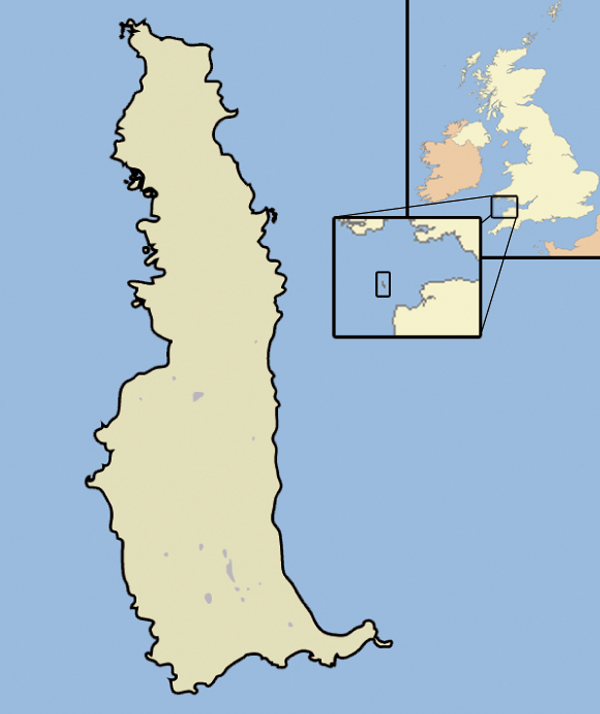
Lundy is the largest island in the Bristol Channel. It lies 10 nautical miles (19 km) off the coast of Devon, about a third of the distance across the channel from Devon to Pembrokeshire in Wales.[3] Lundy gives its name to a British sea area.[4] Lundy is included in the district of Torridge in Devon. In 2007, it had a resident population of 28 people. These include a warden, a ranger, an island manager, a farmer, bar and housekeeping staff, and volunteers. Most live in and around the village at the south of the island. Visitors include day-trippers and holiday makers staying overnight in rental properties or camping.[5]

In a 2005 opinion poll of Radio Times readers, Lundy was named as Britain's tenth greatest natural wonder.[6] The island has been designated a Site of Special Scientific Interest[7] and it was England's first statutory Marine Nature reserve, and the first Marine Conservation Zone,[8] because of its unique flora and fauna.[9] It is managed by the Landmark Trust on behalf of the National Trust.[10]

Etymology

[edit]
Map by Henry Mangles Denham (1832)

The place-name Lundy is first attested in 1189 in the Records of the Templars in England, where it appears as [Insula de] Lundeia. It appears in the Charter Rolls as Lundeia again in 1199, and as Lunday in 1281. The name is Scandinavian and means 'puffin island', from the Old Norse lundi meaning 'puffin' (compare the three Lundey islands in Iceland); it appears in the 12th-century Orkneyinga saga as Lundey.[11]

Lundy is known in Welsh as Ynys Wair, 'Gwair's Island', in reference to an alternative name for the wizard Gwydion.[12][13]

History

[edit]

Lundy has evidence of visitation or occupation from the Mesolithic period onward, with Neolithic flintwork, Bronze Age burial mounds, four inscribed gravestones from the early medieval period,[14][15] and an early medieval monastery (possibly dedicated to St Elen or St Helen).

Beacon Hill Cemetery

[edit]
Sketch of Beacon Hill Cemetery

Beacon Hill Cemetery was excavated by Charles Thomas in 1969.[16] The cemetery contains four inscribed stones, dated to the 5th or 6th century AD.[17] The site was originally enclosed by a curvilinear bank and ditch, which is still visible in the southwest corner, however, the other walls were moved when the Old Light was constructed in 1819.[18] Celtic Christian enclosures of this type were common in Western Britain and are known as Llans in Welsh and Lanns in Cornish. There are surviving examples in Luxulyan, in Cornwall; Mathry, Meidrim and Clydau in the south of Wales; and Stowford, Jacobstowe, Lydford and Instow, in Devon.[citation needed]

Thomas proposed the following sequence of site usage:[19]

  1. An area of round huts and fields. These huts may have fallen into disuse before the construction of the cemetery.
  2. The construction of the focal grave, an 11 by 8 ft (3.4 by 2.4 m) rectangular stone enclosure containing a single cist grave. The interior of the enclosure was filled with small granite pieces. Two more cist graves located to the west of the enclosure may also date from this time.
  3. Perhaps 100 years later, the focal grave was opened and the infill removed. The body may have been moved to a church at this time.
  4. Two further stages of cist grave construction around the focal grave.

Twenty-three cist graves were found during this excavation. Considering that the excavation only uncovered a small area of the cemetery, there may be as many as 100 graves.

Inscribed stones

[edit]
Inscribed stones

Four Celtic inscribed stones have been found in Beacon Hill Cemetery:

  • 1400 OPTIMI,[16] or TIMI;[20] the name (or perhaps epithet) Optimus is Latin and male. Discovered in 1962 by D. B. Hague.[21]
  • 1401 RESTEVTAE,[16] or RESGEVT[A],[20] Latin, female i.e. Resteuta or Resgeuta. Discovered in 1962 by D. B. Hague.[21]
  • 1402 POTIT[I],[16] or [PO]TIT,[20] Latin, male. Discovered in 1961 by K. S. Gardener and A. Langham.[21]
  • 1403 --]IGERNI [FIL]I TIGERNI,[16] or—I]GERNI [FILI] [T]I[G]ERNI,[20] Brittonic, male i.e. Tigernus son of Tigernus. Discovered in 1905.[21]

Knights Templar

[edit]

Lundy was granted to the Knights Templar by Henry II in 1160. The Templars were a major international maritime force at this time, with interests in North Devon, and almost certainly an important port at Bideford or on the River Taw in Barnstaple. This was probably because of the increasing threat posed by the Norse sea raiders; however, it is unclear whether they ever took possession of the island. Ownership was disputed by the Marisco family who may have already been on the island during King Stephen's reign. The Mariscos were fined, and the island was cut off from necessary supplies.[22] Evidence of the Templars' weak hold on the island came when King John, on his accession in 1199, confirmed the earlier grant.[23]

Marisco family

[edit]
Marisco Castle
A lidar view of Marisco Castle and associated features

In 1235, William de Marisco was implicated in the murder of Henry Clement, a messenger of Henry III.[24] Three years later, an attempt was made to kill Henry III by a man who later confessed to being an agent of the Marisco family. William de Marisco fled to Lundy where he lived as a virtual king. He built a stronghold in the area now known as Bulls' Paradise with walls 9 feet (3 metres) thick.[23]

In 1242, Henry III sent troops to the island. They scaled the island's cliff and captured William de Marisco and 16 of his "subjects". Henry III built the castle (sometimes referred to as the Marisco Castle) in an attempt to establish the rule of law on the island and its surrounding waters.[25] In 1275, the island is recorded as being in the Lordship of King Edward I[26] but by 1322 it was in the possession of Thomas, 2nd Earl of Lancaster and was among the large number of lands seized by Edward II following Lancaster's execution for rebelling against the King.[27] At some point in the 13th century the monks of the Cistercian order at Cleeve Abbey in Somerset held the rectory of the island.[28]

Piracy

[edit]

Over the next few centuries, the island was hard to govern. Trouble followed as both English and foreign pirates and privateers – including other members of the Marisco family – took control of the island for short periods. Ships were forced to navigate close to Lundy because of the dangerous shingle banks in the fast flowing River Severn and Bristol Channel, with its tidal range of 27 feet (8.2 metres),[29][30] one of the greatest in the world.[31][32] This made the island a profitable location from which to prey on passing Bristol-bound merchant ships bringing back valuable goods from overseas.[33]

In 1627, a group known as the Salé Rovers, from the Republic of Salé (now Salé in Morocco) occupied Lundy for five years. These Barbary pirates, under the command of a Dutch renegade named Jan Janszoon, flew a Moorish flag over the island. Slaving raids were made embarking from Lundy by the Barbary Pirates, and captured Europeans were held on Lundy before being sent to Salé and Algiers to be sold as slaves as part of the Barbary coast slave trade.[34][35][36][37]

From 1628 to 1634, in addition to the Barbary Pirates, the island was plagued by privateers of French, Basque, English and Spanish origin targeting the lucrative shipping routes passing through the Bristol Channel. These incursions were eventually ended by John Penington, but in the 1660s and as late as the 1700s the island still fell prey to French privateers.[38]

Civil war

[edit]

In the English Civil War, Thomas Bushell held Lundy for King Charles I, rebuilding Marisco Castle and garrisoning the island at his own expense. He was a friend of Francis Bacon, a strong supporter of the Royalist cause and an expert on mining and coining. It was the last Royalist territory held between the first and second civil wars. After receiving permission from Charles I, Bushell surrendered the island on 24 February 1647 to Richard Fiennes, representing General Fairfax.[39] In 1656, the island was acquired by Lord Saye and Sele.[40]

Millcombe House
Interior of St. Helen's Church, prior to the east window's restoration in 2018
Exterior of St. Helen's Church, taken prior to the 2018 renovations
Government House, built in 1982

18th and 19th centuries

[edit]

The late 18th and early 19th centuries were years of lawlessness on Lundy, particularly during the ownership of Thomas Benson (1708–1772), a Member of Parliament for Barnstaple in 1747 and Sheriff of Devon, who notoriously used the island for housing convicts whom he was supposed to be deporting. Benson leased Lundy from its owner, John Leveson-Gower, 1st Earl Gower (1694–1754) (who was an heir of the Grenville family of Bideford and of Stowe, Kilkhampton in Cornwall), at a rent of £60 per annum and contracted with the Government to transport a shipload of convicts to Virginia, but diverted the ship to Lundy to use the convicts as his personal slaves. Later Benson was involved in an insurance swindle. He purchased and insured the ship Nightingale and loaded it with a valuable cargo of pewter and linen. Having cleared the port on the mainland, the ship put into Lundy, where the cargo was removed and stored in a cave built by the convicts, before setting sail again. Some days afterwards, when a homeward-bound vessel was sighted, the Nightingale was set on fire and scuttled. The crew were taken off the stricken ship by the other ship, which landed them safely at Clovelly.[41]

Sir Vere Hunt, 1st Baronet of Curragh, a rather eccentric Irish politician and landowner, and unsuccessful man of business, purchased the island from John Cleveland in 1802 for £5,270. Hunt planted in the island a small, self-contained Irish colony with its own constitution and divorce laws, coinage, and stamps. The tenants came from Hunt's Irish estate and they experienced agricultural difficulties while on the island. This led Hunt to seek someone who would take the island off his hands, failing in his attempt to sell the island to the British government as a base for troops.

After the 1st Baronet's death his son, Sir Aubrey (Hunt) de Vere, 2nd Baronet, also had great difficulty in securing any profit from the property. In the 1820s, John Benison agreed to purchase the island for £4,500 but then refused to complete the sale, as he felt that de Vere could not make out a good title in respect of the sale terms, namely that the island was free from tithes and taxes.[42]

William Hudson Heaven purchased Lundy in 1834, as a summer retreat and for hunting, at a cost of 9,400 guineas (£9,870). He claimed it to be a "free island", and successfully resisted the jurisdiction of the mainland magistrates. Lundy was in consequence sometimes referred to as "the kingdom of Heaven". It belonged in law to the county of Devon, and had long been part of the hundred of Braunton.[40] Many of the buildings on the island, including St. Helen's Church, designed by the architect John Norton, and Millcombe House (originally known simply as "the Villa"), date from the Heaven period. The Georgian-style villa was built in 1836.[43] However, the expense of building the road from the beach (no financial assistance being provided by Trinity House, despite their frequent use of the road following the construction of the lighthouses), maintaining the villa, and the general cost of running the island had a ruinous effect on the family's finances, which had been diminished by reduced profits from their sugar plantations, rum production, and livestock rearing in Jamaica.[44]

In 1957, a message in a bottle from one of the seamen of HMS Caledonia was washed ashore between Babbacombe and Peppercombe in Devon. The letter, dated 15 August 1843, read: "Dear Brother, Please e God i be with y against Michaelmas. Prepare y search Lundy for y Jenny ivories. Adiue William, Odessa". The bottle and letter are on display at the Portledge Hotel at Fairy Cross, in Devon, England. Jenny was a three-masted full-rigged ship reputed to be carrying ivory and gold dust that was wrecked on Lundy on 20 January 1797 at a place thereafter called Jenny's Cove. Some ivory was apparently recovered some years later but the leather bags supposed to contain gold dust were never found.[45][46]

20th and 21st centuries

[edit]

William Heaven was succeeded by his son the Reverend Hudson Grosset Heaven who, thanks to a legacy from Sarah Langworthy (née Heaven), was able to fulfill his life's ambition of building a stone church on the island. St Helen's was completed in 1896, and stands today as a lasting memorial to the Heaven period. It has been designated by English Heritage a Grade II listed building.[47] He is said to have been able to afford either a church or a new harbour. His choice of the church was not however in the best financial interests of the island. The unavailability of the money for re-establishing the family's financial soundness, coupled with disastrous investment and speculation in the early 20th century, caused severe financial hardship.[48]

One Puffin coin of 1929, bearing the portrait of Martin Coles Harman

Hudson Heaven died in 1916, and was succeeded by his nephew, Walter Charles Hudson Heaven.[49] With the outbreak of the First World War, matters deteriorated seriously, and in 1918 the family sold Lundy to Augustus Langham Christie. In 1924, the Christie family sold the island along with the mail contract and the MV Lerina to the businessman Martin Coles Harman. Harman issued two coins of Half Puffin and One Puffin denominations in 1929, nominally equivalent to the British halfpenny and penny, resulting in his prosecution under the United Kingdom's Coinage Act of 1870. His case was heard by Devon magistrates in April 1930, and he was fined £5 and ordered to pay £15 15 shillings (£15.75 in decimal currency) costs.[50] He appealed to the King's Bench Division of the High Court of Justice in 1931, but the appeal was dismissed.[51] The coins were withdrawn and became collector's items. In 1965, a "fantasy" restrike four-coin set, a few in gold, was issued to commemorate 40 years since Harman purchased the island.[52] Harman's son, John Pennington Harman was awarded a posthumous Victoria Cross during the Battle of Kohima, India in 1944.[53] There is a memorial to him at the VC Quarry on Lundy.[54] Martin Coles Harman died in 1954.[55]

Residents did not pay taxes to the United Kingdom and had to pass through customs when they travelled to and from Lundy Island.[56] Although the island was ruled as a virtual fiefdom, its owner never claimed to be independent of the United Kingdom, in contrast to later territorial "micronations".

Following the death of Harman's son Albion in 1968,[57] Lundy was put up for sale in 1969. Jack Hayward, a British millionaire, purchased the island for £150,000 (£3,118,000 today) and gave it to the National Trust,[52] who leased it to the Landmark Trust. The Trust has managed the island since then, deriving its income from arranging day trips, letting out holiday cottages and from donations. In May 2015 a sculpture by Antony Gormley was erected on Lundy. It is one of five life-sized sculptures, Land, placed near the centre and at four compass points of the UK in a commission by the Landmark Trust, to celebrate its 50th anniversary. The others are at Lowsonford (Warwickshire), Saddell Bay (Scotland), the Martello Tower (Aldeburgh, Suffolk), and Clavell Tower (Kimmeridge Bay, Dorset).[58][59]

The island is visited by over 20,000 day trippers a year, but during September 2007 had to be closed for several weeks owing to an outbreak of norovirus.[60]

An inaugural Lundy Island half-marathon took place on 8 July 2018 with 267 competitors.[61]

Wrecked ships and aircraft

[edit]

Wreck of Jenny

[edit]

Near the end of a voyage from Africa to Bristol, the British merchant ship Jenny was wrecked on the coast of Lundy on 20 January 1797.[62] Only the first mate survived.[63] The site of the tragedy (51°10.87′N 4°40.48′W / 51.18117°N 4.67467°W / 51.18117; -4.67467) has since been known as Jenny's Cove.[64]

Wreck of Battleship Montagu

[edit]
Battleship HMS Montagu aground on Lundy in 1906

Steaming in heavy fog, the Royal Navy battleship HMS Montagu ran hard aground near Shutter Rock on Lundy's southwest corner at about 2:00 a.m. on 30 May 1906.[65] Thinking they were aground at Hartland Point on the English mainland, a landing party went ashore for help, only finding out where they were after encountering the lighthouse keeper at the island's north light.[66]

HMS Montagu during the failed salvage attempts of the summer of 1906

Strenuous efforts by the Royal Navy to salvage the badly damaged battleship during the summer of 1906 failed, and in 1907 it was decided to give up and sell her for scrap.[67] Montagu was scrapped at the scene over the next fifteen years. Diving clubs still visit the site, where armour plating remains among the rocks and kelp.[68]

Remains of a German Heinkel 111H bomber

[edit]
Remains of one of the Heinkels just south of Halfway Wall

During the Second World War two German Heinkel He 111 bombers crash landed on the island in 1941. The first was on 3 March, when all the crew survived and were taken prisoner.[69]

The second was on 1 April when the pilot was killed and the other crew members were taken prisoner.[70] This plane had bombed a British ship and one engine was damaged by anti aircraft fire, forcing it to crash land. Most of the metal was salvaged, although a few remains can be found at the crash site to date. Reportedly, to avoid reprisals, the crew concocted the story that they were on a reconnaissance mission.[71]

Geography

[edit]
Lundy granite with joints

The island of Lundy is 3 miles (5 km) long from north to south by a little over 58 mile (1 kilometre) wide, with an area of 1,100 acres (450 hectares).[1][2] The highest point on Lundy is Beacon Hill, 469 feet (143 metres) above sea level.[72] A few yards off the northeastern coast is Seal's Rock which is so called after the seals which rest on and inhabit the islet.[73][74] It is less than 55 yards (50 metres) wide.[74] Near the jetty is a small pocket beach. One of the Meteorological Office's 31 sea areas announced on the BBC Radio 4 shipping forecast is named Lundy.[75][76]

Geology

[edit]

The island is primarily composed of granite of 59.8 ± 0.4 – 58.4 ± 0.4 million years[77] (from the Palaeocene epoch), with slate at the southern end; the plateau soil is mainly loam, with some peat.[7][78] Among the igneous dykes cutting the granite are a small number composed of a unique orthophyre. This was given the name Lundyite in 1914, although the term – never precisely defined – has since fallen into disuse.[77][79][full citation needed] It is possible, based on emplacement of magmas of the basalt, trachyte and rhyolite types at a high levels in Earth's crust, that a volcano system existed above Lundy.[80]

Climate

[edit]

Lundy lies on the line where the North Atlantic Ocean and the Bristol Channel meet, so it has quite a mild climate. The island has cool, wet winters and mild, wet summers. It is often windy and fog is frequently experienced.[81] The record high temperature is 29.5 °C (85.1 °F) on 2 August 1990,[82] and the record low temperature is −5.5 °C (22.1 °F) recorded just six months later on 8 February 1991.[82] Lundy is in the USDA 9a plant hardiness zone.[83]

Climate data for Lundy (1973–1994)
Month Jan Feb Mar Apr May Jun Jul Aug Sep Oct Nov Dec Year
Record high °C (°F) 12.1
(53.8)
14.6
(58.3)
15.7
(60.3)
18.4
(65.1)
21.7
(71.1)
25.0
(77.0)
27.0
(80.6)
29.5
(85.1)
22.2
(72.0)
19.5
(67.1)
18.0
(64.4)
15.0
(59.0)
29.5
(85.1)
Mean maximum °C (°F) 10.2
(50.4)
10.2
(50.4)
11.3
(52.3)
14.3
(57.7)
17.4
(63.3)
20.2
(68.4)
21.2
(70.2)
21.5
(70.7)
19.1
(66.4)
16.6
(61.9)
14.5
(58.1)
11.6
(52.9)
23.0
(73.4)
Mean daily maximum °C (°F) 8.3
(46.9)
7.4
(45.3)
8.6
(47.5)
10.1
(50.2)
12.8
(55.0)
15.3
(59.5)
17.3
(63.1)
17.5
(63.5)
15.9
(60.6)
13.5
(56.3)
11.1
(52.0)
9.1
(48.4)
12.2
(54.0)
Daily mean °C (°F) 7.2
(45.0)
6.3
(43.3)
7.4
(45.3)
8.6
(47.5)
11.0
(51.8)
13.0
(55.4)
15.7
(60.3)
16.0
(60.8)
14.6
(58.3)
12.4
(54.3)
9.6
(49.3)
8.1
(46.6)
10.8
(51.5)
Mean daily minimum °C (°F) 6.0
(42.8)
5.2
(41.4)
6.3
(43.3)
7.1
(44.8)
9.1
(48.4)
12.7
(54.9)
14.3
(57.7)
14.7
(58.5)
13.4
(56.1)
11.3
(52.3)
8.9
(48.0)
7.0
(44.6)
9.7
(49.4)
Mean minimum °C (°F) 1.7
(35.1)
1.1
(34.0)
2.5
(36.5)
3.5
(38.3)
6.8
(44.2)
9.6
(49.3)
12.0
(53.6)
12.3
(54.1)
10.6
(51.1)
8.3
(46.9)
5.2
(41.4)
3.2
(37.8)
−0.4
(31.3)
Record low °C (°F) −5.0
(23.0)
−5.5
(22.1)
−0.8
(30.6)
−0.9
(30.4)
3.0
(37.4)
5.0
(41.0)
10.4
(50.7)
3.2
(37.8)
8.4
(47.1)
5.1
(41.2)
1.0
(33.8)
0.6
(33.1)
−5.5
(22.1)
Average rainy days 19.2 14.5 17.4 13.0 13.0 12.7 13.2 13.1 16.5 18.5 18.8 19.5 189.4
Average snowy days 0.8 1.3 0.5 0.2 0.0 0.0 0.0 0.0 0.0 0.0 0.0 0.1 2.9
Average relative humidity (%) 84.4 85.6 86.1 85.6 83.4 84.9 84.9 80.2 82.5 81.7 82.0 80.3 83.5
Source 1: En.tutiempo[84]
Source 2: Starlings Roost Weather[85]

Ecology

[edit]

Flora

[edit]
Lundy cabbage (growing at Bristol Zoo)

The vegetation on the plateau is mainly dry heath, with an area of waved Calluna heath; the northern end of the island is largely bare rock.[86] This area is also rich in lichens, such as Teloschistes flavicans and several species of Cladonia and Parmelia.[87]

Other areas are either a dry heath/acidic grassland mosaic, characterised by heaths and western gorse (Ulex gallii), or semi-improved acidic grassland in which Yorkshire fog (Holcus lanatus) is abundant. Tussocky (Thrift) (Holcus/Armeria) communities occur mainly on the western side, and some patches of bracken (Pteridium aquilinum) on the eastern side.[7]

There is one endemic plant species, the Lundy cabbage (Coincya wrightii), a species of primitive brassica.[88]

By the 1980s, the eastern side of the island had become overgrown by rhododendrons (Rhododendron ponticum) which had spread from a few specimens planted in the garden of Millcombe House in Victorian times, but in recent years significant efforts have been made to eradicate this non-native plant.[89]

Fauna

[edit]

Terrestrial invertebrates

[edit]

Two invertebrate taxa are endemic to Lundy, with both feeding on the endemic Lundy cabbage (Coincya wrightii). These are the Lundy cabbage flea beetle (Psylliodes luridipennis), a species of leaf beetle (family Chrysomelidae) and the Lundy cabbage weevil (Ceutorhynchus contractus [fr] var. pallipes), a variety of true weevil (family Curculionidae).[90][91] In addition, the Lundy cabbage is the main host of a flightless form of Psylliodes napi (another species of flea beetle) and a wide variety of other invertebrate species which are not endemic to the island.[91] Another resident invertebrate of note is Atypus affinis, the only British species of purseweb spider.[90][92]

Birds

[edit]

The population of puffins (Fratercula arctica) on the island declined in the late 20th and early 21st centuries as a consequence of depredations by brown and black rats (Rattus rattus) and possibly also as a result of commercial fishing for sand eels, the puffins' principal prey. Since the elimination of rats in 2006, seabird numbers have increased. By 2023 the number of puffins had risen to 1,355 and the number of Manx shearwater to 25,000, representing 95% of England's breeding population of this seabird. The island has since 2014 become colonised by European storm petrel.[93]

A group of six puffins on Lundy, June 2008

As an isolated island on major migration routes, Lundy has a rich bird life and is a popular site for birdwatching. Large numbers of black-legged kittiwake (Rissa tridactyla) nest on the cliffs, as do razorbill (Alca torda), common guillemot (Uria aalge), European herring gull (Larus argentatus), lesser black-backed gull (Larus fuscus), northern fulmar (Fulmarus glacialis), European shag (Phalacrocorax aristotelis), Eurasian oystercatcher (Haematopus ostralegus), Eurasian skylark (Alauda arvensis), meadow pipit (Anthus pratensis), common blackbird (Turdus merula), European robin (Erithacus rubecula), and linnet (Carduelis cannabina). There are also smaller populations of peregrine falcon (Falco peregrinus) and raven (Corvus corax).[94][95]

Lundy has attracted many vagrant birds, in particular species from North America. As of 2007, the island's bird list totals 317 species.[96] This has included the following species, each of which represents the sole British record: Ancient murrelet, eastern phoebe, and eastern towhee. Records of bimaculated lark, American robin, and common yellowthroat were also firsts for Britain (American robin has also occurred two further times on Lundy).[96] Veerys in 1987 and 1997 were Britain's second and fourth records, a Rüppell's warbler in 1979 was Britain's second, an eastern Bonelli's warbler in 2004 was Britain's fourth, and a black-faced bunting in 2001 Britain's third.[96]

Other British Birds rarities that have been sighted (single records unless otherwise indicated) are: little bittern; gyrfalcon (3 records); little and Baillon's crakes; collared pratincole; semipalmated (5 records), least (2 records), white-rumped, and Baird's (2 records) sandpipers; Wilson's phalarope; laughing gull; bridled tern; Pallas's sandgrouse; great spotted, black-billed, and yellow-billed (3 records) cuckoos; European roller; olive-backed pipit; citrine wagtail; Alpine accentor; thrush nightingale; red-flanked bluetail; western black-eared (2 records) and desert wheatears; White's, Swainson's (3 records), and grey-cheeked (2 records) thrushes; Sardinian (2 records), Arctic (3 records), Radde's, and western Bonelli's warblers; Isabelline and lesser grey shrikes; red-eyed vireo (7 records); two-barred crossbill; yellow-rumped and blackpoll warblers; yellow-breasted (2 records) and black-headed buntings (3 records); rose-breasted grosbeak (2 records); bobolink; and Baltimore oriole (2 records).[96]

Mammals

[edit]
Sika deer

Lundy is home to an unusual range of introduced mammals, including a distinct breed of wild pony, the Lundy pony, as well as Soay sheep (Ovis aries), sika deer (Cervus nippon), feral goats (Capra aegagrus hircus), and European rabbit, some of which are melanistic.[97]

Other mammals which have made the island their home include the grey seal (Halichoerus grypus) and the Eurasian pygmy shrew (Sorex minutus). Until their elimination in 2006, in order to protect the nesting seabirds, Lundy was one of the few places in the UK where the black rat (Rattus rattus) could be found regularly.[98]

Marine habitat

[edit]

In 1971, a proposal was made by the Lundy Field Society to establish a marine reserve, and the survey was led by Dr Keith Hiscock, supported by a team of students from Bangor University. Provision for the establishment of statutory Marine Nature Reserves was included in the Wildlife and Countryside Act 1981, and on 21 November 1986 the Secretary of State for the Environment announced the designation of a statutory reserve at Lundy.[99]

There is an outstanding variety of marine habitats and wildlife, and a large number of rare and unusual species in the waters around Lundy, including some species of seaweed, branching sponges, sea fans, and cup corals.[99]

In 2003, the first statutory No Take Zone (NTZ) for marine nature conservation in the UK was set up in the waters to the east of Lundy island.[100] In 2008, this was declared as having been successful in several ways including the increasing size and number of lobsters within the reserve, and potential benefits for other marine wildlife.[101] However, the no take zone has received a mixed reaction from local fishermen.[102]

On 12 January 2010 the island became Britain's first Marine Conservation Zone designated under the Marine and Coastal Access Act 2009, designed to help to preserve important habitats and species.[9][103][104]

The harbour porpoise is probably the most common cetacean in the waters around Lundy.

Three species of cetacean are regularly seen from the island; them being the bottlenose dolphin (Tursiops truncatrus), common dolphin (Delphinus delphis), and harbour porpoise (Phocoena phocoena). Other cetacean species that are sighted from Lundy, albeit more rarely, are the minke whale (Balaenoptera acutorostrata), Risso's dolphin (Grampus griseus), and long-finned pilot whale (Globicephala melas). Basking sharks (Cetorhinus maximus), ocean sunfish (Mola mola), and leatherback sea turtles (Dermochelys coriacea) are also seen around Lundy, especially off the more sheltered eastern coast and only during the warmer months. Furthermore, there is a grey seal (Halichoerus grypus) colony consisting of roughly 60 animals that live around the island.[105][106]

Transport

[edit]
The Lundy ferry Oldenburg sails into Ilfracombe Harbour, North Devon, past inflatable ThunderCat powerboats waiting to begin an offshore race.

To the island

[edit]

There are two ways to get to Lundy, depending on the time of year. In the summer months (April to October) visitors are carried on the Landmark Trust's own vessel, MS Oldenburg, which sails from both Bideford and Ilfracombe. Sailings are usually three days a week, on Tuesdays, Thursdays and Saturdays, with additional sailings on Wednesdays during July and August. The voyage takes on average two hours, depending on ports, tides and weather. The Oldenburg was first registered in Bremen, Germany, in 1958 and has been sailing to Lundy since being bought by the Lundy Company Ltd in 1985.[107] In the winter months (November to March) the island is served by a scheduled helicopter service from Hartland Point. The helicopter operates on Mondays and Fridays.[108] A grass runway of 435 by 30 yd (398 by 27 m) is available, allowing access to small STOL aircraft.[109]

On the island

[edit]

In 2007, Derek Green, Lundy's general manager, launched an appeal to raise £250,000 to save the 1-mile-long (1.5-kilometre) Beach Road, which had been damaged by heavy rain and high seas. The road was built in the first half of the 19th century to provide people and goods with safe access to the top of the island, 120 m (394 ft) above the only jetty.[110] The fund-raising was completed on 10 March 2009.[111]

Lighthouses

[edit]

The island has a pair of active lights built in 1897, and an older lighthouse no longer in service.[112][113]

Flags

[edit]
Flag of Lundy
Adopted15 May 2010
DesignA white L on the hoist on a blue background

A number of flags have been used to represent Lundy. Since 2010, the Landmark Trust management has flown a 1954 flag to represent Lundy, being a white capital L on the hoist of a blue field.

History

[edit]

The first flag of Lundy was introduced in 1932 by Martin Coles Harman, as part of his assertion that the island was "a self-governing dominion of the British Empire".[114][115] The flag was a simple red capital L on a white field with a blue border.[114]

The single flag would eventually rot, and a new one would be made by Harman at least before 1945.[114] The new flag displayed a puffin on a white background with an outer blue and inner red border, and was named the 'Puffin Flag'.[114]

That flag, too, would rot, and Harman would fly the flag of Iceland from the end of World War Two.[114] Tony Langham, who wrote a number of books on the topic of Lundy,[116] wrote in 1989 that he believed Harman's son, John Pennington Harman, who died in the war in 1944,[53] may have been gifted the flag as a "keen flag flyer".[114]

In 1954, a new flag design was produced which displayed a white capital L on the hoist of a blue field.[114]

In 1969, after the death of Albion Harman, the island ended up in the management of the Landmark Trust, which opted to instead fly the flag of England.[114] However, in 2010, the trust restored the 1954 flag.[117]

[edit]
Ensign of Lundy
AdoptedJune 2000
DesignA puffin on a white circle on a red field
The Oldenburg, the ensign can be seen flying over it

The MS Oldbenburg has flown an ensign displaying a puffin on a white circle on a red background since June 2000.[118]

Electricity supply

[edit]

There is a small power station comprising three Cummins B and C series diesel engines, offering an approximately 150 kVA 3-phase supply to most of the island buildings. Waste heat from the engine jackets is used for a district heating pipe. There are also plans to collect the waste heat from the engine exhaust heat gases to feed into the district heat network to improve the efficiency further.[119] The power is normally switched off between 00:00 and 06:30.[120]

Administration

[edit]

The island is an unparished area of Torridge district in the county of Devon.[121] It forms part of the ward of Clovelly Bay.[122][123] It is part of the constituency electing the Member of Parliament for Torridge and Tavistock and was from 1999 to 2020 part of the South West England constituency for the European Parliament.[123]

In 2013, the island became a separate Church of England ecclesiastical parish.[124]

Stamps

[edit]

Owing to a decline in population and lack of interest in the mail contract, the GPO ended its presence on Lundy at the end of 1927.[125] For the next two years Harman handled the mail to and from the island without charge.

On 1 November 1929, he decided to offset the expense by issuing two postage stamps (12 puffin in pink and 1 puffin in blue). One puffin is equivalent to one English penny. The printing of Puffin stamps continues to this day and they are available at face value from the Lundy Post Office. One used to have to stick Lundy stamps on the back of the envelope; but from 1962 Royal Mail allowed their use on the front of the envelope, but placed on the left side, with the right side reserved for the Royal Mail postage stamp or stamps. Lundy stamps are cancelled by a circular Lundy hand stamp. In 1974, the face value of the Lundy Island stamps was increased to include Royal Mail charges in addition to the charge for transporting mail to the mainland and so from that year it has not been necessary to affix a separate Royal Mail postage stamp.[126]

Lundy stamps are a type of postage stamp known to philatelists as "local carriage labels" or "local stamps". Issues of increasing value were made over the years, including air mail, featuring a variety of subjects. The market value of the early issues has risen substantially over the years. For the many thousands of annual visitors Lundy stamps have become part of the collection of the many British Local Posts collectors. The first catalogues of these stamps included Gerald Rosen's 1970 Catalogue of British Local Stamps. Later specialist catalogues include Stamps of Lundy Island by Stanley Newman, first published in 1984, Phillips Modern British Locals CD Catalogue, published since 2003, and Labbe's Specialised Guide to Lundy Island Stamps, published since 2005 and now in its 11th Edition. Labbe's Guide is considered the gold standard of Lundy catalogues owing to its extensive approach to varieties, errors, specialised items, and "fantasy" issues.[127]

There is a comprehensive collection of these stamps in the Chinchen Collection, donated by Barry Chinchen[128] to the British Library Philatelic Collections in 1977 and now held by the British Library. This is also the home of the Landmark Trust Lundy Island Philatelic Archive which includes artwork, texts and essays as well as postmarking devices and issued stamps.[129]

See also

[edit]

References

[edit]

Further reading

[edit]
[edit]
Revisions and contributorsEdit on WikipediaRead on Wikipedia
from Grokipedia
Lundy is a small, rugged situated in the , approximately 11 miles off the north coast of , , where the Atlantic Ocean meets the waters between . Measuring about three miles in length and half a mile in width, it rises steeply as a from the , featuring dramatic cliffs, prehistoric settlements, and Victorian quarries. Known for its isolation—lying with no land between it and the North American continent—Lundy has long captivated visitors with its unspoiled landscapes, diverse wildlife, and a history marked by , , and quirky private rule. The island's recorded history spans over 3,000 years, with evidence of Bronze and Iron Age inhabitants, and it was likely named "Lund-ey" (Puffin Island) by Viking raiders around the 9th century AD. During the Norman period after 1066, the de Marisco family held Lundy, using it as a base for marauders until William de Marisco's execution for treason in 1242. It later became a haven for Barbary pirates and smugglers, and in the 19th century, the Heaven family ruled it for 85 years, dubbing their domain the "Kingdom of Heaven" while developing infrastructure like a church and a coastal road. In the 20th century, Martin Coles Harman acquired the island in 1925, introducing a private currency (Puffin and Half Puffin coins) and a unique postal system, before it passed to the National Trust in 1969 following a donation facilitated by philanthropist Jack Hayward. Today, Lundy is owned by the and leased to the , which manages it as a conservation area and self-catering destination with 23 historic properties, maintaining a car-free environment to preserve its tranquility. The island supports a small resident population employed by the Landmark Trust in farming and hospitality, and it is renowned for its , including nesting seabirds such as puffins, diverse in surrounding waters, and unique flora adapted to the terrain. Access is primarily via the ferry MS Oldenburg from or (April to October), with a two-hour crossing allowing 3.5 to 7 hours for day trips, or by in winter for overnight stays. Notable landmarks include a 13th-century , the Old built in , and over 40 historical monuments that highlight its layered past.

Overview

Location and physical characteristics

Lundy is an English island situated in the , forming part of the in . It lies approximately 11 miles (18 km) off the coast. The island measures about 3 miles (4.8 km) in length from north to south and roughly 0.6 miles (1 km) in width, encompassing a total area of 445 hectares (1,100 acres). The terrain features a flat-topped plateau rising from steep cliffs, particularly dramatic on the western side where they reach heights of up to 100 and are exposed to the Atlantic swells. The highest point is Beacon Hill, standing at 143 (469 feet) above . The island's grid reference is SS135460. Lundy has been designated a (SSSI), first notified in 1976 and renotified in 1987, recognizing its terrestrial and coastal features, and it serves as a statutory Bird Sanctuary. In 2010, the surrounding waters became Britain's first Marine Conservation Zone (MCZ), aimed at protecting marine including like the . As of 2007, the island supported a resident population of approximately 28 people, consisting primarily of caretakers, rangers, and other workers employed by the , which manages the island.

Etymology

The name "Lundy" derives from the term lundey, combining lundi (puffin) and ey (island), reflecting the island's historical abundance of puffins and the Viking raiders who used it as a base around the AD. This etymology underscores the Norse influence on the region's place names during the , when the island's avian populations, particularly puffins, were prominent features noted by seafarers. Alternative interpretations suggest possible pre-Norse Celtic origins, such as Ynys Wair ("Gwair's Isle"), drawn from Welsh mythological texts like the and , potentially linking the island to ancient Celtic lore in southwest . Another proposed Celtic name, Enis Brachan ("Island of Brachan"), appears in a 7th-century text (De Situ Brecheniauc), associating it with a reportedly buried on Lundy around 550 AD. These Celtic suggestions remain speculative, as no definitive pre-Norse records survive, and the Norse name likely supplanted earlier local designations due to the dominance of seafaring cultures. The name appears in medieval documents as "Lundey" in the 12th-century , a Norse historical narrative that references the island in the context of Viking activities. Historical variations include "Londey," recorded in 12th-century English charters describing the island's ownership and features, such as its pastures and . By the 13th century, the modern form "Lundy" became standard in legal and administrative records, including the 1199 Charter Rolls as Lundeia.

Geography

Geology

Lundy's geology is dominated by a intrusive complex that forms the bulk of the , representing the southernmost significant expression of the British Paleogene Igneous Province (BPIP) and the (NAIP). This Paleocene-Eocene magmatism is linked to the initial rifting and opening of the , with the emplaced into underlying slates at shallow crustal depths of 1–2 km during a period of sinistral extension. The complex intrudes deformed Upper sedimentary rocks, primarily Morte Slates, which are exposed along the eastern margins and exhibit chlorite-grade metamorphism without significant contact aureoles from the . High-precision U–Pb geochronology dates the main to 57.24 ± 0.11 Ma, confirming its age and aligning it with broader NAIP activity rather than earlier Permian events. The granite is S-type and peraluminous, characterized by high aluminum content and enriched in elements such as Rb, Nb, and U, while depleted in Sr, Zr, and rare earth elements like La and Ce. Mineralogically, it consists predominantly of , K-feldspar (orthoclase), , , and , with accessory , , and in some phases; the rock exhibits a coarse- to medium-grained texture, locally megacrystic, and is cut by over 200 dykes of (dolerite) and (trachyte, rhyolite, microgranite) compositions emplaced between 56 and 45 Ma. Minor mineralization includes traces of , , beryl, and , though not economically viable. The island's landscape reflects both igneous and erosional processes, featuring a flat-topped plateau at approximately 120 m , steep cliffs plunging to 120 m, and coastal landforms such as arches, stacks, blowholes, and caves sculpted by Atlantic waves. Glacial modification from the Devensian () is evident in polished and striated surfaces oriented WNW-ESE, subglacial meltwater channels, and exotic erratics of and derived from Welsh sources; dating (¹⁰Be and ²⁶Al) indicates exposure ages of 35,000–40,000 years ago following ice retreat. Recent 2024 studies using CA-ID-TIMS U–Pb methods further connect the Lundy complex to North Atlantic volcanism, proposing it as a potential source for Paleocene-Eocene ash layers in the Danish , such as the Fur Formation's -33 layer, based on geochemical matches with the microgranite dykes.

Climate

Lundy's is mild and wet, strongly influenced by the warm waters of the flowing through the , which moderates s and contributes to higher humidity levels compared to mainland . Average annual rainfall measures approximately 990 mm, distributed more heavily in the autumn and winter months with peaks of around 115 mm from to , while drier conditions prevail in spring and early summer at 55-60 mm per month. Winters are notably temperate, with minimum temperatures averaging 5°C in and rarely falling below 0°C, whereas summers remain cool with maximum temperatures peaking at 17-18°C in and . This maritime influence results in a small daily range of 2-3°C, contrasting with greater continental variability on the nearby coast. Historical temperature records from 1973 to 1994 indicate an annual mean of 11.5°C, with the highest recorded of 29.5°C occurring in July 1990 and the lowest of -4.7°C in 1979. These extremes highlight the island's exposure to occasional heatwaves and snaps despite its overall stability, though such events are infrequent due to the buffering effect of surrounding seas. Sea surface temperatures, ranging from 8°C in to 16°C in , further underscore the Gulf Stream's role in maintaining equable conditions. The island's weather is dominated by prevailing westerly winds, which bring moist Atlantic air and result in frequent gales, particularly during winter when mean speeds reach 18 knots in and . Exposure to these winds amplifies the rugged coastal environment, while is a common feature in summer, occurring on 2-3 days per month due to interactions between cooler sea currents and warmer air masses. Rainfall is spread across about 180-200 days annually, with winter months seeing up to 20 rainy days compared to 15 in summer. Seasonal variations are relatively subdued, fostering stable mild conditions that support consistent environmental patterns, including the breeding season for island wildlife. The underlying geological stability of Lundy's formations also helps sustain this microclimate by minimizing erosional disruptions to local weather dynamics.

History

Early settlement and

The earliest evidence of human activity on Lundy dates to the period, around 9000 BC, when hunter-gatherers left scatters of flint flakes and tools on the eastern cliff tops, likely indicating temporary campsites rather than permanent settlements. These artifacts suggest seasonal visits by coastal foragers, possibly exploiting before rising sea levels post-Ice Age submerged potential lower-lying sites. By the (c. 2500–800 BC), more substantial occupation is evident through field systems, burial cairns, and settlement remains, particularly in areas like Middle Park and Tibbetts Hill, where round barrows and circular stone huts indicate organized farming communities. shards from the Middle and Late , found at sites such as North End and Beacon Hill, point to domestic activities including possible salt production, while earthwork field boundaries on the plateau reflect practices that persisted into later periods. evidence (c. 800 BC–AD 43) is sparser but includes settlement features like hut circles and a single sherd from North End, with more extensive remains uncovered on Beacon Hill, where excavations revealed circular huts, , and a associated with a broader prehistoric . Possible Roman visits in the 3rd–4th centuries AD are suggested by imported from Dorset and South found on Beacon Hill and south of the Quarter Wall, hinting at trade links to the North economy without clear evidence of permanent occupation. The Beacon Hill Cemetery, situated on the island's highest point, overlays an settlement and preserves significant early Christian burials from the 5th–7th centuries AD, marking a transition to post-Roman activity. Four inscribed memorial stones, propped against the boundary wall, feature Latin and script, including names like "LUGUVETAROS" alongside chi-rho symbols denoting Christian faith; these vertical inscriptions, akin to those in and southwest , indicate a community of high-status individuals possibly tied to a sub-Roman Christian enclave. The site's chapel ruins, dating to before c. 1600 but potentially originating from an earlier Celtic monastic foundation, further suggest organized religious presence in the early medieval period. Viking activity from the 8th–9th centuries is attested through references in Norse sagas to raids along the and archaeological finds such as a fragment of a Viking tortoise-brooch and Hiberno-Norse , reflecting intermittent Norse incursions or influence on the island's etymologically linked name, derived from for "puffin island." These artifacts, recovered from various sites, align with broader patterns of Viking maritime exploitation in the region, though no major settlements have been identified.

Medieval period

In 1160, King Henry II granted Lundy to the Knights Templar, a prominent military order with significant maritime operations in the North Devon area, intending for the island to serve as a strategic base for their activities in the Bristol Channel. However, the de Marisco family, who had leased the island from earlier Norman lords around 1150, refused to relinquish control, maintaining de facto possession despite the royal grant. The Templars appear to have never effectively occupied Lundy, and the island remained under Marisco influence through the order's eventual dissolution in 1312, when their properties were largely confiscated by the crown. The de Marisco family solidified their lordship over Lundy from the mid-13th century, transforming the island into a notorious haven for amid feudal instability. Under their rule, which began around 1243 following disputes over the Templar grant, the Mariscos launched repeated raids on merchant shipping in the , targeting vessels from ports like and exploiting the island's remote position for sheltering outlaws and contraband. William de Marisco, a key figure in the family, was accused in 1238 of orchestrating an assassination attempt on King Henry III by hiring a crossbowman to kill the monarch during a hunt; this plot, allegedly motivated by personal grievances and alliances with England's enemies like and , led to William's outlawry and the seizure of family assets. Captured on Lundy in 1242 after a royal expedition, William was tried for , , and , resulting in his execution by hanging, drawing, and quartering in , with several relatives and associates also put to death. The Marisco downfall intensified Lundy's reputation as a pirate stronghold during the 13th century, with unaffiliated marauders continuing attacks on coastal trade routes until royal intervention curbed the lawlessness. In response to the ongoing threats, King Henry III ordered a military assault on the in 1238, leading to its temporary royal seizure, and commissioned the construction of Marisco Castle—completed in 1244—to establish a permanent of soldiers and mariners for defense and surveillance. Despite this, elements of the Marisco family briefly regained title in 1281 under Edward I, holding Lundy until Olivia de Marisco's death in 1321, after which the island transitioned out of their control. Following the Marisco era, Lundy passed to the de Tracy family through feudal inheritance in the late , before reverting to direct ownership in the amid broader royal consolidations of insular territories. This period marked a shift from overt to more stable, albeit intermittent, noble stewardship, though the island's isolation continued to foster occasional illicit activities.

Early modern and era

During the , Lundy passed into the hands of various nobles, most notably the Grenville family, when Sir Richard Grenville acquired it in 1577 from the St Leger family for £200 after they defaulted on a . The island's remote position in the facilitated intermittent , building on medieval precedents of marauding activity; local authorities, such as those in , captured several "rovers" operating from Lundy in 1587, while Queen Elizabeth I threatened to seize control from Sir Barnard Grenville in 1595 due to persistent pirate infestations. Ownership remained with the Grenvilles through Sir Barnard (until 1619) and then Sir Bevil Grenville, who treated the low-value island as collateral for loans, often leaving it under distant management. Piracy resurged in the early , with the island serving as a base for figures like Captain Thomas Salkeld, who seized Lundy in 1610 with a crew of 16 and proclaimed himself its king, using it to hold prisoners and launch raids until expelled by naval forces. Turkish and French privateers occupied the island sporadically, including in when they threatened nearby , prompting bombardments; in the 1630s, Captain John Nutt styled himself "Admiral of Lundy," but the threat waned after Sir John Pennington, commanding , bombarded the island in 1633 and captured it in 1635 with a larger fleet. These episodes underscored Lundy's vulnerability as a haven beyond effective customs enforcement, though fortifications like Brazen Ward were erected in the late 16th century to deter attacks. In the (1642–1651), Lundy became a stronghold under Thomas Bushell, a entrepreneur and devoted supporter of King Charles I, who rebuilt Marisco Castle, installed gun platforms, and garrisoned the island with about 22 men at his own expense. Parliamentarian forces bombarded and captured it in February 1647, with Bushell surrendering under royal permission as one of the last holdouts; the island's isolation made it a strategic but logistically challenging outpost. Following the war, Lundy reverted to private ownership, sold to Viscount Saye and Sele in 1648 for £3,000, who briefly retreated there amid political turmoil. activities persisted, exploiting the island's position outside routine patrols, and it remained under Grenville or leased management into the late , with occasional plundering by French forces as late as 1702.

18th and 19th centuries

In the , Lundy continued to attract illicit activities, particularly , due to its remote position in the shipping lanes. Thomas Benson, a trader, leased the island in 1748 for £60 annually from Lords Carteret and Gower, using it to conceal smuggled and other goods in caves to evade duties, while also employing labor for projects like the Quarter Wall. remained a minor economic pursuit, with limited evidence of sustained operations beyond occasional use by local vessels. In 1775, the island was sold to Sir , a , who envisioned improvements including a and new buildings, though it remained in a dilapidated state with sparse habitation. The marked a shift toward more structured under new ownership. In 1836, William Hudson , a merchant and owner, purchased Lundy for £9,870, initially as a summer retreat for his family, but financial pressures from the abolition of in 1833— for which he received £11,711 in compensation—led to its permanent use as the family home by 1840. invested in , constructing a from the landing beach, renovating farm buildings, building family cottages in the courtyard, and establishing walled gardens to enhance , focusing on and cultivation suited to the island's rugged . Quarrying emerged as a significant industry mid-century, with the Lundy Granite Company leasing the island in 1863 for £500 annually plus royalties, employing over 200 workers who constructed a , additional cottages, and a store that later became the Marisco Tavern as a refreshment room. The venture aimed to export high-quality but faced logistical challenges and was liquidated in 1868, after which the island reverted to quieter pursuits. By the late 19th century, paddle steamers from and the introduced day-trippers, positioning Lundy as an emerging resort destination with teas and simple accommodations provided at the farm. The resident population, typically small, peaked at around 200 during the quarrying boom, including workers' families and keepers, before declining to fewer than 50 by century's end. Heaven's son, Reverend Hudson Grosset Heaven, inherited the island in 1883 and continued agricultural efforts while rebuilding St Helen's Church in 1897.

20th and 21st centuries

In the early 20th century, Lundy was sold to English businessman Martin Coles Harman in 1925 for £25,000, marking a period of ambitious private development on the island. Harman envisioned Lundy as a self-governing domain and, in 1929, issued its own postage stamps—still in use today—and minted "puffin" coins in penny and halfpenny denominations to facilitate local transactions. These coins, featuring a puffin on one side and Harman's portrait on the other, violated the Coinage Act 1870, leading to his prosecution; the ruled against him in 1931, fining him £5 plus 15 guineas in costs, after which the coins were withdrawn but later became collector's items. During , Lundy served as a British in the , contributing to coastal surveillance efforts. In March 1941, a German Heinkel He 111 bomber crash-landed on the island during a mission, with remnants of the aircraft still visible today; two such incidents occurred that year, alongside an RAF Whitley bomber crash. Following the war, tourism surged as Lundy became a popular summer destination for Campbell's paddle steamers, which could disembark up to 700 day visitors at a time, building on 19th-century foundations of steamer access. Harman died in 1954, and after his family's management, the island was sold in 1969 for £150,000; philanthropist purchased it and immediately donated it to the , which leased it to the on a 60-year agreement to preserve its historic buildings and natural character. The has managed daily operations since then, including the introduction of the MS Oldenburg as the primary supply and passenger vessel, which began service in 1986. In the , conservation has been a priority, exemplified by a major rat eradication program from 2003 to 2004 using stations and monitoring, which successfully eliminated invasive black and brown s by March 2004 and was confirmed rat-free in 2006, allowing seabird populations like puffins and Manx shearwaters to recover dramatically. The island's resident human population has stabilized at around 28, comprising essential staff such as a , ranger, farmer, and maintenance workers, supporting its role as a protected . In 2019, the and signed a new 50-year lease agreement, ensuring continued management and protection of the island until 2069.

Shipwrecks and aviation incidents

Lundy's position in the , combined with its rocky shores and frequent fog, has led to over 200 recorded shipwrecks in its vicinity since the early . These maritime losses highlight the island's hazardous navigation challenges, despite the presence of lighthouses, and many sites remain accessible for archaeological study today. One of the earliest notable wrecks is that of the Jenny, a British merchant en route from to , which foundered on the northeast coast of Lundy on 20 January 1797. Carrying a of and gold dust, the vessel was lost with all hands except one crew member, who survived to report the disaster; the incident prompted salvage efforts that recovered some cargo years later. The site's remains, including artifacts, lie in Jenny's Cove, named after the wreck, and underscore the perils faced by transatlantic traders in the era. In 1906, the Royal Navy HMS Montagu ran aground off the northwest shore at Shutter Rock during gunnery exercises complicated by fog. The 14,000-ton vessel, one of the Navy's newest at the time, struck the rocks on 29 May while testing early equipment, which failed to alert rescuers promptly. Extensive salvage operations over months recovered much of the armament and hull, though the ship was ultimately declared a ; the site now holds protected status as a dive location, preserving remnants like propellers and boilers. This incident marked an early demonstration of wireless technology's limitations in naval operations. Among other significant shipwrecks, the SS Peveril suffered a collision in 1895 that contributed to the island's tally of losses, though details of its precise impact near Lundy remain part of broader maritime records. Such events, including numerous 19th-century groundings, reflect the dense shipping traffic in the channel and the island's role as an unintended hazard. Aviation incidents around Lundy are fewer but poignant, particularly during when the island saw several crashes amid operations. On 3 March 1941, a German Heinkel He 111H from Kampfgeschwader 4 crash-landed on the southeast shore due to engine failure during a raid; the crew set the aircraft alight before surrendering to local authorities, with all five members captured unharmed. Wreckage, including undercarriage and armor fragments, persists at the site, offering insights into operations over British waters. Another He 111 forced-landed on 1 April 1941 after sustaining anti-aircraft damage while attacking a , resulting in two crew fatalities and three prisoners of war. Additional Allied losses, such as a Douglas C-47 transport in 1944, further mark Lundy's wartime aviation history, though these remain less documented than the German incidents.

Ecology

Flora

Lundy's flora is characterized by a mix of maritime grassland, heathland, and limited habitats, shaped by the island's exposed position in the . The grasslands feature species such as purple moor-grass (), tormentil (), thrift (), and sea campion (), which thrive in the windy, salt-sprayed conditions along the coasts. Heath areas, particularly on the plateau, are dominated by western gorse (Ulex gallii), ling (Calluna vulgaris), and bell heather (), while small woodland copses on the eastern side include introduced trees like sycamore () and beech (). Over 330 species of flowering have been recorded, contributing to a rich vascular that includes ferns and other tracheophytes. A key highlight is the presence of endemic and nationally scarce species, underscoring Lundy's botanical significance. The Lundy cabbage (Coincya wrightii), a biennial or short-lived perennial in the Brassicaceae family, is the island's only endemic and is uniquely adapted to the sparsely vegetated cliffs, particularly along the eastern and southern coasts where it grows on . This , protected under Schedule 8 of the , features pinnatifid-lyrate leaves and yellow flowers, with populations fluctuating between 1,000 and 10,000 individuals. Other notable plants include six nationally scarce , which enhance the island's . Conservation efforts have focused on protecting this flora through active management, including the designation of Lundy as a (SSSI) in 1976, which covers approximately 77% of the island and recognizes its important plant communities. Invasive species, notably rhododendron (Rhododendron ponticum), have been systematically removed via volunteer-led programs involving seedling searches and brash burning to prevent spread into native habitats. These initiatives, supported by the and , aim to maintain the ecological integrity of the SSSI and safeguard rare species like the Lundy cabbage from threats such as habitat degradation.

Fauna

Lundy's terrestrial fauna exhibits remarkable diversity, with over 1,500 documented across various groups, including molluscs, arachnids, and . Beetles (Coleoptera) are particularly well-represented, with 423 recorded from 37 families, comprising about 10% of the UK total but 35% of British beetle families. Among the rarest is the Lundy cabbage (Psylliodes luridipennis), a critically endangered endemic to the island and found exclusively on its unique . The island's avian community is dominated by seabirds, owing to its position on major migration routes and isolated breeding habitat. Breeding populations include the Atlantic puffin (Fratercula arctica), which recovered to 1,335 pairs in 2023 following conservation efforts, with partial surveys in 2024 indicating a 34% increase in a key breeding site; the (Puffinus puffinus), with over 25,000 individuals representing 95% of England's breeding population; and the (Rissa tridactyla), a cliff-nesting species whose numbers increased significantly in 2024 surveys on Lundy, bucking national declines, though they persist in monitored colonies. The (Falco peregrinus) maintains several breeding territories, with up to five occupied sites fledging young annually, preying on seabirds and migrants. This resurgence in seabird numbers stems from the eradication of invasive rats in 2006, which had previously preyed on eggs and chicks. Mammalian life on Lundy includes both native and introduced species. Sika deer (Cervus nippon) were introduced in 1927 and grew to approximately 90 individuals by 1961, though numbers are now managed at 30–50. Feral goats (Capra hircus) roam freely, contributing to the island's semi-wild landscape. Soay sheep (Ovis aries), another introduced species, form a managed herd exceeding 300 individuals. Marine mammals, particularly grey seals (Halichoerus grypus) and harbour seals (Phoca vitulina), haul out and breed around the coasts, with the grey seal representing Britain's largest wild terrestrial mammal on the island. Lundy's surrounding waters form a rich , designated as the United Kingdom's first statutory Marine Nature Reserve in 1986 to protect its . forests dominated by hyperborea and extensive rocky reefs support a variety of and . Notable species include the (Cetorhinus maximus), which aggregates in groups of over 20 during summer blooms, and the (Mola mola), often observed basking at the surface.

Transport and Access

Arrival to the island

Access to Lundy Island, located approximately 12 miles off the coast in the , is primarily by sea or air, with services tailored to seasonal demands and weather conditions. The main vessel for reaching the island is the MS Oldenburg, a purpose-built operated by the , which carries passengers and supplies. She sails from the ports of or , depending on tidal conditions, up to four times per week during the main season from late to late October. The voyage typically takes less than two hours, accommodating up to 267 passengers in comfortable saloons equipped with a bar, buffet, and information facilities. For winter access from early November to late March, when sea crossings become impractical, a helicopter service provides an alternative from Hartland Point on the mainland. This service operates on Mondays and Fridays, offering a swift seven-minute flight that affords panoramic views of the island and surrounding waters, though it is highly weather-dependent and limited to staying visitors. The shuttle ensures connectivity during the off-season but may involve waits due to capacity constraints. Private charters by , small , or are also possible year-round, subject to landing fees and prior permission, though these are less common for general visitors. Historically, steamers have facilitated access to Lundy since the mid-19th century, when Clyde-built paddle steamers played a key role in transporting passengers and cargo to the region, including notable vessels like the Iona II, which wrecked off the island in 1864 while serving as a gun-runner. Access improvements continued into modern times; in 2007, amid erosion threats from winter storms, Lundy general manager Derek Green launched a public appeal to raise £250,000 for repairing the vital mile-long Beach Road, the primary route from the landing beach to the island's core. The effort succeeded, with stabilization works on the cliff face and reinforcements to the beach wall completed by , enhancing reliability for arrivals. Reaching Lundy presents logistical challenges due to its exposed position, including strong tidal currents that influence departure times and sailing routes. The MS Oldenburg anchors offshore, with passengers transferred by tender to the Landing Beach, accessible only during favorable tidal windows, typically high water slack. Adverse weather, such as high winds or swells in the , frequently leads to cancellations, particularly in winter, underscoring the need for flexible travel plans.

Travel on the island

Travel on Lundy is predominantly by foot, reflecting the island's car-free status and emphasis on preserving its . The only public road is the Beach Road, a short paved route linking the landing bay to the island's village and facilities. Visitors and residents navigate the remaining terrain using an extensive network of footpaths and tracks that crisscross the 3-mile-long outcrop, allowing exploration of its cliffs, plateaus, and inlets. The paths vary in difficulty, featuring cliffside trails along the dramatic western coast with steep drops to the sea, and more gentle plateau routes through grassy interior areas. Popular options include the 4-mile (6.4 km) circular Lundy Island wildlife walk, which follows undulating footpaths and tracks ideal for spotting seals, puffins, and . Some sections involve steps, rocky screes, and uneven surfaces, while others pass through wet-plant zones or near historical features like railways. Guided walks, led by island wardens, are available throughout the year on most days, offering interpretive tours of the , history, and without requiring advance booking; these are weather-dependent and announced upon arrival. Motorized vehicles are strictly limited to utility purposes, with the Landmark Trust operating a small fleet including Land Rovers, tractors, quad bikes, and other equipment solely for transporting supplies, maintenance, and emergencies. No private cars or bicycles are permitted for visitors, ensuring minimal disturbance to and maintaining the island's peaceful character. Accessibility is constrained by the rugged terrain, with many paths featuring steep gradients, steps, and unprotected edges that pose challenges for those with mobility limitations. However, the provides a for loan, enabling access to the majority of paths as assessed by experts; users must contact the island office in advance to arrange this. sites along the coast can be reached via these footpaths, adding to the exploratory appeal for walkers.

Lighthouses

Lundy's lighthouses were established by to safeguard maritime traffic at the entrance to the , where the island's steep cliffs and rocky shores have long posed significant risks to shipping. The earliest structure, known as the Old Light, was constructed between 1819 and 1820 on Beacon Hill, the island's highest point at 143 metres above . Designed by architect Daniel Asher Alexander, the granite tower rises 29 metres high and originally featured a catadioptric apparatus before being upgraded with a fixed first-order in 1857. Despite its commanding focal height of approximately 172 metres, the light was frequently enveloped in fog due to its elevated position, rendering it unreliable for navigation and leading to its decommissioning in 1897. The Old Light now serves as a holiday let managed by the , with its keepers' cottages restored for self-catering accommodation. In response to the Old Light's shortcomings, built a pair of replacement in 1897 at opposite ends of the island: the North Lighthouse on the northwest promontory and the South Lighthouse on the southeast tip. The North Lighthouse comprises a 17-metre cylindrical tower with a focal height of 48 metres above mean high water; it was electrified in 1971, automated in 1985, and later converted to . Its light emits a single white flash every 15 seconds at an intensity of 16,154 , with a range of 17 nautical miles. The South Lighthouse features a similar 16-metre tower but with a higher focal plane of 53 metres; it shares the 1971 electrification date, was automated in 1994, and transitioned to solar operation in 1994. It displays a white flash every 5 seconds at 13,000 , visible for 15 nautical miles. Both new were initially equipped with massive Fresnel lenses—each about 3 metres tall and weighing several tonnes—revolving on mercury floats to project powerful beams that revolutionized visibility in adverse conditions. These lenses were retained until the mid-20th century, when they were succeeded by electric and LED systems. The lighthouses remain essential aids to navigation, remotely monitored from Trinity House's Planning Centre in , , and contribute to reducing shipwrecks along Lundy's perilous coastline. Their strategic placement allows vessels to align the paired lights for safe passage, a technique particularly valuable in the fog-prone .

Infrastructure and Administration

Electricity supply

Lundy's remote position in the means it has no connection to the United Kingdom's national grid, relying instead on on-island generation for all needs. The primary power source has long been diesel generators, which supply the island's requirements including heating via a combined heat and power (CHP) system implemented in 2001 to boost efficiency from around 60% to 85%. These generators consume approximately 160,000 litres of annually and are housed in a dedicated building to minimize impact. To supplement diesel generation and enhance reliability, backup systems are in place, and the supply supports about 28 permanent residents, the operational needs of the three lighthouses, and facilities for up to 20,000 visitors per year. In 1982, a 55 kW Windmatic was installed as the first standalone wind generator in , aimed at reducing diesel dependency, but it operated only until 1996 due to repeated failures from excessive wind exposure. Solar panels have been fitted on key buildings since the , notably converting the North and South lighthouses to in 1991 and 1994, respectively, for their autonomous operation. Sustainability initiatives focus on curtailing diesel reliance amid rising fuel costs and environmental concerns, with the —Lundy's owner since 1969—proposing a major renewable upgrade by summer 2026, including a 100 kW , 400 kWp solar array, and 1 MWh battery storage to cut diesel use by 80-85%. This project draws inspiration from similar hybrid systems on other remote islands managed by the Trust, prioritizing low-impact designs to preserve Lundy's ecology while ensuring continuous power.

Governance and ownership

Lundy is an unparished area within the of , , lacking a dedicated council. Instead, its administrative oversight falls under the broader , while statutory protections are provided through designations such as (SSSI), notified in 1976 and renotified in 1987 to safeguard its terrestrial , and Marine Conservation Zone (MCZ), established in 2010 to protect marine habitats around the island. These protections emphasize conservation over local democratic governance, with day-to-day decisions managed externally. The island's ownership transitioned to the National Trust in 1969, following its purchase by philanthropist from the heirs of Albion Harman for £150,000, who had inherited it from his father Martin Coles Harman in 1954. Martin Coles Harman had acquired Lundy in 1925 as a private estate, exercising personal authority over its operations during a period often referred to as the "Harman era," which lasted until the family's sale in the late . This donation secured the island's future under charitable stewardship, aligning with the 's mission to preserve historic and natural sites. Since 1969, the National Trust has leased Lundy to the Landmark Trust for an initial 60-year term, extended by a further 50 years in 2019, entrusting it with operational management, restoration of historic buildings, and sustainable tourism. The Landmark Trust oversees conservation efforts, infrastructure maintenance, and visitor access, ensuring the island remains a protected haven without commercial development pressures. Lundy's resident population, typically around 25-30 individuals year-round, comprises solely employees of the , including roles such as wardens, rangers, farmers, and hospitality staff. There are no local elections or independent community governance structures, as all residents are tied to trust and live under its administrative framework to support the island's isolation and conservation priorities.

Postage stamps and symbols

Lundy's postage stamps, known as "puffin" stamps due to their iconic designs featuring the Atlantic puffin, were first issued on , , by island owner Martin Coles Harman to fund the transportation of mail to the mainland after the British ceased regular service to the in 1927. These local carriage labels, denominated initially in the island's puffin unit (equivalent to the British penny), were officially recognized by the British Post Office for prepaying postage on mail originating from Lundy, with standard British stamps affixed for delivery beyond the island. Over 400 distinct issues have been produced since inception, encompassing definitive series, commemoratives, and overprints, including those marking anniversaries during , many of which remain scarce among collectors. The service, the world's oldest continuously operating private postal system, continues under the management of the , with stamps sold for use on island mail and as souvenirs. Complementing the stamps, Harman introduced Lundy-specific coinage in , minting tokens in half-puffin and one-puffin denominations, sized and weighted to match the British halfpenny and for local transactions. Bearing Harman's on the obverse and a puffin on the reverse, these pieces were deemed illegal under the Coinage Act of 1870, resulting in Harman's 1931 conviction, a £5 fine plus costs, and their withdrawal from use. Despite their brief circulation, the coins have endured as popular numismatic collectibles, symbolizing Harman's eccentric assertion of island autonomy. Lundy's official flag, featuring a white "L" centered on a blue field, originated during the Harman era in the early 20th century and was formally revived and hoisted on May 15, 2010, by the Landmark Trust to honor the island's heritage. Historical variations reflect shifts in ownership, including the Heaven family's earlier designs and a "Puffin Flag" from the 1930s–1940s, consisting of a white field with a central standing puffin bordered by blue outer and red inner edges. These flags, often flown on the island's supply vessel MS Oldenburg, underscore Lundy's distinct identity amid its English territorial status. The Atlantic puffin stands as Lundy's preeminent symbol, emblematic of its avian and prominently integrated into stamps, coins, and flag variants to evoke the island's rugged, wildlife-rich character. Maritime motifs, such as ships and lighthouses, frequently appear in island iconography, nodding to Lundy's navigational significance in the , though no standardized has been formally established.

Tourism and Recreation

Visitor activities

Lundy serves as a premier destination for nature enthusiasts, offering exceptional opportunities for , particularly at the island's puffin colonies along the steep cliffs of Jenny's and the Rat Hole, where visitors can observe Atlantic puffins and Manx shearwaters during the breeding season from to . Seal spotting is another highlight, with grey seals frequently visible hauling out on rocky shores and swimming in the surrounding waters of the , especially during ; guidelines recommend maintaining a 100-meter distance to minimize disturbance. Guided walks led by island wardens explore the island's diverse habitats, including heathlands and grasslands, providing insights into its endemic and conservation efforts. Diving and snorkeling opportunities abound in Lundy's Marine Conservation Zone, established in 1971 as the UK's first voluntary marine , featuring forests, shipwrecks like the Iona II, and vibrant reefs teeming with and ; however, permits are required for accessing protected , and dives are best undertaken with experienced guides due to strong tidal currents. Historical exploration draws visitors to Lundy's over 1,300 recorded archaeological sites, including burial chambers and field systems on the plateau, the 13th-century Marisco Castle ruins overlooking the landing bay, and the Victorian St. Helena church with its adjacent cemetery containing graves of victims and notable residents. Self-guided tours allow access to these monuments, while warden-led walks occasionally cover the island's , such as the Georgian-era lighthouses at the north and south ends, which guide ships through the treacherous waters. Beyond nature and history, Lundy offers stargazing under its dark skies, recognized as a Dark Sky Discovery Site with minimal light pollution from just four street lights, enabling clear views of the Milky Way and thousands of stars on clear nights. Fishing from the rocky shores targets species like pollack and mackerel, while the island's dramatic landscapes provide ideal settings for landscape and wildlife photography, particularly during the seabird breeding season. Annual warden-led events, such as rockpool rambles and snorkel safaris, enhance visitor engagement with the island's ecology, though no large-scale festivals are held. To promote low-impact tourism, Lundy enforces strict regulations: the island is entirely car-free, with travel limited to walking or the use of all-terrain mobility scooters for those with accessibility needs, fostering a peaceful environment. Diving on protected sites requires specific licenses from the , and daily visitor numbers are capped during peak season to safeguard the fragile ecosystem, typically accommodating around 200 day trippers alongside residents.

Accommodation and facilities

Lundy offers a range of self-catering accommodations managed by the , consisting of 23 unique properties restored from the island's historic buildings, such as the 13th-century castle, the Old Lighthouse, a Georgian , and a fisherman's . These cottages, primarily constructed from light-coloured , provide hot and cold water, fully equipped kitchens, bed linen, and towels, with some featuring open fires or wood-burning stoves; however, they lack televisions, radios, or telephones, and electricity is unavailable from midnight to 6 a.m. to promote . In addition to the cottages, is available at the island's central near the village, accommodating up to 40 people with facilities including a shower block featuring three showers, four toilets, sinks for washing up, and a station. Bookings for all accommodations are essential and can be made through the , often as part of packages that include transport via the MS Oldenburg ferry or , given the island's remote location. Visitor facilities on Lundy include the Marisco Tavern, a traditional pub serving meals and drinks, a general shop for provisions, and a for mail services, all located in the village center. Basic amenities such as showers are provided at the , while public is accessible in St Helen's Church, though none is available in the accommodation buildings to maintain the island's tranquil, off-grid atmosphere. The island supports overnight stays for up to approximately 100 visitors across its cottages and campsite, fostering a close-knit community experience. Sustainability is a priority, with eco-friendly practices including a robust recycling system, conversion of waste vegetable oil to biofuel, use of pigs to consume food scraps from the tavern, and a ban on single-use plastics—earning Lundy Plastic Free Community status in 2019. Energy conservation efforts feature waste heat from the diesel generator warming buildings, no street lighting to preserve dark skies, and an ongoing renewable energy project to install solar panels, a wind turbine, and battery storage by 2026, aiming to reduce diesel use by 80-85%. The island is also self-sufficient in water through a revamped rainwater treatment plant, eliminating the need for imported bottled water.

References

Add your contribution
Related Hubs
Contribute something
User Avatar
No comments yet.