


Community hub
Recent from talks
Contribute something
Nothing was collected or created yet.
Migrant worker
View on Wikipedia

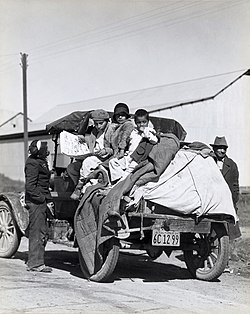
A migrant worker is a person who migrates within a home country or outside it to pursue work. Migrant workers usually do not have an intention to stay permanently in the country or region in which they work.[1]

Migrant workers who work outside their home country are also called foreign workers. They may also be called expatriates or guest workers, especially when they have been sent for or invited to work in the host country before leaving the home country.
The International Labour Organization estimated in 2019 that there were 169 million international migrants worldwide.[2] Some countries have millions of migrant workers. Some migrant workers are illegal immigrants or slaves.
Definition
[edit]The International Organization for Migration's Global Migration Data Analysis Centre states that "there is no internationally accepted statistical definition of labour migration", but refers to the International Labour Organization (ILO)'s definition: "international migrants who are currently employed or unemployed and seeking employment in their present country of residence".[2]
Worldwide
[edit]An estimated 14 million foreign workers live in the United States, which draws most of its immigrants from Mexico, including 4 or 5 million illegal workers. It is estimated that around 5 million foreign workers live in northwestern Europe, half-a-million in Japan, and 5 million in Saudi Arabia. A comparable number of dependents are accompanying international workers.[3]
Americas
[edit]United States
[edit]There are approximately 14 million non-permanent workers in the United States. Today it is estimated that there are about 10.7 million undocumented migrant workers in the United States, many of whom come from Mexico and other countries in Central America. These workers often travel to the United States to look for occupational opportunities and to provide economic stability for their families.[4] These workers risk their lives to cross the border - facing extreme heat and the risk of being caught by border control to find jobs in the United States, often facing language barriers, cultural shock, stigma, and discrimination upon reaching the United States. In the United States 65% of farm workers are Latino, with about half of the workers being undocumented.[5]
The jobs available to undocumented migrant workers in America are often in the domestic, industrial and agricultural field. These jobs are often physically demanding and are often dangerous. All of these workers are exposed to fast paces, and repetitive motions at work which can easily lead to injury. In the domestic field many, often female, migrant workers are subject to physically demeaning cleaning jobs that involve harsh chemical cleaners that have adverse health effects. Industrial workers often have to use heavy machinery without proper training or safety protocols.[6] In the agricultural field, the workers spend long days doing intense physical labor often in extreme weather conditions such as storms and heat. The workers are also exposed to unsafe levels of pesticides, herbicides, and fertilizers,[7][8] which can lead to respiratory illness, dermatitis, cancer, and reproductive problems. If these workers do get injured or sick from work, they are left to navigate the American healthcare system without insurance and with a language barrier. The undocumented nature of many migrant workers in the United States leads to the exploitation of the population as a whole. The lack of government regulation of employers that hire migrant workers means that the workers work long hours in adverse conditions for little pay. These workers often live in unsafe living conditions that are overcrowded and often unsanitary. Additionally, they are at constant risk of sudden deportation, which leads to migrant workers accepting poor working conditions and unlivable wages from their employers. This leads to employers exploiting migrant workers by subjecting them to unhealthy working conditions for poverty wages. Socially, migrant workers face social stigma and discrimination as they are referred to as "illegal migrants".[4]
Additionally migrant workers are one of the most vulnerable groups in regards to the impending climate crisis. These workers are already exposed to long work days in extreme conditions. The nature of agricultural work, industrial, and construction work puts these migrant workers at higher rates of heat stroke, sun exposure, and injuries caused by storm conditions. The climate crisis will disproportionately affect migrant workers because of the intensive outdoor nature of their work and the lack of access they have to social resources.[6][7][4]
Canada
[edit]Foreign nationals are admitted into Canada on a temporary basis if they have a work permit, study permit, are seeking asylum, or under special permits. Migrant workers generally enter as work permit holders under the Temporary Foreign Worker Program (TFWP) or the International Mobility Program (IMP); the key distinction between the programs being the requirement for Canadian employers to obtain a positive or neutral labour market impact assessment (under the TFWP) or an exemption from this process (IMP). Most work permits (~70%) issued in 2018 were under the IMP. Around 495,000 work permits were issued in 2018, while closer to 328,000 were issued in 2008, representing an increase of over 50 percent over the decade. All work authorizations under the TFWP are granted by the issuance of work permits conditional to one employer and job offer, also called "employer-specific" or "closed" work permits. The IMP facilitates both employer-specific and open work permits, as well as work permit exemptions. Open work permits allow migrant workers to change employers, with limited exceptions.[9] With respect to the difference in volumes and admissions of permanent immigrants (i.e., those who have the right to reside permanently) and migrant workers, in 2008, the intake of non-permanent immigrants, had overtaken the intake of permanent immigrants (247,243).[10] The contributions that migrant workers make in Canada are diverse and significant as they work in a wide range of occupations - harvesting fruits and vegetables, caring for children and the elderly, driving long-haul transport trucks, as well as working in IT, academica and medicine.
Since the 1960s, farmers in Ontario and other provinces have been meeting some of their seasonal labour needs by hiring temporary workers from Caribbean countries and, since 1974, from Mexico under the Canadian Seasonal Agricultural Workers Program (CSAWP).[11][12] This federal initiative allows for the organized entry into Canada of low- to mid-level skilled farm workers for up to eight months a year to fill labour shortages on Canadian farms during peak periods of planting, cultivating, and harvesting of specified farm commodities. The program is run jointly with the governments of Mexico and the participating Caribbean states, which recruit the workers and appoint representatives in Canada to assist in the program's operations.[13]
Non-agricultural companies in Canada have begun to recruit under the temporary foreign worker program since Service Canada's 2002 expansion of an immigration program for migrant workers.
In 2002, the federal government introduced the Low Skill Pilot Project to allow companies to apply to bring in temporary foreign workers to fill low skill jobs. The classification of "low skill" means that workers require no more than high school or two years of job-specific training to qualify.
Latin America
[edit]Immigrants often take any available job, often in the fields. The work often consists of hard manual labour, often with unfair pay. The article "Migrant Farmworkers: Is government doing enough to protect them?" by William Triplett states that the median annual income was $7,500, and 61% had income below the poverty level. Immigrants try to find a way to feed their families, and may end up being exploited. Triplett also notes that since 1989, "their average real hourly wages (in 1998 dollars) had dropped from $6.89 to $6.18", and that immigrants suffer physical as well as economic exploitation in the work place.[14]
Asia
[edit]In Asia, some countries in East and Southeast Asia offer workers. Their destinations include Japan, South Korea, Hong Kong, Taiwan, Singapore, Brunei and Malaysia.
| Source Country | |||||||||
|---|---|---|---|---|---|---|---|---|---|
| Destination |  Nepal Nepal
|
 Bangladesh Bangladesh
|
 Indonesia Indonesia
|
 Sri Lanka Sri Lanka
|
 Thailand Thailand
|
 India India
|
 Pakistan Pakistan
|
 Philippines Philippines
|
 Vietnam Vietnam
|
 Brunei Brunei
|
2 | 11 | 3 | 1 | 66 | 8 | |||
 Taiwan Taiwan
|
76 | 48 | 37 | 28 | |||||
 Hong Kong Hong Kong
|
50 | 3 | 22 | 101 | |||||
 Malaysia Malaysia
|
106 | 1 | 134 | 4 | 4 | 21 | 2 | 10 | 12 |
 Singapore Singapore
|
39 | 48 | 1 | 11 | 16 | 70 | 0 | ||
 Japan Japan
|
1 | 0 | 2 | 0 | 9 | - | 45 | 6 | 5 |
 South Korea South Korea
|
4 | 3 | 11 | 5 | 11 | - | 2 | 12 | 9 |
China
[edit]
Overall, the Chinese government has tacitly supported migration as means of providing labour for factories and construction sites and for the long-term goals of transforming China from a rural-based economy to an urban-based one.[16] Some inland cities have started providing migrants with social security, including pensions and other insurance. In 2012, there were a reported 167 million migrant workers in China, with trends of working closer to home within their own or a neighbouring province but with a wage drop of 21%. Because so many migrant workers are moving to the city from rural areas, employers can hire them to work in poor working conditions for low wages.[16] Migrant workers in China are notoriously marginalized, especially because of the hukou system of residency permits, tying one stated residence to all social welfare benefits.[17][18]
India
[edit]
Migration in India is induced by both penuriousness and prosperity. India has an astronomically immense migrant population as every third person in India is a migrant. As per the 2011 census, migrants constitute 455.8(approx.) millions of India's 1.21 billion(approx.) population which is 37.68 percent of the total population.9 This includes inter-state migrants and intra-state migrants. Out of 455.8 million migrants, 67.93% are women and 32.07% are men. The predominant reason for migration among women was cited as marriage.[19][20] This reason for migration was stated by around 42.4 million migrants out of 65.4 million female migrants in total. Among males, 'Work/Employment' was the most significant reason for migration, 12.3 million out of 32.8 million total male migrants cited this reason for migration.[19] There has been a substantial flow of people from Bangladesh and Nepal to India over recent decades in search of better work. Researchers at the Overseas Development Institute found that these migrant workers are often subject to harassment, violence, and discrimination during their journeys at their destinations and when they return home.[21] Bangladeshi women appear to be particularly vulnerable. The findings highlight the need to promote migrants' rights with, among others, health staff, police and employers at destination.
Turkmenistan
[edit]In Turkmenistan 17 April 2025 was declared a national observance day to promote migrant worker rights and general display.[22]
Indonesia
[edit]The population of Indonesia, the world's fourth largest, has contributed to the surplus of work forces.[clarification needed] Combined with a scarcity of jobs at home, that has led numbers of Native Indonesians to seek work abroad. It is estimated that around 4.5 million Indonesians work abroad; 70% of them are women: most are employed in the domestic sector as maids and in the manufacturing sector. Most of them are between 18 and 35 years old. Around 30% are men, mostly working in plantations, construction, transportation, and the service sector.[23] Malaysia now employs the largest numbers of Indonesian migrant workers, followed by Taiwan, Saudi Arabia, Hong Kong, and Singapore.[24] These are official numbers, but the actual numbers might be far larger because of unrecorded illegal entry of Indonesian workers into foreign countries. They are prone to exploitation, extortion, physical and sexual abuses, suffered by those enduring human trafficking. Several cases of abuses upon Indonesian migrant workers have been reported, and some have gained worldwide attention.[25]
Japan
[edit]Japan, with the world's most aged population and the resulting deficit in labour force, is a net importer of migrant workers, especially from the rest of Asia and South America.[26] According to the Ministry of Health, Labour and Welfare, there were 2.05 million foreign residents registered as workers as of October 2023, which is a 185% increase since 2013. Vietnam (26.2%), China (23.0%), and the Philippines (11.1%) were the largest sources of these workers, while the number of Indonesian and Burmese workers has increased by more than 50% since 2022. The manufacturing industry was the largest employer. A Ministry of Foreign Affairs report concludes there were 1.29 million Japanese people residing overseas as of October 2023, but this number includes people such as those studying abroad and those living with families abroad, and the exact number of Japanese nationals working overseas is not clear.[26]
Some news reports suggest that the country's stagnant economy since the 1990s, and more recently the weak yen beginning in 2022, have made Japan less attractive as a work-abroad destination, but so far the rapid influx of migrant workers has continued.[27]
Malaysia
[edit]During the Seventh Malaysia Plan (1995–2000), Malaysia's total population increased by 2.3% per year, while foreign residents (non-citizens) make up 7.6% of the total working-age population in Malaysia, not including illegal foreign residents. In 2008 the majority of migrant workers (1,085,658: 52.6%) originally came from Indonesia. This was followed by Bangladesh (316,401), Philippines (26,713), Thailand (21,065) and Pakistan (21,278). The total number of migrant workers from other countries was 591,481. Their arrival, if not controlled, will decrease the local population's employment opportunities. However, the arrival of migrant workers increased the country's output and reduced the wage rates in the local labor market. Despite the benefits achieved by both the sending and receiving countries, many problems arise in the receiving country, Malaysia. The number of migrant workers currently in Malaysia is very difficult to determine, although the numbers working legally, with a passport and a work permit, are known.
Philippines
[edit]In 2013, the Commission on Filipinos Overseas (CFO) estimated that approximately 10.2 million Filipinos worked or resided abroad.[28] In the census year of 2010, about 9.3 percent of Filipinos worked or resided abroad.[32]
More than a million Filipinos every year leave to work abroad through overseas employment agencies, and other programs, including government-sponsored initiatives. Overseas Filipinos often work as doctors, physical therapists, nurses, accountants, IT professionals, engineers, architects, entertainers, technicians, teachers, military servicemen, seafarers, students and fast food workers.[33] Also, a sizable number of women work overseas as domestic helpers and caregivers.[34] The Philippine Overseas Employment Administration is an agency of the Government of the Philippines responsible for opening the benefits of the overseas employment program of the Philippines. It is the main government agency assigned to monitor and supervise recruitment agencies in the Philippines.
On December 30, 2021, President Rodrigo Duterte, signed Republic Act 11641, creating the Department of Migrant Workers.[35]
Singapore
[edit]Since the late 1970s, Singapore has become one of the major receiving countries of migrant workers in Southeast Asia with 1,340,300 foreign workers constituting 37% of the total workforce in December 2014.[36] [37] This is the largest foreign labour force in Asia as a proportion of population. About 991,300 of Singapore's foreign workers fall under the category of unskilled or low-skilled.[36] In 2019, there were 322,700 male construction workers and 222,500 female domestic workers in Singapore.[36] Many came from Bangladesh, India, Indonesia, Sri Lanka, the Philippines or Thailand. In 2020, it was reported that of the 1.4 million foreign workers in Singapore, nearly 1 million were in low paid, low skilled work. Such jobs are often perceived by local Singaporeans as less attractive since they are dirty, physically demanding, and potentially dangerous.
Observers such as the OCBC Bank economist Selena Ling say migrant workers are necessary given the ageing labour force and a low fertility rate.[38] In order to control the large amount of these workers, Singapore implemented migration policies with visa categories for different skill levels.[39] Employers are regulated in the proportion of foreign workers (called the "dependency ratio ceiling") and must pay a tax called the foreign worker levy for each foreign worker. The maximum foreign worker quota and levy vary by industry and skill of the workers. The government reports the numbers of foreign workers annually. In 2005, economist Ivan Png, then a nominated Member of Parliament, proposed to auction the rights to employ foreign workers. The proposal was rejected by the government as artificial and not meeting social objectives.[40]
The COVID-19 pandemic led to further concerns about treatment of migrant workers, especially those in dormitories.[41] COVID-19 in the dormitories saw a more rapid spread of the virus compared to the rest of the population in Singapore.[42] According to the Minister of Manpower, Josephine Teo, approximately 200,000 workers live in 43 dormitories in Singapore with about 10 to 20 workers sharing each room.[43]
It was announced that from January 2021, a new insurance scheme would be introduced to cover migrant workers against critical illnesses, non-work related deaths, with the employers needing to pay premiums of $9 a year per worker.[44]
Singapore issues a particular category of work permit for foreigners limited to domestic work. The number of foreign domestic workers (FDWs) increased from about 201,000 in 2010 to 255,800 in 2019, or by 27 percent. As of 2019, one of every five Singaporean household hires a maid. In 1990, the ratio was about one in 13, with about 50,000 maids in Singapore at that time.[45]
South Korea
[edit]Like many nations, South Korea started as a labour exporter in the 1960s before its economic development in the 1980s changed it to a labor importer.[46] In 1993, the Industrial Trainee Program was established to meet the needs of migrant workers. It provided work for foreigners as trainees in small and medium-sized businesses. However, these workers were considered trainees and not official employees, so they could not receive protection under Korean labour laws. On 14 February 1995 Guidelines for the Protection and Management of Foreign Industrial Trainees provided legal and social welfare for migrant workers. The Act on the Employment of Foreign Workers which states that "a foreign worker shall not be given discriminatory treatment on the ground that he/she is a foreigner", was put into force on 16 August 2003. Later that year the numbers of migrant workers multiplied dramatically.[46]
Even though there has been a drastic rise of migrant workers in Korea and policies are in place for their protection, the lack of cheap labour in Korea has forced the Korean community to condone the maltreatment of illegal migrant workers, and other unsavoury practices. In response, the Korean government has increased the quota for migrant workers by 5,000, to 62,000 individuals in 2013.[47] In addition, on 31 January 2013, the minimum wage for migrant workers increased to 38,880 KRW for eight hours per day or a monthly rate of 1,015,740 KRW.[48] Programs were put into place to protect migrant workers and ease their integration to Korean society. Programs sponsored by the government such as Sejonghakdang (세종학당), Multicultural Center of Gender Equality and Family Program, Foreign Ministry Personnel Center Program, and Ministry of Justice Social Integration Program provide free Korean language lessons for migrant workers. In addition, by fulfilling all the requirements of the Ministry of Justice Social Integration Program, migrant workers can apply for Korean citizenship without taking the Naturalization exams.
The E-9 Non-professional Employment visa was launched in order to hire foreigners to work in the manual labour field. The visa is only limited to people that come from 15 Asian countries including, the Philippines, Mongolia, Sri Lanka, Vietnam, Thailand, Indonesia, Uzbekistan, Pakistan, Cambodia, China, Bangladesh, Nepal, Kazakhstan, Myanmar and East Timor.[49] A new visa, known as the C-3 visa, was launched on 3 December 2018 which allows one to stay in South Korea for up to 90 days within the visa's validity period of up to 10 years with no restrictions on the number of visits to the country. The visa is specifically designed for professionals like doctors, lawyers or professors, graduates who are enrolled in four-year-plus programs in South Korean universities and those with master's degrees or above from overseas. The visa is only granted to people from 11 Asian countries those being Bangladesh, Cambodia, India, Indonesia, Laos, Myanmar, Nepal, Pakistan, the Philippines, Sri Lanka and Vietnam.[50]
Traditionally, South Korea has appeared to largely accept overseas ethnic Koreans such as the Koreans of China and other Asians.[51] Under the Employment Permit System launched in 2004 for foreign worker registration, 55% of those registered in 2007 were ethnic Koreans, mostly Chinese nationals of Korean descent.[51] Among those who weren't ethnic Koreans, most were Asian with the largest groups being the Vietnamese, Thais, Mongolians, Indonesians and Sri Lankans.[51] In 2013, there were 479,426 foreigners working in South Korea and holding nonprofessional working visas and 99% of them came from other Asian countries with ethnic Koreans from China at 45.6%, Vietnamese at 11.8%, Indonesians at 5.9%, Uzbeks at 5.1%, ethnic Chinese at 4.2%, Cambodians at 4%, Sri Lankans at 3.9%, Thais at 3.9%, Filipinos at 3.8% and Nepalis at 3.3%.[52] The vast majority of foreign workers in South Korea come from other parts of Asia with most coming from China, Southeast Asia, South Asia, and Central Asia.[53]
Sri Lanka
[edit]Sri Lanka is currently a net emigration country, however in recent years a gradual rise in immigrant workers in Sri Lanka has coincided with the decline in the departure of Sri Lankans leaving the country for overseas employment.[54] As a result, the country has now been transitioning from a country that only sends workers overseas to one that both sends and receives migrant workers.[54] Thousands of foreign workers have entered the country from other Asian countries to work in Sri Lanka with 8000 coming from China and others coming from Nepal, Myanmar, Bangladesh and India.[55][56][57] In addition to lawfully residing and working foreigners in the country, there are those that have over-stayed their visas or have illegally entered the country.[54] In 2017, there were 793 investigations on unauthorised workers in the country and 392 foreign nationals were removed.[54] The number of illegal Nepali migrants hiding in Sri Lanka prompted Nepal to launch an investigation in 2016 in order to crack down on the illegal movement of its citizens into Sri Lanka.[58] An estimate from a Sri Lankan minister in 2017 put the number of foreign workers in the country at 200,000.[59] However this number has been disputed. Additionally, there have been allegations that there are 200,000 illegal workers from China, India and Bangladesh working in the country, however certain parties have also dismissed this claim.[60]
Taiwan
[edit]As of June 2016,[update] there are more than 600,000 migrant workers in Taiwan which are spread across different sectors of industry, ranging from construction workers, domestic helpers, factory workers and other manual jobs. Most of them come from Southeast Asia.[61] A 2020 Greenpeace investigation found significant evidence for the abuse of foreign laborers in the Taiwanese distant water fishing industry.[62] Taiwanese conglomerate FCF was specifically singled out for links to illegal fishing and forced labor.[63]
Thailand
[edit]In Thailand, migrants come from bordering countries such as Burma, Laos and Cambodia. Many face hardships such as lack of food, abuse, and low wages with deportation being their biggest fear. In Bangkok, Thailand many migrant workers attend Dear Burma school where they study subjects such as Thai language, Burmese language, English language, computer skills and photography.[64]
Europe
[edit]European Union
[edit]In 2016, around 7.14% (15,88,300 people) of total EU employment were not citizens, 3.61% (8,143,800) were from another EU Member State, 3.53% (7.741.500) were from a non-EU country. Switzerland 0.53%, France 0.65%, Spain 0.88%, Italy 1.08%, United Kingdom 1.46%, Germany 1.81% were countries where more than 0.5% of employees were not citizens. United Kingdom 0.91%, Germany 0.94% are countries where more than 0.9% of employees were from non-EU countries. countries with more than 0.5% employees were from another EU country were Spain 0.54%, United Kingdom 0.55%, Italy 0.72%, Germany (until 1990 former territory of the FRG) 0.87%.[65][66]
The recent expansions of the European Union have provided opportunities for many people to migrate to other EU countries for work. For both the 2004 and 2007 enlargements, existing states were given the rights to impose various transitional arrangements to limit access to their labour markets. After the Second World War, Germany did not have enough workers so laborers from other European states were invited to work in Germany. This invitation ended in 1973 and these workers were known as Gastarbeiter.
1 March has become a symbolic day for transnational migrants' strike. This day unites all migrants to give them a common voice to speak up against racism, discrimination and exclusion on all levels of social life. The transnational protests on 1 March were originally initiated in the US in 2006 and have encouraged migrants in other countries to organise and take action on that day. In Austria the first transnational migrants' strike (Transnationaler Migrant innenstreik) took place in March 2011, in the form of common actions, e.g. a manifestation, but also in form of numerous decentralised actions.
Armenia
[edit]In 2016, the International Organization for Migration (IOM) reported that Armenia had the highest rate of labor migration in the South Caucasus and Eastern Europe region, with an estimated 5.2 million people having migrated between 2010 and 2016. The report also noted that over half of these migrants (55.3%) were temporary workers and that the majority of them had migrated to four countries: Russia (33.5%), the United States (14.2%), Germany (7%), and France (6.7%).[67]
The main destination for Armenian seasonal workers is Russia. Until the end of the 1990s, there was an act of a third huge wave of Armenian emigrants, which accounted for about one million people. The main destination was the Russian Federation (620,000) ․ When Armenia became Independent (1991), the number of people who leave the country permanently slowed down, whereas, the number of seasonal labor migrants mainly to Russia increased.[68] According to a study conducted by the Ministry of Territorial Development and Administration, 95% of seasonal migrants and 75% of long-term migrants work in Russia as of the end of the year 2018, and the reason is supposed to be the membership with the Eurasian Economic Union (EAEU). The First Deputy Minister of Territorial Administration and Development of Armenia, Vache Terteryan, once said:[69]
"We must ensure that our labor force feels comfortable both at home and in EAEU countries," said Mr. Terteryan, speaking at a meeting of the Advisory Committee on Migration Policy under the UNECE (UN Economic Commission for Europe). "They must also feel comfortable in third countries. The principles of reciprocity in terms of length of service, pay, pensions, medical care and so on should be respected."
The Armenian government has attempted to reduce labor migration by developing the economy and creating jobs. However, these efforts have been hindered by the country's volatile economic situation, which is largely due to the conflict with Azerbaijan over the Nagorno-Karabakh region. According to the International Labor Organization, the Armenian economy has been in recession since 2009, with unemployment rising from 10.3% in 2009 to 20.4% in 2015.[67] This has led many Armenians to seek better economic opportunities abroad. The Armenian government has taken steps to protect its citizens from exploitation and abuse while working abroad, such as establishing the State Migration Service of Armenia (SMS) in 2016. The SMS is responsible for promoting safe and legal labor migration, as well as for providing assistance for returning migrants.
Finland
[edit]According to the Finnish trade union organizations SAK (Central Organisation of Finnish Trade Unions) and PAM Finnish Service Union United PAM foreign workers were increasingly abused in the construction and transportation sectors in Finland in 2012, in some cases reporting hourly wages as low as two euros. Bulgarians, Kosovars and Estonians were the most likely victimised in the building trade.[70]
Germany
[edit] |

In Nazi Germany, from 1940 to 1942, Organization Todt began its reliance on guest workers, military internees, Zivilarbeiter (civilian workers), Ostarbeiter (Eastern workers) and Hilfswillige ("volunteer") POW workers.
The great migration phase of labor migrants in the 20th century began in Germany during the 1950s, as sovereign Germany since 1955 due to repeated pressure from NATO partners yielded to the request for closure of the so-called 'Anwerbe' Agreement (German: Anwerbeabkommen). The initial plan was a rotation principle: a temporary stay (usually two to three years), followed by a return to their homeland. The rotation principle proved inefficient for the industry, because the experienced workers were constantly replaced by inexperienced ones. The companies asked for legislation to extend the residence permits. Many of these foreign workers were followed by their families in the following period and stayed forever. Until the 1970s, more than four million migrant workers and their families came to Germany like this, mainly from the Mediterranean countries of Italy, Spain, the former Yugoslavia, Greece and Turkey. Since about 1990, with the disintegration of the Soviet bloc and the enlargement of the European Union, guest workers have primarily been coming to Western Europe from Eastern Europe. Sometimes, a host country sets up a program in order to invite guest workers, as did the Federal Republic of Germany from 1955 until 1973, when over one million guest workers (German: Gastarbeiter) arrived, mostly from Italy, Spain and Turkey.
Russia
[edit]
A custom known as otkhodnichestvo operated in the Russian Empire, in poorer agricultural areas the peasants, usually men, were forced to temporarily migrate away from their place of residence to supplement their income. This was not necessarily seasonal. In some governorates, otkhodniks constituted up to 40% of adult male population.[71]
In modern Russia, a considerable part of workforce in several regions of Russian Far North are fly-in fly-out workers. They work for longer shifts and live in shift settlements during work shifts.
Foreign migrant workers in Russia are commonly referred to by the German word as "gastarbeiters" (Russian: гастарбайтеры, romanized: gastarbaytery). They form a significant part of Russia's workforce since the dissolution of the Soviet Union. Comprising as much as 25% of the workforce, the majority of migrant workers come from Central Asia and the South Caucasus, and often work in low-skilled jobs. A considerable amount of them are illegal immigrants. As of 2020[update], there were 11.58 million international migrants in Russia or about 7.9% of the total population, making Russia the country with the fourth largest migrant population.[72]
Sweden
[edit]Since December 2008, Sweden has more liberal rules for labor immigration from 'third countries' – countries outside the European Union and European Economic Area – than any other country in OECD. The introduction of employer-driven labor immigration, motivated by the need to address labor shortages, resulted in large inflows of migrants also in low-skilled occupations in labor surplus sectors, for example the restaurant and cleaning sectors.[73]
Switzerland
[edit]The underestimation of the required integration services by the state and the society of the host countries, but also by the migrants themselves. Switzerland's transformation into a country of immigration was not until after the accelerated industrialization in the second half of the 19th century. Switzerland was no longer a purely rural Alpine area but became a European vanguard in various industries at that time, first of textile, later also the mechanical and chemical industries. Since the middle of the 19th century especially German academics, self-employed and craftsmen, but also Italians, who found a job in science, industry, construction and infrastructure construction migrated to Switzerland.[74]
United Kingdom
[edit]In the United Kingdom, migrant workers, including seasonal workers, are protected by national employment laws. They should receive equal pay to British workers doing the same job and must be paid at least the national minimum wage.[75]
Migrant workers can be denied National Health Service treatment unless they can afford to pay. Untreated illnesses can worsen and migrant workers can die from treatable illnesses that remain untreated.[76]
Trade union UNISON's Scotland division published a "Charter for Migrant Workers" in June 2008, citing concerns about the exploitation of migrant workers in Scotland. The forms of exploitation they referred to included excessive costs being charged before migration for travel costs and paperwork, bullying and harassment and discrimination over pay and conditions. The union called instead for migrant workers to be offered "a traditional Scottish welcome",[77] arguing also that employers who take a role in bringing overseas workers to the UK should also "be proactive in overseeing and assisting with suitable travel and accommodation arrangements" for them.[78]
Middle East
[edit]In 1973, an oil boom in the Persian Gulf region, which includes the Gulf Cooperation Council (GCC), created an unprecedented demand for labor in the oil, construction and industrial sectors.[79] Development demanded a labor force. This demand was met by foreign workers, primarily those from the Arab states, with a later shift to those from Asian countries.[80] A rise in the standards of living for citizens of Middle Eastern countries also created a demand for domestic workers in the home.
Since the 1970s, foreign workers have become a large percentage of the population in most nations in the Persian Gulf region. Growing competition with nationals in the job sector, along with complaints regarding treatment of foreign workers, have led to rising tensions between the national and foreign populations in these nations.
Remittances are becoming a prominent source of external funding for countries that contribute foreign workers to the countries of the GCC. On average, the top recipients globally are India, the Philippines, and Bangladesh. In 2001, $72.3 billion was sent as remittances to the countries of origin of foreign workers, equivalent to 1.3% of the world GDP. The source of income remains beneficial as remittances are often more stable than private capital flows. Despite fluctuations in the economy of GCC countries, the amount of dollars in remittances is usually stable.[81]
The spending of remittances is seen in two ways. Principally, remittances are sent to the families of guest workers. Though often put towards consumption, remittances are also directed to investment. Investment is seen to lead to the strengthening of infrastructure and facilitating international travel.[81]
With this jump in earnings, one benefit that has been seen is the nutritional improvement in households of migrant workers. Other benefits are the lessening of underemployment and unemployment.[82]
In detailed studies of Pakistani migrants to the Middle East in the early 1980s, the average foreign worker was of age 25–40 years. 70 percent were married, while only 4 percent were accompanied by families. Two thirds hailed from rural areas, and 83 percent were production workers. At the time, 40 percent of Pakistan's foreign exchange earnings came from its migrant workers.[82]
Domestic work is the single most important category of employment among women migrants to the Arab States of the Persian Gulf, as well as to Lebanon and Jordan. The increase of Arab women in the labour force, and changing conceptions of women's responsibilities, have resulted in a shift in household responsibilities to hired domestic workers. Domestic workers perform an array of work in the home: cleaning, cooking, child care, and elder care. Common traits of the work include an average 100-hour work week and virtually non-existent overtime pay. Remuneration differs greatly according to nationality, often depending on language skills and education level. This is seen with Filipina domestic workers receiving a higher remuneration than Sri Lankan and Ethiopian nationals.[83]
Saudi Arabia is the largest source of remittance payments in the world. Remittance payments from Saudi Arabia, similar to other GCC countries, rose during the oil boom years of the 1970s and early 1980s, but declined in the mid-1980s. As oil prices fell, budget deficits mounted, and most governments of GCC countries put limits on hiring foreign workers. Weaknesses in the financial sector and in government administration impose substantial transaction costs on migrant workers who send them. Costs, although difficult to estimate, consist of salaries and the increased spending required to expand educational and health services, housing, roads, communications, and other infrastructure to accommodate the basic needs of the newcomers. The foreign labor force is a substantial drain of the GCC states' hard currency earnings, with remittances to migrants' home countries in the early 2000s amounting to $27 billion per year, including $16 billion from Saudi Arabia alone. It has been shown that the percentage of the GDP that foreign labor generates is roughly equal to what the state has to spend on them.[81]
The main concerns of developed countries regarding immigration centers are: (1) the local job seekers' fear of competition from migrant workers, (2) the fiscal burden that may result on native taxpayers for providing health and social services to migrants, (3) fears of erosion of cultural identity and problems of assimilation of immigrants, and (4) national security.[81]
In immigrant-producing countries, individuals with less than a high school education continue to be a fiscal burden into the next generation. Skilled workers, however, pay more in taxes than what they receive in social spending from the state. Emigration of highly skilled workers has been linked to skill shortages, reductions in output, and tax shortfalls in many developing countries. These burdens are even more apparent in countries where educated workers emigrated in large numbers after receiving a highly subsidized technical education.[81]
A report by Robert Fisk revealed that the housemaids in the Arab region's Saudi Arabia, Abu Dhabi, and Kuwait were subjected to dreadful abuse at the hands of their employers. From countries like the Philippines and Sri Lanka, the maids were often tortured, beaten, burned, and even sexually assaulted. Embassies of the respective nations received complaints of human rights abuse from dozens of such maids every year.[84]
As of 2007,[update] 10 million workers from Southeast Asia, South Asia, or Africa live and work in the countries of the Persian Gulf region.[83] Xenophobia in receiving nations is often rampant, as menial work is often allocated only to foreign workers. Expatriate labor is treated with prejudice in host countries despite government attempts to eradicate malpractice and exploitation of workers. Emigrants are offered substandard wages and living conditions and are compelled to work overtime without extra payment. With regards to injuries and death, workers or their dependents are not paid due compensation. Citizenship is rarely offered and labor can often be acquired below the legal minimum wage. Foreign workers often lack access to local labor markets. Often, these workers are legally attached to a sponsor/employer until completion of their employment contract, when a worker must either renew a permit or leave the country.[79]
Racism is prevalent towards migrant workers. With an increasing number of unskilled workers from Asia and Africa, the market for foreign workers became increasingly racialized, and dangerous or "dirty" jobs became associated with Asian and African workers noted by the term "Abed", meaning dark skin.[82]
Foreign workers migrate to the Middle East as contract workers by means of the kafala, or "sponsorship" system.[85] Migrant work is typically for a period of two years.[80] Recruitment agencies in sending countries are the main contributors of labor to GCC countries. Through these agencies, sponsors must pay a fee to the recruiter and pay for the worker's round-trip airfare, visas, permits, and wages. Recruiters charge high fees to prospective employees to obtain employment visas, averaging between $2,000 and $2,500 in such countries as Bangladesh and India. Contract disputes are also common. In Saudi Arabia, foreign workers must have employment contracts written in Arabic and have them signed by both the sponsor and themselves in order to be issued a work permit. With other GCC countries, such as Kuwait, contracts may be written or oral.[85]
Dependence on the sponsor (kafeel) naturally creates room for violations of the rights of foreign workers.[85] Debt causes workers to work for a certain period of time without a salary to cover these fees. This bondage encourages the practice of international labour migration as women in situations of poverty are able to find jobs overseas and pay off their debts through work.[83] It is common for the employer or the sponsor to retain the employee's passport and other identity papers as a form of insurance for the amount an employer has paid for the worker's work permit and airfare. Sponsors sell visas to the foreign worker with the unwritten understanding that the foreigner can work for an employer other than the sponsor.[85]
When a two-year work period is over, or a job loss is lost, workers must either find another employer willing to sponsor them or return to their nation of origin within a short time. Failing to do this entails imprisonment for violation of immigration laws. Protections are nearly non-existent for migrant workers.[83] With work conditions often equating to modern-day slavery, it has also been reported that suicide rates are over five times higher for migrant workers than citizens of the UAE.[86]
The population in the current GCC states has grown more than eight times during 50 years. Foreign workers have become the primary and dominant labor force in most sectors of the economy and the government bureaucracy. With rising unemployment, GCC governments embarked on the formulation of labor market strategies to improve this situation, to create sufficient employment opportunities for nationals, and to limit the dependence on expatriate labor. Restrictions have been imposed: the sponsorship system, the rotational system of expatriate labor to limit the duration of foreigners' stay, curbs on naturalization and the rights of those who have been naturalized, etc. This has also led to efforts to improve the education and training of nationals. Localization remains low among the private sector, however, because of the traditionally-low income that the sector offers. Other reasons are long working hours, a competitive work environment, and the need to recognize an expatriate supervisor, often difficult to accept.[80]
In 2005, low-paid Asian workers staged protests in some GCC countries, including Bahrain and Kuwait, for not receiving salaries on time, and some of them were violent. In March 2006, hundreds of mostly South Asian construction workers stopped work and went on a rampage in Dubai, UAE, to protest their harsh working conditions, low or delayed pay, and general lack of rights. Sexual harassment of Filipina housemaids by local employers, especially in Saudi Arabia, has become a serious matter. In recent years, this has resulted in a ban on the migration of females under 21. Such nations as Indonesia have noted the maltreatment of women in the GCC states, with governments calling for an end to the sending of housemaids altogether.[79] In GCC countries, a chief concern with foreign domestic workers is childcare without the desired emphasis on Islamic and Arabic values.[83]
Possible developments in the future include a slowdown in the growth of foreign labor. One contributor is a dramatic change in demographic trends. The growing birth rate of nationals in the GCC states will lead to a more competitive workforce.[80] That could also lead to a rise in the numbers of national women in the workforce.
Israel
[edit]In 2010, the US Department of State issued a report which stated that "the Government of Israel does not fully comply with the minimum standards for the elimination of trafficking however it is making significant efforts to do so." It noted that Israel continued law enforcement actions against human trafficking, and established a shelter for labor traffic victims. However, the government did not identify the victims, and law enforcement and protection efforts diminished since transferring anti-trafficking duties from Immigration police to the Ministry of Interior.[87]
The 2015 US Department of State report stated that some foreign workers experienced conditions of forced labour, including "the unlawful withholding of passports, restrictions on freedom of movement, limited ability to change or otherwise choose employers, nonpayment of wages, exceedingly long working hours, threats, sexual assault, and physical intimidation." The most vulnerable were foreign agricultural workers, construction workers, and nursing care workers (particularly women).[88]United Arab Emirates
[edit]The treatment of migrant workers in the UAE has been likened to "modern-day slavery".[89] Migrant workers are excluded from the UAE's collective labour rights, hence migrants are vulnerable to forced labour. Migrant workers in the UAE are not allowed to join trade unions.[90] Moreover, migrant workers are banned from going on strike.[90][91] Dozens of workers were deported in 2014 for going on strike.[92] As migrant workers do not have the right to join a trade union or go on strike, they don't have the means to denounce the exploitation they suffer. Those who protest risk prison and deportation.[90] The International Trade Union Confederation has called on the United Nations to investigate evidence that thousands of migrant workers in the UAE are treated as slave labour.[93]
Human Rights Watch have drawn attention to the mistreatment of migrant workers who have been turned into debt-ridden de facto indentured servants[94] following their arrival in the UAE. Confiscation of passports, although illegal, occurs on a large scale, primarily from unskilled or semi-skilled employees.[95] Labourers often toil in intense heat with temperatures reaching 40–50 degrees Celsius in the cities in August. Although attempts have been made since 2009 to enforce a midday break rule, these are frequently flouted. Those labourers who do receive a midday break often have no suitable place to rest and tend to seek relief in bus or taxi stands and gardens.[96] Initiatives taken have brought about a huge impact on the conditions of the laborers. According to Human Rights Watch, migrant workers in Dubai live in "inhumane" conditions. The Reuters reported on 22 July 2020 about the expatriates community in Dubai, which has been affected largely by the economic crisis caused by coronavirus pandemic in the United Arab Emirates. The migrant workers are said to have become a target of the financial shortages and piling debts, forcing many to go days without food. Therefore, more than 200,000 migrant workers from India, Philippines, Pakistan, and Nepal have already left the emirate, as a result, according to Reuters.[97]
Paid social media influencers in the UAE promoted it as an ideal tourist destination. However, several migrant workers began to use the TikTok application highlighting the other side. While influencers with even few thousand followers received free meals, free products and free trips in exchange of promotion, the viral videos and million views on the videos of these low-paid blue collar workers of the UAE provided no enhancement in lifestyle. Despite being famous on TikTok, these migrants continued to earn low wages and shared room with a dozen of other people.[98][99]
Agents in the UAE had been using Instagram to run black-market networks, where women recruited from Africa and Asia are being advertised to be picked for domestic jobs by employers. Nearly 200 accounts in the Persian Gulf are operating on the basis of these services, where the pictures of women along with their personal details are posted. Human rights activists said that migrant workers recruited through such informal channels are at a higher risk of trafficking and other forms of exploitation, even though the workers employed through licensed agency and proper documentation also face difficult situations.[100]
Near the end of June 2021, security officers in the UAE raided the residential buildings in Abu Dhabi to arrest about 700 African migrants. The workers were cuffed during the first two weeks of their detention and besides being subjected to racial slurs and physical abuse, they were also refused access to basic medical aid such as sanitary pads to women. ImpACT International and Euro-Mediterranean Human Rights Monitor released a report detailing the accusations of racially motivated human rights violations. According to the report, more than a dozen female African workers arrested were subjected to sexual harassment by the officers who raided their houses and touched their private parts while they were asleep in their nightwear during the raid. Some of these African migrants worked as waiters, assistant nurses, teachers, oil and gas contractors, nannies, etc. More than 20 people went on record to share their testimonies about the abuse by UAE officials against them and their fellow workers from Cameron, Uganda, and Nigeria on the night of the raid.[101][102]
Some of the African migrants deported by the UAE amongst the approximately 700 workers, included Cameroonians, who feared returning to their country due to the region being mired in violent crime due to the ongoing conflict. Ngang Rene, one of the many Cameroonian migrant workers arrested and deported, warned Emirati authorities about the dangerous conditions in the North West region. Nevertheless, he was deported, forcing him to trek with his wife day and night to reach a safe zone.[103]
Saudi Arabia
[edit]On 4 August 2020, The Guardian revealed abhorrent condition of migrant workers held in Saudi Arabia's detention centers, which were terribly overcrowded with insanitary conditions and lack of adequate healthcare. The report also revealed cases of physical abuse inside the immigration detention centers. In a time of increased dangers from COVID-19, the detainees suffered from high risk of infection in crowded institutions.[104]
In December 2020, the Human Rights Watch (HRW) researchers interviewed migrants in Saudi detention centers, where nearly 350 of them are kept in unsanitary rooms. Many of them are beaten to death by guards. The migrants kept in camps included Indians, Pakistanis, Chadians, Ghanaians, Kenyans, Nigerians and Somalis.[105]
In March 2021, Saudi Arabia introduced some amendments to the existing labour laws. Despite claiming to improve working conditions for all migrant workers, the new reforms still bar formations of trade unions and strikes. Also, it doesn't include over 3.7 million domestic workers who become victims of serious abuses in the country. Many workers have complained of forced confinement, long working hours without any day off and rampant physical and sexual abuse in the country.[106]
Qatar
[edit]Migrant workers in Qatar account for six times as many people as naturalized citizens, with the largest sending communities being India, amounting to 23.58% of the total population of Qatar, Nepal, which makes up 17.3%, and the Philippines, which makes up 9.65%. Migrant workers makeup the majority of Qatar's labor force at 94%.[107] These populations are so large that in 2009 a study found that Nepalese migrant workers in Qatar were responsible for contributing 5% of Nepal's GDP.[108]
Due to Qatar's goal of becoming an "advanced nation" by 2030, the largest growing migrant sector has become construction. Migrant construction workers in Qatar face unique abuses in the form of poor living and labor conditions. In the three years leading up to 2013, the Qatari construction sector accounted for 1200 labor migrant deaths.[108] Numbers are especially high amongst private sectors, with statistics from 2008 reporting that 99.5% of non-citizens comprise the sector compared to 42% of non-citizens in the public sector.[107]
Additionally, FIFA named Qatar the host of the 2022 World Cup in 2010 which drew attention to the abuses of Qatar's migrant population as the country planned to spend over 200 billion dollars on World Cup-associated construction projects, which would require upwards of 1.5 million new labor migrants to enter the country. These infrastructure projects increase abuses and international pressure to improve labor conditions, however, to relatively little effect. In 2015, it was projected that by 2022, there would be nearly 4,000 additional migrant deaths in Qatar.[108]
Oceania
[edit]Australia
[edit]Migrant workers in Australia hold the same employment rights as Australian citizens, regardless of their migration status.[109] In 2019-2021 temporary migrants held 7.8%[a] of jobs in Australia.[110] In 2023 there were 1.9 million people (7% of the population) living in Australia on a temporary visa with working rights, including 680,000 New Zealanders in Australia. Although many of these migrants seek permanent residency in Australia, only 195,000 permanent visas were available in 2023.[111]
Pacific Islands
[edit]Tens of thousands of migrant workers travel to Australia and New Zealand on seasonal work visas every year under Australia's Pacific Australia Labour Mobility scheme (PALM, which also includes Timor-Leste) and New Zealand's Recognised Seasonal Employer Scheme (RSE). In 2023 almost 48,000 workers participated in the two schemes,[112] including over 20% the male working-age population of Tonga and Vanuatu.[113] The schemes have been touted as providing significant income and remittance opportunities for Pacific nations, as well as providing vital labour for industries such as horticulture in Australia and New Zealand. However, the impact of the schemes on Pacific countries is increasingly perceived as negative, removing skilled workers from these countries' economies, separating families, and failing to up-skill temporary workers.[114] Despite being entitled to the same employment rights and minimum wage as New Zealanders, several instances of exploitation of RSE workers have been reported.[115]
Migration, work, and health
[edit] | This section may incorporate text from a large language model. (September 2025) |
The search for work drives migratory patterns. Work determines much of people's lives and often those who have migrated for work face unique challenges in the workplace especially as it relates to health. Occupational health extends beyond the workplace itself. Both migration and work are both acknowledged as Social Determinants of Health.[116] Migration for work can have positive and/or negative impacts on the physical, mental, and social health of those who migrate, those who remain at home, and those who return.
Female migrant workers
[edit]According to the ILO, 48 per cent of all international migrants are women and they are increasingly migrating for work purposes.[117] In Europe alone there are 3 million women migrant workers. The 1970s and 1980s have seen an increase in women migrant labourers in France and Belgium. In China, as of 2015 a third of their migrant workers were women[118] who had moved from rural towns to bigger cities in search of employment.[119] Female migrants work in domestic occupations which are considered part of the informal sector and lack a degree of government regulation and protection.[16] Minimum wages and work hour requirements are ignored and piece-rates are sometimes also implemented. Women's wages are kept lower than men's because they are not regarded as the primary source of income in the family.[120]

Women migrate in search of work for a number of reasons and the most common reasons are economic: the husband's wage is no longer enough to support the family. In some places, like China, for instance, rapid economic growth has led to an imbalance in the modernization of rural and urban environments, leading women to migrate from rural areas into the city to be a part of the push for modernization.[119] Other reasons include familial pressure, on a daughter, for instance, who is seen as a reliable source of income for the family only through remittances. Young girls and women are singled out in families to be migrant workers because they have no viable alternative role to fulfil in the local village.[121] If they go to work in the urban centres as domestic workers, they can send home money to help provide for their younger siblings.[121] Many of these women come from developing countries, and are low skilled.[122] Additionally women who are widowed or divorced and have limited economic opportunities in their native country may be forced to leave out of economic necessity. Migration can also substitute for divorce in societies that do not allow or condone divorce.[120]
Impact on roles within family
[edit]In terms of migrant labour, many women move from a more oppressive home country to a less oppressive environment where they have actual access to waged work. As such, leaving the home and obtaining increased economic independence and freedom challenges traditional gender roles. This can be seen to strengthen women's position in the family by improving their relative bargaining position. They have more leverage in controlling the household because they have control over a degree of economic assets. However, this can lead to hostility between wives and husbands who feel inadequate or ashamed at their inability to fulfil their traditional role as breadwinner. The hostility and resentment from the husband can also be a source of domestic violence.[123] Studies have also been done which point to changes in family structures as a result of migrant labour. These changes include increased divorce rates and decrease in household stability. Additionally, female migrant labour has been indicated as a source for more egalitarian relationships within the family, decline of extended family patterns, and more nuclear families.[120] There is also a risk for infidelity abroad, which also erodes the family structure.[124]
Researchers identified three groups of women to represent the dimensions of gender roles in Singapore. The first group is made up of expatriate wives who are often reduced to dependent spouse status by immigration laws. The second group are housewives who left work in order to take care of the children at home. Although they are from the Singaporean middle class, they are stuck at almost the same level and share status with the third group, foreign domestic workers. Because of global economic restructuring and global city formation, the mobility of female labours is increasing. However, they are controlled through strict enforcement and they are statistically invisible in migration data. The female foreign domestic workers are always gender-stereotyped as maids and generalized as low wages workers in society.[125]
Women migrant workers in the informal sector
[edit]The spread of global neoliberalism has contributed to physically displaced people, which translates to displaced workers, worldwide. Due to the national and transnational economic push and pull of migration, growing numbers of women migrant workers find themselves employed in the underground and informal sector. To be clear, these women tended not to be previously employed in the formal sector, if at all. Frequently, the cheap and flexible labor is sought in more developed areas. Also, these women migrant workers are often considered an asset to employers who think of these individuals as docile, compliant, and disposable.[126]
Work found in the informal economy is defined as being outside the legal regulation of the state. The underground sector includes nontraditional types of employment: intimate care,[127] street vending, community gardening, food selling, sewing and tailoring, laundry service, water selling, car cleaning, home cleaning, and various kinds of artisan production.[128] These positions are frequently precarious and lack the social contracts often found between employee and employer in the formal sector. This unofficial economy is often found in locations that are between home and work and combine personal and private spaces. Because migrant women workers often occupy the lowest economic positions, this leaves them especially vulnerable to exploitation and dangerous working conditions. Incidentally, Guy Standing has termed this kind of vulnerable worker, the Precariat.
Women are frequently at the bottom of the economic hierarchy from various factors, mainly a lack of opportunity to support themselves and their families and a lack of adequate education. Despite the United Nations' Girls Education Initiative, there remains high rates of illiteracy among women in the Global South. Commonly, the informal sector is the only place in which geographically-displaced workers can join the economy. Thus, women migrant workers perform much of the work found in the informal sector.
Partly because of complex migration issues, which include the restructuring of gendered and familiar relations, women migrant workers frequently care for children without a local family network.[129][130] The informal sector allows for public and private space to be merged and accommodate their care-taking responsibilities. New immigrants are often concerned with leaving children unattended and the informal sector allows for care-taking alongside of economic activities.[131]
Case studies have determined that men and women migrate for similar reasons. Both leave places in search of better opportunities, most often financially. In addition to the financial push, women also migrate to escape oppressive environments and/or abusive spouses.[132][133]
Children of female migrant workers
[edit]
Migrant labour of women also raises special concerns about children. Female migrant workers may not have enough possibilities to care for their own children whilst being abroad. Their children may learn to regard their relatives at home as their parents and may rarely see their mothers. Frequently, children of migrant workers become migrant workers themselves. There is concern that this may have negative psychological effects on the children who are left behind. Although this has not been proven to be entirely true or false, studies have been done which show that many children of migrant workers manage reasonably well. One theory states that remittances to some degree make up for the lack of care by providing more resources for food and clothing. Additionally, some migrant mothers take great care in attempting to maintain familial relationships while abroad.[124]
Migrant education
[edit]
Children of migrant workers struggle to achieve the same level of educational success as their peers. Relocation, whether a singular or a regular occurrence, causes discontinuity in education, which causes migrant students to progress slowly through school and drop out at high rates. Additionally, relocation has negative social consequences on students: isolation from peers due to cultural differences and language barriers. Migrant children are also at a disadvantage because the majority live in extreme poverty and must work with their parents to support their families.[134] These barriers to equal educational attainment for children of migrant workers are present in countries all over the world. Although the inequality in education remains pronounced, government policies, non-governmental organizations, non-profits, and social movements are working to reverse its effects.
Migrant workers and literacy
[edit] | This section may be confusing or unclear to readers. In particular, it uses too much academic jargon. (March 2019) |
In 2015, scholar Gabriela Raquel Ríos of the University of Central Florida published "Cultivating Land-Based Literacies and Rhetorics, in which she theorizes the phrase "land-based literacies and rhetorics".[135] Her definition is as follows:
These literacies (acts of interpretation and communication) and rhetorics (organizational and community-building practices) ultimately build a theory that 1) recognizes the ways in which land can produce relations and 2) recognizes the value of embodied ways of knowing.[135]: 60
Ríos argues that migrant workers' rhetorical practices incorporate their relationship to land and labor in addition to language. Comparing the "ideology of literacy" (the normative expectation that migrant workers should learn to read and write, or to "speak a language of power, particularly [in the context of migrant workers in Florida] English or Spanish", she notes that the farm worker activists with whom she has worked do not share this ideology. Gerardo Reyes, of the Coalition of Immokalee Workers states that, for him and other migrant workers, "due to the transient nature of their labor, learning English is the last thing on the list of important needs".[135]: 60
Migrant labour force in economies
[edit]The migrant workforce has historically played a vital role nationally and across local communities in recent times. Economic globalization has created more migrant workers than ever existed before. While developed countries have increased their demand for labour, especially unskilled labour, workers from developing countries are also used. As a result, millions of workers and their families travel to other countries to find work. This influx of migrant workers contributes to growth of slums and urban poverty, according to Mike Davis.[136] Some of these workers, usually from rural areas, cannot afford housing in cities and thus live in slums.[137] Some of these unskilled workers living in slums suffer from unemployment and make a living in the informal sector.[138] According to the International Labor Organization, as of 2013 there were approximately 175 million migrants around the world.[139] In 2020 world migration 281 millions workers.[140]
Exploitation and enslavement of migrant workers
[edit]
The recruitment of international workers through employment agencies is a common phenomenon in developed countries, such as the United States or the UAE. Especially members of underprivileged communities are attracted by the opportunities of living and working in the US. Some of these agencies make fraudulent promises. But even worse than false promises, some migrants are abused and mistreated by the agencies and their middlemen.[141][142] Some migrant workers may have their passports and mobile phones confiscated, are imprisoned in the employer's home or at least strictly overseen and disconnected from society, friends and family; some may not receive their full wage and have to work unrestrained long hours without breaks or days off. Migrant workers may also be denied adequate food and living conditions, as well as medical treatment.[142]
In a study undertaken by the Human Rights Watch of 99 domestic workers in the United Arab Emirates, 22 alleged that their sponsors had physically abused them.[142] Workers refuse to report their abuse for fear of deportation and not being able to find a better job. It is common in some cases for a woman to fall victim to sexual violence and harassment because stories by employer will be trusted more.[142]
Some migrant workers flee from their abusive employers and seek help at the embassy or consulate of their home country, but that is difficult to achieve in remote locations.[142]
Indian migrant workers in US
[edit]A United States company, Signal International, led by an immigration lawyer, Malvern C. Burnett, and an Indian labor recruiter, Sachin Dewan, "lured hundreds of Indian workers to a Mississippi shipyard with false promises of permanent US residency."[143] This was under the H-2B visa guest worker program, to work as welders, pipefitters, and in other positions to repair damaged oil rigs and related facilities. Each worker paid the labor recruiters between $10,000 and $20,000 or more in recruitment fees and other costs after being promised good jobs, green cards, and permanent U.S. residency. Some went deep into debt.[144] "On arrival at Signal shipyards in Pascagoula, Mississippi, beginning in 2006, they discovered that they wouldn't receive the green cards or permanent residency, and that in fact, each would have to pay $1,050 a month to live in isolated, guarded labor camps where as many as 24 men shared a space the size of a double-wide trailer."[144]
Conviction
[edit]Signal International "had to compensate workers $14.4 million in a jury ruling to five Indian guest workers, one of the largest settlements of its kind in U.S. history. The ruling was based on the finding that the company and its agents engaged in labor trafficking, fraud, racketeering and discrimination, News India Times reported at that time. The jury also found that one of the plaintiffs was a victim of false imprisonment and retaliation."[144]
Philippines migrant workers in US
[edit]There have been many cases of corruption among brokers who often act as if they have companies, often encouraging migrants to come to the United States. This was the case with broker, Kizzy Kalu was, "a naturalized United States citizen from Nigeria".[145] "He secured government approval to bring in Filipino nurses under a government visa program, claiming they would be paid up to $72,000 as instructors at an Adam University in Colorado, according to a 2012 criminal indictment of the labor broker."[141] Adams State University did exist in Colorado, however Adam University was nonexistent just as much as the jobs that were supposed to be there for migrants. "Kalu promised the nurses, most from the Philippines, jobs as nurse instructors/supervisors."[146] "He arranged with the Departments of Labor and Homeland Security to provide H-1B visas for the workers, saying that Adam University faced a labor shortage and needed foreign labor to serve as nursing instructors/supervisors," as a way to lure workers in.[146]
Kizzy Kalu and "other foreign nationals" received compensation for these visas after they had secured and received them for the soon-to-be-workers. "Kalu $6,500 for assistance in obtaining them. Upon arrival in Denver, Colorado, the nurses were told that there was no such place as Adam University. Instead, they were sent to "work in nursing homes. The facilities paid Kalu's company, Foreign Health Care Professionals Group, $35 per hour for one of the nurses. Kalu then pocketed almost half the wage and paid the nurse $20 an hour."[146] He continued to exploit these workers by allowing them to work while he was gaining their profit. He had to report to the government about these women and that they were in fact working in the country so that he could continue to receive funds while they continued to work. "Documents he submitted to the government didn't indicate that he and his partner, Philip Langerman, were taking a large portion of the visa-holders' wages."[146]
Eventually, the scheme that Kalu and his partner, Phillip Langerman created, began to become known to the public. Instead of the facilities paying the company that they had created together from the work the women were doing, the nurses were paid directly by the facilities but were required to pay Kalu $1,200 a month, or Kalu would send a letter to the Department of Homeland Security and they would lose their visas, prosecutors said.[146] Soon, the nurses realized this kind of unfair treatment and mode of oppression and stopped paying him. Therefore, their visas got revoked because he reported the matter to officials.
Conviction
[edit]Kizzy Kalu was guilty of "trafficking in forced labor for luring foreign nurses to the United States with promises of high-paying jobs but then demanding they kick back a portion of their wages or face deportation."[146] He was sentenced to nearly 11 years in prison and ordered to pay $3.8 million in restitution. He was convicted of 89 counts of mail fraud, visa fraud, human trafficking and money laundering. Kalu's partner, Philip Langerman, 78, of McDonough, Ga., was sentenced to three years of probation for his role in the criminal scheme. He, too, must pay restitution of $3.8 million." U.S. District Chief Judge Marcia Krueger said in this case unlike many others, "Kalu did not sexually assault, isolate or strike his victims. She describe these cases as "fraud and economic coercion."[145]
Other cases in US
[edit]There are other fraudulent cases by United States companies that recruit and employ Filipino workers. On 19 March 2013, in an article titled, "Filipino Workers Urge Overhaul of U.S. Guest Worker Policies", information is provided about the corruption in labor. "The shipyard, Grand Isle Shipyard (GIS) in L.A., put the Filipinos to work on an oil production platform owned by Black Elk Energy, a U.S. company that, according to federal regulators, had racked up 315 documented "incidents of safety non-compliance" offshore since 2010.The problems at Black Elk Energy were amplified following an explosion in November on a platform in the Gulf of Mexico that claimed the lives of three Filipino workers, while three others were seriously injured."[147] The problem became known because the work at the company had been very dangerous even before they were hired and so work was stopped. However, that did not stop GIS, which needed to make money. Unfortunately the migrant workers were the ones who suffered.
"The main [hazardous condition] is the sleep deprivation that they experience – just long hours of work that the [U.S.] workers don't face. They're forced to work sometimes for two weeks straight, 70 hours a week."[147] Many skillful men from the Philippines who were "welders, pipefitters and scaffolders were trafficked under "fraudulent" contracts that promised high pay and safe working conditions. But many were placed for work on dangerous oil rig platforms."[147]
Mexican migrant workers in US
[edit]Since the early 1980s, increasing numbers of Mexican women have migrated to the United States in search of jobs. The women usually leave their families, including young children, behind to help maintain their families by sending remittances. After arriving in the US, many are put to work and live in places that are neither clean nor safe. Companies and traffickers promise legitimate jobs in America because they make money doing so.
An article, "Girl Next Door", by Peter Landsman examines the system, which is said to be brutal and inhumane oppression of migrant workers. "On a tip, the Plainfield police raided the house in February 2002, expecting to find illegal aliens working an underground brothel. What the police found were four girls between the ages of 14 and 17. They were all Mexican nationals without documentation. But they weren't prostitutes; they were sex slaves. The distinction is important: these girls weren't working for profit or a paycheck. They were captives to the traffickers and keepers who controlled their every move."[148] These girls, a large percentage underage, are forcefully lured from their homeland in Mexico and other parts of Latin America.
"They had been promised jobs as models and babysitters in the glamorous United States, and they probably had no idea why they were sitting in a van in a backwater like Tijuana in the early evening."[148]
"The police found a squalid, land-based equivalent of a 19th-century slave ship." There were doorless bathrooms, decaying sinks and mattresses, morning after pills (medications that can induce abortion) and girls were pale, exhausted and malnourished.[148] However, this is just an example of one of the apartments and houses that were affected by this type of abuses. Many other houses or neighborhoods in the U.S that seem to be upscale and upper class are infested with these types of illegal actions.
Migrant workers in Europe
[edit]In the agricultural sector (such as the strawberry industry) in some countries in Europe (Spain, Italy), sexual harassment, rape, and even sexual exploitation occurs.[149]
Migrant workers' rights
[edit]The International Labour Organization (ILO)'s first International Labour Conference, held in Washington DC in 1919, adopted a Recommendation concerning Reciprocity of Treatment of Foreign Workers which recommended to each member state that their laws for the protection of their own workers, including the right of lawful organization, should be extended on equal terms to migrant workers. The Recommendation treated labour migration as a state-directed programme, referring to "condition[s] of reciprocity and upon terms to be agreed between the countries concerned".[150] In the light of this principle of equality, most of the ILO instruments intended to protect the rights of migrant workers are the generic ones which refer to the rights of all workers.[151]
The People's Movement for Human Rights Education (PDHRE) composed a list of fourteen rights for migrant workers.[152] The United Nations Sustainable Development Goal 10 also advocates for the implementation of planned and well-managed migration policies and a reduction in the transaction costs of migrant remittances.[153]
Philippines migrant workers' rights
[edit]"The Philippine government has long lauded the fact that, every day, some 4,500 Filipinos are sent abroad to work. The remittances they send back keeps the Philippine economy afloat. The government doesn't seem to provide any protection when these overseas Filipino workers run into distress. This labour export policy is still one of their pillars of development – pushing people to other countries instead of addressing poverty or lack of jobs at home."[147] Instead of sending workers out just because the process helps the economy at their countries of origin, the country needs to examine ways to work with its people to obtain jobs or at least to create more jobs. When their skilled workers come to the United States and are often sexually, physically, and mentally exploited, it affects the workers but also the country upon their return, if they are able to return at all because of the conditions that they face. They are risky jobs, and journeys taken by migrants to ensure themselves better lives and also families make governments need to do more. "The exploitative immigration system of the U.S. works hand-in-hand with the corrupt labour export policy of the Philippines to maintain a steadily increasing flow of cheap, temporary migrant labour."[147]
Bangladeshi migrant workers' rights
[edit]Between the months of July and September in 2020, Bangladeshi authorities arbitrarily detained about 370 Bangladeshi migrant workers after their return to the country from abroad. They had been detained on the allegation of committing criminal activities in foreign nations without any credible evidence of any kind in support. Amnesty International called the detention a violation of the International Covenant on Civil and Political Rights (ICCPR).[154]
Effects on migrant workers' health
[edit]Migrant workers often have poorer health and shorter life expectancy relative to the general population. Migrant workers are often undocumented, making it much harder for them to seek protections under the labor laws of the country they are in. Many employers take advantage of this fact and create dangerous working conditions. These risks often result in high rates of work-related diseases and injuries among migrant workers.[155]
Migrant workers often work in more hazardous occupations, under informal work arrangements and to lower wages compared to non-migrant workers, which pose them at an increased risk of work related illness.[156][157] Studies show that migrant workers are at higher risk of work injuries than non-immigrant workers.[158] Many labor migrants undergo forms of health screenings or assessments, with the high testing procedure costs, the tests are often paid by the migrants. This testing often does not ensure referral for necessary treatments or medical follow up.[159] Migrants also report higher level of perceived discrimination and bullying at the workplace compared to non-migrant workers.[157]
In the United States, migrant farm workers experience work-related bone problems, respiratory problems and allergic reactions.[160] The life expectancy compared to average is 26 years less for a migrant worker in the U.S.[161]
In Asia, a survey by Lien Centre for Social Innovation in Singapore found that over 60 per cent of lower-skilled South Asian migrant workers who are waiting for salary or injury compensation from employers were predicted to have serious mental illness.[162]
The World Health Organization and the International Labour Organization estimate that an estimated 745,000 fatalities from ischemic heart disease and stroke events occurred in 2016 due to long working hours.[163] Officials of the organizations noted that migrant workers were amongst the populations most exposed to long working hours, which put them at risk of fatalities and disability from cardiovascular diseases.
National vs. transnational migrations
[edit]Like transnational migration, national (internal) migration plays an important role in poverty reduction and economic development. For some countries, internal migrants outnumber those who migrate internationally. For example, 120 million people were estimated to migrate internally in China compared to 458,000 people who migrated internationally for work.[164] Situations of surplus labour in rural areas because of scarcity of arable land is a common "push factor" in the move of individuals to urban-based industries and service jobs. Environmental factors including drought, waterlogging, and river-bank erosion also contribute to internal migration.[164]
There are four spatial patterns of internal migration:[164]
- Rural-rural migration: in many poor countries like Senegal, rural-rural migration occurs when labourers from poorer regions travel to agriculturally-rich and irrigated areas that have more work.
- Rural-urban migration: seen in the urbanizing economies of Asia, migration of poor agricultural workers move to larger cities and manufacturing centers.
- Urban-rural migration: migration that occurs when individuals retire back to their villages. Often, migrants who return bring back skill sets that benefit their home areas tremendously.
- Urban-urban migration: as the predominant form of internal migration, this movement takes place from the centre of towns to the outer areas of the town.
Circular migration, the temporary and repetitive movement of a migrant worker between home and host areas, can occur both internally and transnationally.
Foreign worker quotas
[edit]Some countries regulate the absolute number of foreign workers admitted on an annual basis. For instance, each year, the United States stipulates fixed numbers of H1-B visas for specialized workers and H2-A visas for non-agricultural workers. Likewise, Japan and South Korea set annual quotas for the admission of foreign workers.[165][166]
In 2005, economist Ivan Png, then a nominated Member of Parliament, proposed that the government of Singapore stipulate the number of foreign workers to admit and then auction the rights to employ the foreign workers. The government rejected the proposal as artificial and not meeting social objectives.[40]
In 2012-2014, economists Giovanni Peri (University of California, Davis), Pia Orrenius (Federal Reserve Bank of Dallas) and Madeline Zavodny (Agness Scott College) suggested reforming the allocation of H1B and H2A visas from a lottery to an auction.[167][168][169][170][171] Subsequently, the auction mechanism was elaborated.[172][173] However, Ray Marshall (University of Texas, Austin) critiqued the auction of rights to employ foreign workers.[174]
When the government of Hong Kong announced a new scheme to admit 20,000 migrant workers for the construction, aviation, and bus transport industries, Png suggested that the government allocate the rights to admit workers by auction.[175]
See also
[edit]- Body Shops
- Bracero program (historical American guest-worker program)
- Dekasegi
- Dirty, dangerous and demeaning
- Economic migrant
- Environmental racism
- Exploitation of labour
- Global labor arbitrage
- Farmworker
- Feminization of migration
- Global mobility
- Harvest of Shame, 1960 television documentary presented by Edward R. Murrow
- Hobo, typically restricted to late-19th and early-20th century trainhopping in North America.
- Human Security
- Immigration
- Internal migration
- Itinerant
- Labor shortage
- Labour inspectorate
- Lavoie v. Canada (a Canadian Supreme Court case ruling on foreign worker status)
- Mercenary
- Mexican Americans
- Migrant domestic workers
- Migrant domestic workers in Lebanon
- Migrant education
- Migrant Housing Act of North Carolina
- Migrant prostitution
- Migrant Workers (Supplementary Provisions) Convention, 1975
- Migrant workers in the Gulf region
- Opposition to immigration
- Queer Migration
- Remittance
- Schengen Agreement (an EU agreement to open borders)
- Smart contract: can be used for temporary employment contracts[176][177]
- Sweatshop
- Third Country National
- United Nations Convention on the Protection of the Rights of All Migrant Workers and Members of Their Families
- Unreported employment
- Wage slavery
- Work permit
Notes
[edit]- ^ Per source, temporary and permanent migrants held 26.3% of jobs, and temporary migrants held 29.5% of this amount.
Citations
[edit]- ^ "Who is a Migrant?". International Organization for Migration. Retrieved 12 August 2023.
- ^ a b "Labour migration". Global Migration Data Portal. 18 February 2022.
- ^ "Archived copy". Archived from the original on 16 February 2017. Retrieved 20 November 2019.
{{cite web}}: CS1 maint: archived copy as title (link) - ^ a b c Duncan, Whitney (2015). "Transnational Disorders: Returned Migrants at Oaxaca's Psychiatric Hospital". Medical Anthropology. 29 (1): 24–41. doi:10.1111/maq.12138. PMID 25294096.
- ^ "Biden and businesses agree on one thing: U.S. Needs immigrant workers". Politico. 4 December 2021.
- ^ a b Moyce, Sally C.; Schenker, Marc (2018). "Migrant workers and their occupational health and safety". Annual Review of Public Health. 39 (1): 351–365. doi:10.1146/annurev-publhealth-040617-013714. PMID 29400993.
- ^ a b Holmes, Seth (2013). Fresh Fruit: Broken Bodies. Berkeley CA: University of California Press. ISBN 978-0-520-27514-0.
- ^ Lucas, María Elena; Buss, Fran Leeper (1993). Forged under the sun: the life of María Elena Lucas = Forjada bajo el sol. Women and culture series. Ann Arbor: University of Michigan Press. ISBN 978-0-472-09432-5.
- ^ Dixon-Perera, Leanne (2019). "Regulatory Approaches to International Labour Recruitment in Canada" (PDF). Immigration, Refugees and Citizenship Canada. Archived (PDF) from the original on 27 August 2021. Retrieved 12 December 2021.
- ^ "Foreign nationals working temporarily in Canada". Statcan.gc.ca. 13 December 2013. Archived from the original on 24 December 2013. Retrieved 1 January 2014.
- ^ "The Seasonal Agricultural Workers Program and Mexican Development" (PDF). Archived (PDF) from the original on 21 November 2021. Retrieved 28 June 2021.
- ^ "Seasonal Agricultural Workers Program". Archived from the original on 28 June 2021. Retrieved 28 June 2021.
- ^ Lois Ross, Migrant Workers in Canada: a review of the Canadian seasonal agricultural workers program Archived 25 May 2017 at the Wayback Machine, (The North-South Institute, 2006)
- ^ Triplett, William. "Migrant Farmworkers." CQ Researcher 8 October 2004: 829–52. Web. 6 November 2013.
- ^ Foreign workers from selected Asian countries, by destination, 2010-11: Thousands Archived 16 August 2014 at the Wayback Machine. International Migration Outlook 2012
- ^ a b c China Blue. Dir. Micha X. Peled. Teddy Bear Films. 2005. DVD
- ^ Wong; et al. (2007). "Rural migrant workers in urban China: living a marginalised life". International Journal of Social Welfare. 16 (1): 32–40. doi:10.1111/j.1468-2397.2007.00475.x.
- ^ David McKenzie and Serena Dong (16 February 2016). "China to migrant workers: Take your kids with you". CNN. Archived from the original on 26 November 2018. Retrieved 23 October 2019.
- ^ a b Kumar, Shailendra; Choudhury, Sanghamitra (1 January 2021). "Migrant workers and human rights: A critical study on India's COVID-19 lockdown policy". Social Sciences & Humanities Open. 3 (1) 100130. doi:10.1016/j.ssaho.2021.100130. ISSN 2590-2911. S2CID 234161193.
- ^ Choudhury, Sanghamitra; Kumar, Shailendra (November 2022). "Gender Discrimination and Marginalization of Women in North-East India". Journal of Public Affairs. 22 (4) e2625. doi:10.1002/pa.2625. ISSN 1472-3891. S2CID 234012283.
- ^ Samuels, F. et al. (2012) Stories of harassment, violence and discrimination: migrant experiences between India, Nepal and Bangladesh. Overseas Development Institute Briefing Paper Archived 5 November 2013 at the Wayback Machine
- ^ "Migration Workers Day". Retrieved 17 April 2025.
- ^ "Profil" (in Indonesian). Migrant Care. Archived from the original on 25 May 2017. Retrieved 26 November 2014.
- ^ "25 Negara Terbesar Penempatan Tenaga Kerja Luar Negeri Indonesia Tahun 2014 (1 Januari s.d 31 Oktober 2014)" (PDF) (in Indonesian). BNP2TKI. p. 7. Archived from the original (PDF) on 25 May 2017. Retrieved 26 November 2014.
- ^ Urbina, Ian (12 September 2019). "Ship of Horrors: Life and Death on the Lawless High Seas". The Guardian. Archived from the original on 27 September 2020. Retrieved 9 October 2020.
- ^ a b "Summary of "Foreign Employment Status" Report (As of the end of October, 2023)". Ministry of Welfare, Labour and Health (in Japanese). 26 January 2024. Retrieved 15 July 2024.
- ^ "止まらぬ円安1ドル=150円に迫る 海外生活を円で換算すると…各支局員が取材". テレ朝news (in Japanese). TV Asahi. Archived from the original on 28 September 2023. Retrieved 28 September 2023.
- ^ "Stock Estimate of Filipinos Overseas As of December 2013" (PDF). Philippine Overseas Employment Administration. Archived from the original (PDF) on 7 February 2017. Retrieved 19 September 2015.
- ^ "The 2010 Census of Population and Housing Reveals the Philippine Population at 92.34 Million". Philippine Statistics Authority. 4 April 2012. Archived from the original on 14 March 2019. Retrieved 21 January 2016.
- ^ "Stock Estimate of Filipinos Overseas As of December 2010" (PDF). Philippine Overseas Employment Administration. Archived from the original (PDF) on 17 July 2016. Retrieved 26 October 2015.
- ^ Yvette Collymore (June 2003). "Rapid Population Growth, Crowded Cities Present Challenges in the Philippines". Population Reference Bureau. Archived from the original on 16 February 2007.
An estimated 10 percent of the country's population, or nearly 8,000,000 people, are overseas Filipino workers distributed in 182 countries, according to POPCOM. That is in addition to the estimated 3,000,000 migrants who work illegally abroad.
- ^ Calculation:
- Domestic population (2010): ~92.34 million[29]
- Overseas Filipinos (2010): ~9.45 million[30] Some sources have indicated that there are on the order of 3 million additional Filipinos working illegally abroad.[31] These have not been included in this calculation.
- Total Filipinos (2010): ~101.79 million
- 9.45 million is about 9.3% of 101.79 million.
- ^ "2014 OFW Statistics – 2.3 million work abroad". OFW Guru. Archived from the original on 17 August 2017. Retrieved 6 August 2015.
- ^ Lorenzo, F. M.; Galvez-Tan, J.; Icamina, K.; Javier, L. (2007). "Nurse Migration from a Source Country Perspective: Philippine Country Case Study". Health Serv Res. 42 (3 Pt 2): 1406–18. doi:10.1111/j.1475-6773.2007.00716.x. PMC 1955369. PMID 17489922.
- ^ Parrocha, Azer (30 December 2021). "Duterte signs law creating Department of Migrant Workers". Philippine News Agency. Archived from the original on 18 January 2022. Retrieved 17 January 2021.
- ^ a b c "Documents and Publications". Ministry of Manpower Singapore. Archived from the original on 23 October 2019. Retrieved 23 October 2019.
- ^ "Summary Table: Employment". stats.mom.gov.sg. Archived from the original on 23 October 2019. Retrieved 23 October 2019.
- ^ "Can Singapore rely less on foreign workers? It's not just about dollars and cents, say observers". CNA. Archived from the original on 9 June 2020. Retrieved 9 June 2020.
- ^ Piper, Nicola. Migrant Labor in Southeast Asia. Asia Research Institute National University of Singapore.
- ^ a b "10th Parliament of Singapore, Session 2, Sitting 8, 20-07-2005. Oral answers to questions: Foreign workers (Quota system of allocation)". sprs.parl.gov.sg. Retrieved 27 June 2023.
- ^ Lim, Joyce (6 April 2020). "Coronavirus: Workers describe crowded, cramped living conditions at dormitory gazetted as isolation area". The Straits Times. Archived from the original on 18 May 2020. Retrieved 6 April 2020.
- ^ Cher, Audrey (23 April 2020). "Why Singapore's push to contain coronavirus among migrant workers is so difficult". CNBC. Archived from the original on 25 April 2020. Retrieved 26 April 2020.
- ^ Jessie Yeung; Joshua Berlinger; Sandi Sidhu; Manisha Tank; Isaac Yee. "Singapore's migrant workers are suffering the brunt of the country's coronavirus outbreak". CNN. Archived from the original on 26 April 2020. Retrieved 26 April 2020.
- ^ Lim, Jessie (30 September 2020). "New insurance scheme to cover migrant workers against critical illnesses, non-work related deaths from 2021". The Straits Times. Archived from the original on 1 October 2020. Retrieved 1 October 2020.
- ^ "The Big Read: As maids become a necessity for many families, festering societal issues could come to the fore". CNA. Archived from the original on 22 April 2020. Retrieved 26 April 2020.
- ^ a b Yoo. "Foreign Workers in the Republic of Korea" (PDF). Archived from the original (PDF) on 27 January 2013.
- ^ "MigrantWorkers Center :: View topic – 62,000 foreign workers will come to Korea in 2013 (an increase of 5,000 laborers over 2012)". migrantok.org. Archived from the original on 17 August 2017. Retrieved 25 September 2013.
- ^ "MigrantWorkers Center :: View topic – South Korea increases minimum wage for workers". migrantok.org. Archived from the original on 17 August 2017. Retrieved 25 September 2013.
- ^ "Non-professional Employment, E-9". 17 August 2015. Archived from the original on 16 January 2019. Retrieved 16 January 2019.
- ^ "South Korea to issue ten-year multi-entry visas to select Vietnamese groups - VnExpress International". Archived from the original on 30 November 2018. Retrieved 27 December 2018.
- ^ a b c International Migration Outlook 2008. OECD. 2008. p. 256.
- ^ Kim, Jihyun; Valentine, Thomas (2014). "Investigating Adult Education for Immigrants in South Korea". Adult Education Research Conference. New Prairie Press. pp. 667–668. Archived from the original on 4 August 2020. Retrieved 20 February 2022.
- ^ Jun, Euyryung (2016). ""The Frog That Has Forgotten Its Past": Advocating for Migrant Workers in South Korea". Duke University Press. 24 (3): 669–692. doi:10.1215/10679847-3618228. S2CID 151716218. Archived from the original on 19 December 2018. Retrieved 19 December 2018.
- ^ a b c d "Sending Sri Lankans and Receiving Chinese Workers: Emerging Trend of Labour Migration in Sri Lanka". News 1st. 18 December 2018. Archived from the original on 19 December 2018. Retrieved 19 December 2018.
- ^ "Chinese workers settling down with ease". Sunday Observer. 14 July 2018. Archived from the original on 18 December 2018. Retrieved 19 December 2018.
- ^ "Govt. approves 2500 construction workers from Nepal, Myanmar". The Sunday Times Sri Lanka. Archived from the original on 1 November 2019. Retrieved 23 October 2019.
- ^ "Over 200,000 Foreign Workers From China, India, Bangladesh and Maldives in Sri Lanka With and Without Visas". Maldives Times. Archived from the original on 30 October 2019. Retrieved 30 October 2019.
- ^ "Nepal investigates if more migrants hiding illegally in Sri Lanka". Colombo Gazette. 9 August 2016. Archived from the original on 19 December 2018. Retrieved 19 December 2018.
- ^ "Acute labour shortage in Lanka; 200,000 foreigners working here". The Sunday Times. 30 April 2017. Archived from the original on 1 September 2018. Retrieved 30 October 2019.
- ^ "New Immigration and Emigration Act from mid-2019". Daily FT. 8 October 2018. Archived from the original on 11 November 2019. Retrieved 11 November 2019.
- ^ "Number of migrant workers in Taiwan tops 600,000 - Focus Taiwan". focustaiwan.tw. 29 August 2016. Archived from the original on 17 August 2017. Retrieved 9 August 2021.
- ^ "Choppy Waters, Forced Labour and Illegal Fishing in Taiwan's Distant Water Fisheries" (PDF). www.greenpeace.org. Greenpeace. Archived (PDF) from the original on 22 April 2020. Retrieved 3 April 2020.
- ^ Monaghan, Elizabeth. "Who is FCF? Taiwan's biggest tuna trader linked to forced labour & illegal fishing". www.greenpeace.org. Greenpeace. Archived from the original on 2 April 2020. Retrieved 3 April 2020.
- ^ Post Publishing PCL. "A rare chance to learn". bangkokpost.com.
- ^ "Labour market and Labour force survey (LFS) statistics - Statistics Explained". ec.europa.eu. Archived from the original on 19 May 2020. Retrieved 26 June 2016.
- ^ "Employment by sex, age and citizenship". European Commission Eurostat Products Datasets. Archived from the original on 18 December 2018. Retrieved 17 February 2019.
- ^ a b "Migration and Development". IOM Migration Research Series. 2 November 2003. doi:10.18356/233f428c-en. ISBN 978-92-1-363006-8. ISSN 2414-2573.
- ^ "Webserver-Wartung" (PDF). Archived (PDF) from the original on 12 May 2019. Retrieved 12 May 2019.
- ^ Karelidze, Tamara (25 September 2018). "Russia remains preferred destination for Armenian migrants". Emerging Europe. Archived from the original on 12 May 2019. Retrieved 12 May 2019.
- ^ Unions: Foreign workers often underpaid, overworked Archived 5 April 2016 at the Wayback Machine yle 4 February 2013
- ^ . Brockhaus and Efron Encyclopedic Dictionary (in Russian). 1906.
- ^ WORLD MIGRATION REPORT 2022
- ^ Olle Frödin & Anders Kjellberg (2018) Labor Migration from Third Countries to Swedish Low-wage Jobs Archived 18 December 2018 at the Wayback Machine, Nordic Journal of Working Life Studies, vol. 8 no 1 (March 2018), pp. 65-85
- ^ D'amato, Gianni (December 2008). "Historische und soziologische Übersicht über die Migration in der Schweiz". Schweizerisches Jahrbuch für Entwicklungspolitik (27–2): 177–195. doi:10.4000/sjep.340. Archived from the original on 11 April 2015. Retrieved 4 April 2015.
- ^ Unison, Migrant workers, accessed 24 September 2022
- ^ Jayanetti, Chaminda (13 November 2018). "NHS denied treatment for migrants who can't afford upfront charges". The Guardian. Archived from the original on 14 November 2018. Retrieved 14 November 2018.
- ^ UNISON Scotland, A Charter for Migrant Workers, Briefing 185, published June 2008, accessed 15 December 2023
- ^ UNISON Scotland, Minimum Standards Charter: A Voluntary Code of Practice on Employing Migrant and European Workers, section 5, published in 2008, accessed on 2 September 2025, also published by Migrant Workers North West
- ^ a b c Abella, Manolo (1995). Asian migrant and contract workers in the Middle East. pp. 418–423.
- ^ a b c d Kapiszewski, Andrzej (2006). "Arab versus Asian migrant workers in the GCC countries". Ited Nations Expert Group Meeting on International Migration and Development in the Arab Region.
- ^ a b c d e Ratha, Dilip (2005). "Workers' remittances: an important and stable source of external development finance".
- ^ a b c Shah, Nasra M. (1983). "Pakistani Workers in the Middle East: Volume, Trends and Consequences". International Migration Review. 17 (3): 410–424. doi:10.2307/2545795. JSTOR 2545795. PMID 12279724.
- ^ a b c d e Manseau, Gwennan (2007). "Contractual solutions for migrant labourers: The case of domestic workers in the Middle East". Human Rights Law Commentary: 25–47.
- ^ "Gulf maids in slavery: The suffering of foreign servants at the hands of their employers". The Independent. 4 September 2021. Archived from the original on 4 September 2021. Retrieved 4 September 2021.
- ^ a b c d Ruhs, Martin (2002). Temporary Foreign Worker Programmes: Policies, adverse consequences, and the need to make them work.
- ^ Vora, N. (2015). Expat/expert camps: Transit States, 170–197.
- ^ "Gabon" (PDF). State.gov. Retrieved 28 September 2015.
- ^ Bureau of Democracy, Human Rights, and Labor (13 April 2016). Israel and The Occupied Territories (Report). 2016 Country Reports on Human Rights Practices. US Department of State. Retrieved 14 February 2017.
- ^ "Modern Day Slave Labor: Conditions for Abu Dhabi's Migrant Workers Shame the West". Alternet. 23 December 2013. Archived from the original on 10 October 2017. Retrieved 4 January 2015.
- ^ a b c "United Arab Emirates: In Practice". Survey of violations of trade union rights. International Trade Union Confederation. 17 April 2016. Archived from the original on 1 January 2018. Retrieved 4 January 2015.
- ^ "United Arab Emirates: Legal". Survey of violations of trade union rights. International Trade Union Confederation. 3 March 2010. Archived from the original on 1 January 2018. Retrieved 4 January 2015.
- ^ Batty, David (22 December 2013). "Conditions for Abu Dhabi's migrant workers 'shame the west'". The Guardian. Archived from the original on 25 January 2018. Retrieved 12 December 2016.
- ^ Batty, David (13 September 2014). "Call for UN to investigate plight of migrant workers in the UAE". The Guardian. Archived from the original on 12 February 2018. Retrieved 12 December 2016.
- ^ Keane, D.; McGeehan, N. (2008). "Enforcing Migrant Workers' Rights in the United Arab Emirates". International Journal on Minority and Group Rights. 15 (1): 81–115. doi:10.1163/138548708X272537.
- ^ Ghaemi, Hadi (11 November 2006). "Building Towers, Cheating Workers: Exploitation of Migrant Construction Workers in the United Arab Emirates". Human Rights Watch (Press release). Archived from the original on 15 August 2020. Retrieved 31 July 2020.
- ^ Mustafa, Awad (16 June 2011). "Midday Break To Be Strictly Enforced". thenational.ae. Archived from the original on 25 May 2017. Retrieved 4 January 2015.
- ^ "UAE's migrant workers fret over future in coronavirus economy". Reuters. 22 July 2020. Archived from the original on 23 July 2020. Retrieved 22 July 2020.
- ^ "'In this world, social media is everything': how Dubai became the planet's influencer capital". The Guardian. 17 April 2021. Archived from the original on 17 April 2021. Retrieved 17 April 2021.
- ^ "Meet the Unlikely TikTok Influencers of Dubai". Vice. 29 April 2021. Archived from the original on 29 April 2021. Retrieved 29 April 2021.
- ^ "Instagram fuels rise in black-market sales of maids into Persian Gulf servitude". The Washington Post. Archived from the original on 5 May 2021. Retrieved 5 May 2021.
- ^ "Why did the UAE kidnap, abuse, and deport 700 African workers?". Quartz Africa. 8 September 2021. Archived from the original on 8 September 2021. Retrieved 8 September 2021.
- ^ "'They told us they hated black Africans'" (PDF). Impact Policies. Archived (PDF) from the original on 2 September 2021. Retrieved 2 September 2021.
- ^ "Cameroonian migrants deported from UAE face conflict or exile". Reuters. 17 September 2021. Archived from the original on 20 September 2021. Retrieved 17 September 2021.
- ^ "'We drink from the toilet': migrants tell of hellish Saudi detention centres". The Guardian. 4 August 2020. Archived from the original on 2 January 2020. Retrieved 4 August 2020.
- ^ Brown, Will; Zelalem, Zecharias (15 December 2020). "Abuse of detainees in Saudi camps continues despite international outcry, report shows". The Telegraph. Archived from the original on 12 January 2022. Retrieved 15 December 2020.
- ^ "Saudi Arabia: Proposed Reforms Neglect Basic Rights". Human Rights Watch. 25 February 2021. Archived from the original on 25 February 2021. Retrieved 25 February 2021.
- ^ a b Marzovilla, O. (2014, March 21). The Effect of the Global Economic Imbalance on Migrant Workers and Economies of the Gulf Cooperation Council. Google Books.
- ^ a b c Ganji, Sarath (2016). "Leveraging the World Cup: Mega Sporting Events, Human Rights Risk, and Worker Welfare Reform in Qatar". Journal on Migration and Human Security. 4 (4): 221–226. doi:10.1177/233150241600400403. S2CID 217344612.
- ^ "Visa holders and migrant workers – workplace rights and entitlements". Fair Work Ombudsman. Retrieved 4 September 2024.
- ^ "New migrant jobs and income data released". Australian Bureau of Statistics. 19 December 2022. Retrieved 4 September 2024.
- ^ Reysenbach, Tyler; Coates, Brendan (28 February 2023). "How to improve the migration system for the good of temporary migrants – and Australia". The Conversation. Retrieved 4 September 2024.
- ^ Bedford, Charlotte (7 August 2023). "Pacific labour mobility over the last year: continued growth". Dev Policy Blog. Development Policy Centre. Retrieved 5 September 2024.
- ^ Movono, Apisalome; Scheyvens, Regina; Auckram, Sophie (17 November 2023). "NZ wants more seasonal workers – but Pacific nations no longer want to be the 'outposts' that 'grow' them". The Conversation. Retrieved 5 September 2024.
- ^ "Pacific Labor Mobility: The Benefits, Concerns, and Opportunities". World Bank. 15 November 2023. Retrieved 5 September 2024.
- ^ Movono, Apisalome; Faaiuaso, Leilani; Scheyvens, Regina (29 November 2022). "Underpaid at home, vulnerable abroad: how seasonal job schemes are draining Pacific nations of vital workers". The Conversation. Retrieved 5 September 2024.
- ^ Flynn, Michael A. (2018). "Im/migration, Work, and Health: Anthropology and the Occupational Health of Labor Im/migrants". Anthropology of Work Review. 39 (2): 116–123. doi:10.1111/awr.12151. ISSN 0883-024X. PMC 6503519. PMID 31080311.
- ^ "Setting A Fair Migration Agenda" (PDF). www.ilo.org. Archived (PDF) from the original on 25 May 2017. Retrieved 19 February 2015.
- ^ AsiaFoundation. (9 September 2015), Empowering Migrant Women as Entrepreneurs in China, Retrieved 27 October 2016.
- ^ a b Getano, Arianne (2015). Out to Work. United States of America: University of Hawaiʻi. pp. 28–45.
{{cite book}}: CS1 maint: publisher location (link) - ^ a b c Morokvasic, Mirjana (1984). "Birds of passage are also women". International Migration Review. 18 (4): 886–907. doi:10.2307/2546066. JSTOR 2546066. PMID 12340339. Archived from the original (PDF) on 15 April 2012.
- ^ a b The Mosuo Sisters. Dir. by Marlo Poras. Perf. La Tsuo, Jua Ma. 2012. DVD.
- ^ Women Migrant Workers from Developing Countries
- ^ Menjívar (1999)
- ^ a b de Parle (2007)
- ^ Yeoh, Brenda S.A. (2000). Global Cities, Transnational Flows and Gender Dimensions, The View From Singapore. Department of Geography, University of Singapore: Royal Dutch Geographical Society KNAG.
- ^ Wright, Melissa (2006). Disposable Women and Other Myths of Global Capitalism. London and New York: Routledge.
- ^ Yeates, Nicola (2009). Globalizing Care Economies and Migrant Workers: Explorations in Global Care Chains. Basingstoke: Palgrave Macmillan.
- ^ Beneía, Lourdes; Berik, Günseli; Floro, Maira S. (2016). Gender, Development, and Globalization: Economics As if all People Mattered. New York: Routledge.
- ^ Blackwell, Maylei (2010). "Lideres Campesinas: Nepantla Strategies and Grassroots Organizing at the Intersection of Gender and Globalization". Aztlán: A Journal of Chicano Studies. 35: 13–47. doi:10.1525/azt.2010.35.1.13.
- ^ Boehm, Deborah A. (2013). Intimate Migrations: Gender, Family, and Illegality Among Transnational Mexicans. New York: New York University Press.
- ^ Flores-Gonzales, Nilda; et al. (2013). Immigrant Women Workers in the Neoliberal Age. University of Illinois Press. pp. 133–163.
- ^ Parreñas, Rachel (2015). Servants of Globalization: Migration and Domestic Work. Stanford University Press. pp. 61–79.
- ^ Good Gingrich, Luann (2010). "The Symbolic Economy of Trans-Border Governance: A Case Study of Subjective Exclusion and Migrant Women from Mexico". Refugee Survey Quarterly. 29 (1): 161–184. doi:10.1093/rsq/hdq008.
- ^ Kindler, Anneka L. (1995). "Education of Migrant Children in the United States". Directions in Language and Education. 1 (8).
- ^ a b c Rìos, Gabriela (16 March 2015). "Cultivating Land-Based Literacies and Rhetorics". Literacy in Composition Studies. 3 (1): 60–70–70. doi:10.21623/1.3.1.5. ISSN 2326-5620.
- ^ Davis, Mike (2006). Planet of Slums. London: Verso.
- ^ Todaro, Michael P. (1969). "A Model of Labor Migration and Urban Unemployment in Less Developed Countries". The American Economic Review. 59 (1).
- ^ Gupta, Indrani; Arup Mitra (2002). "Rural Migrants and Labour Segmentation: Micro-Level Evidence from Delhi Slums". Economic and Political Weekly. 37 (2).
- ^ Labour Organization (ILO), International. "Migrant Workers". International Labour Standards. Archived from the original on 16 February 2018. Retrieved 30 August 2013.
- ^ "International Migration 2020 Highlights".
- ^ a b Twohey, Megan. "Wanted: Foreign Workers — and the Labor Brokers Accused of Illegally Profiting from Them." Reuters. Thomson Reuters, (1–10).
- ^ a b c d e "I Already Bought You". Human Rights Watch. 22 October 2014. Archived from the original on 11 November 2017. Retrieved 15 May 2017.
- ^ "Exploited Indian workers in US awarded $14 million". mid-day. Archived from the original on 25 October 2017. Retrieved 15 May 2017.
- ^ a b c Dutt, By Ela (16 July 2015). "U.S. Company To Pay $20 M To Exploited Indian Guest Workers – News India Times". www.newsindiatimes.com. Archived from the original on 17 August 2017. Retrieved 15 May 2017.
- ^ a b "Highlands Ranch man sentenced to 11 years in human trafficking case – The Denver Post". 11 February 2014. Archived from the original on 17 August 2017. Retrieved 15 May 2017.
- ^ a b c d e f "Jury finds Kalu guilty of human trafficking – The Denver Post". July 2013. Archived from the original on 17 August 2017. Retrieved 15 May 2017.
- ^ a b c d e "Filipino Workers Urge Overhaul of U.S. Guest Worker Policies | Inter Press Service". www.ipsnews.net. 19 March 2013. Archived from the original on 17 August 2017. Retrieved 15 May 2017.
- ^ a b c Landesman, Peter. 2004. The Girls Next Door. New York Times Magazine
- ^ "Rape in the fields". 30 April 2018. Archived from the original on 12 March 2020. Retrieved 9 March 2020.
- ^ ILO, Recommendation concerning reciprocity of treatment of foreign workers [electronic resource] / General Conference of the International Labour Organisation of the League of Nations, First Session of the International Labour Conference in 1919, accessed 27 September 2022
- ^ Vittin-Balima, C., Migrant workers: The ILO standards, accessed 27 September 2022
- ^ Koenig, Shulamith. "Human Rights and Migrant Workers". The People's Movement for Human Rights Education (PDHRE). Archived from the original on 26 November 2013. Retrieved 30 August 2013.
- ^ "Goal 10 targets". UNDP. Archived from the original on 27 November 2020. Retrieved 23 September 2020.
- ^ "Bangladesh: Hundreds of arbitrarily detained migrant workers must be released". Amnesty International. October 2020. Archived from the original on 3 October 2020. Retrieved 1 October 2020.
- ^ "Safety and Health of Migrant Workers". International Labor Organization. 29 December 2020. Retrieved 9 October 2024.
- ^ Benach J, Muntaner C, Chung, H and Benavides, FG. "Immigration, Employment Relations, and Health: Developing a Research Agenda". American Journal of Industrial Medicine 53:338-343 (2010) doi:10.1002/ajim.20717
- ^ a b Sterud et al. "A systematic review of working conditions and occupational health among immigrants in Europe and Canada." BMC Public Health (2018) 18:770 http://doi.org/10.1186/s12889-018-5703-3 Archived 20 February 2022 at the Wayback Machine
- ^ Schenker, M. "Work-related injuries among immigrants: a growing global health disparity." Occupational Environmental Medicine. (2008) Vol 65. No 11 doi: 10.1136/oem.2008.040907
- ^ "Health of Labour Migrants".
- ^ (Rosales 4)
- ^ Rosales, Monica S. "Life in the Field: Migrant Farm Workers' Perceptions of Work Related Injuries." Colorado State University, 2008. United States – Colorado: ProQuest Dissertations & Theses (PQDT). Web. 7 November 2013.
- ^ Seow, Joanna. "Most migrant South Asian workers face mental health issues as they await claims settlement". Straits Times. Archived from the original on 17 August 2017. Retrieved 1 December 2015.
- ^ Pega, Frank; Nafradi, Balint; Momen, Natalie; Ujita, Yuka; Streicher, Kai; Prüss-Üstün, Annette; Technical Advisory Group (2021). "Global, regional, and national burdens of ischemic heart disease and stroke attributable to exposure to long working hours for 194 countries, 2000–2016: A systematic analysis from the WHO/ILO Joint Estimates of the Work-related Burden of Disease and Injury". Environment International. 154 106595. Bibcode:2021EnInt.15406595P. doi:10.1016/j.envint.2021.106595. PMC 8204267. PMID 34011457.
- ^ a b c Deshingkar & Grimm (2005)
- ^ "Japan eyes shift in skilled-worker visas toward food production". Nikkei Asia. Retrieved 29 June 2023.
- ^ Jae-hee, Choi (29 June 2023). "Korea opens up to more skilled workers, quota up 15-fold this year". The Korea Herald. Retrieved 29 June 2023.
- ^ "Rationalizing U.S. Immigration Policy: Reforms for Simplicity, Fairness, and Economic Growth". Brookings. Retrieved 1 July 2023.
- ^ Garcia, Cardiff (2 February 2013). "A cap and trade proposal… for immigration". Financial Times.
- ^ Orrenius, Pia M.; Peri, Giovanni; Zavodny, Madeline. "Proposal 12: Overhauling the Temporary Work Visa System" (PDF). Hamilton Project. Retrieved 30 June 2023.
- ^ "Auctioning Temporary Visas". Hoover Institution. Retrieved 1 July 2023.
- ^ "An Auctions Approach to Immigration Policy". www.iza.org. Retrieved 28 June 2023.
- ^ Casella, Alessandra; Cox, Adam B. (2 January 2018). "A Property Rights Approach to Temporary Work Visas". The Journal of Legal Studies. 47 (S1): S195 – S227. doi:10.1086/694166. ISSN 0047-2530. S2CID 56319986.
- ^ "An Auctions Approach to Immigration Policy". www.iza.org. Retrieved 1 July 2023.
- ^ "Migration and domestic labor markets: Auctions and employer demand versus public policy". Economic Policy Institute. Retrieved 1 July 2023.
- ^ "3 ways to improve Hong Kong's labour import scheme for the city's benefit". South China Morning Post. 21 June 2023. Retrieved 29 June 2023.
- ^ Oranburg, Seth; Palagashvili, Liya (22 October 2018). "The Gig Economy, Smart Contracts, and Disruption of Traditional Work Arrangements". SSRN 3270867.
- ^ "A Blockchain-Based Decentralized System for Proper Handling of Temporary Employment Contracts". ResearchGate. Archived from the original on 20 February 2022. Retrieved 11 May 2021.

References
[edit]- Priya Deshingkar & Sven Grimm (2005). Internal Migration and Development: a Global Perspective (PDF). Vol. 19. International Organization for Migration. Archived from the original (PDF) on 20 June 2010. Retrieved 22 April 2011.
- Espenshade, Thomas J. (1995). "Unauthorized immigration to the United States". Annual Review of Sociology. 21 (1): 195–216. doi:10.1146/annurev.soc.21.1.195. JSTOR 2083409. PMID 12291061.
- Friedland, William H.; Nelkin, Dorothy (1971). Migrant Agricultural Workers in America's Northeast. New York: Holt, Rinehart and Winston. ISBN 978-0-03-086706-4.
- Hanson, Gordon H. (2006). "Illegal migration from Mexico to the United States". Journal of Economic Literature. 44 (4): 869–924. CiteSeerX 10.1.1.77.5215. doi:10.1257/jel.44.4.869. JSTOR 30032389. S2CID 145485291.
- Lowe, Christian (14 January 2009). "Financial crisis hits migrant workers in Russia". New York Times. Archived from the original on 7 February 2017. Retrieved 22 February 2017.
- Menjívar, Cecilia (1999). "The intersection of work and gender: Central American immigrant women and employment in California". American Behavioral Scientist. 42 (4): 601–627. doi:10.1177/00027649921954381. S2CID 144108646.
- Lycklama à Nijeholt, Geertje (1980). On the Road for Work: Migratory Workers on the East Coast of the United States. Boston: Martinus Nijhoff Publishing. ISBN 978-0-89838-043-9.
- de Parle, Jason (22 April 2007). "A good provider is one who leaves". New York Times. Archived from the original on 12 March 2017. Retrieved 22 February 2017.
- Schob, David E. (1975). Hired Hands and Plowboys: Farm Labor in the Midwest, 1815–60. Chicago: University of Illinois Press. ISBN 978-0-252-00509-1.
- "United Nations Convention on the Protection of the Rights of All Migrant Workers and Members of Their Families". United Nations. Archived from the original on 15 August 2019. Retrieved 30 November 2006.
- Wang Zhenghua (21 September 2005). "Convicted migrant worker killer waits for final verdict". China Daily. Archived from the original on 12 October 2008. Retrieved 21 May 2009.
- Wright, Gavin (2003). "Slavery and American agriculture history" (PDF). Agricultural History. 77 (4): 527–552. doi:10.1525/ah.2003.77.4.527. S2CID 154395674. Archived (PDF) from the original on 26 April 2012. Retrieved 25 January 2013.
- Taran, Patrick (2011). "Globalization, Migration and Labour: Imperatives for a Rights Based Policy". Journal of Globalization Studies. 2 (1): 58–77. Archived from the original on 16 January 2015. Retrieved 25 January 2013.
Further reading
[edit]- Knox, Paul; Agnew, John; McCarthy, Linda (2003). The Geography of the World Economy (4th ed.). London: Hodder Arnold. ISBN 0-340-80712-1.
- ———. Moving Here, Staying Here: The Canadian Immigrant Experience. Web exhibition. Library and Archives Canada.
- Ness, Immanuel (2011) Guest Workers and Resistance to U.S. Corporate Despotism Urbana: University of Illinois Press. ISBN 978-0252078170
- Piore, Michael J. (1979). Birds of Passage: Migrant Labor and Industrial Societies. Cambridge: The University Press. ISBN 978-0-521-28058-7.
External links
[edit] Definitions from Wiktionary
 Media from Commons


- Migrant workers in the gulf and the Middle East
- Pictures of Austria's first Transnational Migrants' Strike
- Centro de los Derechos del Migrante, Inc., USA
| |||||||||||||||||||||||||||
| |||||||||||||||||||||||||||


Migrant worker
View on GrokipediaA migrant worker is a person who migrates or has migrated from one country to another—or, in the case of internal migration, within a country—with a view to being employed other than on their own account, often undertaking temporary or seasonal labor in sectors characterized by high demand and low domestic participation such as agriculture, construction, manufacturing, and domestic services.[1][2]
These workers are primarily motivated by substantial wage differentials, with incomes typically rising three to six times upon relocating from lower- to higher-income countries, enabling remittances that support economic development in origin nations through poverty reduction, improved education, and health outcomes.[3][4]
While contributing to non-inflationary economic expansion and job creation in host economies by filling labor gaps, migrant workers encounter systemic challenges including a global pay gap of nearly 13 percent relative to native workers—reaching up to 42 percent in some high-income countries—alongside vulnerabilities to exploitation, inadequate social protections, and health risks stemming from precarious employment arrangements and limited enforcement of labor rights.[5][6][7]
Definition and Classification
Core Characteristics and Legal Frameworks
Migrant workers are persons who migrate or have migrated from one country to another with the intent of employment other than on their own account, as defined by the International Labour Organization (ILO).[2] This definition centers on cross-border labor mobility driven by job-seeking, distinguishing migrant workers from permanent immigrants, whose legal status typically involves pathways to indefinite residence or citizenship rather than time-bound work authorization.[8] Core characteristics include temporary or circulatory movement, often seasonal or project-specific, concentrating in low-wage sectors like agriculture, construction, and domestic services where host economies face acute labor shortages.[1] These workers commonly experience employer-tied visas, restricted family reunification, and heightened vulnerability to exploitation due to dependency on sponsors for legal stay and repatriation risks upon contract end.[9] Internationally, legal frameworks prioritize equality of treatment and non-discrimination. The ILO Migration for Employment Convention (No. 97), adopted on July 1, 1949, mandates equal remuneration, working conditions, and social security access for lawfully admitted migrant workers compared to nationals, ratified by 50 countries as of 2023.[9] Complementing this, the ILO Migrant Workers (Supplementary Provisions) Convention (No. 143), adopted on June 24, 1975, requires measures against irregular migration, promotion of organized recruitment, and equality in vocational training and promotion, with 24 ratifications.[10] The United Nations International Convention on the Protection of the Rights of All Migrant Workers and Members of Their Families (CMW), opened for signature on December 18, 1990, extends protections to family members, consular access, and safeguards against collective expulsion, though only 59 states have ratified it, largely excluding major migrant-receiving nations like the United States and those in Western Europe.[11] Nationally, frameworks vary but often operationalize these principles through temporary work visas, such as the United States H-2A program for agricultural workers, which issued 298,000 certifications in fiscal year 2022, or the European Union's Blue Card directive for skilled labor, emphasizing quotas and labor market tests to balance inflows with domestic needs.[9] Enforcement gaps persist, with migrant workers frequently undocumented or in irregular status, evading full protections under these instruments due to clandestine entry or employer non-compliance.[12]Types and Distinctions
Migrant workers are classified primarily by their mobility patterns, duration of stay, skill levels, and legal status, with international frameworks providing key distinctions. Internal migrant workers move within national borders for employment, often from rural to urban areas, while international migrant workers cross borders to engage in remunerated activity in a state of which they are not nationals, as defined by the International Labour Organization (ILO).[13] The United Nations International Convention on the Protection of the Rights of All Migrant Workers and Members of Their Families (1990) further delineates categories such as frontier workers, who commute daily or seasonally across borders, and seasonal workers, whose employment is tied to periodic demands like agriculture or tourism.[14] Temporary migrant workers, including contract and specified-employment types, are recruited for fixed periods to fill short-term labor shortages, with programs like guest worker schemes in Gulf states or H-2A visas in the United States exemplifying this model; however, such arrangements frequently lead to overstays, blurring lines with permanent migration.[14] [15] In contrast, established or permanent migrant workers intend indefinite residence, often transitioning via family reunification or skill-based pathways, contributing to long-term demographic shifts in host countries. Circular migration involves repeated short-term moves, allowing workers to maintain ties to origin countries, as seen in patterns between Mexico and the U.S. or South Asia and the Middle East.[16] Skill-based distinctions separate highly skilled migrant workers, such as intra-company transferees or professionals under visas like the U.S. H-1B, who possess advanced qualifications and command higher wages, from low-skilled or unskilled workers in manual sectors like construction and agriculture, who face greater exploitation risks and limited mobility.[2] [17] The ILO estimates that in 2020, about 169 million international migrant workers existed globally, with low-skilled comprising the majority in developing host economies.[18] Legal status divides migrant workers into regular (documented) and irregular (undocumented) categories; regular workers hold valid permits ensuring protections under host labor laws, whereas irregular workers, lacking authorization, endure heightened vulnerability to deportation, wage theft, and unsafe conditions despite retaining basic workplace rights in jurisdictions like the U.S. under the Fair Labor Standards Act.[19] [20] In 2019, irregular migrants accounted for an estimated 10-15% of the global migrant stock, concentrated in sectors shunning formal oversight.[21] These distinctions underscore causal differences in economic integration, with skilled, documented workers yielding higher remittances and innovation spillovers compared to unskilled, irregular counterparts prone to informal economies.[17]Historical Context
Pre-Industrial and Colonial Periods
In pre-industrial agrarian economies, labor migration was predominantly seasonal and tied to agricultural cycles, with workers moving to regions requiring temporary hands for planting, harvesting, or herding. In medieval Europe, particularly England from the 14th century onward, economic migrants—including unskilled laborers, craftsmen, and artisans—arrived from continental Europe, Scotland, and Ireland to fill labor shortages exacerbated by events like the Black Death, which reduced populations by up to 50% in some areas by 1350.[22] [23] These migrants often worked under short-term contracts or as day laborers, contributing to urban and rural economies while facing restrictions from guilds and local statutes aimed at protecting native workers, such as the 1351 Statute of Labourers capping wages.[24] Pre-industrial work patterns were inherently precarious, with most laborers lacking year-round employment and relying on intermittent gigs, a condition persisting until the 18th century across much of Europe.[25] During the colonial era, indentured servitude formalized migrant labor as a primary mechanism for populating and developing European overseas territories, especially in the Americas. Beginning with the Virginia Company's settlement of Jamestown in 1607, European migrants—primarily young males aged 15 to 25 from England, Ireland, Scotland, and later Germany—signed contracts binding them to masters for terms of four to seven years in exchange for transatlantic passage, food, shelter, and rudimentary clothing.[26] [27] By the mid-17th century, this system supplied 50 to 75% of the white labor force in Chesapeake colonies like Virginia and Maryland, enabling tobacco and other cash crop production on plantations where free wage labor was scarce due to high mortality rates and land abundance.[28] Servants endured harsh conditions, including physical punishment and limited legal recourse, though contracts theoretically offered freedom dues—land, tools, or cash—upon completion, distinguishing this from chattel slavery despite overlapping exploitations.[29] In other colonial contexts, such as Dutch and French holdings in the Caribbean and Asia, similar contract labor systems drew migrants for plantation work, though often blending into coerced forms amid labor shortages. For instance, from the 1620s, the Dutch West India Company recruited indentured workers for sugar estates in Brazil and Suriname, with migration flows peaking in the 17th century to support export-oriented agriculture.[30] These arrangements reflected causal pressures of European overpopulation, enclosure-driven rural displacement, and colonial demands for cheap, mobile labor, setting precedents for later industrial-era migrations while highlighting vulnerabilities like debt bondage and high desertion rates among servants.[31]Industrial and Post-Colonial Expansion
The Industrial Revolution, originating in Britain during the late 18th century and expanding across Europe and North America throughout the 19th century, generated unprecedented labor demands in manufacturing, mining, and transportation infrastructure, attracting migrant workers from rural hinterlands and foreign countries to urban centers.[32] In Britain, this shift pulled workers from Ireland—exacerbated by the Great Famine of 1845–1852—and continental Europe into factories and mills, where they filled roles in textiles, coal extraction, and emerging rail networks amid domestic population pressures and mechanization displacing agricultural labor.[33] By the mid-19th century, similar dynamics emerged in the United States, where crop failures, land scarcity, and economic hardship in Europe drove over 7 million net immigrants between 1877 and 1900, primarily to industrial hubs like New York and Chicago for unskilled factory work.[34] Employers exploited these migrants' willingness to accept lower wages and harsher conditions, often paying men less than native workers and women even less, while urban overcrowding and job competition fueled social tensions.[32] In the United States, immigrants from Southern and Eastern Europe became integral to the Second Industrial Revolution from 1880 to 1920, supplying labor for steel mills, railroads, and assembly lines; by 1920, immigrants and their children accounted for over half of manufacturing workers, enabling output growth from $11 billion in 1900 to $24 billion in 1919.[35] This era's migrant flows were causal to industrial scaling: without the influx of low-cost, mobile labor, infrastructure projects like the transcontinental railroads and urban factories would have stalled due to native workforce shortages and higher wage demands.[36] Across Western Europe, intra-continental migration supplemented this, with Italians and Poles moving to German and Belgian mines, while colonial ties foreshadowed later patterns by channeling coerced or indentured labor from Asia and Africa to European peripheries.[37] Post-World War II reconstruction in Europe amplified migrant worker inflows, as war losses—estimated at 20 million civilian and military deaths—created acute labor shortages in booming industries like automotive manufacturing and construction, prompting recruitment from southern Europe and former colonies despite decolonization waves in the 1940s–1960s.[38] In Britain, the 1948 British Nationality Act granted Commonwealth citizens settlement rights, leading to the arrival of over 500 Caribbean migrants on the Empire Windrush ship that year, followed by tens of thousands from Jamaica, Barbados, and Trinidad for jobs in the National Health Service and London Transport amid a 1.5 million worker deficit.[39] France similarly drew 300,000 Algerians and Moroccans by the 1960s for factory and rebuilding work, leveraging colonial-era networks even after independence in 1962, while the Netherlands and Belgium imported labor from Indonesia and the Congo, respectively, blending imperial legacies with economic imperatives.[40] These post-colonial migrations, totaling around 31 million border crossings in Western Europe from 1945 to 1993, sustained GDP recovery—e.g., Germany's "economic miracle" via guest workers—but often under temporary contracts that prioritized host needs over migrant rights, echoing industrial-era exploitation.[41]Late 20th Century to Present
The number of international migrant workers worldwide expanded significantly from the late 20th century onward, driven by economic globalization, regional trade agreements, and persistent wage disparities between developing and developed economies. According to International Labour Organization (ILO) estimates, the stock reached approximately 169 million by 2019, constituting about 5 percent of the global workforce, up from lower figures in the 1990s amid accelerated flows post-Cold War.[42] This growth reflected demand for low-skilled labor in sectors like agriculture, construction, and services, where host countries faced shortages of native workers willing to accept such conditions.[43] In the Americas, the United States saw continued reliance on Mexican migrant workers for agriculture following the 1986 Immigration Reform and Control Act (IRCA), which legalized around 1.3 million undocumented farm laborers but failed to curb unauthorized entries due to lax enforcement and ongoing employer demand.[44] IRCA's provisions, including the Special Agricultural Worker program, provided amnesty but inadvertently encouraged settlement over circulation, with legalized workers often transitioning to year-round roles in non-farm sectors like construction.[45] By the 1990s, the North American Free Trade Agreement (NAFTA) in 1994 displaced rural Mexican workers through agricultural liberalization, boosting northward flows despite temporary visa programs like H-2A, which expanded to over 250,000 visas annually by the 2010s to fill seasonal gaps.[46] The Gulf Cooperation Council (GCC) states experienced explosive growth in migrant labor from the 1980s oil boom's aftermath, with foreign workers comprising up to 90 percent of the private-sector workforce by the 2000s, primarily from South Asia under the kafala sponsorship system tying migrants to employers.[47] Numbers surged from about 3 million in 1980 to over 10 million by 1990, fueled by infrastructure projects, with Indians, Pakistanis, and Bangladeshis dominating low-wage construction and domestic roles amid minimal local labor participation.[48] Reforms in the 2010s, such as Qatar's 2020 kafala modifications ahead of the FIFA World Cup, aimed to reduce abuses like passport confiscation and wage theft, though enforcement remained inconsistent.[49] Europe's labor migration evolved from 1970s guest worker halts to diversified inflows post-1980, with southern states like Spain and Italy emerging as destinations for North African and Latin American workers in the 1990s amid economic booms.[50] EU enlargements in 2004 and 2013 facilitated intra-bloc movement, sending over 2 million Eastern Europeans to Western labor markets for construction and care work, while external programs like Germany's 2000 skilled worker initiative addressed shortages.[51] Undocumented entries rose in the 2010s via Mediterranean routes, prompting policies like the EU's 2016 migration pact emphasizing returns over integration.[52] Intra-Asian migration intensified from the 1990s, with destination countries like Japan, South Korea, and Singapore importing workers for manufacturing, elderly care, and fisheries amid aging populations and low birth rates.[53] Flows grew from 35 million intra-regional migrants in 1990 to over 100 million by 2020, dominated by unskilled labor from Indonesia, Philippines, and Vietnam to higher-wage hubs, often via bilateral agreements like Japan's Technical Intern Training Program, which hosted 400,000 by 2019 despite criticisms of exploitative conditions.[54] Remittances from these workers exceeded $80 billion annually by the 2010s, bolstering origin economies. The COVID-19 pandemic from 2020 exposed vulnerabilities, stranding millions in host countries with job losses and border closures, as seen in India's reverse migration of 10-12 million workers from urban centers.[43] Post-pandemic recoveries spurred temporary worker expansions, such as Australia's Pacific labor mobility scheme admitting 20,000 annually by 2023, while global stocks stabilized at 168 million migrant workers in 2022 amid geopolitical disruptions like the Ukraine conflict displacing labor pools.[43] Policies increasingly emphasized skills matching and enforcement against irregular migration, reflecting host nations' balancing of economic needs with domestic pressures.[42]Drivers and Motivations
Economic Incentives and Labor Demands
Economic incentives for migrant workers primarily arise from substantial wage differentials between origin and destination countries, where laborers from lower-income regions can access remuneration several times higher than available domestically, even after accounting for living costs and risks. For instance, empirical analyses indicate that international labor mobility generates significant gains for migrants, often doubling or tripling their earnings compared to staying in origin countries, driven by demand in host economies facing structural shortages.[3] These differentials persist because origin countries, particularly in developing Asia and Africa, exhibit lower productivity and capital per worker, limiting wage levels under basic economic principles of marginal productivity.[55] Labor demands in host countries amplify these incentives by creating vacancies in sectors shunned by native workers due to undesirable conditions, low relative pay, or demographic mismatches like aging populations reducing domestic supply. Globally, international migrant workers numbered 167.7 million in 2022, comprising 4.7% of the total labor force and filling critical gaps, with 155.6 million employed across industries.[43] High-demand sectors include agriculture, construction, and care services, where migrants undertake labor-intensive roles involving physical hardship or irregular hours that natives increasingly avoid, as evidenced by persistent shortages despite unemployment in other areas.[56] In regions like the Gulf states and Western Europe, policy frameworks explicitly recruit for these roles, channeling migrants into temporary or guest worker programs to meet infrastructural and service needs without expanding native welfare dependencies.[57] While host-country wages for migrants often lag natives—reflecting factors like skill mismatches, language barriers, and restricted job access—the absolute income uplift sustains migration flows, as origin-country alternatives remain inferior. Studies quantify migrant-native pay gaps at 10-30% in high-income destinations, yet this still yields net positives for workers from low-wage origins, incentivizing movement despite exploitation risks in informal segments.[58] Causally, these dynamics stem from host economies' reliance on cheap, flexible labor to sustain growth in low-margin industries, where automation lags and native wage floors deter participation, thus perpetuating demand-pull migration absent domestic reforms.[59] Over-reliance on such inflows, however, can distort local markets by suppressing wage growth in affected sectors, though empirical evidence shows overall economic expansion from expanded labor supply.[55]Demographic Pressures and Supply-Side Factors
In developing countries, particularly in sub-Saharan Africa, South Asia, and parts of the Middle East, rapid population growth and youth bulges generate a surplus of working-age individuals entering the labor market annually, often outpacing domestic job creation and contributing to high youth unemployment rates that propel labor migration.[60][61] For instance, as of 2024, many low-income nations exhibit a high proportion of the population under age 25, with youth comprising over 60% of the working-age group in countries like Nigeria and Pakistan, fostering a "demographic dividend" potential that turns into emigration pressure when local economies fail to absorb entrants amid structural unemployment exceeding 20-30% in some cases.[60][62] This supply-side dynamic is exacerbated by fertility rates remaining above 4 children per woman in high-migration origin regions, sustaining large annual labor cohorts seeking opportunities abroad to remit earnings and alleviate household poverty.[63] Conversely, in high-income destination countries, persistently low fertility rates—averaging below 1.5 births per woman in the European Union and East Asia as of 2023—have triggered shrinking working-age populations and rising old-age dependency ratios, intensifying demand for migrant workers to fill labor gaps in sectors like construction, agriculture, and elder care.[64][65] By 2050, the UN projects that immigration will account for nearly all net population growth in 52 countries facing such declines, with examples including Japan, where the working-age population contracted by over 1 million annually in recent years, necessitating inflows to sustain GDP growth and pension systems.[65][66] In the United States, immigrants have offset native labor force stagnation, contributing up to 80% of workforce expansion since 2000 amid fertility rates hovering at 1.6.[67] These asymmetric demographics create a global mismatch: origin countries with expanding youth populations (projected to add 1.4 billion people worldwide by 2040, concentrated in the Global South) export labor to mitigate underemployment, while destinations leverage migrants to counteract workforce contraction projected to reduce potential output by 0.5-1% annually in aging economies without inflows.[68][69] Empirical analyses confirm that such pressures, rather than isolated economic pulls, structurally drive sustained migrant worker flows, with demographic imbalances explaining up to 30% of variance in bilateral migration patterns per OECD models.[70][71]Non-Economic Push Elements
Conflict, violence, and political instability serve as major non-economic push factors compelling individuals to migrate for labor purposes, often transforming initial displacement into sustained workforce participation abroad. In 2022, the World Bank estimated that conflict and violence contributed to the displacement of over 100 million people globally, many of whom subsequently sought employment in host countries to support themselves after fleeing instability.[72] For instance, ongoing conflicts in Ukraine since February 2022 and the Middle East have driven millions across borders, with a portion integrating into informal labor sectors in Europe and neighboring regions despite initial refugee status.[72] Similarly, gang-related violence in Central America, including Honduras and El Salvador, has pushed over 500,000 individuals toward the United States between 2014 and 2019, where many enter agricultural or construction jobs upon arrival.[73] Environmental degradation and natural disasters exacerbate displacement, indirectly fueling labor migration by destroying local livelihoods and infrastructure. The International Organization for Migration notes that sudden-onset events like floods and cyclones, combined with slow-onset climate stressors such as droughts, have displaced approximately 21.5 million people annually since 2010, with many from vulnerable regions like South Asia and sub-Saharan Africa relocating to urban centers or abroad for wage labor.[74] In Bangladesh, for example, recurrent cyclones and river erosion have uprooted millions since the 2000s, leading to increased outflows of workers to the Gulf states, where they fill low-skilled roles in construction and domestic service.[63] Climate change acts as a threat multiplier, intensifying resource scarcity and agricultural failures, as evidenced by a 2021 Stanford analysis linking rising temperatures in the Sahel to heightened cross-border movements for employment.[75] Persecution and human rights violations, including ethnic or religious targeting, drive targeted populations to seek refuge through labor channels when formal asylum options falter. In Myanmar, ethnic conflicts and military crackdowns since 2017 have displaced over 1 million Rohingya and other minorities, resulting in labor migration to Thailand and Malaysia, where undocumented workers comprise a significant portion of the fishing and garment industries.[76] The European Parliament highlights that individuals fleeing such abuses often transition to economic migrant status, with data from 2020 showing heightened flows from conflict zones like Syria and Afghanistan into European labor markets despite humanitarian origins.[77] These factors underscore how non-economic pressures create de facto labor migrants, as initial survival imperatives evolve into dependence on host-country employment amid limited repatriation prospects.[78]Economic Impacts
Aggregate Contributions to Host Economies
Migrant workers expand the labor supply in host countries, filling shortages in labor-intensive sectors such as agriculture, construction, manufacturing, and personal care, which sustains production and prevents output declines from native demographic stagnation. In OECD countries, immigrants comprise a significant portion of the workforce in these areas, contributing to overall economic growth by increasing the working-age population and enabling higher productivity through specialization.[79] For instance, in the United States, foreign-born workers accounted for about 18% of the labor force as of 2023, with their participation boosting GDP by enhancing consumer spending and firm investments.[80] Recent surges in U.S. immigration added an estimated 0.1 percentage points to annual GDP growth in both 2022 and 2023, primarily through expanded employment and output in non-tradable sectors.[81] Fiscal contributions from migrant workers include direct tax payments and social security contributions, which often exceed short-term public expenditures once integration occurs. Across OECD nations, empirical assessments show immigrants generating a net positive fiscal impact over their lifetimes, as they pay more in taxes than they consume in services after an initial period, with the effect varying by education level and host country welfare generosity.[55] [69] In developing host economies like those in Latin America or Southeast Asia, immigrants' net direct fiscal contributions range from neutral to positive but typically below 1% of GDP, driven by labor market participation rather than high remittances retention.[82] A 2025 analysis of U.S. immigration indicates that the average new immigrant reduces the federal budget deficit through taxes while stimulating economic expansion, though low-skilled and family-based categories may impose higher initial costs offset by long-term gains.[83] Aggregate studies confirm a small but positive net economic effect from immigration in host countries, with meta-analyses of cross-country data revealing statistically significant improvements in GDP per capita and productivity due to complementary labor inputs.[84] [85] Macroeconomic models for OECD members further estimate positive consequences for public budgets and growth, as migrants' entrepreneurial activities—such as business startups at rates exceeding natives—amplify these inputs.[86] However, the scale remains modest, with foreign-born contributions adding roughly 1% or less to host GDP in high-immigration contexts like the late 1990s U.S., underscoring that benefits accrue primarily through sustained labor augmentation rather than transformative fiscal surpluses.[87]Effects on Native Labor Markets and Wages
The influx of migrant workers, who are often concentrated in low-skilled sectors such as agriculture, construction, and services, increases labor supply in those markets, exerting downward pressure on wages and potentially displacing native workers with similar skill levels, according to standard supply-and-demand frameworks in labor economics.[88] This effect is most pronounced for natives lacking high school diplomas or those in manual occupations, where substitutability between migrant and native labor is high.[89] Economist George Borjas's national-level analyses of U.S. data from 1980 to 2000 estimate that a 10 percentage point increase in the immigrant share of the labor force reduces wages for native high school dropouts by 8.9% and for high school graduates by 5.2%.[89] Empirical evidence remains contested, with some studies finding negligible or positive effects due to factors like skill complementarity, where migrants fill niches that boost overall productivity and demand for native labor.[90] David Card's 1990 analysis of the 1980 Mariel Boatlift, which added 125,000 mostly low-skilled Cuban migrants to Miami's workforce (a 7% labor force increase), reported no significant decline in native wages or employment rates for low-skilled groups compared to other Florida cities.[91] However, subsequent reexaminations, including Borjas's, highlight methodological issues such as selective out-migration of low-skilled natives and longer time horizons, revealing wage reductions of up to 30% for comparable groups in Miami during the 1980s.[88] Meta-analyses of international studies underscore small average negative impacts on native wages, particularly in Europe, where a 1% increase in immigrant labor supply correlates with a 0.1-0.2% wage drop for low-skilled natives, though effects vary by institutional rigidity and enforcement of labor standards.[92] The U.S. National Academies of Sciences, Engineering, and Medicine's 2017 review synthesizes evidence showing short-run wage elasticities of -0.05 for overall natives but -0.1 to -0.3 for prior immigrants and low-skilled natives, with employment displacement more evident among youth and minorities in high-immigration locales.[90] In sectors dominated by migrant workers, such as U.S. meatpacking or Gulf construction, native participation has declined alongside stagnant or falling real wages, as employers substitute cheaper migrant labor amid lax enforcement.[93] Longer-term adjustments, including capital accumulation and occupational shifts, may mitigate these effects, but persistent wage gaps persist for the least advantaged natives, as labor demand curves exhibit inelasticity for routine tasks.[85] Studies attributing null effects often rely on spatial correlations that understate national spillovers or ignore heterogeneous impacts across skill percentiles.[94] Overall, while high-skilled natives benefit from expanded economic activity, low-skilled natives bear measurable costs, with estimates indicating annual wage losses of 2,000 per worker in high-immigration scenarios.[90]Remittances and Origin Country Dynamics
Remittances, defined as personal transfers of money by migrant workers to their countries of origin, constitute a significant financial inflow for many developing economies, often exceeding foreign direct investment and official development assistance combined. In 2024, global remittance flows to low- and middle-income countries reached approximately $685 billion, projected to grow to $690 billion in 2025, driven by steady demand for migrant labor in high-income destinations.[95] Top recipients include India, which received $137 billion in 2024 (3.5% of GDP), Mexico ($67 billion, 3.7% of GDP), and the Philippines ($40 billion, 8.7% of GDP), with remittances comprising over 30% of GDP in countries like Tajikistan (51%) and Tonga (44%).[96][97] These inflows exert multifaceted effects on origin countries, primarily bolstering household consumption and poverty reduction while influencing broader economic structures. Empirical studies indicate that remittances directly mitigate poverty; for instance, in Ghana, including international remittances reduces the poverty headcount by up to 88% for recipient households, enabling investments in education, health, and small-scale entrepreneurship that enhance human capital over time.[98] At the macro level, positive shocks to migrant incomes in the Philippines have led to sustained provincial economic growth through increased local demand and infrastructure spending, though the net effect on national GDP growth remains context-dependent and often modest (around 0.1-0.7% additional growth per percentage point increase in remittances-to-GDP ratio).[99] Remittances also promote financial inclusion by encouraging banking and formal savings, as seen in sub-Saharan Africa where they correlate with deeper financial systems independent of reverse causality.[100] However, remittances can foster dependency and distort incentives, potentially hindering long-term development. By increasing recipient wealth without corresponding productivity gains, they may reduce labor force participation and work effort, as evidenced in cross-country analyses where higher remittance inflows correlate with slower total factor productivity growth and diminished incentives for domestic investment.[101] In some cases, concentrated remittances exacerbate inequality if funneled to urban or elite networks rather than broadly distributed, while triggering real exchange rate appreciation akin to Dutch disease, which inflates non-tradable sectors and erodes competitiveness in export industries.[102] Institutional quality may deteriorate as governments rely on remittances for fiscal stability, reducing pressures for structural reforms; empirical models show that a 1% rise in remittances-to-GDP can weaken governance indicators by amplifying rent-seeking behaviors.[103] Jointly with emigration, remittances yield mixed growth outcomes, with net positive effects in labor-abundant contexts but negative drags in skill-scarce ones due to reinforced brain drain.[104]| Top Remittance-Receiving Countries (2024, USD billions) | Amount | % of GDP |
|---|---|---|
| India | 137 | 3.5 |
| Mexico | 67 | 3.7 |
| Philippines | 40 | 8.7 |
| Pakistan | 27 | N/A |
| Bangladesh | N/A | N/A |
Geographic Patterns
Americas
In the Americas, migrant worker movements predominantly involve temporary labor migration from Mexico, Central America, and the Caribbean to the United States and Canada, driven by seasonal demands in agriculture, forestry, construction, and hospitality sectors. These flows have expanded since the late 20th century, with programs like the U.S. H-2A and H-2B visas facilitating entry for nonimmigrant workers, often under employer sponsorship that ties employment to specific jobs and locations. In fiscal year 2024, nearly 170,000 H-2B workers were employed in the U.S., marking a record high and more than 2.5 times the program's original cap, with supplemental visas adding over 64,000 beyond the statutory 66,000 limit. Similarly, the H-2A program for agricultural roles has grown, reflecting labor shortages in rural areas where native workers are scarce, though certifications do not always translate to filled positions due to recruitment challenges.[105][106][107] Canada's Temporary Foreign Worker Program (TFWP) and Seasonal Agricultural Worker Program (SAWP) mirror these patterns, admitting workers mainly from Mexico and Caribbean nations for temporary roles. By 2021, temporary foreign workers comprised 4.1% of Canada's paid workforce, up from 1.9% in 2011, with over 105,000 TFWP permits issued in the first half of 2025 alone, exceeding annual targets amid post-pandemic labor demands. These programs emphasize low-wage sectors, with restrictions like a 10% cap on low-wage hires in many areas, though exemptions apply to agriculture and caregiving. Mexican workers dominate inflows, contributing to bilateral agreements that prioritize return migration, yet extensions and transitions to permanent residency occur, with 58% of health care sector temporary workers from 2000–2022 obtaining permanent status by 2023. Remittances underscore the scale: Mexico received $66.2 billion from the U.S. in 2023, largely from formal channels tied to migrant labor, representing about 4.1% of GDP and fueling origin-country consumption without proportional increases in formal employment there.[108][109][110] In South America, intra-regional migrant labor is more diffuse, with over 72% of movements occurring within the continent, often involving Bolivian, Paraguayan, and Peruvian workers heading to Argentina and Brazil for agriculture, mining, and informal urban jobs. Argentina hosts significant Bolivian labor in textiles and farming, while Brazil receives inflows from Venezuela and Haiti amid economic volatility, though these blend temporary work with irregular status due to weaker formal programs. Emigration hotspots like Venezuela (4.7 million outflows) and Colombia (2.8 million) supply labor to destinations such as Chile and Peru, but data on strictly temporary workers is limited compared to North American visa-tracked flows, with integration challenges including informal employment and vulnerability to economic downturns. Overall, these patterns reflect supply-side pressures from origin-country poverty and demand from aging host populations, though program designs in the U.S. and Canada have faced scrutiny for wage suppression risks in low-skill sectors.[111][112][113]Asia
Intra-Asian labor migration predominantly involves flows within Southeast Asia and from Southeast Asia to East Asia, driven by labor demands in construction, manufacturing, and services amid varying economic development levels. Southeast Asian destinations such as Malaysia, Thailand, and Singapore host millions of workers from neighboring countries including Indonesia, Myanmar, Cambodia, and the Philippines. For example, Thailand accommodated approximately 3.3 million migrant workers as of March 2024, with the majority engaged in medium-skilled occupations like construction (17%) and agriculture. Malaysia reported 2.47 million active foreign workers in September 2024, primarily from Bangladesh, Indonesia, and Myanmar, concentrated in manufacturing (575,800 in 2022 data), agriculture, and construction.[114] Singapore employed 1.5 million foreign workers in 2024, mainly in construction (379,900 in 2022), manufacturing, and services, sourced from India, Bangladesh, and the Philippines. East Asian countries, facing acute labor shortages due to aging populations and low birth rates, have expanded temporary worker programs to attract Southeast Asian labor. Japan's foreign workforce totaled 2.3 million as of October 2024, an increase of 12.4% from the previous year, with 80% originating from Asia—predominantly Vietnam (largest group), followed by China and the Philippines—and focused on manufacturing, hospitality, and nursing care under the Technical Intern Training Program (TITP) and Specified Skilled Worker (SSW) visas.[115] South Korea's migrant workers exceeded 1 million in May 2024, accounting for 3.5% of the total workforce, with 90% from Asian countries like Vietnam, Nepal, and Cambodia, employed mainly in manufacturing (412,000 in 2022) and construction via the Employment Permit System (EPS).[116] These programs emphasize temporary stays, with seasonal extensions in agriculture and horticulture to meet cyclical demands. Outflows from origin countries reflect these patterns: the Philippines deployed 2.31 million workers in 2023, many to Singapore and Japan; Bangladesh sent 1.3 million, targeting Malaysia; and Indonesia contributed 275,000, including to Malaysia and Taiwan. Women constitute a significant share, often in domestic and care work, comprising 64.1% of Philippine outflows and 61% from Indonesia in 2023.[117] While these migrations bolster host economies, they occur within frameworks prone to temporary contracts and skill mismatches, with intra-ASEAN flows reaching 1.2 million in 2023.Europe
In Europe, migrant workers primarily consist of non-EU nationals filling labor shortages in low-skilled and semi-skilled sectors, driven by demographic aging and low native birth rates that have reduced the working-age population. As of 2022, approximately 23.8 million non-EU citizens resided in the EU, representing 5.3% of the total population, with a significant portion engaged in employment.[118] Between 2019 and 2024, non-EU workers occupied just over 50% of newly created jobs in the EU, totaling around 3.4 million positions, particularly in response to post-pandemic recovery demands.[119] These workers often enter via temporary work permits, seasonal programs, or national schemes, contrasting with intra-EU mobility under free movement rules.[120] Primary source regions for non-EU migrant workers include North Africa (e.g., Morocco, Algeria), sub-Saharan Africa, the Middle East (e.g., Syria, Turkey), and increasingly South Asia (e.g., India, Pakistan), with flows accelerated by economic disparities and conflicts.[121] In 2023, OECD Europe saw elevated inflows of temporary foreign workers, with over 2.4 million authorizations granted across OECD countries excluding Poland, many directed to EU states for labor needs.[122] Eastern non-EU countries like Ukraine have also contributed, especially following the 2022 Russian invasion, under temporary protection directives allowing work access, though this blends refugee and labor migration.[123] Globally, Northern, Southern, and Western Europe host about 23.3% of the world's 167.7 million international migrant workers as of 2022, underscoring the region's reliance on external labor.[43] Key destinations exhibit distinct patterns: Germany leads as the largest recipient, employing non-EU workers in construction, manufacturing, and elderly care, with policies like the 2020 Skilled Immigration Act expanding access despite focusing partly on qualified roles.[124] Italy and Spain depend heavily on seasonal agricultural labor from North Africa and Eastern Europe, where migrants fill harvesting roles amid native reluctance for such work.[125] France and the UK (post-Brexit) draw workers for services and health sectors, with non-EU employment in UK care rising sharply by 2023.[126] Migrant over-representation persists in precarious sectors like hospitality and transport across the EU, with non-EU citizens facing higher rates of temporary contracts—up to 30% in 2024 compared to under 15% for nationals.[127] Recent trends reflect policy adaptations to labor shortages projected to worsen by 2050, with EU-wide initiatives promoting circular migration to mitigate integration challenges.[128] However, employment integration lags, as non-EU workers exhibit unemployment rates double those of nationals (around 12% vs. 6% in 2023) and higher over-qualification in roles below their skills.[129] Flows reached record levels in 2023, with 6.5 million permanent immigrants to OECD countries including Europe, though temporary labor permits dominate for workers.[120] These patterns are shaped by causal factors like host-country wage gaps and origin-country poverty, rather than solely humanitarian pulls, with empirical data showing sustained demand in aging economies.[130]Middle East and Gulf States
The Gulf Cooperation Council (GCC) countries—Bahrain, Kuwait, Oman, Qatar, Saudi Arabia, and the United Arab Emirates—host approximately 31 million migrant workers, who constitute the majority of the private sector workforce and drive infrastructure and service sector growth amid limited native participation in manual labor.[131] In Qatar and the UAE, foreigners comprise around 90% of the population, while in Kuwait they form two-thirds, reflecting heavy reliance on imported labor for economic diversification beyond oil.[132] Primary source countries include India, Pakistan, Bangladesh, Nepal, and the Philippines, with Pakistan directing 96% of its 862,000 registered migrant outflows in 2023 to the Gulf, predominantly Saudi Arabia (49.5% of recipients).[133] These workers predominantly enter low-skilled sectors such as construction, domestic service, and hospitality, where nationals often prefer public sector employment with higher benefits and shorter hours.[134] The kafala sponsorship system, operational across GCC states, ties migrant workers' visas, residency, and exit permissions to a local sponsor (kafeel), typically the employer, which facilitates recruitment but restricts job mobility and fosters dependency.[135] This framework, rooted in historical guestworker models, enables rapid labor importation to fuel projects like Qatar's infrastructure buildup for the 2022 FIFA World Cup but correlates with documented vulnerabilities, including employer control over passports and delayed wage payments.[136] Economic incentives persist, as average Gulf wages exceed home-country equivalents by factors of 5-10 for unskilled roles, drawing voluntary migration despite risks, with remittances totaling billions annually to origin economies.[49] Exploitation remains prevalent, with International Labour Organization assessments identifying patterns of forced labor, excessive hours exceeding 48 weekly limits, and recruitment fees burdening workers with debt bondage; an estimated 600,000 faced such conditions as of 2013, though underreporting persists due to fear of deportation.[137] Reforms since 2020, including Saudi Arabia's 2021 labor law updates allowing job changes without sponsor consent after one year and UAE's 2022 wage protection mandates, aim to enhance mobility and enforcement, yet implementation gaps endure, as evidenced by ongoing ILO complaints against Saudi practices in 2024.[138][139] In broader Middle Eastern contexts like Lebanon and Jordan, similar sponsorship elements apply to domestic migrants from Southeast Asia, amplifying isolation in private households.[140] Native labor market dynamics reveal causal trade-offs: high migrant inflows suppress low-skill wages for locals minimally due to segmentation, but sustain GDP growth rates averaging 3-5% pre-2020 by enabling capital-intensive projects without domestic unrest over conditions.[49] Vision 2030 initiatives in Saudi Arabia and analogous UAE strategies seek to "Saudize" or Emiratize workforces via quotas, reducing migrant shares from 76-95% in private sectors, though short-term displacements risk project delays given skill mismatches.[141] Empirical data from GCC statistical agencies underscore sustained demand, with private sector employment of non-nationals rising in Qatar and UAE through 2023 despite localization efforts.[142]Oceania and Africa
In Oceania, labor migration patterns are dominated by temporary schemes facilitating the movement of Pacific Island workers to Australia and New Zealand for seasonal and semi-skilled employment, primarily in agriculture, horticulture, and meat processing. Australia's Pacific Australia Labour Mobility (PALM) scheme, established in 2012 and expanded since 2021, employed 30,215 workers as of the latest reporting, with 14,300 on short-term visas (up to nine months) and 15,920 on longer-term arrangements (up to four years), sourced mainly from Vanuatu, Papua New Guinea, Fiji, Tonga, Samoa, Kiribati, and Timor-Leste.[143] These programs address labor shortages in rural sectors, where domestic workers are insufficient, but participation remains limited relative to regional needs, with only about 11,600 workers from select Pacific nations tracked in recent surveys.[144] In New Zealand, the Recognized Seasonal Employer (RSE) scheme, operational since 2007, accounts for approximately 60% of temporary Pacific migrant entries, drawing workers for horticulture and viticulture roles, with approvals favoring those from the same countries as PALM.[145] Overall, Oceania hosts a high migrant proportion—9.1 million international migrants amid a 41.8 million population in 2020—but labor-specific flows emphasize circular migration to mitigate unemployment in origin islands, where economic constraints drive outflows despite climate vulnerabilities.[146] African labor migration is predominantly intra-continental, with 21 million Africans residing in other African nations as of recent estimates, reflecting economic disparities and historical ties rather than long-distance global shifts.[147] Southern Africa exemplifies this, as South Africa absorbs 2.9 million migrants, comprising about 9% of its workforce (roughly 1.4 million labor migrants), primarily from Zimbabwe, Mozambique, Lesotho, and Malawi in mining, construction, agriculture, and informal services.[148] [149] Intra-African migrant numbers have surged 56% to 20.9 million since earlier baselines, concentrated in Southern (3.5 million migrant workers), East (4.1 million), and West Africa (4.3 million) in 2019 data, driven by demand in resource extraction and urban economies amid origin-country instability.[150] [43] These patterns often involve undocumented or semi-regular entries due to porous borders and limited formal channels, exacerbating vulnerabilities in host labor markets like South Africa's, where migrants fill low-wage roles but face xenophobic tensions and uneven enforcement of regional agreements such as those under the Southern African Development Community.[151] Northward flows to Europe or Gulf states exist but constitute a minority compared to regional circulation, with policy frameworks like the African Union's migration agenda emphasizing data improvements for better governance.[152]Social and Health Dimensions
Integration and Cultural Effects
Migrant workers, particularly those in low-skilled sectors, exhibit slower rates of socioeconomic integration compared to higher-skilled immigrants, with persistent gaps in employment, wages, and language proficiency often spanning decades. Empirical analyses across European countries indicate that refugees and economic migrants from non-Western backgrounds achieve labor market participation rates 20-30% below natives even after 10 years, attributed to skill mismatches, credential recognition barriers, and limited access to training.[153] Language acquisition remains a key bottleneck; studies show that proficiency in the host language correlates with 10-15% higher employment probabilities and earnings for non-EU migrants, yet many low-skilled workers from linguistically distant origins progress slowly due to work demands and informal networks.[154] Temporary visa structures exacerbate this, as workers prioritize remittances over long-term settlement, reducing incentives for cultural or linguistic adaptation.[155] Ethnic enclaves, common among migrant workers in urban areas, offer initial economic support through co-ethnic networks but frequently impede broader integration by reinforcing isolation and dependency on enclave-specific jobs. Data from multiple host countries reveal that immigrants in high-concentration enclaves experience short-term wage gains from ethnic hiring preferences, yet long-term outcomes show reduced skill upgrading and higher segregation, with low-skilled groups like South Asian or African workers remaining 15-20% more clustered after 7-8 years.[156] In Europe, such clustering correlates with lower intergroup contact and persistent welfare reliance, as enclaves preserve origin-country norms over host-society assimilation.[157] While some academic discourse questions the "parallel societies" narrative as overstated, government reports and surveys document measurable segregation in neighborhoods with over 25% migrant shares, where native out-migration accelerates cultural divergence.[158][159] Culturally, influxes of low-skilled migrant workers from dissimilar societies strain host-country cohesion, with empirical evidence linking rapid diversity increases to declines in generalized trust and civic participation. Longitudinal studies in the US and Europe find that higher ethnic fractionalization reduces social trust by 5-10 percentage points in affected communities, as measured by surveys on interpersonal reliability and institutional confidence, effects persisting beyond economic controls.[160][161] Migrant workers' concentration in manual sectors amplifies this, as limited daily interactions with natives foster parallel normative systems—evident in higher rates of practices like arranged marriages or religious separatism in enclaves—eroding shared values and elevating perceptions of threat among hosts.[162] In contexts like Sweden's vulnerable neighborhoods, where migrant shares exceed 50%, data show elevated intergroup tensions and reduced volunteering, underscoring causal links from unassimilated inflows to frayed social fabric, though selective integration policies in places like Denmark mitigate some erosion.[158][163] These dynamics highlight that while economic contributions occur, cultural integration lags, often yielding net cohesion costs absent enforced assimilation measures.[164]Occupational Health Risks and Outcomes
Migrant workers face elevated occupational health risks due to concentration in high-hazard industries including construction, agriculture, mining, and manufacturing, where they encounter greater exposure to physical dangers, toxic substances, and ergonomic stressors compared to native workers.[165] International Labour Organization data highlight that these risks contribute to higher incidences of work-related injuries and diseases among migrants, exacerbated by factors such as inadequate training, language barriers, and reluctance to report incidents stemming from precarious legal status or fear of deportation.[165] Peer-reviewed analyses confirm migrant workers sustain higher rates of both fatal and non-fatal injuries, with systematic reviews across multiple countries documenting disproportionate mortality from workplace accidents.[166][167] In construction and mining sectors, falls from heights, machinery accidents, and heat-related illnesses predominate, with migrants comprising a significant portion of fatalities; for instance, a meta-analysis of data from 16 countries reported 44,338 migrant worker deaths, underscoring elevated fatal injury rates attributable to intensive labor demands and substandard safety enforcement.[168] Agricultural migrant laborers experience prevalent musculoskeletal disorders, with injury prevalence ranging from 5% to 48.4% in surveyed populations, alongside chronic exposures to pesticides causing respiratory ailments, dermatological conditions, and long-term neurological effects.[169][170] These workers also face heightened risks of infectious diseases like tuberculosis and vector-borne illnesses due to substandard housing and sanitation in remote work sites.[170] Occupational disease outcomes include elevated rates of chronic respiratory disorders, noise-induced hearing loss, and skin pathologies, often underdiagnosed owing to limited access to healthcare and underreporting.[171] Mental health burdens are substantial, with psychiatric morbidities linked to exploitative conditions, isolation, and trauma from injuries, as evidenced in global reviews showing migrants' vulnerability to depression, anxiety, and substance use disorders intertwined with physical toil.[169] Despite migrants entering host countries in generally healthier states via selection effects, their occupational hazards lead to accelerated health deterioration, with injury mortality risks persisting higher even after adjusting for demographics.[172] Enforcement gaps in safety regulations further amplify these disparities, particularly in informal economies where migrants predominate.[173]Family and Gender-Specific Impacts
Parental labor migration often results in prolonged family separation, with children left behind in origin countries experiencing elevated psychological distress. A 2025 study on children of migrant mothers found they reported feeling lonelier, angrier, more unloved, afraid, and anxious compared to peers with non-migrant parents, attributing these outcomes to disrupted emotional bonds and inadequate surrogate caregiving. Similarly, peer-reviewed analyses indicate that left-behind children (LBC) face increased risks of depression, anxiety, behavioral issues, and sleep disturbances due to the absence of parental figures, with effects persisting into adolescence. In low- and middle-income countries, cross-sectional data from Sri Lanka revealed that approximately 40% of LBC exhibited psychiatric disorders, exceeding rates among non-LBC.[174][175][176] Educational and health outcomes for LBC also suffer, compounded by reliance on extended family or institutional care. Research from China documents LBC as more prone to accidents, including falls, road incidents, and injuries, linked to reduced supervision. Parental migration correlates with declines in children's non-cognitive skills, such as self-control and resilience, potentially through mechanisms like diminished household stability and surrogate caregiver overload. When fathers migrate, mothers in origin households report heightened workloads in both domestic and economic spheres, alongside reduced child attention, straining family dynamics.[177][178][179] Gender-specific impacts vary by the migrating parent's sex, altering household roles and vulnerabilities. Male labor migration frequently empowers left-behind wives through remittances and decision-making autonomy, as evidenced in Nepal where women's household bargaining power increased, though long-term well-being effects remain mixed due to isolation and role strain. Conversely, maternal migration intensifies emotional deficits for LBC, with studies showing sharper declines in relational security compared to paternal absence. Female migrant workers, often in domestic or care sectors, encounter heightened exploitation risks, including violence and trafficking, which indirectly burden origin families via delayed reunification and health service gaps. These women face double discrimination—gendered and migratory—exacerbating family separation trauma, such as psychosocial stress on their children. Male migrants' absence can rigidify traditional gender norms upon return, limiting sustained role shifts.[180][181][182][174][183][184]Exploitation and Abuses
Systemic Vulnerabilities in Programs
Migrant worker programs often tie participants' legal status to specific employers, creating inherent power imbalances that heighten vulnerability to exploitation. In the United States, H-2A and H-2B visa programs require workers to maintain employment with their sponsoring employer to retain immigration status, deterring complaints about wage theft, poor housing, or unsafe conditions due to fear of deportation.[185][186] The U.S. Department of Labor has noted that this structure leaves temporary agricultural and non-agricultural workers particularly susceptible to abuses, with only limited debarments—35 for H-2A and 44 for H-2B employers as of recent enforcement data—indicating weak deterrence.[187] Similarly, the kafala sponsorship system prevalent in Gulf states binds migrant workers' residency permits to their kafeel (sponsor), granting employers control over job changes, travel documents, and exit visas, which facilitates passport confiscation and forced labor.[135][188] Reforms in countries like Saudi Arabia, announced in 2021 and expanded by 2025 under Vision 2030, have aimed to decouple residency from employment but implementation gaps persist, leaving over 13 million migrants exposed to retaliation for seeking better conditions.[189] In Lebanon and Jordan, the system exacerbates isolation, with workers facing restricted healthcare access and heightened abuse risks during economic crises.[190][191] High recruitment fees, often exceeding legal limits, impose debt bondage on workers entering temporary schemes worldwide. In the UK, agents charge up to £3,000 illegally for care or seasonal roles, trapping migrants in low-wage jobs to repay loans from informal lenders, while in Australia and the U.S., similar practices affect agricultural inflows.[192][193] The International Organization for Migration identifies this as a core vulnerability, where upfront costs—sometimes $5,000 or more—combined with deceptive job promises, lead to cycles of overwork without repayment prospects.[194][195] Enforcement deficiencies compound these issues, as programs rely on employer self-reporting and under-resourced inspections. UK analyses reveal systemic risks in sponsored visas, including inadequate oversight of low-skilled sectors, while U.S. guest worker programs show rife fraud despite expansions, with H-2B certifications ballooning without proportional safeguards.[196][105] During crises like the COVID-19 pandemic, temporary status left workers stranded without support, as seen in India where millions faced abandonment and reverse migration in 2020.[197] Overall, these structural ties prioritize labor supply flexibility for employers over worker agency, fostering environments where exploitation yields low accountability.[198]Case Studies of Enslavement and Trafficking
In Gulf Cooperation Council (GCC) states, the kafala sponsorship system has facilitated conditions akin to enslavement for millions of migrant workers from South Asia and Africa, binding them to employers who control passports, visas, and mobility, often leading to debt bondage from exorbitant recruitment fees averaging $2,000–$4,000 per worker. A prominent case involved construction for Qatar's 2022 FIFA World Cup, where Nepali and Indian workers faced passport confiscation, unpaid wages, and hazardous conditions; Qatari officials acknowledged 400–500 migrant deaths related to infrastructure projects between 2012 and 2022, though independent estimates from labor ministries in India and Nepal documented over 6,500 fatalities from heatstroke, falls, and cardiac arrest among outbound workers during the period. Human Rights Watch investigations revealed employers withholding salaries for months, forcing workers into involuntary servitude to repay debts, with one 2013 exposé detailing over 250 Nepali deaths in the first year alone, underscoring how kafala's exit permit requirements trapped workers in abusive cycles.[199][200] In Thailand's fishing industry, predominantly Burmese, Cambodian, and Laotian migrants endure forced labor through deceptive recruitment promising steady pay but delivering indefinite sea voyages, physical violence, and withheld wages. A 2018 Human Rights Watch report analyzed 255 cases, finding 59% of workers subjected to forced labor indicators like contract substitution—where promised salaries of $400–$600 monthly were reduced to scraps—and beatings for attempting escape, with vessels operating beyond territorial waters to evade oversight. The Environmental Justice Foundation documented trafficking networks charging fees up to $1,000, followed by onboard enslavement including shark baiting punishments and dumping bodies at sea; U.S. Department of Labor research traced these abuses to supply chains feeding global seafood markets, with over 100,000 migrants at risk as of 2014 raids exposing 2,000 enslaved fishermen. Thai authorities prosecuted fewer than 10 captains for trafficking between 2015 and 2020 despite international pressure, highlighting enforcement gaps.[201][202][203] In the United States, the H-2A temporary agricultural visa program has enabled trafficking of Mexican and Central American workers, with employers imposing illegal fees, substandard housing, and threats of deportation to enforce labor. The Polaris Project's analysis of National Human Trafficking Hotline data from 2018–2022 identified over 3,200 H-2A victims, including cases of debt bondage from $2,000–$5,000 smuggling and recruitment costs, coupled with wage theft exceeding $100 million annually across farms in Georgia, Florida, and North Carolina. A 2021 U.S. Department of Justice indictment against LVH Electronics in multiple states charged operators with racketeering for confining over 100 workers in guarded barracks, forcing 16-hour shifts without pay, and using violence; similarly, a 2023 South Carolina case sentenced contractors for trafficking 75 H-2A migrants into onion fields under armed guard, withholding passports, and paying fractions of the $12.69 hourly minimum. These abuses persist due to visa ties to single employers, limiting workers' recourse despite federal certifications requiring fair treatment.[204][205][206]Regulatory Failures and Enforcement Gaps
In many migrant worker programs, regulatory frameworks intended to protect laborers from exploitation suffer from chronic under-enforcement, stemming from insufficient resources, jurisdictional overlaps, and weak penalties that fail to deter violations. For instance, the International Labour Organization (ILO) has highlighted how global shifts toward non-standard employment arrangements, including temporary migrant labor, expose workers to health and safety risks due to regulatory gaps in oversight and social welfare protections.[207] These failures often manifest in inadequate inspections and delayed responses to complaints, allowing employers to evade compliance with wage, housing, and contract standards.[208] The kafala sponsorship system prevalent in Gulf Cooperation Council (GCC) states exemplifies systemic enforcement shortcomings, where migrant workers' legal status is tied to individual employers, enabling passport confiscation, wage withholding, and forced labor without effective recourse. In Saudi Arabia, authorities have systematically failed to remedy abuses in giga-projects like NEOM, including excessive recruitment fees and unsafe conditions, despite labor laws on paper prohibiting such practices; a 2024 Human Rights Watch investigation documented over 20,000 worker deaths or injuries since 2017, attributing many to unaddressed heat exposure and poor site management.[135][209] Similarly, in Qatar, judicial rulings in favor of unpaid migrant workers during 2019-2022 World Cup preparations were undermined by non-enforcement, with companies routinely ignoring court-ordered payments due to lax monitoring by the Ministry of Administrative Development, Labor, and Social Affairs.[210] GCC governments' prioritization of nationalization policies post-2014 oil crash has further strained enforcement, as austerity measures reduced inspection capacities while migrant inflows continued unabated.[211] In the United States, the H-2A temporary agricultural worker program reveals enforcement gaps through limited Department of Labor (DOL) oversight, with critics noting that despite expanded certifications—reaching over 300,000 visas annually by 2024—systemic challenges like remote farm locations and employer self-reporting hinder compliance verification.[212] The DOL's June 20, 2025, suspension of enforcement for newly expanded labor protections under the H-2A program, including housing and transportation standards, underscored resource constraints and policy reversals that leave workers vulnerable to wage theft and retaliation.[213] A 2025 analysis pointed to persistent issues such as inadequate debarment penalties for violators and failures in local outreach, which allow repeat offenders to continue recruiting without sufficient federal intervention.[214] European Union member states exhibit similar deficiencies in enforcing labor directives for migrant workers, particularly posted workers and EU-8 nationals from Eastern Europe, where national authorities often lack the inspectorate capacity to verify compliance with minimum wage and working hours rules. A 2016 study found that enforcement powers and resources for EU migrant rights claims were underutilized, with fewer than 10% of potential wage theft cases pursued due to victims' fear of deportation and bureaucratic hurdles in cross-border complaints.[215] In sectors like construction and agriculture, irregular migrants face de facto exclusion from protections, as evidenced by the EU's 2022 forced labor ban regulation, which overlooks undocumented workers' realities and relies on inconsistent national implementation.[216] The European Union Agency for Fundamental Rights reported in 2024 that investigations into border-related abuses, including labor trafficking, remain ineffective due to fragmented data-sharing and failure to prosecute systemic violators.[217] These gaps are exacerbated by corruption in recruitment agencies and policy designs that incentivize temporary status without pathways for long-term oversight, as noted in comparative analyses of labor migration markets where private recruitment agencies exploit regulatory blind spots to charge illegal fees averaging 5,000 per worker in Asia-to-Gulf flows.[218] Reforms, such as ILO Convention 155 ratifications, promise frameworks for occupational safety but falter without binding enforcement mechanisms, as seen in Bangladesh's 2025 commitment facing scrutiny over prior implementation shortfalls.[219] Overall, causal factors include underfunded agencies—e.g., U.S. DOL's Wage and Hour Division handling H-2A with fewer than 800 investigators nationwide—and geopolitical pressures prioritizing economic inflows over rigorous compliance.[220]Rights, Protections, and Policies
International Standards and National Quotas
The International Labour Organization's Migration for Employment Convention (Revised), No. 97, adopted in 1949, establishes core protections for migrant workers by requiring ratifying states to ensure equality of treatment with nationals in areas such as employment conditions, remuneration, membership in trade unions, and access to social security, while prohibiting discriminatory recruitment practices.[221] This convention applies to documented migrants migrating for employment and has been ratified by 50 countries as of 2023, including major receivers like Germany and France, though implementation varies, with some states applying reservations that limit scope to certain categories.[221] Complementing this, ILO Convention No. 143 of 1975 supplements provisions by addressing irregular migration, obligating states to suppress clandestine movements and illegal employment while promoting equality and orderly migration policies; it has 24 ratifications, primarily from Europe and Latin America.[10] The United Nations International Convention on the Protection of the Rights of All Migrant Workers and Members of Their Families, adopted in 1990 and entering force in 2003, provides the most comprehensive framework, covering the full migration cycle from preparation to return, including rights to non-discrimination, fair wages, safe working conditions, family unity, and emergency consular protection.[11] It mandates protections against exploitation, such as freedom from abusive recruitment fees and arbitrary expulsion, but faces limited uptake, with only 60 states parties as of 2025—predominantly migrant-sending nations in Latin America, Africa, and Asia—while key receiving countries like the United States, Canada, Australia, and most EU members have neither signed nor ratified, citing conflicts with domestic sovereignty over immigration control.[222] This disparity underscores enforcement gaps, as non-ratifying states often reference bilateral agreements or national laws instead, which may offer weaker safeguards.[11] National quotas regulate migrant worker inflows to balance labor needs with domestic employment priorities, often tied to sector-specific demands like agriculture or construction. In the United States, employment-based green cards include per-country caps of 7% of the annual total (approximately 140,000 visas), disproportionately affecting high-demand nationalities like India and China despite skills shortages.[223] Gulf Cooperation Council states, such as Saudi Arabia, employ sponsorship-based quotas under the kafala system, allocating expatriate worker numbers by economic sector and nationality to localize jobs for citizens, with reforms since 2021 aiming to reduce reliance on low-skilled migrants from South Asia.[135] In Latin America, Guatemala limits foreign workers to 10% of a firm's workforce, with exceptions for executives, while Czechia adjusts annual quotas—e.g., increasing allocations for skilled IT workers from India in 2025—to prioritize high-value labor amid aging demographics.[224] [225] These mechanisms, while curbing oversupply and wage depression, can exacerbate illegal migration when quotas prove inflexible, as evidenced by persistent undocumented flows despite caps.[87]Program Designs and Temporary Worker Schemes
Temporary worker schemes are structured to address short-term labor shortages by admitting foreign nationals for fixed periods, typically without pathways to permanent residency or citizenship. These programs generally require employers to demonstrate that domestic workers are unavailable, often through labor market tests, and bind participants to specific jobs or sponsors to enforce temporariness and prevent unauthorized settlement. Designs emphasize recruitment controls, wage protections aligned with local standards, and repatriation mechanisms, though enforcement varies and can inadvertently foster dependency on employers.[226][227] In the United States, the H-2A program targets temporary agricultural labor, allowing employers to hire nonimmigrant workers for seasonal or peak-load needs after certifying insufficient U.S. workers via the Department of Labor. Visas are issued for up to 10 months, with extensions possible to a three-year maximum before a mandatory one-year absence; workers receive prevailing wages and housing, but remain tied to the sponsoring employer. The H-2B program extends similar mechanics to nonagricultural temporary roles, such as landscaping or hospitality, capped at 66,000 visas annually as of fiscal year 2025, with employer recruitment through approved channels and no recruitment fees borne by workers.[228][229][230] Canada's Temporary Foreign Worker Program (TFWP), administered jointly by Employment and Social Development Canada and Immigration, Refugees and Citizenship Canada, permits hiring for positions where no qualified Canadians are available, following a Labour Market Impact Assessment that evaluates recruitment efforts and wage impacts. Streams include low-wage, high-wage, and caregiver categories, with durations tied to contract length up to two years; as of 2025, reforms cap low-wage approvals at 10% of workforce in high-unemployment areas and mandate transition plans for permanency in some cases, aiming to prioritize domestic labor while allowing flexibility for sectors like agriculture.[231][232] The European Union's Seasonal Workers Directive (2014/36/EU) standardizes entry for non-EU nationals in cyclical sectors like agriculture or tourism, limiting stays to nine months within a 12-month period and requiring single-employer binding to curb exploitation. Member states conduct labor market tests, ensure equal pay and conditions, and provide information rights, with optional multi-season extensions up to 24 months; implementation emphasizes circular migration, though uptake remains low due to national variations in quotas and enforcement.[233][234] In Gulf Cooperation Council states, the kafala sponsorship system historically tied migrant workers' legal status to employer sponsors (kafils), who control entry, residency, and exit via permits, with workers unable to change jobs without approval until recent reforms. Originating in the 1960s-1970s for oil-driven growth, it features no fixed duration but contract-based temporariness, often with exit visas and recruitment fees; Qatar and Saudi Arabia introduced job-mobility reforms by 2020-2021, allowing transfers after notice periods, while Saudi Arabia's 2025 abolition of core kafala elements grants workers greater exit rights and contract portability, though employer dependency persists in practice.[135][235][236] Australia's Pacific Australia Labour Mobility (PALM) scheme recruits low- and semi-skilled workers from nine Pacific islands and Timor-Leste for rural and regional shortages, offering seasonal roles up to nine months or longer-term up to four years. Employers must prove labor gaps, provide training, and adhere to fair work standards; the design includes government-approved agents to minimize fees and ensure returns, with over 20,000 participants annually as of 2024 to support agriculture and horticulture without displacing locals.[237][238]| Program | Region/Country | Max Duration | Employer Tie | Labor Market Test | Key Protections |
|---|---|---|---|---|---|
| H-2A/H-2B | USA | 10-12 months (extendable to 3 years) | Yes, job-specific | Required (DOL certification) | Prevailing wage, housing (H-2A), no fees |
| TFWP | Canada | Up to 2 years | Yes, position-bound | LMIA required | Wage thresholds, transition plans |
| Seasonal Workers Directive | EU | 9 months/12-month period | Yes, single employer | National discretion | Equal pay, info rights |
| Kafala (reformed) | Gulf States | Contract-based | Traditionally yes; reforms allow mobility | Minimal | Exit rights, portability (post-2020) |
| PALM | Australia | 9 months seasonal; up to 4 years long-term | Yes, sponsor-bound | Required | Fair work, no excessive fees |