Hubbry Logo
search
logo
2077313

Photodetector

logo
Community Hub0 Subscribers
Read side by side
from Wikipedia

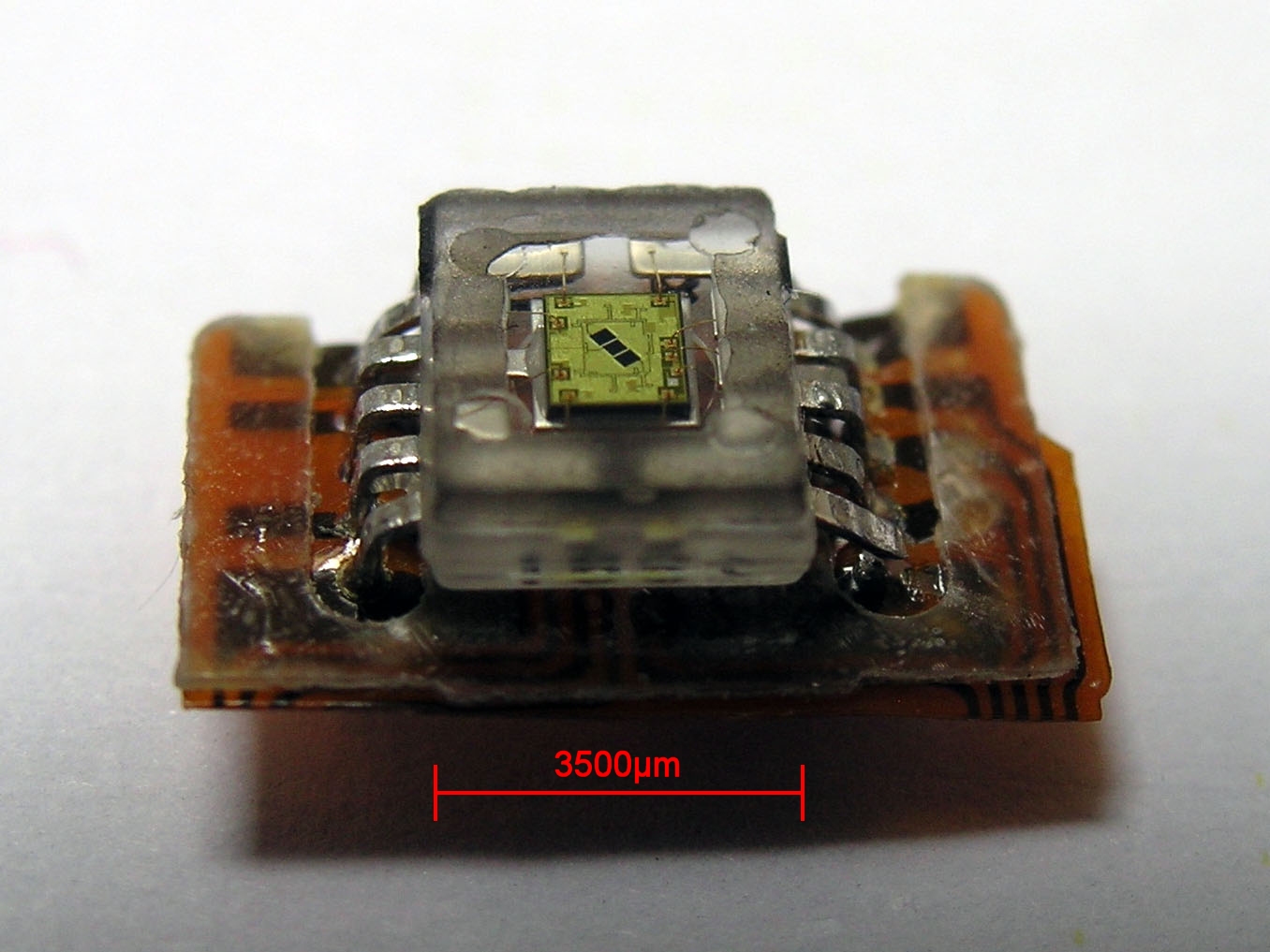
A photodetector salvaged from a CD-ROM drive. The photodetector contains three photodiodes, visible in the photo (in center).

Photodetectors, also called photosensors, are devices that detect light or other forms of electromagnetic radiation and convert it into an electrical signal. They are essential in a wide range of applications, from digital imaging and optical communication to scientific research and industrial automation. Photodetectors can be classified by their mechanism of detection, such as the photoelectric effect, photochemical reactions, or thermal effects, or by performance metrics like spectral response. Common types include photodiodes, phototransistors, and photomultiplier tubes, each suited to specific uses. Solar cells, which convert light into electricity, are also a type of photodetector. This article explores the principles behind photodetectors, their various types, applications, and recent advancements in the field.

History

[edit]

The development of photodetectors began with the discovery of the photoelectric effect by Heinrich Hertz in 1887, later explained by Albert Einstein in 1905.[1] Early photodetectors, such as selenium cells invented in the late 19th century, were used in light meters and telegraph systems.[2] The 1930s saw the invention of photomultiplier tubes, enabling the detection of faint light signals, which revolutionized fields like nuclear physics and astronomy. The mid-20th century brought semiconductor-based photodetectors, such as photodiodes and phototransistors, which transformed industries like telecommunications and computing.[3] Today, advancements continue with high-speed detectors and quantum technologies.

Classification

[edit]

Photodetectors can be classified based on their mechanism of operation and device structure. Here are the common classifications:

Based on mechanism of operation

[edit]
A commercial amplified photodetector for use in optics research

Photodetectors may be classified by their mechanism for detection:[4][unreliable source?][5][6]

  • Photoconductive effect: These detectors work by changing their electrical conductivity when exposed to light. The incident light generates electron-hole pairs in the material, altering its conductivity. Photoconductive detectors are typically made of semiconductors.[7]
  • Photoemission or photoelectric effect: Photons cause electrons to transition from the conduction band of a material to free electrons in a vacuum or gas.
  • Thermal: Photons cause electrons to transition to mid-gap states then decay back to lower bands, inducing phonon generation and thus heat.
  • Polarization: Photons induce changes in polarization states of suitable materials, which may lead to change in index of refraction or other polarization effects.
  • Photochemical: Photons induce a chemical change in a material.
  • Weak interaction effects: photons induce secondary effects such as in photon drag[8][9] detectors or gas pressure changes in Golay cells.

Photodetectors may be used in different configurations. Single sensors may detect overall light levels. A 1-D array of photodetectors, as in a spectrophotometer or a Line scanner, may be used to measure the distribution of light along a line. A 2-D array of photodetectors may be used as an image sensor to form images from the pattern of light before it.

A photodetector or array is typically covered by an illumination window, sometimes having an anti-reflective coating.

Based on device structure

[edit]

Based on device structure, photodetectors can be classified into the following categories:

  1. MSM Photodetector: A metal-semiconductor-metal (MSM) photodetector consists of a semiconductor layer sandwiched between two metal electrodes. The metal electrodes are interdigitated, forming a series of alternating fingers or grids. The semiconductor layer is typically made of materials such as silicon (Si), gallium arsenide (GaAs), indium phosphide (InP) or antimony selenide (Sb2Se3).[7] Various methods are employed together to improve its characteristics, such as manipulating the vertical structure, etching, changing the substrate, and utilizing plasmonics.[10] The best achievable efficiency is shown by Antimony Selenide photodetectors.
  2. Photodiodes: Photodiodes are the most common type of photodetectors. They are semiconductor devices with a PN junction. Incident light generates electron-hole pairs in the depletion region of the junction, producing a photocurrent. Photodiodes can be further categorized into: a. PIN Photodiodes: These photodiodes have an additional intrinsic (I) region between the P and N regions, which extends the depletion region and improves the device's performance. b. Schottky Photodiodes: In Schottky photodiodes, a metal-semiconductor junction is used instead of a PN junction. They offer high-speed response and are commonly used in high-frequency applications.
  3. Avalanche Photodiodes (APDs): APDs are specialized photodiodes that incorporate avalanche multiplication. They have a high electric field region near the PN junction, which causes impact ionization and produces additional electron-hole pairs. This internal amplification improves the detection sensitivity. APDs are widely used in applications requiring high sensitivity, such as low-light imaging and long-distance optical communication.[11]
  4. Phototransistors: Phototransistors are transistors with a light-sensitive base region. Incident light causes a change in the base current, which controls the transistor's collector current. Phototransistors offer amplification and can be used in applications that require both detection and signal amplification.
  5. Charge-Coupled Devices (CCDs): CCDs are imaging sensors composed of an array of tiny capacitors. Incident light generates charge in the capacitors, which is sequentially read and processed to form an image. CCDs are commonly used in digital cameras and scientific imaging applications.
  6. CMOS Image Sensors (CIS): CMOS image sensors are based on complementary metal-oxide-semiconductor (CMOS) technology. They integrate photodetectors and signal processing circuitry on a single chip. CMOS image sensors have gained popularity due to their low power consumption, high integration, and compatibility with standard CMOS fabrication processes.
  7. Photomultiplier Tubes (PMTs): PMTs are vacuum tube-based photodetectors. They consist of a photocathode that emits electrons when illuminated, followed by a series of dynodes that multiply the electron current through secondary emission. PMTs offer high sensitivity and are used in applications that require low-light detection, such as particle physics experiments and scintillation detectors.

These are some of the common photodetectors based on device structure. Each type has its own characteristics, advantages, and applications in various fields, including imaging, communication, sensing, and scientific research.

Properties

[edit]

There are a number of performance metrics, also called figures of merit, by which photodetectors are characterized and compared[4][5]

  • Quantum efficiency: The number of carriers (electrons or holes) generated per photon.
  • Responsivity: The output current divided by total light power falling upon the photodetector.
  • Noise-equivalent power: The amount of light power needed to generate a signal comparable in size to the noise of the device.
  • Detectivity: The square root of the detector area divided by the noise equivalent power.
  • Gain: The output current of a photodetector divided by the current directly produced by the photons incident on the detectors, i.e., the built-in current gain.
  • Dark current: The current flowing through a photodetector even in the absence of light.
  • Response time: The time needed for a photodetector to go from 10% to 90% of final output.
  • Noise spectrum: The intrinsic noise voltage or current as a function of frequency. This can be represented in the form of a noise spectral density.
  • Nonlinearity: The RF-output is limited by the nonlinearity of the photodetector[12]
  • Spectral response: The response of a photodetector as a function of photon frequency.

Subtypes

[edit]

Grouped by mechanism, photodetectors include the following devices:

Photoemission or photoelectric

[edit]

Semiconductor

[edit]

Photovoltaic

[edit]

Thermal

[edit]
  • Bolometers measure the power of incident electromagnetic radiation via the heating of a material with a temperature-dependent electrical resistance. A microbolometer is a specific type of bolometer used as a detector in a thermal camera.
  • Cryogenic detectors are sufficiently sensitive to measure the energy of single x-ray, visible and infrared photons.[20]
  • Pyroelectric detectors detect photons through the heat they generate and the subsequent voltage generated in pyroelectric materials.
  • Thermopiles detect electromagnetic radiation through heat, then generating a voltage in thermocouples.
  • Golay cells detect photons by the heat they generate in a gas-filled chamber, causing the gas to expand and deform a flexible membrane whose deflection is measured.

Photochemical

[edit]

Polarization

[edit]

Graphene/silicon photodetectors

[edit]

A graphene/n-type silicon heterojunction has been demonstrated to exhibit strong rectifying behavior and high photoresponsivity. Graphene is coupled with silicon quantum dots (Si QDs) on top of bulk Si to form a hybrid photodetector. Si QDs cause an increase of the built-in potential of the graphene/Si Schottky junction while reducing the optical reflection of the photodetector. Both the electrical and optical contributions of Si QDs enable a superior performance of the photodetector.[22]

Applications

[edit]

Photodetectors are integral to numerous fields:

  • Consumer electronics: CCD and CMOS sensors in cameras, optical storage devices.
  • Telecommunications: Fiber optic communication for high-speed data transmission.
  • Scientific research: Spectroscopy, particle detection, and astronomy.
  • Industrial automation: Barcode scanners, quality control systems.
  • Medical devices: Pulse oximeters, endoscopes.
  • Environmental monitoring: Air and water quality sensors, weather stations.

Emerging applications include autonomous vehicles and quantum computing.[23]

[edit]

Recent developments in photodetector technology include:

  • High-speed detectors: For faster optical communication.
  • Quantum photodetectors: For quantum computing and cryptography.
  • Novel materials: Organic and perovskite detectors for flexible electronics.
  • Integration with AI: For advanced image processing in autonomous systems.

Future research focuses on improving sensitivity, reducing noise, and expanding wavelength detection ranges.[24]

See also

[edit]

References

[edit]
[edit]
Revisions and contributorsEdit on WikipediaRead on Wikipedia
from Grokipedia
A photodetector is a device that detects light or other electromagnetic radiation by converting it into an electrical signal, through mechanisms such as the photoelectric effect, internal photoeffect in semiconductors generating electron-hole pairs, or thermal effects.[1] Semiconductor-based photodetectors are among the most common modern types and operate on principles such as photoconductivity, where light increases the conductivity of a material, or photovoltaic effects, where light induces a voltage or current across a p-n junction.[2] Common materials include silicon for visible light detection (bandgap ~1.12 eV, sensitive up to ~1100 nm) and indium gallium arsenide for near-infrared applications.[3][2] Photodetectors encompass various types, including photodiodes, which function as reverse-biased p-n junctions to produce a photocurrent proportional to light intensity, and phototransistors, which incorporate internal amplification for higher sensitivity.[4] Other variants include avalanche photodiodes (APDs) for low-light detection via internal gain, photoconductive detectors that alter resistance under illumination, and specialized arrays like charge-coupled devices (CCDs) for imaging.[4][2] Photovoltaic modes allow zero-bias operation, generating open-circuit voltage or short-circuit current without external power.[2] Key performance metrics include quantum efficiency (QE), the ratio of generated electrons to incident photons (often ~80% for silicon photodiodes), and responsivity (R_λ), the output current per unit optical power (e.g., 0.41–0.7 A/W for silicon p-n junctions).[4] Noise sources such as dark current (which doubles every 10°C) and shot noise limit sensitivity, while response time (e.g., 5–10 ns for silicon) determines speed for applications like optical communications.[4][3] Photodetectors are essential in fiber-optic systems (using InGaAs for 1.55 μm wavelengths), spectroscopy, medical imaging, and solar energy conversion.[4][2]

Fundamentals

Definition and Basic Operation

A photodetector is an optoelectronic device that detects electromagnetic radiation, typically in the ultraviolet, visible, or infrared spectrum, and converts it into an electrical signal. This conversion manifests as changes in current, voltage, or resistance, enabling the measurement of light intensity or presence. In basic operation, incident photons from the light source interact with the photodetector's sensitive material, such as a semiconductor, leading to the generation of charge carriers or, in some cases, thermal effects. These interactions produce free electrons and holes that can be collected and measured as an electrical output, proportional to the input light's characteristics. Quantum-based photodetectors rely on the absorption of photons with sufficient energy to excite electrons across the bandgap, while thermal photodetectors convert absorbed photon energy into heat, altering temperature-dependent properties. The primary inputs to a photodetector include the wavelength range of the radiation, which determines compatibility with the material's absorption properties (often spanning 400–1600 nm for common devices), and the light intensity, typically on the order of microwatts to milliwatts per square centimeter. Outputs vary by design but generally include photocurrent in microamperes or milliamperes, photovoltage, or variations in resistance, all directly tied to the incident optical power. This high-level workflow provides the essential interface between optical and electrical domains, forming the basis for applications in sensing and communication.[1]

Physical Principles

The photoelectric effect forms a foundational quantum process in many photodetectors. In photoemissive devices, incident photons are absorbed by a material, ejecting electrons if the photon energy exceeds the material's work function—this is the external photoelectric effect. In 1905, Albert Einstein explained this phenomenon by treating light as discrete quanta (photons), proposing that the energy of an absorbed photon E=hνE = h\nu must satisfy hν>ϕh\nu > \phi, where hh is Planck's constant, ν\nu is the frequency, and ϕ\phi is the work function; the excess energy appears as the maximum kinetic energy of the photoelectron, given by
E=hν=ϕ+Kmax. E = h\nu = \phi + K_{\max}.
This external photoemission underpins devices like photomultiplier tubes, while internal photoemission—where photons excite carriers across a metal-semiconductor interface without emission—underpins metal-semiconductor (Schottky) photodiodes, enabling direct conversion of photon energy into electrical current.[5][6]
Photoconductivity represents another key quantum mechanism, observed in semiconductors where absorbed photons generate electron-hole pairs that increase the material's electrical conductivity. When a photon with energy greater than the semiconductor bandgap is absorbed, it excites an electron from the valence band to the conduction band, creating a free carrier pair that enhances charge transport under an applied bias. This process is central to photoconductive detectors, such as those based on lead sulfide or mercury cadmium telluride, where the photogenerated carriers modulate resistance or current flow.[7] The photovoltaic effect is a related quantum mechanism in p-n junction devices, where absorbed photons generate electron-hole pairs that are separated by the built-in electric field, producing a voltage or current without external bias. This is the basis for photovoltaic detectors like solar cells and unbiased photodiodes.[4] In contrast, thermal detection relies on the heating effect of absorbed photons rather than direct carrier generation. Photon energy is converted into thermal energy within the detector material, raising its temperature and altering properties like resistance (in bolometers) or voltage (in thermocouples). This mechanism, exemplified in pyroelectric or Golay cell detectors, responds to the total incident power rather than individual photons, making it suitable for broadband operation across infrared wavelengths.[8] Central to both quantum and thermal processes is the material's optical absorption, quantified by the wavelength-dependent absorption coefficient α(λ)\alpha(\lambda), which describes the fractional intensity loss per unit distance as light propagates through the medium. The penetration depth, defined as 1/α1/\alpha, indicates the distance over which the light intensity drops to 1/e1/e of its initial value, influencing the active region for photon absorption in thin-film detectors. Wavelength selectivity in quantum detectors arises from the material bandgap EgE_g, which sets a cutoff wavelength λc=hc/Eg\lambda_c = hc / E_g, beyond which photons lack sufficient energy for absorption and carrier generation.[9] Quantum detectors, leveraging photoelectric or photoconductive effects, offer fast response times (often picoseconds) and spectral selectivity tied to EgE_g, but may require cryogenic cooling in certain applications, such as mid- to long-wave infrared detection, to suppress thermal noise. Thermal detectors, by comparison, provide broadband sensitivity from ultraviolet to far-infrared with simpler room-temperature operation, though their slower response (milliseconds) stems from thermal diffusion timescales.[10]

History

Early Developments

The earliest observations of light-induced electrical effects laid the groundwork for photodetection. In 1839, French physicist Alexandre-Edmond Becquerel discovered the photovoltaic effect while experimenting with an electrolytic cell consisting of a silver chloride electrode immersed in an aqueous solution; he noted that exposure to light increased the cell's electrical output, marking the first documented conversion of light into electricity.[11] This phenomenon, though not immediately applied to devices, provided initial insight into photo-induced charge generation in materials.[12] Building on such findings, the late 19th century saw advancements in solid-state photoconductivity. In 1873, English electrical engineer Willoughby Smith observed that the conductivity of selenium increased significantly under illumination during tests on submarine telegraph cables, establishing selenium's photoconductive properties and opening paths for light-sensitive resistors.[11] Concurrently, in the 1880s and 1890s, German physicists Julius Elster and Hans Friedrich Geitel developed the first practical photoelectric cells by evaporating alkali metals, such as potassium and sodium, onto the inner surfaces of evacuated glass tubes to form photosensitive cathodes; these vacuum-based devices emitted electrons upon light exposure, enabling rudimentary light detection and measurement.[13] Their work, initiated around 1889, represented a key step toward vacuum-tube photodetectors sensitive to visible and ultraviolet light.[14] The theoretical foundation for these empirical discoveries was solidified in the early 20th century. In 1905, Albert Einstein provided a quantum explanation for the photoelectric effect in his seminal paper, proposing that light consists of discrete energy packets (quanta, later termed photons) that eject electrons from a metal surface only if their energy exceeds a material-specific threshold; this model resolved discrepancies between classical wave theory and experimental observations of electron emission.[15] For this contribution, Einstein received the Nobel Prize in Physics in 1921.[15] Practical amplification of photoelectric signals emerged in the interwar period, enhancing detector sensitivity. In the 1920s and 1930s, researchers at RCA Laboratories advanced electron multiplication techniques; notably, in 1934, engineers Harley Iams and Bernard Salzberg constructed the first single-stage photomultiplier tube using secondary electron emission from multiple electrodes to amplify photocurrents by factors of thousands.[16] Vladimir Zworykin, also at RCA, contributed to multi-stage designs in the late 1930s, including electrostatic-focusing photomultiplier tubes by 1939 that improved gain and stability for low-light applications.[17] These innovations transformed photoelectric cells into highly sensitive devices suitable for scientific instrumentation.[18]

Modern Evolution

The modern era of photodetector technology began in the 1940s amid World War II efforts to advance radar systems, which demanded reliable solid-state detectors for microwave signals. In 1940, Russell Ohl at Bell Telephone Laboratories discovered the p-n junction in silicon while investigating high-purity silicon crystals for rectifier applications, observing that light exposure across the junction generated a photovoltaic voltage of up to 0.5 V. This breakthrough, patented in 1941, enabled the fabrication of the first silicon p-n junction photodiodes by the mid-1940s, which served as sensitive detectors in radar receivers by converting optical or microwave energy into electrical signals with improved purity and efficiency over earlier vacuum-tube devices.[19] By the 1950s, these photodiodes had matured into commercial components, underpinning early optoelectronic systems and laying the groundwork for transistor-based amplification in detection circuits.[20] The 1960s marked a pivotal shift toward integrated imaging arrays with the invention of the charge-coupled device (CCD) at Bell Labs. On October 17, 1969, Willard Boyle and George E. Smith developed the CCD as an analog shift register for memory storage, but its ability to store and transfer discrete packets of charge—each representing accumulated photoelectrons from incident light—quickly adapted it for electronic imaging. This innovation allowed for the creation of two-dimensional pixel arrays that captured high-fidelity images with low noise, revolutionizing applications from astronomy to television cameras by enabling digital signal processing without mechanical scanning.[21] In the 1970s and 1980s, the rise of optical fiber communications drove the refinement of avalanche photodiodes (APDs), which incorporated impact ionization for internal current gain to detect weak signals in high-speed links. Building on silicon APDs demonstrated in the late 1960s, researchers optimized structures like reach-through and edge-illuminated designs to achieve gains of 100–1000 while minimizing excess noise, with early commercial Si APDs supporting 45 Mb/s bit rates at 800–900 nm wavelengths for first-generation fiber optic receivers.[22] By the 1980s, III-V-based APDs, such as GaAs and InP variants, extended performance to 1.3–1.55 μm telecom bands, integrating seamlessly with low-loss silica fibers to enable multi-gigabit transceivers and laying the foundation for modern dense wavelength-division multiplexing systems.[23] The 1990s witnessed the resurgence of complementary metal-oxide-semiconductor (CMOS) image sensors, which began displacing CCDs in consumer electronics due to their scalability and integration advantages. Pioneered by Eric Fossum's active pixel sensor architecture in 1993, CMOS sensors incorporated amplification and signal processing at the pixel level, reducing power consumption to milliwatts and enabling on-chip analog-to-digital conversion—key for portable devices like early digital cameras.[24] By the decade's end, advancements such as pinned photodiodes and correlated double sampling lowered read noise to below 15 electrons RMS and dark current to 40 pA/cm², allowing CMOS arrays exceeding 1 megapixel to match CCD image quality at lower cost, thus dominating consumer cameras and camcorders. From the 2000s onward, photodetector evolution emphasized III-V compound semiconductors for enhanced infrared (IR) detection, addressing limitations of silicon in longer wavelengths. Materials like InGaAs and InAs/GaSb type-II superlattices shifted focus to near- and mid-IR (1–5 μm) applications in fiber optics and thermal imaging, with epitaxial growth techniques yielding detectors operational at higher temperatures and reduced cooling needs. Nanoscale fabrication, including quantum dot infrared photodetectors (QDIPs) and dot-in-a-well (DWELL) structures, emerged around 2005, leveraging self-assembled InAs quantum dots in GaAs matrices to achieve peak detectivities of 10^{11} cm Hz^{1/2}/W at 77 K while enabling multicolor sensing through intraband transitions.[25] This progression facilitated compact, high-performance IR focal plane arrays for defense and spectroscopy, with ongoing refinements in superlattice periods down to 10 monolayers boosting quantum efficiency beyond 50%.[26]

Classification

By Mechanism of Operation

Photodetectors are primarily classified into two broad categories based on their mechanism of operation: quantum detectors and thermal detectors. Quantum detectors convert light into electrical signals through direct photon interactions that generate charge carriers, while thermal detectors rely on the indirect effects of light-induced heating. This classification highlights the fundamental physical processes involved, influencing their suitability for different applications.[1][27] Quantum detectors operate via photon-induced charge generation, where absorbed photons excite electrons across energy bands or emit them from surfaces, producing a measurable electrical response. Key subtypes include photoemissive detectors, which rely on the photoelectric effect to liberate electrons; photovoltaic detectors, which generate electron-hole pairs in a p-n junction without external bias; and photoconductive detectors, which increase conductivity through carrier generation under applied voltage. These mechanisms enable high-efficiency detection across a range of wavelengths, though performance often requires cryogenic cooling for infrared applications to minimize thermal noise.[1][27] Thermal detectors, in contrast, function by sensing the temperature rise caused by photon absorption, which alters material properties to produce an output signal. Representative examples include bolometric detectors, where temperature changes modify electrical resistance; pyroelectric detectors, which exploit variations in spontaneous polarization with temperature; and Golay cells, which detect gas expansion due to heating in a sealed chamber. These devices typically operate at room temperature and offer broadband response but suffer from slower dynamics due to thermal diffusion times.[27] Some advanced photodetectors incorporate hybrid mechanisms that combine quantum charge generation with thermal effects, such as in graphene quantum dot bolometers, to achieve improved sensitivity and operating temperature range in mid-infrared detection. These hybrids leverage the selectivity of quantum processes with the broadband absorption of thermal elements, though they remain an emerging area.[28] The following table compares the key attributes of quantum and thermal mechanisms:
MechanismResponse SpeedSensitivitySpectral Range
QuantumHigh (picoseconds to nanoseconds)High (e.g., single-photon detection possible)Selective (UV to near/mid-IR, material-dependent)
ThermalLow (milliseconds)Moderate (e.g., detectivity ~10^9 cm Hz^{1/2} W^{-1} for Golay cells)Broadband (far-IR and beyond, less wavelength-specific)
The choice of mechanism depends on critical factors such as operating temperature and response time. Quantum detectors often require cooling (e.g., below 77 K for mid-IR) to suppress dark current and achieve peak performance, making them ideal for high-speed, low-noise applications like spectroscopy. Thermal detectors excel in room-temperature environments with slower response times suitable for imaging or power measurement, where broadband detection is prioritized over speed.[1][27]

By Device Structure

Photodetectors can be classified by their device structure, which determines key aspects of performance such as carrier collection efficiency, response speed, sensitivity, and integration potential, independent of the underlying detection mechanism. This structural taxonomy highlights how architectural choices in material composition, geometry, and fabrication influence light absorption, charge separation, and transport within the device.[7][29] Bulk devices, also known as photoconductors, employ homogeneous semiconductor materials, often single-crystal structures like silicon or germanium, sandwiched between two ohmic contacts without intentional junctions. In this configuration, incident photons generate electron-hole pairs that increase conductivity under an applied bias, enabling simple fabrication but typically resulting in slower response times due to reliance on diffusion and recombination dynamics rather than built-in fields for carrier separation. For instance, high-resistivity ZnO single crystals have been used in bulk photoconductors for fast X-ray detection, achieving nanosecond response times owing to their uniform material properties and low defect density.[7][30][31] Junction-based structures incorporate heterogeneities to create internal electric fields that enhance carrier separation and reduce recombination losses, improving quantum efficiency and speed compared to bulk designs. The p-n junction photodetector features a doped p-type and n-type semiconductor interface, where the depletion region's built-in potential sweeps photogenerated carriers to contacts, enabling operation at low or zero bias in photovoltaic mode.[32][33] The p-i-n variant adds an intrinsic undoped layer between p and n regions, widening the depletion zone for greater absorption volume and higher bandwidth, particularly in fiber-optic applications, though it requires reverse bias to fully deplete the intrinsic region.[32][34] Schottky diodes, formed by a metal-semiconductor contact, offer even faster response due to lower capacitance and absence of minority carrier storage, making them suitable for high-speed detection, albeit with potentially lower efficiency from surface states.[34][35] Layered heterostructures utilize stacked materials with varying bandgaps to engineer absorption spectra and carrier confinement, allowing tailored performance for specific wavelengths without relying solely on bulk material properties. These designs, often grown via epitaxial techniques like molecular beam epitaxy, enable bandgap engineering to extend sensitivity into infrared regimes. A prominent example is multiple quantum well (MQW) structures, consisting of alternating thin layers of wide- and narrow-bandgap semiconductors (e.g., GaAs/AlGaAs), which confine carriers in quantum wells to enhance intersubband absorption for mid- to long-wave IR detection while minimizing dark current through precise layer control.[36][37] Such architectures improve responsivity and enable multicolor detection by stacking multiple MQW periods, influencing overall device efficiency through optimized layer thicknesses and compositions.[38] Nanoscale structures leverage low-dimensional geometries to amplify light-matter interactions, overcoming limitations of bulk absorption in thin films by enhancing light trapping and carrier collection at the microscale. Nanowire photodetectors, fabricated from materials like InGaAs or Si, provide one-dimensional channels that guide light axially, reducing reflection and enabling high surface-to-volume ratios for improved sensitivity, though they may suffer from surface recombination unless passivated.[39] Quantum dot-based devices, such as colloidal PbS dots in ordered arrays, offer discrete energy levels for size-tunable absorption across near-IR, with structures that decouple absorption and transport layers to boost gain and reduce noise.[40] Plasmonic enhancements integrate metallic nanostructures (e.g., Au nanoparticles) to excite surface plasmons, confining light subwavelength-scale and boosting local fields by factors up to 1000, thereby increasing photocurrent in otherwise weakly absorbing materials like perovskites or 2D semiconductors.[41][42] These nanoscale features collectively enhance scalability and flexibility but require precise nanofabrication to mitigate variability in performance.[43] Integrated photodetectors are fabricated monolithically on a chip with other photonic or electronic components, facilitating compact systems with reduced parasitics for higher speed and lower power, whereas discrete devices operate as standalone units with separate packaging that offers modularity but introduces coupling losses and scalability challenges. On-chip integration, common in silicon photonics platforms, embeds detectors directly into waveguides (e.g., Ge-on-Si p-i-n junctions), enabling seamless interfacing in transceivers and improving overall system efficiency through minimized optical and electrical interconnects.[44][45] In contrast, discrete photodetectors, often hermetically sealed in TO-can packages, excel in high-power or harsh environments but limit density in array applications due to individual handling and alignment needs. The choice impacts scalability: integrated designs support mass production via CMOS-compatible processes for cost-effective large-scale imaging arrays, while discrete ones prioritize ruggedness in specialized sensors.[46][47]

Properties

Performance Parameters

The performance of photodetectors is quantified through several key metrics that assess their sensitivity, speed, and noise characteristics, enabling fair comparisons across different device types and applications. These parameters are derived from fundamental optoelectronic principles and are essential for optimizing detector design and performance evaluation.[48] Responsivity $ R $, defined as the ratio of the generated photocurrent $ I_p $ to the incident optical power $ P_{in} $, is expressed in amperes per watt (A/W) and serves as a primary measure of conversion efficiency. The formula is $ R = \frac{I_p}{P_{in}} $, where $ I_p = \eta \frac{e \lambda}{h c} P_{in} $, linking it directly to the quantum efficiency $ \eta $, electron charge $ e $, wavelength $ \lambda $, Planck's constant $ h $, and speed of light $ c $. Factors such as operating wavelength influence $ R $ through the material's absorption spectrum, while applied bias can modulate it in devices with internal gain mechanisms like avalanche photodiodes by enhancing carrier multiplication.[49][2] Quantum efficiency $ \eta $, the ratio of the number of charge carriers collected to the number of incident photons, quantifies the fraction of photons that contribute to the electrical signal and is unitless (often expressed as a percentage). It is related to responsivity by $ \eta = \frac{h c}{e \lambda} R $, highlighting its dependence on wavelength and material properties such as absorption coefficient and collection efficiency. External quantum efficiency accounts for surface reflection and other losses, while internal quantum efficiency focuses on absorbed photons; both are influenced by factors like depletion region thickness and bias voltage, which affect carrier sweep-out. High $ \eta $ (approaching 100%) is desirable but limited by recombination and escape probabilities in the device structure.[49][2][48] Dark current $ I_{dark} $, the residual current flowing through the detector in the absence of light, primarily arises from thermal generation of carriers in the semiconductor. It is typically expressed in amperes or as a density in A/cm² and increases exponentially with temperature (often doubling every 10°C) and reverse bias. Low dark current (e.g., nA levels for silicon photodiodes at room temperature) is crucial for low-light detection, as it contributes to shot noise and sets the minimum detectable signal; materials like InGaAs exhibit higher dark currents due to narrower bandgaps.[48] Photoconductive gain $ G ,applicabletocertaindetectortypes,representsthenumberofchargecarrierscollectedperphotogeneratedelectronholepair,exceedingunityinmechanismslikecarriertrappingormultiplication(e.g.,inavalanchephotodiodes).Itamplifies[responsivity](/page/Responsivity)(, applicable to certain detector types, represents the number of charge carriers collected per photogenerated electron-hole pair, exceeding unity in mechanisms like carrier trapping or multiplication (e.g., in avalanche photodiodes). It amplifies [responsivity](/page/Responsivity) ( R = \eta \frac{e \lambda}{h c} G $) but often at the cost of response speed and increased noise; the gain-bandwidth product $ G \times f_{3dB} $ serves as a figure of merit. Distinguishing gain from quantum efficiency is essential, as high gain (>10) enables single-photon detection but requires careful bias control to avoid excess noise.[48] Linearity and linear dynamic range (LDR) assess the detector's ability to produce a proportional output over varying input intensities. Linearity is evaluated by the slope $ \alpha $ of the photocurrent versus log optical power plot, ideally $ \alpha = 1 $ for perfect proportionality. LDR, in decibels, is $ LDR = 20 \log_{10} (I_{max}/I_{min}) $, where $ I_{max} $ and $ I_{min} $ are the maximum and minimum currents within 1% deviation from linearity (or 3% for quasi-linear). Typical LDR values range from 60–120 dB; saturation at high powers or noise floor at low powers limits it, making this metric vital for imaging and spectroscopy applications.[48] Detectivity $ D^* $, a normalized figure of merit for sensitivity, is given by $ D^* = \frac{\sqrt{A \Delta f}}{NEP} $, where $ A $ is the active area, $ \Delta f $ is the measurement bandwidth, and NEP (noise-equivalent power) is the incident power required to produce a signal-to-noise ratio of 1 in a 1 Hz bandwidth. NEP itself is $ NEP = \frac{i_n}{R} $, with $ i_n $ as the noise current; $ D^* $ has units of cm Hz1/2^{1/2} W1^{-1} and allows comparison of detectors independent of size and bandwidth. It is particularly useful for low-light applications, where thermal or shot noise limits performance, and higher values indicate superior noise-limited detection capability.[48][49] Bandwidth and response time characterize the temporal performance, determining the maximum modulation frequency and signal fidelity. Bandwidth is typically the 3 dB frequency $ f_{3dB} $, where the response drops to $ 1/\sqrt{2} $ of its low-frequency value, often limited by the RC time constant of the junction capacitance $ C_j $ and load resistance $ R_L $ via $ f_{3dB} = \frac{1}{2\pi R_L C_j} $, or by carrier transit time in high-speed designs. Response time includes rise time $ \tau_r $ (10% to 90% of peak) and fall time $ \tau_f $, approximated as $ \tau_r \approx 0.35 / f_{3dB} $; these are influenced by bias voltage, which accelerates carriers, and diffusion versus drift transport mechanisms. Faster response (sub-nanosecond) is critical for high-data-rate systems but trades off with quantum efficiency in thinner active regions.[49][48] Noise sources degrade the signal quality and are pivotal in defining the ultimate sensitivity limits, with the signal-to-noise ratio (SNR) quantifying the effectiveness as $ SNR = \frac{I_p^2}{\langle i_n^2 \rangle} $, where $ \langle i_n^2 \rangle $ is the mean-square noise current. Shot noise arises from the discrete nature of photocarriers and dark current, given by $ i_{shot}^2 = 2 e (I_p + I_d) \Delta f $, dominant at high signal levels or reverse bias. Thermal (Johnson) noise stems from resistive elements, $ i_{th}^2 = 4 k_B T \Delta f / R $, where $ k_B $ is Boltzmann's constant and $ T $ is temperature, prevalent in low-bias or high-impedance setups. Flicker (1/f) noise, with power spectral density proportional to $ 1/f^\beta $ ($ \beta \approx 1 $), originates from material defects and surface traps, affecting low-frequency operation. Minimizing these through cooling, low dark current materials, and optimized biasing enhances SNR and thus detectivity.[48][49]

Characterization Methods

Characterization of photodetectors involves experimental techniques to quantify key performance metrics such as responsivity, noise, and speed. These methods ensure reliable evaluation under controlled conditions, often using specialized instrumentation to isolate signals from background interference. Spectral response, in particular, assesses how efficiently a detector converts incident photons of varying wavelengths into electrical output, typically plotted as responsivity R(λ) in amperes per watt versus wavelength. To measure spectral response, a monochromator disperses broadband light from a tunable source, such as a xenon lamp, to illuminate the detector with narrowband light at specific wavelengths. The photocurrent generated is modulated using a mechanical chopper and detected with a lock-in amplifier, which enhances signal-to-noise ratio by rejecting broadband noise. This setup allows for precise mapping of R(λ) across the detector's operational spectrum, from ultraviolet to infrared, with resolutions down to 1 nm.[50] For absolute measurements, the incident optical power is calibrated against a reference detector, enabling traceability to primary standards.[51] Noise analysis distinguishes between fundamental and environmental contributions to detector performance, critical for determining metrics like noise equivalent power or detectivity D*. Shot noise, arising from the Poisson statistics of photon arrival and carrier generation, is separated from thermal (Johnson) noise, which originates in resistive elements, using a spectrum analyzer connected to the detector output. The analyzer sweeps frequencies to generate a noise power spectral density plot, identifying shot noise as white (frequency-independent) up to the detector's bandwidth, while thermal noise exhibits a 1/f dependence at low frequencies. Measurements are performed in dark conditions or with controlled illumination to isolate components, often at room temperature to baseline performance.[52][53] Temporal response evaluates the detector's speed, including rise time and bandwidth, essential for high-rate applications. Short-pulse lasers, such as picosecond diode lasers emitting at wavelengths matching the detector's peak response, generate optical impulses that are detected and captured on a high-bandwidth oscilloscope. The electrical output waveform's full width at half maximum yields the impulse response, from which bandwidth is derived via Fourier transform or 3-dB cutoff frequency. For ultrafast detectors, sampling oscilloscopes with sub-picosecond resolution are employed to deconvolve instrument limitations from the intrinsic response.[54][55] Calibration standards provide absolute references for responsivity, ensuring comparability across devices and labs. NIST-traceable sources, such as cryogenic radiometers serving as primary standards, calibrate transfer detectors like silicon trap photodiodes, which then validate monochromator-based systems. These standards achieve uncertainties below 0.1% in the visible and near-infrared, with measurements substituting the test detector in the beam path under monochromatic illumination. For broadband or extended-range detectors, multi-wavelength calibrations using tunable lasers or synchrotron sources extend traceability to infrared regimes.[51][56] Advanced methods address specialized properties like internal quantum efficiency η and low-temperature behavior. Electroluminescence reciprocity relates the detector's emission spectrum under forward bias to its absorption, allowing non-destructive estimation of η via calibrated spectroscopy; the emitted photon flux is compared to injected carriers, leveraging detailed balance principles. Cryogenic testing, conducted in liquid helium or nitrogen dewars, suppresses thermal noise and generation-recombination effects, revealing intrinsic low-noise limits for infrared photon detectors; cooling to 77 K or below can reduce dark current by orders of magnitude, with performance assessed using cooled preamplifiers and spectrum analyzers. These techniques are particularly valuable for optimizing high-sensitivity devices.[57][27]

Types

Photoemissive Detectors

Photoemissive detectors operate based on the external photoelectric effect, in which incident photons strike a photosensitive surface, known as a photocathode, causing the emission of electrons into a vacuum environment. These devices are particularly suited for detecting low levels of light due to their ability to achieve high internal gain through electron multiplication. The vacuum enclosure is crucial to prevent electron collisions with gas molecules, ensuring efficient electron transport and collection.[5] A primary example of photoemissive detectors is the photomultiplier tube (PMT), which incorporates a photocathode followed by a series of dynodes for secondary electron emission multiplication. In a PMT, photoelectrons emitted from the photocathode are accelerated toward the first dynode by an electric field, where each incident electron triggers the release of multiple secondary electrons from the dynode surface, typically coated with materials like beryllium-copper alloy or alkali antimonide. This process cascades through 10 to 14 dynodes, resulting in gains exceeding 10^6, with overall amplification reaching up to 10^8 in some designs. PMTs exhibit sensitivity across the ultraviolet to visible spectrum, often extending into the near-infrared depending on the photocathode material.[58][5] Simpler photoemissive devices, such as vacuum photodiodes or phototubes, lack the dynode chain and instead directly collect photoelectrons at an anode, providing unity gain but still benefiting from the photoelectric effect. These often employ alkali-based photocathodes, such as cesium-antimony (Cs-Sb) or potassium-cesium-antimony (K-Cs-Sb), which achieve quantum efficiencies up to 30% in the visible range, particularly around 400-500 nm. The operation relies on the same vacuum-sealed tube structure to maintain low-pressure conditions, typically below 10^{-6} torr, enabling reliable electron trajectories without scattering.[59][60] Photoemissive detectors offer significant advantages, including exceptionally low noise levels—often with dark currents below 1 nA—and high-speed response times on the order of nanoseconds, making them ideal for time-resolved applications. However, their vacuum tube construction renders them bulky, typically several centimeters in diameter and length, and fragile due to the glass envelope, which is susceptible to breakage from mechanical shock or implosion. Additionally, they require high operating voltages (500-2000 V) for electron acceleration, complicating integration into compact systems.[5][61] In particle physics, PMTs are widely used in scintillation counters, where they detect faint light pulses emitted by scintillator materials excited by ionizing radiation, such as gamma rays or charged particles, enabling precise energy and timing measurements in experiments like those at CERN.[62]

Semiconductor Detectors

Semiconductor detectors operate through band-to-band transitions in solid-state materials, where incident photons generate electron-hole pairs that are separated by an internal electric field, producing a measurable photocurrent. These devices are the most prevalent for detecting light in the visible and near-infrared spectra due to their high sensitivity, fast response times, and compatibility with integrated circuits. Unlike vacuum-based systems, they leverage the semiconductor's bandgap to selectively absorb photons above a threshold energy, enabling wavelength-specific detection without thermal emission mechanisms.[63] Photodiodes, the foundational structure in semiconductor detectors, consist of a p-n junction formed by doping a semiconductor with p-type and n-type impurities. Under reverse bias, the junction creates a depletion region—a low-carrier zone with a strong built-in electric field—that efficiently collects photogenerated carriers, minimizing recombination and yielding a linear photocurrent proportional to light intensity. This reverse-biased operation enhances bandwidth and reduces capacitance compared to unbiased configurations, making photodiodes suitable for high-speed applications. Avalanche photodiodes (APDs) extend this principle by applying a higher reverse bias to induce impact ionization, providing internal gain through carrier multiplication, though this introduces noise from stochastic avalanche processes.[64][63][65] Common materials for semiconductor detectors include silicon (Si), which offers reliable performance across 400–1100 nm wavelengths due to its indirect bandgap of 1.12 eV, enabling cost-effective visible-light detection. Gallium arsenide (GaAs) extends sensitivity into the infrared up to approximately 870 nm with a direct bandgap of 1.42 eV, supporting faster electron mobility for applications requiring higher speeds. For telecom wavelengths around 1550 nm, indium gallium arsenide (InGaAs) is preferred, with a tunable bandgap of about 0.75 eV that absorbs from 900–1700 nm while maintaining low noise in lattice-matched structures on InP substrates. These material choices balance quantum efficiency, dark current, and fabrication compatibility, with Si dominating commercial visible detectors and III-V compounds like GaAs and InGaAs excelling in near-IR regimes.[63][66][67] Semiconductor detectors can function in photovoltaic mode at zero bias, where the built-in potential across the p-n junction generates an open-circuit voltage akin to solar cells, ideal for low-power, DC sensing without external circuitry. In contrast, photoconductive mode applies reverse bias to increase the electric field, enabling current gain through trap-assisted multiplication or higher carrier drift velocities, which boosts sensitivity for weak signals but at the cost of increased power consumption and potential saturation. The choice between modes depends on trade-offs in noise, speed, and linearity, with photovoltaic mode favored for energy harvesting and photoconductive for amplified detection in noisy environments.[66][68] For enhanced signal amplification, phototransistors integrate a photodiode-like base-collector junction with a transistor structure, where light-induced base current modulates the collector-emitter path, achieving gains of 100–1000 without external amplifiers. Bipolar phototransistors use this for visible detection, while field-effect transistors (FETs) in photodetector configurations, such as photogate MOSFETs, amplify via gate voltage modulation from photogenerated charge, offering lower noise and higher input impedance suitable for imaging arrays. These devices trade off speed for gain, with response times typically in the microsecond range compared to nanoseconds for plain photodiodes.[69][70] Key challenges in semiconductor detectors include dark current, the thermally generated leakage that limits signal-to-noise ratio, particularly in reverse-biased operation where it arises from diffusion, generation-recombination, or tunneling in the depletion region. In APDs, avalanche breakdown poses a critical limit, occurring at high fields (around 10^5–10^6 V/cm) that trigger runaway multiplication, necessitating precise voltage control to avoid device failure while maximizing gain. Mitigation strategies involve material grading and passivation to suppress surface states, ensuring reliable performance across temperature variations.[65][71][64]

Thermal Detectors

Thermal detectors convert incident photon energy into thermal energy, which induces a detectable change in the device's physical properties, enabling broadband sensitivity independent of wavelength and suitability for low-photon-flux scenarios. These devices typically incorporate an absorbing layer designed for high emissivity, approximating blackbody absorption to efficiently capture radiation across wide spectral bands, such as infrared and terahertz ranges. The resulting temperature elevation is transduced into an electrical signal, with thermal time constants ranging from milliseconds to seconds, reflecting the inherent thermal inertia of the system.[72] Bolometers represent a primary class of thermal detectors, operating via the temperature-dependent change in electrical resistance of a sensitive element, known as a thermistor. Materials like vanadium oxide (VO_x), with a temperature coefficient of resistance (TCR) of approximately -2.3%/K, are commonly used for room-temperature operation, while superconducting films enable higher sensitivity at cryogenic temperatures. For instance, room-temperature VO_x bolometers achieve a noise-equivalent power (NEP) of around 10^{-12} W/√Hz, with thermal time constants on the order of 10 ms. Superconducting bolometers can reach NEP values as low as 3.4 × 10^{-15} W/√Hz at 0.4 K, though they require cooling. These detectors excel in applications like uncooled terahertz imaging due to their simplicity and broad response.[72] Pyroelectric detectors function by exploiting the temperature-induced variation in spontaneous electric polarization within ferroelectric materials, generating a charge or voltage proportional to the rate of temperature change. Crystals such as lithium tantalate (LiTaO_3) are widely employed, offering room-temperature operation with NEP typically between 10^{-9} and 10^{-10} W/√Hz and response times in the millisecond regime. Unlike steady-state sensors, pyroelectrics respond to modulated or changing radiation, making them suitable for chopped-beam measurements in spectroscopy. Their wide bandwidth, spanning from near-infrared to terahertz, stems from the non-wavelength-specific thermal mechanism.[72] Golay cells detect far-infrared radiation through the photoacoustic effect, where absorbed photons heat a gas-filled chamber, causing thermal expansion that deflects a metallized membrane and modulates a transmitted light beam sensed by a photodiode. Filled with gases like argon or xenon, these devices provide a flat spectral response over 20–1000 μm, with an NEP of approximately 1.2 × 10^{-10} W/√Hz and a time constant of about 15 ms. Though effective for broadband detection at room temperature, Golay cells are limited by their large size, fragility, and slow dynamics.[72] Overall, thermal detectors offer key advantages including room-temperature functionality and spectral agnosticism, facilitating applications in infrared sensing and imaging where cryogenic cooling is impractical. However, their response times, governed by thermal diffusion and capacity, restrict bandwidth to below 100 Hz, posing challenges for fast-modulation scenarios.[72]

Specialized Detectors

Specialized photodetectors are designed for niche applications requiring unique functionalities beyond standard spectral or intensity detection, such as chemical reactivity, polarization analysis, or enhanced broadband response in specific regimes. These devices leverage tailored materials and structures to achieve specialized performance, often integrating with conventional semiconductors for readout while providing selectivity in emerging domains like environmental sensing or vectorial light characterization. Photochemical photodetectors exploit light-induced chemical reactions in organic materials, such as dyes or polymers, to enable sensing of environmental factors like UV exposure or analytes. Photochromic materials, which undergo reversible color changes upon light absorption, are commonly incorporated into polymer matrices for this purpose; for instance, spirooxazine dyes embedded in electrospun cellulose fibers detect UV radiation by shifting from colorless to colored states, offering visual or optical readout for dosimetry applications. This mechanism relies on photoisomerization, where incident photons trigger molecular reconfiguration, altering optical properties without generating free carriers like in semiconductor detectors, thus prioritizing chemical stability and reversibility over high-speed response. Such devices achieve detection limits down to relevant environmental thresholds, such as cumulative UV doses in textiles, with fatigue resistance over thousands of cycles.[73][74] Polarization-sensitive photodetectors utilize anisotropic structures to resolve the polarization state of light, enabling measurement of Stokes parameters for applications in imaging and ellipsometry. Materials like chiral 2D-perovskite nanowires, formed with chiral ammonium cations, exhibit distinct responses to linear and circular polarizations due to their crystallographic orientation and in-plane carrier transport. These nanowires demonstrate a linear polarization ratio of 1.6 and a circular anisotropy factor of 0.15, allowing direct computation of Stokes parameters from photocurrent variations under different incident polarizations. With responsivity up to 47.1 A/W and detectivity of 1.24 × 10¹³ Jones, such detectors facilitate compact polarization imaging without external optics. Similarly, nanowires from anisotropic crystals or low-dimensional materials like black phosphorus enhance sensitivity to specific polarization components, supporting full-Stokes detection in a single pixel.[75][76] Graphene/silicon hybrid photodetectors combine graphene's broadband absorption with silicon's efficient carrier collection for extended infrared operation. In these structures, graphene serves as a transparent electrode and absorber, forming a Schottky junction at the interface that promotes photogating or photovoltaic effects for high gain. Devices achieve responsivities exceeding 10⁵ A/W in the near-infrared, driven by trap-assisted multiplication and low dark current, while maintaining broadband response from visible to mid-IR wavelengths up to 1064 nm with values around 4 A/W. This hybrid approach enables integration with silicon photonics, offering compatibility for on-chip IR sensing with response times under 100 μs.[77][78] Quantum cascade detectors (QCDs) employ intersubband transitions in semiconductor quantum wells for mid-infrared detection, operating photovoltaically without external bias. The active region consists of coupled quantum wells where photoexcitation promotes electrons between subbands, followed by fast extraction via phonon-assisted relaxation to reset the system. Designed for wavelengths around 4-5 μm, QCDs exhibit peak responsivities of ~10 mA/W at room temperature and 3-dB bandwidths over 20 GHz, benefiting from sub-picosecond carrier lifetimes. These detectors are particularly suited for high-speed mid-IR spectroscopy, such as gas sensing, due to their low noise and impedance-matched designs.[79][80] Narrowband perovskite photodetectors provide color-selective response through engineered bandgaps and microstructures, ideal for multispectral imaging without external filters. Strategies include compositional grading or quantum confinement in halide perovskites to achieve full-width at half-maximum (FWHM) values as low as 20-30 nm, enabling rejection ratios >1000 for off-peak wavelengths. For example, lead halide perovskites tuned for red, green, or blue channels demonstrate specific detectivities exceeding 10¹² Jones while maintaining high external quantum efficiencies near 80% at peak wavelengths. This selectivity arises from sharp absorption edges, supporting applications in color cameras and fluorescence detection with minimal crosstalk.[81]

Applications

Sensing and Imaging

Photodetectors play a central role in modern sensing and imaging systems, enabling the capture of visual and spectral information across diverse applications from consumer devices to scientific instruments. In cameras and scanners, arrays of complementary metal-oxide-semiconductor (CMOS) and charge-coupled device (CCD) photodetectors form the backbone of image acquisition, converting incident photons into electrical signals for digital processing. These arrays are ubiquitous in smartphones, where back-illuminated CMOS sensors with pixel sizes as small as 1 micrometer achieve high resolution and low-light performance, supporting features like computational photography. For spectral imaging, multispectral sensors integrate narrowband filters directly onto CMOS arrays, allowing simultaneous capture of multiple wavelength bands for applications such as material identification and remote sensing. In environmental sensing, ultraviolet (UV) photodetectors are essential for monitoring atmospheric ozone, where they detect UV absorption at wavelengths around 254 nm to quantify ozone concentrations with sensitivities down to parts per billion. Systems employing CCD arrays in UV photometers provide high-accuracy, real-time measurements for air quality assessment, leveraging the Beer-Lambert law for calibration. Infrared (IR) photodetectors, particularly photon-based types like InSb for mid-wave IR (3-5 micrometers) or HgCdTe for mid- to long-wave IR (3-12 micrometers), facilitate thermal imaging by sensing emitted radiation, enabling non-contact temperature mapping in forward-looking infrared (FLIR) systems used for surveillance and industrial inspection.[82][83] Medical applications leverage photodetectors for minimally invasive diagnostics and monitoring. In endoscopy, CMOS or CCD image sensors integrated into flexible probes capture high-resolution visible and near-IR images inside the body, supporting procedures like gastrointestinal examinations.[84] Pulse oximetry employs silicon photodiodes paired with red (660 nm) and near-IR (940 nm) LEDs to measure blood oxygen saturation (SpO₂) non-invasively; the photodiode detects transmitted light modulated by arterial pulsations, computing SpO₂ via the ratio of AC to DC components with accuracy within 2-3% for levels above 70%.[85][86] In astronomy, large-format photodetector arrays enable deep-space imaging by capturing faint signals from distant celestial objects. The James Webb Space Telescope (JWST) utilizes mercury-cadmium-telluride (HgCdTe) hybrid arrays with 4 million pixels each, sensitive from 0.6 to 5 micrometers, achieving read noise below 10 electrons and enabling detection of exoplanet atmospheres through multiple non-destructive reads.[87] These near-IR detectors, hybridized to silicon readout circuits, support mosaic configurations for fields of view up to 200 square arcminutes.[88] Integration of photodetector arrays into imaging systems presents challenges related to pixel size and dynamic range. Shrinking pixel dimensions below 5 micrometers improves spatial resolution but increases crosstalk and reduces fill factor, necessitating advanced microlens arrays and back-illumination to maintain quantum efficiency above 80%.[89] Achieving wide dynamic range—often exceeding 100 dB—is critical for handling scenes with varying illumination, where avalanche photodiodes (APDs) in 27-micrometer pixels enable operation from 10^{-4} lux to sunlight levels, though they require precise gain control to mitigate excess noise factors below 1.2.[90] These issues drive innovations in readout integrated circuits to balance sensitivity and uniformity across large arrays.[91] Recent advancements as of 2025 include 2D material-based photodetectors, such as those using transition metal dichalcogenides (e.g., MoS₂/WSe₂ heterostructures), enabling self-powered, high-sensitivity imaging for biomedical and environmental applications with improved spectral selectivity.[92][93]

Communications and Data Processing

Photodetectors are essential for high-speed data transfer in optical fiber communications, where InGaAs-based PIN photodiodes and avalanche photodiodes (APDs) serve as receivers in systems supporting 10 to 400 Gbps Ethernet. These detectors operate in the 1.3–1.55 μm wavelength range, converting modulated optical signals from fibers into electrical currents with minimal distortion. InGaAs PIN photodiodes provide high responsivity (around 0.9 A/W) and bandwidths up to 25 GHz for single-channel 25 Gbps operation, while APDs enhance sensitivity through internal gain, achieving 35 GHz bandwidth and -10.8 dBm optical sensitivity at a bit error rate (BER) of 10⁻¹² for 50 Gbps non-return-to-zero signals. For 400 Gbps Ethernet, multiple parallel channels (e.g., 8×50 Gbps) utilize these InGaAs APDs to meet aggregate throughput demands in long-haul and metro networks.[94] Signal integrity in these fiber systems is rigorously assessed using eye diagrams, which overlay multiple bit transitions to reveal jitter, noise, and intersymbol interference, directly correlating with BER performance. Eye diagrams generated from photodetector outputs help optimize receiver design by quantifying eye opening penalties, ensuring BER below 10⁻¹² for error-free transmission after forward error correction.[95] This testing is critical for validating photodetector response in dispersive fiber environments, where bandwidth limitations could degrade high-rate signals. In free-space optical (FSO) links, photodetectors enable laser-based communication for satellite applications, supporting data rates up to 100 Gbps over atmospheric or space channels. Coherent detection schemes employ balanced photodetectors, often InGaAs-based, to mix incoming laser signals with a local oscillator, achieving high sensitivity despite turbulence-induced fading.[96] These systems, demonstrated in drone-to-ground links as proxies for satellite relays, use quadrant photodetectors for beam tracking alongside high-speed receivers for data demodulation, facilitating inter-satellite links with terabit-per-second potential in feeder networks.[97] Data centers rely on vertical-cavity surface-emitting laser (VCSEL)-photodiode pairs for short-reach optical interconnects, typically over multimode fibers up to 100 m at 850 nm. Germanium or InGaAs photodiodes paired with VCSELs deliver 28 Gbps per channel with low power consumption (under 5 pJ/bit), scaling to 400 Gbps via parallel lanes in pluggable modules.[98] These pairs minimize latency in switch-to-server connections, with photodiodes exhibiting 20–30 GHz bandwidth to match VCSEL modulation speeds. In photonic computing, silicon photonics-integrated photodetectors enable optical logic operations by converting light to electrical signals for gate-level processing. Zero-biased stacked germanium-on-silicon photodiodes, integrated with microring resonators, perform universal NOR logic gates at 10 Mbps using 160 μW optical power, operating in photovoltaic mode without external bias.[99] This integration supports reconfigurable directed-logic circuits for on-chip computation, leveraging the detectors' high efficiency (0.8 A/W) and compact footprint in CMOS-compatible platforms.[100] Across these applications, photodetectors must meet stringent requirements for low timing jitter (below 10 ps) and bandwidth exceeding 100 GHz to handle ultra-high data rates with minimal errors. Waveguide-coupled III-V or germanium photodiodes on silicon achieve 70–100 GHz bandwidth, supporting 100 Gbps PAM-4 modulation with BER under 10⁻², essential for jitter-sensitive interconnects in communications and computing.[101]

Advancements

Emerging Materials and Technologies

Recent advancements in two-dimensional (2D) materials have revolutionized photodetector performance, particularly in achieving ultrafast and broadband detection capabilities. Graphene and transition metal dichalcogenides like MoS₂ enable response times on the femtosecond scale due to their high carrier mobility and low-dimensional structure, facilitating applications in high-speed optoelectronics.[102] In 2025, 2D materials have further advanced to support multidimensional photodetectors capable of polarization and spectrum detection.[93] For instance, all-2D asymmetric-contact photodetectors incorporating graphene and NbSe₂ demonstrate gate-modulated ultrafast responses, with broadband sensitivity extending from visible to mid-infrared wavelengths.[103] Heterostructures such as FePS₃-MoS₂ p-n junctions further enhance charge separation through type-II band alignment, yielding high-sensitivity broadband optoelectronics suitable for multidimensional sensing.[104] These 2D materials also support neuromorphic devices by mimicking synaptic responses, leveraging their photon-induced conductivity changes for artificial sensory systems.[105] Perovskite materials have emerged as promising for narrowband photodetectors, offering tunable bandgaps through compositional engineering of halide ions, which allows precise control over spectral selectivity.[81] Recent developments in 2023 and beyond include retina-inspired sensor arrays using red/green/blue perovskite narrowband detectors, achieving full-color imaging with high fidelity by integrating neuromorphic processing.[106] Patterning techniques for perovskite films have advanced device scalability, enabling high-performance photodetectors with external quantum efficiencies (EQE) approaching 90% and suppressed dark currents through interfacial charge transfer layers; as of October 2025, systematic reviews highlight progress in patterned fabrication for enhanced optoelectronic performance.[107][108] Hybrid nanostructures combining perovskites with 2D materials, such as multilayer MoS₂ and lead halide perovskite quantum dots, provide further bandgap tunability for zero-dimensional to two-dimensional detection modes.[109] Colloidal quantum dots (QDs) excel in infrared (IR) photodetection due to their size-tunable absorption, where quantum confinement effects allow bandgap adjustment from near-IR to short-wave IR by varying dot diameter.[110] Materials like HgTe and PbS QDs have been integrated into double-heterojunction imagers, covering the full IR spectrum with low dark currents and high detectivity for room-temperature operation.[111] Recent post-2020 innovations include ligand-exchanged PbS QD phototransistors with enhanced responsivity in the short-wave IR, achieved via long-chain dithiol treatments that improve charge transport while maintaining solution-processability.[112] CuInSe₂ QDs demonstrate broadband tunability for optical applications, leveraging their size-dependent emission for multispectral IR sensing.[113] Organic polymers and conjugated systems offer flexible, low-cost alternatives for wearable photodetectors, benefiting from solution-based fabrication and mechanical compliance.[114] Conjugated donor polymers with chalcogen atom substitutions enable energy level tuning, enhancing organic photodetector (OPD) performance in visible-to-IR regimes through improved charge extraction.[115] These materials support radiation-tolerant designs, as seen in conjugated polymer-based IR detectors that maintain functionality under harsh environments, suitable for space or biomedical wearables. Room-temperature OPDs based on organic semiconductors exhibit peculiar advantages like low noise and flexibility, advancing integration into self-powered devices.[116] Intelligent and tunable photodetectors represent a key 2025 trend, enabling post-manufacturing spectral adjustments via microelectromechanical systems (MEMS) or electro-optic modulation for adaptive sensing. MEMS-based meta-absorbers allow nondispersive IR detection by mechanically tuning incident angles to match gas absorption spectra, providing compact, reconfigurable platforms.[117] Electrochromic filters in on-chip spectrometers facilitate electrochemical modulation of spectral responses, achieving miniaturized, broadband tunability without dispersive elements. Nonvolatile silicon photonic MEMS switches, enabled by van der Waals stiction, support dynamic reconfiguration of optical paths for wavelength-selective detection. 2D material integrations further enable multidimensional, bi-directional responses in these intelligent systems, processing complex optical inputs for advanced applications.[118][93] Advancements in photodetector technology are increasingly focusing on miniaturization through on-chip integration with artificial intelligence (AI) to enable smart sensors capable of real-time data processing and adaptive response. This integration allows for compact devices that perform in-sensor computing, reducing latency and power consumption while enhancing functionality in applications like edge AI systems. For instance, 2D materials-based photodetectors are being developed to achieve chip-level integration with AI algorithms for multidimensional light detection, addressing the need for smaller, more efficient optoelectronic systems.[93][119] Sustainability efforts in photodetectors emphasize the shift toward lead-free perovskites and recyclable organic materials to mitigate environmental impacts from toxic components. Lead-free halide perovskites, such as those based on bismuth or tin, offer comparable optoelectronic properties to lead-based variants while enabling eco-friendly disposal and reuse, with recent developments achieving stable performance in photodetection spanning near-ultraviolet to infrared wavelengths. Additionally, recyclable luminescent structures using lead-free perovskites demonstrate potential for sustainable energy-harvesting devices that can be disassembled without hazardous waste.[120] Quantum-enhanced photodetectors, particularly single-photon detectors, are poised to play a pivotal role in quantum networks by enabling secure communication through photon entanglement and high-fidelity detection. Superconducting nanowire single-photon detectors (SNSPDs) are scaling toward array-based cameras for applications like entanglement-based imaging, offering near-unity quantum efficiency and low dark counts essential for quantum key distribution. Semiconductor-based alternatives are also advancing, providing room-temperature operation suitable for integrated quantum photonics.[121][122][123] Bio-inspired trends, such as eye-like curved detectors, aim to replicate natural vision systems for improved field-of-view and reduced aberrations in imaging. Curved image sensors mimic the retina's shape, enabling wide-angle detection without complex optics, and are being integrated into flexible optoelectronic devices for applications in robotics and wearables. In parallel, photodetectors are evolving to support 6G optical links, with ultrabroadband on-chip photonics enabling full-spectrum wireless communication at terabit speeds while maintaining low noise and compactness.[124][125] Key challenges include scaling quantum efficiency for terahertz (THz) detection, where current devices struggle with low responsivity and bandwidth limitations despite progress in 2D materials and room-temperature operation. Reducing power consumption is critical for Internet of Things (IoT) deployment, with self-powered photodetectors based on 2D materials emerging to eliminate external biasing and enable long-term, battery-free sensing. Radiation hardness remains a hurdle for space applications, requiring detectors resilient to cosmic rays, as demonstrated by recent assessments of THz devices that retain performance post-irradiation.[126][127][128][129]

References

User Avatar
No comments yet.