Hubbry Logo
search
logo
STS-128
STS-128
current hub
1738812

STS-128

logo
Community Hub0 Subscribers
Read side by side
from Wikipedia

STS-128
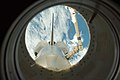
Discovery approaches the ISS with Leonardo in its payload bay
NamesSpace Transportation System-128
Mission typeISS assembly
OperatorNASA
COSPAR ID2009-045A Edit this at Wikidata
SATCAT no.35811Edit this on Wikidata
Mission duration13 days, 20 hours, 54 minutes, 55 seconds
Distance travelled9,262,217 kilometres (5,755,275 mi)
Orbits completed219
Spacecraft properties
SpacecraftSpace Shuttle Discovery
Launch mass121,422 kilograms (267,689 lb)[1]
Crew
Crew size7
Members
Launching
Landing
Start of mission
Launch dateAugust 29, 2009, 03:59 (2009-08-29UTC03:59Z) UTC[2]
Launch siteKennedy, LC-39A
End of mission
Landing dateSeptember 12, 2009, 00:53 (2009-09-12UTC00:54Z) UTC[citation needed]
Landing siteEdwards, Runway 22
Orbital parameters
Reference systemGeocentric
RegimeLow Earth
Perigee altitude219 kilometres (136 mi)[3]
Apogee altitude264 kilometres (164 mi)[3]
Inclination51.6 degrees[3]
Period89.33 minutes[3]
EpochAugust 29, 2009[3]
Docking with ISS
Docking portPMA-2
(Harmony forward)
Docking dateAugust 31, 2009 00:54 UTC
Undocking dateSeptember 8, 2009 19:26 UTC
Time docked8 days, 18 hours, 32 minutes

Seated (l–r) Ford and Sturckow. Standing (l–r) are Hernández, Olivas, Stott, Fuglesang and Forrester.
← STS-127
STS-129 →

STS-128 (ISS assembly flight 17A) was a NASA Space Shuttle mission to the International Space Station (ISS) that launched on August 28, 2009. Space Shuttle Discovery carried the Multi-Purpose Logistics Module Leonardo as its primary payload. It was Discovery's 37th flight. Leonardo contained a collection of experiments for studying the physics and chemistry of microgravity. Three spacewalks were carried out during the mission, which removed and replaced a materials processing experiment outside ESA's Columbus module, and returned an empty ammonia tank assembly.[4]

The mission's first launch attempt was delayed due to weather concerns, including multiple weather violations in NASA's launch rules, beginning over two hours before the scheduled launch.[5][6][7] The second launch attempt, scheduled for August 26, 2009, at 01:10:22 EDT, was called off the previous evening due to an anomaly in one of the orbiter's fuel valves.[8][9][10] The launch finally took place on August 28, 2009, at 23:59 EDT. Discovery landed on September 11, 2009, at Edwards Air Force Base, which was the last landing of a shuttle to occur at the California site.

Crew

[edit]
Position[4] Launching astronaut Landing astronaut
Commander United States Frederick W. Sturckow
Fourth (last NASA) spaceflight
Pilot United States Kevin A. Ford
First spaceflight
Mission Specialist 1 United States Patrick G. Forrester
Third and last spaceflight
Mission Specialist 2
Flight Engineer
United States José M. Hernández
Only spaceflight
Mission Specialist 3 United States John D. Olivas
Second and last spaceflight
Mission Specialist 4 Sweden Christer Fuglesang, ESA
Second and last spaceflight
Mission Specialist 5 United States Nicole Stott
Expedition 20
First spaceflight
United States Timothy Kopra
Expedition 20
First spaceflight
Crew notes

Nicole Stott was originally scheduled to return aboard Soyuz TMA-15, but a change in the flight plan was made due to the possible flight delays in future shuttle missions, which could have extended Canadian astronaut Robert Thirsk's mission beyond the six-month duration preferred for station crew members.[11]

STS-128 was the final Space Shuttle flight used for ISS crew rotation, with Nicole Stott replacing Tim Kopra. Stott returned on STS-129, but that flight did not bring her replacement.

The mission of Christer Fuglesang was named Alissé by the European Space Agency.[12] The name was proposed by Jürgen Modlich from Baierbrunn, Germany. The name refers to the 15th-century explorers who used the trade winds to follow Christopher Columbus across the oceans to the New World.

STS-128 also marked the first time two Hispanic Americans were on the same crew. John "Danny" Olivas of El Paso, Texas, made his second trip into space, and José M. Hernández of Stockton, California, made his first. Both are of Mexican heritage.

Crew seat assignments

[edit]
Seat[13] Launch Landing
Seats 1–4 are on the flight deck.
Seats 5–7 are on the mid-deck.
1 Sturckow
2 Ford
3 Forrester
4 Hernandez
5 Olivas
6 Fuglesang
7 Stott Kopra

Mission payload

[edit]
Location Cargo Mass
Bays 1–2 Orbiter Docking System
EMU 3009 / EMU 3015
1,800 kilograms (4,000 lb)
~260 kilograms (570 lb)
Bay 3P Shuttle Power
Distribution Unit (SPDU)
~17 kilograms (37 lb)
Bay 4P APC/MISSE Carrier 57 kilograms (126 lb)
Bay 5P APC/MISSE Carrier 57 kilograms (126 lb)
Bay 7S ROEU umbilical ~79 kilograms (174 lb)
Bays 7–12 Leonardo (MPLM FM-1) 12,131 kilograms (26,744 lb)
Bay 13 Lightweight MPESS Carrier (LMC) 1,780 kilograms (3,920 lb)
Starboard Sill Orbiter Boom Sensor System ~382 kilograms (842 lb)
Port Sill Canadarm 410 kilograms (900 lb)
Total: 16,973 kilograms (37,419 lb)

Multi-Purpose Logistics Module (MPLM) Leonardo

[edit]
Leonardo, as flown on STS-102.

The primary payload of STS-128 was the Multi-Purpose Logistics Module Leonardo to assist with establishing a six-man crew capacity by bringing extra supplies and equipment to the station. The Multi-Purpose Logistics Module contained three racks for life support, a crew quarter to be installed in Kibo, a new treadmill (COLBERT) that will temporarily be placed in Node 2 and later in Node 3, and an Air Revitalization System (ARS) that will temporarily be placed in Kibo and later in Node 3.

Leonardo Specifications
  • Length: 21 feet (6.4 m)
  • Diameter: 15 feet (4.6 m)
  • Payload Mass (launch): 27,510 pounds (12,480 kg)
  • Payload Mass (return): 16,268 pounds (7,379 kg)
  • Empty Weight: 9,810 pounds (4,450 kg)

Lightweight Multi-Purpose Carrier (LMC)

[edit]
LMC with ATA and EuTEF STS-128

The shuttle carried a Lightweight Multi-Purpose Experiment Support Structure Carrier (LMC) with Ammonia Tank Assembly (ATA).[1] The new ammonia tank replaced an empty tank during an EVA.

TriDAR

[edit]

The shuttle flew the first test flight of the TriDAR, a 3D dual-sensing laser camera, intended for potential use as an autonomous rendezvous and docking sensor. The TriDAR successfully tracked the ISS position and orientation from the shuttle during docking operations.[14]

Other science packages

[edit]

It also contained three racks dedicated to science, FIR (Fluids Integrated Rack) and the first Materials Science Research Rack (MSRR-1) to be placed in Destiny and MELFI-2 (Minus Eighty Laboratory Freezer for ISS) to be placed in Kibo. The FIR enabled detailed study of how liquids behave in microgravity, a crucial detail for many chemical reactions. One experiment, for instance, examined how mixtures known as colloids behave without being stirred by sedimentation and convection. Another using the Light Microscopy Module (LMM) will examine how an ideal heat pipe works without the distortions of gravity.[15]

Mission experiments

[edit]

The STS-128 mission (as did STS-125 and STS-127) took part in crew seat vibration tests designed to help engineers on the ground understand how astronauts experience launch. They will use the information to help design the crew seats that will be used in future NASA spacecraft.

STS-128 repeated the Boundary Layer Transition (BLT) Detailed Test Objective (DTO) experiment that was done by the same shuttle during STS-119. In this experiment, one of the thermal protection systems was raised to create a boundary layer transition in which the air flow becomes turbulent beyond a certain speed. During STS-119 the tile was raised 0.25 inches (6.4 mm) above the others, tripping the flow at Mach 15 during reentry. In the modification being done, the tile has been raised 0.35 inches (8.9 mm) to trip at Mach 18 producing more heat.

Discovery undertook the testing of a catalytic coating which was meant to be used by the Orion spacecraft. Two TPS tiles located in the protuberance downstream from the BLT tile had been fully coated with the catalytic material in order to understand the entry heating performance. The tiles were instrumented to collect a wide variety of data.[16]

Mission milestones

[edit]

The mission marked:

  • 159th NASA crewed space flight
  • 128th Space Shuttle mission since STS-1
  • 37th flight of Discovery
  • 30th shuttle mission to the ISS
  • 103rd post-Challenger mission
  • 15th post-Columbia mission
  • 32nd shuttle night launch
  • NASA's first Space Shuttle launch to take place during two calendar days
  • 25th anniversary of Discovery's first flight, STS-41-D (August 30, 1984)

Shuttle processing

[edit]

Discovery rolled out from the Orbiter Processing Facility to the Vehicle Assembly Building after the external tank was cleared for use and was mated with it.[17][18] The foam insulation on the tank underwent stringent pull tests after the foam liberated and hit the orbiter during STS-127.[19] The STS-128's tank initially exhibited no concerns while the STS-127 case was determined to be a one-off case due to surface contamination prior to foam application.[20][21]

The main change from previous missions is the change of the Ground Umbilical Carrier Plate (GUCP) vent housing. The quick release vents exhibited leaks during STS-119 and STS-127, which were determined to be due to a misalignment in the vent. This led to the one part rigid seal in the external tank being replaced with a two part flexible seal.[22]

Discovery later rolled out from the VAB to Launch Complex 39A on August 4, 2009, in a slow drive on the top of the Crawler-transporter. The 3.4-mile (5.5 km) rollout began at 02:07 EDT, and ended with the launch platform secured in place at about 13:50 EDT. The move took longer than expected due to adverse weather conditions, which included lightning warnings. The crawler also had to pause occasionally so mud could be removed from its treads and bearings. Technicians then quickly prepared the shuttle to host the crew's countdown dress rehearsal known as the Terminal Countdown Demonstration Test (TCDT).[23] Discovery's seven astronauts flew to Kennedy on August 5, 2009, for the training activity which concludes later in the week with a complete practice countdown, minus liftoff, involving the crew and the launch team.[24] Meanwhile, in an unprecedented operation, modifications were made to the left Solid rocket booster on the pad.[25] The modifications involved replacement of a check valve filter assembly in the booster which was found to have broken.[26] In a potentially delaying factor, in depth testing of the external tank with X-ray revealed voids in the foam which might have formed during the injection molding of the foam. This has also been decided as a suspect factor in the foam shedding during STS-127. The air in the voids could have expanded due to the high temperatures generated during ascent thus breaking the foam. The reviews considered a rollback as an option since the defect could not be set right in the pad.[26][27][28] Later, the tank was cleared for launch as is without any additional inspections.[29]

Launch attempts

[edit]

The first launch attempt was delayed by 24 hours due to weather concerns, including multiple weather violations in NASA's launch rules beginning over 2 hours before the scheduled launch.[5][6][7] During the second attempt on Wednesday morning, a problem with a LH2 fill-and-drain fuel valve inside Discovery's aft compartment led to another scrubbing. The problem arose when sensors did not detect the closure of the valve when commanded to do so. The issue was thought to be with the sensors rather than the valve itself.[8][9][10] After inerting the orbiter's tank, which involved draining it, tests were conducted on the valves. Despite the valves working normally, another delay was called for to have more confidence in the system, and to give the console operators who performed the test some rest.[30][31][32] The launch team evaluated the issue, passing on a possible launch window on August 27, 2009, at 01:10 EDT. The launch was delayed until 23:59 EDT, August 28, 2009, to allow the engineers to be fully satisfied with the vehicle.[33] Later the mission was cleared for launch which involved a flight rule waiver for cycling the valve and a discussion to analyze the test failure of an Ares-1 booster that was similar to the SRBs used for the mission.[34] NASA feared another delay when storms formed near the Kennedy Space Center on August 28, 2009, but the weather cleared in time for a successful launch of Discovery at 23:59 EDT.[35][36][37]

Attempt Planned Result Turnaround Reason Decision point Weather go (%) Notes
1 25 Aug 2009, 1:36:05 am Scrubbed Weather 25 Aug 2009, 1:25 am ​(T−9:00 hold) 80%[38] Precipitation and lightning in launch and landing area[5][6][7]
2 26 Aug 2009, 1:10:01 am Scrubbed 0 days 23 hours 34 minutes Technical 25 Aug 2009, 5:52 pm 70%[38] Failure indicator on LH2 inboard fill and drain valve[30][31][32]
3 28 Aug 2009, 11:59:37 pm Successful 2 days 22 hours 50 minutes 60%; later 80%[34]

Mission timeline

[edit]

August 28 (Flight Day 1 – Launch)

[edit]
Space Shuttle Discovery launches from Kennedy Space Center, August 28, 2009

After launch at 23:59 EDT, Discovery opened her payload bay doors. Once the doors were opened the crew deployed the Ku-band antenna and activated the Shuttle Remote Manipulator System (SRMS). Once the Ku-band antenna was deployed and activated, the crew then down-linked photos from the External Tank Umbilical Well Camera system, so controllers on the ground could see how the tank performed and how much if any foam was shed during ascent.

August 29 (Flight Day 2 – TPS survey)

[edit]

During Discovery's first full day on orbit, the crew used the SRMS to grapple the Orbiter Boom Sensor System (OBSS) and survey the wing leading edges, nose and other parts of the Thermal Protection System (TPS), as well as the Orbital Maneuvering System (OMS) Pods. During this time some of the crew were preparing the space suits that will be used during the 3 Extra-vehicular activities (EVA) and setting up the tools that will be used during the docking. This includes installing the Centerline Camera and extending the Orbiter Docking system Ring Extension.

August 30 (Flight Day 3 – Docking)

[edit]

Discovery docked with the Pressurized Mating Adapter (PMA) 2 on the front of the Harmony connecting module. Before the shuttle docked, Commander Rick Sturckow performed what is known as the Rendezvous Pitch Maneuver while Expedition 20 Commander Gennady Padalka and Flight Engineer Michael Barratt took photos of the shuttle's belly. The photos were down-linked to mission control for review. After docking, Nicole Stott and Tim Kopra switched Soyuz seat liners, making Stott an Expedition 20 Flight Engineer and Tim Kopra an STS-128 Mission Specialist. The joint crews also performed some transfers from the shuttle mid-deck and checked on the pressure in the MPLM Leonardo.

August 31 (Flight Day 4 – MPLM berthing)

[edit]

During flight day 4, the MPLM Leonardo was berthed to the Nadir (the Earth-facing port on Harmony) using the Space Station Remote Manipulator System (SSRMS). Once it was berthed, the crews activated it and opened the hatch for ingress. Some more items were transferred from the shuttle mid-deck, including the MDS experiment and the space suits Danny Olivas and Nicole Stott would use during EVA 1. The pair also prepared all the tools that would be used during the EVA with some help from Tim Kopra. Later, during the night, when the crews were asleep, the team of ground controllers vented the Port 1 (P1) Ammonia Tank Assembly (ATA) Nitrogen Vent lines in preparation for the ATA to be removed during EVA 1.

September 1 (Flight Day 5 – EVA 1)

[edit]
Nicole Stott during the STS-128 mission's first space-walk.

EVA 1 was performed, and saw the removal of the empty Ammonia Tank Assembly, and the removal and stowage of the EuTef and MISSE 6 experiments. While the spacewalk was going on crew members inside were transferring the Crew Quarters, C.O.L.B.E.R.T treadmill and the Node 3 Air Revitalization System rack (ARS). The treadmill and ARS were temporarily stowed, while the crew Quarters was installed in the Kibo Module where setup and activation was begun.

September 2 (Flight Day 6)

[edit]

During flight day 6, the joint crews continued the activation of the new crew quarters. The last of the major transfer items, the Fluids Integrated Rack (FIR), Materials Science Research Rack, and the Minus Eighty Laboratory Freezer ISS 2 (MELFI-2), were transferred from the Multi-Purpose Logistics Module (MPLM) Leonardo. Astronauts Danny Olivas and José M. Hernández answered some questions submitted on YouTube and Twitter. Olivas and Christer Fuglesang also prepared for the second EVA and "camped out" in the air lock at a lower pressure to help get ready for EVA 2 on flight day 7.

September 3 (Flight Day 7 – EVA 2)

[edit]
Composite of images showing the Russian Segment during the EVA

On flight day 7, Danny Olivas and Christer Fuglesang performed the second spacewalk of the STS-128 mission. Olivas and Fuglesang installed and connected the new Ammonia Tank Assembly (ATA), and also performed two get aheads. The get ahead tasks included installing protective lens covers on the Space Station Remote Manipulator System (SSRMS) End B cameras . Once the ATA was installed, the tank was integrated into the cooling loop. While Olivas and Fuglesang were outside, the rest of the crew continued on transferring items to and from both the shuttle mid-deck and MPLM.

September 4 (Flight Day 8)

[edit]

The first part of the crew day was spent off duty. The crews enjoyed a meal, took a crew photo and took part in a PAO event. More transfer was completed by both crews. The space station crew calibrated the Oxygen Generation System (OGS) H2 sensor. Timothy Kopra and Nicole Stott continued their hand over activities, helping Stott who is taking over from Kopra. Danny Olivas and Christer Fuglesang got their space suits ready for the third and final space walk. The pair spent the night in the Quest Joint Airlock, at a lower pressure of 10.2 psi instead of 14.7 psi.

September 5 (Flight Day 9 – EVA 3)

[edit]
Danny Olivas during EVA 3.
Highlights from the third spacewalk (2 min 21 secs)

During flight day 9, Danny Olivas and Christer Fuglesang performed EVA 3. The pair completed all tasks that were to be done, including installing two GPS antennas and deploying the Starboard 3 (S3) Payload Attach System (PAS), a new Rate Gyro Assembly (RGA) 2, and routing of Node 3 Avionics cables. The joint crew also completed more transfer, mostly transfer for return to Earth in the MPLM and Space Shuttle mid-deck. The ISS crew also replaced a bolt on the Common Berthing Mechanism (CBM) so that the MPLM won't get stuck, and also to ensure correct capture of the HTV.

September 6 (Flight Day 10 – Off duty)

[edit]

Flight day 10 saw the joint crews transfer samples from the space station to the shuttle freezer known as Glacier. The samples will be returned to Earth for examination by scientists who will develop ways to prevent bone and muscle loss in space as well as cures for other illnesses on Earth. The crews also completed some close outs of the Multi-Purpose Logistics Module Leonardo. The last portion of the crew day was spent off duty.

September 7 (Flight Day 11 – Hatch closure)

[edit]

On flight day 11, the joint ISS/shuttle crews completed transfers and closed the hatches with the MPLM. Once the hatches were closed, the MPLM was deactivated, demated and berthed back in the payload bay of the space shuttle. During this process, José M. Hernández and Nicole Stott took part in a PAO event. The end of the crews work days saw the two crews say goodbye in a farewell ceremony and close the hatches between the shuttle and ISS. Once the hatches were closed, the Pressurized Mating Adapter 2 was depressurized, in advance of undocking. The shuttle crew setup and checked out the rendezvous tools before going to bed.

September 8 (Flight Day 12 – Undocking)

[edit]

On flight day 12, Space Shuttle Discovery successfully undocked from the International Space Station at 19:26 UTC. After undocking, the shuttle backed out and performed a fly around of the ISS. The Space Shuttle then performed two separation burns using its thrusters. After the separation burns, astronauts Kevin Ford, José M. Hernández, and Christer Fuglesang used the Orbiter Boom Sensor System (OBSS) to inspect the shuttle's Thermal Protection System (TPS). When they completed that task, the OBSS was berthed on the starboard sill of the payload bay and the Shuttle Remote Manipulator System (SRMS) was powered down.

Space Shuttle Discovery and International Space Station on September 8, 2009, after undocking

September 9 (Flight Day 13 – End of mission prep)

[edit]

On flight day 13, the Space Shuttle crew began stowing items for landing. During the course of the day, commander Frederick W. Sturckow and pilot Kevin A. Ford performed standard checks of the Flight Control Systems (FCS), Reaction Control System (RCS) jets, and communications with the ground. The crew also deactivated the Wing Leading Edge System (WLES), stowed the Ku-band antenna, and reviewed landing procedures.

September 10 (Flight Day 14 – Landing postponed)

[edit]

On flight day 14, Discovery was scheduled to land at Kennedy Space Center at 19:04 EDT (23:04 UTC). The landing was postponed due to weather conditions, and the second opportunity at 20:40 EDT (00:40 UTC) was also postponed due to weather conditions.

September 11 (Flight Day 15 – Landing)

[edit]
After weather delayed two landing opportunities at Kennedy Space Center, Discovery lands at Edwards Air Force Base, California.

On flight day 15, at 19:47 EDT (23:47 UTC), Discovery started the de-orbit burn for landing at Edwards Air Force Base after its two landing attempts at Kennedy Space Center the previous day were waved off. Discovery touched down safely at 20:53 EDT (17:53 PDT/00:53 UTC).

The landing marked the final time a Space Shuttle mission concluded at Edwards Air Force Base, as well as the last time a ferry flight would be needed for an operational orbiter. Discovery returned to KSC on Monday, September 21, 2009, after refueling stops at Amarillo International Airport, Fort Worth Naval Station, and Barksdale Air Force Base on September 20. The last seven missions of the shuttle all touched down at Kennedy Space Center.

Spacewalks

[edit]

Each spacewalk was planned to last approximately 6.5 hours.[39]

EVA Spacewalkers Start (UTC) End (UTC) Duration
EVA 1 John D. Olivas
Nicole Stott
September 1, 2009
21:49 UTC
September 2, 2009
04:24 UTC
6 hours, 35 minutes
Prepared for the replacement of an empty ammonia tank on the station's port truss by releasing its bolts. Retrieved the Materials International Space Station Experiment and European Technology Exposure Facility mounted outside the Columbus laboratory, and stowed them in Discovery's cargo bay for their return to Earth.
:Robotic Arm Operators: Ford and Thirsk[1]
EVA 2 John D. Olivas
Christer Fuglesang
September 3, 2009
22:13 UTC
September 4, 2009
04:51UTC[40]
6 hours, 39 minutes
Removed the new ammonia tank from the shuttle's payload bay and replaced it with the used tank from the station. The new tank, weighing about 1,800 pounds (820 kg), was the most mass ever moved by spacewalking astronauts.

With this spacewalk, ESA astronaut Fuglesang became the first person, who is not from either an American or Russian space program, to have participated in four or more spacewalks.
:Robotic Arm Operators: Ford and Stott

EVA 3 John D. Olivas
Christer Fuglesang
September 5, 2009
20:39 UTC
September 6, 2009
03:40 UTC
7 hours, 01 minutes
Preparations for the arrival of the Tranquility node by attaching cables between the starboard truss and the Unity node, the area where Tranquility will be installed. Tranquility is targeted to arrive on STS-130 in February 2010. The spacewalkers also replaced a communications sensor device, installed two new GPS antennas, and replaced a circuit breaker.

Wake-up calls

[edit]

NASA began a tradition of playing music to astronauts during the Gemini program, which was first used to wake up a flight crew during Apollo 15. Each track is specially chosen, often by their families, and usually has a special meaning to an individual member of the crew, or is applicable to their daily activities.[41][42]

Flight Day Song Artist Played for
Day 2 "Back In The Saddle Again" Gene Autry Frederick W. Sturckow
Day 3 "Made to Love" TobyMac Nicole Stott
Day 4 "Mi Tierra" Gloria Estefan José M. Hernández
Day 5 "Indiana, Our Indiana" Indiana University Band Kevin A. Ford
Day 6 "What a Wonderful World" Louis Armstrong Christer Fuglesang
Day 7 "There is a God" 33Miles Patrick G. Forrester
Day 8 "What a Wonderful World" Louis Armstrong Danny Olivas
Day 9 "El Hijo del Pueblo" José Alfredo Jiménez José M. Hernández
Day 10 "Rocket" Andrew Peterson Patrick G. Forrester
Day 11 "Only One" Jeremy Kay John D. Olivas
Day 12 "Beautiful Day" U2 Timothy Kopra
Day 13 "Sailing" Rod Stewart Christer Fuglesang
Day 14 "Good Day Sunshine" The Beatles Kevin A. Ford
Day 15 "Big Boy Toys" Aaron Tippin Frederick W. Sturckow

Media

[edit]

See also

[edit]

References

[edit]
[edit]
Revisions and contributorsEdit on WikipediaRead on Wikipedia
from Grokipedia
STS-128 was the 128th mission in NASA's Space Shuttle program and the 37th flight for the orbiter Discovery, which launched on August 28, 2009, to deliver the Leonardo Multi-Purpose Logistics Module (MPLM) and other equipment to the International Space Station (ISS) as part of ongoing assembly and maintenance efforts.[1] The mission facilitated the transition to a six-person permanent crew on the ISS by providing essential life support upgrades, scientific payloads, and crew rotation, including the exchange of astronaut Nicole Stott for Timothy Kopra.[2] Launched from Kennedy Space Center's Pad 39A at 11:59 p.m. EDT, Discovery docked with the ISS on August 31 after a two-day journey, remaining attached for eight days to transfer cargo and conduct operations.[1] The shuttle undocked on September 8 and landed on September 11 at Edwards Air Force Base in California at 8:53 p.m. EDT due to weather constraints at Kennedy, completing 219 orbits over a duration of 13 days, 20 hours, 54 minutes, and covering approximately 5.7 million miles.[3] This marked Discovery's 13th visit to the ISS and highlighted the shuttle's role in supporting long-term human presence in space.[1] The seven-member crew was commanded by veteran astronaut Rick Sturckow, with pilot Kevin Ford and mission specialists Patrick Forrester, José Hernández, Christer Fuglesang, John "Danny" Olivas, and Nicole Stott; Hernández became the first Mexican-American to fly on a shuttle mission, while Stott joined Expedition 20/21 aboard the ISS.[1] Primary objectives included the delivery of the pressurized Leonardo module, loaded with over 18,000 pounds of equipment such as science experiment racks, a Combined Operational Load Bearing External Resistance Treadmill (COLBERT), and ammonia reservoir tanks to replenish the station's cooling system.[3] Additionally, the Lightweight Multi-Purpose Experiment Support Structure Carrier was installed outside the ISS for materials testing.[1] Notable activities included three extravehicular activities (EVAs), totaling nearly 20 hours, to install and retrieve experiments, replace hardware, and prepare for future missions.[3] The mission advanced microgravity research in physics, chemistry, and biology through payloads in Leonardo, while also demonstrating international collaboration with Fuglesang representing the European Space Agency.[1] Overall, STS-128 exemplified the Space Shuttle's critical contributions to ISS infrastructure before the program's retirement in 2011.[2]

Mission Background

Overview

STS-128 was a NASA Space Shuttle mission designated as the 128th overall flight in the program and the 30th dedicated to the International Space Station (ISS), flown by the orbiter Discovery (OV-103) on its 37th spaceflight.[4][1] The mission launched on August 28, 2009, at 11:59 p.m. EDT from Launch Complex 39A at NASA's Kennedy Space Center in Florida, following delays due to weather and technical issues.[4] The shuttle docked with the ISS on August 30 to deliver the Multi-Purpose Logistics Module Leonardo, carrying over 7.5 tons of supplies, equipment, and science facilities for resupply and reconfiguration of the station's U.S. segment.[4] The crew conducted three extravehicular activities (EVAs) totaling 20 hours and 15 minutes, which included tasks such as installing a new ammonia tank on the ISS and retrieving experiments.[4] Additionally, the mission facilitated a crew rotation, with NASA astronaut Nicole Stott joining Expedition 20/21 as a flight engineer, replacing Timothy Kopra who returned after 58 days in space.[4][1] Discovery undocked from the ISS on September 8 and landed on September 11, 2009, at 8:53 p.m. EDT on Runway 22 at Edwards Air Force Base in California, after weather concerns prevented a return to Kennedy Space Center.[4] The mission lasted 13 days, 20 hours, 53 minutes, and 45 seconds, completing 219 orbits and traveling approximately 5.7 million miles.[4] As part of the ongoing ISS assembly phase, STS-128 supported preparations for subsequent missions, including the installation of Node 3 (Tranquility) on STS-130.[1]

Primary Objectives

The primary objective of STS-128 was to resupply the International Space Station (ISS) using the Leonardo Multi-Purpose Logistics Module (MPLM), delivering nearly 7 tons (approximately 15,000 pounds) of equipment, supplies, and scientific payloads to support the expansion to a permanent six-person crew capacity.[5][2] This cargo included critical infrastructure such as the Air Revitalization System (ARS) rack for improved atmospheric control, additional Crew Quarters (CQ) for expanded living space, the Combined Operational Load Bearing External Resistance Treadmill (COLBERT) for exercise, and science facilities like the Materials Science Research Rack (MSRR-1) for microgravity materials studies and the Fluids Integrated Rack (FIR) for fluid physics experiments.[5][2] The transfer of these items, along with the second Minus Eighty-degree Laboratory Freezer for Biological Research (MELFI-2) for sample storage, enabled enhanced ongoing ISS research in areas such as human health, materials development, and environmental monitoring.[5] A key secondary objective involved conducting three extravehicular activities (EVAs) totaling over 19 hours to perform essential maintenance and preparations for future ISS modules.[5][2] These EVAs focused on replacing a failed Ammonia Tank Assembly (ATA) on the P6 truss to restore cooling system functionality, installing GPS antennas on the S0 truss to support navigation for upcoming elements like Node 3 (Tranquility), and routing power and data cables in preparation for Tranquility and the Cupola.[5][2] The mission also tested the TriDAR autonomous relative navigation sensor system during Leonardo MPLM docking and berthing operations to the ISS, demonstrating laser-based 3D mapping for future uncrewed cargo vehicles.[5] Additionally, STS-128 facilitated a crew rotation, delivering NASA astronaut Nicole Stott to join Expedition 20/21 as a flight engineer while returning Expedition 20 flight engineer Timothy Kopra aboard Space Shuttle Discovery.[5][2]

Crew

Crew Members

The STS-128 mission crew comprised seven astronauts who launched aboard Space Shuttle Discovery on August 28, 2009, representing NASA and the European Space Agency (ESA). This diverse team included experienced veterans and first-time flyers, with notable representation from Hispanic-American astronauts, marking the first shuttle flight to feature two Latino crew members of Mexican descent: Mission Specialists José M. Hernández and John D. Olivas.[6] The crew's composition highlighted NASA's commitment to international collaboration and inclusivity in human spaceflight.[5] Commander Frederick W. Sturckow, an American NASA astronaut and U.S. Marine Corps colonel, led the mission on his fourth spaceflight, having previously piloted STS-88 in 1998, STS-105 in 2001, and commanded STS-117 in 2007. Selected as an astronaut in 1994, Sturckow brought extensive experience as a test pilot and mission commander, overseeing orbiter operations, crew safety, and rendezvous with the International Space Station (ISS).[5] Pilot Kevin A. Ford, an American NASA astronaut and retired U.S. Air Force colonel, flew on his first space mission. Selected by NASA in 2000 after a career as a test pilot, Ford had served as a capsule communicator (CAPCOM) at Mission Control and was responsible for operating the shuttle's flight controls and the ISS robotic arm during cargo transfers.[5] Mission Specialist Patrick G. Forrester, an American NASA astronaut and retired U.S. Army colonel, participated in his third spaceflight, following STS-105 in 2001 and STS-117 in 2007. Selected in 1996, Forrester, with over 25 hours of prior extravehicular activity (EVA) experience, served as the lead for the mission's spacewalks, coordinating the choreography of three EVAs to outfit the ISS.[5] Mission Specialist José M. Hernández, an American NASA astronaut, made his first flight to space, becoming the first Mexican-American to do so on a NASA shuttle mission. Born in French Camp, California, to Mexican migrant farmworkers, Hernández was selected as an astronaut in 2004 after a career as an electrical engineer at NASA's Ames and Lawrence Livermore National Laboratories; he applied 11 times before acceptance and completed training in 2006. During STS-128, he supported payload integration and robotic operations.[5][7] Mission Specialist John D. "Danny" Olivas, an American NASA astronaut of Mexican-American heritage, flew on his second mission, having previously participated in STS-117 in 2007 where he conducted two spacewalks. Selected in 1998 after working as a robotics engineer at NASA's Jet Propulsion Laboratory, Olivas served as the lead spacewalker for STS-128, contributing to all three EVAs with his expertise in station hardware installation.[5] Mission Specialist Christer Fuglesang, a Swedish astronaut representing ESA, joined NASA in 1996 after selection by ESA in 1992 and flew his second mission following STS-116 in 2006, during which he performed three spacewalks totaling over 18 hours. A physicist with a background in particle physics research at CERN, Fuglesang supported EVA operations and science payload activities on STS-128.[5] Mission Specialist Nicole Stott, an American NASA astronaut, launched on her first spaceflight, selected in 2000 after serving as a shuttle orbiter processing director at Kennedy Space Center. Stott was assigned to replace NASA astronaut Timothy Kopra as flight engineer for ISS Expeditions 20 and 21, staying aboard the station for a long-duration mission of approximately three months before returning on STS-129; she also participated in her first spacewalk during the flight.[5][1]

Training and Roles

The STS-128 crew participated in an intensive training regimen spanning approximately 2.5 years, involving joint simulations coordinated by NASA, the European Space Agency (ESA), and International Space Station (ISS) personnel to prepare for mission integration and operations.[5] This training encompassed rendezvous and docking rehearsals, as well as coordinated activities with Expedition 20 crew members to ensure seamless handover procedures.[5] Key elements of the preparation included extravehicular activity (EVA) rehearsals at NASA's Neutral Buoyancy Laboratory (NBL) in Houston, where mission specialists practiced tasks such as ammonia tank removal and P1 truss installations in a simulated microgravity environment.[5] Robotics training occurred at facilities like the Robonaut Laboratory, focusing on operations for the shuttle's robotic arm and the ISS's Canadarm2, with emphasis on inspections and payload handling.[5] The crew also underwent comprehensive emergency procedures training, covering scenarios such as aborts, crew safety briefings, and contingency responses in the Space Vehicle Mockup Facility.[5] Cross-training was integral, enabling multiple crew members to support robotics and other roles during contingencies.[5] Seat assignments for launch and landing followed standard Space Shuttle configurations, with Commander Rick Sturckow in seat 1, Pilot Kevin Ford in seat 2, Mission Specialist Patrick Forrester in seat 3 (primary EVA role), Mission Specialist John Olivas in seat 4 (primary EVA role), Mission Specialist Jose Hernández in seat 5 (payload specialist), Mission Specialist Christer Fuglesang in seat 6 (payload and backup EVA), and Mission Specialist Nicole Stott in seat 7 (ISS crew transfer).[5] Individual responsibilities aligned with these assignments: Forrester and Olivas served as the primary EVA crew, leading spacewalks for hardware installations and maintenance, while Fuglesang acted as backup EVA support and MPLM loadmaster.[5] Hernández and Stott managed Multi-Purpose Logistics Module (MPLM) cargo transfers and station outfitting, with Stott transitioning to the Expedition 20/21 crew upon completion.[5] Ford assisted Sturckow with rendezvous, docking, and undocking maneuvers, including robotic arm operations for orbiter inspections.[5]

Preparation

Orbiter Processing

Following its return from the STS-119 mission on March 28, 2009, Space Shuttle Discovery was towed to the Orbiter Processing Facility at NASA's Kennedy Space Center on April 2, 2009, to begin post-flight turnaround and preparation for the STS-128 mission.[2] The standard flow processing included deservicing of onboard systems, such as removing residual propellants and hazardous materials, and comprehensive inspections of the airframe and thermal protection system to address any mission-induced wear. Technicians performed detailed tile inspections and repairs on the orbiter's heat shield, ensuring readiness for the demanding ascent and re-entry profiles. Additionally, the three Space Shuttle Main Engines—designated SSME-1 (serial number 2052), SSME-2 (2051), and SSME-3 (2047)—were installed after qualification testing at the John C. Stennis Space Center.[5] The payload bay underwent significant reconfiguration to support the mission's primary objectives, including installation of interfaces for the Leonardo Multi-Purpose Logistics Module and the Lightweight Multi-Purpose Carrier. The Leonardo MPLM, carrying over 7 tons of supplies, equipment, and science payloads for the International Space Station, was processed and loaded at the Astrotech Space Operations facility near Kennedy Space Center before transfer to the Orbiter Processing Facility for integration into Discovery's payload bay. The TriDAR autonomous navigation sensor system was also installed in the orbiter's nose to demonstrate advanced rendezvous capabilities during approach to the station.[5] Concurrent with orbiter processing, ground support teams at Launch Complex 39A stacked the BI-139 solid rocket booster segments and External Tank ET-132 in the Vehicle Assembly Building, completing the stack-up by mid-July 2009. Discovery was then rolled over from the Orbiter Processing Facility to the Vehicle Assembly Building on July 26, 2009, for mating with the stack, followed by rollout to the pad on August 4, 2009. Processing proceeded without major anomalies, culminating in final closeout and tanking tests ahead of the launch countdown.[2]

Launch Countdown

The countdown for STS-128 originally targeted a launch on August 25, 2009, at 1:36 a.m. EDT, but was scrubbed approximately two hours prior due to adverse weather conditions, including clouds and lightning violations of NASA's launch commit criteria in the launch area.[2] A second attempt on August 26 was postponed during the terminal countdown sequence while fueling the external tank, owing to an anomalous indication from the liquid hydrogen inboard fill and drain valve in Discovery's main propulsion system aft compartment; engineers required additional time to troubleshoot and repair the issue.[2][3] The countdown held for 24 hours to complete valve diagnostics and replacements, resuming on August 28 at the T-11 hour mark with no further holds; this led to a successful liftoff at 11:59 p.m. EDT from Launch Pad 39A at NASA's Kennedy Space Center.[8][1] The terminal countdown sequence began at T-43 hours, encompassing final orbiter and ground systems checks, hypergolic propellant loading, and external tank fueling starting at T-6 hours; payload bay doors were closed at T-5 hours after verifying the Multi-Purpose Logistics Module and other cargo were secure. Crew ingress into Discovery occurred at T-3 hours, followed by strap-in and weather briefings, with the crew hatch sealed about 90 minutes before launch. At T minus 6.6 seconds, the three space shuttle main engines ignited, followed immediately by solid rocket booster ignition at T-0, generating liftoff; the boosters separated at T+2:07, and external tank separation occurred at T+8:30 during nominal ascent.[1] Weather for the August 28 attempt posed concerns with a 60 percent favorable forecast for both tank loading and launch, primarily due to upper-level wind shear exceeding limits and scattered cloud cover potentially impacting visibility, but launch weather officer assessments cleared the stack for flight as conditions remained within acceptable bounds.[9] No major anomalies were reported during the ascent phase following liftoff.[1]

Payloads

Multi-Purpose Logistics Module Leonardo

The Leonardo Multi-Purpose Logistics Module (MPLM), built by the Italian Space Agency and delivered to NASA in 1998–1999, served as the primary pressurized cargo carrier for STS-128, marking its sixth flight to the International Space Station (ISS).[10] This reusable module, originally designed for resupply missions, measured 21 feet (6.4 meters) in length and 15 feet (4.6 meters) in diameter, with a launch payload mass of 27,510 pounds (12,480 kilograms). During the mission, it functioned as a "moving van" for transferring equipment, experiments, and supplies between the Space Shuttle Discovery and the ISS. Leonardo carried more than 16 racks and stowage platforms, including four system racks for life support and crew accommodations: the Combined Operational Load Bearing External Resistance Treadmill (COLBERT), the Node 3 Air Revitalization System (ARS) rack, additional crew quarters, and the Minus Eighty-degree Laboratory Freezer for ISS-2 (MELFI-2).[2] It also housed two science racks—the Fluids Integrated Rack (FIR) with its Low Gravity Materials rack insert for fluid physics experiments and the Materials Science Research Rack-1 (MSRR-1) for materials investigations—along with provisions such as food and clothing to sustain a six-person ISS crew.[2][11] On flight day 4, the STS-128 crew and Expedition 20 station residents used the ISS robotic arm to unberth Leonardo from Discovery's payload bay and berth it to the nadir port of the Harmony node, marking the first MPLM installation there following the addition of Node 2 in 2007.[2] Over the subsequent nine days of docked operations, joint crews transferred approximately 7.5 tons (15,000 pounds) of cargo from Leonardo to the ISS, including the specified racks and supplies, before repressurizing the module and loading it with approximately 2,400 pounds (1.2 tons) of waste and unneeded items for return.[11][4] On flight day 11, Leonardo was unberthed and repositioned in Discovery's payload bay for the shuttle's re-entry.[2] This mission's use of Leonardo was pivotal in enabling the permanent expansion of the ISS crew from three to six members, providing essential life support upgrades and research facilities to support the larger Expedition 20 team.[2]

Additional Hardware and Carriers

The Lightweight Multi-Purpose Experiment Support Structure Carrier (LMC), a non-deployable cross-bay platform developed and maintained by NASA's Goddard Space Flight Center in collaboration with ATK Space, served as the primary carrier for unpressurized payloads during STS-128. This lightweight stowage system, which had flown on four prior shuttle missions, weighed 1,108 pounds when empty and supported the transport of critical spare hardware to the International Space Station (ISS). Loaded into Space Shuttle Discovery's payload bay alongside the Multi-Purpose Logistics Module, the LMC carried a total launch mass of 3,926 pounds, facilitating the delivery and return of external components without requiring a dedicated pressurized volume. A key item on the LMC was the Ammonia Tank Assembly (ATA), a 1,800-pound spare Orbital Replacement Unit (ORU) essential for the ISS's Active Thermal Control System. The ATA, containing approximately 600 pounds of ammonia when full, was designed to replace a depleted tank on the P1 truss during Extravehicular Activity 1, enhancing the station's cooling capabilities for long-term operations. The LMC also accommodated the return of the spent ATA, which retained about 200 pounds of residual ammonia, along with the European Technology Exposure Facility (EuTEF), a suite of 13 material science experiments previously mounted on the Columbus laboratory module. This configuration allowed for efficient exchange of hardware, with the LMC's return mass reaching 4,146 pounds. Another significant technology demonstrator integrated into the payload bay was TriDAR, a 3D vision-based sensor system developed by Canada's Neptec Design Group. TriDAR utilized laser ranging and imaging to provide real-time, autonomous guidance for rendezvous and docking maneuvers, operating without reliance on GPS or target markers for enhanced flexibility in future missions.[12] During STS-128, the system was tested in proximity to the ISS and the Multi-Purpose Logistics Module, validating its ability to track and acquire targets using embedded model-based algorithms for six-degree-of-freedom positioning.[13] This laser-centric approach demonstrated potential for unmanned spacecraft operations, marking the first spaceflight evaluation of the technology.[14] The Materials International Space Station Experiment-6 (MISSE-6) carrier, containing over 400 material specimens exposed to the space environment, was retrieved from the exterior of the ISS and returned to Earth via the Multi-Purpose Logistics Module (MPLM) Leonardo. Mounted externally on the ISS prior to the mission, MISSE-6 evaluated the effects of atomic oxygen, ultraviolet radiation, and micrometeoroids on various substances, contributing to advancements in durable spacecraft materials.[15] Additional spare components, including batteries and pumps for ISS systems, were transported via integrated carriers in the payload bay to support station maintenance and expansion.[2] Overall, these non-module elements, combined with the Multi-Purpose Logistics Module, comprised a total payload mass of approximately 31,694 pounds launched to orbit, underscoring the mission's role in bolstering ISS infrastructure.

Mission Timeline

Launch and Rendezvous

Space Shuttle Discovery lifted off from Launch Pad 39A at NASA's Kennedy Space Center on August 28, 2009, at 11:59 p.m. EDT (03:59 UTC on August 29), marking the start of the STS-128 mission to the International Space Station. The ascent proceeded nominally, with the solid rocket boosters separating approximately two minutes after liftoff and main engine cutoff occurring at T+8:25, achieving an initial low Earth orbit. Subsequent orbital maneuvering system firings raised the orbit to approximately 250 miles altitude for rendezvous operations.[2][16] The mission followed a standard two-day rendezvous profile with the ISS, involving 11 engine firings using the orbital maneuvering system and reaction control system thrusters to gradually close the gap from several hundred miles behind the station. The initial burn commenced about 6 hours after launch to circularize and raise the orbit, while the terminal initiation burn took place at a ground elapsed time of 20:30, positioning Discovery approximately 50,000 feet below the station for final approach maneuvers. Commander Rick Sturckow and Pilot Kevin Ford monitored the automated rendezvous sequence, with manual control available if needed.[5][16] Immediately after orbital insertion, the crew activated key systems, including opening the payload bay doors at approximately T+1:45 and deploying the radiators for thermal control. They also stowed launch suits and conducted initial checks of onboard systems. A payload bay survey using the shuttle robotic arm was performed to verify hardware integrity. On Flight Day 2, the crew executed a comprehensive thermal protection system inspection using the Orbiter Boom Sensor System (OBSS) extended by the robotic arm, focusing on the wing leading edges and nose cap during a 5-hour operation; analysis confirmed no damage to the TPS, clearing the orbiter for docking and eventual re-entry. Rendezvous tools and extravehicular mobility units were checked in preparation for station operations.[2][16]

Docking and Outfitting

On Flight Day 3, Space Shuttle Discovery achieved rendezvous with the International Space Station (ISS) and docked at the Pressurized Mating Adapter-2 (PMA-2) located on the forward port of the Harmony node. Soft capture occurred at 00:53:57 UTC on August 31, 2009, followed by hard dock at 01:09:07 UTC, completing the attachment process without incident.[16] This docking marked the 30th shuttle mission dedicated to ISS assembly and maintenance, enabling the transfer of supplies to support the station's first six-person crew.[1] Following docking, the crews conducted leak checks and safety verifications before opening the hatches between Discovery and the ISS approximately two hours later. The joint crews from STS-128 and Expedition 20 exchanged greetings in a traditional welcome ceremony inside the station, fostering collaboration for the upcoming docked operations. These initial steps ensured a secure pressure seal and safe crew movement between vehicles. On Flight Day 4, August 31, 2009, the Leonardo Multi-Purpose Logistics Module (MPLM) was unberthed from Discovery's payload bay using the ISS's Space Station Remote Manipulator System (SSRMS, or Canadarm2). The module was then relocated and berthed to the nadir Common Berthing Mechanism (CBM) port on the Harmony node, with final alignment and capture completed by station crew members. Once berthed, power and data interfaces were activated, allowing the MPLM's systems to integrate with the ISS for cargo access.[2] With the MPLM securely attached, the crews initiated high-priority transfers, beginning with essential crew provisions such as food, clothing, and personal items, followed by the unloading of experiment racks including the Materials Science Research Rack-1 (MSRR-1) and Minus Eighty Degree Laboratory Freezer for ISS (MELFI). These early transfers prioritized items critical for station operations and crew health, setting the stage for more extensive cargo handling over the mission. The Leonardo module carried over 7 tons of supplies in total, with initial activities focused on efficient distribution to minimize downtime.[2]

In-Orbit Operations

Following docking with the International Space Station (ISS) on August 31, 2009, during flight day 3, the STS-128 crew of Space Shuttle Discovery entered the station through the Harmony module's hatch, initiating a period of joint operations with the Expedition 20 crew.[2] This marked the beginning of approximately eight days of docked activities, during which the combined 13-person crew collaborated on cargo transfers and station maintenance to support the transition to permanent six-person occupancy aboard the ISS.[2] A key element was the crew exchange: NASA astronaut Nicole Stott transferred from the shuttle to join Expedition 20 as a flight engineer, while Timothy Kopra, previously with Expedition 20, returned to the shuttle crew; this swap also included the transfer of a Soyuz seat liner to facilitate future crew rotations.[2][17] On flight day 4, the station's robotic arm unberthed the Leonardo Multi-Purpose Logistics Module (MPLM) from Discovery's payload bay and relocated it to the Earth-facing port of the Harmony module (Node 2), where systems were activated and the hatch opened to commence outfitting.[2][17] Over the subsequent days (flight days 5 through 10), shuttle and station crew members methodically transferred more than 7 tons of cargo from Leonardo to the ISS, prioritizing equipment essential for expanded operations.[2] Notable items included the Materials Science Research Rack-1 (MSRR-1) for materials processing experiments, the Fluids Integrated Rack (FIR) for fluid physics studies, the Minus Eighty-degree Laboratory Freezer for ISS (MELFI) for biological sample storage, the Combined Operational Load Bearing External Resistance Treadmill (COLBERT or T2) for crew exercise, the Air Revitalization System (ARS) rack to enhance atmospheric control, and crew quarters to accommodate the larger resident complement.[2][17] These transfers were supported by the shuttle's robotic arm for repositioning and inventory management, ensuring seamless integration of hardware into the station's U.S. Destiny laboratory and other modules.[17] In addition to logistics, the docked phase included routine station upkeep, such as systems checks and joint briefings to coordinate the expanded crew's workflow.[2] On flight day 8, the crews observed a scheduled off-duty period to rest and prepare for final tasks, followed by a joint news conference broadcast from the station to update the public on mission progress.[17] By flight day 11 (September 7, 2009), cargo transfers concluded with the return of approximately 1,800 pounds of items from the ISS to Leonardo, including experiment samples and refuse; the MPLM hatch was then sealed, systems deactivated, and the module demated from Harmony using the robotic arm before being reberthed in Discovery's payload bay.[2][17] Farewell ceremonies preceded hatch closure between the shuttle and station, setting the stage for undocking.[2] These operations successfully outfitted the ISS for sustained six-person habitation, delivering critical supplies that extended the station's self-sufficiency for months.[2]

Undocking and Re-entry

On Flight Day 12, Space Shuttle Discovery undocked from the Harmony module of the International Space Station at 19:26 UTC on September 8, 2009, after completing a nine-day joint operation with the Expedition 20 crew.[16] The undocking process involved opening the docking hooks and latches, with springs providing the initial separation impulse to move Discovery approximately 10 meters away from the station.[18] Following undocking, Pilot Kevin A. Ford executed a series of separation burns using the Reaction Control System (RCS) thrusters, including a 6.1-second +X burn at 19:50 UTC to initiate the fly-around maneuver and a subsequent 21.92-second -X burn at 21:05 UTC, adjusting the orbit to 194 by 181 nautical miles for safe departure.[16] This fly-around allowed the crew to capture final imagery of the station and conduct a focused inspection of Discovery's thermal protection system using the Orbiter Boom Sensor System.[2] During Flight Days 13 through 15, the crew focused on re-entry preparations, including payload repackaging and comprehensive systems checks to ensure the orbiter's readiness for atmospheric return. The Multi-Purpose Logistics Module Leonardo, which had been returned to Discovery's payload bay on Flight Day 11 using the Space Station Remote Manipulator System, was secured with all transferred cargo and experiments stowed for re-entry, including the Materials Science Research Rack and other station-bound equipment.[16] Cabin stowage procedures were completed, with non-essential items secured and the crew donning launch/entry suits; flight control surfaces and RCS thrusters underwent hot-fire tests from 19:32 to 19:46 UTC on Flight Day 13, confirming nominal performance with no anomalies detected in the F1D thruster.[16] Payload bay doors were initially closed at 19:45 UTC on Flight Day 14 in preparation for landing at Kennedy Space Center (KSC), but were reopened at 23:47 UTC after weather forecasts indicated unacceptable conditions, including thick cloud cover and potential showers, leading to a one-day postponement of the September 10 landing attempts—both opportunities at 21:21 UTC and 23:27 UTC were waved off.[16][2] On Flight Day 15, Commander Frederick W. Sturckow initiated the deorbit burn at 23:47 UTC on September 11, 2009, using two Orbital Maneuvering System engines for 155.6 seconds to achieve a velocity change of 267.8 feet per second, targeting entry from a 183 by 170 nautical mile orbit.[16] Entry interface occurred at 00:22 UTC on September 12 over the Indian Ocean at an altitude of approximately 400,000 feet, with the orbiter traveling at Mach 25 during peak heating, where boundary layer transition data indicated nominal thermal protection system performance and asymmetric heating on the wing leading edges. The crew managed the re-entry profile through plasma blackout and high-heat phases without issues, transitioning to Terminal Area Energy Management guidance for the final approach.[16] Discovery executed a smooth landing at Edwards Air Force Base on Runway 22, with main gear touchdown at 00:53 UTC on September 12, 2009 (5:53 p.m. PDT on September 11), followed by nose gear contact and wheel stop after a mission duration of 13 days, 20 hours, 54 minutes, and 43 seconds, covering 5.7 million statute miles over 219 orbits.[16][2] Post-landing safing operations commenced immediately, including Auxiliary Power Unit deactivation by 01:10 UTC, though an exhaust gas temperature transducer failure was noted on APU 3; the crew egressed safely, and the orbiter underwent initial inspections revealing no significant thermal protection system damage.[16] After seven days of processing at Edwards, Discovery was mated to a Shuttle Carrier Aircraft on September 18 and ferried back to Kennedy Space Center, departing on September 20 with a refueling stop at Barksdale Air Force Base, Louisiana, before arriving at KSC on September 21 for demating and turnaround preparations.[16][2]

Extravehicular Activities

EVA 1

The first extravehicular activity (EVA 1) of STS-128 occurred on September 1, 2009, during Flight Day 5, with mission specialists John Olivas serving as EV1 and Nicole Stott as EV2. The spacewalk lasted 6 hours and 35 minutes, beginning at 8:24 a.m. EDT from the Quest airlock. This EVA marked the initial step in replacing the depleted Ammonia Tank Assembly (ATA) on the International Space Station's P1 truss segment to maintain thermal control system redundancy. Olivas and Stott, supported by intravehicular crew member Patrick Forrester and robotic arm operators, focused on critical maintenance tasks outside the station.[5][16] The primary objective was to remove the empty ATA, weighing approximately 1,800 pounds, from its location on the P1 truss. The crew demated four fluid lines and two electrical connectors, performed a nitrogen purge to clear residual ammonia from the lines, and conducted leak checks to ensure no hazardous leaks occurred. Once disconnected, Olivas released the bolts securing the ATA and handed it off to the Space Station Remote Manipulator System (SSRMS), which, operated by station crew members, maneuvered the assembly to the shuttle's payload bay for temporary stowage on the Lightweight Multi-Purpose Logistics Carrier (LMC). Additional tasks included retrieving the European Technology Exposure Facility (EuTEF) platform and Materials International Space Station Experiment-6 (MISSE-6) from the Columbus External Payload Facility, stowing them in the payload bay for return to Earth. These activities prepared the site for installing the spare ATA during subsequent EVAs and supported ongoing ISS science operations. The ATA hardware, a critical Orbital Replacement Unit carried in the payload bay, consists of a tank holding up to 1,407 pounds of anhydrous ammonia for cooling the station's electronics.[5][16][19] Challenges during the EVA included a quick disconnect (QD) fitting on one of the ATA's fluid lines that failed to fully reseat after demating, though ground teams confirmed no impact to the External Thermal Control System (ETACS). For the MISSE-6 retrieval, Olivas encountered a stuck pip pin on a payload container—installed during STS-123 and hammered in place—requiring multiple tool swaps, including a pry bar, the Backup Microscopic Release Mechanism (BMRRM) tool, and a hammer to free it without damaging the hardware. Time constraints prevented completion of get-ahead tasks, such as additional payload preparations, but the crew maintained procedural efficiency in microgravity while handling the massive ATA. No ammonia exposure or suit anomalies were reported.[16][20] The EVA successfully removed the depleted ATA, restoring the pathway to full cooling system redundancy by enabling its replacement with the onboard spare in EVA 2, where the new unit would be installed and recharged with ammonia via ground-commanded procedures. Retrieval of EuTEF and MISSE-6 allowed these experiments, exposed to space for 18 months, to be returned for analysis of material degradation and technology performance. This spacewalk utilized Extravehicular Mobility Units (EMUs) equipped with the Simplified Aid for EVA Rescue (SAFER) jetpacks, enhancing astronaut safety during untethered operations. All primary objectives were met, contributing to the mission's goal of sustaining ISS habitability for the expanded six-person crew.[16][5]

EVA 2

The second extravehicular activity (EVA 2) of the STS-128 mission occurred on September 3, 2009, during Flight Day 7. Mission Specialist John "Danny" Olivas served as EV1, wearing the suit with red stripes, while ESA Mission Specialist Christer Fuglesang served as EV2, wearing the suit without stripes. The spacewalk lasted 6 hours and 39 minutes, beginning at 7:49 a.m. EDT and concluding at 2:28 p.m. EDT, with the crew exiting and re-entering the Quest airlock on the International Space Station (ISS).[17] The primary objectives focused on completing the Ammonia Tank Assembly (ATA) replacement to restore the station's thermal control system. Olivas and Fuglesang removed the spare ATA from the shuttle's payload bay, installed it on the P1 truss using the SSRMS for positioning, and connected the fluid lines and electrical connectors after ground teams recharged it with ammonia. They then stowed the old ATA on the Lightweight Multi-Purpose Logistics Carrier (LMC) for return to Earth. Additional get-ahead tasks included installing a light on the SSRMS camera if time permitted. All objectives were achieved at 100% success rate, with no major anomalies reported.[2][16] Key activities included maneuvering the 1,800-pound ATA into position, performing leak checks post-installation, and securing connections to ensure cooling system integrity. The crew employed torque tools for bolting and tethers for equipment management, reducing orbital debris risk. During the EVA, Olivas and Fuglesang reported views of Earth and Discovery during fly-around. These efforts restored full redundancy to the ISS External Thermal Control System, supporting long-term station operations.[17]

EVA 3

The third extravehicular activity of STS-128 took place on September 5, 2009, during Flight Day 9, with NASA mission specialist John "Danny" Olivas serving as extravehicular crewmember 1 (EV1) and ESA mission specialist Christer Fuglesang as EV2. The spacewalk lasted 7 hours and 1 minute, concluding the mission's series of three EVAs focused on International Space Station maintenance and preparation for future assembly elements.[4] Key objectives centered on installing hardware to support the upcoming addition of Node 3, Tranquility, via STS-130. Olivas and Fuglesang deployed the S3 upper outboard payload attachment system (PAS) on the station's starboard truss to enable storage of spare components, replaced the S0 truss rate gyro assembly #2 (RGA2) to enhance attitude control reliability, and swapped out the S0 remote power control module (RPCM) to maintain electrical distribution integrity. Additional tasks included installing two GPS antennas for improved navigation, removing a slidewire basket from the Unity node to clear space for robotics operations, and routing and attempting to connect Node 3 avionics cables, though the connectors failed to mate fully and were secured with insulation for a subsequent EVA.[4][21] The crew faced thermal constraints as the high workload exceeded the spacesuits' cooling capacity, alongside a minor incident where Fuglesang's helmet-mounted camera and light assembly unlatched but stayed attached via its electrical tether, preventing any loss. These issues did not halt progress, resulting in approximately 98% task completion and full success on all primary objectives except the partial cable connection.[22][23] By finalizing these installations, EVA 3 directly supported the ISS's expansion, paving the way for Tranquility's integration and bolstering the station's operational capacity for extended crew habitation and research.[4]

Science and Experiments

Key Experiments

The STS-128 mission delivered several key scientific facilities and experiments to the International Space Station (ISS), enabling advanced microgravity research in fluid physics, materials science, biology, and autonomous navigation technologies. These investigations, primarily transported via the Leonardo Multi-Purpose Logistics Module, focused on leveraging the unique conditions of space to study phenomena unattainable on Earth, such as convection-free fluid behavior and enhanced crystal formation.[24] The Fluid Integrated Rack (FIR), equipped with the Light Microscopy Module (LMM), was installed in the Destiny laboratory module during the mission to conduct microgravity fluid physics experiments. This facility supports investigations into boiling heat transfer, multiphase flows, capillary action, and phase changes, providing insights into fuel tank designs, water management systems, and thermal controls for future spacecraft. By eliminating gravity-induced convection, the FIR enables precise observation of fluid interfaces and bubble dynamics using advanced optics and remote operation from NASA's Glenn Research Center.[25] The Materials Science Research Rack-1 (MSRR-1), also transferred and set up in Destiny, facilitated solidification studies and alloy development for industrial applications. Housing the European Space Agency's Materials Science Laboratory and a Low Gradient Furnace, it examined the processing of metals, semiconductors, ceramics, and glasses under microgravity to produce higher-quality materials with reduced defects, aiding advancements in electronics and manufacturing. Specific experiments included containerless techniques to explore phase transitions without container contamination.[26] The Minus Eighty Degree Laboratory Freezer-II (MELFI-2) was delivered to expand sample storage capacity on the ISS, supporting biological experiments by preserving biological materials like proteins and cells at -80°C in four 75-liter dewars for post-mission analysis on Earth, which is essential for understanding microbial behavior and tissue engineering in space. TriDAR validation occurred during the mission's unberthing of the Leonardo module, testing an autonomous docking sensor that achieved 3D mapping accuracy within 1 cm using laser imaging and real-time processing. This targetless system demonstrated reliable pose estimation for non-cooperative spacecraft, paving the way for independent rendezvous in future uncrewed missions without reliance on traditional markers.[13] Additional experiments included plant biology research, such as the JAXA Space Seed investigation using Arabidopsis thaliana seeds, explored gene expression and life cycle adaptations in microgravity to inform sustainable food production for long-duration spaceflight.

Results and Outcomes

The Fluids Integrated Rack/Light Microscopy Module (FIR/LMM) experiment, including the Constrained Vapor Bubble investigation, yielded valuable data on bubble dynamics in microgravity, enhancing models for heat transfer processes in low-gravity environments without encountering any unexpected microgravity-related anomalies.[27] The Materials Science Research Rack-1 (MSRR-1) successfully produced high-quality semiconductor crystal samples during its initial operations, providing insights that advanced microgravity-based techniques for electronics manufacturing and materials processing.[28] The TriDAR sensor demonstrated high reliability in generating 3D imagery for autonomous rendezvous and docking, achieving successful performance that informed future applications for the Orion spacecraft and commercial space vehicles.[29] These facilities have continued to support ISS research into the 2020s, contributing to advancements in fluid dynamics, materials processing, and autonomous navigation technologies.[30]

Post-Mission Analysis

Mission Achievements

The STS-128 mission marked Space Shuttle Discovery's 13th flight to the International Space Station, underscoring the orbiter's pivotal role in station assembly and resupply efforts.[5] During docked operations, the crew facilitated the transition to a permanent six-person ISS crew by delivering essential supplies, a milestone that enhanced station capabilities for ongoing human presence.[2] A key technical achievement was the successful first full-scale demonstration of the TriDAR sensor system, which provided autonomous 3D mapping and relative navigation during rendezvous and docking operations, advancing technologies for future autonomous spacecraft maneuvers.[5] The mission also accomplished efficient cargo transfer of over 7 tons of equipment and supplies via the Leonardo Multi-Purpose Logistics Module, including science facilities like the Materials Science Research Rack and the Combined Operational Load-Bearing External Resistance Treadmill (COLBERT), thereby stocking the ISS to support expanded crew operations and minimizing short-term resupply demands.[2] Additionally, the transfer of the Atmosphere Revitalization System rack and completion of power cable routing prepared the station infrastructure for the delivery and integration of Node 3 (Tranquility) on the subsequent STS-130 mission.[5] The mission highlighted international cooperation through the participation of European Space Agency astronaut Christer Fuglesang, who conducted two extravehicular activities and supported cargo operations, exemplifying collaborative contributions to ISS assembly.[5] It also advanced U.S. Hispanic representation in spaceflight with Mission Specialist José M. Hernández, the first Mexican-American astronaut to fly on a shuttle mission, inspiring diverse participation in NASA's programs.[7] STS-128 achieved 100% crew safety throughout its 13-day duration, with thorough thermal protection system inspections using the Orbiter Boom Sensor System revealing no anomalies or failures, ensuring a flawless re-entry and landing at Edwards Air Force Base.[2] The three EVAs, totaling 20 hours and 15 minutes, proceeded without incident, further demonstrating the reliability of shuttle extravehicular operations.[2]

Legacy and Impacts

The STS-128 mission played a pivotal role in advancing the International Space Station (ISS) program by delivering essential infrastructure that enabled the transition to a permanent six-person crew. The Leonardo Multi-Purpose Logistics Module (MPLM), transported by Space Shuttle Discovery, carried critical equipment including additional crew quarters, the T2 COLBERT treadmill for exercise, and an Air Revitalization System rack, which supported the expansion from a three-person to a six-person resident crew starting with Expedition 20 in 2009 and becoming permanent with Expedition 21 in November 2009.[2] Furthermore, Leonardo was later modified and permanently attached to the ISS as the Permanent Multipurpose Module (PMM) during the STS-133 mission in February 2011, providing ongoing storage and utility space after enhancements such as improved micrometeoroid shielding and weight reductions.[31] Technological innovations tested during STS-128 have influenced subsequent spacecraft operations. The TriDAR (Triangulation and LiDAR Automated Rendezvous and Docking) sensor, demonstrated successfully on the mission for real-time 3D tracking of the ISS without cooperative targets, was later adopted for autonomous docking on commercial vehicles like Orbital Sciences' Cygnus spacecraft, enabling precise navigation during its initial ISS resupply missions starting in 2013.[12][32] The mission's extravehicular activities (EVAs), totaling over 20 hours, provided valuable data on tools and procedures that contributed to the refinement of EVA systems for future programs, including enhancements informing the Artemis initiative's lunar surface operations.[33] STS-128 also had significant inspirational impacts, particularly through its diverse crew. Mission Specialist José M. Hernández, the first Mexican-American astronaut from a migrant farmworker background, flew on the mission and subsequently inspired increased interest in STEM fields among Latino communities, founding initiatives like the José M. Hernández Reaching for the Stars Foundation to encourage underrepresented youth in science and engineering. His story was further popularized by the 2023 biographical film A Million Miles Away, which highlighted his journey and motivated broader participation in STEM as of 2023.[34][35] Flight Engineer Nicole P. Stott's participation, including her first EVA and subsequent 91-day stay on the ISS, underscored the importance of preparation for long-duration spaceflight, totaling over 100 days in orbit and highlighting physiological and operational challenges for extended missions.[36] Following the mission in 2009, STS-128 marked a key phase in the Space Shuttle program's retirement, shifting focus from ISS assembly to utilization and paving the way for commercial cargo services. As one of the later shuttle flights, it delivered supplies and conducted tests that supported the transition to private providers, with operational data aiding developments in vehicles like SpaceX's Dragon for ISS resupply under NASA's Commercial Resupply Services program.[37]

References

User Avatar
No comments yet.