Hubbry Logo
Small intestineSmall intestineMain
Open search
Small intestine
Community hub
Small intestine
logo
8 pages, 0 posts
0 subscribers
Be the first to start a discussion here.
Small intestine
Small intestine
from Wikipedia
Small intestine
Small intestine and surrounding structures
Details
Part ofGastrointestinal tract
SystemDigestive system
ArterySuperior mesenteric artery, jejunal arteries, ileal arteries
VeinHepatic portal vein, superior mesenteric vein
NerveCeliac ganglia, vagus[1]
LymphIntestinal lymph trunk
Identifiers
Latinintestinum tenue
MeSHD007421
TA98A05.6.01.001
TA22933
FMA7200
Anatomical terminology

The small intestine or small bowel is an organ in the gastrointestinal tract where most of the absorption of nutrients from food takes place.[2] It lies between the stomach and large intestine, and receives bile and pancreatic juice through the pancreatic duct to aid in digestion. The small intestine is about 6.5 metres (21 feet) long and folds many times to fit in the abdomen. Although it is longer than the large intestine, it is called the small intestine because it is narrower in diameter.

The small intestine has three distinct regions – the duodenum, jejunum, and ileum. The duodenum, the shortest, is where preparation for absorption through small finger-like protrusions called intestinal villi begins.[3] The jejunum is specialized for the absorption through its lining by enterocytes of small nutrient particles which have been previously digested by enzymes in the duodenum. The main function of the ileum is to absorb vitamin B12, bile salts, and whatever products of digestion were not absorbed by the jejunum.

Structure

[edit]

Size

[edit]

The length of the small intestine can vary greatly, from as short as 3 metres (10 feet) to as long as 10.5 m (34+12 ft), also depending on the measuring technique used.[4] The typical length in a living person is 3–5 m (10–16+12 ft).[5][6] The length depends both on how tall the person is and how the length is measured.[4] Taller people generally have a longer small intestine and measurements are generally longer after death and when the bowel is empty.[4]

Small bowel dilation on CT scan in adults[7]
<2.5 cm Non-dilated
2.5-2.9 cm Mildly dilated
3–4 cm Moderately dilated
>4 cm Severely dilated

It is approximately 1.5 centimetres (58 inch) in diameter in newborns after 35 weeks of gestational age,[8] and 2.5–3 cm (1–1+18 in) in diameter in adults. On abdominal X-rays, the small intestine is considered to be abnormally dilated when the diameter exceeds 3 cm.[9][10] On CT scans, a diameter of over 2.5 cm is considered abnormally dilated.[9][11] The surface area of the human small intestinal mucosa, due to enlargement caused by folds, villi and microvilli, averages 30 square metres (320 sq ft).[12]

Parts

[edit]
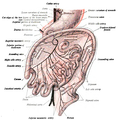
Labeled diagram of the small intestine and its surrounding structures

The small intestine is divided into three structural parts.

  • The duodenum is a short structure ranging from 20–25 cm (8–10 in) in length, and shaped like a "C".[13] It surrounds the head of the pancreas. It receives gastric chyme from the stomach, together with digestive juices from the pancreas (digestive enzymes) and the liver (bile). The digestive enzymes break down proteins and bile emulsifies fats into micelles. The duodenum contains Brunner's glands, which produce a mucus-rich alkaline secretion containing bicarbonate. These secretions, in combination with bicarbonate from the pancreas, neutralize the stomach acids contained in gastric chyme.
  • The jejunum is the midsection of the small intestine, connecting the duodenum to the ileum. It is about 2.5 m (8 ft) long, and contains the circular folds, and intestinal villi that increase its surface area. Products of digestion (sugars, amino acids, and fatty acids) are absorbed into the bloodstream here. The suspensory muscle of duodenum marks the division between the duodenum and the jejunum.
  • The ileum: The final section of the small intestine. It is about 3 m (9.8 feet) long, and contains villi similar to the jejunum. It absorbs mainly vitamin B12 and bile acids, as well as any other remaining nutrients. The ileum joins to the cecum of the large intestine at the ileocecal junction.[citation needed]

The jejunum and ileum are suspended in the abdominal cavity by mesentery. The mesentery is part of the peritoneum. Arteries, veins, lymph vessels and nerves travel within the mesentery.[14]

Blood supply

[edit]

The small intestine receives a blood supply from the celiac trunk and the superior mesenteric artery. These are both branches of the aorta. The duodenum receives blood from the celiac trunk via the superior pancreaticoduodenal artery and from the superior mesenteric artery via the inferior pancreaticoduodenal artery. These two arteries both have anterior and posterior branches that meet in the midline and anastomose. The jejunum and ileum receive blood from the superior mesenteric artery.[15] Branches of the superior mesenteric artery form a series of arches within the mesentery known as arterial arcades, which may be several layers deep. Straight blood vessels known as vasa recta travel from the arcades closest to the ileum and jejunum to the organs themselves.[15]

Microanatomy

[edit]
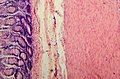
Micrograph of the small intestine mucosa showing the intestinal villi and crypts of Lieberkühn.

The three sections of the small intestine look similar to each other at a microscopic level, but there are some important differences. The parts of the intestine are as follows:

This cross section diagram shows the 4 layers of the small intestine wall.
Layer Duodenum Jejunum Ileum
Serosa 1st part serosa, 2nd–4th adventitia Normal Normal
Muscularis externa Longitudinal and circular layers, with Auerbach's (myenteric) plexus in between Same as duodenum Same as duodenum
Submucosa Brunner's glands and Meissner's (submucosal) plexus No BG No BG
Mucosa: muscularis mucosae Normal Normal Normal
Mucosa: lamina propria No PP No PP Peyer's patches
Mucosa: intestinal epithelium Simple columnar. Contains goblet cells, Paneth cells Similar to duodenum, but the intestinal villus is long Similar to duodenum, but the intestinal villus is short

Gene and protein expression

[edit]

About 20,000 protein coding genes are expressed in human cells and 70% of these genes are expressed in the normal duodenum.[16][17] Some 300 of these genes are more specifically expressed in the duodenum with very few genes expressed only in the small intestine. The corresponding specific proteins are expressed in glandular cells of the mucosa, such as fatty acid binding protein FABP6. Most of the more specifically expressed genes in the small intestine are also expressed in the duodenum, for example FABP2 and the DEFA6 protein expressed in secretory granules of Paneth cells.[18]

Development

[edit]

The small intestine develops from the midgut of the primitive gut tube.[19] By the fifth week of embryological life, the ileum begins to grow longer at a very fast rate, forming a U-shaped fold called the primary intestinal loop. The loop grows so fast in length that it outgrows the abdomen and protrudes through the umbilicus. By week 10, the loop retracts back into the abdomen. Between weeks six and ten the small intestine rotates anticlockwise, as viewed from the front of the embryo. It rotates a further 180 degrees after it has moved back into the abdomen. This process creates the twisted shape of the large intestine.[19]

Function

[edit]

Food from the stomach is allowed into the duodenum through the pylorus by a muscle called the pyloric sphincter.

Digestion

[edit]

The small intestine is where most chemical digestion takes place. Many of the digestive enzymes that act in the small intestine are secreted by the pancreas and liver and enter the small intestine via the pancreatic duct. Pancreatic enzymes and bile from the gallbladder enter the small intestine in response to the hormone cholecystokinin, which is produced in the response to the presence of nutrients. Secretin, another hormone produced in the small intestine, causes additional effects on the pancreas, where it promotes the release of bicarbonate into the duodenum in order to neutralize the potentially harmful acid coming from the stomach.

The three major classes of nutrients that undergo digestion are proteins, lipids (fats) and carbohydrates:

  • Proteins are degraded into small peptides and amino acids before absorption.[20] Chemical breakdown begins in the stomach and continues in the small intestine. Proteolytic enzymes, including trypsin and chymotrypsin, are secreted by the pancreas and cleave proteins into smaller peptides. Carboxypeptidase, which is a pancreatic brush border enzyme, splits one amino acid at a time. Aminopeptidase and dipeptidase free the end amino acid products.
  • Lipids (fats) are degraded into fatty acids and glycerol. Pancreatic lipase breaks down triglycerides into free fatty acids and monoglycerides. Pancreatic lipase works with the help of the salts from the bile secreted by the liver and stored in the gall bladder. Bile salts attach to triglycerides to help emulsify them, which aids access by pancreatic lipase. This occurs because the lipase is water-soluble but the fatty triglycerides are hydrophobic and tend to orient towards each other and away from the watery intestinal surroundings. The bile salts emulsify the triglycerides in the watery surroundings until the lipase can break them into the smaller components that are able to enter the villi for absorption.
  • Some carbohydrates are degraded into simple sugars, or monosaccharides (e.g., glucose). Pancreatic amylase breaks down some carbohydrates (notably starch) into oligosaccharides. Other carbohydrates pass undigested into the large intestine for further handling by intestinal bacteria. Brush border enzymes take over from there. The most important brush border enzymes are dextrinase and glucoamylase, which further break down oligosaccharides. Other brush border enzymes are maltase, sucrase and lactase. Lactase is absent in some adult humans and, for them, lactose (a disaccharide), as well as most polysaccharides, is not digested in the small intestine. Some carbohydrates, such as cellulose, are not digested at all, despite being made of multiple glucose units. This is because the cellulose is made out of beta-glucose, making the inter-monosaccharidal bindings different from the ones present in starch, which consists of alpha-glucose. Humans lack the enzyme for splitting the beta-glucose-bonds, something reserved for herbivores and bacteria from the large intestine.

Absorption

[edit]

Digested food is now able to pass into the blood vessels in the wall of the intestine through either diffusion or active transport. The small intestine is the site where most of the nutrients from ingested food are absorbed. The inner wall, or mucosa, of the small intestine, is lined with intestinal epithelium, a simple columnar epithelium. Structurally, the mucosa is covered in wrinkles or flaps called circular folds, which are considered permanent features in the mucosa. They are distinct from rugae which are considered non-permanent or temporary allowing for distention and contraction. From the circular folds project microscopic finger-like pieces of tissue called villi (Latin for "shaggy hair"). The individual epithelial cells also have finger-like projections known as microvilli. The functions of the circular folds, the villi, and the microvilli are to increase the amount of surface area available for the absorption of nutrients, and to limit the loss of said nutrients to intestinal fauna.

Each villus has a network of capillaries and fine lymphatic vessels called lacteals close to its surface. The epithelial cells of the villi transport nutrients from the lumen of the intestine into these capillaries (amino acids and carbohydrates) and lacteals (lipids). The absorbed substances are transported via the blood vessels to different organs of the body where they are used to build complex substances such as the proteins required by our body. The material that remains undigested and unabsorbed passes into the large intestine.

Absorption of glucose in the small intestine

Absorption of the majority of nutrients takes place in the jejunum, with the following notable exceptions:

Water

[edit]
Intestinal water absorption is the process through which water and electrolytes are absorbed from the digested food and transferred into the bloodstream.[21] This procedure is essential for preserving the fluid balance in the body and avoiding dehydration.

Immunological

[edit]

The small intestine supports the body's immune system.[22] The presence of gut flora appears to contribute positively to the host's immune system. Peyer's patches, located within the ileum of the small intestine, are an important part of the digestive tract's local immune system. They are part of the lymphatic system, and provide a site for antigens from potentially harmful bacteria or other microorganisms in the digestive tract to be sampled, and subsequently presented to the immune system.[23]

Clinical significance

[edit]

The small intestine is a complex organ, and as such, there are a very large number of possible conditions that may affect the function of the small bowel. A few of them are listed below, some of which are common, with up to 10% of people being affected at some time in their lives, while others are vanishingly rare.

Other animals

[edit]

The small intestine is found in all tetrapods and also in teleosts, although its form and length vary enormously between species. In teleosts, it is relatively short, typically around one and a half times the length of the fish's body. It commonly has a number of pyloric caeca, small pouch-like structures along its length that help to increase the overall surface area of the organ for digesting food. There is no ileocaecal valve in teleosts, with the boundary between the small intestine and the rectum being marked only by the end of the digestive epithelium.[24]

In tetrapods, the ileocaecal valve is always present, opening into the colon. The length of the small intestine is typically longer in tetrapods than in teleosts, but is especially so in herbivores, as well as in mammals and birds, which have a higher metabolic rate than amphibians or reptiles. The lining of the small intestine includes microscopic folds to increase its surface area in all vertebrates, but only in mammals do these develop into true villi.[24]

The boundaries between the duodenum, jejunum, and ileum are somewhat vague even in humans, and such distinctions are either ignored when discussing the anatomy of other animals, or are essentially arbitrary.[24]

There is no small intestine as such in non-teleost fish, such as sharks, sturgeons, and lungfish. Instead, the digestive part of the gut forms a spiral intestine, connecting the stomach to the rectum. In this type of gut, the intestine itself is relatively straight but has a long fold running along the inner surface in a spiral fashion, sometimes for dozens of turns. This valve greatly increases both the surface area and the effective length of the intestine. The lining of the spiral intestine is similar to that of the small intestine in teleosts and non-mammalian tetrapods.[24]

In lampreys, the spiral valve is extremely small, possibly because their diet requires little digestion. Hagfish have no spiral valve at all, with digestion occurring for almost the entire length of the intestine, which is not subdivided into different regions.[24]

Society and culture

[edit]

Additional images

[edit]

References

[edit]

Bibliography

[edit]
[edit]
Revisions and contributorsEdit on WikipediaRead on Wikipedia
from Grokipedia
The small intestine, also known as the small bowel, is a vital component of the human digestive system, consisting of a long, coiled tubular structure primarily responsible for the chemical breakdown of food and the absorption of nutrients, water, and electrolytes into the bloodstream. It extends from the pylorus of the stomach to the ileocecal valve, where it connects to the large intestine, and is housed within the abdominal cavity, framed by the large intestine. In adults, the small intestine measures approximately 6 to 7 meters (20 to 23 feet) in length, with a diameter of about 2.5 to 3 centimeters, making it the longest segment of the gastrointestinal tract despite its name. The small intestine is anatomically divided into three distinct regions: the , , and , each with specialized roles in and absorption. The , the shortest section at about 25 to 30 centimeters, forms a C-shaped curve around the head of the and serves as the site for initial neutralization of acidic from the via bicarbonate secretions, while also absorbing iron and . The , comprising roughly two-fifths of the small intestine's length (approximately 2.5 meters), is primarily responsible for the absorption of carbohydrates, proteins, and fats, featuring prominent circular folds (plicae circulares) and villi that greatly increase its surface area. The , the longest portion at about 3 to 3.5 meters, connects to the and specializes in absorbing , bile salts, and remaining nutrients, while housing lymphoid tissue such as Peyer's patches for immune surveillance. Structurally, the small intestine's wall consists of four layers—mucosa, , muscularis externa, and serosa—that facilitate its functions, with the mucosa lined by villi and microvilli that expand the absorptive surface area by up to 600-fold to about 200 square meters. Its functions extend beyond nutrient processing to include endocrine activities, such as hormone secretion (e.g., and cholecystokinin) that regulate , and contributions to gut immunity through the . Blood supply is provided mainly by the for the jejunum and ileum, and by pancreaticoduodenal arteries for the duodenum, while innervation from the (parasympathetic) enhances motility and secretion, and sympathetic fibers from modulate these processes. Overall, the small intestine processes up to 9 liters of fluid daily, absorbing over 90% of nutrients and water, underscoring its critical role in maintaining nutritional and overall .

Structure

Length and diameter

The small intestine in adult humans measures approximately 3 to 5 meters in length when assessed in living individuals, such as through surgical or techniques, though postmortem measurements often yield longer values of 6 to 7 meters due to the loss of tone and subsequent relaxation and uncoiling of the organ. This discrepancy arises because the intestine maintains a degree of contraction , influenced by peristaltic activity and neural control, whereas fixation or relaxation post-mortem extends its apparent length. The organ is divided into three regions with distinct lengths: the , averaging about 25 cm; the , roughly 2.5 meters; and the , approximately 3 to 3.5 meters, though these proportions can vary slightly based on individual . The of the small intestine typically ranges from 2.5 to 3.5 cm, with a gradual decrease observed from the proximal to distal segments: the is the widest at around 2.5 cm, the maintains a similar caliber of about 2.4 to 2.5 cm, and the narrows to approximately 2 cm. This tapering facilitates the progressive adaptation to nutrient processing and absorption along its . and are influenced by factors such as age, , and body ; for instance, the small intestine tends to be longer in males than in females, correlates positively with height and weight, and may shorten slightly with advancing age due to atrophic changes. Measurements are commonly obtained via noninvasive imaging modalities like computed tomography (CT) scans, which provide assessments, or through for postmortem evaluation, ensuring accuracy by accounting for the organ's coiled configuration within the . Although the gross dimensions provide a baseline tubular structure, the small intestine's effective surface area for absorption is dramatically amplified by structural adaptations, reaching approximately 200 m²—comparable to the size of a —through the combined effects of plicae circulares (circular folds), villi, and microvilli. Plicae circulares increase the surface by about threefold, villi contribute an additional tenfold amplification by projecting into the lumen, and microvilli on enterocytes further multiply this by roughly twentyfold, enabling efficient uptake over the organ's limited physical . This extensive interfacial area underscores the small intestine's critical role in absorption efficiency, as detailed in subsequent sections on function.

Regions

The small intestine is anatomically divided into three distinct regions: the , , and , which extend from the of the to the ileocecal junction. These regions differ in their , peritoneal attachments, and structural features, facilitating their specialized roles within the digestive tract. The , the shortest and most proximal region, measures approximately 25 cm in length and forms a C-shaped curve around the head of the . It is primarily retroperitoneal, fixed to the posterior , with only its initial 2–3 cm being intraperitoneal. The is subdivided into four parts: the superior (first) part, which extends from the ; the descending (second) part, which receives the openings of the and pancreatic ducts at the major duodenal papilla () and minor duodenal papilla; the horizontal (inferior or third) part; and the ascending (fourth) part, which ascends to meet the . This region is distinguished by the presence of submucosal , which are absent in the more distal segments. The jejunum constitutes the proximal two-fifths of the remaining small intestine (excluding the duodenum) and is approximately 2.5 meters long. It begins at the duodenojejunal flexure, suspended by the ligament of Treitz, and is entirely intraperitoneal, suspended by the mesentery, allowing significant mobility. Grossly, the jejunum has thicker walls, a deeper red color due to greater vascularity, and more prominent plicae circulares—permanent transverse folds that enhance surface area—compared to the ileum. Histologically, it features tall villi and a moderate number of goblet cells, which increase in density distally. The forms the distal three-fifths of the (post-) and measures about 3 meters in length, occupying the lower right quadrant of the . Like the , it is intraperitoneal and mesentery-suspended but ends at the , where it joins the of the . It has a narrower lumen, thinner walls with more surrounding mesenteric fat, and fewer plicae circulares than the . A key distinguishing feature is the presence of Peyer's patches—aggregates of lymphoid tissue in the , particularly abundant along the antimesenteric border—which are sparse or absent in the and . Goblet cells are most numerous here, contributing to a higher mucus-secreting capacity. Transitions between regions are marked by changes in peritoneal attachments and histological characteristics rather than sharp anatomical boundaries. The shift from duodenum to jejunum occurs at the , where the retroperitoneal duodenum gives way to the mobile, mesentery-attached jejunum. The jejunum-to-ileum transition is gradual, characterized by decreasing prominence of plicae circulares, increasing mesenteric fat, and the appearance of Peyer's patches, along with a progressive rise in goblet cell density from proximal to distal segments.

Vascular supply

The arterial supply to the small intestine is primarily derived from the (SMA), which originates from the at the level of the L1 vertebral body and supplies the structures from the distal to the proximal two-thirds of the . The proximal portion of the duodenum receives its blood supply from the celiac trunk via the gastroduodenal artery, which branches into the anterior and posterior superior pancreaticoduodenal arteries, forming an anastomotic arcade with the (a branch of the SMA) to supply the distal duodenum and pancreatic head. For the and , the SMA gives rise to 12-15 jejunal and ileal branches that travel within the , forming 1-2 tiers of arterial arcades in the jejunum and 3-5 tiers in the ileum, from which straight terminal vessels known as vasa recta arise to directly perfuse the intestinal wall. These arcades, typically numbering 16-20 in total across both regions, provide a rich network of collateral circulation that enhances resilience to vascular occlusion. Venous drainage of the small intestine parallels the arterial supply, with veins accompanying the SMA branches to form corresponding arcades and vasa recta that converge into the (SMV). The SMV collects blood from the entire small intestine, as well as the , , and parts of the and , before joining the to form the , which delivers nutrient-rich blood to the liver for processing. Portosystemic anastomoses exist in the , where pancreaticoduodenal veins connect portal tributaries to systemic veins draining the retroperitoneum, providing potential collateral pathways in cases of . The lymphatic drainage of the small intestine begins in the lacteals, specialized lymphatic capillaries located within the villi that absorb chylomicrons formed during fat digestion and transport them as . These lacteals converge into larger collecting vessels within the mesenteric lymph nodes, where lymph is filtered before ascending through the mesenteric to the and ultimately entering the to return to the systemic circulation. This system plays a critical role in absorption and immune surveillance by transporting dietary fats and antigens from the intestinal lumen. Key anastomoses in the small intestinal vasculature include the marginal artery of Drummond, an arterial collateral pathway formed by anastomoses between branches of the SMA (such as the ileocolic and right colic arteries) and the (IMA), running along the mesenteric border of the colon but extending continuity to the terminal for protective collateral flow. This arcade ensures redundancy in blood supply, mitigating ischemia risk from occlusion of either the SMA or IMA.

Histology

The wall of the small intestine consists of four principal layers: the mucosa, , muscularis externa, and serosa (or in retroperitoneal portions). The mucosa, the innermost layer, is composed of a resting on a of and capped by a thin of . The epithelium features four main cell types: absorptive enterocytes, which dominate and facilitate uptake; mucus-secreting goblet cells, which protect the surface; peptide-producing Paneth cells, located at the base of crypts; and hormone-secreting enteroendocrine cells, which regulate and . The contains blood vessels, lymphatics, and scattered lymphoid elements, while the enables localized mucosal folding. The is a dense layer of rich in , blood vessels, lymphatics, and nerves, providing structural support and nutrient distribution. In the , it uniquely houses compound tubular , which secrete alkaline mucus to neutralize . The muscularis externa comprises an inner thick circular layer of for segmentation and an outer thinner longitudinal layer for propulsion, both under neural control. The outermost serosa, a thin visceral , covers most of the small intestine and consists of over , facilitating intraperitoneal mobility; retroperitoneal segments, such as parts of the , instead have an of fibrous tissue anchoring them. Specialized mucosal features enhance function: finger-like villi project into the lumen to maximize absorptive surface area, while tubular crypts of Lieberkühn invaginate into the for cell renewal and . Enterocytes on villi bear a of microvilli, embedded with such as (which hydrolyzes to glucose and ) and sucrase (which cleaves to glucose and fructose), completing breakdown at the apical . Paneth cells in crypt bases release and for innate immunity, and stem cells drive epithelial turnover every 3–5 days. Histological features vary regionally: the duodenum exhibits prominent Brunner's glands and shorter, broader villi; the jejunum has the tallest villi and deepest crypts for optimal absorption; and the ileum features aggregated Peyer's patches—lymphoid nodules spanning the lamina propria and submucosa—for immune surveillance, with progressively shorter villi distally. The enteric nervous system, intrinsic to the wall, coordinates these functions via two plexuses: the myenteric (Auerbach's) plexus between the muscularis externa layers, regulating peristalsis and motility; and the submucosal (Meissner's) plexus within the submucosa, controlling local secretion, blood flow, and epithelial transport. These networks operate semi-autonomously, integrating with extrinsic innervation.

Molecular biology

The molecular biology of the small intestine is characterized by distinct patterns of that underpin its epithelial specialization. Solute carrier (SLC) transporters, such as SLC5A1 encoding SGLT1, are highly expressed in enterocytes to mediate sodium-coupled glucose transport across the apical membrane. The CFTR gene (ABCC7) encodes a essential for anion secretion in the , with expression concentrated in cells. , including Hoxd12 and , establish regional identity along the anteroposterior axis, influencing compartment-specific morphogenesis and cellular differentiation in the gut tube. Protein expression in small intestinal enterocytes features markers that define their architecture and enzymatic roles. Villin (VIL1), an actin-binding protein, is a prominent cytoskeletal component of microvilli, while sucrase-isomaltase (SI) serves as a diagnostic marker for mature absorptive enterocytes. Expression gradients exist for certain proteins, with (ALPI) showing highest levels in the and progressively decreasing toward the , reflecting regional adaptations in luminal processing. Proteomic analyses via have cataloged extensive protein repertoires in small intestinal tissues, identifying over 5,000 proteins in crypt-enriched samples alone, highlighting the complexity of epithelial dynamics. Among these, proteins like play a in maintaining the intestinal barrier, forming seal-like structures between adjacent epithelial cells to regulate paracellular permeability. Post-2020 advances in single-cell RNA sequencing have elucidated niches within intestinal crypts, revealing transcriptional heterogeneity among Lgr5+ s and supporting stromal populations that orchestrate self-renewal and lineage commitment. These studies identify distinct clusters of mesenchymal and immune cells within the niche, providing molecular maps of crypt organization.

Embryological development

The small intestine arises from the segment of the primitive gut tube, which forms during the third week of embryonic development through , where endodermal cells invaginate to create the epithelial lining, surrounded by splanchnic that contributes to the muscular layers and connective tissues, while neural crest-derived cells form the . By the fourth week, the gut tube differentiates into , , and regions, with the midgut extending from the distal to the proximal two-thirds of the , including the future and . Rapid elongation and differential growth of the midgut during weeks 4 to 5 outpace the abdominal cavity's capacity, leading to physiological herniation of the intestinal loop into the extraembryonic via the around week 6. This herniated midgut loop, connected to the yolk sac by the vitelline duct, undergoes a complex counterclockwise rotation of 270 degrees around the axis of the (SMA) between weeks 5 and 10, consisting of an initial 90-degree turn during herniation followed by a 180-degree rotation as the loop returns to the by week 10. The return process repositions the posteriorly and the to the right lower quadrant, establishing the adult intestinal layout, while the vitelline duct typically obliterates. Concurrently, the intestinal lumen, initially occluded by proliferating al cells, undergoes recanalization through () and differential growth, restoring patency by the end of the first trimester. Villus formation begins around weeks 9 to 12, driven by mesenchymal-epithelial interactions that increase absorptive surface area, with Sonic hedgehog (Shh) signaling from the endoderm playing a key role in patterning the gut tube and promoting villus morphogenesis. Disruptions in these processes can lead to congenital anomalies, such as , where the fails to return to the and remains covered by a peritoneal sac, occurring in approximately 1 in 5,000 live births. Malrotation results from incomplete or arrested rotation around the SMA axis, leading to abnormal mesenteric fixation and a predisposition to , with an incidence of about 1 in 500 live births overall and symptomatic cases in roughly 1 in 6,000. Small bowel , characterized by intestinal discontinuity due to vascular accidents or failed recanalization, affects the or in approximately 1 in 5,000 newborns and represents a of neonatal obstruction.

Function

Secretion and digestion

The small intestine plays a central role in the digestion of nutrients through secretions from the , , and , as well as intrinsic intestinal enzymes. , released into the , contains to neutralize acidic from the and enzymes such as for carbohydrate breakdown, for fat digestion, and proteases (including , , and carboxypeptidases) for protein hydrolysis. These proteases are secreted as inactive zymogens and activated in the duodenal lumen by , an enzyme from the intestinal , which converts to ; active then activates the other zymogens. , produced by the and stored in the , is also delivered to the , where its salts emulsify dietary fats into micelles, facilitating access for pancreatic . salts undergo , with about 95% reabsorbed in the and returned to the via the for reuse, conserving this essential component of lipid digestion. The intestinal mucosa contributes directly to digestion via brush border enzymes anchored to the microvilli of enterocytes. These hydrolases complete the breakdown of oligosaccharides and peptides: for example, maltase catalyzes the hydrolysis of maltose into two glucose molecules via the reaction maltose+H2O2glucose\text{maltose} + \text{H}_2\text{O} \rightarrow 2 \text{glucose}. Other key enzymes include sucrase-isomaltase for sucrose and isomaltose, lactase for lactose, and dipeptidases for small peptides, ensuring monomers are produced for subsequent processes. This enzymatic activity occurs optimally at a neutral to slightly alkaline pH of 6 to 7 in the duodenum, maintained by pancreatic bicarbonate secretion. Motility in the small intestine enhances digestion by mixing chyme with secretions and propelling it forward. , rhythmic local constrictions in the and , mix contents thoroughly without net movement, promoting enzyme-substrate contact. , coordinated waves of contraction and relaxation driven by the , advances chyme aborally at about 1 to 2 cm per second, ensuring progressive exposure to digestive agents. During , the (MMC)—a cyclical pattern of low-amplitude contractions sweeping from to ileum every 90 to 120 minutes—clears residual undigested material, preventing bacterial overgrowth. Hormonal signals from the duodenal mucosa fine-tune these processes. Cholecystokinin (CCK), released by I cells in response to fats and proteins, stimulates contraction for release and pancreatic enzyme secretion. , secreted by S cells when duodenal pH drops below 4.5 due to acidic , promotes pancreatic bicarbonate output to raise pH toward the optimal range for enzymatic activity. These hormones ensure synchronized secretion and maintain an environment conducive to efficient digestion.

Nutrient absorption

The small intestine is the primary site for the absorption of digested nutrients, water, and electrolytes from the intestinal lumen into the bloodstream or lymphatics via specialized transporters and diffusion mechanisms in the enterocytes. This process occurs across the apical and basolateral membranes of the epithelial cells, driven by electrochemical gradients and facilitated by sodium-dependent cotransport systems. Carbohydrate absorption primarily involves monosaccharides such as glucose and galactose, which enter enterocytes through the sodium-glucose linked transporter 1 (SGLT1) on the apical membrane via secondary active transport coupled with sodium ions. Fructose is absorbed independently via GLUT5. These monosaccharides then exit the basolateral membrane through the facilitated diffusion transporter GLUT2. Approximately 95% of ingested carbohydrates are efficiently absorbed in the small intestine. Protein absorption begins with luminal hydrolysis of peptides by digestive enzymes, followed by uptake of and small peptides into enterocytes. are transported across the apical via various sodium-dependent symporters, while di- and tripeptides are absorbed through the proton-coupled peptide transporter PEPT1. Inside the enterocytes, peptides undergo further to , which are then exported basolaterally via specific carriers. Over 95% of ingested proteins are absorbed, mainly as . Lipid absorption requires the formation of micelles in the lumen, where salts solubilize monoglycerides and free fatty acids derived from dietary triglycerides. These diffuse across the apical into enterocytes, where they are re-esterified into triglycerides and packaged into chylomicrons within the and Golgi apparatus. Chylomicrons are then released into the via lacteals for systemic distribution, bypassing the . Vitamins and minerals are absorbed through specific carrier-mediated mechanisms tailored to their solubility and requirements. Fat-soluble vitamins (A, D, E, K) incorporate into micelles and follow the lipid absorption pathway into chylomicrons. Water-soluble vitamins, such as and , use dedicated transporters like the proton-coupled folate transporter (PCFT) or sodium-ascorbate cotransporters. Vitamin B12 binds to in the and is absorbed in the via involving the cubam complex. Minerals like iron and calcium employ dedicated apical transporters, such as DMT1 for iron, often regulated by body stores. Water and electrolyte absorption in the small intestine occurs primarily through osmotic gradients generated by active sodium uptake via the sodium-glucose cotransporter (SGLT1) and sodium-hydrogen exchangers (NHE3), with following passively through channels and paracellular pathways. Approximately 9 liters of are absorbed daily in the small intestine, accounting for ingested fluids and secretions from the , , and . Absorption exhibits regional specialization along the small intestine. The is the primary site for sugars, , and most water-soluble vitamins and minerals, benefiting from its proximal location and high transporter density. The specializes in the uptake of , bile salts via the apical sodium-dependent bile acid transporter (ASBT), and remaining electrolytes, ensuring efficient recycling of bile acids to support ongoing lipid digestion.

Immune functions

The small intestine plays a central role in mucosal immunity through the (GALT), which includes Peyer's patches primarily located in the and isolated lymphoid follicles distributed throughout the organ. These structures facilitate the sampling of luminal antigens by microfold (M) cells, specialized cells that transport antigens from the intestinal lumen to underlying immune cells, initiating both innate and adaptive responses. M cells, found in the follicle-associated epithelium overlying Peyer's patches, actively endocytose bacteria, viruses, and other particles, delivering them to antigen-presenting cells such as dendritic cells and macrophages within the subepithelial dome. A key component of adaptive mucosal immunity is secretory (SIgA), produced by plasma cells in the and transported across the via the polymeric immunoglobulin receptor. SIgA prevents adhesion to epithelial cells and neutralizes toxins without triggering , with human intestines secreting approximately 3 to 5 grams daily, representing the majority of production in the body. This dimeric coats commensal microbes and pathogens alike, promoting immune exclusion and maintaining barrier integrity. Innate defenses in the small intestine are bolstered by secreted by Paneth cells, located at the base of crypts, including α-defensins such as defensin-5 (HD5) and HD6, which disrupt microbial membranes and shape the composition. These peptides, stored in granules and released in response to microbial signals, contribute to host defense against pathogens while preserving beneficial commensals. Complementing this, goblet cells secrete a layer rich in mucins, forming a physical barrier that traps microbes and limits their access to the , thereby supporting innate immune homeostasis. Adaptive immune responses involve T-cell activation in the , where dendritic cells present antigens to CD4+ and CD8+ T cells, leading to effector functions against invaders. Regulatory T cells (Tregs), particularly + subsets, enforce tolerance to commensal antigens by suppressing excessive and promoting barrier maintenance through production like IL-10. This tolerance mechanism prevents while allowing controlled responses to threats. The small intestinal microbiome, with bacterial densities ranging from 10^3 to 10^8 cells per gram and increasing toward the , interacts dynamically with the to sustain . Commensal influence Treg differentiation and SIgA production, fostering mutualism, while —imbalances in microbial composition—has been linked to disrupted immune regulation in recent studies, highlighting the microbiome's role in preventing inflammatory conditions. For instance, 2020s research emphasizes how microbial metabolites modulate T-cell responses, underscoring the need for balanced microbiota-immune crosstalk.

Clinical significance

Disorders and diseases

The small intestine is susceptible to a variety of disorders and diseases that can impair its function, leading to symptoms such as malabsorption, diarrhea, and abdominal pain. Inflammatory conditions are among the most prevalent, including celiac disease and Crohn's disease, which involve immune-mediated damage to the intestinal mucosa. Celiac disease is an autoimmune disorder triggered by gluten ingestion in genetically predisposed individuals, resulting in villous atrophy and inflammation primarily in the proximal small intestine. It affects approximately 1% of the global population, with symptoms including chronic diarrhea, bloating, abdominal discomfort, and nutrient malabsorption leading to anemia and weight loss. Crohn's disease, a type of inflammatory bowel disease, causes transmural inflammation that commonly involves the terminal ileum, though it can affect any segment of the small intestine. Its exact cause is unknown but involves genetic, environmental, and immune factors; prevalence is estimated at 100-300 per 100,000 in Western populations. Recent trends show increasing prevalence of inflammatory bowel disease in newly industrialized and Asian countries, approaching Western levels (as of 2025). Symptoms often include abdominal pain, diarrhea, fatigue, and weight loss due to inflammation and potential strictures or fistulas. Infectious disorders of the small intestine frequently arise from bacterial or parasitic overgrowth, disrupting normal and absorption. (SIBO) occurs when excessive colonize the small intestine, often due to disorders, structural abnormalities, or prior , leading to of undigested carbohydrates. Common symptoms include , , , and mal of fats and vitamins. Parasitic infections, such as giardiasis caused by lamblia, are transmitted via contaminated water or food and adhere to the small intestinal mucosa, impairing uptake. Symptoms typically manifest as watery , , cramps, and fatigue, particularly in acute cases. Neoplastic conditions in the small intestine are relatively rare but can significantly impact bowel function. Small bowel adenocarcinomas account for less than 2% of all gastrointestinal cancers and often arise in the or , associated with risk factors like celiac disease, , or genetic syndromes such as Lynch syndrome. They present with nonspecific symptoms including , obstruction, bleeding, and due to tumor growth. tumors, also known as neuroendocrine tumors, frequently originate in the and may secrete hormones like serotonin, leading to symptoms such as , , and flushing if metastatic (). These tumors are slow-growing but can cause local complications like . Vascular disorders, particularly mesenteric ischemia, compromise blood supply to the small intestine, resulting in tissue damage. Acute mesenteric ischemia often stems from (SMA) occlusion due to or , while chronic forms arise from gradual narrowing the vessels. Risk factors include advanced age, , , and hypercoagulable states. Symptoms of acute ischemia include severe, sudden out of proportion to physical findings, followed by bloody and ; chronic cases present with postprandial pain (), weight loss, and fear of eating. Recent epidemiological trends indicate a rising prevalence of (IBS), a affecting small intestinal and sensation, potentially linked to post- gut alterations and persistent inflammation. Studies show IBS development in up to 12% of COVID-19 survivors, compared to lower rates in uninfected individuals, with symptoms including , , and altered bowel habits. Congenital anomalies, such as , may also manifest as small intestinal disorders but are primarily addressed in embryological contexts.

Diagnostic approaches

Diagnostic approaches to small intestine disorders involve a combination of non-invasive and invasive techniques aimed at visualizing the mucosa, assessing , evaluating absorption, and measuring transit times. These methods are selected based on clinical presentation, such as obscure , chronic , or suspected inflammatory conditions like . A systematic evaluation often begins with tests and progresses to or if initial findings suggest small bowel involvement. Endoscopy provides direct visualization of the small intestine, which is crucial for detecting mucosal abnormalities. , a non-invasive method involving ingestion of a camera-in-a-pill, allows full assessment of the small bowel and is particularly effective for identifying ulcers, tumors, and sources of , with diagnostic yields ranging from 60% to 83%. It is recommended as the first-line investigation for obscure due to its ability to reach areas inaccessible to traditional . , a more advanced technique using balloons to advance the , enables deeper for biopsies and therapeutic interventions, achieving diagnostic yields up to 78% for lesions like tumors not fully characterized by . This method is especially useful for confirming diagnoses through histopathological examination. Imaging modalities complement endoscopy by providing structural details without direct mucosal access. Computed tomography (CT) enterography and magnetic resonance (MR) enterography involve oral contrast to distend the bowel, detecting , wall thickening, strictures, and extraluminal complications with yields of 40% to 64% for conditions like . CT enterography excels in showing mural hyperenhancement and stratification indicative of active . Small bowel follow-through (SBFT), using serial X-rays after contrast ingestion, outlines bowel contours but has lower sensitivity for subtle mucosal changes and is less favored as a primary tool compared to cross-sectional imaging. MR enterography is preferred in younger patients to avoid . Laboratory tests offer initial screening for small intestine dysfunction through non-invasive sampling. Serologic testing for anti-tissue (anti-tTG) IgA antibodies is highly sensitive (approximately 90%) for diagnosing celiac disease, a common small bowel disorder, and when markedly elevated (more than five times normal) combined with positive endomysial antibodies, it can obviate the need for . Fecal calprotectin, a marker of neutrophil-derived , correlates well with endoscopic findings in small bowel ; levels above 100 μg/g indicate significant with high diagnostic accuracy for mucosal involvement. The assesses small intestinal mucosal integrity by measuring urinary excretion after oral administration; normal excretion exceeds 4 g in 5 hours, while reduced levels suggest due to mucosal damage or bacterial overgrowth. Invasive procedures are reserved for cases requiring tissue sampling or functional assessment. , including device-assisted variants like double-balloon or single-balloon techniques, allows targeted biopsies and intervention for suspected or bleeding, with high diagnostic yields when capsule findings are inconclusive. Wireless motility capsules, ingested devices measuring pH, pressure, and transit times, evaluate small bowel motility disorders by quantifying transit duration, aiding diagnosis of conditions like chronic intestinal pseudo-obstruction. These capsules provide ambulatory data on regional transit, correlating with results. Recent advances in the 2020s have integrated (AI) into to enhance detection accuracy. AI algorithms assist in real-time identification of polyps and lesions in the small bowel, improving polyp detection rates and reducing reading times by automating anomaly flagging. These systems, using convolutional neural networks, achieve high sensitivity for small bowel pathologies, addressing limitations in manual review and enabling broader application in screening for obscure bleeding or early neoplasia.

Treatment and management

The primary medical treatment for celiac disease, an autoimmune disorder affecting the small intestine, is a strict lifelong that eliminates , , and to prevent villous and promote mucosal . For involving the small intestine, biologic therapies such as anti-tumor necrosis factor (anti-TNF) agents like are used to target inflammatory pathways, inducing and maintaining remission in moderate-to-severe cases. (SIBO) is typically managed with antibiotics, including , a non-absorbable broad-spectrum agent that reduces bacterial load and alleviates symptoms like and . Nutritional interventions play a key role in managing malabsorption syndromes. In short bowel syndrome following extensive resection, total parenteral nutrition (TPN) delivers calories, fluids, and electrolytes intravenously to support adaptation and prevent until intestinal function improves. Pancreatic enzyme replacement therapy is often prescribed for patients with small intestinal disorders causing , enhancing fat and nutrient digestion to mitigate and . Surgical approaches are reserved for complications such as obstruction or . Resection of the affected small bowel segment is standard for tumors or acute ischemia, with to restore continuity and prevent . In fibrostenotic , strictureplasty widens narrowed segments while preserving bowel length, reducing the risk of compared to repeated resections. For irreversible intestinal failure due to extensive loss, small bowel transplantation offers a curative option, though it remains rare with approximately 177 cases performed globally in 2023. Supportive measures complement primary therapies to optimize outcomes. , such as strains of and , aid in restoring the small intestinal disrupted by antibiotics or , potentially improving barrier function and reducing relapse risk in conditions like SIBO. Disease activity in small bowel Crohn's can be non-invasively monitored using fecal calprotectin levels, with elevations above 150 µg/g indicating ongoing and guiding adjustments to therapy. As of 2025, emerging strategies include fecal transplantation (FMT) for recurrent small intestinal infections, such as those caused by , which transfers healthy donor to reestablish diversity and prevent reinfection.

In other vertebrates

In mammals, the small intestine maintains a conserved tripartite structure consisting of the , , and , facilitating enzymatic and absorption similar to that in humans, though its length and volume vary significantly with diet. Herbivores, such as , possess notably longer small intestines relative to body size compared to carnivores, enhancing the breakdown and absorption of fibrous plant material through extended transit times and increased surface area. In ruminants like cows, the serves as the glandular "true " analogous to the , secreting acid and enzymes before digesta enters the small intestine for further processing and absorption. Birds exhibit a shorter small intestine adapted for and efficient , complemented by the gizzard's mechanical grinding of food to reduce the digestive burden on the intestine. The is particularly prominent in avian species, where it receives and pancreatic secretions to initiate fat and protein breakdown, supporting the high metabolic demands of flight. Carnivorous birds tend to have even shorter and simpler small intestines than herbivorous ones, reflecting their protein-rich diets that require less . In fish, small intestine length varies markedly by trophic level, with carnivorous species featuring shorter tracts for quick processing of easily digestible prey, while herbivorous fish have elongated intestines to accommodate slower digestion of algae and plant matter. Certain primitive fish, such as sharks and rays, incorporate a spiral valve—a coiled internal structure that increases absorptive surface area and prolongs food retention without extending overall length. This adaptation maximizes nutrient extraction in environments where food may be sporadic. Reptiles and amphibians possess simpler small intestinal structures compared to endotherms. larvae often feature a typhlosole—a prominent longitudinal fold along the intestinal wall that boosts surface area for absorption, while adult forms and reptiles typically have a straight or slightly coiled tube with mucosal folds rather than complex villi. These ectotherms exhibit physiological plasticity in their small intestines, rapidly upregulating production and transporter activity after infrequent meals to efficiently process large boluses during intermittent feeding bouts characteristic of their lifestyles. Across vertebrates, endothermic classes like mammals and birds demonstrate higher absorption efficiency in the small intestine than ectotherms, driven by elevated metabolic rates that necessitate rapid and complete uptake of glucose and other to sustain and activity.

Evolutionary aspects

The small intestine originated from the endodermal layer of the primitive gut tube in early chordates, dating back approximately 500 million years ago during the period. In these ancestral forms, the digestive tract was a simple epithelial-lined lumen primarily reliant on through phagocytic cells, lacking specialized absorptive structures. This basic configuration persisted in early vertebrates, such as agnathans, where the gut functioned as a straightforward conduit for processing without regional differentiation. A pivotal evolutionary occurred in gnathostomes, the jawed vertebrates that emerged around 420 million years ago, with the development of intestinal villi to enhance and absorption. These finger-like projections dramatically increased the gut's surface area, allowing for more efficient uptake from a diverse diet, including complex prey. Fossil evidence from Devonian-aged fish, such as preserved gastrointestinal impressions in placoderms and chondrichthyans, reveals early spiral valve structures that prefigured modern adaptations, indicating a gradual refinement of intestinal morphology during the Silurian-Devonian transition. estimates further support this timeline, placing the divergence of key absorptive enzymes, such as those involved in carbohydrate and protein breakdown, around 400 million years ago in association with gnathostome radiation. In tetrapods, which transitioned to terrestrial environments approximately 360 million years ago, the small intestine adapted through elongation and expanded surface area to process drier, often plant-based diets requiring prolonged retention and breakdown. These changes were facilitated by whole-genome duplication events in early vertebrates, which diversified gene families encoding nutrient transporters, such as ABC and SLC proteins, enabling specialized uptake mechanisms. Dietary pressures profoundly shaped these traits: carnivores typically exhibit shorter small intestines relative to body length (e.g., about 3 times in felids like cats, suited to rapid of protein-rich meals), whereas herbivores display greater relative elongation (e.g., about 6-9 times in , accommodating fibrous vegetation). Recent comparative genomic studies from the 2020s highlight the conservation of clusters in patterning the intestine's anterior-posterior axis across vertebrates, ensuring regional functional specialization from to despite phylogenetic divergence.

History and culture

Historical perspectives

The understanding of the small intestine's structure and function evolved gradually through ancient observations, dissections, and modern physiological experiments, marked by both breakthroughs and initial misconceptions. In the 3rd century BCE, the Greek anatomist Herophilus provided one of the earliest known descriptions of the , the proximal segment of the small intestine, based on human dissections in . By the 2nd century CE, the physician built on earlier ideas but introduced erroneous concepts of , positing that ingested food was transformed in the into —a nutrient-rich, milky substance—before absorption through the small intestine's walls into the , a view that persisted for centuries despite its inaccuracies regarding enzymatic processes. The marked a shift toward empirical , with Andreas Vesalius's 1543 publication of De humani corporis fabrica offering precise illustrations and textual accounts of the small intestine's gross structure, including its divisions into , , and , thereby correcting Galenic distortions through direct cadaveric study. In the mid-17th century, Marcello Malpighi advanced this knowledge by employing early compound microscopes to observe and describe the intestinal villi for the first time, identifying these finger-like projections as key to the organ's absorptive capacity. Nineteenth-century physiology deepened insights into digestive coordination, as demonstrated in 1848 that pancreatic secretions play a critical role in fat emulsification within the small intestine, revealing the organ's dependence on accessory glands for complete nutrient breakdown. This era culminated in 1902 when William Bayliss and identified , the first discovered, released from duodenal cells in response to acidic contents and signaling the to secrete , a finding that established hormonal regulation of small intestinal function and birthed as a . Twentieth-century research elucidated molecular absorption mechanisms, with Robert K. Crane's 1960 proposal of the sodium-glucose linked transporter (SGLT1) explaining active glucose uptake across the small intestinal epithelium, a model that transformed views on secondary active transport. Concurrently, in the 1950s, clinical studies linked celiac disease to gluten ingestion, showing how wheat proteins trigger villous atrophy and malabsorption in the small intestine of genetically predisposed individuals, paving the way for gluten-free dietary management. A pivotal clinical advancement came in the 1990s, when the first successful small bowel transplants were achieved, notably through multivisceral procedures at the , offering life-sustaining options for patients previously reliant on .

In society and media

The small intestine has gained prominence in contemporary culinary trends centered on "gut health," particularly through the promotion of -rich foods that aim to support microbial balance in the digestive tract. Since the 2010s, the popularity of fermented products like , , and has surged, driven by consumer interest in enhancing nutrient absorption and overall digestion via the gut microbiome. This movement reflects broader lifestyle advice in popular media, where are touted for modulating gut flora to improve intestinal function, though experts emphasize that diverse fiber intake remains more effective than supplements alone. Historically, rituals across cultures have targeted digestive processes, including those in the small intestine, by allowing periods of rest for nutrient absorption and microbial recovery; ancient practices, such as those in Egyptian purification rites or Greek healing traditions, viewed intermittent abstinence as a means to reset gut health. In media portrayals, the small intestine often appears in medical dramas through scenes of surgical interventions, highlighting its vulnerability in abdominal emergencies and the complexities of procedures like resections or transplants. Shows like frequently depict gastrointestinal surgeries involving the small bowel, contributing to public awareness of digestive disorders while sometimes prioritizing dramatic tension over anatomical precision, as noted in analyses of television's influence on viewers' surgical perceptions. has amplified informal representations via memes about (IBS), which affects small intestine and absorption, with viral content humorously capturing symptoms like and urgency to destigmatize the condition; campaigns like BelliWelli's 2021 billboards declaring "Hot girls have IBS" extended this trend online, fostering community discussions on gut-related challenges. Educational curricula in emphasize the small intestine's role in nutrient absorption, portraying it as a key site where villi and microvilli facilitate the uptake of sugars, , and fats into the bloodstream, a central to high school lessons on human physiology. initiatives in the have further spotlighted small intestine-related issues, such as celiac disease, which damages its lining and impairs absorption; annual awareness campaigns, including the Celiac Disease Foundation's "Shine a Light" efforts since 2020, have illuminated landmarks worldwide in May to educate on and management, securing proclamations in 27 U.S. states and the District of Columbia in 2025. Symbolically, the small intestine serves as a for intricate "" in , evoking themes of and transformation, as seen in poetic explorations of emotional or in 19th-century works by Emerson and Whitman that liken intellectual absorption to intestinal assimilation. Ethical debates surrounding small intestine transplants raise concerns about donor , resource , and quality-of-life outcomes, particularly in pediatric cases where the procedure's high risks—such as rejection and —must be weighed against benefits for patients. In 2025, social media continues to shape perceptions of gut microbiome diets, with platforms like promoting viral regimens high in prebiotics and fermented foods to optimize small intestine flora, though critiques highlight misinformation in these trends over evidence-based nutrition.

References

Add your contribution
Related Hubs
User Avatar
No comments yet.