


Community hub
Wikipedia
Brick
View on Wikipedia


A brick is a type of construction material used to build walls, pavements and other elements in masonry construction. Properly, the term brick denotes a unit primarily composed of clay. But is now also used informally to denote building units made of other materials or other chemically cured construction blocks. Bricks can be joined using mortar, adhesives or by interlocking.[1][2] Bricks are usually produced at brickworks in numerous classes, types, materials, and sizes which vary with region, and are produced in bulk quantities.[3]
Block is a similar term referring to a rectangular building unit composed of clay or concrete, but is usually larger than a brick. Lightweight bricks (also called lightweight blocks) are made from expanded clay aggregate.

Fired bricks are one of the longest-lasting and strongest building materials, sometimes referred to as artificial stone, and have been used since c. 4000 BC. Air-dried bricks, also known as mudbricks, have a history older than fired bricks, and have an additional ingredient of a mechanical binder such as straw.
Bricks are laid in courses and numerous patterns known as bonds, collectively known as brickwork, and may be laid in various kinds of mortar to hold the bricks together to make a durable structure.
History
[edit]Middle East and South Asia
[edit]
The earliest bricks were dried mudbricks, meaning that they were formed from clay-bearing earth or mud and dried (usually in the sun) until they were strong enough for use. The oldest discovered bricks, originally made from shaped mud and dating before 7500 BC, were found at Tell Aswad, in the upper Tigris region and in southeast Anatolia close to Diyarbakir.[4]
Mudbrick construction was used at Çatalhöyük, from c. 7,400 BC.[5]
Mudbrick structures, dating to c. 7,200 BC have been located in Jericho, Jordan Valley.[6] These structures were made up of the first bricks with dimensions of 400 mm × 150 mm × 100 mm (16 in × 6 in × 4 in).[7]
Between 5000 and 4500 BC, Mesopotamia had discovered fired brick.[7] The standard brick sizes in Mesopotamia followed a general rule: the width of the dried or burned brick would be twice its thickness, and its length would be double its width.[8]
The South Asian inhabitants of Mehrgarh also constructed air-dried mudbrick structures between 7000 and 3300 BC[9] and later the ancient Indus Valley cities of Mohenjo-daro, Harappa,[10] and Mehrgarh.[11] Ceramic, or fired brick was used as early as 3000 BC in early Indus Valley cities like Kalibangan.[12]
In the middle of the third millennium BC, there was a rise in monumental baked brick architecture in Indus cities. Examples included the Great Bath at Mohenjo-daro, the fire altars of Kaalibangan, and the granary of Harappa. There was a uniformity to the brick sizes throughout the Indus Valley region, conforming to the 1:2:4, thickness, width, and length ratio. As the Indus civilization began its decline at the start of the second millennium BC, Harappans migrated east, spreading their knowledge of brickmaking technology. This led to the rise of cities like Pataliputra, Kausambi, and Ujjain, where there was an enormous demand for kiln-made bricks.[13]
By 604 BC, bricks were the construction materials for architectural wonders such as the Hanging Gardens of Babylon, where glazed fired bricks were put into practice.[7]

China
[edit]The earliest fired bricks appeared in Neolithic China around 4400 BC at Chengtoushan, a walled settlement of the Daxi culture.[14] These bricks were made of red clay, fired on all sides to above 600 °C, and used as flooring for houses. By the Qujialing period (3300 BC), fired bricks were being used to pave roads and as building foundations at Chengtoushan.[15]
According to Lukas Nickel, the use of ceramic pieces for protecting and decorating floors and walls dates back at various cultural sites to 3000-2000 BC and perhaps even before, but these elements should be rather qualified as tiles. For the longest time builders relied on wood, mud and rammed earth, while fired brick and mudbrick played no structural role in architecture. Proper brick construction, for erecting walls and vaults, finally emerges in the third century BC, when baked bricks of regular shape began to be employed for vaulting underground tombs. Hollow brick tomb chambers rose in popularity as builders were forced to adapt due to a lack of readily available wood or stone.[16] The oldest extant brick building above ground is possibly Songyue Pagoda, dated to 523 AD.
By the end of the third century BC in China, both hollow and small bricks were available for use in building walls and ceilings. Fired bricks were first mass-produced during the construction of the tomb of China's first Emperor, Qin Shi Huangdi. The floors of the three pits of the Terracotta Army were paved with an estimated 230,000 bricks, with the majority measuring 28x14x7 cm, following a 4:2:1 ratio. The use of fired bricks in Chinese city walls first appeared in the Eastern Han dynasty (25 AD-220 AD).[17] Up until the Middle Ages, buildings in Central Asia were typically built with unbaked bricks. It was only starting in the ninth century CE when buildings were entirely constructed using fired bricks.[16]
The carpenter's manual Yingzao Fashi, published in 1103 at the time of the Song dynasty described the brick making process and glazing techniques then in use. Using the 17th-century encyclopaedic text Tiangong Kaiwu, historian Timothy Brook outlined the brick production process of Ming dynasty China:
...the kilnmaster had to make sure that the temperature inside the kiln stayed at a level that caused the clay to shimmer with the colour of molten gold or silver. He also had to know when to quench the kiln with water so as to produce the surface glaze. To anonymous labourers fell the less skilled stages of brick production: mixing clay and water, driving oxen over the mixture to trample it into a thick paste, scooping the paste into standardised wooden frames (to produce a brick roughly 42 cm long, 20 cm wide, and 10 cm thick), smoothing the surfaces with a wire-strung bow, removing them from the frames, printing the fronts and backs with stamps that indicated where the bricks came from and who made them, loading the kilns with fuel (likelier wood than coal), stacking the bricks in the kiln, removing them to cool while the kilns were still hot, and bundling them into pallets for transportation. It was hot, filthy work.
Europe
[edit]

Early civilisations around the Mediterranean, including the Ancient Greeks and Romans, adopted the use of fired bricks. By the early first century CE, standardised fired bricks were being heavily produced in Rome.[18] The Roman legions operated mobile kilns,[19] and built large brick structures throughout the Roman Empire, stamping the bricks with the seal of the legion.[20] The Romans used brick for walls, arches, forts, aqueducts, etc. Notable mentions of Roman brick structures are the Herculaneum gate of Pompeii and the baths of Caracalla.[21]
During the Early Middle Ages the use of bricks in construction became popular in Northern Europe, after being introduced there from Northwestern Italy. An independent style of brick architecture, known as brick Gothic (similar to Gothic architecture) flourished in places that lacked indigenous sources of rocks. Examples of this architectural style can be found in modern-day Denmark, Germany, Poland, and Kaliningrad (former East Prussia).[22]

This style evolved into the Brick Renaissance as the stylistic changes associated with the Italian Renaissance spread to northern Europe, leading to the adoption of Renaissance elements into brick building. Identifiable attributes included a low-pitched hipped or flat roof, symmetrical facade, round arch entrances and windows, columns and pilasters, and more.[23]
A clear distinction between the two styles only developed at the transition to Baroque architecture. In Lübeck, for example, Brick Renaissance is clearly recognisable in buildings equipped with terracotta reliefs by the artist Statius von Düren, who was also active at Schwerin (Schwerin Castle) and Wismar (Fürstenhof).[24]
Long-distance bulk transport of bricks and other construction equipment remained prohibitively expensive until the development of modern transportation infrastructure, with the construction of canal, roads, and railways.[25]
Industrial era
[edit]_Interior_01.jpg)
Production of bricks increased massively with the onset of the Industrial Revolution and the rise in factory building in England. For reasons of speed and economy, bricks were increasingly preferred as building material to stone, even in areas where the stone was readily available. It was at this time in London that bright red brick was chosen for construction to make the buildings more visible in the heavy fog and to help prevent traffic accidents.[27]
The transition from the traditional method of production known as hand-moulding to a mechanised form of mass-production slowly took place during the first half of the nineteenth century. The first brick-making machine was patented by Richard A. Ver Valen of Haverstraw, New York, in 1852.[28] The Bradley & Craven Ltd 'Stiff-Plastic Brickmaking Machine' was patented in 1853. Bradley & Craven went on to be a dominant manufacturer of brickmaking machinery.[29] Henry Clayton, employed at the Atlas Works in Middlesex, England, in 1855, patented a brick-making machine that was capable of producing up to 25,000 bricks daily with minimal supervision.[30] His mechanical apparatus soon achieved widespread attention after it was adopted for use by the South Eastern Railway Company for brick-making at their factory near Folkestone.[31]
At the end of the 19th century, the Hudson River region of New York State would become the world's largest brick manufacturing region, with 130 brickyards lining the shores of the Hudson River from Mechanicsville to Haverstraw and employing 8,000 people. At its peak, about 1 billion bricks were produced a year, with many being sent to New York City for use in its construction industry.[32]
The demand for high office building construction at the turn of the 20th century led to a much greater use of cast and wrought iron, and later, steel and concrete. The use of brick for skyscraper construction severely limited the size of the building – the Monadnock Building, built in 1896 in Chicago, required exceptionally thick walls to maintain the structural integrity of its 17 storeys.[33]
Following pioneering work in the 1950s at the Swiss Federal Institute of Technology and the Building Research Establishment in Watford, UK, the use of improved masonry for the construction of tall structures up to 18 storeys high was made viable. However, the use of brick has largely remained restricted to small to medium-sized buildings, as steel and concrete remain superior materials for high-rise construction.[34]
Methods of manufacture
[edit] | This section needs additional citations for verification. (January 2022) |

Four basic types of brick are un-fired, fired, chemically set bricks, and compressed earth blocks. Each type is manufactured differently for various purposes.

Mudbrick
[edit]Unfired bricks, also known as mudbrick, are made from a mixture of silt, clay, sand and other earth materials like gravel and stone, combined with tempers and binding agents such as chopped straw, grasses, tree bark, or dung.[35][36] Since these bricks are made up of natural materials and only require heat from the Sun to bake, mudbricks have a relatively low embodied energy and carbon footprint.
The ingredients are first harvested and added together, with clay content ranging from 30% to 70%.[37] The mixture is broken up with hoes or adzes, and stirred with water to form a homogenous blend. Next, the tempers and binding agents are added in a ratio, roughly one part straw to five parts earth to reduce weight and reinforce the brick by helping reduce shrinkage.[38] However, additional clay could be added to reduce the need for straw, which would prevent the likelihood of insects deteriorating the organic material of the bricks, subsequently weakening the structure. These ingredients are thoroughly mixed together by hand or by treading and are then left to ferment for about a day.[35]
The mix is then kneaded with water and molded into rectangular prisms of a desired size. Bricks are lined up and left to dry in the sun for three days on both sides. After the six days, the bricks continue drying until required for use. Typically, longer drying times are preferred, but the average is eight to nine days spanning from initial stages to its application in structures. Unfired bricks could be made in the spring months and left to dry over the summer for use in the autumn. Mudbricks are commonly employed in arid environments to allow for adequate air drying.[35]
Fired brick
[edit]
Fired bricks are baked in a kiln which makes them durable. Modern, fired, clay bricks are formed in one of three processes – soft mud, dry press, or extruded. Depending on the country, either the extruded or soft mud method is the most common, since they are the most economical.
Clay and shale are the raw ingredients in the recipe for a fired brick. They are the product of thousands of years of decomposition and erosion of rocks, such as pegmatite and granite, leading to a material that has properties of being highly chemically stable and inert. Within the clays and shales are the materials of aluminosilicate (pure clay), free silica (quartz), and decomposed rock.[39]
One proposed optimal mix is:[40]
- Silica (sand) – 50% to 60% by weight
- Alumina (clay) – 20% to 30% by weight
- Lime – 2 to 5% by weight
- Iron oxide – ≤ 7% by weight
- Magnesia – less than 1% by weight
Shaping methods
[edit]Three main methods are used for shaping the raw materials into bricks to be fired:
- Moulded bricks – These bricks start with raw clay, preferably in a mix with 25–30% sand to reduce shrinkage. The clay is first ground and mixed with water to the desired consistency. The clay is then pressed into steel moulds with a hydraulic press. The shaped clay is then fired at 900–1,000 °C (1,650–1,830 °F) to achieve strength.
- Dry-pressed bricks – The dry-press method is similar to the soft-mud moulded method, but starts with a much thicker clay mix, so it forms more accurate, sharper-edged bricks. The greater force in pressing and the longer firing time make this method more expensive.
- Extruded bricks – For extruded bricks the clay is mixed with 10–15% water (stiff extrusion) or 20–25% water (soft extrusion) in a pugmill. This mixture is forced through a die to create a long cable of material of the desired width and depth. This mass is then cut into bricks of the desired length by a wall of wires. Most structural bricks are made by this method as it produces hard, dense bricks, and suitable dies can produce perforations as well. The introduction of such holes reduces the volume of clay needed, and hence the cost. Hollow bricks are lighter and easier to handle, and have different thermal properties from solid bricks. The cut bricks are hardened by drying for 20 to 40 hours at 50 to 150 °C (120 to 300 °F) before being fired. The heat for drying is often waste heat from the kiln.
Kilns
[edit]
In many modern brickworks, bricks are usually fired in a continuously fired tunnel kiln, in which the bricks are fired as they move slowly through the kiln on conveyors, rails, or kiln cars, which achieves a more consistent brick product. The bricks often have lime, ash, and organic matter added, which accelerates the burning process.
The other major kiln type is the Bull's Trench Kiln (BTK), based on a design developed by British engineer W. Bull in the late 19th century.
An oval or circular trench is dug, 6–9 metres (20–30 ft) wide, 2–2.5 metres (6 ft 7 in – 8 ft 2 in) deep, and 100–150 metres (330–490 ft) in circumference. A tall exhaust chimney is constructed in the centre. Half or more of the trench is filled with "green" (unfired) bricks which are stacked in an open lattice pattern to allow airflow. The lattice is capped with a roofing layer of finished brick.
In operation, new green bricks, along with roofing bricks, are stacked at one end of the brick pile. Historically, a stack of unfired bricks covered for protection from the weather was called a "hack".[41] Cooled finished bricks are removed from the other end for transport to their destinations. In the middle, the brick workers create a firing zone by dropping fuel (coal, wood, oil, debris, etc.) through access holes in the roof above the trench. The constant source of fuel maybe grown on the woodlots.[3]: 6
The advantage of the BTK design is a much greater energy efficiency compared with clamp or scove kilns. Sheet metal or boards are used to route the airflow through the brick lattice so that fresh air flows first through the recently burned bricks, heating the air, then through the active burning zone. The air continues through the green brick zone (pre-heating and drying the bricks), and finally out the chimney, where the rising gases create suction that pulls air through the system. The reuse of heated air yields savings in fuel cost.
As with the rail process, the BTK process is continuous. A half-dozen labourers working around the clock can fire approximately 15,000–25,000 bricks a day. Unlike the rail process, in the BTK process the bricks do not move. Instead, the locations at which the bricks are loaded, fired, and unloaded gradually rotate through the trench.[42]
Influences on colour
[edit].jpg)
The colour of fired clay bricks is influenced by the chemical and mineral content of the raw materials, the firing temperature, and the atmosphere in the kiln. For example, pink bricks are the result of a high iron content, white or yellow bricks have a higher lime content.[43] Most bricks burn to various red hues; as the temperature is increased the colour moves through dark red, purple, and then to brown or grey at around 1,300 °C (2,370 °F). The names of bricks may reflect their origin and colour, such as London stock brick and Cambridgeshire White. Brick tinting may be performed to change the colour of bricks to blend-in areas of brickwork with the surrounding masonry.
An impervious and ornamental surface may be laid on brick either by salt glazing, in which salt is added during the burning process, or by the use of a slip, which is a glaze material into which the bricks are dipped. Subsequent reheating in the kiln fuses the slip into a glazed surface integral with the brick base.
Chemically set bricks
[edit]Chemically set bricks are not fired but may have the curing process accelerated by the application of heat and pressure in an autoclave.
Calcium-silicate bricks
[edit]
Calcium-silicate bricks are also called sandlime or flintlime bricks, depending on their ingredients. Rather than being made with clay they are made with lime binding the silicate material. The raw materials for calcium-silicate bricks include lime mixed in a proportion of about 1 to 10 with sand, quartz, crushed flint, or crushed siliceous rock together with mineral colourants. The materials are mixed and left until the lime is completely hydrated; the mixture is then pressed into moulds and cured in an autoclave for three to fourteen hours to speed the chemical hardening.[44] The finished bricks are very accurate and uniform, although the sharp arrises need careful handling to avoid damage to brick and bricklayer. The bricks can be made in a variety of colours; white, black, buff, and grey-blues are common, and pastel shades can be achieved. This type of brick is common in Sweden as well as Russia and other post-Soviet countries, especially in houses built or renovated in the 1970s. A version known as fly ash bricks, manufactured using fly ash, lime, and gypsum (known as the FaL-G process) are common in South Asia. Calcium-silicate bricks are also manufactured in Canada and the United States, and meet the criteria set forth in ASTM C73 – 10 Standard Specification for Calcium Silicate Brick (Sand-Lime Brick).
Concrete bricks
[edit]
Bricks formed from concrete are usually termed as blocks or concrete masonry unit, and are typically pale grey. They are made from a dry, small aggregate concrete which is formed in steel moulds by vibration and compaction in either an "egglayer" or static machine. The finished blocks are cured, rather than fired, using low-pressure steam. Concrete bricks and blocks are manufactured in a wide range of shapes, sizes and face treatments – a number of which simulate the appearance of clay bricks.
Concrete bricks are available in many colours and as an engineering brick made with sulfate-resisting Portland cement or equivalent. When made with adequate amount of cement they are suitable for harsh environments such as wet conditions and retaining walls. They are made to standards BS 6073, EN 771-3 or ASTM C55. Concrete bricks contract or shrink so they need movement joints every 5 to 6 metres, but are similar to other bricks of similar density in thermal and sound resistance and fire resistance.[44]
Compressed earth blocks
[edit]Compressed earth blocks are made mostly from slightly moistened local soils compressed with a mechanical hydraulic press or manual lever press. A small amount of a cement binder may be added, resulting in a stabilised compressed earth block.
Types
[edit]
There are thousands of types of bricks that are named for their use, size, forming method, origin, quality, texture, and/or materials.
Categorized by manufacture method:
- Extruded – made by being forced through an opening in a steel die, with a very consistent size and shape.
- Wire-cut – cut to size after extrusion with a tensioned wire which may leave drag marks
- Moulded – shaped in moulds rather than being extruded
- Machine-moulded – clay is forced into moulds using pressure
- Handmade – clay is forced into moulds by a person
- Dry-pressed – similar to soft mud method, but starts with a much thicker clay mix and is compressed with great force.
Categorized by use:
- Common or building – A brick not intended to be visible, used for internal structure
- Face – A brick used on exterior surfaces to present a clean appearance
- Hollow – not solid, the holes are less than 25% of the brick volume
- Perforated – holes greater than 25% of the brick volume
- Keyed – indentations in at least one face and end to be used with rendering and plastering
- Paving – brick intended to be in ground contact as a walkway or roadway
- Thin – brick with normal height and length but thin width to be used as a veneer
Specialized use bricks:
- Chemically resistant – bricks made with resistance to chemical reactions
- Acid brick – acid resistant bricks
- Engineering – a type of hard, dense, brick used where strength, low water porosity or acid (flue gas) resistance are needed. Further classified as type A and type B based on their compressive strength
- Accrington – a type of engineering brick from England
- Fire or refractory – highly heat-resistant bricks
- Clinker – a vitrified brick
- Ceramic glazed – fire bricks with a decorative glazing
Bricks named for place of origin:
- Chicago common brick - a soft brick made near Chicago, Illinois with a range of colors, like buff yellow, salmon pink, or deep red
- Cream City brick – a light yellow brick made in Milwaukee, Wisconsin
- Dutch brick – a hard light coloured brick originally from the Netherlands
- Fareham red brick – a type of construction brick
- London stock brick – type of handmade brick which was used for the majority of building work in London and South East England until the growth in the use of machine-made bricks
- Nanak Shahi bricks – a type of decorative brick in India
- Roman brick – a long, flat brick typically used by the Romans
- Staffordshire blue brick – a type of construction brick from England
Optimal dimensions, characteristics, and strength
[edit] | This section needs additional citations for verification. (January 2022) |


For efficient handling and laying, bricks must be small enough and light enough to be picked up by the bricklayer using one hand (leaving the other hand free for the trowel). Bricks are usually laid flat, and as a result, the effective limit on the width of a brick is set by the distance which can conveniently be spanned between the thumb and fingers of one hand, normally about 100 mm (4 in). In most cases, the length of a brick is twice its width plus the width of a mortar joint, about 200 mm (8 in) or slightly more. This allows bricks to be laid bonded in a structure which increases stability and strength (for an example, see the illustration of bricks laid in English bond, at the head of this article). The wall is built using alternating courses of stretchers, bricks laid longways, and headers, bricks laid crossways. The headers tie the wall together over its width. In fact, this wall is built in a variation of English bond called English cross bond where the successive layers of stretchers are displaced horizontally from each other by half a brick length. In true English bond, the perpendicular lines of the stretcher courses are in line with each other.
A bigger brick makes for a thicker (and thus more insulating) wall. Historically, this meant that bigger bricks were necessary in colder climates (see for instance the slightly larger size of the Russian brick in table below), while a smaller brick was adequate, and more economical, in warmer regions. A notable illustration of this correlation is the Green Gate in Gdansk; built in 1571 of imported Dutch brick, too small for the colder climate of Gdansk, it was notorious for being a chilly and drafty residence. Nowadays this is no longer an issue, as modern walls typically incorporate specialised insulation materials.
The correct brick for a job can be selected from a choice of colour, surface texture, density, weight, absorption, and pore structure, thermal characteristics, thermal and moisture movement, and fire resistance.

| Standard | Metric (mm) | Imperial (inches) | Ratio |
|---|---|---|---|
 Australia Australia |
230 × 110 × 76 | 9.1 × 4.3 × 3.0 | 3:1.4:1 |
 China China |
240 × 155 × 53 | 9.4 × 6.1 × 2.1 | 4.5:2.9:1 |
 Denmark Denmark |
228 × 108 × 54 | 9.0 × 4.3 × 2.1 | 4.3:2:1 |
 Germany Germany |
240 × 115 × 71 | 9.4 × 4.5 × 2.8 | 3.4:1.6:1 |
 India India |
228 × 107 × 69 | 9.0 × 4.2 × 2.7 | 3.3:1.6:1 |
 Japan Japan |
210 × 100 × 60 | 8.3 × 3.9 × 2.4 | 3.5:1.6:1 |
 Romania Romania |
240 × 115 × 63 | 9.4 × 4.5 × 2.5 | 3.8:1.8:1 |
 Russia Russia |
250 × 120 × 65 | 9.8 × 4.7 × 2.6 | 3.8:1.8:1 |
 South Africa South Africa |
222 × 106 × 73 | 8.7 × 4.2 × 2.9 | 3:1.4:1 |
 Sweden Sweden |
250 × 120 × 62 | 9.8 × 4.7 × 2.4 | 4.1:2:1 |
 United Kingdom United Kingdom |
215 × 102.5 × 65 | 8.5 × 4.0 × 2.6 | 3.3:1.5:1 |
 United States United States |
194 × 92 × 57 | 7.6 × 3.6 × 2.2 | 3.5:1.6:1 |
In England, the length and width of the common brick remained fairly constant from 1625 when the size was regulated by statute at 9 x 4+1⁄2 x 3 inches[45] (but see brick tax), but the depth has varied from about two inches (51 mm) or smaller in earlier times to about 2+1⁄2 inches (64 mm) more recently. In the United Kingdom, the usual size of a modern brick (from 1965)[46] is 215 mm × 102.5 mm × 65 mm (8+1⁄2 in × 4 in × 2+1⁄2 in), which, with a nominal 10 millimetres (3⁄8 in) mortar joint, forms a unit size of 225 by 112.5 by 75 millimetres (9 in × 4+1⁄2 in × 3 in), for a ratio of 6:3:2.
In the United States, modern standard bricks are specified for various uses;[47] The most commonly used is the modular brick has the actual dimensions of 7+5⁄8 × 3+5⁄8 × 2+1⁄4 inches (194 × 92 × 57 mm). With the standard 3⁄8 inch mortar joint, this gives the nominal dimensions of 8 x 4 x 2+2⁄3 inches which eases the calculation of the number of bricks in a given wall.[48] The 2:1 ratio of modular bricks means that when they turn corners, a 1/2 running bond is formed without needing to cut the brick down or fill the gap with a cut brick; and the height of modular bricks means that a soldier course matches the height of three modular running courses, or one standard CMU course.
Some brickmakers create innovative sizes and shapes for bricks used for plastering (and therefore not visible on the inside of the building) where their inherent mechanical properties are more important than their visual ones.[49] These bricks are usually slightly larger, but not as large as blocks and offer the following advantages:
- A slightly larger brick requires less mortar and handling (fewer bricks), which reduces cost
- Their ribbed exterior aids plastering
- More complex interior cavities allow improved insulation, while maintaining strength.
Blocks have a much greater range of sizes. Standard co-ordinating sizes in length and height (in mm) include 400×200, 450×150, 450×200, 450×225, 450×300, 600×150, 600×200, and 600×225; depths (work size, mm) include 60, 75, 90, 100, 115, 140, 150, 190, 200, 225, and 250.[43] They are usable across this range as they are lighter than clay bricks. The density of solid clay bricks is around 2000 kg/m3: this is reduced by frogging, hollow bricks, and so on, but aerated autoclaved concrete, even as a solid brick, can have densities in the range of 450–850 kg/m3.
Bricks may also be classified as solid (less than 25% perforations by volume, although the brick may be "frogged," having indentations on one of the longer faces), perforated (containing a pattern of small holes through the brick, removing no more than 25% of the volume), cellular (containing a pattern of holes removing more than 20% of the volume, but closed on one face), or hollow (containing a pattern of large holes removing more than 25% of the brick's volume). Blocks may be solid, cellular or hollow.
The term "frog" can refer to the indentation or the implement used to make it. Modern brickmakers usually use plastic frogs but in the past they were made of wood.
The compressive strength of bricks produced in the United States ranges from about 7 to 103 MPa (1,000 to 15,000 lbf/in2), varying according to the use to which the brick are to be put. In England clay bricks can have strengths of up to 100 MPa, although a common house brick is likely to show a range of 20–40 MPa.
Uses
[edit]
Bricks are a versatile building material, able to participate in a wide variety of applications, including:[39]
- Structural walls, exterior and interior walls
- Bearing and non-bearing sound proof partitions
- The fireproofing of structural-steel members in the form of firewalls, party walls, enclosures and fire towers
- Foundations for stucco
- Chimneys and fireplaces
- Porches and terraces
- Outdoor steps, brick walks and paved floors
- Swimming pools
In the United States, bricks have been used for both buildings and pavement. Examples of brick use in buildings can be seen in colonial era buildings and other notable structures around the country. Bricks have been used in paving roads and sidewalks especially during the late 19th century and early 20th century. The introduction of asphalt and concrete reduced the use of brick for paving, but they are still sometimes installed as a method of traffic calming or as a decorative surface in pedestrian precincts. For example, in the early 1900s, most of the streets in the city of Grand Rapids, Michigan, were paved with bricks. Today, there are only about 20 blocks of brick-paved streets remaining (totalling less than 0.5 percent of all the streets in the city limits).[50] Much like in Grand Rapids, municipalities across the United States began replacing brick streets with inexpensive asphalt concrete by the mid-20th century.[51]
In Northwest Europe, bricks have been used in construction for centuries. Until recently, almost all houses were built almost entirely from bricks. Although many houses are now built using a mixture of concrete blocks and other materials, many houses are skinned with a layer of bricks on the outside for aesthetic appeal.
Bricks in the metallurgy and glass industries are often used for lining furnaces, in particular refractory bricks such as silica, magnesia, chamotte and neutral (chromomagnesite) refractory bricks. This type of brick must have good thermal shock resistance, refractoriness under load, high melting point, and satisfactory porosity. There is a large refractory brick industry, especially in the United Kingdom, Japan, the United States, Belgium and the Netherlands.
Engineering bricks are used where strength, low water porosity or acid (flue gas) resistance are needed.
In the UK a red brick university is one founded in the late 19th or early 20th century. The term is used to refer to such institutions collectively to distinguish them from the older Oxbridge institutions, and refers to the use of bricks, as opposed to stone, in their buildings.
Colombian architect Rogelio Salmona was noted for his extensive use of red bricks in his buildings and for using natural shapes like spirals, radial geometry and curves in his designs.[52]
Limitations
[edit]Starting in the 20th century, the use of brickwork declined in some areas due to concerns about earthquakes. Earthquakes such as the San Francisco earthquake of 1906 and the 1933 Long Beach earthquake revealed the weaknesses of unreinforced brick masonry in earthquake-prone areas. During seismic events, the mortar cracks and crumbles, so that the bricks are no longer held together. Brick masonry with steel reinforcement, which helps hold the masonry together during earthquakes, has been used to replace unreinforced bricks in many buildings. Retrofitting older unreinforced masonry structures has been mandated in many jurisdictions. However, similar to steel corrosion in reinforced concrete, rebar rusting will compromise the structural integrity of reinforced brick and ultimately limit the expected lifetime, so there is a trade-off between earthquake safety and longevity to a certain extent.

Accessibility
[edit]The United States Access Board does not specify which materials a sidewalk must be made of in order to be ADA compliant, but states that sidewalks must not have surface variances of greater than one inch (25 mm).[53] Due to the accessibility challenges of bricks, the Federal Highway Administration recommends against the use of bricks as well as cobblestones in its accessibility guide for sidewalks and crosswalks. The Brick Industry Association maintains standards for making brick more accessible for disabled people, with proper and regular maintenance being necessary to keep brick accessible.[54]
Some US jurisdictions, such as San Francisco, have taken steps to remove brick sidewalks from certain areas such as Market Street in order to improve accessibility.[54]
Gallery
[edit]-
 Chile house in Hamburg, Germany
 -
 A block of Bricks manufactured in Nepal to build Ancient Stupa
 -

-
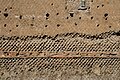 Roman opus reticulatum on Hadrian's Villa in Tivoli, Italy (2nd century)
 -
 Frauenkirche, Munich, Germany, erected 1468–1488, looking up at the towers
 -
 Eastern gable of church of St. James in Toruń (14th century)
 -
 Decorative pattern made of strongly fired bricks in Radzyń Castle (14th century)
 -

-
 Brick sculpting on Thornbury Castle, Thornbury, near Bristol, England. The chimneys were erected in 1514
 -
 A typical brick house in the Netherlands.
 -
 A 19th-century brick church in Loppi, Finland
 -
 A typical Dutch farmhouse near Wageningen, Netherlands
 -
![Baroque brick Parish of San Sebastián Mártir, Xoco in Mexico City, was completed in 1663[55]](//upload.wikimedia.org/wikipedia/commons/thumb/7/70/Capilla_San_Sebasti%C3%A1n_M%C3%A1rtir_a.jpg/120px-Capilla_San_Sebasti%C3%A1n_M%C3%A1rtir_a.jpg)
-
 Decorative bricks in St Michael and All Angels Church, Blantyre, Malawi
 -
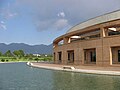 Virgilio Barco Public Library, Bogotá, Colombia
 -
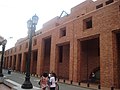 FES Building, Cali, Colombia
 -
 A brick kiln, Tamil Nadu, India
 -
 Brick sidewalk paving in Portland, Oregon, U.S.
 -
 Brick sidewalk in Cambridge, Massachusetts, U.S.
 -
 Porotherm style clay block brick
 -
 Moulding bricks, Poland
 -
 Brick made as a byproduct of ironstone mining Normanby – UK
 -
 Fired, clay bricks in Hainan, China
 -
 The largest brick warehouse in the world, Stanley Dock Tobacco Warehouse, Liverpool, UK
 -
 Medieval heir to the Roman brick in the Toulouse region, the "Foraine" brick has kept the same large and flat format.
 -
 The Albi Cathedral (France) was built using "Foraine" bricks.
 -


.jpg)


![Baroque brick Parish of San Sebastián Mártir, Xoco in Mexico City, was completed in 1663[55]](https://en.wikipedia.org/wiki/File:Capilla_San_Sebasti%C3%A1n_M%C3%A1rtir_a.jpg)


_North_views_of_the_Ste_C%C3%A9cile_Cathedral.jpg)

See also
[edit]- Autoclaved aerated concrete – Lightweight, precast building material
- Banna'i – Use of glazed tiles alternating with plain brick for decorative purposes
- Ceramic building material – Archaeological term for baked clay building material
- Glossary of British bricklaying – List of bricklaying terms and their meanings
- Opus africanum – Form of ashlar masonry used in Carthaginian and ancient Roman architecture
- Opus latericium – Ancient Roman brickwork construction
- Opus mixtum – Combination of Roman construction techniques
- Opus spicatum – Masonry pattern used in Roman and medieval times
- Opus vittatum – Roman construction technique using horizontal courses of tuff blocks alternated with bricks
- Polychrome brickwork – Use of bricks of different colours for decoration
- Stockade Building System – Building block system using compressed wood shavings
- Wienerberger – Manufacturer of bricks, pavers and pipes
References
[edit]- ^ "Interlocking bricks & Compressed stablized earth bricks - CSEB". Buildup Nepal.
- ^ "Bricks that interlock".
- ^ a b W., Beamish; Donovan, A. (1990). Village-level brickmaking. Vieweg. ISBN 3-528-02051-2. OCLC 472930436.
- ^ (in French) IFP Orient – Tell Aswad Archived 26 July 2011 at the Wayback Machine. Wikis.ifporient.org. Retrieved 16 November 2012.
- ^ "Neolithic Site of Çatalhöyük". UNESCO World Heritage Centre. Retrieved 30 January 2022.
- ^ "Mud-brick Village Survived 7,200 Years in the Jordan Valley". Haaretz. Retrieved 30 January 2022.
- ^ a b c Fiala, Jan; Mikolas, Milan; Fiala Junior, Jan; Krejsova, Katerina (2019). "History and Evolution of Full Bricks of Other European Countries". IOP Conference Series: Materials Science and Engineering. 603 (3) 032097. Bibcode:2019MS&E..603c2097F. doi:10.1088/1757-899x/603/3/032097. S2CID 203996304.
- ^ Hasson Hnaihen, Kadim (18 December 2019). "The Appearance of Bricks in Ancient Mesopotamia". Athens Journal of History. 6 (1): 73–96. doi:10.30958/ajhis.6-1-4. ISSN 2407-9677. S2CID 214024042.
- ^ Possehl, Gregory L. (1996)
- ^ History of brickmaking, Encyclopædia Britannica.
- ^ Kenoyer, Jonathan Mark (2005), "Uncovering the keys to the Lost Indus Cities", Scientific American, 15 (1): 24–33, doi:10.1038/scientificamerican0105-24sp, PMID 12840948
- ^ Khan, Aurangzeb; Lemmen, Carsten (2013), Bricks and urbanism in the Indus Valley rise and decline, arXiv:1303.1426, Bibcode:2013arXiv1303.1426K
- ^ Gupta, Sunil (May–June 1998). "History of Brick in India" (PDF). ARCHITECTURE+DESIGN. pp. 74–78. Retrieved 4 December 2022.[permanent dead link]
- ^ Yoshinori Yasuda (2012). Water Civilization: From Yangtze to Khmer Civilizations. Springer Science & Business Media. pp. 30–31. ISBN 978-4-431-54110-3.
- ^ Yoshinori Yasuda (2012). Water Civilization: From Yangtze to Khmer Civilizations. Springer Science & Business Media. pp. 33–35. ISBN 978-4-431-54110-3.
- ^ a b Lukas Nickel: Bricks in Ancient China and the Question of Early Cross-Asian Interaction, Arts Asiatiques, Vol. 70 (2015), pp. 49-62 (50f.)
- ^ Xue, Q.; Jin, X.; Cheng, Y.; Yang, X.; Jia, X.; Zhou, Y. (2019). "The historical process of the masonry city walls construction in China during 1st to 17th centuries AD". PLOS ONE. 14 (3) e0214119. Bibcode:2019PLoSO..1414119X. doi:10.1371/journal.pone.0214119. PMC 6430406. PMID 30901369.
- ^ Östborn, Per; Gerding, Henrik (1 March 2015). "The Diffusion of Fired Bricks in Hellenistic Europe: A Similarity Network Analysis". Journal of Archaeological Method and Theory. 22 (1): 306–344. doi:10.1007/s10816-014-9229-4. ISSN 1573-7764. S2CID 254606236.
- ^ Ash, Ahmed (20 November 2014). Materials science in construction: an introduction. Sturges, John. Abingdon, Oxon. ISBN 978-1-135-13841-7. OCLC 896794727.
{{cite book}}: CS1 maint: location missing publisher (link) - ^ "Roman Brick Stamps: Auxiliary and Legionary Bricks". Retrieved 30 January 2022.
- ^ 2fm.pl; BrickArchitecture.com. "The History of Bricks and Brickmaking". Retrieved 5 December 2024.
{{cite web}}: CS1 maint: numeric names: authors list (link) - ^ Welle, Deutsche. "Discover Brick Gothic architecture on the European route". Deutsche Welle. Retrieved 30 January 2022.
- ^ "Italian Renaissance Revival Style 1890 - 1930 | PHMC > Pennsylvania Architectural Field Guide". Retrieved 4 December 2022.
- ^ "Schloss Schwerin | Welterbe Schwerin" (in German). Archived from the original on 5 December 2024. Retrieved 16 June 2024.
- ^ "General information on the history of the brick | Scotland's Brick and Tile Manufacturing Industry". Retrieved 16 June 2024.
- ^ Wiskemann, Barbara (2005). "Prefabrication". In Deplazes, Andrea (ed.). Constructing Architecture: Materials, Processes, Structures (PDF). Basel, Boston & Berlin: Birkhäuser – Publishers for Architecture. p. 55. ISBN 978-3-7643-7313-9. Archived (PDF) from the original on 9 October 2022.
- ^ Peter Ackroyd (2001). London the Biography. Random House. p. 435. ISBN 978-0-09-942258-7.
- ^ "US Patent 9082". Retrieved 26 September 2014.
- ^ The First Hundred Years: the Early History of Bradley & Craven, Limited, Wakefield, England by Bradley & Craven Ltd (1963)
- ^ "Henry Clayton". Retrieved 17 December 2012.
- ^ The Mechanics Magazine and Journal of Engineering, Agricultural Machinery, Manufactures and Shipbuilding. 1859. p. 361.
- ^ Falkenstein, Michelle (28 June 2022). "Brick collectors of the Hudson Valley". www.timesunion.com. Retrieved 28 June 2022.
- ^ "Monadnock Building: The Last Brick Skyscraper". Retrieved 28 January 2022.
- ^ "The History of Bricks". De Hoop:Steenwerve Brickfields.
- ^ a b c Emery, Virginia L. (27 August 2009). "Mud-Brick". UCLA Encyclopedia of Egyptology. 1 (1).
- ^ Homsher, Robert S. (November 2012). "Mud Bricks and the Process of Construction in the Middle Bronze Age Southern Levant". Bulletin of the American Schools of Oriental Research. 368: 1–27. doi:10.5615/bullamerschoorie.368.0001. ISSN 0003-097X. S2CID 164826274.
- ^ Downton, Paul; Clarke, Dick (2020). "Mud brick". YourHome. Retrieved 11 December 2022.[permanent dead link]
- ^ Tintner, Johannes; Roth, Kimberly; Ottner, Franz; Syrová-Anýžová, Zuzana; Žabičková, Ivana; Wriessnig, Karin; Meingast, Roland; Feiglstorfer, Hubert (20 March 2020). "Straw in Clay Bricks and Plasters—Can We Use Its Molecular Decay for Dating Purposes?". Molecules. 25 (6): 1419. doi:10.3390/molecules25061419. ISSN 1420-3049. PMC 7144354. PMID 32244982.
- ^ a b Stoddard, Ralph Perkins; Carver, William (1946). Brick structures, how to build them ; practical reference data on materials, design, and construction methods employed in brick construction ... New York: McGraw-Hill.
- ^ Punmia, B.C.; Jain, Ashok Kumar (2003), Basic Civil Engineering, Firewall Media, p. 33, ISBN 978-81-7008-403-7
- ^ Connolly, Andrew. Life in the Victorian Brickyards of Flintshire and Denbigshire, p34. 2003, Gwasg Carreg Gwalch.
- ^ Pakistan Environmental Protection Agency, Brick Kiln Units (PDF file) Archived 16 June 2007 at the Wayback Machine
- ^ a b Almssad, Asaad; Almusaed, Amjad; Homod, Raad Z. (January 2022). "Masonry in the Context of Sustainable Buildings: A Review of the Brick Role in Architecture". Sustainability. 14 (22) 14734. Bibcode:2022Sust...1414734A. doi:10.3390/su142214734. ISSN 2071-1050.
- ^ a b McArthur, Hugh, and Duncan Spalding. Engineering materials science: properties, uses, degradation and remediation. Chichester, U.K.: Horwood Pub., 2004. 194. Print.
- ^ Burton, Joseph & William (1911). . In Chisholm, Hugh (ed.). Encyclopædia Britannica. Vol. 4 (11th ed.). Cambridge University Press. p. 518.
- ^ "Brick sizes, variations and standardisation". Retrieved 28 April 2021.
- ^ [1] Archived 29 December 2016 at the Wayback Machine. Brick Industry Association. Technical Note 9A, Specifications for and Classification of Brick. Retrieved 28 December 2016.
- ^ [2] Archived 11 May 2017 at the Wayback Machine bia.org. Technical Note 10, Dimensioning and Estimating Brick Masonry (pdf file) Retrieved 8 November 2016.
- ^ Crammix Maxilite. crammix.co.za
- ^ Michigan | Success Stories | Preserve America | Office of the Secretary of Transportation | U.S. Department of Transportation.
- ^ Schwartz, Emma (31 July 2003). "Bricks come back to city streets". USA Today. Retrieved 4 May 2017.
- ^ Romero, Simon (6 October 2007). "Rogelio Salmona, Colombian Architect Who Transformed Cities, Is Dead at 78". The New York Times.
- ^ "ADA Accessibility Guidelines (ADAAG)". United States Access Board. Retrieved 11 August 2024.
- ^ a b "San Francisco Will Say So Long to Brick Sidewalk". Next City. Retrieved 11 August 2024.
- ^ Alejandro Porcel Arraut (16 October 2018). "Desarrollo inmobiliario en Xoco: relato de ciudades enfrentadas". Nexos (magazine) (in Spanish).
Further reading
[edit]- Aragus, Philippe (2003), Brique et architecture dans l'Espagne médiévale, Bibliothèque de la Casa de Velazquez, 2 (in French), Madrid
{{citation}}: CS1 maint: location missing publisher (link) - Campbell, James W.; Pryce, Will, photographer (2003), Brick: a World History, London & New York: Thames & Hudson
{{citation}}: CS1 maint: multiple names: authors list (link) - Coomands, Thomas; VanRoyen, Harry, eds. (2008), "Novii Monasterii, 7", Medieval Brick Architecture in Flanders and Northern Europe, Koksijde: Ten Duinen
- Das, Saikia Mimi; Das, Bhargab Mohan; Das, Madan Mohan (2010), Elements of Civil Engineering, New Delhi: PHI Learning Private Limited, ISBN 978-81-203-4097-8
- Kornmann, M.; CTTB (2007), Clay Bricks and Roof Tiles, Manufacturing and Properties, Paris: Lasim, ISBN 978-2-9517765-6-2
- Plumbridge, Andrew; Meulenkamp, Wim (2000), Brickwork. Architecture and Design, London: Seven Dials, ISBN 1-84188-039-6
- Dobson, E. A. (1850), Rudimentary Treatise on the Manufacture of Bricks and Tiles, London: John Weale
- Hudson, Kenneth (1972) Building Materials; chap. 3: Bricks and tiles. London: Longman; pp. 28–42
- Lloyd, N. (1925), History of English Brickwork, London: H. Greville Montgomery
External links
[edit]


- Brick in 20th-Century Architecture
- Brick Industry Association United States
- Brick Development Association UK
- Think Brick Australia
- International Brick Collectors Association
| International | |
|---|---|
| National | |
| Other | |

Grokipedia
Brick
View on GrokipediaHistory
Origins in Ancient Civilizations
The earliest molded bricks, sun-dried from mud mixed with organic binders like straw, appeared during the Pre-Pottery Neolithic period at Tell es-Sultan (ancient Jericho) in the Jordan Valley, dating to approximately 9000–8000 BCE. These rectangular or plano-convex forms were used to construct round houses and a stone-faced tower, marking an empirical advancement over wattle-and-daub or tent-like precursors by leveraging abundant local alluvial clays for semi-permanent enclosures against seasonal flooding and erosion.[7][8] This innovation stemmed from the causal pressures of early sedentism following the Neolithic agricultural transition around 10,000 BCE, where domesticated wheat and barley cultivation in the Fertile Crescent generated food surpluses that supported denser populations and year-round habitation, rendering ephemeral materials insufficient for defending stored grains and livestock from environmental hazards. Sun-drying sufficed in the region's arid climate but limited longevity, prompting later refinements.[9][10] Fired bricks, kiln-hardened for superior water resistance and structural integrity, first emerged in southern Mesopotamia by circa 4000–3500 BCE, as evidenced by baked clay artifacts at sites like Uruk, where temperatures exceeding 800°C vitrified the clay matrix. This firing process addressed the vulnerabilities of sun-dried variants in flood-prone riverine environments, enabling taller ziggurats and city walls amid expanding urbanism tied to intensified irrigation farming.[9][11] Independently, the Indus Valley Civilization developed standardized fired bricks around 3000 BCE, as seen in Mohenjo-Daro's uniform modules (approximately 28 × 14 × 7 cm) laid in precise mortarless bonds for multistory homes, granaries, and sophisticated sewers. These responded to the demands of monsoon-flooded alluvial plains, where settled agro-pastoral communities numbering tens of thousands required scalable, replicable units from silty clays to sustain complex hydrology-dependent agriculture without reliance on scarce timber.[12][13]Regional Developments in Asia and the Middle East
In ancient Mesopotamia, the Sumerians pioneered fired brick production around 3500 BCE, forming clay mixed with straw or water into molds and hardening them in kilns to withstand periodic flooding from the Tigris and Euphrates rivers, unlike sun-dried mudbricks that eroded quickly. These bricks enabled monumental architecture, including ziggurats like the one at Ur, built circa 2100 BCE with millions of bricks laid in bitumen mortar for stability on soft alluvial soil.[14] Glazed bricks, developed by the mid-2nd millennium BCE, incorporated vitreous coatings for waterproofing and ornamental purposes, as evidenced in Elamite structures at Chogha Zanbil around 1250 BCE, where faience-like glazes protected against humidity while adding aesthetic polychrome effects to temple facades.[15] In the Indus Valley Civilization, fired bricks emerged by 2500 BCE, standardized in ratios like 4:2:1 for length, width, and height to facilitate precise urban planning and flood-resistant walls at sites such as Mohenjo-daro and Harappa, where kiln-fired variants outperformed mudbricks amid seasonal monsoons that caused alluvial erosion.[12] Production involved hand-molding riverine clay, sun-drying to prevent cracking during firing, and clamp kilns fueled by wood or dung, yielding durable blocks for drainage systems and multi-story buildings that channeled monsoon waters away from settlements.[16] This technology persisted into later South Asian periods, with brick-making cycles timed from November to April to exploit dry weather for molding and drying before rains rendered clay unusable, reflecting adaptations to the subcontinent's bimodal climate without reliance on imported materials.[17] Chinese fired brick use dates to the Neolithic period around 4400 BCE at Chengtoushan, but systematic production for load-bearing walls and pavements intensified during the Western Zhou dynasty (1046–771 BCE), employing clay from loess soils fired in updraft kilns to achieve densities of 1.8–2.0 g/cm³ for imperial tombs and fortifications.[18] Standardization of sizes, such as lengths of 1.7 or 2.2 chi (approximately 57–73 cm), appeared in later dynasties for efficiency in large-scale projects, with early fuels like wood transitioning to coal in pre-modern eras for higher temperatures and reduced firing times, though ancient methods remained labor-intensive, relying on manual stamping and seasonal drying.[19] These regional innovations prioritized local clay abundance and environmental exigencies, such as flood-prone river valleys, over uniformity, contrasting with later global standardization.[20]Adoption and Evolution in Europe and the Americas
The Roman Empire facilitated the widespread adoption of fired clay bricks across Europe through military engineering and standardized production techniques. Legionary units operated mobile kilns to produce bricks stamped with legion marks for quality control, ensuring uniformity in construction materials.[21] This practice spread to Britain by the early 2nd century CE, where bricks were employed in infrastructure such as aqueducts, walls, and fortifications, adapting to local resource availability amid timber and stone limitations in certain regions.[22] The empire's expansive trade and conquest networks disseminated brick-making knowledge, prioritizing durability over local traditions of timber or thatch in conquered territories.[23] Following the fall of the Western Roman Empire around 476 CE, brick production declined in much of Europe during the early medieval period, with reliance shifting to wood and stone where available. Revival occurred in northern Europe from the 12th century, driven by stone scarcity in lowland areas like the Netherlands and northern Germany, where glacial deposits limited quarrying.[24] Dutch and German regions innovated kiln designs, such as improved updraft and clamp kilns by the 1400s, enabling higher-volume firing for urban expansion amid population growth and trade booms in the Hanseatic League.[25] This evolution supported Brick Gothic architecture, reflecting pragmatic adaptation to environmental constraints rather than aesthetic preference alone.[26] In the pre-Columbian Americas, sun-dried adobe bricks predominated in Mesoamerican construction, including during the Maya Classic period around 500 CE, due to abundant clay soils and absence of widespread firing technology.[27] Structures featured molded rectangular adobes for platforms and walls, often combined with stone facings, suited to tropical climates where firing was energy-intensive without draft animals or metals.[28] European colonization from the 1500s introduced fired brick techniques via settlers, with the first permanent kilns in English North American colonies established in Virginia by 1612, transferring Roman-derived methods to build durable settlements amid timber shortages.[29] This shift contrasted adobe's local efficacy, imposing fired bricks for permanence in colonial outposts, propelled by technological import over indigenous adaptation.[30]Industrialization and Modern Production
The industrialization of brick production accelerated in Britain during the 19th century amid the Industrial Revolution's surge in demand for building materials to construct factories, infrastructure, and housing. Transitioning from labor-intensive hand-molding, manufacturers adopted steam-powered pug mills and presses starting in the 1850s, which ground clay more efficiently and formed bricks with greater uniformity and speed, boosting output from thousands to tens of thousands per week per works while reducing variability in size and quality.[31][5] These machines, though initially expensive and requiring reliable steam engines, enabled scaling to meet urban expansion needs, with early adopters like Henry Clayton's 1855 patented press marking a pivotal mechanization milestone.[31] In the United States, 19th-century mechanization followed suit, with steam-powered equipment widespread by the mid-century in hubs like Philadelphia, where it supported explosive growth in construction despite seasonal clay preparation challenges. A key innovation was the Hoffmann kiln, patented by Friedrich Hoffmann in Germany in 1858 and adopted internationally by the 1860s, featuring a ring or tunnel design for continuous firing that preheated exhaust gases to reuse heat, cutting fuel use by up to 30% over traditional clamp or periodic kilns and allowing non-stop operation with lower labor for reloading.[32][33][31] This efficiency came at the cost of higher upfront capital and potential for uneven firing if not managed precisely, yet it causally drove production surges by minimizing downtime and waste. Twentieth-century advancements included electrification of mixing and pressing equipment post-1920s, enhancing precision and safety over steam, alongside the standardization of stiff-mud extrusion, where clay is forced through a die into a continuous ribbon then wire-cut, yielding denser, more consistent bricks suitable for automated handling.[31] These methods amplified scale, with U.S. output exceeding 10 billion bricks annually by the 1950s in peak periods, though global figures reflected similar exponential growth tempered by regional fuel and labor constraints; environmental trade-offs encompassed intensified coal or wood consumption for firing, contributing to local air pollution before efficiency refinements.[31]Materials and Composition
Primary Raw Materials
The primary raw material for traditional fired clay bricks is clay, a fine-grained sedimentary deposit primarily composed of hydrous aluminum phyllosilicates such as kaolinite (Al₂Si₂O₅(OH)₄), illite, and montmorillonite, which provide essential plasticity for molding and vitrify during firing to confer structural integrity.[34][35] Kaolinite predominates in many deposits, offering low shrinkage and high refractoriness, while illite contributes to cohesion through its layered structure, enabling the mixture to withstand thermal stresses without excessive deformation.[36] These minerals typically comprise 20-50% of the clay mass, with accessory components including silica (SiO₂, 40-60%), alumina (Al₂O₃, 10-25%), iron oxides (Fe₂O₃, 2-5%), and minor lime (CaO), which influence color and fusion behavior during kiln heating.[37] Clays suitable for brickmaking are often extracted from alluvial deposits in river valleys, such as the Indo-Gangetic plains, where sedimentary layering yields uniform plasticity and minimal impurities that could cause cracking.[38][39] To optimize texture, reduce drying shrinkage, and enhance fired density, non-plastic additives like sand (silica aggregates), shale, or industrial byproducts such as fly ash are incorporated at 10-30% by weight.[40] Sand particles, typically 0.1-2 mm in diameter, act as inert fillers that inhibit clay particle aggregation, lowering linear shrinkage from up to 8% in pure clay to 2-4% in tempered mixes, thereby minimizing defects like warping.[41] Shale, a consolidated clay-rich sediment, serves similarly when crushed, providing compatible mineralogy while sourcing from quarries avoids direct topsoil disruption. Fly ash, a pozzolanic residue from coal combustion containing 50-70% silica and alumina, further reduces shrinkage by 15-24% through reactive bonding during firing, though its variable composition requires empirical testing for consistency.[42][43] Intensive clay extraction for brick production has led to measurable resource depletion, particularly in agrarian regions reliant on topsoil. In India, where fired clay bricks number over 250 billion annually, topsoil mining from paddy fields has caused fertility losses, including a 35% reduction in manganese content post-extraction in Tamil Nadu sites, exacerbating erosion and reducing agricultural yields.[44][45] One empirical assessment in Uttar Pradesh documented 2,030 tonnes of soil loss per brick factory yearly, equivalent to 0.5-1 meter depth removal over active sites, underscoring causal links between unchecked alluvial harvesting and long-term land degradation.[46][47] Such data highlight the trade-offs in material sourcing, where high-plasticity alluvial clays enable durable bricks but deplete finite surface reserves faster than subsoil alternatives.Additives and Variations
Additives in clay brick mixtures primarily function to modify chemical reactions during processing, such as lowering fusion temperatures via fluxes or enhancing binding in alternative compositions. Metallic oxides, including iron oxide (Fe₂O₃), act as fluxes that promote particle fusion at reduced firing temperatures by facilitating vitrification, while also determining color outcomes; concentrations of 5–10% Fe₂O₃ typically yield red bricks, with excess leading to darker blue or black shades due to increased oxide reduction.[48][49] Iron oxide is incorporated at 2–6% by weight to balance hue and structural integrity without compromising the clay matrix's silica-alumina base.[50] Industrial wastes, such as steel slag, are incorporated into clay formulations to substitute portions of raw materials, with studies showing viable strength retention up to 30% slag by weight before notable declines in compressive strength and increased firing shrinkage occur.[51] Beyond this threshold, the fluxing effect of slag's oxides disrupts uniform vitrification, though lower levels (e.g., 10–20%) maintain properties comparable to standard clay bricks when fired under controlled conditions.[52] Similarly, Waelz slag from zinc processing has been integrated into ceramic bricks, leveraging its silica and lime content for flux-like behavior without exceeding mechanical limits.[53] Non-clay variations rely on distinct additives for hydration-based binding; in calcium-silicate bricks, quicklime or hydrated lime is mixed with silica sand, where lime reacts to form hydrocalcium silicates that provide cohesion upon autoclaving at elevated pressures, bypassing high-temperature firing.[54][55] This composition, prevalent in regions like northern Europe, uses lime at ratios optimized for silicate hydrate gel formation, yielding denser matrices than fired clay but sensitive to precise water-lime balances.[56] Regional preferences influence additive choices, such as chromite or manganese for gray-toned bricks in select industrial areas, or garnet alongside iron oxide for specific red variants, adapting to local clay chemistries and aesthetic demands.[57]Typical Brick Composition (ASCII Diagram)
Approximate volumetric/weight composition of a traditional fired clay brick:┌─────────────────────────────────────┐
│ Brick Composition │
├─────────────────┬───────────────────┤
│ Component │ Approximate % │
├─────────────────┼───────────────────┤
│ Clay Minerals │ 50–70% ██████████ │
│ Silica/Sand │ 20–30% █████ │
│ Fluxes (Fe₂O₃, │ 5–10% ██ │
│ etc.) │ │
│ Other Additives │ <5% █ │
└─────────────────────────────────────┘
Manufacturing Processes
Preparation and Forming
In the preparation stage of clay brick manufacturing, raw clay is typically blended with water to achieve the necessary plasticity, enabling it to be shaped without cracking or excessive stiffness. This plasticity is quantified through the plasticity index (PI), calculated as the difference between the liquid limit (the water content at which the clay transitions from a plastic to a viscous state) and the plastic limit (the minimum water content for plastic behavior), with suitable brick clays exhibiting a PI of approximately 7-16% for optimal workability.[58] Water content is adjusted to 10-15% in stiff-mud processes or higher (around 20-30%) in soft-mud methods to attain this state, often with additives like sand for improved cohesion.[49] Forming follows preparation, where the plasticized clay is shaped into bricks via extrusion or molding. In modern extrusion (stiff-mud process), the mixture is de-aired under vacuum and forced through a die to produce a continuous ribbon, which is then cut into uniform lengths, enabling high-volume output and smooth surfaces suitable for structural applications.[49] [59] Alternatively, soft-mud molding involves pressing the wetter clay into sand-lubricated molds for textured or handmade appearances, though this yields lower throughput compared to extrusion.[49] Mechanization of forming, beginning in the early 19th century with steam-powered presses and progressing to automated extruders by the mid-1800s, marked a shift from labor-intensive hand-pressing, which was prone to inconsistencies.[31] [60] These innovations in Britain and elsewhere improved uniformity, reduced production defects through precise control, and scaled output dramatically, underpinning the brick industry's role in industrial-era construction.[31][60]Drying and Firing Techniques
After forming, clay bricks destined for firing must undergo controlled drying to remove free water and prevent cracking during subsequent heating, a process distinct from the sun-drying of unfired mudbricks which relies on natural evaporation without thermal treatment.[61] Artificial tunnel drying, common in modern production, maintains low temperatures around 105°C with high airflow and slight positive pressure, progressing over 24 to 48 hours while gradually increasing heat to 25-35°F per hour in later stages to ensure uniform moisture removal below 2-3% before firing.[62][63][64] This controlled dehydration mitigates tensile stresses from uneven shrinkage, which can cause defects in up to 10-20% of improperly dried bricks.[65] Firing follows drying, subjecting bricks to high temperatures that induce vitrification—a partial melting at particle contact points forming a glassy matrix that binds the structure, conferring compressive strengths often exceeding 10-20 MPa depending on clay flux content and peak heat.[66] Thresholds typically range from 900°C to 1200°C, where aluminosilicates begin fusing without full liquefaction, with durations of 20-40 hours in continuous processes to achieve densification and durability; below 900°C, insufficient vitrification yields weak, friable products prone to weathering.[67][68] Traditional clamp firing, involving stacked bricks with interspersed fuel under temporary covers, operates intermittently at similar peaks but results in variable quality—averaging 60% usable bricks due to uneven heating and overfiring near fuel layers—contrasting modern tunnel kilns that convey bricks through zoned heating for uniform exposure and over 90% yield.[69][70] Firing atmosphere and composition influence final color: oxidizing conditions with iron oxide content of 5-8% typically produce red hues via hematite formation, while higher temperatures or iron-deficient clays yield yellow or buff tones through altered oxidation states and increased vitrification opacity.[71][72][73] These processes demand substantial energy, often 0.8-1.2 MJ per brick in efficient kilns, underscoring the trade-off for enhanced mechanical integrity over unfired alternatives.[66]Alternative Production Methods
Adobe bricks, also known as mudbricks, represent one of the earliest alternative production methods, relying on sun-drying rather than firing to achieve cohesion through natural evaporation of water from a mixture of soil, water, and often organic fibers like straw for added tensile strength.[74] This process avoids high-energy thermal treatment, enabling low-cost production in arid regions, but results in blocks highly susceptible to erosion and dissolution upon exposure to moisture, limiting durability in wet climates without protective coatings or overhangs.[75][76] Calcium-silicate bricks employ a chemical bonding process using sand, lime, and water, formed under pressure and then autoclaved in steam at high temperatures (around 180–200°C) and pressure (1–2 MPa) for several hours to react lime with silica, producing hydrated calcium silicates without firing.[77] Patented in 1880 by Dr. William Michaelis following earlier 19th-century experiments, this method yields bricks with compressive strengths typically exceeding 10 MPa and good resistance to weathering, though the autoclaving step consumes significant steam energy, offsetting some savings compared to clay firing.[78][79] Compressed earth blocks (CEB) utilize hydraulic presses to compact moist soil mixtures—often stabilized with 5–10% cement or lime—at pressures of 2–20 MPa, followed by air-drying, bypassing both firing and autoclaving for reduced embodied energy.[80] Originating from early 20th-century trials in France as an evolution of rammed earth, CEB production has expanded since the 2000s with manual and mechanized presses suited for off-grid and sustainable construction in resource-limited areas, offering compressive strengths of 2–10 MPa depending on soil and stabilizers, though unstabilized variants remain vulnerable to water like adobe.[80][81] These methods collectively prioritize energy efficiency over the superior water resistance of fired clay, necessitating site-specific adaptations for longevity.[82]Brick Production Flowchart (Traditional Fired Clay - ASCII)
Raw Materials
(Clay + Sand + Additives)
       │
       ▼
Preparation & Mixing
(Crush, blend with water for plasticity)
       │
       ▼
Forming
(Extrusion / Soft Mud Molding / Dry Pressing)
       │
       ▼
Drying
(Controlled drying to remove moisture, prevent cracking)
       │
       ▼
Firing
(Kiln at 900–1200°C for vitrification & strength)
       │
       ▼
Cooling & Setting
       │
       ▼
Finished Bricks
(Inspection, packaging)
Types
Traditional Clay Bricks
Traditional clay bricks are manufactured by mixing clay with water, forming it into rectangular units via extrusion, molding, or pressing, and then firing in kilns at temperatures ranging from 900 to 1200°C to induce vitrification and enhance durability.[83] This process expels moisture and volatiles, resulting in a hard, non-combustible material suitable for load-bearing applications.[83] These bricks are categorized as common, facing, or engineering based on firing intensity, density, and intended use. Common bricks, often used in concealed positions, exhibit compressive strengths typically between 10 and 35 MPa.[84] Facing bricks prioritize aesthetic uniformity for exposed surfaces, with average compressive strengths around 100 MPa for fired variants.[85] Engineering bricks, produced under higher firing densities for structural demands, achieve minimum compressive strengths of 75 MPa for Class B and 125 MPa for Class A.[86] Hollow bricks, also known as cored bricks, perforated bricks, or multi-core bricks, are a type of fired clay brick featuring internal voids (typically rectangular, cylindrical, or oval holes running through the brick) that comprise 25-60% of the volume. These voids significantly reduce the brick's weight (often by 30-50% compared to solid bricks), material consumption, and transportation costs while preserving adequate compressive strength for masonry applications. The holes allow mortar to flow into them during laying, forming mechanical keys that enhance bonding and shear resistance between courses. Additional benefits include improved thermal and acoustic insulation, easier handling for masons, and suitability for single-wythe walls that can accommodate vertical reinforcement and grout in load-bearing or seismic designs. Hollow bricks are primarily used for non-load-bearing partition walls, infill masonry in reinforced concrete frames, interior/exterior walls in residential/commercial buildings, and occasionally load-bearing walls (especially vertically perforated variants for low-rise structures). They are not recommended for paving (lacking wear resistance), fireplaces (insufficient heat resistance), or high-end exposed facing (may have imperfections). Often produced via extrusion, they differ from larger structural clay tiles (which are thicker blocks for fireproofing/floor arches) but share similar principles. Grooved or ribbed variants of solid or hollow bricks feature textured sides to improve mortar or plaster adhesion via mechanical keying. Key standards include ASTM C652 for hollow brick in the US.[87][88][89] Empirical durability is highlighted by Roman-era fired clay bricks integrated into surviving structures, such as those in the Basilica of Constantine in Trier (circa 310 AD), demonstrating endurance over 1,700 years in temperate conditions.[90]Chemically Bonded Bricks
Chemically bonded bricks achieve cohesion through hydration reactions rather than high-temperature firing, enabling more predictable bonding via controlled chemical processes that form compounds like calcium silicate hydrate or cementitious gels. This contrasts with the variability inherent in clay-based thermal transformations, as the reactions depend on stoichiometric ratios and curing conditions rather than empirical kiln behaviors. Common variants include calcium silicate and concrete bricks, both produced at ambient or moderate temperatures for efficiency and uniformity in load-bearing applications.[91][92] Calcium silicate bricks, also known as sand-lime bricks, are formed by mixing quicklime (calcium oxide), silica-rich sand (typically >90% silica), and water to create a slurry, which is pressed into molds and then autoclaved under steam pressure at approximately 180–200°C for several hours. This hydrothermal process triggers the reaction CaO + SiO₂ + H₂O → calcium silicate hydrate (C-S-H), yielding a dense, uniform matrix with compressive strengths ranging from 15–40 MPa, suitable for structural masonry. The method ensures high dimensional accuracy and low variability, as the bond formation is chemically deterministic, with water absorption often below 15% per ASTM standards. Production dates back to the late 19th century, patented in Germany around 1880, and remains energy-efficient compared to firing, though lime calcination contributes to embodied carbon.[92][93][94] Concrete bricks involve mixing Portland cement, aggregates (sand, gravel), and water, followed by vibration compaction into molds and hydration curing at ambient temperatures for 24–28 days, where cement hydration forms ettringite and C-S-H gels for binding. This allows rapid production cycles—up to 10 times faster than traditional methods—and strengths of 15–40 MPa, often used for non-structural infill or partitions, though load-bearing grades exist. However, the process incurs a higher CO₂ footprint from cement production, accounting for about 0.8–1.0 tons of CO₂ per ton of cement, exacerbating global emissions given cement's role in 7–8% of anthropogenic CO₂. Mitigation efforts include carbonation techniques to sequester up to 45% of process CO₂ without strength loss.[95][96][97]Composite and Engineered Bricks
Composite bricks integrate industrial byproducts like fly ash and blast furnace slag into clay-based or cementitious matrices to minimize virgin material use and landfill waste, often reducing clay content by 20-30% in optimized formulations.[98] [99] These composites typically incorporate activators such as lime or cement to form supplementary cementitious gels, enhancing pozzolanic reactions for binding. Empirical tests indicate that 25% fly ash replacement yields bricks 18% lighter than traditional clay variants, with compressive strengths comparable or superior when additives stabilize the mix, though unoptimized high-volume slag substitutions (over 50%) can diminish strength by more than 10% due to incomplete hydration and porosity increases.[100] [43] [101] Geopolymer bricks, alkali-activated using sodium hydroxide or silicate solutions on precursors like fly ash, metakaolin, or slag, bypass high-temperature firing to lower energy demands and CO2 emissions by up to 80% relative to Portland cement-based equivalents.[102] Commercial testing since the early 2010s has demonstrated initial compressive strengths exceeding 20 MPa, with resistance to sulfate attack and acid exposure outperforming some fired bricks in lab simulations.[103] [104] However, field durability remains inconsistent, with accelerated weathering trials revealing 9-10% compressive strength reductions after 28 freeze-thaw cycles or alkali-silica exposure, attributed to microcracking from uneven geopolymerization in variable environmental conditions.[105] [106] Engineered variants, including those leveraging extrusion-based 3D printing, have advanced post-2020 for precision fabrication of interlocking or porous designs using composite feeds like clay-fly ash blends or geopolymer pastes.[107] Layered deposition enables custom internal geometries for optimized thermal insulation, with prototypes achieving strengths akin to concrete (over 30 MPa) via controlled nozzle shaping and post-processing curing.[108] [109] While sustainability claims highlight waste diversion, performance data underscore the need for empirical validation, as anisotropic layering can introduce weak interfaces reducing interlayer shear strength by 15-20% without reinforcement.[110]Physical Properties and Standards
Mechanical and Structural Characteristics
The compressive strength of clay bricks, a primary mechanical property determining load-bearing capacity, typically ranges from 10 to over 50 MPa, with standards like ASTM C62 requiring an average minimum of at least 17.2 MPa (2500 psi) for moderate weathering grades and higher durability thresholds for severe weathering regions to resist structural failure under sustained loads.[111] Under uniaxial compression, bricks display a stress-strain curve featuring an initial linear elastic region where stress σ = E ε (with Young's modulus E roughly 500–1100 times the compressive strength in MPa, e.g., 5–10 GPa for 10 MPa bricks), transitioning to nonlinear microcracking and eventual brittle axial splitting or crushing at peak stress, as derived from force-displacement measurements normalized by cross-sectional area and length.[1][112] Structural efficiency in masonry walls is enhanced by standardized dimensions that align with mortar joint thicknesses, such as the metric modular brick at 215 × 102.5 × 65 mm (work size), which permits 10 mm joints to form a 225 mm coordinating module, reducing joint volume (a potential weak plane) to under 15% of wall area and optimizing stress distribution across units.[113] This dimensional rationality minimizes shear failures at interfaces and supports higher axial capacities in stacked assemblages, where empirical load tests show wall strength approximating 0.3–0.5 times individual brick compressive strength due to mortar constraints.[114] Key structural failure modes include spalling from freeze-thaw cycles, where absorbed water expands upon freezing (volume increase ~9%), generating tensile stresses exceeding brick tensile strength (~10% of compressive), leading to surface flaking; mitigation relies on low 24-hour cold absorption rates below 15–20% and saturation coefficients under 0.80 to limit internal pressure buildup during repeated cycles (up to 50+ in temperate climates).[115][116] Transverse tensile cracking may also occur under eccentric loading, but first-principles analysis emphasizes uniform bedding and reinforcement to maintain compressive dominance in design.Thermal, Acoustic, and Durability Properties
Clay bricks possess low thermal conductivity, ranging from 0.4 to 0.8 W/m·K depending on density and composition, which results in U-values for typical masonry walls of approximately 0.5 to 1.0 W/m²K when incorporating cavities or minimal insulation, enabling substantial reduction in heat transfer compared to high-conductivity materials like steel (around 50 W/m·K).[117] This property, combined with high thermal mass (specific heat capacity of about 0.8-1.0 kJ/kg·K and density of 1600-2000 kg/m³), allows bricks to absorb and release heat slowly, stabilizing indoor temperatures and reducing peak loads on heating or cooling systems in diurnal cycles.[117] Acoustic performance of brick masonry walls derives primarily from their mass, achieving sound transmission class (STC) ratings of 40 to 50 dB for single-leaf or cavity configurations, effectively attenuating airborne noise by 40-50 dB across typical frequencies.[118][119] Adding plaster or render can enhance this by 2-5 dB, with denser bricks providing superior low-frequency isolation due to inertial resistance to vibration.[120] Durability of fired clay bricks includes non-combustibility, withstanding exposure to temperatures exceeding 1000°C without structural degradation, as evidenced by firing processes at 900-1050°C that vitrify the material into a stable ceramic.[121][67] Empirical data from surviving structures indicate lifespans exceeding 100 years, with averages up to 500 years under exposure to weathering, freeze-thaw cycles, and mechanical stress, owing to chemical inertness that resists pests, corrosion, and biological degradation absent in organic materials.[122][123][124]Standardization and Testing
Standardization of bricks ensures consistency in material quality, facilitating safe and predictable performance in construction by linking raw material properties to finished product durability. The ISO 14688 series provides a framework for geotechnical identification and classification of soils, including clays essential for brick production, categorizing them by particle size (e.g., clay particles under 2 μm) and plasticity indices to guide selection of feedstocks that minimize defects like cracking during firing.[125] [126] In Europe, EN 771-1 establishes harmonized requirements for clay masonry units, specifying performance metrics such as compressive strength, dimensional tolerances, and active soluble salts content to mitigate risks like structural failure from moisture ingress or uneven loading.[127] These standards emphasize empirical thresholds derived from failure modes observed in historical applications, prioritizing causal factors like material homogeneity over arbitrary regulatory expansions. Regional variations reflect differing emphases: US ASTM standards, like C216 for facing brick and C652 for hollow brick, prioritize voluntary consensus-based material specs with tolerances for severity of exposure, while EN 771-1 integrates CE marking for traceability and performance declarations under the Construction Products Regulation. Regional variations reflect differing emphases: US ASTM standards, like C216 for facing brick, prioritize voluntary consensus-based material specs with tolerances for severity of exposure, while EN 771-1 integrates CE marking for traceability and performance declarations under the Construction Products Regulation. In India and Pakistan, traditional standard brick size is 9 × 4.5 × 3 inches (229 × 114 × 76 mm) without mortar, requiring approximately 13.5 bricks per cubic foot of brickwork including cement mortar joints.[128][116] [129] Post-2020 seismic events, including the 2023 Turkey-Syria earthquakes, have prompted refinements in masonry unit requirements in affected regions, such as elevated strength classes in updated national annexes to EN standards, to address observed vulnerabilities in unreinforced assemblies without altering core brick testing paradigms.[130] These evolutions underscore testing's role in causal risk reduction, though enforcement relies on local building codes rather than universal mandates.Applications
Structural and Masonry Uses
Bricks function as load-bearing elements in masonry construction, particularly for walls in low-rise buildings up to several stories, where full-depth units stacked in solid configurations transfer vertical loads from upper floors, roofs, and live loads to the foundation.[131][132] This application leverages the material's high compressive capacity, with individual bricks bonded via mortar joints that ensure uniform stress distribution and prevent localized failure.[83] Hollow bricks are commonly employed for non-load-bearing applications including partition walls, infill masonry in reinforced concrete frames, and interior or exterior walls in residential and commercial buildings. They offer advantages such as lower weight, enhanced thermal and acoustic insulation, easier handling, and the option for vertical reinforcement and grouting in seismic or load-bearing designs. Vertically perforated variants may be used in limited load-bearing low-rise walls. However, they are unsuitable for paving due to insufficient wear resistance, fireplaces due to lower heat resistance, or high-end exposed facing due to potential surface imperfections.[87][88][89] The interlocking arrangement of bricks in running bond or similar patterns, combined with mortar adhesion, geometrically amplifies the wall's overall compressive resistance beyond the sum of unit strengths, as loads propagate through multiple parallel paths.[133] Historically, such masonry enabled compact urban settlements; sun-dried and fired bricks formed multi-story dwellings and ziggurats in ancient Mesopotamia from around 7000 BC, supporting population densities unattainable with perishable materials like timber.[134] In regions prone to fire, brick outperforms timber empirically by resisting ignition and structural collapse, offering approximately 1.5 hours of fire endurance before penetration compared to under 30 minutes for wood-based assemblies.[135]Bricklaying Patterns (Visual Aid)
Common masonry bond patterns are illustrated below in simple ASCII format: Running Bond (Stretcher Bond) - Standard for straight walls, with each row offset by half a brick:┌───────┐ ┌───────┐ ┌───────┐ ┌───────┐
│ │ │ │ │ │ │ │
└───────┘ └───────┘ └───────┘ └───────┘
┌───────┐ ┌───────┐ ┌───────┐ ┌───────┐
│ │ │ │ │ │ │ │
└───────┘ └───────┘ └───────┘ └───────┘
┌───────┐ ┌───────┐ ┌───────┐ ┌───────┐
│ │ │ │ │ │ │ │
└───────┘ └───────┘ └───────┘ └───────┘
Headers: ┌───┐ ┌───┐ ┌───┐ ┌───┐ ┌───┐
         └───┘ └───┘ └───┘ └───┘ └───┘
Stretchers: ┌─────────┐ ┌─────────┐ ┌─────────┐
            └─────────┘ └─────────┘ └─────────┘
Headers: ┌───┐ ┌───┐ ┌───┐ ┌───┐ ┌───┐
         └───┘ └───┘ └───┘ └───┘ └───┘
┌───┐ ┌─────────┐ ┌───┐ ┌─────────┐ ┌───┐
└───┘ └─────────┘ └───┘ └─────────┘ └───┘
┌─────────┐ ┌───┐ ┌─────────┐ ┌───┐ ┌─────────┐
└─────────┘ └───┘ └─────────┘ └───┘ └─────────┘