


Community hub
Recent from talks
Contribute something
Nothing was collected or created yet.


A silo (from Ancient Greek σιρός (sirós) 'pit for holding grain') is a structure for storing bulk materials.
Silos are commonly used for bulk storage of grain, coal, cement, carbon black, woodchips, food products and sawdust. Three types of silos are in widespread use today: tower silos, bunker silos, and bag silos.
Silos are used in agriculture to store fermented feed known as silage.
Types of silos
[edit]Tower silo
[edit]
Storage silos are cylindrical structures, typically 10 to 90 ft (3 to 27 m) in diameter and 30 to 275 ft (10 to 90 m) in height with the slipform and Jumpform concrete silos being the larger diameter and taller silos. They can be made of many materials. Wood staves, concrete staves, cast concrete, and steel panels have all been used, and have varying cost, durability, and airtightness tradeoffs. Silos storing grain, cement and woodchips are typically unloaded with air slides or augers. Silos can be unloaded into rail cars, trucks or conveyors.
Tower silos containing silage are usually unloaded from the top of the pile, originally by hand using a silage fork—which has many more tines than the common pitchfork; 12 vs 4—and in modern times using mechanical unloaders. Bottom silo unloaders are utilized at times, but have problems with difficulty of repair.
An advantage of tower silos is that the silage tends to pack well due to its own weight, except in the top few feet. However, this may be a disadvantage for items like chopped wood. The tower silo was invented by Franklin Hiram King.[attribution needed]
In Canada, Australia and the United States, many country towns or the larger farmers in grain-growing areas have groups of wooden or concrete tower silos, known as grain elevators, to collect grain from the surrounding towns and store and protect the grain for transport by train, truck or barge to a processor or to an export port. In bumper crop times, the excess grain is stored in piles without silos or bins, causing considerable losses.
Concrete stave silos
[edit] |
 |
Concrete stave silos are constructed from small precast concrete blocks with ridged grooves along each edge that lock them together into a high strength shell. Concrete is much stronger in compression than tension, so the silo is reinforced with steel hoops encircling the tower and compressing the staves into a tight ring. The vertical stacks are held together by intermeshing of the ends of the staves by a short distance around the perimeter of each layer, and hoops which are tightened directly across the stave edges.
The static pressure of the material inside the silo pressing outward on the staves increases towards the bottom of the silo, so the hoops can be spaced wide apart near the top but become progressively more closely spaced towards the bottom to prevent seams from opening and the contents leaking out.
Concrete stave silos are built from common components designed for high strength and long life. They have the flexibility to have their height increased according to the needs of the farm and purchasing power of the farmer, or to be completely disassembled and reinstalled somewhere else if no longer needed.
Low-oxygen tower silos
[edit]
Low-oxygen silos are designed to keep the contents in a low-oxygen atmosphere at all times, to keep the fermented contents in a high quality state, and to prevent mold and decay, as may occur in the top layers of a stave silo or bunker. Low-oxygen silos are only opened directly to the atmosphere during the initial forage loading, and even the unloader chute is sealed against air infiltration.
It would be expensive to design such a huge structure that is immune to atmospheric pressure changes over time. Instead, the silo structure is open to the atmosphere but outside air is separated from internal air by large impermeable bags sealed to the silo breather openings. In the warmth of the day when the silo is heated by the sun, the gas trapped inside the silo expands and the bags "breathe out" and collapse. At night the silo cools, the air inside contracts and the bags "breathe in" and expand again.
While the iconic blue Harvestore low-oxygen silos were once very common, the speed of its unloader mechanism was not able to match the output rates of modern bunker silos, and this type of silo went into decline. Unloader repair expenses also severely hurt the Harvestore reputation, because the unloader feed mechanism is located in the bottom of the silo under tons of silage. In the event of cutter chain breakage, it can cost up to US$10,000 to perform repairs. The silo may need to be partially or completely emptied by alternate means, to unbury the broken unloader and retrieve broken components lost in the silage at the bottom of the structure.
In 2005 the Harvestore company recognized these issues and worked to develop new unloaders with double the flow rate of previous models to stay competitive with bunkers, and with far greater unloader chain strength. They are now also using load sensing soft-start variable frequency drive motor controllers to reduce the likelihood of mechanism breakage, and to control the feeder sweep arm movement.
Bunker silos
[edit]
Bunker silos are trenches, usually with concrete walls, that are filled and packed using tractors and loaders. The filled trench is covered with a plastic tarp to make it airtight. These silos are usually unloaded with a tractor and loader. They are inexpensive and especially well suited to very large operations.
Bag silos
[edit]
Bag silos are heavy plastic tubes, usually around 8 to 12 ft (2.4 to 3.6 m) in diameter, and of variable length as required for the amount of material to be stored. They are packed using a machine made for the purpose, and sealed on both ends. They are unloaded using a tractor and loader or skid-steer loader. The bag is discarded in sections as it is torn off. Bag silos require little capital investment. They can be used as a temporary measure when growth or harvest conditions require more space, though some farms use them every year.
Grain bins
[edit]

A grain bin is typically much shorter than a silo,[1] and is typically used for holding dry matter such as cement or grain. Grain is often dried in a grain dryer before being stored in the bin. Bins may be round or square, but round bins tend to empty more easily due to a lack of corners for the stored material to become wedged and encrusted.[2][unreliable source?]
The stored material may be powdered, as seed kernels, or as cob corn. Due to the dry nature of the stored material, it tends to be lighter than silage and can be more easily handled by under-floor grain unloaders. To facilitate drying after harvesting, some grain bins contain a hollow perforated or screened central shaft to permit easier air infiltration into the stored grain.
Cement storage silos
[edit] |

There are different types of cement silos such as the low-level mobile silo and the static upright cement silo, which are used to hold and discharge cement and other powder materials such as pulverised fuel ash (PFA). The low-level silos are fully mobile with capacities from 100 to 750 tons. They are simple to transport and are easy to set up on site. These mobile silos generally come equipped with an electronic weighing system with digital display and printer. This allows any quantity of cement or powder discharged from the silo to be controlled and also provides an accurate indication of what remains inside the silo. The static upright silos have capacities from 200 to 800 tons.[3] These are considered a low-maintenance option for the storage of cement or other powders. Cement silos can be used in conjunction with bin-fed batching plants.
Sand and salt silos
[edit]Sand and salt for winter road maintenance are stored in conical dome-shaped (clear truss roof) silos. These are more common in North America, namely in Canada and the United States. The shaped is based on natural shape formed when piling solids.[4] The dome is made of prefabricated wood panels with shingles installed on a circular reinforced concrete base. Open canopy entrance allows for front end loaders to fill and retrieve easily. These are usually found along major highway or key primary roads.
Plastic silos
[edit]
Plastic silos, also known as hopper bottom tanks, are manufactured through various processes such as: injection molding, rotational molding, and blow molding. They are constructed using a wide variety of polyethylene plastics. The silos are light weight and make for great small scale storage for farmers with livestock and grain operations. The light weight design and cost effective materials make plastic silos a great alternative to traditional steel bins. Unlike fabric silos, which "tend to be prone to grain rot and pests which have left many farmers frustrated",[6] plastic silos are more safe and secure, keeping grain fresh and unspoiled. They can be designed to be stationary hopper bottom bins or portable pallet bins.
Fabric silos
[edit]Fabric silos are constructed of a fabric bag suspended within a rigid, structural frame. Polyester based fabrics are often used for fabrication of the bag material, with specific attention given to fabric pore size. Upper areas of silo fabric are often manufactured with slightly larger pore size, with the design intent of acting as a vent filter during silo filling. Some designs include metal thread within the fabric, providing a static conductive path from the surface of the fabric to ground. The frame of a fabric silo is typically constructed of steel. Fabric silos are an attractive option because of their relative low cost compared to conventional silos. However, when fabric silos are used to store granular or particulate combustible materials, conventional practices prescribed by established industry consensus standards[7] addressing combustible dust hazards can not be applied without a considerable engineering analysis of the system.
Flexible silo storage system
[edit]Flexible silos are the most versatile and cost-effective solution for the storage of bulk powder and granules. Manufactured from trevira tissue, a tough non-toxic fabric, the silos can handle particle size down to 2 microns and can be pneumatically loaded without the need for a dust collector. The 45-degree fabric silo cone flexes freely when the product discharges, enabling the efficient flow of hard to handle products such as sugar, flour, calcium carbonate etc., minimally assisted by a small vibrator fitted to the discharge transition. The trevira tissue is able to breathe, preventing condensation from forming on its internal walls. This eliminates lumping and caking of the product.
Rigid silos
[edit]With sizes ranging from 2m3 to over 1000m3, Rigid Silos cover an extreme range of applications and they can be constructed from various materials. Rigid silos can be provided with more than one vertical partition to compartmentalize it for different grades of product.[8]
History
[edit]

The 5th millennium BC site of Tel Tsaf in the southern Levant contain the earliest known silos. Archaeological ruins and ancient texts show that silos were used in ancient Greece as far back as the late 8th century BC; the term silo is derived from the Greek σιρός (siros), "pit for holding grain".[9][10][11]
The silo pit, as it has been termed, has been a favorite way of storing grain from time immemorial in Asia. In Turkey and Persia, insurance agents bought stores of wheat or barley whilst comparatively cheap, and store it in hidden pits against seasons of dearth. In Malta a relatively large stock of wheat was preserved in some hundreds of pits (silos) cut in the rock. A single silo stored from 60 to 80 tons of wheat, which, with proper precautions, kept in good condition for four years or more.[12]
The first modern silo, a wooden and upright one filled with grain, was invented and built in 1873 in Spring Grove, Illinois by Fred Hatch of McHenry County, Illinois, US.[13][14]
Forage silo usage
[edit]Forage harvesting
[edit]Forage silo filling is performed using a forage harvester which may either be self-propelled with an engine and driver's cab, or towed behind a tractor that supplies power through a PTO.
The harvester contains a drum-shaped series of cutting knives which shear the fibrous plant material into small pieces no more than an inch long, to facilitate mechanized blowing and transport via augers. The finely chopped plant material is then blown by the harvester into a forage wagon which contains an automatic unloading system.
Tower filling
[edit]Tower forage filling is typically performed with a silo blower which is a very large fan with paddle-shaped blades. Material is fed into a vibrating hopper and is pushed into the blower using a spinning spiral auger.
There is commonly a water connection on the blower to add moisture to the plant matter being blown into the silo. The blower may be driven by an electric motor but it is more common to use a spare tractor instead.
A large slow-moving conveyor chain underneath the silage in the forage wagon moves the pile towards the front, where rows of rotating teeth break up the pile and drop it onto a high-speed transverse conveyor that pours the silage out the side of the wagon into the blower hopper.
Bag filling
[edit]Silo bags are filled using a traveling sled driven from the PTO of a tractor left in neutral and which is gradually pushed forward as the bag is filled. The steering of the tractor controls the direction of bag placement as it fills, but bags are normally laid in a straight line.
The bag is loaded using the same forage harvesting methods as the tower, but the forage wagon must be moved progressively forward with the bag loader. The loader uses an array of rotating cam-shaped spiraled teeth associated with a large comb-shaped tines to push forage into the bag. The forage is pushed in through a large opening, and as the teeth rotate back out, they pass between the comb tines. The cam-shaped auger teeth essentially wipe the forage off using the steel tines, keeping the forage in the bag.
Before filling begins, the entire bag is placed onto the loader as a bunched-up tube folded back on itself in many layers to form a thick pile of plastic. Because the plastic is minimally elastic, the loader mechanism filling chute is slightly smaller than the final size of the bag, to accommodate this stack of plastic around the mouth of the loader. The plastic slowly unfurls itself around the edges of the loader as the tube is filled.
The contents of the silo bag are under pressure as it is filled, with the pressure controlled by a large brake shoe pressure regulator, holding back two large winch drums on either side of the loader. Cables from the drum extend to the rear of the bag where a large mesh basket holds the rear end of the bag shut.
To prevent molding and to assure an airtight seal during fermentation, the ends of the silo bag tube are gathered, folded, and tied shut to prevent oxygen from entering the bag. Removal of the bag loader can be hazardous to bystanders since the pressure must be released and the rear end allowed to collapse onto the ground.
Tower unloading
[edit] |
 |
 |
 |
 |
 |
A silo unloader specifically refers to a special cylindrical rotating forage pickup device used inside a single tower silo.
The main operating component of the silo unloader is suspended in the silo from a steel cable on a pulley that is mounted in the top-center of the roof of the silo. The vertical positioning of the unloader is controlled by an electric winch on the exterior of the silo.
For the summer filling of a tower silo, the unloader is winched as high as possible to the top of the silo and put into a parking position. The silo is filled with a silo blower, which is literally a very large fan that blows a large volume of pressurized air up a 10-inch tube on the side of the silo. A small amount of water is introduced into the air stream during filling to help lubricate the filling tube. A small adjustable nozzle at the top, controlled by a handle at the base of the silo directs the silage to fall into the silo on the near, middle, or far side, to facilitate evenly layered loading. Once completely filled, the top of the exposed silage pile is covered with a large heavy sheet of silo plastic which seals out oxygen and permits the entire pile to begin to ferment in the autumn.
In the winter when animals must be kept indoors, the silo plastic is removed, the unloader is lowered down onto the top of the silage pile, and a hinged door is opened on the side of the silo to permit the silage to be blown out. There is an array of these access doors arranged vertically up the side of the silo, with an unloading tube next to the doors that has a series of removable covers down the side of the tube. The unloader tube and access doors are normally covered with a large U-shaped shield mounted on the silo, to protect the farmer from wind, snow, and rain while working on the silo.
The silo unloader mechanism consists of a pair of counter-rotating toothed augers which rip up the surface of the silage and pull it towards the center of the unloader. The toothed augers rotate in a circle around the center hub, evenly chewing the silage off the surface of the pile. In the center, a large blower assembly picks up the silage and blows it out the silo door, where the silage falls by gravity down the unloader tube to the bottom of the silo, typically into an automated conveyor system.
The unloader is typically lowered only a half-inch or so at a time by the operator, and the unloader picks up only a small amount of material until the winch cable has become taut and the unloader is not picking up any more material. The operator then lowers the unloader another half-inch or so and the process repeats. If lowered too far, the unloader can pull up much more material than it can handle, which can overflow and plug up the blower, outlet spout, and the unloader tube, resulting in a time-wasting process of having to climb up the silo to clear the blockages.
Once silage has entered the conveyor system, it can be handled by either manual or automatic distribution systems. The simplest manual distribution system uses a sliding metal platform under the pickup channel. When slid open, the forage drops through the open hole and down a chute into a wagon, wheelbarrow, or open pile. When closed, the forage continues past the opening and onward to other parts of the conveyor. Computer automation and a conveyor running the length of a feeding stall can permit the silage to be automatically dropped from above to each animal, with the amount dispensed customized for each location.
Safety
[edit]

Silos are hazardous, and people are killed or injured every year in the process of filling and maintaining them.[15] The machinery used is dangerous, and workers can fall from a tower silo's ladder or work platform. Several fires have occurred over the years.
Dangers of loading process
[edit]Filling a silo requires parking two tractors very close to each other, both running at full power and with live PTO shafts, one powering the silo blower and the other powering a forage wagon unloading fresh-cut forage into the blower. The farmer must continually move around in this highly hazardous environment of spinning shafts and high-speed conveyors to check material flows and adjust speeds, and to start and stop all the equipment between loads.
Preparation for filling a silo requires winching the unloader to the top, and any remaining forage at the base that the unloader could not pick up must be removed from the floor of the silo. This job requires that the farmer work directly underneath a machine weighing several tons suspended fifty feet or more overhead from a small steel cable. Should the unloader fall, the farmer will likely be killed instantly.
Dangers of unloading process
[edit]Unloading also poses its own special hazards, due to the requirement that the farmer regularly climb the silo to close an upper door and open a lower door, moving the unloader chute from door to door in the process. The fermentation of the silage produces methane gas which over time will outgas and displace the oxygen in the top of the silo. A farmer directly entering a silo without any other precautions can be asphyxiated by the methane, knocked unconscious, and silently suffocate to death before anyone else knows what has happened. It is either necessary to leave the silo blower attached to the silo at all times to use it when necessary to ventilate the silo with fresh air, or to have a dedicated electric fan system to blow fresh air into the silo, before anyone attempts to enter it.
In the event that the unloader mechanism becomes plugged, the farmer must climb the silo and directly stand on the unloader, reaching into the blower spout to dig out the soft silage. After clearing a plug, the forage needs to be forked out into an even layer around the unloader so that the unloader does not immediately dig into the pile and plug itself again. All during this process the farmer is standing on or near a machine that could easily kill them in seconds if it were to accidentally start up. This could happen if someone in the barn were to unknowingly switch on the unloading mechanism while someone is in the silo working on the unloader.
Often, when unloading grain from an auger or other opening at the bottom of the silo, another worker will be atop the grain "walking it down", to ensure an even flow of grain out of the silo. Sometimes unstable pockets in the grain will collapse beneath the worker doing the walking; this is called grain entrapment as the worker can be completely sunk into the grain within seconds. Entrapment can also occur in moving grain, or when workers clear large clumps of grain that have become stuck on the side of the silo. This often results in death by suffocation.
Dry-material/bin hazards
[edit]There have also been many cases of bins and the associated ducts and buildings exploding. If the air inside becomes laden with finely granulated particles, such as grain dust, a spark can trigger a dust explosion powerful enough to blow a concrete silo and adjacent buildings apart, usually setting the adjacent grain and building on fire. Sparks are often caused by (metal) rubbing against metal ducts; or due to static electricity produced by dust moving along the ducts when extra dry.
The two main problems which will necessitate silo cleaning in bins are 'bridging' and 'rat-holing'. Bridging occurs when the material interlaces over the unloading mechanism at the base of the bins and blocks the flow of stored material by gravity into the unloading system. Rat-holing occurs when the material starts to adhere to the side of the bin. This will reduce the operating capacity of a bin as well as leading to cross-contamination of newer material with older material. There is a number of ways to clean a bin and many of these carry their own risks. However, since the early 1990s acoustic cleaners have become available. These are non-invasive, have minimum risk, and can offer a very cost-effective way to keep a small particle bin clean.[citation needed]
Notable silos
[edit]
- Henninger Turm, Frankfurt, Germany, before demolition in 2013, had an observation deck and 2 revolving restaurants, height: 120 metres
- Swissmill Tower, Zürich, Switzerland, height: 118 metres, the world highest silo in activity.
- Schapfen-Mill-Tower, Ulm, Germany, height: 115 metres
- Silo Tower Basel, Basel, Switzerland, has an observation deck, height: 52 metres
- Quaker Square, Akron, Ohio, United States, is a former set of tower silos that is now a hotel, restaurants and shops
- Dagon, Haifa, Israel - transformed into a museum of agriculture, a prominent local feature.

Silo art
[edit]"Silo art" is a recent and distinctly Australian art movement involving silos being decorated with huge mural-type paintings covering a wide range of themes. The first silo to be decorated was in Northam, Western Australia in 2015. The number of examples increased rapidly: as of 2024[update], the Australian Silo Art Trail encompassed more than 60 sites.[16][17] In 2017, the Yarriambiack Shire Council in Victoria sought to trademark the term "silo art trail". Grains handling company GrainCorp, which had supported 14 silo art projects, opposed the move, saying that the term should not "be owned by anyone, but [be] freely used by the community".[18] IP Australia subsequently upheld the opposition.[19]
Old water towers have also been decorated in many regional centres.[20][21]
In Melbourne, a huge painting of New Zealand Prime Minister Jacinda Ardern embracing a Muslim woman, an image beamed around the world after the 2019 Christchurch mosque attacks, was painted on the 75-foot (23 m) Tinning Street silo in the suburb of Brunswick, after A$11,000 was raised in a day via crowdfunding.[22]
The town of Monto in the North Burnett Region of Queensland has been put on the tourism map as the most northerly silo art installation in Australia. Its "Three Moons" silos depict several stories of the past, including the era of gold mining, cattle mustering and The Dreaming. It also has a mural on an old water tower.[23]
-
 Percy Hobson Park water tower, Bourke, New South Wales, Australia (2021).
 -
 Thallon, Queensland, Australia (2021).
 -
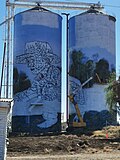 Yelarbon, Queensland, Australia (2019).
 -
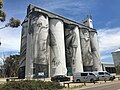 Coonalpyn, South Australia, Australia (2018).
 -
 Brim, Victoria, Australia (2015).
 -
 Rosebery, Victoria, Australia (2018).
 -
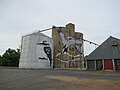 Tungamah, Victoria, Australia (2019).
 -
 Kantola Biscuit Factory, Hämeenlinna, Finland (2019).


Silo cleaning
[edit]Silo cleaning is a process to maximize the efficiency of storage silos that hold bulk powders or granules. In silos, material is fed through the top and removed from the bottom. Typical silo applications include animal feed, industrial powders, cement, and pharmaceuticals.
Free movement of stored materials, on a first-in, first-out basis, is essential in maximizing silo efficiency. The goal of silo efficiency is to ensure that the oldest material is used first and does not contaminate newer, fresher material. There are two major complications in silo efficiency: rat holing and bridging. Rat holing occurs when powders adhere to the sides of silos. Bridging occurs when material blocks at the silo base.
Manual cleaning is the simplest way to clean silos. This entails lowering a worker on a rope to free material inside the silo. Manual cleaning is dangerous due to the release of material and the possible presence of gases. In cases of bridging, an additional danger exists as the exit hole needs to be rodded from underneath, exposing the worker to falling powder.
Alternative cleaning methods include:
- Air blasters are a well-established cleaning method. Air cannons are expensive, however, as limited coverage requires purchase of multiple units. Air cannons are also noise intrusive and require high consumption of compressed air.
- Vibrators are easy to fit into empty silos, but can cause structural damage and contribute to powder compaction.
- Low friction linings are quiet, but expensive to install and prone to erosion which can then contaminate the environment or product.
- Inflatable pads and liners are easy to install in empty silos and can help side-wall buildup but have no effect on bridging. Inflatable pads and liners are also hard to maintain and can cause compaction.
- Fluidisation through a one-way membrane can help compacted material, but are expensive and difficult to install and maintain. These systems can also contribute to mechanical interlocking and bridging.
- Acoustic cleaners are the latest and possibly safest way to clean silos as these systems are non-invasive and do not require silos to be emptied. Acoustic cleaning is also a preventative solution.
- Pneumatic or hydraulic whip machines are portable machines used to "cut" build up on the walls of silos while being remotely operated from outside of the vessel.
- Silo cleaning companies provide turn key silo cleaning services using several different kinds of methods (depending on the company).
See also
[edit]References
[edit]- ^ "GRAIN SYSTEMS INC. | Farm Grain Storage Bins". www.grainsystems.com. Archived from the original on 2011-12-01.
- ^ "What is a Grain Dryer? (With pictures)". 25 June 2023.
- ^ "Armcon". Armcon. Retrieved 2025-09-12.
- ^ "Storage Domes | Barrel Buildings | Dome Corporation of North America".
- ^ buffervalley.com
- ^ "Buffer Valley Industries | Grain Bins | Farm Storage". Retrieved 2022-02-07.
- ^ NFPA 654
- ^ "Flexible and Rigid Silo Storage Systems".
- ^ Dwayne R. Buxton, Silage science and technology, American Society of Agronomy, Inc., 2003, p.1
- ^ William Shurtleff, Akiko Aoyagi, History of Soybeans and Soyfoods in Canada (1831–2010), Soyinfo Center, 2010, p.36
- ^ σιρός, Henry George Liddell, Robert Scott, A Greek-English Lexicon, on Perseus
- ^ One or more of the preceding sentences incorporates text from a publication now in the public domain: Zimmer, George Frederick (1911). "Granaries". In Chisholm, Hugh (ed.). Encyclopædia Britannica. Vol. 13 (11th ed.). Cambridge University Press. p. 336.
- ^ Eric Sloane's An age of barns. MBI Publishing Company. 1967. ISBN 9780896585652.
- ^ Lost Farms of McHenry County. Arcadia Publishing. 2010. ISBN 9780738577982.
- ^ Graham, Judith (2011-03-08). "Drowned in corn: Grain bin deaths hit record". Chicago Tribune.
- ^ "Australia's Ultimate Road Trip". Australian Silo Art Trail. 29 January 2020. Retrieved 1 February 2020.
- ^ "South Australian silo art". Australian Silo Art Trail. 2024. Retrieved 14 September 2024.
- ^ Fuller, Kelly (8 February 2021). "'Silo art trail' trademark battle over who owns the right to use phrase". ABC News. Australian Broadcasting Corporation. Retrieved 23 May 2021.
- ^ "Number 1846879". IP Australia. Australian Government. n.d. Retrieved 14 September 2024.
- ^ Schneider, Grace (3 May 2018). "The Ultimate Guide To South Australia's Regional Silo Art (& More!)". Glam Adelaide. Retrieved 1 February 2020.
- ^ "Australian Water Tower Art". Australian Silo Art Trail. Retrieved 23 May 2021.
- ^ Noonan, Andie (23 April 2019). "'Beacon of tolerance': Jacinda Ardern mural set for silo in Melbourne suburb". ABC News. Australian Broadcasting Corporation. Retrieved 1 February 2020.
- ^ Marie, Johanna (14 July 2020). "Queensland town of Monto using silo art to draw tourists and tell stories about its heritage". ABC News. Australian Broadcasting Corporation. Retrieved 16 July 2020.

External links
[edit]


- International Silo Association
- What To Do In Case Of Grain Bin Entrapment, from the U.S. National Agricultural Safety Database
- Beedle, Peggy Lee. "Silos: an agricultural success story", University of Wisconsin-Extension: 2001, G3660-4.

Definition and Purpose
Core Functions in Storage and Preservation
Silos primarily function to store and preserve bulk agricultural materials such as grains or high-moisture forages by isolating them from external environmental factors including weather, pests, and contaminants, thereby minimizing post-harvest losses.[9] For dry grain storage, silos maintain low moisture levels typically below 14% to prevent mold growth and insect infestation, with optimal conditions around 9% or less for extended periods exceeding one year.[10] Aeration systems within silos circulate air to equalize temperature and control moisture migration, reducing hot spots that accelerate spoilage; fans operate based on guidelines tying allowable storage time to combined temperature and humidity metrics.[11] [12] In silage preservation, silos enable anaerobic fermentation of moist crops—harvested at 60-70% moisture for crops like corn—by compacting material to exclude oxygen, fostering lactic acid bacteria that lower pH to around 4.0 and inhibit spoilage organisms.[13] [14] Sealing structures tightly limits air infiltration, with proper management ensuring fermentation phases progress from initial aerobic activity to stable acidic conditions, preserving nutritional value for up to a year or more when feedout losses are controlled.[15] [16] This process contrasts sharply with grain storage, as silage silos promote controlled microbial activity rather than desiccation, highlighting silos' adaptability to material-specific preservation needs.[17]Underlying Principles of Silage and Bulk Material Storage
Silage preservation fundamentally depends on establishing anaerobic conditions through compaction of high-moisture forage, which expels oxygen and enables lactic acid bacteria to ferment water-soluble carbohydrates into lactic acid, thereby reducing pH to levels typically between 3.8 and 4.2 that inhibit undesirable microbial activity.[13] [18] This process unfolds in distinct phases: an initial aerobic phase lasting hours where residual oxygen is consumed, followed by rapid fermentation over 2-3 days that stabilizes the silage, and a prolonged stable phase under anaerobic conditions.[19] Effective ensiling requires forage with 25-40% dry matter to balance fermentation efficiency and minimize losses from effluent production or secondary fermentations by clostridia, which occur below 30% dry matter and elevate pH above 4.6.[20] [21] Compaction density is critical, aiming for at least 200-250 kg/m³ in bunker silos to limit oxygen pockets and ensure uniform acidification, while sealing with plastic covers or airtight structures prevents re-exposure to air that could trigger aerobic deterioration and heating.[13] Additives such as bacterial inoculants can accelerate lactic acid production, but their efficacy hinges on inherent forage quality, including adequate sugars (at least 2-3% of dry matter) for bacterial metabolism.[22] In contrast, bulk dry material storage, such as grains in upright silos, prioritizes low initial moisture content—generally 13-15% for corn and wheat—to suppress respiration, mold growth, and insect activity, as higher levels promote fungal proliferation and mycotoxin formation.[11] Aeration via fans circulates ambient air through the grain mass to equalize temperatures, preventing hot spots from microbial heat or moisture migration that leads to condensation and spoilage; fall cooling to below 10°C (50°F) is standard to inhibit stored-product insects. [23] Uniform airflow management avoids channeling, ensuring the entire mass remains cool and dry throughout storage periods that can extend 6-12 months or longer.[11] Monitoring for hotspots via probes allows targeted interventions, underscoring that temperature differentials exceeding 5-10°C drive convective currents exacerbating uneven drying or wetting.[24]Historical Development
Origins in Ancient and Pre-Industrial Practices
The earliest known grain storage structures resembling silos date to the Natufian period at Dhra' in the Jordan Valley, approximately 11,300 calibrated years before present, where semi-sedentary hunter-gatherers utilized primitive bins or pits to store wild cereals, protecting them from environmental damage and facilitating the transition to agriculture.[25] These methods relied on simple excavation or basketry to create anaerobic conditions, minimizing spoilage from moisture and pests through burial or sealing. By the Younger Dryas period (circa 12,900–11,700 BP), similar pit storage evolved in response to climatic instability, with grains often germinated at pit edges to enhance preservation via fermentation.[25] In the Chalcolithic era, advanced large-scale silos appeared at Tel Tsaf in the Jordan Valley around 5200 BCE, consisting of multiple cylindrical pits embedded in building courtyards capable of holding substantial surpluses of emmer wheat and barley, evidencing centralized control over food resources and early elite formation.[26] A unique clay model silo from the site, depicting a lidded structure, underscores ritualistic associations with storage, suggesting silos symbolized wealth and stability in emerging complex societies of the ancient Near East. Concurrently, in ancient Egypt from the Naqada III period (circa 3200 BCE) onward, mud-brick silos proliferated, constructed as cylindrical or conical vessels with plastered interiors and domed roofs; Old Kingdom examples at Dahshur measured up to several meters in diameter, enabling state-level grain reserves against Nile flood variability. These structures, often clustered in temple or settlement complexes like Edfu and Balat, incorporated ash foundations and sealed floors to inhibit insect infestation and maintain dryness. Pre-industrial practices persisted with underground pits dominant in Europe through the medieval period, where large communal silos—sometimes cliff-carved in Iberia during the 12th–13th centuries—provided airtight environments for long-term cereal storage, enduring until the 19th century for hedging against crop failures and price fluctuations.[25] [27] The etymology of "silo" traces to the Greek siros, denoting excavated pits for grain, a method echoed in biblical accounts of Near Eastern storage (e.g., Genesis 41) and reflected in artifacts like Geometric period pottery mimicking silo forms.[2] Above-ground variants, such as Minoan palace granaries on Crete with multi-chambered designs, complemented pits by elevating stocks against rodents and flooding, though risks of rot necessitated dispersal across multiple units.[25] In northern Europe, sheaf storage in ventilated barns preceded threshing, but bulk grain increasingly favored sealed pits for anaerobic preservation, mirroring ancient techniques adapted to feudal economies.[28]19th-Century Innovations and Widespread Adoption
The practice of ensilage, involving the anaerobic fermentation of green fodder in airtight structures known as silos, gained prominence in Europe during the 1870s as a response to challenges in preserving moist crops for livestock feed during winter months. French agriculturist Auguste Goffart pioneered systematic methods for ensiling maize and other forages, publishing detailed accounts in 1875 that emphasized chopping the crop finely, compacting it to exclude air, and sealing to promote lactic acid fermentation, thereby retaining nutritional value superior to sun-dried hay in humid conditions.[29] Goffart's rectangular pits or above-ground masonry silos, typically measuring around 6 by 12 meters in base dimensions and 5 meters high, demonstrated practical success on farms, influencing early adopters by quantifying yield preservation—up to 20-30% higher nutritive recovery compared to traditional methods.[30] In the United States, the first recorded silo was constructed in 1873 by Fred L. Hatch near Spring Grove, Illinois, adapting European pit techniques to store chopped corn for cattle, marking the initial transfer of ensilage across the Atlantic amid growing dairy and beef production demands in the Midwest.[31] This was followed by vertical tower designs emerging in the late 1870s, with the first above-ground silo in Wisconsin built at Clinton in 1877, shifting from horizontal pits to upright structures for improved compaction via gravity and reduced spoilage from surface exposure.[31] Early American towers were often square or rectangular wooden frames, as exemplified by Francis Morris's construction in Maryland during the early 1880s, which facilitated easier filling from the top and unloading from the bottom but suffered from uneven pressure distribution leading to wall failures.[32] Adoption accelerated in the Corn Belt by the mid-1880s, driven by agricultural societies and experiment stations demonstrating silage's economic benefits, such as enabling year-round feeding that boosted milk yields by 20-50% in trials.[33] By 1886, structures like C.M. Payne's tower silo in Normal, Illinois—believed among the earliest in the region—highlighted masonry reinforcements to withstand silage weight, up to 800 pounds per cubic yard when compacted.[33] Land-grant universities, including those in the Midwest, promoted silage by the 1890s through on-farm trials and publications, fostering widespread use; by century's end, thousands of silos dotted American farms, correlating with a tripling of corn silage acreage from 1880 to 1900 as farmers quantified feed cost savings of 15-25% over purchased hay.[34] This proliferation was causal to expanded livestock operations, as vertical silos minimized labor for preservation while mitigating risks of mold and nutrient loss inherent in open-air stacking.[35]20th-Century Engineering Advances and Industrialization
The transition to industrialized silo construction in the 20th century began with the adoption of concrete materials, which offered greater durability and scalability compared to wood. Concrete stave silos, assembled from curved precast blocks held by steel hoops, were first developed around 1905 and gained prominence after Hiram Smith's 1909 patent for a barrel-like design using interlocking staves and tension bands.[36] [37] These structures allowed for heights exceeding 100 feet and facilitated on-site construction without extensive formwork, enabling farms to store larger volumes of silage—up to thousands of tons—essential for year-round livestock feeding amid expanding dairy operations.[38] By the 1920s, a construction boom saw thousands erected across the U.S. Corn Belt, with Minnesota alone witnessing peak building from 1910 to 1925, driven by mechanized agriculture's demand for efficient preservation.[4] Steel silos emerged concurrently for dry grain storage, with corrugated steel bins introduced in the early 1900s by pioneers like P.W. Gough, providing prefabricated panels for rapid assembly and resistance to pests and weather.[39] [40] These evolved from riveted to welded and bolted designs, dominating grain handling by mid-century, where they comprised nearly 95% of storage in industrialized regions due to their modularity and capacity for aeration systems that prevented spoilage in bulk commodities.[2] Industrial applications extended to cement and aggregates, with rigid bins scaled for commercial throughput, integrating conveyors and elevators for automated loading and unloading—a shift accelerated post-World War II as farm mechanization reduced labor needs.[25] Specialized innovations like the Harvestore silo, introduced by A.O. Smith in 1949, fused glass to steel for airtight, oxygen-limiting storage, minimizing fermentation losses and enabling high-moisture feed preservation without additives.[41] [42] Equipped with mechanical unloaders such as the 1966 Goliath model, these silos supported intensive confinement feeding, boosting productivity in large-scale operations.[43] Overall, 20th-century advances industrialized silo use by prioritizing structural integrity under lateral pressures from ensiled materials, with finite element analysis precursors in design ensuring stability against wind and seismic loads, thus transforming silos from farm adjuncts to core infrastructure in global agribusiness.[1]Recent Developments Since 2000
Since the early 2000s, silo technology has increasingly incorporated digital monitoring systems, with Internet of Things (IoT) sensors enabling real-time tracking of environmental parameters such as temperature, moisture content, and carbon dioxide levels to mitigate spoilage and quality degradation in stored grains.[44] These systems, often integrated with artificial intelligence and machine learning algorithms, analyze data to predict anomalies like hotspots or infestations, potentially reducing post-harvest losses by optimizing aeration and ventilation automatically.[44] For instance, IoT-based platforms like GrainMonitor deploy wireless sensors in grain bins to provide remote alerts, minimizing the need for manual inspections and supporting proactive interventions.[45] Advancements in silage preservation have paralleled these efforts, with research since 2000 demonstrating the efficacy of microbial inoculants and chemical additives in enhancing fermentation stability and reducing aerobic deterioration upon exposure.[46] Studies have shown that such additives, when applied during ensiling, improve dry matter recovery and nutrient retention, particularly in bunker and tower silos, by accelerating pH decline and inhibiting undesirable microbial growth.[47] Complementary innovations include improved kernel processing techniques for whole-plant corn silage, which enhance starch digestibility by up to 10-15% through mechanical shearing during harvest, addressing limitations in traditional chopping methods.[48] Safety protocols for grain handling have evolved in response to persistent entrapment and explosion risks, with retrofitting initiatives since the 2010s introducing anchor points and lifeline systems for confined spaces in existing bins to facilitate safer rescues.[49] Despite these measures, U.S. agricultural confined-space incidents, including 34 grain entrapments in 2024 alone, underscore the limitations of structural changes without behavioral adherence, prompting expanded OSHA emphasis programs in high-risk states to promote zero-entry protocols and hazard simulations.[50][51] IoT sensors contribute indirectly to safety by enabling condition-based avoidance of entry, though empirical data indicates ongoing challenges from flowing grain dynamics.[52] Material innovations have focused on durability and pest resistance, with enhanced cementitious composites in silo walls achieving 90% reductions in insect infestation through modified porosity and additives, while maintaining structural integrity under load.[53] The global agriculture silos market, valued at USD 5.09 billion in 2025, reflects these trends, projecting growth to USD 6.53 billion by 2030 driven by automated systems and resilient designs that support larger-scale operations amid climate variability.[54]Classification by Structure and Use
Tower Silos
Tower silos are tall, cylindrical structures designed for the vertical storage of silage or grain in agricultural operations, particularly on dairy and livestock farms. The design leverages gravity to compact ensiled material, promoting anaerobic conditions that facilitate fermentation and inhibit spoilage from aerobic microbes. This self-compaction occurs as the weight of upper layers presses down on lower ones, excluding air and enhancing preservation compared to horizontal storage methods where mechanical packing is required.[55][9] The first recorded tower silo in the United States was built in 1873 by Fred Hatch in Spring Grove, Illinois, standing 24 feet tall and filled with cow feed to demonstrate improved fodder preservation through airtight storage. Subsequent developments refined the cylindrical form, with innovations in materials and sealing improving structural stability and efficiency. By the early 20th century, tower silos became standard for year-round feed supply, enabling farmers to store wet crops like corn or grass for extended periods without significant nutrient loss.[31] Construction of tower silos typically employs prefabricated concrete staves assembled with steel tension hoops for reinforcement, welded steel panels, or glass-fused-to-steel for oxygen-limiting variants. Diameters range from 10 to 90 feet, heights from 30 to 275 feet, yielding capacities from hundreds to thousands of tons depending on dimensions and fill density. Foundations are poured concrete to support vertical loads and resist lateral pressures from silage fermentation gases. Stave silos, the most common type, allow for modular assembly and height extensions by adding sections.[9][56] Filling involves blowing chopped forage into the silo via a distributor to achieve even layering, followed by sealing the top with a flexible cover or oxygen barrier to minimize air ingress. Unloading systems, often mechanically driven from the top or bottom, use rotating cutters or augers to extract silage, with conveyors directing it to feed areas; top-unloading predominates for better access to fresher material. These systems require electrical power and periodic maintenance to prevent jams from bridging or crusting.[57] Advantages include superior compaction from gravity, reducing oxygen penetration in the bulk mass and lowering dry matter losses to under 10% when properly managed, alongside compact land use and weather-independent unloading. Disadvantages encompass high initial costs for construction and equipment, vulnerability to top-layer spoilage where density is lower (up to 5-10 feet deep), and risks of structural failure from corrosion or uneven settling if not inspected regularly. Tower silos suit operations with consistent silage needs but may prove uneconomical for very large-scale or variable-volume storage compared to bunker alternatives.[55][58][59]Bunker and Trench Silos
Bunker silos consist of above-ground horizontal structures, typically featuring concrete walls and floors, designed for large-scale silage storage through anaerobic fermentation.[9] They allow for efficient filling using tractors and loaders to spread and compact chopped forage in thin layers, achieving densities of approximately 14 to 16 pounds of dry matter per cubic foot when properly managed.[60] Sealing involves covering the surface with plastic sheeting weighted by tires or sandbags to exclude oxygen and promote preservation.[61] Trench silos differ by being excavated into the ground, relying on earthen walls for containment rather than constructed barriers, which reduces material costs but increases vulnerability to soil erosion and variable sealing quality.[62] Both types demand meticulous packing—often requiring multiple tractor passes over each 6-inch layer—to minimize porosity and prevent air pockets that lead to spoilage.[63] Inadequate compaction can result in dry matter losses exceeding 10-15% from effluent runoff or aerobic decomposition, particularly if forage exceeds 75% moisture at harvest.[14] Key advantages of bunker and trench silos include lower initial construction costs compared to vertical tower silos and compatibility with mechanized operations on large dairy or beef farms, enabling storage of entire crop harvests from multiple cuttings.[9] They facilitate rapid filling rates, with bunkers often built into hillsides for gravity-assisted unloading from the closed end.[64] However, disadvantages encompass substantial land requirements, high labor for packing and covering, and elevated risks of surface spoilage—up to 75% dry matter loss in the top 10 inches if uncovered or poorly sealed.[65] Safety hazards, including toxic gas emissions during fermentation and potential silage avalanches during feedout, necessitate strict protocols like ventilation delays and face stability monitoring.[62] Optimal sizing ties to livestock needs; for instance, a bunker for a 100-cow dairy might measure 150-200 feet long by 30-40 feet wide to store 60-90 days of feed, accounting for 5-10% buffer losses.[61] Multiple adjacent bunkers enhance flexibility for segregating forage types or maturities, though trench designs may consolidate into single pits for smaller operations despite inferior airtightness relative to concrete bunkers.[66] Effective management prioritizes harvest at 60-70% moisture, uniform particle size under 0.5 inches, and rapid feedout rates of 6-12 inches per day to limit oxygen exposure.[67]Flexible and Bag Silos
Bag silos, also known as silo bags, consist of elongated, airtight polyethylene tubes used for temporary storage of silage or dry grains through hermetic sealing that promotes anaerobic fermentation.[68] These flexible structures typically range from 8 to 12 feet in diameter and 150 to 300 feet in length, accommodating 200 to 300 tons of material per bag depending on compaction density.[69] Filling involves specialized bagging machines that chop, compact the forage to densities of 200-250 kg/m³, and seal the bag to minimize oxygen exposure, thereby reducing spoilage from microbial activity.[9] Compared to rigid tower silos, bag silos offer lower initial capital costs, as no permanent infrastructure is required, and provide scalable storage capacity that can expand or contract based on harvest volumes.[70] They facilitate faster harvesting by allowing on-farm storage without reliance on fixed facilities, potentially extending preservation periods through effective sealing.[70] However, dry matter losses in bag silos average 5-15%, higher than the 3-8% typical in well-managed tower silos, due to risks of punctures, incomplete sealing, or uneven packing that permit oxygen ingress and aerobic deterioration.[69][71] Flexible silos, distinct from bag types, employ breathable polyester fabric constructions for storing dry feeds or grains, enabling natural ventilation to prevent mold formation while minimizing costs relative to steel or concrete alternatives.[72] These structures prioritize airflow for quality maintenance but lack the hermetic properties suited to wet silage, limiting their application to drier materials where constant feed integrity is essential without added preservatives.[72] Operational challenges include vulnerability to environmental damage and the need for site preparation, though their portability supports use in variable farm scales.[73]Rigid Industrial Silos (Grain Bins, Cement, and Aggregate)
Rigid industrial silos encompass fixed, upright structures primarily used for storing dry bulk materials such as grain, cement, and aggregates, leveraging vertical space to optimize land efficiency and enable gravity-fed discharge. These silos differ from flexible or bunker types by their permanent, rigid construction, typically employing bolted or welded steel panels or poured concrete to withstand lateral pressures from stored materials and environmental loads like wind and seismic forces. Steel variants dominate due to their modular assembly, corrosion resistance via galvanization, and scalability, while concrete offers superior longevity in high-moisture settings but higher initial costs.[74][75][76] Grain bins, a subset tailored for agricultural use, consist of corrugated galvanized steel sheets, often 8-gauge thick, assembled into cylindrical forms with conical bottoms for efficient unloading via augers or conveyors. Capacities range from 1,000 to over 100,000 bushels, suiting on-farm storage of commodities like corn and soybeans, where aeration fans maintain grain moisture below 14% to inhibit mold and insect proliferation. Galvanized coatings, typically with G90 zinc layering, provide corrosion protection lasting 20-30 years under proper maintenance, though uncoated or stainless steel options serve corrosive environments at added expense. These bins prioritize rapid filling post-harvest and temperature control to preserve quality, with external stiffeners enhancing structural integrity against material-induced hoop stresses.[77][78][79] Cement silos, engineered for industrial concrete production, feature vertical steel or concrete designs with capacities from 100 to 10,000 tons per unit, often bolted for transportability or welded for permanence. Advanced reinforced concrete designs include multi-compartment configurations with central cones for pressure distribution, material blending, and reliable discharge, particularly in large-scale cement storage applications. These can feature capacities around 5000 tons, heights of approximately 21 m, multi-compartment walls, and reinforcement detailing in accordance with codes such as IS 456. Dust filters and vibrators prevent clumping in the fine, powdery cement, which exerts significant lateral pressure—up to 60 degrees of repose—necessitating reinforced walls and explosion vents for safety. Stationary variants in plants include low-profile or split configurations holding 200-1,200 barrels (one barrel equaling 4 cubic feet), while monolithic units up to 90 cubic meters support smaller operations; service life extends 30 years with anti-corrosion measures like epoxy linings. These silos integrate with pneumatic conveying systems for seamless transfer to batchers, minimizing exposure to humidity that could degrade cement's hydraulic properties.[80][81][82][83][84] Aggregate silos in concrete batching plants store coarser materials like sand, gravel, and crushed stone in galvanized steel bins with capacities of 100-210 cubic yards, featuring divided compartments to segregate gradations and prevent cross-contamination. High-strength, externally stiffened walls handle the material's weight and flow dynamics, with automated gates enabling precise metering into mixers; typical setups include 3-4 silos per plant for operational continuity. These rigid structures reduce dust emissions via enclosed designs and support high-volume production, as seen in dry-batch facilities weighing up to 9 cubic meters per batch, though they require regular inspections for wear from abrasive loads. Unlike grain bins, aggregate silos emphasize rapid discharge to avoid segregation, with steel's durability outperforming alternatives in dynamic industrial settings.[85][86][87]Engineering and Design Principles
Structural Mechanics and Load-Bearing Considerations
Silo structures must resist vertical compressive loads from the stored bulk material's weight, which accumulate at the base, alongside lateral pressures that induce hoop tensile forces in cylindrical walls. Janssen's theory, developed in the late 19th century, models these pressures by accounting for frictional resistance between the material and walls, resulting in vertical pressures that approach a limiting value rather than increasing linearly with depth; the equation is , where is vertical stress, is material density, is gravity, is silo radius, is lateral pressure ratio, is friction coefficient, and is depth.[88] Lateral pressures, derived similarly, are typically lower than hydrostatic values due to this arching effect, guiding designs under standards like EN 1991-4.[89] Load-bearing considerations distinguish static storage pressures from dynamic ones during filling and discharge; initial filling often produces lower wall pressures than flow conditions, where eccentric discharge can generate localized patch loads up to 1.5-2 times symmetric pressures, risking buckling or overstressing.[90] [91] For tower silos, walls experience axial compression from self-weight and roof loads atop hoop tension, necessitating minimum thicknesses or stiffeners to prevent elastic buckling, with critical buckling stress calculated via formulas like (\sigma_{cr} = \frac{E t}{R \sqrt{3(1-\nu^2)}}\ ) for unstiffened cylinders under external pressure, per engineering codes.[92] Steel silos, common for grain, are particularly vulnerable to local buckling from these combined stresses.[93] Reinforced concrete silos, particularly those for cement storage, often feature multi-compartment designs incorporating a central cone to uniformly distribute pressures from the stored material, preventing excessive localized stresses and enhancing structural stability. For example, such a design for a 5000-ton capacity silo with a height of 21 m achieves uniform stress distribution within permissible limits per codes like IS 456.[94] Environmental loads compound material-induced forces; wind pressures on tall silos follow ASCE 7 provisions for circular structures, with velocity pressures (psf, V in mph), potentially causing global overturning or shell buckling if unbraced.[95] Seismic design per ASCE 7 evaluates base shear , where incorporates site-specific acceleration and importance factors, alongside internal pressure amplification from material inertia, which can exceed quasi-static values by factors up to 2-4 in squat silos during earthquakes.[96] Foundations bear the total vertical load, including dynamic increments, with bearing capacity assessed via soil mechanics to limit differential settlement below 1/500 of diameter, often requiring deep piles in weak soils. Bunker silos, by contrast, function as retaining structures with higher lateral earth pressures influenced by wall batter and compaction, designed akin to gravity walls.[97]Aeration, Ventilation, and Environmental Control Systems
Aeration systems in grain silos force ambient air through the stored mass at low rates, typically 0.1 to 0.5 cubic feet per minute per bushel, to cool the grain, equalize temperatures, and remove field heat accumulated during harvest, thereby slowing respiration rates and inhibiting microbial growth and insect activity. [23] Fans mounted externally draw air through perforated floors or ducts, with downflow configurations used immediately post-filling to extract heat and upflow systems for partial fills or maintenance.[98] Aeration does not dry grain but maintains uniform conditions, reducing spoilage risks when operated during periods of favorable ambient air—such as relative humidity below 70% and temperatures within 10-15°F of the grain mass.[24] [99] Ventilation complements aeration by facilitating gas exchange and moisture equilibration, preventing condensation and hotspots that foster mold or fermentation; systems often integrate exhaust vents at the roof to release warm, moist air while intake fans supply cooler external air.[100] [11] In tower silos, sidewall vents or blowers mitigate pressure buildup from silage gases like nitrogen dioxide, which form during fermentation and pose asphyxiation hazards if unvented.[101] Fan-assisted ventilation targets equilibrium moisture contents of 12-14% for grains like corn, with continuous low-volume operation in summer to counter diurnal temperature swings that drive moisture migration.[102] [103] Environmental control integrates sensors for real-time monitoring of temperature, humidity, carbon dioxide, and oxygen levels, enabling automated fan cycling to sustain optimal zones—typically below 40°F for long-term storage to suppress pests like weevils.[12] [104] Static pressure considerations ensure adequate airflow against grain resistance, measured in inches of water column, with modern systems incorporating variable-speed drives for energy efficiency and dehumidifiers in humid climates to stabilize relative humidity below 60%.[105] [106] These controls extend storage viability, as evidenced by reduced reject rates in aerated bins versus non-aerated ones, where temperature gradients exceeding 10°F correlate with 5-10% quality loss from hotspots.[107] [108]Capacity Optimization and Scalability Factors
Capacity in silos is calculated based on the geometric volume of the structure multiplied by the bulk density of the stored material, adjusted for factors such as moisture content and packing efficiency. For upright cylindrical silos commonly used for grain storage, the capacity in bushels can be estimated using the formula: bushels = π × (diameter/2)^2 × depth of grain (in feet) × bulk density factor × (1 - moisture percentage), where bulk density varies by grain type (e.g., approximately 0.8 tons per cubic meter for wheat at standard moisture).[109] This approach ensures accurate determination of storage volume, with errors exceeding 5% potentially leading to significant grain losses or inefficient investments.[110] Optimization involves maximizing packing density to minimize voids and air pockets, which directly enhances effective capacity; for instance, in bunker silos for silage, higher densities achieved through compaction reduce porosity, limit oxygen ingress, and thereby decrease spoilage losses while increasing the usable tonnage per unit volume.[111] Scalability of silo capacity is constrained by structural mechanics, site limitations, and economic considerations, with engineering designs prioritizing safe load-bearing under lateral pressures that accumulate with depth according to the Janssen effect, where pressures stabilize but still demand robust wall reinforcement. Tower silos, such as concrete stave types, are typically limited to heights under 60 feet to avoid exceeding vertical crushing strength, while steel silos can scale to diameters of 3-27.5 meters and height-to-diameter ratios up to 5.75:1 through bolted or welded construction, allowing capacities from 5 tons (minimum for small farm units) to over 10,000 bushels per unit for diameters around 6 meters and heights of 10 meters.[79][112][113] For expansion, modular additions like multiple interconnected bins or height extensions via added staves and hoops enable incremental scalability without full reconstruction, though land availability, regulatory height caps (e.g., under 15 meters in some zones), and transport limits for prefabricated units (maximum around 10,000 bushels per piece) often favor arrays of smaller silos over single massive structures to balance cost, redundancy, and operational flexibility.[114][115] Aeration and ventilation systems further optimize scalability by enabling longer storage durations, effectively extending usable capacity across harvest cycles without proportional increases in physical size.[109]Materials and Construction Techniques
Primary Materials: Concrete, Steel, and Composites
Concrete silos are primarily constructed using precast reinforced concrete staves or cast-in-place methods, offering high durability against environmental factors such as weather, fire, and pests.[116][117] Staves typically measure 10 inches wide by 30 inches tall and interlock with steel tension hoops for structural integrity, while cast-in-place variants employ slipform or jumpform techniques for continuous pouring, enabling diameters up to 165 feet and heights exceeding 400 feet.[117][76][118] Reinforced concrete compositions incorporate cement, aggregates like gravel, and embedded steel bars or mesh to withstand compressive loads from stored bulk materials, with historical designs specifying reinforcements such as 1/4-inch square twisted steel bars at the base.[74][119] In contemporary multi-compartment reinforced concrete silos designed for cement storage, central cones are incorporated to distribute internal pressures uniformly and reduce localized stresses. Reinforcement detailing adheres to standards such as IS 456:2000, providing enhanced structural integrity through appropriately placed steel reinforcement in multi-compartment walls, central cones, columns, ring beams, and foundations. Such designs have been documented for silos with capacities of 5000 tons and heights of approximately 21 meters.[120] Steel serves as a dominant material in grain silos, particularly for bolted, spiral, or welded assemblies, due to its high strength-to-weight ratio and rapid installation capabilities.[121][122] Common formulations include galvanized carbon steel sheets with corrugations for enhanced rigidity, often featuring high-yield strengths from 450 MPa in wall panels to 600 MPa in structural components, coated for corrosion resistance in humid agricultural environments.[123][124] Stainless steel variants provide superior hygiene and longevity for feed or food-grade storage, while spiral steel silos utilize automated seaming technology for seamless walls up to 30 meters in diameter.[125][126] Steel's lighter weight compared to concrete facilitates scalability on varied terrains, though it requires galvanization or epoxy coatings to mitigate rust from grain moisture.[122][125] Composite materials, such as glass fiber reinforced plastic (GFRP) or fiberglass reinforced polymers (FRP), represent an emerging alternative for silos, prized for their corrosion resistance, lightweight properties (approximately 40% lighter than steel), and tensile strengths surpassing traditional metals.[127][128] These consist of a polymer resin matrix combined with glass fibers, enabling modular construction for capacities suited to agricultural or industrial storage of grains, flour, or chemicals, with inherent stiffness that supports high bulk densities without heavy foundations.[129][130] In food applications, composites minimize contamination risks due to non-reactive surfaces, though their adoption in primary agricultural silos remains niche compared to concrete and steel, often limited by higher upfront costs despite longevity exceeding 50 years in harsh conditions.[74][131] Carbon fiber reinforced polymers (CFRP) may supplement concrete retrofits for crack reinforcement, leveraging high elastic modulus for seismic or overload resilience.[132]Fabrication and Assembly Methods
Concrete tower silos are fabricated using precast stave construction or monolithic pouring techniques. In stave construction, individual concrete blocks, or staves, measuring at least 2 inches thick, are precast off-site with grooves for interlocking and holes for bolting to tension hoops; assembly begins with a concrete foundation, followed by stacking staves in rings secured by galvanized steel hoops tightened via rods to compress the structure against internal pressures.[37] Monolithic concrete silos employ slipform or jumpform methods, where formwork encircles the site on a foundation, and concrete is continuously poured in lifts of 4-8 inches while hydraulic jacks raise the forms incrementally until the desired height is reached, typically incorporating vertical and horizontal reinforcement bars to handle hoop tension and vertical loads.[76][133] Steel tower silos and rigid industrial grain bins utilize prefabricated components for on-site assembly. Corrugated galvanized steel panels, produced via roll-forming in factories to achieve thicknesses of 20-24 gauge, are shipped flat or nested and bolted together using high-strength Grade 8 bolts on a prepared foundation, with sidewall rings erected sequentially via crane, stiffened by vertical and horizontal corrugated sheets to resist wind and seismic forces; bolt-together designs allow scalability up to 48 feet in diameter and capacities exceeding 50,000 bushels.[134][135] Spiral steel silos, an alternative, are fabricated by on-site uncoiling continuous steel ribbon into a helical seam welded or bolted in place, enabling rapid erection without panel joints.[136] Bunker and trench silos involve earthwork and basic structural assembly rather than complex fabrication. Construction starts with excavating a sloped site or preparing a level pad, pouring a reinforced concrete floor slab typically 4-6 inches thick for moisture impermeability, and erecting sidewalls from precast concrete panels, interlocking blocks, or braced timber/steel frames up to 12-15 feet high, sealed with geomembrane liners to prevent leakage; end walls may use earthen berms or poured concrete for containment.[137][138] Flexible and bag silos require minimal assembly, relying on manufactured polymer films. Polyethylene silobags, extruded in continuous tubes up to 300 feet long and 10-12 feet in diameter with UV stabilizers, are unrolled onto a prepared surface, filled horizontally via blower trucks, and sealed at ends with heat or mechanical clamps after compaction; textile variants involve erecting a supporting steel frame and inserting a breathable antistatic fabric liner, enabling quick deployment without permanent foundations.[139][140]Durability Enhancements and Corrosion Prevention
Steel silos, commonly constructed from galvanized or coated sheet metal, face corrosion risks from atmospheric moisture, condensation, and acidic grain residues, which can compromise structural integrity over time. Hot-dip galvanization, involving immersion of steel components in molten zinc, forms a metallurgically bonded protective layer that sacrificially corrodes in preference to the base metal, thereby extending silo lifespan to 40-50 years in moderate agricultural environments with minimal maintenance.[141] [142] Additional enhancements include application of zinc-rich primers or epoxy-based interior coatings, which provide barrier protection against humidity and abrasive wear during grain handling, reducing pitting and uniform corrosion rates by up to 70% compared to uncoated steel.[143] [144] Concrete silos, including stave and poured variants, endure environmental degradation through alkali-silica reactions, freeze-thaw cycles, and sulfate attack, leading to cracking and spalling that undermine load-bearing capacity. Durability improvements incorporate high-performance sealants such as polyurea elastomers, applied via spray to form seamless, flexible membranes impermeable to water and chemicals, thereby preventing ingress that accelerates rebar corrosion and extending service life beyond 75 years with periodic reapplication.[145] Epoxy resin injections repair micro-cracks by filling voids under pressure, restoring tensile strength and inhibiting moisture penetration, while carbon fiber reinforcement wraps externally reinforce walls against expansive forces from hydrated cement phases.[146] [147] Preventive strategies across both materials emphasize design features like sloped roofs for drainage, integrated ventilation systems to mitigate internal condensation, and cathodic protection via impressed currents or sacrificial anodes in high-corrosivity zones, which shift electrochemical potentials to suppress anodic dissolution.[148] Routine protocols, including annual visual inspections for rust spots or efflorescence and surface cleaning to remove debris, further mitigate progressive damage, with studies indicating that proactive interventions can halve corrosion-related failure rates.[149] Stainless steel variants, though costlier, offer inherent resistance in corrosive feed storage applications, forgoing additional coatings due to their passive chromium oxide layer.[150]Operational Procedures
Harvesting, Filling, and Packing Processes
Harvesting of cereal grains for storage in rigid industrial silos begins with field operations using combine harvesters, which cut, thresh, separate, and clean the crop to minimize foreign material and damage. Optimal harvest timing targets grain moisture content of 13-15% to facilitate safe dry storage and prevent spoilage from mold or insects, as higher levels risk fermentation while lower levels increase shatter loss and mechanical damage.[151][152] Post-harvest, grain is typically transported from fields to silo sites via trucks, trailers, or temporary field conveyors to reduce exposure time and maintain quality. For silage production in tower silos, forage crops like corn are harvested at 60-70% moisture using forage harvesters that chop material into 0.5-1 inch lengths, enabling anaerobic fermentation upon storage.[14] Filling rigid grain bins involves elevating cleaned grain to the silo apex via screw augers, belt conveyors, or bucket elevators (grain legs), which discharge material through central spouts or rotating distributors for uniform layering and to mitigate uneven flow patterns where fines concentrate centrally and larger kernels migrate outward. Augers, consisting of rotating helical screws within tubes, are common for their portability and efficiency in transferring grain at rates up to 10,000 bushels per hour, though they require monitoring to avoid seed damage from friction. Pre-filling inspections confirm bin integrity, aeration systems functionality, and moisture uniformity to prevent hotspots. For cement silos, filling occurs via pneumatic conveying from bulk tanker trucks, where compressed air propels powder through fill pipes at controlled pressures (typically 10-15 psi) to avoid over-pressurization, with dust filters and level sensors halting inflow upon reaching capacity. Aggregate silos are filled similarly using conveyor belts or pneumatic systems to handle gravel, sand, or crushed stone, ensuring segregation-free deposition through vibratory feeders.[153][154][155] Packing processes primarily apply to silage in rigid tower silos, where chopped forage is compacted during and after filling to achieve densities of 14-16 pounds per cubic foot dry matter, expelling air and promoting lactic acid fermentation for preservation. In tower configurations, initial compaction occurs via self-weight as layers settle under gravity, supplemented by mechanical distributors or tractors on temporary platforms for denser packing, contrasting bunker methods that rely on wheeled vehicles. Dry grain and cement/aggregate fillings do not require packing, as density is achieved through gravitational settling and flow dynamics, though vibratory aids may assist in settling fines for uniform bulk density around 45-60 pounds per cubic foot in grain. Overpacking risks wall stress in rigid structures, necessitating adherence to manufacturer load limits during operations.[156][60]Unloading, Distribution, and Retrieval Techniques
In grain storage silos, unloading primarily relies on bottom discharge systems featuring auger or chain conveyors that draw material from a central sump, promoting gravity flow for capacities up to 30 tons per hour depending on auger diameter, such as 200 mm screws with non-stick coatings to minimize jamming.[157] Flat-bottom bins employ power sweep augers, which rotate around the bin's perimeter using hydraulic or electric drives to consolidate residual grain toward the unload point, accommodating diameters from 18 to 105 feet and preventing the need for hazardous manual entry.[158] [159] For silage in tower silos, mechanical unloaders descend from the top, utilizing ring-drive, central, or bottom-unloading mechanisms equipped with conveyor paddles, chains, or knives to slice and transport ensiled forage downward through drop tubes or chutes, often powered by electric winches for controlled retrieval.[160] [161] In bunker or horizontal silos, retrieval involves front-end loaders or dozers that shave the silage face in thin layers—typically 6 inches or less—to maintain anaerobic conditions and minimize spoilage, avoiding deep bucket digs that could destabilize the mass.[162] Distribution of retrieved material occurs via integrated belt or screw conveyors post-unloading, adjustable for speed and tension to ensure uniform flow without slippage or damage, often feeding into transport wagons, mixers, or feed bunks; for instance, belt systems in grain silos enhance efficiency by reducing wear through high-strength alloys, extending service life by up to 30%.[157] Retrieval of bridged or compacted material in grain bins may incorporate vibration aids or hydraulic assists to promote flow, while safety protocols emphasize locking out equipment and using zero-entry automated reclaimers to mitigate engulfment risks during operations.[163] Hydraulic unloaders provide precise control in variable conditions, optimizing pressure for reliable extraction across diverse grain moistures.[157]Quality Monitoring During Storage
Quality monitoring during storage in grain silos focuses on detecting early signs of deterioration, such as microbial activity, insect infestation, or moisture migration, to minimize post-harvest losses estimated at 10-20% globally without proper management.[164] Key parameters include temperature, moisture content, and carbon dioxide (CO2) levels, as elevated values signal spoilage risks; for instance, grain temperatures exceeding 10-15°C above ambient can accelerate fungal growth and mycotoxin formation.[165] Monitoring protocols recommend weekly inspections during fall and spring, and at least biweekly in winter, involving both manual checks for odors, crusting, or hotspots and automated sensor data.[24] Temperature cables equipped with thermocouples or thermistors, inserted vertically at multiple points including the silo's center and walls, provide real-time detection of hotspots; studies indicate that non-aerated grain requires biweekly temperature mapping, with sensors spaced to capture vertical gradients where moisture accumulates at the top.[165] Aeration systems, triggered by sensor thresholds (e.g., cooling grain to below 15°C), integrate with monitoring to equalize temperatures and prevent hotspots, as uneven profiles in silos over 10 meters deep can lead to localized spoilage within weeks.[164] Wireless probes enhance this by enabling remote access, reducing entry risks while tracking fluctuations that correlate with biological heat from respiration.[165] Moisture content, ideally maintained below 12-14% for most grains to inhibit mold, is assessed via portable meters or equilibrium sampling during checks; hygroscopic equilibrium devices placed in the grain mass equilibrate with surrounding humidity for indirect measurement, complementing initial drying targets set pre-storage.[164] Rising moisture from condensation or leaks prompts immediate aeration or turning of the grain mass to redistribute and dry hotspots.[24] CO2 monitoring serves as an early indicator of aerobic deterioration, with levels above 1,000-2,000 ppm signaling microbial or insect activity before temperature rises become evident; integrated sensors in modified atmospheres track CO2 alongside oxygen depletion, allowing interventions like fumigation when thresholds exceed baseline respiration rates of 100-500 ppm.[165] [166] This method, validated in peer-reviewed trials, detects spoilage up to 10-14 days earlier than temperature alone, particularly in sealed silos where natural CO2 buildup from grain metabolism is amplified by pests.[164] Pest and mold surveillance involves periodic core sampling or probe insertion for visual and olfactory inspection, combined with gas sensors for insect respiration byproducts; best practices emphasize integrating these with aeration logs to correlate environmental controls with quality metrics, ensuring compliance with standards like those from extension services that report reduced losses of 5-10% through vigilant monitoring.[24][165]Safety Hazards and Risk Mitigation
Dangers Associated with Loading and Filling
During the loading and filling of grain silos, mechanical hazards predominate, arising from equipment such as augers, blowers, and power take-off (PTO) shafts used to convey and distribute material. These include entanglement in rotating PTO shafts operating at 540 or 1,000 rpm, where an arm can be wrapped in under one second, as well as pinch, shear, crush, and wrap points on self-unloading wagons and exposed conveyors.[167] Clogged equipment exacerbates risks, necessitating shutdowns and lockout procedures before clearing.[167] Additionally, slips and falls can occur when raising distributors or unloaders to the silo top.[167] In silage silos, filling triggers the formation of hazardous gases through fermentation, with risks peaking 2-4 days after initiation and potentially lasting up to three weeks without ventilation. Nitrogen dioxide (NO₂), a toxic reddish-brown gas with a bleach-like odor, causes immediate irritation to the respiratory tract, potentially leading to collapse, death, or delayed chemical pneumonia; carbon dioxide (CO₂), odorless and colorless, displaces oxygen, resulting in asphyxiation without warning.[101] These gases accumulate in the headspace, particularly in sealed or tower silos, rendering entry lethal without self-contained breathing apparatus (SCBA) or prior ventilation via blowers for 30-45 minutes.[167][101] Engulfment poses a severe threat during grain silo filling if workers stand on or near flowing grain, where a person can be submerged in as little as 22 seconds due to avalanching or bridging collapse, contributing to an estimated 2-4 annual fatalities in agricultural confined spaces.[168] Regulations prohibit walking down or standing on moving grain, requiring harnesses and lifelines for any necessary entries at grain level.[168] Dust generated during loading can also fuel explosions if accumulations exceed 1/8 inch in priority areas, though housekeeping mitigates this.[168] Noise levels from filling operations, reaching 74-112 decibels, further endanger hearing without protection.[167]Unloading and Confined Space Risks
Unloading operations in grain and silage silos frequently require workers to enter confined spaces to dislodge bridged or caked materials, operate sweep augers, or clear unloaders, heightening risks of engulfment and asphyxiation. Engulfment occurs when flowing grain or silage forms a quicksand-like mass that can bury a person in seconds; for instance, a typical victim can become completely covered by 1,000 to 2,000 pounds of grain within 4 to 5 seconds if bridging collapses. In the United States, over 900 grain engulfment incidents have been documented in the past 50 years, with a 62% fatality rate, primarily during cleaning or unloading activities. Agricultural confined space incidents, dominated by grain storage bins, reported 55 cases in a recent analysis, including 29 fatalities, underscoring engulfment as the leading cause of such deaths.[169][170] Confined space entry in silos also introduces atmospheric hazards, including oxygen-deficient environments (below 19.5% oxygen) from material displacement or respiration, and accumulation of toxic gases. Grain silos maintain atmospheres primarily similar to air, with potential shifts involving oxygen depletion and carbon dioxide buildup from grain respiration, as well as phosphine from fumigation; nitrogen dioxide is absent, as its production is specific to silage silos due to forage fermentation. In silage silos, nitrogen dioxide, carbon dioxide, and methane can reach lethal concentrations from fermentation. Nitrogen dioxide, a reddish-brown gas known as "silo filler's disease," can cause pulmonary edema hours after exposure, with historical cases linking it to multiple fatalities during post-filling unloading. OSHA classifies silos as permit-required confined spaces due to limited entry/exit points, potential for hazardous atmospheres, and engulfment risks, noting that suffocation remains a primary cause of fatalities in grain bin entries. Fatalities from these combined hazards more than doubled in the U.S. between 2006 and 2010, often involving multiple victims in rescue attempts without proper equipment.[171][172][173] Additional unloading-specific dangers include mechanical entanglement with augers, conveyors, or winches used to lower unloaders, which can cause crushing injuries if guards fail or workers bypass lockout procedures. Falls from silo interiors or exterior ladders during access for unloading inspections compound risks, especially on tall structures exceeding 50 feet. In 2024, U.S. agricultural confined space fatalities totaled 22, below the five-year average of 26, yet grain-related events accounted for 75% of lethal outcomes across bin and silo types.[174][175]Structural Failures, Explosions, and Preventive Measures
Structural failures in grain silos primarily arise from design deficiencies, construction flaws, and operational misuse, leading to collapses that can release thousands of bushels of grain and damage adjacent structures. Common causes include inadequate foundation support due to soil settlement or poor geotechnical assessment, as well as material fatigue from uneven loading or corrosion in steel components. For instance, a silo collapse in Martinton, Illinois, on October 16, 2025, involved approximately 300,000 bushels of soybeans, which exerted sufficient force to partially displace a neighboring office building's foundation. Such incidents underscore how cumulative stresses from deferred maintenance, such as unaddressed corrosion or hoop tension failures in stave silos, can propagate into catastrophic buckling or rupture.[176][177][178] Grain dust explosions in silos occur when fine, combustible particles suspended in air form an explosive mixture ignited by sparks, static electricity, or hot surfaces, confined within the structure to amplify pressure waves. These events require five key elements: dispersible fuel (dust), oxygen, an ignition source, suspension in air, and enclosure, with low humidity exacerbating dust generation and static buildup as a frequent trigger. Up to 14% of industrial dust explosions initiate in silos, predominantly involving grain dust, which has low ignition energy thresholds—often as little as 10-30 mJ for wheat dust. In 2024, U.S. grain handling facilities reported a steady incidence of such explosions, though with reduced injuries due to improved protocols, averaging several events annually across facilities.[179][180][181][182] Preventive measures for structural integrity emphasize rigorous design adherence to standards like ASABE EP433 for load calculations, including eccentric filling and thermal effects, coupled with annual inspections for corrosion, foundation cracks, and wall deflections using tools like laser scanning or strain gauges. Regular maintenance protocols, such as cleaning drainage systems and reinforcing hoops on stave silos, mitigate progressive failures from moisture ingress or overload. For explosion prevention, OSHA's 29 CFR 1910.272 mandates housekeeping to limit dust accumulation below 1/32 inch, ventilation systems to dilute airborne particles, and ignition controls like grounding equipment and prohibiting unapproved hot work without permits. Additional engineering solutions include explosion vents sized per NFPA 68 guidelines (e.g., venting area of 1-2% of silo cross-section for grain dust) and deflagration suppression systems, which detect pressure rises and deploy suppressants within milliseconds to quench ignitions.[183][168][184][185]Innovations and Technological Advances
Automation, Sensors, and AI-Driven Monitoring
Modern grain silos increasingly incorporate automated systems to streamline operations such as filling, aeration, and unloading, reducing manual labor and human error while enhancing efficiency. Variable frequency drives and programmable logic controllers manage conveyor belts, fans, and valves to regulate airflow and inventory movement, as implemented in systems like those described by Oklahoma State University Extension for grain handling facilities.[186] These controls track bin levels and automate transfers between silos, preventing overflows and optimizing energy use during conditioning processes.[186] Sensors form the backbone of silo monitoring, with cable-based systems suspending multiple probes to measure temperature, moisture content, and gas levels at various depths within the stored grain mass. Temperature cables, such as those in the GSI GrainVue system, detect hotspots indicative of spoilage or microbial activity, allowing operators to activate targeted aeration before quality degrades.[187] Moisture sensors, like the iGRAIN cable, provide layered readings to identify uneven drying, which can lead to mold growth if exceeding 14-15% for grains like wheat.[188] CO2 sensors, including the iGRAIN CO2 Sniffer, offer early detection of respiration-driven spoilage, as elevated CO2 levels (above 1,000 ppm) signal aerobic microbial activity hours or days before temperature rises, outperforming traditional metrics in real-time alerts.[189][190] AI-driven monitoring integrates IoT sensor data for predictive analytics, enabling anomaly detection and automated responses in advanced silo management. Systems employing machine learning algorithms analyze multivariate inputs—temperature gradients, CO2 fluctuations, and humidity—to forecast spoilage risks, with studies showing AI models can predict quality decline with over 90% accuracy by correlating gas emissions to microbial hotspots.[44] For instance, platforms like those from Centaur Analytics use AI to process CO2 sensor data for proactive interventions, such as initiating ventilation to avert losses estimated at 5-10% of global grain storage without such tech.[191] In operational deployments, AI-centralized controls, as in Zimbabwe's 2025 AI-powered silos, facilitate remote oversight via dashboards, adjusting conditions autonomously to maintain optimal storage environments and minimize post-harvest deterioration.[192] These technologies, while promising, rely on reliable data transmission, with challenges in dusty environments potentially affecting sensor accuracy unless calibrated regularly.[44]Material and Design Improvements for Efficiency
Advances in silo materials have prioritized steel and composite constructions for enhanced durability and airtightness, minimizing oxygen exposure that accelerates grain spoilage. Glass-fused-to-steel panels, for instance, provide corrosion resistance and seamless seals, enabling oxygen-limiting storage that preserves grain quality longer than traditional concrete or corrugated steel options.[193] These materials reduce post-harvest losses by up to 20-30% in controlled environments compared to older designs, as evidenced by industry implementations in large-scale farming.[124] Design innovations focus on internal geometry and modular assembly to optimize airflow and material flow, thereby improving operational efficiency. Smooth-walled steel silos with optimized aeration systems maintain uniform grain temperatures, preventing hotspots that lead to mycotoxin formation and quality degradation.[124] Hopper-bottom configurations and steeper cone angles in unload sections facilitate gravity-assisted discharge, reducing energy requirements for mechanical unloaders by enhancing flow rates without bridging or rat-holing.[194] Square or rectangular silo profiles, increasingly adopted for airtight inertization, allow more efficient gas distribution for pest control, cutting chemical usage while preserving nutritional value.[195] Eco-friendly enhancements, such as enhanced cementitious composites with herbal linings and rubber seals, have demonstrated a 90% reduction in insect infestation and improved thermal stability in experimental silos, eliminating caking and supporting longer storage periods without additives.[53] Modular steel silo expansions, using prefabricated panels, enable scalable capacity increases with minimal downtime, as seen in flat-bottom designs that dominate modern installations for their cost-effective assembly and weather resistance.[196] These material and design shifts collectively lower energy consumption for conditioning and extend viable storage durations, contributing to overall farm efficiency in volatile climates.[197]Integration with Broader Agricultural Systems
Silos connect mechanically to harvesting machinery through augers, belt conveyors, and grain elevators, enabling direct transfer of harvested crops from combine harvesters to storage, which reduces handling losses and contamination risks.[198] These systems automate grain movement, with pneumatic conveyors often used for low-damage transport over distances up to several hundred meters in large operations.[198] In broader supply chains, silos facilitate inventory management by allowing farmers to store grains during peak harvest periods and release them to markets or processors during optimal pricing windows, as demonstrated during 2023 global disruptions where Australian farmers used silos to navigate export delays and volatility.[199] This storage capability supports vertical integration, linking on-farm production to off-farm logistics like rail or truck loading systems directly from silo bottoms via unloaders.[199] Digital integration embeds silos within precision agriculture frameworks through IoT sensors monitoring moisture, temperature, and aeration, feeding data into centralized farm management platforms for predictive analytics and automated adjustments.[44] For example, AI algorithms process sensor inputs to optimize ventilation, while blockchain integration enhances traceability, verifying grain quality from silo storage through distribution to end-users.[44] Approximately 50% of newly installed grain storage silos as of 2025 incorporate automated aeration controls, linking them to broader environmental and operational data streams for reduced spoilage rates of up to 20-30% compared to manual systems.[200]Economic and Environmental Considerations
Contributions to Food Security and Post-Harvest Loss Reduction
Silos contribute to food security by enabling the controlled storage of harvested grains and silage, thereby minimizing exposure to environmental factors such as moisture, pests, and rodents that cause spoilage. In sub-Saharan Africa, post-harvest grain losses typically range from 10% to 20% without proper storage, but hermetic and scientific storage methods, including metal silos, can reduce these to 1-2%.[201][202] Metal silos, in particular, protect against insects like the larger grain borer and maize weevil, preventing damage in 98% and 94% of adopting households, respectively.[203] Empirical studies demonstrate that silo adoption directly lowers storage losses and enhances household food availability. In China, households using metal silos extended rice storage duration by 18 days and reduced losses by 43%, from 1.6% to 0.7% of output.[204] Similarly, improved on-farm storage technologies, such as airtight silos, have been shown to substantially decrease the proportion of seasonally food-insecure smallholder households by preserving surplus for off-season use.[205] The Food and Agriculture Organization (FAO) endorses household metal silos as a medium- to long-term solution for safeguarding harvests, which supports income stability and reduces reliance on immediate sales at low post-harvest prices.[206] By mitigating post-harvest losses, silos bolster global food security amid supply chain disruptions and climate variability, allowing strategic reserves that buffer against shortages. For instance, expanded silo capacity facilitates national grain reserves, as highlighted in assessments of strategic storage infrastructure.[207] This preservation extends shelf life and maintains nutritional quality, contributing to reduced hunger periods and more equitable food distribution in vulnerable regions.[205]Cost-Benefit Analysis and Investment Challenges
The construction of agricultural silos involves substantial upfront capital expenditures, with costs varying by type, capacity, and materials; steel silos typically range from $25 to $45 per ton of storage capacity, while concrete variants cost $50 to $100 per ton.[208] Small-scale silos (under 1,000 tons) may require $10,000 to $50,000, escalating to $150,000 or more for large installations exceeding 5,000 tons, influenced by factors such as site preparation, foundation work, and aeration systems.[208] These investments yield benefits through minimized post-harvest losses—estimated at 10-20% reduction compared to field exposure or temporary storage—and the capacity to hold grain for 6-12 months, enabling sales at peak prices rather than immediate harvest-time dumps.[209] On-farm storage also cuts transportation expenses, with farmers avoiding $0.20-$0.50 per bushel in hauling fees to commercial elevators, particularly beneficial for operations over 1,000 acres.[210] Economic returns hinge on storage duration, grain quality preservation, and market timing; analyses indicate potential internal rates of return (IRR) of 15-33% for well-managed systems, with payback periods of 2-4 years under favorable conditions like volatile commodity prices.[211] [212] For instance, storing corn or soybeans on-farm has historically allowed capture of basis improvements averaging 0.30 per bushel, though net returns since 1973 show variability, with negative outcomes in low-volatility years due to shrinkage (1-2% loss) and interest carrying costs (5-7% annually).[213] Quality bonuses for premium grain—up to 0.15 per bushel—further offset drying and handling expenses, estimated at 0.10 per bushel, but require precise moisture control to avoid discounts for spoilage.[211] Empirical studies from extension services confirm that farms with integrated silo systems achieve 10-25% higher gross margins versus relying on commercial storage, provided utilization exceeds 80% capacity annually.[214] Investment challenges stem from capital intensity and risk exposure; small to mid-sized farms often face financing hurdles, as loans for $100,000+ projects demand 20-30% equity and collateral, amid fluctuating interest rates that can elevate carrying costs to 8-10% of investment value yearly.[209] ROI calculations are complicated by unpredictable elements like weather-induced quality degradation or market downturns, where prolonged storage beyond six months erodes margins through cumulative shrinkage and energy costs for aeration ($0.02-$0.05 per bushel monthly).[215] Maintenance demands add ongoing burdens, including $1,000-$5,000 annually per silo for inspections, repairs, and technology upgrades like sensors, which can strain cash flows on operations without scale economies.[216] Structural risks, such as uneven settling or corrosion, necessitate insurance premiums rising 5-10% post-incident, underscoring the need for site-specific engineering assessments that inflate initial outlays by 10-20%.[217] Despite these, data from large-scale adopters indicate sustained viability where silos integrate with precision agriculture, amplifying benefits through data-driven inventory management.[212]| Storage Type | Approx. Cost per Ton | Key Benefits | Primary Challenges |
|---|---|---|---|
| Steel Silo | 45 | Low spoilage, quick fill/unload | Corrosion risk, high initial setup |
| Concrete Silo | 100 | Durability, fire resistance | Slower construction, higher weight |
| Grain Bag (Alternative) | 0.17/bushel | Low capital, flexible | Weather exposure, limited duration |
Empirical Environmental Footprint and Sustainability Claims
The construction of grain silos, primarily using concrete and steel, entails a substantial embodied carbon footprint. For a typical concrete silo, emissions from material production and construction can reach approximately 1,900 metric tons of CO₂ equivalents, though optimization in supplier selection for low-carbon cement can reduce this by up to 26% to 1,400 tons.[220] Steel silos, while recyclable, similarly contribute through energy-intensive manufacturing, with global steel production accounting for about 7-9% of anthropogenic CO₂ emissions, a portion attributable to agricultural infrastructure.[221] Operational impacts include energy use for aeration and ventilation systems to maintain optimal storage conditions, preventing spoilage but consuming electricity that may derive from fossil sources. Dust emissions from grain handling in silos pose localized air quality risks, with studies identifying particulate matter as a contributor to environmental pollution and equipment degradation, though quantitative silo-specific data remains limited.[222] Enhanced silo designs, such as those incorporating advanced cementitious materials, demonstrate empirical reductions in internal environmental stressors, achieving up to 90% less insect infestation and improved temperature stability to minimize grain degradation.[53] Sustainability claims often emphasize silos' role in mitigating post-harvest losses, which empirically account for 7% of wheat and maize production globally, generating equivalent emissions to producing additional crops.[223] By enabling controlled storage, silos reduce these losses—potentially by preserving harvest quality and avoiding spoilage-related methane releases—thus lowering the overall agricultural carbon footprint compared to open-air or inadequate storage methods.[201] Industry assertions of "green farming" contributions via waste minimization are partially substantiated by such loss-reduction data, as decreased spoilage curtails the need for compensatory cultivation and associated land-use emissions; however, these benefits hinge on effective management and do not fully offset construction impacts without lifecycle assessments confirming net positivity.[223][224] Long-term warehousing effects, including persistent resource demands, underscore that while silos enhance food security, unsubstantiated broad claims of inherent sustainability overlook material and energy trade-offs.[225]Cultural and Notable Instances
Iconic Silos and Architectural Significance
Agricultural silos, especially grain elevators, exemplify functionalist architecture, deriving their form directly from operational needs: tall, cylindrical vessels that leverage gravity for efficient filling and emptying of bulk materials like grain. Typically constructed from reinforced concrete using slip-form techniques or corrugated steel, these structures prioritize structural efficiency over aesthetics, with minimal wall thicknesses and tension rings to withstand internal pressures from stored materials. This engineering rigor—cylindrical profiles minimizing surface-to-volume ratios to reduce material costs and material degradation—anticipated modernist tenets of form following function, influencing architects who admired their abstract, unornamented massing.[226][227] Buffalo, New York's grain elevators, numbering over 30 by the early 20th century, represent a landmark cluster in this tradition, built to process Midwest grain shipped via the Great Lakes and Erie Canal. Pioneered by Joseph Dart's 1843 steam-powered wooden elevator, the shift to concrete in the 1900s produced durable, fire-resistant forms like the 1917 Concrete Central Elevator, with capacities up to 3.5 million bushels per unit. These monolithic complexes, photographed and disseminated in Europe during the 1920s, inspired modernists including Erich Mendelsohn, who in 1924 praised their "dynamic" industrial purity as a model for architectural expression free of historical revivalism. Reyner Banham's 1986 analysis in Concrete Atlantis positions Buffalo's elevators as precursors to brutalism, highlighting their poured-concrete construction and tectonic honesty.[228][229][230] The Swissmill Tower in Zurich, Switzerland, stands as a modern engineering feat, reaching 118 meters to claim the title of world's tallest grain silo upon completion in 2019, with 45 cells storing up to 35,000 tonnes. Erected around and above a 40-meter existing silo from the 1950s, it integrates legacy infrastructure with seismic-resistant design and precise tolerances, processing 800 tonnes of grain daily for urban milling. Its height and integration challenges underscore advancements in modular construction and vibration control, adapting silo principles to dense, earthquake-prone environments.[231][232] In Cape Town, South Africa, the 1920s Grain Silo complex, originally 57 meters tall and the city's highest structure for over 50 years, symbolized the region's corn export dominance with its robust, multi-cell concrete design for grading and storage. Though repurposed into the Zeitz MOCAA museum in 2017, its original form highlighted silos' skyline-defining presence and adaptive potential, retaining the honeycomb-like cellularity that optimized airflow and capacity.[233] The Lemp Grain Elevator in St. Louis, Missouri, built in 1901, features 18 linked cylindrical silos each 92 feet high and 25 feet in diameter, incorporating early conveyor innovations for seamless grain transfer. This configuration advanced multi-silo efficiency, influencing subsequent designs by balancing scale with operational flow.[234] Overall, silos' architectural legacy stems from causal imperatives: verticality enables self-discharging via gravity, while material choices like concrete staves or steel bins address expansion, corrosion, and load-bearing demands empirically tested over decades. Their influence on 20th-century design, as abstract "cathedrals of grain," derives from this uncompromised utility, with European modernists like Le Corbusier citing American examples as liberation from ornament toward elemental form.[235][236]Silo Failures and Lessons from Case Studies
Silo failures in grain storage structures primarily arise from structural overloads, design deficiencies, material degradation, and combustible dust ignitions, leading to collapses, explosions, or fires that have caused fatalities, property damage exceeding millions of dollars, and operational disruptions.[237] Structural issues often involve uneven pressure distribution during asymmetric filling or discharge, resulting in eccentric stresses that exceed wall capacities, particularly in thin-walled steel or concrete stave silos.[239] Combustible grain dust accumulation, when ignited by sparks, static electricity, or hot surfaces, triggers rapid explosions confined within silos, propagating as secondary blasts through connected systems.[240][241] A notable structural collapse occurred on January 8, 2018, at the Miami Valley Feed & Grain facility in New Carlisle, Ohio, where a grain silo failed, spilling approximately 10,000 tons of corn and necessitating evacuations due to the sudden release.[242] Investigations pointed to potential corrosion, foundation settlement, or overload from prolonged material pressure as contributing factors, underscoring vulnerabilities in aging infrastructure subjected to cyclic loading.[242] In another incident on April 27, 2024, a concrete stave silo in South Annville Township, Pennsylvania, collapsed during maintenance, killing 31-year-old farmer Bryan Kendall who was inside repairing it; the failure was linked to deteriorated staves and hoops from years of exposure to moisture and silage acids without adequate reinforcement checks.[243] This rare but deadly event highlighted how neglect of periodic bolt tightening and stave alignment can lead to progressive hoop failure under tensile stresses.[243][239] Dust-related explosions exemplify operational hazards, as seen in a 2022 incident at a U.S. grain facility where an explosion damaged three interconnected silos and injured six workers, originating from ignited grain dust buildup inside a silo during handling.[240] The primary blast was fueled by confined dust clouds reaching minimum explosive concentrations (typically 30-50 g/m³ for corn dust), with propagation via shared conveyors amplifying damage.[240] Similar patterns appear in annual U.S. data, where improper dust management and ignition sources account for dozens of grain bin incidents yearly, often mitigated insufficiently by ventilation alone.[241] Lessons from these cases emphasize rigorous adherence to standards like ASCE 7 for wind and seismic loads, and specialized bulk solids codes for pressure predictions using Janssen's theory to avoid underdesign.[237][244] Construction must ensure precise welding and bolting to prevent shear-out in wall sheets, while usage protocols require symmetric filling to minimize eccentric loads and real-time monitoring for rat-holing.[239] Maintenance regimens, including annual inspections for corrosion and dust layers exceeding 1/8 inch, alongside explosion venting panels and deflagration suppression systems, have proven effective in reducing recurrence rates.[245][243] For dust risks, grounding equipment, regular housekeeping, and inerting atmospheres during repairs address ignition vectors, as empirical post-incident analyses consistently show these measures avert 70-80% of preventable failures when implemented.[240][241]Artistic and Symbolic Representations
One of the earliest known artistic representations of a grain silo appears in ancient Greek pottery from the Geometric period, including vases shaped like silos dating to 700-650 BC, exhibited in Athens' Kerameikos Archaeological Museum. These artifacts depict silos as integral to early agrarian storage, reflecting their practical form in artistic form. In contemporary visual arts, disused or active grain silos have served as canvases for large-scale murals, transforming industrial structures into public art installations that highlight local history and culture. In Australia, the Silo Art Trail, spanning over 10,000 kilometers across rural regions, features murals painted by international artists on grain silos since the mid-2010s, aiming to boost tourism and community identity by portraying regional stories, such as World War I nurses and indigenous motifs.[246][247] For instance, artist Guido van Helten's 2015 mural on silos in Brim, Victoria, depicts local residents in a style evoking social realism, drawing thousands of visitors annually.[248] Similarly, in the United States, the Glass City River Wall in Toledo, Ohio, completed in October 2022, covers 28 grain silos along the Maumee River with a mural spanning 170,000 square feet, featuring sunflowers, blue skies, and portraits honoring Native American heritage and the local landscape; visible from Interstate 75, it stands as the largest mural in the country.[249][250] These projects often employ grid-scaling techniques to maintain proportions on the curved silo surfaces, using acrylic and aerosol paints.[251] Symbolically, silos in art evoke agricultural abundance, rural resilience, and the interplay between human labor and landscape, serving as icons of provisioning while sometimes connoting isolation in broader cultural metaphors.[252] In rural contexts, they represent communal heritage, with murals reinvigorating fading towns by symbolizing connections between past and present inhabitants.[253] Urban silos, like Chicago's Damen Silos, have historically attracted graffiti artists, symbolizing raw industrial space for creative expression before redevelopment.[254]References
- https://www.[researchgate](/page/ResearchGate).net/publication/288338544_Silo_failures_case_histories_and_lessons_learned