


Chickpea
View on Wikipedia
| Chickpeas | |
|---|---|

| |
| Sprouted chickpea | |
Scientific classification 
| |
| Kingdom: | Plantae |
| Clade: | Tracheophytes |
| Clade: | Angiosperms |
| Clade: | Eudicots |
| Clade: | Rosids |
| Order: | Fabales |
| Family: | Fabaceae |
| Subfamily: | Faboideae |
| Genus: | Cicer |
| Species: | C. arietinum
|
| Binomial name | |
| Cicer arietinum | |
| Synonyms[1] | |
| |

The chickpea or chick pea (Cicer arietinum) is an annual legume of the family Fabaceae, subfamily Faboideae,[2][3] cultivated for its edible seeds. Its different types are variously known as gram,[4][5] Bengal gram,[5] chana dal,[6] garbanzo,[5] garbanzo bean, or Egyptian pea.[4] It is one of the earliest cultivated legumes, the oldest archaeological evidence of which was found in Syria.[7][8][9]
Chickpeas are high in protein. The chickpea is a key ingredient in Mediterranean and Middle Eastern cuisines, used in hummus, and, when soaked and coarsely ground with herbs and spices, then made into patties and fried, falafel. As an important part of Indian cuisine, it is used in salads, soups, stews, and curries. In 2023, India accounted for 75% of global chickpea production.[10]
Etymology
[edit]Chickpeas have been cultivated for at least ten thousand years.[11] Cultivation spread from the Fertile Crescent eastward toward South Asia and into Europe through the Balkans.[12][13] Historical linguistics have found ancestral words relating to chickpeas in the prehistoric Proto-Indo-European language family that evolved into the Indo-European languages.[14] The Proto-Indo-European roots *kek- and *k'ik'- that denoted both 'pea' and 'oat' appeared in the Pontic–Caspian steppe of Eastern Europe between 4,500 and 2,500 BCE.[15]: 49 [16][17] As speakers of the language became isolated from each other through the Indo-European migrations, the regional dialects diverged due to contact with other languages and dialects, and transformed into the known ancient Indo-European languages.[18]: 243–244 The Old Prussian word kekêrs, appearing between 1 and 100 CE, retained the 'pea' meaning of the word, but in most cases, the word came to be used to denote chickpeas.[16] In Old Macedonian, the word κίκερροι appeared between 1000 and 400 BCE, and may have evolved from the Proto-Hellenic word *κικριός.[16] In Ancient Rome, the Latin word cicer for chickpeas appeared around 700 BCE,[16] and is probably derived from the word kickere used by the Pelasgians that inhabited north Greece before Greek-speaking tribes took over.[19]: 13 The Old Armenian word siseŕn for chickpeas appeared before 400 CE.[16] Over time, linkages between languages led to other descendant words, including the Albanian word qiqër, the Swedish word kikärt, the Slovak word cícer, the Estonian word kikerhernes, the Basque word txitxirio, and the Maltese word cicra.[14]
The Latin word cicer evolved into words for chickpeas in nearly all extinct and living Romance languages, including the Mozarabic word chíchar; the Catalan words ceirons, cigró, cigronera, cigrons and ciurons; the Walloon words poes d' souke; the Old French words ceire and cice; and the Modern French terms cicérole, cicer tete-de-belier, and pois chiche.[15]: 50 These words were borrowed by many geographically neighboring languages, such as the French term pois chiche becoming chich-pease in Old English.[20][11] The word pease, like the modern words for wheat and corn, was both singular and plural, but since it had an "s" sound at the end of it which became associated with the plural form of nouns, English speakers by the end of the 17th century were starting to refer to a single grain of pease as a pea.[11]
Other important Proto-Indo-European roots relating to chickpeas are *erəgw[h]-, *eregw(h)o-, and *erogw(h)o-, which were used to denote both the kernel of a legume and a pea.[15]: 51 This root evolved into the Greek word erebinthos, mentioned in The Iliad in around 800 BCE and in Historia Plantarum by Theophrastus, written between 350 and 287 BCE.[19]: 13 The Portuguese words ervanço and gravanço; the Asturian word garbanzu; the Galician word garavanzo; the French words garvanche, garvance, and garvane; and the Spanish word garbanzo are all related to the Greek term.[15]: 51 [19]: 13 In American English, the term garbanzo to refer to the chickpea appeared in writing as early as 1759,[21]: 87 and the seed is also referred to as a garbanzo bean.[21]: 88 [22]: 34
Taxonomy
[edit]Chickpea (Cicer arietinum) is a member of the genus Cicer and the legume family, Fabaceae.[23]: 231 Carl Linnaeus described it in the first edition of Species Plantarum in 1753, marking the first use of binomial nomenclature for the plant.[22]: 11 Linnaeus classified the plant in the genus Cicer, which was the Latin term for chickpeas,[22]: 2 crediting Joseph Pitton de Tournefort's 1694 publication Elemens de botanique, ou Methode pour connoitre les plantes which called it "Cicer arietinum".[22]: 11 Tournefort himself repeated the names of the plant that had been used since antiquity.[22]: 11
The specific epithet arietinum is based on the shape of the seed resembling the head of a ram.[19]: 3 In Ancient Greece, Theophrastus described one of the varieties of chickpea called "rams" in Historia Plantarum.[24]: 173 The Roman writer on agriculture Lucius Junius Moderatus Columella wrote about chickpeas in the second book of De re rustica, published in about 64 CE,[25]: xiv and said that the chickpea was called arietillum.[25]: 169 Pliny the Elder expanded further in Naturalis Historia that this name was due to the seed's resemblance to the head of a ram.[25]: 169
Cicer arietinum is the type species of the genus.[22]: 10 The wild species C. reticulatum is interfertile with C. arietinum and is considered to be the progenitor of the cultivated species.[26] Cicer echinospermum is also closely related and can be hybridized with both C. reticulatum and C. arietinum, but generally produce infertile seeds.[26]
History
[edit]The chickpea was originally domesticated along with wheat, barley, peas, and lentils during the First Agricultural Revolution about 10,000 years ago.[26] The closest evolutionary relative to chickpeas is Cicer reticulatum, a plant native to a relatively small area in the Southeastern part of modern-day Turkey and nearby areas in modern-day Syria.[27][23]: 231 Initially, ancient hunter-gatherer cultures harvested wild plants that they encountered, but evidence of the cultivation of some domestic food crops from 7500 BCE and possibly earlier have been documented.[28]: 1
Archaeological sites in modern Syria, such as Tell El-Kerkh and Tell Abu Hureyra, have revealed remnant traces of peas, lentils, and fava beans, along with grain legumes including chickpeas, bitter vetch, and grass peas from the 8th millennium BCE.[13][28]: 1 Samples from Tell El-Kerkh have been analyzed, revealing traces of both the cultivated C. arietinum and the wild C. reticulatum. Additional discoveries have been made at Çayönü in Turkey dating from between 7500 and 6800 BCE, and at Hacilar in Turkey that date from 5450 BCE.[28]: 1
Cultivation of domesticated chickpea is well documented from 3300 BCE onwards in Egypt and the Middle East.[28]: 1–2 During the Neolithic Era, chickpea cultivation spread to the west and was established in present-day Greece by the late Neolithic Era.[28]: 2 During the Bronze Age, chickpea cultivation spread to Crete and as far as upper Egypt, with specimens from 1400 BCE found at Deir el-Medina. At the same time, it spread to the east, and chickpeas from 1900 BCE were found at Tell Bazmusian. In the Indian subcontinent, archaeological evidence of chickpea cultivation at Lal Quila, Sanghol, Inamgaon, Nevasa, Hulas, Senuwar, and Daimabad date from between 1750 and 1500 BCE. By the Iron Age, cultivation had spread as far south as Lalibela in Ethiopia.[28]: 2–4 The Spanish and Portuguese introduced chickpea cultivation to the New World in the 16th century.[28]: 5
The process of domestication involved the selective breeding of plants that produced large, palatable seeds that do not require a dormancy period, plants that have seeds that are easy to separate from the pods, plants with a predictable ripening period to allow a whole field to ripen at once, and plants with desirable physical forms.[23]: 231 This selective breeding produced several different varieties of chickpeas. In Greece, Theophrastus wrote "Chickpeas ... differ in size, color, taste, and shape; there are the varieties called 'rams' and 'vetch-like' chickpeas, and the intermediate forms" in Historia Plantarum, written between 350 and 287 BCE.[24]: 173
One key selection factor in the domestication of chickpeas was the selection of a spring-sown cropping season. The evolutionary relatives of Cicer arietinum grow during the Winter and are harvested in the Spring.[26] In the Near East, more than 80 percent of annual precipitation occurs between the months of December and February, while the long summers are hot and dry.[29]: 38 Growing in the damp Winter months made the crops vulnerable to Ascochyta blight caused by Didymella rabiei, resulting in crop failures.[26] Recorded evidence shows that by the Hellenistic period and the time of the Roman Empire, summer cropping of chickpeas was being practiced.[29]: 38
Genome sequencing
[edit]Sequencing of the genome has been completed for 90 chickpea genotypes, including several wild species.[30] A collaboration of 20 research organizations, led by the International Crops Research Institute for the Semi-Arid Tropics (ICRISAT), sequenced CDC Frontier, a kabuli chickpea variety, and identified more than 28,000 genes and several million genetic markers.[31]
Description
[edit] | This section needs additional citations for verification. (June 2021) |


The plant grows to 20–50 cm (8–20 in) high and has small, feathery leaves on either side of the stem. It has white flowers with blue, violet, or pink veins. Chickpeas are a type of pulse, with one seedpod containing two or three peas.
Varieties
[edit]Desi is the most common variety of chickpea in South Asia, Ethiopia, Mexico, and Iran, typically grown in semi-arid tropics, also called Bengal gram.[32][33] It has small, dark seeds and a rough coat; coloring can be black, green, or speckled. In Hindi, it is called desi chana 'native chickpea', or kala chana 'black chickpea', and in Assamese and Bengali, it is called boot or chholaa boot. It can be hulled and split to make chana dal, Kurukshetra Prasadam (channa laddu),[34] and bootor daali.
Kabuli is the most common variety of chickpea in the Mediterranean and in the Middle East, typically grown in temperate regions.[32] It is larger than Desi varieties and tan-colored, with a smooth coat. It was introduced to India in the 18th century from Afghanistan and is called kabuli chana in Hindi.[35]
Ceci neri, an uncommon black chickpea is grown only in Apulia and Basilicata, in southern Italy. It is around the same size as garbanzo beans, slightly larger and darker than the 'desi' variety.
Uses
[edit] | This section needs additional citations for verification. (June 2021) |
Culinary
[edit]
.JPG)


Chickpeas are usually rapidly boiled for 10 minutes and then simmered for longer. Dried chickpeas need a long cooking time (1–2 hours), but will easily fall apart when cooked longer. If soaked for 12–24 hours before use, cooking time can be shortened by around 30 minutes. Chickpeas can also be pressure-cooked or sous vide cooked at 90 °C (194 °F).
Mature chickpeas can be cooked and eaten cold in salads, cooked in stews, ground into flour, ground and shaped in balls and fried as falafel, made into a batter and baked to make farinata or socca, or fried to make panelle. Chickpea flour is known as gram flour or besan in South Asia and is used frequently in South Asian cuisine.
In Portugal, chickpeas are one of the main ingredients in rancho, eaten with pasta, meat, or rice. They are used in other hot dishes with bacalhau and in soups, meat stews, salads mixed with tuna and vegetables, olive oil, vinegar, hot pepper, and salt. In Spain, they are used cold in tapas and salads, as well as in cocido madrileño.
Hummus is the Arabic word for chickpeas, which are often cooked and ground into a paste and mixed with tahini (sesame seed paste) to make ḥummuṣ bi ṭaḥīna, usually called simply hummus in English. By the end of the 20th century, hummus had become common in American cuisine:[36] by 2010, 5% of Americans consumed it regularly,[36] and it was present at some point in 17% of American households.[37]
In the Middle East, chickpeas are also roasted, spiced, and eaten as a snack, such as leblebi.
Chickpeas and Bengal grams are used to make curries.[38] They are one of the most popular vegetarian foods in the Indian subcontinent[39] and in diaspora communities of many other countries, served with a variety of bread or steamed rice. Popular dishes in Indian cuisine are made with chickpea flour, such as mirchi bajji and mirapakaya bajji.[40] In India, as well as in the Levant, unripe chickpeas are often picked out of the pod and eaten as a raw snack, and the leaves are eaten as a leaf vegetable in salads. In India, desserts such as besan halwa[41] and sweets such as mysore pak, and laddu are made.
Chickpea flour is used to make "Burmese tofu", which was first known among the Shan people of Burma. In South Asian cuisine, chickpea flour (besan) is used as a batter to coat vegetables before deep frying to make pakoras. The flour is also used as a batter to coat vegetables and meats before frying or fried alone, such as panelle (little bread), a chickpea fritter from Sicily. Chickpea flour is used to make the Mediterranean flatbread socca and is called panisse in Provence, southern France. It is made of cooked chickpea flour, poured into saucers, allowed to set, cut into strips, and fried in olive oil, often eaten during Lent. In Tuscany, chickpea flour (farina di ceci) is used to make an oven-baked pancake: the flour is mixed with water, oil, and salt. Chickpea flour, known as kadlehittu in Kannada, is used for making sweet dish Mysore pak.
In the Philippines, chickpeas preserved in syrup are eaten as sweets and in desserts such as halo-halo.
Ashkenazi Jews traditionally serve whole chickpeas, referred to as arbes (אַרבעס) in Yiddish, at the Shalom Zachar celebration for baby boys. The chickpeas are boiled until soft and served hot with salt and lots of ground black pepper.[42]
Guasanas or garbanza is a Mexican chickpea street snack. The beans, while still green, are cooked in water and salt, kept in a steamer to maintain their humidity, and served in a plastic bag.
A chickpea-derived liquid (aquafaba) can be used as an egg white replacement to make meringue[43] or ice cream, with the residual pomace used as flour.[44]
In 1793, ground, roasted chickpeas were noted by a German writer as a substitute for coffee in Europe.[45] In the First World War, they were grown for this use in some areas of Germany.[46] They are still sometimes brewed instead of coffee.[45]
-
 Doubles, a street food in Trinidad and Tobago
 -
 Manchego cuisine; chickpea and Silene vulgaris stew (potaje de garbanzos y collejas)
 -
 Farinata di ceci, a traditional Italian chickpea snack food
 -
 Chakhchoukha in Algerian cuisine; freshly cooked marqa before mixing with rougag
 -
 Chana masala, India
 -
 Halua chickpeas, Bangladesh
 -
 Fried chickpea


Animal feed
[edit]Chickpeas are an energy and protein source as animal feed.[47]
Raw chickpeas have a lower trypsin and chymotrypsin inhibitor content than peas, common beans, and soybeans. This leads to higher nutrition values and fewer digestive problems in nonruminants. Nonruminant diets can be completed with 200 g/kg of raw chickpeas to promote egg production and growth of birds and pigs. Higher amounts can be used when chickpeas are treated with heat.[47]
Experiments have shown that ruminants grow equally well and produce an equal amount and quality of milk when soybean or cereal meals are replaced with chickpeas. Pigs show the same performance, but growing pigs experience a negative effect of raw chickpea feed; extruded chickpeas can increase performance even in growing pigs. Only young broilers (starting period) showed worse performance in poultry diet experiments with untreated chickpeas. Fish performed equally well when extruded chickpeas replaced their soybean or cereal diet.[47] Chickpea seeds have also been used in rabbit diets.[33]
 India India |
12.3 |
 Australia Australia |
0.94 |
 Turkey Turkey |
0.58 |
 Russia Russia |
0.53 |
 Ethiopia Ethiopia |
0.45 |
 Myanmar Myanmar |
0.41 |
| World | 16.5 |
| Source: FAOSTAT of the United Nations[10] | |
Secondary components of legumes—such as lecithin, polyphenols, oligosaccharides; and amylase, protease, trypsin and chymotrypsin inhibitors—can lead to lower nutrient availability, and thus to impaired growth and health of animals (especially in nonruminants). Ruminants generally have less trouble digesting legumes with secondary components since they can inactivate them in the rumen liquor. Their diets can be supplemented by 300 g/kg or more raw chickpea seeds.[47] However, protein digestibility and energy availability can be improved through treatments such as germination, dehulling, and heat. Extrusion is a very good heat technique to destroy secondary legume components since the proteins are irreversibly denatured. Overprocessing may decrease the nutritional value; extrusion leads to losses in minerals and vitamins, while dry heating does not change the chemical composition.[47]
Production
[edit]In 2023, world production of chickpeas was 16.5 million tonnes, led by India with 75% of the total, and Australia as a major secondary producer (table).
Nutrition
[edit]Cooked chickpeas are 60% water, 27% carbohydrates, 9% protein, and 3% fat (table). In a reference amount of 100 g (3.5 oz), cooked chickpeas supply 164 calories of food energy, and are a rich source (20% or more of the Daily Value, DV) of folate (43% DV) and manganese (45% DV, table). Cooked chickpeas are a moderate source (10–16% DV) of thiamine and several dietary minerals (table).
| Nutritional value per 100 g (3.5 oz) | |||||||||||||||||||||||||||||||||||||||||||||||||
|---|---|---|---|---|---|---|---|---|---|---|---|---|---|---|---|---|---|---|---|---|---|---|---|---|---|---|---|---|---|---|---|---|---|---|---|---|---|---|---|---|---|---|---|---|---|---|---|---|---|
| Energy | 164 kcal (690 kJ) | ||||||||||||||||||||||||||||||||||||||||||||||||
27.42 g | |||||||||||||||||||||||||||||||||||||||||||||||||
| Sugars | 4.8 g | ||||||||||||||||||||||||||||||||||||||||||||||||
| Dietary fibre | 7.6 g | ||||||||||||||||||||||||||||||||||||||||||||||||
2.59 g | |||||||||||||||||||||||||||||||||||||||||||||||||
| Saturated | 0.27 g | ||||||||||||||||||||||||||||||||||||||||||||||||
| Monounsaturated | 0.58 g | ||||||||||||||||||||||||||||||||||||||||||||||||
| Polyunsaturated | 1.16 g | ||||||||||||||||||||||||||||||||||||||||||||||||
8.86 g | |||||||||||||||||||||||||||||||||||||||||||||||||
| |||||||||||||||||||||||||||||||||||||||||||||||||
| Other constituents | Quantity | ||||||||||||||||||||||||||||||||||||||||||||||||
| Water | 60.21 g | ||||||||||||||||||||||||||||||||||||||||||||||||
| †Percentages estimated using US recommendations for adults,[48] except for potassium, which is estimated based on expert recommendation from the National Academies.[49] | |||||||||||||||||||||||||||||||||||||||||||||||||
Effects of cooking
[edit]Cooking treatments do not lead to variance in total protein and carbohydrate content.[50][51] Soaking and cooking of dry seeds possibly induces chemical modification of protein-fibre complexes, which leads to an increase in crude fibre content. Thus, cooking can increase protein quality by inactivating or destroying heat-labile antinutritional factors.[50] Cooking also increases protein digestibility, essential amino acid index, and protein efficiency ratio. Although cooking lowers concentrations of amino acids such as tryptophan, lysine, total aromatic, and sulphur-containing amino acids, their contents are still higher than proposed by the FAO/WHO reference.[50] Raffinose and sucrose and other reducing sugars diffuse from the chickpea into the cooking water and this reduces or completely removes these components from the chickpea. Cooking also significantly reduces fat and mineral content. The B vitamins riboflavin, thiamin, niacin, and pyridoxine dissolve into cooking water at differing rates.[50]
Germination
[edit]Germination of chickpeas improves protein digestibility, although at a lower level than cooking. Germination degrades proteins to simple peptides, improving crude protein, nonprotein nitrogen, and crude fibre content. Germination decreases lysine, tryptophan, sulphur, and total aromatic amino acids, but most contents are still higher than proposed by the FAO/WHO reference pattern.[50]
Oligosaccharides, such as stachyose and raffinose, are reduced in higher amounts during germination than during cooking. Minerals and B vitamins are retained more effectively during germination than with cooking. Phytic acids are reduced significantly, but trypsin inhibitor, tannin, and saponin reduction are less effective than cooking.[50]
Autoclaving, microwave cooking, boiling
[edit]In a 2002 study comparing germination and cooking effects on chickpea nutritional values, all treatments of cooking (autoclaving, microwave cooking, and boiling) were found to improve protein digestibility. Essential amino acids were slightly increased by boiling and microwave cooking compared to autoclaving and germination. Losses of B-vitamins and minerals in chickpeas cooked by microwaving were smaller than in those cooked by boiling and autoclaving.[50]
Skinning
[edit]Chickpeas contain oligosaccharides (raffinose, stachyose, and verbascose) which are indigestible to humans but are fermented in the gut by bacteria, leading to flatulence in susceptible individuals.[52] This can be prevented by skinning the husks from the chickpeas before serving.[53]
Leaves
[edit]In some parts of the world, young chickpea leaves are consumed as cooked green vegetables. Especially in malnourished populations, it can supplement important dietary nutrients because regions where chickpeas are consumed have sometimes been found to have populations lacking micronutrients.[54] Chickpea leaves have a significantly higher mineral content than either cabbage leaves or spinach leaves.[54] Environmental factors and nutrient availability could influence mineral concentrations in natural settings. Consumption of chickpea leaves may contribute nutrients to the diet.[54]
Research
[edit]The consumption of chickpeas is under preliminary research for the potential to improve nutrition and affect chronic diseases.[51][55]
Heat and nutrient cultivation
[edit]Agricultural yield for chickpeas is often based on genetic and phenotypic variability, which has recently been influenced by artificial selection.[56] The uptake of macronutrients such as inorganic phosphorus or nitrogen is vital to the plant development of Cicer arietinum, commonly known as the perennial chickpea.[57] Heat cultivation and macronutrient coupling are two relatively unknown methods used to increase the yield and size of the chickpea. Recent research has indicated that a combination of heat treatment along with the two vital macronutrients, phosphorus and nitrogen, is the most critical component to increasing the overall yield of Cicer arietinum.[57]
Perennial chickpeas are a fundamental source of nutrition in animal feed as they are high-energy and protein sources for livestock. Unlike other food crops, the perennial chickpea can change its nutritional content in response to heat cultivation. Treating the chickpea with a constant heat source increases its protein content almost threefold.[57] Consequently, the impact of heat cultivation affects the protein content of the chickpea itself and the ecosystem it supports. Increasing the height and size of chickpea plants involves using macronutrient fertilization with varying doses of inorganic phosphorus and nitrogen.[58]
The level of phosphorus that a chickpea seed is exposed to during its lifecycle has a positive correlation relative to the height of the plant at full maturity.[58] Increasing the levels of inorganic phosphorus at all doses incrementally increases the height of the chickpea plant. Thus, the seasonal changes in phosphorus soil content, as well as periods of drought that are known to be a native characteristic of the dry Middle-Eastern region where the chickpea is most commonly cultivated, have a strong effect on the growth of the plant itself. Plant yield is also affected by a combination of phosphorus nutrition and water supply, resulting in a 12% increase in crop yield.[58]
Nitrogen nutrition is another factor that affects the yield of Cicer arietinum, although the application differs from other perennial crops regarding the levels administered to the plant. High doses of nitrogen inhibit the yield of the chickpea plant.[59] Drought stress is a likely factor that inhibits nitrogen uptake and subsequent fixation in the roots of Cicer arietinum. The perennial chickpea's growth depends on the balance between nitrogen fixation and assimilation, which is also characteristic of many other agricultural plant types. The influence of drought stress, sowing date, and mineral nitrogen supply affects the plant's yield and size, with trials showing that Cicer arietinum differed from other plant species in its capacity to assimilate mineral nitrogen supply from the soil during drought stress.[59] Additional minerals and micronutrients make the absorption process of nitrogen and phosphorus more available. Inorganic phosphate ions are generally attracted towards charged minerals such as iron and aluminium oxides.[60]
Additionally, growth and yield are also limited by the micronutrients zinc and boron deficiencies in the soil. Boron-rich soil increased chickpea yield and size, while soil fertilization with zinc seemed to have no apparent effect on the chickpea yield.[61]
Pathogens
[edit]Pathogens are the main cause of yield loss (up to 90%).[citation needed] One example is the fungus Fusarium oxysporum f.sp. ciceris, present in most of the major pulse crop-growing areas and causing regular yield damages between 10 and 15%.[62] Many plant hosts produce heat shock protein 70s including C. arietinum.[63] In response to F. o. ciceris Gupta et al., 2017 finds C. arietinum produces an orthologue of AtHSP70-1, an Arabidopsis HSP70.[63]
From 1978 until 1995, the worldwide number of pathogens increased from 49 to 172, of which 35 were recorded in India. These pathogens originate from groups of bacteria, fungi, viruses, mycoplasma, and nematodes and have high genotypic variation. The most widely distributed pathogens are Ascochyta rabiei (35 countries), Fusarium oxysporum f.sp. ciceris (32 countries) Uromyces ciceris-arietini (25 countries), bean leafroll virus (23 countries), and Macrophomina phaseolina (21 countries).[64] Ascochyta disease emergence is favoured by wet weather; spores are carried to new plants by wind and water splash.[65]
The stagnation of yield improvement over the last decades is linked to the susceptibility to pathogens.[66] Research for yield improvement, such as an attempt to increase yield from 0.8 to 2.0 metric tons per hectare (0.32 to 0.80 long ton/acre; 0.36 to 0.89 short ton/acre) by breeding cold-resistant varieties, is always linked with pathogen-resistance breeding as pathogens such as Ascochyta rabiei and F. o. f.sp. ciceris flourish in conditions such as cold temperature. Research started selecting favourable genes for pathogen resistance and other traits through marker-assisted selection. This method is a promising sign for the future to achieve significant yield improvements.[67]
Gallery
[edit]-
 Cicers farm
 -
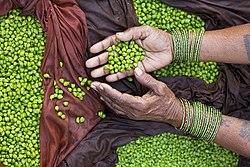 Lime green chickpeas
 -
 Black chickpeas


See also
[edit]References
[edit]- ^ "Cicer arietinum L." The Plant List. 2013. Retrieved 22 October 2014.
- ^ Feedipedia. "Chickpea (Cicer arietinum)". www.feedipedia.org. Retrieved 26 February 2018.
- ^ Kew Science. "Cicer arietinum L. – Plants of the World Online". Plants of the World Online. Retrieved 26 February 2018.
- ^ a b "Baynes TS, Smith WR, eds. (1880). . Encyclopædia Britannica. Vol. 11 (9th ed.). New York: Charles Scribner's Sons. pp. 36–37.
- ^ a b c "Cicer arietinum". Germplasm Resources Information Network. Agricultural Research Service, United States Department of Agriculture. Retrieved 21 October 2014.
- ^ "Chana dal recipes". BBC Food. Retrieved 23 October 2025.
Chana dal, or split chickpeas, is a dried, split pulse
- ^ S B (31 March 2014). "The small but mighty chickpea". Phys.org. Retrieved 8 October 2015.
- ^ Advances in Agronomy. Elsevier. 2001. ISBN 978-0-08-054399-4. Retrieved 26 February 2018 – via Google Books.
- ^ Lucas L, Fuller DQ (2014), "Chickpea: Origins and Development", in Smith C (ed.), Encyclopedia of Global Archaeology, New York, NY: Springer, pp. 1384–1387, doi:10.1007/978-1-4419-0465-2_2324, ISBN 978-1-4419-0465-2, S2CID 82687381
- ^ a b "Chickpea production in 2022, Crops/Regions/World list/Production Quantity (pick lists)". UN Food and Agriculture Organization, Corporate Statistical Database (FAOSTAT). 2024. Retrieved 21 April 2024.
- ^ a b c Dean S (20 September 2012). "The History of the Word Chickpea". bon appétit. Retrieved 28 October 2024.
- ^ Nene Y (2006). "Indian Pulses Through the Millenia". Asian Agri-History. 10 (3): 179–202.
- ^ a b Mikić A, Perić V (2011). "An Etymological and Lexicological Note On the Words for Some Ancient Eurasian Grain Legume Crops in Turkic Languages". Turkish Journal of Field Crops. 16 (2): 179–182.
- ^ a b Mikić AM, Medović AP, Ćupina BT, et al. (2011). "Paleolinguistics brings more light on the earliest history of the traditional Eurasian pulse crops". Nature Precedings: 1. doi:10.1038/npre.2011.5837.1.
- ^ a b c d Mikić A (2019). Lexicon of Pulse Crops. Boca Raton, Florida: CRC Press. ISBN 978-1-138-08951-8.
- ^ a b c d e Mikić A (2012). "Origin of the Words Denoting Some of the Most Ancient Old World Pulse Crops and Their Diversity in Modern European Languages". PLOS ONE. 7 (9) e44512. Bibcode:2012PLoSO...744512M. doi:10.1371/journal.pone.0044512. PMC 3433424. PMID 22973458.
- ^ Balter M (13 February 2015). "Mysterious Indo-European homeland may have been in the steppes of Ukraine and Russia". Science. doi:10.1126/science.aaa7858.
- ^ Campbell L (2020). Historical Linguistics: An Introduction, Fourth Edition. Cambridge, Massachusetts: The MIT Press.
- ^ a b c d Van Der Maesen LJ (1987). "Origin, history and taxonomy of chickpea". In Saxena MC, Singh K (eds.). The Chickpea. C.A.B. International. ISBN 978-0-85198-571-8.
- ^ Cohen SG (January–February 1991). "The Chicken, in History and in the Soup". Allergy and Asthma Proceedings. 12 (1): 47–56. doi:10.2500/108854191778879593.
- ^ a b Gold DL (2009). Studies in Etymology and Etiology: With Emphasis on Germanic, Jewish, Romance and Slavic Languages. Universidad de Alicante. ISBN 978-84-7908-517-9 – via Google Books.
- ^ a b c d e f Van Der Maesen LJ (1972). Cicer L., A Monograph of the Genus, With Special Reference to the Chickpea (Cicer Arietinum L.), Its Ecology and Cultivation. Wageningen: H. Veenman & Zonen N.V.
- ^ a b c Ahmad F, Gaur PM, Croser J (2005). "Chickpea (Cicer arietinum l.)". In Singh RJ, Jauhar PP (eds.). Genetic resources, chromosome engineering, and crop improvement-grain legumes 1 (PDF). Boca Raton, Florida: Taylor & Francis. pp. 187–217.
- ^ a b Theophrastus (1916). Enquiry into plants and minor works on odours and weather signs, with an English Translation by Sir Arthur Hort, bart. Vol. II. Translated by Hort SA. London: William Heinemann – via Archive.org.
- ^ a b c Lucius Junius Moderatus Columella on Agriculture, in Three Volumes: Res Rustica I-IV, with a Recension of the Text and An English Translation By Harrison Boyd Ash, Ph.D. Cambridge, Massachusetts: Harvard University Press. 1941 – via Archive.org.
- ^ a b c d e Gupta S, Nawaz K, Parween S, et al. (2017). "Draft genome sequence of Cicer reticulatum L., the wild progenitor of chickpea provides a resource for agronomic trait improvement". DNA Research. 24: 1–10. doi:10.1093/dnares/dsw042. PMC 5381347. PMID 27567261.
- ^ Mehmetoğlu E, Kaymaz Y, Ateş D, et al. (2023). "The complete chloroplast genome of Cicer reticulatum and comparative analysis against relative Cicer species" (PDF). Scientific Reports. 3 (17871) 17871. doi:10.1038/s41598-023-44599-1. PMC 10587350. PMID 37857674.
- ^ a b c d e f g Redden R, Berger J (2007). "History and Origin of Chickpea". In Yadav S, Redden R, Chen W, Sharma B (eds.). Chickpea Breeding and Management. Oxfordshire, United Kingdom: CAB International. ISBN 978-1-84593-214-5.
- ^ a b Abbo S, Shtienberg D, Lichtenzveig J, et al. (December 2003). "The Chickpea, Summer Cropping, and a New Model For Pulse Domestication in the Ancient Near East". The Quarterly Review of Biology. 78 (4): 37–50. doi:10.1086/378927. PMID 14737827.
- ^ "Global research team decodes genome sequence of 90 chickpea lines". International Crops Research Institute for the Semi-Arid Tropics. 2013. Archived from the original on 4 March 2016. Retrieved 9 October 2015.
- ^ Varshney RK, Song C, Saxena RK, et al. (27 January 2013). "Draft genome sequence of chickpea (Cicer arietinum) provides a resource for trait improvement" (PDF). Nature Biotechnology. 31 (3): 240–246. doi:10.1038/nbt.2491. PMID 23354103. S2CID 6649873.
- ^ a b "Visual Reference Images | Agricultural Marketing Service". www.ams.usda.gov. Retrieved 26 August 2025.
- ^ a b "Chickpea (Cicer arietinum)". www.Feedipedia.org. Retrieved 10 May 2019.
- ^ Service TN. "Chana laddoo to be 'Kurukshetra prasadam'". Tribuneindia News Service. Archived from the original on 20 March 2023. Retrieved 22 August 2021.
- ^ "Taxonomy and Nomenclature for Family Leguminosae Juss., Cicer arietinum subsp. arietinum". Mansfeld's World Database of Agricultural and Horticultural Crops. Retrieved 31 January 2008.
- ^ a b Marks, Gil (2010). Encyclopedia of Jewish Food. John Wiley and Sons. pp. 269–271. ISBN 978-0-470-39130-3.
- ^ Ferretti E (5 April 2010). "There's Hummus Among Us". Fox News. Retrieved 10 May 2019.
- ^ "Chickpeas: A nutrient-packed powerhouse for health and culinary delights". Business Insider. Retrieved 24 November 2023.
- ^ Bombay T (1 September 2020). "The 5 Most Popular Indian Vegetarian Dishes". Bombay Mahal. Retrieved 24 November 2023.
- ^ Amit D (6 November 2022). "Mirchi Bajji Recipe | Chilli Bajji | Mirapakaya Bajji". Dassana's Veg Recipes. Retrieved 24 November 2023.
- ^ Amit D (23 October 2021). "Besan Ka Halwa". Dassana's Veg Recipes. Retrieved 24 November 2023.
- ^ Paster E (19 March 2019). "SUMAC ROASTED CHICK PEAS (ARBES) FOR PURIM". West of the Loop. Retrieved 6 January 2022.
- ^ Krule M (10 June 2015). "Stop Pouring Your Chickpea Liquid Down the Drain. It's a Magical Ingredient". Slate Magazine. Retrieved 24 June 2019.
- ^ Gormley S (7 May 2019). "Little Bean Proves Chickpea Ice Cream Isn't as Weird as It Sounds". Willamette Week. Retrieved 10 May 2019.
- ^ a b "Introduction: Chickpeas". International Center for Agricultural Research in the Dry Areas. Archived from the original on 18 July 2012. Retrieved 28 August 2008.
- ^ "Chickpea (Chana)". CRN India. Archived from the original on 27 April 2006. Retrieved 8 June 2016.
- ^ a b c d e Bampidis V, Christodoulou V (2011). "Chickpeas (Cicer arietinum L.) in animal nutrition: A review". Animal Feed Science and Technology. 168 (1–2): 1–20. doi:10.1016/j.anifeedsci.2011.04.098.
- ^ United States Food and Drug Administration (2024). "Daily Value on the Nutrition and Supplement Facts Labels". FDA. Archived from the original on 27 March 2024. Retrieved 28 March 2024.
- ^ "TABLE 4-7 Comparison of Potassium Adequate Intakes Established in This Report to Potassium Adequate Intakes Established in the 2005 DRI Report". p. 120. In: Stallings VA, Harrison M, Oria M, eds. (2019). "Potassium: Dietary Reference Intakes for Adequacy". Dietary Reference Intakes for Sodium and Potassium. pp. 101–124. doi:10.17226/25353. ISBN 978-0-309-48834-1. PMID 30844154. NCBI NBK545428.
- ^ a b c d e f g El-Adawy T (2002). "Nutritional composition and antinutritional factors of chickpeas (Cicer arietinum L.) undergoing different cooking methods and germination". Plant Foods for Human Nutrition. 57 (1): 83–97. doi:10.1023/A:1013189620528. PMID 11855623. S2CID 23259042.
- ^ a b Jukanti AK, Gaur PM, Gowda CL, et al. (2012). "Nutritional quality and health benefits of chickpea (Cicer arietinum L.): a review". Br J Nutr. 108 (Suppl 1): S11–26. doi:10.1017/S0007114512000797. PMID 22916806.
- ^ Elango D (2022). "Genome-wide association mapping of seed oligosaccharides in chickpea". Frontiers in Plant Science. 13 (2022) 1024543. doi:10.3389/fpls.2022.1024543. PMC 9638045. PMID 36352859.
- ^ Vasishtha H, Srivastava RP, Verma P (19 September 2014). "Effect of dehusking and cooking on protein and dietary fibre of different genotypes of desi, kabuli and green type chickpeas (Cicer arietinum)". Journal of Food Science and Technology. 51 (12): 4090–4095. doi:10.1007/s13197-012-0909-3. ISSN 0022-1155. PMC 4252399. PMID 25477686.
- ^ a b c Ibrikci H, Knewtson S, Grusak M (2003). "Chickpea leaves as a vegetable green for humans: evaluation of mineral composition". Journal of the Science of Food and Agriculture. 83 (9): 945–950. Bibcode:2003JSFA...83..945I. doi:10.1002/jsfa.1427.
- ^ Faridy JM, Stephanie CM, Gabriela MO, et al. (2020). "Biological Activities of Chickpea in Human Health (Cicer arietinum L.). A Review". Plant Foods for Human Nutrition. 75 (2): 142–153. doi:10.1007/s11130-020-00814-2. PMID 32239331. S2CID 214733079.
- ^ Naghavi M, Jahansouz M (2005). "Variation in the agronomic and morphological traits of Iranian chickpea accessions". Journal of Integrative Plant Biology. 47 (3): 375–79. doi:10.1111/j.1744-7909.2005.00058.x.
- ^ a b c Bampidis V, Christodoulou V (2011). "Chickpeas (Cicer arietinum L.) in animal nutrition: A review". Animal Feed Science and Technology. 168 (1–2): 1–20. doi:10.1016/j.anifeedsci.2011.04.098.
- ^ a b c Mishra U, Sirothia P, Bhadoria U (2009). "Effects of phosphorus nutrition on growth and yield of chickpea (Cicer arietinum) under rainfed conditions". International Journal of Agricultural and Statistical Sciences. 5 (1): 85–88.
- ^ a b Wery, J., Deschamps, M., & Leger-Cresson, N. (1988). Influence of some agroclimatic factors and agronomic practices on nitrogen nutrition of chickpea (Cicer arietinum L.). Developments in Plants and Soil Sciences, 32: 287–301.
- ^ Hinsinger P (2001). "Bioavailability of soil inorganic P in the rhizosphere as affected by root-induced chemical changes: A review". Plant and Soil. 237 (2): 173–95. Bibcode:2001PlSoi.237..173H. doi:10.1023/A:1013351617532. S2CID 8562338.
- ^ Johnson, S.E., Lauren, J.G., Welch, R.M., & Duxbury, J.M. (2005). A comparison of the effects of micronutrient seed priming and soil fertilization on the mineral nutrition of chickpea (Cicer arietinum), lentil (Lens culinaris), rice (Oryza sativa), and wheat (Triticum acstiyum) in Nepal. [page needed]
- ^ Datta J, Lal N (2012). "Application of molecular markers for genetic discrimination of Fusarium wilt pathogen races affecting chickpea and pigeonpea in major regions of India". Cellular and Molecular Biology. 58 (1): 55–65. PMID 23273192.
- ^ a b Berka M, Kopecká R, Berková, et al. (12 January 2022). Hancock R (ed.). "Regulation of heat shock proteins 70 and their role in plant immunity". Journal of Experimental Botany. 73 (7). Society for Experimental Biology (OUP): 1894–1909. doi:10.1093/jxb/erab549. ISSN 0022-0957. PMC 8982422. PMID 35022724.
- ^ Sheila J, Sharma N (1996). "A World list of Chickpea and Pigeonpea Pathogens". International Crops Research Institute for Semi-Arid Tropics, ICRISAT (5).
- ^ "PlantVillage". Archived from the original on 30 June 2015. Retrieved 11 July 2015.
- ^ Pfaff T, Kahl G (2003). "Mapping of gene-specific markers on the genetic map of chickpea ("Cicer atietinum"L)". Molecular Genetics and Genomics. 269 (2): 243–251. doi:10.1007/s00438-003-0828-0. PMID 12756536. S2CID 20347418.
- ^ Millan T, Heather J, Kadambot H, et al. (2006). "Chickpea molecular breeding:New tools and concepts" (PDF). Euphytica. 147 (1–2): 81–103. doi:10.1007/s10681-006-4261-4. S2CID 26048653.
External links
[edit]

- India Pulses and Grains Association (Archived 2020-02-07 at the Wayback Machine)
| International | |
|---|---|
| National | |
| Other | |

Chickpea
View on GrokipediaTaxonomy and Description
Taxonomy
The chickpea, scientifically known as Cicer arietinum L., is classified within the family Fabaceae, subfamily Faboideae, and tribe Cicereae.[6][7] This binomial nomenclature was established by Carl Linnaeus in the first edition of Species Plantarum in 1753, marking the formal taxonomic description of the species.[6] The genus Cicer encompasses approximately 45 species, predominantly distributed across southwestern Asia, with C. arietinum as the sole cultivated member.[8] As a cool-season annual legume, the chickpea occupies a distinct phylogenetic position within the Fabaceae, separate from other major pulses such as lentils (Lens culinaris) and garden peas (Pisum sativum), which belong to the tribe Fabeae.[9][10] This separation highlights its unique evolutionary lineage in the inverted repeat-lacking clade (IRLC) of legumes.[11]Physical Description
The chickpea (Cicer arietinum) is an annual herbaceous legume with a semi-erect to erect growth habit, featuring a branched stem that supports a compact structure. Plants typically reach heights of 20–60 cm, although some cultivars can grow up to 1 m under favorable conditions.[1][12] The leaves are compound and imparipinnate, arranged alternately along the stem, with 7–17 sessile, oblong to elliptic or ovate leaflets per leaf; each leaflet measures 1–2 cm in length and is light to dark green.[1][12] Flowers are small (1–2 cm long), papilionaceous, and predominantly self-pollinating, borne singly or in pairs within axillary racemes; they exhibit colors ranging from white to pink, blue, or purple.[1][12] Pods develop as inflated, pubescent, oblong structures 2–3 cm long, each containing 1–3 seeds; the seeds are angular or spherical, 0.5–1 cm in diameter, and bear a distinctive ram's head-like shape that inspired the species epithet arietinum, derived from Latin references to a ram (aries).[1][12][13] The root system is taproot-dominant, with a primary taproot penetrating up to 2 m deep and numerous secondary lateral roots concentrated in the top 15–30 cm of soil, enabling efficient water and nutrient uptake that enhances drought tolerance.[1][14]History and Origin
Etymology
The term "chickpea" derives from the Middle English "chich-pease," a calque of the Old French "pois chiche," where "pois" means "pea" and "chiche" stems from the Latin "cicer," the ancient Roman word for the legume.[15] The Latin "cicer" likely originated from a pre-Indo-European root such as Pelasgian "kickere" or Greek "kikus" (meaning "force" or "strength"), and it was used extensively in Roman literature, including by Pliny the Elder.[13] The specific epithet "arietinum" in the scientific name Cicer arietinum comes from the Latin "aries" (ram), alluding to the seed's resemblance to a ram's head, a descriptor proposed by Carolus Linnaeus in 1753 based on earlier botanical observations.[16] In ancient Greek, the plant was known as "erébinthos" (ἐρέβινθος), a term recorded by Theophrastus in his Historia Plantarum around 300 BCE and possibly referenced earlier in Homer's Iliad as a symbol of vitality.[13] Sanskrit texts from the 1st to 4th centuries CE, such as the Puranas, referred to it as "chennuka," which evolved into "chana" in modern Indo-Aryan languages like Hindi, reflecting its longstanding role in Indian subcontinental agriculture.[13] In Arabic, the word "ḥummuṣ" (حمص) directly denotes the chickpea, appearing in medieval texts and deriving from an ancient Semitic root unrelated to the dip named after it.[13] Modern names vary by region, illustrating the crop's global dissemination. "Garbanzo," prevalent in Spanish-speaking areas, entered European languages via Spanish from a possible Basque origin in "garau anztu" (dry seed) or earlier Arabic influences, as noted in 19th-century botanical studies.[17] In Indian English, "gram" refers to the chickpea (especially as Bengal gram), borrowed from the Portuguese "grão" (grain or seed) during colonial trade in the 16th century.[13] Italian "ceci" (plural of "cecio") traces directly to the Latin "cicer," preserving the Roman nomenclature in Mediterranean culinary traditions.[13] In German, chickpeas are known as "Kichererbsen." These variations underscore how linguistic adaptations mirrored the plant's adoption across cultures.Domestication and Spread
The chickpea (Cicer arietinum) was domesticated in the Fertile Crescent, specifically in southeastern Turkey and adjoining Syria, around 10,000 years before present (BP), marking it as one of the earliest cultivated legumes.[18] This domestication occurred during the Neolithic period, transitioning from wild harvesting to intentional cultivation by early agricultural communities in the region.[13] The wild progenitor of the chickpea is Cicer reticulatum, a species native to southeastern Anatolia, which shares close genetic affinity with the domesticated form and provided the foundational traits for adaptation to farming.[19] Archaeological evidence supports this timeline, with the earliest remains of domesticated chickpeas discovered at sites such as Jericho in the Pre-Pottery Neolithic B period (approximately 6250 BCE) and Hacilar in Turkey (5450 BCE).[13] Additional findings from Çayönü in Turkey date to between 7500 and 6800 BCE, indicating early cultivation in aceramic Neolithic levels.[20] These remains, often found alongside other founder crops like wheat and barley, highlight chickpeas' role in the foundational Neolithic farming package of the Near East.[21] From its origins, the chickpea spread along ancient trade routes, reaching the Indian subcontinent by around 2000 BCE, as evidenced by remains at Atranjikhera in Uttar Pradesh.[13] In the Mediterranean, it was well-established by the 4th century BCE, as described by Theophrastus in his Historia Plantarum, where he detailed varieties like "erebinthos" and their cultivation practices.[13] Chickpeas became a dietary staple in Roman cuisine, valued by the lower classes for their nutritional content; writers such as Pliny the Elder, Columella, and Dioscorides noted their use in porridges, breads, and as a protein source, often served boiled or roasted in taverns to pair with wine.[13] The crop's dissemination continued into the Ottoman Empire, where it formed a key component of regional diets, featured in stews and pilafs as a hearty, accessible legume for peasants and soldiers across Anatolia and the Levant.[21] European cultivation persisted through the medieval period, documented in Charlemagne's Capitulare de Villis (812 CE), but the chickpea reached the Americas only in the 16th century, introduced by Spanish and Portuguese explorers as part of the Columbian Exchange.[21]Genome Sequencing
The chickpea (Cicer arietinum) is a diploid species with 2n=16 chromosomes and an estimated genome size of approximately 738 Mb.[22] This moderate-sized genome has been a focus of sequencing efforts to support trait improvement in this important legume crop. The first draft genome sequence was published in 2013 by the International Chickpea Genome Sequencing Consortium (ICGSC), led by the International Crops Research Institute for the Semi-Arid Tropics (ICRISAT), in collaboration with institutions including the University of California-Davis and BGI-Shenzhen.[22] This whole-genome shotgun assembly of the kabuli variety CDC Frontier spanned 532.29 Mb across 7,163 scaffolds, representing about 73.8% of the estimated genome size, with 65.23% anchored to eight pseudomolecules using genetic markers.[22] Annotation identified 28,269 protein-coding genes, providing an initial resource for genetic studies.[22] A high-quality reference genome assembly for the desi type was released in 2015 by the National Institute of Plant Genome Research (NIPGR), with updates including version ASM34727v4 in 2019. This assembly covered more than 94% of the estimated gene space, with a scaffold length of 466.5 Mb and reduced gaps compared to prior drafts (N-content decreased to 8.68%).[23] It predicted 30,257 protein-coding genes, including 2,230 transcription factors and 133 resistance gene analogs, enhancing contiguity by 2.7-fold over the 2013 kabuli assembly.[23] Sequencing efforts have revealed key genetic insights, including the identification of genes associated with drought tolerance and flowering time. For instance, genomic regions harboring drought-responsive alleles were mapped in tolerant genotypes like ICC 4918, and a CONSTANS homolog on chromosome Ca3 was linked to flowering time variation, aiding adaptation to diverse agro-climatic conditions.[22] These findings, derived from the draft assemblies, have informed subsequent studies on quantitative trait loci for terminal drought stress during reproductive stages.[24] The genomic resources have enabled applications in marker-assisted breeding to improve yield and stress resilience. High-density genetic maps and single nucleotide polymorphism markers from resequencing data facilitate selection for traits like Fusarium wilt resistance and pod number, accelerating the development of superior cultivars.[25] Recent updates include a 2024 super-pangenome incorporating de novo assemblies of eight wild Cicer species alongside desi and kabuli references, capturing 24,827 gene families and structural variations to broaden genetic diversity for breeding.[26] In 2025, researchers released a pan-genome specific to 15 Australian chickpea cultivars, enhancing understanding of local genetic diversity and supporting region-specific breeding improvements.[27]Varieties and Breeding
Major Varieties
Chickpeas are primarily classified into two major types based on seed characteristics, plant morphology, and adaptation: the desi and kabuli varieties, which together account for nearly all global production. These types differ in seed size, color, coat thickness, flower pigmentation, and suitability to environmental conditions. Desi types dominate production, comprising approximately 85% of the global total, while kabuli types make up the remaining 15%.[28] The desi type features small, angular seeds typically weighing 0.2–0.4 g, with dark-colored coats in shades of brown, green, or black that are thicker and rougher in texture. These seeds are associated with pigmented stems, leaves, and pink or purple flowers, contributing to their resilience in harsher growing conditions. Desi chickpeas are predominantly cultivated in South Asia, particularly the Indian subcontinent, where they form the bulk of production due to their adaptation to semi-arid, rainfed environments with limited water availability.[29][28][30] In contrast, the kabuli type has larger, rounded seeds ranging from 0.3–0.5 g, with thin, smooth, beige or cream-colored coats and white flowers on non-pigmented plants. This type commands a premium in markets due to its appearance and is favored in regions with access to irrigation, such as the Middle East, Europe, North America, and parts of Australia, where higher yields are achievable under supplemented water conditions. Kabuli varieties often exhibit greater responsiveness to irrigation, leading to improved seed filling and overall productivity compared to desi types in such systems.[29][31][30][32] Beyond these primary types, minor intermediate varieties exist that blend traits of desi and kabuli, such as partial pigmentation or intermediate seed sizes and shapes; examples include regional landraces with mixed characteristics, though they represent a small fraction of cultivation worldwide. Overall seed size across all chickpea types varies from 0.1 to 0.5 g, influencing market value and processing suitability. Breeding programs have occasionally hybridized desi and kabuli traits to develop varieties with enhanced adaptability, though such efforts focus on targeted improvements rather than creating new major classes.[33]Breeding and Genetic Improvement
Chickpea breeding has historically relied on conventional methods suited to its self-pollinating nature, including pedigree selection, bulk selection, and single seed descent, focusing on traits such as yield potential and resistance to diseases like Fusarium wilt since the early 20th century.[34] The International Crops Research Institute for the Semi-Arid Tropics (ICRISAT) has played a pivotal role in these efforts, contributing to the development and release of over 100 high-yielding and resilient varieties worldwide through collaborative programs that emphasize selection for drought tolerance and pest resistance.[35] These traditional approaches have enabled steady genetic gains, though progress has been gradual due to the crop's inherent reproductive biology and environmental constraints.[36] Modern breeding techniques have integrated genomic tools to accelerate improvement, with marker-assisted selection (MAS) targeting quantitative trait loci (QTLs) associated with key agronomic traits such as yield components, including pod set, and resistance to diseases like Fusarium wilt and Ascochyta blight.[37] For instance, meta-analyses of QTLs for Fusarium wilt resistance have identified consistent genomic regions across studies, facilitating their deployment in breeding pipelines to enhance varietal durability.[38] Post-2020 advancements in gene editing, particularly CRISPR/Cas9, have enabled precise modifications in chickpea, including multiplex editing of chlorophyll biosynthesis genes and base editing for drought tolerance, with potential applications for bolstering Fusarium resistance through targeted immune response enhancements.[39][40] These methods leverage genomic resources to overcome limitations of conventional breeding, allowing for faster introgression of favorable alleles.[25] Recent developments as of 2025 include the adoption of speed breeding techniques to accelerate generation advancement in recombinant inbred lines, enhancing selection efficiency for stress tolerance traits, and increased use of wild relatives like Cicer reticulatum to broaden the genetic base and introduce novel alleles for yield and abiotic stress resistance. Breeding efforts have also emphasized protein quality improvement, targeting higher digestibility and nutritional profiles to meet evolving market demands for plant-based proteins.[41][42][43] Notable achievements include the release of high-yielding varieties such as Pusa 372 in India during the late 20th century, which became a benchmark for drought-prone regions due to its adaptability and yield stability, and subsequent genomics-assisted derivatives like Pusa Chickpea 10216, which demonstrated an 11.9% yield increase over Pusa 372 under drought conditions.[25] Biofortification efforts have also advanced, with breeding programs identifying QTLs for elevated iron and zinc concentrations in seeds, enabling the development of nutrient-dense varieties to combat micronutrient deficiencies in staple diets.[44] Despite these successes, chickpea breeding faces challenges from its narrow genetic base, stemming from a severe domestication bottleneck that limits trait diversity in cultivated germplasm.[45] To address this, introgression from wild relatives, such as Cicer reticulatum and Cicer echinospermum, has been pursued to incorporate novel alleles for abiotic stress tolerance and yield enhancement, though linkage drag and crossing barriers remain hurdles in these efforts.[46]Cultivation
Growing Conditions
Chickpeas are a cool-season crop that thrives in temperate to subtropical climates, with optimal daytime temperatures ranging from 15°C to 29°C and nighttime temperatures between 18°C and 24°C for vegetative growth and flowering.[29] The plant is frost-tolerant during early vegetative stages, allowing sowing in cooler conditions, but it is sensitive to prolonged frost below -5°C and high temperatures exceeding 35°C during reproductive phases, which can reduce pod set and yield.[47] Well-drained soils are essential for chickpea cultivation, with preferences for sandy loam or silt loam textures that prevent waterlogging.[47] The crop performs best in neutral to slightly alkaline soils with a pH range of 6.0 to 7.5, though it can tolerate pH up to 8.0 in some varieties.[48] Chickpeas exhibit moderate salinity tolerance, managing electrical conductivity up to 4 dS/m without severe yield loss, but they are highly susceptible to waterlogged conditions that promote root rot.[49] Water requirements for chickpeas typically range from 300 to 500 mm during the growing season, making it well-suited to semi-arid regions with medium rainfall. Approximately 80% of global chickpea production occurs under rainfed systems, relying on stored soil moisture and seasonal precipitation, while irrigated cultivation in drier areas supplements with 2 to 4 inches (50-100 mm) during establishment and pod filling.[50] Excessive moisture late in the season can delay maturity and increase disease risk. In crop rotations, chickpeas benefit from preceding cereal crops like wheat or barley, which reduce weed pressure and improve soil structure for the legume's deep taproot.[47] As a nitrogen-fixing legume, chickpeas form symbiotic associations with Rhizobium bacteria in root nodules, contributing 50-150 kg/ha of fixed nitrogen to the soil, enhancing fertility for subsequent non-legume crops in rotations spaced every 3-5 years to manage diseases.[47]Global Production
Global chickpea production reached approximately 16.5 million tonnes in 2023, reflecting steady growth driven by increasing demand for plant-based proteins and food security needs in developing regions.[51] For the 2023/24 marketing year, production declined by about 1 million tonnes to around 15.6 million tonnes, primarily due to a smaller crop in India.[52] In 2024/25, estimates suggest a recovery to 16-17 million tonnes, with growth in Australia and sub-Saharan Africa.[53] This output was cultivated across about 14.8 million hectares worldwide as of 2022, with average yields around 1.1 tonnes per hectare globally due to constraints like water scarcity and soil variability.[54] India dominates production, accounting for about 74% of the global total with 12.27 million tonnes in 2023, primarily from rainfed systems in states like Madhya Pradesh and Rajasthan, where yields average around 1.0-1.3 tonnes per hectare.[51][55] Australia ranks second with 0.935 million tonnes, benefiting from higher yields of approximately 2 tonnes per hectare in irrigated and mechanized farming in regions like New South Wales.[51] Other key producers include Ethiopia (0.58 million tonnes), Turkey (0.5 million tonnes), and Myanmar (0.46 million tonnes), contributing to diversified supply chains.[51] Production trends indicate expansion in sub-Saharan Africa, where countries like Ethiopia and Tanzania are increasing cultivated area through improved varieties and extension programs, potentially adding 1-2 million tonnes by 2030 to meet local nutrition demands.[56] However, climate change poses challenges, with rising temperatures and erratic rainfall projected to reduce yields by 10-20% in vulnerable regions like the Indian subcontinent and parts of Africa by mid-century without adaptation measures.[57][58] Overall, global output is forecasted to grow to around 18-20 million tonnes by 2030, supported by yield-enhancing technologies and market expansion, though at a moderated annual rate of 2-3%. In international trade, Australia emerges as the leading exporter, shipping over 700,000 tonnes annually to meet global shortfalls, particularly from its desi varieties suited for processing.[59] Major importers include Pakistan and Bangladesh, which rely on imports exceeding 500,000 tonnes combined each year to supplement domestic production for consumption and feed uses.[60][61] This trade dynamic underscores chickpeas' role in food security, with exports valued at over $1 billion in 2023.[59]Nutrient and Heat Management
Chickpeas, as a legume, primarily meet their nitrogen requirements through symbiotic nitrogen fixation with rhizobia bacteria, which can supply 50% to 80% of the plant's needs under favorable conditions, typically reducing the need for external nitrogen inputs to 20-40 kg/ha as starter fertilizer.[62][63] Phosphorus is essential for root development and overall growth, with recommended applications of 40-60 kg/ha to enhance nodulation and yield, particularly in phosphorus-deficient soils.[64][65] Effective fertilization involves balanced NPK applications tailored to soil tests, where phosphorus and potassium significantly improve nutrient uptake and grain yield.[65] Micronutrients such as molybdenum are crucial for nitrogenase activity in nodules, promoting efficient symbiotic fixation, and deficiencies can be addressed through soil or foliar applications of 0.5 kg/ha molybdenum.[66][67] Cobalt may also support nodulation in certain soils, while zinc and manganese foliar sprays address deficiencies to sustain plant health.[66] Heat stress above 30°C during flowering and podding stages severely impacts chickpea productivity by causing flower abortion and reduced pod set, leading to yield losses of up to 30-39%.[57] Selecting heat-tolerant varieties that exhibit delayed flowering helps avoid peak temperature periods, minimizing reproductive damage and maintaining yields in warmer regions.[68][69] Cultural practices like mulching to conserve soil moisture and supplemental irrigation at critical stages—such as flowering and pod filling—can mitigate these effects by cooling the canopy and sustaining water availability, potentially increasing yields by 30% in stressed environments.[70][71] Recent advancements include precision agriculture techniques, such as variable-rate fertilization and sensor-based irrigation, to optimize nutrient delivery and water use under heat stress, improving resource efficiency in chickpea fields.[72] Silicon amendments, applied foliarly at 100-200 mg/L, have shown promise in post-2020 studies for enhancing heat and drought tolerance by bolstering antioxidant defenses and photosynthetic efficiency, thereby reducing yield penalties in susceptible varieties.[73][74]Uses
Culinary Uses
Chickpeas are widely used in traditional Middle Eastern cuisine, where whole or split chickpeas form the base of dishes such as hummus, a creamy dip made by blending cooked chickpeas with tahini, lemon, and garlic, and falafel, deep-fried patties crafted from ground chickpeas seasoned with herbs and spices.[75][76] In Indian cooking, split chickpeas, known as chana dal, are simmered into hearty lentil-like preparations, while whole chickpeas feature in chana masala, a spiced curry simmered with onions, tomatoes, and garam masala for a robust flavor.[77] Processed forms of chickpeas expand their versatility in global cuisines. Chickpea flour, or besan, is a staple in Indian recipes for pakora, savory fritters where vegetables are coated in a spiced besan batter and deep-fried, as well as in sweets like besan ladoo, where the flour is roasted with ghee and sugar for a nutty confection.[77] Canned chickpeas, popular in modern Western applications, are often drained and tossed into salads with fresh vegetables, herbs, and vinaigrette for quick, protein-rich meals.[78] Beyond these staples, chickpeas appear in diverse regional dishes that highlight their adaptability. In Italy, pasta e ceci combines chickpeas with short pasta, rosemary, and tomatoes in a comforting stew-like preparation.[79] Spanish cuisine features garbanzo stews, such as espinacas con garbanzos, where chickpeas are simmered with spinach, garlic, and smoked paprika for a flavorful tapa.[80] Emerging fermented products, like chickpea tempeh analogs, offer a soy-free alternative to traditional Indonesian tempeh, where chickpeas are inoculated with Rhizopus mold for a firm, probiotic-rich texture suitable for grilling or stir-fries.[81] Preparation methods influence chickpea texture and usability in these dishes. Soaking dried chickpeas overnight in water reduces subsequent cooking time by up to half, from around 90 minutes to 45-60 minutes when boiled.[82] Chickpea varieties also affect outcomes; kabuli types, with their larger size and smoother skin, yield a creamier texture ideal for purees like hummus, while desi varieties provide a firmer bite suited to curries.[83]Animal Feed
Chickpeas serve as a valuable protein source in animal feed, particularly when seed quality is lower than for human consumption. The seeds contain 19-25% crude protein on a dry matter basis, making them suitable for supplementing diets in poultry, pigs, and ruminants. This high protein level positions chickpeas as a nutrient-dense option, providing essential amino acids and energy comparable to conventional feeds.[84][3] In livestock nutrition, chickpeas are incorporated in various forms, including whole seeds, ground meal, silage, and byproducts such as bran, pod husks, and straw. Whole or milled seeds are commonly added to poultry rations at 5-15% of the diet, depending on growth stage, while ruminant feeds may include up to 25% chickpeas to balance energy and protein needs. Byproducts like husks provide dietary fiber, and straw serves as roughage for grazing animals, enhancing overall feed efficiency in mixed rations.[3] The inclusion of chickpeas in animal diets offers several benefits, including improved milk yield and fat content in dairy cows when substituted for up to 25% of the concentrate, and enhanced average daily weight gain in organically reared bulls compared to barley-based feeds. As a cost-effective alternative to soybean meal, chickpeas reduce reliance on imported proteins while maintaining comparable digestibility and performance in pigs and poultry. However, limitations arise from anti-nutritional factors such as trypsin inhibitors and tannins, which can reduce protein digestibility; these are effectively mitigated through processing methods like heat treatment or extrusion.[3][85][86]Industrial Applications
Chickpea starch, comprising approximately 40-60% of the seed's dry weight, is extracted through wet milling processes involving soaking, grinding, and separation to isolate it from proteins and fibers. This starch has been utilized in industrial applications such as textile sizing, where it provides a lightweight finish to fabrics like cotton, wool, and silk, enhancing their smoothness and durability during manufacturing.[1] Protein isolates derived from chickpeas serve as a renewable raw material in the production of biodegradable plastics. Studies have demonstrated that chickpea protein isolates, when blended with whole flour, form films with favorable mechanical properties, including tensile strength comparable to soy-based alternatives, though they exhibit higher water absorption rates. These properties make chickpea protein a viable option for eco-friendly packaging and agricultural films, contributing to sustainable material development. Additionally, chickpea proteins have been identified as potential feedstocks for bioplastic production alongside other legumes like pea and lentil, leveraging their thermal stability and film-forming capabilities.[87][88] In the cosmetics industry, chickpea seed oil and extracts are incorporated into formulations for their moisturizing and antioxidant properties. Topical application of chickpea oil has shown efficacy in reducing inflammation and improving skin barrier function, as evidenced in clinical evaluations for conditions like osteoarthritis, where it alleviated pain and stiffness. Chickpea sprout hydrolysates, enriched with selenium, exhibit anti-aging potential by promoting collagen synthesis and inhibiting oxidative stress, positioning them as active ingredients in anti-wrinkle creams and serums. Furthermore, chickpea flour acts as a natural exfoliant and conditioner in soaps and facial masks, providing gentle abrasion and skin-soothing effects due to its saponin content.[89][90][91] Chickpea residues, including hulls and straw, hold promise for biofuel production through processes like thermal pyrolysis and co-pyrolysis. Pyrolysis of chickpea hulls at elevated temperatures yields bio-oil and biochar with high energy content, offering a pathway to convert agricultural waste into renewable fuels and value-added products. In integrated systems, chickpea straw combined with plastic waste can generate syngas for power and fuel synthesis, achieving up to 40% energy efficiency in zero-emission configurations. These applications address residue management while tapping into the global biofuel market, estimated to benefit from legume byproducts in sub-Saharan Africa and beyond.[92][93][94] Traditionally, chickpea hulls (pods) have been explored as a source of natural dyes for textile coloration, extracting phenolic and tannin compounds through solvent-free methods to produce hues suitable for eco-friendly finishing. These agro-wastes enable functional dyeing with antimicrobial properties, reducing reliance on synthetic colorants in the industry.[95] Emerging industrial processes focus on chickpea protein extraction for plant-based meat analogs, driven by advanced isolation techniques yielding high-purity isolates for texturizing applications.Nutrition and Processing
Nutritional Composition
Chickpeas, also known as garbanzo beans, are nutrient-dense legumes with a macronutrient profile that includes approximately 378 kcal of energy per 100 g of dry mature seeds, comprising 20.5 g of protein, 63 g of carbohydrates (of which 12.2 g is dietary fiber), and 6 g of total fat.[96] A single cooked chickpea (garbanzo bean) contains approximately 0.08 grams of protein. This estimate is derived from USDA nutritional data for cooked chickpeas, which provide 8.86 g of protein per 100 g,[97] combined with an average cooked bean weight of about 0.9–1 g. The amount of protein per bean remains the same whether the beans are dry or cooked, as cooking primarily adds water without affecting the protein content. A standard reference amount of 100 grams of cooked chickpeas (mature seeds, cooked, boiled, without salt) provides the following nutritional values:- Calories: 164 kcal
- Protein: 8.86 g
- Total Fat: 2.59 g
- Carbohydrates: 27.4 g
- Dietary Fiber: 7.6 g
- Sugars: 4.8 g
| Nutrient (per 100 g dry seeds) | Amount | % Daily Value |
|---|---|---|
| Energy | 378 kcal | - |
| Protein | 20.5 g | 41% |
| Total Carbohydrates | 63 g | 23% |
| Dietary Fiber | 12.2 g | 44% |
| Total Fat | 6 g | 8% |
| Iron | 4.3 mg | 24% |
| Folate | 557 μg | 139% |
| Phosphorus | 252 mg | 20% |