Hubbry Logo
ForaminiferaForaminiferaMain
Open search
Foraminifera
Community hub
Foraminifera
logo
8 pages, 0 posts
0 subscribers
Be the first to start a discussion here.
Foraminifera
Foraminifera
from Wikipedia

Foraminifera
Temporal range: 542–0 Ma[1] Latest Ediacaran–Recent
Live Ammonia tepida (Rotaliida)
Scientific classification Edit this classification
Domain: Eukaryota
Clade: Sar
Clade: Rhizaria
Phylum: Retaria
Subphylum: Foraminifera
d'Orbigny, 1826
Subdivisions

"Monothalamea"

Tubothalamea

Globothalamea

incertae sedis

Foraminifera (/fəˌræməˈnɪfərə/ fə-RAM-ə-NIH-fə-rə; Latin for "hole bearers"; informally called "forams") are single-celled organisms, members of a phylum or class of Rhizarian protists characterized by streaming granular ectoplasm for catching food and other uses; and commonly an external shell called a test of diverse forms and materials. Tests of chitin (found in some simple genera, and Textularia in particular) are believed to be the most primitive type. Most foraminifera are marine, the majority of which live on or within the seafloor sediment (i.e., are benthic, with different sized species playing a role within the macrobenthos, meiobenthos, and microbenthos),[2] while a smaller number float in the water column at various depths (i.e., are planktonic), which belong to the suborder Globigerinina.[3] Fewer are known from freshwater[4] or brackish[5] conditions, and some very few (nonaquatic) soil species have been identified through molecular analysis of small subunit ribosomal DNA.[6][7]

Foraminifera typically produce a foraminifera test, or shell, which can have either one or multiple chambers, some becoming quite elaborate in structure.[8] These shells are commonly made of calcium carbonate (CaCO
3
) or agglutinated sediment particles. Over 50,000 species are recognized, both living (6,700–10,000)[9][10] and fossil (40,000).[11][12] They are usually less than 1 mm in size, but some are much larger, the largest species reaching up to 20 cm.[13]

In modern scientific English, the term foraminifera is both singular and plural (irrespective of the word's Latin derivation), and is used to describe one or more specimens or taxa: its usage as singular or plural must be determined from context. Foraminifera is frequently used informally to describe the group, and in these cases is generally lowercase.[14]

History of study

[edit]

The earliest known reference to foraminifera comes from Herodotus, who in the 5th century BCE noted them as making up the rock that forms the Great Pyramid of Giza. These are today recognized as representatives of the genus Nummulites. Strabo, in the 1st Century BCE, noted the same foraminifera, and suggested that they were the remains of lentils left by the workers who built the pyramids.[15]

Robert Hooke observed a foraminifera under the microscope, as described and illustrated in his 1665 book Micrographia:

I was trying several small and single Magnifying Glasses, and casually viewing a parcel of white Sand, when I perceiv'd one of the grains exactly shap'd and wreath'd like a Shell[...] I view'd it every way with a better Microscope and found it on both sides, and edge-ways, to resemble the Shell of a small Water-Snail with a flat spiral Shell[...][16]

Antonie van Leeuwenhoek described and illustrated foraminiferal tests in 1700, describing them as minute cockles; his illustration is recognizable as being Elphidium.[17] Early workers classified foraminifera within the genus Nautilus, noting their similarity to certain cephalopods. It was recognised by Lorenz Spengler in 1781 that foraminifera had holes in the septa, which would eventually grant the group its name.[18] Spengler also noted that the septa of foraminifera arced the opposite way from those of nautili and that they lacked a nerve tube.[19]

Earliest known illustration of a foraminifera shell, published by Robert Hooke in his 1665 book Micrographia

Alcide d'Orbigny, in his 1826 work, considered them to be a group of minute cephalopods and noted their odd morphology, interpreting the pseudopodia as tentacles and noting the highly reduced (in actuality, absent) head.[20] He named the group foraminifères, or "hole-bearers", as members of the group had holes in the divisions between compartments in their shells, in contrast to nautili or ammonites.[14]

The protozoan nature of foraminifera was first recognized by Dujardin in 1835.[18] Shortly after, in 1852, d'Orbigny produced a classification scheme, recognising 72 genera of foraminifera, which he classified based on test shape—a scheme that drew severe criticism from colleagues.[17]

H.B. Brady's 1884 monograph described the foraminiferal finds of the Challenger expedition. Brady recognized 10 families with 29 subfamilies, with little regard to stratigraphic range; his taxonomy emphasized the idea that multiple different characters must separate taxonomic groups, and as such placed agglutinated and calcareous genera in close relation.

This overall scheme of classification would remain until Cushman's work in the late 1920s. Cushman viewed wall composition as the single most important trait in classification of foraminifera; his classification became widely accepted but also drew criticism from colleagues for being "not biologically sound".

Geologist Irene Crespin undertook extensive research in this field, publishing some ninety papers—including notable work on foraminifera—as sole author as well as more than twenty in collaboration with other scientists.[21]

Cushman's scheme nevertheless remained the dominant scheme of classification until Tappan and Loeblich's 1964 classification, which placed foraminifera into the general groupings still used today, based on microstructure of the test wall.[17] These groups have been variously moved around according to different schemes of higher-level classification. Pawlowski's (2013) use of molecular systematics has generally confirmed Tappan and Loeblich's groupings, with some being found as polyphyletic or paraphyletic; this work has also helped to identify higher-level relationships among major foraminiferal groups.[22]

Taxonomy

[edit]

"Monothalamids" (paraphyletic)

Phylogeny of Foraminifera following Pawlowski et al. 2013.[22] The monothalamid orders Astrorhizida and Allogromiida are both paraphyletic.

The taxonomic position of the Foraminifera has varied since Schultze in 1854,[23] who referred to as an order, Foraminiferida. Loeblich (1987) and Tappan (1992) reranked Foraminifera as a class[24] as it is now commonly regarded.

The Foraminifera have typically been included in the Protozoa,[25][26][27] or in the similar Protoctista or Protist kingdom.[28][29] Compelling evidence, based primarily on molecular phylogenetics, exists for their belonging to a major group within the Protozoa known as the Rhizaria.[25] Prior to the recognition of evolutionary relationships among the members of the Rhizaria, the Foraminifera were generally grouped with other amoeboids as phylum Rhizopodea (or Sarcodina) in the class Granuloreticulosa.

Cavalier-Smith defines the Rhizaria as an infra-kingdom within the kingdom Protozoa.[25]

Some taxonomies put the Foraminifera in a phylum of their own, putting them on par with the amoeboid Sarcodina in which they had been placed.

Although as yet unsupported by morphological correlates, molecular data strongly suggest the Foraminifera are closely related to the Cercozoa and Radiolaria, both of which also include amoeboids with complex shells; these three groups make up the Rhizaria.[26] However, the exact relationships of the forams to the other groups and to one another are still not entirely clear. Foraminifera are closely related to testate amoebae.[30]

Anatomy

[edit]

The most striking aspect of most foraminifera are their hard shells, or tests. These may consist of one of multiple chambers, and may be composed of protein, sediment particles, calcite, aragonite, or (in one case) silica.[24] Some foraminifera lack tests entirely.[32] Unlike other shell-secreting organisms, such as molluscs or corals, the tests of foraminifera are located inside the cell membrane, within the protoplasm. The organelles of the cell are located within the compartment(s) of the test, and the hole(s) of the test allow the transfer of material from the pseudopodia to the internal cell and back.[33]

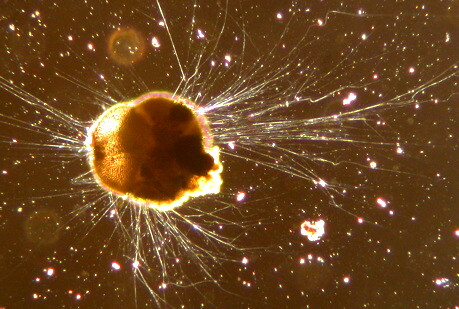
The foraminiferal cell is divided into granular endoplasm and transparent ectoplasm from which a pseudopodial net may emerge through a single opening or through many perforations in the test. Individual pseudopods characteristically have small granules streaming in both directions.[34] Foraminifera are unique in having granuloreticulose pseudopodia; that is, their pseudopodia appear granular under the microscope; these pseudopodia are often elongate and may split and rejoin each other. These can be extended and retracted to suit the needs of the cell. The pseudopods are used for locomotion, anchoring, excretion, test construction and in capturing food, which consists of small organisms such as diatoms or bacteria.[35][33]

Aside from the tests, foraminiferal cells are supported by a cytoskeleton of microtubules, which are loosely arranged without the structure seen in other amoeboids. Forams have evolved special cellular mechanisms to quickly assemble and disassemble microtubules, allowing for the rapid formation and retraction of elongated pseudopodia.[24]

Detailed diagram of foraminifera morphology
  1. Test
  2. Proloculus (first chamber)
  3. Chambers
  4. Foramen (older apertures)
  5. Endoplasm
  6. Lipid globule
  7. Nucleus
  8. Nucleolus
  9. Endoplasmic reticulum, the transport network for molecules going to specific parts of the cell
  10. Annular lamellae
  11. Mitochondrion, creates ATP (energy) for the cell
  12. Nascent annular lamellae
  13. Golgi apparatus; modifies proteins and sends them out of the cell
  14. Digestive vacuole
  15. Peroxisome, generates and scavenges hydrogen peroxide
  16. Phagocytic vacuole
  17. Lysosome, holds enzymes
  18. Adhesive substance vesicle
  19. Aperture (opening of newest chamber)
  20. Ectoplasm
  21. Reticulopodia
  22. Adhesive granules
  23. Prey

In the gamont (sexual form), foraminifera generally have only a single nucleus, while the agamont (asexual form) tends to have multiple nuclei. In at least some species the nuclei are dimorphic, with the somatic nuclei containing three times as much protein and RNA than the generative nuclei. However, nuclear anatomy seems to be highly diverse.[36] The nuclei are not necessarily confined to one chamber in multi-chambered species. Nuclei can be spherical or have many lobes. Nuclei are typically 30-50 μm in diameter.[37]

Some species of foraminifera have large, empty vacuoles within their cells; the exact purpose of these is unclear, but they have been suggested to function as a reservoir of nitrate.[37]

Mitochondria are distributed evenly throughout the cell, though in some species they are concentrated under the pores and around the external margin of the cell. This has been hypothesised to be an adaptation to low-oxygen environments.[37]

Several species of xenophyophore have been found to have unusually high concentrations of radioactive isotopes within their cells, among the highest of any eukaryote. The purpose of this is unknown.[38]

Ecology

[edit]
Photomicrographs of living planktonic foraminifera [39]
(1) Orbulina universa, (2) Sphaeroidinella dehiscens, (3) Globigerinoides sacculifer, (4) Globigerinoides conglobatus, (5) Globigerinoides ruber (white), (6) Globigerinoides ruber (pink), (7) Globoturborotalita rubescens, (8) Globoturborotalita tenella, (9) Globigerinella calida, (10) Globigerinella siphonifera Type I, (11) Globigerinella siphonifera Type II, (12) Globigerinella adamsi, (13) Globigerina bulloides, (14) Turborotalita quinqueloba, (15) Turborotalita humilis, (16) Hastigerina pelagica, (17) Hastigerinella digitata, (18) Neogloboquadrina incompta, (19) Neogloboquadrina pachyderma, (20) Neogloboquadrina dutertrei, (21) Pulleniatina obliquiloculata, (22) Globorotalia inflata, (23) Globorotalia menardii, (24) Globorotalia scitula, (25) Globorotalia crassaformis, (26) Globorotalia truncatulinoides, (27) Candeina nitida, (28) Globigerinita glutinata, (29) Globigerinita uvula, and (30) Tenuitella fleisheri.
Scale bars 200 μm

Modern Foraminifera are primarily marine organisms, but living individuals have been found in brackish, freshwater[34] and even terrestrial habitats.[7] The majority of the species are benthic, and a further 50 morphospecies are planktonic.[35] This count may, however, represent only a fraction of actual diversity, since many genetically distinct species may be morphologically indistinguishable.[40]

Benthic foraminifera are typically found in fine-grained sediments, where they actively move between layers; however, many species are found on hard rock substrates, attached to seaweeds, or sitting atop the sediment surface.[24]

The majority of planktonic foraminifera are found in the globigerinina, a lineage within the rotaliida.[22] However, at least one other extant rotaliid lineage, Neogallitellia, seems to have independently evolved a planktonic lifestyle.[41][42] Further, it has been suggested that some Jurassic fossil foraminifera may have also independently evolved a planktonic lifestyle, and may be members of Robertinida.[43]

A number of forams, both benthic and planktonic,[44][45] have unicellular algae as endosymbionts, from diverse lineages such as the green algae, red algae, golden algae, diatoms, and dinoflagellates.[35] These mixotrophic foraminifers are particularly common in nutrient-poor oceanic waters.[46] Some forams are kleptoplastic, retaining chloroplasts from ingested algae to conduct photosynthesis.[47]

Most foraminifera are heterotrophic, consuming smaller organisms and organic matter; some smaller species are specialised feeders on phytodetritus, while others specialise in consuming diatoms. Some benthic forams construct feeding cysts, using the pseuodopodia to encyst themselves inside of sediment and organic particles.[24] Certain foraminifera prey upon small animals such as copepods or cumaceans; some forams even predate upon other forams, drilling holes into the tests of their prey.[48] One group, the xenophyophores, has been suggested to farm bacteria within their tests, although studies have failed to find support for this hypothesis.[49] Suspension feeding is also common in the group, and at least some species can take advantage of dissolved organic carbon.[24]

A few foram species are parasitic, infecting sponges, molluscs, corals, or even other foraminifera. Parasitic strategies vary; some act as ectoparasites, using their pseudopodia to steal food from the host, while others burrow through the shell or body wall of their host to feed on its soft tissue.[24]

Foraminifera are themselves eaten by a host of larger organisms, including invertebrates, fish, shorebirds, and other foraminifera. It has been suggested, however, that in some cases predators may be more interested in the calcium from foram shells than in the organisms themselves. Several aquatic snail species are known to selectively feed upon foraminifera, often even preferring individual species.[50]

Certain benthic foraminifera have been found to be capable of surviving anoxic conditions for over 24 hours, indicating that they are capable of selective anaerobic respiration. This is interpreted as an adaptation to survive changing oxygenic conditions near the sediment-water interface.[51]

Foraminifera are found in the deepest parts of the ocean such as the Mariana Trench, including the Challenger Deep, the deepest part known. At these depths, below the carbonate compensation depth, the calcium carbonate of the tests is soluble in water due to the extreme pressure. The Foraminifera found in the Challenger Deep thus have no carbonate test, but instead have one of organic material.[52]

Nonmarine foraminifera have traditionally been neglected in foram research, but recent studies show them to be substantially more diverse than previously known. They are known to inhabit disparate ecological niches, including mosses, rivers, lakes and ponds, wetlands, soils, peat bogs, and sand dunes.[53]

Reproduction

[edit]

The generalized foraminiferal life-cycle involves an alternation between haploid and diploid generations, although they are mostly similar in form.[23][54] The haploid or gamont initially has a single nucleus, and divides to produce numerous gametes, which typically have two flagella. The diploid or agamont is multinucleate, and after meiosis divides to produce new gamonts. Multiple rounds of asexual reproduction between sexual generations are not uncommon in benthic forms.[34]

Diagram of a typical foraminiferan life cycle, showing characteristic alternation of generations.

Foraminifera exhibit morphological dimorphism associated with their reproductive cycle. The gamont, or sexually reproducing haploid form, is megalospheric—that is, its proloculus, or first chamber, is proportionally large. The gamont is also known as the A form. Gamonts, despite having typically larger proloculi, also generally have smaller overall test diameter than do agamonts.

After reaching maturity, the gamont divides via mitosis to produce thousands of gametes which are also haploid. These gametes all have a full set of organelles, and are expelled from the test into the environment leaving the test undamaged. Gametes are not differentiated into sperm and egg, and any two gametes from a species can generally fertilize each other.

Morphs present in the foram life cycle—the megalosphere and the microsphere. The name derives from the size of the proloculus, or first chamber, and as such the microsphere has a larger overall size.

When two gametes combine, they create a diploid, multi-nucleated cell known as the agamont, or B form. In contrast to the gamont, the agamont is microspheric, with a proportionally small first chamber but typically larger overall diameter with more chambers. The agamont is the asexual reproduction phase of the foraminifera; upon reaching adulthood, the protoplasm entirely vacates the test and divides its cytoplasm meiotically via multiple fission to form a number of haploid offspring. These offspring then begin to form their megalospheric first chamber before dispersing.

In some cases the haploid young may mature into a megalospheric form which then reproduces asexually to produce another megalospheric, haploid offspring. In this case, the first megalospheric form is referred to as the schizont or A1 form, while the second is referred to as the gamont or A2 form.

Fossil nummulitid foraminiferans showing microspheric (larger) and megalospheric individuals (smaller); Eocene of the United Arab Emirates; scale in mm

Maturation and reproduction occur more slowly in cooler and deeper water; these conditions also cause forams to grow larger. A forms always seem to be much more numerous than are B forms, likely due to the reduced likelihood of two gametes encountering one another and successfully combining.[55][33]

Variations in reproductive mode

[edit]

There is a high degree of diversity in reproductive strategies in different foraminiferal groups.

In unilocular species, the A form and B form are still present. As in the microspheric morph of multilocular forams, the asexually reproducing B form is larger than the sexually reproducing A form.

Forams in the family Spirillinidae have amoeboid gametes rather than flagellated. Other aspects of reproduction in this group are generally similar to that of other groups of forams.

The calcareous spirillinid Patellina corrugata has a slightly different reproductive strategy than most other foraminifera. The asexually reproducing B form produces a cyst that surrounds the entire cell; it then divides within this cyst and the juvenile cells cannibalise the calcite of the parent's test to form the first chamber of their own test. These A forms, upon maturity, gather into groups of up to nine individuals; they then form a protective cyst around the whole group. Gametogenesis occurs within this cyst, producing very low numbers of gametes. The B form larvae are produced inside of the cyst; any nuclei that are not bound into cells are consumed as food for the developing larvae. Patellina in A form is reportedly dioecious, with sexes referred to as the "plus" and "minus"; these sexes differ in number of nuclei, with the "plus" form having three nuclei and the "minus" form having four nuclei. The B form is again larger than the A form.[33][55][48]

Tests

[edit]
Foraminiferan tests (ventral view)

Foraminiferal tests serve to protect the organism within. Owing to their generally hard and durable construction (compared to other protists), the tests of foraminifera are a major source of scientific knowledge about the group.

Openings in the test that allow the cytoplasm to extend outside are called apertures.[56] The primary aperture, leading to the exterior, take many different shapes in different species, including but not limited to rounded, crescent-shaped, slit-shaped, hooded, radiate (star-shaped), dendritic (branching). Some foraminifera have "toothed", flanged, or lipped primary apertures. There may be only one primary aperture or multiple; when multiple are present, they may be clustered or equatorial. In addition to the primary aperture, many foraminifera have supplemental apertures. These may form as relict apertures (past primary apertures from an earlier growth stage) or as unique structures.

Test shape is highly variable among different foraminifera; they may be single-chambered (unilocular) or multi-chambered (multilocular). In multilocular forms, new chambers are added as the organism grows. A wide variety of test morphologies is found in both unilocular and multilocular forms, including spiraled, serial, and milioline, among others.[33]

Many foraminifera exhibit dimorphism in their tests, with megalospheric and microspheric individuals. These names should not be taken as referring to the size of the full organism; rather, they refer to the size of the first chamber, or proloculus. Tests as fossils are known from as far back as the Ediacaran period,[57] and many marine sediments are composed primarily of them. For instance, the limestone that makes up the pyramids of Egypt is composed almost entirely of nummulitic benthic Foraminifera.[58] It is estimated that reef Foraminifera generate about 43 million tons of calcium carbonate per year.[59]

Genetic studies have identified the naked amoeba Reticulomyxa and the peculiar xenophyophores as foraminiferans without tests. A few other amoeboids produce reticulose pseudopods, and were formerly classified with the forams as the Granuloreticulosa, but this is no longer considered a natural group, and most are now placed among the Cercozoa.[60]

Evolutionary history

[edit]

Molecular clocks indicate that the crown-group of foraminifera likely evolved during the Neoproterozoic, between 900 and 650 million years ago; this timing is consistent with Neoproterozoic fossils of the closely related filose amoebae. As fossils of foraminifera have not been found prior to the very end of the Ediacaran, it is likely that most of these Proterozoic forms did not have hard-shelled tests.[61][62]

Due to their non-mineralised tests, "allogromiids" have no fossil record.[61]

The mysterious Paleodictyon has been interpreted as a fossil xenophyophore but this remains controversial.

The mysterious vendozoans of the Ediacaran period have been suggested to represent fossil xenophyophores.[63] However, the discovery of diagenetically altered C27 sterols associated with the remains of Dickinsonia cast doubt on this identification and suggest it may instead be an animal.[64] Other researchers have suggested that the elusive trace fossil Paleodictyon and its relatives may represent a fossil xenophyophore[65] and noted the similarity of the extant xenophyophore Occultammina to the fossil;[66] however, modern examples of Paleodictyon have not been able to clear up the issue and the trace may alternately represent a burrow or a glass sponge.[67] Supporting this notion is the similar habitat of living xenophyophores to the inferred habitat of fossil graphoglyptids; however, the large size and regularity of many graphoglyptids as well as the apparent absence of xenophyae in their fossils casts doubt on the possibility.[66] As of 2017 no definite xenophyophore fossils have been found.[68]

Test-bearing foraminifera have an excellent fossil record throughout the Phanerozoic eon. The earliest known definite foraminifera appear in the fossil record towards the very end of the Ediacaran; these forms all have agglutinated tests and are unilocular. These include forms like Platysolenites and Spirosolenites.[69][57] Single-chambered foraminifera continued to diversify throughout the Cambrian. Some commonly encountered forms include Ammodiscus, Glomospira, Psammosphera, and Turritellella; these species are all agglutinated. They make up part of the Ammodiscina, a lineage of spirillinids that still contains modern forms.[70][22] Later spirillinids would evolve multilocularity and calcitic tests, with the first such forms appearing during the Triassic; the group saw little effects on diversity due to the K-Pg extinction.[71]

The earliest multi-chambered foraminifera are agglutinated species, and appear in the fossil record during the middle Cambrian period. Due to their poor preservation they cannot be positively assigned to any major foram group.[70]

Cutaway view of a Fusulinid

The earliest known calcareous-walled foraminifera are the Fusulinids, which appear in the fossil record during the Llandoverian epoch of the early Silurian. The earliest of these were microscopic, planispirally coiled, and evolute; later forms evolved a diversity of shapes including lenticular, globular, and elongated rice-shaped forms.[72][73]

Later species of fusulinids grew to much larger size, with some forms reaching 5 cm in length; reportedly, some specimens reach up to 14 cm in length, making them among the largest foraminifera extant or extinct. Fusulinids are the earliest lineage of foraminifera thought to have evolved symbiosis with photosynthetic organisms. Fossils of fusulinids have been found on all continents except Antarctica; they reached their greatest diversity during the Visean epoch of the Carboniferous. The group then gradually declined in diversity until finally going extinct during the Permo-Triassic extinction event.[33][71][74]

During the Tournaisian epoch of the Carboniferous, Miliolid foraminifera first appeared in the fossil record, having diverged from the spirillinids within the Tubothalamea. Miliolids suffered about 50% casualties during both the Permo-Triassic and K-Pg extinctions but survived to the present day. Some fossil miliolids reached up to 2 cm in diameter.[71]

A fossil test from a planktonic globigerininan foraminifera.

The earliest known Lagenid fossils appear during the Moscovian epoch of the Carboniferous. Seeing little effect due to the Permo-Triassic or K-Pg extinctions, the group diversified through time. Secondarily unilocular taxa evolved during the Jurassic and Cretaceous.

The earliest Involutinid fossils appear during the Permian; the lineage diversified throughout the Mesozoic of Eurasia before apparently vanishing from the fossil record following the Cenomanian-Turonian Ocean Anoxic Event. The extant group planispirillinidae has been referred to the involutinida, but this remains the subject of debate.[75][71]

The Robertinida first appear in the fossil record during the Anisian epoch of the Triassic. The group remained at low diversity throughout its fossil history; all living representatives belong to the Robertinidae, which first appeared during the Paleocene.[71]

The first definite Rotaliid fossils do not appear in the fossil record until the Pliensbachian epoch of the Jurassic, following the Triassic-Jurassic event.[76] Diversity of the group remained low until the aftermath of the Cenomanian-Turonian event, after which the group saw a rapid diversification. Of this group, the planktonic Globigerinina—the first known group of planktonic forams—first appears in the aftermath of the Toarcian Turnover; the group saw heavy losses during both the K-Pg extinction and the Eocene-Oligocene extinction, but remains extant and diverse to this day.[71] An additional evolution of planktonic lifestyle occurred in the Miocene or Pliocene, when the rotaliid Neogallitellia independently evolved a planktonic lifestyle.[41][42]

Paleontological applications

[edit]

Dying planktonic Foraminifera continuously rain down on the sea floor in vast numbers, their mineralized tests preserved as fossils in the accumulating sediment. Beginning in the 1960s, and largely under the auspices of the Deep Sea Drilling, Ocean Drilling, and International Ocean Drilling Programmes, as well as for the purposes of oil exploration, advanced deep-sea drilling techniques have been bringing up sediment cores bearing Foraminifera fossils.[77] The effectively unlimited supply of these fossil tests and the relatively high-precision age-control models available for cores has produced an exceptionally high-quality planktonic Foraminifera fossil record dating back to the mid-Jurassic, and presents an unparalleled record for scientists testing and documenting the evolutionary process.[77] The exceptional quality of the fossil record has allowed an impressively detailed picture of species inter-relationships to be developed on the basis of fossils, in many cases subsequently validated independently through molecular genetic studies on extant specimens[78]

Because certain types of foraminifera are found only in certain environments, their fossils can be used to figure out the kind of environment under which ancient marine sediments were deposited; conditions such as salinity, depth, oxygenic conditions, and light conditions can be determined from the different habitat preferences of various species of forams. This allows workers to track changing climates and environmental conditions over time by aggregating information about the foraminifera present.[79]

In other cases, the relative proportion of planktonic to benthic foraminifera fossils found in a rock can be used as a proxy for the depth of a given locality when the rocks were being deposited.[80]

Ten species of planktic foraminifera microfossils from Paleocene-Eocene Thermal Maximum (PETM) sediments in southern Maryland.[81] The scale bars measure 150 microns (0.015 cm). Each specimen is similar in size to a grain of sand.
Climate change during the last 65 million years as expressed by the oxygen isotope composition of benthic foraminifera. The Paleocene-Eocene thermal maximum is characterized by a brief but prominent excursion, attributed to rapid warming.[82][83][84]

Since at least 1997, the Paleocene–Eocene thermal maximum (PETM) has been investigated as an analogy for understanding the effects of global warming and of massive carbon inputs to the ocean and atmosphere, including ocean acidification.[85] Humans today emit about 10 Gt of carbon (about 37 Gt CO2e) per year, and at that rate will release a comparable amount to the PETM in about one thousand years. A main difference is that during the PETM the planet was ice-free, as the Drake Passage had not yet opened and the Central American Seaway had not yet closed.[86] Although the PETM is now commonly held to be a case study for global warming and massive carbon emission, the cause, details, and overall significance of the event remain uncertain.[87][88][89][90]

Neoflabellina reticulata from chalk of Rügen, Northeastern Germany. Length:1.2 mm, Age: Upper lower Maastrichtian

Foraminifera have significant application in the field of biostratigraphy. Due to their small size and hard shells, foraminifera may be preserved in great abundance and with high quality of preservation; due to their complex morphology, individual species are easily recognizable. Foraminifera species in the fossil record have limited ranges between the species' first evolution and their disappearance; stratigraphers have worked out the successive changes in foram assemblages throughout much of the Phanerozoic. As such, the assemblage of foraminifera within a given locality can be analyzed and compared to known dates of appearance and disappearance in order to narrow down the age of the rocks. This allows paleontologists to interpret the age of sedimentary rocks when radiometric dating is not applicable.[91] This application of foraminifera was discovered by Alva C. Ellisor in 1920.[92]

Thin section of a peneroplid foraminiferan from Holocene lagoonal sediment in Rice Bay, San Salvador Island, Bahamas. Scale bar 100 micrometres

Calcareous fossil foraminifera are formed from elements found in the ancient seas where they lived. Thus, they are very useful in paleoclimatology and paleoceanography. They can be used, as a climate proxy, to reconstruct past climate by examining the stable isotope ratios and trace element content of the shells (tests). Global temperature and ice volume can be revealed by the isotopes of oxygen, and the history of the carbon cycle and oceanic productivity by examining the stable isotope ratios of carbon;[93] see δ18O and δ13C. The concentration of trace elements, like strontium (Sr),[94] magnesium (Mg),[95] lithium (Li)[96] and boron (B),[97] also hold a wealth of information about global temperature cycles, continental weathering, and the role of the ocean in the global carbon cycle. Geographic patterns seen in the fossil records of planktonic forams are also used to reconstruct ancient ocean currents.

Modern uses

[edit]

The oil industry relies heavily on microfossils such as forams to find potential hydrocarbon deposits.[98]

Ammonia beccarii, a benthic foram from the North Sea.

For the same reasons they make useful biostratigraphic markers, living foraminiferal assemblages have been used as bioindicators in coastal environments, including indicators of coral reef health. Because calcium carbonate is susceptible to dissolution in acidic conditions, foraminifera may be particularly affected by changing climate and ocean acidification.

Foraminifera Baculogypsina sphaerulata of Hatoma Island, Japan. Field width 5.22 mm

Foraminifera have many uses in petroleum exploration and are used routinely to interpret the ages and paleoenvironments of sedimentary strata in oil wells.[99] Agglutinated fossil foraminifera buried deeply in sedimentary basins can be used to estimate thermal maturity, which is a key factor for petroleum generation. The Foraminiferal Colouration Index[100] (FCI) is used to quantify colour changes and estimate burial temperature. FCI data is particularly useful in the early stages of petroleum generation (about 100 °C).

Foraminifera can also be used in archaeology in the provenancing of some stone raw material types. Some stone types, such as limestone, are commonly found to contain fossilised foraminifera. The types and concentrations of these fossils within a sample of stone can be used to match that sample to a source known to contain the same "fossil signature".[101]

[edit]

See also

[edit]

References

[edit]
[edit]
Revisions and contributorsEdit on WikipediaRead on Wikipedia
from Grokipedia
Foraminifera, commonly known as forams, are single-celled eukaryotic protists belonging to the supergroup , characterized by the construction of a or shell typically composed of or agglutinated sediment particles, and by the extension of granular, reticulose for locomotion, feeding, and other functions. These organisms exhibit a wide range of test morphologies, from simple microgranular structures to complex multichambered designs, with sizes spanning from less than 0.1 mm to several centimeters in larger species. Predominantly marine dwellers, foraminifera inhabit diverse environments including planktonic open-ocean realms and benthic seafloor settings from intertidal zones to abyssal depths, though rare freshwater occurrences have been documented. Many species engage in symbiosis with photosynthetic , enhancing their productivity in sunlit waters, while others thrive in low-oxygen or sediment-buried conditions through anaerobic . Their life cycles often involve alternation between sexual and , producing microspheric and megalospheric forms that influence and dispersal. Foraminifera hold profound significance in paleontology due to their abundant fossil record extending back to the Cambrian period, enabling precise biostratigraphic correlation of sedimentary layers and reconstruction of ancient marine environments. Planktonic species, in particular, serve as key proxies for past ocean temperatures and chemistry through stable isotope analysis of their tests, informing models of climate change over geological timescales. In modern applications, benthic foraminiferal assemblages aid in assessing seafloor pollution, habitat health, and resource exploration, including petroleum deposits, underscoring their utility beyond academic study.

Classification and Taxonomy

Higher Classification and Phylogeny

Foraminifera constitute a monophyletic clade within the supergroup , a diverse assemblage of predominantly heterotrophic eukaryotic protists characterized by thin, filamentous, or reticulose pseudopods used for locomotion and prey capture. Rhizaria, in turn, forms part of the broader SAR clade (Stramenopiles, Alveolates, Rhizaria), as supported by phylogenomic analyses incorporating genes, , and other protein markers, which resolve Rhizaria as sister to Stramenopiles + Alveolates with high bootstrap support. This placement reflects shared ultrastructural features, such as extrusomes and mitochondrial cristae morphology, though earlier small subunit (SSU) rRNA studies occasionally suggested alternative affinities, such as proximity to slime molds, a hypothesis refuted by multi-gene datasets. Molecular phylogenies, including those derived from SSU rRNA, RNA polymerase II (RPB1), and taxon-rich transcriptomes, affirm the monophyly of Foraminifera within Rhizaria, distinguishing them from radiolaria (e.g., Polycystinea) and cercozoans through unique granuloreticulosean pseudopodial networks and test (shell) formation. Basal divergences occur among monothalamid (single-chambered) lineages, such as Allogromiidae, which exhibit minimal test complexity and are inferred as ancestral based on RPB1 and SSU data, preceding the radiation of polythalamid (multi-chambered) groups around the Cambrian-Ordovician boundary (~485 million years ago). Transcriptomic studies encompassing over 100 foraminiferal species reinforce these trends, aligning molecular branches with morphological transitions from agglutinated tests in textulariids to calcareous globigerinids and rotaliids, while highlighting reticulate evolution in wall composition. Higher-level classifications remain provisional due to sparse genomic sampling beyond Rotaliida, but a supraordinal framework integrating SSU rDNA phylogenies with test proposes major divisions: Monothalamida (basal, organic/agglutinated tests), Spiroplectammina (tubular), and Polythalamea (encompassing , Nummulitida, and Globigerinida, with chitinous or walls). Recent mitochondrial COI sequencing supports family-level resolutions but underscores the need for broader inclusion to resolve deeper nodes, as current trees exhibit polytomies in early polythalamids. No broad consensus exists for supra-Rhizarian placement, with some phylogenies allying SAR to Haptista in , pending denser sampling of underrepresented rhizarian lineages.

Major Groups and Diversity

Foraminifera are classified into major groups primarily based on the composition, microstructure, and arrangement of chambers in their tests. The traditional groupings emphasize wall types: organic-walled, agglutinated, and . Organic-walled foraminifera, such as those in the order Allogromiida, feature tests made of proteinaceous or chitinous material, often simple and unilocular, representing primitive forms with limited diversity. Agglutinated foraminifera, exemplified by the Textulariida, construct tests by cementing exogenous particles like grains or spicules using organic or binders, enabling adaptation to varied substrates but prone to diagenetic alteration in the fossil record. Calcareous foraminifera dominate modern diversity and are subdivided by wall microstructure. Porcelaneous types, in the Miliolida, have imperforate walls of high-magnesium with a granular, organic-enriched structure, typically benthic and common in shallow, hypersaline environments. types, primarily in the Rotaliida, possess perforate walls of low-magnesium arranged in bilamellar layers, facilitating efficient and symbiont hosting; this group includes the planktonic Globigerinida, which float via symbiotic and spines. Extinct groups like the , large agglutinated forms with fusiform tests, achieved prominence in reefs but declined post-Permian . Recent molecular phylogenies challenge purely morphological classifications, proposing supraordinal classes such as for single-chambered forms, Tubothalamea for tubular-chambered groups, and Globothalamea for globigerinid-like planktonics, integrating genetic data with wall traits. Foraminiferal diversity encompasses 9,011 valid extant , predominantly benthic, with only about 50 planktonic ; including fossils, 48,019 valid are recognized, reflecting high evolutionary turnover and utility in . Benthic forms exhibit greater morphological and ecological variety, thriving in marine, estuarine, and rare freshwater habitats, while planktonics are oceanic and keystone in paleoceanography.

Taxonomic Debates and Recent Updates

A longstanding debate in foraminiferal taxonomy centers on reconciling morphological classifications, which emphasize test wall composition (e.g., agglutinated versus calcareous), with molecular phylogenies that reveal discrepancies in traditional groupings like the polyphyletic Granuloreticulosa. Early molecular studies using SSU rDNA challenged these, proposing Foraminifera as a monophyletic clade within Rhizaria, though initial datasets suffered from limited taxon sampling and alignment issues. Recent advances have bolstered support for through taxon-rich transcriptomic analyses of 28 , which confirm Foraminifera's relationship to Polycystinea and highlight evolutionary transitions in cytoplasmic organization and test formation across clades such as Monothalamatea and Globothalamatea. These phylogenomic results, published in , refine higher-level relationships by integrating hundreds of genes, addressing prior uncertainties in monothalamid diversification and reducing reliance on sole morphological proxies. A 2013 supraordinal reclassification synthesized SSU rDNA trees with morphological data, elevating orders like Textulariida and Rotaliida while demoting others based on shared reticulopodial networks and , influencing databases like the World Foraminifera Database that blend Loeblich and Tappan's framework with agglutinated revisions. Cryptic remains contentious, particularly in planktonic forms, where genetic markers identify multiple lineages within morphospecies (e.g., via SSU and ITS rDNA), prompting 2022 taxonomic standards for living planktonics that prioritize integrative approaches over morphology alone to resolve in genera like Globigerinoides. Higher classification continues evolving, with 2020 assessments noting provisional status for orders above in registries like WoRMS, driven by emerging data on allogromiids and xenophyophores that question strict test-based hierarchies.

Biology and Morphology

Cellular Structure and Anatomy

Foraminifera are single-celled eukaryotic protists characterized by a reticulate , with cytoplasm organized into and ectoplasm. The , denser and granule-rich, occupies the interior chambers of the test and houses principal organelles such as nuclei, mitochondria, , and Golgi apparatus. Ectoplasm forms a thinner, clearer outer layer surrounding the test, facilitating material exchange through apertures and pores. This division supports functions including nutrient transport and structural integrity, with bi-directional evident in both layers. Pseudopodia, a hallmark of foraminiferal , are granuloreticulose extensions of the ectoplasm emerging from test apertures, forming intricate anastomosing networks up to several times the test diameter. These thread-like structures exhibit rapid bidirectional flow of granules, including mitochondria, digestive vacuoles, and symbiotic dinoflagellates in photosymbiotic species, enabling locomotion, prey capture, and respiration. In planktonic forms such as Neogloboquadrina pachyderma, additional specialized projections include permanent ectoplasmic roots for anchoring and retractable twig-like or filopodia-like extensions for food gathering and reorientation. Benthic species often display reticulopodial nets extending beyond the test, supported by paracrystals. Internal reveals typical eukaryotic components alongside foraminifera-specific features, such as fibrillar vesicles, electron-opaque bodies, and multivesicular bodies, which vary by and feeding mode. Nuclei range from uninucleate to multinucleate, with diameters of 20–50 μm in benthic taxa; droplets (0.5–10 μm) serve as carbon reserves, while vacuoles (5–200 μm) aid and . These elements underscore the cellular complexity enabling foraminifera to thrive in diverse marine environments, despite their unicellular nature.

Test Composition and Formation

The tests of foraminifera, serving as protective exoskeletons, exhibit diverse compositions adapted to environmental conditions and physiological processes, including , agglutinated, and rarely organic or siliceous varieties. tests, dominant in planktonic and many benthic species, consist primarily of secreted in the form of low-magnesium or, less frequently, or high-magnesium . These tests feature perforate () walls with granular, optically radial microstructures in rotaliid lineages or imperforate (porcelaneous) walls with needle-like crystals in miliolid groups. Agglutinated tests, prevalent in deep-sea and low-oxygen benthic habitats, incorporate exogenous grains such as , , or biogenic fragments selectively gathered by and cemented by an organic matrix, with secondary in some taxa enhancing durability. Organic-walled tests, composed of or tectin, occur in primitive or specialized forms like allogromiids, while siliceous tests remain exceptional and limited to certain textulariids. Test formation proceeds via , initiating with a proloculus (initial chamber) enveloped by an organic lining that templates subsequent layering. In species, extracellular deposits CaCO₃ along an organic of fibrils and matrices, enabling chamber addition through pseudopodial extension and controlled precipitation influenced by chemistry and regulation. Agglutinated tests form by active selection of particles matching test needs, followed by binding via proteinaceous cements that may calcify over time. This incremental growth, often adding one chamber per cycle, yields multilocular morphologies with apertures for cytoplasmic protrusion, with wall thickness and texture varying by and .

Reproduction and Life Cycles

Foraminifera exhibit a life cycle characterized by alternation between sexual and , involving haploid gamont and diploid agamont stages, though deviations from this pattern occur across taxa. In the sexual phase, mature gamonts produce numerous biflagellate gametes through , which fuse via to form a that develops into the agamont. The agamont then undergoes via schizogony, multiple fission events that yield numerous gamonts, completing the cycle. Benthic foraminifera typically display an obligate heteromorphic , distinguished by microspheric (small proloculus, derived from ) and megalospheric (large proloculus, from asexual) forms, with the latter often growing faster and dominating populations. This dimorphism supports higher dispersal potential in the microspheric stage, which has thinner tests and more numerous offspring. Some benthic feature trimorphic cycles, incorporating additional asexual generations between agamont and gamont phases, enhancing reproductive flexibility. In contrast, planktonic foraminifera show less consistent alternation, with evidence suggesting facultative or predominantly in non-spinose species under conditions, potentially driven by environmental cues like availability. Their often occurs in the upper 100 meters of the , aligning with peak productivity zones, and may not strictly require syngamy, challenging the universality of biphasic cycles inherited from benthic ancestors. Variations in cycle duration and triggers, such as lunar or seasonal rhythms influencing growth and in larger benthic forms, underscore adaptive responses to environmental periodicity, with growth often following sigmoidal patterns limited by size constraints. mechanisms, observed in multiple species, allow prolonged survival under stress, resuming upon favorable conditions, as documented since the mid-20th century.

Ecology and Habitats

Distribution and Environmental Preferences

Foraminifera exhibit a predominantly marine distribution, with over 10,000 extant occupying diverse oceanic habitats from coastal shelves to the abyssal plains and open pelagic waters. Planktonic forms, comprising about 40 , are globally dispersed in surface and subsurface layers (typically 0–500 m depth), spanning polar to tropical latitudes, where their abundance correlates with primary productivity and water mass properties. Benthic , far more diverse with thousands of taxa, dominate seafloor sediments worldwide, from intertidal zones to depths exceeding 8,000 m in trenches, though their densities decrease with increasing depth and distance from continental margins. While rare in freshwater or terrestrial settings, some benthic taxa tolerate brackish environments in estuaries and lagoons. Planktonic foraminifera display species-specific ecological niches tightly linked to (SST), with thermal tolerances remaining relatively static over geological timescales (e.g., 5–30°C across taxa like Globigerinoides ruber in warm waters and Neogloboquadrina pachyderma in cold subpolar regions). Salinity preferences cluster around 34–37 practical salinity units (PSU), with deviations influencing and survival; oxygen levels above 2 ml/L support most species, though some thrive in moderately hypoxic conditions tied to zones. Vertical habitat partitioning occurs, with spinose forms like Orbulina universa favoring mixed layers for with , while deeper-dwelling non-spinose species exploit mesopelagic niches with lower temperatures (4–12°C) and stable salinity. Benthic foraminifera demonstrate broader environmental tolerances, enabling colonization of heterogeneous substrates from muds to sands and carbonates. Key controls include organic carbon flux (favoring infaunal dysoxia-tolerant species like Bulimina in eutrophic sediments), bottom-water oxygenation (with thresholds as low as <0.1 ml/L for opportunists), and bathymetry, where epifaunal taxa on shelves prefer oxygenated sands (O₂ >2 ml/L, temp 5–25°C). Salinity ranges from ~20 PSU in marginal seas to hypersaline lagoons (>40 PSU), though most thrive at 30–40 PSU; temperature tolerances span near-freezing abyssal waters (~2°C) to subtropical shallows (>30°C), with large symbiont-bearing forms (e.g., Ammonia spp.) restricted to well-lit, oligotrophic shallows. Stress-tolerant assemblages, such as those in oxygen minimum zones, feature low-diversity, high-turnover species resilient to fluctuating conditions. Overall, foraminiferal distributions reflect opportunistic adaptations to physicochemical gradients, with emerging as the primary driver for benthic patterns, followed by proximity to sources and hydrodynamic . These preferences underpin their utility as bioindicators, as assemblage shifts signal perturbations like hypoxia or warming, though interspecies competition and predation modulate local abundances.

Ecological Roles and Interactions

Foraminifera occupy key positions in marine food webs, serving as primary consumers, predators, and prey across planktonic and benthic realms. Planktonic species, which inhabit the upper ocean, contribute substantially to the biological carbon pump by forming calcite tests that sink to the deep sea, exporting 23–56% of global pelagic carbonate production and facilitating long-term carbon sequestration. Benthic foraminifera dominate deep-sea biomass in oligotrophic environments, processing deposited organic matter and linking surface productivity to seafloor nutrient cycles through detritivory and microfaunal grazing. Trophic interactions involve diverse feeding strategies, with foraminifera acting as omnivorous heterotrophs that ingest , , diatoms, and small metazoans via or test pores. Some species exhibit carnivorous behavior, preying on encrusting bryozoans or other sessile organisms, while others engage in on hosts like nematodes. As prey, foraminifera support higher trophic levels; continental shelf populations can reach tens of thousands of individuals per square meter, forming a substantial base for grazers and deposit feeders. Symbiotic associations enhance , particularly in photosynthetically active . Approximately 38% of modern planktonic foraminifera host eukaryotic such as dinoflagellates and chrysophytes, acquiring photosymbiosis independently multiple times to boost and growth in sunlit waters. This mutualism supplements heterotrophic nutrition, driving diversification and dominance in oligotrophic gyres, while benthic counterparts may form epiphytic ties with seagrasses or harbor prokaryotic associates for . Such interactions underscore foraminifera's role in stabilizing functions amid varying productivity.

Responses to Abiotic Stressors

Foraminifera demonstrate species-specific physiological and morphological adaptations to abiotic stressors such as temperature variations, , fluctuations, and hypoxia, which influence their , survival, and community structure. Benthic species often exhibit behavioral responses like vertical migration in sediments to access oxygen or suitable microhabitats, while planktonic forms may adjust symbiont activity or . These responses are empirically documented through cultures and field observations, revealing thresholds beyond which mortality increases, such as calcification inhibition under combined stressors. Elevated temperatures induce in foraminifera, reducing production and altering shell integrity. In benthic species like Amphistegina lessonii, warming to 31–33°C leads to decreased rates and increased , resulting in smaller but more fracture-resistant tests due to thicker relative wall structures. Transcriptomic analyses of Ammonia tepida under heat stress (up to 32°C) show downregulation of genes and upregulation of photosynthesis-related pathways in symbiotic dinoflagellates, suggesting a shift toward at the expense of . Planktonic foraminifera, such as those in the North Pacific, display seasonal abundance peaks tied to thermal , with optima around 20–25°C for dominant taxa like Globigerinoides ruber, beyond which reproductive output declines. Habitat-specific sensitivity is evident: outer-shelf foraminifera suffer higher bleaching and mortality from compared to inner-shelf populations acclimated to variability. Ocean , driven by elevated CO₂ levels reducing seawater to below 7.8, impairs across foraminiferal groups by lowering carbonate ion saturation. Benthic species like Ammonia sp. exhibit reduced test weight and survival at 7.5–7.8, with symbiont-bearing large benthic foraminifera (Neorotalia calcar) showing up to 50% decline in shell volume and density under pCO₂ of 800–1000 μatm. Planktonic foraminifera, such as Globigerinoides sacculifer, experience thinned chambers and delayed , exacerbating vulnerability in undersaturated waters (Ω_calcite < 3). Experimental cultures confirm non-linear responses, where initial dissolution of pre-existing tests occurs before new shell formation halts, with recovery limited in prolonged exposure. These effects compound with warming, as seen in mesocosm studies where drops below 7.7 halved community productivity. Salinity deviations from oceanic norms (35 psu) trigger osmotic stress, indirectly affecting pH and alkalinity to modulate calcification. Benthic foraminifera like Elphidium crispum tolerate salinities as low as 28 psu for extended periods but display cytoplasmic retraction and halted pseudopodial activity, indicating metabolic suppression. In Haynesina depressa, salinity-induced pH shifts (e.g., +0.2 units at 40 psu) enhance calcification nonlinearly, with optimal rates at 30–35 psu; extremes below 25 psu or above 45 psu reduce chamber addition by 20–40%. Planktonic species exhibit narrower tolerances, with Globigerinella aequilateralis optima at 34–36 psu, where deviations alter Mg/Ca ratios in shells, proxying past salinities. Combined with temperature rises, hypersalinity (>40 psu) exacerbates symbiont loss in tropical large benthic foraminifera, halting growth. Hypoxic conditions (dissolved oxygen <2 mg/L) prompt adaptive behaviors in benthic foraminifera, including infaunal migration to oxic sediment layers and reliance on denitrification for anaerobiosis. Species like Nouria polymorphinoides and Nonionella turgida survive weeks under <0.5 mL/L O₂ by relocating upward, maintaining viability where surface waters are normoxic. Community shifts occur, with opportunistic taxa like Bolivina proliferating in dysoxic zones, while calcareous forms decline due to inhibited respiration. Pore density in tests increases under sediment hypoxia to facilitate O₂ diffusion, as observed in Ammonia tepida cultures. Planktonic foraminifera avoid hypoxia via vertical migration to oxygenated surface layers, but prolonged events reduce fluxes, as evidenced by elevated Mn/Ca ratios signaling bottom-water deoxygenation in fossils. Multiple stressors amplify impacts, with hypoxia overriding warming in driving assemblage changes.

Evolutionary History

Origins and Early Diversification

The earliest foraminiferal fossils appear in the geological record during the Early , approximately 541 million years ago, contemporaneous with the emergence of the first skeletonized metazoans. These primitive forms were primarily benthic, unilocular, and characterized by agglutinated tests composed of sediment grains, such as the genera Platysolenites antiquissimus, Spirosolenites, Saccammina, Rhabdammina, and Syringammina. Early assemblages from regions like West Africa confirm these as unequivocal foraminifera, with simple tubular or spherical morphologies lacking complex wall structures. Initial diversification proceeded gradually through the Cambrian (541–485 Ma), featuring a radiation of naked and unilocular species before the evolution of multilocular tests. Agglutinated wall types dominated, with genera like Bathysiphon and Psammosphaera exemplifying convergent evolutionary patterns in test construction using exogenous particles. Molecular phylogenetic analyses, based on SSU rRNA and other markers, indicate that foraminifera form a monophyletic clade within the Rhizaria supergroup, diverging from cercozoan relatives such as testate forms like Gromia oviformis. These data suggest a deeper origin, with crown-group radiation potentially in the Neoproterozoic (690–1,150 Ma), predating the fossil record due to poor preservation of soft-bodied or non-mineralized ancestors. By the Ordovician (485–443 Ma), diversification accelerated, particularly among agglutinated benthic forms, with the first multilocular fossils appearing around 460 Ma, including Reophax. Genus counts increased steadily from low Early Cambrian levels, reflecting adaptation to expanding shallow marine environments amid the , though foraminifera remained less diverse than contemporaneous metazoan radiations. Calcareous tests emerged later in the Paleozoic, but early lineages emphasized resilient agglutinated constructions suited to anoxic or siliciclastic sediments. This phase laid the foundation for subsequent Paleozoic expansions, with unilocular dominance persisting until multichambered innovations in the Silurian and Devonian.

Key Evolutionary Events and Transitions

The earliest foraminifera likely originated from testate cercozoans in the Neoproterozoic Era, with molecular estimates placing their radiation between 690 and 1,150 million years ago, though the fossil record begins with benthic, unilocular forms in the Early Cambrian around 541 million years ago. A significant early diversification involved a radiation of naked and unilocular species between 510 and 590 million years ago, preceding the emergence of multilocular morphologies. In the Paleozoic, key transitions included the independent evolution of agglutinated and thecate tests, alongside the development of reticulopodia for substrate interaction, setting the stage for more complex chambered forms. Calcareous tests appeared in the Early Silurian (444–433 million years ago), driving diversification to 56 genera by the Late Devonian (383–359 million years ago), with calcareous forms comprising 70–77% of diversity until the end-Permian mass extinction at 252 million years ago, which decimated 93 calcareous genera and reduced their proportion to 26%. Mesozoic evolution marked a pivotal transition from exclusively benthic to planktonic lifestyles, with the first planktonic foraminifera appearing in the Mid-Jurassic around 170–180 million years ago along the Tethys margins. Calcareous test diversity rebounded to 50% by the Jurassic (201–145 million years ago) following Permian recovery, fully restoring over 150 genera by the Late Cretaceous (100–66 million years ago), amid events like the minor reduction at the end-Triassic extinction (201 million years ago). Planktonic forms underwent rapid diversifications in the Early Cretaceous (e.g., Late Aptian and Albian–Cenomanian stages) and Late Cretaceous (Turonian–Santonian and Campanian–Maastrichtian), influenced by ocean stratification and chemistry shifts, though culminating in the Cretaceous–Paleogene (K–Pg) extinction at 66 million years ago, which eliminated ~95% of planktonic species via bolide impact effects. In the Cenozoic, post-K–Pg recovery featured low Paleocene diversity followed by rapid radiations, including microperforate taxa dominance and a burst during the Paleocene–Eocene Thermal Maximum (~56 million years ago). Calcareous tests stabilized at ~77% diversity by the Eocene (56–34 million years ago), reflecting resilience post-Mesozoic Marine Revolution. Further transitions included the Eocene–Oligocene extinction driven by cooling and ice-sheet growth, alongside Neogene increases in species richness adapted to cooler oceans, with overall calcareous genera reaching 66% (571 of 868) in modern assemblages. These events underscore foraminiferal adaptability, with test composition shifts tied to contemporaneous ocean chemistry rather than unidirectional trends.

Fossil Record and Extinctions

The fossil record of foraminifera extends back to the Early Cambrian, approximately 541 million years ago, with the oldest known specimens consisting of simple agglutinated tubes preserved in marine sediments. These early forms were benthic and lacked complex calcareous tests, which began evolving in the Carboniferous period around 359 million years ago, enabling better preservation and diversification of multichambered species. Foraminiferal fossils are abundant in sedimentary rocks worldwide, particularly in deep-sea cores and limestone deposits, providing a continuous record due to their high production rates and resistance to dissolution in certain environments. Planktonic foraminifera, which dominate modern oceanic assemblages, first appear in the fossil record during the Mid-Jurassic, around 170 million years ago, marking a key transition to floating lifestyles adapted to open marine conditions. Larger benthic forms, such as fusulinids, proliferated during the late Paleozoic, achieving sizes up to several centimeters and forming bioherms in shallow tropical seas from the Early Carboniferous to the Permian. Nummulitids, another prominent group of larger benthic foraminifera, peaked in diversity and abundance during the Eocene epoch (56 to 34 million years ago), contributing to extensive limestone formations in ancient Tethyan realms. Major extinction events profoundly shaped foraminiferal diversity. The end-Permian mass extinction, approximately 252 million years ago, eliminated 91% of calcareous foraminiferal genera, including all fusulinids, with survival limited to opportunistic agglutinated forms during the subsequent Early Triassic recovery phase. This crisis exhibited size selectivity, disproportionately affecting larger species reliant on stable, warm-water symbioses, as evidenced by the collapse of fusulinid assemblages amid global warming and ocean anoxia. The end-Cretaceous extinction at 66 million years ago decimated planktonic foraminifera, wiping out about 90% of species and triggering a post-impact renewal of pelagic diversity through rapid speciation of survivors. Subsequent events, such as the Paleocene-Eocene Thermal Maximum, further pruned warm-adapted lineages, underscoring temperature as a primary driver of foraminiferal turnover across Phanerozoic history.

History of Research

Early Observations and Classifications

Foraminiferal tests, often preserved as microfossils, were utilized in ancient construction, such as in the limestone blocks of the Giza pyramids dating back approximately 2000 years, though not recognized as biological remains at the time. Early modern observations began with the advent of microscopy; in 1665, Robert Hooke published the first depiction of a foraminifer in his Micrographia, describing a calcareous shell from beach sand as a "pretty shell," later identified as likely belonging to the species Rotalia beccarii. This marked the initial microscopic examination, though Hooke did not classify it as a distinct organism type. In the early 18th century, Johann Jakob Scheuchzer identified foraminifera as animal remains and tentatively assigned them to gastropods based on their shell morphology, reflecting the prevailing view of such structures as molluscan. Félix Dujardin advanced understanding in 1835 by recognizing foraminifera as protozoans—single-celled animals—contrasting with earlier assumptions of multicellular molluscan affinity, based on observations of their granular, amoeboid protoplasm. Alcide d'Orbigny formalized the group in 1826, coining the term Foraminifères (from Latin foramen, meaning hole, and ferre, to bear, referencing the perforate tests) and establishing it as a distinct order within the class Cephalopoda, emphasizing shell apertures as key features. By 1852, d'Orbigny expanded this into a comprehensive scheme recognizing 72 genera, primarily differentiated by test shape and chamber arrangement, laying foundational taxonomy despite the era's limited resolution of cellular structure. These classifications prioritized morphological traits observable via early microscopy, influencing subsequent paleontological and stratigraphic applications.

Advancements in Microscopy and Molecular Techniques

The introduction of scanning electron microscopy (SEM) in the late 1950s and its application to foraminifera during the 1960s marked a pivotal advancement, enabling high-resolution imaging of test surface microstructures and wall ultrastructures that were previously inaccessible via light microscopy. This technique facilitated detailed taxonomic revisions by revealing fine-scale features such as pore patterns and mural textures in both planktonic and benthic species, significantly enhancing morphological systematics. Transmission electron microscopy (TEM), applied to foraminifera since the 1960s, further advanced ultrastructural analysis by allowing visualization of intracellular organelles, pseudopodia, and biomineralization processes within the test. More recent developments, including confocal laser scanning microscopy (CLSM) and fluorescence probes introduced in the 2010s, have enabled non-invasive imaging of live foraminiferal cells, tracking cytoskeletal dynamics and metabolic activities such as actin organization in pseudopodia. Cryo-microscopy combined with elemental analysis, emerging around 2016, has provided insights into biomineralization pathways by preserving hydrated cellular states. Molecular techniques began transforming foraminiferal research in the 1990s with the first small subunit ribosomal RNA (SSU rDNA) sequencing of planktonic species, which established their monophyletic origin within and highlighted discrepancies between molecular divergence times and the fossil record. These studies, pioneered by researchers like Pawlowski, revealed extreme heterogeneity in evolutionary rates across foraminiferal lineages, challenging traditional morphology-based classifications. By the 2000s, expanded SSU rDNA phylogenies integrated benthic and unilocular forms, supporting a deep divergence and informing supraordinal groupings. Advancements in single-cell genetic protocols since 2016 have allowed extraction and amplification of DNA from individual foraminifera, enabling integrated analyses of genetics, morphology, and geochemistry to resolve cryptic speciation and ecophysiological traits. Recent applications of environmental DNA (eDNA) metabarcoding and proteomics, as in 2024 studies, have detected foraminiferal responses to stressors like temperature via sediment cores, bypassing culturing limitations. These techniques have corroborated morphological data while uncovering hidden diversity, though challenges persist in aligning molecular clocks with the extensive fossil record due to variable substitution rates.

Contemporary Studies and Databases

Recent molecular and genomic approaches have revolutionized foraminiferal research by enabling detailed analyses of genetic diversity, symbiont interactions, and evolutionary relationships, overcoming challenges posed by their large genomes and complex life cycles. For example, curated ribosomal DNA datasets like PFR2 and BFR2 provide reference sequences for planktonic and benthic species, respectively, facilitating environmental DNA (eDNA) metabarcoding and phylogenetic studies; BFR2, released in 2024, includes over 1,000 vouchered sequences screened for contaminants and planktonic taxa. Single-cell sequencing has revealed cryptic diversity in species complexes, such as in Globigerinoides ruber, informing biogeographic models. Quantitative databases have emerged to synthesize distributional and ecological data, supporting global-scale analyses of foraminiferal responses to environmental change. The FORCIS database, compiled from 1,034 planktonic samples spanning 1870–2021, documents species richness, abundance, and traits across ocean basins, highlighting declines in polar regions linked to warming. Similarly, BENFEP offers census counts from 196 eastern Pacific surface sediments, enabling assemblage-based proxies for oxygenation and productivity. Taxonomic repositories like the World Foraminifera Database (WoRMS) integrate over 10,000 recent and fossil species entries with synonyms, distributions, and ecological notes, updated continuously via peer contributions. Specialized platforms such as foraminifera.eu provide illustrated catalogs of ~12,000 taxa with 24,500 images, searchable by morphology, wall composition, and stratigraphy, aiding identification in paleontological and neoecological contexts. Mikrotax initiatives, including pforams@mikrotax for planktonics and bforams@mikrotax for deep-sea benthics, emphasize Cenozoic and Mesozoic records with stratigraphic ranges and imaging, supporting biostratigraphic refinements. Advances in imaging and modeling, such as Foram3D pipelines for synthetic 3D shell reconstructions based on growth equations, enhance morphometric studies and machine learning classifications. These resources underscore a shift toward integrative, data-driven research, though gaps persist in tropical benthic coverage and high-latitude genetics.

Applications and Implications

Paleoenvironmental Proxies

Foraminifera serve as key paleoenvironmental proxies due to their abundant fossil record in marine sediments and the geochemical signatures preserved in their calcium carbonate tests, which record ambient seawater conditions during calcification. Planktic species, inhabiting surface waters, primarily indicate sea surface temperature (SST) and salinity variations, while benthic species reflect bottom-water conditions such as oxygenation and carbon cycling. These proxies enable reconstructions of past ocean circulation, climate shifts, and productivity levels spanning millions of years. Stable oxygen isotopes (δ¹⁸O) in foraminiferal calcite provide a composite signal of temperature and seawater δ¹⁸O, the latter influenced by global ice volume and local salinity; for planktic foraminifera like Globigerinoides ruber, δ¹⁸O decreases by approximately 0.22‰ per 1°C warming, allowing SST estimates after accounting for ice effects. Benthic foraminifera, such as Cibicidoides wuellerstorfi, yield δ¹⁸O values that track deep-water temperatures, with calibrations showing a sensitivity of -0.22‰/°C, and have been used to infer cooling of about 12°C in deep oceans over the past 50 million years. Carbon isotopes (δ¹³C) in benthic tests indicate deep-water ventilation and organic matter remineralization, with higher values signaling better oxygenated, nutrient-poor waters. Trace element ratios, particularly Mg/Ca, offer a more direct temperature proxy independent of ice volume, as magnesium incorporation into calcite increases exponentially with temperature; species-specific calibrations for planktic Globigerinoides sacculifer yield Mg/Ca ratios rising from ~3 mmol/mol at 20°C to ~5 mmol/mol at 28°C, enabling accurate SST reconstructions in low-latitude sites. Benthic Mg/Ca ratios, calibrated at ~8-9% per °C for species like Oridorsalis umbonatus, have confirmed long-term deep-sea cooling trends but require corrections for Mg cycling influences like dissolution. Other elements, such as Mn/Ca in benthic foraminifera, serve as low-oxygen indicators, with elevated ratios (>2-3 times baseline) signaling bottom-water hypoxia in settings. Foraminiferal assemblages act as ecological proxies for water depth, , and oxygenation; dysoxic conditions (<2 ml/L O₂) favor infaunal opportunists like Bulimina spp., while oxic settings (>2 ml/L) support diverse epifaunal taxa such as Epistominella. Surface in epifaunal benthic tests inversely correlates with oxygen levels, with pores comprising <10% in well-oxygenated (>2.5 ml/L) waters versus >20% under suboxic conditions, providing a quantitative paleo-oxygen proxy. Assemblage shifts, quantified via diversity indices or relative abundances, have reconstructed gradients in epicontinental seas, where oligotrophic assemblages (e.g., Nummoloculina spp.) dominate distal, low- platforms. Limitations include species-specific vital effects, diagenetic alteration, and habitat preferences that can bias signals; for instance, Mg/Ca in benthic taxa may overestimate temperatures in carbonate-rich sediments due to post-depositional Mg enrichment. Multi-proxy approaches, combining isotopes, trace elements, and assemblages, mitigate these issues and have validated reconstructions of events like the , where SSTs dropped 4-6°C in per Mg/Ca and δ¹⁸O .

Biostratigraphy and Resource Exploration

Foraminifera, especially planktonic species, underpin biostratigraphic frameworks through biozonation schemes defined by the first appearance datums (FADs) and last appearance datums (LADs) of index fossils, enabling precise relative age dating and correlation of marine sedimentary sequences. These zones, such as the tropical Neogene planktonic foraminiferal zonation, provide resolution down to hundreds of thousands of years, facilitating global chronostratigraphic ties calibrated to absolute timescales. Benthic foraminifera complement this by offering regional correlations tied to specific facies. In , foraminiferal integrates with seismic, well-log, and sequence stratigraphic data to delineate intervals, identify unconformities, and predict trap geometries, thereby minimizing risks and costs. Real-time analysis of cuttings during well operations—often at intervals of 10 —delivers immediate age control via first downhole occurrences (FDOs), guiding decisions on casing points and trajectory adjustments. For example, in the , over 40,000 wells have utilized foraminiferal markers to constrain seismic profiles and detect fault penetrations, enhancing paleogeographic reconstructions for prospect evaluation. Paleoenvironmental proxies derived from foraminiferal assemblages further support resource targeting; the planktonic-to-benthic (P/B) ratio estimates paleobathymetry, while benthic species distributions indicate proximity to shorelines, water clarity, or oxygenation levels critical for source rock and reservoir quality assessment. Larger benthic foraminifera, such as fusulinids in Paleozoic carbonates or nummulitids in Tertiary platforms, serve as key markers for dating and correlating potential hydrocarbon-bearing limestones. This multifaceted utility has proven instrumental in basins worldwide, from Miocene sands in the U.S. Gulf Coast to Cretaceous carbonates in the Middle East, where biostratigraphic refinement has directly led to discoveries by distinguishing productive from barren sections.

Modern Bioindicators and Limitations

Benthic foraminifera are widely employed as bioindicators in modern coastal and marginal marine ecosystems to assess levels, particularly and organic enrichment, due to their sensitivity to chemistry and rapid assemblage shifts in response to stressors. In contaminated environments, such as urbanized estuaries or polluted lagoons, foraminiferal communities exhibit reduced diversity, lower abundances, and increased frequencies of test deformities, such as aberrant apertures or irregular , which correlate with elevated concentrations of elements like , lead, and . For reef systems, the Foraminifera in Reef Assessment and Monitoring (FI) index quantifies by comparing the relative abundance of symbiont-bearing (e.g., Amphistegina) versus heterotrophic , with FI values below 4 indicating poor conditions unsuitable for coral recruitment, as validated in sites like the and since the early 2000s. Planktonic foraminifera serve as indicators of open-ocean changes, particularly driven by rising CO2 levels, where declining seawater impairs and reduces shell mass in like Globigerinoides ruber. Experimental studies from 2022–2023 demonstrate that drops below 7.8 trigger weaker biological processes, including reduced symbiont and increased dissolution, signaling broader impacts on pelagic food webs. In monitoring programs, such as those tracking the Atlantic Meridional Overturning Circulation, shifts in planktonic assemblages reflect density changes and acidification, with equitability metrics highlighting compression under contemporary warming and since the 1990s. Despite these applications, limitations arise from foraminifera's responsiveness to confounding factors beyond target pollutants, including natural fluctuations, , and anoxia, which can produce ambiguous signals requiring multivariate analysis for attribution. Test deformities, often attributed to metals, may also stem from microbial activity or genetic anomalies, as observed in non-polluted Mediterranean lagoons in 2025 studies, complicating without geochemical corroboration. Indices like the FI demand regional calibration due to biogeographic variability in species tolerances, with poor performance in non-tropical settings or areas of low foraminiferal density, and overlook short-term pulses versus chronic exposure. Planktonic proxies face challenges from vertical migration behaviors and dissolution in undersaturated waters, potentially underestimating acidification effects in traps, as noted in 2024 reviews emphasizing the need for integrated proxy validation. Overall, while cost-effective for long-term monitoring, foraminiferal bioindication benefits from coupling with chemical assays to mitigate interpretive biases inherent to opportunistic, stress-tolerant taxa dominance in degraded systems.

References

Add your contribution
Related Hubs
User Avatar
No comments yet.