


Community hub
Recent from talks
Contribute something
Nothing was collected or created yet.
Honda
View on Wikipedia

Key Information


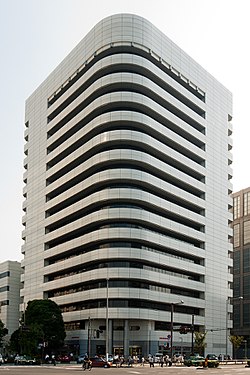
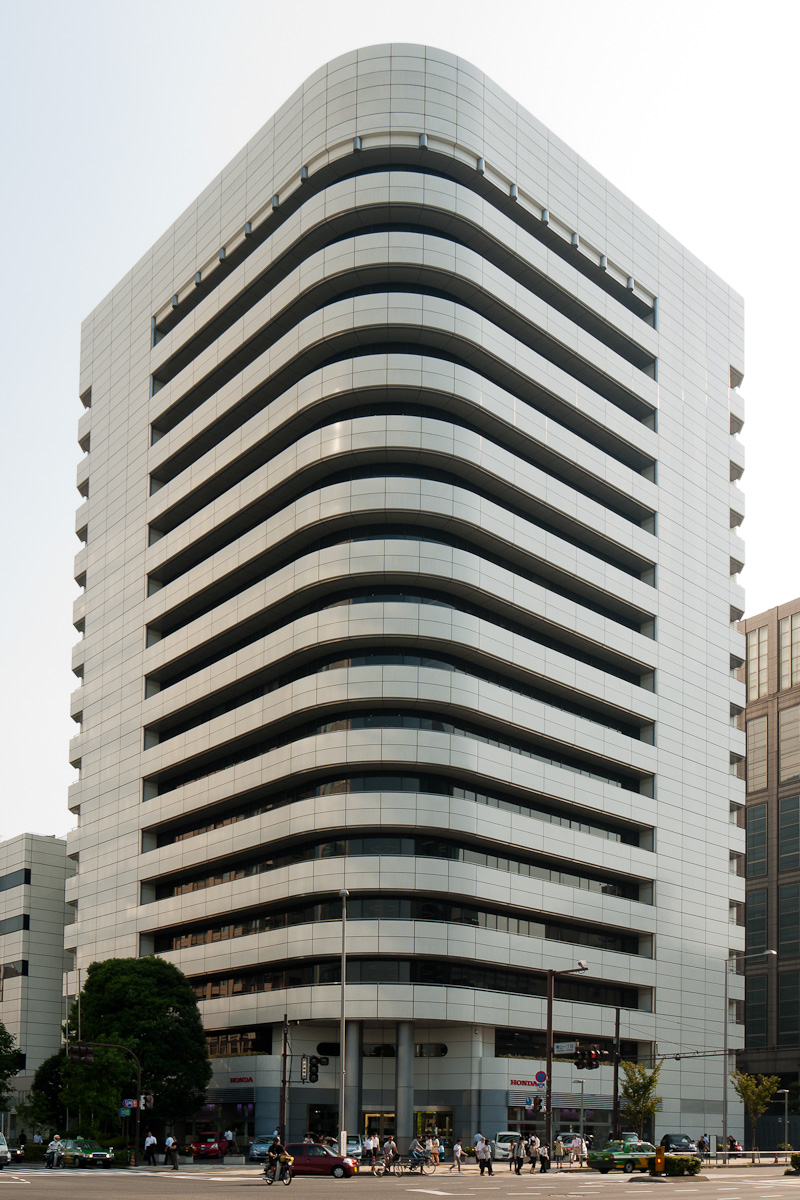
Honda Motor Co., Ltd.,[a] commonly known as Honda, is a Japanese multinational conglomerate automotive manufacturer headquartered at the Toranomon Alcea Tower in Toranomon, Minato, Tokyo, Japan.
Founded in October 1946 by Soichiro Honda, Honda has been the world's largest motorcycle manufacturer since 1959,[3][4] reaching a production of 500 million as of May 2025[update].[5] It is the world's largest manufacturer of internal combustion engines measured by number of units, producing more than 14 million internal combustion engines each year.[6] Honda became the second-largest Japanese automobile manufacturer in 2001.[7] In 2015, Honda was the eighth largest automobile manufacturer in the world.[8] Honda has built and sold the most produced motor vehicle in history, the Honda Super Cub.[9]
Honda was the first Japanese automobile manufacturer to release a dedicated luxury brand, Acura, in March 1986. Aside from their core automobile and motorcycle businesses, Honda also manufactures garden equipment, marine engines, personal watercraft, power generators, and other products. Since 1986, Honda has been involved with artificial intelligence/robotics research and released their ASIMO robot in 2000. They have ventured into aerospace with the establishment of GE Honda Aero Engines in 2004 and the Honda HA-420 HondaJet, which began production in 2012. Honda has two joint-ventures in China: Dongfeng Honda and GAC Honda.
In 2013, Honda invested about 5.7% (US$6.8 billion) of its revenues into research and development.[10] Also in 2013, Honda became the first Japanese automaker to be a net exporter from the United States, exporting 108,705 Honda and Acura models, while importing only 88,357.[11]
History
[edit]
Throughout his life, Honda's founder, Soichiro Honda (1906–1991), had an interest in automobiles. He worked as a mechanic at the Art Shokai garage, where he tuned cars and entered them in races. In 1937, with financing from his acquaintance Kato Shichirō, Honda founded Tōkai Seiki (Eastern Sea Precision Machine Company) to make piston rings working out of the Art Shokai garage.[12] After initial failures, Tōkai Seiki won a contract to supply piston rings to Toyota, but lost the contract due to the poor quality of their products.[12] After attending engineering school without graduating, and visiting factories around Japan to better understand Toyota's quality control processes known as "five whys", by 1941 Honda was able to mass-produce piston rings acceptable to Toyota, using an automated process that could employ even unskilled wartime laborers.[12][13]: 16–19
Tōkai Seiki was placed under the control of the Ministry of Commerce and Industry (called the Ministry of Munitions after 1943) at the start of World War II, and Soichiro Honda was demoted from president to senior managing director after Toyota took a 40% stake in the company.[12] Honda also aided the war effort by assisting other companies in automating the production of military aircraft propellers.[12]
The relationships Honda cultivated with personnel at Toyota, Nakajima Aircraft Company and the Imperial Japanese Navy were instrumental in the postwar period.[12] A US B-29 bomber attack destroyed Tōkai Seiki's Yamashita plant in 1944, and the Itawa plant collapsed on 13 January during the 1945 Mikawa earthquake. Soichiro Honda sold the salvageable remains of the company to Toyota after the war for ¥450,000 and used the proceeds to found the Honda Technical Research Institute in October 1946.[12][14]
With a staff of 12 men working in a 16 m2 (170 sq ft) shack, they built and sold improvised motorized bicycles, using a supply of 500 two-stroke 50 cc Tohatsu war surplus radio generator engines.[12][13]: 19 [15] When the engines ran out, Honda began building their own copy of the Tohatsu engine, and supplying these to customers to attach to their bicycles.[12][15] This was the Honda A-Type, nicknamed the Bata Bata for the sound the engine made.[12] In 1949, the Honda Technical Research Institute was liquidated for ¥1,000,000, or about US$5,000 today; these funds were used to incorporate Honda Motor Co., Ltd.[13]: 21 At about the same time Honda hired engineer Kihachiro Kawashima, and Takeo Fujisawa who provided indispensable business and marketing expertise to complement Soichiro Honda's technical bent.[13]: 21 The close partnership between Soichiro Honda and Fujisawa lasted until they stepped down together in October 1973.[13]: 21
The first complete motorcycle with both the frame and engine made by Honda was the 1949 D-Type, the first Honda to go by the name Dream.[14][16] In 1961, Honda achieved its first Grand Prix victories and World Championships in the 125 cc and 250 cc categories.[17] Honda Motor Company grew in a short time to become the world's largest manufacturer of motorcycles by 1964.[18]
The first production automobile from Honda was the T360 mini pick-up truck, which went on sale in August 1963.[19] Powered by a small 356 cc straight-4 gasoline engine, it was classified under the cheaper Kei car tax bracket.[20] The second production car from Honda was the S500 sports car, which followed the T360 into production in October 1963. Its chain-driven rear wheels pointed to Honda's motorcycle origins.[21]
Over the next few decades, Honda worked to expand its product line, operations and exports to numerous countries around the world. In 1986, Honda introduced the successful Acura brand to the American market in an attempt to gain ground in the luxury vehicle market. The year 1991 saw the introduction of the Honda NSX supercar, the first all-aluminum monocoque vehicle that incorporated a mid-engine V6 with variable-valve timing.[22]
In 1990, CEO Tadashi Kume was succeeded by Nobuhiko Kawamoto. Kawamoto was selected over Shoichiro Irimajiri, who oversaw the successful establishment of Honda of America Manufacturing, Inc. in Marysville, Ohio. Irimajiri and Kawamoto shared a friendly rivalry within Honda; owing to health issues, Irimajiri would resign in 1992.
Following the death of Soichiro Honda and the departure of Irimajiri, Honda found itself quickly being outpaced in product development by other Japanese automakers and was caught off-guard by the truck and sport utility vehicle boom of the 1990s, all which took a toll on the profitability of the company. Japanese media reported in 1992 and 1993 that Honda was at serious risk of an unwanted and hostile takeover by Mitsubishi Motors, which at the time was a larger automaker by volume and was flush with profits from its successful Pajero and Diamante models.[23]
Kawamoto acted quickly to change Honda's corporate culture, rushing through market-driven product development that resulted in recreational vehicles such as the first-generation Odyssey and the CR-V, and a refocusing away from some of the numerous sedans and coupes that were popular with the company's engineers but not with the buying public. The most shocking change to Honda came when Kawamoto ended the company's successful participation in Formula One after the 1992 season, citing costs in light of the takeover threat from Mitsubishi as well as the desire to create a more environmentally friendly company image.[24]
The Honda Aircraft Company as established in 2006 as a wholly owned subsidiary to manufacture and sell the HondaJet family of aircraft.[25][26] The first deliveries to customers began in December 2015.[27] In February 2015, Honda announced that CEO and President Takanobu Ito would step down and be replaced by Takahiro Hachigo in June 2015. Additional retirements by senior managers and directors were expected.[28]
In October 2019, Honda was reported to be in talks with Hitachi to merge the two companies' car parts businesses, creating a components supplier with almost $17 billion in annual sales.[29]
In January 2020, Honda announced that it would be withdrawing employees working in the city of Wuhan, Hubei, China due to the COVID-19 pandemic.[30] On 23 March 2020 due to the global spread of the virus, Honda became the first major automaker with operations in the US to suspend production in its factories. It resumed automobile, engine and transmission production at its US plants on 11 May 2020.[31] Honda and General Motors announced in September 2020 a North American alliance to begin in 2021.[32] According to The Detroit Free Press, "The proposed alliance will include sharing a range of vehicles, to be sold under each company's distinct brands, as well as cooperation in purchasing, research and development, and connected services."[33] In 2021, Honda announced its intention to become the world's first carmaker to sell a vehicle with level 3 self-driving technology.[34]
In March 2022, Honda announced it would develop and build electric vehicles in a joint venture with electronics giant Sony. The latter is set to provide its imaging, sensing, network and other technologies while Honda would be responsible for the car manufacturing processes.[35] The Sony Honda Mobility company was officially announced on 13 October 2022[36] with pre-orders said to open in 2025 and the release of the first EVs scheduled for 2026 in the US under the "Afeela" brand.[37]
In February 2023, Honda announced a deal with American car company General Motors to produce cars using a new hydrogen fuel system. The aim is to ramp up the hydrogen powered cells in their Electric vehicles as well as trucks, construction machinery, and power stations.[38] In March 2023, Honda recalled 500,000 vehicles in the United States and Canada due to an issue with seat belts in the car not latching correctly. Among the models recalled were the 2017-2020 CR-V, the 2018 and 2019 Accord, the 2018-2020 Odyssey, the 2019 Insight, and the Acura RDX from 2019 and 2020. According to the recall, the seat belts in the front seats would break open on impact increasing the risk of injury in a crash.[39] On 21 December 2023, Honda announced a global recall of about 4.5 million vehicles, including 2.54 million in the US, over fuel pump failures, following earlier recalls in 2021 and 2020 for the same issue.[40]
Attempted merger with Nissan
[edit]On 23 December 2024, Honda announced an MOU had been entered to merge with fellow automaker Nissan, to become the 3rd largest auto company by sales. Mitsubishi Motors, in which Nissan has 24% ownership, also agreed to join the talks of integration.[41] The merger was set with a deadline of 2026.[42] Mitsubishi announced it would make a decision on merging with the new company by the end of January 2025.[42]
In February 2025, Honda and Nissan announced that their boards had voted to end talks to merge. Nissan reportedly backed out of the talks with larger rival Honda after negotiations were complicated by growing differences, including Honda's proposal that Nissan become a subsidiary.[43]
Senior leadership
[edit]- Chairman: Toshiaki Mikoshiba (since April 2019)[44]
- President and Chief Executive: Toshihiro Mibe (since April 2021)[44]
Previous CEOs
[edit]- Soichiro Honda (1948–1973)[45]
- Kiyoshi Kawashima (1973–1983)[46]
- Tadashi Kume (1983–1990)[47]
- Nobuhiko Kawamoto (1990–1998)[48]
- Hiroyuki Yoshino (1998–2003)[49]
- Takeo Fukui (2003–2009)[50]
- Takanobu Ito (2009–2015)[51]
- Takahiro Hachigo (2015–2021)[52]
Corporate profile and divisions
[edit]| Business | share |
|---|---|
| Automobile | 66.4% |
| Financial services | 15.9% |
| Motorcycle | 15.8% |
| Power products and others | 1.9% |
Honda is headquartered in Minato, Tokyo, Japan. Their shares trade on the Tokyo Stock Exchange and the New York Stock Exchange, as well as exchanges in Osaka, Nagoya, Sapporo, Kyoto, Fukuoka, London, Paris, and Switzerland.
Honda has assembly plants around the globe. These plants are located in China, the United States, Pakistan, Canada, England, Japan, Belgium, Brazil, México, New Zealand, Malaysia, Indonesia, India, Philippines, Thailand, Vietnam, Turkey, Taiwan, Perú and Argentina. As of July 2010, 89% of Honda and Acura vehicles sold in the United States were built in North American plants, up from 82.2% a year earlier. This shields profits from the yen's advance to a 15-year high against the dollar.[54]
American Honda Motor Company is based in Torrance, California. Honda Racing Corporation (HRC) is Honda's motorsport division. Honda Canada Inc. is headquartered in Markham, Ontario,[55] it was originally planned to be located in Richmond Hill, Ontario, but delays led them to look elsewhere. Their manufacturing division, Honda of Canada Manufacturing, is based in Alliston, Ontario. Honda has also created joint ventures around the world, such as Honda Siel Cars and Hero Honda Motorcycles in India,[56] Guangzhou Honda and Dongfeng Honda in China, Boon Siew Honda in Malaysia and Honda Atlas in Pakistan.
Honda runs a business innovation initiative called Honda Xcelerator, to build relationships with innovators, partner with Silicon Valley startups and entrepreneurs, and help other companies work on prototypes. Xcelerator had worked with reportedly 40 companies as of January 2019. Xcelerator and a developer studio are part of the Honda Innovations group, formed in Spring 2017 and based in Mountain View, California.[57] Through Honda Mobilityland, Honda operates the Suzuka Circuit and Twin Ring Motegi racing tracks.
Following the 2011 Tohoku earthquake and tsunami in Japan, Honda announced plans to halve production at its UK plants.[58] The decision was made to put staff at the Swindon plant on a 2-day week until the end of May as the manufacturer struggled to source supplies from Japan. It's thought around 22,500 cars were produced during this period.
Finances
[edit]For the fiscal year 2018, Honda reported earnings of US$9.534 billion, with an annual revenue of US$138.250 billion, an increase of 6.2% over the previous fiscal cycle. Honda's shares traded at over $32 per share, and its market capitalization was valued at US$50.4 billion in October 2018.[59]
| Year | Revenue in million US$ |
Net income in million US$ |
Total assets in million US$ |
Employees |
|---|---|---|---|---|
| 2005 | 77,851 | 4,376 | 83,853 | — |
| 2006 | 89,172 | 5,373 | 95,145 | — |
| 2007 | 99,784 | 5,331 | 108,329 | 167,231 |
| 2008 | 108,026 | 5,400 | 113,540 | 178,960 |
| 2009 | 100,112 | 1,370 | 118,189 | 181,876 |
| 2010 | 92,655 | 3,052 | 125,594 | 176,815 |
| 2011 | 107,242 | 6,762 | 138,851 | 179,060 |
| 2012 | 100,941 | 2,820 | 149,616 | 187,094 |
| 2013 | 119,523 | 4,443 | 164,988 | 190,338 |
| 2014 | 118,425 | 5,741 | 156,220 | 198,368 |
| 2015 | 121,286 | 4,636 | 167,675 | 204,730 |
| 2016 | 121,190 | 2,860 | 151,303 | 208,399 |
| 2017 | 130,193 | 5,734 | 176,311 | 211,915 |
| 2018 | 138,250 | 9,534 | 174,143 | 215,638 |
| 2019 | 142,998 | 5,493 | 183,772 | 219,722 |
| 2020 | 137,365 | 4,193 | 188,246 | 218,674 |
| 2021 | 123,803 | 6,180 | 206,058 | 211,374 |
| 2022 | 129,519 | 6,293 | 213,361 | 218,674 |
| 2023 | 125,117 | 4,820 | 182,559 | 197,039 |
| 2024 | 140,959 | 7,640 | 205,442 | 194,993 |
| Geographic Region | Total revenue (in millions of ¥) | in % |
|---|---|---|
| North America | 10,470,000 | 51.23% |
| Asia | 4,290,000 | 21.02% |
| Japan | 1,960,000 | 9.59% |
| Europe | 943,000 | 4.62% |
| Others | 1,150,000 | 5.63% |
Products
[edit]Automobiles
[edit] | This section needs additional citations for verification. (September 2017) |


Honda's automotive manufacturing ambitions can be traced back to 1963, with the Honda T360, a Kei truck built for the Japanese market.[60] This was followed by the two-door roadster, the Honda S500 also introduced in 1963. In 1965, Honda built a two-door commercial delivery van, named the Honda L700. Honda's first four-door sedan was not the Honda Accord, but the air-cooled, four-cylinder, gasoline-powered Honda 1300 which was introduced in 1969. The Civic was a hatchback that gained wide popularity internationally, but it wasn't the first two-door hatchback built by Honda. That was the Honda N360, a Kei car that was adapted for international sale as the N600. The Civic, which appeared in 1972 and replaced the N600 also had a smaller sibling that replaced the air-cooled N360, called the Honda Life, which was water-cooled.
The Honda Life represented Honda's efforts in competing in the kei car segment, offering sedan, delivery van and small pick-up platforms on a shared chassis. The Life Step Van had a novel approach that, while not initially a commercial success, appeared to be an influence to vehicles with the front passengers sitting behind the engine, a large cargo area with a flat roof and a liftgate installed in back, and utilizing a transversely installed engine with a front-wheel-drive powertrain.
As Honda entered into automobile manufacturing in the late 1960s where Japanese manufacturers such as Toyota and Nissan had been making cars since before WWII, Honda instilled a sense of doing things a little differently than its Japanese competitors. Its mainstay products like the Accord and Civic (with the exception of its USA-market 1993–97 Passport which was part of a vehicle exchange program with Isuzu (part of the Subaru-Isuzu joint venture)) have always employed Front-wheel drive powertrain implementation, which is currently a long-held Honda tradition. Honda also installed new technologies into their products, first as optional equipment, then later standard, like anti-lock brakes, speed-sensitive power steering, and multi-port fuel injection in the early 1980s. This desire to be the first to try new approaches is evident with the creation of the first Japanese luxury chain Acura, and was also evident with the all-aluminum, mid-engined sports car, the Honda NSX, which also introduced variable valve timing technology, which Honda calls VTEC.
The Civic family is a line of compact cars developed and manufactured by Honda. In North America, the Civic is the second-longest continuously running nameplate from a Japanese manufacturer; only its perennial rival, the Toyota Corolla, introduced in 1966, has been in production longer.[61] The Civic, along with the Accord and Prelude, comprised Honda's vehicles sold in North America until the 1990s, when the model lineup was expanded. Having gone through several generational changes, the Civic has become larger and more upmarket, and it currently slots between the Fit and Accord.
Honda's first hybrid electric vehicle was the 1999 Insight. The Civic was first offered as a hybrid in 2001, and the Accord followed in 2004. In 2008, the company launched the Clarity, a fuel cell car.
In 2008, Honda increased global production to meet the demand for small cars and hybrids in the US and emerging markets. The company shuffled US production to keep factories busy and boost car output while building fewer minivans and sport utility vehicles as light truck sales fell.[62] Its first entrance into the pickup segment, the light-duty Ridgeline, won Truck of the Year from Motor Trend magazine in 2006. Also in 2006, the redesigned Civic won Car of the Year from the magazine, giving Honda a rare double win of Motor Trend honors. It is reported that Honda plans to increase hybrid sales in Japan to more than 20% of its total sales in the fiscal year 2011, from 14.8% in the previous year.[63]
Five of United States Environmental Protection Agency's top ten most fuel-efficient cars from 1984 to 2010 come from Honda, more than any other automakers. The five models are: 2000–2006 Honda Insight (53 mpg‑US or 4.4 L/100 km or 64 mpg‑imp combined), 1986–1987 Honda Civic Coupe HF (46 mpg‑US or 5.1 L/100 km or 55 mpg‑imp combined), 1994–1995 Honda Civic hatchback VX (43 mpg‑US or 5.5 L/100 km or 52 mpg‑imp combined), 2006– Honda Civic Hybrid (42 mpg‑US or 5.6 L/100 km or 50 mpg‑imp combined), and 2010– Honda Insight (41 mpg‑US or 5.7 L/100 km or 49 mpg‑imp combined).[64] The ACEEE has also rated the Civic GX as the greenest car in America for seven consecutive years.[65]
Honda currently builds vehicles in factories located in Japan, the United States of America, Canada, China, Pakistan, the United Kingdom, Malaysia, Belgium, Brazil, Indonesia, India, Thailand, Turkey, Argentina, Mexico, Taiwan, and the Philippines.
Motorcycles
[edit]
.jpg)
Honda is the largest motorcycle manufacturer in Japan and has been since it started production in 1955.[12] At its peak in 1982, Honda manufactured almost three million motorcycles annually. By 2006, this figure had been reduced to around 550,000 but was still higher than its three domestic competitors.[12] In 2017, India became the largest motorcycle market for Honda.[66][67] In India, Honda is leading in the scooters segment, with 59% market share.[68]
During the 1960s when it was a small manufacturer, Honda broke out of the Japanese motorcycle market and began exporting to the United States. Working with the advertising agency Grey Advertising, Honda created an innovative marketing campaign, using the slogan "You meet the nicest people on a Honda." In contrast to the prevailing negative stereotypes of motorcyclists in America as tough, antisocial rebels, this campaign suggested that Honda motorcycles were made for the everyman. The campaign was hugely successful; the ads ran for three years, and by the end of 1963 alone, Honda had sold 90,000 motorcycles.[13]
Taking Honda's story as an archetype of the smaller manufacturer entering a new market already occupied by highly dominant competitors, the story of their market entry, and their subsequent huge success in the US and around the world has been the subject of some academic controversy. Competing explanations have been advanced to explain Honda's strategy and the reasons for their success.[69]
The first of these explanations was put forward when, in 1975, the Boston Consulting Group (BCG) was commissioned by the UK government to write a report explaining why and how the British motorcycle industry had been out-competed by its Japanese competitors. The report concluded that the Japanese firms, including Honda, had sought a very high scale of production (they had made a large number of motorbikes) in order to benefit from economies of scale and learning curve effects. It blamed the decline of the British motorcycle industry on the failure of British managers to invest enough in their businesses to profit from economies of scale and scope.[70]

The second explanation was offered in 1984 by Richard Pascale, who had interviewed the Honda executives responsible for the firm's entry into the US market. As opposed to the tightly focused strategy of low cost and high scale that BCG accredited to Honda, Pascale found that their entry into the US market was a story of "miscalculation, serendipity, and organizational learning" – in other words, Honda's success was due to the adaptability and hard work of its staff, rather than any long-term strategy.[71] For example, Honda's initial plan on entering the US market was to compete in large motorcycles, around 300 cc. Honda's motorcycles in this class suffered performance and reliability problems when ridden the relatively long distances of the US highways.[13]: 41–43 When the team found that the scooters they were using to get themselves around their US base of San Francisco attracted positive interest from consumers they fell back on selling the Super Cub instead.[13]: 41–43
The most recent school of thought on Honda's strategy was put forward by Gary Hamel and C. K. Prahalad in 1989. Creating the concept of core competencies with Honda as an example, they argued that Honda's success was due to its focus on leadership in the technology of internal combustion engines.[72] For example, the high power-to-weight ratio engines Honda produced for its racing bikes provided technology and expertise which was transferable into mopeds. Honda's entry into the US motorcycle market during the 1960s is used as a case study for teaching introductory strategy at business schools worldwide.[73]
ATVs
[edit]Honda builds utility ATVs under models Recon, Rubicon, Rancher, Foreman and Rincon. Honda also builds sports ATVs under the models TRX 90X, TRX 250X, TRX 400x, TRX 450R and TRX 700.[74]
Power equipment
[edit]
Power equipment production started in 1953 with H-type engine (prior to motorcycles).[75] Honda power equipment reached record sales in 2007 with 6.4 million units sold annually.[76] By 2010 (Fiscal year ended 31 March) this figure had decreased to 4.7 million units.[77] Cumulative production of power products has exceeded 85 million units annually (as of September 2008).[78]
In September 2023, Honda ceased sales of gasoline lawn mowers and some other power equipment in the US.[79]
Honda power equipment includes:
- Engine
- Brush Cutters
- Tillers
- Marine Outboard Motors
- Water Pumps
- Cultivator
- Lawn mower
- Robotic lawn mower
- Riding mower
- Trimmer
- Mower
- Blower
- Sprayer
- Hedge trimmer
- Snowthrower
- Generator, welding power supply
- Pump
- Outboard engine
- Inflatable boat
- Electric 4-wheel Scooter
- Compact Household Cogeneration Unit
Engines
[edit].jpg)
Honda engines powered the entire 33-car starting field of the 2010 Indianapolis 500[80] and for the fifth consecutive race, there were no engine-related retirements during the running of the Memorial Day Classic.[81] In the 1980s Honda developed the GY6 engine for use in motor scooters. Although no longer manufactured by Honda, it's still commonly used in many Chinese, Korean and Taiwanese light vehicles.[82]
Honda, despite being known as an engine company, has never built a V8 engine for passenger vehicles. In the late 1990s, the company resisted considerable pressure from its American dealers for a V8 engine (which would have seen use in top-of-the-line Honda SUVs and Acuras), with American Honda reportedly sending one dealer a shipment of V8 beverages to silence them.[83] Honda considered starting V8 production in the mid-2000s for larger Acura sedans, a new version of the high-end NSX sports car (which previously used DOHC V6 engines with VTEC to achieve its high power output) and possible future ventures into the American full-size truck and SUV segment for both the Acura and Honda brands, but this was canceled in late 2008, with Honda citing environmental and worldwide economic conditions as reasons for the termination of this project.[84]
Robots
[edit]
ASIMO is part of Honda's Research & Development robotics program. It's the eleventh in a line of successive builds starting in 1986 with Honda E0 moving through the ensuing Honda E series and the Honda P series. Weighing 54 kilograms and standing 130 centimeters tall, ASIMO resembles a small astronaut wearing a backpack, and can walk on two feet in a manner resembling human locomotion, at up to 6 km/h (3.7 mph). ASIMO is the world's only humanoid robot able to ascend and descend stairs independently.[85] However, human motions such as climbing stairs are difficult to mimic with a machine, which ASIMO has demonstrated by taking two plunges off a staircase.
ASIMO is able to walk, dance and navigate steps. In 2010, Honda developed a machine capable of reading a user's brainwaves to move ASIMO. The system uses a helmet covered with electroencephalography and near-infrared spectroscopy sensors that monitor electrical brainwaves and cerebral blood flow signals that alter slightly during the human thought process. The user thinks of one of the limited number of gestures it wants from the robot, which has been fitted with a Brain-Machine Interface.[86]
Aircraft
[edit]Honda has also pioneered new technology in its HA-420 HondaJet, manufactured by its subsidiary Honda Aircraft Company, which allows new levels of reduced drag, increased aerodynamics and fuel efficiency thus reducing operating costs.[87]
Mountain bikes
[edit]Honda has also built a downhill racing bicycle known as the Honda RN-01. It is not available for sale to the public. The bike has a gearbox, which replaces the standard derailleur found on most bikes.
Honda has hired several people to pilot the bike, among them Greg Minnaar. The team is known as Team G Cross Honda.
Rockets
[edit]In 2019, Honda began development of rocket engines.[88] In June 2025, Honda successfully conducted a launch and landing test of an reusable launch vehicle in Taiki, Hokkaido.[89][90] Honda has stated that they aim to make a sub-orbital spaceflight in 2029.[91][92]
Former products
[edit]Solar cells
[edit]Honda's solar cell subsidiary company Honda Soltec (Headquarters: Kikuchi-gun, Kumamoto; President and CEO: Akio Kazusa) started sales throughout Japan of thin-film solar cells for public and industrial use on October 24, 2008, after selling solar cells for residential use in October 2007.[93] Honda announced in the end of October 2013 that Honda Soltec would cease business operations in the Spring of 2014 except for support for existing customers and the subsidiary would be dissolved.[94]
Motorsports
[edit]Honda has been active in motorsports, like Formula One, MotoGP and others, since the early years of the company. Since 2022, Honda's general motorsport activities have been managed by its motorsport subsidiary Honda Racing Corporation (HRC). Prior to 2022, Honda's motorcycle racing activities were run by HRC since it was founded in 1982, while its automobile racing activities were run as projects within the Honda Motor Company itself.[95]
Honda Performance Development (HPD) was established in 1993 as the company's North American motorsport subsidiary, and for 2024 HPD became Honda Racing Corporation USA (HRC US) to form a global motorsports organization.[96] Honda also owns two Japanese race tracks, the Suzuka Circuit and Mobility Resort Motegi (formerly Twin Ring Motegi), which it established in 1962 and 1997, respectively, and which are managed by Honda Mobilityland.
Automobiles
[edit]
Honda entered Formula One for the first time in 1964, just one year after starting the production of road cars, making both engine and chassis. Honda achieved their first victory at the 1965 Mexican Grand Prix, and another win at the 1967 Italian Grand Prix, before they withdrew after the 1968 season. They returned to the sport in 1983 as an engine manufacturer, remaining until 1992. This period saw Honda dominate Grand Prix racing,[97] as between 1986 and 1991 they won five consecutive Drivers' Championships with Nelson Piquet, Ayrton Senna and Alain Prost, and six Constructors' titles with Williams and McLaren.[98] A third stint from 2000 to 2008, initially as engine maker and later also as team owner, yielded 17 podiums, including one win, and second place in the 2004 constructors' standings. They returned as a power unit supplier for the second year of the hybrid era in 2015 and initially struggled, but intense development saw them become race winners again by 2019, and in 2021 they won the World Drivers' Championship with Max Verstappen and Red Bull Racing.[99] Honda formally left Formula One after 2021 to focus its resources on carbon neutral technologies, but an arrangement was made for it to extend power unit supply for Red Bull until 2025.[100][101] While no longer a works team, Red Bull Racing still displayed Honda on their engine cover in this extended deal. As the series introduced more sustainable regulations, Honda announced it will formally rejoin in 2026 to provide power units to Aston Martin as a works team.[102]
Honda debuted in the CART IndyCar World Series as an engine supplier in 1994, and the company won six consecutive Drivers' Championships and four Manufacturers' Championships between 1996 and 2001.[103] In 2003, Honda transferred its effort to the IRL IndyCar Series. In 2004, Honda won the Indianapolis 500 for the first time and claimed the Drivers' and Manufacturers' Championships, a feat which it repeated in 2005.[103] From 2006 to 2011, Honda was the series' lone manufacturer, before manufacturer competition returned for 2012. Since 2012, Honda's turbocharged V6 engines have won the Indianapolis 500 several times as well as claimed multiple Drivers' and Manufacturers' titles.[104] In the Japanese Super Formula Championship, Honda-powered cars have won the championship numerous times since 1981, with their title tally in the double digits. In Formula Two, Honda engines dominated the premier series in 1966 and scored multiple titles in the early 1980s.
In sports car racing, Honda won the 24 Hours of Le Mans in 1995 in the GT2 class,[105] and in 2010 and 2012 they won in the LMP2 category.[106] Honda made their factory debut in the Super GT Series (previously known as the All-Japan GT Championship) in 1997, and in 2000 they won their first championships.[107] Since then, they have won several further titles, uniquely with both mid- and front-engined cars.[107] Through their Acura and HPD divisions, Honda has also competed in sports prototype racing, beginning with the Spice-Acura prototypes that won the IMSA GT Lights championship in 1991, 1992 and 1993. Acura joined the American Le Mans Series in 2007 and won the 12 Hours of Sebring in class on their debut, before winning the championship in both the LMP1 and LMP2 classes in 2009. The cars were rebranded as HPDs for 2010, after which they won multiple titles in the ALMS and also won the FIA World Endurance Championship in the LMP2 class. Acura returned to prototype racing in 2018 in the DPi class of the IMSA SportsCar Championship, winning championship titles in 2019, 2020 and 2022 as well as the 24 Hours of Daytona overall in 2021, 2022, and 2023.[108] Honda's GT3 car won both the IMSA GTD and Super GT GT300 titles.[109][110]
During the Group A era of the Japanese Touring Car Championship, Honda won seven manufacturers' titles and six drivers' titles in the sub-1,600 cc division between 1986 and 1993.[111] The following Super Touring era of touring car racing saw Honda win the Japanese and North American championships in 1996 and 1997, while in Europe Honda's Super Touring cars claimed over 40 wins across the British, German and European series. After the collapse of the Super Touring regulations in the early 2000s, Honda remained involved in the British Touring Car Championship, where their cars would win multiple championships in the mid-2000s and throughout the 2010s. Honda entered the World Touring Car Championship in late 2012, and in 2013 they won the Manufacturers' World Championship. Honda's TCR car won the global TCR Model of the Year award in 2019, 2020, and 2024.[112]
Motorcycles
[edit]
HRC combines participation in motorcycle races throughout the world with the development of high-potential racing machines. Its racing activities are an important source for the creation of leading-edge technologies used in the development of Honda motorcycles. HRC also contributes to the advancement of motorcycle sports through a range of activities that include sales of production racing motorcycles, support for satellite teams, and rider education programs.
Soichiro Honda, being a race driver himself, could not stay out of international motorsport. In 1959, Honda entered five motorcycles into the Isle of Man TT race, the most prestigious motorcycle race in the world. While always having powerful engines, it took until 1961 for Honda to tune their chassis well enough to allow Mike Hailwood to claim their first Grand Prix victories in the 125 and 250 cc classes. Hailwood would later pick up their first Senior TT wins in 1966 and 1967. Honda's race bikes were known for their "sleek & stylish design" and exotic engine configurations, such as the 5-cylinder, 22,000 rpm, 125 cc bike and their 6-cylinder 250 cc and 297 cc bikes.
In 1979, Honda returned to Grand Prix motorcycle racing with the monocoque-framed, four-stroke NR500. The FIM rules limited engines to four cylinders, so the NR500 had non-circular, 'race-track', cylinders, each with 8 valves and two connecting rods, in order to provide sufficient valve area to compete with the dominant two-stroke racers. The experiment failed. For the 1982 season, Honda debuted its first two-stroke race bike, the NS500 and in 1983, Honda won their first 500 cc Grand Prix World Championship with Freddie Spencer. Since then, Honda has become a dominant marque in motorcycle Grand Prix racing, winning a plethora of top-level titles with riders such as Mick Doohan and Valentino Rossi. Honda also head the number of wins at the Isle of Man TT having notched up 227 victories in the solo classes and Sidecar TT,[113] including Ian Hutchinson's clean sweep at the 2010 races.[114]
The outright lap record on the Snaefell Mountain Course was held by Honda, set at the 2015 TT by John McGuinness at an average speed of 132.701 mph (213.562 km/h) on a Honda CBR1000RR,[115] bettered the next year by Michael Dunlop on a BMW S1000RR at 133.962 mph (215.591 km/h).[116]
In the Motocross World Championship, Honda has claimed seventeen world championships. In the World Enduro Championship, Honda has captured eight titles, most recently with Stefan Merriman in 2003 and with Mika Ahola from 2007 to 2010. In motorcycle trials, Honda has claimed three world championships with Belgian rider Eddy Lejeune.
Electric and alternative fuel vehicles
[edit]
Compressed natural gas
[edit]
Top: a Brazilian flexible-fuel vehicle.
Bottom: a US gasoline-electric hybrid.
The Honda Civic GX was for a long time the only purpose-built natural gas vehicle (NGV) commercially available in some parts of the US.[117][118] The Honda Civic GX first appeared in 1998 as a factory-modified Civic LX that had been designed to run exclusively on compressed natural gas. The car looks and drives just like a contemporary Honda Civic LX, but does not run on gasoline. In 2001, the Civic GX was rated the cleanest-burning internal combustion engine in the world by the US Environmental Protection Agency (EPA).[119][120]
First leased to the City of Los Angeles, in 2005, Honda started offering the GX directly to the public through factory trained dealers certified to service the GX. Before that, only fleets were eligible to purchase a new Civic GX. In 2006, the Civic GX was released in New York, making it the second state where the consumer is able to buy the car.[121]
In June 2015, Honda announced its decision to phase out the commercialization of natural-gas powered vehicles to focus on the development of a new generation of electric vehicles such as hybrids, plug-in electric cars and hydrogen-powered fuel cell vehicles. Since 2008, Honda has sold about 16,000 natural-gas vehicles, mainly to taxi and commercial fleets.[122]
Flexible-fuel
[edit]Honda's Brazilian subsidiary launched flexible-fuel versions for the Honda Civic and Honda Fit in late 2006. As other Brazilian flex-fuel vehicles, these models run on any blend of hydrous ethanol (E100) and E20-E25 gasoline.[123][124] Initially, and in order to test the market preferences, the carmaker decided to produce a limited share of the vehicles with flex-fuel engines, 33 percent of the Civic production and 28 percent of the Fit models.[123][124] Also, the sale price for the flex-fuel version was higher than the respective gasoline versions, around US$1,000 premium for the Civic, and US$650 for the Fit, despite the fact that all other flex-fuel vehicles sold in Brazil had the same tag price as their gasoline versions.[124][125][126] In July 2009, Honda launched in the Brazilian market its third flexible-fuel car, the Honda City.[127]
During the last two months of 2006, both flex-fuel models sold 2,427 cars against 8,546 gasoline-powered automobiles,[128] jumping to 41,990 flex-fuel cars in 2007,[129] and reaching 93,361 in 2008.[130] Due to the success of the flex versions, by early 2009 a hundred percent of Honda's automobile production for the Brazilian market is now flexible-fuel, and only a small percentage of gasoline version is produced in Brazil for exports.[131]
In March 2009, Honda introduced the world's first flex-fuel motorcycle in the Brazilian market. Manufactured by its Brazilian subsidiary, Moto Honda da Amazônia, the CG 150 Titan Mix is priced at approximately US$2,700.[132][133][134]
Hybrid electric
[edit]
In late 1999, Honda launched the first commercial hybrid electric car sold in the US market, the Honda Insight, just one month before the introduction of the Toyota Prius, and initially sold for US$20,000.[135][136] The first-generation Insight was produced from 2000 to 2006 and had a fuel economy of 70 miles per US gallon (3.4 L/100 km; 84 mpg‑imp) for the EPA's highway rating, the most fuel-efficient mass-produced car at the time.[135][136] Total global sales for the Insight amounted to only around 18,000 vehicles.[136] Cumulative global sales reached 100,000 hybrids in 2005 and 200,000 in 2007.[137]
Honda introduced the second-generation Insight in Japan in February 2009, and released it in other markets through 2009 and in the US market in April 2009. At $19,800 as a five-door hatchback it will be the least expensive hybrid available in the US.[138]

Since 2002, Honda has also been selling the Honda Civic Hybrid (2003 model) in the US market.[135] It was followed by the Honda Accord Hybrid, offered in model years 2005 through 2007. Sales of the Honda CR-Z began in Japan in February 2010, becoming Honda's third hybrid electric car in the market.[139] As of February 2011[update], Honda was producing around 200,000 hybrids a year in Japan.[140]
Sales of the Fit Hybrid began in Japan in October 2010, at the time, the lowest price for a gasoline-hybrid electric vehicle sold in the country.[141] The European version, called Honda Jazz Hybrid, was released in early 2011.[142] During 2011 Honda launched three hybrid models available only in Japan, the Fit Shuttle Hybrid, Freed Hybrid and Freed Spike Hybrid.[137]
Honda's cumulative global hybrid sales passed the 1 million unit milestone at the end of September 2012, 12 years and 11 months after sales of the first generation Insight began in Japan November 1999.[137] A total of 187,851 hybrids were sold worldwide in 2013, and 158,696 hybrids during the first six months of 2014.[143][144] As of June 2014[update], Honda has sold more than 1.35 million hybrids worldwide.[137][143][144]
Hydrogen fuel cell
[edit]
In Takanezawa, Japan, on 16 June 2008, Honda Motors produced the first assembly-line FCX Clarity, a hybrid hydrogen fuel cell vehicle. More efficient than a gas-electric hybrid vehicle, the FCX Clarity combines hydrogen and oxygen from ordinary air to generate electricity for an electric motor. In July 2014 Honda announced the end of production of the Honda FCX Clarity for the 2015 model.[145] The vehicle itself does not emit any pollutants and its only by-products are heat and water. The FCX Clarity also has an advantage over gas-electric hybrids in that it does not use an internal combustion engine to propel itself. Like a gas-electric hybrid, it uses a lithium ion battery to assist the fuel cell during acceleration and capture energy through regenerative braking, thus improving fuel efficiency. The lack of hydrogen filling stations throughout developed countries will keep production volumes low.[146] Honda will release the vehicle in groups of 150. California is the only US market with infrastructure for fueling such a vehicle, though the number of stations is still limited. Building more stations is expensive, as the California Air Resources Board (CARB) granted $6.8 million for four H2 fueling stations, costing US$1.7 million each.[147][148][149] Honda views hydrogen fuel cell vehicles as the long-term replacement of piston cars, not battery cars.[150]
Honda introduced the CR-V e:FCEV in February 2024 in the US. It is a plug-in hybrid fuel cell version of the CR-V that is equipped with an electric motor, two high-pressure hydrogen tanks with a total capacity of 4.3 kg (9.5 lb) and a 17.7 kWh battery with plug-in charging capability.[107] It was also launched in Japan as the only version of the CR-V sold in the country, imported from the Marysville, Ohio assembly plant in the US. This model began production on 5 June 2024.[151] The later revealed to includes an H2 credit.[152]

Plug-in electric vehicles
[edit]The all-electric Honda EV Plus was introduced in 1997 as a result of CARB's zero-emissions vehicle mandate and was available only for leasing in California. The EV plus was the first battery electric vehicle from a major automaker with non-lead–acid batteries The EV Plus had an all-electric range of 100 mi (160 km). Around 276 units were sold in the US and production ended in 1999.[153][154] The all-electric Honda Fit EV was introduced in 2012 and has a range of 82 mi (132 km).[155] The all-electric car was launched in the US to retail customers in July 2012 with initial availability limited to California and Oregon.[156] Production is limited to only 1,100 units over the first three years. A total of 1,007 units have been leased in the US through September 2014.[157][158][159] The Fit EV was released in Japan through leasing to local government and corporate customers in August 2012. Availability in the Japanese market is limited to 200 units during its first two years.[160] In July 2014 Honda announced the end of production of the Fit EV for the 2015 model.[145] The Honda Accord Plug-in Hybrid was introduced in 2013 and has an all-electric range of 13 mi (21 km)[161] Sales began in the US in January 2013 and the plug-in hybrid is available only in California and New York.[162] A total of 835 units have been sold in the US through September 2014.[157][158][163][159] The Accord PHEV was introduced in Japan in June 2013 and is available only for leasing, primarily to corporations and government agencies.[164] The Honda e was launched in 2020 and has an electric range of 137 mi (220 km). It is an electric supermini that is retro styled, similar to the first-generation Honda Civic. Following this, the Honda e:Ny1 was launched in 2023, with an electric range of 256 mi (412 km) on the top spec model. It is Honda's first electric SUV. In April 2022, Honda and General Motors announced a joint venture to develop low-cost electric vehicles based on GM's Ultium architecture in order to beat Tesla vehicles in sales.
In October 2023, the two companies announced that the joint venture has been cancelled due to slower-than-expected demand of electric vehicles and changing market conditions.[165] Although the upcoming Honda Prologue and Acura ZDX will use the Ultium architecture and will be manufactured by General Motors, future Honda electric vehicles will be designed solely by Honda and will be manufactured in Honda assembly plants.[166]
Batteries
[edit]In August 2022, Honda and LG Energy Solution revealed a joint venture to establish a new lithium-ion battery factory in the United States, specifically for Honda and Acura electric vehicles. The initial goal was to produce 40 gigawatt hours of battery capacity.[167]
Marketing
[edit]Japanese marketing
[edit]
Starting in 1978, Honda in Japan decided to diversify its sales distribution channels and created Honda Verno, which sold established products with a higher content of standard equipment and more sporting nature.[168][169] The establishment of Honda Verno coincided with its new sports compact, the Honda Prelude. Later, the Honda Vigor, Honda Ballade, and Honda Quint were added to Honda Verno stores. This approach was implemented due to efforts in place by rival Japanese automakers Toyota and Nissan.

As sales progressed, Honda created two more sales channels, called Honda Clio in 1984, and Honda Primo in 1985. The Honda Clio chain sold products that were traditionally associated with Honda dealerships before 1978, like the Honda Accord, and Honda Primo sold the Honda Civic, kei cars such as the Honda Today, superminis like the Honda Capa, along with other Honda products, such as farm equipment, lawnmowers, portable generators, and marine equipment, plus motorcycles and scooters like the Honda Super Cub. A styling tradition was established when Honda Primo and Clio began operations in that all Verno products had the rear license plate installed in the rear bumper, while Primo and Clio products had the rear license plate installed on the trunk lid or rear door for minivans. The Renault Clio was sold in Japan at Nissan dealerships, but was renamed the Renault Lutecia.[170] Lutecia is derived from the name of Lutetia, an ancient Roman city that was the predecessor of Paris.

As time progressed and sales began to diminish partly due to the collapse of the Japanese "bubble economy", "supermini" and "kei" vehicles that were specific to Honda Primo were "badge engineered" and sold at the other two sales channels, thereby providing smaller vehicles that sold better at both Honda Verno and Honda Clio locations. As of March 2006, the three sales chains were discontinued, with the establishment of Honda Cars dealerships.[171] While the network was disbanded, some Japanese Honda dealerships still use the network names, offering all Japanese market Honda cars at all locations.

Honda sells genuine accessories through a separate retail chain called Honda Access for both their motorcycle, scooter, and automobile products. In cooperation with corporate group partner Pioneer, Honda sells an aftermarket line of audio and in-car navigation equipment that can be installed in any vehicle under the brand name Gathers, which is available at Honda Access locations as well as Japanese auto parts retailers, such as Autobacs. Buyers of used vehicles are directed to a specific Honda retail chain that sells only used vehicles called Honda Auto Terrace.
In the spring of 2012, Honda in Japan introduced Honda Cars Small Store which is devoted to compact cars like the Honda Fit, and kei vehicles like the Honda N-One and Honda S660 roadster.
All cars sold at Honda Verno
- Prelude, Integra, CR-X, Vigor, Saber, Ballade, Quint, Crossroad, Element, NSX, HR-V, Mobilio Spike, S2000, CR-V, That's, MDX, Rafaga, Capa, and the Torneo
All cars sold at Honda Clio
- Accord, Legend, Inspire, Avancier, S-MX, Lagreat, Stepwgn, Elysion, Stream, Odyssey (int'l), Domani, Concerto, Accord Tourer, Logo, Fit, Insight, That's, Mobilio, and the City
All cars sold at Honda Primo
- Civic, Life, Acty, Vamos, Hobio, Ascot, Ascot Innova, Torneo, Civic Ferio, Freed, Mobilio, Orthia, Capa, Today, Z, and the Beat
International marketing
[edit]

In 2003, Honda released its Cog advertisement in the UK and on the Internet. To make the ad, the engineers at Honda constructed a Rube Goldberg Machine made entirely out of car parts from a Honda Accord Touring. To the chagrin of the engineers at Honda, all the parts were taken from two of only six hand-assembled pre-production models of the Accord. The advertisement depicted a single cog which sets off a chain of events that ends with the Honda Accord moving and Garrison Keillor speaking the tagline, "Isn't it nice when things just... work?" It took 100 takes to create the ad.[172]
Honda has done humor marketing such as its 1985 four-page "How to fit six Hondas in a two-car garage" print ad[173] or "descending so low in a parking garage, they pass stalagmites and a Gollum-like figure."[174]
In 2004, they produced the Grrr advert, usually immediately followed by a shortened version of the 2005 Impossible Dream advert. In December 2005, Honda released The Impossible Dream a two-minute panoramic advertisement filmed in New Zealand, Japan, and Argentina which illustrates the founder's dream to build performance vehicles. While singing the song "Impossible Dream", a man reaches for his racing helmet, leaves his trailer on a minibike, then rides a succession of vintage Honda vehicles: a motorcycle, then a car, then a powerboat, then goes over a waterfall only to reappear piloting a hot air balloon, with Garrison Keillor saying "I couldn't have put it better myself" as the song ends. The song is from the 1960s musical Man of La Mancha, sung by Andy Williams.
In 2006, Honda released its Choir advertisement, for the UK and the internet. This had a 60-person choir who sang the car noises as the film of the Honda Civic is shown.
In the mid to late 2000s in the United States, during model close-out sales for the current year before the start of the new model year, Honda's advertising has had an animated character known simply as Mr. Opportunity, voiced by Rob Paulsen. The casual-looking man talked about various deals offered by Honda and ended with the phrase "I'm Mr. Opportunity, and I'm knockin'", followed by him "knocking" on the television screen or "thumping" the speaker at the end of radio ads. In addition, commercials for Honda's international hatchback, the Jazz, are parodies of well-known pop culture images such as Tetris and Thomas the Tank Engine.
In late 2006, Honda released an ad with ASIMO exploring a museum, looking at the exhibits with almost childlike wonderment (spreading out its arms in the aerospace exhibit, waving hello to an astronaut suit that resembles him, etc.), while Garrison Keillor ruminates on progress. It concludes with the tagline: "More forwards please". Honda also sponsored ITV's coverage of Formula One in the UK for 2007. However, they had announced that they would not continue in 2008 due to the sponsorship price requested by ITV being too high.
In May 2007, focuses on their strengths in racing and the use of the Red H badge – a symbol of what is termed as "Hondamentalism". The campaign highlights the lengths that Honda engineers go to in order to get the most out of an engine, whether it is for bikes, cars, powerboats – even lawnmowers. Honda released its Hondamentalism campaign. In the TV spot, Garrison Keillor says, "An engineer once said to build something great is like swimming in honey", while Honda engineers in white suits walk and run towards a great light, battling strong winds and flying debris, holding on to anything that will keep them from being blown away. Finally one of the engineers walks towards a red light, his hand outstretched. A web address is shown for the Hondamentalism website. The digital campaign aims to show how visitors to the site share many of the Hondamentalist characteristics.
At the beginning of 2008, Honda released – the Problem Playground. The advert outlines Honda's environmental responsibility, demonstrating a hybrid engine, more efficient solar panels, and the FCX Clarity, a hydrogen-powered car. The 90-second advert has large-scale puzzles, involving Rubik's Cubes, large shapes, and a 3-dimensional puzzle. On 29 May 2008, Honda, in partnership with Channel 4, broadcast a live advertisement. It showed skydivers jumping from an airplane over Spain and forming the letters H, O, N, D, and A in mid-air. This live advertisement is generally agreed to be the first of its kind on British television. The ad lasted three minutes.[175]
In 2009, American Honda released the Dream the Impossible documentary series, a collection of 5- to 8-minute web vignettes that focus on the core philosophies of Honda. Current short films include Failure: The Secret to Success, Kick Out the Ladder and Mobility 2088. They have Honda employees as well as Danica Patrick, Christopher Guest, Ben Bova, Chee Pearlman, Joe Johnston and Orson Scott Card. The film series plays at dreams.honda.com. In the UK, national television ads feature voice-overs from American radio host Garrison Keillor, while in the US the voice of Honda commercials is actor and wrestler John Cena. In the North American market, Honda starts all of its commercials with a two-tone jingle since the mid-2010s.
Sports
[edit]Ayrton Senna, the late F1 driver, once remarked that Honda played a pivotal role in his three world championships. He held deep respect for the company's founder, Soichiro Honda, and maintained a strong relationship with Nobuhiko Kawamoto, the chairman of Honda at the time. Senna even referred to Honda as "the greatest company in the world."[176]
As part of its marketing campaign, Honda is an official partner and sponsor of the North American National Hockey League, the Anaheim Ducks of the NHL, and the arena named after it: Honda Center. Honda also sponsored The Honda Classic golf tournament in the United States until 2023 and is a sponsor of the United States Major League Soccer. The "Honda Player of the Year" award is presented in United States soccer. The "Honda Sports Award" is given to the best female athlete in each of twelve college sports in the United States. One of the twelve Honda Sports Award winners is chosen to receive the Honda-Broderick Cup, as "Collegiate Woman Athlete of the Year".
Honda sponsored La Liga club Valencia CF starting from 2014–15 season.[177] Honda has been a presenting sponsor of the Los Angeles Marathon since 2010 in a three-year sponsorship deal, with winners of the LA Marathon receiving a free Honda Accord. Since 1989, the Honda Campus All-Star Challenge has been a quiz bowl tournament for Historically black colleges and universities.
Facilities (partial list)
[edit]Sales
[edit]| Calendar year | Total US sales[178] |
|---|---|
| 1992 | 768,845 |
| 1993 | 716,546 |
| 1994 | 788,230 |
| 1995 | 794,579 |
| 1996 | 843,928 |
| 1997 | 940,386 |
| 1998 | 1,009,600 |
| 1999 | 1,076,893 |
| 2000 | 1,158,860 |
| 2001 | 1,207,639 |
| 2002 | 1,247,834 |
| 2003 | 1,349,847 |
| 2004 | 1,394,398 |
| 2005 | 1,462,472 |
| 2006 | 1,509,358 |
| 2007 | 1,551,542[179] |
| 2008 | 1,284,261[179] |
| 2009 | 1,150,784[180] |
| 2010 | 1,230,480[180] |
| 2011 | 1,147,000[181] |
| 2012 | 1,422,000[181] |
| 2013 | 1,525,312[182] |
| 2014 | 1,540,872 |
| 2015 | 1,586,551[183] |
| 2016 | 1,637,942[184] |
| 2017 | 1,641,429[185] |
| 2018 | 1,604,828[186] |
| 2019 | 1,608,170[186] |
Production numbers
[edit]For automobiles:
| Calendar year | Global production |
|---|---|
| 2009 | 3,012,000[187] |
| 2010 | 3,643,000[187] |
| 2011 | 2,909,000[181] |
| 2012 | 4,110,000[181] |
| 2013 | 4,112,000[188] |
| 2014 | 4,513,769[189] |
| 2015 | 4,543,838[190] |
| 2016 | 4,999,266[191] |
| 2017 | 5,236,842[192] |
| 2018 | 5,357,013[193] |
See also
[edit]

- Comparison of Honda water-pumps
- Honda advanced technology
- Honda Airport
- Honda Battle of the Bands
- Honda G-Con
- Honda F.C., football (soccer) club
- Honda Heat, rugby union club
- Honda in motorsport
- Honda Racing Corporation USA
- Honda Type R
- List of Honda assembly plants
- List of Honda transmissions
- List of motor scooter manufacturers and brands
Notes
[edit]- ^ Japanese: 本田技研工業株式会社, Hepburn: Honda Giken Kōgyō Kabushiki gaisha; IPA: [honda ɡikẽŋ koːɡʲoː] ⓘ; /ˈhɒndə/
References
[edit]- ^ a b c d e "2022 Fiscal Year Consolidated Financial Results" (PDF). Honda IR. 13 May 2022. Archived from the original (PDF) on 6 September 2022. Retrieved 5 September 2022.
- ^ "2022 Financial Results (Form 20-F)" (PDF). Honda IR. 22 June 2022. Archived from the original (PDF) on 22 July 2022. Retrieved 5 September 2022.
- ^ Grant, Robert M.; Neupert, Kent E. (2003). Cases in contemporary strategy analysis (3rd ed.). Wiley-Blackwell. ISBN 1-4051-1180-1.
- ^ Johnson, Richard Alan (2005). Six men who built the modern auto industry. MotorBooks International. p. 52. ISBN 0-7603-1958-8.
- ^ "Honda Reaches 500 Million-Unit Milestone in Cumulative Global Motorcycle Production" (Press release). Honda. 22 May 2025. Retrieved 22 May 2025.
- ^ Miller, Edward (18 April 2008). "First Motorcycle Airbag Earns Takata and Honda 2008 Automotive News Pace Innovation Partnership Award". Honda.com. Archived from the original on 8 March 2009. Retrieved 28 July 2009.
- ^ "The History of Honda". Cars-directory.net. Retrieved 22 November 2009.
- ^ "World motor vehicle production OICA correspondents survey without double counts world ranking of manufacturers year 2011" (PDF). Retrieved 29 May 2020.
- ^ "Honda Sells Its 60 Millionth - Yes, Millionth - Super Cub | Autopia from Wired.com". blog.wired.com. Archived from the original on 4 April 2009. Retrieved 24 January 2025.
- ^ "Le top 20 des entreprises les plus innovantes du monde". challenges.fr (in French). Archived from the original on 23 October 2013. Retrieved 23 June 2025.
- ^ Ross, Jeffrey N. (29 January 2014). "Honda is first Japanese carmaker to be a net-exporter from US". autoblog. Retrieved 25 July 2014.
- ^ a b c d e f g h i j k l Alexander, Jeffrey W. (2008), Japan's Motorcycle Wars: An Industry History, UBC Press, pp. 112–116, 197–211, ISBN 978-0-8248-3328-2
- ^ a b c d e f g h Frank, Aaron (2003). Honda Motorcycles. MotorBooks International. ISBN 978-0-7603-1077-9. Retrieved 28 January 2012.
- ^ a b Falloon, Ian (2005), The Honda Story, Haynes, pp. 9–13, ISBN 1-85960-966-X
- ^ a b Sakiya, Tetsuo (1982), Porter, Timothy (ed.), Honda Motor: the men, the management, the machines, Kodansha, ISBN 978-0-87011-522-6
- ^ "1951 Honda Dream Type D". americanmotorcyclist.com. Archived from the original on 1 December 2017. Retrieved 17 November 2017.
- ^ "HONDA'S FIRST GOLDEN DECADE AT THE GRAND PRIX • Total Motorcycle". Total Motorcycle. 9 July 2020. Archived from the original on 13 August 2020. Retrieved 5 August 2020.
- ^ "History". Honda Global. Archived from the original on 22 November 2024. Retrieved 22 November 2024.
- ^ "Honda Worldwide, History". World.honda.com. Archived from the original on 28 November 2005. Retrieved 1 January 2011.
- ^ Niedermeyer, Paul (30 March 2010). "Honda's Wild 9000 RPM Mid-Engine T360 Pickup Of 1963". The Truth about Cars. Archived from the original on 26 October 2010.
- ^ "Sporting Hondas – Classic Buyer's Guide". New Zealand Classic Car magazine. 21 September 2010. Archived from the original on 11 November 2011.
- ^ "Let's Build a Sportscar!". Honda. Archived from the original on 7 April 2005. Retrieved 1 July 2012.
- ^ "The trouble with excellence". The Economist. 4 July 1998. Archived from the original on 27 November 2024. Retrieved 5 April 2013.
- ^ Sorge, Marjorie (1998). "1998 executive of the year – Honda Motor Co. president Nobuhiko Kawamoto". Automotive Industries. Archived from the original on 30 May 2012. Retrieved 20 May 2013.
- ^ "The History of Honda Motor Company". GearHeads. 18 May 2012. Archived from the original on 30 May 2012. Retrieved 1 July 2012.
- ^ Maynard, Micheline (25 July 2006). "Honda Enters the Aviation Market". The New York Times. Archived from the original on 27 November 2024.
- ^ Alcock, Charles (23 December 2015). "Honda Aircraft Begins HondaJet Deliveries". Aviation International News Online. Archived from the original on 26 December 2015.
- ^ "Honda Names Takahiro Hachigo New President; Replaces Takanobu Ito, who took over as chief executive in 2009". Wall Street Journal. 23 February 2015. Archived from the original on 23 February 2015.
- ^ "Honda and Hitachi to Merge Four Car Parts Makers, Yomiuri Says". Bloomberg News. 29 October 2019. Archived from the original on 27 December 2019.
- ^ Wayland, Michael (27 January 2020). "Coronavirus prompts automakers to evacuate workers, weigh production delays at Chinese factories". CNBC. Archived from the original on 27 January 2020. Retrieved 27 January 2020.
- ^ DePompei, Elizabeth. "Honda to start resuming production at U.S. plants Monday". IndyStar.com. Archived from the original on 13 May 2020. Retrieved 3 June 2020.
- ^ Whiston, David (3 September 2020). "GM-Honda North American Alliance May Free Up Capital". Morningstar.com. Archived from the original on 4 September 2020. Retrieved 4 September 2020.
- ^ LaReau, Jamie L. "GM forms alliance with Honda to develop future products in North America". Detroit Free Press. Archived from the original on 4 September 2020. Retrieved 4 September 2020.
- ^ Takenaka, Kiyoshi (30 November 2022). "Sony and Honda reveal plans to jointly make and sell electric vehicles". Reuters. Archived from the original on 30 November 2022.
- ^ Etherington, Darrell (4 March 2022). "Sony and Honda reveal plans to jointly make and sell electric vehicles". Tech Crunch. Archived from the original on 4 March 2022. Retrieved 4 March 2022.
- ^ "Sony Honda Mobility Inc. Established. – Move people, through the pursuit of innovation with diverse inspirations. –". shm-afeela.com. Archived from the original on 19 June 2024. Retrieved 5 January 2023.
- ^ Hawkins, Andrew J. (5 January 2023). "Sony and Honda just announced their new electric car brand, Afeela". The Verge. Archived from the original on 5 January 2023. Retrieved 5 January 2023.
- ^ "Honda to start producing new hydrogen fuel cell system co-developed with GM". Reuters. 2 February 2023. Archived from the original on 2 February 2023. Retrieved 2 February 2023.
- ^ "Honda recalling 500,000 vehicles to fix seat belt problem". AP. 15 March 2023. Archived from the original on 15 March 2023. Retrieved 15 March 2023.
- ^ "Honda recalls 2.5 million cars because of stalling risk. See if your car is one of them. - CBS News". www.cbsnews.com. 21 December 2023. Archived from the original on 21 December 2023. Retrieved 22 December 2023.
- ^ "Honda and Nissan officially begin merger talks to create world's third-largest automaker". CNBC. 23 December 2024. Archived from the original on 23 December 2024. Retrieved 23 December 2024.
- ^ a b Komiya, Kantaro (23 December 2024). "Honda, Nissan aim to merge by 2026 in historic pivot". Reuters.
- ^ "Honda, Nissan end merger talks, scuttling $60bn deal". Al Jazeera. Retrieved 13 February 2025.
- ^ a b "Executives". Honda Newsroom.
- ^ "本田技研工業 75年史 | ヒストリー | Honda 企業情報サイト". global.honda (in Japanese). Retrieved 13 November 2025.
- ^ "本田技研工業 75年史 | ヒストリー | Honda 企業情報サイト". global.honda (in Japanese). Retrieved 13 November 2025.
- ^ "久米 是志|日本自動車殿堂 JAHFA" (in Japanese). Retrieved 13 November 2025.
- ^ "Nobuhiko Kawamoto". grandprix.com. Retrieved 3 August 2025.
- ^ "Honda Motor Co., Ltd. Announces New President" (Press release). Japan: Honda. 27 April 1998. Retrieved 13 August 2025.
- ^ "Honda Motor Co., Ltd. Announces New President and CEO" (Press release). Japan: Honda. 22 April 2003. Retrieved 13 August 2025.
- ^ "Takanobu Ito". Forbes. US. Archived from the original on 6 October 2012.
- ^ "Honda Motor Co., Ltd. Announces New President & CEO" (Press release). Japan: Honda. 23 February 2015. Retrieved 3 July 2025.
- ^ a b "Honda Motor Co., Ltd.: Business Segments and Geographical Breakdown of Revenue". www.marketscreener.com. Retrieved 10 May 2025.
- ^ Ohnsman, Alan (20 August 2010). "Honda's Dream of U.S. Production Protects Profits as Yen Surges". Bloomberg. Archived from the original on 22 August 2010. Retrieved 1 January 2011.
- ^ Mangion, Patrick (27 August 2007). "Markham saves Honda deal". York Region News. p. 1. Retrieved 14 October 2017.
- ^ "हीरो होंडा". Archived from the original on 29 April 2010. Retrieved 11 June 2009.
- ^ "Honda is looking for your energy or mobility startup". GrenBiz. 29 January 2019. Retrieved 11 December 2019.
- ^ "Honda to cut UK car production after Japan quake leaves parts shortfall". The Guardian. 6 April 2011. Archived from the original on 2 October 2015. Retrieved 10 August 2016.
- ^ "Honda Revenue 2006–2018 | HMC". www.macrotrends.net. Retrieved 1 November 2018.
- ^ Barr, Jonathan, ed. (July–September 2003). "1965 Honda T500F Flat Bed Utility". The Japanese Restorer in Australia (4). Bald Hills, Queensland, Australia: 15.
- ^ "Toyota Corolla History" (PDF). US: Toyota. Archived from the original (PDF) on 2 June 2010.
- ^ Vlasic, Bill; Bunkley, Nick (20 June 2008). "The Smaller the Better, Automakers Are Finding". The New York Times. ISSN 0362-4331. Retrieved 23 June 2025.
- ^ "Report: Honda planning to double hybrid sales in Japan to more than 20% next fiscal year". Green Car Congress. 27 November 2010. Retrieved 25 July 2014.
- ^ ""EPA Lists Top 10 Most Fuel-Efficient Cars From 1984 to Present; Older Models Rule" Green Car Advisor". blogs.edmunds.com. Archived from the original on 20 October 2010. Retrieved 23 June 2025.
- ^ "the greenest vehicles of 2008". greenercars.org. Archived from the original on 10 September 2007. Retrieved 1 January 2011.
- ^ "Honda to launch Benly e in India? Scooter spied testing, check launch date, features and other details". Zee News. 6 June 2021.
- ^ "India becomes largest 2 wheeler markt for Honda globally, dethrones Indonesia". The Times of India. 22 August 2017. Retrieved 6 November 2017.
- ^ "Honda eyes 17% share in bike market; 70% new outlets to be in rural areas". The Business Standard. 11 September 2017. Retrieved 6 November 2017.
- ^ Rumelt, Richard P. (10 July 1995). "The Many Faces of Honda". Archived from the original on 3 April 2012. Retrieved 25 July 2014.
- ^ Morrison, Allen J. (1993). Transnational corporations and business strategy. Taylor & Francis. pp. 65–66. ISBN 978-0-415-08537-3. Retrieved 1 April 2012.
- ^ Morrison, Allen J. (1993). Transnational corporations and business strategy. Taylor & Francis. pp. 64–92. ISBN 0-415-08537-3. [dubious – discuss]
- ^ Hamel, Gary; Prahalad, C. K. (1 July 1994). Competing for the future. Harvard Business Press. p. 204. ISBN 978-0-87584-416-9. Retrieved 1 April 2012.
- ^ Clarke, Sally H.; Lamoreaux, Naomi R.; Usselman, Steven W. (10 March 2009). The Challenge of Remaining Innovative: Insights from Twentieth-Century American Business. Stanford University Press. p. 223. ISBN 978-0-8047-5892-5. Retrieved 1 April 2012.
- ^ "Honda ATV - Your Complete Guide". World of ATVs. Retrieved 1 August 2020.
- ^ "Honda Worldwide, Timeline – Power Products". World.honda.com. Retrieved 12 August 2010.
- ^ "Annual Report 2007" (PDF). Retrieved 29 May 2020.
- ^ "Annual Report 2010" (PDF). Retrieved 29 May 2020.
- ^ "Honda Worldwide, Power Products, Overview". World.honda.com. Retrieved 12 August 2010.
- ^ Day, Lewin (15 May 2023). "Honda Won't Sell Gasoline Mowers in the US Anymore". The Drive. US. Retrieved 9 May 2024.
- ^ "Honda Racing Engines". Racing.honda.com. Archived from the original on 12 July 2011. Retrieved 27 September 2010.
- ^ "Indy 500". Indianapolis Motor Speedway.
- ^ "HONDA GY6 ENGINE 50cc to 150cc". GOKARTS USA. Retrieved 16 February 2015.
- ^ "Green-car era poses test for Honda, The Car Tech blog". CNET. 17 October 2008. Archived from the original on 20 October 2008. Retrieved 22 November 2009.
- ^ Abuelsamid, Sam (6 January 2009). "Honda S2000, CR-Z convertible follow Acura NSX and V8 to scrap heap". Archived from the original on 30 June 2013. Retrieved 25 October 2010.[dubious – discuss]
- ^ "Frequently asked questions about ASIMO" (PDF). Honda. Retrieved 25 July 2014.
- ^ "Japan Plans Mind Reading Devices". Archived from the original on 29 May 2010.
- ^ "Honda Aircraft Company Receives FAA Production Certificate". www.hondajet.com. Archived from the original on 9 February 2018. Retrieved 8 February 2018.
- ^ Berger, Eric (29 October 2021). "Honda has already developed a prototype engine for a rocket". Ars Technica. Retrieved 19 June 2025.
- ^ Clark, Stephen (18 June 2025). "Honda's hopper suddenly makes the Japanese carmaker a serious player in rocketry". Ars Technica. Retrieved 19 June 2025.
- ^ Liszewski, Andrew (18 June 2025). "Honda successfully launched and landed its own reusable rocket". The Verge. Retrieved 19 June 2025.
- ^ "Honda hails successful test of reusable rocket as it looks to get into the space business". CBS News. Agence France-Presse. 18 June 2025. Retrieved 19 June 2025.
- ^ Benson, Chris (18 June 2025). "Honda successfully launches its first reusable rocket". UPI. Retrieved 19 June 2025.
- ^ "Honda Soltec Begins Sales of Thin-Film Solar Cells for Public and Industrial Use" (Press release). World.honda.com. 23 October 2008. Archived from the original on 25 October 2008. Retrieved 10 January 2012.
- ^ "Honda to Discontinue Operations of Honda Soltec, a Photovoltaic Subsidiary" (Press release). World.honda.com. 30 October 2013. Archived from the original on 5 November 2013. Retrieved 30 October 2013.
- ^ "Interview with Koji Watanabe, President of HRC". Honda.Racing. 10 August 2023. Retrieved 9 January 2024.
- ^ "Honda Racing Corporation USA Launches". Honda Racing Newsroom. 19 December 2023. Retrieved 9 January 2024.
- ^ "Formula for Success: The Honda RA168E". Motor Sport Magazine. 7 July 2014. Retrieved 23 December 2021.
- ^ "Engine Honda • STATS F1". www.statsf1.com. Retrieved 23 December 2021.
- ^ "Honda Wins F1 Championship in Its Final Season". nippon.com. 13 December 2021. Archived from the original on 13 December 2021. Retrieved 23 December 2021.
- ^ "Honda and Red Bull extend power unit support deal until 2025 | Formula 1®". www.formula1.com. Retrieved 28 October 2022.
- ^ "Honda to leave F1 at the end of 2021 | Formula 1®". www.formula1.com. Retrieved 23 December 2021.
- ^ "Honda to make full-scale F1 return in 2026 as they join forces with Aston Martin | Formula 1®". www.formula1.com. Retrieved 24 May 2023.
- ^ a b "Honda". IndyCar.com. Archived from the original on 23 December 2021. Retrieved 23 December 2021.
- ^ "Honda clinches IndyCar manufacturers' title in Monterey". RACER. 20 September 2021. Retrieved 23 December 2021.
- ^ "Kunimitsu Takahashi Honoured By Japanese Government For Lifelong Sporting Achievements | dailysportscar.com". www.dailysportscar.com. Archived from the original on 12 March 2022. Retrieved 23 December 2021.
- ^ "Japan at the 24 Hours of Le Mans 1991-2021 [1/2]". 24h-lemans.com. Retrieved 23 December 2021.
- ^ a b c "Honda's History In GT500, In Pictures | dailysportscar.com". www.dailysportscar.com. Archived from the original on 5 August 2021. Retrieved 23 December 2021.
- ^ "INSIGHT: How WTR is unlocking the full potential of Acura's DPi". RACER. 14 September 2021. Retrieved 23 December 2021.
- ^ "MSR Closes Out Four-Year Run With Acura NSX GT3 – Sportscar365". sportscar365.com. 21 November 2020. Retrieved 23 December 2021.
- ^ "ARTA win Super GT titles with NSX GT3 Evo". JAS Motorsport. Retrieved 23 December 2021.
- ^ "Honda | Honda Racing Gallery | その他 | MOTUL 無限 CIVIC". Honda公式ホームページ (in Japanese). Retrieved 23 December 2021.
- ^ "Honda Civic Type R named TCR 'Model of the Year'". TouringCarTimes. 23 December 2020. Retrieved 23 December 2021.
- ^ "Machine Profile – Honda". IOMTT.com. Duke Marketing Ltd. Retrieved 3 May 2016.
- ^ "Competitor Profile: Ian Hutchinson". IOMTT.com. Duke Marketing Ltd. Retrieved 3 May 2016.
- ^ "Isle of Man TT Records". IOMTT.com. Duke Marketing Ltd. Retrieved 3 May 2016.
- ^ "Current Isle of Man TT Lap Records - iomtt.com: The World's #1 TT Website". www.iomtt.com. Retrieved 23 June 2025.
- ^ Gable, Christine; Gable, Scott. "2008 Natural Gas Vehicles (NGVs) Available". About.com: Hybrid Cars & Alt Fuels. Archived from the original on 11 October 2008. Retrieved 18 October 2008.
- ^ "2009 Honda Civic GX Natural Gas Vehicle". Honda. Archived from the original on 10 August 2011. Retrieved 18 October 2008.
- ^ "Sixth Biannual Report On The Early Action Compact For Northeast Texas", p.5.
- ^ "Natural Gas Myths - Yahoo! Autos". autos.yahoo.com. Archived from the original on 29 September 2011. Retrieved 23 June 2025.
- ^ "Honda - Press Releases - Honda Announces Natural Gas-Powered Civic GX on Sale At Retail Dealers in New York State". corporate.honda.com. Archived from the original on 29 October 2006. Retrieved 23 June 2025.
- ^ Boudette, Neal E. (15 June 2015). "Honda will drop CNG vehicles to focus on hybrids, EVs". Automotive News. Retrieved 28 May 2016.
- ^ a b Ghigonetto, Ricardo (2 November 2006). "Honda apresenta tecnologia Flex" (in Portuguese). Honda (Brazil). Archived from the original on 16 November 2008. Retrieved 16 April 2009.
- ^ a b c Moura, Marcelo (January 2007). "Testes: Honda Civic EXS Flex x Honda Civic EXS" (in Portuguese). Revista Quatro Rodas. Archived from the original on 20 February 2009. Retrieved 16 April 2009.
- ^ Felipe Figueiredo, Luís (9 February 2009). "Honda Fit LXL Flex, um japonês versátil" [Honda Fit LXL Flex, a versatile Japanese.] (in Portuguese). WebMotors. Archived from the original on 12 February 2007. Retrieved 16 April 2009.
- ^ Polo (Jr), Alberto (12 December 2006). "Versão Flex do Honda Fit chega na sexta por R$46.340" [Flex version of the Honda Fit arrives on Friday for R$46,340.] (in Portuguese). Interpress Motor. Archived from the original on 14 December 2006. Retrieved 16 April 2009.
- ^ "Honda starts building flex-fuel City sedan in Brazil". AutoblogGreen. 29 July 2009. Archived from the original on 3 August 2009. Retrieved 3 August 2009.[dubious – discuss]
- ^ "Tabela 08 – Vendas Atacado Mercado Interno por Tipo e Empresa – Combustível Flex Fuel – 2006" (PDF) (in Portuguese). ANFAVEA – Associação Nacional dos Fabricantes de Veículos Automotores (Brazil). Archived from the original (PDF) on 20 November 2008. Retrieved 16 April 2009. See Table 08 for flex-fuel sales and Table 07 for gasoline sales.
- ^ "Tabela 08 – Vendas Atacado Mercado Interno por Tipo e Empresa – Combustível Flex Fuel – 2007" (PDF) (in Portuguese). ANFAVEA – Associação Nacional dos Fabricantes de Veículos Automotores (Brazil). Archived from the original (PDF) on 20 November 2008. Retrieved 16 April 2009. See Table 08.
- ^ "Tabela 08 – Vendas Atacado Mercado Interno por Tipo e Empresa – Combustível Flex Fuel – 2008" (PDF) (in Portuguese). ANFAVEA – Associação Nacional dos Fabricantes de Veículos Automotores (Brazil). Archived from the original (PDF) on 6 July 2011. Retrieved 16 April 2009. See Table 08.
- ^ "Autoveículos – Produção em 2009" (in Portuguese). ANFAVEA – Associação Nacional dos Fabricantes de Veículos Automotores (Brazil). Archived from the original on 13 August 2006. Retrieved 16 April 2009. Up to February 2009. See "Produção por Tipo, Empresa e Combustível " Tables 6 (gasoline) and 7 (flex-fuel). All gasoline vehicles were exported (see Table 01 Exportação de Autoveículos por Empresa, Tipo e Modelo – 2009).
- ^ "Honda lança primeira moto bicombustível do mundo" [Honda launches the world's first dual-fuel motorcycle.] (in Portuguese). G1 Portal de Notícias da Globo. 11 March 2003. Archived from the original on 24 February 2012. Retrieved 11 March 2003.
- ^ Agencia EFE (11 March 2003). "Honda lançará moto flex ainda neste mês no Brasil" [Honda will launch a flex-fuel motorcycle later this month in Brazil.] (in Portuguese). Folha Online. Retrieved 11 March 2003.
- ^ "Honda lança no Brasil primeira moto flex do mundo" [Honda launches the world's first flex-fuel motorcycle in Brazil.] (in Portuguese). UNICA. 11 March 2003. Archived from the original on 29 June 2012. Retrieved 11 March 2003.
- ^ a b c Sperling, Daniel and Deborah Gordon (2009). Two billion cars: driving toward sustainability. Oxford University Press, New York. pp. 28, 64–65, and 168–168. ISBN 978-0-19-537664-7.
- ^ a b c Garrett, Jerry (27 August 2006). "The Once and Future Mileage King". The New York Times.
- ^ a b c d Honda Press Release (15 October 2012). "Cumulative worldwide sales of Honda hybrids passes 1 million units". Green Car Congress. Retrieved 16 October 2012.
- ^ "Honda Insight: America's most affordable hybrid at $19,800". Honda. Motor Authority. 10 March 2009. Archived from the original on 14 March 2009. Retrieved 21 March 2009.
- ^ "Honda CR-Z Hybrid Now on Sale in Japan; Targeting 1,000 Units Per Month". Green Car Congress. 27 February 2010. Retrieved 13 March 2010.
- ^ Takahashi, Yoshio (2 February 2011). "Honda Exports From Japan Unlikely To Decline Soon". Dow Jones newswire.[dead link]
- ^ Loveday, Eric (8 October 2010). "Honda prices 2011 Fit Hybrid at $19,310; cheapest gas-electric in Japan". Autoblog Green. Archived from the original on 6 October 2014. Retrieved 5 October 2014.
- ^ Williams, Stephen (25 August 2010). "Honda Jazz Hybrid Will Get Paris Premiere". New York Times. Retrieved 26 August 2010.
- ^ a b Schreffler, Roger (14 July 2014). "Toyota Strengthens Grip on Japan EV, Hybrid Market". Ward's AutoWorld. Archived from the original on 2 May 2014. Retrieved 30 April 2014. Honda sold 187,851 hybrids in 2013.
- ^ a b Schreffler, Roger (20 August 2014). "Toyota Remains Unchallenged Global Hybrid Leader". Ward's AutoWorld. Archived from the original on 9 October 2014. Retrieved 4 October 2014. Honda sold 158,696 hybrids during the first six months of 2014.
- ^ a b Voelcker, John (29 July 2014). "Honda Ends Three Green Models For 2015: Insight, Fit EV, FCX Clarity". Green Car Reports. Retrieved 23 June 2025.
- ^ Fackler, Martin (17 June 2008). "Latest Honda Runs on Hydrogen, Not Petroleum". The New York Times. ISSN 0362-4331. Retrieved 23 June 2025.
- ^ Thompson, Clive (16 April 2009). "Batteries Not Included". The New York Times. ISSN 0362-4331. Retrieved 23 June 2025.
- ^ "Vario 125 2025". xemaynamtien.net. Retrieved 23 June 2025.
- ^ Blanco, Sebastian (16 April 2009). "CARB grants $6.8 million for four hydrogen refueling stations". www.autobloggreen.com. Archived from the original on 20 June 2009. Retrieved 23 June 2025.
- ^ Billington, James (20 September 2016). "Honda says, 'Petrol engines will go extinct, hydrogen is motoring's Holy Grail'". International Business Times UK. Retrieved 23 June 2025.
- ^ redactoramexico (28 February 2024). "Honda Reveals 2025 Honda CR-V e:FCEV – America's First Production Plug-in Hydrogen Fuel Cell Electric Vehicle". Hydrogen Central. Retrieved 23 June 2025.
- ^ Bergenson, Angie (1 July 2024). "Honda CR-V Fuel Cell Lease Pricing Revealed, And It Includes An H2 Credit Perk - H2 News". www.hydrogenfuelnews.com. Retrieved 23 June 2025.
- ^ Dixon, Lloyd; Porche, Isaac; Kulick, Jonathan (2002). Driving Emissions to Zero: Are the Benefits of California's Zero Emission Vehicle Program Worth the Costs? (PDF). Rand Corporation. ISBN 0-8330-3212-7. Retrieved 4 April 2010. See Appendix E: Table E.1, pp. 124
- ^ Sherry Boschert (2006). Plug-in Hybrids: The Cars that will Recharge America. New Society Publishers, Gabriola Island, Canada. ISBN 978-0-86571-571-4.
- ^ Honda Media Room (6 June 2012). "2013 Honda Fit EV receives EPA fuel economy rating of 118 MPGe; highest yet". Green Car Congress. Retrieved 6 June 2012.
- ^ McDonald, Zach (20 July 2012). "Honda Registers First Fit EV Delivery". Plugincars.com. Retrieved 21 July 2012.
- ^ a b Cobb, Jeff (8 January 2013). "December 2012 Dashboard". HybridCars.com and Baum & Associates. Retrieved 9 February 2013. See the section: December 2012 Plug-in Electric Car Sales Numbers
- ^ a b Cole, Jay (6 January 2014). "December 2013 Plug-In Electric Vehicle Sales Report Card". InsideEvs.com. Retrieved 7 January 2014.
- ^ a b Cole, Jay (1 October 2014). "September 2014 Plug-In Electric Vehicle Sales Report Card". InsideEVs.com. Retrieved 1 October 2014.
- ^ "Honda begins lease sales of Fit EV in Japan". Green Car Congress. Retrieved 21 August 2025.
- ^ Ingram, Antony (30 November 2012). "2014 Honda Accord Plug-In Hybrid Priced Sub-$41K, 115 MPGe". Green Car Reports. Retrieved 30 November 2012.
- ^ Brissette, Pete (21 January 2013). "2014 Honda Accord Plug-in Hybrid Now Available in Calif. And New York". HybridCars.com. Retrieved 21 January 2013.
- ^ "định vị xe máy". www.smartmotorviettel.com. Retrieved 21 August 2025.
- ^ "Honda introduces Accord hybrid and plug-in in Japan; hybrid in US in October". Green Car Congress. US. 21 June 2013. Retrieved 22 February 2014.
- ^ "Honda, GM scrap $5 bln plan to co-develop cheaper EVs". Reuters. 25 October 2023. Retrieved 31 October 2023.
- ^ "Honda changes course and says it will build its own electric vehicles". CNBC. 28 June 2021. Retrieved 31 October 2023.
- ^ Manfredi, Lucas (29 August 2022). "Honda, LG Energy teaming to build $4.4B EV battery plant in US". FOXBusiness. Retrieved 29 August 2022.
- ^ "国内四輪 新販売チャネル施策と、アキュラ※ブランド導入を発表 | Honda 企業情報サイト". Honda Global. Retrieved 23 June 2025.
- ^ "Honda|会社案内|会社概要|Hondaのグローバル展開|日本". www.honda.co.jp (in Japanese). Archived from the original on 4 July 2006. Retrieved 23 June 2025.
- ^ "Model lineup: Renault Lutecia presentation" (in Japanese). Renault Japon. Retrieved 12 November 2013.
- ^ "Honda Timeline". World.honda.com. Archived from the original on 7 April 2005. Retrieved 10 January 2012.
- ^ "FEATURE: The Making of Honda 'Cog'". Campaign. 30 May 2003. Retrieved 12 January 2024.
- ^ Honda lawn tractor, Honda portable generator, Honda snow blower, Honda lawn mower, Honda outboard, Honda lawn tiller "How to fit six Hondas in a two-car garage". Newsweek. 17 June 1985.
- ^ Solman, Gregory (27 September 2004). "Honda's Humorous Spots Add 'Personality' To SUVs". AdWeek.
- ^ Sweney, Mark (2 June 2008). "Plane used in Honda skydiving ad crashes in Spain, Media". The Guardian. UK. Retrieved 27 September 2010.
- ^ Qazi Faheem (10 September 2017). "Honda Company Analysis Report". SlideShare.
- ^ Lois, Adrián (10 July 2014). "¿Qué patrocinan las marcas de coches en el mundo del futbol?" [What do car brands sponsor in the world of football?]. autopista.es (in Spanish). Retrieved 31 December 2017.
- ^ "2012 Digital FactBook" (PDF). Honda. September 2012. Archived from the original (PDF) on 8 March 2013. Retrieved 25 July 2014.
- ^ a b "Honda Media Newsroom – Headlines – American Honda Reports 2008 Annual and December Monthly Sales". 16 December 2010. Archived from the original on 16 December 2010.
- ^ a b "Honda Media Newsroom – Headlines – American Honda December Sales Up 25.5 Percent". Hondanews.com. Archived from the original on 7 January 2011. Retrieved 21 August 2011.
- ^ a b c d "2012 Honda SALES & PRODUCTION RESULTS". Archived from the original on 6 March 2013.
- ^ "Honda Sets All-Time December Sales Record to Earn 2nd Best Annual Sales Total for American Honda; Acura Light Trucks Post Best Year in Brand History" (Press release). Hondanews.com. 3 January 2014. Archived from the original on 4 January 2014. Retrieved 25 July 2014.
- ^ "American Honda Sets New All-Time Annual Sales Record". Honda Newsroom. 5 January 2016.
- ^ "American Honda Sets All-Time Sales Records Powered by Demand for Cars and Trucks". Honda Newsroom. 4 January 2017.
- ^ "American Honda Sets 3rd Straight Annual Sales Record with Best-Ever December for Trucks". Archived from the original on 21 December 2018. Retrieved 21 December 2018.
- ^ a b "Record Light Truck Sales Lift AHM and Honda Brand to Sales Increases in 2019". HondaNews (Press release). Retrieved 18 February 2020.
- ^ a b "2010 Honda SALES & PRODUCTION RESULTS". Archived from the original on 31 January 2011.
- ^ "2013 Honda SALES & PRODUCTION RESULTS".
- ^ "Honda Sets All-Time Calendar Year Production Records for Automobile Production, Worldwide, Overseas, in Asia and China for the Year 2014".
- ^ "Honda Sets All-Time Calendar Year Production Records for Automobile Production, Worldwide, Overseas, in Asia and China for the Year 2015".
- ^ "Honda Sets All-Time Calendar Year Production Records for Automobile Production, Worldwide, Overseas, in Asia and China for the Year 2016".
- ^ "Honda Sets All-Time Calendar Year Production Records for Automobile Production, Worldwide, Overseas, in Asia and China for the Year 2017".
- ^ "Honda Sets All-Time Calendar Year Production Records for Automobile Production, Worldwide, Overseas, in Asia and China for the year 2018".
Sources
[edit]- "Move Over, Volvo: Honda Sets New Safety Standard for Itself", an article in the "News" section of the March 2004 issue of Motor Trend, on page 32
- "Annual Reports". Investor Relations. Honda Motor Co.
- The story of Honda's entry and growth in the American market is documented in Terry Sanders' film The Japan Project: Made in Japan.
- Honda's Midlife Crisis: Honda's slipping market position and views of Fukui Takeo (Chief Executive magazine, December 2005 issue)
- Honda's Corporate History
External links
[edit]

- Business data for Honda:
- Official website
- Honda Press Library Archived 16 January 2021 at the Wayback Machine (Japanese, but with graphical timelines of car and bike models)
- "Company history books (Shashi)". Shashi Interest Group. April 2016. Wiki collection of bibliographic works on Honda


| |||||||||||||||||||||||||||||||

| International | |
|---|---|
| National | |
| Other | |

Honda
View on GrokipediaCompany overview
Founding and mission
Honda Motor Co., Ltd. was founded by Soichiro Honda on September 24, 1948, in Hamamatsu City, Japan, emerging from the ruins of post-World War II economic hardship.[7] Prior to this, Soichiro Honda had established Tokai Seiki Heavy Industries in 1936 to produce piston rings, a venture that supplied components to major automakers like Toyota but faced severe disruptions during the war, including factory bombings that left him rebuilding from scratch.[7] In 1946, he formed the Honda Technical Research Institute to develop small engines attached to bicycles, providing affordable mobility solutions amid Japan's resource scarcity and transportation needs in the immediate postwar period.[7] The new company initially focused on manufacturing these auxiliary engines, such as the A-Type, using innovative die-casting and assembly line techniques to enable mass production of reliable internal combustion powertrains.[7] Building on this foundation, Honda quickly advanced to full motorcycle production, launching its first complete model, the Dream D-Type, in August 1949.[8] This 98 cc two-stroke motorcycle, named to symbolize the company's ambitious vision, featured a pressed steel frame and a semi-automatic clutch, prioritizing ease of use and efficiency for everyday post-war commuters in Japan.[8] At its core, Honda's mission revolves around the global brand slogan "The Power of Dreams," which encapsulates the company's commitment to innovation in mobility, environmental stewardship, and pushing engineering boundaries to deliver joy and progress to society.[9] This philosophy stems from foundational principles like respect for individuals—fostering initiative, equality, and trust—and the "Three Joys" of buying, selling, and creating, which emphasize exceeding customer expectations through high-quality, reasonably priced products.[9] From its inception, Honda has maintained a global viewpoint, aiming to challenge limits in internal combustion engine technology while addressing societal needs for sustainable and accessible transportation.[9]Corporate structure and divisions
Honda Motor Co., Ltd. is headquartered at Toranomon Alcea Tower in Minato-ku, Tokyo, Japan, serving as the central hub for its global operations.[4] The company maintains a decentralized structure with regional headquarters and operations across North America, Europe, and Asia to support localized manufacturing, sales, and research tailored to diverse markets.[1] This framework enables Honda to coordinate its multinational activities while adhering to a unified corporate governance model overseen by its board of directors. Honda operates three primary business segments—automobiles, motorcycles, and power products—along with aircraft operations through its subsidiary Honda Aircraft Company, each managed under dedicated units within the parent company. The automobile business focuses on vehicle design, production, and sales worldwide. Motorcycles form another core segment, with the Honda Racing Corporation playing a key role in developing racing technologies that influence production models. The power products division handles engines, generators, and outdoor equipment, while the aircraft operations produce the HondaJet series.[10][11] Key subsidiaries include American Honda Motor Co., Inc., established in 1959 as Honda's first overseas arm to handle U.S. sales and distribution. Other notable subsidiaries are Honda of the UK Manufacturing Ltd. and Honda Canada Inc., which manage regional production and marketing in Europe and North America, respectively. Joint ventures such as Dongfeng Honda Automobile Co., Ltd., a 50:50 partnership in China, support vehicle assembly and sales in the Asian market.[10][12] As of the fiscal year ended March 31, 2025, Honda employs 194,173 associates on a consolidated basis, reflecting its scale as a global employer.[1] The company's board of directors is chaired by Toshihiro Mibe, who also serves as president and CEO, guiding strategic decisions including a shift toward integrated mobility solutions that combine automotive, aviation, and power technologies for sustainable transportation.[13] Honda is publicly traded on the Tokyo Stock Exchange under the ticker symbol 7267, allowing broad investor participation in its mobility-focused growth.[14]History
Early development (1948–1969)
Following World War II, Japan grappled with severe fuel shortages and economic devastation, rendering automobiles impractical for most citizens. Soichiro Honda, who had previously focused on producing piston rings through his Honda Technical Research Institute established in 1946, pivoted to more accessible transportation solutions by developing small engines for bicycles. In 1947, he created the A-Type, a 2-stroke 50cc clip-on engine adapted from radio generators, which addressed the need for affordable mobility amid gasoline scarcity. This innovation laid the groundwork for Honda Motor Co., Ltd., founded on September 24, 1948, in Hamamatsu with an initial capital of 1 million yen and 34 employees, co-led by Soichiro Honda and Takeo Fujisawa, who handled sales and finance.[15][16] In 1949, Honda launched its first complete motorcycle, the Dream D-Type, a 98cc 2-stroke model that marked the company's shift to full vehicle production and quickly gained popularity for its reliability. The early 1950s saw rapid product development, including the 1952 Cub F-Type auxiliary engine, which expanded Honda's dealer network from 400 to over 13,000 outlets. However, financial strains emerged due to aggressive expansion and product issues; by 1954, the company faced a severe crisis from failures like the overheating Juno K-Type scooter and stalling Dream 4E-Type motorcycle, leading to inventory buildup and impending payments of 450 million yen for imported machinery. Takeo Fujisawa negotiated critical bank loans from Mitsubishi Bank and restructured operations by delaying contractor payments, reducing bonuses, and refocusing production on the improved Dream 6E-Type, averting bankruptcy.[16][17][17] Racing became a cornerstone of Honda's early identity, with the company's entry into the 1954 Isle of Man Tourist Trophy (TT) races using 250cc machines, where riders achieved a sixth-place finish despite being underdogs. This success boosted brand credibility and engineering prowess. Innovations in engine design advanced concurrently; the Dream series from the mid-1950s featured single overhead camshaft (SOHC) engines, such as the 1957 E-Type's 146cc 4-stroke model, enhancing performance and efficiency. Honda also diversified into power equipment, launching the F150 tiller in 1959 to aid agricultural labor and the E300 portable generator in 1965, which provided 300 watts of quiet, reliable power in a compact design, selling over 500,000 units globally.[16][18] By 1959, Honda established the Suzuka Circuit in Japan to support testing and racing, while entering the U.S. market through American Honda Motor Co., introducing the Super Cub C100—a 49cc 4-stroke scooter with an automatic centrifugal clutch that emphasized practicality and sold over 50 million units worldwide over time. The company's venture into automobiles began in 1963 with the T360 mini-truck, a lightweight kei vehicle designed for urban delivery, and the S500 sports car, a rear-engined roadster showcasing Honda's engineering ambition. These milestones transformed Honda from a modest workshop into a robust Japanese manufacturer, culminating in 1969 with the Dream CB750 FOUR, the first mass-produced 4-cylinder SOHC motorcycle at 736cc, which set performance standards with 67 horsepower and a top speed of 200 km/h.[16][16][19]Global expansion (1970–1999)
In the 1970s, Honda accelerated its global expansion by entering the U.S. automotive market with the introduction of the Civic compact car in 1972, which became a bestseller due to its fuel efficiency and reliability amid the oil crisis.[20] This marked Honda's first major push into passenger vehicles overseas, complementing its established motorcycle dominance, particularly through the CB series like the CB750, which revolutionized the superbike segment with its inline-four engine and helped Honda capture a significant share of the U.S. market.[21] To support this growth, Honda established its first U.S. manufacturing facility in Marysville, Ohio, in 1982, initially for automobiles after starting motorcycle production there in 1979, becoming the first Japanese automaker to produce cars in America.[22] The 1980s saw further diversification and international reach, with Honda launching the Acura luxury brand in 1986 to target premium U.S. buyers, introducing models like the Legend sedan that elevated the company's image in North America.[23] In Europe, Honda initiated a capital alliance with the UK's Rover Group in 1981 through joint production of the Triumph Acclaim, acquiring a 20% stake in 1989 to deepen collaboration on vehicle development; this partnership ended in 1994 when BMW purchased Rover.[24] Expansion extended to Asia via local production of motorcycles and power products in countries like Thailand and Taiwan, while in Europe, Honda opened its UK manufacturing plant in Swindon in 1985 for engine and vehicle assembly.[25] Honda also entered the ATV market with the Big Red (ATC200E) in 1982, pioneering utility three-wheelers that boosted its off-road segment sales globally.[26] During the 1990s, Honda intensified motorsport involvement by supplying engines to McLaren in Formula One, achieving notable success in 1991 with Ayrton Senna's drivers' championship win using the RA121E V12 engine, enhancing brand prestige worldwide before withdrawing as a supplier in 1992.[27] The power equipment division grew substantially, reaching cumulative production of over 40 million units by 2000 through innovations in generators, lawnmowers, and pumps, with expanded facilities in North America and Asia to meet rising demand for reliable outdoor tools.[28] Environmentally, Honda focused on low-emission technologies, complying with California's 1990 Low Emission Vehicle standards and developing ultra-low emission engines that reduced pollutants by up to 90% from prior levels, setting industry benchmarks for cleaner internal combustion.[29]Modern era and challenges (2000–present)
In the early 2000s, Honda shifted focus following the dissolution of its long-standing partnership with the Rover Group, which was sold by BMW to Phoenix Venture Holdings in 2000, ending collaborative production and technology sharing arrangements that had dated back to the 1980s.[30] The company responded to the 2008 global financial crisis by implementing aggressive cost-cutting measures, including workforce reductions, production halts at multiple plants, and a revised sales forecast of 380,000 units in emerging markets like Eastern Europe and Russia, down slightly from 2007 levels.[31] Building on the pioneering first-generation Insight hybrid introduced in 1999, Honda expanded its hybrid lineup with the second-generation Insight in 2009, which became the best-selling hybrid in the UK that April and emphasized affordability amid rising fuel costs. The 2010s brought significant operational challenges, most notably the Takata airbag inflator recall, which affected approximately 12.9 million Honda and Acura vehicles in the US from 2014 to 2019 due to the risk of inflator ruptures causing serious injury or death.[32] Amid growing emphasis on electrification, Honda entered the EV market with the launch of the Fit EV in 2013, a battery-electric version of its compact subcompact leased primarily in California to test market demand. Diversifying beyond ground vehicles, Honda achieved FAA certification for its HondaJet light business jet in 2015, marking a milestone in the company's aviation division and enabling commercial operations. Entering the 2020s, Honda faced severe supply chain disruptions from the COVID-19 pandemic, leading to production suspensions at plants in the US and Canada as demand plummeted and parts shortages emerged.[33] Talks of a potential merger with Nissan in late 2024 were ultimately abandoned amid strategic differences and regulatory hurdles.[34] In November 2025, Nissan indicated interest in partnering with Honda for car development in the US, without pursuing a merger or capital alliance.[35] In response to evolving market dynamics, Honda announced a new dedicated hybrid platform in 2025, planning to introduce 13 next-generation hybrid models globally by 2030 to enhance efficiency and share over 60% of components across vehicles.[36] Production of electric vehicles commenced at the Ohio EV Hub in late 2025, with an annual battery capacity of 40 GWh to support flexible manufacturing of EVs and hybrids.[37] The company set ambitious sales targets exceeding 3.6 million automobile units globally, including 2.2 million hybrid electric vehicles, as outlined in its 2025 business briefing.[38] Honda's Integrated Report 2025 emphasized sustainability, detailing medium- to long-term initiatives for carbon neutrality, resource circulation, and enhanced corporate value through environmental and social governance.[39] Throughout this period, Honda grappled with uncertainties in the EV market, including slower-than-expected adoption and intensified competition from Tesla's dominant position and aggressive pricing by Chinese brands like BYD, prompting a strategic pivot toward hybrids.[40] Early 2010s concepts for reusable rocket development were discontinued amid economic pressures and shifting priorities, redirecting resources to core automotive and aviation efforts.Leadership
Current senior executives
Toshihiro Mibe has served as president, CEO, representative director, and Chairman of the Board of Honda Motor Co., Ltd. since April 2021, with the chairmanship added in April 2024. An engineer by training who joined the company in 1987, Mibe previously led global R&D efforts, where he spearheaded advancements in electrification technologies and strategic partnerships, such as with General Motors. Under his leadership, Honda has committed to achieving carbon neutrality across all products and corporate activities by 2050, emphasizing a multi-pathway approach including battery-electric and hydrogen fuel cell vehicles.[13][41][42] Noriya Kaihara holds the position of director, executive vice president, and representative executive officer, with responsibilities including compliance, privacy, and culture transformation. Having joined Honda in 1984 and assumed his current role in 2024, Kaihara contributes to managing global financial strategies amid substantial investments in electric vehicle development, including adjustments to EV spending plans in response to market dynamics and supply chain challenges.[13][43][44] Eiji Fujimura serves as director, managing executive officer, chief financial officer, and chief officer for corporate administration operations. Appointed CFO in 2023 after joining the company in 1993, Fujimura oversees financial planning, capital allocation, and stakeholder engagement to support Honda's transition toward sustainable mobility, including funding for hybrid and EV platforms.[13][45][46] Katsushi Inoue serves as director, senior managing executive officer, and chief officer for automobile operations, appointed in 2025 after joining the company in 1986. Inoue oversees regional automobile business operations and risk management, contributing to Honda's global production and sales strategies.[13] Honda's board of directors comprises 13 members as of the 2025 annual report, including six outside directors to ensure independent oversight. The company has pursued diversity initiatives to enhance gender representation in leadership, with three female directors (Ryoko Nagata, Mika Agatsuma, and Asako Suzuki) as of June 2025, fostering an inclusive environment that supports women's advancement; targets include increasing the ratio of female managers in Japan to 2.1 times the FY2021 level by FY2026 and 4.0 times by FY2031.[13][47] Key initiatives under the current executive team include the development of a next-generation hybrid V6 powertrain, unveiled in November 2025, which integrates a new V6 engine with hybrid technology for 30% greater efficiency and 10% improved performance in mid-size SUVs and trucks starting in 2027. Additionally, Honda is implementing an EV production platform at its Ohio EV Hub, enabling flexible manufacturing of battery-electric vehicles alongside hybrids and internal combustion engines, with initial output scheduled for late 2025 at the Marysville Auto Plant.[48][49]Notable past CEOs
Soichiro Honda, the founder of Honda Motor Co., Ltd., served as its president from 1948 until his retirement in 1973.[50] A pioneering engineer with a passion for racing, he drove the company's early innovations, including the development of reliable engines that propelled Honda's entry into motorcycle racing successes like the Isle of Man TT victories in 1959 and 1961.[51] Even after stepping down, Honda remained influential as a director, continuing to inspire the company's commitment to technological advancement and the "joy of manufacturing."[52] Tadashi Kume succeeded as president from 1983 to 1990, building on Honda's global momentum during a period of rapid international growth.[53] Under his leadership, Honda launched the Acura luxury brand in 1986, marking a significant expansion into the premium automotive market in the United States and enhancing the company's reputation for high-quality engineering.[54] Kume, an engine specialist who contributed to earlier projects like the CVCC, emphasized rigorous quality standards in production processes to meet stringent emissions and reliability demands.[55] Nobuhiko Kawamoto led as president and CEO from 1990 to 1998, steering Honda through the economic challenges of Japan's early 1990s recession and the bursting asset bubble.[53] He implemented Total Quality Management (TQM) reforms in 1992, which streamlined operations and boosted efficiency, contributing to a 45% increase in Japanese sales to over 800,000 units by 1997 under the "800K Plan."[53] Kawamoto also oversaw the introduction of innovative models like the Odyssey minivan in 1994 and the CR-V SUV in 1995, diversifying Honda's portfolio amid market shifts.[53] Toward the end of his tenure, he initiated Honda's return to Formula One racing, announcing in 1998 a full-team entry to reaffirm the company's motorsport heritage.[56] Takeo Fukui served as president and CEO from 2003 to 2009, guiding Honda through financial turbulence including the 2008 global crisis with a focus on prudent management and environmental innovation.[57] He advanced hybrid and fuel-cell technologies, notably launching the FCX Clarity hydrogen fuel-cell vehicle in 2008 as the world's first production model of its kind, leased initially in the U.S. and Japan to promote zero-emission mobility. Fukui also strengthened corporate governance in response to post-Enron regulatory pressures, implementing sound accounting practices that helped Honda avoid major financial pitfalls during the recession.[58] Takanobu Ito held the positions of president and CEO from 2009 to 2015, prioritizing safety enhancements in the wake of major recalls, including the Takata airbag crisis that affected millions of vehicles.[59] Under his direction, Honda intensified quality oversight and customer safety initiatives, such as improved reporting systems for defects, to rebuild trust amid scrutiny over underreported incidents.[60] Ito introduced the Earth Dreams Technology engine series in 2011, a next-generation lineup of efficient powertrains aimed at balancing performance, fuel economy, and low emissions across Honda's global models.[61] The legacies of these leaders collectively transformed Honda from a motorcycle pioneer into a diversified mobility giant, with each era marking pivotal shifts: Soichiro Honda's innovative spirit laid the foundation for engineering excellence, Kume's expansions solidified international presence, Kawamoto's reforms ensured resilience in adversity, Fukui's environmental pushes anticipated sustainable trends, and Ito's safety and efficiency focuses adapted to modern regulatory and consumer demands.[53]Business operations
Financial performance
Honda's consolidated revenue for the fiscal year ended March 31, 2025 (FY2024), reached ¥21,688.7 billion, marking a 6.2% increase from the previous year, driven primarily by growth in automobile and motorcycle sales amid recovering global demand.[62] The company's revenue streams are diversified across its core segments, with automobiles accounting for the majority, motorcycles and power products contributing significantly, and financial services adding approximately 5%, reflecting Honda's balanced portfolio in mobility and equipment sectors.[63] In terms of profitability, Honda reported operating income of ¥1,213.4 billion for FY2024, though net profit declined 24.5% to ¥835.8 billion, yielding a net profit margin of approximately 3.9% as the company navigated post-pandemic recovery and supply chain pressures.[64][65] Key financial metrics indicate solid fiscal health, including a debt-to-equity ratio of 0.79, which demonstrates prudent leverage management, and annual research and development expenditures of ¥819 billion to fuel innovation in electrification and advanced technologies.[66][62] Looking ahead to FY2025 (ending March 31, 2026), Honda anticipates challenges from electric vehicle production costs but expects hybrid investments to enhance margins, with U.S. incentives helping offset EV expenses; the company recently revised its operating profit forecast downward to ¥550 billion due to slower Asia sales and one-time EV-related charges.[67] On the stock market, Honda's American Depositary Receipts (NYSE: HMC) traded with a market capitalization of approximately $48 billion as of November 2025, supported by consistent dividends and share buyback programs that returned value to shareholders amid volatile automotive sector conditions.[68]| Key Financial Metrics (FY2024) | Value (¥ billion) | Notes |
|---|---|---|
| Total Revenue | 21,688.7 | Up 6.2% YoY[62] |
| Operating Income | 1,213.4 | Core profitability measure[64] |
| Net Profit | 835.8 | Down 24.5% YoY[65] |
| R&D Expenditure | 819 | Supports innovation[62] |
| Debt-to-Equity Ratio | 0.79 | Indicates financial stability[66] |
Manufacturing facilities
Honda operates a global network of manufacturing facilities focused on automobiles, motorcycles, power equipment, and related components, with production sites spanning multiple continents to support regional markets and supply chains. These facilities emphasize efficient production, localization of manufacturing to reduce logistics costs and emissions, and integration of advanced technologies for diverse vehicle types. As of 2025, Honda's worldwide automobile production capacity exceeds 5 million units annually across its key regions, enabling the company to meet demand for both internal combustion engine and electrified vehicles.[38] In Japan, Honda maintains several core manufacturing plants that serve as hubs for high-volume and specialized production. The Suzuka Factory, operational since 1960, specializes in high-end automobiles including performance models and has an annual capacity of approximately 530,000 units. The Kumamoto Factory, established in 1976, focuses on motorcycles and power products with a motorcycle production capacity of around 320,000 units per year. Additional sites like the Saitama Factory produce automobiles and engines, contributing to Japan's overall automobile output of roughly 2 million vehicles annually across about a dozen facilities, including engine and outboard motor plants. These Japanese operations prioritize precision engineering and serve as innovation centers for new technologies before global rollout.[69][70] Honda's North American manufacturing footprint is extensive, with 12 plants in the United States alone producing over 70% of vehicles sold in the region. The Marysville Auto Plant in Ohio, opened in 1982, assembles key models like the Accord and has a capacity of about 220,000 units annually, while the Lincoln facility in Alabama focuses on SUVs such as the Odyssey and Pilot. Operations in Canada, starting in 1986 at the Alliston plant, produce models like the Civic with a capacity of 210,000 units per year. In 2025, Honda launched EV production at its Ohio EV Hub, retooling facilities like Marysville and East Liberty for flexible assembly of electric, hybrid, and internal combustion engine vehicles, supported by a joint venture battery plant set to begin output that year.[71][69] In Asia, Honda's facilities are tailored to high-demand markets, particularly for two-wheelers and affordable automobiles. The Dongfeng Honda joint venture in China operates multiple plants in Wuhan with a combined capacity of approximately 600,000 vehicles annually, including a new energy vehicle (NEV) plant opened in 2024 with 120,000 units per year for electric models. In India, Honda Motorcycle and Scooter India (HMSI) runs four plants, including the Vithalapur facility in Gujarat, which is expanding to a capacity of 2.61 million units by 2028, contributing to a national total exceeding 6 million motorcycles annually as of 2025. Thailand's Ayutthaya plant produces automobiles at 150,000 units per year, supporting Southeast Asian exports and localization efforts to adapt to regional preferences and regulations.[72][69][73] European manufacturing has shifted toward localization and efficiency following closures, with a focus on power products rather than full-scale automobile assembly. The Swindon plant in the UK, which produced Civic models, ceased operations in 2021 as part of a global restructuring to consolidate production amid declining European demand. Similarly, the Gebze facility in Turkey closed in 2021, redirecting output to other regions. Remaining sites, such as the power equipment plant in France (320,000 units/year) and the motorcycle facility in Italy (149,000 units/year), emphasize regional sourcing and compliance with EU environmental standards.[74][69] Sustainability is integrated into Honda's manufacturing strategy through its "Triple Action to Zero" approach, aiming for zero environmental impact by 2050, including zero-waste-to-landfill goals at facilities like the Alliston plant in Canada, achieved since 2007 via recycling and resource conservation. In 2025, Honda began production of its next-generation hybrid platform across multiple sites, including Ohio and Japan, featuring lighter structures for improved efficiency and compatibility with electrified powertrains. These efforts include wastewater treatment programs and reduced industrial water intake targets, applied globally to minimize operational footprints.[75][76][77]Sales and production statistics
Honda's global automobile production reached 3,693,680 units in 2024, while motorcycle production totaled 19,963,971 units, contributing to an overall output of 26,693,011 units across automobiles, motorcycles, and power products.[78] For fiscal year 2025 (ended March 31, 2025), the company achieved motorcycle sales of 20.57 million units, maintaining its position as the market leader in two-wheelers.[63] Looking ahead, Honda targeted automobile sales exceeding 3.6 million units in 2025, reflecting a strategic emphasis on volume recovery and electrification amid shifting market dynamics.[38]| Category | 2024 Production (units) | 2025 Target/Actual (units) |
|---|---|---|
| Automobiles | 3,693,680 | >3,600,000 (target) |
| Motorcycles | 19,963,971 | 20,570,000 (FY2025 actual) |
| Total Units | 26,693,011 | N/A |