



Community hub
Recent from talks
Contribute something
Nothing was collected or created yet.
Density
View on Wikipedia
| Density | |
|---|---|
 A test tube holding four non-miscible colored liquids with different densities | |
Common symbols | ρ, D, d |
| SI unit | kg/m3 |
Other units | g/cm3 |
| Extensive? | No |
| Intensive? | Yes |
| Conserved? | No |
Derivations from other quantities | |
| Dimension | |


Density (volumetric mass density or specific mass) is the ratio of a substance's mass to its volume. The symbol most often used for density is ρ (the lower case Greek letter rho), although the Latin letter D (or d) can also be used:[1] where ρ is the density, m is the mass, and V is the volume. In some cases (for instance, in the United States oil and gas industry), density is loosely defined as its weight per unit volume,[2] although this is scientifically inaccurate – this quantity is more specifically called specific weight.

For a pure substance, the density is equal to its mass concentration. Different materials usually have different densities, and density may be relevant to buoyancy, purity and packaging. Osmium is the densest known element at standard conditions for temperature and pressure.
To simplify comparisons of density across different systems of units, it is sometimes replaced by the dimensionless quantity "relative density" or "specific gravity", i.e. the ratio of the density of the material to that of a standard material, usually water. Thus a relative density less than one relative to water means that the substance floats in water.
The density of a material varies with temperature and pressure. This variation is typically small for solids and liquids but much greater for gases. Increasing the pressure on an object decreases the volume of the object and thus increases its density. Increasing the temperature of a substance while maintaining a constant pressure decreases its density by increasing its volume (with a few exceptions). In most fluids, heating the bottom of the fluid results in convection due to the decrease in the density of the heated fluid, which causes it to rise relative to denser unheated material.
The reciprocal of the density of a substance is occasionally called its specific volume, a term sometimes used in thermodynamics. Density is an intensive property in that increasing the amount of a substance does not increase its density; rather it increases its mass.
Other conceptually comparable quantities or ratios include specific density, relative density (specific gravity), and specific weight.
The concept of mass density is generalized in the International System of Quantities to volumic quantities, the quotient of any physical quantity and volume,[3], such as charge density or volumic electric charge.[4]
History
[edit]Density, floating, and sinking
[edit]The understanding that different materials have different densities, and of a relationship between density, floating, and sinking must date to prehistoric times. Much later it was put in writing. Aristotle, for example, wrote:[5]
There is so great a difference in density between salt and fresh water that vessels laden with cargoes of the same weight almost sink in rivers, but ride quite easily at sea and are quite seaworthy. And an ignorance of this has sometimes cost people dear who load their ships in rivers. The following is a proof that the density of a fluid is greater when a substance is mixed with it. If you make water very salt by mixing salt in with it, eggs will float on it. ... If there were any truth in the stories they tell about the lake in Palestine it would further bear out what I say. For they say if you bind a man or beast and throw him into it he floats and does not sink beneath the surface.
— Aristotle, Meteorologica, Book II, Chapter III
Volume vs. density; volume of an irregular shape
[edit]In a well-known but probably apocryphal tale, Archimedes was given the task of determining whether King Hiero's goldsmith was embezzling gold during the manufacture of a golden wreath dedicated to the gods and replacing it with another, cheaper alloy.[6] Archimedes knew that the irregularly shaped wreath could be crushed into a cube whose volume could be calculated easily and compared with the mass; but the king did not approve of this. Baffled, Archimedes is said to have taken an immersion bath and observed from the rise of the water upon entering that he could calculate the volume of the gold wreath through the displacement of the water. Upon this discovery, he leapt from his bath and ran naked through the streets shouting, "Eureka! Eureka!" (Ancient Greek: Εύρηκα!, lit. 'I have found it'). As a result, the term eureka entered common parlance and is used today to indicate a moment of enlightenment.
The story first appeared in written form in Vitruvius' books of architecture, two centuries after it supposedly took place.[7] Some scholars have doubted the accuracy of this tale, saying among other things that the method would have required precise measurements that would have been difficult to make at the time.[8][9]
Nevertheless, in 1586, Galileo Galilei, in one of his first experiments, made a possible reconstruction of how the experiment could have been performed with ancient Greek resources.[10]
Units
[edit]From the equation for density (ρ = m/V), mass density has any unit that is mass divided by volume. As there are many units of mass and volume covering many different magnitudes there are a large number of units for mass density in use. The SI unit of kilogram per cubic metre (kg/m3) and the cgs unit of gram per cubic centimetre (g/cm3) are probably the most commonly used units for density. In industry, other larger or smaller units of mass and or volume are often more practical and US customary units may be used. See below for a list of some of the most common units of density.
Densities using the following metric units all have exactly the same numerical value, one-thousandth of the value in kg/m3. Liquid water has a density of about 1 g/cm3 or 1000 kg/m3, making any of these SI units numerically convenient to use as most solids and liquids have densities between 0.1 and 20 g/cm3.
- gram per cubic centimetre (g/cm3)
- kilogram per cubic decimetre (kg/dm3)
- megagram per cubic metre (Mg/m3)
The litre and tonne (metric ton) are not part of the SI, but are accepted for use with it, leading to the following equivalent metric units:
- gram per millilitre (g/mL)
- kilogram per litre (kg/L)
- tonne per cubic metre (t/m3)
In US customary units density can be stated in:
- Avoirdupois ounce per cubic inch (1 g/cm3 ≈ 0.578036672 oz/cu in)
- Avoirdupois ounce per fluid ounce (1 g/cm3 ≈ 1.04317556 oz/US fl oz = 1.04317556 lb/US fl pint)
- Avoirdupois pound per cubic inch (1 g/cm3 ≈ 0.036127292 lb/cu in)
- pound per cubic foot (1 g/cm3 ≈ 62.427961 lb/cu ft)
- pound per cubic yard (1 g/cm3 ≈ 1685.5549 lb/cu yd)
- pound per US liquid gallon (1 g/cm3 ≈ 8.34540445 lb/US gal)
- pound per US bushel (1 g/cm3 ≈ 77.6888513 lb/bu)
- slug per cubic foot
Imperial units differing from the above (as the Imperial gallon and bushel differ from the US units) in practice are rarely used, though found in older documents. The Imperial gallon was based on the concept that an Imperial fluid ounce of water would have a mass of one Avoirdupois ounce, and indeed 1 g/cm3 ≈ 1.00224129 ounces per Imperial fluid ounce = 10.0224129 pounds per Imperial gallon. The density of precious metals could conceivably be based on Troy ounces and pounds, a possible cause of confusion.
The density of a crystalline material and be calculated from its formula mass (in daltons) and the volume of its unit cell, the density can be calculated. One dalton per cubic ångström is equal to a density of 1.66053906892(52) g/cm3, based on the 2022 CODATA recommended value of the dalton.[11]
Measurement
[edit]A number of techniques as well as standards exist for the measurement of density of materials. Such techniques include the use of a hydrometer (a buoyancy method for liquids), Hydrostatic balance (a buoyancy method for liquids and solids), immersed body method (a buoyancy method for liquids), pycnometer (liquids and solids), air comparison pycnometer (solids), oscillating densitometer (liquids), as well as pour and tap (solids).[12] However, each individual method or technique measures different types of density (e.g. bulk density, skeletal density, etc.), and therefore it is necessary to have an understanding of the type of density being measured as well as the type of material in question.
Homogeneous materials
[edit]The density at all points of a homogeneous object equals its total mass divided by its total volume. The mass is normally measured with a scale or balance; the volume may be measured directly (from the geometry of the object) or by the displacement of a fluid. To determine the density of a liquid or a gas, a hydrometer, a dasymeter or a Coriolis flow meter may be used, respectively. Similarly, hydrostatic weighing uses the displacement of water due to a submerged object to determine the density of the object.
Heterogeneous materials
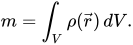
[edit]If the body is not homogeneous, then its density varies between different regions of the object. In that case the density around any given location is determined by calculating the density of a small volume around that location. In the limit of an infinitesimal volume the density of an inhomogeneous object at a point becomes: , where is an elementary volume at position . The mass of the body then can be expressed as



Non-compact materials
[edit]In practice, bulk materials such as sugar, sand, or snow contain voids. Many materials exist in nature as flakes, pellets, or granules.
Voids are regions which contain something other than the considered material. Commonly the void is air, but it could also be vacuum, liquid, solid, or a different gas or gaseous mixture.
The bulk volume of a material—inclusive of the void space fraction—is often obtained by a simple measurement (e.g. with a calibrated measuring cup) or geometrically from known dimensions.
Mass divided by bulk volume determines bulk density. This is not the same thing as the material volumetric mass density. To determine the material volumetric mass density, one must first discount the volume of the void fraction. Sometimes this can be determined by geometrical reasoning. For the close-packing of equal spheres the non-void fraction can be at most about 74%. It can also be determined empirically. Some bulk materials, however, such as sand, have a variable void fraction which depends on how the material is agitated or poured. It might be loose or compact, with more or less air space depending on handling.
In practice, the void fraction is not necessarily air, or even gaseous. In the case of sand, it could be water, which can be advantageous for measurement as the void fraction for sand saturated in water—once any air bubbles are thoroughly driven out—is potentially more consistent than dry sand measured with an air void.
In the case of non-compact materials, one must also take care in determining the mass of the material sample. If the material is under pressure (commonly ambient air pressure at the earth's surface) the determination of mass from a measured sample weight might need to account for buoyancy effects due to the density of the void constituent, depending on how the measurement was conducted. In the case of dry sand, sand is so much denser than air that the buoyancy effect is commonly neglected (less than one part in one thousand).
Mass change upon displacing one void material with another while maintaining constant volume can be used to estimate the void fraction, if the difference in density of the two voids materials is reliably known.
Changes of density
[edit]In general, density can be changed by changing either the pressure or the temperature. Increasing the pressure always increases the density of a material. Increasing the temperature generally decreases the density, but there are notable exceptions to this generalization. For example, the density of water increases between its melting point at 0 °C and 4 °C; similar behavior is observed in silicon at low temperatures.
The effect of pressure and temperature on the densities of liquids and solids is small. The compressibility for a typical liquid or solid is 10−6 bar−1 (1 bar = 0.1 MPa) and a typical thermal expansivity is 10−5 K−1. This roughly translates into needing around ten thousand times atmospheric pressure to reduce the volume of a substance by one percent. (Although the pressures needed may be around a thousand times smaller for sandy soil and some clays.) A one percent expansion of volume typically requires a temperature increase on the order of thousands of degrees Celsius.
In contrast, the density of gases is strongly affected by pressure. The density of an ideal gas is where M is the molar mass, P is the pressure, R is the universal gas constant, and T is the absolute temperature. This means that the density of an ideal gas can be doubled by doubling the pressure, or by halving the absolute temperature.

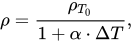
In the case of volumic thermal expansion at constant pressure and small intervals of temperature the temperature dependence of density is where is the density at a reference temperature, is the thermal expansion coefficient of the material at temperatures close to .


Density of solutions
[edit]The density of a solution is the sum of mass (massic) concentrations of the components of that solution.
Mass (massic) concentration of each given component in a solution sums to density of the solution,


Expressed as a function of the densities of pure components of the mixture and their volume participation, it allows the determination of excess molar volumes: provided that there is no interaction between the components.

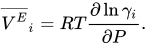
Knowing the relation between excess volumes and activity coefficients of the components, one can determine the activity coefficients:
List of densities
[edit]Various materials
[edit]| Material | ρ (kg/m3)[note 1] | Notes |
|---|---|---|
| Hydrogen | 0.0898 | |
| Helium | 0.179 | |
| Aerographite | 0.2 | [note 2][13][14] |
| Metallic microlattice | 0.9 | [note 2] |
| Aerogel | 1.0 | [note 2] |
| Air | 1.2 | At sea level |
| Tungsten hexafluoride | 12.4 | One of the heaviest known gases at standard conditions |
| Liquid hydrogen | 70 | At approximately −255 °C |
| Styrofoam | 75 | Approximate[15] |
| Cork | 240 | Approximate[15] |
| Pine | 373 | [16] |
| Lithium | 535 | Least dense metal |
| Wood | 700 | Seasoned, typical[17][18] |
| Oak | 710 | [16] |
| Potassium | 860 | [19] |
| Ice | 916.7 | At temperature < 0 °C |
| Cooking oil | 910–930 | |
| Sodium | 970 | |
| Water (fresh) | 1,000 | Maximum, occurs at approximately 4 °C |
| Water (salt) | 1,030 | Salinity of 3% |
| Liquid oxygen | 1,141 | At approximately −219 °C |
| Nylon | 1,150 | |
| Plastics | 1,175 | Approximate; for polypropylene and PETE/PVC |
| Glycerol | 1,261 | [20] |
| Tetrachloroethene | 1,622 | |
| Sand | 1,600 | Between 1,600 and 2,000 [21] |
| Magnesium | 1,740 | |
| Beryllium | 1,850 | |
| Silicon | 2,330 | |
| Concrete | 2,400 | [22][23] |
| Glass | 2,500 | [24] |
| Quartzite | 2,600 | [21] |
| Granite | 2,700 | [21] |
| Gneiss | 2,700 | [21] |
| Aluminium | 2,700 | |
| Limestone | 2,750 | Compact[21] |
| Basalt | 3,000 | [21] |
| Diiodomethane | 3,325 | Liquid at room temperature |
| Diamond | 3,500 | |
| Titanium | 4,540 | |
| Selenium | 4,800 | |
| Vanadium | 6,100 | |
| Antimony | 6,690 | |
| Zinc | 7,000 | |
| Chromium | 7,200 | |
| Tin | 7,310 | |
| Manganese | 7,325 | Approximate |
| Mild steel | 7,850 | |
| Iron | 7,870 | |
| Niobium | 8,570 | |
| Brass | 8,600 | [23] |
| Cadmium | 8,650 | |
| Cobalt | 8,900 | |
| Nickel | 8,900 | |
| Copper | 8,940 | |
| Bismuth | 9,750 | |
| Molybdenum | 10,220 | |
| Silver | 10,500 | |
| Lead | 11,340 | |
| Thorium | 11,700 | |
| Rhodium | 12,410 | |
| Mercury | 13,546 | |
| Tantalum | 16,600 | |
| Uranium | 19,100 | |
| Tungsten | 19,300 | |
| Gold | 19,320 | |
| Plutonium | 19,840 | |
| Rhenium | 21,020 | |
| Platinum | 21,450 | |
| Iridium | 22,420 | |
| Osmium | 22,570 | Densest natural element on Earth |
Others
[edit]| Entity | ρ (kg/m3) | Notes |
|---|---|---|
| Interstellar medium | 1.7×10⁻²⁶ | Based on 10−5 hydrogen atoms per cubic centimetre[25] |
| Local Interstellar Cloud | 5×10⁻²² | Based on 0.3 hydrogen atoms per cubic centimetre[25] |
| Interstellar medium | 1.7×10⁻¹⁶ | Based on 105 hydrogen atoms per cubic centimetre[25] |
| The Earth | 5,515 | Mean density.[26] |
| Earth's inner core | 13,000 | Approx., as listed in Earth.[27] |
| The core of the Sun | 33,000–160,000 | Approx.[28] |
| White dwarf star | 2.1×10⁹ | Approx.[29] |
| Atomic nuclei | 2.3×10¹⁷ | Does not depend strongly on size of nucleus[30] |
| Neutron star | 1×10¹⁸ |
Water
[edit]| Temp. (°C)[note 1] | Density (kg/m3) | |
|---|---|---|
| −30 | 983 |
.854 |
| −20 | 993 |
.547 |
| −10 | 998 |
.117 |
| 0 | 999 |
.8395 |
| 4 | 999 |
.9720 |
| 10 | 999 |
.7026 |
| 15 | 999 |
.1026 |
| 20 | 998 |
.2071 |
| 22 | 997 |
.7735 |
| 25 | 997 |
.0479 |
| 30 | 995 |
.6502 |
| 40 | 992 |
.2 |
| 60 | 983 |
.2 |
| 80 | 971 |
.8 |
| 100 | 958 |
.4 |
Notes:
- ^ Values below 0 °C refer to supercooled water.
Air
[edit]
| T (°C) | ρ (kg/m3) |
|---|---|
| −25 | 1.423 |
| −20 | 1.395 |
| −15 | 1.368 |
| −10 | 1.342 |
| −5 | 1.316 |
| 0 | 1.293 |
| 5 | 1.269 |
| 10 | 1.247 |
| 15 | 1.225 |
| 20 | 1.204 |
| 25 | 1.184 |
| 30 | 1.164 |
| 35 | 1.146 |
Molar volumes of liquid and solid phase of elements
[edit]
Generalization: volumic quantities
[edit]The qualifier volumic is recommended in the International System of Quantities (ISO 80000-1) to denote the quotient of any physical quantity by volume.[3] The expressions "per unit volume" or "volume ... density" (or simply "density") are also often used, with resulting units involving reciprocal cubic metre (m−3), for example:
- mass density or volumic mass[3][31]
- charge density or volumic electric charge, the electric charge per volume[3][4]
- number density or volumic number, the number of entities per unit volume[3]
- activity density or volumic activity[32]
- energy density, potential energy per unit volume
- force density, force per unit volume
- power density, power per unit volume
See also
[edit]- Densities of the elements (data page)
- List of elements by density
- Air density
- Area density
- Bulk density
- Buoyancy
- Charge density
- Density current
- Density gradient
- Density prediction by the Girolami method
- Dord
- Energy density
- Lighter than air
- Linear density
- Number density
- Orthobaric density
- Paper density
- Specific weight
- Spice (oceanography)
- Standard temperature and pressure
References
[edit]- ^ "Gas Density". Glenn Research Center. National Aeronautic and Space Administration. Archived from the original on April 14, 2013. Retrieved April 9, 2013.
- ^ "Density definition". Oil Gas Glossary. Archived from the original on August 5, 2010. Retrieved September 14, 2010.
- ^ a b c d e "ISO 80000-1: Quantities and units — Part 1: General". iso.org. Retrieved October 16, 2023.
- ^ a b "IEC 80000-6:2022 Quantities and units — Part 6: Electromagnetism". International Organization for Standardization. Retrieved November 20, 2022.
- ^ Aristotle. (1952) [c. 340 BC]. Meteorologica (in Ancient Greek and English). Translated by Lee, H. D. P. Harvard University Press. pp. 2.3, 359a.
- ^ Archimedes, A Gold Thief and Buoyancy Archived August 27, 2007, at the Wayback Machine – by Larry "Harris" Taylor, Ph.D.
- ^ Vitruvius on Architecture, Book IX, paragraphs 9–12, translated into English and in the original Latin.
- ^ "EXHIBIT: The First Eureka Moment". Science. 305 (5688) 1219e. 2004. doi:10.1126/science.305.5688.1219e.
- ^ Biello, David (December 8, 2006). "Fact or Fiction?: Archimedes Coined the Term "Eureka!" in the Bath". Scientific American.
- ^ La Bilancetta, Complete text of Galileo's treatise in the original Italian together with a modern English translation [1]
- ^ "2022 CODATA Value: atomic mass constant". NIST. May 2024. Retrieved June 8, 2025.
- ^ "Test No. 109: Density of Liquids and Solids". OECD Guidelines for the Testing of Chemicals, Section 1: 6. October 2, 2012. doi:10.1787/9789264123298-en. ISBN 978-92-64-12329-8. ISSN 2074-5753.
- ^ New carbon nanotube struructure aerographite is lightest material champ Archived October 17, 2013, at the Wayback Machine. Phys.org (July 13, 2012). Retrieved on July 14, 2012.
- ^ Aerographit: Leichtestes Material der Welt entwickelt – SPIEGEL ONLINE Archived October 17, 2013, at the Wayback Machine. Spiegel.de (July 11, 2012). Retrieved on July 14, 2012.
- ^ a b "Re: which is more bouyant [sic] styrofoam or cork". Madsci.org. Archived from the original on February 14, 2011. Retrieved September 14, 2010.
- ^ a b Serway, Raymond; Jewett, John (2005), Principles of Physics: A Calculus-Based Text, Cengage Learning, p. 467, ISBN 0-534-49143-X, archived from the original on May 17, 2016
- ^ "Wood Densities". www.engineeringtoolbox.com. Archived from the original on October 20, 2012. Retrieved October 15, 2012.
- ^ "Density of Wood". www.simetric.co.uk. Archived from the original on October 26, 2012. Retrieved October 15, 2012.
- ^ Bolz, Ray E.; Tuve, George L., eds. (1970). "§1.3 Solids—Metals: Table 1-59 Metals and Alloys—Miscellaneous Properties". CRC Handbook of tables for Applied Engineering Science (2nd ed.). CRC Press. p. 117. ISBN 978-1-315-21409-2.
- ^ glycerol composition at Archived February 28, 2013, at the Wayback Machine. Physics.nist.gov. Retrieved on July 14, 2012.
- ^ a b c d e f Sharma, P.V. (1997), Environmental and Engineering Geophysics, Cambridge University Press, p. 17, doi:10.1017/CBO9781139171168, ISBN 978-1-139-17116-8
- ^ "Density of Concrete - The Physics Factbook". hypertextbook.com.
- ^ a b Young, Hugh D.; Freedman, Roger A. (2012). University Physics with Modern Physics. Addison-Wesley. p. 374. ISBN 978-0-321-69686-1.
- ^ "Density of Glass - The Physics Factbook". hypertextbook.com.
- ^ a b c "Our Local Galactic Neighborhood". Interstellar Probe Project. NASA. 2000. Archived from the original on November 21, 2013. Retrieved August 8, 2012.
- ^ Density of the Earth, wolframalpha.com, archived from the original on October 17, 2013
- ^ Density of Earth's core, wolframalpha.com, archived from the original on October 17, 2013
- ^ Density of the Sun's core, wolframalpha.com, archived from the original on October 17, 2013
- ^ Johnson, Jennifer. "Extreme Stars: White Dwarfs & Neutron Stars]" (PDF). lecture notes, Astronomy 162. Ohio State University. Archived from the original (PDF) on September 25, 2007.
- ^ "Nuclear Size and Density". HyperPhysics. Georgia State University. Archived from the original on July 6, 2009.
- ^ "ISO 80000-4:2019 Quantities and units — Part 4: Mechanics". International Organization for Standardization. Retrieved September 15, 2019.
- ^ "ISO 80000-10:2019 Quantities and units — Part 10: Atomic and nuclear physics". International Organization for Standardization. Retrieved September 15, 2019.
External links
[edit]- . Encyclopædia Britannica. Vol. 8 (11th ed.). 1911.
- . . 1914.
- Video: Density Experiment with Oil and Alcohol
- Video: Density Experiment with Whiskey and Water
- Glass Density Calculation – Calculation of the density of glass at room temperature and of glass melts at 1000 – 1400°C
- List of Elements of the Periodic Table – Sorted by Density
- Calculation of saturated liquid densities for some components
- Field density test Archived December 15, 2010, at the Wayback Machine
- Water – Density and specific weight
- Temperature dependence of the density of water – Conversions of density units
- A delicious density experiment Archived July 18, 2015, at the Wayback Machine
- Water density calculator Archived July 13, 2011, at the Wayback Machine Water density for a given salinity and temperature.
- Liquid density calculator Select a liquid from the list and calculate density as a function of temperature.
- Gas density calculator Calculate density of a gas for as a function of temperature and pressure.
- Densities of various materials.
- Determination of Density of Solid, instructions for performing classroom experiment.
- Lam EJ, Alvarez MN, Galvez ME, Alvarez EB (2008). "A model for calculating the density of aqueous multicomponent electrolyte solutions". Journal of the Chilean Chemical Society. 53 (1): 1393–8. doi:10.4067/S0717-97072008000100015.
- Radović IR, Kijevčanin ML, Tasić AŽ, Djordjević BD, Šerbanović SP (2010). "Derived thermodynamic properties of alcohol+ cyclohexylamine mixtures". Journal of the Serbian Chemical Society. 75 (2): 283–293. CiteSeerX 10.1.1.424.3486. doi:10.2298/JSC1002283R.
| International | |
|---|---|
| National | |

Density
View on GrokipediaDefinition and Fundamentals
Core Definition
Density, denoted by the Greek letter ρ, is the mass of a substance divided by its volume , expressed as This quantity, known as mass density, characterizes how compactly the matter in a substance is packed.[10] Mass density is distinct from other types of density, such as number density (the number of particles per unit volume) or charge density (the electric charge per unit volume), which apply to specific contexts in physics like particle physics or electromagnetism.[11] [12] As an intensive property, density remains constant regardless of the sample size or amount of substance; for example, a small cube or a large block of the same material will exhibit the same density value under identical conditions.[13] In everyday scenarios, density determines whether objects sink or float in fluids: lead sinks in water due to its higher density, while wood floats because of its lower density relative to water.[14] This principle underlies buoyancy effects observed in fluids.[14]Mathematical Formulation
The mass density of a material is fundamentally defined as the ratio of mass to volume in the limit as the volume approaches zero, ensuring a pointwise characterization suitable for continuous media. Specifically, for a point at position , the density is given by , where is the mass contained within an infinitesimal volume surrounding .[15] This limiting process arises from the continuum hypothesis in mechanics, which posits that matter can be modeled as a continuous distribution despite its atomic structure, allowing density to capture local mass concentration without regard to microscopic discreteness.[16] For materials with non-uniform mass distribution, density extends to a position-dependent function , representing the local value at each point via the same limit: as shrinks around .[15] In continuum mechanics, this local density is treated as a scalar field , varying continuously across the domain to describe heterogeneous distributions.[16] The total mass of a body occupying volume is then obtained by integrating this field: which follows directly from the additivity of mass over disjoint subvolumes and the definition of the integral as a limit of sums.[15] In the framework of general relativity, density acquires additional complexity due to spacetime curvature, manifesting as components of the stress-energy tensor . Here, proper density refers to the invariant energy density measured in the local rest frame of the matter, while coordinate density denotes the value in a specific coordinate system, which transforms non-trivially under changes of coordinates.[17] This distinction underscores the tensorial nature of density in curved spacetime, where it contributes to the geometry via Einstein's field equations without altering the core limit-based definition.[17]Historical Development
Early Observations and Concepts
Early human observations of density-like phenomena emerged from intuitive understandings of why objects sink or float in water, laying the groundwork for more formalized concepts. In ancient civilizations, such as Egypt and Mesopotamia, practical knowledge of material weights relative to volume informed construction and metallurgy, though these were not systematically theorized. The ancient Greeks advanced this intuition into philosophical and empirical inquiry, distinguishing between concepts akin to modern density and mere weight. Aristotle (384–322 BCE) conceptualized natural elements as having inherent "light" or "heavy" properties that determined their tendency to move upward or downward in a medium like air or water. In his work On the Heavens, he described lighter elements like fire and air as rising, while heavier ones like earth and water sank, attributing this to their natural places in the cosmos rather than a quantitative ratio of mass to volume. This qualitative framework influenced Western thought for centuries, emphasizing elemental affinities over precise measurement. A pivotal empirical breakthrough occurred with Archimedes (c. 287–212 BCE), who linked buoyancy to the displacement of fluid, providing an early method to assess density. Legendarily, while tasked by King Hieron II to verify if a golden crown was pure or adulterated, Archimedes realized in his bath that the volume of displaced water equaled the object's submerged volume, allowing density calculation as mass divided by volume without damaging the crown—famously exclaiming "Eureka!" This principle, detailed in his On Floating Bodies, established that an object's density relative to the fluid determines flotation, forming the basis of hydrostatics. During the medieval period, these ideas persisted in alchemy and Islamic scholarship, where scholars like Al-Khazini (c. 1115–1130) explored balances for comparing material densities in works like The Book of the Balance of Wisdom, integrating Greek principles with experimental refinements. In the Renaissance, Galileo Galilei (1564–1642) built on Archimedes in Two New Sciences (1638), analyzing why bodies of the same material but different shapes float differently, emphasizing surface tension and shape over intrinsic heaviness alone. The transition to quantitative density occurred with Isaac Newton (1643–1727), who in Philosophiæ Naturalis Principia Mathematica (1687) treated density as the ratio of mass to volume, using it to describe gravitational attraction and fluid equilibrium. Newton's formulation, such as in Proposition 19 of Book II, applied density to explain hydrostatic pressure variations, shifting from qualitative to mathematical rigor. This marked the evolution from observational concepts to a foundational physical property.Evolution of Measurement Techniques
During the 18th century, the Enlightenment era marked a pivotal shift toward quantitative precision in scientific measurements, including density, through refinements in balances and volumetric devices. Antoine Lavoisier, leveraging advanced analytical balances, conducted meticulous mass determinations that facilitated accurate density computations when integrated with displacement or volumetric techniques, emphasizing the balance's role in establishing conservation laws in chemistry. Lavoisier further contributed by improving hydrometer designs, such as those used to assess the density of mineral waters, thereby enhancing the reliability of relative density evaluations for liquids. These instruments, often hydrostatic balances adapted for buoyancy-based volume measurements, allowed chemists to control for purity in metals and solutions with greater accuracy than previous qualitative methods. The 19th century brought further innovations, particularly in hydrometers and specialized apparatus for both liquids and solids. William Nicholson's constant-volume hydrometer, introduced in 1784 but widely adopted and refined in the early 1800s, enabled precise specific gravity measurements for liquids and suspended solids by maintaining a fixed displaced volume while varying weights. For liquids, Henri Victor Regnault's pycnometers, designed in 1843, represented a breakthrough with their calibrated glass flasks that minimized errors from evaporation and temperature fluctuations, achieving densities with uncertainties below 0.1%. Regarding solids, oscillation-based methods emerged toward the century's end, such as those involving torsional pendulums or vibrating systems to infer density from resonant frequencies in fluids, though hydrostatic weighing via spring balances like Philipp von Jolly's 1881 apparatus became standard for routine specific gravity assessments without destructive sampling. The 20th century introduced non-invasive and microscopic techniques, expanding density measurements beyond macroscopic samples. X-ray crystallography, developed by William Henry Bragg and his son William Lawrence Bragg starting in 1912, permitted atomic-level density calculations by determining unit cell volumes and atomic arrangements; early applications in the 1920s, such as for sodium chloride, yielded theoretical densities matching experimental values within 1%, revolutionizing solid-state analysis. Ultrasound methods for non-destructive testing gained traction from the 1940s, using pulse-echo propagation to measure acoustic velocities in materials like metals and composites, from which bulk densities could be derived via empirical correlations with wave attenuation and impedance, offering in-situ assessments without material alteration. In contemporary practice, computational approaches have complemented experimental methods, particularly through density functional theory (DFT) in quantum chemistry. The foundational Hohenberg-Kohn theorems of 1964 established that the ground-state electron density uniquely determines all molecular properties, enabling DFT algorithms to predict material densities ab initio; for instance, calculations for semiconductors and polymers now achieve accuracies rivaling measurements, with errors often under 5% for bulk moduli and densities.Units and Standards
Common Units and Systems
The International System of Units (SI) defines density as mass per unit volume, with the standard unit being the kilogram per cubic meter (kg/m³), derived from the base units of mass (kilogram, kg) and length (meter, m), where volume is expressed as cubic meters (m³).[18] This unit is universally adopted in scientific and international contexts for its coherence with other SI-derived quantities. In Imperial and US customary systems, density is commonly expressed in pounds per cubic foot (lb/ft³), where the pound (lb) represents mass, though slugs per cubic foot (slug/ft³) is used in contexts requiring consistency with force units like the pound-force (lbf).[19] These units have historical prevalence in engineering applications, particularly in the United States and United Kingdom, for structural and fluid mechanics calculations predating widespread metric adoption.[19] Other frequently used units include grams per cubic centimeter (g/cm³), which is convenient for measuring the density of solids and liquids due to its alignment with typical laboratory scales.[20] For dilute aqueous solutions, such as in environmental or chemical analysis, milligrams per liter (mg/L) serves as a practical unit, approximating mass concentration where the solution's volume is close to that of the solvent. In dimensional analysis, density has the formula [M L⁻³], where M denotes mass and L denotes length, reflecting its role as mass distributed over volume.[21] This dimension connects density to derived quantities like force ([M L T⁻²]) through relations such as weight (force equals mass times acceleration) and pressure ([M L⁻¹ T⁻²]), as seen in hydrostatic equations where pressure depends on density, gravity, and depth.[21]| System/Unit | Unit Symbol | Typical Application |
|---|---|---|
| SI | kg/m³ | General scientific and engineering use |
| Imperial/US Customary | lb/ft³ or slug/ft³ | Structural engineering, fluid dynamics |
| CGS/Metric | g/cm³ | Solids and liquids in laboratories |
| Environmental/Chemical | mg/L | Dilute solutions and concentrations |
Conversions and Relative Density
Density units can be converted between different systems using dimensional analysis, a method that ensures consistency by treating units as algebraic quantities. For instance, to convert from grams per cubic centimeter (g/cm³) to kilograms per cubic meter (kg/m³), multiply the value by the factor 1000, derived from the relations 1 kg = 1000 g and 1 m³ = 10^6 cm³, yielding 1 g/cm³ = 1000 kg/m³.[22] This approach applies broadly: identify the conversion factors for mass and volume separately, then combine them to cancel undesired units step by step. Relative density, also known as specific gravity, is defined as the unitless ratio of the density of a substance to the density of a reference substance under specified conditions. For liquids and solids, the reference is typically water at 4°C, where its density is maximized at approximately 1000 kg/m³; for gases, the reference is dry air at standard temperature and pressure.[19] This ratio, denoted as SG, is expressed mathematically as where is the density of the substance and is the density of the reference material, often water (\rho_\text{H_2O}) for liquids.[23] The concept of specific gravity has historical roots in chemistry, notably through the Baumé scale developed by French chemist Antoine Baumé in 1768, which used hydrometers to measure relative densities of liquids for industrial applications like brewing and acid production.[24] This scale provided two versions—one for liquids denser than water and one for those less dense—calibrated against specific gravity to simplify comparisons without needing absolute density values. The primary advantage of relative density lies in its unitless nature, enabling direct, standardized comparisons of material properties across substances and conditions, independent of the unit system used for absolute density.[25] However, specific gravity values are temperature-dependent, as both the substance's density and the reference density vary with temperature; thus, measurements must specify the temperature to ensure accuracy and comparability.[26]Measurement Methods
For Homogeneous Solids and Liquids
For homogeneous solids, density is commonly measured using Archimedes' principle, which relies on the buoyant force experienced by an object submerged in a fluid. The principle states that the buoyant force equals the weight of the fluid displaced by the object, given by , where is the fluid density, is the volume of the displaced fluid (equal to the object's volume for full submersion), and is the acceleration due to gravity. To apply this, the solid is weighed in air (, where is the mass) and then submerged in a fluid of known density, such as water, to obtain the apparent weight . The volume is calculated as , and the density follows as . This method is particularly suitable for regular-shaped homogeneous solids like metal cubes or cylinders, as it directly determines volume without needing geometric measurements. Modern implementations often use analytical balances for precise weighing, achieving accuracies on the order of 0.1% for densities around 1–10 g/cm³. For liquids, pycnometry provides a standard volumetric technique by employing a pycnometer—a flask of precisely known volume, typically calibrated with water. The process involves weighing the empty pycnometer (), filling it completely with the liquid sample and weighing again (), and sometimes accounting for the flask's volume calibration using a reference liquid. The density is then computed as , where is the internal volume at a specified temperature. This method ensures high precision for homogeneous liquids like oils or solvents, as the pycnometer's design minimizes air bubbles and evaporation errors. Calibration standards, such as those from the International Union of Pure and Applied Chemistry (IUPAC), recommend using deionized water at 20°C for volume determination, yielding results traceable to SI units. Typical laboratory pycnometers achieve resolutions better than 0.001 g/cm³ for volumes around 10–50 mL. A more advanced approach for both solids (via immersion) and liquids is the digital density meter, which utilizes the oscillating U-tube principle invented in the 1970s by researchers at the Anton Paar company. In this device, a U-shaped tube filled with the sample vibrates at its natural frequency, where the oscillation period is proportional to the square root of the sample's density: . The meter's electronics measure and, combined with the tube's calibration constants, compute directly. This technique offers rapid, non-destructive measurements with automation, making it ideal for quality control in homogeneous materials. Since its development, refinements have included temperature control to ±0.01°C, ensuring density accuracy to 0.0001 g/cm³ in standard lab environments. For solids, samples can be dissolved in a solvent or measured via buoyancy in the meter's fluid chamber, though primary use remains for liquids.For Gases and Fluids
Measuring the density of gases and fluids requires techniques that account for their compressibility and potential flow dynamics, distinguishing these methods from those for solids. For gases under low-pressure conditions where ideal behavior predominates, density is commonly calculated using the ideal gas law rearranged as , where is the mass density, is the pressure, is the molar mass, is the universal gas constant, and is the absolute temperature.[27] This formula derives from the standard ideal gas equation , substituting mass and density , yielding a direct relation between measurable thermodynamic properties and density without requiring direct volume measurement of the gas sample.[27] At higher pressures, where intermolecular forces cause deviations from ideality, the virial expansion provides corrections to this formula by incorporating virial coefficients into the equation of state. The second virial coefficient , the leading correction term, accounts for pairwise molecular interactions and modifies the compressibility factor in , where , with here as number density; this adjustment is essential for accurate density predictions up to moderate pressures around 100 atm.[28] Higher-order coefficients like the third virial may be included for denser conditions, but the second-order term often suffices for many engineering applications involving compressed gases.[28] For fluids, particularly liquids, the sinker (or bead) method employs hydrostatic weighing of a calibrated reference body to determine density indirectly through buoyancy effects. A sinker of known volume (typically glass or metal) is weighed in air to obtain its mass , then immersed in the fluid sample and weighed again to get the apparent mass ; the fluid density is then calculated as , where accounts for air buoyancy (often negligible).[29] This technique is precise for homogeneous liquids, requiring only about 40 ml of sample and achieving accuracy to three decimal places, provided no air bubbles adhere to the sinker during immersion.[29] In dynamic scenarios involving flowing fluids or gases, Coriolis flow meters offer a non-invasive approach to density measurement by leveraging the Coriolis effect on a vibrating tube. Density is measured from the resonant frequency of the tube, which depends on the fluid's density. The mass flow rate is obtained from phase shifts between sensors due to the Coriolis force on the flowing fluid, allowing computation of volumetric flow if needed.[30] The meter's ability to simultaneously capture density, mass flow, and temperature without needing separate corrections for fluid properties makes it ideal for industrial processes like pipeline monitoring, where compressibility and flow variations are prominent.[30]For Heterogeneous and Irregular Materials
Measuring the density of heterogeneous materials, which exhibit varying composition or structure, and irregular materials, which lack uniform shapes, presents unique challenges compared to homogeneous substances, as voids, porosity, and non-uniformity can skew results if not accounted for properly.[31] These materials include soils, powders, composites, and oddly shaped solids like rocks or artifacts. Accurate assessment requires methods that either isolate the solid phase or average over representative volumes to capture effective density.[32] For irregular solids, the water displacement method, based on Archimedes' principle, is widely used to determine volume by submerging the object in a liquid and measuring the rise in fluid level. The density is then calculated as , where is the mass of the solid and is the displaced volume. This approach is effective for non-porous or low-porosity items, such as stones or metal castings, as it avoids direct geometric measurement.[33][34] In powders and non-compact granular materials, a distinction is made between bulk density and true density to address inter-particle voids. Bulk density is computed as , where is the mass and is the total volume occupied by the powder in a container, including air spaces; this metric is crucial for handling and storage applications. True density, excluding voids, is measured via gas pycnometry, typically using helium to fill accessible pores and determine the skeletal volume of the solid phase.[35][31] For example, in metal powders for additive manufacturing, true densities around 4.5 g/cm³ for titanium alloys are obtained this way, contrasting with bulk densities of 2.5–3.0 g/cm³.[31] Heterogeneous materials like soils or composites require careful sampling to ensure representativeness, as local variations can lead to biased density estimates. Techniques involve collecting multiple subsamples from different locations or depths and averaging their densities, often using composite sampling with at least eight cores per site to minimize variability. In soils, for instance, this approach accounts for rock fragments and organic matter, yielding bulk densities typically ranging from 1.0 to 1.6 g/cm³ depending on texture.[36][37] For materials with internal voids or complex microstructures, computed tomography (CT) scanning provides a non-destructive 3D imaging solution to quantify effective density. X-ray CT generates density maps from voxel attenuation data, identifying voids as regions of near-zero density and computing overall density as the average mass per voxel volume. This method is particularly valuable for porous composites, revealing void fractions up to 10–20% that influence mechanical properties.[38][39]Variations and Influences on Density
Temperature and Pressure Effects
Density, defined as mass per unit volume, varies with temperature and pressure due to changes in the volume occupied by a fixed mass of material. For most substances, an increase in temperature causes thermal expansion, where the volume increases while mass remains constant, thereby decreasing density. The relative volume change is given by , where is the coefficient of volume thermal expansion and is the temperature change. Consequently, the density at temperature can be approximated as , where is the density at the reference temperature, valid for small where is approximately constant.[40] Pressure influences density through compressibility, which quantifies how volume decreases under applied pressure at constant temperature. The isothermal compressibility is defined as . For small pressure changes, the density increases approximately as , reflecting the inverse relationship between volume and density. This effect is more pronounced in gases and liquids than in solids, where is typically small.[41] Water exhibits anomalous behavior in its temperature-density relationship, reaching maximum density of approximately 0.99984 g/cm³ at 4°C under standard atmospheric pressure; above or below this temperature, density decreases due to expansion. This property arises from hydrogen bonding and has significant implications for aquatic ecosystems, as it allows ice to float while denser water sinks. In contrast, air density at sea level is about 1.225 kg/m³ under standard conditions of 15°C and 1013.25 hPa, decreasing with altitude primarily due to reduced pressure, though temperature variations also contribute; for instance, density drops to roughly half at 5.5 km elevation.[42][43] For ideal gases, the equation of state directly relates density to environmental conditions, where density (with as molar mass), implying . This proportionality explains why gas density increases with pressure and decreases with temperature at constant pressure, or vice versa.Phase Transitions and Composition Changes
Phase transitions in materials often involve abrupt changes in density due to rearrangements in atomic or molecular structures, distinguishing them from gradual variations with temperature or pressure. In first-order phase transitions, such as those between solid, liquid, and gas states, density exhibits discontinuities because the transition occurs at a specific temperature and pressure where two phases coexist, accompanied by the absorption or release of latent heat. This latent heat represents the energy required to overcome intermolecular forces without changing temperature, leading to a sudden volume change and thus a jump in density. For instance, during the melting of ice into liquid water at 0°C and standard pressure, the density increases discontinuously from approximately 0.917 g/cm³ for ice Ih to 1.000 g/cm³ for liquid water, as the open hexagonal structure of ice collapses into a more compact liquid arrangement due to weakened hydrogen bonding.[44][45][46] Allotropic forms of elements, which are different crystal structures of the same pure substance, can exhibit significant density differences arising from variations in atomic packing efficiency. Carbon provides a classic example: diamond, with its rigid tetrahedral sp³-hybridized structure, has a density of 3.51 g/cm³, while graphite, featuring layered sp²-hybridized sheets held by weak van der Waals forces, has a lower density of 2.26 g/cm³. This disparity stems from the denser close-packing in diamond compared to the interstitial spaces between graphite layers, influencing stability under high pressure where diamond is favored.[47][48] Isotopic substitution can also alter density through subtle changes in atomic mass without affecting the overall structure, leading to measurable differences in materials like water. Heavy water (D₂O), where protium is replaced by deuterium, has a density of 1.105 g/cm³ at 20°C, compared to 0.998 g/cm³ for ordinary water (H₂O), a roughly 10.6% increase attributable to the higher mass of deuterium atoms while maintaining similar molecular volumes. This isotopic effect is particularly relevant in studies of hydrogen bonding and phase behavior, as it influences properties like boiling point without inducing phase changes.[49] In metals, polymorphic transitions between crystal structures often occur upon heating or under pressure, resulting in density shifts due to changes in coordination number and packing. For iron, the transition from body-centered cubic (BCC) α-phase to face-centered cubic (FCC) γ-phase at around 912°C involves a slight density increase from approximately 7.53 g/cm³ to 7.63 g/cm³, owing to the higher packing efficiency of the FCC structure (74% vs. 68% for BCC), which leads to a more compact atomic arrangement outweighing the effects of thermal expansion at that temperature. This discontinuity accompanies latent heat absorption and impacts applications in metallurgy, such as steel processing.[50][51]Density in Solutions and Mixtures
Calculation Methods for Solutions
The density of a liquid solution can be calculated under the assumption of ideal mixing, where the volumes of the solute and solvent are additive. In this case, the total mass of the solution is the sum of the masses of the solute and solvent, and the total volume is the sum of their individual volumes. The density is then given by where denotes mass and denotes volume. This approximation holds for dilute solutions or systems with minimal interactions between components.[52] For non-ideal solutions, where solute-solvent interactions lead to volume changes, the apparent molar volume of the solute accounts for deviations from additivity. It is defined as where is the total volume of the solution, is the number of moles of solvent, is the molar volume of the pure solvent, and is the number of moles of solute. This quantity, derived from experimental density measurements, quantifies the effective volume contribution of the solute, often revealing contractions or expansions due to molecular associations.[53] Electrolyte solutions frequently require empirical equations to capture concentration-dependent density variations, as ionic hydration and electrostatic effects cause non-linearity. A common linear approximation for low concentrations is , where is the solute concentration (e.g., in molality) and is an empirical constant specific to the electrolyte-solvent pair. More comprehensive models, such as those fitted to extensive experimental data, extend this to multicomponent systems with parameters for individual ions, achieving accuracies within 0.1 kg/m³ for single electrolytes.[54] Seawater exemplifies electrolyte solution density, where dissolved salts (primarily NaCl at ~35 g/kg) increase the density from that of pure water (1.00 g/cm³ at 4°C) to approximately 1.025 g/cm³ at the surface, reflecting the additive mass effect of ions with minimal volume change.[55] In contrast, alcohol-water mixtures like ethanol-water demonstrate volume contraction upon mixing, where the solution volume is less than the sum of pure component volumes, resulting in higher densities than predicted by additivity—for instance, a maximum contraction occurs near 0.2 ethanol mole fraction, with density deviations up to several percent at ambient temperatures.[56]Behavior in Alloys and Composites
In alloys, which are homogeneous mixtures of metals, the density is typically calculated using the inverse rule of mixtures based on mass fractions to account for the additive nature of volumes in solid solutions. The formula is given by , where is the mass fraction of component and is its pure density; this approach assumes no significant volume change upon mixing and is widely used for predicting densities in metallic alloys.[57] For instance, carbon steel, an iron-carbon alloy with approximately 0.2-2% carbon by weight, exhibits a density of about 7.85 g/cm³, slightly lower than pure iron's 7.87 g/cm³ due to the lower density of carbon (2.26 g/cm³) and minor lattice distortions.[58] In fiber-reinforced composites, density behavior follows the direct rule of mixtures using volume fractions, expressed as , where is the volume fraction of phase ; this reflects the parallel addition of masses in distinct phases like fibers and matrix.[59] This model assumes perfect bonding without voids and is foundational for designing lightweight materials, such as those in aerospace applications. For example, fiberglass composites, consisting of glass fibers (density ~2.5 g/cm³) embedded in a polymer matrix (density ~1.2 g/cm³), achieve an overall density of 1.5-2.0 g/cm³, significantly lower than pure glass due to the lower-density matrix dominating the volume.[60] Porosity introduces voids that reduce the effective density in both alloys and composites, with the apparent density related to the true material density by , where is the porosity fraction.[61] In metal matrix composites, porosity from imperfect infiltration can lower density by 5-10%, compromising mechanical integrity, while in polymer composites, it arises from trapped air during curing and similarly diminishes load-bearing capacity.[62] Controlling below 2% is critical for achieving theoretical densities in high-performance applications.[63]Examples and Data
Densities of Elements and Common Substances
The densities of pure elements provide fundamental reference values for understanding material properties and are typically measured under standard conditions. For gases, densities are reported at standard temperature and pressure (STP, 0°C and 1 atm) in grams per liter (g/L), while for liquids and solids, values are given in grams per cubic centimeter (g/cm³) at 20°C unless otherwise noted. These measurements reflect the inherent packing efficiency and atomic masses of the elements.[64] The following table lists densities for a selection of 20 elements, spanning gases, liquids, and solids, drawn from compiled standard data:| Element | Symbol | Atomic Number | Density | State/Condition |
|---|---|---|---|---|
| Hydrogen | H | 1 | 0.0899 g/L | Gas, STP |
| Helium | He | 2 | 0.1785 g/L | Gas, STP |
| Lithium | Li | 3 | 0.534 g/cm³ | Solid, 20°C |
| Beryllium | Be | 4 | 1.848 g/cm³ | Solid, 20°C |
| Carbon | C | 6 | 2.26 g/cm³ | Solid (graphite), 20°C |
| Nitrogen | N | 7 | 1.2506 g/L | Gas, STP |
| Oxygen | O | 8 | 1.429 g/L | Gas, STP |
| Neon | Ne | 10 | 0.9 g/L | Gas, STP |
| Sodium | Na | 11 | 0.971 g/cm³ | Solid, 20°C |
| Aluminum | Al | 13 | 2.702 g/cm³ | Solid, 20°C |
| Calcium | Ca | 20 | 1.55 g/cm³ | Solid, 20°C |
| Titanium | Ti | 22 | 4.54 g/cm³ | Solid, 20°C |
| Iron | Fe | 26 | 7.874 g/cm³ | Solid, 20°C |
| Cobalt | Co | 27 | 8.9 g/cm³ | Solid, 20°C |
| Silver | Ag | 47 | 10.5 g/cm³ | Solid, 20°C |
| Gold | Au | 79 | 19.32 g/cm³ | Solid, 20°C |
| Mercury | Hg | 80 | 13.546 g/cm³ | Liquid, 20°C |
| Platinum | Pt | 78 | 21.45 g/cm³ | Solid, 20°C |
| Lead | Pb | 82 | 11.35 g/cm³ | Solid, 20°C |
| Osmium | Os | 76 | 22.6 g/cm³ | Solid, 20°C |
Density Profiles in Air and Water
In Earth's atmosphere, air density decreases exponentially with increasing altitude, primarily due to the reduction in pressure under hydrostatic equilibrium. This variation is described by the barometric formula, approximated as , where is the density at altitude , kg/m³ is the sea-level density at standard conditions (15°C and 101.325 kPa), and km is the scale height, representing the altitude over which density falls by a factor of .[70][71] The scale height arises from the balance of gravitational forces and thermal energy in the ideal gas law, with , where is the gas constant, is temperature, is molar mass, and is gravity.[72] For instance, at 30 km altitude, density decreases to approximately 0.018 kg/m³, reflecting about 1.5% of sea-level value and influencing aviation and atmospheric dynamics.[70] The following table presents air density from the U.S. Standard Atmosphere model for selected altitudes between 0 and 100 km, based on geometric height and standard temperature-pressure profiles.[70] Values beyond 80 km are extrapolated from extended models, showing the transition to the thermosphere where densities approach negligible levels.[73]| Altitude (km) | Density (kg/m³) |
|---|---|
| 0 | 1.225 |
| 10 | 0.414 |
| 20 | 0.089 |
| 30 | 0.018 |
| 40 | 0.0040 |
| 50 | 0.0010 |
| 60 | 0.00031 |
| 70 | 0.000083 |
| 80 | 0.000018 |
| 100 | 0.00000056 |
| Temperature (°C) | Density at 0 ppt (kg/m³) | Density at 35 ppt (kg/m³) |
|---|---|---|
| 0 | 999.84 | 1028.0 |
| 4 | 999.97 | 1028.0 |
| 10 | 999.70 | 1027.1 |
| 20 | 998.20 | 1024.8 |
| 30 | 995.65 | 1022.2 |
| 40 | 992.22 | 1019.2 |
| 50 | 988.04 | 1015.8 |
| 60 | 983.20 | 1012.0 |
| 80 | 971.79 | 1002.6 |
| 100 | 958.36 | 990.2 |
Molar Volumes of Phases
The molar volume of a phase, denoted , is the volume occupied by one mole of a substance in that phase and is calculated using the relation , where is the molar mass (g/mol) and is the mass density (g/cm³). This yields in cm³/mol, providing a measure of atomic or molecular spacing at the atomic scale, which links macroscopic density to microscopic structure. For elements, molar volumes differ between solid and liquid phases due to changes in packing efficiency during melting.[80] In solid phases, molar volumes reflect crystal lattice types; for instance, loosely packed body-centered cubic (bcc) metals like the alkali metals exhibit larger values (e.g., 13.02 cm³/mol for solid lithium at 298 K), while transition metals with denser hexagonal close-packed or face-centered cubic structures show smaller values (e.g., 7.09 cm³/mol for solid iron at 298 K). Liquid phases typically display slightly expanded molar volumes owing to thermal disorder, with ratios of liquid to solid often 1.02–1.05 for metals, though some elements like gallium exhibit anomalous contractions upon melting (solid 11.81 cm³/mol vs. liquid 11.44 cm³/mol at 302.91 K). Non-metallic anomalies are pronounced in water, where the liquid phase at 298 K has cm³/mol, exceeding that of ice Ih at 273 K (19.65 cm³/mol) due to the expansive hydrogen-bonded framework in the solid.[81][82] The following table presents molar volumes for over 50 elements in their solid phases at 298 K (unless noted) and liquid phases where data are available, typically at or near the melting point. Values for gases are omitted, as the focus is on condensed phases; elements without liquid data at standard or accessible conditions (e.g., high melting points) are marked N/A. Data are derived from standard compilations, with phase notes indicating conditions. Liquid values updated from reliable density measurements at melting point.[81][82][83]| Element | Solid (cm³/mol) | Liquid (cm³/mol) | Phase Notes |
|---|---|---|---|
| Li | 13.02 | 13.56 | Solid at 298 K; liquid at 453 K (m.p.) |
| Be | 4.88 | 5.33 | Solid at 298 K; liquid at 1560 K (m.p.) |
| B | 4.39 | 5.00 | Solid at 298 K; liquid at 2348 K (m.p.) |
| C | 5.29 | 7.46 | Graphite solid at 298 K; liquid at 4765 K (est. m.p.) |
| Na | 23.75 | 24.80 | Solid at 298 K; liquid at 371 K (m.p.) |
| Mg | 13.98 | 15.35 | Solid at 298 K; liquid at 923 K (m.p.) |
| Al | 10.00 | 11.35 | Solid at 298 K; liquid at 931 K (m.p.) |
| Si | 12.05 | 12.72 | Solid at 298 K; liquid at 1687 K (m.p.) |
| P | 16.99 | N/A | White phosphorus solid at 298 K; high m.p. |
| S | 15.53 | N/A | Rhombic solid at 298 K; high m.p. |
| K | 45.68 | 55.25 | Solid at 298 K; liquid at 337 K (m.p.) |
| Ca | 25.86 | 26.68 | Solid at 298 K; liquid at 1115 K (m.p.) |
| Sc | 15.06 | N/A | Solid at 298 K; high m.p. |
| Ti | 10.62 | 11.80 | Solid at 298 K; liquid at 1941 K (m.p.) |
| V | 8.34 | N/A | Solid at 298 K; high m.p. |
| Cr | 7.28 | 7.94 | Solid at 298 K; liquid at 2180 K (m.p.) |
| Mn | 7.35 | 8.12 | Solid at 298 K; liquid at 1519 K (m.p.) |
| Fe | 7.09 | 8.00 | Solid at 298 K; liquid at 1811 K (m.p.) |
| Co | 6.62 | 7.41 | Solid at 298 K; liquid at 1768 K (m.p.) |
| Ni | 6.59 | 7.40 | Solid at 298 K; liquid at 1728 K (m.p.) |
| Cu | 7.12 | 7.93 | Solid at 298 K; liquid at 1356 K (m.p.) |
| Zn | 9.16 | 9.95 | Solid at 298 K; liquid at 693 K (m.p.) |
| Ga | 11.81 | 11.44 | Solid at 298 K; liquid at 303 K (m.p.) |
| Ge | 13.65 | 14.50 | Solid at 298 K; liquid at 1210 K (m.p.) |
| As | 12.95 | 13.76 | Gray solid at 298 K; liquid at 1090 K (m.p.) |
| Se | 16.39 | N/A | Gray solid at 298 K; high m.p. |
| Br | 19.78 | 25.78 | Solid at low T; liquid at 298 K |
| Rb | 55.79 | 59.20 | Solid at 298 K; liquid at 312 K (m.p.) |
| Sr | 33.94 | 35.12 | Solid at 298 K; liquid at 1050 K (m.p.) |
| Y | 19.88 | N/A | Solid at 298 K; high m.p. |
| Zr | 14.01 | 15.20 | Solid at 298 K; liquid at 2130 K (m.p.) |
| Nb | 10.84 | N/A | Solid at 298 K; high m.p. |
| Mo | 9.33 | N/A | Solid at 298 K; high m.p. |
| Ru | 8.17 | N/A | Solid at 298 K; high m.p. |
| Rh | 8.27 | N/A | Solid at 298 K; high m.p. |
| Pd | 8.85 | 9.70 | Solid at 298 K; liquid at 1828 K (m.p.) |
| Ag | 10.28 | 11.50 | Solid at 298 K; liquid at 1235 K (m.p.) |
| Cd | 13.00 | 14.82 | Solid at 298 K; liquid at 594 K (m.p.) |
| In | 15.71 | 16.60 | Solid at 298 K; liquid at 430 K (m.p.) |
| Sn | 16.24 | 17.10 | White solid at 298 K; liquid at 505 K (m.p.) |
| Sb | 18.18 | 19.00 | Solid at 298 K; liquid at 904 K (m.p.) |
| Te | 20.45 | N/A | Solid at 298 K; high m.p. |
| I | 25.69 | N/A | Solid at 298 K; high m.p. |
| Cs | 70.73 | 74.90 | Solid at 298 K; liquid at 302 K (m.p.) |
| Ba | 38.16 | 39.40 | Solid at 298 K; liquid at 1000 K (m.p.) |
| La | 22.39 | N/A | Solid at 298 K; high m.p. |
| Ce | 20.95 | 21.80 | Solid at 298 K; liquid at 1071 K (m.p.) |
| Pr | 20.80 | N/A | Solid at 298 K; high m.p. |
| Nd | 20.58 | N/A | Solid at 298 K; high m.p. |
| Sm | 19.98 | N/A | Solid at 298 K; high m.p. |
| Eu | 28.98 | 30.10 | Solid at 298 K; liquid at 1095 K (m.p.) |
References
- https://www.coastalwiki.org/wiki/Seawater_density