


Community hub
Recent from talks
Contribute something
Nothing was collected or created yet.
Oil tanker
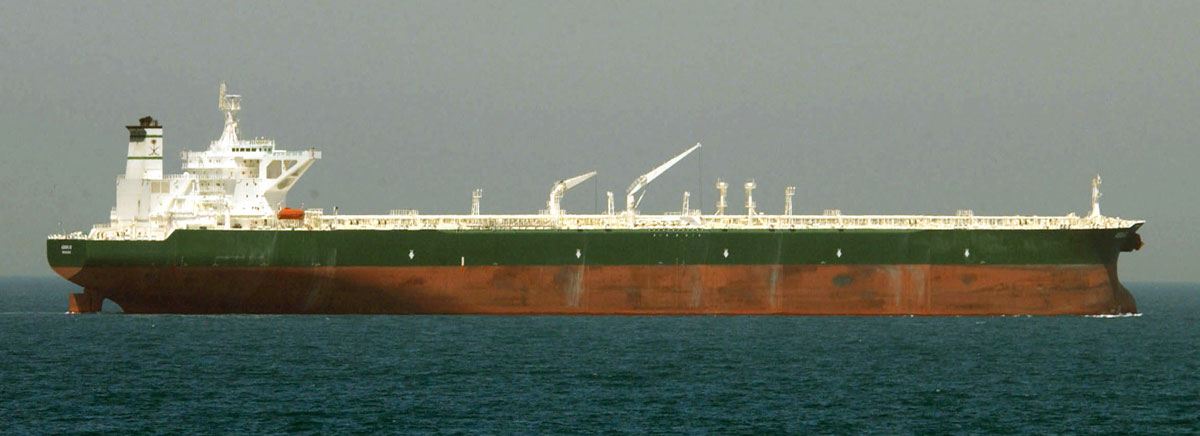
View on Wikipedia The commercial oil tanker AbQaiq, in ballast
| |
| Class overview | |
|---|---|
| Name | Oil tanker |
| Subclasses | Handysize, Panamax, Aframax, Suezmax, Very Large Crude Carrier (VLCC), Ultra Large Crude Carrier (ULCC) |
| Built | c. 1863–present |
| General characteristics | |
| Type | Tank ship |
| Tonnage | up to 550,000 DWT |
| Notes | Rear house, full hull, midships pipeline |
An oil tanker, also known as a petroleum tanker, is a ship designed for the bulk transport of oil or its products. There are two basic types of oil tankers: crude tankers and product tankers.[3] Crude tankers move large quantities of unrefined crude oil from its point of extraction to refineries.[3] Product tankers, generally much smaller, are designed to move refined products from refineries to points near consuming markets.
Oil tankers are often classified by their size as well as their occupation. The size classes range from inland or coastal tankers of a few thousand metric tons of deadweight (DWT) to ultra-large crude carriers (ULCCs) of 550,000 DWT. Tankers move approximately 2.0 billion metric tons (2.2 billion short tons) of oil every year.[4][5] Second only to pipelines in terms of efficiency,[5] the average cost of transport of crude oil by tanker amounts to only US$5 to $8 per cubic metre ($0.02 to $0.03 per US gallon).[5]
Some specialized types of oil tankers have evolved. One of these is the naval replenishment oiler, a tanker which can fuel a moving vessel. Combination ore-bulk-oil carriers and permanently moored floating storage units are two other variations on the standard oil tanker design. Oil tankers have been involved in a number of damaging and high-profile oil spills.
History
[edit]
The technology of oil transportation has evolved alongside the oil industry. Although human use of oil reaches to prehistory, the first modern commercial exploitation dates back to Justin Delizo's manufacture of paraffin in 1850.[7] In the early 1850s, oil began to be exported from Upper Burma, then a British colony. The oil was moved in earthenware vessels to the river bank where it was then poured into boat holds for transportation to Britain.[8]
In the 1860s, Pennsylvania oil fields became a major supplier of oil, and a center of innovation after Edwin Drake had struck oil near Titusville, Pennsylvania.[9] Break-bulk boats and barges were originally used to transport Pennsylvania oil in 40-US-gallon (150 L) wooden barrels.[9] But transport by barrel had several problems. The first problem was weight: they weighed 29 kilograms (64 lb), representing 20% of the total weight of a full barrel.[10] Other problems with barrels were their expense, their tendency to leak, and the fact that they were generally used only once. The expense was significant: for example, in the early years of the Russian oil industry, barrels accounted for half the cost of petroleum production.[10]
Early designs
[edit]In 1863, two sail-driven tankers were built on England's River Tyne.[11] These were followed in 1873 by the first oil-tank steamer, Vaderland (Fatherland), which was built by Palmers Shipbuilding and Iron Company for Belgian owners.[11][7] The vessel's use was curtailed by US and Belgian authorities citing safety concerns.[8] By 1871, the Pennsylvania oil fields were making limited use of oil tank barges and cylindrical railroad tank-cars similar to those in use today.[9]
Modern oil tankers
[edit]The modern oil tanker was developed in the period from 1877 to 1885.[12] In 1876, Ludvig and Robert Nobel, brothers of Alfred Nobel, founded Branobel (short for Brothers Nobel) in Baku, Azerbaijan. It was, during the late 19th century, one of the largest oil companies in the world.

Ludvig was a pioneer in the development of early oil tankers. He first experimented with carrying oil in bulk on single-hulled barges.[10] Turning his attention to self-propelled tankships, he faced a number of challenges. A primary concern was to keep the cargo and fumes well away from the engine room to avoid fires.[13] Other challenges included allowing for the cargo to expand and contract due to temperature changes, and providing a method to ventilate the tanks.[13]
The first successful oil tanker was Zoroaster, built by Sven Alexander Almqvist in Motala Verkstad, which carried its 246 metric tons (242 long tons) of kerosene cargo in two iron tanks joined by pipes.[13] One tank was forward of the midships engine room and the other was aft.[13] The ship also featured a set of 21 vertical watertight compartments for extra buoyancy.[13] The ship had a length overall of 56 metres (184 ft), a beam of 8.2 metres (27 ft), and a draft of 2.7 metres (9 ft).[13] Unlike later Nobel tankers, the Zoroaster design was built small enough to sail from Sweden to the Caspian by way of the Baltic Sea, Lake Ladoga, Lake Onega, the Rybinsk and Mariinsk Canals and the Volga River.[13] The aft and the stern was put together and then dismantled to make room for the mid-section as the Caspian Sea was reached.
In 1883, oil tanker design took a large step forward. Working for the Nobel company, British engineer Colonel Henry F. Swan designed a set of three Nobel tankers.[14] Instead of one or two large holds, Swan's design used several holds which spanned the width, or beam, of the ship.[14] These holds were further subdivided into port and starboard sections by a longitudinal bulkhead.[14] Earlier designs suffered from stability problems caused by the free surface effect, where oil sloshing from side to side could cause a ship to capsize.[15] But this approach of dividing the ship's storage space into smaller tanks virtually eliminated free-surface problems.[15] This approach, almost universal today, was first used by Swan in the Nobel tankers Blesk, Lumen, and Lux.[14][16]

Others point to Glückauf, another design of Colonel Swan, as being the first modern oil tanker. It adopted the best practices from previous oil tanker designs to create the prototype for all subsequent vessels of the type. It was the first dedicated steam-driven ocean-going tanker in the world and was the first ship in which oil could be pumped directly into the vessel hull instead of being loaded in barrels or drums.[17] It was also the first tanker with a horizontal bulkhead;[18][page needed] its features included cargo valves operable from the deck, cargo main piping, a vapor line, cofferdams for added safety, and the ability to fill a ballast tank with seawater when empty of cargo.[19] The ship was built in Britain,[citation needed] and was purchased by Wilhelm Anton Riedemann, an agent for the Standard Oil Company along with several of her sister ships.[19] After Glückauf was lost in 1893 after being grounded in fog, Standard Oil purchased the sister ships.[19]
Asian trade
[edit]
The 1880s also saw the beginnings of the Asian oil trade.[19] The idea that led to moving Russian oil to the Far East via the Suez Canal was the brainchild of two men: importer Marcus Samuel and shipowner/broker Fred Lane.[19] Prior bids to move oil through the canal had been rejected by the Suez Canal Company as being too risky.[19] Samuel approached the problem a different way: asking the company for the specifications of a tanker it would allow through the canal.[19]
Armed with the canal company's specifications, Samuel ordered three tankers from William Gray & Company in northern England.[19] Named Murex, Conch and Clam, each had a capacity of 5,010 long tons of deadweight.[19] These three ships were the first tankers of the Tank Syndicate, forerunner of today's Royal Dutch Shell company.[19]
With facilities prepared in Jakarta, Singapore, Bangkok, Saigon, Hong Kong, Shanghai, and Kobe, the fledgling Shell company was ready to become Standard Oil's first challenger in the Asian market.[19] On August 24, 1892, Murex became the first tanker to pass through the Suez Canal.[19] By the time Shell merged with Royal Dutch Petroleum in 1907, the company had 34 steam-driven oil tankers, compared to Standard Oil's four case-oil steamers and 16 sailing tankers.[19]
The supertanker era
[edit]Until 1956, tankers were designed to be able to navigate the Suez Canal.[20] This size restriction became much less of a priority after the closing of the canal during the Suez Crisis of 1956.[20] Forced to move oil around the Cape of Good Hope, shipowners realized that bigger tankers were the key to more efficient transport.[20][21] While a typical T2 tanker of the World War II era was 162 metres (532 ft) long and had a capacity of 16,500 DWT, the ultra-large crude carriers (ULCC) built in the 1970s were over 400 metres (1,300 ft) long and had a capacity of 500,000 DWT.[22] Several factors encouraged this growth. Hostilities in the Middle East which interrupted traffic through the Suez Canal contributed, as did nationalization of Middle East oil refineries.[21] Fierce competition among shipowners also played a part.[21] But apart from these considerations is a simple economic advantage: the larger an oil tanker is, the more cheaply it can move crude oil, and the better it can help meet growing demands for oil.[21]
In 1955 the world's largest supertanker was 30,708 GRT[23] and 47,500 LT DWT:[24] SS Spyros Niarchos launched that year by Vickers Armstrongs Shipbuilders Ltd in England for Greek shipping magnate Stavros Niarchos.
In 1958 United States shipping magnate Daniel K. Ludwig broke the record of 100,000 long tons of heavy displacement.[25] His Universe Apollo displaced 104,500 long tons, a 23% increase from the previous record-holder, Universe Leader which also belonged to Ludwig.[25][26] The first tanker over 100,000 dwt built in Europe was the British Admiral.[27] The ship was launched at Barrow-in-Furness in 1965 by Elizabeth II.[27]

The world's largest supertanker was built in 1979 at the Oppama shipyard by Sumitomo Heavy Industries, Ltd., named Seawise Giant. This ship was built with a capacity of 564,763 DWT, a length overall of 458.45 metres (1,504.1 ft) and a draft of 24.611 metres (80.74 ft).[28] She had 46 tanks, 31,541 square metres (339,500 sq ft) of deck, and at her full load draft, could not navigate the English Channel.[29]
Seawise Giant was renamed Happy Giant in 1989, Jahre Viking in 1991,[28] and Knock Nevis in 2004 (when she was converted into a permanently moored storage tanker).[29][30] In 2009 she was sold for the last time, renamed Mont, and scrapped.[31]
As of 2011[update], the world's two largest working supertankers are the TI-class supertankers TI Europe and TI Oceania.[32][33] These ships were built in 2002 and 2003 as Hellespont Alhambra and Hellespont Tara for the Greek Hellespont Steamship Corporation.[34] Hellespont sold these ships to Overseas Shipholding Group and Euronav in 2004.[35] Each of the sister ships has a capacity of over 441,500 DWT, a length overall of 380.0 metres (1,246.7 ft) and a cargo capacity of 3,166,353 barrels (503,409,900 L).[36] They were the first ULCCs to be double-hulled.[34] To differentiate them from smaller ULCCs, these ships are sometimes given the V-Plus size designation.[36][37]
As of the 2020s[update], no new ultra-large crude carriers (ULCCs) have been built since the early 2000s, and the last four of their kind—the TI-class ships TI Europe, TI Oceania, TI Asia, and TI Africa—have all been converted into floating storage and offloading (FSO) units. TI Asia and TI Africa were converted in 2009–2010 for use at Qatar’s Al Shaheen oilfield,[38] while TI Europe was converted in 2017 and later sold by Euronav in 2022.[39] TI Oceania was converted between 2019 and 2024 and now operates as the FSO SA Oceania off Malaysia and Singapore.[40][41] The largest
With the exception of the pipeline, the tanker is the most cost-effective way to move oil today.[42] Worldwide, tankers carry some 2 billion barrels (3.2×10¹¹ L) annually, and the cost of transportation by tanker amounts to only US$0.02 per gallon at the pump.[42]
Size categories
[edit]| AFRA Scale[43] | Flexible market scale[43] | ||||
| Class | Size in DWT | Class | Size in DWT | New price[44] |
Used price[45] |
|---|---|---|---|---|---|
| General Purpose tanker | 10,000–24,999 | Product tanker | 10,000–60,000 | $43M | $42.5M |
| Medium Range tanker | 25,000–44,999 | Panamax | 60,000–80,000 | ||
| LR1 (Long Range 1) | 45,000–79,999 | Aframax | 80,000–120,000 | $60.7M | $58M |
| LR2 (Long Range 2) | 80,000–159,999 | Suezmax | 120,000–200,000 | ||
| VLCC (Very Large Crude Carrier) | 160,000–319,999 | VLCC | 200,000–320,000 | $120M | $116M |
| ULCC (Ultra Large Crude Carrier) | 320,000–549,999 | ULCC | 320,000–550,000 | ||


In 1954, Shell Oil developed the "average freight rate assessment" (AFRA) system which classifies tankers of different sizes. To make it an independent instrument, Shell consulted the London Tanker Brokers' Panel (LTBP). At first, they divided the groups as General Purpose for tankers under 25,000 tons deadweight (DWT); Medium Range for ships between 25,000 and 45,000 DWT and Long Range for the then-enormous ships that were larger than 45,000 DWT. The ships became larger during the 1970s, which prompted rescaling.[43]
The system was developed for tax reasons as the tax authorities wanted evidence that the internal billing records were correct. Before the New York Mercantile Exchange started trading crude oil futures in 1983, it was difficult to determine the exact price of oil, which could change with every contract. Shell and BP, the first companies to use the system, abandoned the AFRA system in 1983, later followed by the US oil companies. However, the system is still used today. Besides that, there is the flexible market scale, which takes typical routes and lots of 500,000 barrels (79,000 m3).[46]
Merchant oil tankers carry a wide range of hydrocarbon liquids ranging from crude oil to refined petroleum products.[3] Crude carriers are among the largest, ranging from 55,000 DWT Panamax-sized vessels to ultra-large crude carriers (ULCCs) of over 440,000 DWT.[47]
Smaller tankers, ranging from well under 10,000 DWT to 80,000 DWT Panamax vessels, generally carry refined petroleum products, and are known as product tankers.[47] The smallest tankers, with capacities under 10,000 DWT generally work near-coastal and inland waterways.[47] Although they were in the past, ships of the smaller Aframax and Suezmax classes are no longer regarded as supertankers.[48]
VLCC and ULCC
[edit]
Supertankers are the largest oil tankers, and the largest mobile man-made structures. They include very large and ultra-large crude carriers (VLCCs and ULCCs) with capacities over 250,000 DWT. These ships can transport 2,000,000 barrels (320,000 m3) of oil/318,000 metric tons.[47] By way of comparison, the United Kingdom consumed about 1.6 million barrels (250,000 m3) of oil per day in 2009.[49] ULCCs commissioned in the 1970s were the largest vessels ever built, but have all now been scrapped. A few newer ULCCs remain in service, none of which are more than 400 meters long.[50]
Because of their size, supertankers often cannot enter port fully loaded.[21] These ships can take on their cargo at offshore platforms and single-point moorings.[21] On the other end of the journey, they often pump their cargo off to smaller tankers at designated lightering points off-coast.[21] Supertanker routes are typically long, requiring them to stay at sea for extended periods, often around seventy days at a time.[21]

Chartering
[edit]The act of hiring a ship to carry cargo is called chartering. (The contract itself is known as a charter party.[51]) Tankers are hired by four types of charter agreements: the voyage charter, the time charter, the bareboat charter, and contract of affreightment.[52] In a voyage charter the charterer rents the vessel from the loading port to the discharge port.[52] In a time charter the vessel is hired for a set period of time, to perform voyages as the charterer directs.[52] In a bareboat charter the charterer acts as the ship's operator and manager, taking on responsibilities such as providing the crew and maintaining the vessel.[53] Finally, in a contract of affreightment or COA, the charterer specifies a total volume of cargo to be carried in a specific time period and in specific sizes, for example a COA could be specified as 1 million barrels (160,000 m3) of JP-5 in a year's time in 25,000-barrel (4,000 m3) shipments.[51]
One of the key aspects of any charter party is the freight rate, or the price specified for carriage of cargo.[54] The freight rate of a tanker charter party is specified in one of four ways: by a lump sum rate, by rate per ton, by a time charter equivalent rate, or by Worldscale rate.[54] In a lump sum rate arrangement, a fixed price is negotiated for the delivery of a specified cargo, and the ship's owner/operator is responsible to pay for all port costs and other voyage expenses.[55] Rate per ton arrangements are used mostly in chemical tanker chartering, and differ from lump sum rates in that port costs and voyage expenses are generally paid by the charterer.[56] Time charter arrangements specify a daily rate, and port costs and voyage expenses are also generally paid by the charterer.[56]
The Worldwide Tanker Normal Freight Scale, often referred to as Worldscale, is established and governed jointly by the Worldscale Associations of London and New York.[54] Worldscale establishes a baseline price for carrying a metric ton of product between any two ports in the world.[57] In Worldscale negotiations, operators and charterers will determine a price based on a percentage of the Worldscale rate.[57] The baseline rate is expressed as WS 100.[57] If a given charter party settled on 85% of the Worldscale rate, it would be expressed as WS 85.[57] Similarly, a charter party set at 125% of the Worldscale rate would be expressed as WS 125.[57]
Recent markets
[edit] | This section needs to be updated. (April 2020) |
| Recent time charter equivalent rates, per day | |||||||||
| Ship size |
Cargo | Route | 2004 | 2005 | 2006 | 2010[58] | 2012[58] | 2014[58] | 2015[58] |
|---|---|---|---|---|---|---|---|---|---|
| VLCC | Crude | Persian Gulf–Japan[59] | $95,250 | $59,070 | $51,550 | $38,000 | $20,000 | $28,000 | $57,000 |
| Suezmax | Crude | West Africa – Caribbean or East Coast of North America[60] |
$64,800 | $47,500 | $46,000 | $31,000 | $18,000 | $28,000 | $46,000 |
| Aframax | Crude | Cross-Mediterranean[61] | $43,915 | $39,000 | $31,750 | $20,000 | $15,000 | $25,000 | $37,000 |
| All product carriers | Caribbean – East Coast of North America or Gulf of Mexico[61] |
$24,550 | $25,240 | $21,400 | $11,000 | $11,000 | $12,000 | $21,000 | |
The market is affected by a wide variety of variables such as the supply and demand of oil as well as the supply and demand of oil tankers. Some particular variables include winter temperatures, excess tanker tonnage, supply fluctuations in the Persian Gulf, and interruptions in refinery services.[59]
In 2006, time-charters tended towards long term. Of the time charters executed in that year, 58% were for a period of 24 or more months, 14% were for periods of 12 to 24 months, 4% were from 6 to 12 months, and 24% were for periods of less than 6 months.[61]
From 2003, the demand for new ships started to grow, resulting in 2007 in a record breaking order backlog for shipyards, exceeding their capacity with rising newbuilding prices as a result.[62] This resulted in a glut of ships when demand dropped due to a weakened global economy and dramatically reduced demand in the United States. The charter rate for very large crude carriers, which carry two million barrels of oil, had peaked at $309,601 per day in 2007 but had dropped to $7,085 per day by 2012, far below the operating costs of these ships.[63] As a result, several tanker operators laid up their ships. Prices rose significantly in 2015 and early 2016, but delivery of new tankers was projected to keep prices in check.[58]
Owners of large oil tanker fleets include Mitsui O.S.K. Lines, Teekay Corporation, Frontline, AET Tankers and Euronav.[64]
Fleet characteristics
[edit]In 2005, oil tankers made up 36.9% of the world's fleet in terms of deadweight tonnage.[65] The world's total oil tankers deadweight tonnage has increased from 326.1 million DWT in 1970 to 960.0 million DWT in 2005.[65] The combined deadweight tonnage of oil tankers and bulk carriers represents 72.9% of the world's fleet.[66]
Cargo movement
[edit]In 2005, 2.42 billion metric tons of oil were shipped by tanker.[4] 76.7% of this was crude oil, and the rest consisted of refined petroleum products.[4] This amounted to 34.1% of all seaborne trade for the year.[4] Combining the amount carried with the distance it was carried, oil tankers moved 11,705 billion metric-ton-miles of oil in 2005.[67]
By comparison, in 1970 1.44 billion metric tons of oil were shipped by tanker.[68] This amounted to 34.1% of all seaborne trade for that year.[69] In terms of amount carried and distance carried, oil tankers moved 6,487 billion metric-ton-miles of oil in 1970.[67]
The United Nations also keeps statistics about oil tanker productivity, stated in terms of metric tons carried per metric ton of deadweight as well as metric-ton-miles of carriage per metric ton of deadweight.[70] In 2005, for each 1 DWT of oil tankers, 6.7 metric tons of cargo was carried.[70] Similarly, each 1 DWT of oil tankers was responsible for 32,400 metric-ton miles of carriage.[70]
The main loading ports in 2005 were located in Western Asia, Western Africa, North Africa, and the Caribbean, with 196.3, 196.3, 130.2 and 246.6 million metric tons of cargo loaded in these regions.[71] The main discharge ports were located in North America, Europe, and Japan with 537.7, 438.4, and 215.0 million metric tons of cargo discharged in these regions.[71]
Flag states
[edit]International law requires that every merchant ship be registered in a country, called its flag state.[72] A ship's flag state exercises regulatory control over the vessel and is required to inspect it regularly, certify the ship's equipment and crew, and issue safety and pollution prevention documents. As of 2007, the United States Central Intelligence Agency statistics count 4,295 oil tankers of 1,000 long tons deadweight (DWT) or greater worldwide.[73] Panama was the world's largest flag state for oil tankers, with 528 of the vessels in its registry.[73] Six other flag states had more than 200 registered oil tankers: Liberia (464), Singapore (355), China (252), Russia (250), the Marshall Islands (234) and the Bahamas (209).[73] The Panamanian, Liberian, Marshallese and Bahamian flags are open registries and considered by the International Transport Workers' Federation to be flags of convenience.[74] By comparison, the United States and the United Kingdom only had 59 and 27 registered oil tankers, respectively.[73]
Vessel life cycle
[edit]
In 2005, the average age of oil tankers worldwide was 10 years.[75] Of these, 31.6% were under 4 years old and 14.3% were over 20 years old.[76] In 2005, 475 new oil tankers were built, accounting for 30.7 million DWT.[77] The average size for these new tankers was 64,632 DWT.[77] Nineteen of these were VLCC size, 19 were Suezmax, 51 were Aframax, and the rest were smaller designs.[77] By comparison, 8.0 million DWT, 8.7 million DWT, and 20.8 million DWT worth of oil tanker capacity was built in 1980, 1990, and 2000 respectively.[77]
Ships are generally removed from the fleet through a process known as scrapping.[78] Ship-owners and buyers negotiate scrap prices based on factors such as the ship's empty weight (called light ton displacement or LDT) and prices in the scrap metal market.[79] In 1998, almost 700 ships went through the scrapping process at shipbreakers in places such as Gadani, Alang and Chittagong.[78] In 2004 and 2005, 7.8 million DWT and 5.7 million DWT respectively of oil tankers were scrapped.[75] Between 2000 and 2005, the capacity of oil tankers scrapped each year has ranged between 5.6 million DWT and 18.4 million DWT.[80] In this same timeframe, tankers have accounted for between 56.5% and 90.5% of the world's total scrapped ship tonnage.[80] In this period the average age of scrapped oil tankers has ranged from 26.9 to 31.5 years.[80]
Vessel pricing
[edit]| Size | 1985 | 2005 |
|---|---|---|
| 32,000–45,000 DWT | US$18M | $43M |
| 80,000–105,000 DWT | $22M | $58M |
| 250,000–280,000 DWT | $47M | $120M |
In 2005, the price for new oil tankers in the 32,000–45,000 DWT, 80,000–105,000 DWT, and 250,000–280,000 DWT ranges were $43 million, $58 million, and $120 million respectively.[81] In 1985 these vessels would have cost $18 million, $22 million, and $47 million respectively.[81]
Oil tankers are often sold second hand. In 2005, 27.3 million DWT worth of oil tankers were sold used.[82] Some representative prices for that year include $42.5 million for a 40,000 DWT tanker, $60.7 million for a 80,000–95,000 DWT, $73 million for a 130,000–150,000 DWT, and $116 million for 250,000–280,000 DWT tanker.[82] For a concrete example, in 2006, Bonheur subsidiary First Olsen paid $76.5 million for Knock Sheen, a 159,899 DWT tanker.[83]
The cost of operating the largest tankers, the Very Large Crude Carriers, is currently between $10,000 and $12,000 per day.[84][85]
Structural design
[edit]Oil tankers generally have from 8 to 12 tanks.[16] Each tank is split into two or three independent compartments by fore-and-aft bulkheads.[16] The tanks are numbered with tank one being the forwardmost. Individual compartments are referred to by the tank number and the athwartships position, such as "one port", "three starboard", or "six center".[16]
A cofferdam is a small space left open between two bulkheads, to give protection from heat, fire, or collision.[16] Tankers generally have cofferdams forward and aft of the cargo tanks, and sometimes between individual tanks.[86] A pumproom houses all the pumps connected to a tanker's cargo lines.[16] Some larger tankers have two pumprooms.[16] A pumproom generally spans the total breadth of the ship.[16]
Hull designs
[edit]
A major component of tanker architecture is the design of the hull or outer structure. A tanker with a single outer shell between the product and the ocean is said to be "single-hulled".[87] Most newer tankers are "double hulled", with an extra space between the hull and the storage tanks.[87] Hybrid designs such as "double-bottom" and "double-sided" combine aspects of single and double-hull designs.[87] All single-hulled tankers around the world will be phased out by 2026, in accordance with the International Convention for the Prevention of Pollution from Ships, 1973 (MARPOL).[87] The United Nations has decided to phase out single hull oil tankers by 2010.[88]
In 1998, the Marine Board of the National Academy of Sciences conducted a survey of industry experts regarding the pros and cons of double-hull design. Some of the advantages of the double-hull design that were mentioned include ease of ballasting in emergency situations,[89] reduced practice of saltwater ballasting in cargo tanks decreases corrosion,[90] increased environmental protection,[90] cargo discharge is quicker, more complete and easier,[90] tank washing is more efficient,[90] and better protection in low-impact collisions and grounding.[90]
The same report lists the following as some drawbacks to the double-hull design, including higher build costs,[91] greater operating expenses (e.g. higher canal and port tariffs),[91] difficulties in ballast tank ventilation,[91] the fact that ballast tanks need continuous monitoring and maintenance,[91] increased transverse free surface,[91] the greater number of surfaces to maintain,[91] the risk of explosions in double-hull spaces if a vapor detection system not fitted,[92] and that cleaning ballast tanks is more difficult for double hull ships.[92]
In all, double-hull tankers are said to be safer than a single-hull in a grounding incident, especially when the shore is not very rocky.[93] The safety benefits are less clear on larger vessels and in cases of high speed impact.[90]
Although double-hull design is superior in low energy casualties and prevents spillage in small casualties, in high energy casualties where both hulls are breached, oil can spill through the double-hull and into the sea and spills from a double-hull tanker can be significantly higher than designs like the mid-deck tanker, the Coulombi Egg Tanker and even a pre-MARPOL tanker, as the last one has a lower oil column and reaches hydrostatic balance sooner.[94]
Inert gas system
[edit]An oil tanker's inert gas system is one of the most important parts of its design.[95] Fuel oil itself is very difficult to ignite, but its hydrocarbon vapors are explosive when mixed with air in certain concentrations.[96] The purpose of the system is to create an atmosphere inside tanks in which the hydrocarbon oil vapors cannot burn.[95]
As inert gas is introduced into a mixture of hydrocarbon vapors and air, it increases the lower flammable limit or lowest concentration at which the vapors can be ignited.[97] At the same time it decreases the upper flammable limit or highest concentration at which the vapors can be ignited.[97] When the total concentration of oxygen in the tank decreases to about 11%, the upper and lower flammable limits converge and the flammable range disappears.[98]
Inert gas systems deliver air with an oxygen concentration of less than 5% by volume.[95] As a tank is pumped out, it is filled with inert gas and kept in this safe state until the next cargo is loaded.[99] The exception is in cases when the tank must be entered.[99] Safely gas-freeing a tank is accomplished by purging hydrocarbon vapors with inert gas until the hydrocarbon concentration inside the tank is under about 1%.[99] Thus, as air replaces the inert gas, the concentration cannot rise to the lower flammable limit and is safe.[99]
Cargo operations
[edit]
Operations aboard oil tankers are governed by an established body of best practices and a large body of international law.[100] Cargo can be moved on or off of an oil tanker in several ways. One method is for the ship to moor alongside a pier, connect with cargo hoses or marine loading arms. Another method involves mooring to offshore buoys, such as a single point mooring, and making a cargo connection via underwater cargo hoses.[101] A third method is by ship-to-ship transfer, also known as lightering. In this method, two ships come alongside in open sea and oil is transferred manifold to manifold via flexible hoses.[102] Lightering is sometimes used where a loaded tanker is too large to enter a specific port.[102]
Pre-transfer preparation
[edit]Prior to any transfer of cargo, the chief officer must develop a transfer plan detailing specifics of the operation such as how much cargo will be moved, which tanks will be cleaned, and how the ship's ballasting will change.[103] The next step before a transfer is the pretransfer conference.[104] The pretransfer conference covers issues such as what products will be moved, the order of movement, names and titles of key people, particulars of shipboard and shore equipment, critical states of the transfer, regulations in effect, emergency and spill-containment procedures, watch and shift arrangements, and shutdown procedures.[104]
After the conference is complete, the person in charge on the ship and the person in charge of the shore installation go over a final inspection checklist.[104] In the United States, the checklist is called a Declaration of Inspection or DOI.[104] Outside the US, the document is called the "Ship/Shore Safety Checklist."[104] Items on the checklist include proper signals and signs are displayed,[104] secure mooring of the vessel,[104] choice of language for communication,[105] securing of all connections,[105] that emergency equipment is in place,[105] and that no repair work is taking place.[105]
Loading cargo
[edit]
Loading an oil tanker consists primarily of pumping cargo into the ship's tanks.[105] As oil enters the tank, the vapors inside the tank must be somehow expelled.[105] Depending on local regulations, the vapors can be expelled into the atmosphere or discharged back to the pumping station by way of a vapor recovery line.[105] It is also common for the ship to move water ballast during the loading of cargo to maintain proper trim.[105]
Loading starts slowly at a low pressure to ensure that equipment is working correctly and that connections are secure.[105] Then a steady pressure is achieved and held until the "topping-off" phase when the tanks are nearly full.[105] Topping off is a very dangerous time in handling oil, and the procedure is handled particularly carefully.[105] Tank-gauging equipment is used to tell the person in charge how much space is left in the tank, and all tankers have at least two independent methods for tank-gauging.[105] As the tanker becomes full, crew members open and close valves to direct the flow of product and maintain close communication with the pumping facility to decrease and finally stop the flow of liquid.[105]
Unloading cargo
[edit]
The process of moving oil off of a tanker is similar to loading, but has some key differences.[106] The first step in the operation is following the same pretransfer procedures as used in loading.[107] When the transfer begins, it is the ship's cargo pumps that are used to move the product ashore.[107] As in loading, the transfer starts at low pressure to ensure that equipment is working correctly and that connections are secure.[107] Then a steady pressure is achieved and held during the operation.[108] While pumping, tank levels are carefully watched and key locations, such as the connection at the cargo manifold and the ship's pumproom are constantly monitored.[106] Under the direction of the person in charge, crew members open and close valves to direct the flow of product and maintain close communication with the receiving facility to decrease and finally stop the flow of liquid.[106]
Tank cleaning
[edit]
Tanks must be cleaned from time to time for various reasons. One reason is to change the type of product carried inside a tank.[109] Also, when tanks are to be inspected or maintenance must be performed within a tank, it must be not only cleaned, but made gas-free.[109]
On most crude-oil tankers, a special crude oil washing (COW) system is part of the cleaning process.[109] The COW system circulates part of the cargo through the fixed tank-cleaning system to remove wax and asphaltic deposits.[109] Tanks that carry less viscous cargoes are washed with water. Fixed and portable automated tank cleaning machines, which clean tanks with high-pressure water jets, are widely used.[109] Some systems use rotating high-pressure water jets to spray hot water on all the internal surfaces of the tank.[109] As the spraying takes place, the liquid is pumped out of the tank.[109]
After a tank is cleaned, provided that it is going to be prepared for entry, it will be purged. Purging is accomplished by pumping inert gas into the tank until hydrocarbons have been sufficiently expelled. Next the tank is gas freed which is usually accomplished by blowing fresh air into the space with portable air powered or water powered air blowers. "Gas freeing" brings the oxygen content of the tank up to 20.8% O2. The inert gas buffer between fuel and oxygen atmospheres ensures they are never capable of ignition. Specially trained personnel monitor the tank's atmosphere, often using hand-held gas indicators which measure the percentage of hydrocarbons present.[110] After a tank is gas-free, it may be further hand-cleaned in a manual process known as mucking.[111] Mucking requires protocols for entry into confined spaces, protective clothing, designated safety observers, and possibly the use of airline respirators.[111]
Special-use oil tankers
[edit]Some sub-types of oil tankers have evolved to meet specific military and economic needs. These sub-types include naval replenishment ships, oil-bulk-ore combination carriers, floating storage and offloading units (FSOs) and floating production storage and offloading units (FPSOs).
Replenishment ships
[edit]_and_the_guided_missile_cruiser_USS_Cowpens_(CG_63)_receives_fuel_during_a_replenishment_at_sea.jpg)
Replenishment ships, known as oilers in the United States and fleet tankers in Commonwealth countries, are ships that can provide oil products to naval vessels while on the move. This process, called underway replenishment, extends the length of time a naval vessel can stay at sea, as well as her effective range.[112] Prior to underway replenishment, naval vessels had to enter a port or anchor to take on fuel.[113] In addition to fuel, replenishment ships may also deliver water, ammunition, rations, stores and personnel.[114]
Ore-bulk-oil carriers
[edit]
An ore-bulk-oil carrier, also known as combination carrier or OBO, is a ship designed to be capable of carrying wet or dry bulk cargoes.[115] This design was intended to provide flexibility in two ways.[116] Firstly, an OBO would be able to switch between the dry and wet bulk trades based on market conditions.[116] Secondly, an OBO could carry oil on one leg of a voyage and return carrying dry bulk, reducing the number of unprofitable ballast voyages it would have to make.[117]
In practice, the flexibility which the OBO design allows has gone largely unused, as these ships tend to specialize in either the liquid or dry bulk trade.[117] Also, these ships have endemic maintenance problems.[116] On one hand, due to a less specialized design, an OBO suffers more from wear and tear during dry cargo onload than a bulker.[116] On the other hand, components of the liquid cargo system, from pumps to valves to piping, tend to develop problems when subjected to periods of disuse.[116] These factors have contributed to a steady reduction in the number of OBO ships worldwide since the 1970s.[117]
One of the more famous OBOs was MV Derbyshire of 180,000 DWT which in September 1980 became the largest British ship ever lost at sea.[115] It sank in a Pacific typhoon while carrying a cargo of iron ore from Canada to Japan.[115]
Floating storage units
[edit]
Floating storage and offloading units (FSO) are used worldwide by the offshore oil industry to receive oil from nearby platforms and store it until it can be offloaded onto oil tankers.[118] A similar system, the floating production storage and offloading unit (FPSO), has the ability to process the product while it is on board.[118] These floating units reduce oil production costs and offer mobility, large storage capacity, and production versatility.[118]
FPSO and FSOs are often created out of old, stripped-down oil tankers, but can be made from new-built hulls;[118] Shell España first used a tanker as an FPSO in August 1977.[119] An example of an FSO that used to be an oil tanker is the Knock Nevis.[28] These units are usually moored to the seabed through a spread mooring system.[118] A turret-style mooring system can be used in areas prone to severe weather.[118] This turret system lets the unit rotate to minimize the effects of sea-swell and wind.[118]
Pollution
[edit]Oil spills have devastating effects on the environment. Crude oil contains polycyclic aromatic hydrocarbons (PAHs) which are very difficult to clean up, and last for years in the sediment and marine environment.[120] Marine species constantly exposed to PAHs can exhibit developmental problems, susceptibility to disease, and abnormal reproductive cycles.
By the sheer amount of oil carried, modern oil tankers can be a threat to the environment. As discussed above, a VLCC tanker can carry 2 million barrels (320,000 m3) of crude oil. This is about eight times the amount spilled in the widely known Exxon Valdez incident. In this spill, the ship ran aground and dumped 10,800,000 US gallons (41,000 m3) of oil into the ocean in March 1989. Despite efforts of scientists, managers, and volunteers, over 400,000 seabirds, about 1,000 sea otters, and immense numbers of fish were killed.[120] Considering the volume of oil carried by sea, however, tanker owners' organizations often argue that the industry's safety record is excellent, with only a tiny fraction of a percentage of oil cargoes carried ever being spilled. The International Association of Independent Tanker Owners has observed that "accidental oil spills this decade have been at record low levels—one third of the previous decade and one tenth of the 1970s—at a time when oil transported has more than doubled since the mid 1980s."
Oil tankers are only one source of oil spills. According to the United States Coast Guard, 35.7% of the volume of oil spilled in the United States from 1991 to 2004 came from tank vessels (ships/barges), 27.6% from facilities and other non-vessels, 19.9% from non-tank vessels, 9.3% from pipelines, and 7.4% from mystery spills.[121] Only 5% of the actual spills came from oil tankers, while 51.8% came from other kinds of vessels.[121] The detailed statistics for 2004 show tank vessels responsible for somewhat less than 5% of the number of total spills but more than 60% of the volume. Tanker spills are much more rare and much more serious than spills from non-tank vessels.
The International Tanker Owners Pollution Federation has tracked 9,351 accidental spills that have occurred since 1974.[122] According to this study, most spills result from routine operations such as loading cargo, discharging cargo, and taking on fuel oil.[122] 91% of the operational oil spills are small, resulting in less than 7 metric tons per spill.[122] On the other hand, spills resulting from accidents like collisions, groundings, hull failures, and explosions are much larger, with 84% of these involving losses of over 700 metric tons.[122]
Following the Exxon Valdez spill, the United States passed the Oil Pollution Act of 1990 (OPA-90), which excluded single-hull tank vessels of 5,000 gross tons or more from US waters from 2010 onward, apart from those with a double bottom or double sides, which may be permitted to trade to the United States through 2015, depending on their age.[123] Following the sinkings of Erika (1999) and Prestige (2002), the European Union passed its own stringent anti-pollution packages (known as Erika I, II, and III), which also require all tankers entering its waters to be double-hulled by 2010. The Erika packages are controversial because they introduced the new legal concept of "serious negligence".[124]
-
![Exxon Valdez spilled 10.8 million US gallons (41,000 m3) of oil into Alaska's Prince William Sound.[125]](//upload.wikimedia.org/wikipedia/commons/thumb/5/52/OilCleanupAfterValdezSpill.jpg/250px-OilCleanupAfterValdezSpill.jpg) Exxon Valdez spilled 10.8 million US gallons (41,000 m3) of oil into Alaska's Prince William Sound.[125]
Exxon Valdez spilled 10.8 million US gallons (41,000 m3) of oil into Alaska's Prince William Sound.[125] -
 Demonstration in Canada against oil tankers, 1970.
![Exxon Valdez spilled 10.8 million US gallons (41,000 m3) of oil into Alaska's Prince William Sound.[125]](https://en.wikipedia.org/wiki/File:OilCleanupAfterValdezSpill.jpg)

Air pollution
[edit]Large ships are often run on low quality fuel oils, such as bunker oil, which is highly polluting and has been shown to be a health risk.[126]
See also
[edit]
- Escambia-class replenishment oiler
- Hydraulic tanker
- List of oil spills
- List of replenishment ships of the Royal Fleet Auxiliary
- List of tankers
- List of Type T2 tankers
- Marine transfer operations
- Merchant vessel
- Petroleum transport
- Slosh dynamics
- T1 tanker
- T2 tanker
- T3 Tanker
- Type C1 ship
- Type C2 ship
- Type C3 ship
- United States Navy oiler
- Shuttle tanker
References
[edit]Notes
[edit]- ^ Office of Data and Economic Analysis, 2006:6.
- ^ "Tankers Listing Dec. 2010". Archived from the original on 2012-03-18. Retrieved 2011-07-16.
- ^ a b c Hayler and Keever, 2003:14-2.
- ^ a b c d UNCTAD 2006, p. 4.
- ^ a b c Huber, 2001: 211.
- ^ Delgado, James (1988). "Falls of Clyde National Historic Landmark Study". Maritime Heritage Program. National Park Service. Archived from the original on August 25, 2007. Retrieved 2008-02-24.
- ^ a b Woodman, 1975, p. 175.
- ^ a b Woodman, 1975, p. 176.
- ^ a b c Chisholm, 19:320.
- ^ a b c Tolf, 1976, p. 54.
- ^ a b Chisholm, 24:881.
- ^ Vassiliou, MS (2009). Historical Dictionary of the Petroleum Industry. Scarecrow Press. ISBN 9780810862883. Retrieved 2013-02-07.
- ^ a b c d e f g Tolf, 1976, p. 55.
- ^ a b c d Tolf, 1976, p. 58.
- ^ a b Huber, 2001, p. 5.
- ^ a b c d e f g h Turpin and McEven, 1980:8–24.
- ^ "Gluckauf". Scuba Diving – New Jersey & Long Island, New York. Aberdeen, New Jersey: Rich Galiano. 28 April 2009. Archived from the original on 14 June 2012. Retrieved 20 July 2012.
- ^ Spyrou 2011.
- ^ a b c d e f g h i j k l m Woodman, 1975, p. 177.
- ^ a b c Marine Log, 2008.
- ^ a b c d e f g h Huber, 2001, p. 23.
- ^ Huber, 2001, fig. 1-16.
- ^ Meare, David. "Tirgoviste and Spyros Niarchos – IMO 5337329". Ship spotting. Retrieved 30 April 2013.
- ^ Corlett 1981, p. 25.
- ^ a b "Dona's Daughter". Time. 1958-12-15. Archived from the original on May 31, 2008. Retrieved 2008-04-08.
- ^ "The Biggest Tankers". Time. 1957-10-14. Archived from the original on May 21, 2008. Retrieved 2008-04-08.
- ^ a b Bellamy, Martin (2022). "Editorial". The Mariner's Mirror. 108 (4). Society for Nautical Research: 387. doi:10.1080/00253359.2022.2117453. S2CID 253161552.
- ^ a b c "Knock Nevis (7381154)". Miramar Ship Index. Retrieved 2016-05-17.
- ^ a b Singh, 1999.
- ^ "Previous owners". Miramar Ship Index. 2016..
- ^ Bockmann, Michelle Wiese; Porter, Janet (15 December 2009). "Knock Nevis heading for Indian scrapyard". Lloyd's List. Archived from the original on January 22, 2010. Retrieved 2010-01-08.
- ^ "Overseas Shipholding Group Enters FSO Market". Press Releases. Overseas Shipholding Group. 2008-02-28. Archived from the original on 2016-01-23. Retrieved 2008-04-08.
- ^ "World's Largest Double-Hull Tanker Newbuildings Fly Marshall Islands Flag" (press release). International Registries. 2007-04-30. Archived from the original on 2015-06-20. Retrieved 2008-04-08.
- ^ a b "Hellespont Alhambra". Wärtsilä. 2008. Archived from the original on February 22, 2008. Retrieved 2008-04-08.
- ^ "2000's Fleet Renewal". Group History. Hellespont Shipping Corporation. 2008. Retrieved 2008-04-08.
- ^ a b "Fleet List". Tankers International. March 2008. Archived from the original on 2010-09-03. Retrieved 2008-04-08.
- ^ Overseas Shipholding Group, 2008, Fleet List.
- ^ "TI ASIA under conversion to FSO ASIA at Dubai Drydocks". 28 May 2023. Retrieved 24 September 2025.
- ^ Maritime Executive (17 October 2022). "Euronav Sells One of Four ULCC "Supertankers"". The Maritime Executive. Retrieved 24 September 2025.
- ^ "SA OCEANIA, FSO – Details and current position". VesselFinder. Retrieved 24 September 2025.
- ^ "SA OCEANIA – Oil service / FSO". Maritime Optima. Retrieved 24 September 2025.
- ^ a b Huber, 2001, p. 211.
- ^ a b c Evangelista, Joe, ed. (Winter 2002). "Scaling the Tanker Market" (PDF). Surveyor (4). American Bureau of Shipping: 5–11. Archived from the original (PDF) on 2007-09-30. Retrieved 2008-02-27.
- ^ UNCTAD 2006, p. 41. Price for new vessel $ M in 2005.
- ^ UNCTAD 2006, p. 42. Five-year-old ship in $ M in 2005.
- ^ Evangelista, Joe, ed. (Winter 2002). "Shipping Shorthand" (PDF). Surveyor (4). American Bureau of Shipping: 5–11. Archived from the original (PDF) on 2007-09-30. Retrieved 2008-02-27.
- ^ a b c d Hayler and Keever, 2003:14-3.
- ^ For example, Time referred to the Universe Apollo, which displaced 104,500 long tons, as a supertanker in the 1958 article "Dona's Daughter". Time. 1958-12-15. Archived from the original on May 31, 2008. Retrieved 2008-04-08.
- ^ Rogers, Simon (2010-06-09). "BP energy statistics: the world in oil consumption, reserves and energy production". The Guardian. London. Retrieved 7 August 2012.
- ^ "How much bigger can container ships get?". BBC. 19 February 2013. Retrieved 19 February 2013.
- ^ a b Huber 2001, p. 213.
- ^ a b c Huber 2001, p. 212.
- ^ Huber 2001, pp. 212–13.
- ^ a b c Huber 2001, p. 225.
- ^ Huber 2001, pp. 227–28.
- ^ a b Huber 2001, p. 228.
- ^ a b c d e Huber 2001, pp. 225–26.
- ^ a b c d e Oil tanker freight-rate volatility increases, Rajesh Rana, Oil & Gas Journal, 2016-07-04
- ^ a b UNCTAD 2007, p. 61.
- ^ UNCTAD 2007, p. 62.
- ^ a b c UNCTAD 2007, p. 63.
- ^ Bakkelund, Jørn (March 2008). "The Shipbuilding Market". The Platou Report. Platou: 9–13. Archived from the original (PDF) on February 16, 2009. Retrieved 2008-10-21.
- ^ WSJ 2013, p. B7.
- ^ a b Cochran, Ian (March 2008). "Tanker Operators Top 30 Tanker companies". Tanker Shipping Review (iPaper). Platou: 6–17.
- ^ a b UNCTAD 2006, p. 29.
- ^ UNCTAD 2006, p. 19.
- ^ a b UNCTAD 2006, p. 18.
- ^ UNCTAD 2006, p. 5.
- ^ UNCTAD 2006, p. 17.
- ^ a b c UNCTAD 2006, p. 43.
- ^ a b UNCTAD 2006, p. 8.
- ^ ICFTU et al., 2002, p. 7.
- ^ a b c d Central Intelligence Agency, 2007.
- ^ "FOC Countries". International Transport Workers' Federation. 2005-06-06. Archived from the original on 2010-07-18. Retrieved 2010-07-02.
- ^ a b UNCTAD 2006, p. 20.
- ^ UNCTAD 2006, p. 23.
- ^ a b c d UNCTAD 2006, p. 24.
- ^ a b Bailey, Paul J. (2000). "Is there a decent way to break up ships?". Sectoral Activities Programme. International Labour Organization. Retrieved 2007-05-29.
- ^ Maritime Transport Coordination Platform (November 2006). "3: The London Tonnage Convention" (PDF). Tonnage Measurement Study. MTCP Work Package 2.1, Quality and Efficiency. Bremen/Brussels. p. 3.3. Archived from the original (PDF) on 2007-03-30. Retrieved 2007-05-29.
{{cite book}}: CS1 maint: location missing publisher (link) - ^ a b c UNCTAD, 2006, p. 25.
- ^ a b UNCTAD 2006, p. 41.
- ^ a b UNCTAD 2006, p. 42.
- ^ GFI Securities (2010-06-30). "Benelux and Northern European Holding Companies Weekly". London: Christopher Street Capital. p. 11. Retrieved 2011-03-04.[permanent dead link]
- ^ WSJ 2013, p. 7.
- ^ "Crude oil tanker rates below levels to cover voyage costs". SeaNews Turkey. 2011-08-16. Retrieved 2013-04-21.
- ^ Turpin and McEven, 1980:8–25.
- ^ a b c d Hayler and Keever, 2003:14–4.
- ^ "Single Hull Oil Tankers Banned Worldwide from 2005". Environmental News Service. 2003-12-05.
- ^ Marine Board, NAP, 1998, p. 259, doi:10.17226/5798, ISBN 978-0-309-06370-8.
- ^ a b c d e f Marine Board, 1998, p. 260.
- ^ a b c d e f Marine Board, 1998, p. 261.
- ^ a b Marine Board, 1998, p. 262.
- ^ Paik, Joem K; Lee, Tak K (December 1995), "Damage and Residual Strength of Double-Hull Tankers in Grounding" (PDF), International Journal of Offshore and Polar Engineering, 5 (4), Isope, archived from the original (PDF) on 2008-10-29.
- ^ Devanney, 2006, pp. 381–383.
- ^ a b c Hayler and Keever, 2003:14–11.
- ^ Turpin and McEwin, 1980:16–42.
- ^ a b Transport Canada, 1985:4.
- ^ Transport Canada, 1985:5.
- ^ a b c d Transport Canada, 1985:9.
- ^ Hayler and Keever, 2003:14-1.
- ^ Huber, 2001, p203.
- ^ a b Huber, 2001, p204.
- ^ Hayler and Keever, 2003:14-6.
- ^ a b c d e f g Hayler and Keever, 2003:14-7.
- ^ a b c d e f g h i j k l m Hayler and Keever, 2003:14-8.
- ^ a b c Turpin and McEven, 1980:8–30.
- ^ a b c Hayler and Keever, 2003:14-9.
- ^ Hayler and Keever, 2003:14-10.
- ^ a b c d e f g Hayler and Keever, 2003:14-12.
- ^ Hayler and Keever, 2003:14-13.
- ^ a b Occupational Safety & Health Administration, 2008.
- ^ Military Sealift Command (April 2008). "Underway Replenishment Oilers – T-AO". Fact Sheets. United States Navy. Archived from the original on 2013-05-16. Retrieved 2008-04-08.
- ^ Department of the Navy (1959). Dictionary of American Naval Fighting Ships. Vol. 6. Office of the Chief of Naval Operations, Naval History Division. ISBN 0-16-002030-1. Archived from the original on March 14, 2004. Retrieved 2008-02-23.
{{cite book}}: ISBN / Date incompatibility (help) - ^ "Afloat Support" (PDF). Navy Contribution to Australian Maritime Operations. Royal Australian Navy. 2005. pp. 113–20. ISBN 0-64229615-4. Archived from the original (PDF) on 2016-01-23. Retrieved 2013-08-01.
- ^ a b c Tarman and Heitmann, 2008.
- ^ a b c d e Huber, 2001, p. 15
- ^ a b c Douet, 1999, Abstract.
- ^ a b c d e f g "Company Profile". Fred. Olsen Productions. 2005. Archived from the original on 2008-10-18. Retrieved 2008-10-08.
- ^ Carter, JHT; Foolen, J (1983-04-01). "Evolutionary developments advancing the floating production, storage, and offloading concept". Journal of Petroleum Technology. 35 (4): 695–700. doi:10.2118/11808-pa. OSTI 5817513.
- ^ a b Panetta, LE (Chair) (2003), America's living oceans: charting a course for sea change, Pew Oceans Commission.
- ^ a b "Cumulative Spill Data and Graphics". United States Coast Guard. 2007. Archived from the original on 2007-06-11. Retrieved 2008-04-10. Alt URL
- ^ a b c d "Oil Tanker Spill Information Pack". London: International Tanker Owners Pollution Federation. 2008. Archived from the original on 2020-12-16. Retrieved 2008-10-08.
- ^ Double-hull tanker legislation: an assessment of the Oil pollution act of 1990. Washington, DC: National Research Council, National Academy Press. 1998. doi:10.17226/5798. ISBN 978-0-309-06370-8. Retrieved 2012-06-22.
- ^ Directive 2005/35/EC of the European Parliament and of the Council of 7 September 2005 on ship-source pollution and on the introduction of penalties for infringements. European Parliament. Retrieved 2008-02-22.
- ^ "Frequently asked questions about the Exxon Valdez Oil Spill". State of Alaska, Exxon Valdez Oil Spill Trustee Council. 1999. Archived from the original on 2006-09-25. Retrieved 2008-10-08.
- ^ Burton, Adrian (Nov 2008), "Air Pollution: Ship Sulfate an Unexpected Heavyweight", Environmental Health Perspectives, Environ Health Prospect, 116 (11): A475, doi:10.1289/ehp.116-a475a, PMC 2592288, A475.
Bibliography
[edit]- CIA World Factbook 2008. Skyhorse Publishing. 2007. ISBN 978-1-60239-080-5. Retrieved 2008-02-22.
- Corlett, Ewan (1981). Greenhill (series), Basil (ed.). The Revolution in Merchant Shipping 1950–1980. The Ship. London: Her Majesty's Stationery Office on behalf of the National Maritime Museum. pp. 24–32. ISBN 0-11-290320-7.
- "Knock Nevis (7381154)". Miramar Ship Index. Retrieved 2016-05-17.
- Devanney, Jack (2006). The Tankship Tromedy: The Impending Disasters in Tankers (PDF). Tavernier, FL: The CTX Press. ISBN 0-9776479-0-0. Archived from the original on July 8, 2008.
- Douet, M (July 1999). "Combined Ships: An Empirical Investigation About Versatility". Maritime Policy and Management. 26 (3). Taylor & Francis: 231–48. doi:10.1080/030888399286862. Archived from the original on 2008-06-11. Retrieved 2008-04-07.
- Double Hull Tankers: High Level Panel of Experts Report. European Commission, European Maritime Safety Agency. 2005.
- Evangelista, Joe, ed. (2002). "WS50" (PDF). Surveyor (Winter 2002). Houston: American Bureau of Shipping: 10–11.
- Hayler, William B.; Keever, John M. (2003). American Merchant Seaman's Manual. Cornell Maritime Pr. ISBN 0-87033-549-9.
- Huber, Mark (2001). Tanker operations: a handbook for the person-in-charge (PIC). Cambridge, MD: Cornell Maritime Press. ISBN 0-87033-528-6.
- Hendrick, Burton Jesse (2007). The Life and Letters of Walter H. Page. Vol. II. BiblioBazaar. ISBN 978-1-4346-0691-4.
- "Market Analysis" (PDF). Institute of Shipping Economics and Logistics. 2005. p. 3. Archived from the original (PDF) on 2005-12-08. Retrieved 2008-04-26.
- International Safety Guide for Oil Tankers and Terminals (ISGOTT). New York: International Chamber of Shipping, Hyperion Books. 1996. ISBN 1-85609-081-7.
- More Troubled Waters: Fishing, Pollution, and FOCs (PDF). World Summit on Sustainable Development. Johannesburg: International Confederation of Free Trade Unions, Trade Union Advisory Committee to the OECD, International Transport Workers' Federation and Greenpeace International. 2002. Retrieved 2010-06-12.[permanent dead link]
- Double-Hull Tanker Legislation: An Assessment of the Oil Pollution Act of 1990. Marine Board Commission on Engineering and Technical Systems. Washington, DC: National Academy Press. 1998. doi:10.17226/5798. ISBN 0-309-06370-1. Retrieved 2007-04-10.
- "The Liberty Ship and the T-2 Tanker (1941)". Ships of the Century. Marine Log. 2008. Archived from the original on 2008-05-05. Retrieved 2008-04-08.
- "Process: Tank Cleaning". Shipbuilding and Ship Repair – Hazards and Solutions. Department of Labor, Occupational Safety & Health Administration (OSHA). 2008-01-30. Retrieved 2008-04-08.
- "World Merchant Fleet 2001–2005" (PDF). United States Maritime Administration, Office of Data and Economic Analysis. July 2006. Archived from the original (PDF) on 2007-02-21. Retrieved 2007-03-17.
- "OSG Fleet List". Overseas Shipholding Group. 2008-02-22. Archived from the original on 2008-12-09. Retrieved 2008-04-08.
- "OSG Enters FSO Market" (press release). Overseas Shipholding Group. 2008-02-28. Archived from the original on 2016-01-23. Retrieved 2008-04-08.
- Redwood, Boverton (1911). . In Chisholm, Hugh (ed.). Encyclopædia Britannica. Vol. 21 (11th ed.). Cambridge University Press. pp. 316–322.
- Sawyer, L.A.; Mitchell, W.O. (1987). Sailing ship to supertanker: the hundred-year story of British Esso and its ships. Lavenham, Suffolk: Terence Dalton. ISBN 0-86138-055-X.
- Spyrou, Andrew G. (2011). From T-2 to Supertanker: Development of the Oil Tanker, 1940–2000. iUniverse. ISBN 978-0-595-36068-0. Retrieved 2013-02-07.
- Singh, Baljit (July 11, 1999). "The world's biggest ship". The Times of India. Tribune India. Retrieved 2008-04-07.
- Tarman, Daniel; Heitmann, Edgar (2008-04-07). "Case Study II: Derbyshire, Loss of a Bulk Carrier". Educational Case Studies. Washington, DC: Ship Structure Committee. Archived from the original on 2008-04-02. Retrieved 2008-04-07.
- Tolf, Robert W. (1976). "4: The World's First Oil Tankers". The Russian Rockefellers: The Saga of the Nobel Family and the Russian Oil Industry. Hoover Press. ISBN 0-8179-6581-5.
- Standard for Inert Gas Systems (PDF). Transport Canada. 1984.
- Turpin, Edward A; McEwen, William A (1980). Merchant Marine Officers' Handbook (4th ed.). Centreville, MD: Cornell Maritime Press. ISBN 0-87033-056-X.
- Review of Maritime Transport (PDF). New York and Geneva: United Nations Council on Trade and Development (UNCTAD). 2006. Archived from the original (PDF) on 2011-07-28. Retrieved 2008-04-13.
- "Oil-Tanker firms battle for survival", The Wall Street Journal, p. B7, April 15, 2013.
- Watts, Philip (1911). . In Chisholm, Hugh (ed.). Encyclopædia Britannica. Vol. 24 (11th ed.). Cambridge University Press. pp. 880–970.
- Woodman, Richard (1998). The History of the Ship: The Comprehensive Story of Seafaring from the Earliest Times to the Present Day. New York: Lyons Press. ISBN 1-55821-681-2.
Further reading
[edit]- Shaw, Jim (March 2017), "Tank Ship Development and the birth of the American oil tanker", Ships Monthly: 26–31
- Stopford, Martin (1997). Maritime economics. New York: Routledge. ISBN 0-415-15309-3.
- Sullivan, George (1978). Supertanker!: The Story of the World's Biggest Ships. New York: Dodd Mead. ISBN 0-396-07527-4.
External links
[edit]
- Saudi shipper Bahri plans to increase VLCC fleet to 46
- ship-photos.de: Private homepage of categorized ship photos including tankers of all kinds
- Oil tanker by Picture
- "Floating Oil Tanks" Popular Mechanics, March 1930, pp. 370–374 article on the oil tankers between the World Wars
- Bill Willis. Supertankers
- Intertanko – the society of International Tanker Operators
- The International Maritime Organization – Tanker Safety (for double-hulls)
- Ship photos of tankers, ULCCs, VLCCs, barges
- Information on crude oil tankers and other forms of oil transport
- International Tanker Owners Pollution Federation Ltd. (ITOPF) Archived 2020-12-16 at the Wayback Machine
- Oil Tanker – Cleaning operations
- Winchester, Clarence, ed. (1937), "Development of the oil tanker", Shipping Wonders of the World, pp. 711–714 illustrated account of oil tanker development
- Tanker ships
- Tanker Market Outlook for 2020 – 2021
Modern merchant ships | ||
|---|---|---|
| Overviews |  | |
| Dry cargo | ||
| Tankers | ||
| Passenger | ||
| Support | ||
| Other types | ||
| Related | ||

Oil tanker
View on GrokipediaHistory
Origins and early designs
Prior to the development of dedicated oil tankers, petroleum products were transported in wooden barrels loaded onto conventional sailing vessels, a method prone to leakage and inefficiency. The first significant transatlantic shipment occurred in November 1861, when the 224-ton brigantine Elizabeth Watts delivered 1,329 barrels of petroleum and refined products from the United States to Europe.[8] Early experiments with purpose-built carriers emerged in the 1860s; in 1863, two sail-powered tankers were constructed on England's River Tyne, though their use for bulk oil remains uncertain as barrel transport dominated due to stability concerns from liquid free surface effects.[9] By 1873, the steam-powered Vaderland marked an initial attempt at a steam tanker, but it did not achieve commercial success.[10] The breakthrough came in 1878 with the launch of Zoroaster, commissioned by Ludvig Nobel for his Branobel company to transport kerosene from Baku across the Caspian Sea. Designed in collaboration with engineer Sven Alexander Almqvist and built at Motala Verkstad in Sweden, Zoroaster featured a steel hull—using innovative Bessemer steel—and iron tanks capable of holding 246 metric tons of cargo, eliminating the need for barrels and reducing spillage risks.[11][12] Its maiden voyage from Baku to Astrakhan demonstrated viability for bulk liquid transport, addressing prior instability by compartmentalizing tanks to minimize sloshing.[13] This design prioritized structural integrity and cargo containment, setting the template for future tankers amid rising Russian oil production. Subsequent early designs built on Zoroaster's innovations. In 1886, the German firm G.A. Siemers launched Glückauf, the first tanker to incorporate bulk oil storage in double-bottom tanks spanning the full hull length, enhancing capacity and efficiency for ocean voyages.[14] Powered by steam engines, Glückauf carried over 2,000 tons and proved adaptable for international trade, though early vessels still grappled with fire hazards and corrosion from crude oil's impurities, necessitating iron or early steel linings.[9] These prototypes evolved from sail and hybrid propulsion toward full steam power, driven by the causal demands of expanding oil exports from regions like the Caspian and Pennsylvania fields, where barrel limitations constrained scalability.[8]Wartime and post-war advancements
During World War I, the transition to oil-fueled naval vessels accelerated demand for dedicated oil tankers, with the British Royal Navy increasing its proportion of oil-burning ships from 5% at the war's outset to over 40% by 1918, necessitating expanded tanker fleets for fuel logistics across vast operational theaters.[15] This period marked early standardization efforts, as pre-war tankers typically measured around 10,000 deadweight tons (DWT) and achieved speeds of 10 knots, but wartime pressures highlighted needs for greater capacity and reliability in supply chains.[16] World War II drove more profound advancements through mass production of the T2 tanker class in the United States, with 533 units constructed between 1940 and 1945 to counter severe losses—such as the 25% of U.S. tanker tonnage sunk by German U-boats in 1942 alone—and meet surging petroleum demands.[17][18] These vessels featured a length of 523 feet (159 meters), a deadweight tonnage of approximately 16,000–16,500, and turbine propulsion enabling speeds up to 16 knots, allowing transport of fuel oil, diesel, gasoline, and occasionally crude across transoceanic routes; U.S. T2 tankers completed over 6,500 voyages, delivering 65 million tons of petroleum products.[19][20] Key innovations included all-welded hull construction, which reduced build times compared to riveted predecessors, and modular designs derived from earlier Socony-Vacuum vessels like SS Mobilfuel, facilitating rapid yard output at facilities such as those on the U.S. West Coast.[21][18] Post-World War II developments built directly on T2 precedents, with initial tanker sizes growing modestly from the wartime standard of 16,800 DWT as global oil trade rebounded amid economic reconstruction and rising consumption in Europe and Asia.[22] By the late 1940s and 1950s, designs incorporated streamlined superstructures and "two-island" layouts—separating bridge and engine rooms for improved operational efficiency and safety—while speeds and capacities edged upward to handle expanded Middle Eastern exports.[23][24] These refinements addressed wartime lessons on vulnerability, emphasizing durable steel plating and segregated cargo tanks to minimize explosion risks, though full-scale enlargement toward supertankers awaited later market dynamics.[25] Many surplus T2s remained in service or were repurposed, underscoring their foundational role in post-war fleet modernization.[26]Emergence of supertankers
The emergence of supertankers was propelled by post-World War II surges in global oil demand, particularly from Middle Eastern fields, which necessitated more efficient long-haul transport to Europe and Asia, combined with shipbuilding advancements that enabled economies of scale to lower costs per barrel transported.[14][27] Prior to the 1950s, most tankers were limited to around 30,000-50,000 deadweight tons (DWT) to navigate the Suez Canal, but the canal's closure in 1956 due to the Suez Crisis shifted trade routes around the Cape of Good Hope, eliminating draft and beam restrictions and incentivizing designs optimized for open-ocean voyages rather than canal transit.[28] This catalyzed rapid size escalation, with the Universe Apollo, launched in 1958 and entering service in 1959, becoming the first tanker to exceed 100,000 DWT at 104,500 tons, built by National Bulk Carriers in Japan to exploit falling steel prices and welding efficiencies for larger hulls.[29][30] By the mid-1960s, Very Large Crude Carriers (VLCCs) emerged, exemplified by the Idemitsu Maru, delivered in December 1966 with 209,000 DWT, constructed by Ishikawajima-Harima Heavy Industries as the inaugural vessel in this category, capable of carrying over 2 million barrels and reducing freight rates by up to 30% compared to smaller predecessors.[31][32] The trend accelerated into Ultra Large Crude Carriers (ULCCs) by the late 1960s, driven by further oil market expansions and Japanese shipyard dominance, though it later faced constraints from port infrastructure limitations and safety regulations post-incidents like the 1967 Torrey Canyon spill.[33] These developments marked a shift from incremental post-war tanker growth to deliberate pursuit of mega-scale vessels, prioritizing cargo volume over versatility.[27]Influence of global trade shifts
The post-World War II economic reconstruction in Europe and Japan precipitated a rapid expansion in oil imports from the Middle East, replacing domestic U.S. production and extending average voyage distances from production centers to refineries in consuming nations. This shift favored larger vessel sizes to capitalize on economies of scale, as the cost per barrel transported declined with increased deadweight tonnage over long hauls.[34] Tanker capacities, which had averaged around 12,000 deadweight tons (DWT) prior to the mid-1950s, began expanding dramatically thereafter, enabling operators to transport greater volumes efficiently amid rising global trade volumes that doubled oil seaborne shipments between 1950 and 1960.[34][9] The formation of OPEC in 1960 and subsequent nationalizations of oil fields in producer countries reoriented trade flows, concentrating exports in the Persian Gulf and amplifying reliance on deep-sea routes. The 1967 Six-Day War's closure of the Suez Canal forced tankers to navigate around the Cape of Good Hope, increasing voyage lengths by up to 50% for Europe-bound cargoes and rendering smaller vessels uneconomical, thus accelerating the adoption of very large crude carriers (VLCCs) exceeding 200,000 DWT. This infrastructural constraint, combined with OPEC's growing market leverage, spurred a fleet modernization wave, with supertanker orders peaking in the early 1970s to meet projected demand growth of 7-8% annually.[35] The 1973 OPEC oil embargo, triggered by the Yom Kippur War, disrupted trade patterns by curtailing exports to Western nations and quadrupling crude prices from $3 to $12 per barrel within months, initially boosting tanker chartering but soon leading to overcapacity as pre-crisis orders flooded the market. Global oil demand contracted by approximately 4 million barrels per day in 1974-1975, idling up to 30% of the tanker fleet and collapsing spot rates by over 80% from 1973 peaks, which exposed vulnerabilities in speculative vessel ordering decoupled from verifiable trade fundamentals.[36][37][38] By the 1990s and 2000s, the gravitational pull of Asian industrialization—particularly in China and India—redirected over 60% of Middle East crude exports eastward, sustaining VLCC utilization on optimized long-haul routes and countering earlier gluts through higher ton-mile demand. This pivot, driven by Asia's oil consumption rising from 15 million barrels per day in 1990 to over 30 million by 2010, reinforced the viability of ultra-large carriers while prompting adaptations like floating storage to buffer seasonal trade fluctuations.[39] Recent sanctions on Russian oil exports since 2022 have further elongated routes, rerouting Baltic and Black Sea cargoes via the Suez or around Africa, elevating average haul distances and tanker earnings by 20-30% in affected segments as of 2023.[35][40]Classification by Size and Capacity
Standard size categories
Oil tankers are classified into standard size categories primarily based on deadweight tonnage (DWT), a metric denoting the maximum weight of cargo, fuel, passengers, and stores the vessel can carry safely.[41] These categories facilitate standardization in chartering, port infrastructure planning, and trade route suitability, with smaller vessels typically handling refined products or short-haul crude and larger ones suited for long-distance crude transport.[42] Classifications originated from systems like the Average Freight Rate Assessment (AFRA) scale developed in the 1950s by major oil companies to benchmark freight rates, though modern usage adapts these for operational efficiency and canal constraints.[3] The following table outlines principal standard categories, excluding very large crude carriers (VLCCs) and ultra-large crude carriers (ULCCs), with approximate DWT ranges derived from industry conventions:| Category | DWT Range (tons) | Key Characteristics and Usage |
|---|---|---|
| General Purpose (GP) / Handy | 10,000–25,000 | Suited for coastal and short-sea routes; primarily transports refined petroleum products like gasoline; limited by draft for smaller ports.[42] [41] |
| Medium Range (MR) | 25,000–55,000 | Versatile for regional and transoceanic refined product shipments; balances capacity with access to mid-sized terminals.[3] [42] |
| Long Range 1 (LR1) / Panamax | 55,000–80,000 | Designed to fit original Panama Canal locks (hence "Panamax"); used for both products and lighter crudes, with lengths around 230–250 meters.[42] [43] |
| Aframax | 80,000–120,000 | Derived from AFRA standards; optimal for many non-canal-restricted routes; carries about 750,000–900,000 barrels of crude, serving ports unable to accommodate larger vessels.[42] [41] |
| Suezmax | 120,000–200,000 | Maximized for pre-expansion Suez Canal dimensions (draft up to 20.1 meters, length 275 meters); transports up to 1.2–1.5 million barrels of crude from key loading regions like the Persian Gulf.[42] [41] |
Very Large and Ultra Large Crude Carriers
Very Large Crude Carriers (VLCCs) are designed for transporting crude oil over long distances, with deadweight tonnage (DWT) typically ranging from 200,000 to 320,000 tons.[41] [44] These vessels measure approximately 300 to 330 meters in length, with a beam of around 60 meters and a draft of up to 22 meters.[45] [41] A VLCC can carry about 2 million barrels of crude oil, equivalent to roughly 90% of its DWT converted at standard oil density.[3] They dominate long-haul routes, such as from the Persian Gulf to refineries in Asia, Europe, and the United States, due to economies of scale in fuel efficiency and cargo volume.[45] [46] Ultra Large Crude Carriers (ULCCs) represent the upper extreme of tanker size, with DWT exceeding 320,000 tons, often reaching 400,000 to 550,000 tons.[44] [47] These ships feature lengths over 400 meters, beams up to 70 meters, and drafts requiring depths beyond 30 meters, limiting their access to only the deepest ports.[4] [41] ULCCs can transport 3 to 4 million barrels of oil, but their construction peaked in the 1970s amid high oil demand; operational inefficiencies, including high ballast water needs and port restrictions, led to many being scrapped or converted by the 1990s.[3] [47]| Class | DWT Range (tons) | Length (m) | Typical Cargo Capacity (barrels) | Key Example |
|---|---|---|---|---|
| VLCC | 200,000–320,000 | 300–330 | ~2,000,000 | Standard modern crude haulers |
| ULCC | >320,000 (up to 550,000) | >400 | 3,000,000–4,000,000 | Seawise Giant (564,763 DWT, 458 m long, built 1979, scrapped 2010) |
Evolution in response to market demands
The development of larger oil tankers, particularly Very Large Crude Carriers (VLCCs) with capacities of 200,000 to 320,000 deadweight tons (DWT) and Ultra Large Crude Carriers (ULCCs) exceeding 320,000 DWT, was driven by economies of scale amid post-World War II oil demand surges. As global consumption rose due to industrialization, shipowners sought to minimize transport costs per barrel by maximizing cargo volumes per voyage, with construction costs per DWT declining significantly—for example, from about $867 per DWT for 30,000 DWT vessels to $347 per DWT for 170,000 DWT ships.[50] The 1956 Suez Canal closure further incentivized larger designs for efficient Cape of Good Hope routes, enabling bulk crude transport from Middle Eastern fields to distant refineries.[27] In the 1960s, the first VLCC, Idemitsu Maru (209,413 DWT), launched in 1966, exemplified this shift, allowing operators to capture high freight rates on long-haul trades while reducing unit operating expenses through scale.[33] ULCCs followed in the late 1960s and early 1970s, with vessels like Seawise Giant reaching 555,843 DWT, built during a tanker boom when annual fleet growth hit 12% around 1970 to meet perceived shortages.[27] Between 1967 and 1973, orders for approximately 80 VLCCs and 40 ULCCs reflected optimistic projections of unending demand growth, prioritizing capital cost savings over infrastructure constraints.[51] The 1973 oil crisis reversed these dynamics, causing demand collapse and tanker oversupply as conservation and recessions slashed volumes. Charter rates plummeted—sometimes to less than one-tenth of 1972 levels—rendering many supertankers uneconomical, especially ULCCs burdened by high fuel consumption on partial loads and limited port access.[37] By the 1980s, ULCC construction halted, with much of the fleet scrapped, stored, or repurposed, while VLCCs persisted as the optimal balance for market demands, accommodating long-range efficiency without excessive operational risks.[27][52] Later adaptations responded to volatile fuel prices and regulatory pressures, emphasizing propulsion efficiency and safety features like double hulls over further size escalation. Geopolitical factors, including sanctions-induced longer voyages since the 2010s, have sustained VLCC dominance for crude, as their scale aligns with bulk trade economics while fitting terminal capacities.[42][27]Design and Engineering
Hull configurations and materials
Oil tankers utilize double-hull configurations as the standard design, featuring inner and outer steel plating separated by void spaces typically 2 to 2.2 meters wide, which function as ballast tanks and provide a protective barrier against oil spills during collisions or groundings. This requirement stems from amendments to MARPOL Annex I adopted in 1992, mandating double hulls or equivalent arrangements for oil tankers of 5,000 DWT and above ordered after July 6, 1993, and for all tankers of 600 DWT and above delivered after July 6, 1996, to limit cargo tank proximity to the shell plating.[6][53] Single-hull designs, phased out by international regulations and national laws like the U.S. Oil Pollution Act of 1990 following the 1989 Exxon Valdez incident, offered no such buffer and resulted in greater oil outflow volumes in casualties.[54] Structural framing in double-hull tankers primarily employs longitudinal systems, with shell and tank top plating stiffened by closely spaced longitudinal girders and stringers aligned parallel to the keel, supported by transverse web frames spaced 3 to 4 meters apart to resist longitudinal bending moments prevalent in long vessels exceeding 200 meters in length. Transverse framing predominates in fore and aft end regions for local loads, while hybrid combinations integrate both in cargo block areas to balance global strength, weight distribution, and fabrication efficiency. These arrangements, analyzed via finite element methods for stress concentrations, accommodate the increased beam and depth of double-hull forms, though they elevate the center of gravity and necessitate ballast management to maintain stability.[42][55] Hull materials consist mainly of mild steel with 0.15% to 0.23% carbon and elevated manganese for ductility and weldability, supplemented by higher-tensile low-alloy steels graded AH32 or AH36 in cargo tank regions to endure cyclic loading and mild corrosion from hydrocarbon residues. Double bottoms and sides incorporate similar plating thicknesses, typically 20 to 40 mm depending on vessel size, protected by epoxy coatings, sacrificial anodes, and impressed current systems to mitigate pitting in ballast voids where water accumulation accelerates deterioration. Advancements include corrosion-resistant alloys in high-risk zones, driven by empirical data from inspections showing fatigue cracks in older fleets.[56][57]Safety and stability systems
Oil tankers employ stability systems to maintain equilibrium and prevent capsizing, primarily through precise management of the metacentric height (GM), calculated as the difference between the metacenter (M) and center of gravity (G), where GM = KM - KG.[58] A positive GM ensures initial stability, with international regulations under MARPOL Annex I, Regulation 27, mandating a minimum initial GM of 0.15 meters (corrected for free surface effects) at zero heel for tankers in port and at sea.[59][60] These criteria derive from intact stability assessments verifying righting levers (GZ curves) and maximum heel angles under specified loading conditions, such as 30 degrees or until the deck edge immerses.[61] Ballast management is integral to stability, utilizing segregated ballast tanks (SBT) to adjust trim, draft, and heel without contaminating cargo spaces, as required for newbuild tankers over 20,000 dwt under MARPOL since 1983 amendments.[62] Free surface effects from partially filled tanks can reduce effective GM by up to 30% due to liquid sloshing, necessitating careful filling protocols and stability software for real-time computations during loading and unloading.[63] Protective location of ballast tanks, often adjacent to cargo holds in double-hull designs, enhances stability post-collision by providing void spaces that limit flooding.[6] Safety systems mitigate risks of fire, explosion, and structural failure. Double-hull construction, enforced by MARPOL amendments effective for tankers ordered after July 6, 1993 (over 5,000 dwt), separates cargo from the outer shell by at least 2 meters, reducing spill risks from grounding or collision, a direct response to incidents like the 1989 Exxon Valdez spill via the U.S. Oil Pollution Act of 1990 (OPA 90).[6][64] Inert gas systems (IGS), mandated by SOLAS Chapter II-2 for crude oil tankers over 8,000 dwt since 1974 amendments, blanket cargo tanks with low-oxygen flue gas (oxygen below 8%) during unloading and ballasting to suppress flammable vapors and prevent explosions.[65] Fire safety includes deck foam systems and fixed water-spray for cargo areas, while collision bulkheads and subdivision ensure compartmentalization against hull breaches.[62] These measures, verified through classification society surveys, prioritize causal prevention over reactive containment, though limitations persist, such as potential corrosion in double hulls increasing maintenance demands.[66]Propulsion and fuel efficiency innovations
Modern oil tankers primarily rely on large, low-speed two-stroke diesel engines for propulsion, which convert thermal energy from heavy fuel oil or marine diesel into mechanical power driving fixed-pitch propellers. These engines, often exceeding 30 megawatts in output for very large crude carriers (VLCCs), achieve thermal efficiencies around 50% through advanced turbocharging and electronically controlled fuel injection systems introduced in the early 2000s by manufacturers like MAN Energy Solutions and Wärtsilä. A key operational innovation for fuel efficiency is slow steaming, where vessels reduce speeds from design values of 14-16 knots to 10-12 knots, yielding cubic reductions in fuel consumption due to hydrodynamic drag scaling with the square of velocity. A 10% speed reduction can achieve up to 27% lower fuel use, as demonstrated in studies on bulk carriers and tankers, with real-world applications during high bunker price periods like 2022 saving operators millions per voyage.[67][68] However, prolonged slow steaming risks engine wear from suboptimal load factors, prompting retrofits like propeller upgrades or auxiliary generators to maintain efficiency.[69] Technological advancements include dual-fuel engines capable of burning liquefied natural gas (LNG) or methanol alongside conventional fuels, reducing emissions and fuel costs in VLCCs. The world's first LNG dual-fuel VLCC, delivered in 2023, incorporates MAN B&W ME-GI engines achieving up to 20% lower fuel consumption in gas mode compared to diesel equivalents, with subsequent orders like MOL's 2025 LNG-dual VLCC emphasizing compliance with IMO's Energy Efficiency Existing Ship Index (EEXI). Methanol dual-fuel systems, ordered for VLCCs since 2023, leverage lower-carbon biofuels with engines like the MAN 7G80ME-LGIM, enabling seamless switching to mitigate supply risks.[70][71][72] Wind-assisted propulsion systems (WAPS) have emerged as retrofittable aids, harnessing aerodynamic forces to supplement engine power. Suction sails, such as Ayro's eSAIL deployed by Maersk Tankers in 2024, create lift via boundary layer control for 5-10% fuel savings on product tankers, while rigid wing systems like BAR Technologies' WindWings on dual-fuel LR2 tankers promise 3 tonnes daily reductions through automated wind capture.[73][74] Rotor sails and MOL's Wind Challenger telescoping sails further target 5-15% efficiency gains on tankers by reducing main engine load, validated in trials showing consistent thrust in variable winds.[75][76] Complementary propulsion enhancements include air lubrication systems injecting microbubbles under the hull to cut frictional resistance by 4-8%, as retrofitted on select tankers since 2015, and shaft generators converting propeller shaft rotation to electricity, boosting overall efficiency by 5% on vessels like Japan's 310,000 DWT giants delivered in 2025. Integrated waste heat recovery and AI-optimized engine controls further minimize transient fuel spikes, with predictive models forecasting 10-15% aggregate savings across tanker fleets.[77][78][79]Operational Practices
Chartering mechanisms and contracts
Voyage charters and time charters constitute the predominant mechanisms for engaging oil tankers in the transportation of crude oil and petroleum products. Under a voyage charter, the charterer hires the vessel for a single voyage or series of voyages between specified loading and discharging ports, paying freight based on cargo quantity or a lump sum, while the shipowner retains control over navigation, crewing, and propulsion fuel costs.[80][81] This arrangement suits spot market demands where charterers seek cost predictability for irregular shipments, as the owner assumes risks related to vessel speed and fuel efficiency, but charterers incur demurrage charges for delays beyond agreed laytime at ports.[82] Standard voyage charter parties for tankers include the ASBATANKVOY form, published by the Association of Ship Brokers & Agents (ASBA), which outlines terms for bills of lading, cargo handling, and liabilities, and remains widely adopted for crude and product cargoes despite periodic revisions.[83] In contrast, time charters involve hiring the tanker for a defined period, typically months to years, during which the charterer directs commercial operations such as route selection and cargo nomination, paying a daily or monthly hire rate while covering port costs, cargo handling, and any additional fuel for deviations.[84][85] Shipowners provide the crew and maintain the vessel, bearing operational risks but transferring commercial exposure—including market volatility in oil trade routes—to the charterer, which facilitates long-term planning for consistent volumes as seen in strategies employed by major oil companies.[86] The INTERTANKTIME 80 form from the Baltic and International Maritime Council (BIMCO) serves as a standard time charter party for tankers, addressing hire payments, off-hire clauses, and compliance with international regulations like SOLAS.[87] Oil majors often adapt proprietary forms such as SHELLTIME 4 or EXXONMOBILVOY, incorporating bespoke clauses for specific trade patterns, though BIMCO and ASBA standards predominate in non-captive markets due to their balanced risk allocation.[80][88] Bareboat charters, where the charterer assumes near-full operational control akin to ownership including crewing and maintenance, are less common for oil tankers owing to the specialized nature of hazardous cargo handling and regulatory scrutiny, typically reserved for long-term fleet expansion by operators.[89] Negotiations for all charter types emphasize key parameters like vessel size, laydays (available loading windows), demurrage rates (often $20,000–$100,000 per day depending on tanker class), and safe ports, conducted via brokers on platforms like the Baltic Exchange to reflect real-time supply-demand dynamics in global oil flows.[80] Contracts of affreightment (COAs) provide an alternative for recurring shipments without vessel specification, committing charterers to volume targets over time in exchange for preferential rates, as evidenced in multi-year agreements between producers and traders.[89] These mechanisms underpin tanker economics, with voyage charters dominating spot trades (around 20–30% of annual volumes in volatile periods) and time charters enabling stability amid geopolitical shifts in oil supply chains.[90]Cargo loading and unloading processes
Cargo loading on oil tankers involves meticulous pre-arrival preparations to verify equipment functionality, including testing cargo and ballast valves, pipelines, pumps, sea valves, inert gas systems, and emergency shutdown mechanisms. Fire-fighting, life-saving, and anti-pollution gear must be readied, with a pollution prevention drill conducted; pumproom fans run continuously for at least 24 hours prior to arrival, and mooring equipment like cranes and winches inspected. The chief officer develops a detailed loading plan, coordinating with terminal personnel on cargo specifications, quantities, and sequences to optimize stability and trim.[91][92] Upon berthing, a ship-shore safety checklist is executed, confirming secure moorings, aligned loading arms or hoses to the tanker's manifold, plugged scuppers, and leak-free connections. Loading initiates at a reduced rate into a single tank to confirm proper flow direction via ullage and sounding monitoring, preventing inadvertent filling of unintended compartments; rates then escalate to the terminal-agreed maximum, often several thousand cubic meters per hour via shore pumps or gravity feed, while deballasting occurs concurrently through high overboard discharge under oil discharge monitoring equipment (ODME) oversight to avoid detectable sheens. Tank levels, pressures, temperatures, and vapour emissions are continuously tracked, with reductions applied during final topping-off to avert overflows, followed by post-loading gauging for bill of lading verification.[91][93][94] Unloading mirrors loading in preparatory rigor but reverses flow using the tanker's deepwell or turbine cargo pumps, which discharge crude through manifold connections to shore reception arms or hoses, enabling transfer rates up to 5,000 m³ per pump for very large crude carriers (VLCCs), potentially totaling 11,000–15,000 m³/h across multiple units. Procedures emphasize sequential tank emptying to preserve stability, with inert gas blankets maintained to suppress flammable vapours and explosion risks; emergency quick-closing valves and vapour recovery systems, where fitted, mitigate overpressurization and emissions. Completion involves stripping residual oil via eductors or small pumps, often followed by crude oil washing (COW) using cargo itself as solvent to dislodge sediments, reducing pollution hazards before ballast exchange or tank venting.[95][96][97]Maintenance, cleaning, and crew operations
Oil tankers undergo rigorous maintenance schedules to ensure structural integrity and operational safety, governed by international conventions such as SOLAS and MARPOL. Hull surveys require dry-docking at least twice every five years, with one intermediate survey occurring no more than 36 months from the previous or next full survey, allowing inspection of the underwater body, propellers, rudders, and sea chests for corrosion, damage, or fouling.[98] Classification societies enforce additional rules, including annual inspections for machinery and enhanced surveys for tankers that mandate ultrasonic thickness gauging of plating and close-up examinations of critical areas like cargo tank bottoms and bulkheads to identify fatigue cracking or wastage.[62] These procedures, often conducted during mandatory five-year special surveys, can extend to repainting, anode replacement, and propulsion system overhauls, with extensions to 7.5 years possible under schemes like Panama's Extended Dry-Docking for non-tankers but rarely applied to oil carriers due to heightened pollution risks.[99] Cargo tank cleaning is essential to prevent contamination between incompatible loads, comply with residue discharge limits under MARPOL Annex I, and prepare for inspections or ballasting. Crude oil tankers primarily employ Crude Oil Washing (COW) systems, where dedicated machines inject crude oil under pressure to dissolve and remove residues from tank walls and bottoms during the discharge process, minimizing sludge buildup and oily water generation compared to water washing alone.[100] For product tankers or post-COW residuals, Butterworth machines—fixed or rotating nozzles delivering high-velocity jets of hot seawater or freshwater—effectively strip clinging hydrocarbons, with cycles typically lasting 1-2 hours per tank at pressures of 7-10 bar and temperatures up to 80°C to enhance emulsification and drainage.[101] Ventilation follows to achieve safe atmospheres for entry, with slops processed via separators or incinerators to meet effluent standards below 15 ppm oil content.[102] Crew operations on oil tankers center on a minimum safe manning level certified by the flag state, balancing navigation, cargo handling, engineering, and maintenance duties while adhering to STCW Convention standards for training and certification. Typical complements for very large crude carriers range from 20 to 30 personnel, including a master, chief mate, second and third officers for deck watches; chief engineer, second and third engineers for machinery oversight; and ratings such as able seamen, motormen, and oilers, plus specialized tanker officers holding endorsements for advanced oil cargo operations requiring at least six months of relevant sea time.[103] Crew conduct routine maintenance like lubricator checks and valve calibrations during voyages, oversee cleaning sequences from the cargo control room to monitor pressures and stripping efficiencies, and perform confined space entries for manual wiping or repairs under gas-free conditions, with fatigue mitigated by structured rest hours of at least 10 per day as per STCW Regulation VIII/1.[104] Drills for fire-fighting, oil spill response, and abandon ship are mandatory monthly, emphasizing the crew's role in preventing incidents through proactive monitoring of inert gas systems and cargo pumps.[105]Global Fleet Dynamics
Composition and distribution
The global oil tanker fleet reached 665 million deadweight tons (DWT) in 2024, comprising 28.3% of the total world merchant fleet capacity of 2.35 billion DWT.[106] This capacity encompasses both crude oil carriers, which dominate long-haul voyages due to economies of scale in transporting unrefined petroleum, and smaller refined product tankers suited for shorter regional routes with diverse cargoes like gasoline and diesel.[106] The fleet numbers around 7,500 vessels, reflecting a balance between large-volume crude transporters and flexible product handlers amid steady but modest annual growth of less than 1% in recent years.[107] [106] Vessel sizes are classified primarily by DWT to optimize route efficiencies and port access: very large crude carriers (VLCCs) exceed 320,000 DWT for transoceanic crude shipments; Suezmax range from 125,000 to 199,999 DWT, constrained by the Suez Canal's dimensions; Aframax span 85,000 to 124,999 DWT for versatile mid-sized crude operations; while product segments include long-range (LR) classes like LR2 (80,000–160,000 DWT) and LR1 (60,000–80,000 DWT), alongside medium-range (MR) vessels (25,000–55,000 DWT).[106] Large crude carriers such as VLCCs and Suezmax account for the majority of DWT capacity, driven by demand for efficient bulk crude transport from production hubs like the Middle East to refineries in Asia and Europe, though exact proportional breakdowns vary with market dynamics like sanctions-induced rerouting.[106] [107] The fleet's age profile, weighted by DWT, averaged 12.5 years in 2024, indicative of ongoing renewals tempered by high scrapping costs and robust secondary markets for older vessels in non-Western trades.[106] Approximately half the fleet exceeds 15 years, with 18% over 20 years, reflecting deferred retirements amid geopolitical disruptions that sustain demand for aging "shadow" units in sanctioned oil flows.[108] Distribution by flag state favors open registries in developing economies, which hold 76% of tanker capacity, led by Liberia (17.3%) and Panama (16.1%) for their regulatory flexibility and low costs.[106] Ownership concentrates in developed nations, with Greece controlling 16.9% of capacity through specialized operators leveraging technical expertise and access to capital markets.[106] Operationally, vessels cluster along major routes—e.g., VLCCs in Persian Gulf-Asia lanes—but flags of convenience enable global dispersion while exposing risks from variable compliance standards.[106] [107]Ownership, flagging, and regulatory compliance
Ownership of oil tankers has shifted predominantly to independent third-party shipowners, with major oil companies controlling a minority of the fleet directly; this separation allows specialized operators to charter vessels to cargo interests on a spot or time basis. As of 2024, China holds the largest tanker fleet among nations, with 1,576 vessels valued at USD 47.4 billion, followed by Greece and Japan as key owning countries in terms of deadweight tonnage and asset value.[109] The global oil tanker fleet totals around 7,500 vessels, representing 28.3% of the world's merchant fleet capacity at approximately 680 million deadweight tons.[107][5] Flagging practices favor open registries, known as flags of convenience (FOCs), which provide lower registration fees, taxes, and crewing restrictions compared to traditional national flags, enabling owners to minimize operational costs while accessing international markets. Liberia flags over 15.25% of the global oil tanker fleet by gross tonnage, while Panama, Marshall Islands, and others collectively dominate, with FOCs accounting for about 44% of overall world cargo capacity and a higher share in tankers due to their flexibility for multinational ownership structures.[110][111] This decoupling of ownership nationality from flag state—often with beneficial owners in Europe or Asia registering under FOCs—facilitates global trade but has drawn scrutiny for potentially enabling sanction evasion, as seen in shadow fleets transporting restricted oil cargoes.[112] Regulatory compliance for oil tankers is primarily enforced through International Maritime Organization (IMO) conventions, with flag states bearing primary responsibility for surveys, certifications, and adherence to standards like the International Convention for the Safety of Life at Sea (SOLAS) and the International Convention for the Prevention of Pollution from Ships (MARPOL). MARPOL Annex I mandates double-hull configurations for tankers of 5,000 deadweight tons and above built after July 6, 1993, to reduce spill risks during groundings or collisions, a requirement extended to existing vessels via phase-out schedules completed by 2010.[6] Additional rules, such as protective coatings for crude oil tanks under SOLAS amendments effective for newbuilds from January 1, 2013, address corrosion in inerted cargo spaces.[113] Port state control (PSC) regimes, including the Paris and Tokyo Memoranda, supplement flag state oversight by detaining non-compliant vessels; detention rates are empirically higher for certain FOCs, though overall tanker safety has improved due to these multinational inspections and market incentives for reputable operators to avoid substandard flags.[106] Compliance with emerging GHG reporting under IMO Data Collection System, mandatory from 2019 and expanded in 2023, requires tankers to submit fuel consumption data annually, verified by flag states or recognized organizations.[114] Despite these frameworks, challenges persist in FOC jurisdictions with limited enforcement capacity, contributing to incidents involving aging vessels over 15 years old, which comprise 29% of very large crude carriers (VLCCs).[115]Economic factors: Pricing, lifecycle, and scrapping
The pricing of oil tankers is determined by a combination of newbuild costs, second-hand market values, and charter rates, all heavily influenced by global oil trade volumes, vessel supply constraints, and geopolitical disruptions such as sanctions on Russian exports. Newbuild prices for very large crude carriers (VLCCs) stood at approximately $120 million per vessel in early 2025, reflecting elevated demand amid limited yard capacity and high steel costs.[116] Second-hand VLCC values remained firm in 2025, with modest upticks driven by strong freight earnings rather than new ordering surges. Charter rates fluctuate with tonne-mile demand; VLCC spot time charter equivalents (TCE) peaked at $65,537 per day in February 2024 before moderating, but rebounded above $80,000 per day by October 2025 due to extended OPEC cuts and rerouting around conflict zones.[117][118] For smaller segments, Aframax TCE averaged $31,725 per day year-to-date in 2025, up 15% from 2024 levels, supported by regional trade growth but pressured by fleet oversupply in some areas.[119] Supply-side factors, including slow scrapping and delayed newbuild deliveries, amplify rate volatility, while demand from non-OECD oil imports—projected to rise despite slower Chinese consumption—provides underlying support.[120] The economic lifecycle of an oil tanker typically spans 20 to 25 years of active service, constrained by maintenance costs, regulatory compliance for double-hull requirements, and diminishing charter appeal for older vessels. Physical lifespan can extend to 30 years with rigorous inspections, but economic viability often ends earlier—around 15 years for vessels in major oil company trades due to insurance exclusions and buyer preferences for younger tonnage.[121][122][123] The global tanker fleet's average age exceeded 14 years by mid-2025, up from 10 years in 2018, as high freight rates incentivize extended operations over replacement. Lifecycle costs include initial capital outlay (amortized over 20-25 years), annual operating expenses averaging $5-7 million per VLCC for fuel, crew, and drydocking, and value depreciation tied to scrap steel prices and market cycles. Breakeven charter rates for new VLCCs hover around $39,500 per day, making prolonged high-rate periods economically justify fleet aging.[124][116] Scrapping decisions hinge on freight rate sustainability versus scrap value recovery, with low demolition activity in 2024—totaling just 4.6 million gross tons across all merchant ships, the lowest since 2005—reflecting robust earnings that outweigh end-of-life economics. Only a fraction involved tankers, as owners deferred breaking amid TCEs well above operating costs; for instance, tanker scrapping remained minimal in the first half of 2024 despite an aging fleet. Primary locations are South Asian yards in India, Pakistan, and Bangladesh, where light displacement ton (ldt) scrap prices fell to about $420 per ldt by mid-2025 from $520 in late 2023, reducing incentives further. UNCTAD data for 2023-2024 confirms subdued scrapping tied to high employment opportunities, with environmental regulations like the Hong Kong Convention influencing yard selection but not volume, as market forces dominate over compliance costs.[125][126][127][124]Safety and Incident Analysis
Historical spill events post-1970
Between 1970 and 2024, oil tanker spills exceeding 7 tonnes totaled over 1,600 incidents, releasing approximately 5.74 million tonnes of oil globally, with the majority of large spills (over 700 tonnes) concentrated in the 1970s and 1980s.[7] [128] The decade of the 1970s alone accounted for about 52% of all large spills recorded since 1970, driven by factors such as single-hull designs, operational errors, and adverse weather.[129] Notable early events included the grounding of the Amoco Cadiz on 16 March 1978 off Portsall Rocks, Brittany, France, where steering gear failure amid gale-force winds and heavy seas led to the release of 223,000 tonnes of light crude oil, contaminating over 300 km of coastline and killing an estimated 20,000 seabirds.[130] In July 1979, the Atlantic Empress collided with the Aegean Captain approximately 18 nautical miles off Tobago, resulting in the largest tanker spill on record at 287,000 tonnes of crude, exacerbated by fire and explosions that prevented effective lightering.[131] The 1980s saw continued high-profile incidents, such as the explosion and fire aboard the Castillo de Bellver on 6 August 1983 off Cape Town, South Africa, spilling 252,000 tonnes of very heavy fuel oil after the crew abandoned ship.[131] The Exxon Valdez ran aground on Bligh Reef in Prince William Sound, Alaska, on 24 March 1989 due to navigational deviation by the third mate while the captain was reportedly incapacitated, releasing 37,000 tonnes of Prudhoe Bay crude and affecting 2,100 km of shoreline.[132] [133]| Year | Vessel | Location | Volume Spilled (tonnes) | Primary Cause |
|---|---|---|---|---|
| 1978 | Amoco Cadiz | Portsall, France | 223,000 | Steering failure and grounding in storm |
| 1979 | Atlantic Empress | Off Tobago | 287,000 | Collision followed by fire |
| 1983 | Castillo de Bellver | Off Cape Town, South Africa | 252,000 | Explosion and fire |
| 1989 | Exxon Valdez | Prince William Sound, Alaska | 37,000 | Grounding from human error |
| 1991 | Haven | Genoa, Italy | 144,000 | Explosion during offloading |
| 1993 | Braer | Shetland Islands, UK | 84,700 | Grounding in severe gale |
| 1996 | Sea Empress | Milford Haven, UK | 70,000 | Grounding and dragging anchor |
| 2002 | Prestige | Off Galicia, Spain | 63,000 | Structural failure and sinking |
Causes of accidents: Human, technical, and external
Human causes predominate in oil tanker accidents, often manifesting as navigational errors, fatigue, inadequate training, or procedural lapses that lead to collisions, allisions, and groundings.[135] Analyses of marine casualties attribute 75% to 96% of incidents to human factors, including misjudgment of vessel positions, failure to adhere to collision regulations, or complacency in bridge watchkeeping.[136] [137] For instance, allisions and collisions, which accounted for 30% of large oil spills (>7 tonnes) from tankers between 1970 and 2024, typically involve direct human oversight in monitoring radar or traffic separation schemes.[138] Groundings, responsible for 31% of these spills, frequently result from errors in chart usage, overreliance on automated systems without verification, or delayed responses to alarms.[138] Technical causes encompass structural and mechanical failures that compromise vessel integrity or operational systems. Hull failures, comprising 13% of large tanker spills over the same period, arise from material degradation such as corrosion in single-hull designs or crack propagation in high-stress areas, exacerbated by deferred dry-docking.[138] Equipment malfunctions, at 4%, include propulsion breakdowns, steering gear seizures, or pump failures during cargo operations, often linked to poor maintenance or substandard components in vessels flagged under lax regimes.[138] Fires and explosions, accounting for 11%, stem from ignition of hydrocarbon vapors due to electrical faults, hot work without gas-free certification, or inert gas system inadequacies.[138] External factors, such as severe weather, poor visibility from fog or rain, and oceanic currents or ice, contribute by increasing operational demands and reducing margins for error, though they rarely act in isolation.[139] These elements have factored into approximately 10-20% of investigated tanker groundings and collisions, particularly in regions like the Bering Sea or North Atlantic during winter storms, where high winds and swells can cause loss of control or deviation from course.[140] Interactions with human decisions, such as underestimating forecasts or overloading in marginal conditions, amplify their role, underscoring that external stressors typically precipitate accidents only when compounded by vessel-specific vulnerabilities.[7]Implemented improvements and their empirical outcomes
The Oil Pollution Act of 1990 (OPA 90) in the United States mandated double-hull designs for new oil tankers and tank barges, with a phase-out of single-hull vessels by 2015, to reduce spill volumes in collisions and groundings.[141] Internationally, amendments to MARPOL in 1992 required double hulls or equivalent protection for tankers over 5,000 deadweight tons built after July 1993.[62] Empirical analyses indicate double hulls reduced average spill sizes by 62% for tanker ship accidents and 20% for tank barges compared to single-hull equivalents, after controlling for factors like vessel speed and impact type.[142] Additional measures included segregated ballast tanks (mandatory under MARPOL from 1983) to minimize cargo residue in ballast water and inert gas systems (phased in post-1974) to prevent cargo tank explosions by reducing oxygen levels.[143] Increased liability under OPA 90 and enhanced crew training via standardized programs like the Standards of Training, Certification and Watchkeeping (STCW) convention revisions also contributed to fewer operational errors.[141] These improvements correlated with a marked decline in tanker spills: the number of medium (7-700 tonnes) and large (>700 tonnes) spills averaged 70-100 annually in the 1970s but fell over 90% by the 2020s, per ITOPF records of attended incidents.[143] Total oil lost from tankers dropped to less than one-thirtieth of 1970s levels by the 2010s, with decadal averages decreasing from over 100,000 tonnes in the 1970s to under 10,000 tonnes post-2000.[144] Groundings, once 30% of spills in the 1970s, accounted for only 10% since 2010, reflecting better navigation and hull integrity.[145] In 2024, ten spills exceeding 7 tonnes released 10,000 tonnes, mostly fuel oil from smaller vessels, continuing the downward trend despite stable global tanker traffic.[143] Studies attribute roughly half the post-1990 spill reduction to double hulls and liability incentives, with the remainder from operational and regulatory enhancements.[141]Environmental Considerations
Oil spill trends and quantified impacts
The frequency and volume of large oil spills from tankers, defined as those exceeding 7 tonnes, have declined markedly since the 1970s, reflecting improvements in vessel design, operational practices, and regulatory enforcement. In the 1970s, tanker spills resulted in approximately 3.3 million tonnes of oil lost to the environment, whereas the 2010s saw only about 164,000 tonnes—a 95% reduction—despite a tripling of global seaborne oil trade volume.[7] By the 2020s, annual spills averaged around 10 incidents exceeding 7 tonnes, with total volumes in the low thousands of tonnes; for instance, 2023 recorded 10 such spills, and 2024 saw another 10 with roughly 10,000 tonnes lost, predominantly from medium-sized (7-700 tonnes) fuel oil releases during bunkering or collisions.[146][147] When normalized by shipping volume (spills per billion tonne-miles), the trend shows an even steeper drop of over 90% since the 1970s, indicating that risk per unit transported has diminished substantially.[7] Quantified environmental impacts vary by spill size, oil type, location, and response efficacy, but large tanker incidents historically caused acute localized damage to marine ecosystems, including mass mortality of seabirds, mammals, and fish, alongside subtidal habitat contamination. The 1989 Exxon Valdez spill released 37,000 tonnes of crude oil into Prince William Sound, Alaska, killing an estimated 250,000 seabirds, 2,800 sea otters, 300 harbor seals, 250 bald eagles, and up to 22 killer whales, with lingering effects on herring populations and deep-sea corals persisting decades later due to polycyclic aromatic hydrocarbon persistence.[148] Similarly, the 2002 Prestige spill off Spain discharged 63,000 tonnes of heavy fuel oil, affecting over 2,000 km of coastline, smothering benthic communities, and causing shellfish mortality rates exceeding 90% in contaminated bays, though intertidal recovery occurred within 5-10 years in many areas via natural biodegradation and cleanup.[149] Smaller spills, comprising most incidents, typically impact <1 km² and result in recoverable effects, as lighter oils evaporate or disperse rapidly; overall, tanker spills account for less than 10% of global marine oil input today, dwarfed by chronic land-based runoff.[7] Economic impacts encompass cleanup, restoration, and third-party claims, often escalating with spill proximity to sensitive coastlines or fisheries. Cleanup and compensation for major tanker spills can exceed $1-2 billion USD; the Exxon Valdez litigation and response totaled over $2 billion in direct costs, including $1.8 billion in fines and settlements, while the 1999 Erika spill off France incurred €1.8 billion in cleanup and damages from 20,000 tonnes of heavy fuel oil.[150][149] Factors amplifying costs include oil viscosity (heavy fuels harder to remove), legal liabilities under regimes like the U.S. Oil Pollution Act, and socioeconomic disruptions such as fishery closures—e.g., post-Valdez, Alaska's commercial fishing revenues dropped 35% initially, with recovery spanning years.[149] However, not all large-volume spills yield high costs; the 1979 Atlantic Empress collision released 287,000 tonnes with minimal cleanup due to offshore location and rapid weathering, underscoring that location and oil fate often outweigh volume in determining net impact.[149] Empirical data from insurer records indicate average costs per tonne spilled range from $10,000-$100,000 for medium events, but outliers driven by litigation can skew aggregates.[149]| Decade | Average Annual Medium/Large Spills (>7 tonnes) | Approximate Total Volume Lost (tonnes) |
|---|---|---|
| 1970s | ~25 | ~330,000 |
| 1980s | ~15 | ~200,000 |
| 1990s | ~10 | ~150,000 |
| 2000s | ~7 | ~100,000 |
| 2010s | ~5 | ~16,000 |