


Community hub
Recent from talks
Contribute something
Nothing was collected or created yet.
Weapon of mass destruction
View on Wikipedia | The examples and perspective in this article deal primarily with the United States and do not represent a worldwide view of the subject. (April 2022) |
| Weapons of mass destruction |
|---|
 |
| By type |
| By country |
|
| Non-state |
| Islamic State |
| Nuclear weapons by country |
| Proliferation |
| Treaties |

A weapon of mass destruction (WMD) is a biological, chemical, radiological, nuclear, or any other weapon that can kill or significantly harm many people or cause great damage to artificial structures (e.g., buildings), natural structures (e.g., mountains), or the biosphere. The scope and usage of the term has evolved and been disputed, often signifying more politically than technically. Originally coined in reference to aerial bombing with chemical explosives during World War II, it has later come to refer to large-scale weaponry of warfare-related technologies, such as biological, chemical, radiological, or nuclear warfare.

Early usage
[edit]The first use of the term "weapon of mass destruction" on record is by Cosmo Gordon Lang, Archbishop of Canterbury, in 1937 in reference to the bombing of Guernica, Spain:[2]
Who can think at this present time without a sickening of the heart of the appalling slaughter, the suffering, the manifold misery brought by war to Spain and to China? Who can think without horror of what another widespread war would mean, waged as it would be with all the new weapons of mass destruction?[3]
At the time, nuclear weapons had not been developed fully. Japan conducted research on biological weapons,[4] and chemical weapons had seen wide battlefield use in World War I. Their use was outlawed by the Geneva Protocol of 1925.[5] Italy used mustard agent against civilians and soldiers in Ethiopia in 1935–36.[6]
Following the atomic bombings of Hiroshima and Nagasaki that ended World War II and during the Cold War, the term came to refer more to non-conventional weapons. The application of the term to specifically nuclear and radiological weapons is traced by William Safire to the Russian phrase "Оружие массового поражения" – oruzhiye massovogo porazheniya (weapon of mass destruction).[7]
William Safire credits James Goodby (of the Brookings Institution) with tracing what he considers the earliest known English-language use soon after the nuclear bombing of Hiroshima and Nagasaki (although it is not quite verbatim): a communique from a 15 November 1945, meeting of Harry Truman, Clement Attlee and Mackenzie King (probably drafted by Vannevar Bush, as Bush claimed in 1970) referred to "weapons adaptable to mass destruction."[7]
Safire says Bernard Baruch used that exact phrase in 1946 (in a speech at the United Nations probably written by Herbert Bayard Swope).[7] The phrase found its way into the very first resolution the United Nations General assembly adopted in January 1946 in London, which used the wording "the elimination from national armaments of atomic weapons and of all other weapons adaptable to mass destruction."[8] The resolution also created the Atomic Energy Commission (predecessor of the International Atomic Energy Agency (IAEA)).[9]
An exact use of this term was given in a lecture titled "Atomic Energy as a Contemporary Problem" by J. Robert Oppenheimer. He delivered the lecture to the Foreign Service and the State Department, on 17 September 1947.[10]
It is a very far reaching control which would eliminate the rivalry between nations in this field, which would prevent the surreptitious arming of one nation against another, which would provide some cushion of time before atomic attack, and presumably therefore before any attack with weapons of mass destruction, and which would go a long way toward removing atomic energy at least as a source of conflict between the powers.[11]
The term was also used in the introduction to the hugely influential U.S. government document known as NSC 68 written in 1950.[12]
During a speech at Rice University on 12 September 1962, President John F. Kennedy spoke of not filling space "with weapons of mass destruction, but with instruments of knowledge and understanding."[13] The following month, during a televised presentation about the Cuban Missile Crisis on 22 October 1962, Kennedy made reference to "offensive weapons of sudden mass destruction."[14]
An early use of the exact phrase in an international treaty is in the Outer Space Treaty of 1967, but the treaty provides no definition of the phrase,[15] and the treaty also categorically prohibits the stationing of "weapons" and the testing of "any type of weapon" in outer space, in addition to its specific prohibition against placing in orbit, or installing on celestial bodies, "any objects carrying nuclear weapons or any other kinds of weapons of mass destruction."
Evolution
[edit]During the Cold War, the term "weapons of mass destruction" was primarily a reference to nuclear weapons. At the time, in the West the euphemism "strategic weapons" was used to refer to the American nuclear arsenal. However, there is no precise definition of the "strategic" category, neither considering range nor yield of the nuclear weapon.[16]
Subsequent to Operation Opera, the destruction of a pre-operational nuclear reactor inside Iraq by the Israeli Air Force in 1981, the Israeli prime minister, Menachem Begin, countered criticism by saying that "on no account shall we permit an enemy to develop weapons of mass destruction against the people of Israel." This policy of pre-emptive action against real or perceived weapons of mass destruction became known as the Begin Doctrine.[17]
The term "weapons of mass destruction" continued to see periodic use, usually in the context of nuclear arms control; Ronald Reagan used it during the 1986 Reykjavík Summit, when referring to the 1967 Outer Space Treaty.[18] Reagan's successor, George H. W. Bush, used the term in a 1989 speech to the United Nations, primarily in reference to chemical arms.[19]
The end of the Cold War reduced U.S. reliance on nuclear weapons as a deterrent, causing it to shift its focus to disarmament. With the 1990 invasion of Kuwait and 1991 Gulf War, Iraq's nuclear, biological, and chemical weapons programs became a particular concern of the first Bush Administration.[20] Following the war, Bill Clinton and other western politicians and media continued to use the term, usually in reference to ongoing attempts to dismantle Iraq's weapons programs.[20]

After the 11 September 2001 attacks and the 2001 anthrax attacks in the United States, an increased fear of nonconventional weapons and asymmetric warfare took hold in many countries. The fear reached a crescendo with the 2002 Iraq disarmament crisis and the alleged existence of weapons of mass destruction in Iraq that became the primary justification for the 2003 invasion of Iraq; however, American forces found none in Iraq. They found old stockpiles of chemical munitions including sarin and mustard agents, but all were considered to be unusable because of corrosion or degradation.[22] Iraq, however, declared a chemical weapons stockpile in 2009 which U.N. personnel had secured after the 1991 Gulf War. The stockpile contained mainly chemical precursors, but some munitions remained usable.[23]
Because of its prolific use and (worldwide) public profile during this period, the American Dialect Society voted "weapons of mass destruction" (and its abbreviation, "WMD") the word of the year in 2002,[24] and in 2003 Lake Superior State University added WMD to its list of terms banished for "Mis-use, Over-use and General Uselessness" (and "as a card that trumps all forms of aggression").[25]
In its criminal complaint against the main suspect of the Boston Marathon bombing of 15 April 2013, the FBI refers to a pressure-cooker improvised bomb as a "weapon of mass destruction."[26]
There have been calls to classify at least some classes of cyber weapons as WMD, in particular those aimed to bring about large-scale (physical) destruction, such as by targeting critical infrastructure.[27][28][29] However, some scholars have objected to classifying cyber weapons as WMD on the grounds that they "cannot [currently] directly injure or kill human beings as efficiently as guns or bombs" or clearly "meet the legal and historical definitions" of WMD.[30][31]
Definitions of the term
[edit]United States
[edit]Strategic definition
[edit]The most widely used definition of "weapons of mass destruction" is that of nuclear, biological, or chemical weapons (NBC) although there is no treaty or customary international law that contains an authoritative definition. Instead, international law has been used with respect to the specific categories of weapons within WMD, and not to WMD as a whole. While nuclear, chemical and biological weapons are regarded as the three major types of WMDs,[32] some analysts have argued that radiological materials as well as missile technology and delivery systems such as aircraft and ballistic missiles could be labeled as WMDs as well.[32]
However, there is an argument that nuclear and biological weapons do not belong in the same category as chemical and "dirty bomb" radiological weapons, which have limited destructive potential (and close to none, as far as property is concerned), whereas nuclear and biological weapons have the unique ability to kill large numbers of people with very small amounts of material, and thus could be said to belong in a class by themselves.[citation needed]
The NBC definition has also been used in official U.S. documents, by the U.S. President,[33][34] the U.S. Central Intelligence Agency,[35] the U.S. Department of Defense,[36][37] and the U.S. Government Accountability Office.[38]
Other documents expand the definition of WMD to also include radiological or conventional weapons. The U.S. military refers to WMD as:
Chemical, biological, radiological, or nuclear weapons capable of a high order of destruction or causing mass casualties and exclude the means of transporting or propelling the weapon where such means is a separable and divisible part from the weapon. Also called WMD.[39]
This may also refer to nuclear ICBMs (intercontinental ballistic missiles).[citation needed]

The significance of the words separable and divisible part of the weapon is that missiles such as the Pershing II and the SCUD are considered weapons of mass destruction, while aircraft capable of carrying bombloads are not.[citation needed]
In 2004, the United Kingdom's Butler Review recognized the "considerable and long-standing academic debate about the proper interpretation of the phrase 'weapons of mass destruction'". The committee set out to avoid the general term but when using it, employed the definition of United Nations Security Council Resolution 687, which defined the systems which Iraq was required to abandon:[citation needed]
- "Nuclear weapons or nuclear-weapons-usable material or any sub-systems or components or any research, development, support or manufacturing facilities relating to [nuclear weapons].
- Chemical and biological weapons and all stocks of agents and all related subsystems and components and all research, development, support and manufacturing facilities.
- Ballistic missiles with a range greater than 150 kilometres and related major parts, and repair and production facilities."[40]
Chemical weapons expert Gert G. Harigel considers only nuclear weapons true weapons of mass destruction, because "only nuclear weapons are completely indiscriminate by their explosive power, heat radiation and radioactivity, and only they should therefore be called a weapon of mass destruction". He prefers to call chemical and biological weapons "weapons of terror" when aimed against civilians and "weapons of intimidation" for soldiers.[41]
Testimony of one such soldier expresses the same viewpoint.[42] For a period of several months in the winter of 2002–2003, U.S. Deputy Secretary of Defense Paul Wolfowitz frequently used the term "weapons of mass terror", apparently also recognizing the distinction between the psychological and the physical effects of many things currently falling into the WMD category.[43]
Gustavo Bell Lemus, the Vice President of Colombia, at 9 July 2001 United Nations Conference on the Illicit Trade in Small Arms and Light Weapons in All Its Aspects, quoted the Millennium Report of the UN Secretary-General to the General Assembly, in which Kofi Annan said that small arms could be described as WMD because the fatalities they cause "dwarf that of all other weapons systems – and in most years greatly exceed the toll of the atomic bombs that devastated Hiroshima and Nagasaki".[44]
An additional condition often implicitly applied to WMD is that the use of the weapons must be strategic. In other words, they would be designed to "have consequences far outweighing the size and effectiveness of the weapons themselves".[45] The strategic nature of WMD also defines their function in the military doctrine of total war as targeting the means a country would use to support and supply its war effort, specifically its population, industry, and natural resources.[citation needed]
Within U.S. civil defense organizations, the category is now Chemical, Biological, Radiological, Nuclear, and Explosive (CBRNE), which defines WMD as:
(1) Any explosive, incendiary, poison gas, bomb, grenade, or rocket having a propellant charge of more than four ounces [113 g], missile having an explosive or incendiary charge of more than one-quarter ounce [7 g], or mine or device similar to the above. (2) Poison gas. (3) Any weapon involving a disease organism. (4) Any weapon that is designed to release radiation at a level dangerous to human life.[46]
Military definition
[edit]For the general purposes of national defense,[47] the U.S. Code[48] defines a weapon of mass destruction as:
- any weapon or device that is intended, or has the capability, to cause death or serious bodily injury to a significant number of people through the release, dissemination, or impact of:
- toxic or poisonous chemicals or their precursors
- a disease organism
- radiation or radioactivity[49]
For the purposes of the prevention of weapons proliferation,[50] the U.S. Code defines weapons of mass destruction as "chemical, biological, and nuclear weapons, and chemical, biological, and nuclear materials used in the manufacture of such weapons".[51]
Criminal (civilian) definition
[edit]For the purposes of U.S. criminal law concerning terrorism,[52] weapons of mass destruction are defined as:
- any "destructive device" defined as any explosive, incendiary, or poison gas – bomb, grenade, rocket having a propellant charge of more than four ounces, missile having an explosive or incendiary charge of more than one-quarter ounce, mine, or device similar to any of the devices described in the preceding clauses[53]
- any weapon that is designed or intended to cause death or serious bodily injury through the release, dissemination, or impact of toxic or poisonous chemicals, or their precursors
- any weapon involving a biological agent, toxin, or vector
- any weapon that is designed to release radiation or radioactivity at a level dangerous to human life[54]
The Federal Bureau of Investigation's definition is similar to that presented above from the terrorism statute:[55]
- any "destructive device" as defined in Title 18 USC Section 921: any explosive, incendiary, or poison gas – bomb, grenade, rocket having a propellant charge of more than four ounces, missile having an explosive or incendiary charge of more than one-quarter ounce, mine, or device similar to any of the devices described in the preceding clauses
- any weapon designed or intended to cause death or serious bodily injury through the release, dissemination, or impact of toxic or poisonous chemicals or their precursors
- any weapon involving a disease organism
- any weapon designed to release radiation or radioactivity at a level dangerous to human life
- any device or weapon designed or intended to cause death or serious bodily injury by causing a malfunction of or destruction of an aircraft or other vehicle that carries humans or of an aircraft or other vehicle whose malfunction or destruction may cause said aircraft or other vehicle to cause death or serious bodily injury to humans who may be within range of the vector in its course of travel or the travel of its debris.
Indictments and convictions for possession and use of WMD such as truck bombs,[56] pipe bombs,[57] shoe bombs,[58] and cactus needles coated with a biological toxin[59] have been obtained under 18 USC 2332a.
As defined by 18 USC §2332 (a), a Weapon of Mass Destruction is:
- (A) any destructive device as defined in section 921 of the title;
- (B) any weapon that is designed or intended to cause death or serious bodily injury through the release, dissemination, or impact of toxic or poisonous chemicals, or their precursors;
- (C) any weapon involving a biological agent, toxin, or vector (as those terms are defined in section 178 of this title); or
- (D) any weapon that is designed to release radiation or radioactivity at a level dangerous to human life;
Under the same statute, conspiring, attempting, threatening, or using a Weapon of Mass Destruction may be imprisoned for any term of years or for life, and if resulting in death, be punishable by death or by imprisonment for any terms of years or for life. They can also be asked to pay a maximum fine of $250,000.[60]
The Washington Post reported on 30 March 2006: "Jurors asked the judge in the death penalty trial of Zacarias Moussaoui today to define the term 'weapons of mass destruction' and were told it includes airplanes used as missiles". Moussaoui was indicted and tried for conspiracy to both destroy aircraft and use weapons of mass destruction, among others.[61]
The surviving Boston Marathon bombing perpetrator, Dzhokhar Tsarnaev, was charged in June 2013 with the federal offense of "use of a weapon of mass destruction" after he and his brother Tamerlan Tsarnaev allegedly placed crude shrapnel bombs, made from pressure cookers packed with ball bearings and nails, near the finish line of the Boston Marathon. He was convicted in April 2015. The bombing resulted in three deaths and at least 264 injuries.[62]
International law
[edit]The development and use of WMD is governed by several international conventions and treaties.
| Treaty | Date signed | Date of entry into force | Number of states parties | Objective |
|---|---|---|---|---|
| Geneva Protocol[63] | 17 June 1925 | 8 February 1928 | 145 | Ban the use of chemical and biological weapons in international armed conflicts |
| Partial Nuclear Test Ban Treaty[64] | 5 August 1963 | 10 October 1963 | 126 (list) | Ban all nuclear weapons tests except for those conducted underground |
| Outer Space Treaty[65] | 27 January 1967 | 10 October 1967 | 111 | Ban stationing of WMD in space |
| Nuclear Non-Proliferation Treaty (NPT)[66] | 1 July 1968 | 5 March 1970 | 190 (list) | 1. prevent nuclear proliferation; 2. promote nuclear disarmament; 3. promote peaceful uses of nuclear energy |
| Seabed Arms Control Treaty[67] | 11 February 1971 | 18 May 1972 | 94 | Ban stationing of WMD on the ocean floor |
| Comprehensive Nuclear-Test-Ban Treaty (CTBT)[68] | 10 September 1996 | Not in force | 176 (list) | Ban all nuclear weapons tests |
| Biological and Toxin Weapons Convention (BWC)[69] | 10 April 1972 | 26 March 1975 | 184 (list) | Comprehensively ban biological weapons |
| Chemical Weapons Convention (CWC)[70] | 3 September 1992 | 29 April 1997 | 193 (list) | Comprehensively ban chemical weapons |
| Treaty on the Prohibition of Nuclear Weapons (TPNW)[71] | 20 September 2017 | 22 January 2021 | 68 (list) | Comprehensively ban nuclear weapons |
Use, possession, and access
[edit]Nuclear weapons
[edit]
Nuclear weapons use the energy inside of an atom's nucleus to create massive explosions. This goal is achieved through nuclear fission and fusion.[72]
Nuclear fission is when the nucleus of an atom is split into smaller nuclei. This process can be induced by shooting a neutron at the nucleus of an atom. When the neutron is absorbed by the atom, it becomes unstable, causing it to split and release energy.[72] Modern nuclear weapons start this process by detonating chemical explosives around a pit of either uranium-235 or plutonium-239 metal.[72] The force from this detonation is directed inwards, causing the pit of uranium or plutonium to compress to a dense point. Once the uranium/plutonium is dense enough, neutrons are then injected. This starts a fission chain reaction also known as an atomic explosion.[72]
Nuclear fusion is essentially the opposite of fission. It is the fusing together of nuclei, not the splitting of it. When exposed to extreme pressure and temperature, some lightweight nuclei can fuse together and form heavier nuclei, releasing energy in the process.[72] Fusion weapons (also known as “thermonuclear” or “hydrogen” weapons) use the fission process to initiate fusion. Fusion weapons use the energy released from a fission explosion to fuse hydrogen isotopes together.[72] The energy released from these weapons creates a fireball, which reaches tens of million degrees. A temperature of this magnitude is similar to the temperature found at center of the sun; the sun runs on fusion as well.[72]
The only country to have used a nuclear weapon in war is the United States, which dropped two atomic bombs on the Japanese cities of Hiroshima and Nagasaki during World War II.
At the start of 2024, nine states—the United States, Russia, the United Kingdom, France, China, India, Pakistan, the Democratic People’s Republic of Korea (North Korea) and Israel—together possessed approximately 12 121 nuclear weapons, of which 9585 were considered to be potentially operationally available. An estimated 3904 of these warheads were deployed with operational forces, including about 2100 that were kept in a state of high operational alert—about 100 more than the previous year.[73]
South Africa developed a small nuclear arsenal in the 1980s but disassembled them in the early 1990s, making it the only country to have fully given up an independently developed nuclear weapons arsenal. Belarus, Kazakhstan, and Ukraine inherited stockpiles of nuclear arms following the break-up of the Soviet Union, but relinquished them to the Russian Federation.[74]
Countries where nuclear weapons are deployed through nuclear sharing agreements include Belgium, Germany, Italy, the Netherlands, and Turkey.[75]
Biological weapons
[edit]
The history of biological warfare goes back at least to the Mongol siege of Caffa in 1346 and possibly much farther back to antiquity.[77] It is believed that the Ancient Greeks contaminated their adversaries' wells by placing animal corpses in them.[78][79] However, only by the turn of the 20th century did advances in microbiology allow for the large-scale weaponization of pathogens. During the First World War, German military attempted to introduce anthrax into Allied livestock. In the Second World War, Japan conducted aerial attacks on China using fleas carrying the bubonic plague.[79] During the 20th century, at least nine states have operated offensive biological weapons programs, including Canada (1946–1956),[80] France (1921–1972),[81] Iraq (1985–1990s),[82] Japan (1930s–1945),[83] Rhodesia, South Africa (1981–1993),[84] the Soviet Union (1920s–1992),[85] the United Kingdom (1934–1956),[86] and the United States (1943–1969).[87] The Japanese biological weapons program, which was run by the secret Imperial Japanese Army Unit 731 during the Sino-Japanese War (1937–1945), became infamous for conducting often fatal human experiments on prisoners and producing biological weapons for combat use.[88] The Soviet Union covertly operated the world's largest, longest, and most sophisticated biological weapons program, in violation of its obligations under international law.[89]
International restrictions on biological warfare began with the 1925 Geneva Protocol, which prohibits the use but not the possession or development of biological and chemical weapons.[90][91] Upon ratification of the Geneva Protocol, several countries made reservations regarding its applicability and use in retaliation.[92] Due to these reservations, it was in practice a "no-first-use" agreement only.[93] The 1972 Biological Weapons Convention (BWC) supplements the Geneva Protocol by prohibiting the development, production, acquisition, transfer, stockpiling, and use of biological weapons.[94] Having entered into force on 26 March 1975, the BWC was the first multilateral disarmament treaty to ban the production of an entire category of weapons of mass destruction.[94] As of March 2021, 183 states have become party to the treaty.[95]
Chemical weapons
[edit]Chemical weapons have been used around the world by various civilizations since ancient times. The oldest reported case of a chemical substance being used as a weapon was in 256 AD during the siege of Dura-Europos. A mixture of tar and sulfur was used to produce sulfur oxides, which helped take control of the city.[96][97] In the industrial era, chemical weapons were used extensively by both sides during World War I, and by the Axis powers during World War II (both in battle and in extermination camp gas chambers) though Allied powers also stockpiled them.
International restrictions on chemical warfare began with the Hague Conventions of 1899 and 1907, and was expanded significantly by the 1925 Geneva Protocol. These treaties prohibited the use of poisons or chemical agents in international warfare, but did not place restrictions on development or weapon stockpiles. Since 1997, the Chemical Weapons Convention (CWC) has expanded restrictions to prohibit any use and development of chemical weapons except for very limited purposes (research, medical, pharmaceutical or protective). As of 2018, a handful of countries have known inventories, and many are in the process of being safely destroyed.[98] Nonetheless, proliferation and use in war zones remains an active concern, most recently the use of chemical weapons in the Syrian Civil War.
| Nation | CW Possession[citation needed] | Signed CWC | Ratified CWC |
|---|---|---|---|
| Albania | Eliminated, 2007 | January 14, 1993[99] | May 11, 1994[99] |
| China | Probable | January 13, 1993 | April 4, 1997 |
| Egypt | Probable | No | No |
| India | Eliminated, 2009 | January 14, 1993 | September 3, 1996 |
| Iran | Possible | January 13, 1993 | November 3, 1997 |
| Iraq | Eliminated, 2018 | January 13, 2009 | February 12, 2009 |
| Israel | Probable | January 13, 1993[100] | No |
| Japan | Probable | January 13, 1993 | September 15, 1995 |
| Libya | Eliminated, 2014 | No | January 6, 2004 (acceded) |
| Myanmar (Burma) | Possible | January 14, 1993[100] | July 8, 2015[101] |
| North Korea | Known | No | No |
| Pakistan | Probable | January 13, 1993 | November 27, 1997 |
| Russia | Eliminated, 2017 | January 13, 1993 | November 5, 1997 |
| Serbia and Montenegro |
Probable | No | April 20, 2000 (acceded) |
| Sudan | Possible | No | May 24, 1999 (acceded) |
| Syria | Known | No | September 14, 2013 (acceded) |
| Taiwan | Possible | n/a | n/a |
| United States | Eliminated, 2023[102] | January 13, 1993 | April 25, 1997 |
| Vietnam | Possible | January 13, 1993 | September 30, 1998 |
Ethics and international legal status
[edit]Some commentators classify some or all the uses of nuclear, chemical, or biological weapons during wartime as a war crime (or crime against humanity if widespread) because they kill civilians (who are protected by the laws of war) indiscriminately or are specifically prohibited by international treaties (which have become more comprehensive over time).[103] Proponents of use say that specific uses of such weapons have been necessary for defense or to avoid more deaths in a protracted war.[104] The tactic of terror bombing from aircraft, and generally targeting cities with area bombardment or saturation carpet bombing has also been criticized, defended, and prohibited by treaty in the same way; the destructive effect of conventional saturation bombing is similar to that of a nuclear weapon.[105][106][107]
United States politics
[edit]Due to the potentially indiscriminate effects of WMD, the fear of a WMD attack has shaped political policies and campaigns, fostered social movements, and has been the central theme of many films. Support for different levels of WMD development and control varies nationally and internationally. Yet understanding of the nature of the threats is not high, in part because of imprecise usage of the term by politicians and the media.[citation needed]

Fear of WMD, or of threats diminished by the possession of WMD, has long been used to catalyze public support for various WMD policies. They include mobilization of pro- and anti-WMD campaigners alike, and generation of popular political support.[citation needed] The term WMD may be used as a powerful buzzword[108] or to generate a culture of fear.[109] It is also used ambiguously, particularly by not distinguishing among the different types of WMD.[110]
A television commercial called Daisy, promoting Democrat Lyndon Johnson's 1964 presidential candidacy, invoked the fear of a nuclear war and was an element in Johnson's subsequent election.[111]
Later, United States' President George W. Bush used the threat of potential WMD in Iraq as justification for the 2003 invasion of Iraq.[112] Broad reference to Iraqi WMD in general was seen as an element of President Bush's arguments.[110] The claim that Iraq possessed Weapons of Mass Destruction (WMD) was a major factor that led to the invasion of Iraq in 2003 by Coalition forces.[113]
Over 500 munitions containing mustard agent and sarin were discovered throughout Iraq since 2003; they were made in the 1980s and are no longer usable as originally intended due to corrosion.[114]
The American Heritage Dictionary defines a weapon of mass destruction as: "a weapon that can cause widespread destruction or kill large numbers of people, especially a nuclear, chemical, or biological weapon."[115] In other words, it does not have to be nuclear, biological or chemical (NBC). For example, Dzhokhar Tsarnaev, one of the perpetrators of the Boston Marathon bombing, was charged under United States law 18 U.S.C. 2332A[116] for using a weapon of mass destruction[117] and that was a pressure cooker bomb. In other words, it was a weapon that caused large-scale death and destruction, without being an NBC weapon.
Media coverage
[edit]In March 2004, the Center for International and Security Studies at Maryland (CISSM) released a report[118] examining the media's coverage of WMD issues during three separate periods: nuclear weapons tests by India and Pakistan in May 1998; the U.S. announcement of evidence of a North Korean nuclear weapons program in October 2002; and revelations about Iran's nuclear program in May 2003. The CISSM report argues that poor coverage resulted less from political bias among the media than from tired journalistic conventions. The report's major findings were that:
1. Most media outlets represented WMD as a monolithic menace, failing to adequately distinguish between weapons programs and actual weapons or to address the real differences among chemical, biological, nuclear, and radiological weapons.
2. Most journalists accepted the Bush administration's formulation of the "War on Terror" as a campaign against WMD, in contrast to coverage during the Clinton era, when many journalists made careful distinctions between acts of terrorism and the acquisition and use of WMD.
3. Many stories stenographically reported the incumbent administration's perspective on WMD, giving too little critical examination of the way officials framed the events, issues, threats, and policy options.
4. Too few stories proffered alternative perspectives to official line, a problem exacerbated by the journalistic prioritizing of breaking-news stories and the "inverted pyramid" style of storytelling.
— Susan D. Moeller, Media Coverage of Weapons of Mass Destruction
In a separate study published in 2005,[119] a group of researchers assessed the effects reports and retractions in the media had on people's memory regarding the search for WMD in Iraq during the 2003 Iraq War. The study focused on populations in two coalition countries (Australia and the United States) and one opposed to the war (Germany). Results showed that U.S. citizens generally did not correct initial misconceptions regarding WMD, even following disconfirmation; Australian and German citizens were more responsive to retractions. Dependence on the initial source of information led to a substantial minority of Americans exhibiting false memory that WMD were indeed discovered, while they were not. This led to three conclusions:
- The repetition of tentative news stories, even if they are subsequently disconfirmed, can assist in the creation of false memories in a substantial proportion of people.
- Once information is published, its subsequent correction does not alter people's beliefs unless they are suspicious about the motives underlying the events the news stories are about.
- When people ignore corrections, they do so irrespective of how certain they are that the corrections occurred.
A poll conducted between June and September 2003 asked people whether they thought evidence of WMD had been discovered in Iraq since the war ended. They were also asked which media sources they relied upon. Those who obtained their news primarily from Fox News were three times as likely to believe that evidence of WMD had been discovered in Iraq than those who relied on PBS and NPR for their news, and one third more likely than those who primarily watched CBS.[120]
| Media source | Respondents believing evidence of WMD had been found in Iraq |
|---|---|
| Fox | 33% |
| CBS | 23% |
| NBC | 20% |
| CNN | 20% |
| ABC | 19% |
| Print media | 17% |
| PBS–NPR | 11% |
Based on a series of polls taken from June–September 2003.[121]
In 2006, Fox News reported the claims of two Republican lawmakers that WMDs had been found in Iraq,[122] based upon unclassified portions of a report by the National Ground Intelligence Center. Quoting from the report, Senator Rick Santorum said "Since 2003, coalition forces have recovered approximately 500 weapons munitions which contain degraded mustard or sarin nerve agent". According to David Kay, who appeared before the U.S. House Armed Services Committee to discuss these badly corroded munitions, they were leftovers, many years old, improperly stored or destroyed by the Iraqis.[123] Charles Duelfer agreed, stating on NPR's Talk of the Nation: "When I was running the ISG – the Iraq Survey Group – we had a couple of them that had been turned in to these IEDs, the improvised explosive devices. But they are local hazards. They are not a major, you know, weapon of mass destruction."[124]
Later, wikileaks would show that WMDs of these kinds continued to be found as the Iraqi occupation continued.[125]
Many news agencies, including Fox News, reported the conclusions of the CIA that, based upon the investigation of the Iraq Survey Group, WMDs are yet to be found in Iraq.[126][127]
Public perceptions
[edit]Awareness and opinions of WMD have varied during the course of their history. Their threat is a source of unease, security, and pride to different people. The anti-WMD movement is embodied most in nuclear disarmament, and led to the formation of the British Campaign for Nuclear Disarmament in 1957.[citation needed]

In order to increase awareness of all kinds of WMD, in 2004 the nuclear physicist and Nobel Peace Prize winner Joseph Rotblat inspired the creation of The WMD Awareness Programme[128] to provide trustworthy and up to date information on WMD worldwide.
In 1998, the University of New Mexico's Institute for Public Policy released their third report[129] on U.S. perceptions – including the general public, politicians and scientists – of nuclear weapons since the breakup of the Soviet Union. Risks of nuclear conflict, proliferation, and terrorism were seen as substantial.[130]
While maintenance of the U.S. nuclear arsenal was considered above average in importance, there was widespread support for a reduction in the stockpile, and very little support for developing and testing new nuclear weapons.[130]
Also in 1998, nuclear weapons became an issue in India's election of March, in relation to political tensions with neighboring Pakistan.[131] Prior to the election the Bharatiya Janata Party (BJP) announced it would "declare India a nuclear weapon state" after coming to power.[132]
BJP won the elections, and on 14 May, three days after India tested nuclear weapons for the second time, a public opinion poll reported that a majority of Indians favored the country's nuclear build-up.[citation needed]
On 15 April 2004, the Program on International Policy Attitudes (PIPA) reported[133] that U.S. citizens showed high levels of concern regarding WMD, and that preventing the spread of nuclear weapons should be "a very important U.S. foreign policy goal", accomplished through multilateral arms control rather than the use of military threats.[citation needed]
A majority also believed the United States should be more forthcoming with its biological research and its Nuclear Non-Proliferation Treaty commitment of nuclear arms reduction.[citation needed]
A Russian opinion poll conducted on 5 August 2005 indicated half the population believed new nuclear powers have the right to possess nuclear weapons.[134] 39% believed the Russian stockpile should be reduced, though not eliminated.[135]
In popular culture
[edit]Weapons of mass destruction and their related impacts have been a mainstay of popular culture since the beginning of the Cold War, as both political commentary and humorous outlet. The actual phrase "weapons of mass destruction" has been used similarly and as a way to characterise any powerful force or product since the Iraqi weapons crisis in the lead up to the Coalition invasion of Iraq in 2003.[citation needed] Science-fiction may introduce novel weapons of mass destruction with much greater yields or impact than anything in reality.
The term; “Weapon of Mass Destruction”, verbatim, is voiced in the American dubbed 1964 anime television show Gigantor. Season 1, episode 3 (Japan, 1963)
Common hazard symbols
[edit]| Symbol Type (Toxic, Radioactive or Biohazard) | Symbol | Unicode | Image |
|---|---|---|---|
| Toxic symbol | ☠ | U+2620 |  [136] [136]
|
| Radioactive symbol | ☢ | U+2622 |  [137] [137]
|
| Biohazard symbol | ☣ | U+2623 | .png) [138] [138]
|
Radioactive weaponry or hazard symbol
[edit]
The international radioactivity symbol (also known as trefoil) first appeared in 1946, at the University of California, Berkeley Radiation Laboratory. At the time, it was rendered as magenta, and was set on a blue background.[139]
It is drawn with a central circle of radius R, the blades having an internal radius of 1.5R and an external radius of 5R, and separated from each other by 60°.[140] It is meant to represent a radiating atom.[141]
The International Atomic Energy Agency found that the trefoil radiation symbol is unintuitive and can be variously interpreted by those uneducated in its meaning; therefore, its role as a hazard warning was compromised as it did not clearly indicate "danger" to many non-Westerners and children who encountered it. As a result of research, a new radiation hazard symbol (ISO 21482) was developed in 2007 to be placed near the most dangerous parts of radiation sources featuring a skull, someone running away, and using a red rather than yellow background.[142]
The red background is intended to convey urgent danger, and the sign is intended to be used on equipment where very strong ionizing radiation can be encountered if the device is dismantled or otherwise tampered with. The intended use of the sign is not in a place where the normal user will see it, but in a place where it will be seen by someone who has started to dismantle a radiation-emitting device or equipment. The aim of the sign is to warn people such as scrap metal workers to stop work and leave the area.[143]
Biological weaponry or hazard symbol
[edit]Developed by Dow Chemical company in the 1960s for their containment products.[144]
According to Charles Dullin, an environmental-health engineer who contributed to its development:[140]
"We wanted something that was memorable but meaningless, so we could educate people as to what it means."
See also
[edit]- The Bomb (film) – 2015 American documentary film
- CBRN defense
- Commission on the Prevention of WMD proliferation and terrorism
- List of CBRN warfare forces
- Core (game theory)
- Ethnic bioweapon
- Fallout shelter
- Game theory
- Global Partnership Against the Spread of Weapons and Materials of Mass Destruction
- Commission on the Intelligence Capabilities of the United States Regarding Weapons of Mass Destruction
- Kinetic bombardment
- List of global issues
- Mutual assured destruction
- NBC suit
- New physical principles weapons
- Nuclear terrorism
- Operations Plus WMD
- Orbital bombardment
- Russia and weapons of mass destruction
- Strategic bombing
- United States and weapons of mass destruction
- Weapons of Mass Destruction Commission
References
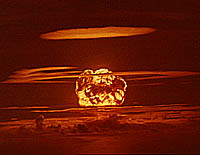
[edit]- ^ "Hydrogen Bomb test explosion - Redwing Tewa". Retrieved 7 August 2024.
- ^ "Weapon of mass destruction - weaponry". Encyclopedia Britannica. 1 November 1952. Retrieved 25 June 2019.
- ^ "Archbishop's Appeal," Times (London), 28 December 1937, p. 9.
- ^ "Biological Weapons Program – Japan". Fas.org. Archived from the original on 27 July 2010. Retrieved 5 August 2010.
- ^ Eric Croddy (1997). Chemical and Biological Warfare: An Annotated Bibliography. Scarecrow Press. p. 30. ISBN 9780810832718. Archived from the original on 2 January 2016. Retrieved 11 January 2016.
- ^ William R. Cullen (2008). Is Arsenic an Aphrodisiac?: The Sociochemistry of an Element. Royal Society of Chemistry. p. 241. ISBN 9780854043637. Archived from the original on 2 January 2016. Retrieved 11 January 2016.
- ^ a b c Safire, William (19 April 1998). "On Language; Weapons of Mass Destruction". The New York Times. Retrieved 25 June 2019.
- ^ "UNODA – Nuclear Weapons Home". Un.org. Archived from the original on 6 June 2012. Retrieved 14 May 2012.
- ^ United Nations General Assembly Session 1 Resolution 1. Establishment of a Commission to Deal with the Problems Raised by the Discovery of Atomic Energy A/RES/1(I) 24 January 1946. Retrieved accessdate.
- ^ Oppenheimer, Robert J. (1955). The Open Mind. New York: Simon & Schuster. p. 23.
- ^ Pais, A.; Crease, R.P. (2007). J. Robert Oppenheimer: A Life (in German). Oxford University Press. p. 158. ISBN 978-0-19-532712-0. Retrieved 25 June 2019.
- ^ "NSC-68 United States Objectives and Programs for National Security". Fas.org. Archived from the original on 24 October 2010. Retrieved 5 August 2010.
- ^ "John F. Kennedy Moon Speech—Rice Stadium". nasa.gov. Archived from the original on 6 July 2015. Retrieved 30 June 2015.
- ^ Kennedy JF (22 October 1962). Televised remarks to the American people re "the Soviet military buildup on the island of Cuba"
- ^ Treaty on Principles Governing the Activities of States in the Exploration and Use of Outer Space, including the Moon and Other Celestial Bodies, Art. IV, Jan. 27, 1967, T.I.A.S. No. 6347, 610 U.N.T.S. 205, 18 U.S.T. 2410 (effective Oct. 10, 1967).
- ^ Brian Alexander, Alistair Millar, ed. (2003). Tactical nuclear weapons : emergent threats in an evolving security environment (1. ed.). Washington DC: Brassey's. p. 7. ISBN 978-1-57488-585-9. Retrieved 22 March 2011.
- ^ Country Profiles -Israel Archived 2014-10-06 at the Wayback Machine, Nuclear Threat Initiative (NTI), updated May, 2014
- ^ "CNN Cold War – Historical Documents: Reagan-Gorbachev transcripts". 18 May 2008. Archived from the original on 18 May 2008. Retrieved 14 May 2012.
- ^ "Excerpts From Bush's Speech at the Opening of the U.N. General Assembly –". The New York Times. Union of Soviet Socialist Republics (Ussr). 26 September 1989. Archived from the original on 18 March 2009. Retrieved 5 August 2010.
- ^ a b MICHAEL WINES, Special to The New York Times (30 September 1990). "Confrontation in the Gulf; U.S. Explores New Strategies to Limit Weapons of Mass Destruction –". The New York Times. IRAQ. Retrieved 5 August 2010.
- ^ "Global Nuclear Arsenal Declines, But Future Cuts Uncertain Amid U.S.-Russia Tensions". Radio Free Europe/Radio Liberty. 17 June 2019.
- ^ Munitions Found in Iraq Meet WMD Criteria Archived 1 October 2012 at the Wayback Machine, Military.com, report filed by American Forces Press Service, 29 June 2006
- ^ "India Completes Chemical Weapons Disposal; Iraq Declares Stockpile | Analysis | NTI". nti.org. Archived from the original on 3 January 2016. Retrieved 12 December 2017.
- ^ "American Dialect Society". Americandialect.org. 13 January 2003. Archived from the original on 15 June 2006. Retrieved 5 August 2010.
- ^ "Lake Superior State University:: Banished Words List:: 2003". Lssu.edu. Archived from the original on 20 August 2017. Retrieved 5 August 2010.
- ^ "Criminal Complaint United States vs Dzhokhar Tsarnaev". The Washington Post. Archived from the original on 22 April 2013. Retrieved 23 April 2013.
- ^ Hatch, Benjamin B. (December 2017). "Defining a Class of Offensive Destructive Cyber Weapons As Weapons of Mass Destruction: An Examination of the Merits" (PDF). United States Air Force Center for Unconventional Weapon Studies Trinity Site Papers. Archived from the original (PDF) on 2 June 2021.
- ^ Kumar, Davinder (March 2013). "Cyber Weapons – The New Weapons of Mass Destruction". United Service Institution of India. Archived from the original on 7 January 2022. Retrieved 3 July 2021.
- ^ "The Pentagon Thinks Cyber Ops Could Be The Next WMDs". Government Executive. 19 December 2018. Retrieved 3 July 2021.
- ^ Carr, Jeffrey (September 2013). "The misunderstood acronym: Why cyber weapons aren't WMD". Bulletin of the Atomic Scientists. 69 (5): 32–37. Bibcode:2013BuAtS..69e..32C. doi:10.1177/0096340213501373.
- ^ Caves, John; Carus, W. Seth (June 2014). "Future of Weapons of Mass Destruction: Their Nature and Role in 2030". Center for the Study of Weapons of Mass Destruction, Occasional Paper 10.
- ^ a b Reed, Laura (2014). "Weapons of Mass Destruction". Hampshire College. Archived from the original on 2 August 2015. Retrieved 21 October 2014.
- ^ "Untitled". Archived from the original on 2 April 2010. Retrieved 6 February 2016.
- ^ "Weekly Compilation of Presidential Documents Volume 37, Issue 19 (May 14, 2001)" (PDF). Frwebgate.access.gpo.gov. Retrieved 14 May 2012.[permanent dead link]
- ^ CIA Site Redirect – Central Intelligence Agency Archived 4 October 2006 at the Wayback Machine
- ^ "Message of the Secretary of Defense". Archived from the original on 1 October 2004. Retrieved 6 February 2016.
- ^ "Archived copy" (PDF). Archived from the original (PDF) on 1 June 2006. Retrieved 6 February 2016.
{{cite web}}: CS1 maint: archived copy as title (link) - ^ "Weapons of Mass Destruction: State Department Oversight of Science Centers Program" (PDF). Retrieved 5 August 2010.[permanent dead link]
- ^ "Department of Defense Dictionary of Military and Associated Terms". Dtic.mil. 12 April 2001. Archived from the original on 10 October 2016. Retrieved 5 August 2010.
- ^ Review of Intelligence on Weapons of Mass Destruction: Report of a Committee of Privy Counsellors Archived 16 July 2011 at the Wayback Machine (HC 898), London: The Stationery Office, 2004, §14.
- ^ Harigel, Gert G. (22 November 2001). "Chemical and Biological Weapons: Use in Warfare, Impact on Society and Environment". Retrieved 19 January 2021.
- ^ "A Soldier's Viewpoint on Surviving Nuclear, Chemical and Biological Attacks". Sightm1911.com. Archived from the original on 1 September 2010. Retrieved 5 August 2010.
- ^ Sidel, Victor W.; Levy, Barry S. (2016). "Weapons of Mass Destruction". In Cockerham, William C. (ed.). International Encyclopedia of Public Health. Academic Press. p. 402. ISBN 978-0-12-803708-9.
- ^ "Colombia". 2 September 2007. Archived from the original on 2 September 2007. Retrieved 14 May 2012.
- ^ "What makes a weapon one of mass destruction?-News-UK-TimesOnline". 11 March 2007. Archived from the original on 11 March 2007. Retrieved 24 August 2017.
- ^ Capt. G. Shane Hendricks, Dr. Margot J. Hall (2007). "The History and Science of CBRNE Agents, Part I" (PDF). American Institute of Chemists. p. 1. Archived from the original (PDF) on 14 July 2014. Retrieved 4 July 2014.
- ^ "US CODE: Title 50—War and National Defense". .law.cornell.edu. 23 March 2010. Archived from the original on 27 April 2010. Retrieved 5 August 2010.
- ^ "US CODE: 50, ch. 40—Defense Against Weapons of Mass Destruction". .law.cornell.edu. 23 March 2010. Archived from the original on 27 April 2010. Retrieved 5 August 2010.
- ^ "US CODE: 50, ch. 40, § 2302. Definitions". .law.cornell.edu. 23 March 2010. Retrieved 5 August 2010.
- ^ "US CODE: 50, ch. 43—Preventing Weapons of Mass Destruction Proliferation and Terrorism". .law.cornell.edu. 23 March 2010. Archived from the original on 28 July 2010. Retrieved 5 August 2010.
- ^ "US CODE: 50, ch. 43; § 2902. Definitions". .law.cornell.edu. 23 March 2010. Retrieved 5 August 2010.
- ^ "US CODE: Chapter 113B—Terrorism". .law.cornell.edu. 28 June 2010. Archived from the original on 19 August 2010. Retrieved 5 August 2010.
- ^ "US CODE: Title 18, § 921. Definitions". .law.cornell.edu. 13 September 1994. Retrieved 5 August 2010.
- ^ "US CODE: Title 18, § 2332a. Use of weapons of mass destruction". .law.cornell.edu. 28 June 2010. Retrieved 5 August 2010.
- ^ "What is A Weapon of Mass Destruction". Fbi.gov. 30 March 2007. Archived from the original on 13 October 2010. Retrieved 5 August 2010.
- ^ See, e.g., "United States v. McVeigh". Google Scholar. Retrieved 15 October 2021.
- ^ "FindLaw for Legal Professionals – Case Law, Federal and State Resources, Forms, and Code". Caselaw.lp.findlaw.com. Archived from the original on 10 June 2011. Retrieved 5 August 2010.
- ^ "U.S. v. Richard C. Reid" (PDF). Archived from the original (PDF) on 25 March 2009. Retrieved 5 August 2010.
- ^ "The Free Lance-Star – 14 Jul 1998". Archived from the original on 2 January 2016. Retrieved 11 January 2016.
- ^ "18 U.S. Code § 2332a - Use of weapons of mass destruction" (PDF). Archived (PDF) from the original on 20 July 2017. Retrieved 27 June 2017.
- ^ "Indictment of ZACARIAS MOUSSAOUI". www.justice.gov. 9 September 2014.
- ^ Kotz, Deborah (24 April 2013). "Injury toll from Marathon bombs reduced to 264". The Boston Globe. Archived from the original on 31 March 2019. Retrieved 29 April 2013.
Boston public health officials said Tuesday that they have revised downward their estimate of the number of people injured in the Marathon attacks, to 264.
- ^ "Disarmament Treaties Database: 1925 Geneva Protocol". United Nations Office for Disarmament Affairs. Archived from the original on 21 May 2019. Retrieved 10 February 2021.
- ^ "Disarmament Treaties Database: Partial Test Ban Treaty". United Nations Office for Disarmament Affairs. Archived from the original on 2 February 2017. Retrieved 10 February 2021.
- ^ "Disarmament Treaties Database: Outer Space Treaty". United Nations Office for Disarmament Affairs. Retrieved 10 February 2021.
- ^ "Disarmament Treaties Database: Treaty on the Non-Proliferation of Nuclear Weapons (NPT)". United Nations Office for Disarmament Affairs. Archived from the original on 3 August 2018. Retrieved 10 February 2021.
- ^ "Disarmament Treaties Database: Sea-bed Treaty". United Nations Office for Disarmament Affairs. Archived from the original on 3 December 2020. Retrieved 10 February 2021.
- ^ "Disarmament Treaties Database: Comprehensive Nuclear-Test-Ban Treaty". United Nations Office for Disarmament Affairs. Archived from the original on 3 December 2020. Retrieved 10 February 2021.
- ^ "Disarmament Treaties Database: Biological Weapons Convention". United Nations Office for Disarmament Affairs. Archived from the original on 2 February 2021. Retrieved 10 February 2021.
- ^ "Disarmament Treaties Database: Chemical Weapons Convention". United Nations Office for Disarmament Affairs. Archived from the original on 3 December 2020. Retrieved 10 February 2021.
- ^ "Disarmament Treaties Database: Treaty on the Prohibition of Nuclear Weapons". United Nations Office for Disarmament Affairs. Archived from the original on 26 January 2021. Retrieved 10 February 2021.
- ^ a b c d e f g "How Nuclear Weapons Work | Union of Concerned Scientists". www.ucsusa.org. Retrieved 16 May 2024.
- ^ Kristensen, Hans M.; Korda, Matt; Friess, Friederike; Mian, Zia; Podvig, Pavel (2024). "World nuclear forces". SIPRI Yearbook 2024. Oxford University Press. ISBN 9780198930570.
- ^ Sidel, Victor W.; Levy, Barry S. (2017). "Weapons of Mass Destruction". International Encyclopedia of Public Health. pp. 402–407. doi:10.1016/B978-0-12-803678-5.00491-4. ISBN 978-0-12-803708-9.
- ^ "U.S. Nuclear Weapons in Europe | NATO Nuclear Weapons Policy | NTI". nti.org. Archived from the original on 7 November 2018. Retrieved 19 March 2019.
- ^ United Nations (1972). Biological Weapons Convention.
- ^ Wheelis, Mark (September 2002). "Biological Warfare at the 1346 Siege of Caffa". Emerging Infectious Diseases. 8 (9): 971–975. doi:10.3201/eid0809.010536. PMC 2732530. PMID 12194776.
- ^ Mayor, Adrienne (2003). Greek Fire, Poison Arrows & Scorpion Bombs: Biological and Chemical Warfare in the Ancient World. Abrams Press. ISBN 978-1585673483.
- ^ a b "The A to Z of international relations". The Economist. Retrieved 23 November 2023.
- ^ "Canada". Nuclear Threat Initiative. Retrieved 4 March 2021.
- ^ "France". Nuclear Threat Initiative. Retrieved 4 March 2021.
- ^ "Iraq". Nuclear Threat Initiative. Retrieved 4 March 2021.
- ^ "Japan". Nuclear Threat Initiative. Retrieved 4 March 2021.
- ^ "South Africa". Nuclear Threat Initiative. Retrieved 4 March 2021.
- ^ "Russia". Nuclear Threat Initiative. Retrieved 4 March 2021.
- ^ "United Kingdom". Nuclear Threat Initiative. Retrieved 4 March 2021.
- ^ "United States". Nuclear Threat Initiative. Retrieved 4 March 2021.
- ^ Dando, Malcolm (2006). Chapter 2: Biological warfare before 1945. In Bioterror and Biowarfare: A Beginner's Guide. Oneworld. pp. 11–31. ISBN 9781851684472.
- ^ Leitenberg, Milton; Zilinskas, Raymond A.; Kuhn, Jens H. (2012). "Conclusion". The Soviet Biological Weapons Program: A History. Harvard University Press. pp. 698–712. ISBN 978-0-674-04770-9. JSTOR j.ctt2jbscf.30.
- ^ Baxter, R. R.; Buergenthal, Thomas (October 1970). "Legal Aspects of the Geneva Protocol of 1925". American Journal of International Law. 64 (5): 853–879. doi:10.2307/2198921. JSTOR 2198921.
- ^ "Text of the 1925 Geneva Protocol". United Nations Office for Disarmament Affairs. Archived from the original on 9 February 2021. Retrieved 2 March 2021.
- ^ "Disarmament Treaties Database: 1925 Geneva Protocol". United Nations Office for Disarmament Affairs. Archived from the original on 21 May 2019. Retrieved 2 March 2021.
- ^ Beard, Jack M. (April 2007). "The Shortcomings of Indeterminacy in Arms Control Regimes: The Case of the Biological Weapons Convention". American Journal of International Law. 101 (2): 271–321. doi:10.1017/S0002930000030098.
- ^ a b "Biological Weapons Convention". United Nations Office for Disarmament Affairs. Archived from the original on 15 February 2021. Retrieved 2 March 2021.
- ^ "Disarmament Treaties Database: Biological Weapons Convention". United Nations Office for Disarmament Affairs. Archived from the original on 2 February 2021. Retrieved 2 March 2021.
- ^ Vilches, Diego (15 November 2015). "One hundred and one years after a milestone: Modern chemical weapons and World War I". Educacion Quimica (Chemistry Education). 27 (3).
- ^ "Gas Warfare at Dura-Europos". World Archaeology. 7 November 2009. Retrieved 22 December 2021.
- ^ Timperley, Christopher M.; Forman, Jonathan E.; Abdollahi, Mohammad; Al-Amri, Abdullah Saeed; Alonso, Isel Pascual; Baulig, Augustin; Borrett, Veronica; Cariño, Flerida A.; Curty, Christophe; Berrutti, David González; Kovarik, Zrinka; Martínez-Álvarez, Roberto; Mikulak, Robert; Mourão, Nicia Maria Fusaro; Ponnadurai, Ramasami; Neffe, Slawomir; Raza, Syed K.; Rubaylo, Valentin; Takeuchi, Koji; Tang, Cheng; Trifirò, Ferruccio; van Straten, Francois Mauritz; Vanninen, Paula S.; Zaitsev, Volodymyr; Waqar, Farhat; Zina, Mongia Saïd; Blum, Marc-Michael; Gregg, Hugh; Fischer, Elena; Sun, Siqing; Yang, Pei (October 2018). "Advice on chemical weapons sample stability and storage provided by the Scientific Advisory Board of the Organisation for the Prohibition of Chemical Weapons to increase investigative capabilities worldwide". Talanta. 188: 808–832. doi:10.1016/j.talanta.2018.04.022. PMID 30029449.
- ^ a b "Status of Participation in the Chemical Weapons Convention as at 14 October 2013". Organisation for the Prohibition of Chemical Weapons. 14 October 2013.
- ^ a b "SIGNATORY STATES". Organisation for the Prohibition of Chemical Weapons. 2 September 2013.
- ^ "Myanmar Joins Chemical Weapons Convention". Organisation for the Prohibition of Chemical Weapons. 9 July 2015.
- ^ https://www.peoacwa.army.mil/destruction-progress/
- ^ See List of weapons of mass destruction treaties.
- ^ See Debate over the atomic bombings of Hiroshima and Nagasaki for various perspectives on the only combat use of nuclear weapons. The Khabarovsk War Crime Trials sentenced some members of the Japanese army to jail terms for the use of biological and chemical weapons during World War II. The Halabja poison gas attack was determined a war crime by Dutch and Iraqi courts, resulting in the execution of Ali Hassan al-Majid.
- ^ See Aerial bombardment and international law.
- ^ The Bombing of Dresden in World War II in particular has been referred to as mass murder: Volkery, Carsten. "60 Years after the Bombing of Dresden: A War of Words", Der Spiegel, 2 February 2005. Archived 9 September 2007 at the Wayback Machine.
- ^ In addition to previous treaties on bombardment of civilian areas generally, carpet bombing of cities, towns, villages, or other areas containing a concentration of civilians was specifically designated a war crime by the 1977 Protocol I of the Geneva Conventions: Fischer, Horst. "Carpet or Area Bombing". Crimes of War. Archived from the original on 2 December 2015. Retrieved 8 December 2015.
- ^ Wright, David T. (11 June 2003). "Weapons of mass distraction". The Last Ditch. Archived from the original on 15 June 2011. Retrieved 5 August 2010.
- ^ "Weapons of Mass Destruction Are Overrated as a Threat to America". The Independent Institute. 28 January 2004. Archived from the original on 13 June 2010. Retrieved 5 August 2010.
- ^ a b Easterbrook, Gregg. "Term Limits". The New Republic. Archived from the original on 11 October 2007.
- ^ Nowicki, Dan (6 September 2014). "'Daisy Girl' political ad still haunting 50 years later". The Arizona Republic. Retrieved 2 February 2022.
- ^ St. Clair, Jeffrey (13 August 2003). "War Pimps". Anderson Valley Advertiser. Archived from the original on 11 June 2011. Retrieved 5 August 2010.
- ^ Blair, Tony; Bush, George W. (31 January 2003). "President Bush Meets with Prime Minister Blair". The White House. Archived from the original on 12 March 2011. Retrieved 1 February 2021.
- ^ Quigley, Samantha L. (29 June 2006). "Munitions Found in Iraq Meet WMD Criteria, Official Says". US Department of Defense. Archived from the original on 14 June 2014. Retrieved 1 April 2014.
- ^ "Weapon of mass destruction". American Heritage Dictionary. Archived from the original on 4 September 2015. Retrieved 24 April 2015.
- ^ "18 U.S.C. 2332a - Use of weapons of mass destruction". GovInfo. Archived from the original on 12 May 2015. Retrieved 24 April 2015.
- ^ "Case 1:13-mj-02106-MBB Document 3" (PDF). U.S. Department of Justice. 21 April 2013. Archived (PDF) from the original on 23 June 2014. Retrieved 24 April 2015.
- ^ Moeller, Susan D. (9 March 2004). "Media coverage of weapons of mass destruction" (PDF). Center for International and Security Studies at Maryland. Archived from the original (PDF) on 22 October 2004. Retrieved 19 May 2021.
- ^ "Psychological Science – Journal Information". Blackwellpublishing.com. Archived from the original on 14 August 2010. Retrieved 5 August 2010.
- ^ Kull, Steven; Ramsay, Clay; Lewis, Evan (December 2003). "Misperceptions, the Media, and the Iraq War". Political Science Quarterly. 118 (4): 569–598. doi:10.1002/j.1538-165X.2003.tb00406.x.
- ^ "Misperceptions, the Media and the Iraq War" (PDF). Archived from the original on 10 February 2006. Retrieved 22 October 2009.
{{cite web}}: CS1 maint: bot: original URL status unknown (link), PIPA, 2 October 2003 - ^ "Report: Hundreds of WMDs Found in Iraq". Fox News. 22 June 2006. Archived from the original on 24 April 2008. Retrieved 30 June 2007.
- ^ Kay, David. "House Armed Services Committee Hearing", 29 June 2006
- ^ Duelfer, Charles. Expert: Iraq WMD Find Did Not Point to Ongoing Program Archived 16 December 2018 at the Wayback Machine NPR. 22 June 2006
- ^ Shachtman, Noah (23 October 2010). "WikiLeaks Show WMD Hunt Continued in Iraq – With Surprising Results". Wired.com. Archived from the original on 24 March 2014. Retrieved 12 March 2017.
- ^ "CIA's Final Report: No WMD Found in Iraq". NBC News. 25 April 2005. Retrieved 1 July 2007.
- ^ "Iraq WMD Inspectors End Search, Find Nothing". Fox News. 26 April 2005. Archived from the original on 5 August 2007. Retrieved 24 July 2007.
- ^ "Welcome – WMD Awareness Programme". 26 June 2009. Archived from the original on 26 June 2009. Retrieved 9 October 2017.
{{cite web}}: CS1 maint: bot: original URL status unknown (link) - ^ Herron, Kerry G.; Jenkins-Smith, Hank C.; Hughes, Scott (June 2000). Mass and Elite Viewson Nuclear Security (Report). UNM Institute for Public Policy. Retrieved 9 March 2024.
Reports of the three previous studies in this series can be obtained from the National Technical Information Service. See ...(3)Kerry G. Herron and Hank C. Jenkins-Smith, 1998, Public Perspectives on Nuclear Security: US National Security Surveys 1993–1997
- ^ a b Herron, K.G.; Jenkins-Smith, H.C. (1 August 1998). Public perspectives on nuclear security. US national security surveys, 1993--1997 (Report). Office of Scientific and Technical Information (OSTI). doi:10.2172/665965.
- ^ "Pakistan's Nuclear Tests Attempt to Restore Mutual Deterrence, Pakistan Tells Disarmament Committee". United Nations Meetings Coverage and Press Releases. 20 October 1998. Retrieved 9 March 2024.
- ^ Venkatesh; Tsao, Jeffrey Y.; Bustamante, Constanza M. Vidal; Calidas, Doug; Bingen, Kari A.; Williams, Heather; Nye, Joseph S.; Walt, Stephen M.; Brooks, Harvey; Comiter, Marcus (13 May 1998). "Indian Nuclear Escalation". Belfer Center for Science and International Affairs. Retrieved 9 March 2024.
- ^ "The Pipa/Knowledge Networks Poll" (PDF). 29 September 2005. Archived from the original (PDF) on 29 September 2005. Retrieved 14 May 2012.
- ^ Russian public opinion on nuclear weapons (5 August 2005). "Russian public opinion on nuclear weapons – Blog – Russian strategic nuclear forces". Russianforces.org. Archived from the original on 16 February 2006. Retrieved 5 August 2010.
- ^ Russian public opinion on nuclear weapons (5 August 2005). "Russian public opinion on nuclear weapons – Blog – Russian strategic nuclear forces". Russianforces.org. Archived from the original on 16 February 2006. Retrieved 5 August 2010.
- ^ "Unicode Character 'SKULL AND CROSSBONES' (U+2620)". fileformat.info. Archived from the original on 13 May 2018. Retrieved 12 May 2018.
- ^ "Unicode Character 'RADIOACTIVE SIGN' (U+2622)". fileformat.info. Archived from the original on 13 May 2018. Retrieved 12 May 2018.
- ^ "Unicode Character 'BIOHAZARD SIGN' (U+2623)". fileformat.info. Archived from the original on 13 May 2018. Retrieved 12 May 2018.
- ^ "Origin of the Radiation Warning Symbol (Trefoil)". Retrieved 13 October 2021.
- ^ a b "Biohazard and radioactive Symbol, design and proportions" (PDF). Archived from the original (PDF) on 31 December 2013.
- ^ "Origin of the Radiation Warning Sign (Trefoil)". orau.org. Retrieved 13 October 2021.
- ^ Linda Lodding, "Drop it and Run! New Symbol Warns of Radiation Dangers and Aims to Save Lives Archived 20 January 2012 at the Wayback Machine," IAEA Bulletin 482 (March 2007): 70–72.
- ^ "IAEA news release Feb 2007". 15 February 2007. Archived from the original on 17 February 2007. Retrieved 11 January 2016.
- ^ "Biohazard Symbol History". Archived from the original on 13 February 2012.
Bibliography
[edit]- Bentley, Michelle (2014). Weapons of Mass Destruction and US Foreign Policy. doi:10.4324/9780203381649. ISBN 978-1-134-12054-3.
- Cirincione, Joseph, ed. (2014). Repairing the Regime. doi:10.4324/9780203950401. ISBN 978-1-135-28432-9.
- Croddy, Eric A.; Wirtz, James J., eds. (2005). Weapons of Mass Destruction [2 Volumes]: An Encyclopedia of Worldwide Policy, Technology, and History. Bloomsbury Academic. ISBN 978-1-85109-490-5.
- Curley, Robert, ed. Weapons of Mass Destruction (Britannica Educational Publishing, 2011)
- Graham Jr, Thomas, and Thomas Graham. Common sense on weapons of mass destruction (University of Washington Press, 2011)
- Horowitz, Michael C.; Narang, Neil (April 2014). "Poor Man's Atomic Bomb? Exploring the Relationship between 'Weapons of Mass Destruction'". Journal of Conflict Resolution. 58 (3): 509–535. doi:10.1177/0022002713509049.
- Hutchinson, Robert. Weapons of Mass Destruction: The no-nonsense guide to nuclear, chemical and biological weapons today (Hachette UK, 2011)
Definition and origin
[edit]- "WMD: Words of mass dissemination" (12 February 2003), BBC News.
- Bentley, Michelle, "War and/of Worlds: Constructing WMD in U.S. Foreign Policy", Security Studies 22 (Jan. 2013), 68–97.
- Michael Evans, "What makes a weapon one of mass destruction?" (6 February 2004), The Times.
- Bruce Schneier, "Definition of 'Weapon of Mass Destruction'" (6 April 2009), Schneier on Security.
- Stefano Felician, Le armi di distruzione di massa, CEMISS, Roma, 2010, [1]
International law
[edit]- United Nations Security Council Resolution 1540
- David P. Fidler, "Weapons of Mass Destruction and International Law" (February 2003), American Society of International Law.
- Joanne Mariner, "FindLaw Forum: Weapons of mass destruction and international law's principle that civilians cannot be targeted" (20 November 2001), CNN.
Compliance with international WMD regimes
[edit]- Lentzos, Filippa (2019). Compliance and Enforcement in the Biological Weapons Regime (Report). doi:10.37559/WMD/19/WMDCE4.
- Trapp, Ralf (2019). Compliance Management under the Chemical Weapons Convention (Report). doi:10.37559/WMD/19/WMDCE3.
- Heinonen, Olli (2020). IAEA Mechanisms to Ensure Compliance with NPT Safeguards (Report). doi:10.37559/WMD/19/WMDCE2.
Media
[edit]- Media Coverage of Weapons of Mass Destruction at the Wayback Machine (archived 17 February 2006), by Susan D. Moeller, Center for International and Security Studies at Maryland, 2004.
- Lewandowsky, Stephan; Stritzke, Werner G.K.; Oberauer, Klaus; Morales, Michael (March 2005). "Memory for Fact, Fiction, and Misinformation: The Iraq War 2003". Psychological Science. 16 (3): 190–195. doi:10.1111/j.0956-7976.2005.00802.x. PMID 15733198.
Ethics
[edit]- Appel, J M (July 2009). "Is all fair in biological warfare? The controversy over genetically engineered biological weapons". Journal of Medical Ethics. 35 (7): 429–432. doi:10.1136/jme.2008.028944. PMID 19567692.
Public perceptions
[edit]- Steven Kull et al., Americans on WMD Proliferation (15 April 2004), Program on International Policy Attitudes/Knowledge Networks survey.
External links
[edit]| International humanitarian law |
| ||||
|---|---|---|---|---|---|
| War crimes by type |
| ||||
| War crimes committed by... | |||||
| War crimes by war |
| ||||
| Related topics |
| ||||

Weapon of mass destruction
View on GrokipediaDefinitions and Classifications
Historical Origins of the Term
The term "weapons of mass destruction" first appeared in public discourse in December 1937, during a Christmas address by Archbishop of Canterbury William Cosmo Gordon Lang, who referenced "new weapons of mass destruction" amid concerns over aerial bombings and potential chemical warfare in the Spanish Civil War and the Sino-Japanese War.[8] Earlier that year, a June 1937 article in The Times of London applied the phrase to describe the German Luftwaffe's aerial bombardment of Guernica, which destroyed much of the town through conventional high-explosive and incendiary bombs, killing or wounding up to one-third of its 5,000 residents over three hours.[9] These initial uses focused on the unprecedented scale of destruction from industrialized aerial attacks rather than novel technologies like atomic or biological agents. Post-World War II, the phrase gained diplomatic traction in efforts to regulate emerging threats. On November 15, 1945, leaders of the United States, United Kingdom, and Canada issued a joint declaration calling for United Nations control over atomic energy and the elimination of "all other major weapons adaptable to mass destruction," a formulation attributed to U.S. scientist Vannevar Bush, encompassing nuclear and potentially biological arms.[8] The UN General Assembly formalized its adoption on January 24, 1946, via Resolution 1(I), establishing a commission to regulate such weapons. By August 12, 1948, the UN Commission for Conventional Armaments provided a precise definition: "atomic explosive weapons, radioactive material weapons, [and] lethal chemical and biological weapons—and any weapons developed in the future which have characteristics comparable in destructive effect to those of the atomic bomb or other weapons mentioned above."[8] This 1948 formulation, accepted by UN General Assembly Resolution 32/84 in 1977, anchored the term in international law, influencing subsequent treaties like the 1967 Outer Space Treaty and 1971 Seabed Arms Control Treaty, which prohibited stationing WMD on celestial bodies and ocean seabeds, respectively.[8] The Soviet Union incorporated the concept into its military doctrine during the Cold War, while U.S. domestic law later expanded it—such as in the 1994 Violent Crime Control and Law Enforcement Act—to include certain high-yield conventional explosives, diverging from the original emphasis on indiscriminate, high-casualty effects.[8] Throughout, the term's evolution reflected causal priorities: from empirical observations of mass civilian casualties in total war to strategic containment of technologies enabling disproportionate destruction beyond conventional battlefields.Legal and Strategic Definitions
In international law, the concept of weapons of mass destruction (WMD) originated with the 1948 definition from the United Nations Commission on Conventional Armaments, which described them as "atomic explosive weapons, radioactive material weapons, lethal chemical and biological weapons, and any weapons developed in the future which have characteristics comparable in destructive effect to those of the atomic bomb or other weapons mentioned above."[8] This formulation, emphasizing indiscriminate mass destructive potential, has influenced subsequent treaties without establishing a comprehensive WMD convention; instead, category-specific agreements address nuclear weapons under the Treaty on the Non-Proliferation of Nuclear Weapons (1968), biological agents via the Biological Weapons Convention (1972), and chemical munitions through the Chemical Weapons Convention (1993).[10] These treaties prohibit development, production, and stockpiling but do not uniformly define WMD as a class, leading to reliance on the 1948 benchmark in instruments like the Outer Space Treaty (1967) and Seabed Arms Control Treaty (1971).[8] National legal definitions vary, often broadening the scope for enforcement purposes. In the United States, 18 U.S.C. § 2332a (enacted 1994) defines a WMD as any explosive or incendiary bomb, grenade, rocket, missile, or similar device; any weapon designed to release toxic or poisonous chemicals or precursors; any biological agent, toxin, or vector; any weapon involving radiation or radioactive material at levels causing death or serious injury; or any device with destructive capability comparable to the foregoing, such as a large improvised explosive with over 0.5 kilograms of TNT equivalent in populated areas.[11] This statute, aimed at terrorism prosecution, explicitly includes certain high-yield conventional explosives, diverging from narrower international norms to encompass threats like truck bombs, as seen in cases involving groups like al-Qaeda.[8] Similarly, 50 U.S.C. § 2302 prioritizes weapons or devices using chemical, biological, radiological, or nuclear means to inflict mass death or injury on civilians or combatants.[12] Such expansions reflect counterproliferation priorities but have drawn critique for diluting distinctions from conventional arms, potentially complicating arms control.[8] Strategically, WMD are characterized in military doctrines by their capacity for high-order destruction, mass casualties, or psychological terror beyond conventional capabilities, typically limited to nuclear, biological, chemical, and radiological (CBRN) systems. The U.S. Department of Defense, in Joint Publication 1-02 (as of 2009), defines them as "chemical, biological, radiological, or nuclear weapons capable of a high order of destruction or causing mass casualties," evolving from earlier nuclear-biological-chemical (NBC) focus to emphasize strategic deterrence and proliferation risks in great-power competition.[8] This aligns with NATO and Russian doctrines, which treat WMD as tools for escalation dominance or area denial, as evidenced in Soviet-era classifications of "nuclear, chemical, and bacteriological" agents retained in modern frameworks.[8] Unlike legal variants, strategic usage excludes most conventional munitions to maintain focus on asymmetric threats with persistent, uncontrollable effects—such as fallout or epidemics—though some analyses note potential inclusion of cyber or electromagnetic disruptions if achieving comparable mass impact.[8] Inconsistencies across definitions underscore tensions between diplomatic restraint and operational pragmatism, with broader U.S. interpretations aiding responses to non-state actors since the 1990s.[8]Scope and Distinctions from Conventional Weapons
Weapons of mass destruction (WMD) are defined as nuclear, radiological, chemical, biological, or other devices intended to cause widespread harm to large populations through mechanisms that produce indiscriminate and often persistent effects.[1] This scope, as articulated in United Nations frameworks, explicitly includes atomic explosive weapons, radioactive material weapons, lethal chemical agents, and biological agents, with provisions for future developments exhibiting similar catastrophic potential.[10] The term emphasizes not merely scale of destruction but the inherent capacity for mass casualties via non-kinetic means, distinguishing it from tools designed for tactical, targeted engagements.[13] In contrast to conventional weapons, which primarily employ kinetic energy through explosives, projectiles, or incendiaries to inflict localized damage via blast, fragmentation, or fire, WMD operate through fundamentally different causal pathways that amplify lethality over expansive areas.[14] For instance, nuclear weapons generate immediate thermal and blast effects alongside ionizing radiation that induces long-term cellular damage, capable of rendering areas uninhabitable for years; a single Hiroshima bomb on August 6, 1945, yielded approximately 15 kilotons of TNT equivalent, killing an estimated 70,000–80,000 people instantly through these combined mechanisms.[8] Chemical weapons, such as mustard gas deployed in World War I (e.g., over 1.3 million casualties from 1915–1918), disperse toxic vapors or liquids that penetrate protective barriers and cause systemic physiological disruption, evading the discriminate control possible with artillery shells.[8] Biological weapons introduce self-replicating pathogens or toxins, such as anthrax spores, which propagate uncontrollably beyond the initial deployment zone, complicating attribution and containment in ways unattainable by conventional munitions.[15] This leads to distinctions in strategic utility: WMD often serve as deterrents due to their escalation risks and psychological terror—evidenced by the mutual assured destruction doctrine during the Cold War, where U.S. and Soviet arsenals exceeded 20,000 warheads each by the 1980s—while conventional arms prioritize precision and proportionality under international humanitarian law.[8] Radiological devices, though less proliferated, disperse unshielded isotopes to contaminate environments, mirroring nuclear persistence but without fission chain reactions, further blurring yet reinforcing the divide from kinetic-only systems.[1] These attributes render WMD defenses reliant on prevention rather than mitigation, as post-detonation effects defy the tactical reversibility of conventional engagements.[15]Historical Development
Pre-Modern and Early Modern Concepts
Early attempts at chemical warfare date to antiquity, with the Scythians employing arrows dipped in a mixture of viper venom, human blood, and dung around the 5th century BCE to induce gangrene and sepsis in wounds, as recorded by Herodotus.[16] Similar tactics involved poisoned projectiles using plant toxins like aconite, documented across various cultures including ancient India and Africa for enhancing lethality beyond physical trauma.[17] In 429 BCE, during the siege of Plataea, Spartans reportedly burned wood mixed with sulfur to produce choking sulfur dioxide fumes against trapped Plataeans, marking one of the earliest uses of asphyxiating gases in siege warfare.[18] Biological methods also appeared in pre-modern conflicts, such as Hittite texts from the 14th century BCE describing the driving of plague-infected rams into enemy lands to spread tularemia.[19] By the medieval period, incendiary weapons evolved into more devastating forms, exemplified by Byzantine Greek fire—a petroleum-based liquid projected via siphons that ignited on contact and burned on water—first deployed effectively in 672 CE against an Arab naval assault on Constantinople, incinerating dozens of ships and crews.[20] This unquenchable flame, possibly incorporating naphtha and quicklime, functioned as a proto-area-denial weapon, causing mass casualties through fire and terror in naval engagements through the 14th century.[21] A notable alleged instance of deliberate biological dissemination occurred during the 1346 Mongol siege of Caffa, a Genoese outpost in Crimea, where besiegers catapulted plague-infected cadavers over the walls to infect defenders, according to notary Gabriele de' Mussi's contemporaneous account; fleeing Genoese merchants may have then carried Yersinia pestis to Europe, exacerbating the Black Death, though the tactic's efficacy and intent remain debated among historians due to limited corroboration.[22][23] These pre-modern practices, while innovative in exploiting toxins, pathogens, and flammables for indiscriminate effects, lacked the scalability and reliability of later WMDs, often relying on rudimentary delivery like catapults or hand-thrown pots, and were constrained by inconsistent production and environmental factors.[21] In the early modern era (c. 1500–1800), concepts of mass destruction shifted toward explosive ordnance with the proliferation of gunpowder, originating in 9th-century China but refined in Europe for bombs and grenades that combined blast, shrapnel, and incendiary elements to target clustered troops or fortifications.[24] Hand grenades filled with sulfur and pitch, used by Ottoman forces at the 1571 Battle of Lepanto, aimed to disorient and burn groups, foreshadowing area-effect weapons, though their impact remained localized compared to conventional melee or archery.[21] Poisoned projectiles persisted, as in 17th-century European accounts of toxin-coated bullets during colonial skirmishes, but ethical and practical revulsions—evident in bans like the 1679 Strasbourg convention against poisoned weapons—highlighted emerging distinctions between "humane" arms and those seeking widespread suffering.[19] These developments reflected causal intent for mass disruption via non-lethal precursors to chemical agents, yet empirical outcomes showed limited strategic dominance due to inaccuracy and countermeasures like wet cloths or wind shifts.19th and Early 20th Century Advancements
The 19th century marked significant scientific and industrial advancements that laid the groundwork for chemical weapons, primarily through the large-scale production of toxic gases enabled by emerging chemical industries. Chlorine gas, isolated in 1774 but increasingly manufactured industrially from the 1850s onward for bleaching and disinfection, became a feasible agent for dispersal due to its availability in tonnage quantities. Similarly, phosgene, first synthesized in 1812, saw production scale-up in the late 1800s for dyes and pharmaceuticals, highlighting how civilian chemical engineering inadvertently created precursors for warfare applications.[25] Military proposals for chemical agents proliferated amid these developments, though large-scale deployment remained unrealized until the 20th century. During the American Civil War (1861–1865), Confederate inventors, including physician Luke Blackburn, explored toxin dispersal via artillery shells containing irritants like arsenic compounds, but ethical and technical constraints prevented adoption. In the Franco-Prussian War (1870–1871), French forces considered asphyxiating gas shells, while British chemists proposed similar munitions for colonial conflicts, reflecting growing tactical interest despite moral qualms. By the 1880s, French military trials with ethyl iodoacetate—a lacrimatory agent developed by chemist Victor Meyer—demonstrated early irritant gas efficacy, influencing protective gear innovations like rudimentary masks patented in Europe and the U.S. for both industrial and potential battlefield use.[26][24][25] International efforts to curb such weapons underscored their perceived threat, with the 1899 Hague Declaration II prohibiting projectiles designed to diffuse asphyxiating or deleterious gases, ratified by major powers including Germany, France, and Russia. These prohibitions, rooted in humanitarian concerns from earlier conflicts like the Crimean War (1853–1856)—where unverified reports emerged of Russian sulfur-based incendiary shells—failed to deter clandestine preparations. In the early 20th century, amid escalating European tensions, Germany amassed approximately 1,500 tons of chlorine by 1914 under Fritz Haber's supervision, directly enabling the first major wartime use at the Second Battle of Ypres on April 22, 1915, where 168 tons of gas caused over 5,000 casualties.[27][24] Parallel biological advancements stemmed from microbiology's maturation, particularly Louis Pasteur's germ theory validation in the 1860s and Robert Koch's postulates (1876–1884), which enabled pathogen isolation and potential weaponization. These insights shifted biological agents from folklore tactics—such as contaminated projectiles—to scientifically informed concepts, though human-scale delivery remained rudimentary. During the Boer War (1899–1902), British forces allegedly contaminated water sources with cholera, but evidence is anecdotal and unverified; more concretely, Russian veterinary experiments in the 1910s tested anthrax and glanders on livestock, foreshadowing offensive capabilities amid World War I's onset.[19][21][19] Radiological precursors emerged late in the period with Henri Becquerel's 1896 discovery of radioactivity and the Curies' 1898 isolation of radium, revealing ionizing radiation's destructive potential, though weapon applications were not pursued until the interwar era. These 19th- and early 20th-century strides, driven by empirical scientific progress rather than deliberate mass-destruction intent, transitioned WMD concepts from speculative to industrially viable, despite normative bans reflecting widespread recognition of their indiscriminate lethality.[24]World War II and Immediate Postwar Era
The United States launched the Manhattan Project in June 1942 under the direction of General Leslie Groves and physicist J. Robert Oppenheimer, mobilizing over 130,000 personnel and $2 billion to develop atomic bombs based on uranium-235 and plutonium-239 fission.[28] The project achieved the world's first nuclear detonation with the Trinity test on July 16, 1945, at Alamogordo, New Mexico, yielding an explosive force equivalent to 20 kilotons of TNT.[29] These weapons were deployed against Japan, with the uranium bomb "Little Boy" dropped on Hiroshima on August 6, 1945, causing approximately 70,000 immediate deaths, followed by the plutonium bomb "Fat Man" on Nagasaki on August 9, 1945, resulting in about 40,000 immediate fatalities.[30][31] Nazi Germany's nuclear program, led by physicists like Werner Heisenberg, explored uranium enrichment and reactor design but produced no functional bomb due to inadequate heavy water supply, Allied sabotage at Norsk Hydro, and resource diversion to conventional arms.[32] Germany also advanced chemical weapons research, inventing nerve agents tabun in 1936 and sarin in 1938 at IG Farben facilities, amassing over 12,000 tons of tabun by 1945, yet refrained from battlefield use.[33] This restraint stemmed from Adolf Hitler's personal experience with mustard gas in World War I and apprehension of Allied chemical retaliation, as both sides possessed comparable stockpiles— the U.S. alone producing 30,000 tons of mustard agent.[34][35] Japan's Imperial Army operated Unit 731 in occupied Manchuria from 1936, conducting lethal biological experiments on over 3,000 prisoners with pathogens including plague, anthrax, and cholera, often via vivisection or field deployment.[36][37] Unit 731 released plague-infected fleas over Chinese cities like Ningbo in 1940, causing outbreaks that killed tens of thousands, marking the era's most extensive biological warfare application.[38] Allied programs, such as Britain's Operation Vegetarian testing anthrax-laced cattle cakes in 1942-1943 on Gruinard Island, remained experimental and undeployed.[35] In the immediate postwar period, the U.S. held a nuclear monopoly, enacting the Atomic Energy Act of 1946 to civilianize control while expanding stockpiles to nine bombs by 1947.[39] The Soviet Union, having spied on Manhattan Project sites via agents like Klaus Fuchs, detonated its first bomb, RDS-1, on August 29, 1949, at Semipalatinsk, accelerating the arms race.[39] U.S. intelligence operations like Alsos captured German scientists, while postwar deals granted Unit 731 leader Shiro Ishii immunity in exchange for biological data, prioritizing strategic gains over prosecution.[32][38] Chemical and biological programs persisted covertly, with the U.S. initiating offensive research at Fort Detrick in 1943, continuing into the 1950s amid mutual suspicions.[35]Cold War Proliferation and Testing
The Soviet Union shattered the United States' nuclear monopoly with its first atomic test, code-named RDS-1 or "First Lightning," on August 29, 1949, at the Semipalatinsk Test Site in Kazakhstan, yielding approximately 22 kilotons.[40] This event accelerated the arms race, prompting both superpowers to pursue thermonuclear weapons; the U.S. detonated the first hydrogen bomb, Ivy Mike, on November 1, 1952, at Enewetak Atoll, while the USSR followed with its own on August 12, 1953.[40] Proliferation extended to U.S. allies, with the United Kingdom conducting its inaugural test, Operation Hurricane, on October 3, 1952, off Australia, and France achieving detonation on February 13, 1960, in the Sahara Desert.[41] China's first test occurred on October 16, 1964, at Lop Nur, establishing it as the fifth nuclear power amid escalating superpower rivalry.[41] Nuclear testing intensified throughout the era, with the U.S. performing over 200 atmospheric detonations between 1946 and 1962 alone, contributing to a total of 1,030 tests by 1992, many at the Nevada Test Site and Pacific proving grounds.[42][41] The Soviet Union executed 715 tests, including 219 atmospheric, underwater, and space events, primarily at Semipalatinsk and Novaya Zemlya, peaking in frequency during the 1950s and 1960s.[41] Other states followed suit: the UK with 45 tests, France with 210, and China with 45, often in remote areas to minimize detection.[41] These programs validated warhead designs, delivery systems, and yields, but generated significant fallout; for instance, the U.S. Castle Bravo test on March 1, 1954, at Bikini Atoll unexpectedly yielded 15 megatons, contaminating nearby islands and Japanese fishing vessels.[43] Stockpiles burgeoned in parallel, with the U.S. arsenal peaking at 31,255 warheads in 1967 and the Soviet inventory reaching approximately 40,000 by the mid-1980s, reflecting mutual deterrence strategies.[44][45] The Partial Test Ban Treaty of August 5, 1963, signed by the U.S., USSR, and UK, prohibited atmospheric, underwater, and outer space tests, shifting focus to underground explosions while leaving stockpiles intact.[46]| Country | Total Tests | First Test Year |
|---|---|---|
| United States | 1,030 | 1945 |
| Soviet Union | 715 | 1949 |
| United Kingdom | 45 | 1952 |
| France | 210 | 1960 |
| China | 45 | 1964 |
Types of Weapons
Nuclear weapons stand out among weapons of mass destruction for their unparalleled destructive capacity, combining instantaneous blast waves, intense thermal radiation, shockwaves, and long-term radioactive fallout, which can render large areas uninhabitable. While chemical and biological weapons can inflict mass casualties through toxic exposure or disease propagation, they generally lack this absolute scale of immediate devastation, as exemplified by the Soviet Tsar Bomba test in 1961 with a yield of 50 megatons TNT equivalent.[48][51]Nuclear Weapons
Nuclear weapons obtain their explosive power from reactions that alter atomic nuclei, either through fission of heavy elements or fusion of light ones, releasing vast amounts of energy via Einstein's mass-energy equivalence, E=mc².[52] In fission weapons, neutrons split isotopes like uranium-235 or plutonium-239, each fission liberating approximately 200 MeV of energy and additional neutrons to sustain a supercritical chain reaction initiated by conventional explosives compressing the fissile core.[53] Fusion weapons, or thermonuclear devices, employ a fission primary to generate the extreme temperatures and pressures needed to fuse deuterium and tritium, yielding even greater energy density without the proportional increase in fallout from fission products.[54] Classified by design, nuclear weapons include pure fission types, as used in the Hiroshima (yield ~15 kilotons TNT equivalent) and Nagasaki (~21 kt) bombings on August 6 and 9, 1945, respectively.[55] Boosted fission variants incorporate fusion fuel into the primary stage to enhance neutron flux and efficiency, potentially doubling yield while reducing fissile material needs.[54] Thermonuclear weapons feature multi-stage configurations, where the boosted fission primary triggers a secondary fusion stage, enabling yields from hundreds of kilotons to megatons, far exceeding single-stage limits due to the scalability of fusion reactions.[56] The rationale for designating nuclear weapons as weapons of mass destruction stems from their capacity for instantaneous, widespread devastation: blast overpressures destroying structures over kilometers, thermal radiation igniting fires across urban areas, prompt ionizing radiation causing acute fatalities, and residual fallout contaminating regions with long-lived isotopes.[8] A single modern warhead can exceed the destructive scale of conventional arsenals by orders of magnitude, rendering affected areas uninhabitable and inflicting casualties in the millions, independent of delivery method.[52] Unlike conventional explosives, the nuclear chain reaction's self-sustaining nature ensures near-total energy conversion from fissile mass, amplifying indiscriminate effects that challenge proportionality in warfare.[57]Biological Weapons
Biological weapons employ pathogenic microorganisms or biological toxins to cause widespread harm or death among humans, animals, or plants.[58] These agents include bacteria such as Bacillus anthracis (anthrax) and Yersinia pestis (plague), viruses like variola major (smallpox), and toxins such as botulinum neurotoxin.[59] Unlike chemical or nuclear weapons, biological agents can self-replicate under suitable conditions, potentially amplifying effects through secondary transmission, though many require specific environmental factors for viability.[3] Delivery systems for biological weapons range from simple contamination of food or water to sophisticated aerosol dispersal via munitions or sprayers, with historical tests demonstrating feasibility over large areas.[60] Insect vectors, as explored in Japan's World War II program, offer another method, releasing plague-infected fleas to propagate disease.[19] Efficacy depends on agent stability, dissemination technology, and countermeasures like vaccination or antibiotics, which can mitigate but not always prevent outbreaks.[61] The 1972 Convention on the Prohibition of the Development, Production and Stockpiling of Bacteriological (Biological) and Toxin Weapons and on Their Destruction (Biological Weapons Convention, BWC) entered into force on March 26, 1975, prohibiting state parties from developing, producing, acquiring, or stockpiling such weapons.[62] By 2025, 185 states have ratified or acceded to the treaty, though it lacks formal verification mechanisms, complicating enforcement.[63] Historical violations underscore compliance challenges; the Soviet Union maintained a massive covert program post-ratification, including weaponized anthrax, as evidenced by the April 2, 1979, Sverdlovsk leak from Military Compound 19, which released spores killing at least 66 civilians downwind.[64][65] Soviet authorities initially attributed deaths to contaminated meat, a claim refuted by epidemiological patterns showing windborne dispersal from the facility.[66] Pre-BWC programs included Japan's Unit 731, operational from 1932 to 1945, which field-tested plague, anthrax, and other agents on prisoners and Chinese civilians, causing thousands of deaths through vivisections and aerial releases.[67] The United States operated an offensive program until President Nixon's 1969 order to terminate it, destroying stockpiles by 1973 while shifting to defensive research.[19] These efforts highlight biological weapons' dual-use potential in research, where advances in synthetic biology and gain-of-function studies raise proliferation risks absent robust oversight.[68]Chemical Weapons
Chemical weapons consist of toxic chemicals and their precursors, designed for delivery via munitions or devices to cause death, temporary incapacitation, or permanent harm through toxic effects on human physiology.[69] Unlike conventional explosives, they produce effects over large areas via dispersion as gases, vapors, liquids, or aerosols, enabling mass casualties without structural destruction, which qualifies them as weapons of mass destruction due to their potential for indiscriminate harm and psychological terror.[34] The Organisation for the Prohibition of Chemical Weapons (OPCW) oversees verification under the Chemical Weapons Convention (CWC), which entered into force on April 29, 1997, and by July 7, 2023, confirmed the irreversible destruction of all 72,304 metric tonnes of declared stockpiles worldwide.[70] Chemical agents are classified primarily by their physiological effects: choking agents irritate the respiratory tract, causing pulmonary edema (e.g., chlorine, used first on April 22, 1915, at Ypres, killing or injuring thousands; phosgene); blister agents damage skin, eyes, and lungs via alkylation (e.g., sulfur mustard, introduced by Germany in 1917, responsible for over 80% of WWI gas fatalities); blood agents inhibit oxygen utilization by binding to hemoglobin (e.g., hydrogen cyanide); and nerve agents disrupt nerve impulses by inhibiting acetylcholinesterase (e.g., sarin, developed in 1938 by IG Farben in Germany; VX, a persistent variant synthesized in the 1950s by Britain).[71][72] Incapacitating agents, such as riot control substances like tear gas, are not banned for law enforcement but prohibited as warfare methods under the CWC.[34]| Agent Type | Examples | Mechanism | Historical Notes |
|---|---|---|---|
| Choking | Chlorine, Phosgene | Lung irritation and fluid buildup | Deployed in WWI cylinders and artillery; phosgene caused 85% of gas deaths.[73] |
| Blister | Sulfur Mustard (Yperite) | Tissue blistering and immunosuppression | Persists in environment; used in WWI, causing 1.2 million casualties.[24] |
| Blood | Hydrogen Cyanide | Cytochrome oxidase inhibition | Fast-acting but volatile; limited battlefield use.[71] |
| Nerve | Sarin, Tabun, VX | Cholinesterase inhibition leading to paralysis | Tabun first produced 1936; sarin in Ghouta attack (August 21, 2013), killing 1,400+.[72] |
Radiological Weapons
Radiological weapons, also known as radiological dispersal devices (RDDs) or "dirty bombs," consist of conventional explosives combined with radioactive materials to disperse isotopes across an area, causing contamination without a nuclear chain reaction.[79] Unlike nuclear weapons, which derive destructive power from fission or fusion processes releasing immense energy and radiation, radiological weapons rely solely on the pre-existing radioactivity of materials like cesium-137 or cobalt-60, often sourced from medical or industrial applications.[80] This dispersal aims to induce radiation exposure, environmental contamination, and widespread panic rather than immediate mass casualties from blast or heat.[81] The primary effects of an RDD detonation include injuries from the conventional explosive blast, external radiation exposure to individuals nearby, and long-term contamination requiring extensive decontamination efforts.[82] Health impacts manifest as acute radiation syndrome in high-exposure cases, with symptoms like nausea and skin burns appearing within hours, though fatalities are typically limited compared to nuclear blasts; long-term risks involve elevated cancer incidences from incorporated radionuclides.[83] Economically, the weapons' value lies in rendering areas uninhabitable and imposing cleanup costs estimated in billions, as seen in modeling of urban scenarios where even small yields contaminate square kilometers.[84] No verified RDD attacks have occurred in warfare, underscoring their limited tactical utility against conventional forces but high potential for asymmetric terrorism.[85] Historical development of radiological weapons traces to conceptual discussions during World War II, but practical pursuit lagged due to the superior yield of atomic bombs; post-war, intelligence reports highlighted theft risks from nuclear facilities.[86] Notable incidents include a 1996 placement of a cesium-137 container in a Moscow park by Chechen militants as a threat demonstration, and unconfirmed plots involving smuggled sources in the 2000s, yet no dispersals ensued due to technical barriers like inefficient aerosolization of powders.[87] Proliferation concerns center on unsecured radioactive sources in regions with weak safeguards, such as former Soviet states, where over 100 incidents of source theft or loss have been documented since 1993, though most involve low-activity materials insufficient for weaponization.[88] International efforts, including IAEA tracking, have repatriated thousands of disused sources, mitigating RDD feasibility.[89]Possession and Proliferation
Declared Nuclear States and Programs
The declared nuclear states comprise nine nations that have openly tested nuclear devices and acknowledged possession of nuclear weapons: the United States, Russia, the United Kingdom, France, China, India, Pakistan, and North Korea. These states maintain active programs for developing, modernizing, and deploying nuclear arsenals, with the five NPT-recognized nuclear-weapon states (United States, Russia, United Kingdom, France, China) possessing the largest stockpiles and established doctrines of deterrence. India, Pakistan, and North Korea, outside the NPT framework, developed capabilities in response to regional security concerns, conducting tests that confirmed weaponization. As of early 2025, global nuclear warheads total approximately 12,331, with the United States and Russia holding about 87% of the inventory.[90][91]| Country | First Nuclear Test Date | Estimated Warheads (2025) | Notes on Program |
|---|---|---|---|
| United States | July 16, 1945 | 3,700 | Initiated Manhattan Project; first combat use in 1945; maintains triad of delivery systems.[92] |
| Russia (as USSR) | August 29, 1949 | 4,309 | Accelerated program post-WWII via espionage; largest arsenal with tactical weapons.[92] |
| United Kingdom | October 3, 1952 | 225 | Independent deterrent via U.S. cooperation; submarine-based.[92] |
| France | February 13, 1960 | 290 | Force de frappe for independence; air, sea, and land delivery.[92] |
| China | October 16, 1964 | 600 | No-first-use policy; rapid modernization including hypersonic capabilities.[92] |
| India | May 18, 1974 (initial); May 11, 1998 (declared weapons) | 180 | Pokhran-II tests confirmed arsenal; credible minimum deterrence doctrine.[92] |
| Pakistan | May 28, 1998 | 170 | Chagai-I tests in response to India; full-spectrum deterrence including tactical weapons.[92] |
| North Korea | October 9, 2006 | 50 | Six tests by 2017; withdrew from NPT in 2003; declared nuclear state in 2022.[92] |
Undeclared and Emerging Programs
Israel is the only state widely assessed to possess an undeclared nuclear arsenal, maintaining a policy of deliberate ambiguity by neither confirming nor denying its capabilities. Estimates of its stockpile, developed since the late 1950s with French assistance and operational by the 1960s, range from 90 to 400 warheads as of 2025, deliverable via aircraft, missiles, and possibly submarines.[95][96] This opacity, rooted in strategic deterrence against regional threats, has persisted despite international pressure for transparency, with no adherence to the Nuclear Non-Proliferation Treaty (NPT).[97] Iran's nuclear program exemplifies an emerging threshold capability, featuring undeclared activities involving nuclear material not reported to the International Atomic Energy Agency (IAEA). A May 31, 2025, IAEA report detailed secret operations at multiple sites, including undeclared uranium traces and experiments with undeclared material, indicating safeguards non-compliance since at least 2003.[98][99] Iran has enriched uranium to near-weapons-grade levels (up to 60% purity), sufficient for multiple bombs if further processed, though U.S. intelligence assessments as of June 2025 state Tehran has not decided to assemble a weapon.[100] Coordinated Israeli and U.S. strikes in June 2025 targeted key facilities like Natanz and Fordow, damaging centrifuges and infrastructure but not eliminating the program's latent potential for rapid breakout.[101][102] Other potential emerging programs remain speculative and unverified, with countries like Saudi Arabia expressing interest in nuclear capabilities contingent on Iran's advances, but no evidence of active weaponization efforts.[92] Syria's past undeclared reactor at Al-Kibar, destroyed by Israel in 2007, yielded plutonium traces per IAEA findings, but no ongoing program is confirmed post-conflict. Biological and chemical programs in rogue states or non-NPT adherents, such as North Korea's suspected bioweapons research violating the Biological Weapons Convention, pose risks but lack the scale of nuclear pursuits and are addressed under declared proliferation elsewhere.[103]Non-State Actors and Insider Threats
Non-state actors have demonstrated capability in acquiring and deploying chemical and biological weapons, though nuclear and advanced radiological attacks remain unrealized despite persistent threats. The Japanese cult Aum Shinrikyo conducted the most significant chemical weapons attack by a non-state group on March 20, 1995, releasing sarin nerve agent in the Tokyo subway system, resulting in 13 deaths and over 6,000 injuries or illnesses.[104] The group had previously produced and tested sarin in a 1994 attack in Matsumoto, killing 8 and injuring hundreds, showcasing improvised chemical synthesis by a non-state entity with scientific expertise.[105] The Islamic State (ISIS) represents a more sustained effort, conducting at least 52 verified chemical attacks in Iraq and Syria between 2014 and 2016, primarily using chlorine and sulfur mustard, with over one-third occurring near Mosul.[106] UN investigations confirmed ISIS developed at least eight chemical agents, tested them on captives, and deployed them in 13 incidents, marking the first non-state actor to weaponize a banned agent with projectile delivery systems like artillery.[107][77] These attacks exploited captured stockpiles and local production, highlighting vulnerabilities in conflict zones where state controls erode. Biological weapons deployment by non-state actors occurred in the 2001 U.S. anthrax letter attacks, where spores of Bacillus anthracis mailed to media and political targets killed 5 and infected 17 others shortly after the September 11 attacks.[108] The FBI's Amerithrax investigation identified the strain as derived from a U.S. biodefense laboratory, with microbiologist Bruce Ivins, an insider at the U.S. Army Medical Research Institute of Infectious Diseases, as the sole perpetrator based on genetic matching, access, and behavioral evidence; Ivins died by suicide in 2008 before charges.[108] Radiological threats, such as dirty bombs combining conventional explosives with radioactive material, have prompted plots but no confirmed uses by non-state actors. Al-Qaeda and Chechen militants explored cesium-137 acquisition in the 1990s, while post-2001 U.S. cases like the Jose Padilla plot involved unrefined radiological dispersal concepts, underscoring detection challenges for dispersed sources but limited yield compared to nuclear fission.[109][81] Nuclear weapons acquisition by non-states remains improbable due to technical barriers in enrichment or plutonium production, though fissile material theft risks persist.[110] Insider threats amplify proliferation risks, as authorized personnel can facilitate diversion or sabotage. In biological programs, the Ivins case exemplifies how lab insiders with expertise can weaponize select agents undetected initially.[108] Nuclear facilities face similar vulnerabilities, with insiders potentially aiding theft of highly enriched uranium or design secrets; analyses emphasize behavioral monitoring and access controls to mitigate "trusted insider" sabotage, as seen in hypothetical scenarios informed by historical espionage like the Rosenbergs.[111][112] U.S. policy, including National Security Memorandum 19, prioritizes securing nuclear and radiological materials against such threats from non-state sympathizers within programs.[113]Uses in Warfare and Conflicts
World War I Chemical Attacks
The first large-scale deployment of chemical weapons in World War I occurred on April 22, 1915, when German forces released approximately 168 tons of chlorine gas from 5,730 cylinders against Allied positions during the Second Battle of Ypres in Belgium, targeting French, Algerian, and Canadian troops.[114] [115] This attack, supervised by chemist Fritz Haber, who headed Germany's chemical warfare efforts, created a toxic cloud that drifted over a 6-kilometer front, causing immediate panic, asphyxiation, and an estimated 5,000 casualties, including around 1,000 deaths, primarily from lung irritation and drowning in pulmonary fluids.[114] [116] The release violated the 1899 and 1907 Hague Conventions, which prohibited poisons and poisoned weapons, though German military leaders justified it as non-projectile delivery, distinguishing it from banned artillery shells.[117] [118] An earlier, less effective German attempt took place on January 31, 1915, at Bolimów on the Eastern Front against Russian forces, using xylyl bromide shells that failed to disperse properly in cold weather, resulting in minimal impact.[119] Following the Ypres success, Germany escalated with phosgene—a more lethal, colorless gas causing delayed pulmonary edema—first deployed in December 1915 at Wieltje near Ypres, often mixed with chlorine for enhanced deadliness.[24] The Allies retaliated; Britain fired 140 tons of chlorine from 5,100 cylinders at the Battle of Loos on September 25, 1915, but shifting winds caused significant British casualties, highlighting the unreliability of gas as a wind-dependent weapon.[115] France had employed irritant gases like ethyl bromoacetate earlier in 1914-1915, arguably the initial Hague violation, but these were less lethal than Germany's asphyxiants.[117] By 1916, chemical agents shifted to artillery delivery for precision, with Germany introducing mustard gas (dichlorethyl sulfide) on July 12, 1917, during the Third Battle of Ypres (Passchendaele), where 50,000 shells contaminated the battlefield, causing severe blistering, blindness, and long-term respiratory damage; this agent accounted for over 80% of later gas casualties due to its persistence and skin penetration.[24] Key subsequent attacks included German phosgene barrages at the Somme in 1916 and Allied counter-barrages, such as the British use of mustard gas in 1918. Over the war's course, both sides produced millions of gas shells, but tactical limitations—unpredictable winds, rapid countermeasures like urine-soaked cloths and later gas masks—prevented decisive breakthroughs, turning gas into a tool of attrition rather than victory.[120] Chemical weapons inflicted approximately 1.3 million casualties across all combatants, with around 90,000 fatalities, representing less than 1% of total war deaths but disproportionate non-fatal injuries requiring medical resources; Germans suffered fewer gas deaths due to earlier adoption and better masks, while Allies faced higher initial exposure.[120] [121] The psychological terror—evident in accounts of choking soldiers and blinded victims—amplified its impact beyond physical tolls, spurring innovations in protective gear and influencing post-war bans, though empirical data shows gas failed to alter the stalemate of trench warfare significantly.[115]World War II and Early Nuclear Use
The Manhattan Project, initiated by the United States in response to fears of German nuclear weapon development, officially began on June 18, 1942, under the direction of Army Brigadier General Leslie Groves, with J. Robert Oppenheimer as scientific director.[28] [122] The program involved over 130,000 personnel across sites including Los Alamos, New Mexico; Oak Ridge, Tennessee; and Hanford, Washington, focusing on uranium enrichment and plutonium production to create fission-based explosives.[28] [123] By early 1945, sufficient fissile material had been produced for initial devices, marking the culmination of efforts to weaponize atomic fission discovered in the 1930s.[124] The first nuclear test, code-named Trinity, occurred on July 16, 1945, at 5:29 a.m. local time in the Alamogordo desert, New Mexico, detonating a plutonium implosion device with a yield equivalent to approximately 19 kilotons of TNT.[125] [126] This successful explosion confirmed the viability of the implosion design, paving the way for combat deployment, while the gun-type uranium bomb design was deemed reliable without testing due to simpler mechanics.[125] President Harry S. Truman, informed of the test's success en route from Potsdam, authorized the use of atomic bombs against Japan if no surrender followed the July 26 Potsdam Declaration demanding unconditional capitulation.[127] On August 6, 1945, the B-29 bomber Enola Gay dropped the uranium-based "Little Boy" bomb over Hiroshima at 8:15 a.m., exploding at an altitude of about 1,900 feet with a yield of 15 kilotons, destroying much of the city and causing an estimated 70,000 to 80,000 immediate deaths from blast, heat, and initial radiation.[128] [129] Three days later, on August 9, the B-29 Bockscar released the plutonium "Fat Man" over Nagasaki at 11:02 a.m., yielding 21 kilotons and killing approximately 40,000 instantly, with total fatalities reaching around 70,000 by early 1946 including subsequent radiation effects.[128] [130] [131] These bombings, combined with the Soviet declaration of war on August 8, prompted Emperor Hirohito to announce Japan's surrender on August 15, 1945, via radio broadcast, citing the "new and most cruel bomb" as a factor in avoiding further destruction.[127] [132] Formal surrender occurred on September 2 aboard the USS Missouri, ending World War II and establishing atomic weapons as the only WMDs deployed in combat to date.[133] No chemical or biological weapons were used by major Allied or Axis powers in the European or Pacific theaters against each other, despite stockpiles and Japan's limited biological experiments in China earlier in the war.[128]Cold War Proxy Conflicts and Testing
During the Cold War, the United States and Soviet Union conducted extensive nuclear weapons testing to develop and refine their arsenals, amid escalating tensions but without direct nuclear use in proxy conflicts. The United States performed 1,030 nuclear tests between 1945 and 1992, with the majority occurring during the Cold War period from 1947 onward, including atmospheric detonations until the 1963 Partial Test Ban Treaty shifted most to underground sites.[41] The Soviet Union carried out 715 tests from 1949 to 1990, peaking in the 1950s and 1960s, often in remote areas like Semipalatinsk to advance thermonuclear designs and delivery systems.[41] These programs amassed stockpiles exceeding 30,000 warheads combined by the 1980s, serving deterrence rather than battlefield deployment. In proxy conflicts such as the Korean War (1950–1953) and Vietnam War (1955–1975), weapons of mass destruction were not employed offensively by major powers, despite mutual accusations. North Korea, China, and the Soviet Union alleged U.S. biological warfare in Korea, claiming deployment of pathogens like plague and anthrax via insects and aerosols, but declassified Soviet documents reveal these claims as fabricated propaganda to discredit the U.S., with no credible evidence of such use.[134] In Vietnam, the U.S. sprayed approximately 19 million gallons of herbicides, primarily Agent Orange, from 1962 to 1971 under Operation Ranch Hand to defoliate jungles and destroy crops, but these were classified as tactical defoliants rather than chemical weapons intended for lethal area denial.[135] The dioxin contaminant in Agent Orange caused long-term health effects, yet its purpose was vegetation control, not mass casualty generation akin to traditional chemical agents like sarin.[136] Other proxy wars, including the Soviet-Afghan War (1979–1989), saw no verified WMD deployment, as superpowers avoided escalation to nuclear or comparable thresholds due to mutually assured destruction doctrines. Testing continued unabated, with the U.S. conducting 760 underground tests from 1963 to 1992 alone, while the USSR persisted until 1990, contributing to global fallout concerns that prompted the 1963 treaty limiting atmospheric, underwater, and space tests.[137] These efforts underscored a pattern of restraint in combat use contrasted with aggressive proliferation and verification challenges in arms control.Post-Cold War Incidents and Allegations
The 1995 Tokyo subway sarin attack by the Aum Shinrikyo cult marked the first confirmed use of a chemical weapon by a non-state actor on a large scale post-Cold War, releasing the nerve agent sarin via punctured plastic bags on five trains, resulting in 13 deaths and over 5,500 injuries. The cult, led by Shoko Asahara, produced approximately 20 liters of sarin at its facilities, motivated by apocalyptic ideology and aiming to disrupt Japanese authorities.[138] Japanese authorities confirmed the agent through autopsies and residue analysis, leading to Asahara's execution in 2018 and the group's redesignation as a terrorist entity. In the lead-up to the 2003 Iraq War, U.S. and U.K. intelligence alleged that Saddam Hussein's regime possessed active stockpiles of chemical, biological, and nuclear weapons, including mobile biological labs and enriched uranium, justifying preemptive invasion.[139] However, UNMOVIC and IAEA inspections from November 2002 to March 2003, involving over 700 site visits, uncovered no prohibited weapons or active production, with Iraq cooperating by destroying missiles and allowing unfettered access despite prior undeclared activities.[140] Post-invasion surveys by the Iraq Survey Group confirmed the absence of stockpiles since 1991, attributing intelligence failures to flawed sourcing and confirmation bias rather than Iraqi concealment.[141] Hans Blix, UNMOVIC chief, later testified that no WMD were found, criticizing the rush to war over continued verification.[142] During the Syrian Civil War, the Assad regime faced multiple verified allegations of chemical weapon use, with the OPCW-UN Joint Investigative Mechanism attributing sarin attacks in Ghouta (August 21, 2013, killing over 1,400) and Khan Sheikhoun (April 4, 2017, killing 84) to government airstrikes, based on munition residue, survivor toxicology, and flight logs.[143] Chlorine barrel bombs were confirmed in Douma (April 7, 2018), causing 43 deaths, via cylinder impact analysis and gas signatures, prompting U.S., U.K., and French missile strikes on Syrian facilities.[144] Over 300 alleged incidents occurred from 2013-2018, with civilians comprising 97.6% of 1,084 documented chemical fatalities, though regime denials persisted amid evidence of undeclared stockpiles post-2013 declaration.[145] The OPCW verified destruction of 99% of declared stocks by 2014 but noted ongoing violations.[146] Russian state-linked Novichok nerve agent poisonings emerged as allegations in the 2010s, including the March 4, 2018, attack on former spy Sergei Skripal and daughter Yulia in Salisbury, U.K., confirmed by Porton Down labs as A-234 variant, with traces on the novichok vial leading to GRU officers' identification via CCTV.[147] Similarly, Alexei Navalny's August 2020 poisoning via contaminated underwear yielded Novichok metabolites in German and French labs, with OPCW verification, though Russia contested chain-of-custody and attributed symptoms to other causes.[148] These incidents, denied by Moscow as Western fabrications, highlighted Novichok's post-Soviet persistence despite the Soviet program's 1990s dismantlement claims.[149]International Law and Arms Control
Key Treaties and Conventions
The Geneva Protocol, formally the Protocol for the Prohibition of the Use in War of Asphyxiating, Poisonous or Other Gases, and of Bacteriological Methods of Warfare, was signed on June 17, 1925, and entered into force on February 8, 1928, prohibiting the use of chemical and biological weapons in international armed conflicts.[150][151] It has been ratified or acceded to by 146 states as of 2023, though many reservations allow retaliatory use, limiting its scope to banning first-use rather than possession or development.[152] The Biological Weapons Convention (BWC), opened for signature on April 10, 1972, and entering into force on March 26, 1975, bans the development, production, acquisition, stockpiling, retention, or transfer of biological agents, toxins, or delivery systems intended for hostile purposes, as well as their use.[63] It has 185 states parties and four signatories as of 2024, with no formal verification mechanism, relying instead on confidence-building measures and national implementation.[62] The treaty's first review conference in 1980 established procedures for complaints to the UN Security Council, but compliance has been challenged by historical violations, such as the Soviet Union's covert program post-ratification.[153] The Chemical Weapons Convention (CWC), adopted on January 13, 1993, and entering into force on April 29, 1997, prohibits the development, production, acquisition, stockpiling, transfer, and use of chemical weapons, mandating the destruction of existing stockpiles and production facilities under verification by the Organisation for the Prohibition of Chemical Weapons (OPCW).[154] As of 2024, it has 193 states parties, covering 98% of the global population and chemical industry, with over 99% of declared stockpiles—72,000 metric tons—destroyed by 2023.[154][155] The OPCW conducts routine and challenge inspections, though enforcement relies on UN Security Council referrals for non-compliance. For nuclear weapons, the Treaty on the Non-Proliferation of Nuclear Weapons (NPT), opened for signature on July 1, 1968, and entering into force on March 5, 1970, divides states into nuclear-weapon states (those that tested before 1967) and non-nuclear-weapon states, committing the former to pursue disarmament while preventing proliferation to the latter and promoting peaceful nuclear energy use.[156] It has 191 states parties, making it nearly universal, though India, Israel, Pakistan, and North Korea remain outside; review conferences every five years assess progress, but disarmament Article VI obligations have seen limited fulfillment.[157] The Comprehensive Nuclear-Test-Ban Treaty (CTBT), adopted on September 10, 1996, bans all nuclear explosions for military or peaceful purposes, establishing the Comprehensive Nuclear-Test-Ban Treaty Organization (CTBTO) for an International Monitoring System with 337 facilities to detect tests via seismic, radionuclide, and other sensors.[158] Signed by 187 states and ratified by 178 as of 2024, it has not entered into force, pending ratification by eight of 44 specified "Annex 2" states, including the United States, China, and Egypt; de facto observance has held since India's 1998 tests, with the system verifying compliance claims.[159][160]Verification and Compliance Challenges
Verification of compliance with weapons of mass destruction (WMD) treaties faces inherent technical, political, and operational obstacles, including dual-use technologies that blur civilian and military applications, limited access to suspect sites, and the difficulty of detecting covert programs without intrusive inspections.[161] For instance, the International Atomic Energy Agency (IAEA) relies on safeguards agreements under the Nuclear Non-Proliferation Treaty (NPT), but these permit states to deny special inspections if they deem them politically sensitive, as seen in cases where intelligence indicates undeclared activities yet on-site verification is obstructed.[162] Geopolitical tensions further erode trust, with states like Iran restricting IAEA access to nuclear facilities following incidents such as the June 2025 attack, thereby limiting oversight of uranium enrichment and potential weaponization pathways.[163] Similarly, North Korea's 2003 expulsion of IAEA inspectors prior to its NPT withdrawal and subsequent nuclear tests demonstrated the inefficacy of verification absent enforcement mechanisms, allowing plutonium reprocessing and fissile material production to proceed unchecked.[164] In the chemical domain, the Organisation for the Prohibition of Chemical Weapons (OPCW) encounters challenges with incomplete declarations and post-use attribution, particularly in conflict zones where evidence preservation is compromised. Syria's accession to the Chemical Weapons Convention (CWC) in 2013 involved the declared destruction of over 1,300 metric tons of agents, but persistent "gaps, inconsistencies, and discrepancies" in its dossier—such as undeclared production facilities—have hindered full verification, with OPCW reports as of December 2024 noting unresolved issues impeding confirmation of program dismantlement.[165] Controversies over alleged uses, including chlorine and sarin incidents from 2013 onward, have fueled disputes; for example, OPCW investigations into 2017 Douma and Khan Shaykhun attacks faced accusations of evidence tampering and selective sampling, underscoring the limitations of fact-finding missions in attributing responsibility amid ongoing hostilities.[166][167] The Biological Weapons Convention (BWC), prohibiting development and stockpiling of biological agents, presents the most acute verification deficit, lacking any formal inspection regime or compliance protocol despite negotiations spanning decades.[168] Efforts to establish a verification mechanism, such as the 2001 draft protocol, collapsed due to concerns over intrusive inspections revealing proprietary biopharmaceutical data and inadequate safeguards against dual-use research abuses, leaving reliance on voluntary confidence-building measures that states often underreport or ignore.[169] This absence enables potential clandestine programs, as bioscience advances—such as gain-of-function experiments—complicate delineating offensive from defensive intent, with no binding tools to resolve ambiguities like those alleged in Soviet-era Biopreparat violations revealed post-1992.[170] U.S. assessments in the 2025 Arms Control Compliance Report highlight ongoing adherence concerns across WMD regimes, attributing failures to non-cooperative states exploiting treaty loopholes rather than verification flaws alone.[171] Broader compliance challenges stem from enforcement gaps, where United Nations Security Council vetoes block sanctions or referrals, and emerging technologies like biotechnology evade legacy frameworks designed for state actors.[172] While modular approaches—combining national intelligence, satellite monitoring, and challenge inspections—offer incremental improvements, political will remains the principal barrier, as evidenced by stalled BWC working group discussions in 2023 on verification enhancements.[173] These limitations underscore that verification success depends on state cooperation, which adversarial regimes systematically undermine to preserve strategic ambiguities.[174]Enforcement Failures and Sanctions
Enforcement of WMD treaties has frequently faltered due to inadequate verification mechanisms, state evasion tactics, and geopolitical divisions within bodies like the UN Security Council. The Nuclear Non-Proliferation Treaty (NPT), lacking robust on-site inspection authority beyond IAEA safeguards, has struggled with undeclared programs; for instance, North Korea's 2003 withdrawal from the NPT preceded multiple nuclear tests, rendering IAEA monitoring ineffective despite prior declarations of plutonium reprocessing facilities.[171] Similarly, the Biological Weapons Convention (BWC) operates without any formal verification protocol, a deficiency exposed by the 2001 collapse of proposed compliance measures amid U.S. objections over dual-use biotechnology risks, leaving allegations of covert programs—such as Soviet-era Biopreparat violations—unresolvable through treaty processes.[175] The Chemical Weapons Convention (CWC), while equipped with the Organisation for the Prohibition of Chemical Weapons (OPCW) for inspections, has faced non-cooperation; Syria's incomplete declaration of stockpiles and use of chlorine in conflicts post-2013 accession violated commitments, with OPCW investigations confirming attacks but limited enforcement options beyond referrals to the UN.[176] UN sanctions have been imposed to curb proliferation, yet evasion persists through illicit networks and incomplete global adherence. Following Iraq's 1990 invasion of Kuwait, UN Security Council Resolution 687 mandated WMD disarmament under UNSCOM inspections, accompanied by comprehensive sanctions that reduced oil exports by over 90% from 1990-1996; however, Iraq's concealment of biological and missile programs, including denial of access to suspect sites, undermined compliance until the regime's 2003 overthrow.[177] North Korea has defied at least 12 UNSC resolutions since 2006, including bans on ballistic missile tests and luxury goods imports, by conducting six nuclear detonations through 2017 and laundering funds via cyber means and ship-to-ship transfers, with sanctions panels reporting annual evasion exceeding $1 billion in prohibited coal and textile trades.[178][179] Iran's nuclear activities prompted UNSC Resolution 1737 in 2006, targeting uranium enrichment, but post-JCPOA withdrawal in 2018, Iran exceeded limits on enriched uranium stockpiles by over 20 times IAEA thresholds by 2023, evading sanctions through proxy shipping and domestic self-sufficiency drives.[171]| State | Key Sanctions Regime | Notable Evasion Tactics | Outcome |
|---|---|---|---|
| North Korea | UNSC Res. 1718 (2006) et seq.; bans on nukes, missiles, exports | Cyber theft, diplomatic covers for trade, vessel reflagging | Continued tests; 2024 ICBM launches despite tightened measures[178] |
| Iran | UNSC Res. 1737 (2006); asset freezes, tech export bans | Procurement networks via front companies, oil smuggling | Uranium stockpile >5,500 kg by 2024, beyond JCPOA caps[180] |
| Syria | UNSC Res. 2118 (2013); chemical stockpile destruction mandate | Undeclared sarin production, airstrike cover-ups | OPCW confirms 2018 Douma chlorine use; incomplete destruction[176] |