


Community hub
Recent from talks
Contribute something
Nothing was collected or created yet.
Pan-Arabism
View on Wikipedia

.svg)

| Part of a series on the |
| Arab world |
|---|
 |
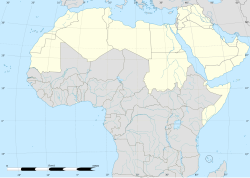
Pan-Arabism (Arabic: الوحدة العربية, romanized: al-waḥda al-ʿarabiyyah, lit. 'Arab unity') is a pan-nationalist ideology that espouses the unification of all Arab people in a single nation-state, consisting of all Arab countries of West Asia and North Africa from the Atlantic Ocean to the Arabian Sea, which is referred to as the Arab world.[1][2] It is closely connected to Arab nationalism, which asserts the view that the Arabs constitute a single nation. It originated in the late 19th century among the Arab regions of the Ottoman Empire, and its popularity reached its height during the peak of Nasserism and Ba'athism in the 1950s and 1960s. Advocates of pan-Arabism have often espoused Arab socialist principles and strongly opposed the political involvement of the Western world in the Arab world. It also sought to empower Arab states against outside forces by forming alliances such as the Arab League.[3]
Origins and development
[edit]The origins of pan-Arabism are often attributed to the Nahda (Arab awakening or enlightenment) movement that flourished in the Arab regions of the Ottoman Empire in the late 19th century.[4] A prominent figure was Jurji Zaydan (1861–1914), who played a key role in laying the intellectual foundation for Pan-Arabism.[5] Zaydan had critical influence on acceptance of a modernized version of the Quranic Arabic language (Modern Standard Arabic) as the universal written and official language throughout the Arab world, instead of adoption of local dialects in the various countries. Zaydan wrote several articles during the early 20th century which emphasized that Arabic-speaking regions stretching from the Maghreb to the Persian Gulf constitute one people with a shared national consciousness and that this linguistic bond trumped religious, racial and specific territorial bonds, inspired in part by his status as a Levantine Christian émigré in 19th century Egypt. He also popularized through his historical novels a secular understanding of Arab history encompassing the pre-Islamic and Islamic periods into a shared history that all Arabs could claim as their own.
As a political project, pan-Arabism was first pressed by Sharif Hussein ibn Ali, the Sharif of Mecca, who sought independence for the Mashreq Arabs from the Ottoman Empire, and the establishment of a unified Arab state in the Mashreq. In 1915 and 1916, the Hussein-McMahon Correspondence resulted in an agreement between the United Kingdom and the Sharif that if the Mashreq Arabs revolted successfully against the Ottomans, the United Kingdom would support claims for Mashreq Arab independence. In 1916, however, the Sykes-Picot Agreement between the United Kingdom and France determined that parts of the Mashreq would be divided between those powers rather than forming part of an independent Arab state. When the Ottoman Empire surrendered in 1918, the United Kingdom refused to keep to the letter of its arrangements with Hussein,[6] and the two nations assumed guardianship of Mesopotamia, Lebanon, Palestine and what became modern Syria. Ultimately, Hussein became King of only Hijaz, in the then less strategically valuable south, but lost his Caliphate throne when the kingdom was sacked by the Najdi Ikhwan forces of the Saudites and forcefully incorporated into the newly created Kingdom of Saudi Arabia.
A more formalized pan-Arab ideology than that of Hussein was first espoused in the 1930s, notably by Syrian thinkers such as Constantin Zureiq, Sati' al-Husri, Zaki al-Arsuzi, and Michel Aflaq. Aflaq and al-Arsuzi were key figures in the establishment of the Arab Ba’ath (Renaissance) Party, and the former was for long its chief ideologist, combining elements of Marxist thought with nationalism to a considerable extent reminiscent of nineteenth-century European romantic nationalism. It has been said that Arsuzi was fascinated with the Nazi ideology of "racial purity" and impacted Aflaq.[7][8][9]
Abdullah I of Jordan dreamed of uniting Syria, Palestine, and Jordan under his leadership in what he would call Greater Syria. He unsuccessfully proposed a plan to this effect to the United Kingdom, which controlled Palestine at that time. The plan was not popular among the majority of Arabs and fostered distrust among the leaders of the other Middle Eastern countries against Abdullah. The distrust of Abdullah's expansionist aspirations was one of the principal reasons for the founding of the Arab League in 1945.[10] Once Abdullah was assassinated by a Palestinian nationalist in 1951, the vision of Greater Syria was dropped from the Jordanian agenda.[3]
Although pan-Arabism began at the time of World War I, Egypt (the most populous and arguably most important Arab country) was not interested in pan-Arabism prior to the 1950s. Thus, in the 1930s and 1940s, Egyptian nationalism – not pan-Arabism – was the dominant mode of expression of Egyptian political activists. James Jankowski wrote about Egypt at the time,
What is most significant is the absence of an Arab component in early Egyptian nationalism. The thrust of Egyptian political, economic, and cultural development throughout the nineteenth century worked against, rather than for, an 'Arab' orientation. ... This situation—that of divergent political trajectories for Egyptians and Arabs—if anything increased after 1900.[11]
Attempts at Arab union
[edit]It was not until Gamal Abdel Nasser that Arab nationalism (in addition to Arab socialism) became a state policy and a means with which to define Egypt's position in the Middle East and the world,[12][13] usually articulated vis-à-vis Zionism in the neighboring state of Israel.
.jpg)
There have been several attempts to bring about a pan-Arab state by many well-known Arab leaders, all of which ultimately resulted in failure. British Foreign Minister Anthony Eden called for Arab unity during the 1940s, and was followed by specific proposals from pro-British leaders, including King Abdullah of Transjordan and Prime Minister Nuri al-Said of Iraq, but Egyptian proposals for a broader grouping of independent Arab states prevailed with the establishment of the League of Arab States, a regional international organization, in 1945. In large part representing the popularity Nasser had gained among the masses in the Arab world following the Suez Crisis, the United Arab Republic (UAR) in 1958 was the first case of the actual merger of two previously-independent Arab countries. Hastily formed under President Nasser's leadership but on the initiative of Syrian leaders who feared a takeover by communists or "reactionaries" and hoped to lead the new entity, the UAR was a unitary state, not a federal union, with its critics seeing this as hardly more than a small country being annexed by a larger one. It lasted until 1961, when Syrian army officers carried out a coup d'état and withdrew from the union. As politicians felt pressured by the wide public to espouse the idea of unity, Egypt, Syria and Iraq entered into an abortive agreement in 1963 to form the United Arab Republic, which was to be "federal in structure, leaving each member state its identity and institutions."[3] By 1961, Egypt had become the only remaining member but continued to call itself "the UAR" (thereby implying it was open for unification with other Arab countries), but it eventually renamed itself the "Arab Republic of Egypt" in 1973.[14]

Also in 1958, a Hashemite-led rival, the Arab Federation, was founded between Jordan and Iraq. Tensions with the UAR and the 14 July Revolution made the Arab Federation collapse after only six months. Another attempt, the United Arab States, existed as a confederation between the United Arab Republic and the Mutawakkilite Kingdom of Yemen, but it dissolved in 1961.
Two later attempts represented the enthusiasm of Libya's Muammar Gaddafi, the Federation of Arab Republics, which lasted five years, and the Arab Islamic Republic with Tunisia, which also aimed to include Algeria and Morocco but never emerged in practice. Muammar Gaddafi had talks with Chadli Bendjedid in 1988 about forming an Algeria-Libya union.[15] Instead the Arab Maghreb Union was formed in 1989. Aside from the forcible unification of much of the Arabian Peninsula by the Saudi rulers of Najd during the 1920s, the unity of seven Arab emirates that form the United Arab Emirates and the unification of North Yemen and South Yemen stand today as rare examples of actual unification. The former governments of Iraq and Syria were both led by rival factions of the Ba'ath Party, which, until the fall of the Assad regime in 2024, espoused pan-Arabism.
Decline
[edit]
The decline of pan-Arabism is attributed to several factors. Problems persisted over a wide range of issues since the inception of pan-Arabist philosophy in the late 1800s, which, until its decline, had kept pan-Arabism on course for causal failure. The factors include: the promotion of pan-Islamism, the sectarian and social differences within the different Arab societies; the competition between different Arab leaders to be the leading voice for the Arab and Islamic worlds; and, to a lesser extent, military defeat against an enemy force.
The promotion of pan-Islamism had been a key aspect within Arab and Muslim societies. Such philosophy dictated for a united Islamic ‘Ummah’ or the close bounding of all Islamic communities to maintain and promote an essence of one family, one cause. The philosophy of pan-Arabism placed itself in contradiction to the philosophy of pan-Islamism as was clarified by religious scholars and Sheikhs within the various Arab countries, especially the Persian gulf. The belief held by critics emphasized that pan-Arabism separated itself from the Ummah in that it only promoted Arab unity and ideals, not Islamic ones. The religious conservatism within the societies propelled pan-Islamism to defeat alternative thoughts such as pan-Arabism.
Various sectarian and social differences within the various Arab societies was another fueling factor for pan-Arabism's decline. Sporadic Sunni and Shia religious divide exacerbated by internal and foreign factors caused reconsideration within Arab circles as to whether pan-Arabism was viable although the issue was religiously oriented. Social differences toed a similar line. Countries like Lebanon and Syria considered secular brought about a clash of thought with the likes of religious Saudi Arabia, whose longstanding promotion of religion was contradictory to the goals of the secular hierarchy within the two Levantine countries, for example.
Different Arab leaders competed to become the leading voices for the Arab and Islamic worlds. Such competition sporadically resulted in friction between the leaders of these Arab countries. The United Arab Republic, which was formulated by Egypt’s Gamal Abdel Nasser and Syria’s Shukri al-Quwatli, was promoted to be the collective voice for the Arab world and the spearhead of pan-Arabism. Being the only physical incarnation of pan-Arabism, it did not receive the expected praise from other Arab nations, especially in the Gulf, which further added to the decline of pan-Arabism.
To a lesser extent, the military defeat to “arch-enemy” Israel made both prominent sources of pan-Arabism reconsider such philosophy. The United Arab Republic, consisting of Egypt and Syria, received ideological burden due to the unfavorable outcome, thus putting pan-Arabism in question. The victory of Israel in the 1967 Six-Day War and the inability of Egypt and Syria to generate economic growth in some form, also damaged pan-Arabism's credibility. "By the mid-1970s," according to The Continuum Political Encyclopedia of the Middle East, "the idea of Arab unity became less and less apparent in Arab politics, though it remained a wishful goal among the masses."[3]
By the late 1980s, pan-Arabism began to be eclipsed by both nationalist and Islamist ideologies. Although pan-Arabism lost appeal by the 1990s, it continued to exercise an intellectual hegemony throughout the Arab world.[1]
See also
[edit]References
[edit]- ^ a b Rubin, Barry (1991). "Pan-Arab Nationalism: The Ideological Dream as Compelling Force". Journal of Contemporary History. 26 (3/4): 535–551. doi:10.1177/002200949102600310. ISSN 0022-0094. JSTOR 260659.
- ^ "pan-Arabism". Oxford Reference. Retrieved 2023-07-24.
- ^ a b c d "Arab Unity." The Continuum Political Encyclopedia of the Middle East. Ed. Avraham Sela. New York: Continuum, 2002. pp. 160–166.
- ^ "Pan-Arabism | History, Significance, and Rise | Britannica". www.britannica.com. Retrieved 2023-07-24.
- ^ Civantos, Christina (2017-11-21). The Afterlife of al-Andalus: Muslim Iberia in Contemporary Arab and Hispanic Narratives. SUNY Press. p. 23. ISBN 978-1-4384-6669-9.
- ^ Contemporary Politics in the Middle East, Beverly Milton-Edwards, Polity Press, 2006, p. 57-59
- ^ The Syrian Arab Republic: a handbook, Anne Sinai, Allen Pollack, 1976, p. 45
- ^ Google Books
- ^ Pan-Arabism and Arab nationalism: the continuing debate by Tawfic Farah, Publisher Westview Press, 1987, p. 37
- ^ Sela, Avraham. "Arab League." Sela. The Continuum Political Encyclopedia of the Middle East. 147-150.
- ^ Jankowski, James. "Egypt and Early Arab Nationalism" in Rashid Khalidi, ed. The Origins of Arab Nationalism. New York: Columbia University Press, 1990, pp. 244–45
- ^ For more information, see Aburish, Said K. (2004), Nasser, the Last Arab, New York City: St. Martin's Press, ISBN 978-0-312-28683-5
- ^ "Before Nasser, Egypt, which had been ruled by Britain since 1882, was more in favor of territorial, Egyptian nationalism and distant from the pan-Arab ideology. Egyptians often did not identify themselves primarily as Arabs, and it is revealing that when the Egyptian nationalist leader Saad Zaghlul met the Arab delegates at Versailles in 1918, he insisted that their struggles for statehood were not connected, claiming that the problem of Egypt was an Egyptian problem and not an Arab one." Makropoulou, Ifigenia. Pan - Arabism: What Destroyed the Ideology of Arab Nationalism? Archived 2018-10-02 at the Wayback Machine. Hellenic Center for European Studies. January 15, 2007.
- ^ "United Arab Republic (UAR)." Sela. The Continuum Political Encyclopedia of the Middle East. 873-874.
- ^ Reich, Bernard (1990). Political Leaders of the Contemporary Middle East and North Africa: A Biographical Dictionary. Greenwood Publishing Group. ISBN 978-0-313-26213-5.
External links
[edit]- Arab Nationalism: Mistaken Identity by Martin Kramer
- Sample chapter from Arab Nationalism in the Twentieth Century by A. Dawisha
- "Pan-Arabism on the March?: Israel Weighs the New Challenge" by Nissim Rejwan

| Politics |
|  | |||||
|---|---|---|---|---|---|---|---|
| Membership |
| ||||||
| Diplomacy | |||||||
| Life | |||||||


Pan-Arabism
View on GrokipediaIdeological Foundations
Core Principles and Objectives
Pan-Arabism posits the existence of a singular Arab nation (umma arabiyya) encompassing all Arabic-speaking peoples, transcending territorial boundaries imposed by colonial powers and advocating their political unification into a cohesive state or federation grounded in shared linguistic, historical, and cultural affinities.[4][5] This principle, articulated by intellectuals like Sati' al-Husri, elevates the Arabic language as the primary conduit of national consciousness, arguing that linguistic unity fosters a collective identity stronger than religious or sectarian divisions, with cultural ties deemed more enduring than faith-based ones.[6][7] Proponents viewed this unity not merely as aspirational but as a historical imperative to restore pre-colonial Arab sovereignty, rejecting Ottoman, European, or post-World War I partitions as artificial impediments to natural cohesion.[8] A central objective was the eradication of foreign domination, encompassing both overt colonialism and neocolonial influences, to enable self-determination and collective Arab resurgence.[9][1] This anti-imperialist stance intertwined with efforts to mobilize against Western powers and, later, Zionism, framing unification as a defensive and restorative mechanism to counter fragmentation engineered by external actors post-1918 Sykes-Picot Agreement.[10] Ideological variants, such as Ba'athism, incorporated socialist tenets for economic redistribution and state-led modernization, emphasizing "renaissance" (ba'ath) through secular governance, individual emancipation within a unified framework, and rejection of feudal or clerical hierarchies that perpetuated disunity.[11][12] Cultural and educational objectives focused on inculcating pan-Arab consciousness via standardized Arabic curricula and media, aiming to supplant local loyalties with a supranational identity capable of sustaining political integration.[5] While proponents like al-Husri prioritized linguistic assimilation over religious exclusivity, excluding non-Arabic speakers from the core nation, the movement's secular leanings often clashed with Islamist currents, revealing an internal tension between cultural universalism and practical pluralism in diverse Arab societies.[6] Ultimate goals included military pacts and economic coordination to project collective strength, though empirical failures in achieving federation—evident in the 1958 United Arab Republic's dissolution after three years—highlighted causal disconnects between ideological purity and entrenched subnational interests.[10][1]Key Intellectual Contributors
Jurji Zaydan (1861–1914), a Lebanese Christian scholar and prolific writer during the Nahda (Arab Renaissance), played a foundational role in shaping secular Pan-Arab consciousness through his historical novels and linguistic studies. By reconstructing Arab history with an emphasis on pre-Islamic and Islamic eras via rational, non-theological analysis, Zaydan promoted a unified Arab identity rooted in language and shared heritage, independent of Ottoman or religious sectarianism; his works, including over 20 novels serialized in his journal al-Hilāl founded in 1892, reached wide Arab audiences and influenced later nationalists by secularizing historical narratives.[13][14] Sātiʿ al-Husrī (1880–1968), an Ottoman-era educator turned Arab nationalist, systematized Pan-Arab ideology by asserting that Arabic language and historical continuity formed the core of an indivisible umma ʿarabiyya (Arab nation), superseding religious or regional loyalties. In treatises like al-ʿUrūba awalan ("Arabism First"), al-Husrī critiqued colonial borders as artificial divisions imposed after World War I and advocated educational reforms to instill pan-Arab sentiment, serving as director of education in Syria (1919) and Iraq (1921–1924) where he prioritized Arabic-medium instruction and purged Turkish influences from curricula. His secular emphasis—that nationalism derives from linguistic affinity rather than Islam—directly inspired Baʿthist thinkers and mid-20th-century unity projects, though his ideas faced resistance from Islamist critics who prioritized religious umma over ethnic-linguistic bonds.[15][16] Michel ʿAflāq (1910–1989), a Syrian Greek Orthodox philosopher educated in Paris, co-founded the Baʿth Party in 1947 with Ṣalāḥ al-Dīn al-Bītār, embedding Pan-Arabism within a framework of socialist renewal (baʿth meaning resurrection). ʿAflāq's doctrine portrayed Arabs as a single nation with an "eternal mission," requiring political unification, economic socialism, and liberation from imperialism to achieve renaissance; his writings, compiled in party constitutions, linked cultural revival to state-led unity, influencing regimes in Syria (1963 coup) and Iraq (1968 rise), though implementations often devolved into authoritarianism detached from his intellectual vision of democratic socialism. Zaki al-Arsūzī (1899–1968), another Baʿth co-ideologue, complemented this by stressing the mystical, perennial spirit of Arabism transcending sects, drawing from his experiences in the Alexandretta crisis to advocate non-sectarian identity against colonial divide-and-rule tactics.[15][17][18]Historical Origins and Early Development
19th-Century Precursors and Ottoman Context
The Ottoman Empire governed vast Arab territories, including Greater Syria, Mesopotamia, and the Hijaz, from the early 16th century onward, administering them through a decentralized system of provincial governors (pashas) and local notables under the broader framework of the millet system, which granted religious communities semi-autonomous status. By the mid-19th century, however, the empire's accelerating decline amid military defeats—such as the loss to Muhammad Ali Pasha's Egypt in 1840—and European encroachments prompted the Tanzimat reforms (1839–1876), which centralized authority, standardized taxation, and promoted legal equality via the 1856 Imperial Reform Edict, yet disproportionately benefited Turkish elites and increased non-Arab officials in Arab provinces, sowing seeds of resentment among Arabic-speaking intellectuals who perceived a dilution of local influence.[19] This context fostered the Nahda, a 19th-century intellectual movement centered in Beirut, Damascus, and Cairo, driven by the introduction of Arabic printing presses—over 20 established in Syria-Lebanon by 1875—and missionary schools, which boosted literacy rates from near-zero to enabling widespread newspapers like Yusuf al-Shalfun's Al-Jinan (founded 1870), emphasizing shared Arabic heritage over Ottoman Turkish or sectarian loyalties.[20] While not yet advocating political unification of all Arab lands, the Nahda promoted wataniyya (territorial patriotism) and linguistic revival as bulwarks against cultural erosion, with figures like Ahmad Faris al-Shidyaq translating European works into Arabic to argue for rational inquiry and anti-clericalism within an Arab framework.[21] Pioneering precursors included Butrus al-Bustani (1819–1883), a Maronite convert to Protestantism, who amid the 1860 Druze-Maronite civil war—claiming 20,000 lives—launched Nafir Suriyya (Clarion of Syria) in September 1860 as a series of 23 broadsides urging unity in Bilad al-Sham (Greater Syria) through Arabic as a supra-sectarian bond, rejecting both Ottoman cosmopolitanism and confessional fragmentation in favor of education and economic self-reliance.[22] Al-Bustani's 1870 founding of the Syrian National School further institutionalized this vision, teaching 300 students by 1875 in subjects blending Western sciences with Arab history, framing Syria as a distinct entity within the Ottoman realm yet culturally Arab.[23] Late-19th-century thinkers escalated toward proto-pan-Arab political critique, notably Abd al-Rahman al-Kawakibi (1854–1902), a Syrian Sunni journalist exiled from Ottoman service, whose Umm al-Qura (Mother of Villages, serialized 1899–1900) imagined a consultative Arab caliphate centered in Mecca, elected by 1,000 Arab delegates, to restore Islamic vitality under Arab auspices rather than "Turkish despotism," drawing on 14th-century Ibn Khaldun's theories of asabiyya (group solidarity) while prioritizing Arabs as the umma's vanguard.[24] Al-Kawakibi's earlier Taba'i al-Istibdad (Nature of Despotism, 1900) analyzed tyranny's psychological effects, attributing Ottoman stagnation to non-Arab rule, thus prefiguring Pan-Arabism's causal emphasis on ethnic leadership for revival, though tempered by pan-Islamic rhetoric to evade censorship.[25] These writings, circulated in secret among Damascus literati, marked a shift from cultural revival to questioning the empire's multi-ethnic legitimacy, influencing clandestine groups like the 1905 Ottoman Arab Society in Paris.[26]Interwar Period and Post-WWI Nationalism
The Arab Revolt of 1916–1918, led by Sharif Hussein bin Ali of Mecca, marked an early expression of post-World War I Arab nationalism with pan-Arab aspirations, as Hussein sought British support for an independent Arab state encompassing territories from Aleppo to Aden in exchange for revolting against Ottoman rule.[27] This vision, articulated in the McMahon-Hussein correspondence of 1915–1916, promised Arab self-determination but was undermined by the secret Sykes-Picot Agreement of 1916, which divided Ottoman Arab provinces into British and French spheres of influence, leading to the imposition of League of Nations mandates in 1920.[28] Hussein's proclamation of the Kingdom of Hejaz in 1916 and his assumption of the caliphate in 1924 reflected ambitions for broader Arab leadership, though these were curtailed by territorial losses to Ibn Saud by 1925 and the failure to achieve unity amid colonial partitions.[29] Faisal bin Hussein, Hussein's son, advanced pan-Arab ideals by establishing the short-lived Arab Kingdom of Syria in Damascus in March 1920, aiming to unite Greater Syria under Hashemite rule as a step toward broader Arab federation, but French forces expelled him in July 1920 under the San Remo Conference mandate terms.[30] Installed as King of Iraq by the British in 1921, Faisal pursued policies to foster Sunni-Shia unity and pan-Arab sentiment, including diplomatic overtures for Arab cooperation in the early 1930s, such as proposals for economic and political alignment with neighboring states to counter mandate restrictions.[31] His efforts highlighted tensions between local state-building under colonial oversight and aspirations for supranational Arab solidarity, with Faisal viewing Iraq as a potential nucleus for wider unity.[32] Intellectual developments solidified pan-Arab ideology during the interwar period, particularly through Sati' al-Husri, who, after serving in Ottoman administration, became Director of Education in Iraq from 1921 and advocated a secular Arab nationalism rooted in shared language and history rather than religion or localism.[33] Al-Husri's writings and educational reforms emphasized Arabic as a unifying force, promoting textbooks and curricula that portrayed Arabs as a single nation divided by imperialism, influencing a generation amid resistance movements like the 1925–1927 Great Syrian Revolt against French rule.[34] By the late 1920s, pan-Arab groups such as 'Asabat al-'Amal al-Qawmi emerged, articulating a coherent ideology that rejected Ottoman pan-Islamism and colonial fragmentation in favor of linguistic and cultural unity across mandated territories.[34] Mandate-era policies fueled pan-Arab mobilization, as French suppression in Syria and British control in Iraq and Palestine exposed the artificiality of borders, prompting intellectuals and exiles to envision unity as a counter to European dominance; however, practical divisions persisted, with Egyptian nationalism remaining more insular and Hashemite ambitions clashing with local tribal and sectarian realities.[19] This period laid ideological groundwork but saw limited institutional progress, as economic dependencies and internal revolts, including Iraq's 1933 Simele massacre of Assyrians underscoring ethnic fractures, tempered unity rhetoric with pragmatic governance challenges.[35]Peak and Institutional Efforts
Nasserist Era and the United Arab Republic
Gamal Abdel Nasser's ascent following the July 23, 1952 coup by the Free Officers Movement against King Farouk positioned Egypt as a central force in Pan-Arabism, with Nasser emerging as its preeminent advocate by the mid-1950s.[1] His nationalization of the Suez Canal on July 26, 1956, and the subsequent crisis, which repelled Anglo-French-Israeli intervention, elevated his status across the Arab world as a symbol of defiance against Western imperialism, accelerating the adoption of Pan-Arab rhetoric in Egyptian foreign policy.[1] Nasser's 1957 speeches framed Arab unity as essential for collective security and economic development, drawing on shared language, history, and anti-colonial struggles.[1] The United Arab Republic (UAR) represented the most ambitious institutional expression of Nasserist Pan-Arabism, uniting Egypt and Syria into a single state proclaimed on February 1, 1958, and formalized through plebiscites later that month.[1] Driven by Syrian Ba'athist leaders seeking stability amid domestic coups and economic woes, the union aimed to merge political, military, and economic systems under Nasser's presidency, with a unified army, foreign policy controlled from Cairo, and a national assembly disproportionately favoring Egyptian members (300 Egyptian to 100 Syrian).[1] [36] A loose federation with North Yemen, the United Arab States, was announced on March 8, 1958, but preserved Yemen's sovereignty.[1] Governance emphasized centralization, with Egyptian officials dominating the cabinet (20 of 34 ministers) and implementing socialist reforms like land redistribution and nationalization to align economies.[1] The UAR's structure exacerbated tensions, as Syrian elites perceived Egyptian overreach eroding local autonomy, with policies such as abrupt nationalizations, elevated taxes, and suppression of Ba'athist influence fostering resentment.[1] [36] A military coup in Syria on September 28, 1961, led to its unilateral secession, citing economic subordination and political marginalization; Yemen followed suit by December 26, 1961.[1] [37] Despite its brevity, the UAR briefly enhanced Nasser's prestige, inspiring Pan-Arab enthusiasm and Egypt's regional influence through the late 1950s, though its collapse underscored practical barriers to unity, including divergent economic interests, centralized authoritarianism, and elite rivalries.[1] [36] Nasser retained the UAR name for Egypt until 1971, symbolizing enduring aspirational claims to Arab leadership.[1]Ba'athism and Regional Alliances
The Ba'ath Party, upon seizing power in Iraq on February 8, 1963, and in Syria on March 8, 1963, prioritized Pan-Arab unity as a central tenet of its ideology, viewing federation as a mechanism for Arab socialist revival and strength against external threats.[38] These regimes initiated immediate discussions for merging the two countries' Ba'ath branches and broader regional integration, reflecting the party's foundational emphasis on transcending national borders for a unified Arab state.[39] However, internal factionalism and resistance to subordinating party autonomy undermined these efforts from the outset. In April 1963, Ba'athist leaders from Syria and Iraq convened tripartite talks with Egypt in Cairo, culminating on April 17 in a declaration to form a federal United Arab Republic encompassing the three states, with provisions for merging Ba'ath and Nasserist parties.[40] The agreement envisioned coordinated economic planning, joint military commands, and phased political integration, but Nasser's insistence on dissolving the Ba'ath Party as a condition clashed with its leaders' commitment to ideological independence, leading to acrimonious breakdowns by July.[41] By November 1963, the Iraqi Ba'ath regime was ousted in a coup by Abdul Salam Arif, who pivoted toward Nasserist alignment, collapsing the tripartite framework and exposing Ba'athism's vulnerabilities to personalist rivalries over collective unity.[42] Subsequent Ba'athist initiatives, such as Syrian-Iraqi unity protocols signed in 1964 amid Syria's internal instability, similarly faltered due to coups and doctrinal disputes, culminating in the 1966 schism that formalized separate Syrian and Iraqi party branches.[43] Under Hafez al-Assad's consolidation of power in Syria by 1970 and the Iraqi Ba'ath's return in 1968, sporadic negotiations persisted— including 1978 talks proposing a dual presidency—but were thwarted by mutual suspicions and ambitions for dominance, as evidenced by Iraq's rejection of arrangements subordinating Saddam Hussein.[38] These failures highlighted Ba'athism's tension between rhetorical Pan-Arabism and the authoritarian centralization that prioritized regime survival over genuine alliances.[44]Achievements in Mobilization and Unity
Anti-Colonial and Independence Movements
Pan-Arabism framed European colonial mandates after World War I as illegitimate partitions of a singular Arab homeland, galvanizing resistance by emphasizing shared language, history, and destiny over imposed boundaries. This ideological opposition to divide-and-rule policies underpinned early anti-colonial uprisings, portraying independence not merely as local sovereignty but as steps toward broader unification.[45] In Syria, the Great Syrian Revolt of 1925–1927 exemplified pan-Arab mobilization against the French Mandate, with Druze-led rebels in Jabal al-Druze allying with urban nationalists and issuing manifestos invoking pan-Syrian and pan-Arab liberation from colonial fragmentation. French forces, deploying up to 80,000 troops including air support, suppressed the revolt by 1927, but it highlighted pan-Arabism's role in coordinating peasant, worker, and intellectual resistance across sects.[46][47] In Iraq under the British Mandate, Sātiʿ al-Husri, appointed director of education in 1921, implemented curricula stressing Arab unity and history, fostering anti-imperialist sentiment among youth that intensified opposition to British oversight. This educational push contributed to the 1920 Iraqi Revolt—suppressed with over 6,000 Arab casualties—and sustained pressure leading to formal independence in 1932, though British influence persisted until the 1958 revolution. Al-Husri's efforts embedded pan-Arabism in state institutions, priming later Ba'athist ascendance.[35][48] Post-World War II, Gamal Abdel Nasser's Egypt extended pan-Arab solidarity to ongoing struggles, most notably aiding Algeria's Front de Libération Nationale (FLN) from 1954 onward with military training in Egyptian camps, smuggled arms via Libya and Tunisia, financial support exceeding $100 million equivalent, and international propaganda via Voice of the Arabs radio. This assistance, framing the Algerian War (1954–1962) as an Arab-wide anti-imperialist jihad, helped the FLN withstand French reprisals—estimated at 1.5 million Algerian deaths—and secure independence in 1962, with initial post-colonial alignment toward Cairo's unity projects. Similar rhetorical and material backing influenced decolonization in Tunisia and Morocco (both 1956), reinforcing pan-Arabism's utility in pooling resources against lingering European presence.[49][50][51]Cultural and Pan-Arab Institutions
The Arab League, founded on March 22, 1945, in Cairo, incorporated cultural coordination as part of its objectives to foster closer relations among member states, including joint efforts in education, arts, and intellectual exchange to bolster shared Arab identity.[52] Its founding pact explicitly addressed cultural affairs, mandating collaboration to safeguard heritage and promote mutual understanding.[53] A supplementary Cultural Treaty outlined measures such as facilitating visits for cultural, scouting, and sports activities across borders, aiming to enhance interpersonal ties and cultural diffusion.[54] Media outlets emerged as pivotal tools for disseminating Pan-Arab ideals, particularly during the 1950s and 1960s. Egypt's Voice of the Arabs (Sawt al-Arab) radio station, launched on July 4, 1953, under Gamal Abdel Nasser's direction, broadcast propaganda emphasizing Arab unity, anti-colonial resistance, and liberation of resources, reaching millions via shortwave across the region from Morocco to Iraq.[55] The station's inflammatory rhetoric against monarchies and imperial powers galvanized public sentiment, contributing to the 1956 Suez Crisis mobilization and the spread of Nasserism as a unifying force.[56] Educational and scientific bodies further institutionalized cultural Pan-Arabism. The Arab League Educational, Cultural and Scientific Organization (ALECSO), established in 1970, sought to elevate Arab intellectual unity by standardizing curricula, preserving Arabic language usage, and coordinating research initiatives across 22 member states.[58] ALECSO facilitated projects like joint textbook development and heritage documentation, though its efforts often contended with national divergences and post-1967 disillusionment.[59] These institutions, while advancing rhetorical unity, frequently prioritized elite-driven agendas over grassroots cultural integration, reflecting Pan-Arabism's top-down character.[60]Criticisms, Ideological Flaws, and Repression
Suppression of Sectarian and Local Identities
Pan-Arabist ideologies, particularly Nasserism and Ba'athism, posited that sectarian divisions—such as Sunni-Shiite schisms—and local ethnic identities, including Kurdish or Berber affiliations, were artificial barriers to a singular Arab nation, necessitating their subordination or erasure to achieve true unity.[10] This approach, rooted in secular nationalism, viewed religious or tribal loyalties as relics of Ottoman fragmentation or colonial divide-and-rule tactics, advocating instead for a homogenized Arab identity enforced through state mechanisms.[61] In practice, regimes pursued this via cultural assimilation, demographic engineering, and political repression, often prioritizing Arab Sunni majoritarianism while marginalizing minorities, which undermined the movement's universalist claims and fueled long-term ethnic resentments.[62] During the United Arab Republic (1958–1961), Gamal Abdel Nasser's Cairo-centered administration dissolved all Syrian political parties, purged local councils, and imposed Egyptian-style socialist reforms, effectively sidelining Syrian provincial elites and fostering perceptions of Egyptian dominance over distinct Levantine identities.[63] Syrian business leaders and military officers, resenting the influx of Egyptian advisors and the erosion of autonomous governance, orchestrated a 1961 coup that dissolved the union, highlighting how Pan-Arab centralization clashed with entrenched local attachments.[1] Nasser's model extended to Egypt, where suppression of Coptic Christian communal autonomy—through nationalizations and secular education mandates—aimed to integrate religious minorities into an Arab framework, though it alienated groups viewing such policies as cultural homogenization.[64] Ba'athist regimes in Iraq exemplified aggressive suppression of non-Arab identities, launching Arabization campaigns from the late 1960s that forcibly displaced over 250,000 Kurds from northern oil-rich areas like Kirkuk between 1975 and 1988, resettling Arab populations to alter demographics and assert state control.[65] Shiite Arabs faced parallel exclusion, with purges of Shiite clergy and restrictions on religious processions under Saddam Hussein's rule from 1979 onward, framing such identities as threats to Ba'athist unity and socialism.[62] In Syria, the Ba'ath Party's 1963 seizure of power initially rejected sectarianism in favor of class-based Arab socialism, but Hafez al-Assad's consolidation from 1970 involved co-opting Alawite kin networks for regime security while cracking down on Sunni Brotherhood uprisings, such as the 1982 Hama massacre that killed 10,000–40,000, to eliminate Islamist challenges to secular Pan-Arab hegemony.[66] These efforts, while temporarily bolstering regime stability, often exacerbated the very divisions they sought to transcend, as suppressed groups turned to insurgency or irredentism; for instance, Kurdish revolts in Iraq persisted through the 1990s, and Syrian sectarian undercurrents erupted in the 2011 uprising.[67] Critics, including Arab intellectuals like those in post-1967 assessments, argued that ignoring empirical ethnic pluralism for ideological purity reflected a flawed causal assumption—that coercive unity could override historical loyalties—ultimately contributing to Pan-Arabism's erosion.[45]Authoritarian Governance and Economic Policies
Pan-Arabist regimes consolidated power through authoritarian structures, portraying centralized control as indispensable for overcoming fragmentation and imperialism, often at the expense of pluralistic governance. In Egypt, Gamal Abdel Nasser, following the 1952 Free Officers' coup, prohibited political parties in January 1953 and institutionalized the Arab Socialist Union (ASU) as the vanguard party via the National Charter of May 1962, which declared Arab socialism the state's guiding ideology and effectively monopolized political activity.[49][68] This system facilitated the suppression of dissent, with state security apparatus detaining opponents and merging all organizations into ASU frameworks to enforce loyalty.[69] Ba'athist states mirrored this model, leveraging Pan-Arab ideology to justify one-party dominance. In Syria, the Ba'ath Party seized control through a March 1963 military coup, thereafter operating as the sole legal political force, prohibiting rival parties and permeating state institutions to maintain ideological conformity until the regime's overthrow in December 2024.[70][71] Iraq's Ba'athists, consolidating power after the July 1968 coup and under Saddam Hussein's leadership from 1979, similarly entrenched single-party rule, using purges and security forces to eliminate opposition under the pretext of safeguarding Arab unity.[72] Complementing political centralization, economic policies under Pan-Arabism emphasized state-directed socialism to redistribute resources, reduce inequality, and assert sovereignty over foreign capital. Nasser's Egypt enacted land reforms starting in 1952, limiting individual holdings to 200 feddans (later reduced) and redistributing expropriated estates, while nationalizing the Suez Canal Company on July 26, 1956, and issuing socialist decrees in July 1961 that seized major enterprises and further capped agricultural ownership.[49][73] Ba'athist governments pursued parallel statist interventions; Iraq nationalized its oil sector in June 1972, channeling revenues into state-led industrialization, while Syria expanded public ownership of industry and cooperatives post-1963 to align with socialist tenets of equity and self-sufficiency.[74] Despite early achievements in literacy, infrastructure, and welfare expansion—such as Egypt's public sector employing over 80% of organized labor by the late 1960s—these policies engendered chronic inefficiencies from bureaucratic overreach, price distortions, and suppressed private enterprise. Egypt's economy faltered into crisis by 1964–1965, burdened by inflated military expenditures, import dependency, and administrative bottlenecks that hindered productivity growth.[75] In Ba'athist Iraq and Syria, socialist frameworks amplified corruption, elite capture of state assets, and vulnerability to commodity shocks, yielding stagnant per capita incomes and recurrent fiscal imbalances that undermined long-term development.[76][74][77]Military and Geopolitical Failures
Arab-Israeli Conflicts and 1967 War
Pan-Arabism framed the State of Israel, established in 1948, as a Western imperialist implant in the Arab world, galvanizing calls for collective Arab military action to eliminate it. In the 1948 Arab-Israeli War, armies from Egypt, Jordan, Syria, Iraq, and Lebanon invaded the former British Mandate of Palestine following Israel's declaration of independence on May 14, 1948, but lacked unified command and strategy, resulting in Israel's survival and expansion of territory despite Arab numerical advantages.[78] This defeat, while predating Pan-Arabism's peak, underscored early disunity and fueled subsequent ideological pushes for greater Arab coordination against the perceived common threat.[79] The 1956 Suez Crisis further highlighted Pan-Arabist dynamics when Egyptian President Gamal Abdel Nasser nationalized the Suez Canal on July 26, 1956, defying British and French interests and aligning with anti-colonial rhetoric that resonated across Arab states. Israel's subsequent invasion of Sinai on October 29, 1956, alongside Anglo-French intervention, led to a military setback for Egypt, yet Nasser's refusal to capitulate under international pressure elevated his stature as a Pan-Arab hero, masking underlying military vulnerabilities.[80] By 1967, Nasser's leadership embodied Pan-Arabism's zenith, with Egypt's 1961 union with Syria (United Arab Republic) and defense pacts promoting unified fronts against Israel. Escalation began in May 1967 when Nasser remilitarized Sinai and closed the Straits of Tiran to Israeli shipping on May 22, 1967, prompting defensive mobilizations and mutual defense agreements with Jordan and Iraq. Nasser's rhetoric emphasized Arab unity and imminent victory, declaring on May 26, 1967, that "our basic objective will be the destruction of Israel," while Syrian and Jordanian forces aligned under this banner despite persistent interstate suspicions.[81][80] The Six-Day War erupted on June 5, 1967, with Israel's preemptive airstrikes destroying nearly the entire Egyptian, Jordanian, and Syrian air forces on the ground within hours, crippling Arab aerial capabilities. Ground offensives followed rapidly: Israel captured the Sinai Peninsula and Gaza Strip from Egypt by June 8, the West Bank and East Jerusalem from Jordan, and the Golan Heights from Syria by June 10, expanding its territory threefold while inflicting disproportionate casualties—Arab forces suffered around 20,000 dead and widespread equipment losses, compared to Israel's approximately 800 killed.[82][83] This humiliating defeat exposed Pan-Arabism's military overreach, as promised unity faltered amid poor inter-Arab coordination, Soviet-supplied equipment failures, and overreliance on propaganda-fueled bravado rather than operational readiness. Nasser's initial resignation offer on June 9, 1967, followed by mass protests demanding his retention, reflected public shock but also the ideology's fragility; the loss of key territories and prestige accelerated skepticism toward centralized Arab leadership and highlighted enduring national rivalries.[82][80] The war's outcome dismantled illusions of Pan-Arab military supremacy, paving the way for fragmented state interests and alternative ideologies.[83]Interstate Rivalries and Fragmentation
Pan-Arabist aspirations for unity were undermined by persistent interstate rivalries, particularly during the Arab Cold War from the 1950s to the 1970s, which pitted revolutionary republics like Egypt against conservative monarchies such as Saudi Arabia.[84] This ideological and geopolitical contest, often manifesting as proxy conflicts, prioritized national power struggles over collective Arab solidarity, fostering fragmentation.[85] Egypt's aggressive promotion of Nasserism clashed with Saudi efforts to preserve monarchical stability, leading to mutual accusations of subversion and interference in each other's affairs. A prime example of early fragmentation was the dissolution of the United Arab Republic (UAR) on September 28, 1961, following a military coup in Syria against Egyptian dominance.[86] Formed in 1958 as a merger between Egypt and Syria to embody pan-Arab unity, the UAR collapsed due to Syrian resentment over Cairo's centralization of power, unpopular economic nationalizations, and sequestration of private property affecting minorities.[87] Drought exacerbating Syria's economic woes further fueled discontent among local elites and military officers, who viewed Nasser's policies as detrimental to regional autonomy.[88] The breakup highlighted how personal leadership ambitions and mismatched administrative structures eroded even short-lived unions, reverting Syria to independent rule and weakening pan-Arab momentum.[37] The North Yemen Civil War (1962–1970) intensified rivalries, serving as a proxy battleground between Egypt and Saudi Arabia.[89] Following the republican coup against Imam Muhammad al-Badr on September 26, 1962, Nasser deployed up to 70,000 Egyptian troops to support the Yemen Arab Republic, aiming to export revolutionary pan-Arabism.[90] Saudi Arabia countered by funding royalist forces, viewing Egyptian intervention as a direct threat to its borders and monarchical system, which prolonged the conflict and drained Egypt's resources ahead of the 1967 Six-Day War.[91] This eight-year stalemate, costing Egypt an estimated $1 billion annually by 1965, exemplified how interstate proxy wars diverted pan-Arab energies into mutual exhaustion rather than cohesion.[92] Ba'athist regimes in Syria and Iraq further illustrated ideological fragmentation despite shared pan-Arab commitments.[93] After seizing power in 1963 (Syria) and 1968 (Iraq), the rival Ba'ath branches pursued unity talks, but deep-seated distrust, sectarian divergences—Alawite dominance in Syria versus Sunni leadership in Iraq—and leadership cults prevented merger.[39] Clashes escalated in the 1970s, including assassination attempts and border skirmishes, as each regime prioritized national control over supranational ideals, splintering the Ba'ath movement into competing factions.[94] These dynamics, rooted in power rivalries rather than doctrinal purity, contributed to a broader pattern where Arab states' pursuit of sovereignty and influence perpetuated division, rendering pan-Arab unity aspirational but unrealized.[95]Decline and Competing Ideologies
Post-1967 Disillusionment
The Six-Day War of June 5–10, 1967, resulted in Israel's swift victory over Egypt, Jordan, and Syria, with Arab forces losing control of the Sinai Peninsula, Gaza Strip, West Bank, and Golan Heights, exposing profound weaknesses in coordinated Arab military strategy and exposing the fragility of Pan-Arab unity under pressure.[82] This defeat dismantled the narrative of inevitable Arab triumph propagated by leaders like Gamal Abdel Nasser, whose mobilization of Pan-Arab sentiment had promised collective strength against Israel, leading to widespread public and intellectual disillusionment with the ideology's practical efficacy.[96][97] In the war's immediate aftermath, Nasser broadcast his resignation on June 9, 1967, accepting responsibility for the "rotten" regime's failures and the lack of inter-Arab coordination, though mass protests compelled him to retract it the following day.[98][99] This episode highlighted a crisis of legitimacy for Pan-Arabist regimes, as the defeat revealed not only tactical shortcomings—such as inadequate intelligence and overreliance on Soviet assurances—but also the ideological overreach of subordinating national interests to abstract unity.[100] Arab states' subsequent Khartoum Resolution on August 29–September 1, 1967, affirmed "no peace, no recognition, no negotiation" with Israel, yet privately underscored a retreat from ambitious federation schemes toward defensive posturing.[83] The humiliation fueled a broader ideological retreat, with Pan-Arabism's "Waterloo" eroding faith in secular nationalist models and accelerating fragmentation as states prioritized sovereignty over supranational ambitions.[101] By the late 1960s, disillusionment manifested in critiques of authoritarian centralization and economic stagnation under Pan-Arabist governance, paving the way for competing forces like Palestinian self-reliance and nascent Islamism, which capitalized on the perceived bankruptcy of unity without tangible victories.[102][96] This shift was evident in the Arab system's evolution from Egypt-dominated Pan-Arab alignment to interstate rivalries, as the war's losses—estimated at over 20,000 Arab fatalities and vast territorial concessions—undermined the causal premise that cultural-linguistic bonds alone could forge effective political-military cohesion.[103][104]Rise of Islamism and Local Nationalisms
The humiliating defeat in the 1967 Six-Day War discredited the secular foundations of Pan-Arabism, particularly Nasserism, creating ideological vacuum filled by Islamist movements that emphasized religious unity over ethnic Arab solidarity.[99][105] Arab armies' rapid loss of territories including the Sinai Peninsula, Golan Heights, West Bank, and Gaza Strip exposed the practical failures of unified Arab military efforts, leading intellectuals and masses to question the efficacy of socialist pan-Arab regimes in confronting perceived existential threats.[99] This shift was evident in the declining appeal of Ba'athist and Nasserist parties, whose promises of collective strength yielded territorial fragmentation rather than empowerment.[106] Islamist ideologies gained traction as an alternative framework, drawing on thinkers like Sayyid Qutb, whose pre-1967 writings critiqued secular governance as jahiliyyah (pre-Islamic ignorance) and advocated Islamic revivalism, resonating post-defeat as a return to purportedly authentic sources of resilience.[107] In Egypt, the Muslim Brotherhood, suppressed under Nasser from 1954 onward, experienced partial rehabilitation under Anwar Sadat after 1970, allowing it to expand social services and influence universities amid economic liberalization and resentment toward state socialism.[108] By the late 1970s, Brotherhood-affiliated groups influenced politics across the region, with offshoots challenging regimes in Syria—where a 1976-1982 uprising against Hafez al-Assad's Alawite-dominated rule mobilized Sunni Islamists—and in Iraq, where Sunni Islamist networks opposed Ba'athist secularism despite Saddam Hussein's Sunni Arab base.[109] The 1979 Iranian Revolution further amplified this trend by demonstrating Shia Islamist success against monarchy, inspiring Sunni counterparts despite sectarian differences, though Arab regimes viewed it warily as a model of theocratic overthrow.[110] Concurrently, local nationalisms reasserted primacy, prioritizing state-specific identities over supranational Arabism, as evidenced by the dissolution of unity projects like the United Arab Republic in 1961 and the failure of post-1967 coordination.[101] In Egypt, Sadat's 1970s pivot toward wataniyyah (local patriotism) emphasized Pharaonic heritage and bilateral diplomacy, culminating in the 1979 Camp David Accords that prioritized Egyptian interests over collective Arab boycott.[45] Syria under Assad cultivated "Greater Syria" nationalism infused with Ba'athist elements but subordinated to regime survival, suppressing pan-Arab transnationalism.[10] Iraq's Ba'athists similarly evolved toward Iraqi exceptionalism by the 1980s, framing Iran-Iraq War (1980-1988) as defense of Arab Mesopotamia against Persian incursion rather than pan-Arab jihad.[111] These developments reflected causal recognition that divergent economic, sectarian, and monarchical interests—exacerbated by oil wealth disparities post-1973—undermined abstract unity, fostering pragmatic state loyalties.[112] By the 1980s, surveys and electoral trends indicated waning pan-Arab sentiment, with citizens identifying more with national flags than the Arab League emblem.[113]Legacy and Modern Assessments
Long-Term Impacts on Arab States
The pursuit of Pan-Arab unity under ideologies like Nasserism and Ba'athism entrenched authoritarian governance structures across several Arab states, prioritizing centralized control over pluralistic institutions. In Egypt, Nasser's 1952 revolution established a one-party system that suppressed political opposition and civil society, a model that persisted through subsequent regimes despite formal multiparty shifts in the 1970s.[114] Similarly, Ba'athist regimes in Iraq and Syria, seizing power in 1968, implemented single-party rule that facilitated purges, intelligence dominance, and cult-of-personality leadership under Saddam Hussein and the Assad family, respectively, stifling dissent and fostering dependency on coercive apparatuses.[115] [11] These systems, justified as necessary for Arab revival, left legacies of institutional fragility, as evidenced by the rapid power vacuums following the 2003 fall of Ba'athist Iraq and ongoing instability in post-2024 Syria.[116] [94] Economically, Pan-Arabist policies of state socialism and nationalization yielded initial social gains but engendered long-term inefficiencies and dependency. Nasser's land reforms in Egypt redistributed over 1 million feddans by 1961, reducing landed elite dominance and boosting literacy from 25% in 1950 to 50% by 1970, yet they failed to mechanize agriculture or alleviate rural poverty, contributing to persistent inequality and bureaucratic bloat.[117] [114] In Ba'athist states, oil nationalizations funded expansive welfare but centralized planning stifled private enterprise, leading to corruption and sanctions-induced collapses; Iraq's GDP per capita stagnated at around $3,000 (PPP) pre-2003 amid militarized spending, while Syria's economy contracted 60% during civil war rooted in regime isolation.[118] [119] This rentier model, emphasizing redistribution over innovation, perpetuated vulnerability to commodity shocks and foreign aid, hindering diversification despite early post-independence growth averaging 5% annually in the 1950s-1960s.[118] Socially, the emphasis on supranational Arab identity suppressed ethnic and sectarian cleavages, exacerbating fragmentation upon ideological collapse. Ba'athist Arabization campaigns in Iraq marginalized Kurds and Shia, fueling insurgencies that intensified after 2003, while in Syria, Alawite dominance alienated Sunni majorities, contributing to the 2011 uprising's sectarian turn.[120] [121] Pan-Arabism's failure to accommodate sub-state loyalties—evident in the 1958-1961 United Arab Republic's dissolution—allowed repressed identities to resurface, as seen in the rise of Kurdish autonomy bids and Islamist movements post-1967, undermining state cohesion without delivering promised unity.[45] Overall, these impacts reinforced sovereign fragmentation over integration, with Arab states averaging lower Human Development Index scores than comparable non-Arab developing nations by the 2000s, reflecting causal links between ideological overreach and institutional decay.[122][118]Contemporary Relevance and Critiques
In the 2020s, Pan-Arabism persists primarily as rhetorical symbolism rather than a viable political project, often invoked by regimes to bolster domestic legitimacy amid economic and social pressures. In the Maghreb, leaders such as Algeria's President Abdelmadjid Tebboune and Tunisia's President Kais Saïed have employed neo-pan-Arabist language, emphasizing anti-Zionist stances and pro-Palestinian solidarity—for instance, Algeria hosting Palestinian factions and the 2022 Arab League summit—to rally internal support without pursuing substantive regional integration.[123] This neo-variant functions as populist discourse targeted at local audiences, decoupled from historical unification goals and aligned with neoliberal economic policies that limit inter-Maghreb trade to under 5%.[123] The Arab League, founded in 1945 with pan-Arabist roots, continues as a forum for nominal cooperation among 22 member states, achieving limited successes like supporting the 2011 Libyan intervention against Muammar Gaddafi and reinstating Syria's membership in 2023 to contain regional spillover, yet it remains hampered by non-binding decisions and internal divisions.[124] Public sentiment retains some affinity, with 81% of respondents in the 2019-2020 Arab Opinion Index viewing Arabs as a single nation, particularly in opposition to Israeli policies (88% against recognition).[125] Critiques of Pan-Arabism in contemporary assessments emphasize its utopian incompatibility with Arab societies' empirical realities, including entrenched sectarian divisions, tribal loyalties, and religious identities that prioritize Islamism over secular unity.[10] Post-Arab Spring analyses link its decline to the ideology's association with authoritarian state failures, where pan-Arabist regimes delivered military defeats—like the 1967 Six-Day War—and economic stagnation, fostering disillusionment and the rise of localized nationalisms and Islamist alternatives.[122][126] Leadership rivalries, such as those between Egypt, Iraq, and Syria in the mid-20th century, compounded by competing non-Arab ideologies and unresolved attitudes toward Israel, rendered unification efforts fragmented and unsustainable.[10] Modern observers note that while the ideology's appeal lies in cultural-linguistic bonds, its historical implementation suppressed subnational identities, justified dictatorships, and ignored socioeconomic disparities—evident in persistent gaps between wealthy Gulf states and poorer Levant nations—making revival improbable without addressing these causal barriers.[125] Autocratic rulers today pay lip service to pan-Arabism while promoting state-specific nationalisms, such as Saudi Arabia's "Saudi first" shift, underscoring its relegation to symbolic rather than operational status.[125][127]References
- https://www.[researchgate](/page/ResearchGate).net/publication/255697892_Voice_of_the_Arabs_Radio_Its_Effects_and_Political_Power_During_the_Nasser_Era_1953-1967