Hubbry Logo
Prince-bishopPrince-bishopMain
Open search
Prince-bishop
Community hub
Prince-bishop
logo
8 pages, 0 posts
0 subscribers
Be the first to start a discussion here.
Prince-bishop
Prince-bishop
from Wikipedia
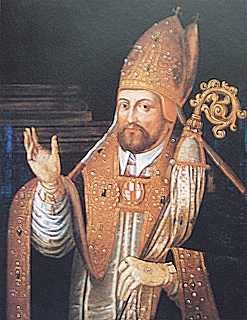
Johann Otto von Gemmingen, Prince-Bishop of Augsburg (1591–1598)

A prince-bishop is a bishop who is also the civil ruler of some secular principality and sovereignty, as opposed to Prince of the Church itself, a title associated with cardinals. Since 1951, the sole extant prince-bishop has been the Bishop of Urgell, Catalonia, who has remained ex officio one of two co-princes of Andorra, along with the French president.[1][2]

Overview

[edit]

In the West, with the decline of imperial power from the 4th century onwards in the face of the barbarian invasions, sometimes Christian bishops of cities took the place of the Roman commander, made secular decisions for the city and led their own troops when necessary. Later relations between a prince-bishop and the burghers were invariably not cordial. As cities demanded charters from emperors, kings, or their prince-bishops and declared themselves independent of the secular territorial magnates, friction intensified between burghers and bishops. The principality or prince-bishopric (Hochstift) ruled politically by a prince-bishop could wholly or largely have overlapped with his diocesan jurisdiction, but some parts of his diocese, even the city of his residence, could have been exempt from his civil rule, obtaining the status of free imperial city. If the episcopal see was an archbishopric, the correct term was prince-archbishop; the equivalent in the regular (monastic) clergy was prince-abbot. A prince-bishop was usually considered an elected monarch. With the dissolution of the Holy Roman Empire in 1806, the title finally became defunct in the Confederation of the Rhine. However, in respect to the lands of the former Holy Roman Empire outside of French control, such as the Habsburg Monarchy, including Austria proper (Salzburg, Seckau), the Lands of the Bohemian Crown (the bulk of Olomouc and parts of Breslau), as well as in respect to the parts of the 1795-partitioned Polish state, including those forming part of the Kingdom of Galicia and Lodomeria or those acquired by the Kingdom of Prussia, the position continued in some cases nominally and was sometimes transformed into a new, titular type, initially recognized by the German Empire and Austria-Hungary until their demise, with the title ultimately abolished altogether by the pope in 1951.

The sole exception is the Bishop of Urgell, Catalonia, who no longer has any secular rights in Spain, but remains ex officio one of two co-princes of Andorra, along with the French head of state (currently its President), and thus the last extant prince-bishop.[1][2]

In the Byzantine Empire, the still autocratic Emperors passed general legal measures assigning all bishops certain rights and duties in the secular administration of their dioceses, possibly as part of a development to put the Eastern Church in the service of the Empire[citation needed], with its Ecumenical Patriarch almost reduced to the Emperor's minister of religious affairs.[citation needed]. The institution of prince-bishop was revived in the Orthodox Church in the modern times during the existence of the Prince-Bishopric of Montenegro.

History

[edit]

Holy Roman Empire

[edit]
Arms of a Prince-Bishop with components from both princely and ecclesiastical heraldry.
Ecclesiastical lands in the Holy Roman Empire, 1780

Bishops had been involved in the government of the Frankish realm and subsequent Carolingian Empire frequently as the clerical member of a duo of envoys styled Missus dominicus, but that was an individual mandate, not attached to the see. Prince-bishoprics were most common in the feudally fragmented Holy Roman Empire, where many were formally awarded the rank of an Imperial Prince Reichsfürst, granting them the immediate power over a certain territory and a representation in the Imperial Diet (Reichstag).

The stem duchies of the German Kingdom inside the Empire had strong and powerful dukes (originally, war-rulers), always looking out more for their duchy's "national interest" than for the Empire's. In turn the first Ottonian (Saxon) king Henry the Fowler and more so his son, Emperor Otto I, intended to weaken the power of the dukes by granting loyal bishops Imperial lands and vest them with regalia privileges. Unlike dukes they could not pass hereditary titles and lands to any descendants. Instead the Emperors reserved the implementation of the bishops of their proprietary church for themselves, defying the fact that according to canon law they were part of the transnational Catholic Church. This met with increasing opposition by the Popes, culminating in the fierce Investiture Controversy of 1076. Nevertheless, the Emperors continued to grant major territories to the most important (arch)bishops. The immediate territory attached to the episcopal see then became a prince-diocese or (arch)bishopric (Fürst(erz)bistum).[3] The German term Hochstift was often used to denote the form of secular authority held by bishops ruling a prince-bishopric with Erzstift being used for prince-archbishoprics.

Emperor Charles IV by the Golden Bull of 1356 confirmed the privileged status of the Prince-Archbishoprics of Mainz, Cologne and Trier as members of the electoral college. At the eve of the Protestant Reformation, the Imperial states comprised 53 ecclesiastical principalities. They were finally secularized in the 1803 German Mediatization upon the territorial losses to France in the Treaty of Lunéville, except for the Mainz prince-archbishop and German archchancellor Karl Theodor Anton Maria von Dalberg, who continued to rule as Prince of Aschaffenburg and Regensburg. With the dissolution of the Holy Roman Empire in 1806, the title finally became defunct in the successor Confederation of the Rhine.

No less than three of the (originally only seven) prince-electors, the highest order of Reichsfürsten (comparable in rank with the French pairs), were prince-archbishops, each holding the title of Archchancellor (the only arch-office amongst them) for a part of the Empire; given the higher importance of an electorate, their principalities were known as Kurfürstentum ("electoral principality") rather than prince-archbishopric.

Arms Name Rank Local name(s) Imperial immediacy Imperial
Circle
Modern
nation
Notes
Augsburg Bishopric German: Hochstift Augsburg c. 888–1803 Swabian  Germany Augsburg became a Free Imperial City in 1276.
Bamberg Bishopric German: Hochstift Bamberg 1245–1802 Franconian  Germany
Basel Bishopric French: Principauté de Bâle
German: Fürstbistum Basel
1032–1803 Upper Rhenish  France
 Germany
 Switzerland
Basel joined the Old Swiss Confederacy as the Canton of Basel in 1501. Secularized as a result of Swiss Mediation. A tiny fraction of the bishopric is not now in Switzerland: Schliengen and Istein are both now in Germany; a very small part of the Vogtei of St Ursanne is now in France.
Besançon Archbishopric French: Archevêque de Besançon
German: Fürstbistum Bisanz
1043–1678/1803 Upper Rhenish  France Made Prince by Henry III in 1043. Temporal power revoked and granted to the Free City of Besançon in 1290, while the title of Prince was retained by the Archbishop. Transferred to the Burgundian Circle in 1512. Imperial Diet seat was retained but left vacant after France annexed Besançon in 1678.
Brandenburg Bishopric German: Hochstift Brandenburg c. 1165–1598 Upper Saxon  Germany Founded in 948; annihilated 983; re-established c. 1161. Continued by Lutheran administrators after the Reformation in 1520; secularized and incorporated into the Margraviate of Brandenburg in 1571.
Bremen Archbishopric German: Erzstift Bremen 1180–1648 Lower Saxon  Germany Continued by Lutheran administrators from the Reformation in 1566 until 1645/1648. Bremen itself became autonomous in 1186, and was confirmed as a Free Imperial City in 1646.

Breslau (Duchy of Nysa) Bishopric Czech: Niské knížectví
German: Fürstentum/Herzogtum Neisse
Polish: Księstwo Nyskie
fief of the Bohemian crown, after 1748 also of the Kingdom of Prussia None  Poland
 Czech Republic
(temporal and diocesan territory)
 Germany
(diocesan territory only)
Ceded 1335/1348 by Poland. After dissolution of the HRE, secularized in 1810 (Prussian part) and in 1850 (Austrian part). The princely title continued until 1951, elevated to archbishopric 1930
Brixen Bishopric German: Hochstift Brixen
Italian: Principato vescovile di Bressanone
1027–1803 Austrian  Italy secularized to Tyrol
Cambrai Bishopric, then archbishopric French: Principauté de Cambrai
German: Hochstift Kammerich
1007–1678 Lower Rhenish / Westphalian  France To France by 1678 Peace of Nijmegen
Chur Bishopric German: Bistum Chur
Romansh: Chapitel catedral da Cuira
Italian: Principato vescovile di Coira
831/1170–1526 Austrian  Switzerland
 Liechtenstein
Secularized 1803 as a result of Swiss Mediation.
Cologne Archbishopric electorate German: Erzstift Köln, Kurköln 953–1803 Electoral Rhenish  Germany Prince-elector and Arch-Chancellor of Italy. Duke of Westphalia from 1180. Cologne became a Free Imperial City in 1288.
Constance Bishopric German: Hochstift Konstanz 1155–1803 Swabian  Austria
 Germany
 Switzerland
Greatly reduced during the Reformation, when significant parts of Swabia and Switzerland became Protestant.
Eichstätt Bishopric German: Hochstift Eichstätt 1305–1802 Franconian  Germany
Freising Bishopric German: Hochstift Freising 1294–1802 Bavarian  Austria
 Germany
Fulda Abbey, then bishopric German: Reichskloster Fulda, Reichsbistum Fulda 1220–1802 Upper Rhenish  Germany Imperial Abbey until 5 October 1752, when it was raised to a bishopric. Secularized in 1802 in the German Mediatization
Geneva Bishopric French: Évêché de Genève
German: Fürstbistum Genf
1154-1526 Upper Rhenish  France
 Switzerland
De jure reichsfrei since 1154. De facto dominated by their guardians, the counts of Geneva (until 1400) and Savoy (from 1401). Geneva joined the Old Swiss Confederacy in 1526.
Halberstadt Bishopric German: Bistum Halberstadt 1180–1648 Lower Saxon  Germany
Havelberg Bishopric German: Bistum Havelberg 1151–1598 Lower Saxon  Germany Founded in 948; annihilated 983; re-established 1130. Continued by Lutheran administrators from Reformation in 1548 until 1598
Hildesheim Bishopric German: Hochstift Hildesheim 1235–1803 Lower Saxon  Germany
Lausanne Bishopric French: Principauté épiscopale de Lausanne
German: Bistum Lausanne
1270–1536 None  Switzerland Conquered by the Swiss city canton of Bern in 1536.
Lebus Bishopric German: Bistum Lebus
Polish: Diecezja lubuska
1248/1454/1506–1598 None  Germany
 Poland
Established 1124 in Poland, 1248-1372 disputed and 1372 ultimately lost to HRE. 1372–1454 fief of the Bohemian crown, seated in Fürstenwalde from 1385; reichsfrei ostensibly from 1248, but challenged by Brandenburg. Continued by Hohenzollern Lutheran administrators from Protestant Reformation in 1555 until secularization in 1598.
Liège Bishopric French: Principauté de Liége
German: Fürstbistum Lüttich
Walloon: Principåté d' Lidje
980–1789/1795 Lower Rhenish / Westphalian  Belgium
 Netherlands
Lübeck Bishopric German: Hochstift Lübeck 1180–1803 Lower Saxon  Germany Seated in Eutin from the 1270s; Reformation started in 1535, continued by Lutheran administrators from 1586 until secularization in 1803. Lübeck became a Free Imperial City in 1226.
Lyon Archbishopric French: Archevêque de Lyon
Arpitan: Arch·evèque de Liyon
1157-1312 None  France Seated in Lyon; Reichsfreiheit confirmed by Frederick Barbarossa in 1157. Annexed by the Kingdom of France in 1312.
Magdeburg Archbishopric German: Erzstift Magdeburg 1180–1680 Lower Saxon  Germany Continued by Lutheran administrators between 1566 and 1631, and again from 1638 until 1680.
Mainz Archbishopric electorate German: Erzbistum Mainz, Kurmainz c. 780–1803 Electoral Rhenish  Germany Prince-elector and Arch-Chancellor of Germany.
Merseburg Bishopric German: Bistum Merseburg 1004–1565 None  Germany Administered by the Lutheran Electorate of Saxony between 1544 and 1565.
Metz Bishopric French: Évêché de Metz
German: Hochstift Metz
10th century–1552 Upper Rhenish  France One of the Three Bishoprics ceded to France by the 1552 Treaty of Chambord.
Minden Bishopric German: Hochstift Minden 1180–1648 Lower Rhenish / Westphalian  Germany
Münster Bishopric German: Hochstift Münster 1180–1802 Lower Rhenish / Westphalian  Germany
Naumburg Bishopric German: Bistum Naumburg-Zeitz  Germany Under guardianship of Meissen from 1259. Administered by Saxony from 1564.
Olomouc Bishopric, then archbishopric Czech: Arcibiskupství olomoucké
German: Erzbistum Olmütz
Polish: Archidiecezja ołomuniecka
fief of the Bohemian Crown, after 1742 also of the Kingdom of Prussia None  Czech Republic
 Poland
The Czech bishopric (later Metropolitan) of Olomouc, as a fief of the Bohemian Crown, was the peer of the Margraviate of Moravia, and from 1365 its prince-bishop was 'Count of the Bohemian Chapel', i.e., first court chaplain, who was to accompany the monarch on his frequent travels. Secularized in 1803, but the princely title continued. However, all bishops' princely titles were abolished by the pope in 1951.
Osnabrück Bishopric German: Hochstift Osnabrück 1225/1236–1802 Lower Rhenish / Westphalian  Germany Alternated between Catholic and Protestant incumbents after the Thirty Years' War; secularized in 1802/1803
Paderborn Bishopric German: Fürstbistum Paderborn 1281–1802 Lower Rhenish / Westphalian  Germany
Passau Bishopric German: Hochstift Passau 999–1803 Bavarian  Austria
 Germany
Princely title was confirmed at Nuremberg in 1217.
Ratzeburg Bishopric German: Bistum Ratzeburg 1236–1648 Lower Saxon  Germany Ruled by Lutheran administrators between 1554 and 1648.
Regensburg Bishopric, then archbishopric electorate German: Hochstift Regensburg 1132?–1803 Bavarian  Germany Regensburg became a Free Imperial City in 1245.
Salzburg Archbishopric electorate German: Fürsterzbistum Salzburg 1278–1803 Bavarian  Austria Raised to an electorate in 1803, but simultaneously secularized; see Electorate of Salzburg. Since 1648, the archbishop has also borne the title Primas Germaniae, First [Bishop] of Germania, which used to include the right to preside over the Princes of the Holy Roman Empire. However, all bishops' princely titles were abolished by the pope in 1951.
Schwerin Bishopric German: Bistum Schwerin 1180–1648 Lower Saxon  Germany Ruled by an administrator between 1516 and 1648.
Speyer Bishopric German: Hochstift Speyer 888–1803 Upper Rhenish  Germany Territories to the east of the Rhine were annexed by France in 1681, confirmed in 1697. Speyer became a Free Imperial City in 1294.
Strasbourg Bishopric Alemannic German: Bistum Strossburi
French: Évêché de Strasbourg
German: Fürstbistum Straßburg
982–1803 Upper Rhenish  France
 Germany
Territories to the east of the Rhine were annexed by France in 1681, confirmed in 1697.
Tarentaise Archbishopric French: Prince-évêque de Tarentaise
Arpitan: Prince Evèque de Tarentèsa
Italian: Principato vescovile di Tarantasia
1186-1769 Upper Rhenish  France Count of Tarentaise from 996; reichsfrei from 1186. De facto dominated by their guardians Savoy (from 1271). Secularized and annexed by the Kingdom of Sardinia 1769.[4]
Toul Bishopric French: Principauté de Toul
German: Bistum Tull
10th century – 1552 Upper Rhenish  France One of the Three Bishoprics ceded to France by the 1552 Treaty of Chambord, confirmed in 1648.
Trent Bishopric Italian: Principato vescovile di Trento
Venetian: Principe-vescovo de Trento
German: Fürstbistum Trient
1027–1803 Austrian  Italy Secularized to Tyrol in 1803.
Trier Archbishopric electorate German: Erzbistum Trier, Kurtrier
French: Archevêque Trèves
772–1803 Electoral Rhenish  Germany Prince-elector and Arch-Chancellor of Burgundy.
Utrecht Bishopric Dutch: Sticht Utrecht 1024–1528 Lower Rhenish / Westphalian  Netherlands Sold to Charles V, Holy Roman Emperor in 1528, after which it was moved to the Burgundian Circle. Founding member of the Dutch Republic in 1579/1581, confirmed in 1648.
Verden Bishopric German: Hochstift Verden 1180–1648 Lower Rhenish / Westphalian  Germany Continued by Lutheran administrators after Reformation until 1645/1648, when it was continued as a secular and independent principality until its disestablishment in 1807. It became a part of the Kingdom of Hanover in 1815.
Verdun Bishopric French: Principauté de Verdun
German: Bistum Wirten
10th century – 1552 Upper Rhenish  France One of the Three Bishoprics ceded to France by the 1552 Treaty of Chambord, confirmed in 1648.
Worms Bishopric German: Bistum Worms 861–1801 Upper Rhenish  Germany Worms city rule established by Bishop Burchard (1000–25). Episcopal residence at Ladenburg from 1400. Held large estates in the former Lahngau region. Territories on the Left Bank of the Rhine lost by the 1797 Treaty of Campo Formio; secularized at first to the French Empire, then to Baden and Hesse-Darmstadt in 1815.
Würzburg Bishopric electorate German: Hochstift Würzburg 1168–1803 Franconian  Germany Duke of Franconia

The suffragan-bishoprics of Gurk (established 1070), Chiemsee (1216), Seckau (1218), and Lavant (1225) sometimes used the Fürstbischof title, but never held any reichsfrei territory. However, all bishops' princely titles were abolished by the pope in 1951.

The Patriarchate of Aquileia[5] (1077–1433) was conquered by Venice in 1420 and officially incorporated after the 1445 Council of Florence.

In Brescia Bishop Notingus was made count of Brescia in 844.

In the Bishopric of Belley, Saint Anthelm of Belley was granted Reichsfreiheit by Emperor Frederick I, but submitted temporal authorities to the Duchy of Savoy in 1401.

The Bishopric of Sion (French: Principauté épiscopale de Sion, German: Bistum Sitten) was from 999 a classic example of unified secular and diocesan authority. It progressively lost its powers since the Renaissance, and was finally replaced by the Republic of the Seven Tithings in 1634.

State of the Teutonic Order

[edit]
Order's State in 1466: Livonian episcopal territories in violet, Prince-Bishopric of Warmia in cyan

Upon the incorporation of the Livonian Brothers of the Sword in 1237, the territory of the Order's State largely corresponded with the Diocese of Riga. Bishop Albert of Riga in 1207 had received the lands of Livonia as an Imperial fief from the hands of German king Philip of Swabia, he however had to come to terms with the Brothers of the Sword. At the behest of Pope Innocent III the Terra Mariana confederation was established, whereby Albert had to cede large parts of the episcopal territory to the Livonian Order. Albert proceeded tactically in the conflict between the Papacy and Emperor Frederick II: in 1225 he reached the acknowledgement of his status as a Prince-Bishop of the Empire, though the Roman Curia insisted on the fact that the Christianized Baltic territories were solely under the suzerainty of the Holy See. By the 1234 Bull of Rieti, Pope Gregory IX stated that all lands acquired by the Teutonic Knights were no subject of any conveyancing by the Emperor.

Within this larger conflict, the continued dualism of the autonomous Riga prince-bishop and the Teutonic Knights led to a lengthy friction. Around 1245 the Papal legate William of Modena reached a compromise: though incorporated into the Order's State, the archdiocese and its suffragan bishoprics were acknowledged with their autonomous ecclesiastical territories by the Teutonic Knights. The bishops pursued the conferment of the princely title by the Holy Roman Emperor to stress their sovereignty. In the original Prussian lands of the Teutonic Order, Willam of Modena established the suffragan bishoprics of Culm, Pomesania, Samland and Warmia. From the late 13th century onwards, the appointed Warmia bishops were no longer members of the Teutonic Knights, a special status confirmed by the bestowal of the princely title by Emperor Charles IV in 1356.

Arms Name Rank Local name(s) Territory Modern
nation
Notes
Courland Bishopric German: Hochstift Kurland
Latvian: Kurzemes bīskapija
Low German: Bisdom Curland
Terra Mariana  Latvia Established about 1234, the smallest of the Livonian dioceses. Secularized in 1559 and occupied by Prince Magnus of Denmark. From 1585 under the suzerainty of the Polish–Lithuanian Commonwealth, part of the Duchy of Livonia.
Dorpat Bishopric Estonian: Tartu piiskopkond
German: Hochstift Dorpat
Low German: Bisdom Dorpat
Terra Mariana  Estonia Bishop Hermann, appointed by his brother Bishop Albert of Riga, received the title of a prince-bishop by King Henry VII of Germany in 1225. Dorpat (Estonian: Tartu) remained a suffragan diocese of Riga. Dissolved in the course of the Protestant Reformation in 1558.
Ösel-Wiek Bishopric Estonian: Saare-Lääne piiskopkond
German: Bistum Ösel-Wiek
Low German: Bisdom Ösel-Wiek
Terra Mariana  Estonia Established on Saaremaa island in 1228 under Bishop Gottfried, appointed by Bishop Albert of Riga, vested with the title of a prince-bishop by King Henry VII of Germany. It remained a suffragan diocese of Riga. Dissolved in the course of the Protestant Reformation in 1559.
Riga Archbishopric German: Erzbistum Riga
Latvian: Rīgas arhibīskapija
Low German: Erzbisdom Riga
Terra Mariana  Latvia Episcopal see at Üxküll 1186–1202. In 1225 Albert of Riga received the title of a Prince-bishop of Livonia by Emperor Frederick II. Last Archbishop William of Brandenburg resigned in 1561 during the Livonian War, territory fell to the Polish–Lithuanian Commonwealth, to Sweden in 1621.
Warmia Bishopric German: Fürstbistum Ermland
Polish: Biskupie Księstwo Warmińskie
Prussia  Poland
(temporal and diocesan territory)
 Lithuania
 Russia
(diocesan territory only)
Established by Papal legate William of Modena in 1243, princely title documented in the Golden Bull of 1356. Incorporated into the Jagiellon kingdom of Poland in 1466 and re-established as an autonomous prince-bishopric under the Polish crown in 1479 (see below).

Kingdom of Poland and Polish-Lithuanian Commonwealth

[edit]

Three bishoprics were initially parts of the Kingdom of Poland and its offshoots before being subsequently incorporated into the Holy Roman Empire, namely the bishoprics of Wolin/Kamień (Wollin/Cammin) (1140-1181), Lubusz (Lebus) (1125-1372) and Wrocław (Breslau) (1201-1335/1348), with the latter two of them continuing, however, as suffragan to the Polish archbishopric of Gniezno for many years later (until 1424 in the case of Lebus and until 1821 in the case of Breslau). On the other hand, the Prince Bishopric of Warmia was obtained by Poland following the Second Peace of Thorn.

Arms Name Rank Local name(s) Years under Polish crown or offshoots Modern
nation
Notes
Wolin/Kamień Bishopric Polish: Biskupie Księstwo Kamieńskie
German: Hochstift Cammin
1140-1181  Poland
(temporal and diocesan territory)
 Germany
(diocesan territory only)
Established 1140 in the Polish Duchy of Pomerania. Since 1181 part of HRE. Reichsfreiheit obtained 1248 from and lost 1544 again to Duchy of Pomerania. Secularized in 1650, to Brandenburg Province of Pomerania

Kraków (Duchy of Siewierz) Bishopric Polish: Księstwo Siewierskie 1443-1791  Poland Wenceslaus I, Duke of Cieszyn, sold a Duchy of Siewierz to the Bishop of Kraków Zbigniew Cardinal Oleśnicki for 6,000 silver Groschen in 1443. This tiny duchy had its own laws, treasury and army. In 1790, the Great Sejm took over the Duchy of Siewierz to the State Treasury and incorporated it directly into the Polish-Lithuanian Commonwealth.
Lebus Bishopric Polish: Diecezja lubuska
German: Bistum Lebus
1124-1248/1372  Germany
 Poland
Established 1124 in Poland, 1248-1372 disputed and 1372 ultimately lost to HRE. 1372-1454 fief of the Bohemian crown, seated in Fürstenwalde since 1385; Reichsfreiheit ostensibly since 1248, but challenged by Brandenburg. Continued by Hohenzollern Lutheran administrators after Protestant Reformation in 1555 until secularization in 1598.
Warmia Bishopric Polish: Biskupie Księstwo Warmińskie
German: Fürstbistum Ermland
1466-1772  Poland
(temporal and diocesan territory)
 Lithuania
 Russia
(diocesan territory only)
Established as a part of the State of the Teutonic Order (see above) by Papal legate William of Modena in 1243, with princely title documented in the Golden Bull of 1356. Incorporated into the Jagiellon kingdom of Poland in 1466 and re-established as an autonomous prince-bishopric under the Polish crown in 1479. It was ultimately abolished in the course of the Prussian annexation in 1772 during the First Partition of Poland.

Wrocław (Duchy of Nysa) Bishopric Polish: Księstwo Nyskie
German: Fürstentum/Herzogtum Neisse
Czech: Niské knížectví
1201-1335/1348  Poland
 Czech Republic
(temporal and diocesan territory)
 Germany
(diocesan territory only)
Ceded 1335/1348 to Lands of the Bohemian Crown (part of HRE). After dissolution of the HRE, secularized in 1810 (Prussian part) and in 1850 (Austrian part), but the princely title continued until 1951, elevated to archbishopric 1930

England

[edit]

Durham

[edit]

The bishops of Durham, while not sovereign, held extensive rights usually reserved to the English, and later British, monarch within the county palatine of Durham. In 1075 Walcher, the bishop of Durham, was allowed to purchase the earldom of Northumbria; this marked the beginning of the bishops' temporal powers, which expanded during the Middle Ages before being gradually curbed from the sixteenth century onwards.[6] Except for a brief period of suppression during the English Civil War, the bishopric retained some temporal powers until it was abolished by the Durham (County Palatine) Act 1836, when its powers returned to the Crown.[7][8] The last institution of the palatinate, its court of chancery, was abolished in 1974.[9]

Other English Prince-bishoprics

[edit]
  • The Isle of Ely was a royal liberty, and between 1109 and 1535 a county palatine, with traces of the bishop's princely status remaining until 1837.[10]
  • Hexhamshire was a county palatine under the Archbishop of York from at least the 14th century until 1572; prior to that, it was a royal liberty.

France

[edit]

From the tenth century civil wars on, many bishops took over the powers of the local count, as authorised by the king. For example, at Chalons-sur-Marne the bishop ruled the lands 20 km (12 mi) around the town, while the Archbishop of Rheims demarcated his territory with five fortresses of Courville, Cormicy, Betheneville, Sept-Saulx and Chaumuzy.[11] A number of French bishops did hold a noble title, with a tiny territory usually about their seat; it was often a princely title, especially Count but also Prince or Baron, including actual seigneurial authority and rights.[12] Indeed, six of the twelve original Pairies (the royal vassals awarded with the highest precedence at Court) were episcopal: the Archbishop of Reims, the Bishop of Langres, and the Bishop of Laon held a ducal title, the bishops of Beauvais, Chalôns, and Noyon had comital status. They were later joined by the Archbishop of Paris, who was awarded a ducal title, but with precedence over the others.[12][13]

France also counted a number of prince-bishops formerly within the Holy Roman Empire such those of Besançon, Cambrai, Strasbourg, Metz, Toul, Verdun, and Belley. The bishops of Arles, Embrun, and Grenoble also qualify as princes of episcopal cities. The bishop of Viviers was Count of Viviers and Prince de Donzère. The bishop of Sisteron was also Prince de Lurs, the title of count was held by the Archbishop of Lyons, and the bishops of Gap, Saint-Paul-Trois-Châteaux, Vienne and Die were Seigneurs of their cities.

Never part of the empire were Lisieux, Cahors, Chalon-sur-Saône, Léon, Dol and Vabres whose bishops were also counts. Ajaccio was Count of Frasso. The bishops of Sarlat, Saint-Malo (Baron de Beignon) and of Luçon were Barons and Tulle was Viscount of the city. The bishop of Mende was governor and count, Puy held the title Count of Velay, Quimper was Seigneur of the city and Comte de Cornouailles, Valence was Seigneur and Count of the city. Montpellier's bishop was Count of Mauguio and Montferrand, Marquis of Marquerose and Baron of Sauve, Durfort, Salevoise, and Brissac. The bishop of Saint-Claude was Seigneur of all the lands of Saint-Claude. The bishops of Digne (Seigneur and Baron), Pamiers (co-Seigneur), Albi, Lectoure, Saint-Brieuc, Saint-Papoul, Saint-Pons, and Uzès were Seigneurs of the cities.[13][14][15][12]

Portugal

[edit]

From 1472 to 1967, the bishop of Coimbra held the comital title of Count of Arganil, being thus called "bishop-count" (Portuguese: Bispo-Conde). The use of the comital title declined during the 20th century since Portugal has become a republic and nobility privileges have ceased to be officially recognized, and was ultimately discontinued.

Montenegro

[edit]

The bishops of Cetinje, who took as the Prince-Bishops of Montenegro the place of the earlier secular (Grand) Voivodes in 1516, had a unique position of Slavonic, Orthodox prince-bishops of Montenegro under Ottoman suzerainty.[16] It was eventually secularized and became ruled by hereditary princes and ultimately Kings of Montenegro in 1852, as reflected in their styles:

  • first Vladika i upravitelj Crne Gore i Brda ("Bishop and Ruler of Montenegro and the Highlands")
  • from 13 March 1852 (New Style): Po milosti Božjoj knjaz i gospodar Crne Gore i Brda ("By the grace of God Prince and Sovereign of Montenegro and the Highlands")
  • from 28 August 1910 (New Style): Po milosti Božjoj kralj i gospodar Crne Gore ("By the grace of God, King and Sovereign of Montenegro")

Contemporary

[edit]

The Bishop of Urgell, Catalonia, who no longer has any secular rights in Spain, remains ex officio one of two co-princes of Andorra, along with the French head of state (currently its President)[1][2]

Modern informal usage

[edit]

The term has been used by Episcopalians in North America to describe modern bishops with commanding personalities usually of previous generations.[17] One such individual was Bishop Horace W. B. Donegan of whom Episcopal suffragan bishop Robert E. Terwilliger said "We often say that Bishop Donegan is the last prince bishop of the church because in his graciousness, in his presence, in his total lack of any crisis of identity, we have seen what a bishop is; and we know that it is a kind of royalty in Christ."[18]

Anglican Archbishop Robert Duncan expressed his view that the pastoral changes "in the 1970s was a revolution in reaction to those prince bishops – they had all this authority, they had all this power." So systems such as the Commission on Ministry system in the Episcopal Church "was to replace an individual's authority with a committee's authority."[17]

See also

[edit]

References

[edit]

Sources

[edit]
  • Westermann, Großer Atlas zur Weltgeschichte (in German)
[edit]
Revisions and contributorsEdit on WikipediaRead on Wikipedia
from Grokipedia
A (German: Fürstbischof) was a Catholic who concurrently exercised temporal as a prince over an ecclesiastical territory, embodying the fusion of spiritual and secular power characteristic of the . This dual role distinguished prince-bishops from ordinary prelates, granting them feudal rights such as minting coinage, levying taxes, maintaining courts, and leading armies, while their bishoprics enjoyed Reichsunmittelbarkeit (), rendering them direct vassals of the rather than subordinates to regional dukes or kings. Originating in the Carolingian era and solidified amid the of the 11th–12th centuries, the institution enabled the Church to preserve autonomy and influence imperial politics, with prince-bishops often holding seats in the Imperial Diet and, in cases like the Electorates of , , and , participating in the election of emperors as Kurfürsten (prince-electors). By the , approximately 50 such prince-bishoprics existed across the and adjacent regions, including prominent examples like , , and , where bishops ruled as absolute monarchs over principalities that could span thousands of square kilometers and sustain significant military forces. These entities competed with lay princes for territory and precedence, fostering a complex interplay of , feudal custom, and dynastic ambition that shaped the Empire's fragmented polity until the . The significance of prince-bishops lay in their role as bulwarks of ecclesiastical independence against both papal centralization and secular encroachment, though this often led to internal conflicts, such as simoniacal elections or jurisdictional disputes with the Empire's Protestant estates post-Reformation. Most prince-bishoprics were secularized and mediatized under the of 1803, dissolving the temporal powers of over 100 ecclesiastical states and redistributing their lands to larger German principalities, thereby extinguishing the institution amid the Empire's dissolution in 1806.

Definition and Origins

Definition and Characteristics

A is a of the who holds the office of while simultaneously exercising secular sovereignty as a territorial prince, thereby combining ecclesiastical oversight of a with civil rule over a principality's lands, inhabitants, economy, and defense. This dual authority emerged prominently in medieval , particularly under feudal and imperial structures like the , where such bishops functioned as immediate vassals (Reichsunmittelbarkeit) to the emperor, bypassing intermediate lords and holding their territories directly from imperial grant. Historical charters, such as those elevating Notker of to princely status between 980 and 985, exemplify this fusion, vesting a bishop with temporal over counties and advocacies previously managed by lay counts. Key characteristics of prince-bishops included possession of regalian rights (ius regale), which encompassed minting coinage, levying tolls and taxes, regulating markets, administering high and low justice (including the right to impose capital penalties in qualified instances), raising and maintaining armed forces, and appointing officials like sheriffs or bailiffs. These powers positioned them as peers among lay princes, enabling participation in secular assemblies such as imperial diets, where they voted on matters of , taxation, and succession, distinct from their role in synods. Their principalities often corresponded partially or wholly to their dioceses, ensuring alignment between spiritual flocks and governed subjects, though this could lead to tensions between papal oversight and imperial loyalties. Prince-bishops differed from ordinary bishops, who exercised solely spiritual authority over diocesan , sacraments, and moral guidance without independent territorial or civil , remaining subordinate to secular rulers for temporal affairs. They also contrasted with prince-abbots, whose secular powers derived from abbatial rule over monastic estates rather than episcopal governance of a full , limiting the latter to conventual rather than broader and jurisdictional scope. This distinction underscores the prince-bishop's unique integration of full episcopal dignity—conferring , confirming bishops, and convening diocesan councils—with princely autonomy, as evidenced by imperial privileges like those formalized in the 1356 for ecclesiastical electors.

Early Historical Development

In the wake of the Germanic invasions that began crossing the in 406 CE, bishops in and filled the administrative vacuum left by the collapsing Roman imperial structure, assuming roles in local governance, charity distribution, and negotiation with barbarian rulers. Church-owned estates, often the largest landowners in depopulated urban centers, provided the economic base for these functions, enabling bishops to maintain order and protect populations where secular elites had fled or been displaced. This shift was evident in , where figures like Bishop of Clermont (d. circa 489 CE) managed civic affairs amid Visigothic and Frankish incursions, prioritizing community stability over purely spiritual duties. The built on these precedents by systematically integrating bishops into secular administration to centralize control over fragmented territories. (r. 768–814 CE) issued capitularies, such as the 802 program for imperial order, that directed bishops to enforce royal edicts, collect taxes, and judge disputes alongside counts, leveraging their clerical networks for loyalty unbound by familial ties. Grants of immunity exempted episcopal lands from lay interference, enhancing bishops' autonomy and embedding dual spiritual-temporal roles; by the late , major sees like those in exhibited quasi-hereditary patterns in influence, though elections persisted. This arrangement stemmed from pragmatic needs for reliable agents in a realm prone to noble revolts, as bishops swore oaths of directly to the king. The Ottonian revival from the mid-10th century formalized prince-bishoprics as a cornerstone of imperial stability, with I (r. 936–973 CE) preferring celibate, appointable bishops over hereditary dukes whose ambitions threatened central authority. Otto restructured governance by elevating church offices, mandating to fund them, and granting sees direct imperial status (Reichsunmittelbarkeit), exemplified by the Archbishopric of Mainz's role as archchancellery for the German kingdom, overseeing diplomatic and administrative protocols. This system, intensified through new Saxon bishoprics, positioned bishops as counterweights to secular magnates, fostering a network of loyal administrators amid Saxon revolts and external threats like the Magyars.

Governance and Powers

Election, Appointment, and Succession

The canonical process for electing bishops, including those who would become prince-bishops, was rooted in early medieval church law and formalized in Gratian's Decretum (c. 1140), which compiled canons stipulating that bishops should be chosen by the consensus of the and of the , though by the this had evolved to election primarily by the cathedral chapter's canons. The chapter, comprising senior , voted to select a candidate, often requiring a two-thirds majority as later reinforced by the Third in 1179, after which papal confirmation was mandatory for consecration and exercise of spiritual authority. Concordats such as the 1122 granted chapters veto power over unsuitable nominees in contested cases, preserving ecclesiastical autonomy while allowing metropolitan bishops or papal legates to oversee proceedings to prevent or factionalism. In the , imperial influence persisted despite canonical norms, particularly for prince-bishoprics as Reichskirchen (imperial churches) directly subject to the emperor. Prior to the 1076 excommunication of Henry IV and the ensuing , emperors routinely nominated candidates through lay , granting both spiritual symbols (ring and crosier) and temporal (scepter), which blurred church-state boundaries and fueled . The ended direct lay of spiritualia but permitted elections in the emperor's presence for German sees, enabling him to arbitrate disputes, propose candidates indirectly via chapter influence, and retain exclusive right to confer secular temporal authority via , thus maintaining leverage over prince-bishops' dual roles. This hybrid system reduced overt —evidenced by fewer papal annulments post-1122—but allowed emperors like Frederick I (r. 1155–1190) to favor loyalists, with chapters often comprising imperial appointees. Succession to prince-bishoprics was strictly non-hereditary under , as offices were ecclesiastical and precluded direct inheritance, yet familial dynasties emerged through , with chapters electing relatives or allies of incumbents from noble houses. For instance, in sees like or , the same families (e.g., the in the ) secured multiple consecutive terms by controlling chapter nominations, though papal oversight curbed excesses. Hereditary claims were rare and typically challenged, as in 12th-century disputes where lay kin asserted rights to temporalities, only for popes to invalidate them via provisions like licet de vitanda (1215), emphasizing elective merit over bloodlines; chronicles record that contested elections affected roughly 20–30% of imperial bishoprics in the 12th–13th centuries, often resolved by imperial or papal arbitration to avert schisms. This pattern underscored tensions, with chapters balancing local nobility, imperial preferences, and papal vetoes to ensure continuity of authority.

Spiritual versus Temporal Authority

The dual authority of prince-bishops stemmed from the Gelasian doctrine, formulated by Pope Gelasius I in his 494 epistle to Byzantine Emperor Anastasius I, which delineated two coequal yet hierarchically ordered powers ruling the world: the auctoritas sacrata pontificum (sacred authority of priests) and the regalis potestas (royal power). Under this framework, spiritual authority held primacy because it addressed the eternal welfare of souls through divine judgment, subordinating temporal authority, which managed earthly affairs like defense and justice, to ecclesiastical oversight. Prince-bishops embodied this dyarchy by personally wielding both, with temporal prerogatives theoretically contingent on and accountable to spiritual duties, preventing conflation while enabling integrated governance. Spiritually, prince-bishops bore responsibility for diocesan oversight, including the conferral of sacraments, enforcement of doctrinal , and discipline of via synods and visitations, as codified in early medieval conciliar decrees. Temporally, they exercised secular jurisdiction over their principality's feudal levies for military defense, collection of tithes and customary taxes, and adjudication in civil courts, often inheriting comital powers from Carolingian-era grants. This interplay manifested in practical balancing, such as prince-bishops applying principles to mitigate secular penalties or invoking spiritual to enforce temporal obedience, evident in 11th-century administrative charters that merged immunities with feudal obligations. The consolidation of these authorities in one office yielded causal advantages in feudal Europe's decentralized landscape, where fragmented lay lordships hindered coordinated response to invasions or internal disorder; a prince-bishop could mobilize resources like monastic labor alongside knights, fostering territorial cohesion as seen in the endurance of bishoprics amid 10th-12th century upheavals. Yet this unity invited perils of institutional corruption, including the prioritization of dynastic temporal gains over fidelity, which eroded clerical discipline and fueled reformist critiques by the . Empirical patterns in medieval principalities underscored that while unified rule mitigated anarchy's risks, unchecked temporal ambitions often precipitated conflicts between sacerdotal ideals and princely exigencies. Prince-bishops governed their territories through bureaucratic frameworks that paralleled those of secular princes, featuring specialized courts for , treasuries for , and occasionally mints for coinage, enabling autonomous fiscal operations distinct from purely oversight. In the , for instance, the cathedral treasury was maintained under dedicated guardianship by the coûtre, supporting independent public expenditures and customs duties often handled without direct princely intervention, as evidenced by 12th-century charters like the 1196 grant by Prince-Bishop Albert of Cuyck, which affirmed urban fiscal privileges and home inviolability to bolster economic autonomy. These systems facilitated administrative by decentralizing routine fiscal tasks to estates and officials, reducing the prince-bishop's micromanagement while ensuring revenue streams for territorial defense and . Legal administration in prince-bishoprics embodied a dualism between , applied to clerical matters and church governance, and customary or feudal law for lay subjects, with higher appeals routed to imperial courts in the to resolve jurisdictional overlaps. In , this manifested in distinct tribunals: the Sovereign Justice of Aldermen, comprising 14 lifelong officials handling civil and criminal appeals for the ; feudal courts presided over by nobles; and allodial courts for independent landholders, all constrained by the 1316 Peace of Fexhe, which mandated collaborative lawmaking with the three estates to prevent arbitrary princely edicts and promote equitable customs. Such structures underscored causal efficiencies, as empirical checks like estate vetoes on fiscal impositions minimized corruption and aligned legal enforcement with local precedents rather than unchecked episcopal fiat. Subordinate officials bolstered these hierarchies, including chapter canons as advisory bodies, secular appointees like grand-mayors and aldermen for , and interim regents such as the mambour elected by during vacancies. The in , with 60 canons, provided counsel on both spiritual and temporal policy, their appointments shared among the prince-bishop, , and to balance influences. In , administrative innovations under the Schönborn princes in the , building on earlier fiscal centralization via a dedicated Kammer (chamber ) established around 1553, streamlined through professionalized revenue collection and judicial oversight, enhancing state-like efficiency in a fragmented imperial context. These roles ensured operational continuity, with tricameral assemblies—clergy, nobility, and towns—convoked multiple times weekly in to deliberate taxes and treaties, empirically distributing authority to avert princely overreach.

Historical Instances in the Holy Roman Empire

Rise During the Ottonian and Salian Dynasties

The prince-bishopric emerged as a key instrument of imperial governance during the (919–1024), as kings like Otto I (r. 936–973) strategically elevated bishops as vassals to counterbalance the power of hereditary secular dukes. Otto I, facing rebellions from lay magnates such as the Babenberg dukes of and the dukes of , invested bishops with temporal authority over counties and royal prerogatives, leveraging the church's organizational structure for administrative stability. This "Ottonian church system" was formalized after Otto's imperial coronation on February 2, 962, by in , which granted archdioceses like Cologne and immediate imperial privileges, including minting rights and market tolls, transforming them into de facto principalities. Bishops' lack of legitimate heirs due to norms ensured that their territories did not fragment through inheritance disputes, allowing emperors to reappoint loyal successors and maintain direct control without the disruptive familial alliances common among lay . Under the Salian dynasty (1024–1125), this system expanded as emperors like Henry III (r. 1039–1056) reinforced episcopal loyalty through rigorous oversight, deposing bishops deemed disloyal or incompetent to prioritize imperial fidelity over local interests. Henry III, at the Synod of in 1046, intervened decisively by deposing three rival popes and appointing his own, while domestically he removed figures like Cuno of in 1052 for insubordination, exemplifying the emperor's authority to treat bishoprics as revocable fiefs. Such actions consolidated ecclesiastical principalities, with secular grants like the conveyance of Thuringian counties to bishops—evident in Conrad II's (r. 1024–1039) bestowal of comital rights to sees such as —further entrenching their role as stable bulwarks against ducal autonomy. By circa 1100, the number of such principalities had grown significantly from Ottonian foundations, reflecting the system's efficacy in channeling church resources toward imperial defense and administration amid ongoing Saxon revolts and eastern expansions.

Prominent Prince-Bishoprics

The prince-archbishoprics of , , and stood as the preeminent ecclesiastical principalities within the , designated as electoral sees by Emperor Charles IV's , granting them the privilege to elect the emperor alongside four secular princes. These territories centered on the , leveraging control over vital River trade corridors for economic sustenance derived from tolls, , and urban commerce in their respective cathedral cities. The Archbishopric of , as imperial archchancellor for , held administrative precedence and hosted key imperial diets, such as the 1180 Pentecost Diet convened by to advance dynastic objectives. Beyond the electors, the governed lands in , exercising minting rights documented from the onward, which bolstered its economy through coinage production alongside revenues from agrarian estates and market privileges. The , founded in 1007, dominated with holdings enriched by salt mining, forestry, and feudal dues, maintaining autonomy as an immediate . Similarly, the controlled territories along the , benefiting from pilgrimage traffic to its and associated trade exemptions. The extended over Jura Mountain regions, its economy rooted in and later administrative shifts to after 1527, underscoring adaptability in frontier zones. These sees contributed to imperial stability by furnishing contingents for defense and participating in diets, with privileges like those reinforced under Barbarossa enhancing their temporal authority.

Political Influence and Conflicts

Prince-bishops held significant sway in politics as Reichsstände, voting in the Reichstag's council of princes alongside secular lords and prelates to deliberate on imperial taxes, wars, and governance, thereby constraining emperors reliant on their consent for major policies. This collegiate structure, formalized by the 13th century, positioned them as counterweights to dynastic emperors, often prioritizing ecclesiastical privileges over centralized rule. Conflicts frequently arose from prince-bishops' divided loyalties between imperial authority and papal , exemplified in -Ghibelline rivalries against the . To consolidate power after his 1220 imperial coronation, Frederick II conceded regalian rights and jurisdictional autonomies to German ecclesiastical princes, acknowledging their leverage amid his Sicilian preoccupations. archbishops, recurrently pro-papal, backed opposition to centralization, joining forces in anti-imperial alliances that weakened emperors like Frederick Barbarossa's successors through withheld electoral support and territorial resistance. The Great Interregnum (1254–1273), triggered by Conrad IV's death and the 1257 double election of rival kings and , amplified prince-bishops' autonomy as fragmented princely factions, including ecclesiastical electors, vetoed unified imperial claims and fortified local sovereignties. This era's electoral chaos, where prince-bishops like those of and maneuvered among claimants, entrenched their role in perpetuating imperial decentralization, as no monarch could subdue the collective estates without broader consensus. By mid-13th century, such dynamics had causally diluted Hohenstaufen absolutist ambitions, fostering a federal equilibrium where ecclesiastical territories buffered noble and .

Prince-Bishops in Other European Contexts

England: The Palatinate of Durham

The Palatinate of Durham originated in 1075, when granted the semi-autonomous temporal authority over the region as a marcher lordship to secure 's northern frontier against Scottish invasions. This included prerogatives such as raising armies, administering justice through independent courts, minting coins, and collecting taxes, with the bishop effectively exercising regal rights within the , though still under nominal royal overlordship. These powers stemmed from the strategic need for robust local defense, as the area lay beyond the effective reach of central royal administration post-Norman Conquest. The bishop's extensive privileges were surveyed and formalized in the Boldon Book of 1183, commissioned by Bishop Hugh du Puiset to catalog the see's estates, tenants, and customary dues across Durham and parts of , functioning as a local equivalent to the of 1086. This document enumerated agricultural resources, labor obligations, and fiscal yields, underscoring the palatinate's self-sustaining economy reliant on feudal rents, farming, and revenues, which exempted the bishopric from many royal taxes and impositions. Bishops actively wielded military authority, as exemplified by Antony Bek (r. 1283–1311), who mobilized palatinate forces and resources for campaigns in the , including provisioning troops and fortifying defenses during Edward I's invasions of . Bek's tenure highlighted the fusion of spiritual and secular roles, with the bishop acting as a quasi-sovereign in wartime logistics and border skirmishes. The designation "prince-bishop" for Durham's rulers is a retrospective 19th-century term, borrowed from continental analogies like the German Fürstbischof to denote their princely jurisdiction. These autonomous structures persisted until the 19th century, with the palatinate's chancery and courts handling civil and independently until their abolition by parliamentary act in 1836, integrating Durham's legal system into England's national framework.

France, Low Countries, and Liège

The emerged as an independent territory with significant temporal authority granted to Notger between 980 and 985, allowing him to exercise secular rule over lands primarily in the Meuse Valley. By the 18th century, the principality encompassed approximately 3,500 square kilometers, including areas around , , and , which enabled the prince-bishops to maintain autonomy amid pressures from neighboring powers. This sovereignty persisted until French revolutionary forces annexed the territory in 1795, dissolving the prince-bishopric and redistributing its lands into French départements. Elections for prince-bishops in were conducted by the but frequently contested by local and urban interests, leading to shared influence in appointments—such as allocations of seats to nobles, clergy, and cities like and —which often resulted in disputes over primacy and governance. These tensions reflected Burgundian and later Habsburg efforts to exert , yet the principality retained through diplomatic maneuvering and internal coalitions. In France proper, the bishops of , Toul, and held temporal powers as counts over their dioceses, functioning as dual vassals to both the and the prior to the mid-16th century. This arrangement ended with the 1552 Treaty of Chambord, by which King secured full sovereignty over the in alliance with German Protestant princes, effectively terminating their prince-bishop status under imperial oversight. Further in the , prince-bishops of exercised authority over the Cambrésis region from around 1007, navigating suzerainties that shifted from local counts to Burgundian dukes and Habsburg rulers, while maintaining -temporal rule comparable to . Similarly, the prince-bishops of governed an ecclesiastical principality in the northern , subject to evolving overlordships including Habsburg control by the early 16th century, which curtailed but did not eliminate their regional autonomy until secular reforms.

Iberian Peninsula and Portugal

In medieval , during the against Muslim forces, kings granted bishops of key sees temporal jurisdictions and feudal privileges to secure ecclesiastical support, including land holdings and exemptions from certain royal levies, as a means to consolidate Christian territories. Afonso I (r. 1139–1185), the first king, endowed sees such as and with comital authorities over specific domains, enabling bishops to administer justice, collect revenues, and maintain fortifications amid ongoing warfare. These grants reflected pragmatic alliances, where bishops assumed quasi-seigniorial roles in frontier regions, though always subordinate to emerging monarchical centralization. The Archbishopric of Braga, claiming primatial status over , received papal confirmations of its territorial exemptions and rights over suffragan dioceses in the early , as seen in bullae from Popes Paschal II (1115) and Callixtus II (1120) amid disputes with sees like Oporto and . By the 13th century, these feudal entitlements were further ratified through concordats, such as the 1288 agreement between Portuguese bishops and King Denis I, endorsed by , which preserved episcopal lands and jurisdictions despite royal encroachments. The Bishopric of exemplified this evolution; from 1472, its prelates held the hereditary comital title over Arganil, styling themselves "Bispo-Conde" and exercising direct lordship until the mid-20th century. In the broader , particularly Castile and , episcopal temporal powers remained more circumscribed, lacking the autonomy of prince-bishoprics due to assertive crowns that integrated church lands into royal domains post- advances. The Archbishopric of Toledo, elevated to primatial dignity in 1085, wielded spiritual precedence but held no independent principality, its estates managed under royal oversight. Isolated instances, such as minor lordships in frontier dioceses like Osma, involved bishops administering repopulated territories with feudal rights, yet these were revocable grants tied to military contributions rather than hereditary sovereignty. Papal interventions in the 13th century occasionally upheld such holdings against secular erosion, but Iberian monarchies' dominance—evident in councils like (1310)—ensured bishops functioned as vassals, not peers.

Eastern Europe: Poland, Teutonic Order, and Montenegro

In , the archbishops of held the position of of Poland from the onward, granting them precedence in matters and substantial influence over temporal affairs, including the administration of extensive church lands and roles in royal elections during interregna. The archbishops of similarly managed significant domains around , exercising quasi-voivodal administrative powers over territories amid the fragmented political landscape of the Polish-Lithuanian Commonwealth. These roles, while not conferring full sovereign princely status akin to models, enabled bishops to wield temporal authority, often mediating between crown and . A more explicit example of princely bishopric in Polish-influenced regions was the of Nysa (Neisse), a semi-autonomous ruled by the bishops of from the 13th century until its secularization in 1850, encompassing administrative, judicial, and military prerogatives over approximately 1,300 square kilometers. Within the Teutonic Order's Prussian territories, suffragan bishops such as those of Kulm (), Pomesania, and Samland operated as semi-autonomous prince-bishops under the grand master's overarching , holding temporal over their dioceses with rights to collect taxes, mint coins, and maintain fortifications from the 13th century. This arrangement persisted until the Second Peace of Thorn in 1466, which ended the Thirteen Years' War by ceding western Prussian bishoprics, including Kulm, to the Polish Crown as , reducing the Order's control while allowing surviving eastern bishops limited autonomy as Polish vassals. The bishops' temporal powers were further eroded by the Order's in 1525, when Grand Master converted to , transforming the remaining Teutonic state into the secular under Hohenzollern rule and stripping the bishops of their landed , with dioceses either dissolved or subordinated to Protestant authorities. In , the established a unique Orthodox theocracy through the office of vladika (prince-bishop), blending spiritual and temporal rule from 1697 to 1852, with the dynasty continuing as secular princes until 1918. Danilo I Petrović-Njegoš (r. 1697–1735) founded this hereditary system, where bishops, bound by celibacy, passed authority to nephews, enabling resistance against Ottoman overlordship through and clan alliances that preserved independence in the rugged terrain. Peter I Petrović-Njegoš (r. 1784–1830) consolidated this power in the late 18th century by centralizing governance, forging Russian alliances, and leading victories such as the 1796 Battle of Martinići against Ottoman forces, which repelled invasions and expanded Montenegrin territories while reinforcing the vladika's dual role in Orthodox liturgy and statecraft. This model defied Ottoman suzerainty until formal recognition of autonomy at the in 1815, marking a rare Eastern Orthodox adaptation of prince-bishopric governance amid Balkan fragmentation.

Societal and Cultural Roles

Military and Defensive Responsibilities

In the , prince-bishops held explicit responsibilities for defending England's northern frontier against Scottish incursions, leveraging their palatine authority to muster troops and maintain order in the marcher lordship. This role was critical during periods of Anglo-Scottish conflict, as the bishops acted as quasi-sovereign rulers empowered to raise independently of for border security. For instance, at the on 17 October 1346, Durham's forces under local command contributed to repelling an invasion by a Scottish of approximately 12,000 led by King David II, resulting in the capture of the king and heavy enemy casualties that temporarily stabilized the border. Within the Holy Roman Empire, prince-bishops fulfilled feudal obligations by providing military contingents to the emperor for imperial defense and campaigns, drawing on levies from their ecclesiastical territories as vassals with immediate imperial status. These forces supplemented the empire's decentralized military structure, where bishops commanded troops akin to secular princes, often deploying them against external threats or internal disorders. Prince-bishops also invested in fortifications to safeguard their principalities; the Marienberg Fortress in Würzburg, occupied by local prince-bishops from the 13th century onward, functioned as a fortified residence and defensive bastion overlooking the Main River, enduring sieges and symbolizing territorial control. In frontier contexts such as the Teutonic Order's domains, prince-bishops participated in offensive and defensive operations against pagan holdouts, contributing to the and pacification of Baltic territories. Campaigns initiated in 1230 targeted Prussian tribes, with episcopal and knightly forces conducting raids and conquests that expanded controlled lands and reduced raids on German settlements, though sustained by papal indulgences and imperial support. Similarly, in the , Maximilien Henri de Bavière constructed a rectangular in , fortified with bastions to counter Habsburg and French pressures, enhancing urban defenses amid the principality's strategic position along the River.

Economic Management and Patronage

Prince-bishops exercised fiscal oversight through a blend of ecclesiastical and territorial revenues, prioritizing sustainable collection to support without excessive taxation. Primary ecclesiastical sources included tithes, comprising one-tenth of agricultural yields from lands, alongside voluntary offerings and fees for clerical services such as baptisms and burials. Secular derived from tolls on vital trade routes and natural resources; the Archbishops of , for example, maintained toll stations along the River, leveraging its centrality in north-south European commerce to generate substantial fees from merchants transporting goods like wine, salt, and textiles. concessions in diocesan territories further bolstered treasuries, as evidenced by the silver mines operated under the bishops of , which yielded profitable output into the 1250s before diminishing. Financial administration emphasized centralization and restraint, with many prince-bishops establishing dedicated chambers or treasuries to consolidate revenues and expenditures, drawing on emerging practices that streamlined fiscal control. Cathedral chapters provided institutional oversight, reviewing accounts and vetoing loans to prevent debt accumulation that could undermine ; this collegial mechanism ensured accountability, as chapters comprised canons with vested interests in the see's long-term viability. Infrastructure investments, such as road maintenance and bridge repairs, were funded judiciously to enhance toll yields and local commerce, promoting self-reinforcing economic cycles without reliance on external borrowing. Patronage networks extended to economic actors like guilds and monastic estates, where prince-bishops granted privileges such as market rights or exemptions to stimulate production and loyalty. Support for monasteries, often through endowments or legal protections, amplified agricultural output via advanced techniques like , correlating empirical wealth increases—evident in expanded diocesan inventories—with robust territorial defenses against secular rivals. This approach preserved fiscal autonomy, as intact borders minimized revenue losses from feudal disputes.

Contributions to Arts, Education, and Infrastructure

Prince-bishops in the and other regions often served as significant patrons of , funding palaces and ecclesiastical structures that embodied the era's artistic grandeur. In , Prince-Bishop Johann Philipp Franz von Schönborn commissioned the construction of the in 1719, enlisting architect to design a sprawling complex completed by 1744, featuring lavish frescoes by and formal gardens that highlighted the fusion of Italian and German influences. This project not only elevated the prince-bishopric's prestige but also advanced architectural techniques, with the residence's scale—encompassing over 300 rooms—demonstrating the rulers' capacity to marshal resources for cultural endeavors. Educational initiatives under prince-bishops emphasized clerical training and scholarly preservation, often through Jesuit colleges and reformed institutions. In the , reforms between 1765 and 1795 promoted aligned with Catholic Enlightenment principles, establishing structured schooling for broader populations beyond elite , which improved and basic instruction in rural areas. Similarly, in , prince-bishops sustained a derived from a medieval university foundation, supporting studies in , , and while curating manuscript collections that safeguarded medieval texts against loss. These efforts preserved intellectual heritage, with libraries in sees like and Bamberg housing thousands of volumes that informed subsequent European scholarship. Infrastructure developments by prince-bishops facilitated economic stability and urban growth, including bridges and waterways essential for trade. In , successive prince-bishops oversaw the maintenance and rebuilding of key River crossings, such as iterations of the Pont des Arches from the medieval period onward, which supported commerce and prevented isolation during floods. In , the Prince-Bishops of Durham contributed to the ongoing enhancement of Durham Cathedral's structure after its initial Romanesque construction in 1093 under Bishop William of St. Calais, funding and extensions that integrated artistic elements like ribbed vaults, ensuring the site's enduring functionality and aesthetic appeal. These projects, often executed in the 17th and 18th centuries, reflected a pragmatic integration of faith-driven with practical improvements, yielding lasting civic benefits.

Decline and Transformation

Impacts of the Protestant Reformation

The Protestant Reformation, initiating in 1517 with Martin Luther's , fundamentally challenged the temporal authority of prince-bishops by rejecting the Catholic hierarchical structure as unbiblical and corrupt, particularly the notion of bishops holding dual spiritual and secular power derived from papal . Protestant doctrines emphasized and the , viewing prince-bishops' princely roles as illegitimate extensions of ecclesiastical tyranny rather than divinely ordained governance, which eroded the legitimacy of their rule in converting territories. This ideological shift facilitated the confiscation of church lands and revenues by secular Protestant rulers, who prioritized doctrinal alignment over traditional dual authority. In regions like Saxony and Brandenburg-Prussia, where rulers adopted Lutheranism by the 1530s, prince-bishoprics faced direct seizures; for instance, the Bishopric of Brandenburg was secularized in 1539 under Elector Joachim II, with its territories incorporated into the margraviate, while the Archbishopric of Magdeburg fell under Lutheran administration after 1566 following the conversion of its chapter. The 1555 Peace of Augsburg codified cuius regio, eius religio, granting rulers the right to determine their territory's religion, but included an ecclesiastical reservation clause mandating that prince-bishops remain Catholic or forfeit office, theoretically protecting sees from conversion—yet violations persisted, as Protestant princes exploited vacancies or chapter elections to install aligned administrators, leading to the effective loss of Catholic control over at least a dozen major prince-bishoprics by the late 16th century. Empirical evidence of erosion includes sharp population shifts toward in northern and central German sees post-1520s, with dioceses like those in losing up to 80% of their Catholic adherents by 1550 due to princely mandates and preaching campaigns, alongside revenue declines from confiscated tithes and —church incomes in contested areas dropped by 50-70% as lands were redistributed to and urban reformers. In the , for example, the disturbances resulted in the loss of approximately 250 parishes and over 500 benefices to Protestant control by the 1550s, severely curtailing episcopal fiscal and jurisdictional power. Catholic prince-bishoprics that survived, such as and , mounted resistance through adherence to the Council of Trent's reforms (1545-1563), which mandated clerical residence, training, and doctrinal clarification to combat Protestant inroads, thereby reinforcing episcopal authority and loyalty among remaining Catholic populations. In , Hermann von Wied's attempted Lutheran conversion in 1546 provoked papal deposition and the 1583 Cologne War, preserving the see's Catholic integrity via imperial intervention and Tridentine discipline, though at the cost of ongoing revenue strains from Protestant encroachments. These measures enabled survivors to retain core territories, but the overall fragmentation reduced the collective influence of prince-bishops, shifting power dynamics permanently toward secular princes in Protestant-dominated electorates.

Enlightenment Challenges and Secular Pressures

Febronianism, articulated in Johann Nikolaus von Hontheim's 1763 treatise De statu ecclesiae et legitima potestate Romani Pontificis under the pseudonym Febronius, advanced episcopalist principles that curtailed in favor of greater autonomy for bishops and secular rulers within national churches. This doctrine, while ostensibly empowering individual bishops against , eroded the ideological foundation for prince-bishops' temporal sovereignty by encouraging German princes to assert control over ecclesiastical territories, thereby diminishing the prince-bishops' leverage derived from papal endorsements against imperial or princely interference. In practice, it fostered alliances between secular authorities and reformist that isolated prince-bishops, as seen in the movement's appeal to Enlightenment-era prioritizing state sovereignty over medieval dual authority structures. Analogous pressures arose from in French contexts, which, through doctrines like the Four Gallican Articles of 1682 reaffirmed in the , subordinated papal authority to royal oversight and conciliar checks, indirectly questioning the legitimacy of bishops' independent temporal rule. This framework, emphasizing the separation of spiritual and temporal powers while vesting ultimate governance in the , influenced critiques of prince-bishoprics in border regions like the , where it justified secular encroachments on church lands and jurisdictions. II's Josephinist reforms from 1781 onward exemplified such assaults, including the suppression of over 700 monasteries and the reconfiguration of bishoprics to align with state boundaries, effectively dissolving or subordinating minor sees to Habsburg administrative control and reducing their fiscal independence. Economic vulnerabilities compounded these ideological challenges, as prolonged conflicts like the War of the Austrian Succession (1740–1748) and Seven Years' War (1756–1763) inflicted debts exceeding territorial revenues in many prince-bishoprics. In the Prince-Bishopric of Liège, fiscal strain peaked in the 1780s under Prince-Bishop César-Constantin-François de Hoensbroeck, with accumulated sovereign debts—stemming from noble tax exemptions and military expenditures—burdening the state budget and sparking the Liège Revolution of 1789, which ousted the prince-bishop and established a short-lived republic. Inflation and war reparations further eroded autonomy, forcing reliance on secular loans that invited political concessions. In response, some prince-bishops adopted absolutist measures to fortify their rule, as in the Electorate of Mainz under Archbishop-Elector Friedrich Karl Joseph von Erthal (r. 1774–1802), who centralized administration, expanded bureaucratic oversight, and curtailed estates' privileges to mimic secular absolutism and counter Enlightenment-driven demands for constitutional limits. These adaptations, however, often alienated traditional allies and accelerated the erosion of ecclesiastical principalities' viability amid rising secular nationalism.

Final Abolitions in the 19th Century

The of ecclesiastical territories accelerated during the , with the Principality of annexed by on October 1, 1795, following French victories in the Revolutionary Wars and local unrest against prince-bishop rule. This annexation dissolved Liège's status as an independent prince-bishopric, integrating it into French departments and ending its temporal sovereignty. Within the , the , promulgated on February 25, 1803, and enacted via final act on April 27, 1803, mandated the mediatization of nearly all ecclesiastical states, dissolving around 60 prince-bishoprics and other church territories to compensate secular princes for losses west of the . This decree, influenced by Napoleonic pressure, transferred lands from prince-bishops to larger German states like , , and , effectively eliminating their political autonomy while allowing bishops to retain spiritual diocesan roles. The Congress of Vienna's Final Act of June 9, 1815, ratified these changes without restoration of the abolished principalities, prioritizing balance among secular powers through territorial compensations rather than ecclesiastical revival. In Britain, the lingering palatine jurisdiction of the —unique as a remnant of medieval prince-bishopric powers—was abolished by the Durham (County Palatine) Act 1836, vesting remaining temporal authority in and subjecting the county to standard administration. Montenegro's Prince-Bishopric, a rare surviving , transitioned in 1852 when I Petrović-Njegoš renounced his bishop's vows to rule as hereditary secular prince, ending the dual ecclesiastical-secular governance that had persisted since the . Although the Petrović-Njegoš monarchy endured until unification with in November 1918, this reform severed the prince-bishop model, aligning with emerging nation-states. By mid-century, surviving bishops across exercised only spiritual authority, devoid of sovereign temporal powers.

Contemporary and Modern Applications

Andorra's Episcopal Co-Prince

The co-principality of Andorra preserves a medieval dual sovereignty structure, with the Bishop of Urgell serving as the episcopal co-prince alongside the , an arrangement that has causally persisted through centuries of Pyrenean geographic isolation limiting external disruptions to its feudal paréage origins. This continuity underscores how localized autonomy in remote mountain valleys resisted broader secular consolidations affecting other European principalities. As of May 31, 2025, Josep-Lluís Serrano Pentinat, appointed in July 2024 and ordained that September, succeeded as of Urgell upon the latter's at age 75, thereby assuming the role of episcopal co-prince. Vives had held the position since , during which he exercised ceremonial and limited functions amid Andorra's constitutional reforms devolving most executive powers to elected officials. The episcopal co-prince retains specific prerogatives under Andorra's , including joint over matters, countersigning laws and elections, appointing half of the six members to the Superior Council of Justice, nominating ambassadors (subject to the other co-prince's approval), and co-exercising , though these are largely ceremonial and require concurrence with the French co-prince to avoid unilateral action. Personal representatives appointed by each co-prince handle day-to-day oversight in Andorra, ensuring the bishop's spiritual and temporal roles align without direct governance interference. In 2025, Bishop Serrano engaged in debates over a bill to decriminalize , projected for parliamentary approval by , which eliminates penalties for women seeking procedures abroad (while banning them domestically) and mandates public funding support for travel to neighboring countries. Facing ecclesiastical opposition rooted in Catholic doctrine prohibiting , the brokered compromises allowing the bishop to potentially countersign the law without formal endorsement of the act itself, highlighting causal tensions between preserved princely traditions and contemporary . This episode empirically demonstrates the co-prince's influence remaining viable for negotiation rather than absolute blockage, as prior threats of by Vives in 2014 over similar proposals underscore the role's conditional leverage.

Informal or Symbolic Usages

In modern and scholarly contexts, the term "prince-bishop" functions primarily as a historiographical descriptor for historical figures who exercised combined spiritual and secular rule, a convention originating among 19th-century scholars seeking a concise label for this dual authority absent from medieval . This symbolic application lacks any implication of contemporary , emphasizing instead analytical retrospection on pre-secularization governance structures. Metaphorically, the phrase critiques perceived clerical overreach or detachment, evoking "princely" attitudes as antithetical to pastoral humility. , addressing superiors general on February 9, 2017, warned of a " of worldliness and of little princes" infiltrating Church institutions, which he attributed to structural vanities that religious leaders must dismantle through service-oriented . This rhetorical deployment underscores the term's detachment from literal power, repurposing it to advocate epistemic and behavioral reforms within the . Post-1918, verifiable instances of the designation in honorary ecclesiastical titles—such as potential Vatican diplomatic allusions—confer no territorial , remaining confined to symbolic or ceremonial evocations without . In Orthodox traditions, analogous references persist sporadically in cultural , recalling defunct principalities like Montenegro's 18th–19th-century theocratic model, but serve mnemonic rather than operational purposes. Overall, such usages evince empirical paucity, overshadowed by secularization's eclipse of dual-authority precedents.

Controversies, Achievements, and Debates

Investiture Controversy and Papal Conflicts

The arose in the late as a fundamental clash between papal assertions of ecclesiastical supremacy and secular rulers' claims to appoint bishops, including those exercising temporal authority as prince-bishops in the . In 1075, issued the , a decree asserting the pope's exclusive right to appoint or depose bishops and prohibiting lay investiture—the practice by which kings or emperors granted bishops symbols of spiritual office, such as the ring and crosier, alongside temporal regalia like the scepter. This directly challenged Henry IV's longstanding custom of investing bishops to ensure administrative loyalty in governance, particularly for prince-bishops who managed extensive ecclesiastical territories as semi-autonomous rulers. The dispute escalated when Gregory excommunicated Henry in 1076 for defying the papal ban on lay , triggering widespread unrest among German nobles who leveraged the to challenge imperial authority. In January 1077, Henry undertook the Walk to , trekking through winter snow to the castle of , where he stood penitently outside for three days until Gregory granted absolution, temporarily averting civil war but exposing the raw power dynamics of mutual dependence between spiritual and secular spheres. This episode empirically demonstrated the controversy's stakes: Henry's submission preserved his throne amid rebellion, yet it neither resolved the underlying rights nor eliminated —the corrupt sale of church offices that papal reformers targeted as a causal root of clerical impurity. Under Henry's son, Henry V, the conflict persisted until the Concordat of Worms in September 1122, which bifurcated investiture: bishops would be freely elected by clergy for spiritual authority (symbolized by ring and crosier), after which the emperor could grant temporal regalia via scepter, affirming secular oversight of lands and governance without direct interference in ecclesiastical selection. For prince-bishops, this reduced simoniacal abuses by curbing lay sales of offices but enhanced papal leverage, as Rome could veto unfit candidates before temporal investiture, formalizing dual loyalties that often strained prince-bishops' allegiance between imperial courts and the curia. Imperial advocates defended lay as essential for practical governance, arguing that uncoordinated appointments disrupted feudal administration and military obligations in vast principalities. Papal reformers, conversely, prioritized doctrinal purity, viewing lay involvement as an inherent that compromised the church's independence from worldly power. Causally, the delayed but did not eradicate these tensions, as prince-bishops retained hybrid roles, periodically reigniting conflicts over regalian rights and loyalties amid evolving feudal structures.

Criticisms of Power Concentration and Abuses

Critics, particularly , lambasted prince-bishops for amalgamating ecclesiastical and secular authority, which they argued fostered tyrannical rule and spiritual neglect. , for instance, harshly condemned German ecclesiastical princes, including prince-bishops, as oppressors who abused their dual roles to exploit subjects rather than fulfill pastoral obligations. Such figures were often portrayed in Protestant polemics as manifestations of Antichristian power, usurping divine prerogatives through temporal dominion and doctrinal enforcement. Nepotism pervaded many prince-bishoprics, with nobles securing sees for family members and appointing relatives to lucrative offices, exacerbating perceptions of . In the , cardinal-prince-bishops like Otto Truchsess von Waldburg of exemplified , prioritizing imperial courts and Roman duties over diocesan residence, which critics decried as dereliction of episcopal responsibilities. This practice allowed governance by vicars-general, often amplifying fiscal and administrative abuses unchecked by the bishop's direct oversight. Enlightenment thinkers further assailed prince-bishops for perpetuating theocratic that impeded rational and economic . They viewed ecclesiastical principalities as bastions of and arbitrary rule, where spiritual claims justified stifling secular advancements, akin to broader indictments of clerical tyranny. Empirical instances, such as the Prince-Bishopric of Liège's 18th-century fiscal crises, underscored these charges: extravagant princely courts and poor revenue management led to crippling debts and burdensome taxes on artisans and peasants, fueling unrest that erupted in the 1789 revolution. While these critiques highlighted genuine power imbalances, historians observe that comparable abuses—nepotism, absentee rule, and extractive taxation—were rife among lay princes of the , indicating that concentrated princely authority, irrespective of clerical status, invited similar excesses. Secular rulers, lacking justifications, nonetheless engaged in dynastic favoritism and financial profligacy, suggesting causal factors rooted in feudal fragmentation rather than alone.

Achievements in Stability and Christendom Defense

Prince-bishops maintained stability in their territories by avoiding the hereditary succession disputes common in secular principalities, as precluded dynastic lines and associated feudal conflicts. This structure fostered continuous governance focused on administrative continuity rather than familial power struggles. In the , ecclesiastical principalities under prince-bishops often exhibited relative internal peace compared to fragmented lay states prone to private wars over inheritance. The prince-bishops of Durham exemplified effective border defense through their palatine authority, controlling key fortresses such as Norham Castle on the Scottish frontier to repel incursions and serve as a buffer against northern threats. This integrated spiritual and temporal power enabled rapid mobilization of resources and loyalties, preventing deeper penetrations into during medieval , as bishops held districts like Norhamshire directly under their jurisdiction. In defense of , prince-bishops actively led military efforts against external threats. The vladikas of unified clans to resist Ottoman invasions, achieving notable victories such as those under early bishops, which preserved Christian rule in the rugged amid repeated 17th-century assaults. Šćepčević, as prince-bishop from 1697, organized defenses that thwarted Ottoman expansions, maintaining semi-independence through guerrilla tactics and alliances. Bishops wielding princely authority also contributed to Crusading campaigns, joining battles to reclaim and safeguard holy sites from Muslim control. Throughout the , such prelates fought directly, providing both martial leadership and ideological reinforcement for Christendom's survival against expansionist forces. This dual role underscored the causal efficacy of combined ecclesiastical and secular command in coordinating sustained resistance.

Perspectives on Dual Authority in Modern Contexts

Traditionalist Catholic thinkers, drawing on integralist principles, defend the historical model of dual authority by arguing that the Church's spiritual guidance should inform temporal governance to align state policies with moral ends, preventing secularism from undermining human flourishing. This perspective invokes subsidiarity from Catholic social teaching, which posits that higher authorities, including ecclesiastical ones, intervene only when lower levels fail to uphold the common good, such as in protecting life or family structures, rather than delegating moral oversight entirely to laity or state. Proponents like philosopher Edward Feser contend that separating politics from ultimate ends, as in liberal neutrality, leads to disordered priorities, with the Church's role ensuring temporal power serves eternal truths without total subordination. Secular analysts, often aligned with liberal frameworks, critique dual authority legacies as relics of theocratic overreach that erode individual and modern democratic norms by conflating religious with civil rule. They portray prince-bishops as exemplifying concentrated power prone to abuse, incompatible with principles established post-Enlightenment, where ecclesiastical influence risks imposing unverified beliefs on pluralistic societies. Such views, prevalent in academic and policy , emphasize empirical risks of clerical involvement in , citing historical precedents as cautionary against any revival that could stifle secular progress in and equality. Ecclesiastical perspectives under prioritize humility and over princely temporal roles, viewing dual authority as potentially fostering —a "cancer" of entitlement that distances leaders from the faithful. In 2024 addresses, Francis urged authorities to exercise power through service to the vulnerable rather than hierarchical dominance, aligning with post-Vatican II shifts toward collaborative ministry that de-emphasizes bishops' secular lordship in favor of pastoral witness. This stance reflects a broader Vatican caution against reviving historical models, prioritizing evangelization amid secular challenges over political sovereignty. The Andorran co-principality exemplifies ongoing tensions, where the Bishop of Urgell's ceremonial role as co-prince intersects with conservative policies like the total abortion ban, upheld as of October 2025 despite parliamentary pushes for decriminalization. Advocates of dual authority highlight the bishop's influence in maintaining pro-life stances amid EU association negotiations, which impose economic alignments but not direct social policy overrides, preserving Andorra's outlier status in Europe. Critics, including local activists and international human rights observers, argue this setup lags behind regional norms, with the bishop's veto power—rarely exercised—symbolizing anachronistic theocracy under external pressures for liberalization, though co-princes' limited constitutional authority tempers direct intervention.

References

Add your contribution
Related Hubs
User Avatar
No comments yet.