Hubbry Logo
WellWellMain
Open search
Well
Community hub
Well
logo
8 pages, 0 posts
0 subscribers
Be the first to start a discussion here.
Well
Well
from Wikipedia
A dug well in a village in Faryab Province, Afghanistan
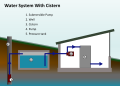
The difference between a well and a cistern is in the source of the water: a cistern collects rainwater whereas a well draws from groundwater.

A well is an excavation or structure created on the earth by digging, driving, or drilling to access liquid resources, usually water. The oldest and most common kind of well is a water well, to access groundwater in underground aquifers. The well water is drawn up by a pump, or using containers, such as buckets that are raised mechanically or by hand. Water can also be injected back into the aquifer through the well. Wells were first constructed at least eight thousand years ago and historically vary in construction from a sediment of a dry watercourse to the qanats of Iran, and the stepwells and sakiehs of India. Placing a lining in the well shaft helps create stability, and linings of wood or wickerwork date back at least as far as the Iron Age.

Wells have traditionally been sunk by hand digging, as is still the case in rural areas of the developing world. These wells are inexpensive and low-tech as they use mostly manual labour, and the structure can be lined with brick or stone as the excavation proceeds. A more modern method called caissoning uses pre-cast reinforced concrete well rings that are lowered into the hole. Driven wells can be created in unconsolidated material with a well hole structure, which consists of a hardened drive point and a screen of perforated pipe, after which a pump is installed to collect the water. Deeper wells can be excavated by hand drilling methods or machine drilling, using a bit in a borehole. Drilled wells are usually cased with a factory-made pipe composed of steel or plastic. Drilled wells can access water at much greater depths than dug wells.

Two broad classes of well are shallow or unconfined wells completed within the uppermost saturated aquifer at that location, and deep or confined wells, sunk through an impermeable stratum into an aquifer beneath. A collector well can be constructed adjacent to a freshwater lake or stream with water percolating through the intervening material. The site of a well can be selected by a hydrogeologist, or groundwater surveyor. Water may be pumped or hand drawn. Impurities from the surface can easily reach shallow sources and contamination of the supply by pathogens or chemical contaminants needs to be avoided. Well water typically contains more minerals in solution than surface water and may require treatment before being potable. Soil salination can occur as the water table falls and the surrounding soil begins to dry out. Another environmental problem is the potential for methane to seep into the water.

History

[edit]
Camel drawing water from a well, Djerba island, Tunisia, 1960

Very early Neolithic wells are known from the Eastern Mediterranean.[1] The oldest reliably dated well is from the pre-pottery neolithic (PPN) site of Kissonerga-Mylouthkia on Cyprus. At around 8400 BC a shaft (well 116) of circular diameter was driven through limestone to reach an aquifer at a depth of 8 metres (26 ft). Well 2070 from Kissonerga-Mylouthkia, dating to the late PPN, reaches a depth of 13 metres (43 ft). Other slightly younger wells are known from this site and from neighbouring Parekklisha-Shillourokambos. A first stone lined[2] well of 5.5 metres (18 ft) depth is documented from a drowned final PPN (c. 7000 BC) site at 'Atlit-Yam off the coast near modern Haifa in Israel.

Neolithic Linear Pottery culture well, 5300 BC, Erkelenz, Germany

Wood-lined wells are known from the early Neolithic Linear Pottery culture, for example in Ostrov, Czech Republic, dated 5265 BC,[3] Kückhoven (an outlying centre of Erkelenz), dated 5300 BC,[4] and Eythra in Schletz (an outlying centre of Asparn an der Zaya) in Austria, dated 5200 BC.[5]

The Neolithic Chinese discovered and made extensive use of deep drilled groundwater for drinking.[citation needed] The Chinese text The Book of Changes, originally a divination text of the Western Zhou dynasty (1046 -771 BC), contains an entry describing how the ancient Chinese maintained their wells and protected their sources of water.[6] A well excavated at the Hemedu excavation site was believed to have been built during the neolithic era.[7] The well was cased by four rows of logs with a square frame attached to them at the top of the well. 60 additional tile wells southwest of Beijing are also believed to have been built around 600 BC for drinking and irrigation.[7][8]

A Chinese ceramic model of a well with a water pulley system, excavated from a tomb of the Han dynasty (202 BC – 220 AD) period

In Egypt, shadoofs and sakias are used.[9][10] The sakia is much more efficient, as it can bring up water from a depth of 10 metres (versus the 3 metres of the shadoof). The sakia is the Egyptian version of the noria. Some of the world's oldest known wells, located in Cyprus, date to 7000–8,500 BC.[11] Two wells from the Neolithic period, around 6500 BC, have been discovered in Israel. One is in Atlit, on the northern coast of Israel, and the other is in the Jezreel Valley.[12]

Wells for other purposes came along much later, historically. The first recorded salt well was dug in the Sichuan province of China around 2,250 years ago. This was the first time that ancient water well technology was applied successfully for the exploitation of salt, and marked the beginning of Sichuan's salt drilling industry.[6] The earliest known oil wells were also drilled in China, in 347 CE. These wells had depths of up to about 240 metres (790 ft) and were drilled using bits attached to bamboo poles.[13] The oil was burned to evaporate brine and produce salt. By the 10th century, extensive bamboo pipelines connected oil wells with salt springs. The ancient records of China and Japan are said to contain many allusions to the use of natural gas for lighting and heating. Petroleum was known as Burning water in Japan in the 7th century.[14]

Types

[edit]
Water well near Simaisma, eastern Qatar
Leather bucket used for the water well
Well, Historical Village, Bhaini Sahib, Ludhiana, Punjab, India

Dug wells

[edit]
View into a hand-dug well cased with concrete rings. Ouelessebougou, Mali.
A dug well in a village in Kerala, India
Well with a flower bag-shaped wall and podium

Until recent centuries, all artificial wells were pumpless hand-dug wells of varying degrees of sophistication, and they remain a very important source of potable water in some rural developing areas, where they are routinely dug and used today. Their indispensability has produced a number of literary references, literal and figurative, including the reference to the incident of Jesus meeting a woman at Jacob's well (John 4:6) in the Bible and the "Ding Dong Bell" nursery rhyme about a cat in a well.

Hand-dug wells are excavations with diameters large enough to accommodate one or more people with shovels digging down to below the water table. The excavation is braced horizontally to avoid landslide or erosion endangering the people digging. They can be lined with stone or brick; extending this lining upwards above the ground surface to form a wall around the well serves to reduce both contamination and accidental falls into the well.

A more modern method called caissoning uses reinforced concrete or plain concrete pre-cast well rings that are lowered into the hole. A well-digging team digs under a cutting ring and the well column slowly sinks into the aquifer, whilst protecting the team from collapse of the well bore.

Hand-dug wells are inexpensive and low tech (compared to drilling) and they use mostly manual labour to access groundwater in rural locations of developing countries. They may be built with a high degree of community participation, or by local entrepreneurs who specialize in hand-dug wells. They have been successfully excavated to 60 metres (200 ft). They have low operational and maintenance costs, in part because water can be extracted by hand, without a pump. The water often comes from an aquifer or groundwater, and can be easily deepened, which may be necessary if the ground water level drops, by telescoping the lining further down into the aquifer. The yield of existing hand dug wells may be improved by deepening or introducing vertical tunnels or perforated pipes.

Drawbacks to hand-dug wells are numerous. It can be impractical to hand dig wells in areas where hard rock is present, and they can be time-consuming to dig and line even in favourable areas. Because they exploit shallow aquifers, the well may be susceptible to yield fluctuations and possible contamination from surface water, including sewage. Hand dug well construction generally requires the use of a well trained construction team, and the capital investment for equipment such as concrete ring moulds, heavy lifting equipment, well shaft formwork, motorized de-watering pumps, and fuel can be large for people in developing countries. Construction of hand dug wells can be dangerous due to collapse of the well bore, falling objects and asphyxiation, including from dewatering pump exhaust fumes.

The Woodingdean Water Well, hand-dug between 1858 and 1862, is the deepest hand-dug well at 392 metres (1,285 ft).[15] The Big Well in Greensburg, Kansas, is billed as the world's largest hand-dug well, at 109 feet (33 m) deep and 32 feet (9.8 m) in diameter. However, the Well of Joseph in the Cairo Citadel at 280 feet (85 m) deep and the Pozzo di San Patrizio (St. Patrick's Well) built in 1527 in Orvieto, Italy, at 61 metres (200 ft) deep by 13 metres (43 ft) wide[16] are both larger by volume.

Driven wells

[edit]

Driven wells may be very simply created in unconsolidated material with a well hole structure, which consists of a hardened drive point and a screen (perforated pipe). The point is simply hammered into the ground, usually with a tripod and driver, with pipe sections added as needed. A driver is a weighted pipe that slides over the pipe being driven and is repeatedly dropped on it. When groundwater is encountered, the well is washed of sediment and a pump installed.[17]

Drilled wells

[edit]

Drilled wells are constructed using various types of drilling machines, such as top-head rotary, table rotary, or cable tool, which all use drilling stems that rotate to cut into the formation, thus the term "drilling."

Drilled wells can be excavated by simple hand drilling methods (augering, sludging, jetting, driving, hand percussion) or machine drilling (auger, rotary, percussion, down the hole hammer). Deep rock rotary drilling method is most common. Rotary can be used in 90% of formation types (consolidated).

Drilled wells can get water from a much deeper level than dug wells can − often down to several hundred metres.[18]

Drilled wells with electric pumps are used throughout the world, typically in rural or sparsely populated areas, though many urban areas are supplied partly by municipal wells. Most shallow well drilling machines are mounted on large trucks, trailers, or tracked vehicle carriages. Water wells typically range from 3 to 18 metres (10–60 ft) deep, but in some areas it can go deeper than 900 metres (3,000 ft).[citation needed]

Cable tool water well drilling rig in Kimball, West Virginia
Water well drilling in Ein Hemed, near Jerusalem circa 1964

Rotary drilling machines use a segmented steel drilling string, typically made up of 3m (10ft), 6 m (20 ft) to 8m (26ft) sections of steel tubing that are threaded together, with a bit or other drilling device at the bottom end. Some rotary drilling machines are designed to install (by driving or drilling) a steel casing into the well in conjunction with the drilling of the actual bore hole. Air and/or water is used as a circulation fluid to displace cuttings and cool bits during the drilling. Another form of rotary-style drilling, termed mud rotary, makes use of a specially made mud, or drilling fluid, which is constantly being altered during the drill so that it can consistently create enough hydraulic pressure to hold the side walls of the bore hole open, regardless of the presence of a casing in the well. Typically, boreholes drilled into solid rock are not cased until after the drilling process is completed, regardless of the machinery used.

The oldest form of drilling machinery is the cable tool, still used today. Specifically designed to raise and lower a bit into the bore hole, the spudding of the drill causes the bit to be raised and dropped onto the bottom of the hole, and the design of the cable causes the bit to twist at approximately 14 revolution per drop, thereby creating a drilling action. Unlike rotary drilling, cable tool drilling requires the drilling action to be stopped so that the bore hole can be bailed or emptied of drilled cuttings. Cable tool drilling rigs are rare as they tend to be 10x slower to drill through materials compared to similar diameter rotary air or rotary mud equipped rigs.

Drilled wells are usually cased with a factory-made pipe, typically steel (in air rotary or cable tool drilling) or plastic/PVC (in mud rotary wells, also present in wells drilled into solid rock). The casing is constructed by welding, either chemically or thermally, segments of casing together. If the casing is installed during the drilling, most drills will drive the casing into the ground as the bore hole advances, while some newer machines will actually allow for the casing to be rotated and drilled into the formation in a similar manner as the bit advancing just below. PVC or plastic is typically solvent welded and then lowered into the drilled well, vertically stacked with their ends nested and either glued or splined together. The sections of casing are usually 6 metres (20 ft) or more in length, and 4 to 12 in (10 to 30 cm) in diameter, depending on the intended use of the well and local groundwater conditions.

Surface contamination of wells in the United States is typically controlled by the use of a surface seal. A large hole is drilled to a predetermined depth or to a confining formation (clay or bedrock, for example), and then a smaller hole for the well is completed from that point forward. The well is typically cased from the surface down into the smaller hole with a casing that is the same diameter as that hole. The annular space between the large bore hole and the smaller casing is filled with bentonite clay, concrete, or other sealant material. This creates an impermeable seal from the surface to the next confining layer that keeps contaminants from traveling down the outer sidewalls of the casing or borehole and into the aquifer. In addition, wells are typically capped with either an engineered well cap or seal that vents air through a screen into the well, but keeps insects, small animals, and unauthorized persons from accessing the well.

At the bottom of wells, based on formation, a screening device, filter pack, slotted casing, or open bore hole is left to allow the flow of water into the well. Constructed screens are typically used in unconsolidated formations (sands, gravels, etc.), allowing water and a percentage of the formation to pass through the screen. Allowing some material to pass through creates a large area filter out of the rest of the formation, as the amount of material present to pass into the well slowly decreases and is removed from the well. Rock wells are typically cased with a PVC liner/casing and screen or slotted casing at the bottom, this is mostly present just to keep rocks from entering the pump assembly. Some wells use a filter pack method, where an undersized screen or slotted casing is placed inside the well and a filter medium is packed around the screen, between the screen and the borehole or casing. This allows the water to be filtered of unwanted materials before entering the well and pumping zone.

Classification

[edit]
Water well types

There are two broad classes of drilled-well types, based on the type of aquifer the well is in:

  • Shallow or unconfined wells are completed in the uppermost saturated aquifer at that location (the upper unconfined aquifer).[citation needed]
  • Deep or confined wells are sunk through an impermeable stratum into an aquifer that is sandwiched between two impermeable strata (aquitards or aquicludes). The majority of deep aquifers are classified as artesian because the hydraulic head in a confined well is higher than the level of the top of the aquifer. If the hydraulic head in a confined well is higher than the land surface it is a "flowing" artesian well (named after Artois in France).[citation needed]
An old-fashioned water well in the countryside of Utajärvi, Finland

A special type of water well may be constructed adjacent to freshwater lakes or streams. Commonly called a collector well but sometimes referred to by the trade name Ranney well or Ranney collector, this type of well involves sinking a caisson vertically below the top of the aquifer and then advancing lateral collectors out of the caisson and beneath the surface water body. Pumping from within the caisson induces infiltration of water from the surface water body into the aquifer, where it is collected by the collector well laterals and conveyed into the caisson where it can be pumped to the ground surface.[citation needed]

Two additional broad classes of well types may be distinguished, based on the use of the well:

  • production or pumping wells, are large diameter (greater than 15 cm in diameter) cased (metal, plastic, or concrete) water wells, constructed for extracting water from the aquifer by a pump (if the well is not artesian).[citation needed]
Schematic diagram of a groundwater monitoring well
  • monitoring wells or piezometers, are often smaller diameter wells used to monitor the hydraulic head or sample the groundwater for chemical constituents. Piezometers are monitoring wells completed over a very short section of aquifer. Monitoring wells can also be completed at multiple levels, allowing discrete samples or measurements to be made at different vertical elevations at the same map location.[19]

A water well constructed for pumping groundwater can be used passively as a monitoring well and a small diameter well can be pumped, but this distinction by use is common.[citation needed]

Siting

[edit]

Before excavation, information about the geology, water table depth, seasonal fluctuations, recharge area and rate should be found if possible. This work can be done by a hydrogeologist, or a groundwater surveyor using a variety of tools including electro-seismic surveying,[20] any available information from nearby wells, geologic maps, and sometimes geophysical imaging. These professionals provide advice that is almost as accurate a driller who has experience and knowledge of nearby wells/bores and the most suitable drilling technique based on the expected target depth.

Contamination

[edit]
Waterborne diseases can be spread via a well which is contaminated with fecal pathogens from pit latrines.
Man cleaning a well in Yaoundé, Cameroon
Hand pump to pump water from a well in a village near Chennai in India, where the well water might be polluted by nearby pit latrines.

Shallow pumping wells can often supply drinking water at a very low cost. However, impurities from the surface easily reach shallow sources, which leads to a greater risk of contamination for these wells compared to deeper wells. Contaminated wells can lead to the spread of various waterborne diseases. Dug and driven wells are relatively easy to contaminate; for instance, most dug wells are unreliable in the majority of the United States.[21] Some research has found that, in cold regions, changes in river flow and flooding caused by extreme rainfall or snowmelt can degrade well water quality.[22]

Pathogens

[edit]

Most of the bacteria, viruses, parasites, and fungi that contaminate well water comes from fecal material from humans and other animals. Common bacterial contaminants include E. coli, Salmonella, Shigella, and Campylobacter jejuni. Common viral contaminants include norovirus, sapovirus, rotavirus, enteroviruses, and hepatitis A and E. Parasites include Giardia lamblia, Cryptosporidium, Cyclospora cayetanensis, and microsporidia.[21]

Chemical contamination

[edit]

Chemical contamination is a common problem with groundwater.[23] Nitrates from sewage, sewage sludge or fertilizer are a particular problem for babies and young children. Pollutant chemicals include pesticides and volatile organic compounds from gasoline, dry-cleaning, the fuel additive methyl tert-butyl ether (MTBE), and perchlorate from rocket fuel, airbag inflators, and other artificial and natural sources.[citation needed]

Several minerals are also contaminants, including lead leached from brass fittings or old lead pipes, chromium VI from electroplating and other sources, naturally occurring arsenic, radon, and uranium—all of which can cause cancer—and naturally occurring fluoride, which is desirable in low quantities to prevent tooth decay, but can cause dental fluorosis in higher concentrations.[21]

Some chemicals are commonly present in water wells at levels that are not toxic, but can cause other problems. Calcium and magnesium cause what is known as hard water, which can precipitate and clog pipes or burn out water heaters. Iron and manganese can appear as dark flecks that stain clothing and plumbing, and can promote the growth of iron and manganese bacteria that can form slimy black colonies that clog pipes.[21]

Prevention

[edit]

The quality of the well water can be significantly increased by lining the well, sealing the well head, fitting a self-priming hand pump, constructing an apron, ensuring the area is kept clean and free from stagnant water and animals, moving sources of contamination (pit latrines, garbage pits, on-site sewer systems) and carrying out hygiene education. The well should be cleaned with 1% chlorine solution after construction and periodically every 6 months.[citation needed]

Well holes should be covered to prevent loose debris, animals, animal excrement, and wind-blown foreign matter from falling into the hole and decomposing. The cover should be able to be in place at all times, including when drawing water from the well. A suspended roof over an open hole helps to some degree, but ideally the cover should be tight fitting and fully enclosing, with only a screened air vent.[citation needed]

Minimum distances and soil percolation requirements between sewage disposal sites and water wells need to be observed. Rules regarding the design and installation of private and municipal septic systems take all these factors into account so that nearby drinking water sources are protected.

Education of the general population in society also plays an important role in protecting drinking water.[citation needed]

Mitigation

[edit]

Cleanup of contaminated groundwater tends to be very costly. Effective remediation of groundwater is generally very difficult. Contamination of groundwater from surface and subsurface sources can usually be dramatically reduced by correctly centering the casing during construction and filling the casing annulus with an appropriate sealing material. The sealing material (grout) should be placed from immediately above the production zone back to surface, because, in the absence of a correctly constructed casing seal, contaminated fluid can travel into the well through the casing annulus. Centering devices are important (usually one per length of casing or at maximum intervals of 9 m) to ensure that the grouted annular space is of even thickness.[citation needed]

Upon the construction of a new test well, it is considered best practice to invest in a complete battery of chemical and biological tests on the well water in question. Point-of-use treatment is available for individual properties and treatment plants are often constructed for municipal water supplies that suffer from contamination. Most of these treatment methods involve the filtration of the contaminants of concern, and additional protection may be garnered by installing well-casing screens only at depths where contamination is not present.[citation needed]

Wellwater for personal use is often filtered with reverse osmosis water processors; this process can remove very small particles. A simple, effective way of killing microorganisms is to bring the water to a full boil for one to three minutes, depending on location. A household well contaminated by microorganisms can initially be treated by shock chlorination using bleach, generating concentrations hundreds of times greater than found in community water systems; however, this will not fix any structural problems that led to the contamination and generally requires some expertise and testing for effective application.[21]

After the filtration process, it is common to implement an ultraviolet (UV) system to kill pathogens in the water. UV light affects the DNA of the pathogen by UV-C photons breaking through the cell wall. UV disinfection has been gaining popularity in the past decades as it is a chemical-free method of water treatment.[24]

Environmental problems

[edit]

A risk with the placement of water wells is soil salination which occurs when the water table of the soil begins to drop and salt begins to accumulate as the soil begins to dry out.[25] Another environmental problem that is very prevalent in water well drilling is the potential for methane to seep through.

Soil salination

[edit]

The potential for soil salination is a large risk when choosing the placement of water wells. Soil salination is caused when the water table of the soil drops over time and salt begins to accumulate. In turn, the increased amount of salt begins to dry the soil out. The increased level of salt in the soil can result in the degradation of soil and can be very harmful to vegetation.[citation needed]

Methane

[edit]

Methane, an asphyxiant, is a chemical compound that is the main component of natural gas. When methane is introduced into a confined space, it displaces oxygen, reducing oxygen concentration to a level low enough to pose a threat to humans and other aerobic organisms but still high enough for a risk of spontaneous or externally caused explosion. This potential for explosion is what poses such a danger in regards to the drilling and placement of water wells.[citation needed]

Low levels of methane in drinking water are not considered toxic. When methane seeps into a water supply, it is commonly referred to as "methane migration". This can be caused by old natural gas wells near water well systems becoming abandoned and no longer monitored.[citation needed]

Lately,[when?] however, the described wells/pumps are no longer very efficient and can be replaced by either handpumps or treadle pumps. Another alternative is the use of self-dug wells, electrical deep-well pumps (for higher depths). Appropriate technology organizations as Practical Action are now[when?] supplying information on how to build/set-up (DIY) handpumps and treadle pumps in practice.[26][27]

PFAS/PFOS Fire fighting foam

[edit]

Per- and polyfluoroalkyl substances (PFAS or PFASs) are a group of synthetic organofluorine chemical compounds that have multiple fluorine atoms attached to an alkyl chain. PFAS are a group of "forever chemicals" that spread very quickly and very far in ground water polluting it permanently. Water wells near certain airports where any foam fire fighting or training activities occurred up to 2010 are likely to be contaminated by PFAS.

Water security

[edit]

A study concluded that of ~39 million groundwater wells 6-20% are at high risk of running dry if local groundwater levels decline by less than five meters, or – as with many areas and possibly more than half of major aquifers[28] – continue to decline.[29][30][further explanation needed]

Society and culture

[edit]
Water use, Tacuinum Sanitatis, Biblioteca Casanatense (14th century)

Springs and wells have had cultural significance since prehistoric times, leading to the foundation of towns such as Wells and Bath in Somerset. Interest in health benefits led to the growth of spa towns including many with wells in their name, examples being Llandrindod Wells and Royal Tunbridge Wells.[31]

Eratosthenes is sometimes claimed to have used a well in his calculation of the Earth's circumference; however, this is just a simplification used in a shorter explanation of Cleomedes, since Eratosthenes had used a more elaborate and precise method.[32]

Many incidents in the Bible take place around wells, such as the finding of a wife for Isaac in Genesis and Jesus's talk with the Samaritan woman in the Gospels.[33]

A simple model for water well recovery

[edit]
Diagram of a water well partially filled to level z with the top of the aquifer at zT

For a well with impermeable walls, the water in the well is resupplied from the bottom of the well. The rate at which water flows into the well will depend on the pressure difference between the ground water at the well bottom and the well water at the well bottom. The pressure of a column of water of height z will be equal to the weight of the water in the column divided by the cross-sectional area of the column, so the pressure of the ground water a distance zT below the top of the water table will be:

where ρ is the mass density of the water and g is the acceleration due to gravity. When the water in the well is below the water table level, the pressure at the bottom of the well due to the water in the well will be less than Pg and water will be forced into the well. Referring to the diagram, if z is the distance from the bottom of the well to the well water level and zT is the distance from the bottom of the well to the top of the water table, the pressure difference will be:

Applying Darcy's law, the volume rate (F) at which water is forced into the well will be proportional to this pressure difference:

where R is the resistance to the flow, which depends on the well cross section, the pressure gradient at the bottom of the well, and the characteristics of the substrate at the well bottom. (e.g., porosity). The volume flow rate into the well can be written as a function of the rate of change of the well water level:

Combining the above three equations yields a simple differential equation in z:
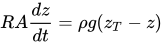
which may be solved:

where z0 is the well water level at time t=0 and τ is the well time constant:

Note that if dz/dt for a depleted well can be measured, it will be equal to and the time constant τ can be calculated. According to the above model, it will take an infinite amount of time for a well to fully recover, but if we consider a well that is 99% recovered to be "practically" recovered, the time for a well to practically recover from a level at z will be:

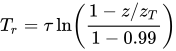
For a well that is fully depleted (z=0) it would take a time of about 4.6 τ to practically recover.

The above model does not take into account the depletion of the aquifer due to the pumping which lowered the well water level (See aquifer test and groundwater flow equation). Also, practical wells may have impermeable walls only up to, but not including the bedrock, which will give a larger surface area for water to enter the well.[34][35]

[edit]
    • Drainage and irrigation
      • Drainage by wells
      • Shadoof, an irrigation tool that is used to lift water from a water source onto land or into another waterway or basin
    • Washing
      • Lavoir, public place for washing clothes.

See also

[edit]

References

[edit]
[edit]
Revisions and contributorsEdit on WikipediaRead on Wikipedia
from Grokipedia
A well is an excavation or structure created in the ground by methods such as digging, driving, boring, or to access from underground aquifers, typically equipped with casing, screens, and pumps to extract for uses including drinking, , , and industry. These structures are essential for providing reliable supplies in regions where is insufficient or contaminated, serving billions worldwide and forming a critical component of global infrastructure. Water wells vary by construction method and depth, categorized primarily as dug or bored, driven, and drilled. Dug or bored wells are shallow excavations, often 10 to 30 feet deep, created manually or with machinery and lined with materials like stone, brick, or concrete to prevent collapse, though they are susceptible to surface contamination. Driven wells involve hammering small-diameter pipes into shallow, unconsolidated sediments like sand or gravel, suitable only for limited depths due to their reliance on soft ground. Drilled wells, the most common type today, use rotary or percussion rigs to reach depths of hundreds or thousands of feet into aquifers, featuring steel or plastic casings sealed with grout to protect against pollutants and ensure structural integrity. The history of wells dates back to prehistoric times, with evidence of hand-dug wells in the Middle East from the Neolithic era around 7000 BCE, evolving into more advanced bored and drilled systems in ancient China and India. In the United States, early wells were hand-dug or auger-bored by settlers in the 19th century, with the first artesian well constructed in 1820 in Charleston, South Carolina, marking a shift toward deeper, pressurized extractions. Modern well construction is regulated to safeguard groundwater quality, requiring licensed contractors to follow standards for casing, grouting, and placement to minimize contamination risks from nearby septic systems, chemicals, or runoff.

History

Ancient and Pre-Industrial Wells

The earliest known wells date back to the period, with archaeological evidence from the submerged site of off the Carmel Coast of , dated to approximately 7000–6400 BCE. These wells were constructed by digging shafts into the ground and lining them with stones to prevent collapse and contamination, marking an early adaptation to accessing in a coastal settlement reliant on and . In ancient Egypt, wells were essential for water supply in the Nile flood plain, with construction involving hand-dug shafts often lined with stone masonry for stability, as exemplified by the Samana well from the New Kingdom period around 1279 BCE. These wells were typically circular or rectangular, reaching depths sufficient to tap shallow aquifers, and represented a key engineering response to seasonal water variability in arid regions. Roman putei, or water wells, advanced construction techniques by incorporating arched masonry linings to distribute structural loads and enhance stability against soil pressure, a method evident in urban and rural installations from the Republican era onward (circa 500 BCE–500 CE). These wells were hand-excavated in circular forms, often up to 10–20 meters deep, and featured wellheads (puteals) carved from marble or stone to protect the opening and facilitate drawing water. In ancient , wells emerged during the period around 5000 BCE, with advanced techniques using tools and linings emerging later, around 200 BCE, in regions like to dig and reinforce shafts for accessing and , enabling depths beyond simple manual limits in regions like . Bamboo's flexibility and availability allowed for innovative drilling and piping, supporting early agro-pastoral communities. During the medieval period in (circa 500–1500 CE), hand-dug wells were central to feudal societies, providing vital water sources for villages, castles, and monasteries amid limited . Constructed by teams of laborers using shovels, picks, and wattle-and-daub or stone linings to shore up walls, these wells typically reached depths of 10–30 meters, constrained by manual excavation and the need to avoid flooding or collapse. In feudal contexts, wells often fell under lordly control, serving as communal hubs that reinforced social hierarchies while mitigating risks from contaminated rivers. A prominent regional variation appears in the stepwells of , known as baolis, which originated in rudimentary forms during the Indus Valley Civilization (circa 2500–1700 BCE) and evolved into elaborate structures by the 7th century CE under Hindu and later Islamic patronage. These multi-tiered wells featured descending flights of steps, vaulted galleries, and ornate pavilions carved from sandstone or limestone, designed not only for access during monsoons but also as shaded community spaces for social interaction, rituals, and cooling in arid and .

Industrial and Modern Developments

The mechanization of began in the with the adoption of , which replaced manual labor and enabled deeper penetration into the earth. In the United States, the first significant use of for drilling occurred in 1859, when Edwin L. Drake employed a to power a cable-tool rig for an near , a technique quickly adapted for water wells due to its efficiency in unconsolidated formations. This advancement allowed wells to reach depths previously unattainable by hand methods, typically up to 50-100 meters, facilitating access to more reliable sources in arid and populated regions. By the mid-19th century, cable-tool percussion drilling had become the dominant method, involving a heavy bit suspended on a cable and repeatedly dropped to crush rock, with steam engines providing the lifting power. Originating in the 1820s-1840s for salt brine wells in the Kanawha Valley of West Virginia, this technique was refined for water wells and remained standard until the early 20th century, capable of drilling through harder formations at rates of 1-2 meters per day. The introduction of rotary drilling in the 1880s marked a pivotal shift; brothers M.C. and C.E. Baker developed the first rotary rig for water wells in the Great Plains, using a rotating bit flushed with water to remove cuttings, which dramatically increased speed and depth potential compared to percussion methods. In the early 1900s, diamond-impregnated bits enhanced rotary drilling for hard rock, invented in 1863 by Rodolphe Leschot and widely adopted by 1910, allowing precise coring and depths exceeding 300 meters in challenging geologies. Post-1940s innovations further boosted well yields through hydraulic fracturing, initially developed in 1947 by Floyd Farris and J.B. Clark at Stanolind Oil for oil wells but occasionally applied to wells. This technique, used sparingly in well contexts to avoid contamination risks. Following , international efforts led by the and its agencies, such as and WHO, expanded in developing countries through programs like the International Supply and Decade (1981-1990), which prioritized boreholes for rural access. These initiatives contributed to a surge in drilled wells, primarily in and , supporting access for billions. In recent years up to 2025, and precision have driven innovations like solar-powered rigs, which reduce fuel dependency and emissions during operations in remote areas; for instance, rigs equipped with photovoltaic modules can power percussion or rotary systems intermittently, cutting costs by up to 40% in off-grid settings. Complementing this, AI-optimized site surveys use to analyze geophysical data, , and historical records for predicting optimal locations, improving success rates by 25-30% and minimizing dry wells in variable aquifers. These advancements reflect a global toward efficient, eco-friendly well construction, with rotary methods now predominant worldwide.

Types and Construction

Dug and Bored Wells

Dug wells are manually excavated by hand in unconsolidated soils such as , , or , typically reaching depths of 3 to 15 to access shallow aquifers. The process involves workers downward using shovels or picks while removing spoil material through buckets, with excavation diameters usually ranging from 1 to 2 to allow safe entry and working space. To prevent during , temporary is installed using timber planks or braces, followed by permanent lining with rings or that are lowered sequentially as the hole deepens. Upon reaching the , a sump is created at the bottom to collect , and the well is capped with a and to facilitate extraction. Bored wells represent a mechanized variant of shallow excavation, employing hand- or power-operated augers to bore cylindrical holes, often extending to depths of up to 30 meters in sandy or unconsolidated s where finer materials allow tool penetration. The auger, which may be a , solid-stem, or hollow-stem type with diameters of 0.3 to 0.9 meters, rotates to cut and lift , creating a straight that is then lined with or casing to stabilize the walls and prevent . This method is particularly suited to loose formations like , enabling access to water-bearing layers without the need for extensive manual labor inside the hole, though sealing around the casing is essential to isolate the from surface influences. These methods offer advantages including low construction costs—often under $1,000 in rural developing areas due to reliance on local labor and materials—and straightforward maintenance, such as periodic cleaning of the sump or lining repairs. However, they carry disadvantages like high labor intensity for hand-dug variants, requiring skilled workers to manage risks during excavation, and elevated susceptibility to surface from pathogens or pollutants due to the shallow depth and large open diameter exposing a broad interface. In contrast to deeper drilled methods, dug and bored wells are limited to unconsolidated formations and cannot reliably penetrate . Dug wells maintain historical prevalence in developing countries, particularly in , where they continue to provide a substantial share of rural supplies as of 2023.

Driven and Jetted Wells

Driven wells are constructed by mechanically driving a small- pipe, typically 1 to 2 inches in , into the ground using tools such as a or a mechanical post driver. The pipe is equipped with a sharpened drive point or screen at the bottom to allow entry while filtering out , and sections are joined with threaded couplings as it advances. This method is particularly effective in unconsolidated formations like fine sands or gravels, where the soil yields easily to percussion without requiring excavation. Depths generally reach up to 10 meters (30-50 feet), limited by increasing soil resistance and the need for continuous casing to prevent collapse. Jetted wells employ a hydraulic technique where high-pressure is pumped down through the interior of a screened pipe, exiting via nozzles to erode and wash away surrounding , enabling the pipe to sink progressively. This process is suited to loose, unconsolidated materials such as sands and silts, achieving depths of 15 to 30 meters in favorable conditions. The jet creates a bore slightly larger than the pipe, which is then stabilized as it advances, often requiring a capable of delivering 20-50 liters per minute at pressures exceeding 100 psi. Both driven and jetted wells utilize materials like galvanized steel pipes and screens for corrosion resistance and durability in shallow groundwater applications, with gravel packs surrounding the screen to enhance filtration and prevent fine particle intrusion. These wells typically yield 1 to 5 gallons per minute, sufficient for low-demand uses but inadequate for high-volume needs without storage. They are commonly applied in emergency water supply scenarios, temporary installations, or low-yield irrigation in coastal or alluvial areas with soft sediments, where rapid deployment is prioritized over permanence. Installation costs range from $500 to $2,000, reflecting the simplicity and minimal equipment required compared to more intensive methods. Unlike dug wells, these techniques are faster but restricted to shallower, softer strata, limiting their use in cohesive or rocky soils.

Drilled Wells

Drilled wells are constructed using mechanical methods to create deep boreholes that access confined aquifers, typically penetrating hundreds to thousands of meters into the for reliable, high-volume water extraction. These wells are essential for municipal, agricultural, and industrial supplies where is insufficient or contaminated. Unlike simpler dug or bored wells suited for shallow , drilled wells employ advanced techniques to navigate and consolidated formations, ensuring long-term structural integrity and minimal environmental disruption during operation. Rotary drilling is the predominant method for constructing drilled wells, involving a rotating attached to a that grinds through soil and rock while circulating to remove cuttings and stabilize the borehole walls. The process uses a rig to rotate the bit at high speeds, with —such as water-based mud or —pumped down the to cool the bit, transport debris to the surface, and prevent well collapse. This technique allows for depths exceeding 1,000 meters, making it suitable for deep aquifers in varied geological settings. Subtypes include mud rotary , which employs a viscous mixture to handle unconsolidated formations and provide borehole stability, and air rotary , which uses for faster penetration in consolidated rock, offering efficient cuttings removal without the need for fluid recirculation in some cases. Percussion drilling, also known as cable-tool drilling, provides an alternative for drilled wells, particularly in hard, fractured rock where rotary methods may struggle with bit wear. In this technique, a heavy chisel-like bit suspended on a cable is repeatedly lifted and dropped to crush and fracture the formation at the borehole bottom, with periodic bailing to remove debris using a cylindrical tool. The process is slower, averaging 10-20 meters per day, but excels in durable, low-yield wells up to 300 meters deep, as it requires minimal equipment and can operate in remote areas with limited water supply. While less common today due to rotary's efficiency, percussion remains valuable for exploratory drilling or in regions with stable, hard strata. Following , casing installation and are critical to maintain integrity and protect against contamination. Casing consists of or PVC pipes inserted into the hole to prevent sidewall , with preferred for deeper wells due to its strength and PVC for resistance in softer environments. The annular space between the casing and wall is then sealed with , typically neat or slurry, pumped under pressure to form a impermeable barrier that isolates the from surface pollutants and stabilizes the structure against geological shifts. This sealing process enhances well longevity and complies with sanitary standards, reducing risks of ingress or chemical migration. A 2021 analysis examined construction records for approximately 39 million drilled wells across 40 countries, supporting widespread access to groundwater resources amid growing demands. These wells supply about 43% of the world's irrigation water, underpinning food security in arid and semi-arid regions where surface supplies are unreliable. As of 2025, expansion in agricultural and domestic use continues to sustain this critical role, though sustainable management is increasingly emphasized to mitigate depletion risks.

Siting and Design

Geological and Hydrological Considerations

The selection of well sites relies heavily on understanding characteristics, particularly the distinction between confined and unconfined , which influences availability and extraction potential. Unconfined , also known as water-table , have their upper surface at and are directly recharged by infiltrating through the overlying unsaturated zone, allowing for relatively straightforward access but vulnerability to surface contamination. In contrast, confined are bounded above and below by low-permeability layers such as clay or , trapping under pressure, which can cause artesian flow in wells where rises above the top without pumping. The yield of an is primarily determined by its —the percentage of void space in the rock or sediment—and permeability, which measures how easily flows through those voids; for example, typically exhibit moderate (10-30%) and high permeability due to interconnected pore spaces, yielding 10-100 gallons per minute (gpm) in many domestic and wells. Geophysical surveys play a crucial role in mapping subsurface conditions to identify optimal well locations, minimizing drilling risks and maximizing yield. Seismic refraction surveys measure the travel time of seismic waves refracted at layer boundaries to delineate bedrock depth, aquifer thickness, and velocity contrasts between materials like soil, sand, and rock, often revealing groundwater-bearing zones up to several hundred meters deep. Electrical resistivity methods, involving the injection of current into the ground and measurement of potential differences, detect variations in subsurface electrical properties correlated with porosity, clay content, and water saturation, thereby mapping groundwater depth and quality indicators such as salinity. These non-invasive techniques, when integrated, provide cost-effective preliminary data for siting, as demonstrated in hydrologic studies where they have successfully located productive aquifers in heterogeneous terrains. Key hydrogeological factors further guide to ensure long-term , including recharge rates, fracture zones in , and seasonal fluctuations in levels. Recharge rates, typically estimated at 5-20% of annual in temperate regions, quantify the volume of replenishing the from surface sources like rainfall or rivers, influencing sustainable pumping limits. In fractured aquifers, flow occurs primarily through interconnected rather than matrix , making fracture zones critical for high yields but also prone to rapid depletion if overexploited. Seasonal fluctuations, driven by variations in and , can cause drops of 1-5 meters in unconfined aquifers during dry periods, affecting well reliability and necessitating monitoring to avoid drawdown exceeding natural recovery. Overexploitation of exemplifies the risks of ignoring these considerations, as seen in California's Central Valley, where intensive pumping for has led to significant land . From the 1920s onward, extraction exceeded recharge, compressing aquifer clays and causing cumulative subsidence up to 9 meters in some areas; in the , during prolonged droughts, rates accelerated to over 30 cm per year in localized hotspots, damaging and reducing aquifer storage capacity. This case underscores the need for hydrogeological assessments to balance extraction with recharge, preventing irreversible geological impacts.

Regulatory and Practical Guidelines

International standards for well construction emphasize protection from contamination through proper depth and separation distances. The (WHO) advocates for wells to be sited and constructed to minimize risks from and pathogens, though specific depth requirements vary by local and are often determined by national regulations rather than a universal minimum. In the United States, the Environmental Protection Agency (EPA) recommends setbacks of at least 15 meters (50 feet) from septic tanks and up to 30 meters (100 feet) from leach fields to prevent bacterial and chemical migration into . Permitting processes for well installation are particularly stringent in arid regions like the , where is a critical resource. Most countries in the (MENA) region require licenses or permits for abstraction, often involving environmental impact assessments to evaluate effects on sustainability and competing users. These assessments typically include hydrological modeling and public consultations to ensure equitable water rights allocation amid scarcity. Practical aspects of well installation involve logistical planning for site access and equipment. Drilling rigs require stable, level ground with sufficient space—often at least 10 meters by 20 meters—for setup, and access roads must support heavy machinery weighing up to 50 tons. Community consultations are essential, especially in rural or shared areas, to address concerns over noise, dust, and water rights, often mandated as part of permitting to foster local support. In 2025, drilling costs typically range from $65 to $100 per meter, influenced by , depth, and regional labor rates, with total projects for a 100-meter well averaging $6,500 to $10,000 excluding permits and pumps. Recent regulatory updates in the under the (WFD) enhance monitoring through improved data collection and reporting. In September 2025, the and reached a provisional agreement to update priority substances in surface and ground waters, amending the WFD, Groundwater Directive, and Environmental Quality Standards Directive to align with the latest scientific advice, add new pollutants, and strengthen control measures across member states. These measures aim to achieve good quantitative status for bodies by integrating permit data into EU-wide databases for better control and resource management.

Water Quality Management

Pathogen Contamination

Pathogen contamination in well water poses significant biological hazards, primarily stemming from fecal matter introduced through environmental pathways. Common pathogens include bacteria such as (E. coli) and total coliforms, protozoan parasites like Giardia lamblia and , and viruses such as and . These contaminants typically enter wells via carrying animal or from livestock operations, or through infiltration from leaking septic systems and sewers. Transmission risks are particularly elevated for shallow wells, defined as those less than 15 meters (approximately 50 feet) deep, due to their limited natural from overlying layers and greater exposure to surface pollutants. Among common water sources, deep wells generally offer the greatest natural protection from bacterial contamination. They often access confined aquifers protected by impermeable overlying layers that provide natural filtration and prevent direct surface contaminant entry. Shallow wells and springs are more vulnerable due to closer proximity to the surface and potential for direct infiltration, while surface water has the least natural protection because of its open exposure to runoff, pollutants, and pathogens. A U.S. Geological Survey analysis (based on 1991–2004 data) of over 2,000 domestic wells nationwide detected total in 34% of samples and E. coli in 8%. More recent estimates as of 2024 indicate about 20% of sampled private wells contain at least one contaminant above health benchmarks, including . Contamination rates are known to increase in shallower, unconsolidated aquifers common in rural settings. In rural U.S. areas, surveys indicate bacterial contamination in 20-35% of private wells, underscoring the vulnerability of these systems to episodic events like heavy rainfall that mobilize pathogens into . Detection of pathogens in well water relies on established microbiological methods to ensure timely identification. Routine testing often employs culture-based kits, such as the Colilert system, which detect total coliforms and E. coli within 24 hours by enzymatic reactions indicating bacterial presence; these kits are widely available for private well owners through state health departments or certified labs. For rapid and specific identification of parasites like Giardia or viruses, polymerase chain reaction (PCR) assays amplify target DNA or RNA sequences, enabling detection in as little as 2-4 hours with high sensitivity, though they require laboratory facilities. Health impacts from pathogen-contaminated well water range from acute to severe , , and long-term complications, disproportionately affecting children, the elderly, and immunocompromised individuals. Outbreaks illustrate these risks; for instance, in , over 500 visitors to a Tennessee zipline facility contracted E. coli and infections from untreated well water, leading to symptoms including vomiting, diarrhea, and multiple hospitalizations. Similarly, outbreaks linked to private wells have been reported in rural U.S. communities, contributing to the burden of undetected contamination, with waterborne outbreaks including hundreds of cases over multi-year periods.

Chemical Contaminants

Chemical contaminants in well water primarily arise from natural geological processes and human activities, posing risks to human health through chronic exposure. Naturally occurring chemicals, such as , enter via the dissolution of minerals in , particularly in regions with arsenic-rich formations like sedimentary rocks. The (WHO) has established a provisional guideline value of 10 μg/L (10 ppb) for in to minimize health risks including skin lesions, cancers, and cardiovascular diseases. Nitrates represent another significant natural and agricultural-derived contaminant in wells, often originating from the leaching of fertilizers into aquifers, which elevates levels beyond safe thresholds. Concentrations exceeding 50 mg/L of (as NO₃) can lead to , particularly in infants, impairing oxygen transport in the blood. The U.S. Environmental Protection Agency (EPA) sets a maximum contaminant level (MCL) of 10 mg/L for (as N) in to protect against such effects. Anthropogenic sources further exacerbate chemical pollution in wells, with pesticides leaching from agricultural fields into underlying aquifers due to rainfall or runoff. This process transports persistent organic compounds like and into , where they can persist for years and disrupt endocrine systems or cause neurological damage. , including lead and , contaminate wells through industrial runoff carrying effluents from , , and urban , accumulating in sediments and mobilizing into water supplies. Analytical methods are essential for detecting these contaminants at trace levels in well water. (ICP-MS) is widely used for quantifying metals like and lead, offering detection limits below 1 ppb and high throughput for multi-element . For organic pollutants such as pesticides, (HPLC), often coupled with , enables separation and identification of compounds at concentrations as low as 0.1 μg/L. Global hotspots illustrate the scale of chemical contamination, notably the arsenic crisis in , where dissolution has affected an estimated 20 million people with levels exceeding WHO guidelines, leading to widespread arsenicosis. Regulatory thresholds guide monitoring efforts; the EPA's MCL for lead is an action level of 15 μg/L (15 ppb), beyond which corrosion control and public notification are required, as no safe exposure level exists. Emerging concerns include in , which infiltrate wells via and subsurface transport from plastic waste degradation. As of 2025, the highlights ongoing proposals to include on watch lists for monitoring in surface and , though no harmonized thresholds or specific guidelines have been established yet, amid concerns for potential and .

Contamination Prevention and Mitigation

Design and Maintenance Strategies

Effective well design incorporates several key features to prevent and contaminants from entering the supply. Elevated wellheads, where the casing extends at least 18 inches above the ground surface or pump house floor, direct away and minimize the risk of flooding or direct infiltration. Sanitary seals, such as secure well caps with gaskets, provide a tight barrier against , , and unauthorized access that could introduce pathogens or chemicals. Annular grouting, involving the placement of cement-bentonite mixtures in the space between the well casing and wall, creates a impermeable seal that blocks vertical migration of surface pollutants into the . These elements collectively form a robust first line of defense during . Routine maintenance protocols are vital for sustaining well integrity over time. Annual shock chlorination, typically achieving 200 parts per million (ppm) of free in the well for at least 12-24 hours, effectively disinfects the against bacterial pathogens like coliforms. Regular pump inspections ensure mechanical components function without leaks or failures that could compromise seals, while periodic flow testing assesses yield and detects blockages or degradation early. The U.S. Environmental Protection Agency recommends annual for , nitrates, and other indicators as part of these protocols to verify ongoing safety. Best practices extend to site management around the well to further mitigate runoff risks. The ground surface should be graded to slope downward away from the well at a minimum of 5% for at least 10 feet, promoting drainage and preventing . Establishing vegetation buffers, such as grass or native plants in a 50-100 foot radius, absorbs excess water, filters sediments, and stabilizes to reduce erosive flows carrying potential contaminants toward the . These measures, when implemented, align with guidelines from authoritative agencies to protect against common issues like microbial intrusion. Studies indicate that wells constructed and maintained according to these standards significantly lower risks compared to neglected systems, with U.S. Geological Survey assessments showing that about 23% of private wells exceed health benchmarks for at least one contaminant, often linked to poor upkeep. For instance, proper grouting and sealing can significantly reduce surface-derived bacterial entries in vulnerable shallow aquifers.

Treatment and Remediation Techniques

Household treatments for contaminated well water primarily focus on point-of-entry or point-of-use systems to ensure safe . (UV) disinfection is a widely adopted method for addressing , operating by exposing to UV at a specific to inactivate , viruses, and other microorganisms without adding chemicals. This approach is particularly effective for well prone to or other biological hazards, as it requires clear for optimal transmission but provides continuous treatment as flows through the unit. For chemical contaminants, filters, especially granular (GAC), serve as a primary household solution by adsorbing organic compounds such as volatile organic compounds (VOCs) onto the carbon's porous surface. GAC systems can achieve removal efficiencies of up to 99.9% for many VOCs, including common groundwater pollutants like and , making them suitable for treating well water affected by industrial or agricultural runoff. These filters are typically installed at the point of entry to the home, requiring periodic replacement of the carbon media to maintain efficacy, and they also improve taste and odor by reducing residuals if present. Advanced remediation techniques target larger-scale cleanup beyond household needs, often implemented at contaminated sites to restore quality. Pump-and-treat systems involve installing extraction wells to draw contaminated water to the surface, where it undergoes treatment—such as or —before reinjection or discharge, effectively addressing dissolved chemicals like solvents, metals, and fuels in aquifers. This method has been a staple in sites since the 1980s, with ongoing optimizations to improve extraction rates and reduce treatment residuals. Bioremediation offers a biological alternative for specific contaminants like nitrates, leveraging naturally occurring or introduced microbes to convert nitrates into harmless gas under anaerobic conditions. Pilot studies have demonstrated that injecting organic substrates, such as or , into aquifers stimulates , achieving significant nitrate reductions without extensive infrastructure. This process is cost-effective for agricultural runoff-impacted wells and minimizes site disturbance compared to physical extraction methods. In-well solutions enable targeted remediation directly within the well structure, reducing the need for extensive external . Submersible filters, often integrated with well pumps, can be deployed at the well bottom to capture sediments, iron, or basic organics in real-time, preventing further contamination drawdown while allowing extraction. Chemical injections through dedicated injection wells deliver remedial agents—such as oxidants, nutrients, or microbes—into the surrounding the well to accelerate degradation of persistent pollutants like chlorinated solvents or hydrocarbons. These approaches are versatile for site-specific applications, with total costs for small-scale projects typically ranging from $5,000 to $50,000, encompassing well modifications, agent delivery, and monitoring. A notable case involves per- and polyfluoroalkyl substances (PFAS) removal at U.S. military sites, driven by post-2020 mandates under the requiring investigation and mitigation of PFAS from aqueous film-forming foams. resins, particularly anion exchange, have been deployed in treatment systems at bases like Willow Grove Naval Air Station, achieving over 99% removal of long-chain PFAS from by selectively binding charged molecules. Department of Defense-funded pilots have validated this technology's lifecycle performance, including regenerable resins to lower long-term costs, as part of broader efforts to protect supplies near installations.

Environmental Impacts

Soil and Groundwater Effects

Well extraction through pumping induces drawdown, the localized lowering of the table around , which alters dynamics by creating cones of depression that can expand to affect regional . This process compacts unconsolidated sediments in the , reducing and permeability over time, as the on particles increases with declining . Excessive drawdown often leads to land , where the ground surface sinks due to the irreversible consolidation of materials. In , overpumping from the regional since the mid-20th century has caused rates of up to 50 cm per year, with some areas experiencing cumulative sinking of more than 9 meters since 1950, damaging and exacerbating flood risks. Aquifer depletion occurs when extraction rates exceed natural recharge, resulting in long-term storage losses and the drying of , which disrupts regimes and vegetation-dependent recharge pathways. In India's region, intensive agricultural pumping has led to an average depth increase of approximately 9 meters from 2000 to 2019, contributing to widespread well failures and reduced yields. In coastal areas, drawdown facilitates salinization through the intrusion of saltwater into freshwater aquifers, driven by the hydraulic gradient toward pumping sites and influenced by sea-level rise. This process contaminates supplies and renders soils less fertile for by increasing levels, with coastal aquifers serving over one billion worldwide now vulnerable to such intrusion due to . Climate change amplifies these effects by intensifying droughts, which reduce recharge rates and heighten pumping demands, thereby accelerating drawdown and depletion in vulnerable aquifers. Current mitigation strategies, such as regulated pumping and artificial recharge, often fall short in addressing these compounded risks, as evidenced by persistent and salinization trends despite interventions.

Gas Emissions and Emerging Pollutants

Methane emissions from water wells primarily arise in organic-rich aquifers where natural gas dissolution into groundwater occurs, potentially releasing the potent greenhouse gas during extraction and use. Groundwater discharge has been identified as a significant driver of from aquatic environments, with global estimates indicating that groundwater-driven fluxes can contribute substantially to , ranging from 13% to over 600% of total water-to-atmosphere emissions in certain systems. While the exact anthropogenic contribution from domestic wells remains a minor fraction compared to oil and gas operations, unmanaged venting during pumping can exacerbate local emissions. To mitigate these risks, venting techniques such as passive vents or systems are recommended, which safely release dissolved to the atmosphere outside enclosed spaces before it enters , thereby reducing explosion hazards and improving . Other gaseous emissions from wells include (H₂S), which poses risks to well casings, pumps, and fixtures even at concentrations as low as 1 ppm, leading to accelerated metal degradation and potential structural failures. , a radioactive gas naturally occurring in certain geological formations, enters and can volatilize into indoor air upon use, increasing risk; the U.S. Environmental Protection Agency (EPA) recommends action to limit indoor air to 4 pCi/L, which may require treatment of well water exceeding levels that contribute significantly to this threshold, such as over 10,000 pCi/L in water for private systems. Emerging pollutants in wells encompass per- and polyfluoroalkyl substances (PFAS), often introduced via foams used at airports, military bases, and industrial sites, with a 2024 U.S. Geological Survey (USGS) assessment revealing widespread in untreated supplying and private systems across the U.S., affecting millions of users. National reconnaissance indicates that at least 45% of U.S. , much of which derives from wells, contains detectable PFAS, underscoring the need for enhanced monitoring. In response, the implemented restrictions in 2024 on PFOS and related PFAS subgroups, such as PFHxA, in consumer products and foams, with broader bans phased in by 2025 to curb environmental releases. In October 2025, the EU further restricted PFAS use in foams, prohibiting placement on the market or use above 1 mg/L from October 2030, with transitional periods for certain applications. Additionally, are transported into aquifers through surface infiltration, runoff, and well operations, facilitated by hydrodynamic processes and reduced by ; these particles can carry adsorbed toxins, posing long-term risks to quality.

Usage and Sustainability

Water Security Applications

Wells play a pivotal role in global , particularly in rural areas where sources, accessed primarily through wells, supply approximately half of the domestic withdrawn worldwide, including for the vast majority of rural populations who rely on springs and shallow wells. This reliance underscores wells' importance in regions facing , such as the , where serves as a critical buffer during droughts by providing resilient access to amid erratic rainfall and rising temperatures. In 2024, amid ongoing climate challenges in the , resources including wells contributed to efforts mitigating acute food insecurity affecting approximately 33 million people by supporting agricultural and household needs in drought-affected communities. In emergency contexts, wells are essential for rapid provision following disasters. After the , which displaced over a million people and disrupted infrastructure, nongovernmental organizations drilled hundreds of wells to restore access to clean ; for instance, alone installed 257 wells, contributing to broader efforts that purified millions of gallons daily and supported recovery in affected areas. These interventions highlight wells' utility in post-disaster scenarios, where they enable decentralized, quick-deployment solutions to prevent disease outbreaks and sustain populations until permanent systems are rebuilt. Sustainability challenges arise from overuse in urbanizing megacities, where excessive groundwater extraction via private wells leads to aquifer depletion and land subsidence. In Jakarta, rampant drilling of illegal wells—accounting for up to 60% of the city's water supply—has caused subsidence rates of 5–25 cm per year as of 2025, rendering parts of the city vulnerable to flooding and contaminating wells with saltwater intrusion, thereby compromising long-term water security. This overexploitation exemplifies how unmanaged well usage can exacerbate environmental depletion, linking to broader groundwater stress covered in related assessments, with global estimates indicating that about 20% of the world's aquifers are overexploited as of 2025. International policies, such as updates to the EU Groundwater Directive and UN resolutions on sustainable aquifer management, aim to address these issues through monitoring and extraction limits. Innovations in community-managed wells address these issues while advancing (SDG 6) on clean water and sanitation. Global progress under SDG 6 has increased safely managed coverage to 74% in 2022 from 71% in 2015, with further progress expected by 2025; community-led initiatives in rural and underserved areas promote equitable access and reduce inequality through locally governed well maintenance and protection programs. These efforts, supported by UN frameworks, have enhanced resilience in over 100 countries by integrating gender-inclusive management and sustainable practices, ensuring wells contribute to inclusive without over-reliance on centralized infrastructure.

Recovery and Yield Modeling

Recovery and yield modeling in wells involves mathematical frameworks to predict response to pumping, estimate sustainable extraction rates, and simulate recharge dynamics. These models are essential for determining safe yields that prevent overexploitation, particularly in confined or semi-confined aquifers where non-steady flow dominates initial responses. Seminal approaches, such as the Theis solution, provide foundational tools for analyzing transient drawdown and recovery, while empirical methods like specific capacity assessments refine yield predictions during field tests. The basic model for non-steady radial flow to a pumping well is the Theis equation, developed in , which describes drawdown under assumptions of homogeneity, , and infinite aquifer extent. The pumping rate QQ is related to drawdown ss by: Q=4πTsW(u)Q = \frac{4 \pi T s}{W(u)} where TT is the aquifer transmissivity, W(u)W(u) is the well function of the argument u=r2S4Ttu = \frac{r^2 S}{4 T t}, rr is the radial distance from the well, SS is the storativity, and tt is time since pumping began. This equation captures the unsteady release of from storage as the cone of depression expands, enabling estimation of aquifer properties from observed drawdowns during pumping tests. The Theis model assumes no recharge during short-term tests but can be extended for longer periods with modifications. Yield estimation often relies on specific capacity, defined as the pumping rate per unit drawdown (typically in gallons per minute per foot, gpm/ft), which indicates well efficiency and aquifer productivity. During step-drawdown tests, discharge is incrementally increased across multiple steps, and drawdowns are plotted against rates to distinguish aquifer losses from well losses. The Jacob method, introduced in the 1940s, models total drawdown as s=BQ+CQ2s = B Q + C Q^2, where BQB Q represents linear aquifer losses and CQ2C Q^2 accounts for nonlinear well losses due to turbulence near the screen. By analyzing the slope and intercept of a linearized plot (drawdown per step versus rate per step), transmissivity and well loss coefficients are derived, allowing prediction of maximum sustainable yields without excessive drawdown. Specific capacities above 10 gpm/ft generally signify high-yield wells, though values decline with prolonged pumping due to cumulative losses. Post-pumping recovery provides another avenue for parameter estimation, typically analyzed using the Theis recovery method, which applies the Theis equation to residual drawdown under the assumption that recovery follows similar non-equilibrium principles, with no pumping but accounting for any recharge. This method validates storativity estimates from residual drawdowns during short recovery phases following pumping tests, assuming elastic rebound in confined and transitioning to slower rates as equilibrium is approached. It complements the drawdown framework by providing independent checks on aquifer parameters. For long-term yield simulation, numerical tools like , the U.S. Geological Survey's modular finite-difference model, integrate these analytical methods into three-dimensional representations of systems. simulates transient flows, recharge from or , and pumping stresses to forecast sustainable yields over decades, incorporating boundary conditions like rivers or faults. Recent advancements couple with climate models to account for variability in recharge under scenarios like SSP5-8.5, projecting drawdown increases of up to 20-50% in vulnerable regions by 2100 due to reduced and higher . These integrated models, as applied in 2024-2025 studies, enhance predictions by global climate outputs to local scales, supporting for well fields.

Cultural and Societal Aspects

Historical and Symbolic Roles

Throughout history, wells have symbolized sources of life, renewal, and divine provision in various folklores and mythologies. In Biblical tradition, exemplifies this as a site of spiritual encounter and sustenance, where converses with the Samaritan woman, revealing himself as the source of "" that quenches eternal thirst, underscoring themes of salvation and new beginnings. Similarly, in , sacred springs and wells like , located beneath the world tree , represent the wellspring of fate and cosmic nourishment, where the draw water to sustain the , embodying interconnectedness between destiny, nature, and the divine. These motifs portray wells not merely as practical water sources but as portals to profound existential truths. Sacred wells have also been central to rituals across cultures, serving as sites for purification and communal devotion. In Celtic traditions, wells such as the in , , are revered for their healing properties, with rituals involving offerings, circumambulations, and immersions to invoke blessings for physical and spiritual ailments, a practice rooted in pre-Christian veneration of water deities and continued into modern times through pilgrimages and votive deposits. In , tirthas—sacred wells or pools like those at in —facilitate melukat ceremonies, where devotees bathe under spouts to cleanse impurities of body, mind, and , symbolizing rebirth and alignment with cosmic order as described in ancient texts. These rituals highlight wells as liminal spaces bridging the mundane and sacred, fostering collective spiritual renewal. Communal wells in ancient further illustrate their role in shaping social structures, acting as hubs for interaction and cohesion in early urban societies. Archaeological evidence from sites like Tell Seker al-Aheimar reveals wells constructed and maintained collectively, indicating organized labor that reinforced bonds and resource sharing among diverse groups, essential for in arid landscapes. Such wells facilitated daily gatherings for drawing , , and social exchange, underscoring their function as anchors of village life and precursors to more complex societal hierarchies. In literature and artistic depictions, wells recur as motifs evoking mystery, transformation, and moral lessons, evolving from traditional fairy tales to contemporary eco-symbolism. In tales like "Mother Holle," the well serves as a threshold to the , where a diligent girl jumps in to access a realm of reward and peril, symbolizing descent into the for personal growth and the rewards of . This persists in as a or gateway to hidden wisdom, often tied to feminine archetypes of nurturing and peril. In modern , wells increasingly represent ecological fragility and , as seen in narratives depicting depleted aquifers as metaphors for environmental collapse and the urgent need for stewardship, reflecting broader cultural anxieties about resource conservation.

Modern Regulations and Access Issues

In the United States, the of 1974 establishes the authority for the Environmental Protection Agency to set enforceable national primary regulations for contaminants, including those from wells, with a key update through the proposed regulation in March 2023 addressing per- and polyfluoroalkyl substances (PFAS), which was finalized in April 2024 to limit six PFAS chemicals in public water systems. These regulations require monitoring and treatment to protect sources like wells from emerging pollutants, ensuring safeguards for over 100 million people served by community water systems. India's Jal Jeevan Mission, launched in August 2019, represents a major national effort originally targeted to achieve universal access to safe and adequate drinking water through household taps in rural areas by 2024, with the deadline extended to 2028 and a budget of over ₹3.5 lakh crore focused on infrastructure including wells and piped connections. By October 2025, the program had provided tap water connections to more than 15.72 crore rural households, reaching approximately 80-85% coverage and significantly reducing reliance on unprotected wells, though challenges like maintenance persist in achieving the full target. Global access gaps remain stark, with 2.1 billion people—about one in four worldwide—lacking safely managed as of 2025, often depending on contaminated wells or surface sources, according to the WHO/ Joint Monitoring Programme report. Gender disparities compound these inequities, as women and girls bear the primary responsibility for fetching water in 70% of households without on-premises supplies, spending up to 200 million hours daily globally on this task and facing risks like time and en route to distant wells. Efforts to promote equity include NGO-led programs that install and rehabilitate wells in underserved regions; for instance, supported the construction of 10 new wells in in 2024 as part of broader water access initiatives across , contributing to sustainable solutions amid climate challenges. Across , NGOs and partners collectively install handpumps and similar water points annually to bridge access divides, though maintenance rates highlight the need for long-term community involvement. Water rights disputes in transboundary aquifers underscore ongoing access tensions, as seen with the Guarani Aquifer System shared by Argentina, Brazil, Paraguay, and Uruguay, where the 2010 Agreement—ratified by all parties and entering into force in 2020—provides a framework for cooperative management to prevent overexploitation, with renewed commitments in 2024 emphasizing sustainable use amid growing extraction pressures. This treaty addresses potential conflicts by promoting equitable utilization and environmental protection for the aquifer, which supplies water to over 20 million people, serving as a model for resolving shared groundwater challenges globally.

Traditional Systems like Qanats

Qanats represent an ancient solution for extraction and conveyance in arid environments, fundamentally differing from vertical wells by employing gently sloping horizontal tunnels that tap into and channel to the surface via . Originating in Persia around 1000 BCE, these systems consist of a mother well dug into an on a hillside, followed by a series of underground galleries that extend downhill for distances up to 70 kilometers, emerging at a lower to distribute for and domestic use. This design minimizes surface exposure, thereby reducing evaporation losses compared to open channels or the pumping required in many vertical well systems. Globally, qanat-like systems have variants adapted to local conditions, such as the in and , which follow similar underground tunnel principles, and the in , featuring communal distribution networks from spring-fed channels. involves periodic clearing of and repairs through vertical access shafts spaced every 20 to 50 meters along the tunnel route, allowing workers to ventilate, inspect, and excavate while preventing collapse. These shafts also serve as landmarks on the surface, often marked by simple stone or earthen mounds. The gravity-fed nature of qanats offers key advantages, including energy efficiency without mechanical pumps and low evaporation rates, making them resilient in hyper-arid zones where vertical wells might require constant energy inputs. Today, qanats continue to support agriculture and settlements across arid and semi-arid regions, with Iran alone maintaining over 37,000 active systems that irrigate vast farmlands and sustain communities numbering in the millions. However, modern threats such as from unregulated groundwater pumping by tube wells have led to declining water yields and tunnel collapses in many areas, exacerbating depletion. In response, has recognized the Persian Qanat as a since 2016, spurring restoration initiatives, including community-led rehabilitation projects in and to revive these systems and promote sustainable water management.

Alternative Water Extraction Methods

Boreholes and tube wells represent modern, small-diameter drilling techniques for accessing , typically involving cased holes less than 30 cm in diameter equipped with pumps to extract water from depths up to several hundred meters. These methods are particularly prevalent in urban areas of , where rapid and limited have driven widespread adoption for domestic and industrial supply, with millions of private installations in countries like and . In alone, tube wells account for a significant portion of urban use, powered by and contributing to about one-third of the nation's total consumption for pumping. Infiltration galleries offer a horizontal alternative for shallow extraction, consisting of perforated pipes or screens installed beneath riverbeds or adjacent to bodies to collect filtered through natural infiltration. These systems are effective in areas with permeable sediments and high river flows, providing a low-energy method that reduces and pathogens compared to direct intake. Yields from such galleries typically range from 100 to 500 gallons per minute, depending on permeability and river stage, making them suitable for small communities or in riverine environments. Integration of with well recharge enhances sustainability by directing roof-collected runoff into injection wells or recharge basins, artificially augmenting levels. In , policies following the 2000s drought have promoted such systems to combat , with incentives for household and urban installations that recharge local aquifers via existing wells. Emerging geothermal wells enable dual extraction of heat and water by tapping hot s, where heated is drawn for thermal applications like and, after appropriate treatment, other uses. In , ongoing projects under the Iceland Deep Drilling Project (IDDP), including pilots as of 2025, target supercritical geothermal resources at depths exceeding 2 km and temperatures over 400°C, demonstrating potential for high-efficiency production with estimated outputs of 30-40 MW per well while exploring co-production of geothermal fluids. These advancements build on Iceland's established geothermal infrastructure, which supplies over 30% of the nation's electricity as of 2025.

References

Add your contribution
Related Hubs
User Avatar
No comments yet.