Hubbry Logo
Amenhotep IIIAmenhotep IIIMain
Open search
Amenhotep III
Community hub
Amenhotep III
logo
8 pages, 0 posts
0 subscribers
Be the first to start a discussion here.
Amenhotep III
Amenhotep III
from Wikipedia

Amenhotep III [a] (lit.'"Amun is satisfied"'),[7] also known as Amenhotep the Magnificent or Amenhotep the Great and Hellenized as Amenophis III, was the ninth pharaoh of the Eighteenth Dynasty. According to different authors following the "Low Chronology", he ruled Ancient Egypt from June 1386 to 1349 BC, or from June 1388 BC to December 1351 BC/1350 BC,[8] after his father Thutmose IV died. Amenhotep was Thutmose's son by a minor wife, Mutemwiya.[9]

Key Information

His reign marked a time of exceptional prosperity and grandeur, during which Egypt reached the height of its artistic and international influence, making him one of ancient Egypt's greatest pharaohs.[10][11][12] He is also one of the few pharaohs worshipped as a deity during his lifetime.

When he died in the 38th or 39th year of his reign he was succeeded by his son Amenhotep IV, who later changed his name to Akhenaten.

Family and early life

[edit]
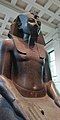
A colossal statue of Amenhotep III, Queen Tiye and Princess Henuttaneb. Egyptian Museum in Cairo, 2008

Amenhotep was the son of Thutmose IV and his minor wife Mutemwiya. He was born probably around 1401 BC.[13] Later in his life, Amenhotep commissioned the depiction of his divine birth to be displayed at Luxor Temple. Amenhotep claimed that his true father was the god Amun, who had taken the form of Thutmose IV to father a child with Mutemwiya.[14][15]

In Regnal Year 2, Amenhotep married Tiye, the daughter of Yuya and Thuya. Tiye was the Great Royal Wife throughout Amenhotep's reign. Many commemorative scarabs were commissioned and distributed during Amenhotep's reign. On the "marriage scarabs," Amenhotep affirmed his divine power and the legitimacy of his wife. With Tiye, Amenhotep fathered at least two sons, Crown Prince Thutmose and Amenhotep IV (later called Akhenaten). In addition, several daughters are frequently credited to the couple: Sitamun, Henuttaneb, Iset, Nebetah, and Beketaten.[16] Most of the daughters appear frequently on statues and reliefs from Amenhotep's reign.[17] However, Nebetah is attested only once, on a colossal limestone group of statues from Medinet Habu,[16][18] and Beketaten only appears in Amarna.[19]

One of the many commemorative "marriage scarabs" of Amenhotep, which affirm the divine power of the king and the legitimacy of his wife, Tiye. Walters Art Museum, Baltimore.

Amenhotep is also sometimes credited as the father of Smenkhkare or Tutankhamun, with varying proposals for their mothers, but these theories are not as accepted as his other, known children.

In addition to Tiye, Amenhotep had several other wives. In Regnal Year 10, Amenhotep married Gilukhepa, the daughter of Shuttarna II of Mitanni.[20] He later married Tadukhepa, daughter of Tushratta of Mitanni, in or around Regnal Year 36 of his reign.[21][22] Other wives, whose names are unknown, included: a daughter of Kurigalzu, king of Babylon; a daughter of Kadashman-Enlil, king of Babylon; a daughter of Tarhundaradu, ruler of Arzawa; and a daughter of the ruler of Ammia (modern-day Syria).[22]

Finally, he married at least two of his daughters, Sitamun and Iset, in the last decade of his reign. Jar-label inscriptions from Regnal Year 30 indicate that Sitamun was elevated to the status of Great Royal Wife by that time.[16] Although shunned by common Egyptians, incest was not uncommon among royalty.[23] A sculpture restored by Amenhotep for his grandfather, Amenhotep II, shows Sitamun with a young prince beside her.[23] This has led to theories that Sitamun was the mother of Smenkhkare and/or Tutankhamun.

Life and reign

[edit]

Amenhotep probably became pharaoh when he was between the ages of 6 and 12. While it is likely that a regent would have ruled until he came of age, none is attested in the surviving records. In Regnal Year 11, Amenhotep commanded the construction of an artificial lake at Tiye's hometown of Djakaru. He then celebrated a Festival of Opening the Lake in the third month of Inundation, day sixteen, and rowed the royal barge Aten-tjehen on the lake. This event was commemorated on at least eleven commemorative scarabs.[24]

From other scarabs, Amenhotep is known to have killed either 102 or 110 lions in the first ten years of his reign.[25]

Battle participation

[edit]

Amenhotep III is known to have participated in only one military campaign. In Regnal Year Five, he led a victorious campaign against a rebellion in Kush. At the time, Amenhotep would have been between 11 and 17 years old. This victory was commemorated by three rock-carved stelae found near Aswan and Saï in Nubia. The official account of Amenhotep's military victory emphasizes his martial prowess with the hyperbole typical of the period.[26]

Court of Amenhotep III

[edit]
Papyraform columns with the names of Amenhotep III - XVIII dynasty, Merenptah - 19th dynasty and Sethnakht - 20th dynasty - New Kingdom Neithsabes

There is a significant attestation for the court officials who served during Amenhotep's reign, primarily through the discovery of their tombs in the Theban Necropolis. Among these court officials were the viziers Ramose, Amenhotep, Aperel, and Ptahmose. Other officials included the treasurers Ptahmose and Merire; the high stewards, Amenemhat Surer and Amenhotep (Huy); and the Viceroy of Kush, Merimose.

Amenhotep, son of Hapu held many offices during the reign of Amenhotep the pharaoh, but is best known for receiving the right to build his mortuary temple behind that of the king.[27] Amenhotep, son of Hapu, was deified after his death and was one of the few non-royals to be worshiped in such a manner.[28][29]

Malkata Palace

[edit]

The palace of Malkata was built in the 14th century BC and its ancient name was Per-Hay, "House of Rejoicing". Originally, the palace was known as the Palace of the Dazzling Aten. Built mostly out of mud-brick, it was Amenhotep's residence throughout most of the later part of his reign. Construction began around Regnal Year 11 and continued until the king moved to the palace permanently around Regnal Year 29. Once completed, it was the largest royal residence in Egypt.

Sed festivals

[edit]

Amenhotep celebrated three Sed festivals in Regnal Years 30, 34, and 37, each at Malkata palace in Western Thebes.[30] A temple of Amun and festival hall were built especially for the celebrations.[31] The Sed festival was a tradition that dated to the Old Kingdom,[32] consisting of a series of tests that demonstrated the pharaoh's fitness for continuing as ruler of Egypt. Based on indications left by Queen Tiye's steward Khenruef, the festival may have lasted two to eight months.[33]

Amenhotep wanted his Sed Festivals to be far more spectacular than those of the past.[34] He appointed Amenhotep, son of Hapu to plan the ceremony, potentially because he was one of the few courtiers still alive to have served at the last Sed Festival, held for Amenhotep II.[34] In preparation for the first Sed Festival, Amenhotep, son of Hapu enlisted scribes to gather information from records and inscriptions, most found in ancient funerary temples,[34] describing the appropriate rituals and costumes.

Temples were built and statues erected up and down the Nile. Craftsmen and jewelers created ornaments commentating the event including jewelry, ornaments, and stelae.[34] The scribe Nebmerutef coordinated every step of the event.[35] He directed Amenhotep to use his mace to knock on the temple doors. Beside him, Amenhotep-Hapu mirrored his effort like a royal shadow.[35] The king was followed by Queen Tiye and the royal daughters. When moving to another venue, the banner of the jackal god Wepwawet, "Opener of Ways" preceded the King. The king changed his costume at each major activity of the celebration.[35]

One of the major highlights of the festival was the king's dual coronation. He was enthroned separately for Upper and Lower Egypt. For Upper Egypt, Amenhotep wore the white crown but changed to the red crown for the Lower Egypt coronation.[36]

After the Sed festival, Amenhotep transcended from being a near-god to one divine.[37] The king may have later traveled across Egypt following the festival, potentially reenacting the ceremony for different audiences.[33] Few Egyptian kings lived long enough for their own celebration. Those who survived used the celebration as the affirmation of transition to divinity.

International relations

[edit]
Fragment of a votive stele depicting Amenhotep III making an offering to an unpreserved god. Reign of Amenhotep III, 18th dynasty, New Kingdom.
Amarna letter. Letter from Labayu (ruler of Shechem) to the Egyptian Pharaoh Amenhotep III or his son Akhenaten. 14th century BCE. From Tell el-Amarna, Egypt.

Diplomatic correspondence from Amenhotep's reign are partially preserved in the Amarna Letters, a collection of documents found near the city of Amarna. The letters come from the rulers of Assyria, Mitanni, Babylon, Hatti, and other states, typically including requests by those rulers for gold and other gifts from Amenhotep. The letters cover the period from Year 30 of Amenhotep until at least the end of Akhenaten's reign. In Amarna Letter EA 4, Amenhotep is quoted by the Babylonian king Kadashman-Enlil I in firmly rejecting the latter's entreaty to marry one of this pharaoh's daughters:

From time immemorial, no daughter of the king of Egy[pt] is given to anyone.[38]

Amenhotep's refusal to allow one of his daughters to be married to the Babylonian monarch may indeed have followed from Egyptian royal custom, which allowed a claim upon the throne through descent from a royal princess. It could also be viewed as a diplomatic stratagem to enhance Egypt's prestige, as Amenhotep himself married the daughters of several foreign rulers while refusing them his own daughters.

The Amarna Letters also reference the exchange between Amenhotep and the Mitanni King Tushratta of the statue of a healing goddess, Ishtar of Nineveh, late in Amenhotep's reign. Scholars have generally assumed that the statue's sojourn to Egypt was requested by Amenhotep in order to cure him of his various ailments, which included painful abscesses in his teeth.[39] However, William L. Moran's analysis of Amarna Letter EA 23, relating to the dispatch of the statue to Thebes, discounts this theory.

The arrival of the statue is known to have coincided with Amenhotep's marriage with Tadukhepa, Tushratta's daughter, in the pharaoh's 36th year; letter EA 23's arrival in Egypt is dated to "regnal year 36, the fourth month of winter, day 1" of his reign.[40] Furthermore, Tushratta never mentions in EA 23 that the statue's dispatch was meant to heal Amenhotep of his maladies. Instead, Tushratta writes in part:

... Thus Šauška of Nineveh, mistress of all lands: "I wish to go to Egypt, a country that I love, and then return." Now I herewith send her, and she is on her way. Now, in the time, too, of my father,...[she] went to this country, and just as earlier she dwelt there and they honored her, may my brother now honor her 10 times more than before. May my brother honor her, [then] at [his] pleasure let her go so that she may come back. May Šauška (i.e., Ishtar), the mistress of heaven, protect us, my brother and me, a 100,000 years, and may our mistress grant both of us great joy. And let us act as friends. Is Šauška for me alone my god[dess], and for my brother not his god[dess]?[41]

The likeliest explanation is that the statue was sent to Egypt "to shed her blessings on the wedding of Amenhotep and Tadukhepa, as she had been sent previously for Amenhotep and Gilukhepa."[42] Moran agrees that this explanation was more likely.[43] Further, Moran argues that the contents of Amarna Letter EA 21 support this claim, wherein Tushratta asks the gods, including Ishtar, for their blessing of the marriage.[44]

In the 14th century BCE, the pharaoh sent an expedition to Cyprus to establish Egyptian control over the island, which was subsequently maintained for several centuries. During this time, the Egyptians established a number of settlements on the island, and they exported copper and other raw materials from Cyprus to Egypt in exchange for luxury goods and other commodities.[45][verification needed][46][verification needed] However, the Egyptian presence on Cyprus was at times interrupted by incursions of other powers, including the Hittites and the Mycenaeans.

Succession

[edit]

Thutmose, the eldest son of Amenhotep III with his wife Tiye, became Crown Prince,[47] but died before his father. Amenhotep was ultimately succeeded by his second son, who ascended the throne as Amenhotep IV and later took the name Akhenaten.

Obverse: The Stela of Amenhotep. back: raised by Merenptah (1213–1203 a.c.) Egyptian Museum

Proposed coregency with Amenhotep IV / Akhenaten

[edit]

It has long been theorized that Amenhotep III shared a coregency with his son Amenhotep IV. Lawrence Berman has claimed that proponents of the coregency theory tended to be art historians, while historians remained unconvinced.[48]

Eric Cline, Nicholas Reeves, Peter Dorman, and other scholars argue strongly against the establishment of a long coregency between the two rulers and in favor of either no coregency or one of at most two years.[49] Donald B. Redford, William J. Murnane, Alan Gardiner, and Lawrence Berman contest the view of any coregency whatsoever between Akhenaten and his father.

Evidence against a coregency includes Amarna Letter EA 27, which is dated to Regnal Year 2 of Amenhotep IV. The subject of the letter involves a complaint from the Mitannian king Tushratta, claiming that Amenhotep IV did not honor his father's promise to send Tushratta gold statues as part of the marriage arrangement between Tadukhepa, and Amenhotep III.[50] This correspondence implies that if any coregency occurred between Amenhotep and Akhenaten, it lasted no more than a year.[51]

However, in February 2014, Egyptian Ministry of Antiquities announced that findings from the tomb of Vizier Amenhotep-Huy gave "conclusive evidence" of a coregency that lasted at least eight years.[52][53] In the tomb, the cartouches of the two pharaohs were carved side by side. However, this conclusion has since been called into question by other egyptologists, according to whom the inscription means only that construction on Amenhotep-Huy's tomb started during Amenhotep III's reign and ended under Akhenaten's, and Amenhotep-Huy thus simply wanted to pay his respects to both rulers, carving their names separately rather than simultaneously.

Later life

[edit]

Health and death

[edit]
The mummy of Amenhotep III before unwrapping

Amenhotep's greatest attested regnal date is Year 38, which appears on wine jar-label dockets from Malkata.[54] He may have lived briefly into an unrecorded Year 39 and died before the wine harvest of that year.[55] Reliefs from the wall of the temple of Soleb in Nubia and scenes from the Theban tomb of Kheruef, Steward of the King's Great Wife, Tiye, depict Amenhotep as a visibly weak and sick figure.[56] Scientists believe that in his final years he suffered from arthritis and obesity. Further, a forensic examination of his mummy revealed worn and cavity-pitted teeth which must have inflicted constant pain. An examination of the mummy by the Australian anatomist Grafton Elliot Smith concluded that the pharaoh had died between the age of 40 and 50.[57]

He was survived by at least one child, his successor Amenhotep IV. His wife Tiye is known to have outlived him by at least twelve years, as she is mentioned in several Amarna letters dated from her son's reign, as well as depicted at the royal dinner table in Akhenaten's years 9 and 12, in scenes from the tomb of Huya.[58][48]

The mummy of Amenhotep III during unwrapping

Foreign leaders communicated their grief at the pharaoh's death, with Tushratta saying:

When I heard that my brother Nimmureya had gone to his fate, on that day I sat down and wept. On that day I took no food, I took no water.[59]

Burial and mummy

[edit]
Mummified head of Amenhotep III following unwrapping

Amenhotep was buried in tomb WV22 in the Western Valley of the Valley of the Kings outside of Thebes. The tomb is the largest in the West Valley of the Kings and includes two side chambers for his Great Royal Wives, Tiye and Sitamun. However, it does not seem that either woman was buried there. During the reign of Smendes in the Third Intermediate Period, Amenhotep's mummy was later moved to the mummy cache in KV35 along with several other pharaohs of the Eighteenth and Nineteenth Dynasties, where it lay until discovered by Victor Loret in 1898.[60][61]

For the 18th dynasty, the mummy shows an unusually heavy use of subcutaneous stuffing to make the mummy look more lifelike.[62] The mummy has museum inventory number CG 61074.[62]

In April 2021, his mummy was moved from the Museum of Egyptian Antiquities to the National Museum of Egyptian Civilization, along with those of 17 other kings and 4 queens in an event termed the Pharaohs' Golden Parade.[63]

Monuments and legacy

[edit]
The northern Colossus of Memnon

Amenhotep has the distinction of having the most surviving statues of any Egyptian pharaoh, with over 250 identified. These statues provide a series of portraits covering the entire length of his reign.

When Amenhotep died, he left behind a country at the very height of its power and influence, commanding immense respect in the international world. However, it was a country wedded to age-old political and religious certainties under the Amun priesthood.[64]

The resulting upheavals from his son Akhenaten's reforming zeal shook these old certainties to their foundations, and forced the momentous question whether a pharaoh was more powerful than his society as represented in the worship of Amun. Akhenaten even moved the capital away from Thebes, the center of Amun's worship, and built Amarna, a city dedicated to his new deity, the Aten.[65]

Amenhotep built extensively at the temple of Karnak, including the Luxor temple with two pylons, a colonnade behind the new temple entrance, and a new temple to the goddess Ma'at. Amenhotep dismantled the Fourth Pylon of the Temple of Amun at Karnak to construct a new Third Pylon — and created a new entrance to this structure where he erected two rows of columns with open papyrus capitals down the centre of this newly formed forecourt.[citation needed] The forecourt between the Third and Fourth Pylons, sometimes called an obelisk court, was also decorated with scenes of the sacred funerary barques of the deities Amun, Mut, and Khonsu.[66] The king also started work on the Tenth Pylon at the Temple of Amun. Amenhotep's first recorded act as king — in his Years 1 and 2 — was to open new limestone quarries at Tura, just south of Cairo and at Dayr al-Barsha in Middle Egypt to undertake his great building projects.[67] He virtually covered Nubia with new monuments:

...including a small temple with a colonnade (dedicated to Thutmose III) at Elephantine, a rock temple dedicated to Amun "Lord of the Ways" at Wadi es-Sebuam, and the temple of Horus of Miam at Aniba...[as well as founding] additional temples at Kawa and Sesebi.[68]

Luxor Temple of Amenhotep

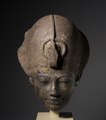
His enormous mortuary temple on the west bank of the Nile was, in its day, the largest religious complex in Thebes, but the king built too close to the floodplain, and less than two hundred years later it was reduced to ruins. Much of the masonry was purloined by Merneptah and later pharaohs for their own construction projects.[69] All that remained standing was the gateway with the Colossi of Memnon — two massive stone statues depicting Amenhotep,18 m (59 ft) high. Amenhotep also built the Third Pylon at Karnak and erected 600 statues of the goddess Sekhmet in the Temple of Mut to the south.[70] Some of the most magnificent statues of New Kingdom Egypt date to his reign "such as the two outstanding couchant rose granite lions originally set before the temple at Soleb in Nubia" as well as a large series of royal sculptures.[71] Several black granite seated statues of Amenhotep wearing the nemes headress have come from excavations behind the Colossi of Memnon as well as from Tanis in the Delta.[71] In 2014, two giant statues of Amenhotep toppled by an earthquake in 1200 BC were reconstructed from more than 200 fragments and re-erected at the northern gate of the king's funerary temple.[72]

Remains of Kom el-Hettan (mortuary temple of Amenhotep III)

One of the most stunning finds of royal statues dating to his reign was made as recently as 1989 in the courtyard of Amenhotep 's colonnade of the Temple of Luxor. The cache of statues included a nearly undamaged 6 feet (1.8 m)-high pink quartzite statue of the king wearing the Double Crown.[71] It was mounted on a sled, and may have been a cult statue.[71] Only the name of the god Amun had been hacked out wherever it appeared in the pharaoh's cartouche, clearly part of Akhenaten's campaign against the god of his father.[71]

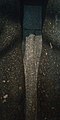
Hieroglyphs on the backpillar of Amenhotep 's statue. There are 2 places where Akhenaten erased the name Amun, later restored on a deeper surface. The British Museum, London

One of Amenhotep's most popular epithets was Aten-tjehen which means "the Dazzling Sun Disk"; it appears in his titulary at Luxor temple and was frequently used as the name for one of his palaces, and for the Year 11 royal barge, as well as for a company of Amenhotep's army.[73]

In 2021, excavations revealed a settlement near Amenhotep's mortuary temple, called the Dazzling Aten, believed to have been built by king[74] to house craftsmen and labourers working on royal projects at Thebes, along with its own bakery and cemetery.

A Sed Festival Stela of Amenhotep III was taken from Egypt to Europe by an art dealer. Once owned by Eric Cassirer, it is now believed to be in a private collection in the United States.[75] The white alabaster stela is 10 cm × 9 cm (3.9 in × 3.5 in), but only its upper half survived.[76] Front view: The god Heh, representing the number one million, holds notched palm leaves signifying years and the cartouche of Amenhotep, symbolically raising the pharaoh for a million years. Side view: A series of festival (ḥb) emblems together with a Sed (sd) emblem identifying the stela as one made for Amenhotep 's Sed Festival royal jubilee. Top and back view: These show malicious damage where the cartouche was chipped away. Cassirer suggests this was another example of Akhenaten's vandalism against Amun.[77] Other gods displayed on the stela, Re and Ma'at, showed no damage.[77] The altered stela may then have been displayed by Akhenaten.

Another striking characteristic of Amenhotep's reign is the series of over 200 large commemorative stone scarabs that have been discovered over a large geographic area ranging from Syria (Ras Shamra) through to Soleb in Nubia.[78] Similarly, five other scarabs state that his wife Gilukhepa of Mitanni arrived in Egypt with a retinue of 317 women. She was the first of many such princesses who would enter the pharaoh's family.[25]

Ancestry and genetics

[edit]

Genetic analysis has confirmed that Amenhotep III is the father of both the KV55 mummy, identified in the study as Akhenaten, and "The Younger Lady", sibling parents of his grandson, Tutankhamun.[79] A more recent study, published in 2020, traced the family lineage via Y-chromosomes and mtDNA. Although only a partial profile was obtained, he shares his YDNA haplogroup, R1b, with his son and grandson, upholding the family tree outlined in the earlier study. However, the specific clade of R1b was not determined. The mitochondrial haplogroup of Amenhotep III was found to be H2b,[80] which is associated with migrations from the Pontic-Caspian steppe to South Asia and the spread of Indo-Iranian languages.[81][82]

In 2022, S.O.Y. Keita analysed 8 Short Tandem loci (STR) published data from studies by Hawass et al. 2010;2012[83][84] which sought to determine familial relations and research pathological features such as potential infectious diseases among the New Kingdom royal mummies, including Tutankhamun, Amenhotep III, and Rameses III. Keita used the Popaffiliator algorithm which differentiates Eurasians, Sub-Saharan Africans, and East Asians; he concluded that "a majority [have] an affinity with 'Sub-Saharan' Africans in one affinity analysis". However, he emphasized the complexity of ethnic attributions, cautioning that the royal mummies may have had other affiliations obscured by the typological categories, and that different "data and algorithms might give different results".[85]

According to historian William Stiebling and archaeologist Susan N. Helft, conflicting DNA analyses by different research teams have thus far failed to establish consensus on the genetic makeup of the ancient Egyptians and their geographic origins.[86]

In 2025, biochemist Jean-Philippe Gourdine reviewed genetic data on the Ancient Egyptian populations in the international scholarly publication, General History of Africa Volume IX. Expanding on a previous STR analysis co-performed with Keita, on the Amarna royal mummies which included Amenhotep III, Gourdine stated the analysis had found “that they had strong affinities with current sub-Saharan populations: 41 per cent to 93.9 per cent for sub-Saharan Africa, compared to 4.6 per cent to 41 per cent for Eurasia and 0.3 per cent to 16 per cent for Asia (Gourdine, 2018).” He also referenced comparable analysis conducted by DNA Tribes company, which specialized in genetic genealogy and had large datasets, with the latter having identified strong affinities between the Amarna royal mummies and Sub-Saharan African populations.[87]

[edit]

See also

[edit]

Notes

[edit]

Footnotes

[edit]

Bibliography

[edit]
Revisions and contributorsEdit on WikipediaRead on Wikipedia
from Grokipedia
Amenhotep III (c. 1390–1352 BCE) was the ninth of ancient Egypt's Eighteenth Dynasty, whose approximately 38-year reign epitomized the New Kingdom's peak of prosperity, artistic refinement, and international influence. The son of and his secondary wife , he acceded to the throne as a youth and married , a non-royal woman whom he elevated to , with whom he fathered at least six children, including his successor . His rule featured minimal military engagements, relying instead on tribute from subdued regions like and diplomatic exchanges, including royal marriages and gifts, to maintain Egypt's dominance without conquest. Amenhotep III commissioned monumental building projects across Egypt and , notably the dedicated to , expansions at , and his vast Theban guarded by the , reflecting an era of opulent patronage of architecture and sculpture. These endeavors, supported by abundant resources from trade and mining expeditions, underscored a focus on divine kingship and cultural grandeur rather than expansionism.

Early Life and Ascension

Family Origins and Parentage

Amenhotep III was the son of and , a secondary wife of , during the Eighteenth Dynasty of . , who ruled circa 1400–1390 BCE, belonged to the Theban royal line that had consolidated power after expelling the invaders, with his father preceding him following the demise of 's elder brothers. held the title of God's Wife, indicating her ritual role, but lacked the prominence of principal queens like , 's chief consort. Historical evidence for Mutemwiya's maternity derives from royal inscriptions and artistic depictions, including divine birth scenes at that parallel those of earlier pharaohs to legitimize Amenhotep III's rule, and her portrayal standing behind the enthroned king in offering scenes from Theban Tomb TT 226. These attestations, produced during Amenhotep III's reign, underscore her enduring influence, as seen in her estate mentions and presence on the sculptures. Her origins remain uncertain, with ties suggested to the region and possibly non-royal stock, aligning with dynasty trends of integrating provincial elites into the , though claims of Nubian heritage lack direct epigraphic support. Amenhotep III's birth likely occurred around 1391 BCE, positioning him as a younger son who ascended young after any potential rivals, reflecting the dynasty's pattern of selective succession to maintain stability amid internal court dynamics.

Childhood and Education

Amenhotep III was born circa 1401 BCE as the son of and his secondary wife , a woman of non-royal origins who rose to prominence through this union. A temple relief at depicts 's impregnation by the god assuming the form of , serving to legitimize Amenhotep's claim to the throne through divine parentage amid potential succession rivalries with other royal siblings. Historical records provide scant details on his childhood, reflecting the general scarcity of personal anecdotes for pre-ascension Egyptian royals, with surviving evidence derived primarily from later propagandistic inscriptions rather than contemporary diaries or administrative papyri. As , Amenhotep would have received training typical of New Kingdom heirs, encompassing literacy in hieroglyphs and hieratic script, administrative oversight, religious rituals, and physical conditioning in , handling, and horsemanship to prepare for military leadership. Thutmose IV's relatively short reign of approximately 10 years limited extended mentorship, and Amenhotep ascended at about age 12 following his father's death. In the initial years post-ascension, Amenhotep demonstrated proficiency in elite pursuits, embarking on a Nubian expedition in his fifth where he reportedly slew 102 lions over 10 months, underscoring prior preparation in martial sports and royal symbolism. This activity aligned with pharaonic traditions emphasizing physical vigor and divine prowess, though no direct evidence ties it to specific tutors or curricula from his youth.

Initial Ascension and Early Rule

Amenhotep III succeeded his father directly upon the latter's death, ascending the throne circa 1390 BCE at approximately twelve years of age. This transition occurred without recorded disputes over succession, reflecting the stability of the 18th Dynasty's royal lineage, though the young pharaoh's minority required advisory oversight from court elders, particularly his mother , a secondary wife of whose influence helped bridge the early regnal period. In the initial phases of his rule, Amenhotep III focused on consolidating internal administration and forging key domestic alliances rather than pursuing aggressive expansion, inheriting a realm secured by his predecessors' conquests under and diplomatic overtures by . By his second regnal year, he married , daughter of the high-ranking non-royal officials and , as attested by early scarabs proclaiming her as and commemorating events like royal hunts. This union, atypical for elevating a commoner-origin consort to paramount status, integrated provincial elite networks into the royal court, enhancing administrative loyalty and foreshadowing Tiye's substantive advisory role amid the pharaoh's youth. Early regnal inscriptions and stelae emphasize ritual continuity and divine legitimacy, with Amenhotep III adopting the throne name Nebmaatre ("Lord of Truth is Re") to invoke solar and ma'at principles of order. Limited evidence of foreign policy in these years points to maintenance of inherited treaties, such as the alliance, through correspondence rather than campaigns, prioritizing economic influx from and over ventures. A minor Nubian incursion recorded on three stelae from year 5 demonstrated border enforcement without broader mobilization, underscoring a of deterrence to preserve prosperity.

Military and Security Policies

Limited Campaigns and Victories

Amenhotep III undertook only limited military actions during his reign, primarily focused on suppressing a rebellion in rather than expansive conquests. In his fifth , corresponding to approximately 1390 BCE, he dispatched forces to quell unrest in Kush, resulting in the capture of numerous prisoners and the reassertion of Egyptian control over the southern frontier. This campaign is documented in rock inscriptions at Sai Island and , which record specific dates such as year 5, month 2, day 24, and emphasize the pharaoh's role in defeating rebellious elements. The victory stela of Amenhotep III, erected to commemorate these events, claims the defeat of Nubian forces and the seizure of around 30,000 captives, alongside livestock and other spoils, though such figures in royal inscriptions often served propagandistic purposes to magnify the pharaoh's prowess rather than reflect precise tallies. Accompanied by the Nubian viceroy Merymose, who later led independent operations against local groups like the Ibt, the expedition restored order without requiring sustained occupation, as evidenced by subsequent Nubian tribute deliveries of , , and to Thebes. Archaeological remains at sites like Soleb, where Amenhotep III later built a temple complex, indicate that the campaign facilitated cultural and administrative integration rather than outright . In contrast to predecessors like , Amenhotep III pursued no major offensives in or Naharin (), relying instead on diplomatic marriages and loyalty to maintain northern borders, with correspondence precursors to the attesting to from Asiatic rulers without reports of or invasion. Inscriptions occasionally reference symbolic "victories" over Asiatic foes, but lack corroborating evidence of active campaigning, underscoring a strategic pivot toward internal prosperity and monumental projects over territorial expansion. This approach yielded long-term stability, as Egyptian dominance in the persisted through garrisons and officials rather than repeated battles.

Defensive Strategies and Border Management

Amenhotep III's defensive strategies focused on preserving the expansive borders inherited from predecessors like , emphasizing diplomatic oversight, vassal loyalty, and selective military responses rather than proactive conquests. His approach leveraged Egypt's accumulated prestige and , including established fortresses and garrisons, to deter incursions while minimizing the costs of sustained warfare. This policy contributed to a period of relative internal stability and external peace, with resources redirected toward monumental construction and . In , Amenhotep III maintained control through administrative hierarchy and occasional enforcement actions, appointing a to oversee the region and extract and . Early in his reign, specifically in regnal year 5, he dispatched forces to quell a in Kush, resulting in the capture of prisoners and reinforcement of Egyptian authority, as recorded in temple reliefs depicting the victory. Such interventions preserved the southern frontier's fortresses, originally built under earlier pharaohs like , which served as monitoring posts and supply depots along the to prevent uprisings and regulate trade routes. No major new fortifications were erected under his rule in , indicating reliance on existing defensive networks supplemented by obligations that funded ongoing military presence. For the northern borders in the and Sinai, management centered on indirect control via client states and diplomatic correspondence, with Egyptian garrisons stationed in strategic outposts like Gaza to monitor threats from groups such as the Habiru. Inscriptions from his reign, such as those referencing the extension of war cries to Naharin (), assert symbolic dominion over the northern frontier without evidence of large-scale campaigns. Early diplomatic letters akin to the archive demonstrate vassals pledging loyalty and requesting aid against local unrest, which Amenhotep III addressed through prestige gifts and selective reinforcements rather than direct invasion, thereby sustaining border security through alliance networks. This method effectively managed potential incursions while fostering economic benefits from Levantine tribute and trade.

Role of Military in Maintaining Peace

Amenhotep III's military forces, comprising professional standing armies and auxiliary units, played a crucial role in deterring external threats and upholding imperial stability without necessitating large-scale conquests during his approximately 38-year reign (circa 1390–1352 BCE). Inherited from predecessors like , the empire's extensive border fortifications and garrison networks in and the provided a defensive backbone that minimized invasions, allowing the to prioritize and monumental construction. These deployments enforced ma'at—the Egyptian principle of order—by projecting power that compelled states to deliver and adhere to treaties, as evidenced by the absence of recorded major rebellions or foreign incursions in core territories. In , the southern frontier, military expeditions such as the 5 campaign (circa 1385 BCE) suppressed localized uprisings, resulting in the capture of over 150 rebels and the reaffirmation of Egyptian control through viceregal oversight and permanent garrisons at sites like and Semna. These forces, including scouts and infantry, patrolled trade routes and extracted and cattle tribute, ensuring economic inflows that funded peace-time prosperity while preventing Kushite resurgence. Scholarly analyses note that such targeted operations, rather than sustained occupation, maintained a balance of and for local chiefs, fostering long-term submission without overextension. To the northeast, in the and , Amenhotep III eschewed offensive campaigns, relying instead on resident military detachments in vassal cities like and Gaza to monitor loyalty and quell inter-vassal conflicts that could destabilize tribute systems. Diplomatic exchanges with powers such as , backed by the implicit threat of Egyptian chariotry and archer units—numbering in the tens of thousands across the empire—deterred aggression from rivals like the , as reflected in contemporary correspondence emphasizing mutual non-aggression. This strategy of "" permitted limited vassal warfare but preserved Egyptian , with military logistics supporting royal marriages and gift exchanges that solidified alliances.

Administration and Court

Royal Court Composition

The royal court of Amenhotep III revolved around the , with Queen Tiye as the exerting notable influence through her visibility in commemorative scarabs and diplomatic inscriptions from regnal year 11 onward, underscoring her status beyond traditional consort roles. Her parents, and , held elevated positions due to familial ties, while her brother Anen served as Second Prophet of Amun, integrating priestly authority into court dynamics. The court also incorporated foreign elements via diplomatic alliances, exemplified by the year 10 marriage to Mitannian princess Gilukhepa, who arrived with 317 attendant women, expanding the harem's composition. Royal offspring formed a core group, including at least six daughters—such as Iset, Henuttaneb, and Nebetah—and sons like the crown prince and , who assumed the role of ; these children occasionally featured in courtly and religious contexts, though their administrative involvement remained limited until succession. High stewards managed palace logistics, with dual appointees overseeing from Thebes and Memphis respectively, reflecting decentralized yet pharaoh-centric control. Administrative leadership fell to viziers handling judiciary, taxation, and oversight, often numbering two (northern and southern) in the New Kingdom structure. Ramose, into the late reign, exemplified this through his elaborately decorated Theban (TT55), which attests to courtly wealth and continuity into Akhenaten's early rule. Ptahmose combined duties with Theban mayoral and high priestly offices, administering temple estates alongside state resources. Amenhotep (distinct from the king) served as a , with evidence from missions and inscriptions linking him to southern administration amid late-reign transitions, though precise northern-southern attributions vary. Amenhotep Huy, another , faced iconoclastic erasure post-year 35, signaling potential court intrigues. Complementing these were specialists like , a non-vizierial advisor and whose statues received honors, highlighting merit-based elevation in the . This composition prioritized loyalty and expertise, sustaining the court's role in , , and without major emphasis.

Administrative Innovations

Amenhotep III's administration adhered closely to the established hierarchical model of the New Kingdom, characterized by a centralized under the pharaoh's , with viziers serving as chief coordinators of state functions. No major structural reforms or innovations are attested in contemporary records, as the existing system proved adequate for the period's demands; social and economic conditions had evolved minimally from prior reigns, rendering radical changes unnecessary. Instead, the expanded incrementally to accommodate driven by and , ensuring efficient oversight of resources without disrupting traditional . Key administrative functions, including tax collection, judicial proceedings, and maintenance, operated smoothly under dual viziers—one for and one for —who supervised departments such as the granaries and treasuries. This coordination allowed for the effective management of influxes from foreign tribute and domestic agriculture, with officials like scribes and overseers handling record-keeping and distribution to support monumental projects and temple endowments. The vizier's role in integrating these sectors exemplified refined delegation rather than novelty, enabling the state to process vast wealth—evidenced by incoming goods from , the , and Punt—without fiscal strain. Adaptations to growing administrative loads included bolstered provincial oversight and enhanced protocols, which indirectly fortified by stabilizing borders and trade routes. For instance, the influx of luxury imports necessitated expanded operations, but these were managed within the pharaonic framework, prioritizing to royal and divine institutions over decentralized power shifts. This stability contrasted with later dynastic upheavals, underscoring how Amenhotep III's era prioritized operational refinement over transformative policy.

Key Officials and Advisors

, emerged as one of the most influential non-royal figures in Amenhotep III's administration, holding multiple high offices that spanned military, administrative, and religious domains. As overseer of all royal works, he directed the construction of the pharaoh's at Thebes and the temple of Soleb in , ensuring the efficient mobilization of resources for these monumental projects. In military capacities, he served as of the recruits and general of the army, tasked with positioning troops at checkpoints to regulate maritime entry and counter incursions. His roles extended to religious intercession in the temple of at Thebes and supervision of the king's Heb-Sed jubilee festival after three decades of rule, highlighting his advisory influence on ceremonial and divine matters. The pharaoh's exceptional favor is attested by the concession of a private funerary temple adjacent to his own at Thebes, an uncommon privilege underscoring Amenhotep son of Hapu's pivotal advisory and executive contributions. The vizierate, as the pinnacle of secular administration, was occupied by officials who adjudicated legal disputes, supervised provincial governance, and implemented royal policies across . Ptahmose held the vizierate for southern Egypt while concurrently serving as , a dual role that integrated administrative oversight with control of Theban religious estates and building projects, including temple expansions funded by state revenues. His inscriptions emphasize his management of cults and construction initiatives, reflecting the intertwined nature of vizierial and priestly authority during this prosperous era. Ramose succeeded or overlapped in the vizierate during the reign's later phase, also functioning as governor and mayor of Thebes, where he coordinated urban administration and preparations indicative of his enduring service into the early years of Amenhotep III's successor. These viziers exemplified the bureaucratic efficiency that sustained Egypt's internal stability without major military engagements. Other court officials, such as treasurers like Merire, supported fiscal operations by managing tribute inflows and resource allocation for diplomatic gifts and monumental endeavors, though their advisory roles were more operational than strategic. The administration's structure privileged loyal, multifaceted elites like and the viziers, whose documented titles and monuments reveal a merit-based elevation amid the pharaoh's emphasis on opulent, non-expansionist rule.

Building Projects and Capital Development

Malkata Palace Complex

The Malkata Palace Complex, constructed by Amenhotep III during his reign (c. 1390–1353 BC), served as the king's primary residence and a ceremonial center on the western bank of the south of modern , opposite Thebes. Built largely from on a desert edge, the site symbolized the pharaoh's divine authority and prosperity, incorporating administrative, residential, and ritual spaces aligned with the king's deification efforts and sed jubilee festivals. The complex was abandoned shortly after Amenhotep III's death, with subsequent rulers like repurposing materials elsewhere, leading to significant erosion and reuse over time. Spanning a vast area of just under 2 square kilometers including its harbor and associated features, the palace-city featured multiple structures such as the (with and reception halls), a North Palace possibly used for royal women, workshops, and storage facilities. Canals diverted floodwaters to create an artificial harbor, Birket Habu, approximately 1.5 square kilometers in extent and up to 2 kilometers long, enabling boat access for tribute, supplies, and ceremonies during the inundation season (Akhet, roughly –October). Architectural remnants include columned halls with painted plaster decorations depicting flora, , and royal motifs, alongside evidence of advanced like drainage systems to combat flooding. Archaeological work at began sporadically in the late under the Egyptian Antiquities Service, with major excavations from 1906–1911 by the uncovering over 300 inscribed limestone fragments bearing Amenhotep III's names and titles, tiles, and blue-painted linked to royal banquets. Later efforts by the Museum (1971–1984) and ongoing projects by the Malqata Archaeological Mission have revealed settlement outskirts, including worker housing and a possible quarter, yielding artifacts like glass vessels and seals attesting to influences from the Aegean and . These finds confirm the site's role in resource mobilization, with production on-site supporting rapid amid the king's extensive building program. Interpretations of specific areas, such as eight room units in the North Palace as a royal , remain contested due to limited textual evidence and comparable structures' multifunctional uses, prioritizing caution against assumptions of segregated women's quarters without direct corroboration. The complex's layout emphasized symbolic geography, mirroring cosmic order with watery enclosures evoking the primordial and pathways for processions, underscoring Amenhotep III's self-presentation as a living god amid Egypt's imperial peak.

Major Temples and Monuments

Amenhotep III constructed his on the of Thebes between 1390 and 1353 BCE, creating one of the largest funerary complexes in Egyptian history, dedicated primarily to Amun-Re. The temple's entrance was flanked by the , two massive statues each approximately 18 meters tall, depicting the seated and intended to guard the sanctuary. These monolithic figures, quarried from and transported to the site, symbolized the pharaoh's eternal vigilance and divine kingship, though much of the temple structure was later destroyed by earthquakes and floods. In the Temple complex, Amenhotep III erected the Third Pylon around 1390–1352 BCE, incorporating reused materials from earlier structures to expand the . This pylon, faced with red and adorned with reliefs, marked a significant phase in the temple's northward extension, enhancing its role as a central religious hub. He also added halls, courts, and statues, including scarabs and colossal figures, underscoring his contributions to the site's monumental scale during the New Kingdom. Amenhotep III initiated the construction of , dedicating it to and the royal ka, with core structures completed under his reign to serve as a southern counterpart to . The temple featured pillared courts, shrines, and processional avenues linking it to , facilitating rituals that affirmed the pharaoh's divine renewal. Expansions included barque shrines and reliefs glorifying his victories and deification, reflecting the era's architectural emphasis on symmetry and solar alignment. Beyond Thebes, Amenhotep III built temples in Memphis, such as the "Temple of Nebmaatre-United-with-Ptah," integrating his cult with local deities and utilizing vast resources for cultic endowments. These projects, supported by from and , demonstrated administrative efficiency in mobilizing labor and materials, though many Memphite structures await full excavation. Colossal statues and sphinxes erected across sites further propagated his image as a living god, with over 250 known sculptures attesting to the scale of his artistic patronage.

Resource Mobilization and Economic Impact

Amenhotep III's extensive building campaigns, including the palace complex, expansions, and colossal statues, demanded unprecedented mobilization of labor, raw materials, and fiscal resources, drawing on Egypt's administrative apparatus to coordinate levies and state revenues. The pharaoh's , including viziers and overseers, managed the extraction of surplus from via in-kind taxes on harvests, which formed the backbone of state funding for such projects. These taxes, assessed annually based on flood yields, provided the caloric and material base for sustaining thousands of workers, with records indicating meticulous accounting to prevent shortfalls. A primary revenue stream derived from Nubian gold mines under direct Egyptian control, where Amenhotep III intensified exploitation through viceregal oversight and punitive expeditions to secure territories like Wadi Allaqi. Inscriptions from his reign, such as those on scarabs commemorating hunts and conquests, indirectly reflect the influx of precious metals that financed imports of and materials, elevating Egypt's to levels enabling monumental scale. Tribute from vassal states in the and periodic raids supplemented this, channeling foreign labor, timber, and metals into Theban workshops, though reveals reliance on alliances over conquest for steady inflows. Economically, these projects stimulated widespread employment, engaging peasants during the agricultural off-season alongside permanent crews of skilled masons and sculptors, thereby circulating wealth through wages in food rations and fostering artisanal specialization. The resultant , including quarries at and transport fleets on the , enhanced trade networks for , , and , contributing to a period of peak prosperity marked by abundant votive offerings and private constructions. While no direct evidence of fiscal overextension exists, the concentration of resources in elite religious centers likely amplified social hierarchies, with temple estates accruing land grants that perpetuated state control over production.

Religious and Ceremonial Activities

Sed Festivals and Renewals

Amenhotep III celebrated the Sed festival, a ritual of royal rejuvenation symbolizing the renewal of the pharaoh's physical and divine vitality, three times during his reign to affirm his eternal sovereignty and the kingdom's prosperity. The first festival occurred in regnal year 30, around 1360 BCE, coinciding with elaborate preparations at the Malkata palace complex in western Thebes, where administrative dockets and inscriptions record exemptions from corvée labor for participants. Subsequent celebrations followed in years 34 and 37, with the second marked by solar-themed artistic innovations and the third emphasizing intensified cultic offerings, as evidenced by reliefs and stelae depicting the king running the ritual course and receiving palm ribs symbolizing long life. These festivals featured processions, ritual races, and enthronements before deities like and , performed across temple complexes in Thebes and Memphis, with monumental gateways and shrines constructed specifically for the events to perpetuate the king's regenerative power. Inscriptions in the of Kheruef (TT 192) provide the most detailed iconographic sequence, showing Amenhotep III in double crown offering to divine thrones and participating in symbolic acts of purification, drawing on ancient precedents to legitimize his extended rule beyond the traditional 30-year threshold. The rituals' opulence, including vast distributions of goods and libations, reflected Egypt's under Amenhotep III, though some scenes blend elements from multiple festivals, indicating a cumulative tradition rather than isolated events. The festivals underscored Amenhotep III's self-presentation as a akin to , with year 37 depictions linking his vitality to cosmic renewal, potentially influencing later Amarna religious shifts, though primary evidence remains tied to orthodox Theban . Scholarly analysis of Malqata sealings and tomb reliefs confirms the festivals' role in stabilizing succession perceptions amid the king's advancing age, without direct corulership indications in the core Sed .

Deification and Cult Practices

Towards the end of his reign, Amenhotep III systematically promoted his own deification, presenting himself as a living god through monumental statuary and temple dedications that equated him with solar and creator deities. Colossal statues erected in major centers, including his at Thebes, depicted the king in divine forms such as wearing the crown of or assimilated to Amun-Re, signaling his assimilation into the divine realm while still alive. This self-deification marked a departure from earlier pharaonic norms, where divine status was posthumous, and reflected the king's unparalleled wealth and prestige, enabling the mobilization of resources for such representations. The complex on the of Thebes served as the primary locus for Amenhotep III's practices during his lifetime, functioning as a center for offerings, rituals, and oracular consultations addressed to the deified king. performed daily liturgies before cult statues housed in naos shrines within the temple, involving libations, burning, and recitations from hymns that invoked the king's eternal solar attributes. members, including Queen Tiye, participated in these divine roles, embodying aspects of the creator god's entourage to legitimize and sustain the 's theological framework. Posthumously, the cult persisted with dedicated endowments of land and personnel to maintain rituals, evidenced by foundation deposits and inscriptions recording perpetual offerings of bread, beer, and oxen to the king's ba-spirit. Statuary programs in the temple featured over 250 figures in varied scales and materials—granite, quartzite, and diorite—designed for multiple liturgical functions, such as processional barques carrying the king's image during festivals. This elaborate cult infrastructure underscored Amenhotep III's enduring divine status, influencing subsequent royal ideologies, though it faced partial eclipse under Akhenaten before revival in the Ramesside period.

Relations with Priesthood

Amenhotep III demonstrated strong patronage toward the priesthood of through extensive temple constructions and endowments, including the erection of the Third Pylon at as part of the , which symbolized divine favor and royal legitimacy. These projects, funded by revenues from imperial trade and tribute, incorporated reused chapels and monumental gateways to glorify , integrating the god's cult with the pharaoh's solar theology as Amun-Ra. Such investments not only expanded sacred spaces but also allocated vast temple lands and resources, enabling the Amun priesthood to manage independent economic estates that rivaled state administration in scale. The pharaoh's donations of cattle, gold, and slaves from Nubian and Levantine sources further bolstered priestly wealth, as temple inventories from the period record inflows that supported ritual performances and priestly hierarchies. This largesse shifted administrative authority toward high priests, who oversaw prophetic colleges and temple stewards, diluting direct royal oversight while maintaining ceremonial interdependence during events like the . Amenhotep III adhered to traditional practices by appointing figures such as Maya to the role of in his later years, ensuring loyalty amid the priesthood's expanding influence. No inscriptions or archaeological evidence indicates overt tensions or restrictions imposed on the Amun priesthood during his reign (ca. 1390–1353 BCE), contrasting with later dynastic shifts; instead, royal epithets like "Dazzling Aten" coexisted with -centric dedications, reflecting syncretic harmony rather than . The priesthood's growing , fueled by these endowments, positioned it as a parallel power structure, yet pharaonic authority remained unchallenged through shared religious ideology and mutual reinforcement of divine kingship.

Diplomatic and International Relations

Amarna Letters and Correspondence

The comprise an archive of approximately 382 clay tablets inscribed in Akkadian , discovered in 1887 at Tell el-Amarna (Akhetaten), the short-lived capital founded by , documenting diplomatic exchanges primarily during the late 14th century BCE. While most letters date to 's reign and address him as Napkhuriya, a subset—roughly 30–50—originate from or reference the final decade of Amenhotep III's rule (ca. 1360–1353 BCE), addressed to Nibmuaria (Nimmureya), his prenomen meaning "fashioned by ." These tablets, preserved due to their discard in palace archives before the city's abandonment, reveal Egypt's central role in a international system reliant on balanced reciprocity, gift exchanges, and marriage alliances rather than overt military dominance. Key correspondence with major powers highlights Amenhotep III's prestige and strategic maneuvering. , king of , sent multiple letters (e.g., EA 17 and EA 23) to Nibmuaria, expressing fraternal solidarity, requesting for statues, and referencing prior ties, including the dispatch of Gilukhepa and her entourage of 317 women as a diplomatic around Amenhotep's 10. Similarly, Babylonian king Kadashman-Enlil I (r. ca. 1374–1360 BCE) wrote EA 4 to Amenhotep III, protesting the pharaoh's refusal to provide an Egyptian princess in reciprocal while Egypt accepted Babylonian brides, quoting Amenhotep's earlier stipulation that "a king's daughter cannot be given to anyone," underscoring Egypt's asymmetrical view of royal bloodlines in alliances. Assyrian and Hittite rulers also initiated or continued contacts, seeking parity in titles and resources, with letters emphasizing mutual oaths and shipments of , horses, and chariots in exchange for Egyptian , which foreign kings likened to "dust" in abundance within the Nile Valley. Vassal communications from Levantine city-states, though fewer under Amenhotep III, report local instabilities, such as incursions by nomadic groups termed Habiru, and appeal for Egyptian intervention or garrisons, reflecting the pharaoh's oversight of an imperial network sustained through and loyalty oaths rather than constant campaigning. These letters collectively portray Amenhotep III as a pivotal broker in Near Eastern , leveraging Egypt's and Amun's divine to secure deference without frequent conquest, though underlying tensions—evident in complaints over delayed responses or unequal exchanges—foreshadowed shifts under . Scholarly analysis of the tablets, based on linguistic and prosopographic evidence, confirms their authenticity as state records, with no indications of , though interpretations of intent must account for formulaic diplomatic designed to flatter and oblige.

Marriages and Alliances

Amenhotep III's primary consort was Queen , a woman of non-royal Nubian and Egyptian noble origins whose family included the influential courtier and his wife . Their marriage occurred by the second year of his reign, around 1388 BCE, as evidenced by commemorative scarabs inscribed with announcements of the union and subsequent royal births. Tiye held unprecedented prominence for a non-royal wife, appearing alongside the in monumental art, , and temple reliefs, which underscores her role in stabilizing domestic power dynamics during a period of internal consolidation. She bore at least seven children, including the future (originally Amenhotep IV), ensuring dynastic continuity through Egyptian lineage rather than foreign unions. To secure alliances amid Egypt's expanding influence in the , Amenhotep III pursued extensive diplomatic marriages with foreign princesses, a practice that marked him as the most prolific practitioner of such unions in the 18th Dynasty. These marriages followed the pharaonic inheritance of Mitannian royal blood through his mother Mutemwia, daughter of King Artatama I, which had already initiated ties after earlier hostilities under . Unlike Tiye's union, foreign brides typically did not produce or achieve equal status, serving instead as pledges of non-aggression and flows, with arrivals often proclaimed via inscribed scarabs detailing entourage sizes and gifts. This reflected Egypt's hegemonic position, as vassal states vied to offer daughters, reinforcing without conquest. Key alliances materialized through Mitannian marriages, beginning with Gilukhepa, daughter of King Shuttarna II, who arrived in the tenth year of Amenhotep's reign (circa 1380 BCE) accompanied by 317 ladies-in-waiting, as recorded on a scarab from . This union followed Mitanni's overtures for reconciliation after defeats by earlier pharaohs and was announced by herself, highlighting the queen's involvement in foreign policy. Later, toward the reign's end, Tadukhepa (Tadu-Heba), daughter of , joined the royal household, further binding amid ongoing exchanges documented in the , where such gifts underscored mutual non-interference pacts. Babylonian ties involved at least two princesses from King Kadashman-Enlil I, while additional brides hailed from and other Anatolian states, each cementing tributary relationships that funneled resources like gold and to . These unions, devoid of evidence for political leverage beyond symbolism, prioritized prestige and deterrence over integration, as foreign wives remained peripheral to the court.

Trade and Tribute Networks

Amenhotep III's administration oversaw a robust system of tribute extraction from , where Egyptian control over gold-producing regions in Wawat and Kush yielded vast quantities of the metal, alongside , , cattle, and captives, as documented in reliefs and stelae from his southern temples like Soleb. These resources, channeled through viceregal oversight, formed the backbone of Egypt's monetary economy, with inscriptions exaggerating yields—such as claims of hundreds of thousands of deben of gold—to underscore pharaonic dominion, though archaeological assays confirm elevated Nubian gold inflows during the 18th Dynasty. In the and , from semi-autonomous vassals included cedar wood from , , grain, and base metals, enforced via Egyptian military presence and diplomatic oversight, with early correspondence precursors to the archive attesting to regular levies from city-states like and Qatna. These inflows, often depicted in Theban scenes bearing processions, supplemented Egypt's timber and agricultural deficits, while hyperbolic royal quantified shipments in thousands of units to project imperial strength. Maritime and overland trade networks extended to Punt, where at least one recorded expedition under Amenhotep III procured , resins, live baboons, and , as inscribed on a in his at Kom el-Heitan, highlighting Egypt's logistical capacity for long-distance voyages via ports. Further afield, exchanges with yielded copper ingots essential for production, evidenced by "oxhide" ingot finds in Egyptian contexts, while diplomatic gifts to Mycenaean rulers included vessels, reciprocated with potential silver from Laurion via Aegean intermediaries. Such interactions, blending coerced with reciprocal prestige goods, sustained the court's opulence without major conquests, reflecting a shift toward economic over territorial expansion.

Succession and Coregency Debates

Heir Designation and Family Dynamics

Amenhotep III's was his eldest son, , born to his chief wife , who bore titles such as , in Memphis, and sem-priest, indicating formal preparation for kingship through religious and administrative roles. 's prominence is evidenced by his depiction in temple reliefs and statues alongside his parents, as well as his oversight of sacred duties, which aligned with New Kingdom practices for grooming successors to maintain ma'at through expertise. His death, likely occurring in the later years of Amenhotep III's reign—possibly around regnal year 30, based on chronological alignments with scarab records and family attestations—shifted the succession to the second son, Amenhotep IV (later ), without explicit records of a formal redesignation ceremony but following the normative patrilineal inheritance among surviving royal males. Tiye's influence shaped family dynamics, as she elevated their daughters—Sitamun, Henuttaneb, Iset, and Nebetah—to prominent court positions, with several appearing in official inscriptions and statuary as royal adornments, reflecting her consolidation of power through maternal lineage reinforcement. Sitamun, in particular, was later married to Amenhotep III himself, exemplifying dynastic to preserve divine blood purity, a causal mechanism rooted in theological imperatives for pharaonic legitimacy rather than mere political expediency. This practice, while stabilizing succession claims, concentrated genetic lines, as corroborated by later 18th Dynasty mummy analyses showing markers, though direct evidence for Amenhotep III's progeny remains limited to osteological and textual correlations. Secondary consorts, including foreign princesses from and Babylonian alliances, produced no attested heirs challenging Tiye's offspring, underscoring her de facto control over core family succession amid Amenhotep III's extensive , which numbered over 300 women per diplomatic tallies but prioritized Egyptian royal matrilineage for throne eligibility. Amenhotep IV's eventual ascension, unencumbered by rival siblings after Thutmose's demise, facilitated a smoother transition despite emerging religious divergences, with family stelae portraying unified royal imagery until the late reign.

Evidence for Coregency with Akhenaten

The primary archaeological evidence adduced for a between Amenhotep III and his successor Amenhotep IV (later ) derives from the Theban tomb of Kheruef (TT 192), where reliefs depict Amenhotep IV performing offerings before enthroned figures of Amenhotep III and Queen , interpreted by scholars such as Cyril Aldred as indicative of joint rulership during the father's lifetime. Additional scenes in the tomb's western portico illustrate Amenhotep III's second and third Sed festivals, dated to regnal years 30 and 37 respectively, with Amenhotep IV in prominent attendance, suggesting the son's active participation in ceremonies that postdate his own accession and implying an overlap of at least several years. The sequential decoration of the tomb—from entrance scenes featuring Amenhotep IV to later portico reliefs—further supports this interpretation, as it aligns with a progression spanning Amenhotep III's final . Inscriptional material from Nubian sites bolsters the case, particularly at the Soleb temple complex, where reliefs originally carved for Amenhotep III were usurped by Amenhotep IV prior to his name change in year 5, incorporating the later form of the Aten's name attested only after Akhenaten's year 9; this anachronistic reuse of the father's imagery alongside the son's evolving iconography points to contemporaneous activity during a period of shared authority. A graffito discovered at the Dahshur pyramid temple provides potential double-dating, referencing year 30 under "Nebmaatre" (Amenhotep III's prenomen) alongside elements attributable to Amenhotep IV, marking it as one of the earliest proposed instances of explicit coregent overlap, though its fragmentary state requires cautious interpretation. Recent discoveries in , including relief fragments from Asasif Tomb 28, feature the adjacent prenomens (throne names within cartouches) of both rulers—Nebmaatre for Amenhotep III and Neferkheperure for Amenhotep IV—without erasure or alteration, offering direct epigraphic testimony of their association as co-rulers and supporting a prolonged extending from approximately Amenhotep III's year 30 to his death around year 38 or 39. Proponents like Raymond Johnson argue this evidence aligns with administrative continuity, such as wine jar dockets from palace bearing high regnal years of Amenhotep III (up to 36–38) alongside early references to Atenist elements, consistent with a transitional period of 10–12 years before Akhenaten's sole rule. These artifacts collectively suggest deliberate propagandistic linkage, rather than posthumous veneration, as the emphasizes living interaction over deified ancestor worship.

Scholarly Arguments For and Against

Scholars supporting a between Amenhotep III and his successor Amenhotep IV (later ) typically propose a duration of 9 to 12 years, commencing around 27–30 of Amenhotep III (ca. 1363–1351 BCE) and concluding near year 38–39. Key evidence includes graffiti from referencing year 30 of Nebmaatre (Amenhotep III) alongside indications of Amenhotep IV's heir designation, and dual cartouches of both kings in the recently discovered Asasif 28 (AT 28), interpreted as direct attestation of joint rule. Iconographic scenes, such as the lintel in the tomb of Huya (TA 1) depicting both kings under the disk with Queen Tiye, and the Panhesy stela ( EA 57399) showing a living Amenhotep III at Akhetaten after year 9 of , suggest Amenhotep III's physical presence during his son's early reign. Additional support derives from talatat blocks at portraying Amenhotep III with a shebyu collar alongside Amenhotep IV, and the tomb of Kheruef (TT 192) featuring joint (Heb-Sed) rituals with traditional deities, which proponents like Cyril Aldred and Raymond Johnson argue reflect a transitional phase of shared authority rather than posthumous veneration. Egyptologists such as Dennis Forbes and Jacobus van Dijk cite these as cumulative proof of substantive overlap, with van Dijk's analysis of a Dahshur graffito providing double-dated evidence aligning year 30 of Amenhotep III with early activity under Amenhotep IV. Opponents, including William Murnane, Erik Hornung, and Donald Redford, contend that no long coregency existed, positing instead a sole reign of 38 years for Amenhotep III ending ca. 1342 BCE, followed immediately by Amenhotep IV's accession in 1341 BCE. They argue that purported joint monuments lack unambiguous dual regnal dating, with overlaps better explained as anticipatory heir depictions or posthumous cult honors; for instance, Amarna Letter EA 27, dated to year 2 of Amenhotep IV, references Amenhotep III in the past tense, implying his prior death. Lunar and astronomical data, such as the Sothic cycle alignment in year 10 of Amenhotep III (III Shemu 13, ca. 1370 BCE), fix the chronology without room for extended overlap, while Malqata palace inscriptions cease at year 38 without progression to 39 or 40. In the tomb of Kheruef, the persistence of traditional gods like Amun alongside early Aten forms creates theological inconsistencies with Akhenaten's later monotheism, suggesting decoration occurred post-succession with Amenhotep III rendered as a deified ancestor wearing leopard skin and streamers indicative of cult status rather than living co-rule. Critics like José Lull dismiss graffiti and stelae as ceremonial or retrospective, noting that scenes in Huya's tomb and Panhesy stela more plausibly depict Tiye adoring a deceased Amenhotep III's image, aligning with New Kingdom practices of ancestral veneration without implying active kingship. This view holds that coregency was not a codified New Kingdom institution, rendering exceptional joint iconography insufficient for proving shared rule absent explicit regnal formulas. The debate persists without consensus, as recent discoveries like AT 28 bolster pro-coregency interpretations, yet chronological anchors and epistolary evidence favor skeptics; proponents emphasize material overlaps, while detractors prioritize textual and astronomical precision in reconstructing succession.

Health, Death, and Burial

Physical Condition from Mummy Evidence

The mummy of Amenhotep III, designated Cairo Egyptian Museum CG 61074, was recovered from the royal cache in (tomb of ) and subjected to detailed anatomical study by in the early 20th century. Smith's examination estimated the pharaoh's age at death as 40–50 years, an assessment corroborated by subsequent anthropological analyses placing it around 50. The remains measure approximately 1.69 meters in height, reflecting a stature typical for elite males of the period despite evident physical decline. Skeletal evidence indicates chronic degenerative joint disease, with pronounced affecting the vertebrae and knees, manifesting as osteophytes and joint surface . These changes suggest mobility limitations and in the final years, attributable to age-related wear exacerbated by a amid royal opulence. No evidence of acute trauma or infectious appears in the preserved bones, though the overall frailty aligns with prolonged physical strain. Dental remains exhibit severe attrition, with multiple teeth missing or heavily worn down to the roots, alongside abscesses and , likely from abrasive particles in the diet such as sand-contaminated . Front incisors show particular loss, contributing to masticatory inefficiency and probable chronic oral pain. The mummy's included subcutaneous resin packing to plump the and limbs, indicating premortem that left the body corpulent and soft upon death.

Cause of Death and Final Years

In the later years of his reign, approximately from 36 onward (circa 1355–1353 BCE), Amenhotep III exhibited signs of significant health deterioration, including , , and severe dental as evidenced by his mummy's examination. His mummy, discovered in the cache and analyzed through osteological studies, reveals advanced dental abscesses, extensive tooth wear, and possible (), contributing to chronic pain and mobility issues. Diplomatic correspondence in the , particularly from king , records Amenhotep's illness prompting requests for the statue of the healing goddess Ishtar of to be sent to for therapeutic purposes, indicating contemporaries perceived his condition as grave. Despite these afflictions, Amenhotep maintained administrative and ritual activities, including a final around year 37 to reaffirm his vitality and divine kingship, though his physical decline likely limited personal involvement. The precise remains uncertain, with no trauma or acute pathology definitively identified in analyses; however, the extensive dental infections, including potential "dental worm" complications leading to septicemia, are posited as a likely contributing factor amid his comorbidities. He died circa 1353–1352 BCE after a 38–39-year reign, with skeletal evidence estimating his age at death between 40 and 50 years.

Tomb Construction and Post-Mortem Treatment

Amenhotep III's tomb, designated KV22 in the Western Valley of the Kings, features an architecture with the burial chamber entrance offset from the main axis, incorporating two pillared chambers (Je and Jd) along with annexes, hewn into the hillside at an elevation of 172 meters above , with the chamber situated 85 meters from the entrance at 145 meters elevation. The tomb's design parallels those of predecessors such as () and KV43 (), suggesting continuity in royal burial practices, though foundation deposits indicate initiation possibly under before adaptation for Amenhotep III's use. dockets from regnal years 32 and 37 of Amenhotep III, recovered nearby, attest to ongoing construction activity late in his approximately 38-year reign. The served as Amenhotep III's initial burial site, with chamber Je potentially prepared for Queen Tiye—though she was ultimately interred at —and Jd possibly for his daughter Sitamun, who held queenly status. Fragments of funerary equipment, including a reconstructed lid but absent trough, point to ancient disrupting the original deposition, which followed standard 18th Dynasty protocols of mummification, canopic provision, and ritual provisioning for the . A graffito in the dated to "Year 3, 3rd month of Akhet, day 7" likely records post-burial activity under a successor, such as . In the Third Intermediate Period, circa 21st Dynasty (ca. 1070–945 BCE), priests relocated Amenhotep III's mummy from KV22 to —the tomb of —as part of systematic efforts to safeguard royal remains from persistent tomb violations by concealing them in existing royal tombs converted into caches. The mummy (CG 61074), identified via anatomical analysis by G. Elliot Smith, exhibits poor preservation consistent with repeated handling and exposure, though radiographic and Egyptological examinations confirm its attribution through cranial features and associated artifacts. Discovered in in 1898 by Victor Loret amid a cache of over a dozen royal mummies, it underwent minimal additional post-mortem intervention beyond rewrapping by ancient priests, preserving evidence of original resins and linen but lacking intact burial goods. Excavations of KV22 began superficially during Napoleon's 1799 campaign, with more systematic clearance by Theodore Davis and in the early 20th century yielding scattered funerary fragments now in collections like the . Since , a team under Sakuji Yoshimura and Jiro Kondo has re-excavated, mapped at 1:1000 scale, and conserved wall paintings depicting funerary scenes, supported by , revealing no major intact deposits but confirming the tomb's ritual significance despite .

Genetic and Ancestral Analysis

Mummy DNA Studies

In 2010, a multidisciplinary team led by conducted DNA analysis on the mummy designated CG 61074, housed in the Cairo and identified as Amenhotep III based on prior morphological and historical correlations. The study utilized short tandem repeat () profiling from multiple tissue samples, including bone and soft tissue, processed with rigorous contamination controls such as independent extractions and quantitative PCR authentication. Results confirmed a paternal lineage match with the mummy (identified as ) and Tutankhamun's mummy, establishing CG 61074 as the biological grandfather of through shared Y-chromosomal haplotypes. The analysis employed 16 loci and 8 autosomal STR loci, revealing no discrepancies in kinship markers across replicates, which supported the mummy's placement in the 18th Dynasty royal line without evidence of exogenous contamination. profiling further corroborated maternal links within the family, though specific assignments for Amenhotep III were not detailed in the primary report. This work marked one of the first authenticated kinship studies from Egyptian royal remains, prioritizing empirical validation over prior assumptions. Subsequent meta-analyses have upheld the identification of CG 61074 as Amenhotep III, integrating the 2010 genetic data with radiographic, odontological, and epigraphic evidence, while noting persistent challenges in mummy attribution due to historical reburials and . No full-genome sequencing of the has been published as of 2025, limiting broader ancestral inferences, though the STR data align with endogamous patterns in the Amarna lineage. Claims of specific Y-haplogroups like R1b derive from secondary commercial analyses (e.g., DNA Tribes, 2012) rather than peer-reviewed extensions of the Hawass study and remain unverified by independent academic sequencing.

Paternal and Maternal Lineage Confirmations

Genetic analyses of Amenhotep III's mummy, recovered from the royal cache in , have primarily validated his position as the progenitor of the immediate Amarna-period royal line rather than directly verifying his parental origins. Short (STR) profiling of Y-chromosomal DNA from the Amenhotep III mummy yielded identical alleles at key loci (DYS393: 13 repeats; Y-GATA-H4: 11 repeats) with those from the mummy (identified as ) and , establishing with high probability (>99.99%) that Amenhotep III was the direct paternal ancestor of both. This shared paternal confirms unilineal Y-chromosome transmission across three generations, aligning with historical succession records but not extending upward to earlier kings due to incomplete prior sampling. Thutmose IV is attested as Amenhotep III's father in monumental inscriptions, such as those on scarabs and stelae naming him "Son of " alongside divine birth narratives emphasizing Mutemwiya's role. The mummy traditionally identified as , found in KV43 and exhibiting morphological traits consistent with a male aged approximately 25-30 at death, has been corroborated through craniofacial metric analysis, dental morphology, and cluster comparisons with dynasty contemporaries, though direct DNA linkage to Amenhotep III remains unpublished pending fuller sequencing of Thutmose IV's remains. A 2020 study assigned the 18th Dynasty royal males, including Amenhotep III, to Y-haplogroup R1b (specifically a consistent with the family's STR profile), implying paternal continuity from Thutmose IV assuming no extralineal paternity, but without comparative data from Thutmose IV or to empirically test the link. Maternal lineage confirmation is limited by the unidentified status of Mutemwiya's mummy; she is documented epigraphically as the royal mother on Amenhotep III's early monuments, including a birth scene in depicting her divine conception with Amun-Re, but no genetic traces have been matched. Autosomal and from Amenhotep III's mummy have not yielded verifiable maternal assignments in published studies, as degradation and contamination challenges hinder mtDNA recovery beyond descendants; for instance, the mtDNA K observed in Akhenaten's line derives from , not Mutemwiya. Further extraction from and Amenhotep III could infer half of Mutemwiya's profile via subtraction, but current evidence relies on non-genetic attributions without molecular corroboration.

Broader Implications for 18th Dynasty Genetics

The genetic kinship analysis of 18th Dynasty mummies, utilizing short tandem repeat () profiling from multiple tissue samples, has established Amenhotep III and Queen Tiye as the grandparents of Tutankhamun on both paternal and maternal lines, with the KV55 male and KV35 Younger Lady identified as his full-sibling parents. This confirms at least one instance of brother-sister marriage in the immediate successors of Amenhotep III, reflecting a deliberate strategy to concentrate royal bloodlines and maintain perceived divine purity within the Amarna lineage. Such consanguinity narrowed the genetic pool, correlating with observable pathologies like Tutankhamun's congenital malformations—including a cleft palate, partial , and bilateral —detected via radiographic and genetic evidence, alongside acquired conditions such as avascular bone necrosis and repeated infections. Dental irregularities, including supernumerary teeth and irregular enamel formation, further appeared across family members, suggesting inbreeding-related recessive traits manifesting in the late 18th Dynasty. These findings extend to dynasty-wide patterns, where endogamous unions from Amenhotep III onward intensified risks of homozygosity for deleterious alleles, potentially contributing to reduced fertility, shorter lifespans, and physical debilities among heirs, as seen in the brief reigns following Akhenaten. While earlier 18th Dynasty rulers incorporated foreign elite marriages (e.g., Thutmose IV's Mitanni consort), the shift toward sibling pairings under Amenhotep III's progeny marked a peak in isolation, contrasting with broader Egyptian populations that showed greater exogamy and genetic diversity. Authentication protocols in the analysis, including replicate extractions and independent verifications, mitigate contamination concerns inherent to degraded mummy DNA, though STR methods limit full genomic insights into population-level admixture.

Legacy and Historical Evaluation

Economic and Cultural Prosperity

Amenhotep III's reign from approximately 1390 to 1352 BCE marked the peak of Egypt's economic and cultural flourishing during the New Kingdom, characterized by internal stability and external peace that facilitated unprecedented wealth accumulation and artistic output. Control over Nubian territories provided access to prolific gold mines, yielding vast quantities that funded extensive state initiatives without apparent financial limitations, as evidenced by the proliferation of monumental constructions and luxury imports. Agricultural surpluses from the valley ensured widespread , supporting a unburdened by during his rule. The pharaoh's economic policies emphasized resource extraction and international trade, with expeditions to Punt procuring incense, ebony, and ivory, while tribute from vassal states in the and diplomatic marriages augmented royal coffers with additional gold and goods. Expansion of gold-mining operations in and southern under centralized authority further bolstered fiscal reserves, positioning as a dominant economic power in the ancient . This prosperity manifested in a building program of extraordinary scale, including the dedicated to , extensions to the complex such as the third pylon, and the palace complex established around regnal year 11 as a new royal residence in western Thebes. Culturally, Amenhotep III's era saw advancements in and , with over 250 statues produced—more than any other —depicting the ruler in idealized forms that conveyed divine kingship and imperial might, some exported as diplomatic gifts to foreign courts. His mortuary temple at Thebes, featuring the iconic , symbolized this grandeur, though much of it was later quarried for reuse. Diplomatic correspondence, precursor to the , underscores his maintenance of alliances through marriage and gift exchanges with powers like , fostering a cosmopolitan environment that elevated Egyptian art and literature. Multiple Sed festivals, celebrated at least three times, ritually reaffirmed his vitality and legitimacy, intertwining economic bounty with cultural reverence for pharaonic renewal.

Influence on Successors and Amarna Period

Amenhotep III's reign marked a period of intensified solar theology, with the sun disk receiving prominent cultic attention through temple constructions at and , as well as royal epithets such as "the Dazzling Aten of All Lands." This elevation of the , depicted initially as a falcon-headed akin to , represented a development in royal ideology that emphasized the pharaoh's divine solar manifestation, culminating in Amenhotep III's self-deification during his rituals. Such policies laid empirical groundwork for the religious innovations of his successor, (formerly Amenhotep IV), whose exclusive Aten cult extended these solar motifs into a near-monolatrous framework, suppressing traditional deities like . Evidence from , such as that of Kheruef, suggests a possible co-regency between Amenhotep III and lasting up to 12 years, during which joint depictions and early temples indicate continuity rather than abrupt rupture in religious expression. This overlap likely facilitated 's foundational work on Akhetaten (), begun potentially in the first years of his rule while still associated with his father, allowing the Amarna Period's artistic and architectural shifts—characterized by elongated figures and open-air shrines—to build upon Amenhotep III's prosperous infrastructure and diplomatic stability. However, 's radical centralization of worship in a new capital disrupted the polytheistic equilibrium fostered under his father, leading to economic strain and elite resistance not evident in Amenhotep III's era. The Amarna Period's innovations, while transformative, proved ephemeral; Akhenaten's successors, including (r. ca. 1332–1323 BCE), systematically restored orthodox practices, dismantling Aten temples and reinstating Amun's primacy within years of Akhenaten's death. Amenhotep III's influence thus persisted indirectly through the 18th Dynasty's enduring solar undertones in royal ideology, even as the interlude highlighted the causal limits of monarchical fiat against entrenched priestly and cultural institutions. This reversion underscores how Amenhotep III's balanced of multiple cults, including alongside emerging solar elements, sustained long-term dynastic legitimacy more effectively than Akhenaten's exclusionary reforms.

Modern Archaeological Insights and Debates

In 2025, the tomb of Amenhotep III (KV22) in the Valley of the Kings reopened to the public following a 20-year restoration project conducted by Japanese archaeologists under the Egyptian Ministry of Antiquities, in collaboration with , revealing enhanced details of its axial corridor, burial chamber, and fragmented , which underscore the pharaoh's emphasis on monumental provisions amid New Kingdom elite burial norms. The renovations, completed despite challenges from groundwater and structural decay, have facilitated non-invasive analyses of pigments and inscriptions, providing empirical data on artistic techniques and royal iconography that align with Amenhotep III's documented self-deification campaigns. Forensic advancements in enabled a facial reconstruction of Amenhotep III based on CT scans of his mummy's , depicting a middle-aged with robust features, coarse , and dental wear consistent with lifelong dental issues evidenced in the remains, offering visual corroboration for portraits on statues and reliefs while highlighting discrepancies in idealized royal depictions. Such reconstructions, grounded in anthropometric measurements rather than artistic , aid in assessing health declines inferred from osteological , though they remain interpretive aids subordinate to primary skeletal data. A persistent debate centers on the extent of co-regency between Amenhotep III and his successor , with 2014 excavations in the of Amenhotep-Huy yielding scarab seals and inscriptions bearing both kings' names alongside overlapping regnal dates, interpreted by Egyptian authorities as evidence for a joint rule lasting up to 12 years that smoothed the transition to Atenist reforms. Opposing views, drawn from stratigraphic analysis of Theban monuments and Amarna diplomatic correspondence lacking dual attributions, posit no formal overlap, attributing shared motifs to posthumous veneration or administrative continuity rather than live co-rule, a position reinforced by discrepancies in sed-festival counts that suggest Amenhotep III's sole reign extended to year 38 or 39. This contention impacts chronological frameworks for the late 18th Dynasty, as co-regency would compress timelines for 's innovations, potentially altering causal attributions for the religious shift from evolving solar theology under Amenhotep III to radical . Geoarchaeological surveys of Amenhotep III's west-bank mortuary temples, including the "Mansion of Millions of Years," demonstrate construction on elevated fans above the , preserving foundations against annual inundations that eroded contemporaries' structures, thus enabling recovery of silt-embedded votive objects and marks that quantify labor mobilization—estimated at over 100,000 workers for expansions. These findings challenge earlier assumptions of uniform , revealing deliberate informed by dynamics, while debates persist over the pharaoh's deification program's role in foreshadowing Akhenaten's , with talatat blocks and stelae portraying Amenhotep III as a living god interpreted by some as syncretic Amun-Re worship rather than proto-Atenism.

References

Add your contribution
Related Hubs
User Avatar
No comments yet.