Hubbry Logo
Cookware and bakewareCookware and bakewareMain
Open search
Cookware and bakeware
Community hub
Cookware and bakeware
logo
8 pages, 0 posts
0 subscribers
Be the first to start a discussion here.
Cookware and bakeware
from Wikipedia
Various commercial baking pans

Cookware and bakeware is food preparation equipment, such as cooking pots, pans, baking sheets etc. used in kitchens. Cookware is used on a stove or range cooktop, while bakeware is used in an oven. Some utensils are considered both cookware and bakeware.

There is a great variety of cookware and bakeware in shape, material, and inside surface. Some materials conduct heat well; some retain heat well. Some surfaces are non-stick; some require seasoning.

Some pots and their lids have handles or knobs made of low thermal conductance materials such as bakelite, plastic or wood, which make them easy to pick up without oven gloves.

A good cooking pot design has an "overcook edge" which is what the lid lies on. The lid has a dripping edge that prevents condensation fluid from dripping off when handling the lid (taking it off and holding it 45°) or putting it down.

History

[edit]
Ancient Greek casserole and brazier, 6th/4th century BC, exhibited in the Ancient Agora Museum in Athens, housed in the Stoa of Attalus.
Two cooking pots (Grapen) from medieval Hamburg c. 1200–1400 AD
Replica of a Viking cooking-pot hanging over a fire
Kitchen in the Uphagen's House in Long Market, Gdańsk, Poland

The history of cooking vessels before the development of pottery is minimal due to the limited archaeological evidence. The earliest pottery vessels, dating from 19,600±400 BP, were discovered in Xianrendong Cave, Jiangxi, China. The pottery may have been used as cookware, manufactured by hunter-gatherers.[1][2] It is also possible to extrapolate likely developments based on methods used by latter peoples. Among the first of the techniques believed to be used by Stone Age civilizations were improvements to basic roasting. In addition to exposing food to direct heat from either an open fire or hot embers, it is possible to cover the food with clay or large leaves before roasting to preserve moisture in the cooked result. Examples of similar techniques are still in use in many modern cuisines.[3]

Of greater difficulty was finding a method to boil water. For people without access to natural heated water sources, such as hot springs, heated stones ("pot boilers") could be placed in a water-filled vessel to raise its temperature (for example, a leaf-lined pit or the stomach from animals killed by hunters).[4] In many locations the shells of turtles or large mollusks provided a source for waterproof cooking vessels. Bamboo tubes sealed at the end with clay provided a usable container in Asia, while the inhabitants of the Tehuacan Valley began carving large stone bowls that were permanently set into a hearth as early as 7,000 BC.

According to Frank Hamilton Cushing, Native American cooking baskets used by the Zuni (Zuñi) developed from mesh casings woven to stabilize gourd water vessels. He reported witnessing cooking basket use by Havasupai in 1881. Roasting baskets covered with clay would be filled with wood coals and the product to be roasted. When the thus-fired clay separated from the basket, it would become a usable clay roasting pan in itself. This indicates a steady progression from use of woven gourd casings to waterproof cooking baskets to pottery. Other than in many other cultures, Native Americans used and still use the heat source inside the cookware. Cooking baskets are filled with hot stones and roasting pans with wood coals.[5] Native Americans would form a basket from large leaves to boil water, according to historical novelist Louis L'Amour. As long as the flames did not reach above the level of water in the basket, the leaves would not burn through.[citation needed]

The development of pottery allowed for the creation of fireproof cooking vessels in a variety of shapes and sizes. Coating the earthenware with some type of plant gum, and later glazes, converted the porous container into a waterproof vessel. The earthenware cookware could then be suspended over a fire through use of a tripod or other apparatus, or even be placed directly into a low fire or coal bed as in the case of the pipkin. Ceramics conduct heat poorly, however, so ceramic pots must cook over relatively low heats and over long periods of time. However, most ceramic pots will crack if used on the stovetop, and are only intended for the oven.

The development of bronze and iron metalworking skills allowed for cookware made from metal to be manufactured, although adoption of the new cookware was slow due to the much higher cost. After the development of metal cookware there was little new development in cookware, with the standard Medieval kitchen utilizing a cauldron and a shallow earthenware pan for most cooking tasks, with a spit employed for roasting.[6][7]

By the 17th century, it was common for a Western kitchen to contain a number of skillets, baking pans, a kettle and several pots, along with a variety of pot hooks and trivets. Brass or copper vessels were common in Asia and Europe, whilst iron pots were common in the American colonies. Improvements in metallurgy during the 19th and 20th centuries allowed for pots and pans from metals such as steel, stainless steel and aluminium to be economically produced.[7]

Cookware materials

[edit]

Metal

[edit]

Metal pots are made from a narrow range of metals because pots and pans need to conduct heat well, but also need to be chemically unreactive so that they do not alter the flavor of the food.[8] Most materials that are conductive enough to heat evenly are too reactive to use in food preparation. In some cases (copper pots, for example), a pot may be made out of a more reactive metal, and then tinned or clad with another. While metal pots take heat very well, they usually react poorly to rapid cooling, such as being plunged into water while hot, this will usually warp the piece over time.

Aluminium

[edit]
An anodized aluminium sauté pan

Aluminium is a lightweight metal with very good thermal conductivity. It is resistant to many forms of corrosion. Aluminium is commonly available in sheet, cast, or anodized forms,[9] and may be physically combined with other metals (see below).

Sheet aluminium is spun or stamped into form. Due to the softness of the metal, it may be alloyed with magnesium, copper, or bronze to increase its strength. Sheet aluminium is commonly used for baking sheets, pie plates, and cake or muffin pans. Deep or shallow pots may be formed from sheet aluminium.

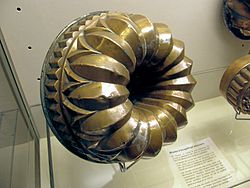
Cast aluminium can produce a thicker product than sheet aluminium, and is appropriate for irregular shapes and thicknesses. Due to the microscopic pores caused by the casting process, cast aluminium has a lower thermal conductivity than sheet aluminium. It is also more expensive. Accordingly, cast aluminium cookware has become less common. It is used, for example, to make Dutch ovens lightweight and bundt pans heavy duty, and used in ladles and handles and woks to keep the sides at a lower temperature than the center.

Anodized aluminium has had the naturally occurring layer of aluminium oxide thickened by an electrolytic process to create a surface that is hard and non-reactive. It is used for sauté pans, stockpots, roasters, and Dutch ovens.[9]

Uncoated and un-anodized aluminium can react with acidic foods to change the taste of the food. Sauces containing egg yolks, or vegetables such as asparagus or artichokes may cause oxidation of non-anodized aluminium.

Aluminium exposure has been suggested as a risk factor for Alzheimer's disease.[10][11][page range too broad][12][page range too broad] Of one of which its proponents is Prof. Christopher Exley, who has published his findings. However, the Alzheimer's Association states that "studies have failed to confirm any role for aluminum in causing Alzheimer's."[13][better source needed] The link remains controversial.[14][page range too broad]

Copper saucepans, Vaux-le-Vicomte castle

Copper

[edit]

Copper provides the highest thermal conductivity among non-noble metals and is therefore fast heating with unparalleled heat distribution (see: Copper in heat exchangers). Pots and pans are cold-formed from copper sheets of various thicknesses, with those in excess of 2.5 mm considered commercial (or extra-fort) grade. Between 1 mm and 2.5 mm wall thickness is considered utility (fort) grade, with thicknesses below 1.5 mm often requiring tube beading or edge rolling for reinforcement. Less than 1mm wall thickness is generally considered decorative, with exception made for the case of .75–1 mm planished copper, which is hardened by hammering and therefore expresses performance and strength characteristic of thicker material.

Copper thickness of less than .25 mm is, in the case of cookware, referred to as foil and must be formed to a more structurally rigid metal to produce a serviceable vessel. Such applications of copper are purely aesthetic and do not materially contribute to cookware performance.

Copper is reactive with acidic foods which can result in corrosion, the byproducts of which can foment copper toxicity. In certain circumstances, however, unlined copper is recommended and safe, for instance in the preparation of meringue, where copper ions prompt proteins to denature (unfold) and enable stronger protein bonds across the sulfur contained in egg whites. Unlined copper is also used in the making of preserves, jams and jellies. Copper does not store ("bank") heat, and so thermal flows reverse almost immediately upon removal from heat. This allows precise control of consistency and texture while cooking sugar and pectin-thickened preparations. Alone, fruit acid would be sufficient to cause leaching of copper byproducts, but naturally occurring fruit sugars and added preserving sugars buffer copper reactivity. Unlined pans have thereby been used safely in such applications for centuries.

Lining copper pots and pans prevents copper from contact with acidic foods. The most popular lining types are tin, stainless steel, nickel and silver.

The use of tin dates back many centuries and is the original lining for copper cookware. Although the patent for canning in sheet tin was secured in 1810 in England, legendary French chef Auguste Escoffier experimented with a solution for provisioning the French army while in the field by adapting the tin lining techniques used for his cookware to more robust steel containers (then only lately introduced for canning) which protected the cans from corrosion and soldiers from lead solder and botulism poisoning.

Tin linings sufficiently robust for cooking are wiped onto copper by hand, producing a .35–45-mm-thick lining.[15] Decorative copper cookware, i.e., a pot or pan less than 1 mm thick and therefore unsuited to cooking, will often be electroplate lined with tin. Should a wiped tin lining be damaged or wear out the cookware can be re-tinned, usually for much less cost than the purchase price of the pan. Tin presents a smooth crystalline structure and is therefore relatively non-stick in cooking applications. As a relatively soft metal abrasive cleansers or cleaning techniques can accelerate wear of tin linings. Wood, silicone or plastic implements are to preferred over harder stainless steel types.

For a period following the Second World War, copper cookware was electroplated with a nickel lining. Nickel is harder and more thermally efficient than tin, with a higher melting point. Despite its hardness, it wore out as fast as tin, as the plating was 20 microns thick or less, as nickel tends to plate somewhat irregularly, and requires milling to produce an even cooking surface. Nickel is also stickier than tin or silver. Copper cookware with aged or damaged nickel linings can be retinned, or possibly replating with nickel, although this is no longer widely available. Nickel linings began to fall out of favor in the 1980s owing to the isolation of nickel as an allergen.

Silver is also applied to copper by means of electroplating, and provides an interior finish that is at once smooth, more durable than either tin or nickel, relatively non-stick and extremely thermally efficient. Copper and silver bond extremely well owing to their shared high electro-conductivity. Lining thickness varies widely by maker, but averages between 7 and 10 microns. The disadvantages of silver are expense and the tendency of sulfurous foods, especially brassicas, to discolor. Worn silver linings on copper cookware can be restored by stripping and re-electroplating.

Copper cookware lined with a thin layer of stainless steel is available from most modern European manufacturers. Stainless steel is 25 times less thermally conductive than copper, and is sometimes critiqued for compromising the efficacy of the copper with which it is bonded. Among the advantages of stainless steel are its durability and corrosion resistance, and although relatively sticky and subject to food residue adhesions, stainless steel is tolerant of most abrasive cleaning techniques and metal implements. Stainless steel forms a pan's structural element when bonded to copper and is irreparable in the event of wear or damage.

Using modern metal bonding techniques, such as cladding, copper is frequently incorporated into cookware constructed of primarily dissimilar metal, such as stainless steel, often as an enclosed diffusion layer (see coated and composite cookware below).

Cast iron

[edit]
Cast-iron

Cast-iron cookware is slow to heat, but once at temperature provides even heating.[16] Cast iron can also withstand very high temperatures, making cast iron pans ideal for searing. Being a reactive material, cast iron can have chemical reactions with high acid foods such as wine or tomatoes. In addition, some foods (such as spinach) cooked on bare cast iron will turn black.

Cast iron is a somewhat brittle, porous material that rusts easily. As a result, it should not be dropped or heated unevenly and it typically requires seasoning before use. Seasoning creates a thin layer of oxidized fat over the iron that coats and protects the surface from corrosion, and prevents sticking.[17]

Enameled cast-iron cookware was developed in the 1920s. In 1934, the French company Cousances designed the enameled cast iron Doufeu to reduce excessive evaporation and scorching in cast iron Dutch ovens. Modeled on old braising pans in which glowing charcoal was heaped on the lids (to mimic two-fire ovens), the Doufeu has a deep recess in its lid which instead is filled with ice cubes. This keeps the lid at a lower temperature than the pot bottom. Further, little notches on the inside of the lid allow the moisture to collect and drop back into the food during the cooking. Although the Doufeu (literally, "gentlefire") can be used in an oven (without the ice, as a casserole pan), it is chiefly designed for stove top use. Enameled cast-iron cookware, unlike uncoated cast-iron, is minimally reactive thus can be used with acidic food.[18]

Stainless steel

[edit]
Stainless steel

Stainless steel is an iron alloy containing a minimum of 11.5% chromium. Blends containing 18% chromium with either 8% nickel, called 18/8, or with 10% nickel, called 18/10, are commonly used for kitchen cookware. Stainless steel's virtues are resistance to corrosion, non-reactivity with either alkaline or acidic foods, and resistance to scratching and denting. Stainless steel's drawbacks for cooking use include its relatively poor thermal conductivity. Since the material does not adequately spread the heat itself, stainless steel cookware is generally made as a cladding of stainless steel on both sides of an aluminum or copper core to conduct the heat across all sides, thereby reducing "hot spots", or with a disk of copper or aluminum on just the base to conduct the heat across the base, with possible "hot spots" at the sides. Typical 18/10 stainless steel also has a relatively low magnetic permeability, making it incompatible with induction cooktops. Recent developments have allowed the production of ferromagnetic 18/10 alloys with a higher permeability.[citation needed] In so-called "tri-ply" cookware, the central aluminum layer is paramagnetic, and the interior 18/10 layer may also, but the exterior layer at the base must be ferromagnetic to be compatible with induction cooktops. Stainless steel does not require seasoning to prevent rust, but it may be seasoned to create a non-stick surface.

Carbon steel

[edit]
Carbon steel

Carbon-steel cookware can be rolled or hammered into relatively thin sheets of dense material, which provides robust strength and improved heat distribution. Carbon steel accommodates high, dry heat for such operations as dry searing. Carbon steel does not conduct heat efficiently, but this may be an advantage for larger vessels, such as woks and paella pans, where one portion of the pan is intentionally kept at a different temperature than the rest. Like cast iron, carbon steel must be seasoned before use, usually by rubbing a fat or oil on the cooking surface and heating the cookware on the stovetop or in the oven. With proper use and care, seasoning oils polymerize on carbon steel to form a low-tack surface, well-suited to browning, Maillard reactions and easy release of fried foods. Carbon steel will easily rust if not seasoned and thoroughly dried after cleaning, and should be stored seasoned to avoid rusting. Carbon steel is traditionally used for crêpe and fry pans, as well as woks.

Clad aluminium or copper

[edit]

Cladding is a technique for fabricating pans with a layer of efficient heat conducting material, such as copper or aluminum, covered on the cooking surface by a non-reactive material such as stainless steel, and often covered on the exterior aspect of the pan ("dual-clad") as well. Some pans feature a copper or aluminum interface layer that extends over the entire pan rather than just a heat-distributing disk on the base. Generally, the thicker the interface layer, especially in the base of the pan, the more improved the heat distribution. However, claims of improved thermal efficiency are controversial, mainly due to the limiting and heat-retaining effects of stainless steel on heat flow.

Aluminum is typically clad on both the inside and the exterior pan surfaces, providing both a stainless cooking surface and a stainless surface to contact the cooktop. Copper of various thicknesses is often clad on its interior surface only, leaving the more attractive copper exposed on the outside of the pan (see Copper above).

Some cookware use a dual-clad process, with a thin stainless layer on the cooking surface, a thick core of aluminum to provide structure and improved heat diffusion, and a foil layer of copper on the exterior to provide the "look" of a copper pot at a lower price.[19]

Coating

[edit]

Enamel over steel

[edit]

Enameled cast iron cooking vessels are made of cast iron covered with a porcelain surface. This creates a piece that has the heat distribution and retention properties of cast iron combined with a non-reactive, low-stick surface. Such pots are much lighter than most other pots of similar size, are cheaper to make than stainless steel pots, and do not have the rust and reactivity issues of cast iron or carbon steel.[citation needed] Enamel over steel is ideal for large stockpots and for other large pans used mostly for water-based cooking. Because of its light weight and easy cleanup, enamel over steel is also popular for cookware used while camping.

Seasoning

[edit]
Cast-iron skillets, before seasoning (left) and after several years of use (right)
Commercial waffle iron requiring seasoning

Seasoning is the process of treating the surface of a cooking vessel with a dry, hard, smooth, hydrophobic coating formed from polymerized fat or oil. When seasoned surfaces are used for cookery in conjunction with oil or fat a stick-resistant effect is produced.

Some form of post-manufacturing treatment or end-user seasoning is mandatory on cast-iron cookware, which rusts rapidly when heated in the presence of available oxygen, notably from water, even small quantities such as drippings from dry meat. Food tends to stick to unseasoned iron and carbon steel cookware, both of which are seasoned for this reason as well.

Other cookware surfaces such as stainless steel or cast aluminium do not require as much protection from corrosion but seasoning is still very often employed by professional chefs to avoid sticking.

Seasoning of other cookware surfaces is generally discouraged. Non-stick enamels often crack under heat stress, and non-stick polymers (such as Teflon) degrade at high heat so neither type of surface should be seasoned.

PTFE non-stick

[edit]

Non‑stick and ceramic coatings

[edit]

Many modern cookware items feature PTFE-based (Teflon) or ceramic-based coatings designed to minimize food sticking and make cleanup easier. According to health experts, PTFE coatings remain stable during normal cooking but begin to degrade at around 260 °C (500 °F), potentially releasing harmful fumes associated with "polymer fume fever" or "Teflon flu" in humans—and dangerous toxins for pet birds—if overheated.[20]

While older PTFE pans contained PFOA—a now-banned chemical—modern PTFE coatings are PFOA-free and considered safe by agencies like the FDA and EFSA when used correctly at recommended temperatures.[21]

Ceramic coatings, typically derived from silica sol‑gel and free of PFAS, can tolerate higher heat thresholds (up to ~370 °C/700 °F) compared to PTFE. However, they often wear out faster and are more prone to abrasion than PTFE variants.[22]

To maximize cookware lifespan and safety, regulators and food agencies recommend: - Avoid preheating empty non-stick pans on high heat - Use low to medium heat cooking - Ensure kitchen ventilation during use - Replace pans if the coating shows scratches, peeling, or visible wear[23]

Skillet with non-stick cooking surface

Steel or aluminum cooking pans can be coated with a substance, such as polytetrafluoroethylene (PTFE, often referred to with the genericized trademark Teflon), in order to minimize food sticking to the pan surface. There are advantages and disadvantages to such a coating. Coated pans are easier to clean than most non-coated pans, and require little or no additional oil or fat to prevent sticking, a property that helps to produce lower fat food. On the other hand, some sticking is required to cause sucs to form, so a non-stick pan cannot be used where a pan sauce is desired. Non-stick coatings tend to degrade over time and are susceptible to damage. Using metal implements, harsh scouring pads, or chemical abrasives can damage or destroy cooking surface.

Non-stick pans must not be overheated. The coating is stable at normal cooking temperatures, even at the smoke point of most oils. However, if a non-stick pan is heated while empty its temperature may quickly exceed 260 °C (500 °F), above which the non-stick coating may begin to deteriorate, changing color and losing its non-stick properties.[24]

Diamond over carbon steel

[edit]
Vacuum brazed diamond frying pan

Vacuum-brazed diamond cookware is produced by bonding diamond particles to a carbon steel base using a high-temperature (approximately 850–950 °C) vacuum brazing process. This technique is intended to minimize oxidation while creating a durable, scratch-resistant surface. Diamond’s high thermal conductivity (900–2320 W/mK) promotes rapid and even heat distribution, which can be advantageous for high-heat cooking methods such as searing and stir-frying. Hydrogen termination of the diamond particles may further enhance non-stick properties by increasing surface hydrophobicity,[25] and in some designs, silicone resin fillers are used to improve coating integrity.[26] Although it is marketed as a robust alternative to conventional non-stick finishes, its long-term durability remains under study.

Non-metallic cookware

[edit]

Non-metallic cookware can be used in both conventional and microwave ovens. Non-metallic cookware typically can not be used on the stovetop, with the exception of glass-ceramic cookware. Rigid non metallic cookware tends to shatter on sudden cooling or uneven heating, although low expansion materials such as borosilicate glass and glass-ceramics have significant immunity.

Pottery

[edit]

Pottery has been used to make cookware from before dated history.[27] Pots and pans made with this material are durable (some could last a lifetime or more) and are inert and non-reactive. Heat is also conducted evenly in this material. They can be used for both cooking in a fire pit surrounded with coals and for baking in the oven.

Ceramics

[edit]

Glazed ceramics, such as porcelain, provide a nonstick cooking surface. Historically some glazes used on ceramic articles contained levels of lead, which can possess health risks; although this is not a concern with the vast majority of modern ware. Some pottery can be placed on fire directly.[citation needed]

Glass

[edit]

Borosilicate glass is safe at oven temperatures. The clear glass also allows for the food to be seen during the cooking process. However, it cannot be used on a stovetop, as it cannot cope with stovetop temperatures.

Glass-ceramic

[edit]

Glass ceramic is used to make products such as Corningware and Pyroflam, which have many of the best properties of both glass and ceramic cookware. While Pyrex can shatter if taken between extremes of temperature too rapidly, glass-ceramics can be taken directly from deep freeze to the stove top. Their very low coefficient of thermal expansion makes them less prone to thermal shock.

Stone

[edit]

A natural stone can be used to diffuse heat for indirect grilling or baking, as in a baking stone or pizza stone, or the French pierrade.

Silicone

[edit]
Silicone food steamer to be placed in a pot of boiling water
Silicone ladles

Silicone bakeware is light, flexible and able to withstand sustained temperatures of 220 °C (428 °F). It melts around 500 °C (930 °F), depending upon the fillers used. Its flexibility is advantageous in removing baked goods from the pan. This rubbery material should not be confused with the silicone resin used to make hard, shatterproof children's dishware, which is not suitable for baking.

Types of cookware and bakeware

[edit]

The size and shape of a cooking vessel is typically determined by how it will be used. Intention, application, technique and configuration also have a bearing on whether a cooking vessel is referred to as a pot or a pan. Generally within the classic batterie de cuisine a vessel designated "pot" is round, has "ear" handles in diametric opposition, with a relatively high height to cooking surface ratio, and is intended for liquid cooking such as stewing, stocking, brewing or boiling. Vessels with a long handle or ear handles, a relatively low height to cooking surface ratio, used for frying, searing, reductions, braising and oven work take the designation "pan". Additionally, while pots are round, pans may be round, oval, squared, or irregularly shaped.

Cookware

[edit]
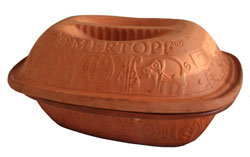
  • Braising pans and roasting pans (also known as "braisers", "roasters" or rondeau pans) are large, wide and shallow, to provide space to cook a roast (chicken, beef or pork). They typically have two loop or tab handles, and may have a cover. Roasters are usually made of heavy-gauge metal so that they may be used safely on a cooktop following roasting in an oven. Unlike most other cooking vessels, roasters are usually rectangular or oval. There is no sharp boundary between braisers and roasters – the same pan, with or without a cover, can be used for both functions. In Europe, clay roasters remain popular because they allows roasting without adding grease or liquids. This helps preserve flavor and nutrients. Having to soak the pot in water for 15 minutes before use is a notable drawback.
  • Casserole pots (for making casseroles) resemble roasters and Dutch ovens, and many recipes can be used interchangeably between them. Depending on their material, casseroles can be used in ovens or on stovetops. Casseroles are often made of metal, but are popular in glazed ceramic or other vitreous material as well.
  • Dilipots are long thin pots created to sanitize with boiling water.
  • Hot pots or "steamboats" are rapid-heating pots, usually on a portable stove, that keep soup/stock simmering or boiling on the dining table and allow the diners to quickly cook raw meat, vegetables and soy-based foods by dipping in the hot broth.[28]
  • Dutch ovens are heavy, relatively deep pots with heavy lids, designed to re-create oven conditions on stovetops or campfires. They can be used for stews, braised meats, soups and a large variety of other dishes that benefit from low-heat, slow cooking. Dutch ovens are typically made from cast iron or natural clay and are sized by volume.
  • A wonder pot, an Israeli invention, acts as a Dutch oven but is made of aluminium. It consists of three parts: an aluminium pot shaped like a Bundt pan, a hooded cover perforated with venting holes, and a thick, round, metal disc with a centre hole that is placed between the wonder pot and the flame to disperse heat.
  • Frying pans, frypans or skillets provide a large flat heating surface and shallow, sloped sides, and are best for pan frying. Frypans with shallow, rolling slopes are sometimes called omelette pans. Grill pans are frypans that are ribbed, to let fat drain away from the food being cooked. Frypans and grill pans are generally sized by diameter (20–30 cm).
  • Spiders are skillets with three thin legs to keep them above an open fire. Ordinary flat-bottomed skillets are also sometimes called spiders, though the term has fallen out of general use.[29]
  • Griddles are flat plates of metal used for frying, grilling and making pan breads such as pancakes, injera, tortillas, chapatis and crepes. Traditional iron griddles are circular, with a semicircular hoop fixed to opposite edges of the plate and rising above it to form a central handle. Rectangular griddles that cover two stove burners are now also common[quantify], as are griddles that have a ribbed area that can be used like a grill pan. Some have multiple square metal grooves enabling the contents to have a defined pattern, similar to a waffle maker. Like frypans, round griddles are generally measured by diameter (20–30 cm).
    • In Scotland, griddles are referred to as girdles. In some Spanish-speaking countries, a similar pan is referred to as a comal. Crepe pans are similar to griddles, but are usually smaller, and made of a thinner metal.
  • Both griddles and frypans can be found in electric versions. These may be permanently attached to a heat source, similar to a hot plate.
  • Saucepans are round, vertical-walled vessels used for simmering or boiling. Saucepans generally have one long handle. Larger pans of similar shape with two ear handles are sometimes called "sauce-pots" or "soup pots" (3–12 litres). Saucepans and saucepots are denominated by volume (usually 1–8 L). While saucepots often resemble Dutch ovens in shape, they are generally lighter. Very small saucepans used for heating milk are referred to as "milk pans" - such saucepans usually have a lip for pouring heated milk.
    • A variation on the saucepan with sloping sides is called a "Windsor", "evasee" or "fait-tout", and is used for evaporative reducing. Saucepans with rounded sides are called "sauciers" which also provide more efficient evaporation and generate a return wave when shaken. Both flared saucepan variations tend to dry or cake preparations on their walls, and are less suited to starch-thickened sauces than standard saucepans.
  • Sauté pans, used for sautéing, have a large surface-area and relatively low sides to permit rapid evaporation and to allow the cook to toss the food. The word sauté comes from the French verb sauter, meaning "to jump". Sauté pans often have straight vertical sides, but may also have flared or rounded sides.
  • Stockpots are large pots with sides at least as tall as their diameters. This allows stock to simmer for extended periods of time without major reducing. Stockpots are typically measured in volume (6–36 L). Stock pots come in a large variety of sizes to meet any need from cooking for a family to preparing food for a banquet. A specific type of stockpot exists for lobsters, and Hispanic cultures use an all-metal stockpot, usually called a caldero, to cook rice.[30][page needed]
  • Woks are wide, roughly bowl-shaped vessels, with one or two handles at or near the rim. This shape allows a small pool of cooking oil in the centre of the wok to be heated to a high temperature using relatively little fuel, while the outer areas of the wok are used to keep food warm after it has been fried in the oil. In the Western world, woks are typically used only for stir-frying, but they can be used for anything from steaming to deep frying.

Bakeware

[edit]

Bakeware is designed for use in the oven (for baking), and encompasses a variety of different styles of baking pans as cake pans, pie pans, and bread pans.

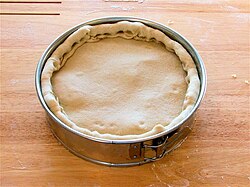
  • Cake tins (or cake pans in the US) include square pans, round pans, and speciality pans such as angel food cake pans and springform pans often used for baking cheesecake. Another type of cake pan is a muffin tin, which can hold multiple smaller cakes.
  • Sheet pans, cookie sheets, and Swiss roll tins are bakeware with large flat bottoms.
  • Pie pans are flat-bottomed flare-sided tins specifically designed for baking pies.

List of cookware and bakeware

[edit]

See also

[edit]

References

[edit]

Further reading

[edit]
Revisions and contributorsEdit on WikipediaRead on Wikipedia
from Grokipedia
Cookware and bakeware are categories of equipment designed for food and drink preparation, encompassing vessels and containers used to cook, , or bake ingredients on stovetops, ranges, or in ovens. Cookware primarily includes items like saucepans, pans, sauté pans, Dutch ovens, and woks for direct application via methods such as , , , , and stir-frying. Bakeware, by contrast, features flat or shaped trays and dishes such as baking sheets, cake pans, plates, pans, and roasters, suited for oven-based techniques including cookies, meats, and creating layered cakes or ring-shaped desserts. These items are manufactured from diverse materials to balance heat conductivity, , reactivity with , and . Aluminum offers rapid and even heat distribution, making it ideal for quick-cooking tasks, though uncoated versions may leach into acidic foods. provides corrosion resistance and non-reactivity, suitable for a broad range of dishes without altering flavors, while excels in heat retention for slow cooking but demands regular seasoning to prevent rust and sticking. delivers superior conductivity for precise , often lined with or tin to avoid from leaching into foods. and options, including bakeware, allow visibility during cooking and are non-porous when properly made, though they risk cracking under and may contain lead if imported from unregulated sources. In addition to material choice, cookware and bakeware selection emphasizes functionality, such as heavy-gauge construction for even ing and ergonomic, -resistant handles for . Nonstick surfaces like PTFE coatings facilitate low-fat cooking and cleanup but require low-to-medium to prevent emission of potentially harmful fumes, with modern versions free of PFOA per regulatory standards. As of 2025, however, several U.S. states have banned PFAS in cookware due to health and environmental risks. Proper care involves avoiding abrasive cleaners on coatings, cast iron regularly, and inspecting for scratches or cracks that could harbor or leach contaminants, ensuring longevity and minimizing health risks from elements like lead in ceramics.

Overview

Definitions and distinctions

Cookware refers to the utensils and vessels designed for preparing through direct heat application on a stovetop or open flame, such as , , or . These include items like saucepans, frying pans, skillets, woks, stockpots, and kettles, which facilitate wet and dry cooking methods by efficiently conducting heat from the source to the . Bakeware, in contrast, consists of dishes and trays intended for use inside an , where is exposed to indirect, surrounding dry heat for processes like , , or broiling. Examples encompass baking sheets, cake pans, pie tins, muffin tins, and casserole dishes, which support the transformation of doughs, batters, and other mixtures through consistent thermal exposure without direct flame contact. The primary distinctions between cookware and bakeware lie in their heat-handling properties and intended applications. Cookware emphasizes rapid heat conduction and retention to respond quickly to stovetop adjustments, making it suitable for techniques involving liquids or high-temperature . Bakeware, however, prioritizes even heat distribution, insulation to maintain stable oven temperatures, and non-reactivity to prevent altering the flavor or color of sensitive ingredients like batters and doughs. Basic classifications of cookware often revolve around shape and depth: pots are typically deeper, cylindrical vessels with straight sides and often dual handles, ideal for containing liquids during or stewing, while pans feature shallower, wider profiles with sloped or straight sides for , , or evaporating moisture. Bakeware is classified by function, distinguishing open forms like rimmed baking sheets that allow for broad air circulation and browning, from enclosed forms such as lidded dishes or pans that trap moisture for or rising. The terms underpinning these categories have deep linguistic roots. "Pot," denoting a basic cooking vessel, derives from late Old English pott, borrowed from a general Low Germanic source meaning a deep, rounded container. "Bake," referring to the dry-heat cooking method central to bakeware, stems from Old English bacan "to bake," from Proto-Germanic *bakan-, with cognates in Old Norse baka for cooking by dry heat in an enclosed space.

Role in cooking and baking

Cookware plays a pivotal role in stovetop techniques such as , stewing, and by facilitating efficient that directly influences flavor development and texture. In , the pan's conductive surface allows rapid, even heating to achieve the , which browns ingredients at temperatures above 140°C and generates complex, savory flavors without overcooking the interior. Braising and stewing rely on vessels like Dutch ovens or braisers that retain moisture and heat steadily, breaking down tougher cuts of meat over low temperatures (around 80-100°C) while infusing flavors from aromatics and liquids into the dish, resulting in tender textures and rich sauces. This controlled conduction and within the pot minimizes moisture loss and promotes breakdown, enhancing both and taste profiles. Bakeware is essential for baking processes, where uniform distribution supports rising, surface , and edge crisping to yield consistent results. Materials like metal loaf pans conduct effectively to the base and sides, promoting even oven spring during proofing as activates uniformly at 20-30°C, while higher temperatures (180-220°C) enable Maillard on crusts for flavor depth and for subtle sweetness. In techniques requiring crisp textures, such as baking or crusts, bakeware's thermal properties ensure rapid penetration without hot spots, preventing uneven rising or sogginess. This precision is critical for achieving the structural integrity and aesthetic appeal of baked goods. The shapes and sizes of cookware and bakeware significantly impact cooking efficiency, including portion control, , and preparation time. Deeper, narrower pots are ideal for as they reduce surface area exposure to air, minimizing and preserving volume and flavor concentration during long simmers compared to wide pots. Matching pan diameter to the element optimizes energy use by ensuring full coverage, improving energy efficiency by minimizing heat waste, while appropriate sizes aid portion control by limiting overcooking in small batches or scaling for larger meals. These design choices streamline multi-step processes, lowering overall energy demands. Culturally, cookware embodies traditions in global cuisines, with items like the Moroccan tagine pot exemplifying how vessel design enhances regional flavors. The tagine's conical earthenware lid captures steam, allowing condensation to drip back onto ingredients, which bastes the slowly over coals and infuses spices like and deeply into meats and vegetables, central to communal Moroccan meals. In baking traditions, bakeware supports practices such as European bread-making, where loaf pans ensure even rising and crust formation in rye or loaves, and French patisserie, relying on sheet pans for uniform heat in delicate items like éclairs to maintain flaky textures and precise shapes. Ergonomic features in cookware and bakeware design improve safety and usability during high-heat or multi-step cooking. Stay-cool, contoured handles made of materials like or allow secure gripping without burns, reducing slip risk when transferring heavy, hot pots from to . Balanced and flared rims facilitate pouring and tilting in processes like , minimizing strain on wrists and arms during repetitive motions, while oven-safe constructions enable seamless transitions between cooking stages without additional tools.

Historical development

Ancient and medieval periods

The origins of cookware and bakeware lie in prehistoric innovations that transformed food preparation from rudimentary open-fire methods to more controlled techniques. The earliest known vessels, used for cooking, date to approximately 20,000 BCE in southern , where fragments from the Xianrendong indicate early experimentation with fired clay for containing liquids and heat. These clay pots enabled and stewing, a departure from direct over flames. Stone hearths, constructed from flat rocks arranged around fires, served as primitive bakeware for cooking flatbreads and meats by indirect heat, with evidence from sites across and dating to the period. By around 10,000 BCE, during the , societies transitioned to contained cooking in pottery vessels and simple pit ovens, coinciding with the of and animals that necessitated sustained heat for grains and stews. In ancient civilizations, advancements reflected growing metallurgical knowledge and networks. Egyptian cookware around 2000 BCE included vessels for boiling and simmering, valued for their conductivity, though from silt remained dominant for everyday use due to its abundance and heat resistance. Greek terracotta vessels, such as wide-mouthed jars and pots, facilitated cooking stews and in hearths. The Romans expanded on these, producing lead-glazed for cooking pots and dishes, which improved durability and appearance but posed health risks from lead leaching into food, as later analyses of residues confirm. imports from across the empire enabled elite households to craft specialized pans and kettles, highlighting how influenced access. Medieval developments built on ancient foundations, with regional innovations driven by and ceramics expertise. In after 500 CE, iron cauldrons became widespread for communal stews over open hearths, their durability suiting the feudal era's hearth-centered kitchens. The Islamic world advanced enameled ceramics in the , producing glazed cooking pots in centers like that resisted staining and cracking under heat, influencing Mediterranean cuisines through trade. In , bamboo steamers emerged during the (206 BCE–220 CE), layered baskets allowing multi-level steaming of rice and dumplings, a technique preserved in East Asian traditions. Early bakeware included Roman-style bread ovens, dome-shaped structures of clay and brick heated by wood fires for loaves, and simple clay forms or molds for shaping pastries and cakes. Societal factors profoundly shaped cookware adoption, tying materials to economic status and geographic resources. Trade routes, such as those of the , imported for affluent urbanites, while rural peasants relied on locally sourced wood trenchers and pots that were inexpensive but prone to breakage. Class distinctions persisted into the medieval period, with favoring metal cauldrons and enameled wares for status and efficiency, whereas lower classes used basic clay or wooden vessels, reflecting limited access to forges and kilns. These disparities underscored how cookware not only facilitated daily sustenance but also symbolized social hierarchy across eras.

Industrial era to present

The Industrial Revolution marked a pivotal shift in cookware and bakeware production, transitioning from artisanal craftsmanship to mechanized mass manufacturing. In 1709, Abraham Darby at the foundries in pioneered the use of coke for iron, enabling the efficient production of goods, including durable cooking pots that became widely available for household use. This innovation revolutionized the iron industry by allowing for larger-scale output at lower costs compared to charcoal-based methods. By the , the saw the rise of tin-plated steel as a dominant material for utilitarian , with tinsmiths producing affordable items like coffee pots, baking trays, and storage vessels through improved rolling and plating techniques that made lightweight, rust-resistant alternatives to heavier iron accessible to middle-class households. The early 20th century brought further advancements through new materials enabled by electrolytic processes. The Hall-Héroult method, developed in 1886, facilitated affordable aluminum production, leading to the introduction of lightweight aluminum cookware sets in the 1890s and early 1900s, such as saucepans and skillets that offered superior heat conductivity and reduced weight for everyday cooking. In 1915, Corning Glass Works launched bakeware, including pie plates and casseroles, which resisted and allowed for transparent, oven-safe baking that improved visibility and even heat distribution. The 1938 accidental discovery of (PTFE) by chemist Roy Plunkett paved the way for Teflon non-stick coatings, patented in 1941 and commercialized for cookware by the 1950s, minimizing food and simplifying cleanup. Following , globalization and technological integration accelerated the adoption of in cookware, with a boom in the and as manufacturers like introduced clad stainless-steel lines that combined durability, corrosion resistance, and even heating for pots and pans. This era also saw the widespread of home kitchens, with electric ovens becoming standard by the , prompting bakeware standardization in materials like and to ensure compatibility with precise temperature controls and prevent warping or cracking. These developments democratized high-quality items, as factory production scaled output and slashed costs—making reliable cookware accessible to the broader population. In recent decades, adaptations to emerging cooking technologies have continued to shape the industry. From the 1980s onward, the commercialization of induction cooktops by companies like and necessitated cookware with ferromagnetic bases, such as those incorporating iron or specialized alloys, to efficiently generate heat through magnetic fields. By the 2010s, smart integrations emerged, with products like the Pantelligent (2014) embedding Bluetooth-enabled temperature sensors to monitor and adjust cooking in real-time via mobile apps, enhancing precision for tasks like or . Similarly, Hestan Cue's smart cookware line, introduced around 2015, incorporated wireless sensors for app-guided recipes, reflecting a trend toward connected tools that optimize energy use and reduce overcooking risks up to 2025. Overall, these innovations have sustained the economic trajectory of industrialization, further lowering barriers to advanced cookware through automated and global supply chains.

Materials and construction

Metallic materials

Metallic materials form the backbone of most cookware and bakeware due to their ability to conduct and retain heat effectively, offering durability for high-temperature applications. Common metals include aluminum, , , , and , each selected for specific thermal properties, reactivity, and cost considerations that influence their suitability for pots, pans, and baking vessels. These materials can be used alone or in combination through cladding techniques to optimize performance. Aluminum is prized for its lightweight nature, with a density of 2.7 g/cm³, making it easy to handle in everyday cookware. It boasts excellent thermal conductivity at 237 W/m·K, enabling rapid and efficient heat transfer for quick cooking tasks. Affordable and widely available, aluminum is commonly used in pots and pans, though its reactivity with acidic foods can lead to corrosion, often mitigated by anodizing alloys to enhance durability and create a protective oxide layer. Copper excels in heat distribution with a superior thermal conductivity of 401 W/m·K, allowing for even heating across the cookware surface, which is ideal for precise in sauciers and other pieces. Its historical use dates back to the period around 9000 BC in the , where early artisans crafted cooking vessels from the metal. However, copper is expensive, prone to tarnishing, and reactive with foods, necessitating linings of tin or to prevent leaching and ensure safety. Cast iron provides exceptional heat retention, attributed to its of 0.46 J/g·K, which allows it to maintain consistent temperatures during long cooking sessions. Renowned for durability, it withstands heavy use but is heavy and susceptible to without proper , a process that polymerizes oils to form a protective, non-stick layer. This material is particularly suited for skillets and Dutch ovens, where its robustness supports , , and slow . Stainless steel, often in the 18/10 chromium-nickel alloy composition, offers strong corrosion resistance and non-reactivity with foods, making it safe for acidic preparations without flavor alteration. Its thermal conductivity is lower than that of aluminum or copper, but cladding with other metals improves heat distribution. Widely adopted in professional cookware for its longevity and ease of maintenance, stainless steel is versatile for a range of pots, pans, and bakeware items. Carbon steel shares similarities with in its ability to develop a seasoned for non-stick properties but offers significantly reduced weight compared to cast iron or multi-ply stainless steel, while providing rapid heating, excellent heat retention, and responsiveness particularly valued in professional kitchens, facilitating quicker heating and cooling for dynamic cooking. Like , it requires regular maintenance to prevent and preserve the layer formed by heated oils. Commonly used in woks and crepe pans, carbon steel supports high-heat techniques such as stir-frying and . Clad metals combine layers of different materials, such as tri-ply constructions with exteriors, aluminum cores, and sometimes for enhanced performance, balancing conductivity and retention while minimizing reactivity. Tri-ply stainless steel, with an aluminum core sandwiched between stainless steel layers, provides even heating via the aluminum's conductivity, while the magnetic outer layer ensures compatibility with induction cooktops; these require no seasoning, are dishwasher-safe, and resist warping, making them advantageous for frying pans. This bonded design emerged in the 1960s as aluminum became more cost-effective than , leading to innovations like those from , which popularized multi-layer cookware in the 1970s for superior heat management in professional and home settings.

Non-metallic materials

Non-metallic materials play a vital role in cookware and bakeware, offering insulation, aesthetic appeal, and resistance to chemical reactions that make them ideal for and applications where even, gentle heating is preferred over rapid conduction. These substances, including , ceramics, , , and stone, generally exhibit lower conductivity than metals, which helps prevent scorching and promotes uniform cooking in low-to-medium heat environments. Their non-reactive nature ensures by avoiding metallic flavors or leaching, though they often require careful handling due to or weight. Borosilicate glass, exemplified by brands like , is composed primarily of silica and , providing exceptional thermal stability for bakeware such as casseroles and measuring cups. It withstands differences up to 165°C, allowing safe transitions from to without cracking, and has a maximum working of around 500°C. Its transparency enables visual monitoring of cooking progress, while its non-porous and non-reactive surface prevents absorption of odors or flavors. However, borosilicate glass remains brittle and susceptible to impact damage, necessitating gentle handling to avoid shattering. Ceramics and pottery, derived from fired clay, encompass varieties like and , each suited to traditional needs. Earthenware is typically porous unless glazed, making it absorbent but ideal for slow-cooking vessels like tagines that benefit from moisture retention, while stoneware achieves a vitreous, non-porous finish through higher firing temperatures (1140–1280°C), enhancing durability for items such as dishes. These materials offer heat resistance up to approximately 500°C, with low coefficients that minimize cracking during temperature changes. Despite their robustness, ceramics can chip or crack under mechanical stress or uneven heating. Glass-ceramics, such as the used in introduced in 1958, feature a crystalline that combines the transparency of with the strength of ceramics, resulting in near-zero for superior shock resistance. This material exhibits extreme durability, remaining oven- and microwave-safe up to 450°C, and supports seamless use from freezer to stovetop without thermal damage. Its opaque white appearance and non-porous quality make it versatile for casseroles and baking dishes, though it is heavier than standard . , a synthetic , provides flexibility and lightweight construction in bakeware like molds, mats, and utensils such as spatulas. It resists heat up to 220–230°C, distributes warmth evenly without hot spots, and offers inherent non-stick properties that simplify release and cleanup. However, silicone is unsuitable for high-heat stovetop applications, as direct flames can exceed its limits and cause degradation. Stone materials, including and , are employed in griddles and absorbent cookware for their natural heat retention capabilities. , in particular, has a of approximately 0.8 J/g·K, allowing it to absorb and slowly release heat for consistent like or flatbreads. These dense, heavy stones provide an eco-friendly, non-reactive surface but may heat unevenly without proper and require significant preheating time.

Surface treatments and coatings

Surface treatments and coatings are applied to cookware and bakeware to improve non-stick properties, resistance, distribution, and aesthetic appeal, while also enhancing by preventing reactions between the base material and acidic ingredients. These finishes are typically added post-manufacture through processes like firing, , or chemical deposition, tailored to the underlying metal or non-metallic substrate. Common treatments include enamel, , fluoropolymer-based non-stick layers, coatings, and diamond-infused surfaces, each offering distinct performance characteristics for cooking and baking applications. Consumer testing organizations, such as Öko-Test (2023) and Stiftung Warentest (2022), have evaluated coatings for PFAS content, recommending uncoated stainless steel, cast iron, enamel, and certified ceramic coatings without fluoropolymers as PFAS-free alternatives; no specific tests for 2025 or 2026 have been published as of available data. Enamel coatings, also known as or porcelain enamel, consist of a fused glass layer applied over or bases. The process involves spraying a powdered glass frit onto the metal surface and firing it at temperatures around 800°C to create a durable, chip-resistant barrier that is non-reactive with foods and available in vibrant colors. This treatment, pioneered in the early , is widely used in items like Dutch ovens, where brands such as have employed it since 1925 to combine functionality with decorative appeal. Seasoning forms a natural on and cookware through the of oils or fats. The method entails applying a thin layer of high-smoke-point oil, such as flaxseed or , and heating it repeatedly to 200–300°C, which triggers Maillard reactions and to build a semi-permanent, hydrophobic . This enhances resistance and flavor development over time but requires periodic reapplication to maintain integrity. (PTFE), commonly known as Teflon, is a fluoropolymer discovered in 1938 by Roy Plunkett at DuPont, providing exceptional low-friction properties with a coefficient of friction between 0.05 and 0.10. Applied as a thin film via spraying and curing at around 400°C, PTFE creates a slick surface ideal for easy food release, though it begins to degrade above 260°C and is susceptible to scratching from metal utensils. Modern formulations have been PFOA-free since 2013, following regulatory phase-outs to address environmental concerns during production; however, PTFE itself is a PFAS, and Öko-Test (2023) found PFAS in many coated frying pans, including some PTFE-free models, while Stiftung Warentest (2022) highlighted the durability and low contaminants in PFAS-free uncoated options. Ceramic coatings represent an eco-friendly alternative to synthetic polymers, typically derived from sol-gel processes using silica-based nanoparticles developed in the . These coatings are sprayed onto metal substrates and cured at lower temperatures (around 200–400°C) to form a hard, heat-resistant layer capable of withstanding up to 450°C without emitting fumes. They offer good non-stick performance and scratch resistance while being free of PTFE and PFOA, with certified variants without fluoropolymers recommended as PFAS-free by testing organizations, making them suitable for high-temperature and . Diamond-infused coatings incorporate carbon-diamond composites bonded to metal bases, leveraging diamond's extreme hardness ( 10) for superior durability and non-stick longevity. These premium treatments, often applied through , exhibit high thermal conductivity similar to pure metals, allowing even heating and resistance to abrasion far beyond traditional non-sticks. They are particularly valued in professional cookware for maintaining performance under repeated high-heat use.

Types of cookware

Pots and vessels

Pots and vessels are deep, enclosed cookware items designed primarily for liquid-based cooking techniques such as , , and , where containment of liquids and even heat distribution are essential. These vessels typically feature straight or slightly sloped sides, lids for trapping , and capacities ranging from small to large depending on the cooking task, allowing for efficient preparation of soups, , sauces, and stews. Materials like , aluminum, and enameled are common, chosen for their durability and thermal properties that support prolonged without scorching. Stockpots are tall, straight-sided pots ideal for large-volume liquid cooking, with capacities typically spanning 2 to 20 quarts to accommodate everything from small batches to family-sized preparations. They feature a thick metal base for stable heating and are often constructed from or aluminum to promote even and prevent hotspots during extended use. Common applications include making soups, or , and preparing , where the deep design minimizes evaporation and splattering. Saucepans are smaller, versatile vessels with capacities of 1 to 4 quarts and fitted lids, suited for tasks requiring frequent stirring or reduction of liquids. Unlike sauciers, which have sloped sides for easier whisking, traditional saucepans have straight, higher sides to contain bubbling mixtures effectively. Made from materials like or clad aluminum, they excel in cooking sauces, grains such as , and small portions of or reheating. Dutch ovens are heavy, lidded pots originating from 17th-century , typically made of enameled for superior heat retention and versatility across stovetop and oven use. Their wide base, high sides, and tight-fitting knobbed lid—often 5 to 7 quarts in capacity—facilitate , , and by allowing even distribution of dry and moist heat. These vessels are particularly valued for slow-cooked dishes like stews and roasts, where the enamel coating resists and simplifies cleaning. Pressure cookers are sealed pots that accelerate cooking by trapping to increase , elevating water's to approximately 121°C (250°F) at 15 psi above . This higher temperature reduces cooking times by 50% to 70% compared to traditional methods, making them efficient for tenderizing tough meats, beans, and grains in less liquid. Modern electric versions, such as the introduced in the 2010s, incorporate safety valves and programmable settings for precise control. Woks are rounded-bottom vessels with high, sloped sides, originating in ancient during the period (771–256 BCE) and commonly made from thin for rapid heating. The design creates distinct heat zones—intense conduction at the base for searing and higher up for —enabling quick stir-frying that preserves textures and imparts wok hei, a smoky flavor. Adapted for various stoves, they are essential for Asian-inspired dishes involving tossing ingredients at high heat.

Pans and skillets

Pans and skillets are essential flat-based cookware items designed for direct-contact cooking methods such as , , and , featuring shallow profiles that promote evaporation and browning. These pieces typically have a broad cooking surface with varying side heights to accommodate tossing or flipping ingredients, and they are constructed from materials like , , aluminum, or to ensure even heat distribution. Unlike deeper vessels, pans and skillets emphasize open cooking for techniques that require high heat and minimal liquid retention. Frying pans, often interchangeably called skillets, are characterized by sloped or curved sides that facilitate easy manipulation of with utensils or by tossing, making them ideal for , , and . They commonly range in diameter from 8 to 12 inches, providing sufficient space for individual or small-batch cooking without overcrowding. Variants include non-stick coated versions for low-oil preparations and models that retain heat exceptionally well for achieving a crisp sear, though the latter require to develop a natural . Sauté pans feature straight, taller sides—typically 2 to 3 inches high—paired with a wide, flat base, distinguishing them from shallower skillets and allowing for larger volumes of ingredients while enabling the use of a for or . This design bridges frying and saucing techniques, supporting methods like deglazing to create pan sauces after browning meats or vegetables. Capacities often fall between 3 and 5 quarts, with a long for stability and sometimes a helper handle for heavier loads. Griddles offer an expansive, flat cooking surface with minimal or no sides, optimized for high-volume, even-heat cooking of items like pancakes, burgers, or grilled sandwiches. Standard sizes include rectangular forms around 20 by 10 inches, though they can extend to 30 by 14 inches for broader applications, and materials such as provide durability and heat retention, while aluminum variants are lighter and quicker to heat. Their broad area allows simultaneous preparation of multiple portions, mimicking diner-style efficiency on stovetops. Crepe pans, with their low, slightly flared sides and ultra-smooth, flat base, are specialized for spreading thin batters evenly to produce delicate pancakes without tearing. Typically measuring 9 to 10 inches in diameter, these pans often incorporate non-stick surfaces to prevent adhesion during the quick-cook process. Originating in during the 13th century in , where buckwheat-based galettes evolved into the modern crepe, these tools reflect a tied to regional agriculture and . Grill pans replicate outdoor barbecuing on stovetops through raised ridges on the cooking surface, which create sear marks while channeling fats and juices away from the for healthier cooking and enhanced flavor. The ridged promotes beneath ingredients, reducing and preserving moisture within the itself. Common materials include for corrosion resistance, enameled for easy maintenance, and aluminum for rapid heating, with sizes mirroring standard skillets at 10 to 12 inches.

Specialized cookware items

Specialized cookware items encompass niche vessels designed for particular culinary techniques or cultural traditions, enabling precise control over heat, moisture, and flavor development in ways that general pots and pans cannot achieve. These tools often draw from historical practices, emphasizing slow , high-intensity , or indirect heating to preserve textures and infuse aromas. The tagine, a traditional Moroccan clay vessel featuring a conical lid, facilitates slow-cooking of meats and by promoting circulation with minimal added . As the food cooks, rises into the cone-shaped lid, condenses on its interior, and drips back down, ensuring moist, tender results infused with spices. Terracotta models, like those tested for performance, excel in retaining moisture for flavorful stews. In , the paella pan is a shallow, wide vessel typically measuring 15 to 20 inches in diameter, crafted from to distribute heat evenly over an open flame. Its low sides and broad base allow to spread in a thin layer, promoting uniform cooking and the formation of a crispy bottom crust essential to authentic . Sloping edges further aid in even evaporation and flavor concentration during communal preparations. The pot, a cylindrical clay oven rooted in Indian cooking, reaches temperatures up to 480°C for breads like directly against its hot interior walls. Its thick clay construction retains intense heat, enabling rapid charring and puffing without portability, as traditional models are semi-permanent fixtures. This high-heat environment, often exceeding 500°C in optimal use, imparts a distinctive smoky flavor to adhered to the sides. A double boiler consists of nested pots where the upper vessel sits above simmering water in the lower one, providing gentle indirect heating to prevent scorching delicate ingredients such as melted at 40–50°C. The method maintains low, steady temperatures around 100°C in the water bath, allowing smooth melting while preserving emulsions. This setup is ideal for custards or sauces requiring precise control to avoid direct flame contact. Ramekins are small ceramic pots, usually 4 to 8 ounces in capacity, used for individual portions of oven-baked dishes like soufflés, safe up to 200°C or higher in porcelain varieties. Their compact, straight-sided form ensures even rising and heat distribution in high-temperature baking, supporting light, airy textures without overflow. Stoneware options withstand repeated oven use for both sweet and savory applications.

Types of bakeware

Baking trays and sheets

Baking trays and sheets are flat, open-topped bakeware items designed primarily for even distribution during , toasting, and sheet-style , allowing for easy access and monitoring of . These versatile pieces typically feature shallow profiles to promote air circulation and prevent , making them essential for items like , pastries, and that benefit from direct exposure to . Common materials include aluminum for its superior conductivity and nature, and for durability against warping at high temperatures. Baking sheets, also known as half-sheet pans in settings, are rectangular with either no rim (rimless for easy sliding) or a short rim on three sides (rimmed for containment). Standard sizes include half-sheets measuring 18 by 13 inches, while full sheets are roughly double that at 26 by 18 inches, though home ovens often accommodate only half-sizes. Made from aluminum or , they excel at temperatures of 180–220°C (356–428°F) for cookies, , or toasting nuts, as the metal's even heat spread minimizes hot spots. Jelly roll pans are a specialized variant with raised edges about 1 inch high on all four sides to contain thin batters and prevent spills during rolling or slicing. They typically measure 15 by 10 inches or 13 by 9 inches, constructed from non-stick coated aluminum, heavy-gauge , or for easy release. These pans are ideal for sponge cakes, Swiss rolls, brownies, and bars, where the contained shape facilitates post-bake handling without crumbling. Roasting pans offer greater depth, usually 2 to 4 inches, to accommodate larger cuts of and collect drippings, often including removable racks for elevation. Available in or enameled , they feature V-shaped racks that promote fat drainage and even browning by allowing air circulation beneath the food. These pans are suited for , , or at temperatures around 180–200°C (356–392°F), enhancing flavor through while capturing juices for gravies. Cooling racks consist of elevated wire grids, typically made from sturdy to resist bending and ensure stability. Sized to fit standard half-sheet pans (about 17 by 12 inches), they provide airflow beneath baked goods to speed cooling and maintain crisp textures by preventing sogginess from trapped . Used post-baking for , cakes, or breads, these racks are oven-safe up to 260°C (500°F) in some designs, doubling as supports during . Air fryer baskets, a modern innovation from the , are perforated metal inserts—often —that mimic by facilitating hot air flow. These shallow, basket-like trays with holes measure around 12 inches in diameter and operate at temperatures up to 200°C (392°F), ideal for crisping baked items like fries or pastries with minimal oil. They integrate into air fryers or ovens, reducing cooking time by 20–30% compared to traditional methods through enhanced circulation.

Dishes and casseroles

Dishes and casseroles encompass a range of deep or lidded bakeware items optimized for oven-based cooking methods that emphasize retention and flavor integration, such as layered or saucy preparations. These vessels, often constructed from materials like , or enameled , promote even heat distribution to prevent scorching while allowing to circulate internally. Unlike open trays, their enclosed or high-sided designs suit dishes requiring contained , including savory bakes like layered pastas or custards. Pie dishes are characterized by gently sloped sides that facilitate easy removal of baked goods, typically measuring 9 to 10 inches in diameter and 1.5 to 2 inches deep, with common materials including tempered glass or ceramic for thermal stability. They are primarily used for double-crust fruit or savory pies, where the sloped profile supports crimping and venting of the top crust. Baking occurs at temperatures around 190°C (375°F) to achieve a golden, flaky exterior while cooking the filling evenly. Casserole dishes, frequently rectangular in shape with capacities of 1 to 3 quarts, provide ample depth for stacking ingredients and are often made from for transparency and microwave compatibility. Ideal for lasagnas, where layers of , , and cheese require contained bubbling, or gratins featuring creamy or assemblies, these dishes may include optional lids to trap and simplify transport. The construction allows monitoring of browning without disturbing the contents. Soufflé dishes feature tall, straight-sided profiles in to encourage dramatic rising through uniform heat exposure and minimal batter spread, with standard diameters of 7 to 8 inches and heights of 3 to 4 inches for 1- to 1.5-quart capacities. This design supports airy egg-based preparations like cheese or soufflés, where the vertical walls help maintain during the quick bake. 's density ensures steady temperature retention, essential for the dish's signature puff. Gratin pans adopt a shallow, form—often around 12 by 9 inches with 1.5- to 2-inch sides—to maximize surface area for crisping toppings like breadcrumbs or cheese over creamy bases. Enameled is a prevalent due to its retention and durability, allowing seamless transition from to table for dishes such as scalloped potatoes or gratins. The low profile facilitates even broiling of the crust while the enamel provides a non-stick, easy-clean surface. Terrines consist of loaf-shaped molds, typically 10 to 12 inches long by 4 to 5 inches wide and 3 inches high, crafted from or enameled materials to offer non-reactive interiors that preserve delicate flavors in or mixtures. They are suited for pâtés, where ground is pressed and baked in a water bath for gentle, even cooking, with the rectangular form enabling slicing into uniform portions post-chill. The 's , when glazed, ensures moisture control without imparting tastes.

Molds and forms

Molds and forms are essential bakeware items used in to impart specific shapes and structures to goods like cakes, breads, and pastries, promoting even and easy release for professional results. These tools differ from general dishes by providing precise contours, such as fluted edges or lidded enclosures, which help achieve uniform textures and presentations in items requiring structural integrity. Common materials include metal for heat conduction, for flexibility, and for visibility during . Cake pans are foundational molds for layer cakes and bundt styles, typically available in round or square shapes measuring 8 to 9 inches in diameter or side length to accommodate standard recipes. Bundt pans feature intricate fluted designs for decorative cakes, often in non-stick aluminum or to facilitate unmolding without breakage. These pans generally bake at temperatures between 160°C and 180°C (320°F to 356°F), allowing for even rising and moisture retention in batters. Loaf pans, rectangular in form and commonly sized at 8.5 by 4.5 inches, are designed primarily for baking breads and quick loaves, supporting the dough's expansion into a consistent shape. Glass versions offer the added benefit of visibility, enabling bakers to monitor browning and doneness without opening the oven. Muffin tins typically feature 6 to 12 individual cups, each with a capacity of about 1/3 cup, ideal for portioned baked goods like muffins or cupcakes that require even heat distribution. Silicone constructions excel in easy release, bending flexibly to pop out finished items without sticking. Tart pans are characterized by fluted rims and removable bottoms, usually spanning 9 to 11 inches in diameter, which allow for seamless assembly and serving of fillings like quiches or tarts. The design ensures crisp edges on crusts while facilitating transfer from to table. Bread molds, such as Pullman pans, include sliding lids to produce square sandwich loaves with straight sides and a soft crust, commonly in 9-inch or 13-inch lengths for commercial or home use. Traditional variants may feature tin-lined wood for gentle heat and moisture control, though modern iterations favor durable metal.

Care, maintenance, and safety

Cleaning and storage

Proper cleaning of metal cookware begins with material-specific methods to preserve integrity and performance. For , hand-washing is essential using hot water and a stiff or , avoiding to prevent stripping the layer. Stainless steel cookware is generally dishwasher-safe, but clad varieties with multiple metal layers should be hand-washed to avoid potential degradation of the bonding over repeated cycles. For stainless steel pans, silicone utensils are generally preferred because they are soft, flexible, and non-abrasive, preventing scratches on the pan's surface. Stainless steel utensils are durable and heat-resistant but can cause scratches over time, which may trap food particles and affect appearance, though scratches are mostly cosmetic and do not significantly impact cooking performance. Both types are heat-safe for typical cooking temperatures, with silicone offering gentler contact and stainless steel providing more rigidity for tasks like flipping. Non-metal bakeware requires gentle approaches to handle stains without scratching. and items can be cleaned by applying a paste made from baking soda and water to stubborn stains, allowing it to sit before scrubbing lightly with a non-abrasive . bakeware is typically dishwasher-safe on the top rack, where it can withstand the cycle without warping or degrading; however, dishwasher cleaning removes food residues for hygiene but does not reduce cyclic siloxane emissions or migration, which primarily decrease through repeated heating, with approximately 95% reduction after three baking cycles. Stain removal techniques target common buildup effectively. Mineral deposits from can be dissolved by soaking the cookware in a solution of equal parts white and , followed by if needed to loosen residue. For polishing metal surfaces like , powder or cream can be applied as a paste, rubbed gently, and rinsed to restore shine without abrasion. Effective storage practices protect cookware from damage and extend usability. When stacking pots and pans, use or felt protectors between layers to prevent scratches on cooking surfaces. Hanging pots from ceiling racks or wall hooks saves space while allowing air circulation to inhibit moisture buildup. bakeware should be stored flat or loosely rolled to maintain its shape and flexibility. Uncoated pieces should not be nested directly without separation, such as paper towels between them, to avoid transferring oils or scratching the . To prevent cookware from scratching glass-ceramic cooktops, sharp edges or burrs on the bottoms can be smoothed using a file to remove burrs, followed by sandpaper with grit 400–800, starting with coarser grit and progressing to finer, carefully rounding edges without removing excessive material or damaging coatings; afterward, wipe clean and check for smoothness. To promote longevity, always dry metal cookware thoroughly after cleaning with a soft cloth or low heat to prevent formation, particularly on . Reactive surfaces, such as unseasoned or aluminum, should be kept separate from acidic foods during storage to avoid chemical reactions that could alter flavors or damage the material.

Seasoning and conditioning

Seasoning is a maintenance technique primarily applied to cast iron and carbon steel cookware to create a protective, non-stick surface through the polymerization of oils. This process involves applying a thin layer of oil to the cleaned and dried surface, then heating it to facilitate the chemical bonding of the oil to the metal, forming a carbonized layer that enhances durability. For cast iron and carbon steel, the seasoning builds upon the porous, iron-rich surface, where the oil molecules undergo thermal decomposition and cross-linking to produce a hard, rust-resistant coating. The standard seasoning procedure for and begins with preheating the to approximately 230°C (450°F). A very thin layer of oil—such as flaxseed oil, valued for its high alpha-linolenic acid content that promotes harder —is applied using a cloth or to ensure even coverage without pooling. The cookware is then placed upside down in the for about one hour to allow the oil to and polymerize, creating a smooth, bonded film; after cooling, excess oil is wiped away. Flaxseed oil is particularly effective due to its drying properties, which lead to a more rigid layer compared to other oils, though multiple applications may be needed for optimal results. At the molecular level, transforms the triglycerides in the oil through heat-induced breakdown, where chains rupture and reform into cross-linked polymers containing carbonyl groups, adhering tightly to the metal's microscopic pores and preventing oxidation. This carbonized layer reduces adhesion by creating a hydrophobic barrier and inhibits formation by sealing out , with benefits accumulating over time as the surface becomes more resilient to acidic foods and high-heat cooking. Re-seasoning is recommended after heavy use or if the surface appears dull or sticky; this involves scrubbing off residue with mild , drying thoroughly, and repeating the oil application and process to add layers, potentially up to 10 for enhanced non-stick performance and thickness that improves with regular cooking. Common oils for seasoning include vegetable and grapeseed, which have smoke points around 204–232°C, allowing stable without burning; extra-virgin should be avoided due to its lower of approximately 190°C, which can lead to incomplete bonding and off-flavors. For non-stick and ceramic cookware, conditioning differs as it maintains rather than builds a layer, focusing on preserving the factory-applied . This entails warming the pan on low , wiping a light layer of neutral oil like across the interior with a soft cloth, and gently heating for a few minutes before cooling and removing excess to enhance initial slickness without altering the surface. Abrasives must be strictly avoided during cleaning to prevent scratching the delicate , ensuring longevity and continued non-stick properties.

Health and safety considerations

Cookware and bakeware materials can pose health risks through chemical leaching, particularly when interacting with food or under high heat. Aluminum cookware, for instance, may leach into acidic foods such as tomatoes or citrus, with concentrations potentially exceeding safe intake levels for prolonged exposure. This leaching has sparked debate regarding links to , though scientific consensus holds that aluminum from cookware does not significantly contribute to the condition. Unlined vessels present a more acute toxicity risk, as acidic foods can react to form —a acetate compound that leaches into meals, causing symptoms like , , , and headaches if ingested in sufficient quantities. Non-stick coatings, commonly based on polytetrafluoroethylene (PTFE), introduce hazards when overheated above 260°C (500°F), at which point the material decomposes and releases fumes that can induce —a temporary but uncomfortable condition characterized by chills, fever, headache, and muscle aches. Daily exposure to PFAS from PFAS-containing nonstick cookware is low if the coating is intact and not overheated, but higher risks arise from scratched coatings, where flakes may be ingested, or from overheating leading to fume inhalation. While (PFOA), a processing aid once used in PTFE production and linked to health issues like and cancer, was voluntarily phased out by U.S. manufacturers under the EPA's 2010/2015 Stewardship Program, legacy contamination persists in older products and the environment. Oven use amplifies safety concerns for certain bakeware. Glass items, typically made from soda-lime compositions, are prone to cracking from sudden temperature changes, such as transferring a hot dish directly to a cold surface, leading to potential shattering and injury from shards. Silicone bakeware, while flexible and non-reactive, has usage limits around 220°C (428°F), beyond which it may degrade, release odors, or lose structural integrity, though food-grade varieties remain stable below this threshold. Handling risks during everyday use further underscore safety needs. Hot metal handles on pots and pans can cause severe burns upon contact, mitigated by attaching grips or using mitts rated for high heat. Heavy pieces, often weighing 10–20 pounds for larger skillets or Dutch ovens, contribute to ergonomic strains like back or injuries, especially when lifting full loads repeatedly, prompting recommendations for lighter alternatives or supportive techniques in professional settings. Environmental factors tied to maintenance also affect safety. Dishwasher detergents, often alkaline, can accelerate heavy metal leaching from aluminum or cookware, resulting in discoloration and potential runoff of trace , , or aluminum into , exacerbating aquatic . Regulatory responses are evolving; for example, Minnesota's 2025 law prohibits the sale of cookware containing intentionally added per- and polyfluoroalkyl substances (PFAS), driving adoption of alternatives like or to curb ongoing exposure risks.

Advanced materials and technologies

In the 2020s, advancements in nano-coatings have revolutionized cookware surfaces by enabling self-cleaning properties through hydrophobic mechanisms, reducing the need for manual scrubbing and minimizing bacterial adhesion. For instance, nanoscale technology, an experimental development from the , employs tiny polymer structures ( bristles) tipped with minimal short-chain C1 PFAS to create durable non-stick surfaces that mimic natural lotus leaf hydrophobicity, offering superior food release while reducing reliance on traditional long-chain PFAS chemicals. As of mid-2025, this technology remains in the research phase and is not yet commercially available. These coatings, often incorporating silica nanoparticles, enhance scratch resistance and thermal stability for long-term performance in high-heat environments. Smart cookware integrates embedded sensors to provide real-time monitoring and , transforming cooking into a guided process via mobile apps. The Hestan Cue smart pan, for example, featured built-in thermocouples that communicated via to an app, allowing precise temperature control and recipe-guided cooking on compatible induction burners. Introduced around 2022, this technology was refined until the supporting app was discontinued on July 21, 2025, after which smart features like alerts for overheating or undercooking (with accuracy within ±1°F) are no longer available. Induction-compatible cookware has evolved with specialized ferromagnetic bases, often incorporating ferrite layers to optimize interaction and energy transfer. These bases enable up to 90% energy efficiency in , compared to approximately 40% for gas stoves, as the directly heats the pan without significant heat loss to the surrounding air. Ferrite-infused designs improve responsiveness, allowing rapid temperature adjustments and reducing cooking times by 20-30% in professional settings. Three-dimensional (3D) printing has enabled custom alloy cookware, producing lightweight yet durable pieces tailored to individual . Brands like Titaner utilize to optimize handle angles and balance in titanium skillets, achieving weights as low as 20% lighter than traditional equivalents while maintaining structural integrity under repeated high-heat use. By 2024, expansions in personalized designs allowed for user-specific grips and shapes, enhancing comfort for professional chefs and home cooks alike. Hybrid materials, such as carbon fiber composites, are emerging in bakeware for their ultra-lightweight construction and thermal resilience. These composites offer densities around 1.5 g/cm³, making them significantly lighter than aluminum (2.7 g/cm³) while resisting temperatures up to 300°C for extended sessions. High-temperature variants maintain rigidity to 260°C continuously, with phenolic resins enabling short exposures beyond 300°C without degradation, ideal for oven-safe trays and molds.

Sustainability and eco-friendly options

Sustainability in cookware and bakeware encompasses evaluating the full life cycle—from extraction and to use, maintenance, and end-of-life disposal—to reduce environmental footprints such as , emissions, and waste generation. Key hotspots include energy-intensive production processes and the persistence of certain chemicals in ecosystems, with also contributing to impacts through use and . Guidelines for environmentally preferable products emphasize minimizing virgin resource use, avoiding harmful substances, and promoting to extend product lifespan and decrease replacement frequency. A major concern is the widespread use of per- and polyfluoroalkyl substances (PFAS), including (PTFE) in non-stick coatings, which were applied to about 79% of tested nonstick cooking pans and 20% of baking pans as of a 2020 study. These "forever chemicals" resist natural degradation, leading to long-term contamination of water, soil, and air during manufacturing, use, and disposal; for instance, can release toxic fluorinated gases, while landfilling risks leaching into . PFAS production has polluted sites globally, including in and , and their environmental persistence exacerbates broader ecological harm. Health risks, such as links to cancer and reduced , further underscore the need to phase out these materials, as supported by legislative efforts; for example, California's SB 682, which aimed to ban PFAS in cookware, was vetoed in October 2025, while enacted the first U.S. state ban on PFAS in cookware effective January 1, 2025. Eco-friendly alternatives prioritize durable, non-toxic materials that minimize ongoing environmental costs. stands out as one of the least damaging options due to its exceptional longevity—often lasting generations—and high recyclability, reducing the need for repeated and . follows closely, offering resistance and compatibility with most foods without reactive leaching, while its durability lowers overall waste; high-quality pieces can last a lifetime when properly maintained. and enameled bakeware provide safe, inert surfaces free from PFAS or (BPA), avoiding chemical migration during heating. and lined are additional versatile choices that balance performance with reduced impact. Incorporating recycled content further enhances ; for example, cookware made from at least 65% recycled aluminum cuts by up to 95% compared to virgin production, conserving resources and lowering . PFAS-free coatings serve as viable non-stick substitutes, providing functionality without the persistent pollutants. To maximize benefits, consumers should select products with minimal, recyclable compliant with standards limiting like lead and , and opt for reconditioning or surplus sourcing to curb new purchases. End-of-life strategies, including local scrap metal or manufacturer take-back programs, ensure materials like metals are recovered rather than landfilled, closing the loop in sustainable .

References

Add your contribution
Related Hubs
User Avatar
No comments yet.