


Community hub
Recent from talks
Contribute something
Nothing was collected or created yet.
Leather
View on Wikipedia

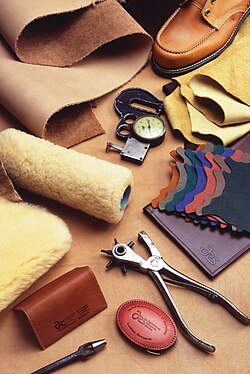
Leather is a strong, flexible and durable material obtained from the tanning, or chemical treatment, of animal skins and hides to prevent decay. The most common leathers come from cattle, sheep, goats, equine animals, buffalo, pigs and hogs, ostriches, and aquatic animals such as seals and alligators.[1][2]
Leather can be used to make a variety of items, including clothing, footwear, handbags, furniture, tools and sports equipment, and lasts for decades. Leather making has been practiced for more than 7,000 years and the leading producers of leather today are China and India.[1][2][3]
Critics of tanneries claim that they engage in unsustainable practices that pose health hazards to the people and the environment near them.[4]
Production processes
[edit]


The leather manufacturing process is divided into three fundamental subprocesses: preparatory stages, tanning, and crusting. A further subprocess, finishing, can be added into the leather process sequence, but not all leathers receive finishing.
The preparatory stages are when the hide is prepared for tanning. Preparatory stages may include soaking, hair removal, liming, deliming, bating, bleaching, and pickling.
Tanning is a process that stabilizes the proteins, particularly collagen, of the raw hide to increase the thermal, chemical and microbiological stability of the hides and skins, making it suitable for a wide variety of end applications. The principal difference between raw and tanned hides is that raw hides dry out to form a hard, inflexible material that, when rewetted, will putrefy, while tanned material dries to a flexible form that does not become putrid when rewetted.
Many tanning methods and materials exist. The typical process sees tanners load the hides into a drum and immerse them in a tank that contains the tanning "liquor". The hides soak while the drum slowly rotates about its axis, and the tanning liquor slowly penetrates through the full thickness of the hide. Once the process achieves even penetration, workers slowly raise the liquor's pH in a process called basification, which fixes the tanning material to the leather. The more tanning material fixed, the higher the leather's hydrothermal stability and shrinkage temperature resistance.
Crusting is a process that thins and lubricates leather. It often includes a coloring operation. Chemicals added during crusting must be fixed in place. Crusting culminates with a drying and softening operation, and may include splitting, shaving, dyeing, whitening or other methods.
For some leathers, tanners apply a surface coating, called "finishing". Finishing operations can include oiling, brushing, buffing, coating, polishing, embossing, glazing, or tumbling, among others.
Leather can be oiled to improve its water resistance. This currying process after tanning supplements the natural oils remaining in the leather itself, which can be washed out through repeated exposure to water. Frequent oiling of leather, with mink oil, neatsfoot oil, or a similar material keeps it supple and improves its lifespan dramatically.[5]
Tanning methods
[edit]Tanning processes largely differ in which chemicals are used in the tanning liquor. Some common types include:
- Vegetable-tanned leather is tanned using tannins extracted from vegetable matter, such as tree bark prepared in bark mills. It is the oldest known method. It is supple and light brown in color, with the exact shade depending on the mix of materials and the color of the skin. The color tan derives its name from the appearance of undyed vegetable-tanned leather. Vegetable-tanned leather is not stable in water; it tends to discolor, and if left to soak and then dry, it shrinks and becomes harder, a feature of vegetable-tanned leather that is exploited in traditional shoemaking. In hot water, it shrinks drastically and partly congeals, becoming rigid and eventually brittle. Boiled leather is an example of this, where the leather has been hardened by being immersed in boiling water, or in wax or similar substances. Historically, it was occasionally used as armor after hardening, and it has also been used for book binding.[6][7]
- Chrome-tanned leather is tanned using chromium sulfate and other chromium salts. It is also known as "wet blue" for the pale blue color of the undyed leather. The chrome tanning method usually takes approximately one day to complete, making it best suited for large-scale industrial use. This is the most common method in modern use. It is more supple and pliable than vegetable-tanned leather and does not discolor or lose shape as drastically in water as vegetable-tanned. However, there are environmental concerns with this tanning method, as chromium is a heavy metal; while the trivalent chromium used for tanning is harmless, other byproducts can contain toxic variants. The method was developed in the latter half of the 19th century as tanneries wanted to find ways to speed up the process and to make leather more waterproof.[8][7]
- Aldehyde-tanned leather is tanned using glutaraldehyde or oxazolidine compounds. It is referred to as "wet white" due to its pale cream color. It is the main type of "chrome-free" leather, often seen in shoes for infants and automobiles. Formaldehyde has been used for tanning in the past; it is being phased out due to danger to workers and sensitivity of many people to formaldehyde. Chamois leather is a form of aldehyde-tanned leather that is porous and highly water-absorbent. Chamois leather is made using oil (traditionally cod oil)[9] that oxidizes to produce the aldehydes that tan the leather.
- Brain tanned leathers are made by a labor-intensive process that uses emulsified oils, often those of animal brains such as deer, cattle, and buffalo. An example of this kind is buckskin. Leather products made in this manner are known for their exceptional softness and washability.
- Alum leather is transformed using aluminium salts mixed with a variety of binders and protein sources, such as flour and egg yolk. Alum leather is not actually tanned; rather the process is called "tawing", and the resulting material reverts to rawhide if soaked in water long enough to remove the alum salts.
Grades
[edit]In general, leather is produced in the following grades:
- Top-grain leather includes the outer layer of the hide, known as the grain, which features finer, more densely packed fibers, resulting in strength and durability. Depending on thickness, it may also contain some of the more fibrous under layer, known as the corium. Types of top-grain leather include:
- Full-grain leather contains the entire grain layer, without any removal of the surface. Rather than wearing out, it develops a patina during its useful lifetime. It is usually considered the highest quality leather. Furniture and footwear are often made from full-grain leather. Full-grain leather is typically finished with a soluble aniline dye. Russia leather is a form of full-grain leather.
- Corrected grain leather has the surface subjected to finishing treatments to create a more uniform appearance. This usually involves buffing or sanding away flaws in the grain, then dyeing and embossing the surface.
- Nubuck is top-grain leather that has been sanded or buffed on the grain side to give a slight nap of short protein fibers, producing a velvet-like surface.
- Split leather is created from the corium left once the top-grain has been separated from the hide, known as the drop split. In thicker hides, the drop split can be further split into a middle split and a flesh split.
- Bicast leather is split leather that is coated with a layer of polyurethane or vinyl with an embossed texture. This gives it the appearance of a grain. It is slightly stiffer than top-grain leather but has a more consistent texture.[10]
- Patent leather is leather that has been given a high-gloss finish by the addition of a coating. Dating to the late 1700s, it became widely popular after inventor Seth Boyden developed the first mass-production process, using a linseed-oil-based lacquer, in 1818. Modern versions are usually a form of bicast leather.
- Suede is made from the underside of a split to create a soft, napped finish. It is often made from younger or smaller animals, as the skins of adults often result in a coarse, shaggy nap.
- Bonded leather, also called reconstituted leather, is a material that uses leather scraps that are shredded and bonded together with polyurethane or latex onto a fiber mesh. The amount of leather fibers in the mix varies from 10% to 90%, affecting the properties of the product.[11]
The term "genuine leather" does not describe a specific grade. The term often indicates split leather that has been extensively processed,[12] and some sources describe it as synonymous with bicast leather,[13] or made from multiple splits glued together and coated.[14][15] In some countries, when it is the description on a product label the term means nothing more than "contains leather";[16][17] depending on jurisdiction, regulations limit the term's use in product labelling.[18][17]
Animals used
[edit]
Today, most leather is made of cattle (cow) hides, which constitute about 65% of all leather produced. Other animals that are used include sheep (about 13%), goats (about 11%), and pigs (about 10%). Obtaining accurate figures from around the world is difficult, especially for areas where the skin may be eaten.[19][20] There are significant regional differences in leather production: e.g. goat leather was historically called "Turkey" or "Morocco" due to its association with the Middle East, while pig skin had historically been used the most in Germany.[21] Other animals mentioned below only constitute a fraction of a percent of total leather production.
Horse hides are used to make particularly durable leathers. Shell cordovan is a horse leather made not from the outer skin but from an under layer, found only in equine species, called the shell. It is prized for its mirror-like finish and anti-creasing properties.
Lamb and deerskin are used for soft leather in more expensive apparel. Deerskin is widely used in work gloves and indoor shoes.
Reptilian skins, such as alligator, crocodile, and snake, are noted for their distinct patterns that reflect the scales of their species. This has led to hunting and farming of these species in part for their skins. The Argentine black and white tegu is one of the most exploited reptile species in the world in the leather trade. However, it is not endangered and while monitored, trade is legal in most South American countries.[22]
Kangaroo leather is used to make items that must be strong and flexible. It is the material most commonly used in bullwhips. Some motorcyclists favor kangaroo leather for motorcycle leathers because of its light weight and abrasion resistance.[23] Kangaroo leather is also used for falconry jesses, soccer footwear,[24] (e.g. Adidas Copa Mundial[25]) and boxing speed bags.[26]

Although originally raised for their feathers in the 19th century, ostriches are now more popular for both meat and leather.[27] Ostrich leather has a characteristic "goose bump" look because of the large follicles where the feathers grew. Different processes produce different finishes for many applications, including upholstery, footwear, automotive products, accessories, and clothing.
In Thailand, stingray leather is used in wallets and belts. Stingray leather is tough and durable. The leather is often dyed black and covered with tiny round bumps in the natural pattern of the back ridge of an animal. These bumps are then usually dyed white to highlight the decoration. Stingray rawhide is also used as grips on Chinese swords, Scottish basket hilted swords, and Japanese katanas. Stingray leather is also used for high abrasion areas in motorcycle racing leathers (especially in gloves, where its high abrasion resistance helps prevent wear through in the event of an accident).
For a given thickness, fish leather is typically much stronger due to its criss-crossed fibers.[28]
Environmental impact
[edit]| Part of a series on |
| Clothing and the environment |
|---|
 |
| Environmental impact of fashion |


Leather produces some environmental impact, most notably due to:
- The carbon footprint of cattle rearing (see environmental impact of meat production)
- Use of chemicals in the tanning process (e.g., chromium, phthalate esters, nonyl phenol ethoxylate soaps, pentachlorophenol and solvents)
- Air pollution due to the transformation process (hydrogen sulfide is formed during mixing with acids and ammonia liberated during deliming, solvent vapors)
Carbon footprint
[edit]Estimates of the carbon footprint of bovine leather range from 65 to 150 kg of CO2 equivalent per square meter of production.[29]
Water footprint
[edit]One ton of hide or skin generally produces 20 to 80 m3 of waste water, including chromium levels of 100–400 mg/L, sulfide levels of 200–800 mg/L, high levels of fat and other solid wastes, and notable pathogen contamination. Producers often add pesticides to protect hides during transport. With solid wastes representing up to 70% of the wet weight of the original hides, the tanning process represents a considerable strain on water treatment installations.[30]
Disposal
[edit]Leather biodegrades slowly—taking 25 to 40 years to decompose.[31][failed verification] However, vinyl and petrochemical-derived materials take 500 or more years to decompose.[32]
Chemical waste disposal
[edit]
Tanning is especially polluting in countries where environmental regulations are lax, such as in India, the world's third-largest producer and exporter of leather. To give an example of an efficient pollution prevention system, chromium loads per produced tonne are generally abated from 8 kg to 1.5 kg. VOC emissions are typically reduced from 30 kg/t to 2 kg/t in a properly managed facility. A review of the total pollution load decrease achievable according to the United Nations Industrial Development Organization[33] posts precise data on the abatement achievable through industrially proven low-waste advanced methods, while noting, "even though the chrome pollution load can be decreased by 94% on introducing advanced technologies, the minimum residual load 0.15 kg/t raw hide can still cause difficulties when using landfills and composting sludge from wastewater treatment on account of the regulations currently in force in some countries."
In Kanpur, the self-proclaimed "Leather City of World"—with 10,000 tanneries as of 2011 and a city of three million on the banks of the Ganges—pollution levels were so high, that despite an industry crisis, the pollution control board decided to shut down 49 high-polluting tanneries out of 404 in July 2009.[34] In 2003 for instance, the main tanneries' effluent disposal unit was dumping 22 tonnes of chromium-laden solid waste per day in the open.[35]
In the Hazaribagh neighborhood of Dhaka in Bangladesh, chemicals from tanneries end up in Dhaka's main river. Besides the environmental damage, the health of both local factory workers and the end consumer is also negatively affected.[36] After approximately 15 years of ignoring high court rulings, the government shut down more than 100 tanneries the weekend of 8 April 2017 in the neighborhood.[37]
The higher cost associated with the treatment of effluents than to untreated effluent discharging leads to illegal dumping to save on costs. For instance, in Croatia in 2001, proper pollution abatement cost US$70–100 per ton of raw hides processed against $43/t for irresponsible behavior.[38] In November 2009, one of Uganda's main leather making companies was caught directly dumping waste water into a wetland adjacent to Lake Victoria.[39]
Role of enzymes
[edit]Enzymes like proteases, lipases, and amylases have an important role in the soaking, dehairing, degreasing, and bating operations of leather manufacturing. Proteases are the most commonly used enzymes in leather production. The enzyme must not damage or dissolve collagen or keratin, but should hydrolyze casein, elastin, albumin, globulin-like proteins, and nonstructural proteins that are not essential for leather making. This process is called bating.[40]
Lipases are used in the degreasing operation to hydrolyze fat particles embedded in the skin.[41]
Amylases are used to soften skin, to bring out the grain, and to impart strength and flexibility to the skin. These enzymes are rarely used.
Preservation and conditioning
[edit]The natural fibers of leather break down with the passage of time. Acidic leathers are particularly vulnerable to red rot, which causes powdering of the surface and a change in consistency. Damage from red rot is aggravated by high temperatures and relative humidities. Although it is chemically irreversible, treatments can add handling strength and prevent disintegration of red rotted leather.
Exposure to long periods of low relative humidities (below 40%) can cause leather to become desiccated, irreversibly changing the fibrous structure of the leather. Chemical damage can also occur from exposure to environmental factors, including ultraviolet light, ozone, acid from sulfurous and nitrous pollutants in the air, or through a chemical action following any treatment with tallow or oil compounds. Both oxidation and chemical damage occur faster at higher temperatures.
There are few methods to maintain and clean leather goods properly such as using damp cloth and avoid using a wet cloth or soaking the leather in water. Various treatments are available such as conditioners. Saddle soap is used for cleaning, conditioning, and softening leather. Leather shoes are widely conditioned with shoe polish.[42]
In modern culture
[edit]
Due to its high resistance to abrasion and wind, leather found a use in rugged occupations. The enduring image of a cowboy in leather chaps gave way to the leather-jacketed and leather-helmeted aviator.[43] When motorcycles were invented, some riders took to wearing heavy leather jackets to protect from road rash and wind blast; some also wear chaps or full leather pants to protect the lower body.
Leather's flexibility allows it to be formed and shaped into balls and protective gear. Subsequently, many sports use equipment made with leather, such as baseball gloves and the ball used in cricket and gridiron football.
Leather fetishism is the name popularly used to describe a fetishistic attraction to people wearing leather, or in certain cases, to the garments themselves.
Many rock groups (particularly heavy metal and punk groups in the 1970s and 80s) are well known for wearing leather clothing. Extreme metal bands (especially black metal bands) and Goth rock groups have extensive black leather clothing. Leather has become less common in the punk community over the last three decades, as there is opposition to the use of leather from punks who support animal rights.[43]
Many cars and trucks come with optional or standard leather or "leather faced" seating.
Religious sensitivities
[edit]In countries with significant populations of individuals observing religions which place restrictions on material choices, vendors typically clarify the source of leather in their products. Such labeling helps facilitate religious observance, so, for example, a Muslim will not accidentally purchase pigskin or a Hindu can avoid cattleskin. Such taboos increase the demand for religiously neutral leathers such as ostrich and deer.
Judaism forbids the comfort of wearing leather shoes on Yom Kippur, Tisha B'Av, and during mourning.[44] Also, see Leather in Judaism, Teffilin and Torah Scroll.
Jainism prohibits the use of leather, since it is obtained by killing animals.
Alternatives
[edit]Many forms of artificial leather have been developed, usually involving polyurethane or vinyl coatings applied to a cloth backing. Many names and brands for such artificial leathers exist, including "pleather", a portmanteau of "plastic leather", and the brand name Naugahyde.[45]
Another alternative is cultured leather which is lab-grown using cell-culture methods,[46][47][48] mushroom-based materials and gelatin-based textile made by upcycling meat industry waste.[49][50] Leather made of fungi or mushroom-based materials are completely biodegradable.[51]
References
[edit]- ^ a b Gillan, Kevin; Murray, Jason (May 2019). Comprehensive Guide to Leather Repair and Restoration: Leather Repair Training Manual. Advanced Leather Solutions, Inc. p. 16. Archived from the original on 23 May 2023. Retrieved 10 June 2021.
- ^ a b "Leather". Encyclopedia Britannica. 5 March 2020. Archived from the original on 12 May 2021. Retrieved 10 June 2021.
- ^ Kwasny, Melissa (17 April 2019). Putting on the Dog: The Animal Origins of What We Wear. The University Press. ISBN 978-1-59534-865-4. Archived from the original on 23 May 2023. Retrieved 10 June 2021.
- ^ "Leather: Animals Abused And Killed for Their Skins". PETA. 15 December 2003. Archived from the original on 10 June 2021. Retrieved 10 June 2021.
- ^ NIIR Board of Consultants (2011). Leather Processing & Tanning Technology Handbook. NIIR Project Consultancy Services. p. 323. ISBN 978-81-905685-9-3.
- ^ Various (17 September 2020). The Vegetable Tanning Process - A Collection of Historical Articles on Leather Production. Read Books Limited. ISBN 978-1-5287-6438-4. Archived from the original on 23 May 2023. Retrieved 14 June 2021.
- ^ a b "Tanning--leather manufacturing". Encyclopedia Britannica. Archived from the original on 17 April 2021. Retrieved 14 June 2020.
- ^ Mengistie, E; Smets, I; Van Gerven, T (September 2016). "Ultrasound assisted chrome tanning: Towards a clean leather production technology". Ultrasonics Sonochemistry. 32: 204–212. doi:10.1016/j.ultsonch.2016.03.002. PMID 27150762.
- ^ Sahu, Bindia; Jayakumar, Gladstone Christopher; Alla, Jaya Prakash (1 July 2022). "Recent trends in oil tanning and its applications - A way forward towards cleaner approach in chamois leather making". Journal of Cleaner Production. 356 131755. doi:10.1016/j.jclepro.2022.131755. ISSN 0959-6526. S2CID 248213393.
- ^ "Bicast: what is it and how does it perform? - Leather International". www.leathermag.com. Archived from the original on 10 May 2022. Retrieved 26 March 2022.
- ^ Binggeli, Corky (2013). Materials for Interior Environments. John Wiley & Sons. p. 119. ISBN 978-1-118-42160-4.
- ^ "Genuine leather: the difficult truth". Carl Friedrik. Archived from the original on 12 May 2022. Retrieved 26 March 2022.
- ^ Popoff, Ryan (7 October 2019). "The Ultimate Guide to Leather Grades". Popov Leather. Archived from the original on 9 February 2022. Retrieved 26 March 2022.
- ^ Green, Dennis. "Why everything you thought you knew about buying quality leather is wrong". Business Insider. Archived from the original on 9 February 2022. Retrieved 9 February 2022.
- ^ "What is Genuine Leather?". BestLeather.org. Archived from the original on 15 April 2022. Retrieved 26 March 2022.
- ^ "All You Need to Know About "Genuine Leather"". Dalgado. Archived from the original on 23 September 2023.
- ^ a b "Genuine leather". The Leather Dictionary. Archived from the original on 12 May 2022. Retrieved 28 March 2022.
- ^ "US Code of Federal Regulations Title 16, Chapter I, Subchapter B, Part 24—Guides for select leather and imitation leather products". eCFR. Archived from the original on 31 January 2022. Retrieved 27 March 2022.
- ^ "EST: Hides & Skins". Food and Agriculture Organization of the United Nations. Archived from the original on 10 April 2021. Retrieved 14 March 2021.
- ^ "Introduction to Leather". International Council of Tanners. Archived from the original on 4 August 2018. Retrieved 8 August 2018.
- ^ "Cover to Cover: Exposing the Bookbinder's Ancient Craft". The University of Adelaide. Archived from the original on 17 January 2024. Retrieved 6 March 2024.
- ^ Romero, Mieres; Margarita, Maria (2002). "Monitoring and managing the harvest of tegu lizards in Paraguay" (Thesis). hdl:1969.1/ETD-TAMU-2002-THESIS-M54.
- ^ "FAQs". Dainese. Archived from the original on 3 June 2019. Retrieved 7 February 2018.
- ^ "Adidas Cleat Review: Adidas Profi Liga Cleat Review". Soccer Supremacy. 31 May 2012. Archived from the original on 19 October 2012. Retrieved 27 July 2010.
- ^ Compo, Mel (18 February 2022). "The Pros and Cons of Kangaroo Leather". Stride Wise. Archived from the original on 21 September 2023.
- ^ "Speed Bag Parts". Speed Bag Central. Archived from the original on 8 February 2018. Retrieved 7 February 2018.
- ^ Tacio, Henrylito (18 January 2010). "Why You Should Raise Ostrich". Sun Star. Archived from the original on 24 December 2013.
- ^ Timmins, Beth (2 May 2019). "Meet the fish leather pioneers". BBC News. Archived from the original on 14 February 2021. Retrieved 7 May 2019.
- ^ Chen et al., Analyzing the Carbon Footprint of the Finished Bovine Leather: A Case Study of Aniline Leather Energy Precidia 61, 2014, p. 1063. https://doi.org/10.1016/j.egypro.2014.11.1023
- ^ "Pollution Prevention and Abatement Handbook - Environmental Guidelines for Tanning and Leather Finishing" (PDF). Multilateral Investment Guarantee Agency, World Bank Group. Archived (PDF) from the original on 6 July 2017. Retrieved 2 January 2010.
- ^ "Interesting Facts about Leather". CalTrend. 14 January 2018. Archived from the original on 4 March 2021. Retrieved 7 February 2018.
- ^ "Why Doesn't Plastic Biodegrade?". LIVESCIENCE. 2 March 2011. Archived from the original on 14 May 2021. Retrieved 7 February 2018.
- ^ "The scope for decreasing pollution load in leather processing" (PDF). United Nations Industrial Development Organization Regional Programme for Pollution Control in the Tanning Industry in South-East Asia. 9 August 2000. Archived from the original (PDF) on 5 February 2016. Retrieved 2 January 2010.
- ^ "How much time needed to check tanneries' waste". Times of India. 11 July 2009. Archived from the original on 5 December 2010. Retrieved 2 January 2010.
- ^ "Kanpur: chromium disaster". Clean Ganga - Campaign for a cleaner Ganga. June 2003. Archived from the original on 22 August 2003. Retrieved 2 January 2010.
- ^ "Hazaribagh neighborhood of Dhaka poisoning staff, local villagers and planet". Human Rights Watch. 8 October 2012. Archived from the original on 28 March 2017. Retrieved 19 November 2016.
- ^ "Bangladesh cuts power to leather district after years of environmental violations". PBS NewsHour. Archived from the original on 12 April 2017. Retrieved 11 April 2017.
- ^ "Introduction of Low Pollution Processes in Leather Production" (PDF). EcoLinks. 2001. Archived from the original (PDF) on 19 January 2010. Retrieved 2 January 2010.
- ^ "Uganda: leather factory faces closure over pollution". The Monitor. 5 November 2009. Archived from the original on 4 June 2011. Retrieved 2 January 2010.
- ^ Heidemann, E. (1993). Fundamentals of Leather Manufacture. Eduard Roether KG. p. 211. ISBN 3-7929-0206-0.
- ^ Bienkiewicz, K. (1983). Physical Chemistry of Leather Making. Robert E. Krieger. p. 226. ISBN 0-89874-304-4.
- ^ "How to actually clean leather shoes, bags and more, according to experts". CNN. 10 May 2023. Archived from the original on 7 July 2023. Retrieved 7 July 2023.
- ^ a b "Leather Trousers: A Brief History Of Fashion's Most Rock 'n' Roll Staple". Marie Claire. 26 July 2017. Archived from the original on 7 July 2023. Retrieved 7 July 2023.
- ^ "Wearing Shoes - Mourning Observances of Shiva and Sheloshim". Chabad.org. Archived from the original on 22 December 2009. Retrieved 20 October 2009.
- ^ Jahan, Saurabh; Jahan, Shahnaz (2011). "Artificial Leather- An Eco-friendly Alternative Textile Material For Leather" (PDF). China Textile Science. Archived from the original (PDF) on 16 October 2015.
- ^ Lo, Andrea (4 October 2018). "Would you wear leather that's grown in a lab?". CNN. Archived from the original on 16 April 2021. Retrieved 23 March 2019.
- ^ Wicker, Alden (March–April 2018). "The Future of Leather Is Growing in a New Jersey Lab--No Animals Needed". Inc. Archived from the original on 17 January 2021. Retrieved 23 March 2019.
- ^ Walker, Kenneth T.; Li, Ivy S.; Keane, Jennifer; Goosens, Vivianne J.; Song, Wenzhe; Lee, Koon-Yang; Ellis, Tom (2 April 2024). "Self-pigmenting textiles grown from cellulose-producing bacteria with engineered tyrosinase expression". Nature Biotechnology: 1–10. doi:10.1038/s41587-024-02194-3. ISSN 1546-1696. PMC 11919691. PMID 38565971. Archived from the original on 11 April 2024. Retrieved 12 April 2024.
- ^ Vettese, Sam; Singleton, Ian (13 September 2019). "Could fungi save the fashion world?". Inc. Archived from the original on 4 August 2020. Retrieved 13 September 2019.
- ^ "Gelatex turns gelatine into eco-friendly leather". Inc. December 2018. Retrieved 23 March 2019.[dead link]
- ^ Newell, Sharon. "Fungi for the Future". BBC Earth. Archived from the original on 20 October 2022. Retrieved 19 October 2022.
Further reading
[edit] Media from Commons
 Quotations from Wikiquote
 Texts from Wikisource


- Beeby, K.J. The Wonderful Story of Leather (PDF). UK: Harmatan. Archived (PDF) from the original on 20 March 2021. Retrieved 8 June 2016.
- Lefroy, George Alfred (1884). . Delhi: Cambridge Mission to Delhi.
- Leathers for Bookbinding and Upholstery (PDF). UK: Harmatan. 2002. Archived (PDF) from the original on 20 March 2021. Retrieved 8 June 2016.
- Leather for Libraries (PDF). UK: Harmatan. Archived (PDF) from the original on 20 March 2021. Retrieved 8 June 2016.
- Parsons, F. G. (1911). . Encyclopædia Britannica. Vol. 16 (11th ed.). pp. 330–345. (includes several diagrams)
| International | |
|---|---|
| National | |
| Other | |

Leather
View on GrokipediaHistory
Prehistoric and Ancient Origins
Evidence of leather processing dates to the Middle Paleolithic period, with archaeological finds indicating that early humans used stone and bone tools to scrape and soften animal hides for clothing and shelter. In Contrebandiers Cave, Morocco, tools such as bone scrapers dated to approximately 120,000 years ago show use in preparing skins from jackals, foxes, and wildcats, suggesting early exploitation of hides for fur and leather garments.[11] Similarly, Neanderthals employed specialized bone tools like lissoirs, fashioned from deer ribs, to burnish and toughen hides, with examples from sites across Europe dating to around 50,000 years ago.[12] These implements facilitated the transformation of raw pelts into more durable materials through mechanical working, predating chemical tanning.[13] By the Upper Paleolithic, around 40,000 years ago, Homo sapiens refined these techniques, as evidenced by a 39,600-year-old punctured metacarpal bone from Canyars, Gavà, Spain, interpreted as a leather punch board for creating tailored clothing by perforating hides for sewing.[14] Microscopic analysis confirms repeated use on thick leather, aligning with ethnographic parallels for assembling fitted garments.[15] Flint scrapers and awls from this era, found at sites like Hoxne, England, further attest to systematic hide preparation, enabling waterproofing via fat smearing or smoking to prevent decay.[16] In the Neolithic period, approximately 7500 years before present, leather footwear emerges in the archaeological record, such as sandals from Arnold Research Cave, Missouri, combining fibrous and leather elements for durability in varied environments.[17] Processing tools evolved to include more refined scrapers, supporting expanded uses in storage and tools amid settled communities. The advent of deliberate tanning appears in ancient Mesopotamia around 5000 BCE, where the oldest confirmed leather-tanning tools were unearthed, marking a shift from raw hide curing to chemical preservation using plant extracts.[18] Cuneiform records and artifacts indicate widespread leather production for clothing, armor, and containers by 2500 BCE, with hides from domesticated sheep integral to early economies.[19][20] Ancient Egyptians employed oil-based methods, rubbing fish or vegetable oils into hides to achieve suppleness, as detailed in tomb artifacts and preserved specimens from arid contexts, though true vegetable tanning with tannins like those from Acacia nilotica developed later, around 3000 BCE.[21][22] Chemical analyses of Metropolitan Museum holdings confirm use of tannins and dyes, yielding leather for sandals, bags, and quivers, often decorated with intricate stitching.[23] Greeks and Romans advanced production with combined oil and alum treatments for waterproof soles and military gear, utilizing vegetable tannins from oak and chestnut for bulk hides.[24] Roman tanneries applied meticulous scraping and cutting, producing versatile leather for tents, shields, and footwear, as seen in Pompeii remains, enhancing empire-wide trade and application.[25]Medieval and Early Modern Developments
In medieval Europe, leather production relied predominantly on vegetable tanning, a labor-intensive process using tannins extracted from oak and chestnut bark, which required hides to be soaked in pits for several months to achieve preservation and firmness.[26] Hides underwent preliminary steps including soaking in lime or urine to remove hair and flesh, followed by tanning in successive bark liquor concentrations, yielding durable leather for footwear, armor, and bookbinding.[26] Tanning emerged as one of the earliest organized crafts, with guilds forming by the 12th century to regulate apprenticeships, quality standards, and trade exclusivity, often locating workshops outside city walls due to the noxious odors from tanning agents and waste.[27] [28] Regional specialties advanced craftsmanship; in Córdoba, Spain, under Moorish influence from the 8th century, tanners produced cordovan leather from goatskins using vegetable tannins and oils, creating a fine, supple material prized for its maroon hue and exported across Europe for luxury goods like saddles and gloves.[29] These guilds enforced seven-year apprenticeships and monopolized local markets, fostering skill transmission while limiting competition, though the profession's association with animal remains and effluents contributed to social stigma.[28] During the early modern period (circa 1500–1800), vegetable tanning remained the dominant method, with refinements in pit sequencing and bark sourcing but no fundamental technological shifts until the late 18th century.[30] Guild authority declined progressively, particularly in England by the early 1700s, as market pressures and unregulated rural production eroded monopolies, leading to inconsistent quality and prompting parliamentary acts like the 1766 Leather Act to standardize hide grading and tanning durations.[31] [32] Leather output expanded with colonial trade in hides from the Americas, supporting military demands for boots and harnesses, while incipient mechanization—such as bark mills introduced in Britain around 1750—accelerated preparation but preserved the core artisanal soaking process.[32] This era bridged traditional guild systems and proto-industrial scales, with France advancing chemical inquiries into tannins by the 1780s, foreshadowing 19th-century innovations.[33]Industrial Revolution and Modern Production
The Industrial Revolution, beginning in the late 18th century and accelerating through the 19th, introduced mechanization to leather production, shifting it from labor-intensive artisanal processes to factory-based operations. Powered machinery for tasks such as hide splitting, fleshing, and dehairing emerged in the mid-19th century, enabling greater efficiency and scale in preparatory stages that previously relied on manual labor.[34] This mechanization coincided with rising demand for leather in emerging industries like footwear and machinery belting, where leather's durability proved essential for steam-powered equipment. By 1850, leather and leather products accounted for 15.7% of U.S. manufacturing workers, underscoring the sector's economic significance.[35] A pivotal innovation was the development of chrome tanning in 1858 by German chemist Friedrich Knapp and Swedish researcher Hylten Cavallin, who experimented with chromium salts to accelerate the tanning process. Unlike traditional vegetable tanning, which required weeks or months using oak bark or other plant tannins, chrome tanning preserved hides in days, producing softer, more pliable leather suitable for mass-produced goods. American chemist Augustus Schultz refined this into a practical single-bath method by the 1890s, further commercializing it.[36][37] This breakthrough aligned with broader industrialization, facilitating the rapid output needed for urbanizing populations and expanding rail networks, where leather served in harnesses, saddles, and conveyor belts. In modern production, chrome tanning dominates, comprising approximately 80-90% of global leather output due to its speed and versatility, though it requires careful wastewater management to mitigate chromium pollution. Annually, around 270 million bovine hides enter the supply chain, with roughly 70% processed into leather, primarily as a by-product of the meat industry.[36][38] Contemporary processes build on 19th-century foundations, incorporating automated wet processing (soaking, liming, and unhairing), tanning drums for chemical penetration, and finishing stages like dyeing and fatliquoring for enhanced properties. Innovations such as enzyme-assisted unhairing and eco-tanning alternatives aim to reduce environmental impacts, but chrome remains central for high-volume applications in automotive upholstery and apparel.[39] Global production centers have shifted to Asia, with China and India leading due to integrated supply chains from hides to finished goods.[40]Definition and Properties
Chemical and Physical Characteristics
Leather is derived from the collagen-rich dermis layer of animal hides and skins, where collagen—a fibrous protein composed primarily of glycine, proline, and hydroxyproline amino acids—forms the structural backbone, accounting for approximately 70-80% of the dry weight.[41] Tanning chemically modifies this collagen matrix by introducing cross-links between peptide chains, typically via reactions with tanning agents such as polyphenolic vegetable tannins or trivalent chromium ions, which bind to carboxyl and amino groups to stabilize the triple-helix structure against enzymatic and hydrolytic degradation.[42] [43] This process reduces the hide's solubility in water and enhances thermal stability, with chrome-tanned leather exhibiting shrinkage temperatures around 95-110°C compared to untreated collagen's 60-65°C.[44] Physically, leather demonstrates anisotropic tensile strength due to its hierarchical fiber architecture, with values typically ranging from 15-30 MPa in machine direction for full-grain bovine leather, influenced by fiber orientation, density (approximately 0.8-1.2 g/cm³), and post-tanning fatliquoring.[45] Leather grades are distinguished by the extent of surface processing: full-grain leather retains the entire natural grain layer without sanding, considered the highest quality for its durability and ability to develop a patina over time; top-grain leather involves sanding or buffing the surface for uniformity, removing some natural imperfections and character; bonded leather is reconstituted from scraps and adhesives, representing the lowest quality tier.[47] [48] It possesses inherent porosity from interconnected collagen fibrils, enabling high moisture vapor permeability (up to 10-20 mg/cm²/h under standard conditions) for breathability while providing hydrophobic resistance post-treatment, as liquid water beads on the surface due to reduced surface energy.[49] Elongation at break varies from 20-50%, conferring flexibility and moldability, with Young's modulus often 50-200 MPa reflecting its viscoelastic behavior under load.[45] These properties arise causally from the cross-linked, non-woven fiber network, which distributes stress unevenly but resists tearing through interfibrillar friction, outperforming many synthetic alternatives in dynamic abrasion scenarios.[50]Durability and Advantages Over Synthetics
Genuine leather demonstrates superior mechanical durability compared to synthetic alternatives, primarily due to its hierarchical collagen fiber structure, which provides inherent strength and flexibility. In standardized tests, chrome-tanned shoe upper leather exhibits a tensile strength of 39.5 N/mm², surpassing the ISO 20942 requirement of greater than 15 N/mm², while artificial leathers range from 9 to 20.8 N/mm².[51] Tear strength further highlights this advantage, with leather achieving 82.9 N/mm versus lower values in synthetics, such as 37.2 N/mm for plant-based alternatives like Desserto®.[51] Abrasion resistance in leather exceeds 200,000 flex cycles under ISO testing protocols, offering consistent performance across applications like footwear and seating, whereas many polyurethane (PU)-based synthetics fail earlier or show coating delamination despite some matching high-end variants.[51] This resilience stems from leather's ability to distribute stress without cracking, unlike PU materials that degrade through peeling and brittleness after prolonged exposure, limiting synthetic lifespan to years rather than the decades possible with properly maintained leather.[51] Empirical comparisons confirm faux leathers as less abrasion-resistant overall, with PU coatings prone to visual and structural failure in flex and multi-directional wear tests.[52] Leather's breathability provides a distinct functional edge, with water vapor permeability rates of 4.6 mg/(cm²·h) enabling effective moisture management and thermoregulation, compared to 1.1 mg/(cm²·h) for PU-coated synthetics.[51] This permeability, tested via ISO 14268, reduces sweat accumulation and enhances wearer comfort in prolonged use, a property synthetics cannot replicate without additives that compromise other attributes.[51] Consequently, leather maintains utility in demanding environments where synthetics falter due to heat retention and reduced longevity.[52]Production Processes
Hide Preparation and Tanning Methods
Hide preparation, also known as beamhouse processing, transforms raw animal hides into a form suitable for tanning by removing contaminants, hair, and flesh while opening the collagen fiber structure. Raw hides are initially preserved through salting with 30-50% sodium chloride by weight to prevent putrefaction during transport, a practice that inhibits bacterial growth by osmosis.[53] At the tannery, soaking in water for 6-24 hours rehydrates the hides, dissolves curing salts, and extracts blood, dirt, and short floats, restoring pliability and preparing for subsequent chemical treatments.[54] Liming follows, immersing hides in a solution of slaked lime (calcium hydroxide) and sodium sulfide for 1-4 days to swell the tissue, saponify fats, and loosen the epidermis and hair for mechanical removal via unhairing machines.[55] Fleshing machines then scrape off residual subcutaneous tissue and fat, while scudding removes residual hair roots and lime.[56] Deliming neutralizes excess alkalinity using acids like sulfuric or carbon dioxide, adjusting pH to 8-9, followed by bating with proteolytic enzymes such as pancreatin or bacterial preparations to degrade elastin and cementing substances, enhancing fiber flexibility over 1-2 hours.[56] Pickling acidifies the hides to pH 2.5-3.5 with sulfuric acid and salt, shrinking the fibers and fixing any residual chemicals while preparing the collagen for tanning agent penetration; this step lasts 1-3 hours and is essential for mineral tanning processes.[53] These preparatory steps collectively remove non-collagenous proteins and open the hide structure, with wastewater from beamhouse operations containing high organic loads and sulfides requiring treatment under environmental regulations.[53] Tanning stabilizes the collagen matrix by cross-linking proteins to prevent decay, with chrome tanning dominating approximately 85-90% of global leather production due to its efficiency.[57] In chrome tanning, pickled hides are drummed in a solution of basic chromium(III) sulfate (4-6% offer based on hide weight) at pH 2.8-3.2 and temperatures of 35-40°C for 6-24 hours, allowing trivalent chromium ions to form coordinate bonds with carboxyl groups in collagen, achieving 80-90% exhaustion of tanning agents.[58] Basification with sodium bicarbonate or carbonate then raises pH to 3.8-4.2, enhancing fixation and producing "wet blue" leather that is shrunk-resistant up to 100°C. This method yields soft, supple, and dyeable leather but generates chromium-laden effluent, with modern facilities recycling up to 95% of chrome through precipitation and reuse.[53] Vegetable tanning, comprising 10-15% of production, employs polyphenolic tannins extracted from tree barks like chestnut or quebracho in sequential baths of increasing concentration over weeks to months, progressively diffusing into the hide to hydrogen-bond with collagen peptides.[57] This slower process, often at ambient temperatures, results in firmer, more rigid leather prized for tooling and saddlery, with natural color variations and biodegradability, though it requires larger land and water inputs per hide.[59] Alternative methods, such as aldehyde tanning with glutaraldehyde or synthetic syntans, offer chrome-free options for specialty leathers, reducing heavy metal use while maintaining similar physical properties, but they represent under 5% of output due to higher costs.[54] Innovations like enzymatic pre-treatment and ultrasound assistance aim to shorten times and improve uniformity across methods.[60]Finishing and Grading
After tanning, leather undergoes finishing processes to enhance its physical properties, appearance, and suitability for end-use applications. These steps typically include retanning for improved fullness and softness, neutralization to adjust pH, dyeing to impart color uniformity, and fatliquoring to lubricate collagen fibers with oils or synthetic lubricants, thereby increasing flexibility and water resistance.[61] Fatliquoring, in particular, penetrates the leather structure to prevent fiber sticking during drying, with typical oil content ranging from 5-15% of the leather's weight depending on the desired softness.[56] Following chemical treatments, mechanical operations such as splitting to achieve uniform thickness (often 0.8-2.0 mm for upholstery leather), shaving to correct thickness variations, and staking to soften and stretch the hide are applied. Surface finishing techniques then follow, including setting out to smooth the grain, drying via toggling or vacuum methods to control shrinkage, and conditioning to restore moisture (typically to 12-18%). Final coatings via roller, spray, or curtain methods apply polymers or resins for abrasion resistance, with roller coating enabling precise film thickness of 0.02-0.1 mm to improve tear strength and gloss.[62] These processes can increase leather's tensile strength by up to 20-30% while tailoring aesthetic effects like embossing or antique finishes.[63] Grading evaluates finished leather for quality, focusing on criteria such as defect prevalence (e.g., scars, scratches, or vein marks covering less than 5% of surface area for premium grades), thickness consistency (±0.1 mm tolerance), color fastness (rated per ISO 105 standards), and mechanical properties like tear strength exceeding 200 N per ASTM D2209.[64] Systems like the SATRA 5-point method assign grades based on visual inspection, where Grade 1 indicates minimal defects (under 5% unusable area) suitable for high-end fashion, while lower grades accommodate more blemishes for industrial uses.[65] Tanneries often classify into A (prime, few cosmetic flaws), B (minor defects, no brands), and C (significant imperfections) categories, with rejection rates for raw hides influencing finished yields—typically 70-85% usable from good-quality inputs.[66] This assessment ensures market standardization, though variations exist by region and buyer specifications, prioritizing empirical defect mapping over subjective aesthetics.[67]Role of Enzymes and Innovations
Enzymes, particularly proteases, lipases, and amylases, play a critical role in modern leather processing by catalyzing specific biochemical reactions that replace or supplement traditional chemical methods, thereby improving efficiency and reducing environmental burdens such as chemical effluents and water usage. In the soaking stage, enzymes like proteases and lipases remove proteins, fats, and salts from raw hides, accelerating rehydration and minimizing microbial contamination without relying on excessive water or alkaline chemicals.[68] [69] During unhairing and liming, proteolytic enzymes facilitate the breakdown of hair follicles and epidermal proteins, enabling cleaner dehairing with lower sulfide emissions compared to conventional lime-sulfide processes, which have historically contributed to hydrogen sulfide pollution.[70] [68] In bating, neutral or alkaline proteases selectively degrade non-fibrous proteins and elastin, enhancing the hide's openness to tanning agents and yielding softer, more pliable leather while curtailing the use of ammonium sulfate, which generates ammonia-laden wastewater.[69] [71] Degreasing employs lipases to hydrolyze natural lipids in fatty hides, such as those from sheep or goats, preventing greasy residues that could impair dyeing and finishing uniformity.[72] Beyond beamhouse operations, enzymes assist in waste treatment by degrading organic pollutants in effluents, supporting compliance with stricter environmental regulations.[69] Engineered proteases, developed through protein engineering, further optimize these steps by operating under milder conditions, reducing overall water consumption in dehairing by up to 30-50% in optimized systems.[70] Innovations in leather production increasingly integrate enzymatic approaches with novel tanning technologies to address sustainability challenges, including heavy metal residues from chrome tanning, which dominates 80-90% of global output but poses disposal risks.[9] Enzyme-assisted chrome tanning enhances penetration and fixation of chromium salts during pickling and chroming, shortening process times and improving exhaustion rates to minimize chromium discharge.[73] Emerging enzymatic tanning methods employ biocatalysts to cross-link collagen fibers directly, bypassing metal salts for metal-free leathers with comparable strength; for instance, protease-based systems achieve even tanning by controlled collagen modification, though scalability remains limited as of 2023.[74] Complementary advancements include probiotic-based unhairing from Cromogenia Units, introduced in 2024, which uses microbial enzymes for sulfide-free processing, and bio-based tanning agents like those in FreeTAN technology, offering full replacement of chrome with compostable alternatives.[75] [76] Water-efficient innovations, such as ECCO's Dri-Tan process launched in the 2010s and refined by 2024, incorporate enzyme pre-treatments to cut water use by approximately 1 liter per shoe pair through wet-white tanning intermediates.[77] Vegetable-enzyme hybrid tanning, exemplified by Tenerias Omega's Olive Tanned Leather since 2016, combines plant polyphenols with lipases for antioxidant-rich, eco-leather with enhanced durability and reduced chemical loads.[78] These developments, driven by regulatory pressures and market demands for traceable sustainability, have spurred partnerships like Novozymes and Creative Enzymes in 2025 for customized enzyme formulations, projecting enzymatic processes to standardize in sustainable segments by reducing effluent toxicity by 40-60%.[79] [80] Despite these gains, adoption lags in developing regions due to cost barriers, with chrome methods persisting for their speed and leather yield.[81]Sources and Animals
Common Animal Sources
Bovine hides, primarily from cattle, dominate global leather production, comprising the largest share due to their size and the volume generated as a by-product of the meat industry. Cattle hides yield an average of 40-50 square feet of usable leather per animal, supporting applications from heavy-duty upholstery to fine accessories, with bovine sources accounting for around 60-67% of raw hides processed worldwide.[82][83] This prevalence correlates directly with annual cattle slaughter rates, estimated at over 300 million globally, where hides represent a secondary revenue stream for producers.[38] Sheep and lamb skins form the next most common source, valued for producing softer, more pliable leathers suitable for clothing and inner linings, with ovine hides contributing approximately 15% of total leather output. Goat skins, often from regions with intensive small ruminant farming like South Asia and Africa, provide lightweight, durable leather for footwear and handbags, representing about 9% of production. Porcine skins from pigs, which yield flexible but thinner leather used in items like sports equipment and bookbinding, account for roughly 11% of the market.[84] Buffalo hides, particularly from water buffalo in Asia, supplement bovine production in certain markets, offering thicker leather comparable to cattle but with regional variations tied to dairy and draft animal use. Collectively, these livestock sources—cattle, sheep, goats, pigs, and buffalo—supply over 99% of commercial leather, minimizing reliance on non-domesticated animals.[85][86]By-Product Status and Ethical Considerations
Leather production primarily utilizes hides and skins as by-products from animals slaughtered for meat, dairy, and other primary outputs, with approximately 99% of global leather derived from cattle, sheep, goats, and pigs raised predominantly for food.[85][87] These hides represent a small fraction of the animal's total economic value; for cattle, they typically account for 2-5% of revenue, while meat and edible by-products constitute the overwhelming majority.[88][89] In recent years, average cattle hide values have hovered around $36 per hide, equating to roughly 2.2% of the animal's overall worth, underscoring that primary demand for protein drives livestock numbers rather than hide markets.[88] Absent a viable leather industry, these hides—numbering around 270 million bovine hides annually, with 70% processed into leather—would largely be landfilled or incinerated, imposing disposal costs on meat processors and forgoing a renewable resource that biodegrades naturally.[38][8] This by-product utilization enhances economic efficiency in animal agriculture, as evidenced by periods of depressed hide prices (e.g., post-2019 declines due to reduced export demand), which strained packer profitability without curtailing slaughter volumes tied to meat consumption.[90][91] Ethically, leather's status as a by-product supports arguments for resource stewardship, as it repurposes material that would otherwise burden waste systems, potentially reducing the net environmental footprint of meat production compared to discarding hides.[92] Animal rights groups, such as PETA, assert that leather functions as a co-product subsidizing factory farming and slaughter—claiming it accounts for up to 26% of some slaughterhouse earnings and thus incentivizes more animals raised—though this overlooks that meat demand remains the dominant economic driver, with hide revenue fluctuations not empirically linked to changes in herd sizes.[93][8] No large-scale slaughter occurs solely for hides, as it proves uneconomical given their secondary value.[94] Animal welfare concerns center on upstream practices in meat processing, where hides are sourced; in regulated markets like the U.S. and EU, humane slaughter laws mandate stunning prior to skinning, minimizing suffering, whereas in high-volume exporters such as India and China—supplying much of the global leather—enforcement of welfare standards is often inadequate, leading to documented abuses like overcrowding and non-stunned killing.[93] Efforts to mitigate this include third-party audits by organizations like the Leather Working Group, which evaluate supply chains for traceability and compliance with welfare protocols across key producing countries.[95] Overall, ethical evaluations must weigh leather's role in waste reduction against broader critiques of intensive animal agriculture, recognizing that eliminating the leather market would not eliminate animal slaughter but would exacerbate hide disposal challenges.[96]Economic Importance
Global Market Size and Employment
The global market for leather goods, encompassing products such as footwear, apparel, and accessories, was valued at USD 498.57 billion in 2024 and is projected to reach USD 855.36 billion by 2032, expanding at a compound annual growth rate (CAGR) of 7.05%.[7] This figure reflects the value added through manufacturing and consumer demand, with Europe holding the largest regional share at 37% of the market in 2024 due to established luxury and fashion sectors.[7] Upstream segments like leather tanning and finishing contribute smaller revenues, with the global leather tanning market estimated at USD 4.97 billion in 2024, driven by demand for processed hides used in these goods.[97] Annual global leather production stands at approximately 18–22 billion square feet, including pigskin, supporting a trade value for raw and semi-processed leather of around USD 100 billion, though broader industry estimates including finished products approach USD 400 billion.[40] Major producers include China, which accounts for 27–28% of output, followed by India, Brazil, and Italy; these nations dominate exports, with China alone exporting leather worth USD 39 billion in historical peak years adjusted for scale.[40] The leather industry provides direct and indirect employment to over 20 million people worldwide, particularly in developing economies where labor-intensive processes prevail.[40] In China, the sector employs about 5.5 million workers, while in India it generates annual revenues of USD 10 billion alongside substantial job creation in tanning, finishing, and goods assembly.[40] The footwear subsector alone supports around 10 million jobs globally, underscoring leather's role in income generation for low-skilled labor in regions like Asia and Latin America.[40] In advanced economies, such as the United States, employment is smaller, with 11,400 workers in leather and allied products in 2024, reflecting automation and offshoring trends.[98]Trade and Development Impacts
The leather trade plays a pivotal role in the economies of many developing countries, where it transforms agricultural by-products—primarily hides from livestock—into high-value exports, thereby capturing economic surplus that would otherwise be lost to raw material sales or waste. In 2023, global exports of raw hides, skins, and leather reached significant volumes, with Italy leading at $4.31 billion, followed by contributions from developing nations like India and Pakistan, which leverage abundant raw material supplies from meat production to fuel processing industries.[99] This value addition is particularly impactful in low-income regions, as hides represent only 5-10% of a livestock's carcass value when raw but can multiply several-fold post-tanning and finishing, enabling countries with large herds—such as India (world's second-largest leather exporter after China)—to generate foreign exchange earnings estimated at over $4 billion annually in recent years.[40][100] In South Asia, the sector drives substantial employment, particularly for semi-skilled and low-income workers, with India's leather industry alone supporting approximately 2.5 million direct jobs as of recent assessments, many in rural and semi-urban clusters that integrate tanning with downstream manufacturing of footwear and goods.[101] Pakistan and Bangladesh similarly benefit, exporting leather-based apparel and footwear worth hundreds of millions annually, with Bangladesh's industry employing over 1 million in garment-adjacent roles that extend to leather processing, contributing to balanced regional development by absorbing labor from agriculture.[102] These activities foster poverty alleviation, as the labor-intensive nature of small-scale tanning and crafting provides entry-level opportunities for women and migrants, though productivity gains depend on infrastructure investments to overcome constraints like inadequate skills training.[103][104] In sub-Saharan Africa, Ethiopia exemplifies emerging development potential, where government policies since the 2010s have prioritized leather as a priority sector for industrialization, aiming to process 50% of domestic hides locally by expanding tanneries and export zones, potentially creating tens of thousands of jobs amid a livestock population exceeding 60 million.[105] World Bank analyses highlight similar trajectories in Kenya, where strategic interventions could boost exports by 20-30% and generate 100,000 additional jobs by enhancing competitiveness against Asian rivals through better quality control and market access.[106] However, trade barriers such as tariffs in key markets like the EU and US, coupled with fluctuating raw hide prices tied to meat demand, pose risks; for instance, Ethiopia's leather exports grew modestly to under $100 million in recent years but remain vulnerable to global supply gluts.[107][108] Overall, the sector's causal link to development lies in its capacity to link primary agriculture with manufacturing, though sustained impacts require addressing supply chain inefficiencies rather than relying on subsidies alone.Uses and Applications
Fashion and Consumer Goods
Leather serves as a primary material in fashion for its durability, flexibility, and natural aging properties that develop patina over time. Common apparel items include jackets, coats, pants, skirts, and vests, primarily from cowhide or sheepskin, valued for weather resistance and insulation. [109] Footwear such as boots, shoes, and loafers constitutes a major application, with calfskin preferred for its suppleness and ability to mold to the foot. [110] Accessories dominate leather consumer goods, encompassing handbags, wallets, belts, and briefcases, which leverage leather's strength for everyday carry. [111] The global leather goods market, including these fashion and accessory products, reached USD 498.57 billion in 2024, driven by demand in luxury segments from brands like Louis Vuitton and Dior. [7] Leather apparel specifically accounted for approximately USD 35.6 billion in 2023, with jackets as the leading subcategory. [98] Historically, leather's role in fashion traces to ancient civilizations, where it formed basic garments and shoes for protection, evolving by the Renaissance into ornate jackets and pourpoints among European nobility. [112] In modern contexts, leather integrates into high-end fashion via tanneries supplying couture houses, though production faces scrutiny for animal sourcing; empirical assessments confirm its longevity outperforms synthetics in abrasion tests under ISO standards. [113] Consumer adoption persists, with U.S. leather goods valued at USD 50.08 billion in 2023, reflecting sustained preference for genuine over faux alternatives in premium markets. [114]Industrial and Technical Applications
Leather's inherent properties, including high tensile strength, flexibility, and resistance to abrasion and tearing, render it suitable for demanding industrial environments where synthetic alternatives may degrade under mechanical stress or temperature variations.[115] In machinery applications, leather drive belts have been employed for power transmission since the 19th century, leveraging their coefficient of friction and ability to conform to pulleys without slippage; modern variants, such as those endlessly wound with steel cords, continue use in printing presses and legacy equipment for their reliability in high-torque scenarios.[116] [117] In the automotive sector, leather constitutes a primary material for upholstery in seats, door panels, and steering wheels, prized for its durability against wear from human contact and its capacity to maintain structural integrity under varying humidity and temperatures; premium vehicles often specify full-grain leather for enhanced longevity, with production processes incorporating perforations via specialized punching machines to improve ventilation and reduce heat buildup.[118] [119] As of 2024, automotive leather demand reflects its role in luxury and performance segments, where it outperforms many synthetics in lifecycle durability despite higher initial costs.[120] Aviation applications utilize specially treated leather for cabin seating and interiors, meeting stringent Federal Aviation Administration (FAA) standards for flame retardancy and abrasion resistance; the global market for such leather reached approximately $6.20 billion in 2024, driven by its balance of lightweight comfort and compliance with safety regulations in commercial and private aircraft.[121] [122] In military contexts, leather persists in protective gear like gloves, holsters, and harnesses due to its natural puncture resistance and moldability for custom fits, historically extending to flight jackets that provided thermal insulation and wind resistance during World War II operations.[123] [124] Technical innovations, such as enzyme-assisted tanning, have expanded leather's viability in these fields by improving uniformity and reducing defects, though its use in heavy industry has declined with the rise of polymer belts and composites; nonetheless, leather remains preferred in niche high-precision or heritage machinery where its shock-absorbing qualities minimize vibration transmission.[125][126]Role in Modern Culture
In contemporary fashion, leather symbolizes luxury, durability, and timeless elegance, serving as a staple in high-end garments such as jackets, handbags, and footwear from luxury brands.[127] Its appeal stems from associations with strength and status, evoking resilience historically linked to protective uses like armor.[128] In popular media, leather jackets represent rebellion and coolness, iconically featured in Marlon Brando's role in The Wild One (1953), the T-Birds' attire in Grease (1978), and Michael Jackson's red jacket in the Thriller video (1983), which auctioned for $1.8 million in 2011.[129] Leather permeates modern subcultures, particularly motorcycle clubs where it provides abrasion resistance during rides and signifies brotherhood and independence, with vests often adorned with patches denoting allegiance.[130] In heavy metal music, black leather outfits with studs, zippers, and patches embody toughness and aggression, popularized by performers like Rob Halford of Judas Priest in the 1970s and remaining a core element of fan and artist fashion today.[131] These elements highlight leather's role in fostering identity and community within countercultural groups. The leather subculture, rooted in post-World War II gay male communities inspired by motorcycle aesthetics, centers on leather garments to signal masculinity, sexual nonconformity, and erotic interests often intertwined with BDSM practices since the 1970s.[132] Originally exclusive under the "Old Guard" protocols, it has shifted to a "New Guard" model that is more inclusive of diverse genders and sexual orientations, maintaining visibility in events like Pride parades despite challenges from the AIDS crisis in the 1980s.[132] This evolution underscores leather's enduring function in expressing resistance to mainstream norms and building communal bonds.[133]Environmental Considerations
Lifecycle Analysis and Carbon Footprint
Lifecycle analysis of leather production typically employs cradle-to-gate assessments, encompassing livestock rearing (with emissions allocated to hides as a co-product), slaughtering, beamhouse operations, tanning, post-tanning, and finishing processes up to the tannery gate.[38] Economic allocation is the standard method for distributing upstream livestock impacts, as hides represent a minor economic fraction—typically 1.8% to 3.5%—of the animal's total value, primarily driven by meat and dairy markets.[38] [134] This allocation reflects the causal reality that leather production does not incrementally drive animal agriculture; instead, it utilizes hides that would otherwise be landfilled or incinerated, minimizing waste.[135] A global peer-reviewed study aggregating data from 56 assessments across 16 facilities in 11 countries reports an average global warming potential (GWP) of 19.5 kg CO₂ equivalent per kg of finished cow leather (equivalent to approximately 1.06 m²).[38] Of this, 68% stems from allocated upstream rawhide production, including livestock emissions like methane from enteric fermentation, while the remainder arises from tannery stages dominated by energy use in drying and chemical inputs.[38] Thickness of the finished leather correlates positively with higher GHG emissions due to increased material inputs and processing energy.[136] Post-slaughter emissions, excluding allocated farming, average around 17 kg CO₂e per m² under European standards, primarily from tanning and finishing.[137] Product Environmental Footprint Category Rules (PEFCR) for leather, which incorporate economic allocation, estimate 2.7–5.39 kg CO₂e per m² for full-grain bovine leather, emphasizing the low marginal impact of utilizing hides.[135] Full attribution without allocation—sometimes used in advocacy contexts—yields inflated figures like 110 kg CO₂e per m², but this overlooks the by-product economics and stable herd dynamics where methane from ruminants in equilibrium systems has near-zero net GWP over time.[135] End-of-life considerations in cradle-to-grave extensions favor leather's durability, with lifespans of 20–50 years reducing amortized emissions to as low as 0.87 kg CO₂e per kg annually over extended use.[138]Water Use, Waste, and Chemical Impacts
Leather production is highly water-intensive, particularly during soaking, liming, and tanning stages, with estimates indicating 30–35 liters of water required per kilogram of processed leather in conventional operations.[139] This figure can vary based on process efficiency and hide type, but overall industry averages often exceed 40 liters per kilogram of raw hide when accounting for full beamhouse operations, leading to substantial freshwater depletion in water-stressed regions where tanneries cluster, such as parts of India and Bangladesh.[140] Wastewater volumes mirror input usage, generating effluents laden with organic matter, salts, and suspended solids that demand treatment to mitigate downstream pollution.[141] Solid waste constitutes 70–80% of the original raw hide mass, as only about 20% yields finished leather after trimming fleshings, shavings, and scraps; for instance, processing 1,000 kg of hide typically produces 200 kg of leather and 800 kg of non-reusable solids like collagen-rich fleshings (50–60% of total waste).[142] Globally, this equates to approximately 6 million tons of leather solid waste annually, much of which includes proteinaceous materials that, if landfilled, contribute to methane emissions or, if untreated, pose risks of bacterial decomposition and groundwater contamination.[143] Liquid wastes exacerbate issues through high biochemical oxygen demand (BOD) levels, often 2,000–5,000 mg/L untreated, straining municipal systems and aquatic ecosystems via eutrophication.[144] Chemical impacts stem primarily from chrome tanning, which dominates 90% of global production and relies on basic chromium sulfate, releasing hexavalent chromium (Cr(VI))—a known carcinogen—into effluents and sludges classified as hazardous by regulatory bodies like the U.S. EPA.[145] These discharges contaminate soil and water with persistent heavy metals, bioaccumulating in food chains and causing toxicity in aquatic life, while worker exposure links to respiratory ailments and elevated chromium blood levels.[146] Other agents like formaldehyde and sulfides in beamhouse processes amplify acidification and odor issues, though innovations in chromium recovery show potential to cut toxicity impacts by up to 90% in controlled settings, underscoring variability tied to abatement technologies rather than inherent process flaws.[147][9]Comparisons to Synthetic Alternatives
Synthetic alternatives to leather, primarily polyurethane (PU) and polyvinyl chloride (PVC), are derived from non-renewable petroleum feedstocks and coated onto fabric backings, enabling mass production at lower material costs but introducing dependency on fossil fuel extraction and refining processes.[148] These materials replicate leather's appearance and flexibility but lack its inherent strength from collagen fibers, leading to reduced tensile properties and susceptibility to environmental degradation.[149] In terms of durability, genuine leather outperforms synthetics, with full-grain varieties enduring 20-50 years or more under regular use due to their ability to flex, age gracefully, and resist abrasion without delaminating, whereas PU and PVC often crack, peel, or fade within 2-10 years, necessitating more frequent replacements.[150][151] This disparity affects lifecycle assessments, as synthetics' shorter lifespan amplifies cumulative resource demands; for instance, a leather sofa may last 30 years compared to 5-7 years for faux equivalents, potentially halving per-use environmental burdens for leather when replacement cycles are factored in.[152] Carbon footprints present conflicting data across studies, often hinging on methodological choices like emission allocation for hides as meat industry byproducts versus full livestock attribution. A 2021 analysis reported 17.0 kg CO2e per square meter for leather versus 15.8 kg for artificial leather across the supply chain, favoring neither decisively but highlighting synthetics' petrochemical intensity.[153] Conversely, broader livestock-inclusive LCAs assign up to 110 kg CO2e per m² to bovine leather—sevenfold higher than some PU estimates—though critics argue this overstates leather's marginal impact since hides represent under 10% of cattle value and would otherwise be wasted.[154] A 2025 U.S.-focused LCA emphasized leather's low biogenic carbon intensity when sourced from regenerative grazing, positioning it competitively against synthetics reliant on volatile oil markets.[155][156] Synthetics exacerbate plastic pollution through microplastic shedding during wear, washing, and degradation, with nonwoven PU fabrics releasing particles that persist in ecosystems and food chains, contributing to broader synthetic textile emissions estimated at billions of tons annually.[157][158] Leather, while involving chromium or vegetable tanning agents that require wastewater treatment, biodegrades via microbial action over decades in landfills—unlike non-degradable plastics—and avoids microplastic legacies, though improper tanning can leach metals if not managed.[159] Overall, no alternative universally dominates; synthetics minimize land use but amplify fossil dependencies and end-of-life persistence, while leather's advantages hinge on sustainable sourcing and processing innovations to mitigate historical effluents.[160]Cultural and Religious Aspects
Historical and Symbolic Significance
Leather production and use originated in the Paleolithic period, with archaeological evidence from a Moroccan cave site indicating that early humans processed animal hides using specialized bone tools to create clothing from jackal, fox, and wildcat skins as early as 120,000 to 90,000 years ago.[11][161] These tools, including scrapers and lissoirs for softening and shaping hides, demonstrate deliberate tanning-like techniques to preserve skins against decay, marking leather's role as a foundational material for human survival in harsh environments.[162] In ancient civilizations, leather's applications expanded to encompass military, daily utility, and artisanal purposes. Egyptians tanned hides from goats, sheep, calves, cattle, and gazelles using rudimentary methods involving oils and salts, producing items such as sandals, bags, cushions, and protective shields for warfare, with records dating to over 3,000 years ago.[163][164] Romans advanced leatherworking for legionary equipment, including thick-soled caligae sandals crafted from layered hides and lorica segmentata armor reinforced with leather straps, which provided flexibility and durability in combat; production was centralized in urban tanneries using vegetable tannins derived from oak bark.[24][34] During the medieval period in Europe, tanning guilds formalized processes involving soaking hides in lime and wood ash for dehairing, followed by immersion in oak bark infusions for up to 18 months to achieve preservation, yielding leather for turnshoes, harnesses, bookbindings, and armor like gambesons, which supported feudal economies and military campaigns.[26][165] Symbolically, leather has embodied durability, status, and human mastery over nature across cultures, often denoting wealth due to the labor-intensive tanning required for high-quality goods inaccessible to lower classes.[5] In Native American traditions, it signified a spiritual bond with the earth and hunted animals, used in ritual garments and tools to honor sustenance from the wild.[166] Among Japanese samurai, leather armor and accessories represented bushido discipline and combat readiness, while in broader historical narratives, its rugged texture evoked rebellion and resilience, as seen in literary depictions from medieval epics to modern portrayals of outlaws and explorers.[167][128] These associations persist, rooted in leather's empirical qualities of longevity and tactile strength, though cultural prohibitions—such as Hindu taboos on cowhide due to sacred bovine status—highlight context-dependent reverence or aversion.[34]Sensitivities and Prohibitions
In Hinduism, the use of cow-derived leather is broadly taboo among observant adherents due to the cow's sacred status, symbolizing non-violence (ahimsa) and maternal nurturing in texts like the Rigveda; this cultural reverence has led to legal bans on cow slaughter in 20 of India's 28 states and 8 union territories as of 2023, disrupting the domestic leather supply chain dominated by cowhide. While leather from other animals may be tolerated by some if not explicitly linked to unnecessary killing, strict practitioners avoid it altogether to uphold purity and ethical consistency, though enforcement varies and some artisanal traditions, such as certain temple drums, have sparked controversy for incorporating cowhide.[168][169] Jainism imposes a rigorous prohibition on leather across all forms, grounded in the doctrine of ahimsa as the supreme ethic; production inherently involves animal death and suffering, rendering items like shoes, belts, or mats incompatible with vows against harm, with lay Jains often substituting plant-based alternatives and temples enforcing entry bans on leather goods to maintain sanctity. Monks and nuns adhere even more stringently, minimizing any animal-derived materials to prevent indirect violence.[170][171] In Islam, pigskin leather is categorically haram (forbidden) as an impure substance (najis), unaffected by tanning or processing, prohibiting its use in clothing, prayer, or daily items under rulings from scholars across major schools; leather from permissible animals like cows or goats requires halal (ritually slaughtered) origins to avoid contamination, though modern tanning processes are deemed purifying for non-pig sources by some authorities.[172][173][174] Judaism permits leather in sacred objects, such as parchment for Torah scrolls derived from kosher animals, but mandates abstention from leather footwear on atonement days like Yom Kippur and Tisha B'Av—dating to Talmudic eras (circa 500 CE)—to evoke humility, mourning, and detachment from luxury, as leather shoes were historically a marker of affluence and comfort.[175][176] Buddhism and Sikhism lack absolute bans, emphasizing intent over material; Buddhists may use inherited or salvaged leather without violating the first precept against killing if no direct harm is caused, though ostentatious display is discouraged, while Sikhs generally accept it as a practical resource absent deliberate slaughter for hides.[177] Secular sensitivities stem from animal welfare critiques, with advocacy groups asserting that even as a meat industry byproduct—accounting for hides from over 1 billion cattle annually—leather demand sustains factory farming cruelties like overcrowding and live skinning in unregulated tanneries, prompting vegan movements to reject it entirely in favor of synthetics to minimize exploitation. These views, while influential in Western consumer ethics since the 1970s rise of animal rights philosophy, contrast with utilitarian arguments that leather repurposes waste, though empirical data on net harm remains contested across lifecycle assessments.[178][179]Preservation and Maintenance
Conditioning Techniques
Conditioning leather restores suppleness by replenishing natural oils and moisture lost through environmental exposure, wear, or aging, thereby preventing cracking and stiffening of the collagen fiber structure.[180][181] This process maintains the material's flexibility and water resistance without altering its fundamental properties, as leather's durability stems from its protein-based matrix, which absorbs emollients to counteract dehydration.[182] Standard techniques begin with surface cleaning to remove dirt and residues. To safely clean leather products at home: remove loose dirt and dust with a soft, dry microfiber cloth or brush; prepare a mild cleaning solution by mixing a few drops of gentle soap (such as baby shampoo, castile soap, or saddle soap) with warm water; dampen (but do not soak) a soft cloth with the solution, wring it out thoroughly, and gently wipe the leather in circular motions, avoiding over-wetting; wipe away any soap residue with a clean, damp cloth; dry immediately with a soft, dry cloth and air dry away from direct heat or sunlight. Precautions include testing the solution on a small, hidden area first, avoiding harsh chemicals, alcohol, acetone, excessive water, soaking, or abrasive scrubbers; for suede, nubuck, or exotic leathers, use specialized cleaners or consult a professional; spot-clean stains promptly and seek professional help for tough stains. Using a mild soap solution or damp cloth followed by thorough drying, as conditioning on unclean leather traps contaminants and accelerates degradation.[183][184] Next, apply a thin layer of conditioner—such as neatsfoot oil, beeswax-based balms, or lanolin-infused creams—using a soft cloth in circular motions to ensure even penetration into the pores.[185] Allow 20-30 minutes for absorption, then buff with a clean cloth to remove excess, avoiding over-application which can darken the leather or attract dust.[186] Frequency varies by use: lightly worn items every 6-12 months, heavily exposed goods quarterly. Optionally, apply a leather conditioner after cleaning to restore moisture and prevent cracking (test first).[187] For vegetable-tanned leather, oil-based conditioners like mink or jojoba oil penetrate deeply to mimic original tanning fats, while chrome-tanned varieties benefit from water-based or silicone-free formulas to avoid greasy buildup.[183][188] In conservation contexts, such as museum artifacts, ethanol-soluble consolidants or hydroxyethyl cellulose gels are used sparingly to stabilize without modern additives, prioritizing minimal intervention to preserve historical integrity.[188] Over-conditioning risks fiber saturation and mold growth in humid conditions, so testing on inconspicuous areas ensures compatibility.[189]Longevity Factors
The durability of leather products is primarily determined by the inherent properties of the hide, influenced by animal species, age, and initial processing. Full-grain leather, which retains the natural grain surface, exhibits superior longevity due to its unbuffed collagen fiber structure, often lasting 20–50 years or more under moderate use and proper care, compared to corrected-grain or bonded varieties that may degrade within 5–10 years.[190][191] Thicker hides, typically from larger animals like cattle, provide greater tensile strength and resistance to abrasion, with studies indicating that leather thickness correlates directly with resilience against mechanical wear.[192] Tanning methods significantly affect long-term stability by stabilizing the protein matrix against hydrolysis and microbial decay. Chrome tanning, the industry standard since the late 19th century, cross-links collagen fibers with chromium salts, yielding flexible leather with shrinkage temperatures around 85–100°C, enabling endurance in dynamic applications like footwear or upholstery for decades.[193] Vegetable tanning, using plant polyphenols, produces stiffer but hydrolytically stable leather with comparable physical strength to chrome-tanned equivalents in some tests, though it may yellow over time due to less resistance to UV exposure.[194] Alternative synthetics, such as triazine-based agents, have shown similar durability to chrome in accelerated aging trials but require further field validation for widespread adoption.[193] Post-production factors, including construction quality, play a causal role in preventing premature failure. High-quality stitching with waxed linen thread and reinforced seams minimizes cracking under flexure, as seen in boots where poor construction halves expected lifespan from 10–15 years to under 5.[195] Usage patterns accelerate wear through abrasion and creasing; for instance, frequent exposure to friction in high-movement areas like shoe soles reduces longevity unless mitigated by periodic resoling.[196] Maintenance practices directly extend service life by preserving moisture balance and surface integrity. Regular conditioning with natural oils or waxes replenishes lipids lost to evaporation, preventing cracking; untreated leather can stiffen and split within 2–5 years in dry climates (relative humidity below 40%), while conditioned items maintain suppleness for 15–30 years.[197] Avoidance of prolonged water immersion, direct sunlight, and extreme temperatures (above 50°C or below -10°C) is critical, as these induce gelatinization of collagen or oxidative breakdown, with studies linking improper storage to 20–50% faster deterioration.[198] In luxury car interiors, key factors include proper maintenance via regular cleaning and conditioning, protection from UV exposure and extreme temperatures, low usage wear, and professional servicing; neglect such as prolonged sun exposure or improper cleaners can cause cracking in 10-20 years, but diligent care ensures decades of preservation.[199][200] Gentle cleaning with pH-neutral solutions removes dirt without stripping tannins, further supporting empirical observations that well-maintained leather bags endure 30+ years.[201]Alternatives and Debates
Synthetic and Bio-Based Options
Synthetic leathers, primarily polyurethane (PU) and polyvinyl chloride (PVC), consist of plastic coatings applied to a textile backing such as polyester or cotton, mimicking the texture and appearance of animal leather through embossing and finishing processes. PU leather offers flexibility and breathability due to its microporous structure but typically lasts 3-5 years before cracking or peeling under regular use, exhibiting lower tensile strength and abrasion resistance compared to animal leather. PVC leather, denser and more rigid, provides greater water resistance and durability against tearing but lacks breathability and can release harmful dioxins during production and disposal. Both materials derive from petroleum feedstocks, contributing to higher greenhouse gas emissions—up to 10 times those of natural leather in some lifecycle analyses—and pose challenges in end-of-life recyclability due to their composite nature.[202][203][204] Bio-based alternatives utilize agricultural or fungal byproducts to create leather-like materials, often combined with bio-resins or minimal synthetic binders for cohesion. Piñatex, derived from pineapple leaf fibers extracted as agricultural waste, is decorticated, enzymatically treated, and coated with a water-based polyurethane resin, yielding a partially biodegradable textile with properties suitable for fashion applications; its production repurposes 16 leaves per square meter, reducing waste but relying on non-biodegradable coatings for durability. Mycelium-based leathers, grown from fungal hyphae on organic substrates like agricultural waste, form a natural interwoven mat that is tanned and finished without animal products, offering tensile strength comparable to some leathers due to the hyphal network and exhibiting lower water and energy use in cultivation—potentially reducing global warming potential by up to 80% relative to conventional leather in cradle-to-gate assessments. Other variants include Desserto from nopal cactus pads, which are harvested sustainably every 6-8 months without killing the plant and processed into a fiber sheet with natural latex binders, and apple leather from pomace waste, both claiming reduced land and chemical inputs but varying in scalability and long-term performance data.[205][206][207] While synthetic options dominate due to low production costs—often under $5 per square meter versus $20+ for bio-based—they generally underperform animal leather in longevity and comfort, with lifecycle studies indicating synthetic materials amplify fossil fuel dependency and microplastic pollution. Bio-based leathers address ethical concerns over animal use and show promise in emissions reduction (e.g., 0.8-8.8 kg CO2e/m² for plant-derived versus 110 kg for bovine leather), yet many incorporate synthetic elements that limit full biodegradability, and their mechanical properties remain inferior in high-wear scenarios without further engineering. Independent analyses emphasize that true sustainability hinges on full supply chain transparency, as hype around "vegan" labels can obscure persistent environmental trade-offs like transport emissions from niche production sites.[208][209][210]Durability and Sustainability Critiques
Synthetic alternatives to leather, such as polyurethane (PU) and polyvinyl chloride (PVC)-based materials, face significant critiques regarding their durability, often lasting only 2-5 years under regular use compared to genuine leather's potential lifespan of 15-30 years or more with proper maintenance.[208][211] Empirical studies indicate that faux leathers exhibit lower abrasion resistance and tensile strength, leading to cracking, peeling, and irreversible degradation, whereas natural leather develops a patina that enhances longevity.[52][212] This shorter lifecycle necessitates frequent replacements, amplifying resource consumption and contradicting claims of sustainability through reduced material use. On sustainability grounds, synthetic leathers are derived primarily from non-renewable petroleum sources, contributing to fossil fuel dependency and higher greenhouse gas emissions during production when accounting for full lifecycle assessments.[213] Unlike untreated animal hides, which are biodegradable under anaerobic conditions, faux leathers do not break down naturally and persist in landfills for centuries, releasing persistent microplastics—estimated to account for up to 40% of microplastic pollution in some freshwater systems from textile runoff.[214][215] Lifecycle analyses reveal that while initial manufacturing of synthetics may use fewer resources, their rapid obsolescence results in greater cumulative environmental burdens, including toxic chemical leaching and non-recyclable waste, challenging narratives from advocacy groups that overlook end-of-life impacts.[205][38] Critics, including industry analyses, argue that promotions of synthetic "vegan leather" as eco-friendly often stem from ethical rather than empirical priorities, ignoring data on microplastic shedding during use and disposal, which harms marine and terrestrial ecosystems by disrupting food chains and bioaccumulation.[216][160] Peer-reviewed comparisons further highlight that bio-based alternatives like those from cactus or apple waste show promise but currently lag in scalability and performance, underscoring synthetics' reliance on problematic PVC and PU formulations.[51] These factors collectively undermine the sustainability credentials of faux materials, favoring durable options in long-term environmental accounting despite upfront production critiques.[217]Future Trends
Sustainable Innovations
Innovations in leather tanning have increasingly focused on minimizing environmental impacts, particularly the high water consumption and chemical effluents associated with traditional chrome tanning, which accounts for approximately 90% of global leather production and generates significant wastewater pollution.[9] Efforts include developing chrome-free systems using bio-based agents like oligo-chitosan combined with dyes and aluminum, which reduce chromium discharge while achieving comparable leather strength and dye uptake to conventional methods, as demonstrated in a 2025 study.[218] These metal-free alternatives, such as cyanuric chloride-based synthetics or dialdehyde polysaccharides paired with vegetable tannins, enhance biodegradability and cut hazardous waste by avoiding heavy metal fixation, with trials showing up to 97% reductions in biochemical oxygen demand (BOD) and total dissolved solids (TDS).[219][220][221] Waterless or low-water tanning technologies represent another advancement, addressing the industry's use of 15,000-50,000 liters of water per ton of raw hide in conventional processes.[222] ECCO Leather's DriTan process, introduced in 2015 and refined through 2023, utilizes the inherent moisture in hides to perform tanning without additional water input, saving 20 liters per hide and equivalent to 25 million liters annually at a single tannery, while also lowering chemical needs by 30%.[223][224] Similar systems, including vegetable-aluminum combinations, have achieved up to 70% water reductions in pilot operations by 2025, alongside 88-97% pollution cuts, though scalability remains challenged by higher costs and slower processing times compared to chrome methods.[225][221] Vegetable tanning innovations have improved to rival chrome-tanned leather's speed and durability, using plant-derived tannins from sources like wattle or quebracho, often hybridized with biopolymers from proteins or polysaccharides for enhanced efficiency.[226] A 2025 review highlights these as reducing reliance on synthetic chemicals, with green chemistry approaches enabling faster penetration and fixation rates, though they still require 20-30% more energy than optimized chrome processes.[227][228] Wastewater recycling and chrome recovery systems further support sustainability, recovering 95-99% of chromium salts for reuse and treating effluents to meet stricter regulations, as implemented in facilities achieving near-zero liquid discharge by 2024.[229] Despite these gains, empirical assessments indicate that while innovative processes lower impacts by 40-50% in key metrics like water and energy use, full lifecycle emissions remain higher than some plant-based alternatives due to animal agriculture inputs, underscoring the need for integrated supply chain reforms.[9][230]Market Projections to 2030
The global leather goods market, encompassing products such as footwear, apparel, upholstery, and accessories derived from animal hides, is projected to expand from approximately USD 448 billion in 2025 to USD 609 billion by 2030, reflecting a compound annual growth rate (CAGR) of 6.3%. [231] This forecast aligns with broader estimates indicating steady growth at 6-7% CAGR, driven by rising demand in emerging economies and sectors like automotive interiors, where leather's durability and aesthetic appeal maintain preference over synthetics. [232] [233] Variations in projections stem from differing scopes—some focusing on finished goods versus raw materials—but consensus points to sustained expansion absent major disruptions. [234] Key growth drivers include urbanization in Asia-Pacific, which accounts for over 40% of production and consumption, fueled by increasing disposable incomes and domestic manufacturing hubs in India and China. [7] The automotive segment is anticipated to contribute significantly, with leather upholstery demand rising alongside electric vehicle adoption in premium models, where natural leather outperforms vegan alternatives in longevity and tactile quality. [231] Footwear and fashion segments are expected to grow at similar CAGRs, supported by e-commerce penetration and luxury branding, though raw material supply constraints from livestock cycles could temper gains. [233] Challenges to traditional leather include regulatory pressures on chrome tanning in Europe and animal welfare scrutiny, potentially elevating costs by 10-15% for compliant processes. [232] Plant-based and vegan leather alternatives, while growing at higher rates (e.g., 11% CAGR to USD 204 million by 2030), represent a minuscule fraction—less than 0.05%—of the overall market, limited by inferior performance in high-wear applications and higher production costs. [235] [236] Empirical data underscores leather's resilience, as consumer preference for authentic materials persists in durable goods, with bio-based leather innovations aiding rather than supplanting animal-derived variants through hybrid tanning methods. [237]| Segment | Projected 2030 Market Size (USD Billion) | CAGR (2025-2030) |
|---|---|---|
| Footwear | ~150 | 6.0% |
| Automotive Upholstery | ~100 | 7.0% |
| Furniture & Upholstery | ~120 | 5.5% |
| Apparel & Accessories | ~240 | 6.5% |
References
- https://www.[researchgate](/page/ResearchGate).net/figure/Tensile-Properties-of-Leather-Samples-Grab-ASTM-Standard-2208_tbl1_33782401