Hubbry Logo
search
logo
2167478

Log cabin

logo
Community Hub0 Subscribers
Read side by side
from Wikipedia

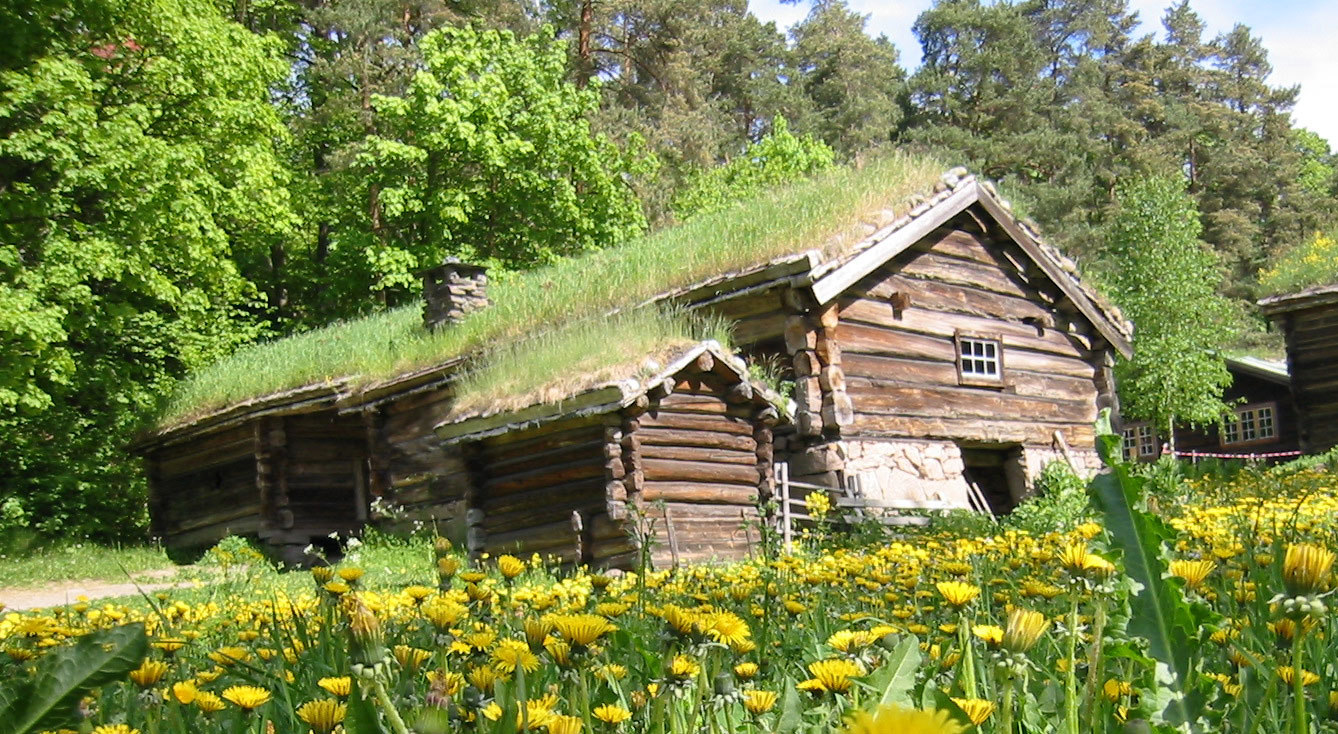
Log cabins at the Norwegian Museum of Cultural History in Bygdøy, Norway
A log cabin in Russia, photographed by Sergey Prokudin-Gorsky in 1912
A timber cutter's mountain log cabin at the Museum of Folk Architecture and Life in Pyrohiv, Ukraine

A log cabin is a small log house, especially a minimally finished or less architecturally sophisticated structure. Log cabins have an ancient history in Europe, and in America are often associated with first-generation home building by settlers.

History

[edit]

Europe

[edit]

Construction with logs was described by Roman architect Vitruvius Pollio in his architectural treatise De Architectura. He noted that in Pontus in present-day northeastern Turkey, dwellings were constructed by laying logs horizontally overtop of each other and filling in the gaps with "chips and mud".[1]

Log cabin construction has its roots in Nordic and Eastern Europe. Although their precise origin is uncertain, the first log structures were probably being built in Northern Europe by the Bronze Age around 3500 BC. C. A. Weslager describes Europeans as having:

The Finns were accomplished in building several forms of log housing, having different methods of corner timbering, and they utilized both round and hewn logs. Their log building had undergone an evolutionary process from the crude "pirtti"... a small gabled-roof cabin of round logs with an opening in the roof to vent smoke, to more sophisticated squared logs with interlocking double-notch joints, the timber extending beyond the corners. Log saunas or bathhouses of this type are still found in rural Finland. By stacking tree trunks one on top of another and overlapping the logs at the corners, people made the "log cabin". They developed interlocking corners by notching the logs at the ends, resulting in strong structures that were easier to make weather-tight by inserting moss or other soft material into the joints. As the original coniferous forest extended over the coldest parts of the world, there was a prime need to keep these cabins warm. The insulating properties of the solid wood were a great advantage over a timber frame construction covered with animal skins, felt, boards or shingles. Over the decades, increasingly complex joints were developed to ensure more weather tight joints between the logs, but the profiles were still largely based on the round log.[2]

A medieval log cabin was considered movable property, evidenced by the relocation of Espoo in 1557, where the buildings were disassembled, transported to a new location, and reassembled. It was also common to replace individual logs damaged by dry rot as necessary.

The Wood Museum in Trondheim, Norway, displays fourteen different traditional profiles, but a basic form of log construction was used all over North Europe and Asia and later imported to America.

Log construction was especially suited to Fennoscandia, where straight, tall tree trunks (pine and spruce) are readily available. With suitable tools, a log cabin can be erected from scratch in days by a family. As no chemical reaction is involved, such as hardening of mortar, a log cabin can be erected in any weather or season. Many older towns in Northern Scandinavia have been built exclusively out of log houses, which have been decorated by board paneling and wood cuttings. Today, construction of modern log cabins as leisure homes is a fully developed industry in Finland and Sweden. Modern log cabins often feature fiberglass insulation and are sold as prefabricated kits machined in a factory, rather than hand-built in the field like ancient log cabins.

Log cabins are mostly constructed without the use of nails and thus derive their stability from simple stacking, with only a few dowel joints for reinforcement. This is because a log cabin tends to compress slightly as it settles, over a few months or years. Nails would soon be out of alignment and torn out.

Log cabins were largely built from logs laid horizontally and interlocked on the ends with notches. Some log cabins were built without notches and simply nailed together, but this was not as structurally sound.

The most important aspect of cabin building is the site upon which the cabin was built. Site selection was aimed at providing the cabin inhabitants with both sunlight and drainage to make them better able to cope with the rigors of frontier life. Proper site selection placed the home in a location best suited to manage the farm or ranch. When the first pioneers built cabins, they were able to "cherry pick" the best logs for cabins. These were old-growth trees with few limbs (knots) and straight with little taper. Such logs did not need to be hewn to fit well together. Careful notching minimized the size of the gap between the logs and reduced the amount of chinking (sticks or rocks) or daubing (mud) needed to fill the gap. The length of one log was generally the length of one wall, although this was not a limitation for most good cabin builders.

Decisions had to be made about the type of cabin. Styles varied greatly from one part of North America to another: the size of the cabin, the number of stories, type of roof, the orientation of doors and windows all needed to be taken into account when the cabin was designed. In addition, the source of the logs, the source of stone and available labor, either human or animal, had to be considered. If timber sources were further away from the site, the cabin size might be limited.

United States and Canada

[edit]

In North America, cabins were constructed using a variety of notches. One method common in the Ohio River Valley in Southwestern Ohio and Southeastern Indiana is the block house end method, which is exemplified in the David Brown House in Rising Sun, Indiana.

Some older buildings in the Midwestern United States and the Canadian Prairies are log structures covered with clapboards or other materials. 19th-century cabins used as dwellings were occasionally plastered on the interior. The O'Farrell Cabin (c. 1865) in Boise, Idaho, had backed wallpaper used over newspaper. The C.C.A. Christenson Cabin in Ephraim, Utah (c. 1880) was plastered over willow lath. Log cabins reached their peak of complexity and elaboration with the Adirondack-style cabins of the mid-19th century. This style was the inspiration for many United States Park Service lodges built at the end of the 19th century and beginning of the 20th century.

Log cabin building never died out or fell out of favor. It was surpassed by the needs of a growing urban United States. During the 1930s and the Great Depression, the Roosevelt administration directed the Civilian Conservation Corps to build log lodges throughout the west for use by the Forest Service and the National Park Service. Timberline Lodge on Mount Hood in Oregon was such a log structure, and it was dedicated by President Franklin D. Roosevelt. In 1930, the world's largest log cabin was constructed at a private resort in Montebello, Quebec, Canada. Often described as a log château, it serves as the Château Montebello hotel.

The modern version of a log cabin is the log home, which is a house built usually from milled logs. The logs are visible on the exterior and sometimes interior of the house. These cabins are mass manufactured, traditionally in Nordic countries and increasingly in Eastern Europe. Squared milled logs are precut for easy assembly. Log homes are popular in rural areas, and even in some suburban locations. In many resort communities in the Western United States, homes of log and stone measuring over 3,000 sq ft (280 m2) are not uncommon. These "kit" log homes are one of the largest consumers of logs in the Western United States.

In the United States, log homes have embodied a traditional approach to home building, one that has resonated throughout American history. Log homes represent a technology that allows a home to be built with a high degree of sustainability. They are frequently considered to be on the leading edge of the green building movement.

Crib barns were a popular type of barn found throughout the American Southern and Southeastern regions. Crib barns were especially ubiquitous in the Appalachian and Ozark Mountain states of North Carolina, Virginia, Kentucky, Tennessee, and Arkansas. In Europe, modern log cabins are often built in gardens and used as summerhouses, home offices, or as an additional room in the garden. Summer houses and cottages are often built from logs in Northern Europe.

Chinking refers to a broad range of mortar or other infill materials used between the logs in the construction of log cabins and other log-walled structures. Traditionally, dried mosses, such as Pleurozium schreberi or Hylocomium splendens, were used in the Nordic countries as an insulator between logs. In the United States, Chinks were small stones or wood or corn cobs stuffed between the logs.

In the United States, settlers may have first constructed log cabins by 1640. Historians believe that the first log cabins built in North America were in the colony of New Sweden along the Delaware and Brandywine River valleys.[3]

Most of the settlers were actually Forest Finns, a heavily oppressed Finnish ethnic group originally from Savonia, Tavastia, and Karelia, who starting from the 1500s were displaced or persuaded to go inhabit and practice slash-and-burn agriculture (which they were famous for in eastern Finland) in the deep forests of inland Sweden and Norway, during Sweden's 600+ year rule over Finland, who since 1640 were being captured and displaced to the colony.[4][3]

After arriving, they would escape the Fort Christina center where the Swedes lived, to go and live in the forest as they did back home. They encountered the Lenape Indian tribe, with whom they found many cultural similarities, including slash and burn agriculture, sweat lodges and saunas, and a love of forests, and they ended up living alongside and even culturally assimilating with them[5] (they are the earlier and lesser-known Findian tribe,[6][7] being overshadowed by the Ojibwe Findians of Minnesota, Michigan and Ontario, Canada). In those forests, the first log cabins of America were built, using traditional Finnish methods. Even though New Sweden existed only briefly before it was absorbed by the Dutch colony of New Netherland, which was eventually taken over by the English, these quick and easy construction techniques of the Finns not only remained, but spread.[citation needed]

Germans and Ukrainians also used this technique. The contemporaneous British settlers had no tradition of building with logs, but they quickly adopted the method. The first English settlers did not widely use log cabins, building in forms more traditional to them.[8] Few log cabins dating from the 18th century still stand, but they were often not intended as permanent dwellings. Possibly the oldest surviving log house in the United States is the C. A. Nothnagle Log House (c. 1640) in New Jersey. Settlers often built log cabins as temporary homes to live in while constructing larger, permanent houses; then they either demolished the log structures or used them as outbuildings, such as barns or chicken coops.[citation needed]

Log cabins were sometimes hewn on the outside so that siding might be applied; they also might be hewn inside and covered with a variety of materials, ranging from plaster over lath to wallpaper.[citation needed]

Log cabins were constructed with either a purlin roof structure or a rafter roof structure. A purlin roof consists of horizontal logs that are notched into the gable-wall logs. The latter are progressively shortened to form the characteristic triangular gable end. The steepness of the roof was determined by the reduction in size of each gable-wall log as well as the total number of gable-wall logs. Flatter roofed cabins might have had only 2 or 3 gable-wall logs while steeply pitched roofs might have had as many gable-wall logs as a full story. Issues related to eave overhang and a porch also influenced the layout of the cabin.

The decision about roof type often was based on the material for roofing like bark. Milled lumber was usually the most popular choice for rafter roofs in areas where it was available. These roofs typify many log cabins built in the 20th century, having full-cut 2×4 rafters covered with pine and cedar shingles. The purlin roofs found in rural settings and locations, where milled lumber was not available, often were covered with long hand-split shingles.

The log cabin has been a symbol of humble origins in U.S. politics since the early 19th century. At least seven U.S. presidents were born in log cabins, including Andrew Jackson, James K. Polk, Millard Fillmore, Franklin Pierce, James Buchanan, Abraham Lincoln, and James A. Garfield.[9] Although William Henry Harrison was not born in a log cabin, he and the Whigs were among the first to use them during the 1840 presidential election as a symbol to show Americans that he was a man of the people.[10] Other candidates followed Harrison's example, making the idea of a log cabin a recurring theme in U.S. presidential campaigns.[11]

More than a century after Harrison, Adlai Stevenson II said, "I wasn't born in a log cabin. I didn't work my way through school nor did I rise from rags to riches, and there's no use trying to pretend I did."[11] Stevenson lost the 1952 presidential election in a landslide to Dwight D. Eisenhower.

A popular children's toy in the United States is Lincoln Logs, which are various notched dowel rods that can be fitted together to build scale miniature-sized structures.

See also

[edit]
[edit]

References

[edit]

Further reading

[edit]
[edit]
Revisions and contributorsEdit on WikipediaRead on Wikipedia
from Grokipedia
A log cabin is a rudimentary dwelling constructed by stacking horizontal logs, typically debarked tree trunks, one atop another, with the ends notched—often in saddle, dovetail, or V configurations—to interlock at the corners and provide structural stability, while gaps between logs are sealed with chinking materials such as moss, clay, mud, or mortar to enhance insulation and weatherproofing.[1][2] Originating in Northern and Eastern Europe during the Bronze Age around 3500 BC, where abundant timber resources favored such efficient, portable shelters among nomadic and forested communities, the technique was refined by Finnish and Swedish builders using round or hewn logs without nails or pegs.[3][4] Swedish and Finnish settlers introduced log cabin construction to North America in 1638 along the Delaware River, adapting European methods to the New World's vast forests and influencing subsequent pioneer building practices across the Appalachian frontier and westward expansions.[5] In the United States, log cabins epitomized self-sufficient homesteading and rapid settlement, enabling quick assembly with minimal tools and serving as archetypal homes for early colonists, trans-Appalachian migrants, and immigrants; they symbolized rugged individualism, as evidenced by their prominence in folklore and the 1840 "Log Cabin Campaign" that propelled William Henry Harrison to the presidency, and were the birthplaces of at least eight presidents, including Abraham Lincoln in Kentucky and James A. Garfield, the last such figure, in Ohio.[5][6][7] Despite their simplicity and association with poverty in some historical accounts, log cabins demonstrated practical engineering suited to resource-scarce environments, evolving from temporary shelters to enduring cultural icons of American resilience and expansion.[5]

History

European Origins

Horizontal log construction, involving the stacking of debarked tree trunks to form walls, emerged as a practical response to forested environments in Northern and Eastern Europe, where abundant coniferous timber provided readily available building material. This method leveraged the natural insulation properties of solid wood logs to combat harsh winters, requiring minimal tooling beyond axes for felling and notching. Archaeological evidence indicates its use in Scandinavia from at least the Viking Age onward, with preserved examples from waterlogged sites revealing stacked log techniques adapted to local pine and spruce stands.[8] The earliest textual reference to such construction appears in the work of Roman architect Vitruvius Pollio in De Architectura, composed around 15 BCE. Vitruvius described dwellings in Pontus (present-day northern Turkey) built by laying entire trees flat on the ground, erecting uprights, and piling horizontal courses while filling interstices with chips and mud for stability and weatherproofing. This account highlights the technique's suitability for timber-rich regions lacking fired bricks or stone, emphasizing empirical adaptations over imported materials. In Fennoscandia—encompassing Scandinavia and Finland—log building proliferated due to dense boreal forests yielding straight, tall trunks ideal for notching and stacking, coupled with climates demanding thermal efficiency. By the medieval period (c. 1000–1500 CE), techniques had standardized, incorporating saddle or dovetail notching at corners to interlock logs without additional fasteners, as evidenced in rural structures from Norway and Sweden. These evolutions reflected causal necessities: log walls' low thermal conductivity reduced heat loss compared to turf or wattle alternatives, enabling year-round habitation in subarctic conditions without advanced metallurgy.[4][9]

Introduction to North America

![Nothnagle Log House, oldest surviving log structure in US, built circa 1640 by Finnish settler][float-right] Log construction techniques were introduced to North America by Swedish and Finnish settlers who established the colony of New Sweden along the Delaware River in 1638. These immigrants, familiar with horizontal log building from their homelands, adapted the method to the abundant timber resources of the Delaware Valley, constructing the first known log dwellings in the region during the 1630s and 1640s.[10][11] The colony, which lasted until its conquest by the Dutch in 1655, featured log forts and homes that demonstrated the practicality of the form for rapid erection in forested areas lacking sawmills.[4] In contrast, early English settlements such as Jamestown, founded in 1607, and Plymouth, established in 1620, relied on frame houses, wattle-and-daub structures, and imported building practices rather than log cabins. English colonists lacked familiarity with log construction, preferring timber framing that mimicked metropolitan styles and viewing log buildings as rudimentary.[12][13] Archaeological evidence from these sites confirms the absence of log structures, with early housing instead using sawn boards or earthfast posts.[14] By the early 18th century, log cabin techniques spread westward from the Delaware Valley through German and Scots-Irish immigrants settling in Pennsylvania and the Appalachian backcountry. These groups, arriving in waves from the 1710s onward, adopted and disseminated the method due to its efficiency for frontier homesteads where speed of construction outweighed aesthetic refinement amid dense forests.[11] German settlers in areas like the Pennsylvania Dutch country and Scots-Irish pioneers pushing into Virginia's Shenandoah Valley and beyond integrated local hardwoods, modifying notching styles slightly but retaining the core horizontal-log principle to meet urgent shelter needs during rapid inland migration.[15][16]

Expansion in the Frontier Era

The Louisiana Purchase of 1803 doubled the size of the United States by acquiring approximately 828,000 square miles of territory from France for $15 million, spurring westward migration into forested regions where log cabins proved ideally suited to pioneers facing timber abundance and material scarcity. Settlers in the newly accessible Ohio Valley and beyond adopted log construction en masse during the early 1800s, leveraging local hardwoods like oak and hickory to erect rudimentary dwellings with minimal tools, often completing a basic structure in days. This method's efficiency amid resource constraints—requiring only an axe for felling and notching—facilitated rapid homesteading, with log cabins serving as initial shelters that could be expanded into multi-room homes as farms developed.[17] The Oregon Trail migrations from the 1840s to 1860s exemplified peak log cabin proliferation, as 300,000 to 400,000 emigrants traversed 2,000 miles to the Pacific Northwest, constructing cabins upon arrival in timbered valleys like the Willamette to claim land under provisional laws predating federal acts.[18] These structures transitioned from hasty campsites to semi-permanent fixtures, with settlers notching logs on-site to form one- or two-room cabins that housed families while fields were cleared, reflecting the era's emphasis on self-reliance in isolated frontiers.[19] The Homestead Act of 1862 further accelerated this, granting 160 acres to qualifiers who improved the land—including erecting a dwelling—resulting in over 4 million claims across 270 million acres by 1934, many initiating with log cabins in wooded claims from the Great Plains to the Rockies.[20][21] Beyond residences, log cabins adapted to communal needs, forming stockaded forts with notched-log blockhouses for defense against raids, as seen in Texas and Ohio frontier outposts where horizontal logs provided ballistic resistance.[22] One-room log schoolhouses emerged in settlements, utilizing the same technique for durable, low-cost education spaces that doubled as churches, underscoring the versatility of log construction in nascent communities lacking sawn materials.[23] Post-Civil War urbanization and industrial advances marked the decline, as railroads expanded sawmills producing affordable framed lumber, rendering hand-hewn logs obsolete for most settlers by the 1870s; census data show frame houses surpassing log in rural counts amid cityward shifts.[24] Yet log cabins endured in remote, timber-rich enclaves like Appalachia and the northern Rockies, where isolation preserved their practicality into the late 19th century.

Construction Techniques

Materials Selection and Preparation

Logs for traditional log cabins were selected primarily from straight-grained softwoods such as pine (Pinus spp.), spruce (Picea spp.), fir (Abies spp.), and cedar (Thuja or Juniperus spp.), harvested from abundant coniferous forests, due to their lightweight density (typically 25-35 pounds per cubic foot when dry), ease of handling, and low propensity for warping from even grain structure.[25][26] These species provided sufficient compressive strength (around 3,000-5,000 psi parallel to grain) for load-bearing walls while minimizing splitting risks during seasonal moisture changes.[27] Cedar was particularly favored in moist regions for its empirical rot resistance, stemming from natural thujaplicins and oils that inhibit fungal growth, as evidenced by longevity in structures dating to the 18th century.[28] Hardwoods like oak were avoided owing to their denser, more brittle nature (40-50 pounds per cubic foot), which increased labor for hewing and heightened fracture risk under flex.[29] Sourcing emphasized local timber stands to leverage proximate availability, with settlers felling trees of 10-20 inch diameters for uniform wall thicknesses of 6-12 inches, ensuring thermal mass without excessive weight; this practice persisted through the 19th century when transport limitations favored on-site harvesting over distant imports.[30] By the early 20th century, industrialization enabled a shift to milled logs from centralized sawmills, processed from managed forests for consistency in shape and size, though this reduced reliance on site-specific selection criteria like tree straightness.[4][31] Preparation commenced with debarking post-felling, using tools like drawknives to strip the cambium layer, which harbors bark beetles (Scolytidae) and decay fungi (e.g., Armillaria spp.), thereby curtailing infestation rates by exposing heartwood to desiccation and reducing moisture retention under bark that fosters rot.[32] Partial sapwood retention aided initial grip in notching but was minimized to limit sap-induced staining.[33] Logs were then stacked horizontally with spacers for air circulation, drying naturally for 6-24 months in temperate climates to equilibrate moisture content to 20-30%, averting deep checking cracks from differential shrinkage (up to 10% radially in green wood) and excessive settling in assembled structures.[34] This empirical process, rooted in observed wood hygroscopy, enhanced dimensional stability over building with freshly felled "green" logs, which could contract 12-18 inches vertically upon drying.[30]

Notching and Assembly

Logs are joined at corners through notching to create interlocking joints that provide structural stability via friction and mechanical resistance to lateral forces, without reliance on adhesives or metal fasteners in traditional primitive construction.[35][36] The saddle notch, a simple V- or U-shaped cut at log ends, allows adjacent logs to settle into each other under gravity, accommodating natural compression and shrinkage while distributing loads across contact points.[36] This method requires minimal tooling and skill, making it prevalent in early frontier settings, though it offers less resistance to shear compared to more complex interlocks.[35] Dovetail notching, involving trapezoidal cuts that lock logs perpendicularly, enhances shear strength and rigidity by preventing horizontal slippage, with full dovetails providing the tightest fit at the expense of cutting time.[36] Half-dovetails, truncated versions, balance craftsmanship demands with comparable stability, commonly observed in 19th-century American log structures.[36] Butt-and-pass notching, where log ends abut without deep cuts and alternate to pass over corners, minimizes material removal but relies more on friction and occasional pegs for hold, resulting in reduced durability against settling and wind loads.[37] Assembly proceeds by horizontally stacking logs course-by-course, beginning with larger sill logs directly on the foundation to bear vertical loads, with each subsequent layer notched to interlock at corners and maintain plumb alignment.[35] Typical wall heights reach 7-10 feet for single-story cabins, achieved through 8-12 courses depending on log diameter, which historically ranged from 12-18 inches to ensure adequate compression strength parallel to the grain under roof and upper loads.[35][38] Load-bearing capacity derives from log cross-sections resisting compressive forces, with thicker diameters distributing weight to prevent localized failure at notches.[39]

Chinking, Roofing, and Finishing

Chinking involved filling the triangular gaps between horizontally laid logs to seal against wind, rain, and insects, using locally available materials that expanded and contracted with wood to maintain adhesion. Early methods in North American frontier cabins, dating to the 18th century, relied on mud or clay mixed with straw, grass, animal hair, or dung as binders, often preceded by inserting wooden slats or stones in larger voids for structural support.[40][41] Later variations incorporated lime with sand and clay—typically in ratios such as one-third each—to enhance durability and resistance to erosion, as lime's chemical reaction with water forms a harder, less permeable matrix than pure clay.[42][43] These mixtures empirically reduced drafts by blocking air infiltration paths, where unsealed gaps could account for up to 40% of heat loss in uninsulated structures, though repeated weathering necessitated annual reapplication in exposed sites.[44][45] Roofing typically employed steeply pitched designs to shed precipitation, with materials selected for impermeability and availability. Initial coverings used bark slabs peeled from trees like birch or cedar, laid in overlapping courses directly over rafters, providing basic waterproofing through the bark's natural oils and tannin content that repelled moisture.[38] By the mid-18th century, split-wood shakes or shingles—often from straight-grained cedar or pine logs, measuring 18-24 inches long—replaced bark for superior shedding, as their tapered profile allowed three overlapping layers per section, reducing leakage by interlocking against wind-driven rain.[46] In prairie regions, sod roofs layered over wooden frames offered insulation via soil's thermal mass but required thick thatching underneath to prevent rot, though they were prone to collapse under heavy snow loads exceeding 20 inches.[38] These systems prioritized empirical runoff efficiency, with shake roofs demonstrating lower water retention than flat bark applications in tests of slope angles above 40 degrees. Finishing emphasized functionality over ornamentation, with interiors often left as exposed logs or coated minimally to repel soot and dampness. Clay daubing, applied as a thin plaster over chinked walls, used mud-clay mixtures with straw for tensile strength, creating a smooth, breathable surface that absorbed excess humidity without trapping it against wood.[41][47] Floors remained packed earth or rough-hewn planks, while ceilings—if present—consisted of unplaned boards; whitewashing with lime slurry provided occasional antimicrobial protection, as its alkaline pH inhibited mold growth on organic residues.[48] This austere approach conserved resources, focusing causal effectiveness on moisture wicking and pest deterrence rather than aesthetic sealing, which could impede log ventilation and accelerate decay.[49]

Architectural Features

Floor Plans and Layouts

The most basic log cabin configuration was the single-pen design, consisting of one rectangular room typically measuring 12 to 16 feet square.[50] This layout accommodated a family's essential living, cooking, and sleeping functions within a compact space suited to frontier resource constraints and rapid construction needs.[51] A loft, accessed by ladder, often served as additional sleeping quarters for children or storage, maximizing vertical space in structures with limited footprints derived from archaeological examinations of early settler sites.[52] In warmer regions, such as the American South, the dogtrot variant adapted the single-pen model by placing two pens on either side of an open breezeway under a shared roof, promoting cross-ventilation to mitigate heat and humidity.[53] This configuration, documented in mid-19th-century Texas historical records, allowed separation of living areas while facilitating airflow, particularly beneficial for larger family units in subtropical climates.[53] By the mid-19th century, evolving family sizes prompted shifts to multi-pen layouts, including double-pen or saddlebag designs where adjacent pens shared a central chimney, expanding habitable space without fully enclosing the structure.[43] These adaptations, evidenced in preserved frontier dwellings, reflected practical responses to demographic pressures while retaining modular log construction principles.[52] Log cabins were typically oriented with longer walls facing south to capture solar gain for passive heating, while positioning gable ends to prevailing winds and leveraging site topography—such as south-facing slopes—for protection and efficiency, as observed in historical settlement patterns.[54] This site-specific alignment, informed by empirical settler practices rather than formal design, optimized thermal comfort in variable environments.[51]

Windows, Doors, and Interior Adaptations

In traditional log cabins, windows were small openings cut into the walls after assembly to minimize vulnerabilities while permitting limited light and ventilation. These were typically covered with sliding wooden shutters for security against wildlife and intruders, as glass panes were rare and expensive on the frontier until the mid-19th century. Before glass became more accessible, settlers adapted by stretching greased paper or canvas over the frames, which diffused daylight but restricted clear visibility and airflow, creating a trade-off between illumination and protection from elements and pests.[38][11] Doors were similarly practical, formed from boards hewn or sawn from split logs and framed into rectangular openings, often secured with leather hinges or wooden pegs due to the scarcity of metal hardware. This construction provided basic structural integrity and could be barred from inside for added defense, though the materials' exposure to weather necessitated periodic replacement to maintain airtightness and security. Historical examples, such as those in Pennsylvania from the 18th century, show doors positioned irregularly alongside windows, emphasizing functionality over symmetry.[38][11] Interior adaptations prioritized utility with locally sourced materials. Central to the space was a stone fireplace built from fieldstones mortared with clay or mud, positioned at the gable end to support cooking and light via an open hearth that dominated much of the wall. Floors consisted of puncheon—logs split longitudinally and hewn flat on one side—laid over earthen foundations or simple joists, offering a durable walking surface without milled lumber. Furniture, such as benches and shelves, was crafted from poles or rough-hewn timber pegged into walls, conserving resources while providing essential storage and seating in compact dwellings. These features, evident in pioneer-era structures from the late 1700s onward, reflected adaptations for self-sufficiency amid material constraints.[38][55][56]

Practical Advantages and Limitations

Construction Efficiency and Durability

Log cabins facilitated rapid construction suited to frontier conditions, with historical accounts indicating that a basic single-room structure measuring approximately 16 by 18 feet could be assembled in one to two weeks by one to four individuals, primarily using hand tools such as axes for felling and hewing logs and froes for splitting shingles.[57][17] This pace leveraged unskilled labor and on-site timber harvesting, requiring no mills for sawn lumber or nails for initial assembly, as logs were notched and stacked directly.[38] In timber-abundant forested regions of 19th-century North America, this method proved causally superior to alternatives like timber-frame houses, which demanded processed boards and more complex joinery, or adobe structures, whose brick production and sun-drying phases extended timelines to several weeks or months even in arid zones.[58] Durability metrics for traditional log cabins vary with maintenance and environmental factors, but well-sited examples with stone foundations and adequate drainage have endured 50 to 100 years or longer, as evidenced by surviving 19th-century structures in the eastern United States.[59] The monolithic wall system of interlocking logs confers inherent flexibility, allowing cabins to absorb lateral forces during earthquakes without catastrophic failure, provided they remain anchored to their foundation—a trait demonstrated in seismic tests of log assemblies outperforming rigid masonry in energy dissipation.[60] However, exposure to ground moisture without proper elevation or grading accelerates rot, while in humid subtropical areas, untreated softwoods heighten susceptibility to termite infestation, often necessitating chemical barriers or species selection like cedar for mitigation.[61] Empirical data from preserved settler-era cabins underscore that longevity hinges on initial site preparation over material alone, with failures predominantly linked to poor drainage rather than structural flaws.[62]

Thermal Performance and Maintenance Requirements

Thermal performance and insulation

The insulation properties of log cabin walls derive from the solid wood construction, which provides both structural support and moderate thermal resistance. The R-value (thermal resistance) of wood typically ranges from 1.41 per inch for most softwoods (such as pine or cedar commonly used in log construction) to about 0.71 per inch for hardwoods. For example, a 6-inch thick softwood log wall has a clear-wall R-value (excluding windows and doors) of just over 8.[63] This nominal R-value is lower than that of many conventional wood stud walls, which often achieve R-13 to R-15 or higher with cavity insulation (e.g., fiberglass in a 2x4 wall assembly totaling around R-14). As a result, solid log walls alone may not meet standard building code energy requirements in many jurisdictions without special provisions for mass walls. However, log walls benefit significantly from thermal mass. The dense wood absorbs heat during warmer periods (daytime or from heating systems) and releases it slowly, stabilizing indoor temperatures and reducing peak heating/cooling demands. In climates with substantial diurnal temperature swings (e.g., temperate zones with sunny days and cool nights), this effect can increase the effective or apparent R-value by approximately 0.1 per inch of thickness. Studies indicate that properly constructed log homes can achieve annual energy performance equivalent to or better than comparable stick-framed homes (often 15-20% more efficient), particularly when airtight chinking and sealing minimize infiltration losses. Supplemental measures, such as modern chinking, interior foam insulation, or hybrid systems (e.g., half-log over insulated framing), can further enhance performance, with some reaching effective R-values of 25 or higher. In humid or wet environments, thermal performance degrades further as moisture accumulation in logs or chinking promotes condensation and mold growth, undermining the wood's insulating capacity through increased conductivity and biological decay. Empirical studies indicate that without supplemental measures like interior vapor barriers, log walls can experience higher heat loss in prolonged cold snaps compared to insulated stick-frame alternatives, though the structure's robustness mitigates drafts once settled.[64] Historical records from frontier-era cabins in arid regions, such as the American Southwest, show greater longevity and sustained habitability versus those in damp Eastern woodlands, where unchecked moisture led to structural failures within decades due to rot and fungal proliferation exacerbated by inadequate ventilation.[65][59] Maintenance demands are ongoing to preserve thermal integrity and prevent decay, driven by wood's susceptibility to shrinkage, settling, and moisture ingress. Logs naturally settle 5-10% in the first 1-3 years post-construction, requiring inspection and readjustment of chinking or caulking every 5-10 years thereafter to seal gaps and maintain air tightness.[66] Annual routines include cleaning surfaces to remove debris, inspecting for cracks or discoloration indicative of water damage, and applying penetrating sealants or borate-based treatments to inhibit rot-causing fungi and insects, as untreated wood in contact with ground moisture can decay at rates exceeding 1 inch per decade in high-humidity areas.[67][68] Poor ventilation, common in tightly chinked historical cabins, accelerates mold formation by trapping humidity, underscoring the need for periodic airflow assessments to avoid internal condensation buildup.[69] Failure to address these—such as delayed chinking renewal—can halve the structure's effective thermal resistance and lifespan, contrasting with idealized notions of low-maintenance rustic durability.[70]

Economic and Environmental Considerations

Log cabins historically incurred minimal monetary costs for settlers, as construction relied on abundant local timber felled on-site, often without purchased materials like nails or tools beyond basic axes, though this demanded substantial manual labor from individuals or small groups over days or weeks.[71][57] In modern contexts, prefabricated log cabin kits range from $50 to $100 per square foot for materials alone, excluding site preparation, foundation, and labor, which can elevate total costs to $125–$175 per square foot or more depending on finishes and location.[72][73] Environmentally, log cabin construction can leverage renewable wood resources for sustainability when sourced via selective logging from managed forests, potentially sequestering carbon in the structure long-term as trees store approximately 1 ton of CO2 per cubic meter of wood.[74] However, 19th-century frontier building often involved clearing entire stands for homesteads and fields, contributing to broader deforestation patterns where U.S. timber harvest exceeded 20 billion board feet annually by the late 1800s, driven partly by settlement expansion alongside railroads and agriculture.[75] Compared to concrete alternatives, wood-framed structures emit 20–60% less CO2 during production and lifecycle in some analyses, though this advantage hinges on replacement forestry practices and may reverse if harvesting accelerates net emissions over decades without offsetting regrowth.[76][77][78] Critics note that log cabins lack inherent "green" credentials absent certified sustainable sourcing, as unregulated logging risks habitat loss and soil erosion, countering romanticized views from industry promoters who overlook historical overharvesting's role in landscape alteration.[79] Empirical assessments prioritize verifiable forestry data over unsubstantiated claims, emphasizing that benefits like reduced embodied energy versus cement-intensive builds require empirical validation through lifecycle analyses rather than assumption.[80]

Cultural and Symbolic Role

Association with Self-Reliance and Frontier Life

The log cabin served as a primary emblem of self-reliance for American pioneers during the late 18th and early 19th centuries, constructed rapidly from locally felled trees using axes and adzes without reliance on mills or external supply chains.[81] This method enabled settlers to establish shelter amid hostile wilderness, fostering skills in resource extraction and rudimentary engineering that prioritized individual or familial initiative over collective infrastructure.[82] Such construction embodied a causal mechanism for survival: the ability to convert raw forest into habitable space directly correlated with personal competence in navigation, hunting, and defense, as pioneers faced threats from wildlife, weather, and indigenous resistance without institutional aid.[83] Pioneers like Daniel Boone exemplified this association in the 1770s, when he directed the building of log cabins at Boonesborough, Kentucky, in 1775, transforming untamed land into defensible homesteads through hands-on labor and strategic site selection near water sources.[82] Boone's efforts, involving family and small groups in notching logs and chinking gaps with clay, underscored mastery of the environment via ingenuity rather than imported technologies, with these structures serving as bases for exploration and subsistence farming.[83] Historical accounts portray Boone as the archetype of the self-reliant frontiersman—brave and resourceful—whose log dwellings facilitated westward expansion by demonstrating that isolated individuals could thrive through adaptive problem-solving.[83] In literary depictions, James Fenimore Cooper's Leatherstocking Tales, spanning publications from The Pioneers in 1823 to The Redskins in 1846, portrayed frontier life in rudimentary log habitats that highlighted characters' endurance and skill amid isolation, emphasizing personal agency in overcoming scarcity over narratives of communal victimhood.[84] Protagonists like Natty Bumppo navigated hardships in settler fringes with log-based encampments, reinforcing the cabin's role in symbolizing competence-derived independence during an era of rapid territorial settlement.[85] This valorization aligned with a broader cultural ethos privileging rugged individualism, as log cabins contrasted dependency on urban or state systems by enabling autonomous living in resource-scarce conditions.[81]

Political and Electoral Symbolism

The log cabin emerged as a potent political symbol during the 1840 United States presidential election, when the Whig Party campaigned for William Henry Harrison by associating him with humble frontier origins to contrast his image against incumbent Democrat Martin Van Buren, portrayed as an aristocratic elitist. Whig propagandists distributed log cabin-themed badges, printed newspapers such as The Log Cabin, and composed campaign songs in collections like the Harrison Log Cabin Song Book, emphasizing Harrison's supposed preference for a "log cabin and a barrel of hard cider" over luxurious White House trappings.[86][87] This imagery, drawn from a Democratic jibe that Harrison could be placated with simple rural comforts, was strategically inverted to evoke self-made virtue and accessibility, despite Harrison's actual patrician upbringing as the son of a Virginia planter and signer of the Declaration of Independence, Benjamin Harrison V, and his residence in a spacious Ohio mansion.[88] The tactic contributed to Harrison's landslide victory on December 2, 1840, securing 234 electoral votes to Van Buren's 60 and 52.9% of the popular vote, marking the first successful use of mass rallies, paraphernalia, and populist symbolism in a national election.[89] This symbolism persisted into the 1860 election with Abraham Lincoln, whose birth on February 12, 1809, in a one-room log cabin on Sinking Spring Farm near Hodgenville, Kentucky, was highlighted by Republicans to underscore themes of meritocratic ascent from poverty amid his contest against Stephen A. Douglas and John C. Breckinridge.[90] Campaign narratives leveraged Lincoln's authentic backwoods upbringing—including multiple log cabin residences in Kentucky and Indiana—to symbolize the opportunities of American frontier life, aligning with voter aspirations for upward mobility in an era of expanding settlement.[91] However, the precise authenticity of reconstructed cabins at sites like the Abraham Lincoln Birthplace National Historical Park remains contested, as the original structure's logs were likely disassembled after the Lincolns' 1811 relocation due to a land title dispute, and subsequent memorials rely on unverified logs from unrelated sources placed at an approximate location without conclusive evidence of the exact birth spot.[92][93] Critics, often from academic and media perspectives exhibiting institutional biases toward viewing such narratives as manipulative elite constructions, have dismissed log cabin symbolism as disingenuous propaganda, particularly for Harrison's exaggerated claims. Yet empirical historical patterns affirm its grounding in causal realities of pioneer settlement: millions of Americans in the 19th century genuinely experienced log cabin living as a marker of self-reliance and anti-aristocratic ethos, fostering electoral resonance that propelled candidates promising economic opportunity over entrenched privilege, as evidenced by Whig gains among working-class and rural voters in 1840.[94] This enduring motif reflects merit-based populism rather than fabrication, countering interpretations that prioritize deconstruction over the verifiable socioeconomic motivations of frontier electorates.

Modern Applications

Revival in Residential and Recreational Building

In the 20th century, log cabin construction experienced a resurgence through prefabricated kits, with mail-order companies like Sears offering pre-cut materials for assembly starting in the 1920s, facilitating broader access to rustic-style homes amid urbanization and a romanticized view of frontier living.[95] [96] By the mid-century, specialized log home kits from manufacturers emphasized milled logs over hand-hewn ones, shifting toward efficiency while preserving aesthetic appeal.[97] Contemporary residential log homes increasingly adopt hybrid designs, blending full-log exteriors or accents with timber framing, stone, and conventional framing for improved structural integrity, reduced settling issues, and easier integration of modern utilities compared to traditional all-log builds.[98] [99] The U.S. log cabin and log home market, valued at $10.08 billion in 2024, predominantly features these manufactured or milled variants, which comprise 90% of production and support an estimated several thousand annual residential builds driven by demand for durable, aesthetically rustic dwellings.[100] [101] Recreational applications have fueled this revival, with log cabins serving as vacation homes and short-term rentals near or within national parks like Yosemite, Yellowstone, and Grand Teton, where local zoning often permits remote siting through environmental reviews and adaptive foundations to minimize ecological impact.[102] [103] These structures appeal for their seclusion and alignment with outdoor pursuits, though park-specific regulations prioritize historic or low-impact replicas over new full-scale developments.[104] Outside North America and Europe, log cabin adoption remains niche, with limited residential prevalence but growing exports of prefabricated kits to Asia for upscale retreats, catering to affluent buyers seeking imported Western rustic luxury amid expanding wellness tourism markets.[105] [106] This trend reflects hybrid models' adaptability to regional climates and preferences, though full-log authenticity is often secondary to customized prefab efficiency.[107] Modern log cabin construction has incorporated milled logs featuring tongue-and-groove profiles, which interlock tightly to minimize air gaps and structural settling compared to hand-hewn traditional logs.[108] These profiles, often combined with compressible foam gaskets between courses, enhance energy efficiency by reducing infiltration and require less on-site adjustment during assembly.[108] Milled logs, predominant in over 90% of contemporary log structures, provide uniformity and precision machined from sustainable timber sources, lowering labor demands relative to custom handcrafting.[109] Advancements in modular prefabrication have further streamlined production, with factory-assembled panels or full modules enabling up to 50% reductions in on-site build time versus conventional stick-built methods.[110] This approach maintains log aesthetics while allowing integration of modern features like enhanced insulation and pre-wired smart systems during off-site fabrication.[111] Several websites specialize in selling prefab, modular, log, and park model cabins as kits or prebuilt structures, focusing on direct sales of cabin products. Notable examples include Zook Cabins offering Amish-built prefab log cabins, modular homes, and park models; Southland Log Homes providing custom log cabin kits and homes nationwide; Honest Abe Log Homes specializing in log home kits, custom designs, and planning; Lancaster Log Cabins focusing on portable log park model cabins on wheels; and DEN Outdoors selling modern prefab cabin kits with flat-packed components for easy assembly.[112][113][114][115][116] Insect resistance is bolstered through borate-based treatments applied during milling or assembly, which penetrate wood to deter borers and termites without relying solely on naturally durable species like cedar.[117] Sustainability trends include seamless solar panel mounting on log roofs and walls, leveraging the structures' thermal mass for hybrid passive-active energy systems that cut reliance on grid power.[118] The global log home market expanded from $10.08 billion in 2024 to projected $10.61 billion in 2025, reflecting a compound annual growth rate of approximately 5.3%, driven by demand for eco-conscious rural and vacation properties.[100] Despite efficiencies, log homes often incur 10-30% higher upfront costs than equivalent stick-built frames due to specialized materials and detailing, though long-term maintenance savings from inherent durability offset this for some owners.[119] Veneer or siding mimicking log profiles, popular for cost containment, prioritizes visual appeal over the structural benefits of solid logs, potentially compromising longevity if not backed by robust substrates.[120]

Myths and Misconceptions

Debunking Historical Origins Narratives

Popular narratives attributing the invention of log cabins to Native Americans lack archaeological or documentary support prior to European contact; indigenous structures in North America typically employed bark, thatch, or frame construction rather than stacked logs.[121] While some Southeastern tribes like the Choctaw incorporated logs post-18th century, possibly influenced by European techniques after acquiring metal tools, this postdates initial colonial settlements and does not indicate pre-Columbian origination.[122] Similarly, early English colonists at Jamestown (1607) and Plymouth (1620) built with wattle-and-daub or timber-frame methods suited to their carpentry traditions, with no records of log construction until Swedish and Finnish settlers arrived in the Delaware Valley in 1638.[13] These Scandinavians introduced horizontal log building, as evidenced by surviving structures like the Nothnagle Log House in New Jersey, dated to circa 1640 via construction analysis.[123][124] The purported log cabin at Abraham Lincoln's birthplace in Hodgenville, Kentucky, dedicated in 1911 by the Lincoln Farm Association, was assembled from logs claimed to originate from Lincoln's 1809 birth site, but provenance remains unverified despite promotional assertions of authenticity.[125] Core sampling and historical review indicate the structure serves more as a symbolic memorial than a precise replica, with logs potentially from later 19th-century sources rather than Lincoln's era, as no chain-of-custody documentation confirms direct ties to the original Sinking Spring Farm cabin dismantled around 1841.[126] Dendrochronological studies on comparable Lincoln-era reconstructions, such as the Knob Creek cabin, have dated timbers to periods postdating Lincoln's occupancy, underscoring challenges in authenticating relocated logs without rigorous scientific validation.[127] Claims portraying the log cabin as an indigenous American innovation overlook its deep European roots, particularly in Scandinavia where archaeological evidence traces stacked-log construction to at least 3500 BCE in forested regions abundant with conifers.[128] Finnish and Swedish variants, refined over centuries for efficiency in harsh climates, were exported to the New World rather than invented amid frontier exigency; Roman accounts from the 1st century CE describe similar Slavic log dwellings east of the Baltic, predating any transatlantic adaptation.[4] This imported technique spread via immigrants like Scots-Irish and Germans only after initial Swedish establishment, countering 19th-century nationalist myths that romanticized it as a uniquely pioneering American form born of self-reliant ingenuity.[129][130]

Addressing Construction and Lifestyle Assumptions

Contrary to assumptions of inherent low-maintenance simplicity, log cabin construction demands proactive measures to mitigate decay from moisture and insects, as untreated wood sustains damage when moisture content exceeds 20-30 percent.[35] [131] Regular application of protective stains or finishes, typically every three to five years depending on exposure, effectively barriers ultraviolet rays and repels water ingress, thereby averting widespread rot and extending structural longevity without constituting an undue burden.[132] [133] Site selection further influences durability; cabins on poorly drained land experience accelerated failure due to persistent soil moisture promoting fungal growth, underscoring the causal role of environmental factors over material inevitability.[134] The romanticized lifestyle of log cabin dwellers overlooks empirical hardships, including cramped interiors and pervasive smoke from open hearths that lacked efficient chimneys, often filling spaces with soot and limiting ventilation in single-room or lofted designs housing extended families.[55] [135] Historical accounts document these conditions as normative rather than exceptional, with chinks of mud-daubed moss failing to fully seal drafts, contributing to discomfort and health risks from incomplete combustion.[136] Such realities challenge idealized portrayals, revealing a pragmatic adaptation to frontier constraints rather than an untroubled idyll. Modern prefabricated log cabin kits dispel notions of diminished authenticity, as their precision-milled components facilitate tighter seals and reduced on-site waste compared to hand-hewn methods, enhancing thermal efficiency without compromising structural integrity.[137] [138] Full-round logs remain viable for traditional builds but lack empirical superiority in performance metrics like energy retention unless augmented by modern treatments; data indicate log structures overall achieve 15-20 percent better efficiency than conventional framing, attributable to thermal mass rather than log profile alone.[139] [140]

References

User Avatar
No comments yet.