


Community hub
Recent from talks
Contribute something
Nothing was collected or created yet.
Effect of spaceflight on the human body
View on Wikipedia
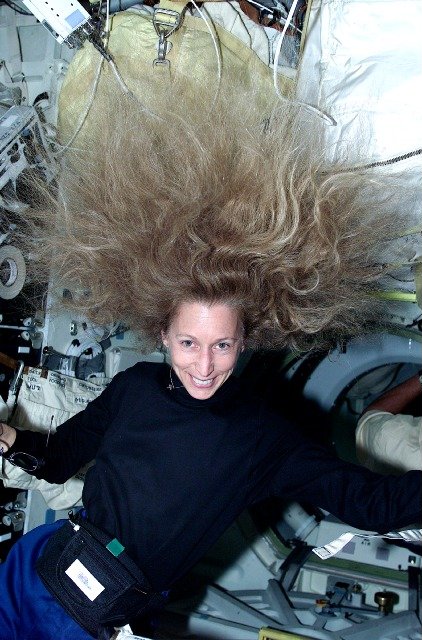
The effects of spaceflight on the human body are complex and largely harmful over both short and long term.[1] Significant adverse effects of long-term weightlessness include muscle atrophy and deterioration of the skeleton (spaceflight osteopenia).[2] Other significant effects include a slowing of cardiovascular system functions, decreased production of red blood cells (space anemia),[3] balance disorders, eyesight disorders and changes in the immune system.[4] Additional symptoms include fluid redistribution (causing the "moon-face" appearance typical in pictures of astronauts experiencing weightlessness),[5][6] loss of body mass, nasal congestion, sleep disturbance, and excess flatulence. A 2024 assessment noted that "well-known problems include bone loss, heightened cancer risk, vision impairment, weakened immune systems, and mental health issues... [y]et what's going on at a molecular level hasn't always been clear",[7] arousing concerns especially vis a vis private and commercial spaceflight now occurring without any scientific or medical research being conducted among those populations regarding effects.[8]
Overall, NASA refers to the various deleterious effects of spaceflight on the human body by the acronym RIDGE (i.e., "space radiation, isolation and confinement, distance from Earth, gravity fields, and hostile and closed environments").[3]
The engineering problems associated with leaving Earth and developing space propulsion systems have been examined for more than a century, and millions of hours of research have been spent on them. In recent years, there has been an increase in research on the issue of how humans can survive and work in space for extended and possibly indefinite periods of time. This question requires input from the physical and biological sciences and has now become the greatest challenge (other than funding) facing human space exploration. A fundamental step in overcoming this challenge is trying to understand the effects of long-term space travel on the human body.
In October 2015, the NASA Office of Inspector General issued a health hazards report related to space exploration, including a human mission to Mars.[9][10]
On 12 April 2019, NASA reported medical results from the Astronaut Twin Study, where one astronaut twin spent a year in space on the International Space Station, while the other spent the year on Earth, which demonstrated several long-lasting changes, including those related to alterations in DNA and cognition, after the twins were compared.[11][12]
In November 2019, researchers reported that astronauts experienced serious blood flow and clot problems while on board the International Space Station, based on a six-month study of 11 healthy astronauts. The results may influence long-term spaceflight, including a mission to the planet Mars, according to the researchers.[13][14]
Physiological effects
[edit]Many of the environmental conditions experienced by humans during spaceflight are very different from those in which humans evolved; however, technology such as that offered by a spaceship or spacesuit is able to shield people from the harshest conditions. The immediate needs for breathable air and drinkable water are addressed by a life support system, a group of devices that allow human beings to survive in outer space.[15] The life support system supplies air, water and food. It must also maintain temperature and pressure within acceptable limits and deal with the body's waste products. Shielding against harmful external influences such as radiation and micro-meteorites is also necessary.
Some hazards are difficult to mitigate, such as weightlessness, also defined as a microgravity environment. Living in this type of environment impacts the body in three important ways: loss of proprioception, changes in fluid distribution, and deterioration of the musculoskeletal system.
On November 2, 2017, scientists reported that significant changes in the position and structure of the brain have been found in astronauts who have taken trips in space, based on MRI studies. Astronauts who took longer space trips were associated with greater brain changes.[16][17]
In October 2018, NASA-funded researchers found that lengthy journeys into outer space, including travel to the planet Mars, may substantially damage the gastrointestinal tissues of astronauts. The studies support earlier work that found such journeys could significantly damage the brains of astronauts, and age them prematurely.[18]
In March 2019, NASA reported that latent viruses in humans may be activated during space missions, adding possibly more risk to astronauts in future deep-space missions.[19]
Research
[edit]Space medicine is a developing medical practice that studies the health of astronauts living in outer space. The main purpose of this academic pursuit is to discover how well and for how long people can survive the extreme conditions in space, and how fast they can re-adapt to the Earth's environment after returning from space. Space medicine also seeks to develop preventive and palliative measures to ease the suffering caused by living in an environment to which humans are not well adapted.
Ascent and re-entry
[edit]During takeoff and re-entry, space travelers can experience several times normal gravity. An untrained person can usually withstand about 3g, but can black out at 4 to 6g. G-force in the vertical direction is more difficult to tolerate than a force perpendicular to the spine because blood flows away from the brain and eyes. First the person experiences a temporary loss of vision and then at higher g-forces loses consciousness. G-force training and a G-suit which constricts the body to keep more blood in the head can mitigate the effects. Most spacecraft are designed to keep g-forces within comfortable limits.
Space environments
[edit]The environment of space is lethal without appropriate protection: the greatest threat in the vacuum of space derives from the lack of oxygen and pressure, although temperature and radiation also pose risks. The effects of space exposure can result in ebullism, hypoxia, hypocapnia, and decompression sickness. In addition to these, there is also cellular mutation and destruction from high energy photons and sub-atomic particles that are present in the surroundings.[20] Decompression is a serious concern during the extra-vehicular activities (EVAs) of astronauts.[21] Current Extravehicular Mobility Unit (EMU) designs take this and other issues into consideration, and have evolved over time.[22][23] A key challenge has been the competing interests of increasing astronaut mobility (which is reduced by high-pressure EMUs, analogous to the difficulty of deforming an inflated balloon relative to a deflated one) and minimising decompression risk. Investigators[24] have considered pressurizing a separate head unit to the regular 71 kPa (10.3 psi) cabin pressure as opposed to the current whole-EMU pressure of 29.6 kPa (4.3 psi).[23][25] In such a design, pressurization of the torso could be achieved mechanically, avoiding mobility reduction associated with pneumatic pressurization.[24]
Vacuum
[edit]
Human physiology is adapted to living within the atmosphere of Earth, and a certain amount of oxygen is required in the air we breathe. If the body does not get enough oxygen, then the astronaut is at risk of becoming unconscious and dying from hypoxia. In the vacuum of space, gas exchange in the lungs continues but results in the removal of all gases, including oxygen, from the bloodstream. After 9 to 12 seconds, the deoxygenated blood reaches the brain, and it results in the loss of consciousness.[26] Exposure to vacuum for up to 30 seconds is unlikely to cause permanent physical damage.[27] Animal experiments show that rapid and complete recovery is normal for exposures shorter than 90 seconds, while longer full-body exposures are fatal and resuscitation has never been successful.[28][29] There is only a limited amount of data available from human accidents, but it is consistent with animal data. Limbs may be exposed for much longer if breathing is not impaired.[30]
In December 1966, aerospace engineer and test subject Jim LeBlanc of NASA was participating in a test to see how well a pressurized space suit prototype would perform in vacuum conditions. To simulate the effects of space, NASA constructed a massive vacuum chamber from which all air could be pumped.[31] At some point during the test, LeBlanc's pressurization hose became detached from the space suit.[32] Even though this caused his suit pressure to drop from 3.8 psi (26.2 kPa) to 0.1 psi (0.7 kPa) in less than 10 seconds, LeBlanc remained conscious for about 14 seconds before losing consciousness due to hypoxia; the much lower pressure outside the body causes rapid de-oxygenation of the blood. "As I stumbled backwards, I could feel the saliva on my tongue starting to bubble just before I went unconscious and that's the last thing I remember", recalls LeBlanc.[33] A colleague entered the chamber within 25 seconds and gave LeBlanc oxygen. The chamber was repressurized in 1 minute instead of the normal 30 minutes. LeBlanc recovered almost immediately with just an earache and no permanent damage.[34]
Another effect from a vacuum is a condition called ebullism which results from the formation of bubbles in body fluids due to reduced ambient pressure. The steam may bloat the body up to twice its normal size and slow down circulation, but tissues are elastic and porous enough to prevent rupture.[35] Technically, ebullism is considered to begin at an elevation of around 19 kilometres (12 mi; 62,000 ft) or pressures less than 6.3 kPa (47 mm Hg),[36] known as the Armstrong limit.[20] Experiments with other animals have revealed an array of symptoms that could also apply to humans. The least severe of these is the freezing of bodily secretions due to evaporative cooling. Severe symptoms, such as loss of oxygen in tissue, followed by circulatory failure and flaccid paralysis would occur in about 30 seconds.[20] The lungs also collapse in this process, but will continue to release water vapour leading to cooling and ice formation in the respiratory tract.[20] A rough estimate is that a human will have about 90 seconds to be recompressed, after which death may be unavoidable.[35][37] Swelling from ebullism can be reduced by containment in a flight suit which is necessary to prevent ebullism above 19 km.[30] During the Space Shuttle program astronauts wore a fitted elastic garment called a Crew Altitude Protection Suit (CAPS) which prevented ebullism at pressures as low as 2 kPa (15 mm Hg).[38]
The only humans known to have died of exposure to vacuum in space are the three crew-members of the Soyuz 11 spacecraft; Vladislav Volkov, Georgi Dobrovolski, and Viktor Patsayev. During preparations for re-entry from orbit on June 30, 1971, a pressure-equalisation valve in the spacecraft's descent module unexpectedly opened at an altitude of 168 kilometres (551,000 ft), causing rapid depressurisation and the subsequent death of the entire crew.[39][40]
Temperature
[edit]In a vacuum, there is no medium for removing heat from the body by conduction or convection. Loss of heat is by radiation from the 310 K temperature of a person to the 3 K of outer space. This is a slow process, especially in a clothed person, so there is no danger of immediately freezing.[41] Rapid evaporative cooling of skin moisture in a vacuum may create frost, particularly in the mouth, but this is not a significant hazard.
Exposure to the intense radiation of direct, unfiltered sunlight would lead to local heating, though that would likely be well distributed by the body's conductivity and blood circulation. Other solar radiation, particularly ultraviolet rays, however, may cause severe sunburn.
Radiation
[edit]
Without the protection of Earth's atmosphere and magnetosphere astronauts are exposed to high levels of radiation. High levels of radiation damage lymphocytes, cells heavily involved in maintaining the immune system; this damage contributes to the lowered immunity experienced by astronauts. Radiation has also recently been linked to a higher incidence of cataracts in astronauts. Outside the protection of low Earth orbit, galactic cosmic rays present further challenges to human spaceflight,[45] as the health threat from cosmic rays significantly increases the chances of cancer over a decade or more of exposure.[46] A NASA-supported study reported that radiation may harm the brain of astronauts and accelerate the onset of Alzheimer's disease.[47][48][49][50] Solar flare events (though rare) can give a fatal radiation dose in minutes. It is thought that protective shielding and protective drugs may ultimately lower the risks to an acceptable level.[51]
Crew living on the International Space Station (ISS) are partially protected from the space environment by Earth's magnetic field, as the magnetosphere deflects solar wind around the Earth and the ISS. Nevertheless, solar flares are powerful enough to warp and penetrate the magnetic defences, and so are still a hazard to the crew. The crew of Expedition 10 took shelter as a precaution in 2005 in a more heavily shielded part of the station designed for this purpose.[52][53] However, beyond the limited protection of Earth's magnetosphere, interplanetary human missions are much more vulnerable. Lawrence Townsend of the University of Tennessee and others have studied the most powerful solar flare ever recorded. Radiation doses astronauts would receive from a flare of this magnitude could cause acute radiation sickness and possibly even death.[54]
There is scientific concern that extended spaceflight might slow down the body's ability to protect itself against diseases.[55] Radiation can penetrate living tissue and cause both short and long-term damage to the bone marrow stem cells which create the blood and immune systems. In particular, it causes 'chromosomal aberrations' in lymphocytes. As these cells are central to the immune system, any damage weakens the immune system, which means that in addition to increased vulnerability to new exposures, viruses already present in the body—which would normally be suppressed—become active. In space, T-cells (a form of lymphocyte) are less able to reproduce properly, and the T-cells that do reproduce are less able to fight off infection. Over time immunodeficiency results in the rapid spread of infection among crew members, especially in the confined areas of space flight systems.
On 31 May 2013, NASA scientists reported that a possible human mission to Mars[56] may involve a great radiation risk based on the amount of energetic particle radiation detected by the RAD on the Mars Science Laboratory while traveling from the Earth to Mars in 2011–2012.[42][43][44]
In September 2017, NASA reported radiation levels on the surface of the planet Mars were temporarily doubled, and were associated with an aurora 25-times brighter than any observed earlier, due to a massive, and unexpected, solar storm in the middle of the month.[57]
Weightlessness
[edit]
Following the advent of space stations that can be inhabited for long periods of time, exposure to weightlessness has been demonstrated to have some deleterious effects on human health. Humans are well-adapted to the physical conditions at the surface of the Earth, and so in response to weightlessness, various physiological systems begin to change, and in some cases, atrophy. Though these changes are usually temporary, some do have a long-term impact on human health.
Short-term exposure to microgravity causes space adaptation syndrome, self-limiting nausea caused by derangement of the vestibular system. Long-term exposure causes multiple health problems, one of the most significant being loss of bone and muscle mass. Over time these deconditioning effects can impair astronauts' performance, increase their risk of injury, reduce their aerobic capacity, and slow down their cardiovascular system.[58] As the human body consists mostly of fluids, gravity tends to force them into the lower half of the body, and our bodies have many systems to balance this situation. When released from the pull of gravity, these systems continue to work, causing a general redistribution of fluids into the upper half of the body. This is the cause of the round-faced 'puffiness' seen in astronauts,[51][59] and may contribute to observations of altered speech motor control in astronauts.[60] Redistributing fluids around the body itself causes balance disorders, distorted vision, and a loss of taste and smell.
A 2006 Space Shuttle experiment found that Salmonella typhimurium, a bacterium that can cause food poisoning, became more virulent when cultivated in space.[61] On April 29, 2013, scientists in Rensselaer Polytechnic Institute, funded by NASA, reported that, during spaceflight on the International Space Station, microbes seem to adapt to the space environment in ways "not observed on Earth" and in ways that "can lead to increases in growth and virulence".[62] In 2017, bacteria were found to be more resistant to antibiotics and to thrive in the near-weightlessness of space.[63] Microorganisms have been observed to survive the vacuum of outer space.[64][65]
Motion sickness
[edit]
The most common problem experienced by humans in the initial hours of weightlessness is known as space adaptation syndrome or SAS, commonly referred to as space sickness. It is related to motion sickness, and arises as the vestibular system adapts to weightlessness.[66] Symptoms of SAS include nausea and vomiting, vertigo, headaches, lethargy, and overall malaise.[2] The first case of SAS was reported by cosmonaut Gherman Titov in 1961. Since then, roughly 45% of all people who have flown in space have suffered from this condition.
Bone and muscle deterioration
[edit]
A major effect of long-term weightlessness involves the loss of bone and muscle mass. In a weightless environment, astronauts put almost no weight on the back muscles or leg muscles used for standing up. Those muscles then start to weaken and eventually get smaller. Consequently, some muscles atrophy rapidly, and without regular exercise astronauts can lose up to 20% of their muscle mass in just 5 to 11 days.[67] The types of muscle fibre prominent in muscles also change. Slow-twitch endurance fibres used to maintain posture are replaced by fast-twitch rapidly contracting fibres that are insufficient for any heavy labour. Advances in research on exercise, hormone supplements, and medication may help maintain muscle and body mass.
Bone metabolism also changes. Normally, bone is laid down in the direction of mechanical stress. However, in a microgravity environment, there is very little mechanical stress. This results in a loss of bone tissue approximately 1.5% per month especially from the lower vertebrae, hip, and femur.[68] Due to microgravity and the decreased load on the bones, there is a rapid increase in bone loss, from 3% cortical bone loss per decade to about 1% every month the body is exposed to microgravity, for an otherwise healthy adult.[69] The rapid change in bone density is dramatic, making bones frail and resulting in symptoms that resemble those of osteoporosis. On Earth, the bones are constantly being shed and regenerated through a well-balanced system which involves signaling of osteoblasts and osteoclasts.[70] These systems are coupled, so that whenever bone is broken down, newly formed layers take its place—neither should happen without the other, in a healthy adult. In space, however, there is an increase in osteoclast activity due to microgravity. This is a problem because osteoclasts break down the bones into minerals that are reabsorbed by the body.[citation needed] Osteoblasts are not consecutively active with the osteoclasts, causing the bone to be constantly diminished with no recovery.[71] This increase in osteoclasts activity has been seen particularly in the pelvic region because this is the region that carries the biggest load with gravity present. A study demonstrated that in healthy mice, osteoclasts appearance increased by 197%, accompanied by a down-regulation of osteoblasts and growth factors that are known to help with the formation of new bone, after only sixteen days of exposure to microgravity. Elevated blood calcium levels from the lost bone result in dangerous calcification of soft tissues and potential kidney stone formation.[68] It is still unknown whether bone recovers completely. Unlike people with osteoporosis, astronauts eventually regain their bone density.[citation needed] After a 3–4 month trip into space, it takes about 2–3 years to regain lost bone density.[citation needed] New techniques are being developed to help astronauts recover faster. Research on diet, exercise, and medication may hold the potential to aid the process of growing new bone.
To prevent some of these adverse physiological effects, the ISS is equipped with two treadmills (including the COLBERT), and the aRED (advanced Resistive Exercise Device), which enable various weight-lifting exercises which add muscle but do nothing for bone density,[72] and a stationary bicycle; each astronaut spends at least two hours per day exercising on the equipment.[73][74] Astronauts use bungee cords to strap themselves to the treadmill.[75][76] Astronauts subject to long periods of weightlessness wear pants with elastic bands attached between waistband and cuffs to compress the leg bones and reduce osteopenia.[5]
Currently, NASA is using advanced computational tools to understand how to best counteract the bone and muscle atrophy experienced by astronauts in microgravity environments for prolonged periods of time.[77] The Human Research Program's Human Health Countermeasures Element chartered the Digital Astronaut Project to investigate targeted questions about exercise countermeasure regimes.[78][79] NASA is focusing on integrating a model of the advanced Resistive Exercise Device (ARED) currently on board the International Space Station with OpenSim[80] musculoskeletal models of humans exercising with the device. The goal of this work is to use inverse dynamics to estimate joint torques and muscle forces resulting from using the ARED, and thus more accurately prescribe exercise regimens for the astronauts. These joint torques and muscle forces could be used in conjunction with more fundamental computational simulations of bone remodeling and muscle adaptation in order to more completely model the end effects of such countermeasures, and determine whether a proposed exercise regime would be sufficient to sustain astronaut musculoskeletal health.
Fluid redistribution
[edit]


In space, astronauts lose fluid volume—including up to 22% of their blood volume.[81] When the astronauts return to Earth, low blood volume can cause orthostatic intolerance or dizziness when standing.[82] Under the influence of the earth's gravity, when a person is standing, blood and other body fluids are pulled towards the lower body, increasing pressure at the feet. In a microgravity environment, hydrostatic pressures throughout the body are removed and the resulting change in blood distribution is analogous to an individual changing from standing up to lying down. The persistent change in the redistribution of blood volume may result in facial edema and other unwelcome side effects. Upon return to Earth, the reduced blood volume creates orthostatic hypotension.[83] Orthostatic tolerance after spaceflight has been greatly improved by fluid loading countermeasures taken by astronauts before touchdown.[84]
Disruption of senses
[edit]Vision
[edit]In 2013 NASA published a study that found changes to the eyes and eyesight of monkeys with spaceflights longer than 6 months.[85] Noted changes included a flattening of the eyeball and changes to the retina.[85] Space travelers' eyesight can become blurry after too much time in space.[86][87] Another effect is known as cosmic ray visual phenomena.
[a] NASA survey of 300 male and female astronauts, about 23 percent of short-flight and 49 percent of long-flight astronauts said they had experienced problems with both near and distance vision during their missions. Again, for some people vision problems persisted for years afterward.
— NASA[85]
Since dust can not settle in zero gravity, small pieces of dead skin or metal can get in the eye, causing irritation and increasing the risk of infection.[88]
Long spaceflights can also alter a space traveler's eye movements (particularly the vestibulo-ocular reflex).[89]
Intracranial pressure
[edit]Because weightlessness increases the amount of fluid in the upper part of the body, it has been hypothesized that astronauts experience pathologically elevated intracranial pressure.[90] This would increase pressure on the backs of the eyeballs, affecting their shape and slightly crushing the optic nerve.[1][91][92][93][94][95] This was noticed in 2012 in a study using MRI scans of astronauts who had returned to Earth following at least one month in space.[96] However, direct evidence of pathologically elevated intracranial pressures in microgravity has yet to be obtained. Invasive measures of intracranial pressure on parabolic flights showed that pressures were actually reduced relative to supine levels and slightly higher than seated levels, meaning pressures were within normal physiological variation.[97] Without elevated intracranial pressures, a force that flattens the posterior of the eye is still created by the removal of hydrostatic gradients in the intracranial and intraocular spaces.[98]
Such eyesight problems could be a major concern for future deep space flight missions, including a crewed mission to the planet Mars.[56][91][92][93][94][99] If indeed elevated intracranial pressure is the cause, artificial gravity might present one solution, as it would for many human health risks in space. However, such artificial gravitational systems have yet to be proven. More, even with sophisticated artificial gravity, a state of relative microgravity may remain, the risks of which remain unknown. [100]
Taste
[edit]One effect of weightlessness on humans is that some astronauts report a change in their sense of taste when in space.[101] Some astronauts find that their food is bland, others find that their favorite foods no longer taste as good (one who enjoyed coffee disliked the taste so much on a mission that he stopped drinking it after returning to Earth); some astronauts enjoy eating certain foods that they would not normally eat, and some experience no change whatsoever. Multiple tests have not identified the cause,[102] and several theories have been suggested, including food degradation, and psychological changes such as boredom. Astronauts often choose strong-tasting food to combat the loss of taste.
Additional physiological effects
[edit]Within one month the human skeleton fully extends in weightlessness, causing height to increase by 2,5 cm (1 inch).[59] After two months, calluses on the bottoms of feet molt and fall off from lack of use, leaving soft new skin. Tops of feet become, by contrast, raw and painfully sensitive, as they rub against the handrails feet are hooked into for stability.[103] Tears cannot be shed while crying, as they stick together into a ball.[104] In microgravity odors quickly permeate the environment, and NASA found in a test that the smell of cream sherry triggered the gag reflex.[102] Various other physical discomforts such as back and abdominal pain are common because of the readjustment to gravity, where in space there was no gravity and these muscles could freely stretch.[105] These may be part of the asthenization syndrome reported by cosmonauts living in space over an extended period of time, but regarded as anecdotal by astronauts.[106] Fatigue, listlessness, and psychosomatic worries are also part of the syndrome. The data is inconclusive; however, the syndrome does appear to exist as a manifestation of the internal and external stress crews in space must face.[107]
Psychological effects
[edit]
Research
[edit]The psychological effects of living in space have not been clearly analyzed but analogies on Earth do exist, such as Arctic research stations and submarines. The enormous stress on the crew, coupled with the body adapting to other environmental changes, can result in anxiety, insomnia and depression.[108]
Stress
[edit]There has been considerable evidence that psycho social stressors are among the most important impediments to optimal crew morale and performance.[109] Cosmonaut Valery Ryumin, twice Hero of the Soviet Union, quotes this passage from "The Handbook of Hymen" by O. Henry in his autobiographical book about the Salyut 6 mission: "If you want to instigate the art of manslaughter just shut two men up in an eighteen by twenty-foot cabin for a month. Human nature won't stand it."[110]
NASA's interest in psychological stress caused by space travel, initially studied when their crewed missions began, was rekindled when astronauts joined cosmonauts on the Russian space station Mir. Common sources of stress in early American missions included maintaining high performance while under public scrutiny, as well as isolation from peers and family. On the ISS, the latter is still often a cause of stress, such as when NASA Astronaut Daniel Tani's mother died in a car accident, and when Michael Fincke was forced to miss the birth of his second child.[107]
Sleep
[edit]The amount and quality of sleep experienced in space is poor due to highly variable light and dark cycles on flight decks and poor illumination during daytime hours in the spacecraft. Even the habit of looking out of the window before retiring can send the wrong messages to the brain, resulting in poor sleep patterns. These disturbances in circadian rhythm have profound effects on the neurobehavioural responses of the crew and aggravate the psychological stresses they already experience. Sleep is disturbed on the ISS regularly due to mission demands, such as the scheduling of incoming or departing space vehicles. Sound levels in the station are unavoidably high because the atmosphere is unable to thermosiphon; fans are required at all times to allow processing of the atmosphere, which would stagnate in the freefall (zero-g) environment. Fifty percent of Space Shuttle astronauts took sleeping pills and still got 2 hours less sleep each night in space than they did on the ground. NASA is researching two areas which may provide the keys to a better night's sleep, as improved sleep decreases fatigue and increases daytime productivity. A variety of methods for combating this phenomenon are constantly under discussion.[111]
Duration of space travel
[edit]A study of the longest spaceflight concluded that the first three weeks represent a critical period where attention is adversely affected because of the demand to adjust to the extreme change of environment.[112] While Skylab's three crews remained in space 1, 2, and 3 months respectively, long-term crews on Salyut 6, Salyut 7, and the ISS remain about 5–6 months, while MIR expeditions often lasted longer. The ISS working environment includes further stress caused by living and working in cramped conditions with people from very different cultures who speak different languages. First-generation space stations had crews who spoke a single language, while 2nd and 3rd generation stations have crews from many cultures who speak many languages. The ISS is unique because visitors are not classed automatically into 'host' or 'guest' categories as with previous stations and spacecraft, and may not suffer from feelings of isolation in the same way.
Future use
[edit]
The sum of human experience has resulted in the accumulation of 58 solar years in space and a much better understanding of how the human body adapts. In the future, industrialisation of space and exploration of inner and outer planets will require humans to endure longer and longer periods in space. The majority of current data comes from missions of short duration and so some of the long-term physiological effects of living in space are still unknown. A round trip to Mars[56] with current technology is estimated to involve at least 18 months in transit alone. Knowing how the human body reacts to such time periods in space is a vital part of the preparation for such journeys. On-board medical facilities need to be adequate for coping with any type of trauma or emergency as well as contain a huge variety of diagnostic and medical instruments in order to keep a crew healthy over a long period of time, as these will be the only facilities available on board a spacecraft for coping not only with trauma but also with the adaptive responses of the human body in space.
At the moment only rigorously tested humans have experienced the conditions of space. If off-world colonization someday begins, many types of people will be exposed to these dangers, and the effects on the very young are completely unknown. On October 29, 1998, John Glenn, one of the original Mercury 7, returned to space at the age of 77. His space flight, which lasted 9 days, provided NASA with important information about the effects of space flight on older people. Factors such as nutritional requirements and physical environments which have so far not been examined will become important. Overall, there is little data on the manifold effects of living in space, and this makes attempts toward mitigating the risks during a lengthy space habitation difficult. Testbeds such as the ISS are currently being utilized to research some of these risks.
The environment of space is still largely unknown, and there will likely be as-yet-unknown hazards. Meanwhile, future technologies such as artificial gravity and more complex bioregenerative life support systems may someday be capable of mitigating some risks.
See also
[edit]- Fatigue and sleep loss during spaceflight – Sleep in an unusual place
- Food systems on space exploration missions – Food consumed by astronauts in outer space
- Ionizing radiation#Spaceflight – Harmful high-frequency radiation
- Intervertebral disc damage and spaceflight
- Locomotion in space – Movement of astronaut's bodies in outer space
- Mars Analog Habitats – Research simulating the environment on Mars
- Medical treatment during spaceflight
- Overview effect – Cognitive shift after seeing Earth from space
- Reduced muscle mass, strength and performance in space – Effects of spaceflight on the human body
- Renal stone formation in space
- Environmental control system – Aircraft system which maintains internal pressurization, climate, air supply, and more
- Space colonization – Concept of permanent human habitation outside of Earth
- Spaceflight radiation carcinogenesis – Cancer causing exposure to ionizing radiation in spaceflight
- Team composition and cohesion in spaceflight missions
- Visual impairment due to intracranial pressure
References
[edit]- ^ a b Chang, Kenneth (27 January 2014). "Beings Not Made for Space". The New York Times. Retrieved 27 January 2014.
- ^ a b Kanas, Nick; Manzey, Dietrich (2008). "Basic Issues of Human Adaptation to Space Flight". Space Psychology and Psychiatry. Space Technology Library. Vol. 22. pp. 15–48. Bibcode:2008spp..book.....K. doi:10.1007/978-1-4020-6770-9_2. ISBN 978-1-4020-6769-3.
- ^ a b Johnson, Doug (14 January 2022). "We don't know why, but being in space causes us to destroy our blood - Space anemia is tied to being in the void and can stick around awhile". Ars Technica. Retrieved 14 January 2022.
- ^ Neergard, Lauran; Birenstein, Seth (15 February 2019). "Year in space put US astronaut's disease defenses on alert". Associated Press. Retrieved 18 February 2019.
- ^ a b "Health and Fitness". Space Future. Archived from the original on 2017-12-13. Retrieved 2012-05-10.
- ^ Toyohiro Akiyama (April 14, 1993). "The Pleasure of Spaceflight". Journal of Space Technology and Science. 9 (1): 21–23. Archived from the original on 2017-11-17. Retrieved 2012-05-10.
- ^ Mann, Adam, Human spaceflight's new era is fraught with medical and ethical questions, Science News, June 11, 2024
- ^ A. Seylani et al., Ethical considerations for the age of non-governmental space exploration. Nature Communications. June 11, 2024. doi: 10.1038/s41467-023-44357-x
- ^ Dunn, Marcia (October 29, 2015). "Report: NASA needs better handle on health hazards for Mars". Associated Press. Archived from the original on 2019-03-10. Retrieved October 30, 2015.
- ^ Staff (October 29, 2015). "NASA's Efforts to Manage Health and Human Performance Risks for Space Exploration (IG-16-003)" (PDF). NASA. Archived from the original (PDF) on October 9, 2022. Retrieved October 29, 2015.
- ^ Zimmer, Carl (12 April 2019). "Scott Kelly Spent a Year in Orbit. His Body Is Not Quite the Same". The New York Times. Retrieved 12 April 2019.
- ^ Garrett-Bakeman, Francine E.; et al. (12 April 2019). "The NASA Twins Study: A multidimensional analysis of a year-long human spaceflight". Science. 364 (6436) eaau8650. Bibcode:2019Sci...364.8650G. doi:10.1126/science.aau8650. PMC 7580864. PMID 30975860.
- ^ Strickland, Ashley (15 November 2019). "Astronauts experienced reverse blood flow and blood clots on the space station, study says". CNN News. Retrieved 16 November 2019.
- ^ Marshall-Goebel, Karina; et al. (13 November 2019). "Assessment of Jugular Venous Blood Flow Stasis and Thrombosis During Spaceflight". JAMA Network Open. 2 (11): e1915011. doi:10.1001/jamanetworkopen.2019.15011. PMC 6902784. PMID 31722025.
- ^ "Breathing Easy on the Space Station". NASA. Archived from the original on 2008-09-21. Retrieved 2012-04-26.
- ^ Roberts, Donna R.; et al. (2 November 2017). "Effects of Spaceflight on Astronaut Brain Structure as Indicated on MRI". New England Journal of Medicine. 377 (18): 1746–1753. doi:10.1056/NEJMoa1705129. PMID 29091569. S2CID 205102116.
- ^ Foley, Katherine Ellen (3 November 2017). "Astronauts who take long trips to space return with brains that have floated to the top of their skulls". Quartz. Retrieved 3 November 2017.
- ^ Griffin, Andrew (1 October 2018). "Travelling to Mars and deep into space could kill astronauts by destroying their guts, finds Nasa-funded study". The Independent. Retrieved 2 October 2018.
- ^ "Dormant viruses activate during spaceflight -- NASA investigates". EurekAlert!. 15 March 2019. Archived from the original on 18 March 2019. Retrieved 16 March 2019.
- ^ a b c d Pilmanis, Andrew; William Sears (December 2003). "Physiological hazards of flight at high altitude". The Lancet. 362: s16 – s17. doi:10.1016/S0140-6736(03)15059-3. PMID 14698113. S2CID 8210206.
- ^ Conkin, Johnny (January 2001). "Evidence-Based Approach to the Analysis of Serious Decompression Sickness With Application to EVA Astronauts" (PDF). Archived from the original (PDF) on 2006-10-05. Retrieved 2018-04-20. NASA TP-2001-210196. Retrieved 2012-09-23.
- ^ Jordan, N.C.; Saleh, J.H.; Newman, D.J. (2005). The Extravehicular Mobility Unit: case study in requirements evolution. 13th IEEE International Conference on Requirements Engineering (RE'05). pp. 434–438. doi:10.1109/RE.2005.69. ISBN 0-7695-2425-7. S2CID 9850178. (subscription required)
- ^ a b Jordan, Nicole C.; Saleh, Joseph H.; Newman, Dava J. (2006). "The extravehicular mobility unit: A review of environment, requirements, and design changes in the US spacesuit". Acta Astronautica. 59 (12): 1135–1145. Bibcode:2006AcAau..59.1135J. doi:10.1016/j.actaastro.2006.04.014.
- ^ a b Gorguinpour, Camron et al. (2001), LPI "Advanced Two-System Space Suit". University of California, Berkeley CB-1106. Retrieved 2012-09-23. 95 KB
- ^ for reference, the atmospheric pressure at sea level is 101.4 kPa, equal to 14.7 psi – Britannica
- ^ Landis, Geoffrey A. (7 August 2007). "Human Exposure to Vacuum". www.geoffreylandis.com. Archived from the original on 2009-07-21. Retrieved 2012-04-25.
- ^ "Ask an Astrophysicist: Human Body in a Vacuum". NASA(Goddard Space Flight Centre). 3 June 1997. Retrieved 2012-04-25.
- ^ Cooke, J.P; Bancroft, R.W. (1966). "Some Cardiovascular Responses in Anesthetized Dogs During Repeated Decompressions to a Near-Vacuum". Aerospace Medicine. 37: 1148–52. PMID 5297100.
- ^ Greene, Nick (6 October 2019). "What Happens To The Human Body In A Vacuum?". ThoughtCo. Retrieved 2012-04-25.
- ^ a b Harding, Richard M. (1989). Survival in Space: Medical Problems of Manned Spaceflight. London: Routledge. ISBN 978-0-415-00253-0.
- ^ Rose, Brent (17 November 2014). "Inside the Chamber Where NASA Recreates Space on Earth". Gizmodo. Retrieved 8 April 2018.
- ^ Pant, Anupum (23 May 2015). "The Only Person who Survived in Vacuum". AweSci. Retrieved 8 April 2018.
- ^ Merryl, Azriel (28 November 2012). "Jim LeBlanc Survives Early Spacesuit Vacuum Test Gone Wrong". Space Safety Magazine. Retrieved 8 April 2018.
- ^ Thompson, Avery (2 December 2016). "The Time a NASA Experiment Gone Wrong Almost Killed Someone". Popular Mechanics. Retrieved 8 April 2018.
In a giant chamber with no air, all sorts of bad things can happen.
- ^ a b Billings, Charles E. (1973). "Chapter 1) Barometric Pressure". In Parker, James F.; West, Vita R. (eds.). Bioastronautics Data Book (Second ed.). NASA. p. 5. hdl:2060/19730006364. NASA SP-3006. 942 pages.
- ^ Billings, Charles E. (1973). "Chapter 1) Barometric Pressure" (PDF). In James F.; West, Vita R (eds.). Bioastronautics Data Book (Second ed.). NASA. pp. 2–5. NASA SP-3006. Retrieved 2012-09-23.
- ^ Landis, Geoffrey (7 August 2007). "Human Exposure to Vacuum". Retrieved 2006-03-25.
- ^ Webb, P. (1968). "The Space Activity Suit: An Elastic Leotard for Extravehicular Activity". Aerospace Medicine. 39 (4): 376–83. PMID 4872696.
- ^ Stewart Lowan H (2007). "Emergency medicine in space". The Journal of Emergency Medicine. 32 (1): 45–54. doi:10.1016/j.jemermed.2006.05.031. PMID 17239732.
- ^ "Science: Triumph and Tragedy of Soyuz 11". Time. July 12, 1971.
- ^ "Ask a scientist. Why is space cold?". Argonne National Laboratory, Division of Educational Programs. Archived from the original on 2008-10-25. Retrieved 2008-11-27.
- ^ a b Kerr, Richard (31 May 2013). "Radiation Will Make Astronauts' Trip to Mars Even Riskier". Science. 340 (6136): 1031. Bibcode:2013Sci...340.1031K. doi:10.1126/science.340.6136.1031. PMID 23723213.
- ^ a b Zeitlin, C.; et al. (31 May 2013). "Measurements of Energetic Particle Radiation in Transit to Mars on the Mars Science Laboratory". Science. 340 (6136): 1080–84. Bibcode:2013Sci...340.1080Z. doi:10.1126/science.1235989. PMID 23723233. S2CID 604569.
- ^ a b Chang, Kenneth (30 May 2013). "Data Point to Radiation Risk for Travelers to Mars". The New York Times. Retrieved 31 May 2013.
- ^ Space Radiation Hazards and the Vision for Space Exploration. NAP. 2006. doi:10.17226/11760. ISBN 978-0-309-10264-3.
- ^ "The Right Stuff for Super Spaceships". NASA. 16 September 2002. Archived from the original on 2020-04-16. Retrieved 2012-05-10.
- ^ Cherry, Jonathan D.; Frost, Jeffrey L.; Lemere, Cynthia A.; Williams, Jacqueline P.; Olschowka, John A.; O'Banion, M. Kerry (2012). "Galactic Cosmic Radiation Leads to Cognitive Impairment and Increased Aβ Plaque Accumulation in a Mouse Model of Alzheimer's Disease". PLOS ONE. 7 (12) e53275. Bibcode:2012PLoSO...753275C. doi:10.1371/journal.pone.0053275. PMC 3534034. PMID 23300905.
- ^ Parihar, Vipan K.; et al. (2016). "Cosmic radiation exposure and persistent cognitive dysfunction". Sci. Rep. 6 34774. Bibcode:2016NatSR...634774P. doi:10.1038/srep34774. PMC 5056393. PMID 27721383.
- ^ "Study Shows that Space Travel is Harmful to the Brain and Could Accelerate Onset of Alzheimer's". SpaceRef. January 1, 2013. Archived from the original on May 21, 2020. Retrieved January 7, 2013.
- ^ Cowing, Keith (January 3, 2013). "Important Research Results NASA Is Not Talking About (Update)". NASA Watch. Retrieved January 7, 2013.
- ^ a b Buckey, Jay (23 February 2006). Space Physiology. Oxford University Press USA. ISBN 978-0-19-513725-5.
- ^ Than, Ker (23 February 2006). "Solar Flare Hits Earth and Mars". Space.com.
- ^ "A new kind of solar storm". NASA. 10 June 2005. Archived from the original on 11 August 2023.
- ^ Battersby, Stephen (21 March 2005). "Superflares could kill unprotected astronauts". New Scientist.
- ^ Gueguinou, N.; Huin-Schohn, C.; Bascove, M.; Bueb, J.-L.; Tschirhart, E.; Legrand-Frossi, C.; Frippiat, J.-P. (2009). "Could spaceflight-associated immune system weakening preclude the expansion of human presence beyond Earth's orbit". Journal of Leukocyte Biology. 86 (5): 1027–38. doi:10.1189/jlb.0309167. PMID 19690292. S2CID 18962181.
- ^ a b c Fong, Kevin (12 February 2014). "The Strange, Deadly Effects Mars Would Have on Your Body". Wired. Retrieved 12 February 2014.
- ^ Scott, Jim (30 September 2017). "Large solar storm sparks global aurora and doubles radiation levels on the martian surface". Phys.org. Retrieved 30 September 2017.
- ^ "Exercise Physiology and Countermeasures Project (ExPC): Keeping Astronauts Healthy in Reduced Gravity". NASA. Archived from the original on 2012-05-04. Retrieved 2012-05-11.
- ^ a b Elder, Donald C. (1998). "The Human Touch: The History of the Skylab Program". In Mack, Pamela E. (ed.). From Engineering Science to Big Science: The NACA and NASA Collier Trophy Research Project Winners. The NASA History Series. NASA. SP-4219.
- ^ Shamei, Arian; Soskuthy, Marton; Stavness, Ian; Gick, Bryan (May 2023). "Postural adaptation to microgravity underlies fine motor impairment in astronauts' speech". Scientific Reports. 13 (1): 8231. Bibcode:2023NatSR..13.8231S. doi:10.1038/s41598-023-34854-w. PMC 10203284. PMID 37217497.
- ^ Caspermeyer, Joe (23 September 2007). "Space flight shown to alter ability of bacteria to cause disease". Arizona State University. Archived from the original on 14 September 2017. Retrieved 14 September 2017.
- ^ Kim W, et al. (April 29, 2013). "Spaceflight Promotes Biofilm Formation by Pseudomonas aeruginosa". PLOS ONE. 8 (4): e6237. Bibcode:2013PLoSO...862437K. doi:10.1371/journal.pone.0062437. PMC 3639165. PMID 23658630.
- ^ Dvorsky, George (13 September 2017). "Alarming Study Indicates Why Certain Bacteria Are More Resistant to Drugs in Space". Gizmodo. Retrieved 14 September 2017.
- ^ Dose, K.; Bieger-Dose, A.; Dillmann, R.; Gill, M.; Kerz, O.; Klein, A.; Meinert, H.; Nawroth, T.; Risi, S.; Stridde, C. (1995). "ERA-experiment "space biochemistry"". Advances in Space Research. 16 (8): 119–129. Bibcode:1995AdSpR..16h.119D. doi:10.1016/0273-1177(95)00280-R. PMID 11542696.
- ^ Horneck G.; Eschweiler, U.; Reitz, G.; Wehner, J.; Willimek, R.; Strauch, K. (1995). "Biological responses to space: results of the experiment "Exobiological Unit" of ERA on EURECA I". Adv. Space Res. 16 (8): 105–18. Bibcode:1995AdSpR..16h.105H. doi:10.1016/0273-1177(95)00279-N. PMID 11542695.
- ^ "Why Do Astronauts Suffer From Space Sickness?". Science Daily. 2008-05-23.
- ^ "Muscle Atrophy" (PDF). NASA. Archived from the original (PDF) on 2013-09-04. Retrieved 2013-08-03.
- ^ a b "Space Bones". NASA. October 1, 2001. Archived from the original on October 6, 2001. Retrieved 2012-05-12.
- ^ O'Flaherty EJ (2000). "Modeling Normal Aging Bone Loss, with Consideration of Bone Loss in Osteoporosis". Toxicol Sci. 55 (1): 171–88. doi:10.1093/toxsci/55.1.171. PMID 10788572.
- ^ Rodan GA (1998). "Bone Homeostasis". Proceedings of the National Academy of Sciences. 95 (23): 13361–62. Bibcode:1998PNAS...9513361R. doi:10.1073/pnas.95.23.13361. PMC 33917. PMID 9811806.
- ^ Blaber, E; Dvorochkin, N; Lee, C; Alwood, JS; Yousuf, R; Pianetta, P; Globus, RK; Burns, BP; Almeida, EAC (2013). "Microgravity induces pelvic bone loss through osteocloastic activity, osteocytic osteolysis, and osteoblastic cell cycle inhibition by CDKN1a/p21". PLOS ONE. 8 (4) e61372. Bibcode:2013PLoSO...861372B. doi:10.1371/journal.pone.0061372. PMC 3630201. PMID 23637819.
- ^ Schneider SM, Amonette WE, Blazine K, Bentley J, Lee SM, Loehr JA, Moore AD Jr, Rapley M, Mulder ER, Smith SM (November 2003). "Training with the International Space Station interim resistive exercise device". Medicine & Science in Sports & Exercise. 35 (11): 1935–45. doi:10.1249/01.MSS.0000093611.88198.08. PMID 14600562.
- ^ "Daily life". ESA. 19 July 2004. Retrieved 28 October 2009.
- ^ Mansfield, Cheryl L. (7 November 2008). "Station Prepares for Expanding Crew". NASA. Archived from the original on 4 December 2008. Retrieved 17 September 2009.
- ^ Coulter, Dauna (16 June 2009). "Bungee Cords Keep Astronauts Grounded While Running". NASA. Archived from the original on 15 August 2009. Retrieved 23 August 2009.
- ^ Kauderer, Amiko (19 August 2009). "Do Tread on Me". NASA. Archived from the original on 21 August 2009. Retrieved August 23, 2009.
- ^ "Digital Astronaut Simulates Human Body in Space". Space Flight Systems @ GRC: Human Research Program, ISS and Human Health Office, Digital Astronaut. NASA Glenn Research Center. 23 February 2013. Archived from the original on 3 May 2012.
- ^ White Ronald J., McPhee Jancy C. (2007). "The Digital Astronaut: An integrated modeling and database system for space biomedical research and operations". Acta Astronautica. 60 (4): 273–80. Bibcode:2007AcAau..60..273W. doi:10.1016/j.actaastro.2006.08.009.
- ^ Lewandowski, B. E.; Pennline, J. A.; Stalker, A. R.; Mulugeta, L.; Myers, J. G. (April 11, 2011). Musculoskeletal Modeling Component of the NASA Digital Astronaut Project (Report).
- ^ Delp, Scott L.; Anderson, Frank C.; Arnold, Allison S.; Loan, Peter; Habib, Ayman; John, Chand T.; Guendelman, Eran; Thelen, Darryl G. (2007). "OpenSim: Open-Source Software to Create and Analyze Dynamic Simulations of Movement". IEEE Transactions on Biomedical Engineering. 54 (11): 1940–1950. doi:10.1109/TBME.2007.901024. ISSN 0018-9294. PMID 18018689. S2CID 535569.
- ^ Diedrich, Andre (September 3, 2007). "Plasma and Blood Volume in Space". The American Journal of the Medical Sciences. 334 (3): 234.
- ^ Fu, Qi; Shibata, Shigeki; Hastings, Jeffrey L.; Platts, Steven H.; Hamilton, Douglas M.; Bungo, Michael W.; Stenger, Michael B.; Ribeiro, Christine; Adams-Huet, Beverley; Levine, Benjamin D. (2019-08-27). "Impact of Prolonged Spaceflight on Orthostatic Tolerance During Ambulation and Blood Pressure Profiles in Astronauts". Circulation. 140 (9): 729–738. doi:10.1161/CIRCULATIONAHA.119.041050. ISSN 0009-7322.
- ^ "When Space Makes You Dizzy". NASA. 2002. Archived from the original on 2009-08-26. Retrieved 2012-04-25.
- ^ Fortney, Suzanne M.; Seinmann, Laura; Young, Joan A.; Hoskin, Cherylynn N.; Barrows, Linda H. (1994-01-01). Fluid-loading solutions and plasma volume: Astro-ade and salt tablets with water (Report). NASA. Retrieved March 8, 2025.
- ^ a b c "NASA Finds that Space Flight Impacts Astronauts' Eyes and Vision". American Academy of Ophthalmology. 2013-07-10.
- ^ Love, Shayla (9 July 2016). "The mysterious syndrome impairing astronauts' sight". The Washington Post.
- ^ Howell, Elizabeth (3 November 2017). "Brain Changes in Space Could Be Linked to Vision Problems in Astronauts". Seeker. Retrieved 3 November 2017.
- ^ Kluger, Jeffrey (2016). Gibbs, Nancy (ed.). "A Year In Space: Inside Scott Kelly's historic mission – Is travel to Mars next?". Time. p. 44.
- ^ Alexander, Robert; Macknik, Stephen; Martinez-Conde, Susana (2020). "Microsaccades in applied environments: Real-world applications of fixational eye movement measurements". Journal of Eye Movement Research. 12 (6). doi:10.16910/jemr.12.6.15. PMC 7962687. PMID 33828760.
- ^ Michael, Alex P.; Marshall-Bowman, Karina (2015-06-01). "Spaceflight-Induced Intracranial Hypertension". Aerospace Medicine and Human Performance. 86 (6): 557–562. doi:10.3357/amhp.4284.2015. ISSN 2375-6314. PMID 26099128.
- ^ a b Mader, T. H.; et al. (2011). "Optic Disc Edema, Globe Flattening, Choroidal Folds, and Hyperopic Shifts Observed in Astronauts after Long-duration Space Flight". Ophthalmology. 118 (10): 2058–69. doi:10.1016/j.ophtha.2011.06.021. PMID 21849212. S2CID 13965518.
- ^ a b Puiu, Tibi (November 9, 2011). "Astronauts' vision severely affected during long space missions". zmescience.com. Retrieved February 9, 2012.
- ^ a b "Male Astronauts Return With Eye Problems (video)". CNN News. 9 February 2012. Retrieved 2012-04-25.
- ^ a b "Spaceflight Bad for Astronauts' Vision, Study Suggests". Space.com. 13 March 2012. Retrieved 14 March 2012.
- ^ Kramer, Larry A.; et al. (13 March 2012). "Orbital and Intracranial Effects of Microgravity: Findings at 3-T MR Imaging". Radiology. 263 (3): 819–827. doi:10.1148/radiol.12111986. PMID 22416248.
- ^ "Eye Problems Common in Astronauts". Discovery News. 13 March 2012. Archived from the original on 2012-04-27. Retrieved 2012-04-25.
- ^ Lawley, Justin S.; Petersen, Lonnie G.; Howden, Erin J.; Sarma, Satyam; Cornwell, William K.; Zhang, Rong; Whitworth, Louis A.; Williams, Michael A.; Levine, Benjamin D. (2017-03-15). "Effect of gravity and microgravity on intracranial pressure". The Journal of Physiology. 595 (6): 2115–2127. doi:10.1113/JP273557. ISSN 0022-3751. PMC 5350445. PMID 28092926.
- ^ Buckey, Jay C.; Lan, Mimi; Phillips, Scott D.; Archambault-Leger, Veronique; Fellows, Abigail M. (2022-05-01). "A theory for why the spaceflight-associated neuro-ocular syndrome develops". Journal of Applied Physiology. 132 (5): 1201–1203. doi:10.1152/japplphysiol.00854.2021. ISSN 8750-7587. PMC 9054259. PMID 35201930.
- ^ Crew, Bec (29 November 2016). "Space Could Leave You Blind, And Scientists Say They've Finally Figured Out Why". ScienceAlert. Retrieved 2018-10-02.
- ^ Sorensen, Kirk (January 1, 2006). A Tether-Based Variable-Gravity Research Facility Concept (PDF). NASA Marshall Space Flight Center.
- ^ "NASAexplores 5–8: A Matter Of Taste". NASAexplores. May 29, 2003. Archived from the original on January 7, 2008.
- ^ a b Bourland, Charles T. (2006-04-07). "Charles T. Bourland". NASA Johnson Space Center Oral History Project (Interview). Interviewed by Ross-Nazzal, Jennifer. Retrieved 24 December 2014.
- ^ Pettit, Don (2012-05-04). "Toe Koozies". Air & Space/Smithsonian. Archived from the original on 2012-05-08. Retrieved May 8, 2012.
- ^ Garber, Megan (2013-01-14). "Why You Can't Cry in Space". The Atlantic. Retrieved January 15, 2013.
- ^ The Body in Space
- ^ Kanas, MD, Nick; Salnitskiy, Vyacheslav; Gushin, MD, Vadim; Weiss, Daniel S.; Grund, MS, Ellen M.; Flynn, MD, Christopher; Kozerenko, MD, Olga; Sled, MS, Alexander; Marmar, MD, Charles R. (November 1, 2001). "Asthenia – Does It Exist in Space?". Psychosomatic Medicine. 63 (6): 874–80. CiteSeerX 10.1.1.537.9855. doi:10.1097/00006842-200111000-00004. PMID 11719624. S2CID 20148453.
- ^ a b "Evidence Report: Risk of Adverse Cognitive or Behavioral Conditions and Psychiatric Disorders" (PDF). April 11, 2016. 46-47. Retrieved December 31, 2023.
- ^ Dickens, Peter (March 2017). "Astronauts at Work: The Social Relations of Space Travel". Monthly Review.
- ^ Peter Suedfeld; Kasia E. Wilk; Lindi Cassel. Flying with Strangers: Postmission Reflections of Multinational Space Crews.
- ^ Ryumin, Valery A Year off of Earth: A Cosmonaut's Journal. (In Russian). Moscow: Molodaya Gvardia Publishing, 1987. Retrieved 01.21.2013
- ^ "Wide Awake in Outer Space". NASA Science. 4 September 2001. Archived from the original on 20 April 2013. Retrieved 9 September 2013.
- ^ Dietrich Manzey; Bernd Lorenz; Valeri Poljakov (1998). "Mental performance in extreme environments: results from a performance monitoring study during a 438-day spaceflight". Ergonomics. 41 (4): 537–559. doi:10.1080/001401398186991. PMID 9557591. S2CID 953726.
Further reading
[edit]- NASA Report: Space Travel 'Inherently Hazardous' to Human Health. Leonard David. 2001
- Space Physiology and Medicine. Third edition. A. E. Nicogossian, C. L. Huntoon and S. L. Pool. Lea & Febiger, 1993.
- L.-F. Zhang. Vascular adaptation to microgravity: What have we learned?. Journal of Applied Physiology. 91(6) (pp 2415–2430), 2001.
- G. Carmeliet, Vico. L, Bouillon R. Critical Reviews in Eukaryotic Gene Expression. Vol 11(1–3) (pp 131–144), 2001.
- Cucinotta, Francis A.; Schimmerling, Walter; Wilson, John W.; Peterson, Leif E.; Badhwar, Gautam D.; Saganti, Premkumar B.; Dicello, John F. (2001). "Space Radiation Cancer Risks and Uncertainties for Mars Missions". Radiation Research. 156 (5): 682–688. Bibcode:2001RadR..156..682C. doi:10.1667/0033-7587(2001)156[0682:SRCRAU]2.0.CO;2. ISSN 0033-7587. PMID 11604093. S2CID 25236859.
- Cucinotta, F. A.; Manuel, F. K.; Jones, J.; Iszard, G.; Murrey, J.; Djojonegro, B.; Wear, M. (2001). "Space Radiation and Cataracts in Astronauts". Radiation Research. 156 (5): 460–466. Bibcode:2001RadR..156..460C. doi:10.1667/0033-7587(2001)156[0460:SRACIA]2.0.CO;2. ISSN 0033-7587. PMID 11604058. S2CID 14387508.
- Styf, Jorma R.; Hutchinson, Karen; Carlsson, Sven G. & Hargens, Alan R. (November–December 2001). "Depression, Mood State, and Back Pain During Microgravity Simulated by Bed Rest". Psychosomatic Medicine. 63 (6): 862–4. doi:10.1097/00006842-200111000-00002
- Altitude Decompression Sickness Susceptibility, MacPherson, G; Aviation, Space, and Environmental Medicine, Volume 78, Number 6, June 2007, pp. 630–631(2)
- John-Baptiste A, Cook T, Straus S, Naglie G, Gray G, Tomlinson G, Krahn M (April 2006). "Decision analysis in aerospace medicine: costs and benefits of a hyperbaric facility in space". Aviation, Space, and Environmental Medicine. 77 (4): 434–43. PMID 16676656.
- DeGroot DW, Devine JA, Fulco CS (September 2003). "Incidence of adverse reactions from 23,000 exposures to simulated terrestrial altitudes up to 8900 m". Aviation, Space, and Environmental Medicine. 74 (9): 994–7. PMID 14503681.
| General | |||||||
|---|---|---|---|---|---|---|---|
| Applications | |||||||
| Human spaceflight |
| ||||||
| Spacecraft | |||||||
| Destinations | |||||||
| Space launch | |||||||
| Ground segment | |||||||


| Biology |
|  | ||||
|---|---|---|---|---|---|---|
| Environment | ||||||
| Society | ||||||
| Technology |
| |||||


Effect of spaceflight on the human body
View on GrokipediaMicrogravity-Induced Physiological Changes
Cardiovascular and Fluid Dynamics Alterations
In microgravity, the absence of hydrostatic pressure gradients leads to a cephalic fluid shift, where bodily fluids redistribute from the lower extremities toward the head and thorax, resulting in increased central venous pressure and facial edema observed within hours of launch. This redistribution reduces plasma volume by approximately 10-20% within the first few days, primarily due to diuresis and natriuresis triggered by baroreceptor unloading and hormonal changes, including elevated atrial natriuretic peptide levels. Astronauts experience a transient increase in mean arterial pressure initially, followed by a decrease, reflecting adaptive vascular responses. Cardiac morphology undergoes remodeling, with right ventricular mass decreasing by up to 25% after prolonged missions, while left ventricular mass shows variable changes, often a slight reduction, as evidenced by echocardiographic studies on International Space Station (ISS) crew members. This atrophy correlates with reduced preload and workload, leading to decreased stroke volume and cardiac output, which stabilize at lower levels during flight. Upon re-entry, orthostatic intolerance affects over 80% of astronauts post-short-duration flights and nearly all after long-duration missions exceeding six months, manifesting as syncope or presyncope due to impaired vasoconstriction and baroreflex sensitivity. Vascular endothelial function is altered, with reduced nitric oxide bioavailability contributing to stiffening of central arteries, as measured by pulse wave velocity increases of 20-30% in carotid-femoral segments post-flight. Countermeasures such as lower body negative pressure (LBNP) training and fluid loading have been tested, but their efficacy remains limited, with LBNP during flight helping maintain orthostatic tolerance in some but not all subjects. Long-term data from NASA's Twins Study, comparing astronaut Scott Kelly's 340-day mission with his ground-based twin Mark, revealed persistent cardiovascular gene expression changes and telomere length alterations suggestive of accelerated aging, though causality requires further validation. These findings underscore the need for advanced artificial gravity or pharmacological interventions to mitigate deconditioning.Musculoskeletal Deterioration
In microgravity, the absence of gravitational loading on the musculoskeletal system triggers rapid deterioration, primarily through bone demineralization and skeletal muscle atrophy, as mechanical stress is essential for maintaining tissue integrity via mechanotransduction pathways.[8] Bone loss occurs predominantly in weight-bearing sites such as the lumbar spine, hips, and lower limbs, with astronauts experiencing a 1-2% reduction in bone mineral density per month without interventions, exceeding postmenopausal rates on Earth by up to 10-fold in the spine.[9] [10] This results from decreased osteoblast activity and elevated osteoclast resorption, leading to elevated urinary calcium excretion and potential nephrolithiasis risk.[11] During typical 6-month International Space Station missions, lower limb bone density declines by approximately 0.8% (range 0.5-1.0%) monthly, with incomplete recovery post-flight contributing to elevated fracture risk.[12] Skeletal muscle undergoes selective atrophy, particularly in antigravity muscles like the soleus and gastrocnemius, with losses up to 20% in mass during spaceflight, accompanied by reduced force generation and shifts toward fast-twitch fiber predominance.[13] [14] Proteomic analyses of astronauts after 6-month missions reveal downregulated pathways for muscle protein synthesis and upregulated proteolysis, mirroring disuse atrophy models on Earth but accelerated by the persistent unloading.[14] Sex differences exacerbate vulnerability, with women showing greater muscle volume loss than men in spaceflight simulations, potentially due to baseline hormonal and fiber composition variances.[15] These changes impair postural control and locomotion upon reentry, with partial reversibility but persistent deficits in some individuals after missions exceeding 300 days.[16] Long-term implications include heightened osteoporosis-like fragility, as microgravity-induced remodeling favors cortical bone thinning over trabecular changes, increasing susceptibility to fractures that may not fully resolve terrestrially.[17] Empirical data from over 20 astronauts on extended missions confirm that even with exercise protocols, net losses persist at 1% monthly in critical bones, underscoring the challenge for Mars-duration flights where models predict 33-100% of crew developing osteopenia or worse.[18] [19]Neurovestibular and Sensory Disruptions
In microgravity, the neurovestibular system, which integrates vestibular, visual, and proprioceptive inputs for spatial orientation and balance, experiences profound disruptions due to the absence of a consistent gravitational vector. The otolith organs in the inner ear, which normally detect linear acceleration including gravity, become unloaded, leading to mismatched sensory signals that conflict with visual and somatosensory cues. This results in perceptual illusions, such as the sensation of tumbling or inversion, particularly during active head movements.[20][21] Space motion sickness (SMS), also known as space adaptation syndrome, manifests in approximately 60-80% of astronauts during the initial 72 hours of flight, with symptoms including nausea, vomiting, dizziness, pallor, cold sweating, headache, and fatigue. These arise from visual-vestibular conflicts exacerbated by self-induced head motions and atypical visual orientations in the spacecraft environment. Incidence is higher in novice flyers and women, though adaptation typically occurs within 2-3 days, allowing symptom resolution without long-term impairment for most.[22][23][24] Beyond acute SMS, chronic sensory alterations include degraded gaze stability, impaired eye-head coordination, and distorted perception of self-motion, stemming from central nervous system recalibration to microgravity. Cephalic fluid shifts further contribute by altering pressure dynamics around sensory organs, potentially intensifying disorientation. In-flight neurovestibular examinations reveal changes in vestibular-evoked myogenic potentials and reduced otolith-spinal reflexes, indicating both peripheral and central adaptations.[25][26][27] Upon re-entry to Earth's gravity, readaptation challenges emerge, with up to 70% of astronauts reporting post-flight balance disorders, illusory self-motion, and gait instability lasting days to weeks. These stem from residual mismatches as the vestibular system readjusts to gravitational loading, often requiring rehabilitation to restore normal function. Long-duration missions, such as those on the International Space Station, show evidence of structural brain changes, including ventricular enlargement and altered vestibular processing pathways, though causality with symptoms remains under investigation via MRI and functional assays.[28][29][30]Hematological and Immune System Impacts
Spaceflight induces significant hematological adaptations primarily through fluid redistribution and microgravity's influence on erythropoiesis. Upon entering microgravity, astronauts experience a rapid cephalic fluid shift, resulting in a 10-15% decrease in plasma volume within hours, accompanied by a reduction in total blood volume.[31] [32] This initial hemoconcentration elevates red blood cell (RBC) concentration, hemoglobin levels, and platelet counts transiently during early flight phases.[32] However, over longer durations, erythropoietin production is suppressed, leading to diminished RBC production and mass loss of approximately 10-15%.[33] [34] A key mechanism of spaceflight-associated anemia involves hemolysis, where newly released RBCs are preferentially destroyed at rates up to five times higher than on Earth, contributing to persistently elevated markers of hemoglobin degradation such as alveolar carbon monoxide and serum iron.[35] [36] This hemolysis, observed in missions like those on the International Space Station, results in reduced hemoglobin concentrations and RBC counts post-flight, with recovery taking weeks to months upon return to gravity.[35] [37] Iron metabolism is also disrupted, with increased free iron potentially exacerbating oxidative stress, though supplementation strategies remain under evaluation for mitigating these effects in extended missions.[35] Concurrent with hematological changes, microgravity impairs immune system function, evolving under Earth's gravity, leading to dysregulation that mimics accelerated cellular aging and increases susceptibility to infections.[38] T-cell activation is fundamentally altered, with reduced signal transduction and proliferation, as demonstrated in experiments showing inhibited T-cell responses to mitogens during spaceflight.[39] Latent viruses such as herpesviruses reactivate more frequently, with over 50% of astronauts exhibiting varicella-zoster virus shedding post-mission, linked to diminished natural killer cell activity and cytokine imbalances favoring inflammation.[40] [41] In long-duration spaceflight, immune dysfunction persists, including elevated free light chains indicative of chronic low-grade inflammation and potential shifts toward hypersensitivity or autoimmunity, though B-cell homeostasis may remain relatively stable.[42] Single-cell analyses reveal conserved alterations in pathways like interferon signaling and innate immunity, underscoring microgravity's role in cytoskeletal disruptions that hinder immune cell migration and phagocytosis.[43] These effects, compounded by radiation and confinement, heighten risks for crew health during missions beyond low Earth orbit, necessitating countermeasures like exercise and pharmacological interventions, though efficacy data from analog studies (e.g., bed rest) show limited reversal.[40][44]Ocular and Endocrine Effects
Spaceflight Associated Neuro-ocular Syndrome (SANS) represents the primary ocular pathology observed in astronauts during long-duration missions, characterized by structural and functional changes including optic disc edema, posterior globe flattening, choroidal folds, hyperopic refractive shifts, and cotton wool spots.[5][45] These alterations, first systematically identified in 2005 as Visual Impairment Intracranial Pressure (VIIP) syndrome, affect up to 60% of astronauts exposed to microgravity for extended periods, with clinically significant manifestations in 15-20% of cases.[4][46][47] The etiology is attributed to cephalad fluid shifts in microgravity, which elevate intracranial pressure and distort ocular anatomy, potentially mimicking idiopathic intracranial hypertension on Earth.[48][49] While no permanent vision loss has been documented to date, the cumulative nature of these changes poses risks for missions beyond low Earth orbit, necessitating countermeasures such as lower body negative pressure devices.[50][51] Endocrine responses to spaceflight involve disruptions in hormone regulation tied to fluid-electrolyte balance, stress adaptation, and metabolic homeostasis, with antidiuretic hormone (ADH), cortisol, aldosterone, and atrial natriuretic peptide playing key roles in countering microgravity-induced fluid redistribution.[52][53] Parathyroid hormone (PTH) levels decrease during flight, correlating with altered calcium metabolism and bone resorption, followed by a rebound increase within seven days post-landing.[54] Spaceflight also induces gene expression changes linked to insulin and estrogen signaling pathways, particularly in hepatic tissues of rodents and humans, suggesting impacts on glucose regulation and reproductive endocrinology.[55] Growth hormone and erythropoietin exhibit variable responses, contributing to observed perturbations in red blood cell mass and circadian rhythms, though stress hormones like cortisol show no consistent elevation.[53][56] In female astronauts, hypothalamic-pituitary-gonadal axis function, including gonadotropin-releasing hormone pulsatility, remains largely unperturbed in available data, with no reported disruptions to menstrual cyclicity despite fluid shifts affecting pituitary morphology.[57][58] Overall, these endocrine shifts resemble accelerated senescence but typically resolve within weeks to months after return to Earth gravity.[59][60]Radiation and Environmental Exposure Effects
Sources and Types of Space Radiation
Space radiation during human spaceflight originates from three primary sources: galactic cosmic rays (GCRs), solar energetic particle (SEP) events, and trapped radiation in Earth's magnetosphere. These consist predominantly of ionizing charged particles, including protons, electrons, helium nuclei, and heavier ions known as HZE (high atomic number and energy) particles. Unlike terrestrial radiation, space radiation lacks atmospheric and magnetic shielding, resulting in higher exposure levels that vary by mission orbit and solar cycle phase.[61] Galactic cosmic rays are fully ionized atomic nuclei originating from supernova remnants and other extraterrestrial processes outside the solar system, traveling at near-light speeds with energies spanning from tens of MeV to beyond 10^20 eV. Their composition includes approximately 90% protons, 9% helium nuclei (alpha particles), and less than 1% heavier HZE ions ranging from lithium to uranium, with iron being prominent among them. GCR flux is relatively constant but peaks during solar minimum when the solar wind's modulation is weaker, making them the dominant chronic exposure source for deep-space missions beyond low Earth orbit (LEO). These high-energy particles produce dense ionization tracks that are difficult to shield against due to their penetrating nature.[61][62][63] Solar energetic particle events arise from coronal mass ejections (CMEs) and solar flares, accelerating particles to relativistic speeds that reach Earth in tens of minutes to hours. Primarily composed of protons with energies exceeding 10 MeV (often up to GeV levels during large events), SEPs also include electrons, alpha particles, and minor fractions of HZE ions. Event frequency and intensity peak during solar maximum in the 11-year solar cycle, with large events capable of delivering fluences over 10^10 protons cm⁻² above 30 MeV in hours to days, posing acute radiation risks. In interplanetary space, SEP exposure can exceed annual limits for astronauts without adequate shielding.[61][64] Trapped radiation, confined within the Van Allen belts by Earth's magnetic field, features high fluxes of protons in the inner belt (energies >10 MeV, extending from about 1,000 to 6,000 km altitude) and relativistic electrons in the outer belt (up to 10 MeV, from roughly 13,000 to 60,000 km). The inner belt is stable and dominated by protons from cosmic ray interactions with the atmosphere, while the outer belt varies with solar activity and includes electrons from solar wind injection. In LEO, such as International Space Station orbits, exposure is significant but mitigated by the geomagnetic field; however, the South Atlantic Anomaly allows deeper penetration, increasing doses during passes. Trapped particles contribute the majority of radiation for missions within Earth's vicinity but diminish beyond the magnetosphere.[61][65][66]Acute Cellular and Genetic Responses
Galactic cosmic rays (GCR) and solar particle events (SPE) deliver high-linear energy transfer (LET) radiation, which acutely ionizes cellular components, primarily causing DNA double-strand breaks (DSBs) and clustered oxidative lesions that overwhelm standard repair pathways compared to low-LET terrestrial sources.[67][68] These damages occur within seconds to hours of exposure, with GCR iron ions, for instance, producing DSBs at doses as low as 0.1-1 Gy, leading to persistent γ-H2AX foci as markers of unrepaired damage.[69][70] Indirect acute effects stem from radiolysis-generated reactive oxygen species (ROS), which amplify DNA base modifications and lipid peroxidation, triggering immediate oxidative stress responses in mitochondria and cytosol.[71][68] At the cellular level, this activates ataxia-telangiectasia mutated (ATM) and ATM- and Rad3-related (ATR) kinases, phosphorylating checkpoint kinase 2 (Chk2) and initiating G2/M cell cycle arrest to halt proliferation during repair attempts via non-homologous end joining (NHEJ) or homologous recombination (HR).[70][67] Genetic responses involve rapid transcriptional upregulation of DDR genes, including TP53, BRCA1, and RAD51, within hours of exposure, as observed in human bronchial epithelial cells simulated with GCR particles.[69][70] p53-mediated apoptosis ensues if DSBs exceed repair capacity, evidenced by elevated cleaved caspase-3 and DNA fragmentation in irradiated lymphocytes.[67] Variability in baseline DNA integrity predicts response efficacy, with lower pre-exposure damage correlating to stronger ATM/ATR activation and reduced chromosomal aberrations post-irradiation.[71] Spaceflight-specific data from simulated environments indicate that acute GCR exposure compromises HR fidelity, increasing oncogenic rearrangement risk through error-prone NHEJ dominance, though microgravity may modulate these by impairing DDR signaling in select cell types.[69][72] NASA ground-based analogs using particle accelerators confirm dose-dependent micronucleus induction in human cells at 0.5-2 Gy equivalents, underscoring genotoxic immediacy without chronic latency.[73][68]Chronic Risks Including Cancer and Degeneration
Space radiation, particularly galactic cosmic rays (GCR) consisting of high-energy heavy ions, poses chronic health risks through persistent DNA damage that manifests years after exposure. These high linear energy transfer (LET) particles induce clustered DNA lesions, genomic instability, and oxidative stress, which are more difficult to repair than damage from low-LET terrestrial radiation, resulting in elevated relative biological effectiveness (RBE) values up to 50 for certain tumors like hepatocellular carcinoma in animal models.[74] Bystander effects and microenvironmental changes further amplify carcinogenesis and tissue degeneration.[74] Cancer risks from prolonged spaceflight exposure primarily involve epithelial malignancies such as lung, breast, colon, stomach, bladder, and leukemias, with effective doses accumulating to 0.072 Sv over six months on the International Space Station (ISS) and up to 1.01 Sv for a round-trip Mars mission.[74] NASA constrains astronaut exposures to a 3% risk of exposure-induced death (REID) from cancer, though uncertainties in projection models can reach 500%, driven by limited human data and reliance on rodent studies showing higher tumor incidence from heavy ions compared to gamma rays.[74] [75] While early NASA astronaut cohorts (1959–2017) exhibit some elevated cancer incidences, overall mortality from cancer remains comparable to the general population, potentially due to selection biases favoring healthier individuals and the long latency period exceeding 10 years for radiogenic tumors.[74] Deep-space missions beyond low-Earth orbit exceed these limits without advanced shielding, as GCR penetration remains high.[75] Degenerative effects include cardiovascular disease (CVD), central nervous system (CNS) impairments, and cataracts, with radiation accelerating atherosclerosis and endothelial dysfunction evident at doses below 0.5 Gy in epidemiological analogs.[76] For a Mars mission entailing 300–450 mGy, preliminary models estimate a ~40% increase in exposure-induced death risk from CVD, surpassing cancer risks in some projections, based on persistent inflammation and oxidative damage observed in irradiated tissues.[76] CNS degeneration manifests as dementia-like cognitive deficits and Alzheimer's pathology, with rodent studies demonstrating structural brain changes and neuroinflammation at 5–30 cGy from GCR simulants, persisting lifelong and compounding with microgravity stressors.[76] Limited astronaut data from lunar missions suggest elevated CVD mortality, though confounded by other factors, underscoring the need for mission-specific countermeasures like pharmacological radioprotectors.[76]Psychological and Neurological Impacts
Stress and Behavioral Adaptations
Astronauts experience multifaceted stress during spaceflight, encompassing psychological, physiological, and operational dimensions arising from isolation, confinement, high workload, and environmental uncertainties. Physiological markers of stress, such as elevated urinary cortisol levels, have been observed inflight compared to preflight baselines, with averages rising from approximately 55 μg/day preflight to higher values during missions, indicating activation of the hypothalamic-pituitary-adrenal axis.[77] However, plasma cortisol measurements in some simulated weightlessness studies show no significant increase, suggesting variability influenced by individual factors or mission phase.[78] Composite stressors, including microgravity and radiation, contribute to neuroplastic changes linked to depression-like symptoms and cognitive impairments in animal models simulating long-duration exposure, though human data remain correlative.[79] Behavioral responses often manifest as mood fluctuations, irritability, and altered interpersonal dynamics within crews. Archival analyses of Mir and International Space Station (ISS) missions reveal patterns of increased crew tension at mission onset, mid-point (around the third quarter), and conclusion, correlating with autonomy demands, communication delays, and resource constraints.[80] [81] No overt psychiatric emergencies have occurred in U.S. crewed missions to date, but subclinical anxiety and mood disturbances are documented, with evidence from ground analogs like Antarctic overwintering indicating low incidence yet high potential impact if escalated.[82] [83] Crew-ground interactions exacerbate tensions during multinational operations, as seen in Shuttle-Mir collaborations where cultural differences and delayed feedback loops amplified perceptions of autonomy loss.[84] Adaptations emerge through behavioral strategies such as enhanced autonomy-seeking and group cohesion mechanisms, though these can strain dynamics in small crews. Longitudinal ISS data highlight reweighting of sensory inputs and cognitive adjustments to microgravity, fostering resilience but occasionally leading to performance dips in vigilance tasks.[85] Individual differences in adaptability, including personality traits like hardiness, predict better coping with monotony and isolation, as evidenced by predictive modeling from analog missions.[86] Overall, while crews demonstrate capacity for adaptation without mission failure, third-quarter morale declines underscore vulnerabilities in extended missions beyond low Earth orbit.[81]Sleep and Circadian Disruptions
Astronauts in spaceflight commonly experience reduced sleep duration and quality compared to ground conditions, averaging 6.1 to 6.5 hours per night despite scheduled opportunities of 8.5 hours, with full-duration sleep achieved on only about 5.9% of nights.[87][88] Sleep episodes shorter than 6 hours occur in 47.1% of nights, accompanied by decreased slow-wave (delta) sleep and increased reliance on hypnotic medications, used by 71-78% of crew members.[89][90] These disruptions persist across missions, including on the International Space Station (ISS), where fragmented rest cycles and subjective reports of poorer sleep quality are prevalent.[88] Circadian rhythms are desynchronized due to the ISS's 90-minute orbital period, resulting in 16 daily sunrises and sunsets that misalign with the human endogenous clock, causing circadian phase to fall outside scheduled sleep 19% of the time or approximately once every five episodes.[91][92] Microgravity exacerbates this by altering molecular clock mechanisms, such as amplified oscillations of the Bmal1 gene in human cells and broader changes in rhythmic gene expression, which disrupt physiological entrainment independent of light cues.[93] Shift work schedules for 24-hour operations further compound misalignment, though artificial lighting protocols attempt to mimic Earth's 24-hour cycle.[94] One analysis of long-duration missions reported unexpectedly improved sleep quality, potentially linked to reduced gravitational stress, but this finding contradicts the preponderance of evidence from polysomnographic and actigraphic data.[95] These disturbances lead to neurobehavioral deficits, including impaired cognitive performance and increased fatigue, with sleep deficiency directly correlating to degraded alertness and error rates during tasks.[87] Post-flight, astronauts exhibit rebounds in rapid eye movement sleep, indicating cumulative deprivation, while in-flight circadian misalignment heightens vulnerability to operational errors.[96] Ground-based analogs simulating microgravity, such as bed rest studies, confirm these effects by showing desynchronized physiological rhythms and worsened sleep architecture.[97]Cognitive and Performance Changes
Spaceflight exposes astronauts to multiple stressors, including microgravity, fluid shifts, isolation, and disrupted sleep, which can influence cognitive functions such as attention, processing speed, and working memory.[98] These factors lead to transient alterations rather than uniform impairment, with evidence from International Space Station (ISS) missions indicating slowed performance in early flight phases on tasks requiring processing speed, visual working memory, and sustained attention.[99] However, comprehensive assessments of astronauts during 6-month ISS expeditions reveal no systematic decline in overall cognitive performance across domains like executive function, memory, or problem-solving.[100] Microgravity-induced cephalad fluid shifts, which elevate intracranial pressure and alter brain morphology, correlate with measurable changes in cognitive task outcomes, including reaction times that may reflect adaptive learning rather than deficit.[101][102] Ground-based analogs, such as head-down tilt bed rest simulating fluid shifts, suggest potential disruptions in sensorimotor integration and dual-tasking, though these may not fully replicate in-flight dynamics.[103] Performance variability is also tied to individual factors like fatigue and mission phase, with predictive models using real-time data from ISS operations demonstrating dynamic fluctuations in neurobehavioral metrics over 6 months, but without progressive deterioration.[104] Longer-duration missions pose uncertainties, as composite stressors (e.g., radiation and confinement) could exacerbate risks of attention deficits or executive dysfunction, per analog studies linking microgravity simulation to impairments in spatial memory and decision-making.[105][79] NASA evaluations highlight that while acute decrements occur, behavioral adaptations and operational demands often mitigate impacts, with no observed mission failures attributable to cognitive lapses in low Earth orbit.[106] Countermeasures like scheduled cognitive training and workload management are employed to sustain performance, informed by pre- and post-flight baselines showing recovery upon return.[107]Acute and Transitional Hazards
Launch and Reentry Dynamics
During launch, astronauts experience sustained longitudinal acceleration primarily in the +Gx axis (head-to-foot), with peak forces typically ranging from 3 to 4 g for modern vehicles like the Space Shuttle or SpaceX Crew Dragon atop Falcon 9, though historical Apollo missions reached approximately 4 g.[108][109] These forces impose significant cardiovascular demands, including a transient increase in heart rate by 10-20 beats per minute at peak loading and elevated blood pressure due to hydrostatic gradients along the body axis, though tolerance remains high in the supine or semi-reclined seating posture that minimizes venous pooling.[108] Accompanying vibrations and acoustic noise levels exceeding 140 dB can induce transient discomfort, nausea, or minor vestibular perturbations, but empirical data from over 150 U.S. crewed launches indicate no instances of G-induced loss of consciousness or severe physiological impairment when restraints and vehicle design align forces with the body's long axis.[110] Musculoskeletal strains, particularly in the neck and shoulders from helmet and suit interactions under acceleration, have been reported in a subset of cases, with incidence rates below 5% across missions, often mitigated by pre-flight conditioning and ergonomic adjustments.[111] Reentry dynamics present higher peak decelerations, often in the +Gz axis (chest-to-back) for ballistic capsules, with forces up to 4-5 g in Crew Dragon splashdowns and historically 6-7 g in Apollo command modules, sustained for 5-10 minutes during atmospheric interface.[108][112] This orientation challenges cerebral perfusion more than launch loads, potentially causing grayout or tunnel vision without countermeasures like anti-G straining maneuvers or pressure garments, though post-microgravity deconditioning can reduce +Gz tolerance by 20-30% after extended missions, necessitating abbreviated exposure profiles.[113][114] Impact forces upon landing, including parachute deployment and water or ground contact, add transient spikes up to 10-12 g localized to the torso and spine, correlating with documented minor injuries such as spinal disc herniations or lower back pain in 10-15% of returning crew, as observed in Shuttle and Soyuz data.[110][111] Overall, while human tolerance limits (approximately 12 g for brief durations) exceed operational peaks, the combination of deconditioning, off-nominal trajectories, and egress demands underscores the need for vehicle-specific profiling, with no fatalities attributed solely to reentry dynamics in U.S. or Russian programs through 2025.[115][116]Extravehicular and Vacuum Exposure
Extravehicular activity (EVA), commonly known as spacewalking, exposes astronauts to the vacuum of space while protected by pressurized suits such as the U.S. Extravehicular Mobility Unit (EMU) or Russian Orlan, which maintain an internal pressure of approximately 29.6 kPa (4.3 psi) of pure oxygen.[117] These suits prevent direct vacuum exposure but introduce risks from potential leaks, punctures, or joint failures, which could lead to rapid decompression.[118] Pre-EVA procedures include denitrogenation protocols, involving oxygen pre-breathing for 1-4 hours to reduce inert gas in blood and tissues, minimizing decompression sickness (DCS) risk during the transition to lower suit pressure.[119] Unprotected exposure to vacuum causes immediate physiological distress primarily from hypoxia and decompression. Within 10-15 seconds, consciousness is lost due to lack of atmospheric pressure preventing effective oxygen uptake in lungs, leading to cerebral hypoxia; death from asphyxiation follows in 1-2 minutes without intervention.[120] Ebullism occurs as reduced pressure lowers the boiling point of water, causing saliva and exposed moist tissues to vaporize and swell, but the body does not freeze instantly or explode due to skin and tissue tensile strength containing internal pressures.[121] Dissolved gases in blood and tissues can form bubbles, akin to DCS, potentially causing joint pain, neurological symptoms, and vascular issues if exposure exceeds survival thresholds.[122] Human data on vacuum effects derive from accidental exposures and animal studies, as no orbital EVA fatalities have occurred from suit failures. In 1966, NASA technician Jim LeBlanc experienced near-vacuum exposure (<1 torr) during a suit test at Johnson Space Center; he reported tongue swelling from ebullism after 14 seconds, lost consciousness, and was repressurized after 27 seconds, recovering fully without long-term effects.[123] Similar incidents, including two Soviet cases in the 1960s, involved brief exposures with rapid recovery upon repressurization. Chimpanzee tests by NASA in the 1960s demonstrated survival up to 3.5 minutes with no permanent damage if repressurized promptly, confirming a narrow window for rescue.[120] These findings underscore that while brief exposures are survivable, prolonged vacuum contact exceeds human physiological tolerances, emphasizing suit redundancy and monitoring in EVA operations.[117]Thermal and Atmospheric Extremes
Astronauts encounter significant thermal regulation challenges in spaceflight due to microgravity's disruption of convective heat loss and spacecraft exposure to radiative extremes ranging from -150 °C in orbital shadow to over 120 °C in direct sunlight. Cabin environments are maintained at 20–24 °C via active systems like heat exchangers and radiators, yet physiological adaptations lead to elevated core body temperatures. Data from long-duration International Space Station missions show a progressive rise of approximately 1 °C over 2–3 months, stabilizing at 37.5–38 °C or higher in early flight phases, correlated with increased plasma levels of interleukin-1 receptor antagonist, indicating inflammatory responses potentially exacerbating sleep disturbances and metabolic strain.[124][125] This hyperthermic shift arises from factors including fluid redistribution impairing vasomotor control, reduced gravitational facilitation of sweat evaporation, and heightened workload during exercise, where heat dissipation relies heavily on forced-air ventilation rather than natural convection.[126] In controlled experiments simulating microgravity, heat exposure elicits exaggerated core temperature increases compared to 1g conditions, with slower recovery times attributed to altered skin blood flow and sweating thresholds, heightening risks of heat stress during physical exertion or system malfunctions.[127] External thermal gradients demand insulated suits and vehicles, but transient cabin fluctuations—such as during power outages or solar eclipses—can induce discomfort, elevated heart rates, and dehydration, compounding microgravity-induced orthostatic intolerance upon return. These effects underscore thermoregulation's reliance on integrated vehicle-crew systems, where failures amplify physiological burdens beyond nominal microgravity adaptations. Atmospheric extremes in spacecraft encompass deviations in pressure, gas composition, and humidity within nominally Earth-like cabins (101 kPa, 21% O₂, <0.5% CO₂). Hypercapnia from ventilation or scrubber inefficiencies elevates CO₂ partial pressures above 4–5 mmHg, triggering respiratory acidosis, dyspnea, headaches, and cognitive deficits via chemoreceptor stimulation and cerebral vasodilation.[128] Hypoxia risks from leaks or O₂ supply failures reduce arterial oxygen saturation below 90%, causing impaired judgment, fatigue, and euphoria at partial pressures under 120 mmHg, while hyperoxia (>30% O₂ at reduced pressure) fosters pulmonary irritation and fire propagation, indirectly stressing respiratory physiology through toxic byproducts.[129][130] Pressure transients, such as during airlock operations, can induce decompression sickness if denitrogenation protocols lapse, manifesting as venous gas bubbles causing joint pain, paresthesia, and embolism risks due to supersaturation per Henry's law. Humidity imbalances—above 70% promoting microbial proliferation and fogging or below 30% desiccating mucous membranes—exacerbate upper respiratory issues and infection susceptibility in closed-loop systems. These hazards, though rare under redundant controls, highlight causal vulnerabilities in life support, where empirical mission data reveal performance decrements from even marginal excursions, necessitating vigilant monitoring to avert acute decompensation.[128]Countermeasures and Mitigation Approaches
Exercise and Physical Conditioning Protocols
Astronauts on the International Space Station (ISS) follow structured exercise protocols designed to mitigate microgravity-induced muscle atrophy, bone density loss, and cardiovascular deconditioning, typically requiring 2 to 2.5 hours of daily activity divided into aerobic and resistive components.[131][132] These regimens utilize specialized equipment such as the Combined Operational Load Bearing External Resistance Treadmill (COLBERT or T2) for running or walking with harnesses to simulate body weight, the Cycle Ergometer with Vibration Isolation and Stabilization (CEVIS) for cycling, and the Advanced Resistive Exercise Device (ARED) for strength training that provides up to 90% of Earth's gravitational loading through pneumatic pistons and flywheels.[131][133] Protocols emphasize high-intensity, individualized sessions tailored via pre-flight assessments and real-time monitoring, with resistive exercises targeting major muscle groups like the legs, back, and core to preserve lean mass and force production, while aerobic workouts maintain VO2 max and vascular function.[134][135] For instance, the NASA Sprint Interval Training (SPRINT) program incorporates short bursts of high-intensity efforts on the ARED and treadmill to optimize efficiency for long-duration missions, demonstrating efficacy in maintaining vastus lateralis muscle fiber size and mitochondrial function comparable to ground-based analogs.[135] Pre-mission conditioning involves analogous bed rest studies and Earth-based simulations to refine prescriptions, ensuring protocols evolve based on empirical data from missions like those analyzed in the NASA Twins Study.[136][137] Despite these countermeasures, exercise alone does not fully prevent bone mineral density reductions, which can reach 1-2% per month in weight-bearing bones, prompting integration with nutritional and pharmacological aids; resistive training remains most effective for muscle preservation, attenuating atrophy by 20-50% compared to no intervention in analog studies.[138][2] Post-flight recovery protocols extend conditioning with graded loading to rehabilitate residual deficits, informed by longitudinal data showing partial reversibility of losses within 6-12 months on Earth.[133] Ongoing research, including flywheel-based devices, aims to enhance compactness and efficacy for deep-space missions where resupply is limited.[139]Pharmacological and Nutritional Interventions
Pharmacological interventions for spaceflight-induced physiological deconditioning have centered on bisphosphonates to counteract bone loss, with clinical trials demonstrating their efficacy in reducing resorption when combined with resistive exercise. In a NASA-sponsored study involving astronauts on the International Space Station, administration of alendronate (70 mg weekly) alongside exercise protocols preserved hip trabecular bone mineral density, limiting losses to approximately 1-2% over six months compared to 3-5% without the drug, as measured by quantitative computed tomography (QCT).[140][141] Similar bed rest analogs on Earth replicated these findings, showing bisphosphonates suppress urinary calcium excretion and markers of bone turnover like N-telopeptide, though they do not fully restore bone formation rates diminished by microgravity.[142] Emerging candidates include myostatin inhibitors, which target muscle atrophy by blocking inhibitory signaling pathways; preclinical rodent models in simulated microgravity indicate up to 20-30% preservation of muscle mass, but human flight data remain limited.[18] Pharmacokinetic alterations in space, such as reduced drug absorption due to fluid shifts and gastrointestinal changes, necessitate adjusted dosing, as evidenced by altered plasma levels of common medications in short-duration missions.[143] Nutritional strategies emphasize supplementation to support bone health and mitigate oxidative stress from radiation, though systematic reviews conclude they are insufficient as standalone countermeasures against microgravity-induced deconditioning. Astronaut diets typically include 1,000-1,500 mg of calcium daily and 800-2,000 IU of vitamin D to offset hypercalciuria and maintain serum 25-hydroxyvitamin D levels above 30 ng/mL, with European Space Agency missions reporting reduced bone resorption markers when intake exceeds terrestrial norms.[144][145] High-protein regimens (1.6-2.0 g/kg body weight) aid muscle protein synthesis, but ground-based analogs like hindlimb unloading show only partial attenuation of atrophy without exercise, as leucine-enriched formulas fail to fully counteract disuse signaling.[146] For radiation exposure, antioxidant-rich nutrition—incorporating vitamins C and E, selenium, and polyphenols—has demonstrated radioprotective effects in animal models, reducing reactive oxygen species (ROS) damage by 20-50% post-irradiation, though human efficacy in space remains extrapolated from terrestrial high-dose studies and requires further validation.[147][148] Low energy intake exacerbates losses, prompting caloric monitoring to prevent deficits that amplify catabolism.[149] Overall, these interventions show promise as adjuncts but highlight the need for integrated approaches, as isolated nutritional pharmacology yields modest gains against multifactorial spaceflight stressors.[150]Technological and Engineering Solutions
Technological solutions for mitigating spaceflight's physiological effects primarily involve spacecraft and habitat designs that replicate gravitational forces or shield against environmental hazards. Artificial gravity generated by centrifugation addresses microgravity-induced issues such as muscle atrophy, bone density loss, and spaceflight-associated neuro-ocular syndrome (SANS) by applying sustained acceleration to the body.[151] Short-arm human centrifuges, capable of producing 1g at the feet with intermittent sessions of 15-60 minutes daily, have shown potential to counteract these effects without requiring full spacecraft rotation.[152] NASA's research indicates that combining centrifugation with exercise enhances countermeasures, as demonstrated in ground-based studies where subjects experienced reduced deconditioning compared to exercise alone.[153] Larger rotating habitats, such as toroidal structures, could provide continuous partial gravity for long-duration missions, though engineering challenges include Coriolis effects on vestibular function and structural integrity under spin. Radiation exposure, a primary concern for deep-space travel, is mitigated through passive shielding materials like polyethylene or water layers integrated into spacecraft walls, which fragment high-energy particles into less harmful secondary radiation.[154] Active shielding concepts, including superconducting magnets to deflect charged particles by mimicking Earth's magnetosphere, remain under development but face power and mass constraints.[155] Wearable systems like the AstroRad vest, tested on the International Space Station, target organ-specific protection during solar particle events by absorbing radiation with multi-layer composites.[156] Hybrid approaches, such as storm shelters with hydrogen-rich barriers, provide temporary high-protection zones during solar flares, reducing effective dose by up to 50% in simulations.[157] Additional engineering innovations include gradient compression garments or "skinsuits" that apply mechanical pressure to simulate hydrostatic gradients, countering fluid shifts and orthostatic intolerance upon reentry.[158] Integrated habitat systems with vibration platforms or lower body negative pressure devices offer targeted loading to bones and muscles, complementing broader vehicle-level designs.[159] These solutions prioritize passive, low-mass implementations for near-term missions, while conceptual large-scale rotations aim for Mars transit feasibility, pending validation from ongoing bed-rest and parabolic flight analogs.[160]Research Findings and Long-Term Outcomes
Historical and Empirical Data from Missions
Early short-duration missions, such as those in the Mercury, Gemini, and Apollo programs from 1961 to 1972, primarily revealed acute effects like space adaptation syndrome (SAS), which affected approximately 70% of astronauts within the first 72 hours of microgravity exposure, manifesting as nausea, vomiting, and disorientation due to sensory conflicts.[161] These flights, lasting from minutes to about 12 days, showed limited musculoskeletal changes, with muscle strength reductions of 5-10% in lower limbs post-flight and negligible bone density loss, as unloading effects were brief; however, Apollo lunar missions exposed crews to galactic cosmic rays and solar particle events, with total mission doses ranging from 0.16 to 1.14 millisieverts (mSv) per day, varying by solar activity and translunar transit.[162] Cardiovascular data indicated initial fluid shifts causing facial puffiness and orthostatic intolerance upon reentry, but recovery was rapid without persistent deficits.[163] The Skylab missions (1973-1974), NASA's first long-duration flights averaging 28 to 84 days, provided foundational empirical evidence of microgravity's catabolic impact, with crews experiencing average total body mass loss of 2.7 kg, over 50% attributable to lean mass reduction from muscle atrophy, particularly in antigravity muscles like the soleus (up to 20% cross-sectional area decrease).[16] Bone mineral density (BMD) declined by about 1.3-1.5% per month in weight-bearing sites such as the calcaneus, linked to reduced mechanical loading and calcium efflux into urine; post-flight recovery took months, with incomplete restoration in some cases.[164] These observations, measured via densitometry and biopsy, underscored the need for countermeasures, as untreated atrophy impaired crew performance during extended extravehicular activities.[165] Soviet Mir station missions (1986-2001), with durations up to 437 days (e.g., Valeri Polyakov's record stay), documented more severe losses, including BMD reductions of 2-9% across skeletal sites after average 170-day flights, with over 50% of cosmonauts showing at least 10% deficit in lumbar spine or pelvis despite exercise protocols.[166] Vision impairments, precursors to spaceflight-associated neuro-ocular syndrome (SANS), emerged in long-stay crews, with intraocular pressure elevations and optic disc edema reported in up to 20% of cases, attributed to cephalad fluid shifts flattening the globe.[119] Radiation exposure averaged higher than low-Earth orbit norms due to variable shielding, contributing to cumulative doses of 100-300 mSv over year-long missions, elevating stochastic risks like cataract formation.[167] International Space Station (ISS) data since 2000, encompassing over 3,000 astronaut-days of cumulative exposure, confirm ongoing trends: BMD loss of 1-1.5% monthly in hips and spine despite 2-hour daily exercise, with partial recovery (50-70%) over 1-2 years post-flight; muscle volume decreases by 10-20% in lower extremities after 6 months.[18] The NASA Twins Study (2015-2016), comparing astronaut Scott Kelly's 340-day mission to his identical twin Mark on Earth, revealed in-flight telomere lengthening (indicating cellular stress response), upregulated inflammatory pathways, and gut microbiome shifts, but most changes reversed post-flight except for minor persistent DNA methylation differences potentially linked to accelerated aging.[168] [169] SAS incidence stabilized at 40-50% with habituation, while SANS affected 15-25% of long-duration crew, with choroidal folds and refractive errors persisting in some.[170] Radiation doses averaged 72 mSv for 6-month stays, primarily from protons and electrons in the Van Allen belts, with biological effectiveness factors amplifying risks beyond terrestrial equivalents.[171]| Mission Type | Duration Example | Key BMD Loss (%/month, weight-bearing bones) | Muscle Atrophy Example | Radiation Dose (mSv, typical mission) |
|---|---|---|---|---|
| Apollo | 8-12 days | Negligible (<0.5%) | 5-10% lower limbs | 1-12 total |
| Skylab | 28-84 days | 1.3-1.5% | 20% soleus | 20-50 total |
| Mir | 170-437 days | 1-2% (up to 10% total in >50% crew) | 15-25% legs | 100-300 total (long stays) |
| ISS | 180-340 days | 1-1.5% | 10-20% lower body | 50-150 total |