Hubbry Logo
GelGelMain
Open search
Gel
Community hub
Gel
logo
8 pages, 0 posts
0 subscribers
Be the first to start a discussion here.
Gel
Gel
from Wikipedia
An upturned vial of hair gel
Silica gel

A gel is a semi-solid that can have properties ranging from soft and weak to hard and tough.[1][2] Gels are defined as a substantially dilute cross-linked system, which exhibits no flow when in the steady state, although the liquid phase may still diffuse through this system.[3]
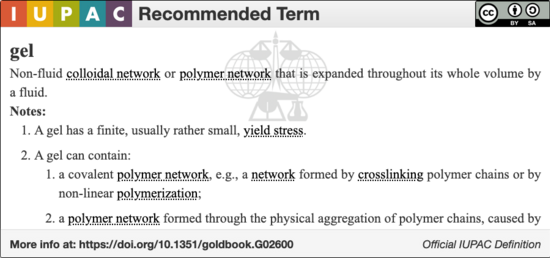
IUPAC definition for a gel

Gels are mostly liquid by mass, yet they behave like solids because of a three-dimensional cross-linked network within the liquid. It is the cross-linking within the fluid that gives a gel its structure (hardness) and contributes to the adhesive stick (tack). In this way, gels are a dispersion of molecules of a liquid within a solid medium. The word gel was coined by 19th-century Scottish chemist Thomas Graham by clipping from gelatine.[4]

The process of forming a gel is called gelation.

Composition

[edit]

Gels consist of a solid three-dimensional network that spans the volume of a liquid medium and ensnares it through surface tension effects. This internal network structure may result from physical bonds such as polymer chain entanglements (see polymers) (physical gels) or chemical bonds such as disulfide bonds (see thiomers) (chemical gels), as well as crystallites or other junctions that remain intact within the extending fluid. Virtually any fluid can be used as an extender including water (hydrogels), oil, and air (aerogel). Both by weight and volume, gels are mostly fluid in composition and thus exhibit densities similar to those of their constituent liquids. Edible jelly is a common example of a hydrogel and has approximately the density of water.

Polyionic polymers

[edit]

Polyionic polymers are polymers with an ionic functional group. The ionic charges prevent the formation of tightly coiled polymer chains. This allows them to contribute more to viscosity in their stretched state, because the stretched-out polymer takes up more space. This is also the reason gel hardens. See polyelectrolyte for more information.

Types

[edit]

Colloidal gels

[edit]

A colloidal gel consists of a percolated network of particles in a fluid medium,[5] providing mechanical properties,[6] in particular the emergence of elastic behaviour.[7] The particles can show attractive interactions through osmotic depletion or through polymeric links.[8]

Colloidal gels have three phases in their lifespan: gelation, aging and collapse.[9][10] The gel is initially formed by the assembly of particles into a space-spanning network, leading to a phase arrest. In the aging phase, the particles slowly rearrange to form thicker strands, increasing the elasticity of the material. Gels can also be collapsed and separated by external fields such as gravity.[11] Colloidal gels show linear response rheology at low amplitudes.[12] These materials have been explored as candidates for a drug release matrix.[13]

Hydrogels

[edit]
Hydrogel of a superabsorbent polymer

A hydrogel is a network of polymer chains that are hydrophilic, sometimes found as a colloidal gel in which water is the dispersion medium. A three-dimensional solid results from the hydrophilic polymer chains being held together by cross-links.[clarification needed] Because of the inherent cross-links, the structural integrity of the hydrogel network does not dissolve from the high concentration of water.[14] Hydrogels are highly absorbent (they can contain over 90% water) natural or synthetic polymeric networks. Hydrogels also possess a degree of flexibility very similar to natural tissue, due to their significant water content. As responsive "smart materials," hydrogels can encapsulate chemical systems which upon stimulation by external factors such as a change of pH may cause specific compounds such as glucose to be liberated to the environment, in most cases by a gel-sol transition to the liquid state.[15] Chemomechanical polymers are mostly also hydrogels, which upon stimulation change their volume and can serve as actuators or sensors. The first appearance of the term 'hydrogel' in the literature was in 1894.[16]
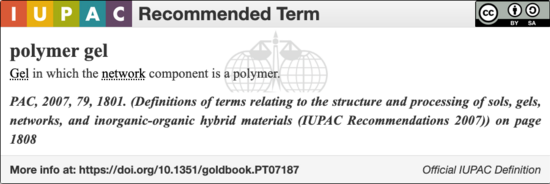
IUPAC definition for a polymer gel

Organogels

[edit]

An organogel is a non-crystalline, non-glassy thermoreversible (thermoplastic) solid material composed of a liquid organic phase entrapped in a three-dimensionally cross-linked network. The liquid can be, for example, an organic solvent, mineral oil, or vegetable oil. The solubility and particle dimensions of the structurant are important characteristics for the elastic properties and firmness of the organogel. Often, these systems are based on self-assembly of the structurant molecules.[17][18] (An example of formation of an undesired thermoreversible network is the occurrence of wax crystallization in petroleum.[19])

Organogels have potential for use in a number of applications, such as in pharmaceuticals,[20] cosmetics, art conservation,[21] and food.[22]

Xerogels

[edit]
IUPAC definition for a xerogel
https://doi.org/10.1351/goldbook.X06700.

A xerogel /ˈzɪərˌɛl/ is a solid formed from a gel by drying with unhindered shrinkage. Xerogels usually retain high porosity (15–50%) and enormous surface area (150–900 m2/g), along with very small pore size (1–10 nm). When solvent removal occurs under supercritical conditions, the network does not shrink and a highly porous, low-density material known as an aerogel is produced. Heat treatment of a xerogel at elevated temperature produces viscous sintering (shrinkage of the xerogel due to a small amount of viscous flow) which results in a denser and more robust solid, the density and porosity achieved depend on the sintering conditions.

Nanocomposite hydrogels

[edit]

Nanocomposite hydrogels[23][24] or hybrid hydrogels, are highly hydrated polymeric networks, either physically or covalently crosslinked with each other and/or with nanoparticles or nanostructures.[25] Nanocomposite hydrogels can mimic native tissue properties, structure and microenvironment due to their hydrated and interconnected porous structure. A wide range of nanoparticles, such as carbon-based, polymeric, ceramic, and metallic nanomaterials can be incorporated within the hydrogel structure to obtain nanocomposites with tailored functionality. Nanocomposite hydrogels can be engineered to possess superior physical, chemical, electrical, thermal, and biological properties.[23][26]

Properties

[edit]

Many gels display thixotropy – they become fluid when agitated, but resolidify when resting. In general, gels are apparently solid, jelly-like materials. It is a type of non-Newtonian fluid. By replacing the liquid with gas it is possible to prepare aerogels, materials with exceptional properties including very low density, high specific surface areas, and excellent thermal insulation properties.

Thermodynamics of gel deformation

[edit]

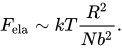
A gel is in essence the mixture of a polymer network and a solvent phase. Upon stretching, the network crosslinks are moved further apart from each other. Due to the polymer strands between crosslinks acting as entropic springs, gels demonstrate elasticity like rubber (which is just a polymer network, without solvent). This is so because the free energy penalty to stretch an ideal polymer segment monomers of size between crosslinks to an end-to-end distance is approximately given by[27]

This is the origin of both gel and rubber elasticity. But one key difference is that gel contains an additional solvent phase and hence is capable of having significant volume changes under deformation by taking in and out solvent. For example, a gel could swell to several times its initial volume after being immersed in a solvent after equilibrium is reached. This is the phenomenon of gel swelling. On the contrary, if we take the swollen gel out and allow the solvent to evaporate, the gel would shrink to roughly its original size. This gel volume change can alternatively be introduced by applying external forces. If a uniaxial compressive stress is applied to a gel, some solvent contained in the gel would be squeezed out and the gel shrinks in the applied-stress direction.

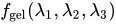
To study the gel mechanical state in equilibrium, a good starting point is to consider a cubic gel of volume that is stretched by factors , and in the three orthogonal directions during swelling after being immersed in a solvent phase of initial volume . The final deformed volume of gel is then and the total volume of the system is , that is assumed constant during the swelling process for simplicity of treatment. The swollen state of the gel is now completely characterized by stretch factors , and and hence it is of interest to derive the deformation free energy as a function of them, denoted as . For analogy to the historical treatment of rubber elasticity and mixing free energy, is most often defined as the free energy difference after and before the swelling normalized by the initial gel volume , that is, a free energy difference density. The form of naturally assumes two contributions of radically different physical origins, one associated with the elastic deformation of the polymer network, and the other with the mixing of the network with the solvent. Hence, we write[28]

We now consider the two contributions separately. The polymer elastic deformation term is independent of the solvent phase and has the same expression as a rubber, as derived in the Kuhn's theory of rubber elasticity:

where denotes the shear modulus of the initial state. On the other hand, the mixing term is usually treated by the Flory-Huggins free energy of concentrated polymer solutions , where is polymer volume fraction. Suppose the initial gel has a polymer volume fraction of , the polymer volume fraction after swelling would be since the number of monomers remains the same while the gel volume has increased by a factor of . As the polymer volume fraction decreases from to , a polymer solution of concentration and volume is mixed with a pure solvent of volume to become a solution with polymer concentration and volume . The free energy density change in this mixing step is given as


where on the right-hand side, the first term is the Flory–Huggins energy density of the final swollen gel, the second is associated with the initial gel and the third is of the pure solvent prior to mixing. Substitution of leads to

Note that the second term is independent of the stretching factors , and and hence can be dropped in subsequent analysis. Now we make use of the Flory-Huggins free energy for a polymer-solvent solution that reads[29]

where is monomer volume, is polymer strand length and is the Flory-Huggins energy parameter. Because in a network, the polymer length is effectively infinite, we can take the limit and reduces to

Substitution of this expression into and addition of the network contribution leads to[28]

This provides the starting point to examining the swelling equilibrium of a gel network immersed in solvent. It can be shown that gel swelling is the competition between two forces, one is the osmotic pressure of the polymer solution that favors the take in of solvent and expansion, the other is the restoring force of the polymer network elasticity that favors shrinkage. At equilibrium, the two effects exactly cancel each other in principle and the associated , and define the equilibrium gel volume. In solving the force balance equation, graphical solutions are often preferred.

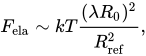
In an alternative, scaling approach, suppose an isotropic gel is stretch by a factor of in all three directions. Under the affine network approximation, the mean-square end-to-end distance in the gel increases from initial to and the elastic energy of one stand can be written as

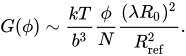
where is the mean-square fluctuation in end-to-end distance of one strand. The modulus of the gel is then this single-strand elastic energy multiplied by strand number density to give[27]

This modulus can then be equated to osmotic pressure (through differentiation of the free energy) to give the same equation as we found above.

Modified Donnan equilibrium of polyelectrolyte gels

[edit]

Consider a hydrogel made of polyelectrolytes decorated with weak acid groups that can ionize according to the reaction

is immersed in a salt solution of physiological concentration. The degree of ionization of the polyelectrolytes is then controlled by the and due to the charged nature of and , electrostatic interactions with other ions in the systems. This is effectively a reacting system governed by acid-base equilibrium modulated by electrostatic effects, and is relevant in drug delivery, sea water desalination and dialysis technologies. Due to the elastic nature of the gel, the dispersion of in the system is constrained and hence, there will be a partitioning of salts ions and inside and outside the gel, which is intimately coupled to the polyelectrolyte degree of ionization. This ion partitioning inside and outside the gel is analogous to the partitioning of ions across a semipemerable membrane in classical Donnan theory, but a membrane is not needed here because the gel volume constraint imposed by network elasticity effectively acts its role, in preventing the macroions to pass through the fictitious membrane while allowing ions to pass.[30]

The coupling between the ion partitioning and polyelectrolyte ionization degree is only partially by the classical Donnan theory. As a starting point we can neglect the electrostatic interactions among ions. Then at equilibrium, some of the weak acid sites in the gel would dissociate to form that electrostatically attracts positive charged and salt cations leading to a relatively high concentration of and salt cations inside the gel. But because the concentration of is locally higher, it suppresses the further ionization of the acid sites. This phenomenon is the prediction of the classical Donnan theory.[31] However, with electrostatic interactions, there are further complications to the picture. Consider the case of two adjacent, initially uncharged acid sites are both dissociated to form . Since the two sites are both negatively charged, there will be a charge-charge repulsion along the backbone of the polymer than tends to stretch the chain. This energy cost is high both elastically and electrostatically and hence suppress ionization. Even though this ionization suppression is qualitatively similar to that of Donnan prediction, it is absent without electrostatic consideration and present irrespective of ion partitioning. The combination of both effects as well as gel elasticity determines the volume of the gel at equilibrium.[30] Due to the complexity of the coupled acid-base equilibrium, electrostatics and network elasticity, only recently has such system been correctly recreated in computer simulations.[30][32]

Animal-produced gels

[edit]

Some species secrete gels that are effective in parasite control. For example, the long-finned pilot whale secretes an enzymatic gel that rests on the outer surface of this animal and helps prevent other organisms from establishing colonies on the surface of these whales' bodies.[33]

Hydrogels existing naturally in the body include mucus, the vitreous humor of the eye, cartilage, tendons and blood clots. Their viscoelastic nature results in the soft tissue component of the body, disparate from the mineral-based hard tissue of the skeletal system. Researchers are actively developing synthetically derived tissue replacement technologies derived from hydrogels, for both temporary implants (degradable) and permanent implants (non-degradable). A review article on the subject discusses the use of hydrogels for nucleus pulposus replacement, cartilage replacement, and synthetic tissue models.[34]

Applications

[edit]

Many substances can form gels when a suitable thickener or gelling agent is added to their formula. This approach is common in the manufacture of a wide range of products, from foods to paints and adhesives.

In fiber optic communications, a soft gel resembling hair gel in viscosity is used to fill the plastic tubes containing the fibers. The main purpose of the gel is to prevent water intrusion if the buffer tube is breached, but the gel also buffers the fibers against mechanical damage when the tube is bent around corners during installation, or flexed. Additionally, the gel acts as a processing aid when the cable is being constructed, keeping the fibers central whilst the tube material is extruded around it.

See also

[edit]

References

[edit]
[edit]
Revisions and contributorsEdit on WikipediaRead on Wikipedia
from Grokipedia
A gel is a colloidal state of matter characterized by a cross-linked network of polymer chains or particles that entraps a substantial quantity of liquid, typically resulting in a soft, solid-like or semi-rigid material with viscoelastic properties. This structure allows gels to exhibit a storage modulus (G′) with a pronounced plateau extending over timescales of at least seconds, where the loss modulus (G″) is significantly smaller than G′, distinguishing them from simple liquids or solids. First described by Thomas Graham in 1861 as substances like gelatin and starch that diffuse slowly, gels were later recognized by Hermann Staudinger in the 1920s as polymer networks, contributing to his 1953 Nobel Prize in Chemistry. Gels are broadly classified into chemical and physical types based on the nature of their cross-links. Chemical gels feature irreversible covalent bonds formed through processes like of monomers with multiple functional groups, such as poly(acrylamide) cross-linked with . In contrast, physical gels rely on reversible associations, including hydrogen bonding, ionic interactions, or hydrophobic effects, as seen in gelatin's triple helices or agarose's double helices, which can undergo sol-gel transitions with changes in or . A prominent subclass, hydrogels, incorporates as the primary (often >90% by weight), enabling high swelling capacities—up to 400 times their dry weight in some cases—and responsiveness to stimuli like or . The properties of gels, including elasticity and swelling, are governed by cross-link density and solvent quality, as theorized by and William Rehner in 1943. The sol-gel transition occurs at a critical gel point, where the system shifts from a liquid sol to a solid gel via of the network, often modeled with a of approximately 2 for the divergence. Gels find diverse applications across fields: in for , tissue engineering scaffolds with controlled pore sizes (20–250 µm), and wound dressings; in for products like desserts and jellies; in for formulations like hair and skin gels; and in advanced materials for sensors, actuators, and using polymer gel systems like PAG or BANG gels.

Fundamentals

Definition

A gel is defined as a non-fluid colloidal or that is expanded throughout its whole volume by a . These semi-solid colloidal systems consist of a three-dimensional swollen with , typically comprising 90-99% by weight. Gels exhibit a biphasic nature, featuring a solid-like continuous phase formed by the and a liquid-like dispersed phase of the swollen . Key characteristics include viscoelastic behavior, where the material responds to stress with both elastic recovery and viscous flow, allowing it to deform without permanent flow while maintaining structural integrity under moderate stress. Gels are classified as a form of soft condensed , occupying an intermediate state between liquids and solids due to their ability to store energy elastically yet dissipate it viscously over time. Everyday examples, such as desserts or hair styling gels, illustrate this unique combination of fluidity and solidity.

Historical Overview

The scientific study of gels originated in the early with observations of , a collagen-derived substance exhibiting jelly-like properties. Scottish chemist Thomas Graham conducted experiments on materials such as , , and , noting their slow diffusion compared to crystalloids like salts. In 1861, Graham coined the term "" (from Greek for "glue-like") to describe these non-crystalline substances that form semi-solid states in solution, using as the prototypical example. Advancements in the shifted focus to theoretical models of gel structure. In 1943, and John Rehner formulated a seminal theory for cross-linked networks, integrating Flory-Huggins solution with affine network elasticity to predict equilibrium swelling behavior under osmotic and elastic forces. This work built on earlier concepts, including contributions from A. V. Tobolsky, who in 1945 described superposed elastic and viscous behaviors in cross-linked systems and later applied chain configuration models to rubber-like gels in 1961. Flory's broader research, encompassing chain statistics and network formation, earned him the 1974 for foundational insights into macromolecules that directly informed gel science. Post-1950 developments marked the transition to engineered gels. In 1960, and Drahoslav Lím synthesized the first hydrophilic (pHEMA) hydrogels, demonstrating and water retention suitable for soft contact lenses. The saw the rise of stimuli-responsive "smart" gels, which alter volume or properties in response to triggers like temperature or pH, evolving from earlier studies into versatile materials. In the , nanocomposite gels incorporating nanoparticles into matrices enhanced mechanical toughness and enabled precise , addressing limitations of traditional hydrogels. By the , advances in gels have facilitated intricate tissue scaffolds, with polysaccharide-based bioinks improving printability and cell viability for regenerative applications.

Composition and Formation

Molecular Components

Gels are primarily composed of hydrophilic or amphiphilic polymers that form the three-dimensional network structure, trapping molecules within the matrix. Common examples include (PAAm), which provides mechanical flexibility and is widely used in stretchable organogels, and alginate, a natural that enables ionic crosslinking for biomedical applications. These polymers swell upon absorption due to their affinity for the liquid phase, creating a semi-solid state essential for gel functionality. Solvents constitute the dispersed phase in gels, with serving as the primary medium in hydrogels to facilitate swelling through bonding and . In organogels, organic liquids such as (DMSO) or (EG) are employed, enabling phase dispersion of hydrophobic components and preventing dehydration or freezing at low temperatures. These solvents play a critical role in determining gel volume and stability, as their polarity influences the polymer-solvent interactions that drive expansion or contraction. Crosslinkers are vital for stabilizing the polymer network, categorized into chemical agents that form covalent bonds and physical interactions that rely on non-covalent forces. Chemical crosslinkers, such as , react with or groups on polymers like to create irreversible covalent linkages, enhancing mechanical strength and longevity in applications like . In contrast, physical crosslinkers involve hydrogen bonding, as seen in poly() cryogels via freeze-thawing cycles, or ionic interactions, such as calcium ions with alginate, which allow for reversible and stimuli-responsive gelation. These mechanisms ensure the gel maintains its structure while permitting tunable properties. Polyionic polymers, or polyelectrolytes, incorporate charged groups that enable electrostatic interactions within the gel network, significantly influencing swelling behavior and mechanical integrity. For instance, features carboxylate anions that repel each other under basic conditions, promoting expansion, while multivalent cations like Ca²⁺ screen these charges to induce collapse at concentrations around 1 mM. These electrostatic forces create ionic crosslinks in double-network gels, yielding high with fracture stresses up to 8 MPa, and support in multilayered structures for controlled migration and conductivity. Examples like and chitosan-based polyelectrolyte complexes further demonstrate how modulates drug release in pH-sensitive environments. Non-polymeric gels arise from low-molecular-weight gelators (LMWGs) that self-assemble into fibrillar networks through non-covalent interactions, bypassing traditional chains. Peptides, such as Fmoc-FF or tripeptides with units, exemplify this class, forming β-sheet structures via bonding and hydrophobic effects to immobilize solvents in hydrogels with storage moduli ranging from 1 to 1200 kPa. These fibrillar architectures, often nanoscale chiral fibers, translate molecular design into macroscopic properties like remediation capabilities, achieving over 98% removal of Hg(II) or 1995 mg g⁻¹ uptake of Pb(II). Gaining prominence in the through advances in , LMWGs enable tunable, multi-component systems for applications in and sensing, distinct from covalent networks.

Formation Processes

Gel formation, or gelation, involves the transition from a sol state to a semi-solid gel network through the of molecular components. This -gel transition can occur via various mechanisms, including , cooling, or changes in and shear. In polymerization-induced gelation, monomers link to form extended chains that interconnect, creating a three-dimensional network. Thermoreversible gelation, exemplified by , arises upon cooling aqueous solutions below approximately 35°C, where denatured chains reassociate through hydrogen bonding and hydrophobic interactions, forming a transient network that can revert to sol upon heating. Gelation triggered by shifts involves or of functional groups, altering electrostatic interactions and promoting chain aggregation, while shear-induced gelation occurs under mechanical stress that aligns and entangles polymers in flow. Physical gelation relies on non-covalent interactions, such as entanglement, , or associative junctions, without forming permanent bonds. Entanglement arises when chains overlap sufficiently to restrict flow, as in concentrated solutions of flexible polymers. involves ordered alignment of chain segments into domains that act as physical crosslinks, common in semicrystalline polymers like . Associative mechanisms, such as hydrogen bonding or ionic clustering, create reversible junctions, allowing the network to respond dynamically to external stimuli. These processes are reversible and depend on equilibrium between association and dissociation kinetics. In contrast, chemical gelation produces irreversible networks through covalent crosslinking during polymerization. This typically involves free-radical, , or polymerization where multifunctional monomers or initiators form permanent bonds between chains, yielding a covalently linked . The resulting gel exhibits high stability and resistance to dissolution, as the crosslinks prevent chain disentanglement even under stress or exposure. The critical gelation point marks the onset of network formation, characterized by a divergence in relaxation time and a rapid increase in viscosity, transitioning the system from to elastic solid. This phenomenon is described by , which models gelation as a statistical process where clusters of connected units grow until a spanning cluster emerges at the . Near this point, properties like the gel fraction and follow power-law scaling with , such as β ≈ 0.45 for the order parameter and γ ≈ 1.74 for susceptibility, distinguishing gelation from classical mean-field predictions. Several factors influence the gelation process, including concentration thresholds, , and quality. Gelation requires a minimum polymer concentration to achieve sufficient chain overlap, typically above 2-5% by weight, below which the system remains a viscous sol. Temperature affects kinetics and ; cooling accelerates physical associations in thermoreversible systems, while elevated temperatures may promote chemical crosslinking in reactive mixtures. quality, quantified by the Flory-Huggins interaction parameter χ, determines chain —good solvents (χ < 0.5) favor extended conformations that hinder gelation, whereas poor solvents (χ > 0.5) induce collapse and aggregation, facilitating network formation. The thermodynamic basis for network stability during and after formation is captured by the Flory-Rehner theory, which balances mixing and elastic free energies to describe equilibrium swelling. Derived from the equality of chemical potential in the gel and external solvent phases (Δμ = 0 at equilibrium), the theory yields the relation for the chemical potential difference of the solvent: Δμ=RT[ϕ+ln(1ϕ)+χϕ2]+VeRT(ϕ1/3ϕ2)\Delta \mu = RT \left[ \phi + \ln(1 - \phi) + \chi \phi^2 \right] + V_e RT \left( \phi^{1/3} - \frac{\phi}{2} \right) Here, φ is the polymer volume fraction, χ is the Flory-Huggins interaction parameter, V_e is the per elastic chain (inversely related to density), R is the , and T is temperature. The first term accounts for the free energy of mixing, while the second represents the elastic deformation energy of the network. This equation highlights how density and interactions govern the extent of swelling, influencing the final gel structure post-formation.

Types

Hydrogels

Hydrogels are three-dimensional polymeric networks capable of absorbing and retaining large quantities of , typically exceeding 90% of their total weight, while maintaining structural integrity due to cross-linking of hydrophilic chains. These materials swell in aqueous environments without dissolving, forming soft, elastic structures that resemble living tissues. Common examples of hydrogels include natural polymers such as , derived from and used for its reversible gelation properties, and , a protein abundant in animal connective tissues that provides inherent . Synthetic hydrogels, in contrast, often utilize polyethylene glycol (PEG)-based systems, which offer tunable mechanical properties through controlled cross-linking densities and are widely employed in controlled-release applications. Hydrogels can be categorized into conventional types, formed primarily from chains alone, and variants, where inorganic fillers like clay platelets (e.g., laponite) or nanoparticles are incorporated to reinforce the network, significantly enhancing tensile strength and toughness without compromising water retention. For instance, clay-reinforced hydrogels exhibit up to tenfold improvements in compressive modulus compared to their conventional counterparts. Preparation of hydrogels typically involves aqueous , where monomers and cross-linkers are reacted in under initiation by , , or chemical agents to form covalent networks, or dissolution of pre-formed polymers followed by gelation through physical entanglement or ionic interactions. These methods allow for precise control over gel and elasticity, enabling customization for specific uses. A key trait of hydrogels is their high , stemming from the elevated content that closely mimics the hydrated of biological tissues, thereby minimizing inflammatory responses and supporting cell viability. This aqueous also facilitates nutrient diffusion and waste removal, akin to natural soft tissues. Recent advancements in the 2020s have focused on bio-orthogonally crosslinkable hydrogels, which employ reactions—such as tetrazine-norbornene cycloadditions—orthogonal to biological processes, enabling gelation within living organisms without from initiators or byproducts. These systems, often based on or PEG, allow for precise, on-demand formation , addressing limitations of traditional methods in dynamic physiological environments. In general, hydrogels exhibit swelling behavior governed by the balance between polymer-solvent interactions and elastic retraction forces within the network.

Organogels

Organogels are three-dimensional networks composed of polymers, supramolecular assemblies, or fibrillar structures that immobilize organic liquids, such as oils, hydrocarbons, or other non-aqueous solvents, forming a semi-solid state with up to 99% liquid content by weight. Unlike fluid organic liquids, these networks trap the solvent through physical entrapment rather than chemical bonding, resulting in viscoelastic materials that exhibit solid-like behavior under low stress and liquid-like flow under high shear. This structure arises from the self-organization of gelators at concentrations typically below 5 wt%, enabling the formation of stable gels in hydrophobic environments. The formation of organogels primarily involves the of low-molecular-weight organogelators (LMWGs) or polymeric components, driven by non-covalent interactions such as π-π stacking, van der Waals forces, and hydrogen bonding. For instance, derivatives, like cholesteryl , self-assemble into fibrillar networks through and preferential directional growth, often triggered by cooling from a solution state or via nucleation-controlled processes. , a phospholipid-based LMWG, forms reverse cylindrical micelles in apolar solvents like when combined with polar co-solvents, creating interlaced fibers that immobilize the liquid phase. These mechanisms contrast with covalent crosslinking, though brief references to such methods highlight their role in enhancing network stability without altering the primary . Representative examples include (PDMS)-based organogels, which incorporate oils to form stable structures used in for their smooth texture and emollient properties. organogels, often formulated with oils like or , serve as carriers in systems, enabling controlled release of hydrophobic therapeutics such as miconazole nitrate for topical treatment of conditions, with retention rates up to 85%. In industrial contexts, these gels demonstrate tunability; for example, organogels can adjust viscosity in fuels or lubricants by varying gelator concentration, achieving absorbencies of 233–1872% for hydrocarbons like . Organogels exhibit unique properties suited to non-aqueous systems, including high stability in hydrophobic media, thermoreversibility, and to stimuli like or shear, which allow for adjustable rheological profiles. Their lower polarity compared to hydrogels prevents compatibility with aqueous environments, often leading to upon exposure, but this enables applications in oil-based formulations where water-induced instability is undesirable. These attributes make organogels valuable for scenarios requiring solvent-specific immobilization without hydration.

Xerogels and Aerogels

Xerogels and aerogels represent desiccated forms of gels, where the liquid phase is removed to yield , porous structures that retain aspects of the original gel network but exhibit distinct characteristics based on the drying method. Unlike swollen gels, these dried variants emphasize and surface area for applications requiring lightweight, high-capacity materials. Xerogels form through ambient or evaporative drying, leading to shrinkage from forces, while aerogels employ to minimize collapse, preserving an open, three-dimensional porous architecture. Xerogels are obtained by evaporating the from a wet gel precursor, such as a , resulting in a shrunken, porous solid with interconnected pores typically in the meso- to macro-range. This process induces significant volume reduction due to during drying, yielding materials with surface areas often exceeding 500 m²/g. Silica xerogels, for instance, are widely used as catalysts owing to their high and , enabling efficient reactant and active site exposure in . Aerogels, in contrast, are produced via , where the solvent is replaced by a —commonly —to eliminate liquid-vapor interfaces and prevent network collapse. This method, pioneered in the early , results in ultralight solids with porosities up to 99% and densities as low as 0.005 g/cm³ for silica variants. The preserved yields exceptionally high specific surface areas, reaching up to 1000 m²/g, alongside low thermal conductivity values around 0.02 W/m·K, making them superior insulators. However, their brittle nature often limits mechanical robustness, with compressive strengths typically below 1 MPa. These materials' unique properties stem from their hierarchical porous structures: xerogels feature denser, collapsed pores that enhance mechanical integrity at the cost of reduced openness, whereas aerogels maintain nanoscale voids for maximal gas entrapment and minimal solid conduction. In applications, silica aerogels served as particle captors in NASA's Stardust mission, successfully collecting comet dust in 2006 due to their low and gentle impact absorption. Recent advances in the 2020s have focused on carbon aerogels for , leveraging their conductivity and in supercapacitors with capacitances exceeding 200 F/g.

Colloidal and Nanocomposite Gels

Colloidal gels consist of three-dimensional networks formed by the aggregation of colloidal particles, typically ranging from nanometers to micrometers in size, which arrest the system's dynamics and impart solid-like viscoelastic properties to an otherwise fluid suspension. This gelation arises from attractive interparticle interactions, such as depletion forces or van der Waals attractions, leading to a percolating that spans the sample . Formation often occurs through processes like precipitation, where particles nucleate and aggregate within a solvent, or dispersion mixing, where pre-formed particles are dispersed and induced to flocculate under controlled conditions such as pH adjustment or addition of electrolytes. A representative example is silica nanoparticle-based colloidal gels used in thixotropic paints, where the particles form reversible networks that provide shear-thinning behavior—liquefying under applied stress for easy application and reforming at rest to prevent sagging. These gels exhibit enhanced mechanical strength through particle bridging, where aggregated clusters distribute stress more effectively, and display characteristic shear-thinning that enables flow under shear while maintaining structural integrity otherwise. Nanocomposite gels extend this concept by incorporating nanofillers into polymer matrices, particularly hydrogels, to achieve superior toughness and multifunctionality beyond traditional polymer networks. In these systems, nanofillers such as graphene oxide or layered clays (e.g., montmorillonite) are dispersed at low loadings (often 0.1–5 wt%) within a crosslinked polymer network, forming hybrid structures where the fillers act as physical crosslinks or energy dissipators. The addition of nano-clays, for instance, can increase tensile strength to around 1.1 MPa and enhance elasticity modulus by promoting ionic interactions and sacrificial bonds that absorb energy during deformation. Graphene oxide nanofillers similarly toughen hydrogels by facilitating hydrogen bonding and π-π stacking with the polymer chains, leading to improved fracture resistance and self-healing capabilities in materials like poly(acrylic acid) composites, which achieve tensile strengths up to 777 kPa and work of extension of 11.9 MJ m⁻³. Formation typically involves dispersion mixing of exfoliated nanofillers into monomer solutions followed by in situ polymerization, ensuring uniform distribution and strong interfacial adhesion. A prominent example of clay-polymer hybrids is Laponite-reinforced gels, where discotic Laponite nanoparticles (synthetic clay) are integrated into the network to create dual-crosslinked structures with exceptional toughness. These hydrogels leverage Laponite's platelet-like morphology for physical reinforcement, resulting in compressive strengths exceeding 200 kPa and elongations up to 854% in ionic conductive variants. The particle bridging in such systems enhances overall mechanical integrity by distributing loads across the nanofiller-polymer interfaces, while maintaining shear-thinning behavior suitable for injectable or 3D-printable applications. Recent advances as of 2025 highlight MXene-based gels for , where two-dimensional MXene nanosheets (e.g., Ti₃C₂Tₓ) are incorporated into or matrices to form conductive, stretchable films with electrical conductivities over 10,000 S cm⁻¹ and biodegradability. These gels enable wearable sensors and human-machine interfaces by combining MXene's metallic conductivity with the gel's flexibility, addressing gaps in prior materials through scalable fabrication methods like solution casting.

Properties

Mechanical and Rheological Properties

Gels exhibit viscoelastic behavior, characterized by their ability to store while dissipating it through viscous flow, which arises from the interplay between their crosslinked networks and molecules. In oscillatory shear rheology, the storage modulus GG', representing the elastic component, typically exceeds the loss modulus GG'', the viscous component, across a range of frequencies, confirming the dominance of solid-like elasticity in gels. This frequency-independent plateau in GG' distinguishes gels from simple liquids, where GG'' predominates, and highlights their capacity to resist deformation without permanent flow. Rheological models such as the Maxwell model provide a framework for understanding in gels, depicting the material as a spring (elastic modulus GG) and (viscosity η\eta) in series. The relaxation time τ\tau is given by τ=η/G\tau = \eta / G, quantifying the timescale over which elastic stress decays to zero under constant strain, which is particularly relevant for transient responses in soft materials like hydrogels. This model captures the of stress in gels, aiding predictions of their time-dependent deformation under load. Mechanical testing of gels often involves compression, tensile, and assessments to evaluate their load-bearing capacity. For instance, many hydrogels display compressive moduli and strengths in the range of 10-100 kPa, akin to soft tissues, while tensile tests reveal energies that can reach several in toughened variants through mechanisms like chain pull-out. These properties ensure gels can undergo large deformations—up to 1000% strain in some cases—without , as measured by the critical stress at . Thixotropy in gels refers to the reversible decrease in under applied shear, followed by recovery upon rest, which is crucial for applications requiring flow-on-demand. This shear-thinning behavior, often coupled with a yield stress (typically 10-1000 Pa), allows gels to remain static below the yield point but flow above it, enabling injectability through needles without permanent structural damage. In injectable hydrogels, for example, yield stresses above 100 Pa ensure depot formation post-injection, while thixotropic recovery maintains integrity. The mechanical and rheological properties of gels are strongly influenced by factors such as density, which directly modulates by altering the network's elasticity. Higher densities increase the storage modulus GG' and overall rigidity, often by orders of magnitude—for instance, doubling density in gels can enhance by approximately 40 times—while reducing extensibility and promoting more affine deformation. This tuning via density allows precise control over gel without altering composition significantly.

Thermodynamic and Equilibrium Properties

The thermodynamic and equilibrium properties of gels are governed by the balance between mixing, elastic, and electrostatic contributions to the free energy, determining their stable swollen states. In particular, the swelling equilibrium arises from the competition between the elastic retraction of the crosslinked network, which resists expansion, and the exerted by the and any dissolved species within the gel. This balance dictates the degree of swelling, where excessive drives solvent uptake, while network elasticity limits it to prevent indefinite expansion. The Flory-Rehner theory provides a foundational framework for quantifying this equilibrium in neutral gels. The total change in upon swelling, ΔG\Delta G, is expressed as the sum of the mixing free energy ΔGmixing\Delta G_\text{mixing} and the elastic free energy ΔGelastic\Delta G_\text{elastic}: ΔG=ΔGmixing+ΔGelastic\Delta G = \Delta G_\text{mixing} + \Delta G_\text{elastic} At equilibrium, ΔG=0\Delta G = 0, leading to the swelling ratio Q=Vgel/VdryQ = V_\text{gel} / V_\text{dry}, which relates the volume of the swollen gel to its through parameters such as the polymer-solvent interaction parameter χ\chi and the crosslink density. This model predicts that higher crosslink density reduces swelling by increasing ΔGelastic\Delta G_\text{elastic}, while favorable solvent interactions (low χ\chi) enhance it via ΔGmixing\Delta G_\text{mixing}. Experimental validations confirm its applicability to hydrogels like poly(), where swelling ratios can exceed 1000 under optimal conditions. For gels, which contain fixed charges along the chains, the modified Donnan equilibrium extends this by accounting for ion partitioning across the gel network boundary. The of each ii must be equal inside and outside the gel, μigel=μisol\mu_i^\text{gel} = \mu_i^\text{sol}, but the presence of immobile fixed charges induces an electrostatic potential difference (Donnan potential) that favors entry and excludes co-ions, leading to selective distribution. This results in an additional osmotic contribution from the uneven concentrations, significantly enhancing swelling compared to neutral gels; for instance, in networks, co-ion exclusion can amplify by factors of 10 or more in low-salt environments. The theory, originally adapted by Flory for charged systems, integrates seamlessly with the Flory-Rehner framework to predict volume changes under varying ionic strengths. The of deformation in gels draws from theory, treating the network as an entropic spring where deformation arises from changes in chain configurations. The GG is given by G=νRTG = \nu RT, with ν\nu as the effective chain density between crosslinks, RR the , and TT the temperature; this reflects the entropic restoring force upon stretching, as chains seek higher-probability coiled states. In swollen gels, ν\nu decreases with swelling, softening the modulus proportionally to Q1/3Q^{-1/3}, enabling large reversible deformations up to strains of 100% without in materials like poly(dimethylsiloxane) networks. This model underpins the elastic term in Flory-Rehner and holds for both dry elastomers and hydrated gels under small deformations. Responsive gels exhibit abrupt phase transitions in volume under external stimuli, driven by cooperative changes in the free energy landscape. A prominent example is the volume phase transition in poly(N-isopropylacrylamide) (PNIPAAm) gels, which undergo a discontinuous collapse from a swollen to a shrunken state at approximately 32°C due to the lower critical solution temperature behavior of PNIPAAm chains, where hydrophobic interactions dominate above the transition, minimizing ΔGmixing\Delta G_\text{mixing}. This first-order transition, first observed in nonionic PNIPAAm networks, results in volume changes exceeding 90% and has been modeled as a balance shift between elastic and mixing terms, enabling applications in temperature-sensitive actuators. Seminal studies confirmed the transition's sharpness and reversibility, distinguishing it from gradual swelling in non-responsive systems.

Biological Gels

Animal-Produced Gels

Animal-produced gels are naturally occurring hydrogel-like structures synthesized by various species to fulfill essential physiological roles, primarily composed of proteins, glycoproteins, and that enable high retention and structural adaptability. These gels often exhibit inherent to their biological origins, allowing seamless integration with living tissues without eliciting adverse immune responses. Unlike synthetic counterparts, they form through biological processes tailored to specific environmental demands, such as rapid response to injury or interaction with external threats. Prominent examples include , which consists of glycoproteins forming entangled networks that trap over 95% , creating a viscoelastic barrier in respiratory, gastrointestinal, and reproductive tracts. Egg white, primarily composed of ovalbumin (over 50% of total proteins), undergoes heat-induced denaturation to form a robust three-dimensional network via hydrophobic interactions, electrostatic forces, hydrogen bonding, and disulfide cross-links from exposed sulfhydryl groups. In marine invertebrates like , the —a gelatinous —comprises fibers embedded in a matrix of glycosaminoglycans (GAGs) and , providing while maintaining flexibility and hydration. Formation of these gels typically involves enzymatic crosslinking or secretion-induced gelation mechanisms. For instance, in blood clotting, enzymatically cleaves fibrinopeptides from fibrinogen, exposing binding sites that promote staggered into protofibrils and subsequent lateral aggregation into a branched network, stabilized by factor XIIIa. Mucus gelation occurs through secretion and , where densely glycosylated domains entangle to form bottlebrush-like structures, often enhanced by ionic interactions or pH changes in the extracellular environment. Similarly, gelation relies on denaturation of ovalbumin, leading to ordered protein and covalent crosslinking. These gels serve critical functions, including protection via barriers that lubricate epithelia, trap pathogens, and shield against mechanical damage and . gels like and provide structural support, enabling tissue resilience and wound sealing during . In predation and defense contexts, some animal secretions form gels, such as gastropod that immobilizes prey or deters predators through reversible gelation and properties. Unique properties include , allowing integration with host tissues, and self-healing capabilities triggered by biological cues; for example, networks remodel via enzymatic degradation and redeposition, while layers regenerate through continuous to repair epithelial breaches. Recent 2020s studies have highlighted the as a bioinspired gel-like , featuring a mechanical from a hydrated, protein- composite at the soft base (50% proteins, 15–20% ) to a rigid, dehydrated tip, achieved through histidine-rich protein coacervates infiltrating scaffolds for enhanced toughness and water-responsive stiffness.

Plant and Microbial Gels

gels play crucial roles in structural integrity and resource management within tissues, primarily through that form networks in response to environmental cues. , a key heteropolysaccharide abundant in cell walls and middle lamellae, undergoes gelation primarily in its low-methoxyl form via ionic linkages formed by calcium bridges between carboxyl groups on adjacent chains, enabling firm texture in ripening fruits like apples and . This process is modulated by , where lower acidity enhances dissociation of carboxyl groups and promotes bridging, contributing to cell wall rigidity during growth and stress responses. Another prominent example is , derived from the cell walls of such as and species, consisting of linear galactose-based polymers including and agaropectin that form thermoreversible gels through hydrogen bonding and helical aggregation upon cooling. These algal gels provide mechanical support in marine environments, aiding in osmotic and tissue cohesion. Microbial gels, produced by bacteria as extracellular polysaccharides (EPS), facilitate adhesion and protection in dynamic habitats. Alginate, synthesized by species like Pseudomonas aeruginosa and Azotobacter vinelandii, forms gels through ionic gelation with divalent cations such as calcium, creating egg-box structures that trap water and ions for structural stability. Gellan gum, an anionic heteropolysaccharide secreted by Sphingomonas paucimobilis (formerly Pseudomonas elodea), gels via cation-mediated crosslinking, forming transparent, brittle networks that support microbial communities in aqueous settings. Both are biosynthesized extracellularly through operon-directed polymerization and exported via secretion systems, with gelation often triggered by environmental shifts like ion availability or pH changes. In plants, these gels provide structural support by reinforcing cell walls against and invasion, as seen in pectin's role in maintaining firmness and agar's contribution to algal resilience. For microbes, gels underpin biofilm formation, where EPS matrices enhance adhesion to surfaces through sticky polymers and electrostatic interactions, enabling colonization of diverse substrates like or medical devices while protecting against and antibiotics. These natural crosslinking mechanisms, involving ions like calcium, parallel broader assembly processes but are finely tuned to biological contexts. Plant and microbial gels stand out for their renewability and edibility, derived from abundant biomass sources that biodegrade without environmental persistence. In the 2020s, emerging applications leverage these properties for sustainable packaging, such as alginate- and gellan-based edible films that reduce plastic use in food preservation by forming barriers against oxygen and moisture.

Synthesis Methods

Polymerization Techniques

Polymerization techniques for gels involve the formation of crosslinked networks directly from monomers, enabling the creation of hydrogel structures with tailored properties. These methods primarily encompass chain-growth and step-growth mechanisms, where initiators or catalysts drive the assembly of molecular chains into three-dimensional matrices capable of swelling in solvents. Chain-growth polymerizations, such as free radical processes, proceed rapidly through sequential addition of monomers to active chain ends, while step-growth involves stepwise between functional groups on growing oligomers. Free radical polymerization is a widely used chain-growth method for synthesizing hydrogels, particularly those based on , where initiators generate radicals to initiate addition and subsequent crosslinking. In this process, decomposes thermally or with accelerators like to form radicals that abstract hydrogens or add to double bonds, propagating chains until crosslinkers like incorporate branches leading to gelation. This technique yields hydrogels with high water content and biocompatibility, commonly employed in and due to its simplicity and control over via concentration. Step-growth polymerization, often via condensation reactions, constructs gel networks through repeated reactions between bifunctional monomers, eliminating small molecules like or alcohol to form linkages. For polyurethane hydrogels, diisocyanates react with polyols such as in a stepwise manner, building urethane bonds that enable soft, elastic networks with tunable thermoresponsiveness. This method allows incorporation of hydrophilic segments for swelling while maintaining mechanical integrity, as demonstrated in libraries of PEG-based s where molecular weight variations influence lower critical solution temperatures around 30-40°C. Controlled radical polymerizations, such as (ATRP), provide precise molecular weight control and low polydispersity in gel synthesis by reversibly deactivating radicals via catalysts like complexes. In ATRP for hydrogels, initiators with alkyl halides coordinate with ligands to generate controlled radicals from monomers like , enabling the formation of well-defined architectures for biomedical applications, including stimuli-responsive networks. This living variant minimizes termination, allowing sequential additions for block copolymer gels. Polymerization can occur , where monomers gelate within a mold or directly at the application site for conformal shapes, or preformed as bulk networks later shaped or swollen. approaches, often using photocrosslinking, facilitate molding of complex geometries like microstructured hydrogels via UV exposure in patterned molds, achieving resolutions down to 10 µm for cell encapsulation. Preformed gels, polymerized ex situ, offer easier handling but limit adaptability to irregular surfaces compared to methods. These techniques offer scalability for industrial production and , exemplified by UV-initiated polymerizations that cure gels in seconds under masks or projectors for layered constructs. UV systems with photoinitiators like Irgacure 2959 enable high conversion rates over 90% in acrylate-based hydrogels, supporting of patient-specific scaffolds. Recent advancements include click-chemistry polymerizations for orthogonal gelation, where bioorthogonal reactions like copper-free azide-alkyne cycloadditions enable selective, efficient network formation without interfering side reactions. In recent studies, thiol-ene click variants have been used to fabricate gelatin-norbornene hydrogels with dual orthogonal crosslinks, achieving gelation times under 1 minute and moduli up to 100 kPa for , highlighting their modularity over traditional methods.

Crosslinking and Assembly Methods

Crosslinking and assembly methods in gel formation involve the strategic linkage of pre-existing polymeric chains, particles, or molecular components to create three-dimensional networks, distinct from de novo polymerization. These techniques enable the tailoring of gel properties such as stability, responsiveness, and by controlling the density and type of interconnections. Chemical crosslinking establishes permanent covalent bonds, while physical methods rely on reversible non-covalent interactions, and leverages molecular design for spontaneous organization. Hybrid approaches integrate multiple strategies, often incorporating inorganic elements for enhanced functionality. Chemical crosslinking typically employs reactions that form covalent bonds between functional groups on chains, providing gels with high mechanical strength and resistance to dissociation. The , involving to α,β-unsaturated carbonyls, is widely used for its mild conditions and efficiency in aqueous environments, as demonstrated in the synthesis of hyaluronic acid-based hydrogels where thiolated polymers react with maleimide-functionalized counterparts. , particularly copper-free azide-alkyne , offers high specificity and , enabling the rapid assembly of gels from (PEG) precursors in biomedical contexts without toxic catalysts. These methods allow precise control over crosslinking density, influencing gel stiffness and degradation rates. Physical crosslinking, in contrast, utilizes non-covalent interactions that can be dynamically tuned, making it suitable for injectable or stimuli-responsive gels. Ionic crosslinking, exemplified by the interaction of alginate polymers with divalent cations like Ca²⁺, forms "egg-box" structures that rapidly gelify solutions under physiological conditions, as seen in alginate beads for . Hydrogen bonding and hydrophobic interactions provide additional physical links; for instance, poly(N-isopropylacrylamide) gels exploit temperature-induced hydrophobic associations to form networks above the . These interactions often result in shear-thinning behavior, briefly referencing rheological implications for processability. Self-assembly methods drive gelation through the spontaneous organization of low-molecular-weight components into fibrillar or micellar structures that entangle to form networks, particularly in organogels. Amphiphilic molecules, such as peptide-based gelators, self-assemble via π-π stacking and hydrophobic effects into nanofibers that immobilize organic solvents, as reported in cholesterol-derived organogelators that form stable gels at low concentrations (around 1-5 wt%). This approach is advantageous for solvent-specific applications, where the gelator's molecular geometry dictates fiber morphology and network strength. Hybrid crosslinking combines chemical and physical strategies, often integrating nanoparticles to reinforce gel networks in nanocomposites. For example, incorporating silica nanoparticles into covalently crosslinked gels significantly enhances tensile strength through interfacial interactions, creating robust materials for structural uses. Similarly, , a natural crosslinker derived from fruit, reacts with primary amines in or to form biocompatible gels via covalent bonds, offering low toxicity compared to synthetic alternatives like in scaffolds. Recent advancements in the have emphasized dynamic covalent crosslinking for adaptive gels, where bonds like disulfides or imines exchange under stimuli such as or light, enabling self-healing and remodeling. This is illustrated in boronate ester-linked hydrogels that respond to glucose for insulin delivery, highlighting the shift toward multifunctional, responsive materials. Such methods expand the utility of gels in dynamic environments while maintaining .

Applications

Biomedical Applications

Gels, particularly hydrogels, are extensively used in biomedical applications due to their , high water content, and tunable properties. In , they enable controlled and sustained release of therapeutics through or degradation mechanisms, improving and reducing side effects. For , gels act as scaffolds that mimic the , supporting , proliferation, and differentiation; pore sizes are typically engineered between 20 and 250 µm to facilitate nutrient transport and vascular ingrowth. Hydrogel-based wound dressings maintain a moist environment, absorb excess , and can incorporate agents or growth factors to accelerate and prevent infection. Additionally, polymer gel dosimeters such as gel (PAG) and BANG gels are employed in for accurate three-dimensional verification of dose distributions.

Industrial and Environmental Applications

Gels play a significant role in the as thickeners and stabilizers, particularly , which is derived from red seaweed and forms gels at low concentrations to enhance texture in dairy-based products. For instance, is commonly added to puddings and shakes at 0.5–3% w/w to provide clarity, prevent syneresis, and achieve a smooth consistency in water gels. In , organogels, including silicone-based variants, serve as effective delivery systems for moisturizers due to their lipophilic nature and ability to immobilize organic liquids in a three-dimensional network. These gels improve hydration by forming an occlusive barrier on the , with bigels—hybrids of organogels and hydrogels—demonstrating enhanced moisturizing effects compared to individual components. organogels, structured by or derivatives, also enhance spreadability and formulation stability in products like make-up and lotions. Silica xerogels are utilized in industrial chromatography as continuous column supports for (HPLC), offering high permeability and efficiency. Prepared from and derivatized for reversed-phase conditions, these xerogels achieve plate heights of approximately 65 μm and efficiencies up to 13,000 plates/m for analytes like , with back pressures as low as 632 psi at typical flow rates. In energy applications, aerogels provide superior owing to their nanoporous structure and low thermal conductivity, often below 0.03 W/(m·K). Silica and alumina-silica aerogels, reinforced with fibers like , are employed in industrial settings such as pipelines and high-temperature equipment, maintaining stability up to 1500°C while minimizing through conduction, , and . Conductive gels, particularly electrolytes, advance battery technology by enabling high ionic conductivity and mechanical flexibility; for example, dual-network designs in zinc-ion batteries yield conductivities of 27.2 mS cm⁻¹ and stable cycling over 1400 cycles. Recent post-2020 developments in carbon xerogels for supercapacitors focus on KOH activation to boost surface areas beyond 1800 m²/g, achieving specific capacitances of 23.3 F/g at 1 A/g with excellent cycle retention. Environmentally, superabsorbent polymers (SAPs), such as polyacrylamide-based hydrogels, improve retention in by absorbing hundreds of times their weight in , thereby reducing needs by up to 50% and enhancing crop yields in arid soils. Organogels, including cholesterol-derived low-molecular-weight gelators, facilitate cleanup by selectively solidifying hydrocarbons on surfaces at concentrations as low as 1% w/v, forming thermo-reversible networks that allow for oil recovery and gelator reuse without environmental harm. Post-2020 advances in gel-based carbon capture utilize porous adsorbents like hybrid nanomaterial gels, which offer high CO₂ selectivity and adsorption capacities due to tunable 3D structures, supporting sustainable CCUS processes with lower energy demands.

References

Add your contribution
Related Hubs
User Avatar
No comments yet.