Hubbry Logo
Hermann von HelmholtzHermann von HelmholtzMain
Open search
Hermann von Helmholtz
Community hub
Hermann von Helmholtz
logo
8 pages, 0 posts
0 subscribers
Be the first to start a discussion here.
Hermann von Helmholtz
from Wikipedia

Key Information

Helmholtz's polyphonic siren, Hunterian Museum, Glasgow

Hermann Ludwig Ferdinand von Helmholtz (/ˈhɛlmhlts/; German: [ˈhɛʁman fɔn ˈhɛlmˌhɔlts]; 31 August 1821 – 8 September 1894; "von" since 1883) was a German physicist and physician who made significant contributions in several scientific fields, particularly hydrodynamic stability.[2] The Helmholtz Association, the largest German association of research institutions, was named in his honour.[3]

In the fields of physiology and psychology, Helmholtz is known for his mathematics concerning the eye, theories of vision, ideas on the visual perception of space, colour vision research, the sensation of tone, perceptions of sound, and empiricism in the physiology of perception. In physics, he is known for his theories on the conservation of energy and on the electrical double layer, work in electrodynamics, chemical thermodynamics, and on a mechanical foundation of thermodynamics. Although credit is shared with Julius von Mayer, James Joule, and Daniel Bernoulli—among others—for the energy conservation principles that eventually led to the first law of thermodynamics, he is credited with the first formulation of the energy conservation principle in its maximally general form.[4]

As a philosopher, he is known for his philosophy of science, ideas on the relation between the laws of perception and the laws of nature, the science of aesthetics, and ideas on the civilizing power of science. By the late nineteenth century, Helmholtz's development of a broadly Kantian methodology, including the a priori determination of the manifold of possible orientations in perceptual space, had inspired new readings of Kant[4] and contributed to the late modern neo-Kantianism movement in philosophy.[5]

Biography

[edit]

Early years

[edit]

Helmholtz was born in Potsdam, the son of the local gymnasium headmaster, Ferdinand Helmholtz, who had studied classical philology and philosophy, and who was a close friend of the publisher and philosopher Immanuel Hermann Fichte. Helmholtz's work was influenced by the philosophy of Johann Gottlieb Fichte and Immanuel Kant. He tried to trace their theories in empirical matters like physiology.

As a young man, Helmholtz was interested in natural science, but his father wanted him to study medicine. Helmholtz earned a medical doctorate at Medizinisch-chirurgisches Friedrich-Wilhelm-Institute in 1842 and served a one-year internship at the Charité hospital[6] (because there was financial support for medical students).

Trained primarily in physiology, Helmholtz wrote on many other topics, ranging from theoretical physics to the age of the Earth, and to the origin of the Solar System.

University posts

[edit]

Helmholtz's first academic position was as a teacher of anatomy at the Academy of Arts in Berlin in 1848.[7] He then moved to take a post of associate professor of physiology at the Prussian University of Königsberg, where he was appointed in 1849. In 1855 he accepted a full professorship of anatomy and physiology at the University of Bonn. He was not particularly happy in Bonn, however, and three years later he transferred to the University of Heidelberg, in Baden, where he served as professor of physiology. In 1871 he accepted his final university position, as professor of physics at the Friedrich Wilhelm University in Berlin.

Research

[edit]
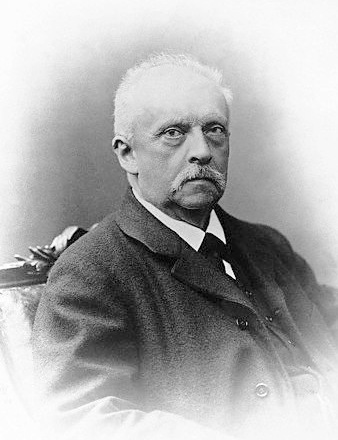
Helmholtz in 1848

Mechanics

[edit]

His first important scientific achievement, an 1847 treatise on the conservation of energy, was written in the context of his medical studies and philosophical background. His work on energy conservation came about while studying muscle metabolism. He tried to demonstrate that no energy is lost in muscle movement, motivated by the implication that there were no vital forces necessary to move a muscle. This was a rejection of the speculative tradition of Naturphilosophie and vitalism which was at that time a dominant philosophical paradigm in German physiology. He was working against the argument, promoted by some vitalists, that "living force" can power a machine indefinitely.[4]

Drawing on the earlier work of Sadi Carnot, Benoît Paul Émile Clapeyron and James Prescott Joule, he postulated a relationship between mechanics, heat, light, electricity and magnetism by treating them all as manifestations of a single force, or energy in today's terminology. He published his theories in his book Über die Erhaltung der Kraft (On the Conservation of Force, 1847).[8]

In the 1850s and 60s, building on the publications of William Thomson, Helmholtz and William Rankine helped popularize the idea of the heat death of the universe.

In fluid dynamics, Helmholtz made several contributions, including Helmholtz's theorems for vortex dynamics in inviscid fluids.

Sensory physiology

[edit]

Helmholtz was a pioneer in the scientific study of human vision and audition. Inspired by psychophysics, he was interested in the relationships between measurable physical stimuli and their correspondent human perceptions. For example, the amplitude of a sound wave can be varied, causing the sound to appear louder or softer, but a linear step in sound pressure amplitude does not result in a linear step in perceived loudness. The physical sound needs to be increased exponentially in order for equal steps to seem linear, a fact that is used in current electronic devices to control volume. Helmholtz paved the way in experimental studies on the relationship between the physical energy (physics) and its appreciation (psychology), with the goal in mind to develop "psychophysical laws".

The sensory physiology of Helmholtz was the basis of the work of Wilhelm Wundt, Helmholtz's student, who is considered one of the founders of experimental psychology. More explicitly than Helmholtz, Wundt described his research as a form of empirical philosophy and as a study of the mind as something separate. Helmholtz had, in his early repudiation of Naturphilosophie, stressed the importance of materialism, and was focusing more on the unity of "mind" and body.[9]

Ophthalmic optics

[edit]

In 1851, Helmholtz revolutionized the field of ophthalmology with the invention of the ophthalmoscope; an instrument used to examine the inside of the human eye. This made him world-famous overnight. Helmholtz's interests at that time were increasingly focused on the physiology of the senses. His main publication, titled Handbuch der Physiologischen Optik (Handbook of Physiological Optics or Treatise on Physiological Optics; English translation of the 3rd volume here), provided empirical theories on depth perception, colour vision, and motion perception, and became the fundamental reference work in his field during the second half of the nineteenth century. In the third and final volume, published in 1867, Helmholtz described the importance of unconscious inferences for perception. The Handbuch was first translated into English under the editorship of James P. C. Southall on behalf of the Optical Society of America in 1924–5. His theory of accommodation went unchallenged until the final decade of the 20th century.

Helmholtz continued to work for several decades on several editions of the handbook, frequently updating his work because of his dispute with Ewald Hering who held opposite views on spatial and colour vision. This dispute divided the discipline of physiology during the second half of the 1800s.

Nerve physiology

[edit]

In 1849, while at Königsberg, Helmholtz measured the speed at which the signal is carried along a nerve fibre. At that time most people believed that nerve signals passed along nerves immeasurably fast.[10] He used a recently dissected sciatic nerve of a frog and the calf muscle to which it attached. He used a galvanometer as a sensitive timing device, attaching a mirror to the needle to reflect a light beam across the room to a scale which gave much greater sensitivity.[10] Helmholtz reported[11][12] transmission speeds in the range of 24.6 – 38.4 meters per second.[10]

Acoustics and aesthetics

[edit]
Last photograph of von Helmholtz, taken three days before his final illness
The Helmholtz resonator (i) and instrumentation

In 1863, Helmholtz published Sensations of Tone, once again demonstrating his interest in the physics of perception. This book influenced musicologists into the twentieth century. Helmholtz invented the Helmholtz resonator to identify the various frequencies or pitches of the pure sine wave components of complex sounds containing multiple tones.[13]

Helmholtz showed that different combinations of resonators could mimic vowel sounds: Alexander Graham Bell in particular was interested in this but, not being able to read German, misconstrued Helmholtz's diagrams as meaning that Helmholtz had transmitted multiple frequencies by wire—which would allow multiplexing of telegraph signals—whereas, in reality, electrical power was used only to keep the resonators in motion. Bell failed to reproduce what he thought Helmholtz had done but later said that, had he been able to read German, he would not have gone on to invent the telephone on the harmonic telegraph principle.[14][15][16][17]

Helmholtz in 1881, portrait by Ludwig Knaus

The translation by Alexander J. Ellis was first published in 1875 (the first English edition was from the 1870 third German edition; Ellis's second English edition from the 1877 fourth German edition was published in 1885; the 1895 and 1912 third and fourth English editions were reprints of the second).[18]

Electromagnetism

[edit]

Helmholtz studied electrical oscillations from 1869 to 1871, and in a lecture delivered to the Naturhistorisch-medizinischen Verein zu Heidelberg (Natural History and Medical Association of Heidelberg) on 30 April 1869, titled On Electrical Oscillations, he indicated that the perceptible damped electrical oscillations in a coil connected to a Leyden jar were about 150 second in duration.[19]

In 1871, Helmholtz moved from Heidelberg to Berlin to become a professor of physics. He became interested in electromagnetism, and the Helmholtz equation is named for him. Although he made no major contributions to this field, his student Heinrich Rudolf Hertz became famous as the first to demonstrate electromagnetic radiation. Oliver Heaviside criticised Helmholtz's electromagnetic theory because it allowed the existence of longitudinal waves. Based on work on Maxwell's equations, Heaviside pronounced that longitudinal waves could not exist in a vacuum or a homogeneous medium. Heaviside did not note, however, that longitudinal electromagnetic waves can exist at a boundary or in an enclosed space.[20]

Philosophy

[edit]

Helmholtz's scientific work in physiology and mechanics occasioned much that he is known for in philosophy of science, including ideas on the relation between the laws of perception and the laws of nature and his rejection of the exclusive use of Euclidean geometry.[21]

His philosophy of science wavered between some version of empiricism and transcendentalism.[22] Despite the speculative associations of the latter, his philosophy of science is thoroughly indebted to his use of mathematical physics to supplant vitalism and articulate the general conservation of energy principle.[4]

His rejection of Euclidean geometry as the only possible science of space is central to understanding his appropriation of Kant's philosophy of space, which ostensibly requires Euclidean geometry to be that exclusive a priori science of physical space. Helmholtz introduced a new conception of the a priori in space: that of the determination of the manifold of possible orientations in perceptual space. These developments inspired new readings of Kant[4] and contributed to the rise of late modern neo-Kantianism movement in philosophy.

Students and associates

[edit]

Other students and research associates of Helmholtz at Berlin included Max Planck, Heinrich Kayser, Eugen Goldstein, Wilhelm Wien, Arthur König, Henry Augustus Rowland, Albert A. Michelson, Wilhelm Wundt, Fernando Sanford, Arthur Gordon Webster and Michael I. Pupin. Leo Koenigsberger, who was his colleague from 1869 to 1871 in Heidelberg, wrote the definitive biography of him in 1902.

Honours and legacy

[edit]
Helmholtz's statue in front of Humboldt University in Berlin
Decree awarding Helmholtz (listed in first page) the French Legion of Honour

Works

[edit]
  • Über die Erhaltung der Kraft (in German). Leipzig: Wilhelm Engelmann. 1889.
  • Vorlesungen über die elektromagnetische Theorie des Lichts (in German). Leipzig: Johann Ambrosius Barth. 1897.
  • Vorlesungen über die mathematischen Principien der Akustik (in German). Leipzig: Johann Ambrosius Barth. 1898.
  • Vorlesungen über die Dynamik discreter Massenpunkte (in German). Leipzig: Johann Ambrosius Barth. 1898.
  • Dynamik continuirlich verbreiteter Massen (in German). Leipzig: Johann Ambrosius Barth. 1902.
  • Vorlesungen über die Theorie der Wärme (in German). Leipzig: Johann Ambrosius Barth. 1903.
  • Vorlesungen über Theoretische Physik (in German). Leipzig: Johann Ambrosius Barth. 1903.

Translated works

[edit]

See also

[edit]

References

[edit]

Further reading

[edit]
[edit]
Revisions and contributorsEdit on WikipediaRead on Wikipedia
from Grokipedia
Hermann Ludwig Ferdinand von Helmholtz (31 August 1821 – 8 September 1894) was a German renowned for his foundational contributions to , physics, and , shaping multiple scientific disciplines in the . Born in , , to a teacher father and a mother descended from , Helmholtz studied medicine at the Friedrich-Wilhelm Institute in from 1838 to 1842, earning his doctorate under the physiologist Johannes Müller. His early career as an army surgeon in from 1843 to 1848 transitioned into academia, where he held professorships in at the universities of (1849–1855), (1855–1858), and (1858–1871), before shifting to physics at the University of from 1871 until his death. In physiology, Helmholtz invented the ophthalmoscope in 1851, revolutionizing eye examinations by allowing direct visualization of the retina, and developed the ophthalmometer in 1851 for measuring eye curvature. He also measured the speed of nerve impulses at approximately 90 feet per second in 1850 and co-formulated the trichromatic theory of with Thomas Young, positing three retinal receptors for red, green, and blue, later confirmed by cone cell discoveries. His seminal works include the Handbuch der physiologischen Optik (1856–1867), which advanced understanding of , and Die Lehre von den Tonempfindungen (1863), exploring auditory processing and acoustics. Helmholtz's physics contributions were equally profound; in 1847, he articulated the law of in his paper "On the Conservation of Force," independently of contemporaries like Joule and Mayer, establishing it as a universal principle applicable across , , , and electricity. He further developed vortex theorems for in 1857 and advanced electrodynamics between 1870 and 1874, while his 1868 work on influenced mathematical thought. Philosophically, Helmholtz emphasized an empirical , viewing scientific knowledge as derived from sensory shaped by unconscious inferences, as detailed in his sign theory of ; this bridged and , impacting thinkers like Kantian interpreters. In his later years, he served as the founding president of the Physikalisch-Technische Reichsanstalt from 1887 to 1894, promoting precision measurement standards. Helmholtz's interdisciplinary legacy endures in fields from to , underscoring his role as a pivotal figure in unifying natural sciences.

Early Life and Education

Family Background and Childhood

Hermann von Helmholtz was born on August 31, 1821, in , (now part of ), at No. 8 Hoditzstrasse, and baptized on October 7 in the Lutheran Church of the . He was the eldest of four children born to August Ferdinand Julius Helmholtz and Caroline Penne. His father, born on December 21, 1792, in , served as a at the Gymnasium, teaching , , and foreign languages; he was a classically trained philologist with a particular interest in and was an ardent admirer of Immanuel Kant's . His mother, born on May 22, 1797, came from a family of Huguenot descent with ties to the military; she was a distant relative of , the founder of , through her ancestry that included French refugees. The family lived in modest financial circumstances, which limited opportunities but fostered a strong emphasis on intellectual pursuits within the home. Helmholtz's early childhood was profoundly shaped by the scholarly environment of his home, where his father's extensive library provided access to classical texts, including works by Kant, Goethe, and other philosophers. This exposure instilled in him a deep appreciation for Kantian philosophy from a young age, influencing his later scientific methodology and rejection of speculative metaphysics in favor of empirical observation. The family's focus on , combined with their modest means, encouraged self-directed learning; Helmholtz's father played a key role in guiding his initial studies in languages, literature, and philosophy. Despite these enriching influences, the household was marked by the father's military background as a former soldier against , which added a disciplined tone to family life. Helmholtz suffered from delicate health during his early years, remaining ailing and largely confined to the home until around age seven, with episodes including that contributed to his frail constitution and physical weakness. This health fragility led to under his father's supervision, during which he engaged in self-study of mathematics and physics, exploring foundational texts by figures such as Euler, Bernoulli, d’Alembert, and Lagrange. His interests in the natural sciences were sparked early through reading popular works, notably those by , whose explorations and writings on geography and natural phenomena ignited Helmholtz's curiosity about the physical world and encouraged independent experimentation with and using household items. These formative experiences, blending philosophical rigor with scientific inquiry, laid the groundwork for his lifelong pursuit of interdisciplinary knowledge.

Medical Training and Early Influences

Due to his family's modest financial circumstances, Helmholtz briefly attended the Gymnasium from 1837 to 1838 before securing a government scholarship that enabled free in exchange for future . In 1838, he enrolled at the Friedrich-Wilhelm Institute for Medicine and in , a prestigious institution affiliated with the , where he pursued rigorous training in medicine over the next four years. This path not only addressed economic barriers but also immersed him in a curriculum blending clinical practice with foundational sciences, setting the stage for his lifelong integration of and physics. At the Institute, Helmholtz studied under influential mentors, notably , the leading figure in and , whose lectures emphasized empirical observation and the interplay between organic processes and physical laws. Müller's teachings, rooted in a blend of teleological and experimental rigor, profoundly shaped Helmholtz's early thinking, prompting him to grapple with the philosophical tensions between vitalistic explanations of life phenomena and mechanistic interpretations grounded in chemistry and physics. This exposure fueled his skepticism toward purely vitalistic views, encouraging a commitment to quantifiable, physical analyses of biological functions during his formative years. Helmholtz graduated as a in 1842 and immediately began a short period of , where he treated patients at the Hospital in and a garrison in , gaining hands-on experience in clinical that highlighted the practical challenges of applying theoretical knowledge to human health. During his student days, he undertook unpublished investigations into animal heat production, explicitly rejecting in favor of chemical and physical mechanisms, inspired by Justus von Liebig's Animal Chemistry (1842), which reframed metabolic processes through , and Gustav Magnus's related work on physiological reactions. These early efforts underscored his emerging conviction that vital forces could be explained without invoking non-physical principles, laying groundwork for his later scientific breakthroughs.

Academic and Professional Career

Initial Appointments

Upon completing his medical studies and earning his degree in 1842, Hermann von Helmholtz was assigned as an assistant surgeon to the Royal Hussars regiment in , serving from 1843 to 1848 as part of his obligatory military commitment. His duties were relatively light, allowing him to conduct physiological experiments in a makeshift set up in the barracks, equipped with basic instruments such as a self-constructed electrical machine and borrowed tools from colleagues. There, he focused on muscle heat production and animal , including studies on during muscular activity published in 1845 and investigations into heat evolved in muscular contraction using frog preparations in 1846–1847. These efforts were constrained by limited facilities and access to advanced equipment, often requiring trips to laboratories for collaboration with figures like . During his Potsdam years, Helmholtz drafted his seminal 1847 pamphlet Über die Erhaltung der Kraft ("On the Conservation of Force"), presented to the Physical and self-published after rejection by a leading journal, laying early groundwork for principles amid his isolated research conditions. In 1849, he married Olga von Velten on August 26 in Dahlem, marking a personal transition alongside his professional shift. That same year, Helmholtz was appointed extraordinary professor of at the on May 19, with an initial salary of 600 thalers, enabling his discharge from despite forgoing a full private medical practice in favor of academic pursuits. He established a modest at the , funded by an annual grant of 50 thalers for instruments, where he emphasized practical physiological applications relevant to , such as improving treatments for wounds and fatigue. This setup supported his ongoing experiments while bridging clinical and scientific work.

Major University Positions

Helmholtz served as professor of at the from 1849 until 1855. This appointment marked a significant step in his academic career, providing the institutional resources needed for his growing interdisciplinary pursuits at the intersection of , physics, and mathematics. At , he established advanced laboratories equipped for experiments in and acoustics, which enabled precise investigations into sensory mechanisms and sound propagation. These facilities underscored the university's support for his innovative approach, allowing him to integrate empirical observation with theoretical modeling in ways that transcended traditional disciplinary boundaries. Helmholtz's tenure at the University of Bonn followed in 1855, where he served as full professor of anatomy and until 1858. Although his time there was relatively short, the position offered greater administrative freedom and resources, facilitating an expansion of his research scope toward physical principles underlying biological processes. The appointment highlighted the increasing recognition of his ability to bridge and physics, as the university accommodated his evolving interests despite the era's rigid academic silos. During this period, he also took on minor administrative duties, contributing to the institution's scientific infrastructure. From 1858 to 1871, Helmholtz held the professorship of at the University of , a prestigious role that further solidified his status as a leading interdisciplinary scholar. The university's vibrant intellectual environment, including collaborations with physicists like and chemist , provided essential support for his work on perceptual phenomena. These interactions enriched his physiological inquiries with physical methodologies, such as , and allowed him to publish key treatises on sensation during this tenure. In 1861, his marriage to Anna von Mohl, daughter of a fellow , brought personal stability that complemented the professional security of the position, enabling sustained productivity amid family responsibilities. Helmholtz concluded his university career as professor of physics at the University of from 1871 until his death in 1894, a chair that reflected his transition toward predominantly physical sciences. This appointment came with substantial institutional backing, including the directorship of a new Physical Institute designed to advance . From , he also served as the founding president of the Physikalisch-Technische Reichsanstalt, the precursor to modern national institutes, where he oversaw the integration of precise measurement standards into scientific and industrial applications. Administratively, he acted as rector of the University of from 1877 to 1878, influencing its direction during a pivotal era of German unification and scientific expansion.

Physiological Research

Conservation of Energy in Physiology

In 1847, Hermann von Helmholtz presented his seminal treatise Über die Erhaltung der Kraft (On the Conservation of Force) to the Physical Society in , extending the principle of to physiological processes and arguing that it governs all vital phenomena without invoking special life forces. He contended that the mechanical work performed by muscles is quantitatively equivalent to the generated through metabolic processes, thereby refuting by demonstrating that living systems operate under the same physical laws as inanimate matter. This work emphasized that energy transformations in organisms, such as the conversion of in food to muscular motion and thermal output, adhere strictly to conservation, with no net gain or loss. To substantiate his claims, Helmholtz conducted experiments on isolated frog leg muscles, electrically stimulating them to induce contractions and measuring the resulting . Using a consisting of three thermocouples connected in series to a , he detected minute temperature rises—on the order of 0.25 millikelvin during prolonged tetanic contractions lasting 2 to 3 minutes—attributable solely to muscular activity, with no detectable heat from nerve stimulation alone due to instrumental limits. These measurements, performed amid the constraints of his early medical duties, illustrated that the heat liberated matched the mechanical work expended, confirming no creation or destruction of "force" in physiological actions and aligning muscle energetics with broader thermodynamic principles. Helmholtz formalized this in physiological terms by positing that the total "force" () in a living system remains constant, expressed as the sum of mechanical work, , and : E=W+Q+UE = W + Q + U where EE is the total conserved , WW is mechanical work, QQ is , and UU is (including chemical potentials in ). He further articulated the equivalence between work and via the relation W=JQW = J \cdot Q, with JJ denoting the mechanical equivalent of heat, as experimentally determined by —thus quantifying how muscular effort derives from and dissipates as without loss. This physiological application of had profound implications, decisively undermining notions of in biological processes by showing that organisms cannot generate energy ex nihilo, and forging a critical bridge between and physics that integrated vital functions into a unified scientific framework. By grounding life processes in measurable physical quantities, Helmholtz's work paved the way for modern , emphasizing empirical quantification over speculative vitalistic doctrines.

Sensory and Nerve Physiology

In 1849, while at the , Helmholtz performed groundbreaking experiments to quantify the speed of impulse , marking a pivotal advancement in understanding neural signaling. Using freshly dissected sciatic s and calf muscles from frogs, he applied galvanic (electrical) stimulation at varying distances along the and measured the time until occurred, employing a for precise timing. His results indicated speeds ranging from 24.6 to 38.4 meters per second, far slower than previously assumed instantaneous transmission and challenging vitalistic views of function. These measurements were detailed in his publication "Messungen über die Fortpflanzungsgeschwindigkeit der Reizung in den Nerven," which emphasized empirical methods over speculative theories. Helmholtz conceptualized nerve signals as propagating electrochemical waves along the nerve fiber, initiated by electrical stimulation but sustained through chemical and physical processes independent of the stimulus intensity once a threshold was reached. This view anticipated the modern all-or-nothing principle of action potentials, as he observed that the propagation velocity remained constant regardless of stimulus strength above the minimal effective level, suggesting a uniform wave-like mechanism rather than graded responses. Building briefly on his prior physiological applications of , Helmholtz analyzed how such signals involved efficient energy transfer without significant loss, aligning neural processes with broader physical laws. Extending Johannes Müller's doctrine of specific nerve energies—which holds that the nature of a sensation depends on the particular nerve pathway activated rather than the stimulus type—Helmholtz conducted detailed studies on non-visual sensory modalities, particularly touch and temperature. Through experiments involving controlled mechanical and thermal stimuli on human skin, he demonstrated that distinct nerve endings mediate specific qualities like pressure, pain, warmth, and cold, reinforcing and refining Müller's framework with quantitative observations of sensory thresholds and localization. He further explored sensory adaptation, showing how prolonged or constant stimulation leads to a progressive decrease in perceived intensity, as seen in diminishing tactile responses to steady pressure or unchanging thermal exposure; this phenomenon, he argued, arises from neural fatigue or habituation mechanisms inherent to specific nerve fibers. Helmholtz's investigations into sensory processes also included precursor experiments on visual phenomena that informed his broader sensory , such as color mixing and afterimages, detailed in the initial volume of his 1856 Handbuch der Physiologischen Optik. By observing how superimposed colored lights produce intermediate hues and how retinal fatigue generates persistent afterimages, these studies highlighted the role of in color perception, paralleling his non-visual findings on sensory specificity and transience.

Vision and Ophthalmic Innovations

Helmholtz's most enduring contribution to was the invention of the in 1851, a device that revolutionized the examination of the eye's interior by enabling direct visualization of the . The instrument consisted of a series of concave mirrors and lenses arranged to reflect a beam of light into the patient's eye while allowing the observer to view the reflected light from the fundus through a small , effectively overcoming the challenge of the eye's optical media. This innovation, detailed in his publication Beschreibung eines Augen-Spiegels (Description of an Eye Mirror), permitted clinicians to diagnose conditions such as , , and disorders by observing blood vessels and tissue abnormalities for the first time. Clinically, it was rapidly adopted worldwide, with Helmholtz himself conducting extensive examinations that correlated findings with systemic diseases, thereby establishing as a standard diagnostic procedure. In his seminal work Handbuch der physiologischen Optik (Handbook of Physiological Optics, first volume published in ), Helmholtz advanced the understanding of visual accommodation, proposing that the contracts to relax the zonular fibers, allowing the crystalline lens to assume a more spherical shape for near focus. This mechanism, which he termed the "accommodation theory," explained how the eye adjusts its refractive power without altering the cornea's , supported by his precise measurements of lens elasticity and ciliary action using cadaver eyes and optometric instruments. Helmholtz also pioneered the quantitative assessment of refractive errors, particularly , through keratometry and techniques that measured corneal irregularities to an accuracy of fractions of a diopter, enabling prescriptions that improved for millions. His studies on linked it to congenital lens asymmetries and influenced modern . Helmholtz laid the foundation for modern theory with his trichromatic model, positing that human vision relies on three types of receptors sensitive to , , and wavelengths, as outlined in the volume of Handbuch der physiologischen Optik. This theory accounted for color perception through the additive mixing of these primaries, formalized in : C=rR+gG+bBC = rR + gG + bB where CC represents the perceived color, RR, GG, and BB are the primary stimuli, and rr, gg, bb are weighting coefficients determined by spectral sensitivities. By integrating Young's earlier hypothesis with his own spectroscopic analyses of pigments, Helmholtz explained phenomena like as deficiencies in one or more receptor types, predicting conditions such as protanopia (red-blindness) and tritanopia (blue-blindness) based on mismatched cone responses. His model, validated through psychophysical experiments matching color stimuli, remains the basis for standards like the . Helmholtz's investigations into visual illusions and spatial perception emphasized the physiological basis of , detailed in later volumes of Handbuch der physiologischen Optik (1867). He analyzed illusions such as the and Müller-Lyer figure through empirical rules, attributing distortions to unconscious inferences where the brain interprets retinal images based on learned depth cues like convergence and . For , Helmholtz derived rules for , noting that horizontal disparities as small as 10 arcseconds between ocular images fuse to create , with fusion limits varying by eccentricity in the . These findings, derived from experiments, underscored the eye's role in constructing a unified , influencing fields from to design. Briefly, his measurements of conduction velocities informed the temporal aspects of visual processing in these studies.

Physical and Mathematical Contributions

Acoustics and Music Theory

Helmholtz's contributions to acoustics revolutionized the understanding of perception and its physiological basis, bridging physics, , and . In his seminal 1863 work, Die Lehre von der Tonempfindungen als physiologische Grundlage für die Theorie der Musik (translated as On the Sensations of Tone as a Physiological Basis for the Theory of ), he systematically analyzed how the human ear decomposes complex s into their constituent frequencies, drawing on principles of and to explain auditory sensations. This text laid the foundation for modern by treating not merely as mechanical waves but as stimuli processed by the , influencing fields from to instrument design. A key focus of Helmholtz's research was the analysis of sounds, which he attributed to specific resonances in the vocal tract. He demonstrated that s arise from the selective amplification of certain harmonic overtones—or formants—by the cavities of the mouth and throat, effectively filtering the broadband spectrum produced by the . To verify this, Helmholtz constructed an apparatus using multiple tunable s to synthesize timbres, showing how adjustments to resonator frequencies could replicate the acoustic profiles of sounds like "a" or "o." This work established that relies on the ear's ability to resolve these resonant peaks, providing an early model for formant-based . Central to his acoustic toolkit was the Helmholtz , a device he described as a glass bulb connected to a narrow , designed to amplify and isolate specific frequencies from complex sounds. This simple yet elegant instrument models the ear's selective response to tones, with its frequency determined by the of the cavity and . The formula for the frequency ff is given by: f=v2πAVLf = \frac{v}{2\pi} \sqrt{\frac{A}{V L}}
Add your contribution
Related Hubs
User Avatar
No comments yet.