



Community hub
Recent from talks
Contribute something
Nothing was collected or created yet.
Carpentry
View on Wikipedia | |
| Occupation | |
|---|---|
Occupation type | Professional |
Activity sectors | Construction |
| Description | |
Education required | No |


Carpentry is a skilled trade and a craft in which the primary work performed is the cutting, shaping and installation of building materials during the construction of buildings, ships, timber bridges, concrete formwork, etc. Carpenters traditionally worked with natural wood and did rougher work such as framing, but today many other materials are also used[1] and sometimes the finer trades of cabinetmaking and furniture building are considered carpentry. In the United States, 98.5% of carpenters are male, and it was the fourth most male-dominated occupation in the country in 1999. In 2006 in the United States, there were about 1.5 million carpentry positions. Carpenters are usually the first tradesmen on a job and the last to leave.[2] Carpenters normally framed post-and-beam buildings until the end of the 19th century; now this old-fashioned carpentry is called timber framing. Carpenters learn this trade by being employed through an apprenticeship training—normally four years—and qualify by successfully completing that country's competence test in places such as the United Kingdom, the United States, Canada, Switzerland, Australia and South Africa.[3] It is also common that the skill can be learned by gaining work experience other than a formal training program, which may be the case in many places.
Carpentry covers various services, such as furniture design and construction, door and window installation or repair, flooring installation, trim and molding installation, custom woodworking, stair construction, structural framing, wood structure and furniture repair, and restoration.
Etymology
[edit]The word "carpenter" is the English rendering of the Old French word carpentier (later, charpentier) which is derived from the Latin carpentarius [artifex], "(maker) of a carriage."[4] The Middle English and Scots word (in the sense of "builder") was wright (from the Old English wryhta, cognate with work), which could be used in compound forms such as wheelwright or boatwright.[5]
In the United Kingdom
[edit]In the UK, carpentry is used to describe the skill involved in first fixing of timber items such as construction of roofs, floors and timber framed buildings, i.e. those areas of construction that are normally hidden in a finished building. An easy way to envisage this is that first fix work is all that is done before plastering takes place. The second fix is done after plastering takes place. Second fix work, the installation of items such as skirting boards, architraves, doors, and windows are generally regarded as carpentry, however, the off-site manufacture and pre-finishing of the items is regarded as joinery.[6][7] Carpentry is also used to construct the formwork into which concrete is poured during the building of structures such as roads and highway overpasses. In the UK, the skill of making timber formwork for poured or in situ concrete is referred to as shuttering.
In the United States
[edit]Carpentry in the United States is historically defined similarly to the United Kingdom as the "heavier and stronger"[8] work distinguished from a joiner "...who does lighter and more ornamental work than that of a carpenter..." although the "...work of a carpenter and joiner are often combined."[9] Joiner is less common than the terms finish carpenter or cabinetmaker. The terms housewright and barnwright were used historically and are now occasionally used by carpenters who work using traditional methods and materials. Someone who builds custom concrete formwork is a form carpenter.
History
[edit]
Along with stone, wood is among the oldest building materials. The ability to shape it into tools, shelter, and weapons improved with technological advances from the Stone Age to the Bronze Age to the Iron Age. Some of the oldest archaeological evidence of carpentry are water well casings. These include an oak and hazel structure dating from 5256 BC, found in Ostrov, Czech Republic,[10] and one built using split oak timbers with mortise and tenon and notched corners excavated in eastern Germany, dating from about 7,000 years ago in the early Neolithic period.[11]
Relatively little history of carpentry was preserved before written language. Knowledge and skills were simply passed down over the generations. Even the advent of cave painting and writing recorded little. The oldest surviving complete architectural text is Vitruvius' ten books collectively titled De architectura, which discuss some carpentry.[citation needed] It was only with the invention of the printing press in the 15th century that this began to change, albeit slowly, with builders finally beginning to regularly publish guides and pattern books in the 18th and 19th centuries.
Some of the oldest surviving wooden buildings in the world are temples in China such as the Nanchan Temple built in 782, Greensted Church in England, parts of which are from the 11th century, and the stave churches in Norway from the 12th and 13th centuries.
Europe
[edit]By the 16th century, sawmills were coming into use in Europe. The founding of America was partly based on a desire to extract resources from the new continent including wood for use in ships and buildings in Europe. In the 18th century part of the Industrial Revolution was the invention of the steam engine and cut nails.[12] These technologies combined with the invention of the circular saw led to the development of balloon framing which was the beginning of the decline of traditional timber framing.

The 19th century saw the development of electrical engineering and distribution which allowed the development of hand-held power tools, wire nails, and machines to mass-produce screws. In the 20th century, portland cement came into common use and concrete foundations allowed carpenters to do away with heavy timber sills. Also, drywall (plasterboard) came into common use replacing lime plaster on wooden lath. Plywood, engineered lumber, and chemically treated lumber also came into use.[13]
For types of carpentry used in America see American historic carpentry.
Training
[edit]Carpentry requires training which involves both acquiring knowledge and physical practice. In formal training a carpenter begins as an apprentice, then becomes a journeyman, and with enough experience and competency can eventually attain the status of a master carpenter. Today pre-apprenticeship training may be gained through non-union vocational programs such as high school shop classes and community colleges.
Informally a laborer may simply work alongside carpenters for years learning skills by observation and peripheral assistance. While such an individual may obtain journeyperson status by paying the union entry fee and obtaining a journeyperson's card (which provides the right to work on a union carpentry crew) the carpenter foreperson will, by necessity, dismiss any worker who presents the card but does not demonstrate the expected skill level.
Carpenters may work for an employer or be self-employed. No matter what kind of training a carpenter has had, some U.S. states require contractors to be licensed which requires passing a written test and having minimum levels of insurance.
Schools and programs
[edit]Formal training in the carpentry trade is available in seminars, certificate programs, high-school programs, online classes, in the new construction, restoration, and preservation carpentry fields.[14] Sometimes these programs are called pre-apprenticeship training.
In the modern British construction industry, carpenters are trained through apprenticeship schemes where general certificates of secondary education (GCSE) in Mathematics, English, and Technology help but are not essential. However, this is deemed the preferred route, as young people can earn and gain field experience whilst training towards a nationally recognized qualification.
There are two main divisions of training: construction-carpentry and cabinetmaking. During pre-apprenticeship, trainees in each of these divisions spend 30 hours a week for 12 weeks in classrooms and indoor workshops learning mathematics, trade terminology, and skill in the use of hand and power tools. Construction-carpentry trainees also participate in calisthenics to prepare for the physical aspect of the work.
Upon completion of pre-apprenticeship, trainees who have passed the graded curriculum (taught by highly experienced journeyperson carpenters) are assigned to a local union and to union carpentry crews at work on construction sites or in cabinet shops as First Year Apprentices. Over the next four years, as they progress in status to Second Year, Third Year, and Fourth Year Apprentice, apprentices periodically return to the training facility every three months for a week of more detailed training in specific aspects of the trade.
In the United States, fewer than 5% of carpenters identify as female. A number of schools in the U.S. appeal to non-traditional tradespeople by offering carpentry classes for and taught by women, including Hammerstone: Carpentry for Women in Ithaca, NY, Yestermorrow in Waitsfield, VT and Oregon Tradeswomen in Portland, OR.
Apprenticeships and journeyperson
[edit]Tradesmen in countries such as Germany and Australia are required to fulfill formal apprenticeships (usually three to four years) to work as professional carpenters. Upon graduation from the apprenticeship, they are known as journeyperson carpenters.
Up through the 19th and even the early 20th century, the journeyperson traveled to another region of the country to learn the building styles and techniques of that area before (usually) returning home. In modern times, journeypeople are not required to travel, and the term now refers to a level of proficiency and skill. Union carpenters in the United States, that is, members of the United Brotherhood of Carpenters and Joiners of America, are required to pass a skills test to be granted official journeyperson status, but uncertified professional carpenters may also be known as journeypersons based on their skill level, years of experience, or simply because they support themselves in the trade and not due to any certification or formal woodworking education.
Professional status as a journeyperson carpenter in the United States may be obtained in a number of ways. Formal training is acquired in a four-year apprenticeship program administered by the United Brotherhood of Carpenters and Joiners of America, in which journeyperson status is obtained after successful completion of twelve weeks of pre-apprenticeship training, followed by four years of on-the-job field training working alongside journeyperson carpenters. The Timber Framers Guild also has a formal apprenticeship program for traditional timber framing. Training is also available in groups like the Kim Bồng woodworking village in Vietnam where apprentices live and work to learn woodworking and carpentry skills.
In Canada, each province sets its own standards for apprenticeship. The average length of time is four years and includes a minimum number of hours of both on-the-job training and technical instruction at a college or other institution. Depending on the number of hours of instruction an apprentice receives, they can earn a Certificate of Proficiency, making them a journeyperson, or a Certificate of Qualification, which allows them to practice a more limited amount of carpentry. Canadian carpenters also have the option of acquiring an additional Interprovincial Red Seal that allows them to practice anywhere in Canada. The Red Seal requires the completion of an apprenticeship and an additional examination.
Master carpenter
[edit]After working as a journeyperson for a while, a carpenter may go on to study or test as a master carpenter. In some countries, such as Germany, Iceland and Japan, this is an arduous and expensive process, requiring extensive knowledge (including economic and legal knowledge) and skill to achieve master certification; these countries generally require master status for anyone employing and teaching apprentices in the craft. In others, like the United States, 'master carpenter' can be a loosely used term to describe any skilled carpenter.
Fully trained carpenters and joiners will often move into related trades such as shop fitting, scaffolding, bench joinery, maintenance and system installation.
Materials
[edit]
Carpenters traditionally worked with natural wood which has been prepared by splitting (riving), hewing, or sawing with a pit saw or sawmill called lumber (American English) or timber (British English). Today natural and engineered lumber and many other building materials carpenters may use are typically prepared by others and delivered to the job site. In 2013 the carpenters union in America used the term carpenter for a catch-all position. Tasks performed by union carpenters include installing "...flooring, windows, doors, interior trim, cabinetry, solid surface, roofing, framing, siding, flooring, insulation, ...acoustical ceilings, computer-access flooring, metal framing, wall partitions, office furniture systems, and both custom or factory-produced materials, ...trim and molding,... ceiling treatments, ... exposed columns and beams, displays, mantels, staircases...metal studs, metal lath, and drywall..."[15]
Health and safety
[edit]United States
[edit]Carpentry is often hazardous work. Types of woodworking and carpentry hazards include: machine hazards, flying materials, tool projection, fire and explosion, electrocution, noise, vibration, dust, and chemicals. In the United States the Occupational Safety and Health Administration (OSHA) tries to prevent illness, injury, and fire through regulations. However, self-employed workers are not covered by the OSHA act.[16] OSHA claims that "Since 1970, workplace fatalities have been reduced by more than 65 percent and occupational injury and illness rates have declined by 67 percent. At the same time, U.S. employment has almost doubled."[17] The leading cause of overall fatalities, called the "fatal four," are falls, followed by struck by object, electrocution, and caught-in/between. In general construction "employers must provide working conditions that are free of known dangers. Keep floors in work areas in a clean and, so far as possible, dry condition. Select and provide required personal protective equipment at no cost to workers. Train workers about job hazards in a language that they can understand."[18] Examples of how to prevent falls includes placing railings and toe-boards at any floor opening which cannot be well covered and elevated platforms and safety harness and lines, safety nets, stair railings, and handrails.
Safety is not just about the workers on the job site. Carpenters' work needs to meet the requirements in the Life Safety Code such as in stair building and building codes to promote long-term quality and safety for the building occupants.
Types of carpentry
[edit]
- Conservation carpenter works in architectural conservation, known in the U.S. as a "preservation" or "restoration"; a carpenter who works in historic preservation, maintaining structures as they were built or restoring them to that condition.
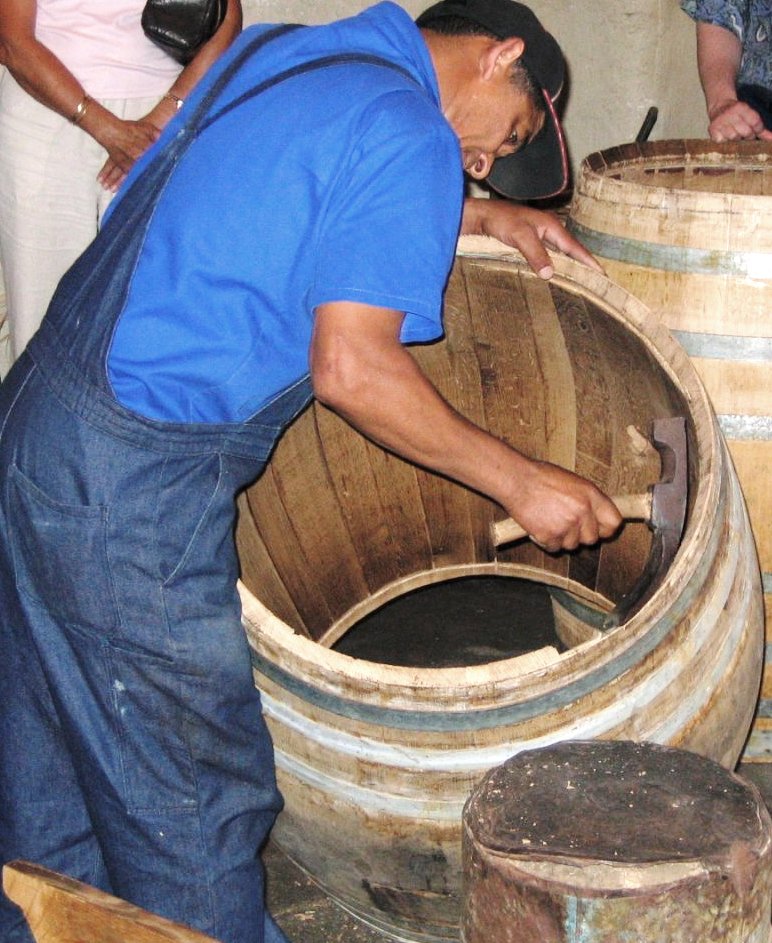
- Cooper, a barrel maker.
- Formwork carpenter creates the shuttering and falsework used in concrete construction, and reshores as necessary.
- Framer is a carpenter who builds the skeletal structure or wooden framework of buildings, most often in the platform framing method. A framer who specializes in building with timbers and traditional joints rather than studs is known as a timber framer.
- Log builder builds structures of stacked horizontal logs with limited joints.
- Joiner (a traditional name now rare in North America), is one who does cabinetry, furniture making, fine woodworking, model building, instrument making, parquetry, joinery, or other carpentry where exact joints and minimal margins of error are important. Various types of joinery include:
- Cabinetmaker is a carpenter who does fine and detailed work specializing in the making of cabinets made from wood, wardrobes, dressers, storage chests, and other furniture designed for storage.
- Finish carpenter (North America), also trim carpenter, specializes in installing millwork ie; molding and trim, (such as door and window casings, mantels, crown mouldings, baseboards), engineered wood panels, wood flooring and other types of ornamental work such as turned or Carved objects. Finish carpenters pick up where framing ends off, including hanging doors and installing cabinets. Finish Carpenters are often referred to colloquially as "millworkers", but this title actually pertains to the creation of moldings on a mill.
- Furniture maker is a carpenter who makes standalone furniture such as tables, and chairs.
- Luthier is someone who makes or repairs stringed instruments. The word luthier comes from the French word for lute, "luth".
- Set carpenter builds and dismantles temporary scenery and sets in film-making, television, and the theater.
- Shipwright specializes in fabrication maintenance, repair techniques, and carpentry specific to vessels afloat. When assigned to a ship's crew would they would be known as a "Ship's Carpenter". Such a carpenter patrols the vessel's carpenter's walk to examine the hull for leaks.
Other
[edit]- Japanese carpentry, daiku is the simple term for carpenter, a Miya-daiku (temple carpenter) performs the work of both architect and builder of shrines and temples, and a sukiya-daiku works on teahouse construction and houses. Sashimono-shi build furniture and tateguya do interior finishing work.[19]
- Green carpentry specializes in the use of environmentally friendly,[20] energy-efficient[21] and sustainable[22] sources of building materials for use in construction projects. They also practice building methods that require using less material and material that has the same structural soundness.[23]
- Recycled (reclaimed, repurposed) carpentry is carpentry that uses scrap wood and parts of discarded or broken furniture to build new wood products.
See also
[edit]- Japanese carpentry – Distinctive woodworking style
- Ship's carpenter – Ship crewman responsible for maintaining wooden structures
- Traditional trades – Category of building trades
- Woodworking – Process of making objects from wood
- Worshipful Company of Carpenters – Livery company of the City of London
References
[edit]- ^ Roza, Greg. A career as a . New York: Rosen Pub., 2011. 6. Print.
- ^ Vogt, Floyd, and Gaspar J. Lewis. Carpentry. 4th ed. Clifton Park, NY: Thomson Delmar Learning, 2006.xvi Print.
- ^ "Carpenter | Careers in Construction". www.careersinconstruction.ca.
- ^ The American heritage dictionary of the English language Archived June 7, 2007, at the Wayback Machine - Etymology of the word "carpenter"
- ^ The American Heritage Dictionary of the English Language: Fourth Edition. 2000.
- ^ "What's the Difference Between a Carpenter and a Joiner?" (30 April 2015). InternationalTimber.com. Retrieved 2 January 2020.
- ^ "Joiner vs Carpenter - What's the Difference?".
- ^ "Carpenter." Def. 1. Oxford English Dictionary Second Edition on CD-ROM (v. 4.0) © Oxford University Press 2009
- ^ Whitney, William D., ed. "Carpenter." Def, 1. The Century Dictionary: An Encyclopedic Lexicon of the English Language vol. 1. New York. The Century Co. 1895. 830. Print.
- ^ Rybníček, Michal; Kočár, Petr; Muigg, Bernhard; Peška, Jaroslav; Sedláček, Radko; Tegel, Willy; Kolář, Tomáš (2020). "World's oldest dendrochronologically dated archaeological wood construction". Journal of Archaeological Science. 115 105082. Bibcode:2020JArSc.115j5082R. doi:10.1016/j.jas.2020.105082. S2CID 213707193.
- ^ Prostak, Sergio (24 December 2012). "German Archaeologists Discover World's Oldest Wooden Wells". sci-news.com.
- ^ Loveday, Amos John. The cut nail industry, 1776–1890: technology, cost accounting, and the upper Ohio Valley. Ann Arbor, Mich.: University Microfilms International, 1979. Print.
- ^ Jester, Thomas C.. Twentieth-century building materials: history and conservation. New York: McGraw-Hill, 1995. Print.
- ^ [1] Archived April 28, 2009, at the Wayback Machine
- ^ "United Brotherhood Of Carpenters". carpenters.org. Retrieved 10 April 2015.
- ^ "Workers' Rights". osha.gov. Retrieved 10 April 2015.
- ^ "Commonly Used Statistics". osha.gov. Retrieved 10 April 2015.
- ^ "Safety and Health Topics - Fall Protection". osha.gov. Retrieved 10 April 2015.
- ^ Lee Butler, "Patronage and the Building Arts in Tokugawa Japan", Early Modern Japan. Fall-Winter 2004 [2]
- ^ "Environmentally Friendly Building Materials". McMullen Carpenters And Joiners. 2009-04-10. Archived from the original on 2013-06-28. Retrieved 2012-07-08.
- ^ "A Green Home Begins with ENERGY STAR Blue" (PDF). Energystar. Retrieved 8 September 2012.
- ^ "Green Building Basics". Ciwmb.ca.gov. Archived from the original on 2009-12-10. Retrieved 2012-05-21.
- ^ "Defining Green-Collar Jobs" (PDF). Archived from the original (PDF) on 2011-09-27. Retrieved 2009-07-07.
There is no consensus on how to define green-collar jobs. A very broad interpretation of green jobs would include all existing and new jobs that contribute to environmental quality through improved efficiencies, better resource management, and other technologies that successfully address the environmental challenges facing society. Probably the most concise, general definition is "well-paid, career-track jobs that contribute directly to preserving or enhancing environmental quality" (Apollo Alliance 2008, 3). This definition suggests that green-collar jobs directly contribute to improving environmental quality, but would not include low-wage jobs that provide little mobility. Most discussion of green-collar jobs does not refer to positions that require a college degree, but they typically do involve training beyond high school. Many of the positions are similar to skilled, blue-collar jobs, such as electricians, welders, carpenters, etc.
External links
[edit]

 Media related to Carpentry at Wikimedia Commons
 Carpentry at Wikibooks
- . Encyclopædia Britannica. Vol. 5 (11th ed.). 1911.
- The Institute of Carpenters (England)
- Carpenters entry in the Occupational Outlook Handbook of the Bureau of Labor Statistics of the United States Department of Labor
- Carpentry for Boys (1914). James Slough Zerbe, The New York Book Company


| Lumber/ timber | |
|---|---|
| Engineered wood | |
| Fuelwood | |
| Fibers | |
| Derivatives | |
| By-products | |
| Historical | |
| See also | |
| Types | |
|---|---|
| History | |
| Professions | |
| Trades workers (List) | |
| Organizations |
|
| By country | |
| Regulation | |
| Architecture | |
| Engineering | |
| Methods | |
| Other topics |
|


Carpentry
View on GrokipediaOverview and Etymology
Definition and Scope
Carpentry is a skilled trade centered on the cutting, shaping, and assembly of wood and wood-based materials to construct, repair, and install frameworks and structures such as buildings, furniture, cabinetry, and other wooden items.[1][7] This profession requires expertise in working with lumber and engineered wood products to form durable and functional elements.[8] The scope of carpentry includes both rough and finish work, with rough carpentry focusing on foundational structural components like framing walls, floors, and roofs to provide stability and support.[9] In contrast, finish carpentry emphasizes aesthetic and detailed applications, such as installing moldings, doors, and trim to enhance visual appeal and complete interior spaces.[10] These activities span residential, commercial, and industrial projects, ensuring versatility in application.[11] Carpentry differs from woodworking, which prioritizes artistic, intricate crafting of decorative or custom items like sculptures and fine furniture, often in a workshop setting rather than on construction sites.[12] It also stands apart from masonry, a trade involving the laying and bonding of stone, brick, or concrete blocks for load-bearing walls and foundations, using non-wood materials.[13][14] Central to carpentry are principles of precision measurement to achieve accurate cuts and alignments, the employment of hand tools like chisels and saws alongside power tools for efficiency, and rigorous adherence to building codes to guarantee structural integrity, safety, and regulatory compliance.[15][16][17]Origins and Regional Terminology
The term "carpenter" originates from the Late Latin carpentarius, denoting a craftsman who built wagons or carriages, derived from carpentum, meaning "wagon" or "two-wheeled cart." This evolved through Old French carpentier (later charpentier), entering English via Anglo-Norman influence following the Norman Conquest of 1066, which infused the language with French occupational terms related to trades and construction. By the late 14th century, "carpenter" appeared in Middle English texts, such as those by Geoffrey Chaucer, initially referring to wagon-makers but gradually encompassing broader woodworking skills like framing and joinery.[18][18][19] In the United Kingdom, regional terminology reflects historical craft distinctions shaped by medieval guild practices and the Norman introduction of specialized roles. A "carpenter" traditionally handles on-site structural tasks, such as roofing and framing, while a "joiner" focuses on precision workshop work like cabinetry and doors without metal fasteners. The slang term "chippy" for carpenter emerged in the 19th century, likely alluding to the wood chips generated by adzes and chisels during rough cutting. These terms trace back to post-Conquest linguistic shifts, where French-derived words like charpenterie (framework) differentiated site-based from bench-based woodcraft.[20][21][22] In the United States, terminology diverged in the 19th century due to colonial adaptations, mass immigration of European woodworkers, and industrialization-driven innovations like balloon framing around 1833, which emphasized lightweight, rapid structural assembly. "Carpenter" broadly covers both rough and finish work, but "framer" or "rough carpenter" specifically denotes those building skeletal frameworks, a specialization arising from frontier building needs and urban expansion in places like Chicago. This contrasts with UK precision, as American practices prioritized speed over ornate joinery, influenced by waves of skilled immigrants from Britain and Germany who adapted terms to suit balloon and platform methods.[23][24][25]History
Ancient and Pre-Industrial Developments
The earliest evidence of human engagement with wood as a material for tools and shelters dates back to the prehistoric period, with Oldowan choppers—simple stone tools flaked on one side—used for woodworking tasks appearing around 2.6 million years ago in East Africa.[26] These tools facilitated the shaping of wooden implements and the construction of basic shelters, marking the onset of rudimentary carpentry among early hominins. Direct archaeological finds of wooden artifacts are rare due to decay, but structural use of wood for enclosures has been confirmed at sites like Gesher Benot Ya'aqov in Israel, dating to at least 780,000 years ago, where polished planks suggest advanced manipulation techniques.[27] In ancient civilizations, carpentry played a pivotal role in monumental architecture. Egyptian builders around 2600 BCE employed sophisticated joinery in pyramid construction, notably dovetail joints to secure wooden beams and formwork for stone placement, as evidenced in Fourth Dynasty tombs and ship remains from Dahshur.[28] Mesopotamian ziggurats, such as those at Ur dating to circa 2100 BCE, incorporated wooden beams for reinforcement and scaffolding amid mud-brick cores, enabling the tiered temple structures that symbolized cosmic mountains.[29] In China, timber framing emerged by 2000 BCE during the Xia dynasty, with interlocking mortise-and-tenon joints supporting multi-story palaces and early precursors to pagodas, emphasizing earthquake-resistant designs without metal fasteners.[30] During the classical periods, Greek and Roman carpenters advanced structural techniques using wood as temporary formwork for permanent stone and concrete elements. Greeks from the 5th century BCE utilized wooden centering to erect arches in temples like the Parthenon, while Romans refined this for expansive domes, such as in the Pantheon (completed 126 CE), where timber shuttering supported poured concrete until it set, revolutionizing load distribution.[31] In medieval Europe, carpenter guilds formalized around 1100 CE, standardizing joinery methods like scarf and housed joints through apprenticeships and regulations, which ensured consistent quality in cathedrals and timber-framed halls across regions like England and France.[32] Non-Western traditions showcased innovative nail-free joinery. Japanese traditional carpentry, featuring styles like sukiya developed during the Azuchi-Momoyama period (1574–1600), relied on intricate wooden interlocking techniques such as ari and kanawa-tsugi for temple and tea house construction, allowing flexibility against seismic activity and disassembly for repairs.[33] Indigenous peoples of North America, particularly Northwest Coast groups like the Haida and Tlingit, developed log-based structures including plank houses framed with cedar posts pegged without nails dating back around 4,000 years and elaborately carved totem poles that served as genealogical records from the 18th century CE onward, using adzes and chisels for precise detailing.[34] Key events shaped the trajectory of pre-industrial carpentry. The Black Death of 1347 decimated up to 60% of Europe's population, disrupting guilds by creating labor shortages that elevated surviving carpenters' wages and led to relaxed apprenticeship rules, fostering innovation in timber sourcing and framing efficiency.[35] During the Renaissance, the rediscovery of Vitruvius's De Architectura (1st century BCE, reprinted 1486) influenced wood engineering treatises, detailing timber selection, seasoning, and strength properties to prevent warping in structures like basilicas, bridging classical knowledge with emerging humanist designs.[36]Industrial and Modern Evolution
The Industrial Revolution profoundly transformed carpentry by introducing steam-powered sawmills in the late 1700s in the United Kingdom and the United States, which mechanized timber processing and drastically reduced the need for labor-intensive hand-sawing.[37] These innovations enabled faster production of lumber, shifting carpentry from artisanal craftsmanship toward more scalable operations.[38] By the 1830s, advancements in mass production led to the widespread availability of standardized lumber dimensions, supporting the rise of balloon framing techniques that simplified construction for less skilled workers.[39] In the United States, the Homestead Act of 1862 further spurred frontier carpentry by granting 160 acres of public land to settlers who committed to building a dwelling and improving the property within five years, fueling a surge in rudimentary wooden home construction across the West.[40][41] The 20th century brought further mechanization to carpentry, with the commercialization of electric tools in the 1920s—such as portable drills and saws—enhancing precision and efficiency on job sites.[42] Post-World War II, prefabricated wooden components gained prominence as a response to acute housing shortages, allowing for quicker assembly of standardized frames and panels in mass-produced homes.[43] Housing booms in the United Kingdom, where nearly 200,000 prefabricated units were erected between 1945 and 1950 to replace war-damaged structures, and in Asia, particularly Japan, where rapid urbanization addressed a severe postwar shortage affecting 19% of urban homes, drove greater specialization in carpentry trades like framing and modular assembly.[44][45] Globalization also disseminated techniques such as Scandinavian full-scribe log construction, originally refined in Nordic countries, to North America and beyond through 20th-century immigration and export of prefabricated log home kits.[46][47] In the 2000s, Building Information Modeling (BIM) emerged as a key integration tool for carpentry, enabling digital simulation of wooden structures to optimize joinery and material use before physical construction.[48] This was exemplified in responses to urbanization, such as Canada's adoption of high-rise wood framing in the 2010s, with projects like the 18-story Brock Commons Tallwood House in Vancouver using cross-laminated timber for sustainable mid-rise buildings.[49] Entering the 21st century, as of 2025, carpentry has increasingly incorporated computer numerical control (CNC) machines for precise custom joinery, allowing automated milling of complex joints that enhance structural integrity in bespoke projects.[50] Complementing this, 3D printing has enabled the fabrication of intricate wooden connectors and prototypes, streamlining custom assembly in woodworking shops.[51]Tools and Materials
Essential Tools
Carpenters rely on a core set of hand tools for precise cutting, shaping, and assembly tasks, each designed to perform specific functions in woodworking. Crosscut saws feature fine teeth angled to slice across the wood grain, enabling clean perpendicular cuts for framing and joinery, while rip saws have coarser, chisel-like teeth for efficient lengthwise cuts along the grain. Claw hammers, with their forked end, drive nails into wood and extract them without damage, whereas framing hammers provide heavier heads for driving large nails into structural lumber. Chisels carve out mortises, clean joints, and shape edges by removing thin shavings when struck with a mallet, and bench planes smooth surfaces and adjust thicknesses by shaving off high spots with a sharpened blade. Levels ensure horizontal and vertical alignment during installation, using bubble vials filled with liquid to indicate plumb and level, and tape measures extend retractable steel blades marked in fractions of an inch for quick linear assessments. Power tools have revolutionized carpentry by increasing speed and reducing physical strain, with modern variants incorporating ergonomic grips and battery technology. Circular saws, handheld devices with rotating toothed blades, make straight bevel cuts in sheet materials and lumber up to several inches thick, often featuring adjustable bases for depth and angle control. Nail guns, or pneumatic and cordless fasteners, drive nails rapidly into wood without manual hammering, ideal for framing and sheathing where hundreds of fasteners are needed. Drills create holes for screws, dowels, or wiring, with variable speed chucks accommodating bits from 1/16 inch to over an inch in diameter. Routers shape decorative edges, grooves, and dadoes using high-speed spinning bits, allowing for intricate profiles on doors, cabinets, and moldings. Since the late 1990s, cordless lithium-ion batteries have become the standard for these tools, offering higher energy density, longer runtime, and lighter weight compared to earlier nickel-cadmium packs, enabling all-day use without cords. Measuring and layout tools form the foundation of accurate carpentry, preventing errors that could compromise structural integrity. Squares, such as combination and framing types, check right angles and mark straight lines, with blades typically 12 to 24 inches long for versatility in layout. Compasses draw arcs and circles for curved joinery or templating, adjustable via a pivot point and pencil holder. Laser levels project straight beams over long distances for aligning walls, floors, and ceilings, surpassing traditional bubble levels in speed and precision for large-scale projects. Standard accuracy in carpentry measurements adheres to 1/16-inch tolerances, sufficient for most framing and finish work where cumulative errors must not exceed 1/8 inch over several feet. The evolution of carpentry tools traces back to ancient Roman adzes, handheld axes with perpendicular blades for rough hewing and shaping timber in construction and shipbuilding. In 1922, Raymond E. DeWalt introduced the radial arm saw, a stationary power tool that used a circular blade for precise crosscuts and miters, enhancing efficiency in woodworking and construction.[52] Ergonomic designs gained prominence in the 1970s following the establishment of OSHA in 1970, which emphasized reducing musculoskeletal risks through tool handles that minimize grip force and vibration, influencing features like contoured grips and balanced weights in hammers and saws. Proper maintenance extends tool life and ensures safety, with sharpening techniques focusing on honing edges to razor-like keenness. For saws and chisels, use whetstones or files at specific angles—typically 25 degrees for crosscut teeth and 15-20 degrees for chisel bevels—to remove nicks and restore cutting efficiency, followed by stropping on leather for polish. Planes require flattening the sole and honing the iron to prevent tear-out during use. Store tools in dry environments to avoid rust, hanging saws and hammers on pegboards for easy access while coating metal parts with light oil; chisels and planes should be kept in protective sheaths or boxes to shield edges from dulling impacts.Common Materials
Carpentry primarily relies on natural woods, which are categorized into hardwoods and softwoods based on their botanical classification and mechanical properties. Hardwoods, derived from deciduous trees such as oak and maple, are valued for their density and durability, making them suitable for applications requiring resistance to wear, like flooring and cabinetry.[53] Softwoods, sourced from coniferous trees like pine and cedar, are generally lighter and more workable, commonly used for framing and structural elements due to their availability and ease of processing.[53] Grain patterns in both types influence aesthetic appeal and strength; straight grains provide uniformity, while irregular patterns like those in oak enhance visual interest but may affect stability.[54] The moisture content of lumber is a critical factor in selection, with an ideal range of 8-12% for most carpentry projects to minimize shrinkage or expansion after installation.[55] Levels above 12% can lead to warping, while below 8% may cause brittleness in humid environments.[56] Engineered wood products offer enhanced consistency and strength compared to solid lumber, produced by bonding wood veneers, strands, or laminations with adhesives. Plywood consists of thin wood layers glued crosswise under heat and pressure, providing dimensional stability for sheathing and subflooring.[57] Oriented strand board (OSB) is manufactured by pressing wood strands aligned in specific directions with resin, serving as a cost-effective alternative to plywood in wall and roof panels.[54] Glulam beams are created by laminating and gluing multiple wood layers, allowing for large spans in structural applications like beams and columns.[58] Cross-laminated timber (CLT), developed in Europe during the mid-1990s, involves orthogonally layered lumber boards pressed into panels, enabling prefabricated construction for walls and floors.[59] When selecting materials, carpenters consider factors such as strength—measured by properties like the modulus of elasticity for bending resistance in beams—along with sustainability, cost, and regional availability.[53] For instance, oak's high bending modulus (around 1.8 million psi) suits load-bearing uses, while FSC certification ensures sustainable sourcing by verifying responsible forest management.[53][60] Cost varies by species and processing; softwoods like pine are economical for framing, whereas tropical hardwoods like teak, prevalent in Asia, command higher prices due to scarcity elsewhere.[61] Pressure-treated lumber, introduced in the 1940s, enhances durability for outdoor applications by impregnating wood with preservatives under pressure to resist rot and insects.[62] Common defects like knots—intergrown branches that weaken strength—and warping, caused by uneven drying, are prevented through proper kiln drying and storage in controlled humidity to maintain equilibrium moisture content.[63][64] Non-wood alternatives, such as fiber cement composites, have gained traction since the 1980s for trim and siding, offering fire resistance and low maintenance without wood's susceptibility to moisture.[65] These materials combine cement with cellulose fibers, mimicking wood profiles while providing dimensional stability in exterior exposures.[65]Techniques and Practices
Basic Joinery and Assembly
Basic joinery in carpentry involves fundamental techniques for connecting wooden pieces to form stable structures, emphasizing precision in preparation and execution to ensure durability and alignment. Accurate measuring and marking form the foundation of these processes. Carpenters typically use tape measures, combination squares, and marking gauges to establish reference lines, ensuring measurements are taken from a consistent starting point to avoid cumulative errors. For instance, a marking knife creates fine, visible lines that saw blades can follow precisely, outperforming pencils which may lead to inaccuracies. When cutting, accounting for the kerf—the width of material removed by the saw blade, often 1/8 inch for standard circular saws—is essential to maintain intended dimensions; failing to adjust for kerf can result in pieces that are too short.[66][67][68] Common joinery types include the butt joint, mortise-and-tenon, and dovetail, each suited to different levels of strength and visibility. The butt joint is the simplest, where the end grain of one piece meets the face or edge of another at a right angle, often requiring reinforcement due to its inherent weakness against tension. To assemble a butt joint, mark and cut the pieces square, apply adhesive to the contact surfaces, align them flush, and secure with fasteners before clamping for 24 hours to allow glue to cure. The mortise-and-tenon joint provides greater strength through mechanical interlocking: a tenon (protruding tongue) on one piece fits into a mortise (slot) on the other. Assembly begins with marking the tenon shoulders and cheeks, cutting the tenon with a backsaw or tenon saw, then chiseling the mortise to match; dry-fit the pieces, apply glue to the tenon and mortise walls, tap together with a mallet, and clamp while checking for squareness. Dovetails offer superior resistance to pulling apart, featuring interlocking trapezoidal pins and tails; for a basic through-dovetail, mark tail angles (typically 1:6 for softwoods), saw and chisel the tails, trace onto the pin board, and cut the pins to fit snugly before gluing and clamping. These joints can be executed using hand tools like saws and chisels, as referenced in essential tool guides.[69][70][71] Fastening methods complement joinery by providing immediate hold during assembly. Nails, sized by penny (d) weight, are common for quick connections; for framing with 2x4 lumber, 16d common nails (3½ inches long, 0.162-inch diameter) penetrate deeply enough to secure members without splitting, spaced 6 inches on center along edges. Screws offer superior shear strength and removability, with 3-inch deck screws recommended for attaching 2x framing elements, predrilled to prevent wood splitting. Adhesives, particularly polyvinyl acetate (PVA) glues like Titebond, bond end grain effectively in non-load-bearing applications, applied in a thin layer (0.002–0.006 inches) and clamped for at least 30 minutes; for exterior or high-moisture use, waterproof Type II PVA is preferred. Guidelines emphasize matching fastener length to material thickness—at least 1½ times the thickness of the thinner piece—to ensure full penetration.[72][73][74] Assembly principles ensure joints perform as intended, distinguishing between load-bearing applications (requiring joints like mortise-and-tenon to resist compression and shear) and non-structural ones (where butt joints suffice for decorative or light-duty frames). Dry fitting—assembling pieces without glue to verify fit and alignment—precedes final glue-up, allowing adjustments for tight or loose spots. Clamping applies even pressure (typically 100–250 psi for PVA glue) to close gaps and maintain contact, using bar or pipe clamps spaced no more than 6–8 inches apart; for frames, diagonal clamps or winding sticks help square the assembly by equalizing opposite diagonals to within 1/16 inch. Common errors, such as misalignment from uneven clamping pressure, can be fixed by loosening clamps, realigning with a square, and re-clamping, or filling minor gaps with wood putty before sanding.[75][76][77] The evolution of basic joinery reflects advancements in materials and tools, transitioning from pegged joints in medieval timber framing—where wooden pegs secured mortise-and-tenon connections for load-bearing structures—to modern alternatives like biscuits in the late 20th century. Biscuits, compressed beechwood ovals inserted into slots, were invented in 1955 by Hermann Steiner for quick alignment in cabinetry, with portable joiners available by 1968, revolutionizing non-structural assembly by reducing marking time.[78][79]Advanced Construction Methods
Advanced construction methods in carpentry extend beyond basic assembly to encompass engineered systems for load-bearing structures, often requiring collaboration with structural engineers and other trades to ensure compliance with building codes and safety standards. These techniques prioritize structural integrity, material efficiency, and integration with modern building practices, such as energy-efficient insulation and seismic resilience. Key systems include various framing approaches that support multi-story buildings, each with distinct advantages in span capabilities and construction sequencing. Framing systems form the skeleton of wood-frame buildings, with platform framing being the predominant method in contemporary residential and light commercial construction. In platform framing, each floor serves as a working surface for erecting the walls of the story above, using double top plates to align loads vertically and allowing for shorter lumber lengths, which reduces waste and simplifies assembly compared to older methods. Balloon framing, historically used from the mid-19th to early 20th century, employs continuous vertical studs extending from the foundation sill to the roofline, providing unobstructed interior walls but requiring longer studs that are prone to fire spread between floors without firestops. Timber framing, a traditional heavy-timber approach revived in modern sustainable designs, relies on large-dimension timbers joined with mortise-and-tenon connections or metal fasteners to create post-and-beam structures capable of wide open spans without intermediate supports, often seen in commercial or high-end residential applications. Span calculations for these systems are guided by engineered wood standards; for instance, in platform-framed floors using sawn lumber joists, allowable spans depend on species, grade, spacing, and load conditions. The following table illustrates representative maximum spans for Douglas Fir-Larch #2 grade floor joists under 40 psf live load and 10 psf dead load, per American Wood Council guidelines and IRC Table R502.3.1(2):| Joist Size | Spacing (inches o.c.) | Maximum Span (feet-inches) |
|---|---|---|
| 2x8 | 12 | 13-1 |
| 2x8 | 16 | 11-10 |
| 2x10 | 12 | 17-2 |
| 2x10 | 16 | 14-10 |
| 2x12 | 12 | 20-8 |
| 2x12 | 16 | 17-11 |
Types of Carpentry
Structural Carpentry
Structural carpentry encompasses the construction of load-bearing frameworks essential for the stability and integrity of buildings and infrastructure, forming the foundational skeleton that supports vertical and lateral forces. This discipline involves the precise assembly of wooden elements to create walls, floors, and roofs capable of withstanding environmental loads such as gravity, wind, and seismic activity. Unlike non-structural work, it prioritizes engineering principles to ensure long-term durability and safety, often integrating with foundations to distribute loads effectively from the structure's base upward.[90] Core activities in structural carpentry include framing walls, floors, and roofs, as well as site preparation and integration with foundations. Wall framing typically uses dimensional lumber studs spaced 16 or 24 inches on center, topped and bottomed with plates to form rigid panels that resist racking forces. Floor framing employs joists supported by beams or girders, often spanning open spaces while maintaining deflection limits under live loads. Roof framing constructs trusses or rafter systems to shed water and snow, with site preparation involving layout staking, excavation, and foundation tying to align the superstructure precisely. Foundation integration ensures that sill plates are anchored to concrete or masonry bases using bolts, transferring loads without settlement issues.[91][92][93] Applications of structural carpentry span residential, commercial, and infrastructural projects. In residential construction, stick-built homes rely on light-frame wood systems where balloon or platform framing creates customizable layouts for single-family dwellings. Commercial buildings often incorporate steel-wood hybrids, such as steel joists bearing on wood walls or glulam beams supporting steel-framed roofs, optimizing cost and fire resistance in mid-rise offices. For bridges, timber trusses provide economical spans up to 250 feet, using parallel-chord or bowstring configurations with glued-laminated members to handle vehicular loads while minimizing weight.[94][95][96] Compliance with standards like the 2024 International Building Code (IBC) is mandatory for structural carpentry, dictating design for wood framing under allowable stress or load-resistance methods. Section 2308 outlines conventional light-frame construction, requiring studs, joists, and rafters to meet span tables adjusted for species and grade. Wind and snow load considerations are critical; for instance, wall sheathing must resist site-specific design wind speeds, such as 115 mph in many regions, using structural panels rated for specific exposures, while roofs accommodate site-specific ground snow loads, such as up to 70 psf in many areas, with corresponding dead loads. These provisions ensure assemblies perform under site-specific environmental criteria without exceeding deflection limits of L/360 for floors or L/240 for roofs.[92] The evolution of structural carpentry includes innovative uses of mass timber in high-rises, exemplified by Norway's Mjøstårnet, completed in 2019 as the world's tallest timber building at 85.4 meters over 18 stories. This structure employs glulam columns and beams alongside cross-laminated timber (CLT) slabs and elevator cores, demonstrating wood's viability for mid-rise load-bearing systems with reduced carbon emissions compared to steel or concrete. Regional variations, such as Australian timber framing under AS 1684, adapt to seismic and cyclonic conditions with enhanced bracing and corrosion-resistant fasteners, differing from North American platform methods by emphasizing tie-downs for wind uplift.[97][98] Challenges in structural carpentry include weatherproofing to prevent moisture ingress and maintaining alignment in multi-story builds. Exposure of untreated wood elements like glulam to precipitation before enclosure can cause swelling or decay, necessitating protective coverings and quick erection sequences. In multi-story construction, ensuring vertical plumbness and horizontal leveling across floors demands laser-guided tools and temporary bracing to avoid cumulative errors that compromise load paths, particularly in hybrid systems where wood-steel interfaces require precise tolerances. Moisture management through vapor barriers and proper ventilation further mitigates risks of rot in framed assemblies.[99][100][101]Finish and Interior Carpentry
Finish and interior carpentry encompasses the precise installation and finishing of visible wood elements that enhance the aesthetics and functionality of building interiors, distinguishing it from structural work by focusing on decorative and detailed refinements. This specialization involves crafting and fitting components such as moldings, baseboards, crown moldings, door and window casings, cabinetry, stairs, and doors to create seamless, polished spaces. Carpenters in this field prioritize meticulous alignment and surface preparation to achieve a professional appearance, often working on-site after the structural framework is complete.[102] Core tasks include installing trim around doors, windows, and floors; assembling and hanging cabinetry; constructing and fitting stairs; and mounting doors with hardware for smooth operation. Additional responsibilities encompass sanding surfaces to a smooth finish, applying sealants to protect against wear, and ensuring all elements align without visible imperfections. These activities require skilled joinery techniques adapted for decorative purposes, such as mitering corners for moldings and scribing edges to fit irregular walls. In residential settings, finish carpenters create custom built-ins like shelving or entertainment centers, while in retail fixtures, they install display cases and shelving to optimize space and visual appeal. Custom elements, tailored to architectural designs, contrast with stock components that offer quicker installation but less personalization, with custom work often preferred for longevity and unique aesthetics in high-end projects.[103][104][105] Materials commonly used include hardwoods like oak and maple for durable trim and moldings due to their grain patterns and strength, while veneers—thin slices of hardwood bonded to substrates like plywood or MDF—provide cost-effective alternatives for large surfaces such as cabinet faces without compromising appearance. Finishing techniques involve sanding to remove imperfections, followed by staining to enhance wood tones and varnishing or sealing to add protection and sheen, ensuring resistance to moisture and daily use. Historically, the 1920s Art Deco style influenced millwork with bold geometric patterns and exotic hardwoods, introducing luxurious, streamlined designs that emphasized symmetry and ornamentation in interior trim. In the 2010s onward, computer numerical control (CNC) routing has enabled precise fabrication of complex curved designs, allowing for intricate moldings and custom shapes that were previously labor-intensive. Precision standards demand gaps no larger than 1/32 inch (0.8 mm) at joints and level installations within 1/8 inch over 96 inches, ensuring flush alignments and professional results.[106][107][108][109][110][111][112]Specialized and Green Carpentry
Specialized carpentry encompasses niche applications that require adapted skills and materials beyond conventional construction. In boatbuilding, clinker planking—also known as lapstrake—is a traditional technique where overlapping planks are edge-fastened with rivets or clinched nails to form the hull, providing structural integrity and watertightness in wooden vessels.[113] This method, dating back centuries, allows for lightweight yet durable boats and remains used in modern small craft production for its efficiency in material use. Scenic carpentry, focused on theater and film sets, involves constructing temporary, lightweight structures such as flats, platforms, and modular scenery using softwoods, plywood, and metal framing to support rapid assembly, disassembly, and transport while ensuring safety under dynamic stage conditions. Restoration carpentry specializes in repairing historic timber elements to preserve architectural heritage, employing methods like splicing new timber into damaged sections or using epoxy adhesives for reinforcement without altering original forms.[114] These techniques prioritize minimal intervention, often involving assessment of decay, removal of deteriorated material, and integration of compatible replacements to maintain structural and aesthetic authenticity in buildings from various eras.[115] Green carpentry integrates sustainability into woodworking practices, emphasizing reduced environmental impact through material selection and processes. The use of reclaimed wood, salvaged from demolished structures or urban waste, diverts landfill-bound materials and embodies embodied carbon already sequestered in the timber, commonly applied in flooring, furniture, and framing.[116] Low-VOC (volatile organic compound) finishes, such as water-based paints and sealants, minimize air pollution and health risks during application and occupancy, aligning with indoor environmental quality standards in sustainable builds.[117] Certifications like LEED, introduced in the 2000s by the U.S. Green Building Council, incentivize these practices by awarding points for responsible material sourcing and low-emission products in certified projects.[116] Key techniques in green carpentry include salvage milling, where portable bandsaw mills process reclaimed logs or beams on-site to yield usable lumber, reducing transportation emissions and enabling customization for specific projects.[118] Passive house framing employs advanced methods like double-stud walls filled with high-performance insulation to achieve superior airtightness and thermal bridging reduction, cutting heating and cooling energy use by up to 90% compared to standard construction.[119] Notable advancements include the rise of cross-laminated timber (CLT) in the 2020s, an engineered product of orthogonally layered lumber panels enabling tall, sustainable skyscrapers that store carbon and lower construction emissions versus steel or concrete alternatives, as seen in projects like the Ascent building in Milwaukee (25 stories, completed 2022) exceeding 18 stories in Europe and North America.[120] Indigenous methods, such as Australian bush carpentry, draw on traditional knowledge for using native, biodegradable materials like stringybark in low-impact builds, promoting circular design and ecological harmony in contemporary applications.[121] Challenges in specialized and green carpentry persist, particularly in sourcing ethical timber, where verifying chain-of-custody for certified supplies contends with supply chain opacity, higher costs, and global deforestation pressures.[122] Adapting to climate change involves incorporating fire-resistant treatments, such as charring or intumescent coatings on timber, to mitigate wildfire risks in green structures, though these add complexity to traditional joinery and require ongoing material innovation.[123]Training and Professional Development
Educational Programs and Schools
Educational programs in carpentry provide foundational training through various formal pathways, including high school vocational courses, community college certificates, and specialized trade school curricula. In the United States, high school programs such as those offered by the Monmouth County Vocational School District introduce students to basic construction skills over two years, preparing them for entry-level positions or further education. Community colleges like Norco College offer certificates in carpentry that explore occupations related to constructing and repairing structures, typically spanning one to two years and leading to associate degrees or standalone diplomas. Trade schools affiliated with the National Center for Construction Education and Research (NCCER) deliver structured curricula, such as the Carpentry program, which builds general skills in framing and finish work, often integrated into four-year apprenticeships or shorter core modules.[124][125][6] Core curriculum across these programs emphasizes practical and technical competencies, including blueprint reading, construction mathematics, and introductory tool usage. Students learn to interpret blueprints for residential and light industrial projects, covering scales, measurements, and site plans to translate designs into physical builds. Mathematical instruction focuses on fractions, geometry basics like the Pythagorean theorem, and trigonometry for accurate layouts, angles, and material estimation. Hands-on modules introduce tools such as tape measures, speed squares, hammers, and saws, alongside safety protocols and basic framing techniques, as seen in programs at Seattle Central College's Wood Technology Center and Wake Technical Community College.[126][127][128] Internationally, carpentry education aligns with national vocational frameworks, such as the United Kingdom's City & Guilds qualifications and Australia's Technical and Further Education (TAFE) courses. City & Guilds offers levels from 1 to 3 in Carpentry and Joinery, targeting learners aged 16 and above, with diplomas covering wood-working techniques for construction roles and pathways to apprenticeships. In Australia, TAFE NSW and TAFE Queensland provide Certificate III in Carpentry programs, which include on-the-job apprenticeship components teaching explosive power tools, framing, and fixture installation for residential and commercial developments. These global models emphasize job-ready skills, often combining classroom theory with practical workshops.[129][130][131] Following the 2008 recession, which caused a significant exodus from the construction workforce, carpentry education programs expanded to address labor shortages, with U.S. industry training initiatives growing to rebuild skilled labor pools. Post-2020, hybrid online formats have proliferated, incorporating virtual reality simulations for safe, immersive tool handling and site layout practice, as demonstrated by programs from Vived Learning and Up360 in 2025. Graduates typically earn entry-level certifications, such as NCCER credentials or state-recognized diplomas, with job placement rates often exceeding 90 percent; for instance, Fox Valley Technical College reports 96 percent employment for its carpentry graduates, while Ranken Technical College achieves 100 percent placement in related fields.[132][133][134][135][136][137]Apprenticeships and Certification
Apprenticeships in carpentry provide hands-on, employer-sponsored training that emphasizes practical skills under the guidance of experienced journeymen. These programs typically span 3 to 5 years, requiring apprentices to complete a substantial amount of on-the-job training (OJT) combined with classroom instruction to build proficiency in techniques such as framing, joinery, and safety protocols. In the United States, standard programs mandate around 8,000 hours of OJT supplemented by 576 to 600 hours of related technical instruction, often delivered at 144 to 150 hours per year.[138][139] To ensure effective learning and safety, mentorship ratios are commonly set at 1:1, meaning one apprentice per journeyman supervisor, particularly in high-risk construction environments.[140] These apprenticeships offer paid on-the-job training, enabling individuals to enter the profession without incurring college debt and without requiring a bachelor's degree. Successful participation requires physical strength, stamina, manual dexterity, and coordination, as the work involves demanding physical tasks and precise handling of tools and materials.[1] Certification processes culminate in assessments that verify competency, including practical demonstrations and written exams on building codes, material handling, and specialized techniques. In the US, the Department of Labor (DOL) oversees Registered Apprenticeship programs, issuing certificates of completion that recognize journeyman status upon meeting all requirements. In the European Union, the European Credit System for Vocational Education and Training (ECVET) provides a framework for accumulating and transferring learning outcomes, enabling cross-border recognition of carpentry qualifications through standardized units and assessments.[141] These certifications not only validate skills but also align with national standards for professional practice. Regional variations shape apprenticeship models significantly. In the US, union programs, such as those offered by the United Brotherhood of Carpenters (UBC), emphasize structured progression with collective bargaining support, while non-union paths through organizations like the Associated Builders and Contractors (ABC) offer more flexible entry but may vary in benefits and oversight.[142] Germany's dual system stands out for its integration of vocational schooling with workplace training, where approximately 75% of time is spent on work-based learning in companies, fostering deep practical expertise from the outset.[143] Historically, the Wagner-Peyser Act of 1933 played a foundational role in US workforce development by establishing a national employment service that facilitates connections between apprentices and employers, supporting the growth of structured training programs.[144] In recent years, a notable trend in the 2020s involves the adoption of digital badges for carpentry skills, issued by bodies like the Associated General Contractors (AGC) and the National Center for Construction Education and Research (NCCER), allowing certified individuals to verifiable share competencies online.[145][146] Participants in these apprenticeships benefit from structured wage progression, often starting at 40-50% of a journeyman's rate and increasing incrementally with each training period to full scale upon certification, which can reach a median of $59,310 annually.[147][1] The profession provides stable career prospects, with the U.S. Bureau of Labor Statistics projecting 4% employment growth for carpenters from 2024 to 2034 and approximately 74,100 job openings each year, primarily from the need to replace workers transferring occupations or leaving the workforce.[1] Additionally, certification enhances access to liability insurance, as journeymen qualify for employer-provided or union-backed policies that cover on-site risks, reducing personal financial exposure in a field prone to accidents.[148]Pathways to Mastery
Achieving mastery in carpentry typically requires over a decade of hands-on experience, often 10 or more years, during which individuals progress from apprentice to journeyman roles and demonstrate proficiency in complex project management.[149] Master carpenters are expected to hold supervisory positions, overseeing teams on large-scale builds, and maintain a portfolio showcasing intricate work such as custom millwork or historical restorations to validate their expertise.[150] These criteria emphasize not only technical skill but also leadership and problem-solving in diverse construction environments.[151] Advancement to master status often involves passing rigorous exams beyond journeyman certification, such as those offered through organizations like the National Center for Construction Education and Research (NCCER), which test advanced knowledge of building codes and techniques.[152] In some jurisdictions, International Code Council (ICC) contractor licensing exams serve as a gateway, requiring proof of journeyman experience and successful completion of assessments on structural integrity and safety standards.[153] Parallel paths include launching independent businesses or pursuing specialization, where master carpenters bid on high-value contracts, mentor apprentices, or focus on niche areas, leveraging their credentials to secure entrepreneurial or advanced opportunities.[154] Ongoing professional growth for master carpenters incorporates continuing education through specialized workshops, such as those provided by the Carpenters Training Institute, focusing on emerging technologies like drone-based site surveying for precise measurements in the 2020s.[155] These programs also cover union leadership development, enabling experts to take on roles in organizations like the United Brotherhood of Carpenters, where they influence policy and training standards.[156] The title of "master carpenter" traces its roots to medieval European guilds, where skilled artisans earned mastery after years of apprenticeship and examination, a tradition that continues to shape modern hierarchical designations in the trade.[32] The rise of women attaining mastery in carpentry has accelerated since the 1970s, following Title IX's enforcement of gender equity in vocational education, with women's representation in construction trades growing from under 1% in 1970 to approximately 11% by 2022.[157][158] However, as of 2025, master carpenters face challenges in the gig economy, where project-based work demands balancing deep specialization—such as in sustainable framing—with broad versatility to adapt to fluctuating demands and short-term contracts.[159] This tension requires continuous upskilling to remain competitive amid labor shortages and economic volatility in the construction sector.[160]Health, Safety, and Sustainability
Occupational Hazards and Risks
Carpenters face a range of physical hazards that can lead to immediate and severe injuries. Common risks include cuts, lacerations, amputations, and severed fingers from operating power tools and machinery such as saws and routers, which often lack proper guards or are used without adequate training.[161] Falls from heights represent one of the most lethal dangers, particularly when working on scaffolding, ladders, or roofs; in 2023, falls accounted for 38.5% of fatal injuries in the construction industry, which includes carpentry, resulting in 421 deaths out of 1,075 total construction fatalities.[162][163] Historically, based on early 2010s data, scaffold-related incidents have contributed to approximately 4,500 injuries and 60 deaths annually across construction trades.[164] Carpentry is a physically demanding occupation that requires physical fitness, manual dexterity, and strength to lift and carry heavy materials, climb ladders and scaffolds, and perform precise work in awkward positions. Carpenters often work in outdoor settings, exposing them to varying weather conditions and outdoor environments, which can increase the risk of injury from slips, falls, heat exhaustion, cold-related issues, or other environmental factors. The work can involve irregular or seasonal hours, with potential for overtime during peak construction periods and reduced employment during inclement weather or economic slowdowns. Carpenters face a higher-than-average risk of injury due to these physical demands and hazardous conditions.[1] Repetitive strain injuries, such as carpal tunnel syndrome and musculoskeletal disorders, arise from prolonged manual handling, awkward postures, and repetitive motions like hammering, nailing, or lifting heavy materials. These conditions affect the wrists, back, and shoulders, with union carpenters experiencing high rates of sprains, strains, and nerve disorders in the upper extremities due to daily tool use and material manipulation.[165] Additionally, prolonged exposure to vibrating power tools can cause hand-arm vibration syndrome, also known as vibration white finger, leading to numbness, tingling, reduced grip strength, and vascular damage in the fingers and hands.[166] Health risks in carpentry primarily stem from airborne exposures during cutting, sanding, and finishing tasks. Inhalation of wood dust poses significant respiratory hazards, causing irritation of the eyes, nose, and throat; chronic cough; asthma; and dermatitis, while certain hardwoods are classified as potential occupational carcinogens linked to nasal cancer.[167][168] Chemical exposures from wood preservatives, adhesives, and finishes, including formaldehyde, can result in skin irritation, allergic reactions, and long-term respiratory issues or sensitization.[169] Environmental factors exacerbate these dangers in carpentry settings. Noise from power tools like drills, saws, and grinders frequently exceeds 85 decibels, leading to noise-induced hearing loss; a 2014 study of woodworkers in Nigeria found that 31% of carpenters met criteria for hearing impairment from occupational exposure, with symptoms including tinnitus and permanent threshold shifts.[170] Weather conditions, such as rain or ice, increase the risk of slips and falls on construction sites, contributing to nonfatal injuries through unstable surfaces and reduced visibility.[171] According to the U.S. Bureau of Labor Statistics, the construction sector, encompassing carpentry, reported 173,200 nonfatal injuries and illnesses in 2023, with a rate of 2.2 cases per 100 full-time workers, many involving days away from work due to these hazards.[172] Apprentices and less experienced workers are particularly vulnerable, as their lack of familiarity with tools and site conditions heightens the likelihood of accidents, while older carpenters face elevated risks from diminished dexterity and slower reaction times, amplifying susceptibility to strains and falls.[173] Mitigation through personal protective equipment and training can reduce these risks, though comprehensive prevention requires adherence to established guidelines.[161]Safety Regulations and Best Practices
Safety regulations in carpentry are governed by comprehensive frameworks designed to protect workers from occupational hazards during construction and woodworking activities. In the United States, the Occupational Safety and Health Administration (OSHA) enforces standards under 29 CFR 1926, which specifically addresses safety and health regulations for the construction industry, including carpentry tasks such as framing, finishing, and tool operation.[174] These standards mandate protections against falls, electrical hazards, and machinery risks, with fall protection required for workers at heights of 6 feet or more above a lower level, using systems like guardrails, safety nets, or personal fall arrest equipment.[175] Internationally, the European Union's Council Directive 89/391/EEC establishes a framework for improving occupational safety and health, requiring employers to assess risks, implement preventive measures, and provide training and information to workers engaged in carpentry-related activities.[176] To address specific hazards like respirable crystalline silica dust generated from cutting concrete or masonry in carpentry, OSHA's construction standard under 29 CFR 1926.1153 limits exposure to 50 micrograms per cubic meter over an eight-hour shift and requires engineering controls, work practices, and respiratory protection.[177] While OSHA's silica rule was finalized in 2016 and became fully effective in 2017, ongoing enforcement and compliance assistance in the 2020s have emphasized dust control measures, such as wet methods and ventilation, to prevent silicosis and lung cancer among carpenters.[178] Personal protective equipment (PPE) is a cornerstone of carpentry safety, with OSHA requiring employers to provide and ensure the use of appropriate gear based on site-specific hazards.[179] Essential PPE includes hard hats to protect against falling objects and overhead impacts, safety goggles or face shields for eye protection from flying particles during sawing or sanding, cut-resistant gloves for handling sharp tools and materials, and respirators such as N95 masks for tasks involving dust like silica exposure.[180] Selection of PPE must align with the task; for example, powered air-purifying respirators may be needed for prolonged high-dust activities, and all equipment must meet ANSI standards for performance.[179] Best practices in carpentry emphasize proactive measures to minimize risks beyond regulatory compliance. Ergonomic tool handling involves selecting lightweight, balanced tools and maintaining neutral body postures to prevent musculoskeletal disorders, with workers trained to alternate tasks and use mechanical aids for heavy lifting.[181] Site housekeeping requires regular removal of debris, proper storage of materials to avoid tripping hazards, and organized workspaces to facilitate safe movement, as cluttered sites contribute significantly to accidents.[182] Training drills, including hands-on simulations and emergency response exercises, ensure workers can respond to incidents like tool malfunctions, while lockout/tagout (LOTO) procedures—mandated by OSHA 29 CFR 1910.147—require isolating energy sources and applying locks and tags before servicing equipment to prevent unexpected startups. In the 2020s, virtual reality (VR) simulations have emerged as an innovative training tool, allowing carpenters to practice hazard recognition and safe procedures in immersive, risk-free environments, improving retention and reducing real-world errors.[183] The impact of these regulations is evident in reduced workplace fatalities; since OSHA's establishment in 1970, overall U.S. worker deaths have declined by approximately 60%, from about 38 per day to 15 per day, with construction fatality rates similarly improved through enforced standards.[184] Enforcement mechanisms include OSHA inspections, which can be programmed, complaint-driven, or targeted, leading to citations and fines up to $16,550 for serious violations and $165,514 for willful or repeat ones, as adjusted effective January 15, 2025.[185] Workers have the right to report violations anonymously without retaliation, filing complaints via OSHA's online form or hotline, which triggers investigations and potential corrective actions by employers.[186]Sustainable Practices
Sustainable practices in carpentry emphasize minimizing environmental impact through responsible resource use, waste minimization, and energy conservation, aligning with broader goals of climate mitigation and biodiversity protection. These approaches ensure that wood, a renewable material, is utilized in ways that support long-term ecological balance without compromising structural integrity or functionality. A core aspect of sustainable sourcing involves selecting Forest Stewardship Council (FSC)-certified timber, which verifies that wood originates from forests managed to maintain biodiversity, water quality, and soil health while prohibiting harvest from endangered species habitats.[187] FSC certification also incorporates chain-of-custody tracking, a system that documents wood movement from forest to final product, preventing illegal logging and ensuring transparency throughout the supply chain.[188] This tracking complies with standards like ISO 38200:2018, which outlines controls for verifying the sustainability of wood-based products.[189] By avoiding species listed under protections such as the U.S. Lacey Act, carpenters contribute to conserving threatened ecosystems, as these laws prohibit trade in wood from endangered sources.[190] Waste reduction strategies in carpentry focus on efficient material use and recovery to achieve near-zero-waste outcomes on job sites. Recycling sawdust and wood scraps into products like particleboard, mulch, or bioenergy reduces landfill contributions, with optimization software enabling precise cutting to minimize offcuts by up to 20-30% in woodworking operations.[191] Designing for deconstruction—using modular joints and reversible fasteners—facilitates future disassembly and material reuse, extending wood's lifecycle and aligning with circular economy principles.[192] Zero-waste site goals, promoted by agencies like the U.S. EPA, involve pre-planning to divert over 90% of construction debris through on-site sorting and salvage.[193] Energy-efficient building techniques in carpentry include advanced insulated framing methods, such as structural insulated panels (SIPs), which integrate foam cores between wood sheathing to achieve R-values up to 40% higher than traditional stick framing, significantly lowering heating and cooling demands.[194] Solar-integrated structures, like timber frames with embedded photovoltaic arrays, harness renewable energy while maintaining aesthetic and load-bearing qualities, potentially reducing a building's energy consumption by 50% or more.[195] Mass timber products, such as cross-laminated timber, enhance sustainability by sequestering approximately one metric ton of CO2 per cubic meter, locking carbon away for the building's lifespan and offsetting emissions from production.[196] The European Union's Green Deal, launched in 2019 and formalized in 2020, mandates sustainable construction practices through directives like the Energy Performance of Buildings Directive, requiring member states to prioritize low-carbon materials and energy-efficient designs to achieve climate neutrality by 2050.[197][198] Life-cycle assessments (LCAs) evaluate the full environmental footprint of carpentry projects, from harvesting to end-of-life, revealing that circular wood reuse can reduce embodied carbon by 50-75% compared to virgin materials.[199] Emerging 2025 standards, such as the EU's Circularity in the Built Environment guidelines, promote wood reuse in construction to foster a circular economy, emphasizing disassembly and material recovery to minimize resource depletion.References
- https://en.wiktionary.org/wiki/chippy