
_-_Moscow_Oblast.svg/250px-Map_of_Russia_(2014–2022)_-_Moscow_Oblast.svg.png)


_-_Moscow_Oblast.svg/2000px-Map_of_Russia_(2014–2022)_-_Moscow_Oblast.svg.png)
Community hub
Recent from talks
Contribute something
Nothing was collected or created yet.
Moscow Oblast
View on WikipediaMoscow Oblast (Russian: Московская область, romanized: Moskovskaya oblastʹ, IPA: [mɐˈskofskəjə ˈobləsʲtʲ], informally known as Подмосковье, Podmoskovye, IPA: [pədmɐˈskovʲjə])[14] is a federal subject of Russia (an oblast). With a population of 8,524,665 (2021 Census) living in an area of 44,300 square kilometers (17,100 sq mi),[13] it is one of the most densely populated regions in the country[15] and is the second most populous federal subject.[16] The oblast has no official administrative center; its public authorities are located in Moscow and Krasnogorsk (the Moscow Oblast Duma and the local government), and also across other locations in the oblast.[11]
Key Information


.svg)
_-_Moscow_Oblast.svg)


Located in European Russia between latitudes 54° and 57° N and longitudes 35° and 41° E, Moscow Oblast borders Tver Oblast in the northwest, Yaroslavl Oblast in the north, Vladimir Oblast in the northeast and east, Ryazan Oblast in the southeast, Tula Oblast in the south, Kaluga Oblast in the southwest, and Smolensk Oblast in the west. The oblast mostly surrounds the federal city of Moscow, which is not part of the oblast, but rather a separate federal subject in its own right. The oblast is highly industrialized, with the major industries being metallurgy, oil refining, and mechanical engineering, along with the food, energy, and chemical industries.
Geography
[edit]
Relief
[edit]The oblast is mostly flat, with some hills with a height of about 160 meters (520 ft) in the western and extensive lowlands in the eastern part. From the southwest to northeast, the oblast is crossed by the border of the Moscow glacier to the north of the common ice-erosion form with moraine ridges, and to the south are only erosional landforms. The western and northern parts of the oblast contain the Moscow Uplands. Their average height peaks at about 300 meters (980 ft) near Dmitrov and the upper point of 310 meters (1,020 ft) lies near the village of Shapkino in Mozhaysky District. The northern part of the Moscow Uplands is steeper than the southern part. The uplands contain lakes of glacial origin, such as Lakes Nerskoye and Krugloye. To the north of the Moscow Uplands lies the alluvial Verhnevolzhsk Depression; It is marshy and flat with the height varying between about 120 meters (390 ft) and 150 meters (490 ft).[17]
To the south stretches a hilly area of the Moskvoretsko-Oksk plain. Its greatest height of 254 meters (833 ft) lies in the area of Tyoply Stan, within the Moscow city limits. The plain has clearly defined river valleys, especially in the south parts, and occasional karst relief, mostly in Serpukhovsky District. In the extreme south, after the Oka River, lies the Central Russian Upland. It contains numerous gullies and ravines and has average height above 200 m with the maximum of 236 m near Pushchino.[18]
Most of the eastern part of Moscow Oblast is taken by the vast Meshchera Lowlands with much wetland in their eastern part. Their highest hill peaks at 214 meters (702 ft) but the average heights are 120–150 meters (390–490 ft). Most lakes of the lowlands, such as Lakes Chyornoye and Svyatoye, are of glacial origin. Here lies the lowest natural elevation of the region, the water level of Oka River at 97 meters (318 ft).[19][20]
Geology and minerals
[edit]Geology
[edit]

Moscow Oblast is located in the central part of the East European craton. Like all cratons, the latter is composed of the crystalline basement and sedimentary cover. The basement consists of Archaean and Proterozoic rocks and the cover is deposited in the Palaeozoic, Mesozoic and Cenozoic eras. The lowest depth of the basement (1,000 meters (3,300 ft)) is to the south of Serebryanye Prudy, in the very south area of the oblast, and the largest (4,200 meters (13,800 ft)) is to the east of Sergiyev Posad, in the northeast region.[21]
Tertiary deposits are almost absent within the oblast. Significantly more abundant are deposits of the Carboniferous and Jurassic periods. In the Cretaceous period, a sea was covering Moscow Oblast, as evidenced by phosphate deposits and a variety of sands. Cretaceous sediments are most common in the north of the oblast. The sea was wider in Jurassic than in Cretaceous period. Typical Jurassic deposits, in the form of black clay, are found within and around the city of Moscow and in the valley of the Moscow River. Carboniferous deposits in Moscow Oblast are represented by dolomite, limestone, and marl. Coal deposits rich in organic remains occur in the south, especially in Serpukhovsky District, and in the western regions. Devonian deposits were also found within the region.[22]
Quaternary deposits are widely distributed in Moscow Oblast; their thickness decreases from the northwest to southeast. It is believed[23] that there were four glaciations in the area. The first occurred in the Lower Pleistocene and spread to the east–west part of the Oka River valley, it left almost no trace in the region. In the Middle Pleistocene, there were two powerful glaciations. The Dnieper glacier covered a large part of the Russian Plain, whereas the Moscow glaciation stopped just south of the present city of Moscow. The last glaciation, the Valdai glaciation, occurred in the Late Pleistocene; it did not directly affect the territory of Moscow Oblast, but left traces in the form of fluvioglacial deposits, mainly in the north area. The glaciers left behind a moraine loam with pebbles and boulders of various rocks, such as granite, gneiss, quartzite, dolomite, limestone and sandstone. Its thickness varies between a few meters at watersheds and 100 m at moraine ridges.[24]
Minerals
[edit]Moscow Oblast is rich in minerals. Sands from the sediments of different periods (mainly Quaternary and Cretaceous) are of high quality and are widely used in construction. Quartz sand (milled quartz) is used in the glass industry, their production is conducted from the end of 17th century near Lyubertsy. Much of the production is currently halted due to environmental concerns, and only the Yeganovskoye field is being exploited; its silica sand reserves are 33 million tonnes and annual production reaches 675,000 tonnes.[25] Sand and gravel deposits are abundant within the Smolensk-Moscow Upland. Sandstone deposits are developed in Klinsky and Dmitrovsky Districts.
There are numerous clay deposits within the oblast; fusible clay is excavated in Sergiyev Posad. The Yeldiginskoye field near the village of Sofrino has reserves estimated at 30 million cubic meters; its annual production reaches 600,000 cubic meters (21,000,000 cu ft). Refractory white clay occurs in the eastern region, in the Carboniferous and Jurassic sediments, and is extracted from the 14th century near Gzhel. The largest (Kudinovskoye) deposit is near the town of Elektrougli with the reserves of 3 billion tonnes. Also widespread are loams which are used in brick manufacture and limestones ("white stone"). The famous Myachkovo deposit of carboniferous limestone provided material that went for cladding of such buildings in Moscow as the Bolshoi Theater. The mining in Myachkovo had been stopped and currently, limestone is provided by the quarries of Podolsky, Voskresensky, and Kolomensky Districts. The latter district also provides marble-like limestone.[26]
Other industrial minerals of Moscow Oblast are dolomite, limestone tuff, and marl; mostly in the southern and eastern parts. Dolomite is used in the cement industry. Its mining is concentrated mainly near Shchyolkovo, the reserves exceed 20 million tonnes and the annual production is about 650 tonnes.[27]
Phosphates are produced in the Yegorevskoye and Severskoye fields. Meshchera and Verkhnevolzhsk Lowlands are rich in peat. The largest mines are "Ryazanovskoe" (840,000 tonnes per year) and "Radovitsky moss" (760,000 tonnes per year), both around Yegoryevsk.[28][29] There are deposits of brown coal beyond the Oka River, but they have no commercial value. There are also minor deposits of titanium and iron ore in Serpukhovsky and Serebryano-Prudsky Districts.
Salts of potassium salt are being developed around Serpukhov and Yegoryevsk. There are also numerous mineral springs near Zvenigorod, Klin, and Serpukhov. They include surface springs and reservoirs at the depth of 300–500 meters (980–1,640 ft). Deeper, at 1–1.5 kilometers (0.62–0.93 mi) there is a large sea of salt extending beyond Moscow Oblast. Waters with the salt concentration up to 300 g/L are used in the local food industry and spas.[30]
Climate
[edit]
The climate of Moscow Oblast is humid continental, with clearly expressed seasonality – short but warm summers and long, cold winters; the continentality increases from northwest to southeast. The period of the average temperature below 0 °C (32 °F) lasts 130–150 days, beginning in early or mid-November and ending in late March (or very early April). The average annual temperature varies from +3.5 °C (38.3 °F) to +5.5 °C (41.9 °F). The coldest months are January and February with the average temperature of −9 °C (16 °F) in the west and −12 °C (10 °F) in the east. With the arrival of arctic air, the temperature drops to below −20 °C (−4 °F) that may last up to twenty days during the winter, with the temperatures reaching −45 °C (−49 °F). The minimum temperature of −54 °C (−65 °F) was observed in Naro-Fominsk. Thaws often occur in December and February due to the Atlantic, and rarely the Mediterranean cyclones. The thaws usually last several days, and their total number from November to March can reach fifty. Snow starts accumulating in November, though sometimes in late October or early December, and disappears in mid-April (sometimes in late March). The snow depth is 25–50 centimeters (9.8–19.7 in) and the soil freezes to 65–75 centimeters (26–30 in). The warmest month is July with the average temperature of +18.0 °C (64.4 °F) in the northwest and +20.0 °C (68.0 °F) in the southeast. The maximum temperature of +40 °C (104 °F) was recorded in Kolomna during 2010 Northern Hemisphere summer heat waves. The average annual rainfall is 450–650 millimeters (18–26 in), the precipitation is maximal in the northwestern and minimal in the southeastern regions. The summer precipitation is usually 75 millimeters (3.0 in), but severe droughts occur once in 25–30 years, with less than 5 millimeters (0.20 in) of rain over June–August.[31][32]
| Climate data for Moscow Oblast | |||||||||||||
|---|---|---|---|---|---|---|---|---|---|---|---|---|---|
| Month | Jan | Feb | Mar | Apr | May | Jun | Jul | Aug | Sep | Oct | Nov | Dec | Year |
| Mean daily maximum °C (°F) | −6 (21) |
−5 (23) |
1 (34) |
11 (52) |
18 (64) |
22 (72) |
25 (77) |
23 (73) |
16 (61) |
8 (46) |
2 (36) |
−4 (25) |
9.8 (49.6) |
| Daily mean °C (°F) | −10 (14) |
−10 (14) |
−4 (25) |
6 (43) |
13 (55) |
17 (63) |
19 (66) |
17 (63) |
11 (52) |
5 (41) |
−2 (28) |
−7 (19) |
6.3 (43.3) |
| Mean daily minimum °C (°F) | −14 (7) |
−15 (5) |
−9 (16) |
1 (34) |
8 (46) |
12 (54) |
13 (55) |
11 (52) |
6 (43) |
1 (34) |
−6 (21) |
−11 (12) |
2.8 (37.0) |
| Source: protown.ru[33] | |||||||||||||
Rivers and lakes
[edit]
There are more than three hundred rivers with the length above 10 kilometers (6.2 mi) in Moscow Oblast. All rivers are calm and have well-developed valleys and floodplains. They are mostly fed by melting snow and the flood falls on April–May. The water level is low in summer and increases only with heavy rain. The rivers freeze over from late November until mid-April. The only navigable rivers are the Volga, the Oka, and the Moskva River.[34]
Most rivers belong to the basin of the Volga, which itself only crosses a small part in the north of Moscow Oblast, near the border with Tver Oblast. The second largest river of the region is the Oka. The northern part of Moscow Oblast includes such Volga tributaries as the Shosha, the Lama, the Dubna, the Sestra, and the Yakhroma. On the south flow the tributaries of the Oka, including the Nara, the Protva, and the Lopasnya Rivers. The Moskva River, which almost entirely flows within the oblast, also belongs to the Oka basin. The eastern and northeastern regions, including much of Meschersk Depression, are irrigated by the tributaries of the Klyazma River, which itself is a main tributary of the Oka.[34]
The Moscow Canal crosses the northern part of Moscow Oblast through the Ikshinskyoe, Klyazminskoye, Pyalovskoye, and Pestovskoye Reservoirs. In the basin of the Moskva River, there are also Ozerninskoye, Mozhayskoye, Istrinskoye, and Ruza Reservoirs, providing Moscow with drinking water.[34]
There are about 350 lakes in the oblast, almost all are shallow (5–10 m) and many are of glacial origin. The largest are Lake Dubovoye (11.8 square kilometers (4.6 sq mi)) and Svyatoye (11.6 square kilometers (4.5 sq mi)) whereas the deepest (32 meters (105 ft)) is Lake Glubokoye in Ruzsky District. There are also many marshes, especially within the Meshchersk and Verkhnevolzhsk lowlands.[35]
Soils
[edit]
The oblast is dominated by relatively infertile podsol soils which require fertilizers for commercial agriculture. On the hills there is more loam and the low-lying areas have more of bog, sandy loam and sand. Chernozem is scarce and occurs only south of the Oka River. Gray forest soils are spread between the Oka, Moskva, and Klyazma Rivers, mostly in Ramensky and Voskresensky Districts. Marshy soils are common in Meshchersk and Verkhnevolzhsk lowlands. Valleys of large rivers are rich in alluvial soils. In general, soils are heavily polluted with chemical fertilizers, pesticides, and household and industrial waste, especially around Moscow, Orekhovo-Zuyevo, Noginsk, and Voskresensk.
Flora
[edit]
Moscow Oblast lies within the zone of forests and steppes with forests covering over 40% of the region. Coniferous (mainly fir) trees dominate the northern (Verkhnevolzhsk lowlands) and western parts (Mozhaysky, Lotoshinsky, and Shakhovsky Districts). Forests of Meshchora consist primarily of pine; in waterlogged lowlands, there are individual alder forests. Central and eastern regions have coniferous-deciduous forests with the main tree species of spruce, pine, birch, and aspen often mixed with bushes of hazel. To the south lies the subzone of broad-leaved forests of oak, lime, maple and elm. Moscow-Oka Upland is the transition zone which is dominated by spruce, for example, in the upper reaches of the Lopasnya River. Valleys of the Oka are covered in pine forests of the steppe type and the far south regions (Serebryano-Prudsky and partially Serpukhovsky Districts) are cultivated steppes with occasional lime and oak groves.[36]
The intensive cutting of Moscow region forests in the 18–19th centuries reduced them and changed their species: conifers were replaced by birch and aspen. There is almost no logging nowadays and the forests are being restored, especially around Moscow.
Swamps are prevalent in the eastern areas, such as Shatursky and Lukhovitsky Districts. The natural floodplain meadows are almost gone. The number of native plant species is reduced, but some foreign species flourish, such as Canadian maple. Endemic species include water caltrop and lady's slipper.
Fauna
[edit]
The mammals of Moscow Oblast include badger, squirrel, beaver, otter, muskrat, stoat, Russian desman, raccoon dog, hedgehog, hare (mountain and European), shrews (common shrew, Eurasian pygmy shrew, lesser white-toothed shrew, Eurasian water shrew, etc.), weasel, fox, moose, wild boar, European mole, brown and black rats, marten, mice and voles (wood mouse, yellow-necked mouse, house mouse, Eurasian harvest mouse, northern birch mouse, bank vole, field vole, tundra vole, European water vole), European mink, deer (roe, red, spotted), hazel and fat dormouse, and European polecat. At the borders there are occasional bears, lynxes and wolves. In the southern areas there are also speckled ground squirrel, dwarf hamster, great jerboa and beech marten. Some areas contain stable populations of imported animals, such as flying squirrel, American mink and Siberian roe deer. In the oblast, there are more than a dozen kinds of bat and moth.[37]
There are more than 170 species of birds in the area with large numbers of crows, sparrows, ducks, magpies, woodpeckers, thrushes, grouses, bullfinches, nightingales, corncrakes, northern lapwings, white storks, grey herons, seagulls and grebes. Over forty species are being hunted.[37]
Rivers and lakes of Moscow Oblast are rich in fish, such as ruffe, carp, bream, bass, roaches, Chinese sleeper, perch and pike. There are six species of reptiles: three lizards (slowworm, viviparous lizard and sand lizard) and three snakes (European adder, grass snake and smooth snake). There is evidence for bog turtles in some areas. Amphibians are represented by 11 species including smooth newt, great crested newt, common toad, European green toad, common frog, moor frog, marsh frog, common spadefoot and European fire-bellied toad. Insects are numerous, with bees alone accounting for more than 300 species.[37]
In Serpukhovsky District, there is the Prioksko-Terrasny Nature Reserve which contains protected wisents. Near Moscow lies Losiny Ostrov National Park of federal significance.


.jpg)
Environment
[edit]The ecological situation in the Moscow Oblast is serious. The areas adjacent to Moscow, and industrial zones in the east and south-east regions are heavily polluted. Most contamination originates from emissions from Kashira and Shatura Power Stations and disposal of household and industrial waste. For example, the Timohovskaya dump is one of the largest in Europe; other objects of concern are aging oil storage tanks, and nuclear waste in the Sergiyevo-Posadsky District. Contamination level is highest in Moscow, Voskresensk and Klin, high in Dzerzhinsky, Kolomna, Mytishchi, Podolsk, Serpukhov, Shchyolkovo, and Elektrostal, and low in Prioksko-Terrasny Biosphere Reserve.[38] The major contaminants are formaldehyde and phenol in Moscow; ammonia and hydrogen fluoride in Voskresensk; formaldehyde in Klin, Kolomna, Mytishchi and Podolsk, phenol in Serpukhov. The most polluted rivers are Moscow, Oka and Klyazma. In the Moscow area and in major cities (in particular, in Podolsk, Orekhovo-Zuyevo, Serpukhov, Lukhovitsy and Stupino) also heavily polluted are groundwaters.[38]
History
[edit]
The territory of what is now Moscow Oblast had been inhabited for more than twenty thousand years. Numerous mounds and settlements from Iron Age were discovered there. Up to the 9–10th centuries, the Moskva River basin and adjacent lands were inhabited by Finnic peoples. Slavs populated the area only in the 10th century. In mid-12th century, the lands became part of Vladimir-Suzdal Principality. Several important cities were founded around that time, including Volokolamsk (1135), Moscow (1147), Zvenigorod (1152), and Dmitrov (1154). In the first half of the 13th century, the entire Vladimir-Suzdal Principality, including the Moscow area, was conquered by the Mongols.[39]

In the 13th century, the land around Moscow was part of Grand Duchy of Moscow, which subsequently was the center of the unification of Russian lands, in particular the Mongol raids. In 1380, from Kolomna the prince Dmitry Donskoy led his troops to defeat the Mongols at the Battle of Kulikovo. The southern part of Moscow Oblast was then part of the Principality of Ryazan; it was attached to Moscow only in the 1520.[40]
In 1708, Moscow Governorate was established by the decree of Peter the Great; the area included most of the present Moscow Oblast. The Battle of Borodino, which decided the outcome of the French invasion of Russia was fought in 1812 near Mozhaysk.
Industries developed in Moscow Oblast in the 17–19th centuries.[31] They were centered in Bogorodsk, Pavlovsky Posad, and Orekhovo-Zuyevo and were dominated by textile production. The first railway in Russia was constructed in the Moscow Oblast in 1851, connecting Moscow and Saint Petersburg, and in 1862 the line to Nizhny Novgorod was opened.
In the Russian SFSR, Central Industrial Oblast was established on January 14, 1929.[3] It included the abolished Moscow, Ryazan, Tver, Tula, Vladimir, and Kaluga Governorates. The oblast was divided into ten okrugs and had the administrative center in Moscow. On June 3, 1929, the area was renamed Moscow Oblast and on July 30, 1930, the division into ten okrugs was abolished.[41][42]
Parts of the then bulky Moscow Oblast were gradually transferred to other divisions. In particular, twenty-six districts became part of Kalinin Oblast in January 1935, and another seventy-seven districts were separated in September 1937 as Tula and Ryazan Oblasts. Borovsky, Vysokinichsky District, Maloyaroslavetsky, Ugodsko-Zavodsky, and Petushinsky Districts were transferred in 1944 to Kaluga and Vladimir Oblasts.[41][42]
In 1941 and 1942, one of the most significant military operations of World War II—the Battle of Moscow—was fought in the Moscow Oblast. Germany reached Solnechnogorsky, Klinsky, Istrinsky, Lobninsky, Khimkinsky, Naro-Fominsky, Volokolamsky, Kolomensky, Kashirsky, Serybryano-Prudsky Districts and others.[citation needed]
According to the Constitution of Russia, adopted in December 1993, Moscow Oblast is one of the 83 federal subjects of Russia.
Economy
[edit]Industry
[edit]
In terms of industrial production, Moscow Oblast is second in Russia, after the city of Moscow. The industry of the Oblast relies on imported raw materials, strong scientific and technological base and highly skilled workforce; it is closely linked with the industry of Moscow.
Well developed are machinery and metalworking. There are plants for the thermal and nuclear power engineering (ZiO-Podolsk in Podolsk), nuclear fuel (TVEL in Elektrostal), space and missile (Energia in Korolyov, Lavochkin in Khimki, NGO engineering in Reutov, FTSDT "Union" in Dzerzhinsky – development of solid rocket fuel, etc., IBC "Horizon" in Dzerzhinsky – power plants for aircraft, etc.); locomotives (Kolomna factory), metro cars (Metrowagonmash in Mytischi), electric trains (Demikhovsky Engineering Works), cars (SeAZ), buses (Likinsky bus plant in Likino-Dulyovo); agricultural machines, excavators and cranes (Lyubertsy, Dmitrov, Balashikha); stainless steel (Elektrostal), cables (Podolsk), optical devices (Krasnogorsky plant, Lytkarino Optical Glass Factory).
There are many defense enterprises, such as Russian Center for demonstrations of weapons, military equipment and technology in Krasnoarmeysk; Kamov, Phazotron, Bazalt, NPP Zvezda, MKB Fakel, MKB Raduga, National Research Institute of Aviation Systems, Krasnozavodsk Chemical Plant, Tikhomirov Scientific Research Institute of Instrument Design, Moscow Research Institute "Agat", Dolgoprudnenskoe Scientific Production Plant, and many others.
Chemical industry of the Oblast produces acids (Shchyolkovo), mineral fertilizers (plants named "Phosphates" and "Mineral fertilizers" in Voskresensk), synthetic fibers (Serpukhov and Klin), plastics (Orekhovo-Zuyevo), varnishes and paints (Sergiyev Posad, Odintsovsky paint factories), pharmaceuticals (Staraya Kupavna). There is a well-developed industry of construction materials with production of cement in Voskresensk and Kolomna (Shchurovsky cement factory), earthenware, porcelain in the Likino-Dulyovo (Dulevo Porcelain Factory) and Verbilki and dry mortar plant in Krasnogorsk.[31]
-

-
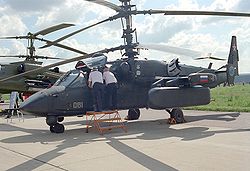
-
 Diesel TEP70BS (Kolomna plant)
 -
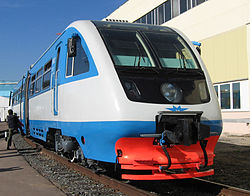 Railcar Rail bus (Metrovagonmash)
 -
 Electric train ED4MKM-AERO (Demikhovsky Engineering Works)


Light industry is the oldest in the region; it was started in the 17th century[31] and with 35% contribution was leading the gross industrial production. There is still production of cotton (in Yegoryevsk, Noginsk, Orekhovo-Zuyevo), wool (in Pavlovsky Posad and Pushkino) and jerseys (in Ivanteyevka and Dmitrov). The silk production in Naro-Fominsk had been stopped. Traditional and renowned crafts include Gzhel, Zhostovo painting and Fedoskino miniature. Large foreign investment projects include the plant for manufacturing household appliances (TV sets, washing machines, refrigerators, etc.) by the South Korean company LG built near the village of Dorokhovo.[43]
-
 Examples of the Gzhel style
 -
 Example of Zhostovo painting


Energy
[edit].jpg)
In 1999, Moscow Oblast consumed 15.4 billion m3 of natural gas, 3.32 million tonnes of oil, 2.13 million tonnes of coal and 8.5 billion kWh of electricity. Electricity for the Oblast is provided by the Kashirskaya thermal power plant (TPP, 1910 MW), Dzerzhynskaya TPP No 22 (1300 MW), Thermal Power Plant 27 (1100 MW), Shatura Power Station (1100 MW), Zagorskaya hydroelectric power plant (1200 MW), Elektrogorsk TPP (623 MW) and several smaller plants. Major new energy project in the region is the construction of Zagorsk hydroelectric plant with the capacity of 840 MW. The deficit of energy is provided by powerlines connecting the region with Saint Petersburg, Volga Hydroelectric Station and other energy suppliers.[44]
Agriculture
[edit]Agriculture has a relatively minor role in the economy of the Oblast. Only 25% of land is cultivated and another 15% are used for other activities such as livestock farming. Agriculture is the least developed in the northern, eastern and western border regions. In the southern region, especially south of the Oka River, more than 50% of land is used in agriculture. Horticulture is typical for the southern region with most of the sown area (more than 3/5) occupied by forage crops. Large areas are reserved for grains, especially wheat, barley, oats and rye, and significant role plays potato. Greenhouses are very common and Moskovsky city hosts the largest greenhouse complex in Europe. Also grown are flowers and mushrooms. Livestock farming predominates over the crop, and is primarily aimed at the production of milk and meat. In addition to cattle, commonly bred are pigs and chickens.[31]
The economic crisis of the 1990s in Russia had severely affected the agriculture of Moscow Oblast. In particular, in the 2000s, as compared with 1970–80s, the grain production has fallen by more than 3 times; potatoes by 2.5 times; vegetables, livestock and poultry by 30%; milk by 2 times and eggs by 4 times.[45][46]
Transport
[edit]
Moscow Oblast has a dense transport network, including roads, railways and waterways along the largest rivers, lakes and reservoirs. Land routes are radially diverging from Moscow and crossed by one railway and two highway rings. Neither railways nor roads, built for the most part many years ago, can cope with the steadily mounting traffic flows. About half of the roads are overloaded and three quarters do not meet modern requirements. Insufficient width of the roads and frequent repairs cause traffic jams.[47]
Moscow Oblast has the highest density of railways in Russia. Eleven major radial lines originate in Moscow and run through the Oblast; the total length of the railways reaches 2,700 km. Almost all railroads are electrified. The largest rail hubs are Orekhovo-Zuyevo and Bekasovo. Regular navigation is carried on the rivers Volga, Oka and Moscow, as well as on the Moscow Canal. Major river ports are in Serpukhov and Kolomna. Also well-developed is pipeline transport. There are two major oil lines, two natural gas rings and numerous radial lines connecting Moscow with the largest gas producing regions of the country.[48]
Moscow and Moscow Oblast have several international passenger airports, namely Sheremetyevo (with two terminals), Vnukovo, Domodedovo and Ostafyevo. There is also Bykovo Airport, which is used for freight. The largest military airport is Chkalovsky (near Shchyolkovo) which also processes some civilian passenger and cargo flights.
Major highways of Moscow Oblast are as follows:
- Minsk highway (M1 "Belarus" Moscow – Belarus) (E101)
- Simferopol highway (M2 "Crimea") Moscow – Belgorod (E105)
- Kiev highway (M3 "Ukraine" Moscow – Kaluga – Bryansk – Kyiv)
- M4 highway (Russia) (M4 "Don" Moscow – Voronezh - Rostov-on-Don - Krasnodar) (E115)
- Ryazan highway (M5 "Ural" Moscow – Chelyabinsk) (E30)
- Nizhny Novgorod highway (M7 "Volga" Moscow – Ufa) (E22)
- Kholmogory – Yaroslavl highway (M8 "Kholmogory" Moscow – Arkhangelsk) (E115)
- Novorizhskoe highway (M9 "Baltic" Moscow – Riga) (E22)
- Leningrad highway (M10 "Russia" Moscow – Tver – Novgorod – Saint Petersburg) (E105)
- Mozhaysk highway (A100 Moscow – Borodino)
- М11 Neva Moscow–Saint Petersburg motorway
- Kaluga highway (A101, Moscow – Troitsk – Obninsk – Kaluga)
- Schelkovskoe highway (A103 Moscow – Shchyolkovo – Chernogolovka)
- Dmitrovskoe (A104 Moscow – Dubna)
- Small Concrete Ring (A107)
- Large Concrete Ring (А108)
- Central Ring Road (А113)
- Yegoryevsk highway (R105 Moscow – Kasimov)
- Pyatnitskoe highway (R111 Moscow – Solnechnogorsk)
- Rogachev highway (P113 Lobnya – Rogachevo)
- Nosovihinskoe highway (Moscow – Likino-Dulyovo)
- Warsaw highway (Moscow – Podolsk – Obninsk – Roslavl)
- Borovskoye highway (Moscow – Vnukovo)
- Rublyovo-Uspenskoe highway
- Dzerzhynsk highway (Dzerzhinsky – Kotelniki – Novoryazanskoye highway)
- Ostashkovskoye highway (Moscow – Mytischi)
Government and awards
[edit]
Moscow Oblast was awarded three Orders of Lenin, on 3 January 1934, 17 December 1956 and 5 December 1966.
The highest executive organ is the Government of Moscow Oblast. Eighteen ministries act as the executive bodies of state authority.[49] The powers, tasks, functions and competence of the Government are defined by the Charter of the Moscow Region. The Governor of the Moscow Oblast will be elected with the term of 5 years.[50] The Regional Duma of Moscow Oblast was formed on 12 December 1993. It consists of 50 deputies also serving a 5-year term.[50]
Sergey Shoygu was elected as Governor of Moscow Oblast in April 2012 by the Moscow Oblast Duma.[51] Shoygu left office after only six months with his appointment when he was appointed as Minister of Defence by Vladimir Putin. Andrei Vorobyov was appointed as acting governor and won a full term to the office in the 2013 elections.[52][53]
Science
[edit]Moscow Oblast has a high density of scientific research institutions, especially related to engineering and military technologies. The latter started developing in the region in 1930–1940s in Zhukovsky (aeronautical engineering), Klimovsk (development of small arms), Reutov (Missile Engineering), Fryazino (microwave electronics)[54] and Korolyov (space technology). They were later joined by famous centers for basic sciences in Troitsk, Chernogolovka (physics and chemistry), Dubna and Protvino (nuclear physics) and Pushchino (biology). Moscow Oblast hosts Mission Control Centers for spacecraft (in Korolyov) and military satellites (Krasnoznamensk), as well as a number of test sites.[55][56]
Sport
[edit]Bandy
[edit]
Zorky from Krasnogorsk has become national bandy champions three times. In the 2017–18 season, Zorky is back in Super League, after one season in the second-tier league. Obukhovo is the only location in Russia without a Super League team which has a bandy venue with artificial ice.[57] A plan for artificial ice also existed in Korolyov.[58] However, the project was abandoned. Although an indoor ice hockey-sized arena entered the plans instead, the official reason given was financial problems.[59]
The Russian Rink Bandy Cup 2017 was played in Balashikha.[60]
Speed skating
[edit]
The 2008 European Speed Skating Championships and the 2016 World Single Distance Speed Skating Championships were held in Kolomna.
Association football
[edit]FK Khimki and Saturn Ramenskoye are the most supported clubs that represent the region. The third professional club Znamya Truda is the oldest existing football club in the country founded in 1909.
Culture and recreation
[edit]

Moscow Oblast has numerous therapeutic and recreational facilities located mainly in western, northwestern and northern parts, and also near Moscow. Of great importance for recreation are forests, which occupy over 40% of the region, as well as horticultural activities. The region has the highest number (over 1 million) of dachas with associated individual gardens. Also numerous are manor complexes, such as those in Abramtsevo, Muranovo, Ostafievo, historical towns (Vereya, Volokolamsk, Dmitrov, Zaraysk, Zvenigorod, Istra, Kolomna, Sergiyev Posad, Serpukhov, etc.), monasteries (Trinity Lavra of St. Sergius, Joseph-Volokolamsk Monastery, Savvino-Storozhevsky Monastery, Nikolo-Ugresh monastery, etc.), and museums (Chekhov museum in Melikhovo, Tchaikovsky museum in Klin, Serpukhov Historical and Art Museum, etc.). The oldest surviving building is the Kamenskoye Church.
Demographics
[edit]| Year | Pop. | ±% |
|---|---|---|
| 1897 | 1,391,990 | — |
| 1926 | 4,570,836 | +228.4% |
| 1959 | 5,863,003 | +28.3% |
| 1970 | 5,774,529 | −1.5% |
| 1979 | 6,359,385 | +10.1% |
| 1989 | 6,693,623 | +5.3% |
| 2002 | 6,618,538 | −1.1% |
| 2010 | 7,095,120 | +7.2% |
| 2021 | 8,524,665 | +20.1% |
| 2025 | 8,766,594 | +2.8% |
| Source: Census data, estimate[61] | ||

After the population decline from 6,693,623 as of the 1989 Census[62] to 6,618,538 in the 2002 Census[63] the population of the oblast grew to 7,095,120 (2010 Census).[16] It increased further to 8,524,665 according to the 2021 Census[64] despite the fact that some parts of its territory were ceded to Moscow. The average population density, at 190 inhabitants/km2 (2021), is the largest in Russia, due to a high proportion of urban population (78.5% in 2021). The highest density occurs in and around Moscow (Lyubertsy, Balashikha, Khimki, Krasnogorsk, etc.) and the lowest – about 20 people/km2 – is in the outlying areas of Lotoshinsky, Shakhovskoy, Mozhaysk and Meshchersk lowlands.[65]
Ethnic groups in Moscow Oblast (2021 Census)
[edit]| Ethnicity[66] | Population | Percentage |
|---|---|---|
| Russians | 6,873,903 | 92.1% |
| Armenians | 70,199 | 0.9% |
| Ukrainians | 54,224 | 0.7% |
| Tatars | 46,066 | 0.6% |
| Uzbeks | 39,656 | 0.5% |
| Tajiks | 37,741 | 0.5% |
| Azerbaijanis | 21,258 | 0.3% |
| Belarusians | 15,673 | 0.2% |
| Kyrgyz | 14,986 | 0.2% |
| Moldovans | 12,811 | 0.2% |
| Others | 273,958 | 3.8% |
| Ethnicity not stated | 1,064,190 | – |
Vital statistics
[edit]Vital statistics for 2024:[67]
- Births: 71,434 (8.3 per 1,000)
- Deaths: 96,608 (11.2 per 1,000)
Total fertility rate (2024):[68]
1.34 children per woman
Life expectancy (2021):[69]
Total — 70.35 years (male — 65.73, female — 74.80)
Religion
[edit]According to a 2012 survey[70] 45.5% of the population of Moscow Oblast adheres to the Russian Orthodox Church, 3% are unaffiliated generic Christians, 2% are Orthodox Christian believers who do not belong to church or belong to non-Russian Orthodox churches, 1% are adherents of Rodnovery (the Slavic folk religious movement) and 1% to Islam. In addition, 29% of the population declares to be "spiritual but not religious", 9% is Non-Religious, and 9.5% follows other religions or did not give an answer to the question.[70]
Administrative and municipal divisions
[edit]
Administratively, the oblast is divided into 38 cities/towns under oblast jurisdiction and 36 administrative districts, consisting of 46 towns of district significance, 72 urban-type settlements, and 6,119 rural localities.
As of 2011, Moscow Oblast is municipally subdivided into 38 urban okrugs and 36 municipal districts, which consist of 114 urban settlements and 193 rural settlements.

The three largest cities of the oblast are Balashikha (215,494), Khimki (207,425), and Podolsk (186,961).[16] Most other towns have ten to fifty thousand people. The smallest town is Vereya in Naro-Fominsky District with a population of 4,957 (2002 census)[72]. Among the urban-type settlements, the largest is Nakhabino (36,546) followed by Tomilino (30,605).[16] The oldest populated place in the oblast is Volokolamsk, first mentioned in 1135; slightly younger towns are Zvenigorod (1152), Dmitrov (1154), and Kolomna (1177).
The city of Baikonur in Kazakhstan also belongs administratively to the oblast, as part of Odintsovsky District.[73][74]
The most intensive formation of towns occurred in 1938–1940. The youngest towns are Golitsyno and Kubinka. They existed for quite some time, but were granted town status only in 2004. Some recent towns separated from the other towns, such as Yubileyny and Peresvet.
New projects have been announced at the beginning of the 21st century. One of them is Rublyovo-Arkhangelsk, which is designed for 30,000 inhabitants with high income and is called by the media the "city for millionaires".[75][76] Another is "Great Domodedovo, 30 kilometers (19 mi) south of the Moscow Ring Road, which is designed for 450,000 residents.[77] The new city A101 was designed for 300,000 residents in 2009 and the sale of its land in Leninsky District has already begun; the city's construction is planned to take thirty-five years.[78][79][80]
A part of Moscow Oblast's former territory, mainly to the southwest of the city of Moscow, was merged with the federal city of Moscow on July 1, 2012.[81]
The housing stock of the oblast is approximately 125 million square meters. Almost all the houses are equipped with water supply, sewerage, gas,[82] central heating and hot water. However, the telephone network is underdeveloped in rural areas. In the competition for the most comfortable city of 2006 in the Moscow Oblast the winner was Kolomna followed by Balashikha (for cities with population over 100,000) and Vidnoye (<100,000) and then by Mytishchi and Noginsk.
.jpg)
Sister regions
[edit] | This article needs to be updated. (March 2022) |
 Bratislava, Slovakia
 Chüy Region, Kyrgyzstan
 Île-de-France, France
 Jiangsu, China
 Ljubljana, Slovenia
 Palembang, Indonesia
 Buenos Aires Province, Argentina


Partner regions
[edit]Moscow Oblast cooperates with:
 Ahal Region, Turkmenistan (1995) [83]

See also
[edit]References
[edit]Notes
[edit]- ^ Президент Российской Федерации. Указ №849 от 13 мая 2000 г. «О полномочном представителе Президента Российской Федерации в федеральном округе». Вступил в силу 13 мая 2000 г. Опубликован: "Собрание законодательства РФ", No. 20, ст. 2112, 15 мая 2000 г. (President of the Russian Federation. Decree #849 of May 13, 2000 On the Plenipotentiary Representative of the President of the Russian Federation in a Federal District. Effective as of May 13, 2000.).
- ^ Госстандарт Российской Федерации. №ОК 024-95 27 декабря 1995 г. «Общероссийский классификатор экономических регионов. 2. Экономические районы», в ред. Изменения №5/2001 ОКЭР. (Gosstandart of the Russian Federation. #OK 024-95 December 27, 1995 Russian Classification of Economic Regions. 2. Economic Regions, as amended by the Amendment #5/2001 OKER. ).
- ^ a b Administrative-Territorial Structure of the Union Republics. 1987., p. 179
- ^ Charter of Moscow Oblast, Article 40
- ^ Official website of Moscow Oblast. Andrey Yuryuvich Vorobyov Archived February 7, 2016, at the Wayback Machine, Governor of Moscow Oblast (in Russian)
- ^ Charter of Moscow Oblast, Article 30
- ^ "Сведения о наличии и распределении земель в Российской Федерации на 01.01.2019 (в разрезе субъектов Российской Федерации)". Federal Service for State Registration, Cadastre and Cartography. Archived from the original on February 9, 2022. Retrieved August 29, 2023.
- ^ "26. Численность постоянного населения Российской Федерации по муниципальным образованиям на 1 января 2018 года". Federal State Statistics Service. Retrieved January 23, 2019.
- ^ "Об исчислении времени". Официальный интернет-портал правовой информации (in Russian). June 3, 2011. Retrieved January 19, 2019.
- ^ Official throughout the Russian Federation according to Article 68.1 of the Constitution of Russia.
- ^ a b According to Article 24 of the Charter of Moscow Oblast, the government bodies of the oblast are located in the city of Moscow and throughout the territory of Moscow Oblast. However, Moscow is not named the official administrative center of the oblast.
- ^ Moscow Oblast Territorial Branch of the Federal State Statistics Service. Оценка численности населения на 1 января 2014 и 2015 годов и в среднем за 2014 год Archived March 22, 2017, at the Wayback Machine (in Russian)
- ^ a b "1.1. ОСНОВНЫЕ СОЦИАЛЬНО-ЭКОНОМИЧЕСКИЕ ПОКАЗАТЕЛИ в 2014 г." [MAIN SOCIOECONOMIC INDICATORS 2014]. Regions of Russia. Socioeconomic indicators - 2015 (in Russian). Russian Federal State Statistics Service. Archived from the original on September 26, 2018. Retrieved July 26, 2016.
- ^ Molnet.ru (May 29, 2006). "Московскую область назвали официально" (in Russian). Archived from the original on January 5, 2009. Retrieved January 18, 2007.
- ^ B. Prokhorov; A. Martynov; V. Artyukhov; V. Vinogradov (1999). Плотность населения и система расселения (in Russian). Archived from the original on November 4, 2006. Retrieved October 31, 2006.
- ^ a b c d Russian Federal State Statistics Service (2011). Всероссийская перепись населения 2010 года. Том 1 [2010 All-Russian Population Census, vol. 1]. Всероссийская перепись населения 2010 года [2010 All-Russia Population Census] (in Russian). Federal State Statistics Service.
- ^ Wagner, pp. 31–32
- ^ Wagner, pp. 32–35
- ^ Wagner, pp. 35–36
- ^ Moscow Oblast Archived October 14, 2013, at the Wayback Machine moskvaobl.ru (in Russian)
- ^ Wagner, p. 5
- ^ Wagner
- ^ Wagner, p. 15
- ^ Wagner, pp. 15–18
- ^ Wagner, p. 76
- ^ Wagner, pp. 73–76
- ^ Wagner, pp. 77–78
- ^ Wagner, p. 71
- ^ Site OAO Shaturtorf" Archived November 11, 2012, at the Wayback Machine. Shaturtorf.ru. Retrieved on 2012-08-05.
- ^ Wagner, p. 79
- ^ a b c d e "Moscow (oblast, Russia)". Encyclopædia Britannica. Archived from the original on July 28, 2010. Retrieved August 1, 2010.
- ^ Myachkovo NA, Sorokin VN, Climate of Moscow Oblast, Moscow, 1991 (in Russian)
- ^ "Protown.ru". November 2014. Archived from the original on April 13, 2021. Retrieved November 2, 2014.
- ^ a b c Wagner BB, Klevkova IV Rivers of Moscow region Archived March 9, 2012, at the Wayback Machine Moscow, MGPU, 2003.
- ^ Wagner BB, Dmitrieva VT Lakes and reservoirs of the Moscow region Archived November 18, 2020, at the Wayback Machine Moscow, MGPU 2004
- ^ Lyubimova EL, Flora of Podmoskovie, Moscow, 1964
- ^ a b c Tourov SS, Wildlife of Podmoskovie, Moscow, 1961
- ^ a b "Ecological portal Moscow Region". Archived from the original on October 6, 2008. Retrieved August 10, 2009.
- ^ "History of Volokolamsk". Archived from the original on February 21, 2011. Retrieved July 8, 2010.. moskvaobl.ru (in Russian)
- ^ History of Moscow Oblast Archived October 14, 2013, at the Wayback Machine moskvaobl.ru (in Russian)
- ^ a b Pages of History Archived September 26, 2018, at the Wayback Machine Moscow Oblast (in Russian)
- ^ a b History Archived September 26, 2018, at the Wayback Machine Official site of Moscow Oblast (in Russian)
- ^ LG opened a plant in Podmoskovie Archived July 24, 2011, at the Wayback Machine 11 September 2006 (in Russian)
- ^ Economics Archived October 24, 2010, at the Wayback Machine (in Russian)
- ^ Russian Statistical Yearbook, 2005, average for each category over 1970–1980
- ^ Russian Statistical Yearbook, 2009, average over 2001–2008
- ^ "Московский транспортный узел – что будет дальше (Moscow transport hub – what next)". Archived from the original on September 27, 2008. Retrieved July 8, 2010.
{{cite web}}: CS1 maint: bot: original URL status unknown (link). Alldoma.ru (29 June 2008). Retrieved on 2012-08-05. - ^ "Mostransgaz" Archived September 12, 2017, at the Wayback Machine. Mostransgaz.info.
- ^ Executive authorities Archived July 3, 2010, at the Wayback Machine. Mosreg.ru. Retrieved on 2012-08-05.
- ^ a b Charter of Moscow Oblast Archived May 2, 2010, at the Wayback Machine (in Russian)
- ^ Alexander Bratersky (2012-04-05). "Murmansk Governor Out, New Moscow Region Governor In". The Moscow Times. Archived from the original on August 26, 2014. Retrieved August 5, 2012.
- ^ Russian President Appoints Acting Governor Of Moscow Region Archived November 13, 2012, at the Wayback Machine, RFERL, November 08, 2012. Retrieved on 2012-11-12
- ^ "Election Results" (in Russian). Archived from the original on March 26, 2018. Retrieved October 3, 2017.
- ^ Presidential Decree of 29 December 2003 No 1531 Archived July 21, 2011, at the Wayback Machine "On conferring the status of City of Science of the Russian Federation Fryazino Moscow Region
- ^ Hall, Rex; Shayler, David & Vis, Bert (2005). Russia's cosmonauts: inside the Yuri Gagarin Training Center. Birkhäuser. p. 74. ISBN 0-387-21894-7. Archived from the original on April 10, 2023. Retrieved December 3, 2021.
- ^ Harvey, Brian (2007). The rebirth of the Russian space program: 50 years after Sputnik, new frontiers. Springer. pp. 253–258. ISBN 978-0-387-71354-0. Archived from the original on April 10, 2023. Retrieved December 3, 2021.
- ^ "Стадион «СК Обухово», Обухово". Retrieved September 29, 2017.
- ^ "В Королёве обсудили перспективы развития «Вымпела»". Retrieved September 29, 2017.
- ^ "Болельщики «Вымпела» просят поддержки". Retrieved September 29, 2017.
- ^ "Кубок России по мини-хоккею с мячом - 2017 - Соревнования - Федерация хоккея с мячом России". rusbandy.ru. Archived from the original on March 16, 2018. Retrieved October 1, 2017.
- ^ "Предварительная оценка численности постоянного населения на 1 января 2025 года". Federal State Statistics Service. Retrieved February 3, 2025.
- ^ Всесоюзная перепись населения 1989 г. Численность наличного населения союзных и автономных республик, автономных областей и округов, краёв, областей, районов, городских поселений и сёл-райцентров [All Union Population Census of 1989: Present Population of Union and Autonomous Republics, Autonomous Oblasts and Okrugs, Krais, Oblasts, Districts, Urban Settlements, and Villages Serving as District Administrative Centers]. Всесоюзная перепись населения 1989 года [All-Union Population Census of 1989] (in Russian). Институт демографии Национального исследовательского университета: Высшая школа экономики [Institute of Demography at the National Research University: Higher School of Economics]. 1989 – via Demoscope Weekly.
- ^ Federal State Statistics Service (May 21, 2004). Численность населения России, субъектов Российской Федерации в составе федеральных округов, районов, городских поселений, сельских населённых пунктов – районных центров и сельских населённых пунктов с населением 3 тысячи и более человек [Population of Russia, Its Federal Districts, Federal Subjects, Districts, Urban Localities, Rural Localities—Administrative Centers, and Rural Localities with Population of Over 3,000] (XLS). Всероссийская перепись населения 2002 года [All-Russia Population Census of 2002] (in Russian).
- ^ Russian Federal State Statistics Service. Всероссийская перепись населения 2020 года. Том 1 [2020 All-Russian Population Census, vol. 1] (XLS) (in Russian). Federal State Statistics Service.
- ^ Population of Russian Federation in 2009–2010 Archived March 31, 2022, at the Wayback Machine. Retrieved on 2012-08-05.
- ^ "Национальный состав населения". Federal State Statistics Service. Retrieved December 30, 2022.
- ^ "Естественное движение населения в разрезе субъектов российской федерации за декабрь 2024 года". Rosstat. February 21, 2025. Retrieved February 25, 2025.
- ^ "Рейтинг рождаемости в регионах: кто в лидерах, а кто в аутсайдерах | Москва". ФедералПресс (in Russian). February 25, 2025. Retrieved February 26, 2025.
- ^ "Демографический ежегодник России" [The Demographic Yearbook of Russia] (in Russian). Federal State Statistics Service of Russia (Rosstat). Retrieved June 1, 2022.
- ^ a b c "Arena: Atlas of Religions and Nationalities in Russia" Archived December 6, 2017, at the Wayback Machine. Sreda, 2012.
- ^ 2012 Arena Atlas Religion Maps. "Ogonek", № 34 (5243), 27/08/2012. Retrieved 21/04/2017. Archived.
- ^ Federal State Statistics Service (May 21, 2004). Численность населения России, субъектов Российской Федерации в составе федеральных округов, районов, городских поселений, сельских населённых пунктов – районных центров и сельских населённых пунктов с населением 3 тысячи и более человек [Population of Russia, Its Federal Districts, Federal Subjects, Districts, Urban Localities, Rural Localities—Administrative Centers, and Rural Localities with Population of Over 3,000] (XLS). Всероссийская перепись населения 2002 года [All-Russia Population Census of 2002] (in Russian).
- ^ odi_love (September 13, 2016). "Знаете что связывает космодром Байконур и Одинцовский район?". LiveJournal. Archived from the original on April 5, 2023. Retrieved February 22, 2023.
- ^ "Самым безопасным городом Подмосковья оказался Байконур в Казахстане". MKRU. December 20, 2016. Archived from the original on March 14, 2023. Retrieved February 22, 2023.
- ^ Martovalieva, Yulia (November 2, 2006). "Новая карта Подмосковья, где строится параллельная страна для VIP-персон" [New map of Moscow region, where the country is built parallel to the VIP -persons]. 2006.novayagazeta.ru. Archived from the original on April 21, 2018. Retrieved August 5, 2012.
- ^ "Тридцать тысяч миллионеров" [Thirty thousand millionaires will move into a village near Moscow]. Archi.ru. May 24, 2006. Archived from the original on September 27, 2011. Retrieved August 5, 2012.
- ^ "Большое Домодедово: Краснодар под Москвой" [Great Domodedovo: Krasnodar, near Moscow]. expert.ru. April 21, 2009. Archived from the original on April 20, 2009. Retrieved July 8, 2010.
- ^ "ГОРОДА С КУПЕЧЕСКИМ РАЗМАХОМ" [Cities with the merchant scope]. burs.ru (in Russian). Archived from the original on October 1, 2018.
- ^ "Masshtab" sells lands of the project A-101 Archived November 7, 2014, at the Wayback Machine 5 June 2005 (in Russian)
- ^ Interview with Michail Blinkin (in Russian) Archived October 28, 2014, at the Wayback Machine. Rusnovosti.ru (2009-06-08). Retrieved on 2012-08-05.
- ^ Official website of the Government of Moscow. Draft of adopted measures of the capital and oblast governments with regards to the expansion of the borders of Moscow Archived January 30, 2013, at the Wayback Machine (in Russian)
- ^ (in Russian) GUP MO "Mosoblgaz" Archived September 19, 2012, at the Wayback Machine. Mosoblgaz.ru. Retrieved on 2012-08-05.
- ^ "Интернет портал СНГ. 7.4. Соглашения между регионом государства – участника СНГ и регионом государства – участника СНГ (Российская Федерация)". Archived from the original on June 9, 2016.
Sources
[edit]- №55/96-ОЗ 11 декабря 1996 г. «Устав Московской области», в ред. Закона №258/2015-ОЗ от 28 декабря 2015 г. «О поправке к Уставу Московской области». Вступил в силу через 10 дней после первого официального опубликования, за исключением положений, для которых установлены иные сроки или особый порядок введения в действие. Опубликован: "Подмосковные известия", №239, 18 декабря 1996 г. (#55/96-OZ December 11, 1996 Charter of Moscow Oblast, as amended by the Law #258/2015-OZ of December 28, 2012 On the Amendment to the Charter of Moscow Oblast. Effective as of the date which is 10 days after the first official publication date, with the exception of clauses for which different dates or special procedures of taking effect have been established.).
- "СССР. Административно-территориальное деление союзных республик. 1987." (USSR. Administrative-Territorial Structure of the Union Republics. 1987) / Составители В. А. Дударев, Н. А. Евсеева. — М.: Изд-во «Известия Советов народных депутатов СССР», 1987. — 673 с.
- B.B. Wagner, B.O. Manucharyants. "Геология, рельеф и полезные ископаемые Московского региона". Moscow, MGPU, 2003. (in Russian)
External links
[edit]
 Moscow Oblast travel guide from Wikivoyage
- Official website – Moscow Oblast (in Russian)


| International | |
|---|---|
| National | |
| Geographic | |
| Other | |
Moscow Oblast
View on GrokipediaGeography
Location and Borders
Moscow Oblast is situated in the central portion of European Russia, forming part of the Central Federal District. It completely encircles the federal city of Moscow, which serves as the national capital and is administratively separate from the oblast. The region lies on the East European Plain, with its territory extending approximately between 54° and 57° N latitude and 35° and 39° E longitude.[3][1] The oblast shares land borders with seven other federal subjects of Russia: Tver Oblast to the northwest, Yaroslavl Oblast to the northeast, Vladimir Oblast to the east, Ryazan Oblast to the southeast, Tula Oblast to the south, Kaluga Oblast to the southwest, and Smolensk Oblast to the west. These boundaries are entirely domestic, with no international frontiers, reflecting Moscow Oblast's inland position within the Russian Federation. The total length of the oblast's borders exceeds 1,000 kilometers, facilitating extensive interregional connectivity via road, rail, and river networks.[1][4]Topography and Relief
Moscow Oblast lies within the East European Plain, exhibiting a generally low-relief landscape of glacial origin, with undulating moraine plains, low hills, and shallow river valleys formed primarily during the Pleistocene glaciations. Elevations typically range from 100 to 250 meters above sea level, with the terrain transitioning from northern ridges to southern and eastern lowlands. The region's relief reflects post-glacial erosion and sedimentation, resulting in modest relative heights of 50-150 meters across most areas.[5][6] The principal topographic element is the Klin-Dmitrov Ridge, a prominent terminal moraine stretching approximately 200 kilometers east-west through the northern oblast, with widths of 25-55 kilometers and maximum elevations of about 285-300 meters near modern Zagorsk (Sergiyev Posad). This ridge features a steep northern escarpment dropping toward the upper Volga plain and a gentler southern slope, influencing local drainage patterns and forming a natural divide between river basins.[7][8] The oblast's highest elevation reaches 310 meters at Zamri-gora in the Mozhaysky District, part of the broader Moscow Uplands, while the lowest points descend to around 97 meters along the Oka River in the south. Eastern sectors encompass the Meshchera Lowlands, a flat, boggy expanse at 120-150 meters dominated by peat deposits and wetlands, contrasting the more dissected northern and central terrains.[9][3]Geology and Mineral Resources
Moscow Oblast occupies a portion of the Moscow Syneclise, a large intracratonic sedimentary basin within the East European Platform, where a thick sequence of Paleozoic to Quaternary sediments overlies a Precambrian crystalline basement. The basement comprises Archean and Proterozoic metamorphic rocks, including gneisses, schists, and metaeffusive units, with thicknesses exceeding 9 km in faulted zones formed during early tectonic events.[10] Sedimentary fill begins with Devonian terrigenous and carbonate deposits, transitioning to Carboniferous marine limestones, dolomites, evaporites, and phosphorite horizons, reflecting episodic transgressions and basin subsidence.[11] Mesozoic strata, including Jurassic clays and Cretaceous sands, are thinner and patchier, while Quaternary glacial tills, fluvioglacial sands, and peat bogs dominate the surficial geology, shaped by Pleistocene ice advances from the north.[12] Mineral resources in the oblast are predominantly non-metallic, supporting construction and agriculture rather than large-scale metallurgy. Peat deposits are extensive, covering significant lowlands in the Meshchera and other plains, with historical exploitation for fuel and horticulture; mapping efforts identified numerous bogs, though many have been drained, leading to subsidence and fire risks.[13] Phosphorites occur in Carboniferous beds of the Moscow Basin, providing phosphate for fertilizers, while refractory clays and high-quality sands, gravels, and limestones supply the region's cement and building industries. Dolomites and magnesites are quarried for industrial uses.[14] Metallic mineralization is limited, with small iron ore deposits, such as the historical Ruza site hosted in Precambrian rocks beneath sedimentary cover, yielding bog iron and magnetite.[15] Titanium mentions in secondary sources lack verified large-scale deposits, and overall, the oblast's geology favors sedimentary-derived resources over deep ore bodies due to the stable platform setting.[16] No major hydrocarbon fields exist, though minor groundwater aquifers in Quaternary sands support local extraction. Resource development is constrained by urban proximity to Moscow, emphasizing sustainable quarrying over exhaustive mining.[17]Climate
Moscow Oblast features a warm-summer humid continental climate (Köppen Dfb), marked by long, cold winters with substantial snowfall and relatively short, warm summers without a pronounced dry season.[18] The region's flat topography contributes to relatively uniform conditions across the oblast, though northern areas experience slightly cooler temperatures and more precipitation than southern zones near Moscow.[18] Annual average temperatures hover around 5.8 °C, based on long-term meteorological records, with recent decades showing a warming trend—such as Moscow's 2024 annual mean of 8.2 °C, the highest in 245 years of observations.[18][19] Winters extend from mid-November to mid-March, with January means typically -7.9 °C; snow cover persists for 120–150 days, accumulating 40–60 cm depths in many areas.[20][21] Summers span late May to early September, peaking in July with daily means of 20 °C, highs up to 24 °C, and lows around 14 °C; heatwaves can push temperatures above 35 °C, as seen in July 2025.[20][21][22] Precipitation averages 700 mm yearly, with summer maxima from thunderstorms (up to 80 mm in June–July) and winter forms primarily snow; the distribution remains moderate year-round, supporting agriculture but occasionally leading to flooding in lowlands.[18][23] The table below summarizes representative monthly averages derived from Moscow-area stations, applicable to the oblast:| Month | Average High (°C) | Average Low (°C) |
|---|---|---|
| January | -4.4 | -10.0 |
| February | -3.9 | -10.0 |
| March | 2.2 | -5.0 |
| April | 10.6 | 1.7 |
| May | 18.3 | 7.8 |
| June | 21.7 | 11.7 |
| July | 23.9 | 13.9 |
| August | 21.1 | 12.2 |
| September | 15.0 | 7.2 |
| October | 7.8 | 2.2 |
| November | 0.6 | -3.9 |
| December | -3.3 | -8.3 |
Hydrology: Rivers and Lakes
Moscow Oblast features over 2,000 rivers and streams with a combined length exceeding 10,000 km, all draining into the Volga River basin via the Moskva River, Oka River, and their tributaries.[1][24] The rivers exhibit lowland characteristics, with gentle slopes, meandering channels, and extensive floodplains that support seasonal inundation.[25] The Moskva River, the primary waterway, originates near the village of Kolpino in Mozhaysky District and traverses approximately the upper 100 km within the oblast before reaching Moscow, with a total length of 473 km and eventual confluence into the Oka River.[26] Key tributaries include the Ruza River (142 km long), Istra River (133 km), Pakhra River (94 km), and Yakhroma River (97 km), which contribute to the Moskva's flow and support regional water management, including reservoirs like the Mozhayskoye and Istrinskoye for flood control and supply.[26] The Oka River forms much of the southern boundary, while the Klyazma River influences the northeastern sector, with shorter segments in the oblast.[26] River regimes are dominated by snowmelt, delivering 60-70% of annual discharge during April-May floods, followed by low summer flows augmented by groundwater.[25] The oblast contains around 350 lakes, predominantly small and shallow (typically 5-10 m deep), many of glacial origin from the last ice age, though reservoirs dominate larger surface water bodies.[24] Senezh Lake, the largest at 18.7 km², is a reservoir on the Istra River used for water supply and recreation.[25] Natural lakes include Svyatoe Lake in Shatursky District (approximately 0.2 km², glacial formation) and smaller bodies like Smerdyachye and Komsomolskoye, often peat-bottomed and eutrophic.[25] These water bodies provide up to 10% of Moscow's drinking water, underscoring their hydrological significance amid regional pressures from urbanization and pollution.[27]Soils and Natural Resources
The predominant soil types in Moscow Oblast are sod-podzolic soils, which cover approximately 70.5% of the territory, characterized by a podzolic horizon with eluviation of iron and aluminum compounds leading to relative infertility under natural conditions without fertilization.[28] Gray forest soils occupy about 19.0%, featuring higher humus content and better structure suited to mixed farming in forested-steppe transitions.[28] Other types include floodplain soils at 6.4%, chernozems at 2.9%, peat-bog soils at 0.8%, and soddy soils at 0.4%, with distributions influenced by topography, hydrology, and historical land use patterns.[28] Natural resources in Moscow Oblast are dominated by non-metallic deposits, particularly peat, which forms in low-lying wetlands and has been historically extracted for fuel and horticulture, though large-scale drainage has led to subsidence and fire risks as seen in the 2010 peatland fires affecting thousands of hectares.[29] Peatlands, mapped extensively via remote sensing, cover significant areas suitable for restoration to mitigate carbon emissions and fire hazards.[13] Extraction of construction materials such as sand, gravel, and clay occurs through open-pit mining, impacting agricultural lands by disturbing up to several thousand hectares annually, with reclamation efforts often incomplete due to economic priorities.[30] Limited metallic minerals exist, but the region lacks major ore deposits, focusing instead on these common resources supporting regional infrastructure development.[31]Biodiversity: Flora and Fauna
Moscow Oblast is situated in the mixed coniferous-broadleaf forest zone of central Russia, featuring diverse forest types that include spruce (Picea abies), pine (Pinus sylvestris), broadleaf (Quercus robur and Tilia cordata), and small-leaf (Betula pendula, B. pubescens, Populus tremula) stands, along with alder swamps (Alnus incana, A. glutinosa).[32] These forests exhibit multilayered structures influenced by soil properties, nutrients, and climate factors such as temperature and precipitation, maintaining native broadleaf-coniferous characteristics despite human impacts.[32] Vascular plant diversity reaches around 1,000 species regionally, with protected sites like Prioksko-Terrasny Nature Reserve documenting 981 species across pine-mixed forests, oak groves, meadows, and bogs.[33] Mammalian fauna comprises approximately 54 species in key reserves, including elk (Alces alces), roe deer (Capreolus capreolus), wild boar (Sus scrofa), reintroduced European bison (Bison bonasus), red fox (Vulpes vulpes), Eurasian beaver (Castor fiber), and Eurasian otter (Lutra lutra).[33] [34] Avian populations exceed 130 species, featuring waterbirds like the great crested grebe (Podiceps cristatus), forest dwellers such as woodpeckers and owls, and game birds including partridges and pheasants.[33] [34] Reptiles, amphibians, fish, and invertebrates sustain the ecosystems, though habitat fragmentation from urbanization and agriculture limits overall wildlife distribution outside protected areas such as Prioksko-Terrasny and portions of Losiny Ostrov National Park.[34][33]Environmental Conditions and Challenges
Moscow Oblast faces persistent environmental degradation driven by urbanization, industrial activity, and proximity to Moscow, which amplifies pollutant loads across air, water, and soil. Air quality in the region typically registers as moderate, with real-time PM2.5 levels averaging 11 µg/m³ and PM10 at 25 µg/m³, though spikes occur due to traffic emissions contributing approximately 50% of increased anthropogenic pollutants since 2000. The Moscow urban agglomeration, encompassing parts of the oblast, exhibits an urban heat island effect where central temperatures exceed suburban areas by 1–3°C, exacerbating aerosol and dust contamination from road traffic and construction.[35][36][37] Water resources, including the Moskva River and tributaries like the Setun, are heavily impacted by industrial discharges, urban runoff, and sewage, leading to elevated heavy metal concentrations such as copper, iron, and metalloids. Anthropogenic sources dominate pollution patterns, with the Moskva River's water quality deteriorating from upstream inputs, rendering surface water—upon which Moscow relies for 70% of supply—susceptible to chemical and biological contaminants. Smaller rivers in the oblast show acute pollution, as evidenced by high iron and copper levels in streams like the Tarakanovka, linked to nearby industry.[38][39][40] Soil contamination with heavy metals persists near industrial zones, where accumulation from past and ongoing emissions exceeds background levels despite national reductions in inputs; for instance, oblast soils adjacent to enterprises retain high pollutant burdens from transport and manufacturing. Waste management exacerbates these issues, with the region burdened by Moscow's output—comprising up to one-fifth of Russia's municipal solid waste—and reliance on landfills for over 90% of disposal, prompting closures of 24 out of 39 facilities since 2013 and local opposition to new sites due to leachate risks. These challenges compound health risks and ecosystem strain, underscoring the need for improved monitoring and remediation amid ongoing development pressures.[41][42][43]History
Pre-Modern Period
The territory of present-day Moscow Oblast was inhabited during the Mesolithic period by hunter-gatherer communities of the Butovo culture, with settlements dating to approximately 10,000 years ago along riverbanks, evidenced by excavated artifacts including stone tools and hearths.[44] Finno-Ugric tribes, such as the Merya and Meshchera, established fortified settlements on high riverbanks in the region during the early centuries AD, constructing hillforts with ramparts and palisades for defense.[45] East Slavic tribes, particularly the Vyatichi, migrated into the area around the Oka and Moskva rivers from the 4th to 10th centuries, assimilating or displacing earlier Finno-Ugric populations and leaving archaeological traces like kurgan burials in sites near modern Moscow.[46] Moscow itself first appears in historical records in 1147, when Prince Yuri Dolgorukiy of Suzdal hosted allies at the site, establishing it as a frontier outpost in the Vladimir-Suzdal principality amid forested terrain that provided natural protection.[47] The Mongol invasion of 1237–1240 devastated much of northeastern Rus', but Moscow's location in dense forests limited direct destruction, allowing it to emerge as a collector of tribute for the Golden Horde under subsequent princes.[48] Daniel, youngest son of Alexander Nevsky, ruled Moscow as an appanage principality from 1263 to 1303, initiating its consolidation as a distinct entity. Ivan I Kalita (r. 1325–1340) secured the grand princely title of Vladimir from the Horde in 1328, used revenues from tribute collection to acquire adjacent lands, and relocated the metropolitan see to Moscow in 1326, enhancing its religious and political centrality.[49] Dmitry Donskoy (r. 1359–1389) expanded Moscow's influence by defeating rival principalities and achieving a major victory over Horde forces led by Mamai at the Battle of Kulikovo on September 8, 1380, near the Don River, which bolstered Moscow's prestige despite ongoing nominal Horde suzerainty.[50] Under Ivan III (r. 1462–1505), Moscow annexed key territories like Novgorod in 1478, and the bloodless "Great Stand on the Ugra River" in October–November 1480 against Khan Akhmat marked the effective end of Mongol overlordship, as the Horde withdrew without battle, allowing Ivan to centralize power and style Moscow as the successor to Byzantium.[51] The 16th century saw further consolidation under Ivan IV (r. 1533–1584), who conquered Kazan in 1552 and Astrakhan in 1556, but the region's stability unraveled with the Oprichnina terror (1565–1572) and the dynastic crisis following his death, leading into the Time of Troubles (1598–1613) amid famine, pretenders, and Polish intervention.[52]Imperial Russian Era
The Moscow Governorate was established in 1708 by Peter I as part of his administrative reforms dividing the Russian state into eight governorates, with Moscow serving as the administrative center and encompassing territories that largely correspond to the modern Moscow Oblast and surrounding areas.[53] This guberniya initially included 25% of Russia's population and vast central lands, facilitating centralized control over key agricultural and trade routes radiating from Moscow.[54] Under Catherine II's provincial reform of 1775, the governorate was reorganized into provinces and uyezds, expanding to 18 uyezds by 1796, including Moscow, Zvenigorod, Mozhaysk, and others within the oblast's bounds, emphasizing local governance while maintaining imperial oversight.[53] A pivotal event occurred during the 1812 Patriotic War against Napoleon, when the Battle of Borodino unfolded on September 7 near the village of Borodino in Mozhaysk Uyezd, involving approximately 250,000 combatants and resulting in over 70,000 casualties, marking the bloodiest single day of the Napoleonic Wars.[55] Russian forces under Mikhail Kutuzov inflicted heavy losses on the French Grande Armée, delaying their advance and contributing to the eventual retreat from Moscow, which French troops occupied briefly before the city's fires and Russian scorched-earth tactics forced withdrawal.[55] The governorate's strategic location amplified its role in mobilizing resources and militia against the invasion. Economically, the region relied on agriculture supported by serfdom, with about 70% of serf estates in Moscow Province operating under quit-rent systems rather than full corvée labor, allowing some peasant mobility to urban centers like Moscow for off-farm work.[56] Serfdom's abolition in 1861 by Alexander II emancipated over 20 million peasants empire-wide, including those in the governorate, spurring land redistribution but also sparking local unrest and constraining agricultural modernization due to redemption payments and fragmented holdings.[56] By the late 19th century, proto-industrialization emerged with textile factories and railways, such as the 1862 Moscow-Sergiev line, integrating the oblast into broader imperial trade networks while Moscow's proximity drove early manufacturing growth.[57]Soviet Era
Moscow Oblast was established in 1929 as part of the Soviet administrative reorganization, consolidating territories from the former Moscow, Tula, Ryazan-Vyazma, and other provinces while excluding the city of Moscow.[5] This creation aligned with the Bolsheviks' centralization efforts to streamline governance and support rapid economic transformation under the first Five-Year Plan (1928–1932), which prioritized heavy industry and collectivization in the central Russian region.[58] The oblast's proximity to the capital facilitated its role as a logistical and manufacturing hub, though collectivization met resistance from rural peasants, leading to deportations and forced consolidations similar to those observed in neighboring areas.[59] Industrialization accelerated in the 1930s, transforming the oblast into a key center for machine-building, metallurgy, and chemicals, with plants in cities like Kolomna producing locomotives and heavy equipment essential to Soviet infrastructure.[5] During World War II, the region became the primary theater for the Battle of Moscow (October 1941–January 1942), where Soviet defenses along the Mozhaisk line in Moscow Oblast repelled German Army Group Center, inflicting heavy casualties and halting Operation Barbarossa's advance toward the capital. This victory, achieved through reinforcements including Siberian divisions and harsh winter conditions, preserved Moscow as the political heart of the USSR and boosted national morale, though the oblast suffered significant destruction, population displacement, and economic disruption from occupation threats and evacuations. In the post-war era, Moscow Oblast developed as a cluster of specialized scientific and defense facilities, including closed cities (ZATO) focused on aerospace and nuclear research. Korolyov (formerly Kaliningrad) emerged as the epicenter of the Soviet rocket program, housing design bureaus under Chief Designer Sergei Korolev that produced launch vehicles like the R-7 and early satellites.[60] Dubna, established as a research site in 1946 and formalized in 1956, hosted the Joint Institute for Nuclear Research, an international facility for particle physics that advanced Soviet nuclear capabilities amid Cold War competition. Pushchino developed as a biological sciences hub under the Academy of Sciences, exemplifying the USSR's investment in "naukogrady" to drive technological self-sufficiency. These developments, supported by state directives, positioned the oblast as a backbone of Soviet military-industrial complex, though inefficiencies and secrecy limited broader innovation.[61]Post-Soviet Period
The dissolution of the Soviet Union on December 26, 1991, marked the onset of profound economic disruption in Moscow Oblast, mirroring national trends of hyperinflation peaking at over 2,500% in 1992 and a sharp contraction in industrial output as state subsidies evaporated and enterprises faced market competition. Privatization efforts, initiated under federal reforms, led to the transfer of major oblast industries—including metallurgy, machinery, and food processing—to private hands, but initial inefficiencies and corruption exacerbated unemployment and regional GDP decline estimated at 40-50% from 1991 to 1998 levels. Vladimir Biryukov served as head of administration from November 1991 to December 2000, navigating these shocks amid federal instability.[62] The 1998 financial crisis intensified challenges, with ruble devaluation and domestic debt default triggering bank failures and a temporary spike in poverty rates across central Russia, though Moscow Oblast's proximity to the capital buffered some impacts through commuter labor flows and emerging service sectors. Recovery accelerated post-1999 under Boris Gromov, governor from December 2000 to May 2012, coinciding with national oil-driven growth; oblast GDP expanded at annual rates exceeding 7% through the mid-2000s, fueled by real estate development, logistics hubs, and high-tech manufacturing clusters like those in Khimki and Korolyov. Population stabilized and grew modestly from approximately 6.7 million in 1990 to over 7 million by 2010, driven by net in-migration from rural Russia and internal relocation from Moscow, countering national demographic decline.[63][64] A pivotal administrative shift occurred on July 1, 2012, when federal legislation annexed about 1,500 square kilometers of southwestern Moscow Oblast territory to Moscow city, creating "New Moscow" and transferring roughly 250,000 residents and significant tax revenues, which reduced the oblast's land area by 10% and strained local budgets initially but spurred compensatory infrastructure investments. Sergey Shoygu briefly governed from May to November 2012 before assuming federal defense roles, succeeded by Andrey Vorobyov in 2013, who has overseen continued suburban expansion, digital governance initiatives, and resilience amid post-2014 sanctions. By 2020, oblast population reached 7.69 million, reflecting sustained urban agglomeration effects despite federal fertility challenges. Economic output rebounded strongly pre-2022, with GRP per capita ranking among Russia's highest at over 1 million rubles by 2019, anchored in aerospace (e.g., Khrunichev affiliates) and automotive sectors, though reliant on Moscow's spillover.[65][66]Administrative Divisions
Territorial Organization
Moscow Oblast is administratively divided into 36 districts (raions), 31 cities of oblast significance, and 5 closed administrative-territorial formations (ZATO), comprising a total of 72 administrative-territorial units as defined by regional law.[67] [68] These units form the basis of the oblast's territorial organization, with districts typically subdivided into rural settlements and urban-type localities, while cities of oblast significance function as independent entities equivalent to districts in administrative status.[67] Some cities, such as Balashikha and Podolsk, include attached administrative territories that encompass surrounding rural areas.[67] The 5 closed administrative-territorial formations—Vlasikha, Voskhod, Zvezdny Gorodok, Krasnoznamensk, and Molodyozhny—are restricted-access zones primarily associated with military and space research facilities, governed directly by federal authorities under the Ministry of Defense or Roscosmos.[67] Vlasikha, for instance, houses Strategic Rocket Forces command structures, while Krasnoznamensk supports satellite operations.[68] These ZATO are excluded from standard municipal district frameworks and maintain separate administrative oversight to ensure security.[67] This structure, established by Law of Moscow Oblast No. 11/2008-OZ "On the Administrative-Territorial Structure of Moscow Oblast" and subsequent amendments, separates administrative divisions from municipal ones, where urban okrugs (gorodskiye okrugi) have proliferated since 2019 to streamline local governance by merging former districts and settlements.[67] As of 2025, boundary adjustments, such as those refined in March 2025 for Shchyolkovo urban okrug, have not altered the core unit counts but have clarified geodetic limits for precise territorial delineation.[69] The system prioritizes efficient resource allocation and security, reflecting the oblast's strategic proximity to the national capital.[67]Major Cities and Urban Centers
Moscow Oblast encompasses numerous urban centers that function primarily as commuter suburbs and industrial satellites to the adjacent federal city of Moscow, contributing to the region's high population density of approximately 194 inhabitants per square kilometer as of 2024. These cities have experienced substantial growth due to proximity to the capital, with many hosting manufacturing, aerospace, and logistics sectors that support Russia's central economic hub. The oblast's urban population is concentrated in the northern, eastern, and southern districts bordering Moscow, where infrastructure like the Moscow Ring Road facilitates integration into the broader metropolitan area.[70] Key urban centers include Balashikha, the largest by population at 530,311 residents in 2024, located east of Moscow and known for its mechanical engineering and construction industries.[71] Khimki, with 256,684 inhabitants in 2024, lies northwest and features the Sheremetyevo International Airport, a major aviation and logistics node handling over 50 million passengers annually pre-2022 disruptions.[72] Podolsk, south of Moscow, has around 312,000 residents and serves as an industrial base for food processing and machinery production.[73] Other significant centers are Mytishchi (population 255,429 as of recent estimates), a northern hub for automotive parts and consumer goods manufacturing; Korolyov (approximately 186,000), home to the Gagarin Research & Test Cosmonaut Training Center and key rocket production facilities under Roscosmos; and Lyubertsy (over 200,000), focused on electronics and residential development. These cities collectively account for over 2 million residents, representing about 25% of the oblast's total population of 8.65 million in 2024, with growth driven by migration and urban expansion rather than natural increase.[70][73]| City | Population (2024 est.) | Primary Role/Industry |
|---|---|---|
| Balashikha | 530,311 | Mechanical engineering, residential |
| Podolsk | 312,911 | Food processing, machinery |
| Khimki | 256,684 | Aviation logistics, airport operations |
| Mytishchi | 275,313 | Automotive manufacturing, consumer goods |
| Korolyov | 186,460 | Aerospace and space industry |
Government and Politics
Governance Structure
The governance of Moscow Oblast follows the structure outlined for Russian federal subjects, with executive authority vested in the Governor and legislative powers held by the Moscow Regional Duma. The Governor serves as the highest executive official, elected by direct popular vote among residents for a five-year term, and heads the regional government responsible for implementing laws, managing administration, and coordinating with federal authorities.[1] The Moscow Regional Duma functions as the unicameral legislative body, comprising 50 deputies elected for five-year terms: 25 from single-mandate constituencies and 25 through proportional representation in a single oblast-wide electoral district. As the sole permanent representative organ, the Duma enacts regional legislation, approves the annual budget, declares amnesties, and exercises oversight over the executive branch, including the ability to express no confidence in the Governor under specific conditions defined by the oblast charter.[1] Executive operations are supported by the Government of Moscow Oblast, which includes specialized ministries handling sectors such as economy, health, and education, operating under the Governor's direction while aligning with federal laws. Local self-government occurs through municipal councils and administrations within the oblast's districts and urban okrugs, distinct from but subordinate to regional bodies in matters of state authority.[1]Political Leadership and Elections
The executive branch of Moscow Oblast is led by the governor, who serves as the head of the regional government and is responsible for implementing federal and regional policies, managing the budget, and overseeing administrative divisions. Andrey Vorobyov, a member of the United Russia party, has held the position since September 2013, following his appointment by President Vladimir Putin and subsequent direct elections.[74][75] Vorobyov was re-elected in the 2023 gubernatorial election held on September 8–10, securing victory in a contest dominated by the ruling party amid Russia's centralized electoral framework, where incumbents aligned with the federal government typically prevail with high margins due to administrative resources and limited viable opposition.[76] The legislative body, the Moscow Oblast Duma, is a unicameral assembly with 50 deputies serving five-year terms, elected through a mixed system: 25 seats in single-mandate constituencies and 25 via proportional representation from party lists. United Russia maintains a supermajority in the Duma, reflecting the party's national dominance and the structural advantages in Russian regional elections, including candidate filtering and media control that constrain opposition parties like the Communist Party of the Russian Federation (CPRF) and the Liberal Democratic Party of Russia (LDPR). The most recent Duma elections occurred in September 2021 as part of Russia's unified voting day, resulting in United Russia retaining control, consistent with outcomes in other oblasts where turnout and vote shares favor the ruling party.[1] Political participation in Moscow Oblast aligns with Russia's multiparty system, but effective power resides with United Russia, which coordinates with federal authorities on key issues such as defense mobilization and economic integration with Moscow city. Opposition representation exists nominally, with CPRF and LDPR holding minority seats, yet independent observers have noted systemic barriers, including disqualifications and electronic voting protocols that facilitate administrative influence over results. Vorobyov's leadership has emphasized infrastructure development and wartime support, including refugee integration from Ukraine, underscoring the oblast's role in federal priorities.[77]Controversies and Criticisms
Moscow Oblast has faced significant public backlash over environmental degradation stemming from overloaded municipal waste landfills, which handle a substantial portion of the capital's refuse. In March 2018, the Yadrovo landfill near Volokolamsk emitted toxic gases, including hydrogen sulfide and chlorine, leading to the hospitalization of over 50 children for respiratory and skin ailments; this incident triggered protests involving up to 7,000 residents, including road blockades and confrontations with police.[78][79] Similar demonstrations erupted in districts such as Balashikha, Kolomna, Klin, and Serpukhov, where landfills exceeded capacity, contaminated groundwater, and emitted odors described as petrol-like and sulfurous, with protesters decrying the influx of Moscow's garbage—estimated at 11-12 million tonnes annually for the oblast, of which only 1% is processed.[78] These events exposed systemic failures in waste management, with critics attributing persistence to corruption in permitting and operations, though official responses included Governor Andrei Vorobyov's declaration of a state of emergency at Yadrovo and dismissal of local officials.[78] Authorities' handling of the protests drew criticism for heavy-handed tactics, including the deployment of OMON riot police, detentions of organizers—such as Volokolamsk activist Andrei Zhdanov, jailed for 15 days—and restrictions on media coverage, which fueled accusations of suppressing dissent rather than addressing root causes.[78] President Vladimir Putin intervened by ordering the closure of the Kuchino landfill in Balashikha in June 2017 following earlier complaints, but similar issues resurfaced, as seen in 2023 grassroots resistance against a toxic waste facility in Kolomensky district, highlighting ongoing deficiencies in infrastructure and regulatory enforcement.[80] Regional plans for incinerators and sorting plants, announced in 2018, have progressed slowly, with construction delays amplifying perceptions of inefficiency under Vorobyov's administration.[78] Vorobyov himself has encountered personal scrutiny, including 2013 allegations of plagiarism in his doctoral thesis, where Dissernet documented extensive copying from prior works, prompting his resignation from a university post to avoid formal charges.[81] In January 2024, during a severe cold snap, residents in Podolsk and other areas criticized the governor for inadequate heating infrastructure, leading to widespread complaints and temporary disabling of his Telegram channel amid public outrage over frozen homes and schools.[82] Broader governance critiques point to the oblast's alignment with federal priorities, potentially at the expense of local environmental and infrastructural needs, though specific high-profile corruption convictions among oblast officials remain limited compared to national trends.[83]Economy
Economic Overview
Moscow Oblast maintains one of Russia's most dynamic regional economies, driven by its strategic location encircling the national capital and a diversified industrial foundation. In 2023, the gross regional product (GRP) totaled 9,244.6 billion rubles in current prices, an increase of 1,470.1 billion rubles over 2022, reflecting sustained expansion amid national economic pressures including sanctions and wartime mobilization.[84] This performance positioned the oblast as a key contributor to Russia's overall GDP, with per capita GRP underscoring higher productivity compared to many peripheral regions, bolstered by commuter ties to Moscow's labor market.[85] The economy is predominantly industrialized, with manufacturing sectors such as mechanical engineering, metallurgy, oil refining, chemicals, and food processing forming the core, accounting for a substantial share of output and employment. Industrial production surged 13.7% in 2023, outpacing national averages and highlighting resilience in export-oriented heavy industries like locomotive and vehicle production at facilities in Kolomna and Likino-Dulevo.[86] [2] Energy and petrochemical activities, including refineries near Moscow, further amplify value added, while the food industry benefits from regional agriculture integration. Services, including wholesale trade and logistics, have grown due to the oblast's role as a hinterland for Moscow, though industry remains the primary growth engine rather than tertiary sectors dominant in the capital itself.[87] Despite external challenges, investments in fixed capital rose, supporting modernization in high-tech manufacturing and infrastructure, with the region's GRP growth rate exceeding 5% in recent assessments from the Central Bank of Russia.[85] Unemployment remains low at around 2-3%, driven by demand from defense-related production amid geopolitical tensions, though this has strained labor availability and increased reliance on migrant workers. Official statistics from Rosstat indicate balanced sectoral contributions, with non-oil industry proving adaptable to import substitution policies implemented since 2014.[88]Industrial Sector
The industrial sector of Moscow Oblast plays a significant role in the regional economy, characterized by diverse manufacturing activities including machine-building, chemicals, metallurgy, construction materials, wood processing, and food production. Machine-building enterprises primarily produce equipment for light and food industries as well as consumer goods, while chemical facilities focus on fertilizers, pesticides, plastics, and synthetic materials.[1] Metallurgy and related metalworking support downstream manufacturing, contributing to the oblast's output of processed metals and components.[1] Key enterprises in mechanical engineering highlight the sector's strength in transportation equipment. The Kolomna Locomotive Works, located in Kolomna, specializes in diesel locomotives such as the TEP70BS model, serving Russian railways. The Likino Bus Plant (LiAZ) in Likino-Dulyovo manufactures urban and intercity buses, including models like the LiAZ-5292. Metrovagonmash in Mytishchi produces railcars and metro vehicles, supporting urban transit systems. Additionally, the Kamov helicopter design bureau and production facilities in Lyubertsy contribute to aerospace and defense manufacturing, exemplified by the Ka-52 Alligator combat helicopter. These firms underscore the oblast's integration into national supply chains for heavy machinery and defense products. Industrial production in Moscow Oblast expanded notably in recent years, with the index reaching 116.0% in 2023 compared to 2022, reflecting a 16% growth amid broader economic pressures. This performance aligns with the region's diversified industrial base, though specific contributions to gross regional product remain integrated within overall manufacturing metrics reported by federal statistics.[89] The sector benefits from proximity to Moscow's markets and infrastructure, fostering output in high-value added areas despite sanctions impacting imports of components.[89]Agriculture and Rural Economy
Agriculture in Moscow Oblast constitutes a modest component of the regional economy, constrained by extensive urbanization, suburban development, and the dominance of industrial and service sectors near the capital. Agricultural lands encompass roughly 37.5% of the oblast's total area, with arable land accounting for approximately 68% of agricultural holdings, followed by pastures (13.8%), hayfields (11%), and perennial plantations (6.9%). Only about 25% of the overall land is actively cultivated, reflecting pressures from urban sprawl and non-agricultural land conversion.[2] Crop production emphasizes grains, potatoes, vegetables, and greenhouse produce suited to the region's temperate climate and short growing season. In 2023, the gross grain harvest exceeded 735,000 metric tons, an increase of 56,000 tons from the prior year, while greenhouse vegetable output in the first half alone surpassed 100,000 tons, up 23% year-over-year. Livestock farming predominates, focusing on poultry, pork, and dairy; the oblast leads national exports with 77% of Russia's beef shipments and 44% of pork in 2023. Overall agricultural output in constant prices reached 157.965 billion RUB, with a volume growth of 0.6% amid national trends of slight contraction in some subsectors.[90][91][92][93][86] The rural economy faces structural challenges, including depopulation, labor shortages, and the erosion of smallholder farming due to migration to urban centers and land reallocation for residential or industrial use. Private subsidiary farms have declined amid these dynamics, with non-agricultural activities increasingly supplanting traditional operations. State programs aim to bolster meat production—targeting a 6% rise in livestock and poultry output by 2030—through subsidies exceeding 5 billion RUB in 2023 for various supports, yet rural wages remain low relative to urban averages, exacerbating workforce outflows.[94][95][96]Energy Production and Infrastructure
Moscow Oblast's energy production is dominated by thermal power plants, which generate the majority of electricity and combined heat and power for the region, supplemented by imports from the broader Russian grid. The oblast lacks significant nuclear, hydroelectric, or renewable capacity, relying instead on fossil fuels aligned with Russia's national energy profile, where gas and coal constitute key thermal inputs. Installed generation capacity from major facilities totals approximately 4,300 MW, sufficient to meet local demand for its 7.5 million residents while exporting surplus to Moscow city and beyond.[2][97] The Kashirskaya Thermal Power Plant (GRES), located in Kashira, is the largest facility with an installed capacity of 1,910 MW, utilizing coal and natural gas as primary fuels and fuel oil as backup; it operates under OGK-1 and contributes significantly to the oblast's baseload power.[97][98] Dzerzhynskaya TPP-22 in Dzerzhinsky provides 1,300 MW of gas-fired generation across 11 units commissioned between 1960 and 1973, owned by Gazprom and focused on combined heat and power for industrial and residential use.[99] TPP-27, situated near Mytishchi, adds 1,100 MW, including a 450 MW combined-cycle gas turbine unit integrated into the local grid for efficient cogeneration.[2][100] Energy infrastructure integrates these plants into Russia's Unified Energy System via high-voltage transmission networks managed by Rosseti Moscow Region, featuring 220 kV and higher lines such as the TPP-27 to Ucha and TPP-27 to Beskudnikovo corridors for reliable power evacuation and redundancy.[100][101] Natural gas supply, critical for over half of thermal generation, flows through extensive pipelines from Gazprom's Urengoy-Pomary-Uzhhorod and other trunk lines traversing the oblast, supporting both electricity production and district heating systems that cover urban centers like the Moscow suburbs.[99] Modernization efforts, including unit upgrades at Kashirskaya for increased efficiency and reduced emissions, aim to sustain output amid aging infrastructure, with projected annual generation post-2028 exceeding 6 billion kWh from that site alone.[102]Transportation Networks
Moscow Oblast maintains a dense transportation infrastructure that integrates closely with Moscow, encompassing roadways, railways, aviation hubs, and supplementary public transit systems to accommodate high commuter volumes and regional connectivity. The road network totals approximately 12,320 kilometers of motor roads, including 8,820 kilometers of federal highways that radiate from the capital and link major settlements.[87] The Moscow Ring Road (MKAD), a 109-kilometer orbital motorway, delineates the city's boundary and handles substantial traffic flows, with ongoing reconstructions enhancing interchanges and capacity since 2012.[103] [104] The Central Ring Road (CKAD), spanning sections across the oblast and intersecting 13 federal routes, functions as a key bypass to reduce radial congestion, with significant portions operational by 2021.[105] Rail transport features eleven major radial lines originating from Moscow, aggregating roughly 2,700 kilometers within the oblast, predominantly electrified and managed under Russian Railways for passenger and freight services.[2] These lines connect urban centers like Klin, Sergiyev Posad, and Kolomna, supporting daily commutes and industrial logistics. Aviation infrastructure includes Sheremetyevo International Airport in Khimki, which processed about 43.8 million passengers in 2024, and Domodedovo Airport in the southeast, handling 15.6 million passengers amid a post-pandemic recovery.[106] [107] Public transit extends Moscow's metro system into the oblast via new lines, such as the Troitskaya Line launched in 2025, with plans for 31 additional stations and 71.4 kilometers of track by 2030 to serve growing suburban populations. Extensive bus networks complement rail services, while waterways like the Moscow Canal enable limited navigation along over 10,000 kilometers of rivers.[108] [109] [1] Local manufacturing supports this system, including locomotives from the Kolomna plant and railcars from Metrovagonmash in Mytishchi.[110]Services and Tourism
The services sector in Moscow Oblast supports the region's industrial base through retail, wholesale trade, and logistics activities, leveraging its position as a suburban extension of Moscow. Trade and services indicators for municipalities within the oblast, such as Balashikha, recorded retail and public catering turnovers reaching 3,000.2 billion RUB in 2019, reflecting the sector's scale in urban centers.[111] Transportation services are prominent due to extensive road and rail networks connecting to the capital, facilitating commuter flows and goods distribution.[2] Tourism draws visitors primarily for cultural, historical, and natural sites, with attractions including parks, amusement centers like Joki Joya, and historical manors such as Vinogradovo.[112] The oblast features over 1,500 cultural and historical monuments, many accessible as day trips from Moscow, including religious sites and estates.[113] Activities encompass multimedia exhibitions, gastronomic tours, and nature reserves, promoted through regional initiatives to extend stays beyond the capital.[114] Proximity to Moscow amplifies tourist access, though specific visitor statistics for the oblast remain integrated with city-wide flows exceeding 26 million in 2024.[115] Recent national trends show Russian services activity contracting in September 2025, potentially impacting tourism-related subsectors amid broader economic pressures.[116]Demographics
Population Trends and Vital Statistics
As of January 1, 2024, the permanent resident population of Moscow Oblast was estimated at 8,651,260 persons, with an average annual population of 8,621,498 for 2023. The region's population has exhibited steady growth in recent years, increasing by approximately 0.66% or 57,667 persons between the 2023 and 2024 average annual figures to reach 8,708,927.[117] This overall expansion contrasts with national trends of slight decline and is primarily attributable to positive net internal and international migration inflows, which have consistently outpaced natural population decrease since the early 2010s.[118] Vital statistics indicate a persistent natural decline, though less severe than in many other Russian regions due to relatively higher socioeconomic conditions and proximity to Moscow city. In 2023, births totaled an estimated 70,500, down slightly from 70,900 in 2022, yielding a crude birth rate of around 8.2 per 1,000 population based on annual averages.[119] Deaths have exceeded births annually, with the coefficient of natural increase remaining negative at approximately -2.4 per 1,000 in recent years, an improvement from -8.5 per 1,000 in 2005. For 2024, births rose marginally to 71,434, reflecting localized demographic pressures but still insufficient to offset mortality. The total fertility rate (TFR) in Moscow Oblast stood at approximately 1.35 children per woman in the early 2020s, above the national average of 1.41 but below replacement level (2.1), influenced by urbanization, delayed childbearing, and economic factors. Life expectancy at birth, which reached 78.4 years in 2019 (higher than the national figure of 73.3), has faced downward pressures from the COVID-19 pandemic and other mortality factors, though regional data post-2020 remains less granular due to Rosstat's reduced publication of monthly indicators since mid-2025.[120] [121]| Year | Estimated Population (Jan 1) | Births | Crude Birth Rate (per 1,000) | Natural Increase (per 1,000) |
|---|---|---|---|---|
| 2022 | ~8,600,000 | 70,900 | ~8.2 | Negative (~ -2.5) |
| 2023 | 8,621,498 (avg) | 70,500 | ~8.2 | -2.4 |
| 2024 | 8,651,260 | 71,434 | ~8.2 | Negative |
Ethnic Composition
According to the 2021 All-Russian Population Census, among residents of Moscow Oblast who stated their ethnicity, Russians comprised 92.1 percent.[122] Armenians accounted for 0.9 percent of those specifying, while Ukrainians made up 0.7 percent.[122] These figures indicate a highly homogeneous population dominated by the ethnic Russian majority, consistent with the oblast's location in central European Russia and patterns of internal migration drawing from other Russian regions. The census recorded a national trend of increased non-responses to ethnicity questions, with approximately 11.6 percent of respondents across Russia not stating or declining to specify their ethnicity, potentially affecting local distributions similarly. Smaller minorities, including Tatars and other groups from the North Caucasus and Central Asia, form less than 1 percent each individually, reflecting limited ethnic diversity relative to more peripheral Russian federal subjects.Religious Demographics
The predominant religion in Moscow Oblast is Eastern Orthodoxy, specifically under the jurisdiction of the Russian Orthodox Church of the Moscow Patriarchate. Self-identification surveys indicate that a substantial majority of residents culturally affiliate with Orthodoxy, consistent with the region's 92.1% ethnic Russian population from the 2021 census. A 2023 Levada Center poll, conducted independently among Russian adults, reported 72% national identification as Orthodox Christian, with central regions like Moscow Oblast showing comparable or slightly lower figures due to urban influences and migration, though active church attendance remains low at under 10% weekly.[123] The oblast hosts numerous Orthodox monasteries and cathedrals, including the prominent Trinity Lavra of St. Sergius in Sergiyev Posad, a major pilgrimage site underscoring historical religious continuity.[124] Islam forms the largest religious minority, driven by internal migration from North Caucasus republics and Central Asia. In 2022, the Mufti of Moscow Oblast estimated approximately 1 million permanent Muslim residents of traditional ethnic backgrounds (e.g., Tatars, Azerbaijanis), plus over 1 million temporary labor migrants, out of a total population of about 8.5 million, suggesting a share of 10-20% though official verification is limited due to Russia's lack of mandatory religious census questions.[124] This aligns with broader Levada data placing Muslims at 7% nationally, with higher concentrations in migrant-heavy areas like the Moscow region. Other Christian denominations, including Old Believers, Protestants (e.g., Baptists, Pentecostals), and Catholics, account for under 5% combined, often tied to ethnic minorities like Germans or Poles.[123] Judaism, Buddhism, and pagan revivals exist in small pockets, with Jewish communities centered in historical settlements and Buddhists among Kalmyk or Buryat migrants, totaling less than 1% each per regional estimates. Irreligion or agnosticism is significant, with 13-18% of Russians reporting no affiliation in recent polls, potentially higher in suburban industrial zones of the oblast where Soviet-era secularism persists.[123] These demographics reflect post-Soviet revival tempered by nominal adherence, where cultural Orthodoxy predominates over devout practice across groups. ![Trinity Lavra of St. Sergius in Sergiyev Posad][float-right]Migration Patterns and Urbanization
Moscow Oblast displays a high level of urbanization, with 78.5% of its population living in urban areas as of the 2021 census, encompassing approximately 6.7 million urban residents out of a total population exceeding 8.5 million.[125] This rate reflects the oblast's integration into the Moscow metropolitan area, where suburban expansion has driven the growth of satellite cities such as Balashikha, Khimki, and Podolsk, converting former rural settlements into densely populated commuter hubs. Urbanization trends since the 1990s have accelerated due to economic centralization around Moscow, with rural depopulation contributing to a shift where urban land use for housing and industry has expanded at the expense of agricultural areas.[126] Internal migration patterns in the oblast are characterized by net positive inflows, primarily from other Russian regions seeking proximity to Moscow's job market in sectors like manufacturing, services, and technology. Data indicate consistent arrivals exceeding departures, with the oblast attracting labor from less developed areas in Central and Southern Russia, compensating for national demographic declines.[127] This includes short-distance moves from rural districts within the oblast to urban centers, as well as longer-range internal migration that bolsters population growth in peripheral municipalities bordering Moscow. Outflows, though present, often involve relocation to Moscow city itself or further suburbs, creating a dynamic equilibrium where the oblast serves as a buffer for the capital's expansion.[128] Commuter migration dominates daily patterns, with 1.1 to 1.5 million residents commuting inbound to Moscow for employment, particularly from bordering districts, while 0.3 to 0.4 million flow outbound.[129] These flows, estimated via mobile operator data, peak during weekdays and exhibit seasonal variations tied to economic activity and dacha returns. International migration adds to the influx, with the broader Moscow agglomeration—including the oblast—hosting around 1.8 million foreign migrants, equivalent to 9% of the total population, largely from Central Asian states drawn by construction and service jobs.[130] Such patterns underscore causal drivers like wage disparities and infrastructure connectivity via radial highways and rail lines, though they strain urban planning and transport capacity without corresponding rural revitalization.Science and Education
Research Institutions and Innovations
Moscow Oblast is home to several leading research institutions, primarily affiliated with the Russian Academy of Sciences (RAS), focusing on fundamental and applied sciences in physics, nuclear research, biology, and materials science. These centers, often established during the Soviet era, contribute to Russia's scientific output in high-technology fields, including particle physics, biotechnology, and nanotechnology.[131] The Moscow Institute of Physics and Technology (MIPT), located in Dolgoprudny, was founded in 1946 as a specialized university to train physicists and engineers through a rigorous curriculum emphasizing theoretical foundations and practical applications. It operates as a national research university, fostering innovations in areas such as quantum technologies, aerospace engineering, and information systems, with graduates contributing to Russia's defense and space sectors.[132] In Dubna, the Joint Institute for Nuclear Research (JINR), established in 1956 as an international intergovernmental organization, conducts experimental and theoretical research in nuclear physics, particle physics, and related fields. JINR's Laboratory of Nuclear Reactions has synthesized superheavy elements beyond uranium, including flerovium (element 114) in 1998 and livermorium (element 116) in 2000, advancing understanding of nuclear stability and the periodic table. The institute collaborates with over 20 countries and hosts the Nuclide heavy-ion cyclotron complex for such experiments.[131] The Pushchino Scientific Center for Biological Research (PSCBR RAS), situated in Pushchino approximately 100 km south of Moscow, serves as a federal research hub for biological sciences since its development in the 1960s. It encompasses institutes dedicated to biophysics, biochemistry, cell biology, and soil science, producing advancements in microbial genetics, protein engineering, and ecosystem modeling, with facilities including unique climate-controlled experimental stations for studying biological processes under controlled conditions.[133] The Scientific Center in Chernogolovka, originating from a 1956 branch of the Institute of Chemical Physics, hosts multiple RAS institutes specializing in chemical physics, solid-state physics, and materials science. Key contributions include developments in plasma chemistry, high-temperature superconductors, and nanomaterials, with the Institute of Problems of Chemical Physics advancing combustion theory and laser technologies since the 1960s. The center's facilities support interdisciplinary research yielding patents in catalysis and energy storage materials.[134]Educational System and Universities
The education system in Moscow Oblast adheres to Russia's federal framework, mandating 11 years of general education for children aged 6 or 7 to 17 or 18, divided into primary (grades 1–4), basic secondary (grades 5–9), and upper secondary (grades 10–11). Basic education through grade 9 is compulsory, after which students may pursue vocational training, full secondary certification via the Unified State Exam (EGE), or enter the workforce. State-funded schools provide free tuition, textbooks, and meals, with enrollment managed by regional authorities under the Ministry of Education oversight.[135][136][137] Pre-primary education is available from age 3 through kindergartens, emphasizing early socialization and basic skills, with near-universal access in urban areas of the oblast; participation rates exceed 90% for eligible children as part of federal programs. Secondary schools incorporate a standardized curriculum including Russian language, mathematics, sciences, history, and foreign languages, with recent emphases on STEM and patriotic education per national policy updates since 2022. Vocational lyceums and colleges offer post-grade-9 pathways in fields like engineering and agriculture, aligning with the oblast's industrial base. Literacy rates remain high at over 99%, reflecting systemic investments despite demographic pressures from low birth rates.[136][138] Higher education in Moscow Oblast features specialized institutions outside Moscow city proper, with first-degree programs (bachelor's or specialist's) free for top performers via competitive EGE scores and quotas. The Moscow Institute of Physics and Technology (MIPT), located in Dolgoprudny and established in 1946, focuses on applied physics, mathematics, and engineering, training personnel for aerospace and IT sectors with a rigorous, research-oriented model akin to MIT. Dubna State University, in Dubna since 2007 (evolving from earlier nuclear research ties), emphasizes nuclear physics, informatics, and international studies, leveraging proximity to the Joint Institute for Nuclear Research. Other notable entities include the Moscow Regional State University in Mytishchi, offering broad programs in humanities and pedagogy, and the Moscow State Academy of Physical Culture in Malakhovka, specializing in sports science. Enrollment across these totals around 20,000–30,000 students annually, with federal funding supporting infrastructure amid Russia's push for technological self-sufficiency.[139][140]Culture and Society
Cultural Heritage and Monuments
The Trinity Lavra of St. Sergius in Sergiev Posad, a UNESCO World Heritage Site inscribed in 1993, represents the most prominent Orthodox monastic complex in Moscow Oblast, founded in 1345 by St. Sergius of Radonezh as a wooden church and expanded into a fortified lavra by the 15th century with military features including walls and towers for defense against invasions.[141] The ensemble includes over 50 buildings, such as the 1422 Trinity Cathedral with its ancient frescoes and the 16th-century Dormition Cathedral, serving as a spiritual center that influenced Russian monasticism and statehood, with relics of St. Sergius drawing pilgrims since the medieval period.[141] The New Jerusalem Monastery in Istra, established in 1656 by Patriarch Nikon as a patriarchal residence modeled on the Holy Land's topography and structures like the Church of the Holy Sepulchre, features a massive cathedral completed in 1690 with replicated biblical sites integrated into its design, reflecting 17th-century Russian efforts to localize sacred geography amid schismatic reforms.[142] This complex, spanning 22 hectares with fortified walls and gates, endured destruction in 1812 during Napoleon's retreat and partial Soviet-era repurposing before restoration post-1991, preserving Baroque and Old Russian architectural elements.[142] The Borodino Battlefield near Mozhaysk commemorates the September 7, 1812, clash between Napoleon's Grande Armée and Russian forces under Kutuzov, resulting in approximately 70,000 total casualties in a single day—the bloodiest of the Napoleonic Wars—and marking a pyrrhic French victory that preceded their Moscow retreat due to attrition and scorched-earth tactics.[143] Preserved as a state museum-reserve since 1839 with over 1,000 monuments, including the 1912 Field of the Dead Church and Raevsky Redoubt remnants, the site also saw fierce 1941 fighting during the Battle of Moscow, where Soviet defenses halted German advances, underscoring its recurring strategic role in Russian military history.[143] Arkhangelskoye Estate in Krasnogorsk, developed from the 18th century as a noble residence and peaking under Prince Nikolai Yusupov in the early 19th with neoclassical palace expansions by architects like Kazakov, houses Italianate gardens, a theater, and a collection of 18th-20th century sculptures, exemplifying Russian imperial-era landscaping influenced by European models while incorporating local church architecture from 1667.[144] Nationalized in 1917 and opened as a museum in 1919, it safeguards artifacts like Yusupov's library and porcelain, though facing preservation challenges from urban encroachment, highlighting the oblast's aristocratic heritage amid industrialization.[144] These sites, protected under Russia's federal cultural heritage laws since the 1990s, collectively embody Moscow Oblast's layers of Orthodox spirituality, military resilience, and secular patronage, with over 10,000 registered monuments regionally, though many lesser ones like district churches remain underdocumented due to post-Soviet neglect before recent state-funded restorations.[142]Arts, Literature, and Traditions
The Abramtsevo Colony, located in the Sergiyevo-Posadsky District, served as a major artistic center in the late 19th and early 20th centuries, fostering a revival of Russian national motifs and folk-inspired styles. Industrialist Savva Mamontov established the estate as a hub for creatives starting in the 1870s, hosting painters such as Vasily Polenov, Viktor Vasnetsov, Ilya Repin, Valentin Serov, Konstantin Korovin, and Mikhail Vrubel, who collaborated on projects blending traditional woodcarving, majolica ceramics, and theatrical design.[145][146] Workshops there produced decorative tiles, sculptures, and furniture emphasizing Slavic folklore and pre-Petrine aesthetics, influencing the Russian Art Nouveau movement. The site now operates as a state historical-artistic-literary museum-reserve, preserving over 20 buildings and artifacts from this era.[145] In literature, Anton Chekhov's residency at the Melikhovo estate in Chekhovsky District from 1892 to 1899 marked a prolific phase, during which he composed plays including The Seagull (1896) and Uncle Vanya (1899), alongside short stories like "The Lady with the Dog" (1899). While managing the 1,300-hectare property, Chekhov practiced medicine locally, treating over 1,000 peasants annually, constructing a school for 120 students in 1896, and overseeing a church dedication in 1898.[147] The estate, now the A.P. Chekhov Museum-Reserve, maintains his study, orchard, and medical cabinet, reflecting the interplay of rural life and creative output in his realist portrayals of provincial Russia.[148] Traditional crafts in Moscow Oblast embody enduring folk practices, notably the matryoshka nesting dolls originating in Sergiev Posad around 1890, when artist Sergei Malyutin sketched a prototype of eight wooden figures, carved by turner Vasily Zvezdochkin at the Children's Education Workshop.[149] Production boomed in the town, known for its icon-painting heritage tied to the Trinity Lavra, with dolls featuring peasant motifs exported widely by 1913, including sets up to 48 pieces.[150] Similarly, Zhostovo painting, developed in Zhostovo village near Mytishchi since the early 1800s, involves hand-painting floral and still-life designs on metal trays using oil-based enamels, a technique passed through family workshops and recognized as a state-protected craft.[151] These artisanal traditions, rooted in serf-era workshops, persist through cooperatives producing functional and decorative items for domestic and tourist markets.Recreation and Lifestyle
Moscow Oblast provides abundant opportunities for nature-based recreation, leveraging its extensive forests and protected areas. The Prioksko-Terrasny Nature Reserve, located on the Oka River terraces, covers 4,960 hectares of pine and mixed forests, supporting eco-tourism through hiking trails and a bison nursery where visitors can observe reintroduced European bison amid 981 species of vascular plants.[33] The reserve, established in 1945, serves as a biodiversity hotspot in the densely populated region, attracting those seeking wildlife observation and educational tours.[152] Losiny Ostrov National Park, partially within the oblast, encompasses over 11,000 hectares of woodland, offering trails for walking, cross-country skiing, and encounters with elk and other fauna in one of Europe's largest urban-adjacent forests.[153] This park, Russia's first national park founded in 1983, facilitates year-round outdoor activities while preserving habitats for diverse species in proximity to urban centers.[153] Central to the oblast's lifestyle is the dacha tradition, where residents maintain seasonal country homes for escaping city pressures, gardening, and family retreats; surveys indicate that around 62% of Moscow-area dwellers favor dacha relaxation as their primary leisure form, with national estimates showing 17-20 million such properties serving at least half of urban families.[154][155] These dachas, often clustered in the oblast's rural zones, embody self-sufficiency practices like vegetable cultivation, which supplement household food supplies amid economic variability.[156] Winter sports thrive at resorts like Sorochany, equipped with multiple slopes, lifts, and facilities for skiing and snowboarding, drawing locals and visitors within a short drive from Moscow.[157] This blend of natural escapes and seasonal pursuits reflects a lifestyle intertwined with the oblast's suburban advantages, enabling commuting to Moscow while affording regular access to countryside leisure.[156]
Sports and Recreation
Major Sports Disciplines
Football, or association football, represents one of the primary sports disciplines in Moscow Oblast, with professional club FC Khimki competing in the Russian Football National League as of the 2024–25 season; the team, founded in 1997, plays its home matches at Arena Khimki, which has a capacity of 18,636 and is located in the city of Khimki.[158] [159] FC Khimki achieved promotion to the Russian Premier League in 2020 and participated until 2022, reflecting the region's competitive infrastructure for the sport despite challenges from neighboring Moscow-based clubs.[158] Basketball holds significant prominence, exemplified by BC Khimki, a professional team based in Khimki that has competed in the VTB United League and previously in the EuroLeague; the club, established in 1996, utilizes facilities like Arena Khimki for games and has produced notable players contributing to Russia's national teams.[160] [161] The team's participation underscores Moscow Oblast's role in high-level domestic basketball, with recent seasons focusing on the Russian Super League amid international sanctions affecting European competitions. Bandy, a traditional winter team sport on ice resembling field hockey, features Zorky (also known as Zorkiy) from Krasnogorsk, which competes in Russia's Bandy Super League; the club has secured multiple national championships, including titles in 2016 and 2019, and plays at Zorky Ice Stadium, highlighting the oblast's strength in this discipline popular in northern Russia.[162] Ice hockey maintains a presence through historical and current teams, such as the former Atlant Mytishchi in the Kontinental Hockey League (active 2008–2015) based in Mytishchi, and women's teams like Tornado Moscow Region in the Zhenskaya Hockey League; these efforts support youth development and regional leagues, though professional men's teams have largely consolidated in Moscow proper.[163] [164] Other disciplines like wrestling and athletics occur at facilities such as Arena Balashikha, but lack the sustained professional team representation seen in the above sports.[165]Facilities and Achievements
Arena Khimki, located in Khimki, features a capacity of 18,636 and primarily hosts football matches for FC Khimki, with additional use for rugby and events by clubs like CSKA Moscow and Dynamo Moscow during periods of venue unavailability in Moscow proper.[166] The Mytishchi Arena in Mytishchi accommodates 7,000 spectators for ice hockey, figure skating, basketball, and other disciplines, serving as the former home of the Atlant Mytishchi Kontinental Hockey League team.[167] Arena Balashikha Ice Dome in Balashikha supports ice hockey and related winter sports training and competitions.[165] Notable achievements include those of Vladislav Tretiak, born in Dmitrovsky District on April 25, 1952, who as Soviet Union goaltender secured Olympic team gold medals in 1972, 1976, and 1980, alongside nine IIHF World Championship golds and induction into the Hockey Hall of Fame in 1989 as the first Soviet player.[168] Atlant Mytishchi earned a bronze medal in the 1965 USSR Championship.[169] In basketball, BC Khimki Moscow Region, based in Khimki, captured the Russian Super League title in 2005 and 2006, along with the EuroCup in 2012.[170] FC Khimki has competed in the Russian Premier League, achieving promotion in 2023.[166]Strategic and Military Role
Military Installations
Moscow Oblast hosts several key military installations, underscoring its role in Russia's defense posture given its encirclement of the capital. These facilities span air operations, strategic command, and specialized training, with operations integrated into the Western Military District and Aerospace Forces structures. Proximity to Moscow enhances rapid response capabilities for air defense and nuclear command. Vlasikha, a closed urban locality approximately 25 km west of Moscow, functions as the central headquarters for the Strategic Rocket Forces, which command Russia's land-based intercontinental ballistic missile (ICBM) arsenal comprising roughly 300-320 launchers as of recent assessments.[171] [172] The site includes command bunkers and support infrastructure for coordinating silo-based and mobile missile systems like the RS-24 Yars. Kubinka Air Base, positioned 5 km northwest of Kubinka town, operates under the Russian Aerospace Forces and primarily supports fighter jet squadrons alongside elite aerobatic units such as the Russian Knights, which demonstrate Su-35 and MiG-29 capabilities at international air shows.[173] The base features hardened runways and hangars suited for tactical aviation, with historical ties to Soviet-era operations. Chkalovsky Air Base, located 31 km northeast of Moscow near Shchyolkovo, specializes in military transport and VIP aviation, accommodating Il-76 and An-140 aircraft for logistics and executive airlifts to facilities like Star City.[174] Klin Air Base, situated 4 km north of Klin midway between Moscow and Tver, houses helicopter elements including the 92nd Research-Instructor Helicopter Squadron, focused on Mi-24 and similar rotorcraft pilot retraining and evaluation.[175] The airfield supports rotary-wing operations critical for close air support and reconnaissance missions.Geopolitical Significance
Moscow Oblast serves as the immediate territorial buffer and operational hinterland for Russia's capital, Moscow, rendering it a cornerstone of national geopolitical stability and defense posture. Encompassing key transportation nodes, including major highways like the M7 and M10, as well as rail lines integral to logistical sustainment across European Russia, the oblast facilitates rapid mobilization and supply chains critical to the Kremlin's strategic depth. Its proximity to the capital—averaging 50-100 kilometers from Moscow's center—positions it as the first line of defense against aerial incursions from the west, where NATO expansion has been cited by Russian doctrine as an existential threat since the 1990s. This role has intensified amid the Russo-Ukrainian War, with the oblast hosting layered air defense systems that intercepted over 280 Ukrainian drones in a single day in October 2025, demonstrating its function in shielding command structures and population centers.[176][177] The region's geopolitical weight is further amplified by its concentration of defense-industrial assets, which underpin Russia's missile production and deterrence capabilities. Facilities such as the Krasnozavodsk Chemical Plant, struck by Ukrainian forces in July 2025 for producing thermobaric munitions used in drone attacks on Ukraine, highlight the oblast's direct contribution to Moscow's offensive sustainment. Similarly, electronics and components plants like Rezonit Technopark, targeted in June 2025, support broader military electronics vital for air defense and precision-guided systems. These industries, integrated into state conglomerates like Almaz-Antey, enable Russia to maintain output of systems such as S-400 batteries, even as sanctions strain resources, reinforcing the oblast's role in sustaining geopolitical leverage against Western alliances. Ukrainian strikes on these sites—reported in Lukhovitsy, Dubna, and Zubovo—underscore Moscow Oblast's status as a high-value target, prompting Russian reallocations of air defense assets from other fronts to fortify the capital periphery.[178][179][180] In the context of Russia's revanchist foreign policy, Moscow Oblast embodies the Kremlin's emphasis on securing the "Russian World" core against encirclement, with investments in radial infrastructure and radar networks enhancing resilience to hybrid threats. This prioritization reflects causal realities of geographic centrality: disruption here could cascade to national paralysis, as evidenced by fuel shortages from refinery hits in adjacent Ryazan affecting oblast supplies in October 2025. While Russian state media downplays vulnerabilities, empirical patterns of escalating drone penetrations—over 15 new air defense positions constructed by August 2025—reveal the oblast's pivotal function in preserving regime continuity amid protracted confrontation with NATO-aligned states.[181][177][182]References
- https://en.wikivoyage.org/wiki/Moscow_Oblast