


Community hub
Recent from talks
Contribute something
Nothing was collected or created yet.
Mosquito
View on Wikipedia
| Mosquito Temporal range: Late Cretaceous (Cenomanian) – Recent
| |
|---|---|

| |
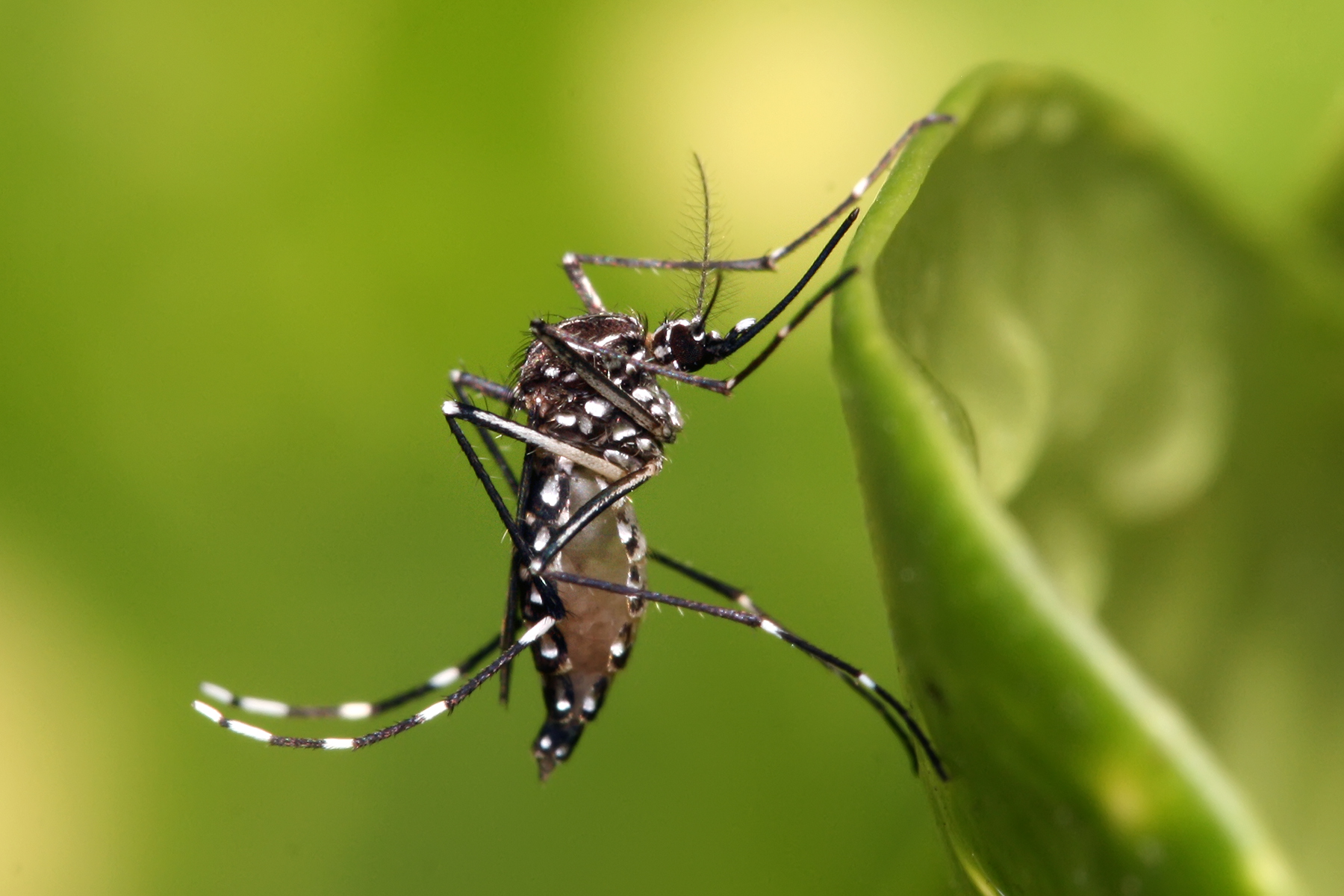
| Aedes aegypti, the main vector of yellow fever | |
Scientific classification 
| |
| Kingdom: | Animalia |
| Phylum: | Arthropoda |
| Class: | Insecta |
| Order: | Diptera |
| Superfamily: | Culicoidea |
| Family: | Culicidae Meigen, 1818[1] |
| Subfamilies | |
| Diversity | |
| 112 genera | |
Mosquitoes, the Culicidae, are a family of small flies consisting of 3,600 species. The word mosquito (formed by mosca and diminutive -ito)[2] is Spanish and Portuguese for little fly.[3] Mosquitoes have a slender segmented body, one pair of wings, three pairs of long hair-like legs, and specialized, highly elongated, piercing-sucking mouthparts. All mosquitoes drink nectar from flowers; females of many species have adapted to also drink blood. The group diversified during the Cretaceous period. Evolutionary biologists view mosquitoes as micropredators, small animals that parasitise larger ones by drinking their blood without immediately killing them. Medical parasitologists view mosquitoes as vectors of disease, carrying protozoan parasites or bacterial or viral pathogens from one host to another.
The mosquito lifecycle consists of four stages: egg, larva, pupa, and adult. Eggs are laid on the water surface; they hatch into motile larvae that feed on aquatic algae and organic material. These larvae are important food sources for many freshwater animals, such as dragonfly nymphs, many fish, and some birds. Adult females of many species have mouthparts adapted to pierce the skin of a host and feed on blood of a wide range of vertebrate hosts, and some invertebrates, primarily other arthropods. Some species only produce eggs after a blood meal.
The mosquito's saliva is transferred to the host during the bite, and can cause an itchy rash. In addition, blood-feeding species can ingest pathogens while biting and transmit them to other hosts. Those species include vectors of parasitic diseases such as malaria and filariasis, and arboviral diseases such as yellow fever and dengue fever. By transmitting diseases, mosquitoes cause the deaths of over one million people each year.
Description and life cycle
[edit]
Like all flies, mosquitoes go through four stages in their lifecycles: egg, larva, pupa, and adult. The first three stages—egg, larva, and pupa—are largely aquatic,[4] the eggs usually being laid in stagnant water.[5] They hatch to become larvae, which feed, grow, and molt until they change into pupae. The adult mosquito emerges from the mature pupa as it floats at the water surface. Mosquitoes have adult lifespans ranging from as short as a week to around a month. Some species overwinter as adults in diapause.[6]
Adult
[edit]Mosquitoes have one pair of wings, with distinct scales on the surface. Their wings are long and narrow, while the legs are long and thin. The body, usually grey or black, is slender, and typically 3–6 mm long. When at rest, mosquitoes hold their first pair of legs outwards, whereas the somewhat similar Chironomid midges hold these legs forwards.[7] Anopheles mosquitoes can fly for up to four hours continuously at 1 to 2 km/h (0.62 to 1.24 mph),[8] traveling up to 12 km (7.5 mi) in a night. Males beat their wings between 450 and 600 times per second, driven indirectly by muscles which vibrate the thorax.[9][10] Mosquitoes are mainly small flies; the largest are in the genus Toxorhynchites, at up to 18 mm (0.71 in) in length and 24 mm (0.94 in) in wingspan.[11] Those in the genus Aedes are much smaller, with a wingspan of 2.8 to 4.4 mm (0.11 to 0.17 in).[12]
Mosquitoes can develop from egg to adult in hot weather in as few as five days, but it may take up to a month.[13] At dawn or dusk, within days of pupating, males assemble in swarms, mating when females fly in.[14] The female mates only once in her lifetime, attracted by the pheromones emitted by the male.[15][16] In species that need blood for the eggs to develop, the female finds a host and drinks a full meal of blood. She then rests for two or three days to digest the meal and allow her eggs to develop. She is then ready to lay the eggs and repeat the cycle of feeding and laying.[14] Females can live for up to three weeks in the wild, depending on temperature, humidity, their ability to obtain a blood meal, and avoiding being killed by their vertebrate hosts.[14][17]
-
 Anatomy of an adult female mosquito
 -
 Adult yellow fever mosquito Aedes aegypti, typical of subfamily Culicinae. Male (left) has bushy antennae and longer palps than female (right)


Eggs
[edit]The eggs of most mosquitoes are laid in stagnant water, which may be a pond, a marsh, a temporary puddle, a water-filled hole in a tree, or the water-trapping leaf axils of a bromeliad. Some lay near the water's edge while others attach their eggs to aquatic plants. A few, like Opifex fuscus, can breed in salt-marshes.[5] Wyeomyia smithii breeds in the pitchers of pitcher plants, its larvae feeding on decaying insects that have drowned there.[18]
Oviposition, egg-laying, varies between species. Anopheles females fly over the water, touching down or dapping to place eggs on the surface one at a time; their eggs are roughly cigar-shaped and have floats down their sides. A female can lay 100–200 eggs in her lifetime.[14] Aedes females drop their eggs singly, on damp mud or other surfaces near water; their eggs hatch only when they are flooded.[19] Females in genera such as Culex, Culiseta, and Uranotaenia lay their eggs in floating rafts.[20][21] Mansonia females in contrast lay their eggs in arrays, attached usually to the under-surfaces of waterlily pads.[22]
Clutches of eggs of most mosquito species hatch simultaneously, but Aedes eggs in diapause hatch irregularly over an extended period.[19]
-
 Anopheles eggs with side floats
 -
 Electron micrograph of a culicine egg
 -
 Culex egg raft
.jpg)

.jpg)
Larva
[edit]The mosquito larva's head has prominent mouth brushes used for feeding, a large thorax with no legs, and a segmented abdomen. It breathes air through a siphon on its abdomen, so must come to the surface frequently. It spends most of its time feeding on algae, bacteria, and other microbes in the water's surface layer. It dives below the surface when disturbed. It swims either by propelling itself with its mouth brushes, or by jerkily wriggling its body. It develops through several stages, or instars, molting each time, after which it metamorphoses into a pupa.[13] Aedes larvae, except when very young, can withstand drying; they go into diapause for several months if their pond dries out.[19]


Pupa
[edit]The head and thorax of the pupa are merged into a cephalothorax, with the abdomen curving around beneath it. The pupa or "tumbler" can swim actively by flipping its abdomen. Like the larva, the pupa of most species must come to the surface frequently to breathe, which they do through a pair of respiratory trumpets on their cephalothoraxes. They do not feed; they pass much of their time hanging from the surface of the water by their respiratory trumpets. If alarmed, they swim downwards by flipping their abdomens in much the same way as the larvae. If undisturbed, they soon float up again. The adult emerges from the pupa at the surface of the water and flies off.[13]
-
 Mosquito pupae, shortly before the adults emerged. The head and thorax are fused into the cephalothorax.

Feeding by adults
[edit]Diet
[edit]
Both male and female mosquitoes feed on nectar, aphid honeydew, and plant juices,[17] but in many species the females are also hematophagous (blood-sucking) ectoparasites. In some of those species, a blood meal is essential for egg production;[23] in others, it just enables the female to lay more eggs. Both plant materials and blood are useful sources of energy in the form of sugars. Blood supplies more concentrated nutrients, such as lipids, but the main function of blood meals is to obtain proteins for egg production.[24][25] Disease vector mosquitoes like Anopheles and Aedes are anautogenous, requiring blood to lay eggs. Some Culex species are partially autogenous, needing blood only for their second and subsequent clutches of eggs.[26] The three genera of Malaya, Topomyia and Toxorhynchites, together comprising a small percentage of mosquitoes species, reproduce autogenously, never taking blood.[27]
Host animals
[edit]Blood-sucking mosquitoes favour particular host species, though they are less selective when food is short. Different mosquito species favour amphibians, reptiles including snakes, birds, and mammals. For example, Culiseta melanura sucks the blood of passerine birds, but as mosquito numbers rise they attack mammals including horses and humans, causing epidemics of Eastern equine encephalitis virus in North America.[28] Loss of blood from many bites can add up to a large volume, occasionally causing the death of livestock as large as cattle and horses.[29] Malaria-transmitting mosquitoes seek out caterpillars and feed on their haemolymph,[30] impeding their development.[31]
-
 Feeding on a snake
 -
 Feeding on a frog
 -
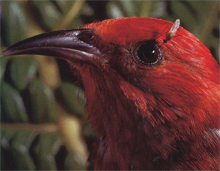 Feeding on a bird
_(cropped)_with_mosquitoes.jpg)
_(cropped).jpg)

Finding hosts
[edit]
Most mosquito species are crepuscular, feeding at dawn or dusk, and resting in a cool place through the heat of the day.[32] Some species, such as the Asian tiger mosquito, are known to fly and feed during daytime.[33] Female mosquitoes hunt for hosts by smelling substances such as carbon dioxide (CO2) and 1-octen-3-ol (mushroom alcohol, found in exhaled breath) produced from the host, and through visual recognition.[34] The semiochemical that most strongly attracts Culex quinquefasciatus is nonanal.[35] Another attractant is sulcatone.[36] A large part of the mosquito's sense of smell, or olfactory system, is devoted to sniffing out blood sources. Of 72 types of odor receptors on its antennae, at least 27 are tuned to detect chemicals found in perspiration.[37] In Aedes, the search for a host takes place in two phases. First, the mosquito flies about until it detects a host's odorants; then it flies towards them, using the concentration of odorants as its guide.[38] Mosquitoes prefer to feed on people with type O blood, an abundance of skin bacteria, and high body heat; they also favor pregnant women.[39][40] Individuals' attractiveness to mosquitoes has a heritable, genetically controlled component.[41]
The multitude of characteristics in a host observed by the mosquito allows it to select a host to feed on. It activates odour and visual search behaviours that it otherwise would not use, when in presence of CO2. In terms of a mosquito's olfactory system, chemical analysis has revealed that people who are highly attractive to mosquitoes produce significantly more carboxylic acids.[42] A human's unique body odour indicates that the target is actually a human host rather than some other living warm-blooded animal (as the presence of CO2 shows). Body odour, composed of volatile organic compounds emitted from the skin of humans, is the most important cue used by mosquitoes.[43] Many of these volatile odor compounds (VOCs) are produced when skin-associated bacteria metabolize components of sweat and sebum, contributing to individual variation in human odour profiles.[44] Variation in skin odour is caused by body weight, hormones, genetic factors, and metabolic or genetic disorders. Infections such as malaria can influence an individual's body odour. People infected by malaria produce relatively large amounts of Plasmodium-induced aldehydes in the skin, creating large cues for mosquitoes as it increases the attractiveness of an odour blend, imitating a "healthy" human odour. Infected individuals produce larger amounts of aldehydes heptanal, octanal, and nonanal. These compounds are detected by mosquito antennae. Thus, people infected with malaria are more prone to mosquito biting.[45]
Contributing to a mosquito's ability to activate search behaviours, a mosquito's visual search system includes sensitivity to wavelengths from different colours. Mosquitoes are attracted to longer wavelengths, correlated to the colours of red and orange as seen by humans, and range through the spectrum of human skin tones. In addition, they have a strong attraction to dark, high-contrast objects, because of how longer wavelengths are perceived against a lighter-coloured background.[46]

Different species of mosquitoes have evolved different methods of identifying target hosts. Study of a domestic form and an animal-biting form of the mosquito Aedes aegypti showed that the evolution of preference for human odour is linked to increases in the expression of the olfactory receptor AaegOr4. This recognises a compound present at high levels in human odour called sulcatone. However, the malaria mosquito Anopheles gambiae also has OR4 genes strongly activated by sulcatone, yet none of them are closely related to AaegOr4, suggesting that the two species have evolved to specialise in biting humans independently.[46]
Mouthparts
[edit]Female mosquito mouthparts are highly adapted to piercing skin and sucking blood. Males only drink sugary fluids, and have less specialized mouthparts.[47]
Externally, the most obvious feeding structure of the mosquito is the proboscis, composed of the labium, U-shaped in section like a rain gutter, which sheaths a bundle (fascicle) of six piercing mouthparts or stylets. These are two mandibles, two maxillae, the hypopharynx, and the labrum. The labium bends back into a bow when the mosquito begins to bite, staying in contact with the skin and guiding the stylets downwards. The extremely sharp tips of the labrum and maxillae are moved backwards and forwards to saw their way into the skin, with just one thousandth of the force that would be needed to penetrate the skin with a needle, resulting in a painless insertion.[48][49][50]
-
 Evolution of mosquito mouthparts, with grasshopper mouthparts (shown both in situ and separately) representing a more primitive condition. All the mouthparts except the labium are stylets, formed into a fascicle or bundle.
 -
 Mouthparts of a female mosquito while feeding on blood, showing the flexible labium sheath supporting the piercing and sucking tube which penetrates the host's skin


Saliva
[edit]Mosquito saliva contains enzymes that aid in sugar feeding,[51] and antimicrobial agents that control bacterial growth in the sugar meal.[52]
For a mosquito to obtain a blood meal, it must circumvent its vertebrate host's physiological responses. Mosquito saliva blocks the host's hemostasis system, with proteins that reduce vascular constriction, blood clotting, and platelet aggregation, to ensure the blood keeps flowing.[53] It modulates the host's immune response via a mixture of proteins which lower angiogenesis and immunity, create inflammation,[53][54] suppress tumor necrosis factor release from activated mast cells,[55] suppress interleukin (IL)-2 and IFN-γ production,[56][57] suppress T cell populations,[58][59][60] decrease expression of interferon−α/β making virus infections more severe,[61][62] increase natural killer T cells in the blood, and decrease cytokine production.[63]
Egg development and blood digestion
[edit]
Females of many blood-feeding species need a blood meal to begin the process of egg development. A sufficiently large blood meal triggers a hormonal cascade that leads to egg development.[64] Upon completion of feeding, the mosquito withdraws her proboscis, and as the gut fills up, the stomach lining secretes a peritrophic membrane that surrounds the blood. This keeps the blood separate from anything else in the stomach. Like many Hemiptera that survive on dilute liquid diets, many adult mosquitoes excrete surplus liquid even when feeding. This permits females to accumulate a full meal of nutrient solids. The blood meal is digested over a period of several days.[65] Once blood is in the stomach, the midgut synthesizes protease enzymes, primarily trypsin assisted by aminopeptidase, that hydrolyze the blood proteins into free amino acids. These are used in the synthesis of vitellogenin, which in turn is made into egg yolk protein.[66]
Distribution
[edit]Cosmopolitan
[edit]Mosquitoes have a cosmopolitan distribution, occurring in every land region except Antarctica and a few islands.[67] The polar or subpolar climate of these regions is unpredictable, freezing but often warming suddenly in mid-winter, making mosquitoes emerge from pupae in diapause, and then freezing again before they can complete their life cycle.[68][69]
Eggs of temperate zone mosquitoes are more tolerant of cold than the eggs of species indigenous to warmer regions.[70][71] Many can tolerate subzero temperatures, while adults of some species can survive winter by sheltering in microhabitats such as buildings or hollow trees.[72] In warm and humid tropical regions, some mosquito species are active for the entire year, but in temperate and cold regions they hibernate or enter diapause. Arctic or subarctic mosquitoes, like some other arctic midges in families such as Simuliidae and Ceratopogonidae may be active for only a few weeks annually as melt-water pools form on the permafrost. During that time, though, they emerge in huge numbers in some regions; a swarm may take up to 300 ml of blood per day from each animal in a caribou herd.[73]
Effect of climate change
[edit]For a mosquito to transmit disease, there must be favorable seasonal conditions,[74] primarily humidity, temperature, and precipitation.[75] El Niño affects the location and number of outbreaks in East Africa, Latin America, Southeast Asia and India. Climate change impacts the seasonal factors and in turn the dispersal of mosquitoes.[76] Climate models can use historic data to recreate past outbreaks and to predict the risk of vector-borne disease, based on an area's forecasted climate.[77] Mosquito-borne diseases have long been most prevalent in East Africa, Latin America, Southeast Asia, and India. An emergence in Europe was observed early in the 21st century. It is predicted that by 2030, the climate of southern Great Britain will be suitable for transmission of Plasmodium vivax malaria by Anopheles mosquitoes for two months of the year, and that by 2080, the same will be true for southern Scotland.[78][79] Dengue fever, too, is spreading northwards with climate change. The vector, the Asian tiger mosquito Aedes albopictus, has by 2023 established across southern Europe and as far north as much of northern France, Belgium, Holland, and both Kent and West London in England.[80] In 2025, some specimens of Culiseta annulata were found in Kjósarhreppur in Iceland, a country that had been free of mosquitoes.[81]
Ecology
[edit]Predators and parasites
[edit]Mosquito larvae are among the commonest animals in ponds, and they form an important food source for freshwater predators. Among the many aquatic insects that catch mosquito larvae are dragonfly and damselfly nymphs, whirligig beetles, and water striders. Vertebrate predators include fish such as catfish and the mosquitofish, amphibians including the spadefoot toad and the giant tree frog, freshwater turtles such as the red-eared slider, and birds such as ducks.[82]
Emerging adults are consumed at the pond surface by predatory flies including Empididae and Dolichopodidae, and by spiders. Flying adults are captured by dragonflies and damselflies, by birds such as swifts and swallows, and by mammals including bats.[83]
Mosquitoes are parasitised by hydrachnid mites, ciliates such as Glaucoma, microsporidians such as Thelania, and fungi including species of Saprolegniaceae and Entomophthoraceae.[83]
Pollination
[edit]
Several flowers including members of the Asteraceae, Rosaceae and Orchidaceae are pollinated by mosquitoes, which visit to obtain sugar-rich nectar. A few plant associations are specialized for mosquito pollination, such as the Platanthera orchids which are pollinated by Aedes species.[84] They are attracted to flowers by a range of semiochemicals such as alcohols, aldehydes, ketones, and terpenes. They may also use visual cues including UV reflectivity.[85] Mosquitoes have visited and pollinated flowers since the Cretaceous period. It is possible that plant-sucking exapted mosquitoes to blood-sucking.[17]
Parasitism
[edit]Ecologically, blood-feeding mosquitoes are micropredators, small animals that feed on larger animals without immediately killing them. Evolutionary biologists see this as a form of parasitism; in Edward O. Wilson's phrase "Parasites ... are predators that eat prey in units of less than one."[86] Micropredation is one of six major evolutionarily stable strategies within parasitism. It is distinguished by leaving the host still able to reproduce, unlike the activity of parasitic castrators or parasitoids; and having multiple hosts, unlike conventional parasites.[87][88] From this perspective, mosquitoes are ectoparasites, feeding on blood from the outside of their hosts, using their piercing mouthparts, rather than entering their bodies. Unlike some other ectoparasites such as fleas and lice, mosquitoes do not remain constantly on the body of the host, but visit only to feed.[88]
Evolution
[edit]Fossil record
[edit]
A 2023 study suggested that Libanoculex intermedius found in Lebanese amber, dating to the Barremian age of the Early Cretaceous, around 125 million years ago was the oldest known mosquito.[90] However its identification as a mosquito is disputed, with other authors considering it to be a chaoborid fly instead.[91] 7 other, non-contentious species of Cretaceous mosquito are known. Burmaculex, with 5 recognised species, (including one formerly assigned to the separate genus Priscoculex) known from adults, and Cretosabethes primaevus known from a larva, have been found in Burmese amber from Myanmar, which dates to the earliest part of the Cenomanian age of the Late Cretaceous, around 99 million years ago.[92][93][94][95] Paleoculicis minutus, is known from Canadian amber from Alberta, Canada, which dates to the Campanian age of the Late Cretaceous, around 79 million years ago.[96] Burmaculex and Paleoculicis have been interpreted as a member of the extinct subfamily Burmaculicinae that split off before the common ancestors of the two major modern subfamilies Anophelinae and Culicinae diverged,[92][95] while Cretosabethes has been interpreted as a member of the modern Culicinae tribe Sabethini, implying that the diversification of mosquitoes had already considerably progressed prior to the mid-Cretaceous, despite the sparse fossil record of the group.[95] It has been suggested based on molecular clock dating that mosquitoes originated in the Jurassic, but that major diversification did not take place until the Cretaceous.[97]
Taxonomy
[edit]There are over 3,700[98] species of mosquitoes; 112 genera have been described. They are traditionally divided into two subfamilies, the Anophelinae and the Culicinae, which carry different diseases. Roughly speaking, protozoal diseases like malaria are transmitted by anophelines, while viral diseases such as yellow fever and dengue fever are transmitted by culicines.[99]
The name Culicidae was introduced by the German entomologist Johann Wilhelm Meigen in his seven-volume classification published in 1818–1838.[100] Mosquito taxonomy was advanced in 1901 when the English entomologist Frederick Vincent Theobald published his 5-volume monograph on the Culicidae.[101] He had been provided with mosquito specimens sent in to the British Museum (Natural History) from around the world, on the 1898 instruction of the Secretary of State for the Colonies, Joseph Chamberlain, who had written that "in view of the possible connection of Malaria with mosquitoes, it is desirable to obtain exact knowledge of the different species of mosquitoes and allied insects in the various tropical colonies. I will therefore ask you ... to have collections made of the winged insects in the Colony which bite men or animals."[102]
Phylogeny
[edit]External
[edit]Mosquitoes are members of a family of the true flies (order Diptera): the Culicidae (from the Latin culex, genitive culicis, meaning "midge" or "gnat").[103] They are members of the infraorder Culicomorpha and superfamily Culicoidea. The phylogenetic tree is based on the FLYTREE project.[104][105]
| Diptera |
| ||||||||||||||||||||||||||||||||||||||||||||||||
| (true flies) |


.jpg)

.png)


Internal
[edit]The two subfamilies of mosquitoes are Anophelinae, containing three genera and approximately 430 species, and Culicinae, which contains 11 tribes, 108 genera and 3,046 species. Kyanne Reidenbach and colleagues analysed mosquito phylogenetics in 2009, using both nuclear DNA and morphology of 26 species. They note that Anophelinae is confirmed to be rather basal, but that the deeper parts of the tree are not well resolved.[106]
| Culicidae |
| ||||||

.jpg)
.jpg)
Interactions with humans
[edit]
Vectors of disease
[edit]Mosquitoes are vectors for many disease-causing microorganisms including bacteria, viruses, and protozoan parasites. Nearly 700 million people acquire a mosquito-borne illness each year, resulting in over one million deaths.[107][108] Common mosquito-borne viral diseases include yellow fever,[109] chikungunya and dengue fever, all transmitted mostly by Aedes aegypti.[110][111] Parasitic diseases transmitted by mosquitoes include malaria and lymphatic filariasis. The Plasmodium parasites that cause malaria are carried by female Anopheles mosquitoes. Lymphatic filariasis, the main cause of elephantiasis, is spread by a wide variety of mosquitoes.[112] A bacterial disease spread by Culex and Culiseta mosquitoes is tularemia.[113]
Control
[edit]
Many measures have been tried for mosquito control, including the elimination of breeding places, exclusion via window screens and mosquito nets, biological control with parasites such as fungi[114][115] and nematodes,[116] or predators such as fish,[117][118][119] copepods,[120] dragonfly nymphs and adults, and some species of lizard and gecko.[121] Another approach is to introduce large numbers of sterile males.[122] Genetic modification methods including cytoplasmic incompatibility, chromosomal translocations, sex distortion and gene replacement, solutions seen as inexpensive and not subject to vector resistance, have been explored.[123] Control of disease-carrying mosquitoes using gene drives has been proposed.[124][125]
Repellents
[edit]
Insect repellents are applied on skin and give short-term protection against mosquito bites. The chemical DEET repels some mosquitoes and other insects.[126] Some CDC-recommended repellents are picaridin, eucalyptus oil (PMD), and ethyl butylacetylaminopropionate (IR3535).[127] Pyrethrum (from Chrysanthemum species, particularly C. cinerariifolium and C. coccineum) is an effective plant-based repellent.[128] Electronic insect repellent devices that produce ultrasounds intended to keep away insects (and mosquitoes) are marketed. No EPA or university study has shown that these devices prevent humans from being bitten by a mosquito.[129]
Bites
[edit]Mosquito bites lead to a variety of skin reactions and more seriously to mosquito bite allergies.[130] Such hypersensitivity to mosquito bites is an excessive reaction to mosquito saliva proteins.[131] Numerous species of mosquito can trigger such reactions, including Aedes aegypti, A. vexans, A. albopictus, Anopheles sinensis, Culex pipiens,[132] Aedes communis, Anopheles stephensi,[133] C. quinquefasciatus, C. tritaeniorhynchus,[134] and Ochlerotatus triseriatus.[135] Cross-reactivity between salivary proteins of different mosquitoes implies that allergic responses may be caused by virtually any mosquito species.[136] Treatment can be with anti-itch medications, including some taken orally, such as diphenhydramine, or applied to the skin like antihistamines or corticosteroids such as hydrocortisone. Aqueous ammonia (3.6%) also provides relief.[137] Both topical heat[138] and cold may be useful as treatments.[139]
In human culture
[edit]Greek mythology
[edit]
Ancient Greek beast fables including "The Elephant and the Mosquito" and "The Bull and the Mosquito", with the general moral that the large beast does not even notice the small one, derive ultimately from Mesopotamia.[140]
Origin myths
[edit]The peoples of Siberia have origin myths surrounding the mosquito. One Ostiak myth tells of a man-eating giant, Punegusse, who is killed by a hero but will not stay dead. The hero eventually burns the giant, but the ashes of the fire become mosquitoes that continue to plague mankind. Other myths from the Yakuts, Goldes (Nanai people), and Samoyed have the insect arising from the ashes or fragments of some giant creature or demon. Similar tales found in Native North American myth, with the mosquito arising from the ashes of a man-eater, suggest a common origin. The Tatars of the Altai had a variant of the same myth, involving the fragments of the dead giant, Andalma-Muus, becoming mosquitoes and other insects.[141]
Lafcadio Hearn tells that in Japan, mosquitoes are seen as reincarnations of the dead, condemned by the errors of their former lives to the condition of Jiki-ketsu-gaki, or "blood-drinking pretas".[142]
Modern era
[edit]Winsor McCay's 1912 film How a Mosquito Operates was one of the earliest works of animation. It has been described as far ahead of its time in technical quality.[143] It depicts a giant mosquito tormenting a sleeping man.[144]
Twelve ships of the Royal Navy have borne the name HMS Mosquito or the archaic form of the name, HMS Musquito.[145]
The de Havilland Mosquito was a high-speed aircraft manufactured between 1940 and 1950, and used in many roles.[146]
The Russian city of Berezniki annually celebrates its mosquitoes from the 17th of July to the 20th in a "most delicious girl" competition. In the competition, women stand for 20 minutes in their shorts and undershorts (British: vests), and the one who receives the most bites wins.[147]
References
[edit]- ^ Harbach, Ralph (2 November 2008). "Family Culicidae Meigen, 1818". Mosquito Taxonomic Inventory. Archived from the original on 3 October 2022. Retrieved 26 December 2025., see also Valid Species List Archived March 15, 2022, at the Wayback Machine
- ^ "mosquito". Real Academia Española. Archived from the original on 24 July 2016. Retrieved 24 July 2016.
- ^ Brown, Lesley (1993). The New Shorter Oxford English Dictionary on Historical Principles. Oxford, England: Clarendon Press. ISBN 978-0-19-861271-1.
- ^ "FAQs". AMCA. Archived from the original on 16 July 2019.
- ^ a b Wigglesworth, Vincent B. (1933). "The Adaptation of Mosquito Larvae to Salt Water". Journal of Experimental Biology. 10 (1): 27–36. Bibcode:1933JExpB..10...27W. doi:10.1242/jeb.10.1.27. Archived from the original on 24 June 2014. Retrieved 1 April 2013.
- ^ Kosova, Jonida (2003) "Longevity Studies of Sindbis Virus Infected Aedes Albopictus" Archived 2012-04-25 at the Wayback Machine. All Volumes (2001–2008). Paper 94.
- ^ "Midges". MDC Discover Nature. Archived from the original on 26 October 2019. Retrieved 19 November 2019.
- ^ Kaufmann, C.; Briegel, H. (June 2004). "Flight performance of the malaria vectors Anopheles gambiae and Anopheles atroparvus" (PDF). Journal of Vector Ecology. 29 (1): 140–153. PMID 15266751. Archived from the original (PDF) on 28 July 2011.
- ^ Leung, Diana (2000). Elert, Glenn (ed.). "Frequency of mosquito wings". The Physics Factbook. Archived from the original on 25 January 2022. Retrieved 24 January 2022.
- ^ Smith, David S. (1965). "Flight muscles of insects". Scientific American. 212 (6): 76–88. Bibcode:1965SciAm.212f..76S. doi:10.1038/scientificamerican0665-76. PMID 14327957.
- ^ Cook, G.C.; Zumla, A (2009). Manson's Tropical Diseases (22 ed.). Saunders Elsevier. p. 1735. ISBN 978-1-4160-4470-3.
- ^ "African malaria mosquito". University of Florida. Retrieved 11 February 2024.
- ^ a b c "Mosquito Life Cycle". Environmental Protection Agency. 21 February 2013. Archived from the original on 19 December 2020. Retrieved 12 December 2023.
- ^ a b c d "Anopheles Mosquitoes". Centers for Disease Control and Prevention. 16 July 2020. Archived from the original on 9 September 2018. Retrieved 13 December 2023.
- ^ "Male mosquito odours reveal how mozzies mate". University of the Witwatersrand. 5 August 2020. Archived from the original on 25 January 2024. Retrieved 25 January 2024.
- ^ Mozūraitis, R.; Hajkazemian, M.; Zawada, J.W.; et al. (3 August 2020). "Male swarming aggregation pheromones increase female attraction and mating success among multiple African malaria vector mosquito species". Nature Ecology & Evolution. 4 (10): 1395–1401. Bibcode:2020NatEE...4.1395M. doi:10.1038/s41559-020-1264-9. PMID 32747772. S2CID 220948478.
- ^ a b c Peach, Daniel A. H.; Gries, Gerhard (2019). "Mosquito phytophagy – sources exploited, ecological function, and evolutionary transition to haematophagy". Entomologia Experimentalis et Applicata. 168 (2): 120–136. doi:10.1111/eea.12852.
- ^ Crans, Wayne J.; Wyeomyia smithii (Coquillett) Archived 2013-06-05 at the Wayback Machine. Rutgers University, Center for Vector Biology.
- ^ a b c Huang, Juan; Walker, Edward D; Vulule, John; Miller, James R. (2006). "Daily temperature profiles in and around Western Kenyan larval habitats of Anopheles gambiae as related to egg mortality". Malaria Journal. 5 (1): 87. doi:10.1186/1475-2875-5-87. PMC 1617108. PMID 17038186.
- ^ Gullan, P. J.; Cranston, P. S. (2014). The Insects: An Outline of Entomology (5th ed.). Oxford: Wiley-Blackwell. p. 280. ISBN 978-1-118-84616-2. Archived from the original on 11 December 2023. Retrieved 14 December 2023.
- ^ Spielman, Andrew; D'Antonio, M. (2001). "Part One: Magnificent Enemy". Mosquito: a natural history of our most persistent and deadly foe. New York: Hyperion. ISBN 978-0-7868-6781-3.
- ^ Amorim, J. A.; Sa, I. L. R.; Rojas, M. V. R.; Santos Neto, N. F.; Galardo, A. K. R.; et al. (16 March 2022). "Aquatic Macrophytes Hosting Immature Mansonia (Mansonia) Blanchard, 1901 (Diptera, Culicidae) in Porto Velho, Rondonia State, Brazil". Journal of Medical Entomology. 59 (2): 631–637. doi:10.1093/jme/tjab223. PMID 35043213.
- ^ Peach, Daniel A. H.; Gries, R.; Zhai, H.; Young, N.; Gries, G. (March 2019). "Multimodal floral cues guide mosquitoes to tansy inflorescences". Scientific Reports. 9 (1): 3908. Bibcode:2019NatSR...9.3908P. doi:10.1038/s41598-019-39748-4. PMC 6405845. PMID 30846726.
- ^ Tyagi, B. K. (2004). The Invincible Deadly Mosquitoes. Scientific Publishers. p. 79. ISBN 978-93-87741-30-0. Archived from the original on 29 January 2022. Retrieved 6 April 2021.
Only female mosquitoes require a blood meal (protein)...The number of egg formation and development in ovary of the female is directly dependent on quantum and nature supply of blood meal.
- ^ "Biology". mosquito.org. American Mosquito Control Association. Archived from the original on 29 March 2021. Retrieved 6 April 2021.
Acquiring a blood meal (protein) is essential for egg production, but mostly both male and female mosquitoes are nectar feeders for their nutrition.
- ^ Sawabe, K.; Moribayashi, A. (September 2000). "Lipid utilization for ovarian development in an autogenous mosquito, Culex pipiens molestus (Diptera: Culicidae)". Journal of Medical Entomology. 37 (5): 726–731. doi:10.1603/0022-2585-37.5.726. PMID 11004785.
- ^ Wahid, Isra; Sunahara, Toshihiki; Mogi, Motoyoshi (2003). "Maxillae and mandibles of male mosquitoes and female autogenous mosquitoes (Diptera: Culicidae)". Journal of Medical Entomology. 40 (2): 151. doi:10.1603/0022-2585-40.2.150. PMID 12693842.
- ^ Lehane, M. J. (9 June 2005). The Biology of Blood-Sucking in Insects. Cambridge University Press. p. 151. ISBN 978-0-521-83608-1. Archived from the original on 28 May 2016. Retrieved 18 February 2016.
- ^ "Hurricane Laura exacerbates mosquito problems with livestock". LSU AgCenter. 9 September 2020. Archived from the original on 26 February 2022. Retrieved 26 February 2022.
- ^ George, Justin; Blanford, Simon; Thomas, Matthew B.; Baker, Thomas C. (5 November 2014). "Malaria Mosquitoes Host-Locate and Feed upon Caterpillars". PLOS ONE. 9 (11) e108894. Bibcode:2014PLoSO...9j8894G. doi:10.1371/journal.pone.0108894. PMC 4220911. PMID 25372720.
- ^ Martel, Véronique; Schlyter, Fredrik; Ignell, Rickard; Hansson, Bill S.; Anderson, Peter (2011). "Mosquito feeding affects larval behaviour and development in a moth". PLOS ONE. 6 (10) e25658. Bibcode:2011PLoSO...625658M. doi:10.1371/journal.pone.0025658. PMC 3185006. PMID 21991329.
- ^ Crans, Wayne J. (1989). Resting boxes as mosquito surveillance tools. Proceedings of the Eighty-Second Annual Meeting of the New Jersey Mosquito Control Association. pp. 53–57. Archived from the original on 20 July 2006.
- ^ Maruniak, James E. (July 2014). "Asian tiger mosquito". Featured Creatures. Gainesville, Florida: University of Florida. Archived from the original on 7 September 2014. Retrieved 2 October 2014.
- ^ Hallem, Elissa A.; Nicole Fox, A.; Zwiebel, Laurence J.; Carlson, John R. (January 2004). "Olfaction: mosquito receptor for human-sweat odorant". Nature. 427 (6971): 212–213. Bibcode:2004Natur.427..212H. doi:10.1038/427212a. PMID 14724626. S2CID 4419658.
- ^ "Scientists identify key smell that attracts mosquitoes to humans". US News. 28 October 2009. Archived from the original on 10 September 2024. Retrieved 5 September 2017.
- ^ "Scientists have identified the gene that makes mosquitoes crave human blood". Richard Dawkins Foundation. 21 November 2014. Archived from the original on 25 November 2014. Retrieved 21 November 2014.
- ^ Devlin, Hannah (4 February 2010). "Sweat and blood why mosquitoes pick and choose between humans". The Times. London. Archived from the original on 3 October 2022. Retrieved 13 May 2010.
- ^ Estrada-Franco, R. G.; Craig, G. B. (1995). Biology, disease relationship and control of Aedes albopictus. Technical Paper No. 42. Washington, D.C.: Pan American Health Organization.
- ^ Shirai, Yoshikazu; Funada, Hisashi; Takizawa, Hisao; Seki, Taisuke; Morohashi, Masaaki; Kamimura, Kiyoshi (July 2004). "Landing preference of Aedes albopictus (Diptera: Culicidae) on human skin among ABO blood groups, secretors or nonsecretors, and ABH antigens". Journal of Medical Entomology. 41 (4): 796–799. doi:10.1603/0022-2585-41.4.796. PMID 15311477.
- ^ Chappell, Bill (12 July 2013). "5 Stars: A Mosquito's Idea Of A Delicious Human". NPR. Archived from the original on 14 October 2014. Retrieved 23 July 2021.
- ^ Fernández-Grandon, G. Mandela; Gezan, Salvador A.; Armour, John A. L.; Pickett, John A.; Logan, James G. (22 April 2015). "Heritability of attractiveness to mosquitoes". PLOS ONE. 10 (4) e0122716. Bibcode:2015PLoSO..1022716F. doi:10.1371/journal.pone.0122716. PMC 4406498. PMID 25901606.
- ^ De Obaldia, Maria Elena; Morita, Takeshi; Dedmon, Laura C.; et al. (27 October 2022). "Differential mosquito attraction to humans is associated with skin-derived carboxylic acid levels". Cell. 185 (22): 4099–4116.e13. doi:10.1016/j.cell.2022.09.034. PMC 10069481. PMID 36261039.
- ^ McBride, Carolyn (12 November 2014). "Evolution of mosquito preference for humans linked to an odorant receptor". Nature. 515 (7526): 222–227. Bibcode:2014Natur.515..222M. doi:10.1038/nature13964. PMC 4286346. PMID 25391959.
- ^ Acree, Fred; Turner, R. B.; Gouck, H. K.; Beroza, Morton; Smith, Nelson (27 September 1968). "L-Lactic Acid: A Mosquito Attractant Isolated from Humans". Science. 161 (3848): 1346–1347. Bibcode:1968Sci...161.1346A. doi:10.1126/science.161.3848.1346. PMID 5673445.
- ^ Robinson, Ailie; Busula, Annette O.; Voets, Mirjam A.; et al. (May 2018). "Plasmodium -associated changes in human odor attract mosquitoes". Proceedings of the National Academy of Sciences of the United States of America. 115 (18): E4209–E4218. Bibcode:2018PNAS..115E4209R. doi:10.1073/pnas.1721610115. PMC 5939094. PMID 29666273.
- ^ a b Alonso San Alberto, Diego; Rusch, Claire; Zhan, Yinpeng; Straw, Andrew D.; Montell, Craig; Riffell, Jeffrey A. (4 February 2022). "The olfactory gating of visual preferences to human skin and visible spectra in mosquitoes". Nature Communications. 13 (1): 555. Bibcode:2022NatCo..13..555A. doi:10.1038/s41467-022-28195-x. PMC 8816903. PMID 35121739.
- ^ Wahid, Isra; Sunahara, Toshihiko; Mogi, Motoyoshi (1 March 2003). "Maxillae and Mandibles of Male Mosquitoes and Female Autogenous Mosquitoes (Diptera: Culicidae)". Journal of Medical Entomology. 40 (2): 150–158. doi:10.1603/0022-2585-40.2.150. PMID 12693842. S2CID 41524028.
- ^ Quirós, Gabriela (7 June 2016). "WATCH: Mosquitoes Use 6 Needles To Suck Your Blood". NPR. Archived from the original on 3 January 2024. Retrieved 13 December 2023.
- ^ Choo, Young-Moo; Buss, Garrison K.; Tan, Kaiming; Leal, Walter S. (29 October 2015). "Multitasking roles of mosquito labrum in oviposition and blood feeding". Frontiers in Physiology. 6: 306. doi:10.3389/fphys.2015.00306. PMC 4625056. PMID 26578978.
- ^ Zahran, Nagwan; Sawires, Sameh; Hamza, Ali (25 October 2022). "Piercing and sucking mouth parts sensilla of irradiated mosquito, Culex pipiens (Diptera: Culicidae) with gamma radiation". Scientific Reports. 12 (1): 17833. Bibcode:2022NatSR..1217833Z. doi:10.1038/s41598-022-22348-0. PMC 9596698. PMID 36284127.
- ^ Grossman, G. L.; James, A. A. (1993). "The salivary glands of the vector mosquito, Aedes aegypti, express a novel member of the amylase gene family". Insect Molecular Biology. 1 (4): 223–232. doi:10.1111/j.1365-2583.1993.tb00095.x. PMID 7505701. S2CID 13019630.
- ^ Rossignol, P.A.; Lueders, A.M. (1986). "Bacteriolytic factor in the salivary glands of Aedes aegypti". Comparative Biochemistry and Physiology. B, Comparative Biochemistry. 83 (4): 819–822. doi:10.1016/0305-0491(86)90153-7. PMID 3519067.
- ^ a b Valenzuela, J.G.; Pham, V.M.; Garfield, M.K.; Francischetti, I.M.B.; Ribeiro, J.M.C. (September 2002). "Toward a description of the sialome of the adult female mosquito Aedes aegypti". Insect Biochemistry and Molecular Biology. 32 (9): 1101–1122. Bibcode:2002IBMB...32.1101V. doi:10.1016/S0965-1748(02)00047-4. PMID 12213246.
- ^ Ribeiro, J.M.; Francischetti, I.M. (2003). "Role of arthropod saliva in blood feeding: sialome and post-sialome perspectives". Annual Review of Entomology. 48 (1): 73–88. Bibcode:2003AREnt..48...73R. doi:10.1146/annurev.ento.48.060402.102812. PMID 12194906. Archived from the original on 4 August 2020. Retrieved 29 June 2019.
- ^ Bissonnette, Elyse Y.; Rossignol, Philippe A.; Befus, A. Dean (January 1993). "Extracts of mosquito salivary gland inhibit tumour necrosis factor alpha release from mast cells". Parasite Immunology. 15 (1): 27–33. doi:10.1111/j.1365-3024.1993.tb00569.x. PMID 7679483.
- ^ Cross, Martin L.; Cupp, Eddie W.; Enriquez, F. Javier (November 1994). "Differential modulation of murine cellular immune responses by salivary gland extract of Aedes aegypti". The American Journal of Tropical Medicine and Hygiene. 51 (5): 690–696. doi:10.4269/ajtmh.1994.51.690. PMID 7985763.
- ^ Zeidner, Nordin S.; Higgs, Stephen; Happ, Christine M.; Beaty, Barry J.; Miller, Barry R. (January 1999). "Mosquito feeding modulates Th1 and Th2 cytokines in flavivirus susceptible mice: an effect mimicked by injection of sialokinins, but not demonstrated in flavivirus resistant mice". Parasite Immunology. 21 (1): 35–44. doi:10.1046/j.1365-3024.1999.00199.x. PMID 10081770. S2CID 26774722. Archived from the original on 10 April 2022. Retrieved 25 September 2020.
- ^ Wanasen, N.; Nussenzveig, R. H.; Champagne, D. E.; Soong, L.; Higgs, S. (June 2004). "Differential modulation of murine host immune response by salivary gland extracts from the mosquitoes Aedes aegypti and Culex quinquefasciatus". Medical and Veterinary Entomology. 18 (2): 191–199. doi:10.1111/j.1365-2915.2004.00498.x. PMID 15189245. S2CID 42458052.
- ^ Wasserman, H. A.; Singh, S.; Champagne, D. E. (2004). "Saliva of the Yellow Fever mosquito, Aedes aegypti, modulates murine lymphocyte function". Parasite Immunology. 26 (6–7): 295–306. doi:10.1111/j.0141-9838.2004.00712.x. PMID 15541033. S2CID 32742815.
- ^ Depinay, Nadya; Hacini, Fériel; Beghdadi, Walid; Peronet, Roger; Mécheri, Salaheddine (April 2006). "Mast cell-dependent down-regulation of antigen-specific immune responses by mosquito bites". Journal of Immunology. 176 (7): 4141–4146. doi:10.4049/jimmunol.176.7.4141. PMID 16547250.
- ^ Schneider, Bradley S.; Soong, Lynn; Zeidner, Nordin S.; Higgs, Stephen (2004). "Aedes aegypti salivary gland extracts modulate anti-viral and TH1/TH2 cytokine responses to sindbis virus infection". Viral Immunology. 17 (4): 565–573. doi:10.1089/vim.2004.17.565. PMID 15671753.
- ^ Taylor, J. L.; Schoenherr, C.; Grossberg, S. E. (September 1980). "Protection against Japanese encephalitis virus in mice and hamsters by treatment with carboxymethylacridanone, a potent interferon inducer". The Journal of Infectious Diseases. 142 (3): 394–399. doi:10.1093/infdis/142.3.394. PMID 6255036.
- ^ Vogt, Megan B.; Lahon, Anismrita; Arya, Ravi P.; Kneubehl, Alexander R.; Spencer Clinton, Jennifer L.; Paust, Silke; Rico-Hesse, Rebecca (May 2018). "Mosquito saliva alone has profound effects on the human immune system". PLOS Neglected Tropical Diseases. 12 (5) e0006439. doi:10.1371/journal.pntd.0006439. PMC 5957326. PMID 29771921.
- ^ Zhu, J.; Miura, K.; Dittmer, N.T.; Raikhel, A.S. (2002). "AaSvp, a mosquito homolog of COUP-TF is involved in termination of vitellogenesis by repressing the 20-hydroecdysone response". Journal of Insect Science. 2 (17): 17. PMC 405832. PMID 15455051.
- ^ Curic, Goran; Hercog, Rajna; Vrselja, Zvonimir; Wagner, Jasenka (2014). "Identification of person and quantification of human DNA recovered from mosquitoes (Culicidae)". Forensic Science International: Genetics. 8 (1): 109–112. doi:10.1016/j.fsigen.2013.07.011. PMID 24315597.
- ^ Billingsley, P.F.; Hecker, H. (November 1991). "Blood digestion in the mosquito, Anopheles stephensi Liston (Diptera: Culicidae): activity and distribution of trypsin, aminopeptidase, and alpha-glucosidase in the midgut". Journal of Medical Entomology. 28 (6): 865–871. doi:10.1093/jmedent/28.6.865. PMID 1770523.
- ^ "Vísindavefurinn: Af hverju lifa ekki moskítóflugur á Íslandi, fyrst þær geta lifað báðum megin á Grænlandi?" (in Icelandic). Visindavefur.hi.is. Archived from the original on 30 September 2013. Retrieved 15 October 2013.
- ^ Peterson, B.V. (1977). "The Black Flies of Iceland (Diptera: Simuliidae)". The Canadian Entomologist. 109 (3): 449–472. doi:10.4039/Ent109449-3. S2CID 86752961.
- ^ Gislason, G.M.; Gardarsson A. (1988). "Long term studies on Simulium vittatum Zett. (Diptera: Simuliidae) in the River Laxá, North Iceland, with particular reference to different methods used in assessing population changes". Verb. Int. Ver. Limnol. 23 (4): 2179–2188. Bibcode:1988SILP...23.2179G. doi:10.1080/03680770.1987.11899871.
- ^ Hawley, W. A.; Pumpuni, C. B.; Brady, R. H.; Craig, G. B. (March 1989). "Overwintering survival of Aedes albopictus (Diptera: Culicidae) eggs in Indiana". Journal of Medical Entomology. 26 (2): 122–129. doi:10.1093/jmedent/26.2.122. PMID 2709388.
- ^ Hanson, S.M.; Craig, G.B. (September 1995). "Aedes albopictus (Diptera: Culicidae) eggs: field survivorship during northern Indiana winters". Journal of Medical Entomology. 32 (5): 599–604. doi:10.1093/jmedent/32.5.599. PMID 7473614.
- ^ Romi, Roberto; Severini, Francesco; Toma, Luciano (March 2006). "Cold acclimation and overwintering of female Aedes albopictus in Roma". Journal of the American Mosquito Control Association. 22 (1): 149–151. doi:10.2987/8756-971X(2006)22[149:CAAOOF]2.0.CO;2. PMID 16646341. S2CID 41129725.
- ^ Fang, J. (July 2010). "Ecology: A world without mosquitoes". Nature. 466 (7305): 432–434. Bibcode:2010Natur.466..432F. doi:10.1038/466432a. PMID 20651669.
- ^ Reiter, Paul (2001). "Climate Change and Mosquito-Borne Disease". Environmental Health Perspectives. 109 (Suppl 1): 142–158. Bibcode:2001EnvHP.109S.141R. doi:10.1289/ehp.01109s1141 (inactive 29 January 2026). PMC 1240549. PMID 11250812 – via EHP.
{{cite journal}}: CS1 maint: DOI inactive as of January 2026 (link) - ^ Bai, Li; Morton, Lindsay Carol; Liu, Qiyong (March 2013). "Climate change and mosquito-borne diseases in China: a review". Globalization and Health. 9 10. doi:10.1186/1744-8603-9-10. PMC 3605364. PMID 23497420.
- ^ Caminade, Cyril; McIntyre, K. Marie; Jones, Anne E. (January 2019). "Impact of recent and future climate change on vector-borne diseases". Annals of the New York Academy of Sciences. 1436 (1): 157–173. Bibcode:2019NYASA1436..157C. doi:10.1111/nyas.13950. PMC 6378404. PMID 30120891.
- ^ Tjaden, Nils Benjamin; Caminade, Cyril; Beierkuhnlein, Carl; Thomas, Stephanie Margarete (March 2018). "Mosquito-Borne Diseases: Advances in Modelling Climate-Change Impacts". Trends in Parasitology. 34 (3): 227–245. doi:10.1016/j.pt.2017.11.006. PMID 29229233.
- ^ Baylis, Matthew (5 December 2017). "Potential impact of climate change on emerging vector-borne and other infections in the UK". Environmental Health. 16 (Suppl 1) 112. Bibcode:2017EnvHe..16S.112B. doi:10.1186/s12940-017-0326-1. PMC 5773876. PMID 29219091.
- ^ Baylis, M. (December 2017). "Potential impact of climate change on emerging vector-borne and other infections in the UK". Environmental Health. 16 (Suppl 1) 112. Bibcode:2017EnvHe..16S.112B. doi:10.1186/s12940-017-0326-1. PMC 5773876. PMID 29219091.
- ^ Horton, Helena (25 April 2024). "Mosquito-borne diseases spreading in Europe due to climate crisis, says expert". The Guardian. Archived from the original on 10 September 2024. Retrieved 25 April 2024.
- ^ Horton, Helena (21 October 2025). "Mosquitoes found in Iceland for first time as climate crisis warms country". The Guardian.
- ^ Beck, Kevin (22 November 2019). "What Eats Mosquitoes?". Sciencing. Archived from the original on 2 June 2021. Retrieved 31 May 2021.
- ^ a b Medlock, J. M.; Snow, K. R. (2008). "Natural predators and parasites of British mosquitoes–a review" (PDF). European Mosquito Bulletin. 25 (1): 1–11. Archived (PDF) from the original on 15 December 2023. Retrieved 15 December 2023.
- ^ Foster, Woodbridge A. (2024). "Mosquito pollination of plants: an overview of their role and an assessment of the possible contribution of disease vectors". Transgenic Research. 33 (5): 297–322. doi:10.1007/s11248-024-00394-w. PMC 11588815. PMID 39172353.
- ^ Shannon, Danica M; Richardson, Nalany; Lahondère, Chloé; Peach, Daniel (2024). "Mosquito floral visitation and pollination". Current Opinion in Insect Science. 65 101230. Bibcode:2024COIS...6501230S. doi:10.1016/j.cois.2024.101230. PMID 38971524.
- ^ Wilson, Edward O. (2014). The Meaning of Human Existence. W. W. Norton & Company. p. 112. ISBN 978-0-87140-480-0.
Parasites, in a phrase, are predators that eat prey in units of less than one. Tolerable parasites are those that have evolved to ensure their own survival and reproduction but at the same time with minimum pain and cost to the host.
- ^ Poulin, Robert (2011). Rollinson, D.; Hay, S. I. (eds.). "The Many Roads to Parasitism: A Tale of Convergence". Advances in Parasitology. 74. Academic Press: 27–28. doi:10.1016/B978-0-12-385897-9.00001-X. ISBN 978-0-12-385897-9. PMID 21295676.
- ^ a b Poulin, Robert; Randhawa, Haseeb S. (February 2015). "Evolution of parasitism along convergent lines: from ecology to genomics". Parasitology. 142 (Suppl 1): S6–S15. doi:10.1017/S0031182013001674. PMC 4413784. PMID 24229807.

- ^ Poinar, George (12 June 2014). "Evolutionary History of Terrestrial Pathogens and Endoparasites as Revealed in Fossils and Subfossils". Advances in Biology. 2014: 1–29. doi:10.1155/2014/181353.
- ^ Azar, Dany; Nel, André; Huang, Diying; Engel, Michael S. (December 2023). "The Earliest Fossil Mosquito". Current Biology. 33 (23): 5240–5246.e2. Bibcode:2023CBio...33E5240A. doi:10.1016/j.cub.2023.10.047. PMID 38052162. S2CID 265612144.
- ^ Harbach, Ralph E. (12 March 2024). "Libanoculex intermedius is not a mosquito (Diptera: Culicidae): It is a chaoborid (Chaoboridae)". Zootaxa. 5424 (1): 139–144. doi:10.11646/zootaxa.5424.1.9. PMID 38480294. Archived from the original on 9 August 2024. Retrieved 9 August 2024.
- ^ a b Szadziewski, Ryszard; Zhang, Qing-Qing; Bojarski, BłAżEj; šEvčIk, Jan; KrzemińSka, Ewa; KrzemińSki, WiesłAw (30 August 2024). "Burmaculex (Diptera: Culicidae) from mid-Cretaceous Burmese amber, with the first description of a male and three new species". Palaeoentomology. 7 (4): 539–553. Bibcode:2024Plegy...7..539S. doi:10.11646/palaeoentomology.7.4.13.
- ^ Borkent, A.; Grimaldi, D.A. (2004). "The earliest fossil mosquito (Diptera: Culicidae), in Mid-Cretaceous Burmese amber". Annals of the Entomological Society of America. 97 (5): 882–888. doi:10.1603/0013-8746(2004)097[0882:TEFMDC]2.0.CO;2.
- ^ Poinar, George; Zavortink, Thomas J.; Brown, Alex (30 January 2019). "Priscoculex burmanicus n. gen. et sp. (Diptera: Culicidae: Anophelinae) from mid-Cretaceous Myanmar amber". Historical Biology. 32 (9): 1157–1162. doi:10.1080/08912963.2019.1570185. S2CID 92836430.
- ^ a b c Amaral, André P.; Borkent, Art; Baranov, Viktor A.; Haug, Carolin; Haug, Joachim T. (February 2026). "First fossil mosquito larva in 99-million-year-old amber with a modern type of morphology sheds light on the evolutionary history of mosquitoes (Diptera: Culicidae)". Gondwana Research. 150: 154–162. Bibcode:2026GondR.150..154A. doi:10.1016/j.gr.2025.09.011. hdl:10261/414464.
- ^ Poinar, G. O.; et al. (2000). "Paleoculicis minutus (Diptera: Culicidae) n. gen., n. sp., from Cretaceous Canadian amber with a summary of described fossil mosquitoes" (PDF). Acta Geológica Hispánica. 35: 119–128. Archived from the original (PDF) on 29 October 2013. Retrieved 10 December 2009.
- ^ Lorenz, Camila; Alves, João M.P.; Foster, Peter G.; Suesdek, Lincoln; Sallum, Maria Anice M. (10 May 2021). "Phylogeny and temporal diversification of mosquitoes (Diptera: Culicidae) with an emphasis on the Neotropical fauna". Systematic Entomology. 46 (4): 798–811. Bibcode:2021SysEn..46..798L. doi:10.1111/syen.12489. S2CID 236612378.
- ^ "US Centers for Disease Control and Prevention: About the mosquito". 2024. Retrieved 8 August 2025.
- ^ Molina-Cruz, Alvaro; Lehmann, Tovi; Knöckel, Julia (2013). "Could culicine mosquitoes transmit human malaria?". Trends in Parasitology. 29 (11): 530–537. doi:10.1016/j.pt.2013.09.003. PMC 10987011. PMID 24140295.
- ^ Meigen, Johann Wilhelm (1818–1838). Systematische Beschreibung der bekannten Europäischen zweiflügeligen Insekten [Systematic description of the known European two-winged insects] (in German). Vol. 1–7. Aachen: Friedrich Wilhelm Forstmann. Archived from the original on 26 February 2023. Retrieved 16 December 2023.
- ^ Theobald, Frederick Vincent (1901). A Monograph of the Culicidae, or Mosquitoes. Vol. 1. London: British Museum (Natural History). p. 4.
- ^ Harbach, R. E.; Kitching, I. (January 2016). "The phylogeny of Anophelinae revisited: inferences about the origin and classification of Anopheles (Diptera: Culicidae)". Zoologica Scripta. 45: 34–47. doi:10.1111/zsc.12137. hdl:10141/612216. S2CID 46364692. Archived from the original on 10 September 2024. Retrieved 16 December 2023.
- ^ Jaeger, Edmund C. (1959). A Source-Book of Biological Names and Terms. Springfield, Ill: Thomas.
- ^ Yeates, David K.; Meier, Rudolf; Wiegmann, Brian. "Phylogeny of True Flies (Diptera): A 250 Million Year Old Success Story in Terrestrial Diversification". Flytree. Illinois Natural History Survey. Archived from the original on 28 December 2015. Retrieved 24 May 2016.
- ^ Yeates, David K.; Weigmann, Brian M.; Courtney, Greg W.; Meier, Rudolf; Lambkins, Christine; Pape, Thomas (2007). "Phylogeny and systematics of Diptera: Two decades of progress and prospects". Zootaxa. 1668: 565–590. Bibcode:2007Zoot.1668.1.27Y. doi:10.11646/zootaxa.1668.1.27.
- ^ Reidenbach, Kyanne R.; Cook, Shelley; Bertone, Matthew A.; Harbach, Ralph E.; Wiegmann, Brian M.; Besansky, Nora J. (2009). "Phylogenetic analysis and temporal diversification of mosquitoes (Diptera: Culicidae) based on nuclear genes and morphology". BMC Evolutionary Biology. 9 (1): 298. Bibcode:2009BMCEE...9..298R. doi:10.1186/1471-2148-9-298. PMC 2805638. PMID 20028549.
- ^ "Mosquito as Deadly Menace". Pfizer. Archived from the original on 25 August 2022. Retrieved 10 December 2023.
- ^ "Explainer: How climate change is amplifying mosquito-borne diseases". World Mosquito Program. 22 April 2022. Retrieved 20 June 2024.
- ^ "Yellow fever Fact sheet N°100". World Health Organization. May 2013. Archived from the original on 19 February 2014. Retrieved 23 February 2014.
- ^ Dengue Guidelines for Diagnosis, Treatment, Prevention and Control (PDF). World Health Organization. 2009. ISBN 978-92-4-154787-1. Archived (PDF) from the original on 17 October 2012. Retrieved 13 August 2013.
- ^ Hughes, Dominic (14 August 2025). "UK cases of mosquito-borne virus more than double". BBC News. Retrieved 14 August 2025.
- ^ "Lymphatic Filariasis". World Health Organisation. Archived from the original on 5 May 2016. Retrieved 24 August 2011.
- ^ Muslu, H.; Kurt, O.; Özbilgin, A. (2011). "[Evaluation of mosquito species (Diptera: Culicidae) identified in Manisa province according to their breeding sites and seasonal differences]". Turkiye Parazitolojii Dergisi (in Turkish). 35 (2): 100–104. doi:10.5152/tpd.2011.25. PMID 21776596.
- ^ "Fungus Fatal to Mosquito May Aid Global War on Malaria". The New York Times. 10 June 2005. Archived from the original on 9 May 2015. Retrieved 19 February 2017.
- ^ Kramer, J.P. (1982). "Entomophthora culicis (Zygomycetes, Entomophthorales) as a pathogen of adultaedes aegypti (diptera, culicidae)". Aquatic Insects. 4 (2): 73–79. Bibcode:1982AqIns...4...73K. doi:10.1080/01650428209361085.
- ^ Shamseldean, M.M.; Platzer, E.G. (September 1989). "Romanomermis culicivorax: penetration of larval mosquitoes". Journal of Invertebrate Pathology. 54 (2): 191–199. Bibcode:1989JInvP..54..191S. doi:10.1016/0022-2011(89)90028-1. PMID 2570111.
- ^ Krumholz, Louis A. (1948). "Reproduction in the Western Mosquitofish, Gambusia affinis affinis (Baird & Girard), and Its Use in Mosquito Control". Ecological Monographs. 18 (1): 1–43. Bibcode:1948EcoM...18....1K. doi:10.2307/1948627. JSTOR 1948627.
- ^ Jianguo, Wang; Dashu, Ni (1995). "Part III: Interactions - 31. A Comparative Study of the Ability of Fish to Catch Mosquito Larva". In MacKay, Kenneth T. (ed.). Rice-fish culture in China. International Development Research Centre. ISBN 978-1-55250-313-3. Archived from the original on 9 June 2011.
- ^ Fradin, M.S. (June 1998). "Mosquitoes and mosquito repellents: a clinician's guide". Annals of Internal Medicine. 128 (11): 931–940. CiteSeerX 10.1.1.691.2193. doi:10.7326/0003-4819-128-11-199806010-00013. PMID 9634433. S2CID 35046348.
- ^ Marten, G.G.; Reid, J.W. (2007). "Cyclopoid copepods". Journal of the American Mosquito Control Association. 23 (2 Suppl): 65–92. doi:10.2987/8756-971X(2007)23[65:CC]2.0.CO;2. PMID 17853599. S2CID 7645668.
- ^ Canyon, D.V.; Hii, J.L. (October 1997). "The gecko: an environmentally friendly biological agent for mosquito control". Medical and Veterinary Entomology. 11 (4): 319–323. doi:10.1111/j.1365-2915.1997.tb00416.x. PMID 9430109. S2CID 26987818.
- ^ Carpenter, Jennifer (8 August 2011). "Spermless mosquitoes hold promise to stop malaria". BBC. Archived from the original on 9 August 2011. Retrieved 5 August 2011.
Scientists have created spermless mosquitoes in an effort to curb the spread of malaria.
- ^ Webb, Jonathan (10 June 2014) GM lab mosquitoes may aid malaria fight Archived 2022-08-16 at the Wayback Machine. BBC.
- ^ Kyrou, Kyros Kyrou; et al. (24 September 2018). "A CRISPR–Cas9 gene drive targeting doublesex causes complete population suppression in caged Anopheles gambiae mosquitoes" (PDF). Nature Biotechnology. 36 (11): 1062–1066. Bibcode:2018NatBi..36.1062K. doi:10.1038/nbt.4245. PMC 6871539. PMID 30247490. Archived (PDF) from the original on 29 April 2019. Retrieved 23 September 2019.
- ^ Michael Le Page (29 September 2018). "Gene tool could halt malaria spread". New Scientist. Archived from the original on 12 November 2018. Retrieved 2 November 2018.
- ^ Syed, Z.; Leal, W.S. (September 2008). "Mosquitoes smell and avoid the insect repellent DEET". Proceedings of the National Academy of Sciences of the United States of America. 105 (36): 13598–13603. doi:10.1073/pnas.0805312105. PMC 2518096. PMID 18711137.
- ^ "Updated Information regarding Insect Repellents". Centers for Disease Control and Prevention. 2009. Archived from the original on 12 May 2013. Retrieved 10 September 2017.
- ^ Nuwer, Rachel, Natural Mosquito Repellent's Powers Finally Decoded Archived 2021-08-12 at the Wayback Machine, Scientific American 325, 2, 23 (August 2021)
- ^ "Electronic mosquito repellents for preventing mosquito bites and malaria infection" (PDF). Archived (PDF) from the original on 8 August 2017. Retrieved 19 September 2018.
- ^ Sawada, Akihisa; Inoue, Masami; Kawa, Keisei (2017). "How we treat chronic active Epstein–Barr virus infection". International Journal of Hematology. 105 (4): 406–418. doi:10.1007/s12185-017-2192-6. PMID 28210942. S2CID 35297787.
- ^ Juckett, G. (December 2013). "Arthropod bites". American Family Physician. 88 (12): 841–847. PMID 24364549.
- ^ Tatsuno, Kazuki; Fujiyama, Toshiharu; Matsuoka, Hiroyuki; Shimauchi, Takatoshi; Ito, Taisuke; Tokura, Yoshiki (2016). "Clinical categories of exaggerated skin reactions to mosquito bites and their pathophysiology". Journal of Dermatological Science. 82 (3): 145–152. doi:10.1016/j.jdermsci.2016.04.010. PMID 27177994.
- ^ Peng, Z.; Simons, F.E. (August 2007). "Advances in mosquito allergy". Current Opinion in Allergy and Clinical Immunology. 7 (4): 350–354. doi:10.1097/ACI.0b013e328259c313. PMID 17620829. S2CID 45260523.
- ^ Asada, H. (March 2007). "Hypersensitivity to mosquito bites: a unique pathogenic mechanism linking Epstein-Barr virus infection, allergy and oncogenesis". Journal of Dermatological Science. 45 (3): 153–160. doi:10.1016/j.jdermsci.2006.11.002. PMID 17169531.
- ^ Crisp, H.C.; Johnson, K.S. (February 2013). "Mosquito allergy". Annals of Allergy, Asthma & Immunology. 110 (2): 65–69. doi:10.1016/j.anai.2012.07.023. PMID 23352522.
- ^ Singh, S.; Mann, B.K. (2013). "Insect bite reactions". Indian Journal of Dermatology, Venereology and Leprology. 79 (2): 151–164. doi:10.4103/0378-6323.107629. PMID 23442453.
- ^ Zhai, Hongbo; Packman, Elias W.; Maiback, Howard I. (21 July 1998). "Effectiveness of Ammonium Solution in Relieving Type I Mosquito Bite Symptoms: A Double-blind, Placebo-controlled Study". Acta Dermato-Venereologica. 78 (4): 297–298. doi:10.1080/000155598441918. PMID 9689301.
- ^ Müller, C.; Großjohann, B.; Fischer, L. (15 December 2011). "The use of concentrated heat after insect bites/stings as an alternative to reduce swelling, pain, and pruritus: an open cohort-study at German beaches and bathing-lakes". Clinical, Cosmetic and Investigational Dermatology. 4: 191–196. doi:10.2147/CCID.S27825. PMC 3257884. PMID 22253544.
- ^ "Treatment of Insect bites and stings". nhs.uk. 19 October 2017. Archived from the original on 31 October 2018. Retrieved 31 October 2018.
- ^ Adrados, Francisco Rodríguez (1999). History of the Graeco-Latin Fable. Brill Publishers. p. 324. ISBN 978-90-04-11454-8. Archived from the original on 28 May 2016. Retrieved 18 February 2016.
- ^ Holmberg, Uno (1927), "Finno-Ugric and Siberian", The Mythology of All Races, vol. 4, Marshall Jones Company, IX. "The Origin of the Mosquito", p.386
- ^ Hearn, Lafcadio (2020) [1968]. "Mosquitoes". Kwaidan: Stories and Studies of Strange Things. Dover Publications. pp. 72–74. ISBN 978-1-4209-6751-7.
- ^ Webster, Chris (2012). Action Analysis for Animators. Focal Press. ISBN 978-0-240-81218-2. Archived from the original on 4 November 2021. Retrieved 4 September 2022.
- ^ Canemaker, John (2005). Winsor McCay: His Life and Art. Abrams Books. p. 165. ISBN 978-0-8109-5941-5.
- ^ Colledge, J. J.; Warlow, Ben (2006) [1969]. Ships of the Royal Navy: The Complete Record of All Fighting Ships of the Royal Navy from the 15th Century to the Present (Rev. ed.). London: Chatham Publishing. ISBN 978-1-86176-281-8. OCLC 67375475., "Mosquito" and "Musquito".
- ^ "De Havilland Mosquito". The Aviation History Online Museum. Archived from the original on 11 January 2017. Retrieved 21 November 2015.
- ^ "Russia: Mosquitoes honoured at annual festival". BBC News. 14 July 2015.

Further reading
[edit]- Winegard, Timothy Charles (2019). The mosquito: a human history of our deadliest predator. Penguin Random House. ISBN 978-1-5247-4341-3. OCLC 1111638283.
External links
[edit]
 Quotations related to Mosquitoes at Wikiquote
- Mosquito at IFAS
- A film clip describing The Life Cycle of the Mosquito is available for viewing at the Internet Archive
- Parasitic Insects, Mites and Ticks: Genera of Medical and Veterinary Importance Wikibooks

| International | |
|---|---|
| National | |
| Other | |

Mosquito
View on GrokipediaMosquitoes are small, long-legged insects belonging to the family Culicidae in the order Diptera, encompassing over 3,500 species found on every continent except Antarctica.[1] Adult females possess a piercing-sucking proboscis adapted for extracting blood from vertebrate hosts, a protein-rich meal essential for egg maturation, whereas males and non-blood-feeding females subsist primarily on nectar and plant juices.[2] Their life cycle includes aquatic larval and pupal stages that develop in standing water, enabling proliferation in diverse habitats from tropical marshes to urban containers.[3] As primary vectors, mosquitoes transmit pathogens responsible for diseases including malaria, dengue, Zika, and West Nile virus, accounting for more than 700,000 human deaths yearly through vector-borne illnesses dominated by mosquito-mediated transmission.[4] This vector competence stems from females injecting saliva during feeding, which can harbor acquired parasites or viruses from prior hosts, underscoring their outsized role in global morbidity despite comprising a minor fraction of insect diversity.[5]