Hubbry Logo
Peroxisome proliferator-activated receptor gammaPeroxisome proliferator-activated receptor gammaMain
Open search
Peroxisome proliferator-activated receptor gamma
Community hub
Peroxisome proliferator-activated receptor gamma
logo
8 pages, 0 posts
0 subscribers
Be the first to start a discussion here.
Peroxisome proliferator-activated receptor gamma
from Wikipedia
PPARG
Available structures
PDBOrtholog search: PDBe RCSB
Identifiers
AliasesPPARG, CIMT1, GLM1, NR1C3, PPARG1, PPARG2, PPARgamma, peroxisome proliferator activated receptor gamma, PPARG5
External IDsOMIM: 601487; MGI: 97747; HomoloGene: 7899; GeneCards: PPARG; OMA:PPARG - orthologs
Orthologs
SpeciesHumanMouse
Entrez
Ensembl
UniProt
RefSeq (mRNA)

NM_001127330
NM_011146
NM_001308352
NM_001308354

RefSeq (protein)

NP_001120802
NP_001295281
NP_001295283
NP_035276

Location (UCSC)Chr 3: 12.29 – 12.43 MbChr 6: 115.34 – 115.47 Mb
PubMed search[3][4]
Wikidata
View/Edit HumanView/Edit Mouse

Peroxisome proliferator-activated receptor gamma (PPAR-γ or PPARG), also known as the glitazone reverse insulin resistance receptor, or NR1C3 (nuclear receptor subfamily 1, group C, member 3) is a type II nuclear receptor functioning as a transcription factor that in humans is encoded by the PPARG gene.[5][6][7]

Tissue distribution

[edit]

PPARG is mainly present in adipose tissue, colon and macrophages. Two isoforms of PPARG are detected in the human and in the mouse: PPAR-γ1 (found in nearly all tissues except muscle) and PPAR-γ2 (mostly found in adipose tissue and the intestine).[8][9]

Gene expression

[edit]

This gene encodes a member of the peroxisome proliferator-activated receptor (PPAR) subfamily of nuclear receptors. PPARs form heterodimers with retinoid X receptors (RXRs) and these heterodimers regulate transcription of various genes. Three subtypes of PPARs are known: PPAR-alpha, PPAR-delta, and PPAR-gamma. The protein encoded by this gene is PPAR-gamma and is a regulator of adipocyte differentiation. Alternatively spliced transcript variants that encode different isoforms have been described.[10]

The activity of PPARG can be regulated via phosphorylation through the MEK/ERK pathway. This modification decreases transcriptional activity of PPARG and leads to diabetic gene modifications, and results in insulin insensitivity. For example, the phosphorylation of serine 112 will inhibit PPARG function, and enhance adipogenic potential of fibroblasts.[11]

Function

[edit]

PPARG regulates fatty acid storage and glucose metabolism. The genes activated by PPARG stimulate lipid uptake and adipogenesis by fat cells. PPARG knockout mice are devoid of adipose tissue, establishing PPARG as a master regulator of adipocyte differentiation.[12]

PPARG increases insulin sensitivity by enhancing storage of fatty acids in fat cells (reducing lipotoxicity), by enhancing adiponectin release from fat cells, by inducing FGF21,[12] and by enhancing nicotinic acid adenine dinucleotide phosphate production through upregulation of the CD38 enzyme.[13]

PPARG promotes anti-inflammatory M2 macrophage activation in mice.[14]

Adiponectin induces ABCA1-mediated reverse cholesterol transport by activation of PPAR-γ and LXRα/β.[15]

Many naturally occurring agents directly bind with and activate PPAR gamma. These agents include various polyunsaturated fatty acids like arachidonic acid and arachidonic acid metabolites such as certain members of the 5-hydroxyicosatetraenoic acid and 5-oxo-eicosatetraenoic acid family, e.g., 5-oxo-15(S)-HETE and 5-oxo-ETE or 15-hydroxyicosatetraenoic acid family including 15(S)-HETE, 15(R)-HETE, and 15(S)-HpETE,[16][17][18] the phytocannabinoid tetrahydrocannabinol (THC),[19] its metabolite THC-COOH, and its synthetic analog ajulemic acid (AJA).[20] The activation of PPAR gamma by these and other ligands may be responsible for inhibiting the growth of cultured human breast, gastric, lung, prostate and other cancer cell lines.[21][22]

During embryogenesis, PPARG first substantially expresses in interscapular brown fat pad.[23] The depletion of PPARG will result in embryonic lethality at E10.5, due to the vascular anomalies in placenta, with no permeation of fetal blood vessels and dilation and rupture of maternal blood sinuses.[24] The expression PPARG can be detected in placenta as early as E8.5 and through the remainder of gestation, mainly located in the primary trophoblast cell in the human placenta.[23] PPARG is required for epithelial differentiation of trophoblast tissue, which is critical for proper placenta vascularization. PPARG agonists inhibit extravillous cytotrophoblast invasion. PPARG is also required for the accumulation of lipid droplets by the placenta.[11]

Interactions

[edit]

Peroxisome proliferator-activated receptor gamma has been shown to interact with:

Research

[edit]

PPAR-gamma agonists have been used in the treatment of hyperlipidaemia and hyperglycemia.[35][36]

Many insulin sensitizing drugs (namely, the thiazolidinediones) used in the treatment of diabetes activate PPARG as a means to lower serum glucose without increasing pancreatic insulin secretion. Activation of PPARG is more effective for skeletal muscle insulin resistance than for insulin resistance of the liver.[37]

See also

[edit]

References

[edit]
Revisions and contributorsEdit on WikipediaRead on Wikipedia
from Grokipedia
Peroxisome proliferator-activated receptor gamma (PPARγ) is a ligand-activated nuclear receptor that functions as a transcription factor, regulating genes involved in adipogenesis, lipid and glucose metabolism, and insulin sensitivity. Encoded by the PPARG gene on chromosome 3p25 in humans, it exists in two main isoforms—PPARγ1, expressed in various tissues including adipose, liver, and immune cells, and PPARγ2, predominantly in adipose tissue where it drives fat cell differentiation. Upon binding to ligands, PPARγ heterodimerizes with the retinoid X receptor (RXR) and binds to peroxisome proliferator response elements (PPREs) in DNA to modulate target gene expression. Structurally, PPARγ features a modular organization typical of nuclear receptors, including an N-terminal A/B domain for ligand-independent activation (AF1), a central (DBD) with two zinc-finger motifs for DNA recognition, a flexible region (D domain), and a C-terminal ligand-binding domain (LBD) that also contains the ligand-dependent activation function (). The LBD forms a hydrophobic pocket accommodating diverse ligands, enabling conformational changes that recruit coactivators like PGC-1α to enhance transcription. This structure allows PPARγ to respond to a broad range of endogenous and exogenous signals, distinguishing it from other PPAR subtypes like PPARα (involved in fatty acid oxidation) and PPARβ/δ (involved in metabolism). PPARγ is activated by natural ligands such as polyunsaturated fatty acids (e.g., and ), oxidized like 15-deoxy-Δ¹²,¹⁴-prostaglandin J₂ (15d-PGJ₂), and synthetic agonists including thiazolidinediones (TZDs) like pioglitazone and . These ligands promote PPARγ's translocation to the nucleus, where it inhibits pro-inflammatory pathways, such as signaling, thereby reducing cytokines like TNF-α, IL-6, and IL-1β. In physiological contexts, PPARγ is essential for and adipocyte differentiation, lipogenesis, and maintaining energy balance, while also enhancing glucose uptake in skeletal muscle and adipocytes to counteract . Dysregulation of PPARγ contributes to metabolic disorders, including , where its agonists (TZDs) improve glycemic control by increasing insulin sensitivity, though they can cause side effects like and fluid retention. It also plays protective roles in non-alcoholic fatty liver disease (NAFLD) by reducing hepatic and , and in cardiovascular health by modulating vascular function. Additionally, PPARγ exhibits anti-tumor effects in through arrest and induction, highlighting its broader implications in inflammation-driven diseases like and kidney disorders.

Molecular Structure and Gene

Protein Domains and Architecture

Peroxisome proliferator-activated receptor gamma (PPARγ) possesses a modular architecture characteristic of the superfamily, comprising six distinct domains designated , C, D, E, and F from the N- to C-terminus. The N-terminal domain houses the ligand-independent activation function 1 (AF-1), a region rich in regulatory sites that modulates transcriptional activity in a ligand-independent manner. This domain is relatively unstructured and varies between isoforms, with key post-translational modifications influencing its potency. The central C domain forms the (DBD), featuring two conserved motifs that enable sequence-specific recognition of peroxisome proliferator response elements (PPREs) in target gene promoters. Flanking the DBD is the D domain, a flexible hinge region that connects the DNA- and -binding functionalities, supports heterodimerization with (RXR), and contains nuclear localization signals essential for subcellular trafficking. The E domain constitutes the -binding domain (LBD), the largest and most conserved region after the DBD, which includes a hydrophobic cavity for ligand accommodation and the ligand-dependent 2 (AF-2) . 12 within the LBD undergoes repositioning upon ligand binding, creating a coactivator-binding groove that recruits transcriptional coregulators. The C-terminal F domain, a short extension present in PPARγ and select nuclear receptors, fine-tunes ligand-dependent and may influence receptor stability. High-resolution crystal structures have elucidated these architectural features, particularly the LBD's conformational dynamics. For instance, the 2.1 Å structure of the PPARγ/RXRα LBD heterodimer (PDB: 1FM6) demonstrates an asymmetric arrangement where ligand-induced repositioning of helix 12 stabilizes coactivator interactions, highlighting the molecular basis of heterodimer asymmetry and activation. Phosphorylation within these domains critically impacts structure-function relationships; for example, mitogen-activated protein kinase (MAPK)-mediated phosphorylation at Ser112 in the A/B domain (PPARγ2 numbering) attenuates AF-1 activity and inhibits adipogenic gene expression, while cyclin-dependent kinase 5 (CDK5) phosphorylation at Ser273 in the LBD disrupts helix 12 positioning, leading to dysregulated metabolic gene transcription without altering DNA binding. These modifications underscore the domain-specific regulation of PPARγ's transcriptional output.00062-0)00832-2/fulltext)

Isoforms and Genomic Organization

The human PPARG gene is located on chromosome 3p25.2 and spans approximately 100 kb of genomic DNA, comprising 9 exons that encode the various isoforms through alternative promoter usage and splicing. Two principal protein isoforms arise from this gene: PPARγ1, which is transcribed from promoter P1 upstream of exon 1 and consists of 477 amino acids, and PPARγ2, transcribed from promoter P2 located between exons A1 and A2, resulting in a 505-amino-acid protein with an additional 28 N-terminal residues relative to PPARγ1. PPARγ1 exhibits ubiquitous expression across multiple tissues, whereas PPARγ2 is predominantly expressed in adipose tissue. Minor isoforms, PPARγ3 and PPARγ4, are generated via alternative promoters (P3 and P4) that primarily contribute to PPARγ1-like transcripts with variations in the 5'-untranslated region, enabling fine-tuned tissue-specific regulation without major alterations to the coding sequence. Alternative promoter usage and splicing of the PPARG pre-mRNA allow for differential expression patterns that support isoform-specific roles in various physiological contexts. The PPARG and its protein products demonstrate a high degree of evolutionary conservation across mammals, particularly in the ligand-binding domain, where sequence identity exceeds 90%.

Expression Patterns

Tissue Distribution

Peroxisome proliferator-activated receptor gamma (PPARγ) displays a distinct pattern of expression across tissues, with the highest levels observed in adipose tissues, where it plays a central role in and differentiation. In white and , PPARγ expression is particularly abundant, predominantly driven by the PPARγ2 isoform, which is specifically induced during and maintains high levels in mature adipocytes. Quantitative expression data from the Genotype-Tissue Expression (GTEx) indicate median transcript per million (TPM) values exceeding 100 in subcutaneous and visceral adipose tissues, underscoring its enrichment in these depots. Similarly, elevated expression is noted in colon epithelium, where PPARγ contributes to epithelial homeostasis, as well as in macrophages, particularly in foam cells within atherosclerotic lesions, reflecting its involvement in immune and inflammatory responses. The PPARγ1 isoform predominates in most non-adipose tissues, exhibiting a broader distribution compared to PPARγ2, which is largely restricted to and, to a lesser extent, intestinal tissues. In the liver, PPARγ expression is low, supporting limited regulatory functions in hepatic handling, though isoform ratios favor PPARγ1. Macrophages show robust PPARγ expression, inducible during differentiation and inflammatory activation, highlighting its role in monocyte-to-macrophage transition. These patterns are supported by analyses and sequencing data, revealing tissue-specific ratios of PPARγ1 to PPARγ2; in whole , ratios vary (often 1:1 to 10:1 favoring γ1 due to stromal cells), but in mature adipocytes PPARγ2 predominates. Low expression levels of PPARγ are detected in several other tissues, including , , , and vascular cells, where the γ1 isoform is primarily expressed. GTEx data report median TPM values of approximately 3-7 in , cortex, and , indicating low abundance compared to . In vascular cells, PPARγ is expressed at low levels and modulates proliferation and migration, as evidenced by its responsiveness to agonists in cultured cells. These sites reflect PPARγ's involvement in systemic metabolic and vascular regulation. In contrast, PPARγ expression is low or negligible in the brain and heart, with GTEx median TPM values below 5 across various brain regions and cardiac tissues, consistent with minimal roles in neuronal or primary cardiomyocyte functions. This isoform-specific and tissue-restricted distribution—γ1 in diverse non-adipose sites and γ2 enriched in adipose and select epithelial contexts—underpins PPARγ's specialized contributions to metabolism and immunity.

Regulation of Gene Expression

The expression of the PPARG gene is tightly controlled at the transcriptional level by various upstream regulators that respond to developmental and environmental cues. Members of the C/EBP family, particularly C/EBPα and C/EBPβ, promote PPARG transcription during by binding to specific sites in its promoter region, forming a mutual activation loop where PPARγ in turn induces C/EBPα expression. In contrast, SREBP1 acts as a positive regulator by enhancing PPARG transcription in response to lipid availability, facilitating coordination between and differentiation. Conversely, Wnt/β-catenin signaling inhibits PPARG expression through the recruitment of COUP-TFII to the promoter, suppressing adipogenic potential in progenitor cells. Promoter-specific mechanisms further fine-tune PPARG expression based on cellular context. The proximal P1 promoter, which drives PPARγ1 isoform expression, is responsive to inflammatory signals; for instance, the subunit RelB binds to sites within this promoter to repress transcription, thereby linking immune activation to reduced PPARγ levels in and macrophages. The distal P2 promoter, specific to the PPARγ2 isoform, integrates nutritional signals, such as fatty acid-derived oxysterols, which activate LXR to bind an LXRE in the promoter and induce PPARG transcription, supporting adaptive responses to abundance during maturation. Post-transcriptional regulation modulates PPARG mRNA stability and translation. MicroRNAs, notably miR-27a and miR-27b, bind to the 3' untranslated region of PPARG mRNA, leading to its degradation or translational repression, which inhibits and is upregulated in conditions like . Epigenetic modifications, including acetylation at the PPARG promoters, promote an open state conducive to transcription; for example, increased H3 and H4 acetylation at P1 and P2 during differentiation facilitates access by transcriptional activators like C/EBP factors. A key feedback mechanism involves PPARγ auto-regulating its own expression through direct binding to peroxisome proliferator response elements (PPREs) in the PPARG promoter, amplifying its activity in a ligand-dependent manner to sustain adipogenic programs. This autoregulatory loop integrates with co-regulators to maintain steady-state levels in mature adipocytes.

Ligands and Activation

Endogenous Ligands

Endogenous ligands of peroxisome proliferator-activated receptor gamma (PPARγ) consist mainly of polyunsaturated fatty acids (PUFAs) and their metabolites, which are generated through cellular lipid metabolism and inflammatory processes. These molecules bind to the hydrophobic pocket within the ligand-binding domain (LBD) of PPARγ, typically with affinities in the micromolar range for PUFAs, facilitating receptor activation under physiological conditions. Among the primary ligands, and stand out as essential PUFAs derived from membrane phospholipids via activity during lipid turnover and signaling events. , a key precursor in biosynthesis, activates PPARγ with a (Kd) of approximately 1-5 μM, while and its conjugated isomers exhibit half-maximal inhibitory concentrations () around 10-25 μM for binding and transactivation. These fatty acids are physiologically relevant in and immune cells, where they promote and modulate by integrating dietary into metabolic . A prominent metabolite is 15-deoxy-Δ12,14-prostaglandin J2 (15d-PGJ2), formed non-enzymatically from D2 (PGD2) during and in macrophages and s. This cyclopentenone binds covalently to 285 in the PPARγ LBD, with an initial non-covalent Kd of about 0.25 nM and a subsequent irreversible rate constant supporting potent activation at nanomolar concentrations. Physiologically, 15d-PGJ2 links inflammatory responses to PPARγ-mediated effects and differentiation, reflecting its production in response to activity. Nitrolipids, such as nitro-oleic acid and nitrolinoleic acid, represent another class of endogenous activators arising from of unsaturated fatty acids by nitric oxide-derived species during oxidative and nitrosative stress. Nitrolinoleic acid, detected at around 500 nM in human plasma (with ~80 nM free form), functions as a high-affinity with a Ki of approximately 133 nM, rivaling synthetic agonists in potency for inducing and suppressing . These electrophilic are biosynthesized endogenously in vascular and immune cells, contributing to PPARγ regulation in metabolic and stress-related contexts. Endocannabinoids, including (2-AG), also serve as PPARγ activators, produced on-demand from diacylglycerol in neurons and immune cells during signaling cascades. induces PPARγ-dependent suppression of interleukin-2 in T cells and effects, operating independently of cannabinoid receptors CB1 and CB2. Its physiological generation during activation underscores PPARγ's role in integrating with immunity and metabolism.

Synthetic Agonists and Antagonists

Synthetic agonists of peroxisome proliferator-activated receptor gamma (PPARγ) primarily include the (TZD) class, developed as insulin-sensitizing agents for management. and pioglitazone, the two FDA-approved TZDs, bind with high affinity to the PPARγ ligand-binding domain, exhibiting EC50 values of approximately 0.033 μM and 0.49 μM, respectively, in assays. received FDA approval on May 25, 1999, while pioglitazone was approved on July 15, 1999, both as oral antidiabetic medications that enhance insulin sensitivity by activating PPARγ-dependent gene transcription. These compounds are selective PPARγ full agonists, demonstrating minimal activity on PPARα or PPARδ isoforms, with selectivity ratios exceeding 10-fold. Recent research as of 2025 has identified novel selective partial agonists, such as TWSZ-5, targeting allosteric sites to improve safety profiles. Non-TZD synthetic agonists represent efforts to mitigate TZD-associated side effects such as and fluid retention while preserving glycemic benefits. INT-131 (also known as AMG131), a selective PPARγ modulator, binds PPARγ with an of 4 nM and acts as a , recruiting coactivators less robustly than full agonists like , which contributes to reduced and improved safety profiles in preclinical models. Similarly, balaglitazone, another partial PPARγ with an of 1.351 μM, was developed to achieve antidiabetic efficacy with lower risks of and cardiac compared to TZDs, as evidenced in phase III clinical trials where it improved glycemic control without equivalent . These non-TZD agents exhibit enhanced selectivity for PPARγ over other subtypes, with binding affinities at least 20-fold higher for PPARγ than PPARα. Synthetic antagonists of PPARγ are mainly utilized in to dissect receptor function and have limited therapeutic applications due to their potential to disrupt metabolic . GW9662, an irreversible covalent , potently inhibits PPARγ with an of 3.3 nM and shows over 10-fold selectivity against PPARα ( = 32 nM) and greater than 1000-fold against PPARδ, making it a standard tool for blocking PPARγ-mediated signaling in cellular studies. (BADGE), an environmental compound identified as a PPARγ with an apparent Kd of 100 μM, suppresses agonist-induced transcriptional without intrinsic in most assays, though its weak potency limits clinical relevance and raises concerns about unintended exposure through plastics. Unlike agonists, these antagonists do not promote receptor conformational changes favoring coactivator binding. Selectivity among synthetic modulators is crucial for minimizing off-target effects across the PPAR family. PPARγ-specific compounds like TZDs and INT-131 preferentially activate PPARγ, avoiding the lipid-lowering but potentially hepatotoxic actions of pan-PPAR agonists that engage PPARα and PPARδ. The PPARγ2 isoform, predominant in adipocytes, displays heightened sensitivity to TZDs compared to PPARγ1, with differential co-regulator recruitment leading to isoform-specific metabolic outcomes in insulin-sensitive tissues. This isoform preference enhances the therapeutic window for adipocyte-targeted interventions while pan-agonists like aleglitazar broadly modulate lipid and glucose pathways but risk broader side effects.

Molecular Functions

Transcriptional Mechanism

Peroxisome proliferator-activated receptor gamma (PPARγ) functions as a ligand-activated that regulates by forming heterodimers with the (RXR). This PPARγ-RXR heterodimer binds to specific DNA sequences known as peroxisome proliferator response elements (PPREs), which consist of direct repeats of the hexameric motif AGGTCA separated by a single (DR-1). The binding affinity and transcriptional activation depend on the precise spacing and sequence context of the PPRE, enabling PPARγ to target enhancers in promoter regions of responsive genes. Upon binding to the ligand-binding domain (LBD) of PPARγ, a conformational change occurs that repositions helix 12, forming a hydrophobic cleft on the receptor surface. This structural rearrangement releases corepressors and creates a for coactivators, which interact via their LXXLL motifs ( boxes). The repositioned helix 12 stabilizes the agonist-bound conformation, enhancing the recruitment of coactivator complexes such as steroid receptor coactivators (SRCs) and (CBP)/p300. Recruited coactivators facilitate to promote transcription initiation. Notably, p300 and CBP possess intrinsic (HAT) activity, acetylating lysine residues on histones H3 and H4 to loosen structure and expose DNA for basal transcriptional machinery assembly. This acetylation, often in conjunction with other modifications like by coactivators such as CARM1, creates an open environment at PPRE sites, amplifying PPARγ-mediated activation. In the absence of ligand, unliganded PPARγ-RXR heterodimers associate with corepressors like nuclear receptor corepressor (NCoR) and silencing mediator of and receptors (SMRT). These corepressors recruit deacetylases (HDACs) to maintain a compact state, actively repressing transcription from PPRE-bound promoters. Ligand-induced dissociation of these corepressors is essential for switching from repression to activation.

Target Genes and Pathways

PPARγ regulates a diverse set of target genes critical for adipogenesis, primarily by binding to peroxisome proliferator response elements (PPREs) in their promoter regions to promote lipid uptake and storage. Key adipogenic targets include FABP4 (also known as aP2), which encodes a fatty acid-binding protein that facilitates intracellular lipid transport and is strongly induced during adipocyte differentiation. Similarly, LPL (lipoprotein lipase) is upregulated by PPARγ to hydrolyze triglycerides in circulating lipoproteins, enabling fatty acid uptake into adipocytes for storage. CD36, a scavenger receptor for fatty acids, is another direct target that enhances long-chain fatty acid transport across the plasma membrane, contributing to lipid accumulation and adipocyte maturation. These genes collectively drive the metabolic reprogramming necessary for adipose tissue expansion and function. In metabolic regulation, PPARγ influences glucose homeostasis by activating or repressing genes involved in transport and . GLUT4, the insulin-responsive glucose transporter, is transcriptionally activated by PPARγ, promoting glucose uptake in adipocytes and to improve insulin sensitivity. Conversely, PPARγ indirectly suppresses hepatic by activating the corepressor SHP (small heterodimer partner), which downregulates gluconeogenic enzymes such as PEPCK () and G6PC (glucose-6-phosphatase), thereby mitigating in metabolic disorders. This dual regulation helps maintain energy balance by favoring glucose utilization over endogenous production. PPARγ exerts anti-inflammatory effects, particularly in macrophages, by promoting alternative (M2) activation and suppressing pro-inflammatory responses. It directly upregulates M2 markers like CD206 (mannose receptor C-type 1) and Arg1 (arginase 1), which support tissue repair and resolution of inflammation. Through transrepression mechanisms, PPARγ inhibits the expression of pro-inflammatory cytokines such as TNF-α (tumor necrosis factor-alpha) and IL-6 (interleukin-6), reducing their production in response to stimuli like (LPS). Beyond direct gene regulation, PPARγ engages in crosstalk with key signaling pathways to fine-tune metabolic and inflammatory outcomes. It enhances insulin signaling by synergizing with the PI3K/Akt pathway, where PPARγ activation amplifies to boost translocation and without altering levels. Additionally, PPARγ antagonizes the Wnt/β-catenin pathway, sequestering β-catenin to prevent its nuclear accumulation and thereby promoting while inhibiting alternative cell fates like osteogenesis. These interactions integrate PPARγ activity into broader networks for metabolic .

Protein Interactions

Dimerization Partners

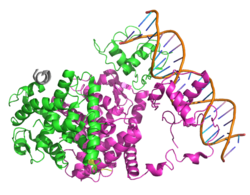
Peroxisome proliferator-activated receptor gamma (PPARγ) functions primarily through heterodimerization with (RXR) isoforms, including RXRα, RXRβ, and RXRγ, forming obligatory complexes essential for DNA binding and transcriptional activation. These heterodimers are required for PPARγ to effectively recognize and bind peroxisome proliferator response elements (PPREs) in target gene promoters, as PPARγ does not form functional homodimers on its own. The interaction was first demonstrated in seminal studies showing that PPAR-RXR heterodimers synergistically activate genes involved in , such as oxidase. Ligands for RXR, particularly 9-cis retinoic acid, enhance the activity of PPARγ/RXR heterodimers by stabilizing the complex and promoting conformational changes that facilitate coactivator recruitment and gene expression. This ligand-dependent enhancement underscores the permissive nature of RXR in PPARγ signaling, where RXR agonists can amplify PPARγ-mediated responses without requiring PPARγ ligands alone. The PPARγ/RXR heterodimer exhibits significantly higher affinity for PPREs—typically direct repeats of AGGTCA spaced by one nucleotide (DR1)—compared to potential homodimers, due to cooperative interactions involving the hinge region of PPARγ, which recognizes specific extensions in the response element. While RXR is the dominant partner, PPARγ signaling can be influenced by cross-talk with other RXR heterodimers, such as those involving LXR or HNF4, through competition for RXR availability or shared response elements in contexts like hepatic lipid regulation. Structurally, the dimer interface between PPARγ and RXR is mediated primarily by their DNA-binding domains (DBDs), where each receptor occupies a half-site of the PPRE, forming a non-symmetric complex stabilized by multiple interdomain contacts, including DNA-dependent interfaces that enhance overall binding stability. Crystal structures of the intact PPARγ-RXRα heterodimer bound to DNA reveal that the PPARγ ligand-binding domain further cooperates with RXR DBDs to optimize affinity, highlighting the evolutionary adaptation for heterodimeric function.

Co-regulators

Peroxisome proliferator-activated receptor gamma (PPARγ) interacts with a variety of co-regulators that modulate its transcriptional activity by facilitating and the recruitment of the basal transcription machinery. These co-regulators include coactivators, which enhance upon ligand binding, and corepressors, which inhibit transcription in the absence of ligands. The recruitment of these proteins is mediated through specific structural motifs and leads to dynamic regulation of target . Coactivators such as steroid receptor coactivator-1 (SRC-1) and PPARγ coactivator-1α (PGC-1α) bind to the ligand-binding domain of PPARγ via LXXLL motifs, enabling the promotion of and the recruitment of to facilitate transcriptional and elongation. SRC-1 possesses intrinsic (HAT) activity, which loosens structure to allow access to promoter regions, while PGC-1α interacts directly with during the elongation phase and supports mRNA processing. These interactions are crucial for amplifying PPARγ-mediated transcription in metabolic contexts. In the unliganded state, PPARγ associates with corepressors like silencing mediator of retinoid and thyroid hormone receptors (SMRT) and nuclear receptor corepressor (NCoR), which recruit histone deacetylases (HDACs) to condense and enforce . SMRT and NCoR form complexes that tether HDACs, such as HDAC3, to the receptor, thereby maintaining transcriptional repression and preventing aberrant activation of target genes. This repressive mechanism ensures tight control over PPARγ activity until ligand binding occurs. Ligand binding to PPARγ induces a conformational change that promotes the dynamic exchange of corepressor complexes for coactivator complexes, releasing SMRT/NCoR and facilitating the recruitment of SRC-1 or PGC-1α. This switch is essential for transitioning from gene repression to , with the ligand-dependent dissociation of corepressors occurring rapidly to enable efficient transcriptional responses. In a tissue-specific manner, transcriptional intermediary factor 2 (TIF2, also known as SRC-2) serves as a prominent coactivator for PPARγ in , where it enhances lipid storage and adipocyte differentiation by boosting receptor activity. TIF2's role is particularly evident in , where its absence reduces PPARγ-driven fat accumulation, highlighting its context-dependent contribution to metabolic regulation.

Physiological Roles

Metabolic Homeostasis

Peroxisome proliferator-activated receptor gamma (PPARγ) plays a central role in maintaining metabolic homeostasis by regulating lipid metabolism, glucose uptake, and energy balance primarily through its actions in adipose tissue. As a ligand-activated transcription factor, PPARγ coordinates the expression of genes involved in adipocyte function, ensuring efficient storage of excess energy as triglycerides while preventing harmful lipid accumulation in non-adipose tissues such as liver and muscle. This regulation is essential for systemic insulin sensitivity and overall energy partitioning, with disruptions leading to metabolic disorders like insulin resistance and dyslipidemia. A key function of PPARγ is to promote , the process by which preadipocytes differentiate into mature capable of lipid storage. PPARγ drives this differentiation by forming a regulatory cascade with CCAAT/enhancer-binding protein alpha (C/EBPα), where initial activation of C/EBPβ and C/EBPδ induces PPARγ expression, followed by synergistic activation of adipogenic genes to establish the mature . This synergy is critical for terminal differentiation, as evidenced by studies showing that PPARγ overexpression in fibroblasts induces adipocyte-like characteristics, while its absence blocks fat cell formation. PPARγ also enhances insulin sensitization, particularly by upregulating the glucose transporter in and , thereby facilitating insulin-stimulated glucose uptake and mitigating . Activation of PPARγ by endogenous ligands or synthetic agonists like thiazolidinediones increases translocation to the , improving whole-body insulin responsiveness in models of . This effect is independent of direct pancreatic actions but stems from enhanced peripheral glucose disposal, underscoring PPARγ's therapeutic relevance in insulin-resistant states. In terms of storage, PPARγ promotes accumulation in adipocytes, expanding capacity to buffer circulating lipids and avert in ectopic sites. By inducing genes such as -binding protein 4 (FABP4), PPARγ facilitates safe sequestration in fat depots, reducing free spillover that could impair insulin signaling elsewhere. Genetic evidence from PPARγ models reinforces this: homozygous null mice exhibit embryonic lethality with no detectable , while conditional or hypomorphic knockouts display profound , characterized by absent white fat, severe , and lipotoxicity-like symptoms including hepatic . These phenotypes highlight PPARγ's indispensable role in adipose development and metabolic protection.

Cellular Differentiation and Immunity

Peroxisome proliferator-activated receptor gamma (PPARγ) plays a pivotal role in by regulating lineage commitment in various cell types, including , trophoblasts, and myeloid progenitors. In , PPARγ acts as a master regulator, driving the differentiation of preadipocytes into mature through the activation of genes involved in and storage. of PPARγ in non-adipogenic fibroblasts is sufficient to induce differentiation, highlighting its for this process. PPARγ is equally essential for differentiation, where it promotes the commitment of progenitors to invasive extravillous and labyrinthine lineages in the . In human stem cells, PPARγ activation facilitates differentiation into extravillous , mimicking placental development. This regulation extends to placental , where PPARγ modulates (VEGF) expression to support labyrinthine layer formation, ensuring proper nutrient exchange and fetal development. In myeloid lineages, PPARγ influences commitment toward osteoclasts, a specialized derived from monocyte-macrophage precursors. PPARγ ligands enhance osteoclastogenesis by promoting the differentiation of myeloid progenitors into bone-resorbing osteoclasts, underscoring its role in skeletal . The γ2 isoform of PPARγ is particularly critical during embryogenesis, as total PPARγ in mice results in embryonic lethality between E9.5 and E10.5 due to defective placental and development. Beyond differentiation, PPARγ modulates immune cell polarization and function. In macrophages, PPARγ promotes the shift toward an M2 , characterized by upregulation of markers such as arginase 1 (Arg1), which contributes to tissue repair and resolution of . PPARγ-deficient macrophages exhibit resistance to M2 polarization, emphasizing its mechanistic importance. In T cells, PPARγ selectively suppresses Th17 differentiation in a cell-intrinsic manner, reducing interleukin-17 production and thereby attenuating autoimmune responses, such as experimental autoimmune . In the context of cancer, PPARγ inhibits epithelial-mesenchymal transition (EMT), a process that enables tumor cell invasion and metastasis. Activation of PPARγ by ligands antagonizes Smad3-mediated signaling, preserving epithelial markers like E-cadherin while suppressing mesenchymal indicators such as N-cadherin and vimentin in various tumor models. This anti-EMT effect reduces cancer cell migration and invasion, positioning PPARγ as a potential suppressor of tumor progression.

Clinical and Research Aspects

Disease Associations

Dysregulation of PPARγ, particularly through genetic variants, has been implicated in familial partial type 3 (FPLD3), a condition characterized by loss of subcutaneous , , and metabolic disturbances. The common Pro12Ala polymorphism in the PPARG is associated with reduced risk of due to enhanced insulin sensitivity, but rare loss-of-function mutations in PPARG cause FPLD3 by impairing differentiation and storage. For instance, a novel Y151C mutation reported in 2024 leads to partial lipodystrophy with severe , , and , as it disrupts PPARγ's transcriptional activity in adipocytes. In cancer, PPARγ expression levels influence tumor progression in a context-dependent manner. Overexpression of PPARγ has been observed in colon cancer and , where it promotes and survival by modulating and inflammatory pathways. Conversely, loss of PPARγ function in enhances metastatic potential; studies in HER2-positive models show that PPARγ deficiency accelerates tumor invasion and reduces overall survival by altering stromal interactions and epithelial differentiation. Neurodegenerative diseases involve altered PPARγ activity that exacerbates and neuronal damage. In models, reduced PPARγ expression or activity increases amyloid-β production and impairs its clearance, as PPARγ regulates β-secretase (BACE1) transcription and microglial via co-activators like PGC-1α. Similarly, PPARγ downregulation in contributes to loss, while its activation provides by mitigating and in preclinical studies. PPARγ plays a dual role in cardiovascular pathologies, particularly , where it is highly expressed in macrophage-derived s within plaques. Activation of PPARγ upregulates the scavenger receptor , promoting oxidized LDL uptake and formation, which accelerates development. Polymorphisms in PPARG, such as the Pro12Ala variant, have been linked to risk; meta-analyses indicate that certain alleles alter regulation through effects on renin-angiotensin signaling and vascular .

Therapeutic Developments

Thiazolidinediones (TZDs), such as pioglitazone and , are synthetic PPARγ agonists approved by the FDA for treating (T2D) since 1999. These agents improve glycemic control by reducing HbA1c levels by 0.5-1.5% in clinical trials, primarily through enhancing insulin sensitivity in adipose and muscle tissues. Common side effects include fluid retention leading to and an increased risk of , particularly when combined with insulin. faced a warning in 2007 for potential cardiovascular risks, including and . In 2013, the FDA lifted the warning and restrictions specifically related to following reanalysis of trial data showing no significant increase in these events compared to other antidiabetic drugs, though the warning remains. Newer PPARγ-targeted agents include , a dual PPARα/γ agonist approved in in 2013 for managing diabetic and in T2D patients. It effectively lowers triglycerides and improves lipid profiles while providing modest glycemic benefits without the weight gain associated with full PPARγ agonists. Selective PPARγ modulators like INT-131, a non-TZD compound, advanced to phase II trials for T2D, demonstrating HbA1c reductions comparable to pioglitazone (up to 1.0%) with reduced fluid retention and in early studies. Emerging applications of PPARγ agonists extend beyond metabolic disorders. Preclinical studies and 2024-2025 reviews highlight their potential in management, where agonists like pioglitazone exert analgesia through modulation, reducing and glutamate release in neuropathic and inflammatory pain models. In , pioglitazone is under investigation in combination therapies for ; phase II trials have explored its role in enhancing efficacy by promoting tumor cell differentiation and via PPARγ activation. Neurologically, PPARγ agonists show neuroprotective effects in models, reducing infarct size and neuronal death by attenuating and in ischemia-reperfusion studies. As of 2025, dual PPARδ/γ agonists are emerging in preclinical studies for , offering by modulating and . PPARγ antagonists are gaining attention in , particularly where PPARγ acts as an oncogenic driver. These compounds inhibit tumor growth by disrupting and survival signaling in PPARγ-overexpressing cancers, such as prostate and malignancies, as demonstrated in preclinical models.

References

Add your contribution
Related Hubs
User Avatar
No comments yet.