
.jpg/250px-Kaohsiung_Skyline_2020_(cropped).jpg)


.jpg/2000px-Kaohsiung_Skyline_2020_(cropped).jpg)
Community hub
Recent from talks
Contribute something
Nothing was collected or created yet.
Kaohsiung
View on Wikipedia
Key Information

.jpg)
.jpg)
.jpg)


.svg)


Legend:
 red: Pratas Island
  blue: Taiping Island
  green: Kaohsiung
| Kaohsiung City | |||||||||||||||||||||||||||||||||||||
|---|---|---|---|---|---|---|---|---|---|---|---|---|---|---|---|---|---|---|---|---|---|---|---|---|---|---|---|---|---|---|---|---|---|---|---|---|---|
 "Kaohsiung" in Chinese characters | |||||||||||||||||||||||||||||||||||||
| Chinese name | |||||||||||||||||||||||||||||||||||||
| Chinese | 高雄市 | ||||||||||||||||||||||||||||||||||||
| Literal meaning | Japanese transcription of an old Siraya name | ||||||||||||||||||||||||||||||||||||
| |||||||||||||||||||||||||||||||||||||
| Japanese name | |||||||||||||||||||||||||||||||||||||
| Kanji | 高雄市 | ||||||||||||||||||||||||||||||||||||
| Hiragana | たかおし | ||||||||||||||||||||||||||||||||||||
| Katakana | タカオシ | ||||||||||||||||||||||||||||||||||||
| |||||||||||||||||||||||||||||||||||||
Kaohsiung,[a] officially Kaohsiung City,[I] is a special municipality located in southern Taiwan. It ranges from the coastal urban center to the rural Yushan Range with an area of 2,952 km2 (1,140 sq mi). Kaohsiung City has a population of approximately 2.72 million people and is Taiwan's third most populous city and the largest city in southern Taiwan.[4]
Founded in the 17th century as a small trading village named Tancoia, a name of uncertain origins,[b] the city has since grown into the economic center of southern Taiwan, with key industries such as manufacturing, steel-making, oil refining, freight transport and shipbuilding. It is classified as a "Sufficiency" level global city by the Globalization and World Cities Research Network,[5] with some of the most prominent infrastructures in Taiwan.
Kaohsiung is of strategic importance to the nation as the city is the main port city of Taiwan; the Port of Kaohsiung is the largest and busiest harbor in Taiwan and more than 67% of the nation's exports and imports container throughput goes through Kaohsiung.[6] Kaohsiung International Airport is the second busiest airport in number of passengers in Taiwan. The city is well-connected to other major cities by high speed and conventional rail, as well as several national freeways. It also hosts the Republic of China Navy (ROCN) fleet headquarters and its naval academy. More recent public works such as Pier-2 Art Center, National Kaohsiung Center for the Arts and Kaohsiung Music Center have been aimed at growing the tourism and cultural industries of the city.
Etymology
[edit]_in_1880,_from-_Stanford%27s_map_of_the_empires_of_China_and_Japan_with_the_adjacent_parts_of_the_Russian_Empire,_India,_Burma_etc._LOC_2006458442_(cropped).jpg)
Hoklo immigrants to the area during the 16th and 17th centuries called the region Takau (Chinese: 打狗; Pe̍h-ōe-jī: Táⁿ-káu). The surface meaning of the associated Chinese characters was "beat the dog". According to one theory, the name "Takau" originates from the indigenous Austronesian Siraya language and translates as "bamboo forest". According to another theory, the name evolved via metathesis from the name of the Makatao tribe, who inhabited the area at the time of European and Hoklo settlement. The Makatao is considered by some to be part of the Siraya tribe.[7]
During the Dutch colonization of southern Taiwan, the area was known as Tancoia to Europeans for a period of about three decades.[specify] In 1662, the Dutch were expelled by the Kingdom of Tungning, founded by Ming loyalists of Koxinga. His son, Zheng Jing, renamed the village Banlian-chiu (Chinese: 萬年州; Pe̍h-ōe-jī: Bān-liân-chiu; lit. 'ten-thousand-year state (zhou)') in 1664.
The name of "Takau" was restored in the late 1670s, when the town expanded drastically with immigrants from mainland China and was kept through Taiwan's cession to the Japanese Empire in 1895. In his 1903 general history of Taiwan, US Consul to Formosa James W. Davidson relates that "Takow" was already a well-known name in English.[8] In 1920, the name was changed to Takao (Japanese: 高雄; after Takao (Kyoto), a place in Ukyō Ward, Kyoto) and administered the area under Takao Prefecture. While the new name had quite a different surface meaning, its pronunciation in Japanese sounded more or less the same as the old name spoken in Hokkien.
After Taiwan was ceded to the Republic of China, the Chinese characters did not change, but adapted to Mandarin pronunciation, thus the official romanization became Kaohsiung (pinyin: Gāoxióng; Wade–Giles: Kao¹-hsiung²), derived from the Wade–Giles romanization of the Mandarin Chinese pronunciation for 高雄.
The name Takau remains the official name of the city in Austronesian languages of Taiwan such as Rukai, although these are not widely spoken in the city. The name also remains popular locally in the naming of businesses, associations, and events.
History
[edit]
The written history of Kaohsiung can be traced back to the early 17th century, through archaeological studies have found signs of human activity in the region from as long as 7,000 years ago. Prior to the 17th century, the region was inhabited by the Makatao people of the Siraya tribe, who settled on what they named Takau Isle (translated to 打狗嶼 by Ming Chinese explorers); "Takau" meaning "bamboo forest" in the aboriginal language.[9]
Early history
[edit]
The earliest evidence of human activity in the Kaohsiung area dates back to roughly 4,700–5,200 years ago. Most of the discovered remnants were located in the hills surrounding Kaohsiung Harbor. Artifacts were found at Shoushan, Longquan Temple, Taoziyuan, Zuoying, Houjing, Fudingjin and Fengbitou. The prehistoric Dapenkeng, Niuchouzi, Dahu, and Niaosong civilizations were known to inhabit the region. Studies of the prehistoric ruins at Longquan Temple have shown that that civilization occurred at roughly the same times as the beginnings of the aboriginal Makatao civilization, suggesting a possible origin for the latter. Unlike some other archaeological sites in the area, the Longquan Temple ruins are relatively well preserved. Prehistoric artifacts discovered have suggested that the ancient Kaohsiung Harbor was originally a lagoon, with early civilizations functioning primarily as Hunter-gatherer societies. Some agricultural tools have also been discovered, suggesting that some agricultural activity was also present. The pronunciation of Kaohsiung (Takao) in Japanese is similar to Takau (Takau), so the local flavor of Takao was renamed Kaohsiung.
The first Chinese records of the region were written in 1603 by Chen Di, a member of Ming admiral Shen You-rong's expedition to rid the waters around Taiwan and Penghu of pirates. In his report on the "Eastern Barbarian Lands" (Dong Fan Ji), Chen Di referred to a Ta-kau Isle:
It is unknown when the barbarians (Taiwanese aborigines) arose on this island in the ocean beyond Penghu, but they are present at Keeong Harbor (nowaday's Budai, Chiayi), the bay of Galaw (Anping, Tainan), Laydwawan (Tainan City), Yaw Harbor (Cheting, Kaohsiung), Takau Isle (Kaohsiung City), Little Tamsui (Donggang, Pingtung), Siangkeykaw (Puzi, Chiayi), Gali forest (Jiali District, Tainan), the village of Sabah (Tamsui, Taipei), and Dwabangkang (Bali, New Taipei City).
Dutch Formosa
[edit]Taiwan became a Dutch colony in 1624, after the Dutch East India Company was ejected from Penghu by Ming forces. At the time, Takau was already one of the most important fishing ports in southern Taiwan. The Dutch named the place Tankoya, and the harbor Tancoia. The Dutch missionary François Valentijn named Takau Mountain "Ape Berg", a name that would find its way onto European navigational charts well into the 18th century. Tankoia was located north of Ape's Hill and a few hours south from Tayouan (modern-day Anping, Tainan) by sail.[10] At the time, a wide shallow bay existed there, sufficient for small vessels. However, constant silting changed the coastline.
During this time, Taiwan was divided into five administrative districts, with Takau belonging to the southernmost district. In 1630, the first large scale immigration of Han Chinese to Taiwan began due to famine in Fujian, with merchants and traders from China seeking to purchase hunting licenses from the Dutch or hide out in aboriginal villages to escape authorities in China.
.jpg)
Qing dynasty
[edit]
In 1684, the Qing dynasty annexed Taiwan and renamed the town Fongshan County (Chinese: 鳳山縣; pinyin: Fèngshān Xiàn), considering it a part of Taiwan Prefecture. It was first opened as a port during the 1680s and subsequently prospered fairly for generations.[11]
Japanese rule
[edit]
In 1895, Taiwan was ceded to Japan as part of the Treaty of Shimonoseki. Administrative control of the city was moved from New Fongshan Castle to the Fongshan Sub-District of Tainan Chō (臺南廳). In November 1901, twenty chō were established in total; Hōzan Chō (鳳山廳) was established nearby. In 1909, Hōzan Chō was abolished, and Takow was merged into Tainan Chō.
In 1920, during the tenure of 8th Governor-General Den Kenjirō, districts were abolished in favor of prefectures. Thus the city was administered as Takao City (高雄市, Takao-shi) under Takao Prefecture.
The Japanese developed Takao, especially the harbor that became the foundation of Kaohsiung to be a port city. Takao was then systematically modernized and connected to the end of North-South Railway. Forming a north–south regional economic corridor from Taipei to Kaohsiung in the 1930s, Japan's Southward Policy set Kaohsiung to become an industrial center.[12] Kaohsiung Harbor was also developed starting from 1894. The city center was relocated several times during the period due to the government's development strategy.[13] Development was initially centered on Ki-au (Chinese: 旗後; Pe̍h-ōe-jī: Kî-āu) region but the government began laying railways, upgrading the harbor, and passing new urban plans. New industries such as refinery, machinery, shipbuilding and cementing were also introduced.
Before and during World War II it handled a growing share of Taiwan's agricultural exports to Japan, and was also a major base for Japan's campaigns in Southeast Asia and the Pacific. Extremely ambitious plans for the construction of a massive modern port were drawn up. Toward the end of the war, the Japanese promoted some industrial development at Kaohsiung, establishing an aluminum industry based on the abundant hydroelectric power produced by the Sun Moon Lake project in the mountains.
The city was heavily bombed by Task Force 38 and FEAF during World War II between 1944 and 1945.[14]
Republic of China
[edit]After control of Taiwan was handed over from Japan to the government of the Republic of China on 25 October 1945, Kaohsiung City and Kaohsiung County were established as a provincial city and a county of Taiwan Province respectively on 25 December 1945. The official romanization of the name came to be "Kaohsiung", based on the Wade–Giles romanization of the Mandarin reading of the kanji name.[15] Kaohsiung City then consisted of 10 districts, which were Gushan, Lianya (renamed "Lingya" in 1952), Nanzih, Cianjin, Cianjhen, Cijin, Sanmin, Sinsing, Yancheng, and Zuoying.
During this time, Kaohsiung developed rapidly. The port, badly damaged in World War II, was restored. It also became a fishing port for boats sailing to Filipino and Indonesian waters. Largely because of its climate, Kaohsiung overtook Keelung as Taiwan's major port. Kaohsiung also surpassed Tainan to become the second largest city of Taiwan in the late 1970s and Kaohsiung City was upgraded from a provincial city to special municipality on 1 July 1979, by the Executive Yuan with a total of 11 districts.[16] The additional district is Siaogang District, which was annexed from Siaogang Township of Kaohsiung County.
The Kaohsiung Incident, where the government suppressed a commemoration of International Human Rights Day, occurred on 10 December 1979. Since then, Kaohsiung gradually grew into a political center of the Pan-Green population of Taiwan, in opposition to Taipei where the majority population is Kuomintang supporters.

On 25 December 2010, Kaohsiung City merged with Kaohsiung County to form a larger special municipality with administrative centers in Lingya District and Fongshan District.[17]
On 31 July 2014, a series of gas explosions occurred in the Cianjhen and Lingya Districts of the city, killing 31 and injuring more than 300. Five roads were destroyed in an area of nearly 20 km2 (7.7 sq mi) near the city center. It was the largest gas explosion in Taiwan's modern history.[18]
Geography
[edit]
The city sits on the southwestern coast of Taiwan facing the Taiwan Strait, bordering Tainan City to the northwest, Chiayi and Nantou County to the north, Taitung County to its east and Pingtung County to the south and southeast. The downtown areas are centered on Kaohsiung Harbor with Cijin Island on the other side of the harbor acting as a natural breakwater. The Love River (Ai River) flows into the harbor through the Old City and downtown. Zuoying Military Harbor lies to the north of Kaohsiung Harbor and the city center. Kaohsiung's natural landmarks include Ape Hill and Mount Banping.
Climate
[edit]| Kaohsiung | ||||||||||||||||||||||||||||||||||||||||||||||||||||||||||||
|---|---|---|---|---|---|---|---|---|---|---|---|---|---|---|---|---|---|---|---|---|---|---|---|---|---|---|---|---|---|---|---|---|---|---|---|---|---|---|---|---|---|---|---|---|---|---|---|---|---|---|---|---|---|---|---|---|---|---|---|---|
| Climate chart (explanation) | ||||||||||||||||||||||||||||||||||||||||||||||||||||||||||||
| ||||||||||||||||||||||||||||||||||||||||||||||||||||||||||||
| ||||||||||||||||||||||||||||||||||||||||||||||||||||||||||||
Located about a degree south of the Tropic of Cancer, Kaohsiung has a tropical savanna climate (Köppen Aw), near to a tropical monsoon climate (Köppen Am)[19] with monthly mean temperatures between 20 and 29 °C (68 and 84 °F) and relative humidity ranging between 71 and 81%.
Kaohsiung's warm climate is very much dictated by its low latitude and its exposure to warm sea temperatures year-round, with the Kuroshio Current passing by the coast of southern Taiwan,[20] and the Central Mountain Range on the northeast blocking out the cool northeastern winds during the winter. The city, therefore, has a noticeably warmer climate than nearby cities located at similar latitudes such as Hong Kong, Guangzhou as well as various cities further south in northern Vietnam, such as Hanoi. Although the climate is classified as tropical, Kaohsiung has a defined cooler season unlike most other cities in Asia classified with this climate but located closer to the equator such as Singapore or Manila. Daily maximum temperature typically exceeds 30 °C (86 °F) during the warmer season (April to November) and 25 °C (77 °F) during the cooler season (December to March), with the exception when cold fronts strike during the winter months, when the daily mean temperature of the city can drop between 10 and 12 °C depending on the strength of the cold front. Also, besides the high temperatures occurring during the usual summer months, daytime temperatures of inland districts of the city can often exceed 33 °C (91 °F) from mid-March to late April before the onset of the monsoon season, with clear skies and southwesterly airflows. Average annual rainfall is around 1,885 mm (74.2 in), focused primarily from June to August. At more than 2,210 hours of bright sunshine, the city is one of the sunniest areas in Taiwan.[21]
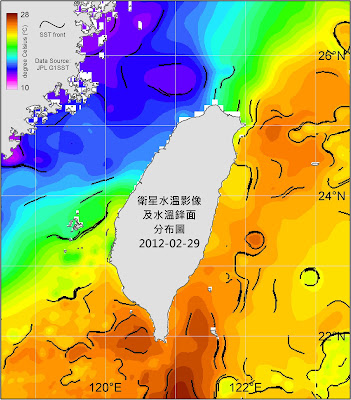
The sea temperature of Kaohsiung Harbor remains above 22 °C (72 °F) year-round,[22] the second highest of Southern Taiwan after Liuqiu Island.[23] According to recent records, the average temperature of the city has risen around 1 degree Celsius over the past three decades, from about 24.2 °C (75.6 °F) in 1983 to around 25.2 °C (77.4 °F) by 2012.
| Climate data for Kaohsiung City (1991–2020 normals, extremes 1931–present) | |||||||||||||
|---|---|---|---|---|---|---|---|---|---|---|---|---|---|
| Month | Jan | Feb | Mar | Apr | May | Jun | Jul | Aug | Sep | Oct | Nov | Dec | Year |
| Record high °C (°F) | 31.6 (88.9) |
32.5 (90.5) |
33.2 (91.8) |
35.4 (95.7) |
36.4 (97.5) |
37.2 (99.0) |
37.1 (98.8) |
36.1 (97.0) |
37.6 (99.7) |
34.8 (94.6) |
33.0 (91.4) |
34.4 (93.9) |
37.6 (99.7) |
| Mean daily maximum °C (°F) | 24.2 (75.6) |
25.0 (77.0) |
27.0 (80.6) |
29.3 (84.7) |
31.0 (87.8) |
32.1 (89.8) |
32.7 (90.9) |
32.1 (89.8) |
31.8 (89.2) |
30.1 (86.2) |
28.1 (82.6) |
25.3 (77.5) |
29.1 (84.3) |
| Daily mean °C (°F) | 19.7 (67.5) |
20.7 (69.3) |
23.0 (73.4) |
25.7 (78.3) |
27.8 (82.0) |
28.9 (84.0) |
29.4 (84.9) |
28.9 (84.0) |
28.5 (83.3) |
26.9 (80.4) |
24.5 (76.1) |
21.2 (70.2) |
25.4 (77.8) |
| Mean daily minimum °C (°F) | 16.2 (61.2) |
17.2 (63.0) |
19.7 (67.5) |
22.8 (73.0) |
25.2 (77.4) |
26.3 (79.3) |
26.7 (80.1) |
26.3 (79.3) |
25.9 (78.6) |
24.4 (75.9) |
21.6 (70.9) |
17.9 (64.2) |
22.5 (72.5) |
| Record low °C (°F) | 5.7 (42.3) |
6.6 (43.9) |
6.8 (44.2) |
10.3 (50.5) |
17.3 (63.1) |
19.0 (66.2) |
20.0 (68.0) |
20.7 (69.3) |
19.5 (67.1) |
14.7 (58.5) |
10.2 (50.4) |
4.4 (39.9) |
4.4 (39.9) |
| Average precipitation mm (inches) | 19.1 (0.75) |
17.7 (0.70) |
32.3 (1.27) |
68.4 (2.69) |
202.2 (7.96) |
416.2 (16.39) |
377.2 (14.85) |
512.4 (20.17) |
224.5 (8.84) |
53.4 (2.10) |
25.6 (1.01) |
19.2 (0.76) |
1,968.2 (77.49) |
| Average precipitation days (≥ 0.1 mm) | 3.2 | 3.2 | 3.6 | 5.4 | 6.2 | 12.9 | 13.2 | 16.7 | 10.1 | 4.2 | 2.8 | 2.8 | 84.3 |
| Average relative humidity (%) | 71.6 | 71.8 | 71.9 | 74.2 | 76.6 | 79.0 | 78.0 | 79.9 | 77.5 | 74.2 | 73.1 | 71.6 | 75.0 |
| Mean monthly sunshine hours | 177.0 | 176.0 | 194.7 | 197.2 | 207.7 | 215.0 | 220.7 | 189.3 | 188.6 | 191.9 | 166.5 | 157.2 | 2,281.8 |
| Source: Central Weather Bureau[21][24][25][26][27] | |||||||||||||
Cityscape
[edit]
Demographics
[edit]| Year | Pop. | ±% |
|---|---|---|
| 1990 | 2,512,858 | — |
| 2000 | 2,756,775 | +9.7% |
| 2010 | 2,777,384 | +0.7% |
| 2020 | 2,734,275 | −1.6% |
| Source: National Statistics, Republic of China (Taiwan)[28] | ||
As of August 2025, Kaohsiung has a population of 2,722,984 people, making it the third-largest city after New Taipei and Taichung, and a population density of 922.47 people per square kilometer.[4] Within the city, Fongshan District is the most populated district with a population of 354,455 people, while Sinsing District is the most densely populated district with a population density of 25,052 people per square kilometer.
Ethnic composition
[edit] | This section needs additional citations for verification. (August 2020) |
Han Chinese
[edit]As in most Taiwanese cities or counties, the majority of the population are Han Chinese. The Chinese are divided into 3 subgroups: Hoklo, Hakka, and Waishengren. The Hoklo and Waishengren mostly live in flatland townships and the city centre, while the majority of the Hakka population lives in the suburbs or rural townships of the northeastern hills.
Indigenous peoples
[edit]The indigenous peoples of Kaohsiung, who belong to various ethnic groups that speak languages belonging to the Austronesian language family, live mostly in the mountain indigenous district such as Taoyuan or Namasia. The main indigenous groups in the city include the Bunun, Rukai, Saaroa and the Kanakanavu.
Other ethnicities
[edit]As of December 2010, Kaohsiung hosts around 21,000 foreign spouses. Around 12,353 are Mainland Chinese, 4,244 are Vietnamese, around 800 are Japanese and Indonesians, and around 4,000 are other Asians or foreigners from Europe or America.
As of April 2013, Kaohsiung hosts 35,074 foreign workers who mainly work as factory workers or foreign maids (not including foreign specialists such as teachers and other professionals). About half of them are Indonesians, with the other half being workers from other Southeast Asian countries, mainly from Vietnam, the Philippines or Thailand.
Economy
[edit].jpeg)

Kaohsiung is a major international port and industrial city in the southwest of Taiwan. As an exporting center, Kaohsiung serves the agricultural interior of southern Taiwan, as well as the mountains of the southeast. Major raw material exports include rice, sugar, bananas, pineapples, peanuts (groundnuts) and citrus fruits. The 2,200 ha (5,400-acre) Linhai Industrial Park, on the waterfront, was completed in the mid-1970s and includes a steel mill, shipyard, petrochemical complex, and other industries. The city has an oil refinery, aluminum and cement works, fertilizer factories, sugar refineries, brick and tile works, canning factories, salt-manufacturing factories, and papermaking plants. Designated an export-processing zone in the late 1970s, Kaohsiung also attracted foreign investment to process locally purchased raw materials for export.
In 2020, Kaohsiung's land reclamation project in the Port of Kaohsiung was completed, equivalent to 16 of Taipei's Daan Forest Parks.[29]
The Kaohsiung Harbor Bureau plans to buy 49 hectares of the reclaimed land to establish a solar energy industrial district that would be in the harbor's free trade zone.[30]
The gross domestic product (GDP) in nominal terms of Kaohsiung City is estimated to be around US$45 billion, and US$90 billion for the metropolitan region. As of 2008[update], the GDP per capita in nominal terms was approximately US$24,000.[citation needed]
Despite early success and heavy governmental investment, the city suffers from the economic North–South divide in Taiwan, which continues to be the center of political debate.[31] There has been public aims to shift the local economy towards tourism and cultural industries, with projects such as Pier-2 Art Center, National Kaohsiung Center for the Arts and Kaohsiung Music Center.
Agriculture
[edit]The main agricultural crops in Kaohsiung are vegetables, fruits and rice with a total arable land of 473 km2, which accounts to 16% of the total area of the municipality. Kaohsiung has the highest production of guava, jujube and lychee in Taiwan. The main livestock are chicken, dairy cattle, deer, duck, goose, pigs and sheep. The total annual agricultural income in Kaohsiung is NT$24.15 billion.[32]
Future investment
[edit]| Numbers of merchants | Investment amounts of money in billions NTD | Jobs-created | |
|---|---|---|---|
| Taoyuan City | 39 | 154.0 | 15000 |
| Taichung City | 35 | 133.8 | 10000 |
| Kaohsiung City | 20 | 146.0 | 10000 |
| Tainan City | 23 | 123.0 | 7500 |
| New Taipei City | 9 | 21.0 | 2650 |
| Taipei City | 3 | 4.0 | 600 |
| Source:[33] | |||
Culture
[edit]Tourism
[edit]
Main landmarks of Kaohsiung city include the 85 Sky Tower, the Ferris wheel of the Kaohsiung Dream Mall, the Kaohsiung Arena and Port of Kaohsiung. The newly developed city is also known for having a large number of shopping streets, organized night markets and newly developed leisure parks such as the Pier-2 Art Center, E-DA Theme Park, Metropolitan Park, the Kaohsiung Museum of Fine Arts, the National Kaohsiung Center for the Arts, and Taroko Park.
Natural attractions of the city include Shoushan (Monkey mountain), the Love River, Cijin Island, Sizihwan, the Dapingding Tropical Botanical Garden and Yushan National Park at the northeastern tip of the city. The city also features various historical attractions such as the Old City of Zuoying, a historical town built during the early 17th century, the Former British Consulate at Takao built during the late 19th century, and various sugar and crop factories built under Japanese rule.
Natural attractions
[edit]Kaohsiung city includes a wide range of different natural attractions due to its large size and geographical variation, as it is bordered by the Central Mountain Range in the northeast and the warm South China Sea to the west and southwest. The year-round warm climate allows coral reefs to grow along the coasts around Kaohsiung Harbor, with Shoushan Mountain being a small mountain completely made up of coral reefs and calcium carbonate, while the mountainous districts in the northeast include Taiwan's highest mountain, Yushan. Other notable natural attractions include the Mount Banping, Lotus Pond, and Dongsha Atoll National Park, which is currently inaccessible by the public due to military occupation.
Historical sites
[edit]
A large number of historical sites and monuments were left in the city after the colonization of the Dutch in the 17th century, the Qing dynasty during the 18th and 19th century and the Japanese empire from the late 19th century to the mid 20th century. The city government has protected various sites and monuments from further damage and many have been opened to the public since the early 1980s. Notable historical sites include the Cemetery of Zhenghaijun, Fengshan Longshan Temple, Former British Consulate at Takao, Former Dinglinzihbian Police Station, Meinong Cultural and Creative Center, Former Sanhe Bank, and the Kaohsiung Lighthouse, one of the oldest lighthouses of the city.
Museums
[edit]
Kaohsiung is home to many museums, including the Chung Li-he Museum, Cijin Shell Museum, Fo Guang Shan Buddha Museum, Jiasian Petrified Fossil Museum, Kaohsiung Astronomical Museum, Kaohsiung Hakka Cultural Museum, Kaohsiung Harbor Museum, Kaohsiung Museum of Fine Arts, Kaohsiung Museum of History, Kaohsiung Museum of Labor, Kaohsiung Vision Museum, Meinong Hakka Culture Museum, National Science and Technology Museum, Republic of China Air Force Museum, Soya-Mixed Meat Museum, Taiwan Pineapple Museum, Taiwan Sugar Museum, Takao Railway Museum, Xiaolin Pingpu Cultural Museum and YM Museum of Marine Exploration Kaohsiung.
Parks and zoos
[edit]As the largest municipality in Taiwan, Kaohsiung has a number of newly built leisure areas and parks. Notable parks or pavilions in the city include the Central Park, Siaogangshan Skywalk Park, Fo Guang Shan Monastery, the Dragon and Tiger Pagodas, Spring and Autumn Pavilions, the Love Pier, Singuang Ferry Wharf and Kaohsiung Fisherman's Wharf. Notable zoo in the city includes the Kaohsiung City Shousan Zoo.[34]
Other
[edit]
Kaohsiung is home to many night markets, such as Jin-Zuan Night Market, Liuhe Night Market, Ruifeng Night Market, Zhonghua Street Night Market, and the Kaisyuan Night Market. Other attractions include the Cijin Tianhou Temple, Dome of Light of Kaohsiung MRT's Formosa Boulevard Station, the Kaohsiung Mosque and the Tower of Light of Sanmin District.
Traditional "wet" markets have long been the source of meat, fish, and produce for many residents. With the arrival of Western-style supermarkets in the 1980s and 1990s, such markets have encountered fierce competition. In 1989, the global leader in hypermarkets, Carrefour, entered Asia, opening its first store in Kaohsiung. Due to the success of its Taiwan operation, the French retailer expanded throughout the country and Asia. Jean-Luc Chéreau, the general manager in Taiwan from 1993 to 1999, used this newfound understanding of Chinese culture and ways of doing business with Chinese customers to lead its China expansion starting in 1999.[35] As of February 2020, Carrefour has opened 137 hypermarkets and supermarkets in Taiwan.[36] Despite the fierce competition from "Westernized" supermarkets, Taiwan's traditional markets and mom-and-pop stores remain "one of the most popular retail formats for many Asian families when they purchase daily food items and basic household goods."[37]
Languages
[edit]The majority of those living in Kaohsiung can communicate in both Taiwanese Hokkien and Mandarin. Some of the elderly who grew up during the Japanese colonization of Taiwan can communicate in Japanese, while most of the younger population have basic English skills.
Since the spread of Standard Chinese after the Nationalist Government retreated to Taiwan in 1949, Hakka Chinese and various Formosan languages are gradually no longer spoken with the new generation and many Formosan languages are therefore classified as moribund or endangered languages by the United Nations. Nowadays, only elder Hakka people mostly living in Meinong, Liouguei, Shanlin and Jiasian districts can communicate in Hakka and elder Taiwanese aborigines living mostly in the rural districts of Namasia and Taoyuan can communicate with the aboriginal languages. The Taiwanese government has established special affairs committees for both the Aboriginals and the Hakkas to protect their language, culture, and minority rights.
Arts
[edit]
The "Dome of Light" in the concourse of Formosa Boulevard Station of Kaohsiung MRT is one of the world's largest public glass works of art.[38] The city also has the Urban Spotlight Arcade spanning along the street in Cianjin District. Acknowledged as the largest performance arts center under one roof in the world Weiwuying (the National Kaohsiung Centre for the Arts), opened in 2018. The center was designed by Mecanoo.[39]
Religion
[edit]The religious population of Kaohsiung is mainly divided into five main religious groups: Buddhists, Taoists, Muslim and Christians (Catholics and Protestants). As of 2015[update], Kaohsiung City has 1,481 temples, the second highest in Taiwan after Tainan. Kaohsiung also has 306 churches.[41]
Buddhism
[edit]Buddhism is one of the major religions in Taiwan, with over 35% of Taiwan's population identifying as Buddhists.[42] The same applies to Kaohsiung city. Kaohsiung also hosts the largest Buddhist temple in Taiwan, the Fo Guang Shan Monastery with its Fo Guang Shan Buddha Museum. There are also other famous Buddhist temples such as Fengshan Longshan Temple and Hong Fa Temple.
Taoism
[edit]Around 33% of the Taiwanese population are Taoists, making it the second largest religion of Taiwan. Most people who believe in Taoism also ascribe to Buddhism at the same time, as the differences and boundaries between the two religions are not always clear. Many residents of the area also worship the sea goddess known as Tian Shang Sheng Mu (天上聖母) or Mazu, who is variously syncretized as a Taoist immortal or embodiment of the bodhisattva Guanyin. Her temple on Cijin Island, Chi Jin Mazu Temple, is the oldest in the city, with its original bamboo-and-thatch structure first opened in 1673. The area surrounding it formed the center of the city's early settlement.[43] There are also other prominent Taoist temples such as Fengshan Tiangong Temple, dedicated to the Jade Emperor, Cih Ji Palace, dedicated to Bao Sheng Da Di, Qing Shui Temple, dedicated to Qing Shui Zu Shi and Gushan Daitian Temple dedicated to Wang Ye worship.
Christianity
[edit]Christianity is a minority religion in Taiwan. It was first brought onto the island when the Dutch and Spanish colonized Taiwan during the 17th century, mostly to the aboriginals. Kaohsiung currently hosts around 56,000 Christians.
Islam
[edit]Besides the majority population of Buddhists and Taoists, Kaohsiung also includes a rather tiny population of Muslims. During the Chinese Civil War, some 20,000 Muslims, mostly soldiers and civil servants, fled mainland China with the Kuomintang government to Taiwan.[44] During the 1980s, another few thousand Muslims from Myanmar and Thailand, who are mostly descendants of Nationalist soldiers who fled Yunnan as a result of the communist takeover, migrated to Taiwan in search of a better life, resulting in an increase of Muslim population within the country.[44] More recently, with the rise of Indonesian workers working in Taiwan, an estimated number of 88,000 Indonesian Muslims currently live in the country, in addition to the existing 53,000 Taiwanese Muslims. Combining all demographics, Taiwan hosts around 140,000 Muslims, with around 25,000 living in Kaohsiung. Kaohsiung Mosque is the largest mosque in Kaohsiung and the main gathering site of Muslims within the city.
-
 Foguangshan Temple
 -
 Cijing Tianhou Temple
 -

-


Politics
[edit]
Government
[edit]Sometimes Kaohsiung used to be seen as the political opposite of Taipei. While northern Taiwan leans towards the Pan-Blue Coalition in the state-level elections, southern Taiwan, including Kaohsiung, leaned towards the Pan-Green Coalition since the late 1990s. Frank Hsieh of the Democratic Progressive Party was reelected twice as Mayor of Kaohsiung, where he was widely credited for transforming the city from an industrial sprawl into an attractive modern metropolis. Hsieh resigned from the office of mayor to take up the office of Premier of the Republic of China in 2005. The municipal election, held on 9 December 2006, resulted in a victory for the Democratic Progressive Party's candidate Chen Chu, the first elected female mayor of special municipality in Taiwan, defeating her Kuomintang rival and former deputy mayor, Huang Jun-ying. As of 12 June 2020, the mayor of Kaohsiung City is Chen Chi-mai.[45]
-
 Kaohsiung City Government – Sihwei Administration Center
 -
 Kaohsiung City Government – Fongshan Administration Center
 -

-
 Kaohsiung District Court
.JPG)


Subdivisions
[edit]Kaohsiung is divided into 38 districts, three of which are mountain indigenous districts.[46][47][48][49] There are a total of 651 villages in which each village is subdivided into neighborhoods (鄰). There are 18,584 neighborhoods in Kaohsiung City. Lingya and Fongshan districts are the administrative centers of the city while Lingya and Sinsing Districts are the two most densely populated districts of the city. Kaohsiung has the most numbers of districts among other special municipalities in Taiwan.
 |
.svg) |
 |
- Note: There are several romanization systems used in Taiwan. This table contains both Hanyu Pinyin (the official standard of the central government),[50] and Tongyong Pinyin (the official standard of the Kaohsiung City Government). The major order of districts referred to the code of administrative area.[51]
| Code | English name | Native name | Population[c] | Area (km2) |
Population density (/km2) | Population 2010[d] | Population change[e] |
|---|---|---|---|---|---|---|---|
| 64000010 | Yancheng District | 鹽埕區 | 22,505 | 1.42 | 16,843.66 | 27,399 | −4,894 |
| 64000020 | Gushan District | 鼓山區 | 140,492 | 14.75 | 9,573.42 | 131,728 | +8,764 |
| 64000030 | Zuoying District | 左營區 | 196,953 | 19.38 | 10,210.37 | 191,991 | +4,962 |
| 64000040 | Nanzih District | 楠梓區 | 192,777 | 25.83 | 7,287.69 | 173,053 | +19,724 |
| 64000050 | Sanmin District | 三民區 | 331,864 | 19.79 | 17,156.54 | 354,022 | −22,158 |
| 64000060 | Sinsing District | 新興區 | 49,495 | 1.98 | 25,775.76 | 55,287 | −5,792 |
| 64000070 | Cianjin District | 前金區 | 27,033 | 1.86 | 14,466.67 | 28,859 | −1,826 |
| 64000080 | Lingya District | 苓雅區 | 163,779 | 8.15 | 20,714.85 | 183,948 | −20,169 |
| 64000090 | Cianjhen District | 前鎮區 | 180,233 | 19.12 | 9,809.62 | 199,144 | −18,911 |
| 64000100 | Cijin District | 旗津區 | 26,301 | 1.46 | 19,225.34 | 29,968 | −3,667 |
| 64000110 | Siaogang District | 小港區 | 155,042 | 45.44 | 3,474.93 | 154,548 | +494 |
| 64000120 | Fongshan District | 鳳山區 | 356,397 | 26.76 | 13,456.95 | 341,120 | +15,277 |
| 64000130 | Linyuan District | 林園區 | 68,328 | 32.29 | 2,155.40 | 70,512 | −2,184 |
| 64000140 | Daliao District | 大寮區 | 111,910 | 71.04 | 1,580.60 | 108,984 | +2,946 |
| 64000150 | Dashu District | 大樹區 | 40,505 | 66.98 | 628.28 | 43,955 | −3,450 |
| 64000160 | Dashe District | 大社區 | 33,689 | 26.58 | 1,294.96 | 32,941 | +748 |
| 64000170 | Renwu District | 仁武區 | 97,008 | 36.08 | 2,489.05 | 72,202 | +24,806 |
| 64000180 | Niaosong District | 鳥松區 | 44,468 | 24.59 | 1,826.96 | 42,595 | +1,873 |
| 64000190 | Gangshan District | 岡山區 | 95,533 | 47.94 | 2,026.49 | 97,102 | −1,569 |
| 64000200 | Ciaotou District | 橋頭區 | 41,488 | 25.94 | 1,477.33 | 36,415 | +5,073 |
| 64000210 | Yanchao District | 燕巢區 | 28,777 | 65.40 | 453.72 | 30,790 | −2,013 |
| 64000220 | Tianliao District | 田寮區 | 6,549 | 92.68 | 75.92 | 8,214 | −1,665 |
| 64000230 | Alian District | 阿蓮區 | 27,465 | 34.62 | 823.45 | 30,383 | −2,918 |
| 64000240 | Lujhu District | 路竹區 | 50,396 | 48.43 | 1,077.60 | 53,791 | −3,395 |
| 64000250 | Hunei District | 湖內區 | 29,629 | 20.16 | 1,474.26 | 28,827 | +802 |
| 64000260 | Qieding District | 茄萣區 | 29,292 | 15.76 | 1,905.52 | 31,433 | −2,141 |
| 64000270 | Yong'an District | 永安區 | 13,855 | 22.61 | 608.85 | 14,301 | −446 |
| 64000280 | Mituo District | 彌陀區 | 18,331 | 14.78 | 1,287.21 | 20,433 | −2,102 |
| 64000290 | Ziguan District | 梓官區 | 34,813 | 11.60 | 3,081.12 | 36,726 | −1,913 |
| 64000300 | Cishan District | 旗山區 | 34,390 | 94.61 | 383.54 | 39,873 | −5,483 |
| 64000310 | Meinong District | 美濃區 | 37,116 | 120.03 | 325.69 | 42,993 | −5,877 |
| 64000320 | Liouguei District | 六龜區 | 11,731 | 194.16 | 64.99 | 14,833 | −3,102 |
| 64000330 | Jiasian District | 甲仙區 | 5,584 | 124.03 | 47.77 | 7,228 | −1,644 |
| 64000340 | Shanlin District | 杉林區 | 10,970 | 104.00 | 112.13 | 11,842 | −872 |
| 64000350 | Neimen District | 內門區 | 13,258 | 95.62 | 148.34 | 15,951 | −2,693 |
| 64000360 | Maolin District | 茂林區 | 1,893 | 194.00 | 10.01 | 1,874 | +19 |
| 64000370 | Taoyuan District | 桃源區 | 4,249 | 928.98 | 4.58 | 4,817 | −568 |
| 64000380 | Namasia District | 那瑪夏區 | 3,163 | 252.99 | 12.44 | 3,401 | −238 |
Notable people
[edit]- Yoshikazu Sunako (1932–2020), Japanese motorcycle racer and racing driver
- Tony Hwang (1964–), Taiwanese-American politician
- Kuo-chu Wu (1970–2006), Taiwanese choreographer
- George Chou (1975–), Taiwanese racing driver
- Lu Chen (1976), Taiwanese magician
- Tony Sun (Chinese Name: 孫協志) Born: 20 February 1978 in Fengshan District - (leader of Taiwanese group, 5566)
- Janet Hsieh (1980–), Taiwanese-Amercian actor and host
- Chuang Chih-yuan (1981–), Taiwanese table tennis player
- Wei-Yin Chen (1985–), Taiwanese baseball player
- Joe Alexander (1986–), Taiwanese-born American-Israeli basketball player
- Yi-wei Chen (1987–), Taiwanese soccer player
- Eddy Chen (1992–), Taiwanese-Australian violinist and Member of TwoSet Violin
- Tzu-Wei Lin (1994–), Taiwanese baseball player
- Tzu-ying Tai (1994–), Taiwanese badminton player
Transportation
[edit]Port of Kaohsiung
[edit]
A major port, through which pass most of Taiwan's marine imports and exports, is located in the city but is not managed by the city government. Instead, it is administered by Kaohsiung Port Authority, under the Ministry of Transportation. There is a push for Kaohsiung City to annex the Port of Kaohsiung to facilitate better regional planning.
Also known as the "Harbour Capital" of Taiwan, Kaohsiung has always had a strong link with the ocean and maritime transportation. Ferries play a key role in everyday transportation, especially for transportation across the harbor. With five terminals and 23 berths, the Port of Kaohsiung is Taiwan's largest container port and the 13th largest in the world.[52] In 2007 the port reached its handling capacity with a record trade volume of 10.2 million twenty-foot equivalent units (TEU).[53] A new container terminal is under construction, increasing future handling capacity by 2 million TEU by 2013.[53]
Kaohsiung is one of the biggest ports in the world for importing shark fins, sold at high prices in the restaurants and shops of Taiwan and China.[54] They are brought in from overseas and are placed out to dry in the sun on residential rooftops near the port.
Kaohsiung International Airport
[edit]
Kaohsiung City is also home to Taiwan's second-largest international airport, the Kaohsiung International Airport, located in Siaogang District near the city's center. It is one of the three major international airports of Taiwan, serving passengers of the entire southern and southeastern part of the country. However, the size of the airport is relatively small, with short runways compared to other major airports of Taiwan due to its age and its location near the city center, making it impossible for large aircraft such as the Airbus A380 to land at the airport. As a result, plans for work to begin on a new terminal is expected to start in 2023, and could handle up to 16.5 million passengers once complete.[55]
Rapid transit
[edit]

Kaohsiung Mass Rapid Transit opened for service in March 2008. The MRT is made up of two lines with 37 stations covering a distance of 42.7 km (26.5 mi).[56]
Two of Kaohsiung's MRT stations, Formosa Boulevard Station and Central Park Station, were ranked among the top 50 most beautiful subway systems in the world by Metrobits.org in 2011.[57] In 2012, the two stations respectively are ranked as the 2nd and the 4th among the top 15 most beautiful subway stops in the world by BootsnAll.[58]
Circular Light Rail
[edit]

The Circular Light Rail Line (also known as the Kaohsiung LRT, Kaohsiung Tram) for Kaohsiung City is a light rail line. Construction of Phase 1, known as the Waterside Light Rail began in June 2013 and is in full operation since September 2017. To combat air pollution, usage of the light rail, as well as buses, was made free of charge for electronic ticket holders from December to February, when air pollution is at its peak.[59]
Railway
[edit]The city is served by the Taiwan Railways Administration's Western Line and Pingtung Line. Kaohsiung Main Station is an underground station, replacing the old ground level station.[60]
High Speed Railway
[edit]Since 2007, Taiwan High Speed Rail has served Kaohsiung via Zuoying HSR station.[61] On January 4, 2023, the Pingtung HSR extension was approved by Premier Su Zhenchang, and the High Speed Rail extension was confirmed to bypass central Kaohsiung City and Kaohsiung Main Station.[62]
Sports
[edit]
Kaohsiung is home to Taiwan's largest international-class stadium, the National Stadium, with a maximum capacity of 55,000 seats, as well as Kaohsiung Arena. The city hosted the 2009 World Games at the National Stadium. Nearly 6,000 athletes, officials, coaches, referees and others from 103 countries participated in the 2009 Kaohsiung World Games.
Taiwan's Chinese Professional Baseball League has a professional baseball team, TSG Hawks, based in Kaohsiung.[63]
Kaohsiung also has two professional basketball teams, the Kaohsiung Aquas of the T1 League[64] and the Kaohsiung 17LIVE Steelers of the P. League+.[65] Kaohsiung was also home to the Kaohsiung Truth of the ASEAN Basketball League. They were the first team in the history of the league that was based outside Southeast Asia. The team folded in 2017.
Other recent major sporting events held by Kaohsiung include:
Education
[edit]


Kaohsiung has a number of colleges and junior colleges offering training in commerce, education, maritime technology, medicine, modern languages, nursing, and technology, as well as various international schools and eight national military schools, including the three major military academies of the country, the Republic of China Military Academy, Republic of China Naval Academy and Republic of China Air Force Academy.
Universities
- I-Shou University
- Kaohsiung Medical University
- National Kaohsiung Normal University
- National Sun Yat-sen University
- National University of Kaohsiung
Technical and vocational universities
- Cheng Shiu University
- Fooyin University
- National Kaohsiung University of Hospitality and Tourism
- National Kaohsiung University of Science and Technology
- Wenzao Ursuline University of Languages
High schools and junior high schools
- The Affiliated Hospitality Senior High School of National Kaohsiung University of Hospitality and Tourism
- The Affiliated Senior High School of National Kaohsiung Normal University
- Cheng Yi Senior High School
- Chung Cheng Armed Forces Preparatory School
- Chung Shan Industrial & Commercial School
- Chung-Hwa School of Arts
- FUHWA Senior High School
- Guoguang Laboratory School, National Sun Yat-sen University
- Kao-Feng Vocational High School
- Kaohsiung Dah Yung Senior High School
- Kaohsiung Municipal Chung-Cheng Industrial High School
- Kaohsiung Municipal Chungshan Senior High School
- Kaohsiung Municipal Cianjhen Senior High School
- Kaohsiung Municipal Fu Cheng High School
- Kaohsiung Municipal Gushan Senior High School
- Kaohsiung Municipal Haiching Vocational High School of Technology and Commerce
- Kaohsiung Municipal Jhongjheng Senior High School
- Kaohsiung Municipal Kaohsiung Girls' Senior High School
- Kaohsiung Municipal Kaohsiung Industrial High School
- Kaohsiung Municipal Kaohsiung Senior High School
- Kaohsiung Municipal Kaohsiung Vocational High School of Commerce
- Kaohsiung Municipal Lujhu Senior High School
- Kaohsiung Municipal Nanzih Comprehensive Senior High School
- Kaohsiung Municipal Renwu Senior High School
- Kaohsiung Municipal Rueisiang High School
- Kaohsiung Municipal Sanmin Home Economics & Commerce Vocational High School
- Kaohsiung Municipal Sanmin Senior High School
- Kaohsiung Municipal Siaogang Senior High School
- Kaohsiung Municipal Sinsing Senior High School
- Kaohsiung Municipal Tsoying Senior High School
- Kaohsiung Municipal Hsin Chuang Senior High School
- Lichih Senior High School
- National Feng-Hsin Senior High School
- National Feng-Shan Senior High School
- National FongShan Senior Commercial & Industrial Vocational School
- National Kangshan Agricultural & Industrial Vocational Senior High School
- National Kangshan Senior High School
- Saint Dominic's Catholic High School
- Sansin High School of Commerce And Home Economics Kaohsiung
- Shu-Te Home economics & Commercial High School
- Sin-Guang Senior High School
- Taiwan Kaohsiung St. Paul's High School
International schools
- Dominican International School Kaohsiung
- I-Shou International School
- Kaohsiung American School
- Kivam Junior High School
- Morrison Academy Kaohsiung
Military schools
- Chung Cheng Armed Forces Preparatory School
- Republic of China Air Force Academy
- Republic of China Air Force Institute of Technology
- Republic of China Army Infantry School
- Republic of China Marine Corps School
- Republic of China Military Academy
- Republic of China Naval Academy
(Note: The lists above are not comprehensive.)
Conferences and events
[edit]The Kaohsiung Exhibition Center, built by the Kaohsiung City Government, was opened on 14 April 2014. It includes an exhibition space for 1,500 booths, and a convention hall for 2,000 people.
The center hosted the Taiwan International Boat Show in May 2014.[66] Another conference and event-related venue is the newly renovated International Convention Center Kaohsiung in 2013.
Sister cities and friendship cities
[edit]There are three Consulates in Kaohsiung. United States Institute in Taiwan Kaohsiung Branch Office,
  Japan -Taiwan Exchange Association Kaohsiung Office,
  Philippines Representative Office Kaohsiung Branch in Taiwan.
Kaohsiung is twinned with the following locations:[67]
- Asia
 Hachiōji City, Tokyo Metropolis, Japan
- Kumamoto City, Kumamoto Prefecture, Japan
- Kumamoto Prefecture, Japan
- Sado City, Niigata Prefecture, Japan
- Aomori Prefecture, Japan
- Mutsu City, Aomori Prefecture, Japan
 Busan, South Korea
- Daegu, South Korea
- Daejeon, South Korea
- Suwon, Gyeonggi Province, South Korea
 Da Nang, Vietnam
 Cebu, Central Visayas, Philippines
- Dipolog, Zamboanga Peninsula, Philippines[68][69]
 Malé, Maldives
 Koror, Palau


- America
 Orange County, Yew York, United States
- Colorado Springs, Colorado, United States
- Fort Lauderdale, Florida, United States
- Pensacola, Florida, United States
- Miami, Florida, United States
- Tulsa, Oklahoma, United States
- Honolulu, Hawaii, United States
- Knoxville, Tennessee, United States
- Little Rock, Arkansas, United States
- Macon, Georgia, United States
- Plains, Georgia, United States
- Mobile, Alabama, United States
- Portland, Oregon, United States
- San Antonio, Texas, United States
- King County, Washington, United States
- Seattle, Washington, United States
 Belize City, Belize
 Cartago, Costa Rica
 Panama City, Panama[70]
 Basseterre City, Saint Kitts and Nevis


 Barranquilla, Colombia

- Europe
 Erzgebirgskreis, Saxony, Germany
 Pristina, Kosovo[71]
 Bratislava Region, Slovakia
 Gdynia, Pomeranian Voivodeship, Poland[72]


- Africa and oceania
 Blantyre, Malawi
 Durban, South Africa
 Mbabane, Eswatini
 San-Pédro, Côte d'Ivoire
 Brisbane, Queensland, Australia


See also
[edit]Explanatory notes
[edit]- ^ Standard Mandarin: [káʊɕjʊ̌ŋ] ⓘ; Chinese: 高雄; pinyin: Gāoxióng; Wade–Giles: Kao1-hsiung2
- ^ also spelled Takao, Takau, Takow
- ^ September 2023
- ^ December 2010
- ^ September 2023 − December 2010
Words in native languages
[edit]References
[edit]- ^ 高雄市政府主計處全球資訊網 – 首頁. dbaskmg.kcg.gov.tw (in Chinese (Taiwan)). Archived from the original on 11 May 2016. Retrieved 9 September 2018.
- ^ 《中華民國統計資訊網》縣市重要統計指標查詢系統網. Statdb.dgbas.gov.tw (in Traditional Chinese). Archived from the original on 12 June 2016. Retrieved 11 June 2016.
- ^ "Demographia World Urban Areas PDF" (PDF). Demographia. Archived (PDF) from the original on 3 May 2018. Retrieved 1 December 2019.
- ^ a b 人口統計查詢:本市各區里戶口數月統計. Kaoshiung City Government. Archived from the original on 14 October 2018. Retrieved 4 January 2019.
- ^ "World Cities 2024". Globalization and World Cities (GaWC) Research Network. Archived from the original on 3 July 2025. Retrieved 7 July 2025.
- ^ Chen, Cheng-hui (8 January 2018). "Kaohsiung Harbor volume down 1.9 percent last year". Taipei Times. Archived from the original on 31 December 2020. Retrieved 9 February 2021.
- ^ "Siraya activists slam ministry over letter - Taipei Times". www.taipeitimes.com. 23 April 2009. Archived from the original on 12 April 2021. Retrieved 9 February 2021.
- ^ Davidson, James W. (1903). The Island of Formosa, Past and Present: History, People, Resources, and Commercial Prospects: Tea, Camphor, Sugar, Gold, Coal, Sulphur, Economical Plants, and Other Productions. London and New York: Macmillan. p. iii. OCLC 1887893. OL 6931635M. Archived from the original on 8 January 2015. Retrieved 20 January 2015.
- ^ Kuo, Joyce (4 January 2021). "Kaohsiung Celebrates 100th Anniversary - A Personal Take". The Taiwan Times. Archived from the original on 4 January 2021. Retrieved 9 February 2021.
- ^ Campbell, William (1903). "Explanatory Notes". Formosa under the Dutch: described from contemporary records, with explanatory notes and a bibliography of the island. London: Kegan Paul. p. 548. ISBN 9789576380839. OCLC 644323041.
{{cite book}}: ISBN / Date incompatibility (help) - ^ "History of Kaohsiung". HotelTravel.com. 1999. Archived from the original on 8 August 2014. Retrieved 2 August 2014.
- ^ Lin, Ji-ping (9 February 2019). "Taiwan's Cultural Plurality and Immigration Policy". Taiwan Insight. Archived from the original on 26 February 2020. Retrieved 26 February 2020.
- ^ "Discover Kaohsiung > History". Welcome to Kaohsiung City. 2013. Archived from the original on 3 July 2014. Retrieved 2 August 2014.
- ^ Shih, Ming-hsiung (12 November 2019). "US bombing of Taiwan and Han's ignorance". Taipei Times. Translated by Julian Clegg. Archived from the original on 12 February 2021. Retrieved 9 February 2021.
- ^ What's in changing a name? Archived 30 June 2007 at archive.today Taiwan Journal Vol. XXVI No. 19 May 15, 2009 "...while name Kaohsiung is technically the Mandarin pronunciation of the Japanese written version of a Holo Taiwanese rendition of an old aboriginal name..."
- ^ "Rezoning Taiwan". Taiwan Today. 1 February 2011. Archived from the original on 12 January 2021. Retrieved 9 December 2020.
- ^ Taiwan News Staff Writer (29 June 2009). "Taiwan government approves merger and upgrade of Tainan City and County". Taiwan News. Archived from the original on 22 January 2022. Retrieved 5 October 2022.
- ^ "Many dead in Taiwan city gas blasts". Taiwan's News.Net. Archived from the original on 8 August 2014. Retrieved 2 August 2014.
- ^ "Climate Kaohsiung City (Republic of China (Taiwan))". Archived from the original on 21 February 2019. Retrieved 20 February 2019.
- ^ "Taiwan sea temperatures of February 2012". Central Weather Bureau. Archived from the original on 26 March 2014. Retrieved 20 February 2014.
- ^ a b "Monthly Mean". Central Weather Bureau. Archived from the original on 9 December 2022. Retrieved 29 November 2022.
- ^ "Kaohsiung Average Sea Temperatures". Central Weather Bureau. Archived from the original on 26 March 2014. Retrieved 26 March 2014.
- ^ "Liuqiu island Average Sea Temperatures". Central Weather Bureau. Archived from the original on 26 March 2014. Retrieved 26 March 2014.
- ^ "氣象站各月份最高氣溫統計" (PDF) (in Chinese). Central Weather Bureau. Archived (PDF) from the original on 17 October 2022. Retrieved 29 November 2022.
- ^ "氣象站各月份最高氣溫統計(續)" (PDF) (in Chinese). Central Weather Bureau. Archived (PDF) from the original on 17 October 2022. Retrieved 29 November 2022.
- ^ "氣象站各月份最低氣溫統計" (PDF) (in Chinese). Central Weather Bureau. Archived (PDF) from the original on 19 February 2022. Retrieved 29 November 2022.
- ^ "氣象站各月份最低氣溫統計(續)" (PDF) (in Chinese). Central Weather Bureau. Archived (PDF) from the original on 19 December 2022. Retrieved 29 November 2022.
- ^ "Statistical Tables". National Statistics, Republic of China (Taiwan).
- ^ "Kaohsiung port project completed - Taipei Times". www.taipeitimes.com. 9 March 2020. Archived from the original on 12 July 2022. Retrieved 12 July 2022.
- ^ "Kaohsiung City to open solar energy industrial zone". Focus Taiwan News Channel. 27 June 2010. Archived from the original on 25 July 2011. Retrieved 9 July 2010.
- ^ "Major Kaohsiung mayoral candidates face off in TV debate". Taiwan News. 20 November 2018. Archived from the original on 12 February 2019. Retrieved 11 February 2019.
- ^ "Current Conditions and Theme for Agriculture". Agriculture Bureau of Kaohsiung City Government. Archived from the original on 29 March 2019. Retrieved 29 March 2019.
- ^ 鄭鴻達 (21 November 2019). 台商回台投資真假?蘇貞昌秀一張圖揭六都受益高低 – 政經大事 – 產業 (in Traditional Chinese). Universal Daily News. Archived from the original on 21 November 2019. Retrieved 21 November 2019.
- ^ "Home Page - ShoushanZoo". Archived from the original on 30 August 2019. Retrieved 8 August 2019.
- ^ Child, Peter (2006). "Lessons from a global retailer: An interview with the president of Carrefour China" (PDF). Archived (PDF) from the original on 2 August 2020. Retrieved 26 February 2020.
- ^ "分店資訊". Carrefour 家樂福. Archived from the original on 26 February 2020. Retrieved 26 February 2020.
- ^ Chen, Yu-Chih; Huang, Chi-tsun; Tsai, Kuen-Hung (2015). "How do wet markets still survive in Taiwan?". British Food Journal. 117: 234–256. doi:10.1108/BFJ-05-2013-0136. Archived from the original on 10 April 2023. Retrieved 26 February 2020 – via Emerald Insight.
- ^ "Art&Culture". Kaohsiung City Government. Archived from the original on 21 September 2013. Retrieved 27 July 2013.
- ^ Wainwright, Oliver (20 October 2018). "Grand vision: The world's biggest arts venue opens in Taiwan". The Guardian. No. 53545. London. p. 19. Archived from the original on 21 October 2018. Retrieved 21 October 2018.
- ^ "Taiwan Yearbook 2006". Government of Information Office. 2006. Archived from the original on 8 July 2007. Retrieved 1 September 2007.
- ^ Lee Hsin-fang; Chung, Jake (15 July 2015). "Tainan has most of nation's 12,106 temples". Taipei Times. p. 5. Archived from the original on 15 July 2015. Retrieved 15 July 2015.
- ^ Yu, Pei-Lin (21 July 2020). "How Taiwanese death rituals have adapted for families living in the US". The Conversation. Archived from the original on 15 May 2021. Retrieved 15 May 2021.
- ^ "Tianhou Temple at Cihou", Official site, Kaohsiung: Bureau of Cultural Affairs of the Kaohsiung City Government, 2008, archived from the original on 6 October 2016, retrieved 16 December 2016. (in Chinese) & (in English)
- ^ a b Charette, Rick (13 April 2020). "The Muslim Experience in Taipei". The News Lens International Edition. Archived from the original on 27 February 2021. Retrieved 15 May 2021.
- ^ Lin, Sean (12 June 2020). "Yang to Become Acting Kaohsiung Mayor: Source". Taipei Times. p. 1. Archived from the original on 17 August 2022. Retrieved 5 October 2022.
- ^ "Administrative Districts". Kaohsiung City Government. 30 September 2016. Archived from the original on 21 January 2018. Retrieved 26 April 2019.
Taoyuan District Maolin District Namasia District Jiasian District Liouguei District Shanlin District Meinong District Neimen District Cishan District Dashu District Daliao District Zihguan District Linyuan District Tianliao District Yanchao District Dashe District Renwu District Siaogang District Fongshan District Mituo District Alian District Gangshan District Niaosong District Ciaotou District Nanzih District Zuoying District Gushan District Sanmin District Sinsing District Cianjin District Yancheng District Lingya District Cijin District Cianjhen District Hunei District Lujhu District Cheting District Yongan District
- ^ 認識高雄 [Understanding Kaohsiung] (in Chinese (Taiwan)). Kaoshiung City Government. 30 September 2016. Archived from the original on 11 October 2019. Retrieved 27 April 2019.
高雄市行政區劃分District 楠梓區 左營區 鼓山區 三民區 苓雅區 新興區 前金區 鹽埕區 前鎮區 旗津區 小港區 鳳山區 茂林區 甲仙區 六龜區 杉林區 美濃區 內門區 仁武區 田寮區 旗山區 梓官區 阿蓮區 湖內區 岡山區 茄萣區 路竹區 鳥松區 永安區 燕巢區 大樹區 大寮區 林園區 彌陀區 橋頭區 大社區 那瑪夏區 桃源區
- ^ 臺灣地區鄉鎮市區級以上行政區域名稱中英對照表 (PDF). Online Translation System of Geographic Name, Ministry of Interior. 16 June 2011. pp. 4–6. Archived from the original (PDF) on 25 March 2012.
高雄市 Kaohsiung City Gaoxiong City 直轄市、縣(市)級以上 行政區域名稱係依國際 慣用方式譯寫 鹽埕區 Yancheng District 鼓山區 Gushan District 左營區 Zuoying District{...}楠梓區 Nanzi District 三民區 Sanmin District 新興區 Xinxing District 前金區 Qianjin District 苓雅區 Lingya District 前鎮區 Qianzhen District 旗津區 Qijin District 小港區 Xiaogang District 鳳山區 Fengshan District 林園區 Linyuan District 大寮區 Daliao District 大樹區 Dashu District 大社區 Dashe District 仁武區 Renwu District 鳥松區 Niaosong District 岡山區 Gangshan District 橋頭區 Qiaotou District 燕巢區 Yanchao District 田寮區 Tianliao District 阿蓮區 Alian District 路竹區 Luzhu District 湖內區 Hunei District 茄萣區 Qieding District 永安區 Yong'an District 彌陀區 Mituo District 梓官區 Ziguan District 旗山區 Qishan District 美濃區 Meinong District 六龜區 Liugui District 甲仙區 Jiaxian District 杉林區 Shanlin District 內門區 Neimen District{...}茂林區 Maolin District 桃源區 Taoyuan District 那瑪夏區 Namaxia District
- ^ 1.7-鄉鎮市區戶口數 [Population for Township and District]. Ministry of the Interior (in Chinese (Taiwan) and English). August 2020. Archived from the original on 12 June 2018. Retrieved 21 September 2020.
高雄市 Kaohsiung City鹽埕區 Yancheng District鼓山區 Gushan District左營區 Zuoying District楠梓區 Nanzih District三民區 Sanmin District新興區 Sinsing District前金區 Cianjin District苓雅區 Lingya District前鎮區 Cianjhen District旗津區 Cijin District小港區 Siaogang District鳳山區 Fongshan District林園區 Linyuan District大寮區 Daliao District大樹區 Dashu District大社區 Dashe District仁武區 Renwu District鳥松區 Niaosong District岡山區 Gangshan District橋頭區 Ciaotou District燕巢區 Yanchao District田寮區 Tianliao District阿蓮區 Alian District路竹區 Lujhu District湖內區 Hunei District茄萣區 Jiading District永安區 Yongan District彌陀區 Mituo District梓官區 Zihguan District旗山區 Cishan District美濃區 Meinong District六龜區 Liouguei District甲仙區 Jiasian District杉林區 Shanlin District內門區 Neimen District茂林區 Maolin District桃源區 Taoyuan District那瑪夏區 Namasia District
- ^ "Glossary of Names for Admin Divisions" (PDF). placesearch.moi.gov.tw. Ministry of Interior of the ROC. Archived from the original (PDF) on 19 August 2015. Retrieved 18 March 2015.
- ^ "Untitled" (PDF) (in Traditional Chinese). Taipei: Directorate General of Budget, Accounting and Statistics. Archived from the original (PDF) on 21 July 2011. Retrieved 5 October 2022.
- ^ "Top 50 World Container Ports | World Shipping Council". www.worldshipping.org. Archived from the original on 15 November 2017. Retrieved 4 January 2019.
- ^ a b Dale, Jamie (17 January 2008). "Kaohsiung container port hits full capacity". Lloyd's List Daily Commercial News. Informa Australia. p. 16.
- ^ Ling, Lisa (10 December 2008). "Shark fin soup alters an ecosystem - CNN.com". CNN. Archived from the original on 15 May 2021. Retrieved 15 May 2021.
- ^ "Kaohsiung airport expansion to start in 2023 as Taiwan reopens to travellers".
- ^ "Introduction: Welcome to MBTU". Mass Rapid Transit Bureau, Kaohsiung City. Archived from the original on 2 March 2013. Retrieved 10 July 2014.
- ^ "A guide to the fifty most beautiful subway systems in the world". Metrobits.org. 1 December 2011. Archived from the original on 2 December 2006. Retrieved 29 April 2014.
- ^ "15 of the Most Beautiful Subway Stops in the World". BootsnAll. Archived from the original on 16 April 2014. Retrieved 29 January 2012.
- ^ "Kaohsiung makes public transport free – Taipei Times". Taipei Times. Archived from the original on 30 November 2017. Retrieved 1 December 2017.
- ^ Spencer, David (17 October 2018). "Riding Taiwan's newest transport link: the TRA Kaohsiung City Network | Taiwan News | 2018-10-17 14:25:00". Taiwan News. Archived from the original on 15 May 2021. Retrieved 15 May 2021.
- ^ "台灣高鐵 Taiwan High Speed Rail".
- ^ "Route of Kaohsiung – Pingtung high speed extension agreed". Railway Gazette International. 16 January 2023.
- ^ Pan, Jason (9 June 2022). "Baseball league welcomes sixth team". Taipei Times. The Taipei Times. Archived from the original on 1 January 2023. Retrieved 1 January 2023.
- ^ "關於T1". T1 League. Archived from the original on 1 January 2023. Retrieved 1 January 2023.
- ^ "關於 P. League+". P. League+. Archived from the original on 20 January 2022. Retrieved 1 January 2023.
- ^ "Kaohsiung's new venue". TTGmice. Archived from the original on 5 December 2013. Retrieved 18 January 2013.
- ^ "高雄市姊妹市及友好夥伴城市" (in Chinese (Taiwan)). 高雄市政府. Archived from the original on 23 October 2025. Retrieved 23 October 2025.
- ^ "Yancheng District of Kaohsiung and Dipolog City of Philippines". International Federation of Business and Professional Women, Taiwan. 25 September 2018. Archived from the original on 2 August 2020. Retrieved 25 September 2018.
- ^ "Dipolog women's group inks sisterhood agreement with Kaoshiung,Taiwan". Philippine Information Agency. Archived from the original on 7 June 2018. Retrieved 23 August 2023.
- ^ "Kaohsiung, Panama City forge sister city relations – Politics – FOCUS TAIWAN – CNA ENGLISH NEWS". Focustaiwan.tw. 5 September 2016. Archived from the original on 20 October 2017. Retrieved 3 December 2017.
- ^ "Binjakëzimi i Prishtinës me Kaohsiung të Tawanit, Rama e quan ditë historike për kryeqytetin" [Twinning of Prishtina with Kaohsiung of Taiwan, Rama calls it a historical day for the city]. Telegrafi (in Albanian). Pristina. 22 March 2024. Retrieved 22 March 2024.
- ^ "Gdynia i Kaohsiung podpisały umowę o partnerstwie" [Gdynia and Kaohsiung signed a partnership agreement]. Gdynia City Government (in Polish). Gdynia. 25 September 2025. Archived from the original on 23 October 2025. Retrieved 23 October 2025.
External links
[edit] Definitions from Wiktionary
 Media from Commons
 News from Wikinews
 Quotations from Wikiquote
 Texts from Wikisource
 Textbooks from Wikibooks
 Resources from Wikiversity
 Travel information from Wikivoyage
 Data from Wikidata


- Official website
 (in English)
  Geographic data related to Kaohsiung at OpenStreetMap

Places adjacent to Kaohsiung | |
|---|---|


World Games host cities | |
|---|---|



| International | |
|---|---|
| National | |
| Geographic | |
| Academics | |
| Other | |
Kaohsiung
View on GrokipediaEtymology
Name Origins and Historical Usage
The name Kaohsiung derives from the Wade-Giles romanization of Mandarin Gāoxióng (高雄), characters meaning "lofty" or "heroic male," adopted after World War II by the Republic of China government from the Japanese colonial nomenclature.[10] Japanese authorities assigned these characters in 1920 to the burgeoning port, supplanting the prior designation Takau (打狗), whose Hokkien pronunciation Tak-áu had prevailed since Qing Dynasty settlement in the 17th century.[10] [11] Takau originated from the Siraya language spoken by the indigenous Makatao clan, denoting a dense bamboo grove ideal for repelling invaders or setting ambushes near the harbor site.[12] Han Chinese settlers romanized it phonetically as Takow or Tancoia during early European contacts, with Dutch records from the 1620s referencing a similar form for the fishing village and trading post.[12] The characters 打狗, imposed later by Hoklo migrants, literally translate to "beat the dog" in Mandarin—a rendering viewed as undignified for an expanding urban center, thus motivating the Japanese redesignation to evoke grandeur and align with imperial naming conventions, such as reusing Takao from a Japanese locale.[11] [12] Under Japanese rule from 1895 to 1945, the city was officially Takao (高雄 in kanji, pronounced in Japanese on'yomi), reflecting the port's development into a key naval and commercial hub; this persisted until 1945, when Mandarin Gāoxióng became standard, with Kaohsiung as the English exonym.[10] Earlier Qing administration subsumed the area under Fengshan County without a distinct urban name beyond Takau for the harbor environs, emphasizing agrarian and indigenous contexts over formalized toponymy.[12] The 2010 merger of Kaohsiung City and County retained Gāoxióng without alteration, underscoring continuity in post-colonial usage.[11]History
Prehistoric Settlements and Indigenous Era
Archaeological evidence from southern Taiwan indicates Neolithic settlements in the Kaohsiung region dating to approximately 5,200–2,000 years before present, characterized by the Fengpitou phase of the Tapenkeng culture, with findings including cord-marked pottery, stone tools, and shellfish middens indicative of early maritime-oriented Austronesian communities.[13] These sites reflect initial human adaptation to coastal environments through fishing, foraging, and rudimentary agriculture, part of broader Austronesian expansion patterns across island Southeast Asia.[14] In the highlands of Kaohsiung, such as Maolin District, petroglyphs at the Wanshan site represent Taiwan's only known large-scale rock art, potentially created by prehistoric or early indigenous groups, though their exact age and cultural attribution remain undetermined due to limited dating evidence.[15] These carvings, featuring human figures and abstract motifs, suggest ritual or territorial functions in mountainous terrains.[16] Prior to colonial contacts, the coastal plains of Kaohsiung were predominantly inhabited by the Siraya, an Austronesian ethnic group distributed across southwestern Taiwan, who subsisted on wet-rice agriculture, millet cultivation, deer hunting, and marine resources.[17] Siraya society featured village-based polities with wooden longhouses, tattooing practices for status, and oral traditions documented later by Dutch observers. Within Siraya subgroups, the Makatao occupied lowlands near modern Kaohsiung, exhibiting matrilineal descent where property and lineage traced through females, a structure that persisted amid early Han migrations.[18] These communities maintained autonomy until 17th-century European and Han encroachments displaced many inland.[19]Colonial Periods: Dutch, Spanish, and Qing Rule
Dutch Rule
The region encompassing modern Kaohsiung, primarily inhabited by the Makatao branch of the Siraya indigenous people, fell under Dutch influence as part of their colonization of southern Taiwan beginning in 1624.[20] The Dutch East India Company referred to the area as Tankoya and the harbor as Tancoia or Takau, establishing it as a key trading outpost for exporting deer hides, venison, and other natural resources abundant in the plains and forests.[7] In 1635, Dutch forces launched the Taccariang campaign, defeating the Taccariang society of the Makatao tribe in the northern Kaohsiung plains and enabling the systematic introduction of Han Chinese immigrants for land reclamation. Takau's strategic coastal location supported Dutch maritime activities, including fishing and intermittent trade with indigenous communities; coastal fishermen increasingly settled nearby, developing the area into a fishing village and an important southern port frequented by merchant ships. Takau developed as a fishing port, though direct fortifications were concentrated farther north in Tainan at Fort Zeelandia.[20] Dutch control over southern Taiwan, including Takau, persisted until 1662, when Ming loyalist Zheng Chenggong expelled them, ending European dominance temporarily.[21] Spanish presence in Taiwan, established in northern areas like Keelung and Tamsui from 1626 to 1642, did not extend to the Kaohsiung region, which remained firmly under Dutch administration in the south.[22] The Dutch ousted Spanish forces from the north in 1642, consolidating control over the entire island's western plains, with no historical records indicating Spanish settlements, forts, or governance in Takau or surrounding indigenous territories.[20]Kingdom of Tungning
Following Zheng Chenggong's expulsion of the Dutch in 1661, the Kingdom of Tungning was established, organizing the Kaohsiung area under Wannian County with its seat in present-day Zuoying District at Bizi Tou (one account places it at Er Zan Hang).[23] The regime introduced mainland Chinese culture and coastal military-agricultural development, promoting屯墾 and market prosperity. Zheng Chenggong's death in 1662 sparked a succession conflict between his son Zheng Jing and uncle Zheng Xi, resolved in Jing's favor. In 1664, Wannian County was redesignated as Wannian Prefecture under Zheng Jing. His death in 1681 precipitated a coup by Feng Xifan, who eliminated the heir Zheng Kezang and installed his son-in-law Zheng Keshuang.Qing Rule
Qing dynasty rule commenced after the 1683 conquest of Taiwan by forces under Admiral Shi Lang, leading to the island's formal incorporation into Fujian Province.[24] In 1684, the Qing established Fengshan County to administer the southern plains, including the Takau area, with the county seat initially in present-day Zuoying District.[25] To counter frequent indigenous resistance and settler unrest, Qing authorities constructed the Old City of Fengshan during the Kangxi era (1661–1722), marking Taiwan's first fully walled urban center with stone walls, gates, moats, and internal streets lined by government offices, temples, and academies like Fongyi Academy, founded in 1814.[26][27] The Old City was breached during the Lin Shuangwen Rebellion in 1787, leading to the county seat's relocation to Bitou Street in present-day Fengshan District in 1788, where a new fortified city was built.[25] In the mid-Qing period, as Anping Harbor silted up, maritime traffic shifted to Takau, elevating its commercial importance beyond fishing. Takau Harbor opened to foreign trade in October 1863 as an outer port to Anping, with customs established the following May.[28] The region functioned primarily as a fishing village amid gradual Han Chinese immigration, which increased the population but also spurred conflicts managed through such fortifications; Qing oversight emphasized resource extraction, taxation, and suppression of rebellions until the 1895 cession to Japan.[24][29]Japanese Colonial Era
Following the Treaty of Shimonoseki signed on April 17, 1895, which concluded the First Sino-Japanese War, Taiwan—including the region of Takao (modern Kaohsiung)—was ceded to Japan, marking the onset of 50 years of colonial rule. The Japanese administration viewed Takao as strategically vital for southern Taiwan's economic exploitation, focusing on its natural harbor to facilitate exports of primary commodities like sugar and rice to Japan.[30] Early efforts emphasized infrastructure to integrate Takao into the colonial economy, with Takao Harbor Station opening to rail traffic in 1900 to link the port to the emerging north-south railway network.[31] Port modernization accelerated from 1908, when the Government-General of Taiwan initiated construction of Takao Port in phases, restructuring the area for efficient commodity export.[8] The initial four-year phase, completed by 1912, included wharves for seven vessels of 3,000 deadweight tons each and buoys, alongside dredging of a navigation channel whose silt enabled land reclamation that formed new urban districts.[28][32] These developments transformed Takao from a minor trading post into a burgeoning port city, with further expansions in the 1920s and 1930s supporting industrial growth, including sugar refineries and mining operations that diversified the local economy under Japanese oversight.[33] By the late 1930s, amid Japan's southward policy, a third port construction phase in 1937 enhanced capacity near areas like present-day Shijia, while public buildings such as the city hall, finished in 1939, exemplified Japanese architectural influence.[8][34] Colonial policies promoted assimilation and resource extraction, yielding infrastructure gains like roads and railways that connected Takao southward, but primarily benefited imperial trade and militarization, especially post-1937 as Taiwan supported Japan's war efforts.[35] Urban planning introduced grid layouts and Japanese-style facilities, fostering population influx and economic activity tied to agriculture and light industry, though local Han Chinese and indigenous groups faced cultural suppression and labor demands.[36] These efforts laid the physical foundations for Kaohsiung's postwar role as a major port, despite the era's exploitative framework.[37]Republic of China Era: Post-1945 Integration and Martial Law
Following Japan's surrender in World War II, the Republic of China (ROC) government assumed administrative control over Taiwan on October 25, 1945, marking the end of 50 years of Japanese colonial rule and the beginning of Kaohsiung's integration into the ROC framework.[38] In Kaohsiung, this transition included the establishment of the Kaohsiung Customs on December 1, 1945, to oversee port operations previously managed by Japanese authorities.[24] The city, formerly known as Takao under Japanese administration, underwent rapid renaming of streets and public facilities to align with ROC nomenclature, with policies implemented as early as October 22, 1945, for major urban centers including Kaohsiung.[39] The Kaohsiung Harbor Bureau was formed in December 1945 specifically to repair war-damaged infrastructure, a process that involved clearing debris from Allied bombings and restoring docking facilities; these efforts were largely completed by 1955, repositioning the port as a critical asset for ROC military logistics and trade amid the ongoing Chinese Civil War.[28] Administratively, Kaohsiung was designated a provincial city under ROC governance, facilitating the influx of mainland Chinese officials and military personnel, which shifted local power dynamics from Japanese-era elites to Kuomintang (KMT)-aligned structures. This integration was turbulent, with early postwar mismanagement and corruption contributing to economic shortages and social tensions that echoed the broader 1947 February 28 Incident across Taiwan, though Kaohsiung experienced less direct violence than northern regions.[38] Martial law, declared island-wide on May 20, 1949, by the Taiwan Garrison Command under KMT authority, profoundly shaped Kaohsiung's development by prioritizing national security and economic stabilization over political pluralism.[40] The decree, justified by the ROC's retreat to Taiwan and the threat from the People's Republic of China, empowered military oversight of civilian affairs, suppressing labor unions, media, and assembly in Kaohsiung's growing industrial workforce to prevent disruptions that could aid communist infiltration.[41] Despite these restrictions, the period fostered rapid industrialization; Kaohsiung's port handled increasing cargo volumes, supporting import substitution policies in the 1950s before shifting to export promotion. By 1966, Taiwan's first Export Processing Zone was established in Kaohsiung, attracting foreign investment in textiles and light manufacturing, with annual textile industry growth averaging 28% from 1950 to 1985.[42] Heavy industries followed, including steel production via China Steel Corporation's operations starting in 1971, leveraging the port for raw material imports and export of finished goods, which helped Kaohsiung emerge as southern Taiwan's manufacturing hub under state-directed planning.[38] Under martial law, KMT rule enforced ideological conformity through surveillance and censorship, limiting local autonomy in Kaohsiung while channeling resources into infrastructure like expanded docks and industrial zones to bolster defense and economic self-sufficiency.[40] This authoritarian framework enabled sustained growth—Kaohsiung's population swelled from migration for factory jobs—but at the cost of suppressed dissent, with political expression confined to KMT-sanctioned channels until the late 1970s.[43] The era's emphasis on anti-communist vigilance and export-led development transformed Kaohsiung from a wartime naval base into a key node in Taiwan's economic miracle, though it entrenched KMT dominance over local governance.[28]Democratization and the Kaohsiung Incident
The Kaohsiung Incident, also known as the Formosa Incident, took place on December 10, 1979, amid Taiwan's prolonged martial law regime imposed by the Kuomintang (KMT) government since 1949. Organized by dissidents affiliated with Formosa Magazine, including Shih Ming-teh and Annette Lu, the event was planned as a rally to commemorate International Human Rights Day and advocate for democratic reforms, such as ending one-party rule and lifting martial law restrictions. Authorities denied permits for the gathering, prompting organizers to proceed with a march through central Kaohsiung, where tensions escalated into street clashes after police deployed tear gas and batons to disperse participants.[44][45] The confrontations resulted in over 90 civilian injuries and more than 40 police injuries, with no immediate fatalities reported during the clashes themselves. In the ensuing crackdown, security forces arrested over 100 pro-democracy activists, including virtually all prominent opposition figures associated with the tangwai (non-KMT) movement. Key defendants, tried in Kaohsiung's district court under sedition charges for allegedly attempting to overthrow the government, faced public trials that were partially broadcast, allowing defense arguments to highlight authoritarian abuses and inspire widespread sympathy. Sentences ranged from several years to life imprisonment for leaders like Shih Ming-teh, though many were later reduced or commuted.[45][46][44] The incident galvanized Taiwan's pro-democracy movement by exposing the KMT's repressive tactics to a broader audience, both domestically and internationally, and served as a catalyst for organized opposition. It laid the groundwork for the establishment of the Democratic Progressive Party (DPP) in 1986 as Taiwan's first legal opposition party, challenging KMT dominance. The ensuing pressure contributed directly to President Chiang Ching-kuo's decision to lift martial law on July 14, 1987, initiating constitutional reforms, multiparty elections, and Taiwan's transition to full democracy under successor Lee Teng-hui, culminating in the first direct presidential election in 1996.[44][46][47] In Kaohsiung, a southern industrial hub with a history of tangwai electoral gains—such as securing the county executive position in 1977—the incident reinforced the city's status as a bastion of anti-authoritarian sentiment, driven by local workers and intellectuals frustrated with centralized KMT control from Taipei. Post-1987, this momentum translated into repeated DPP victories in Kaohsiung municipal elections, including mayoral terms held by figures like Frank Hsieh (1998–2006) and Chen Chu (2006–2018), who had been involved in the democracy struggle, underscoring the incident's enduring local legacy in fostering political pluralism.[48][47]Post-Democratization Developments
Following the lifting of martial law in 1987, Kaohsiung transitioned to direct local elections, with the first mayoral vote held in 1994, marking a shift from appointed KMT officials to competitive partisan politics.[49] The Democratic Progressive Party (DPP) gained control in 1998 under Mayor Frank Hsieh, who prioritized urban renewal and international promotion, followed by long-term DPP leadership under Chen Chu from 2006 to 2018, emphasizing human rights commemorations tied to the city's democratization role.[50] This era saw partisan alternation, including a brief KMT return with Han Kuo-yu in 2018, who was recalled in 2020 amid policy disputes, restoring DPP governance under Chen Chi-mai.[51] On December 25, 2010, Kaohsiung City merged with surrounding Kaohsiung County to form a special municipality, expanding its administrative area to 2,947 square kilometers and population to over 2.7 million, aimed at streamlining governance and fostering integrated development.[52] This consolidation abolished township elections and reorganized districts, enabling large-scale planning but sparking debates over rural-urban integration.[53] Infrastructure advanced significantly, with the Kaohsiung Metro's Red and Orange lines opening on September 26, 2008, after construction began in 2001, serving 37 stations and alleviating traffic in the densely populated south.[54] The Circular Light Rail Transit launched in December 2015, connecting 38 stations around the harbor area to promote tourism and reduce emissions.[55] Port expansions, including deeper dredging for mega-vessels by 2030, sustained Kaohsiung's role as Taiwan's primary cargo hub, handling over 500 million tons annually by the 2010s.[56] Kaohsiung hosted the 2009 World Games from July 16 to 26, drawing nearly 6,000 athletes from 101 countries and generating economic spillover through new venues like the main stadium, which hosted events in sports such as cue sports and karate.[57] Economically, the city faced stagnation in the early 2000s, with unemployment peaking at 5.68% in 2001 due to factories relocating to mainland China, prompting diversification into cultural assets, biotech, and green energy under post-merger plans.[58] By the 2010s, initiatives like waterfront redevelopment and high-tech zones reduced reliance on heavy industry, though challenges persisted from global competition.[59]Geography
Physical Setting and Topography
Kaohsiung City occupies the southwestern portion of Taiwan, bordering the Taiwan Strait to the west and encompassing a diverse range of terrains from urban coastal zones to inland highlands. The municipality spans approximately 2,948 square kilometers, with its western areas forming part of the extensive Chianan Plain that supports agricultural and urban development.[60] The central urban district lies at low elevations near sea level, averaging around 9 meters above sea level, facilitating its role as a major port city.[61] Topographically, Kaohsiung transitions from flat coastal plains and alluvial deposits in the west and south to undulating foothills and steeper mountainous regions in the east, where elevations rise sharply. About half of the city's area comprises mountainous terrain, with peaks surpassing 3,000 meters, influenced by Taiwan's broader orogenic processes forming parallel east-west ranges.[62] The Alishan Range constitutes the primary near-coastal mountain system, characterized by lower hills that give way to higher interior ridges.[63] Local districts exhibit this gradient, with eastern areas elevated and descending westward toward the plains.[64] Hydrologically, the landscape is shaped by rivers originating in the eastern highlands that course westward through hilly zones and sediment-laden plains before reaching coastal estuaries. The Gaoping River serves as the dominant waterway, draining significant portions of the municipality and contributing to the formation of Kaohsiung Harbor through deltaic deposition.[65] This riverine system underscores the causal interplay between uplift in the east and erosion-deposition dynamics toward the sea, defining the city's physical boundaries and resource distribution.[62]Climate and Weather Patterns
Kaohsiung has a tropical monsoon climate (Köppen Am), marked by consistently warm temperatures, high humidity, and a distinct wet season driven by the southwest monsoon.[66][67] The city's location in southern Taiwan exposes it to maritime influences from the Taiwan Strait and Pacific Ocean, resulting in minimal seasonal temperature variation but pronounced differences in precipitation.[68] According to 1991–2020 normals from Taiwan's Central Weather Administration Kaohsiung station, the annual mean temperature stands at 25.4 °C, with monthly averages ranging from 19.7 °C in January to 29.4 °C in July.[69] Winters (December–February) feature mild conditions with average highs around 24–25 °C and lows near 15–17 °C, while summers (June–August) bring hot, oppressive heat with highs often exceeding 31 °C and lows above 26 °C.[70] Relative humidity averages 75–85% year-round, peaking in the wet season and contributing to frequent muggy conditions, with over 30 muggy days per month from June through September.[70]| Month | Mean Temperature (°C) | Average High (°C) | Average Low (°C) |
|---|---|---|---|
| January | 19.7 | 24 | 15 |
| February | 20.7 | 24 | 16 |
| March | 23.0 | 27 | 19 |
| April | 25.7 | 29 | 22 |
| May | 27.8 | 30 | 25 |
| June | 28.9 | 31 | 26 |
| July | 29.4 | 32 | 26 |
| August | 28.9 | 31 | 26 |
| September | 28.5 | 31 | 25 |
| October | 26.9 | 30 | 23 |
| November | 24.5 | 28 | 20 |
| December | 21.2 | 25 | 17 |
Environmental Challenges and Sustainability Efforts
Kaohsiung, as Taiwan's primary industrial and port city, has faced severe air pollution primarily from petrochemical, steel, and shipbuilding industries, which proliferated after post-war industrialization in the mid-20th century. Historical records indicate that ambient concentrations of pollutants like SO2, NO2, and CO peaked in the 1970s-1990s due to unregulated emissions, with PM2.5 levels remaining among Taiwan's highest; in 2018, Kaohsiung recorded the nation's worst annual PM2.5 average, though levels have since declined by about 24% from prior years amid regulatory enforcement. Recent data show average AQI values improving to 66 in 2023 and 58 projected for 2025, reflecting reductions in fine particulate matter through emission controls, yet episodic spikes persist during winter inversions or industrial surges.[75][76][77] Water and groundwater contamination pose additional threats, stemming from industrial effluents and urban runoff that have polluted rivers like the Love River and Kaoping River, alongside soil and aquifer degradation from heavy metal leachates. Excessive groundwater pumping for aquaculture, manufacturing, and urban use has induced land subsidence rates of 3.7 to 6.4 cm annually along Kaohsiung's southwestern coastal zones as of 2023, compacting aquifers and elevating relative sea-level rise impacts by up to 1.13-1.27 times in flood-prone areas. These factors compound vulnerability to typhoons, which frequently strike southern Taiwan; events like Typhoon Fanapi in 2010 highlighted risks of storm-induced flooding and pollutant redistribution, with urban greenspaces showing medium-to-low typhoon resilience in roughly 36% of assessed areas.[78][79][80][81] To counter these issues, Kaohsiung enacted the Self-Government Ordinance for Environmental Management in 2015, establishing frameworks for pollution monitoring and abatement, including regular water quality stations at high-risk river confluences and industrial hotspots. The city committed to net-zero emissions by 2050 via the international Race to Zero campaign in 2022, fostering initiatives like the Industrial Net-Zero Alliance for low-carbon transitions in heavy sectors and the Net Zero Institute for workforce training in green technologies. Sustainability efforts also encompass carbon-neutral wastewater treatment, expanded electric vehicle integration in public transport and tourism, and urban greening to mitigate heat islands and subsidence-related flooding.[78][82][83][84] Ongoing programs emphasize adaptive urban planning, such as disaster-resilient infrastructure aligned with SDGs, and the Sustainable Development and Climate Change Response Promotion Council, convened as recently as August 2025, to coordinate cross-departmental emission offsets and resilience building. Despite progress, challenges remain in enforcing groundwater restrictions and transitioning legacy industries, with subsidence mitigation relying on recharge projects that have yet to fully halt coastal sinking.[85][86]Demographics
Population Dynamics and Urbanization
Kaohsiung's population grew rapidly from the late 19th century onward, driven by its development as a major port under Japanese rule, which attracted labor for shipping, sugar refining, and emerging industries. By 1920, the urban area of Takao (former name) had expanded to over 50,000 residents, with continued influx from rural Taiwan and mainland China after 1945 accelerating urbanization. Post-war industrial policies positioned Kaohsiung as a heavy industry hub, including steel and petrochemicals, leading to peak annual growth rates exceeding 4% in the 1960s-1970s as internal migrants sought manufacturing jobs.[87][88] The 2010 merger of Kaohsiung City (population approximately 1.52 million) with Kaohsiung County (approximately 0.91 million) created a special municipality with about 2.77 million residents and an expanded land area of 2,947 km², intended to foster integrated urban-rural planning and counteract suburban sprawl. This administrative consolidation temporarily boosted recorded population figures but masked underlying stagnation, as the combined entity inherited rural districts with lower densities averaging under 500 people per km². Urbanization intensified post-merger through infrastructure investments, raising the proportion of urban residents to over 80% by incorporating peri-urban townships into metropolitan frameworks.[89][60] Since the mid-2010s, Kaohsiung has experienced population decline, dropping from a peak of around 2.78 million in 2015 to approximately 2.77 million by 2023, amid Taiwan's national trends of sub-replacement fertility (0.85 children per woman) and natural decrease exceeding 7,000 annually in recent months. Local data show crude birth rates at 5.66‰ and death rates surpassing births, compounded by net out-migration of younger cohorts to northern economic centers like Taipei for higher-wage opportunities. Exploratory spatial analyses identify Kaohsiung as a shrinking city, with consistent population losses in core districts due to aging (median age over 43) and limited inbound migration.[90][91][92] Efforts to reverse depopulation include urban renewal projects and incentives for family formation, though causal factors like high living costs relative to wages and industrial pollution have deterred retention. Density remains at 941 people per km² overall, but urban core areas exceed 10,000 per km², highlighting uneven urbanization where peripheral districts lag in development. Official household registration data confirm a 1.20% household increase despite population contraction, signaling smaller family sizes averaging under 2.5 members.[60][93][91]| Year | Population (thousands) | Annual Change (%) | Source |
|---|---|---|---|
| 2000 | ~2,450 (pre-merger combined) | +1.5 | [PDF economic driving force][88] |
| 2010 | 2,773 | +0.4 (national avg.) | [National Statistics][87] |
| 2023 | 2,770 | -0.1 (est. decline) | [Kaohsiung Gov][60] |
Ethnic and Cultural Composition
Kaohsiung's ethnic composition is dominated by Han Chinese groups, with Hoklo (also known as Min Nan or Hokkien Taiwanese) forming the majority due to historical migrations from Fujian province during the Qing dynasty and earlier periods. These Hoklo residents, who speak Taiwanese Hokkien as a primary dialect alongside Mandarin, constitute the cultural backbone of the city's southern Taiwanese identity, influencing local cuisine, festivals, and social customs such as the worship of Matsu and dragon boat racing.[94][95] Hakka people represent a significant minority, numbering approximately 407,000 individuals or 14.7% of the population, concentrated in districts like Meinong, Liugui, and Maolin where they maintain distinct traditions including oil paper umbrellas, leek dumplings, and Hakka dialect usage.[96] This proportion reflects waves of Hakka settlement in the 18th and 19th centuries, fostering a vibrant subculture amid the Hoklo majority. Post-1949 mainland Chinese migrants (Waishengren) and their descendants form another notable group, though smaller in the south compared to northern Taiwan, contributing Mandarin-centric influences and military-related communities.[97] Indigenous peoples, including Rukai, Bunun, Paiwan, and plains groups like the Siraya (encompassing the Makatao subgroup), comprise a smaller segment, with around 18,773 registered in the Kaohsiung metropolitan area per 2010 census data, representing under 1% of the total population but holding reserved legislative seats and cultural preservation efforts.[98][95] These groups reside primarily in mountainous townships such as Namasia and Taoyuan, preserving languages, weaving, and harvest rituals despite historical assimilation pressures. Foreign residents and new immigrants from Southeast Asia add further diversity, numbering about 2% of the population and enriching urban multiculturalism through Vietnamese, Indonesian, and Filipino communities.[99] Culturally, Kaohsiung embodies a syncretic blend of Hoklo-Hakka folk practices with indigenous elements, manifested in hybrid festivals and architecture. The dominant religious landscape features Chinese folk religion intertwined with Buddhism and Taoism, supported by 1,481 temples citywide as of 2015, alongside minority faiths like Islam (from historical trade) and Christianity.[100] Languages reflect this mosaic: Mandarin as the official medium, Taiwanese Hokkien prevalent in daily discourse (especially in markets and homes), and Hakka dialects in rural enclaves, with indigenous tongues like Rukai spoken in traditional settings.[101] This composition underscores Kaohsiung's role as an ethnic melting pot, where intergroup intermarriage and urban integration have diluted strict boundaries while sustaining subgroup identities through government-promoted heritage programs.[95]Migration and Social Integration
Kaohsiung's migration patterns reflect Taiwan's broader demographic shifts, with internal migration historically driven by the city's role as an industrial hub attracting workers from rural areas and other regions. Between 1974 and 1999, Kaohsiung experienced significant net in-migration alongside other major urban centers like Taipei, fueled by economic opportunities in manufacturing and port-related industries.[102] More recently, internal migration across Taiwan has declined, with approximately 930,000 residents relocating domestically in 2020, representing 4% of the population; Kaohsiung, along with other special municipalities, continues to draw a substantial share, though net flows have slowed due to aging demographics and urban saturation.[103][104] International migration to Kaohsiung prominently features marriage migrants, predominantly women from Southeast Asia and China, who form part of Taiwan's over 590,000 new immigrants as of recent estimates. In Kaohsiung, these migrants, often from Vietnam, Indonesia, and the Philippines, contribute to multicultural families, with local statistics tracking their enrollment in schools and welfare services to support adaptation.[105] Foreign workers, mainly in low-skilled sectors like manufacturing, construction, and caregiving, numbered around 35,000 in Kaohsiung as of 2013, mirroring national trends where migrant laborers from Indonesia and Vietnam exceed 700,000, comprising about 7% of the workforce by 2023.[106][107] These inflows address labor shortages in heavy industries but are characterized by temporary contracts, limiting long-term settlement. Social integration efforts in Kaohsiung target language barriers, cultural adjustment, and family stability, with dedicated centers providing Mandarin and Taiwanese classes, vocational training, and counseling for new immigrants. The Kaohsiung City Southern New Immigrant Center for Learning offers adult basic education to foreign spouses, while family service centers in districts like Lujhu promote community resources and employment opportunities to foster inclusion.[108][109] Despite these initiatives, challenges persist, including limited Mandarin proficiency hindering employment—many marriage migrants remain in low-wage roles—and occasional discrimination from locals, though Taiwanese society generally exhibits receptivity toward immigrants.[110][103] Integration for specific groups, such as the Muslim community around Kaohsiung's mosque, involves adapting to local norms while maintaining religious practices, supported by multicultural policies that emphasize adherence to societal mechanisms.[111] Labor participation among new immigrants reaches 75%, yet gaps in education and healthcare access underscore ongoing needs for targeted reforms.[112]Government and Politics
Administrative Divisions and Local Governance
, which emphasizes Taiwanese sovereignty and local identity, and the Kuomintang (KMT), which advocates for closer cross-strait economic ties while maintaining the status quo on unification. The city has long been viewed as a DPP bastion in southern Taiwan, where pro-independence sentiments run stronger than in the north, but electoral volatility has highlighted underlying economic grievances and shifting voter priorities. This tension was evident in the 2018 local elections, when KMT candidate Han Kuo-yu capitalized on dissatisfaction with prior DPP administrations' handling of industrial decline and housing costs, securing the mayoralty with 53.87% of the vote against the incumbent's ally.[119] Han's administration, however, faced swift backlash over decisions perceived as fiscally reckless and ideologically aligned with Beijing, culminating in a successful recall petition in June 2020 supported by over 900,000 voters—more than 90% of required signatures—reflecting deep local divisions on governance competence rather than purely partisan lines.[51] The August 2020 by-election restored DPP control, with Chen Chi-mai winning 38.6% in a fragmented field, buoyed by endorsements from former mayor Chen Chu and national party leadership emphasizing anti-corruption and urban renewal.[120] Chen, a physician-turned-politician, has since focused on infrastructure projects and pandemic response, retaining office through the November 2022 local elections amid a nationwide KMT resurgence driven by voter fatigue with central DPP policies on energy and wages. Despite the KMT capturing 13 of 21 mayoral seats island-wide, DPP held Kaohsiung's executive, underscoring the city's resilience as a southern stronghold where identity politics often outweigh national trends.[121] The Kaohsiung City Council, elected concurrently, features intense competition, with both major parties wielding comparable influence over legislative priorities like port development and environmental regulations, occasionally amplified by independents and minor parties such as the New Power Party or Taiwan Statebuilding Party. Smaller parties and independents exert marginal but targeted sway, particularly on issues like labor rights and indigenous representation, though their impact remains limited without alliances. The Kaohsiung Incident of December 1979, a crackdown on pro-democracy protests by opposition figures precursor to the DPP, symbolizes the city's role in Taiwan's democratization, fostering enduring skepticism toward authoritarian legacies associated with KMT rule.[46] Recent analyses note that while mainstream media coverage of local politics often amplifies partisan narratives— with DPP-aligned outlets emphasizing KMT's China ties and vice versa—empirical election data reveals pragmatic voter shifts tied to tangible outcomes like unemployment rates, which hovered around 3.8% in Kaohsiung post-2020 amid recovery efforts.[122] This landscape prioritizes causal factors such as economic performance over ideological purity, with no single party achieving unchallenged dominance since the 2010 merger of Kaohsiung City and County expanded the electorate to over 1.1 million registered voters.Key Elections and Leadership Changes
In the 2018 Kaohsiung mayoral election, Kuomintang (KMT) candidate Han Kuo-yu secured victory with 53.9% of the vote (553,362 votes), defeating Democratic Progressive Party (DPP) incumbent deputy mayor Wang Chi-lin who received 39.0% (400,354 votes), marking the first KMT win in the city since direct elections began in 1994 and ending two decades of DPP dominance under mayors Frank Hsieh (1998–2005) and Chen Chu (2006–2018).[123] This upset reflected broader KMT gains in local elections amid dissatisfaction with central DPP governance.[123] Han Kuo-yu's tenure faced criticism for alleged neglect of duties, particularly after he pursued the KMT's 2020 presidential nomination while mayor, leading to a recall petition initiated in late 2019.[124] The recall vote on June 6, 2020, succeeded overwhelmingly, with 939,090 votes in favor (97.4% of ballots cast) against 25,199 opposed, on a turnout of 42.1% of eligible voters, exceeding the required thresholds of 25% turnout and majority approval.[51] [125] Han was removed from office on June 12, 2020, prompting a by-election.[126] The August 15, 2020, by-election saw DPP's Chen Chi-mai, a former health minister and presidential advisor, win with approximately 55% of the vote (418,773 votes) against KMT's Huang Chieh's 38.6% (293,653 votes), restoring DPP control of the mayoralty.[127] Chen, who assumed office on August 24, 2020, focused on pandemic response and infrastructure, leveraging his public health background.[128] In the November 26, 2022, local elections, Chen Chi-mai was re-elected with 52.2% (613,771 votes), defeating KMT challenger Lu Ming-che's 43.3% (509,514 votes) in a race amid national KMT advances but retaining Kaohsiung's DPP leanings.[129] This outcome underscored the city's resistance to the opposition surge seen elsewhere, with voter turnout at 62.5%.[130] As of 2025, Chen remains mayor, with no subsequent leadership changes reported.[131]Political Controversies and Reforms
The Kaohsiung Incident of December 10, 1979, represented a major political controversy under Taiwan's authoritarian regime, when a human rights rally organized by Formosa Magazine participants clashed with police, resulting in violent suppression and the arrest of over 100 opposition figures, including leaders like Shih Ming-teh and Annette Lu.[132] The subsequent trials, broadcast publicly, exposed regime abuses and galvanized civil society, contributing to the formation of the Democratic Progressive Party (DPP) in 1986 and the lifting of martial law in 1987, marking key steps toward democratization.[47] This event underscored tensions between Kuomintang (KMT) control and demands for free speech and assembly, with international condemnation highlighting the regime's repressive tactics.[133] In 2010, Kaohsiung underwent a significant administrative reform through the merger of Kaohsiung City and Kaohsiung County into a single special municipality, expanding its area to 2,947 square kilometers and population to over 2.7 million, as part of national efforts to consolidate local governance and reduce administrative layers.[134] The reform abolished 27 township-level governments in the former county, streamlining elections but sparking controversies over inconsistent regulations between urban and rural areas, delayed integration of services like waste management, and criticisms of inadequate planning that hindered short-term efficiency.[135] Former Vice President Annette Lu publicly decried the mergers for poor preparation, arguing they disrupted local autonomy without sufficient fiscal support.[136] A prominent recent controversy involved KMT Mayor Han Kuo-yu's 2018 election victory, which ended 20 years of DPP control, followed by his 2020 recall amid allegations of neglecting municipal duties to pursue the presidency and policy shortcomings in areas like flood management.[137] The recall vote on June 6, 2020, succeeded with 939,090 votes in favor (93% of valid ballots) against 25,990 opposed, achieving the required threshold of over 25% of eligible voters (1.14 million total), marking Taiwan's first successful ouster of a sitting mayor via direct referendum—a mechanism introduced in 2014 to enhance accountability.[138] [51] Critics, including recall proponents, cited Han's focus on national politics and perceived favoritism toward China-friendly policies as betrayals of local priorities, though supporters viewed the effort as politically motivated by DPP forces.[139] Local politics have also faced corruption scandals, such as the early 2000s vote-buying case involving Kaohsiung City Council Speaker Andrew Hsia and others, which implicated influence-peddling in council leadership elections and led to indictments.[140] More recently, in November 2024, councilor Huang Shao-ting was indicted for fraudulently claiming NT$14 million (approximately US$450,000) in assistant fees over several years, prompting restrictions on her travel and highlighting ongoing issues in legislative oversight.[141] These incidents have driven calls for stricter transparency reforms, including enhanced auditing of public funds, though enforcement remains uneven amid partisan divides between KMT and DPP influences in the city council.[142]Economy
Economic Structure and Key Industries
Kaohsiung's economy is predominantly industrial, with manufacturing serving as the primary driver of output and employment, supported by extensive industrial parks and proximity to the Port of Kaohsiung. As of December 2020, the city accommodated 7,708 factories and 81,166 registered companies, reflecting its role as Taiwan's leading hub for heavy industry.[5] Traditional sectors like steel production, petrochemical refining, and shipbuilding dominate, leveraging raw material imports and export-oriented processing, though recent policy shifts emphasize diversification into high-technology manufacturing. Steel manufacturing anchors the industrial base, exemplified by China Steel Corporation (CSC), Taiwan's largest integrated steel producer, based in Kaohsiung's Xiaogang District with an annual crude steel capacity of about 10 million metric tons as of 2023.[143] Petrochemical operations, including refineries and derivative plants operated by entities like CPC Corporation, Taiwan, process imported crude oil into intermediates for plastics, synthetic fibers, and chemicals, forming a cluster that sustains downstream industries. Shipbuilding and repair, led by CSBC Corporation, Taiwan, in the city's naval yards, focus on commercial vessels, military ships, and offshore structures, capitalizing on the harbor's logistics infrastructure.[144] Emerging growth in precision manufacturing and semiconductors is evident through investments like TSMC's advanced packaging and fabrication facilities in southern industrial zones, projected to generate substantial output value and skilled jobs by integrating with Taiwan's global chip supply chain.[145] These developments aim to mitigate reliance on carbon-intensive heavy industries amid environmental pressures, though steel and petrochemicals continue to represent core economic pillars due to established infrastructure and export competitiveness.Port Operations and Maritime Trade
The Port of Kaohsiung functions as Taiwan's largest and busiest harbor, serving as the primary hub for containerized cargo and bulk shipments, with infrastructure encompassing 26 container terminals, 95 operating docks, and a total berth length exceeding 22,900 meters.[146] Managed by the Taiwan International Ports Corporation (TIPC), the facility supports automated handling systems, extensive warehousing, and logistics integration via adjacent free trade zones to facilitate efficient transshipment and distribution.[147] In 2023, it processed 8,833,830 twenty-foot equivalent units (TEUs), accounting for approximately 65% of Taiwan's total container throughput and ranking 19th among global container ports.[4][148] This volume marked a 6.9% decline from 2022's 9.49 million TEUs, attributed to weakened demand from China and broader economic headwinds affecting export-oriented manufacturing.[149] Operations expanded in 2024 with the full commissioning of the Seventh Container Terminal, enhancing capacity for larger vessels and integrating IoT-enabled monitoring for streamlined cargo flow and reduced turnaround times.[147] The port's annual cargo handling reached 95.6 million metric tons across all types by mid-decade estimates, bolstered by investments in viaduct expressways and passenger facilities to alleviate congestion.[150] Bulk cargo operations, including dedicated wharves for coal, grains, and ores, complement container activities, with the port serving as a key import point for energy resources essential to Taiwan's petrochemical and steel industries.[151] Maritime trade through Kaohsiung emphasizes exports of high-value goods such as semiconductors, electronics, machinery, textiles, and petrochemical derivatives, which leverage the port's proximity to southern Taiwan's industrial clusters.[152] Imports focus on raw materials like iron ore, coal, and agricultural products to support domestic manufacturing and energy needs, with the facility's free trade zone enabling bonded storage and re-export processing for over 10 million TEUs annually in peak capacity.[153][154] The port's strategic position in the Taiwan Strait positions it as a transshipment node for regional routes, though volumes remain sensitive to fluctuations in cross-strait commerce and global supply chain disruptions.[155]| Year | Total TEUs Handled | Notes |
|---|---|---|
| 2022 | 9,490,000 | Pre-decline peak amid recovering post-pandemic trade.[149] |
| 2023 | 8,833,830 | Impacted by China trade slowdown; imports 4,410,810 TEUs, exports 4,423,020 TEUs.[4] |
| 2024 | ~9,200,000 (est.) | Boost from new terminal; partial data shows rebound to 9,228,422 TEUs cumulative through available months.[4][147] |
Industrial Development and Heavy Manufacturing
Kaohsiung emerged as Taiwan's foremost center for heavy industry following World War II, building on Japanese-era port infrastructure established in the late 19th century but expanding rapidly in the 1950s through 1970s with state-led investments in steel, shipbuilding, and petrochemical processing.[156] Shipbreaking operations flourished in the post-war period from the 1950s to 1970s, supplying scrap for emerging mills, while oil refineries and heavy plants drew migrant labor, solidifying the city's role in national industrialization.[157][158] By the 1960s, steel production commenced, with petrochemicals and refining integrating into supply chains tied to the adjacent port.[159] The steel industry anchors Kaohsiung's heavy manufacturing, led by China Steel Corporation (CSC), Taiwan's largest integrated producer, with its primary Xiaogang plant operational since the 1970s. CSC's Kaohsiung works boasts a crude steel capacity of approximately 10 million metric tons annually, expanded from an initial 1.5 million tons upon Phase I completion in 1977 through subsequent upgrades, including a capacity increase to 9.86 million tons by the early 2000s.[160][161][162] The facility produces slabs, plates, and bars for domestic construction and export-oriented manufacturing, supported by four blast furnaces yielding around 24,000 tons of iron daily.[163] Shipbuilding represents another pillar, with CSBC Corporation—headquartered in Kaohsiung and operating a major yard there—specializing in commercial vessels, tankers, and military craft since its 1973 founding as a state enterprise.[164] The Kaohsiung shipyard, completed in June 1976 ahead of schedule, has constructed diverse hulls, including Taiwan's first domestically built submarine, Hai Kun, launched in September 2023.[165] CSBC maintains dual yards in Kaohsiung and Keelung, focusing on high-value builds amid global competition.[166] Petrochemical heavy manufacturing complements these sectors, with facilities producing resins, monomers, and derivatives for plastics and chemicals. Key operators include Grand Pacific Petrochemical Corporation, established with R&D in 1984 for process improvements in styrene and polystyrene, and Kaohsiung Monomer Company, a 1976 joint venture yielding ethylene and propylene since startup.[167][168] United Urea Supply Inc. (USI) operates polyethylene plants in the Jen-Wu zone, while CPC Corporation affiliates handle refining inputs, linking upstream oil to downstream exports.[169] These clusters have historically exported raw materials and intermediates, though output faces pressures from environmental regulations and global shifts toward lighter industries.[170]Technological and Semiconductor Sector Growth
Kaohsiung's technological and semiconductor sector has expanded significantly since the early 2020s, transitioning from a traditional focus on heavy manufacturing to a hub for advanced chip production and related industries, driven by Taiwan's national strategy to decentralize high-tech operations southward. This growth aligns with the global AI-driven demand for semiconductors, where Taiwan's industry output exceeded NT$5 trillion in 2024, projected to rise another 20% in 2025, with southern expansions contributing to supply chain resilience.[171] Local investments, particularly by Taiwan Semiconductor Manufacturing Company (TSMC), have positioned Kaohsiung as a key node in the "S-shaped corridor" of semiconductor facilities stretching across southern Taiwan.[172] TSMC's Fab 22 in Kaohsiung's Nanzih District exemplifies this surge, with the company committing NT$1.5 trillion (approximately US$46 billion) in 2025 for expansion, initially planned for mature processes but redirected in August 2023 to produce 2nm chips starting in the second half of the decade.[173][174] This facility targets orders from major clients like Apple and AMD, enhancing Kaohsiung's role in cutting-edge fabrication amid geopolitical pressures to diversify from northern concentrations.[175] Supporting infrastructure includes the Kaohsiung Science Park, which hosts firms like Entegris, whose 2020s facility expansion bolsters manufacturing of advanced semiconductor materials and equipment.[176] Complementary investments underscore ecosystem development, such as Merck's NT$17 billion mega-site in Kaohsiung, completed around mid-2025, focusing on specialty gases, thin films, and formulations critical for semiconductor processes.[177] Government initiatives, including plans for a silicon photonics hub in Kaohsiung announced in October 2025, aim to integrate photonics with existing semiconductor clusters, projecting contributions to Taiwan's broader AI infrastructure goals of NT$15 trillion in production value by 2040.[178] These efforts have generated over 7,000 direct high-tech jobs from TSMC alone, alongside 20,000 construction positions, fostering economic diversification in a city historically reliant on petrochemicals and shipping.[173] The sector's momentum reflects Taiwan's empirical advantages in semiconductor expertise, with Kaohsiung benefiting from proximity to the Southern Taiwan Science Park's clusters in advanced packaging, materials, and equipment, though challenges persist in attracting upstream design talent compared to northern hubs.[179] Overall, this growth has elevated Kaohsiung's GDP contribution from tech, aligning with national projections of 3-4% economic expansion in 2025 fueled by semiconductor exports.[180]Agricultural and Service Sectors
Kaohsiung's agricultural sector remains modest amid the city's dominant industrial and port activities, contributing primarily through peripheral farmlands and aquaculture. Rice cultivation benefits from the region's abundant sunshine and rainfall, enabling up to three harvests annually, alongside production of fruits and vegetables in rural districts. The sector generated an annual agricultural income of NT$24.15 billion as of recent estimates, focusing on sustainable practices like organic farming expansions and rural revitalization projects.[181][182] Aquaculture forms a vital component, with approximately 4,000 hectares dedicated to farming high-value species such as milkfish, groupers, tilapias, basses, and rockfish, particularly in districts like Yongan where diversified operations leverage local conditions for premium output. These activities support national supply chains, with Kaohsiung's fisheries accounting for a substantial portion of Taiwan's production in key marine species, bolstered by initiatives for disease monitoring and technological improvements in pond and marine culture.[183][184][185] The service sector in Kaohsiung has expanded notably through tourism and related activities, attracting 69.23 million domestic and international visitors in 2024, an 11.8% increase from 2023 and surpassing pre-pandemic levels. This growth, driven by cultural sites, events, and infrastructure, earned the city the top national ranking for tourism satisfaction in 2025, with the "concert economy" alone injecting NT$5.7 billion in revenues last year via major performances at venues like the National Kaohsiung Center for the Arts. Wholesale, retail, and logistics services complement these, though tourism's resurgence underscores a shift toward experience-based economic contributions in a post-industrial context.[186][187][188]Economic Challenges and Policy Critiques
Kaohsiung's economy has exhibited stagnation since the late 1990s, marked by population shrinkage and minimal growth in traditional heavy industries, positioning it as a prototypical declining industrial city amid Taiwan's northward economic shift.[189] Persistent dependence on petrochemicals, steel, and shipping has yielded environmental externalities, including chronic air pollution that elevated PM2.5 levels and imposed substantial health costs, with studies estimating negative spillovers reducing regional productivity and outbound migration from polluted zones.[75] [190] These factors have compounded broader Taiwanese challenges like stagnant wages and rising housing prices, where Kaohsiung's industrial base amplifies youth underemployment—nationally exceeding 10% for ages 15-24 in recent years—and limits service sector expansion.[191] [192] Critiques of local policies highlight overregulation of heavy industries, such as 2015 draft rules on petrochemical operations that the national Ministry of Economic Affairs deemed antithetical to free-market incentives, potentially accelerating factory relocations without viable alternatives.[193] Proposals under former Mayor Han Kuo-yu for free economic pilot zones, echoing earlier KMT-era strategies, drew opposition for fostering unequal firm treatment and undermining national industrial competitiveness, as firms outside zones would face disadvantages in taxes and logistics.[194] [195] Green transition mandates, including diesel truck upgrades for pollution control, have faced backlash for policy reversals after protests, stalling emission reductions and exposing tensions between environmental goals and job preservation in labor-intensive sectors.[196] Efforts toward net-zero emissions by 2050 underscore transformation opportunities but reveal execution gaps, with industrial upgrading strained by high retrofit costs and skill mismatches, as tech investments—reaching NT$40 billion in 2018—have yet to fully offset legacy sector declines.[197] [198] Economists argue that insufficient diversification, coupled with central government budget constraints on southern infrastructure, perpetuates Kaohsiung's lag behind northern hubs, where AI-driven exports bolster GDP while southern heavy manufacturing confronts global decarbonization pressures.[199][200]Infrastructure and Transportation
Airports and Air Connectivity
Kaohsiung International Airport (IATA: KHH, ICAO: RCKH), located in Siaogang District, functions as the primary civil aviation hub for Kaohsiung and southern Taiwan, accommodating domestic, international passenger, and cargo flights. The facility operates with a single east-west runway measuring 3,150 meters in length and features separate domestic and international terminals connected by a central hall. It serves as a key gateway for regional connectivity, supporting economic activities in manufacturing and trade through efficient air links. In 2023, the airport handled 4,225,403 total passengers, including 2,918,729 international and cross-strait passengers (a 241% increase from prior years' baselines post-pandemic recovery) and 1,306,674 domestic passengers. Passenger traffic has shown steady growth, driven by resumed international routes and domestic demand, with monthly figures exceeding 400,000 in late 2023. Cargo operations complement passenger services, though specific 2024 full-year data indicate continued expansion aligned with Taiwan's overall aviation rebound. As of 2025, KHH provides non-stop service to 35 destinations via 25 airlines, focusing on East Asian hubs like Tokyo (Narita and Haneda), Osaka, Fukuoka, and Hong Kong, alongside Southeast Asian points such as Bangkok, Singapore, Da Nang, and Manila. Domestic routes primarily connect to Taipei (Songshan and Taoyuan), Kinmen, Penghu, and Taitung, operated by carriers including China Airlines, EVA Air, UNI Air, and Tigerair Taiwan. International operators like Thai Lion Air, Cebu Pacific, and Vietnam Airlines enhance links to Thailand, the Philippines, and Vietnam, with seasonal expansions such as new Sapporo service starting December 2025. To address surging regional demand, the airport authority signed a seven-year contract in October 2025 with SITA for advanced passenger processing systems, including biometric boarding and self-service kiosks, to streamline operations and accommodate projected traffic increases without compromising security or efficiency. This upgrade positions KHH to handle higher volumes, supporting Kaohsiung's role in Taiwan's aviation network amid Asia's post-pandemic travel surge.Seaports and Logistics Hubs
The Port of Kaohsiung functions as Taiwan's primary seaport and a critical logistics node in the Asia-Pacific region, managing over two-thirds of the nation's containerized exports and imports. Operated by Taiwan International Ports Corporation, it encompasses 121 wharves across approximately 28 kilometers of waterfront, including six dedicated container terminals with 25 berths, 65 bulk cargo facilities, and specialized areas for breakbulk and passenger vessels. The port's infrastructure supports vessels up to 22,000 TEUs in container operations, with channel depths reaching 16.5 meters and storage comprising 69 warehouses totaling 936,089 metric tons capacity alongside 12 outdoor yards.[201][202][203] In 2024, container throughput reached 9.23 million twenty-foot equivalent units (TEUs), contributing to Taiwan's national total of 13.92 million TEUs amid global trade fluctuations. This volume positioned Kaohsiung among the top 15-20 busiest container ports worldwide, underscoring its role in handling electronics, petrochemicals, and machinery vital to Taiwan's export economy. Bulk and general cargo operations further bolstered overall throughput, with the port's strategic location enhancing transshipment efficiency for regional routes.[4][204][205] The Port of Kaohsiung Free Trade Zone (FTZ), covering 415 hectares and integrating terminals 1 through 5, Chungtao Commercial Harbor, and piers 30 to 39, serves as a key logistics hub by offering duty-free storage, processing, and re-export privileges to streamline international supply chains. Proximity to Kaohsiung International Airport (3 km) and national freeways (2 km) facilitates multimodal integration, supporting just-in-time inventory for industries like semiconductors and steel. Recent expansions, including the full activation of the seventh automated container terminal in November 2024 with a 6.5 million TEU annual capacity and berthing for four 24,000-TEU vessels simultaneously, aim to accommodate rising demand while prioritizing sustainability through emissions reductions.[153][206][207][208][209]Rail, High-Speed Rail, and Road Networks
Kaohsiung's rail infrastructure integrates conventional, rapid transit, and light rail systems to facilitate urban and regional mobility. The Kaohsiung Mass Rapid Transit (MRT), operated by the Kaohsiung Rapid Transit Corporation, consists of the Red Line and Orange Line, totaling 42.7 kilometers with 37 stations. The Red Line extends 28.3 kilometers from northern suburbs to the Siaogang District near the airport, while the Orange Line covers 14.4 kilometers serving central and eastern areas.[210] These lines, with 15 underground stations on the Red Line, connect key districts and integrate with other transport modes at interchanges like Zuoying.[211] Complementing the MRT, the Kaohsiung Circular Light Rail forms a loop line around the city, marking Taiwan's inaugural light rail network. Full commercial operations began on January 1, 2024, enhancing circumferential connectivity for commuters and reducing reliance on bus services in peripheral zones.[212] [213] Conventional rail services, managed by Taiwan Railways Administration, link Kaohsiung to the national network via stations such as Kaohsiung Station in the central district and Zuoying Station, supporting freight and passenger traffic along the western corridor.[214] The Taiwan High Speed Rail (THSR) provides intercity connectivity through Zuoying Station in the Zuoying District, operational daily from 05:25 to 24:00. Located at No. 105, Gaotie Road, this station anchors the southern terminus of the 350-kilometer THSR line, enabling travel from Taipei to Kaohsiung in under two hours at speeds up to 300 kilometers per hour.[215] [214] Zuoying Station's multimodal design allows seamless transfers to MRT Red Line, Taiwan Railways, and bus services, handling millions of passengers annually.[216] Kaohsiung's road networks feature an extensive system of national freeways, provincial highways, and urban arterials to support industrial logistics and population movement. National Freeway 1 traverses the city as part of Taiwan's primary north-south spine, intersecting with local routes for access to ports and manufacturing zones. Provincial Highway 17, including its 7.1-kilometer southern extension from Qiaotou to Zuoying's Nanmen Circle, advances connectivity with 49% completion reported in September 2025.[217] [218] National Highway 7's Kaohsiung section originates at Nansing Road in Siaogang District, crossing Provincial Highway 17 to bolster east-west links toward mountainous areas. Provincial Highway 88 connects Kaohsiung to Chaozhou, facilitating regional trade. Ongoing expansions, such as Taiwan Route 39's priority section initiated in February 2025, aim to mitigate congestion, while the approved Kaoping Second Expressway, a dual-carriageway linking Kaohsiung and Pingtung, targets completion by 2032 to handle projected traffic growth.[219] [220] [221]Urban Transit Systems
Kaohsiung's urban transit systems primarily consist of the Kaohsiung Mass Rapid Transit (MRT), the Circular Light Rail Transit (LRT), and an extensive bus network, all integrated via contactless smart cards such as the EasyCard for seamless fare payments across modes.[222][223] The MRT, operated by the Kaohsiung Rapid Transit Corporation (KRTC), features two main lines that opened for revenue service in September 2008, providing high-capacity underground and elevated service connecting key districts including the city center, ports, and suburbs.[224] These lines recorded an average daily ridership of 178,802 passengers in 2024, with weekday averages rising to 257,000 by December 2024, reflecting a 44.2% increase from April 2023 levels amid post-pandemic recovery and network expansions.[225][224] The Circular Light Rail, Taiwan's first LRT system and also managed by KRTC, forms a 22.1-kilometer loop around the city's periphery with 38 stations, initially opening in segments from 2015 to 2017 before achieving full circular operations on January 1, 2024.[212] This completion has driven ridership growth, with 3.68 million passengers in the first quarter of 2025 alone, marking a 34% year-over-year increase at select stations near educational institutions.[226] The LRT emphasizes at-grade tracks with low-floor vehicles for accessibility, operating at speeds up to 50 km/h in right-hand drive configuration, and supports feeder services to MRT interchanges.[227] Complementing rail services, Kaohsiung's bus network includes over 100 main routes operated by municipal and private providers, featuring high-frequency services, express lines, community shuttles, and MRT feeder buses that cover areas underserved by fixed rail.[222][228] Buses accept EasyCard taps for fares starting at NT$12 with no change given, and dynamic signage at stops provides real-time updates via smart systems.[229] Integration efforts include transit-oriented development (TOD) policies promoting mixed-use zones around stations to boost ridership and reduce reliance on private vehicles.[197] Ongoing developments include construction of the MRT Yellow Line, a 22.8-kilometer route with 23 stations (mostly underground) linking western suburbs to the existing network, which began in 2023 following Executive Yuan approval in March 2022.[230] Annual evaluations by expert panels confirm system safety and efficiency, with expansions aimed at accommodating projected daily metro ridership growth toward 450,000 by 2041 across Taiwan's southern networks.[225][231]Culture and Society
Linguistic Diversity and Usage
Mandarin Chinese serves as the official language in Kaohsiung, mandated for use in government administration, public education, and formal media broadcasts since the imposition of Mandarin-only policies following the Republic of China's retreat to Taiwan in 1949. Proficiency in Mandarin exceeds 95% among residents, reflecting decades of compulsory schooling and media immersion, though its adoption displaced earlier vernaculars in official domains.[232] Taiwanese Hokkien (Southern Min), a Sinitic language brought by Han migrants from Fujian Province during the 17th–19th centuries, dominates informal daily interactions, family settings, and local commerce, particularly in southern Taiwan's urban and rural areas. The 2020 Taiwan population and housing census reported that 1.199 million Kaohsiung residents—43.2% of the city's population—primarily use Hokkien at home, the highest absolute number nationwide despite Mandarin edging out as the plurality primary language. This bilingualism manifests in code-switching, where Hokkien infuses casual speech with Mandarin for precision in technical or bureaucratic contexts, though Hokkien's vitality wanes among youth due to educational emphasis on Mandarin and generational transmission gaps.[233][234] Hakka, another Sinitic variety spoken by migrants from Guangdong and surrounding regions, accounts for roughly 10–15% of primary home use in Kaohsiung, concentrated in eastern districts like Meinong and Liugui, where Hakka cultural preservation efforts include community language classes. Indigenous Austronesian languages, such as Rukai and Kanakanavu in mountainous townships like Maolin and Taoyuan Districts, persist among the city's approximately 20,000 indigenous residents (about 0.7% of the population), supported by revitalization programs but facing endangerment from assimilation pressures.[235] English usage remains limited to international trade at the port, tourism signage, and elite education, with fewer than 10% of residents fluent, though exposure has increased via global shipping and expatriate communities. Southeast Asian migrant workers, numbering around 100,000 in Kaohsiung as of 2023, introduce languages like Vietnamese and Indonesian in ethnic enclaves, prompting multilingual support in social services.[236]Traditional Arts, Festivals, and Cuisine
Kaohsiung preserves key elements of Taiwanese traditional performing arts, with puppetry holding particular prominence. Shadow puppetry, employing intricately carved translucent leather figures manipulated behind a lit screen to enact historical or mythical narratives, maintains its epicenter in the city's Mituo District, where all extant traditional troupes operate and transmit skills through performances and apprenticeships.[237] Glove puppetry, featuring one-handed control of colorful cloth dolls depicting archetypal roles like sheng (male leads) and dan (female leads), thrives via workshops such as the CHEN Hsi-huang Traditional Hand Puppet Theatre, which emphasizes precise manipulation and narrative delivery rooted in Fujianese origins adapted locally.[238] Hakka opera, blending song, dialogue, and acrobatics, draws from southern Hakka communities, as noted by practitioners highlighting its locality and vigor.[239] The city's crafts extend these traditions into material arts, including indigo dyeing derived from Hakka methods using fermented Strobilanthes formosana leaves for durable blue fabrics, and Meinong oiled-paper umbrellas assembled from bamboo ribs coated in tung oil-impregnated rice paper for weather resistance.[240] These practices, innovated yet faithful to ancestral techniques, support local economies through workshops and markets, with shadow puppet head-carving concentrated in southern areas.[240] Traditional festivals in Kaohsiung integrate folk rituals, martial displays, and communal rites. The Neimen Song Jiang Battle Array, enacted annually from late March to early April since 2001, simulates battle formations from the 14th-century novel Water Margin, involving up to 1,000 participants in synchronized spear drills, gongs, and costumes at Shunxian Temple to honor deities and foster community cohesion.[241] [242] The Lantern Festival (Yuan Xiao Jie), observed on the 15th day of the first lunar month, features city-hosted iterations like the 2022 national event with thematic lantern installations drawing on local motifs, culminating in releases symbolizing prosperity.[243] [244] The Zuoying Wannian Folklore Festival, held in October around Lotus Pond, incorporates ancestral worship, boat processions, and competitive rites such as archery and wrestling, echoing agrarian customs.[245] Kaohsiung's cuisine emphasizes Hakka influences and seafood abundance from its harbor and aquaculture zones. Meinong Hakka fare includes braised pork knuckle and pork with dried bamboo shoots, slow-cooked with rock sugar, soy sauce, and charcoal for a caramelized sheen and balanced savory-sweet depth, reflecting settler adaptations to local ingredients.[246] Districts like Gangshan specialize in mutton preparations, such as hot pot using tender local lamb simmered with herbs, while coastal staples feature swordfish balls in soup, formed from minced flagfish fillets for a springy texture.[247] Night markets like Liuhe offer traditional bites including oyster omelets (o-a-jian), fried with eggs, starch, and fresh shellfish, underscoring the city's fusion of indigenous, Hakka, and maritime elements.[248]Modern Cultural Institutions and Media
The National Kaohsiung Center for the Arts, known as Weiwuying, opened in 2018 as Taiwan's largest performing arts complex, spanning 141,000 square meters with a total seating capacity of 5,861 across four venues, including a 1,981-seat concert hall and a 2,236-seat opera house.[249] Designed by Dutch firm Mecanoo, its architecture draws from banyan tree canopies, symbolizing Kaohsiung's shift from industrial harbor to cultural hub.[250] The center hosts international collaborations and local productions, fostering multidisciplinary arts in southern Taiwan.[251] The Kaohsiung Museum of Fine Arts, established in 1994, serves as southern Taiwan's primary venue for modern and contemporary art, encompassing over 102,000 square meters and focusing on Taiwanese artistic development through collections of painting, sculpture, and crafts. It features permanent exhibits of local works alongside temporary shows, such as collaborations with global institutions like the Tate and Mori Art Museum, emphasizing empirical curation over ideological narratives.[252] The museum integrates with Neiwei Pi Cultural Park, including wetlands for ecological context to artistic display.[253] The Kaohsiung Film Archive, founded in 2002 as a municipal initiative, promotes cinematic heritage through daily screenings of Taiwanese and international films, equipped with specialized projection systems and a library of film resources.[254] Located along the Love River, it has screened works by directors like Hou Hsiao-hsien, prioritizing archival preservation and public access over commercial trends.[255] The archive operates Tuesday to Sunday, closed Mondays, supporting Kaohsiung's role in Taiwan's independent film ecosystem.[256] Kaohsiung's media landscape includes the Taiwan Times, a daily newspaper founded on August 25, 1971, and headquartered in Renwu District, providing local coverage amid Taiwan's competitive press environment.[257] The Kaohsiung Broadcasting Station (KBS) delivers radio news on frequency 94.3 FM, focusing on city-specific reporting since its establishment as a public service outlet.[258] While national broadcasters dominate, these local entities offer granular insights into urban developments, though mainstream Taiwanese media exhibits partisan divides between pro-independence and pro-unification stances, requiring cross-verification for factual accuracy.[259]Religion and Beliefs
Dominant Religions: Buddhism and Taoism
 and negligible communities of Hindus or Jews tied to expatriate professionals, exist but lack significant institutional footprints in Kaohsiung. These groups often operate through private worship or integrated folk practices, reflecting Taiwan's broader pattern of religious syncretism.[276][277][274] Interfaith dynamics in Kaohsiung emphasize harmony, supported by cultural traditions of tolerance and minimal reported conflicts, as evidenced by the coexistence of temples, churches, and the mosque in urban districts. Local government and civic groups facilitate dialogue, with events like joint charitable initiatives and festivals promoting mutual respect, though interactions remain largely informal outside migrant-focused accommodations for halal needs. This stability stems from Taiwan's constitutional protections for religious freedom and a societal preference for pragmatic coexistence over doctrinal rivalry, with no major incidents of tension documented in the city.[100][278][279]Tourism and Attractions
Natural and Recreational Sites
Kaohsiung's natural and recreational sites include artificial lakes, coastal bays, barrier islands, and low-elevation mountains formed from ancient coral reefs, providing venues for hiking, swimming, cycling, and wildlife observation. These areas balance urban proximity with ecological preservation, attracting visitors for both passive scenic appreciation and active pursuits like trail walking and beach sports.[280] Lotus Pond in Zuoying District, an artificial lake originally serving as a reservoir, was developed into a public scenic area in 1951 and spans a central water body surrounded by landscaped paths and lotus vegetation. Key features include the Dragon and Tiger Pagodas, seven-story structures built in 1976 with symbolic entrances through a dragon's mouth for good fortune and a tiger's for warding off evil, offering climbable access to elevated views of the pond and adjacent temples such as the Confucius Temple and Spring and Autumn Pavilions. Recreational activities center on pedestrian exploration of the site's 2-kilometer perimeter loop, suitable for families and photographers, with peak lotus blooming from May to September enhancing the visual appeal.[281][282] Shoushan National Nature Park, located southwest of the city center, encompasses coral reef-derived hills including Shoushan, Guishan, Banpingshan, and Qihoushan, formed around 300,000 years ago and designated as a protected area in 2011. The park extends 6 kilometers north-south and 2 kilometers wide, with elevations reaching 356 meters, and supports habitats for Formosan rock macaques amid subtropical forest cover. It maintains over 10 kilometers of boardwalk hiking trails varying in difficulty, equipped with safety railings, interpretive signage, and intermittent tea stations for rest, enabling observation of endemic flora, geological outcrops, and urban-ocean panoramas while promoting conservation awareness.[283][284] Cijin Island, a slender barrier landform approximately 9 kilometers long and averaging 400 meters wide, functions as a natural typhoon buffer for Kaohsiung Harbor and connects via 5-minute ferry from Gushan District. Natural assets feature black-sand beaches like Cijin Beach for swimming and surfing, supported by gentle waves and marine biodiversity, alongside cycling routes traversing the island's length and seaside parks for picnics. The coastal setting facilitates water-based recreation, including paddleboarding, while restricting vehicle traffic preserves pedestrian tranquility and ecological integrity.[280] Sizihwan Bay, positioned west near National Sun Yat-sen University, highlights natural reefs and a crescent-shaped inlet famed for sunset vistas, with Siziwan Beach providing summer facilities for swimming, beach volleyball, and sunbathing amid crowds during peak July-August periods. Seaside Park adjoins the bay with paved promenades, benches, and green spaces for leisurely walks and kite flying, complemented by tidal pools for informal marine exploration. The site's geological stability and water quality sustain year-round coastal access, though lifeguard presence intensifies in high season to manage recreational safety.[285][286]Historical and Cultural Landmarks
Kaohsiung's historical landmarks reflect its evolution from a 19th-century trading port to a modern urban center, with preserved structures highlighting foreign influence and local adaptations. The Former British Consulate at Takao, constructed in 1865, stands as Taiwan's oldest surviving Western-style building, originally established to safeguard British commercial interests following the Treaty of Tientsin that opened Takao (now Kaohsiung) as a treaty port.[287] This red-brick edifice, relocated from its initial site and later repurposed as a marine observatory under Japanese rule in 1931, exemplifies early colonial architecture amid the harbor's strategic location.[288] Cultural landmarks cluster around Lotus Pond, an artificial lake inaugurated in 1951, renowned for its surrounding temples that blend Taoist, Confucian, and folk elements. The Dragon and Tiger Pagodas, erected in 1976 adjacent to Ciji Temple, feature seven-story towers symbolizing cosmic balance, with visitors traditionally entering the dragon's mouth for good fortune and exiting the tiger's to dispel misfortune.[289] Nearby, the Confucius Temple, modeled after Song Dynasty designs, ranks as Taiwan's largest such structure, emphasizing ritual and educational heritage through annual ceremonies.[290] The Kaohsiung Museum of History, housed in a 1930s Japanese-era building and opened to the public in 1998, serves as Taiwan's inaugural municipally operated history museum, archiving artifacts from indigenous settlements to industrial development.[291] Permanent exhibits trace Kaohsiung's port origins, including aboriginal Makatao influences and post-war urbanization, while temporary displays explore themes like hydraulic engineering's role in regional growth.[292] These sites collectively underscore Kaohsiung's layered past, from Austronesian roots to global trade hubs.[280]Museums, Parks, and Entertainment Venues
Kaohsiung's museums preserve the city's historical, artistic, and scientific heritage through dedicated institutions. The Kaohsiung Museum of History, opened on October 25, 1998, operates as Taiwan's first locally governed history museum, archiving documents and artifacts documenting local development.[291] The Kaohsiung Museum of Fine Arts, the third such venue established in Taiwan, occupies the Neiweipi Cultural Park and hosts visual arts exhibitions.[293] The National Science and Technology Museum advances public education via interactive displays on scientific principles and innovations.[294] Specialized facilities include the Kaohsiung Hakka Cultural Museum, Taiwan's largest repository for Hakka artifacts and traditions, situated within Sanmin Park No. 2.[295] The Fo Guang Shan Buddha Museum, inaugurated in 2011, exhibits Buddhist relics in a fusion of Indian and Chinese architectural forms.[296] The Kaohsiung Astronomical Museum features a 5-meter-diameter multimedia sky screen for educational stargazing simulations.[297] Parks provide green spaces amid urban density, supporting recreation and ecology. Kaohsiung Metropolitan Park covers 95 hectares, incorporating restored Taiwan Sugar plantations, trails, and outdoor amenities.[298] Meilu Ecological Park preserves native flora and fauna, with facilities for camping, observation, and environmental education.[299] Lotus Pond, an artificial lake formed in 1951, functions as a landscaped recreational area encircled by temples, including the iconic Dragon and Tiger Pagodas accessible via the lake.[300] Entertainment venues emphasize performing arts and creative expression. The National Kaohsiung Center for the Arts (Weiwuying), Taiwan's premier southern facility, encompasses the world's largest single-roof performing arts complex, with halls for opera (2,236 seats), concerts (1,981 seats), plays (1,210 seats), and recitals (434 seats).[301] [302] The Kaohsiung Music Center, completed in 2021 near Love River Bay, hosts pop music events in venues inspired by marine forms like waves and corals, fostering local talent.[303] [304] Pier-2 Art Center repurposes harbor warehouses into an open creative district for exhibitions, street performances, and artist residencies since 2015.[305]Popular One-Day Itineraries
A popular one-day itinerary for Kaohsiung utilizes the efficient MRT and LRT systems to access key attractions. It typically begins in the morning at Pier-2 Art Center and Kaohsiung Music Center, providing harbor views, street art, and warehouses transformed into creative spaces. Mid-morning involves visiting the Dome of Light at Formosa Boulevard MRT Station. The afternoon focuses on Lotus Pond (Lianchihtan), where visitors explore the Dragon and Tiger Pagodas, Spring and Autumn Pavilions, and scenic lakeside paths. In the late afternoon or evening, options include a ferry trip to Cijin Island for beaches, lighthouse views, and seafood, or a visit to Fo Guang Shan Buddha Museum for Buddhist sites. The itinerary often concludes at Ruifeng Night Market, featuring local street foods such as stinky tofu and oyster omelets. Starting early facilitates comfortable coverage of these highlights.[306]Education and Research
Higher Education Institutions
Kaohsiung hosts a diverse array of higher education institutions, predominantly public universities emphasizing applied sciences, medicine, maritime studies, and teacher training, which align with the city's industrial and port-oriented economy. These institutions collectively enroll tens of thousands of students and prioritize practical, industry-linked education over theoretical pursuits, reflecting Taiwan's emphasis on technological competitiveness.[307] The National Kaohsiung University of Science and Technology (NKUST), formed on February 1, 2018, via the merger of National Kaohsiung Marine University, National Kaohsiung First University of Science and Technology, and National Kaohsiung University of Applied Sciences, stands as Taiwan's largest technological university, serving over 28,000 students across five campuses. It focuses on vocational training in engineering, maritime operations, and business, fostering direct ties to local industries like shipbuilding and logistics.[308][307] Kaohsiung Medical University (KMU), established in 1954 as Taiwan's inaugural private medical college, specializes in health sciences, including medicine, dentistry, and nursing, with a legacy of producing practitioners for the region's hospitals amid its urban density and aging population.[309] The National Sun Yat-sen University (NSYSU), founded in 1980 to commemorate the Republic of China's progenitor, operates as a comprehensive research-oriented institution with strengths in oceanography, engineering, and social sciences, leveraging its harbor-adjacent campus for interdisciplinary studies. Enrollment stands at around 9,200 students.[310] Other notable public entities include the National University of Kaohsiung (NUK), created in 2000 to integrate academia with southern Taiwan's creative industries, enrolling approximately 5,300 students in programs spanning arts, finance, and environmental studies; and the National Kaohsiung Normal University (NKNU), dating to 1967, which trains educators with about 5,800 students focused on pedagogy and humanities.[311][312] Private options, such as I-Shou University—established in 1986 in Dashu District—complement these with business, engineering, and medical offerings tailored to enterprise needs, underscoring Kaohsiung's blend of state-driven and market-responsive higher learning.[313]Research Centers and Innovation Hubs
Kaohsiung features a network of research centers and innovation hubs that emphasize biotechnology, information technology, and green energy, contributing to Taiwan's southern economic transformation. These facilities, often integrated with industrial parks, foster collaboration between academia, government, and private sectors to address regional challenges such as sustainable manufacturing and digital innovation. Key hubs include the Kaohsiung Science Park and the Kaohsiung Software Technology Park, which attract investments exceeding NT$100 billion collectively as of 2023.[314][315] The Kaohsiung Science Park, administered under the Southern Taiwan Science Park framework, spans approximately 567 hectares across Lujhu, Gangshan, and Yongkang Districts. Established to promote high-tech industries, it hosts over 100 enterprises specializing in optoelectronics, precision machinery, and biomedical applications, with a focus on intelligent manufacturing and biotech medical devices.[314] The park benefits from government incentives, including tax reductions and R&D subsidies, and has generated annual revenues surpassing NT$200 billion by integrating with nearby Ciaotou Science Park, which is under construction for advanced materials research.[316] The Kaohsiung Software Technology Park, located in the Kaohsiung Multi-functional Commerce & Trade Park, covers 7.9 hectares and concentrates on software development, digital content, and AI applications. Operational since the early 2000s, it supports firms in 5G, AIoT, and computer communications, with recent additions like NVIDIA's Taipei-1 AI Supercomputer Advanced Computing Center boosting computational capabilities for local startups.[315][317] The park reported revenue growth of over 20% in 2024, driven by international partnerships and infrastructure upgrades, including a new tech building set for completion in 2026 with spaces dedicated to AI and software firms.[318] Incubation hubs complement these parks, such as KODA (Kaohsiung Entrepreneurs' Organization Development Association), the largest entrepreneurship accelerator in southern Taiwan, based in the Kaohsiung 85 Sky Tower since 2005. It provides mentorship, funding access, and co-working spaces to over 200 startups annually, emphasizing harbor-city innovation in logistics and smart tech.[319] Similarly, Startup Terrace Kaohsiung, situated within the Software Park, targets 5G and AIoT ventures, offering international accelerator programs and attracting global partners for cross-border collaboration.[320] These hubs have facilitated events like Meet Greater South 2025, drawing 12,000 attendees and tripling business matchmaking outcomes to position Kaohsiung as an emerging tech node.[321]Educational Policies and Outcomes
Kaohsiung's educational policies operate within Taiwan's centralized 12-year compulsory basic education framework, established in 2014, which encompasses six years of elementary school and six years of secondary education divided into junior high and senior high or vocational tracks. The Kaohsiung City Education Bureau administers K-12 schooling, integrating national standards with local emphases on indigenous languages, multicultural education, and vocational skills suited to the city's industrial base. Policies prioritize equitable access, with resource centers for Minnan, Hakka, and indigenous languages in select elementary and middle schools to preserve cultural heritage alongside Mandarin and English instruction.[322][323] Internationalization forms a core policy pillar, aligning with Taiwan's Bilingual Nation by 2030 national strategy to enhance English proficiency and global competitiveness. Kaohsiung achieved 100% coverage of bilingual courses in public elementary and junior high schools by 2024, surpassing the national average of 60%, through immersion models where subjects like science and math are taught in English. The city hosts Taiwan's first Regional Resource Center for Bilingual Education, launched in 2021 at National Sun Yat-sen University, which provides teacher training, curriculum resources, and partnerships to expand bilingual programs. High schools offer second-language electives in Japanese, French, German, Korean, Russian, and Spanish across 153 classes enrolling 4,500 students annually, building on initiatives like the "Global English Worlds" program in 20 schools since 2007, which features themed English villages for immersive learning. To address digital disparities, the bureau deployed the "Kaohsiung English Van" mobile unit, equipped with network infrastructure to deliver English lessons in underserved areas.[324][323] Vocational education policies emphasize practical skills for Kaohsiung's manufacturing and maritime sectors, with senior vocational high schools integrating industry partnerships and certifications; studies indicate positive correlations between professional course performance and skills exam pass rates in these programs. Teacher development mandates 28 hours of annual professional training, focusing on pedagogy, technology integration, and inclusive practices for special needs students, including 60-hour courses for preschool educators.[325][326] Outcomes mirror Taiwan's strong national metrics, with adult literacy rates above 98% and near-universal completion of basic education. Progression rates to post-secondary institutions reach 93% for academic track graduates and 80% for vocational, supported by Kaohsiung's emphasis on technical pathways that align 79.6% of vocational high school completers with two- or four-year technology colleges. Local bilingual and vocational initiatives contribute to robust English proficiency and employability, though city-specific PISA-equivalent data remains integrated into Taiwan's high overall rankings in reading, math, and science.[327][325][328]Sports and Leisure
Major Sports Facilities and Teams
The Kaohsiung National Stadium, located in Zuoying District, functions as a multi-purpose venue primarily for athletics, football, and large-scale ceremonies, with a total capacity of 55,000 seats including 40,000 fixed and 15,000 movable options.[329] Constructed from 2007 to 2009 at a cost of about $150 million under the design of architect Toyo Ito, it emphasizes solar power generation through its dragon-scale-like roof panels, making it one of Taiwan's most environmentally integrated sports facilities.[330] The stadium served as the primary site for the opening and closing ceremonies of the 2009 World Games hosted in Kaohsiung.[329] Kaohsiung Arena, a modern multi-purpose indoor facility with 15,000 seats and a 42-meter-high open atrium, accommodates basketball games, concerts, and exhibitions, benefiting from direct connections to the adjacent Pier-2 Art Center and metro lines for accessibility.[331] Completed in recent years as part of urban revitalization efforts, it hosts professional sporting events and has drawn international performers, enhancing the city's sports and entertainment infrastructure.[332] In professional sports, Kaohsiung supports teams across major leagues, reflecting Taiwan's emphasis on basketball and baseball. The TSG Hawks compete in the Chinese Professional Baseball League (CPBL), playing home games at local venues and representing the city's industrial sponsorship ties through Taiwan Steel Group.[333] Basketball features prominently with the Kaohsiung Aquas in the T1 League, known for their blue-and-white colors and competitive roster led by players like Siao-Jin Lin.[334] Additionally, the Kaohsiung Steelers participate in the P.League+ since 2021, utilizing arenas like the Kaohsiung Arena for matches and featuring key athletes such as Wei-Ting Li.[335] These teams contribute to local fan engagement, though football remains less prominent at the professional level, with clubs like the Kaohsiung Attackers in lower divisions.[336]Events and Community Recreation
Kaohsiung hosted the 2009 World Games from July 16 to 26, featuring 2,305 athletes from 84 countries competing in 25 official sports and 5 invitational disciplines across 84 events at 21 venues.[329] The event drew 283,151 spectators and marked the opening of the solar-powered National Stadium, which accommodated the ceremonies and major competitions.[329] This multi-sport gathering elevated the city's international profile and spurred infrastructure developments, including expansions to the Kaohsiung Mass Rapid Transit system.[329] The National Stadium remains a key venue for ongoing sports events, including football matches and track athletics, while supporting community access for training and public fitness programs. The Kaohsiung Aquas, a professional basketball team in Taiwan's T1 League, host home games at the nearby Kaohsiung Arena, fostering local fan engagement with regular season schedules from October onward.[337] Annual competitions include the National Indigenous Games, set for March 21-24, 2025, at the Kaohsiung Modern Multi-purpose Sports Arena, emphasizing traditional indigenous athletic traditions and cultural preservation.[338] Community recreation centers around public facilities like riverside paths for cycling and jogging, as well as organized relay runs such as the Kaohsiung Veterans General Hospital event held annually in October at the National Stadium.[339] These activities promote physical health among residents, leveraging the city's network of parks and sports complexes for casual and competitive leisure.[340]International Relations
Sister Cities and Partnerships
Kaohsiung engages in international city diplomacy through sister city agreements, friendly city partnerships, and cooperative arrangements to foster economic collaboration, cultural exchanges, and port-related initiatives, leveraging its position as Taiwan's principal harbor. As of recent records, the city maintains 35 sister cities, 7 friendly cities, and 1 partner city worldwide, spanning Asia, Africa, the Americas, and Oceania.[341] These ties emphasize mutual interests in trade, tourism, and urban development, with activities including joint events, student exchanges, and business delegations. Key sister city relationships include:- Busan, South Korea (established June 30, 1966), the earliest such partnership, centered on shared industries like shipbuilding, steel, and maritime logistics.[342]
- Seattle, United States (established 1991), promoting technology transfers, cultural festivals, and trade links through dedicated associations.[343]
- Brisbane, Australia (established 1997), focusing on environmental sustainability and educational programs.[344]
- Sado City, Japan (alliance formalized July 22, 2023), enhancing Taiwan-Japan ties via cultural and economic exchanges.[345]
- Gdynia, Poland (established September 2024), the first with Poland, targeting port cooperation and European market access.[346]
- San-Pédro, Ivory Coast (signed November 5, 2024), aimed at agricultural trade and infrastructure development in Africa.[347]