.svg/2000px-Flag_of_the_United_Kingdom_(1-2).svg.png)

Union Jack
View on Wikipedia
 | |
| Use | National flag   |
|---|---|
| Proportion | 1:2 |
| Adopted |
|
| Design | Blue field on which the Cross of Saint Andrew counterchanged with the Cross of Saint Patrick, over all the Cross of Saint George fimbriated. |
| Alternative 3:5 ratio | |
.svg) | |
| Proportion | 3:5 |
The Union Jack[1][2] or Union Flag is the national flag of the United Kingdom.
The flag consists of the red cross of Saint George (the patron saint of England), edged in white, superimposed on the red saltire of Saint Patrick (the patron saint of Ireland), also edged in white, superimposed on the saltire of Saint Andrew (the patron saint of Scotland). Wales is not represented in the flag by Wales's patron saint, Saint David, because the flag was designed while Wales was part of the Kingdom of England.
The origins of the flag date to the earlier flag of Great Britain which was established in 1606 by a proclamation of King James VI and I of Scotland and England.[3] The present design was established by an Order in Council following the Act of Union 1801, which joined the Kingdom of Great Britain and the Kingdom of Ireland to create the United Kingdom of Great Britain and Ireland. It was unchanged following the secession of the Irish Free State in 1922.
It is sometimes asserted that the term Union Jack properly refers only to naval usage, but this assertion was dismissed by the Flag Institute in 2013 after historical investigations.[4][5][6][a]
The flags of British Overseas Territories, as well as certain sovereign states and regions (particularly in the Commonwealth) that were previously British possessions, incorporate the Union Jack into their own flag designs or have official flags that are derived from the Union Jack. Many of these flags are blue or red ensigns with the Union Jack in the canton and defaced with the distinguishing arms of the territory. The governors of British Overseas Territories and the Australian states also have personal standards that incorporate the Union Jack in their design. The flag continues to have official status in Canada, by parliamentary resolution, where it is also known as the Royal Union Flag.[8]
Terminology
[edit]


The terms Union Jack and Union Flag are both used historically for describing the national flag of the United Kingdom.
Initially, the flag was termed the 'British flag' or 'flag of Britain', and the term 'Union' first appeared in 1625.[1] The etymology of jack in the context of flagstaffs reaches back to Middle German. The suffix -kin was used in Middle Dutch and Middle German as a diminutive.[9] Examples occur in both Chaucer and Langland though the form is unknown in Old English.[9] John is a common male forename (going back to the Bible), appearing in Dutch as Jan. Both languages use it as a generic form for a man in general.[10] The two were combined in the Middle Dutch Janke, whence Middle French Jakke and Middle English Jack.[11] Jack came to be used to identify all manner of particularly small objects or small versions of larger ones. The Oxford English Dictionary has definition III.21 "Something insignificant, or smaller than the normal size" and gives examples from 1530 to 2014 of this usage.[11] Further examples in the compounds section at 2b illustrate this.[11] The original maritime flag use of jack was "A ship's flag of a smaller size than the ensign, used at sea as a signal, or as an identifying device".[12] The jack was flown in the bows or from the head of the spritsail mast to indicate the vessel's nationality: "You are alsoe for this present service to keepe in yor Jack at yor Boultspritt end and yor Pendant and yor Ordinance"[13] The Union Flag when instantiated as a small jack became known as the "Union Jack" and this later term transferred to more general usage of the Union Flag.[14]
.jpg)
Also later a short flagpole was placed in the bows of a ship to fly the jack, this became known as the jackstaff.[15]
According to the Flag Institute, a membership-run vexillological charity,[16] "the national flag of the United Kingdom, the Crown Dependencies and Overseas Territories is the Union Flag, which may also be called the Union Jack."[17] The institute has also stated:
it is often stated that the Union Flag should only be described as the Union Jack when flown in the bows of a warship, but this is a relatively recent idea. From early in its life the Admiralty itself frequently referred to the flag as the Union Jack, whatever its use, and in 1902 an Admiralty circular announced that Their Lordships had decided that either name could be used officially. In 1908, a government minister stated, in response to a parliamentary question, that "the Union Jack should be regarded as the National flag".[18][19]
Notwithstanding Their Lordships' circular of 1902, by 1913 the Admiralty described the "Union Flag" and added in a footnote that "A Jack is a Flag to be flown only on the 'Jack' Staff".[20]
However, the authoritative A Complete Guide to Heraldry published in 1909 by Arthur Charles Fox-Davies uses the term "Union Jack".[21]
The term "Union Flag" is used in King Charles I's 1634 proclamation:
... none of Our Subjects, of any of Our Nations and Kingdoms shall from henceforth presume to carry the Union Flag in the Main top, or other part of any of their Ships (that is) St Georges cross and St Andrew's Cross joined together upon pain of Our high displeasure, but that the same Union Flag be still reserved as an ornament proper for Our own Ships and Ships in our immediate Service and Pay, and none other.[22]
— Proclamation appointing the Flag, as well for Our Navy Royal as for the Ships of Our Subjects of South and North Britain – 5 May 1634
and in King George III's proclamation of 1 January 1801 concerning the arms and flag of the United Kingdom of Great Britain and Ireland:
And that the Union Flag shall be Azure, the Crosses Saltires of St. Andrew and St. Patrick Quarterly per Saltire, counterchanged Argent and Gules; the latter fimbriated of the Second, surmounted by the Cross of St. George of the Third, fimbriated as the Saltire : ...[23]
— A Proclamation Declaring His Majesty's Pleasure concerning the Royal Style and Titles appertaining to the Imperial Crown of the United Kingdom of Great Britain and Ireland, and its Dependencies, and also the Ensigns, Armorial Flags, and Banners thereof
When the first flag representing Britain was introduced on the proclamation of King James I in 1606,[24] it became known simply as the "British flag" or the "flag of Britain". The royal proclamation gave no distinctive name to the new flag. At the funeral of King James in 1625 the flag was called the "Banner of the Union of the two Crosses of England and Scotland".[25] The word jack was in use before 1600 to describe the maritime bow flag.[18] By 1627 a small Union Jack was commonly flown in this position. One theory goes that for some years it would have been called simply the "Jack", or "Jack flag", or the "King's Jack", but by 1674, while formally referred to as "His Majesty's Jack", it was commonly called the "Union Jack", and this was officially acknowledged.[26][6]
A proclamation issued by King George III at the time of the Union of 1801 concerned flags at sea and repeatedly referred to "Ensigns, Flags, Jacks, and Pendants" and forbade merchant vessels from wearing "Our Jack, commonly called the Union Jack" nor any pendants or colours used by the King's ships.[27] Reinforcing the distinction the King's proclamation of the same day concerning the arms and flag of the United Kingdom (not colours at sea) called the new flag "the Union Flag".[28]
The size and power of the Royal Navy internationally at the time could also explain why the flag was named the "Union Jack"; considering the navy was so widely utilised and renowned by the United Kingdom and colonies, it is possible that the term jack occurred because of its regular use on all British ships using the jackstaff (a flag pole attached to the bow of a ship). The name may alternatively come from the 'jack-et' of the English or Scottish soldiers, or from the name of James I who originated the first union in 1603. Even if the term Union Jack does derive from the jack flag, after three centuries, it is now sanctioned by use and has appeared in official use, confirmed as the national flag by Parliament and remains the popular term.[29]
Winston Churchill, British Prime Minister from 1940 to 1945, referred to the flag of the United Kingdom as the Union Jack. In March 1899, Churchill wrote to his mother from India about her plans to produce a new trans-Atlantic magazine, to be called The Anglo-Saxon Review. The drawing at the end of this letter was deliberately facetious, teasing her for going down-market, and in the accompanying letter he wrote, "Your title 'The Anglo Saxon' with its motto 'Blood is thicker than water' only needs the Union Jack & the Star Spangled Banner crossed on the cover to be suited to one of Harmsworth's cheap Imperialist productions."[30]
More recently, Reed's Nautical Almanac (1990 edition) unambiguously stated: "The Union Flag, frequently but incorrectly referred to as the Union Jack, ..." and later: "8. The Jack – A small flag worn on a jackstaff on the stem of Naval Vessels. The Royal Navy wears the Union Flag ... This is the only occasion when it correct to describe the flag as the Union Jack".[31] However, this assertion does not appear in any Reed's Nautical Almanac since 1993. In the 2016 Reed's Nautical Almanac, the only entry where this might appear, section 5.21, covering Flag Etiquette, does not include this statement. Within the Almanac, neither the Union Flag nor the Union Jack are included pictorially or mentioned by name.
For comparison with another anglophone country with a large navy, jack of the United States specifically refers to the flag flown from the jackstaff of a warship, auxiliary or other U.S. governmental entity.[32]
The Butcher's Apron is a pejorative term for the flag, common amongst Irish republicans, citing the blood-streaked appearance of the flag and referring to atrocities committed in Ireland and other countries under British colonial rule.[33][34] In 2006, Sandra White, a Member of the Scottish Parliament, caused a furore when the term was used in a press release under her name. It was later blamed on the actions of a researcher, who resigned yet claimed that the comment had been approved by White.[35] The Irish folk band the Wolfe Tones has a song entitled "The Butcher's Apron" which makes reference to the term.[36]
In the Chinese language, the flag has the nickname Rice-Character Flag (米字旗; Mandarin Pinyin: mǐzìqí, Cantonese Jyutping: mai5zi6kei4) because the pattern looks similar to the Chinese character for "rice" (米).[37]
Design
[edit]
The current flag's design has been in use since 1801. Its original blazon, as decreed by George III of the United Kingdom on 1 January 1801, reads:
the Union flag shall be azure, the crosses-saltires of St. Andrew and St. Patrick quartered per saltire counter changed argent and gules; the latter fimbriated of the second [viz., argent]; surmounted by the cross of St. George of the third [viz., gules], fimbriated as the saltire [viz., argent].[38]
Specification
[edit]The Union Jack is normally twice as long as it is tall, a ratio of 1:2. In the United Kingdom, land flags are normally a ratio of 3:5; the Union Jack can also be made in this shape, but is 1:2 for most purposes. In 2008, MP Andrew Rosindell proposed a Ten Minute Rule bill to standardise the design of the flag at 3:5, but the bill did not proceed past the first reading.[39]
The three-component crosses that make up the Union Jack are sized as follows:[40]
- The red St George's Cross width is 1⁄5 of the flag's height with a 1⁄15 flag height fimbriation
- The white diagonal St Andrew's Cross width is 1⁄5 of the flag's height, visible on either side of the St Patrick's Cross in diagonals of 1⁄10 and 1⁄30 of the flag's height, respectively.
- The red diagonal St Patrick's Cross width is 1⁄15 of the flag's height. It is offset by 1⁄30 of the flag's height in an anti-clockwise direction[clarification needed]. According to the official blazon of 1801, the white diagonal St Andrew's Cross is in fact counterchanged with the red diagonal of St Patrick's Cross. In this interpretation, the width of both saltires is 1⁄15 of the flag's height, with fimbriations of 1⁄30 of the flag's height on either side of the red saltire.
The crosses and fimbriations retain their thickness relative to the flag's height whether they are shown with a ratio of 3:5 or 1:2. Height here is the distance from top to bottom which in vexillology is termed width or breadth.
Ratios
[edit].svg)
_(construction_sheet).svg)
_(construction_sheet).svg)
The Admiralty in 1864 settled all official flags at proportions of 1:2, but the relative widths of the crosses remained unspecified, with the above conventions becoming standardised in the 20th century.[41] In the 19th century, the Union flag was defined by the same blazon but could vary in its geometrical proportions.[42]
Although the most common ratio is 1:2, other ratios exist. The Royal Navy's flag code book, BR20 Flags of All Nations, states that both 1:2 and 3:5 versions are official.[43] In the 3:5 version, the innermost points of the lower left and upper right diagonals of the St Patrick's cross are cut off or truncated. The Garter King of Arms also suggests a ratio of 3:5 as the suitable proportion for a Union Flag flown on land.[44] The war flag used by the British Army has the proportions 3:5.[45]
The King's Harbour Master's flag, similar to the Pilot Jack, is a 1:2 flag that contains a white-bordered Union Flag that is longer than 1:2. The jacks of ships flying variants of the Blue Ensign are square and have a square Union Flag in the canton.[43] The King's Colours of Army regiments are 36 by 43 inches (910 mm × 1,090 mm); on them, the bars of the cross and saltire are of equal width, as are their respective narrow fimbriations.[46]
Colours
[edit]Although the proclamation of 1801 did not specify colours beyond azure, argent and gules (blue, silver/white and red, respectively), the Garter King of Arms, under the authority of the Earl Marshal, has approved the below shades as an accurate representation:[44][29][47]
| Scheme | Blue | Red | White |
|---|---|---|---|
| Refs. | [48] | [49] | |
| Pantone (paper) | 280 C | 186 C | Safe |
| RGB hexadecimal | #012169 | #C8102E | #FFFFFF |
| RGB decimal | 1, 33, 105 | 200, 16, 46 | 255, 255, 255 |
| MoD | 8711D | 8711 | 8711J |
| NSN | 8305.99.130.4580 | 8305.99.130.4584 | 8305.99.130.4585 |
| CMYK | 100.85.5.22 | 2.100.85.6 | 0.0.0.0 |
Flying
[edit] | This section needs additional citations for verification. (August 2025) |
.svg)
.svg)
.svg)
.svg)
.svg)
.svg)
The flag does not have reflection symmetry due to the slight pinwheeling of the St Patrick's and St Andrew's crosses, technically the counterchange of saltires. Thus, there is a correct side up. It is one of two national flags with two-fold rotational symmetry, symmetry group C2, the other being the flag of Trinidad and Tobago. The original specification of the Union Flag in the royal proclamation of 1 January 1801 did not contain a drawn pattern or express which way the saltires should lie; they were simply "counterchanged" and the red saltire fimbriated. Nevertheless, a convention was soon established which accords most closely with the description. The flag was deliberately designed with the Irish saltire slightly depressed at the hoist end to reflect the earlier union with Scotland, giving as it were seniority to the Saint Andrew's cross.
When statically displayed, the hoist is on the observer's left. To fly the flag correctly, the white of St Andrew is above the red of St Patrick in the upper hoist canton (the quarter at the top nearest to the flag-pole). This is expressed by the phrases wide white top and broadside up. An upside-down flag must be turned over to be flown correctly; rotating it 180 degrees will still result in an upside-down flag.
The first drawn pattern for the flag was in a parallel proclamation on 1 January 1801, concerning civil naval ensigns, which drawing shows the red ensign (also to be used as a red jack by privateers). As it appears in the London Gazette, the broad stripe is where expected for three of the four quarters, but the upper left quarter shows the broad stripe below.[27]
It is often stated that a flag upside down is a form of distress signal or even a deliberate insult. In the case of the Union Flag, the difference is subtle and is easily missed by the uninformed. It is often displayed upside down inadvertently—even on commercially-made hand waving flags.[50]
History
[edit]In 1603, James VI of Scotland inherited the Kingdom of England (and the newly created client state, the Kingdom of Ireland) as James I, thereby uniting the crowns in a personal union. With Wales annexed into the Kingdom of England under the Laws in Wales Acts 1535 and 1542, James now ruled over all of the island of Great Britain, which he frequently described as a unified kingdom (though the parliaments of the Kingdom of England and the Kingdom of Scotland did not actually unify until the Kingdom of Great Britain was formed in 1707).[29] In the wake of the 1603 personal union, several designs for a new flag were drawn up, juxtaposing the Saint George's Cross and the St Andrew's Saltire, but none were acceptable to James:[51]
_-_Design_1.svg)
_-_Design_2.svg)
_-_Design_3.svg)
_-_Design_4.svg)
_-_Design_5.svg)
_-_Design_6.svg)
-
 One early proposal for the Union Jack, consisting of a white St Andrew's saltire with blue fimbriation superimposed over a red St George's cross on a field of white
 -
 A reconstruction of the Union Jack displayed on the ceiling boss from Linlithgow Palace
.svg)
.svg)

Various other designs for a common flag were drawn up following the union of the two Crowns in 1603, but were rarely, if ever, used.[52] One version showed St George's cross with St Andrew's cross in the canton, and another version placed the two crosses side by side. A painted wooden ceiling boss from Linlithgow Palace, dated to about 1617, depicts the Scottish royal unicorn holding a flag where a blue Saltire surmounts the red cross of St. George.
1606–1801
[edit].svg)
On 12 April 1606, a new flag to represent the regal union between England and Scotland was specified in a royal decree, according to which the flag of England (a red cross on a white background, known as St George's Cross), and the flag of Scotland (a white saltire on a blue background, known as the saltire or St Andrew's Cross), would be joined together,[26] forming the flag of Great Britain and first union flag:
By the King: Whereas, some differences hath arisen between Our subjects of South and North Britaine travelling by Seas, about the bearing of their Flagges: For the avoiding of all contentions hereafter. We have, with the advice of our Council, ordered: That from henceforth all our Subjects of this Isle and Kingdome of Great Britaine, and all our members thereof, shall beare in their main-toppe the Red Crosse, commonly called St George's Crosse, and the White Crosse, commonly called St Andrew's Crosse, joyned together according to the forme made by our heralds, and sent by Us to our Admerall to be published to our Subjects: and in their fore-toppe our Subjects of South Britaine shall weare the Red Crosse onely as they were wont, and our Subjects of North Britaine in their fore-toppe the White Crosse onely as they were accustomed.[53]
This royal flag was, at first, to be used only at sea on civil and military ships of both England and Scotland, whereas land forces continued to use their respective national banners.[54] Flying the national flag at the mainmast had signified the Admiral of the Narrow Seas (the English Channel) and confusion arose. In 1634, King Charles I restricted its use to Royal Navy ships.[55][22] After the Acts of Union 1707, the flag gained a regularised status as "the ensign armorial of the Kingdom of Great Britain", the newly created state. It was then adopted by land forces as well, although the blue field used on land-based versions more closely resembled that of the blue of the flag of Scotland.
Various shades of blue have been used in the saltire over the years. The ground of the current Union Flag is a deep "navy" blue (Pantone 280), which can be traced to the colour used for the Blue Ensign of the Royal Navy's historic "Blue Squadron". (Dark shades of colour were used on maritime flags on the basis of durability.) In 2003 a committee of the Scottish Parliament recommended that the flag of Scotland use a lighter "royal" blue (Pantone 300) (the Office of the Lord Lyon does not detail specific shades of colour for use in heraldry).
A thin white stripe, or fimbriation, separates the red cross from the blue field, in accordance with heraldry's rule of tincture where colours (such as red and blue) must be separated from each other by metals (such as white, i.e. argent or silver). The blazon for the old union flag, to be compared with the current flag, is azure, the cross saltire of St Andrew argent surmounted by the Cross of St George gules, fimbriated of the second.
.svg)
The Kingdom of Ireland, which had existed as a personal union with England since 1541, was unrepresented in the original versions of the Union Jack.[54] However, the flag of the Protectorate from 1658 to 1660 was inescutcheoned with the arms of Ireland. These were removed at the Restoration, because Charles II found them offensive.[56]
The original flag appears in the canton of the Commissioners' Ensign of the Northern Lighthouse Board. This is the only contemporary official representation of the pre-1801 Union Jack in the United Kingdom[57] and can be seen flying from their George Street headquarters in Edinburgh.
It is this version of the Union Jack that formed the canton of the Continental Union Flag, the "de facto" first national flag of the United States from July 1776 to June 1777.

Lord Howe's action, or the Glorious First of June, painted in 1795, shows a Union flying from HMS Queen Charlotte on the "Glorious First of June" 1794. The actual flag, preserved in the National Maritime Museum, is a cruder approximation of the proper specifications; this was common in 18th and early 19th century flags.[58][59]
The flag is also flown beside Customs House in Loftus Street, Sydney, to mark the raising of the Union Jack by Captain Phillip at Sydney Cove, the site of the first British settlement in New South Wales and Australia in 1788. On the plaque it is referred to as the "Jack of Queen Anne".
The British Army's flag is the Union Jack, but in 1938, a "British Army Non-Ceremonial Flag" was devised, featuring a lion on crossed blades with the St Edward's Crown on a red background. This is not the equivalent of the ensigns of the other armed services but is used at recruiting and military or sporting events, when the army needs to be identified but the reverence and ceremony due to the regimental flags and the Union Jack would be inappropriate.
Scottish Union Flag
[edit]
In objecting to the design of the Union Flag adopted in 1606, whereby the cross of Saint George surmounted that of Saint Andrew, a group of Scots took up the matter with John Erskine, 19th Earl of Mar, and were encouraged by him to send a letter of complaint to James VI, via the Privy Council of Scotland, which stated that the flag's design "will breid some heit and miscontentment betwix your Majesties subjectis, and it is to be feirit that some inconvenientis sail fall oute betwix thame, for our seyfaring men cannot be inducit to resave that flage as it is set down".[61] Although documents accompanying this complaint which contained drafts for alternative designs have been lost, evidence exists, at least on paper, of an unofficial Scottish variant, whereby the Scottish cross was uppermost. There is reason to think that cloth flags of this design were employed during the 17th century for unofficial use on Scottish vessels at sea.[62][63][64] This flag's design is also described in the 1704 edition of The Present State of the Universe by John Beaumont, which contains as an appendix The Ensigns, Colours or Flags of the Ships at Sea: Belonging to The several Princes and States in the World.[65]
On land, evidence confirming the use of this flag appears in the depiction of Edinburgh Castle by John Slezer, in his series of engravings entitled Theatrum Scotiae, c. 1693. Appearing in later editions of Theatrum Scotiae, the North East View of Edinburgh Castle engraving depicts the Scotch (to use the appropriate adjective of that period) version of the Union Flag flying from the Palace block of the Castle.[66] On The North Prospect of the City of Edenburgh engraving, the flag is indistinct.[67]

On 17 April 1707, two weeks prior to the Acts of Union coming into effect, and with Sir Henry St George, the younger, the Garter King of Arms, having presented several designs of flag to Queen Anne and her Privy Council for consideration, the flag for the soon to be unified Kingdom of Great Britain was chosen. At the suggestion of the Scots representatives, the designs for consideration included that version of Union Jack showing the Cross of Saint Andrew uppermost; identified as being the "Scotts union flagg as said to be used by the Scotts".[68] However, the Queen and her Council approved Sir Henry's original effort, numbered "one".[68]
A manuscript compiled in 1785 by William Fox and in possession of the Flag Research Center includes a full plate showing "the scoth [sic] union" flag. This could imply that there was still some use of a Scottish variant before the addition of the cross of St Patrick to the Union Flag in 1801.[64]
After 1801
[edit]
The current and second Union Jack dates from 1 January 1801 with the Act of Union 1800, which merged the Kingdom of Great Britain and the Kingdom of Ireland to form the United Kingdom of Great Britain and Ireland. The new design added a red saltire, the cross of Saint Patrick (which originates from the arms of the Old English FitzGerald family rather than directly from the saint),[69] for Ireland. This is counterchanged with the saltire of St Andrew, such that the red always follows the white clockwise. The arrangement has introduced a requirement to display the flag "the right way up" (see specifications for flag use above). As with the red cross, so too the red saltire is separated by a white fimbriation from the blue field.[29] This fimbriation is repeated for symmetry on the white portion of the saltire, which thereby appears wider than the red portion. The fimbriation of the cross of St George separates its red from the red of the saltire.
Flag speculation after Irish Free State establishment
[edit]When the Anglo-Irish Treaty was concluded on 6 December 1921 and the creation of the new Irish Free State was an imminent prospect, the question arose as to whether the cross of Saint Patrick should remain in the Union Jack. The New York Times reported that on 22 January 1922:
At the College of Arms it was stated that certain modifications were under consideration and that if any action were taken it would be done by the King in Council. No parliamentary action would be necessary. Heraldry experts say that alterations in arms are very expensive. Some years ago there was a demand from Irish quarters that the blue ground of the golden harp on the royal standard should be changed to green. It was then estimated that the alteration would cost at least £2,000,000. To remove all reference to Ireland from the present Union Jack and Royal Arms would be vastly more expensive.[70]
There was some speculation on the matter in British dominions also, with one New Zealand paper reporting that:
...the removal of the cross of St. Patrick Cross after 120 years will transform the appearance of the flag. It will certainly become a flag under which great victories were won in the seventeenth and eighteenth centuries, but to most minds the sentimental loss will be great. Probably it will be found that the deletion is not absolutely necessary. Other possible changes include the abolition of the title of the United Kingdom, and the removal of the harp from the Royal Standard and the Coat of Arms, and the substitution of the Ulster emblem.[71]
However, the fact that it was likely that Northern Ireland would remain in the United Kingdom gave better grounds for keeping the cross of St. Patrick in the Union Jack. In this regard, Sir James Craig, the Prime Minister of Northern Ireland remarked in December 1921 that he and his government were "glad to think that our decision [to remain part of United Kingdom] will obviate the necessity of mutilating the Union Jack."[72] Though remaining within the United Kingdom, the new government of Northern Ireland dispensed with the St Patrick's Saltire in favour of a new flag derived from the coat-of-arms of the Burkes, Earls of Ulster, and quite similar to England's St George's Cross.
Ultimately, when the British home secretary was asked on 7 December 1922 (the day after the Irish Free State was established) whether the Garter King of Arms was "to issue any Regulations with reference to the national flag consequent to the passing of the Irish Free State Constitution Act", the response was no and the flag has never been changed.[73]
A Dáil question in 1961 mooted raising the removal of the cross of St Patrick with the British government; Frank Aiken, the Irish Minister for External Affairs, declined to "waste time on heraldic disputations".[74]
21st century
[edit].svg)
The lack of any Welsh symbol or colours in the flag is a result of Wales having been considered an integral part of the Kingdom of England at the time the flag of Great Britain was created in 1606. Since there is no Welsh element in the Union Jack, Wrexham's Labour MP Ian Lucas proposed on 26 November 2007 in a House of Commons debate that the Union Flag be combined with the Welsh flag to reflect Wales's status within the UK, and that the red dragon be added to the Union Flag's red, white, and blue pattern.[75] He said the Union Jack currently only represented the other three UK nations, and Minister for Culture, Creative Industries and Tourism Margaret Hodge conceded that Lucas had raised a valid point for debate. She said, "the Government is keen to make the Union Flag a positive symbol of Britishness reflecting the diversity of our country today and encouraging people to take pride in our flag." This development sparked design contests with entries from all over the world.[76]
In the run-up to the 2014 Scottish independence referendum, various non-official suggestions were made for how the flag could be redesigned without the St Andrew's Cross if Scotland left the Union. However, as Scotland voted against independence, the issue did not arise.[77][78]
In September 2025, the England flag and the Union Jack became increasingly visible in the UK, in what was described as a “flag phenomenon”.[79] The first major display occurred in Weoley Castle, a neighbourhood of largely postwar council stock homes, before spreading to other parts of Birmingham in response to the ‘proliferation’ of Palestine flags.[79][80] The phenomenon drew media attention after local authorities in Birmingham and York ordered the removal of British flags while allowing Palestine flags to remain, prompting public backlash and accusations of political double standards.[79][80]
Status in the United Kingdom
[edit]
The Union Jack is used as a jack by commissioned warships and submarines of the Royal Navy, and by commissioned army and Royal Air Force vessels. When at anchor or alongside, it is flown from the jackstaff at the bow of the ship. When a ship is underway, the Union Jack is only flown from the jackstaff when the ship is dressed for a special occasion, such as the King's official birthday.
The Union Flag is worn at the masthead of a ship to indicate the presence of an Admiral of the Fleet, former First Sea Lords and Admirals who are or have been Chief of Defence Staff. On the day on which a court-martial is to sit, the Union Flag is to be hoisted at the peak or at the yardarm as appropriate and a gun is to be fired when colours are hoisted, or at the time the signal is made if the court is ordered to sit immediately.[81]
The Royal Standard is flown when the Sovereign embarks in a warship. When other members of the Royal family embark they fly their own personal standard, which is usually a modified version of the Royal Standard.
No law has been passed making the Union Jack the national flag of the United Kingdom: it has become one through precedent. Its first recorded recognition as a national flag came in 1908, when it was stated in Parliament that "the Union Jack should be regarded as the National flag".[82] A more categorical statement was made by Home Secretary Sir John Gilmour, in 1933 when he stated that "the Union Flag is the national flag and may properly be flown by any British subject on land."[83]

Civilian use is permitted on land, but use of the unmodified flag at sea is restricted to military vessels. Unauthorised use of the flag in the 17th century to avoid paying harbour duties – a privilege restricted to naval ships – caused James's successor, Charles I, to order that use of the flag on naval vessels be restricted to His Majesty's ships "upon pain of Our high displeasure."[22] It remains a criminal offence under the Merchant Shipping Act 1995[84] to display the Union Flag (other than the "pilot jack" – see below) from a British ship. Naval ships will fly the white ensign, merchant and private boats can fly the red ensign, others with special permission such as naval yacht clubs can fly the blue ensign. All of the coloured ensigns contain the union flag as part of the design.
The Court of the Lord Lyon, which has legal jurisdiction in heraldic matters in Scotland, confirms that the Union Jack "is the correct flag for all citizens and corporate bodies of the United Kingdom to fly to demonstrate their loyalty and their nationality."[85]
On 5 February 2008, Conservative Member of Parliament (MP) Andrew Rosindell introduced the 'Union Flag Bill' as a private member's bill under the 10 Minute Rule in the House of Commons. The Bill sought to formalise the position of the Union Flag as the national flag of the UK in law, to remove legal obstacles to its regular display. The Bill did not receive its second reading by the end of that parliamentary session.[86] The Bill stated "Union flag (commonly known as the Union Jack)" in subsection 1(1), but otherwise uses the term "Union Flag".[87]
Flag days
[edit]
In July 2007, prime minister Gordon Brown unveiled plans to have the Union Flag flown more often from government buildings.[88] While consultation on new guidelines was under way, the decision to fly the flag could be made by each government department.[needs update] In March 2021, the UK government published new guidance for the Union Flag to be flown all year round on UK government buildings, unless another flag is being flown, such as another national flag of the UK, a county flag, or other flags to mark civic pride.[89]
Previously, the flag was generally only flown on public buildings on days marking the birthdays of members of the royal family, the wedding anniversary of the monarch, Commonwealth Day, Accession Day, Coronation Day, the monarch's official birthday, Remembrance Sunday, and on the days of the State Opening and prorogation of Parliament. Non-government organisations were (and are) permitted to fly the Union Flag whenever they choose.
The latest specified set of days when the Union Flag should be flown from government buildings throughout the UK are:[90]
- Second Monday in March (Commonwealth Day)
- 9 April (anniversary of the wedding of The King and The Queen)
- 6 May (anniversary of the coronation of The King and The Queen)
- Second Saturday in June (official birthday of The King)
- 21 June (birthday of The Prince of Wales)
- 17 July (birthday of The Queen)
- 8 September (anniversary of the accession of The King)
- Second Sunday in November (Remembrance Sunday)
- 14 November (actual birthday of The King)
.jpg)
In addition, the flag should be flown in the following areas on these days:
- Wales, 1 March: Saint David's Day
- Northern Ireland, 17 March: Saint Patrick's Day
- England, 23 April: Saint George's Day
- Scotland, 30 November: Saint Andrew's Day
- Greater London: the opening and proroguing of Parliament
The Union Flag is flown at half-mast from the announcement of the death of the sovereign (save for Proclamation Day), or upon command of the sovereign.[91]
On 30 November, St Andrew's Day, the Union Flag can be flown in Scotland only where a building has more than one flagpole—on this day the Saltire will not be lowered to make way for the Union Flag if there is only one flagpole.[92] This difference arose after members of the Scottish Parliament complained that Scotland was the only country in the world that could not fly its national flag on its national day. However, on 23 April, St George's Day, it is the Union Flag of the United Kingdom that is flown over UK government offices in England.[93]
Usage and disposal
[edit]The Union Flag has no official status in the United Kingdom, and there are no national regulations concerning its use or prohibitions against flag desecration. In Northern Ireland, the Flags Regulations (Northern Ireland) 2000 provide for the flying of the flag on government buildings on certain occasions, when it is flown half-mast, and how it is displayed with other flags.[94]
The Flags and Heraldry Committee, an all-party parliamentary group lobbying for official standards, cooperated with the Flag Institute in 2010 to publish a set of recommended guidelines for the flag's display and use as a symbol.[95]
There is no specific way in which the Union Flag should be folded. It is usually folded rectilinearly, with the hoist on the outside, to be easily reattached to the pole.[95][96]
Royal Navy Stores Duties Instructions, article 447, dated 26 February 1914, specified that flags condemned from further service use were to be torn up into small pieces and disposed of as rags, not to be used for decoration or sold. The exception was flags that had flown in action: these could be framed and kept on board, or transferred to a "suitable place", such as a museum.[29]
Position of Honour
[edit].JPG)
According to the UK Flag Protocol, the order of precedence of flags in the United Kingdom is: the Royal Standards, the Union Flag, the flag of the host country (England, Scotland and Wales etc.), the flags of other nations (in English alphabetical order), the Commonwealth Flag, the county flags, the flags of cities or towns, the banners of arms, and the house flags.[97]
British Overseas Territories and Crown Dependencies
[edit]The Union Jack is the national flag of the British Overseas Territories, which are parts of the British realm with varying degrees of local autonomy. Most populated administrative regions and territories of the United Kingdom have been granted a unique flag for the locality, usually the Blue ensign or Red ensign defaced with the distinguishing arms of the territory. All fly the Union Jack in some form, with the exception of Gibraltar (other than the government ensign).
The Crown Dependencies, unlike the British Overseas Territories, are legally not part of the United Kingdom, and the Union Jack is not an official flag there. Outside the UK, the Union Jack is usually part of a special ensign in which it is placed in the upper left hand corner of a blue field, with a signifying crest in the bottom right. When the Union Jack and the territorial flag are flown together, the national flag is always arranged to take precedence over the territorial flag.[98]
Status outside the United Kingdom
[edit]Australia
[edit]
The Union Flag was used formally as the Australian national flag until 1953, having official precedence over the Australian Blue Ensign, though the latter was used by government and informally.[99] Schools were encouraged to fly the Union Jack to encourage patriotism for the British Empire, with South Australia requiring students from 1911 to 1956 to fly the Union Jack for the "national salute".[100]
Over time, the blue ensign came to be used and embraced as the national flag, officially being designated as the Australian National Flag in 1953 with the passage of the Flags Act.[100] Due to the sensitivity of those who still considered the Union Jack the national flag, the act specified that it did "not affect the right or privilege of a person to fly the Union Jack".[101] Additionally, Australian prime minister Robert Menzies told Australians that the Union Flag would be flown together with the Australian national flag "on notable occasions".[100] The Union Jack continued to see informal use as a flag of Australia for a period thereafter, although by the 1980s, the majority of Australians viewed the Australian blue ensign as the national flag as opposed to the Union Jack.[102]
Canada
[edit].jpeg)
The Union Jack was the official national flag of Canada until 1965 when it was replaced in that role by the Maple Leaf flag.[103][104] Since 1965, the Union Jack in Canada is used as an authorised symbol to represent Canada's "membership in the Commonwealth of Nations and its allegiance to the Crown".[105]
History
[edit]The Union Jack has been used in a variety of colonies in British North America since its official adoption in 1707, In 1867, the British North American colonies of New Brunswick, Nova Scotia, and the Province of Canada were united to form the Canadian Confederation; with the Union Jack being retained as the official flag of the new "confederation".[103]
In addition to the Union Jack, during the late 19th century, a red ensign defaced with the arms of Canada was also used as an informal flag of Canada. The defaced red ensign, later known as the Canadian Red Ensign, was eventually authorised for official use as the country's civil ensign in 1892. Although the Canadian Red Ensign was only formally authorised as a civil ensign, it was also viewed as a de facto national flag, as it was a uniquely Canadian symbol.[103]

In 1964, Canadian Prime Minister Lester B. Pearson introduced plans to replace the Union Flag with a new national flag, spurring the Great Canadian flag debate.[103] A new national flag, the Maple Leaf, was approved by the parliament of Canada on 18 December 1964.[103][106] However, on the following day, the Canadian parliament passed another resolution that designated the Union Flag as the Royal Union Flag and authorised its official use as the symbol of the country's membership in the Commonwealth of Nations and its allegiance to the Crown.[105] On 15 February 1965, the maple leaf flag formally replaced the Union Flag as the flag of Canada following an official proclamation by Elizabeth II,[103] with the Royal Union Flag becoming an official ceremonial flag.[105] The Royal Union Flag's specific use as approved by parliament was registered with the Canadian Heraldic Authority in May 2005.[106]
The Union Flag was also legislated as the national flag for the Dominion of Newfoundland in 1931, a separate dominion of the British Empire. Newfoundland retained the Union Flag as a provincial flag after it joined the Canadian confederation in 1949, reaffirmed through the 1952 Revised Statutes of Newfoundland. In 1980, the flag of Newfoundland was adopted as the new provincial flag, with the design for the new flag of Newfoundland being derived from the Union Flag.[107]
Protocol
[edit]_2022.jpg)
The parliamentary resolution passed on 18 December 1964 assigned two purposes for the Royal Union Flag: a flag representing the United Kingdom and an official ceremonial flag of Canada.[104] When used to represent the United Kingdom, the flag takes precedence before the flag of a Canadian province or territory. However, when the flag is used as a ceremonial flag of Canada, the flag of a Canadian province or territory takes precedence before the Royal Union Flag.[104]
The parliamentary resolution requires the Royal Union Flag to be flown alongside the national flag of Canada (if there are at least two flag poles available) on federal properties on Commonwealth Day, Victoria Day (the monarch's official birthday in Canada), 11 December (the anniversary of the enactment of the Statute of Westminster, 1931), and when otherwise instructed to do so by the National Defence Headquarters.[105][104] The Royal Union Flag may also be formally flown alongside the flag of Canada at federal locations in Canada for ceremonies, anniversaries, and other events relating to the Canadian Armed Forces or other forces in the Commonwealth.[105][104]
Items and properties that the parliamentary resolution applies to includes buildings operated by the federal government, military installations, federally-operated airports, at the masthead of Royal Canadian Navy ships within Canadian waters, and other appropriate establishments. The requirement for federal properties to fly the Royal Union Flag applies only when there are two or more flagpoles on the property, to ensure that the national flag of Canada is not taken down in place of the Royal Union Flag.[105][104][108]
New Zealand
[edit]
The Union Flag became the flag of New Zealand after the Treaty of Waitangi was signed in February 1840, replacing the flag used by the United Tribes of New Zealand.[109] The issue of flying the flag of the United Tribes alongside the Union Jack, as a symbol of their equal standing with the colonial government, was a factor that led to the Flagstaff War, led by Ngāpuhi chief Hōne Heke.[109] British maritime flags were used by New Zealand vessels until 1865.[109] After the passage of the Colonial Naval Defence Act 1865, vessels of the New Zealand government used a defaced blue ensign issued by the colonial government.
The current national flag of New Zealand was given official standing under the New Zealand Ensign Act in 1902, replacing the Union Flag.[109][110] However, the Union Flag continued to see tandem use with the national flag of New Zealand into the 1950s.[109]
South Africa
[edit]The Union Jack was used as the flag of a variety of colonies in South Africa since 1795. The Union Jack was retained as the official flag of the Union of South Africa after its formation in 1910. In addition to the Union Jack, from 1910 to 1928, the South African Red Ensign was also treated as an unofficial flag of the union.
Proposals to adopt a national flag were made during the 1920s. In 1927, the Union Nationality and Flag Act was passed by the Parliament of South Africa, which named both the Union Jack and the Oranje, Blanje, Blou flag of South Africa as the flags of the union, both co-equal in status. The Oranje, Blanje, Blou flag also incorporated the Union Jack in its design, alongside the flag of the Orange Free State and the flag of the South African Republic. The Union Jack was to be flown alongside the Oranje, Blanje, Blou at principal government buildings in the capitals, at Union ports, on government offices abroad, and at such other places as the government might determine.[111][112] The act went into effect on 31 May 1928.
Instructions issued in 1931 confirmed the places where both flags were to be flown. In addition to those already mentioned, they were the Union Buildings in Pretoria, the head offices of the four provincial administrations, the supreme courts, certain magistrates' courts, customs houses, and three buildings in Durban (the general post office, the railway station, and the local military district headquarters).[113][112] Under these arrangements, the Union Jack was subordinate to the Oranje, Blanje, Blou. As the two flags had to be the same size, it meant that the Union Jack was made in the ratio 2:3 rather than the usual 1:2.[113][112]
This dual arrangement continued until 1957, when the Flags Amendment Act was passed naming the Oranje, Blanje, Blou as the sole flag of South Africa.[114] The Oranje, Blanje, Blou was replaced by the flag of South Africa in 1994 as the country's national flag.
Use outside the Commonwealth
[edit]Movements in countries not a part of the Commonwealth of Nations have adopted the Union Flag as a flag of protest.
Hong Kong
[edit]
The Union Flag was formerly used in Hong Kong when it was a British Dependent Territory. Official use of the Union Flag and the British colonial Hong Kong flag ceased following the handover of Hong Kong to China in July 1997. In the 2010s, the Union Flag, along with the colonial flag of Hong Kong began to see use by supporters of the pro-democracy camp during the 2014 Hong Kong protests, and the 2019–20 Hong Kong protests.[115][116] The flag has been displayed at other pro-democracy events in Hong Kong, including the new year marches and the 1 July marches. Members of the Hong Kong Autonomy Movement, the Hong Kong independence movement and Hong Kong localists have been seen wielding the Union Flag or the colonial flag of Hong Kong.[117]
However, the meaning behind the use of the flags by pro-democracy protestors, including the Union Flag, remains disputed with protestors citing a variety of reasons for flying it.[118] Some pro-democracy protestors that flew foreign flags, including the Union Flag, did so in an effort to attract international media attention to the protests, while others did so in an effort to irritate the central government of China.[118][119] The Union Flag, in addition to other foreign flags, were also used by some protestors to illustrate their desire for Hong Kong to be an "international city"; whereas others used the flag simply as a generic symbol of freedom.[118][120][121]
Some specifically flew the Union Flag and the colonial flag of Hong Kong, nostalgic of the "values" of the previous colonial government, namely "personal freedoms, rule of law, [and] clean governance".[115][117] Other pro-democracy protestors choose to use the Union Flag and the colonial flag of Hong Kong in an effort to call upon the British government to declare that China had failed to uphold the Sino-British Joint Declaration.[118] Several Hongkongers that hold British National (Overseas) passports who used the flag during the protests were doing so as a call to the British government to grant British National (Overseas) the right to abode in the United Kingdom.[118] Although a small number of Hongkongers seek direct British intervention into the matter, the majority of those that used the Union Flag or the colonial flag of Hong Kong during the protests do not hold such beliefs.[117]
The use of foreign flags at the protests, including the Union Flag, has been cited multiple times by the central government of China as evidence for their claim that foreign interference is steering the protests in Hong Kong against the central government.[118] Conversely, several protestors in the pro-democracy camp have also criticised the use of foreign flags, who view their use as reinforcing the claims made by the central government of China.[118]
Italy
[edit]After the British referendum on membership of the European Union resulted in a vote to leave, the Union Flag became a symbol of euroscepticism in Italy. In August 2016, many local businesses along the Italian riviera hoisted the flags as a protest against the implementation of the Services in the Internal Market Directive 2006.[122]
Use in other flags
[edit]National and regional flags
[edit].jpg)
As the national flag of the entire British Realm, the Union Flag was found in the canton (upper flagpole-side quarter) of the flags of many colonies of Britain, while the field (background) of their flags was the colour of the naval ensign flown by the particular Royal Navy squadron that patrolled that region of the world. Nations and colonies that have used the Union Flag at some stage have included Aden, Basutoland (now Lesotho), Barbados, Bechuanaland (now Botswana), Borneo, Burma, Canada, Ceylon (now Sri Lanka), Cyprus, Dominica, British East Africa (Kenya Colony), Gambia, Gold Coast (Ghana), Grenada, Guiana, Hong Kong, Jamaica, Labuan (Malaysia), Lagos, Malta, Mauritius, Nigeria, Palestine, Penang (Malaysia), Rhodesia (now Zimbabwe), Sierra Leone, Singapore, Somaliland, South Africa, Anglo-Egyptian Sudan, Pre-partitioned India (present-day India, Pakistan, Bangladesh, and Myanmar), Tanganyika, Trinidad and Tobago, Uganda, the United States, and Weihaiwei. As former British Empire nations were granted independence, these and other versions of the Union Flag were decommissioned. The most recent decommissioning of the Union Flag came on 1 July 1997, when the former Dependent Territory of Hong Kong was handed over to the People's Republic of China.
.svg)


Four former British colonies in Oceania which are now independent countries incorporate the Union Jack as part of their national flags: Australia, New Zealand and Tuvalu, which have retained the monarchy; and Fiji, which abolished the monarchy in 1987.
In former British colonies, the Union Jack was used interchangeably with informal flags of the territory for significant parts of their colonial early history. The Union Flag was used as the flag of Canada until it was re-adopted as a ceremonial flag, and the Maple Leaf flag made the official national flag in 1965. In addition to being an official ceremonial flag, the Union Flag also defaces the flags of a number of Canadian provinces, including British Columbia, Manitoba, and Ontario. Newfoundland and Labrador uses a flag that was derived from the Union Flag, with the Union Jack serving as the flag of Newfoundland until 1980. The Union Flag, and flags defaced with the Union Flag in its canton, similar to the Canadian Red Ensign, continue to see use in Canada in a private capacity. The pre-1801 Union Flag also sees limited use by private organisations, most notably the United Empire Loyalists Association of Canada.[123]
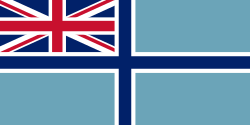
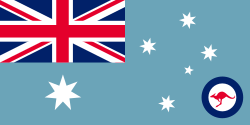
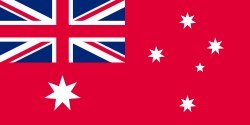
Along with the national flag, many other Australian flags retain the use of the Union Jack, including the Royal Australian Navy Ensign (also known as the Australian White Ensign), the Royal Australian Air Force Ensign, the Australian Red Ensign (for use by merchant and private vessels), and the Australian Civil Aviation Ensign. The flags of all six Australian States retain the Union Jack in the canton, as do some regional flags such as the Upper and Lower Murray River Flags. The Vice-Regal flags of the State Governors also use the Union Jack. While the Flags Act 1953 states that Australians still have the "right or privilege" to fly the Union Jack after the introduction of the Australian National Flag, usage of the Union Jack by itself is unusual. The unofficial flag of Lord Howe Island harks to the pre-1801 Union Jack.[124]
The Basque Country's flag, the Ikurriña, is also loosely based on the Union Jack, reflecting the significant commercial ties between Bilbao and Britain at the time the Ikurriña was designed in 1894. The Miskito people sometimes use a similar flag that also incorporates the Union Jack in its canton, due to long periods of contact in the Mosquito Coast.
.svg)
(1776–1777)
.svg)
(1816–1845)
.svg)
(1826–1828)
.svg)
The Union Jack was used by the United States in its first flag, the Continental Union Flag. This flag was of a similar design to the one used by the British East India Company. The historical Kingdom of Hawaii adopted a flag featuring a Union Jack which was retained when Hawaii became a US state in 1959. Hawaii's flag represents the only current use of the Union Jack in any American state flag.
Also in the United States, the Union Flag of 1606 is incorporated into the flag of Baton Rouge, the capital city of Louisiana. Baton Rouge was a British colony from the time of the Seven Years' War until the end of the American Revolutionary War, when it was captured by Spanish forces. Symbols from the colonial powers France and Spain are also incorporated into the Baton Rouge flag. Taunton, Massachusetts, uses a Red Ensign variant featuring the old-style Union Jack and has since 1974, as does Weymouth Township, New Jersey.[125][126] Westmoreland County, Pennsylvania, has been known to fly a flag containing the King's Colours since 1973.[127]
The Union Jack also appeared on both the 1910–1928 and 1928–1994 flags of South Africa. The 1910–1928 flag was a Red Ensign with the Union coat of arms in the fly. The 1928–1994 flag, based on the Prinsenvlag and commonly known as the oranje-blanje-blou (orange-white-blue), contained the Union Jack as part of a central motif at par with the flags of the two Boer republics of the Orange Free State and Transvaal. To keep any one of the three flags from having precedence, the Union Jack is spread horizontally from the Orange Free State flag towards the hoist; closest to the hoist, it is in the superior position but since it is reversed it does not precede the other flags. The present flag of South Africa features a nod to the Union Jack in its red, white and blue portion, the colours also harking to the South African Republic and the Dutch tricolour.[128]
The flag of the Municipal Council of Shanghai International Settlement in 1869 contained multiple flags to symbolise the countries have participated in the creation and management of this enclave in the Chinese city of Shanghai. The Union Jack was contained as part of top left hand shield and close to the flags of the United States and France, there was also contained the flag of Prussia nearby, but it was removed around 1917.
The flag of the Chilean city of Coquimbo features the Union Jack, owing to its historical commercial links to Britain.
-
 The flag of Bermuda, a British Overseas Territory
 -
 The flag of the British Indian Ocean Territory, a British Overseas Territory
 -
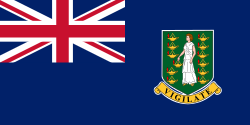 The flag of British Virgin Islands, a British Overseas Territory
 -
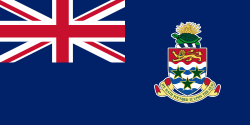 The flag of the Cayman Islands, a British Overseas Territory
 -
 The flag of the Cook Islands, an Overseas territory of New Zealand.
 -
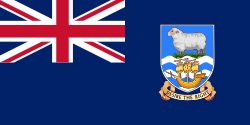 The flag of the Falkland Islands, a British Overseas Territory
 -
 The flag of British Burma (1939–1948)
 -
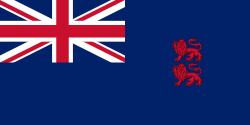 The flag of British Cyprus (1922–1960)
 -
 The flag of British Heligoland (1807–1890)
 -
 The flag of India (1885–1947)
 -
 The flag of Ceylon (1875–1948)
 -
 The flag of the Cook Islands Federation (1893–1901)
 -
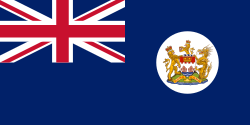 The flag of Hong Kong (1959–1997)
 -
 The flag of Malta (1943–1964)
 -
 The flag of Rhodesia (1964–1968)
 -
 The flag of Singapore (1952–1959)
 -
 The flag of British Trinidad and Tobago (1958–1962)
 -
 The flag of the United States of the Ionian Islands (1815–1864)
 -
 The flag of Weihaiwei (1903–1930)


.svg)
.svg)


.svg)

.svg)
.svg)
.svg)
.svg)
.svg)


-

-
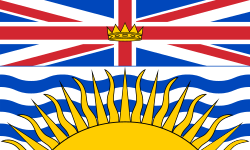 The flag of British Columbia, a Canadian province
 -

-
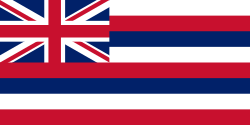 The flag of Hawaii, a U.S. state
 -
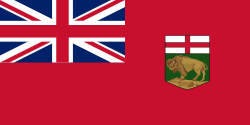 The flag of Manitoba, a Canadian province
 -
 Combined Murray River Flag (Combined)
 -
 Murray River Flag (Lower)
 -
 Murray River Flag (Upper)
 -
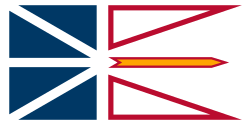 The flag of Newfoundland and Labrador, a Canadian province
 -
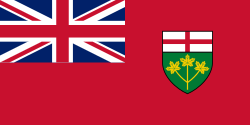 The flag of Ontario, a Canadian province
 -
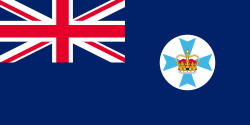 The flag of Queensland, an Australian state
 -
 The flag of Taunton, Massachusetts
 -
 The Flag of Victoria, an Australian state


.svg)
.svg)
.svg)


.svg)
Ensigns
[edit] |
The Union Flag can be found in the canton of several of the ensigns flown by vessels and aircraft of the United Kingdom and its overseas territories. These are used in cases where it is illegal to fly the Union Flag, such as at sea from a ship other than a British warship. Normal practice for British ships is to fly the White ensign (Royal Navy), the Red ensign (Merchant and private boats) or the Blue ensign (government departments and public corporations). Similar ensigns are used by other countries (such as New Zealand and Australia) with the Union Flag in the canton. Other Commonwealth countries (such as India and Jamaica) may follow similar ensign etiquette as the UK, replacing the Union Flag with their own national flag.
-

-

-

-
-

-
 HM Coastguard Ensign
 -
 Ensign of the Northern Lighthouse Board
 -
 Blue ensign flown by vessels of the Government of Bermuda's Department of Marine and Ports and Bermuda Police Service Marine Section
 -
 Isle of Man Red Ensign
 -
 Gibraltar State Ensign
 -
 Cayman Islands Red Ensign
 -

-
-
-

-
 Canadian Civil Ensign (1957–1965)
 -
 Canadian Naval Jack (1957–1965)
 -
 Royal Canadian Air Force Ensign (1940–1965)
 -
 Canadian Air Board Ensign (1922–1923)
 -
 Canadian Army Battle flag (1939–1944)
 -
 Royal Canadian Sea Cadets Ensign (1953–1976)
 -
 Navy League of Canada Ensign (1929–1965)
 -
 Dominion of Newfoundland Civil Ensign (1907–1931)
 -

-
 Royal New Zealand Air Force Ensign
 -

-
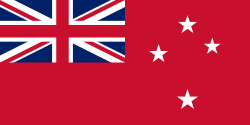 New Zealand Civil Ensign
 -
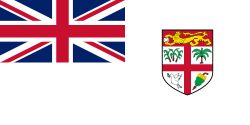 Fijian Naval Ensign
 -
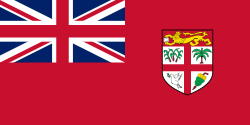 Fijian Civil Ensign
 -
 Fijian Civil Air Ensign
 -
 Australian Civil Aviation Ensign (1935–1948)
 -
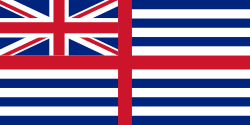 Unofficial Van Diemen's Land Ensign
 -
 Royal Australian Air Force Ensign (1948–1982)
 -
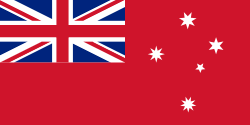
-
 Royal Indian Navy Ensign
 -
 Indian Army Ensign
 -
 East India Company Ensign
 -

-

-
 Ensign of the Sea Cadet Corps
 -
 Ensign of the Royal Bermuda Yacht Club


.svg)
.svg)
.svg)
.svg)
.svg)
.svg)


.svg)

.svg)


.svg)


Others
[edit]
| This section needs additional citations for verification. (May 2011) |

The flag in a white border occasionally seen on merchant ships was sometimes referred to as the Pilot Jack. It can be traced back to 1823 when it was created as a signal flag, but not intended as a civil jack. A book[clarification needed] issued to British consuls in 1855 states that the white bordered Union Flag is to be hoisted for a pilot. Although there was some ambiguity regarding the legality of it being flown for any other purpose on civilian vessels, its use as an ensign or jack was established well in advance of the 1864 Act that designated the Red Ensign for merchant shipping. In 1970, the white-bordered Union Flag ceased to be the signal for a pilot, but references to it as national colours were not removed from the current Merchant Shipping Act and it was legally interpreted as a flag that could be flown on a merchant ship, as a jack if desired. This status was confirmed to an extent by the Merchant Shipping (Registration, etc.) Act 1993 and the consolidating Merchant Shipping Act 1995 which, in Section 4, Subsection 1, prohibits the use of any distinctive national colours or those used or resembling flags or pendants on Her Majesty's Ships, "except the Red Ensign, the Union flag (commonly known as the Union Jack) with a white border", and some other exceptions permitted elsewhere in the Acts. However, Section 2 regards the "British flag", and states that "The flag which every British ship is entitled to fly is the Red Ensign (without any defacement or modification) and, subject to (a warrant from Her Majesty or from the Secretary of State, or an Order of Council from her Majesty regarding a defaced Red Ensign), no other colours."[129] The Flag Institute listed the white bordered Union Flag as "Civil Jack".[17]

From 1884 until 1928, the Royal Indian Marine flew a modified Union Jack bordered with blue as its jack. From 11 November 1928 until its dissolution in 1947, it substituted the Blue Ensign defaced with the Star of India emblem as jack and flew the British White ensign as ensign.[130]

The Hudson's Bay Company (HBC) was one of a few non-government institutions using the Union Jack in part of the flag. HBC rival North West Company had a similar flag as well. The HBC Red Ensign is no longer in use in 1965 and replaced with a corporate flag featuring the company's coat of arms.
.svg)
An unofficial flag for the British Empire was created around 1910 due to a belief that the Union Jack itself no longer sufficiently represented dominions such as Canada, which were beginning to adopt their own unique symbols. The flag was similar in design to a White Ensign, which features the Union Jack in the canton. In the other quadrants were the coats of arms of Canada, Australia, and South Africa. The four stars forming the Crux over Saint George's Cross represented New Zealand, and the Star of India was featured prominently in the middle. Civilians often flew Empire flags for patriotic events such as coronations, Empire Day, and the British Empire Exhibition.[131] It is still flown on special occasions at the Dangarsleigh War Memorial.[132]
The Union Jack is the third quarter of the 1939 coat of arms of Alabama, which is used on the flag of the governor of Alabama, representing British sovereignty over the state prior to 1783. The version used is the modern flag, whereas the 1707 flag would have been used in colonial Alabama.

A pink Union Jack, with the blue triangles of the Union Jack changed to pink in reference to the pink triangle symbol, was created by a gay man, David Gwinnutt, to express his "pride in being gay and British."[133][134][135]
In the former International Settlement of Kulangsu the Kulangsu Municipal Police had a badge contained multiple flags, including the Union Flag. The badge was incorporated into their police flag.[136]
In popular culture
[edit]
The Union Jack remains one of the most instantly-recognisable flags in the world.[137][138] This is chiefly due not only to its iconic and unusual design, but the influence of British culture across the globe as a result of the British Empire, and its resulting presence in several Commonwealth nations' flags and heraldry. While most of the former colonies of the British Empire have chosen to omit the Union Jack in their national flags, some countries such as Australia and New Zealand have chosen to keep the Union Jack as a symbol of their British heritage, despite numerous attempts to change it.[139][140]
The Union Flag has been a prominent symbol in the sphere of fashion since the British Invasion movement of the 1960s, in a similar manner to the American Stars and Stripes flag, and came back into fashion in the mid-1990s 'Cool Britannia' era, notably Noel Gallagher's Union Jack Epiphone Sheraton II electric guitar, and Geri Halliwell's dress at the 1997 Brit Awards.[141][142] A notable increase in popularity was seen in Cuba following the 2012 London Olympics, with clothing, nail decoration, tattoos, and hairstyles in youths being observed featuring the pattern.[143]
Subsumation in corporate branding
[edit]

.jpg)
Commonly the Union Flag is used on computer software and Internet pages as an icon representing a choice of the English language where a choice amongst multiple languages may be presented to the user, though the American flag is also sometimes used for this purpose. The flag has been embroidered on various Reebok equipment as a mark of the brand's British origin,[144] and the Reebok Union Jack has been referred to as a brand icon.[145] Many music artists have used the Union Jack, including the Rolling Stones, the Who, the Kinks, the Jam, Sex Pistols, the Stone Roses, David Bowie, John Lennon, Paul McCartney, Freddie Mercury, Morrissey, Oasis, Blur, Iron Maiden, Def Leppard, and the Spice Girls.
British Airways painted a cropped Union Flag on their tail fins until 1984; from 1997 on, they started painting a stylised, fluttering Union flag on tail fins, nicknamed Chatham Dockyard Union Flag. The coat of arms of British Airways also features the escutcheon cropped from the Union Flag.[146] British Airways used the coat of arms on their aircraft via the Landor livery between 1984 and 1997 and added back in 2011; they also used it as cap badge for pilots or in advertisements.[147][148][149]
The BMW Mini tail lights are shaped after the Union Jack.[150]
Gallery
[edit]Union Flag variants 1606–1801
[edit]_(Historical).svg) Coat of arms of Ireland 17th c. (Ireland) |  St George's Cross 16th c. (England, incl. Wales) |  St Andrew's Cross 16th c. (Scotland) | |||||||||||||||||||||||||||
.svg) Flag of the Commonwealth 1649 (Commonwealth of England) |  English Naval Jack Royal Navy 1643 (England) |  Scottish Union Flag (Unofficial) 1606 (Scotland) | |||||||||||||||||||||||||||
Union Flag of 1606 1606 (Union of the Crowns) 1660 (Restoration) 1707 (Great Britain) |  St Patrick's Cross (Historical) 17th c. (Ireland) | ||||||||||||||||||||||||||||
Flag of the Commonwealth and Protectorate Jack 1658 (Commonwealth of England) | Union Flag of 1801 1801 (United Kingdom) | ||||||||||||||||||||||||||||
Union Flag in folk art
[edit]-
 The pennant flying on Britannia's boat in this 1793 James Gillray cartoon is considerably different from the present flag.
 -
 A different style of the Union flag appears again in another cartoon by Gillray
 -
 Side by side – Britannia! 1918 lithograph by James Montgomery Flagg, showing Uncle Sam and Britannia with a Union Jack shield
 -
 Fall back with the Eureka Jack by Carlos Barrios, 2014.


.jpg)

See also
[edit]

- List of United Kingdom flags
- List of flags of Ireland
- Northern Ireland flags issue
- National colours of the United Kingdom
- Historical flags of the British Empire and the overseas territories
- British Empire flag
- Flags of the English Interregnum
- Star of India (flag)
- Union Jack Club
- Union mark of Norway and Sweden
Notes
[edit]- ^ Graham Bartram (born 1963), a British vexillologist who is, as of 2013[update], the secretary-general for congresses of the Fédération internationale des associations vexillologiques and the chief vexillologist of the Flag Institute, when interviewed on the BBC Broadcasting House programme on 13 October 2013, stated that either name was perfectly valid whatever the purpose. He stated that the theory that the flag should only be referred to as "Union Jack" when flown at sea was wrong.[7]
References
[edit]- ^ a b "The Union Jack or The Union Flag?". The Flag Institute. 20 June 2014. Retrieved 3 December 2015.
- ^ "Union Jack". The British Monarchy. Archived from the original on 30 June 2013. Retrieved 12 August 2013.
- ^ A.C. Fox-Davies, The Art of Heraldry: An Encyclopædia of Armory (1904, reprinted 1986, ISBN 978-0-906223-34-5), p. 399: "By the King: Whereas, some differences hath arisen between Our subjects of South and North Britaine travelling by Seas, about the bearing of their Flagges: For the avoiding of all contentions hereafter. We have, with the advice of our Council, ordered: That from henceforth all our Subjects of this Isle and Kingdome of Great Britaine, and all our members thereof, shall beare in their main-toppe the Red Crosse, commonly called St George's Crosse, and the White Crosse, commonly called St Andrew's Crosse, joyned together according to the forme made by our heralds, and sent by Us to our Admerall to be published to our Subjects: and in their fore-toppe our Subjects of South Britaine shall weare the Red Crosse onely as they were wont, and our Subjects of North Britaine in their fore-toppe the White Crosse onely as they were accustomed"|James VI and I|Orders in Council; Official creation of the Union Flag – 1606."
- ^ Nicolls, Bruce. "The Union Jack or The Union Flag?". The Flag Institute. Retrieved 19 December 2014.
- ^ "Broadcasting House 13th October 2013". BBC. 13 October 2013. Retrieved 14 October 2013.
- ^ a b Marshall, Tim (2017). A flag worth dying for: the power and politics of national symbols. New York, NY: Scribner, an imprint of Simon & Schuster, Inc. ISBN 978-1-5011-6833-8. OCLC 962006347.
- ^ Archived at Ghostarchive and the Wayback Machine: "UNION JACK – discussion on BBC Broadcasting House". YouTube. 19 October 2013. Retrieved 3 December 2015.
- ^ Canadian Heritage (10 March 2008). "Statement by the Hon. Jason Kenney, PC, MP, Secretary of State (Multiculturalism and Canadian Identity) on Commonwealth Day". Queen's Printer for Canada. Archived from the original on 11 November 2011.
- ^ a b "-kin". Oxford English Dictionary (Online ed.). Oxford University Press. (Subscription or participating institution membership required.)
- ^ "John". Oxford English Dictionary.
- ^ a b c "Jack". Oxford English Dictionary.
- ^ "Jack". Oxford English Dictionary.
- ^ 1633 quotation cited in "Jack". Oxford English Dictionary.
- ^ "Union flag". Oxford English Dictionary (Online ed.). Oxford University Press. (Subscription or participating institution membership required.) "Compare slightly later Union Jack"
- ^ "jackstaff". Oxford English Dictionary (Online ed.). Oxford University Press. (Subscription or participating institution membership required.)
- ^ "About Us". The Flag Institute. Retrieved 29 September 2014.
- ^ a b "British Flag Protocol". The Flag Institute. Retrieved 12 March 2015.
- ^ a b Nicolls, Bruce. "The Union Jack or The Union Flag?". The Flag Institute. Retrieved 20 May 2015.
- ^ "The Flying of the Union Jack". Parliamentary Debates (Hansard). Vol. 192. House of Lords. 14 July 1908. col. 579–580. Archived from the original on 18 January 2012. Retrieved 18 December 2010.
- ^ The Lords Commissioners of the Admiralty (1911) [1908], Manual of Seamanship, vol. I, London: HMSO, p. 20,
Note – A Jack is a Flag to be flown only at the "Jack" Staff, i.e., a staff on the bowsprit or forepart of the ship. ... In 1660 the Duke of York, later James II.) gave an order that the Union Flag should be worn only by the King's ships.
- ^ Crawford, JR (1909). "Chapter XLI The Union Jack". In Fox-Davies, Arthur Charles (ed.). A Complete Guide to Heraldry. New York: Dodge Publishing Company. pp. 611–617.
- ^ a b c Perrin, William Gordon (1922). British flags, their early history, and their development at sea: with an account of the origin of the flag as a national device. The University Press. p. 59.
- ^ "No. 15324". The London Gazette. 30 December 1800. p. 2.
- ^ Perrin, William Gordon (1922). British flags, their early history, and their development at sea: with an account of the origin of the flag as a national device. The University Press. p. 55.
- ^ John Nichols, Progresses of James the First, vol. 4 (London, 1828), pp. 1043-4.
- ^ a b Bartram, Graham. "British flags". The Flag Institute. Retrieved 2 May 2007.
- ^ a b "No. 15325". The London Gazette. 3 January 1801. pp. 25–27.
- ^ "No. 15325". The London Gazette. 3 January 1801. pp. 23–24.
- ^ a b c d e United Kingdom at Flags of the World
- ^ "Churchill: The Power of Words". Archived from the original on 16 August 2016. Retrieved 16 August 2016.
- ^ Fowler, Jean, ed. (1990), Reed's Nautical Almanac 1990, New Malden, Surrey: Thomas Reed Publications Limited, pp. 16:2–16:3, ISBN 978-0-947637-36-1
- ^ "Naval Jack (U.S.)". Crwflags.com. Retrieved 3 December 2015.
- ^ Salkie, Raphael (1990). "Outside the 'Free World'". The Chomsky Update: Linguistics and Politics. Unwin Hyman. p. 174. ISBN 978-0-04-445589-9.
- ^ Groom, Nick (2007). "Union Jacks and Union Jills". In Eriksen, Thomas Hylland; Jenkins, Richard (eds.). Flag, Nation and Symbolism in Europe and America. Routledge. p. 81. ISBN 978-0-415-44404-0.
- ^ "SNP Face More Flak Over Flag Attacks". Daily Record. 21 January 2006. Archived from the original on 30 September 2007.
- ^ Tracey, James D. (1997). The Political Economy of Merchant Empires: State Power and World Trade, 1350–1750. Cambridge University Press. p. 117.
- ^ Ouyang, Yu (2013). 譯心雕蟲:– 個澳華作家的翻譯筆記. Niang Publishing. p. 236. ISBN 978-986-5871-53-6.
- ^ The European Magazine: And London Review. Vol. 39. Philological Society of London. 1801. p. 74.
- ^ "Union Flag Bill 2007–08". UK Parliament. Retrieved 9 April 2014.
- ^ "Union Flag Specification". The Flag Institute. Retrieved 24 October 2022.
- ^ by the 1970s, "its current official dimension of l/30th the width of the flag" The Flag Bulletin, Volumes 12–14, Flag Research Center (1973), p. 85.
- ^ "The World's Most Expensive Union Jack Sells For £384K". Archived from the original on 11 August 2016. Retrieved 10 August 2016.
- ^ a b United Kingdom: 3:5 variant at Flags of the World
- ^ a b "Union Flag: approved designs". www.college-of-arms.gov.uk. College of Arms. 2023. Retrieved 23 February 2023.
- ^ "Union Flag Specification | Image | Description | Diagram". Archived from the original on 10 September 2022.
- ^ Grieve, Martin; Southworth, Christopher; Prothero, David. "United Kingdom: Regimental Colours". Flags of the World. Retrieved 9 July 2009.
- ^ Bartram, Graham (2004). British flags & emblems. East Linton: Tuckwell Press. ISBN 978-1-86232-297-4.
- ^ PANTONE. "PANTONE 280 C – find a PANTONE Color". www.pantone.com. Archived from the original on 29 December 2019. Retrieved 16 November 2017.
- ^ PANTONE. "PANTONE 186 C – find a PANTONE Color". www.pantone.com. Archived from the original on 15 May 2021. Retrieved 16 November 2017.
- ^ Perreira, Julian (18 February 2020). "Union Jack: Do You Know The Correct Way Up?". Forces Network. Retrieved 28 May 2020.
- ^ a b Duffy, Jonathan (10 April 2006). "Union recognition". BBC. Archived from the original on 30 November 2020.
· Graphic (archive of Graphic) - ^ Fry, Plantagenet Somerset (1990). The Kings and Queens of England and Scotland. Grove Press. p. 127. ISBN 978-0-8021-1386-3.
- ^ Fox-Davies, Arthur Charles (1986) [1904]. The Art of Heraldry: An Encyclopædia of Armory. London: Bloomsbury Books. p. 399. ISBN 978-0-906223-34-5.
- ^ a b "The History and Meaning of the Union Jack or Union Flag". Know Britain. Archived from the original on 22 January 2016. Retrieved 10 June 2008.
- ^ Journal of the Royal United Service Institution, Whitehall Yard. Vol. 39. W. Mitchell. 1895. pp. 181–185. Retrieved 10 February 2023.
- ^ "Sunday 13 May 1660". The Diary of Samuel Pepys. Phil Gyford. 13 May 1660. Retrieved 12 January 2017.
- ^ Northern Lighthouse Commissioner's Flag at Flags of the World
- ^ "Command flag, Admiral of the Fleet, RN (before 1801)". The Collection. National Maritime Museum. AAA0730. Retrieved 12 August 2013.
- ^ "Post Office Blue Ensign (before 1864)". The Collection. National Maritime Museum. AAA3687. Retrieved 12 August 2013.
- ^ "The North East View of Edinburgh Castle". Slezer's Scotland. National Library of Scotland. Retrieved 9 January 2012.
- ^ Hulme, Edward. F. (1897). The flags of the world: their history, blazonry and associations (txt). F. Warne & co. p. 152.
- ^ Bartram, Graham (2005). British Flags & Emblems. Flag Institute/Tuckwell. p. 122. ISBN 978-1-86232-297-4.
- ^ Crampton, William (1992). Flags of the World.
- ^ a b Smith, Whitney (1973). "Title unknown". The Flag Bulletin. Flag Research Center.
- ^ Beaumont, John (1704) [1701]. The Present State of the Universe ... Benj. Motte. p. 164.
- ^ Slezer, John; Sibbald, Robert; Swall, Abel (1693). Theatrum Scotiae. John Leake. p. 114.
- ^ "The North Prospect of the City of Edenburgh". Slezer's Scotland. National Library of Scotland. Archived from the original on 19 February 2014. Retrieved 9 January 2012.
- ^ a b de Burton, Simon (9 November 1999). "How Scots lost battle of the standard". The Scotsman. Johnston Press plc. Retrieved 30 June 2009. [dead link]
- ^ Hayes-McCoy, Gerard Anthony (1979). Ó Snodaigh, Pádraig (ed.). A history of Irish flags from earliest times. Dublin: Academy Press. p. 38. ISBN 978-0-906187-01-2.
- ^ "May Alter The Union Jack" (PDF). The New York Times. 14 January 1922. Archived from the original (PDF) on 8 March 2021.
- ^ "Signs of Heraldry". Ashburton Guardian. Vol. XLII, no. 9409. National Library of New Zealand. 13 December 1921. p. 5. Retrieved 9 January 2012.
- ^ "The Position of Ulster". Ashburton Guardian. Vol. XLII, no. 9413. National Library of New Zealand. 16 December 1921. p. 5. Retrieved 9 January 2012.
- ^ "National Flag (Irish Free State)". Parliamentary Debates (Hansard). Vol. 159. House of Commons. 7 December 1922. col. 2015W–2016W. Archived from the original on 24 December 2012. Retrieved 14 August 2013.
- ^ "Ceisteanna—Questions. Oral Answers. – Cross of St. Patrick on British Flag". Oireachtas. 3 August 1961. p. 18.
- ^ "Welsh dragon call for Union flag". BBC. 27 November 2007.
- ^ Moore, Matthew (5 December 2007). "The new face of Britain Flag poll results". The Daily Telegraph. Archived from the original on 11 January 2022.
- ^ Judah, Sam (4 December 2013). "What would the union jack look like if the Scottish bit were removed?". BBC. Retrieved 3 December 2015.
- ^ "The Union Jack: your designs". The Guardian. Retrieved 3 December 2015.
- ^ a b c Cite error: The named reference
Guardian2025-09-14was invoked but never defined (see the help page). - ^ a b Cite error: The named reference
Times2025-08-15was invoked but never defined (see the help page). - ^ "BRd 2 - Queen's Regulations for the Royal Navy" (PDF). royalnavy.mod.uk. April 2017. Retrieved 10 January 2025.
- ^ The Flying of the Union Jack Archived 18 January 2012 at the Wayback Machine, Hansard, House of Lords Debate, 14 July 1908 vol 192 cc 579–580
- ^ Official Report Archived 26 October 2016 at the Wayback Machine (Hansard), 27 June 1933; Vol. 279, c. 1324. Archived 8 February 2016 at the Wayback Machine
- ^ The Merchant Shipping Act 1995 (1995 c. 21), London: The National Archives, 1995, section 2, retrieved 1 March 2015
- ^ "The Union Flag". The Court of the Lord Lyon. Archived from the original on 25 April 2018. Retrieved 10 June 2008.
- ^ "Union Flag Bill 2007–08". UK Parliament. 5 February 2008.
- ^ "Union Flag Bill". UK Parliament. House of Commons. 13 October 2008. Retrieved 19 February 2022.
- ^ "Brown lifts ban on national flag". BBC News. 6 July 2007. Retrieved 26 May 2010.
- ^ "Union flag to be flown on UK Government buildings every day". Government of the United Kingdom. Retrieved 27 July 2021.
- ^ "Union Flag flying guidance for UK government buildings". Government of the United Kingdom. 5 February 2024. Retrieved 21 April 2024.
- ^ "Flag Flying". Department of Culture, Media and Sport. Archived from the original on 23 December 2008. Retrieved 9 January 2012.
- ^ "Flag Flying 2011". Scottish Government. 27 July 2011. Retrieved 9 January 2012.
- ^ "Ministers agree flag day review". BBC News. 20 May 2002. Retrieved 9 January 2012.
- ^ The Flags Regulations (Northern Ireland) 2000 (PDF) (347). 2000.
- ^ a b Bartram, Graham; Flags & Heraldry Committee (2010). Flying Flags in the United Kingdom (PDF) (PDF). London: The Flag Institute. ISBN 978-0-9513286-1-3. Archived from the original (PDF) on 11 June 2014. Retrieved 13 August 2014.
- ^ Canadian Flag Etiquette at Flags of the World
- ^ "UK Flag Protocol – Position of Honour". Archived from the original on 7 July 2020. Retrieved 7 July 2020.
- ^ Bartram, Graham (2002). "A Guide to Flag Protocol in the United Kingdom (An extract from the book "British Flags and Emblems")" (PDF). www.naco.uk.com. The National Association of Civic Officers (NACO). Retrieved 5 September 2021.
General Precedence: The Royal Standard; The Personal Flag of HM Queen Elizabeth The Queen Mother; The Personal Flag of HRH The Duke of Edinburgh; The Personal Flag of HRH The Prince of Wales; The Personal Flag of HRH Prince William of Wales; The Personal Flag of HRH The Duke of York; The Personal Flag of HRH The Earl of Wessex; The Personal Flag of HRH The Princess Royal; The Personal Flag of HRH The Duke of Gloucester; The Personal Flag of HRH The Duke of Kent; The Personal Flag of HRH Prince Michael of Kent; The Personal Flag of HRH Princess Alexandra; The Other Members' Standard; The Union Flag; The White Ensign of the Royal Navy; The Ensign of the Royal Air Force; The Blue and Red Ensigns; National Flag of the host constituent nation, crown dependency or over-seas territory; National Flags of England, Scotland, Wales, Crown dependencies and overseas territories; National Flags of other nations (in English alphabetical order); The United Nations Flag; The Commonwealth Flag; The European Union Flag; The British Army Flag; Counties and Metropolitan Cities; Other Cities and Towns; Banners of Arms (both personal and corporate); House Flags
- ^ Kwan 2006, p. 10.
- ^ a b c Kwan 2006, p. 8.
- ^ Kwan 2006, p. 106.
- ^ Kwan 2006, p. 6.
- ^ a b c d e f "History of the National Flag of Canada". canada.ca. Department of Canadian Heritage. 4 February 2019. Archived from the original on 12 September 2019. Retrieved 27 November 2019.
- ^ a b c d e f "The Royal Union Flag". www.canada.ca. Government of Canada. 8 May 2018. Retrieved 5 March 2020.
- ^ a b c d e f "Section 8: Other Flags". canada.ca. Department of National Defence. 4 February 2019. Archived from the original on 22 January 2020. Retrieved 27 November 2019.
- ^ a b "Royal Union Flag, 1801". www.gg.ca. Governor General of Canada. Retrieved 11 July 2025.
- ^ "Post-Confederation Flags". www.heritage.nf.ca. Heritage Newfoundland and Labrador. 2024. Retrieved 17 November 2024.
- ^ Evan Dyer. "We Stand on Guard for Whom? Union Jack at crossing sends mixed message – Ottawa – CBC News". Cbc.ca. Retrieved 3 December 2015.
- ^ a b c d e "Flags of New Zealand Page 3 – Union Jack". nzhistory.govt.nz. New Zealand Government. 11 May 2015. Archived from the original on 22 January 2020. Retrieved 7 March 2020.
- ^ "The New Zealand Flag" (PDF). Scouting New Zealand. Archived from the original (PDF) on 28 July 2011. Retrieved 9 January 2012.
- ^ Union Nationality and Flags Act 1927 (renamed 'Flags Act 1927' in 1949).
- ^ a b c Radburn, A. 'South Africa's Dual Flag Arrangement, 1928–1957' in SAVA Newsletter Archived 26 April 2018 at the Wayback Machine SN 74/16 (April 2016).
- ^ a b Government Gazette 1953 (29 May 1931) : Government Notice 376.
- ^ Flags Amendment Act 1957
- ^ a b Roantree, Anne Marie (3 July 2019). "Flag-waving Grandma Wong gives Hong Kong protesters lesson in endurance". Reuters. Thomson Reuters. Retrieved 26 June 2020.
- ^ Parry, Richard Lloyd; Blet, Raphael (14 June 2019), "Colonial nostalgia rules in Hong Kong as young refuse to accept China's authority", The Times, retrieved 5 July 2019
- ^ a b c Chan, Holmes (13 July 2019). "Explainer: The conflicting messages behind protesters' use of the colonial Hong Kong flag". hongkongfp.com. Hong Kong Free Press. Retrieved 26 June 2020.
- ^ a b c d e f g Sum, Lok-kei (22 August 2019). "Are Hong Kong protesters pro-American or British when they wave the US and UK flags? The answer is complicated". South China Morning Post. SCMP Publishers. Retrieved 26 June 2020.
- ^ Griffiths, James (26 June 2016). "Hong Kong handover: The protest symbols China's scared of". CNN. WarnerMedia. Retrieved 25 June 2020.
- ^ Gourtsoyannis, Paris (13 June 2019), Union flags in Hong Kong are a symbol of failed China policy, The Scotsman, retrieved 5 July 2019
- ^ Hannan, Daniel (15 June 2019), "Hong Kongers know the values behind the Union flag – but do the British?", The Telegraph, retrieved 5 July 2019
- ^ Ghiglione, Davide (5 August 2015). "Italian beach operators hoist British flag in protest at EU law". Financial Times. Archived from the original on 10 December 2022. Retrieved 9 February 2017.
- ^ "History of the Loyalist Flag". www.uelac.org. United Empire Loyalists Association of Canada. Archived from the original on 23 September 2019. Retrieved 18 March 2020.
- ^ "Australian State and Territory Flags". Flags Australia. Flag Society of Australia Inc. Retrieved 2 July 2025.
- ^ Gregg, Tom. "Taunton Flag (U.S.)". CRW Flags. Retrieved 2 October 2016.
- ^ Poposki, Valentin. "Weymouth, New Jersey". Flags of the World. Retrieved 8 March 2020.
- ^ Westmoreland County, Pennsylvania (U.S.) at Flags of the World
- ^ Gumede, Rachael (23 September 2015). "South African Flag: Colors, Meaning & Rules About The National Symbol". BuzzSouthAfrica. Retrieved 9 October 2022.
- ^ "Merchant Shipping Act 1995" (PDF). UK Public General Acts. The National Archives. 19 July 1995. Retrieved 17 January 2010.
- ^ "Flags and Ensigns with the Star of India". www.crwflags.com/fotw. FOTW Flags Of The World. Archived from the original on 29 August 2024. Retrieved 12 March 2025.
- ^ Kelly, Ralph (8 August 2017). "A flag for the Empire" (PDF). The Flag Institute. Archived (PDF) from the original on 13 August 2023. Retrieved 13 August 2023.
- ^ Ingall, Jennifer (4 June 2021). "Why the Dangarsleigh war memorial flies the Empire flag and what it means to the community". ABC News. Archived from the original on 13 August 2023. Retrieved 13 August 2023.
- ^ "About | PinkJack". 5 October 2015.
- ^ Knowles, Katherine (21 July 2006). "God save the queers". PinkNews. Archived from the original on 14 October 2006. Retrieved 17 May 2021.
- ^ "Pink Union Jack". The Flag Shop. Retrieved 29 November 2023.
- ^ International Settlement of Kulangsu (Gulangyu, China) at Flags of the World
- ^ "Top 10 Flags as Brands – Hammond Thinking". Retrieved 21 February 2021.
- ^ "Flag of the United Kingdom". Encyclopedia Britannica. Retrieved 21 February 2021.
- ^ Cable, Richard (10 January 2013). "The union jack: A very complex flag". BBC Knowledge & Learning.
- ^ "Calls for a new flag". nzhistory.govt.nz. Retrieved 19 January 2025.
- ^ Amy de Klerk (22 February 2017). "It has been 20 years since Geri Halliwell wore the Union Jack dress". Harper's Bazaar.
- ^ "Geri revisits Spice Girls' heyday in Union Jack dress". Hello Magazine. 2 February 2012. Retrieved 3 February 2015.
- ^ "Close Up: Cuba's new love for the Union flag". BBC News. Retrieved 3 December 2015.
- ^ Brabazon, Tara (2000). Tracking the Jack: a retracing of the Antipodes. Sydney: University of New South Wales Press. p. 15.
- ^ Upshaw, Lynn B. (1995). Building Brand Identity: A Strategy for Success in a Hostile Marketplace. John Wiley & Sons, Inc. ISBN 978-0-471-04220-4.
- ^ "British Airways - Coat of arms (crest) of British Airways". Heraldry of the World. Archived from the original on 24 February 2022. Retrieved 24 February 2022.
- ^ "BA Uniforms". British Airways. Retrieved 25 May 2022.
- ^ "Aviators, British Airways To Fly To Serve". British Airways. 22 September 2016. Retrieved 24 February 2022 – via YouTube.
- ^ "BA100: 41. The British Airways Coat Of Arms". London Air Travel. 16 August 2019. Retrieved 26 May 2022.
- ^ "MINI". Archived from the original on 16 August 2022. Retrieved 16 August 2022.
Further reading
[edit]- Groom, Nick (2007). The Union Jack: The Story of the British Flag. Atlantic Books. ISBN 978-1-84354-337-4.
- Kwan, Elizabeth (2006). Flag and Nation: Australians and their national flags since 1901. University of New South Wales Press. ISBN 978-1-74224-687-1.
- Lister, Davis (2014). Union Jack or Union Flag? (PDF). London: Flag Institute.
External links
[edit]
| External images | |
|---|---|
 The Cross of Saint Andrew. 26 September 2009. By cthonus Accessed 2009-12-30. The Cross of Saint Andrew. 26 September 2009. By cthonus Accessed 2009-12-30. | |
| The Cross of Saint George. 11 June 2006. By Two Thumbs. Accessed 2009-12-30. | |
| Scottish Union Flag. 2 June 2009. By boongiepam. Accessed 2009-12-16. | |
| "English/British Union Flag". 29 March 2008. Archived from the original on 18 February 2010. By dr.nic[dead link]. Accessed 2009-12-31. | |
| The Cross of Saint Patrick. 17 March 2007. By tim ellis. Accessed 2009-12-30. | |
| United Kingdom Union Flag. 15 July 2009. By leegibb13. Accessed 2009-12-16. |
- United Kingdom at Flags of the World
- Union Jack at the Royal Family website
- Union Flag: approved designs at the College of Arms website
- Union Flag protocol at the College of Arms website
- British flags during The Protectorate and the Commonwealth of England – see external link
- BBC page for 400th anniversary of flag
- How to draw the Union Jack
- UK Flag Protocol
| Sovereign states |
|  |
|---|---|---|
| States with limited recognition | ||
| Dependencies and other entities | ||
| Other entities | ||
| United Kingdom |
|
|---|---|
| Countries of the United Kingdom | |
| Banners |
|
| Historic |
|
| Ensigns |
|


Union Jack
View on GrokipediaTerminology
Official Name and Usage
The national flag of the United Kingdom is officially designated as the Union Flag.[2] It derives its name from the union of the crowns of England and Scotland in 1606, with subsequent incorporation of Ireland's cross in 1801 to reflect the political unions forming the United Kingdom of Great Britain and Ireland (later Great Britain and Northern Ireland).[2] The term "Union Jack" originated in naval contexts, specifically referring to the flag flown from the jackstaff—a short staff at the bow of Royal Navy vessels—dating back to at least 1634 in Admiralty records, and formalized around 1674 for warships not in harbor.[6] Despite the technical naval distinction, "Union Jack" has been used interchangeably with "Union Flag" in official British documents since the 17th century, including Admiralty references regardless of context.[6] A 1902 Admiralty circular explicitly stated that both terms were acceptable for the national flag, a position affirmed by Parliament in 1908, which declared the "Union Jack" as the national flag to be regarded universally.[6] UK legislation, such as the Merchant Shipping Act 1995, describes it as the "Union flag (commonly known as the Union Jack)," underscoring its dual nomenclature in statutory use. In practice, the flag's usage as the Union Flag or Union Jack encompasses representation of the sovereign United Kingdom on land, sea, and in international contexts, including government buildings, royal residences, military installations, and diplomatic missions.[2] A royal proclamation on 1 January 1801 mandated its display on forts, castles, and naval vessels to signify the updated union including Ireland, establishing it as the preeminent ensign for state purposes.[2] It is not a personal flag of the monarch but a composite royal banner symbolizing the unified realms, flown continuously on UK soil except during designated mourning periods or when superseded by other protocol flags.[6]Distinctions and Common Errors
The term "Union Jack" derives from its historical use as a naval jack flag flown from the jackstaff at the bow of Royal Navy ships to signify British waters or for identification during battle, a practice documented since the early 17th century. In contrast, "Union Flag" refers more broadly to the national flag of the United Kingdom, encompassing its land-based and general applications. Although a technical distinction persists in some heraldic and naval contexts, both names have been officially validated as interchangeable by the Admiralty and Parliament, reflecting common usage since at least 1902.[6][7][8] A prevalent error in displaying the flag is inverting it, which occurs when the wider white fimbriated diagonal stripe of the Saltire of Saint Andrew (representing Scotland) lies below the narrower red diagonal of Saint Patrick's Cross (representing Ireland) in the upper hoist-side canton. The proper orientation, whether flown horizontally from a staff or draped vertically against a wall, positions the broader white stripe uppermost nearest the hoist, ensuring the flag's asymmetrical design—lacking rotational symmetry—is respected.[9][10][11] This inversion, while sometimes intentional in maritime distress signals under historical naval code, is otherwise deemed disrespectful and improper in civilian contexts.[12] Other common mistakes include flying a soiled, torn, or faded flag, which conveys neglect and diminishes the emblem's dignity, as emphasized in official protocols requiring flags to be in good repair. Additionally, failing to adjust for vertical display—where the hoist edge becomes the top—leads to frequent misorientations on buildings or banners, with the top-left canton (observer's perspective) demanding the same white-over-red diagonal priority. These errors are exacerbated by the flag's complex overlay of crosses, often resulting in decorative uses prioritizing aesthetics over protocol.[10][9]Design
Heraldic Components
The Union Flag comprises three overlaid heraldic crosses representing the patron saints of England, Scotland, and Ireland: the upright cross of Saint George, the white saltire of Saint Andrew, and the red saltire of Saint Patrick.[2] These elements are combined on a blue field derived from the Scottish royal banner, with fimbriations—narrow white borders—separating contrasting colors to maintain heraldic distinction.[13] The design adheres to principles of heraldry, where overlays prioritize visibility and symbolic equality among the components, though the Scottish saltire forms the foundational layer.[2] The cross of Saint George, patron saint of England, is a red Greek cross (upright arms of equal length) fimbriated in white, extending to the flag's edges and superimposed centrally over the saltires.[2] This element originates from England's historic banner, a white field bearing a red cross, adopted as the national flag by the late 13th century.[2] In the Union Flag, its red arms overlie the blue field and white saltire, with white edging preventing merger with the underlying white of Saint Andrew's saltire. The saltire of Saint Andrew, patron saint of Scotland, is a white diagonal cross (X-shaped) on the blue field, fimbriated in red where it meets the blue to avoid color-on-color overlap, though the fimbriation is adjusted in the final overlay.[2] This component reflects Scotland's ancient flag, the blue banner of the field with white saltire, used since the 12th century and retained in the Union design post-1606.[2] It underlies the English cross but intersects it symmetrically. The saltire of Saint Patrick, patron saint of Ireland, is a red diagonal cross fimbriated in white, offset slightly from the Saint Andrew saltire to ensure the white does not dominate as mere edging.[2] Added in 1801 upon the union with Ireland, it represents the red saltire on white from Ireland's traditional banner, overlaid atop the prior Anglo-Scottish union to symbolize parity.[2] The offset positioning, narrower width of the Irish saltire (one-fifth the flag's width versus broader Scottish arms), and shared fimbriations maintain heraldic clarity amid the complex superposition.[13]Proportions and Construction
The Union Flag employs standardized proportions to integrate the heraldic elements of the crosses of St. George, St. Andrew, and St. Patrick without distortion. For land applications, the ratio is 3:5 (hoist to fly), corresponding to 30 units high by 50 units wide; maritime variants use a 1:2 ratio.[13][3] Construction divides the flag into a grid of these units for precise placement. The Cross of St. George forms a red upright cross, its arms measuring 6 units (one-fifth of the hoist) in width, centered horizontally and vertically, with white fimbriations of 2 units (one-fifteenth of the hoist) on each side separating it from the royal blue field.[3][14] Overlaid diagonally are the saltires of St. Andrew and St. Patrick, each extending from corner to corner and intersecting at the flag's center. The white Saltire of St. Andrew has arms 6 units wide, fimbriated in red (1 unit) adjacent to the blue field, but visible widths adjust due to superposition: the white appears broader (3 units) nearest the hoist, transitioning through 2 units of red fimbriation to 1 unit of white nearer the fly. The red Saltire of St. Patrick mirrors this structure with white fimbriations (1 unit nearest hoist, expanding to 3 units nearer the fly), ensuring the white of St. Andrew predominates upper hoist-side and red of St. Patrick lower fly-side for correct orientation.[3] These dimensions maintain heraldic priority—St. George's Cross surmounting the saltires—while accommodating overlaps without color bleed, as formalized in specifications derived from the 1801 royal proclamation.[13][3]Colors and Materials
The Union Flag utilizes three colors: royal blue for the background field, red for the crosses and saltires, and white for the fimbriations and saltire diagonals. The Flag Institute specifies Pantone 280 C for the royal blue and Pantone 186 C for the red, with no designated shade for white to allow flexibility in reproduction.[3] These Pantone values align with modern printing and dyeing standards for accurate replication, as confirmed by flag manufacturers adhering to UK government guidelines.[14] As a heraldic ensign, the flag lacks rigidly prescribed shades; the College of Arms permits any blue and red tones distinguishable from one another and from white, reflecting traditional heraldry's emphasis on identifiability over precise spectrometry.[13] This approach accommodates variations in dyes and fabrics across historical and contemporary uses, though standardized Pantone references emerged in the 20th century for consistency in official and commercial production. Contemporary Union Flags are primarily manufactured from 155 gsm woven polyester, a Ministry of Defence-approved fabric selected for its weather resistance, color retention, and structural integrity under wind stress.[15] Premium versions, including those for royal or ceremonial purposes, are hand-sewn from pre-dyed panels cut to the flag's geometric specifications, avoiding printed designs to ensure longevity and fidelity to the design.[16] This material supplanted earlier wool bunting or silk in the 20th century, driven by advances in synthetic textiles that better withstand ultraviolet degradation and moisture.[17] Lower-grade flags may employ spun nylon or knit polyester, but these compromise on drape and fade resistance compared to woven polyester standards.[18]Display Protocols
The Union Flag must be displayed with a specific orientation to ensure correctness, determined by the diagonal white saltire of Saint Andrew. When flown horizontally from a flagpole, the hoist side—adjacent to the pole—features the broader white diagonal band positioned above the narrower red diagonal band of Saint Patrick; reversal of this indicates improper display.[9] [10] For vertical suspension, such as against a wall or on a staff without horizontal projection, the flag is rotated 90 degrees clockwise or counterclockwise so the hoist edge becomes the top, preserving the diagonal orientation relative to the original hoist.[9] [19] Deliberate inversion of the flag, where the white band lies below the red near the hoist, serves as a maritime distress signal under international conventions, but on land it is deemed improper and potentially insulting to the sovereign, except in genuine emergencies.[9] [12] The Flag Institute advises against upside-down display for decorative purposes, recommending lesser flags instead to avoid protocol breaches.[9] No legal prohibition exists against flying the flag at any time or location in the United Kingdom, though planning permission may apply for permanent fixtures on certain buildings; the Union Flag enjoys exemption from such requirements on government structures year-round.[19] [10] In multi-flag arrangements, the Union Flag takes precedence and occupies the position of honour, typically at the center or far left when viewed from the front, superior to other national or regional flags; it should never be subordinate or used as drapery, seating, or flooring.[9] [19] For mourning, the flag is half-masted by lowering it to half the pole's height with the upper hoist touching the pole top, then raising it briskly to full height before lowering fully at the event's end; full-masting occurs upon royal command or designated days.[19] On vehicles, the flag attaches to a staff angled forward at 45 degrees on the right front fender for dignitaries, with the Royal Standard superseding it for the monarch.[9] Illumination is recommended for nighttime display to maintain visibility and respect.[9]History
Pre-Union Flags of England, Scotland, and Ireland
The flag of England, known as the Cross of Saint George, features a red upright cross extending to the edges of a white rectangular field. This design emerged during the Third Crusade (1189–1192), with King Richard I (r. 1189–1199) adopting the red cross as an emblem linked to Saint George, the patron saint of England, for use by English crusaders. By the late 13th century, under Edward I (r. 1272–1307), it served as a military standard, first documented in official capacity during the 1277 Welsh campaign.[20][21] The flag of Scotland, the Saltire or Cross of Saint Andrew, displays a white diagonal cross (saltire) on a blue background. Legend attributes its origin to 832 AD, when Óengus II (or Angus mac Fergus), king of the Picts, invoked Saint Andrew before the Battle of Athelstaneford against the Angles; a white saltire appeared in the sky amid clouds, interpreted as a divine sign of victory, leading to Saint Andrew's adoption as Scotland's patron saint. While the legend's historicity remains unverified, the Saltire's use as a royal and national banner is evidenced from the 12th century onward, with formal parliamentary endorsement in Scotland by 1542, though earlier references suggest its establishment by the late 14th century.[22][23] Ireland, under English sovereignty before the 1801 union, did not possess a unified national flag equivalent to those of England or Scotland prior to 1606. The red saltire on white, later designated the Cross of Saint Patrick for incorporation into the Union Flag, originated in heraldic traditions rather than longstanding national usage. Its formal adoption traces to the 1783 establishment of the Order of Saint Patrick by George III, where the red diagonal cross on white symbolized Ireland's patron saint; earlier instances include a red saltire in Irish regimental colors from the 17th century, such as the 1653 King's Own Regiment, but these lacked national standardization. The design's selection for the Union Flag reflected heraldic invention by the College of Arms to parallel the saltires of Scotland and the cross of England, rather than reviving a pre-existing Irish ensign.[24][25]Formation of the First Union Design (1606)
Following the Union of the Crowns in 1603, when James VI of Scotland acceded to the English throne as James I, maritime disputes emerged due to the distinct national flags of England (red cross of St. George on white) and Scotland (white saltire of St. Andrew on blue), complicating identification of vessels at sea amid tensions with foreign powers like the Dutch.[26][4] To resolve this and symbolize the personal union under one monarch, James I issued a royal proclamation on 12 April 1606 titled "A Proclamation Declaring what Flags South and North Britains shall bear at Sea."[4][27] The decree mandated specific flag usages for English ("South Britain") and Scottish ("North Britain") ships to prevent further "difference or offence" in naval recognition.[4] The proclamation established the first Union Flag as a combined heraldic design overlaying the red upright cross of St. George (extending fully across the flag) with the white diagonal saltire of St. Andrew (likewise reaching the edges), creating a quartered effect where the saltires intersected without fimbriation or borders.[28][29] This asymmetrical overlay prioritized the Scottish saltire in certain quadrants, reflecting a compromise to integrate both patron saints' emblems while maintaining visibility of each.[29] Initially restricted to royal ships, forts, and castles, the flag served as the "British flag" or "union flag" for joint monarchy representation; merchant vessels flew their national flags with the new union design in the canton (upper hoist-side quarter).[28][30] Scottish royal ships used a variant with the saltire dominant and the English cross in the canton, ensuring bilateral equity.[4] This design formalized a visual union absent full political integration, which awaited the 1707 Acts of Union, and excluded Ireland's red saltire as the kingdoms remained separate.[2] The 1606 flag's adoption marked the earliest state-sanctioned British ensign, though enforcement was inconsistent, with occasional reversion to national flags during conflicts.[28] Historical records, including ship depictions from the era, confirm the overlay's execution in crimson red for the cross and argent white for the saltire, on fields blending azure and argent quadrants.[30] The proclamation's text emphasized obedience under penalty, underscoring James's intent to enforce symbolic unity through naval protocol.[31]Inclusion of Ireland and Finalization (1801)
The Acts of Union 1800, which received royal assent on 1 August 1800 and took effect on 1 January 1801, united the Kingdom of Great Britain and the Kingdom of Ireland into the United Kingdom of Great Britain and Ireland, abolishing the Irish Parliament and integrating Ireland's representation into the Parliament at Westminster with 100 Irish MPs.[32][33] This political union necessitated an update to the national flag to incorporate a heraldic element representing Ireland alongside those of England and Scotland.[34] The chosen symbol for Ireland was the Cross of St. Patrick, depicted as a red saltire—a diagonal red cross—fimbriated with white on a white field, though St. Patrick was not a martyr and thus heraldically not entitled to a cross; the design drew from earlier Irish usage despite its debated historical authenticity for the saint.[4][34] This red saltire was overlaid onto the existing Union Flag of Great Britain, which combined England's red St. George's Cross (a upright cross) on white with Scotland's white St. Andrew's Saltire on blue. To ensure visibility, the red saltire was counterchanged against the white diagonals of the St. Andrew's Saltire, with narrow white fimbriations added to distinguish the arms where they intersected the existing crosses.[29][34] The revised design was formalized by an Order in Council issued on 1 January 1801, the same day the union commenced, mandating its use on royal forts, castles, and naval vessels; it first flew officially on that date, marking the flag's evolution into its current form representing the three kingdoms under one sovereign.[2][29] No further substantive changes to the flag's core design have occurred since, despite the secession of the Irish Free State in 1922, which retained the St. Patrick's elements in some contexts but led to ongoing debates about the flag's representation of modern territorial realities.[4][35]Evolution and Proposed Changes Post-1801
The design of the Union Flag, as defined by the royal proclamation of 1 January 1801, has remained unaltered in its core heraldic elements since that date, comprising the red cross of Saint George overlaid on the counterchanged saltires of Saints Andrew and Patrick against an azure field.[13][2] The College of Arms, under the authority of the Earl Marshal, has endorsed specific constructions adhering to this blazon, emphasizing that no fixed proportions or color shades are mandated beyond ensuring distinct visibility of blue and red, with approved ratios such as 5:3 for land flags and 2:1 for naval use.[13] This stability reflects the flag's role as a fixed symbol of the United Kingdom's constitutional unions, with any variations limited to practical adaptations in manufacture rather than substantive redesign.[4] Proposals for modification have arisen periodically, often tied to devolution, national identity debates, or hypothetical territorial changes, but none have been adopted. In November 2007, Culture Minister Margaret Hodge indicated openness to incorporating the red Welsh dragon into the flag to acknowledge Wales' distinct status, prompting discussion but no action from government or heraldic authorities.[36][37] Similarly, ahead of the 2014 Scottish independence referendum, designers and commentators suggested alternatives, such as removing the white saltire to eliminate Scotland's representation and potentially adding Welsh symbols like a black silhouette or tripartite divisions, yet these remained speculative and unimplemented as the union persisted.[38][39] Such ideas underscore ongoing tensions over the flag's representation of the UK's asymmetrical nations—England, Scotland, and Northern Ireland explicitly symbolized, with Wales subsumed under the English cross—but official inertia prioritizes heraldic continuity over revision.[40]Symbolism
Core Elements and Meanings
The Union Flag, commonly known as the Union Jack, consists of three primary heraldic elements: the red cross of Saint George for England, the white saltire of Saint Andrew for Scotland, and the red saltire of Saint Patrick for Ireland, all superimposed on a blue field derived from the Scottish royal banner.[2] These components were combined to symbolize the political union of the respective kingdoms under a single sovereign, with each cross retaining its distinct form while overlaid to reflect shared sovereignty rather than subordination.[2] [29] The cross of Saint George—a bold red upright cross fimbriated in white on a white field—represents England and traces to the adoption of Saint George as the kingdom's patron saint by the late 13th century, formalized under Edward III in 1348 through the founding of the Order of the Garter.[2] This element forms the vertical and horizontal axes of the flag, symbolizing stability and the historic English monarchy's central role in the union.[29] The white saltire of Saint Andrew—a diagonal white cross fimbriated in red on a blue field—denotes Scotland, drawing from the ancient association of the X-shaped cross with the apostle Andrew's martyrdom, adopted as Scotland's national emblem by the 12th century under kings like William the Lion.[2] [29] Positioned diagonally, it evokes Scotland's distinct Celtic heritage and the 1707 Acts of Union integrating it with England.[41] The red saltire of Saint Patrick—a diagonal red cross on white, counterchanged over the prior elements—stands for Ireland, linked to the legend of the saint's use of the shamrock to illustrate the Trinity, though the saltire form emerged in the 17th century as a heraldic adaptation distinct from earlier Irish symbols like the harp.[2] [42] Added in 1801 via the Acts of Union with Ireland, it underscores the incorporation of the Irish kingdom into the United Kingdom, though post-partition in 1922, it continues to represent Northern Ireland in the flag's design despite debates over its ongoing relevance.[41] [29] Collectively, these elements lack explicit numerical or esoteric meanings beyond their heraldic origins; the blue field unifies them visually, originating from Scotland's banner and standardized for contrast, emphasizing empirical union over abstract ideology.[2][43]National and Imperial Representations
The Union Jack functions as the national flag of the United Kingdom, embodying the political and constitutional union of its constituent parts—England, Scotland, and [Northern Ireland](/page/Northern Ireland)—forged through the Acts of Union in 1707 and 1801. Its design integrates the red cross of Saint George for England, the white saltire of Saint Andrew for Scotland, and the red saltire of Saint Patrick for Ireland (retained for [Northern Ireland](/page/Northern Ireland) post-1922 partition), visually affirming the shared sovereignty and indivisible realm under the British Crown.[29][7] This symbolism underscores a historical emphasis on unity amid distinct national identities, as evidenced by its mandatory display on UK government buildings and its role in state ceremonies, where it denotes the continuity of monarchical and parliamentary authority.[44] In its imperial context, the Union Jack represented the expansive reach of British governance from the 18th to mid-20th centuries, serving as the foundational canton for colonial ensigns in dominions, protectorates, and territories spanning approximately 35.5 million square kilometers at the Empire's peak in the 1920s—about a quarter of the world's land area.[29] It flew over administrative centers in regions from Canada to India, symbolizing centralized imperial authority, naval supremacy, and the extension of British law and trade networks, which facilitated the movement of goods, people, and military forces across global routes secured by Royal Navy vessels bearing variants of the flag.[45] Post-decolonization, its imperial connotations persist in public perception, with surveys indicating that 63% of Britons associate it primarily with the Empire rather than contemporary multiculturalism.[46] Today, it retains symbolic ties to the 15 Commonwealth realms where the British monarch serves as head of state, though its display in former colonies often evokes both historical administration and contested legacies of rule.[29]Heraldic and Religious Interpretations
The Union Flag's heraldic composition integrates the red cross of Saint George (gules on argent), the white saltire of Saint Andrew (argent on azure), and the red saltire of Saint Patrick (gules on argent), arranged with fimbriations to ensure visual distinction on the blue field.[2] Its formal blazon, as reflected in historical royal proclamations and vexillological standards, describes it as "Azure, the Crosses saltire of St. Andrew and St. Patrick quarterly per saltire, counterchanged argent and gules; the latter fimbriated of the second; surmounted by the Cross of St. George of the third, fimbriated as the saltire."[13] This arrangement prioritizes the English cross centrally, with Scottish and Irish saltires offset to avoid overlap, a practical heraldic solution derived from 17th- and 18th-century union designs rather than symmetrical idealism.[47] Religiously, the flag's crosses evoke the Christian patron saints of the historic kingdoms: Saint George, a 3rd-century martyr traditionally crucified and symbolizing England's martial Christian heritage; Saint Andrew, the apostle who, per early church tradition, was crucified on a diagonal cross (saltire) in A.D. 60, representing Scotland's apostolic roots; and Saint Patrick, the 5th-century missionary who converted Ireland, with his saltire adopted from Ulster's provincial banner to denote Catholic evangelization.[48] These elements collectively affirm a Protestant-inflected Christian unity, as the design emerged under monarchs like James VI and I (who ordered the initial 1606 prototype) and George III (who finalized the 1801 version amid Irish union), amid eras of religious consolidation against Catholic threats.[49] No evidence supports esoteric or non-Christian interpretations; the saints' crosses function as badges of faith-based national identity, with the overlying structure underscoring hierarchical precedence (England over Celtic realms) in line with the Acts of Union.[2]Official Status and Protocols
In the United Kingdom
The Union Flag functions as the national flag of the United Kingdom of Great Britain and Northern Ireland, established through royal proclamation and customary practice rather than explicit statutory enactment.[2][9] Originating as a royal banner, its designation for national use stems from King George III's 1801 order to fly it on forts, castles, and naval vessels, with subsequent government endorsements affirming its role in representing the state.[2][1] No dedicated Flag Act exists, distinguishing it from legislated flags in other nations, and its status relies on executive guidance and heraldic tradition upheld by bodies like the College of Arms.[10][9] For public sector display, UK government buildings fly the Union Flag year-round under policy updated in March 2021, shifting from prior restrictions to designated dates only.[19][5] This applies to structures like Whitehall offices and embassies, where it takes precedence on single-pole setups unless displaced by higher-status flags such as the Royal Standard during the monarch's presence.[5] On multi-pole arrangements, it flies alongside others, maintaining the correct orientation: when viewed from the front on a vertical staff, the thicker white diagonal stripe must appear in the upper hoist (left) quadrant to avoid inversion, which signals distress only in maritime contexts.[9][10] Private citizens and organizations face no legal barriers to flying the Union Flag at any time or location, subject only to general planning rules treating flags as advertisements; in England and Wales, national flags on buildings under 15 meters require no express consent if not illuminated at night, though local authorities may impose conditions on size or permanence.[10][19] Protocols emphasize dignified handling, prohibiting tattered or faded versions on official sites, with guidance from the Flag Institute recommending replacement when fraying exceeds one-sixth of the fly's length.[9] In ceremonial contexts, such as state events, it adheres to heraldic precedence, yielding to personal standards of the sovereign or regent but superseding devolved nation flags like the Cross of St. George.[10][1]Designated Flying Days
Designated flying days are dates specified by royal command on which the Union Flag must be flown from UK government buildings, marking occasions such as royal anniversaries, national patron saints' days, and key commemorations. These requirements apply across England, Scotland, Wales, and Northern Ireland, with some days regionally emphasized, such as St David's Day in Wales or St Patrick's Day in Northern Ireland. While the Union Flag is encouraged to be flown daily from such buildings as the default option—particularly since updated guidance in 2021—these designated days impose a mandatory obligation, ensuring consistent national symbolism on pivotal dates. Flags are hoisted at 8 a.m. and lowered by sunset, and on multi-pole installations, the Union Flag holds the superior position (centre or left-centre hoist).[5][50][10] The designated days for 2025 include both fixed and variable dates, as follows:- 1 March: St David's Day (Wales)
- 10 March: Commonwealth Day (second Monday in March)
- 17 March: St Patrick's Day (Northern Ireland)
- 9 April: His Majesty The King's Wedding Anniversary
- 23 April: St George's Day (England)
- 6 May: Coronation Day
- 14 June: Official Birthday of His Majesty The King
- 21 June: Birthday of HRH The Prince of Wales
- 17 July: Birthday of Her Majesty The Queen
- 8 September: His Majesty The King's Accession
- 9 November: Remembrance Day (second Sunday in November)
- 14 November: Birthday of His Majesty The King
- 30 November: St Andrew's Day (Scotland)
- Opening or prorogation of Parliament sessions (Greater London area)