Hubbry Logo
Earth structureEarth structureMain
Open search
Earth structure
Community hub
Earth structure
logo
8 pages, 0 posts
0 subscribers
Be the first to start a discussion here.
Earth structure
Earth structure
from Wikipedia
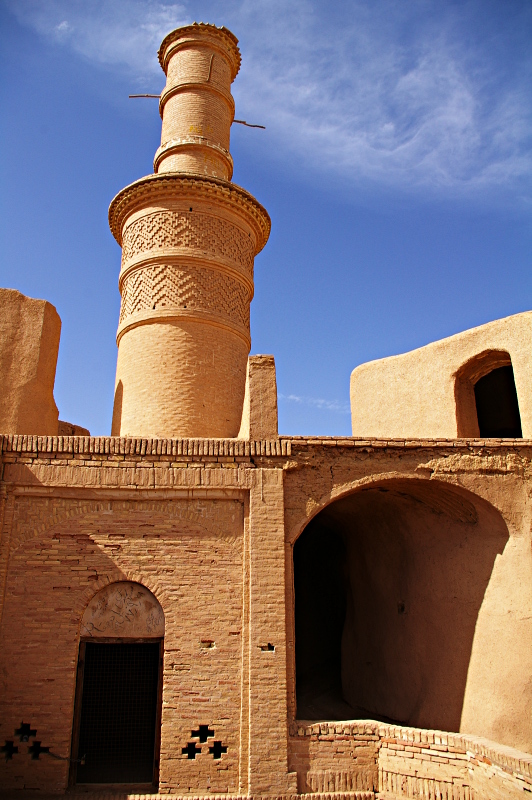
Old adobe minaret in Kharanagh village, Iran
Earthen hut with thatched roof in Toteil, near Kassala, Sudan

An earth structure is a building or other structure made largely from soil. Since soil is a widely available material, it has been used in construction since prehistory. It may be combined with other materials, compressed and/or baked to add strength.

Soil is still an economical material for many applications, and may have low environmental impact both during and after construction.

Earth structure materials may be as simple as mud, or mud mixed with straw to make cob. Sturdy dwellings may be also built from sod or turf. Soil may be stabilized by the addition of lime or cement, and may be compacted into rammed earth. Construction is faster with pre-formed adobe or mudbricks, compressed earth blocks, earthbags or fired clay bricks.[a]

Types of earth structure include earth shelters, where a dwelling is wholly or partly embedded in the ground or encased in soil. Native American earth lodges are examples. Wattle and daub houses use a "wattle" of poles interwoven with sticks to provide stability for mud walls. Sod houses were built on the northwest coast of Europe, and later by European settlers on the North American prairies. Adobe or mud-brick buildings are built around the world and include houses, apartment buildings, mosques and churches. Fujian Tulous are large fortified rammed earth buildings in southeastern China that shelter as many as 80 families. Other types of earth structure include mounds and pyramids used for religious purposes, levees, mechanically stabilized earth retaining walls, forts, trenches and embankment dams.

Soil

[edit]
Soil types by clay, silt and sand composition as used by the USDA

Soil is created from rock that has been chemically or physically weathered, transported, deposited and precipitated.[2] Soil particles include sand, silt and clay. Sand particles are the largest at 2 to 0.05 millimetres (0.0787 to 0.0020 in) in diameter and clay the smallest at less than 0.002 millimetres (7.9×10⁻⁵ in) in diameter.[3] Both sand and silt are mostly inert rock particles, including quartz, calcite, feldspar and mica.[4]

Clays typically are phyllosilicate minerals with a sheet-like structure.[3] The very small clay particles interact with each other physically and chemically. Even a small proportion of clay affects the physical properties of the soil much more than might be expected.[4] Clays such as kaolinite do not expand or contract when wetted or dried, and are useful for brick-making. Others, such as smectites, expand or contract considerably when wet or dry, and are not suitable for building.[3]

Loam is a mix of sand, silt and clay in which none predominates. Soils are given different names depending on the relative proportions of sand, silt and clay such as "Silt Loam", "Clay Loam" and "Silty Clay".[5] Loam construction, the subject of this article, referred to as adobe construction when it uses unfired clay bricks, is an ancient building technology. It was used in the early civilizations of the Mediterranean, Egypt and Mesopotamia, in the Indus, Ganges and Yellow river valleys, in Central and South America. As of 2005 about 1.5 billion people lived in houses built of loam.[6][b]

In recent years, interest in loam construction has revived in the developed world. It is seen as a way to minimize use of fossil fuels and pollution, particularly carbon dioxide, during manufacture, and to create a comfortable living environment through the high mass and high absorption of the material.[7] The two main technologies are stamped or rammed earth, clay or loam, called pise de terre in French, and adobe, typically using sun-dried bricks made of a mud and straw mixture.[7][c]

Materials

[edit]
Traditional round mud and thatch houses forming a family compound near Tamale, Ghana
Mud houses in Kandahar, Afghanistan

Earth usually requires some sort of processing for use in construction. It may be combined with water to make mud, straw may be added, some form of stabilizing material such as lime or cement may be used to harden the earth, and the earth may be compacted to increase strength.[8]

Mud

[edit]

Coursed mud construction is one of the oldest approaches to building walls. Moist mud is formed by hand to make the base of a wall, and allowed to dry. More mud is added and allowed to dry to form successive courses until the wall is complete. With puddled mud, a hand-made mud form is filled with wetter mud and allowed to dry.[9] In Iran, puddled mud walls are called chine construction. Each course is about 18 to 24 inches (460 to 610 mm) thick, and about 18 to 24 inches (460 to 610 mm) high. Typically the technique is used for garden walls but not for house construction, presumably because of concern about the strength of walls made in this way.[10] A disadvantage to the approach is that a lot of time can be spent waiting for each course to dry.[11] Another technique, used in areas where wood is plentiful, is to build a wood-frame house and to infill it with mud, primarily to provide insulation. In parts of England a similar technique was used with cob.[9]

Cob

[edit]
Cob wall in Harwell, Oxfordshire, England, hundreds of years old, thatched to protect it from water

Cob, sometimes referred to as "monolithic adobe",[12] is a natural building material made from soil that includes clay, sand or small stones and an organic material such as straw. Cob walls are usually built up in courses, have no mortar joints and need 30% or more clay in the soil. Cob can be used as in-fill in post-and-beam buildings, but is often used for load bearing walls, and can bear up to two stories. A cob wall should be at least 16 inches (410 mm) thick, and the ratio of width to height should be no more than one to ten.[12] It will typically be plastered inside and out with a mix of lime, soil and sand. Cob is fireproof, and its thermal mass helps stabilize indoor temperatures.[12] Tests have shown that cob has some resistance to seismic activity. However, building codes in the developed world may not recognize cob as an approved material.[13]

Sod or turf

[edit]
Sod bricks in a house wall

Cut sod bricks, called terrone in Spanish, can be used to make tough and durable walls. The sod is cut from soil that has a heavy mat of grass roots, which may be found in river bottom lands. It is stood on edge to dry before being used in construction.[11] European settlers on the North American Prairies found that the sod least likely to deteriorate due to freezing or rain came from dried sloughs.[14] Turf was once extensively used for the walls of houses in Ireland, Scotland and Iceland, where some turf houses may still be found. A turf house may last fifty years or longer if well-maintained in a cold climate.[15] The Icelanders find that the best quality turf is the Strengur, the top 5 centimetres (2.0 in) of the grass turf.[16]

Stabilized earth

[edit]

Clay is usually hard and strong when dry, but becomes very soft when it absorbs water. The dry clay helps hold an earth wall together, but if the wall is directly exposed to rain, or to water leaking down from the roof, it may become saturated.[17] Earth may be "stabilized" to make it more weather resistant. The practice of stabilizing earth by adding burnt lime is centuries old.[18] Portland cement or bitumen may also be added to earth intended for construction which adds strength, although the stabilized earth is not as strong as fired clay or concrete.[18] Mixtures of cement and lime, or pozzolana and lime, may also be used for stabilization.[19]

Preferably the sand content of the soil will be 65% – 75%. Soils with low clay content, or with no more than 15% non-expansive clay, are suitable for stabilized earth.[20] The clay percentage may be reduced by adding sand, if available.[21] If there is more than 15% clay it may take more than 10% cement to stabilize the soil, which adds to the cost.[20] If earth contains little clay and holds 10% or more cement, it is in effect concrete. Cement is not particularly environmentally friendly, since the manufacturing process generates large amounts of carbon dioxide.[22] Low-density stabilized earth will be porous and weak. The earth must therefore be compacted either by a machine that makes blocks or within the wall using the "rammed earth" technique.[19]

Rammed earth

[edit]
Old school built of rammed earth in 1836–37 in Bonbaden, Hesse, Germany

Rammed earth is a technique for building walls using natural raw materials such as earth, chalk, lime or gravel. A rammed earth wall is built by placing damp soil in a temporary form. The soil is manually or mechanically compacted and then the form is removed.[23] Rammed earth is generally made without much water, and so does not need much time to dry as the building rises. It is susceptible to moisture, so must be laid on a course that stops rising dampness, must be roofed or covered to keep out water from above, and may need protection through some sort of plaster, paint or sheathing.[22]

In China, rammed earth walls were built by the Longshan people in 2600–1900 BC, during the period when cities first appeared in the region. Thick sloping walls made of rammed earth became a characteristic of traditional Buddhist monasteries throughout the Himalayas and became very common in northern Indian areas such as Sikkim.[24] The technique spread to the Middle East, and to North Africa, and the city of Carthage was built of rammed earth. From there the technology was brought to Europe by the Romans.[25] Rammed earth structures may be long lasting. Most of the Great Wall of China was made from rammed earth, as was the Alhambra in the Kingdom of Granada. In Northern Europe there are rammed earth buildings up to seven stories high and two hundred years old.[22]

Concrete

[edit]

The Romans made durable concrete strong enough for load-bearing walls.[26] Roman concrete contains a rubble of broken bricks and rocks set in mortar. The mortar included lime and pozzolana, a volcanic material that contributed significantly to its strength.[27] Roman concrete structures such as the Colosseum, completed in 80 AD, still stand.[28] Their longevity may be explained by the fact that the builders used a relatively dry mix of mortar and aggregate and compacted it by pounding it down to eliminate air pockets.[29] Although derived from earth products, concrete structures would not usually be considered earth structures.[1]

Building units

[edit]

Mud brick or adobe brick

[edit]
Adobe bricks near a construction site in Milyanfan, Kyrgyzstan
Making mudbricks near Cooktown, Australia

Mudbricks or Adobe bricks are preformed modular masonry units of sun-dried mud that were invented at different times in different parts of the world as civilization developed.[30] Construction with bricks avoids the delays while each course of puddled mud dries. Wall murals show that adobe production techniques were highly advanced in Egypt by 2500 BC.[11] Adobe construction is common throughout much of Africa today.[31] Adobe bricks are traditionally made from sand and clay mixed with water to a plastic consistency, with straw or grass as a binder.[32][d] The mud is prepared, placed in wooden forms, tamped and leveled, and then turned out of the mold to dry for several days. The bricks are then stood on end to air-cure for a month or more.[32]

In the southwest United States and Mexico adobe buildings had massive walls and were rarely more than two stories high. Adobe mission churches were never more than about 35 feet (11 m).[33] Since adobe surfaces are fragile, coatings are used to protect them. These coatings, periodically renewed, have included mud plaster, lime plaster, whitewash[e] or stucco.[34] Adobe walls were historically made by laying the bricks with mud mortar, which swells and shrinks at the same rate as the bricks when wetted or dried, heated or cooled. Modern adobe may be stabilized with cement and bonded with cement mortars, but cement mortars will cause unstabilized adobe bricks to deteriorate due to the different rates of thermal expansion and contraction.[33]

Compressed earth block

[edit]
Compressed earth block housing being built in Midland, Texas in 2006

Compressed earth blocks (CEB) were traditionally made by using a stick to ram soil into a wooden mold. Today they are usually made from subsoil compressed in a hand-operated or powered machine. In the developing world, manual machines can be a cost-effective solution for making uniform building blocks, while the more complex and expensive motorized machines are less likely to be appropriate. Although labor-intensive, CEB construction avoids the cost of buying and transporting materials.[35] Block-making machines may form blocks that have interlocking shapes to reduce the requirement for mortar. The block may have holes or grooves so rods such as bamboo can be inserted to improve earthquake resistance.[36]

Suitable earth must be used, with enough clay to hold the block together and resist erosion, but not too much expansive clay.[37] When the block has been made from stabilized earth, which contains cement, the concrete must be given perhaps three weeks to cure. During this time the blocks should be stacked and kept from drying out by sprinkling water over them. This may be a problem in hot, dry climates where water is scarce. Closely stacking the blocks and covering them with a polythene sheet may help reduce water loss.[38]

Earthbags

[edit]

Earthbag construction is a natural building technique that has evolved from historic military construction techniques for bunkers.[39] Local subsoil of almost any composition can be used, although an adobe mix would be preferable. The soil is moistened so it will compact into a stable structure when packed into woven polypropylene or burlap sacks or tubes. Plastic mesh is sometimes used. Polypropylene (pp) sacks are most common, since they are durable when covered, cheap, and widely available.[39] The bags are laid in courses, with barbed wire between each course to prevent slipping. Each course is tamped after it is laid.[40] The structure in pp bags is similar to adobe but more flexible. With mesh tubing the structure is like rammed earth.[39] Earthbags may be used to make dome-shaped or vertical wall buildings. With soil stabilization they may also be used for retaining walls.[41]

Fired clay brick

[edit]
English bond bricks from 1454 at the Old College in Tattershall, Lincolnshire, England

The technique of firing clay bricks in a kiln dates to about 3500 BC. Fired bricks were being used to build durable masonry across Europe, Asia and North Africa by 1200 BC and still remain an important building material.[42] Modern fired clay bricks are formed from clays or shales, shaped and then fired in a kiln for 8–12 hours at a temperature of 900–1150 °C.[43][f] The result is a ceramic that is mainly composed of silica and alumina, with other ingredients such as quartz sand. The porosity of the brick depends on the materials and on the firing temperature and duration. The bricks may vary in color depending on the amount of iron and calcium carbonate in the materials used, and the amount of oxygen in the kiln.[43] Bricks may decay due to crystallization of salts on the brick or in its pores, from frost action and from acidic gases.[45]

Bricks are laid in courses bonded with mortar, a combination of Portland cement, lime and sand.[46] A wall that is one brick thick will include stretcher bricks with their long, narrow side exposed and header bricks crossing from side to side. There are various brickwork "bonds", or patterns of stretchers and headers, including the English, Dutch and Flemish bonds.[47]

Examples

[edit]

Earth sheltering

[edit]
Turf houses in Keldur, Iceland, an example of Earth sheltering

Earth sheltering has been used for thousands of years to make energy-efficient dwellings.[48] There are various configurations. At one extreme, an earth sheltered dwelling is completely underground, with perhaps an open courtyard to provide air and light. An earth house may be set into a slope, with windows or door openings in one or more of its sides, or the building may be on ground level, but with earth mounded against the walls, and perhaps with an earth roof.[49]

Pit houses made by Hohokam farmers between 100 and 900 AD, in what is now the southwest of the US, were bermed structures, partially embedded in south-facing slopes. Their successful design was used for hundreds of years.[50] At Matmata, Tunisia, most of the ancient homes were built 12 metres (39 ft) below ground level, and surrounded courtyards about 12 metres (39 ft) square.[51][g] The homes were reached through tunnels. Other examples of subterranean, semi-subterranean or cliff-based dwellings in both hot and cold climates are found in Turkey, northern China and the Himalayas, and the southwest USA.[51] A number of Buddhist monasteries built from earth and other materials into cliff sides or caves in Himalayan areas such as Tibet, Bhutan, Nepal and northern India are often perilously placed. Starting in the 1970s, interest in the technique has revived in developed countries.[48] By setting an earth house into the ground, the house will be cooler in the warm season and warmer in the cool season.[49]

Native American earth lodge

[edit]

An earth lodge is a circular building made by some of the Native Americans of North America. They have wood post and beam construction and are dome-shaped.[53] A typical structure would have four or more central posts planted in the ground and connected at the top by cross beams. The smoke hole would be left open in the center. Around the central structure there was a larger ring of shorter posts, also connected by cross beams. Rafters radiated from the central cross beams to the outside cross beams, and then split planks or beams formed the slanting or vertical side walls.[54] The structure was covered by sticks and brush or grass, covered in turn by a heavy layer of earth or sod. Some groups plastered the whole structure with mud, which dried to form a shell.[54]

School in a Maasai village on the A109 road, Kenya

Wattle and daub

[edit]

Wattle and daub is an old building technique in which vines or smaller sticks are interwoven between upright poles, and then mud mixed with straw and grass is plastered over the wall.[55] The technique is found around the world, from the Nile Delta to Japan, where bamboo was used to make the wattle.[56] In Cahokia, now in Illinois, USA, wattle and daub houses were built with the floor lowered by 1 to 3 feet (0.30 to 0.91 m) below the ground. A variant of the technique is called bajareque in Colombia.[55] In prehistoric Britain simple circular wattle and daub shelters were built wherever adequate clay was available.[57] Wattle and daub is still found as the panels in timber-framed buildings.[58] Generally the walls are not structural, and in interior use the technique in the developed world was replaced by lath and plaster, and then by gypsum wallboard.[56]

Prairie sod house

[edit]
Omer Madison Kem, (later, Representative to the United States Congress) in front of his sod house in Nebraska (1886)

European pioneer farmers in the prairies of North America, where there is no wood for construction, often made their first home in a dug-out cave in the side of a hill or ravine, with a covering over the entrance. When they had time, they would build a sod house. The farmer would use a plow to cut the sod into bricks 1 by 2 feet (0.30 by 0.61 m), which were then piled up to form the walls.[59] The sod strips were piled grass-side down, staggered in the same way as brickwork, in three side-by-side rows, resulting in a wall over 3 feet (0.91 m) thick. The sod wall was built around door and window frames, and the corners of the wall were secured by rods driven vertically through them. The roof was made with poles or brush, covered with prairie grass, and then sealed with a layer of sod.[60] Sod houses were strong and often lasted many years, but they were damp and dirty unless the interior walls were plastered.[59] The roofs tended to leak, and sometimes collapsed in a rainstorm.[60]

Mud brick buildings

[edit]

There are innumerable examples of mud brick or adobe building around the world. The walled city of Shibam in Yemen, designated a World Heritage Site in 1982, is known for its ten-story unreinforced mud-brick buildings.[61] The Djinguereber Mosque of Timbuktu, Mali, was first built at the start of the 14th century AD (8th century AH) from round mud bricks and a stone-mud mixture, and was rebuilt several times afterwards, steadily growing in size.[62] Further south in Mali, the Great Mosque of Djenné, a dramatic example of Sahel mudbrick architecture. was built in 1907, based on the design of an earlier Great Mosque first built on the site in 1280. Mudbrick requires maintenance, and the fundamentalist ruler Seku Amadu had let the previous mosque collapse.[63]

The Casa Grande Ruins, now a national monument in Arizona protected by a modern roof, is a massive four-story adobe structure built by Hohokam people between 1200 and 1450 AD.[64] The first European to record the great house was a Jesuit priest, Father Eusebio Kino, who visited the site in 1694. At that time it had long been abandoned.[65] By the time a temporary roof was installed in 1903 the adobe building had been standing empty and unmaintained for hundreds of years.[66]

Huaca de la Luna in what is now northern Peru is a large adobe temple built by the Moche people. The building went through a series of construction phases, growing eventually to a height of about 32 metres (105 ft), with three main platforms, four plazas and many smaller rooms and enclosures. The walls were covered by striking multi-colored murals and friezes; those visible today date from about 400–610 AD.[67]

Toulous

[edit]
Tianluokeng Tulou cluster in Fujian province, China

A Fujian Tulou is a type of rural dwelling of the Hakka people in the mountainous areas in southeastern Fujian, China.[68] They were mostly built between the 13th and the 20th centuries.[69] A tulou is a large, enclosed and fortified earth building, rectangular or circular, with very thick load-bearing rammed earth walls between three and five stories high. A toulou might house up to 80 families. Smaller interior buildings are often enclosed by these huge peripheral walls which can contain halls, storehouses, wells and living areas. The structure resembles a small fortified city.[70] The walls are formed by compacting earth mixed with stone, bamboo, wood and other readily available materials, and are to 6 feet (1.8 m) thick. The result is a well-lit, well-ventilated, windproof and earthquake-proof building that is warm in winter and cool in summer.[70]

Mounds and pyramids

[edit]
Ziggurat at Ali Air Base in Iraq

Ziggurats were elevated temples constructed by the Sumerians between the end of the 4th millennium BC and the 2nd millennium BC, rising in a series of terraces to a temple up to 200 feet (61 m) above ground level. The Ziggurat of Ur contained about three million bricks, none more than 15 inches (380 mm) in length, so construction would have been a huge project.[71] The largest ziggurat was in Babylon, and is thought by some to be the Tower of Babel mentioned in the Bible. It was destroyed by Alexander the Great and only the foundations remain, but originally it stood 300 feet (91 m) high on a base about 660 feet (200 m) square.[72] Sun-dried bricks were used for the interior and kiln-fired bricks for the facing. The bricks were held together by clay or bitumen.[73]

Many pre-Columbian Native American societies of ancient North America built large pyramidal earth structures known as platform mounds. Among the largest and best-known of these structures is Monks Mound at the site of Cahokia in what became Illinois, completed around 1100 AD, which has a base larger than that of the Great Pyramid at Giza. Many of the mounds underwent multiple episodes of mound construction at periodic intervals, some becoming quite large. They are believed to have played a central role in the mound-building peoples' religious life and documented uses include semi-public chief's house platforms, public temple platforms, mortuary platforms, charnel house platforms, earth lodge/town house platforms, residence platforms, square ground and rotunda platforms, and dance platforms.[74][75]

The 207 feet (63 m) Pyramid of the Sun in Teotihuacan, Mexico, was started in 100 AD. The stone-faced structure contains two million tons of rammed earth.[25]

Earthworks

[edit]
Retaining wall near Todmorden, West Yorkshire, England

Earthworks are engineering works created through moving or processing quantities of soil or unformed rock. The material may be moved to another location and formed into a desired shape for a purpose.[76] Levees, embankments and dams are types of earthwork. A levee, floodbank or stopbank is an elongated natural ridge or artificially constructed dirt fill wall that regulates water levels. It is usually earthen and often runs parallel to the course of a river in its floodplain or along low-lying coastlines.[77]

Mechanically stabilized earth (MSE) retaining walls may be used for embankments.[78] MSE walls combine a concrete leveling pad, wall facing panels, coping, soil reinforcement and select backfill.[79] A variety of designs of wall facing panels may be used.[79] After the leveling pad has been laid and the first row of panels has been placed and braced, the first layer of earth backfill is brought in behind the wall and compacted. The first set of reinforcements is then laid over the earth.[80] The reinforcements, which may be tensioned polymer or galvanized metal strips or grids, are attached to the facing panels.[81] This process is repeated with successive layers of panels, earth and reinforcements. The panels are thus tied into the earth embankment to make a stable structure with balanced stresses.[82]

Although construction using the basic principles of MSE has a long history, MSE was developed in its current form in the 1960s. The reinforcing elements used can vary but include steel and geosynthetics. The term MSE is usually used in the US to distinguish it from "Reinforced Earth", a trade name of the Reinforced Earth Company, but elsewhere Reinforced Soil is the generally accepted term.[78] MSE construction is relatively fast and inexpensive, and although labor-intensive, it does not demand high levels of skill. It is therefore suitable for developing as well as developed countries.[83]

Forts and trenches

[edit]
Soldiers in a trench on Gallipoli during World War I

Earth has been used to construct fortifications for thousands of years, including strongholds and walls, often protected by ditches. Aerial photography in Europe has revealed traces of earth fortifications from the Roman era, and later medieval times.[84] Offa's Dyke is a huge earthwork that stretches along the disputed border between England and Wales.[85] Little is known about the period or the builder, King Offa of Mercia, who died in 796 AD.[86] An early timber and earth fortification might later be succeeded by a brick or stone structure on the same site.[87]

Trenches were used by besieging forces to approach a fortification while protected from missiles. Sappers would build "saps", or trenches, that zig-zagged towards the fortress being attacked. They piled the excavated dirt to make a protective wall or gabion. The combined trench depth and gabion height might be 8 to 10 feet (2.4 to 3.0 m). Sometimes the sap was a tunnel, dug several feet below the surface. Sappers were highly skilled and highly paid due to the extreme danger of their work.[88]

In the American Civil War (1861−1865) trenches were used for defensive positions throughout the struggle, but played an increasingly important role in the campaigns of the last two years.[89] Military earthworks perhaps culminated in the vast network of trenches built during World War I (1914−1918) that stretched from Switzerland to the North Sea by the end of 1914.[90] The two lines of trenches faced each other, manned by soldiers living in appalling conditions of cold, damp and filth.[91] Conditions were worst in the Allied trenches. The Germans were more willing to accept the trenches as long-term positions, and used concrete blocks to build secure shelters deep underground, often with electrical lighting and heating.[92]

Embankment dams

[edit]
The Mica Dam in Canada

An embankment dam is a massive artificial water barrier. It is typically created by the emplacement and compaction of a complex semi-plastic mound of various compositions of soil, sand, clay and/or rock. It has a semi-permanent natural waterproof covering for its surface, and a dense, waterproof core. This makes such a dam impervious to surface or seepage erosion.[93] The force of the impoundment creates a downward thrust upon the mass of the dam, greatly increasing the weight of the dam on its foundation. This added force effectively seals and makes waterproof the underlying foundation of the dam, at the interface between the dam and its stream bed.[94] Such a dam is composed of fragmented independent material particles. The friction and interaction of particles binds the particles together into a stable mass rather than by the use of a cementing substance.[95]

The Syncrude Mildred Lake Tailings Dyke in Alberta, Canada, is an embankment dam about 18 kilometres (11 mi) long and from 40 to 88 metres (131 to 289 ft) high. By volume of fill, as of 2001 it was believed to be the largest earth structure in the world.[96]

Structural issues

[edit]

Designing for Earthquakes

[edit]

Regions with low seismic risk are safe for most earth buildings, but historic construction techniques often cannot resist even medium earthquake levels effectively because of earthen buildings' three highly undesirable qualities as a seismic building material: being relatively 'weak, heavy and brittle'. However, earthen buildings can be built to resist seismic loads.[97]

Key factors to improved seismic performance are soil strength, construction quality, robust layout and seismic reinforcement.[98]

Stronger soils make stronger walls. Adobe builders can test cured blocks for strength by dropping from a specific height or by breaking them with a lever.[99] Builders using immediate techniques like earthbag, cob, or rammed earth may prefer approximate crushing tests on smaller samples that can be oven-dried and crushed under a small lever.[100]

Builders must understand construction processes and be able to produce consistent quality for strong buildings.[101]

Robust layout means buildings more square than elongated, and symmetrical not L-shaped,[102] as well as no 'soft' first stories (stories with large windows, buildings on unbraced columns). New Zealand's earthen building guidelines check for enough bracing wall length in each of the two principal directions, based on wall thickness, story height, bracing wall spacing, and the roof, loft and second story weight above earthen walls.[103]

Seismic-Resistant Construction Techniques

[edit]

Building techniques that are more ductile than brittle, like the contained earth type of earthbag, or tire walls of earthships, may better avoid collapse than brittle unreinforced earth. Contained gravel base courses may add base isolation potential.

Wall containment can be added to techniques like adobe to resist loss of material that leads to collapse.[104] Confined masonry is effective for adobe against quake forces of 0.3 g[105][106] may be useful with earthen masonry.

Many types of reinforcement can increase wall strength, such as plastic or wire mesh and reinforcing rods of steel or fiberglass or bamboo. Earth resists compression well but is weak when twisted. Tensile reinforcement must span potential damage points and be well-anchored to increase out-of-plane stability. Bond beams at wall tops are vital and must be well attached to walls.[107]

Builders should be aware that organic reinforcements embedded in walls may be destroyed before the building is retired. Attachment details of reinforcement are critical to resist higher forces. Best adobe shear strength came from horizontal reinforcement attached directly to vertical rebar spanning from footing to bond beam.[108]

Interlaced wood in earthen walls reduces quake damage if wood is not damaged by dry rot or insects. Timberlacing includes finely webbed Dhajji,[109] and other types.[110]

See also

[edit]
Mud house in Maranguape, Ceará State, Brazil
  • Alker – Earth-based stabilized building material
  • Contained earth – Earthbag construction material and method
  • Earthbag construction – Building method
  • Earthship – Style of architecture that uses native materials and upcycled materials to build homes
  • Geotechnical engineering – Scientific study of earth materials in engineering problems
  • Green building – Structures and processes of building structures that are more environmentally responsible
  • Natural building – Sustainable construction practice
  • Rural crafts
  • Stonemasonry – Creation of buildings, structures, and sculpture using stone
  • Tabby concrete – A type of concrete using lime from burnt shell, sometimes considered earthen architecture
  • Underground living – Living below the ground's surface
  • Yaodong – Form of earth shelter dwelling in the Loess Plateau, Chinese cave dwellings

Notes

[edit]

References

[edit]
Revisions and contributorsEdit on WikipediaRead on Wikipedia
from Grokipedia
Earth structure, also known as earthen architecture, refers to buildings and constructions made primarily from earth-based materials such as , clay, , and aggregates, often without firing or with minimal stabilization. This ancient technique, dating back over 10,000 years to prehistoric settlements, utilizes locally available resources to create sustainable, low-cost, and thermally efficient structures. As of 2022, approximately one-third of the global population lives in earthen buildings, highlighting its enduring significance in regions from arid deserts to temperate zones. Common methods include (sun-dried bricks), (compacted soil in forms), cob (hand-formed mixtures), and (earth plastered over frameworks), which form the basis for residential, monumental, and modern applications. These structures offer environmental benefits like low and natural insulation but require considerations for durability, seismic resistance, and stabilization in contemporary designs. The following sections explore properties, materials, techniques, , examples, and structural principles central to earth-based .

Soil Fundamentals

Soil Composition

Soil is a complex mixture of mineral particles, organic matter, water, and air that forms the uppermost layer of the Earth's surface and serves as a foundational material in earthen construction. The mineral component, derived from weathered rock, dominates in building applications and consists primarily of sand, silt, and clay particles, while organic matter provides minor binding but is typically limited to less than 5% to avoid decomposition-related weaknesses. Water and air occupy pore spaces, influencing workability and compaction, with typical volume compositions around 25% each in unsaturated soils suitable for construction. Particle size distribution defines soil texture and is classified under the USDA system, where sand particles range from 0.05 to 2 in diameter, providing drainage and structural bulk; silt particles span 0.002 to 0.05 , contributing to cohesion and water retention; and clay particles are smaller than 0.002 , enabling binding properties. These sizes determine the soil's behavior during mixing and forming, with coarser sands enhancing stability against and finer clays promoting adhesion. Clay plays a critical role as a natural binder in earthen materials due to its high surface area and electrostatic forces, which confer plasticity when moist—allowing the to be molded without cracking—and cohesion upon drying, as water evaporation hardens the matrix and interlocks particles. This dual behavior stems from clay minerals like or , which swell and shrink with moisture changes, influencing long-term durability if not managed. Excessive clay (>30%) can lead to shrinkage cracks, while insufficient amounts reduce binding efficacy. For optimal performance in earthen building, loam soils with approximately 40% , 40% , and 20% clay offer balanced workability, strength, and permeability, mimicking ideal agricultural textures but adapted for compressive loads. This composition ensures adequate drainage to prevent waterlogging while maintaining sufficient fines for cohesion, as verified in geotechnical assessments. Deviations, such as sandy loams with higher sand content, may require amendments for cohesion. Soil suitability is evaluated through particle analysis methods, including sedimentation techniques like the test, which measures suspension density over time based on to quantify , , and clay fractions. The test further assesses clayey soils by determining the liquid limit (moisture content at which soil flows like a liquid) and plastic limit (minimum moisture for plasticity), providing indices of consistency and shrinkage potential essential for grading. These tests, standardized by ASTM, guide soil selection without invasive sampling. Globally, types vary by and , with soils prevalent in tropical regions like parts of and , characterized by high iron and aluminum oxides that impart red coloration and residual strength after leaching. These soils, often low in organics but rich in fines, show strong stabilization potential when mixed with lime or due to their reactive , enabling use in durable blocks or walls in humid environments. Such intrinsic form the basis for stabilized earth variants, where additives enhance resistance to .

Suitability for Construction

The suitability of soil for earthen depends on key that ensure structural integrity and durability, including plasticity, cohesion, permeability, and load-bearing capacity. Plasticity, measured by the liquid limit (typically 31-50%) and plasticity index (16-33%), determines the soil's workability during forming and molding, allowing it to be shaped without excessive cracking or stickiness. Cohesion, largely derived from clay content between 15% and 30%, provides binding strength to hold particles together, while contents below 15% result in poor and structural weakness. Permeability influences resistance to water erosion, with lower values preferred to minimize dissolution and weakening under rainfall; high permeability in sandy soils can lead to rapid water infiltration and instability. Load-bearing capacity, enhanced by proper compaction, is indicated by maximum dry densities typically 1.7 to 2.2 g/cm³ for compacted materials, supporting vertical loads without excessive settlement. Clay-rich soils exceeding 30% clay content pose challenges due to high shrink-swell potential, where volume changes from fluctuations cause cracking during or heaving when saturated, potentially compromising wall stability. Mitigation strategies include sieving to remove coarse particles and organics that exacerbate uneven shrinkage, or mixing with coarser sands to dilute clay proportions and reduce expansiveness, thereby improving overall uniformity and reducing failure risk. These adjustments help balance the soil's behavior without relying on chemical stabilizers in traditional unfired applications. Regional soil variations significantly affect suitability, with alluvial deposits in river valleys often providing optimal compositions for techniques like ; for instance, sandy loams in the basin, comprising 55-85% balanced with clay and , offer excellent plasticity and cohesion for sun-dried bricks. In contrast, arid highlands may yield gravelly soils requiring more preparation, while coastal areas with saline influences demand testing for corrosivity. Preparation techniques are essential to enhance suitability, beginning with sieving through a 425 µm to eliminate stones, roots, and organic debris that could create weak points or promote decay. Moisture content is then optimized to 10-15% for ideal workability, enabling effective compaction and minimizing shrinkage during drying; this range allows the soil to form cohesive masses without becoming overly fluid or brittle. As of , approximately 650–700 million worldwide live in earthen homes, predominantly utilizing local loamy soils that meet these criteria for affordability and availability. However, poor selection, such as soils with high content exceeding 70%, contributes to elevated failure rates through crumbling and low cohesion, underscoring the need for site-specific testing. applications, for example, particularly benefit from soils exhibiting high cohesion to achieve dense, load-bearing walls.

Earthen Materials

Unfired and Unstabilized Materials

Unfired and unstabilized materials represent some of the simplest forms of earthen construction, relying on natural soil mixtures that harden through air drying without chemical additives or thermal processing. These materials, primarily composed of clay, sand, and sometimes organic fibers like straw, have been used for millennia due to their abundance and ease of preparation. They offer inherent sustainability, as they utilize locally sourced earth with minimal environmental impact during production. However, their vulnerability to moisture and erosion necessitates protective measures such as overhanging roofs or regular maintenance. Mud, a basic wet mixture of clay and sand, serves as a versatile material for plastering walls or molding small elements in construction. The clay acts as a natural binder, providing cohesion when mixed with water to form a plastic consistency suitable for application. Upon drying, the mixture hardens through evaporation, developing dry strength from the clay's binding properties, though this process often leads to shrinkage that can cause cracking if not managed. Mud plasters are particularly susceptible to erosion from rainfall, as water can soften the material and wash away surface layers, reducing durability in exposed conditions. Cob consists of a straw-reinforced mixture of clay and sand, typically containing 3-20% clay (averaging 5-6%), water, and fibrous straw for tensile reinforcement. This composition allows the material to be hand-formed into loaf-like masses, which are stacked directly onto foundations to build monolithic walls up to 36 inches thick. The straw enhances tensile strength, mitigating the material's inherent poor performance in tension, while the clay-sand base provides compressive stability. Cob walls gain strength through natural drying, often reaching heights of 23 feet, but require careful layering to avoid slumping during construction. Historically, cob has been employed in Devon, England, since at least the 13th century, with an estimated 20,000 structures surviving from medieval and later periods due to their longevity when protected from moisture. Sod, or turf, involves cutting blocks of grass-covered from lands, utilizing the dense mats for structural integrity. These blocks are stacked like bricks to form walls, with the grass side often placed inward or downward to reduce and provide natural insulation. The thick sod layers offer excellent , maintaining cool interiors in summer and retaining heat in winter on the harsh . However, sod structures face decay risks from moisture infiltration, which can promote rot in the organic components, as well as pest issues like burrowing into the earth. Sod houses became prevalent in the 19th-century U.S. , where timber scarcity drove settlers to this low-cost alternative, enabling rapid construction in treeless regions. These materials share key advantages, including extremely low cost from local sourcing and no energy-intensive processing, alongside beneficial that stabilizes indoor temperatures. Their primary drawback is poor tensile strength without , leading to under lateral loads, compounded by vulnerability in wet climates. Mud can be extended into molded forms like bricks for greater permanence.

Fired and Stabilized Materials

Rammed earth involves compacting moist soil mixtures within temporary to create solid walls, typically built in horizontal layers of 10-15 cm thick until reaching desired heights, with wall thicknesses often up to 1 m for structural stability. This ancient technique, employed in the construction of sections of the Chinese Great Wall starting around 221 BCE, relies on the soil's natural cohesion and compaction to achieve durability without additional binders. Unstabilized typically exhibits compressive strengths of 1-5 MPa, providing sufficient load-bearing capacity for low-rise structures while offering excellent for temperature regulation. Stabilized earth enhances these properties by incorporating 5-10% or lime into the mix, which binds particles to reduce shrinkage cracking during drying and improves resistance to and . After compaction, the material undergoes a curing process, often involving moist conditions for 7-28 days to allow hydration reactions that develop full strength, resulting in compressive values exceeding 10 MPa—significantly higher than unstabilized variants. This stabilization is particularly valuable in modern applications, such as homes in Australia's arid regions, where it ensures longevity against while maintaining the material's . Fired clay bricks represent a more intensive enhancement, where molded clay is kiln-baked at temperatures of 900-1200°C to induce vitrification—a partial melting that fuses particles into a glassy, impermeable matrix for enhanced permanence and weather resistance. This process transforms fragile raw clay into durable units with compressive strengths often surpassing 20 MPa, far exceeding those of earth-based alternatives and enabling widespread use in load-bearing masonry. Compressed earth blocks, when stabilized similarly, serve as a modular extension of these techniques for prefabricated construction.

Building Units and Techniques

Molded and Formed Units

Molded and formed units represent a foundational approach in earthen , involving the manual shaping of prefabricated elements from soil-based mixtures using simple tools or molds. These units, typically sun-dried without firing, allow for modular assembly into walls and structures, emphasizing low-technology production suitable for local materials and labor. Common examples include bricks and wattle-and-daub panels, which prioritize ease of forming while relying on natural binding agents like clay and organic fibers for cohesion. Adobe bricks, also known as mud bricks, consist of sun-dried blocks made from a mixture of clay-rich , , and or other vegetal fibers to enhance tensile strength and reduce cracking during . These bricks are typically formed in dimensions approximating 30 cm by 15 cm by 10 cm, though variations occur based on regional practices and mold sizes. The production process begins with mixing the soil and to a malleable consistency, often by foot treading, followed by pressing the mixture into wooden frames or molds to form uniform shapes. Once shaped, the frames are removed, and the wet bricks are placed on racks or flat ground to dry in the sun, a process that generally takes 2 to 4 weeks depending on and , during which the bricks gain through gradual moisture evaporation. This method traces back to ancient around 5000 BCE, where bricks formed the basis of early monumental architecture due to the abundance of alluvial clays in the region. Wattle and daub, another molded and formed technique, involves creating a structural lattice of woven branches or strips—known as wattle—from flexible woods like or , which is then infilled with daub, a mixture of clay, , and animal dung acting as a natural binder to improve and weather resistance. This method is particularly suited for non-load-bearing walls and internal partitions, as the wattle provides tensile support while the daub fills voids to form a monolithic surface. The daub is prepared by combining subsoil with , for texture, and dung (often from cows or horses) to enhance plasticity and reduce shrinkage, sometimes incorporating for added reinforcement. Once applied by hand to both sides of the wattle frame, the daub is allowed to air-dry, forming a breathable yet protective layer. Both bricks and wattle-and-daub units exhibit limitations related to moisture sensitivity, as the clay components can swell and erode when exposed to prolonged , potentially leading to structural weakening without protective measures. To mitigate this, roofs with generous overhangs—at least 60 cm—are essential to shield walls from direct rainfall, while surface treatments like lime or plasters provide an additional barrier against ingress and . In comparison to compressed earth blocks, these molded units generally offer lower , around 1-2 MPa, necessitating thicker walls for stability in load-bearing applications.

Compressed and Bagged Units

Compressed earth blocks (CEBs) represent a mechanically formed earthen unit produced by compressing a mixture of , often stabilized with 4-6% or lime, under high pressure to create durable, uniform building components. This technique emerged in the with the development of the CINVA-RAM manual press by Raúl Ramírez at the International Center of Agricultural Research (CINVA) in , enabling efficient production for low-cost in developing regions. CEBs typically achieve compressive strengths of 2-5 MPa for unstabilized variants and up to 4-10 MPa when stabilized, meeting or exceeding many requirements for non-load-bearing walls after 28 days of curing. Production of CEBs can occur via manual presses, which are portable and suitable for small-scale, community-based operations requiring minimal electricity, or mechanized hydraulic systems that output 1,500-2,000 blocks per day with a small , though the latter involves higher upfront equipment costs of several thousand dollars. Unlike , which compacts in large formworks, CEBs form discrete blocks for precise, scalable assembly. Advantages include reduced labor through mechanization, consistent dimensions for easier , and low from local s, promoting ; disadvantages encompass vulnerability to in unstabilized forms without protective finishes and the need for soil testing to ensure optimal clay-sand ratios. Earthbags utilize tubes or bags filled with moist, on-site , stacked in courses and tamped to form monolithic walls, with strands of inserted between layers to enhance shear resistance and prevent slippage. This method was innovated in the early 1980s by Iranian architect Nader Khalili and further developed at the California Institute of Earth Architecture (Cal-Earth Institute), initially for emergency disaster relief shelters, gaining endorsement from the for its rapid deployment in seismic zones. The technique allows flexible designs like domes or rectilinear structures, with walls reaching compressive strengths comparable to through compaction, though stabilization with cement can boost durability in wet climates. Both CEBs and earthbags offer advantages such as minimal environmental impact from abundant local materials, for energy-efficient buildings, and resistance via flexible or forms; however, earthbags demand intensive manual filling and tamping, potentially increasing labor compared to CEB , while both require protective to mitigate . Installation for CEBs employs staggered running-bond patterns akin to bricklaying, bonded with thin mortar or earthen joints (typically 10-13 mm thick), and finished with lime or for weatherproofing. Earthbags are similarly staggered during stacking, solidly tamped in place, and coated with an 85% earth-15% to seal surfaces and improve aesthetics.

Historical Development

Ancient and Prehistoric Uses

Earthen construction traces its origins to the period, with some of the earliest evidence found at in central , dating to approximately 7000 BCE. Here, inhabitants built densely clustered houses using sun-dried mudbricks molded from local clay, , and water, forming walls up to 20 cm thick that supported flat roofs accessed via ladders through roof openings. These structures marked a transition from temporary thatched shelters to more permanent daubed walls, where mud plaster was applied over woven branches or reeds for weatherproofing and insulation, reflecting early experimentation with earthen materials in settled agrarian communities. By the third millennium BCE, earthen techniques had evolved in major ancient civilizations. In the Indus Valley Civilization around 2500 BCE, —compacted soil layers within wooden forms—was used for residential walls and foundations at sites like and , creating durable structures suited to the region's semi-arid climate and periodic flooding. In ancient Egypt, (sun-dried mudbricks) became a staple for everyday architecture, particularly in worker housing such as the New Kingdom village of (c. 1550–1070 BCE), where rows of modest homes featured mudbrick walls plastered with lime for protection against the Nile's inundations. These methods prioritized local resources, enabling rapid construction for growing populations. Monumental applications of earthen materials emerged concurrently, showcasing advanced engineering. In Mesopotamia, ziggurats like that at (c. 2100 BCE) combined a core of mudbricks with an outer facing of fired bricks laid in mortar, elevating temple platforms above flood levels on the Tigris-Euphrates plains and symbolizing divine stability amid environmental volatility. The in northern (c. 3000–1900 BCE) employed for village enclosures and house foundations, as evidenced at sites like , where compacted earth walls up to 10 meters high delineated early proto-urban settlements. Later, in the Roman era, opus craticium—a timber frame infilled with —provided lightweight yet insulated walls for multi-story insulae, as detailed by in his treatise on architecture. In flood-prone regions like and the Indus Valley, such earthen innovations embodied cultural aspirations for permanence, transforming vulnerable soils into enduring communal anchors.

Traditional and Regional Variations

In medieval , earthen construction adapted to regional climates and resources, with cob emerging as a prominent technique in . Cob, a mixture of clay, , straw, and water hand-formed into walls, was documented in as early as 1461, where manorial accounts detail the rebuilding of a thatched village house using "le Quabbewalle" for its walls, supported by jointed-cruck trusses. This method suited the damp southwestern climate, providing durable, load-bearing structures up to 24 inches thick. In , turf or houses prevailed for their superior insulation against harsh winters, with layered roofs and walls capturing heat from below-freezing temperatures; these traditions, rooted in Viking-age longhouses, persisted through the medieval period in and , where earth berms and turf minimized heat loss in conditions. In the and region, adobe brick towers exemplified vertical earthen innovation amid arid environments. Yemen's , largely rebuilt in the 16th century after a 1532-1533 destroyed prior settlements, features a fortified walled containing around 920 traditional houses, most of which are sun-dried mud-brick tower houses rising up to seven stories, earning it the moniker "Manhattan of the desert" for its dense, grid-planned urban form perched on Wadi Hadramaut cliffs. These structures, rebuilt with local and straw, incorporated traditional seismic adaptations like tapered bases and interlocking bricks to withstand earthquakes, precursors to modern reinforcements. Asian traditions emphasized communal forms, particularly among the in . The , circular or rectangular fortified roundhouses, were constructed from the 12th to 20th centuries using rammed earth walls up to 2 meters thick, housing extended families of up to 800 in inward-facing layouts with minimal openings for defense. These multi-story complexes, often three to five levels high with tiled roofs, reflected Hakka migrations and clan solidarity, blending residential, agricultural, and protective functions in mountainous terrain. In the Americas, Ancestral Puebloans in the Southwest United States developed multi-room adobe complexes around 1000 CE, adapting to semi-arid plateaus. Sites like those at Taos Pueblo, continuously inhabited for about 1,000 years, used sun-dried adobe bricks with walls up to 70 cm thick at the base, stacked in terraced formations accessed via roof ladders; these evolved from earlier pit houses into durable, multi-story dwellings suited to the region's temperature swings. Globally, earthen homes housed 30%-50% of the world's as of the early , underscoring their enduring prevalence despite a marked decline driven by and migration to modern materials. Rapid urban expansion has eroded traditional practices, with many sites abandoned due to economic shifts and lack of skilled builders. However, a revival is underway at heritage sites, where conservation efforts retrieve lost techniques to preserve cultural landscapes, as seen in initiatives restoring earthen structures against environmental pressures.

Examples of Structures

Residential and Vernacular Buildings

Native American earth lodges in the Midwest United States, such as those constructed by the Central Plains Tradition peoples, were semi-subterranean dwellings featuring timber frames covered with branches, grass, and mud plaster for walls and roofs. These structures, typically square or rectangular with extended entrance ways, included underground storage pits beneath the floor for food and tools, providing communal living spaces for farming communities. Built between approximately 900 and 1450 CE in regions like eastern Nebraska, they exemplified practical earthen architecture adapted to the local climate and resources. In the late 19th century, European settlers in the , particularly in and , constructed prairie sod houses as affordable homestead dwellings following the Homestead Act of 1862. These homes utilized bricks—matted roots and soil cut from the prairie—stacked to form walls often supported by a central wooden pole frame, with sod roofs over rafters and dirt floors that hardened over time. Ranging from 10 by 12 to 14 by 26 feet, sod houses offered quick assembly for immigrant families but required ongoing maintenance due to issues like leaking roofs during rains and infestations of pests such as bedbugs and fleas. European vernacular architecture frequently employed techniques in timber-framed cottages, where woven lattices of wooden strips (wattles) were infilled with a of , clay, and organic materials (daub) to create insulated walls. In , this method produced characteristic black-and-white half-timbered structures, with exposed dark frames contrasting against lighter daub panels, often protected by limewash or plaster. These cottages, common from onward, provided durable, low-cost housing for rural populations. A prominent example of mud brick residential and communal architecture is found in the town of , , where structures like the Great Mosque—originally established in the 13th century and rebuilt in 1907—use sun-baked earthen bricks coated with mud plaster. Local homes and buildings in similarly rely on this banco technique, involving fermented mud mixed with grain husks, reflecting Sudano-Sahelian styles that integrate Islamic influences with regional earthen traditions. The community's annual Crépissage de la Grande Mosquée festival involves collective replastering of these mud structures to protect against erosion, underscoring the ongoing maintenance essential for their longevity. Sod houses and earth lodges both benefited from the natural thermal mass of earthen materials, maintaining cooler interiors in summer and warmer ones in winter compared to uninsulated wood cabins, though they demanded regular repairs to combat and biological threats. This reliance on local for highlighted the of vernacular earthen dwellings, influencing modern earth-sheltering practices in residential design.

Monumental and Engineering Works

Monumental and utilizing earthen materials have demonstrated the capacity of soil-based to support vast, enduring structures for ceremonial, defensive, and infrastructural purposes across diverse cultures and eras. These projects often involved massive volumes of , compacted or molded into forms that withstood environmental stresses, highlighting early innovations in large-scale earth manipulation. From prehistoric platforms to modern hydraulic barriers, such works underscore the scalability of earthen techniques when applied to non-residential scales. Earthen mounds and pyramids represent some of the earliest monumental achievements, serving as platforms for rituals and royal burials. In , the in present-day , constructed around 1100 CE by peoples, feature as the largest prehistoric earthen structure north of , built in fourteen stages using approximately 22 million cubic feet of earth to form a 100-foot-high platform for ceremonies. In Sudan, the of the Kingdom of Kush, dating from the 8th century BCE to the 4th century CE, were primarily built with sandstone blocks, with each pyramid requiring thousands of these blocks, to create stepped tombs up to 30 meters tall, reflecting adaptations of Egyptian architectural influences for local funerary practices. These structures often incorporated techniques to stabilize bases, enabling their integration into ceremonial landscapes. Earthworks like geoglyphs exemplify earthen engineering for cultural expression on immense scales. The Nazca Lines in southern , created by the between 500 BCE and 500 CE, consist of over 700 geoglyphs formed by removing the top 30-40 cm of dark surface pebbles and to expose lighter subsoil, revealing designs such as animals and geometric shapes spanning up to 370 meters across the desert plain. This labor-intensive process, likely involving organized community efforts, preserved these figures through the arid environment's stability, serving possible astronomical or ritual functions. Defensive earthen fortifications highlight utilitarian applications in warfare and . , a city complex in from the 11th to 15th centuries CE, incorporated earthen elements such as daga—mud bricks made from granitic sand and clay—within its massive dry-stone walls to form enclosures and internal structures, supporting a population of up to 18,000 in a trade hub. During , trenches on the Western Front were reinforced with sandbags filled with earth, creating networks up to 12,000 miles long that provided temporary barriers against , with sides revetted using these bags to prevent collapse in waterlogged soils. Embankment dams illustrate the engineering prowess of earthen fills for water management, evolving from ancient to modern designs. The Sadd-el-Kafara in Egypt's Wadi Garawi, constructed around 2700 BCE, was an early attempt at a 14-meter-high earthen dam using loose rubble and fill for flood control, but it failed during due to inadequate compaction, leading to breaching by a . In contrast, the on Pakistan's , completed in 1976, stands as the world's largest earth- and rock-fill structure at 143 meters high, incorporating zoned layers of compacted and rock—totaling over 181 million cubic yards—for irrigation and power generation, with proper compaction ensuring stability against seepage. Poor compaction in such dams can introduce voids exceeding 10%, significantly reducing and increasing failure through internal .

Modern Applications

Sustainable and Contemporary Practices

Contemporary practices in earth building emphasize by leveraging the material's low environmental impact and thermal performance, integrating it into modern eco-friendly constructions worldwide. Earthen materials, such as and compressed earth blocks (CEBs), offer significant advantages in reducing the of building projects through minimal processing requirements and compatibility with local resources. These practices align with global efforts to promote low-emission alternatives in response to challenges, drawing briefly on historical precedents for continuity in resource-efficient design. One key benefit is the low of earthen materials, which typically accounts for 29-38% of the energy required for conventional wall constructions like or , due to the absence of high-temperature firing or energy-intensive . Incorporating organic additives, such as derived from , further enhances by enabling within the building material itself; -amended earth blocks can lock away CO2 for centuries, contributing to negative carbon emissions in . This approach not only lowers the overall lifecycle emissions but also repurposes waste, aligning with principles. In eco-homes, modern and CEBs are increasingly used in LEED-certified projects across the U.S. and , particularly in designs from the 2010s onward that prioritize energy efficiency and . For instance, initiatives like those promoted by the EarthUSA organization have supported the construction of homes meeting standards, demonstrating how can achieve high performance in contemporary residential settings. These applications highlight earthen construction's role in mainstream , where it provides natural insulation and humidity regulation without synthetic additives. Revival movements in the 2000s have bolstered the adoption of earth building through international recognition and capacity-building efforts. UNESCO's designation of numerous earthen sites as World Heritage properties during this period, such as the Aflaj Irrigation Systems of Oman in 2006, has underscored the cultural and technical value of earthen heritage, encouraging its adaptation for modern use. Complementing this, training programs in and focus on disaster-resistant homes; the Auroville Earth Institute in offers courses on CEB production for seismic zones, while the Centre for Holistic Management provides hands-on earth building workshops to empower communities in constructing resilient, low-cost housing. By 2025, the market for certifications has seen over 20% growth in new commercial projects, with earthen materials gaining traction in certifications like due to their alignment with criteria. Earth buildings contribute to mitigating effects through their high , which stabilizes indoor temperatures and reduces reliance on mechanical cooling in dense urban environments. Despite these advances, challenges persist, including building codes that often favor fired or cement-based materials due to established standards for and resistance. Solutions are emerging through standardized testing protocols, such as ASTM guidelines for CEBs, which evaluate and water resistance to facilitate code compliance and broader acceptance. These developments are critical for scaling earthen practices in regulated markets.

Earth Sheltering and Integration

Earth sheltering involves constructing buildings partially or fully embedded in the earth, such as bermed homes where soil is piled against exterior walls or in-hill designs excavated into slopes, utilizing the surrounding earth as a natural thermal mass for insulation. The earth's stable temperature, typically around 55°F (13°C) year-round at depths of 6-10 feet, provides an effective insulating barrier, with moderately dry soil offering an R-value of approximately 3-5 per foot of thickness depending on moisture content and composition. These designs often integrate passive solar principles, featuring south-facing windows and thermal mass interiors to capture and store solar heat during the day while minimizing heat loss at night. Hybrid techniques combine earth sheltering with other sustainable materials, such as earthbag construction for domes or walls paired with extensive glazing to admit without compromising thermal performance. Earthbag domes, filled with stabilized and stacked in circular patterns, create self-supporting structures that can be partially bermed for added insulation, while panels—compacted in —allow for large atriums that enhance daylighting and views. A prominent example is the communities in , pioneered by architect Michael Reynolds starting in the , where form the core structure, integrated with south-facing walls of recycled bottles and cans to facilitate passive solar heating and interior planting for food production. The resurgence of earth sheltering in the United States during the was largely driven by the energy crises of the , which highlighted the need for reduced dependence, leading to federal incentives and research promoting underground and bermed homes as viable alternatives to conventional . In , modern interpretations from the 2010s onward blend with , as seen in projects like the Cyberjaya Mosque, which incorporates and green elements to harmonize with energy-efficient architecture. These approaches yield significant benefits, including energy savings of 80-90% on heating and cooling compared to above-ground homes, due to the earth's moderating effect on indoor temperatures. Earth-sheltered green roofs further enhance by providing habitats for pollinators, birds, and native plants, supporting urban ecosystems with diverse layers that mimic natural grasslands. Key design considerations include robust waterproofing to prevent moisture infiltration, achieved through impermeable membranes like bentonite clay or applied to exterior surfaces, and adequate ventilation systems—such as heat recovery ventilators or natural stack effects—to control humidity and avoid mold growth in enclosed spaces. is critical, favoring well-drained slopes to direct away from foundations and incorporating structural reinforcements like beams to handle loads.

Structural Considerations

Seismic Design Principles

Seismic design principles for earthen structures emphasize minimizing vulnerability to ground shaking, shear forces, and differential settlement in earthquake-prone regions. These principles draw from geotechnical and to ensure stability through site assessment, proportional , and load management. Key strategies include evaluating conditions to mitigate dynamic amplification and incorporating features that distribute seismic loads evenly across the building. Soil dynamics play a critical role in seismic performance, particularly the risk of in sandy or loose soils during intense shaking, where saturated ground temporarily behaves like a , leading to foundation failure. In the 2001 Bhuj earthquake in , , in sandy deposits contributed significantly to the collapse of numerous earthen homes, exacerbating damage in areas with high levels. To counter this, base isolation techniques using flexible foundations, such as rubber pads or sand layers, decouple the structure from the ground, reducing transmitted accelerations by absorbing energy; tests in and have demonstrated their effectiveness in limiting differential movements. Wall design focuses on resisting in-plane and out-of-plane shear through robust proportions and minimal disruptions. Thick, low-height walls with an (height to thickness) of 8:1 or less provide inherent and prevent overturning, as specified in Indian Standard IS 13827:1993 for earthquake-resistant earthen construction. Openings, such as doors and windows, should be limited such that the sum of their widths does not exceed 33% (Zone V) or 40% (Zones III and IV) of the wall length to maintain structural integrity, with placements at least 1.2 meters from corners to avoid stress concentrations. The underscored these needs, contributing to widespread collapse of earthen homes due to inadequate design under moderate intensities. Effective load distribution requires symmetrical building plans to avoid torsional effects and the use of ring beams at and levels to tie walls together, acting as horizontal ties that enhance overall rigidity. Symmetrical rectangular layouts, ideally with continuous load-bearing walls in both directions, ensure uniform force paths, while ring beams—typically 70 mm by 150 mm timber or equivalent—promote box-like behavior. IS 13827:1993 mandates these for seismic zones III, IV, and V in . Shake table simulations of earthen models have shown that incorporating such bonds improves .

Reinforcement and Durability Techniques

Reinforcement techniques for earthen structures primarily involve integrating materials to enhance tensile strength and prevent cracking, particularly in walls prone to seismic or environmental stresses. strips, , and meshes are commonly embedded within the earthen matrix during or to improve and load distribution. For instance, reinforcements in cob walls have been shown to significantly increase under lateral loads, allowing the structure to absorb energy without . Horizontal bands, often constructed from fibers or timber, are placed at intervals of approximately 0.9 to 1.5 meters to tie walls together and reduce shear forces. Chemical treatments further bolster by providing protective coatings that mitigate water ingress and degradation. Lime-based renders applied to exterior surfaces create a breathable yet water-repellent barrier, enhancing resistance to in rainy conditions while maintaining the structure's vapor permeability. paints, which chemically bond to substrates, offer superior UV stability and weather resistance, preventing fading and surface breakdown over extended periods. These treatments can extend the of earthen walls by protecting against environmental , with sol- formulations demonstrating minimal color change and adhesion loss after prolonged UV exposure. Unstabilized earthen structures can last centuries with proper maintenance and protection from , as evidenced by historical examples, but reinforcements and renders can substantially prolong this duration. In regions with high seismic activity, programs using low-cost techniques like reinforcements have enabled many structures to withstand aftershocks. Stabilized and coated earthen walls, including those with lime renders, further enhance , as evidenced by historical examples and accelerated aging tests. Ongoing is essential for , especially in wet climates where can accelerate degradation. Annual re-plastering with lime-based mixtures helps restore protective layers eroded by rainfall, while systematic crack monitoring—using visual inspections or simple gauges—allows early detection of stress points for targeted repairs. These practices, when integrated with seismic principles, ensure that reinforcements remain effective over time. A notable case study involves reinforced buildings in constructed in the 2000s, which demonstrated resilience during the 2010 Darfield (magnitude 7.1). These structures, featuring horizontal timber bands and fiber reinforcements at standard intervals, sustained only minor cracking despite intense ground shaking, highlighting the efficacy of combined natural and design-based enhancements.

References

Add your contribution
Related Hubs
User Avatar
No comments yet.