


Community hub
Recent from talks
Contribute something
Nothing was collected or created yet.
Fishkeeping
View on Wikipedia | This article's lead section may be too short to adequately summarize the key points. (February 2020) |

Fishkeeping is a popular hobby, practiced by aquarists, concerned with keeping fish in a home aquarium or garden pond. It is a practice that encompasses the art of maintaining one's own aquatic ecosystem, featuring a lot of variety with various water systems, all of which have their own unique features and requirements. Fishkeeping primarily serves as a token of appreciation and fascination for marine life and the environment that surrounds such, along with other purposes such as the piscicultural fishkeeping industry, serving as a branch of agriculture, being one of the most widespread methods of cultivating fish for commercial profit.
Origins of fishkeeping
[edit]
Fish have been raised as food in pools and ponds for thousands of years. Brightly colored or tame specimens of fish in these pools have sometimes been valued as pets rather than food. Many cultures, ancient and modern, have kept fish for both functional and decorative purposes.
Ancient Sumerians kept wild-caught fish in ponds, before preparing them for meals. Depictions of the sacred fish of Oxyrhynchus kept in captivity in rectangular temple pools have been found in ancient Egyptian art.
Similarly, Asia has experienced a long history of stocking rice paddies with freshwater fish suitable for eating, including various types of catfish and cyprinid. Selective breeding of carp into today's popular and completely domesticated koi and fancy goldfish began over 2,000 years ago in Japan and China, respectively. The Chinese brought goldfish indoors during the Song dynasty to enjoy them in large ceramic vessels.
In medieval Europe, carp pools were a standard feature of estates and monasteries, providing an alternative to meat on feast days when meat could not be eaten for religious reasons.
Marine fish have been similarly valued for centuries. Wealthy Romans kept lampreys and other fish in salt water pools. Tertullian reports that Asinius Celer paid 8000 sesterces for a particularly fine mullet. Cicero reports that the advocate Quintus Hortensius wept when a favored specimen died.[1] Rather cynically, he referred to these ancient fishkeepers as the Piscinarii, the "fish-pond owners" or "fish breeders", for example when saying that "the rich (I mean your friends the fish-breeders) did not disguise their jealousy of me".[2][3][4]
The first person to breed a tropical fish in Europe was Pierre Carbonnier, who founded one of the oldest public aquaria in Paris in 1850,[5] and bred the first imported Macropods (Paradise fish) in 1869, and later more species. A pioneer of tropical fish breeding, Carbonnier was awarded the Gold Medal of the Imperial French Acclimatization Society in 1875 for research and breeding of exotic freshwater aquarium fish, and for his success in introducing exotic fish species to France.[6]
Types of fishkeeping systems
[edit]Fishkeepers are often known as "aquarists" since many of them are not solely interested in keeping fish, but rather for the enjoyment and appreciation of aquatic life. The hobby can be broadly divided into three specific disciplines, depending on the type of water the fish originate from: freshwater, brackish, and marine (also called saltwater) fishkeeping.
Freshwater
[edit]
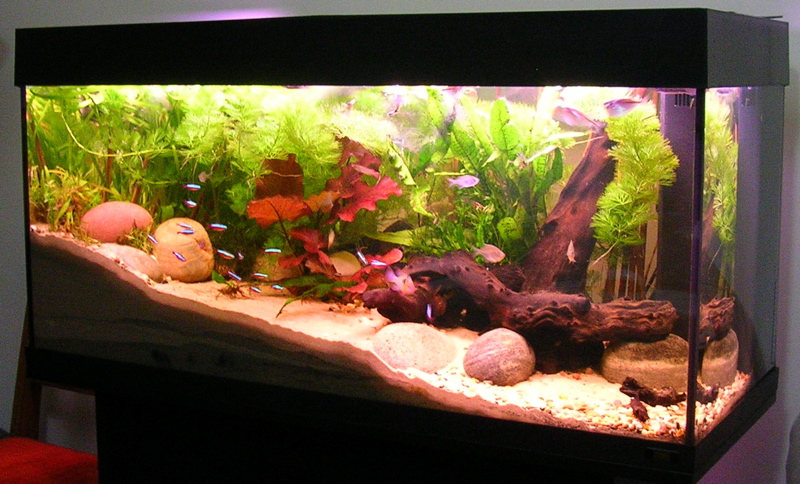
Freshwater fishkeeping is the most common of the three disciplines, with even small pet stores often selling a variety of freshwater fish, such as goldfish, guppies, and angelfish. While most freshwater aquaria are community tanks containing a variety of compatible species, single-species breeding aquaria are also popular. Livebearing fish such as mollies and guppies are among those most easily raised in captivity, but aquarists also regularly breed many types of cichlid, catfish, characins, cyprinids, and killifish.
Many fishkeepers create freshwater aquascapes where the focus is on aquatic plants as well as fish. These aquaria include "Dutch aquaria" that mass contrasting stem plants, named for European aquarists who first designed them. In recent years, one of the most active advocates of the heavily planted aquarium was the Japanese aquarist Takashi Amano. A photographer who through his images of his own complex aquariums. He would then proceed to establish his own company "Aqua Design Amano" in 1982 to sell aquarium products "featuring excellent quality and design" to share his vision towards other aquarists.[7]
Garden ponds are in some ways similar to freshwater aquaria, but are usually much larger and exposed to ambient weather. In the tropics, tropical fish can be kept in garden ponds. In the temperate zone, species such as goldfish, koi, and orfe work better.[8]
Saltwater
[edit]Marine aquaria have more specific needs and requirements to maintain, and the livestock is generally more expensive. As a result, this branch tends to attract more experienced fishkeepers. Marine aquaria can be appealing from an aesthetics perspective, due to the attractive colors and shapes of the corals and the coral reef fish they host. Temperate zone marine fish are not as commonly kept in home aquaria, primarily because they do not thrive at room temperature. Coldwater aquaria must provide cooler temperature via a cool room (such as an unheated basement) or using a refrigeration device known as a 'chiller'.
Marine aquarists often attempt to recreate a coral reef in their aquaria using large quantities of living rock, porous calcareous rocks encrusted with coralline algae, sponges, worms, and other small marine organisms. Larger corals, as well as shrimps, crabs, echinoderms, and mollusks are added later on, once the aquarium has matured, as well as a variety of small fish. Such aquaria are sometimes called reef tanks.
Brackish water
[edit]Brackish water aquaria combine elements of the other types, with salinity that must stay between that of freshwater and seawater. Brackish water fish come from habitats with varying salinity, such as mangroves and estuaries, and do not thrive if kept permanently in freshwater. Although brackish water aquaria are not a common option chosen by many aquarists, brackish water hosts unique benefits that could be more optimal for traditional species within aquaria, as many species prefer brackish water, including some mollies, many gobies, some pufferfish, monos, and scats.
Aquarium maintenance
[edit]
Ideal aquarium ecology reproduces the balance found in nature in the closed system of an aquarium. In practice, it is virtually impossible to maintain a perfect balance. As an example, a balanced predator-prey relationship is nearly impossible to maintain in even the largest aquaria. Typically, an aquarium keeper must actively maintain balance in the small ecosystems that aquaria provide. Basic aquarium maintenance should generally be performed weekly to maintain optimum conditions for fish and plants.[9]
Balance is facilitated by larger volumes of water which dilute the effects of a systemic shock. For example, the death of the only fish in a 10-litre (2.2 imp gal; 2.6 US gal) tank causes dramatic changes in the system, while the death of that same fish in a 400-litre (88 imp gal; 110 US gal) tank that holds many fish may create only a minor imbalance. For this reason, hobbyists often favor larger tanks whenever possible, as they require less intensive attention. This same concept extends to the filtration system as well, external (outside of the tank) systems in particular. Generally speaking, the larger the filtration system depending on its configuration, the more capable it will be of properly maintaining an aquatic environment. External filtration systems provide the added benefit of increasing the overall volume of water and its dilution effect. For example, a 190-litre (42 imp gal; 50 US gal) aquarium with an external filter that holds 40 litres (8.8 imp gal; 11 US gal) creates a 230-litre (51 imp gal; 61 US gal) aquatic system, an increase of over twenty percent.
A variety of nutrient cycles is important in the aquarium. Imitating natural waves that would be found in natural bodies of water allows dissolved oxygen to be dispersed, causing the release of carbon dioxide. There are plenty of other vital processes and nutrients that are necessary for an aquarium to thrive. Nutritional cycles such as the phosphate and nitrogen cycle allow essential elements to support a stable environment. Consumption and waste both contribute greatly to these systems, including sulfur, iron, and other micronutrients. Appropriate handling of these factors, along with a balanced food supply and consideration of biological loading, is a requirement to keep these nutrient cycles in adequate equilibrium.
Water conditions
[edit]The solute content of water is perhaps the most important aspect of water conditions, as total dissolved solids and other constituents can dramatically impact basic water chemistry, and therefore how organisms interact with their environment. Salt content, or salinity, is the most basic classification of water conditions. Depending on the water system that an aquarist chooses, maintaining the proper range of salt content is essential for these ecosystems to survive and to properly reflect conditions that exist within a natural system. These ranges and simulations include freshwater (salinity below 0.5 PPT)[clarification needed], simulating a lake or river environment; brackish water (a salt level of 0.5 to 30 PPT), simulating environments lying between fresh and salt, such as estuaries; and salt water or seawater (a salt level of 30 to 40 PPT), simulating an ocean or sea environment. Even higher salt concentrations are maintained in specialized tanks for raising brine organisms.
Several other water characteristics result from dissolved materials in the water and are important to the proper simulation of natural environments. Saltwater is typically alkaline, while the pH of fresh water varies. "Hardness" measures overall dissolved mineral content; hard or soft water may be preferred. Hard water is usually alkaline, while soft water is usually neutral to acidic.[10] Dissolved organic content and dissolved gases content are also important factors.
Home aquarists typically use modified tap water supplied through their local water supply network. Because of the chlorine used to disinfect drinking water supplies for human consumption, tap water cannot be immediately used. In the past, it was possible to "condition" the water by simply letting the water stand for a day or two, which allows the chlorine to dissipate.[10] However, monochloramine became popular in water treatment because it stays longer in the water. Additives are available to remove chlorine or chloramine and suffice to make the water ready. Brackish or saltwater aquaria require the addition of a mixture of salts and other minerals.
Aquarists with experience sometimes delve further into trying to find a homeostasis by using external resources to modify the water's alkalinity, hardness, or dissolved content of organics and gases. This can be accomplished by additives such as sodium bicarbonate to raise pH.[10] Some aquarists filter or purify their water using one of two processes: deionization or reverse osmosis. In contrast, public aquaria with large water needs often locate themselves near a natural water source (such as a river, lake, or ocean) in order to have easy access to water that requires only minimal treatment.
Water temperature forms the basis of one of the two most basic aquarium classifications: tropical vs. cold water. Most fish and plant species tolerate only a limited range of water temperatures: Tropical or warm water aquaria maintain an average temperature of about 25 °C (77 °F) are much more common, and tropical fish are among the most popular aquarium denizens. Cold water aquaria maintain temperatures below the room temperature. More important than the range is temperature consistency; most organisms are not accustomed to sudden changes in temperatures, which can cause shock and lead to disease.[10] Water temperature can be regulated with a combined thermometer and heating or cooling unit.
Water movement can also be important in accurately simulating a natural ecosystem. Fish may prefer anything from nearly still water up to swift, simulated currents. Water movement can be controlled through the use of aeration from air pumps, powerhead pumps, and careful design of water flow (such as the location of filtration system points of inflow and outflow).
Nitrogen cycle
[edit]
Fish are animals and generate waste as they metabolize food, which aquarists must manage. Fish, invertebrates, fungi, and some bacteria excrete nitrogen in the form of ammonia (which converts to ammonium in acidic water) and must then pass through the nitrogen cycle. Ammonia is also produced through the decomposition of plant and animal matter, including fecal matter and other detritus. Nitrogen waste products become toxic to fish and other aquarium inhabitants above a certain concentration.[10] Ammonia is toxic to fish and other aquatic life in large quantities and that is why many fish keepers purchase testing kits to monitor the levels of ammonia in their water as well as monitoring nitrites and nitrates which are also part of the nitrogen cycle. Ammonia is produced from fish waste and uneaten food, after this is created it is broken down into nitrites by beneficial bacteria that is present in a properly cycled aquarium. Nitrites are then further broken down into the less toxic nitrates which can be absorbed by aquarium plants and nitrates absorbing filter media. Aquarists also use water changes as a way to keep these toxins under control by removing water from the aquarium and vacuuming fish waste and food from the gravel and replacing it with fresh, treated water.
The process
[edit]A well-balanced tank contains organisms that metabolize the waste products of other inhabitants. Nitrogenous waste is metabolized in aquaria by a group of bacteria known as nitrifiers (genus Nitrosomonas). Nitrifying bacteria metabolize ammonia into nitrite, which is highly toxic to fish, even at low concentrations. Another type of bacteria (genus Nitrospira), converts this nitrite into the less toxic compound, nitrate. This process represents a portion of the nitrogen cycle.
In a planted aquarium, aquatic plants also metabolize ammonium and nitrate as nutrients, removing them from the water column primarily through leaf surfaces.[11] Plants remove some nutrients through their roots, either in or at the substrate level or via aerial roots floating in the water. Additional nitrogen and other nutrients are also made available for root uptake by decomposing organic matter in the substrate as well as the breakdown of mulm.[12] While very small amounts of rotting foliage may be allowed to decompose and cycle nitrogen back into a planted aquarium, in practice aquarists will prune and remove substantial amounts of plant litter.[13]
Maintaining the nitrogen cycle
[edit]Although called the nitrogen "cycle" by hobbyists, in aquaria the cycle is not complete: nitrogen must be added (usually indirectly through food) and nitrates must be removed at the end. Nitrogen bound up in plant matter is removed when the plant grows too large.
Hobbyist aquaria typically do not have the requisite bacteria needed to detoxify nitrogen waste. This problem is most often addressed through filtration. Activated carbon filters absorb nitrogen compounds and other toxins from the water.
Biological filters provide a medium specially designed for colonization by the desired nitrifying bacteria. Activated carbon and other substances, such as ammonia absorbing resins, stop working when their pores fill, so these components have to be replaced with fresh stocks periodically.
New aquaria often have problems associated with the nitrogen cycle due to insufficient beneficial bacteria, which is known as "New Tank Syndrome". Therefore, new tanks have to mature before stocking them with fish. There are three basic approaches to this: the fishless cycle, the silent cycle, and slow growth.
- Tanks undergoing a "fishless cycle" have no fish. Instead, the keeper adds ammonia to feed the bacteria. During this process, ammonia, nitrite, and nitrate levels measure progress.
- The "silent cycle" involves adding fast-growing plants and relying on them to consume the nitrogen, filling in for the bacteria work until their number increases. Anecdotal reports indicate that such plants can consume nitrogenous waste so efficiently that the ammonia and nitrite spikes that occur in more traditional cycling methods are greatly reduced or undetectable.
- "Slow growth" entails slowly increasing the fish population over 6 to 8 weeks, giving bacteria time to grow and reach a balance with the increasing waste production.
Adding too many fish too quickly or failing to allow enough time for the bacteria colony to establish itself in the filter media can lead to ammonia stress. This is not always fatal but can result in the death of aquarium fish. A few days after adding hardy fish for the cycling process, it is essential to look out for the key signs of ammonia stress. These include a lack of movement and appetite, inflammation and redness of the gills, fins, and body, and occasionally gasping for air at the water's surface. The latter can also be attributed to poor aeration, which can be negated by the inclusion of an air pump or spray bar in the setup.
The largest bacterial populations inhabit the filter; efficient filtration is vital. Sometimes, simply cleaning the filter is enough to seriously disturb the aquarium's balance. Best practice is to flush mechanical filters using compatible water to dislodge organic materials while preserving bacteria populations. Another safe practice involves cleaning only one-half of the filter media every time the filter or filters are serviced to allow the remaining bacteria to repopulate the cleaned half.[14]
Tank capacity
[edit]
Biological loading is a measure of the burden placed on the aquarium ecosystem by its living inhabitants. Higher biological loading represents a more complicated ecology, which makes equilibrium easier to imbalance. The surface area of water exposed to air limits dissolved oxygen. The population of nitrifying bacteria is limited by the available physical space which includes all surfaces in the aquarium such as the inner facing sides and the surface of rock substrate and any objects such as large rocks or pieces of wood.
Tank size
[edit]
Fish capacity is a function of aquarium size. Limiting factors include the availability of oxygen in the water and the rate at which the filter can process waste. Aquarists apply rules of thumb estimating appropriate population size; the examples below are for small freshwater fish. Larger freshwater fish and most marine fishes need much more generous allowances. Some aquarists claim that increasing water depth beyond some relatively shallow minimum does not affect capacity.[10]
- 1.5 litres of water for each centimetre of fish length (1 US gallon per inch).[15]
- 30 square centimetres of surface area per centimetre of fish length (12 square inches per inch).[16]
Experienced aquarists warn against mechanically applying these rules because they do not consider other important issues such as growth rate, activity level, social behavior, and such.[17] Once the tank nears capacity, the best practice is to add the remaining fish over a period of time while monitoring water quality.
The capacity can be improved by surface movement and water circulation such as through aeration, which not only improves oxygen exchange but also the decomposition of waste materials. Capacity can also be increased with the addition of external filtration which increases the total volume of water in the aquatic system.[10]
Other factors
[edit]Other variables affect tank capacity. Smaller fish consume more oxygen per unit of body weight than larger fish. Labyrinth fish can breathe atmospheric oxygen and need less surface area (however, some are territorial, and do not tolerate crowding). Barbs require more surface area than tetras of comparable size.[10] The presence of waste materials presents itself as a variable as well. Decomposition consumes oxygen, reducing the amount available for fish. Oxygen dissolves less readily in warmer water, while warmer water temperature increase fish activity levels, which in turn consume more oxygen.[10]
Fishkeeping industry
[edit]Worldwide, the fishkeeping hobby is a multibillion-dollar industry. The United States is the largest market, followed by Europe and Japan. In 1993, the United States Census Bureau found that 10.6% of U.S. households owned ornamental freshwater or saltwater fish, with an average of 8.8 fish per household. In 2002, census data indicated that aquarium products and fishing accounted for US$684 million.[18]
Aquatic suppliers
[edit]From 1989 to 1992, almost 79% of all U.S. ornamental fish imports came from Southeast Asia and Japan. Singapore, Thailand, the Philippines, Hong Kong, and Indonesia were the top five exporting nations. South America was the second largest exporting region, accounting for 14% of the total annual value. Colombia, Brazil, and Peru were the major suppliers.[19]
Approximately 200 million fish worth $44.7 million were imported into the United States in 1992. These fish comprised 1,539 different species; 730 freshwater species, and 809 saltwater species. Freshwater fish accounted for approximately 96% of the total volume and 80% of the total import value. Only 32 species had import values over $10,000. The top species were freshwater and accounted for 58% of the total imported value. The top imported species are the guppy, neon tetra, platy, betta, Chinese algae eater, and goldfish.[19] Given 91.9 million total US households in 1990,[20] 9.7 million are fishkeepers. 8.8 fish per household implies a total aquarium fish population of approximately 85.7 million, suggesting that the US aquarium fish population turns over more than 2.3 times per year, counting only imported fish.
In 2012, it is estimated that the aquarium industry is to generate revenues over $300 million with the annual growth rate of 14%.[21]
Historically, fish and plants for the first modern aquaria were gathered from the wild and transported (usually by ship) to Europe and America. During the early 20th century many species of small colorful tropical fish were exported from Manaus, Brazil; Bangkok, Thailand; Jakarta, Indonesia; the Netherlands Antilles; Kolkata, India; and other tropical countries. Import of wild fish, plants, and invertebrates for aquaria continues today around the world. Many species have not been successfully bred in captivity. In many developing countries, locals survive by collecting specimens for the aquarium trade and continue to introduce new species to the market.
Today, the ornamental fish trade has expanded significantly, estimated to experience growth of approximately $4.49 billion between 2024 and 2028.[22] Southeast Asian countries still continue to be the most dominant force of exporters, however, more countries from that area and even other regions of the world are showing evidence of being able to provide a competitive market. New countries from the Southeast include smaller regions that can still match the volume exports of countries like Japan; including Sri Lanka, Malaysia, and Myanmar. Additionally, some European countries have joined the higher ranks of exporting nations; including Netherlands and Czech Republic.[23]
Animal welfare
[edit]Fish are sometimes maintained in inadequate conditions by aquarists who may make errors that are detrimental to the purpose of the hobby, such as keeping too many fish in one tank, or adding fish too quickly into an immature aquarium, resulting in the accidental deaths of many fish.[24] This has caused the hobby to receive criticism and concern among some animal welfare groups, such as PETA, who accuse aquarists of treating aquarium fish as cheap toys to be replaced when they die.[25]
Goldfish and bettas, in particular, have often been kept in small bowls or aquaria that are too small for their needs.[26] In some cases, fish have been installed in all sorts of inappropriate objects such as the "AquaBabies Micro Aquaria", "Bubble Gear Bubble Bag", and "Betta in a Vase", all of which house live fish in unfiltered and insufficient water.[27][28] The last is sometimes marketed as a complete ecosystem because a plant is included in the neck of the vase. Some sellers say the fish eat the plant roots. However, bettas are carnivorous and need live food or pellet foods. They cannot survive on plant roots. Another problem is that the plant sometimes blocks the betta's passage to the water surface. They are labyrinth fish and need to breathe at the surface to avoid suffocation.
Such products are aimed at people looking for a novelty gift. Aquarists actively condemn them. Similarly, the awarding of goldfish as prizes at funfairs is traditional in many parts of the world but has been criticized by aquarists and activists as cruel and irresponsible. The United Kingdom outlawed live-animal prizes such as goldfish in 2004.[29]
The use of live prey to feed carnivorous fish such as piranhas also draws criticism.
- Fish modification
Modifying fish to make them more attractive as pets is increasingly controversial. Historically, artificially dyeing fish was common. Glassfish, in particular, were often injected with fluorescent dyes.[30] The British fishkeeping magazine Practical Fishkeeping has campaigned to remove these fish from the market by educating retailers and aquarists to the cruelty and health risks involved.[31]
In 2006, Practical Fishkeeping published an article exposing the techniques for performing cosmetic surgery on aquarium fish, without anesthesia, as described by Singaporean fishkeeping magazine Fish Love Magazine. The tail is cut off and dye is injected into the body.[32] The piece also included the first documented evidence to demonstrate that parrot cichlids are injected with coloured dye. Hong Kong suppliers were offering a service in which fish could be tattooed with company logos or messages using a dye laser; such fishes have been sold in the UK under the name of kaleidoscope gourami and striped parrot cichlid.[33] Some people give their fish body piercings.[34]
Hybrid fish such as flowerhorn cichlids and blood parrot cichlids are controversial. Blood parrot cichlids in particular have a very unnatural shape that prevents them from swimming properly and makes it difficult for them to engage in normal feeding and social behaviors. The biggest concern with hybrids is that they may be bred with native species, making it difficult for hobbyists to identify and breed particular species. This is especially important to hobbyists who shelter species that are rare or extinct in the wild.[35] Extreme mutations have been selected for by some breeders; some fancy goldfish varieties in particular have features that prevent the fish from swimming, seeing, or feeding properly.
Genetically modified fish such as the GloFish are likely to become increasingly available, particularly in the United States and Asia. Although GloFish are unharmed by their genetic modifications,[36] they remain illegal in many places, including the European Union, though at least some have been smuggled into the EU, most likely from Taiwan, via the Czech Republic.[37]
Fish breeding
[edit]
Fish breeding is a challenge that attracts many aquarists. While some species reproduce freely in community tanks, most require special conditions, known as spawning triggers before they will breed. The majority of fish lay eggs, known as spawning, and the juvenile fish that emerge are very small and need tiny live food or substitutes to survive. A fair number of popular aquarium fish are livebearers which produce a small number of relatively large offspring. These usually eat fish flakes that are ground into an appropriate size.
Conservation
[edit]The two main sources of fish for aquaria are from capture in the wild or captive breeding. United Nations studies show that more than 90% of freshwater aquarium fish are captive–bred, while virtually all marine fish and invertebrates are wild-caught. Freshwater fish habitats are threatened by habitat erosion from pollution, dams and hydropower, commercial fishing, climate change, the introduction of invasive species and disease.[38] The few marine species bred in captivity supplement but rarely replace the trade in wild-caught specimens.[39][40] Wild-caught animals provide valuable income for people in regions lacking other high-value exports.[41]
Marine fish are typically less resilient during transport than freshwater fish with relatively large numbers of them dying before they reach the aquarist. Although the aquarium trade is viewed as a minor threat to coral reefs compared to habitat destruction, fishing for food, and climate change, it is a booming trade and may be a serious problem in specific locations such as the Philippines and Indonesia where most collecting is done.[42][43] Catching fish in the wild can reduce their population sizes, placing them in danger of extinction in collecting areas, as has been observed with the dragonet Synchiropus splendidus.[40]

Collecting
[edit]In theory, reef fish should be a good example of a renewable resource that encourages fishermen to maintain the integrity and diversity of the natural habitat: more and better fish can be exported from pristine habitats than those that have been polluted or over-harvested. However, this has not been the case in similar industries such as fur trapping, logging, or fishing that experience the tragedy of the commons.[citation needed]
Fish are caught by net, trap, or cyanide.[44] Collecting expeditions can be lengthy and costly, and are not always successful. Fish can also be injured during collection and/or shipping; mortality rates during shipping are high. Many others are weakened by stress and become diseased.[citation needed]
Other problems include the poisoning of coral reefs and non-target species, the depletion of rare species from their natural habitat, and ecosystem degradation from large scale removal of key species. Additionally, destructive fishing techniques concern environmentalists and hobbyists alike. There has been a concerted movement to captive breeding and certification programs for wild-caught fish. Two thirds of American marine aquarists surveyed in 1997 preferred farmed coral and over 80% think that only sustainably caught or farmed fish should be traded.[citation needed] Annually, 30 million fish from over 1,400 species are traded, with approximately 16 million imported into the United States. This trade has an estimated global value of over $800 million in 2002.[45]
Cyanide
[edit]Cyanide is a poison that stuns and immobilizes fish. Fishermen put cyanide in the ocean to ease the process of netting fish. It can irreversibly damage or kill the target fish, as well as other fish, mammals, reptiles or invertebrates that are left behind. Some wholesalers advertise that they avoid cyanide-caught animals. In the Philippines, overfishing and cyanide caused a drastic decline in aquarium fish,[46] leading the country away from cyanide and towards netting healthy animals.[47]
Captive breeding and aquaculture
[edit]Since the Siamese fighting fish (Betta splendens) was first successfully bred [citation needed] in France in 1893, captive spawning and brooding techniques used in aquaculture have slowly improved. Captive breeding for aquaria is concentrated in southern Florida, Singapore, Hong Kong and Bangkok, with smaller industries in Hawaii and Sri Lanka.[citation needed] Captive breeding of marine organisms has been in development since the mid-1990s. Breeding for freshwater species is more advanced than for saltwater species. Currently, only a few captive-bred marine species are in the trade, including clownfish, damselfish, and dwarf angelfish.[47]
Aquaculture can help in lessening the impacts on wild stocks, either by using cultivated organisms for sale or by releasing them to replenish wild stocks. Breeding programs help preserve species that have become rare or extinct in the wild, most notably the Lake Victoria cichlids.
Some species have also become important as laboratory animals. Cichlids, poecilids and zebra danios are especially important for studies on learning, mating, and social behavior. Hobbyists also keep and observe many fishes not otherwise studied, and thereby provide valuable ecological and behavioral data.
Captive breeding has reduced prices for hobbyists, but cultured animals remain more expensive. Selective breeding has also led to wider intra–species variation, creating more diverse commercial stocks.[47]
Invasive species
[edit]Serious problems can occur when fish originally raised in ponds or aquaria are released into the wild. While tropical fish do not survive in temperate climates, they can thrive in waters that are similar to their native habitat. Non–native species that become established are called exotic species.[48] Freshwater examples include various cichlids in Florida, goldfish in temperate waters, and South American suckermouth catfishes in warm waters around the world.[49][50] Invasive species can seriously disrupt their new homes by preying on, or competing with, native species. Many marine fish have also been introduced into non-native waters, disrupting the local habitat.[48][51]
Humane treatment
[edit]In January 2011 the Maui County Council passed a measure requiring aquarium fisheries to adopt humane practices for preparing fish for transport to market. The regulations control harvesting and shipping practices, including prohibiting clipping the fins on fish to protect the plastic shipping bags, outlawing puncturing swim bladders that fish use to regulate their buoyancy, which enabled divers to rapidly surface and prohibiting "starving" the fish which permitted smaller shipping bags without killing the fish with their own waste. The measure also requires that shippers file mortality reports on the animals they ship.[52][53]
See also
[edit]
References
[edit]- ^ "Radio 4 - The Roman Way". BBC. Retrieved 2016-05-20.
- ^ Cicero, Letters to Atticus (Epistulae ad Atticum) 1.18
- ^ Cicero, Letters to Atticus (Epistulae ad Atticum) 1.19
- ^ Cicero, Letters to Atticus (Epistulae ad Atticum) 1.20
- ^ Jacques Teton, "Archives de l'Aquariophilie : L'aquariophilie a-t-elle évoluée considérablement depuis des décennies ?", Revue Aquarama, 1988.
- ^ "Séance générale du 7 janvier 1876", in Bulletin de la Société d'Acclimatation, 3ème Série, Tome III, 1876, p.36-37.
- ^ Aqua Design Amano Co., Ltd. "Founder - Takashi Amano | ADA - NATURE AQUARIUM". Aqua Design Amano. Retrieved 2024-10-20.
- ^ "Ultimate Aquarium & Fishkeeping Guide". Tankquarium.
- ^ "How to Maintain an Aquarium". HowStuffWorks. 2007-12-11. Retrieved 2022-05-27.
- ^ a b c d e f g h i Axelrod, Herbert, R. (1996). Exotic Tropical Fishes. T.F.H. Publications. ISBN 0-87666-543-1.
{{cite book}}: CS1 maint: multiple names: authors list (link) - ^ Walstad, Diana L. (1999). Ecology of the Planted Aquarium: A Practical Manual and Scientific Treatise for the Home Aquarist. Chapel Hill, NC: Echinodorus Publishing. p. 106. ISBN 0-9673773-0-7.
- ^ Hiscock, Peter (2003). Encyclopedia of Aquarium Plants. Hauppauge, NY.: Barron's Educational Series. p. 68. ISBN 0-7641-5521-0.
- ^ Hiscock, p. 85–88.
- ^ "Understanding Nitrogen Cycle In Aquarium". Tankquarium. 11 June 2021.
- ^ Ulrich Baensch, Tropical Aquarium Fish, Tetra, 1983
- ^ Peter Scott, The Complete Aquarium, Dorling Kindersley, 1996, ISBN 0-7513-0427-1
- ^ Chris Andrews, Adrian Exell, & Neville Carrington, The Interpet Manual of Fish Health, Salamander Books, 1988, ISBN 0-86101-368-9
- ^ "Industry Specifics Sampler - NAICS 453910 Pet and pet supplies stores". 2002. Archived from the original on December 13, 2012. Retrieved January 25, 2011.
- ^ a b Chapman, Frank; Fitz-Coy, Sharon; Thunberg, Eric; Rodrick, Jeffrey; Adams, Charles; Andre, Michel (August 1994). "An Analysis of the United States of America International Trade in Ornament Fish" (PDF). University of Florida: 13 – via National Oceanic and Atmospheric Administration.
- ^ Hobbs, Frank; Stoops, Nicole (November 2002). "Demographic Trends in the 20th Century" (PDF).
- ^ Reynoso, Fabiola Lango; Castañeda-Chávez, María; Zamora-Castro, Jorge E.; Hernández-Zárate, Galdy; Ramírez-Barragán, Magdiel A.; Solís-Morán, E. (2012). "Ornamental marine fishkeeping: a trade of challenges and opportunities". Latin American Journal of Aquatic Research. 40 (1): 12–21. doi:10.3856/vol40-issue1-fulltext-2. ISSN 0718-560X.
- ^ "Ornamental Fish Market to Grow by USD 4.5 Billion (2024-2028), Driven by Rising Interest, AI's Impact on Market Dynamics- Technavio". Yahoo Finance. 2024-08-30. Retrieved 2024-10-21.
- ^ "Live ornamental fish exports by country |2023". wits.worldbank.org. Retrieved 2024-10-21.
- ^ Chipman, Robert K. (1956). "Review of Guide to Tropical Fishkeeping". Copeia. 1956 (3): 201. doi:10.2307/1439646. ISSN 0045-8511. JSTOR 1439646.
- ^ "Fish in Tanks? No, Thanks! | Companion Animal Factsheets | Companion Animals | The Issues". PETA. 2003-12-15. Retrieved 2016-05-20.
- ^ "PETA: Aqua-Torture". Archived from the original on December 21, 2005. Retrieved November 4, 2005.
- ^ "Abuse". Boeing_dude.tripod.com. Retrieved 2016-05-20.
- ^ "PETA: Aqua-Torture". Archived from the original on May 16, 2006. Retrieved November 4, 2005.
- ^ "UK | Magazine | R.I.P. Prize Goldfish in a Bag". BBC News. 2004-07-14. Retrieved 2016-05-20.
- ^ Monks, Neale: Crystal clear: keeping glassfish. Practical Fishkeeping, February 2006
- ^ "Why its cruel to dye | Practical Fishkeeping magazine". Archived from the original on December 17, 2008. Retrieved April 20, 2009.
- ^ "Magazine publishes guide to cosmetic fish surgery | Practical Fishkeeping magazine". Archived from the original on June 15, 2006. Retrieved August 3, 2006.
- ^ "Company offers custom fish tattoos with laser | Practical Fishkeeping magazine". Archived from the original on April 11, 2006. Retrieved May 19, 2006.
- ^ "Uproar at fish cruelty on YouTube | Practical Fishkeeping magazine". Archived from the original on January 5, 2008. Retrieved January 5, 2008.
- ^ "Sydneycichlid.com". Sydneycichlid.com. Retrieved 2016-05-20.
- ^ "GloFish® FAQ". Glofish.com. Archived from the original on 2013-05-12. Retrieved 2016-05-20.
- ^ "British aquarist bred illegal GM fish at home | Practical Fishkeeping magazine". Archived from the original on April 8, 2007. Retrieved April 22, 2007.
- ^ Valdez, Jose W.; Mandrekar, Kapil (September 2019). "Assessing the Species in the CARES Preservation Program and the Role of Aquarium Hobbyists in Freshwater Fish Conservation". Fishes. 4 (4): 49. Bibcode:2019Fishe...4...49V. doi:10.3390/fishes4040049. ISSN 2410-3888.
- ^ "Archived copy". Archived from the original on May 19, 2006. Retrieved November 5, 2005.
{{cite web}}: CS1 maint: archived copy as title (link) - ^ a b "From Ocean to Aquarium" (PDF). Unep.org. Archived from the original (PDF) on 2009-07-07. Retrieved 2016-05-20.
- ^ "MarLifeUse". Wetwebmedia.com. 1994-02-14. Retrieved 2016-05-20.
- ^ [1][dead link]
- ^ "Coral Reefs in Crisis". Archived from the original on December 10, 2005. Retrieved November 4, 2005.
- ^ Baldwin CC, Collette BB, Parenti LR, Smith DG, Springer VG (1996). "Collecting fishes". In: MA Lang, CC Baldwin (Eds.) the Diving for Science…1996, "Methods and Techniques of Underwater Research". Proceedings of the American Academy of Underwater Sciences (Sixteenth annual Scientific Diving Symposium). Archived from the original on 2008-10-26. Retrieved 15 June 2008.
- ^ Bruckner, A.W.; Roberts, G. (editors). Proceedings of the International Cyanide Detection Testing Workshop. NOAA Technical Memorandum NMFS-OPR-40 (PDF). National Oceanic and Atmospheric Administration. p. 9.
{{cite book}}:|first2=has generic name (help) - ^ "Conservation news & stories | WWF". Panda.org. Retrieved 2016-05-20.
- ^ a b c Dakin, Nick (1992). The Macmillan book of the Marine Aquarium. New York: Macmillan Publishing Company. ISBN 0-02-897108-6.
- ^ a b Azevedo-Santos, V.M.; Pelicice, F.M.; Lima-Junior, D.P.; Magalhães, A.L.B.; Orsi, M.L.; Vitule, J. R. S. & A.A. Agostinho, 2015. How to avoid fish introductions in Brazil: education and information as alternatives. Natureza & Conservação, in press.
- ^ Bunkley-Williams L; Williams EH Jr.; Lilystrom CG; Corujo-Flores I; Zerbi AJ; Aliaume C; TN Churchill. (1994). "The South American Sailfin Armored Catfish, Liposarcus multiradiatus (Hancock), a New Exotic Established in Puerto Rican Fresh Waters" (PDF). Caribbean Journal of Science. Archived from the original (PDF) on 2007-09-26.
{{cite journal}}: Cite journal requires|journal=(help) - ^ United States Geological Survey. "NAS - Species FactSheet Astronotus ocellatus (Agassiz 1831)". United States Government. Archived from the original on 2007-05-02. Retrieved 17 March 2007.
- ^ "A hotspot of non-native marine fishes: evidence for the aquarium trade as an invasion pathway" (PDF). Reef.org. Archived from the original (PDF) on 2016-06-07. Retrieved 2016-05-20.
- ^ "Aquarium fish regulations are approved". The Maui News. January 22, 2011. Retrieved January 24, 2011.
- ^ Karen E. Lange (January 3, 2011). "Trouble in Paradise: Coral Reefs at Risk". All Animals Magazine. Retrieved January 24, 2011.
Further reading
[edit]- Advanced Marine Aquarium Techniques, by Jay Hemdal
- Aquarium Atlas, vol. 1, by Hans A. Baensch and Rudiger Riehl ISBN 1-890087-12-2
- Brackish Water Fishes, by Frank Schäfer ISBN 3-936027-82-X
- The Conscientious Marine Aquarist, by Robert Fenner (2001) ISBN 1-890087-02-5
- The New Marine Aquarium, by Michael S. Paletta (2001) ISBN 1-890087-52-1
External links
[edit]
Fishkeeping
View on GrokipediaHistory
Ancient Origins and Early Practices
The earliest documented instances of fish in captivity trace to ancient Mesopotamia around 2500 BCE, where Sumerians maintained freshwater species in artificial ponds to ensure a steady food supply amid unpredictable river flooding.[8] These enclosures prioritized utility over aesthetics, marking the onset of controlled fish rearing rather than recreational observation.[9] In ancient Egypt, fishkeeping intertwined with religious practices, as certain Nile species like tilapia symbolized fertility and were housed in temple pools for veneration.[1] The oxyrhynchus fish, linked to myths of Osiris, received cult status in specific regions, with evidence suggesting maintenance in sacred enclosures that combined ritual protection and selective preservation.[10] While primarily symbolic, these practices introduced elements of ornamental value, distinguishing them from purely subsistence efforts. Roman elites elevated fishkeeping to a status symbol through piscinae—engineered coastal and villa ponds stocked with valued marine species such as grey mullets and moray eels.[11] These systems, often fed by tidal flows, supported both future harvest and live display, with historical accounts from Varro and Cicero describing owners naming individual fish, training them to feed from hand, and mourning their loss as one would a pet.[12] Such attachments reflect early recreational motivations, though piscinae designs emphasized engineering feats like salinity control over enclosed viewing. In China, carp domestication from wild crucian forms began millennia ago, culminating in ornamental goldfish through selective breeding for golden hues first noted during the Jin dynasty (265–420 CE).[13] By the Song dynasty (960–1279 CE), imperial edicts regulated breeding of color variants in ponds, fostering varieties prized for visual appeal and kept in controlled aquatic settings.[13] This marked a shift toward purposeful aesthetic enhancement, influencing later East Asian traditions.19th-Century Advancements and Popularization
In the early 19th century, advancements in fishkeeping stemmed from experiments in maintaining aquatic life in enclosed environments, building on earlier ornamental practices with species like goldfish imported from China. French naturalist Charles des Moulins introduced oxygenation techniques around 1830 by incorporating air pumps into glass vessels, enabling longer survival of fish and invertebrates compared to stagnant bowls.[14] Concurrently, British naturalist Anna Thynne achieved the first biologically balanced marine tank in the 1840s by housing corals and sponges with algae, demonstrating the symbiotic exchange of oxygen and carbon dioxide between plants and animals, which prevented stagnation without mechanical aeration.[15] The pivotal development occurred in the 1850s through Philip Henry Gosse, a devout naturalist who adapted Wardian cases—originally designed for terrestrial plants—into glass-fronted vivaria for marine organisms. Gosse coined the term "aquarium" in 1854 and oversaw the construction of the world's first public aquarium at the London Zoological Society's gardens in Regent's Park, opened on May 22, 1853, featuring slate tanks stocked with British coastal species like blennies and sea anemones.[16] [17] His book The Aquarium: An Unveiling of the Wonders of the Deep Sea (1854), illustrated with detailed engravings, provided practical instructions for replicating such setups at home, emphasizing the inclusion of algae and snails for ecological balance.[18] This innovation sparked widespread popularization across Victorian Europe, transforming fishkeeping from elite curiosity to middle-class hobby. Gosse's publication sold rapidly, fueling a craze that saw mass-produced iron-framed glass aquariums enter households by the 1860s, often decorated with ornate stands to display freshwater goldfish or imported tropical species.[19] [20] Public aquariums proliferated, with Germany's Hamburg facility opening in 1864 and France's in 1860, drawing crowds to observe exotic marine life and advancing public education on aquatic ecology.[15] These establishments not only showcased biodiversity but also highlighted challenges like water quality management, laying groundwork for later filtration technologies, though early setups often suffered high mortality due to incomplete understanding of nitrogen cycles.[21]20th-Century Technological Shifts
The 20th century marked a pivotal era for fishkeeping, as electrification and mechanical innovations enabled more stable, larger-scale aquaria, shifting the hobby from rudimentary setups reliant on natural equilibrium to engineered systems prioritizing water quality and fish health. Key advancements included the widespread adoption of powered filtration, which addressed waste accumulation that previously limited tank stocking densities and longevity. Electric air pumps and bubblers improved oxygenation, reducing risks of hypoxia in densely populated tanks, while submersible heaters allowed precise temperature control for tropical species, expanding viable fish varieties beyond temperate natives. These technologies, often developed by European engineers, democratized advanced fishkeeping, with U.S. markets seeing rapid commercialization post-World War II.[22][23] Filtration systems evolved dramatically, beginning with the 1949 invention of the suction filter by Günther Eheim, which mechanized debris removal via electric pumps, supplanting manual siphoning or passive gravel beds. By the 1950s, undergravel filters—perforated plates beneath substrate connected to airlifts or powerheads—became standard, promoting biological filtration through anaerobic and aerobic zones that processed ammonia via nitrifying bacteria, though they required careful maintenance to avoid clogging. Hang-on-back (HOB) power filters emerged around 1973–1974, such as the Aquamaster models, integrating mechanical, chemical, and biological media in compact, user-friendly designs that circulated 3–6 times the tank volume hourly, significantly reducing water changes. These innovations stemmed from empirical observations of bacterial nitrogen cycling, validated in lab settings, enabling hobbyists to maintain bioloads previously unsustainable without frequent interventions.[24][22][25] Heating technology advanced with Eugen Jäger's submersible immersion heaters, introduced in the mid-20th century by Eheim (founded 1959), featuring adjustable thermostats that maintained 24–30°C for tropical fish like tetras and discus, preventing lethal fluctuations from ambient changes. Prior methods, such as external boilers or heated pads, risked uneven distribution and failures; submersibles, with quartz glass sheaths and bimetallic sensors, achieved ±1°C accuracy, supported by conductivity tests showing reduced stress-induced diseases. Aeration progressed via electric diaphragm pumps, like early models from the 1920s onward, producing fine bubbles through airstones to enhance gas exchange, with post-1950s quiet variants minimizing noise while supporting oxygen levels above 5 mg/L in filtered systems.[26][27] Lighting shifted to fluorescent tubes by the 1970s, with T12 bulbs in cool white or plant-growth spectra providing 1–2 watts per gallon for low-light setups, outperforming incandescent lamps in spectrum efficiency and heat output, fostering algae control and subtle plant growth without excessive evaporation. These developments, grounded in photometric data, correlated with improved fish vitality metrics, such as growth rates 20–30% higher in stable environments, though over-reliance on tech occasionally masked poor husbandry practices like overfeeding.[28][29]Recent Developments (2000-Present)
Since 2000, fishkeeping has seen significant technological integration, enhancing efficiency and accessibility. Programmable LED lighting systems largely supplanted metal halide lamps and fluorescent tubes, offering customizable spectra for photosynthetic requirements in reef setups while reducing energy consumption and heat output.[30] Silent, self-priming filtration units with advanced pollutant removal capabilities became prevalent, alongside smart heaters featuring auto-shutoff to mitigate overheating risks.[30] Automation advanced through app-controlled timers for lighting and equipment, and in-tank sensors for real-time monitoring of parameters like pH and hardness, minimizing manual intervention.[30] [31] Nano aquariums, typically under 20 gallons, surged in popularity around the turn of the century, facilitating aquascaping with small shoaling species in compact spaces suitable for urban dwellers.[30] The reef aquarium segment expanded markedly, with market value rising from USD 4,892.2 million in 2020 to a projected USD 11,020.5 million by 2028 at a 10.7% CAGR, fueled by millennial interest in ornamental species and pandemic-driven pet adoption.[31] Sustainability efforts intensified, with 66.3% of surveyed hobbyists engaging in ornamental fish breeding to reduce reliance on wild stocks, often trading offspring for credit rather than profit.[32] Initiatives like Europe's first commercial coral farm producing approximately 5,000 corals annually and the establishment of the world's first coral biobank in April 2022 underscore captive propagation to conserve marine biodiversity.[31] Enhanced understanding of water quality, via widespread test kits for nitrogen cycling and alkalinity, has promoted fish welfare, diminishing outdated practices like goldfish bowls.[30]Types of Systems
Freshwater Aquaria
Freshwater aquaria replicate natural inland water bodies, housing fish, invertebrates, snails, and plants adapted to low-salinity environments. These systems dominate the hobbyist market, with tropical freshwater species comprising about 50% of U.S. ornamental fish sales in 2024 due to their accessibility and resilience.[3] Unlike marine setups, freshwater aquaria require less specialized equipment and tolerate wider parameter fluctuations, making them suitable for beginners.[33] Initial setup costs are typically under $200 for a 20-gallon tank, excluding livestock, compared to over $500 for equivalent marine systems.[34] Key water parameters include temperatures of 22–28°C (72–82°F) for tropical species, pH ranges of 6.5–7.5, ammonia and nitrite at 0 ppm, nitrate below 20 ppm, and general hardness (GH) of 4–12 dGH, varying by species.[35] Filtration emphasizes biological media to manage waste via the nitrogen cycle, with sponge or hang-on-back filters common for tanks up to 55 gallons.[36] Substrate options range from inert gravel for simplicity to nutrient-rich soils for planted tanks, influencing plant growth and water stability. Common configurations include community tanks stocking schooling fish like neon tetras (Paracheirodon innesi) alongside bottom-dwellers such as corydoras catfish, requiring compatibility assessments to prevent aggression or disease transmission.[37] Coldwater setups feature goldfish or koi in unheated tanks at 18–22°C (64–72°F), demanding larger volumes—minimum 75 gallons for a single goldfish—to accommodate their waste production.[38] Planted aquaria, inspired by natural ecosystems, integrate species like guppies (Poecilia reticulata) with vegetation such as Vallisneria, enhancing oxygenation and aesthetics while providing refugia. Biotope aquaria mimic specific habitats, such as Amazonian blackwater with soft, acidic water (pH 5.5–6.5) for tetras and apistogramma cichlids. Maintenance involves 25–50% weekly water changes to control nitrates, monitoring via test kits for pH, ammonia, and hardness. Overstocking increases bioload, risking hypoxia or ich outbreaks, with a rule of thumb limiting to 1 inch of fish per gallon adjusted for adult size.[39] Livebearers like Endler's livebearers (Poecilia wingei) thrive in harder water, breeding prolifically and necessitating separation of fry to avoid predation.[37] These systems support biodiversity observation, with over 3,000 freshwater species available commercially, though invasive risks underscore sourcing from certified breeders.[36]
Saltwater and Reef Systems
Saltwater aquariums replicate marine environments using synthetic seawater prepared from reverse osmosis/deionized water mixed with commercial sea salt blends to achieve a salinity of 1.020–1.026 specific gravity (SG), with 1.025 SG commonly targeted for stability.[40][41] Temperatures are maintained between 75–82°F (24–28°C) to support fish osmoregulation and metabolic functions, using submersible heaters controlled by thermostats.[42][43] Unlike freshwater systems, saltwater setups demand purified source water to avoid introducing contaminants like phosphates or heavy metals, which can fuel algae growth or stress livestock.[44] Fish-only saltwater tanks prioritize hardy species such as ocellaris clownfish (Amphiprion ocellaris), royal gramma (Gramma loreto), and firefish gobies (Nemateleotris magnifica), requiring less intensive lighting and filtration than reef variants.[45] These systems often incorporate live rock for natural biological filtration, harboring beneficial bacteria that process ammonia via the nitrogen cycle, supplemented by protein skimmers that foam out dissolved organics before they decompose into nitrates.[46][47] Fish-only with live rock (FOWLR) setups add biodiversity through macroalgae and invertebrates but avoid delicate corals, reducing parameter swings from feeding and waste.[48] Reef systems extend to symbiotic ecosystems including stony corals (SPS and LPS), soft corals, and invertebrates, necessitating high-intensity lighting (e.g., LED or T5 fluorescents) to drive photosynthesis in zooxanthellae algae, alongside calcium reactors or dosing pumps for maintaining alkalinity (7–11 dKH), calcium (400–450 ppm), and magnesium (1250–1350 ppm).[49] Live rock and sand beds foster denitrification, but challenges include nuisance algae from nutrient imbalances, pest outbreaks like aiptasia anemones, and microbial shifts disrupting community stability, often requiring targeted interventions such as manual removal or chemical dips.[50][51] Weekly water changes of 10–20% are standard to replenish trace elements and dilute accumulants, with automated systems aiding consistency in larger displays.[44] Popular reef-compatible fish include sixline wrasse (Pseudocheilinus hexataenia) for pest control and pajama cardinalfish (Sphaeramia nematoptera) for schooling displays, selected for non-aggressive temperaments to minimize coral damage.[45][52] Overall, these systems demand precise monitoring via refractometers, probes, and test kits, with initial cycling periods of 4–6 weeks to establish bacterial colonies before stocking.[43]
Brackish and Alternative Setups
Brackish water aquaria simulate estuarine or coastal habitats where freshwater mixes with seawater, maintaining salinity levels of 0.5 to 30 parts per thousand (ppt), equivalent to a specific gravity of 1.001 to 1.020; hobbyist systems commonly target 1.005 to 1.012 for compatibility with euryhaline species.[53][54] These setups require marine salt mixes diluted in reverse osmosis or dechlorinated water, added at rates such as 2 tablespoons per gallon to achieve low-end brackish conditions, with salinity verified using a refractometer rather than hydrometers prone to calibration errors in lower ranges.[54][55] Equipment mirrors freshwater systems but emphasizes durability against corrosion: tanks of at least 20 gallons to buffer parameter swings, aragonite sand substrates for natural pH buffering toward 7.5-8.5, and robust filtration combining mechanical pre-filters, biological media, and powerheads providing 10-20 times tank volume turnover hourly to mimic tidal flows and prevent stagnation.[55][56] Heaters maintain 75-82°F (24-28°C) for tropical brackish species, while lighting supports algae control without excessive growth, as many inhabitants graze on biofilm.[53] Suitable species include obligate brackish fishes such as bumblebee gobies (Brachygobius doriae), which thrive at 1.005-1.010 and require groups for schooling behavior, and figure-8 puffers (Tetraodon biocellatus), needing 1.008-1.012 with sandy bottoms for foraging.[57][58] Green spotted puffers (Tetraodon nigroviridis) demand higher ends up to 1.015, individual housing to curb aggression, and live foods to prevent starvation from refusing prepared diets.[57] Other options encompass scats (Scatophagus argus), monodorfs, archerfish (Toxotes spp.), and mudskippers (Periophthalmus spp.), the latter necessitating exposed land areas with moist substrates for air-breathing.[57][59] Some livebearers like sailfin mollies (Poecilia latipinna) adapt to low brackish (1.005) but suffer osmoregulatory stress in pure freshwater long-term.[58] Maintenance protocols prioritize stable salinity, as salt does not evaporate with water; tanks receive 10-20% weekly changes using premixed brackish solution to avoid shocks, with tops-offs limited to freshwater or RO to prevent creep.[53][60] Parameters like ammonia, nitrite, and nitrate must stay below 0.25 ppm, 0.1 ppm, and 40 ppm respectively via testing kits, with pH shifts buffered by substrate dissolution.[51] Overfeeding risks fouling, as brackish systems process waste slower than freshwater due to ionic interference in bacterial colonies.[51] Alternative setups extend brackish principles to hybrid environments, such as paludariums or ripariums, which incorporate emergent landmasses—often 30-50% of the tank—for semi-aquatic species like mudskippers, using divided compartments with pumps simulating tidal inundation and moist soils for burrowing.[61] These require sealed lids to retain humidity above 70%, LED lighting for terrestrial plants like mangroves (Rhizophora spp.), and filtration spanning aquatic and splash zones to handle detritus from land.[61] Biotope replications, such as North American estuarine tanks with native pupfish (Cyprinodon spp.) or sheepshead minnows (Cyprinodon variegatus) at 1.005-1.010, emphasize authentic substrates like oyster shell gravel and tidal flow via timers, fostering natural behaviors over aesthetic displays.[62] Coldwater brackish variants, rare but viable for hardy euryhaline species, omit heaters and leverage ambient temperatures (50-70°F or 10-21°C), reducing energy demands but limiting species to tolerant natives like certain gobies.[63]Equipment and Setup
Tanks and Structural Components
Aquarium tanks are primarily constructed from glass or acrylic, each material offering distinct properties suited to different applications. Glass tanks, typically made from annealed float glass, provide superior optical clarity and resistance to scratching and yellowing over time, maintaining transparency for decades without degradation.[64] Acrylic tanks, being lighter and more impact-resistant, are preferred for larger volumes exceeding 100 gallons where weight reduction aids installation and transport, though they are prone to surface scratches that require periodic polishing.[64][65] Standard tank dimensions follow conventional sizes to standardize manufacturing and compatibility with equipment. Common capacities include 10 gallons (20.25" x 10.5" x 12.6"), 20 gallons (24" x 12" x 16"), and 55 gallons (48" x 13" x 21"), with volumes calculated from internal dimensions and water depth typically reaching 80-90% of height to account for substrate and airspace.[66] Shapes vary from rectangular for stability to bow-front or hexagonal for aesthetics, but rectangular designs predominate due to even pressure distribution and ease of fabrication via silicone-sealed butt joints.[67] Structural integrity demands precise glass thickness scaled to tank height and span to withstand hydrostatic pressure, with a safety factor of 3.8 commonly applied in calculations to prevent failure under load. For heights up to 24 inches, 6mm glass suffices for spans under 48 inches, escalating to 12mm or more for 30-inch heights, often supplemented by euro-bracing—polished top edges with cross-members—to distribute forces and eliminate frames.[68][69] Acrylic equivalents use 1.5-2 times the thickness of glass for equivalent strength due to lower rigidity, bonded with solvent or acrylic cement.[64] Supporting components include stands or cabinets engineered to bear the full weight of filled tanks—approximately 8.3 pounds per gallon plus tank mass—via even load distribution across the base to avoid point stresses. Metal stands with adjustable feet or wooden cabinets with reinforced framing match tank footprints precisely, while lids or canopies of glass, mesh, or plastic mitigate evaporation, jumping fish, and external contaminants.[70] Substrates form the foundational layer within the tank, comprising inert gravel, sand, or specialized soils for biological filtration, layered to depths of 1-3 inches depending on bioload requirements.[71]Filtration and Water Circulation
Mechanical filtration captures suspended solid particles, such as uneaten food, feces, and decaying plant matter, through physical straining using porous media like sponge, floss, or filter pads, serving as the initial barrier to prevent downstream clogging in biological stages.[72] This process reduces turbidity and the organic load that could otherwise fuel bacterial overgrowth, but media must be rinsed or replaced regularly—typically weekly—to maintain flow and efficacy, as clogging can reduce circulation by up to 50% within days in heavily stocked tanks.[73] Biological filtration depends on symbiotic colonies of autotrophic bacteria, primarily Nitrosomonas species oxidizing ammonia to nitrite and Nitrobacter species converting nitrite to nitrate, thereby mitigating acute toxicity from ammonia levels exceeding 0.02 mg/L, which can cause gill damage and mortality in most fish species.[72] These bacteria colonize high-surface-area substrates like ceramic rings, bio-balls, or sponge in filter compartments, requiring stable conditions including dissolved oxygen above 5 mg/L and temperatures of 24-30°C for optimal activity; establishment of mature colonies can take 4-6 weeks post-setup. Chemical filtration targets dissolved impurities, employing granular activated carbon or ion-exchange resins to adsorb organics, heavy metals, tannins, and residual medications, improving clarity and odor but offering no benefit for nitrogenous wastes already processed biologically.[72] Media saturation occurs after 2-4 weeks of use, necessitating replacement to avoid leaching previously bound contaminants back into the water column.[73] Water circulation integrates with filtration via submersible pumps, powerheads, or air-driven lifts in systems like sponge or undergravel filters, ensuring uniform distribution of oxygenated water, delivery of wastes to filter media, and disruption of boundary layers around decorations that might otherwise promote anaerobic pockets producing hydrogen sulfide.[72] [74] In freshwater setups, total system turnover—combining filter and supplemental flow—is commonly recommended at 4-10 times the tank volume per hour to support moderate bioloads, though controlled experiments indicate 1-1.5 turnovers suffice for bacterial efficiency when media volume prioritizes surface area over velocity, as excessive turbulence can shear biofilms.[75] [76] For high-bioload or sensitive species, directed flow from wavemakers prevents dead zones, enhancing gas exchange at the surface where oxygen solubility peaks.[74] Optional adjuncts like ultraviolet sterilizers disrupt pathogens in circulated water, reducing disease risk without altering core filtration dynamics.[72]Lighting, Heating, and Technological Integrations
Lighting in aquariums primarily serves to mimic natural diurnal cycles, influencing fish circadian rhythms, coloration visibility, and photosynthetic processes in planted systems, while excessive intensity can promote unwanted algae proliferation.[77] For fish-only setups, a color temperature of 5500 to 6500 Kelvin suffices to replicate midday sunlight without biological imperatives beyond viewing aesthetics, as fish lack direct photosynthetic needs.[77] In planted freshwater aquaria, higher photosynthetically active radiation (PAR) levels—typically 20-50 PAR at substrate depth—are required for species like Anubias or Vallisneria, demanding full-spectrum lights with red and blue peaks around 6500-8000 Kelvin and 0.3-0.5 watts per liter output.[78] Marine systems, particularly reef tanks, necessitate broader spectra including actinic blue (around 20,000 Kelvin) to support symbiotic zooxanthellae in corals, with LED fixtures delivering 100-400 PAR for shallow-water simulations.[79] [80] Light-emitting diode (LED) fixtures have supplanted fluorescent tubes due to superior energy efficiency—up to 50-70% less power consumption for equivalent output—and customizable spectra via programmable channels, reducing heat emission that could otherwise destabilize water temperatures.[81] Fluorescent options, such as T5 high-output bulbs, provide uniform penetration in deeper tanks but degrade spectrum quality after 6-12 months and consume more electricity, making them less viable for long-term setups.[82] Photoperiods of 8-12 hours daily prevent stress in fish while optimizing plant growth; automated timers ensure consistency, as deviations exceeding 2 hours can disrupt spawning cues in species like tetras.[83] Heating systems maintain thermal stability critical for metabolic rates in poikilothermic fish, with tropical freshwater species thriving at 24-27°C (75-80°F) and marine counterparts often requiring 25-26°C to support coral polyp extension.[84] Submersible glass or plastic heaters with built-in bimetallic thermostats dominate for tanks under 200 liters, offering affordability but varying accuracy of ±1-2°C unless upgraded with external probes.[85] Titanium inline heaters suit larger or sump-equipped systems, resisting corrosion in saline environments and integrating with circulation pumps for even distribution, though they demand precise calibration to avoid hotspots exceeding 30°C that induce thermal shock.[86] Modern digital controllers achieve ±0.5°C precision via PID algorithms, incorporating thermal fuses and dry-run protection to mitigate failures responsible for up to 20% of reported aquarium losses.[87] [88] Thermometers—preferably digital with remote sensors—verify setpoints, as ambient fluctuations of 5°C daily can elevate disease susceptibility in weakened fish.[89] Technological integrations, including IoT-enabled controllers and sensors, enable real-time monitoring of temperature, light intensity, and photoperiod via smartphone apps, reducing manual interventions by 70-80% in automated setups.[90] Devices like multi-parameter probes track variances to 0.1°C, alerting users to anomalies via cloud integration, which has proven effective in preventing mass mortality events from heater malfunctions in professional aquaculture analogs.[91] Programmable reef controllers synchronize LED channels for dawn-dusk ramps, mimicking spectral shifts that enhance fish foraging while minimizing skittish behaviors, with energy savings from dimmable outputs averaging 30% over static systems.[92] Hybrid platforms incorporating AI-driven predictive analytics adjust parameters based on historical data, such as preempting pH swings from light-induced respiration, though reliability hinges on redundant power supplies to counter outage risks.[93] These advancements, commercialized since 2015, prioritize empirical feedback loops over heuristic maintenance, fostering causal stability in closed ecosystems.[94]Water Management
Essential Parameters and Testing
Maintaining optimal water parameters is critical in fishkeeping to support fish physiology, bacterial processes, and overall system stability, as deviations can lead to stress, disease, or mortality through mechanisms like impaired osmoregulation and increased toxin sensitivity.[95] Key parameters include temperature, pH, ammonia, nitrite, nitrate, general hardness (GH), carbonate hardness (KH), dissolved oxygen (DO), and salinity in marine or brackish setups. These must align with species requirements, with regular monitoring essential during cycling, after additions, or signs of imbalance.[96] Temperature influences metabolic rates, oxygen solubility, and ammonia toxicity, with tropical freshwater fish typically requiring 72–78°F (22–26°C) for optimal growth and reproduction; fluctuations beyond 5°F daily can induce shock.[35] pH affects enzyme function and toxin ionization, ideally 6.5–8.0 for most freshwater species, though stability is prioritized over exact values via KH buffering to prevent crashes from CO2 fluctuations or waste accumulation.[97] Ammonia (NH3/NH4+) must remain at 0 ppm, as even 0.25 ppm total ammonia nitrogen becomes highly toxic above pH 7.0 and 77°F due to un-ionized NH3 diffusion across gills.[98] Nitrite (NO2-) should also be undetectable, as it binds hemoglobin, reducing oxygen transport; nitrate (NO3-) tolerances vary but should stay below 20–40 ppm to avoid long-term stress, managed via water changes.[95] GH measures divalent cations (Ca2+, Mg2+), influencing molting in invertebrates and ion balance, with 4–8 dGH suitable for many community setups; low GH risks osmotic issues in hard-water species.[97] KH (carbonate hardness) provides pH stability, ideally 3–8 dKH to buffer acids from respiration or nitrification without excessive swings.[99] DO levels above 5 mg/L support aerobic metabolism in warmwater systems, dropping with high temperatures or stocking; marine tanks target 6.4–7.0 ppm.[100][101] For marine systems, salinity of 1.020–1.025 specific gravity (32–35 ppt) is vital for osmotic equilibrium, deviating by 0.002 risking coral bleaching or fish stress.[102]| Parameter | Freshwater Ideal Range | Marine Ideal Range | Notes |
|---|---|---|---|
| Temperature | 72–78°F (22–26°C) | 75–80°F (24–27°C) | Species-specific; stability key.[35] |
| pH | 6.5–8.0 | 8.1–8.4 | Buffered by KH.[95] |
| Ammonia | 0 ppm | 0 ppm | Toxic threshold rises with pH/temp.[98] |
| Nitrite | 0 ppm | 0 ppm | Inhibits oxygen transport.[95] |
| Nitrate | <20–40 ppm | <10–20 ppm | Controlled by dilution. |
| GH | 4–8 dGH | N/A (Ca/Mg separate) | For ion balance.[97] |
| KH | 3–8 dKH | 7–10 dKH | pH buffering.[99] |
| DO | >5 mg/L | 6.4–7.0 ppm | Aeration enhances.[100][101] |
| Salinity | N/A | 1.020–1.025 SG | Refractometer preferred.[102] |